EP1997285B1 - Verwaltung der nachrichtenverteilung - Google Patents
Verwaltung der nachrichtenverteilung Download PDFInfo
- Publication number
- EP1997285B1 EP1997285B1 EP07732052.1A EP07732052A EP1997285B1 EP 1997285 B1 EP1997285 B1 EP 1997285B1 EP 07732052 A EP07732052 A EP 07732052A EP 1997285 B1 EP1997285 B1 EP 1997285B1
- Authority
- EP
- European Patent Office
- Prior art keywords
- message
- filter
- filters
- destination
- list
- Prior art date
- Legal status (The legal status is an assumption and is not a legal conclusion. Google has not performed a legal analysis and makes no representation as to the accuracy of the status listed.)
- Not-in-force
Links
- 238000000034 method Methods 0.000 claims description 42
- 238000001914 filtration Methods 0.000 claims description 20
- 238000013475 authorization Methods 0.000 claims description 10
- 230000037361 pathway Effects 0.000 claims description 7
- 238000007726 management method Methods 0.000 description 24
- 238000010586 diagram Methods 0.000 description 7
- 238000012384 transportation and delivery Methods 0.000 description 7
- 230000000903 blocking effect Effects 0.000 description 4
- 238000012545 processing Methods 0.000 description 3
- 230000004044 response Effects 0.000 description 3
- 238000012805 post-processing Methods 0.000 description 2
- 238000007781 pre-processing Methods 0.000 description 2
- 238000013459 approach Methods 0.000 description 1
- 238000013474 audit trail Methods 0.000 description 1
- 230000001934 delay Effects 0.000 description 1
- 230000001419 dependent effect Effects 0.000 description 1
- 238000012544 monitoring process Methods 0.000 description 1
- 238000010561 standard procedure Methods 0.000 description 1
- 230000000007 visual effect Effects 0.000 description 1
Images

Classifications
-
- H—ELECTRICITY
- H04—ELECTRIC COMMUNICATION TECHNIQUE
- H04W—WIRELESS COMMUNICATION NETWORKS
- H04W28/00—Network traffic management; Network resource management
- H04W28/02—Traffic management, e.g. flow control or congestion control
- H04W28/06—Optimizing the usage of the radio link, e.g. header compression, information sizing, discarding information
-
- H—ELECTRICITY
- H04—ELECTRIC COMMUNICATION TECHNIQUE
- H04L—TRANSMISSION OF DIGITAL INFORMATION, e.g. TELEGRAPHIC COMMUNICATION
- H04L51/00—User-to-user messaging in packet-switching networks, transmitted according to store-and-forward or real-time protocols, e.g. e-mail
- H04L51/21—Monitoring or handling of messages
- H04L51/212—Monitoring or handling of messages using filtering or selective blocking
-
- H—ELECTRICITY
- H04—ELECTRIC COMMUNICATION TECHNIQUE
- H04L—TRANSMISSION OF DIGITAL INFORMATION, e.g. TELEGRAPHIC COMMUNICATION
- H04L51/00—User-to-user messaging in packet-switching networks, transmitted according to store-and-forward or real-time protocols, e.g. e-mail
- H04L51/21—Monitoring or handling of messages
- H04L51/214—Monitoring or handling of messages using selective forwarding
-
- H—ELECTRICITY
- H04—ELECTRIC COMMUNICATION TECHNIQUE
- H04W—WIRELESS COMMUNICATION NETWORKS
- H04W4/00—Services specially adapted for wireless communication networks; Facilities therefor
- H04W4/12—Messaging; Mailboxes; Announcements
Definitions
- the present invention relates to a method for managing the distribution of messages in a network and in particular to managing the distribution of messages in a mobile telephone network.
- each service provider accesses the plurality of networks via an aggregator.
- An aggregator is operable to direct data/messages between each service provider and each subscriber via the appropriate network operator. This reduces the costs for each service provider in maintaining connectivity to each network of interest.
- the aggregators also keep track of the number of messages passing between users and service providers and thus provide an audit trail for invoicing.
- US2005/020289 A1 discloses a method for blocking SMS spam messages in an SMS server or a mobile terminal. If the server receives an SMS message to be transmitted to a subscriber from a base station, it is determined if a spam blocking option is set. If the spam blocking option is set, a spam-blocking database is accessed to search for a phone number corresponding to the received message, so as to check whether the number is registered in the database. If the SMS message phone number is registered in the spam-blocking database, the procedure is ended without SMS message-processing for the message, so that spam messages are blocked from being transferred to the subscriber. If the terminal receives an SMS message, a spam-blocking database in the mobile terminal is accessed to determine if the received message is an SMS spam message. If the received message is an SMS spam message, the terminal is controlled not to notify receipt of the message.
- US 5734903 A discloses a system for object oriented message filtering for selectively transferring a message between a client task and one or more server tasks for preprocessing, processing, and postprocessing comprises an object database having a filter object memory, an object management unit, a message transaction unit, and a locking unit.
- the object management unit creates a port object and one or more associated target message objects.
- the object management unit selectively creates one or more filter objects associated with a target message object, and selectively associates a preprocessor message object, a postprocessor message object, or both a preprocessor message object and a postprocessor message object with each filter object.
- the message transaction unit selectively routes a message sent by a client task and directed to a target message object to one or more associated preprocessor message objects prior to delivering the message to the target message object. After delivery to the target message object, the message transaction unit selectively routes the message to one or more associated postprocessor message objects.
- Server tasks receive messages from port objects associated with preprocessor message objects, target message objects, and postprocessor message objects, facilitating preprocessing, processing, and postprocessing operations.
- a method, as claimed in claim 1, of managing the distribution of a messages from a source to a destination comprising the steps of: determining whether a message should be subjected to one or a plurality of filters before onward distribution to its destination wherein if it is determined that the message should not be subjected to any filters, the message is distributed onward to the destination and if it is determined that the message should be subjected to one or a plurality of filters, the message is directed to the identified filter or to each identified filter in turn wherein: if the message meets the filtering criteria and if further filters are to be applied the message is directed onward to the next filter; if the message meets the filtering criteria and if no further filters are to be applied the message is distributed to its destination; and if, at any stage, the message does not meet the filtering criteria of a particular filter distribution of the message, the message is halted, characterised in that if a plurality of filters are applied, the filters are applied in a particular
- This provides a method by means of which messages can be easily filtered if required. This further allows for the monitoring and if required the blocking of delivery of unwanted messages sent by unscrupulous senders.
- the term message has been used to encompass any data passed over a network from a particular source to one or more destinations.
- the present invention may be applied to a mobile telephone network or to a plurality of interconnected mobile telephone networks.
- the method may be used to filter messages sent by service providers (or secondary service providers) to users either directly via a particular network or indirectly via an aggregator.
- the filters may be implemented by any one or all of: the network operators, the service providers or the aggregators as desired or as appropriate. If the message does not meet the filtering criteria of a particular filter distribution of the message may be halted either permanently or until the filter receives a message release authorisation.
- the message release authorisation may be provided by any one or all of: the user, a nominated other authority, the service provider or the network operator.
- the filters may comprise simple routines checking the sender or destination details against a database.
- the filters may comprise routines checking that the destination (user) has not exceeded a predetermined credit limit in a predetermined time period or that the destination (user) is not attempting to receive messages containing content, such as adult content, that they have requested not to receive.
- the user may set the filters that they wish to have applied to messages sent to them from a particular source.
- the source may be a commercial source such as a service provider or may be another user.
- the filters may be reset or may be overridden by a specific request sent by the user.
- the request may be in response to an authorisation request or similar. Additionally or alternatively, the request need not be sent via a mobile network but may be sent via the internet, email or via the appropriate postal service.
- the user may set the filters by means of a request to the source or by a request to the network operator or to any other applicable body.
- Determining whether a particular message is to be subjected to one or more filters may comprise the steps of: decoding the message source and destination identifiers; generating a key from said source and destination identifiers; performing a directory service lookup using said key wherein if said key exists in the directory the message is to be subjected to one or more filters and wherein if said key does not exist in the directory the message is not to be subject to filters before distribution to the identified destination.
- This method enables high speed lookup to be implemented. This allows the method to be implemented without providing a significant delay in delivering messages that are not filtered.
- the message source and destination identifiers may be network addresses of the source and destination.
- the message source and destination identifiers are preferably the phone numbers of the message source and the message destination.
- the message source and destination identifiers could be email addresses or internet protocol addresses.
- the method may include the further step of receiving from the directory associated information relating to the location of the or each filter to be applied to the message before the message may be distributed to its identified destination.
- the information relating to filter location may be supplied in the form of a list of filter locations.
- the filter locations may be ordered on the list in the order that they are required to be applied.
- the associated filter location information may be updated separately to the key. Updating the location information may take the form of adding, removing or reordering the location information. In this manner, the particular filtering to be applied to a particular message pathway can be rapidly and simply varied.
- the filters may comprise simple routines checking the sender or destination details against a database.
- Directing a message to a plurality of filters of known locations in a desired order may comprise the steps of: generating a list of the filter locations, the filter locations on the list being arranged in the desired order; appending said list to said message; directing said message to the first filter location on said list; subsequently removing said first filter location from said list thereby generating a new list; and sending the message to the first filter location on said new list.
- This provides a standard method by which one or more filters can be applied to a message and wherein different filters may be applied to different messages.
- the method also ensures that it is relatively easy to track the progress of the message.
- the filter locations may be provided in the form of Uniform Resource Locators (URLs). If required, one or more of the filters may be operable to add one or more additional filter locations to the list. Additionally or alternatively, one or more of the filters may be operable to remove one or more filter locations from the list. Furthermore, one or more of the filters may be operable to change the order of filter locations on the list. The added, removed or re-ordered filter locations may be in respect of either meeting filter criteria or not meeting filter criteria.
- URLs Uniform Resource Locators
- the filters may comprise simple routines checking the sender or destination details against a database.
- a message distribution management system as claimed in claim 17, operating in accordance with the methods of the first aspect of the present invention.
- the filters to be applied to the message(s) may be provided at separate locations connected to the message distribution management system.
- the message distribution management system can be operable for determining whether to apply a filter ands for distributing messages to filters or to destinations. As such, the message distribution management system is able to operate the above methods with minimal delay.
- the message distribution system may be operable to manage the distribution of messages between mobile service providers and subscribers to a mobile telephone network.
- the message distribution system may additionally or alternatively be operable to manage the distribution of messages between mobile telephone networks provided by different network operators.
- the message distribution management system is preferably connected to one or more network operators and to one or more aggregators.
- the system may be operable to vary any one or all of the following: whether filtering is to be applied to a particular message pathway, what filters are to be applied to particular message pathways and in what order filters are to be applied to particular message pathways.
- Preferred embodiments are covered by the dependent claims.
- FIG 1 a schematic block diagram of a mobile telephone system 100 for a particular territory is shown.
- a plurality of users 101 are able to connect to a plurality (in this example, three) of different mobile networks 102 each operated by a different network operator 103.
- a plurality of service providers 105 or secondary service providers 106 provide services to the user 101. These services might typically include ring tones, news, games, audio/visual content or similar.
- the service providers 105 are each connected to the network operators 103 via one or more aggregators 104.
- the aggregators 104 provide the service providers 105 with access to each network 103 via a single portal.
- the aggregators 104 also act to keep a record of traffic between each service provider 105 and each user 101 subscribing to the particular service provider 105 (or to supplementary services provided by supplementary service providers 106, which may be connected to aggregators via a service provider 105). This enables the aggregator 104, network operator 103 and service provider 105 to correctly invoice the user 101.
- the service provider 105 may send a user 101 unsolicited messages or may continue to send a user 101 messages after the user 101 has sent an unsubscribe message.
- the aggregator does not keep track of the content of messages sent between users 101 and service providers 105, they cannot be sure whether messages sent by a service provider 105 are legitimate. Accordingly, the aggregators typically act to deliver (and charge for) all messages sent by a service provider 105, unless sufficient complaints are received. In such circumstances the service provider 105 may be denied access to the various networks 102.
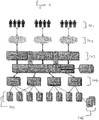
- the present invention proposes an arrangement according to figure 2 .
- This provides a message distribution management system 110 positioned between the network operators 103 and the aggregators 104.
- the message distribution management system 110 is operable to apply one or more filters to particular messages travelling between the aggregators and the network operators 103. If any messages do not comply with the applied filter criteria, they are halted.
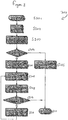
- the message distribution management system 110 operates in accordance with the method outlined in the flow chart of figure 3 .
- the first step is the receipt of an inbound message at s201.
- the inbound message s201 is then processed at s202 to determine the message source and destination identifiers.
- the message source and destination identifiers are then combined to form a key and the key is used as a lookup device in respect of records stored in directory 111.
- This is a fast lookup method as the key is generated simply by combining source and destination identifiers and as there are only keys provided for messages requiring filtering. Accordingly messages to which no filter is applied can be rapidly distributed to their desired destination without noticeable delay.
- step s206 This step involves obtaining a URL (uniform resource locator) list from the directory.
- the URL list provides the location (and if required the identification) of the or each filter to be applied to the message before delivery.
- the URL list is arranged in an order such that the first URL on the URL list is the primary URL and corresponds to the location of the first filter to be applied. Later URLs on the URL list correspond to the location of later filters to be applied.
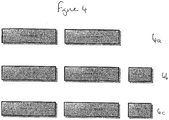
- Figure 4a shows the source and destination identifiers 301, 302 of a message separated from the rest of the message. These identifiers are used to generate a key for retrieving filter information form a directory.
- a primary URL 303 (or first filter location) has been retrieved and is appended to the message.
- a URL list 303a comprising a primary URL (or first filter location) and one or more secondary URLs has been retrieved and is appended to the message.
- the filter locations are identified by URLs as they may be implemented by any suitable part of the telephone system 100. Typically the filters would therefore not be applied by the message distribution management system 110, but would be applied by a particular aggregator 104, service provider 103 or network operator 105. This is undertaken at step s207 wherein the message distribution management system 110 is operable to determine the location of the first filter in the list from the appended URL and distribute the message to that filter.
- the first filter is applied. If the message conforms with the filter criteria, the method progresses to step s208 wherein the first filter location is removed from the URL list. If the message does not conform with the filter criteria, its distribution is halted. This may be a permanent halt or may be a halt pending a message release authorisation.
- step s209 It is then determined whether there are any further filter locations on the URL list at step s209. If there are no further filter locations on the URL list, the method ends and the message is distributed to its intended destination at s211. If however, there are further filter locations on the URL list, the second filter location on the URL list is moved to the primary position on the URL list at step s210 and the method reverts to step s207 wherein the message is then directed to the location of the second filter from the original URL list, which is of course now the first filter location on the new URL list.
- This loop s207-s210 continues until filter criteria are not met, in which case the method ends at s211 and halts delivery of the message or until all filters in the URL list have been applied, in which case the message ends at s211 by distributing the message to its intended destination.
- This method of applying a plurality of features in order is a standard approach that can be applied rapidly and simply to any message in the system. Additionally, variation in filtering requirements can be rapidly implemented by varying the URL list relating to a particular key. Additionally, if the filters are located at the aggregators 104 or the service providers 106, the operation of the message distribution management system can be implemented without causing significant delays to delivery of unfiltered messages.
- the system 110 may be applied to data services provided for a user 101 by a service provider 105.
- the data services may for example comprise ring tones wherein the user 101 has requested that a number of ring tones be provided to the user 101 by the service provider 105 per month.
- the user 101 may have set a monthly spending limit with the service provider 105. In such a case, spending limit may be the first filter applied.
- a ring tone is sent by one of the service providers 105 to a user 101.
- This message is received by the message distribution management system 110 via one of the aggregators 104.
- the message distribution management system 110 generates a key by combining the short code number of the service provider 105 and the mobile telephone number of the user 101. This key is used to search the directory 111 whereupon it is determined that there is a filter to be applied to messages transmitted from the particular source to the particular destination.
- the directory thus supplies the message distribution management system 110 with the URL of the filter, which may be at one of the aggregators 104. The message is thus directed back to the relevant aggregator 104.
- the aggregator 104 then applies the particular filter. In this case this involves looking up the users account with the service provider 105 and determining whether the user 101 has exceeded their monthly credit limit. If it is determined that the user 101 has not exceeded their credit limit, the filter URL is removed from the message and it is directed back to the message distribution management system 110 for onward distribution to the user 101. If the user 101 has exceeded their credit limit then the message is halted. In some embodiments, the message may then be deleted. In other embodiments, this may trigger the filter to cause a new message to be sent to the user 101 indicating that they are out of credit and requesting specific authorisation to overrule the filter either on a one time basis or a permanent basis. If authorisation is given, the message is directed back to the message distribution management system 110 for distribution to the user 101.
- an additional filter is applied which determines whether or not any requested information contains adult content.
- the message passes the first filter it is then directed to a second URL wherein the adult content filter is applied.
- This second filter may be provided by the service provider, the aggregator, or the network operator 103.
- the message contains no adult content, the message is directed back to the message distribution management system 110 which distributes it to the user 101.
- the message does contain adult content, as determined by the filter, it is halted. As before the halt may be permanent or may trigger the sending of an authorisation request. The user 101 may then override the filter. Alternatively, if the user is a minor, the authorisation request may be sent to the parent or guardian of the user 101.
- the message distribution management system 110 need not only be provided between commercial operators 104, 105 106 and network users 101 but may also be provided between individual users 101 and or between different networks 103 (as is illustrated by the shadow message distribution management systems 110a shown in figure 2 . This could be used to prevent harassment of one user 101 by another user 101 either in response to a complaint by a harassed user or potentially in response to a court order.
- An additional advantage of the present invention is that it can reduce the number of connections needed to be maintained by each aggregator 104. Furthermore, as the aggregators 104 and the network operators 103 are able to use the message distribution management system 110 of the present invention to provide additional services to users 101 and to improve their accounting and reporting capabilities.
Landscapes
- Engineering & Computer Science (AREA)
- Computer Networks & Wireless Communication (AREA)
- Signal Processing (AREA)
- Mobile Radio Communication Systems (AREA)
Claims (19)
- Verfahren zum Verwalten der Verteilung von Nachrichten von einer Quelle zu einem Ziel aufweisend die Schritte: Bestimmen ob eine Nachricht einem oder mehreren Filtern vor Weiterverbreitung an ihr Ziel unterworfen werden soll, wobei wenn bestimmt wird, dass die Nachricht nicht irgendwelchen Filtern (s204) unterworfen werden soll, die Nachricht an das Ziel weitergeleitet wird (s205) und wenn bestimmt wird, dass die Nachricht einem oder einer Vielzahl von Filtern unterworfen werden soll (s204), die Nachricht zu dem identifizierten Filter (s207) oder zu jedem identifizierten Filter der Reihe nach geleitet wird, wobei wenn die Nachricht ein Filterkriterium erfüllt, und wenn weitere Filter angewendet werden sollen, die Nachricht an den nächsten Filter weitergeleitet wird (s210); wobei wenn die Nachricht das Filterkriterium erfüllt und wenn keine weiteren Filter angewendet werden sollen, die Nachricht an ihr Ziel verteilt wird (s211) und wenn in jedem Stadium die Nachricht nicht den Filterkriterien eines bestimmten Filters entspricht, die Weiterleitung der Nachricht unterbunden wird, wobei
wenn eine Vielzahl an Filtern angewendet wird, die Filter in einer bestimmten Reihenfolge angewendet werden, welche durch Versorgung mit Informationen in Bezug auf die Filterposition in Form einer Liste (303a) (s206) bestimmt wird, wobei die Filterorte auf der Liste (303a) in der Reihenfolge geordnet sind, in der sie bestimmt sind angewendet zu werden und die Nachricht zu jedem Filterort auf der Liste (303a) in der Reihenfolge (s207-s210) gesendet wird. - Verfahren nach Anspruch 1, wobei das Verfahren auf ein Mobilfunknetzwerk (102) oder auf eine Vielzahl von miteinander verbundenen Mobilfunknetzwerke (102) angewendet wird.
- Verfahren nach einem der vorhergehenden Ansprüche, wobei das Verfahren verwendet wird, um Nachrichten, welche von einem Dienstanbieter (105) oder einem sekundären Dienstanbieter an Benutzer (101) entweder direkt über ein bestimmtes Netzwerk (102) oder indirekt über einen Aggregator (104) betreibbar um Nachrichten zwischen jedem Dienstleister (105) und jedem Benutzer (101) über einen geeigneten Netzwerkbetreiber (103) zu richten, gesendet werden und wobei die Filter implementiert von einem oder mehreren von: den Netzwerkbetreibern (103), den Dienstanbietern (105) oder den Aggregatoren (104) sind.
- Verfahren nach einem der vorhergehenden Ansprüche, wobei wenn die Nachricht nicht den Filterkriterien einer bestimmten Filterverteilung entspricht, die Nachricht dauerhaft angehalten wird.
- Verfahren nach einem der vorangehenden Ansprüche, wobei wenn die Nachricht nicht den Filterkriterien einer bestimmten Filterverteilung der Nachricht entspricht, die Nachricht gestoppt wird bis der Filter eine Nachrichtenfreigabeberechtigung von einem oder mehreren von: dem Benutzer (101), eine bestimmte andere Autorität, dem Dienstanbieter (105) oder dem Netzwerkbetreiber (103) empfängt.
- Verfahren nach einem der vorhergehenden Ansprüche, wobei die Filter einen oder mehrere von: einfache Routinen, welche die Sender- oder die Zieldetails gegen eine Datenbank überprüfen; Routinen, die überprüfen, dass das Ziel ein vorbestimmtes Kreditlimit in einer vorbestimmten Zeitspanne nicht überschritten hat; und Routinen, welche überprüfen, dass das Ziel nicht versucht, Nachrichten zu empfangen, welche Inhalte beinhalten, welche es beantragt hatten nicht zu empfangen.
- Verfahren nach einem der vorhergehenden Ansprüche, wobei der Benutzer (101) die Filter einstellt, welche er wünscht, dass sie auf Nachrichten, welche von einer bestimmten Quelle gesendet werden, angewendet werden, und wobei die Filter zurückgesetzt oder überschrieben werden durch eine bestimmte Anfrage, welche von dem Benutzer (101) gesendet wird.
- Verfahren nach einem der vorhergehenden Ansprüche, wobei es bestimmt wird, ob eine bestimmte Nachricht einem oder mehreren Filtern ausgesetzt wird durch die Schritte: (s201) Dekodieren der Nachrichtenquelle- und Zielidentifizierer (301, 302); (s203) Erzeugen eines Schlüssels aus den Quell- und Zielidentifizierern (301, 302); Durchführen einer Verzeichnisservicesuche (111) unter Verwendung des Schlüssels, wobei wenn der Schlüssel in dem Verzeichnis (111) existiert, die Nachricht einen oder mehreren Filtern (s204) ausgesetzt wird, und wenn der Schlüssel in dem Verzeichnis (111) nicht existiert, die Nachricht keine Filter vor der Verteilung an das identifiziertes Ziel (s205) ausgesetzt wird.
- Verfahren nach Anspruch 8, wobei die Nachrichtenquellen- und Zielidentifizierer (301, 302) Netzwerkadressen der Quelle und des Ziels oder die Telefonnummern der Quelle und des Ziels sind.
- Verfahren nach Anspruch 8 oder 9, wobei die Filter einfache Routinen zum Überprüfen der Sender- oder Zieldetails gegen eine Datenbank aufweisen.
- Verfahren nach einem der Ansprüche 8 bis 10, wobei wenn der Schlüssel in dem Verzeichnis (111) existiert das Verfahren jeweils die Schritte aufweist: Empfangen zugehörige Informationen, welche sich auf den Ort oder auf die Nachricht anzuwendenden Filters beziehen von dem Verzeichnis (111), bevor die Nachricht zu ihrem identifizierten Ziel verteilt wird.
- Verfahren nach Anspruch 11, wobei die Information zum zugehörigen Filterort separat in dem Schlüssel upgedatet wird.
- Verfahren nach Anspruch 12, wobei das Updaten der Ortsinformation die Form von Hinzufügen, Entfernen oder Neuanordnen der Ortsinformation annimmt.
- Verfahren nach einem der vorhergehenden Ansprüche, wobei die Nachricht an die Vielzahl von Filtern an bekannten Orten der gewünschten Reihenfolge geleitet wird durch die Schritte: Erzeugen einer Liste (303a) von Filterorten, wobei die Filterorte auf der Liste (303a) in einer gewünschten Reihenfolge angeordnet sind (s206); Anhängen der Liste (303a) an die Nachricht; Richten der Nachricht an den ersten Filterort (303) auf der Liste (303a) (s207); anschließend entfernen des ersten Filterortes (303) von der Liste (303a), wobei eine neue Liste (303a) erzeugt wird (s210); und Senden der Nachricht an den ersten Filterort (303) auf der neuen Liste (303a) (s207).
- Verfahren nach Anspruch 14, wobei die Filterorte in Form von Uniform Resource Locators (URLs) bereitgestellt werden.
- Verfahren nach Anspruch 14 oder 15, wobei einer oder mehrere der Filter betreibbar sind, um: ein oder mehrere zusätzliche Filterorte auf die Liste (303a) hinzuzufügen; Entfernen von ein oder mehreren Filterorten von der Liste (303a); oder Ändern der Reihenfolge der Filterorte auf der Liste (303a).
- Managementsystem zur Nachrichtenverteilung (110) zum Managen der Verteilung von Nachrichten von einer Quelle zu einem Ziel aufweisend: Mittel zum Nachrichten richten, um eine Nachricht an einen Ort zu richten; Mittel zum Bestimmen, ob eine Nachricht einem oder mehreren Filtern von der Weiterverteilung zu ihrem Ziel unterworfen werden sollen, wobei wenn festgestellt wird, dass die Nachricht keinem Filter unterworfen werden soll, die Nachricht zu dem Ziel weitergeleitet wird durch die Mittel zum Nachrichten richten, und wenn festgestellt wird, dass die Nachricht einem oder mehreren Filtern unterworfen werden soll, die Nachricht zu dem identifizierten Filter durch die Mittel zum Nachrichten richten gerichtet wird oder zu dem identifizierten Filter der Reihe nach durch die Mittel zum Nachrichten richten, wobei: wenn die Nachricht dem Filterkriterium entspricht und wenn weitere Filter angewendet werden sollen, die Nachricht in Richtung des nächsten Filters gerichtet wird; wenn die Nachricht den Filterkriterien entspricht und keine weiteren Filter auf die Nachricht angewendet werden sollen, die Nachricht in Richtung ihres Ziels weitergeleitet wird; und wenn zu einem Zeitpunkt die Nachricht nicht den Filterkriterien einer bestimmten Filterverteilung entspricht, die Nachricht angehalten wird, wobei wenn eine Vielzahl von Filtern angewendet wird, die Filter in einer bestimmten Reihenfolge, welche durch unterstützende Informationen, welche sich auf den Filterort in Form einer Liste (303a) beziehen, angewendet wird, wobei die Filterorte auf der Liste (303a) in der Reihenfolge geordnet sind, in der sie angewendet werden sollen, und wobei sie die Nachricht zu jedem Filterort der Reihe nach auf der Liste (303a) gesendet wird.
- Managementsystem zur Nachrichtenverteilung (110) nach Anspruch 17, wobei die Filter die auf die verteilte Nachricht angewendet werden sollen, an separaten Orten, welche mit dem Managementsystem zur Nachrichtenverteilung (110) verbunden sind, vorgesehen sind.
- Managementsystem zur Nachrichtenverteilung (110) nach Anspruch 18, wobei das System betreibbar sind um eines oder alles der Folgenden zu variieren: ob das Filtern auf einem bestimmten Nachrichtenpfad angewendet wird, welche Filter auf bestimmten Nachrichtenpfaden angewendet werden, und in welcher Reihenfolge Filter auf bestimmte Nachrichtenpfade angewendet werden.
Applications Claiming Priority (2)
| Application Number | Priority Date | Filing Date | Title |
|---|---|---|---|
| GBGB0605341.7A GB0605341D0 (en) | 2006-03-17 | 2006-03-17 | Managing message distribution |
| PCT/GB2007/000958 WO2007107727A2 (en) | 2006-03-17 | 2007-03-19 | Method and system for message distribution management |
Publications (2)
| Publication Number | Publication Date |
|---|---|
| EP1997285A2 EP1997285A2 (de) | 2008-12-03 |
| EP1997285B1 true EP1997285B1 (de) | 2017-12-13 |
Family
ID=36292904
Family Applications (1)
| Application Number | Title | Priority Date | Filing Date |
|---|---|---|---|
| EP07732052.1A Not-in-force EP1997285B1 (de) | 2006-03-17 | 2007-03-19 | Verwaltung der nachrichtenverteilung |
Country Status (4)
| Country | Link |
|---|---|
| EP (1) | EP1997285B1 (de) |
| CN (1) | CN101473615B (de) |
| GB (1) | GB0605341D0 (de) |
| WO (1) | WO2007107727A2 (de) |
Families Citing this family (5)
| Publication number | Priority date | Publication date | Assignee | Title |
|---|---|---|---|---|
| WO2011011835A1 (en) * | 2009-07-30 | 2011-02-03 | Mgm Wireless Holdings Pty Ltd | Improved reverse billing method |
| AT509254B1 (de) * | 2009-12-17 | 2011-10-15 | Isa Auctionata Auktionen Ag | Rechnersystem zum austausch von nachrichten |
| CN111245872B (zh) * | 2018-11-28 | 2023-10-13 | 北京亿阳信通科技有限公司 | 一种顺序消息过滤分发平台和方法 |
| CN109922046B (zh) * | 2019-01-30 | 2021-06-29 | 广东腾一科技有限公司 | 一种数据收发系统及方法 |
| CN114465976B (zh) * | 2022-01-28 | 2024-06-14 | 深圳快银付科技集团有限公司 | 一种消息的分发与聚合方法及装置 |
Family Cites Families (6)
| Publication number | Priority date | Publication date | Assignee | Title |
|---|---|---|---|---|
| US5734903A (en) * | 1994-05-13 | 1998-03-31 | Apple Computer, Inc. | System and method for object oriented message filtering |
| KR20020067803A (ko) * | 2001-02-19 | 2002-08-24 | 삼성전자 주식회사 | 휴대용 단말기의 멀티미디어 전자우편 서비스 시스템 및방법 |
| AU2003243327A1 (en) * | 2002-05-28 | 2003-12-12 | Alan H. Teague | Message processing based on address patterns and automated management and control of contact aliases |
| US7050836B2 (en) * | 2002-12-18 | 2006-05-23 | Nokia Corporation | System and method for providing multimedia messaging service (MMS) ringing images on mobile calls |
| US20050020289A1 (en) * | 2003-07-24 | 2005-01-27 | Samsung Electronics Co., Ltd. | Method for blocking spam messages in a mobile communication terminal |
| CN100425049C (zh) * | 2005-06-22 | 2008-10-08 | 北京邮电大学 | 移动终端下载多媒体振铃音的实现方法及系统 |
-
2006
- 2006-03-17 GB GBGB0605341.7A patent/GB0605341D0/en not_active Ceased
-
2007
- 2007-03-19 WO PCT/GB2007/000958 patent/WO2007107727A2/en not_active Ceased
- 2007-03-19 EP EP07732052.1A patent/EP1997285B1/de not_active Not-in-force
- 2007-03-19 CN CN2007800155674A patent/CN101473615B/zh not_active Expired - Fee Related
Also Published As
| Publication number | Publication date |
|---|---|
| GB0605341D0 (en) | 2006-04-26 |
| WO2007107727A3 (en) | 2007-11-15 |
| EP1997285A2 (de) | 2008-12-03 |
| CN101473615A (zh) | 2009-07-01 |
| CN101473615B (zh) | 2013-01-02 |
| WO2007107727A2 (en) | 2007-09-27 |
Similar Documents
| Publication | Publication Date | Title |
|---|---|---|
| US7818343B1 (en) | Apparatus and methods for reputation-based filtering on a communication network | |
| US9271129B2 (en) | Mobile messaging hub enabling enterprise office telephone numbers | |
| US8819141B2 (en) | Centralized mobile and wireless messaging opt-out registry system and method | |
| US8782283B2 (en) | Lawful interception and data retention of messages | |
| CN101616380B (zh) | 一种信息广播的过滤控制方法及系统 | |
| CN1267982A (zh) | 向电信网络用户提供对象的方法和系统 | |
| EP2901614A1 (de) | Co-aktivierung zur authentifizierung einer benutzerregistrierung | |
| EP1997285B1 (de) | Verwaltung der nachrichtenverteilung | |
| CN104221333A (zh) | 用于促进多个网络中的通信会话的系统和方法 | |
| JP2004213653A (ja) | 移動端末へのマルチメディアコンテンツ配信方法及びその装置 | |
| US7877598B2 (en) | Method for transmitting encrypted user data objects | |
| JP4878700B2 (ja) | 構内アクセスノードを介して端末からインターネットにアクセスするユーザのために、および/または、に関するアクセス制御を提供する方法およびこの種の方法を実施するための装置 | |
| AU2013223989A1 (en) | Method for the certification of electronic mail delivery | |
| CN100531154C (zh) | 实现消息业务的系统和方法 | |
| US8260314B2 (en) | Business hour notification delivery | |
| JP6082031B2 (ja) | 携帯端末へのデータメッセージの送達を証明する方法 | |
| CN202004788U (zh) | 车载信息推送服务系统 | |
| US20080268883A1 (en) | Spam short message blocking system using a call back short message and a method thereof | |
| EP1993245A1 (de) | System und verfahren zur realisierung eines nachrichten dienstes | |
| EP1830520B1 (de) | Verfahren und system zum weiterleiten des clients | |
| US20120042015A1 (en) | Communications system and method | |
| US20040193689A1 (en) | Method for distributing information in a presence service system | |
| CN1964252A (zh) | 一种网络服务器文件的存取方法 | |
| US20080064420A1 (en) | Driver notification | |
| FI113437B (fi) | Tilaajan liittymän voimassaolon tarkistus tietoliikennejärjestelmässä |
Legal Events
| Date | Code | Title | Description |
|---|---|---|---|
| PUAI | Public reference made under article 153(3) epc to a published international application that has entered the european phase |
Free format text: ORIGINAL CODE: 0009012 |
|
| 17P | Request for examination filed |
Effective date: 20081009 |
|
| AK | Designated contracting states |
Kind code of ref document: A2 Designated state(s): AT BE BG CH CY CZ DE DK EE ES FI FR GB GR HU IE IS IT LI LT LU LV MC MT NL PL PT RO SE SI SK TR |
|
| 17Q | First examination report despatched |
Effective date: 20091204 |
|
| RAP1 | Party data changed (applicant data changed or rights of an application transferred) |
Owner name: 2 ERGO LIMITED |
|
| DAX | Request for extension of the european patent (deleted) | ||
| GRAP | Despatch of communication of intention to grant a patent |
Free format text: ORIGINAL CODE: EPIDOSNIGR1 |
|
| STAA | Information on the status of an ep patent application or granted ep patent |
Free format text: STATUS: GRANT OF PATENT IS INTENDED |
|
| INTG | Intention to grant announced |
Effective date: 20170714 |
|
| GRAS | Grant fee paid |
Free format text: ORIGINAL CODE: EPIDOSNIGR3 |
|
| GRAA | (expected) grant |
Free format text: ORIGINAL CODE: 0009210 |
|
| STAA | Information on the status of an ep patent application or granted ep patent |
Free format text: STATUS: THE PATENT HAS BEEN GRANTED |
|
| AK | Designated contracting states |
Kind code of ref document: B1 Designated state(s): AT BE BG CH CY CZ DE DK EE ES FI FR GB GR HU IE IS IT LI LT LU LV MC MT NL PL PT RO SE SI SK TR |
|
| REG | Reference to a national code |
Ref country code: GB Ref legal event code: FG4D |
|
| REG | Reference to a national code |
Ref country code: AT Ref legal event code: REF Ref document number: 955329 Country of ref document: AT Kind code of ref document: T Effective date: 20171215 Ref country code: CH Ref legal event code: EP |
|
| REG | Reference to a national code |
Ref country code: IE Ref legal event code: FG4D |
|
| REG | Reference to a national code |
Ref country code: DE Ref legal event code: R096 Ref document number: 602007053371 Country of ref document: DE |
|
| REG | Reference to a national code |
Ref country code: NL Ref legal event code: MP Effective date: 20171213 |
|
| REG | Reference to a national code |
Ref country code: LT Ref legal event code: MG4D |
|
| PG25 | Lapsed in a contracting state [announced via postgrant information from national office to epo] |
Ref country code: SE Free format text: LAPSE BECAUSE OF FAILURE TO SUBMIT A TRANSLATION OF THE DESCRIPTION OR TO PAY THE FEE WITHIN THE PRESCRIBED TIME-LIMIT Effective date: 20171213 Ref country code: FI Free format text: LAPSE BECAUSE OF FAILURE TO SUBMIT A TRANSLATION OF THE DESCRIPTION OR TO PAY THE FEE WITHIN THE PRESCRIBED TIME-LIMIT Effective date: 20171213 Ref country code: LT Free format text: LAPSE BECAUSE OF FAILURE TO SUBMIT A TRANSLATION OF THE DESCRIPTION OR TO PAY THE FEE WITHIN THE PRESCRIBED TIME-LIMIT Effective date: 20171213 |
|
| PGFP | Annual fee paid to national office [announced via postgrant information from national office to epo] |
Ref country code: GB Payment date: 20180307 Year of fee payment: 12 |
|
| REG | Reference to a national code |
Ref country code: GB Ref legal event code: 732E Free format text: REGISTERED BETWEEN 20180405 AND 20180411 |
|
| REG | Reference to a national code |
Ref country code: AT Ref legal event code: MK05 Ref document number: 955329 Country of ref document: AT Kind code of ref document: T Effective date: 20171213 |
|
| PG25 | Lapsed in a contracting state [announced via postgrant information from national office to epo] |
Ref country code: BG Free format text: LAPSE BECAUSE OF FAILURE TO SUBMIT A TRANSLATION OF THE DESCRIPTION OR TO PAY THE FEE WITHIN THE PRESCRIBED TIME-LIMIT Effective date: 20180313 Ref country code: LV Free format text: LAPSE BECAUSE OF FAILURE TO SUBMIT A TRANSLATION OF THE DESCRIPTION OR TO PAY THE FEE WITHIN THE PRESCRIBED TIME-LIMIT Effective date: 20171213 Ref country code: GR Free format text: LAPSE BECAUSE OF FAILURE TO SUBMIT A TRANSLATION OF THE DESCRIPTION OR TO PAY THE FEE WITHIN THE PRESCRIBED TIME-LIMIT Effective date: 20180314 |
|
| PGFP | Annual fee paid to national office [announced via postgrant information from national office to epo] |
Ref country code: IE Payment date: 20180307 Year of fee payment: 12 |
|
| PG25 | Lapsed in a contracting state [announced via postgrant information from national office to epo] |
Ref country code: NL Free format text: LAPSE BECAUSE OF FAILURE TO SUBMIT A TRANSLATION OF THE DESCRIPTION OR TO PAY THE FEE WITHIN THE PRESCRIBED TIME-LIMIT Effective date: 20171213 |
|
| PG25 | Lapsed in a contracting state [announced via postgrant information from national office to epo] |
Ref country code: CZ Free format text: LAPSE BECAUSE OF FAILURE TO SUBMIT A TRANSLATION OF THE DESCRIPTION OR TO PAY THE FEE WITHIN THE PRESCRIBED TIME-LIMIT Effective date: 20171213 Ref country code: ES Free format text: LAPSE BECAUSE OF FAILURE TO SUBMIT A TRANSLATION OF THE DESCRIPTION OR TO PAY THE FEE WITHIN THE PRESCRIBED TIME-LIMIT Effective date: 20171213 Ref country code: SK Free format text: LAPSE BECAUSE OF FAILURE TO SUBMIT A TRANSLATION OF THE DESCRIPTION OR TO PAY THE FEE WITHIN THE PRESCRIBED TIME-LIMIT Effective date: 20171213 Ref country code: CY Free format text: LAPSE BECAUSE OF FAILURE TO SUBMIT A TRANSLATION OF THE DESCRIPTION OR TO PAY THE FEE WITHIN THE PRESCRIBED TIME-LIMIT Effective date: 20171213 Ref country code: EE Free format text: LAPSE BECAUSE OF FAILURE TO SUBMIT A TRANSLATION OF THE DESCRIPTION OR TO PAY THE FEE WITHIN THE PRESCRIBED TIME-LIMIT Effective date: 20171213 |
|
| PG25 | Lapsed in a contracting state [announced via postgrant information from national office to epo] |
Ref country code: IT Free format text: LAPSE BECAUSE OF FAILURE TO SUBMIT A TRANSLATION OF THE DESCRIPTION OR TO PAY THE FEE WITHIN THE PRESCRIBED TIME-LIMIT Effective date: 20171213 Ref country code: AT Free format text: LAPSE BECAUSE OF FAILURE TO SUBMIT A TRANSLATION OF THE DESCRIPTION OR TO PAY THE FEE WITHIN THE PRESCRIBED TIME-LIMIT Effective date: 20171213 Ref country code: PL Free format text: LAPSE BECAUSE OF FAILURE TO SUBMIT A TRANSLATION OF THE DESCRIPTION OR TO PAY THE FEE WITHIN THE PRESCRIBED TIME-LIMIT Effective date: 20171213 Ref country code: IS Free format text: LAPSE BECAUSE OF FAILURE TO SUBMIT A TRANSLATION OF THE DESCRIPTION OR TO PAY THE FEE WITHIN THE PRESCRIBED TIME-LIMIT Effective date: 20180413 Ref country code: RO Free format text: LAPSE BECAUSE OF FAILURE TO SUBMIT A TRANSLATION OF THE DESCRIPTION OR TO PAY THE FEE WITHIN THE PRESCRIBED TIME-LIMIT Effective date: 20171213 |
|
| REG | Reference to a national code |
Ref country code: DE Ref legal event code: R097 Ref document number: 602007053371 Country of ref document: DE |
|
| REG | Reference to a national code |
Ref country code: DE Ref legal event code: R119 Ref document number: 602007053371 Country of ref document: DE |
|
| PLBE | No opposition filed within time limit |
Free format text: ORIGINAL CODE: 0009261 |
|
| STAA | Information on the status of an ep patent application or granted ep patent |
Free format text: STATUS: NO OPPOSITION FILED WITHIN TIME LIMIT |
|
| REG | Reference to a national code |
Ref country code: CH Ref legal event code: PL |
|
| 26N | No opposition filed |
Effective date: 20180914 |
|
| PG25 | Lapsed in a contracting state [announced via postgrant information from national office to epo] |
Ref country code: MC Free format text: LAPSE BECAUSE OF FAILURE TO SUBMIT A TRANSLATION OF THE DESCRIPTION OR TO PAY THE FEE WITHIN THE PRESCRIBED TIME-LIMIT Effective date: 20171213 Ref country code: DK Free format text: LAPSE BECAUSE OF FAILURE TO SUBMIT A TRANSLATION OF THE DESCRIPTION OR TO PAY THE FEE WITHIN THE PRESCRIBED TIME-LIMIT Effective date: 20171213 |
|
| REG | Reference to a national code |
Ref country code: BE Ref legal event code: MM Effective date: 20180331 |
|
| PG25 | Lapsed in a contracting state [announced via postgrant information from national office to epo] |
Ref country code: LU Free format text: LAPSE BECAUSE OF NON-PAYMENT OF DUE FEES Effective date: 20180319 |
|
| PG25 | Lapsed in a contracting state [announced via postgrant information from national office to epo] |
Ref country code: DE Free format text: LAPSE BECAUSE OF NON-PAYMENT OF DUE FEES Effective date: 20181002 |
|
| PG25 | Lapsed in a contracting state [announced via postgrant information from national office to epo] |
Ref country code: SI Free format text: LAPSE BECAUSE OF FAILURE TO SUBMIT A TRANSLATION OF THE DESCRIPTION OR TO PAY THE FEE WITHIN THE PRESCRIBED TIME-LIMIT Effective date: 20171213 Ref country code: CH Free format text: LAPSE BECAUSE OF NON-PAYMENT OF DUE FEES Effective date: 20180331 Ref country code: LI Free format text: LAPSE BECAUSE OF NON-PAYMENT OF DUE FEES Effective date: 20180331 Ref country code: BE Free format text: LAPSE BECAUSE OF NON-PAYMENT OF DUE FEES Effective date: 20180331 |
|
| PG25 | Lapsed in a contracting state [announced via postgrant information from national office to epo] |
Ref country code: FR Free format text: LAPSE BECAUSE OF NON-PAYMENT OF DUE FEES Effective date: 20180331 |
|
| GBPC | Gb: european patent ceased through non-payment of renewal fee |
Effective date: 20190319 |
|
| PG25 | Lapsed in a contracting state [announced via postgrant information from national office to epo] |
Ref country code: IE Free format text: LAPSE BECAUSE OF NON-PAYMENT OF DUE FEES Effective date: 20190319 Ref country code: MT Free format text: LAPSE BECAUSE OF NON-PAYMENT OF DUE FEES Effective date: 20180319 Ref country code: GB Free format text: LAPSE BECAUSE OF NON-PAYMENT OF DUE FEES Effective date: 20190319 |
|
| PG25 | Lapsed in a contracting state [announced via postgrant information from national office to epo] |
Ref country code: TR Free format text: LAPSE BECAUSE OF FAILURE TO SUBMIT A TRANSLATION OF THE DESCRIPTION OR TO PAY THE FEE WITHIN THE PRESCRIBED TIME-LIMIT Effective date: 20171213 |
|
| PG25 | Lapsed in a contracting state [announced via postgrant information from national office to epo] |
Ref country code: PT Free format text: LAPSE BECAUSE OF FAILURE TO SUBMIT A TRANSLATION OF THE DESCRIPTION OR TO PAY THE FEE WITHIN THE PRESCRIBED TIME-LIMIT Effective date: 20171213 Ref country code: HU Free format text: LAPSE BECAUSE OF FAILURE TO SUBMIT A TRANSLATION OF THE DESCRIPTION OR TO PAY THE FEE WITHIN THE PRESCRIBED TIME-LIMIT; INVALID AB INITIO Effective date: 20070319 |