EP1990728A1 - Degeneration controller and degeneration control program - Google Patents
Degeneration controller and degeneration control program Download PDFInfo
- Publication number
- EP1990728A1 EP1990728A1 EP06714756A EP06714756A EP1990728A1 EP 1990728 A1 EP1990728 A1 EP 1990728A1 EP 06714756 A EP06714756 A EP 06714756A EP 06714756 A EP06714756 A EP 06714756A EP 1990728 A1 EP1990728 A1 EP 1990728A1
- Authority
- EP
- European Patent Office
- Prior art keywords
- degeneration
- cache
- cache line
- error
- degeneration control
- Prior art date
- Legal status (The legal status is an assumption and is not a legal conclusion. Google has not performed a legal analysis and makes no representation as to the accuracy of the status listed.)
- Ceased
Links
Images






Classifications
-
- G—PHYSICS
- G06—COMPUTING OR CALCULATING; COUNTING
- G06F—ELECTRIC DIGITAL DATA PROCESSING
- G06F12/00—Accessing, addressing or allocating within memory systems or architectures
- G06F12/02—Addressing or allocation; Relocation
- G06F12/08—Addressing or allocation; Relocation in hierarchically structured memory systems, e.g. virtual memory systems
- G06F12/12—Replacement control
- G06F12/121—Replacement control using replacement algorithms
- G06F12/126—Replacement control using replacement algorithms with special data handling, e.g. priority of data or instructions, handling errors or pinning
-
- G—PHYSICS
- G06—COMPUTING OR CALCULATING; COUNTING
- G06F—ELECTRIC DIGITAL DATA PROCESSING
- G06F2212/00—Indexing scheme relating to accessing, addressing or allocation within memory systems or architectures
- G06F2212/10—Providing a specific technical effect
- G06F2212/1032—Reliability improvement, data loss prevention, degraded operation etc
Definitions
- the present invention relates to a degeneration control device and a degeneration control program which control degeneration of a cache having a plurality of ways based on an error that occurs in response to an access request.
- Patent Document 1 Japanese Patent Application Laid-Open No. H2-302856
- the conventional technology above has a problem of sacrificing operational performance of a cache memory.
- a degeneration control is performed on an entire way that includes the cache line.
- capacity of the cache memory is wastefully degraded by capacity of normal cache lines included in the way on which the degeneration control is performed, and as a result, operational performance of the cache memory is degraded.
- the present invention is made in order to solve the problem of the conventional technology above, and an object of the present invention is to provide a degeneration control device and a degeneration control program, which can maintain reliability of an inside of a computer system by eliminating beforehand a potential factor that may possibly develop into a serious failure, while suppressing degradation of operational performance of a cache memory.
- the invention according to claim 1 is a degeneration control device that controls degeneration of a cache having a plurality of ways based on an error that occurs in response to an access request, the degeneration control device including a cache line degeneration information memory unit, which stores cache line degeneration information that indicates whether a cache line constituting each of the plurality of ways is degenerated, and a degeneration control unit, which writes, when an error that occurs in response to the access request causes a predetermined condition to be met, cache line degeneration information that indicates a predetermined cache line where the error occurs is degenerated in the cache line degeneration information memory unit.
- the degeneration control device further including an error number count unit, which counts a number of errors that occur in response to the access request for each of the plurality of ways, and the degeneration control unit writes, when the number of errors counted by the error number count unit exceeds a predetermined upper limit number, cache line degeneration information that indicates a cache line where the error occurs to cause the number of errors to exceed the predetermined upper limit number is degenerated.
- the degeneration control unit writes, when the number of errors counted by the error number count unit exceeds another predetermined upper limit number that is larger than the predetermined upper limit number, with respect to all cache lines included in the way where the number of errors exceeds the other predetermined upper limit number, way degeneration information that indicates the entire way of the cache lines is degenerated.
- the degeneration control device further including a way selection unit, which selects, when data corresponding to the access request is not stored in the cache, a cache line where the data corresponding to the access request is to be cached, by referring to at least one of the cache line degeneration information and the way degeneration information stored in the cache line degeneration information memory unit.
- the way selection unit selects, when all cache lines to be selected are degenerated, a cache line where data corresponding to the access request is to be cached, from cache lines according to the cache line degeneration information and not according to the way degeneration information.
- the invention according to claim 6, in an aspect of the present invention above is a computer program that causes a computer to perform a method of controlling degeneration of a cache having a plurality of ways based on an error that occurs in response to an access request, including a cache line degeneration information memory step, which stores cache line degeneration information that indicates whether a cache line constituting each of the plurality of ways is degenerated, and a degeneration control step, which writes, when an error that occurs in response to the access request causes a predetermined condition to be met, cache line degeneration information that indicates a predetermined cache line where the error occurs is degenerated in the cache line degeneration information memory step.
- the degeneration control device stores cache line degeneration information that indicates whether or not a cache line is degenerated, and when an error that occurs in response to an access request causes a predetermined condition to be met, the degeneration control device writes cache line degeneration information that indicates a cache line where the error occurs is degenerated.
- the degeneration control device can perform a degeneration control (a control to put something into an unusable state) on each cache line instead of performing the degeneration control on each way, whereby the degeneration control device can maintain reliability of an inside of a computer system by eliminating a potential factor (e.g., a correctable error) beforehand that may possibly develop into a serious failure, while suppressing degradation of operational performance of a cache memory.
- a degeneration control a control to put something into an unusable state
- the degeneration control device counts the number of errors that occur in response to an access request in each of plural ways, and writes, when the counted number of errors exceeds a predetermined upper limit number, cache line degeneration information that indicates a cache line where the error occurs to cause the number of errors to exceed the predetermined upper limit number is degenerated.
- the degeneration control device which does not include a counter to count the number of errors in each cache line, can substantially perform an error control for each cache line (in fact, since it is likely that a faulty cache line frequently causes an error, there is little harm that the degeneration control device is configured to count the number of errors of cache lines in each way), whereby the degeneration control device can maintain reliability of an inside of a computer system by eliminating a potential factor beforehand that may possibly develop into a serious failure, while suppressing degradation of operational performance of a cache memory.
- the degeneration control device writes, when the counted number of errors exceeds another predetermined upper limit number that is larger than the predetermined upper limit number, with respect to all cache lines included in the way where the number of errors exceeds the other predetermined upper limit number, way degeneration information that indicates the entire way of the cache lines is degenerated.
- the degeneration control device can degenerate an entire way with respect to a way that includes a cache line frequently causing an error, whereby the degeneration control device can maintain reliability of an inside of a computer system by eliminating a potential factor beforehand that may possibly develop into a serious failure, while suppressing degradation of operational performance of a cache memory.
- the degeneration control device selects, when data corresponding to the access request is not stored in the cache, a cache line where the data corresponding to the access request is to be cached, by referring to the cache line degeneration information or the way degeneration information or both.
- the degeneration control device does not use a degenerated cache line, whereby the degeneration control device can maintain reliability of an inside of a computer system by eliminating a potential factor beforehand that may possibly develop into a serious failure, while suppressing degradation of operational performance of a cache memory.
- the degeneration control device selects, when all cache lines to be selected are degenerated, a cache line where data corresponding to the access request is to be cached, from cache lines according to the cache line degeneration information not to the way degeneration information.
- the degeneration control device can reliably respond to the access request by validating back and selecting a cache line where a probability that a serious failure occurs to data storage area therein is considered low (here, since the number of errors occurred is smaller when a cache line is degenerated than the number of errors occurred when a way itself is degenerated, a probability that a serious failure occurs to data storage area is considered low when a cache line is degenerated), whereby the degeneration control device can maintain reliability of an inside of a computer system by eliminating a potential factor beforehand that may possibly develop into a serious failure, while suppressing degradation of operational performance of a cache memory.
- Embodiments of a degeneration control device and a degeneration control program according to the present invention are described below in detail with reference to accompanying drawings. Firstly, a degeneration control device according to the first embodiment is described below, and other embodiments of the present invention are described later.
- a first embodiment below describes in turn, a gist and features of a degeneration control device according to the first embodiment, a configuration and processes of the degeneration control device, and at last, an advantage of the first embodiment.
- FIG. 1 is a diagram to explain an overview of the degeneration control device according to the first embodiment.
- the gist of the degeneration control device according to the first embodiment lies in that the degeneration control device controls degeneration of a cache having a plurality of ways (i.e., columns inside a cache) based on an error that occurs in response to an access request (e.g., a read request, a write request), and a main feature thereof lies in that the degeneration control device can maintain reliability of an inside of a computer system by eliminating a potential factor beforehand that may possibly develop into a serious failure, while suppressing degradation of operational performance of a cache memory.
- an access request e.g., a read request, a write request
- the degeneration control device includes a cache tag, which stores cache line degeneration information (e.g., a degeneration flag) that indicates whether or not each cache line (a minimum unit of data storage area inside a cache) constituting each way is degenerated.
- the cache tag stores, in addition to the cache line degeneration information, a registration address of data stored in the cache line.
- the degeneration control device starts a cache tag search process (see (1) in FIG. 1 ). Specifically, the degeneration control device checks an index of a cache (e.g., m-th row) based on an address of data corresponding to the access request, and searches a cache tag corresponding to the index.
- a cache e.g., m-th row
- the degeneration control device checks a degeneration flag by referring to all ways (i.e., all columns) for information of the searched cache tag. Then, the degeneration control device performs a hit check on each cache line where it is confirmed that the cache line is not degenerated (that is, the degeneration flag is not written, and the cache line is in a usable state) (see (2) in FIG. 1 ). Specifically, the degeneration control device performs the hit check by determining whether or not the data address corresponding to the access request and a registration address stored in the cache tag are identical.
- the degeneration control device When a cache line where a hit occurs (referred to below as “hit cache line”) is detected as a result of the check, the degeneration control device performs, for example, an error check on cache data of the hit cache line. When an error is detected in the cache data of the hit cache line as a result of the check, the degeneration control device corrects the error and starts a degeneration control process (see (4) in FIG. 1 ).
- the degeneration control device increments an error counter, which is included to count a number of errors in each way. Further, when the number of errors of the error counter is above a predetermined upper limit number, the degeneration control device temporarily stops a normal process (e.g., a transfer process of cache data corresponding to an access request), writes a content of the cache line (e.g., Way: n, Index: m) where the error occurs to cause the number of errors to exceed the predetermined upper limit number back into a main memory unit not shown in the figure, or into the like, and further writes a degeneration flag (i.e., degeneration information that indicates a cache line is degenerated) into a cache tag of the cache line.
- a normal process e.g., a transfer process of cache data corresponding to an access request
- a content of the cache line e.g., Way: n, Index: m
- a degeneration flag i.e., degeneration information that indicates a cache line is degenerated
- the cache line is controlled to be in an unusable state (i.e., degeneration control) thereafter.
- the degeneration control device resumes the normal process and transfers cache data where the error is corrected to a requestor (see (5) in FIG. 1 ).
- the degeneration control device does not write the degeneration flag into the cache tag of the cache line where the error occurs, and transfers cache data where the error is corrected to the requestor as it is (see (5) in FIG. 1 ).
- the degeneration control device may transfer cache data where the error is corrected to the requestor, and moreover if the cache data is not to be written back, the degeneration control device may read out primary data of data corresponding to the access request from the main memory unit not shown in the figure and the like, and transfer the primary data to the requestor.
- the degeneration control device can maintain reliability of an inside of a computer system by eliminating a potential factor beforehand that may possibly develop into a serious failure, while suppressing degradation of operational performance of a cache memory.
- FIG. 2 is a block diagram of the configuration of the degeneration control device according to the first embodiment.
- FIG. 2 only processing units necessary to realize the degeneration control device are shown and a description of other processing units is omitted.
- the degeneration control device 10 is configured with a main memory control IF unit 11, a memory unit 12, and a control unit 13.
- the main memory control IF unit 11 is a storage unit (i.e., memory unit) that stores predetermined data.
- the memory unit 12 is a storage unit (i.e., memory unit) that stores data and programs needed for various kinds of processes performed by the control unit 13, and in particular, includes a cache tag memory unit 12a and a cache data memory unit 12b, which are closely related to the present invention.
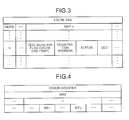
- the cache tag memory unit 12a stores various kinds of information that is related to a cache line, and specifically, the cache tag memory unit 12a is configured to store a degeneration flag, a registration address, a status, and ECC, in correspondence with a way (Way: column) and an index (Index: row) arranged in a cache memory.
- the degeneration flag is information that indicates whether or not a cache line or a way is in a usable state (which means, not in a state of degeneration), and the degeneration flag may be configured by 1 bit or, considering reliability of the information, may be configured by 3 bit or 5 bit information.
- the registration address is information that identifies data of the main memory unit stored in the cache line or the like.
- the status is information that indicates a status of the cache line, and for example, the status indicates whether data of the main memory unit is stored.
- ECC Error Correcting Code
- the cache data memory unit 12b stores various kinds of information stored in the main memory unit and the like, and for example, stores frequently used data of data stored in the main memory unit to realize a higher speed of data readout than a speed of data readout from the main memory unit and the like.
- the control unit 13 includes an internal memory that stores a predetermined control program, a program defining various kinds of procedures, and necessary data, and the control unit 13 is a processing unit that performs various processes (e.g., a control process of the cache, a control process related to data transmission between an operation execution unit and a main memory control unit or the like not shown in the figure).
- the control unit 13 particularly includes a request reception unit 13a, a degeneration control unit 13b, a way selection unit 13c, and a data transmission unit 13d, which are closely related to the present invention.
- the request reception unit 13a receives an access request (e.g., data readout request, data writing request).
- an access request e.g., data readout request, data writing request.
- the degeneration control unit 13b performs a degeneration control (i.e., a control to put something into an unusable state) on a cache line. Specifically, when the request reception unit 13a receives an access request, the degeneration control unit 13b starts a cache tag search process. To give a specific description of the cache tag search process, the degeneration control unit 13b checks an index (referred to below as "hit index") inside a cache based on an address of data corresponding to the access request, and searches a cache tag stored in the cache tag memory unit 13a for a cache tag corresponding to the hit index.
- hit index an index
- the degeneration control unit 13b checks a degeneration flag by referring to all ways (i.e., all columns) for information of the searched cache tag. Then, the degeneration control unit 13b performs a hit check on each cache line where it is confirmed that the cache line is not degenerated (that is, the degeneration flag is not written, and the cache line is in a usable state). On the other hand, the degeneration control unit 13b performs a mask process (so that a hit check is not performed on the cache line) on each cache line where it is confirmed the cache line is degenerated.
- the degeneration control unit 13b performs a check, for example, to determine whether an address of data corresponding to the access request and a registration address stored in the cache tag are identical (that is, a check to determine whether data stored in the cache line and data corresponding to the access request are identical).
- the degeneration control unit 13b When a cache line where a hit occurs (referred to below as “hit cache line”) is detected as a result of the check, the degeneration control unit 13b performs, for example, an error check on cache data of the hit cache line. When an error is detected in the cache data of the hit cache line as a result of the check, the degeneration control unit 13b corrects the error and starts a degeneration control process. On the other hand, when an error is not detected in the hit cache line, the degeneration control unit 13b outputs a command to the data transmission unit 13d, instructing the data transmission unit 13d to transfer the cache data of the hit cache line to a requestor.
- the degeneration control unit 13b includes, for example, an error counter to count the number of errors in each way (for example, Way: n) as binary digits. Further, the degeneration control unit 13b increments an error counter corresponding to a way that includes the hit cache line where the error occurs, and when the number of errors of the error counter is above the predetermined upper limit number (e.g., 2 to the j-th power), the degeneration control unit 13b temporarily stops a normal process (e.g., a transfer process of cache data corresponding to an access request), writes a content of the cache line (e.g., Way: n, Index: m) where the error occurs to cause the number of errors to exceed the predetermined upper limit number back into the main memory unit not shown in the figure, or into the like.
- a normal process e.g., a transfer process of cache data corresponding to an access request
- writes a content of the cache line e.g., Way: n, Index: m
- the degeneration control unit 13b further writes a degeneration flag (i.e., degeneration information that indicates a cache line is degenerated) into a cache tag of the cache line to be degenerated.
- a degeneration flag i.e., degeneration information that indicates a cache line is degenerated
- the hit cache line is controlled to be in an unusable state (i.e., degeneration control) thereafter.
- the degeneration control unit 13b resumes the normal process, and outputs a command to the data transmission unit 13d, instructing the data transmission unit 13d to transfer the cache data where the error is corrected to a requestor.
- the degeneration control unit 13b may not write the degeneration flag into the cache tag of the cache line where the error occurs, and may output a command to the data transmission unit 13d, instructing the data transmission unit 13d to transfer the cache data where the error is corrected to the requestor.
- the degeneration control unit 13b continues to count the number of errors after writing the degeneration flag into the cache tag with respect to the cache line, and when the number of errors of the error counter is above a predetermined upper limit number (e.g., 2 to the i-th power), which is larger than 2 to the j-th power, the degeneration control unit 13b writes a way degeneration flag that indicates all cache lines included in the way where the number of errors exceeds the upper limit number are degenerated. After the operation, the way is controlled to be in an unusable state (i.e., degeneration control).
- the way degeneration flag is stored in the cache tag memory unit 12a or alternatively the way degeneration flag may be stored in other memory units (e.g., a register, a latch).
- the degeneration control unit 13b When no hit cache line is detected as a result of the hit check (which means, no data corresponding to the access request is stored in the cache), the degeneration control unit 13b outputs a way selection command to a way selection unit 13c to determine a cache line to cache (register) data corresponding to the access request. Then, the degeneration control unit 13b, receiving a registration way from the way selection unit 13c, updates the cache tag stored in the cache tag memory unit 12a with respect to the cache line to which the request data is cached (for example, updates a registration address), and outputs a request command of data corresponding to the access request to the main memory control unit via the main memory control IF unit 11.
- the degeneration control unit 13b receiving the request data from the main memory control unit, outputs a command to the data transmission unit 13d, instructing the data transmission unit 13d to transfer the data to the requestor, and the degeneration control unit 13b stores the received request data in the cache data memory unit 12b.
- the way selection unit 13c is a processing unit that receives a way selection command from the degeneration control unit 13b and selects a way including a cache line to which data corresponding to the access request is cached. Specifically, the way selection unit 13c stores, for example, information about the last-used time of cache lines, and selects a way candidate including a least recently used cache line based on the information. Next, the way selection unit 13c refers to degeneration information of the cache tag stored in the cache tag memory unit 12a, and checks whether a cache line, corresponding to the index acquired from an address of data according to the access request, in the way candidate is degenerated.
- the way selection unit 13c determines the way candidate as a registration way where the data corresponding to the access request is to be cached, and outputs information of the determined registration way to the degeneration control unit 13b.
- the way selection unit 13c selects a second way candidate based on the information about the last-used time of cache lines, and repeats the same processes above until a registration way is determined.
- the data transmission unit 13d is a processing unit that transfers request data to the access requestor, and the like. Specifically, the data transmission unit 13d transfers cache data (e.g., corrected cache data) received from the degeneration control unit 13b to the requestor.
- cache data e.g., corrected cache data
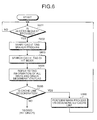
- FIG. 5 is a flowchart showing a flow of the main process of the degeneration control device according to the first embodiment.
- the degeneration control unit 13b performs a cache tag search process, which is described in detail later (Step S502).
- the degeneration control unit 13b performs a hit check on a cache line searched at the cache tag search process (Step S503). To give a specific description of the hit check, the degeneration control unit 13b checks, for example, whether address of data according to the access request and a registration address stored in the cache tag are identical. If a cache line where a hit occurs (referred to below as "hit cache line") is detected as a result of the above (Step S504 Yes), the degeneration control unit 13b performs an error check on cache data of the hit cache line (Step S505). If an error is detected in the cache data of the hit cache line as a result of the above (Step S506 Yes), the degeneration control unit 13b corrects the detected error and starts a degeneration control process, which is described in detail later.
- hit cache line a cache line where a hit occurs
- the degeneration control unit 13b outputs a command to the data transmission unit 13d, instructing the data transmission unit 13d to transfer the cache data of the hit cache line to the requestor, and the data transmission unit 13d, receiving the instruction, transfers the cache data to the requestor (Step S508).
- Step S504 if the hit cache line is not detected (Step S504 No), the degeneration control unit 13b performs a registration way determine process, which is described in detail later (Step S509). Further the degeneration control unit 13b outputs a request command, which requests data corresponding to the access request, to the main memory control unit via the main memory control IF unit 11 (Step S510).
- the processes above are repeatedly performed during start-up of the degeneration control device 10.
- FIG. 6 is a flowchart showing a flow of the cache tag search process of the degeneration control device according to the first embodiment.
- the degeneration control unit 13b starts the cache tag search process (Step S602).
- the degeneration control unit 13b checks an index (referred to below as "hit index”) inside the cache based on an address of data according to the access request, and searches cache tags stored in the cache tag memory unit 13a for a cache tag corresponding to the hit index (Step S603).
- the degeneration control unit 13b checks the degeneration flag by referring to all ways (i.e., all columns) for information of the searched cache tag (Step S604). Then, if a cache line is not degenerated (that is, if the degeneration flag is not written, and the cache line is in a usable state) (S605 No), the degeneration control unit 13b performs a hit check (at Step S503 above) on each cache line that is not degenerated.
- Step S605 Yes the degeneration control unit 13b performs a mask process (so that a hit check is not performed on the cache line) on each cache line that is degenerated.
- FIG. 7 is a flowchart showing a flow of the degeneration control process of the degeneration control device according to the first embodiment. For example, when an error is detected in cache data of a cache line as a result of the error check (at Step S505 above), the degeneration control unit 13b starts the degeneration control process (Step S701).
- the degeneration control unit 13b includes, for example, the error counter to count the number of errors in each way as binary digits as illustrated in FIG. 4 . Further, the degeneration control unit 13b increments the number of errors of the error counter corresponding to a way including a hit cache line where the error is detected (Step S702).
- the degeneration control unit 13b temporarily stops a normal process and writes a content of the cache line (e.g., Way: n, Index: m) where the error occurs to cause the number of errors to exceed the predetermined upper limit number and which is to be degenerated back into the main memory unit or the like (Step S704). Further, the degeneration control unit 13b writes the degeneration flag (i.e., degeneration information that indicates the cache line is degenerated) into the cache tag with respect to the cache line to be degenerated (Step S705).
- the degeneration flag i.e., degeneration information that indicates the cache line is degenerated
- the degeneration control unit 13b resumes the normal process (Step S706), outputs a command to the data transmission unit 13d, instructing the data transmission unit 13d to transfer the corrected cache data to the requestor, and returns to receive an access request, although not shown in the figure.
- the degeneration control unit 13b outputs a command to the data transmission unit 13d, instructing the data transmission unit 13d to transfer the corrected cache data to the requestor, and returns to receive an access request, similarly to the description above.
- the degeneration control unit 13b continues to count the number of errors after writing the degeneration flag into the cache tag with respect to the cache line, and when the number of errors of the error counter is above a predetermined upper limit number (e.g., 2 to the i-th power), which is larger than 2 to the j-th power, the degeneration control unit 13b writes a way degeneration flag that indicates all cache lines included in the way where the number of errors exceeds the upper limit number are degenerated. After that, the way is controlled to be in an unusable state (i.e., degeneration control).
- a predetermined upper limit number e.g., 2 to the i-th power
- FIG.7 is a flowchart showing a flow of the registration way determine process of the degeneration control device according to the first embodiment.
- the degeneration control unit 13b if a hit cache line where a hit occurs is not detected (that is, data corresponding to the access request does not exist inside the cache) (Step S801 No), the degeneration control unit 13b outputs a way selection command to the way selection unit 13c to determine a cache line where data corresponding to the access request is to be cached (registered).
- the way selection unit 13c receiving the way selection command, starts a registration way determine process (Step S802).
- the way selection unit 13c stores information about the last-used time of cache lines, and selects a way candidate including a least recently used cache line based on the information (Step S803).
- the way selection unit 13c refers to degeneration information of the cache tag stored in the cache tag memory unit 12a (Step S804), and checks whether a cache line, corresponding to the index acquired from an address of data according to the access request, in the way candidate is degenerated.
- the way selection unit 13c determines the way candidate as a registration way where the data corresponding to the access request is to be cached (Step S806), and outputs information of the determined registration way to the degeneration control unit 13b. Further, the degeneration control unit 13b receiving the information of the registration way from the way selection unit 13c outputs a request command to the main memory unit for data corresponding to the access request via the main memory control IF unit 11 (Step S510 above).
- the way selection unit 13c selects a second way candidate based on information of the last used time of cache lines, and repeats the same processes above until a registration way is determined.
- the degeneration control device stores cache line degeneration information that indicates whether a cache line is degenerated, and when an error that occurs in response to an access request causes a predetermined condition to be met, the degeneration control device writes cache line degeneration information that indicates a cache line where the error occurs is degenerated.
- the degeneration control device can perform a degeneration control (a control to put something into an unusable state) on each cache line instead of performing the degeneration control on each way, whereby the degeneration control device can maintain reliability of an inside of a computer system by eliminating a potential factor (i.e., a correctable error) beforehand that may possibly develop into a serious failure, while suppressing degradation of operational performance of a cache memory.
- a degeneration control a control to put something into an unusable state
- the degeneration control device counts the number of errors that occur in response to an access request in each of plural ways, and writes, when the counted number of errors exceeds a predetermined upper limit number, cache line degeneration information that indicates a cache line where the error occurs to cause the number of errors to exceed the predetermined upper limit number is degenerated.
- the degeneration control device which does not include a counter to count the number of errors in each cache line, can substantially perform an error control for each cache line (in fact, since it is likely that a faulty cache line frequently causes an error, there is little harm that the degeneration control device is configured to count the number of errors of cache lines in each way), whereby the degeneration control device can maintain reliability of an inside of a computer system by eliminating a potential factor beforehand that may possibly develop into a serious failure, while suppressing degradation of operational performance of a cache memory.
- the degeneration control device writes, when the counted number of errors exceeds another predetermined upper limit number that is larger than the predetermined upper limit number, with respect to all cache lines included in the way where the number of errors exceeds the other predetermined upper limit number, way degeneration information that indicates the entire way of the cache lines is degenerated.
- the degeneration control device can degenerate an entire way with respect to a way that includes a cache line frequently causing an error, whereby the degeneration control device can maintain reliability of an inside of a computer system by eliminating a potential factor beforehand that may possibly develop into a serious failure, while suppressing degradation of operational performance of a cache memory.
- the degeneration control device selects, when data corresponding to the access request is not stored in the cache, a cache line where the data corresponding to the access request is to be cached, by referring to the cache line degeneration information or the way degeneration information or both.
- the degeneration control device does not use a degenerated cache line, whereby the degeneration control device can maintain reliability of an inside of a computer system by eliminating a potential factor beforehand that may possibly develop into a serious failure, while suppressing degradation of operational performance of a cache memory.
- the degeneration control unit 13b may further perform an error check (e.g., an error check of a degeneration flag) on a cache tag including information of a cache line corresponding to the access request, and control the degeneration of the cache line, further considering the check result.
- an error check e.g., an error check of a degeneration flag
- a configuration of the degeneration control device here is basically the same as the configuration of the degeneration control device 10 described in the first embodiment above, except different aspects described below.
- the degeneration control unit 13b performs an error check of a cache tag in each cache line where it is confirmed by the cache tag search process that the cache line is not degenerated.
- the degeneration control unit 13b similarly to the case described in the first embodiment above, corrects the detected error of the cache tag and performs the degeneration control process (see FIG. 7 ), which is similar to the degeneration control process described in the first embodiment above.
- the degeneration control unit 13b increments a number of errors of an error counter corresponding to a way including the cache line corresponding to the error, and when the number of errors of the error counter is above the predetermined upper limit number, the degeneration control unit 13b temporarily stops a normal process and writes a content of the cache line to be degenerated, where the error occurs to cause the number of errors to exceed the upper limit number, back into a main memory unit not shown in the figure, or into the like. Further, the degeneration control unit 13b writes a degeneration flag (i.e., degeneration information that the cache line is degenerated) into a cache tag with respect to the cache line to be degenerated. On the other hand, when the number of errors of the error counter is not above the predetermined upper limit number, the degeneration control unit 13b does not write the degeneration flag into the cache tag.
- the error counter is the same with the error counter described in the first embodiment above.
- the degeneration control unit 13b performs a hit check, which is described in the first embodiment above, on a cache line where it is confirmed by the cache tag search process that the cache line is not degenerated.
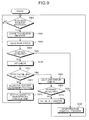
- FIG. 9 is a flowchart showing a flow of a main process of the degeneration control device according to the second embodiment.
- the degeneration control unit 13b performs the cache tag search process described in the first embodiment above (Step S902).
- the degeneration control unit 13b performs an error check of a cache tag (i.e., a tag error check) on each cache line where it is confirmed by the cache tag search process that the cache line is not degenerated (Step S903).
- a tag error check i.e., a tag error check
- the degeneration control unit 13b corrects the detected error of the cache tag and performs a degeneration control process, which is similar to the degeneration control process described in the first embodiment above (Step S905, see FIG. 7 ), with respect to the cache line corresponding to the error.
- Step S904 when an error is not detected as a result of the error check of the cache tag (Step S904), the degeneration control unit 13b performs a hit check, which is described in the first embodiment above, on a cache line where it is confirmed by the cache tag search process that the cache line is not degenerated.
- a description of a flow of following processes (Steps S906 to S912) is omitted because the flow of processes is similar to the flow of processes described in the first embodiment above.
- the degeneration control device does not control degeneration of a cache line only by performing an error check of cache data of a cache line corresponding to an access request but controls degeneration of the cache line by further performing an error check of a cache tag including information of the cache line corresponding to the access request and considering the check result, whereby the degeneration control device can control degeneration of a cache line, for example, maintaining reliability of degeneration information in a cache tag.
- a registration way is selected to determine a cache line where data corresponding to the access request is to be cached (registered).
- the present invention is not limited to the case above.
- a cache line where data corresponding to the access request is to be cached may be selected from cache lines according to cache line degeneration information not to way degeneration information.
- the degeneration control device can reliably respond to the access request by validating back and selecting a cache line where a probability that a serious failure occurs to data storage area therein is considered low (here, since the number of errors occurred is smaller when a cache line is degenerated than the number of errors occurred when a way itself is degenerated, a probability that a serious failure occurs to data storage area is considered low when a cache line is degenerated), whereby the degeneration control device can maintain reliability of an inside of a computer system by eliminating a potential factor beforehand that may possibly develop into a serious failure, while suppressing degradation of operational performance of a cache memory.
- each element of the degeneration control device 10 shown in the FIG. 2 represents a concept of the function, and thus the degeneration control device 10 does not necessarily require the same physical configuration as illustrated.
- a manner of division/integration of each element of the degeneration control device 10 is not limited to that shown in figures.
- the degeneration control unit 13b and the way selection unit 13c may be integrated.
- all or some part of the configuration may be divided/integrated functionally or physically on any unit basis.
- all or some part of each process performed by the degeneration control device 10 may be achieved by a CPU and a program analyzed and executed by the CPU, or may be achieved as hardware based on wired logic.
- FIG. 10 is a diagram of a computer that executes a degeneration control program.
- a computer 20 that is, the degeneration control device includes a main memory control IF unit 21, a HDD 22, a RAM 23, a ROM 24, and a CPU 25, and a predetermined bus 30 which connects these units.
- the main memory control IF unit 21 corresponds to the main memory control IF unit 11 shown in the FIG. 2 .
- a degeneration control program exerting the similar function as the degeneration control device 10 described in the first embodiment above is stored beforehand in the ROM 24, that is, a request reception program 24a, a degeneration control program 24b, a way selection program 24c, and a data transmission program 24d are stored beforehand in the ROM 24 as shown in FIG. 10 .
- the programs 24a, 24b, 24c, and 24d may be integrated or divided as needed, similarly to each element of the degeneration control device 10 shown in FIG. 2 .
- the CPU 25 reads out the programs 24a, 24b, 24c, and 24d from the ROM 24 and executes the programs, and as shown in the FIG. 10 , each of the programs 24a, 24b, 24c, and 24d function as a request reception process 25a, a degeneration control process 25b, a way selection process 25c, and a data transmission process 25d, respectively. Further, each of the processes 25a, 25b, 25c, and 25d correspond to the request reception unit 13a, the degeneration control unit 13b, the way selection unit 13c, and the data transmission unit 13d of the degeneration control device 10 shown in FIG. 2 , respectively.
- the HDD 22 includes a cache tag table 22a and a cache data table 22b.
- the cache tag table 22a and the cache data table 22b correspond to the cache tag memory unit 12a and the cache data memory unit 12b of the degeneration control device 10 shown in FIG. 2 , respectively.
- the CPU 25 reads out the cache tag data 23a and the cache data 23b from the cache tag table 22a and the cache data table 22b, stores the cache tag data 23a and the cache data 23b in the RAM 23, and performs an information validation process based on the cache tag data 23a and the cache data 23b stored in the RAM 23.
- the above described programs 24a, 24b, 24c, and 24d are not necessarily be stored in the ROM 24 from a start, and may be stored, for example, in "a portable physical medium” inserted into the computer 20, such as a flexible disk (FD), a CD-ROM, an MO disk, a DVD disk, a magneto-optical disk, and an IC card, or in "a fixed physical medium” such as a hard disk dive (HDD) arranged inside or outside the computer 20.
- the programs 24a, 24b, 24c, and 24d may be stored in "another computer (or another server)" that is connected to the computer 20 via a public line, the Internet, LAN, or WAN, so that the computer 20 can read out the programs therefrom and execute the same.
- a degeneration control device and a degeneration control program according to the present invention are useful for controlling degeneration of a cache having a plurality of ways based on an error that occurs in response to an access request, and particularly suitable for maintaining reliability of an inside of a computer system by eliminating a potential factor (e.g., a correctable error) beforehand that may possibly develop into a serious failure, while suppressing degradation of operation performance of a cache memory.
- a potential factor e.g., a correctable error
Landscapes
- Engineering & Computer Science (AREA)
- Theoretical Computer Science (AREA)
- Physics & Mathematics (AREA)
- General Engineering & Computer Science (AREA)
- General Physics & Mathematics (AREA)
- Memory System Of A Hierarchy Structure (AREA)
- Techniques For Improving Reliability Of Storages (AREA)
Abstract
Description
- The present invention relates to a degeneration control device and a degeneration control program which control degeneration of a cache having a plurality of ways based on an error that occurs in response to an access request.
- Conventionally, there has been known a technology to perform a degeneration control (a control to put all or some part of data storage area into an unusable state) on a cache memory that adopts a set associative scheme. Specifically, a number of correctable errors that occur inside a cache memory is counted in each way that indicates a column position inside the cache memory, and the degeneration control is performed on a way where the number of errors exceeds a predetermined threshold value (see
Patent Document 1, for example). Thus, with the conventional technology, the degeneration control is performed before the correctable errors that occur inside the cache memory cause a serious failure (e.g., an uncorrectable error), whereby reliability of the inside of the computer system is enhanced. - Patent Document 1: Japanese Patent Application Laid-Open No.
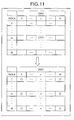
H2-302856 - The conventional technology above, however, has a problem of sacrificing operational performance of a cache memory. Specifically, with the conventional technology, for example, when an error (e.g., an error of stored data) occurs in a cache line (i.e., a minimum unit of a data storage area) inside a cache memory as illustrated in
FIG. 11 , a degeneration control is performed on an entire way that includes the cache line. Thus, capacity of the cache memory is wastefully degraded by capacity of normal cache lines included in the way on which the degeneration control is performed, and as a result, operational performance of the cache memory is degraded. - The present invention is made in order to solve the problem of the conventional technology above, and an object of the present invention is to provide a degeneration control device and a degeneration control program, which can maintain reliability of an inside of a computer system by eliminating beforehand a potential factor that may possibly develop into a serious failure, while suppressing degradation of operational performance of a cache memory.
- To solve the above mentioned problems and achieve an object of the present invention, the invention according to
claim 1 is a degeneration control device that controls degeneration of a cache having a plurality of ways based on an error that occurs in response to an access request, the degeneration control device including a cache line degeneration information memory unit, which stores cache line degeneration information that indicates whether a cache line constituting each of the plurality of ways is degenerated, and a degeneration control unit, which writes, when an error that occurs in response to the access request causes a predetermined condition to be met, cache line degeneration information that indicates a predetermined cache line where the error occurs is degenerated in the cache line degeneration information memory unit. - Further, the invention according to
claim 2, in an aspect of the present invention above, is the degeneration control device further including an error number count unit, which counts a number of errors that occur in response to the access request for each of the plurality of ways, and the degeneration control unit writes, when the number of errors counted by the error number count unit exceeds a predetermined upper limit number, cache line degeneration information that indicates a cache line where the error occurs to cause the number of errors to exceed the predetermined upper limit number is degenerated. - Further, in the invention according to
claim 3, in an aspect of the present invention above, the degeneration control unit writes, when the number of errors counted by the error number count unit exceeds another predetermined upper limit number that is larger than the predetermined upper limit number, with respect to all cache lines included in the way where the number of errors exceeds the other predetermined upper limit number, way degeneration information that indicates the entire way of the cache lines is degenerated. - Further, the invention according to
claim 4, in an aspect of the present invention above, is the degeneration control device further including a way selection unit, which selects, when data corresponding to the access request is not stored in the cache, a cache line where the data corresponding to the access request is to be cached, by referring to at least one of the cache line degeneration information and the way degeneration information stored in the cache line degeneration information memory unit. - Further, in the invention according to
claim 5, in an aspect of the present invention above, the way selection unit selects, when all cache lines to be selected are degenerated, a cache line where data corresponding to the access request is to be cached, from cache lines according to the cache line degeneration information and not according to the way degeneration information. - Further, the invention according to claim 6, in an aspect of the present invention above, is a computer program that causes a computer to perform a method of controlling degeneration of a cache having a plurality of ways based on an error that occurs in response to an access request, including a cache line degeneration information memory step, which stores cache line degeneration information that indicates whether a cache line constituting each of the plurality of ways is degenerated, and a degeneration control step, which writes, when an error that occurs in response to the access request causes a predetermined condition to be met, cache line degeneration information that indicates a predetermined cache line where the error occurs is degenerated in the cache line degeneration information memory step.
- According to the invention according to
claim 1 or 6, in each cache line constituting each of plural ways, the degeneration control device stores cache line degeneration information that indicates whether or not a cache line is degenerated, and when an error that occurs in response to an access request causes a predetermined condition to be met, the degeneration control device writes cache line degeneration information that indicates a cache line where the error occurs is degenerated. Thus, the degeneration control device can perform a degeneration control (a control to put something into an unusable state) on each cache line instead of performing the degeneration control on each way, whereby the degeneration control device can maintain reliability of an inside of a computer system by eliminating a potential factor (e.g., a correctable error) beforehand that may possibly develop into a serious failure, while suppressing degradation of operational performance of a cache memory. - Further, according to the invention according to
claim 2, the degeneration control device counts the number of errors that occur in response to an access request in each of plural ways, and writes, when the counted number of errors exceeds a predetermined upper limit number, cache line degeneration information that indicates a cache line where the error occurs to cause the number of errors to exceed the predetermined upper limit number is degenerated. Thus, the degeneration control device, which does not include a counter to count the number of errors in each cache line, can substantially perform an error control for each cache line (in fact, since it is likely that a faulty cache line frequently causes an error, there is little harm that the degeneration control device is configured to count the number of errors of cache lines in each way), whereby the degeneration control device can maintain reliability of an inside of a computer system by eliminating a potential factor beforehand that may possibly develop into a serious failure, while suppressing degradation of operational performance of a cache memory. - Further, according to the invention according to
claim 3, the degeneration control device writes, when the counted number of errors exceeds another predetermined upper limit number that is larger than the predetermined upper limit number, with respect to all cache lines included in the way where the number of errors exceeds the other predetermined upper limit number, way degeneration information that indicates the entire way of the cache lines is degenerated. Thus the degeneration control device can degenerate an entire way with respect to a way that includes a cache line frequently causing an error, whereby the degeneration control device can maintain reliability of an inside of a computer system by eliminating a potential factor beforehand that may possibly develop into a serious failure, while suppressing degradation of operational performance of a cache memory. - Further, according to the invention according to
claim 4, the degeneration control device selects, when data corresponding to the access request is not stored in the cache, a cache line where the data corresponding to the access request is to be cached, by referring to the cache line degeneration information or the way degeneration information or both. Thus, the degeneration control device does not use a degenerated cache line, whereby the degeneration control device can maintain reliability of an inside of a computer system by eliminating a potential factor beforehand that may possibly develop into a serious failure, while suppressing degradation of operational performance of a cache memory. - Further, according to the invention according to
claim 5, the degeneration control device selects, when all cache lines to be selected are degenerated, a cache line where data corresponding to the access request is to be cached, from cache lines according to the cache line degeneration information not to the way degeneration information. Thus, the degeneration control device can reliably respond to the access request by validating back and selecting a cache line where a probability that a serious failure occurs to data storage area therein is considered low (here, since the number of errors occurred is smaller when a cache line is degenerated than the number of errors occurred when a way itself is degenerated, a probability that a serious failure occurs to data storage area is considered low when a cache line is degenerated), whereby the degeneration control device can maintain reliability of an inside of a computer system by eliminating a potential factor beforehand that may possibly develop into a serious failure, while suppressing degradation of operational performance of a cache memory. -
- [
FIG. 1] FIG. 1 is a diagram to explain an overview of a degeneration control device according to a first embodiment. - [
FIG. 2] FIG. 2 is a block diagram of a configuration of the degeneration control device according to the first embodiment. - [
FIG. 3] FIG. 3 is a diagram of a configuration example of a cache tag. - [
FIG. 4] FIG. 4 is a diagram of a configuration example of an error counter. - [
FIG. 5] FIG. 5 is a flowchart illustrating a flow of a main process of the degeneration control device according to the first embodiment. - [
FIG. 6] FIG. 6 is a flowchart illustrating a flow of a cache tag search process according to the first embodiment. [FIG. 7] FIG. 7 is a flowchart illustrating a flow of a degeneration control process according to the first embodiment. - [
FIG. 8] FIG. 8 is a flowchart illustrating a registration way determination process according to the first embodiment. [FIG. 9] FIG. 9 is a flowchart illustrating a flow of a main process of a degeneration control device according to a second embodiment. - [
FIG. 10] FIG. 10 is a diagram of a computer which performs a degeneration control process. - [
FIG. 11] FIG. 11 is a diagram of a degeneration control process according to a conventional technology. -
- 10
- Degeneration control device
- 11
- Main-memory-unit control IF unit
- 12
- Memory unit
- 12a
- Cache tag memory unit
- 12b
- Cache data memory unit
- 13
- Control unit
- 13a
- Access reception unit
- 13b
- Degeneration control unit
- 13c
- Way selection unit
- 13d
- Data transmission unit
- 20
- Computer
- 31
- Main memory control IF unit
- 22
- HDD (Hard disk drive)
- 23
- RAM (Random access memory)
- 24
- ROM (Read only memory)
- 25
- CPU (Central processing unit)
- 30
- Bus
- Embodiments of a degeneration control device and a degeneration control program according to the present invention are described below in detail with reference to accompanying drawings. Firstly, a degeneration control device according to the first embodiment is described below, and other embodiments of the present invention are described later.
- A first embodiment below describes in turn, a gist and features of a degeneration control device according to the first embodiment, a configuration and processes of the degeneration control device, and at last, an advantage of the first embodiment.
- Firstly, the gist and features of the degeneration control device according to the first embodiment is described with reference to
FIG. 1. FIG. 1 is a diagram to explain an overview of the degeneration control device according to the first embodiment. As shown in the figure, the gist of the degeneration control device according to the first embodiment lies in that the degeneration control device controls degeneration of a cache having a plurality of ways (i.e., columns inside a cache) based on an error that occurs in response to an access request (e.g., a read request, a write request), and a main feature thereof lies in that the degeneration control device can maintain reliability of an inside of a computer system by eliminating a potential factor beforehand that may possibly develop into a serious failure, while suppressing degradation of operational performance of a cache memory. - To give a specific description of the main features, the degeneration control device according to the first embodiment includes a cache tag, which stores cache line degeneration information (e.g., a degeneration flag) that indicates whether or not each cache line (a minimum unit of data storage area inside a cache) constituting each way is degenerated. The cache tag stores, in addition to the cache line degeneration information, a registration address of data stored in the cache line.
- Further, when an access request (e.g., a readout request, a writing request) is received, the degeneration control device starts a cache tag search process (see (1) in
FIG. 1 ). Specifically, the degeneration control device checks an index of a cache (e.g., m-th row) based on an address of data corresponding to the access request, and searches a cache tag corresponding to the index. - Next, the degeneration control device checks a degeneration flag by referring to all ways (i.e., all columns) for information of the searched cache tag. Then, the degeneration control device performs a hit check on each cache line where it is confirmed that the cache line is not degenerated (that is, the degeneration flag is not written, and the cache line is in a usable state) (see (2) in
FIG. 1 ). Specifically, the degeneration control device performs the hit check by determining whether or not the data address corresponding to the access request and a registration address stored in the cache tag are identical. - When a cache line where a hit occurs (referred to below as "hit cache line") is detected as a result of the check, the degeneration control device performs, for example, an error check on cache data of the hit cache line. When an error is detected in the cache data of the hit cache line as a result of the check, the degeneration control device corrects the error and starts a degeneration control process (see (4) in
FIG. 1 ). - To give a specific description of the degeneration control process, firstly the degeneration control device, for example, increments an error counter, which is included to count a number of errors in each way. Further, when the number of errors of the error counter is above a predetermined upper limit number, the degeneration control device temporarily stops a normal process (e.g., a transfer process of cache data corresponding to an access request), writes a content of the cache line (e.g., Way: n, Index: m) where the error occurs to cause the number of errors to exceed the predetermined upper limit number back into a main memory unit not shown in the figure, or into the like, and further writes a degeneration flag (i.e., degeneration information that indicates a cache line is degenerated) into a cache tag of the cache line. By writing the degeneration flag into the cache tag, the cache line is controlled to be in an unusable state (i.e., degeneration control) thereafter. After the degeneration control, the degeneration control device resumes the normal process and transfers cache data where the error is corrected to a requestor (see (5) in
FIG. 1 ). - On the other hand, when the number of errors of the error counter is not above the predetermined upper limit number, the degeneration control device does not write the degeneration flag into the cache tag of the cache line where the error occurs, and transfers cache data where the error is corrected to the requestor as it is (see (5) in
FIG. 1 ). When cache data causes an error, the degeneration control device may transfer cache data where the error is corrected to the requestor, and moreover if the cache data is not to be written back, the degeneration control device may read out primary data of data corresponding to the access request from the main memory unit not shown in the figure and the like, and transfer the primary data to the requestor. - As can be seen from the foregoing, the degeneration control device according to the first embodiment, with the features mentioned above, can maintain reliability of an inside of a computer system by eliminating a potential factor beforehand that may possibly develop into a serious failure, while suppressing degradation of operational performance of a cache memory.
- Next, a configuration of the degeneration control device according to the first embodiment is described below with reference to
FIG. 2. FIG. 2 is a block diagram of the configuration of the degeneration control device according to the first embodiment. InFIG. 2 , only processing units necessary to realize the degeneration control device are shown and a description of other processing units is omitted. - As shown in
FIG. 2 , thedegeneration control device 10 is configured with a main memory control IFunit 11, amemory unit 12, and acontrol unit 13. Of the configuration above, the main memory control IFunit 11 is a storage unit (i.e., memory unit) that stores predetermined data. - The
memory unit 12 is a storage unit (i.e., memory unit) that stores data and programs needed for various kinds of processes performed by thecontrol unit 13, and in particular, includes a cachetag memory unit 12a and a cachedata memory unit 12b, which are closely related to the present invention. - Of the configuration above, the cache
tag memory unit 12a stores various kinds of information that is related to a cache line, and specifically, the cachetag memory unit 12a is configured to store a degeneration flag, a registration address, a status, and ECC, in correspondence with a way (Way: column) and an index (Index: row) arranged in a cache memory. Here, the degeneration flag is information that indicates whether or not a cache line or a way is in a usable state (which means, not in a state of degeneration), and the degeneration flag may be configured by 1 bit or, considering reliability of the information, may be configured by 3 bit or 5 bit information. Further, the registration address is information that identifies data of the main memory unit stored in the cache line or the like. Further, the status is information that indicates a status of the cache line, and for example, the status indicates whether data of the main memory unit is stored. Further, ECC (Error Correcting Code) is additional data to correct an error of cache tag data, and guarantees reliability of the cache data. - The cache
data memory unit 12b stores various kinds of information stored in the main memory unit and the like, and for example, stores frequently used data of data stored in the main memory unit to realize a higher speed of data readout than a speed of data readout from the main memory unit and the like. - The
control unit 13 includes an internal memory that stores a predetermined control program, a program defining various kinds of procedures, and necessary data, and thecontrol unit 13 is a processing unit that performs various processes (e.g., a control process of the cache, a control process related to data transmission between an operation execution unit and a main memory control unit or the like not shown in the figure). Thecontrol unit 13 particularly includes arequest reception unit 13a, adegeneration control unit 13b, away selection unit 13c, and adata transmission unit 13d, which are closely related to the present invention. - Of the configuration above, the
request reception unit 13a receives an access request (e.g., data readout request, data writing request). - The
degeneration control unit 13b performs a degeneration control (i.e., a control to put something into an unusable state) on a cache line. Specifically, when therequest reception unit 13a receives an access request, thedegeneration control unit 13b starts a cache tag search process. To give a specific description of the cache tag search process, thedegeneration control unit 13b checks an index (referred to below as "hit index") inside a cache based on an address of data corresponding to the access request, and searches a cache tag stored in the cachetag memory unit 13a for a cache tag corresponding to the hit index. - Then, the
degeneration control unit 13b checks a degeneration flag by referring to all ways (i.e., all columns) for information of the searched cache tag. Then, thedegeneration control unit 13b performs a hit check on each cache line where it is confirmed that the cache line is not degenerated (that is, the degeneration flag is not written, and the cache line is in a usable state). On the other hand, thedegeneration control unit 13b performs a mask process (so that a hit check is not performed on the cache line) on each cache line where it is confirmed the cache line is degenerated. To give a specific description of the hit check, thedegeneration control unit 13b performs a check, for example, to determine whether an address of data corresponding to the access request and a registration address stored in the cache tag are identical (that is, a check to determine whether data stored in the cache line and data corresponding to the access request are identical). - When a cache line where a hit occurs (referred to below as "hit cache line") is detected as a result of the check, the
degeneration control unit 13b performs, for example, an error check on cache data of the hit cache line. When an error is detected in the cache data of the hit cache line as a result of the check, thedegeneration control unit 13b corrects the error and starts a degeneration control process. On the other hand, when an error is not detected in the hit cache line, thedegeneration control unit 13b outputs a command to thedata transmission unit 13d, instructing thedata transmission unit 13d to transfer the cache data of the hit cache line to a requestor. - Further, to give a specific description of the degeneration control process, as illustrated in
FIG. 4 , thedegeneration control unit 13b includes, for example, an error counter to count the number of errors in each way (for example, Way: n) as binary digits. Further, thedegeneration control unit 13b increments an error counter corresponding to a way that includes the hit cache line where the error occurs, and when the number of errors of the error counter is above the predetermined upper limit number (e.g., 2 to the j-th power), thedegeneration control unit 13b temporarily stops a normal process (e.g., a transfer process of cache data corresponding to an access request), writes a content of the cache line (e.g., Way: n, Index: m) where the error occurs to cause the number of errors to exceed the predetermined upper limit number back into the main memory unit not shown in the figure, or into the like. Thedegeneration control unit 13b further writes a degeneration flag (i.e., degeneration information that indicates a cache line is degenerated) into a cache tag of the cache line to be degenerated. By writing the degeneration flag into the cache tag, the hit cache line is controlled to be in an unusable state (i.e., degeneration control) thereafter. After the degeneration control process, thedegeneration control unit 13b resumes the normal process, and outputs a command to thedata transmission unit 13d, instructing thedata transmission unit 13d to transfer the cache data where the error is corrected to a requestor. - Contrary to the case described above, when the number of errors of the error counter is not above the predetermined upper limit number, the
degeneration control unit 13b may not write the degeneration flag into the cache tag of the cache line where the error occurs, and may output a command to thedata transmission unit 13d, instructing thedata transmission unit 13d to transfer the cache data where the error is corrected to the requestor. - Further, the
degeneration control unit 13b continues to count the number of errors after writing the degeneration flag into the cache tag with respect to the cache line, and when the number of errors of the error counter is above a predetermined upper limit number (e.g., 2 to the i-th power), which is larger than 2 to the j-th power, thedegeneration control unit 13b writes a way degeneration flag that indicates all cache lines included in the way where the number of errors exceeds the upper limit number are degenerated. After the operation, the way is controlled to be in an unusable state (i.e., degeneration control). The way degeneration flag is stored in the cachetag memory unit 12a or alternatively the way degeneration flag may be stored in other memory units (e.g., a register, a latch). - When no hit cache line is detected as a result of the hit check (which means, no data corresponding to the access request is stored in the cache), the
degeneration control unit 13b outputs a way selection command to away selection unit 13c to determine a cache line to cache (register) data corresponding to the access request. Then, thedegeneration control unit 13b, receiving a registration way from theway selection unit 13c, updates the cache tag stored in the cachetag memory unit 12a with respect to the cache line to which the request data is cached (for example, updates a registration address), and outputs a request command of data corresponding to the access request to the main memory control unit via the main memory control IFunit 11. Further, thedegeneration control unit 13b, receiving the request data from the main memory control unit, outputs a command to thedata transmission unit 13d, instructing thedata transmission unit 13d to transfer the data to the requestor, and thedegeneration control unit 13b stores the received request data in the cachedata memory unit 12b. - The
way selection unit 13c is a processing unit that receives a way selection command from thedegeneration control unit 13b and selects a way including a cache line to which data corresponding to the access request is cached. Specifically, theway selection unit 13c stores, for example, information about the last-used time of cache lines, and selects a way candidate including a least recently used cache line based on the information. Next, theway selection unit 13c refers to degeneration information of the cache tag stored in the cachetag memory unit 12a, and checks whether a cache line, corresponding to the index acquired from an address of data according to the access request, in the way candidate is degenerated. As a result, when the cache line in the way candidate is not degenerated, theway selection unit 13c determines the way candidate as a registration way where the data corresponding to the access request is to be cached, and outputs information of the determined registration way to thedegeneration control unit 13b. On the other hand, when the cache line in the way candidate is degenerated, theway selection unit 13c selects a second way candidate based on the information about the last-used time of cache lines, and repeats the same processes above until a registration way is determined. - The
data transmission unit 13d is a processing unit that transfers request data to the access requestor, and the like. Specifically, thedata transmission unit 13d transfers cache data (e.g., corrected cache data) received from thedegeneration control unit 13b to the requestor. - Next, a main process of the degeneration control device according to the first embodiment is described below with reference to
FIG. 5. FIG. 5 is a flowchart showing a flow of the main process of the degeneration control device according to the first embodiment. As shown in the figure, when an access request is received (Step S501 Yes), thedegeneration control unit 13b performs a cache tag search process, which is described in detail later (Step S502). - Further, the
degeneration control unit 13b performs a hit check on a cache line searched at the cache tag search process (Step S503). To give a specific description of the hit check, thedegeneration control unit 13b checks, for example, whether address of data according to the access request and a registration address stored in the cache tag are identical. If a cache line where a hit occurs (referred to below as "hit cache line") is detected as a result of the above (Step S504 Yes), thedegeneration control unit 13b performs an error check on cache data of the hit cache line (Step S505). If an error is detected in the cache data of the hit cache line as a result of the above (Step S506 Yes), thedegeneration control unit 13b corrects the detected error and starts a degeneration control process, which is described in detail later. - On the other hand, if an error is not detected in the cache data of the hit cache line (Step S506 No), the
degeneration control unit 13b outputs a command to thedata transmission unit 13d, instructing thedata transmission unit 13d to transfer the cache data of the hit cache line to the requestor, and thedata transmission unit 13d, receiving the instruction, transfers the cache data to the requestor (Step S508). - Back to the description of Step S504, if the hit cache line is not detected (Step S504 No), the
degeneration control unit 13b performs a registration way determine process, which is described in detail later (Step S509). Further thedegeneration control unit 13b outputs a request command, which requests data corresponding to the access request, to the main memory control unit via the main memory control IF unit 11 (Step S510). The processes above are repeatedly performed during start-up of thedegeneration control device 10. - Next, the cache tag search process of the degeneration control device according to the first embodiment is described below with reference to
FIG. 6. FIG. 6 is a flowchart showing a flow of the cache tag search process of the degeneration control device according to the first embodiment. As shown in the figure, when an access request is received (Step S601 Yes), thedegeneration control unit 13b starts the cache tag search process (Step S602). - Specifically, the
degeneration control unit 13b checks an index (referred to below as "hit index") inside the cache based on an address of data according to the access request, and searches cache tags stored in the cachetag memory unit 13a for a cache tag corresponding to the hit index (Step S603). - Next, the
degeneration control unit 13b checks the degeneration flag by referring to all ways (i.e., all columns) for information of the searched cache tag (Step S604). Then, if a cache line is not degenerated (that is, if the degeneration flag is not written, and the cache line is in a usable state) (S605 No), thedegeneration control unit 13b performs a hit check (at Step S503 above) on each cache line that is not degenerated. - On the other hand, if the cache line is degenerated (Step S605 Yes), the
degeneration control unit 13b performs a mask process (so that a hit check is not performed on the cache line) on each cache line that is degenerated. - Next, a degeneration control process of the degeneration control device according to the first embodiment is described below with reference to
FIG. 7. FIG. 7 is a flowchart showing a flow of the degeneration control process of the degeneration control device according to the first embodiment. For example, when an error is detected in cache data of a cache line as a result of the error check (at Step S505 above), thedegeneration control unit 13b starts the degeneration control process (Step S701). - Specifically, the
degeneration control unit 13b includes, for example, the error counter to count the number of errors in each way as binary digits as illustrated inFIG. 4 . Further, thedegeneration control unit 13b increments the number of errors of the error counter corresponding to a way including a hit cache line where the error is detected (Step S702). If the number of errors of the error counter is above the predetermined upper limit number (e.g., 2 to the j-th power) (Step S703 Yes), thedegeneration control unit 13b temporarily stops a normal process and writes a content of the cache line (e.g., Way: n, Index: m) where the error occurs to cause the number of errors to exceed the predetermined upper limit number and which is to be degenerated back into the main memory unit or the like (Step S704). Further, thedegeneration control unit 13b writes the degeneration flag (i.e., degeneration information that indicates the cache line is degenerated) into the cache tag with respect to the cache line to be degenerated (Step S705). - After the degeneration control process, the
degeneration control unit 13b resumes the normal process (Step S706), outputs a command to thedata transmission unit 13d, instructing thedata transmission unit 13d to transfer the corrected cache data to the requestor, and returns to receive an access request, although not shown in the figure. On the other hand, if the number of errors of the error counter is not above the predetermined upper limit number (e.g., 2 to the j-th power) (Step S703 No), thedegeneration control unit 13b outputs a command to thedata transmission unit 13d, instructing thedata transmission unit 13d to transfer the corrected cache data to the requestor, and returns to receive an access request, similarly to the description above. - Although not shown in the figure, the
degeneration control unit 13b continues to count the number of errors after writing the degeneration flag into the cache tag with respect to the cache line, and when the number of errors of the error counter is above a predetermined upper limit number (e.g., 2 to the i-th power), which is larger than 2 to the j-th power, thedegeneration control unit 13b writes a way degeneration flag that indicates all cache lines included in the way where the number of errors exceeds the upper limit number are degenerated. After that, the way is controlled to be in an unusable state (i.e., degeneration control). - Next, a registration way determine process of the degeneration control device according to the first embodiment is described below with reference to
FIG. 8 .FIG.7 is a flowchart showing a flow of the registration way determine process of the degeneration control device according to the first embodiment. As shown in the figure, if a hit cache line where a hit occurs is not detected (that is, data corresponding to the access request does not exist inside the cache) (Step S801 No), thedegeneration control unit 13b outputs a way selection command to theway selection unit 13c to determine a cache line where data corresponding to the access request is to be cached (registered). Theway selection unit 13c, receiving the way selection command, starts a registration way determine process (Step S802). - Specifically, the
way selection unit 13c stores information about the last-used time of cache lines, and selects a way candidate including a least recently used cache line based on the information (Step S803). Next, theway selection unit 13c refers to degeneration information of the cache tag stored in the cachetag memory unit 12a (Step S804), and checks whether a cache line, corresponding to the index acquired from an address of data according to the access request, in the way candidate is degenerated. - As a result of the above, if the cache line in the way candidate is not degenerated (Step S805 No), the
way selection unit 13c determines the way candidate as a registration way where the data corresponding to the access request is to be cached (Step S806), and outputs information of the determined registration way to thedegeneration control unit 13b. Further, thedegeneration control unit 13b receiving the information of the registration way from theway selection unit 13c outputs a request command to the main memory unit for data corresponding to the access request via the main memory control IF unit 11 (Step S510 above). On the other hand, if the cache line in the way candidate is degenerated (Step S805 Yes), theway selection unit 13c selects a second way candidate based on information of the last used time of cache lines, and repeats the same processes above until a registration way is determined. - As described above, according to the first embodiment, in each cache line constituting a plurality of ways, the degeneration control device stores cache line degeneration information that indicates whether a cache line is degenerated, and when an error that occurs in response to an access request causes a predetermined condition to be met, the degeneration control device writes cache line degeneration information that indicates a cache line where the error occurs is degenerated. Thus, the degeneration control device can perform a degeneration control (a control to put something into an unusable state) on each cache line instead of performing the degeneration control on each way, whereby the degeneration control device can maintain reliability of an inside of a computer system by eliminating a potential factor (i.e., a correctable error) beforehand that may possibly develop into a serious failure, while suppressing degradation of operational performance of a cache memory.
- Further, according to the first embodiment, the degeneration control device counts the number of errors that occur in response to an access request in each of plural ways, and writes, when the counted number of errors exceeds a predetermined upper limit number, cache line degeneration information that indicates a cache line where the error occurs to cause the number of errors to exceed the predetermined upper limit number is degenerated. Thus, the degeneration control device, which does not include a counter to count the number of errors in each cache line, can substantially perform an error control for each cache line (in fact, since it is likely that a faulty cache line frequently causes an error, there is little harm that the degeneration control device is configured to count the number of errors of cache lines in each way), whereby the degeneration control device can maintain reliability of an inside of a computer system by eliminating a potential factor beforehand that may possibly develop into a serious failure, while suppressing degradation of operational performance of a cache memory.
- Further, according to the first embodiment, the degeneration control device writes, when the counted number of errors exceeds another predetermined upper limit number that is larger than the predetermined upper limit number, with respect to all cache lines included in the way where the number of errors exceeds the other predetermined upper limit number, way degeneration information that indicates the entire way of the cache lines is degenerated. Thus the degeneration control device can degenerate an entire way with respect to a way that includes a cache line frequently causing an error, whereby the degeneration control device can maintain reliability of an inside of a computer system by eliminating a potential factor beforehand that may possibly develop into a serious failure, while suppressing degradation of operational performance of a cache memory.
- Further, according to the first embodiment, the degeneration control device selects, when data corresponding to the access request is not stored in the cache, a cache line where the data corresponding to the access request is to be cached, by referring to the cache line degeneration information or the way degeneration information or both. Thus, the degeneration control device does not use a degenerated cache line, whereby the degeneration control device can maintain reliability of an inside of a computer system by eliminating a potential factor beforehand that may possibly develop into a serious failure, while suppressing degradation of operational performance of a cache memory.
- Although the first embodiment of the present invention has been described so far, the present invention can be implemented by various embodiments other than the first embodiment above. Hence, other embodiments of the present invention are described below.
- Although, in the first embodiment, a case where the
degeneration control unit 13b performs, for example, an error check on cache data of a cache line corresponding to an access request to control the degeneration of the cache line is described, the present invention is not limited to the embodiment alone. Following the cache tag search process (seeFIG. 6 ) of the degeneration control device described in the first embodiment above, thedegeneration control unit 13b may further perform an error check (e.g., an error check of a degeneration flag) on a cache tag including information of a cache line corresponding to the access request, and control the degeneration of the cache line, further considering the check result. Thus, a case where degeneration of a cache line is controlled further considering the error check result of a cache tag is described below. - A configuration of the degeneration control device here is basically the same as the configuration of the
degeneration control device 10 described in the first embodiment above, except different aspects described below. - The
degeneration control unit 13b performs an error check of a cache tag in each cache line where it is confirmed by the cache tag search process that the cache line is not degenerated. When an error is detected as a result of the check, thedegeneration control unit 13b, similarly to the case described in the first embodiment above, corrects the detected error of the cache tag and performs the degeneration control process (seeFIG. 7 ), which is similar to the degeneration control process described in the first embodiment above. - Specifically, the
degeneration control unit 13b increments a number of errors of an error counter corresponding to a way including the cache line corresponding to the error, and when the number of errors of the error counter is above the predetermined upper limit number, thedegeneration control unit 13b temporarily stops a normal process and writes a content of the cache line to be degenerated, where the error occurs to cause the number of errors to exceed the upper limit number, back into a main memory unit not shown in the figure, or into the like. Further, thedegeneration control unit 13b writes a degeneration flag (i.e., degeneration information that the cache line is degenerated) into a cache tag with respect to the cache line to be degenerated. On the other hand, when the number of errors of the error counter is not above the predetermined upper limit number, thedegeneration control unit 13b does not write the degeneration flag into the cache tag. Here, the error counter is the same with the error counter described in the first embodiment above. - On the other hand, when an error is not detected as a result of the error check on the cache tag, the
degeneration control unit 13b performs a hit check, which is described in the first embodiment above, on a cache line where it is confirmed by the cache tag search process that the cache line is not degenerated. - Next, a flow of a process of the degeneration control device in the case is described with reference to
FIG. 9. FIG. 9 is a flowchart showing a flow of a main process of the degeneration control device according to the second embodiment. As shown in the figure, when an access request is received (Step S901 Yes), thedegeneration control unit 13b performs the cache tag search process described in the first embodiment above (Step S902). - Next, the
degeneration control unit 13b performs an error check of a cache tag (i.e., a tag error check) on each cache line where it is confirmed by the cache tag search process that the cache line is not degenerated (Step S903). As a result of the check, if an error is detected (Step S904 Yes), thedegeneration control unit 13b corrects the detected error of the cache tag and performs a degeneration control process, which is similar to the degeneration control process described in the first embodiment above (Step S905, seeFIG. 7 ), with respect to the cache line corresponding to the error. - On the other hand, when an error is not detected as a result of the error check of the cache tag (Step S904), the
degeneration control unit 13b performs a hit check, which is described in the first embodiment above, on a cache line where it is confirmed by the cache tag search process that the cache line is not degenerated. Here, a description of a flow of following processes (Steps S906 to S912) is omitted because the flow of processes is similar to the flow of processes described in the first embodiment above. - As described, the degeneration control device does not control degeneration of a cache line only by performing an error check of cache data of a cache line corresponding to an access request but controls degeneration of the cache line by further performing an error check of a cache tag including information of the cache line corresponding to the access request and considering the check result, whereby the degeneration control device can control degeneration of a cache line, for example, maintaining reliability of degeneration information in a cache tag.
- In the first embodiment above, it is described, when data corresponding to an access request does not exist in a cache, a registration way is selected to determine a cache line where data corresponding to the access request is to be cached (registered). The present invention, however, is not limited to the case above. When all cache lines to be selected are degenerated, a cache line where data corresponding to the access request is to be cached may be selected from cache lines according to cache line degeneration information not to way degeneration information.
- Thus, even when all cache lines corresponding to the access request are degenerated, the degeneration control device can reliably respond to the access request by validating back and selecting a cache line where a probability that a serious failure occurs to data storage area therein is considered low (here, since the number of errors occurred is smaller when a cache line is degenerated than the number of errors occurred when a way itself is degenerated, a probability that a serious failure occurs to data storage area is considered low when a cache line is degenerated), whereby the degeneration control device can maintain reliability of an inside of a computer system by eliminating a potential factor beforehand that may possibly develop into a serious failure, while suppressing degradation of operational performance of a cache memory.
- Further, of the processes described in the embodiments above, all or some part of processes that are described to be automatically performed may be performed manually, and, all or some part of processes that are described to be manually performed may be performed automatically by a known method. Besides, a process procedure, a control procedure, a specific name, and information including various kinds of data and parameters may be arbitrarily changed unless otherwise specified.
- Further, each element of the
degeneration control device 10 shown in theFIG. 2 represents a concept of the function, and thus thedegeneration control device 10 does not necessarily require the same physical configuration as illustrated. Specifically, a manner of division/integration of each element of thedegeneration control device 10 is not limited to that shown in figures. For example, thedegeneration control unit 13b and theway selection unit 13c may be integrated. Depending on various types of loads and use conditions, all or some part of the configuration may be divided/integrated functionally or physically on any unit basis. Further, all or some part of each process performed by thedegeneration control device 10 may be achieved by a CPU and a program analyzed and executed by the CPU, or may be achieved as hardware based on wired logic. - Further, various processes described in the above embodiment may be achieved through an execution of a previously prepared program on a computer system such as a personal computer, and a work station. Here, an example of a computer system that executes a program with the similar function as the processes of the
degeneration control device 10 described in the first embodiment above is described below.FIG. 10 is a diagram of a computer that executes a degeneration control program. - As shown in the figure, a
computer 20, that is, the degeneration control device includes a main memory control IFunit 21, aHDD 22, aRAM 23, aROM 24, and aCPU 25, and apredetermined bus 30 which connects these units. Here, the main memory control IFunit 21 corresponds to the main memory control IFunit 11 shown in theFIG. 2 . - Firstly, a degeneration control program exerting the similar function as the
degeneration control device 10 described in the first embodiment above is stored beforehand in theROM 24, that is, arequest reception program 24a, adegeneration control program 24b, a way selection program 24c, and a data transmission program 24d are stored beforehand in theROM 24 as shown inFIG. 10 . Here, theprograms degeneration control device 10 shown inFIG. 2 . - The
CPU 25 reads out theprograms ROM 24 and executes the programs, and as shown in theFIG. 10 , each of theprograms request reception process 25a, adegeneration control process 25b, a way selection process 25c, and a data transmission process 25d, respectively. Further, each of theprocesses request reception unit 13a, thedegeneration control unit 13b, theway selection unit 13c, and thedata transmission unit 13d of thedegeneration control device 10 shown inFIG. 2 , respectively. - Further, as shown in
FIG. 10 , theHDD 22 includes a cache tag table 22a and a cache data table 22b. The cache tag table 22a and the cache data table 22b correspond to the cachetag memory unit 12a and the cachedata memory unit 12b of thedegeneration control device 10 shown inFIG. 2 , respectively. TheCPU 25 reads out thecache tag data 23a and thecache data 23b from the cache tag table 22a and the cache data table 22b, stores thecache tag data 23a and thecache data 23b in theRAM 23, and performs an information validation process based on thecache tag data 23a and thecache data 23b stored in theRAM 23. - The above described
programs ROM 24 from a start, and may be stored, for example, in "a portable physical medium" inserted into thecomputer 20, such as a flexible disk (FD), a CD-ROM, an MO disk, a DVD disk, a magneto-optical disk, and an IC card, or in "a fixed physical medium" such as a hard disk dive (HDD) arranged inside or outside thecomputer 20. Further, theprograms computer 20 via a public line, the Internet, LAN, or WAN, so that thecomputer 20 can read out the programs therefrom and execute the same. - As described above, a degeneration control device and a degeneration control program according to the present invention are useful for controlling degeneration of a cache having a plurality of ways based on an error that occurs in response to an access request, and particularly suitable for maintaining reliability of an inside of a computer system by eliminating a potential factor (e.g., a correctable error) beforehand that may possibly develop into a serious failure, while suppressing degradation of operation performance of a cache memory.
Claims (6)
- A degeneration control device that controls degeneration of a cache having a plurality of ways based on an error that occurs in response to an access request, comprising:a cache line degeneration information memory unit, which stores cache line degeneration information that indicates whether a cache line constituting each of the plurality of ways is degenerated; anda degeneration control unit, which writes, when an error that occurs in response to the access request causes a predetermined condition to be met, cache line degeneration information that indicates a predetermined cache line where the error occurs is degenerated in the cache line degeneration information memory unit.
- The degeneration control device according to claim 1, further comprising
an error number count unit, which counts a number of errors that occur in response to the access request for each of the plurality of ways, wherein
the degeneration control unit writes, when the number of errors counted by the error number count unit exceeds a predetermined upper limit number, cache line degeneration information that indicates a cache line where the error occurs to cause the number of errors to exceed the predetermined upper limit number is degenerated. - The degeneration control device according to claim 2, wherein
the degeneration control unit writes, when the number of errors counted by the error number count unit exceeds another predetermined upper limit number that is larger than the predetermined upper limit number, with respect to all cache lines included in the way where the number of errors exceeds the other predetermined upper limit number, way degeneration information that indicates the entire way of the cache lines is degenerated. - The degeneration control device according to claim 1, further comprising
a way selection unit, which selects, when data corresponding to the access request is not stored in the cache, a cache line where the data corresponding to the access request is to be cached, by referring to at least one of the cache line degeneration information and way degeneration information stored in the cache line degeneration information memory unit. - The degeneration control device according to claim 4, wherein
the way selection unit selects, when all cache lines to be selected are degenerated, a cache line where data corresponding to the access request is to be cached, from cache lines according to the cache line degeneration information and not according to the way degeneration information. - A computer program that causes a computer to perform a method of controlling degeneration of a cache having a plurality of ways based on an error that occurs in response to an access request, comprising:a cache line degeneration information memory step, which stores cache line degeneration information that indicates whether a cache line constituting each of the plurality of ways is degenerated; anda degeneration control step, which writes, when an error that occurs in response to the access request causes a predetermined condition to be met, cache line degeneration information that indicates a predetermined cache line where the error occurs is degenerated in the cache line degeneration information memory step.
Applications Claiming Priority (1)
| Application Number | Priority Date | Filing Date | Title |
|---|---|---|---|
| PCT/JP2006/303619 WO2007097027A1 (en) | 2006-02-27 | 2006-02-27 | Degeneration controller and degeneration control program |
Publications (2)
| Publication Number | Publication Date |
|---|---|
| EP1990728A1 true EP1990728A1 (en) | 2008-11-12 |
| EP1990728A4 EP1990728A4 (en) | 2009-08-05 |
Family
ID=38437086
Family Applications (1)
| Application Number | Title | Priority Date | Filing Date |
|---|---|---|---|
| EP06714756A Ceased EP1990728A4 (en) | 2006-02-27 | 2006-02-27 | DEGENERATION CONTROLLER AND DEGENERATION CONTROL PROGRAM |
Country Status (4)
| Country | Link |
|---|---|
| US (1) | US8006139B2 (en) |
| EP (1) | EP1990728A4 (en) |
| JP (1) | JP4369523B2 (en) |
| WO (1) | WO2007097027A1 (en) |
Families Citing this family (5)
| Publication number | Priority date | Publication date | Assignee | Title |
|---|---|---|---|---|
| JP2011100269A (en) * | 2009-11-05 | 2011-05-19 | Renesas Electronics Corp | Cache system |
| JP4877396B2 (en) * | 2010-01-20 | 2012-02-15 | 日本電気株式会社 | Memory fault processing system and memory fault processing method |
| JP5630565B2 (en) * | 2011-03-09 | 2014-11-26 | 富士通株式会社 | Information processing apparatus and cache control method |
| US8775686B2 (en) * | 2012-08-29 | 2014-07-08 | Netronome Systems, Incorporated | Transactional memory that performs an atomic metering command |
| JP6039772B1 (en) | 2015-09-16 | 2016-12-07 | 株式会社東芝 | Memory system |
Family Cites Families (21)
| Publication number | Priority date | Publication date | Assignee | Title |
|---|---|---|---|---|
| JPS609300B2 (en) | 1978-01-17 | 1985-03-09 | 株式会社日立製作所 | information processing equipment |
| JPS5845120B2 (en) | 1978-02-09 | 1983-10-07 | 富士通株式会社 | Buffer memory failure control method |
| DE3142862A1 (en) | 1981-10-29 | 1983-05-11 | Behringwerke Ag, 3550 Marburg | "AGENT FOR DETECTING GLUCOSE IN BIOLOGICAL LIQUIDS" |
| JPS59207098A (en) | 1983-05-10 | 1984-11-24 | Nec Corp | Information processor |
| CA1241768A (en) | 1984-06-22 | 1988-09-06 | Miyuki Ishida | Tag control circuit for buffer storage |
| JPS617959A (en) | 1984-06-22 | 1986-01-14 | Fujitsu Ltd | Control system of tag storage device |
| JPS61226851A (en) | 1985-03-30 | 1986-10-08 | Toshiba Corp | Buffer memory device |
| JPH0693231B2 (en) | 1987-02-16 | 1994-11-16 | 日本電気株式会社 | Pseudo-fault generation method for cache memory |
| JPH02302856A (en) | 1989-05-18 | 1990-12-14 | Nec Field Service Ltd | Cache memory degenerating system |
| FR2683924B1 (en) * | 1991-11-18 | 1997-01-03 | Bull Sa | INTEGRATED MEMORY, ITS MANAGEMENT METHOD AND RESULTING COMPUTER SYSTEM. |
| JPH0667980A (en) | 1992-05-12 | 1994-03-11 | Unisys Corp | Cache logic system for optimizing access to four- block cache memory and method for preventing double mistakes in access to high-speed cache memory of main frame computer |
| JP2786058B2 (en) | 1992-06-17 | 1998-08-13 | 日本電気株式会社 | Information processing device |
| JPH06259324A (en) | 1993-03-10 | 1994-09-16 | Fujitsu Ltd | Cache disconnection controller |
| US6848024B1 (en) * | 2000-08-07 | 2005-01-25 | Broadcom Corporation | Programmably disabling one or more cache entries |
| US6671822B1 (en) * | 2000-08-31 | 2003-12-30 | Hewlett-Packard Development Company, L.P. | Method and system for absorbing defects in high performance microprocessor with a large n-way set associative cache |
| US6918071B2 (en) * | 2001-04-20 | 2005-07-12 | Sun Microsystems, Inc. | Yield improvement through probe-based cache size reduction |
| US7197670B2 (en) * | 2003-12-31 | 2007-03-27 | Intel Corporation | Methods and apparatuses for reducing infant mortality in semiconductor devices utilizing static random access memory (SRAM) |
| US7308537B2 (en) * | 2005-02-10 | 2007-12-11 | International Business Machines Corporation | Half-good mode for large L2 cache array topology with different latency domains |
| WO2007097026A1 (en) * | 2006-02-27 | 2007-08-30 | Fujitsu Limited | Cache control apparatus and cache control program |
| US20080010566A1 (en) * | 2006-06-21 | 2008-01-10 | Chang Tsung-Yung Jonathan | Disabling portions of memory with non-deterministic errors |
| US8977820B2 (en) * | 2007-12-21 | 2015-03-10 | Arm Limited | Handling of hard errors in a cache of a data processing apparatus |
-
2006
- 2006-02-27 JP JP2008501577A patent/JP4369523B2/en not_active Expired - Fee Related
- 2006-02-27 EP EP06714756A patent/EP1990728A4/en not_active Ceased
- 2006-02-27 WO PCT/JP2006/303619 patent/WO2007097027A1/en not_active Ceased
-
2008
- 2008-08-26 US US12/230,242 patent/US8006139B2/en not_active Expired - Fee Related
Also Published As
| Publication number | Publication date |
|---|---|
| EP1990728A4 (en) | 2009-08-05 |
| JPWO2007097027A1 (en) | 2009-07-09 |
| JP4369523B2 (en) | 2009-11-25 |
| US8006139B2 (en) | 2011-08-23 |
| WO2007097027A1 (en) | 2007-08-30 |
| US20080320327A1 (en) | 2008-12-25 |
Similar Documents
| Publication | Publication Date | Title |
|---|---|---|
| JP5658128B2 (en) | System, method, and computer program for probabilistic multilayer error correction in NAND flash memory | |
| US8589763B2 (en) | Cache memory system | |
| US9405639B2 (en) | Systems and methods for retrieving data | |
| US7526709B2 (en) | Error detection and correction in a CAM | |
| US10620861B2 (en) | Retrieve data block from determined devices | |
| TWI506423B (en) | Method and apparatus to perform concurrent read and write memory operations | |
| EP2370899B1 (en) | Poison bit error checking code scheme | |
| US10838638B2 (en) | Flash memory controller, method for managing flash memory module and associated electronic device | |
| KR102515417B1 (en) | Cache memory device and operation method thereof | |
| US20100241930A1 (en) | Error correcting device, method of error correction thereof, and memory device and data processing system including of the same | |
| US20070220354A1 (en) | Error correction device and method thereof | |
| TW200839779A (en) | Method and apparatus of cache assisted error detection and correction in memory | |
| US10489244B2 (en) | Systems and methods for detecting and correcting memory corruptions in software | |
| US8006139B2 (en) | Degeneration control device and degeneration control program | |
| JP2008262325A (en) | Memory control device, memory control method, information processing system, and program and storage medium thereof | |
| US8873327B2 (en) | Semiconductor device and operating method thereof | |
| US12181959B2 (en) | Method and apparatus for fault prediction and management | |
| US8667325B2 (en) | Method, apparatus and system for providing memory sparing information | |
| JP4668556B2 (en) | Task management system | |
| JP2007305105A (en) | Memory controller | |
| US20060277359A1 (en) | Blank memory location detection mechanism | |
| JP2005302027A (en) | Autonomous error recovery method, system, cache, and program storage device (method, system, and program for autonomous error recovery for memory device) | |
| JP4339914B2 (en) | Error correction code generation method and memory management device | |
| CN117909127A (en) | Instruction interaction method, device and readable storage medium of on-chip random access memory | |
| US20130055011A1 (en) | Cache tag array with hard error proofing |
Legal Events
| Date | Code | Title | Description |
|---|---|---|---|
| PUAI | Public reference made under article 153(3) epc to a published international application that has entered the european phase |
Free format text: ORIGINAL CODE: 0009012 |
|
| 17P | Request for examination filed |
Effective date: 20080924 |
|
| AK | Designated contracting states |
Kind code of ref document: A1 Designated state(s): DE FR GB |
|
| DAX | Request for extension of the european patent (deleted) | ||
| RBV | Designated contracting states (corrected) |
Designated state(s): DE FR GB |
|
| A4 | Supplementary search report drawn up and despatched |
Effective date: 20090702 |
|
| 17Q | First examination report despatched |
Effective date: 20150630 |
|
| REG | Reference to a national code |
Ref country code: DE Ref legal event code: R003 |
|
| STAA | Information on the status of an ep patent application or granted ep patent |
Free format text: STATUS: THE APPLICATION HAS BEEN REFUSED |
|
| 18R | Application refused |
Effective date: 20181127 |