EP1981537B1 - HCV E1E2 MF59-adjuvanted protein plus HCV E1E2 encoding alphavirus vector for eliciting HCV-specific T cells. - Google Patents
HCV E1E2 MF59-adjuvanted protein plus HCV E1E2 encoding alphavirus vector for eliciting HCV-specific T cells. Download PDFInfo
- Publication number
- EP1981537B1 EP1981537B1 EP07709585.9A EP07709585A EP1981537B1 EP 1981537 B1 EP1981537 B1 EP 1981537B1 EP 07709585 A EP07709585 A EP 07709585A EP 1981537 B1 EP1981537 B1 EP 1981537B1
- Authority
- EP
- European Patent Office
- Prior art keywords
- hcv
- sequence
- composition
- protein
- cells
- Prior art date
- Legal status (The legal status is an assumption and is not a legal conclusion. Google has not performed a legal analysis and makes no representation as to the accuracy of the status listed.)
- Not-in-force
Links
- 108090000623 proteins and genes Proteins 0.000 title claims description 166
- 102000004169 proteins and genes Human genes 0.000 title claims description 137
- 241000710929 Alphavirus Species 0.000 title claims description 79
- 210000001744 T-lymphocyte Anatomy 0.000 title claims description 75
- 239000013598 vector Substances 0.000 title claims description 54
- 241000711549 Hepacivirus C Species 0.000 claims description 267
- 108090000765 processed proteins & peptides Proteins 0.000 claims description 178
- 239000000203 mixture Substances 0.000 claims description 161
- 102000004196 processed proteins & peptides Human genes 0.000 claims description 159
- 229920001184 polypeptide Polymers 0.000 claims description 139
- 150000001413 amino acids Chemical class 0.000 claims description 104
- 239000002245 particle Substances 0.000 claims description 86
- 239000002671 adjuvant Substances 0.000 claims description 84
- 238000000034 method Methods 0.000 claims description 79
- 210000004027 cell Anatomy 0.000 claims description 72
- 150000007523 nucleic acids Chemical class 0.000 claims description 61
- 102000039446 nucleic acids Human genes 0.000 claims description 59
- 108020004707 nucleic acids Proteins 0.000 claims description 59
- 102000040430 polynucleotide Human genes 0.000 claims description 47
- 108091033319 polynucleotide Proteins 0.000 claims description 47
- 239000002157 polynucleotide Substances 0.000 claims description 47
- 230000028993 immune response Effects 0.000 claims description 45
- 230000014509 gene expression Effects 0.000 claims description 39
- 239000013603 viral vector Substances 0.000 claims description 32
- 108010074328 Interferon-gamma Proteins 0.000 claims description 29
- 241000251539 Vertebrata <Metazoa> Species 0.000 claims description 29
- 238000004519 manufacturing process Methods 0.000 claims description 26
- 230000005867 T cell response Effects 0.000 claims description 25
- 230000002950 deficient Effects 0.000 claims description 20
- 230000027455 binding Effects 0.000 claims description 17
- 230000024932 T cell mediated immunity Effects 0.000 claims description 15
- 230000003472 neutralizing effect Effects 0.000 claims description 13
- 108091034117 Oligonucleotide Proteins 0.000 claims description 10
- 239000003814 drug Substances 0.000 claims description 9
- 230000028996 humoral immune response Effects 0.000 claims description 7
- 230000001939 inductive effect Effects 0.000 claims description 7
- 230000004936 stimulating effect Effects 0.000 claims description 7
- 102000008070 Interferon-gamma Human genes 0.000 claims description 6
- 230000005875 antibody response Effects 0.000 claims description 6
- 229960003130 interferon gamma Drugs 0.000 claims description 4
- 230000003213 activating effect Effects 0.000 claims description 3
- 101710165845 CD81 protein Proteins 0.000 claims description 2
- SHFKGANKURXVMY-LCWPZEQJSA-N hcv e2 protein Chemical compound CC(C)[C@@H](C(O)=O)NC(=O)[C@H](CC(C)C)NC(=O)[C@H](CCC(N)=O)NC(=O)[C@H]([C@@H](C)CC)NC(=O)[C@H](CCCNC(N)=N)NC(=O)[C@H](CCC(N)=O)NC(=O)[C@H](CCC(N)=O)NC(=O)[C@@H]1CCCN1C(=O)[C@H](CCC(N)=O)NC(=O)[C@H](CCCNC(N)=N)NC(=O)[C@H]([C@@H](C)O)NC(=O)[C@@H](NC(=O)[C@H](CC(C)C)NC(=O)[C@H](CO)NC(=O)[C@H](C)NC(=O)[C@H](CC=1C=CC=CC=1)NC(=O)[C@H](CCCNC(N)=N)NC(=O)[C@H](CCC(N)=O)NC(=O)[C@@H](NC(=O)[C@@H](NC(=O)[C@H](CC=1NC=NC=1)NC(=O)[C@H](C)NC(=O)[C@H](CCC(N)=O)NC(=O)[C@H](C)NC(=O)CNC(=O)CNC(=O)[C@@H](NC(=O)[C@@H](NC(=O)[C@@H](NC(=O)[C@@H](NC(=O)[C@H](CC=1C=CC(O)=CC=1)NC(=O)CNC(=O)[C@H](CC(O)=O)NC(=O)[C@@H](NC(=O)CNC(=O)[C@H](C)NC(=O)[C@H](CC=1C=CC=CC=1)NC(=O)[C@H](CC(C)C)NC(=O)[C@H](CC(C)C)NC(=O)[C@@H](N)CCSC)C(C)C)[C@@H](C)O)[C@@H](C)O)C(C)C)[C@@H](C)O)[C@@H](C)O)[C@@H](C)O)CC1=CC=CC=C1 SHFKGANKURXVMY-LCWPZEQJSA-N 0.000 claims 1
- 235000018102 proteins Nutrition 0.000 description 125
- 235000001014 amino acid Nutrition 0.000 description 104
- 229940024606 amino acid Drugs 0.000 description 92
- 230000003053 immunization Effects 0.000 description 56
- 108091007433 antigens Proteins 0.000 description 53
- 102000036639 antigens Human genes 0.000 description 53
- 108010076039 Polyproteins Proteins 0.000 description 50
- 238000002649 immunization Methods 0.000 description 49
- 239000000427 antigen Substances 0.000 description 48
- 229960005486 vaccine Drugs 0.000 description 47
- 108020004414 DNA Proteins 0.000 description 43
- 208000015181 infectious disease Diseases 0.000 description 39
- 230000037452 priming Effects 0.000 description 39
- 229940046168 CpG oligodeoxynucleotide Drugs 0.000 description 38
- 241000710959 Venezuelan equine encephalitis virus Species 0.000 description 37
- 230000004044 response Effects 0.000 description 36
- 239000012634 fragment Substances 0.000 description 35
- 101710144111 Non-structural protein 3 Proteins 0.000 description 34
- 238000003556 assay Methods 0.000 description 32
- 230000002163 immunogen Effects 0.000 description 31
- 241000700605 Viruses Species 0.000 description 30
- 241000699670 Mus sp. Species 0.000 description 29
- 108020001507 fusion proteins Proteins 0.000 description 29
- 102000037865 fusion proteins Human genes 0.000 description 29
- 108091032973 (ribonucleotides)n+m Proteins 0.000 description 27
- 125000003275 alpha amino acid group Chemical group 0.000 description 26
- 102100037850 Interferon gamma Human genes 0.000 description 23
- 241000710960 Sindbis virus Species 0.000 description 23
- -1 aromatic amino acids Chemical class 0.000 description 22
- 210000001151 cytotoxic T lymphocyte Anatomy 0.000 description 22
- 230000003612 virological effect Effects 0.000 description 22
- 241000282414 Homo sapiens Species 0.000 description 21
- 101710125507 Integrase/recombinase Proteins 0.000 description 20
- 238000009472 formulation Methods 0.000 description 20
- 229930182490 saponin Natural products 0.000 description 20
- 150000007949 saponins Chemical class 0.000 description 20
- 235000017709 saponins Nutrition 0.000 description 20
- 230000000694 effects Effects 0.000 description 17
- 230000010076 replication Effects 0.000 description 17
- 101710185720 Putative ethidium bromide resistance protein Proteins 0.000 description 16
- 108091026890 Coding region Proteins 0.000 description 15
- 238000000338 in vitro Methods 0.000 description 15
- 239000001397 quillaja saponaria molina bark Substances 0.000 description 15
- 102100038132 Endogenous retrovirus group K member 6 Pro protein Human genes 0.000 description 14
- 238000001727 in vivo Methods 0.000 description 14
- 241000124008 Mammalia Species 0.000 description 13
- 101710159910 Movement protein Proteins 0.000 description 13
- 101710144117 Non-structural protein 4 Proteins 0.000 description 13
- 241000894007 species Species 0.000 description 13
- 102000004127 Cytokines Human genes 0.000 description 12
- 108090000695 Cytokines Proteins 0.000 description 12
- 238000012217 deletion Methods 0.000 description 12
- 230000037430 deletion Effects 0.000 description 12
- 239000000839 emulsion Substances 0.000 description 12
- 108700008783 Hepatitis C virus E1 Proteins 0.000 description 11
- 101000914479 Homo sapiens CD81 antigen Proteins 0.000 description 11
- 240000004808 Saccharomyces cerevisiae Species 0.000 description 11
- 230000004913 activation Effects 0.000 description 11
- PRAKJMSDJKAYCZ-UHFFFAOYSA-N dodecahydrosqualene Natural products CC(C)CCCC(C)CCCC(C)CCCCC(C)CCCC(C)CCCC(C)C PRAKJMSDJKAYCZ-UHFFFAOYSA-N 0.000 description 11
- 230000004048 modification Effects 0.000 description 11
- 238000012986 modification Methods 0.000 description 11
- 239000002773 nucleotide Substances 0.000 description 11
- 239000007764 o/w emulsion Substances 0.000 description 11
- 239000013612 plasmid Substances 0.000 description 11
- 238000006467 substitution reaction Methods 0.000 description 11
- 108010076504 Protein Sorting Signals Proteins 0.000 description 10
- 235000014680 Saccharomyces cerevisiae Nutrition 0.000 description 10
- 230000001580 bacterial effect Effects 0.000 description 10
- 239000002158 endotoxin Substances 0.000 description 10
- 230000003308 immunostimulating effect Effects 0.000 description 10
- 125000003729 nucleotide group Chemical group 0.000 description 10
- YYGNTYWPHWGJRM-UHFFFAOYSA-N (6E,10E,14E,18E)-2,6,10,15,19,23-hexamethyltetracosa-2,6,10,14,18,22-hexaene Chemical compound CC(C)=CCCC(C)=CCCC(C)=CCCC=C(C)CCC=C(C)CCC=C(C)C YYGNTYWPHWGJRM-UHFFFAOYSA-N 0.000 description 9
- 102100027221 CD81 antigen Human genes 0.000 description 9
- 101710121417 Envelope glycoprotein Proteins 0.000 description 9
- 241000588724 Escherichia coli Species 0.000 description 9
- 102000003886 Glycoproteins Human genes 0.000 description 9
- 108090000288 Glycoproteins Proteins 0.000 description 9
- 101710172711 Structural protein Proteins 0.000 description 9
- BHEOSNUKNHRBNM-UHFFFAOYSA-N Tetramethylsqualene Natural products CC(=C)C(C)CCC(=C)C(C)CCC(C)=CCCC=C(C)CCC(C)C(=C)CCC(C)C(C)=C BHEOSNUKNHRBNM-UHFFFAOYSA-N 0.000 description 9
- WNROFYMDJYEPJX-UHFFFAOYSA-K aluminium hydroxide Chemical group [OH-].[OH-].[OH-].[Al+3] WNROFYMDJYEPJX-UHFFFAOYSA-K 0.000 description 9
- 210000004899 c-terminal region Anatomy 0.000 description 9
- 239000013604 expression vector Substances 0.000 description 9
- 239000002502 liposome Substances 0.000 description 9
- 230000001404 mediated effect Effects 0.000 description 9
- 231100000252 nontoxic Toxicity 0.000 description 9
- 230000003000 nontoxic effect Effects 0.000 description 9
- 229940031439 squalene Drugs 0.000 description 9
- TUHBEKDERLKLEC-UHFFFAOYSA-N squalene Natural products CC(=CCCC(=CCCC(=CCCC=C(/C)CCC=C(/C)CC=C(C)C)C)C)C TUHBEKDERLKLEC-UHFFFAOYSA-N 0.000 description 9
- 101710144128 Non-structural protein 2 Proteins 0.000 description 8
- 101710199667 Nuclear export protein Proteins 0.000 description 8
- 239000003599 detergent Substances 0.000 description 8
- 238000011161 development Methods 0.000 description 8
- 238000002347 injection Methods 0.000 description 8
- 239000007924 injection Substances 0.000 description 8
- 229910052500 inorganic mineral Inorganic materials 0.000 description 8
- 238000010212 intracellular staining Methods 0.000 description 8
- 239000011707 mineral Substances 0.000 description 8
- 229940035032 monophosphoryl lipid a Drugs 0.000 description 8
- XLYOFNOQVPJJNP-UHFFFAOYSA-N water Substances O XLYOFNOQVPJJNP-UHFFFAOYSA-N 0.000 description 8
- 108091028043 Nucleic acid sequence Proteins 0.000 description 7
- 229910052782 aluminium Inorganic materials 0.000 description 7
- ILRRQNADMUWWFW-UHFFFAOYSA-K aluminium phosphate Chemical compound O1[Al]2OP1(=O)O2 ILRRQNADMUWWFW-UHFFFAOYSA-K 0.000 description 7
- 125000000539 amino acid group Chemical group 0.000 description 7
- 239000000969 carrier Substances 0.000 description 7
- 125000002091 cationic group Chemical group 0.000 description 7
- 238000003776 cleavage reaction Methods 0.000 description 7
- 230000006870 function Effects 0.000 description 7
- 230000001900 immune effect Effects 0.000 description 7
- 230000036039 immunity Effects 0.000 description 7
- 239000000463 material Substances 0.000 description 7
- 239000011859 microparticle Substances 0.000 description 7
- 238000012552 review Methods 0.000 description 7
- 150000003839 salts Chemical class 0.000 description 7
- 230000007017 scission Effects 0.000 description 7
- 238000011282 treatment Methods 0.000 description 7
- 241001430294 unidentified retrovirus Species 0.000 description 7
- LZZYPRNAOMGNLH-UHFFFAOYSA-M Cetrimonium bromide Chemical compound [Br-].CCCCCCCCCCCCCCCC[N+](C)(C)C LZZYPRNAOMGNLH-UHFFFAOYSA-M 0.000 description 6
- FFEARJCKVFRZRR-BYPYZUCNSA-N L-methionine Chemical compound CSCC[C@H](N)C(O)=O FFEARJCKVFRZRR-BYPYZUCNSA-N 0.000 description 6
- 108060001084 Luciferase Proteins 0.000 description 6
- 239000005089 Luciferase Substances 0.000 description 6
- KDXKERNSBIXSRK-UHFFFAOYSA-N Lysine Natural products NCCCCC(N)C(O)=O KDXKERNSBIXSRK-UHFFFAOYSA-N 0.000 description 6
- 108700018351 Major Histocompatibility Complex Proteins 0.000 description 6
- 241000282579 Pan Species 0.000 description 6
- 108060008682 Tumor Necrosis Factor Proteins 0.000 description 6
- 230000003321 amplification Effects 0.000 description 6
- 230000000890 antigenic effect Effects 0.000 description 6
- HVYWMOMLDIMFJA-DPAQBDIFSA-N cholesterol Chemical compound C1C=C2C[C@@H](O)CC[C@]2(C)[C@@H]2[C@@H]1[C@@H]1CC[C@H]([C@H](C)CCCC(C)C)[C@@]1(C)CC2 HVYWMOMLDIMFJA-DPAQBDIFSA-N 0.000 description 6
- 238000010367 cloning Methods 0.000 description 6
- 239000002299 complementary DNA Substances 0.000 description 6
- 238000013461 design Methods 0.000 description 6
- 238000000684 flow cytometry Methods 0.000 description 6
- 239000000499 gel Substances 0.000 description 6
- 229920006008 lipopolysaccharide Polymers 0.000 description 6
- 239000012528 membrane Substances 0.000 description 6
- 229930182817 methionine Natural products 0.000 description 6
- 238000003199 nucleic acid amplification method Methods 0.000 description 6
- 239000000047 product Substances 0.000 description 6
- 229940023143 protein vaccine Drugs 0.000 description 6
- 230000000638 stimulation Effects 0.000 description 6
- 230000020382 suppression by virus of host antigen processing and presentation of peptide antigen via MHC class I Effects 0.000 description 6
- 238000013518 transcription Methods 0.000 description 6
- 230000035897 transcription Effects 0.000 description 6
- 108090000565 Capsid Proteins Proteins 0.000 description 5
- 102100023321 Ceruloplasmin Human genes 0.000 description 5
- 101710146739 Enterotoxin Proteins 0.000 description 5
- 102000014150 Interferons Human genes 0.000 description 5
- 108010050904 Interferons Proteins 0.000 description 5
- 108010002350 Interleukin-2 Proteins 0.000 description 5
- WHUUTDBJXJRKMK-VKHMYHEASA-N L-glutamic acid Chemical compound OC(=O)[C@@H](N)CCC(O)=O WHUUTDBJXJRKMK-VKHMYHEASA-N 0.000 description 5
- 108060004795 Methyltransferase Proteins 0.000 description 5
- 101800000515 Non-structural protein 3 Proteins 0.000 description 5
- 229910019142 PO4 Inorganic materials 0.000 description 5
- JLCPHMBAVCMARE-UHFFFAOYSA-N [3-[[3-[[3-[[3-[[3-[[3-[[3-[[3-[[3-[[3-[[3-[[5-(2-amino-6-oxo-1H-purin-9-yl)-3-[[3-[[3-[[3-[[3-[[3-[[5-(2-amino-6-oxo-1H-purin-9-yl)-3-[[5-(2-amino-6-oxo-1H-purin-9-yl)-3-hydroxyoxolan-2-yl]methoxy-hydroxyphosphoryl]oxyoxolan-2-yl]methoxy-hydroxyphosphoryl]oxy-5-(5-methyl-2,4-dioxopyrimidin-1-yl)oxolan-2-yl]methoxy-hydroxyphosphoryl]oxy-5-(6-aminopurin-9-yl)oxolan-2-yl]methoxy-hydroxyphosphoryl]oxy-5-(6-aminopurin-9-yl)oxolan-2-yl]methoxy-hydroxyphosphoryl]oxy-5-(6-aminopurin-9-yl)oxolan-2-yl]methoxy-hydroxyphosphoryl]oxy-5-(6-aminopurin-9-yl)oxolan-2-yl]methoxy-hydroxyphosphoryl]oxyoxolan-2-yl]methoxy-hydroxyphosphoryl]oxy-5-(5-methyl-2,4-dioxopyrimidin-1-yl)oxolan-2-yl]methoxy-hydroxyphosphoryl]oxy-5-(4-amino-2-oxopyrimidin-1-yl)oxolan-2-yl]methoxy-hydroxyphosphoryl]oxy-5-(5-methyl-2,4-dioxopyrimidin-1-yl)oxolan-2-yl]methoxy-hydroxyphosphoryl]oxy-5-(5-methyl-2,4-dioxopyrimidin-1-yl)oxolan-2-yl]methoxy-hydroxyphosphoryl]oxy-5-(6-aminopurin-9-yl)oxolan-2-yl]methoxy-hydroxyphosphoryl]oxy-5-(6-aminopurin-9-yl)oxolan-2-yl]methoxy-hydroxyphosphoryl]oxy-5-(4-amino-2-oxopyrimidin-1-yl)oxolan-2-yl]methoxy-hydroxyphosphoryl]oxy-5-(4-amino-2-oxopyrimidin-1-yl)oxolan-2-yl]methoxy-hydroxyphosphoryl]oxy-5-(4-amino-2-oxopyrimidin-1-yl)oxolan-2-yl]methoxy-hydroxyphosphoryl]oxy-5-(6-aminopurin-9-yl)oxolan-2-yl]methoxy-hydroxyphosphoryl]oxy-5-(4-amino-2-oxopyrimidin-1-yl)oxolan-2-yl]methyl [5-(6-aminopurin-9-yl)-2-(hydroxymethyl)oxolan-3-yl] hydrogen phosphate Polymers Cc1cn(C2CC(OP(O)(=O)OCC3OC(CC3OP(O)(=O)OCC3OC(CC3O)n3cnc4c3nc(N)[nH]c4=O)n3cnc4c3nc(N)[nH]c4=O)C(COP(O)(=O)OC3CC(OC3COP(O)(=O)OC3CC(OC3COP(O)(=O)OC3CC(OC3COP(O)(=O)OC3CC(OC3COP(O)(=O)OC3CC(OC3COP(O)(=O)OC3CC(OC3COP(O)(=O)OC3CC(OC3COP(O)(=O)OC3CC(OC3COP(O)(=O)OC3CC(OC3COP(O)(=O)OC3CC(OC3COP(O)(=O)OC3CC(OC3COP(O)(=O)OC3CC(OC3COP(O)(=O)OC3CC(OC3COP(O)(=O)OC3CC(OC3COP(O)(=O)OC3CC(OC3COP(O)(=O)OC3CC(OC3COP(O)(=O)OC3CC(OC3CO)n3cnc4c(N)ncnc34)n3ccc(N)nc3=O)n3cnc4c(N)ncnc34)n3ccc(N)nc3=O)n3ccc(N)nc3=O)n3ccc(N)nc3=O)n3cnc4c(N)ncnc34)n3cnc4c(N)ncnc34)n3cc(C)c(=O)[nH]c3=O)n3cc(C)c(=O)[nH]c3=O)n3ccc(N)nc3=O)n3cc(C)c(=O)[nH]c3=O)n3cnc4c3nc(N)[nH]c4=O)n3cnc4c(N)ncnc34)n3cnc4c(N)ncnc34)n3cnc4c(N)ncnc34)n3cnc4c(N)ncnc34)O2)c(=O)[nH]c1=O JLCPHMBAVCMARE-UHFFFAOYSA-N 0.000 description 5
- 230000001413 cellular effect Effects 0.000 description 5
- 239000003153 chemical reaction reagent Substances 0.000 description 5
- 150000001875 compounds Chemical class 0.000 description 5
- 239000000147 enterotoxin Substances 0.000 description 5
- 231100000655 enterotoxin Toxicity 0.000 description 5
- 230000004927 fusion Effects 0.000 description 5
- 238000001476 gene delivery Methods 0.000 description 5
- 230000013595 glycosylation Effects 0.000 description 5
- 238000006206 glycosylation reaction Methods 0.000 description 5
- 210000002443 helper t lymphocyte Anatomy 0.000 description 5
- 230000001965 increasing effect Effects 0.000 description 5
- 229960003971 influenza vaccine Drugs 0.000 description 5
- 230000003993 interaction Effects 0.000 description 5
- 229940047124 interferons Drugs 0.000 description 5
- 229920002521 macromolecule Polymers 0.000 description 5
- 238000002156 mixing Methods 0.000 description 5
- 239000000178 monomer Substances 0.000 description 5
- 238000006386 neutralization reaction Methods 0.000 description 5
- 229940046166 oligodeoxynucleotide Drugs 0.000 description 5
- 235000021317 phosphate Nutrition 0.000 description 5
- 229920000136 polysorbate Polymers 0.000 description 5
- 230000003389 potentiating effect Effects 0.000 description 5
- 125000002924 primary amino group Chemical group [H]N([H])* 0.000 description 5
- 230000001681 protective effect Effects 0.000 description 5
- 210000002966 serum Anatomy 0.000 description 5
- 210000000952 spleen Anatomy 0.000 description 5
- 230000001225 therapeutic effect Effects 0.000 description 5
- 239000003053 toxin Substances 0.000 description 5
- 231100000765 toxin Toxicity 0.000 description 5
- 108700012359 toxins Proteins 0.000 description 5
- 102000003390 tumor necrosis factor Human genes 0.000 description 5
- 239000003981 vehicle Substances 0.000 description 5
- 239000000277 virosome Substances 0.000 description 5
- 108091003079 Bovine Serum Albumin Proteins 0.000 description 4
- 210000001266 CD8-positive T-lymphocyte Anatomy 0.000 description 4
- 108020004705 Codon Proteins 0.000 description 4
- 108091035707 Consensus sequence Proteins 0.000 description 4
- 102000053602 DNA Human genes 0.000 description 4
- 108090000626 DNA-directed RNA polymerases Proteins 0.000 description 4
- 102000004163 DNA-directed RNA polymerases Human genes 0.000 description 4
- RTZKZFJDLAIYFH-UHFFFAOYSA-N Diethyl ether Chemical compound CCOCC RTZKZFJDLAIYFH-UHFFFAOYSA-N 0.000 description 4
- DHMQDGOQFOQNFH-UHFFFAOYSA-N Glycine Chemical compound NCC(O)=O DHMQDGOQFOQNFH-UHFFFAOYSA-N 0.000 description 4
- NYHBQMYGNKIUIF-UUOKFMHZSA-N Guanosine Chemical compound C1=NC=2C(=O)NC(N)=NC=2N1[C@@H]1O[C@H](CO)[C@@H](O)[C@H]1O NYHBQMYGNKIUIF-UUOKFMHZSA-N 0.000 description 4
- 241000134307 Hepatitis C virus genotype 1 Species 0.000 description 4
- 241000282412 Homo Species 0.000 description 4
- 241000725303 Human immunodeficiency virus Species 0.000 description 4
- 108010065805 Interleukin-12 Proteins 0.000 description 4
- AGPKZVBTJJNPAG-WHFBIAKZSA-N L-isoleucine Chemical compound CC[C@H](C)[C@H](N)C(O)=O AGPKZVBTJJNPAG-WHFBIAKZSA-N 0.000 description 4
- ROHFNLRQFUQHCH-YFKPBYRVSA-N L-leucine Chemical compound CC(C)C[C@H](N)C(O)=O ROHFNLRQFUQHCH-YFKPBYRVSA-N 0.000 description 4
- COLNVLDHVKWLRT-QMMMGPOBSA-N L-phenylalanine Chemical compound OC(=O)[C@@H](N)CC1=CC=CC=C1 COLNVLDHVKWLRT-QMMMGPOBSA-N 0.000 description 4
- AYFVYJQAPQTCCC-GBXIJSLDSA-N L-threonine Chemical compound C[C@@H](O)[C@H](N)C(O)=O AYFVYJQAPQTCCC-GBXIJSLDSA-N 0.000 description 4
- OUYCCCASQSFEME-QMMMGPOBSA-N L-tyrosine Chemical compound OC(=O)[C@@H](N)CC1=CC=C(O)C=C1 OUYCCCASQSFEME-QMMMGPOBSA-N 0.000 description 4
- 102000007474 Multiprotein Complexes Human genes 0.000 description 4
- 108091005804 Peptidases Proteins 0.000 description 4
- 239000004365 Protease Substances 0.000 description 4
- 101500027983 Rattus norvegicus Octadecaneuropeptide Proteins 0.000 description 4
- 241000710961 Semliki Forest virus Species 0.000 description 4
- PRXRUNOAOLTIEF-ADSICKODSA-N Sorbitan trioleate Chemical compound CCCCCCCC\C=C/CCCCCCCC(=O)OC[C@@H](OC(=O)CCCCCCC\C=C/CCCCCCCC)[C@H]1OC[C@H](O)[C@H]1OC(=O)CCCCCCC\C=C/CCCCCCCC PRXRUNOAOLTIEF-ADSICKODSA-N 0.000 description 4
- 108091081024 Start codon Proteins 0.000 description 4
- KZSNJWFQEVHDMF-UHFFFAOYSA-N Valine Natural products CC(C)C(N)C(O)=O KZSNJWFQEVHDMF-UHFFFAOYSA-N 0.000 description 4
- 239000002253 acid Substances 0.000 description 4
- 230000001154 acute effect Effects 0.000 description 4
- 229940037003 alum Drugs 0.000 description 4
- AZDRQVAHHNSJOQ-UHFFFAOYSA-N alumane Chemical class [AlH3] AZDRQVAHHNSJOQ-UHFFFAOYSA-N 0.000 description 4
- XAGFODPZIPBFFR-UHFFFAOYSA-N aluminium Chemical compound [Al] XAGFODPZIPBFFR-UHFFFAOYSA-N 0.000 description 4
- 238000004458 analytical method Methods 0.000 description 4
- 238000013459 approach Methods 0.000 description 4
- 239000000227 bioadhesive Substances 0.000 description 4
- 210000000234 capsid Anatomy 0.000 description 4
- 125000003178 carboxy group Chemical group [H]OC(*)=O 0.000 description 4
- 239000003795 chemical substances by application Substances 0.000 description 4
- 235000012000 cholesterol Nutrition 0.000 description 4
- 238000001514 detection method Methods 0.000 description 4
- 238000010790 dilution Methods 0.000 description 4
- 239000012895 dilution Substances 0.000 description 4
- 238000002474 experimental method Methods 0.000 description 4
- 239000012894 fetal calf serum Substances 0.000 description 4
- 238000001415 gene therapy Methods 0.000 description 4
- 239000001963 growth medium Substances 0.000 description 4
- 239000000833 heterodimer Substances 0.000 description 4
- 230000006698 induction Effects 0.000 description 4
- GZQKNULLWNGMCW-PWQABINMSA-N lipid A (E. coli) Chemical class O1[C@H](CO)[C@@H](OP(O)(O)=O)[C@H](OC(=O)C[C@@H](CCCCCCCCCCC)OC(=O)CCCCCCCCCCCCC)[C@@H](NC(=O)C[C@@H](CCCCCCCCCCC)OC(=O)CCCCCCCCCCC)[C@@H]1OC[C@@H]1[C@@H](O)[C@H](OC(=O)C[C@H](O)CCCCCCCCCCC)[C@@H](NC(=O)C[C@H](O)CCCCCCCCCCC)[C@@H](OP(O)(O)=O)O1 GZQKNULLWNGMCW-PWQABINMSA-N 0.000 description 4
- 150000002632 lipids Chemical class 0.000 description 4
- 230000035772 mutation Effects 0.000 description 4
- 238000004806 packaging method and process Methods 0.000 description 4
- 239000010452 phosphate Substances 0.000 description 4
- 235000010482 polyoxyethylene sorbitan monooleate Nutrition 0.000 description 4
- 229920000053 polysorbate 80 Polymers 0.000 description 4
- 230000000069 prophylactic effect Effects 0.000 description 4
- 230000001105 regulatory effect Effects 0.000 description 4
- 230000001177 retroviral effect Effects 0.000 description 4
- 238000012216 screening Methods 0.000 description 4
- 210000004989 spleen cell Anatomy 0.000 description 4
- 238000010186 staining Methods 0.000 description 4
- 238000001890 transfection Methods 0.000 description 4
- 230000014616 translation Effects 0.000 description 4
- 241000701161 unidentified adenovirus Species 0.000 description 4
- 102000040650 (ribonucleotides)n+m Human genes 0.000 description 3
- KWVJHCQQUFDPLU-YEUCEMRASA-N 2,3-bis[[(z)-octadec-9-enoyl]oxy]propyl-trimethylazanium Chemical compound CCCCCCCC\C=C/CCCCCCCC(=O)OCC(C[N+](C)(C)C)OC(=O)CCCCCCC\C=C/CCCCCCCC KWVJHCQQUFDPLU-YEUCEMRASA-N 0.000 description 3
- RHKWIGHJGOEUSM-UHFFFAOYSA-N 3h-imidazo[4,5-h]quinoline Chemical class C1=CN=C2C(N=CN3)=C3C=CC2=C1 RHKWIGHJGOEUSM-UHFFFAOYSA-N 0.000 description 3
- 239000004475 Arginine Substances 0.000 description 3
- 108010039939 Cell Wall Skeleton Proteins 0.000 description 3
- 102000019034 Chemokines Human genes 0.000 description 3
- 108010012236 Chemokines Proteins 0.000 description 3
- 102000004190 Enzymes Human genes 0.000 description 3
- 108090000790 Enzymes Proteins 0.000 description 3
- LFQSCWFLJHTTHZ-UHFFFAOYSA-N Ethanol Chemical compound CCO LFQSCWFLJHTTHZ-UHFFFAOYSA-N 0.000 description 3
- WQZGKKKJIJFFOK-GASJEMHNSA-N Glucose Natural products OC[C@H]1OC(O)[C@H](O)[C@@H](O)[C@@H]1O WQZGKKKJIJFFOK-GASJEMHNSA-N 0.000 description 3
- PEDCQBHIVMGVHV-UHFFFAOYSA-N Glycerine Chemical compound OCC(O)CO PEDCQBHIVMGVHV-UHFFFAOYSA-N 0.000 description 3
- 241000701806 Human papillomavirus Species 0.000 description 3
- 108060003951 Immunoglobulin Proteins 0.000 description 3
- 108010002352 Interleukin-1 Proteins 0.000 description 3
- 108090000978 Interleukin-4 Proteins 0.000 description 3
- 108010002616 Interleukin-5 Proteins 0.000 description 3
- 108090001005 Interleukin-6 Proteins 0.000 description 3
- 108010002586 Interleukin-7 Proteins 0.000 description 3
- XUJNEKJLAYXESH-REOHCLBHSA-N L-Cysteine Chemical compound SC[C@H](N)C(O)=O XUJNEKJLAYXESH-REOHCLBHSA-N 0.000 description 3
- CKLJMWTZIZZHCS-REOHCLBHSA-N L-aspartic acid Chemical compound OC(=O)[C@@H](N)CC(O)=O CKLJMWTZIZZHCS-REOHCLBHSA-N 0.000 description 3
- ZDXPYRJPNDTMRX-VKHMYHEASA-N L-glutamine Chemical compound OC(=O)[C@@H](N)CCC(N)=O ZDXPYRJPNDTMRX-VKHMYHEASA-N 0.000 description 3
- HNDVDQJCIGZPNO-YFKPBYRVSA-N L-histidine Chemical compound OC(=O)[C@@H](N)CC1=CN=CN1 HNDVDQJCIGZPNO-YFKPBYRVSA-N 0.000 description 3
- KDXKERNSBIXSRK-YFKPBYRVSA-N L-lysine Chemical compound NCCCC[C@H](N)C(O)=O KDXKERNSBIXSRK-YFKPBYRVSA-N 0.000 description 3
- QIVBCDIJIAJPQS-VIFPVBQESA-N L-tryptophane Chemical compound C1=CC=C2C(C[C@H](N)C(O)=O)=CNC2=C1 QIVBCDIJIAJPQS-VIFPVBQESA-N 0.000 description 3
- KZSNJWFQEVHDMF-BYPYZUCNSA-N L-valine Chemical compound CC(C)[C@H](N)C(O)=O KZSNJWFQEVHDMF-BYPYZUCNSA-N 0.000 description 3
- ROHFNLRQFUQHCH-UHFFFAOYSA-N Leucine Natural products CC(C)CC(N)C(O)=O ROHFNLRQFUQHCH-UHFFFAOYSA-N 0.000 description 3
- 239000004472 Lysine Substances 0.000 description 3
- 241000829100 Macaca mulatta polyomavirus 1 Species 0.000 description 3
- 102000007651 Macrophage Colony-Stimulating Factor Human genes 0.000 description 3
- 108010046938 Macrophage Colony-Stimulating Factor Proteins 0.000 description 3
- 241001465754 Metazoa Species 0.000 description 3
- 108010085220 Multiprotein Complexes Proteins 0.000 description 3
- 108700020354 N-acetylmuramyl-threonyl-isoglutamine Proteins 0.000 description 3
- 238000012408 PCR amplification Methods 0.000 description 3
- 241000282577 Pan troglodytes Species 0.000 description 3
- 229920003171 Poly (ethylene oxide) Polymers 0.000 description 3
- 241000288906 Primates Species 0.000 description 3
- IWUCXVSUMQZMFG-AFCXAGJDSA-N Ribavirin Chemical compound N1=C(C(=O)N)N=CN1[C@H]1[C@H](O)[C@H](O)[C@@H](CO)O1 IWUCXVSUMQZMFG-AFCXAGJDSA-N 0.000 description 3
- MTCFGRXMJLQNBG-UHFFFAOYSA-N Serine Natural products OCC(N)C(O)=O MTCFGRXMJLQNBG-UHFFFAOYSA-N 0.000 description 3
- 102000012479 Serine Proteases Human genes 0.000 description 3
- 108010022999 Serine Proteases Proteins 0.000 description 3
- HEMHJVSKTPXQMS-UHFFFAOYSA-M Sodium hydroxide Chemical compound [OH-].[Na+] HEMHJVSKTPXQMS-UHFFFAOYSA-M 0.000 description 3
- 229930182558 Sterol Natural products 0.000 description 3
- 108091027544 Subgenomic mRNA Proteins 0.000 description 3
- 108091008874 T cell receptors Proteins 0.000 description 3
- 102000016266 T-Cell Antigen Receptors Human genes 0.000 description 3
- 102000003978 Tissue Plasminogen Activator Human genes 0.000 description 3
- 108090000373 Tissue Plasminogen Activator Proteins 0.000 description 3
- 108010060818 Toll-Like Receptor 9 Proteins 0.000 description 3
- 102100033117 Toll-like receptor 9 Human genes 0.000 description 3
- VQQVWGVXDIPORV-UHFFFAOYSA-N Tryptanthrine Chemical class C1=CC=C2C(=O)N3C4=CC=CC=C4C(=O)C3=NC2=C1 VQQVWGVXDIPORV-UHFFFAOYSA-N 0.000 description 3
- QIVBCDIJIAJPQS-UHFFFAOYSA-N Tryptophan Natural products C1=CC=C2C(CC(N)C(O)=O)=CNC2=C1 QIVBCDIJIAJPQS-UHFFFAOYSA-N 0.000 description 3
- 108010067390 Viral Proteins Proteins 0.000 description 3
- 150000007513 acids Chemical class 0.000 description 3
- 238000007792 addition Methods 0.000 description 3
- 238000012382 advanced drug delivery Methods 0.000 description 3
- 235000004279 alanine Nutrition 0.000 description 3
- ODKSFYDXXFIFQN-UHFFFAOYSA-N arginine Natural products OC(=O)C(N)CCCNC(N)=N ODKSFYDXXFIFQN-UHFFFAOYSA-N 0.000 description 3
- 210000003719 b-lymphocyte Anatomy 0.000 description 3
- 230000000903 blocking effect Effects 0.000 description 3
- 238000004113 cell culture Methods 0.000 description 3
- 210000004520 cell wall skeleton Anatomy 0.000 description 3
- 230000007969 cellular immunity Effects 0.000 description 3
- 238000006243 chemical reaction Methods 0.000 description 3
- 238000004590 computer program Methods 0.000 description 3
- 235000018417 cysteine Nutrition 0.000 description 3
- 210000004443 dendritic cell Anatomy 0.000 description 3
- 229940079593 drug Drugs 0.000 description 3
- 238000004520 electroporation Methods 0.000 description 3
- 229940088598 enzyme Drugs 0.000 description 3
- 150000002148 esters Chemical class 0.000 description 3
- 239000008103 glucose Substances 0.000 description 3
- 230000002209 hydrophobic effect Effects 0.000 description 3
- 210000000987 immune system Anatomy 0.000 description 3
- 102000018358 immunoglobulin Human genes 0.000 description 3
- 229940072221 immunoglobulins Drugs 0.000 description 3
- 238000001114 immunoprecipitation Methods 0.000 description 3
- 230000002458 infectious effect Effects 0.000 description 3
- 230000005764 inhibitory process Effects 0.000 description 3
- 239000003999 initiator Substances 0.000 description 3
- 238000003780 insertion Methods 0.000 description 3
- 230000037431 insertion Effects 0.000 description 3
- 230000003834 intracellular effect Effects 0.000 description 3
- 229960000310 isoleucine Drugs 0.000 description 3
- AGPKZVBTJJNPAG-UHFFFAOYSA-N isoleucine Natural products CCC(C)C(N)C(O)=O AGPKZVBTJJNPAG-UHFFFAOYSA-N 0.000 description 3
- 210000004185 liver Anatomy 0.000 description 3
- 238000013507 mapping Methods 0.000 description 3
- 230000035800 maturation Effects 0.000 description 3
- 108020004999 messenger RNA Proteins 0.000 description 3
- 230000003232 mucoadhesive effect Effects 0.000 description 3
- 125000001446 muramyl group Chemical group N[C@@H](C=O)[C@@H](O[C@@H](C(=O)*)C)[C@H](O)[C@H](O)CO 0.000 description 3
- 239000013642 negative control Substances 0.000 description 3
- COLNVLDHVKWLRT-UHFFFAOYSA-N phenylalanine Natural products OC(=O)C(N)CC1=CC=CC=C1 COLNVLDHVKWLRT-UHFFFAOYSA-N 0.000 description 3
- NBIIXXVUZAFLBC-UHFFFAOYSA-K phosphate Chemical compound [O-]P([O-])([O-])=O NBIIXXVUZAFLBC-UHFFFAOYSA-K 0.000 description 3
- 150000003904 phospholipids Chemical class 0.000 description 3
- 229920000642 polymer Polymers 0.000 description 3
- 229920000056 polyoxyethylene ether Polymers 0.000 description 3
- 238000001556 precipitation Methods 0.000 description 3
- 238000002360 preparation method Methods 0.000 description 3
- 230000002265 prevention Effects 0.000 description 3
- 230000008569 process Effects 0.000 description 3
- 230000006337 proteolytic cleavage Effects 0.000 description 3
- 238000000746 purification Methods 0.000 description 3
- 102000005962 receptors Human genes 0.000 description 3
- 108020003175 receptors Proteins 0.000 description 3
- 230000000717 retained effect Effects 0.000 description 3
- 229960000329 ribavirin Drugs 0.000 description 3
- HZCAHMRRMINHDJ-DBRKOABJSA-N ribavirin Natural products O[C@@H]1[C@H](O)[C@@H](CO)O[C@H]1N1N=CN=C1 HZCAHMRRMINHDJ-DBRKOABJSA-N 0.000 description 3
- 238000002741 site-directed mutagenesis Methods 0.000 description 3
- 239000000243 solution Substances 0.000 description 3
- 235000003702 sterols Nutrition 0.000 description 3
- 208000024891 symptom Diseases 0.000 description 3
- 238000002560 therapeutic procedure Methods 0.000 description 3
- 150000003584 thiosemicarbazones Chemical class 0.000 description 3
- 229960000187 tissue plasminogen activator Drugs 0.000 description 3
- 230000009466 transformation Effects 0.000 description 3
- 238000013519 translation Methods 0.000 description 3
- OUYCCCASQSFEME-UHFFFAOYSA-N tyrosine Natural products OC(=O)C(N)CC1=CC=C(O)C=C1 OUYCCCASQSFEME-UHFFFAOYSA-N 0.000 description 3
- 239000004474 valine Substances 0.000 description 3
- 102000008482 12E7 Antigen Human genes 0.000 description 2
- 108010020567 12E7 Antigen Proteins 0.000 description 2
- 108020005345 3' Untranslated Regions Proteins 0.000 description 2
- TVZRAEYQIKYCPH-UHFFFAOYSA-N 3-(trimethylsilyl)propane-1-sulfonic acid Chemical compound C[Si](C)(C)CCCS(O)(=O)=O TVZRAEYQIKYCPH-UHFFFAOYSA-N 0.000 description 2
- UMCMPZBLKLEWAF-BCTGSCMUSA-N 3-[(3-cholamidopropyl)dimethylammonio]propane-1-sulfonate Chemical compound C([C@H]1C[C@H]2O)[C@H](O)CC[C@]1(C)[C@@H]1[C@@H]2[C@@H]2CC[C@H]([C@@H](CCC(=O)NCCC[N+](C)(C)CCCS([O-])(=O)=O)C)[C@@]2(C)[C@@H](O)C1 UMCMPZBLKLEWAF-BCTGSCMUSA-N 0.000 description 2
- GUQQBLRVXOUDTN-XOHPMCGNSA-N 3-[dimethyl-[3-[[(4r)-4-[(3r,5s,7r,8r,9s,10s,12s,13r,14s,17r)-3,7,12-trihydroxy-10,13-dimethyl-2,3,4,5,6,7,8,9,11,12,14,15,16,17-tetradecahydro-1h-cyclopenta[a]phenanthren-17-yl]pentanoyl]amino]propyl]azaniumyl]-2-hydroxypropane-1-sulfonate Chemical compound C([C@H]1C[C@H]2O)[C@H](O)CC[C@]1(C)[C@@H]1[C@@H]2[C@@H]2CC[C@H]([C@@H](CCC(=O)NCCC[N+](C)(C)CC(O)CS([O-])(=O)=O)C)[C@@]2(C)[C@@H](O)C1 GUQQBLRVXOUDTN-XOHPMCGNSA-N 0.000 description 2
- 108091006112 ATPases Proteins 0.000 description 2
- 102000057290 Adenosine Triphosphatases Human genes 0.000 description 2
- 108010088751 Albumins Proteins 0.000 description 2
- 102000009027 Albumins Human genes 0.000 description 2
- 102100034044 All-trans-retinol dehydrogenase [NAD(+)] ADH1B Human genes 0.000 description 2
- 101710193111 All-trans-retinol dehydrogenase [NAD(+)] ADH4 Proteins 0.000 description 2
- 241000272517 Anseriformes Species 0.000 description 2
- 108020005544 Antisense RNA Proteins 0.000 description 2
- 108010002913 Asialoglycoproteins Proteins 0.000 description 2
- 241000271566 Aves Species 0.000 description 2
- 101100335055 Caenorhabditis elegans flp-3 gene Proteins 0.000 description 2
- 101710132601 Capsid protein Proteins 0.000 description 2
- 108010055166 Chemokine CCL5 Proteins 0.000 description 2
- 102000001327 Chemokine CCL5 Human genes 0.000 description 2
- 206010008631 Cholera Diseases 0.000 description 2
- MIKUYHXYGGJMLM-GIMIYPNGSA-N Crotonoside Natural products C1=NC2=C(N)NC(=O)N=C2N1[C@H]1O[C@@H](CO)[C@H](O)[C@@H]1O MIKUYHXYGGJMLM-GIMIYPNGSA-N 0.000 description 2
- NYHBQMYGNKIUIF-UHFFFAOYSA-N D-guanosine Natural products C1=2NC(N)=NC(=O)C=2N=CN1C1OC(CO)C(O)C1O NYHBQMYGNKIUIF-UHFFFAOYSA-N 0.000 description 2
- 101710091045 Envelope protein Proteins 0.000 description 2
- 229910052693 Europium Inorganic materials 0.000 description 2
- 102000013446 GTP Phosphohydrolases Human genes 0.000 description 2
- 108091006109 GTPases Proteins 0.000 description 2
- WHUUTDBJXJRKMK-UHFFFAOYSA-N Glutamic acid Natural products OC(=O)C(N)CCC(O)=O WHUUTDBJXJRKMK-UHFFFAOYSA-N 0.000 description 2
- 102100031181 Glyceraldehyde-3-phosphate dehydrogenase Human genes 0.000 description 2
- 239000004471 Glycine Substances 0.000 description 2
- 108010017213 Granulocyte-Macrophage Colony-Stimulating Factor Proteins 0.000 description 2
- 102100039620 Granulocyte-macrophage colony-stimulating factor Human genes 0.000 description 2
- 206010019799 Hepatitis viral Diseases 0.000 description 2
- 102000006992 Interferon-alpha Human genes 0.000 description 2
- 108010047761 Interferon-alpha Proteins 0.000 description 2
- 108091092195 Intron Proteins 0.000 description 2
- QNAYBMKLOCPYGJ-REOHCLBHSA-N L-alanine Chemical compound C[C@H](N)C(O)=O QNAYBMKLOCPYGJ-REOHCLBHSA-N 0.000 description 2
- DCXYFEDJOCDNAF-REOHCLBHSA-N L-asparagine Chemical compound OC(=O)[C@@H](N)CC(N)=O DCXYFEDJOCDNAF-REOHCLBHSA-N 0.000 description 2
- 108010074338 Lymphokines Proteins 0.000 description 2
- 102000008072 Lymphokines Human genes 0.000 description 2
- 102000018697 Membrane Proteins Human genes 0.000 description 2
- 108010052285 Membrane Proteins Proteins 0.000 description 2
- 102000005741 Metalloproteases Human genes 0.000 description 2
- 108010006035 Metalloproteases Proteins 0.000 description 2
- 101710144121 Non-structural protein 5 Proteins 0.000 description 2
- 241001428748 Ockelbo virus Species 0.000 description 2
- 108010043958 Peptoids Proteins 0.000 description 2
- ONIBWKKTOPOVIA-UHFFFAOYSA-N Proline Natural products OC(=O)C1CCCN1 ONIBWKKTOPOVIA-UHFFFAOYSA-N 0.000 description 2
- 101800000980 Protease nsP2 Proteins 0.000 description 2
- 101710188315 Protein X Proteins 0.000 description 2
- 230000004570 RNA-binding Effects 0.000 description 2
- 101800001758 RNA-directed RNA polymerase nsP4 Proteins 0.000 description 2
- 241001068263 Replication competent viruses Species 0.000 description 2
- 241000219287 Saponaria Species 0.000 description 2
- 238000012300 Sequence Analysis Methods 0.000 description 2
- 101800001838 Serine protease/helicase NS3 Proteins 0.000 description 2
- 108020004682 Single-Stranded DNA Proteins 0.000 description 2
- 108020004459 Small interfering RNA Proteins 0.000 description 2
- 239000004147 Sorbitan trioleate Substances 0.000 description 2
- 210000000447 Th1 cell Anatomy 0.000 description 2
- 230000002378 acidificating effect Effects 0.000 description 2
- 229960000723 ampicillin Drugs 0.000 description 2
- 125000000129 anionic group Chemical group 0.000 description 2
- 230000010056 antibody-dependent cellular cytotoxicity Effects 0.000 description 2
- 230000030741 antigen processing and presentation Effects 0.000 description 2
- 210000000612 antigen-presenting cell Anatomy 0.000 description 2
- 229940009098 aspartate Drugs 0.000 description 2
- 239000011324 bead Substances 0.000 description 2
- 210000004369 blood Anatomy 0.000 description 2
- 239000008280 blood Substances 0.000 description 2
- KQNZDYYTLMIZCT-KQPMLPITSA-N brefeldin A Chemical compound O[C@@H]1\C=C\C(=O)O[C@@H](C)CCC\C=C\[C@@H]2C[C@H](O)C[C@H]21 KQNZDYYTLMIZCT-KQPMLPITSA-N 0.000 description 2
- JUMGSHROWPPKFX-UHFFFAOYSA-N brefeldin-A Natural products CC1CCCC=CC2(C)CC(O)CC2(C)C(O)C=CC(=O)O1 JUMGSHROWPPKFX-UHFFFAOYSA-N 0.000 description 2
- 239000000872 buffer Substances 0.000 description 2
- 238000005277 cation exchange chromatography Methods 0.000 description 2
- 210000004978 chinese hamster ovary cell Anatomy 0.000 description 2
- 238000004587 chromatography analysis Methods 0.000 description 2
- 230000001684 chronic effect Effects 0.000 description 2
- 238000012761 co-transfection Methods 0.000 description 2
- 239000003184 complementary RNA Substances 0.000 description 2
- 239000012228 culture supernatant Substances 0.000 description 2
- XUJNEKJLAYXESH-UHFFFAOYSA-N cysteine Natural products SCC(N)C(O)=O XUJNEKJLAYXESH-UHFFFAOYSA-N 0.000 description 2
- 230000009089 cytolysis Effects 0.000 description 2
- 230000007423 decrease Effects 0.000 description 2
- KXGVEGMKQFWNSR-LLQZFEROSA-N deoxycholic acid Chemical compound C([C@H]1CC2)[C@H](O)CC[C@]1(C)[C@@H]1[C@@H]2[C@@H]2CC[C@H]([C@@H](CCC(O)=O)C)[C@@]2(C)[C@@H](O)C1 KXGVEGMKQFWNSR-LLQZFEROSA-N 0.000 description 2
- 229960003964 deoxycholic acid Drugs 0.000 description 2
- KXGVEGMKQFWNSR-UHFFFAOYSA-N deoxycholic acid Natural products C1CC2CC(O)CCC2(C)C2C1C1CCC(C(CCC(O)=O)C)C1(C)C(O)C2 KXGVEGMKQFWNSR-UHFFFAOYSA-N 0.000 description 2
- 239000000539 dimer Substances 0.000 description 2
- 201000010099 disease Diseases 0.000 description 2
- 208000037265 diseases, disorders, signs and symptoms Diseases 0.000 description 2
- 210000002472 endoplasmic reticulum Anatomy 0.000 description 2
- 238000005516 engineering process Methods 0.000 description 2
- 239000003623 enhancer Substances 0.000 description 2
- OGPBJKLSAFTDLK-UHFFFAOYSA-N europium atom Chemical compound [Eu] OGPBJKLSAFTDLK-UHFFFAOYSA-N 0.000 description 2
- 238000011156 evaluation Methods 0.000 description 2
- 239000013613 expression plasmid Substances 0.000 description 2
- 238000001914 filtration Methods 0.000 description 2
- 230000004907 flux Effects 0.000 description 2
- 229940044627 gamma-interferon Drugs 0.000 description 2
- 230000002068 genetic effect Effects 0.000 description 2
- 239000011521 glass Substances 0.000 description 2
- 229930195712 glutamate Natural products 0.000 description 2
- ZDXPYRJPNDTMRX-UHFFFAOYSA-N glutamine Natural products OC(=O)C(N)CCC(N)=O ZDXPYRJPNDTMRX-UHFFFAOYSA-N 0.000 description 2
- 235000004554 glutamine Nutrition 0.000 description 2
- 150000004676 glycans Chemical class 0.000 description 2
- 108020004445 glyceraldehyde-3-phosphate dehydrogenase Proteins 0.000 description 2
- 229930182470 glycoside Natural products 0.000 description 2
- 229940029575 guanosine Drugs 0.000 description 2
- 239000008241 heterogeneous mixture Substances 0.000 description 2
- HNDVDQJCIGZPNO-UHFFFAOYSA-N histidine Natural products OC(=O)C(N)CC1=CN=CN1 HNDVDQJCIGZPNO-UHFFFAOYSA-N 0.000 description 2
- 102000055772 human CD81 Human genes 0.000 description 2
- 238000009396 hybridization Methods 0.000 description 2
- 238000002169 hydrotherapy Methods 0.000 description 2
- 229960002751 imiquimod Drugs 0.000 description 2
- DOUYETYNHWVLEO-UHFFFAOYSA-N imiquimod Chemical compound C1=CC=CC2=C3N(CC(C)C)C=NC3=C(N)N=C21 DOUYETYNHWVLEO-UHFFFAOYSA-N 0.000 description 2
- 230000002519 immonomodulatory effect Effects 0.000 description 2
- 239000002955 immunomodulating agent Substances 0.000 description 2
- 229940121354 immunomodulator Drugs 0.000 description 2
- 239000003112 inhibitor Substances 0.000 description 2
- 230000000977 initiatory effect Effects 0.000 description 2
- 210000000265 leukocyte Anatomy 0.000 description 2
- 230000021633 leukocyte mediated immunity Effects 0.000 description 2
- 208000019423 liver disease Diseases 0.000 description 2
- 238000003670 luciferase enzyme activity assay Methods 0.000 description 2
- 210000001165 lymph node Anatomy 0.000 description 2
- 210000004962 mammalian cell Anatomy 0.000 description 2
- 239000011159 matrix material Substances 0.000 description 2
- 239000002609 medium Substances 0.000 description 2
- 230000000813 microbial effect Effects 0.000 description 2
- 239000004005 microsphere Substances 0.000 description 2
- OHDXDNUPVVYWOV-UHFFFAOYSA-N n-methyl-1-(2-naphthalen-1-ylsulfanylphenyl)methanamine Chemical compound CNCC1=CC=CC=C1SC1=CC=CC2=CC=CC=C12 OHDXDNUPVVYWOV-UHFFFAOYSA-N 0.000 description 2
- GCRLIVCNZWDCDE-SJXGUFTOSA-N n-methyl-n-[(2s,3r,4r,5r)-2,3,4,5,6-pentahydroxyhexyl]nonanamide Chemical compound CCCCCCCCC(=O)N(C)C[C@H](O)[C@@H](O)[C@H](O)[C@H](O)CO GCRLIVCNZWDCDE-SJXGUFTOSA-N 0.000 description 2
- SBWGZAXBCCNRTM-CTHBEMJXSA-N n-methyl-n-[(2s,3r,4r,5r)-2,3,4,5,6-pentahydroxyhexyl]octanamide Chemical compound CCCCCCCC(=O)N(C)C[C@H](O)[C@@H](O)[C@H](O)[C@H](O)CO SBWGZAXBCCNRTM-CTHBEMJXSA-N 0.000 description 2
- 230000007935 neutral effect Effects 0.000 description 2
- 229920002113 octoxynol Polymers 0.000 description 2
- 229940066429 octoxynol Drugs 0.000 description 2
- UNEIHNMKASENIG-UHFFFAOYSA-N para-chlorophenylpiperazine Chemical compound C1=CC(Cl)=CC=C1N1CCNCC1 UNEIHNMKASENIG-UHFFFAOYSA-N 0.000 description 2
- 210000003819 peripheral blood mononuclear cell Anatomy 0.000 description 2
- 229920002627 poly(phosphazenes) Polymers 0.000 description 2
- 238000002264 polyacrylamide gel electrophoresis Methods 0.000 description 2
- 230000008488 polyadenylation Effects 0.000 description 2
- 229920001282 polysaccharide Polymers 0.000 description 2
- 239000005017 polysaccharide Substances 0.000 description 2
- 239000002243 precursor Substances 0.000 description 2
- 230000035755 proliferation Effects 0.000 description 2
- 230000002797 proteolythic effect Effects 0.000 description 2
- 230000009467 reduction Effects 0.000 description 2
- 238000011160 research Methods 0.000 description 2
- 238000004007 reversed phase HPLC Methods 0.000 description 2
- 239000000523 sample Substances 0.000 description 2
- 230000003248 secreting effect Effects 0.000 description 2
- 230000028327 secretion Effects 0.000 description 2
- 238000013207 serial dilution Methods 0.000 description 2
- DAEPDZWVDSPTHF-UHFFFAOYSA-M sodium pyruvate Chemical compound [Na+].CC(=O)C([O-])=O DAEPDZWVDSPTHF-UHFFFAOYSA-M 0.000 description 2
- 239000007787 solid Substances 0.000 description 2
- 235000019337 sorbitan trioleate Nutrition 0.000 description 2
- 229960000391 sorbitan trioleate Drugs 0.000 description 2
- 150000003432 sterols Chemical class 0.000 description 2
- UCSJYZPVAKXKNQ-HZYVHMACSA-N streptomycin Chemical compound CN[C@H]1[C@H](O)[C@@H](O)[C@H](CO)O[C@H]1O[C@@H]1[C@](C=O)(O)[C@H](C)O[C@H]1O[C@@H]1[C@@H](NC(N)=N)[C@H](O)[C@@H](NC(N)=N)[C@H](O)[C@H]1O UCSJYZPVAKXKNQ-HZYVHMACSA-N 0.000 description 2
- 239000000126 substance Substances 0.000 description 2
- 239000004094 surface-active agent Substances 0.000 description 2
- 239000000725 suspension Substances 0.000 description 2
- 238000011285 therapeutic regimen Methods 0.000 description 2
- 210000001519 tissue Anatomy 0.000 description 2
- 230000005030 transcription termination Effects 0.000 description 2
- 238000012546 transfer Methods 0.000 description 2
- 230000001131 transforming effect Effects 0.000 description 2
- 230000001052 transient effect Effects 0.000 description 2
- XETCRXVKJHBPMK-MJSODCSWSA-N trehalose 6,6'-dimycolate Chemical compound C([C@@H]1[C@H]([C@H](O)[C@@H](O)[C@@H](O[C@@H]2[C@@H]([C@@H](O)[C@H](O)[C@@H](COC(=O)C(CCCCCCCCCCC3C(C3)CCCCCCCCCCCCCCCCCC)C(O)CCCCCCCCCCCCCCCCCCCCCCCCC)O2)O)O1)O)OC(=O)C(C(O)CCCCCCCCCCCCCCCCCCCCCCCCC)CCCCCCCCCCC1CC1CCCCCCCCCCCCCCCCCC XETCRXVKJHBPMK-MJSODCSWSA-N 0.000 description 2
- 241000712461 unidentified influenza virus Species 0.000 description 2
- 241001515965 unidentified phage Species 0.000 description 2
- 238000011144 upstream manufacturing Methods 0.000 description 2
- 201000001862 viral hepatitis Diseases 0.000 description 2
- 230000003442 weekly effect Effects 0.000 description 2
- KIUKXJAPPMFGSW-DNGZLQJQSA-N (2S,3S,4S,5R,6R)-6-[(2S,3R,4R,5S,6R)-3-Acetamido-2-[(2S,3S,4R,5R,6R)-6-[(2R,3R,4R,5S,6R)-3-acetamido-2,5-dihydroxy-6-(hydroxymethyl)oxan-4-yl]oxy-2-carboxy-4,5-dihydroxyoxan-3-yl]oxy-5-hydroxy-6-(hydroxymethyl)oxan-4-yl]oxy-3,4,5-trihydroxyoxane-2-carboxylic acid Chemical compound CC(=O)N[C@H]1[C@H](O)O[C@H](CO)[C@@H](O)[C@@H]1O[C@H]1[C@H](O)[C@@H](O)[C@H](O[C@H]2[C@@H]([C@@H](O[C@H]3[C@@H]([C@@H](O)[C@H](O)[C@H](O3)C(O)=O)O)[C@H](O)[C@@H](CO)O2)NC(C)=O)[C@@H](C(O)=O)O1 KIUKXJAPPMFGSW-DNGZLQJQSA-N 0.000 description 1
- YUXKOWPNKJSTPQ-AXWWPMSFSA-N (2s,3r)-2-amino-3-hydroxybutanoic acid;(2s)-2-amino-3-hydroxypropanoic acid Chemical compound OC[C@H](N)C(O)=O.C[C@@H](O)[C@H](N)C(O)=O YUXKOWPNKJSTPQ-AXWWPMSFSA-N 0.000 description 1
- BHQCQFFYRZLCQQ-UHFFFAOYSA-N (3alpha,5alpha,7alpha,12alpha)-3,7,12-trihydroxy-cholan-24-oic acid Natural products OC1CC2CC(O)CCC2(C)C2C1C1CCC(C(CCC(O)=O)C)C1(C)C(O)C2 BHQCQFFYRZLCQQ-UHFFFAOYSA-N 0.000 description 1
- MZOFCQQQCNRIBI-VMXHOPILSA-N (3s)-4-[[(2s)-1-[[(2s)-1-[[(1s)-1-carboxy-2-hydroxyethyl]amino]-4-methyl-1-oxopentan-2-yl]amino]-5-(diaminomethylideneamino)-1-oxopentan-2-yl]amino]-3-[[2-[[(2s)-2,6-diaminohexanoyl]amino]acetyl]amino]-4-oxobutanoic acid Chemical compound OC[C@@H](C(O)=O)NC(=O)[C@H](CC(C)C)NC(=O)[C@H](CCCN=C(N)N)NC(=O)[C@H](CC(O)=O)NC(=O)CNC(=O)[C@@H](N)CCCCN MZOFCQQQCNRIBI-VMXHOPILSA-N 0.000 description 1
- YHQZWWDVLJPRIF-JLHRHDQISA-N (4R)-4-[[(2S,3R)-2-[acetyl-[(3R,4R,5S,6R)-3-amino-4-[(1R)-1-carboxyethoxy]-5-hydroxy-6-(hydroxymethyl)oxan-2-yl]amino]-3-hydroxybutanoyl]amino]-5-amino-5-oxopentanoic acid Chemical compound C(C)(=O)N([C@@H]([C@H](O)C)C(=O)N[C@H](CCC(=O)O)C(N)=O)C1[C@H](N)[C@@H](O[C@@H](C(=O)O)C)[C@H](O)[C@H](O1)CO YHQZWWDVLJPRIF-JLHRHDQISA-N 0.000 description 1
- LDGWQMRUWMSZIU-LQDDAWAPSA-M 2,3-bis[(z)-octadec-9-enoxy]propyl-trimethylazanium;chloride Chemical compound [Cl-].CCCCCCCC\C=C/CCCCCCCCOCC(C[N+](C)(C)C)OCCCCCCCC\C=C/CCCCCCCC LDGWQMRUWMSZIU-LQDDAWAPSA-M 0.000 description 1
- PFCLMNDDPTZJHQ-XLPZGREQSA-N 2-amino-7-[(2r,4s,5r)-4-hydroxy-5-(hydroxymethyl)oxolan-2-yl]-1h-pyrrolo[2,3-d]pyrimidin-4-one Chemical compound C1=CC=2C(=O)NC(N)=NC=2N1[C@H]1C[C@H](O)[C@@H](CO)O1 PFCLMNDDPTZJHQ-XLPZGREQSA-N 0.000 description 1
- AXAVXPMQTGXXJZ-UHFFFAOYSA-N 2-aminoacetic acid;2-amino-2-(hydroxymethyl)propane-1,3-diol Chemical compound NCC(O)=O.OCC(N)(CO)CO AXAVXPMQTGXXJZ-UHFFFAOYSA-N 0.000 description 1
- BFSVOASYOCHEOV-UHFFFAOYSA-N 2-diethylaminoethanol Chemical compound CCN(CC)CCO BFSVOASYOCHEOV-UHFFFAOYSA-N 0.000 description 1
- GYJNVSAUBGJVLV-UHFFFAOYSA-N 3-(dimethylazaniumyl)propane-1-sulfonate Chemical compound CN(C)CCCS(O)(=O)=O GYJNVSAUBGJVLV-UHFFFAOYSA-N 0.000 description 1
- NKOTXYPTXKUCDL-UHFFFAOYSA-N 4-(trifluoromethyl)pyrimidin-2-amine Chemical compound NC1=NC=CC(C(F)(F)F)=N1 NKOTXYPTXKUCDL-UHFFFAOYSA-N 0.000 description 1
- QFVHZQCOUORWEI-UHFFFAOYSA-N 4-[(4-anilino-5-sulfonaphthalen-1-yl)diazenyl]-5-hydroxynaphthalene-2,7-disulfonic acid Chemical compound C=12C(O)=CC(S(O)(=O)=O)=CC2=CC(S(O)(=O)=O)=CC=1N=NC(C1=CC=CC(=C11)S(O)(=O)=O)=CC=C1NC1=CC=CC=C1 QFVHZQCOUORWEI-UHFFFAOYSA-N 0.000 description 1
- 108020003589 5' Untranslated Regions Proteins 0.000 description 1
- 208000030507 AIDS Diseases 0.000 description 1
- 229920001817 Agar Polymers 0.000 description 1
- 229920000936 Agarose Polymers 0.000 description 1
- 239000012103 Alexa Fluor 488 Substances 0.000 description 1
- 239000005995 Aluminium silicate Substances 0.000 description 1
- VHUUQVKOLVNVRT-UHFFFAOYSA-N Ammonium hydroxide Chemical compound [NH4+].[OH-] VHUUQVKOLVNVRT-UHFFFAOYSA-N 0.000 description 1
- DCXYFEDJOCDNAF-UHFFFAOYSA-N Asparagine Natural products OC(=O)C(N)CC(N)=O DCXYFEDJOCDNAF-UHFFFAOYSA-N 0.000 description 1
- 208000034048 Asymptomatic disease Diseases 0.000 description 1
- 241000178568 Aura virus Species 0.000 description 1
- 241000231314 Babanki virus Species 0.000 description 1
- 241000894006 Bacteria Species 0.000 description 1
- 231100000699 Bacterial toxin Toxicity 0.000 description 1
- 108010023063 Bacto-peptone Proteins 0.000 description 1
- 241000710946 Barmah Forest virus Species 0.000 description 1
- 241000608319 Bebaru virus Species 0.000 description 1
- 241000283690 Bos taurus Species 0.000 description 1
- 241000231316 Buggy Creek virus Species 0.000 description 1
- 101150111062 C gene Proteins 0.000 description 1
- 210000004366 CD4-positive T-lymphocyte Anatomy 0.000 description 1
- 101100042630 Caenorhabditis elegans sin-3 gene Proteins 0.000 description 1
- 241000282472 Canis lupus familiaris Species 0.000 description 1
- 241000283707 Capra Species 0.000 description 1
- 229920002134 Carboxymethyl cellulose Polymers 0.000 description 1
- 241000700198 Cavia Species 0.000 description 1
- 241000282693 Cercopithecidae Species 0.000 description 1
- CXRFDZFCGOPDTD-UHFFFAOYSA-M Cetrimide Chemical compound [Br-].CCCCCCCCCCCCCC[N+](C)(C)C CXRFDZFCGOPDTD-UHFFFAOYSA-M 0.000 description 1
- 241001502567 Chikungunya virus Species 0.000 description 1
- 241001227713 Chiron Species 0.000 description 1
- 229920001661 Chitosan Polymers 0.000 description 1
- 239000004380 Cholic acid Substances 0.000 description 1
- 241000251556 Chordata Species 0.000 description 1
- 101710117490 Circumsporozoite protein Proteins 0.000 description 1
- 101710094648 Coat protein Proteins 0.000 description 1
- 208000035473 Communicable disease Diseases 0.000 description 1
- 241000701022 Cytomegalovirus Species 0.000 description 1
- DCXYFEDJOCDNAF-UWTATZPHSA-N D-Asparagine Chemical compound OC(=O)[C@H](N)CC(N)=O DCXYFEDJOCDNAF-UWTATZPHSA-N 0.000 description 1
- 229930182846 D-asparagine Natural products 0.000 description 1
- 102000012410 DNA Ligases Human genes 0.000 description 1
- 108010061982 DNA Ligases Proteins 0.000 description 1
- 102000004594 DNA Polymerase I Human genes 0.000 description 1
- 108010017826 DNA Polymerase I Proteins 0.000 description 1
- 241000450599 DNA viruses Species 0.000 description 1
- 101710118188 DNA-binding protein HU-alpha Proteins 0.000 description 1
- 102000016928 DNA-directed DNA polymerase Human genes 0.000 description 1
- 108010014303 DNA-directed DNA polymerase Proteins 0.000 description 1
- 229920002307 Dextran Polymers 0.000 description 1
- 108090000204 Dipeptidase 1 Proteins 0.000 description 1
- 108010012253 E coli heat-labile enterotoxin Proteins 0.000 description 1
- KCXVZYZYPLLWCC-UHFFFAOYSA-N EDTA Chemical compound OC(=O)CN(CC(O)=O)CCN(CC(O)=O)CC(O)=O KCXVZYZYPLLWCC-UHFFFAOYSA-N 0.000 description 1
- 238000012286 ELISA Assay Methods 0.000 description 1
- 241000710945 Eastern equine encephalitis virus Species 0.000 description 1
- 241000196324 Embryophyta Species 0.000 description 1
- 241000305071 Enterobacterales Species 0.000 description 1
- 206010066919 Epidemic polyarthritis Diseases 0.000 description 1
- 241000283086 Equidae Species 0.000 description 1
- 241000701959 Escherichia virus Lambda Species 0.000 description 1
- 241000465885 Everglades virus Species 0.000 description 1
- 241000713800 Feline immunodeficiency virus Species 0.000 description 1
- 241000282326 Felis catus Species 0.000 description 1
- 241000710198 Foot-and-mouth disease virus Species 0.000 description 1
- 241000231322 Fort Morgan virus Species 0.000 description 1
- 241000272496 Galliformes Species 0.000 description 1
- 241000287828 Gallus gallus Species 0.000 description 1
- 241000608297 Getah virus Species 0.000 description 1
- 108010070675 Glutathione transferase Proteins 0.000 description 1
- JZNWSCPGTDBMEW-UHFFFAOYSA-N Glycerophosphorylethanolamin Natural products NCCOP(O)(=O)OCC(O)CO JZNWSCPGTDBMEW-UHFFFAOYSA-N 0.000 description 1
- 108010007979 Glycocholic Acid Proteins 0.000 description 1
- 108010035713 Glycodeoxycholic Acid Proteins 0.000 description 1
- WVULKSPCQVQLCU-UHFFFAOYSA-N Glycodeoxycholic acid Natural products C1CC2CC(O)CCC2(C)C2C1C1CCC(C(CCC(=O)NCC(O)=O)C)C1(C)C(O)C2 WVULKSPCQVQLCU-UHFFFAOYSA-N 0.000 description 1
- 241001481828 Glyptocephalus cynoglossus Species 0.000 description 1
- 102100021181 Golgi phosphoprotein 3 Human genes 0.000 description 1
- 108010043121 Green Fluorescent Proteins Proteins 0.000 description 1
- 102000004144 Green Fluorescent Proteins Human genes 0.000 description 1
- 208000031886 HIV Infections Diseases 0.000 description 1
- 102100029100 Hematopoietic prostaglandin D synthase Human genes 0.000 description 1
- 241000700721 Hepatitis B virus Species 0.000 description 1
- 208000005176 Hepatitis C Diseases 0.000 description 1
- 241000724675 Hepatitis E virus Species 0.000 description 1
- 241000238631 Hexapoda Species 0.000 description 1
- 241000710948 Highlands J virus Species 0.000 description 1
- 108010088652 Histocompatibility Antigens Class I Proteins 0.000 description 1
- 102000008949 Histocompatibility Antigens Class I Human genes 0.000 description 1
- 108010027412 Histocompatibility Antigens Class II Proteins 0.000 description 1
- 102000018713 Histocompatibility Antigens Class II Human genes 0.000 description 1
- 241001272567 Hominoidea Species 0.000 description 1
- 101000600434 Homo sapiens Putative uncharacterized protein encoded by MIR7-3HG Proteins 0.000 description 1
- 241000701109 Human adenovirus 2 Species 0.000 description 1
- 241001135569 Human adenovirus 5 Species 0.000 description 1
- 241000713772 Human immunodeficiency virus 1 Species 0.000 description 1
- 241000713340 Human immunodeficiency virus 2 Species 0.000 description 1
- 241000341655 Human papillomavirus type 16 Species 0.000 description 1
- DGAQECJNVWCQMB-PUAWFVPOSA-M Ilexoside XXIX Chemical compound C[C@@H]1CC[C@@]2(CC[C@@]3(C(=CC[C@H]4[C@]3(CC[C@@H]5[C@@]4(CC[C@@H](C5(C)C)OS(=O)(=O)[O-])C)C)[C@@H]2[C@]1(C)O)C)C(=O)O[C@H]6[C@@H]([C@H]([C@@H]([C@H](O6)CO)O)O)O.[Na+] DGAQECJNVWCQMB-PUAWFVPOSA-M 0.000 description 1
- 108010063738 Interleukins Proteins 0.000 description 1
- 102000015696 Interleukins Human genes 0.000 description 1
- ONIBWKKTOPOVIA-BYPYZUCNSA-N L-Proline Chemical compound OC(=O)[C@@H]1CCCN1 ONIBWKKTOPOVIA-BYPYZUCNSA-N 0.000 description 1
- ODKSFYDXXFIFQN-BYPYZUCNSA-P L-argininium(2+) Chemical compound NC(=[NH2+])NCCC[C@H]([NH3+])C(O)=O ODKSFYDXXFIFQN-BYPYZUCNSA-P 0.000 description 1
- 125000003440 L-leucyl group Chemical group O=C([*])[C@](N([H])[H])([H])C([H])([H])C(C([H])([H])[H])([H])C([H])([H])[H] 0.000 description 1
- 229920002884 Laureth 4 Polymers 0.000 description 1
- 108090001090 Lectins Proteins 0.000 description 1
- 102000004856 Lectins Human genes 0.000 description 1
- 241000713666 Lentivirus Species 0.000 description 1
- 241000186779 Listeria monocytogenes Species 0.000 description 1
- 102000043131 MHC class II family Human genes 0.000 description 1
- 108091054438 MHC class II family Proteins 0.000 description 1
- 101710125418 Major capsid protein Proteins 0.000 description 1
- 241000608292 Mayaro virus Species 0.000 description 1
- 241000712079 Measles morbillivirus Species 0.000 description 1
- 241000940612 Medina Species 0.000 description 1
- 241000710949 Middelburg virus Species 0.000 description 1
- 238000010629 Molecular evolutionary genetics analysis Methods 0.000 description 1
- 241001092142 Molina Species 0.000 description 1
- 241000713862 Moloney murine sarcoma virus Species 0.000 description 1
- LKJPSUCKSLORMF-UHFFFAOYSA-N Monolinuron Chemical compound CON(C)C(=O)NC1=CC=C(Cl)C=C1 LKJPSUCKSLORMF-UHFFFAOYSA-N 0.000 description 1
- 241000713333 Mouse mammary tumor virus Species 0.000 description 1
- 241000868135 Mucambo virus Species 0.000 description 1
- 102000016943 Muramidase Human genes 0.000 description 1
- 108010014251 Muramidase Proteins 0.000 description 1
- 241001529936 Murinae Species 0.000 description 1
- 241000714177 Murine leukemia virus Species 0.000 description 1
- 241000186359 Mycobacterium Species 0.000 description 1
- 108010062010 N-Acetylmuramoyl-L-alanine Amidase Proteins 0.000 description 1
- 238000005481 NMR spectroscopy Methods 0.000 description 1
- 108091007491 NSP3 Papain-like protease domains Proteins 0.000 description 1
- RFDAIACWWDREDC-UHFFFAOYSA-N Na salt-Glycocholic acid Natural products OC1CC2CC(O)CCC2(C)C2C1C1CCC(C(CCC(=O)NCC(O)=O)C)C1(C)C(O)C2 RFDAIACWWDREDC-UHFFFAOYSA-N 0.000 description 1
- 241000608287 Ndumu virus Species 0.000 description 1
- 206010028980 Neoplasm Diseases 0.000 description 1
- 101100287577 Neurospora crassa (strain ATCC 24698 / 74-OR23-1A / CBS 708.71 / DSM 1257 / FGSC 987) gpe-1 gene Proteins 0.000 description 1
- 101800001014 Non-structural protein 5A Proteins 0.000 description 1
- 241000714209 Norwalk virus Species 0.000 description 1
- 101710163270 Nuclease Proteins 0.000 description 1
- 108090001074 Nucleocapsid Proteins Proteins 0.000 description 1
- 101710141454 Nucleoprotein Proteins 0.000 description 1
- 241000710944 O'nyong-nyong virus Species 0.000 description 1
- 108010038807 Oligopeptides Proteins 0.000 description 1
- 102000015636 Oligopeptides Human genes 0.000 description 1
- 108700026244 Open Reading Frames Proteins 0.000 description 1
- 241000282520 Papio Species 0.000 description 1
- 241001504519 Papio ursinus Species 0.000 description 1
- 241001494479 Pecora Species 0.000 description 1
- 229930182555 Penicillin Natural products 0.000 description 1
- JGSARLDLIJGVTE-MBNYWOFBSA-N Penicillin G Chemical compound N([C@H]1[C@H]2SC([C@@H](N2C1=O)C(O)=O)(C)C)C(=O)CC1=CC=CC=C1 JGSARLDLIJGVTE-MBNYWOFBSA-N 0.000 description 1
- 102000035195 Peptidases Human genes 0.000 description 1
- 208000037581 Persistent Infection Diseases 0.000 description 1
- 201000005702 Pertussis Diseases 0.000 description 1
- 241000286209 Phasianidae Species 0.000 description 1
- 241000868134 Pixuna virus Species 0.000 description 1
- 102100038124 Plasminogen Human genes 0.000 description 1
- 241000224017 Plasmodium berghei Species 0.000 description 1
- 229920002732 Polyanhydride Polymers 0.000 description 1
- 229920001710 Polyorthoester Polymers 0.000 description 1
- 229920001213 Polysorbate 20 Polymers 0.000 description 1
- 239000004372 Polyvinyl alcohol Substances 0.000 description 1
- 101710083689 Probable capsid protein Proteins 0.000 description 1
- 102100037401 Putative uncharacterized protein encoded by MIR7-3HG Human genes 0.000 description 1
- 108090000944 RNA Helicases Proteins 0.000 description 1
- 102000004409 RNA Helicases Human genes 0.000 description 1
- 241000700159 Rattus Species 0.000 description 1
- 108020004511 Recombinant DNA Proteins 0.000 description 1
- 102000007056 Recombinant Fusion Proteins Human genes 0.000 description 1
- 108010008281 Recombinant Fusion Proteins Proteins 0.000 description 1
- 208000035415 Reinfection Diseases 0.000 description 1
- 108700008625 Reporter Genes Proteins 0.000 description 1
- 241000283984 Rodentia Species 0.000 description 1
- 241000710942 Ross River virus Species 0.000 description 1
- 241000702670 Rotavirus Species 0.000 description 1
- 241000714474 Rous sarcoma virus Species 0.000 description 1
- 239000012722 SDS sample buffer Substances 0.000 description 1
- 241000607142 Salmonella Species 0.000 description 1
- 229920002684 Sepharose Polymers 0.000 description 1
- 241000607768 Shigella Species 0.000 description 1
- 240000002493 Smilax officinalis Species 0.000 description 1
- 235000008981 Smilax officinalis Nutrition 0.000 description 1
- FAPWRFPIFSIZLT-UHFFFAOYSA-M Sodium chloride Chemical compound [Na+].[Cl-] FAPWRFPIFSIZLT-UHFFFAOYSA-M 0.000 description 1
- 229920002125 Sokalan® Polymers 0.000 description 1
- 238000002105 Southern blotting Methods 0.000 description 1
- 241000713675 Spumavirus Species 0.000 description 1
- 108010088160 Staphylococcal Protein A Proteins 0.000 description 1
- 101000895926 Streptomyces plicatus Endo-beta-N-acetylglucosaminidase H Proteins 0.000 description 1
- 101710132906 Structural polyprotein Proteins 0.000 description 1
- 241000282887 Suidae Species 0.000 description 1
- QAOWNCQODCNURD-UHFFFAOYSA-L Sulfate Chemical compound [O-]S([O-])(=O)=O QAOWNCQODCNURD-UHFFFAOYSA-L 0.000 description 1
- 230000029662 T-helper 1 type immune response Effects 0.000 description 1
- WBWWGRHZICKQGZ-UHFFFAOYSA-N Taurocholic acid Natural products OC1CC2CC(O)CCC2(C)C2C1C1CCC(C(CCC(=O)NCCS(O)(=O)=O)C)C1(C)C(O)C2 WBWWGRHZICKQGZ-UHFFFAOYSA-N 0.000 description 1
- 206010043376 Tetanus Diseases 0.000 description 1
- 108700031126 Tetraspanins Proteins 0.000 description 1
- 102000043977 Tetraspanins Human genes 0.000 description 1
- 210000004241 Th2 cell Anatomy 0.000 description 1
- 102000002933 Thioredoxin Human genes 0.000 description 1
- 108091036066 Three prime untranslated region Proteins 0.000 description 1
- AYFVYJQAPQTCCC-UHFFFAOYSA-N Threonine Natural products CC(O)C(N)C(O)=O AYFVYJQAPQTCCC-UHFFFAOYSA-N 0.000 description 1
- 239000004473 Threonine Substances 0.000 description 1
- 108700009124 Transcription Initiation Site Proteins 0.000 description 1
- 108091023040 Transcription factor Proteins 0.000 description 1
- 102000040945 Transcription factor Human genes 0.000 description 1
- WGLPBDUCMAPZCE-UHFFFAOYSA-N Trioxochromium Chemical compound O=[Cr](=O)=O WGLPBDUCMAPZCE-UHFFFAOYSA-N 0.000 description 1
- 239000013504 Triton X-100 Substances 0.000 description 1
- 229920004890 Triton X-100 Polymers 0.000 description 1
- 102000000852 Tumor Necrosis Factor-alpha Human genes 0.000 description 1
- 241000608278 Una virus Species 0.000 description 1
- 108091023045 Untranslated Region Proteins 0.000 description 1
- 229910052770 Uranium Inorganic materials 0.000 description 1
- 241000700618 Vaccinia virus Species 0.000 description 1
- 241000607626 Vibrio cholerae Species 0.000 description 1
- 108010003533 Viral Envelope Proteins Proteins 0.000 description 1
- 108010087302 Viral Structural Proteins Proteins 0.000 description 1
- IXKSXJFAGXLQOQ-XISFHERQSA-N WHWLQLKPGQPMY Chemical compound C([C@@H](C(=O)N[C@@H](CC=1C2=CC=CC=C2NC=1)C(=O)N[C@@H](CC(C)C)C(=O)N[C@@H](CCC(N)=O)C(=O)N[C@@H](CC(C)C)C(=O)N1CCC[C@H]1C(=O)NCC(=O)N[C@@H](CCC(N)=O)C(=O)N[C@@H](CC(O)=O)C(=O)N1CCC[C@H]1C(=O)N[C@@H](CCSC)C(=O)N[C@@H](CC=1C=CC(O)=CC=1)C(O)=O)NC(=O)[C@@H](N)CC=1C2=CC=CC=C2NC=1)C1=CNC=N1 IXKSXJFAGXLQOQ-XISFHERQSA-N 0.000 description 1
- 241000231320 Whataroa virus Species 0.000 description 1
- 241000607734 Yersinia <bacteria> Species 0.000 description 1
- KGUHOFWIXKIURA-VQXBOQCVSA-N [(2r,3s,4s,5r,6r)-6-[(2s,3s,4s,5r)-3,4-dihydroxy-2,5-bis(hydroxymethyl)oxolan-2-yl]oxy-3,4,5-trihydroxyoxan-2-yl]methyl dodecanoate Chemical compound O[C@@H]1[C@@H](O)[C@H](O)[C@@H](COC(=O)CCCCCCCCCCC)O[C@@H]1O[C@@]1(CO)[C@@H](O)[C@H](O)[C@@H](CO)O1 KGUHOFWIXKIURA-VQXBOQCVSA-N 0.000 description 1
- UZQJVUCHXGYFLQ-AYDHOLPZSA-N [(2s,3r,4s,5r,6r)-4-[(2s,3r,4s,5r,6r)-4-[(2r,3r,4s,5r,6r)-4-[(2s,3r,4s,5r,6r)-3,5-dihydroxy-6-(hydroxymethyl)-4-[(2s,3r,4s,5s,6r)-3,4,5-trihydroxy-6-(hydroxymethyl)oxan-2-yl]oxyoxan-2-yl]oxy-3,5-dihydroxy-6-(hydroxymethyl)oxan-2-yl]oxy-3,5-dihydroxy-6-(hy Chemical compound O([C@H]1[C@H](O)[C@@H](CO)O[C@H]([C@@H]1O)O[C@H]1[C@H](O)[C@@H](CO)O[C@H]([C@@H]1O)O[C@H]1CC[C@]2(C)[C@H]3CC=C4[C@@]([C@@]3(CC[C@H]2[C@@]1(C=O)C)C)(C)CC(O)[C@]1(CCC(CC14)(C)C)C(=O)O[C@H]1[C@@H]([C@@H](O[C@H]2[C@@H]([C@@H](O[C@H]3[C@@H]([C@@H](O[C@H]4[C@@H]([C@@H](O[C@H]5[C@@H]([C@@H](O)[C@H](O)[C@@H](CO)O5)O)[C@H](O)[C@@H](CO)O4)O)[C@H](O)[C@@H](CO)O3)O)[C@H](O)[C@@H](CO)O2)O)[C@H](O)[C@@H](CO)O1)O)[C@@H]1O[C@H](CO)[C@@H](O)[C@H](O)[C@H]1O UZQJVUCHXGYFLQ-AYDHOLPZSA-N 0.000 description 1
- HMNZFMSWFCAGGW-XPWSMXQVSA-N [3-[hydroxy(2-hydroxyethoxy)phosphoryl]oxy-2-[(e)-octadec-9-enoyl]oxypropyl] (e)-octadec-9-enoate Chemical compound CCCCCCCC\C=C\CCCCCCCC(=O)OCC(COP(O)(=O)OCCO)OC(=O)CCCCCCC\C=C\CCCCCCCC HMNZFMSWFCAGGW-XPWSMXQVSA-N 0.000 description 1
- 229940124832 acellular pertussis vaccine Drugs 0.000 description 1
- 230000021736 acetylation Effects 0.000 description 1
- 238000006640 acetylation reaction Methods 0.000 description 1
- 239000004480 active ingredient Substances 0.000 description 1
- 239000000654 additive Substances 0.000 description 1
- 230000000240 adjuvant effect Effects 0.000 description 1
- 238000001042 affinity chromatography Methods 0.000 description 1
- 239000008272 agar Substances 0.000 description 1
- 239000011543 agarose gel Substances 0.000 description 1
- 150000005215 alkyl ethers Chemical class 0.000 description 1
- 229910021502 aluminium hydroxide Inorganic materials 0.000 description 1
- 235000012211 aluminium silicate Nutrition 0.000 description 1
- 229940047712 aluminum hydroxyphosphate Drugs 0.000 description 1
- 229940103272 aluminum potassium sulfate Drugs 0.000 description 1
- 230000006229 amino acid addition Effects 0.000 description 1
- 239000000908 ammonium hydroxide Substances 0.000 description 1
- AVKUERGKIZMTKX-NJBDSQKTSA-N ampicillin Chemical compound C1([C@@H](N)C(=O)N[C@H]2[C@H]3SC([C@@H](N3C2=O)C(O)=O)(C)C)=CC=CC=C1 AVKUERGKIZMTKX-NJBDSQKTSA-N 0.000 description 1
- 238000010171 animal model Methods 0.000 description 1
- 125000000637 arginyl group Chemical group N[C@@H](CCCNC(N)=N)C(=O)* 0.000 description 1
- 235000009582 asparagine Nutrition 0.000 description 1
- 229960001230 asparagine Drugs 0.000 description 1
- 235000003704 aspartic acid Nutrition 0.000 description 1
- 239000012298 atmosphere Substances 0.000 description 1
- 239000000688 bacterial toxin Substances 0.000 description 1
- 230000009286 beneficial effect Effects 0.000 description 1
- 239000000440 bentonite Substances 0.000 description 1
- 229910000278 bentonite Inorganic materials 0.000 description 1
- SVPXDRXYRYOSEX-UHFFFAOYSA-N bentoquatam Chemical compound O.O=[Si]=O.O=[Al]O[Al]=O SVPXDRXYRYOSEX-UHFFFAOYSA-N 0.000 description 1
- OQFSQFPPLPISGP-UHFFFAOYSA-N beta-carboxyaspartic acid Natural products OC(=O)C(N)C(C(O)=O)C(O)=O OQFSQFPPLPISGP-UHFFFAOYSA-N 0.000 description 1
- 230000004071 biological effect Effects 0.000 description 1
- 239000012620 biological material Substances 0.000 description 1
- 230000015572 biosynthetic process Effects 0.000 description 1
- 229910021538 borax Inorganic materials 0.000 description 1
- 108010006025 bovine growth hormone Proteins 0.000 description 1
- 244000309464 bull Species 0.000 description 1
- 210000004900 c-terminal fragment Anatomy 0.000 description 1
- 239000001506 calcium phosphate Substances 0.000 description 1
- 229910000389 calcium phosphate Inorganic materials 0.000 description 1
- 235000011010 calcium phosphates Nutrition 0.000 description 1
- 159000000007 calcium salts Chemical class 0.000 description 1
- 229940041514 candida albicans extract Drugs 0.000 description 1
- 150000001720 carbohydrates Chemical class 0.000 description 1
- 239000001768 carboxy methyl cellulose Substances 0.000 description 1
- 235000010948 carboxy methyl cellulose Nutrition 0.000 description 1
- 239000008112 carboxymethyl-cellulose Substances 0.000 description 1
- 239000013553 cell monolayer Substances 0.000 description 1
- 210000002421 cell wall Anatomy 0.000 description 1
- 230000036755 cellular response Effects 0.000 description 1
- 238000005119 centrifugation Methods 0.000 description 1
- SXPWTBGAZSPLHA-UHFFFAOYSA-M cetalkonium chloride Chemical compound [Cl-].CCCCCCCCCCCCCCCC[N+](C)(C)CC1=CC=CC=C1 SXPWTBGAZSPLHA-UHFFFAOYSA-M 0.000 description 1
- 229960000228 cetalkonium chloride Drugs 0.000 description 1
- 229960002798 cetrimide Drugs 0.000 description 1
- 230000008859 change Effects 0.000 description 1
- 235000013330 chicken meat Nutrition 0.000 description 1
- 150000001841 cholesterols Chemical class 0.000 description 1
- BHQCQFFYRZLCQQ-OELDTZBJSA-N cholic acid Chemical compound C([C@H]1C[C@H]2O)[C@H](O)CC[C@]1(C)[C@@H]1[C@@H]2[C@@H]2CC[C@H]([C@@H](CCC(O)=O)C)[C@@]2(C)[C@@H](O)C1 BHQCQFFYRZLCQQ-OELDTZBJSA-N 0.000 description 1
- 235000019416 cholic acid Nutrition 0.000 description 1
- 229960002471 cholic acid Drugs 0.000 description 1
- 210000000349 chromosome Anatomy 0.000 description 1
- 231100000749 chronicity Toxicity 0.000 description 1
- 238000012411 cloning technique Methods 0.000 description 1
- 239000013599 cloning vector Substances 0.000 description 1
- 238000005354 coacervation Methods 0.000 description 1
- 239000002131 composite material Substances 0.000 description 1
- 238000012790 confirmation Methods 0.000 description 1
- 238000010276 construction Methods 0.000 description 1
- 230000001276 controlling effect Effects 0.000 description 1
- 238000007796 conventional method Methods 0.000 description 1
- 229920001577 copolymer Polymers 0.000 description 1
- 238000007821 culture assay Methods 0.000 description 1
- 150000001945 cysteines Chemical class 0.000 description 1
- OPTASPLRGRRNAP-UHFFFAOYSA-N cytosine Chemical class NC=1C=CNC(=O)N=1 OPTASPLRGRRNAP-UHFFFAOYSA-N 0.000 description 1
- 231100000433 cytotoxic Toxicity 0.000 description 1
- 230000001472 cytotoxic effect Effects 0.000 description 1
- 230000006378 damage Effects 0.000 description 1
- OJSUWTDDXLCUFR-YVKIRAPASA-N deoxy-bigchap Chemical compound C([C@@H]1CC2)[C@@H](O)CC[C@]1(C)[C@@H]1[C@@H]2[C@@H]2CC[C@@H]([C@@H](CCC(=O)N(CCCNC(=O)[C@@H](O)[C@@H](O)[C@H](O)[C@H](O)CO)CCCNC(=O)[C@@H](O)[C@@H](O)[C@H](O)[C@H](O)CO)C)[C@@]2(C)[C@H](O)C1 OJSUWTDDXLCUFR-YVKIRAPASA-N 0.000 description 1
- 238000010586 diagram Methods 0.000 description 1
- UMGXUWVIJIQANV-UHFFFAOYSA-M didecyl(dimethyl)azanium;bromide Chemical compound [Br-].CCCCCCCCCC[N+](C)(C)CCCCCCCCCC UMGXUWVIJIQANV-UHFFFAOYSA-M 0.000 description 1
- 230000009699 differential effect Effects 0.000 description 1
- 230000004069 differentiation Effects 0.000 description 1
- 230000029087 digestion Effects 0.000 description 1
- CSNHNGDROQRZKT-DSVPTQILSA-M dimethyl-[(2,3,4,5,6-pentadeuteriophenyl)methyl]-tetradecylazanium bromide Chemical compound [Br-].C(C1=C(C(=C(C(=C1[2H])[2H])[2H])[2H])[2H])[N+](CCCCCCCCCCCCCC)(C)C CSNHNGDROQRZKT-DSVPTQILSA-M 0.000 description 1
- 206010013023 diphtheria Diseases 0.000 description 1
- 229940042396 direct acting antivirals thiosemicarbazones Drugs 0.000 description 1
- 230000006806 disease prevention Effects 0.000 description 1
- 230000006334 disulfide bridging Effects 0.000 description 1
- XJWSAJYUBXQQDR-UHFFFAOYSA-M dodecyltrimethylammonium bromide Chemical compound [Br-].CCCCCCCCCCCC[N+](C)(C)C XJWSAJYUBXQQDR-UHFFFAOYSA-M 0.000 description 1
- 238000012377 drug delivery Methods 0.000 description 1
- 239000012636 effector Substances 0.000 description 1
- 230000008030 elimination Effects 0.000 description 1
- 238000003379 elimination reaction Methods 0.000 description 1
- 239000003995 emulsifying agent Substances 0.000 description 1
- 206010014599 encephalitis Diseases 0.000 description 1
- 230000008029 eradication Effects 0.000 description 1
- 239000002095 exotoxin Substances 0.000 description 1
- 231100000776 exotoxin Toxicity 0.000 description 1
- 239000000284 extract Substances 0.000 description 1
- 239000012530 fluid Substances 0.000 description 1
- MHMNJMPURVTYEJ-UHFFFAOYSA-N fluorescein-5-isothiocyanate Chemical compound O1C(=O)C2=CC(N=C=S)=CC=C2C21C1=CC=C(O)C=C1OC1=CC(O)=CC=C21 MHMNJMPURVTYEJ-UHFFFAOYSA-N 0.000 description 1
- 229910001679 gibbsite Inorganic materials 0.000 description 1
- 235000013922 glutamic acid Nutrition 0.000 description 1
- 239000004220 glutamic acid Substances 0.000 description 1
- RFDAIACWWDREDC-FRVQLJSFSA-N glycocholic acid Chemical compound C([C@H]1C[C@H]2O)[C@H](O)CC[C@]1(C)[C@@H]1[C@@H]2[C@@H]2CC[C@H]([C@@H](CCC(=O)NCC(O)=O)C)[C@@]2(C)[C@@H](O)C1 RFDAIACWWDREDC-FRVQLJSFSA-N 0.000 description 1
- 229940099347 glycocholic acid Drugs 0.000 description 1
- WVULKSPCQVQLCU-BUXLTGKBSA-N glycodeoxycholic acid Chemical compound C([C@H]1CC2)[C@H](O)CC[C@]1(C)[C@@H]1[C@@H]2[C@@H]2CC[C@H]([C@@H](CCC(=O)NCC(O)=O)C)[C@@]2(C)[C@@H](O)C1 WVULKSPCQVQLCU-BUXLTGKBSA-N 0.000 description 1
- PCHJSUWPFVWCPO-UHFFFAOYSA-N gold Chemical compound [Au] PCHJSUWPFVWCPO-UHFFFAOYSA-N 0.000 description 1
- 229910052737 gold Inorganic materials 0.000 description 1
- 239000010931 gold Substances 0.000 description 1
- 239000005090 green fluorescent protein Substances 0.000 description 1
- 230000012010 growth Effects 0.000 description 1
- 239000003721 gunpowder Substances 0.000 description 1
- 208000002672 hepatitis B Diseases 0.000 description 1
- 208000010710 hepatitis C virus infection Diseases 0.000 description 1
- 201000010284 hepatitis E Diseases 0.000 description 1
- 229940124737 hepatitis-C vaccine Drugs 0.000 description 1
- 210000003494 hepatocyte Anatomy 0.000 description 1
- 210000005260 human cell Anatomy 0.000 description 1
- 229920002674 hyaluronan Polymers 0.000 description 1
- 229960003160 hyaluronic acid Drugs 0.000 description 1
- 239000000017 hydrogel Substances 0.000 description 1
- XLYOFNOQVPJJNP-UHFFFAOYSA-M hydroxide Chemical compound [OH-] XLYOFNOQVPJJNP-UHFFFAOYSA-M 0.000 description 1
- 150000004679 hydroxides Chemical class 0.000 description 1
- FAHBNUUHRFUEAI-UHFFFAOYSA-M hydroxidooxidoaluminium Chemical compound O[Al]=O FAHBNUUHRFUEAI-UHFFFAOYSA-M 0.000 description 1
- 125000002887 hydroxy group Chemical group [H]O* 0.000 description 1
- 210000004201 immune sera Anatomy 0.000 description 1
- 229940042743 immune sera Drugs 0.000 description 1
- 238000003018 immunoassay Methods 0.000 description 1
- 230000005847 immunogenicity Effects 0.000 description 1
- 230000017555 immunoglobulin mediated immune response Effects 0.000 description 1
- 230000016784 immunoglobulin production Effects 0.000 description 1
- 230000002434 immunopotentiative effect Effects 0.000 description 1
- 230000004957 immunoregulator effect Effects 0.000 description 1
- 239000003022 immunostimulating agent Substances 0.000 description 1
- 238000009169 immunotherapy Methods 0.000 description 1
- 230000001976 improved effect Effects 0.000 description 1
- 238000011065 in-situ storage Methods 0.000 description 1
- 206010022000 influenza Diseases 0.000 description 1
- 230000015788 innate immune response Effects 0.000 description 1
- 238000002743 insertional mutagenesis Methods 0.000 description 1
- 229940079322 interferon Drugs 0.000 description 1
- 229940047122 interleukins Drugs 0.000 description 1
- 238000007918 intramuscular administration Methods 0.000 description 1
- 238000002955 isolation Methods 0.000 description 1
- NLYAJNPCOHFWQQ-UHFFFAOYSA-N kaolin Chemical compound O.O.O=[Al]O[Si](=O)O[Si](=O)O[Al]=O NLYAJNPCOHFWQQ-UHFFFAOYSA-N 0.000 description 1
- 229940062711 laureth-9 Drugs 0.000 description 1
- IZWSFJTYBVKZNK-UHFFFAOYSA-N lauryl sulfobetaine Chemical compound CCCCCCCCCCCC[N+](C)(C)CCCS([O-])(=O)=O IZWSFJTYBVKZNK-UHFFFAOYSA-N 0.000 description 1
- 239000002523 lectin Substances 0.000 description 1
- 239000003446 ligand Substances 0.000 description 1
- 239000007788 liquid Substances 0.000 description 1
- 239000006193 liquid solution Substances 0.000 description 1
- 239000006194 liquid suspension Substances 0.000 description 1
- XIXADJRWDQXREU-UHFFFAOYSA-M lithium acetate Chemical compound [Li+].CC([O-])=O XIXADJRWDQXREU-UHFFFAOYSA-M 0.000 description 1
- 210000004698 lymphocyte Anatomy 0.000 description 1
- 210000005210 lymphoid organ Anatomy 0.000 description 1
- 239000006166 lysate Substances 0.000 description 1
- 239000012139 lysis buffer Substances 0.000 description 1
- 239000004325 lysozyme Substances 0.000 description 1
- 229960000274 lysozyme Drugs 0.000 description 1
- 235000010335 lysozyme Nutrition 0.000 description 1
- 210000002540 macrophage Anatomy 0.000 description 1
- HCWCAKKEBCNQJP-UHFFFAOYSA-N magnesium orthosilicate Chemical compound [Mg+2].[Mg+2].[O-][Si]([O-])([O-])[O-] HCWCAKKEBCNQJP-UHFFFAOYSA-N 0.000 description 1
- 239000000391 magnesium silicate Substances 0.000 description 1
- 229910052919 magnesium silicate Inorganic materials 0.000 description 1
- 235000019792 magnesium silicate Nutrition 0.000 description 1
- 230000014759 maintenance of location Effects 0.000 description 1
- 230000010534 mechanism of action Effects 0.000 description 1
- 229910052751 metal Inorganic materials 0.000 description 1
- 239000002184 metal Substances 0.000 description 1
- 238000000520 microinjection Methods 0.000 description 1
- 238000013508 migration Methods 0.000 description 1
- 230000005012 migration Effects 0.000 description 1
- 239000007758 minimum essential medium Substances 0.000 description 1
- 238000001823 molecular biology technique Methods 0.000 description 1
- 238000010369 molecular cloning Methods 0.000 description 1
- 210000001616 monocyte Anatomy 0.000 description 1
- 238000010172 mouse model Methods 0.000 description 1
- 210000004877 mucosa Anatomy 0.000 description 1
- 230000000869 mutational effect Effects 0.000 description 1
- JXTPJDDICSTXJX-UHFFFAOYSA-N n-Triacontane Natural products CCCCCCCCCCCCCCCCCCCCCCCCCCCCCC JXTPJDDICSTXJX-UHFFFAOYSA-N 0.000 description 1
- UMWKZHPREXJQGR-UHFFFAOYSA-N n-methyl-n-(2,3,4,5,6-pentahydroxyhexyl)decanamide Chemical compound CCCCCCCCCC(=O)N(C)CC(O)C(O)C(O)C(O)CO UMWKZHPREXJQGR-UHFFFAOYSA-N 0.000 description 1
- UMWKZHPREXJQGR-XOSAIJSUSA-N n-methyl-n-[(2s,3r,4r,5r)-2,3,4,5,6-pentahydroxyhexyl]decanamide Chemical compound CCCCCCCCCC(=O)N(C)C[C@H](O)[C@@H](O)[C@H](O)[C@H](O)CO UMWKZHPREXJQGR-XOSAIJSUSA-N 0.000 description 1
- VHYYJWLKCODCNM-OIMNJJJWSA-N n-methyl-n-[(2s,3r,4r,5r)-2,3,4,5,6-pentahydroxyhexyl]heptanamide Chemical compound CCCCCCC(=O)N(C)C[C@H](O)[C@@H](O)[C@H](O)[C@H](O)CO VHYYJWLKCODCNM-OIMNJJJWSA-N 0.000 description 1
- 239000002736 nonionic surfactant Substances 0.000 description 1
- 238000007899 nucleic acid hybridization Methods 0.000 description 1
- 229940124276 oligodeoxyribonucleotide Drugs 0.000 description 1
- 238000005457 optimization Methods 0.000 description 1
- 229940126578 oral vaccine Drugs 0.000 description 1
- 239000006179 pH buffering agent Substances 0.000 description 1
- 230000001717 pathogenic effect Effects 0.000 description 1
- 229940049954 penicillin Drugs 0.000 description 1
- 230000002093 peripheral effect Effects 0.000 description 1
- 239000000546 pharmaceutical excipient Substances 0.000 description 1
- 239000008363 phosphate buffer Substances 0.000 description 1
- 125000002467 phosphate group Chemical group [H]OP(=O)(O[H])O[*] 0.000 description 1
- WTJKGGKOPKCXLL-RRHRGVEJSA-N phosphatidylcholine Chemical compound CCCCCCCCCCCCCCCC(=O)OC[C@H](COP([O-])(=O)OCC[N+](C)(C)C)OC(=O)CCCCCCCC=CCCCCCCCC WTJKGGKOPKCXLL-RRHRGVEJSA-N 0.000 description 1
- 150000008104 phosphatidylethanolamines Chemical class 0.000 description 1
- 150000003013 phosphoric acid derivatives Chemical class 0.000 description 1
- 230000026731 phosphorylation Effects 0.000 description 1
- 238000006366 phosphorylation reaction Methods 0.000 description 1
- 238000013081 phylogenetic analysis Methods 0.000 description 1
- 210000002381 plasma Anatomy 0.000 description 1
- 210000005134 plasmacytoid dendritic cell Anatomy 0.000 description 1
- ONJQDTZCDSESIW-UHFFFAOYSA-N polidocanol Chemical compound CCCCCCCCCCCCOCCOCCOCCOCCOCCOCCOCCOCCOCCO ONJQDTZCDSESIW-UHFFFAOYSA-N 0.000 description 1
- 229920000747 poly(lactic acid) Polymers 0.000 description 1
- 229920003229 poly(methyl methacrylate) Polymers 0.000 description 1
- 239000002745 poly(ortho ester) Substances 0.000 description 1
- 239000004584 polyacrylic acid Substances 0.000 description 1
- 229920001610 polycaprolactone Polymers 0.000 description 1
- 239000004632 polycaprolactone Substances 0.000 description 1
- 229940051841 polyoxyethylene ether Drugs 0.000 description 1
- 239000000256 polyoxyethylene sorbitan monolaurate Substances 0.000 description 1
- 235000010486 polyoxyethylene sorbitan monolaurate Nutrition 0.000 description 1
- 229920002451 polyvinyl alcohol Polymers 0.000 description 1
- GRLPQNLYRHEGIJ-UHFFFAOYSA-J potassium aluminium sulfate Chemical compound [Al+3].[K+].[O-]S([O-])(=O)=O.[O-]S([O-])(=O)=O GRLPQNLYRHEGIJ-UHFFFAOYSA-J 0.000 description 1
- 230000002062 proliferating effect Effects 0.000 description 1
- 229940021993 prophylactic vaccine Drugs 0.000 description 1
- 238000011321 prophylaxis Methods 0.000 description 1
- 125000001436 propyl group Chemical group [H]C([*])([H])C([H])([H])C([H])([H])[H] 0.000 description 1
- 238000002331 protein detection Methods 0.000 description 1
- 230000027380 protein glycosylation in Golgi Effects 0.000 description 1
- 238000001742 protein purification Methods 0.000 description 1
- 230000017854 proteolysis Effects 0.000 description 1
- 210000001938 protoplast Anatomy 0.000 description 1
- 230000002685 pulmonary effect Effects 0.000 description 1
- HNJBEVLQSNELDL-UHFFFAOYSA-N pyrrolidin-2-one Chemical compound O=C1CCCN1 HNJBEVLQSNELDL-UHFFFAOYSA-N 0.000 description 1
- 239000011541 reaction mixture Substances 0.000 description 1
- 230000009257 reactivity Effects 0.000 description 1
- 230000022532 regulation of transcription, DNA-dependent Effects 0.000 description 1
- 230000003362 replicative effect Effects 0.000 description 1
- 229950010550 resiquimod Drugs 0.000 description 1
- BXNMTOQRYBFHNZ-UHFFFAOYSA-N resiquimod Chemical compound C1=CC=CC2=C(N(C(COCC)=N3)CC(C)(C)O)C3=C(N)N=C21 BXNMTOQRYBFHNZ-UHFFFAOYSA-N 0.000 description 1
- 108091008146 restriction endonucleases Proteins 0.000 description 1
- 125000003607 serino group Chemical group [H]N([H])[C@]([H])(C(=O)[*])C(O[H])([H])[H] 0.000 description 1
- 239000002924 silencing RNA Substances 0.000 description 1
- 108010076805 snowdrop lectin Proteins 0.000 description 1
- 239000000344 soap Substances 0.000 description 1
- 239000011734 sodium Substances 0.000 description 1
- 229910052708 sodium Inorganic materials 0.000 description 1
- 239000011780 sodium chloride Substances 0.000 description 1
- NRHMKIHPTBHXPF-TUJRSCDTSA-M sodium cholate Chemical compound [Na+].C([C@H]1C[C@H]2O)[C@H](O)CC[C@]1(C)[C@@H]1[C@@H]2[C@@H]2CC[C@H]([C@@H](CCC([O-])=O)C)[C@@]2(C)[C@@H](O)C1 NRHMKIHPTBHXPF-TUJRSCDTSA-M 0.000 description 1
- OABYVIYXWMZFFJ-ZUHYDKSRSA-M sodium glycocholate Chemical compound [Na+].C([C@H]1C[C@H]2O)[C@H](O)CC[C@]1(C)[C@@H]1[C@@H]2[C@@H]2CC[C@H]([C@@H](CCC(=O)NCC([O-])=O)C)[C@@]2(C)[C@@H](O)C1 OABYVIYXWMZFFJ-ZUHYDKSRSA-M 0.000 description 1
- VMSNAUAEKXEYGP-YEUHZSMFSA-M sodium glycodeoxycholate Chemical compound [Na+].C([C@H]1CC2)[C@H](O)CC[C@]1(C)[C@@H]1[C@@H]2[C@@H]2CC[C@H]([C@@H](CCC(=O)NCC([O-])=O)C)[C@@]2(C)[C@@H](O)C1 VMSNAUAEKXEYGP-YEUHZSMFSA-M 0.000 description 1
- 229940054269 sodium pyruvate Drugs 0.000 description 1
- 159000000000 sodium salts Chemical class 0.000 description 1
- JAJWGJBVLPIOOH-IZYKLYLVSA-M sodium taurocholate Chemical compound [Na+].C([C@H]1C[C@H]2O)[C@H](O)CC[C@]1(C)[C@@H]1[C@@H]2[C@@H]2CC[C@H]([C@@H](CCC(=O)NCCS([O-])(=O)=O)C)[C@@]2(C)[C@@H](O)C1 JAJWGJBVLPIOOH-IZYKLYLVSA-M 0.000 description 1
- 229940045946 sodium taurodeoxycholate Drugs 0.000 description 1
- 235000010339 sodium tetraborate Nutrition 0.000 description 1
- YXHRQQJFKOHLAP-FVCKGWAHSA-M sodium;2-[[(4r)-4-[(3r,5r,8r,9s,10s,12s,13r,14s,17r)-3,12-dihydroxy-10,13-dimethyl-2,3,4,5,6,7,8,9,11,12,14,15,16,17-tetradecahydro-1h-cyclopenta[a]phenanthren-17-yl]pentanoyl]amino]ethanesulfonate Chemical compound [Na+].C([C@H]1CC2)[C@H](O)CC[C@]1(C)[C@@H]1[C@@H]2[C@@H]2CC[C@H]([C@@H](CCC(=O)NCCS([O-])(=O)=O)C)[C@@]2(C)[C@@H](O)C1 YXHRQQJFKOHLAP-FVCKGWAHSA-M 0.000 description 1
- 238000001179 sorption measurement Methods 0.000 description 1
- 230000002269 spontaneous effect Effects 0.000 description 1
- 229940032094 squalane Drugs 0.000 description 1
- 238000010561 standard procedure Methods 0.000 description 1
- 239000007858 starting material Substances 0.000 description 1
- 229960005322 streptomycin Drugs 0.000 description 1
- 229940031626 subunit vaccine Drugs 0.000 description 1
- 229940032085 sucrose monolaurate Drugs 0.000 description 1
- 150000003467 sulfuric acid derivatives Chemical class 0.000 description 1
- 239000000829 suppository Substances 0.000 description 1
- 238000003786 synthesis reaction Methods 0.000 description 1
- 230000002194 synthesizing effect Effects 0.000 description 1
- 230000009885 systemic effect Effects 0.000 description 1
- 239000000454 talc Substances 0.000 description 1
- 229910052623 talc Inorganic materials 0.000 description 1
- 230000008685 targeting Effects 0.000 description 1
- WBWWGRHZICKQGZ-GIHLXUJPSA-N taurocholic acid Chemical compound C([C@@H]1C[C@H]2O)[C@@H](O)CC[C@]1(C)[C@@H]1[C@@H]2[C@@H]2CC[C@@H]([C@@H](CCC(=O)NCCS(O)(=O)=O)C)[C@@]2(C)[C@H](O)C1 WBWWGRHZICKQGZ-GIHLXUJPSA-N 0.000 description 1
- AWDRATDZQPNJFN-VAYUFCLWSA-N taurodeoxycholic acid Chemical compound C([C@H]1CC2)[C@H](O)CC[C@]1(C)[C@@H]1[C@@H]2[C@@H]2CC[C@H]([C@@H](CCC(=O)NCCS(O)(=O)=O)C)[C@@]2(C)[C@@H](O)C1 AWDRATDZQPNJFN-VAYUFCLWSA-N 0.000 description 1
- 238000012360 testing method Methods 0.000 description 1
- 229940021747 therapeutic vaccine Drugs 0.000 description 1
- 238000004809 thin layer chromatography Methods 0.000 description 1
- RYYWUUFWQRZTIU-UHFFFAOYSA-K thiophosphate Chemical compound [O-]P([O-])([O-])=S RYYWUUFWQRZTIU-UHFFFAOYSA-K 0.000 description 1
- 108060008226 thioredoxin Proteins 0.000 description 1
- 229940094937 thioredoxin Drugs 0.000 description 1
- 210000001541 thymus gland Anatomy 0.000 description 1
- 238000004448 titration Methods 0.000 description 1
- QORWJWZARLRLPR-UHFFFAOYSA-H tricalcium bis(phosphate) Chemical compound [Ca+2].[Ca+2].[Ca+2].[O-]P([O-])([O-])=O.[O-]P([O-])([O-])=O QORWJWZARLRLPR-UHFFFAOYSA-H 0.000 description 1
- BSVBQGMMJUBVOD-UHFFFAOYSA-N trisodium borate Chemical compound [Na+].[Na+].[Na+].[O-]B([O-])[O-] BSVBQGMMJUBVOD-UHFFFAOYSA-N 0.000 description 1
- JOPDZQBPOWAEHC-UHFFFAOYSA-H tristrontium;diphosphate Chemical compound [Sr+2].[Sr+2].[Sr+2].[O-]P([O-])([O-])=O.[O-]P([O-])([O-])=O JOPDZQBPOWAEHC-UHFFFAOYSA-H 0.000 description 1
- WFKWXMTUELFFGS-UHFFFAOYSA-N tungsten Chemical compound [W] WFKWXMTUELFFGS-UHFFFAOYSA-N 0.000 description 1
- 229910052721 tungsten Inorganic materials 0.000 description 1
- 239000010937 tungsten Substances 0.000 description 1
- 230000009452 underexpressoin Effects 0.000 description 1
- 229940118696 vibrio cholerae Drugs 0.000 description 1
- 229920002554 vinyl polymer Polymers 0.000 description 1
- 230000008957 viral persistence Effects 0.000 description 1
- 230000006490 viral transcription Effects 0.000 description 1
- 239000011534 wash buffer Substances 0.000 description 1
- 238000009736 wetting Methods 0.000 description 1
- 239000000080 wetting agent Substances 0.000 description 1
- 238000002424 x-ray crystallography Methods 0.000 description 1
- 210000005253 yeast cell Anatomy 0.000 description 1
- 239000012138 yeast extract Substances 0.000 description 1
Images
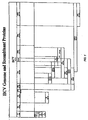
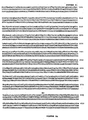


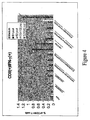
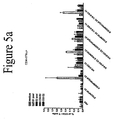
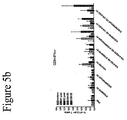

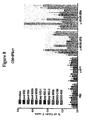
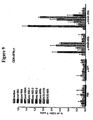

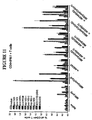
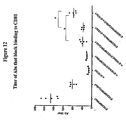
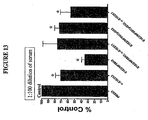
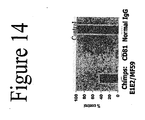
Classifications
-
- A—HUMAN NECESSITIES
- A61—MEDICAL OR VETERINARY SCIENCE; HYGIENE
- A61K—PREPARATIONS FOR MEDICAL, DENTAL OR TOILETRY PURPOSES
- A61K39/00—Medicinal preparations containing antigens or antibodies
- A61K39/12—Viral antigens
- A61K39/29—Hepatitis virus
-
- A—HUMAN NECESSITIES
- A61—MEDICAL OR VETERINARY SCIENCE; HYGIENE
- A61K—PREPARATIONS FOR MEDICAL, DENTAL OR TOILETRY PURPOSES
- A61K39/00—Medicinal preparations containing antigens or antibodies
- A61K39/12—Viral antigens
-
- A—HUMAN NECESSITIES
- A61—MEDICAL OR VETERINARY SCIENCE; HYGIENE
- A61K—PREPARATIONS FOR MEDICAL, DENTAL OR TOILETRY PURPOSES
- A61K39/00—Medicinal preparations containing antigens or antibodies
- A61K39/39—Medicinal preparations containing antigens or antibodies characterised by the immunostimulating additives, e.g. chemical adjuvants
-
- A—HUMAN NECESSITIES
- A61—MEDICAL OR VETERINARY SCIENCE; HYGIENE
- A61P—SPECIFIC THERAPEUTIC ACTIVITY OF CHEMICAL COMPOUNDS OR MEDICINAL PREPARATIONS
- A61P31/00—Antiinfectives, i.e. antibiotics, antiseptics, chemotherapeutics
- A61P31/12—Antivirals
- A61P31/14—Antivirals for RNA viruses
-
- C—CHEMISTRY; METALLURGY
- C07—ORGANIC CHEMISTRY
- C07K—PEPTIDES
- C07K14/00—Peptides having more than 20 amino acids; Gastrins; Somatostatins; Melanotropins; Derivatives thereof
- C07K14/005—Peptides having more than 20 amino acids; Gastrins; Somatostatins; Melanotropins; Derivatives thereof from viruses
-
- C—CHEMISTRY; METALLURGY
- C12—BIOCHEMISTRY; BEER; SPIRITS; WINE; VINEGAR; MICROBIOLOGY; ENZYMOLOGY; MUTATION OR GENETIC ENGINEERING
- C12N—MICROORGANISMS OR ENZYMES; COMPOSITIONS THEREOF; PROPAGATING, PRESERVING, OR MAINTAINING MICROORGANISMS; MUTATION OR GENETIC ENGINEERING; CULTURE MEDIA
- C12N15/00—Mutation or genetic engineering; DNA or RNA concerning genetic engineering, vectors, e.g. plasmids, or their isolation, preparation or purification; Use of hosts therefor
- C12N15/09—Recombinant DNA-technology
- C12N15/63—Introduction of foreign genetic material using vectors; Vectors; Use of hosts therefor; Regulation of expression
- C12N15/79—Vectors or expression systems specially adapted for eukaryotic hosts
- C12N15/85—Vectors or expression systems specially adapted for eukaryotic hosts for animal cells
- C12N15/86—Viral vectors
-
- A—HUMAN NECESSITIES
- A61—MEDICAL OR VETERINARY SCIENCE; HYGIENE
- A61K—PREPARATIONS FOR MEDICAL, DENTAL OR TOILETRY PURPOSES
- A61K39/00—Medicinal preparations containing antigens or antibodies
- A61K2039/51—Medicinal preparations containing antigens or antibodies comprising whole cells, viruses or DNA/RNA
- A61K2039/525—Virus
- A61K2039/5256—Virus expressing foreign proteins
-
- A—HUMAN NECESSITIES
- A61—MEDICAL OR VETERINARY SCIENCE; HYGIENE
- A61K—PREPARATIONS FOR MEDICAL, DENTAL OR TOILETRY PURPOSES
- A61K39/00—Medicinal preparations containing antigens or antibodies
- A61K2039/545—Medicinal preparations containing antigens or antibodies characterised by the dose, timing or administration schedule
-
- A—HUMAN NECESSITIES
- A61—MEDICAL OR VETERINARY SCIENCE; HYGIENE
- A61K—PREPARATIONS FOR MEDICAL, DENTAL OR TOILETRY PURPOSES
- A61K39/00—Medicinal preparations containing antigens or antibodies
- A61K2039/555—Medicinal preparations containing antigens or antibodies characterised by a specific combination antigen/adjuvant
- A61K2039/55511—Organic adjuvants
- A61K2039/55555—Liposomes; Vesicles, e.g. nanoparticles; Spheres, e.g. nanospheres; Polymers
-
- A—HUMAN NECESSITIES
- A61—MEDICAL OR VETERINARY SCIENCE; HYGIENE
- A61K—PREPARATIONS FOR MEDICAL, DENTAL OR TOILETRY PURPOSES
- A61K39/00—Medicinal preparations containing antigens or antibodies
- A61K2039/555—Medicinal preparations containing antigens or antibodies characterised by a specific combination antigen/adjuvant
- A61K2039/55511—Organic adjuvants
- A61K2039/55561—CpG containing adjuvants; Oligonucleotide containing adjuvants
-
- A—HUMAN NECESSITIES
- A61—MEDICAL OR VETERINARY SCIENCE; HYGIENE
- A61K—PREPARATIONS FOR MEDICAL, DENTAL OR TOILETRY PURPOSES
- A61K39/00—Medicinal preparations containing antigens or antibodies
- A61K2039/555—Medicinal preparations containing antigens or antibodies characterised by a specific combination antigen/adjuvant
- A61K2039/55511—Organic adjuvants
- A61K2039/55566—Emulsions, e.g. Freund's adjuvant, MF59
-
- C—CHEMISTRY; METALLURGY
- C12—BIOCHEMISTRY; BEER; SPIRITS; WINE; VINEGAR; MICROBIOLOGY; ENZYMOLOGY; MUTATION OR GENETIC ENGINEERING
- C12N—MICROORGANISMS OR ENZYMES; COMPOSITIONS THEREOF; PROPAGATING, PRESERVING, OR MAINTAINING MICROORGANISMS; MUTATION OR GENETIC ENGINEERING; CULTURE MEDIA
- C12N2770/00—MICROORGANISMS OR ENZYMES; COMPOSITIONS THEREOF; PROPAGATING, PRESERVING, OR MAINTAINING MICROORGANISMS; MUTATION OR GENETIC ENGINEERING; CULTURE MEDIA ssRNA viruses positive-sense
- C12N2770/00011—Details
- C12N2770/24011—Flaviviridae
- C12N2770/24211—Hepacivirus, e.g. hepatitis C virus, hepatitis G virus
- C12N2770/24222—New viral proteins or individual genes, new structural or functional aspects of known viral proteins or genes
-
- C—CHEMISTRY; METALLURGY
- C12—BIOCHEMISTRY; BEER; SPIRITS; WINE; VINEGAR; MICROBIOLOGY; ENZYMOLOGY; MUTATION OR GENETIC ENGINEERING
- C12N—MICROORGANISMS OR ENZYMES; COMPOSITIONS THEREOF; PROPAGATING, PRESERVING, OR MAINTAINING MICROORGANISMS; MUTATION OR GENETIC ENGINEERING; CULTURE MEDIA
- C12N2770/00—MICROORGANISMS OR ENZYMES; COMPOSITIONS THEREOF; PROPAGATING, PRESERVING, OR MAINTAINING MICROORGANISMS; MUTATION OR GENETIC ENGINEERING; CULTURE MEDIA ssRNA viruses positive-sense
- C12N2770/00011—Details
- C12N2770/24011—Flaviviridae
- C12N2770/24211—Hepacivirus, e.g. hepatitis C virus, hepatitis G virus
- C12N2770/24234—Use of virus or viral component as vaccine, e.g. live-attenuated or inactivated virus, VLP, viral protein
-
- C—CHEMISTRY; METALLURGY
- C12—BIOCHEMISTRY; BEER; SPIRITS; WINE; VINEGAR; MICROBIOLOGY; ENZYMOLOGY; MUTATION OR GENETIC ENGINEERING
- C12N—MICROORGANISMS OR ENZYMES; COMPOSITIONS THEREOF; PROPAGATING, PRESERVING, OR MAINTAINING MICROORGANISMS; MUTATION OR GENETIC ENGINEERING; CULTURE MEDIA
- C12N2770/00—MICROORGANISMS OR ENZYMES; COMPOSITIONS THEREOF; PROPAGATING, PRESERVING, OR MAINTAINING MICROORGANISMS; MUTATION OR GENETIC ENGINEERING; CULTURE MEDIA ssRNA viruses positive-sense
- C12N2770/00011—Details
- C12N2770/36011—Togaviridae
- C12N2770/36111—Alphavirus, e.g. Sindbis virus, VEE, EEE, WEE, Semliki
- C12N2770/36141—Use of virus, viral particle or viral elements as a vector
- C12N2770/36143—Use of virus, viral particle or viral elements as a vector viral genome or elements thereof as genetic vector
Definitions
- the present invention relates to the activation of hepatitis C virus (HCV)-specific T cells. More particularly, the invention relates using HCV protein compositions that include HCV E1E2 complexes and or proteins comprising HCV non-structural genes and subsequently boosting the immune response using a viral vector comprising nucleic acid compositions encoding HCV E1E2 complexes and or HCV non-structural genes, to stimulate humoral and cell-mediated immune responses, such as, e.g., to activate HCV-specific T cells and elicit antibodies that neutralize infectivity of HCV virus.
- HCV hepatitis C virus
- HCV Hepatitis C virus
- HCV has a 9.5 kb positive-sense, single-stranded RNA genome and is a member of the Flaviridae family of viruses. At least six distinct, but related genotypes of HCV, based on phylogenetic analyses, have been identified ( Simmonds et al., J. Gen. Virol. (1993) 74:2391-2399 ).
- the virus encodes a single polyprotein having about 3000 amino acid residues ( Choo et al., Science (1989) 244:359-362 ; Choo et al., Proc. Natl. Acad. Sci. USA (1991) 88:2451-2455 ; Han et al., Proc. Natl. Acad. Sci. USA (1991) 88:1711-1715 ).
- NS2 is an integral membrane protein with proteolytic activity and, in combination with NS3, cleaves the NS2-NS3 junction.
- the NS3 protease, along with its NS4a cofactor, serves to process the remaining polyprotein.
- NS3 liberates an NS3 cofactor (NS4a), two proteins (NS4b and NS5a), and an RNA-dependent RNA polymerase (NS5b).
- NS4a NS3 cofactor
- NS4b two proteins
- NS5b RNA-dependent RNA polymerase
- Completion of polyprotein maturation is initiated by autocatalytic cleavage at the NS3-NS4a junction, catalyzed by the NS3 serine protease.
- E1 is detected as a 32-35 kDa glycoprotein species and is converted by endoglycosidase H into an approximately 18 kDa species.
- E2 glycoprotein displays a complex pattern upon immunoprecipitation consistent with the generation of multiple species ( Spaete et al., Virol. (1992) 188:819-830 ; Selby et al., J. Virol. (1996) 70:5177-5182 ; Grakoui et al., J Virol. (1993) 67:1385-1395 ; Tomei et al., J Virol. (1993) 67:4017-4026 .).
- the HCV envelope glycoproteins E1 and E2 form a stable complex that is co-immunoprecipitable ( Grakoui et al., J. Virol. (1993) 67:1385-1395 ; Lanford et al., Virology (1993) 197:225-235 ; Ralston et al., J. Virol. (1993) 67:6753-6761 ).
- E1 and E2 are retained within the endoplasmic reticulum of cells and lack complex carbohydrate when expressed stably or in a transient Vaccinia virus system ( Spaete et al., Virology (1992) 188:819-830 ; Ralston et al., J. Virol. (1993) 67:6753-6761 ). Since the E1 and E2 proteins are normally membrane-bound in these expression systems, secreted truncated forms have been produced in order to facilitate purification of the proteins. See, e.g., U.S. Patent No. 6,121,020 . Additionally, intracellular production of E1E2 in Hela cells has been described. See, e.g., International Publication No. WO 98/50556 .
- HCV E1 and E2 glycoproteins are of considerable interest because they have been shown to be protective against viral challenge in primate studies.
- Meunier et al., Proc. Natl. Acad. Sci. USA (2005) 102:4560-4565 used retroviral pseudoparticles displaying intact E1 and E2 glycoproteins and found that viral-neutralizing antibodies raised during HCV-1 infections are also able to neutralize HCV genotypes 4, 5 and 6, but have only limited neutralization against HCV genotypes 2 and 3.
- T cell immunity to HCV may determine the outcome of HCV infection and disease ( Missale et al., J. Clin. Invest. (1996) 98:706 ; Cooper et al., Immunity (1999) 10:439 ; and Lechner et al., J. Exp. Med. (2000) 191:1499 ).
- Virus-specific T cell responses have been shown to play an important role in resolving acute HCV infections ( Shoukry et al., Ann. Rev. Microbiol. (2004) 58:391-424 ).
- HCV-specific T cell responses appear to play an important role in controlling HCV infection.
- WO0147551 teaches a method for eliciting an immune response binding to HCVE1E2 or E2 antigen using HCV E2 or E1E2 polypeptide and polynucleotide encoding the same in an animal or human (claim 1) said method may further comprise the administration of a polypeptide encoded by the polynucleotide (claim 27).
- the method can be used as prophylactic or therapeutic treatment against HCV infection (abstract), wherein the HCV E 1E2 is disclosed as a polypeptide having amino acid residues 192-809 of HCV (summary) and carried by a viral vector (p 19, I 11) induing an alphavirus vector (p 19, I 17) and adjuvant of oil-in water emulsion comprising 5% w/v Squalene 0.5% Tween 80 and/or 0.5% Span 85 and optionally, MTP-PE. 5% (p 25, I 8-10).
- the adjuvant composition is preferably Alum or MF59 that inherently compnses all three components cited above (p 25, I 30).
- Puig et al., Vaccine (2004) 22:991-1000 discloses that the immunization of chimpanzees with an envelope protein-based vaccine enhances specific humoral and cellular immune responses that delay hepatitis C virus infection.
- the invention provides a first composition comprising an HCV E1E2 protein complex and an MF59 adjuvant for use in a method of stimulating an immune response in a vertebrate subject, said method comprising:
- the invention also provides the use of a first composition comprising an HCV E1E2 protein complex and an MF59 adjuvant and a second composition comprising an alphavirus vector comprising a nucleic acid encoding an HCV E1E2 complex, whereby the nucleic acid encoding an HCV E1E2 complex is expressed in one or more cells of a subject and E1E2 protein complex is produced, in the manufacture of:
- the invention also provides a kit for inducing or generating an immune response in a subject, said kit comprising (i) a first composition which comprises an HCV E1E2 protein and an MF59 adjuvant; and (ii) a second composition which comprises an alphavirus vector encoding at least a portion of the HCV E1E2 protein of the first composition.
- Immunization with HCV NS345 proteins can elicit T cell responses to HCV and CpG can enhance the response.
- the present invention provides improved combination prime boosts that provide both a neutralizing antibody response and T cell responses (CD4+ T cell and CTL) to HCV.
- the invention provides a combination of HCV proteins and polynucleotides encoding one or more HCV proteins.
- the polynucleotides encoding the proteins are delivered as part of a viral vector particle.
- the viral vector particle is an alpahvirus and in a preferred embodiment is a chimeric alpahvirus replicon packaged in a defective alpahvirus particle.
- the immune response comprises the activation of HCV-specific T cells.
- the present invention is based in part, on the surprising discovery that priming immune responses using HCV E1E2 protein vaccines, and boosting with HCV E1E2 nucleic acid constructs delivered in a defective alpahvirus particle, stimulates a robust CD8+ T cell response.
- the use of such combinations provides an effective approach for stimulating a cellular and or humoral immune response to HCV E1E2 immunogens.
- priming with an HCV polyprotein or HCV fusion protein and boosting with alphavirus encoding at least a portion of the same polyprotein or fusion protein can also provide an increased immune response to HCV.
- the invention provides a so called "prime-boost" immunization regimen for eliciting or increasing an immune response to HCV in a subject.
- the priming immunization step comprises immunizing a subject with one or more proteins followed by a boosting step comprising immunizing the subject with a viral vector encoding one or more of said proteins.
- the viral vector is an alphavirus.
- the proteins are HCV proteins.
- the subject is a vertebrate subject.
- the vertebrate subject is a human.
- the proteins are HCV proteins and the viral vector is an alphavirus vector and the subject is a vertebrate animal or vertebrate subject.
- the vertebrate animal or vertebrate subject is a human.
- immunogenic compositions described herein are administered to a mammalian subject and in some embodiments the subject is a human.
- Priming means any method whereby a first immunization with the immunogenic protein compositions described herein permits the generation of an immune response to the target antigen or antigens upon a second or subsequent immunization (boosting) with virus replicon particles described herein comprising at least one of the same antigen or antigens administered in the priming step, wherein the second immune response is greater than that achieved where the first immunization is either not provided or where the first immunization administered does not comprise the same antigen or antigens administered in the second immunization.
- priming encompasses regimens which include a single dose or multiple dosages, administered hourly, daily, weekly, monthly or yearly.
- priming comprises at least two administrations (comprising one or more dose or dosage).
- priming by administration of one or more immunogenic compositions described herein entails at least two (e.g., 2, 3, 4, 5, 6, 7 or more) administrations (comprising one or more dose or dosage) of the immunogenic composition(s).
- the time interval between administrations can be hours, days, weeks, months or years.
- the repeated steps can be performed using the same or different immunogenic compositions.
- the immunogenic compositions described herein are administered as a booster to boost the immune response achieved after priming of the subject.
- Alphavirus replicon particles are administered as a booster some time after priming.
- Virus replicon particles administered as a booster comprise a nucleic acid encoding at least one same antigen administered by at least one priming step.
- boosting or boosting immunization
- Boosting encompasses regimens which include a single dose or multiple dosages, administered hourly, daily, weekly, monthly or yearly.
- boosting (or boosting immunization) comprises at least one administration.
- boosting comprises at least two administrations (comprising one or more dose or dosage).
- boosting by administration of one or more virus replicon particle entails at least two (e.g., 2, 3, 4, 5, 6, 7 or more) administrations (comprising one or more dose or dosage) of the virus replicon particle(s).
- the time interval between administrations can be hours, days, weeks, months or years.
- the repeated steps can be performed using the same or different virus replicon particles or immunogenic compositions.
- the priming or boosting immunizations can a combination of one or more of intramuscular, mucosal or systemic routes of immunization.
- the priming step(s) comprises immunizing a subject with HCV E1/E2 heterodimer and an adjuvant which is MF59, followed by a boosting step comprising immunization with an alphavirus replicon particle comprising a nucleic acid encoding the E1/E2 protein.
- the priming step(s) comprise immunizing a subject with HCV E1/E2 heterodimer, MF59 and a CpG followed by a boosting step comprising immunization with an alphavirus replicon particle comprising a nucleic acid encoding the E1/E2 protein.
- kits and the compositions of the invention all can further comprise administration or inclusion of a CpG or other immunostimulatory molecule and or adjuvant.
- the priming step(s) comprise immunizing a subject with HCV E1/E2 heterodimer, MF59 and a CpG followed by a boosting step comprising immunization with an alphavirus replicon particle comprising a nucleic acid encoding the E1/E2 protein.
- the priming step(s) comprise immunizing a vertebrate subject with HCV E1/E2 heterodimer, MF59 and a CpG followed by a boosting step comprising immunization with an alphavirus replicon particle comprising a nucleic acid encoding the E1/E2 protein.
- polypeptides and nucleotides encoding said polypeptides are derived from the same HCV isolate, or from different strains and isolates including isolates having any of the various HCV genotypes, to provide increased protection against a broad range of HCV genotypes.
- the invention provides for treating a subject that has already been exposed to HCV infection (i.e., a vertebrate subject that has already been "primed” by exposure to one or more HCV antigens) with an alphavirus boosting regimen to enhance the immune response to HCV in the vertebrate subject.
- a subject that has already been exposed to HCV infection i.e., a vertebrate subject that has already been "primed” by exposure to one or more HCV antigens
- the treatment can include one or more priming steps together with one or more boosting steps.
- the invention provides for treating a vertebrate subject that has already been exposed to HCV infection (i.e., a vertebrate subject that has already been "primed” by exposure to one or more HCV antigens) with an alphavirus boosting regimen to enhance the immune response to HCV in the vertebrate subject.
- the treatment can include one or more priming steps together with one or more boosting steps.
- the present invention also provides a kit for inducing or generating an immune response in a subject such as a mammal.
- the kit can comprise single or multiple doses of the first composition, of the second composition or of both first and second compositions.
- the kit can comprise a plurality of vials for one or both compositions, each vial comprising the dose to be administered to the subject at each administration.
- the kit can further comprise instructions for use of the kit.
- the kit can also comprise an applicator for administering the first composition and/or an applicator for administering the second composition to the mammal.
- kits of the invention can further comprise instructions for using the compositions of the kit alone or together with other compositions.
- the E1/E2 protein complexes and or the alphavirus encoding said E1/E2 complexes can be partial or complete protein (or protein-coding in the case of the viral vector) sequences as described further herein. Furthermore, it is not necessary that the exact sequence used as the protein immunization composition is included in the nucleic acid encoding the protein sequence. Either the protein amino acid sequence or nucleic acid encoding the protein sequence can be partial or complete in regards to the HCV genome.
- the first and second compositions can be administered one or more times in any variety of combinations, such as for example 1, 2, 3,4, or 5 or more sequential administrations of the first composition comprising a protein followed by 1, 2, 3, 4 or 5 or more sequential administrations of the second composition comprising a viral vector. Furthermore, administration of the second composition can occur before administration of a second or subsequent first composition.
- the first protein compositions can comprise more than one adjuvant or an adjuvant and another immunostimulatory composition.
- One preferred adjuvant is a submicron oil-in-water emulsion.
- the submicron oil-in-water emulsion to be added to the protein composition comprises 4-5% w/v squalene, 0.25-1.0% w/v polyoxyelthylenesorbitan monooleate, and/or 0.25-1.0% sorbitan trioleate, and optionally, N-acetylmuramyl-L-alanyl-D-isogluatminyl-L-alanine-2-(1'-2'-dipalmitoyl- sn -glycero -3-huydroxyphosphoryloxy)-ethylamine (MTP-PE).
- the submicron oil-in-water emulsion is MF59.
- One preferred immunostimulatory composition is an immunostimulatory nucleic acid which on one preferred composition is
- the first composition comprising an E1E2 protein can be produced by expression of a polynucleotide encoding a sequence of amino acids having at least 80% sequence identity to the sequence of amino acids depicted at positions 192-809 of Figures 2A-2C .
- the second composition comprising a viral vector comprising a nucleic acid encoding an HCV E1 E2 complex encodes a sequence of amino acids having at least 80% sequence identity to the sequence of amino acids depicted at positions 192-746 of Figures 2A-2C .
- the adjuvant and the protein antigen(s) may be administered simultaneously, sequentially or separately.
- the adjuvant may be administered to prime the subject before administration of the antigen(s) or after the administration of the antigen(s) to boost the immune response to that antigen.
- the adjuvant and protein antigen(s) are preferably administered in admixture.
- the protein antigen(s) and the viral vector may be administered simultaneously, sequentially or separately.
- the protein composition maybe administered to prime the subject before administration of the viral vector.
- the protein antigen(s) and viral vector are preferably administered sequentially with protein antigen administered at least once before the viral vector is administered.
- polypeptide and protein refer to a polymer of amino acid residues and are not limited to a minimum length of the product. Thus, peptides, oligopeptides, dimers, multimers, and the like, are included within the definition. Both full-length proteins and fragments thereof are encompassed by the definition.
- the terms also include postexpression modifications of the polypeptide, for example, glycosylation, acetylation, phosphorylation and the like.
- a "polypeptide” refers to a protein which includes modifications, such as deletions, additions and substitutions (generally conservative in nature), to the native sequence, so long as the protein maintains the desired activity. These modifications may be deliberate, as through site-directed mutagenesis, or may be accidental, such as through mutations of hosts which produce the proteins or errors due to PCR amplification.
- E1 polypeptide a molecule derived from an HCV E1 region.
- the mature E1 region of HCV-1 begins at approximately amino acid 192 of the polyprotein and continues to approximately amino acid 383, numbered relative to the full-length HCV-1 polyprotein.
- Amino acids 192-383 of Figures 2A-2C correspond to amino acid positions 20-211 of SEQ ID NO:2.
- Amino acids at around 173 through approximately 191 (amino acids 1-19 of SEQ ID NO:2) serve as a signal sequence for E1.
- an "E1 polypeptide” is meant either a precursor E1 protein, including the signal sequence, or a mature E1 polypeptide which lacks this sequence, or even an-E1 polypeptide with a heterologous signal sequence.
- the E1 polypeptide includes a C-terminal membrane anchor sequence which occurs at approximately amino acid positions 360-383 (see, International Publication No. WO 96/04301, published February 15, 1996 ).
- An E1 polypeptide, as defined herein, may or may not include the C-terminal anchor sequence or portions thereof.
- an “E2 polypeptide” is meant a molecule derived from an HCV E2 region.
- the mature E2 region of HCV-1 begins at approximately amino acid 383-385, numbered relative to the full-length HCV-1 polyprotein. (See, Figures 1 and 2A-2C . Amino acids 383-385 of Figures 2A-2C correspond to amino acid positions 211-213 of SEQ ID NO:2.)
- a signal peptide begins at approximately amino acid 364 of the polyprotein.
- an “E2 polypeptide” is meant either a precursor E2 protein, including the signal sequence, or a mature E2 polypeptide which lacks this sequence, or even an E2 polypeptide with a heterologous signal sequence.
- the E2 polypeptide includes a C-terminal membrane anchor sequence which occurs at approximately amino acid positions 715-730 and may extend as far as approximately amino acid residue 746 (see, Lin et al., J. Virol. (1994) 68:5063-5073 ).
- An E2 polypeptide, as defined herein, may or may not include the C-terminal anchor sequence or portions thereof.
- an E2 polypeptide may also include all or a portion of the p7 region which occurs immediately adjacent to the C-terminus of E2. As shown in Figures 1 and 2A-2C , the p7 region is found at positions 747-809, numbered relative to the full-length HCV-1 polyprotein (amino acid positions 575-637 of SEQ ID NO:2).
- HCV E2 HCV E2
- E2 encompasses any of these species of E2 including, without limitation, species that have deletions of 1-20 or more of the amino acids from the N-terminus of the E2, such as, e.g, deletions of 1, 2, 3, 4, 5....10...15, 16, 17, 18, 19... etc. amino acids.
- Such E2 species include those beginning at amino acid 387, amino acid 402, amino acid 403, etc.
- E1 and E2 regions from HCV-1 are shown in Figures 2A-2C and SEQ ID NO:2.
- the E1 and E2 regions are defined with respect to the amino acid number of the polyprotein encoded by the genome of HCV-1, with the initiator methionine being designated position 1. See, e.g., Choo et al., Proc. Natl. Acad. Sci. USA (1991) 88:2451-2455 .
- the term an "E1 polypeptide” or an "E2 polypeptide” as used herein is not limited to the HCV-1 sequence.
- the corresponding E1 or E2 regions in other HCV isolates can be readily determined by aligning sequences from the isolates in a manner that brings the sequences into maximum alignment. This can be performed with any of a number of computer software packages, such as ALIGN 1.0, available from the University of Virginia, Department of Biochemistry (Attn: Dr. William R. Pearson). See, Pearson et al., Proc. Natl. Acad. Sci. USA (1988) 85:2444-2448 .
- an "E1 polypeptide” or an “E2 polypeptide” as defined herein is not limited to a polypeptide having the exact sequence depicted in the Figures. Indeed, the HCV genome is in a state of constant flux in vivo and contains several variable domains which exhibit relatively high degrees of variability between isolates. A number of conserved and variable regions are known between these strains and, in general, the amino acid sequences of epitopes derived from these regions will have a high degree of sequence homology, e.g., amino acid sequence homology of more than 30%, preferably more than 40%, more than 60%, and even more than 80-90% homology, when the two sequences are aligned.
- E1 and E2 polypeptides from any of the various HCV strains and isolates including isolates having any of the 6 genotypes of HCV described in Simmonds et al., J. Gen. Virol. (1993) 74:2391-2399 (e.g., strains 1, 2, 3, 4 etc.), as well as newly identified isolates, and subtypes of these isolates, such as HCV1a, HCV1b etc.
- E1 or E2 polypeptide refers to native E1 or E2 sequences from any of the various HCV strains, as well as analogs, muteins and immunogenic fragments, as defined further below.
- the complete genotypes of many of these strains are known. See, e.g., U.S. Patent No. 6,150,087 and GenBank Accession Nos. AJ238800 and AJ238799.
- E1 polypeptide and E2 polypeptide encompass proteins which include modifications to the native sequence, such as internal deletions, additions and substitutions (generally conservative in nature), such as proteins substantially homologous to the parent sequence. These modifications may be deliberate, as through site-directed mutagenesis, or may be accidental, such as through naturally occurring mutational events. All of these modifications are encompassed in the present invention so long as the modified E1 and E2 polypeptides function for their intended purpose. Thus, for example, if the E1 and/or E2 polypeptides are to be used in vaccine compositions, the modifications must be such that immunological activity (i.e., the ability to elicit a humoral or cellular immune response to the polypeptide) is not lost. Generally, then, for purposes of the present invention, the polypeptides will retain at least one T cell epitope such that a cellular immune response can be generated in a subject to which the polypeptides are delivered.
- immunological activity i.e., the ability to elicit a humoral
- the compositions comprising E1E2 protein complexes useful for practice of the invention can further include one or more adjuvants.
- E1 and E2 polypeptides may be associated through non-covalent interactions such as through electrostatic forces, or by covalent bonds.
- the E1E2 polypeptides of the present invention may be in the form of a fusion protein which includes an immunogenic E1 polypeptide and an immunogenic E2 polypeptide, as defined above.
- the fusion may be expressed from a polynucleotide encoding an E1E2 chimera.
- E1E2 complexes may form spontaneously simply by mixing E1 and E2 proteins which have been produced individually. Similarly, when co-expressed and secreted into media, the E1 and E2 proteins can form a complex spontaneously.
- E1E2 complexes also called aggregates
- Such aggregates may include one or more E1 monomers in association with one or more E2 monomers.
- the number of E1 and E2 monomers present need not be equal so long as at least one E1 monomer and one E2 monomer are present.
- Detection of the presence of an E1E2 complex is readily determined using standard protein detection techniques such as polyacrylamide gel electrophoresis and immunological techniques such as immunoprecipitation.
- analog and mutant refer to biologically active derivatives of the reference molecule, such as E1E2 809 , or fragments of such derivatives, that retain desired activity, such as immunoreactivity in assays described herein.
- analog refers to compounds having a native polypeptide sequence and structure with one or more amino acid additions, substitutions (generally conservative in nature) and/or deletions, relative to the native molecule, so long as the modifications do not destroy immunogenic activity.
- mutein refers to peptides having one or more peptide mimics ("peptoids").
- the analog or mutein has at least the same immunoreactivity as the native molecule. Methods for making polypeptide analogs and muteins are known in the art and are described further below.
- amino acids are generally divided into four families: (1) acidic -- aspartate and glutamate; (2) basic -- lysine, arginine, histidine; (3) non-polar -- alanine, valine, leucine, isoleucine, proline, phenylalanine, methionine, tryptophan; and (4) uncharged polar -- glycine, asparagine, glutamine, cysteine, serine threonine, tyrosine. Phenylalanine, tryptophan, and tyrosine are sometimes classified as aromatic amino acids.
- the polypeptide of interest such as an E1E2 polypeptide, may include up to about 5-10 conservative or non-conservative amino acid substitutions, or even up to about 15-25 or 50 conservative or non-conservative amino acid substitutions, or any integer between 5-50, so long as the desired function of the molecule remains intact.
- One of skill in the art can readily determine regions of the molecule of interest that can tolerate change by reference to Hopp/Woods and Kyte-Doolittle plots, well known in the art.
- fragment is intended a polypeptide consisting of only a part of the intact full-length polypeptide sequence and structure.
- the fragment can include a C-terminal deletion an N-terminal deletion, and/or an internal deletion of the native polypeptide.
- An "immunogenic fragment" of a particular HCV protein will generally include at least about 5-10 contiguous amino acid residues of the full-length molecule, preferably at least about 15-25 contiguous amino acid residues of the full-length molecule, and most preferably at least about 20-50 or more contiguous amino acid residues of the full-length molecule, that define an epitope, or any integer between 5 amino acids and the full-length sequence, provided that the fragment in question retains the ability to elicit an immunological response as defined herein.
- immunogenic fragments of HCV E1 and E2 see, e.g., Chien et al., International Publication No. WO 93/00365 .
- epitope refers to a sequence of at least about 3 to 5, preferably about 5 to 10 or 15, and not more than about 500 amino acids (or any integer therebetween), which define a sequence that by itself or as part of a larger sequence, elicits an immunological response in the subject to which it is administered. Often, an epitope will bind to an antibody generated in response to such sequence. There is no critical upper limit to the length of the fragment, which may comprise nearly the full-length of the protein sequence, or even a fusion protein comprising two or more epitopes from the HCV polyprotein. An epitope for use in the subject invention is not limited to a polypeptide having the exact sequence of the portion of the parent protein from which it is derived.
- epitopes encompasses sequences identical to the native sequence, as well as modifications to the native sequence, such as deletions, additions and substitutions (generally conservative in nature).
- Regions of a given polypeptide that include an epitope can be identified using any number of epitope mapping techniques, well known in the art. See, e.g., Epitope Mapping Protocols in Methods in Molecular Biology, Vol. 66 (Glenn E. Morris, Ed., 1996) Humana Press, Totowa, New Jersey .
- linear epitopes may be determined by e.g., concurrently synthesizing large numbers of peptides on solid supports, the peptides corresponding to portions of the protein molecule, and reacting the peptides with antibodies while the peptides are still attached to the supports. Such techniques are known in the art and described in, e.g., U.S. Patent No.
- conformational epitopes are readily identified by determining spatial conformation of amino acids such as by, e.g., x-ray crystallography and 2-dimensional nuclear magnetic resonance. See, e.g., Epitope Mapping Protocols, supra.
- Antigenic regions of proteins can also be identified using standard antigenicity and hydropathy plots, such as those calculated using, e.g., the Omiga version 1.0 software program available from the Oxford Molecular Group. This computer program employs the Hopp/Woods method, Hopp et al., Proc. Natl. Acad Sci USA (1981) 78:3824-3828 for determining antigenicity profiles, and the Kyte-Doolittle technique, Kyte et al., J. Mol. Biol. (1982) 157:105-132 for hydropathy plots.
- the term "conformational epitope” refers to a portion of a full-length protein, or an analog or mutein thereof, having structural features native to the amino acid sequence encoding the epitope within the full-length natural protein. Native structural features include, but are not limited to, glycosylation and three dimensional structure.
- the length of the epitope defining sequence can be subject to wide variations as these epitopes are believed to be formed by the three-dimensional shape of the antigen (e.g., folding).
- amino acids defining the epitope can be relatively few in number, but widely dispersed along the length of the molecule (or even on different molecules in the case of dimers, etc.), being brought into correct epitope conformation via folding.
- the portions of the antigen between the residues defining the epitope may not be critical to the conformational structure of the epitope. For example, deletion or substitution of these intervening sequences may not affect the conformational epitope provided sequences critical to epitope conformation are maintained (e.g., cysteines involved in disulfide bonding, glycosylation sites, etc.).
- Conformational epitopes are readily identified using methods discussed above. Moreover, the presence or absence of a conformational epitope in a given polypeptide can be readily determined through screening the antigen of interest with an antibody (polyclonal serum or monoclonal to the conformational epitope) and comparing its reactivity to that of a denatured version of the antigen which retains only linear epitopes (if any). In such screening using polyclonal antibodies, it may be advantageous to absorb the polyclonal serum first with the denatured antigen and see if it retains antibodies to the antigen of interest. Conformational epitopes derived from the E1 and E2 regions are described in, e.g., International Publication No. WO 94/01778 .
- T-cell epitope refers to a feature of a peptide structure which is capable of inducing T-cell immunity towards the peptide structure or an associated hapten.
- T-cell epitopes generally comprise linear peptide determinants that assume extended conformations within the peptide-binding cleft of MHC molecules, ( Unanue et al., Science (1987) 236:551-557 ). Conversion of polypeptides to MHC class II-associated linear peptide determinants (generally between 5-14 amino acids in length) is termed "antigen processing" which is carried out by antigen presenting cells (APCs).
- APCs antigen presenting cells
- a T-cell epitope is defined by local features of a short peptide structure, such as primary amino acid sequence properties involving charge and hydrophobicity, and certain types of secondary structure, such as helicity, that do not depend on the folding of the entire polypeptide.
- short peptides capable of recognition by helper T-cells are generally amphipathic structures comprising a hydrophobic side (for interaction with the MHC molecule) and a hydrophilic side (for interacting with the T-cell receptor), ( Margalit et al., Computer Prediction of T-cell Epitopes, New Generation Vaccines Marcel-Dekker, Inc, ed. G.C. Woodrow et al., (1990) pp.
- amphipathic structures have an ⁇ -helical configuration (see, e.g., Spouge et al., J. Immunol. (1987) 138:204-212 ; Berkower et al., J. Immunol. (1986) 136:2498-2503 ).
- segments of proteins that include T-cell epitopes can be readily predicted using numerous computer programs.
- Such programs generally compare the amino acid sequence of a peptide to sequences known to induce a T-cell response, and search for patterns of amino acids which are believed to be required for a T-cell epitope.
- an "immunological response" to an HCV antigen or composition is the development in a subject of a humoral and/or a cellular immune response to molecules present in the composition of interest.
- a “humoral immune response” refers to an immune response mediated by antibody molecules
- a "cellular immune response” is one mediated by T-lymphocytes and/or other white blood cells.
- CTLs cytolytic T-cells
- CTLs have specificity for peptide antigens that are presented in association with proteins encoded by the major histocompatibility complex (MHC) and expressed on the surfaces of cells.
- helper T-cells help induce and promote the intracellular destruction of intracellular microbes, or the lysis of cells infected with such microbes.
- Another aspect of cellular immunity involves an antigen-specific response by helper T-cells.
- Helper T-cells act to help stimulate the function, and focus the activity of, nonspecific effector cells against cells displaying peptide antigens in association with MHC molecules on their surface.
- a "cellular immune response” also refers to the production of cytokines, chemokines and other such molecules produced by activated T-cells and/or other white blood cells, including those derived from CD4+ and CD8+ T-cells.
- a composition or vaccine that elicits a cellular immune response may serve to sensitize a vertebrate subject by the presentation of antigen in association with MHC molecules at the cell surface.
- the cell-mediated immune response is directed at, or near, cells presenting antigen at their surface.
- antigen-specific T-lymphocytes can be generated to allow for the future protection of an immunized host.
- the ability of a particular antigen to stimulate a cell-mediated immunological response may be determined by a number of assays, such as by lymphoproliferation (lymphocyte activation) assays; CTL cytotoxic cell assays, or by assaying for T-lymphocytes specific for the antigen in a sensitized subject. Such assays are well known in the art.
- an immunological response as used herein may be one which stimulates the production of CTLs, and/or the production or activation of helper T cells.
- the antigen of interest may also elicit an antibody-mediated immune response, including, or example, neutralization of binding (NOB) antibodies.
- NOB neutralization of binding
- the presence of an NOB antibody response is readily determined by the techniques described in, e.g., Rosa et al., Proc. Natl. Acad. Sci. USA (1996) 93:1759 .
- an immunological response may include one or more of the following effects: the production of antibodies by B-cells; and/or the activation of suppressor T-cells and/or ⁇ T-cells directed specifically to an antigen or antigens present in the composition or vaccine of interest.
- responses may serve to neutralize infectivity, and/or mediate antibody-complement, or antibody dependent cell cytotoxicity (ADCC) to provide protection or alleviation of symptoms to an immunized host.
- ADCC antibody dependent cell cytotoxicity
- Such responses can be determined using standard immunoassays and neutralization assays, well known in the art.
- isolated is meant, when referring to a polypeptide, that the indicated molecule is separate and discrete from the whole organism with which the molecule is found in nature or is present in the substantial absence of other biological macro-molecules of the same type.
- isolated with respect to a polynucleotide is a nucleic acid molecule devoid, in whole or part, of sequences normally associated with it in nature; or a sequence, as it exists in nature, but having heterologous sequences in association therewith; or a molecule disassociated from the chromosome.
- equivalent antigenic determinant an antigenic determinant from different sub-species or strains of HCV, such as from strains 1, 2, 3, etc., of HCV which antigenic determinants are not necessarily identical due to sequence variation, but which occur in equivalent positions in the HCV sequence in question.
- amino acid sequences of equivalent antigenic determinants will have a high degree of sequence homology, e.g., amino acid sequence homology of more than 30%, usually more than 40%, such as more than 60%, and even more than 80-90% homology, when the two sequences are aligned.
- Homology refers to the percent identity between two polynucleotide or two polypeptide moieties.
- Two DNA, or two polypeptide sequences are "substantially homologous" to each other when the sequences exhibit at least about 50% , preferably at least about 75%, more preferably at least about 80%-85%, preferably at least about 90%, and most preferably at least about 95%-98% sequence identity over a defined length of the molecules.
- substantially homologous also refers to sequences showing complete identity to the specified DNA or polypeptide sequence.
- identity refers to an exact nucleotide-to-nucleotide or amino acid-to-amino acid correspondence of two polynucleotides or polypeptide sequences, respectively. Percent identity can be determined by a direct comparison of the sequence information between two molecules by aligning the sequences, counting the exact number of matches between the two aligned sequences, dividing by the length of the shorter sequence, and multiplying the result by 100. Readily available computer programs can be used to aid in the analysis, such as ALIGN, Dayhoff, M.O. in Atlas of Protein Sequence and Structure M.O. Dayhoff ed., 5 Suppl.
- nucleotide sequence identity is available in the Wisconsin Sequence Analysis Package, Version 8 (available from Genetics Computer Group, Madison, WI) for example, the BESTFIT, FASTA and GAP programs, which also rely on the Smith and Waterman algorithm. These programs are readily utilized with the default parameters recommended by the manufacturer and described in the Wisconsin Sequence Analysis Package referred to above. For example, percent identity of a particular nucleotide sequence to a reference sequence can be determined using the homology algorithm of Smith and Waterman with a default scoring table and a gap penalty of six nucleotide positions.
- Another method of establishing percent identity in the context of the present invention is to use the MPSRCH package of programs copyrighted by the University of Edinburgh, developed by John F. Collins and Shane S. Sturrok, and distributed by IntelliGenetics, Inc. (Mountain View, CA). From this suite of packages the Smith-Waterman algorithm can be employed where default parameters are used for the scoring table (for example, gap open penalty of 12, gap extension penalty of one, and a gap of six). From the data generated the "Match" value reflects "sequence identity.”
- Other suitable programs for calculating the percent identity or similarity between sequences are generally known in the art, for example, another alignment program is BLAST, used with default parameters.
- homology can be determined by hybridization of polynucleotides under conditions which form stable duplexes between homologous regions, followed by digestion with single-stranded-specific nuclease(s), and size determination of the digested fragments.
- DNA sequences that are substantially homologous can be identified in a Southern hybridization experiment under, for example, stringent conditions, as defined for that particular system. Defining appropriate hybridization conditions is within the skill of the art. See, e.g., Sambrook et al., supra ; DNA Cloning, supra ; Nucleic Acid Hybridization, supra.
- degenerate variant is intended a polynucleotide containing changes in the nucleic acid sequence thereof, that encodes a polypeptide having the same amino acid sequence as the polypeptide encoded by the polynucleotide from which the degenerate variant is derived.
- a degenerate variant of E1E2 809 DNA is a molecule with one or more base differences in the DNA sequence from which the molecule is derived but that encodes the same E1E2 809 amino acid sequence.
- a "coding sequence” or a sequence which "encodes" a selected polypeptide is a nucleic acid molecule which is transcribed (in the case of DNA) and translated (in the case of mRNA) into a polypeptide in vitro or in vivo when placed under the control of appropriate regulatory sequences.
- the boundaries of the coding sequence are determined by a start codon at the 5' (amino) terminus and a translation stop codon at the 3' (carboxy) terminus.
- a transcription termination sequence may be located 3' to the coding sequence.
- no stop start codons naturally occur in the polyprotein.
- Synthetic protein expression constructs can be made which comprise E1/E2 fusion proteins further comprising a start codon and optionally a secretory or leader sequence using various techniques known to the skilled artisan and an example of which is provided herein.
- nucleic acid molecule or “polynucleotide” can include both double- and single-stranded sequences and refers to, but is not limited to, cDNA from viral, procaryotic or eucaryotic mRNA, genomic DNA sequences from viral (e.g. DNA viruses and retroviruses) or procaryotic DNA, and synthetic DNA sequences. The term also captures sequences that include any of the known base analogs of DNA and RNA.
- HCV polynucleotide is a polynucleotide that encodes an HCV polypeptide, as defined above.
- “Operably linked” refers to an arrangement of elements wherein the components so described are configured so as to perform their desired function.
- a given promoter operably linked to a coding sequence is capable of effecting the expression of the coding sequence when the proper transcription factors, etc., are present.
- the promoter need not be contiguous with the coding sequence, so long as it functions to direct the expression thereof.
- intervening untranslated yet transcribed sequences can be present between the promoter sequence and the coding sequence, as can transcribed introns, and the promoter sequence can still be considered “operably linked" to the coding sequence.
- Recombinant as used herein to describe a nucleic acid molecule means a polynucleotide of genomic, cDNA, viral, semisynthetic, or synthetic origin which, by virtue of its origin or manipulation is not associated with all or a portion of the polynucleotide with which it is associated in nature.
- the term "recombinant” as used with respect to a protein or polypeptide means a polypeptide produced by expression of a recombinant polynucleotide.
- the gene of interest is cloned and then expressed in transformed organisms, as described further below. The host organism expresses the foreign gene to produce the protein under expression conditions.
- control element refers to a polynucleotide sequence which aids in the expression of a coding sequence to which it is linked.
- the term includes promoters, transcription termination sequences, upstream regulatory domains, polyadenylation signals, untranslated regions, including 5'-UTRs and 3'-UTRs and when appropriate, leader sequences and enhancers, which collectively provide for the transcription and translation of a coding sequence in a host cell.
- a “promoter” as used herein is a DNA regulatory region capable of binding RNA polymerase in a host cell and initiating transcription of a downstream (3' direction) coding sequence operably linked thereto.
- a promoter sequence includes the minimum number of bases or elements necessary to initiate transcription of a gene of interest at levels detectable above background.
- Within the promoter sequence is a transcription initiation site, as well as protein binding domains (consensus sequences) responsible for the binding of RNA polymerase.
- Eucaryotic promoters will often, but not always, contain "TATA" boxes and "CAT” boxes.
- a control sequence "directs the transcription" of a coding sequence in a cell when RNA polymerase will bind the promoter sequence and transcribe the coding sequence into mRNA, which is then translated into the polypeptide encoded by the coding sequence.
- “Expression cassette” or “expression construct” refers to an assembly which is capable of directing the expression of the sequence(s) or gene(s) of interest.
- the expression cassette includes control elements, as described above, such as a promoter which is operably linked to (so as to direct transcription of) the sequence(s) or gene(s) of interest, and often includes a polyadenylation sequence as well.
- the expression cassette described herein may be contained within a plasmid construct.
- the plasmid construct may also include, one or more selectable markers, a signal which allows the plasmid construct to exist as single-stranded DNA (e.g., a M13 origin of replication), at least one multiple cloning site, and a "mammalian" origin of replication (e.g., a SV40 or adenovirus origin of replication).
- a signal which allows the plasmid construct to exist as single-stranded DNA e.g., a M13 origin of replication
- at least one multiple cloning site e.g., a SV40 or adenovirus origin of replication
- Transformation refers to the insertion of an exogenous polynucleotide into a host cell, irrespective of the method used for insertion: for example, transformation by direct uptake, transfection, infection, and the like. For particular methods of transformation, see further below.
- the exogenous polynucleotide may be maintained as a nonintegrated vector, for example, an episome, or alternatively, may be integrated into the host genome.
- nucleic acid immunization is meant the introduction of a nucleic acid molecule encoding one or more selected immunogens, such as an E1E2 complex, into a host cell, for the in vivo expression of the immunogen.
- the nucleic acid molecule can be introduced directly into a recipient subject, such as by injection, inhalation, oral, intranasal and mucosal administration, or the like, or can be introduced ex vivo, into cells which have been removed from the host. In the latter case, the transformed cells are reintroduced into the subject where an immune response can be mounted against the immunogen encoded by the nucleic acid molecule.
- alphavirus has its conventional meaning in the art, and includes Eastern Equine Encephalitis virus (EEE), Venezuelan Equine Encephalitis virus (VEE), Everglades virus, Mucambo virus, Pixuna virus, Western Encephalitis virus (WEE), Sindbis virus (SIN), South African Arbovirus No.86 (S.A.AR86), Girdwood S.A.
- alphaviruses for use in the present invention are SIN strains, VEE strains, Ockelbo virus, and chimeric viruses thereof.
- a "viral vector” refers to a nucleic acid construct that carries, and within certain embodiments, is capable of directing the expression of a nucleic acid molecule of interest, such as a polynucleotide encoding an E1E2 complex.
- Viral vectors may be utilized in several formats, including DNA, RNA, and recombinant replicons particles.
- the term viral vector includes a nucleic acid provided in a viral particle, such as for example a defective chimeric alphavirus particle.
- alphavirus vector refers to a nucleic acid construct that carries, and within certain embodiments, is capable of directing the expression of a nucleic acid molecule of interest, such as a polynucleotide encoding an E1E2 complex.
- Alphavirus vectors may be utilized in several formats, including DNA, RNA, and recombinant replicon particles. Such replicon vectors have been derived from alphaviruses that include, for example, Siridbis virus, Semliki Forest virus, and/or Venezuelan equine encephalitis virus. See, e.g., U.S. Patent Nos. 5,789,245 ; 5,814,482 ; and 6,376,235 and WO 02/099035 .
- RNA replicon vector refers to an RNA molecule that is capable of directing its own amplification or self-replication in vivo, within a target cell.
- the RNA molecule should encode the polymerase(s) necessary to catalyze RNA amplification (e.g., alphavirus nonstructural proteins nsP1, nsP2, nsP3, nsP4) and also contain cis RNA sequences required for replication which are recognized and utilized by the encoded polymerase(s).
- An alphavirus RNA vector replicon typically contains the following ordered elements: 5' viral or cellular sequences required for nonstructural protein-mediated amplification (may also be referred to as 5' CSE, or 5' cis replication sequence, or 5' viral sequences required in cis for replication, or 5' sequence which is capable of initiating transcription of an alphavirus), sequences which, when expressed, code for biologically active alphavirus nonstructural proteins (e.g ., nsP1, nsP2, nsP3, nsP4), and 3' viral or cellular sequences required for nonstructural protein-mediated amplification (may also be referred as 3' CSE, or 3' viral sequences required in cis for replication, or an alphavirus RNA polymerase recognition sequence).
- 5' viral or cellular sequences required for nonstructural protein-mediated amplification may also be referred to as 5' CSE, or 5' cis replication sequence, or 5' viral sequences required in cis for replication, or 5
- the alphavirus RNA vector replicon also should contain a means to express one or more heterologous sequence(s), such as for example, an IRES or a viral (e.g., alphaviral) subgenomic promoter (e.g ., junction region promoter) which may, in certain embodiments, be modified in order to increase or reduce viral transcription of the subgenomic fragment, or to decrease homology with defective helper or structural protein expression cassettes, and one or more heterologous sequence(s) to be expressed.
- the replicons will also contain additional sequences, for example, one or more heterologous sequence(s) encoding one or more polypeptides (e.g. , a protein-encoding gene or a 3' proximal gene) and/or a polyadenylate tract.
- chimeric alphavirus particle and “chimeric alphavirus replicon particle” refer to a chimera or chimeric particle such as a virus, or virus-like particle, specifically modified or engineered to contain a nucleic acid derived from a alphavirus other than the alphavirus from which either the capsid and/or envelope glycoprotein was derived (e.g., from a different virus).
- the nucleic acid derived from an alphavirus is an RNA molecule comprising one of any number of different lengths, including, but not limited to genome-length (encoding nonstructural and structural proteins) and replicon-length (deleted of one or more structural proteins).
- chimeric replicon particles may include Sindbis virus (SIN) replicon RNA within a capsid having a Sindbis virus RNA binding domain and a Venezuelan equine encephalitis virus (VEE) envelope glycoprotein interaction domain, surrounded by a VEE glycoprotein envelope and/or a VEE replicon RNA having a deletion in nsP3, a SIN packaging signal inserted into the deletion in nsP3 and capsid and envelope proteins derived from SIN.
- Sindbis virus Sindbis virus
- VEE Venezuelan equine encephalitis virus
- Chimeric alphavirus vectors are described, for example, in U.S. Patent Publications 20030232324 and 20030148262 .
- the invention employs defective alphavirus particles that are chimeric.
- the term "defective alphavirus particle” refers to a virus particle that can generate copies of its RNA upon infection in a cell, thereby expressing any exogenous gene encoded on the alphavirus, but the virus is lacking in one or more functions required for production of new viral particles following infection.
- such defective alphavirus particles lack one or more structural genes required for generatton of new particles. (See, e . g. , WO/61772 ).
- an effective amount or “pharmaceutically effective amount” of an immunogenic composition refers to a nontoxic but sufficient amount of the composition to provide the desired response, such as an immunological response, and optionally, a corresponding therapeutic effect.
- the exact amount required will vary from subject to subject, depending on the species, age, and general conditions of the subject, the severity of the condition being treated, and the particular macromolecule of interest, mode of administration, and the like. An appropriate "effective" amount in any individual case may be determined by one of ordinary skill in the art using routine experimentation.
- vertebrate subject any member of the subphylum chordata, including, without limitation, humans and other primates, including non-human primates such as chimpanzees and other apes and monkey species; farm animals such as cattle, sheep, pigs; goats and horses; domestic mammals such as dogs and cats; laboratory animals including rodents such as mice, rats and guinea pigs; birds, including domestic, wild and game birds such as chickens, turkeys and other gallinaceous birds, ducks, geese, and the like.
- the term does not denote a particular age. Thus, both adult and newborn individuals are intended to be covered.
- the invention described herein is intended for use in any of the above vertebrate species, since the immune systems of all of these vertebrates operate similarly.
- treatment refers to either (1) the prevention of infection or reinfection (prophylaxis), or (2) the reduction or elimination of symptoms of the disease of interest (therapy).
- compositions including the E1E2 complexes may also contain adjuvants, such as submicron oil-in-water emulsions described in detail below.
- Subjects are subsequently boosted with a viral vector composition comprising nucleic acid constructs encoding E1E2 complexes, such as viral vector compositions containing alphavirus replicon particles encoding E1E2 complexes.
- the E1E2 complexes encoded by the nucleic acid constructs can be either the same E1E2 complex as used initially, or can encode other E1E2 proteins, as described further below, so long as an immune response is generated.
- a viral vector as described herein is a defective alpahvirus particle, which can be a chimeric alphavirus particle.
- compositions above can be used alone, or in combination with other compositions, such as compositions comprising other HCV proteins, compositions comprising DNA encoding other HCV proteins, as well as compositions comprising ancillary substances, such as immunoglobulins, cytokines, lymphokines, and chemokines, including but not limited to cytokines such as IL-1, IL-2, IL-4, IL-5, IL-6, IL-7, IL-12 etc. (see, e.g., International Publication No.
- modified IL-2 cys125-ser125
- GM-CSF GM-CSF
- M-CSF tumor necrosis factor
- interferons and pegylated interferons such as y-interferon, IP-10, MIP1 ⁇ , FLP-3, ribavirin, RANTES, siRNA, antisense RNA, inhibitors of polymerase, helicase, GTPase, ATPase, protease, glycosylation, metalloprotease, and/or IRES.
- the present methods can be used with other therapeutic regimens for treating HCV infection. If used in combination with other compositions, such compositions can be administered prior to, concurrent with, or subsequent to the E1E2 compositions.
- E1E2 protein and nucleic acid compositions and additional compositions for use in the subject methods.
- E1E2 complexes comprise E1 and E2 polypeptides which include one or more T cell epitopes, associated either through non-covalent or covalent interactions.
- E1E2 complexes comprise E1 and E2 polypeptides which include one or more T cell epitopes, associated either through non-covalent or covalent interactions.
- multiple copies of specific, conserved T cell epitopes can be used in E1E2 complexes, such as a composite of epitopes from different genotypes.
- the HCV E1 polypeptide is a glycoprotein and extends from approximately amino acid 192 to amino acid 383 (numbered relative to the polyprotein of HCV-1). See, Choo et al., Proc. Natl. Acad. Sci. USA (1991) 88:2451-2455 . Amino acids at around 173 through approximately 191 represent a signal sequence for E1.
- An HCV E2 polypeptide is also a glycoprotein and extends from approximately amino acid 383 or 384 to amino acid 746.
- a signal peptide for E2 begins at approximately amino acid 364 of the polyprotein.
- full-length E1 or “not truncated” E1 as used herein refers to polypeptides that include, at least, amino acids 192-383 of an HCV polyprotein (numbered relative to HCV-1).
- full-length or “not truncated” as used herein refers to polypeptides that include, at least, amino acids 383 or 384 to amino acid 746 of an HCV polyprotein (numbered relative to HCV-1).
- E1E2 polypeptides for use with the present invention may include additional amino acids from the p7 region, such as amino acids 747-809.
- an E2 polypeptide as found in an E1E2 complex may comprise at least amino acids 405-661, e.g., 400, 401, 402...
- preferable E1 polypeptides for use herein can comprise amino acids 192-326, 192-330, 192-333, 192-360, 192-363, 192-383, or 192 to any C-terminus between 326-383, of an HCV polyprotein.
- the E1E2 complexes may also be made up of immunogenic fragments of E1 and E2 which comprise epitopes, preferably T cell epitopes.
- fragments of E1 polypeptides can comprise from about 5 to nearly the full-length of the molecule, such as 6,10, 25, 50, 75, 100, 125, 150, 175, 185 or more amino acids of an E1 polypeptide, or any integer between the stated numbers.
- fragments of E2 polypeptides can comprise 6, 10, 25, 50, 75, 100, 150, 200, 250, 300, or 350 amino acids of an E2 polypeptide, or any integer between the stated numbers.
- the E1 and E2 polypeptides may be from the same or different HCV strains.
- epitopes derived from, e.g., the hypervariable region of E2, such as a region spanning amino acids 384-410 or 390-410 can be included in the E2 polypeptide.
- a particularly effective E2 epitope to incorporate into the E2 sequence is one which includes a consensus sequence derived from this region, such as the consensus sequence Gly-Ser-Ala-Ala-Arg-Thr-Thr-Ser-Gly-Phe-Val-Ser-Leu-Phe-Ala-Pro-Gly-Ala-Lys-Gln-Asn (SEQ ID NO:3), which represents a consensus sequence for amino acids 390-410 of the HCV type 1 genome. Additional epitopes of E1 and E2 are known and described in, e.g., Chien et al., International Publication No. WO 93/00365 .
- the E1 and E2 polypeptides of the complex may lack all or a portion of the membrane spanning domain.
- the membrane anchor sequence functions to associate the polypeptide to the endoplasmic reticulum.
- polypeptides are capable of secretion into growth medium in which an organism expressing the protein is cultured.
- polypeptides may also be recovered intracelluIarly.
- Secretion into growth medium is readily determined using a number of detection techniques, including, e.g., polyacrylamide gel electrophoresis and the like, and immunological techniques such as immunoprecipitation assays as described in, e.g., International Publication No.
- the present invention contemplates the use of E1 and E2 polypeptides which retain the transmembrane binding domain, as well as polypeptides which lack all or a portion of the transmembrane binding domain, including E1 polypeptides terminating at about amino acids 369 and lower, and E2 polypeptides, terminating at about amino acids 730 and lower, are intended to be captured by the present invention.
- the C-terminal truncation can extend beyond the transmembrane spanning domain towards the N-terminus.
- E1 truncations occurring at positions lower than, e.g., 360 and E2 truncations occurring at positions lower than, e.g., 715 are also encompassed by the present invention.
- truncated E1 and E2 polypeptides remain functional for their intended purpose.
- particularly preferred truncated E1 constructs are those that do not extend beyond about amino acid 300. Most preferred are those terminating at position 360.
- Preferred truncated E2 constructs are those with C-terminal truncations that do not extend beyond about amino acid position 715.
- Particularly preferred E2 truncations are those molecules truncated after any of amino acids 715-730, such as 725. If truncated molecules are used, it is preferable to use E1 and E2 molecules that are both truncated.
- the E1 and E2 polypeptides and complexes thereof may also be present as asialoglycoproteins.
- asialoglycoproteins are produced by methods known in the art, such as by using cells in which terminal glycosylation is blocked. When these proteins are expressed in such cells and isolated by GNA lectin affinity chromatography, the E1 and E2 proteins aggregate spontaneously. Detailed methods for producing these E1E2 aggregates are described in, e.g., U.S. Patent No. 6,074,852 .
- the E1E2 complexes may comprise a heterogeneous mixture of molecules, due to clipping and proteolytic cleavage, as described above.
- a composition including E1E2 complexes may include multiple species of E1E2, such as E1E2 terminating at amino acid 746 (E1E2 746 ), E1E2 terminating at amino acid 809 (E1E2 809 ), or any of the other various E1 and E2 molecules described above, such as E2 molecules with N-terminal truncations of from 1-20 amino acids, such as E2 species beginning at amino acid 387; amino acid 402, amino acid 403, etc.
- the E1 and E2 regions are generally defined with respect to the amino acid number relative to the polyprotein encoded by the genome of HCV-1a, as described in Choo et al. (1991) Proc Natl Acad Sci USA 88 :2451 , with the initiator methionine being designated position 1.
- the polypeptides for use with the present invention are not limited to those derived from the HCV-1 a sequence. Any strain or isolate of HCV can serve as the basis for providing immunogenic sequences for use with the invention. In this regard, the corresponding regions in another HCV isolate can be readily determined by aligning sequences from the two isolates in a manner that brings the sequences into maximum alignment.
- HCV J1.1 is described in Kubo et al. (1989) Japan. Nucl. Acids Res. 17:10367-10372 ; Takeuchi et al.(1990) Gene 91:287-291 ; Takeuchi et al. (1990) J. Gen. Virol. 71:3027-3033 ; and Takeuchi et al. (1990) Nucl. Acids Res. 18:4626 .
- the complete coding sequences of two independent isolates, HCV-J and BK are described by Kato et al., (1990) Proc. Natl.
- HCV-1 isolates are described by Choo et al. (1990) Brit. Med. Bull. 46:423-441 ; Choo et al. (1991) Proc. Natl. Acad. Sci. USA 88:2451-2455 and Han et al. (1991) Proc. Natl. Acad. Sci. USA 88:1711-1715 .
- HCV isolates HC-J1 and HC-J4 are described in Okamoto et al. (1991) Japan J. Exp. Med. 60:167-177 .
- HCV isolates HCT 18, HCT 23, Th, HCT 27, EC1 and EC10 are described in Weiner et al. (1991) Virol. 180:842-848 .
- HCV isolates Pt-1, HCV-K1 and HCV-K2 are described in Enomoto et al. (1990) Biochem. Biophys. Res. Commun. 170:1021-1025 .
- HCV isolates A, C, D & E are described in Tsukiyama-Kohara et al. (1991) Virus Genes 5:243-254 .
- HCV E1E2 polynucleotides and polypeptides for use in the compositions and methods of the invention can be obtained from any of the above cited strains of HCV or from newly discoverer isolates isolated from tissues or fluids of infected patients.
- E1E2 complexes are readily produced recombinantly, either as fusion proteins or by e.g., co-transfecting host cells with constructs encoding for the E1 and E2 polypeptides of interest.
- Co-transfection can be accomplished either in trans or cis, i.e., by using separate vectors or by using a single vector which bears both of the E1 and E2 genes. If done using a single vector, both genes can be driven by a single set of control elements or, alternatively, the genes can be present on the vector in individual expression cassettes, driven by individual control elements. Following expression, the E1 and E2 proteins will spontaneously associate.
- the complexes can be formed by mixing the individual proteins together which have been produced separately, either in purified or semi-purified form, or even by mixing culture media in which host cells expressing the proteins, have been cultured, if the proteins are secreted.
- the E1E2 complexes for use with the present invention may be expressed as a fusion protein wherein the desired portion of E1 is fused to the desired portion of E2.
- E1E2 complexes from full-length truncated E1 and E2 proteins which are secreted into media, as well as intracellutarty produced truncated proteins, are known in the art.
- complexes may be produced recombinantly, as described in U.S. Patent No. 6,121,020 ; Ralston et al., J. Virol. (1993) 67:6753-6761 , Grakoui et al., J. Virol. (1993) 67:1385-1395 ; and Lanford et al., Virology (1993) 197:225-235 .
- Polynucleotides encoding E1, E2 and E1E2 proteins contain less than an entire HCV genome and can be RNA or single- or double-stranded DNA. Preferably, the polynucleotides are isolated free of other components, such as proteins and lipids.
- the polynucleotides encode the E1 and E2 polypeptides and complexes thereof, described above, and thus comprise coding sequences thereof.
- Polynucleotides used in the invention can also comprise other non-HCV nucleotide sequences, such as sequences coding for linkers, signal sequences, or ligands useful in protein purification such as glutathione-S-transferase and staphylococcal protein A.
- Polynucleotides encoding the various HCV polypeptides can be isolated from a genomic library derived from nucleic acid sequences present in, for example, the plasma, serum, or liver homogenate of an HCV infected individual or can be synthesized in the laboratory, for example, using an automatic synthesizer.
- An amplification method such as PCR can be used to amplify polynucleotides from either HCV genomic DNA or cDNA encoding therefor.
- Polynucleotides can comprise coding sequences for these polypeptides which occur naturally or can include artificial sequences which do not occur in nature. For example, it may be useful to provide an methionine start codon and leader sequence for the E1 E2 protein, since this protein is part of a larger fusion protein. These polynucleotides can be ligated to form a coding sequence for the E1E2 complexes using standard molecular biology techniques. If desired, polynucleotides can be cloned into an expression vector and transformed into, for example, bacterial, yeast, insect, or mammalian cells so that the fusion proteins of the invention can be expressed in and isolated from a cell culture.
- the expression constructs of the present invention may be used for nucleic acid immunization, in order to boost and stimulate an immunological response, such as a cellular immune response, using a viral vector that encodes and expresses the HCV E1/E2 proteins.
- the viral vector is a defective alpahvirus particle that is a chimeric alpahvirus particle.
- Liposomal preparations for use with the present invention include cationic (positively charged), anionic (negatively charged) and neutral preparations, with cationic liposomes particularly preferred.
- Cationic liposomes are readily available.
- N[1-2,3-dioleyloxy)propyl]-N , N , N - triethylammonium (DOTMA) liposomes are available under the trademark Lipofectin, from GIBCO BRL, Grand Island, NY. (See, also, Feigner et al., Proc. Natl. Acad. Sci. USA (1987) 84:7413-7416 ).
- lipids include transfectace (DDAB/DOPE) and DOTAP/DOPE (Boerhinger).
- DDAB/DOPE transfectace
- DOTAP/DOPE DOTAP/DOPE
- Other cationic liposomes can be prepared from readily available materials using techniques well known in the art. See, e.g., Szoka et al., Proc. Natl. Acad. Sci. USA (1978) 75:4194-4198 ; PCT Publication No. WO 90/11092 for a description of the synthesis of DOTAP (1,2-bis(oleoyloxy)-3-(trimethylammonio)propane) liposomes.
- the various liposome-nucleic acid complexes are prepared using methods known in the art.
- retroviruses provide a convenient platform for gene delivery systems, such as murine sarcoma virus, mouse mammary tumor virus, Boloney murine leukemia virus, and Rous sarcoma virus.
- a selected gene can be inserted into a vector and packaged in retroviral particles using techniques known in the art.
- the recombinant virus can then be isolated and delivered to cells of the subject either in vivo or ex vivo.
- retroviral systems have been described ( U.S. Patent No.
- retroviral gene delivery vehicles of the present invention may be readily constructed from a wide variety of retroviruses, including for example, B, C, and D type retroviruses as well as spumaviruses and lentiviruses such as FIV, HIV, HIV-1, HIV-2 and SIV (see RNA Tumor Viruses, Second Edition, Cold Spring Harbor Laboratory, 1985 ).
- retroviruses may be readily obtained from depositories or collections such as the American Type Culture Collection ("ATCC”; 10801 University Boulevard., Manassas, VA 20110-2209), or isolated from known sources using commonly available techniques.
- adenovirus vectors have also been described, such as adenovirus Type 2 and Type 5 vectors. Unlike retroviruses which integrate into the host genome, adenoviruses persist extrachromosomally thus minimizing the risks associated with insertional mutagenesis ( Haj-Ahmad and Graham, J. Virol. (1986) 57:267-274 ; Bett et al., J. Virol. (1993) 67:5911-5921 ; Mittereder et al., Human Gene Therapy (1994) 5:717-729 ; Seth et al., J. Virol.
- Molecular conjugate vectors such as the adenovirus chimeric vectors described in Michael et al., J. Biol. Chem. (1993) 268:6866-6869 and Wagner et al., Proc. Natl. Acad. Sci. USA (1992) 89:6099-6103 , can also be used for gene delivery.
- Alphavirus vectors Members of the Alphavirus genus, such as but not limited to vectors derived from the Venezuelan Equine Encephalitis virus (VEE), Sindbis virus (SIN) and Semliki Forest viruses, will also find use as viral vectors for delivering the gene of interest.
- VEE Venezuelan Equine Encephalitis virus
- SIN Sindbis virus
- Semliki Forest viruses Several members of the alphavirus genus have been developed as "replicon" expression vectors for use as vaccines and therapeutics.
- Replicon vectors may be utilized in several formats, including DNA and RNA, to make recombinant virus-like particles containing the replicon vectors (replicon particles).
- Such replicon vectors can be derived from any of the above-described alphaviruses, such as SIN ( Xiong et al.
- RNA replicons may be transcribed in vitro from cDNA using a bacteriophage promoter, or, generated in vivo directly from DNA when linked to a eukaryotic promoter.
- Alphavirus replicon RNA is generally packaged into recombinant vector particles by transient co-transfection with in vitro transcribed defective helper RNA, or, using stable packaging cell lines having structural protein expression cassettes.
- the structural protein expression cassette(s), also called "defective helper" constructs when they are incapable of replication on their own, used for vector packaging encode either the intact "native" alphavirus structural polyprotein that is post-translationally processed into mature C, E2, and E1; or, alphavirus structural proteins that have been split into separate cassettes encoding either C or E2/E1.
- the structural protein expression cassette(s) also called "defective helper” constructs when they are incapable of replication on their own, used for vector packaging encode either the intact "native" alphavirus structural polyprotein that is post-translationally processed into mature C, E2, and E1; or, alphavirus structural proteins that have been split into separate cassettes encoding either C or E2/E1.
- a chimeric alphavirus vector such as replicon particle chimeras of SIN and VEE.
- Chimeric alphavirus vectors are described, for example, in U.S. Patent Publications 20030232324 and 20030148262 and Perri et al., J. Virol. (2003) 77:10394-10403 .
- particles with VEE-E1E2 replicon RNA packaged within SIN envelope glycoproteins or SIN-E1E2 replicon RNA within VEE envelope glycoproteins will find use with the present methods.
- VEE/SIN replicon particles induced HCV-specific CD8+ T cell responses in murine models when administered after priming with E1E2 protein vaccines.
- vectors can be used, including but not limited to simian virus 40 and cytomegalovirus.
- Bacterial vectors such as Salmonella ssp. Yersinia enterocclitica, Shigella spp., Vibrio cholerae, Mycobacterium strain BCG, and Listeria monocytogenes can be used.
- Minichromosomes such as MC and MC1, bacteriophages, cosmids (plasmids into which phage lambda cos sites have been inserted) and replicons (genetic elements that are capable of replication under their own control in a cell) can also be used.
- the expression constructs may also be encapsulated, adsorbed to, or associated with, particulate carriers.
- particulate carriers present multiple copies of a selected molecule to the immune system and promote trapping and retention of molecules in local lymph nodes.
- the particles can be phagocytosed by macrophages and can enhance antigen presentation through cytokine release.
- particulate carriers include those derived from polymethyl methacrylate polymers, as well as microparticles derived from poly(lactides) and poly(lactide-co-glycolides), known as PLG. See, e.g., Jeffery et al., Pharm. Res. (1993) 10:362-368 ; and McGee et al., J. Microencap. (1996 ).
- microparticles are rehydrated and dispersed to an essentially monomeric suspension of microparticles using dialyzable anionic or cationic detergents.
- Useful detergents include, but are not limited to, any of the various N-methylglucamides (known as MEGAs), such as heptanoyl-N-methylglucamide (MEGA-7), octanoyl-N-methylglucamide (MEGA-8), nonanoyl-N-methylglucamide (MEGA-9), and decanoyl-N-methyl-glucamide (MEGA-10); cholic acid; sodium cholate; deoxycholic acid; sodium deoxycholate; taurocholic acid; sodium taurocholate; taurodeoxycholic acid; sodium taurodeoxycholate; 3-[(3-cholamidopropyl)dimethylammonio] -1-propane-sulfonate (CHAPS); 3-[(3-cholamidopropyl) dimethylammonio]-2-hydroxy-1-propane-sulfonate (CHAPSO); -dodecyl-N,N-dimethyl-3-ammonio-1-propan
- the above detergents are commercially available from e.g., Sigma Chemical Co., St. Louis, MO.
- Various cationic lipids known in the art can also be used as detergents. See Balasubramaniam et al., 1996, Gene Ther., 3:163-72 and Gao, X., and L. Huang. 1995, Gene Ther., 2:7110-722 .
- a wide variety of other methods can be used to deliver the expression constructs to cells. Such methods include DEAE dextran-mediated transfection, calcium phosphate precipitation, polylysine- or polyonnithine-mediated transfection, or precipitation using other insoluble inorganic salts, such as strontium phosphate, aluminum silicates including bentonite and kaolin, chromic oxide, magnesium silicate, talc, and the like.
- Other useful methods of transfection include electroporation, sonoporation, protoplast fusion, liposomes, peptoid delivery, or microinjection.
- the HCV polynucleotides can be adsorbed to, or entrapped within, an ISCOM.
- Classic ISCOMs are formed by combination of cholesterol, saponin, phospholipid, and immunogens, such as viral envelope proteins.
- the HCV molecules (usually with a hydrophobic region) are solubilized in detergent and added to the reaction mixture, whereby ISCOMs are formed with the HCV molecule incorporated therein.
- ISCOMS are also referred to herein as IMX.
- ISCOM matrix compositions are formed identically, but without viral proteins. Proteins with high positive charge may be electrostatically bound in the ISCOM particles, rather than through hydrophobic forces.
- biolistic delivery systems employing particulate carriers such as gold and tungsten, are especially useful for delivering the expression constructs of the present invention.
- the particles are coated with the construct to be delivered and accelerated to high velocity, generally under a reduced atmosphere, using a gun powder discharge from a "gene gun.”
- a gun powder discharge from a "gene gun” For a description of such techniques, and apparatuses useful therefore, see, e.g., U.S. Patent Nos. 4,945,050 ; 5,036,006 ; 5,100,792 ; 5,179,022 ; 5,371,015 ; and 5,478,744 .
- compositions comprising HCV immunogens or DNA encoding such immunogens.
- Such compositions can be delivered prior to, subsequent to, or concurrent with the E1E2 complex compositions, as well as prior to, subsequent to, or concurrent with E1E2 nucleic acid compositions for boosting the immune response.
- the present disclosure also employ other HCV proteins in place of the E1/E2 as antigen for priming and boosting the immune response to HCV.
- the invention may employ non-structural (NS) proteins from HCV fused to one or more structural proteins of HCV such as E1, E2 and or core protean.
- NS non-structural
- the invention provides a priming protein composition comprising an HCV fusion protein consisting essentially of an E2
- the genome of the hepatitis C virus typically contains a single open reading frame of approximately 9,600 nucleotides, which is transcribed into a polyprotein.
- the full-length sequence of the polyprotein is disclosed in European Publication No. 388,232 and U.S. Patent No. 6,150,087 .
- An HCV polyprotein upon cleavage, produces at least ten distinct products, in the order of NH 2 -Core-E1-E2-p7-NS2-NS3-NS4a-NS4b-NS5a-NS5b-COOH.
- the core polypeptide occurs at positions 1-191, numbered relative to HCV-1 (see, Choo et al. (1991) Proc. Natl. Acad Sci.
- HCV-1 USA 88:2451-2455 , for the HCV-1 genome).
- This polypeptide is further processed to produce an HCV polypeptide with approximately amino acids 1-173.
- the envelope polypeptides, E1 and E2 occur at about positions 192-383 and 384-746, respectively.
- the P7 domain is found at about positions 747-809.
- NS2 is an integral membrane protein with proteolytic activity and is found at about positions 810-1026 of the polyprotein.
- NS2 either alone or in combination with NS3 (found at about positions 1027-1657), cleaves the NS2-NS3 sissle bond which in turn generates the NS3 N-terminus and releases a large polyprotein that includes both serine protease and RNA helicase activities.
- the NS3 protease found at about positions 1027-1207, serves to process the remaining polyprotein.
- the helicase activity is found at about positions 1193-1657.
- Completion of polyprotein maturation is initiated by autocatalytic cleavage at the NS3-NS4a junction, catalyzed by the NS3 serine protease.
- Subsequent NS3-mediated cleavages of the HCV polyprotein appear to involve recognition of polyprotein cleavage junctions by an NS3 molecule of another polypeptide.
- NS3 liberates an NS3 cofactor (NS4a, found about positions 1658-1711), two proteins (NS4b found at about positions 1712-1972, and NS5a found at about positions 1973-2420), and an RNA-dependent RNA polymerase (NS5b found at about positions 2421-3011).
- HCV polypeptides derived from the Core region such as polypeptides derived from the region found between amino acids 1-191; amino acids 10-53; amino acids 10-45; amino acids 67-88; amino acids 86-100; 81-130; amino acids 121-135; amino acids 120-130; amino acids 121-170; and any of the Core epitopes identified in, e.g., Houghton et al., U.S. Patent No. 5,350,671 ; Chien et al. Proc. Natl. Acad Sci. USA (1992) 89:10011-10015 ; Chien et al. J.
- polypeptides derived from the nonstructural regions of the virus will also find use herein.
- the NS3/4a region of the HCV polyprotein has been described and the amino acid sequence and overall structure of the protein are disclosed in Yao et al. Structure (November 1999) 7:1353-1363 . See, also, Dasmahapatra et al., U.S. Patent No. 5,843,752 .
- either the native sequence or immunogenic analogs can be used in the subject formulations.
- Dasmahapatra et al., U.S. Patent No. 5,843,752 and Zhang et al., U.S. Patent No. 5,990,276 both describe analogs of NS3/4a and methods of making the same.
- polypeptides for use in the subject compositions and methods may be derived from the NS3 region of the HCV polyprotein.
- a number of such polypeptides are known, including, but not limited to polypeptides derived from the c33c and c100 regions, as well as fusion proteins comprising an NS3 epitope, such as c25.
- These and other NS3 polypeptides are useful in the present methods and are known in the art and described in, e.g., Houghton et al, U.S. Patent No. 5,350,671 ; Chien et al. Proc. Natl. Acad. Sci. USA (1992) 89:10011-10015 ; Chien et al. J. Gastroent.
- MEFAs multiple epitope fusion antigens
- Such MEFAs include multiple epitopes derived from two or more of the various viral regions.
- the epitopes are preferably from more than one HCV strain, thus providing the added ability to protect against multiple strains of HCV in a single vaccine.
- HCV polypeptides and polynucleotides for use with the present invention are not limited to those derived from the HCV-la sequence and any strain or isolate of HCV can serve as the basis for providing antigenic sequences for use with the invention, as explained in detail above.
- polypeptides and polypeptides can be obtained using the methods of recombinant production described above for E1E2 polypeptides and polynucleotides.
- the E1E2 polynucleotides, complexes or other immunogens may be provided in immunogenic compositions, in e.g., prophylactic (i.e., to prevent infection) or therapeutic (to treat HCV following infection) vaccine compositions.
- the compositions will generally include one or more "pharmaceutically acceptable excipients or vehicles" such as water, saline, glycerol, ethanol, etc. Additionally, auxiliary substances, such as wetting or emulsifying agents, pH buffering substances, and the like, may be present in such vehicles.
- a carrier is optionally present, e.g., in protein compositions used to prime the immune response to E1E2.
- Carriers are molecules that do not themselves induce the production of antibodies harmful to the individual receiving the composition. Suitable carriers are typically large, slowly metabolized macromolecules such as proteins, polysaccharides, polylactic acids, polyglycollic acids, polymeric amino acids, amino acid copolymers, lipid aggregates (such as oil droplets or liposomes), and inactive virus particles. Such carriers are well known to those of ordinary skill in the art.
- the immunogenic polypeptide may be conjugated to a bacterial toxoid, such as toxoid from diphtheria, tetanus, cholera, etc.
- Adjuvants may also be present in the compositions to enhance the immune response.
- Adjuvants for use with the invention include, but are not limited to, one or more of the following set forth below:
- Mineral containing compositions suitable for use as adjuvants in the disclosure include mineral salts, such as aluminum salts and calcium salts.
- the disclosure includes mineral salts such as hydroxides ( e.g . oxyhydroxides), phosphates ( e.g . hydroxyphosphates, orthophosphates), sulfates, etc. ( e.g. see chapters 8 & 9 of Vaccine Design... (1995) eds. Powell & Newman. ISBN: 030644867X. Plenum .), or mixtures of different mineral compounds (e.g. a mixture of a phosphate and a hydroxide adjuvant, optionally with an excess of the phosphate), with the compounds taking any suitable form ( e.g. gel, crystalline, amorphous, etc. ) , and with adsorption to the salt(s) being preferred.
- the mineral containing compositions may also be formulated as a particle of metal salt ( WO00/23105 ).
- Aluminum salts may be included in vaccines of the disclosure such that the dose of Al 3+ is between 0.2 and 1.0 mg per dose.
- the aluminum based adjuvant for use in the present disclosure is alum (aluminum potassium sulfate (AIK(SO 4 ) 2 )), or an alum derivative, such as that formed in-situ by mixing an antigen in phosphate buffer with alum, followed by titration and precipitation with a base such as ammonium hydroxide or sodium hydroxide.
- Aluminum-based adjuvant for use in vaccine formulations of the present disclosure is aluminum hydroxide adjuvant (Al(OH) 3 ) or crystalline aluminum oxyhydroxide (AlOOH), which is an excellent adsorbant, having a surface area of approximately 500m 2 /g.
- Al(OH) 3 aluminum hydroxide adjuvant
- AlOOH crystalline aluminum oxyhydroxide
- AlPO 4 aluminum phosphate adjuvant
- AlPO 4 aluminum hydroxyphosphate, which contains phosphate groups in place of some or all of the hydroxyl groups of aluminum hydroxide adjuvant is provided.
- Preferred aluminum phosphate adjuvants provided herein are amorphous and soluble in acidic, basic and neutral medina.
- the adjuvant of the disclosure comprises both aluminum phosphate and aluminum hydroxide.
- the adjuvant has a greater amount of aluminum phosphate than aluminum hydroxide, such as a ratio of 2:1, 3:1, 4:1, 5:1, 6:1, 7:1, 8:1, 9:1 or greater than 9:1, by weight aluminum phosphate to aluminum hydroxide.
- aluminum salts in the vaccine are present at 0.4 to 1.0 mg per vaccine dose, or 0.4 to 0.8 mg per vaccine dose, or 0.5 to 0.7 mg per vaccine dose, or about 0.6 mg per vaccine dose.
- the preferred aluminum-based adjuvant(s), or ratio of multiple aluminum-based adjuvants, such as aluminum phosphate to aluminum hydroxide is selected by optimization of electrostatic attraction between molecules such that the antigen carries an opposite charge as the adjuvant at the desired pH.
- adsorbs lysozyme but not albumin at pH 7.4.
- albumin be the target
- aluminum hydroxide adjuvant would be selected (iep 11.4).
- pretreatment of aluminum hydroxide with phosphate lowers its isoelectric point, making it a preferred adjuvant for more basic antigens.
- Oil-emulsion compositions suitable for use as adjuvants in the disclosure include squalene-water emulsions, such as MF59 (5% Squalene, 0.5% Tween 80, and 0.5% Span 85, formulated into submicron particles using a microfluidizer). See WO90/14837 ; and U.S. Patent Nos. 6,299,884 and 6,451,325 .
- Adjuvants for use in the compositions are submicron oil-in-water emulsions.
- Preferred submicron oil-in-water emulsions for use herein are squalene/water emulsions optionally containing varying amounts of MTP-PE, such as a submicron oil-in-water emulsion containing 4-5% w/v squalene, 0.25-1.0% w/v Tween 80TM (polyoxyelthylenesorbitan monooleate), and/or 0.25-1.0% Span 85TM (sorbitan trioleate), and, optionally, N-acetylmuramyl-L-alanyl-D-isogluatminyl-L-alanine-2-(1'-2'-dipatmitoyl- sn -glycero-3-huydroxyphosphophoryloxy)-ethylamine (MTP-PE), for example, the submicron oil-in-water emul
- MF59 -- Design and Evaluation of a Safe and Potent Adjuvant for Human Vaccines in Vaccine Design: The Subunit and Adjuvant Approach (Powell, M.F. and Newman, M.J. eds.) Plenum Press, New York, 1995, pp. 277-296 ).
- MF59 contains 4-5% w/v Squalene (e.g.
- MTP-PE may be present in an amount of about 0-500 ⁇ g/dose, more preferably 0-250 ⁇ g/dose and most preferably, 0-100 ⁇ g/dose.
- MF59-0 refers to the above submicron oil-in-water emulsion lacking MTP-PE, while the term MF59-MTP denotes a formulation that contains MTP-PE.
- MF59-100 contains 100 ⁇ g MTP-PE per dose, and so on.
- MF69 another submicron oil-in-water emulsion for use herein, contains 4.3% w/v squalene, 0.25% w/v Tween 80TM, and 0.75% w/v Span 85TM and optionally MTP-PE.
- MF75 also known as SAF, containing 10% squalene, 0.4% Tween 80TM, 5% pluronic-blocked polymer L121, and thr-MDP, also microfluidized into a submicron emulsion.
- MF75-MTP denotes an MF75 formulation that includes MTP, such as from 100-400 ⁇ g MTP-PE per dose.
- Submicron oil-in-water emulsions methods of making the same and immunostimulating agents, such as muramyl peptides, for use in the compositions, are described in detail in International Publication No. WO90/14837 and US Patent Nos. 6,299,884 and 6,45 1,325 .
- CFA Complete Freund's adjuvant
- IFA incomplete Freund's adjuvant
- Saponin formulations may also be used as adjuvants in the disclosure.
- Saponins are a heterologous group of sterol glycosides and triterpenoid glycosides that are found in the bark, leaves, stems, roots and even flowers of a wide range of plant species. Saponins isolated from the bark of the Quillaia saponaria Molina tree have been widely studied as adjuvants. Saponins can also be commercially obtained from Smilax ornata (sarsaprilla), Gypsophilla paniculata (brides veil), and Saponaria officianalis (soap root).
- Saponin adjuvant formulations include purified formulations, such as QS21, as well as lipid formulations, such as ISCOMs.
- Saponin compositions have been purified using High Performance Thin Layer Chromatography (HP-TLC) and Reversed Phase High Performance Liquid Chromatography (RP-HPLC). Specific purified fractions using these techniques have been identified, including QS7, QS17, QS18, QS21, QH-A, QH-B and QH-C.
- the saponin is QS21.
- a method of production of QS21 is disclosed in US Patent No. 5,057,540 .
- Saponin formulations may also comprise a sterol, such as cholesterol (see WO96/33739 ).
- ISCOMs Immunostimulating Complexes
- phospholipid such as phosphatidylethanolamine or phosphatidylcholine.
- Any known saponin can be used in ISCOMs.
- the ISCOM includes one or more of Quil A, QHA and QHC.
- ISCOMS may be devoid of (an) additional detergent(s). See WO00/07621 .
- VLPs Virosomes and Virus Like Particles
- Virosomes and Virus Like Particles can also be used as adjuvants in the diclosure.
- These structures generally contain one or more proteins from a virus optionally combined or formulated with a phospholipid. They are generally non-pathogenic, non-replicating and generally do not contain any of the native viral genome. The viral proteins may be recombinantly produced or isolated from whole viruses.
- viral proteins suitable for use in virosomes or VLPs include proteins derived from influenza virus (such as HA or NA), Hepatitis B virus (such as core or capsid proteins), Hepatitis E virus, measles virus, Sindbis virus, Rotavirus, Foot-and-Mouth Disease virus, Retrovirus, Norwalk virus, human Papilloma virus, HIV, RNA-phages, Qß-phage (such as coat proteins), GA-phage, fr-phage, AP205 phage, and Ty (such as retrotransposon Ty protein p1).
- influenza virus such as HA or NA
- Hepatitis B virus such as core or capsid proteins
- Hepatitis E virus measles virus
- Sindbis virus Rotavirus
- Foot-and-Mouth Disease virus Retrovirus
- Norwalk virus Norwalk virus
- human Papilloma virus HIV
- RNA-phages Qß-phage (such as coat proteins)
- GA-phage f-phage
- VLPs are discussed further in WO03/024480 , WO03/024481 , and Niikura et al., "Chimeric Recombinant Hepatitis E Virus-Like Particles as an Oral Vaccine Vehicle Presenting Foreign Epitopes", Virology (2002) 293:273-280 ; Lenz et al., “Papillomarivurs-Like Particles Induce Acute Activation of Dendritic Cells", Journal of Immunology (2001) 5246-5355 ; Pinto, et al., “Cellular Immune Responses to Human Papillomavirus (HPV)-16 L1 Healthy Volunteers Immunized with Recombinant HPV-16 L1 Virus-Like Particles", Journal of Infectious Diseases (2003) 188:327-338 ; and Gerber et al., "Human Papillomavrisu Virus-Like Particles Are Efficient Oral Immunogens when Coa
- Virosomes are discussed further in, for example, Gluck et al., "New Technology Platforms in the Development of Vaccines for the Future", Vaccine (2002) 20:B10-B16 .
- Immunopotentiating reconstituted influenza virosomes are used as the subunit antigen delivery system in the intranasal trivalent INFLEXALTM product ⁇ Mischler & Metcalfe (2002) Vaccine 20 Suppl 5:B17-23 ⁇ and the INFLUVAC PLUSTM product.
- Adjuvants suitable for use in the diclosure include bacterial or microbial derivatives such as:
- Such derivatives include Monophosphoryl lipid A (MPL) and 3-O-deacylated MPL (3dMPL).
- 3dMPL is a mixture of 3 De-O-acylated monophosphoryl lipid A with 4, 5 or 6 acylated chains.
- a preferred "small particle" form of 3 De-O-acylated monophosphoryl lipid A is disclosed in EP 0 689 454 .
- Such "small particles" of 3dMPL are small enough to be sterile filtered through a 0.22 micron membrane (see EP 0 689 454 ).
- Other non-toxic LPS derivatives include monophosphoryl lipid A mimics, such as aminoalkyl glucosaminide phosphate derivatives e.g . RC-529. See Johnson et al. (1999) Bioorg Med Chem Lett 9:2273-2278 .
- Lipid A derivatives include derivatives of lipid A from Escherichia coli such as OM-174.
- OM-174 is described for example in Meraldi et al., "OM-174, a New Adjuvant with a Potential for Human Use, Induces a Protective Response with Administered with the Synthetic C-Terminal Fragment 242-310 from the circumsporozoite protein of Plasmodium berghei", Vaccine (2003) 21:2485-2491 ; and Pajak, et al., "The Adjuvant OM-174 induces both the migration and maturation of murine dendritic cells in vivo", Vaccine (2003) 21:836-842 .
- Immunostimulatory oligonucleotides suitable for use as adjuvants in the invention include nucleotide sequences containing a CpG motif (a sequence containing an unmethylated cytosine followed by guanosine and linked by a phosphate bond). Bacterial double stranded RNA or oligonucleotides containing palindromic or poly(dG) sequences have also been shown to be immunostimulatory.
- the CpG's can include nucleotide modifications/analogs such as phosphorothioate modifications and can be double-stranded or single-stranded.
- the guanosine may be replaced with an analog such as 2'-deoxy-7-deazaguanosine. See Kandimalla, et al., "Divergent synthetic nucleotide motif recognition pattern: design and development of potent immunomodulatory oligodeoxyribonucleotide agents with distinct cytokine induction profiles", Nucleic Acids Research (2003) 31(9): 2393-2400 ; WO02/26757 and WO99/62923 for examples of possible analog substitutions.
- CpG oligonucleotides The adjuvant effect of CpG oligonucleotides is further discussed in Krieg, "CpG motifs: the active ingredient in bacterial extracts?", Nature Medicine (2003) 9(7): 831-835 ; McCluskie, et al., "Parenteral and mucosal prime-boost immunization strategies in mice with hepatitis B surface antigen and CpG DNA", FEMS Immunology and Medical Microbiology (2002) 32:179-185 ; WO98/40100 ; US Patent No. 6,207,646 ; US Patent No. 6,239,116 and US Patent No. 6,429,199 .
- the CpG sequence may be directed to TLR9, such as the motif GTCGTT or TTCGTT. See Kandimalla, et al., "Toll-like receptor 9: modulation of recognition and cytokine induction by novel synthetic CpG DNAs", Biochemical Society Transactions (2003) 31 (part 3): 654-658 .
- the CpG sequence may be specific for inducing a Th1 immune response, such as a CpG-A ODN, or it may be more specific for inducing a B cell response, such a CpG-B ODN.
- CpG-A and CpG-B ODNs are discussed in Blackwell, et al., "CpG-A-Induced Monocyte IFN-gamma-Inducible Protein-10 Production is Regulated by Plasmacytoid Dendritic Cell Derived IFN-alpha", J. Immunol. (2003) 170(8):4061-4068 ; Krieg, “From A to Z on CpG”, TRENDS in Immunology (2002) 23(2): 64-65 and WO01/95935 .
- the CpG is a CpG-A ODN.
- the CpG oligonucleotide is constructed so that the 5' end is accessible for receptor recognition.
- two CpG oligonucleotide sequences may be attached at their 3' ends to form "immunomers".
- Kandimalla "Secondary structures in CpG oligonucleotides affect immunostimulatory activity" BBRC (2003) 306:948-953 ; Kandimalla, et al., "Toll-like receptor 9: modulation of recognition and cytokine induction by novel synthetic GpG DNAs", Biochemical Society Transactions (2003) 31(part 3):664-658 ; Bhagat et al., "CpG penta- and hexadeoxyribonucleotides as potent immunomodulatory agents” BBRC (2003) 300:853-861 and WO03/035836 .
- Bacterial ADP-ribosylating toxins and detoxified derivatives thereof may be used as adjuvants in the disclosure.
- the protein is derived from E. coli (i.e., E. coli heat labile enterotoxin "LT), cholera ("CT"), or pertussis ("PT").
- LT E. coli heat labile enterotoxin
- CT cholera
- PT pertussis
- the use of detoxified ADP-ribosylating toxins as mucosal adjuvants is described in WO95/17211 and as parenteral adjuvants in WO98/142375 .
- the adjuvant is a detoxified LT mutant such as LT-K63, LT-R72, and LTR192G.
- ADP-ribosylating toxins and detoxified derivatives thereof, particularly LT-K63 and LT-R72, as adjuvants can be found in the following references: Beignon, et al., "The LTR72 Mutant of Heat-Labile Enterotoxin of Escherichia coli Enhances the Ability of Peptide Antigens to Elicit CD4+ T Cells and Secrete Gamma Interferon after Co application onto Bare Skin", Infection and Immunity (2002) 70(6):3012-3019 ; Pizza, et al., "Mucosal vaccines: non toxic derivatives of LT and CT as mucosal adjuvants", Vaccine (2001) 19:2534-2541 ; Pizza, et al., "LTK63 and LTR72, two mucosal adjuvants ready for clinical trials" Int.
- Numerical reference for amino acid substitutions is preferably based on the alignments of the A and B subunits of ADP-ribosylating toxins set forth in Domenighini et al., Mol. Microbiol (1995) 15(6):1165-1167 .
- Bioadhesives and mucoadhesives may also be used as adjuvants in the disclosure.
- Suitable bioadhesives include esterified hyaluronic acid microspheres ( Singh et al. (2001) J. Cont. Rele. 70:267-276 ) or mucoadhesives such as cross-linked derivatives of polyacrylic acid, polyvinyl alcohol, polyvinyl pyrollidone, polysaccharides and carboxymethylcellulose. Chitosan and derivatives thereof may also be used as adjuvants in the invention. E.g. WO99/27960 .
- Microparticles may also be used as adjuvants in the disclosure.
- Microparticles i.e. a particle of ⁇ 100nm to ⁇ 150 ⁇ m in diameter, more preferably ⁇ 200nm to ⁇ 30 ⁇ m in diameter, and most preferably ⁇ 500nm to ⁇ 10 ⁇ m in diameter
- materials that are biodegradable and non-toxic e.g. a poly( ⁇ -hydroxy acid), a polyhydroxybutyric acid, a polyorthoester, a polyanhydride, a polycaprolactone, etc.
- poly(Iactide-co-glycolide) are preferred, optionally treated to have a negatively-charged surface (e.g with SDS) or a positively-charged surface (e.g. with a cationic detergent, such as CTAB).
- a negatively-charged surface e.g with SDS
- a positively-charged surface e.g. with a cationic detergent, such as CTAB
- liposome formulations suitable for use as adjuvants are described in US Patent No. 6,090,406 , US Patent No. 5,916,588 , and EP 0 626 169 .
- Adjuvants suitable for use in the disclosure include polyoxyethylene ethers and polyoxyethylene esters. WO99/52549 . Such formulations further include polyoxyethylene sorbitan ester surfactants in combination with an octoxynol ( WO01/21207 ) as well as polyoxyethylene alkyl ethers or ester surfactants in combination with at least one additional non-ionic surfactant such as an octoxynol ( WO01/21152 ).
- Preferred polyoxyethylene ethers are selected from the following group: polyoxyethylene-9-lauryl ether (laureth 9), polyoxyethylene-9-steoryl ether, polyoxytheylene-8-steoryl ether, polyoxyethylene-4-lauryl ether, polyoxyethylene-35-lauryl ether, and polyoxyethylene-23-lauryl ether.
- PCPP J. Polyphosphazene
- PCPP formulations are described, for example, in Andrianov et al., "Preparation of hydrogel microspheres by coacervation of aqueous polyphophazene solutions", Biomaterials (1998) 19(1-3):109-115 and Payne et al., “Protein Release from Polyphosphazene Matrices", Adv. Drug. Delivery Review (1998) 31(3):185-196 .
- muramyl peptides suitable for use as adjuvants in the disclosure include N-acetyl-muramyl-L-threonyl-D-isoglutamine (thr-MDP), N-acetyl-normuramyl-1-alanyl-d-isoglutamine (nor-MDP), and N-acetylmuramyl-1-alanyl-d-isoglutaminyl-1-alanine-2-(1'-2'-dipalmitoyl-sn-glycero-3-hydroxyphosphoryloxy)-ethylamine MTP-PE).
- thr-MDP N-acetyl-muramyl-L-threonyl-D-isoglutamine
- nor-MDP N-acetyl-normuramyl-1-alanyl-d-isoglutamine
- imidazoquinoline compounds suitable for use adjuvants in the disclosure include Imiquimod and its analogues, described further in Stanley, “Imiquimod and the imidazoquinolines: mechanism of action and therapeutic potential” Clin Exp Dermatol (2002) 27(7):571-577 ; Jones, “Resiquimod 3M”, Curr Opin Investig Drugs (2003) 4(2):214-218 ; and U.S. Patent Nos.
- thiosemicarbazone compounds as well as methods of formulating, manufacturing, and screening for compounds all suitable for use as adjuvants in the disclosure include those described in WO04/60308 .
- the thiosemicarbazones are particularly effective in the stimulation of human peripheral blood mononuclear cells for the production of cytokines, such as TNF- a.
- tryptanthrin compounds as well as methods of formulating, manufacturing, and screening for compounds all suitable for use as adjuvants in the disclosure include those described in WO04/64759 .
- the tryptanthrin compounds are particularly effective in the stimulation of human peripheral blood mononuclear cells for the production of cytokines, such as TNF- ⁇ .
- the disclosure may also comprise combinations of aspects of one or more of the adjuvants identified above.
- adjuvant compositions may be used in the invention:
- Human immunomodulators suitable for use as adjuvants in the disclosure include cytokines, such as interleukins (e.g. IL-1, IL-2, IL-4, IL-5, IL-6, IL-7, IL-12, etc .), interferons (e.g . interferon- ⁇ ), macrophage colony stimulating factor, and tumor necrosis factor.
- cytokines such as interleukins (e.g. IL-1, IL-2, IL-4, IL-5, IL-6, IL-7, IL-12, etc .), interferons (e.g . interferon- ⁇ ), macrophage colony stimulating factor, and tumor necrosis factor.
- Aluminum salts and MF59 are preferred adjuvants for use with injectable influenza vaccines.
- Bacterial toxins and bioadhesives are preferred adjuvants for use with mucosally-delivered vaccines, such as nasal vaccines.
- compositions for use in the disclosure will comprise a therapeutically effective amount of DNA encoding the E1E2 complexes (or a therapeutically effective amount of protein) and any other of the above-mentioned components, as needed.
- therapeutically effective amount is meant an amount of an protein or DNA encoding the same which will induce an immunological response, preferably a protective immunological response, in the individual to which it is administered. Such a response will generally result in the development in the subject of an antibody-mediated and/or a secretory or cellular immune response to the composition.
- such a response includes but is not limited to one or more of the following effects; the production of antibodies from any of the immunological classes, such as immunoglobulins A, D, E, G or M; the proliferation of B and T lymphocytes; the provision of activation, growth and differentiation signals to immunological cells; expansion of helper T cell, suppressor T cell, and/or cytotoxic T cell and/or ⁇ T cell populations.
- immunological classes such as immunoglobulins A, D, E, G or M
- B and T lymphocytes the proliferation of B and T lymphocytes
- the provision of activation, growth and differentiation signals to immunological cells expansion of helper T cell, suppressor T cell, and/or cytotoxic T cell and/or ⁇ T cell populations.
- E1E2 protein compositions can comprise mixtures of one or more of the E1E2 complexes, such as E1E2 complexes derived from more than one viral isolate, as well as additional HCV antigens. Moreover, as explained above, the E1E2 complexes may be present as a heterogeneous mixture of molecules, due to clipping and proteolytic cleavage.
- a composition including EIE2 complexes may include multiple species of E1E2, such as E1E2 terminating at amino acid 746 (E1E2 746 ), E1E2 terminating at amino acid 809 (E1E2 809 ), or any of the other various E1 and E2 molecules described above, such as E2 molecules with N-terminal truncations of from 1-20 amino acids, such as E2 species beginning at amino acid 387, amino acid 402, amino acid 403, etc.
- compositions may be administered in conjunction with other antigens and immunoregulatory agents, such as immunoglobulins, cytokines, lymphokines, and chemokines, including but not limited to cytokines such as IL-1, IL-2, IL-4, IL-5, IL-6, IL-7, IL-12 etc.
- immunoregulatory agents such as immunoglobulins, cytokines, lymphokines, and chemokines, including but not limited to cytokines such as IL-1, IL-2, IL-4, IL-5, IL-6, IL-7, IL-12 etc.
- modified IL-2 cys125 ⁇ ser125
- GM-CSF GM-CSF
- M-CSF tumor necrosis factor
- interferons and pegylated interferons such as ⁇ -interferon, IP-10, MIP1 ⁇ , FLP-3, ribavirin, RANTES, SiRNA, antisense RNA, inhibitors of polymerase, helicase, GTPase, ATPase, protease, glycosylation, metalloprotease, and/or IRES.
- the present methods can be used with other therapeutic regimens for treating HCV infection. If used in combination with other compositions, such compositions can be administered prior to, concurrent with, or subsequent to the E1E2 compositions.
- HCV-specific T cells that are activated by the above-described E1E2 complexes expressed in vivo or in vitro, preferably recognize an epitope of an HCV polypeptide such as an E1 and/or E2 polypeptide, or an E1E2 complex.
- HCV-specific T cells can be CD8 + or CD4 + .
- HCV-specific CD8 + T cells preferably are cytotoxic T lymphocytes (CTL) which can kill HCV-infected cells that display E1 and/or E2 epitopes complexed with an MHC class I molecule.
- HCV-specific CD8 + T cells may also express interferon- ⁇ (IFN- ⁇ ).
- HCV-specific CD8 + T cells can be detected by, for example, 51 Cr release assays (see the examples). 51 Cr release assays measure the ability of HCV-specific CD8 + T cells to lyse target cells displaying an E1, E2 or E1E2 epitope.
- HCV-specific CD8 + T cells which express IFN- ⁇ can also be detected by immunological methods, preferably by intracellular staining for IFN- ⁇ after in vitro stimulation with an E1, E2 or E1E2 polypeptide (see the examples).
- HCV-specific CD4 + T cells can be detected by a lymphoproliferation assay (see examples). Lymphoproliferation assays measure the ability of HCV-specific CD4 + T cells to proliferate in response to an E1, E2 and/or E1E2 epitope.
- the E1E2 proteins or polynucleotides can be used to stimulate an immune response, such as to activate HCV-specific T cells either in vitro or in vivo.
- Activation of HCV-specific T cells can be used, inter alia, to provide model systems to optimize CTL responses to HCV and to provide prophylactic or therapeutic treatment against HCV infection.
- proteins are preferably supplied to T cells via a plasmid or a viral vector, such as an alphavirus vector, as described above.
- Polyclonal populations of T cells can be derived from the blood, and preferably from peripheral lymphoid organs, such as lymph nodes, spleen, or thymus, of mammals that have been infected with an HCV. Preferred mammals include mice, chimpanzees, baboons, and humans.
- the HCV serves to expand the number of activated HCV-specific T cells in the mammal.
- the HCV-specific T cells derived from the mammal can then be restimulated in vitro by adding, e.g., HCV E1E2, to the T cells.
- the HCV-specific T cells can then be tested for, inter alia, proliferation, the production of IFN- ⁇ , and the ability to lyse target cells displaying E1E2 epitopes in vitro.
- HCV-activated CD4 + T cells proliferate when cultured with an E1E2 epitopic peptide, but not in the absence of an epitopic peptide.
- E1 and E2 epitopes or other HCV antigens that are recognized by HCV-specific CD4 + T cells can be identified using a lymphoproliferation assay.
- detection of IFN- ⁇ in HCV-specific CD8 + T cells after in vitro stimulation with the above-described HCV proteins can be used to identify E1, E2, and E1E2 epitopes or other HCV antigens that are particularly effective at stimulating CD8 + T cells to produce IFN- ⁇ (see examples).
- HCV-specific CD8 + T cells can be derived from the liver of an HCV infected mammal. These T cells can be tested in 51 Cr release assays against target cells displaying, e.g., E1E2 epitopes. Several target cell populations expressing different E1E2 epitopes can be constructed so that each target cell population displays different epitopes of E1E2. The HCV-specific CD8 + cells can be assayed against each of these target cell populations.
- the results of the 51 Cr release assays can be used to determine which epitopes of E1E2 are responsible for the strongest CTL response to HCV.
- E1E2 complexes which contain the epitopes responsible for the strongest CTL response can then be constructed using the information derived from the 51 Cr release assays.
- the immunogenic compositions are prepared as injectables, either as liquid solutions or suspensions; solid forms suitable for solution in, or suspension in, liquid vehicles prior to injection may also be prepared.
- the compositions are conventionally administered parenterally, e.g., by injection, either subcutaneously or intramuscularly. Additional formulations suitable for other modes of administration include oral and pulmonary formulations, suppositories, and transdermal applications.
- Dosage treatment may be a single prime dosage and a single boost, or may be a multiple dose schedule.
- the interval between dosages (priming and boosting) will vary according to factors such as the age of the patient and the nature of the composition and these factors can be assessed by a physician.
- Administration of the first priming and boosting doses is generally separated by at least 2 weeks, typically at least 4 weeks.
- the methods may comprise more than one priming dose and/or more than one boosting dose, e.g., two or more priming doses followed by two or more booster doses.
- the term "memory" boost refers to any boosting dose given after the initial boost.
- the time at which the "memory" boost is administered can vary from hours (e.g., 1 to 72 hours or any timepoint therebetween) or days ( e.g, 1 to 90 days or any timepoint therebetween) to months ( e.g ., 1 to 36 months or any timepoint therebetween) or even years after the initial boost. More than one memory boost may be administered at the same or varying time intervals with respect to each other. Identical or different immunogenic compositions may be used for each priming dose. Priming and boosting doses may be therefore distinguished by the route of administration, rather than by their timing.
- the amount administered is sufficient to bring about treatment or prevention of disease symptoms.
- the exact amount necessary will vary depending on the subject being treated; the age and general condition of the individual to be treated; the capacity of the individual's immune system to engage in an immune response; the degree of protection desired; the severity of the condition being treated; the particular macromolecule selected and its mode of administration, among other factors.
- An appropriate effective amount can be readily determined by one of skill in the art.
- a "therapeutically effective amount” will fall in a relatively broad range that can be determined through routine trials using in vitro and in vivo models known in the art.
- the amount of E1E2 nucleic acid and polypeptides used in the examples below provides general guidance which can be used to optimize the elicitation of HCV-specific cellular immune responses, such as to activate HCV-specific T cells in vivo.
- the immunogen is preferably injected intramuscularly to a large mammal, such as a primate, for example, a baboon, chimpanzee, or human.
- a large mammal such as a primate, for example, a baboon, chimpanzee, or human.
- a primate for example, a baboon, chimpanzee, or human.
- E1E2 protein generally about 0.1 ⁇ g to about 5.0 mg of immunogen will be delivered per dose, or any amount between the stated ranges, such as .5 ⁇ g to about 10 mg, 1 ⁇ g to about 2 mg, 2.5 ⁇ g to about 250 ⁇ g, 4 ⁇ g to about 200 ⁇ g, such as 4, 5, 6, 7, 8, 9, 10...20...30...40...50...60...70...80...90...100, etc., ⁇ g per dose.
- the amount of E1E2 nucleic acid constructs delivered will depend on the vector, if any used.
- E1E2 DNA is delivered without a viral vector
- about 1 ⁇ g to 500 mg of DNA such as 5 ⁇ g to 100 mg of DNA, e.g., 10 ⁇ g to 50 mg, or 100 ⁇ g, to 5 mg, such as 20... 30...40...50...60...100...200 ⁇ g and so on, to 500 ⁇ g DNA, and any integer between the stated ranges, will find use in the subject methods.
- an effective dose will include on the order of from about 10 5 to 10 20 infectious units of the viral vectors, more preferably 10 8 to 10 15 and even more preferably about 10 10 to 10 13 infectious units of the viral vectors, or any value within these ranges.
- E1E2 nucleic acid constructs are administered using standard gene delivery protocols. Methods for gene delivery are known in the art. See, e.g., U.S. Patent Nos. 5,399,346 , 5,580,859 , 5,589,466 . E1E2 nucleic acid constructs can be delivered either directly to the vertebrate subject or, alternatively, delivered ex vivo, to cells derived from the subject and the cells reimplanted in the subject.
- E1E2 polypeptides and nucleic acid can elicit a cellular immune response, and/or an ariti-E1 anti-E2 and/or anti-E1E2 antibody titer in the mammal that lasts for at least 1 week, 2 weeks, 1 month, 2 months, 3 months, 4 months, 6 months, 1 year, or longer.
- E1 E2 nucleic acid can also be administered to provide a memory response. If such a response is achieved, antibody titers on the cellular immune response may decline over time, however exposure to the HCV virus or immunogen results in the rapid induction of antibodies and/or a cellular immune response, e.g., within only a few days.
- such responses can be maintained in a mammal by providing one or more booster injections of the E1E2 nucleic acid constructs, as explained above, at 2 weeks, 1 month, 2 months, 3 months, 4 months, 5 months, 6 months, 1 year, or more after the primary injection.
- a composition for use with the methods is administered in a manner compatible with the particular composition used and in an amount which is effective to stimulate an immune response, such as to activate HCV-specific T cells as measured by, inter alia, a 51 Cr release assay, a lymphoproliferation assay, or by intracellular staining for IFN- ⁇ .
- the proteins and/or polynucleotides can be administered either to a mammal which is not infected with an HCV or can be administered to an HCV-infected mammal.
- An effective amount of the composition of the invention can be readily determined using only routine experimentation. In vitro and in vivo models described above can be employed to identify appropriate doses.
- the amount of protein and polynucleotide used in the example described below provides general guidance which can be used to optimize the activation of HCV-specific T cells either in vivo or in vitro.
- Enzymes were purchased from commercial sources, and used according to the manufacturers' directions.
- Sources for chemical reagents generally include Sigma Chemical Company, St. Louis, MO; Alrich, Milwaukee, WI; Roche Molecular Biochemicals, Indianapolis, IN.
- the plasmid pCMVtpaE1E2p7 (6275 bp) was constructed by cloning HCV-1 encoding amino acids 192 to 809 with the upstream tissue plasminogen activator (tpa) signal sequence into the pnewCMV-II expression vector.
- the pnewCMV vector is a pUC19-based cloning vector comprising the following elements: an SV40 origin of replication, a human CMV enhancer/promoter, a human CMV intron, a human tissue plasminogen activator (tPA) leader, a bovine growth hormone poly A terminator and an ampicillin resistance gene.
- E1E2 809 was expressed from recombinant CHO cells as described previously ( Spaete et al., Virology (1992) 188:819-830 ). E1E2 complexes extracted from inside the CHO cells with Triton X-100 detergent. The E1E2 complexes were purified using Galanthus nivalis lectin agarose (Vector Laboratories, Burlingame, Calif.) chromatography and fast flow S-Sepharose cation-exhange chromatography (Pharmacia).
- E1E2 complexes produced by expressing the E1E2 809 polynucleotides were emulsified with the submicron oil-in-water emulsion MF59.
- MF59 was manufactured at Chiron Vaccines, Marburg and has previously been described in detail ( Ott et al., "MF59 -- Design and Evaluation of a Safe and Potent Adjuvant for Human Vaccines" in Vaccine Design: The Subunit and Adjuvant Approach (Powell, M.F. and Newman, M.J. eds.) Plenum Press, New York, 1995, pp. 277-296 )
- Replication-defective alphavirus particles represent an efficient vaccine delivery platform because of high-level expression of the foreign antigen, the lack of preexisting immunity in humans, the targeting of dendritic cells, and potent stimulation of innate immunity.
- VEE/SIN replicon particle chimeras were used that combine the selected desirable qualities of Sinbis virus (SIN) and Venezuelan equine encephalitis virus (VEE). Such chimeras were produced as described in Perri et al., J. Virol. (2003) 77:10394-10403 and Patent Publications 20030232324 and 20030148262 .
- BHK-21 cells were maintained in Dulbecco minimum essential medium (DMEM) supplemented with 10% fetal calf serum (FCS), 10 mM sodium pyruvate, and penicillin and streptomycin at 37°C with 5% CO 2 .
- DMEM Dulbecco minimum essential medium
- FCS fetal calf serum
- FCS penicillin and streptomycin
- VCR-Chim2.1 was derived from VCR( Perri et al., J Virol. 2003, 77: 10394-403 ) by (i) inserting a PCR-amplified Sindbis virus (SIN) packaging sequence (nt 945 to 1076 of the SIN genome) as an in-frame fusion within the Venezuelan equine encephalitis virus (VEE) nonstructural protein gene 3 (nsP3) gene between the Xho I sites at nt 5493 and 5595 and (ii) replacing the VEE 3' untranslated region (3'UTR) with the SIN 3'UTR from the previously published SIN-derived replicon vector, SINCR ( Perri et al., J Virol.
- SIN Sindbis virus
- E1E2 (746) and E1E2p7 (809) gene fragments for insertion into the chimeric vector were generated by PCR amplification of pCMVtpaE1E2p7, and then the cDNA were inserted into the VCR-Chim2.1 replicon vectors, resulting in constructs VEE/SIN-E1E2 746 and VEE/SINE1E2 809 .
- VCR-DH VEE-based defective helper backbone
- Chimeric replicon particles were generated by coelectroporation of in vitro-transcribed RNAs corresponding to a replicon and two defective helpers, one expressing capsid protein and the other expressing envelope glycoproteins, as previously described ( Perri et al., J Virol. 2003, 77: 10394-403 ).
- Replicon particles expressing HCV-E1E2 746 or E1E2 809 were harvested as culture supernatants at 24 h postelectroporation, clarified by filtration, and purified by cation exchange chromatography.
- Replicon particle titers were determined by intracellular staining of expressed E1 and E2, following overnight infection of BHK-21 cells with serial dilutions of particles. Infected cells were permeabilized and fixed by using a Cytofix/Cytoperm kit (Pharmingen) and then stained with fluorescein isothiocyanate-conjugated antibodies to HCV E1 or E2 antigen. Using flow cytometry analysis, the percentage of E1 or E2-positive cells was determined and used to calculate titers.
- Epitopes recognized by a T-cell receptor on an HCV-activated T cell can also be identified by, for example, 5Cr release assay or by lymphoproliferation assay (see the examples).
- target cells can be constructed that display the epitope of interest by cloning a polynucleotide encoding the epitope into an expression vector and transforming the expression vector into the target cells.
- HCV 30 specific CD8+T cells will lyse target cells displaying, for example, an NS3, NS4, NS5a, NS5b, NS3NS4NS5a, or NS3NS4NS5aNS5b epitope and will not lyse cells that do not display such an epitope.
- HCV- activated CD4+T cells will proliferate when cultured with, for example, an NS3, NS4, NS5a, NS5b, NS3NS4NS5a, or NS3NS4NS5aNS5b epitopic peptide, but not in the absence of an HCV epitopic peptide.
- E2, NS3, NS4, NS5a, and NS5b polypeptides can occur in any order in the fusion protein. If desired, at least 2, 3, 4, 5, 6, 7, 8, 9, or 10 or more of one or more of the polypeptides may occur in the fusion protein.
- Multiple viral strains of HCV occur, and NS3, NS4, NS5a, and NS5b polypeptides of any of these strains can be used in a fusion protein.
- a representative fusion protein for use is shown in Figure 7 , witch amino acid numbering is relative to the HCV-1 polyprotein.
- Alphavirus expressing NS345 polyprotein Alphavirus expressing NS345 polyprotein
- a nucleic acid encoding NS345 was generated by PCR amplification of NS3-NS5, and then the cDNA (aa 1027-3012) was inserted into the VCR-Chim2.1 ( J Virol. 2003, 77: 10394-403 ) replicon vectors, resulting in constructs VEE/SIN-NS345.
- Replicon particles expressing HCV-NS345 were harvested as culture supernatants at 24 h post electroporation, clarified by filtration, and purified by cation exchange chromatography. Replicon particle titers were determined by intracellular staining of expressed NS3, NS4, NS5a and NS5b, following overnight infection of BHK-21 cells with serial dilutions of particles. Infected cells were permeabilized and fixed by using a Cytofix/Cytoperm kit (Pharmingen) and then stained with antibodies to HCV NS3, NS4, NS5a and NS5b and Alexa fluor 488-conjugated anti-mouse IgG.
- mice per group of balb/c mice were injected im with the indicated materials at week 0, 3, and 6.
- the mice were prime at week 0 and 3, and boosted at week 6.
- the mice were scarified at week 8 and the spleens were harvested to detect the CD4 and CD8 response.
- Spleen cells (1E ⁇ 6) were stimulated with 10 ⁇ g/ml of the indicated peptides for 6 hours at 37°C in the presence of anti-CD28 ⁇ g/ml) (BD Biosciences, San Jose, CA) and Brefeldin A (BD Biosciences, San Jose, CA), and then stained with antibodies for CD8 (BD Biosciences, San Jose, CA). The cells were then fixed and permeabilized for IFN- ⁇ staining (BD Biosciences, San Jose, CA). After staining, the cells were analyzed by flow-cytometry. The data represent IFN- ⁇ and CD8 double positive population in CD8+ T cells.
- IFN- ⁇ Interferon-gamma
- Intracellular staining for IFN- ⁇ was used to identify the CD8 + T cells that secrete IFN- ⁇ after in vitro stimulation with the E1 or E2 pooled peptides, or individual CD4 E2 or CD8 E2 peptides, indicated below.
- 1 x 10 6 spleen cells were stimulated with 10 ⁇ g/ml of the E1 or E2 peptides as indicated in Figure 4 , for 6 hours at 37°C in the presence of anti-CD28 (1 ⁇ g/ml) (BD Biosciences, San Jose, CA) and Brefeldin A (BD Biosciences, San Jose, CA), and then stained with antibodies for CD8 (BD Biosciences, San Jose, CA).
- the cells were then fixed and permeabilized for IFN- ⁇ staining BD Biosciences, San Jose, CA). After staining, the cells were analyzed by flow-cytometry.
- the data represent IFN- ⁇ and CD8 double positive population in CD8+ T cells.
- NS3, NS4, NS5a, NS5b polypeptides or fusion proteins comprising any combination of the above, can be isolated, for example, by immunoaffinity purification using a monoclonal antibody for the polypeptide or protein.
- the isolated protein sequence can then be screened by preparing a series of 20 short peptides by proteolytic cleavage of the purified protein, which together span the entire protein sequence.
- each polypeptide can be tested for the presence of epitopes recognized by a T-cell receptor on an HCV-activated T cell, progressively smaller and overlapping fragments can then be tested from an identified 100-mer to map the epitope of interest.
- mice were immunized three times with PBS (na ⁇ ve), VEE/SIN chimeric alpha virus replicons (4E+6 or 4E+5 replication particle of V/S-E1E2 and V/S-E1E2P7), E1E2P7 protein plus MF59, and E1E2P7 protein plus MF59 and CpG.
- the mice were immunized at week 0 and 3, and 6, and then the spleens were harvested at week 8.
- the spleen cells were stimulated with 10 ug/ml of HCV peptide pools (E1 pool and E2 pool) or individual peptides (CD4 E2 pep and CD8 E2 pep) and then stained with antibody for CD8 and IFN- ⁇ for flow cytometry analysis.
- the data present the percentage of the IFN- ⁇ positive population in the CD8+ T cells after the immunization. As the red arrow indicated, prime with V/S-E1E2 or V/S-E1E2P7 could stimulate very good CD8+ T cells response for IFN- ⁇ production.
- mice (10 mice per group) were injected intramuscularly (im) with the indicated materials ( Figure 4 ) at week 0, 3, and 6, and the serum was collected at week 2, 5, and 8.
- the mice were primed at week 0 and 3 with E1E2P7 protein plus MF59, and boosted with the indicated chimeric replicon particles at week 6.
- VEE/SIN-E1E2 and VEE/SIN-E1E2 809 also termed E1E2P7
- E1E2P7 replication particles of VEE/SIN-E1E2 and VEE/SIN-E1E2 809
- 2 ⁇ g of E1E2 protein complexes E1E2 809 derived from expression of the E1E2 809 construct described above in Materials and Methods, "Production of E1E2 809 protein”
- E1E2/MF59 protein production is described for example in WO03/002065
- the mice were sacrificed at week 8 and the spleens were harvested to detect the CD4 and CD8 response.
- Example 2 Immunizations as in Example 2 were performed but in this Example CpG was added to the E1/E2 protein prime immunogenic compositions. All methods were as above and E1/E2 protein was diluted to 2ug in 50ul. This 50 ul of protein was added to 50 ul MF59, to which 1ul of CpG (concentration 10ug/ul) was added. Following protein priming as above, chimeric alphavirus encoding E1/E2 (i.e., VEE/SIN-E1E2) was used for boosting immunizations.
- E1/E2 chimeric alphavirus encoding E1/E2 (i.e., VEE/SIN-E1E2) was used for boosting immunizations.
- Antibody titers to E1 and E2 were also examined following prime boost with an E1/E2 regimen.
- Alphavirus alone encoding E1/E2 or E1/E2P7 did not elicit significant anti E1 or E2 responses but when administered as part of a prime with E1/E2 protein and boosting with alphavirus encoding E1/E2, antibody to E1 and E2 were produced.
- Isotype response to prime-boost regimens for E1/E2 were compared between protein prime with and without CpG as part of the protein priming step.
- a quantitative cytofluorimetric assay was used to assess the binding of hepatitis C envelope glycoprotein to human cells ( Proc. Natl. Acad. Sci. USA Vol.93, pp.1759-1763, 1996 ; Science Vol.282, pp.938-941, 1998 ). This assay has demonstrated a positive correlation between chimpanzee protective antibody titer and the ability of these antibodies to inhibit recombinant E2 protein from binding to target cell.
- Human CD81 a member of the tetraspanin super family, binds recombinant E2 protein and, most important, the envelope associated HCV RNA.
- HCV E2 The binding site of HCV E2 was mapped to major extra cellular loop of CD81 (EC2) that is conserved in both humans and chimpanzees.
- EC2 major extra cellular loop of CD81
- Our assay data suggests HCV protective antibodies derived from chimpanzees immunized with an E1/E2 vaccine can inhibit both E1/E2 and E2 protein binding to CD81.
- CD81 recombinant receptor protein is coated onto 96-well plates. Anti-E2 specific monoclonal antibody with Europium labeled is used for detection.
- CD81 recombinant receptor, 250ng per assay, in Sodium Borate buffer was coated in 96 well medium binding Costar plate (Plate A) overnight. Dilute separately antigen CHO E1/E2 (5ug/ml) and Moab 5E5/H7*Eu3+ (0.33ug/ml in working reagent. In a dilution plate (Plate B), 55ul diluted CHO E1/E2 was added together with 55ul 5E5/H7-Eu3+ Moab in working reagent to each well. The plates were shaken for 15 minutes at 40°C. Then to each well of plate B an additional 110ul diluted sera sample two-fold dilution in PBS/BSA buffer was added, shaken for 45 min.
- % Inhibition is equal to : Signal of Negative Control - Signal of Sample / Signal of Negative Control x 100 % .
- E1E2 glycoprotein plus MF59 and without CpG produced the highest neutralizing (i.e., anti-CD81) antibody titers but immunization with a regimen of priming with E1/E2 MF59 plus CpG followed by boosting with defective alphavirus encoding E1E2 and immunizing with E1E2 glycoprotein plus MF59 and CpG also produced significant neutralizing of binding antibodies (anti-CD81).
- mice were immunized three times with PBS (naive), VEE/SIN chimeric alpha virus replicons encoding Green Fluorescent Protein or NS345 (5E+5 or 5E+6).
- the mice were immunized at week 0 and 3, and 6, and then the spleens were harvested at week 8.
- the spleen cells were stimulated with 10 ug/ml of HCV peptide pools and then stained with antibody for CD4 ( Figure 8 ) or CD8 ( Figure 9 ), and IFN- ⁇ for flow cytometry analysis.
- the data present the percentage of the IFN- ⁇ positive population in the CD8+ or CD4+ T cells after the immunization.
- the HCV NS polyproteins have a mutation in NS3 which inactivates the protease activity. Such mutations enable expression of a fusion protein, as described in WO2004/005473 . Additionally, in one embodiment, the invention comprises HCV NS polyproteins further comprising one or more structural protein sequences from HCV in the fusion protein is also preferred.
- the fusion protein encoded therein was expressed in yeast Sacchromyces cerevisiae.
- the fusion protein was cloned and expressed from plasmid pBS24.1 further containing the fusion protein insert DNA utilizing standard recombinant cloning techniques and in particular those methods described previously in US2006-0088819A1 , WO01/38360 and WO2004/005473 .
- the above fusion protein is designated "e2ns3 m ns5tr.c121" or "E2NS3*NS4NS5tcore121"
- the e2ns3 m ns5tr.c121polyprotein was genetically engineered for expression in Saccharomyces cerevisiae using the yeast expression vector pBS24.1 (United States Patent 6,458,527 section 4.2.4.2 and United States Patent 5,635,374 ).
- This vector contains the 2 ⁇ sequence for autonomous replication in yeast and the yeast genes leu2d and URA3 as selectable markers.
- the ⁇ -factor terminator, ⁇ -lactamase gene and the Col E1 origin of replication, required for plasmid replication in bacteria, are also present in this expression vector.
- a BlnI/ClaI fragment of 703bp was gel isolated from pSP72 HindIII/ClaI.ns3mut 1165 #15. This 703bp fragment encodes aa1040-aa1274 of the HCV-1 genome in which Ser 1165 was mutated to Ala by site-directed mutagenesis.
- the 1081bp HindIII/BlnI fragment and the 703bp Bln/ClaI fragment were ligated into the pSP72 HindIII/ClaI vector.
- the ligation mixture was transformed as above, and after DNA analysis the resultant clone was named pSP72.HindIII/Cla e2.ns3 m #1
- a 1784bp HindIII/ClaI fragment was gel purified from pSP72.HindIII/Cla e2.ns3 m #1 described above.
- a ClaI/NheI 2787bp fragment encoding aa1274-aa2202 from NS3-NS5a of HCV-1 was isolated from a full-length HCV-1 clone, pUC.HCV3.
- a 2732bp Nhe/SalI fragment was gel isolated from a pSP72.HindIII/SalI.ns5ab.2990.coreI21 #27 subclone.
- the Nhe/Sal fragment corresponds to aa2203-2990 of NS5a and NS5b, followed by aa1-121 of the core domain.
- consensus aa were incorporated at position 9 (Lys) and 11 (Arg).
- S.cerevisiae strain AD3* genotype (mat ⁇ ,leu2,trp1,ura3-52,prb-1122,pep4-3,prc1-407, cir°,trp+, :DM15[GAP/ADR], was transformed with pd.e2ns3 m ns5tr.c121 yeast expression plasmid, yeast cells were transformed with the expression plasmid using a lithium acetate protocol. Ura- transformants were streaked for single colonies and patched onto leu-/8% glucose plates to increase plasmid copy number. Leu-starter cultures were grown for 24 hours at 30° C and then diluted 1:20 in YEPD (yeast extract bactopeptone 2% glucose) media.
- YEPD yeast extract bactopeptone 2% glucose
- S.cerevisiae strain AD3* is derived originally from strain BJ2168 described in United States Patent 6,458,527 section 4.2.4.42"
- the E2NS3*NS4NS5tcore121 fusion protein was expressed from a yeast plasmid using the ADH2/GAPDH promoter.
- the E2NS345tcore121 fusion protein comprises from the amino to carboxy terminus amino acids 3 84-715(E2)-1018-1026 (NS2)-1027-1972(NS3NS4)-1973-2990 (NS5t)-1-121 (Core).
- the amino acid numbering is relative to the full length HCV polyprotein and the NS3 and core are modified as indicated above.
- the E2NS3*NS4NS5tcore121 protein produced as described above was used to produce HCV fusion-ISCOMs as follows.
- the fusion-ISCOM formulations were prepared by mixing the fusion protein with a preformed ISCOMATRIX (empty ISCOMs) utilizing ionic interactions to maximize association between the fusion protein and the adjuvant.
- ISCOMATRIX is prepared essentially as described in Coulter et al. (1998) Vaccine 16:1243 . Further methods for production of HCV polyproteins plus ISCOMs
- the fusion-ISCOM formulations are also referred to herein as "IMX/poly”.
- mice (10 mice per group) were injected intramuscularly (im) with the indicated materials ( Figures 10 and 11 ) at week 0, 3, and 6, and the serum was collected at week 2, 5, and 8.
- the immune sera from various prime boost regimens as described herein were analyzed for ability to neutralize infectivity of a heterologous HCV strain in an HCV tissue culture assay.
- An HCV genomic construct encoding the type 2a HCV strain with a Luciferase reporter gene provided in a monocistronic configuration with the JH1 genome was generated and called as JFH1 2a HCVcc.
- replication of the JFH1 luciferase is detected by observing the luciferase activity as Relative light units (RLU), which in turn is represented as % of control (injection with PBS) in Figure 13 .
- the JFH-1 Luciferase construct packaged in infectious particles was used to infect hepatocytes. Infection was allowed to occur after viral particles were treated for 1 hour at 37°C and then used to infect HuH7 cells. The infected cells were incubated for three days and then assayed for luciferase activity.
- mice demonstrate that prime boosting with E1/E2 MF59/CpG followed by alphavirus encoding E1E2 from HCV1a generated neutralizing antibodies that neutralized infection of a heterologous 2a HCV type, JFH1 2a HCVcc ( Figure 13 ).
- Previous Examples demonstrated that this particular prime boost combination also elicits a significant T-cell response.
- Figure 14 demonstrates that immunne sera from a chimp that was immunized with E1E2 MF59 and purified CD81 protein cause a reduction in luciferase activity under the conditions used for mice sera in this example. This control demonstrates the utility of the assay for detecting neutralization.
Landscapes
- Health & Medical Sciences (AREA)
- Life Sciences & Earth Sciences (AREA)
- Chemical & Material Sciences (AREA)
- Virology (AREA)
- General Health & Medical Sciences (AREA)
- Genetics & Genomics (AREA)
- Organic Chemistry (AREA)
- Medicinal Chemistry (AREA)
- Microbiology (AREA)
- Veterinary Medicine (AREA)
- Animal Behavior & Ethology (AREA)
- Pharmacology & Pharmacy (AREA)
- Public Health (AREA)
- Epidemiology (AREA)
- Immunology (AREA)
- Mycology (AREA)
- Engineering & Computer Science (AREA)
- Molecular Biology (AREA)
- Biotechnology (AREA)
- Zoology (AREA)
- Biomedical Technology (AREA)
- General Engineering & Computer Science (AREA)
- Biophysics (AREA)
- Biochemistry (AREA)
- Bioinformatics & Cheminformatics (AREA)
- Wood Science & Technology (AREA)
- Chemical Kinetics & Catalysis (AREA)
- General Chemical & Material Sciences (AREA)
- Communicable Diseases (AREA)
- Gastroenterology & Hepatology (AREA)
- Physics & Mathematics (AREA)
- Plant Pathology (AREA)
- Proteomics, Peptides & Aminoacids (AREA)
- Oncology (AREA)
- Nuclear Medicine, Radiotherapy & Molecular Imaging (AREA)
- Medicines Containing Antibodies Or Antigens For Use As Internal Diagnostic Agents (AREA)
- Medicines That Contain Protein Lipid Enzymes And Other Medicines (AREA)
- Medicines Containing Material From Animals Or Micro-Organisms (AREA)
- Peptides Or Proteins (AREA)
- Micro-Organisms Or Cultivation Processes Thereof (AREA)
Applications Claiming Priority (4)
| Application Number | Priority Date | Filing Date | Title |
|---|---|---|---|
| US75635406P | 2006-01-04 | 2006-01-04 | |
| US79984006P | 2006-05-11 | 2006-05-11 | |
| US84008206P | 2006-08-25 | 2006-08-25 | |
| PCT/US2007/000362 WO2007081848A2 (en) | 2006-01-04 | 2007-01-04 | Activation of hcv-specific t cells |
Publications (3)
| Publication Number | Publication Date |
|---|---|
| EP1981537A2 EP1981537A2 (en) | 2008-10-22 |
| EP1981537A4 EP1981537A4 (en) | 2009-06-17 |
| EP1981537B1 true EP1981537B1 (en) | 2015-08-26 |
Family
ID=38256946
Family Applications (1)
| Application Number | Title | Priority Date | Filing Date |
|---|---|---|---|
| EP07709585.9A Not-in-force EP1981537B1 (en) | 2006-01-04 | 2007-01-04 | HCV E1E2 MF59-adjuvanted protein plus HCV E1E2 encoding alphavirus vector for eliciting HCV-specific T cells. |
Country Status (6)
| Country | Link |
|---|---|
| US (1) | US8178086B2 (enExample) |
| EP (1) | EP1981537B1 (enExample) |
| JP (1) | JP5405832B2 (enExample) |
| CA (1) | CA2636032C (enExample) |
| ES (1) | ES2551113T3 (enExample) |
| WO (1) | WO2007081848A2 (enExample) |
Families Citing this family (11)
| Publication number | Priority date | Publication date | Assignee | Title |
|---|---|---|---|---|
| CN101578520B (zh) | 2006-10-18 | 2015-09-16 | 哈佛学院院长等 | 基于形成图案的多孔介质的横向流动和穿过生物测定装置、及其制备方法和使用方法 |
| CN103203210A (zh) | 2008-03-27 | 2013-07-17 | 哈佛学院院长等 | 基于纸的细胞阵列 |
| KR20100128340A (ko) | 2008-03-27 | 2010-12-07 | 프레지던트 앤드 펠로우즈 오브 하바드 칼리지 | 종이 기반 마이크로유체 시스템 |
| KR101510785B1 (ko) | 2008-03-27 | 2015-04-10 | 프레지던트 앤드 펠로우즈 오브 하바드 칼리지 | 저렴한 멀티 검사 진단 플랫폼으로서의 무명실 |
| US8628729B2 (en) | 2008-03-27 | 2014-01-14 | President And Fellows Of Harvard College | Three-dimensional microfluidic devices |
| ES2612507T3 (es) | 2009-03-06 | 2017-05-17 | President And Fellows Of Harvard College | Dispositivos microfluídicos y electroquímicos |
| CU24112B1 (es) * | 2012-11-05 | 2015-08-27 | Ct De Ingeniería Genética Y Biotecnología | Antígenos vacunales quiméricos contra el virus de la hepatitis c |
| RU2675108C2 (ru) * | 2015-06-15 | 2018-12-17 | Федеральное государственное бюджетное научное учреждение "Научно-исследовательский институт биомедицинской химии имени В.Н. Ореховича" (ИБМХ) | Композиция на основе синтетических пептидов и липидов для вакцины против гепатита с |
| CA2986342C (en) | 2015-07-07 | 2024-04-02 | The Governors Of The University Of Alberta | Hepatitis c virus immunogenic compositions and methods of use thereof |
| AU2017332854B2 (en) | 2016-09-21 | 2024-11-14 | The Governors Of The University Of Alberta | Hepatitis C virus immunogenic compositions and methods of use thereof |
| CN117915946A (zh) * | 2021-07-06 | 2024-04-19 | 宾夕法尼亚大学理事会 | 用于丙型肝炎病毒的含P7的核苷修饰mRNA-脂质纳米颗粒谱系疫苗 |
Family Cites Families (8)
| Publication number | Priority date | Publication date | Assignee | Title |
|---|---|---|---|---|
| US6514731B1 (en) * | 1996-05-24 | 2003-02-04 | Chiron Corporation | Methods for the preparation of hepatitis C virus multiple copy epitope fusion antigens |
| US6054424A (en) * | 1998-04-15 | 2000-04-25 | Church & Dwight Co., Inc. | Process for the production of a liquid laundry detergent composition of desired viscosity containing nonionic and anionic surfactants |
| US20050074465A1 (en) * | 1999-11-24 | 2005-04-07 | Michael Houghton | HCV fusion proteins with modified NS3 domains |
| US7329408B2 (en) * | 1999-12-01 | 2008-02-12 | Novartis Vaccines And Diagnostics, Inc. | Eliciting HCV-specific antibodies |
| US20030232324A1 (en) * | 2001-05-31 | 2003-12-18 | Chiron Corporation | Chimeric alphavirus replicon particles |
| CA2448066A1 (en) * | 2001-05-31 | 2002-12-12 | Chiron Corporation | Chimeric alphavirus replicon particles |
| GB0226722D0 (en) * | 2002-11-15 | 2002-12-24 | Glaxo Group Ltd | Vaccine |
| NZ551319A (en) * | 2004-05-17 | 2010-07-30 | Novartis Vaccines & Diagnostic | Truncated Hepatitis C virus NS5 domain and fusion proteins comprising same |
-
2007
- 2007-01-04 JP JP2008549583A patent/JP5405832B2/ja not_active Expired - Fee Related
- 2007-01-04 ES ES07709585.9T patent/ES2551113T3/es active Active
- 2007-01-04 US US12/087,330 patent/US8178086B2/en not_active Expired - Fee Related
- 2007-01-04 EP EP07709585.9A patent/EP1981537B1/en not_active Not-in-force
- 2007-01-04 CA CA2636032A patent/CA2636032C/en not_active Expired - Fee Related
- 2007-01-04 WO PCT/US2007/000362 patent/WO2007081848A2/en not_active Ceased
Also Published As
| Publication number | Publication date |
|---|---|
| CA2636032A1 (en) | 2007-07-19 |
| EP1981537A2 (en) | 2008-10-22 |
| JP2009522368A (ja) | 2009-06-11 |
| WO2007081848A3 (en) | 2007-11-15 |
| CA2636032C (en) | 2016-04-12 |
| US20100034844A1 (en) | 2010-02-11 |
| EP1981537A4 (en) | 2009-06-17 |
| US8178086B2 (en) | 2012-05-15 |
| JP5405832B2 (ja) | 2014-02-05 |
| WO2007081848A2 (en) | 2007-07-19 |
| ES2551113T3 (es) | 2015-11-16 |
Similar Documents
| Publication | Publication Date | Title |
|---|---|---|
| US20090098153A1 (en) | Activation of HCV-specific T cells | |
| US20100291134A1 (en) | Truncated hepatitis c virus ns5 domain and fusion proteins comprising same | |
| CA2330526A1 (en) | Particles of hcv envelope proteins: use for vaccination | |
| JP2003516732A (ja) | 新規なhcv非構造ポリペプチド | |
| US8178086B2 (en) | Activation of HCV specific T cells | |
| WO2004005473A2 (en) | Hcv fusion proteins with modified ns3 domains | |
| US7439058B2 (en) | HBV/HCV virus-like particle | |
| EP1233783B9 (en) | Hbv/hcv virus-like particle | |
| US8216590B2 (en) | HCV fusion polypeptides | |
| US20050074465A1 (en) | HCV fusion proteins with modified NS3 domains | |
| WO2004039950A2 (en) | Activation of hcv-specific cells | |
| WO2007041432A2 (en) | Cross-neutralization of hcv with recombinant proteins | |
| EP1535628B1 (en) | Hbv/hcv virus-like particle | |
| HK1037639B (en) | Particles of hcv envelope proteins: use for vaccination |
Legal Events
| Date | Code | Title | Description |
|---|---|---|---|
| PUAI | Public reference made under article 153(3) epc to a published international application that has entered the european phase |
Free format text: ORIGINAL CODE: 0009012 |
|
| 17P | Request for examination filed |
Effective date: 20080804 |
|
| AK | Designated contracting states |
Kind code of ref document: A2 Designated state(s): AT BE BG CH CY CZ DE DK EE ES FI FR GB GR HU IE IS IT LI LT LU LV MC NL PL PT RO SE SI SK TR |
|
| A4 | Supplementary search report drawn up and despatched |
Effective date: 20090514 |
|
| 17Q | First examination report despatched |
Effective date: 20090903 |
|
| DAX | Request for extension of the european patent (deleted) | ||
| REG | Reference to a national code |
Ref country code: DE Ref legal event code: R079 Ref document number: 602007042771 Country of ref document: DE Free format text: PREVIOUS MAIN CLASS: A61K0039290000 Ipc: A61K0039390000 |
|
| GRAP | Despatch of communication of intention to grant a patent |
Free format text: ORIGINAL CODE: EPIDOSNIGR1 |
|
| RIC1 | Information provided on ipc code assigned before grant |
Ipc: A61K 39/29 20060101ALI20150224BHEP Ipc: C07K 14/005 20060101ALI20150224BHEP Ipc: A61K 39/00 20060101ALI20150224BHEP Ipc: A61K 39/39 20060101AFI20150224BHEP Ipc: C12N 15/86 20060101ALI20150224BHEP |
|
| INTG | Intention to grant announced |
Effective date: 20150318 |
|
| GRAS | Grant fee paid |
Free format text: ORIGINAL CODE: EPIDOSNIGR3 |
|
| GRAA | (expected) grant |
Free format text: ORIGINAL CODE: 0009210 |
|
| RAP1 | Party data changed (applicant data changed or rights of an application transferred) |
Owner name: GLAXOSMITHKLINE BIOLOGICALS S.A. |
|
| AK | Designated contracting states |
Kind code of ref document: B1 Designated state(s): AT BE BG CH CY CZ DE DK EE ES FI FR GB GR HU IE IS IT LI LT LU LV MC NL PL PT RO SE SI SK TR |
|
| REG | Reference to a national code |
Ref country code: GB Ref legal event code: FG4D |
|
| REG | Reference to a national code |
Ref country code: CH Ref legal event code: EP |
|
| REG | Reference to a national code |
Ref country code: AT Ref legal event code: REF Ref document number: 744771 Country of ref document: AT Kind code of ref document: T Effective date: 20150915 |
|
| REG | Reference to a national code |
Ref country code: IE Ref legal event code: FG4D |
|
| REG | Reference to a national code |
Ref country code: DE Ref legal event code: R096 Ref document number: 602007042771 Country of ref document: DE |
|
| REG | Reference to a national code |
Ref country code: ES Ref legal event code: FG2A Ref document number: 2551113 Country of ref document: ES Kind code of ref document: T3 Effective date: 20151116 |
|
| REG | Reference to a national code |
Ref country code: FR Ref legal event code: PLFP Year of fee payment: 10 |
|
| REG | Reference to a national code |
Ref country code: NL Ref legal event code: FP |
|
| REG | Reference to a national code |
Ref country code: AT Ref legal event code: MK05 Ref document number: 744771 Country of ref document: AT Kind code of ref document: T Effective date: 20150826 |
|
| REG | Reference to a national code |
Ref country code: LT Ref legal event code: MG4D |
|
| PG25 | Lapsed in a contracting state [announced via postgrant information from national office to epo] |
Ref country code: GR Free format text: LAPSE BECAUSE OF FAILURE TO SUBMIT A TRANSLATION OF THE DESCRIPTION OR TO PAY THE FEE WITHIN THE PRESCRIBED TIME-LIMIT Effective date: 20151127 Ref country code: LT Free format text: LAPSE BECAUSE OF FAILURE TO SUBMIT A TRANSLATION OF THE DESCRIPTION OR TO PAY THE FEE WITHIN THE PRESCRIBED TIME-LIMIT Effective date: 20150826 Ref country code: FI Free format text: LAPSE BECAUSE OF FAILURE TO SUBMIT A TRANSLATION OF THE DESCRIPTION OR TO PAY THE FEE WITHIN THE PRESCRIBED TIME-LIMIT Effective date: 20150826 Ref country code: LV Free format text: LAPSE BECAUSE OF FAILURE TO SUBMIT A TRANSLATION OF THE DESCRIPTION OR TO PAY THE FEE WITHIN THE PRESCRIBED TIME-LIMIT Effective date: 20150826 |
|
| PGFP | Annual fee paid to national office [announced via postgrant information from national office to epo] |
Ref country code: GB Payment date: 20151230 Year of fee payment: 10 Ref country code: IE Payment date: 20151231 Year of fee payment: 10 |
|
| PG25 | Lapsed in a contracting state [announced via postgrant information from national office to epo] |
Ref country code: PL Free format text: LAPSE BECAUSE OF FAILURE TO SUBMIT A TRANSLATION OF THE DESCRIPTION OR TO PAY THE FEE WITHIN THE PRESCRIBED TIME-LIMIT Effective date: 20150826 Ref country code: IS Free format text: LAPSE BECAUSE OF FAILURE TO SUBMIT A TRANSLATION OF THE DESCRIPTION OR TO PAY THE FEE WITHIN THE PRESCRIBED TIME-LIMIT Effective date: 20151226 Ref country code: SE Free format text: LAPSE BECAUSE OF FAILURE TO SUBMIT A TRANSLATION OF THE DESCRIPTION OR TO PAY THE FEE WITHIN THE PRESCRIBED TIME-LIMIT Effective date: 20150826 Ref country code: AT Free format text: LAPSE BECAUSE OF FAILURE TO SUBMIT A TRANSLATION OF THE DESCRIPTION OR TO PAY THE FEE WITHIN THE PRESCRIBED TIME-LIMIT Effective date: 20150826 Ref country code: PT Free format text: LAPSE BECAUSE OF FAILURE TO SUBMIT A TRANSLATION OF THE DESCRIPTION OR TO PAY THE FEE WITHIN THE PRESCRIBED TIME-LIMIT Effective date: 20151228 |
|
| PGFP | Annual fee paid to national office [announced via postgrant information from national office to epo] |
Ref country code: NL Payment date: 20160108 Year of fee payment: 10 |
|
| PG25 | Lapsed in a contracting state [announced via postgrant information from national office to epo] |
Ref country code: CZ Free format text: LAPSE BECAUSE OF FAILURE TO SUBMIT A TRANSLATION OF THE DESCRIPTION OR TO PAY THE FEE WITHIN THE PRESCRIBED TIME-LIMIT Effective date: 20150826 Ref country code: DK Free format text: LAPSE BECAUSE OF FAILURE TO SUBMIT A TRANSLATION OF THE DESCRIPTION OR TO PAY THE FEE WITHIN THE PRESCRIBED TIME-LIMIT Effective date: 20150826 Ref country code: SK Free format text: LAPSE BECAUSE OF FAILURE TO SUBMIT A TRANSLATION OF THE DESCRIPTION OR TO PAY THE FEE WITHIN THE PRESCRIBED TIME-LIMIT Effective date: 20150826 Ref country code: EE Free format text: LAPSE BECAUSE OF FAILURE TO SUBMIT A TRANSLATION OF THE DESCRIPTION OR TO PAY THE FEE WITHIN THE PRESCRIBED TIME-LIMIT Effective date: 20150826 |
|
| PGFP | Annual fee paid to national office [announced via postgrant information from national office to epo] |
Ref country code: IT Payment date: 20160120 Year of fee payment: 10 Ref country code: TR Payment date: 20160104 Year of fee payment: 10 Ref country code: DE Payment date: 20160127 Year of fee payment: 10 Ref country code: ES Payment date: 20160119 Year of fee payment: 10 |
|
| REG | Reference to a national code |
Ref country code: DE Ref legal event code: R097 Ref document number: 602007042771 Country of ref document: DE |
|
| PG25 | Lapsed in a contracting state [announced via postgrant information from national office to epo] |
Ref country code: RO Free format text: LAPSE BECAUSE OF FAILURE TO SUBMIT A TRANSLATION OF THE DESCRIPTION OR TO PAY THE FEE WITHIN THE PRESCRIBED TIME-LIMIT Effective date: 20150826 |
|
| PGFP | Annual fee paid to national office [announced via postgrant information from national office to epo] |
Ref country code: BE Payment date: 20160112 Year of fee payment: 10 Ref country code: FR Payment date: 20151230 Year of fee payment: 10 |
|
| PLBE | No opposition filed within time limit |
Free format text: ORIGINAL CODE: 0009261 |
|
| STAA | Information on the status of an ep patent application or granted ep patent |
Free format text: STATUS: NO OPPOSITION FILED WITHIN TIME LIMIT |
|
| 26N | No opposition filed |
Effective date: 20160530 |
|
| PG25 | Lapsed in a contracting state [announced via postgrant information from national office to epo] |
Ref country code: SI Free format text: LAPSE BECAUSE OF FAILURE TO SUBMIT A TRANSLATION OF THE DESCRIPTION OR TO PAY THE FEE WITHIN THE PRESCRIBED TIME-LIMIT Effective date: 20150826 Ref country code: LU Free format text: LAPSE BECAUSE OF FAILURE TO SUBMIT A TRANSLATION OF THE DESCRIPTION OR TO PAY THE FEE WITHIN THE PRESCRIBED TIME-LIMIT Effective date: 20160104 |
|
| REG | Reference to a national code |
Ref country code: CH Ref legal event code: PL |
|
| PG25 | Lapsed in a contracting state [announced via postgrant information from national office to epo] |
Ref country code: MC Free format text: LAPSE BECAUSE OF FAILURE TO SUBMIT A TRANSLATION OF THE DESCRIPTION OR TO PAY THE FEE WITHIN THE PRESCRIBED TIME-LIMIT Effective date: 20150826 |
|
| PG25 | Lapsed in a contracting state [announced via postgrant information from national office to epo] |
Ref country code: LI Free format text: LAPSE BECAUSE OF NON-PAYMENT OF DUE FEES Effective date: 20160131 Ref country code: CH Free format text: LAPSE BECAUSE OF NON-PAYMENT OF DUE FEES Effective date: 20160131 |
|
| PG25 | Lapsed in a contracting state [announced via postgrant information from national office to epo] |
Ref country code: BE Free format text: LAPSE BECAUSE OF NON-PAYMENT OF DUE FEES Effective date: 20170131 |
|
| REG | Reference to a national code |
Ref country code: DE Ref legal event code: R119 Ref document number: 602007042771 Country of ref document: DE |
|
| REG | Reference to a national code |
Ref country code: NL Ref legal event code: MM Effective date: 20170201 |
|
| GBPC | Gb: european patent ceased through non-payment of renewal fee |
Effective date: 20170104 |
|
| REG | Reference to a national code |
Ref country code: FR Ref legal event code: ST Effective date: 20170929 |
|
| PG25 | Lapsed in a contracting state [announced via postgrant information from national office to epo] |
Ref country code: FR Free format text: LAPSE BECAUSE OF NON-PAYMENT OF DUE FEES Effective date: 20170131 |
|
| REG | Reference to a national code |
Ref country code: IE Ref legal event code: MM4A |
|
| PG25 | Lapsed in a contracting state [announced via postgrant information from national office to epo] |
Ref country code: GB Free format text: LAPSE BECAUSE OF NON-PAYMENT OF DUE FEES Effective date: 20170104 Ref country code: DE Free format text: LAPSE BECAUSE OF NON-PAYMENT OF DUE FEES Effective date: 20170801 Ref country code: NL Free format text: LAPSE BECAUSE OF NON-PAYMENT OF DUE FEES Effective date: 20170201 |
|
| REG | Reference to a national code |
Ref country code: BE Ref legal event code: FP Effective date: 20151116 Ref country code: BE Ref legal event code: MM Effective date: 20170131 |
|
| PG25 | Lapsed in a contracting state [announced via postgrant information from national office to epo] |
Ref country code: IE Free format text: LAPSE BECAUSE OF NON-PAYMENT OF DUE FEES Effective date: 20170104 Ref country code: IT Free format text: LAPSE BECAUSE OF NON-PAYMENT OF DUE FEES Effective date: 20170104 |
|
| PG25 | Lapsed in a contracting state [announced via postgrant information from national office to epo] |
Ref country code: CY Free format text: LAPSE BECAUSE OF FAILURE TO SUBMIT A TRANSLATION OF THE DESCRIPTION OR TO PAY THE FEE WITHIN THE PRESCRIBED TIME-LIMIT Effective date: 20150826 Ref country code: ES Free format text: LAPSE BECAUSE OF NON-PAYMENT OF DUE FEES Effective date: 20170105 Ref country code: HU Free format text: LAPSE BECAUSE OF FAILURE TO SUBMIT A TRANSLATION OF THE DESCRIPTION OR TO PAY THE FEE WITHIN THE PRESCRIBED TIME-LIMIT; INVALID AB INITIO Effective date: 20070104 |
|
| PG25 | Lapsed in a contracting state [announced via postgrant information from national office to epo] |
Ref country code: BG Free format text: LAPSE BECAUSE OF FAILURE TO SUBMIT A TRANSLATION OF THE DESCRIPTION OR TO PAY THE FEE WITHIN THE PRESCRIBED TIME-LIMIT Effective date: 20150826 |
|
| REG | Reference to a national code |
Ref country code: ES Ref legal event code: FD2A Effective date: 20181119 |
|
| PG25 | Lapsed in a contracting state [announced via postgrant information from national office to epo] |
Ref country code: TR Free format text: LAPSE BECAUSE OF NON-PAYMENT OF DUE FEES Effective date: 20170104 |