EP1978727B1 - Automatische Farbgebung von monochromen Druckerdokumenten - Google Patents
Automatische Farbgebung von monochromen Druckerdokumenten Download PDFInfo
- Publication number
- EP1978727B1 EP1978727B1 EP08101989A EP08101989A EP1978727B1 EP 1978727 B1 EP1978727 B1 EP 1978727B1 EP 08101989 A EP08101989 A EP 08101989A EP 08101989 A EP08101989 A EP 08101989A EP 1978727 B1 EP1978727 B1 EP 1978727B1
- Authority
- EP
- European Patent Office
- Prior art keywords
- text
- colorization
- rules
- document
- automatically
- Prior art date
- Legal status (The legal status is an assumption and is not a legal conclusion. Google has not performed a legal analysis and makes no representation as to the accuracy of the status listed.)
- Not-in-force
Links
- 238000000034 method Methods 0.000 claims description 37
- 238000012015 optical character recognition Methods 0.000 claims description 23
- 238000012545 processing Methods 0.000 claims description 20
- 230000015654 memory Effects 0.000 claims description 13
- 238000004590 computer program Methods 0.000 claims description 3
- 230000008569 process Effects 0.000 description 9
- 239000003086 colorant Substances 0.000 description 3
- 230000006870 function Effects 0.000 description 3
- 230000008859 change Effects 0.000 description 1
- 238000004891 communication Methods 0.000 description 1
- 239000012141 concentrate Substances 0.000 description 1
- 238000013479 data entry Methods 0.000 description 1
- 238000010586 diagram Methods 0.000 description 1
- 239000000463 material Substances 0.000 description 1
- 238000002620 method output Methods 0.000 description 1
- 238000013508 migration Methods 0.000 description 1
- 230000005012 migration Effects 0.000 description 1
- 238000012986 modification Methods 0.000 description 1
- 230000004048 modification Effects 0.000 description 1
- 238000012544 monitoring process Methods 0.000 description 1
- 230000002093 peripheral effect Effects 0.000 description 1
- 230000002085 persistent effect Effects 0.000 description 1
- 238000012549 training Methods 0.000 description 1
- 230000001052 transient effect Effects 0.000 description 1
Images

Classifications
-
- H—ELECTRICITY
- H04—ELECTRIC COMMUNICATION TECHNIQUE
- H04N—PICTORIAL COMMUNICATION, e.g. TELEVISION
- H04N1/00—Scanning, transmission or reproduction of documents or the like, e.g. facsimile transmission; Details thereof
- H04N1/46—Colour picture communication systems
- H04N1/465—Conversion of monochrome to colour
Definitions
- Embodiments herein generally relate to systems that colorize documents and more particularly to a method of adding color to a monochrome (single color printing) printed document that applies pre-established rules to automatically colorizes portions of the monochromatic document.
- U.S. Patent Publication 2006/0171584 deals with a manually intensive process of colorizing motion picture scenes.
- U.S. Patent Publication 2004/0012816 discloses a system for printing in two or more colors based on print data for monochrome printing which uses a colorization setup device that presents a data entry screen containing input fields for entering colorization information for each of a plurality of specific items. In such systems, the user is required to manually identify the items in films and documents that are to have color added.
- Adding a highlight color to monochrome documents is one of the ways in which print shops can add value to their customer's existing monochrome documents.
- conventional systems in order to colorize monochrome print jobs, each print job is opened in an editor and individual objects are colorized one at a time. This process makes the migration to highlight color cost-prohibitive in the majority of cases.
- such systems concentrate on cases in which the source document is a scanned document that is not in the portable document language (PDL) format and does not have properties of discreet objects defined, and such systems do not work well with electronic formats, where the properties of discreet objects can be discerned by inspecting the PDL file.
- PDL portable document language
- US-A-5649024 describes a method for color highlighting black and white fonts in which an operator selects certain fonts to be printed in color and thereafter, until there is a change, the system automatically prints that font in the selected color.
- EP-A-1351185 describes a printing system in which a colorization process is applied by a printer depending upon whether a receive print command is a text print command or styled text or a text print command for plain text.
- US-A-6453079 describes a printing system in which words that have the greatest possibility of misrecognition are displayed in different manners, for example colors.
- the embodiments herein provide a series of methods, a computer program, a service, and a system for applying user-defined rules to automatically colorize monochrome documents.
- the rules could be based on position, object properties or other user-defined criteria. Once the rules are specified, the system will evaluate them against objects in a given document and apply the specified colorization.
- embodiments herein include a method of adding color to a monochrome (single color printing) printed document.
- One method begins by inputting/creating colorization rules relating to the previously printed monochromatic document and scanning the previously printed monochromatic document to look for rasterized data. After the scanning, the method performs optical character recognition on the rasterized data to produce text corresponding to the previously printed raster content.
- the foregoing can be performed in any order; however, at some point after the rules are input and the text data is produced, the method automatically colorizes portions of rasterized content within the monochromatic electronic document according to the colorization rules and this generates a colorized electronic document.
- the method deletes the optical character recognition data.
- the "font type” can refer to a type of metadata that is not typically associated with a font.
- Helvetica, Arial, Gil Sans are fonts of the type Sans Serif, and Times, Berkeley and Bookman are fonts of the type Serif.
- Embodiments herein maintain this information in storage and use this information to classify the font into a specific type and then colorize the classified types of fonts. These properties, along with more traditional font properties may be used in conjunction with the OCR to determine which document text should be colorized.
- the font metadata e.g. Serif, Sans Serif classification
- the colorization rules can comprise rules that determine all font types occurring within the monochromatic electronic document, determine which font types occur with a predetermined frequency in the monochromatic electronic document, and automatically colorize raster data relating to text having the font type that occurs with at least the predetermined frequency.
- the colorization rules can comprise rules that determine all font types occurring within the monochromatic electronic document, determine a frequency at which different font types occur in the monochromatic electronic document, and automatically colorize raster data relating to text having a font that occurs least frequently in the monochromatic electronic document.
- a method that also inputs/creates colorization rules; however, these colorization rules comprise a rule that automatically colorizes a predetermined raster image, such as a logo, etc.
- these colorization rules comprise a rule that automatically colorizes a predetermined raster image, such as a logo, etc.
- the previously printed monochromatic document is scanned to produce the rasterized data; however, this rasterized data does not need to be subjected to optical character recognition processes. Instead, the method searches the rasterized data to locate occurrences of the predetermined raster image, and automatically colorizes the occurrences of the predetermined raster image to produce a colorized electronic document. Then, the method can print the colorized electronic document with each occurrence of the logo being printed in color.
- the colorization rules can further comprise a rule that only colorizes the occurrences of the predetermined raster image that occur within a pre-defined region of each page of the rasterized data.
- the colorization rules further can comprise a rule that automatically colorizes all rasterized images occurring within a pre-defined region of each page of the previously printed monochromatic document in addition to colorizing the occurrences of the predetermined raster image.
- Further embodiments can include colorization rules that automatically identify recurring raster images within the rasterized data, and automatically colorize the ones of the recurring raster images that recur with at least a predetermined frequency. Also, the colorization rules can further comprise rules that automatically identify recurring raster images within the rasterized data, provide the recurring raster images to a user for selection, and automatically colorize ones of the recurring raster images as selected by the user. Similarly, colorization of rectangles containing knockout text (these are typically used as section headers or title bars) is provided with embodiments herein to colorize boxes (black or gray) that contain white text.
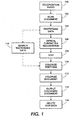
- FIG. 1 is a flow diagram illustrating an embodiment herein.
- FIG. 2 is a schematic representation of a system according to embodiment herein.
- the embodiments herein provide processes, systems, services, computer programs, etc. to allow colorization of monochromatic scanned documents.
- the following methods for selective colorization of content are generally applied by the embodiments herein, as explained in greater detail below.
- the embodiments herein apply optical character recognition (OCR) algorithms to scanned pages to derive text, text properties and coordinates and then color the text, based on colorization rules.
- OCR optical character recognition
- the embodiments herein receive raster input from a scanner and perform OCR to determine which areas of the input document contain text and to determine the properties of that text. Since the system is using OCR to find text areas in the document, the user is allowed to specify colorization rules, such as those concerning the type of font in a document (e.g. Serif. Sans Serif, Display type, etc.) that is not to receive colorization.
- the user can specify rules about colorization of text based on properties such as font size, style, etc. The text properties are then evaluated against the colorization rules.
- the system finds text that should be colorized pursuant to the rules, the system applies that colorization to the source raster content that matches the found text, without requiring specific identification of each item of text by the user.
- the embodiments herein do not actually colorize the text, but rather the embodiments here use the text to identify the areas of content in the raster document that should be colorized.
- the identified text will be at specific coordinates in the layout and that is the information that the embodiments here use to find content in the raster that should be colorized.
- the text itself is discarded after colorization. This type of content matching can be used to find Chapter/Section titles that should be colorized, among other uses.
- the embodiments herein use pattern matching to identify instances of a given image and to color the given image throughout a document.
- This feature can, for example, match logo images, etc. (e.g., rasterized graphics).
- the user identifies an area of the document containing the rasterized graphics that are to be colorized in subsequent pages and potentially in many different documents. Once this area is identified, the system stores the raster data within this area as a separate image in a persistent location.
- the system looks through all pages for raster patterns that match the images that were previously identified. The matching images elsewhere in the document (or those found in other documents) are then automatically colorized, without requiring the user to manually color each occurrence of the graphical image.
- This type of content matching can be used to find logos and other graphical elements (bullet symbols, horizontal rules, vertical rules) that should be colorized in a collection of documents such as technical manuals or training material, for example.
- embodiments herein use content matching to identify instances of a given text string throughout a document.
- the user specifies rules about colorization of specific text strings throughout the document.
- the system receives the raster input and performs OCR to determine which areas of the input document contain the specified text.
- the specified text is then colorized, without the user having to select each instance of the text or having to perform a search and replace operation.
- the system finds text that should be colorized per the rules, the system applies that colorization to the source raster content that matches the found text.
- the electronically stored text itself is discarded after colorization.
- This type of content matching can be used to find keywords that should be colorized throughout a document, for example.
- Colorization of spatial regions of pages, typically headers or footers can also be accomplished with embodiments herein.
- the user would specify the area (e.g., bottom I inch) of the page as the region for colorization.
- colorization of rectangles containing knockout text (these are typically used as section headers or title bars) is provided with embodiments herein to colorize boxes (black or gray) that contain white text.
- embodiments herein provide for the transient use of OCR to identify parts of a raster document that should be colorized, use non-specific text characteristics (e.g. Sans Serif text) for colorization, use a source image to find and colorize content within a raster document, use specific text strings to find and colorize content within a raster document, perform colorization of specific geometric areas of a page, perform colorization of objects containing knockout text, as well as many other useful functions.
- non-specific text characteristics e.g. Sans Serif text
- embodiments herein include a method of adding color to a monochrome (single color printing) printed document.
- one embodiment begins by inputting/creating colorization rules relating to the previously printed monochromatic document.
- the previously printed monochromatic document is scanned to search for and produce rasterized data 104. After the scanning, the method performs optical character recognition on the rasterized data in item 106 to search for text 108 corresponding to the previously printed monochromatic document, which can be temporarily stored in the form of a monochromatic electronic text document, for example.
- the method automatically colorizes portions of rasterized content (e.g., text) within the monochromatic electronic document according to the colorization rules in item 110 and this generates a colorized electronic document 112.
- the method outputs (which can include printing) the colorized electronic document in item 114 and, because the data obtained from the optical character recognition was needed only temporarily, after colorization, the method deletes the optical character recognition data in item 116.
- the colorization rules 100 can comprise a rule that automatically colorizes all raster data relating to text of a selected font type.
- the colorization rules 100 can comprise rules that determine all font types occurring within the text, determine which font types occur with a predetermined frequency in the text, and automatically colorize raster data relating to text having the font type that occurs with at least the predetermined frequency.
- the colorization rules 100 can comprise rules 100 that determine all font types occurring within the text, determine a frequency at which different font types occur in the text, and automatically colorize raster data relating to text having a font that occurs least frequently in the text.
- the colorization rules 100 can comprise a rule that automatically colorizes raster data relating to all occurrences of a specified text string. Further, the colorization rules 100 can comprise a rule that automatically colorizes all raster data relating to text occurring within a pre-defined region of each page of the previously printed monochromatic document.
- a method is provided that also inputs/creates colorization rules 100.
- These colorization rules 100 comprise a rule that automatically colorizes a predetermined raster image, such as a logo, etc.
- the previously printed monochromatic document is scanned 102 to produce the rasterized data; however, this rasterized data does not need to be subjected to optical character recognition processes 106.
- the method bypasses items 106 and 108 (as shown by the dashed line in Figure 1 ) and searches the rasterized data in item 118 to locate occurrences of the predetermined raster image, and then automatically colorizes the occurrences of the predetermined raster image in item 110 to produce the colorized electronic document 112. Then, the method can output (114) the colorized electronic document with each occurrence of the logo being printed in color by outputting the colorized electronic document in electronic form or by printing the colorized document.
- the colorization rules 100 can further comprise a rule that only colorizes the occurrences of the predetermined raster image that occur within a pre-defined region of each page of the rasterized data. Similarly, the colorization rules 100 further can comprise a rule that automatically colorizes all rasterized images occurring within a pre-defined region of each page of the previously printed monochromatic document in addition to the colorizing of the occurrences of the predetermined raster image.
- colorization rules 100 that automatically identify recurring raster images within the rasterized data, and automatically colorize the ones of the recurring raster images that recur with at least a predetermined frequency.
- the colorization rules 100 can further comprise rules 100 that automatically identify recurring raster images within the rasterized data, provide the recurring raster images to a user for selection, and automatically colorize ones of the recurring raster images as selected by the user.
- FIG. 2 Another embodiment, shown in Figure 2 , comprises a system 200 that includes a central processing unit 204 (within a computer 202) and graphic user interface 250 adapted to receive the colorization rules 100 that relate to the previously printed monochromatic document.
- the system 200 also includes a scanner 270 operatively connected to the graphic user interface 250 through the computer 202 and central processing unit 202.
- the scanner 270 is adapted to scan the previously printed monochromatic document to find the rasterized data 104.
- a memory 206 is provided in the system 200 operatively connected to the scanner 270 to store the rasterized data 104 and the colorized document 112.
- Computers that include input/output devices, memories, processors, etc. are readily available devices produced by manufactures such as International Business Machines Corporation, Armonk NY, USA and Apple Computer Co., Cupertino CA, USA. Such computers commonly include input/output devices, power supplies, processors, electronic storage memories, wiring, etc., the details of which are omitted herefrom to allow the reader to focus on the salient aspects of the embodiments described herein. Similarly, scanners and other similar peripheral equipment are available from Xerox Corporation, Stamford, CT, USA and Visioneer, Inc. Pleasanton, CA, USA and the details of such devices are not discussed herein for purposes of brevity and reader focus.
- the central processing unit 204 is operatively connected to the memory 206 and is adapted to execute an optical character recognition program on the rasterized data to produce the text corresponding to the previously printed monochromatic document.
- Optical character recognition programs and systems are readily available items produced by manufactures such as Nuance Communications, Inc., Burlington, MA, USA, and Adobe Systems Incorporated, San Jose, CA, USA. The details of optical character recognition are omitted herefrom to allow the reader to focus on the salient aspects of the embodiments described herein.
- the central processing unit is further adapted to automatically colorize portions of rasterized content 110 according to the colorization rules to generate the colorized electronic document 112, as described above.
- a printer 260 is included operatively connected to the central processing unit 204 and computer 202 and is adapted to print the colorized electronic document 112 out as a colorized printed document.
- the embodiments herein can be used with any conventional device that has the ability to print in multiple colors.
- One exemplary hardware system that efficiently prints in more than one color is disclosed in U.S. Patent Publication 2005/0185222 .
- the system disclosed in U.S. Patent Publication 2005/0185222 provides a solution for customers needing to add color to their documents when it makes economical sense to print the majority of black and white pages on a monochrome printer at a fraction of the cost of a color printer. In such a system customers add tracking data (such as account #, page in set) to each sheet in job.
- a print manger is the traffic director that promotes the print job processing from analysis, using a PostScript interpreter, to separating the color and black and white sheets, using a splitter, to sending and monitoring the print requests at the printers.
- the color portion is printed on a color printer.
- the printed color portion is loaded into an interposer.
- the operator requests final printing using a graphic user interface where the monochrome portion of the job is merged with the color portion.
- printer encompasses any apparatus, such as a digital copier, bookmaking machine, facsimile machine, multi-function machine, etc. which performs a print outputting function for any purpose.
- the details of printers, printing engines, etc. are well-known by those ordinarily skilled in the art and are discussed in, for example, U.S. Patent 6,032,004 .
- Printers are readily available devices produced by manufactures such as Xerox Corporation, Stamford, CT, USA and Hewlett Packard Company, Palo Alto CA, USA. Such printers commonly include input/output, power supplies, processors, media movement devices, marking devices etc., the details of which are omitted herefrom to allow the reader to focus on the salient aspects of the embodiments described herein.
- the printed document comprises a tangible object that includes markings (text) on physical sheets (printing media) that are capable of being read and/or recognized by humans.
- the printed publication is contrasted with an electronic document that is stored on some form of electronic media (as charges, etc.) that can be read by only by a machine and that must be converted into human readable text by the machine and displayed to the user by the machine on some form of electronic display device.
- the printed publication can comprise any type of physical hard copy item including a book, pamphlet, newspaper, magazine, etc.
- the central processing unit 204 is further adapted to delete the optical character recognition data after the central processing unit 204 outputs (or the printer 260 prints) the colorized electronic document 112.
Landscapes
- Engineering & Computer Science (AREA)
- Multimedia (AREA)
- Signal Processing (AREA)
- Character Input (AREA)
- Processing Or Creating Images (AREA)
- Image Processing (AREA)
- Editing Of Facsimile Originals (AREA)
- Facsimile Image Signal Circuits (AREA)
- Color Image Communication Systems (AREA)
- Control Or Security For Electrophotography (AREA)
- Color Electrophotography (AREA)
Claims (7)
- Verfahren, das umfasst:Eingeben von Kolorierungs-Regeln;Abtasten eines bereits gedruckten monochromatischen Dokumentes, um gerasterte Daten zu lokalisieren;Durchführen optischer Zeichenerkennung an den gerasterten Daten, um Text zu erzeugen;automatisches Kolorieren von Teilen der gerasterten Daten entsprechend den Kolorierungs-Regeln, um ein koloriertes elektronisches Dokument zu erzeugen; undAusgeben des kolorierten elektronischen Dokumentes, dadurch gekennzeichnet, dass die Kolorierungs-Regeln Regeln umfassen, die:alle Zeichensatz-Typen bestimmen, die in dem Text auftreten;bestimmen, welche Zeichensatz-Typen mit einer vorgegebenen Häufigkeit in dem Text auftreten; undautomatisch Raster-Daten kolorieren, die sich auf Text beziehen, der den Zeichensatz-Typ aufweist, der wenigstens mit der vorgegebenen Häufigkeit auftritt.
- Verfahren, das umfasst:Eingeben von Kolorierungs-Regeln;Abtasten eines bereits gedruckten monochromatischen Dokumentes, um gerasterte Daten zu lokalisieren;Durchführen optischer Zeichenerkennung an den gerasterten Daten, um Text zu erzeugen;automatisches Kolorieren von Teilen der gerasterten Daten entsprechend den Kolorierungs-Regeln, um ein koloriertes elektronisches Dokument zu erzeugen; undAusgeben des kolorierten elektronischen Dokumentes, dadurch gekennzeichnet, dass die Kolorierungs-Regeln Regeln umfassen, die:alle Zeichensatz-Typen bestimmen, die in dem Text auftreten;eine Häufigkeit bestimmen, mit der verschiedene Zeichensatz-Typen in dem Text auftreten; undautomatisch Raster-Daten kolorieren, die sich auf Text beziehen, der einen Zeichensatz aufweist, der am wenigstens häufig in dem Text auftritt.
- Verfahren nach Anspruch 1 oder 2, wobei die Kolorierungs-Regeln eine Regel umfassen, nach der alle Raster-Daten automatisch koloriert werden, die sich auf Text eines ausgewählten Zeichensatz-Typs beziehen.
- Verfahren nach Anspruch 1 oder Anspruch 2, wobei die Kolorierungs-Regeln eine Regel umfassen, nach der Raster-Daten automatisch koloriert werden, die sich auf jedes Auftreten einer angegebenen Textfolge beziehen.
- System, das umfasst:eine grafische Benutzerschnittstelle, die so eingerichtet ist, dass sie Kolorierungs-Regeln empfängt, die sich auf ein bereits gedrucktes monochromatisches Dokument beziehen;eine Abtasteinrichtung, die funktional mit der grafischen Benutzerschnittstelle verbunden und so eingerichtet ist, dass sie das bereits gedruckte monochromatische Dokument abtastet, um gerasterte Daten zu lokalisieren;einen Speicher, der funktional mit der Abtasteinrichtung verbunden und so eingerichtet ist, dass er die gerasterten Daten speichert:eine zentrale Verarbeitungseinheit, die funktional mit dem Speicher verbunden und so eingerichtet ist, dass sie ein Programm zur optischen Zeichenerkennung an den gerasterten Daten ausführt, um nach Text zu suchen, der dem bereits gedruckten monochromatischen Dokument entspricht, wobei die zentrale Verarbeitungseinheit des Weiteren so eingerichtet ist, dass sie automatisch Teile der gerasterten Daten entsprechend den Kolorierungs-Regeln koloriert, um ein koloriertes elektronisches Dokument zu erzeugen; undeinen Drucker, der funktional mit der zentralen Verarbeitungseinheit verbunden und so eingerichtet ist, dass er das kolorierte elektronische Dokument druckt, dadurch gekennzeichnet, dass die Kolorierungs-Regeln Regeln umfassen, diealle Zeichensatz-Typen bestimmen, die in dem Text auftreten;bestimmen, welche Zeichensatz-Typen in dem Text mit einer vorgegebenen Häufigkeit auftreten; undautomatisch Raster-Daten kolorieren, die sich auf Text beziehen, der den Zeichensatz-Typ aufweist, der wenigstens mit der vorgegebenen Häufigkeit auftritt.
- System, das umfasst:eine grafische Benutzerschnittstelle, die so eingerichtet ist, dass sie Kolorierungs-Regeln empfängt, die sich auf ein bereits gedrucktes monochromatisches Dokument beziehen;eine Abtasteinrichtung, die funktional mit der grafischen Benutzerschnittstelle verbunden und so eingerichtet ist, dass sie das bereits gedruckte monochromatische Dokument abtastet, um gerasterte Daten zu lokalisieren;einen Speicher, der funktional mit der Abtasteinrichtung verbunden und so eingerichtet ist, dass er die gerasterten Daten speichert;eine zentrale Verarbeitungseinheit, die funktional mit dem Speicher verbunden und so eingerichtet ist, dass sie ein Programm zur optischen Zeichenerkennung an den gerasterten Daten ausführt, um nach Text zu suchen, der dem bereits gedruckten monochromatischen Dokument entspricht, wobei die zentrale Verarbeitungseinheit des Weiteren so eingerichtet ist, dass sie automatisch Teile der gerasterten Daten entsprechend den Kolorierungs-Regeln koloriert, um ein koloriertes elektronisches Dokument zu erzeugen; undeinen Drucker, der funktional mit der zentralen Verarbeitungseinheit verbunden und so eingerichtet ist, dass er das kolorierte elektronische Dokument druckt, dadurch gekennzeichnet, dass die Kolorierungs-Regeln Regeln umfassen, die alle Zeichensatz-Typen bestimmen, die in dem Text auftreten;eine Häufigkeit bestimmen, mit der verschiedene Zeichensatz-Typen in dem Text auftreten; undautomatisch Raster-Daten kolorieren, die sich auf Text beziehen, der einen Zeichensatz aufweist, der am wenigstens häufig in dem Text auftritt.
- Computerprogrammerzeugnis, das umfasst:einen durch Computer nutzbaren Datenträger, der Befehle speichert, die, wenn sie durch einen Computer ausgeführt werden, den Computer veranlassen, ein Verfahren nach einem der vorangehenden Ansprüche durchzuführen.
Applications Claiming Priority (1)
| Application Number | Priority Date | Filing Date | Title |
|---|---|---|---|
| US11/695,791 US7751087B2 (en) | 2007-04-03 | 2007-04-03 | Automatic colorization of monochromatic printed documents |
Publications (2)
| Publication Number | Publication Date |
|---|---|
| EP1978727A1 EP1978727A1 (de) | 2008-10-08 |
| EP1978727B1 true EP1978727B1 (de) | 2010-09-01 |
Family
ID=39495905
Family Applications (1)
| Application Number | Title | Priority Date | Filing Date |
|---|---|---|---|
| EP08101989A Not-in-force EP1978727B1 (de) | 2007-04-03 | 2008-02-26 | Automatische Farbgebung von monochromen Druckerdokumenten |
Country Status (4)
| Country | Link |
|---|---|
| US (1) | US7751087B2 (de) |
| EP (1) | EP1978727B1 (de) |
| JP (1) | JP5073549B2 (de) |
| DE (1) | DE602008002348D1 (de) |
Families Citing this family (5)
| Publication number | Priority date | Publication date | Assignee | Title |
|---|---|---|---|---|
| FR2971067B1 (fr) * | 2011-01-31 | 2013-02-08 | Sagemcom Documents Sas | Machine comportant une imprimante, systeme comportant une telle machine et au moins un stylet, et reseau correspondant, ainsi que procede d'impression correspondant |
| JP5907473B2 (ja) * | 2011-10-05 | 2016-04-26 | 富士ゼロックス株式会社 | 画像処理装置、画像処理システム及びプログラム |
| JP5840065B2 (ja) * | 2012-04-26 | 2016-01-06 | 京セラドキュメントソリューションズ株式会社 | 画像形成装置 |
| JP6790384B2 (ja) | 2016-03-10 | 2020-11-25 | 富士ゼロックス株式会社 | 画像処理装置及びプログラム |
| DE102019122223B4 (de) * | 2019-08-19 | 2024-11-28 | Cortex Media GmbH | System und Verfahren zur Identifizierung und/oder Extrahierung von für eine Angebotsabgabe relevanter Information aus einem eine Ausschreibung oder eine Anfrage betreffenden Dokument |
Family Cites Families (20)
| Publication number | Priority date | Publication date | Assignee | Title |
|---|---|---|---|---|
| US4857955A (en) * | 1987-09-28 | 1989-08-15 | Eastman Kodak Company | Electronic printer apparatus with intelligent accent color |
| US5113356A (en) * | 1990-12-24 | 1992-05-12 | Xerox Corporation | Colorizing black and white documents |
| JPH07152855A (ja) * | 1993-11-30 | 1995-06-16 | Canon Inc | 文字認識方法及び装置 |
| JPH06203200A (ja) * | 1992-12-28 | 1994-07-22 | Canon Inc | 文字認識装置 |
| DE69425607T2 (de) * | 1993-05-07 | 2001-04-19 | Canon K.K., Tokio/Tokyo | Selektive Einrichtung und Verfahren zur Dokumentenwiederauffindung. |
| US6229623B1 (en) * | 1993-05-14 | 2001-05-08 | 3M Innovative Properties Company | Digital color proofing system |
| JP3344436B2 (ja) * | 1993-11-15 | 2002-11-11 | 富士ゼロックス株式会社 | 画像記録装置 |
| JP3623992B2 (ja) * | 1994-10-28 | 2005-02-23 | キヤノン株式会社 | 文字認識装置及び方法 |
| US5649024A (en) * | 1994-11-17 | 1997-07-15 | Xerox Corporation | Method for color highlighting of black and white fonts |
| JPH11102414A (ja) | 1997-07-25 | 1999-04-13 | Kuraritec Corp | ヒートマップを用いて光学式文字認識の訂正を行うための方法および装置、並びに、ocr出力の誤りを発見するための一連の命令を記録したコンピュータ読み取り可能な記録媒体 |
| US6032004A (en) | 1998-01-08 | 2000-02-29 | Xerox Corporation | Integral safety interlock latch mechanism |
| JP2001306554A (ja) * | 2000-04-24 | 2001-11-02 | Canon Inc | 画像処理方法および印刷制御装置 |
| US20020075492A1 (en) * | 2000-12-15 | 2002-06-20 | Lee Brian Craig | Method to custom colorize type face |
| MXPA03010039A (es) | 2001-05-04 | 2004-12-06 | Legend Films Llc | Sistema y metodo para mejorar la secuencia de imagen. |
| US7495795B2 (en) * | 2002-02-21 | 2009-02-24 | Ricoh Company, Ltd. | Interface for printing multimedia information |
| KR100589811B1 (ko) * | 2002-03-08 | 2006-06-14 | 세이코 엡슨 가부시키가이샤 | 인쇄 시스템, 프린터, pos 시스템, 컬러화 설정 장치,프린터 드라이버, 인쇄 제어 방법, 컬러화 설정 방법 및프로그램을 기록한 기록 매체 |
| JP2003291423A (ja) * | 2002-04-01 | 2003-10-14 | Seiko Epson Corp | プリンタ、プリンタ制御方法、posシステム、およびこれらの方法をコンピュータに実行させるためのプログラム、このプログラムを記録した記録媒体 |
| JP2005088434A (ja) * | 2003-09-18 | 2005-04-07 | Minolta Co Ltd | 画像形成装置 |
| US7839513B2 (en) | 2004-02-24 | 2010-11-23 | Xerox Corporation | Hybrid document automation system |
| US20060062453A1 (en) * | 2004-09-23 | 2006-03-23 | Sharp Laboratories Of America, Inc. | Color highlighting document image processing |
-
2007
- 2007-04-03 US US11/695,791 patent/US7751087B2/en not_active Expired - Fee Related
-
2008
- 2008-02-26 DE DE602008002348T patent/DE602008002348D1/de active Active
- 2008-02-26 EP EP08101989A patent/EP1978727B1/de not_active Not-in-force
- 2008-03-27 JP JP2008084033A patent/JP5073549B2/ja not_active Expired - Fee Related
Also Published As
| Publication number | Publication date |
|---|---|
| US20080246998A1 (en) | 2008-10-09 |
| JP2008259199A (ja) | 2008-10-23 |
| US7751087B2 (en) | 2010-07-06 |
| EP1978727A1 (de) | 2008-10-08 |
| JP5073549B2 (ja) | 2012-11-14 |
| DE602008002348D1 (de) | 2010-10-14 |
Similar Documents
| Publication | Publication Date | Title |
|---|---|---|
| US9454696B2 (en) | Dynamically generating table of contents for printable or scanned content | |
| US8726178B2 (en) | Device, method, and computer program product for information retrieval | |
| EP0654746B1 (de) | System zum Identifizieren und Verarbeiten von Formularen | |
| US8112706B2 (en) | Information processing apparatus and method | |
| US9710524B2 (en) | Image processing apparatus, image processing method, and computer-readable storage medium | |
| US8156416B2 (en) | Securing printed output | |
| US8369623B2 (en) | Image forming apparatus that automatically creates an index and a method thereof | |
| US8073255B2 (en) | Keyword generation process | |
| US7982918B2 (en) | Image annotation using barcodes | |
| US9250834B2 (en) | Method and apparatus for reading and replacing control and/or identification data in a print image to support document tracking, flow control, and security | |
| US20080320384A1 (en) | Automated addition of images to text | |
| US11418658B2 (en) | Image processing apparatus, image processing system, image processing method, and storage medium | |
| US20120250048A1 (en) | Image processing apparatus and image processing method | |
| US7751087B2 (en) | Automatic colorization of monochromatic printed documents | |
| JP2017146745A (ja) | 情報処理装置、制御方法、情報処理システム、およびプログラム | |
| US7743320B1 (en) | Method and system for determining page numbers of page images | |
| US8064096B2 (en) | Document template derived from variable data print file | |
| US9087287B2 (en) | Individualizing reduction of original pages in N-up copying or printing | |
| US8582148B2 (en) | Image processing apparatus and image processing method | |
| US8564798B2 (en) | Validation of print jobs using bitmapped image | |
| Simske et al. | Creating digital libraries: content generation and re-mastering | |
| EP1367814A2 (de) | Verarbeitung von digitalen gemischten Farbdokumenten | |
| US8073728B2 (en) | Multi-color billing process | |
| US8004712B2 (en) | Image processing apparatus and method | |
| US20090086256A1 (en) | Conditional content printing |
Legal Events
| Date | Code | Title | Description |
|---|---|---|---|
| PUAI | Public reference made under article 153(3) epc to a published international application that has entered the european phase |
Free format text: ORIGINAL CODE: 0009012 |
|
| AK | Designated contracting states |
Kind code of ref document: A1 Designated state(s): AT BE BG CH CY CZ DE DK EE ES FI FR GB GR HR HU IE IS IT LI LT LU LV MC MT NL NO PL PT RO SE SI SK TR |
|
| AX | Request for extension of the european patent |
Extension state: AL BA MK RS |
|
| 17P | Request for examination filed |
Effective date: 20090408 |
|
| 17Q | First examination report despatched |
Effective date: 20090513 |
|
| AKX | Designation fees paid |
Designated state(s): DE FR GB |
|
| GRAP | Despatch of communication of intention to grant a patent |
Free format text: ORIGINAL CODE: EPIDOSNIGR1 |
|
| GRAS | Grant fee paid |
Free format text: ORIGINAL CODE: EPIDOSNIGR3 |
|
| GRAA | (expected) grant |
Free format text: ORIGINAL CODE: 0009210 |
|
| AK | Designated contracting states |
Kind code of ref document: B1 Designated state(s): DE FR GB |
|
| REG | Reference to a national code |
Ref country code: GB Ref legal event code: FG4D |
|
| REF | Corresponds to: |
Ref document number: 602008002348 Country of ref document: DE Date of ref document: 20101014 Kind code of ref document: P |
|
| PLBE | No opposition filed within time limit |
Free format text: ORIGINAL CODE: 0009261 |
|
| STAA | Information on the status of an ep patent application or granted ep patent |
Free format text: STATUS: NO OPPOSITION FILED WITHIN TIME LIMIT |
|
| 26N | No opposition filed |
Effective date: 20110606 |
|
| REG | Reference to a national code |
Ref country code: DE Ref legal event code: R097 Ref document number: 602008002348 Country of ref document: DE Effective date: 20110606 |
|
| REG | Reference to a national code |
Ref country code: FR Ref legal event code: PLFP Year of fee payment: 9 |
|
| REG | Reference to a national code |
Ref country code: FR Ref legal event code: PLFP Year of fee payment: 10 |
|
| PGFP | Annual fee paid to national office [announced via postgrant information from national office to epo] |
Ref country code: FR Payment date: 20170124 Year of fee payment: 10 Ref country code: DE Payment date: 20170119 Year of fee payment: 10 |
|
| PGFP | Annual fee paid to national office [announced via postgrant information from national office to epo] |
Ref country code: GB Payment date: 20170124 Year of fee payment: 10 |
|
| REG | Reference to a national code |
Ref country code: DE Ref legal event code: R119 Ref document number: 602008002348 Country of ref document: DE |
|
| GBPC | Gb: european patent ceased through non-payment of renewal fee |
Effective date: 20180226 |
|
| REG | Reference to a national code |
Ref country code: FR Ref legal event code: ST Effective date: 20181031 |
|
| PG25 | Lapsed in a contracting state [announced via postgrant information from national office to epo] |
Ref country code: DE Free format text: LAPSE BECAUSE OF NON-PAYMENT OF DUE FEES Effective date: 20180901 |
|
| PG25 | Lapsed in a contracting state [announced via postgrant information from national office to epo] |
Ref country code: GB Free format text: LAPSE BECAUSE OF NON-PAYMENT OF DUE FEES Effective date: 20180226 Ref country code: FR Free format text: LAPSE BECAUSE OF NON-PAYMENT OF DUE FEES Effective date: 20180228 |