EP1975889A2 - Pre-scanning printer with paper fingerprinting - Google Patents
Pre-scanning printer with paper fingerprinting Download PDFInfo
- Publication number
- EP1975889A2 EP1975889A2 EP08251203A EP08251203A EP1975889A2 EP 1975889 A2 EP1975889 A2 EP 1975889A2 EP 08251203 A EP08251203 A EP 08251203A EP 08251203 A EP08251203 A EP 08251203A EP 1975889 A2 EP1975889 A2 EP 1975889A2
- Authority
- EP
- European Patent Office
- Prior art keywords
- paper sheet
- fingerprinted
- tray
- paper
- printer
- Prior art date
- Legal status (The legal status is an assumption and is not a legal conclusion. Google has not performed a legal analysis and makes no representation as to the accuracy of the status listed.)
- Granted
Links
- 238000000034 method Methods 0.000 claims abstract description 72
- 238000007639 printing Methods 0.000 claims abstract description 64
- 238000003780 insertion Methods 0.000 claims description 7
- 230000037431 insertion Effects 0.000 claims description 7
- 230000008569 process Effects 0.000 abstract description 38
- 238000012545 processing Methods 0.000 description 15
- 238000012986 modification Methods 0.000 description 9
- 230000004048 modification Effects 0.000 description 9
- 230000004044 response Effects 0.000 description 9
- 238000010586 diagram Methods 0.000 description 6
- 239000000976 ink Substances 0.000 description 4
- 238000013507 mapping Methods 0.000 description 4
- 230000001427 coherent effect Effects 0.000 description 3
- 238000004891 communication Methods 0.000 description 3
- 238000005516 engineering process Methods 0.000 description 3
- 230000009471 action Effects 0.000 description 2
- 238000013480 data collection Methods 0.000 description 2
- 230000001419 dependent effect Effects 0.000 description 2
- 230000006870 function Effects 0.000 description 2
- 238000007792 addition Methods 0.000 description 1
- 230000004075 alteration Effects 0.000 description 1
- 238000010276 construction Methods 0.000 description 1
- 238000012217 deletion Methods 0.000 description 1
- 230000037430 deletion Effects 0.000 description 1
- 239000000835 fiber Substances 0.000 description 1
- 230000003287 optical effect Effects 0.000 description 1
- 230000009467 reduction Effects 0.000 description 1
- 238000012795 verification Methods 0.000 description 1
Images





Classifications
-
- B—PERFORMING OPERATIONS; TRANSPORTING
- B41—PRINTING; LINING MACHINES; TYPEWRITERS; STAMPS
- B41J—TYPEWRITERS; SELECTIVE PRINTING MECHANISMS, i.e. MECHANISMS PRINTING OTHERWISE THAN FROM A FORME; CORRECTION OF TYPOGRAPHICAL ERRORS
- B41J11/00—Devices or arrangements of selective printing mechanisms, e.g. ink-jet printers or thermal printers, for supporting or handling copy material in sheet or web form
- B41J11/009—Detecting type of paper, e.g. by automatic reading of a code that is printed on a paper package or on a paper roll or by sensing the grade of translucency of the paper
-
- B—PERFORMING OPERATIONS; TRANSPORTING
- B41—PRINTING; LINING MACHINES; TYPEWRITERS; STAMPS
- B41J—TYPEWRITERS; SELECTIVE PRINTING MECHANISMS, i.e. MECHANISMS PRINTING OTHERWISE THAN FROM A FORME; CORRECTION OF TYPOGRAPHICAL ERRORS
- B41J11/00—Devices or arrangements of selective printing mechanisms, e.g. ink-jet printers or thermal printers, for supporting or handling copy material in sheet or web form
- B41J11/0095—Detecting means for copy material, e.g. for detecting or sensing presence of copy material or its leading or trailing end
-
- B—PERFORMING OPERATIONS; TRANSPORTING
- B41—PRINTING; LINING MACHINES; TYPEWRITERS; STAMPS
- B41J—TYPEWRITERS; SELECTIVE PRINTING MECHANISMS, i.e. MECHANISMS PRINTING OTHERWISE THAN FROM A FORME; CORRECTION OF TYPOGRAPHICAL ERRORS
- B41J3/00—Typewriters or selective printing or marking mechanisms characterised by the purpose for which they are constructed
- B41J3/44—Typewriters or selective printing mechanisms having dual functions or combined with, or coupled to, apparatus performing other functions
-
- H—ELECTRICITY
- H04—ELECTRIC COMMUNICATION TECHNIQUE
- H04N—PICTORIAL COMMUNICATION, e.g. TELEVISION
- H04N2201/00—Indexing scheme relating to scanning, transmission or reproduction of documents or the like, and to details thereof
- H04N2201/32—Circuits or arrangements for control or supervision between transmitter and receiver or between image input and image output device, e.g. between a still-image camera and its memory or between a still-image camera and a printer device
- H04N2201/3201—Display, printing, storage or transmission of additional information, e.g. ID code, date and time or title
- H04N2201/3269—Display, printing, storage or transmission of additional information, e.g. ID code, date and time or title of machine readable codes or marks, e.g. bar codes or glyphs
- H04N2201/327—Display, printing, storage or transmission of additional information, e.g. ID code, date and time or title of machine readable codes or marks, e.g. bar codes or glyphs which are undetectable to the naked eye, e.g. embedded codes
Definitions
- the present invention relates to fingerprinting of articles, and more particularly to techniques for fingerprinting an article prior to use of the article such that the use of the article is not impacted by the fingerprinting process.
- a scanner is configured to scan one or more areas of an article using a light beam (e.g., a laser beam) and detect the scatter pattern of the light reflected from the scanned area of the article.
- the scatter pattern data is then used to generate a fingerprint or digital signature for the scanned article. Due to differences in the surface structure of the articles at the microscopic level, the light scatter pattern is generally different for different articles. As a result, the fingerprint generated for an article is highly distinctive of that article and can be used to identify or authenticate that article.
- UK Patent Application GB 2417707A assigned to ITL describes techniques for using a scanner to obtain fingerprints or digital signatures for a sheet of paper as the paper is being printed.
- the digital signature obtained for a paper sheet is stored in a database with an image of what was printed on the paper sheet. Subsequently, the stored information is used to determine the authenticity of the paper sheet.
- Embodiments of the present invention provide techniques for scanning and generating fingerprints for articles prior to the use of the articles.
- the fingerprinting of the articles is performed such that it is decoupled from the process of using the articles.
- the fingerprinting process does not act as a bottleneck to the use of the articles.
- a printer is provided that is configured to generate fingerprints for paper sheets loaded into the printer prior to the paper sheets being available for printing.
- the pre-fingerprinted sheets are then made available for printing.
- the process of fingerprinting of the paper sheets is decoupled from the printing operations performed by the printer.
- the fingerprinting process does not act as a bottleneck to the printing process.
- a fingerprint is generated for a paper sheet from a first tray in the printer.
- Information is stored in memory associating the fingerprint with the paper sheet.
- the paper sheet is then transported back to the first tray, wherein the paper sheet is made available for printing.
- the process of generating a fingerprint may be performed upon detecting insertion of the first tray in the printer.
- the system responsible for fingerprinting may comprise a scanner that receives the paper sheet to be fingerprinted from the first tray.
- a request may be received to print an electronic document.
- at least one fingerprinted paper sheet is selected from the first tray for printing the electronic document, and a printed document is generated using the at least one fingerprinted paper sheet from the first tray.
- Information may be stored for the at least one fingerprinted paper sheet associating the fingerprint generated for the at least one fingerprinted paper sheet with information related to the electronic document.
- the information related to the electronic document may comprise information such as information related to contents of the electronic document printed on the at least one fingerprinted paper sheet.
- a non-fingerprinted paper sheet may be selected from a second tray in the printer different from the first tray and the printed document may be generated using the non-fingerprinted paper sheet.
- the request to print may also specify a page of the electronic document for which a fingerprinted paper sheet is to be used for printing the electronic document.
- paper sheets may be marked so as to avoid re-fingerprinting of a previously fingerprinted paper sheet.
- the paper sheet received from the first tray for fingerprinting comprises a mark indicating that the paper sheet has been previously fingerprinted.
- a fingerprint is generated for the paper sheet only if it is determined that the paper sheet does not comprise the mark or the paper sheet comprises a mark that is not decipherable by the printer. After a paper sheet has been fingerprinted, it is marked to indicate that the paper sheet has been fingerprinted.
- the paper sheet may be marked by printing a code on the paper sheet.
- the code may be for example a barcode, a code printed using infrared ink, or a code printed using an ink that becomes transparent upon exposure to light.
- Steganographic techniques may also be used to mark a paper sheet.
- a set of one or more paper sheets may be selected from a stack of paper sheets stored in a first tray of the printer.
- a fingerprint may then be generated for each paper sheet in the selected set of paper sheets.
- Information may be stored in memory, for each paper sheet in the set of paper sheets, associating the fingerprint generated for the paper sheet with the paper sheet.
- the set of paper sheets may be transported to a second tray in the printer separate from the first tray.
- a request may be received to print an electronic document.
- a printed document may be generated wherein the printed document comprises a fingerprinted paper sheet from the second tray and a non-fingerprinted paper sheet from the first tray.
- techniques are provided for preparing an article for use by a device configured to perform a function using the article.
- the article is fingerprinted and only then is it made available for use by the device for performing the function.
- Embodiments of the present invention are configured to scan and generate fingerprints for articles prior to the use of the articles.
- the fingerprinting of the articles is performed such that it is decoupled from the process of using the articles. As a result, the fingerprinting process does not act as a bottleneck to the use of the articles.
- a printer is provided that is configured to generate fingerprints for paper sheets loaded into the printer prior to the paper sheets being available for printing.
- the pre-fingerprinted sheets are then made available for printing.
- the process of fingerprinting of the paper sheets is decoupled from the printing operations performed by the printer. As a result, the fingerprinting process does not act as a bottleneck to the printing process.
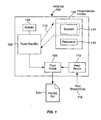
- Fig. 1 is a simplified block diagram of a printer 100 that incorporates an embodiment of the present invention.
- Printer 100 depicted in Fig. 1 is merely illustrative of an embodiment incorporating the present invention and is not intended to limit the scope of the invention as recited in the claims.
- Embodiments of the present invention may be incorporated into various other systems and devices.
- Printer 100 may be embodied in various different configurations, as a standalone printer, as a networked printer, as part of a multifunction printer or device, in a facsimile machine, and the like.
- printer 100 comprises a paper bin/tray 102, a memory 104 associated with the tray, a fingerprinting system 106, a print engine 108, and a print driver 110.
- Paper bin/tray 102 provides an area for storing paper sheets that are to be used for printing.
- a user may load paper into printer 100 by putting the paper sheets in tray 102 and then inserting paper tray 102 into printer 100 or by closing paper tray 102.
- inserting a paper tray in printer 100 is intended to also include closing tray/bin 102 of printer 100.
- Fingerprinting system 106 is configured to scan one or more paper sheets from tray 102 and generate fingerprints for the scanned sheets.
- fingerprinting system 106 is configured to detect when a paper tray 102 has been inserted into printer 100. Upon detecting an insertion or closure of paper tray 102, fingerprinting system 106 is configured to scan and generate fingerprints for the paper sheets stored in tray 102 prior to the paper sheets being available for printing. As part of the fingerprinting process, a paper sheet is transported from tray 102 to fingerprinting system 106, fingerprinting system 106 generates a fingerprint for the paper sheet, and then the fingerprinted sheet is transported back to tray 102.
- a paper sheet selected for fingerprinting from tray 102 is returned back to tray 102 after the fingerprinting process (as depicted by paper path 112 depicted in Fig. 1 ).
- the paper sheets may be returned to tray 102 in the same order as they were originally positioned in tray 102.
- the papers may be replaced in the tray in reverse order, or in any other order, so long as that order is known and predictable and can be used to make a one-to-one mapping between scanned fingerprints and the position of the paper in the tray.
- all the paper sheets in the stack of paper sheets in tray 102 are fingerprinted. This avoids problems with the paper sheets being removed or reordered within the paper stack in tray 102 since a previous fingerprinting operation.
- a subset of the paper sheets in the paper stack stored in tray 102 may be fingerprinted.
- fingerprinting system 106 comprises a scanner 114 and a processor 116.
- Scanner 114 is configured to scan one or more areas of a paper sheet and collect data points representative of the light scattered by the scanned areas.
- Processor 116 is configured to control the operations of scanner 114 and generate a fingerprint for a paper sheet based upon the data points collected by scanner 114 from scanning the paper sheet.
- Scanner 114 is configured to scan and collect data points for an article such as a paper sheet. The data points are then used to generate a fingerprint (or signature) for the paper sheet.
- scanner 114 is capable of directing a coherent light beam (e.g., a laser beam) onto an area of the surface of a paper sheet. The area of the paper sheet that is impinged by the light beam is referred to as the scanned area of the paper sheet.
- Scanner 114 is configured to detect signal components scattered from the scanned area of the paper sheet. During a scan, scanner 114 is configured to detect and record a large number of details of the way the light beam is reflected off the surface of the scanned paper sheet.
- Scanner 114 may comprise a set of one or more detectors that are configured to detect the scattered light signals and collect data points corresponding to the scattering.
- the detectors in scanner 114 are sufficiently sensitive to detect scattered light due to surface irregularities of the paper sheet of less than a few hundred nanometers in size. Due to differences in surfaces of articles at the microscopic level, a unique scatter response is received from each article. Microscopic irregularities on the surface of the article cause the light beam to be scattered differently for different articles. Accordingly, for a paper sheet, due to the structure of the paper fibers of the paper sheet, the paper sheet surface provides a complex scattering response of the laser beam that is unique and characteristic of the paper sheet. The scatter response for one paper sheet is different from the scatter response from another paper sheet since, at the microscopic level, the structures of the surfaces are different. The scattered response for a paper sheet may thus be used as a basis for generating a fingerprint (or signature) for the paper sheet that is unique to the paper sheet.
- Fig. 2 is a schematic view of an illustrative embodiment of a scanner 114 depicted in Fig. 1 in accordance with an embodiment of the present invention.
- the components of scanner 114 may be enclosed in a housing or assembly 202.
- the principal optical components of scanner 114 include a laser source 204 for generating a coherent laser beam 206 for scanning an area of a surface of an article such as a paper sheet.
- Laser beam 206 is focused by a lens 210 to form a focused beam that passes through a reading volume 212.
- Scanner 114 comprises a detector arrangement comprising a plurality of photodetector elements 208a-208d. Although the specific embodiment illustrated in Fig. 2 shows four photodetector elements, it will be appreciated that other numbers of photodetector elements may be employed. Photodetectors 208a-208d are distributed about the laser beam at different angles to detect light scattered from the scanned area of the article present in the reading volume 212.
- a drive motor 214 is arranged in housing 202 for providing motion of the optics components via suitable bearings 216 or other means.
- Drive motor 214 serves to move the coherent beam and this controls the area of the article that is scanned.
- Drive motor 214 also controls the speed or rate of the scan.
- the intensity of light beam 206, speed of drive motor 214, and the position of photodetectors 208a-208d may be user-controllable.
- fingerprinting system 106 may be implemented in paper tray 102. Paper trays often have significant extra space because of the need to handle large sheets. Fingerprinting system 106 may be contained in this extra space. In other embodiments, fingerprinting system 106 may be attached to tray 102. Memory 104 may also be part of tray 102.
- the scanning and data collection technique used by scanner 114 described above is strongly dependent upon the manner in which scanner 114 performs the scan.
- the data points collected from a scan are strongly dependent upon the scanned area of article or paper sheet. Different scanned areas of the same paper sheet may yield different data points and thus different fingerprints for the same paper sheet.
- the area (or areas) of a paper sheet scanned by scanner 114 is fixed such that the same area is scanned during subsequent scans.
- the parameters (including the scanned area) used for scanning from one scan to another may be different, as described in U.S. Application No. 11/495,613 (Atty. Docket No.: 015358-010910US) filed July 28, 2006.
- data points collected by scanner 114 for an article such as a paper sheet are communicated to processor 116 for generation of a digital fingerprint for the article or paper sheet.
- Processor 116 is configured to process the data points received from scanner 114 and produce a digital fingerprint for the scanned article.
- the fingerprint information generated by fingerprinting system 106 for a paper sheet is then stored.
- the fingerprint information for fingerprinted paper sheets may be stored in a memory 104 associated with tray 102 in which the fingerprinted sheets are stored.
- Information is stored associating the generated fingerprints with their corresponding paper sheets.
- the association is made by storing information identifying the positions of the paper sheets in the paper stack in tray 102 and associating each position with a fingerprint generated for the paper sheet in that position.
- the contents of memory 104 may be reset each time tray 102 is removed to avoid any problems caused by possible reordering of the papers in tray 102.
- the paper sheet is returned back to tray 102.
- the paper sheets may be returned to tray 102 in the same order as present in tray 102 prior to the fingerprinting. This may be done, for example, by starting the fingerprinting operation on sheets from the bottom of the stack of sheets, and returning the sheets back to the tray on the top. As part of this process, once a page is found that has already been fingerprinted, this indicates that all the paper sheets in the tray have been fingerprinted and fingerprinting may be stopped. A small pin can also be inserted between the fingerprinted sheets and the non-fingerprinted sheets to separate them. Once all the sheets have been fingerprinted, the fingerprinted paper sheets are then made available for printing. In other embodiments, the papers may be replaced in the tray in reverse order, or in any other order, so long as that order is known and predictable and can be used to make a one-to-one mapping between scanned fingerprints and the position of the paper in the tray.
- Print driver 110 provides an interface for receiving requests 118 to print one or more electronic documents. Examples of an electronic document is a document created using a word editor, an image, a photograph, a web page, a spreadsheet, an email, or any document stored in electronic form. Upon receiving a request to print an electronic document, print driver 110 is configured to send a signal to print engine 108 to print the electronic document. In the embodiment depicted in Fig. 1 , print driver 110 is part of printer 100. In an alternative embodiment, print driver 110 may be part of or resident on a processing system that is coupled to printer 100 and which is configured to initiate print requests for printer 100. The processing system may be coupled to printer 100 via wired or wireless communication links.
- Print engine or print module 108 is configured to generate a printed document 120 by printing the electronic document using one or more paper sheets from paper tray 102. As part of the printing process, print engine 108 is configured to select a paper sheet from tray 102 for printing and then use the sheet for printing. Multiple sheets may be used for printing a multi-page electronic document.
- the resultant printed document 120 comprises pages that have been fingerprinted. These fingerprints may then be used to authenticate the document 120 (for example, as described in PCT Publication No. WO 2005/088533 and UK Patent Application GB 2417707A ).
- print engine 108 is also configured to store information related to the sheets used for the printing.
- print engine 108 is configured to update the information stored in memory 104.
- information associating the fingerprints with their corresponding paper sheets is stored in memory 104.
- the association is made by storing information identifying the positions of the paper sheets in the paper stack in tray 102 and associating each position with a fingerprint generated for the paper sheet in that position. After a fingerprinted paper sheet has been used for generating printed document 120, the entry for that sheet may be updated with information related to the electronic document which is printed using the sheet.
- the entry for a fingerprinted paper sheet may be updated with information identifying the contents printed on that sheet.
- the entry for a fingerprinted paper sheet in memory 104 may be updated with information identifying the electronic document or page of the electronic document printed on that sheet.
- Information related to the printed sheets may be stored in memory 104 or in some other memory location.
- the information may be stored locally in memory 104 of printer 100.
- the information may be communicated and stored on some other device or system or memory location that is remote from printer 100 and may be coupled to printer 100 via communication links or via a communication network (e.g., the Internet). Printer 100 may then access this information from the remote locations.
- a communication network e.g., the Internet
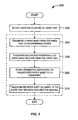
- Fig. 3 is a simplified high-level flowchart 300 depicting a fingerprinting process performed by a printer according to an embodiment of the present invention.
- the processing depicted in Fig. 3 may be performed by software modules (code, instructions), hardware modules, or combinations thereof.
- the processing may be performed by fingerprinting system 106.
- Flowchart 300 depicted in Fig. 3 is merely illustrative of an embodiment of the present invention and is not intended to limit the scope of the present invention. Other variations, modifications, and alternatives are also within the scope of the present invention.
- fingerprinting system 106 detects when a paper tray has been inserted in the printer (step 302). Steps 304, 306, 308, and 310 are performed upon detecting insertion of a paper tray in the printer. A paper sheet is transported from the paper tray to the fingerprinting system for fingerprinting (step 304). The fingerprinting system scans the paper sheet received from the paper tray and generates a fingerprint for the paper sheet (step 306). Information is then stored associating the fingerprinted paper sheet with the generated fingerprint (step 308). The information may be stored in a memory associated with the paper tray.
- the position of the fingerprinted sheet within the stack of paper sheets in the paper tray is stored and the generated fingerprint is associated with the position information, thereby associating the fingerprint with the paper sheet.
- the fingerprinted paper sheet is then returned back to the paper tray from where it was removed and it made available for printing (step 310).
- the fingerprinted paper sheet may then subsequently be used to generate a printed document in response to a print request/command.
- Steps 304, 306, 308, and 310 may be applied to multiple paper sheets stored in the paper tray.
- the paper sheets may be returned to tray 102 in the same order as they were originally positioned in tray 102.
- the papers may be replaced in the tray in reverse order, or in any other order, so long as that order is known and predictable and can be used to make a one-to-one mapping between scanned fingerprints and the position of the paper in the tray.
- all the paper sheets in the paper tray are fingerprinted. In alternative embodiments, less than all sheets (a subset) in the tray may be fingerprinted.
- a paper sheet that is to be fingerprinted is not made available for printing until after the paper sheet has been fingerprinted.
- the fingerprinting operation is initiated upon the paper sheet being loaded into a printer and not in response to a print command. In this manner, the paper sheets are fingerprinted offline from the actual printing operation. The fingerprinting operation is thus decoupled from the printing operation. A stack of pre-scanned and pre-fingerprinted paper sheets are thus made available for use by the printer.
- the printer may select one or more fingerprinted paper sheets from the stack of pre-fingerprinted paper sheets for the printing.
- the fingerprinting operation does not have to be performed inline with the printing operation. As a result, the fingerprinting operation does not act as a bottleneck for the printing operation since a stack of previously fingerprinted sheets is available for printing.
- the printing operation may thus be performed at high speeds as desired.
- each paper sheet in the stack of paper sheets in tray 102 is fingerprinted each time that tray 102 is inserted into printer 100. Since the fingerprinting operation is expensive in terms of time, it is desirable that the number of times this operation is performed be reduced.
- a paper sheet that has been fingerprinted is marked to indicate that the sheet has been fingerprinted.
- fingerprinting system 106 may be configured to mark each paper sheet when that paper sheet is fingerprinted.
- fingerprinting system 106 is configured to first check if a paper sheet presented for fingerprinting contains a mark that can be interpreted by fingerprinting system 106 and that indicates to fingerprinting system 106 that the sheet has been previously fingerprinted by fingerprinting system 106.
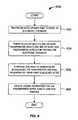
- Fig. 4 is a simplified high-level flowchart 400 depicting a fingerprinting process performed by a printer in which the fingerprinted paper sheet is marked according to an embodiment of the present invention.
- the processing depicted in Fig. 4 may be performed by software modules (code, instructions), hardware modules, or combinations thereof.
- the processing may be performed by fingerprinting system 106.
- Flowchart 400 depicted in Fig. 4 is merely illustrative of an embodiment of the present invention and is not intended to limit the scope of the present invention. Other variations, modifications, and alternatives are also within the scope of the present invention.
- processing is initiated when insertion of a paper tray is detected (step 402).
- Step 402 is similar step 302 depicted in Fig. 3 .
- a paper sheet is then transported from the paper tray to the fingerprinting system (step 404).
- Step 404 is similar to step 304 in Fig. 3 .
- the fingerprinting determines whether the paper sheet received from the paper tray comprises a mark that can be read by the fingerprinting system and indicates to the fingerprinting system that the paper sheet has been previously fingerprinted and that the fingerprint is known by the fingerprinting system (step 406). If it is determined in 406 that the particular paper sheet has been previously fingerprinted, then the paper sheet is returned to the paper tray without fingerprinting and the paper sheet is made available for printing (step 416).
- Steps 408, 410, 412, and 414 are performed only if it is determined in 406 that either the paper sheet contains no mark thereby indicating that it has not been previously fingerprinted or the paper sheet contains a mark that cannot be deciphered by the fingerprinting system. This possibly may be due to the paper sheet being fingerprinted by another machine or the memory being erased.
- the fingerprinting system scans the paper sheet and generates a fingerprint for the paper sheet (step 408).
- Step 408 is similar to step 306 in Fig. 3 .
- the paper sheet is then marked to indicate that is has been fingerprinted (step 410).
- Information is then stored associating the paper sheet with the generated fingerprint (step 412). The information may be stored in a memory associated with the paper tray.
- Step 412 is similar to step 308 in Fig. 3 .
- the code used to mark a sheet may be used to identify the paper sheet and may be stored in a database in memory 104 and associated with a fingerprint generated for that sheet. The code may be as a key to find the corresponding fingerprint. The code is used to locate a fingerprint for a paper sheet. The fingerprinted paper sheet is then returned to the paper tray and made available for printing (step 414).
- Step 414 is similar to step 310 in Fig. 3 . Steps 404, 406, 408, 410, 412, 414, and 416 may be repeated for all paper sheets in tray 102.
- a paper sheet is marked with a machine readable code such as a barcode.
- the code may comprise a unique number, like a serial number which is paired in memory with the paper's fingerprint information.
- the code may be printed on different locations on the paper sheet such as the bottom of the paper sheet, the top of the paper sheet, etc.
- Different techniques may be used to print the code on a paper sheet.
- an ink may be used for printing the code that becomes transparent when exposed to light for a while. Infrared inks may also be used.
- the code may be in the form of a barcode that is readable by fingerprinting system 106 at a very high speed compared to fingerprinting.
- steganographic techniques such as subtle color variations may also be used to mark a paper sheet.
- the paper sheet does not have to be fingerprinted again (and it does not matter if someone took the paper sheets out of the printer tray and shuffled them). The code is thus used to determine whether or not a paper sheet should be fingerprinted.
- the purpose of the marks is to avoid re-fingerprinting the page in the presence of human actions like reordering the paper in the tray, moving the tray to a different printer, or any other action which would disturb the association between tray and paper position and the scanned fingerprint data.
- Fig. 5 is a simplified block diagram of a printer 500 that incorporates multiple paper trays according to an embodiment of the present invention.
- Printer 500 depicted in Fig. 5 is merely illustrative of an embodiment incorporating the present invention and is not intended to limit the scope of the invention as recited in the claims.
- Embodiments of the present invention may be incorporated into various other systems and devices. One of ordinary skill in the art would recognize other variations, modifications, and alternatives.
- Printer 500 is similar to printer 100 depicted in Fig. 1 but has two trays 502 and 504 and a paper selector module 508.
- Printer 500 is configured such that paper stored in tray 502 is fingerprinted while paper stored in tray 504 is not fingerprinted. Accordingly, tray 502 is used for storing paper sheets that are to be fingerprinted and for storing the fingerprinted sheets after the fingerprinting operation has been performed.
- the sheets loaded into tray 502 are fingerprinted in the manner as described above for tray 102 in Fig. 1 .
- Fingerprinting system 106 is configured to detect the insertion of tray 502 and fingerprint the paper sheets stored in tray 502. The fingerprinted sheets are then returned back to tray 502 (as indicated by paper path 506).
- the paper sheets from tray 502 may be fingerprinted according to flowchart 300 depicted in Fig. 3 or flowchart 400 depicted in Fig. 4 .
- Information may be stored in memory 104 associated with tray 502 associating the fingerprinted sheets with their corresponding fingerprints. The information may also be stored in other locations local to printer 500 or remote from printer 500.
- Tray 504 (and potentially other trays) is used for storing normal un-fingerprinted paper sheets and paper sheets that will not be fingerprinted. In this manner, in printer 500, the fingerprinted sheets and the non-fingerprinted sheets are segregated from each other into separate trays.
- printer 500 When printer 500 receives a request 118 to print an electronic document, the electronic document is printed to produce printed document 510 by interleaving one or more fingerprinted paper sheets from tray 502 and non-fingerprinted sheets from tray 504. In one embodiment, printer 500 is configured to use at least one fingerprinted paper sheet for producing printed document 510. Interleaving enables a printed document 510 to be produced wherein a subset of the pages of the document are fingerprinted paper sheets.
- Paper selector module 508 is configured to select the paper sheets, either fingerprinted paper sheets from tray 502 or non-fingerprinted paper sheets from tray 504, to be used for printing a document such that fingerprinted sheets are interleaved with the non-fingerprinted sheets in generating a printed document 510.
- printer 500 receives a print request/command 118
- a signal is sent to paper selector module 508 to initiate the paper sheet selection process.
- Paper selector 508 selects one or more sheets from tray 502 and tray 504 for printing the document. The selected paper sheets are then provided in an interleaved manner to print engine 108 for generating printed document 510.
- paper selector module 508 ensures that printed document 510 comprises at least one fingerprinted sheet which can then be subsequently used for authenticating the printed document.
- the fingerprinted sheets may be randomly selected and interleaved with non-fingerprinted sheets.
- fingerprinted sheets may be selected at regular intervals (e.g., every two pages) and used for generating the printed document, while non-fingerprinted sheets are used for printing the other pages.
- the print request/command may specify which pages are to be printed using fingerprinted sheets.
- the print command may indicate that the first and last page of the document is to be printed on fingerprinted sheets. In this manner, a user who initiates the print command may specify the pages for which a fingerprinted sheet is to be used. Only the specified pages are then printed using fingerprinted paper sheets.
- Other techniques may also be used for interleaving fingerprinted sheets with non-fingerprinted sheets.
- Fig. 6 is a simplified high-level flowchart 600 depicting a method of generating a printed document by interleaving fingerprinted paper sheets with non-fingerprinted paper sheets according to an embodiment of the present invention.
- the processing depicted in Fig. 6 may be performed by software modules (code, instructions), hardware modules, or combinations thereof.
- the processing may be performed by printer 500.
- Flowchart 600 depicted in Fig. 6 is merely illustrative of an embodiment of the present invention and is not intended to limit the scope of the present invention. Other variations, modifications, and alternatives are also within the scope of the present invention.
- the printing process is initiated upon receiving a request/command to print an electronic document (step 602).
- the paper selector module selects one or more paper sheet from a tray storing fingerprinted sheets or from a tray storing non-fingerprinted sheets to perform the printing (step 604).
- Various techniques may be used for selecting fingerprinted sheets and non-fingerprinted sheets.
- at least one fingerprinted paper sheet may be selected in 604.
- a fingerprinted paper sheet may be selected randomly or at regular intervals. If the print request/code module specifically identifies pages for which a fingerprinted sheet is to be used, then a fingerprinted paper sheet is selected for printing those specified pages.
- a printed document is then generated by interleaving the fingerprinted and non-fingerprinted paper sheets selected by the paper selector module in 604 (step 606).
- Information stored for each fingerprinted paper sheet that is used for printing is then updated (step 608).
- information associating the fingerprints with their corresponding paper sheets is stored in a memory. This information may be updated in step 608.
- the entry for that sheet may be updated with information related to the electronic document which is printed using the sheet. For example, in one embodiment, the entry for a fingerprinted paper sheet may be updated with information identifying the contents printed on that sheet. In another embodiment, the entry for a fingerprinted paper sheet in memory 104 may be updated with information identifying the electronic document or page of the electronic document printed on that sheet.
- Fig. 7 is a simplified block diagram of a printer 700 wherein paper sheets are selected for fingerprinting from one tray and returned to another tray according to an embodiment of the present invention.
- Printer 700 depicted in Fig. 7 is merely illustrative of an embodiment incorporating the present invention and is not intended to limit the scope of the invention as recited in the claims.
- Embodiments of the present invention may be incorporated into various other systems and devices. One of ordinary skill in the art would recognize other variations, modifications, and alternatives.
- Printer 700 is quite similar to printer 500 depicted in Fig. 5 with the difference that paper sheets to be fingerprinted are selected from a first tray and after fingerprinting are deposited into a second tray that is separate from the first tray. Accordingly, one or more paper sheets may be loaded into a first tray 702. One or more paper sheets from first tray 702 are selected to be fingerprinted and sent to fingerprinting system 106. After being fingerprinted, the fingerprinted sheets are deposited in a second tray 704 that is separate from first tray 702. The paper path 706 for the fingerprinting process is thus from first tray 702 to fingerprinting system 106 to second tray 704. The fingerprinting process may be initiated by fingerprinting system 106 when the number of fingerprinted sheets in second tray 704 falls below a preconfigured threshold.
- paper sheets may be selected from first tray 702 for fingerprinting to replenish the supply in second tray 704.
- Information associating the fingerprinted sheets with their corresponding fingerprints may be stored in memory 104 associated with second tray 704. In this manner, in printer 700, the fingerprinted sheets and the non-fingerprinted sheets are segregated from each other into separate trays.
- second tray 704 acts as a cache of fingerprinted paper sheets and printer 700 is able to perform printing at high speed using non-fingerprinted paper sheets from first tray 702 and fingerprinted paper sheets from second tray 704.
- second tray 704 that is used for storing the fingerprinted paper sheets may be an internal tray of printer 700 and may not be user accessible.
- first tray 702 Not all the paper sheets in first tray 702 need be fingerprinted. Only a subset of the sheets from first tray 702 may be fingerprinted. The sheets may be selected from first tray 702 and fingerprinted at regular intervals or whenever the supply of fingerprinted paper sheets in second tray 704 falls below some preconfigured threshold. Accordingly, paper sheets from first tray 702 are used to replenish the fingerprinted paper sheets in second tray 704.
- paper selector module 508 Upon receiving a print request/command 118, paper selector module 508 is configured to select one or more paper sheets from first tray 702 and second tray 704 for generating printed document 510. The selected sheets are interleaved in generating printed document 510. In one embodiment, when printer 700 receives a print request/command 118, a signal is sent to paper selector module 508 to initiate the paper sheet selection process. Paper selector 508 then selects one or more sheets from tray 702 and tray 704 for printing the document. The selected paper sheets are then provided in an interleaved manner to print engine 108 for generating printed document 510. In one embodiment, paper selector module 508 ensures that printed document 510 comprises at least one fingerprinted sheet which can be used for authenticating the printed document. Different techniques, as previously described, may be used to interleave fingerprinted paper sheets with non-fingerprinted paper sheets while generating a printed document.
- Fig. 8 is a simplified high-level flowchart 800 depicting a fingerprinting process performed by a printer according to an embodiment of the present invention.
- the processing depicted in Fig. 8 may be performed by software modules (code, instructions), hardware modules, or combinations thereof.
- the processing may be performed by fingerprinting system 106.
- Flowchart 800 depicted in Fig. 8 is merely illustrative of an embodiment of the present invention and is not intended to limit the scope of the present invention. Other variations, modifications, and alternatives are also within the scope of the present invention.
- a condition is detected by the fingerprinting system that causes the fingerprinting system to start the fingerprinting process (step 802).
- fingerprinting may be initiated when the fingerprinting system detects that the supply of fingerprinted paper sheets has fallen below a preconfigured threshold.
- the threshold may be user-configurable.
- a paper sheet is transported from a first paper tray to the fingerprinting system for fingerprinting (step 804).
- the fingerprinting system scans the paper sheet received from the first paper tray and generates a fingerprint for the paper sheet (step 806).
- Information is then stored associating the fingerprinted paper sheet with the generated fingerprint (step 808).
- the information may be stored in a memory associated with a second paper tray where the fingerprinted paper sheet is to be stored.
- the fingerprinted paper sheet is then transported to a second paper tray that is separate from the first tray and the fingerprinted paper sheet is made available for printing (step 810).
- Steps 804, 806, 808, and 810 are applied to each paper sheet selected for fingerprinting from the first tray.
- paper sheets are fingerprinted prior to them being available for printing.
- the fingerprinting is performed offline from the printing process and not as part of the printing process.
- the fingerprinting operation is thus decoupled from the printing operation.
- Pre-fingerprinted sheets are then made available for the printing operation.
- the fingerprinting operation does not act as a bottleneck for the printing operation since a stack of previously fingerprinted sheets is available for printing.
- the printing operation may thus be performed at high speeds as desired.
Landscapes
- Facsimiles In General (AREA)
- Accessory Devices And Overall Control Thereof (AREA)
Abstract
Description
- The present invention relates to fingerprinting of articles, and more particularly to techniques for fingerprinting an article prior to use of the article such that the use of the article is not impacted by the fingerprinting process.
- Techniques have been developed for generating fingerprints for articles based upon the physical structure of the article. In one such technique, developed by Ingenia Technology Limited (ITL) located in London, United Kingdom (www.ingeniatechnology.com), a scanner is configured to scan one or more areas of an article using a light beam (e.g., a laser beam) and detect the scatter pattern of the light reflected from the scanned area of the article. The scatter pattern data is then used to generate a fingerprint or digital signature for the scanned article. Due to differences in the surface structure of the articles at the microscopic level, the light scatter pattern is generally different for different articles. As a result, the fingerprint generated for an article is highly distinctive of that article and can be used to identify or authenticate that article. ITL has developed scanners that are capable of generating fingerprints for articles such as paper sheets. A description of their technology is provided in PCT Publication No.
WO 2005/088533 , entitled "Authenticity Verification Methods, Products, and Apparatuses" filed March 9, 2005 and published September 22, 2005. - UK Patent Application
GB 2417707A - The fingerprint scans described above however tend to be slow due to the vast amount of data collection and processing involved in generating the fingerprints. The print speeds in a normal printer are usually however much higher than current technology allows for generating the fingerprints. For example, normal printers commonly run at a page every 2 seconds -- this is roughly double the scan speed of conventional paper fingerprinting devices. Hence, applications which envision fingerprinting pages as part of the printing process, as described in
PCT Publication No. WO 2005/088533 and UK Patent ApplicationGB 2417707A - Embodiments of the present invention provide techniques for scanning and generating fingerprints for articles prior to the use of the articles. The fingerprinting of the articles is performed such that it is decoupled from the process of using the articles. As a result, the fingerprinting process does not act as a bottleneck to the use of the articles. In one embodiment, a printer is provided that is configured to generate fingerprints for paper sheets loaded into the printer prior to the paper sheets being available for printing. The pre-fingerprinted sheets are then made available for printing. In this manner, the process of fingerprinting of the paper sheets is decoupled from the printing operations performed by the printer. As a result, the fingerprinting process does not act as a bottleneck to the printing process.
- According to an embodiment of the present invention, techniques are provided for fingerprinting paper sheets in a device such as a printer. A fingerprint is generated for a paper sheet from a first tray in the printer. Information is stored in memory associating the fingerprint with the paper sheet. The paper sheet is then transported back to the first tray, wherein the paper sheet is made available for printing. In one embodiment, the process of generating a fingerprint may be performed upon detecting insertion of the first tray in the printer. The system responsible for fingerprinting may comprise a scanner that receives the paper sheet to be fingerprinted from the first tray.
- A request may be received to print an electronic document. In one embodiment, in response, at least one fingerprinted paper sheet is selected from the first tray for printing the electronic document, and a printed document is generated using the at least one fingerprinted paper sheet from the first tray. Information may be stored for the at least one fingerprinted paper sheet associating the fingerprint generated for the at least one fingerprinted paper sheet with information related to the electronic document. The information related to the electronic document may comprise information such as information related to contents of the electronic document printed on the at least one fingerprinted paper sheet.
- In one embodiment, a non-fingerprinted paper sheet may be selected from a second tray in the printer different from the first tray and the printed document may be generated using the non-fingerprinted paper sheet. The request to print may also specify a page of the electronic document for which a fingerprinted paper sheet is to be used for printing the electronic document.
- According to an embodiment of the present invention, paper sheets may be marked so as to avoid re-fingerprinting of a previously fingerprinted paper sheet. In this embodiment, prior to fingerprinting a paper sheet, it is determined if the paper sheet received from the first tray for fingerprinting comprises a mark indicating that the paper sheet has been previously fingerprinted. A fingerprint is generated for the paper sheet only if it is determined that the paper sheet does not comprise the mark or the paper sheet comprises a mark that is not decipherable by the printer. After a paper sheet has been fingerprinted, it is marked to indicate that the paper sheet has been fingerprinted.
- Different techniques may be used to mark a paper sheet. In one embodiment, the paper sheet may be marked by printing a code on the paper sheet. The code may be for example a barcode, a code printed using infrared ink, or a code printed using an ink that becomes transparent upon exposure to light. Steganographic techniques may also be used to mark a paper sheet.
- According to an embodiment of the present invention, techniques are provided for fingerprinting a paper sheet in a printer. A set of one or more paper sheets may be selected from a stack of paper sheets stored in a first tray of the printer. A fingerprint may then be generated for each paper sheet in the selected set of paper sheets. Information may be stored in memory, for each paper sheet in the set of paper sheets, associating the fingerprint generated for the paper sheet with the paper sheet. After fingerprinting, the set of paper sheets may be transported to a second tray in the printer separate from the first tray. In one embodiment, a request may be received to print an electronic document. In response, a printed document may be generated wherein the printed document comprises a fingerprinted paper sheet from the second tray and a non-fingerprinted paper sheet from the first tray.
- According to an embodiment of the present invention, techniques are provided for preparing an article for use by a device configured to perform a function using the article. The article is fingerprinted and only then is it made available for use by the device for performing the function.
- The foregoing, together with other features, embodiments, and advantages of the present invention, will become more apparent when referring to the following specification, claims, and accompanying drawings.
-
-
Fig. 1 is a simplified block diagram of a printer that incorporates an embodiment of the present invention; -
Fig. 2 is a schematic view of an illustrative embodiment of a scanner depicted inFig. 1 in accordance with an embodiment of the present invention; -
Fig. 3 is a simplified high-level flowchart depicting a fingerprinting process performed by a printer according to an embodiment of the present invention; -
Fig. 4 is a simplified high-level flowchart depicting a fingerprinting process performed by a printer in which fingerprinted paper sheet are marked according to an embodiment of the present invention; -
Fig. 5 is a simplified block diagram of a printer that incorporates multiple paper trays according to an embodiment of the present invention; -
Fig. 6 is a simplified high-level flowchart depicting a method of generating a printed document by interleaving fingerprinted paper sheets with non-fingerprinted paper sheets according to an embodiment of the present invention; -
Fig. 7 is a simplified block diagram of a printer wherein paper sheets are selected for fingerprinting from one tray and returned to another tray according to an embodiment of the present invention; and -
Fig. 8 is a simplified high-level flowchart depicting a fingerprinting process performed by a printer according to an embodiment of the present invention. - In the following description, for the purposes of explanation, specific details are set forth in order to provide a thorough understanding of the invention. However, it will be apparent that the invention may be practiced without these specific details.
- Embodiments of the present invention are configured to scan and generate fingerprints for articles prior to the use of the articles. The fingerprinting of the articles is performed such that it is decoupled from the process of using the articles. As a result, the fingerprinting process does not act as a bottleneck to the use of the articles.
- According to an embodiment of the present invention, a printer is provided that is configured to generate fingerprints for paper sheets loaded into the printer prior to the paper sheets being available for printing. The pre-fingerprinted sheets are then made available for printing. In this manner, the process of fingerprinting of the paper sheets is decoupled from the printing operations performed by the printer. As a result, the fingerprinting process does not act as a bottleneck to the printing process.
-
Fig. 1 is a simplified block diagram of aprinter 100 that incorporates an embodiment of the present invention.Printer 100 depicted inFig. 1 is merely illustrative of an embodiment incorporating the present invention and is not intended to limit the scope of the invention as recited in the claims. Embodiments of the present invention may be incorporated into various other systems and devices. One of ordinary skill in the art would recognize other variations, modifications, and alternatives.Printer 100 may be embodied in various different configurations, as a standalone printer, as a networked printer, as part of a multifunction printer or device, in a facsimile machine, and the like. - As depicted in
Fig. 1 ,printer 100 comprises a paper bin/tray 102, amemory 104 associated with the tray, afingerprinting system 106, aprint engine 108, and aprint driver 110. Paper bin/tray 102 provides an area for storing paper sheets that are to be used for printing. A user may load paper intoprinter 100 by putting the paper sheets intray 102 and then insertingpaper tray 102 intoprinter 100 or by closingpaper tray 102. For purposes of this application, inserting a paper tray inprinter 100 is intended to also include closing tray/bin 102 ofprinter 100. -
Fingerprinting system 106 is configured to scan one or more paper sheets fromtray 102 and generate fingerprints for the scanned sheets. In one embodiment,fingerprinting system 106 is configured to detect when apaper tray 102 has been inserted intoprinter 100. Upon detecting an insertion or closure ofpaper tray 102,fingerprinting system 106 is configured to scan and generate fingerprints for the paper sheets stored intray 102 prior to the paper sheets being available for printing. As part of the fingerprinting process, a paper sheet is transported fromtray 102 tofingerprinting system 106,fingerprinting system 106 generates a fingerprint for the paper sheet, and then the fingerprinted sheet is transported back totray 102. Accordingly, a paper sheet selected for fingerprinting fromtray 102 is returned back totray 102 after the fingerprinting process (as depicted bypaper path 112 depicted inFig. 1 ). In one embodiment, the paper sheets may be returned totray 102 in the same order as they were originally positioned intray 102. In other embodiments, the papers may be replaced in the tray in reverse order, or in any other order, so long as that order is known and predictable and can be used to make a one-to-one mapping between scanned fingerprints and the position of the paper in the tray. - In one embodiment, all the paper sheets in the stack of paper sheets in
tray 102 are fingerprinted. This avoids problems with the paper sheets being removed or reordered within the paper stack intray 102 since a previous fingerprinting operation. In alternative embodiments, as described below in further detail, a subset of the paper sheets in the paper stack stored intray 102 may be fingerprinted. - In the embodiment depicted in
Fig. 1 ,fingerprinting system 106 comprises ascanner 114 and aprocessor 116.Scanner 114 is configured to scan one or more areas of a paper sheet and collect data points representative of the light scattered by the scanned areas.Processor 116 is configured to control the operations ofscanner 114 and generate a fingerprint for a paper sheet based upon the data points collected byscanner 114 from scanning the paper sheet. -
Scanner 114 is configured to scan and collect data points for an article such as a paper sheet. The data points are then used to generate a fingerprint (or signature) for the paper sheet. In one embodiment,scanner 114 is capable of directing a coherent light beam (e.g., a laser beam) onto an area of the surface of a paper sheet. The area of the paper sheet that is impinged by the light beam is referred to as the scanned area of the paper sheet.Scanner 114 is configured to detect signal components scattered from the scanned area of the paper sheet. During a scan,scanner 114 is configured to detect and record a large number of details of the way the light beam is reflected off the surface of the scanned paper sheet.Scanner 114 may comprise a set of one or more detectors that are configured to detect the scattered light signals and collect data points corresponding to the scattering. - The detectors in
scanner 114 are sufficiently sensitive to detect scattered light due to surface irregularities of the paper sheet of less than a few hundred nanometers in size. Due to differences in surfaces of articles at the microscopic level, a unique scatter response is received from each article. Microscopic irregularities on the surface of the article cause the light beam to be scattered differently for different articles. Accordingly, for a paper sheet, due to the structure of the paper fibers of the paper sheet, the paper sheet surface provides a complex scattering response of the laser beam that is unique and characteristic of the paper sheet. The scatter response for one paper sheet is different from the scatter response from another paper sheet since, at the microscopic level, the structures of the surfaces are different. The scattered response for a paper sheet may thus be used as a basis for generating a fingerprint (or signature) for the paper sheet that is unique to the paper sheet. -
Fig. 2 is a schematic view of an illustrative embodiment of ascanner 114 depicted inFig. 1 in accordance with an embodiment of the present invention. The components ofscanner 114 may be enclosed in a housing orassembly 202. In the embodiment depicted inFig. 2 , the principal optical components ofscanner 114 include alaser source 204 for generating acoherent laser beam 206 for scanning an area of a surface of an article such as a paper sheet.Laser beam 206 is focused by alens 210 to form a focused beam that passes through areading volume 212. -
Scanner 114 comprises a detector arrangement comprising a plurality ofphotodetector elements 208a-208d. Although the specific embodiment illustrated inFig. 2 shows four photodetector elements, it will be appreciated that other numbers of photodetector elements may be employed.Photodetectors 208a-208d are distributed about the laser beam at different angles to detect light scattered from the scanned area of the article present in thereading volume 212. - A
drive motor 214 is arranged inhousing 202 for providing motion of the optics components viasuitable bearings 216 or other means.Drive motor 214 serves to move the coherent beam and this controls the area of the article that is scanned.Drive motor 214 also controls the speed or rate of the scan. The intensity oflight beam 206, speed ofdrive motor 214, and the position ofphotodetectors 208a-208d may be user-controllable. - Some of the basic operations of a scanner such as
scanner 114 depicted inFigs. 1 and2 (and other figures) are also described inPCT Publication No. WO 2005/088533 , the entire contents of which are herein incorporated by reference for all purposes. - In one embodiment,
fingerprinting system 106 may be implemented inpaper tray 102. Paper trays often have significant extra space because of the need to handle large sheets.Fingerprinting system 106 may be contained in this extra space. In other embodiments,fingerprinting system 106 may be attached totray 102.Memory 104 may also be part oftray 102. - The scanning and data collection technique used by
scanner 114 described above is strongly dependent upon the manner in whichscanner 114 performs the scan. For example, the data points collected from a scan are strongly dependent upon the scanned area of article or paper sheet. Different scanned areas of the same paper sheet may yield different data points and thus different fingerprints for the same paper sheet. Accordingly, in one embodiment, the area (or areas) of a paper sheet scanned byscanner 114 is fixed such that the same area is scanned during subsequent scans. In another embodiment, the parameters (including the scanned area) used for scanning from one scan to another may be different, as described inU.S. Application No. 11/495,613 (Atty. Docket No.: 015358-010910US) filed July 28, 2006. - Referring back to
Fig. 1 , data points collected byscanner 114 for an article such as a paper sheet are communicated toprocessor 116 for generation of a digital fingerprint for the article or paper sheet.Processor 116 is configured to process the data points received fromscanner 114 and produce a digital fingerprint for the scanned article. - The fingerprint information generated by fingerprinting
system 106 for a paper sheet is then stored. In one embodiment, the fingerprint information for fingerprinted paper sheets may be stored in amemory 104 associated withtray 102 in which the fingerprinted sheets are stored. Information is stored associating the generated fingerprints with their corresponding paper sheets. In one embodiment, the association is made by storing information identifying the positions of the paper sheets in the paper stack intray 102 and associating each position with a fingerprint generated for the paper sheet in that position. The contents ofmemory 104 may be reset eachtime tray 102 is removed to avoid any problems caused by possible reordering of the papers intray 102. - As previously described, in one embodiment, after a paper sheet has been fingerprinted by fingerprinting
system 106, the paper sheet is returned back totray 102. The paper sheets may be returned totray 102 in the same order as present intray 102 prior to the fingerprinting. This may be done, for example, by starting the fingerprinting operation on sheets from the bottom of the stack of sheets, and returning the sheets back to the tray on the top. As part of this process, once a page is found that has already been fingerprinted, this indicates that all the paper sheets in the tray have been fingerprinted and fingerprinting may be stopped. A small pin can also be inserted between the fingerprinted sheets and the non-fingerprinted sheets to separate them. Once all the sheets have been fingerprinted, the fingerprinted paper sheets are then made available for printing. In other embodiments, the papers may be replaced in the tray in reverse order, or in any other order, so long as that order is known and predictable and can be used to make a one-to-one mapping between scanned fingerprints and the position of the paper in the tray. -
Print driver 110 provides an interface for receivingrequests 118 to print one or more electronic documents. Examples of an electronic document is a document created using a word editor, an image, a photograph, a web page, a spreadsheet, an email, or any document stored in electronic form. Upon receiving a request to print an electronic document,print driver 110 is configured to send a signal to printengine 108 to print the electronic document. In the embodiment depicted inFig. 1 ,print driver 110 is part ofprinter 100. In an alternative embodiment,print driver 110 may be part of or resident on a processing system that is coupled toprinter 100 and which is configured to initiate print requests forprinter 100. The processing system may be coupled toprinter 100 via wired or wireless communication links. - Print engine or
print module 108 is configured to generate a printeddocument 120 by printing the electronic document using one or more paper sheets frompaper tray 102. As part of the printing process,print engine 108 is configured to select a paper sheet fromtray 102 for printing and then use the sheet for printing. Multiple sheets may be used for printing a multi-page electronic document. The resultant printeddocument 120 comprises pages that have been fingerprinted. These fingerprints may then be used to authenticate the document 120 (for example, as described in PCT Publication No.WO 2005/088533 and UK Patent ApplicationGB 2417707A - In addition to generating a physical printed
document 120 using one or more paper sheets fromtray 102,print engine 108 is also configured to store information related to the sheets used for the printing. In one embodiment,print engine 108 is configured to update the information stored inmemory 104. As previously described, after the fingerprinting operation is performed byfingerprinting system 106, information associating the fingerprints with their corresponding paper sheets is stored inmemory 104. In one embodiment, the association is made by storing information identifying the positions of the paper sheets in the paper stack intray 102 and associating each position with a fingerprint generated for the paper sheet in that position. After a fingerprinted paper sheet has been used for generating printeddocument 120, the entry for that sheet may be updated with information related to the electronic document which is printed using the sheet. For example, in one embodiment, the entry for a fingerprinted paper sheet may be updated with information identifying the contents printed on that sheet. In another embodiment, the entry for a fingerprinted paper sheet inmemory 104 may be updated with information identifying the electronic document or page of the electronic document printed on that sheet. - Information related to the printed sheets may be stored in
memory 104 or in some other memory location. For example, in the embodiment depicted inFig. 1 , the information may be stored locally inmemory 104 ofprinter 100. In alternative embodiments, the information may be communicated and stored on some other device or system or memory location that is remote fromprinter 100 and may be coupled toprinter 100 via communication links or via a communication network (e.g., the Internet).Printer 100 may then access this information from the remote locations. -
Fig. 3 is a simplified high-level flowchart 300 depicting a fingerprinting process performed by a printer according to an embodiment of the present invention. The processing depicted inFig. 3 may be performed by software modules (code, instructions), hardware modules, or combinations thereof. The processing may be performed byfingerprinting system 106.Flowchart 300 depicted inFig. 3 is merely illustrative of an embodiment of the present invention and is not intended to limit the scope of the present invention. Other variations, modifications, and alternatives are also within the scope of the present invention. - As depicted in
Fig. 3 ,fingerprinting system 106 detects when a paper tray has been inserted in the printer (step 302).Steps -
Steps tray 102 in the same order as they were originally positioned intray 102. In other embodiments, the papers may be replaced in the tray in reverse order, or in any other order, so long as that order is known and predictable and can be used to make a one-to-one mapping between scanned fingerprints and the position of the paper in the tray. In one embodiment, all the paper sheets in the paper tray are fingerprinted. In alternative embodiments, less than all sheets (a subset) in the tray may be fingerprinted. - As described above, a paper sheet that is to be fingerprinted is not made available for printing until after the paper sheet has been fingerprinted. Further, the fingerprinting operation is initiated upon the paper sheet being loaded into a printer and not in response to a print command. In this manner, the paper sheets are fingerprinted offline from the actual printing operation. The fingerprinting operation is thus decoupled from the printing operation. A stack of pre-scanned and pre-fingerprinted paper sheets are thus made available for use by the printer. When the printer receives a print request, the printer may select one or more fingerprinted paper sheets from the stack of pre-fingerprinted paper sheets for the printing. The fingerprinting operation does not have to be performed inline with the printing operation. As a result, the fingerprinting operation does not act as a bottleneck for the printing operation since a stack of previously fingerprinted sheets is available for printing. The printing operation may thus be performed at high speeds as desired.
- In the embodiment described above, each paper sheet in the stack of paper sheets in
tray 102 is fingerprinted each time thattray 102 is inserted intoprinter 100. Since the fingerprinting operation is expensive in terms of time, it is desirable that the number of times this operation is performed be reduced. According to one technique, a paper sheet that has been fingerprinted is marked to indicate that the sheet has been fingerprinted. In such an embodiment,fingerprinting system 106 may be configured to mark each paper sheet when that paper sheet is fingerprinted. In such an embodiment, as part of the fingerprintingoperation fingerprinting system 106 is configured to first check if a paper sheet presented for fingerprinting contains a mark that can be interpreted by fingerprintingsystem 106 and that indicates tofingerprinting system 106 that the sheet has been previously fingerprinted by fingerprintingsystem 106. If such a mark is found on the paper sheet then fingerprinting for that paper sheet is skipped since the paper sheet has been previously fingerprinted. In this manner, only a paper sheet that is unmarked (thereby indicating that the paper sheet has not been previously fingerprinted) or whose mark is not understandable by fingerprinting system 106 (possibly because the paper sheet has been marked by another printer and then inserted into yet another printer that is fingerprinting the paper sheet) is fingerprinted. This produces cost savings in terms of time by avoiding re-fingerprinting of a previously fingerprinted sheet. -
Fig. 4 is a simplified high-level flowchart 400 depicting a fingerprinting process performed by a printer in which the fingerprinted paper sheet is marked according to an embodiment of the present invention. The processing depicted inFig. 4 may be performed by software modules (code, instructions), hardware modules, or combinations thereof. The processing may be performed byfingerprinting system 106.Flowchart 400 depicted inFig. 4 is merely illustrative of an embodiment of the present invention and is not intended to limit the scope of the present invention. Other variations, modifications, and alternatives are also within the scope of the present invention. - As depicted in
Fig. 4 , processing is initiated when insertion of a paper tray is detected (step 402). Step 402 issimilar step 302 depicted inFig. 3 . A paper sheet is then transported from the paper tray to the fingerprinting system (step 404). Step 404 is similar to step 304 inFig. 3 . The fingerprinting then determines whether the paper sheet received from the paper tray comprises a mark that can be read by the fingerprinting system and indicates to the fingerprinting system that the paper sheet has been previously fingerprinted and that the fingerprint is known by the fingerprinting system (step 406). If it is determined in 406 that the particular paper sheet has been previously fingerprinted, then the paper sheet is returned to the paper tray without fingerprinting and the paper sheet is made available for printing (step 416). -
Steps Fig. 3 . The paper sheet is then marked to indicate that is has been fingerprinted (step 410). Information is then stored associating the paper sheet with the generated fingerprint (step 412). The information may be stored in a memory associated with the paper tray. Step 412 is similar to step 308 inFig. 3 . In one embodiment, the code used to mark a sheet may be used to identify the paper sheet and may be stored in a database inmemory 104 and associated with a fingerprint generated for that sheet. The code may be as a key to find the corresponding fingerprint. The code is used to locate a fingerprint for a paper sheet. The fingerprinted paper sheet is then returned to the paper tray and made available for printing (step 414). Step 414 is similar to step 310 inFig. 3 .Steps tray 102. - Various different techniques may be used to mark a paper sheet. In one embodiment, a paper sheet is marked with a machine readable code such as a barcode. For example, for a paper sheet, the code may comprise a unique number, like a serial number which is paired in memory with the paper's fingerprint information. The code may be printed on different locations on the paper sheet such as the bottom of the paper sheet, the top of the paper sheet, etc. Different techniques may be used to print the code on a paper sheet. In one embodiment, an ink may be used for printing the code that becomes transparent when exposed to light for a while. Infrared inks may also be used. In one embodiment, the code may be in the form of a barcode that is readable by
fingerprinting system 106 at a very high speed compared to fingerprinting. In one embodiment, steganographic techniques such as subtle color variations may also be used to mark a paper sheet. In general, if a sheet is marked and the marked code is recognized by the printer and the mapping between the code and the known fingerprint information is stored in the printer or tray memory, the paper sheet does not have to be fingerprinted again (and it does not matter if someone took the paper sheets out of the printer tray and shuffled them). The code is thus used to determine whether or not a paper sheet should be fingerprinted. The purpose of the marks is to avoid re-fingerprinting the page in the presence of human actions like reordering the paper in the tray, moving the tray to a different printer, or any other action which would disturb the association between tray and paper position and the scanned fingerprint data. - In the embodiments described above, the fingerprinted paper sheets are returned to the same tray in which the paper sheets were stored in prior to the fingerprinting. In alternative embodiments, in printers with multiple trays, separate trays may be used for storing paper sheets that are to be fingerprinted and sheets that are not fingerprinted.
Fig. 5 is a simplified block diagram of aprinter 500 that incorporates multiple paper trays according to an embodiment of the present invention.Printer 500 depicted inFig. 5 is merely illustrative of an embodiment incorporating the present invention and is not intended to limit the scope of the invention as recited in the claims. Embodiments of the present invention may be incorporated into various other systems and devices. One of ordinary skill in the art would recognize other variations, modifications, and alternatives. -
Printer 500 is similar toprinter 100 depicted inFig. 1 but has twotrays paper selector module 508.Printer 500 is configured such that paper stored intray 502 is fingerprinted while paper stored intray 504 is not fingerprinted. Accordingly,tray 502 is used for storing paper sheets that are to be fingerprinted and for storing the fingerprinted sheets after the fingerprinting operation has been performed. The sheets loaded intotray 502 are fingerprinted in the manner as described above fortray 102 inFig. 1 .Fingerprinting system 106 is configured to detect the insertion oftray 502 and fingerprint the paper sheets stored intray 502. The fingerprinted sheets are then returned back to tray 502 (as indicated by paper path 506). The paper sheets fromtray 502 may be fingerprinted according toflowchart 300 depicted inFig. 3 orflowchart 400 depicted inFig. 4 . Information may be stored inmemory 104 associated withtray 502 associating the fingerprinted sheets with their corresponding fingerprints. The information may also be stored in other locations local toprinter 500 or remote fromprinter 500. - Tray 504 (and potentially other trays) is used for storing normal un-fingerprinted paper sheets and paper sheets that will not be fingerprinted. In this manner, in
printer 500, the fingerprinted sheets and the non-fingerprinted sheets are segregated from each other into separate trays. - When
printer 500 receives arequest 118 to print an electronic document, the electronic document is printed to produce printeddocument 510 by interleaving one or more fingerprinted paper sheets fromtray 502 and non-fingerprinted sheets fromtray 504. In one embodiment,printer 500 is configured to use at least one fingerprinted paper sheet for producing printeddocument 510. Interleaving enables a printeddocument 510 to be produced wherein a subset of the pages of the document are fingerprinted paper sheets. -
Paper selector module 508 is configured to select the paper sheets, either fingerprinted paper sheets fromtray 502 or non-fingerprinted paper sheets fromtray 504, to be used for printing a document such that fingerprinted sheets are interleaved with the non-fingerprinted sheets in generating a printeddocument 510. In one embodiment, whenprinter 500 receives a print request/command 118, a signal is sent topaper selector module 508 to initiate the paper sheet selection process.Paper selector 508 then selects one or more sheets fromtray 502 andtray 504 for printing the document. The selected paper sheets are then provided in an interleaved manner to printengine 108 for generating printeddocument 510. In one embodiment,paper selector module 508 ensures that printeddocument 510 comprises at least one fingerprinted sheet which can then be subsequently used for authenticating the printed document. - Different techniques may be used to interleave fingerprinted paper sheets with non-fingerprinted paper sheets while generating a printed document. In one embodiment, the fingerprinted sheets may be randomly selected and interleaved with non-fingerprinted sheets. In another embodiment, fingerprinted sheets may be selected at regular intervals (e.g., every two pages) and used for generating the printed document, while non-fingerprinted sheets are used for printing the other pages. In one embodiment, the print request/command may specify which pages are to be printed using fingerprinted sheets. For example, the print command may indicate that the first and last page of the document is to be printed on fingerprinted sheets. In this manner, a user who initiates the print command may specify the pages for which a fingerprinted sheet is to be used. Only the specified pages are then printed using fingerprinted paper sheets. Other techniques may also be used for interleaving fingerprinted sheets with non-fingerprinted sheets.
- Interleaving of fingerprinted paper sheets with non-fingerprinted paper sheets reduces the number of fingerprinted paper sheets required for printing documents. Only a subset of paper sheets of a printed document need to be fingerprinted sheets, the others can be non-fingerprinted sheets. As a result of the subsetting, the number of paper sheets that are needed to print a document is reduced. This translates to a reduction in the amount of scanning and fingerprinting that needs to be performed by
printer 500. This in turn translates to savings in time and costs by reducing the number of times the expensive fingerprinting process has to be performed. -
Fig. 6 is a simplified high-level flowchart 600 depicting a method of generating a printed document by interleaving fingerprinted paper sheets with non-fingerprinted paper sheets according to an embodiment of the present invention. The processing depicted inFig. 6 may be performed by software modules (code, instructions), hardware modules, or combinations thereof. The processing may be performed byprinter 500.Flowchart 600 depicted inFig. 6 is merely illustrative of an embodiment of the present invention and is not intended to limit the scope of the present invention. Other variations, modifications, and alternatives are also within the scope of the present invention. - As depicted in
Fig. 6 , the printing process is initiated upon receiving a request/command to print an electronic document (step 602). The paper selector module then selects one or more paper sheet from a tray storing fingerprinted sheets or from a tray storing non-fingerprinted sheets to perform the printing (step 604). Various techniques may be used for selecting fingerprinted sheets and non-fingerprinted sheets. In one embodiment, at least one fingerprinted paper sheet may be selected in 604. A fingerprinted paper sheet may be selected randomly or at regular intervals. If the print request/code module specifically identifies pages for which a fingerprinted sheet is to be used, then a fingerprinted paper sheet is selected for printing those specified pages. A printed document is then generated by interleaving the fingerprinted and non-fingerprinted paper sheets selected by the paper selector module in 604 (step 606). Information stored for each fingerprinted paper sheet that is used for printing is then updated (step 608). As previously described, after the fingerprinting operation is performed, information associating the fingerprints with their corresponding paper sheets is stored in a memory. This information may be updated instep 608. After a fingerprinted paper sheet has been used for generating the printed document, the entry for that sheet may be updated with information related to the electronic document which is printed using the sheet. For example, in one embodiment, the entry for a fingerprinted paper sheet may be updated with information identifying the contents printed on that sheet. In another embodiment, the entry for a fingerprinted paper sheet inmemory 104 may be updated with information identifying the electronic document or page of the electronic document printed on that sheet. - In the embodiments described above, the sheets to be fingerprinted are selected from one tray, sent to the fingerprinting system for fingerprinting, and are then returned to the same tray. In an alternative embodiment, the paper sheets may be selected for fingerprinting from a first tray and after fingerprinting may be forwarded and stored in a second tray that is separate from the first tray.
Fig. 7 is a simplified block diagram of aprinter 700 wherein paper sheets are selected for fingerprinting from one tray and returned to another tray according to an embodiment of the present invention.Printer 700 depicted inFig. 7 is merely illustrative of an embodiment incorporating the present invention and is not intended to limit the scope of the invention as recited in the claims. Embodiments of the present invention may be incorporated into various other systems and devices. One of ordinary skill in the art would recognize other variations, modifications, and alternatives. -
Printer 700 is quite similar toprinter 500 depicted inFig. 5 with the difference that paper sheets to be fingerprinted are selected from a first tray and after fingerprinting are deposited into a second tray that is separate from the first tray. Accordingly, one or more paper sheets may be loaded into afirst tray 702. One or more paper sheets fromfirst tray 702 are selected to be fingerprinted and sent tofingerprinting system 106. After being fingerprinted, the fingerprinted sheets are deposited in asecond tray 704 that is separate fromfirst tray 702. Thepaper path 706 for the fingerprinting process is thus fromfirst tray 702 tofingerprinting system 106 tosecond tray 704. The fingerprinting process may be initiated byfingerprinting system 106 when the number of fingerprinted sheets insecond tray 704 falls below a preconfigured threshold. When the supply of fingerprinted paper sheets fall below the threshold, then paper sheets may be selected fromfirst tray 702 for fingerprinting to replenish the supply insecond tray 704. Information associating the fingerprinted sheets with their corresponding fingerprints may be stored inmemory 104 associated withsecond tray 704. In this manner, inprinter 700, the fingerprinted sheets and the non-fingerprinted sheets are segregated from each other into separate trays. - In the embodiment depicted in
Fig. 7 ,second tray 704 acts as a cache of fingerprinted paper sheets andprinter 700 is able to perform printing at high speed using non-fingerprinted paper sheets fromfirst tray 702 and fingerprinted paper sheets fromsecond tray 704. In one embodiment,second tray 704 that is used for storing the fingerprinted paper sheets may be an internal tray ofprinter 700 and may not be user accessible. - Not all the paper sheets in
first tray 702 need be fingerprinted. Only a subset of the sheets fromfirst tray 702 may be fingerprinted. The sheets may be selected fromfirst tray 702 and fingerprinted at regular intervals or whenever the supply of fingerprinted paper sheets insecond tray 704 falls below some preconfigured threshold. Accordingly, paper sheets fromfirst tray 702 are used to replenish the fingerprinted paper sheets insecond tray 704. - Upon receiving a print request/
command 118,paper selector module 508 is configured to select one or more paper sheets fromfirst tray 702 andsecond tray 704 for generating printeddocument 510. The selected sheets are interleaved in generating printeddocument 510. In one embodiment, whenprinter 700 receives a print request/command 118, a signal is sent topaper selector module 508 to initiate the paper sheet selection process.Paper selector 508 then selects one or more sheets fromtray 702 andtray 704 for printing the document. The selected paper sheets are then provided in an interleaved manner to printengine 108 for generating printeddocument 510. In one embodiment,paper selector module 508 ensures that printeddocument 510 comprises at least one fingerprinted sheet which can be used for authenticating the printed document. Different techniques, as previously described, may be used to interleave fingerprinted paper sheets with non-fingerprinted paper sheets while generating a printed document. -
Fig. 8 is a simplified high-level flowchart 800 depicting a fingerprinting process performed by a printer according to an embodiment of the present invention. The processing depicted inFig. 8 may be performed by software modules (code, instructions), hardware modules, or combinations thereof. The processing may be performed byfingerprinting system 106.Flowchart 800 depicted inFig. 8 is merely illustrative of an embodiment of the present invention and is not intended to limit the scope of the present invention. Other variations, modifications, and alternatives are also within the scope of the present invention. - As depicted in
Fig. 8 , a condition is detected by the fingerprinting system that causes the fingerprinting system to start the fingerprinting process (step 802). For example, fingerprinting may be initiated when the fingerprinting system detects that the supply of fingerprinted paper sheets has fallen below a preconfigured threshold. The threshold may be user-configurable. A paper sheet is transported from a first paper tray to the fingerprinting system for fingerprinting (step 804). The fingerprinting system scans the paper sheet received from the first paper tray and generates a fingerprint for the paper sheet (step 806). Information is then stored associating the fingerprinted paper sheet with the generated fingerprint (step 808). The information may be stored in a memory associated with a second paper tray where the fingerprinted paper sheet is to be stored. The fingerprinted paper sheet is then transported to a second paper tray that is separate from the first tray and the fingerprinted paper sheet is made available for printing (step 810).Steps - As described above, paper sheets are fingerprinted prior to them being available for printing. The fingerprinting is performed offline from the printing process and not as part of the printing process. The fingerprinting operation is thus decoupled from the printing operation. Pre-fingerprinted sheets are then made available for the printing operation. As a result, the fingerprinting operation does not act as a bottleneck for the printing operation since a stack of previously fingerprinted sheets is available for printing. The printing operation may thus be performed at high speeds as desired.
- Although specific embodiments of the invention have been described, various modifications, alterations, alternative constructions, and equivalents are also encompassed within the scope of the invention. The described invention is not restricted to operation within certain specific data processing environments, but is free to operate within a plurality of data processing environments. Additionally, although the present invention has been described using a particular series of transactions and steps, it should be apparent to those skilled in the art that the scope of the present invention is not limited to the described series of transactions and steps.
- Further, while the present invention has been described using a particular combination of hardware and software, it should be recognized that other combinations of hardware and software are also within the scope of the present invention. The present invention may be implemented using hardware, software, or combinations thereof.
- The specification and drawings are, accordingly, to be regarded in an illustrative rather than a restrictive sense. It will, however, be evident that additions, subtractions, deletions, and other modifications and changes may be made thereunto without departing from the broader spirit and scope of the invention as set forth in the claim.
Claims (20)
- A method performed by a printer, the method comprising:generating a fingerprint for a paper sheet from a first tray of the printer;storing information in memory associating the fingerprint with the paper sheet; andtransporting the paper sheet to the first tray after a fingerprint is generated for the paper sheet, wherein the paper sheet is made available for printing.
- The method of claim 1 further comprising:receiving a request to print an electronic document;selecting at least one fingerprinted paper sheet from the first tray for printing the electronic document; andgenerating a printed document using the at least one fingerprinted paper sheet from the first tray.
- The method of claim 2 further comprising selecting a non-fingerprinted paper sheet from a second tray of the printer different from the first tray and wherein generating the printed document comprises using the non-fingerprinted paper sheet for generating the printed document.
- The method of claim 2 wherein the request to print specifies a page of the electronic document for which a fingerprinted paper sheet is to be used for printing the electronic document.
- The method of claim 2 further comprising storing information for the at least one fingerprinted paper sheet associating the fingerprint generated for the at least one fingerprinted paper sheet with information related to the electronic document.
- The method of claim 5 wherein the information related to the electronic document comprises information related to contents of the electronic document printed on the at least one fingerprinted paper sheet.
- The method of claim 1 further comprising:determining if the paper sheet received from the first tray comprises a mark indicating that the paper sheet has been previously fingerprinted; andwherein generating a fingerprint for the paper sheet comprising generating a fingerprint for the paper sheet only if it is determined that the paper sheet does not comprise the mark or the paper sheet comprises a mark that is not decipherable by the printer.
- The method of claim 1 wherein generating the fingerprint is performed upon detecting insertion of the first tray in the printer.
- The method of claim 1 wherein generating the fingerprint comprises marking the paper sheet to indicate that the paper sheet has been fingerprinted.
- The method of claim 1 wherein generating the fingerprint comprises transporting the paper sheet from the first tray to a scanner.
- A printer comprising:a first tray for storing one or more paper sheets;a fingerprinting system configured to generate a fingerprint for a paper sheet from the first; anda memory configured to store information associating the fingerprint with the paper sheet;wherein the first tray is configured to receive the paper sheet from the fingerprinting system after the fingerprinting system has generated a fingerprint for the paper sheet, and the paper sheet is made available for printing upon the first tray receiving the paper sheet from the fingerprinting system.
- The printer of claim 11 further comprising a print module configured to:receive a request to print an electronic document;select at least one fingerprinted paper sheet from the first tray for printing the electronic document; andgenerate a printed document using the at least one fingerprinted paper sheet from the first tray.
- The printer of claim 12 wherein the print module is configured to select a non-fingerprinted paper sheet from a second tray different from the first tray and generate the printed document using the non-fingerprinted paper sheet.
- The printer of claim 12 wherein the request to print specifies a page of the electronic document for which a fingerprinted paper sheet is to be used for printing the electronic document.
- The printer of claim 12 wherein the memory is configured to store information for the at least one fingerprinted paper sheet associating the fingerprint generated for the at least one fingerprinted paper sheet with information related to the electronic document.
- The printer of claim 15 wherein the information related to the electronic document comprises information related to contents of the electronic document printed on the at least one fingerprinted paper sheet.
- The printer of claim 11 wherein the fingerprinting system is configured to:determine if the paper sheet received from the first tray comprises a mark indicating that the paper sheet has been previously fingerprinted; andgenerate a fingerprint for the paper sheet only if it is determined that the paper sheet does not comprise the mark or the paper sheet comprises a mark that is not decipherable by the printer.
- The printer of claim 11 wherein the fingerprinting system is configured to generate the fingerprint upon detecting insertion of the first tray in the printer.
- The printer of claim 11 wherein the fingerprinting system is configured to mark the paper sheet to indicate that the paper sheet has been fingerprinted.
- The printer of claim 11 wherein the fingerprinting system comprises a scanner configured to receive the paper sheet from the first tray.
Applications Claiming Priority (1)
| Application Number | Priority Date | Filing Date | Title |
|---|---|---|---|
| US11/694,088 US7865124B2 (en) | 2007-03-30 | 2007-03-30 | Pre-scanning printer with paper fingerprinting |
Publications (3)
| Publication Number | Publication Date |
|---|---|
| EP1975889A2 true EP1975889A2 (en) | 2008-10-01 |
| EP1975889A3 EP1975889A3 (en) | 2009-07-22 |
| EP1975889B1 EP1975889B1 (en) | 2018-05-02 |
Family
ID=39562121
Family Applications (1)
| Application Number | Title | Priority Date | Filing Date |
|---|---|---|---|
| EP08251203.9A Ceased EP1975889B1 (en) | 2007-03-30 | 2008-03-28 | Pre-scanning printer with paper fingerprinting |
Country Status (3)
| Country | Link |
|---|---|
| US (1) | US7865124B2 (en) |
| EP (1) | EP1975889B1 (en) |
| JP (1) | JP5103242B2 (en) |
Families Citing this family (15)
| Publication number | Priority date | Publication date | Assignee | Title |
|---|---|---|---|---|
| US8171567B1 (en) | 2002-09-04 | 2012-05-01 | Tracer Detection Technology Corp. | Authentication method and system |
| RU2380750C2 (en) | 2004-03-12 | 2010-01-27 | Инджениа Текнолоджи Лимитед | Methods and devices for creation of printing products with possibility of their identification and their subsequent verification |
| US7809156B2 (en) | 2005-08-12 | 2010-10-05 | Ricoh Company, Ltd. | Techniques for generating and using a fingerprint for an article |
| US7731435B2 (en) * | 2005-08-12 | 2010-06-08 | Ricoh Company, Ltd. | Techniques for printing with integrated paper sheet identification |
| US9525547B2 (en) * | 2006-03-31 | 2016-12-20 | Ricoh Company, Ltd. | Transmission of media keys |
| US8689102B2 (en) * | 2006-03-31 | 2014-04-01 | Ricoh Company, Ltd. | User interface for creating and using media keys |
| US8554690B2 (en) * | 2006-03-31 | 2013-10-08 | Ricoh Company, Ltd. | Techniques for using media keys |
| JP4709090B2 (en) * | 2006-07-26 | 2011-06-22 | キヤノン株式会社 | Image processing apparatus, image processing apparatus control method, and program |
| US20080243702A1 (en) * | 2007-03-30 | 2008-10-02 | Ricoh Company, Ltd. | Tokens Usable in Value-Based Transactions |
| US8756673B2 (en) * | 2007-03-30 | 2014-06-17 | Ricoh Company, Ltd. | Techniques for sharing data |
| JP2009005091A (en) * | 2007-06-21 | 2009-01-08 | Canon Inc | Image forming apparatus, image forming apparatus control method, program, and storage medium |
| JP2009077049A (en) * | 2007-09-19 | 2009-04-09 | Canon Inc | Image reading device |
| US9729326B2 (en) * | 2008-04-25 | 2017-08-08 | Feng Lin | Document certification and authentication system |
| GB2476226B (en) | 2009-11-10 | 2012-03-28 | Ingenia Holdings Ltd | Optimisation |
| JP6044059B2 (en) * | 2011-09-16 | 2016-12-14 | 富士ゼロックス株式会社 | Object information management system and program. |
Citations (3)
| Publication number | Priority date | Publication date | Assignee | Title |
|---|---|---|---|---|
| WO2005088533A1 (en) | 2004-03-12 | 2005-09-22 | Ingenia Technology Limited | Authenticity verification methods, products and apparatuses |
| GB2417707A (en) | 2004-08-13 | 2006-03-08 | Ingenia Technology Ltd | Printer with integral scanner for authenticatable document creation and verification. |
| US20070036470A1 (en) | 2005-08-12 | 2007-02-15 | Ricoh Company, Ltd. | Techniques for generating and using a fingerprint for an article |
Family Cites Families (49)
| Publication number | Priority date | Publication date | Assignee | Title |
|---|---|---|---|---|
| JPH0885249A (en) * | 1994-09-16 | 1996-04-02 | Riso Kagaku Corp | Recording device |
| US5506663A (en) * | 1994-11-07 | 1996-04-09 | Xerox Corporation | Scanner mounting apparatus for an electrostatographic printing machine |
| US6577746B1 (en) * | 1999-12-28 | 2003-06-10 | Digimarc Corporation | Watermark-based object linking and embedding |
| WO1997041527A1 (en) * | 1996-05-01 | 1997-11-06 | Xros, Inc. | Compact, simple, 2d raster, image-building fingerprint scanner |
| US6170744B1 (en) * | 1998-09-24 | 2001-01-09 | Payformance Corporation | Self-authenticating negotiable documents |
| AU1624800A (en) * | 1998-11-19 | 2000-06-13 | Digimarc Corporation | Printing and validation of self validating security documents |
| US6744910B1 (en) * | 1999-06-25 | 2004-06-01 | Cross Match Technologies, Inc. | Hand-held fingerprint scanner with on-board image normalization data storage |
| TW510114B (en) * | 1999-11-15 | 2002-11-11 | Canon Kk | Information processing apparatus and processing method therefor |
| US6285844B1 (en) * | 2000-02-18 | 2001-09-04 | Toshiba Tec Kabushiki Kaisha | Image forming method and apparatus with automatic paper selection capability |
| US6628377B1 (en) * | 2000-04-04 | 2003-09-30 | Stmicroelectronics, Inc. | Scanning optical semiconductor fingerprint detector |
| JP2002120950A (en) * | 2000-10-13 | 2002-04-23 | Sharp Corp | Image forming device |
| US7028188B1 (en) | 2000-10-30 | 2006-04-11 | Hewlett-Packard Development Company, L.P. | Document authentication using the physical characteristics of underlying physical media |
| JP3682222B2 (en) * | 2000-12-11 | 2005-08-10 | 株式会社東芝 | Digital watermark detection apparatus, digital watermark detection method, and recording medium |
| US20020105666A1 (en) * | 2001-02-02 | 2002-08-08 | Robert Sesek | Method and system for secured printing of documents using biometric identification |
| JP3912031B2 (en) * | 2001-05-15 | 2007-05-09 | 株式会社デンソーウェーブ | Copy machines and facsimile machines |
| US20030135420A1 (en) * | 2002-01-11 | 2003-07-17 | Culling Nicholas A. | Web-based method for managing and communicating information regarding an order of consumer goods |
| WO2003096537A1 (en) * | 2002-05-13 | 2003-11-20 | Fairchild Semiconductor Corporation | Cross point switch with serializer and deserializer functions |
| GB0220907D0 (en) * | 2002-09-10 | 2002-10-16 | Ingenia Holdings Ltd | Security device and system |
| US7128482B2 (en) * | 2002-09-12 | 2006-10-31 | Futurelogic, Inc. | Multi-media gaming printer |
| JP2004112644A (en) | 2002-09-20 | 2004-04-08 | Fuji Xerox Co Ltd | Original-registering device, original-confirming device, and mark for collating original |
| JP2004152004A (en) * | 2002-10-30 | 2004-05-27 | Canon Inc | Image processing device |
| US7712675B2 (en) * | 2003-01-15 | 2010-05-11 | Hewlett-Packard Development Company, L.P. | Physical items for holding data securely, and methods and apparatus for publishing and reading them |
| JP4181892B2 (en) | 2003-02-21 | 2008-11-19 | キヤノン株式会社 | Image processing method |
| US20050021474A1 (en) * | 2003-07-24 | 2005-01-27 | Geist Bruce K. | System for authenticating self-authenticating documents |
| US7707039B2 (en) * | 2004-02-15 | 2010-04-27 | Exbiblio B.V. | Automatic modification of web pages |
| RU2380750C2 (en) | 2004-03-12 | 2010-01-27 | Инджениа Текнолоджи Лимитед | Methods and devices for creation of printing products with possibility of their identification and their subsequent verification |
| GB2411954B (en) | 2004-03-12 | 2006-08-09 | Ingenia Technology Ltd | Authenticity verification methods,products and apparatuses |
| JP4231811B2 (en) * | 2004-04-06 | 2009-03-04 | 株式会社リコー | Paper order management method and image forming apparatus |
| DE602004030659D1 (en) | 2004-04-26 | 2011-02-03 | Adalbert Gubo | Device for coding and marking documents for detection and recovery |
| US20060020803A1 (en) * | 2004-07-06 | 2006-01-26 | Zih Corp. | Systems and methods for authentication of items or documents |
| GB2444139B (en) | 2004-08-13 | 2008-11-12 | Ingenia Technology Ltd | Authenticity verification methods products and apparatuses |
| JP2006087075A (en) * | 2004-08-20 | 2006-03-30 | Ricoh Co Ltd | Image processing apparatus, image processing method, and image processing program |
| US7273162B2 (en) * | 2005-02-14 | 2007-09-25 | Altivity Packaging, Llc | Fry and food scoop with condiment cells |
| US20060294583A1 (en) * | 2005-05-11 | 2006-12-28 | Ingenia Holdings (U.K.) Limited | Authenticity Verification |
| WO2007012821A1 (en) * | 2005-07-27 | 2007-02-01 | Ingenia Technology Limited | Verification of the signature of an article created from signals obtained from scatter of coherent optical radiation from the surface of the article |
| RU2008107340A (en) * | 2005-07-27 | 2009-09-10 | Инджениа Текнолоджи Лимитед (Gb) | RECIPE AUTHENTICATION USING SPECL STRUCTURES |
| EP1908027B1 (en) * | 2005-07-27 | 2010-09-29 | Ingenia Holdings Limited | Verification of authenticity |
| EP1908028A1 (en) * | 2005-07-27 | 2008-04-09 | Ingenia Technology Limited | Authenticity verification |
| JP2009503669A (en) * | 2005-07-27 | 2009-01-29 | インゲニア・テクノロジー・リミテッド | access |
| GB2428948B (en) * | 2005-07-27 | 2007-09-05 | Ingenia Technology Ltd | Keys |
| US7731435B2 (en) | 2005-08-12 | 2010-06-08 | Ricoh Company, Ltd. | Techniques for printing with integrated paper sheet identification |
| GB2429950B (en) * | 2005-09-08 | 2007-08-22 | Ingenia Holdings | Copying |
| FR2890771B1 (en) * | 2005-09-09 | 2007-12-14 | Neopost Ind Sa | METHOD AND SYSTEM FOR VALIDATION AND VERIFICATION OF POSTAL MAIL |
| US20070115497A1 (en) * | 2005-10-28 | 2007-05-24 | Ingenia Holdings (Uk) Limited | Document Management System |
| GB2433632A (en) * | 2005-12-23 | 2007-06-27 | Ingenia Holdings | Reprographic cartridge comprising scanning means |
| GB2448245B (en) * | 2005-12-23 | 2009-11-04 | Ingenia Holdings | Optical authentication |
| GB2434442A (en) * | 2006-01-16 | 2007-07-25 | Ingenia Holdings | Verification of performance attributes of packaged integrated circuits |
| US7603434B2 (en) * | 2006-04-13 | 2009-10-13 | Domingo Enterprises, Llc | Central system providing previews of a user's media collection to a portable media player |
| JP4836260B2 (en) * | 2006-12-05 | 2011-12-14 | キヤノン株式会社 | Image forming apparatus, image forming method, recording medium, and program |
-
2007
- 2007-03-30 US US11/694,088 patent/US7865124B2/en not_active Expired - Fee Related
-
2008
- 2008-03-27 JP JP2008084942A patent/JP5103242B2/en not_active Expired - Fee Related
- 2008-03-28 EP EP08251203.9A patent/EP1975889B1/en not_active Ceased
Patent Citations (3)
| Publication number | Priority date | Publication date | Assignee | Title |
|---|---|---|---|---|
| WO2005088533A1 (en) | 2004-03-12 | 2005-09-22 | Ingenia Technology Limited | Authenticity verification methods, products and apparatuses |
| GB2417707A (en) | 2004-08-13 | 2006-03-08 | Ingenia Technology Ltd | Printer with integral scanner for authenticatable document creation and verification. |
| US20070036470A1 (en) | 2005-08-12 | 2007-02-15 | Ricoh Company, Ltd. | Techniques for generating and using a fingerprint for an article |
Also Published As
| Publication number | Publication date |
|---|---|
| JP2008254443A (en) | 2008-10-23 |
| US20080240816A1 (en) | 2008-10-02 |
| EP1975889A3 (en) | 2009-07-22 |
| JP5103242B2 (en) | 2012-12-19 |
| EP1975889B1 (en) | 2018-05-02 |
| US7865124B2 (en) | 2011-01-04 |
Similar Documents
| Publication | Publication Date | Title |
|---|---|---|
| EP1975889B1 (en) | Pre-scanning printer with paper fingerprinting | |
| JP5223284B2 (en) | Information retrieval apparatus, method and program | |
| EP1883039B1 (en) | Techniques for printing with integrated paper sheet identification | |
| AU769590B2 (en) | Automatic barcode creation for data transfer and retrieval | |
| US7925096B2 (en) | Method and apparatus for validating holograms | |
| JP3050007B2 (en) | Image reading apparatus and image forming apparatus having the same | |
| JP2000301805A (en) | Identifying apparatus and identification method for recording medium | |
| US20070115497A1 (en) | Document Management System | |
| CN1969284A (en) | Method and apparatus for creating verifiable printed items and subsequently verifying them | |
| JP7005290B2 (en) | Image processing equipment | |
| US8300235B2 (en) | Image scanner configured to detect size of original | |
| JP2003173109A (en) | Image forming apparatus and image forming adjustment method | |
| WO2009141576A1 (en) | Cartridges for reprographics devices | |
| US7969619B2 (en) | Information tracking method, image forming apparatus, information processing apparatus, and information tracking program | |
| CN106060306B (en) | Image reading apparatus and image forming apparatus | |
| JP4687060B2 (en) | Authentication information generating apparatus and authentication apparatus | |
| CN105407244B (en) | Decolorizing ink image detection device and detection method | |
| CN101297313A (en) | Systems and methods for managing physical and electronic documents | |
| US8185035B2 (en) | Image forming system | |
| JP2008211716A (en) | Image processing apparatus, image forming apparatus, image processing method and program | |
| JP4347256B2 (en) | Image processing apparatus, image processing method, image processing program, and computer-readable recording medium recorded with the same | |
| JP2010050551A (en) | Image formation device | |
| JP4760187B2 (en) | Information processing apparatus and information processing method | |
| JP2012039306A (en) | Image processing apparatus, image processing system and program | |
| JP2010109653A (en) | Image reader, image forming apparatus, image reading method, and image reading program |
Legal Events
| Date | Code | Title | Description |
|---|---|---|---|
| PUAI | Public reference made under article 153(3) epc to a published international application that has entered the european phase |
Free format text: ORIGINAL CODE: 0009012 |
|
| 17P | Request for examination filed |
Effective date: 20080328 |
|
| AK | Designated contracting states |
Kind code of ref document: A2 Designated state(s): AT BE BG CH CY CZ DE DK EE ES FI FR GB GR HR HU IE IS IT LI LT LU LV MC MT NL NO PL PT RO SE SI SK TR |
|
| AX | Request for extension of the european patent |
Extension state: AL BA MK RS |
|
| PUAL | Search report despatched |
Free format text: ORIGINAL CODE: 0009013 |
|
| AK | Designated contracting states |
Kind code of ref document: A3 Designated state(s): AT BE BG CH CY CZ DE DK EE ES FI FR GB GR HR HU IE IS IT LI LT LU LV MC MT NL NO PL PT RO SE SI SK TR |
|
| AX | Request for extension of the european patent |
Extension state: AL BA MK RS |
|
| RIC1 | Information provided on ipc code assigned before grant |
Ipc: G07D 7/20 20060101ALI20090617BHEP Ipc: H04N 1/32 20060101ALI20090617BHEP Ipc: G07D 7/00 20060101AFI20080704BHEP |
|
| AKX | Designation fees paid |
Designated state(s): DE FR GB |
|
| 17Q | First examination report despatched |
Effective date: 20100525 |
|
| RIC1 | Information provided on ipc code assigned before grant |
Ipc: G07D 7/20 20060101ALI20130815BHEP Ipc: G07D 7/00 20060101AFI20130815BHEP Ipc: H04N 1/32 20060101ALI20130815BHEP Ipc: B41J 11/00 20060101ALI20130815BHEP Ipc: B41J 3/44 20060101ALI20130815BHEP |
|
| GRAP | Despatch of communication of intention to grant a patent |
Free format text: ORIGINAL CODE: EPIDOSNIGR1 |
|
| INTG | Intention to grant announced |
Effective date: 20171027 |
|
| GRAS | Grant fee paid |
Free format text: ORIGINAL CODE: EPIDOSNIGR3 |
|
| GRAA | (expected) grant |
Free format text: ORIGINAL CODE: 0009210 |
|
| RIN1 | Information on inventor provided before grant (corrected) |
Inventor name: BARRUS, JOHN W. C/O RICOH INNOVATIONS, INC. Inventor name: PIERSOL, KURT. C/O RICOH INNOVATIONS, INC. |
|
| AK | Designated contracting states |
Kind code of ref document: B1 Designated state(s): DE FR GB |
|
| REG | Reference to a national code |
Ref country code: GB Ref legal event code: FG4D |
|
| REG | Reference to a national code |
Ref country code: DE Ref legal event code: R096 Ref document number: 602008055072 Country of ref document: DE |
|
| REG | Reference to a national code |
Ref country code: DE Ref legal event code: R097 Ref document number: 602008055072 Country of ref document: DE |
|
| PLBE | No opposition filed within time limit |
Free format text: ORIGINAL CODE: 0009261 |
|
| STAA | Information on the status of an ep patent application or granted ep patent |
Free format text: STATUS: NO OPPOSITION FILED WITHIN TIME LIMIT |
|
| 26N | No opposition filed |
Effective date: 20190205 |
|
| PGFP | Annual fee paid to national office [announced via postgrant information from national office to epo] |
Ref country code: GB Payment date: 20200323 Year of fee payment: 13 Ref country code: DE Payment date: 20200320 Year of fee payment: 13 |
|
| PGFP | Annual fee paid to national office [announced via postgrant information from national office to epo] |
Ref country code: FR Payment date: 20200319 Year of fee payment: 13 |
|
| REG | Reference to a national code |
Ref country code: DE Ref legal event code: R119 Ref document number: 602008055072 Country of ref document: DE |
|
| GBPC | Gb: european patent ceased through non-payment of renewal fee |
Effective date: 20210328 |
|
| PG25 | Lapsed in a contracting state [announced via postgrant information from national office to epo] |
Ref country code: FR Free format text: LAPSE BECAUSE OF NON-PAYMENT OF DUE FEES Effective date: 20210331 Ref country code: GB Free format text: LAPSE BECAUSE OF NON-PAYMENT OF DUE FEES Effective date: 20210328 Ref country code: DE Free format text: LAPSE BECAUSE OF NON-PAYMENT OF DUE FEES Effective date: 20211001 |