EP1972687A1 - Polynucleotides and polypeptides of human factor VII gene, SNPs - Google Patents
Polynucleotides and polypeptides of human factor VII gene, SNPs Download PDFInfo
- Publication number
- EP1972687A1 EP1972687A1 EP07290357A EP07290357A EP1972687A1 EP 1972687 A1 EP1972687 A1 EP 1972687A1 EP 07290357 A EP07290357 A EP 07290357A EP 07290357 A EP07290357 A EP 07290357A EP 1972687 A1 EP1972687 A1 EP 1972687A1
- Authority
- EP
- European Patent Office
- Prior art keywords
- polypeptide
- nucleotide sequence
- amino acid
- seq
- identity
- Prior art date
- Legal status (The legal status is an assumption and is not a legal conclusion. Google has not performed a legal analysis and makes no representation as to the accuracy of the status listed.)
- Withdrawn
Links
- 108090000765 processed proteins & peptides Proteins 0.000 title claims abstract description 122
- 102000004196 processed proteins & peptides Human genes 0.000 title claims abstract description 116
- 229920001184 polypeptide Polymers 0.000 title claims abstract description 115
- 102000040430 polynucleotide Human genes 0.000 title claims abstract description 75
- 108091033319 polynucleotide Proteins 0.000 title claims abstract description 75
- 239000002157 polynucleotide Substances 0.000 title claims abstract description 74
- 108090000623 proteins and genes Proteins 0.000 title claims abstract description 55
- 229940099816 human factor vii Drugs 0.000 title 1
- 108010023321 Factor VII Proteins 0.000 claims abstract description 108
- 102100023804 Coagulation factor VII Human genes 0.000 claims abstract description 95
- 125000003729 nucleotide group Chemical group 0.000 claims abstract description 95
- 239000002773 nucleotide Substances 0.000 claims abstract description 94
- 229940012413 factor vii Drugs 0.000 claims abstract description 66
- 238000000034 method Methods 0.000 claims description 42
- 125000003275 alpha amino acid group Chemical group 0.000 claims description 40
- 102000004169 proteins and genes Human genes 0.000 claims description 40
- 208000037265 diseases, disorders, signs and symptoms Diseases 0.000 claims description 37
- 150000001413 amino acids Chemical class 0.000 claims description 26
- 208000032843 Hemorrhage Diseases 0.000 claims description 22
- 208000034158 bleeding Diseases 0.000 claims description 19
- 231100000319 bleeding Toxicity 0.000 claims description 19
- 230000000740 bleeding effect Effects 0.000 claims description 19
- 150000001875 compounds Chemical class 0.000 claims description 19
- 239000013598 vector Substances 0.000 claims description 18
- 208000035475 disorder Diseases 0.000 claims description 13
- 238000011282 treatment Methods 0.000 claims description 13
- 230000015271 coagulation Effects 0.000 claims description 10
- 238000005345 coagulation Methods 0.000 claims description 10
- 230000000295 complement effect Effects 0.000 claims description 10
- 230000023555 blood coagulation Effects 0.000 claims description 9
- 239000001963 growth medium Substances 0.000 claims description 8
- 239000003814 drug Substances 0.000 claims description 6
- 230000002950 deficient Effects 0.000 claims description 5
- 230000002265 prevention Effects 0.000 claims description 4
- 238000000338 in vitro Methods 0.000 claims description 2
- 238000004393 prognosis Methods 0.000 claims description 2
- 229940124597 therapeutic agent Drugs 0.000 claims 1
- 230000001225 therapeutic effect Effects 0.000 abstract description 11
- 235000018102 proteins Nutrition 0.000 description 36
- 210000004027 cell Anatomy 0.000 description 33
- 235000001014 amino acid Nutrition 0.000 description 26
- 229940024606 amino acid Drugs 0.000 description 25
- 201000010099 disease Diseases 0.000 description 24
- 108010000499 Thromboplastin Proteins 0.000 description 22
- 102000002262 Thromboplastin Human genes 0.000 description 22
- 239000003795 chemical substances by application Substances 0.000 description 17
- 230000035772 mutation Effects 0.000 description 14
- 230000008569 process Effects 0.000 description 14
- 230000004071 biological effect Effects 0.000 description 13
- 230000027455 binding Effects 0.000 description 12
- 230000004048 modification Effects 0.000 description 12
- 238000012986 modification Methods 0.000 description 12
- 239000013543 active substance Substances 0.000 description 10
- 125000000539 amino acid group Chemical group 0.000 description 10
- 230000000694 effects Effects 0.000 description 10
- 108091026890 Coding region Proteins 0.000 description 9
- 108020004414 DNA Proteins 0.000 description 9
- 108091028043 Nucleic acid sequence Proteins 0.000 description 9
- 108091005804 Peptidases Proteins 0.000 description 9
- 102000035195 Peptidases Human genes 0.000 description 9
- 238000009396 hybridization Methods 0.000 description 8
- 108091032973 (ribonucleotides)n+m Proteins 0.000 description 7
- 206010028980 Neoplasm Diseases 0.000 description 7
- MTCFGRXMJLQNBG-UHFFFAOYSA-N Serine Natural products OCC(N)C(O)=O MTCFGRXMJLQNBG-UHFFFAOYSA-N 0.000 description 7
- 230000004913 activation Effects 0.000 description 7
- 239000012634 fragment Substances 0.000 description 7
- 230000013595 glycosylation Effects 0.000 description 7
- 238000006206 glycosylation reaction Methods 0.000 description 7
- 230000001965 increasing effect Effects 0.000 description 7
- 239000008194 pharmaceutical composition Substances 0.000 description 7
- 238000002360 preparation method Methods 0.000 description 7
- 108010013773 recombinant FVIIa Proteins 0.000 description 7
- 238000012360 testing method Methods 0.000 description 7
- LFQSCWFLJHTTHZ-UHFFFAOYSA-N Ethanol Chemical compound CCO LFQSCWFLJHTTHZ-UHFFFAOYSA-N 0.000 description 6
- 108700024394 Exon Proteins 0.000 description 6
- 230000003213 activating effect Effects 0.000 description 6
- 238000003205 genotyping method Methods 0.000 description 6
- 230000002401 inhibitory effect Effects 0.000 description 6
- 230000003993 interaction Effects 0.000 description 6
- 108700028369 Alleles Proteins 0.000 description 5
- 108010014173 Factor X Proteins 0.000 description 5
- 108091034117 Oligonucleotide Proteins 0.000 description 5
- 230000015572 biosynthetic process Effects 0.000 description 5
- 230000002068 genetic effect Effects 0.000 description 5
- 208000014674 injury Diseases 0.000 description 5
- 238000003752 polymerase chain reaction Methods 0.000 description 5
- 235000019833 protease Nutrition 0.000 description 5
- 230000002797 proteolythic effect Effects 0.000 description 5
- 238000006467 substitution reaction Methods 0.000 description 5
- 201000003542 Factor VIII deficiency Diseases 0.000 description 4
- ZHNUHDYFZUAESO-UHFFFAOYSA-N Formamide Chemical compound NC=O ZHNUHDYFZUAESO-UHFFFAOYSA-N 0.000 description 4
- 241001465754 Metazoa Species 0.000 description 4
- 239000004365 Protease Substances 0.000 description 4
- 208000013633 acquired hemophilia Diseases 0.000 description 4
- 238000004458 analytical method Methods 0.000 description 4
- 230000003197 catalytic effect Effects 0.000 description 4
- 238000003776 cleavage reaction Methods 0.000 description 4
- 230000035602 clotting Effects 0.000 description 4
- OPTASPLRGRRNAP-UHFFFAOYSA-N cytosine Chemical compound NC=1C=CNC(=O)N=1 OPTASPLRGRRNAP-UHFFFAOYSA-N 0.000 description 4
- 238000005516 engineering process Methods 0.000 description 4
- 208000009429 hemophilia B Diseases 0.000 description 4
- 230000002209 hydrophobic effect Effects 0.000 description 4
- 238000002347 injection Methods 0.000 description 4
- 239000007924 injection Substances 0.000 description 4
- 239000012528 membrane Substances 0.000 description 4
- 239000000203 mixture Substances 0.000 description 4
- 230000007017 scission Effects 0.000 description 4
- 239000000243 solution Substances 0.000 description 4
- RWQNBRDOKXIBIV-UHFFFAOYSA-N thymine Chemical compound CC1=CNC(=O)NC1=O RWQNBRDOKXIBIV-UHFFFAOYSA-N 0.000 description 4
- 238000001890 transfection Methods 0.000 description 4
- 230000008733 trauma Effects 0.000 description 4
- CSCPPACGZOOCGX-UHFFFAOYSA-N Acetone Chemical compound CC(C)=O CSCPPACGZOOCGX-UHFFFAOYSA-N 0.000 description 3
- 208000023275 Autoimmune disease Diseases 0.000 description 3
- 108010062466 Enzyme Precursors Proteins 0.000 description 3
- 102000010911 Enzyme Precursors Human genes 0.000 description 3
- 108010054265 Factor VIIa Proteins 0.000 description 3
- PEDCQBHIVMGVHV-UHFFFAOYSA-N Glycerine Chemical compound OCC(O)CO PEDCQBHIVMGVHV-UHFFFAOYSA-N 0.000 description 3
- 108010076504 Protein Sorting Signals Proteins 0.000 description 3
- 240000004808 Saccharomyces cerevisiae Species 0.000 description 3
- 241000700605 Viruses Species 0.000 description 3
- JLCPHMBAVCMARE-UHFFFAOYSA-N [3-[[3-[[3-[[3-[[3-[[3-[[3-[[3-[[3-[[3-[[3-[[5-(2-amino-6-oxo-1H-purin-9-yl)-3-[[3-[[3-[[3-[[3-[[3-[[5-(2-amino-6-oxo-1H-purin-9-yl)-3-[[5-(2-amino-6-oxo-1H-purin-9-yl)-3-hydroxyoxolan-2-yl]methoxy-hydroxyphosphoryl]oxyoxolan-2-yl]methoxy-hydroxyphosphoryl]oxy-5-(5-methyl-2,4-dioxopyrimidin-1-yl)oxolan-2-yl]methoxy-hydroxyphosphoryl]oxy-5-(6-aminopurin-9-yl)oxolan-2-yl]methoxy-hydroxyphosphoryl]oxy-5-(6-aminopurin-9-yl)oxolan-2-yl]methoxy-hydroxyphosphoryl]oxy-5-(6-aminopurin-9-yl)oxolan-2-yl]methoxy-hydroxyphosphoryl]oxy-5-(6-aminopurin-9-yl)oxolan-2-yl]methoxy-hydroxyphosphoryl]oxyoxolan-2-yl]methoxy-hydroxyphosphoryl]oxy-5-(5-methyl-2,4-dioxopyrimidin-1-yl)oxolan-2-yl]methoxy-hydroxyphosphoryl]oxy-5-(4-amino-2-oxopyrimidin-1-yl)oxolan-2-yl]methoxy-hydroxyphosphoryl]oxy-5-(5-methyl-2,4-dioxopyrimidin-1-yl)oxolan-2-yl]methoxy-hydroxyphosphoryl]oxy-5-(5-methyl-2,4-dioxopyrimidin-1-yl)oxolan-2-yl]methoxy-hydroxyphosphoryl]oxy-5-(6-aminopurin-9-yl)oxolan-2-yl]methoxy-hydroxyphosphoryl]oxy-5-(6-aminopurin-9-yl)oxolan-2-yl]methoxy-hydroxyphosphoryl]oxy-5-(4-amino-2-oxopyrimidin-1-yl)oxolan-2-yl]methoxy-hydroxyphosphoryl]oxy-5-(4-amino-2-oxopyrimidin-1-yl)oxolan-2-yl]methoxy-hydroxyphosphoryl]oxy-5-(4-amino-2-oxopyrimidin-1-yl)oxolan-2-yl]methoxy-hydroxyphosphoryl]oxy-5-(6-aminopurin-9-yl)oxolan-2-yl]methoxy-hydroxyphosphoryl]oxy-5-(4-amino-2-oxopyrimidin-1-yl)oxolan-2-yl]methyl [5-(6-aminopurin-9-yl)-2-(hydroxymethyl)oxolan-3-yl] hydrogen phosphate Polymers Cc1cn(C2CC(OP(O)(=O)OCC3OC(CC3OP(O)(=O)OCC3OC(CC3O)n3cnc4c3nc(N)[nH]c4=O)n3cnc4c3nc(N)[nH]c4=O)C(COP(O)(=O)OC3CC(OC3COP(O)(=O)OC3CC(OC3COP(O)(=O)OC3CC(OC3COP(O)(=O)OC3CC(OC3COP(O)(=O)OC3CC(OC3COP(O)(=O)OC3CC(OC3COP(O)(=O)OC3CC(OC3COP(O)(=O)OC3CC(OC3COP(O)(=O)OC3CC(OC3COP(O)(=O)OC3CC(OC3COP(O)(=O)OC3CC(OC3COP(O)(=O)OC3CC(OC3COP(O)(=O)OC3CC(OC3COP(O)(=O)OC3CC(OC3COP(O)(=O)OC3CC(OC3COP(O)(=O)OC3CC(OC3COP(O)(=O)OC3CC(OC3CO)n3cnc4c(N)ncnc34)n3ccc(N)nc3=O)n3cnc4c(N)ncnc34)n3ccc(N)nc3=O)n3ccc(N)nc3=O)n3ccc(N)nc3=O)n3cnc4c(N)ncnc34)n3cnc4c(N)ncnc34)n3cc(C)c(=O)[nH]c3=O)n3cc(C)c(=O)[nH]c3=O)n3ccc(N)nc3=O)n3cc(C)c(=O)[nH]c3=O)n3cnc4c3nc(N)[nH]c4=O)n3cnc4c(N)ncnc34)n3cnc4c(N)ncnc34)n3cnc4c(N)ncnc34)n3cnc4c(N)ncnc34)O2)c(=O)[nH]c1=O JLCPHMBAVCMARE-UHFFFAOYSA-N 0.000 description 3
- 208000007502 anemia Diseases 0.000 description 3
- 238000003556 assay Methods 0.000 description 3
- 210000004369 blood Anatomy 0.000 description 3
- 239000008280 blood Substances 0.000 description 3
- 210000000349 chromosome Anatomy 0.000 description 3
- 238000001514 detection method Methods 0.000 description 3
- 229940012414 factor viia Drugs 0.000 description 3
- 230000023597 hemostasis Effects 0.000 description 3
- 210000004408 hybridoma Anatomy 0.000 description 3
- 239000003112 inhibitor Substances 0.000 description 3
- 230000005764 inhibitory process Effects 0.000 description 3
- 238000005259 measurement Methods 0.000 description 3
- 239000002609 medium Substances 0.000 description 3
- 229940112216 novoseven Drugs 0.000 description 3
- 230000004481 post-translational protein modification Effects 0.000 description 3
- 235000019419 proteases Nutrition 0.000 description 3
- 239000000758 substrate Substances 0.000 description 3
- 238000001356 surgical procedure Methods 0.000 description 3
- 230000014616 translation Effects 0.000 description 3
- 208000030507 AIDS Diseases 0.000 description 2
- 239000004475 Arginine Substances 0.000 description 2
- 241000972773 Aulopiformes Species 0.000 description 2
- 102000015081 Blood Coagulation Factors Human genes 0.000 description 2
- 108010039209 Blood Coagulation Factors Proteins 0.000 description 2
- 208000024172 Cardiovascular disease Diseases 0.000 description 2
- 206010053567 Coagulopathies Diseases 0.000 description 2
- 108020004705 Codon Proteins 0.000 description 2
- 208000035473 Communicable disease Diseases 0.000 description 2
- 206010010356 Congenital anomaly Diseases 0.000 description 2
- 241000196324 Embryophyta Species 0.000 description 2
- 241000588724 Escherichia coli Species 0.000 description 2
- 102000009123 Fibrin Human genes 0.000 description 2
- 108010073385 Fibrin Proteins 0.000 description 2
- BWGVNKXGVNDBDI-UHFFFAOYSA-N Fibrin monomer Chemical compound CNC(=O)CNC(=O)CN BWGVNKXGVNDBDI-UHFFFAOYSA-N 0.000 description 2
- 208000013607 Glanzmann thrombasthenia Diseases 0.000 description 2
- WHUUTDBJXJRKMK-UHFFFAOYSA-N Glutamic acid Natural products OC(=O)C(N)CCC(O)=O WHUUTDBJXJRKMK-UHFFFAOYSA-N 0.000 description 2
- 102000003886 Glycoproteins Human genes 0.000 description 2
- 108090000288 Glycoproteins Proteins 0.000 description 2
- 208000031220 Hemophilia Diseases 0.000 description 2
- 208000009292 Hemophilia A Diseases 0.000 description 2
- 241000238631 Hexapoda Species 0.000 description 2
- 241000282412 Homo Species 0.000 description 2
- AGPKZVBTJJNPAG-WHFBIAKZSA-N L-isoleucine Chemical compound CC[C@H](C)[C@H](N)C(O)=O AGPKZVBTJJNPAG-WHFBIAKZSA-N 0.000 description 2
- FFEARJCKVFRZRR-BYPYZUCNSA-N L-methionine Chemical compound CSCC[C@H](N)C(O)=O FFEARJCKVFRZRR-BYPYZUCNSA-N 0.000 description 2
- COLNVLDHVKWLRT-QMMMGPOBSA-N L-phenylalanine Chemical compound OC(=O)[C@@H](N)CC1=CC=CC=C1 COLNVLDHVKWLRT-QMMMGPOBSA-N 0.000 description 2
- 239000004472 Lysine Substances 0.000 description 2
- KDXKERNSBIXSRK-UHFFFAOYSA-N Lysine Natural products NCCCCC(N)C(O)=O KDXKERNSBIXSRK-UHFFFAOYSA-N 0.000 description 2
- 241000124008 Mammalia Species 0.000 description 2
- 230000004988 N-glycosylation Effects 0.000 description 2
- 108010038807 Oligopeptides Proteins 0.000 description 2
- 102000015636 Oligopeptides Human genes 0.000 description 2
- 238000012408 PCR amplification Methods 0.000 description 2
- 208000018525 Postpartum Hemorrhage Diseases 0.000 description 2
- 241000700159 Rattus Species 0.000 description 2
- 108010022999 Serine Proteases Proteins 0.000 description 2
- 102000012479 Serine Proteases Human genes 0.000 description 2
- 108091081024 Start codon Proteins 0.000 description 2
- 101100226845 Strongylocentrotus purpuratus EGF2 gene Proteins 0.000 description 2
- AYFVYJQAPQTCCC-UHFFFAOYSA-N Threonine Natural products CC(O)C(N)C(O)=O AYFVYJQAPQTCCC-UHFFFAOYSA-N 0.000 description 2
- 239000004473 Threonine Substances 0.000 description 2
- 108090000631 Trypsin Proteins 0.000 description 2
- 102000004142 Trypsin Human genes 0.000 description 2
- 229930003448 Vitamin K Natural products 0.000 description 2
- 230000009471 action Effects 0.000 description 2
- 235000004279 alanine Nutrition 0.000 description 2
- 230000003321 amplification Effects 0.000 description 2
- 230000000692 anti-sense effect Effects 0.000 description 2
- 239000003146 anticoagulant agent Substances 0.000 description 2
- 229940127219 anticoagulant drug Drugs 0.000 description 2
- 238000013459 approach Methods 0.000 description 2
- ODKSFYDXXFIFQN-UHFFFAOYSA-N arginine Natural products OC(=O)C(N)CCCNC(N)=N ODKSFYDXXFIFQN-UHFFFAOYSA-N 0.000 description 2
- 230000001580 bacterial effect Effects 0.000 description 2
- 239000003114 blood coagulation factor Substances 0.000 description 2
- 230000037396 body weight Effects 0.000 description 2
- 150000001720 carbohydrates Chemical group 0.000 description 2
- 230000000747 cardiac effect Effects 0.000 description 2
- 238000006243 chemical reaction Methods 0.000 description 2
- 238000002512 chemotherapy Methods 0.000 description 2
- 238000004587 chromatography analysis Methods 0.000 description 2
- 229940104302 cytosine Drugs 0.000 description 2
- 238000012217 deletion Methods 0.000 description 2
- 230000037430 deletion Effects 0.000 description 2
- 230000001419 dependent effect Effects 0.000 description 2
- 229960000633 dextran sulfate Drugs 0.000 description 2
- 238000003745 diagnosis Methods 0.000 description 2
- 229940124645 emergency medicine Drugs 0.000 description 2
- 239000013604 expression vector Substances 0.000 description 2
- 201000007386 factor VII deficiency Diseases 0.000 description 2
- 229950003499 fibrin Drugs 0.000 description 2
- 108020001507 fusion proteins Proteins 0.000 description 2
- 102000037865 fusion proteins Human genes 0.000 description 2
- 235000013922 glutamic acid Nutrition 0.000 description 2
- 239000004220 glutamic acid Substances 0.000 description 2
- ZDXPYRJPNDTMRX-UHFFFAOYSA-N glutamine Natural products OC(=O)C(N)CCC(N)=O ZDXPYRJPNDTMRX-UHFFFAOYSA-N 0.000 description 2
- UYTPUPDQBNUYGX-UHFFFAOYSA-N guanine Chemical compound O=C1NC(N)=NC2=C1N=CN2 UYTPUPDQBNUYGX-UHFFFAOYSA-N 0.000 description 2
- 230000002440 hepatic effect Effects 0.000 description 2
- 238000009802 hysterectomy Methods 0.000 description 2
- 230000016784 immunoglobulin production Effects 0.000 description 2
- 238000001727 in vivo Methods 0.000 description 2
- 238000011534 incubation Methods 0.000 description 2
- 208000015181 infectious disease Diseases 0.000 description 2
- 229960000310 isoleucine Drugs 0.000 description 2
- AGPKZVBTJJNPAG-UHFFFAOYSA-N isoleucine Natural products CCC(C)C(N)C(O)=O AGPKZVBTJJNPAG-UHFFFAOYSA-N 0.000 description 2
- 210000004185 liver Anatomy 0.000 description 2
- HQKMJHAJHXVSDF-UHFFFAOYSA-L magnesium stearate Chemical compound [Mg+2].CCCCCCCCCCCCCCCCCC([O-])=O.CCCCCCCCCCCCCCCCCC([O-])=O HQKMJHAJHXVSDF-UHFFFAOYSA-L 0.000 description 2
- 238000004519 manufacturing process Methods 0.000 description 2
- 208000030159 metabolic disease Diseases 0.000 description 2
- 229930182817 methionine Natural products 0.000 description 2
- 238000003199 nucleic acid amplification method Methods 0.000 description 2
- 102000039446 nucleic acids Human genes 0.000 description 2
- 108020004707 nucleic acids Proteins 0.000 description 2
- 150000007523 nucleic acids Chemical class 0.000 description 2
- 210000000056 organ Anatomy 0.000 description 2
- 239000000546 pharmaceutical excipient Substances 0.000 description 2
- 230000002974 pharmacogenomic effect Effects 0.000 description 2
- COLNVLDHVKWLRT-UHFFFAOYSA-N phenylalanine Natural products OC(=O)C(N)CC1=CC=CC=C1 COLNVLDHVKWLRT-UHFFFAOYSA-N 0.000 description 2
- 150000003904 phospholipids Chemical class 0.000 description 2
- SHUZOJHMOBOZST-UHFFFAOYSA-N phylloquinone Natural products CC(C)CCCCC(C)CCC(C)CCCC(=CCC1=C(C)C(=O)c2ccccc2C1=O)C SHUZOJHMOBOZST-UHFFFAOYSA-N 0.000 description 2
- 230000001323 posttranslational effect Effects 0.000 description 2
- 239000000843 powder Substances 0.000 description 2
- 238000000746 purification Methods 0.000 description 2
- 230000002829 reductive effect Effects 0.000 description 2
- 235000019515 salmon Nutrition 0.000 description 2
- 230000035945 sensitivity Effects 0.000 description 2
- 238000002741 site-directed mutagenesis Methods 0.000 description 2
- 239000001488 sodium phosphate Substances 0.000 description 2
- 229910000162 sodium phosphate Inorganic materials 0.000 description 2
- 239000000126 substance Substances 0.000 description 2
- 238000011477 surgical intervention Methods 0.000 description 2
- 230000004083 survival effect Effects 0.000 description 2
- 210000000115 thoracic cavity Anatomy 0.000 description 2
- 229940113082 thymine Drugs 0.000 description 2
- 238000013518 transcription Methods 0.000 description 2
- 230000035897 transcription Effects 0.000 description 2
- RYFMWSXOAZQYPI-UHFFFAOYSA-K trisodium phosphate Chemical compound [Na+].[Na+].[Na+].[O-]P([O-])([O-])=O RYFMWSXOAZQYPI-UHFFFAOYSA-K 0.000 description 2
- 230000034512 ubiquitination Effects 0.000 description 2
- 238000010798 ubiquitination Methods 0.000 description 2
- 235000019168 vitamin K Nutrition 0.000 description 2
- 239000011712 vitamin K Substances 0.000 description 2
- 150000003721 vitamin K derivatives Chemical class 0.000 description 2
- 229940046010 vitamin k Drugs 0.000 description 2
- 238000005406 washing Methods 0.000 description 2
- 102000040650 (ribonucleotides)n+m Human genes 0.000 description 1
- BFSVOASYOCHEOV-UHFFFAOYSA-N 2-diethylaminoethanol Chemical compound CCN(CC)CCO BFSVOASYOCHEOV-UHFFFAOYSA-N 0.000 description 1
- KKAJSJJFBSOMGS-UHFFFAOYSA-N 3,6-diamino-10-methylacridinium chloride Chemical compound [Cl-].C1=C(N)C=C2[N+](C)=C(C=C(N)C=C3)C3=CC2=C1 KKAJSJJFBSOMGS-UHFFFAOYSA-N 0.000 description 1
- ODHCTXKNWHHXJC-VKHMYHEASA-N 5-oxo-L-proline Chemical compound OC(=O)[C@@H]1CCC(=O)N1 ODHCTXKNWHHXJC-VKHMYHEASA-N 0.000 description 1
- 230000005730 ADP ribosylation Effects 0.000 description 1
- 229930024421 Adenine Natural products 0.000 description 1
- GFFGJBXGBJISGV-UHFFFAOYSA-N Adenine Chemical compound NC1=NC=NC2=C1N=CN2 GFFGJBXGBJISGV-UHFFFAOYSA-N 0.000 description 1
- 208000024827 Alzheimer disease Diseases 0.000 description 1
- 206010059313 Anogenital warts Diseases 0.000 description 1
- 241000228212 Aspergillus Species 0.000 description 1
- 208000010839 B-cell chronic lymphocytic leukemia Diseases 0.000 description 1
- 208000032791 BCR-ABL1 positive chronic myelogenous leukemia Diseases 0.000 description 1
- 244000063299 Bacillus subtilis Species 0.000 description 1
- 235000014469 Bacillus subtilis Nutrition 0.000 description 1
- 241000894006 Bacteria Species 0.000 description 1
- 208000019838 Blood disease Diseases 0.000 description 1
- 201000009030 Carcinoma Diseases 0.000 description 1
- 102000000844 Cell Surface Receptors Human genes 0.000 description 1
- 108010001857 Cell Surface Receptors Proteins 0.000 description 1
- 206010008111 Cerebral haemorrhage Diseases 0.000 description 1
- 208000000419 Chronic Hepatitis B Diseases 0.000 description 1
- 208000006154 Chronic hepatitis C Diseases 0.000 description 1
- 208000010833 Chronic myeloid leukaemia Diseases 0.000 description 1
- 102100022641 Coagulation factor IX Human genes 0.000 description 1
- 206010009900 Colitis ulcerative Diseases 0.000 description 1
- 108020004635 Complementary DNA Proteins 0.000 description 1
- 208000000907 Condylomata Acuminata Diseases 0.000 description 1
- 208000011231 Crohn disease Diseases 0.000 description 1
- 102000004127 Cytokines Human genes 0.000 description 1
- 108090000695 Cytokines Proteins 0.000 description 1
- 208000020401 Depressive disease Diseases 0.000 description 1
- 229920002307 Dextran Polymers 0.000 description 1
- 208000035240 Disease Resistance Diseases 0.000 description 1
- 238000002965 ELISA Methods 0.000 description 1
- 108010076282 Factor IX Proteins 0.000 description 1
- 108010074860 Factor Xa Proteins 0.000 description 1
- 241000233866 Fungi Species 0.000 description 1
- 208000018522 Gastrointestinal disease Diseases 0.000 description 1
- 208000012671 Gastrointestinal haemorrhages Diseases 0.000 description 1
- 206010064571 Gene mutation Diseases 0.000 description 1
- WQZGKKKJIJFFOK-GASJEMHNSA-N Glucose Natural products OC[C@H]1OC(O)[C@H](O)[C@@H](O)[C@@H]1O WQZGKKKJIJFFOK-GASJEMHNSA-N 0.000 description 1
- 102000051366 Glycosyltransferases Human genes 0.000 description 1
- 108700023372 Glycosyltransferases Proteins 0.000 description 1
- 208000005176 Hepatitis C Diseases 0.000 description 1
- 108010093488 His-His-His-His-His-His Proteins 0.000 description 1
- 206010020751 Hypersensitivity Diseases 0.000 description 1
- 108060003951 Immunoglobulin Proteins 0.000 description 1
- 102000001706 Immunoglobulin Fab Fragments Human genes 0.000 description 1
- 108010054477 Immunoglobulin Fab Fragments Proteins 0.000 description 1
- 229930010555 Inosine Natural products 0.000 description 1
- UGQMRVRMYYASKQ-KQYNXXCUSA-N Inosine Chemical compound O[C@@H]1[C@H](O)[C@@H](CO)O[C@H]1N1C2=NC=NC(O)=C2N=C1 UGQMRVRMYYASKQ-KQYNXXCUSA-N 0.000 description 1
- 208000007766 Kaposi sarcoma Diseases 0.000 description 1
- QNAYBMKLOCPYGJ-REOHCLBHSA-N L-alanine Chemical compound C[C@H](N)C(O)=O QNAYBMKLOCPYGJ-REOHCLBHSA-N 0.000 description 1
- GUBGYTABKSRVRQ-QKKXKWKRSA-N Lactose Natural products OC[C@H]1O[C@@H](O[C@H]2[C@H](O)[C@@H](O)C(O)O[C@@H]2CO)[C@H](O)[C@@H](O)[C@H]1O GUBGYTABKSRVRQ-QKKXKWKRSA-N 0.000 description 1
- 208000031422 Lymphocytic Chronic B-Cell Leukemia Diseases 0.000 description 1
- 206010025323 Lymphomas Diseases 0.000 description 1
- 241000829100 Macaca mulatta polyomavirus 1 Species 0.000 description 1
- 208000004221 Multiple Trauma Diseases 0.000 description 1
- 208000034578 Multiple myelomas Diseases 0.000 description 1
- 241000699666 Mus <mouse, genus> Species 0.000 description 1
- 241000699670 Mus sp. Species 0.000 description 1
- 208000033761 Myelogenous Chronic BCR-ABL Positive Leukemia Diseases 0.000 description 1
- 238000000636 Northern blotting Methods 0.000 description 1
- 102000007399 Nuclear hormone receptor Human genes 0.000 description 1
- 108020005497 Nuclear hormone receptor Proteins 0.000 description 1
- 208000008589 Obesity Diseases 0.000 description 1
- 241000283973 Oryctolagus cuniculus Species 0.000 description 1
- 208000001132 Osteoporosis Diseases 0.000 description 1
- 241001631646 Papillomaviridae Species 0.000 description 1
- 208000018737 Parkinson disease Diseases 0.000 description 1
- 208000037581 Persistent Infection Diseases 0.000 description 1
- 108091000080 Phosphotransferase Proteins 0.000 description 1
- 206010035664 Pneumonia Diseases 0.000 description 1
- 102000004022 Protein-Tyrosine Kinases Human genes 0.000 description 1
- 108090000412 Protein-Tyrosine Kinases Proteins 0.000 description 1
- 201000004681 Psoriasis Diseases 0.000 description 1
- 208000001647 Renal Insufficiency Diseases 0.000 description 1
- 208000006265 Renal cell carcinoma Diseases 0.000 description 1
- 102000006382 Ribonucleases Human genes 0.000 description 1
- 108010083644 Ribonucleases Proteins 0.000 description 1
- 206010040047 Sepsis Diseases 0.000 description 1
- 238000012300 Sequence Analysis Methods 0.000 description 1
- 101710187074 Serine proteinase inhibitor Proteins 0.000 description 1
- FAPWRFPIFSIZLT-UHFFFAOYSA-M Sodium chloride Chemical compound [Na+].[Cl-] FAPWRFPIFSIZLT-UHFFFAOYSA-M 0.000 description 1
- 241000256248 Spodoptera Species 0.000 description 1
- 241000295644 Staphylococcaceae Species 0.000 description 1
- 229920002472 Starch Polymers 0.000 description 1
- 241000187747 Streptomyces Species 0.000 description 1
- 241000701093 Suid alphaherpesvirus 1 Species 0.000 description 1
- 208000031673 T-Cell Cutaneous Lymphoma Diseases 0.000 description 1
- 108090000190 Thrombin Proteins 0.000 description 1
- 206010043647 Thrombotic Stroke Diseases 0.000 description 1
- 108091023040 Transcription factor Proteins 0.000 description 1
- 102000040945 Transcription factor Human genes 0.000 description 1
- 208000030886 Traumatic Brain injury Diseases 0.000 description 1
- 208000009158 Traumatic Intracranial Hemorrhage Diseases 0.000 description 1
- 201000006704 Ulcerative Colitis Diseases 0.000 description 1
- 241000700618 Vaccinia virus Species 0.000 description 1
- 208000036142 Viral infection Diseases 0.000 description 1
- 241000282485 Vulpes vulpes Species 0.000 description 1
- 208000027418 Wounds and injury Diseases 0.000 description 1
- 235000010489 acacia gum Nutrition 0.000 description 1
- 239000001785 acacia senegal l. willd gum Substances 0.000 description 1
- 230000021736 acetylation Effects 0.000 description 1
- 238000006640 acetylation reaction Methods 0.000 description 1
- 239000002253 acid Substances 0.000 description 1
- 239000012190 activator Substances 0.000 description 1
- 230000010933 acylation Effects 0.000 description 1
- 238000005917 acylation reaction Methods 0.000 description 1
- 229960000643 adenine Drugs 0.000 description 1
- 238000001042 affinity chromatography Methods 0.000 description 1
- 230000032683 aging Effects 0.000 description 1
- 239000000556 agonist Substances 0.000 description 1
- 125000003295 alanine group Chemical group N[C@@H](C)C(=O)* 0.000 description 1
- 230000007815 allergy Effects 0.000 description 1
- 230000009435 amidation Effects 0.000 description 1
- 238000007112 amidation reaction Methods 0.000 description 1
- 230000006229 amino acid addition Effects 0.000 description 1
- BFNBIHQBYMNNAN-UHFFFAOYSA-N ammonium sulfate Chemical compound N.N.OS(O)(=O)=O BFNBIHQBYMNNAN-UHFFFAOYSA-N 0.000 description 1
- 229910052921 ammonium sulfate Inorganic materials 0.000 description 1
- 235000011130 ammonium sulphate Nutrition 0.000 description 1
- 210000004102 animal cell Anatomy 0.000 description 1
- 238000010171 animal model Methods 0.000 description 1
- 208000025009 anogenital human papillomavirus infection Diseases 0.000 description 1
- 201000004201 anogenital venereal wart Diseases 0.000 description 1
- 239000005557 antagonist Substances 0.000 description 1
- 239000008135 aqueous vehicle Substances 0.000 description 1
- 125000000637 arginyl group Chemical group N[C@@H](CCCNC(N)=N)C(=O)* 0.000 description 1
- 230000010516 arginylation Effects 0.000 description 1
- 125000003118 aryl group Chemical group 0.000 description 1
- 208000006673 asthma Diseases 0.000 description 1
- 210000003719 b-lymphocyte Anatomy 0.000 description 1
- 230000008901 benefit Effects 0.000 description 1
- WQZGKKKJIJFFOK-VFUOTHLCSA-N beta-D-glucose Chemical compound OC[C@H]1O[C@@H](O)[C@H](O)[C@@H](O)[C@@H]1O WQZGKKKJIJFFOK-VFUOTHLCSA-N 0.000 description 1
- 230000033228 biological regulation Effects 0.000 description 1
- 229940019700 blood coagulation factors Drugs 0.000 description 1
- 229960000182 blood factors Drugs 0.000 description 1
- 210000001772 blood platelet Anatomy 0.000 description 1
- 238000006664 bond formation reaction Methods 0.000 description 1
- 208000029028 brain injury Diseases 0.000 description 1
- 239000001506 calcium phosphate Substances 0.000 description 1
- 229910000389 calcium phosphate Inorganic materials 0.000 description 1
- 235000011010 calcium phosphates Nutrition 0.000 description 1
- 201000011510 cancer Diseases 0.000 description 1
- 235000013736 caramel Nutrition 0.000 description 1
- 235000014633 carbohydrates Nutrition 0.000 description 1
- 208000002458 carcinoid tumor Diseases 0.000 description 1
- 125000002091 cationic group Chemical group 0.000 description 1
- 230000001413 cellular effect Effects 0.000 description 1
- 210000003169 central nervous system Anatomy 0.000 description 1
- 208000015114 central nervous system disease Diseases 0.000 description 1
- 230000008859 change Effects 0.000 description 1
- 230000003196 chaotropic effect Effects 0.000 description 1
- 238000001311 chemical methods and process Methods 0.000 description 1
- 208000032852 chronic lymphocytic leukemia Diseases 0.000 description 1
- 229940110456 cocoa butter Drugs 0.000 description 1
- 235000019868 cocoa butter Nutrition 0.000 description 1
- 230000009137 competitive binding Effects 0.000 description 1
- 238000004132 cross linking Methods 0.000 description 1
- 201000007241 cutaneous T cell lymphoma Diseases 0.000 description 1
- 125000004122 cyclic group Chemical group 0.000 description 1
- 235000018417 cysteine Nutrition 0.000 description 1
- XUJNEKJLAYXESH-UHFFFAOYSA-N cysteine Natural products SCC(N)C(O)=O XUJNEKJLAYXESH-UHFFFAOYSA-N 0.000 description 1
- 230000006378 damage Effects 0.000 description 1
- 230000007812 deficiency Effects 0.000 description 1
- 230000017858 demethylation Effects 0.000 description 1
- 238000010520 demethylation reaction Methods 0.000 description 1
- 238000011161 development Methods 0.000 description 1
- 230000018109 developmental process Effects 0.000 description 1
- 229960002086 dextran Drugs 0.000 description 1
- 239000008121 dextrose Substances 0.000 description 1
- 238000000502 dialysis Methods 0.000 description 1
- 239000005546 dideoxynucleotide Substances 0.000 description 1
- 208000022602 disease susceptibility Diseases 0.000 description 1
- 208000037765 diseases and disorders Diseases 0.000 description 1
- 239000002270 dispersing agent Substances 0.000 description 1
- 229940079593 drug Drugs 0.000 description 1
- 238000004520 electroporation Methods 0.000 description 1
- 238000005421 electrostatic potential Methods 0.000 description 1
- 239000003995 emulsifying agent Substances 0.000 description 1
- 210000002472 endoplasmic reticulum Anatomy 0.000 description 1
- 210000002889 endothelial cell Anatomy 0.000 description 1
- 239000003623 enhancer Substances 0.000 description 1
- 235000019441 ethanol Nutrition 0.000 description 1
- 230000000763 evoking effect Effects 0.000 description 1
- 230000005284 excitation Effects 0.000 description 1
- 238000002270 exclusion chromatography Methods 0.000 description 1
- 238000002474 experimental method Methods 0.000 description 1
- 239000000284 extract Substances 0.000 description 1
- 238000000605 extraction Methods 0.000 description 1
- 229960004222 factor ix Drugs 0.000 description 1
- 230000020764 fibrinolysis Effects 0.000 description 1
- 239000003527 fibrinolytic agent Substances 0.000 description 1
- 230000003480 fibrinolytic effect Effects 0.000 description 1
- 238000002875 fluorescence polarization Methods 0.000 description 1
- 238000001506 fluorescence spectroscopy Methods 0.000 description 1
- 201000003444 follicular lymphoma Diseases 0.000 description 1
- 238000009472 formulation Methods 0.000 description 1
- 230000022244 formylation Effects 0.000 description 1
- 238000006170 formylation reaction Methods 0.000 description 1
- 230000006251 gamma-carboxylation Effects 0.000 description 1
- 208000030304 gastrointestinal bleeding Diseases 0.000 description 1
- 239000007897 gelcap Substances 0.000 description 1
- 235000011187 glycerol Nutrition 0.000 description 1
- 150000002334 glycols Chemical class 0.000 description 1
- 239000008187 granular material Substances 0.000 description 1
- 239000003102 growth factor Substances 0.000 description 1
- 230000010005 growth-factor like effect Effects 0.000 description 1
- 150000003278 haem Chemical class 0.000 description 1
- 210000003128 head Anatomy 0.000 description 1
- 208000014951 hematologic disease Diseases 0.000 description 1
- 208000018706 hematopoietic system disease Diseases 0.000 description 1
- 208000002672 hepatitis B Diseases 0.000 description 1
- 208000010710 hepatitis C virus infection Diseases 0.000 description 1
- 210000005260 human cell Anatomy 0.000 description 1
- 230000007062 hydrolysis Effects 0.000 description 1
- 238000006460 hydrolysis reaction Methods 0.000 description 1
- 238000004191 hydrophobic interaction chromatography Methods 0.000 description 1
- 229910052588 hydroxylapatite Inorganic materials 0.000 description 1
- 230000033444 hydroxylation Effects 0.000 description 1
- 238000005805 hydroxylation reaction Methods 0.000 description 1
- 210000000987 immune system Anatomy 0.000 description 1
- 238000002649 immunization Methods 0.000 description 1
- 230000003053 immunization Effects 0.000 description 1
- 102000018358 immunoglobulin Human genes 0.000 description 1
- 230000002779 inactivation Effects 0.000 description 1
- 238000010348 incorporation Methods 0.000 description 1
- 230000002458 infectious effect Effects 0.000 description 1
- 230000004054 inflammatory process Effects 0.000 description 1
- 208000018592 inherited blood coagulation disease Diseases 0.000 description 1
- 230000000977 initiatory effect Effects 0.000 description 1
- 229960003786 inosine Drugs 0.000 description 1
- 238000003780 insertion Methods 0.000 description 1
- 230000037431 insertion Effects 0.000 description 1
- 208000020658 intracerebral hemorrhage Diseases 0.000 description 1
- 238000001990 intravenous administration Methods 0.000 description 1
- 238000004255 ion exchange chromatography Methods 0.000 description 1
- 238000002955 isolation Methods 0.000 description 1
- 210000003734 kidney Anatomy 0.000 description 1
- 201000006370 kidney failure Diseases 0.000 description 1
- 238000011813 knockout mouse model Methods 0.000 description 1
- 239000008101 lactose Substances 0.000 description 1
- 231100000518 lethal Toxicity 0.000 description 1
- 230000001665 lethal effect Effects 0.000 description 1
- 208000032839 leukemia Diseases 0.000 description 1
- 239000003446 ligand Substances 0.000 description 1
- 150000002632 lipids Chemical class 0.000 description 1
- 239000007788 liquid Substances 0.000 description 1
- 239000006166 lysate Substances 0.000 description 1
- 125000003588 lysine group Chemical group [H]N([H])C([H])([H])C([H])([H])C([H])([H])C([H])([H])C([H])(N([H])[H])C(*)=O 0.000 description 1
- 235000019359 magnesium stearate Nutrition 0.000 description 1
- 239000003550 marker Substances 0.000 description 1
- 238000004949 mass spectrometry Methods 0.000 description 1
- 230000035800 maturation Effects 0.000 description 1
- 201000001441 melanoma Diseases 0.000 description 1
- 108020004999 messenger RNA Proteins 0.000 description 1
- MYWUZJCMWCOHBA-VIFPVBQESA-N methamphetamine Chemical compound CN[C@@H](C)CC1=CC=CC=C1 MYWUZJCMWCOHBA-VIFPVBQESA-N 0.000 description 1
- 230000011987 methylation Effects 0.000 description 1
- 238000007069 methylation reaction Methods 0.000 description 1
- 244000005700 microbiome Species 0.000 description 1
- 238000000520 microinjection Methods 0.000 description 1
- 238000010369 molecular cloning Methods 0.000 description 1
- 238000000302 molecular modelling Methods 0.000 description 1
- 238000012900 molecular simulation Methods 0.000 description 1
- 238000012544 monitoring process Methods 0.000 description 1
- 201000006417 multiple sclerosis Diseases 0.000 description 1
- 230000000869 mutational effect Effects 0.000 description 1
- 201000005962 mycosis fungoides Diseases 0.000 description 1
- 208000010125 myocardial infarction Diseases 0.000 description 1
- 230000007498 myristoylation Effects 0.000 description 1
- 210000003739 neck Anatomy 0.000 description 1
- QJGQUHMNIGDVPM-UHFFFAOYSA-N nitrogen group Chemical group [N] QJGQUHMNIGDVPM-UHFFFAOYSA-N 0.000 description 1
- 239000002687 nonaqueous vehicle Substances 0.000 description 1
- 108020004017 nuclear receptors Proteins 0.000 description 1
- 235000020824 obesity Nutrition 0.000 description 1
- 229920001542 oligosaccharide Polymers 0.000 description 1
- 150000002482 oligosaccharides Chemical class 0.000 description 1
- 238000011275 oncology therapy Methods 0.000 description 1
- 230000008520 organization Effects 0.000 description 1
- 230000003647 oxidation Effects 0.000 description 1
- 238000007254 oxidation reaction Methods 0.000 description 1
- 230000036961 partial effect Effects 0.000 description 1
- 230000007170 pathology Effects 0.000 description 1
- 230000037361 pathway Effects 0.000 description 1
- 230000006320 pegylation Effects 0.000 description 1
- XYJRXVWERLGGKC-UHFFFAOYSA-D pentacalcium;hydroxide;triphosphate Chemical compound [OH-].[Ca+2].[Ca+2].[Ca+2].[Ca+2].[Ca+2].[O-]P([O-])([O-])=O.[O-]P([O-])([O-])=O.[O-]P([O-])([O-])=O XYJRXVWERLGGKC-UHFFFAOYSA-D 0.000 description 1
- 210000001322 periplasm Anatomy 0.000 description 1
- 150000003905 phosphatidylinositols Chemical class 0.000 description 1
- 229940080469 phosphocellulose Drugs 0.000 description 1
- 230000026731 phosphorylation Effects 0.000 description 1
- 238000006366 phosphorylation reaction Methods 0.000 description 1
- 102000020233 phosphotransferase Human genes 0.000 description 1
- 239000013612 plasmid Substances 0.000 description 1
- 102000054765 polymorphisms of proteins Human genes 0.000 description 1
- 238000001556 precipitation Methods 0.000 description 1
- 230000013823 prenylation Effects 0.000 description 1
- 239000003755 preservative agent Substances 0.000 description 1
- 208000025638 primary cutaneous T-cell non-Hodgkin lymphoma Diseases 0.000 description 1
- 239000003805 procoagulant Substances 0.000 description 1
- 230000009145 protein modification Effects 0.000 description 1
- 238000001243 protein synthesis Methods 0.000 description 1
- 230000017854 proteolysis Effects 0.000 description 1
- 230000006337 proteolytic cleavage Effects 0.000 description 1
- 229940043131 pyroglutamate Drugs 0.000 description 1
- 230000006340 racemization Effects 0.000 description 1
- 238000003127 radioimmunoassay Methods 0.000 description 1
- 238000001959 radiotherapy Methods 0.000 description 1
- 238000003259 recombinant expression Methods 0.000 description 1
- 230000009467 reduction Effects 0.000 description 1
- 238000011160 research Methods 0.000 description 1
- 230000004044 response Effects 0.000 description 1
- 238000003757 reverse transcription PCR Methods 0.000 description 1
- 206010039073 rheumatoid arthritis Diseases 0.000 description 1
- 238000007363 ring formation reaction Methods 0.000 description 1
- 150000003839 salts Chemical class 0.000 description 1
- 201000000980 schizophrenia Diseases 0.000 description 1
- 238000012216 screening Methods 0.000 description 1
- 230000028327 secretion Effects 0.000 description 1
- 238000012163 sequencing technique Methods 0.000 description 1
- 239000003001 serine protease inhibitor Substances 0.000 description 1
- 239000001509 sodium citrate Substances 0.000 description 1
- 210000004872 soft tissue Anatomy 0.000 description 1
- 239000007787 solid Substances 0.000 description 1
- 239000002904 solvent Substances 0.000 description 1
- 239000007921 spray Substances 0.000 description 1
- 239000008107 starch Substances 0.000 description 1
- 235000019698 starch Nutrition 0.000 description 1
- 239000000829 suppository Substances 0.000 description 1
- 238000003786 synthesis reaction Methods 0.000 description 1
- 239000003826 tablet Substances 0.000 description 1
- 239000000454 talc Substances 0.000 description 1
- 229910052623 talc Inorganic materials 0.000 description 1
- 238000002560 therapeutic procedure Methods 0.000 description 1
- 125000000341 threoninyl group Chemical group [H]OC([H])(C([H])([H])[H])C([H])(N([H])[H])C(*)=O 0.000 description 1
- 229960004072 thrombin Drugs 0.000 description 1
- 206010043554 thrombocytopenia Diseases 0.000 description 1
- 201000005665 thrombophilia Diseases 0.000 description 1
- 210000001519 tissue Anatomy 0.000 description 1
- 238000010361 transduction Methods 0.000 description 1
- 230000026683 transduction Effects 0.000 description 1
- 230000009261 transgenic effect Effects 0.000 description 1
- 238000013519 translation Methods 0.000 description 1
- 238000002054 transplantation Methods 0.000 description 1
- 230000009529 traumatic brain injury Effects 0.000 description 1
- 230000000472 traumatic effect Effects 0.000 description 1
- QORWJWZARLRLPR-UHFFFAOYSA-H tricalcium bis(phosphate) Chemical compound [Ca+2].[Ca+2].[Ca+2].[O-]P([O-])([O-])=O.[O-]P([O-])([O-])=O QORWJWZARLRLPR-UHFFFAOYSA-H 0.000 description 1
- YNJBWRMUSHSURL-UHFFFAOYSA-N trichloroacetic acid Chemical compound OC(=O)C(Cl)(Cl)Cl YNJBWRMUSHSURL-UHFFFAOYSA-N 0.000 description 1
- HRXKRNGNAMMEHJ-UHFFFAOYSA-K trisodium citrate Chemical compound [Na+].[Na+].[Na+].[O-]C(=O)CC(O)(CC([O-])=O)C([O-])=O HRXKRNGNAMMEHJ-UHFFFAOYSA-K 0.000 description 1
- 229940038773 trisodium citrate Drugs 0.000 description 1
- 239000012588 trypsin Substances 0.000 description 1
- 241000701161 unidentified adenovirus Species 0.000 description 1
- 241000701447 unidentified baculovirus Species 0.000 description 1
- 241001430294 unidentified retrovirus Species 0.000 description 1
- 235000013311 vegetables Nutrition 0.000 description 1
- 230000009385 viral infection Effects 0.000 description 1
- 238000001262 western blot Methods 0.000 description 1
- 239000000080 wetting agent Substances 0.000 description 1
- 238000013389 whole blood assay Methods 0.000 description 1
- 230000029663 wound healing Effects 0.000 description 1
- 210000005253 yeast cell Anatomy 0.000 description 1
Images




Classifications
-
- C—CHEMISTRY; METALLURGY
- C12—BIOCHEMISTRY; BEER; SPIRITS; WINE; VINEGAR; MICROBIOLOGY; ENZYMOLOGY; MUTATION OR GENETIC ENGINEERING
- C12N—MICROORGANISMS OR ENZYMES; COMPOSITIONS THEREOF; PROPAGATING, PRESERVING, OR MAINTAINING MICROORGANISMS; MUTATION OR GENETIC ENGINEERING; CULTURE MEDIA
- C12N9/00—Enzymes; Proenzymes; Compositions thereof; Processes for preparing, activating, inhibiting, separating or purifying enzymes
- C12N9/14—Hydrolases (3)
- C12N9/48—Hydrolases (3) acting on peptide bonds (3.4)
- C12N9/50—Proteinases, e.g. Endopeptidases (3.4.21-3.4.25)
- C12N9/64—Proteinases, e.g. Endopeptidases (3.4.21-3.4.25) derived from animal tissue
- C12N9/6421—Proteinases, e.g. Endopeptidases (3.4.21-3.4.25) derived from animal tissue from mammals
- C12N9/6424—Serine endopeptidases (3.4.21)
- C12N9/6437—Coagulation factor VIIa (3.4.21.21)
-
- A—HUMAN NECESSITIES
- A61—MEDICAL OR VETERINARY SCIENCE; HYGIENE
- A61P—SPECIFIC THERAPEUTIC ACTIVITY OF CHEMICAL COMPOUNDS OR MEDICINAL PREPARATIONS
- A61P7/00—Drugs for disorders of the blood or the extracellular fluid
- A61P7/02—Antithrombotic agents; Anticoagulants; Platelet aggregation inhibitors
-
- C—CHEMISTRY; METALLURGY
- C12—BIOCHEMISTRY; BEER; SPIRITS; WINE; VINEGAR; MICROBIOLOGY; ENZYMOLOGY; MUTATION OR GENETIC ENGINEERING
- C12Q—MEASURING OR TESTING PROCESSES INVOLVING ENZYMES, NUCLEIC ACIDS OR MICROORGANISMS; COMPOSITIONS OR TEST PAPERS THEREFOR; PROCESSES OF PREPARING SUCH COMPOSITIONS; CONDITION-RESPONSIVE CONTROL IN MICROBIOLOGICAL OR ENZYMOLOGICAL PROCESSES
- C12Q1/00—Measuring or testing processes involving enzymes, nucleic acids or microorganisms; Compositions therefor; Processes of preparing such compositions
- C12Q1/68—Measuring or testing processes involving enzymes, nucleic acids or microorganisms; Compositions therefor; Processes of preparing such compositions involving nucleic acids
- C12Q1/6876—Nucleic acid products used in the analysis of nucleic acids, e.g. primers or probes
- C12Q1/6883—Nucleic acid products used in the analysis of nucleic acids, e.g. primers or probes for diseases caused by alterations of genetic material
-
- C—CHEMISTRY; METALLURGY
- C12—BIOCHEMISTRY; BEER; SPIRITS; WINE; VINEGAR; MICROBIOLOGY; ENZYMOLOGY; MUTATION OR GENETIC ENGINEERING
- C12Y—ENZYMES
- C12Y304/00—Hydrolases acting on peptide bonds, i.e. peptidases (3.4)
- C12Y304/21—Serine endopeptidases (3.4.21)
- C12Y304/21021—Coagulation factor VIIa (3.4.21.21)
-
- C—CHEMISTRY; METALLURGY
- C12—BIOCHEMISTRY; BEER; SPIRITS; WINE; VINEGAR; MICROBIOLOGY; ENZYMOLOGY; MUTATION OR GENETIC ENGINEERING
- C12Q—MEASURING OR TESTING PROCESSES INVOLVING ENZYMES, NUCLEIC ACIDS OR MICROORGANISMS; COMPOSITIONS OR TEST PAPERS THEREFOR; PROCESSES OF PREPARING SUCH COMPOSITIONS; CONDITION-RESPONSIVE CONTROL IN MICROBIOLOGICAL OR ENZYMOLOGICAL PROCESSES
- C12Q2600/00—Oligonucleotides characterized by their use
- C12Q2600/156—Polymorphic or mutational markers
Definitions
- Blood coagulation is a process consisting of a complex interaction of various blood factors that eventually results in a fibrin clot.
- the factors participating in blood coagulation are proenzymes or zymogens, i.e. enzymatically inactive proteins that are converted into an active form by the action of an activator.
- Factor VII is one of the essential factors for the initiation of blood coagulation via the tissue factor (TF) pathway.
- Factor VII is a vitamin K-dependent plasma serine protease synthesized in the liver and secreted into the blood as a single-chain glycoprotein with a molecular weight of 53 kDa ( Broze & Majerus (1980) J. Biol. Chem., 255:1242-1247 ).
- FVII under its zymogen form is catalytically activated upon binding to its cell surface receptor and co-factor tissue factor (TF) into an activated form FVIIa by proteolytic cleavage at a single site, R152-I153; resulting in two chains of 152 and 254 amino acids, respectively, linked by a single disulfide bridge ( Pike et al., (1999) Proc. Natl. Acad. Sci., 96: 8925-8930 ).
- TF co-factor tissue factor
- the gene coding for human FVII ( hFVII ) has been mapped to chromosome 13 at q34-qter 9. It contains nine exons and spans 12.8 Kb.
- the gene organization and protein structure of FVII are similar to those of other vitamin K-dependent procoagulant proteins, with exons 1 a and 1b encoding for signal sequence; exon 2 the propeptide and Gla domain; exon 3 a short hydrophobic region; exons 4 and 5 the epidermal growth factor-like domains; and exon 6 through 8 the serine protease catalytic domain ( Yoshitake et al., (1985) Biochemistry, 24: 3736-3750 ).
- Tissue factor In case of injury, Tissue factor (TF) is expressed at the site of damaged endothelial cells. TF forms a complex with FVIIa (FVIIa complex), which is able to convert both factor IX and factor X into their activated forms, followed by reactions leading to rapid thrombin production and fibrin formation.
- FVIIa complex FVIIa complex
- FVII activity usually leads to bleeding problems in human patients although the phenotype is heterogeneous. Complete absence of circulating FVII appears to be lethal due to traumatic post-natal bleeding ( Cooper et al., (1997) Thromb. Haemostasis, 78: 151-160 ). In addition, a recent report on FVII knock-out mice indicates poor survival of neonates, with the majority dying within 24 hours from severe bleeding and virtually no survival beyond 21 days ( Rosen et al., (1997) Nature, 390: 290-293 ).
- WO 96/12800 describes inactivation of FVlla by a serine proteinase inhibitor. This inactivated form is capable of competing with wild-type FVII or FVIIa for binding to tissue factor and inhibiting clotting activity. Meanwhile, the inactivated form of FVIIa is suggested to be used for treatment of patients being in hypercoagulable states, such as patients with sepsis, in risk of myocardial infarction or of thrombotic stroke.
- factor VIIa is capable of activating factor X to factor Xa without binding to tissue factor, and this activation reaction is believed to occur primarily on activated blood platelets ( Hedner et al., (2000) Blood Coagulation & Fibrinolysis, 11: 107-111 ).
- FVIIa has a low activity towards factor X in the absence of tissue factor and, consequently, treatment of uncontrolled bleeding, for example in trauma patients, requires relatively high and multiple doses of FVIIa. Therefore, in order to treat uncontrolled bleedings more efficiently (to minimize blood loss) there is need for improved FVIIa molecules, which possess a high activity toward factor X in the absence of tissue factor. Such improved FVIIa molecules will exhibit a lowered clotting time (or faster action) as compared to FVIIa when administered in connection with uncontrolled bleedings.
- Recombinant factor VIIa manufactured by Novo Nordisk (known under the trademark Novoseven®) has been approved to treat bleeding episodes in the following groups of patients :
- WO 03/093465 relates to novel polypeptide variants of recombinant Factor VII or VIIa polypeptides, where said variants comprise an amino acid substitution in position 10 and 32 within the Gla domain and where said variants further comprise a sugar moiety covalently attached to an introduced in vivo N-glycosylation site.
- the modifications performed in the Gla domain of the wild type protein are of nature that an increased phospholipid membrane binding affinity is achieved, so that the resulting molecule has an improved capability to activate FX to FXa in order to form a stronger clot.
- these artificial mutants only concern modifications of the Gla domain of the protein, which interacts with FX.
- the present inventors have investigated allelic copies of FVII human gene in human population not especially concerned by inherited blood disorders. This approach has unexpectedly led to identify natural functionally single nucleotide polymorphisms (SNPs) in the exons of the gene encoding FVII protein.
- SNPs single nucleotide polymorphisms
- polynucleotides comprising at least one of these 6 exonic SNPs and their resulting polypeptides are the object of the present invention, as well as their use for diagnose, treat or prevent blood coagulation related disorders, bleedings, hemorrhages or other pathologies such as those mentioned previously, in particular by improving the properties of natural or recombinant Factor VII proteins.
- the invention has as its first object new polynucleotides that differ from the nucleotide sequence of the reference wild-type FVII gene in that they comprise one or several selected SNPs (Single Nucleotide Polymorphism).
- the nucleotide sequence SEQ ID NO. 1 of the human reference wild-type FVII gene is composed of 14241 nucleotides and comprises a coding sequence of 1401 nucleotides beginning at nucleotide 52 (start codon) and ending at nucleotide 13218 (stop codon) in the human reference wild-type FVII gene.
- the FVII gene is composed of 9 exons placed at the following positions on the nucleotide sequence SEQ ID NO. 1:
- SNPs in the nucleotide sequence of the reference wild-type FVII gene. These SNPs are the following ones: c9951t, t11004g, g12640a, g12668a, g12877t, c12968t for which the numbering corresponds to the positioning of the SNP relative to the numbering of the nucleotide sequence SEQ ID N0.1.
- SNPs are located in the exons of the wild type FVII gene, they thus take part the coding sequence of FVII represented by SEQ ID NO.2 under the respective SNPs: c512t, t599g, g823a, g851a, g1060t, c1151t, for which the numbering corresponds to the positioning of the SNP relative to said nucleotide sequence SEQ ID NO. 2.
- the letters a, t, c, and g correspond respectively to the nitrogenous bases adenine, thymine, cytosine and guanine.
- the first letter corresponds to the wild-type nucleotide, whereas the last letter corresponds to the mutated nucleotide.
- the SNP c9951t (c512t) mentioned above corresponds to a mutation of the nucleotide c (cytosine) into t (thymine) at position 9951 of the reference nucleotide sequence SEQ ID NO. 1 encoding wild-type FVII (position 512 in the reference coding sequence SEQ ID NO. 2 of wild-type FVII).
- the nucleotide SNPs according to the invention have been identified by sequencing FVII gene fragments isolated and amplified using PCR amplification, from the genomes of 384 individuals randomly sampled in the worldwide human population.
- the reference wild-type FVII gene codes for an immature protein of 466 amino acids.
- the amino acid sequence of said immature FVII protein is represented by the amino acid sequence SEQ ID NO. 3.
- the immature protein is converted to the 406 amino acid mature form of the protein by cleavage of both the signal peptide and the pro-peptide that includes the first 60 amino acids.
- the amino acid sequence of the mature form of the FVII protein is represented by SEQ ID NO.4.
- nucleotide SNPs cause translational modifications at the level of the FVII amino acid sequence (peptide SNPs) according to the invention, which are noted here below:
- the SNP S111 F corresponds to a mutation of the Serine (S) into Phenylalanine (F) at position 111 in the mature protein of the FVII (SEQ ID NO. 4), which corresponds to position 171 in the immature amino acid sequence (SEQ ID NO.3).
- the SNP I140S corresponds to a mutation of the Isoleucine (I) into Serine (S) at position 140 in the mature protein of the FVII (SEQ ID NO. 4), which corresponds to position 200 in the immature amino acid sequence (SEQ ID NO.3).
- the SNP E215K corresponds to a mutation of the Glutamic acid (E) into Lysine (K) at position 215 in the mature protein of the FVII (SEQ ID NO. 4), which corresponds to position 284 in the immature sequence (SEQ ID NO.3).
- the SNP R224Q corresponds to a mutation of the Arginine (R) into Glutamine (Q) at position 224 in the mature protein of the FVII (SEQ ID NO. 4), which corresponds to position 284 in the immature sequence (SEQ ID NO.3).
- the SNP A294S corresponds to a mutation of the Alanine (A) into Serine (S) at position 294 in the mature protein of the FVII (SEQ ID NO. 4), which corresponds to position 354 in the immature sequence (SEQ ID NO.3).
- the SNP T324M corresponds to a mutation of the Threonine (T) into Methionine (M) at position 324 in the mature protein of the FVII (SEQ ID NO. 4), which corresponds to position 384 in the immature sequence (SEQ ID NO.3).
- the mature FVII protein amino acid sequence including S111 F corresponds to SEQ ID NO.5.
- the mature FVII protein amino acid sequence including 1140S corresponds to SEQ ID NO.6.
- the mature FVII protein amino acid sequence including E215K corresponds to SEQ ID NO.7.
- the mature FVII protein amino acid sequence including R224Q corresponds to SEQ ID NO.8.
- the mature FVII protein amino acid sequence including A294S corresponds to SEQ ID NO.9.
- the mature FVII protein amino acid sequence including T324M corresponds to SEQ ID N0.10.
- the SNPs S111F, 1140S, E215K, R224Q, A294S and T324M cause modifications of the spatial conformation of the wild type FVII polypeptide as observed by computational molecular modelling, such as MODELER/Accelrys (homology modelling), DELPHI/Accelrys (electrostatic potentials), and/or molecular simulation (using force field to determine minimum energy conformations as well as dynamic trajectories of molecular systems) such as TINKER/FFE package ( Ren, P. and Ponder J. W. (2003) J. Phys. Chem. B, 107:5933-5947 ).
- computational molecular modelling such as MODELER/Accelrys (homology modelling), DELPHI/Accelrys (electrostatic potentials), and/or molecular simulation (using force field to determine minimum energy conformations as well as dynamic trajectories of molecular systems)
- TINKER/FFE package Ren, P.
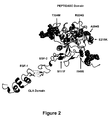
- Amino acid residue at position 111 in the mature FVII protein is placed in the EGF2 domain of said protein in a beta-strand.
- this amino acid is close to residues involved in the interaction with tissue factor (TF). It is placed just before Cys112 involved in a disulfide bridge and after the highly conserved Arg110 residue that is structurally important.
- SNP S111F is thus plays a structural role in Factor VII and in the interaction with tissue factor (TF).
- Amino acid residue at position 140 in the mature FVII protein is placed in the connecting region between the EGF2 domain and the peptidase domain and close to the R152-Ile153 cleavage site.
- This amino acid is located in a loop region.
- isoleucine which is a hydrophobic amino acid
- serine which is a polar and tiny residue
- this amino acid residue is located close to the Asn145 glycosylation site, which residue is important for the cleavage (FVII activation) of Arg152.
- Apparition of a polar residue (Serine) can increase flexibility of the connecting region and 1140S SNP thus impact positively the activation of factor VII.
- Amino acid residue at position 215 in the mature FVII protein is placed in the peptidase domain in the loop region.
- the position of this residue is close to the catalytic cleft.
- the region including Glu215 is reported as forming a FX binding interface with FVII.
- E215K SNP should positively impact the proteolytic activity of Factor VII.
- due to the high accessibility of the lysine residue to solvent this should make the mutated Factor VII sensitive to trypsin protease, which lowers its half-life compared to wild-type FVII.
- Amino acid residue at position 224 in the FVII mature protein is placed in a beta strand in the peptidase domain.
- the replacement of arginine at position 224 by Glutamine causes a loss of positive charge, which conducts to render the protein more resistant against trypsin proteolysis.
- the position of this residue is close to the catalytic cleft.
- R224Q SNP thus positively impacts the proteolytic activity of Factor VII as well as increases the half-life of Factor VII.
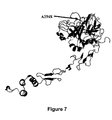
- Amino acid residue at position 294 in the FVII mature protein is placed in the peptidase domain. This is a buried residue located in a beta strand. The position of that residue is close to the catalytic cleft. The replacement of alanine at position 294 by serine increases locally the polarity of the protein. According to Kumar et al. (1993, Eur. J. Biochem. 217(2):509-518 ), the region including Ala294 is reported as forming a FX binding interface with FVII. Thus A294S SNP is also believed to positively impact the proteolytic activity of Factor VII.
- Amino acid residue at position 324 in the FVII mature protein is placed in the peptidase domain. This is a partially buried residue located in a loop region.
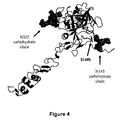
- the replacement of threonine at position 324 by methionine, which is a bigger residue, modifies the "322 NIT" N-glycosylation motif and may prevent the glycosylation of Asn322, which impacts protease sensitivity of Factor VII (some sites sensitive to proteases are accessible due to absence of carbohydrate chain), as well as Factor VII activity and binding to tissue factor.
- T324M SNP thus impacts Factor VII half-life and possibly its activity and/or its interaction with tissue factor (TF).
- Nucleotide sequence of the reference wild-type gene is understood as the nucleotide sequence SEQ ID NO. 1 of the human FVII gene which is accessible in GenBank under Accession number AF466933 and described in Rieder, M.J., et al., 2003, Molecular Biotechnology, University of Washington, 1705 NE Pacific, Seattle, WA 98195, USA.
- Natural wild-type Factor VII protein is understood as the immature protein encoded by the "coding nucleotide sequence” SEQ ID NO.2 of the reference wild-type FVII gene.
- the amino acid sequence of the immature FVII protein, which is encoded by said coding nucleotide sequence, corresponds to SEQ ID NO.3.
- the natural wild-type mature FVII protein also called “FVIIa” corresponds to the peptide sequence SEQ ID NO. 4., which spans amino acids 61 through 466 of SEQ ID NO.3.
- Polynucleotide is understood as a polyribonucleotide or a polydeoxyribonucleotide that can be a modified or non-modified DNA or RNA.
- the term polynucleotide includes, for example, a single strand or double strand DNA, a DNA composed of a mixture of one or several single strand region(s) and of one or several double strand region(s), a single strand or double strand RNA and an RNA composed of a mixture of one or several single strand region(s) and of one or several double strand region(s).
- the term polynucleotide can also include an RNA and/or a DNA including one or several triple strand regions.
- Polynucleotide is equally understood as the DNAs and RNAs containing one or several bases modified in such a fashion as to have a skeleton modified for reasons of stability or for other reasons.
- modified base is understood, for example, the unusual bases such as inosine.
- Polypeptide is understood as a peptide, an oligopeptide, an oligomer or a protein comprising at least two amino acids joined to each other by a normal or modified peptide bond, such as in the cases of the isosteric peptides, for example.
- a polypeptide can be composed of amino acids other than the 20 amino acids defined by the genetic code.
- a polypeptide can equally be composed of amino acids modified by natural processes, such as post-translational maturation processes or by chemical processes, which are well known to a person skilled in the art. Such modifications are fully detailed in the literature. These modifications can appear anywhere in the polypeptide: in the peptide skeleton, in the amino acid chain or even at the carboxy- or amino-terminal ends.
- a polypeptide can be branched following an ubiquitination or be cyclic with or without branching. This type of modification can be the result of natural or synthetic post-translational processes that are well known to a person skilled in the art.
- polypeptide modifications is understood to include acetylation, acylation, ADP-ribosylation, amidation, covalent fixation of flavine, covalent fixation of heme, covalent fixation of a nucleotide or of a nucleotide derivative, covalent fixation of a lipid or of a lipidic derivative, the covalent fixation of a phosphatidylinositol, covalent or non-covalent cross-linking, cyclization, disulfide bond formation, demethylation, cysteine formation, pyroglutamate formation, formylation, gamma-carboxylation, glycosylation including pegylation, GPI anchor formation, hydroxylation, iodization, methylation, myristoylation, oxidation, proteolytic processes, phosphorylation, prenylation, racemization, seneloylation, sulfatation, amino acid addition such as arginylation or ubiquitination.
- a “hyperglycosylated polypeptide” or “hyperglycosylated analog of a polypeptide” is understood as a polypeptide whose amino acid sequence has been altered in such a way as to possess at least one more additional glycosylation site or a polypeptide with the same amino acid sequence but whose glycosylation level has been increased.
- isolated polynucleotide or isolated polypeptide is understood as a polynucleotide or a polypeptide such as previously defined which is isolated from the human body or otherwise produced by a technical process.
- FVII or "FVII polypeptide” refers to a Factor VII polypeptide provided in single chain form.
- FVIIa or “FVIIa polypeptide” refers to a Factor VIIa polypeptide provided in its activated two-chain form.
- amino acid sequence SEQ ID NO. 3 is used to describe the amino acid sequence of FVIIa, it is understood that the peptide bond between R152 and I153 of the single chain form has been cleaved, and that one of the chains comprises amino acid residues 1-152, and the other chain comprises amino acid residues 153-406.
- Identity is understood as the measurement of nucleotide or polypeptide sequences identity. Identity is a term well known to a person skilled in the art and well described in the literature ( Lesk, A.M., Computational Molecular Biology (1998) Ed., Oxford University Press, New York ; Smith, D.W., Biocomputing Informatics and Genome Project, (1993) Ed., Academic Press, New York ; Griffin, A.M. and Griffin H.G., Computer Analysis of Sequence Data, Part I, (1994) Ed, Humana Press, New Jersey ; and Von Heinje, G., Sequence Analysis in Molecular Biology (1987) Academic Press ).
- a polynucleotide having, for example, an identity of at least 95 % with the nucleotide sequence SEQ ID NO. 1 is a polynucleotide which contains at most 5 points of mutation over 100 nucleotides, compared to said sequence. These points of mutation can be one (or several) substitution(s), addition(s) and/or deletion(s) of one (or several) nucleotide(s).
- a polypeptide having, for example, an identity of at least 95 % with the amino acid sequence SEQ ID NO. 2 is a polypeptide that contains at most 5 points of mutation over 100 amino acids, compared to said sequence.
- These points of mutation can be one (or several) substitution(s), addition(s) and/or deletion(s) of one (or several) amino acid(s).
- polypeptides and the polypeptides according to the invention which are not fully identical over the nucleotide sequences SEQ ID NO. 1 or SEQ ID NO.2 or the amino acid sequences SEQ ID NO. 3 and SEQ ID NO.4, it being understood that these sequences contains at least one of the above selected SNPs, are considered as variants according to the invention.
- a polypeptide according to the invention generally possesses the same or practically the same biological activity as the protein encoded by the amino acid sequence SEQ ID NO. 3 or SEQ ID NO.4. This biological activity may although be increased or lowered depending on the SNPs present on the polypeptide according to the invention.
- a polypeptide according to the invention generally possesses the same or practically the same biological half-life as the protein encoded by the amino acid sequence SEQ ID NO. 3 or SEQ ID NO.4. This biological half-life may although be increased or lowered depending on the SNPs present on the polypeptide according to the invention.
- a polypeptide according to the invention may be obtained by site-directed mutagenesis from FVII wild type sequences or by direct synthesis.
- SNP is understood as a natural variation of a base in a nucleotide sequence or an amino acid in a peptide sequence.
- a SNP on a nucleotide sequence can be coding, silent or non-coding depending on the consequences it induces on the protein translation.
- a coding SNP is a polymorphism included in the coding sequence of a nucleotide sequence that involves a modification of an amino acid in the sequence of amino acids encoded by this nucleotide sequence.
- SNP applies equally, by extension, to a mutation in an amino acid sequence.
- a silent SNP is a polymorphism included in the coding sequence of a nucleotide sequence that does not involve a modification of an amino acid in the amino acid sequence encoded by this nucleotide sequence.
- a non-coding SNP is a polymorphism included in the non-coding sequence of a nucleotide sequence. This polymorphism can notably be found in an intron, a splicing zone, a transcription promoter or an enhancer site sequence.
- Frctionality is understood as the biological activity and/or half-life of a polypeptide or of a polynucleotide.
- “Functional SNP” is understood as a SNP, such as previously defined, which does not impair the functionality of a polypeptide or a polynucleotide.
- the functionality of said polypeptide may consist in the conserved, reduced, suppressed or increased biological activity and/or half-life of the wild-type reference gene or polypeptide.
- the functionality of a polypeptide or of a polynucleotide according to the invention may also consist of a change in the profile of said biological activity, i.e. acquisition or loss of biological properties.
- the biological activity may, for instance, be linked to the affinity or to the absence of affinity of a polypeptide with other blood coagulation factors.
- the present invention has for its first object an isolated polynucleotide comprising:
- An isolated polynucleotide according to the invention preferably encodes a polypeptide according to the invention, comprising the amino acid sequence SEQ ID NO. 4 or SEQ ID NO.3 (immature Factor VII amino acid sequence) and having at least one SNP selected from S111F (S171 F), I140S (I200S), E215K (E275K), R224Q (R284K), A294S (A354S) and T324M (T384M).
- S111 F, 1140S, E215K, R224Q, A294S, and T324M SNPs are given relatively to the numbering of the amino acids in SEQ ID NO.4. (and into brackets relative to that in SEQ ID NO.3).
- the previously defined polypeptide comprises a single coding SNP according to the invention.
- a polynucleotide according to the invention is composed of a DNA or RNA molecule.
- An isolated polynucleotide according to the invention can equally include, for example, nucleotide sequences coding for pre-, pro- or pre-pro-protein amino acid sequences or marker amino acid sequences, such as hexa-histidine peptide.
- a polynucleotide of the invention can equally be associated with nucleotide sequences coding for other proteins or protein fragments in order to obtain fusion proteins or other purification products.
- a polynucleotide according to the invention can equally include nucleotide sequences such as the 5' and/or 3' non-coding sequences, such as, for example, transcribed or non-transcribed sequences, translated or non-translated sequences, splicing signal sequences, polyadenylated sequences, ribosome binding sequences or even sequences which stabilize mRNA.
- nucleotide sequences such as the 5' and/or 3' non-coding sequences, such as, for example, transcribed or non-transcribed sequences, translated or non-translated sequences, splicing signal sequences, polyadenylated sequences, ribosome binding sequences or even sequences which stabilize mRNA.
- a nucleotide sequence is considered as being complementary to a polynucleotide sequence when it can hybridize with a nucleotide sequence under stringent hybridization conditions over its whole length.
- “Stringent hybridization conditions” is generally but not necessarily understood as the chemical conditions that permit a hybridization when the nucleotide sequences have an identity of at least 80 %, preferably greater than or equal to 90 %, still more preferably greater than or equal to 95 % and most preferably greater than or equal to 97 %.
- 5xSSC 150 mM of Nacl, 15 mM of trisodium citrate
- 5x Denhardt Solution 10 % dextran sulfate and 20 ⁇ g denatured salmon sperm DNA
- the complementary sequence under b) is considered to be strictly complementary to the nucleotide sequence under a) over its whole length.
- nucleotide sequence complementary to a nucleotide sequence under a) as referred to above comprises at least one anti-sense SNP according to the invention.
- the present invention also has for its object the use of all or part of a previously defined polynucleotide, in order to identify, hybridize and/or amplify all or part of a polynucleotide consisting of the nucleotide sequence SEQ ID NO. 1 or SEQ ID NO.2, more particularly including the SNPs described in the present application.
- a fragment of a polynucleotide according to the invention includes one of the SNPs previously defined. It is preferably composed of 5 to 50 nucleotides and more preferably between 10 to 40 nucleotides.
- Such fragments are useful to identify, hybridise and/or amplify a polynucleotide comprising a sequence having at least 80 %, preferably 90%, more preferably 95%, identity with nucleotide sequence SEQ ID NO. 1 or SEQ ID NO.2 (including or not said SNPs).
- the present invention equally has for its object the use of all or part of a polynucleotide according to the invention for the genotyping and more particularly with respect to nucleotide sequences which have between 90 and 100 % identity with the nucleotide sequence of FVII gene and which comprise at least one of the following SNPs disclosed in the present application.
- the genotyping may be carried out on an individual or a population of individuals.
- genotyping is defined as a process for the determination of the genotype of an individual or of a population of individuals.
- Genotype consists of the alleles present at one or more specific loci.
- Population of individuals is understood as a group of at least two determined individuals selected in random or non-random fashion. These individuals can be humans, animals, microorganisms or plants.
- a functional SNP according to the invention is preferably genotyped in a population of individuals.
- Genotyping can notably be carried out by minisequencing with hot ddNTPs (2 different ddNTPs labeled by different fluorophores) and cold ddNTPs (2 different non labeled ddNTPs), in connection with a polarized fluorescence scanner.
- the minisequencing protocol with reading of polarized fluorescence FP-TDI Technology or Fluorescence Polarization Template-direct Dye-Terminator Incorporation
- FP-TDI Technology or Fluorescence Polarization Template-direct Dye-Terminator Incorporation is well known to a person skilled in the art.
- PCR polymerase chain reaction
- the sense and antisense primers can easily be selected by a person skilled in the art according to the position of the SNPs of the invention in the FVII gene nucleotide sequence.
- the present invention also concerns the use of a polynucleotide according to the invention for the research of variants in the FVII gene nucleotide sequence.
- SNPs of the invention as genetic markers
- SNPs modifying functional sequences of genes are likely to be directly related to disease susceptibility or resistance
- all SNPs may provide valuable markers for the identification of one or several genes involved in these disease states and, consequently, may be indirectly related to these disease states (See Cargill et al. (1999). Nature Genetics 22:231-238 ; Riley et al. (2000) Pharmacogenomics 1:39-47 ; Roberts L. (2000) Science 287: 1898-1899 ).
- the present invention also concerns a databank comprising at least one of the following SNPs: c9951t, t11004g, g12640a, g12668a, g12877t and c12968t in a polynucleotide sequence, being understood that said SNPs are numbered in accordance with the nucleotide sequence SEQ ID NO. 1.
- This databank may be analyzed for determining statistically relevant associations between said SNPs and a disease or a resistance to a disease.
- the present invention also concerns the use of at least one of said SNPs for developing diagnostic/prognostic kits for a disease or a resistance to a disease.
- a SNP of the invention such as defined above may be directly or indirectly associated to a disease or a resistance to a disease.
- these diseases are those defined below.
- the present invention also has for its object a recombinant vector comprising at least one polynucleotide according to the invention.
- chromosomes can be used like, for example, chromosomes, episomes, derived viruses. More particularly, the recombinant vectors used can be derived from bacterial plasmids, transposons, yeast episome, insertion elements, yeast chromosome elements, viruses such as baculovirus, papilloma viruses such as SV40, vaccinia viruses, adenoviruses, fox pox viruses, pseudorabies viruses, retroviruses.
- viruses such as baculovirus, papilloma viruses such as SV40, vaccinia viruses, adenoviruses, fox pox viruses, pseudorabies viruses, retroviruses.
- recombinant vectors can equally be cosmid or phagemid derivatives.
- the nucleotide sequence can be inserted in the recombinant expression vector by methods well known to a person skilled in the art such as, for example, those that are described in Sambrook et al., Molecular Cloning : A Laboratory Manual (1989) 2nd Ed., Cold Spring Harbor Laboratory Press, Cold Spring Harbor, N.Y .
- the recombinant vector can include nucleotide sequences that control the regulation of the polynucleotide expression as well as nucleotide sequences permitting the expression and the transcription of a polynucleotide of the invention and the translation of a polypeptide of the invention, these sequences being selected according to the host cells that are used.
- an appropriate secretion signal can be integrated in the recombinant vector so that the polypeptide, encoded by the polynucleotide of the invention, will be directed towards the lumen of the endoplasmic reticulum, towards the periplasmic space, on the membrane or towards the extracellular environment.
- the present invention also has for its object a host cell comprising a recombinant vector according to the invention.
- the introduction of the recombinant vector in a host cell can be carried out according to methods that are well known to a person skilled in the art, such as transfection by calcium phosphate, transfection by DEAE dextran, transfection, microinjection, transfection by cationic lipids, electroporation, transduction or infection.
- the host cell can be, for example, bacterial cells such as cells of streptococci, staphylococci, E . coli or Bacillus subtilis, cells of fungi such as yeast cells and cells of Aspergillus, Streptomyces, insect cells such as cells of Drosophilia S2 and of Spodoptera Sf9, animal cells, such as CHO, COS, HeLa, C127, BHK, HEK 293 cells and human cells of the subject to treat or even plant cells.
- bacterial cells such as cells of streptococci, staphylococci, E . coli or Bacillus subtilis
- cells of fungi such as yeast cells and cells of Aspergillus, Streptomyces
- insect cells such as cells of Drosophilia S2 and of Spodoptera Sf9
- animal cells such as CHO, COS, HeLa, C127, BHK, HEK 293 cells and human cells of the subject to treat or even plant cells.
- the host cells can be used, for example, to express a polypeptide of the invention or as active product in pharmaceutical compositions, as will be seen hereinafter.
- the present invention has also for object an isolated polypeptide characterized in that it is encoded by an isolated polynucleotide according to the invention as previously defined.
- Such an isolated polypeptide preferably comprises an amino acid sequence having at least 80% identity with the amino acid sequence SEQ ID NO. 4 (mature FVII amino acid sequence) or SEQ ID NO.3 (immature FVII amino acid sequence), wherein said polypeptide comprises at least one SNP selected from S111F (S171F), I140S (I200S), E215K (E275K), R224Q (R284K), A294S (A354S) and T324M (T384M).
- a preferred isolated polypeptide according the invention has an amino acid sequence at least 85%, preferably at least 90%, more preferably 95% and even more preferably 99% identical with SEQ ID NO.4 or SEQ ID NO.3.
- said isolated polypeptide can comprise an amino acid sequence selected from sequences referred to as SEQ ID NO. 5 to 10, or preferably consists in said amino acid sequence.
- the isolated polypeptide according to the invention exhibits the same biological activities as mature FVII protein but to a higher or lower extent, or at least one of said biological activities, in particular that selected among the following:
- the isolated polypeptide according to the invention exhibits the same half-life profile in vivo as mature FVII protein but to a higher or lower extent, when assayed in animal models (ie., mouse, rat or rabbit) or in humans.
- An isolated polypeptide according to the invention is preferably obtained by a method comprising cultivating a host cell as previously defined in a culture medium and separating said polypeptide from the culture medium.
- the present invention also concerns a hyperglycosylated analog of a polypeptide according to the invention in order to improve its therapeutic properties.
- the present invention concerns pegylated analogs of a polypeptide according to the invention.
- the present invention equally has for its object a process for the preparation of the above-described polypeptide, in which a previously defined host cell is cultivated in a culture medium and said polypeptide is isolated from the culture medium.
- the polypeptide can be purified from the host cells' culture medium, according to methods well known to a person skilled in the art such as precipitation with chaotropic agents such as salts, in particular ammonium sulfate, ethanol, acetone or trichloroacetic acid; acid extraction; ion exchange chromatography; phosphocellulose chromatography; hydrophobic interaction chromatography; affinity chromatography; hydroxyapatite chromatography or exclusion chromatographies.
- chaotropic agents such as salts, in particular ammonium sulfate, ethanol, acetone or trichloroacetic acid
- Culture medium is understood as the medium in which the polypeptide of the invention is isolated or purified. This medium can be composed of the extracellular medium and/or the cellular lysate. Techniques well known to a person skilled in the art equally permit him or her to give back an active conformation to the polypeptide, if the conformation of said polypeptide was altered during the isolation or the purification.
- the present invention also has for its object a process for obtaining an immunospecific antibody.
- Antibody is understood as including monoclonal, polyclonal, chimeric, simple chain, humanized antibodies as well as the Fab fragments, including Fab or immunoglobulin expression library products.
- An immunospecific antibody can be obtained by immunization of an animal with a polypeptide according to the invention.
- the invention also relates to an immunospecific antibody for a polypeptide according to the invention, such as defined previously.
- a polypeptide according to the invention one of its fragments, an analog, one of its variants or a cell expressing this polypeptide can also be used to produce immunospecific antibodies.
- the immunospecific antibodies can be obtained by administration of a polypeptide of the invention, of one of its fragments, of an analog or of an epitopic fragment or of a cell expressing this polynucleotide in a mammal, preferably non human, according to methods well known to a person skilled in the art.
- Transgenic animals such as mice, for example, can equally be used to produce humanized antibodies.
- the present invention equally has for its object a process for the identification of an agent activating or inhibiting a polypeptide according to the invention, comprising:
- a polypeptide according to the invention can also be employed for a process for screening compounds that interact with it.
- These compounds can be activating (agonists) or inhibiting (antagonists) agents of intrinsic activity of a polypeptide according to the invention.
- These compounds can equally be ligands or substrates of a polypeptide of the invention ( Coligan et al. (1991) Current Protocols in Immunology 1 (2), Chap. 5 ). They can also be inhibitors of a polypeptide of the invention.
- Such cells can be, for example, cells of mammals, yeasts, insects such as Drosophilia or bacteria such as E . coli.
- the binding capacity of the compounds to be tested with the polypeptide of the invention can then be observed, as well as the inhibition or the activation of the functional response of the polypeptide of the invention.
- Step d) of the above process can be implemented by using an agent to be tested that is directly or indirectly labeled. It can also include a competition test, by using a labeled or non-labeled agent and a labeled competitor agent.
- an agent to be tested generates an activation or inhibition signal on cells expressing the polypeptide of the invention by using detection means appropriately chosen according to the signal to be detected.
- Such activating or inhibiting agents can be polynucleotides, and in certain cases oligonucleotides or polypeptides, such as proteins or antibodies, for example.
- the present invention also has for its object a process for the identification of an agent activated or inhibited by a polypeptide according to the invention, comprising:
- agent activated or inhibited by the polypeptide of the invention is an agent that responds, respectively, by activation or inhibition in the presence of this polypeptide.
- the agents, activated or inhibited directly or indirectly by the polypeptide of the invention can consist of polypeptides such as, for example, membranal or nuclear receptors, kinases and more preferably tyrosine kinases, transcription factor or polynucleotides.
- the present invention also has for object a method for diagnosing or determining a prognosis of coagulation related disorders or a resistance to said disorders, comprising detecting in-vitro at least one SNP selected from the group consisting of c9951t, t11004g, g12640a, g12668a, g12877t and c12968t, in the gene encoding Factor VII.
- This method may permit genetic diagnosis and/or determination of whether a patient is affected or at risk of being affected or, to the contrary, presents a partial resistance to the development of a disease, an indisposition or a disorder linked to the presence of a polynucleotide according to the invention and/or a polypeptide according to the invention.
- This process also permits genetic diagnosis of a disease or resistance to a disease linked to the presence, in a subject, of the mutant allele encoded by a SNP according to the invention.
- the level of expression of the polynucleotide may be measured by quantifying the level of RNA encoded by this polynucleotide (and coding for a polypeptide) according to methods well known to a person skilled in the art as, for example, by PCR, RT-PCR, RNase protection, Northern blot, and other hybridization methods.
- the presence or the absence as well as the concentration of a polypeptide according to the invention in a patient or a sample from a patient may be carried out by well known methods such as, for example, by radioimmunoassay, competitive binding tests, Western blot and ELISA tests.
- the determined concentration of the polypeptide according to the invention can be compared with the natural wild-type FVII protein concentration usually found in a patient.
- the present invention also has for its object a therapeutic compound containing, by way of active agent, a polypeptide according to the invention as defined above.
- the invention also relates to the use of a polypeptide according to the invention for the manufacture of a therapeutic compound intended for the prevention or the treatment of different human disorders and/or diseases.
- diseases can be disorders and/or human diseases, such as cancers and tumors, infectious diseases, venereal diseases, immunologically related diseases and/or autoimmune diseases and disorders, cardiovascular diseases, metabolic diseases, central nervous system diseases, gastrointestinal disorders, and disorders connected with chemotherapy treatments.
- Said cancers and tumors include carcinomas comprising metastasizing renal carcinomas, melanomas, lymphomas comprising follicular lymphomas and cutaneous T cell lymphoma, leukemias comprising chronic lymphocytic leukemia and chronic myeloid leukemia, cancers of the liver, neck, head and kidneys, multiple myelomas, carcinoid tumors and tumors that appear following an immune deficiency comprising Kaposi's sarcoma in the case of AIDS.
- Said infectious diseases include viral infections comprising chronic hepatitis B and C and HIV/AIDS, infectious pneumonias, and venereal diseases, such as genital warts.
- Said immunologically and auto-immunologically related diseases may include the rejection of tissue or organ grafts, allergies, asthma, psoriasis, rheumatoid arthritis, multiple sclerosis, Crohn's disease and ulcerative colitis.
- Said cardiovascular diseases may include brain injury and anemias including anemia in patients under dialysis in renal insufficiency, as well as anemia resulting from chronic infections, inflammatory processes, radiotherapies, and chemotherapies.
- Said metabolic diseases may include such non-immune associated diseases as obesity.
- Said diseases of the central nervous system may include Alzheimer's disease, Parkinson's disease, schizophrenia and depression.
- Said diseases and disorders may also include wound healing and osteoporosis.
- polynucleotides and polypeptides according to the invention are preferably intended for preventing or treating coagulation related disorders, more particularly in haemophiliac persons, persons having defective blood coagulation or having defective Factor VII.
- coagulation related disorders any situation where blood coagulation is desired. This comprises for instance situation wherein the bleeding is associated with trauma, intracerebral hemorrhage, traumatic brain injury, burns, variceal bleeds, gastrointestinal bleeding, hepatic rejection, thrombocytopenia, cardiac, thoracic aortic, or spinal surgery, organ transplantation, fibrinolytic treatment, anticoagulant treatment, hysterectomy or postpartum bleeding.
- Such a treatment could benefit for instance to:
- the active agents according to the invention are preferably administered through intravenous bolus injection.
- the initial dose varies from 20 to 40 ⁇ g/kg of body weight for non emergent anticoagulant reversal and from 40 to 90 ⁇ g/kg of body weight in other cases. Injections may be repeated, following the initial dose.
- the duration of the treatment and the interval between successive injections vary with the severity of the hemorrhage, the invasive procedure, the surgery being performed or the severity of the trauma. Initially, the dosing interval is 2-3 hours to achieve hemostasis. This interval can be increased, once effective hemostasis is achieved to every four, six, eight or twelve hours for as long as treatment is indicated.
- polypeptide according to the invention can also be administered by contact, for instance under the form of a powder or spray composition, more especially in situation of emergency medicine when severe bleedings need to be stopped as fast as possible.
- Certain of the compounds permitting to obtain the polypeptide according to the invention as well as the compounds obtained or identified by or from this polypeptide can likewise be used for the therapeutic treatment of the human body, i.e. as a therapeutic compound.
- the present invention also has for an object a therapeutic compound containing, by way of active agent, a polynucleotide according to the invention containing at least one previously defined SNP, a previously defined recombinant vector, a previously defined host cell, and/or a previously defined antibody.
- a polypeptide according to the invention is generally administered at doses ranging between 1 and 300 units/kg of the subject.
- the invention also has as an object a pharmaceutical composition that contains, as active agent, at least one above-mentioned compound such as a polypeptide according to the invention; a hyperglycosylated analog of a polypeptide according to the invention, a fusion protein, hyperglycosylated or not, containing a polypeptide according to the invention; a polynucleotide according to the invention containing at least one previously defined SNP of the invention, a previously defined recombinant vector, a previously defined host cell, and/or a previously defined antibody, as well as a pharmaceutically acceptable excipient.
- a pharmaceutical composition that contains, as active agent, at least one above-mentioned compound such as a polypeptide according to the invention; a hyperglycosylated analog of a polypeptide according to the invention, a fusion protein, hyperglycosylated or not, containing a polypeptide according to the invention; a polynucleotide according to the invention containing at least one previously defined
- the active agent is advantageously present at physiologically effective doses.
- compositions can be, for example, solids or liquids and be present in pharmaceutical forms currently used in human medicine such as, for example, simple or coated tablets, gelcaps, granules, caramels, suppositories and preferably injectable preparations and powders for injectables.
- pharmaceutical forms can be prepared according to usual methods.
- the active agent(s) can be incorporated into excipients usually employed in pharmaceutical compositions such as talc, Arabic gum, lactose, starch, dextrose, glycerol, ethanol, magnesium stearate, cocoa butter, aqueous or nonaqueous vehicles, fatty substances of animal or vegetable origin, paraffinic derivatives, glycols, various wetting agents, dispersants or emulsifiers, preservatives.
- excipients usually employed in pharmaceutical compositions such as talc, Arabic gum, lactose, starch, dextrose, glycerol, ethanol, magnesium stearate, cocoa butter, aqueous or nonaqueous vehicles, fatty substances of animal or vegetable origin, paraffinic derivatives, glycols, various wetting agents, dispersants or emulsifiers, preservatives.
- the active agent(s) can also be incorporated into nanoparticules for a slow release into the body.
- the active agent(s) can be administered systemically in the body or locally at the site(s) of the bleeding.
- the active agent(s) according to the invention can be employed alone or in combination with other compounds such as therapeutic compounds such as cytokines or growth factors, for example.
- the different formulations of the pharmaceutical compositions are adapted according to the mode of administration.
- compositions can be administered by different routes of administration known to a person skilled in the art.
- the present invention also concerns variant or equivalent proteins having a biological activity substantially similar or higher than the polypeptides according to the invention.
- Such variants may be selected for their different biological activities in relation with blood coagulation.
- results of these activity tests may be compared with those obtained with wild-type FVIIa product, which is available on the market under the trademark Novoseven® (NovoNordisk).
Landscapes
- Health & Medical Sciences (AREA)
- Chemical & Material Sciences (AREA)
- Life Sciences & Earth Sciences (AREA)
- Organic Chemistry (AREA)
- Engineering & Computer Science (AREA)
- Bioinformatics & Cheminformatics (AREA)
- Genetics & Genomics (AREA)
- Zoology (AREA)
- Wood Science & Technology (AREA)
- General Health & Medical Sciences (AREA)
- General Engineering & Computer Science (AREA)
- Biochemistry (AREA)
- Proteomics, Peptides & Aminoacids (AREA)
- Molecular Biology (AREA)
- Medicinal Chemistry (AREA)
- Microbiology (AREA)
- Biotechnology (AREA)
- Analytical Chemistry (AREA)
- Biomedical Technology (AREA)
- Veterinary Medicine (AREA)
- Pharmacology & Pharmacy (AREA)
- Physics & Mathematics (AREA)
- Biophysics (AREA)
- Public Health (AREA)
- Immunology (AREA)
- Animal Behavior & Ethology (AREA)
- Pathology (AREA)
- Nuclear Medicine, Radiotherapy & Molecular Imaging (AREA)
- General Chemical & Material Sciences (AREA)
- Chemical Kinetics & Catalysis (AREA)
- Hematology (AREA)
- Diabetes (AREA)
- Peptides Or Proteins (AREA)
- Micro-Organisms Or Cultivation Processes Thereof (AREA)
- Medicines That Contain Protein Lipid Enzymes And Other Medicines (AREA)
Abstract
The present invention relates to new polynucleotides deriving from the nucleotide sequence of Factor VII (FVII) gene comprising new natural SNPs, new polypeptides encoded by said polynucleotides as well as their therapeutic uses.
Description
- The present invention relates to new polynucleotides deriving from the nucleotide sequence of the Factor VII (FVII) gene comprising new natural SNPs, new polypeptides encoded by said polynucleotides, as well as their therapeutic uses.
- Blood coagulation is a process consisting of a complex interaction of various blood factors that eventually results in a fibrin clot. In general, the factors participating in blood coagulation are proenzymes or zymogens, i.e. enzymatically inactive proteins that are converted into an active form by the action of an activator.
- Factor VII (FVII) is one of the essential factors for the initiation of blood coagulation via the tissue factor (TF) pathway. Factor VII is a vitamin K-dependent plasma serine protease synthesized in the liver and secreted into the blood as a single-chain glycoprotein with a molecular weight of 53 kDa (Broze & Majerus (1980) J. Biol. Chem., 255:1242-1247). FVII under its zymogen form is catalytically activated upon binding to its cell surface receptor and co-factor tissue factor (TF) into an activated form FVIIa by proteolytic cleavage at a single site, R152-I153; resulting in two chains of 152 and 254 amino acids, respectively, linked by a single disulfide bridge (Pike et al., (1999) Proc. Natl. Acad. Sci., 96: 8925-8930).
- The gene coding for human FVII (hFVII) has been mapped to chromosome 13 at q34-qter 9. It contains nine exons and spans 12.8 Kb. The gene organization and protein structure of FVII are similar to those of other vitamin K-dependent procoagulant proteins, with exons 1 a and 1b encoding for signal sequence;
exon 2 the propeptide and Gla domain; exon 3 a short hydrophobic region; exons 4 and 5 the epidermal growth factor-like domains; and exon 6 through 8 the serine protease catalytic domain (Yoshitake et al., (1985) Biochemistry, 24: 3736-3750). - In case of injury, Tissue factor (TF) is expressed at the site of damaged endothelial cells. TF forms a complex with FVIIa (FVIIa complex), which is able to convert both factor IX and factor X into their activated forms, followed by reactions leading to rapid thrombin production and fibrin formation.
- Severe reduction in plasma FVII activity usually leads to bleeding problems in human patients although the phenotype is heterogeneous. Complete absence of circulating FVII appears to be lethal due to traumatic post-natal bleeding (Cooper et al., (1997) Thromb. Haemostasis, 78: 151-160). In addition, a recent report on FVII knock-out mice indicates poor survival of neonates, with the majority dying within 24 hours from severe bleeding and virtually no survival beyond 21 days (Rosen et al., (1997) Nature, 390: 290-293).
-
WO 96/12800 - In connection with treatment of uncontrolled bleedings, such as trauma, it is believed that factor VIIa is capable of activating factor X to factor Xa without binding to tissue factor, and this activation reaction is believed to occur primarily on activated blood platelets (Hedner et al., (2000) Blood Coagulation & Fibrinolysis, 11: 107-111). However, FVIIa has a low activity towards factor X in the absence of tissue factor and, consequently, treatment of uncontrolled bleeding, for example in trauma patients, requires relatively high and multiple doses of FVIIa. Therefore, in order to treat uncontrolled bleedings more efficiently (to minimize blood loss) there is need for improved FVIIa molecules, which possess a high activity toward factor X in the absence of tissue factor. Such improved FVIIa molecules will exhibit a lowered clotting time (or faster action) as compared to FVIIa when administered in connection with uncontrolled bleedings.
- Recombinant factor VIIa (rFVIIa) manufactured by Novo Nordisk (known under the trademark Novoseven®) has been approved to treat bleeding episodes in the following groups of patients :
- patients with congenital haemophilia A or B with inhibitors or factor VII deficiency;
- patients suffering from a Glanzmann's thrombasthenia with antibodies anti-GP llb-lla and/or anti-HLA ;
- patients with acquired haemophilia (Unlike classic haemophilia, acquired haemophilia is not an inherited condition). The onset usually occurs well into adulthood and is often associated with other conditions such as autoimmune disorders and cancer or with the use of certain drugs. Bleeding episodes in people with acquired haemophilia occur mostly in the skin and soft tissue. They are a result of the body producing antibodies that attack essential clotting factors VIII and IX, which hinder coagulation);
- in the prevention of bleeding in surgical interventions or invasive procedures in patients with haemophilia A or B.
- Since the approval of recombinant factor VIIa from Novo Nordisk, it has seen increasing use in patients without haemophilia for the control of refractory bleeding in various clinical situations (A study on Consesus Recomendations for the Off-Label Use of Recombinant Human Factor Vlla NovoSeven® Therapy, published in P&T (2005) 30(11): 644-658). This study found that the use of rFVIIa is appropriate in limited circumstances including cardiac, thoracic aortic, or spinal surgery, hepatic rejection, hysterectomy, postpartum bleeding, severe multiple trauma and non traumatic intracranial bleeding.
- Extensive mutational analysis of Factor VII protein have been reported in the literature with respect to TF binding and factor X hydrolysis in view to define which residues of the protein are involved in these interactions (Dickinson, C.D. et al. (1996) Proc. Natl. Acad. Sci., 93:14379-14384). In these experiments, only the substitution mutations impairing FVII functionality were considered. These studies revealed that factor TF.VIIa interacts with its macromolecular substrate through an extended interface involving a large array of residues
-
WO 03/093465 - In relation with genetically inherited blood coagulation disorders, such as those encountered in hemophiliac persons, frequent gene mutations have been identified impairing Factor VII functionality (Toso, R. et al. (2002) Biochem. J., 363: 411- 416) (Borensztajn, K. et al. (2003) Blood, 102(2):561-563). However, it has not been reported in these studies natural human mutations found in the human natural gene of Factor VII having a positive impact on Factor VII functionality, i.e. conducting to coagulation faster than the wild type factor VII and/or to longer activity (half-life) than the wild type factor VII.
- The present inventors have investigated allelic copies of FVII human gene in human population not especially concerned by inherited blood disorders. This approach has unexpectedly led to identify natural functionally single nucleotide polymorphisms (SNPs) in the exons of the gene encoding FVII protein.
- Six of these functionally SNPs are considered as positively acting upon Factor VII protein functionality, in particular in view of the molecular bio-informatics predictive structure analysis of the Factor VII variants containing them.
- The polynucleotides comprising at least one of these 6 exonic SNPs and their resulting polypeptides are the object of the present invention, as well as their use for diagnose, treat or prevent blood coagulation related disorders, bleedings, hemorrhages or other pathologies such as those mentioned previously, in particular by improving the properties of natural or recombinant Factor VII proteins.
- The invention has as its first object new polynucleotides that differ from the nucleotide sequence of the reference wild-type FVII gene in that they comprise one or several selected SNPs (Single Nucleotide Polymorphism).
- The nucleotide sequence SEQ ID NO. 1 of the human reference wild-type FVII gene is composed of 14241 nucleotides and comprises a coding sequence of 1401 nucleotides beginning at nucleotide 52 (start codon) and ending at nucleotide 13218 (stop codon) in the human reference wild-type FVII gene.
- The FVII gene is composed of 9 exons placed at the following positions on the nucleotide sequence SEQ ID NO. 1:
- Exon 1: from
nucleotide 1 to nucleotide 115 (Start codon at position 1) - Exon 2: from nucleotide 1055 to nucleotide 1120
- Exon 3: from nucleotide 4900 to nucleotide 5060
- Exon 4: from nucleotide 7962 to nucleotide 7986
- Exon 5: from nucleotide 8057 to nucleotide 8170
- Exon 6: from nucleotide 9870 to nucleotide 10010
- Exon 7: from nucleotide 10976 to nucleotide 11085
- Exon 8: from nucleotide 11683 to nucleotide 11806
- Exon 9: from nucleotide 12623 to nucleotide 14891 (Stop codon at position 13218)
- The applicant has identified and selected 6 SNPs in the nucleotide sequence of the reference wild-type FVII gene. These SNPs are the following ones: c9951t, t11004g, g12640a, g12668a, g12877t, c12968t for which the numbering corresponds to the positioning of the SNP relative to the numbering of the nucleotide sequence SEQ ID N0.1. These SNPs are located in the exons of the wild type FVII gene, they thus take part the coding sequence of FVII represented by SEQ ID NO.2 under the respective SNPs: c512t, t599g, g823a, g851a, g1060t, c1151t, for which the numbering corresponds to the positioning of the SNP relative to said nucleotide sequence SEQ ID NO. 2.
- The letters a, t, c, and g correspond respectively to the nitrogenous bases adenine, thymine, cytosine and guanine. The first letter corresponds to the wild-type nucleotide, whereas the last letter corresponds to the mutated nucleotide.
- Thus, for example, the SNP c9951t (c512t) mentioned above corresponds to a mutation of the nucleotide c (cytosine) into t (thymine) at position 9951 of the reference nucleotide sequence SEQ ID NO. 1 encoding wild-type FVII (position 512 in the reference coding sequence SEQ ID NO. 2 of wild-type FVII).
- The nucleotide SNPs according to the invention have been identified by sequencing FVII gene fragments isolated and amplified using PCR amplification, from the genomes of 384 individuals randomly sampled in the worldwide human population.
- The reference wild-type FVII gene codes for an immature protein of 466 amino acids. The amino acid sequence of said immature FVII protein is represented by the amino acid sequence SEQ ID NO. 3. The immature protein is converted to the 406 amino acid mature form of the protein by cleavage of both the signal peptide and the pro-peptide that includes the first 60 amino acids. The amino acid sequence of the mature form of the FVII protein is represented by SEQ ID NO.4.
- The above nucleotide SNPs cause translational modifications at the level of the FVII amino acid sequence (peptide SNPs) according to the invention, which are noted here below:
- c9951t (c512t) → S111F
- t11004g (t599g) → I140S
- g12640a (g823a) → E215K
- g12668a (g851a) → R224Q
- g12877t (g1060t) → A294S
- c12968t (c1151t) → T324M
- The SNP S111 F corresponds to a mutation of the Serine (S) into Phenylalanine (F) at position 111 in the mature protein of the FVII (SEQ ID NO. 4), which corresponds to position 171 in the immature amino acid sequence (SEQ ID NO.3).
- The SNP I140S corresponds to a mutation of the Isoleucine (I) into Serine (S) at
position 140 in the mature protein of the FVII (SEQ ID NO. 4), which corresponds to position 200 in the immature amino acid sequence (SEQ ID NO.3). - The SNP E215K corresponds to a mutation of the Glutamic acid (E) into Lysine (K) at position 215 in the mature protein of the FVII (SEQ ID NO. 4), which corresponds to position 284 in the immature sequence (SEQ ID NO.3).
- The SNP R224Q corresponds to a mutation of the Arginine (R) into Glutamine (Q) at position 224 in the mature protein of the FVII (SEQ ID NO. 4), which corresponds to position 284 in the immature sequence (SEQ ID NO.3).
- The SNP A294S corresponds to a mutation of the Alanine (A) into Serine (S) at
position 294 in the mature protein of the FVII (SEQ ID NO. 4), which corresponds to position 354 in the immature sequence (SEQ ID NO.3). - The SNP T324M corresponds to a mutation of the Threonine (T) into Methionine (M) at position 324 in the mature protein of the FVII (SEQ ID NO. 4), which corresponds to position 384 in the immature sequence (SEQ ID NO.3).
- The mature FVII protein amino acid sequence including S111 F (i.e. where F is found at position 111) corresponds to SEQ ID NO.5.
- The mature FVII protein amino acid sequence including 1140S (i.e. where S is found at position 140) corresponds to SEQ ID NO.6.
- The mature FVII protein amino acid sequence including E215K (i.e. where K is found at position 215) corresponds to SEQ ID NO.7.
- The mature FVII protein amino acid sequence including R224Q (i.e. where Q is found at position 224) corresponds to SEQ ID NO.8.
- The mature FVII protein amino acid sequence including A294S (i.e. where S is found at position 294) corresponds to SEQ ID NO.9.
- The mature FVII protein amino acid sequence including T324M (i.e. where M is found at position 324) corresponds to SEQ ID N0.10.
- The SNPs S111F, 1140S, E215K, R224Q, A294S and T324M cause modifications of the spatial conformation of the wild type FVII polypeptide as observed by computational molecular modelling, such as MODELER/Accelrys (homology modelling), DELPHI/Accelrys (electrostatic potentials), and/or molecular simulation (using force field to determine minimum energy conformations as well as dynamic trajectories of molecular systems) such as TINKER/FFE package (Ren, P. and Ponder J. W. (2003) J. Phys. Chem. B, 107:5933-5947).
- Amino acid residue at position 111 in the mature FVII protein is placed in the EGF2 domain of said protein in a beta-strand. The replacement of Serine, which is a polar and tiny residue, at position 111, by Phenylalanine, which is a bulky and aromatic residue, provokes a polar to hydrophobic inversion of amino acid property. More, the residue volume dramatically increases. This modifies the residue features and thus affects the local structure of the protein. Moreover, this amino acid is close to residues involved in the interaction with tissue factor (TF). It is placed just before Cys112 involved in a disulfide bridge and after the highly conserved Arg110 residue that is structurally important. SNP S111F is thus plays a structural role in Factor VII and in the interaction with tissue factor (TF).
- Amino acid residue at
position 140 in the mature FVII protein is placed in the connecting region between the EGF2 domain and the peptidase domain and close to the R152-Ile153 cleavage site. This amino acid is located in a loop region. The replacement of isoleucine, which is a hydrophobic amino acid, by serine, which is a polar and tiny residue, causes an hydrophobic to polar inversion of amino acid property. Moreover, this amino acid residue is located close to the Asn145 glycosylation site, which residue is important for the cleavage (FVII activation) of Arg152. Apparition of a polar residue (Serine) can increase flexibility of the connecting region and 1140S SNP thus impact positively the activation of factor VII. - Amino acid residue at position 215 in the mature FVII protein is placed in the peptidase domain in the loop region. The replacement of glutamic acid, which is a negatively-charged residue, at position 215, by lysine, which is a positively-charged residue, causes an inversion of charge. The position of this residue is close to the catalytic cleft. According to Kumar et al. (1993, Eur. J. Biochem. 217(2):509-518), the region including Glu215 is reported as forming a FX binding interface with FVII. E215K SNP should positively impact the proteolytic activity of Factor VII. In addition, due to the high accessibility of the lysine residue to solvent, this should make the mutated Factor VII sensitive to trypsin protease, which lowers its half-life compared to wild-type FVII.
- Amino acid residue at position 224 in the FVII mature protein is placed in a beta strand in the peptidase domain. The replacement of arginine at position 224 by Glutamine causes a loss of positive charge, which conducts to render the protein more resistant against trypsin proteolysis. The position of this residue is close to the catalytic cleft. R224Q SNP thus positively impacts the proteolytic activity of Factor VII as well as increases the half-life of Factor VII.
- Amino acid residue at
position 294 in the FVII mature protein is placed in the peptidase domain. This is a buried residue located in a beta strand. The position of that residue is close to the catalytic cleft. The replacement of alanine atposition 294 by serine increases locally the polarity of the protein. According to Kumar et al. (1993, Eur. J. Biochem. 217(2):509-518), the region including Ala294 is reported as forming a FX binding interface with FVII. Thus A294S SNP is also believed to positively impact the proteolytic activity of Factor VII. - Amino acid residue at position 324 in the FVII mature protein is placed in the peptidase domain. This is a partially buried residue located in a loop region. The replacement of threonine at position 324 by methionine, which is a bigger residue, modifies the "322 NIT" N-glycosylation motif and may prevent the glycosylation of Asn322, which impacts protease sensitivity of Factor VII (some sites sensitive to proteases are accessible due to absence of carbohydrate chain), as well as Factor VII activity and binding to tissue factor. T324M SNP thus impacts Factor VII half-life and possibly its activity and/or its interaction with tissue factor (TF).
-
Figure 1 represents the location of the 6 SNPs according to the invention on the mature FVII protein sequence, with respect to the different domains said protein comprises. -
Figure 2 represents an overview of the SNPs S111F, I140S, E215K, R224Q, A294S and T324M locations in Factor VII 3-D modeled protein structure (image made with Pymol, url : pymol.sourceforge.net). -
Figure 3 represents an overview of 3-D Factor VII protein structure including the S111F SNP according to the invention (image made with Pymol, url : pymol.sourceforge.net). -
Figure 4 represents an overview of 3-D Factor VII protein structure including the I140S SNP according to the invention. -
Figure 5 represents an overview of 3-D Factor VII protein structure including the E215K SNP according to the invention. -
Figure 6 represents an overview of 3-D Factor VII protein structure including the R224Q SNP according to the invention. -
Figure 7 represents an overview of 3-D Factor VII protein structure including the A294S SNP according to the invention. -
Figure 8 represents an overview of 3-D Factor VII protein structure including the T324M SNP according to the invention. - "Nucleotide sequence of the reference wild-type gene" is understood as the nucleotide sequence SEQ ID NO. 1 of the human FVII gene which is accessible in GenBank under Accession number AF466933 and described in Rieder, M.J., et al., 2003, Molecular Biotechnology, University of Washington, 1705 NE Pacific, Seattle, WA 98195, USA.
- "Natural wild-type Factor VII protein" is understood as the immature protein encoded by the "coding nucleotide sequence" SEQ ID NO.2 of the reference wild-type FVII gene. The amino acid sequence of the immature FVII protein, which is encoded by said coding nucleotide sequence, corresponds to SEQ ID NO.3. The natural wild-type mature FVII protein also called "FVIIa" corresponds to the peptide sequence SEQ ID NO. 4., which spans amino acids 61 through 466 of SEQ ID NO.3.
- "Polynucleotide" is understood as a polyribonucleotide or a polydeoxyribonucleotide that can be a modified or non-modified DNA or RNA. The term polynucleotide includes, for example, a single strand or double strand DNA, a DNA composed of a mixture of one or several single strand region(s) and of one or several double strand region(s), a single strand or double strand RNA and an RNA composed of a mixture of one or several single strand region(s) and of one or several double strand region(s). The term polynucleotide can also include an RNA and/or a DNA including one or several triple strand regions. Polynucleotide is equally understood as the DNAs and RNAs containing one or several bases modified in such a fashion as to have a skeleton modified for reasons of stability or for other reasons. By modified base is understood, for example, the unusual bases such as inosine.
- "Polypeptide" is understood as a peptide, an oligopeptide, an oligomer or a protein comprising at least two amino acids joined to each other by a normal or modified peptide bond, such as in the cases of the isosteric peptides, for example.
- A polypeptide can be composed of amino acids other than the 20 amino acids defined by the genetic code. A polypeptide can equally be composed of amino acids modified by natural processes, such as post-translational maturation processes or by chemical processes, which are well known to a person skilled in the art. Such modifications are fully detailed in the literature. These modifications can appear anywhere in the polypeptide: in the peptide skeleton, in the amino acid chain or even at the carboxy- or amino-terminal ends.
- A polypeptide can be branched following an ubiquitination or be cyclic with or without branching. This type of modification can be the result of natural or synthetic post-translational processes that are well known to a person skilled in the art.
- For example, polypeptide modifications is understood to include acetylation, acylation, ADP-ribosylation, amidation, covalent fixation of flavine, covalent fixation of heme, covalent fixation of a nucleotide or of a nucleotide derivative, covalent fixation of a lipid or of a lipidic derivative, the covalent fixation of a phosphatidylinositol, covalent or non-covalent cross-linking, cyclization, disulfide bond formation, demethylation, cysteine formation, pyroglutamate formation, formylation, gamma-carboxylation, glycosylation including pegylation, GPI anchor formation, hydroxylation, iodization, methylation, myristoylation, oxidation, proteolytic processes, phosphorylation, prenylation, racemization, seneloylation, sulfatation, amino acid addition such as arginylation or ubiquitination. Such modifications are fully detailed in the literature (Proteins Structure and Molecular Properties (1993) 2nd Ed., T. E. Creighton, New York; Post-translational Covalent Modifications of Proteins (1983) B. C. Johnson, Ed., Academic Press, New York; Seifter et al. (1990) Analysis for protein modifications and nonprotein cofactors, Meth. Enzymol. 182: 626-646 and Rattan et al., (1992) Protein Synthesis: Post-translational Modifications and Aging, Ann NY Acad Sci, 663: 48-62).
- A "hyperglycosylated polypeptide" or "hyperglycosylated analog of a polypeptide" is understood as a polypeptide whose amino acid sequence has been altered in such a way as to possess at least one more additional glycosylation site or a polypeptide with the same amino acid sequence but whose glycosylation level has been increased.
- "Isolated polynucleotide" or "isolated polypeptide" is understood as a polynucleotide or a polypeptide such as previously defined which is isolated from the human body or otherwise produced by a technical process.
- The term "FVII" or "FVII polypeptide" refers to a Factor VII polypeptide provided in single chain form.
- The term "FVIIa" or "FVIIa polypeptide" refers to a Factor VIIa polypeptide provided in its activated two-chain form. When the amino acid sequence SEQ ID NO. 3 is used to describe the amino acid sequence of FVIIa, it is understood that the peptide bond between R152 and I153 of the single chain form has been cleaved, and that one of the chains comprises amino acid residues 1-152, and the other chain comprises amino acid residues 153-406.
- "Identity" is understood as the measurement of nucleotide or polypeptide sequences identity. Identity is a term well known to a person skilled in the art and well described in the literature (Lesk, A.M., Computational Molecular Biology (1998) Ed., Oxford University Press, New York; Smith, D.W., Biocomputing Informatics and Genome Project, (1993) Ed., Academic Press, New York; Griffin, A.M. and Griffin H.G., Computer Analysis of Sequence Data, Part I, (1994) Ed, Humana Press, New Jersey; and Von Heinje, G., Sequence Analysis in Molecular Biology (1987) Academic Press).
- The methods commonly employed to determine the identity and the similarity between two sequences are equally well described in the literature (Martin J. Bishop, Guide to Huge Computer (1994) Ed, Academic Press, San Diego and Carillo H. and Lipton D., Siam J Applied Math (1988) 48: 1073).
- A polynucleotide having, for example, an identity of at least 95 % with the nucleotide sequence SEQ ID NO. 1 is a polynucleotide which contains at most 5 points of mutation over 100 nucleotides, compared to said sequence. These points of mutation can be one (or several) substitution(s), addition(s) and/or deletion(s) of one (or several) nucleotide(s).
- In the same way, a polypeptide having, for example, an identity of at least 95 % with the amino acid sequence SEQ ID NO. 2 is a polypeptide that contains at most 5 points of mutation over 100 amino acids, compared to said sequence.
- These points of mutation can be one (or several) substitution(s), addition(s) and/or deletion(s) of one (or several) amino acid(s).
- The polynucleotides and the polypeptides according to the invention which are not fully identical over the nucleotide sequences SEQ ID NO. 1 or SEQ ID NO.2 or the amino acid sequences SEQ ID NO. 3 and SEQ ID NO.4, it being understood that these sequences contains at least one of the above selected SNPs, are considered as variants according to the invention.
- A polypeptide according to the invention generally possesses the same or practically the same biological activity as the protein encoded by the amino acid sequence SEQ ID NO. 3 or SEQ ID NO.4. This biological activity may although be increased or lowered depending on the SNPs present on the polypeptide according to the invention.
- A polypeptide according to the invention generally possesses the same or practically the same biological half-life as the protein encoded by the amino acid sequence SEQ ID NO. 3 or SEQ ID NO.4. This biological half-life may although be increased or lowered depending on the SNPs present on the polypeptide according to the invention.
- A polypeptide according to the invention, may be obtained by site-directed mutagenesis from FVII wild type sequences or by direct synthesis.
- "SNP" is understood as a natural variation of a base in a nucleotide sequence or an amino acid in a peptide sequence. A SNP on a nucleotide sequence can be coding, silent or non-coding depending on the consequences it induces on the protein translation.
- A coding SNP is a polymorphism included in the coding sequence of a nucleotide sequence that involves a modification of an amino acid in the sequence of amino acids encoded by this nucleotide sequence. In this case, the term SNP applies equally, by extension, to a mutation in an amino acid sequence.
- A silent SNP is a polymorphism included in the coding sequence of a nucleotide sequence that does not involve a modification of an amino acid in the amino acid sequence encoded by this nucleotide sequence.
- A non-coding SNP is a polymorphism included in the non-coding sequence of a nucleotide sequence. This polymorphism can notably be found in an intron, a splicing zone, a transcription promoter or an enhancer site sequence.
- "Functionality" is understood as the biological activity and/or half-life of a polypeptide or of a polynucleotide.
- "Functional SNP" is understood as a SNP, such as previously defined, which does not impair the functionality of a polypeptide or a polynucleotide. The functionality of said polypeptide may consist in the conserved, reduced, suppressed or increased biological activity and/or half-life of the wild-type reference gene or polypeptide.
- The functionality of a polypeptide or of a polynucleotide according to the invention may also consist of a change in the profile of said biological activity, i.e. acquisition or loss of biological properties.
- The biological activity may, for instance, be linked to the affinity or to the absence of affinity of a polypeptide with other blood coagulation factors.
- The present invention has for its first object an isolated polynucleotide comprising:
- a) a nucleotide sequence having at least 80% identity with the nucleotide sequence SEQ ID NO. 2 (Factor VII coding sequence), and comprising at least one SNP selected from c512t, t599g, g823a, g851a, g1060t and c1151t; or
- b) a nucleotide sequence complementary to a nucleotide sequence under a).
- a) a nucleotide sequence having at least 80% identity with the nucleotide sequence SEQ ID NO. 1 (Factor Vil whole gene sequence) and comprising at least one SNP selected from c9951t, t11004g, g12640a, g12668a, g12877t and c12968t; or
- b) a nucleotide sequence complementary to a nucleotide sequence under a). Preferably, this isolated polynucleotide under a) has at least 85% identity, preferably at least 90%, more preferably 95% and even more preferably 99% identity with the nucleotide sequence SEQ ID NO.1or SEQ ID NO.2.
- An isolated polynucleotide according to the invention preferably encodes a polypeptide according to the invention, comprising the amino acid sequence SEQ ID NO. 4 or SEQ ID NO.3 (immature Factor VII amino acid sequence) and having at least one SNP selected from S111F (S171 F), I140S (I200S), E215K (E275K), R224Q (R284K), A294S (A354S) and T324M (T384M).
- It is here understood that the positions of S111 F, 1140S, E215K, R224Q, A294S, and T324M SNPs are given relatively to the numbering of the amino acids in SEQ ID NO.4. (and into brackets relative to that in SEQ ID NO.3).
- According to a preferred object of the invention, the previously defined polypeptide comprises a single coding SNP according to the invention.
- Preferably a polynucleotide according to the invention is composed of a DNA or RNA molecule.
- An isolated polynucleotide according to the invention can equally include, for example, nucleotide sequences coding for pre-, pro- or pre-pro-protein amino acid sequences or marker amino acid sequences, such as hexa-histidine peptide.
- A polynucleotide of the invention can equally be associated with nucleotide sequences coding for other proteins or protein fragments in order to obtain fusion proteins or other purification products.
- A polynucleotide according to the invention can equally include nucleotide sequences such as the 5' and/or 3' non-coding sequences, such as, for example, transcribed or non-transcribed sequences, translated or non-translated sequences, splicing signal sequences, polyadenylated sequences, ribosome binding sequences or even sequences which stabilize mRNA.
- A nucleotide sequence is considered as being complementary to a polynucleotide sequence when it can hybridize with a nucleotide sequence under stringent hybridization conditions over its whole length.
- "Stringent hybridization conditions" is generally but not necessarily understood as the chemical conditions that permit a hybridization when the nucleotide sequences have an identity of at least 80 %, preferably greater than or equal to 90 %, still more preferably greater than or equal to 95 % and most preferably greater than or equal to 97 %.
- These stringent conditions can be obtained according to methods well known to a person skilled in the art and, for example, by an incubation of the polynucleotides, at 42° C, in a solution comprising 50 % formamide, 5xSSC (150 mM of Nacl, 15 mM of trisodium citrate), 50 mM of sodium phosphate (pH = 7.6), 5x Denhardt Solution, 10 % dextran sulfate and 20 µg denatured salmon sperm DNA, followed by washing the filters at 0.1 x SSC, at 65° C.
- Within the scope of the invention, when the stringent hybridization conditions permit hybridization of the nucleotide sequences having an identity more than 99%, preferably equal to 100%, the complementary sequence under b) is considered to be strictly complementary to the nucleotide sequence under a) over its whole length.
- It is thus understood within the meaning of the present invention that the nucleotide sequence complementary to a nucleotide sequence under a) as referred to above, comprises at least one anti-sense SNP according to the invention.
- According to a preferred embodiment the isolated polynucleotide of the invention comprises:
- a) a nucleotide sequence that can hybridize with the complementary nucleotide coding sequence of SEQ ID N0:1 (or SEQ ID NO.2) under stringent conditions, said isolated polynucleotide comprising at least one of the SNPs c9951t (c512t), t11004g (t599g), g12640a (g823a), g12668a (g851 a), g12877t (g1060t) and c12968t (c1151t) and encoding factor VII comprising at least one of the amino acid SNPs S111F, I140S, E215K, R224Q, A294S, and T324M wherein said stringent conditions are an incubation of said polynucleotide with said complementary sequence of SEQ ID NO.1 , at 40 °C, in a solution comprising 50% formamide, 5xSSC, 50 mM of sodium phosphate with pH=7.6, 5x Denhardt Solution, 10% dextran sulfate and 20ug denatured salmon sperm DNA, followed by washing the filters at 0.1 xSSC, at 65 °C ; or
- b) a nucleotide sequence complementary to a nucleotide sequence under a) over its whole length.
- The present invention also has for its object the use of all or part of a previously defined polynucleotide, in order to identify, hybridize and/or amplify all or part of a polynucleotide consisting of the nucleotide sequence SEQ ID NO. 1 or SEQ ID NO.2, more particularly including the SNPs described in the present application. A fragment of a polynucleotide according to the invention includes one of the SNPs previously defined. It is preferably composed of 5 to 50 nucleotides and more preferably between 10 to 40 nucleotides.
Such fragments are useful to identify, hybridise and/or amplify a polynucleotide comprising a sequence having at least 80 %, preferably 90%, more preferably 95%, identity with nucleotide sequence SEQ ID NO. 1 or SEQ ID NO.2 (including or not said SNPs). - The present invention equally has for its object the use of all or part of a polynucleotide according to the invention for the genotyping and more particularly with respect to nucleotide sequences which have between 90 and 100 % identity with the nucleotide sequence of FVII gene and which comprise at least one of the following SNPs disclosed in the present application.
- According to the invention, the genotyping may be carried out on an individual or a population of individuals.
- Within the meaning of the invention, genotyping is defined as a process for the determination of the genotype of an individual or of a population of individuals. Genotype consists of the alleles present at one or more specific loci.
- "Population of individuals" is understood as a group of at least two determined individuals selected in random or non-random fashion. These individuals can be humans, animals, microorganisms or plants.
- A functional SNP according to the invention is preferably genotyped in a population of individuals.
- Many technologies exist which can be implemented in order to genotype SNPs (Kwok Pharmacogenomics, "High-throughput genotyping assay approaches" (2000), 1:95-100). These technologies are based on one of the four following principles: allele specific oligonucleotide hybridization, oligonucleotide elongation by dideoxynucleotides optionally in the presence of deoxynucleotides, ligation of allele specific oligonucleotides or cleavage of allele specific oligonucleotides. Each of these technologies can be coupled to a detection system such as measurement of direct or polarized fluorescence, or mass spectrometry.
- Genotyping can notably be carried out by minisequencing with hot ddNTPs (2 different ddNTPs labeled by different fluorophores) and cold ddNTPs (2 different non labeled ddNTPs), in connection with a polarized fluorescence scanner. The minisequencing protocol with reading of polarized fluorescence (FP-TDI Technology or Fluorescence Polarization Template-direct Dye-Terminator Incorporation) is well known to a person skilled in the art.
- It can be carried out on a product obtained after amplification by polymerase chain reaction (PCR) of the genomic DNA of each individual. This PCR product is selected to cover the polynucleotide genic region containing the studied SNP. After the last step in the PCR thermocycler, the plate is placed on a polarized fluorescence scanner for a reading of the labeled bases by using fluorophore specific excitation and emission filters. The intensity values of the labeled bases are reported on a graph.
- For the PCR amplification, in the case of a SNP of the invention, the sense and antisense primers, respectively, can easily be selected by a person skilled in the art according to the position of the SNPs of the invention in the FVII gene nucleotide sequence.
- The present invention also concerns the use of a polynucleotide according to the invention for the research of variants in the FVII gene nucleotide sequence.
- Whereas SNPs modifying functional sequences of genes (e.g. promoter, splicing sites, coding region) are likely to be directly related to disease susceptibility or resistance, all SNPs (functional or not) may provide valuable markers for the identification of one or several genes involved in these disease states and, consequently, may be indirectly related to these disease states (See Cargill et al. (1999). Nature Genetics 22:231-238; Riley et al. (2000) Pharmacogenomics 1:39-47; Roberts L. (2000) Science 287: 1898-1899).
- Thus, the present invention also concerns a databank comprising at least one of the following SNPs: c9951t, t11004g, g12640a, g12668a, g12877t and c12968t in a polynucleotide sequence, being understood that said SNPs are numbered in accordance with the nucleotide sequence SEQ ID NO. 1.
- This databank may be analyzed for determining statistically relevant associations between said SNPs and a disease or a resistance to a disease.
- The present invention also concerns the use of at least one of said SNPs for developing diagnostic/prognostic kits for a disease or a resistance to a disease.
- A SNP of the invention such as defined above may be directly or indirectly associated to a disease or a resistance to a disease.
- Preferably, these diseases are those defined below.
- The present invention also has for its object a recombinant vector comprising at least one polynucleotide according to the invention.
- Numerous expression systems can be used like, for example, chromosomes, episomes, derived viruses. More particularly, the recombinant vectors used can be derived from bacterial plasmids, transposons, yeast episome, insertion elements, yeast chromosome elements, viruses such as baculovirus, papilloma viruses such as SV40, vaccinia viruses, adenoviruses, fox pox viruses, pseudorabies viruses, retroviruses.
- These recombinant vectors can equally be cosmid or phagemid derivatives. The nucleotide sequence can be inserted in the recombinant expression vector by methods well known to a person skilled in the art such as, for example, those that are described in Sambrook et al., Molecular Cloning : A Laboratory Manual (1989) 2nd Ed., Cold Spring Harbor Laboratory Press, Cold Spring Harbor, N.Y.
- The recombinant vector can include nucleotide sequences that control the regulation of the polynucleotide expression as well as nucleotide sequences permitting the expression and the transcription of a polynucleotide of the invention and the translation of a polypeptide of the invention, these sequences being selected according to the host cells that are used.
- Thus, for example, an appropriate secretion signal can be integrated in the recombinant vector so that the polypeptide, encoded by the polynucleotide of the invention, will be directed towards the lumen of the endoplasmic reticulum, towards the periplasmic space, on the membrane or towards the extracellular environment.
- The present invention also has for its object a host cell comprising a recombinant vector according to the invention.
- The introduction of the recombinant vector in a host cell can be carried out according to methods that are well known to a person skilled in the art, such as transfection by calcium phosphate, transfection by DEAE dextran, transfection, microinjection, transfection by cationic lipids, electroporation, transduction or infection.
- The host cell can be, for example, bacterial cells such as cells of streptococci, staphylococci, E. coli or Bacillus subtilis, cells of fungi such as yeast cells and cells of Aspergillus, Streptomyces, insect cells such as cells of Drosophilia S2 and of Spodoptera Sf9, animal cells, such as CHO, COS, HeLa, C127, BHK, HEK 293 cells and human cells of the subject to treat or even plant cells.
- The host cells can be used, for example, to express a polypeptide of the invention or as active product in pharmaceutical compositions, as will be seen hereinafter.
- The present invention has also for object an isolated polypeptide characterized in that it is encoded by an isolated polynucleotide according to the invention as previously defined.
- Such an isolated polypeptide preferably comprises an amino acid sequence having at least 80% identity with the amino acid sequence SEQ ID NO. 4 (mature FVII amino acid sequence) or SEQ ID NO.3 (immature FVII amino acid sequence), wherein said polypeptide comprises at least one SNP selected from S111F (S171F), I140S (I200S), E215K (E275K), R224Q (R284K), A294S (A354S) and T324M (T384M).
- A preferred isolated polypeptide according the invention has an amino acid sequence at least 85%, preferably at least 90%, more preferably 95% and even more preferably 99% identical with SEQ ID NO.4 or SEQ ID NO.3.
- In particular said isolated polypeptide can comprise an amino acid sequence selected from sequences referred to as SEQ ID NO. 5 to 10, or preferably consists in said amino acid sequence.
- In a preferred embodiment, the isolated polypeptide according to the invention exhibits the same biological activities as mature FVII protein but to a higher or lower extent, or at least one of said biological activities, in particular that selected among the following:
- FX activation, in particular in a tissue factor independent assay,
- clotting activity, in particular a reduced clotting time when assayed in a whole blood assay;
- Tissue Factor binding affinity,
- proteolytic activity,
- phospholipid membrane binding affinity,
- In a preferred embodiment as well, the isolated polypeptide according to the invention exhibits the same half-life profile in vivo as mature FVII protein but to a higher or lower extent, when assayed in animal models (ie., mouse, rat or rabbit) or in humans.
- An isolated polypeptide according to the invention is preferably obtained by a method comprising cultivating a host cell as previously defined in a culture medium and separating said polypeptide from the culture medium.
- The present invention also concerns a hyperglycosylated analog of a polypeptide according to the invention in order to improve its therapeutic properties.
- More preferably, the present invention concerns pegylated analogs of a polypeptide according to the invention.
- Indeed, it is known in the art that the oligosaccharide component can significantly affect properties relevant to efficacy of a therapeutic glycoprotein, including physical stability, resistance to protease attack, interactions with the immune system, pharmacokinetics and specific biological activity (Dube et al. (1988) J. Biol. Chem. 263, 17516; Delorme et al. (1992) Biochemistry 31, 9871-9876). Techniques that permit the increase in the number of carbohydrate chains on a protein are well known by the one skilled in the art and can consist for instance in one of the followings:
- introduction of new sites available for glycosylation using site-directed mutagenesis creating amino acid residue substitution or addition (see
EP0640619 andU.S. Patent Application No. 09/853731 , published as Publication No.20020037841 , for example). - glycosylation engineering of proteins by using a host cell which harbor the nucleic acid encoding the protein of interest and at least one nucleic acid encoding a glycoprotein-modifying glycosyl transferase as suggested by
W09954342 - The present invention equally has for its object a process for the preparation of the above-described polypeptide, in which a previously defined host cell is cultivated in a culture medium and said polypeptide is isolated from the culture medium.
- The polypeptide can be purified from the host cells' culture medium, according to methods well known to a person skilled in the art such as precipitation with chaotropic agents such as salts, in particular ammonium sulfate, ethanol, acetone or trichloroacetic acid; acid extraction; ion exchange chromatography; phosphocellulose chromatography; hydrophobic interaction chromatography; affinity chromatography; hydroxyapatite chromatography or exclusion chromatographies.
- "Culture medium" is understood as the medium in which the polypeptide of the invention is isolated or purified. This medium can be composed of the extracellular medium and/or the cellular lysate. Techniques well known to a person skilled in the art equally permit him or her to give back an active conformation to the polypeptide, if the conformation of said polypeptide was altered during the isolation or the purification.
- The present invention also has for its object a process for obtaining an immunospecific antibody.
- "Antibody" is understood as including monoclonal, polyclonal, chimeric, simple chain, humanized antibodies as well as the Fab fragments, including Fab or immunoglobulin expression library products.
- An immunospecific antibody can be obtained by immunization of an animal with a polypeptide according to the invention.
- The invention also relates to an immunospecific antibody for a polypeptide according to the invention, such as defined previously.
- A polypeptide according to the invention, one of its fragments, an analog, one of its variants or a cell expressing this polypeptide can also be used to produce immunospecific antibodies.
- The term "immunospecific" means that the antibody possesses a better affinity for the polypeptide of the invention than for other polypeptides known in the prior art.
- The immunospecific antibodies can be obtained by administration of a polypeptide of the invention, of one of its fragments, of an analog or of an epitopic fragment or of a cell expressing this polynucleotide in a mammal, preferably non human, according to methods well known to a person skilled in the art.
- For the preparation of monoclonal antibodies, typical methods for antibody production can be used, starting from cell lines, such as the hybridoma technique (Kohler et al. (1975) Nature 256: 495-497), the trioma technique, the human B cell hybridoma technique (Kozbor et al. (1983) Immunology Today 4: 72) and the EBV hybridoma technique (Cole et al. (1985) Monoclonal Antibodies and Cancer Therapy, pp. 77-96, Alan R. Liss).
- The techniques of single chain antibody production such as described, for example, in
US Patent No. 4,946,778 can equally be used. - Transgenic animals such as mice, for example, can equally be used to produce humanized antibodies.
- The present invention equally has for its object a process for the identification of an agent activating or inhibiting a polypeptide according to the invention, comprising:
- a) the preparation of a recombinant vector comprising a polynucleotide according to the invention containing at least one coding SNP of the invention,
- b) the preparation of host cells comprising a recombinant vector according to a),
- c) the contacting of host cells according to b) with an agent to be tested, and
- d) the determination of the activating or inhibiting effect generated by the agent to test.
- A polypeptide according to the invention can also be employed for a process for screening compounds that interact with it.
- These compounds can be activating (agonists) or inhibiting (antagonists) agents of intrinsic activity of a polypeptide according to the invention. These compounds can equally be ligands or substrates of a polypeptide of the invention (Coligan et al. (1991) Current Protocols in Immunology 1 (2), Chap. 5). They can also be inhibitors of a polypeptide of the invention.
- In general, in order to implement such a process, it is first desirable to produce appropriate host cells that express a polypeptide according to the invention. Such cells can be, for example, cells of mammals, yeasts, insects such as Drosophilia or bacteria such as E. coli.
- These cells or membrane extracts of these cells are then placed in the presence of compounds to be tested.
- The binding capacity of the compounds to be tested with the polypeptide of the invention can then be observed, as well as the inhibition or the activation of the functional response of the polypeptide of the invention.
- Step d) of the above process can be implemented by using an agent to be tested that is directly or indirectly labeled. It can also include a competition test, by using a labeled or non-labeled agent and a labeled competitor agent.
- It can equally be determined if an agent to be tested generates an activation or inhibition signal on cells expressing the polypeptide of the invention by using detection means appropriately chosen according to the signal to be detected.
- Such activating or inhibiting agents can be polynucleotides, and in certain cases oligonucleotides or polypeptides, such as proteins or antibodies, for example.
- The present invention also has for its object a process for the identification of an agent activated or inhibited by a polypeptide according to the invention, comprising:
- a) the preparation of a recombinant vector comprising a polynucleotide according to the invention containing at least one coding SNP of the invention,
- b) the preparation of host cells comprising a recombinant vector according to a),
- c) placing the host cells according to b) in the presence of an agent to be tested, and
- d) the determination of the activating or inhibiting effect generated by the polypeptide according to the invention on the agent to be tested.
- An agent activated or inhibited by the polypeptide of the invention is an agent that responds, respectively, by activation or inhibition in the presence of this polypeptide. The agents, activated or inhibited directly or indirectly by the polypeptide of the invention, can consist of polypeptides such as, for example, membranal or nuclear receptors, kinases and more preferably tyrosine kinases, transcription factor or polynucleotides.
- The present invention also has for object a method for diagnosing or determining a prognosis of coagulation related disorders or a resistance to said disorders, comprising detecting in-vitro at least one SNP selected from the group consisting of c9951t, t11004g, g12640a, g12668a, g12877t and c12968t, in the gene encoding Factor VII.
- This method may permit genetic diagnosis and/or determination of whether a patient is affected or at risk of being affected or, to the contrary, presents a partial resistance to the development of a disease, an indisposition or a disorder linked to the presence of a polynucleotide according to the invention and/or a polypeptide according to the invention.
- This process also permits genetic diagnosis of a disease or resistance to a disease linked to the presence, in a subject, of the mutant allele encoded by a SNP according to the invention.
- Many methods well known to a person skilled in the art can be used to determine the expression of a polynucleotide of the invention and to identify the genetic variability of this polynucleotide (Chee et al. (1996) Science, 274:610-613).
- For instance, the level of expression of the polynucleotide may be measured by quantifying the level of RNA encoded by this polynucleotide (and coding for a polypeptide) according to methods well known to a person skilled in the art as, for example, by PCR, RT-PCR, RNase protection, Northern blot, and other hybridization methods.
- Also, the presence or the absence as well as the concentration of a polypeptide according to the invention in a patient or a sample from a patient may be carried out by well known methods such as, for example, by radioimmunoassay, competitive binding tests, Western blot and ELISA tests.
- Subsequently, the determined concentration of the polypeptide according to the invention can be compared with the natural wild-type FVII protein concentration usually found in a patient.
- A person skilled in the art can identify the threshold above or below which appears the sensitivity or, to the contrary, the resistance to the disease, the indisposition or the disorder evoked above, with the help of prior art publications or by conventional tests or assays, such as those cited in the present specification.
- The present invention also has for its object a therapeutic compound containing, by way of active agent, a polypeptide according to the invention as defined above.
- The invention also relates to the use of a polypeptide according to the invention for the manufacture of a therapeutic compound intended for the prevention or the treatment of different human disorders and/or diseases. These diseases can be disorders and/or human diseases, such as cancers and tumors, infectious diseases, venereal diseases, immunologically related diseases and/or autoimmune diseases and disorders, cardiovascular diseases, metabolic diseases, central nervous system diseases, gastrointestinal disorders, and disorders connected with chemotherapy treatments.
- Said cancers and tumors include carcinomas comprising metastasizing renal carcinomas, melanomas, lymphomas comprising follicular lymphomas and cutaneous T cell lymphoma, leukemias comprising chronic lymphocytic leukemia and chronic myeloid leukemia, cancers of the liver, neck, head and kidneys, multiple myelomas, carcinoid tumors and tumors that appear following an immune deficiency comprising Kaposi's sarcoma in the case of AIDS.
- Said infectious diseases include viral infections comprising chronic hepatitis B and C and HIV/AIDS, infectious pneumonias, and venereal diseases, such as genital warts.
- Said immunologically and auto-immunologically related diseases may include the rejection of tissue or organ grafts, allergies, asthma, psoriasis, rheumatoid arthritis, multiple sclerosis, Crohn's disease and ulcerative colitis.
- Said cardiovascular diseases may include brain injury and anemias including anemia in patients under dialysis in renal insufficiency, as well as anemia resulting from chronic infections, inflammatory processes, radiotherapies, and chemotherapies.
- Said metabolic diseases may include such non-immune associated diseases as obesity.
- Said diseases of the central nervous system may include Alzheimer's disease, Parkinson's disease, schizophrenia and depression.
- Said diseases and disorders may also include wound healing and osteoporosis.
- The polynucleotides and polypeptides according to the invention are preferably intended for preventing or treating coagulation related disorders, more particularly in haemophiliac persons, persons having defective blood coagulation or having defective Factor VII.
- By "coagulation related disorders" is meant any situation where blood coagulation is desired. This comprises for instance situation wherein the bleeding is associated with trauma, intracerebral hemorrhage, traumatic brain injury, burns, variceal bleeds, gastrointestinal bleeding, hepatic rejection, thrombocytopenia, cardiac, thoracic aortic, or spinal surgery, organ transplantation, fibrinolytic treatment, anticoagulant treatment, hysterectomy or postpartum bleeding.
- Such a treatment could benefit for instance to:
- patients with congenital haemophilia A or B with inhibitors or factor VII deficiency;
- patients suffering from a Glanzmann's thrombasthenia with antibodies anti-GP IIb-IIa and/or anti-HLA ;
- patients with acquired haemophilia in the prevention of bleeding in surgical interventions or invasive procedures in patients with haemophilia A or B.
- patients in situation of emergency medicine when severe bleedings need to be stopped as fast as possible.
- When bleeding needs to be treated in patients with defective coagulation, the active agents according to the invention are preferably administered through intravenous bolus injection.
- Typically the initial dose varies from 20 to 40 µg/kg of body weight for non emergent anticoagulant reversal and from 40 to 90 µg/kg of body weight in other cases. Injections may be repeated, following the initial dose.
- The duration of the treatment and the interval between successive injections vary with the severity of the hemorrhage, the invasive procedure, the surgery being performed or the severity of the trauma. Initially, the dosing interval is 2-3 hours to achieve hemostasis. This interval can be increased, once effective hemostasis is achieved to every four, six, eight or twelve hours for as long as treatment is indicated.
- The polypeptide according to the invention can also be administered by contact, for instance under the form of a powder or spray composition, more especially in situation of emergency medicine when severe bleedings need to be stopped as fast as possible.
- Certain of the compounds permitting to obtain the polypeptide according to the invention as well as the compounds obtained or identified by or from this polypeptide can likewise be used for the therapeutic treatment of the human body, i.e. as a therapeutic compound.
- This is why the present invention also has for an object a therapeutic compound containing, by way of active agent, a polynucleotide according to the invention containing at least one previously defined SNP, a previously defined recombinant vector, a previously defined host cell, and/or a previously defined antibody.
- When it is used as active agent, a polypeptide according to the invention is generally administered at doses ranging between 1 and 300 units/kg of the subject.
- The invention also has as an object a pharmaceutical composition that contains, as active agent, at least one above-mentioned compound such as a polypeptide according to the invention; a hyperglycosylated analog of a polypeptide according to the invention, a fusion protein, hyperglycosylated or not, containing a polypeptide according to the invention; a polynucleotide according to the invention containing at least one previously defined SNP of the invention, a previously defined recombinant vector, a previously defined host cell, and/or a previously defined antibody, as well as a pharmaceutically acceptable excipient.
- In these pharmaceutical compositions, the active agent is advantageously present at physiologically effective doses.
- These pharmaceutical compositions can be, for example, solids or liquids and be present in pharmaceutical forms currently used in human medicine such as, for example, simple or coated tablets, gelcaps, granules, caramels, suppositories and preferably injectable preparations and powders for injectables. These pharmaceutical forms can be prepared according to usual methods.
- The active agent(s) can be incorporated into excipients usually employed in pharmaceutical compositions such as talc, Arabic gum, lactose, starch, dextrose, glycerol, ethanol, magnesium stearate, cocoa butter, aqueous or nonaqueous vehicles, fatty substances of animal or vegetable origin, paraffinic derivatives, glycols, various wetting agents, dispersants or emulsifiers, preservatives.
- The active agent(s) can also be incorporated into nanoparticules for a slow release into the body.
- The active agent(s) can be administered systemically in the body or locally at the site(s) of the bleeding.
- The active agent(s) according to the invention can be employed alone or in combination with other compounds such as therapeutic compounds such as cytokines or growth factors, for example.
- The different formulations of the pharmaceutical compositions are adapted according to the mode of administration.
- The pharmaceutical compositions can be administered by different routes of administration known to a person skilled in the art.
- The present invention also concerns variant or equivalent proteins having a biological activity substantially similar or higher than the polypeptides according to the invention.
- These variants can be obtained, for instance by post-translational modifications.
- Such variants, like the polypeptides of the present invention, may be selected for their different biological activities in relation with blood coagulation.
- For assessing the functionality of FVII protein and variants, the following biological activity tests are particularly useful:
- The activity of plasma coagulation, which can be determined with commercial kits including sera lacking FVII, like the coagulation kit Staclot VIIa-rTF designed by Diagnostica Stago.
- The FVIIa protease activity, which may be monitored according to standard Bradford protocols using for instance the S-2288 (Chromogenix) as substrate oligopeptides.
- Measurement of the half-life of the compound upon injection of the molecule in rats and monitoring of the protein clearance using Elisa techniques.
- Additionally, the results of these activity tests may be compared with those obtained with wild-type FVIIa product, which is available on the market under the trademark Novoseven® (NovoNordisk).


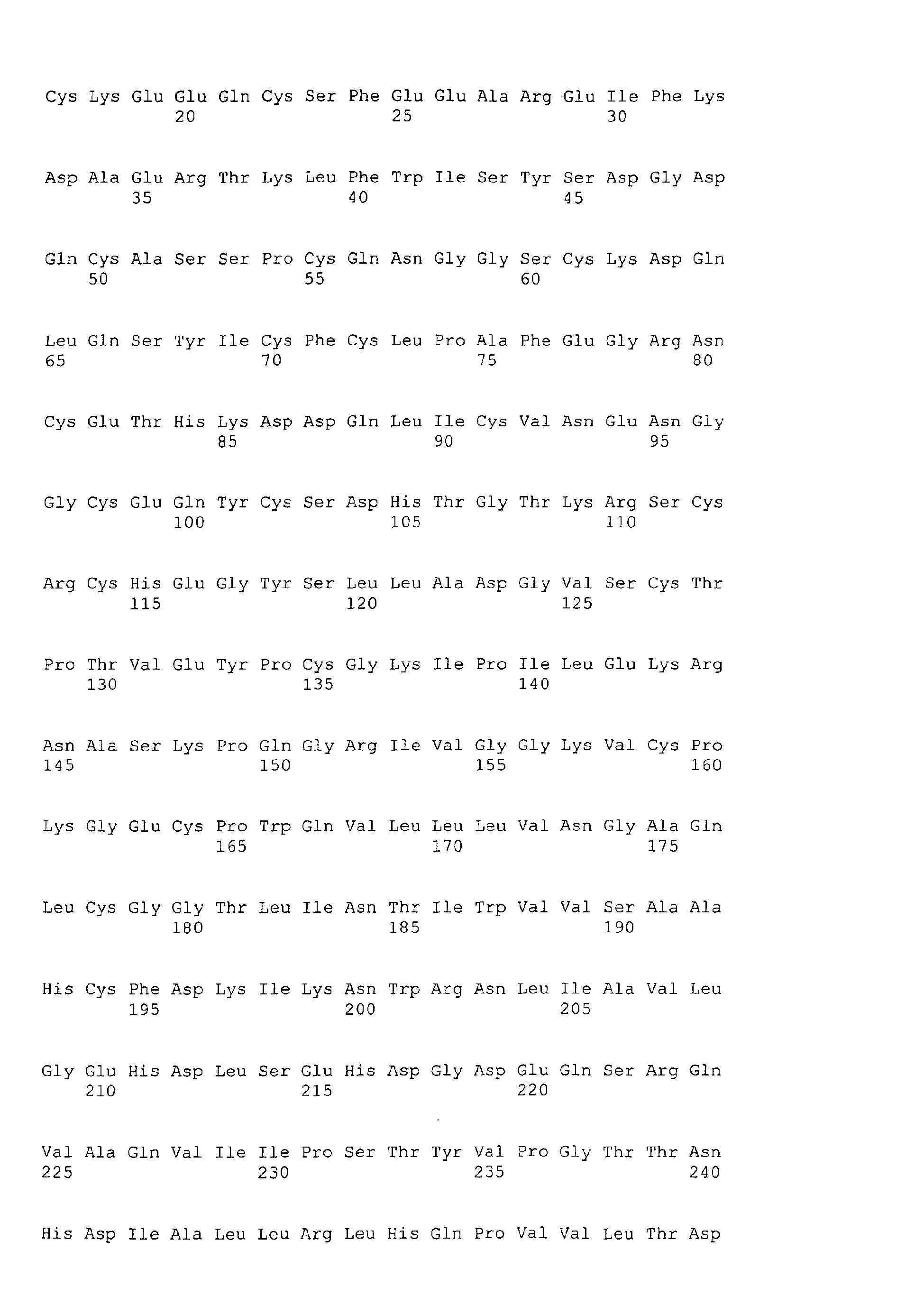

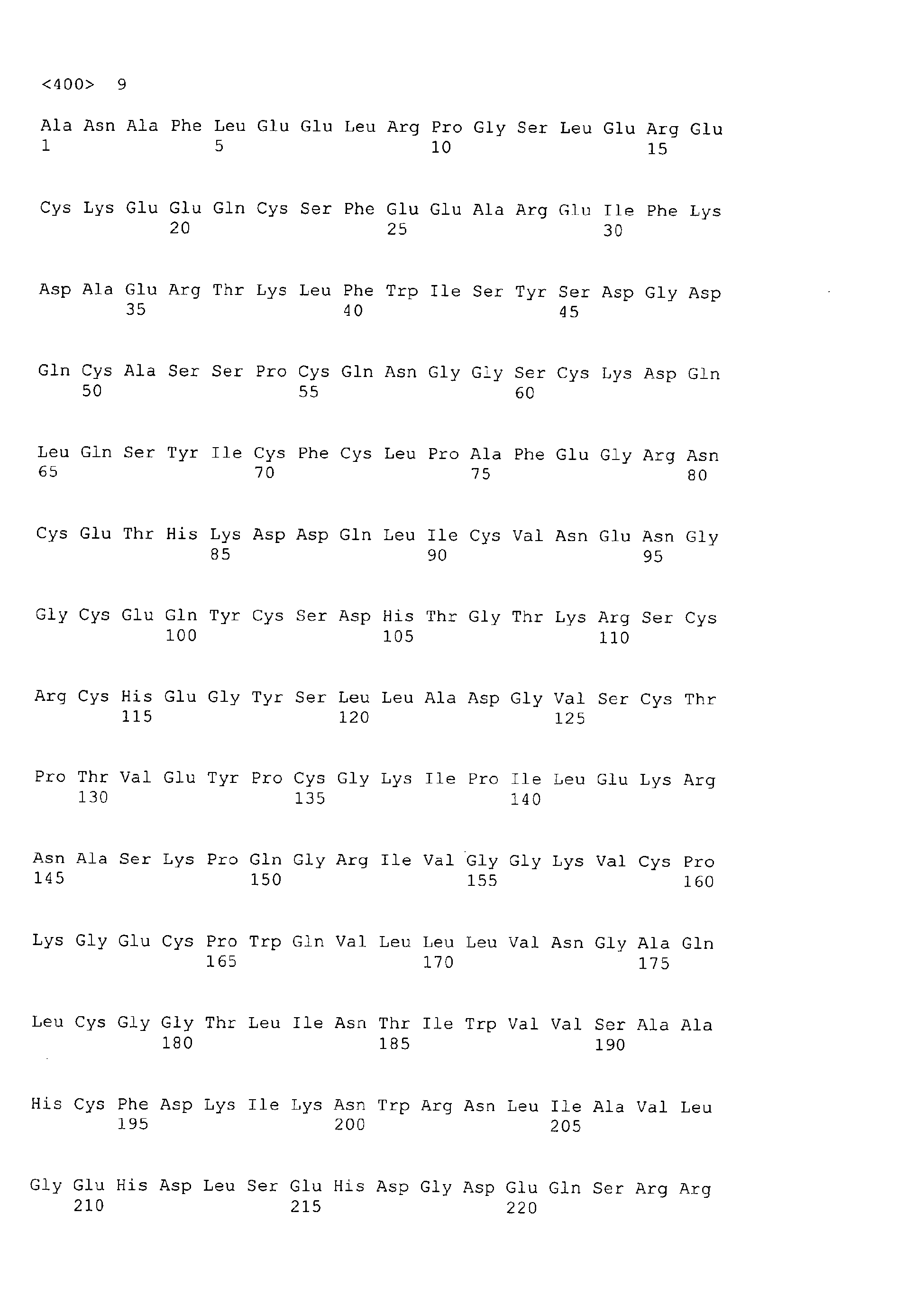


Claims (20)
1. An isolated polynucleotide comprising:
a) a nucleotide sequence:
- having at least 80% identity with the nucleotide sequence SEQ ID NO. 2, and
- comprising at least one SNP selected from c512t, t599g, g823a, g851a, g1060t and c1151t; or
b) a nucleotide sequence complementary to a nucleotide sequence under a).
2. An isolated polynucleotide according to claim 1, characterized in that the nucleotide sequence under a) has at least 90% identity, preferably at least 95%, more preferably 99% identity with the nucleotide sequence SEQ ID NO.2.
3. An isolated polynucleotide comprising:
a) a nucleotide sequence:
- having at least 80% identity with the nucleotide sequence SEQ ID NO. 1 encoding FVII protein, and
- comprising at least one SNP selected from c9951t, t11004g, g12640a, g12668a, g12877t and c12968t; or
b) a nucleotide sequence complementary to a nucleotide sequence under a).
4. An isolated polynucleotide according to claim 1, characterized in that the nucleotide sequence under a) has at least 90% identity, preferably at least 95%, more preferably 99% identity with the nucleotide sequence SEQ ID N0.1.
5. An isolated polynucleotide according to any one of claims 1 to 4, characterized in that it encodes a polypeptide comprising the amino acid sequence SEQ ID NO. 4 and having at least one SNP selected from S111 F, I140S, E215K, R224Q, A294S, and T324M.
6. An isolated polynucleotide according to any one of claims 1 to 5, characterized in that it encodes a polypeptide comprising amino acids of sequence SEQ ID NO. 3 and having at least one SNP selected from S111F (S171F), 1140S (1200S), E215K (E275K), R224Q (R284K), A294S (A354S) and T324M (T384M)
7. Use of an isolated polynucleotide according to any one of claims 1 to 6, or a sequence of said isolated polynucleotide composed of 10 to 40 nucleotides, in order to identify, hybridise and/or amplify a polynucleotide comprising a sequence having at least 80 % identity with nucleotide sequence SEQ ID NO. 1.
8. A recombinant vector, characterized in that it comprises a polynucleotide according to any one of claims 1 to 6.
9. A host cell, characterized in that it comprises a recombinant vector according to claim 8.
10. An isolated polypeptide characterized in that it is encoded by the isolated polynucleotide of any one of claims 1 to 6.
11. An isolated polypeptide comprising an amino acid sequence having at least 80% identity with the amino acid sequence SEQ ID NO. 4, wherein said polypeptide comprises at least one SNP selected from S111F, I140S, E215K, R224Q, A294S, and T324M.
13. An isolated polypeptide according to claim 11, characterized in that its amino acid sequence has at least 90%, preferably at least 95% and more preferably 99% identity with SEQ ID NO.4.
14. An isolated polypeptide comprising an amino acid sequence having at least 80% identity with the amino acid sequence SEQ ID NO. 3, wherein said polypeptide comprises at least one SNP selected from S111 F (S171 F), 1140S (1200S), E215K (E275K), R224Q (R284K), A294S (A354S) and T324M (T384M).
15. An isolated polypeptide according to claim 14, characterized in that its amino acid sequence has at least 90%, preferably at least 95% and more preferably 99% identity with SEQ ID NO.3.
16. A method for preparing a polypeptide according to any one of claims 10 to 15, comprising cultivating a host cell according to claim 9 in a culture medium and separating said polypeptide from the culture medium.
17. A therapeutic agent comprising one or more compounds selected from the group consisting of: an isolated polynucleotide according to any one of claims 1 to 6; a recombinant vector according to claim 8; a host cell according to claim 9; an isolated polypeptide according to any one of claims 10 to 15.
18. Use of one or more compounds selected from the group consisting of: an isolated polynucleotide according to any one of claims 1 to 6; a recombinant vector according to claim 8; a host cell according to claim 9; an isolated polypeptide according to any one of claims 10 to 15; for preparing a medicament for the prevention or the treatment of bleedings or hemorrhages.
19. Use of one or more compounds selected from the group consisting of: an isolated polynucleotide according to any one of claims 1 to 6; a recombinant vector according to claim 8; a host cell according to claim 9; an isolated polypeptide according to any one of claims 10 to 15 for preparing a medicament for treating coagulation related disorders.
20. Use according to claims 17 or 18, wherein said medicament is useful for treating hemophiliac persons, persons having defective blood coagulation or having defective Factor VII.
21. A method for diagnosing or determining a prognosis of coagulation related disorders or a resistance to said disorders, comprising detecting in-vitro at least one SNP selected from the group consisting of c9951t, t11004g, g12640a, g12668a, g12877t and c12968t, in the gene encoding Factor VII.
Priority Applications (2)
| Application Number | Priority Date | Filing Date | Title |
|---|---|---|---|
| EP07290357A EP1972687A1 (en) | 2007-03-23 | 2007-03-23 | Polynucleotides and polypeptides of human factor VII gene, SNPs |
| PCT/IB2008/001676 WO2008117179A2 (en) | 2007-03-23 | 2008-03-21 | Polynucleotides and polypeptides of human factor vii gene, snps |
Applications Claiming Priority (1)
| Application Number | Priority Date | Filing Date | Title |
|---|---|---|---|
| EP07290357A EP1972687A1 (en) | 2007-03-23 | 2007-03-23 | Polynucleotides and polypeptides of human factor VII gene, SNPs |
Publications (1)
| Publication Number | Publication Date |
|---|---|
| EP1972687A1 true EP1972687A1 (en) | 2008-09-24 |
Family
ID=38227796
Family Applications (1)
| Application Number | Title | Priority Date | Filing Date |
|---|---|---|---|
| EP07290357A Withdrawn EP1972687A1 (en) | 2007-03-23 | 2007-03-23 | Polynucleotides and polypeptides of human factor VII gene, SNPs |
Country Status (2)
| Country | Link |
|---|---|
| EP (1) | EP1972687A1 (en) |
| WO (1) | WO2008117179A2 (en) |
Families Citing this family (3)
| Publication number | Priority date | Publication date | Assignee | Title |
|---|---|---|---|---|
| EP2379096B1 (en) | 2008-12-19 | 2019-10-30 | Baxalta GmbH | Tfpi inhibitors and methods of use |
| ES2983470T3 (en) | 2010-03-19 | 2024-10-23 | Takeda Pharmaceuticals Co | TFPI inhibitors and methods of use |
| BR112014022435B1 (en) | 2012-03-21 | 2023-02-14 | Takeda Pharmaceutical Company Limited | TFPI INHIBITORS AND METHODS OF USE |
Citations (2)
| Publication number | Priority date | Publication date | Assignee | Title |
|---|---|---|---|---|
| US20030096338A1 (en) * | 2000-02-11 | 2003-05-22 | Pedersen Anders Hjelholt | Factor VII or VIIa-like molecules |
| WO2004029091A2 (en) * | 2002-09-30 | 2004-04-08 | Maxygen Holdings Ltd. | FVII OR FVIIa VARIANTS HAVING INCREASED CLOTTING ACTIVITY |
-
2007
- 2007-03-23 EP EP07290357A patent/EP1972687A1/en not_active Withdrawn
-
2008
- 2008-03-21 WO PCT/IB2008/001676 patent/WO2008117179A2/en not_active Ceased
Patent Citations (2)
| Publication number | Priority date | Publication date | Assignee | Title |
|---|---|---|---|---|
| US20030096338A1 (en) * | 2000-02-11 | 2003-05-22 | Pedersen Anders Hjelholt | Factor VII or VIIa-like molecules |
| WO2004029091A2 (en) * | 2002-09-30 | 2004-04-08 | Maxygen Holdings Ltd. | FVII OR FVIIa VARIANTS HAVING INCREASED CLOTTING ACTIVITY |
Non-Patent Citations (7)
| Title |
|---|
| BORENSZTAJN K ET AL: "Inherited factor VII deficiency: identification of two novel mutations (A191V and T239P) in the catalytic domain", THROMBOSIS RESEARCH, TARRYTOWN, NY, US, vol. 116, no. 2, 2005, pages 115 - 120, XP004903643, ISSN: 0049-3848 * |
| BORENSZTAJN KEREN ET AL: "Factor VII gene intronic mutation in a lethal factor VII deficiency: Effects on splice-site selection.", BLOOD, vol. 102, no. 2, 15 July 2003 (2003-07-15), pages 561 - 563, XP002442671, ISSN: 0006-4971 * |
| DICKINSON C D ET AL: "Identification of surface residues mediating tissue factor binding and catalytic function of the serine protease factor VIIa", PROCEEDINGS OF THE NATIONAL ACADEMY OF SCIENCES OF USA, NATIONAL ACADEMY OF SCIENCE, WASHINGTON, DC, US, vol. 93, December 1996 (1996-12-01), pages 14379 - 14384, XP002267001, ISSN: 0027-8424 * |
| GUILLET BENOÎT ET AL: "Detection of 95 novel mutations in coagulation factor VIII gene F8 responsible for hemophilia A: results from a single institution.", HUMAN MUTATION JUL 2006, vol. 27, no. 7, July 2006 (2006-07-01), pages 676 - 685, XP002442672, ISSN: 1098-1004 * |
| KUMAR A ET AL: "SPECIFIC MOLECULAR INTERACTION SITES ON FACTOR VII INVOLVED IN FACTOR X ACTIVATION", EUROPEAN JOURNAL OF BIOCHEMISTRY, BERLIN, DE, vol. 217, no. 2, 1993, pages 509 - 518, XP008034071, ISSN: 0014-2956 * |
| RODRIGUES DALVA N ET AL: "Prevalence of factor VII deficiency and molecular characterization of the F7 gene in Brazilian patients.", BLOOD COAGULATION AND FIBRINOLYSIS, vol. 14, no. 3, April 2003 (2003-04-01), pages 289 - 292, XP008081305, ISSN: 0957-5235 * |
| TOSO RAFFAELLA ET AL: "Lack of heavy chain glycosylation in patient with factor VII deficiency not responsible for mutant FVIIA activity", BLOOD, vol. 96, no. 11 Part 2, 16 November 2000 (2000-11-16), & 42ND ANNUAL MEETING OF THE AMERICAN SOCIETY OF HEMATOLOGY; SAN FRANCISCO, CALIFORNIA, USA; DECEMBER 01-05, 2000, pages 79b, XP002367565, ISSN: 0006-4971 * |
Also Published As
| Publication number | Publication date |
|---|---|
| WO2008117179A2 (en) | 2008-10-02 |
| WO2008117179A3 (en) | 2009-03-12 |
Similar Documents
| Publication | Publication Date | Title |
|---|---|---|
| EP1383927B1 (en) | New polynucleotides and polypeptides of the erythropoietin gene | |
| US7041794B2 (en) | Polynucleotides and polypeptides of the erythropoietin gene | |
| US20020090695A1 (en) | Kunitz-type protease inhibitor polynucleotides, polypeptides, and antibodies | |
| AU2002319142A1 (en) | New polynucleotides and polypeptides of the erythropoietin gene | |
| US20030180934A1 (en) | Plasminogen-like polynucleotides, polypeptides, and antibodies | |
| RU2328528C2 (en) | Polypeptide with antiviral, antiproliferative and/or immunomodulating activities, separated polynucleotide | |
| US7083965B2 (en) | Human enzymes of the metalloprotease family | |
| CA2347625A1 (en) | Genes and proteins predictive and therapeutic for renal disease and associated disorders | |
| US20020182702A1 (en) | ADAM polynucleotides, polypeptides, and antibodies | |
| JP2004535181A (en) | Novel polynucleotides and polypeptides of IFNα-14 gene | |
| JP2002355056A (en) | Compositions and methods for diagnosis and treatment of disorders involving angiogenesis | |
| US20020077465A1 (en) | ADAM polynucleotides, polypeptides, and antibodies | |
| JP2006518593A (en) | 9118, 990, 17662, 81982, 630, 21472, 17692, 19290, 21620, 21689, 28899, 53659, 64549, 9465, 23544, 7366, 27417, 57259, 21844, 943, 2061, 5891, 9137, 13908, 14310, Methods and compositions for treating blood disorders using 17600, 25584, 27824, 28469, 38947, 53003, 965, 56669, 9661, 16052, 1521, 6662, 13913, 12405 or 5014 molecules | |
| JPH10503652A (en) | DNA sequence encoding human proteins Tx and Ty related to interleukin-1β convertase | |
| WO2008117179A2 (en) | Polynucleotides and polypeptides of human factor vii gene, snps | |
| EP1419265A2 (en) | Gene associated with bone disorders | |
| EP1179001A1 (en) | A splicing variant of human membrane-type matrix metalloproteinase-5 (mt-mmp5-l) | |
| CZ9902005A3 (en) | Novel calpains, process of their preparation and use | |
| US20020192682A1 (en) | Polynucleotides and polypeptides of the IFNalpha-2 gene | |
| US20020183269A1 (en) | Novel compounds | |
| US20020051984A1 (en) | Kringle domain-containing polynucleotides, polypeptides, and antibodies | |
| EP1308458A1 (en) | New polynucleotides and polypeptides of the CX26 gene | |
| JP2003000268A (en) | Methods and compositions for diagnosing and treating diseases involving angiogenesis | |
| US20030134814A1 (en) | Method of using 18080, a human serine carboxypeptidase family member | |
| NL1022252C2 (en) | New metallo-proteases with thrombospondin domains and encoding nucleic acid compositions. |
Legal Events
| Date | Code | Title | Description |
|---|---|---|---|
| PUAI | Public reference made under article 153(3) epc to a published international application that has entered the european phase |
Free format text: ORIGINAL CODE: 0009012 |
|
| AK | Designated contracting states |
Kind code of ref document: A1 Designated state(s): AT BE BG CH CY CZ DE DK EE ES FI FR GB GR HU IE IS IT LI LT LU LV MC MT NL PL PT RO SE SI SK TR |
|
| AX | Request for extension of the european patent |
Extension state: AL BA HR MK RS |
|
| AKX | Designation fees paid | ||
| REG | Reference to a national code |
Ref country code: DE Ref legal event code: 8566 |
|
| STAA | Information on the status of an ep patent application or granted ep patent |
Free format text: STATUS: THE APPLICATION IS DEEMED TO BE WITHDRAWN |
|
| 18D | Application deemed to be withdrawn |
Effective date: 20090325 |