EP1963495B1 - Hiv-1-latenz-modell zum screening mit hohem durchsatz - Google Patents
Hiv-1-latenz-modell zum screening mit hohem durchsatz Download PDFInfo
- Publication number
- EP1963495B1 EP1963495B1 EP06844574.1A EP06844574A EP1963495B1 EP 1963495 B1 EP1963495 B1 EP 1963495B1 EP 06844574 A EP06844574 A EP 06844574A EP 1963495 B1 EP1963495 B1 EP 1963495B1
- Authority
- EP
- European Patent Office
- Prior art keywords
- expression
- hiv
- cells
- gene
- seap
- Prior art date
- Legal status (The legal status is an assumption and is not a legal conclusion. Google has not performed a legal analysis and makes no representation as to the accuracy of the status listed.)
- Not-in-force
Links
Images





Classifications
-
- C—CHEMISTRY; METALLURGY
- C12—BIOCHEMISTRY; BEER; SPIRITS; WINE; VINEGAR; MICROBIOLOGY; ENZYMOLOGY; MUTATION OR GENETIC ENGINEERING
- C12Q—MEASURING OR TESTING PROCESSES INVOLVING ENZYMES, NUCLEIC ACIDS OR MICROORGANISMS; COMPOSITIONS OR TEST PAPERS THEREFOR; PROCESSES OF PREPARING SUCH COMPOSITIONS; CONDITION-RESPONSIVE CONTROL IN MICROBIOLOGICAL OR ENZYMOLOGICAL PROCESSES
- C12Q1/00—Measuring or testing processes involving enzymes, nucleic acids or microorganisms; Compositions therefor; Processes of preparing such compositions
- C12Q1/70—Measuring or testing processes involving enzymes, nucleic acids or microorganisms; Compositions therefor; Processes of preparing such compositions involving virus or bacteriophage
- C12Q1/701—Specific hybridization probes
- C12Q1/702—Specific hybridization probes for retroviruses
- C12Q1/703—Viruses associated with AIDS
-
- C—CHEMISTRY; METALLURGY
- C07—ORGANIC CHEMISTRY
- C07K—PEPTIDES
- C07K14/00—Peptides having more than 20 amino acids; Gastrins; Somatostatins; Melanotropins; Derivatives thereof
- C07K14/005—Peptides having more than 20 amino acids; Gastrins; Somatostatins; Melanotropins; Derivatives thereof from viruses
-
- C—CHEMISTRY; METALLURGY
- C12—BIOCHEMISTRY; BEER; SPIRITS; WINE; VINEGAR; MICROBIOLOGY; ENZYMOLOGY; MUTATION OR GENETIC ENGINEERING
- C12N—MICROORGANISMS OR ENZYMES; COMPOSITIONS THEREOF; PROPAGATING, PRESERVING, OR MAINTAINING MICROORGANISMS; MUTATION OR GENETIC ENGINEERING; CULTURE MEDIA
- C12N15/00—Mutation or genetic engineering; DNA or RNA concerning genetic engineering, vectors, e.g. plasmids, or their isolation, preparation or purification; Use of hosts therefor
- C12N15/09—Recombinant DNA-technology
- C12N15/63—Introduction of foreign genetic material using vectors; Vectors; Use of hosts therefor; Regulation of expression
- C12N15/79—Vectors or expression systems specially adapted for eukaryotic hosts
- C12N15/85—Vectors or expression systems specially adapted for eukaryotic hosts for animal cells
- C12N15/86—Viral vectors
-
- C—CHEMISTRY; METALLURGY
- C12—BIOCHEMISTRY; BEER; SPIRITS; WINE; VINEGAR; MICROBIOLOGY; ENZYMOLOGY; MUTATION OR GENETIC ENGINEERING
- C12Q—MEASURING OR TESTING PROCESSES INVOLVING ENZYMES, NUCLEIC ACIDS OR MICROORGANISMS; COMPOSITIONS OR TEST PAPERS THEREFOR; PROCESSES OF PREPARING SUCH COMPOSITIONS; CONDITION-RESPONSIVE CONTROL IN MICROBIOLOGICAL OR ENZYMOLOGICAL PROCESSES
- C12Q1/00—Measuring or testing processes involving enzymes, nucleic acids or microorganisms; Compositions therefor; Processes of preparing such compositions
- C12Q1/68—Measuring or testing processes involving enzymes, nucleic acids or microorganisms; Compositions therefor; Processes of preparing such compositions involving nucleic acids
- C12Q1/6897—Measuring or testing processes involving enzymes, nucleic acids or microorganisms; Compositions therefor; Processes of preparing such compositions involving nucleic acids involving reporter genes operably linked to promoters
-
- C—CHEMISTRY; METALLURGY
- C12—BIOCHEMISTRY; BEER; SPIRITS; WINE; VINEGAR; MICROBIOLOGY; ENZYMOLOGY; MUTATION OR GENETIC ENGINEERING
- C12N—MICROORGANISMS OR ENZYMES; COMPOSITIONS THEREOF; PROPAGATING, PRESERVING, OR MAINTAINING MICROORGANISMS; MUTATION OR GENETIC ENGINEERING; CULTURE MEDIA
- C12N2740/00—Reverse transcribing RNA viruses
- C12N2740/00011—Details
- C12N2740/10011—Retroviridae
- C12N2740/16011—Human Immunodeficiency Virus, HIV
- C12N2740/16041—Use of virus, viral particle or viral elements as a vector
- C12N2740/16043—Use of virus, viral particle or viral elements as a vector viral genome or elements thereof as genetic vector
-
- C—CHEMISTRY; METALLURGY
- C12—BIOCHEMISTRY; BEER; SPIRITS; WINE; VINEGAR; MICROBIOLOGY; ENZYMOLOGY; MUTATION OR GENETIC ENGINEERING
- C12N—MICROORGANISMS OR ENZYMES; COMPOSITIONS THEREOF; PROPAGATING, PRESERVING, OR MAINTAINING MICROORGANISMS; MUTATION OR GENETIC ENGINEERING; CULTURE MEDIA
- C12N2740/00—Reverse transcribing RNA viruses
- C12N2740/00011—Details
- C12N2740/10011—Retroviridae
- C12N2740/16011—Human Immunodeficiency Virus, HIV
- C12N2740/16111—Human Immunodeficiency Virus, HIV concerning HIV env
- C12N2740/16122—New viral proteins or individual genes, new structural or functional aspects of known viral proteins or genes
Definitions
- This application relates to a novel HIV-1 latency model that can be used for high throughput screening to identify novel small molecules that can be employed to eradicate latent virus from infected individuals.
- HAART highly active antiretroviral therapy
- Retroviruses including HIV-1, are RNA viruses that replicate through a DNA intermediate and integrate very efficiently into the genome of an infected cell forming a provirus. Once the provirus is formed, it is maintained in the genome of the infected cell and transferred to daughter cells in the same fashion as any other genetic element within the cellular genome. Thus, the virus has the potential to persist if it infects long-lived cells such as memory T cells. It has been know since 1986 (17) that HIV-1 can establish a latent infection in culture. It was found that a human T cell line infected with replication-competent virus could develop a latent infection in which the provirus was dormant but could be reactivated upon stimulation.
- TNF tumor necrosis factor
- PMA phorbol 12-myristate 13-acetate
- a potentially fruitful approach to eliminating virus infection would be to identify small molecules with pharmacological properties that allow these molecules to reach hard to access latent reservoirs in order to activate latent proviruses.
- There is precedent for a small molecule that can activate latent HIV-1 proviruses since it was found that the tumor-promoting phorbol ester PMA could stimulate latent virus. This has led to recent studies with a non-tumor promoting phorbol ester, prostratin, which has also been found to be able to activate latent virus leading to the hypothesis that prostratin can be employed to help eradicate latent infection (2729).
- prostratin has the appropriate pharmacological properties to enable total clearance of latent virus nor is it certain that only one drug will be enough for latent virus elimination. Moreover, it was recently reported that prostratin displayed significant cytotoxicity putting into question its use in a clinical setting (43).
- US 2003/157693 A1 discloses an isolated latently infected T cell line comprising a HIV-derived vector wherein GFP is inserted in the position of the HIV-1 envelope and US 2003/013078 A1 discloses a HIV-derived vector harbouring SEAP reporter gene within the env gene.
- the present invention solves a need in the art by providing an isolated, latently infected T cell line that can be utilized in high throughput screening to discover compounds capable of activating HIV-1.
- the present invention provides an isolated T cell line harboring a latent HIV-1 derived vector provirus, which upon activation of the provirus expresses a secretable marker for late viral gene expression, the gene for said marker being inserted in the position of HIV-1 envelope.
- the present invention relates to an isolated, latently infected SUPT1 cell line comprising a latent HIV-1 derived NL4-3 hemigenomic plasmid vector provirus comprising an in-frame insertion of a secretable alkaline phosphatase (seap) gene open reading frame in place of the HIV-1 env gene start codon, an inactivation of the vpu gene start codon, a deletion of about 2500 base pairs of the HIV-1 pol gene, and an insertion of an egfp gene coding sequence about 10 base pairs upstream from the nef gene start codon, which provirus, upon activation of late viral gene expression, expresses SEAP as a secretable marker for late viral gene expression, and which provirus, upon activation of early viral gene expression, expresses EGFP as a marker for early viral gene expression.
- a secretable alkaline phosphatase secretable alkaline phosphatase
- an in vitro cell-based method of identifying compounds capable of activating latent HIV-1 includes providing an isolated T cell line harboring a latent HIV-1 derived vector provirus, which upon activation of the provirus expresses a seretable marker for late viral gene expression due to the insertion of the marker gene in the position of HIV-1 envelope; and providing a candidate compound.
- the method further includes combining T cells from the T cell line with the candidate compound; and monitoring proviral activation in the presence of the candidate compound as compared to in the absence of the candidate compound to determine if the compound is capable of activating latent HIV-1.
- the method according to the present invention encompasses an in vitro cell-based method of identifying compounds capable of activating latent HIV-1 expression comprising providing an isolated, latently infected SUPT1 cell line comprising a latent HIV-1 derived NL4-3 hemigenomic plasmid vector provirus comprising an in-frame insertion of a secretable alkaline phosphatase ( seap ) gene open reading frame in place of the HIV-1 env gene start codon, an inactivation of the vpu gene start codon, a deletion of about 2500 base pairs of the HIV-1 pol gene, and an insertion of an egfp gene coding sequence about 10 base pairs upstream from the nef gene start codon, which provirus, upon activation of late viral gene expression, expresses SEAP as a secretable marker for late viral gene expression, and which provirus, upon activation of early viral gene expression, expresses EGFP as a marker for early viral gene expression; providing a candidate compound and a positive control compound for
- HAART highly active antiretroviral therapy
- HAART results in a remarkable suppression of HIV-1 replication in infected patients, it does not provide for elimination of the virus even after years of suppressive therapy.
- Complete viral clearance cannot be achieved due to the presence of latently infected cells in patients, which upon withdrawal of HAART, contribute to viral rebound.
- Attempts at eradicating latently infected cells by activating them with cytokines and lymphokines has not met with success probably owing both to the inability of this treatment to reach all of the latent viral reservoirs and to the toxicity of the regimen.
- Small molecules with pharmacological properties that allow them to reach all viral reservoirs and activate latent HIV-1 proviruses could very well result in clearance of HIV-1 infections when used in combination with HAART.
- the present invention is directed, at least in part, to the development of a latently infected T cell line that can be used for high throughput screening (HTS) to identify small molecules that can be employed to eradicate latent virus from infected individuals.
- An isolated T cell line of the present invention harbors a latent HIV-1 derived vector provirus, which upon activation expresses a secretable alkaline phosphatase (SEAP), as a marker for late viral gene expression due to insertion of the marker gene in the position of HIV-1 envelope.
- SEAP secretable alkaline phosphatase
- the secretable marker is capable of being detected using chemiluminescence.
- SEAP production can be monitored by employing a sensitive chemiluminescent reaction.
- the T cell lines of the present invention harbor a latent provirus capable of being activated by stimuli selected from TNF- ⁇ , PMA, valporic acid and combinations thereof.
- the isolated T cell line of the present invention harbors a latent provirus that was activated using various stimuli previously shown to induce latent HIV-1, including TNF- ⁇ , PMA, and valporic acid.
- a reproducible signal was detected in a small well format.
- the excellent reliability of the assay was characterized by a Z' factor with values ranging between 0.55 and 0.80.
- the latent provirus in the cell line is replication-incompetent.
- the latent provirus was derived from a defective HIV-1 vector, it allows HTS to be performed safely since replication-competent virus would not be produced during screening.
- this system provides a safe, sensitive, and reliable assay for novel drug discovery aimed at eradication of HIV-1 infection.
- the T cell lines of the present invention harbor latent HIV-1 vector proviruses containing two marker genes that can be used for antiviral drug discovery, as well as for studying the mechanism of HIV-1 latency.
- seap marker makes the system amenable to high throughput screening and given its placement in the genome reflects activation of viral late gene expression.
- the latent provirus expresses a marker for viral early gene expression at the single cell level.
- a gene encoding a fluorescent protein, the egfp gene allows monitoring activation of the viral early gene expression at the single cell level.
- it provides a different marker in the system that can be used as a rapid secondary screen to control for artifacts that may arise when monitoring seap expression, such as a particular compound yielding a false positive. Fluorescence from a fluorescent protein may be detected using fluorescent microscopy, flow cytometry or combinations thereof, for example.
- the latent provirus contains an intact HIV-1 gag gene, thereby allowing the use of Gag expression as a further marker of viral gene expression.
- Gag expression may be used as an additional marker for rapid secondary screening of putative "hit” compounds.
- Another important characteristic of the latency model described here is that it yields excellent reliability in a small well format as reflected by the Z' scores obtained in assays with one of the cell lines, which is important for successful HTS. Moreover, since the vector provirus is replication-incompetent, it provides a level of safety needed when assaying a large number of samples as would be the case for HTS using robotic screening.
- latency is characterized by a state of relative transcriptional inactivity. This is the case both in vivo in quiescent CD4 + memory T cells (22,32) and in vitro in previously established models of HIV-1 latency (30,39).
- Another common theme to latency in vivo and in vitro is that various cytokines as well as other activators such as phorbol esters can activate latent virus (18,28,30,37,39,42). These attributes are reflected in the cell lines of the present invention in which gene expression is low until activated with the appropriate stimulus.
- the in vitro cell-based model provided by the present invention reproduces the major molecular characteristics of latency observed in vivo. These similarities lend confidence that the in vitro cell model is useful for identifying compounds that can activate latent proviruses.
- Candidate compounds identified using the cell-based methods of the present invention may be further tested for their ability to successfully activate latent proviruses from patient samples.
- the in vitro cell-based method of identifying compounds capable of activating latent HIV-1 includes providing an isolated T cell line harboring a latent HIV-1 derived vector provirus, which upon activation of the provirus expresses a marker for late viral gene expression due to the insertion of the marker gene in the position of HIV-1 envelope; and providing a candidate compound.
- the method further includes combining T cells from the T cell line with the candidate compound; and monitoring proviral activation in the presence of the candidate compound as compared to in the absence of the candidate compound to determine if the compound is capable of activating latent HIV-1.
- the monitoring step further includes combining T cells from the T cell line with a positive control for latent proviral activation; and monitoring proviral activation in the presence of the positive control.
- the positive control may be a stimuli selected from, but not limited to, the following: tumor necrosis factor (TNF)- ⁇ , phorbol 12-myristate 13-acetate (PMA), valporic acid and combinations thereof.
- the method of identifying compounds capable of activating latent HIV-1 may further include determining the ability of a candidate compound to activate latent HIV-1 from patient samples.
- the T cell line used in the method of the present invention harbors a latent provirus.
- the latent provirus contains a gene encoding a secretable marker for late viral gene expression.
- the T cells secrete the marker for late viral gene expression.
- the secretable marker is the secretable alkaline phosphatase.
- the monitoring step in the method may include detecting enzymatic activity of the secreted alkaline phosphatase in the presence of an alkaline phosphatase substrate.
- suitable chemiluminescent substrates for alkaline phosphatase include CSPD® and CDP-Star®, which are available from Applied Biosystems (Bedford, MA). However, the present invention is not limited to these.
- the latent provirus in the cells used in the method of the present invention further contains a marker gene for early viral gene expression.
- the expressed marker for early viral gene expression is a green fluorescent protein.
- the method of the present invention may further include detecting cell fluorescence by fluorescent microscopy, flow cytometry or combinations thereof.
- the latent provirus in the cells employed in the method of the present invention preferably contain an intact HIV-1 Gag gene. This allows the use of Gag expression by the cells as an additional marker for rapid secondary screening of putative "hit” compounds. Therefore, in some embodiments, the inventive method includes detecting HIV-1 Gag expression.
- the site of integration One potential influence upon the background level of expression is the site of integration. Since the proviruses are integrated in different positions in the genome ( Fig. 5 ), the local site of integration can influence expression from the provirus and could, at least in part, account for the different levels of background expression (23,26,44).
- Fig. 3A Another characteristic of the cell clones described here was the apparent variegated expression of egfp within each clonal population ( FIG. 3A ).
- the number of cells expressing egfp was quite high ranging from 82% to 90% of the cells by day 4 post-activation.
- a relatively small fraction of the cells were not activated ( Fig. 3A ).
- This variegated expression indicates that there might be some level of epigenetic regulation of expression. This might be related to disparate responses of cells to TNF- ⁇ stimulation in different phases of the cell cycle (39) or due to heterochromatic packaging (14). This suggests that it may be necessary to administer a therapeutic activator repeatedly to patients or that a cocktail of activators may be required to "flush" the virus from all of its latent reservoirs.
- additional cell clones were isolated with higher levels of background expression, yet with excellent levels of inducibility.
- Initial screening for compounds that activate latent virus would be done employing the 24ST1NLESG cell line given its low background and high degree of inducibility.
- the other cell clones can be utilized for secondary screening. Any promising compound identified by HTS would be anticipated to also be able to activate latent proviruses integrated in different locations.
- the other cell clones provide a rapid and safe secondary screen that would be able to quickly rule out artifacts such as effects dependent upon the specific site of integration.
- the present invention provides the first HIV-1 latency model that has been developed that can be used for high throughput screening to identify novel small molecules that can be employed to eradicate latent virus from infected individuals.
- the present inventors have developed a cell-based assay that can be used in HTS to discover novel compounds that can activate latent HIV-1 proviruses.
- the marker gene that is being utilized in this system is the secretable alkaline phosphatase ( seap ) gene, a truncated form of placental alkaline phosphatase lacking the membrane anchor so that it is secreted (2). It provides a very sensitive chemiluminescent assay when used in conjunction with the alkaline phosphatase substrate CSPD and as such is amenable to HTS. It has been shown that -13 as little as g of placental alkaline phosphatase can be detected (4,46).
- SEAP is heat stable and resistant to the alkaline phosphatase inhibitor L-homoarginine, which allows endogenous alkaline phosphatase (AP) activity to be eliminated via pretreatment at 65°C with the inhibitor; (2) because it is secreted, there is no necessity for preparation of cell lysates; (3) the chemiluminescence assay has a linear dynamic range of over four orders of magnitude, which helps control experimental parameters to obtain readouts in the linear range allowing valid comparisons among the different samples, and (4) the signal reaches a maximum at approximately 10 minutes after the reaction and remains stable for at least an hour which augments the reproducibility of the assay.
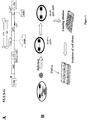
- the seap gene was inserted in the env position to serve as an indicator of late gene expression ( Fig. 1 ). Disruption of the env gene by insertion of seap in place of the env start codon, imparts a level of safety to the system by preventing production of the essential Env polyprotein. However, in order to include an additional level of safety to prevent production of replication-competent virus, 2.5 kbp of the pol gene was also deleted, since it has not been reported to contribute to the establishment of latency but is essential for replication ( Fig. 1 ).
- the enhanced green fluorescent protein (egfp ) reporter gene was inserted 5' to the nef start codon such that it should be expressed from the multiply spliced nef mRNA ( Fig. 1 )(38,40).
- the egfp gene was included in the system to provide a marker that would allow monitoring of infection by fluorescent microscopy and flow cytometry as well as providing a marker for subsequent isolation of latently infected cell clones.
- pMD.G expresses the vesicular stomatitis G protein which allows the production of pseudotyped vector virus that can be readily concentrated by ultracentrifugation (6,35).
- Vector virus supernatants were collected, concentrated, and used to infect the human lymphocyte based cell line SupT1 via spinoculation (Examples) (34).
- SupT1 cells were transduced with the vector pNLE S-G containing an intact vpu start codon.
- HIV-1 env is translated from a vpu-env bicistronic mRNA (20,38). It was believed that translation initiation of env occurs due to a leaky scanning mechanism (20). It was possible that due to the insertion of SEAP, leaky scanning was inhibited. To address this problem, the start codon of vpu was destroyed to allow SEAP expression from a monocistronic RNA. The resultant vector virus could efficiently infect SupT1 cells as well as express significant levels of SEAP after 4 days post-infection ( Fig. 2 ).
- the infected mass population of cells was next tested for its ability to establish a latent infection.
- the infected mass population of SupT1 cells was maintained in culture for one month.
- flow cytometry indicated that most of the infected cells had died and/or reverted to a latent phenotype as denoted by the reduction of the GFP positive cells declining from 63% on day 5 to 2% 3 weeks post-infection ( Fig. 2B ). This was also reflected in the reduction of SEAP expression by the third week ( Fig. 2C ). It was shown in previous studies that tumor necrosis factor (TNF)- ⁇ could activate HIV-1 virus production from latently infected cell lines (30).
- TNF tumor necrosis factor
- the mass population was treated with TNF- ⁇ , and it was found that there was a significant increase in the number of GFP-positive cells to 19% as well as a 400-fold increase in SEAP activity ( Fig. 2B and C ). These results clearly indicated that the vector could form a latent infection and activation could be monitored by SEAP expression.
- SupT1 cell clones harboring latent vector provirus were isolated.
- Cell clones were isolated by limiting dilution according to the standard protocol (11). Clones were then tested to determine if they harbored latent virus that could be stimulated with TNF- ⁇ .
- Flow cytometry to monitor GFP expression showed that after treatment with TNF- ⁇ there was a significant increase in the number of cells expressing GFP within each of the three clonal populations ( Fig. 3A ). All three lines also exhibited a significant fold induction in SEAP activity after treatment with TNF- ⁇ .
- autologous HIV-1 gag gene expression can also be used as a marker for activation since the gag gene remains intact in the system.
- the Gag polyprotein is translated from full-length viral RNA, which is expressed during the late stage of viral infection. Monitoring of p24 gag , the viral capsid protein, could be useful for a secondary screen since there is a sensitive and straightforward ELISA available to measure its expression.
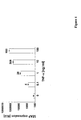
- p24 gag expression was monitored using the ELISA after treatment with TNF- ⁇ (50 ng/ml) ( Fig. 5 ). As anticipated, the concentration of p24 gag increased significantly at 2 and 4 days post-activation reaching levels 50fold and 100-fold above background, respectively ( Fig. 5 ).
- the consistent reactivation of viral genes as evidenced by the pattern of expression of the three markers assayed correlated with an increase in the relative levels of total viral mRNA.
- the relative amount of total HIV-1 mRNA was determined by quantitative real-time PCR using primers to the second exon of rev (Rev2). Rev2 primers were chosen to amplify the viral transcripts since they are complimentary to sequences presented in all RNA species encoded by the provirus (38). RT PCR was primed with oligo d(T)16. Therefore, only the level of mature polyadenylated RNA was detected.
- the relative ratio of viral RNA after stimulation of 24ST1NLESG latent cells was determined as described in the Examples using the relative RNA results obtained for the unstimulated 24ST1NLESG cells as a control. ⁇ -actin was used as a reference gene.
- TNF- ⁇ 50 ng/ml
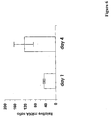
- the relative ratio of viral RNA increased by at least 100-fold indicating that the increase in proviral protein expression resulted due to a significant increase in the steady-state levels of viral RNA ( Fig. 6 ).
- An advantage to using a defective HIV-1 provirus for monitoring proviral activation is that replication-competent virus is not produced, which is particularly important for HTS when a large number of samples are analyzed.
- RC virus was not produced during the development of the cell lines.
- the cell lines were analyzed for reverse transcriptase activity after treatment with 50 ng/ml of TNF- ⁇ . Since most of the pol gene was deleted from the vector, the cell lines should be negative for RT activity, which was the case (data not shown). Without RT activity, it should not be possible to passage RC virus. Nevertheless, the cell lines were tested further. As shown in Fig. 5 , 24ST1NLESG cells produce HIV-1 capsid proteins. To prove that only defective virions were formed, an HIV-1 gag transfer assay was performed as described in the Examples. This test confirmed the lack of RC virus.
- Assay optimization and validation requires the determination of the Z' factor, a dimensionless statistical characteristic used to assess the quality of data generated in a potential HTS assay (48). It is a commonly used measure of assay performance and reliability that takes into account both the assay signal dynamic range (signal-to-background) and variation (signal-to-noise) associated with the measured signals.
- the Z' factor values for the latency assay of the present invention were calculated based on the analysis of SEAP expression from uninduced (negative) and induced (positive) 5 24ST1NLESG cells. Eighty-eight wells of a 96-well plate were seeded with 10 cells/well either in media alone or media containing an inducer in a final volume of 20 ⁇ l. The remaining 8 wells contained serial dilutions of SEAP protein as a positive control for the assay. The plates were assayed for the presence of SEAP after 48 hours.
- the Z' factors for the latency assay with 24ST1NLESG cells of the present invention are shown in Figure 8 .
- Induction with 50 ng/ml TNF- ⁇ in a 96-well format resulted in a Z' factor of 0.8, while activation with 1 mM VPA and 100 ng/ml PMA returned Z' scores of 0.63 and 0.55, respectively.
- a certain amount of variability in these assays was expected since pipetting by hand during seeding and performance of the SEAP detection assay can introduce some variation. Even with this inherent variability, the Z' values for all three tested compounds are above 0.5, indicating excellent assay performance.
- the recombinant transducing vector used in this study was based on the NL4-3 hemigenomic plasmid.
- a 2.5 kb deletion in the pol gene was made by splicing by overlap extension (25).
- Three PCR products were generated: (i) sequence between the unique BssH II site (coordinate 710) and the stop codon of gag at 2300, (ii) sequence stretching from 100 bp upstream of the start codon of vif (coordinate 4840) to the unique EcoR I site (coordinate 5744), (iii) a 2.5 kb product formed by linking products i and ii by PCR sequence overlap extension (SOE).
- the PCR product (iii) containing the deleted pol gene was cloned into pGEM (Promega) and was excised from there with BssH II and Eco RI followed by ligation into the BssH II/ Eco RI digested NL4-3 backbone yielding pNL2.5p .
- the same method was used to insert the egfp coding sequence 10 bp upstream from the start codon of nef while deleting 80 bp from the 3' of env: coordinates 8700 to 8780.
- PCR products also were made: (a) from the unique BamH I site (coordinate 8465) in env to 50 bp downstream of the stop codon of rev (coordinate 8680), (b) the egfp gene including the Kozak sequence (30), (c) products a and b linked by SOE PCR, (d) from the start codon of nef to the unique Xho I site in nef , (e) products c and d linked by SOE PCR.
- Product e was cloned into pGEM and cut from there with BamH I and Xho I .
- the BamH I -Xho I fragment was ligated into the pNL2.5p backbone, which was digested with BanaH I and Xho I to obtain the NLp - e + G construct.
- the start codons of vpu and env were altered by site-directed mutagenesis (Stratagene).
- the NL4-3 genome from Eco RI to Nhe I (1.5 bp) was subcloned into a modified pSEAP-Basic vector, where BamH I -BamH I deletion of the SEAP gene was made, and the Cla I restriction site was created in place of the start codon of env (e*).
- the SEAP open reading frame was cut from pSEAP-Basic (CLONTECH Laboratories) with Cla I and Bsm I and ligated into plasmid NLp - e*G linearized with Cla I .
- the in-frame orientation of SEAP was confirmed with restriction enzyme digestion and DNA sequencing. Thus pNLE S-G ( Fig. 1A ) was created.
- pCMV ⁇ R8.2 a CMV promoter-driven HIV packaging plasmid with all accessory proteins, was used to compensate for the lack of pol gene expression.
- pMD.G was used to provide expression of vesicular stomatitis virus G env (VSV-G) (33).
- 293T cells were grown in minimal essential medium (MEM) supplemented with 10% fetal bovine serum (Hyclone), 0.2 mM MEM non-essential amino acid solution (GIBCO BRL 11095-080), 250 U/ml penicillin, and 250 ⁇ g/ml streptomycin (GIBCO BRL 11140-050).
- MEM minimal essential medium
- SupT1 cells as well as 19ST1NLESG, 24ST1NLESG, and 29ST1NLESG cells were maintained in RPMI 1640 medium supplemented with 10% fetal bovine serum and 2 mM L-glutamine.
- TNF- ⁇ was obtained from R&D Systems (Minneapolis, Minn).
- PMA, and valporic acid were purchased from Sigma (St. Louis, Mo).
- Vector virus was produced using transient, three-plasmid co-transfection via modified calcium phosphate precipitation method (21). Twenty-four hours after plating, 293T cells (2.5 ⁇ 10 6 per 100-mm-diameter dish) were co-transfected with pNLE - S-G (5 *g), pCMV ⁇ R8.2 (5 ⁇ g), and pMD.G (4 ⁇ g). Viral supernatant was collected from 20 plates 48h post-transfection and was concentrated by ultracentrifugation for 1.5h at 50,000 g in a Beckman 45 Ti rotor at 4°C.
- Viral particles were resuspended in 2 ml media with 8 ⁇ g/ml polybrene and the viral concentrate was used to infect 5 ⁇ 10 6 SupT1 cells.
- the inoculation was preceded by spinoculation (34) at 1,200 g for 2h at 25°C. After 6h of incubation at 37°C and 5% CO2, SupT1 cells were washed twice with PBS and resuspended in fresh media.
- the mass population of SupT1 infected cells was used to isolate clones harboring latent provirus. This was done by limiting dilution following the standard protocol (11). Only the clones that showed significant increase of SEAP activity after activation with 100ng/ml TNF- ⁇ were chosen.
- HIV gag transfer assay 1 ⁇ 10 6 SupT1 infected cells (latent mass population and clonal cell lines) were plated followed by harvesting supernatant one week later. Samples were collected both from TNF- ⁇ activated and untreated cells. They were passed through a 0.45- ⁇ m pore-size filter and used to inoculate 2 ⁇ 10 6 parental SupT1 cells for 24h. The cells were washed twice with PBS and resuspended in fresh media. The same process was repeated once again with conditioned media from the targeted parental cells, and a new batch of SupT1 cells was treated.
- Reverse transcriptase assay Four days after plating the conditioned media from the clonal latent cell lines (both TNF- ⁇ stimulated and untreated) was used to determine the activity of HIV-1 RT using a colorimetric enzyme immunoassay (Roche Applied Sciences).
- the sensitivity threshold for this assay is 1 pg per reaction or 50 pg/ml.
- the detection limit according to the manufacturer's protocol was defined to be a signal level of twice the background, which in our assay was represented by conditioned media from untreated parental SupT1 cells.
- Flow cytometric analysis was performed with a FACScan (Beckman-Coulter) using CellQuest software. Prior to the flow cytometric analysis 1 ⁇ 10 6 cells were washed twice and resuspended in 1ml of PBS.
- Genomic DNA (20 ⁇ g) was digested with EcoR V or Xba I and electrophoresed on a 0.8% agarose gel. Blots were then hybridized with 32 P-labeled probe complimentary to egfp sequence in the pNLE S-G transducing vector.
- Total cellular RNA was isolated from untreated or TNF- ⁇ (50ng/ml) stimulated 24ST1NLESG (1 ⁇ 10 6 ) cells using the RNeasy Mini Kit according to the manufacturer's instructions (QIAGEN, Maryland, USA). Extracted RNA was subsequently treated with RQ1 DNase Kit (Promega, Madison WI, USA) to remove the traces of DNA. The removal of DNA was confirmed with real-time PCR as described below by the lack of detectable signal above background amplification observed in the no-template reactions. Two-step real-time PCR was performed for relative quantification of viral RNA. cDNA was synthesized with TaqMan reverse transcription reagents and oligo d(T)16 following the protocol supplied by Applied Biosystems (Roche NJ, USA).
- cDNA was synthesized with 5 ⁇ g of DNase treated RNA in 50 ⁇ l reaction volumes incubated at 25 °C, 10 min; 48 °C, 30 min, and 95 °C, 5 min.
- Real-time PCR was accomplished with SYBR Green PCR Master Mix and run in DNA Engine Opticon 2 (MJ Research) detector with Opticon Monitor Analysis software version 1.4. Reactions received 5 ⁇ l of cDNA and 2.5 ⁇ M of each primer in a 25 ⁇ l reaction volume.
- the primer pair sequences used in the reactions are as follows:
- amplification efficiencies were determined by obtaining a standard curve with serial dilutions of cDNA from stimulated cells; the log of the relative target quantity was plotted against the CT (cycle threshold) value.
- the standard curves with slopes -5.53 and -5.13 showed amplification efficiencies 98 and 99% for ⁇ -actin and Rev2 primer pairs, respectively.
- a dissociation curve was generated for each primer pair and demonstrated the amplification of a single product.
- the sizes of the amplified products were confirmed by agarose gel electrophoresis and the specificity of the products was confirmed by sequencing. Reactions were completed in duplicate and no-template no-reverse transcriptase controls were included per primer pair.
- Relative RNA abundance ⁇ CT per sample was determined as the difference between the target gene CT value and the CT observed for the reference gene.
- the relative expression ratio was calculated using the formula 2 - ⁇ Ct ('Delta-delta method' PE Applied Biosystems), where ⁇ Ct is the difference between the relative RNA abundance in the sample in question and the control sample.
- the ⁇ CT of the untreated 24ST1NLESG cells was used as a control to the relative RNA abundance in TNF- ⁇ stimulated cells.
Landscapes
- Health & Medical Sciences (AREA)
- Chemical & Material Sciences (AREA)
- Life Sciences & Earth Sciences (AREA)
- Organic Chemistry (AREA)
- Genetics & Genomics (AREA)
- Engineering & Computer Science (AREA)
- Zoology (AREA)
- Wood Science & Technology (AREA)
- Proteomics, Peptides & Aminoacids (AREA)
- Virology (AREA)
- General Health & Medical Sciences (AREA)
- Biophysics (AREA)
- General Engineering & Computer Science (AREA)
- Bioinformatics & Cheminformatics (AREA)
- Biochemistry (AREA)
- Molecular Biology (AREA)
- Biotechnology (AREA)
- Physics & Mathematics (AREA)
- Microbiology (AREA)
- Immunology (AREA)
- Analytical Chemistry (AREA)
- Biomedical Technology (AREA)
- Gastroenterology & Hepatology (AREA)
- AIDS & HIV (AREA)
- Medicinal Chemistry (AREA)
- Plant Pathology (AREA)
- Measuring Or Testing Involving Enzymes Or Micro-Organisms (AREA)
- Micro-Organisms Or Cultivation Processes Thereof (AREA)
Claims (14)
- Isolierte, latent infizierte SUPT1-Zelllinie, die einen latenten, von HIV-1 abgeleiteten, halbgenomischen NL4-3-Plasmidvektor-Provirus umfasst, der eine In-frame-Insertion eines offenen Leserasters eines sezernierbaren alkalischen Phosphatase-Gens (SEAP) anstelle des HIV-1-env-Gen-Startcodons, eine Inaktivierung des vpu-Gen-Startcodons, eine Entfernung von etwa 2500 Basenpaaren des HIV-1-pol-Gens und eine Insertion einer egfp-Gencodierungssequenz etwa 10 Basenpaare oberhalb des nef-Gen-Startcodons umfasst, wobei der Provirus nach Aktivierung der späten viralen Genexpression SEAP als sezernierbaren Marker für eine späte virale Genexpression exprimiert und wobei der Provirus nach Aktivierung der frühen viralen Genexpression EGFP als Marker für eine frühe virale Genexpression exprimiert.
- Zelllinie nach Anspruch 1, wobei die SEAP-Expression mittels Chemilumineszenz detektiert werden kann.
- Zelllinie nach Anspruch 1, wobei der Provirus EGFP zur frühen HIV-1-Genexpression auf Einzel-Zell-Ebene exprimiert.
- Zelllinie nach Anspruch 1, wobei der Provirus von Reizen aktiviert werden kann, die aus der Gruppe bestehend aus Tumor-Nekrose-Faktor (TNF)-α, Phorbol-12-myristat-13-acetat (PMA), Valproinsäure und Kombinationen davon ausgewählt sind.
- Zelllinie nach Anspruch 1, wobei der Provirus intaktes HIV-1-gag-Gen enthält, wodurch die Verwendung der Gag-Expression als weiteren Marker der viralen Genexpression ermöglicht wird.
- Zelllinie nach Anspruch 1, wobei das pol-Gen mit 2500 Basenpaaren im latenten Provirus in der Zelllinie eine Sequenz zwischen der einzigartigen BssHII-Schnittstelle (Koordinate 710) und dem gag-Stoppcodon bei 2300 umfasst und eine Sequenz umfasst, die sich von 100 bp oberhalb des vif-Startcodons (Koordinate 4840) zu der einzigartigen EcoRI-Schnittstelle (Koordinate 5744) erstreckt, wobei HIV-1 replikationsinkompetent gemacht ist.
- Zellbasiertes in-vitro Verfahren zur Identifikation von Verbindungen, die die Expression von latentem HIV-1 aktivieren können, bei dem
eine isolierte, latent infizierte SUPT1-Zelllinie gemäß Anspruch 1 zur Verfügung gestellt wird;
eine Wirkstoffkandidatverbindung und eine Positivkontrollverbindung für eine späte virale Genaktivierung zur Verfügung gestellt wird, wobei die Positivkontrollverbindung aus Tumor-Nekrose-Faktor-α, Phorbol-12-myristat-13-acetat oder Valproinsäure ausgewählt ist;
ein erster Satz an Zellen der Zelllinie gemäß Anspruch 1 mit der Wirkstoffkandidatverbindung kombiniert wird und ein zweiter Satz an Zellen der Zelllinie gemäß Anspruch 1 mit der Positivkontrollverbindung kombiniert wird; und
die SEAP-Expression im ersten Satz an Zellen in Gegenwart der Wirkstoffkandidatverbindung im Vergleich zur SEAP-Expression in Abwesenheit der Wirkstoffkandidatverbindung aufgezeichnet wird;
die SEAP-Expression im zweiten Satz an Zellen in Gegenwart der Positivkontrollverbindung im Vergleich zur SEAP-Expression in Abwesenheit der Positivkontrollverbindung aufgezeichnet wird; und
ein Anstieg der SEAP-Expression in Gegenwart der Wirkstoffkandidatverbindung im Vergleich zur SEAP-Expression in Gegenwart der Positivkontrollverbindung detektiert wird, um zu ermitteln, ob die Verbindung den Vektor aktivieren kann, um die späte virale Genexpression zu aktivieren; und
die EGFP-Expression im ersten Satz an Zellen in Gegenwart der Wirkstoffkandidatverbindung im Vergleich zur EGFP-Expression in Abwesenheit der Wirkstoffkandidatverbindung aufgezeichnet wird;
die EGFP-Expression im zweiten Satz an Zellen in Gegenwart der Positivkontrollverbindung im Vergleich zur EGFP-Expression in Abwesenheit der Positivkontrollverbindung aufgezeichnet wird; und
ein Anstieg der EGFP-Expression in Gegenwart der Wirkstoffkandidatverbindung im Vergleich zur EGFP-Expression in Gegenwart der Positivkontrollverbindung detektiert wird, um zu ermitteln, ob die Verbindung den Vektor aktivieren kann, um die späte virale Genexpression zu aktivieren. - Verfahren nach Anspruch 7, bei dem ferner die Fähigkeit der Wirkstoffkandidatverbindung zur Aktivierung der latenten HIV-1-Expression von Patientenproben ermittelt wird.
- Verfahren nach Anspruch 7, bei dem ferner eine frühe Genexpression mittels Fluoreszenzmikroskopie, Durchflusszytometrie oder Kombinationen davon detektiert wird.
- Verfahren nach Anspruch 7, bei dem der Provirus ein intaktes, autologes HIV-1-gag-Gen enthält.
- Verfahren nach Anspruch 10, bei dem ferner HIV-1-gag-Expression detektiert wird.
- Zelllinie nach Anspruch 1, wobei anstelle des env-Gen-Startcodons eine ClaI-Restriktionsschnittstelle geschaffen wird.
- Verfahren nach Anspruch 7, wobei anstelle des env-Gen-Startcodons eine ClaI-Restriktionsschnittstelle geschaffen wird.
- Zelllinie nach Anspruch 1, wobei das Provirus SEAP für eine späte HIV-1-Genexpression exprimiert.
Applications Claiming Priority (2)
| Application Number | Priority Date | Filing Date | Title |
|---|---|---|---|
| US74224105P | 2005-12-05 | 2005-12-05 | |
| PCT/US2006/045483 WO2007067386A2 (en) | 2005-12-05 | 2006-11-27 | An hiv-1 latency model for high throughput screening |
Publications (3)
| Publication Number | Publication Date |
|---|---|
| EP1963495A2 EP1963495A2 (de) | 2008-09-03 |
| EP1963495A4 EP1963495A4 (de) | 2009-05-20 |
| EP1963495B1 true EP1963495B1 (de) | 2016-01-27 |
Family
ID=38123381
Family Applications (1)
| Application Number | Title | Priority Date | Filing Date |
|---|---|---|---|
| EP06844574.1A Not-in-force EP1963495B1 (de) | 2005-12-05 | 2006-11-27 | Hiv-1-latenz-modell zum screening mit hohem durchsatz |
Country Status (4)
| Country | Link |
|---|---|
| US (2) | US8247167B2 (de) |
| EP (1) | EP1963495B1 (de) |
| CA (1) | CA2632456C (de) |
| WO (1) | WO2007067386A2 (de) |
Families Citing this family (5)
| Publication number | Priority date | Publication date | Assignee | Title |
|---|---|---|---|---|
| KR101049858B1 (ko) | 2008-08-13 | 2011-07-19 | 대한민국 | Hiv-1 잠복성 세포주, 이의 제조방법 및 잠복성 hiv 감염의 진단방법 |
| KR101049857B1 (ko) | 2008-08-13 | 2011-07-19 | 대한민국 | Hiv-1 잠복성 세포주, 이의 제조방법 및 잠복성 hiv 감염의 진단방법 |
| KR101049856B1 (ko) | 2008-08-13 | 2011-07-19 | 대한민국 | Hiv-1 잠복성 세포주, 이의 제조방법 및 잠복성 hiv 감염의 진단방법 |
| US9474788B2 (en) | 2010-05-10 | 2016-10-25 | The J. David Gladstone Institutes | Methods for the reactivation of latent HIV using cytosine methylation inhibitors and NF-KB activators |
| WO2016007709A1 (en) * | 2014-07-11 | 2016-01-14 | Abbott Molecular Inc. | Automated hiv-1 viral load testing procedure for dried spots |
Family Cites Families (5)
| Publication number | Priority date | Publication date | Assignee | Title |
|---|---|---|---|---|
| US6025124A (en) * | 1994-03-03 | 2000-02-15 | The Regents Of The University Of California | Marker, method and an assay for detection and monitoring of latency and activation of human immunodeficiency virus |
| US20010039007A1 (en) * | 1996-10-15 | 2001-11-08 | Robert Hallowitz | Methods and compositions for determining latent viral load |
| AU7535701A (en) * | 2000-06-09 | 2001-12-24 | Bristol Myers Squibb Co | Hiv-1 reporter viruses and their use in assaying anti-viral compounds |
| US7232685B2 (en) * | 2001-12-19 | 2007-06-19 | The Regents Of The Universtiy Of California | Cell lines with latent immunodeficiency virus and methods of use thereof |
| WO2006029029A2 (en) * | 2004-09-02 | 2006-03-16 | The Uab Research Foundation | Compositions for detection of latent hiv reactivation and methods of using the same |
-
2006
- 2006-11-27 US US12/096,245 patent/US8247167B2/en not_active Expired - Fee Related
- 2006-11-27 EP EP06844574.1A patent/EP1963495B1/de not_active Not-in-force
- 2006-11-27 CA CA2632456A patent/CA2632456C/en not_active Expired - Fee Related
- 2006-11-27 WO PCT/US2006/045483 patent/WO2007067386A2/en not_active Ceased
-
2012
- 2012-07-17 US US13/551,257 patent/US9017935B2/en not_active Expired - Fee Related
Non-Patent Citations (3)
| Title |
|---|
| STEPHENS E B ET AL: "Deletion of the vpu Sequences prior to the env in a Simian-Human Immunodeficiency Virus Results in Enhanced Env Precursor Synthesis but Is Less Pathogenic for Pig-Tailed Macaques", VIROLOGY, ACADEMIC PRESS,ORLANDO, US, vol. 293, no. 2, 15 February 2002 (2002-02-15), pages 252 - 261, XP004438094, ISSN: 0042-6822, DOI: 10.1006/VIRO.2001.1244 * |
| T. C. PIERSON ET AL: "Molecular Characterization of Preintegration Latency in Human Immunodeficiency Virus Type 1 Infection", JOURNAL OF VIROLOGY, vol. 76, no. 17, 1 September 2002 (2002-09-01), pages 8518 - 8531, XP055041411, ISSN: 0022-538X, DOI: 10.1128/JVI.76.17.8518-8513.2002 * |
| ULRICH SCHUBERT ET AL: "Regulation of Virus Release by the Macrophage-Tropic Human Immunodeficiency Virus Type 1 AD8 Isolate Is Redundant and Can Be Controlled by either Vpu or Env", J. VIROL., vol. 73, no. 2, 1 February 1999 (1999-02-01), pages 887 - 896, XP055042192 * |
Also Published As
| Publication number | Publication date |
|---|---|
| EP1963495A2 (de) | 2008-09-03 |
| CA2632456C (en) | 2016-06-21 |
| WO2007067386A2 (en) | 2007-06-14 |
| US8247167B2 (en) | 2012-08-21 |
| WO2007067386A3 (en) | 2007-08-02 |
| US20130040385A1 (en) | 2013-02-14 |
| EP1963495A4 (de) | 2009-05-20 |
| CA2632456A1 (en) | 2007-06-14 |
| US20090305227A1 (en) | 2009-12-10 |
| US9017935B2 (en) | 2015-04-28 |
Similar Documents
| Publication | Publication Date | Title |
|---|---|---|
| Lewis et al. | Passage through mitosis is required for oncoretroviruses but not for the human immunodeficiency virus | |
| Jordan et al. | HIV reproducibly establishes a latent infection after acute infection of T cells in vitro | |
| Courcoul et al. | Peripheral blood mononuclear cells produce normal amounts of defective Vif-human immunodeficiency virus type 1 particles which are restricted for the preretrotranscription steps | |
| Niederman et al. | Human immunodeficiency virus type 1 negative factor is a transcriptional silencer. | |
| Gelderblom et al. | Viral complementation allows HIV-1 replication without integration | |
| Rocancourt et al. | Activation of a beta-galactosidase recombinant provirus: application to titration of human immunodeficiency virus (HIV) and HIV-infected cells | |
| KR100537153B1 (ko) | 항바이러스약품감수성및내성그리고항바이러스약물의스크리닝을결정하는방법및조성물 | |
| US5880276A (en) | Purified retroviral constitutive transport enhancer elements that enhance nucleocytoplasmic transport of mRNA, and methods of making and using the elements | |
| Peterlin et al. | Molecular biology of HIV | |
| Ao et al. | Assessment of the role of the central DNA flap in human immunodeficiency virus type 1 replication by using a single-cycle replication system | |
| Mhashilkar et al. | Inhibition of human immunodeficiency virus type 1 replication in vitro by a novel combination of anti-Tat single-chain intrabodies and NF-kappa B antagonists | |
| US9017935B2 (en) | HIV-1 latency model for high throughput screening | |
| Stieger et al. | Competitive polymerase chain reaction assay for quantitation of HIV-1 DNA and RNA | |
| Kim et al. | TAR-independent transactivation of the murine cytomegalovirus major immediate-early promoter by the Tat protein | |
| Clementi et al. | Clinical use of quantitative molecular methods in studying human immunodeficiency virus type 1 infection | |
| Maitra et al. | Human immunodeficiency virus type 1 (HIV-1) provirus expression and LTR transcription are repressed in NEF-expressing cell lines | |
| Pallansch et al. | Bovine immunodeficiency-like virus encodes factors which trans activate the long terminal repeat | |
| CA2161337A1 (en) | Direct lysis buffer and the detection of hiv-1 plasma viremia | |
| Ratner | Measurement of human immunodeficiency virus load and its relation to disease progression | |
| Nagashunmugam et al. | Mutation in the primer binding site of the type 1 human immunodeficiency virus genome affects virus production and infectivity. | |
| AU2001275357B2 (en) | Hiv-1 reporter viruses and their use in assaying anti-viral compounds | |
| Adams et al. | Limitation of Tat-associated transcriptional processivity in HIV-infected PBMC | |
| Koval et al. | Differential effects of human cytomegalovirus on integrated and unintegrated human immunodeficiency virus sequences | |
| Moreno et al. | A model system for human cytomegalovirus-mediated modulation of human immunodeficiency virus type 1 long terminal repeat activity in brain cells | |
| AU2001275357A1 (en) | HIV-1 reporter viruses and their use in assaying anti-viral compounds |
Legal Events
| Date | Code | Title | Description |
|---|---|---|---|
| PUAI | Public reference made under article 153(3) epc to a published international application that has entered the european phase |
Free format text: ORIGINAL CODE: 0009012 |
|
| 17P | Request for examination filed |
Effective date: 20080704 |
|
| AK | Designated contracting states |
Kind code of ref document: A2 Designated state(s): AT BE BG CH CY CZ DE DK EE ES FI FR GB GR HU IE IS IT LI LT LU LV MC NL PL PT RO SE SI SK TR |
|
| RIN1 | Information on inventor provided before grant (corrected) |
Inventor name: MICHEVA-VITEVA, SOFIYA Inventor name: PACCHIA, ANNMARIE, L. Inventor name: DOUGHERTY, JOSEPH, P. Inventor name: PELTZ, STUART, W. Inventor name: RON, YACOV |
|
| A4 | Supplementary search report drawn up and despatched |
Effective date: 20090422 |
|
| 17Q | First examination report despatched |
Effective date: 20090803 |
|
| DAX | Request for extension of the european patent (deleted) | ||
| REG | Reference to a national code |
Ref country code: DE Ref legal event code: R079 Ref document number: 602006047852 Country of ref document: DE Free format text: PREVIOUS MAIN CLASS: C12N0007010000 Ipc: C07K0014005000 |
|
| RIC1 | Information provided on ipc code assigned before grant |
Ipc: C07K 14/005 20060101AFI20150528BHEP Ipc: C12N 15/86 20060101ALI20150528BHEP Ipc: C12Q 1/68 20060101ALI20150528BHEP Ipc: C12Q 1/70 20060101ALI20150528BHEP |
|
| GRAP | Despatch of communication of intention to grant a patent |
Free format text: ORIGINAL CODE: EPIDOSNIGR1 |
|
| INTG | Intention to grant announced |
Effective date: 20150708 |
|
| RAP1 | Party data changed (applicant data changed or rights of an application transferred) |
Owner name: UNIVERSITY OF MEDICINE AND DENTISTRY OF NEW JERSEY |
|
| GRAS | Grant fee paid |
Free format text: ORIGINAL CODE: EPIDOSNIGR3 |
|
| GRAA | (expected) grant |
Free format text: ORIGINAL CODE: 0009210 |
|
| AK | Designated contracting states |
Kind code of ref document: B1 Designated state(s): AT BE BG CH CY CZ DE DK EE ES FI FR GB GR HU IE IS IT LI LT LU LV MC NL PL PT RO SE SI SK TR |
|
| REG | Reference to a national code |
Ref country code: GB Ref legal event code: FG4D |
|
| REG | Reference to a national code |
Ref country code: CH Ref legal event code: EP |
|
| REG | Reference to a national code |
Ref country code: AT Ref legal event code: REF Ref document number: 772660 Country of ref document: AT Kind code of ref document: T Effective date: 20160215 |
|
| REG | Reference to a national code |
Ref country code: IE Ref legal event code: FG4D |
|
| REG | Reference to a national code |
Ref country code: DE Ref legal event code: R096 Ref document number: 602006047852 Country of ref document: DE |
|
| REG | Reference to a national code |
Ref country code: LT Ref legal event code: MG4D |
|
| RAP2 | Party data changed (patent owner data changed or rights of a patent transferred) |
Owner name: RUTGERS, THE STATE UNIVERSITY OF NEW JERSEY |
|
| REG | Reference to a national code |
Ref country code: NL Ref legal event code: MP Effective date: 20160127 |
|
| REG | Reference to a national code |
Ref country code: AT Ref legal event code: MK05 Ref document number: 772660 Country of ref document: AT Kind code of ref document: T Effective date: 20160127 |
|
| PG25 | Lapsed in a contracting state [announced via postgrant information from national office to epo] |
Ref country code: NL Free format text: LAPSE BECAUSE OF FAILURE TO SUBMIT A TRANSLATION OF THE DESCRIPTION OR TO PAY THE FEE WITHIN THE PRESCRIBED TIME-LIMIT Effective date: 20160127 |
|
| PG25 | Lapsed in a contracting state [announced via postgrant information from national office to epo] |
Ref country code: FI Free format text: LAPSE BECAUSE OF FAILURE TO SUBMIT A TRANSLATION OF THE DESCRIPTION OR TO PAY THE FEE WITHIN THE PRESCRIBED TIME-LIMIT Effective date: 20160127 Ref country code: IT Free format text: LAPSE BECAUSE OF FAILURE TO SUBMIT A TRANSLATION OF THE DESCRIPTION OR TO PAY THE FEE WITHIN THE PRESCRIBED TIME-LIMIT Effective date: 20160127 Ref country code: ES Free format text: LAPSE BECAUSE OF FAILURE TO SUBMIT A TRANSLATION OF THE DESCRIPTION OR TO PAY THE FEE WITHIN THE PRESCRIBED TIME-LIMIT Effective date: 20160127 Ref country code: GR Free format text: LAPSE BECAUSE OF FAILURE TO SUBMIT A TRANSLATION OF THE DESCRIPTION OR TO PAY THE FEE WITHIN THE PRESCRIBED TIME-LIMIT Effective date: 20160428 |
|
| REG | Reference to a national code |
Ref country code: DE Ref legal event code: R082 Ref document number: 602006047852 Country of ref document: DE Representative=s name: UEXKUELL & STOLBERG PARTNERSCHAFT VON PATENT- , DE Ref country code: DE Ref legal event code: R081 Ref document number: 602006047852 Country of ref document: DE Owner name: RUTGERS, THE STATE UNIVERSITY OF NEW JERSEY, N, US Free format text: FORMER OWNER: UNIVERSITY OF MEDICINE AND DENTISTRY OF NEW JERSEY, NEW BRUNSWICK, N.J., US |
|
| PG25 | Lapsed in a contracting state [announced via postgrant information from national office to epo] |
Ref country code: LV Free format text: LAPSE BECAUSE OF FAILURE TO SUBMIT A TRANSLATION OF THE DESCRIPTION OR TO PAY THE FEE WITHIN THE PRESCRIBED TIME-LIMIT Effective date: 20160127 Ref country code: LT Free format text: LAPSE BECAUSE OF FAILURE TO SUBMIT A TRANSLATION OF THE DESCRIPTION OR TO PAY THE FEE WITHIN THE PRESCRIBED TIME-LIMIT Effective date: 20160127 Ref country code: AT Free format text: LAPSE BECAUSE OF FAILURE TO SUBMIT A TRANSLATION OF THE DESCRIPTION OR TO PAY THE FEE WITHIN THE PRESCRIBED TIME-LIMIT Effective date: 20160127 Ref country code: PL Free format text: LAPSE BECAUSE OF FAILURE TO SUBMIT A TRANSLATION OF THE DESCRIPTION OR TO PAY THE FEE WITHIN THE PRESCRIBED TIME-LIMIT Effective date: 20160127 Ref country code: PT Free format text: LAPSE BECAUSE OF FAILURE TO SUBMIT A TRANSLATION OF THE DESCRIPTION OR TO PAY THE FEE WITHIN THE PRESCRIBED TIME-LIMIT Effective date: 20160527 Ref country code: IS Free format text: LAPSE BECAUSE OF FAILURE TO SUBMIT A TRANSLATION OF THE DESCRIPTION OR TO PAY THE FEE WITHIN THE PRESCRIBED TIME-LIMIT Effective date: 20160527 Ref country code: SE Free format text: LAPSE BECAUSE OF FAILURE TO SUBMIT A TRANSLATION OF THE DESCRIPTION OR TO PAY THE FEE WITHIN THE PRESCRIBED TIME-LIMIT Effective date: 20160127 |
|
| REG | Reference to a national code |
Ref country code: FR Ref legal event code: PLFP Year of fee payment: 11 |
|
| REG | Reference to a national code |
Ref country code: GB Ref legal event code: 732E Free format text: REGISTERED BETWEEN 20160929 AND 20161004 |
|
| REG | Reference to a national code |
Ref country code: DE Ref legal event code: R097 Ref document number: 602006047852 Country of ref document: DE |
|
| PG25 | Lapsed in a contracting state [announced via postgrant information from national office to epo] |
Ref country code: DK Free format text: LAPSE BECAUSE OF FAILURE TO SUBMIT A TRANSLATION OF THE DESCRIPTION OR TO PAY THE FEE WITHIN THE PRESCRIBED TIME-LIMIT Effective date: 20160127 Ref country code: EE Free format text: LAPSE BECAUSE OF FAILURE TO SUBMIT A TRANSLATION OF THE DESCRIPTION OR TO PAY THE FEE WITHIN THE PRESCRIBED TIME-LIMIT Effective date: 20160127 |
|
| PG25 | Lapsed in a contracting state [announced via postgrant information from national office to epo] |
Ref country code: SK Free format text: LAPSE BECAUSE OF FAILURE TO SUBMIT A TRANSLATION OF THE DESCRIPTION OR TO PAY THE FEE WITHIN THE PRESCRIBED TIME-LIMIT Effective date: 20160127 Ref country code: CZ Free format text: LAPSE BECAUSE OF FAILURE TO SUBMIT A TRANSLATION OF THE DESCRIPTION OR TO PAY THE FEE WITHIN THE PRESCRIBED TIME-LIMIT Effective date: 20160127 Ref country code: RO Free format text: LAPSE BECAUSE OF FAILURE TO SUBMIT A TRANSLATION OF THE DESCRIPTION OR TO PAY THE FEE WITHIN THE PRESCRIBED TIME-LIMIT Effective date: 20160127 |
|
| PLBE | No opposition filed within time limit |
Free format text: ORIGINAL CODE: 0009261 |
|
| STAA | Information on the status of an ep patent application or granted ep patent |
Free format text: STATUS: NO OPPOSITION FILED WITHIN TIME LIMIT |
|
| PG25 | Lapsed in a contracting state [announced via postgrant information from national office to epo] |
Ref country code: BE Free format text: LAPSE BECAUSE OF FAILURE TO SUBMIT A TRANSLATION OF THE DESCRIPTION OR TO PAY THE FEE WITHIN THE PRESCRIBED TIME-LIMIT Effective date: 20160127 |
|
| 26N | No opposition filed |
Effective date: 20161028 |
|
| PGFP | Annual fee paid to national office [announced via postgrant information from national office to epo] |
Ref country code: GB Payment date: 20161123 Year of fee payment: 11 Ref country code: DE Payment date: 20161123 Year of fee payment: 11 Ref country code: FR Payment date: 20161014 Year of fee payment: 11 |
|
| PG25 | Lapsed in a contracting state [announced via postgrant information from national office to epo] |
Ref country code: BG Free format text: LAPSE BECAUSE OF FAILURE TO SUBMIT A TRANSLATION OF THE DESCRIPTION OR TO PAY THE FEE WITHIN THE PRESCRIBED TIME-LIMIT Effective date: 20160427 Ref country code: SI Free format text: LAPSE BECAUSE OF FAILURE TO SUBMIT A TRANSLATION OF THE DESCRIPTION OR TO PAY THE FEE WITHIN THE PRESCRIBED TIME-LIMIT Effective date: 20160127 |
|
| REG | Reference to a national code |
Ref country code: CH Ref legal event code: PL |
|
| PG25 | Lapsed in a contracting state [announced via postgrant information from national office to epo] |
Ref country code: LI Free format text: LAPSE BECAUSE OF NON-PAYMENT OF DUE FEES Effective date: 20161130 Ref country code: CH Free format text: LAPSE BECAUSE OF NON-PAYMENT OF DUE FEES Effective date: 20161130 |
|
| REG | Reference to a national code |
Ref country code: IE Ref legal event code: MM4A |
|
| PG25 | Lapsed in a contracting state [announced via postgrant information from national office to epo] |
Ref country code: LU Free format text: LAPSE BECAUSE OF NON-PAYMENT OF DUE FEES Effective date: 20161130 |
|
| PG25 | Lapsed in a contracting state [announced via postgrant information from national office to epo] |
Ref country code: IE Free format text: LAPSE BECAUSE OF NON-PAYMENT OF DUE FEES Effective date: 20161127 |
|
| PG25 | Lapsed in a contracting state [announced via postgrant information from national office to epo] |
Ref country code: HU Free format text: LAPSE BECAUSE OF FAILURE TO SUBMIT A TRANSLATION OF THE DESCRIPTION OR TO PAY THE FEE WITHIN THE PRESCRIBED TIME-LIMIT; INVALID AB INITIO Effective date: 20061127 Ref country code: CY Free format text: LAPSE BECAUSE OF FAILURE TO SUBMIT A TRANSLATION OF THE DESCRIPTION OR TO PAY THE FEE WITHIN THE PRESCRIBED TIME-LIMIT Effective date: 20160127 |
|
| REG | Reference to a national code |
Ref country code: DE Ref legal event code: R119 Ref document number: 602006047852 Country of ref document: DE |
|
| PG25 | Lapsed in a contracting state [announced via postgrant information from national office to epo] |
Ref country code: MC Free format text: LAPSE BECAUSE OF FAILURE TO SUBMIT A TRANSLATION OF THE DESCRIPTION OR TO PAY THE FEE WITHIN THE PRESCRIBED TIME-LIMIT Effective date: 20160127 Ref country code: TR Free format text: LAPSE BECAUSE OF FAILURE TO SUBMIT A TRANSLATION OF THE DESCRIPTION OR TO PAY THE FEE WITHIN THE PRESCRIBED TIME-LIMIT Effective date: 20160127 |
|
| GBPC | Gb: european patent ceased through non-payment of renewal fee |
Effective date: 20171127 |
|
| REG | Reference to a national code |
Ref country code: FR Ref legal event code: ST Effective date: 20180731 |
|
| PG25 | Lapsed in a contracting state [announced via postgrant information from national office to epo] |
Ref country code: DE Free format text: LAPSE BECAUSE OF NON-PAYMENT OF DUE FEES Effective date: 20180602 Ref country code: FR Free format text: LAPSE BECAUSE OF NON-PAYMENT OF DUE FEES Effective date: 20171130 |
|
| PG25 | Lapsed in a contracting state [announced via postgrant information from national office to epo] |
Ref country code: GB Free format text: LAPSE BECAUSE OF NON-PAYMENT OF DUE FEES Effective date: 20171127 |