EP1956084B1 - Use of glucose isomerase mutants - Google Patents
Use of glucose isomerase mutants Download PDFInfo
- Publication number
- EP1956084B1 EP1956084B1 EP06805106A EP06805106A EP1956084B1 EP 1956084 B1 EP1956084 B1 EP 1956084B1 EP 06805106 A EP06805106 A EP 06805106A EP 06805106 A EP06805106 A EP 06805106A EP 1956084 B1 EP1956084 B1 EP 1956084B1
- Authority
- EP
- European Patent Office
- Prior art keywords
- mgi4
- glucose isomerase
- primer
- fragment
- mutant
- Prior art date
- Legal status (The legal status is an assumption and is not a legal conclusion. Google has not performed a legal analysis and makes no representation as to the accuracy of the status listed.)
- Not-in-force
Links
- 108700040099 Xylose isomerases Proteins 0.000 title claims abstract description 141
- 241001137871 Thermoanaerobacterium saccharolyticum Species 0.000 claims abstract description 48
- 238000006243 chemical reaction Methods 0.000 claims abstract description 41
- 150000001413 amino acids Chemical class 0.000 claims abstract description 15
- 230000003197 catalytic effect Effects 0.000 claims abstract description 13
- 229920002488 Hemicellulose Polymers 0.000 claims abstract description 7
- 125000003275 alpha amino acid group Chemical group 0.000 claims description 35
- SRBFZHDQGSBBOR-IOVATXLUSA-N D-xylopyranose Chemical compound O[C@@H]1COC(O)[C@H](O)[C@H]1O SRBFZHDQGSBBOR-IOVATXLUSA-N 0.000 claims description 33
- SRBFZHDQGSBBOR-UHFFFAOYSA-N beta-D-Pyranose-Lyxose Natural products OC1COC(O)C(O)C1O SRBFZHDQGSBBOR-UHFFFAOYSA-N 0.000 claims description 30
- ZAQJHHRNXZUBTE-WUJLRWPWSA-N D-xylulose Chemical compound OC[C@@H](O)[C@H](O)C(=O)CO ZAQJHHRNXZUBTE-WUJLRWPWSA-N 0.000 claims description 11
- 239000000758 substrate Substances 0.000 claims description 6
- 230000015556 catabolic process Effects 0.000 claims description 3
- 239000001913 cellulose Substances 0.000 claims description 3
- 229920002678 cellulose Polymers 0.000 claims description 3
- 238000006731 degradation reaction Methods 0.000 claims description 3
- LFQSCWFLJHTTHZ-UHFFFAOYSA-N Ethanol Chemical compound CCO LFQSCWFLJHTTHZ-UHFFFAOYSA-N 0.000 abstract description 5
- 238000010188 recombinant method Methods 0.000 abstract description 2
- 239000012634 fragment Substances 0.000 description 100
- CSNNHWWHGAXBCP-UHFFFAOYSA-L Magnesium sulfate Chemical compound [Mg+2].[O-][S+2]([O-])([O-])[O-] CSNNHWWHGAXBCP-UHFFFAOYSA-L 0.000 description 66
- 230000000694 effects Effects 0.000 description 58
- XLYOFNOQVPJJNP-UHFFFAOYSA-N water Chemical compound O XLYOFNOQVPJJNP-UHFFFAOYSA-N 0.000 description 36
- QKNYBSVHEMOAJP-UHFFFAOYSA-N 2-amino-2-(hydroxymethyl)propane-1,3-diol;hydron;chloride Chemical compound Cl.OCC(N)(CO)CO QKNYBSVHEMOAJP-UHFFFAOYSA-N 0.000 description 33
- 229920004890 Triton X-100 Polymers 0.000 description 33
- 239000013504 Triton X-100 Substances 0.000 description 33
- SUYVUBYJARFZHO-RRKCRQDMSA-N dATP Chemical compound C1=NC=2C(N)=NC=NC=2N1[C@H]1C[C@H](O)[C@@H](COP(O)(=O)OP(O)(=O)OP(O)(O)=O)O1 SUYVUBYJARFZHO-RRKCRQDMSA-N 0.000 description 33
- SUYVUBYJARFZHO-UHFFFAOYSA-N dATP Natural products C1=NC=2C(N)=NC=NC=2N1C1CC(O)C(COP(O)(=O)OP(O)(=O)OP(O)(O)=O)O1 SUYVUBYJARFZHO-UHFFFAOYSA-N 0.000 description 33
- RGWHQCVHVJXOKC-SHYZEUOFSA-J dCTP(4-) Chemical compound O=C1N=C(N)C=CN1[C@@H]1O[C@H](COP([O-])(=O)OP([O-])(=O)OP([O-])([O-])=O)[C@@H](O)C1 RGWHQCVHVJXOKC-SHYZEUOFSA-J 0.000 description 33
- HAAZLUGHYHWQIW-KVQBGUIXSA-N dGTP Chemical compound C1=NC=2C(=O)NC(N)=NC=2N1[C@H]1C[C@H](O)[C@@H](COP(O)(=O)OP(O)(=O)OP(O)(O)=O)O1 HAAZLUGHYHWQIW-KVQBGUIXSA-N 0.000 description 33
- NHVNXKFIZYSCEB-XLPZGREQSA-N dTTP Chemical compound O=C1NC(=O)C(C)=CN1[C@@H]1O[C@H](COP(O)(=O)OP(O)(=O)OP(O)(O)=O)[C@@H](O)C1 NHVNXKFIZYSCEB-XLPZGREQSA-N 0.000 description 33
- 239000012153 distilled water Substances 0.000 description 33
- 229910052943 magnesium sulfate Inorganic materials 0.000 description 33
- 238000012181 QIAquick gel extraction kit Methods 0.000 description 32
- 239000011543 agarose gel Substances 0.000 description 32
- 239000013612 plasmid Substances 0.000 description 32
- BFNBIHQBYMNNAN-UHFFFAOYSA-N ammonium sulfate Chemical compound N.N.OS(O)(=O)=O BFNBIHQBYMNNAN-UHFFFAOYSA-N 0.000 description 30
- 229910052921 ammonium sulfate Inorganic materials 0.000 description 30
- 238000000034 method Methods 0.000 description 29
- 108010002747 Pfu DNA polymerase Proteins 0.000 description 23
- 230000035772 mutation Effects 0.000 description 23
- 108090000623 proteins and genes Proteins 0.000 description 22
- 108020004414 DNA Proteins 0.000 description 19
- 239000000047 product Substances 0.000 description 19
- 238000002741 site-directed mutagenesis Methods 0.000 description 19
- 239000013598 vector Substances 0.000 description 19
- 102000004190 Enzymes Human genes 0.000 description 17
- 108090000790 Enzymes Proteins 0.000 description 17
- 230000003321 amplification Effects 0.000 description 17
- 238000003199 nucleic acid amplification method Methods 0.000 description 17
- AVKUERGKIZMTKX-NJBDSQKTSA-N ampicillin Chemical compound C1([C@@H](N)C(=O)N[C@H]2[C@H]3SC([C@@H](N3C2=O)C(O)=O)(C)C)=CC=CC=C1 AVKUERGKIZMTKX-NJBDSQKTSA-N 0.000 description 16
- 229960000723 ampicillin Drugs 0.000 description 16
- 241001131785 Escherichia coli HB101 Species 0.000 description 15
- 235000001014 amino acid Nutrition 0.000 description 14
- 238000012408 PCR amplification Methods 0.000 description 11
- COLNVLDHVKWLRT-QMMMGPOBSA-N L-phenylalanine Chemical compound OC(=O)[C@@H](N)CC1=CC=CC=C1 COLNVLDHVKWLRT-QMMMGPOBSA-N 0.000 description 10
- 108010014303 DNA-directed DNA polymerase Proteins 0.000 description 9
- 102000016928 DNA-directed DNA polymerase Human genes 0.000 description 9
- 101150016699 AFT2 gene Proteins 0.000 description 8
- 125000000539 amino acid group Chemical group 0.000 description 8
- 108070000009 Free fatty acid receptors Proteins 0.000 description 7
- 108091028043 Nucleic acid sequence Proteins 0.000 description 7
- 102000004889 Interleukin-6 Human genes 0.000 description 6
- 108090001005 Interleukin-6 Proteins 0.000 description 6
- 101150040096 SFT2 gene Proteins 0.000 description 6
- 239000002773 nucleotide Substances 0.000 description 6
- 125000003729 nucleotide group Chemical group 0.000 description 6
- COLNVLDHVKWLRT-UHFFFAOYSA-N phenylalanine Natural products OC(=O)C(N)CC1=CC=CC=C1 COLNVLDHVKWLRT-UHFFFAOYSA-N 0.000 description 6
- 235000018102 proteins Nutrition 0.000 description 6
- 102000004169 proteins and genes Human genes 0.000 description 6
- 241000894006 Bacteria Species 0.000 description 5
- 238000002955 isolation Methods 0.000 description 5
- 102200128618 rs397508403 Human genes 0.000 description 5
- 239000004475 Arginine Substances 0.000 description 4
- TWRXJAOTZQYOKJ-UHFFFAOYSA-L Magnesium chloride Chemical compound [Mg+2].[Cl-].[Cl-] TWRXJAOTZQYOKJ-UHFFFAOYSA-L 0.000 description 4
- 101100173586 Schizosaccharomyces pombe (strain 972 / ATCC 24843) fft2 gene Proteins 0.000 description 4
- ODKSFYDXXFIFQN-UHFFFAOYSA-N arginine Natural products OC(=O)C(N)CCCNC(N)=N ODKSFYDXXFIFQN-UHFFFAOYSA-N 0.000 description 4
- 238000003556 assay Methods 0.000 description 4
- 210000004027 cell Anatomy 0.000 description 4
- 210000003527 eukaryotic cell Anatomy 0.000 description 4
- 238000002360 preparation method Methods 0.000 description 4
- 210000001236 prokaryotic cell Anatomy 0.000 description 4
- 238000000746 purification Methods 0.000 description 4
- 238000002804 saturated mutagenesis Methods 0.000 description 4
- 108090000769 Isomerases Proteins 0.000 description 3
- 102000004195 Isomerases Human genes 0.000 description 3
- 241000235058 Komagataella pastoris Species 0.000 description 3
- 101100214488 Solanum lycopersicum TFT2 gene Proteins 0.000 description 3
- 241000589499 Thermus thermophilus Species 0.000 description 3
- PYMYPHUHKUWMLA-UHFFFAOYSA-N arabinose Natural products OCC(O)C(O)C(O)C=O PYMYPHUHKUWMLA-UHFFFAOYSA-N 0.000 description 3
- 238000000855 fermentation Methods 0.000 description 3
- 230000004151 fermentation Effects 0.000 description 3
- 238000004519 manufacturing process Methods 0.000 description 3
- 229910021580 Cobalt(II) chloride Inorganic materials 0.000 description 2
- 235000019750 Crude protein Nutrition 0.000 description 2
- FNZLKVNUWIIPSJ-RFZPGFLSSA-N D-xylulose 5-phosphate Chemical compound OCC(=O)[C@@H](O)[C@H](O)COP(O)(O)=O FNZLKVNUWIIPSJ-RFZPGFLSSA-N 0.000 description 2
- 241000588749 Klebsiella oxytoca Species 0.000 description 2
- QNAYBMKLOCPYGJ-REOHCLBHSA-N L-alanine Chemical compound C[C@H](N)C(O)=O QNAYBMKLOCPYGJ-REOHCLBHSA-N 0.000 description 2
- CKLJMWTZIZZHCS-REOHCLBHSA-N L-aspartic acid Chemical compound OC(=O)[C@@H](N)CC(O)=O CKLJMWTZIZZHCS-REOHCLBHSA-N 0.000 description 2
- KZSNJWFQEVHDMF-BYPYZUCNSA-N L-valine Chemical compound CC(C)[C@H](N)C(O)=O KZSNJWFQEVHDMF-BYPYZUCNSA-N 0.000 description 2
- 241000235070 Saccharomyces Species 0.000 description 2
- 240000004808 Saccharomyces cerevisiae Species 0.000 description 2
- 235000014680 Saccharomyces cerevisiae Nutrition 0.000 description 2
- 241001494702 Thermoanaerobacter brockii subsp. lactiethylicus Species 0.000 description 2
- AYFVYJQAPQTCCC-UHFFFAOYSA-N Threonine Natural products CC(O)C(N)C(O)=O AYFVYJQAPQTCCC-UHFFFAOYSA-N 0.000 description 2
- 239000004473 Threonine Substances 0.000 description 2
- KZSNJWFQEVHDMF-UHFFFAOYSA-N Valine Natural products CC(C)C(N)C(O)=O KZSNJWFQEVHDMF-UHFFFAOYSA-N 0.000 description 2
- 240000008042 Zea mays Species 0.000 description 2
- 235000005824 Zea mays ssp. parviglumis Nutrition 0.000 description 2
- 235000002017 Zea mays subsp mays Nutrition 0.000 description 2
- 241000588902 Zymomonas mobilis Species 0.000 description 2
- 235000004279 alanine Nutrition 0.000 description 2
- 235000003704 aspartic acid Nutrition 0.000 description 2
- OQFSQFPPLPISGP-UHFFFAOYSA-N beta-carboxyaspartic acid Natural products OC(=O)C(N)C(C(O)=O)C(O)=O OQFSQFPPLPISGP-UHFFFAOYSA-N 0.000 description 2
- 238000010367 cloning Methods 0.000 description 2
- 238000010276 construction Methods 0.000 description 2
- 235000005822 corn Nutrition 0.000 description 2
- 239000013604 expression vector Substances 0.000 description 2
- 238000010438 heat treatment Methods 0.000 description 2
- 229910001629 magnesium chloride Inorganic materials 0.000 description 2
- 229920001542 oligosaccharide Polymers 0.000 description 2
- 238000012216 screening Methods 0.000 description 2
- 239000012064 sodium phosphate buffer Substances 0.000 description 2
- 241000894007 species Species 0.000 description 2
- 239000006228 supernatant Substances 0.000 description 2
- 239000004474 valine Substances 0.000 description 2
- 229920001221 xylan Polymers 0.000 description 2
- 150000004823 xylans Chemical class 0.000 description 2
- TYKASZBHFXBROF-UHFFFAOYSA-N (2,5-dioxopyrrolidin-1-yl) 2-(2,5-dioxopyrrol-1-yl)acetate Chemical compound O=C1CCC(=O)N1OC(=O)CN1C(=O)C=CC1=O TYKASZBHFXBROF-UHFFFAOYSA-N 0.000 description 1
- LONLXRPIYFRSMN-WNQIDUERSA-N (2r)-2-amino-3-sulfanylpropanoic acid;9h-carbazole Chemical compound SC[C@H](N)C(O)=O.C1=CC=C2C3=CC=CC=C3NC2=C1 LONLXRPIYFRSMN-WNQIDUERSA-N 0.000 description 1
- 241000193830 Bacillus <bacterium> Species 0.000 description 1
- 241000194107 Bacillus megaterium Species 0.000 description 1
- 244000063299 Bacillus subtilis Species 0.000 description 1
- 235000014469 Bacillus subtilis Nutrition 0.000 description 1
- 101710104295 Beta-1,4-xylanase Proteins 0.000 description 1
- 239000002028 Biomass Substances 0.000 description 1
- 241000193764 Brevibacillus brevis Species 0.000 description 1
- 238000001712 DNA sequencing Methods 0.000 description 1
- 241000588724 Escherichia coli Species 0.000 description 1
- WQZGKKKJIJFFOK-GASJEMHNSA-N Glucose Natural products OC[C@H]1OC(O)[C@H](O)[C@@H](O)[C@@H]1O WQZGKKKJIJFFOK-GASJEMHNSA-N 0.000 description 1
- 108010093096 Immobilized Enzymes Proteins 0.000 description 1
- 241001506991 Komagataella phaffii GS115 Species 0.000 description 1
- QIVBCDIJIAJPQS-VIFPVBQESA-N L-tryptophane Chemical compound C1=CC=C2C(C[C@H](N)C(O)=O)=CNC2=C1 QIVBCDIJIAJPQS-VIFPVBQESA-N 0.000 description 1
- 239000006154 MacConkey agar Substances 0.000 description 1
- 244000206963 Saccharomyces cerevisiae var. diastaticus Species 0.000 description 1
- 240000000111 Saccharum officinarum Species 0.000 description 1
- 235000007201 Saccharum officinarum Nutrition 0.000 description 1
- 241000187747 Streptomyces Species 0.000 description 1
- 108010006785 Taq Polymerase Proteins 0.000 description 1
- 241000204664 Thermotoga neapolitana Species 0.000 description 1
- QIVBCDIJIAJPQS-UHFFFAOYSA-N Tryptophan Natural products C1=CC=C2C(CC(N)C(O)=O)=CNC2=C1 QIVBCDIJIAJPQS-UHFFFAOYSA-N 0.000 description 1
- 230000001580 bacterial effect Effects 0.000 description 1
- 238000006065 biodegradation reaction Methods 0.000 description 1
- 230000006652 catabolic pathway Effects 0.000 description 1
- 239000003153 chemical reaction reagent Substances 0.000 description 1
- 238000003912 environmental pollution Methods 0.000 description 1
- 230000007515 enzymatic degradation Effects 0.000 description 1
- 108010038658 exo-1,4-beta-D-xylosidase Proteins 0.000 description 1
- 239000000446 fuel Substances 0.000 description 1
- 230000014509 gene expression Effects 0.000 description 1
- 230000002068 genetic effect Effects 0.000 description 1
- 210000001822 immobilized cell Anatomy 0.000 description 1
- 239000003262 industrial enzyme Substances 0.000 description 1
- 238000009776 industrial production Methods 0.000 description 1
- 230000004060 metabolic process Effects 0.000 description 1
- 239000002480 mineral oil Substances 0.000 description 1
- 235000010446 mineral oil Nutrition 0.000 description 1
- 238000012986 modification Methods 0.000 description 1
- 230000004048 modification Effects 0.000 description 1
- 239000003921 oil Substances 0.000 description 1
- 230000037361 pathway Effects 0.000 description 1
- 230000004108 pentose phosphate pathway Effects 0.000 description 1
- 239000002244 precipitate Substances 0.000 description 1
- 230000009465 prokaryotic expression Effects 0.000 description 1
- 238000002731 protein assay Methods 0.000 description 1
- 238000002415 sodium dodecyl sulfate polyacrylamide gel electrophoresis Methods 0.000 description 1
- 239000007858 starting material Substances 0.000 description 1
- 230000009466 transformation Effects 0.000 description 1
- 238000002525 ultrasonication Methods 0.000 description 1
Images

Classifications
-
- C—CHEMISTRY; METALLURGY
- C12—BIOCHEMISTRY; BEER; SPIRITS; WINE; VINEGAR; MICROBIOLOGY; ENZYMOLOGY; MUTATION OR GENETIC ENGINEERING
- C12N—MICROORGANISMS OR ENZYMES; COMPOSITIONS THEREOF; PROPAGATING, PRESERVING, OR MAINTAINING MICROORGANISMS; MUTATION OR GENETIC ENGINEERING; CULTURE MEDIA
- C12N9/00—Enzymes; Proenzymes; Compositions thereof; Processes for preparing, activating, inhibiting, separating or purifying enzymes
- C12N9/90—Isomerases (5.)
- C12N9/92—Glucose isomerase (5.3.1.5; 5.3.1.9; 5.3.1.18)
-
- C—CHEMISTRY; METALLURGY
- C12—BIOCHEMISTRY; BEER; SPIRITS; WINE; VINEGAR; MICROBIOLOGY; ENZYMOLOGY; MUTATION OR GENETIC ENGINEERING
- C12P—FERMENTATION OR ENZYME-USING PROCESSES TO SYNTHESISE A DESIRED CHEMICAL COMPOUND OR COMPOSITION OR TO SEPARATE OPTICAL ISOMERS FROM A RACEMIC MIXTURE
- C12P19/00—Preparation of compounds containing saccharide radicals
- C12P19/24—Preparation of compounds containing saccharide radicals produced by the action of an isomerase, e.g. fructose
-
- C—CHEMISTRY; METALLURGY
- C12—BIOCHEMISTRY; BEER; SPIRITS; WINE; VINEGAR; MICROBIOLOGY; ENZYMOLOGY; MUTATION OR GENETIC ENGINEERING
- C12P—FERMENTATION OR ENZYME-USING PROCESSES TO SYNTHESISE A DESIRED CHEMICAL COMPOUND OR COMPOSITION OR TO SEPARATE OPTICAL ISOMERS FROM A RACEMIC MIXTURE
- C12P7/00—Preparation of oxygen-containing organic compounds
- C12P7/02—Preparation of oxygen-containing organic compounds containing a hydroxy group
- C12P7/04—Preparation of oxygen-containing organic compounds containing a hydroxy group acyclic
- C12P7/06—Ethanol, i.e. non-beverage
- C12P7/08—Ethanol, i.e. non-beverage produced as by-product or from waste or cellulosic material substrate
- C12P7/10—Ethanol, i.e. non-beverage produced as by-product or from waste or cellulosic material substrate substrate containing cellulosic material
-
- Y—GENERAL TAGGING OF NEW TECHNOLOGICAL DEVELOPMENTS; GENERAL TAGGING OF CROSS-SECTIONAL TECHNOLOGIES SPANNING OVER SEVERAL SECTIONS OF THE IPC; TECHNICAL SUBJECTS COVERED BY FORMER USPC CROSS-REFERENCE ART COLLECTIONS [XRACs] AND DIGESTS
- Y02—TECHNOLOGIES OR APPLICATIONS FOR MITIGATION OR ADAPTATION AGAINST CLIMATE CHANGE
- Y02E—REDUCTION OF GREENHOUSE GAS [GHG] EMISSIONS, RELATED TO ENERGY GENERATION, TRANSMISSION OR DISTRIBUTION
- Y02E50/00—Technologies for the production of fuel of non-fossil origin
- Y02E50/10—Biofuels, e.g. bio-diesel
Definitions
- the present invention relates to molecular biology, and specifically relates to recombinant glucose isomerases with improved activity or both of improved activity and thermostability, the method of preparing the same using recombinant techniques, and use of the same.
- Glucose isomerase (E.C.5.3.1.5 or xylose isomerase) is a key enzyme in the pentose phosphate pathway. It is one of the most important industrial enzymes ( Kaneko et al., Bioscience, Biotechnology, and Biochemistry 2000, 64:940-947 ). In bio-energy industry, people are trying to use the enzyme, together with other key enzymes in the degradation pathway of cellulose and hemicelluloses, to produce bioethanol commercially.
- the pathway of the enzymatic degradation of xylan to xylulose-5-phosphate is as follows: xylan is converted into xylo-oligosaccharides in the presence of ⁇ -1,4-xylanase, xylo-oligosaccharides is further turned into xylose by ⁇ -xylosidase. Then, xylose is converted to xylulose by glucose isomerase (xylose isomerase) and xylulose is converted to xylulose-5-phosphate by ⁇ -xylulokinase.
- Glucose isomerase is a key enzyme in the biodegradation of hemicellulose. With high activity, or with both of high activity and thermostability glucose isomerase can efficiently reduce the cost of bioethanol production to facilitate industrial production of bioethanol.
- thermostable and highly active glucose isomerases from thermophilic bacteria, and production of the same via protein engineering.
- J.G. Zeikus and his collaborators isolated and studied thermostable glucose isomerases from thermophilic bacteria, such as Thermoanaerobacterium saccharolyticum and Thermotoga neapolitana Lee et al., Journal of General Microbiology, 139:1227-1234, 1993 ; Vieille et al., Methods in Enzymology, 330:215-24, 2001 ; Lee et al., Journal of General Microbiology, 139:1241-1243, 1993 ; Scriprapundh et al., Protein Engineering, 13:259-265, 2000 ; Scriprapundh et al., Protein Engineering, 16:683-690, 2003 ; Zeikus et al., US Patent No.
- thermostable glucose isomerases from these and other bio-resources are still much to be desired as the activities thereof are low, and thus are not applicable to industrial applications. Therefore, glucose isomerase with high activity, or high activity and thermostability remains desirable.
- WO 00/61733 discloses xylose isomerase enzymes, which were modified from the Thermus thermophilus enzyme. They are more active at a boarder range of pH values and temperatures than the wild-type enzyme. Moreover, these xylose isomerases were designed to be expressed in Saccharomyces cerevisiae.
- mutant xylose isomerases based on the enzyme from Thermus thermophilus.
- the mutant enzymes exhibited an activity over a broader pH range and an up to nine times higher catalytic rate for D-xylose compared with the wild-type enzyme from Thermus thermophilus.
- the catalytic efficiency for D-xylose was not increased.
- both the catalytic rate and the catalytic efficiency were increased in the mutants compared with the wild-type enzyme.
- the inventors of the present invention have studied the activity of a series of mutants obtained by genetic and protein engineering of Thermoanaerobacterium saccharolyticum glucose isomerase.
- the present invention provides the use of glucose isomerase mutants with improved catalytic activity in the conversion of D-xylose to D-xylulose under high temperature.
- the inventors of the present invention have introduced mutations, by site-directed mutagenesis, into the T. saccharolyticum glucose isomerase gene and obtained a series of highly active or highly active and thermostable glucose isomerase mutants after screening on MacConkey agar.
- the molecular biotechniques being used to generate glucose isomerase mutants include: construction of plasmid carrying the wild-type glucose isomerase gene; design of mutation sites and the mutated amino acids; design of appropriate primers; PCR amplification of DNA fragments using the wild-type glucose isomerase gene or its derivative as template; assembly of the DNA fragments; PCR amplification of the full-length glucose isomerase genes containing the mutation(s); cloning of the mutant genes into appropriate vectors; transformation of the vectors containing the genes into appropriate host cells; screening of the transformants for clones carrying desired glucose isomerase mutants; isolation of the plasmid DNA from the positive clones; and carrying out DNA sequencing to verify the mutations.
- the activity of the mutated isomerase is assessed using D-xylose as substrate, and mutated isomerase with higher catalytic activity than that of the wild-type is selected.
- the selected isomerase is used in conversion of D-xylose to D-xylulose, degradation of hemicellulose and the production of bioethanol.
- suitable vectors include but are not limited to prokaryotic expression vectors pGEMT-Easy, pRSET and pET21; include but are not limited to eukaryotic expression vectors pYD1 and pYES2/GS; include but are not limited to cloning vectors pUC18/19 and pBluescript-SK.
- the mutated glucose isomerase gene can be expressed intra-cellularly in prokaryotic or eukaryotic cells, or can be expressed extra-cellularly in prokaryotic or eukaryotic cells by using any other techniques known in the art.
- the host cells can be prokaryotic or eukaryotic cells.
- the prokaryotic cells include but are not limited to E. coli , Bacillus subtilis , Bacillus brevis , Bacillus megarerium (e.g. B. megaterium BP931), T. saccharolyticum and Streptomyces (e.g. S. diastaticus M1033).
- the eukaryotic cells include but are not limited to Saccharomyces cerevisiae and Pichia pastoris (e.g. P. pastoris GS115/9891).
- the use of a mutant of wild-type glucose isomerase in the conversion to xylulose from D-xylose during the degradation of cellulose or hemicellulose to bioethanol is provided, said wild-type glucose isomerase originates from Thermoanaerobacterium saccharolyticum, has a length of 439 amino acids and its amino acid sequence is shown as Sequence 2 in the Sequence Listing, wherein the glucose isomerase mutant has any one of the amino acid sequences of SEQ ID NO.: 12 to SEQ ID NO.: 40 in the Sequence Listing and the mutant has a catalytic activity at least 50% higher than that of the wild-type glucose isomerase of Sequence 2 in the Sequence Listing in the conversion to xylulose using D-xylose as a substrate.
- the glucose isomerase mutants according to this invention have any one of the mutated amino acid sequences SEQ ID NO.: 12 to SEQ ID NO.: 40 in Table 2.
- the glucose isomerase mutants obtained in this invention possess both of high catalytic activity and thermostability.
- a seven-mutation mutant MGI4-34 possesses an activity 305.9% higher than that of wild-type and still has 50% or more of the original catalytic activity after heat treatment at 80°C for 19.2 hours.
- Another seven-mutation mutant MGI4-35 possesses an activity 296.3% higher than that of wild-type and still has 50% or more of the original catalytic activity after heat treatment at 80°C for 24 hours.
- the glucose isomerase mutants according to this invention can be used in an unpurified crude enzyme form, or in a partially purified enzyme form, or in a completely purified enzyme preparation. If required, the glucose isomerase mutants can be prepared as immobilized enzyme, or immobilized cells using known immobilization methodologies.
- the vector with the expressed glucose isomerase mutant can be transformed into bacteria, such as Klebsiella oxytoca and Zymomonas mobilis , Saccharomyces , or other hosts, such as Pichia pastoris, to speed up the metabolism of xylose.
- the expression bacteria of the glucose isomerase mutants included natural or engineered bacteria for bioethanol fermentation, such as Klebsiella oxytoca and Zymomonas mobilis ; natural or engineered Saccharomyces for bioethanol fermentation; natural or engineered Pichia pastoris for bioethanol fermentation.
- wild-type refers to the glucose isomerase from Thermoanaerobacterium saccharolyticum ATCC 49915, with its DNA sequence as Sequence 1 in the Sequence Listing, with its amino acid sequence as Sequence 2 in the Sequence Listing.
- the DNA sequence of the wild-type glucose isomerase in this invention is different in two nucleotides from the published DNA sequence of a glucose isomerase from the same species ( Lee et al., Journal of General Microbiology, 139:1227-1234, 1993 ; GenBank L09699); namely, the nucleotides of the wild-type glucose isomerase in this invention at position 241-242 are GC, coding alanine (Ala) at position 81; while the corresponding nucleotides in GenBank L09699 are CG, coding arginine (Arg) at position 81.
- reference sequence refers to Sequence 1 in the Sequence Listing when it is a DNA sequence; or Sequence 2 in the Sequence Listing when it is an amino acid sequence.
- the alignment of the reference sequence and the sequences of the glucose isomerase mutants can be done manually or by computer (e.g. using computer softwares CLUSTALW, AMAS, DIALIGN, etc.).
- position or "position x", where x is a numeral, as used herein refers to the position of the nucleotide or amino acid of the mutant sequence in the corresponding reference sequence when the alignment between the glucose isomerase mutants of the present invention and the wild-type glucose isomerase reaches maximum in homology.
- glucose isomerase mutant refers to an enzyme using Sequence 2 in the Sequence Listing as the reference sequence of sequence 2 in the Sequence listing and has a catalytic activity at least 50% higher than that of the wild-type glucose isomerase has a length of 439 amino acids and has any one of the amino acid sequences of SEQ ID NO: 12 to SEQ ID NO : 40 in the sequence listing in the reaction of xylulose using D-xylose as substrate.
- FIG. 1 shows the thermal stability of the wild-type glucose isomerase and glucose isomerase mutants MGI-4, MGI4-34 and MGI4-35 at 80°C. Details are described in Examples 8 and 15.
- Primers T1 and T2 were designed based on the sequence of GenBank L09699 and used to amplify the wild-type glucose isomerase gene from T. saccharolyticum ATCC 49915 (ATCC, USA).
- the amplification condition was: 20 mM Tris-HCl (pH 8.8), 10 mM KCl, 10 mM (NH 4 ) 2 SO 4 , 2 mM MgSO 4 , 0.1% Triton X-100, 50 ⁇ M dATP, 50 ⁇ M dTTP, 50 ⁇ M dCTP, 50 ⁇ M dGTP, 400 nM primer T1, 400 nM primer T2, 1.5 U Taq DNA polymerase (Promega, USA), a loopful of T. saccharolyticum colony, and the total volume was adjusted to 50 ⁇ l with sterile distilled water.
- the PCR amplification program for the reaction was: 95°C, 3 min; then 40 cycles of 95°C, 50 sec, 50°C, 30 sec, 72°C, 1 min; and finally 72°C, 10 min.
- the amplified PCR product about 1.5 kb in length, was ligated into vector pGEMT-Easy to generate pGEMT-TS.
- the pGEMT-TS was sequenced to determine the DNA sequence of the wild-type glucose isomerase as Sequence 1 in the Sequence Listing and the corresponding amino acid sequence as Sequence 2 in the Sequence Listing.
- the DNA sequence of the wild-type glucose isomerase is different from that of the published DNA sequence of a glucose isomerase from the same species (GenBank L09699) where the nucleotides of the wild-type glucose isomerase in this invention at position 241-242 are GC, coding alanine (Ala) at the amino acid position 81; while the corresponding nucleotides in GenBank L09699 are CG, coding arginine (Arg) at the position 81.
- Trp (W) at position 139 of the wild-type glucose isomerase was mutated to Phe (F) to generate glucose isomerase mutant MGI-W139F by PCR amplification using primers 139FF and 139FR (Table 1) and universal primers T1 and T2 (Example 1).
- Fragment T1FR was amplified using primer pair T1 and 139FR.
- Fragment FFT2 was amplified using primer pair 139FF and T2.
- the amplification condition was: 20 mM Tris-HCl (pH 8.8), 10 mM KCl, 10 mM (NH 4 ) 2 SO 4 , 2 mM MgSO 4 , 0.1% Triton X-100, 50 ⁇ M dATP, 50 ⁇ M dTTP, 50 ⁇ M dCTP, 50 ⁇ M dGTP, 400 nM primer T1 and 400 nM primer 139FR (for fragment T1 FR) or 400 nM primer T2 and 400 nM primer 139FF (for fragment FFT2), 1.5 U Pfu DNA polymerase (Promega, USA), 20 ng pGEMT-TS, and the total volume was adjusted to 50 ⁇ l with sterile distilled water.
- the PCR amplification program for the reaction was: 95°C, 3 min; then 35 cycles of 95°C, 50 sec, 52°C, 30 sec, 72°C, 3 min; and finally 72°C, 5 min.
- the PCR products, fragment T1FR and fragment FFT2 were separated on 1% agarose gel and recovered using QIAquick Gel Extraction Kit (QIAGEN, German).
- the full-length glucose isomerase gene was then assembled on the following condition: 20 mM Tris-HCl (pH 8.8), 10 mM KCl, 10 mM (NH 4 ) 2 SO 4 , 2 mM MgSO 4 , 0.1% Triton X-100, 50 ⁇ M dATP, 50 ⁇ M dTTP, 50 ⁇ M dCTP, 50 ⁇ M dGTP, 400 nM primer T1 and 400 nM primer T2, 1.5 U Pfu DNA polymerase, 20 ng fragment T1FR and 20 ng fragment FFT2, and the total volume was adjusted to 50 ⁇ l with sterile distilled water.
- the PCR amplification program for the reaction was: 95°C, 3 min; then 35 cycles of 95°C, 50 sec, 52°C, 30 sec, 72°C, 3 min; and finally 72°C, 5 min.
- the full-length mutant MGI-W139F was separated on 1% agarose gel and recovered using QIAquick Gel Extraction Kit.
- Plasmid pGEMT-MGI-W139F DNA was then isolated from positive clones and sequenced.
- the amino acid sequence of MGI-W139F is shown as Sequence 5 in the Sequence Listing and the specific activity thereof is shown in Table 2.
- Arg (R) at position 182 of the wild-type glucose isomerase was mutated to Ala (A) to generate glucose isomerase mutant MGI-R182A by PCR amplification with site-directed primers 182AF and 182AR (Table 1) and universal primers T1 and T2 (Example 1).
- Fragment T1AR was amplified using primer pair T1 and 182AR.
- Fragment AFT2 was amplified using primer pair 182AF and T2.
- the amplification condition was: 20 mM Tris-HCl (pH 8.8), 10 mM KCl, 10 mM (NH 4 ) 2 SO 4 , 2 mM MgSO 4 , 0.1 % Triton X-100, 50 ⁇ M dATP, 50 ⁇ M dTTP, 50 ⁇ M dCTP, 50 ⁇ M dGTP, 400 ⁇ M primer T1 and 400 nM primer 182AR or 400 nM primer T2 and 400 nM primer 182AF, 1.5 U Pfu DNA polymerase, 20 ng pGEMT-TS, and the total volume was adjusted to 50 ⁇ l with sterile distilled water.
- the PCR amplification program for the reaction was: 95°C, 3 min; then 35 cycles of 95°C, 50 sec, 52°C, 30 sec, 72°C, 3 min; and finally 72°C. 5 min.
- the PCR products, fragment T1AR and fragment AFT2 were separated on 1% agarose gel and recovered using QIAquick Gel Extraction Kit.
- the full-length glucose isomerase gene was then assembled on the following condition: 20 mM Tris-HCl (pH 8.8), 10 ⁇ M KCl, 10 mM (NH 4 ) 2 SO 4 , 2 mM MgSO 4 , 0.1% Triton X-100, 50 ⁇ M dATP, 50 ⁇ M dTTP, 50 ⁇ M dCTP, 50 ⁇ M dGTP, 400 nM primer T1 and 400 nM primer T2, 1.5 U Pfu DNA polymerase, 20 ng fragment T1AR and 20 ng fragment AFT2, and the total volume was adjusted to 50 ⁇ l with sterile distilled water.
- the PCR amplification program for the reaction was: 95°C, 3 min; then 35 cycles of 95°C, 50 sec, 52°C, 30 sec, 72°C, 3 min; and finally 72°C, 5 min.
- the full-length mutant MGI-R182A was separated on 1% agarose gel and recovered using QIAquick Gel Extraction Kit.
- Plasmid pGEMT-MGI-R182A DNA was then isolated from positive clones and sequenced. The amino acid sequence of MGI-R182A is shown as Sequence 6 in the Sequence Listing.
- pGEMT-TS (Example 1) as template, the Phe (F) at position 187 of the wild-type glucose isomerase was mutated to Ser (S) to generate glucose isomerase mutant MGI-F187S by PCR amplification with site-directed primers 187SF and 187SR (Table 1) and universal primers T1 and T2 (Example 1).
- Fragment T1SR was amplified using primer pair T1 and 187SR.
- Fragment SFT2 was amplified using primer pair 187SF and T2.
- the amplification condition was: 20 mM Tris-HCl (pH 8.8), 10 mM KCl, 10 mM (NH 4 ) 2 SO 4 , 2 mM MgSO 4 , 0.1% Triton X-100, 50 ⁇ M dATP, 50 ⁇ M dTTP, 50 ⁇ M dCTP, 50 ⁇ M dGTP, 400 nM primer T1 and 400 nM primer 187SR or 400 nM primer T2 and 400 nM primer 187SF, 1.5 U Pfu DNA polymerase, 20 ng pGEMT-TS, and the total volume was adjusted to 50 ⁇ l with sterile distilled water.
- the PCR amplification program for the reaction was: 95°C, 3 min; then 35 cycles of 95°C, 50 sec, 52°C, 30 sec, 72°C, 3 min; and finally 72°C, 5 min.
- the PCR products, fragment T1 SR and fragment SFT2 were separated on 1% agarose gel and recovered using QIAquick Gel Extraction Kit.
- the full-length glucose isomerase gene was then assembled on the following condition: 20 mM Tris-HCl (pH 8.8), 10 mM KCl, 10 mM (NH 4 ) 2 SO 4 , 2 mM MgSO 4 , 0.1% Triton X-100, 50 ⁇ M dATP, 50 ⁇ M dTTP, 50 ⁇ M dCTP, 50 ⁇ M dGTP, 400 nM primer T1 and 400 nM primer T2, 1.5 U Pfu DNA polymerase, 20 ng fragment T1SR and 20 ng fragment SFT2, and the total volume was adjusted to 50 ⁇ l with sterile distilled water.
- the PCR amplification program for the reaction was: 95°C, 3 min; then 35 cycles of 95°C, 50 sec, 52°C, 30 sec, 72°C, 3 min; and finally 72°C, 5 min.
- the full-length mutant MGI-F187S was separated on 1% agarose gel and recovered using QIAquick Gel Extraction Kit.
- Plasmid pGEMT-MGI-F1875 generated after ligation of MGI-F187S into vector pGEMT-Easy, was transformed into competent E. coli HB101 and the transformants were screened for glucose isomerase activity on 1% MacConkey plates containing 1% D-xylose and 50 mg/L ampicillin. Plasmid pGEMT-MGI-F187S DNA was then isolated from positive clones and sequenced. The amino acid sequence of MGI-F187S is shown as Sequence 7 in the Sequence Listing.
- Thr (T) at position 299 of the wild-type glucose isomerase was mutated to Gln (Q) to generate glucose isomerase mutant MGI-T299Q by PCR amplification with site-directed primers 299QF and 299QR (Table 1) and universal primers T1 and T2 (Example 1).
- Fragment T1QR was amplified using primer pair T1 and 299QR.
- Fragment QFT2 was amplified using primer pair 299QF and T2.
- the amplification condition was: 20 mM Tris-HCl (pH 8.8), 10 mM KCl, 10 mM (NH 4 ) 2 SO 4 , 2 mM MgSO 4 , 0.1 % Triton X-100, 50 ⁇ M dATP, 50 ⁇ M dTTP, 50 ⁇ M dCTP, 50 ⁇ M dGTP, 400 nM primer T1 and 400 nM primer 299QR or 400 nM primer T2 and 400 nM primer 299QF, 1.5 U Pfu DNA polymerase, 20 ng pGEMT-TS, and the total volume was adjusted to 50 ⁇ l with sterile distilled water.
- the PCR amplification program for the reaction was: 95°C, 3 min; then 35 cycles of 95°C, 50 sec, 52°C, 30 sec, 72°C, 3 min; and finally 72°C, 5 min.
- the PCR products, fragment T1QR and fragment QFT2 were separated on 1% agarose gel and recovered using QIAquick Gel Extraction Kit.
- the full-length glucose isomerase gene was then assembled on the following condition: 20 mM Tris-HCl (pH 8.8), 10 mM KCl, 10 mM (NH 4 ) 2 SO 4 2 mM MgSO 4 , 0.1% Triton X-100, 50 ⁇ M dATP, 50 ⁇ M dTTP, 50 ⁇ M dCTP, 50 ⁇ M dGTP, 400 nM primer T1 and 400 nM primer T2, 1.5 U Pfu DNA polymerase, 20 ng fragment T1QR and 20 ng fragment QFT2, and the total volume was adjusted to 50 ⁇ l with sterile distilled water.
- the PCR amplification program for the reaction was: 95°C, 3 min; then 35 cycles of 95°C, 50 sec, 52°C, 30 sec, 72°C, 3 min; and finally 72°C, 5 min.
- the full-length mutant MGI-T299Q was separated on 1% agarose gel and recovered using QIAquick Gel Extraction Kit.
- Plasmid pGEMT-MGI-T299Q generated after ligation of MGI-T299Q into vector pGEMT-Easy, was transformed into competent E. coli HB101 and the transformants were screened for glucose isomerase activity on 1% MacConkey plates containing 1% D-xylose and 50 mg/L ampicillin.
- Plasmid pGEMT-MGI-T299Q DNA was then isolated from the positive clones and sequenced.
- the amino acid sequence of MGI-T299Q is shown as Sequence 8 in the Sequence Listing and the specific activity thereof is shown in Table 2.
- Fragments T1FR and AFT2 were amplified and recovered in accordance with Examples 2 and 3 respectively.
- Fragment FFAR was amplified using primer pair 139FF (Example 2) and 182AR (Example 3) on the following condition: 20 mM Tris-HCl (pH 8.8), 10 mM KCl, 10 mM (NH 4 ) 2 SO 4 , 2 mM MgSO 4 , 0.1% Triton X-100, 50 ⁇ M dATP, 50 ⁇ M dTTP, 50 ⁇ M dCTP, 50 ⁇ M dGTP, 400 nM primer 139FF and 400 nM primer 182AR, 1.5 U Pfu DNA polymerase, 20 ng pGEMT-TS, and the total volume was adjusted to 50 ⁇ l with sterile distilled water.
- the PCR amplification program for the reaction was: 95°C, 3 min; then 35 cycles of 95°C, 50 sec, 52°C, 30 sec, 72°C, 3 min; and finally 72°C, 5 min.
- the PCR product, fragment FFAR was separated on 1% agarose gel and recovered using QIAquick Gel Extraction Kit.
- the full length glucose isomerase gene was assembled at the following condition: 20 mM Tris-HCl (pH 8.8), 10 mM KCl, 10 mM (NN 4 ) 2 SO 4 , 2 mM MgSO 4 , 0.1% Triton X-100, 50 ⁇ M dATP, 50 ⁇ M dTTP, 50 ⁇ M dCTP, 50 ⁇ M dGTP, 400 nM primer T1 and 400 nM primer T2, 1.5 U Pfu DNA polymerase, 20 ng fragment T1FR, 20 ng fragment FFAR, 20 ng fragment AFT2 and the total volume was adjusted to 50 ⁇ l with sterile distilled water.
- the PCR amplification program for the reaction was: 95°C, 3 min; then 35 cycles of 95°C, 50 sec, 52°C, 30 sec, 72°C, 3 min; and finally 72°C, 5 min.
- the full-length mutant MGI-2 was separated on 1% agarose gel and recovered using QIAquick Gel Extraction Kit.
- Plasmid pGEMT-MGI-2 generated after ligation of MGI-2 into vector pGEMT-Easy, was transformed into competent E. coli HB101 and the transformants were screened for glucose isomerase activity on 1% MacConkey plates containing 1% D-xylose and 50 mg/L ampicillin. Plasmid pGEMT-MGI-2 DNA was then isolated from the positive clones and sequenced.
- the sequence of the MGI-2 contains two mutations including W139F and R182A.
- the amino acid sequence of MGI-2 is shown as Sequence 9 in the Sequence Listing and the specific activity thereof is shown in Table 2.
- Fragments T1FR, QFT2 and FFAR were amplified and recovered in accordance with Examples 2, 5 and 6 respectively.
- Fragment AFQR was amplified using primer pair 182AF (Example 3) and 299QR (Example 5) on the following condition: 20 mM Tris-HCl (pH 8.8), 10 mM KCl, 10 mM (NH 4 ) 2 SO 4 , 2 mM MgSO 4 , 0.1% Triton X-100, 50 ⁇ M dATP, 50 ⁇ M dTTP, 50 ⁇ M dCTP, 50 ⁇ M dGTP, 400 nM primer 182AF and 400 nM primer 299QR, 1.5 U Pfu DNA polymerase, 20 ng pGEMT-TS, and the total volume was adjusted to 50 ⁇ l with sterile distilled water.
- the PCR amplification program for the reaction was: 95°C, 3 min; then 35 cycles of 95°C, 50 sec, 52°C, 30 sec, 72°C, 3 min; and finally 72°C, 5 min.
- the PCR product, fragment AFQR was separated on 1% agarose gel and recovered using QIAquick Gel Extraction Kit.
- the full length glucose isomerase gene was assembled at the following condition: 20 mM Tris-HCl (pH 8.8), 10 mM KCl, 10 mM (NH 4 ) 2 SO 4 , 2 mM MgSO 4 , 0.1% Triton X-100, 50 ⁇ M dATP, 50 ⁇ M dTTP, 50 ⁇ M dCTP, 50 ⁇ M dGTP, 400 nM primer T1 and 400 nM primer T2, 1.5 U Pfu DNA polymerase, 20 ng fragment T1FR, 20 ng fragment FFAR, 20 ng fragment AFQR and 20 ng fragment QFT2 and the total volume was adjusted to 50 ⁇ l with sterile distilled water.
- the PCR amplification program for the reaction was: 95°C, 3 min; then 35 cycles of 95°C, 50 sec, 52°C, 30 sec, 72°C, 3 min; and finally 72°C, 5 min.
- the full-length mutant MGI-3 was separated on 1% agarose gel and recovered using QIAquick Gel Extraction Kit.
- Plasmid pGEMT-MGI-3 generated after ligation of MGI-3 into vector pGEMT-Easy, was transformed into competent E. coli HB101 and the transformants were screened for glucose isomerase activity on 1% MacConkey plates containing 1% D-xylose and 50 mg/L ampicillin. Plasmid pGEMT-MGI-3 DNA was then isolated from the positive clones and sequenced.
- the sequence of the MGI-3 contains three mutations including W139F, R182A and T299Q.
- the amino acid sequence of MGI-3 is shown as Sequence 10 in the Sequence Listing and the specific activity thereof is shown in Table 2.
- Fragments T1FR, QFT2 and FFAR were amplified and recovered in accordance with Examples 2, 5 and 6 respectively.
- Fragment AFSR was amplified using primer pair 182AF (Example 3) and 187SR (Example 4) on the following condition: 20 mM Tris-HCl (pH 8.8), 10 mM KCl, 10 mM (NH 4 ) 2 SO 4 , 2 mM MgSO 4 , 0.1% Triton X-100, 50 ⁇ M dATP, 50 ⁇ M dTTP, 50 ⁇ M dCTP, 50 ⁇ M dGTP, 400 nM primer 182AF and 400 nM primer 187SR, 1.5 U Pfu DNA polymerase, 20 ng pGEMT-TS, and the total volume was adjusted to 50 ⁇ l with sterile distilled water.
- the PCR amplification program for the reaction was: 95°C, 3 min; then 35 cycles of 95°C, 50 sec, 52°C, 30 sec, 72°C, 3 min; and finally 72°C, 5 min.
- the PCR product, fragment AFSR was separated on 1% agarose gel and recovered using QIAquick Gel Extraction Kit.
- Fragment SFQR was amplified using primers 187SF (Example 4) and 299QR (Example 5) at the following condition: 20 mM Tris-HCl (pH 8.8), 10 mM KCl, 10 mM (NH 4 ) 2 SO 4 , 2 mM MgSO 4 , 0.1% Triton X-100, 50 ⁇ M dATP, 50 ⁇ M dTTP, 50 ⁇ M dCTP, 50 ⁇ M dGTP, 400 nM primer 187SF and 400 nM primer 299QR, 1.5 U Pfu DNA polymerase, 20 ng pGEMT-TS and the total volume was adjusted to 50 ⁇ l with sterile distilled water.
- the PCR amplification program for the reaction was: 95°C, 3 min; then 35 cycles of 95°C, 50 sec, 52°C, 30 sec, 72°C, 3 min; and finally 72°C, 5 min.
- the fragment SFQR was separated on 1% agarose gel and recovered using QIAquick Gel Extraction Kit.
- the full length glucose isomerase gene was assembled at the following condition: 20 mM Tris-HCl (pH 8.8), 10 mM KCl, 10 mM (NH 4 ) 2 SO 4 , 2 mM MgSO 4 , 0.1% Triton X-100, 50 ⁇ M dATP, 50 ⁇ M dTTP, 50 ⁇ M dCTP, 50 ⁇ M dGTP, 400 nM primer T1 and 400 nM primer T2, 1.5 U Pfu DNA polymerase, 20 ng fragment T1FR, 20 ng fragment FFAR, 20 ng fragment AFSR, 20 ng fragment SFQR and 20 ng fragment QFT2 and the total volume was adjusted to 50 ⁇ l with sterile distilled water.
- the PCR amplification program for the reaction was: 95°C, 3 min; then 35 cycles of 95°C, 50 sec, 52°C, 30 sec, 72°C, 3 min; and finally 72°C, 5 min.
- the full-length mutant MGI-4 was separated on 1% agarose gel and recovered using QIAquick Gel Extraction Kit.
- Plasmid pGEMT-MGI-4 DNA was then isolated from the positive clones and sequenced.
- the sequence of the MGI-4 contains four mutations including W139F, R182A, F187S and T299Q.
- the amino acid sequence of MGI-4 is shown as Sequence 11 in the Sequence Listing and the specific activity thereof is shown
- the Phe (F) at position 139 of the glucose isomerase mutant MGI-4 was mutated to Ser (S) to generate glucose isomerase mutant MGI4-F139S by PCR amplification with site-directed primers 139SF and 139SR (Table 1) and universal primers T1 and T2 (Example 1).
- Fragment T1SR was amplified using primer pair T1 and 139SR.
- Fragment SFT2 was amplified using primer pair 139SF and T2.
- the amplification condition was: 20 mM Tris-HCl (pH 8.8), 10 mM KCl, 10 mM (NH 4 ) 2 SO 4 , 2 mM MgSO 4 , 0.1% Triton X-100, 50 ⁇ M dATP, 50 ⁇ M dTTP, 50 ⁇ M dCTP, 50 ⁇ M dGTP, 400 nM primer T1 and 400 nM primer 139SR or 400 nM primer T2 and 400 nM primer 139SF, 1.5 U Pfu DNA polymerase (Promega, USA), 20 ng pGEMT-MGI-4, and the total volume was adjusted to 50 ⁇ l with sterile distilled water.
- the PCR amplification program for the reaction was: 95°C, 3 min; then 35 cycles of 95°C, 50 sec, 52°C, 30 sec, 72°C, 3 min; and finally 72°C, 5 min.
- the PCR products, fragment T1SR and fragment SFT2 were separated on 1% agarose gel and recovered using QIAquick Gel Extraction Kit (QIAGEN, German).
- the full-length glucose isomerase gene was then assembled on the following condition: 20 mM Tris-HCl (pH 8.8), 10 mM KCl, 10 mM (NN 4 ) 2 SO 4 , 2 mM MgSO 4 , 0.1% Triton X-100, 50 ⁇ M dATP, 50 ⁇ M dTTP, 50 ⁇ M dCTP, 50 ⁇ M dGTP, 400 nM primer T1 and 400 nM primer T2, 1.5 U Pfu DNA polymerase, 20 ng fragment T1SR and 20 ng fragment SFT2, and the total volume was adjusted to 50 ⁇ l with sterile distilled water.
- the PCR amplification program for the reaction was: 95°C, 3 min; then 35 cycles of 95°C, 50 sec, 52°C, 30 sec, 72°C, 3 min; and finally 72°C, 5 min.
- the full-length mutant MGI4-F139S was separated on 1% agarose gel and recovered using QIAquick Gel Extraction Kit. Plasmid pGEMT-MGI4-F139S, generated after ligation of MGI4-F139S into vector pGEMT-Easy, was transformed into competent E. coli HB101 and the transformants were screened for glucose isomerase activity on 1% MacConkey plates containing 1% D-xylose and 50 mg/L ampicillin.
- Plasmid pGEMT-MGI4-F439S DNA was then isolated from the positive clones and sequenced.
- the sequence of the MGI4-F139S contains four mutations including F139S, R182A, F187S and T299Q.
- the amino acid sequence of MGI4-F 139S is shown as Sequence 12 in the Sequence Listing and the specific activity thereof is shown in Table 2.
- the Ala (A) at position 182 of the glucose isomerase mutant MGI-4 was mutated to Pro (P) to generate glucose isomerase mutant MGI4-A182P by PCR amplification with site-directed primers 182PF and 182PR (Table 1) and universal primers T1 and T2 (Example 1).
- Fragment T1PR was amplified using primer pair T1 and 182PR.
- Fragment PFT2 was amplified using primer pair 182PF and T2.
- the amplification condition was: 20 mM Tris-HCl (pH 8.8), 10 mM KCl, 10 mM (NH 4 ) 2 SO 4 , 2 mM MgSO 4 , 0.1% Triton X-100, 50 ⁇ M dATP, 50 ⁇ M dTTP, 50 ⁇ M dCTP, 50 ⁇ M dGTP, 400 nM primer T1 and 400 nM primer 182PR or 400 nM primer T2 and 400 nM primer 182PF, 1.5 U Pfu DNA polymerase, 20 ng pGEMT-MGI-4, and the total volume was adjusted to 50 ⁇ l with sterile distilled water.
- the PCR amplification program for the reaction was: 95°C, 3 min; then 35 cycles of 95°C, 50 sec, 52°C, 30 sec, 72°C, 3 min; and finally 72°C, 5 min.
- the PCR products, fragment T1PR and fragment PFT2 were separated on 1% agarose gel and recovered using QIAquick Gel Extraction Kit.
- the full-length glucose isomerase gene was then assembled on the following condition: 20 mM Tris-HCl (pH 8.8), 10 mM KCl, 10 mM (NH 4 ) 2 SO 4 , 2 mM MgSO 4 , 0.1 % Triton X-100, 50 ⁇ M dATP, 50 ⁇ M dTTP, 50 ⁇ M dCTP, 50 ⁇ M dGTP, 400 nM primer T1 and 400 nM primer T2, 1.5 U Pfu DNA polymerase, 20 ng fragment T1PR and 20 ng fragment PFT2, and the total volume was adjusted to 50 ⁇ l with sterile distilled water.
- the PCR amplification program for the reaction was: 95°C, 3 min; then 35 cycles of 95°C, 50 sec, 52°C, 30 sec, 72°C, 3 min; and finally 72°C, 5 min.
- the full-length mutant MGI4-A182P was separated on 1% agarose gel and recovered using QIAquick Gel Extraction Kit.
- Plasmid pGEMT-MGI4-A182P DNA was then isolated from the positive clones and sequenced.
- the sequence of the MGI4-A182P contains four mutations including W139F, A182P, F187S and T299Q.
- the amino acid sequence of NIGI4-A182P is shown as Sequence 19 in the Sequence Listing and the specific activity thereof is shown in Table 2.
- the Ser (S) at position 187 of the glucose isomerase mutant MGI-4 was mutated to Gly (G) to generate glucose isomerase mutant MGI4-S187G by PCR amplification with site-directed primers 187GF and 187GR (Table 1) and universal primers T1 and T2 (Example 1).
- Fragment T1GR was amplified using primer pair T1 and 187GR.
- Fragment GFT2 was amplified using primer pair 187GF and T2.
- the amplification condition was: 20 mM Tris-HCl (pH 8.8), 10 mM KCl, 10 mM (NH 4 ) 2 SO 4 , 2 mM MgSO 4 , 0.1% Triton X-100, 50 ⁇ M dATP, 50 ⁇ M dTTP, 50 ⁇ M dCTP, 50 ⁇ M dGTP, 400 ⁇ M primer T1 and 400 nM primer 187GR or 400 nM primer T2 and 400 nM primer 187GF, 1.5 U Pfu DNA polymerase, 20 ng pGEMT-MGI-4, and the total volume was adjusted to 50 ⁇ l with sterile distilled water.
- the PCR amplification program for the reaction was: 95°C, 3 min; then 35 cycles of 95°C, 50 sec, 52°C, 30 sec, 72°C, 3 min; and finally 72°C, 5 min.
- the PCR products, fragment T1GR and fragment GFT2 were separated on 1% agarose gel and recovered using QIAquick Gel Extraction Kit.
- the full-length glucose isomerase gene was then assembled on the following condition: 20 mM Tris-HCl (pH 8.8), 10 mM KCl, 10 mM (NH 4 ) 2 SO 4 , 2 mM MgSO 4 , 0.1% Triton X-100, 50 ⁇ M dATP, 50 ⁇ M dTTP, 50 ⁇ M dCTP, 50 ⁇ M dGTP, 400 nM primer T1 and 400 nM primer T2, 1.5 U Pf u DNA polymerase, 20 ng fragment T1GR and 20 ng fragment GFT2, and the total volume was adjusted to 50 ⁇ l with sterile distilled water.
- the PCR amplification program for the reaction was: 95°C, 3 min; then 35 cycles of 95°C, 50 sec, 52°C, 30 sec, 72°C, 3 min; and finally 72°C, 5 min.
- the full-length mutant MGI4-S187G was separated on 1% agarose gel and recovered using QIAquick Gel Extraction Kit. Plasmid pGEMT-MGI4-S187G, generated after ligation of MGI4-S187G into vector pGEMT-Easy, was transformed into competent E. coli HB101 and the transformants were screened for glucose isomerase activity on 1% MacConkey plates containing 1% D-xylose and 50 mg/L ampicillin.
- Plasmid pGEMT-MGI4-S 187G DNA was then isolated from the positive clones and sequenced.
- the sequence of the MGI4-S187G contains four mutations including W139F, R182A, S187G and T299Q.
- the amino acid sequence of MGI4-S187G is shown as Sequence 24 in the Sequence Listing and the specific activity thereof is shown in Table 2.
- Mutants MGI4-S187A and MGI4-S187P were constructed with similar procedures.
- the primers used are shown in Table 1.
- the amino acid sequences are shown as Sequences 25-26 in the Sequence Listing and the specific activities thereof are shown in Table 2.
- the Gln (Q) at position 299 of the glucose isomerase mutant MGI-4 was mutated to Ile (1) to generate glucose isomerase mutant MGI4-Q299I by PCR amplification with site-directed primers 299IF and 299IR (Table 1) and universal primers T1 and T2 (Example 1).
- Fragment T1IR was amplified using primer pair T1 and 299IR.
- Fragment IFT2 was amplified using primer pair 299IF and T2.
- the amplification condition was: 20 mM Tris-HCl (pH 8.8), 10 mM KCl, 10 mM (NH 4 ) 2 SO 4 , 2 mM MgSO 4 0.1% Triton X-100, 50 ⁇ M dATP, 50 ⁇ M dTTP, 50 ⁇ M dCTP, 50 ⁇ M dGTP, 400 nM primer T1 and 400 nM primer 299IR or 400 nM primer T2 and 400 nM primer 299IF, 1.5 U Pfu DNA polymerase, 20 ng pGEMT-MGI-4.
- the PCR amplification program for the reaction was: 95°C, 3 min; then 35 cycles of 95°C, 50 sec, 52°C, 30 sec, 72°C, 3 min; and finally 72°C, 5 min.
- the PCR products, fragment T1IR and fragment IFT2 were separated on 1% agarose gel and recovered using QIAquick Gel Extraction Kit.
- the full-length glucose isomerase gene was then assembled on the following condition: 20 mM Tris-HCl (pH 8.8), 10 mM KCl, 10 mM (NH 4 ) 2 SO 4 , 2 mM MgSO 4 , 0.1 % Triton X-100, 50 ⁇ M dATP, 50 ⁇ M dTTP, 50 ⁇ M dCTP, 50 ⁇ M dGTP, 400 nM primer T1 and 400 nM primer T2, 1.5 U P ⁇ u DNA polymerase, 20 ng fragment T1IR and 20 ng fragment IFT2, and the total volume was adjusted to 50 ⁇ l with sterile distilled water.
- the PCR amplification program for the reaction was: 95°C, 3 min; then 35 cycles of 95°C, 50 sec, 52°C, 30 sec, 72°C, 3 min; and finally 72°C, 5 min.
- the full-length mutant MGI4-Q299I was separated on 1% agarose gel and recovered using QIAquick Gel Extraction Kit. Plasmid pGEMT-MGI4-Q299I, generated after ligation of MGI4-Q299I into vector pGEMT-Easy, was transformed into competent E. coli HB101 and the transformants were screened for glucose isomerase activity on 1% MacConkey plates containing 1% D-xylose and 50 mg/L ampicillin.
- Plasmid pGEMT-MGI4-Q299I DNA was then isolated from the positive clones and sequenced.
- the sequence of the MGI4-Q299I contains four mutations including W139F, R182A, F187S and Q299I.
- the amino acid sequence of MGI4-Q299I is shown as Sequence 27 in the Sequence Listing and the specific activity thereof is shown in Table 2.
- the Phe (F) at position 87 of the MGI-4 was mutated to Leu (L) to generate glucose isomerase mutant MGI4-F87L by PCR amplification with site-directed primers 87LF and 87LR (Table 1) and universal primers T1 and T2 (Example 1).
- Fragment T1LR was amplified using primer pair T1 and 87LR.
- Fragment LFT2 was amplified using primer pair 87LF and T2.
- the amplification condition was: 20 mM Tris-HCl (pH 8.8), 10 mM KCl, 10 mM (NH 4 ) 2 SO 4 , 2 mM MgSO 4 0.1 % Triton X-100, 50 ⁇ M dATP, 50 ⁇ M dTTP, 50 ⁇ M dCTP, 50 ⁇ M dGTP, 400 nM primer T1 and 400 nM primer 87LR or 400 nM primer T2 and 400 nM primer 87LF, 1.5 U P ⁇ u DNA polymerase (Promega, USA), 20 ng pGEMT-MGI-4, and the total volume was adjusted to 50 ⁇ l with sterile distilled water.
- the PCR amplification program for the reaction was: 95°C, 3 min; then 35 cycles of 95°C. 50 sec, 52°C, 30 sec, 72°C, 3 min; and finally 72°C, 5 min.
- the PCR products, fragment T1LR and fragment LFT2 were separated on 1% agarose gel and recovered using QIAquick Gel Extraction Kit (QIAGEN, German).
- the full-length glucose isomerase gene was then assembled on the following condition: 20 mM Tris-HCl (pH 8.8), 10 mM KCl, 10 mM (NH 4 ) 2 SO 4 , 2 mM MgSO 4 0.1% Triton X-100, 50 ⁇ M dATP, 50 ⁇ M dTTP, 50 ⁇ M dCTP, 50 ⁇ M dGTP, 400 nM primer T1 and 400 nM primer T2, 1.5 U P ⁇ u DNA polymerase, 20 ng fragment T1LR and 20 ng fragment LFT2, and the total volume was adjusted to 50 ⁇ l with sterile distilled water.
- the PCR amplification program for the reaction was: 95°C, 3 min; then 35 cycles of 95°C, 50 sec, 52°C, 30 sec, 72°C, 3 min; and finally 72°C, 5 min.
- the full-length mutant MGI4-F87L was separated on 1% agarose gel and recovered using QIAquick Gel Extraction Kit. Plasmid pGEMT-MGI4-F87L, generated after ligation of MGI4-F87L into vector pGEMT-Easy, was transformed into competent E. coli HB101 and the transformants were screened for glucose isomerase activity on 1% MacConkey plates containing 1% D-xylose and 50 mg/L ampicillin.
- Plasmid pGEMT-MG14-F87L DNA was then isolated from the positive clones and sequenced.
- the sequence of the MGI4-F87L contains five mutations including F87L, W139F. R182A, F187S and T299Q.
- the amino acid sequence of MGI4-F87L is shown as Sequence 32 in the Sequence Listing and the specific activity thereof is shown in Table 2.
- Mutant MG14-F87M was constructed with similar procedures. The primers used are shown in Table 1. The sequence of the mutant MGI4-F87M contains five mutations including F87M, W139F, R182A, F187S and T299Q. The amino acid sequence is shown as Sequence 33 in the Sequence Listing and the specific activity thereof is shown in Table 2. Mutant MGI4-V217R was constructed with similar procedures. The primers used are shown in Table 1. The sequence of the mutant MGI4-V217R contains five mutations including W139F, R182A, F187S, V217R and T299Q. The amino acid sequence of MGI4-V217R is shown as Sequence 34 in the Sequence Listing and the specific activity thereof is shown in Table 2.
- Mutant MGI4-D260E was constructed with similar procedures. The primers used are shown in Table 1. The sequence of the mutant contains five mutations including W139F, R182A, F187S, D260E and T299Q. The amino acid sequence of MGI4-D260E is shown as Sequence 35 in the Sequence Listing and the specific activity thereof is shown in Table 2. Mutant MGI4-F276G was constructed with similar procedures. The primers used are shown in Table 1. The sequence of the mutant contains five mutations including W139F, R182A, F187S, F276G and T299Q. The amino acid sequence of MGI4-F276G is shown as Sequence 36 in the Sequence Listing and the specific activity thereof is shown in Table 2.
- Fragment T1LR was amplified and recovered as in Example 13.
- Fragment LFAR was amplified using primer pair 87LF and 260AR (Table 1).
- the amplification condition was: 20 mM Tris-HCl (pH 8.8), 10 mM KCl, 10 mM (NH 4 ) 2 SO 4 , 2 mM MgSO 4 0.1% Triton X-100, 50 ⁇ M dATP, 50 ⁇ M dTTP, 50 ⁇ M dCTP, 50 ⁇ M dGTP, 400 nM primer 87LF and 400 nM primer 260AR, 1.5 U Pfu DNA polymerase, 20 ng pGEMT-MGI-4, and the total volume was adjusted to 50 ⁇ l with sterile distilled water.
- the PCR amplification program for the reaction was: 95°C, 3 min; then 35 cycles of 95°C, 50 sec, 52°C, 30 sec, 72°C, 3 min; and finally 72°C, 5 min.
- the PCR product, fragment LFAR was separated on 1% agarose gel and recovered using QIAquick Gel Extraction Kit. Fragment AFT2 was amplified using primer pair 260AF and T2 (Table 1) and recovered.
- the amplification condition was: 20 mM Tris-HCl (pH 8.8), 10 mM KCl, 10 mM (NH 4 ) 2 SO 4 .
- the PCR product, fragment AFT2 was separated on 1% agarose gel and recovered using QIAquick Gel Extraction Kit.
- the full-length glucose isomerase gene was then assembled on the following condition: 20 mM Tris-HCl (pH 8.8), 10 mM KCl, 10 mM (NN 4 ) 2 SO 4 , 2 mM MgSO 4 , 0.1% Triton X-100, 50 ⁇ M dATP, 50 ⁇ M dTTP, 50 ⁇ M dCTP, 50 ⁇ M dGTP, 400 nM primer T1 and 400 nM primer T2, 1.5 U P ⁇ u DNA polymerase, 20 ng fragment T1LR, 20 ng fragment LFAR and 20 ng fragment AFT2, and the total volume was adjusted to 50 ⁇ l with sterile distilled water.
- the PCR amplification program for the reaction was: 95°C, 3 min; then 35 cycles of 95°C, 50 sec, 52°C, 30 sec, 72°C, 3 min; and finally 72°C, 5 min.
- the full-length mutant MGI4-24 was separated on 1% agarose gel and recovered using QIAquick Gel Extraction Kit. Plasmid pGEMT-MGI4-24, generated after ligation of MGI4-24 into vector pGEMT-Easy, was transformed into competent E. coli HB101 and the transformants were screened for glucose isomerase activity on 1% MacConkey plates containing 1% D-xylose and 50 mg/L ampicillin.
- Plasmid pGEMT-MGI4-24 DNA was then isolated from the positive clones and sequenced.
- the sequence of the MGI4-24 contains six mutations including F87L, W139F, R182A, F187S, T299Q and D260A.
- the amino acid sequence of MGI4-24 is shown as Sequence 37 in the Sequence Listing and the specific activity thereof is shown in Table 2.
- Mutant MGI4-25 was constructed with similar procedures. The primer pairs used were T1 and 87LR, 87LF and 276TR, 276TF and T2 (Table 1).
- the sequence of the mutant contains six mutations including F87L, W139F, R182A, F187S, T299Q and F276T.
- the amino acid sequence is shown as Sequence 38 in the Sequence Listing and the specific activity thereof is shown in Table 2.
- Fragment T1LR was amplified and recovered as in Example 13.
- Fragment LFGR was amplified using primer pair 87LF and 217GR (Table 1).
- the amplification condition was: 20 mM Tris-HCl (pH 8.8), 10 mM KCl, 10 mM (NH 4 ) 2 SO 4 , 2 mM MgSO 4 0.1% Triton X-100, 50 ⁇ M dATP, 50 ⁇ M dTTP, 50 ⁇ M dCTP, 50 ⁇ M dGTP, 400 nM primer 87LF and 400 nM primer 217GR, 1.5 U P ⁇ u DNA polymerase, 20 ng pGEMT-MGI-4, and the total volume was adjusted to 50 ⁇ l with sterile distilled water.
- the PCR amplification program for the reaction was: 95°C, 3 min; then 35 cycles of 95°C, 50 sec, 52°C, 30 sec, 72°C, 3 min; and finally 72°C, 5 min.
- the PCR product, fragment LFGR was separated on 1% agarose gel and recovered using QIAquick Gel Extraction Kit. Fragment GFTR was amplified using primer pair 217GF and 276TR (Table 1) and recovered.
- the amplification condition was: 20 mM Tris-HCl (pH 8.8), 10 mM KCl, 10 mM (NH 4 ) 2 SO 4 , 2 mM MgSO 4 , 0.1% Triton X-100, 50 ⁇ M dATP, 50 ⁇ M dTTP, 50 ⁇ M dCTP, 50 ⁇ M dGTP, 400 nM primer 217GF and 400 nM primer 276TR, 1.5 U P ⁇ u DNA polymerase, 20 ng pGEMT-MGI-4. and the total volume was adjusted to 50 ⁇ l with sterile distilled water.
- the PCR amplification program for the reaction was: 95°C, 3 min; then 35 cycles of 95°C, 50 sec, 52°C, 30 sec, 72°C, 3 min; and finally 72°C, 5 min.
- the PCR product, fragment GFTR was separated on 1% agarose gel and recovered using QIAquick Gel Extraction Kit. Fragment TFT2 was amplified using primer pair 276TF and T2 (Table 1) and recovered.
- the amplification condition was: 20 mM Tris-HCl (pH 8.8), 10 mM KCl, 10 mM (NH 4 ) 2 SO 4 2 mM MgSO 4 , 0.1% Triton X-100, 50 ⁇ M dATP, 50 ⁇ M dTTP, 50 ⁇ M dCTP, 50 ⁇ M dGTP, 400 nM primer 276TF and 400 nM primer T2, 1.5 U P ⁇ u DNA polymerase, 20 ng pGEMT-MGI-4, and the total volume was adjusted to 50 ⁇ l with sterile distilled water.
- the PCR amplification program for the reaction was: 95°C, 3 min; then 35 cycles of 95°C, 50 sec, 52°C, 30 sec, 72°C, 3 min; and finally 72°C, 5 min.
- the PCR product, fragment TFT2 was separated on 1 % agarose gel and recovered using QIAquick Gel Extraction Kit.
- the full-length glucose isomerase gene was then assembled on the following condition: 20 mM Tris-HCl (pH 8.8), 10 mM KCl, 10 mM (NH 4 ) 2 SO 4 , 2 mM MgSO 4 0.1% Triton X-100, 50 ⁇ M dATP, 50 ⁇ M dTTP, 50 ⁇ M dCTP, 50 ⁇ M dGTP, 400 nM primer T1 and 400 nM primer T2, 1.5 U P ⁇ u DNA polymerase, 20 ng fragment T1LR, 20 ng fragment LFAR, 20 ng fragment GFTR and 20 ng fragment TFT2, and the total volume was adjusted to 50 ⁇ l with sterile distilled water.
- the PCR amplification program for the reaction was: 95°C, 3 min; then 35 cycles of 95°C, 50 sec, 52°C, 30 sec, 72°C, 3 min; and finally 72°C, 5 min.
- the full-length mutant MGI4-34 was separated on 1% agarose gel and recovered using QIAquick Gel Extraction Kit. Plasmid pGEMT-MGI4-34, generated after ligation of MGI4-34 into vector pGEMT-Easy, was transformed into competent E. coli HB101 and the transformants were screened for glucose isomerase activity on 1 % MacConkey plates containing 1% D-xylose and 50 mg/L ampicillin.
- Plasmid pGEMT-MGI4-34 DNA was then isolated from the positive clones and sequenced.
- the sequence of the MGI4-34 contains seven mutations including F87L, W139F, R182A, F187S, T299Q, V217G and F276T.
- the amino acid sequence of MGI4-34 is shown as Sequence 39 in the Sequence Listing and the specific activity thereof is shown in Table 2.
- Mutant MGI4-35 with seven-mutation was constructed with similar procedures.
- the primer pairs used were T1 and 87LR, 87LF and 217GR, 217GF and 260AR, 260AF and T2 (Table 1).
- the sequence of the mutant contains seven mutations including F87L, W139F, R182A, F187S, T299Q, V217G and D260A.
- the amino acid sequence is shown as Sequence 40 in the Sequence Listing and the specific activity thereof is shown in Table 2.
- Table 1 The Primers Used for Amplification of Wild-type Glucose Isomerase and the Mutants in Examples 1-15.
- Plasmid pGEMT-TS transformed E. coli HB101 cells were incubated on MacConkey plate containing 1% D-xylose and 50 mg/L ampicillin at 37°C for 36 hours. A single colony from the plate was inoculated and cultivated in 5 ml LB supplemented with 50 mg/L ampicillin for 16 hours. The bacterial cells were pelleted, resuspended in 1 ml 20 mM sodium phosphate buffer (pH 6.5), added CoCl 2 and MgCl 2 to final concentrations of 250 ⁇ M and 5 mM respectively, disrupted using ultrasonication and centrifuged at 17,800 g for 15 min at 10°C to collect the supernatant as crude protein. The crude protein was heated at 80°C for 10 min and centrifuged at 17,800 g for 15 min at 10°C to remove the precipitate. The resultant partially purified glucose isomerase was used in the subsequent assays.
- glucose isomerase mutant MGI4-35 were carried out as described in Example 16, except the plasmid used was pGEMT-MG14-35. Other glucose isomerase mutants were also isolated and purified as described in Example 16.
- Ninety ⁇ l of the stock substrate solution A were mixed with 10 ⁇ l of the glucose isomerase prepared as described in Example 16, incubated at 80°C for 10 min and quenched on ice immediately.
- the D-xylulose formed was measured by the cysteine-carbazole method ( Dische et al., Journal of Biological Chemistry, 192:583-587, 1951 ; and Nakamura, Agricultural and Biological Chemistry, 32:701-706, 1968 ).
- Protein concentration was determined using Coomassie ® Plus Protein Assay Reagent Kit (Pierce, USA) and SDS-PAGE.
- One unit of enzyme activity is defined as the amount of enzyme that produces xylulose from 1 ⁇ mole of D-xylose per min under the assay condition.
- Table 2 below shows the specific activity of wild-type glucose isomerase.
- glucose isomerase mutant MGI4-35 and other mutants were measured as described in Example 18. Table 2 below shows the comparison of the specific activities of wild-type glucose isomerase and the mutants. Table 2: The Specific Activities of Wild-type Glucose Isomerase and the Mutants Enzyme SEQ ID NO.
- FIG. 1 shows the thermostability of wild-type glucose isomerase at 80°C.
- thermostability of glucose isomerase mutants MGI-4, MGI4-34 or MGI4-35 was measured as described in Example 20 and was shown in FIG. 1 .
- the half-life of the activity of wild-type glucose isomerase at 80°C was 13.4 hours
- that of MGI-4 was 21.4 hours
- that of MGI4-34 was 19.2 hours
- that of MGI4-35 was greater than 24 hours.
Landscapes
- Chemical & Material Sciences (AREA)
- Organic Chemistry (AREA)
- Life Sciences & Earth Sciences (AREA)
- Engineering & Computer Science (AREA)
- Zoology (AREA)
- Wood Science & Technology (AREA)
- Health & Medical Sciences (AREA)
- Genetics & Genomics (AREA)
- Bioinformatics & Cheminformatics (AREA)
- General Health & Medical Sciences (AREA)
- Biochemistry (AREA)
- General Engineering & Computer Science (AREA)
- Microbiology (AREA)
- Biotechnology (AREA)
- Chemical Kinetics & Catalysis (AREA)
- General Chemical & Material Sciences (AREA)
- Medicinal Chemistry (AREA)
- Molecular Biology (AREA)
- Biomedical Technology (AREA)
- Enzymes And Modification Thereof (AREA)
- Preparation Of Compounds By Using Micro-Organisms (AREA)
- Micro-Organisms Or Cultivation Processes Thereof (AREA)
Abstract
Description
- The present invention relates to molecular biology, and specifically relates to recombinant glucose isomerases with improved activity or both of improved activity and thermostability, the method of preparing the same using recombinant techniques, and use of the same.
- Glucose isomerase (E.C.5.3.1.5 or xylose isomerase) is a key enzyme in the pentose phosphate pathway. It is one of the most important industrial enzymes (Kaneko et al., Bioscience, Biotechnology, and Biochemistry 2000, 64:940-947). In bio-energy industry, people are trying to use the enzyme, together with other key enzymes in the degradation pathway of cellulose and hemicelluloses, to produce bioethanol commercially. For example, the pathway of the enzymatic degradation of xylan to xylulose-5-phosphate is as follows: xylan is converted into xylo-oligosaccharides in the presence of β-1,4-xylanase, xylo-oligosaccharides is further turned into xylose by β-xylosidase. Then, xylose is converted to xylulose by glucose isomerase (xylose isomerase) and xylulose is converted to xylulose-5-phosphate by β-xylulokinase.
- Under the pressure of environmental pollution and the shortage of oil, many countries in the world, such as Brazil, the United States and Canada have been using sugar cane or corn as starting materials to produce fuel ethanol. China has also been using corn or other crops to produce bioethanol. As biomass is very rich in the world, scientists in different countries are exploring ways to use cellulose- and hemicellulose-rich agricultural residues to produce bioethanol industrially. Glucose isomerase is a key enzyme in the biodegradation of hemicellulose. With high activity, or with both of high activity and thermostability glucose isomerase can efficiently reduce the cost of bioethanol production to facilitate industrial production of bioethanol.
- Scientists around the world have been working on the identification of thermostable and highly active glucose isomerases from thermophilic bacteria, and production of the same via protein engineering. J.G. Zeikus and his collaborators isolated and studied thermostable glucose isomerases from thermophilic bacteria, such as Thermoanaerobacterium saccharolyticum and Thermotoga neapolitana (Lee et al., Journal of General Microbiology, 139:1227-1234, 1993; Vieille et al., Methods in Enzymology, 330:215-24, 2001; Lee et al., Journal of General Microbiology, 139:1241-1243, 1993; Scriprapundh et al., Protein Engineering, 13:259-265, 2000; Scriprapundh et al., Protein Engineering, 16:683-690, 2003;
Zeikus et al., US Patent No. 5,656,497 ). Nevertheless, the thermostabilities of the thermostable glucose isomerases from these and other bio-resources are still much to be desired as the activities thereof are low, and thus are not applicable to industrial applications. Therefore, glucose isomerase with high activity, or high activity and thermostability remains desirable. - In addition, the
WO 00/61733 - Furthermore, also Lönn et al. in 2002 revealed the generation of mutant xylose isomerases based on the enzyme from Thermus thermophilus. The mutant enzymes exhibited an activity over a broader pH range and an up to nine times higher catalytic rate for D-xylose compared with the wild-type enzyme from Thermus thermophilus. However, the catalytic efficiency for D-xylose was not increased. Nevertheless, for D-glucose, both the catalytic rate and the catalytic efficiency were increased in the mutants compared with the wild-type enzyme.
- The inventors of the present invention have studied the activity of a series of mutants obtained by genetic and protein engineering of Thermoanaerobacterium saccharolyticum glucose isomerase. Thus, the present invention provides the use of glucose isomerase mutants with improved catalytic activity in the conversion of D-xylose to D-xylulose under high temperature.
- The inventors of the present invention have introduced mutations, by site-directed mutagenesis, into the T. saccharolyticum glucose isomerase gene and obtained a series of highly active or highly active and thermostable glucose isomerase mutants after screening on MacConkey agar. More specifically, the molecular biotechniques being used to generate glucose isomerase mutants include: construction of plasmid carrying the wild-type glucose isomerase gene; design of mutation sites and the mutated amino acids; design of appropriate primers; PCR amplification of DNA fragments using the wild-type glucose isomerase gene or its derivative as template; assembly of the DNA fragments; PCR amplification of the full-length glucose isomerase genes containing the mutation(s); cloning of the mutant genes into appropriate vectors; transformation of the vectors containing the genes into appropriate host cells; screening of the transformants for clones carrying desired glucose isomerase mutants; isolation of the plasmid DNA from the positive clones; and carrying out DNA sequencing to verify the mutations. Finally, the activity of the mutated isomerase is assessed using D-xylose as substrate, and mutated isomerase with higher catalytic activity than that of the wild-type is selected. The selected isomerase is used in conversion of D-xylose to D-xylulose, degradation of hemicellulose and the production of bioethanol.
- For the preparation of the novel glucose isomerases in this invention, suitable vectors include but are not limited to prokaryotic expression vectors pGEMT-Easy, pRSET and pET21; include but are not limited to eukaryotic expression vectors pYD1 and pYES2/GS; include but are not limited to cloning vectors pUC18/19 and pBluescript-SK.
- For the preparation of the glucose isomerase mutants in this invention, the mutated glucose isomerase gene can be expressed intra-cellularly in prokaryotic or eukaryotic cells, or can be expressed extra-cellularly in prokaryotic or eukaryotic cells by using any other techniques known in the art.
- For the preparation of the novel glucose isomerases in this invention, the host cells can be prokaryotic or eukaryotic cells. The prokaryotic cells include but are not limited to E. coli, Bacillus subtilis, Bacillus brevis, Bacillus megarerium (e.g. B. megaterium BP931), T. saccharolyticum and Streptomyces (e.g. S. diastaticus M1033). The eukaryotic cells include but are not limited to Saccharomyces cerevisiae and Pichia pastoris (e.g. P. pastoris GS115/9891).
- According to the present invention the use of a mutant of wild-type glucose isomerase in the conversion to xylulose from D-xylose during the degradation of cellulose or hemicellulose to bioethanol is provided, said wild-type glucose isomerase originates from Thermoanaerobacterium saccharolyticum, has a length of 439 amino acids and its amino acid sequence is shown as Sequence 2 in the Sequence Listing, wherein the glucose isomerase mutant has any one of the amino acid sequences of SEQ ID NO.: 12 to SEQ ID NO.: 40 in the Sequence Listing and the mutant has a catalytic activity at least 50% higher than that of the wild-type glucose isomerase of Sequence 2 in the Sequence Listing in the conversion to xylulose using D-xylose as a substrate.
- Thus, the glucose isomerase mutants according to this invention have any one of the mutated amino acid sequences SEQ ID NO.: 12 to SEQ ID NO.: 40 in Table 2. The glucose isomerase mutants obtained in this invention possess both of high catalytic activity and thermostability. For example, a seven-mutation mutant MGI4-34 possesses an activity 305.9% higher than that of wild-type and still has 50% or more of the original catalytic activity after heat treatment at 80°C for 19.2 hours. Another seven-mutation mutant MGI4-35 possesses an activity 296.3% higher than that of wild-type and still has 50% or more of the original catalytic activity after heat treatment at 80°C for 24 hours.
- The glucose isomerase mutants according to this invention can be used in an unpurified crude enzyme form, or in a partially purified enzyme form, or in a completely purified enzyme preparation. If required, the glucose isomerase mutants can be prepared as immobilized enzyme, or immobilized cells using known immobilization methodologies. The vector with the expressed glucose isomerase mutant can be transformed into bacteria, such as Klebsiella oxytoca and Zymomonas mobilis, Saccharomyces, or other hosts, such as Pichia pastoris, to speed up the metabolism of xylose. Specifically, the expression bacteria of the glucose isomerase mutants included natural or engineered bacteria for bioethanol fermentation, such as Klebsiella oxytoca and Zymomonas mobilis; natural or engineered Saccharomyces for bioethanol fermentation; natural or engineered Pichia pastoris for bioethanol fermentation.
- Term "wild-type" as used herein refers to the glucose isomerase from Thermoanaerobacterium saccharolyticum ATCC 49915, with its DNA sequence as Sequence 1 in the Sequence Listing, with its amino acid sequence as Sequence 2 in the Sequence Listing. The DNA sequence of the wild-type glucose isomerase in this invention is different in two nucleotides from the published DNA sequence of a glucose isomerase from the same species (Lee et al., Journal of General Microbiology, 139:1227-1234, 1993; GenBank L09699); namely, the nucleotides of the wild-type glucose isomerase in this invention at position 241-242 are GC, coding alanine (Ala) at position 81; while the corresponding nucleotides in GenBank L09699 are CG, coding arginine (Arg) at position 81.
- Term "reference sequence" as used herein refers to Sequence 1 in the Sequence Listing when it is a DNA sequence; or Sequence 2 in the Sequence Listing when it is an amino acid sequence. The alignment of the reference sequence and the sequences of the glucose isomerase mutants can be done manually or by computer (e.g. using computer softwares CLUSTALW, AMAS, DIALIGN, etc.).
- Term "position" or "position x", where x is a numeral, as used herein refers to the position of the nucleotide or amino acid of the mutant sequence in the corresponding reference sequence when the alignment between the glucose isomerase mutants of the present invention and the wild-type glucose isomerase reaches maximum in homology.
- Term "glucose isomerase mutant" as used herein refers to an enzyme using Sequence 2 in the Sequence Listing as the reference sequence of sequence 2 in the Sequence listing and has a catalytic activity at least 50% higher than that of the wild-type glucose isomerase has a length of 439 amino acids and has any one of the amino acid sequences of SEQ ID NO: 12 to SEQ ID NO : 40 in the sequence listing in the reaction of xylulose using D-xylose as substrate.
- IUPAC nomenclature and symbolism for amino acid abbreviations are used in the present invention (European Journal of Biochemistry, 138:9-37, 1984).
-
FIG. 1 shows the thermal stability of the wild-type glucose isomerase and glucose isomerase mutants MGI-4, MGI4-34 and MGI4-35 at 80°C. Details are described in Examples 8 and 15. - The examples presented below are for illustration of the invention only and are not intended to be regarded as the limitation of the invention. In the following examples, conventional practice or manufacturers' suggestion/protocol was followed in cases where the conditions were not specified.
- Primers T1 and T2 (Table 1) were designed based on the sequence of GenBank L09699 and used to amplify the wild-type glucose isomerase gene from T. saccharolyticum ATCC 49915 (ATCC, USA).
- The amplification condition was: 20 mM Tris-HCl (pH 8.8), 10 mM KCl, 10 mM (NH4)2SO4, 2 mM MgSO4, 0.1% Triton X-100, 50 µM dATP, 50 µM dTTP, 50 µM dCTP, 50 µM dGTP, 400 nM primer T1, 400 nM primer T2, 1.5 U Taq DNA polymerase (Promega, USA), a loopful of T. saccharolyticum colony, and the total volume was adjusted to 50 µl with sterile distilled water.
- The PCR amplification program for the reaction was: 95°C, 3 min; then 40 cycles of 95°C, 50 sec, 50°C, 30 sec, 72°C, 1 min; and finally 72°C, 10 min. The amplified PCR product, about 1.5 kb in length, was ligated into vector pGEMT-Easy to generate pGEMT-TS. The pGEMT-TS was sequenced to determine the DNA sequence of the wild-type glucose isomerase as Sequence 1 in the Sequence Listing and the corresponding amino acid sequence as Sequence 2 in the Sequence Listing. The DNA sequence of the wild-type glucose isomerase is different from that of the published DNA sequence of a glucose isomerase from the same species (GenBank L09699) where the nucleotides of the wild-type glucose isomerase in this invention at position 241-242 are GC, coding alanine (Ala) at the amino acid position 81; while the corresponding nucleotides in GenBank L09699 are CG, coding arginine (Arg) at the position 81.
- The site directed mutagenesis was done as described by Ho et al., Gene 77:51-59, 1989 and White et al., PCR protocol: current methods and applications. Totowa, N.J.: Humana Press 1993.
- With pGEMT-TS (Example 1) as template, the Trp (W) at position 139 of the wild-type glucose isomerase was mutated to Phe (F) to generate glucose isomerase mutant MGI-W139F by PCR amplification using primers 139FF and 139FR (Table 1) and universal primers T1 and T2 (Example 1).
- Fragment T1FR was amplified using primer pair T1 and 139FR. Fragment FFT2 was amplified using primer pair 139FF and T2. The amplification condition was: 20 mM Tris-HCl (pH 8.8), 10 mM KCl, 10 mM (NH4)2SO4, 2 mM MgSO4, 0.1% Triton X-100, 50 µM dATP, 50 µM dTTP, 50 µM dCTP, 50 µM dGTP, 400 nM primer T1 and 400 nM primer 139FR (for fragment T1 FR) or 400 nM primer T2 and 400 nM primer 139FF (for fragment FFT2), 1.5 U Pfu DNA polymerase (Promega, USA), 20 ng pGEMT-TS, and the total volume was adjusted to 50 µl with sterile distilled water. The PCR amplification program for the reaction was: 95°C, 3 min; then 35 cycles of 95°C, 50 sec, 52°C, 30 sec, 72°C, 3 min; and finally 72°C, 5 min. The PCR products, fragment T1FR and fragment FFT2, were separated on 1% agarose gel and recovered using QIAquick Gel Extraction Kit (QIAGEN, German). The full-length glucose isomerase gene was then assembled on the following condition: 20 mM Tris-HCl (pH 8.8), 10 mM KCl, 10 mM (NH4)2SO4, 2 mM MgSO4, 0.1% Triton X-100, 50 µM dATP, 50 µM dTTP, 50 µM dCTP, 50 µM dGTP, 400 nM primer T1 and 400 nM primer T2, 1.5 U Pfu DNA polymerase, 20 ng fragment T1FR and 20 ng fragment FFT2, and the total volume was adjusted to 50 µl with sterile distilled water. The PCR amplification program for the reaction was: 95°C, 3 min; then 35 cycles of 95°C, 50 sec, 52°C, 30 sec, 72°C, 3 min; and finally 72°C, 5 min. The full-length mutant MGI-W139F was separated on 1% agarose gel and recovered using QIAquick Gel Extraction Kit. Plasmid pGEMT-MGI-W139F, generated after ligation of MGI-W139F into pGEMT-Easy, was transformed into competent E. coli HB101 and the transformants were screened for glucose isomerase activity on 1% MacConkey plates containing 1% D-xylose and 50 mg/L ampicillin. Plasmid pGEMT-MGI-W139F DNA was then isolated from positive clones and sequenced. The amino acid sequence of MGI-W139F is shown as Sequence 5 in the Sequence Listing and the specific activity thereof is shown in Table 2.
- The site directed mutagenesis was done as described by Ho et al., Gene 77:51-59, 1989 and White el al., PCR protocol: current methods and applications. Totowa, N.J.: Humana Press 1993.
- Using pGEMT-TS (Example 1) as template, the Arg (R) at position 182 of the wild-type glucose isomerase was mutated to Ala (A) to generate glucose isomerase mutant MGI-R182A by PCR amplification with site-directed primers 182AF and 182AR (Table 1) and universal primers T1 and T2 (Example 1).
- Fragment T1AR was amplified using primer pair T1 and 182AR. Fragment AFT2 was amplified using primer pair 182AF and T2. The amplification condition was: 20 mM Tris-HCl (pH 8.8), 10 mM KCl, 10 mM (NH4)2SO4, 2 mM MgSO4, 0.1 % Triton X-100, 50 µM dATP, 50 µM dTTP, 50 µM dCTP, 50 µM dGTP, 400 µM primer T1 and 400 nM primer 182AR or 400 nM primer T2 and 400 nM primer 182AF, 1.5 U Pfu DNA polymerase, 20 ng pGEMT-TS, and the total volume was adjusted to 50 µl with sterile distilled water. The PCR amplification program for the reaction was: 95°C, 3 min; then 35 cycles of 95°C, 50 sec, 52°C, 30 sec, 72°C, 3 min; and finally 72°C. 5 min. The PCR products, fragment T1AR and fragment AFT2, were separated on 1% agarose gel and recovered using QIAquick Gel Extraction Kit. The full-length glucose isomerase gene was then assembled on the following condition: 20 mM Tris-HCl (pH 8.8), 10 µM KCl, 10 mM (NH4)2SO4, 2 mM MgSO4, 0.1% Triton X-100, 50 µM dATP, 50 µM dTTP, 50 µM dCTP, 50 µM dGTP, 400 nM primer T1 and 400 nM primer T2, 1.5 U Pfu DNA polymerase, 20 ng fragment T1AR and 20 ng fragment AFT2, and the total volume was adjusted to 50 µl with sterile distilled water. The PCR amplification program for the reaction was: 95°C, 3 min; then 35 cycles of 95°C, 50 sec, 52°C, 30 sec, 72°C, 3 min; and finally 72°C, 5 min. The full-length mutant MGI-R182A was separated on 1% agarose gel and recovered using QIAquick Gel Extraction Kit. Plasmid pGEMT-MGI-R182A, generated after ligation of MGI-R182A into vector pGEMT-Easy, was transformed into competent E. coli HB101 and the transformants were screened for glucose isomerase activity on 1% MacConkey plates containing 1% D-xylose and 50 mg/L ampicillin. Plasmid pGEMT-MGI-R182A DNA was then isolated from positive clones and sequenced. The amino acid sequence of MGI-R182A is shown as Sequence 6 in the Sequence Listing.
- The site directed mutagenesis was done as described by Ho et al., Gene 77:51-59, 1989 and White et al., PCR protocol: current methods and applications. Totowa, N.J.: Humana Press 1993.
- Using pGEMT-TS (Example 1) as template, the Phe (F) at position 187 of the wild-type glucose isomerase was mutated to Ser (S) to generate glucose isomerase mutant MGI-F187S by PCR amplification with site-directed primers 187SF and 187SR (Table 1) and universal primers T1 and T2 (Example 1).
- Fragment T1SR was amplified using primer pair T1 and 187SR. Fragment SFT2 was amplified using primer pair 187SF and T2. The amplification condition was: 20 mM Tris-HCl (pH 8.8), 10 mM KCl, 10 mM (NH4)2SO4, 2 mM MgSO4, 0.1% Triton X-100, 50 µM dATP, 50 µM dTTP, 50 µM dCTP, 50 µM dGTP, 400 nM primer T1 and 400 nM primer 187SR or 400 nM primer T2 and 400 nM primer 187SF, 1.5 U Pfu DNA polymerase, 20 ng pGEMT-TS, and the total volume was adjusted to 50 µl with sterile distilled water. The PCR amplification program for the reaction was: 95°C, 3 min; then 35 cycles of 95°C, 50 sec, 52°C, 30 sec, 72°C, 3 min; and finally 72°C, 5 min. The PCR products, fragment T1 SR and fragment SFT2, were separated on 1% agarose gel and recovered using QIAquick Gel Extraction Kit. The full-length glucose isomerase gene was then assembled on the following condition: 20 mM Tris-HCl (pH 8.8), 10 mM KCl, 10 mM (NH4)2SO4, 2 mM MgSO4, 0.1% Triton X-100, 50 µM dATP, 50 µM dTTP, 50 µM dCTP, 50 µM dGTP, 400 nM primer T1 and 400 nM primer T2, 1.5 U Pfu DNA polymerase, 20 ng fragment T1SR and 20 ng fragment SFT2, and the total volume was adjusted to 50 µl with sterile distilled water. The PCR amplification program for the reaction was: 95°C, 3 min; then 35 cycles of 95°C, 50 sec, 52°C, 30 sec, 72°C, 3 min; and finally 72°C, 5 min. The full-length mutant MGI-F187S was separated on 1% agarose gel and recovered using QIAquick Gel Extraction Kit. Plasmid pGEMT-MGI-F1875, generated after ligation of MGI-F187S into vector pGEMT-Easy, was transformed into competent E. coli HB101 and the transformants were screened for glucose isomerase activity on 1% MacConkey plates containing 1% D-xylose and 50 mg/L ampicillin. Plasmid pGEMT-MGI-F187S DNA was then isolated from positive clones and sequenced. The amino acid sequence of MGI-F187S is shown as Sequence 7 in the Sequence Listing.
- The site directed mutagenesis was done as described by Ho et al., Gene 77:51-59, 1989 and White et al., PCR protocol: current methods and applications. Totowa, N.J.: Humana Press 1993.
- Using pGEMT-TS (Example 1) as template, the Thr (T) at position 299 of the wild-type glucose isomerase was mutated to Gln (Q) to generate glucose isomerase mutant MGI-T299Q by PCR amplification with site-directed primers 299QF and 299QR (Table 1) and universal primers T1 and T2 (Example 1).
- Fragment T1QR was amplified using primer pair T1 and 299QR. Fragment QFT2 was amplified using primer pair 299QF and T2. The amplification condition was: 20 mM Tris-HCl (pH 8.8), 10 mM KCl, 10 mM (NH4)2SO4, 2 mM MgSO4, 0.1 % Triton X-100, 50 µM dATP, 50 µM dTTP, 50 µM dCTP, 50 µM dGTP, 400 nM primer T1 and 400 nM primer 299QR or 400 nM primer T2 and 400 nM primer 299QF, 1.5 U Pfu DNA polymerase, 20 ng pGEMT-TS, and the total volume was adjusted to 50 µl with sterile distilled water. The PCR amplification program for the reaction was: 95°C, 3 min; then 35 cycles of 95°C, 50 sec, 52°C, 30 sec, 72°C, 3 min; and finally 72°C, 5 min. The PCR products, fragment T1QR and fragment QFT2, were separated on 1% agarose gel and recovered using QIAquick Gel Extraction Kit. The full-length glucose isomerase gene was then assembled on the following condition: 20 mM Tris-HCl (pH 8.8), 10 mM KCl, 10 mM (NH4)2SO4 2 mM MgSO4, 0.1% Triton X-100, 50 µM dATP, 50 µM dTTP, 50 µM dCTP, 50 µM dGTP, 400 nM primer T1 and 400 nM primer T2, 1.5 U Pfu DNA polymerase, 20 ng fragment T1QR and 20 ng fragment QFT2, and the total volume was adjusted to 50 µl with sterile distilled water. The PCR amplification program for the reaction was: 95°C, 3 min; then 35 cycles of 95°C, 50 sec, 52°C, 30 sec, 72°C, 3 min; and finally 72°C, 5 min. The full-length mutant MGI-T299Q was separated on 1% agarose gel and recovered using QIAquick Gel Extraction Kit. Plasmid pGEMT-MGI-T299Q, generated after ligation of MGI-T299Q into vector pGEMT-Easy, was transformed into competent E. coli HB101 and the transformants were screened for glucose isomerase activity on 1% MacConkey plates containing 1% D-xylose and 50 mg/L ampicillin. Plasmid pGEMT-MGI-T299Q DNA was then isolated from the positive clones and sequenced. The amino acid sequence of MGI-T299Q is shown as
Sequence 8 in the Sequence Listing and the specific activity thereof is shown in Table 2. - The site directed mutagenesis was done as described by Ho et al., Gene 77:51-59, 1989 and White et al., PCR protocol: current methods and applications. Totowa, N.J.: Humana Press 1993.
- Fragments T1FR and AFT2 were amplified and recovered in accordance with Examples 2 and 3 respectively. Fragment FFAR, was amplified using primer pair 139FF (Example 2) and 182AR (Example 3) on the following condition: 20 mM Tris-HCl (pH 8.8), 10 mM KCl, 10 mM (NH4)2SO4, 2 mM MgSO4, 0.1% Triton X-100, 50 µM dATP, 50 µM dTTP, 50 µM dCTP, 50 µM dGTP, 400 nM primer 139FF and 400 nM primer 182AR, 1.5 U Pfu DNA polymerase, 20 ng pGEMT-TS, and the total volume was adjusted to 50 µl with sterile distilled water. The PCR amplification program for the reaction was: 95°C, 3 min; then 35 cycles of 95°C, 50 sec, 52°C, 30 sec, 72°C, 3 min; and finally 72°C, 5 min. The PCR product, fragment FFAR, was separated on 1% agarose gel and recovered using QIAquick Gel Extraction Kit. The full length glucose isomerase gene was assembled at the following condition: 20 mM Tris-HCl (pH 8.8), 10 mM KCl, 10 mM (NN4)2SO4, 2 mM MgSO4, 0.1% Triton X-100, 50 µM dATP, 50 µM dTTP, 50 µM dCTP, 50 µM dGTP, 400 nM primer T1 and 400 nM primer T2, 1.5 U Pfu DNA polymerase, 20 ng fragment T1FR, 20 ng fragment FFAR, 20 ng fragment AFT2 and the total volume was adjusted to 50 µl with sterile distilled water. The PCR amplification program for the reaction was: 95°C, 3 min; then 35 cycles of 95°C, 50 sec, 52°C, 30 sec, 72°C, 3 min; and finally 72°C, 5 min. The full-length mutant MGI-2 was separated on 1% agarose gel and recovered using QIAquick Gel Extraction Kit. Plasmid pGEMT-MGI-2, generated after ligation of MGI-2 into vector pGEMT-Easy, was transformed into competent E. coli HB101 and the transformants were screened for glucose isomerase activity on 1% MacConkey plates containing 1% D-xylose and 50 mg/L ampicillin. Plasmid pGEMT-MGI-2 DNA was then isolated from the positive clones and sequenced. The sequence of the MGI-2 contains two mutations including W139F and R182A. The amino acid sequence of MGI-2 is shown as Sequence 9 in the Sequence Listing and the specific activity thereof is shown in Table 2.
- The site directed mutagenesis was done as described by Ho et al., Gene 77:51-59. 1989 and White et al., PCR protocol: current methods and applications. Totowa, N.J.: Humana Press 1993.
- Fragments T1FR, QFT2 and FFAR were amplified and recovered in accordance with Examples 2, 5 and 6 respectively. Fragment AFQR was amplified using primer pair 182AF (Example 3) and 299QR (Example 5) on the following condition: 20 mM Tris-HCl (pH 8.8), 10 mM KCl, 10 mM (NH4)2SO4, 2 mM MgSO4, 0.1% Triton X-100, 50 µM dATP, 50 µM dTTP, 50 µM dCTP, 50 µM dGTP, 400 nM primer 182AF and 400 nM primer 299QR, 1.5 U Pfu DNA polymerase, 20 ng pGEMT-TS, and the total volume was adjusted to 50 µl with sterile distilled water. The PCR amplification program for the reaction was: 95°C, 3 min; then 35 cycles of 95°C, 50 sec, 52°C, 30 sec, 72°C, 3 min; and finally 72°C, 5 min. The PCR product, fragment AFQR, was separated on 1% agarose gel and recovered using QIAquick Gel Extraction Kit. The full length glucose isomerase gene was assembled at the following condition: 20 mM Tris-HCl (pH 8.8), 10 mM KCl, 10 mM (NH4)2SO4, 2 mM MgSO4, 0.1% Triton X-100, 50 µM dATP, 50 µM dTTP, 50 µM dCTP, 50 µM dGTP, 400 nM primer T1 and 400 nM primer T2, 1.5 U Pfu DNA polymerase, 20 ng fragment T1FR, 20 ng fragment FFAR, 20 ng fragment AFQR and 20 ng fragment QFT2 and the total volume was adjusted to 50 µl with sterile distilled water. The PCR amplification program for the reaction was: 95°C, 3 min; then 35 cycles of 95°C, 50 sec, 52°C, 30 sec, 72°C, 3 min; and finally 72°C, 5 min. The full-length mutant MGI-3 was separated on 1% agarose gel and recovered using QIAquick Gel Extraction Kit. Plasmid pGEMT-MGI-3, generated after ligation of MGI-3 into vector pGEMT-Easy, was transformed into competent E. coli HB101 and the transformants were screened for glucose isomerase activity on 1% MacConkey plates containing 1% D-xylose and 50 mg/L ampicillin. Plasmid pGEMT-MGI-3 DNA was then isolated from the positive clones and sequenced. The sequence of the MGI-3 contains three mutations including W139F, R182A and T299Q. The amino acid sequence of MGI-3 is shown as Sequence 10 in the Sequence Listing and the specific activity thereof is shown in Table 2.
- The site directed mutagenesis was done as described by Ho et al., Gene 77:51-59, 1989 and White et al., PCR protocol: current methods and applications. Totowa, N.J.: Humana Press 1993.
- Fragments T1FR, QFT2 and FFAR were amplified and recovered in accordance with Examples 2, 5 and 6 respectively. Fragment AFSR was amplified using primer pair 182AF (Example 3) and 187SR (Example 4) on the following condition: 20 mM Tris-HCl (pH 8.8), 10 mM KCl, 10 mM (NH4)2SO4, 2 mM MgSO4, 0.1% Triton X-100, 50 µM dATP, 50 µM dTTP, 50 µM dCTP, 50 µM dGTP, 400 nM primer 182AF and 400 nM primer 187SR, 1.5 U Pfu DNA polymerase, 20 ng pGEMT-TS, and the total volume was adjusted to 50 µl with sterile distilled water. The PCR amplification program for the reaction was: 95°C, 3 min; then 35 cycles of 95°C, 50 sec, 52°C, 30 sec, 72°C, 3 min; and finally 72°C, 5 min. The PCR product, fragment AFSR, was separated on 1% agarose gel and recovered using QIAquick Gel Extraction Kit. Fragment SFQR was amplified using primers 187SF (Example 4) and 299QR (Example 5) at the following condition: 20 mM Tris-HCl (pH 8.8), 10 mM KCl, 10 mM (NH4)2SO4, 2 mM MgSO4, 0.1% Triton X-100, 50 µM dATP, 50 µM dTTP, 50 µM dCTP, 50 µM dGTP, 400 nM primer 187SF and 400 nM primer 299QR, 1.5 U Pfu DNA polymerase, 20 ng pGEMT-TS and the total volume was adjusted to 50 µl with sterile distilled water. The PCR amplification program for the reaction was: 95°C, 3 min; then 35 cycles of 95°C, 50 sec, 52°C, 30 sec, 72°C, 3 min; and finally 72°C, 5 min. The fragment SFQR was separated on 1% agarose gel and recovered using QIAquick Gel Extraction Kit. The full length glucose isomerase gene was assembled at the following condition: 20 mM Tris-HCl (pH 8.8), 10 mM KCl, 10 mM (NH4)2SO4, 2 mM MgSO4, 0.1% Triton X-100, 50 µM dATP, 50 µM dTTP, 50 µM dCTP, 50 µM dGTP, 400 nM primer T1 and 400 nM primer T2, 1.5 U Pfu DNA polymerase, 20 ng fragment T1FR, 20 ng fragment FFAR, 20 ng fragment AFSR, 20 ng fragment SFQR and 20 ng fragment QFT2 and the total volume was adjusted to 50 µl with sterile distilled water. The PCR amplification program for the reaction was: 95°C, 3 min; then 35 cycles of 95°C, 50 sec, 52°C, 30 sec, 72°C, 3 min; and finally 72°C, 5 min. The full-length mutant MGI-4 was separated on 1% agarose gel and recovered using QIAquick Gel Extraction Kit. Plasmid pGEMT-MGI-4, generated after ligation of MGI-4 into vector pGEMT-Easy, was transformed into competent E. coli HB101 and the transformants were screened for glucose isomerase activity on 1% MacConkey plates containing 1% D-xylose and 50 mg/L ampicillin. Plasmid pGEMT-MGI-4 DNA was then isolated from the positive clones and sequenced. The sequence of the MGI-4 contains four mutations including W139F, R182A, F187S and T299Q. The amino acid sequence of MGI-4 is shown as Sequence 11 in the Sequence Listing and the specific activity thereof is shown in Table 2.
- The site directed mutagenesis was done as described by Ho et al., Gene 77:51-59, 1989 and White et al., PCR protocol: current methods and applications. Totowa, N.J.: Humana Press 1993.
- Using pGEMT-MGI-4 (Example 8) as template, the Phe (F) at position 139 of the glucose isomerase mutant MGI-4 was mutated to Ser (S) to generate glucose isomerase mutant MGI4-F139S by PCR amplification with site-directed primers 139SF and 139SR (Table 1) and universal primers T1 and T2 (Example 1).
- Fragment T1SR was amplified using primer pair T1 and 139SR. Fragment SFT2 was amplified using primer pair 139SF and T2. The amplification condition was: 20 mM Tris-HCl (pH 8.8), 10 mM KCl, 10 mM (NH4)2SO4, 2 mM MgSO4, 0.1% Triton X-100, 50 µM dATP, 50 µM dTTP, 50 µM dCTP, 50 µM dGTP, 400 nM primer T1 and 400 nM primer 139SR or 400 nM primer T2 and 400 nM primer 139SF, 1.5 U Pfu DNA polymerase (Promega, USA), 20 ng pGEMT-MGI-4, and the total volume was adjusted to 50 µl with sterile distilled water. The PCR amplification program for the reaction was: 95°C, 3 min; then 35 cycles of 95°C, 50 sec, 52°C, 30 sec, 72°C, 3 min; and finally 72°C, 5 min. The PCR products, fragment T1SR and fragment SFT2, were separated on 1% agarose gel and recovered using QIAquick Gel Extraction Kit (QIAGEN, German). The full-length glucose isomerase gene was then assembled on the following condition: 20 mM Tris-HCl (pH 8.8), 10 mM KCl, 10 mM (NN4)2SO4, 2 mM MgSO4, 0.1% Triton X-100, 50 µM dATP, 50 µM dTTP, 50 µM dCTP, 50 µM dGTP, 400 nM primer T1 and 400 nM primer T2, 1.5 U Pfu DNA polymerase, 20 ng fragment T1SR and 20 ng fragment SFT2, and the total volume was adjusted to 50 µl with sterile distilled water. The PCR amplification program for the reaction was: 95°C, 3 min; then 35 cycles of 95°C, 50 sec, 52°C, 30 sec, 72°C, 3 min; and finally 72°C, 5 min. The full-length mutant MGI4-F139S was separated on 1% agarose gel and recovered using QIAquick Gel Extraction Kit. Plasmid pGEMT-MGI4-F139S, generated after ligation of MGI4-F139S into vector pGEMT-Easy, was transformed into competent E. coli HB101 and the transformants were screened for glucose isomerase activity on 1% MacConkey plates containing 1% D-xylose and 50 mg/L ampicillin. Plasmid pGEMT-MGI4-F439S DNA was then isolated from the positive clones and sequenced. The sequence of the MGI4-F139S contains four mutations including F139S, R182A, F187S and T299Q. The amino acid sequence of MGI4-F 139S is shown as
Sequence 12 in the Sequence Listing and the specific activity thereof is shown in Table 2. - Mutants MGI4-F139K, MGI4-F139C, MGI4-F139I, MGI4-F139T, MGI4-F139N and MGI4-F139D were constructed with similar procedures. The primers used are shown in Table 1. The amino acid sequences are shown as Sequences 13-18 in the Sequence Listing and the specific activities thereof are shown in Table 2.
- The site directed mutagenesis was done as described by Ho et al., Gene 77:51-59, 1989 and White et al., PCR protocol: current methods and applications. Totowa, N.J.: Humana Press 1993.
- Using pGEMT-MGI-4 (Example 8) as template, the Ala (A) at position 182 of the glucose isomerase mutant MGI-4 was mutated to Pro (P) to generate glucose isomerase mutant MGI4-A182P by PCR amplification with site-directed primers 182PF and 182PR (Table 1) and universal primers T1 and T2 (Example 1).
- Fragment T1PR was amplified using primer pair T1 and 182PR. Fragment PFT2 was amplified using primer pair 182PF and T2. The amplification condition was: 20 mM Tris-HCl (pH 8.8), 10 mM KCl, 10 mM (NH4)2SO4, 2 mM MgSO4, 0.1% Triton X-100, 50 µM dATP, 50 µM dTTP, 50 µM dCTP, 50 µM dGTP, 400 nM primer T1 and 400 nM primer 182PR or 400 nM primer T2 and 400 nM primer 182PF, 1.5 U Pfu DNA polymerase, 20 ng pGEMT-MGI-4, and the total volume was adjusted to 50 µl with sterile distilled water. The PCR amplification program for the reaction was: 95°C, 3 min; then 35 cycles of 95°C, 50 sec, 52°C, 30 sec, 72°C, 3 min; and finally 72°C, 5 min. The PCR products, fragment T1PR and fragment PFT2, were separated on 1% agarose gel and recovered using QIAquick Gel Extraction Kit. The full-length glucose isomerase gene was then assembled on the following condition: 20 mM Tris-HCl (pH 8.8), 10 mM KCl, 10 mM (NH4)2SO4, 2 mM MgSO4, 0.1 % Triton X-100, 50 µM dATP, 50 µM dTTP, 50 µM dCTP, 50 µM dGTP, 400 nM primer T1 and 400 nM primer T2, 1.5 U Pfu DNA polymerase, 20 ng fragment T1PR and 20 ng fragment PFT2, and the total volume was adjusted to 50 µl with sterile distilled water. The PCR amplification program for the reaction was: 95°C, 3 min; then 35 cycles of 95°C, 50 sec, 52°C, 30 sec, 72°C, 3 min; and finally 72°C, 5 min. The full-length mutant MGI4-A182P was separated on 1% agarose gel and recovered using QIAquick Gel Extraction Kit. Plasmid pGEMT-MGI4-A182P, generated after ligation of MGI4-A182P into vector pGEMT-Easy, was transformed into competent E. coli HB101 and the transformants were screened for glucose isomerase activity on 1% MacConkey plates containing 1% D-xylose and 50 mg/L ampicillin. Plasmid pGEMT-MGI4-A182P DNA was then isolated from the positive clones and sequenced. The sequence of the MGI4-A182P contains four mutations including W139F, A182P, F187S and T299Q. The amino acid sequence of NIGI4-A182P is shown as Sequence 19 in the Sequence Listing and the specific activity thereof is shown in Table 2.
- Mutants MGI4-A182S, MGI4-A182I, MGI4-A182T and MGI4-A182V were constructed with similar procedures. The primers used are shown in Table 1. The amino acid sequences are shown as Sequences 20-23 in the Sequence Listing and the specific activities thereof are shown in Table 2.
- The site directed mutagenesis was done as described by Ho et al., Gene 77:51-59, 1989 and White et al., PCR protocol: current methods and applications. Totowa, N.J.: Humana Press 1993.
- Using pGEMT-MGI-4 (Example 8) as template, the Ser (S) at position 187 of the glucose isomerase mutant MGI-4 was mutated to Gly (G) to generate glucose isomerase mutant MGI4-S187G by PCR amplification with site-directed primers 187GF and 187GR (Table 1) and universal primers T1 and T2 (Example 1).
- Fragment T1GR was amplified using primer pair T1 and 187GR. Fragment GFT2 was amplified using primer pair 187GF and T2. The amplification condition was: 20 mM Tris-HCl (pH 8.8), 10 mM KCl, 10 mM (NH4)2SO4, 2 mM MgSO4, 0.1% Triton X-100, 50 µM dATP, 50 µM dTTP, 50 µM dCTP, 50 µM dGTP, 400 µM primer T1 and 400 nM primer 187GR or 400 nM primer T2 and 400 nM primer 187GF, 1.5 U Pfu DNA polymerase, 20 ng pGEMT-MGI-4, and the total volume was adjusted to 50 µl with sterile distilled water. The PCR amplification program for the reaction was: 95°C, 3 min; then 35 cycles of 95°C, 50 sec, 52°C, 30 sec, 72°C, 3 min; and finally 72°C, 5 min. The PCR products, fragment T1GR and fragment GFT2, were separated on 1% agarose gel and recovered using QIAquick Gel Extraction Kit. The full-length glucose isomerase gene was then assembled on the following condition: 20 mM Tris-HCl (pH 8.8), 10 mM KCl, 10 mM (NH4)2SO4, 2 mM MgSO4, 0.1% Triton X-100, 50 µM dATP, 50 µM dTTP, 50 µM dCTP, 50 µM dGTP, 400 nM primer T1 and 400 nM primer T2, 1.5 U Pfu DNA polymerase, 20 ng fragment T1GR and 20 ng fragment GFT2, and the total volume was adjusted to 50 µl with sterile distilled water. The PCR amplification program for the reaction was: 95°C, 3 min; then 35 cycles of 95°C, 50 sec, 52°C, 30 sec, 72°C, 3 min; and finally 72°C, 5 min. The full-length mutant MGI4-S187G was separated on 1% agarose gel and recovered using QIAquick Gel Extraction Kit. Plasmid pGEMT-MGI4-S187G, generated after ligation of MGI4-S187G into vector pGEMT-Easy, was transformed into competent E. coli HB101 and the transformants were screened for glucose isomerase activity on 1% MacConkey plates containing 1% D-xylose and 50 mg/L ampicillin. Plasmid pGEMT-MGI4-S 187G DNA was then isolated from the positive clones and sequenced. The sequence of the MGI4-S187G contains four mutations including W139F, R182A, S187G and T299Q. The amino acid sequence of MGI4-S187G is shown as
Sequence 24 in the Sequence Listing and the specific activity thereof is shown in Table 2. - Mutants MGI4-S187A and MGI4-S187P were constructed with similar procedures. The primers used are shown in Table 1. The amino acid sequences are shown as Sequences 25-26 in the Sequence Listing and the specific activities thereof are shown in Table 2.
- The site directed mutagenesis was done as described by Ho et al., Gene 77:51-59, 1989 and White et al., PCR protocol: current methods and applications. Totowa, N.J.: Humana Press 1993.
- Using pGEMT-MGI-4 (Example 8) as template, the Gln (Q) at position 299 of the glucose isomerase mutant MGI-4 was mutated to Ile (1) to generate glucose isomerase mutant MGI4-Q299I by PCR amplification with site-directed primers 299IF and 299IR (Table 1) and universal primers T1 and T2 (Example 1).
- Fragment T1IR was amplified using primer pair T1 and 299IR. Fragment IFT2 was amplified using primer pair 299IF and T2. The amplification condition was: 20 mM Tris-HCl (pH 8.8), 10 mM KCl, 10 mM (NH4)2SO4, 2 mM MgSO4 0.1% Triton X-100, 50 µM dATP, 50 µM dTTP, 50 µM dCTP, 50 µM dGTP, 400 nM primer T1 and 400 nM primer 299IR or 400 nM primer T2 and 400 nM primer 299IF, 1.5 U Pfu DNA polymerase, 20 ng pGEMT-MGI-4. and the total volume was adjusted to 50 µl with sterile distilled water. The PCR amplification program for the reaction was: 95°C, 3 min; then 35 cycles of 95°C, 50 sec, 52°C, 30 sec, 72°C, 3 min; and finally 72°C, 5 min. The PCR products, fragment T1IR and fragment IFT2, were separated on 1% agarose gel and recovered using QIAquick Gel Extraction Kit. The full-length glucose isomerase gene was then assembled on the following condition: 20 mM Tris-HCl (pH 8.8), 10 mM KCl, 10 mM (NH4)2SO4, 2 mM MgSO4, 0.1 % Triton X-100, 50 µM dATP, 50 µM dTTP, 50 µM dCTP, 50 µM dGTP, 400 nM primer T1 and 400 nM primer T2, 1.5 U Pƒu DNA polymerase, 20 ng fragment T1IR and 20 ng fragment IFT2, and the total volume was adjusted to 50 µl with sterile distilled water. The PCR amplification program for the reaction was: 95°C, 3 min; then 35 cycles of 95°C, 50 sec, 52°C, 30 sec, 72°C, 3 min; and finally 72°C, 5 min. The full-length mutant MGI4-Q299I was separated on 1% agarose gel and recovered using QIAquick Gel Extraction Kit. Plasmid pGEMT-MGI4-Q299I, generated after ligation of MGI4-Q299I into vector pGEMT-Easy, was transformed into competent E. coli HB101 and the transformants were screened for glucose isomerase activity on 1% MacConkey plates containing 1% D-xylose and 50 mg/L ampicillin. Plasmid pGEMT-MGI4-Q299I DNA was then isolated from the positive clones and sequenced. The sequence of the MGI4-Q299I contains four mutations including W139F, R182A, F187S and Q299I. The amino acid sequence of MGI4-Q299I is shown as Sequence 27 in the Sequence Listing and the specific activity thereof is shown in Table 2.
- Mutants MGI4-Q299Y, MGI4-Q299C, MGI4-Q299M and MGI4-Q299E were constructed with similar procedures. The primers used are shown in Table 1. The amino acid sequences are shown as Sequences 28-31 in the Sequence Listing and the specific activities thereof are shown in Table 2.
- The site directed mutagenesis was done as described by Ho et al., Gene 77:51-59, 1989 and White et al., PCR protocol: current methods and applications. Totowa, N.J.: Humana Press 1993.
- Using pGEMT-MGI-4 (Example 8) as template, the Phe (F) at position 87 of the MGI-4 was mutated to Leu (L) to generate glucose isomerase mutant MGI4-F87L by PCR amplification with site-directed primers 87LF and 87LR (Table 1) and universal primers T1 and T2 (Example 1).
- Fragment T1LR was amplified using primer pair T1 and 87LR. Fragment LFT2 was amplified using primer pair 87LF and T2. The amplification condition was: 20 mM Tris-HCl (pH 8.8), 10 mM KCl, 10 mM (NH4)2SO4, 2 mM MgSO4 0.1 % Triton X-100, 50 µM dATP, 50 µM dTTP, 50 µM dCTP, 50 µM dGTP, 400 nM primer T1 and 400 nM primer 87LR or 400 nM primer T2 and 400 nM primer 87LF, 1.5 U Pƒu DNA polymerase (Promega, USA), 20 ng pGEMT-MGI-4, and the total volume was adjusted to 50 µl with sterile distilled water. The PCR amplification program for the reaction was: 95°C, 3 min; then 35 cycles of 95°C. 50 sec, 52°C, 30 sec, 72°C, 3 min; and finally 72°C, 5 min. The PCR products, fragment T1LR and fragment LFT2, were separated on 1% agarose gel and recovered using QIAquick Gel Extraction Kit (QIAGEN, German). The full-length glucose isomerase gene was then assembled on the following condition: 20 mM Tris-HCl (pH 8.8), 10 mM KCl, 10 mM (NH4)2SO4, 2 mM MgSO4 0.1% Triton X-100, 50 µM dATP, 50 µM dTTP, 50 µM dCTP, 50 µM dGTP, 400 nM primer T1 and 400 nM primer T2, 1.5 U Pƒu DNA polymerase, 20 ng fragment T1LR and 20 ng fragment LFT2, and the total volume was adjusted to 50 µl with sterile distilled water. The PCR amplification program for the reaction was: 95°C, 3 min; then 35 cycles of 95°C, 50 sec, 52°C, 30 sec, 72°C, 3 min; and finally 72°C, 5 min. The full-length mutant MGI4-F87L was separated on 1% agarose gel and recovered using QIAquick Gel Extraction Kit. Plasmid pGEMT-MGI4-F87L, generated after ligation of MGI4-F87L into vector pGEMT-Easy, was transformed into competent E. coli HB101 and the transformants were screened for glucose isomerase activity on 1% MacConkey plates containing 1% D-xylose and 50 mg/L ampicillin. Plasmid pGEMT-MG14-F87L DNA was then isolated from the positive clones and sequenced. The sequence of the MGI4-F87L contains five mutations including F87L, W139F. R182A, F187S and T299Q. The amino acid sequence of MGI4-F87L is shown as Sequence 32 in the Sequence Listing and the specific activity thereof is shown in Table 2.
- Mutant MG14-F87M was constructed with similar procedures. The primers used are shown in Table 1. The sequence of the mutant MGI4-F87M contains five mutations including F87M, W139F, R182A, F187S and T299Q. The amino acid sequence is shown as Sequence 33 in the Sequence Listing and the specific activity thereof is shown in Table 2. Mutant MGI4-V217R was constructed with similar procedures. The primers used are shown in Table 1. The sequence of the mutant MGI4-V217R contains five mutations including W139F, R182A, F187S, V217R and T299Q. The amino acid sequence of MGI4-V217R is shown as Sequence 34 in the Sequence Listing and the specific activity thereof is shown in Table 2. Mutant MGI4-D260E was constructed with similar procedures. The primers used are shown in Table 1. The sequence of the mutant contains five mutations including W139F, R182A, F187S, D260E and T299Q. The amino acid sequence of MGI4-D260E is shown as
Sequence 35 in the Sequence Listing and the specific activity thereof is shown in Table 2. Mutant MGI4-F276G was constructed with similar procedures. The primers used are shown in Table 1. The sequence of the mutant contains five mutations including W139F, R182A, F187S, F276G and T299Q. The amino acid sequence of MGI4-F276G is shown as Sequence 36 in the Sequence Listing and the specific activity thereof is shown in Table 2. - The site directed mutagenesis was done as described by Ho et al., Gene 77:51-59, 1989 and White et al., PCR protocol: current methods and applications. Totowa, N.J.: Humana Press 1993.
- Fragment T1LR was amplified and recovered as in Example 13. Fragment LFAR was amplified using primer pair 87LF and 260AR (Table 1). The amplification condition was: 20 mM Tris-HCl (pH 8.8), 10 mM KCl, 10 mM (NH4)2SO4, 2 mM MgSO4 0.1% Triton X-100, 50 µM dATP, 50 µM dTTP, 50 µM dCTP, 50 µM dGTP, 400 nM primer 87LF and 400 nM primer 260AR, 1.5 U Pfu DNA polymerase, 20 ng pGEMT-MGI-4, and the total volume was adjusted to 50 µl with sterile distilled water. The PCR amplification program for the reaction was: 95°C, 3 min; then 35 cycles of 95°C, 50 sec, 52°C, 30 sec, 72°C, 3 min; and finally 72°C, 5 min. The PCR product, fragment LFAR, was separated on 1% agarose gel and recovered using QIAquick Gel Extraction Kit. Fragment AFT2 was amplified using primer pair 260AF and T2 (Table 1) and recovered. The amplification condition was: 20 mM Tris-HCl (pH 8.8), 10 mM KCl, 10 mM (NH4)2SO4. 2 mM MgSO4 0.1% Triton X-100, 50 µM dATP, 50 µM dTTP, 50 µM dCTP, 50 µM dGTP, 400 nM primer 260AF and 400 nM primer T2, 1.5 U Pfu DNA polymerase, 20 ng pGEMT-MGI-4, and the total volume was adjusted to 50 µl with sterile distilled water. The PCR amplification program for the reaction was: 95°C, 3 min; then 35 cycles of 95°C, 50 sec, 52°C, 30 sec, 72°C, 3 min; and finally 72°C, 5 min. The PCR product, fragment AFT2 was separated on 1% agarose gel and recovered using QIAquick Gel Extraction Kit. The full-length glucose isomerase gene was then assembled on the following condition: 20 mM Tris-HCl (pH 8.8), 10 mM KCl, 10 mM (NN4)2SO4, 2 mM MgSO4, 0.1% Triton X-100, 50 µM dATP, 50 µM dTTP, 50 µM dCTP, 50 µM dGTP, 400 nM primer T1 and 400 nM primer T2, 1.5 U Pƒu DNA polymerase, 20 ng fragment T1LR, 20 ng fragment LFAR and 20 ng fragment AFT2, and the total volume was adjusted to 50 µl with sterile distilled water. The PCR amplification program for the reaction was: 95°C, 3 min; then 35 cycles of 95°C, 50 sec, 52°C, 30 sec, 72°C, 3 min; and finally 72°C, 5 min. The full-length mutant MGI4-24 was separated on 1% agarose gel and recovered using QIAquick Gel Extraction Kit. Plasmid pGEMT-MGI4-24, generated after ligation of MGI4-24 into vector pGEMT-Easy, was transformed into competent E. coli HB101 and the transformants were screened for glucose isomerase activity on 1% MacConkey plates containing 1% D-xylose and 50 mg/L ampicillin. Plasmid pGEMT-MGI4-24 DNA was then isolated from the positive clones and sequenced. The sequence of the MGI4-24 contains six mutations including F87L, W139F, R182A, F187S, T299Q and D260A. The amino acid sequence of MGI4-24 is shown as Sequence 37 in the Sequence Listing and the specific activity thereof is shown in Table 2. Mutant MGI4-25 was constructed with similar procedures. The primer pairs used were T1 and 87LR, 87LF and 276TR, 276TF and T2 (Table 1). The sequence of the mutant contains six mutations including F87L, W139F, R182A, F187S, T299Q and F276T. The amino acid sequence is shown as Sequence 38 in the Sequence Listing and the specific activity thereof is shown in Table 2.
- The site directed mutagenesis was done as described by Ho et al., Gene 77:51-59, 1989 and White et al., PCR protocol: current method and applications. Totowa, N.J.: Humana Press 1993.
- Fragment T1LR was amplified and recovered as in Example 13. Fragment LFGR was amplified using primer pair 87LF and 217GR (Table 1). The amplification condition was: 20 mM Tris-HCl (pH 8.8), 10 mM KCl, 10 mM (NH4)2SO4, 2 mM MgSO4 0.1% Triton X-100, 50 µM dATP, 50 µM dTTP, 50 µM dCTP, 50 µM dGTP, 400 nM primer 87LF and 400 nM primer 217GR, 1.5 U Pƒu DNA polymerase, 20 ng pGEMT-MGI-4, and the total volume was adjusted to 50 µl with sterile distilled water. The PCR amplification program for the reaction was: 95°C, 3 min; then 35 cycles of 95°C, 50 sec, 52°C, 30 sec, 72°C, 3 min; and finally 72°C, 5 min. The PCR product, fragment LFGR, was separated on 1% agarose gel and recovered using QIAquick Gel Extraction Kit. Fragment GFTR was amplified using primer pair 217GF and 276TR (Table 1) and recovered. The amplification condition was: 20 mM Tris-HCl (pH 8.8), 10 mM KCl, 10 mM (NH4)2SO4, 2 mM MgSO4, 0.1% Triton X-100, 50 µM dATP, 50 µM dTTP, 50 µM dCTP, 50 µM dGTP, 400 nM primer 217GF and 400 nM primer 276TR, 1.5 U Pƒu DNA polymerase, 20 ng pGEMT-MGI-4. and the total volume was adjusted to 50 µl with sterile distilled water. The PCR amplification program for the reaction was: 95°C, 3 min; then 35 cycles of 95°C, 50 sec, 52°C, 30 sec, 72°C, 3 min; and finally 72°C, 5 min. The PCR product, fragment GFTR was separated on 1% agarose gel and recovered using QIAquick Gel Extraction Kit. Fragment TFT2 was amplified using primer pair 276TF and T2 (Table 1) and recovered. The amplification condition was: 20 mM Tris-HCl (pH 8.8), 10 mM KCl, 10 mM (NH4)2SO4 2 mM MgSO4, 0.1% Triton X-100, 50 µM dATP, 50 µM dTTP, 50 µM dCTP, 50 µM dGTP, 400 nM primer 276TF and 400 nM primer T2, 1.5 U Pƒu DNA polymerase, 20 ng pGEMT-MGI-4, and the total volume was adjusted to 50 µl with sterile distilled water. The PCR amplification program for the reaction was: 95°C, 3 min; then 35 cycles of 95°C, 50 sec, 52°C, 30 sec, 72°C, 3 min; and finally 72°C, 5 min. The PCR product, fragment TFT2 was separated on 1 % agarose gel and recovered using QIAquick Gel Extraction Kit. The full-length glucose isomerase gene was then assembled on the following condition: 20 mM Tris-HCl (pH 8.8), 10 mM KCl, 10 mM (NH4)2SO4, 2 mM MgSO4 0.1% Triton X-100, 50 µM dATP, 50 µM dTTP, 50 µM dCTP, 50 µM dGTP, 400 nM primer T1 and 400 nM primer T2, 1.5 U Pƒu DNA polymerase, 20 ng fragment T1LR, 20 ng fragment LFAR, 20 ng fragment GFTR and 20 ng fragment TFT2, and the total volume was adjusted to 50 µl with sterile distilled water. The PCR amplification program for the reaction was: 95°C, 3 min; then 35 cycles of 95°C, 50 sec, 52°C, 30 sec, 72°C, 3 min; and finally 72°C, 5 min. The full-length mutant MGI4-34 was separated on 1% agarose gel and recovered using QIAquick Gel Extraction Kit. Plasmid pGEMT-MGI4-34, generated after ligation of MGI4-34 into vector pGEMT-Easy, was transformed into competent E. coli HB101 and the transformants were screened for glucose isomerase activity on 1 % MacConkey plates containing 1% D-xylose and 50 mg/L ampicillin. Plasmid pGEMT-MGI4-34 DNA was then isolated from the positive clones and sequenced. The sequence of the MGI4-34 contains seven mutations including F87L, W139F, R182A, F187S, T299Q, V217G and F276T. The amino acid sequence of MGI4-34 is shown as Sequence 39 in the Sequence Listing and the specific activity thereof is shown in Table 2.
- Mutant MGI4-35 with seven-mutation was constructed with similar procedures. The primer pairs used were T1 and 87LR, 87LF and 217GR, 217GF and 260AR, 260AF and T2 (Table 1). The sequence of the mutant contains seven mutations including F87L, W139F, R182A, F187S, T299Q, V217G and D260A. The amino acid sequence is shown as Sequence 40 in the Sequence Listing and the specific activity thereof is shown in Table 2.
Table 1: The Primers Used for Amplification of Wild-type Glucose Isomerase and the Mutants in Examples 1-15. Product Primer Pair Wild-type 
T2: 5'ATAAGCTCAGCGGCGCGCCTTATTCTGCAAACAAATAC 3' Mutant MGI-W139F 139FF: 5' AAAAGTTTTGTTTGGTACCGCAAATCTTTTCTC 3' 139FR: 5' TTGCGGTACCAAACAAAACTTTTGTCTTGCTGG 3' Mutant MGI4-F139S 139SF: 5'AAGTTTTGAGCGGTACCGCAAATCTTTTCT 3' 139SR: 5'TGCGGTACCGCTCAAAACTTTTGTCTTGCT 3' Mutant MGI4-F139K 139KF: 5'AAGTTTTGAAAGGTACCGCAAATCTTTTCT 3' 139KR: 5'TGCGGTACCTTTCAAAACTTTTGTCTTGCT 3' Mutant MGI4-F139C 139CF: 5' AAGTTTTGTGCGGTACCGCAAATCTTTTCT 3' 139CR: 5' TGCGGTACCGCACAAAACTTTTGTCTTGCT 3' Mutant MGI4-F139I 1391F:5' AAGTTTTGATTGGTACCGCAAATCTTTTCT 3' 1391R: 5' TGCGGTACCAATCAAAACTTTTGTCTTGCT 3' Mutant MGI4-F139T 139TF: 5' AAGTTTTGACAGGTACCGCAAATCTTTTCT 3' 139TR: 5'TGCGGTACCTGTCAAAACT7TTGTCTTGCT 3 Mutant MGM-F139N 139NF: 5' AAGTTTTGAACGGTACCGCAAATCTTTTCT 3' 139NR: 5' TGCGGTACCGTTCAAAACTTTTGTCTTGCT 3' Mutant MGI4-F139D 139DF: 5' AAGTTTTGGATGGTACCGCAAATCTTCTCT 3' 139DR: 5' TGCGGTACCATCCAAAACTTTGTCTTGCT 3' Mutant MGI-R182A 182AF: 5' GGAGCTTGGCGCGGAAAACTACGTATTTGGGG 3' 182AR: 5' CGTAGTTTTCCGCGCCAAGCTCCTTAGTAATCT 3' Mutant MG14-A182P 182PF: 5' AGCTTGGCCCGGAAAACTACGTATTTTGGG 3' 182PR: 5' GTAGTTTTCCGGGCCAAGCTCCTTAGTAAT 3' Mutant MGI4-A182S 182SF: 5' AGCTTGGCTCAGAAAACTACGTATTTTGGG 3' 182SR: 5' GTAGTTTTCTGAGCCAAGCTCCTTAGTAAT 3' Mutant MGI4-A1821 182IF: 5' AGCTTGGCATTGAAAACTACGTATTTTGGG 3' 182IR: 5' GTAGTTTTCAATGCCAAGCTCCTTAGTAAT 3' Mutant MGI4-A182T 182TF: 5' AGCTTGGCACAGAAAACTACGTATTTTGGG 3' 182TR: 5' GTAGTTTTCTGTGCCAAGCTCCTTAGTAAT3' Mutant MGI4-A182V 182VF: 5' AGGTTGGCGTGGAAAACTACGTATTTTGGG 3' 182VR: 5' GTAGTTTTCCACGCCAAGCTCCTTAGTAAT3' Mutant MGI-F187S 187SF: 5' ACTACGTAAGCTGGGGTGGAAGAGAAGGGT 3' 187SR: 5' CCACCCCAGCTTACGTAGTTTTCGCGGCCA 3' Mutant MGI4-S187G 187GF: 5' ACTACGTAGGCTGGGGTGGAAGAGAAGGGT 3' 187GR: 5' CCACCCCAGCCTACGTAGTTTTCGCGGCCA 3' Mutant MGI4-S187A 187AF: 5' ACTACGTAGCGTGGGGTGGAAGAGAAGGGT 3' 187AR: 5' CCACCCCACGCTACGTAGTTTTCGCGGCCA 3' Mutant MGI4-S187P 187PF: 5' ACTACGTACCGTGGGGTGGAAGAGAAGGGT 3' 187PR: 5' CCACCCCACGGTACGTAGTTTTCGCGGCCA 3' Mutant MGI-T299Q 299QF: 5' TGACGCAAATCAAGGCGACATGCTTTTGGGATG 3' 299QR: 5' GCATGTCGCCTTGATTTGCGTCGATTGATCCTA 3' Mutant MGI4-Q299I 299IF: 5' GACGCAAATATTGGCGACATGCTTTTAGGAT 3' 299IR: 5' CATGTCGCCAATATTTGCGTCGATTGATCCT 3' Mutant MGI4-Q299Y 299YF: 5' GACGCAAATTATGGCGACATGCTTTTAGGAT 3' 299YR: 5' CATGTCGCCATAATTTGCGTCGATTGATCCT 3' Mutant MGI4-Q299C 299CF: 5' GACGCAAATTGCGGCGTCATGCTTTTAGGAT 3' 299CR: 5' CATGTCGCCGCAATTTGCGTCGATTGATCCT 3' Mutant MGI4-Q299M 299MF: 5' GACGCAAATATGGGCGACATGCTTTTAGGAT 3' 299MR: 5' CATGTCGCCCATATTTGCGTCGATTGATCCT 3' Mutant MGI4-Q299E 299EF: 5' GACGCAAATGAAGGCGACATGCTTTTAGGAT 3' 299ER: 5' CATGTCGCCTTCATTTGCGTCGATTGATCCT 3' Mutant MGI4-F87L 87LF: 5' GAAGCAGCACTGGAGTTTTTTGATAAGATAA 3' 87LR: 5' AAAAACTCCAGTGCTGCTTCTACCCTTGCTTTC 3' Mutant MGI4-F87M 87MF: 5' GAAGCAGCAATGGAGTTTTTTGATAAGATAA 3' 87MR: 5' AAAAACTCCATTGCTGCTTCTACCCTTGCTTTC 3' Mutants MGI4-V217R 217RF: 5' ACATGGCTCGCGACTATGCAAAGGAAATCG 3' 217RR: 5' GCATAGTCGCGAGCCATGTGCAAAAATCTT 3' Mutant MGI4-V217G 217GF: 5' ACATGGCTGGCGACTATGCAAAGGAAATCG 3' 2.17GR: 5' GCATAGTCGCCAGCCATGTGCAAAAATCTT 3' Mutant MGI4-D260E 260EF: 5' ACGACCTTGAAAAATATTTCAAAGTAAATA 3' 260ER: 5' AAATATTTTTCAAGGTCGTATTTTCTCAAG3' Mutant MGI4-D260A 260AF: 5' ACGACCTTGCGAAATATTTCAAAGTAAATA 3' 260AR: 5' AAATATTTCGCAAGGTCGTATTTTCTCAAG 3' Mutant MGI4-F276G 276GF: 5' ACATTGGCAGGCCACGACTTCCAACATGAGC 3' 276GR: 5' GAAGTCGTGGCCTGCCAATGTCGCATGGTTT 3' Mutant MGI4-F276T 276TF: 5' ACATTGGCAACCCACGACTTCCAACATGAGC 3' 276TR: 5' GAAGTCGTGGGTTGCCAATGTCGCATGGTTT 3' - The isolation and purification of wild-type glucose isomerase were carried out in accordance with Lee et al., Journal of General Microbiology, 139:1227-1234, 1993.
- Plasmid pGEMT-TS transformed E. coli HB101 cells were incubated on MacConkey plate containing 1% D-xylose and 50 mg/L ampicillin at 37°C for 36 hours. A single colony from the plate was inoculated and cultivated in 5 ml LB supplemented with 50 mg/L ampicillin for 16 hours. The bacterial cells were pelleted, resuspended in 1
ml 20 mM sodium phosphate buffer (pH 6.5), added CoCl2 and MgCl2 to final concentrations of 250 µM and 5 mM respectively, disrupted using ultrasonication and centrifuged at 17,800 g for 15 min at 10°C to collect the supernatant as crude protein. The crude protein was heated at 80°C for 10 min and centrifuged at 17,800 g for 15 min at 10°C to remove the precipitate. The resultant partially purified glucose isomerase was used in the subsequent assays. - The isolation and purification of glucose isomerase mutant MGI4-35 were carried out as described in Example 16, except the plasmid used was pGEMT-MG14-35. Other glucose isomerase mutants were also isolated and purified as described in Example 16.
- Stock substrate solution A containing 1.0 M D-xylose, 20 mM sodium phosphate buffer (pH6.5), 250 µM CoCl2 (final concentration) and mM MgCl2 (final concentration) was adjusted to pH 6.5. Ninety µl of the stock substrate solution A were mixed with 10 µl of the glucose isomerase prepared as described in Example 16, incubated at 80°C for 10 min and quenched on ice immediately. The D-xylulose formed was measured by the cysteine-carbazole method (Dische et al., Journal of Biological Chemistry, 192:583-587, 1951; and Nakamura, Agricultural and Biological Chemistry, 32:701-706, 1968). Protein concentration was determined using Coomassie® Plus Protein Assay Reagent Kit (Pierce, USA) and SDS-PAGE. One unit of enzyme activity is defined as the amount of enzyme that produces xylulose from 1 µmole of D-xylose per min under the assay condition. Table 2 below shows the specific activity of wild-type glucose isomerase.
- Activity Assay of Glucose Isomerase Mutants
- The activities of glucose isomerase mutant MGI4-35 and other mutants were measured as described in Example 18. Table 2 below shows the comparison of the specific activities of wild-type glucose isomerase and the mutants.
Table 2: The Specific Activities of Wild-type Glucose Isomerase and the Mutants Enzyme SEQ ID NO. of the Amino Acid Sequence Relative Specific Activity (%) Wild-type SEQ ID NO.: 2 100.0 MGI-W139F SEQ ID NO.: 5 169.3 MGI-F187S SEQ ID NO.: 7 217.6 MGI-T299Q SEQ ID NO.: 8 192.4 MGI-2 SEQ ID NO.: 9 166.8 MGI-3 SEQ ID NO.: 10 190.9 MGI-4 SEQ ID NO.: 11 273.4 MGI4-F139S SEQ ID NO.: 12 329.6 MGI4-F139K SEQ ID NO.: 13 238.2 MGI4-F139C SEQ ID NO.: 14 219.7 MGI4-F139I SEQ ID NO.: 15 334.9 MGI4-F139T SEQ ID NO.: 16 314.0 MGI4-F139N SEQ ID NO.: 17 322.7 MGI4-F139D SEQ ID NO.: 18 212.4 MGI4-A182P SEQ ID NO.: 19 227.4 MGI4-A182S SEQ ID NO.: 20 333.1 MGI4-A182I SEQ ID NO. 21 253.6 MGI4-A182T SEQ ID NO.: 22 288.8 MGI4-A182V SEQ ID NO.: 23 307.4 MGI4-S187G SEQ ID NO.: 24 393.9 MGI4-S187A SEQ ID NO.: 25 327.2 MGI4-S187P SEQ ID NO.: 26 186.9 MGI4-Q299I SEQ ID NO.: 27 153.5 MGI4-Q299Y SEQ ID NO.: 28 255.5 MGI4-Q299C SEQ ID NO.: 29 265.5 MGI4-Q299M SEQ ID NO.: 30 246.6 MGI4-Q299E SEQ ID NO.: 31 292.9 MGI4-F87L SEQ ID NO.: 32 170.7 MGI4-F87M SEQ ID NO.: 33 457.2 MGI4-V217R SEQ ID NO.: 34 209.4 MGI4-D260E SEQ ID NO.: 35 344.2 MGI4-F276G SEQ ID NO.: 36 378.3 MG14-24 SEQ ID NO.: 37 154.0 MGI4-25 SEQ ID NO.: 38 255.4 MGI4-34 SEQ ID NO.: 39 405.9 MGI4-35 SEQ ID NO.: 40 396.3 - Two hundred µl of the partially purified wild-type glucose isomerase obtained as described in Example 16 were added to each of seven 1.5 ml microfuge tubes, and overlaid with 200 µl mineral oil. The tubes were placed in an 80°C water bath. One of the seven tubes was removed from the water bath at a time interval of 0 h, 4 h, 12 h and 24 h, and centrifuged at 17,800 g for 20 min at 10°C. The residual protein and the residual glucose isomerase activity of the supernatants were determined as described in Example 18.
FIG. 1 shows the thermostability of wild-type glucose isomerase at 80°C. - The thermostability of glucose isomerase mutants MGI-4, MGI4-34 or MGI4-35 was measured as described in Example 20 and was shown in
FIG. 1 . As shown inFIG. 1 , the half-life of the activity of wild-type glucose isomerase at 80°C was 13.4 hours, that of MGI-4 was 21.4 hours, that of MGI4-34 was 19.2 hours and that of MGI4-35 was greater than 24 hours. - This invention is not limited by the detailed description in the Examples above. Various modifications can be made by those skilled in the art without departing from the scope of the invention.
-
- <110> BioRight Worldwide Company Limited Jun, WANG
Rongzhao, FU
TinCho, CHEUNG - <120> Use of Glucose Isomerase Mutants
- <130> UP-060650-59
- <150> 200510123630.9
<151> 2005-11-18 - <160> 40
- <170> PatentIn version 3.3
- <210> 1
<211> 1320
<212> DNA
<213> Thermoanaerobacterium saccharolyticum - <400> 1


- <210> 2
<211> 439
<212> PRT
<213> Thermoanaerobacterium saccharolyticum - <400> 2


- <210> 3
<211> 1320
<212> DNA
<213> Thermoanaerobacterium saccharolyticum - <220>
<221> misc feature
<222> (259)..(261)
<223> "n" represents a,t,g or c; and "nnn" represents any amino acid
code except for phenylalanine. - <220>
<221> misc feature
<222> (415)..(417)
<223> "n" represents a,t,g or c; and "nnn" represents any amino acid
code except for typtophan. - <220>
<221> misc feature
<222> (544)..(546)
<223> "n" represents a,t,g or c; and "nnn" represents any amino acid
code except for Arginine. - <220>
<221> misc_feature
<222> (559)..(561)
<223> "n" represents a,t,g or c; and "nnn" represents any amino acid
code except for phenylalanine. - <220>
<221> misc feature
<222> (649)..(651)
<223> "n" represents a,t,g or c; and "nnn" represents any amino acid
code except for valine. - <220>
<221> misc feature
<222> (778) .. (780)
<223> "n" represents a,t,g or c; and "nnn" represents any amino acid
code except for aspartic acid. - <220>
<221> misc feature
<222> (826)..(828)
<223> "n" represents a,t,g or c; and "nnn" represents any amino acid
code except for phenylalanine. - <220>
<221> misc feature
<222> (895)..(897)
<223> "n" represents a,t,g or c; and "nnn" represents any amino acid
code except for threonine. - <400> 3


- <210> 4
<211> 439
<212> PRT
<213> Thermoanaerobacterium saccharolyticum - <220>
<221> MISC_FEATURE
<222> (87)..(87)
<223> Xaa represents any amino acid residue other than phenylalanine. - <220>
<221> MISC_FEATURE
<222> (139)..(139)
<223> Xaa represents any amino acid residue other than tryptophan. - <220>
<221> MISC_FEATURE
<222> (182)..(182)
<223> Xaa represents any amino acid residue other than Arginine. - <220>
<221> MISC_FEATURE
<222> (187)..(187)
<223> Xaa represents any amino acid residue other than phenylalanine. - <220>
<221> MISC_FEATURE
<222> (217)..(217)
<223> Xaa represents any amino acid residue other than valine. - <220>
<221> MISC_FEATURE
<222> (260)..(260)
<223> Xaa represents any amino acid residue other than aspartic acid. - <220>
<221> MISC_FEATURE
<222> (276)..(276)
<223> Xaa represents any amino acid residue other than phenylalanine. - <220>
<221> MISC_FEATURE
<222> (299)..(299)
<223> Xaa represents any amino acid residue other than threonine. - <400> 4
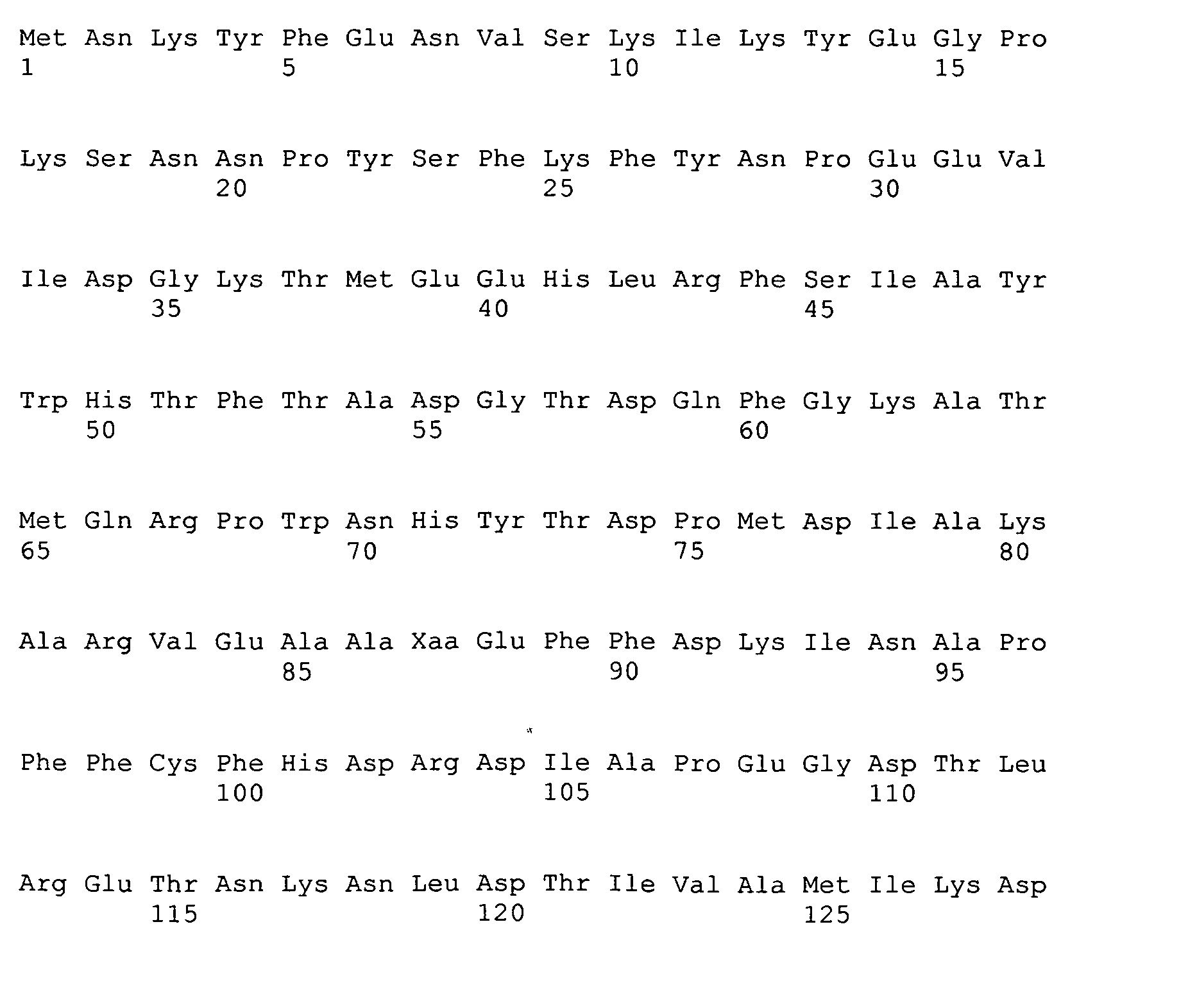


- <210> 5
<211> 439
<212> PRT
<213> Thermoanaerobacterium saccharolyticum - <400> 5


- <210> 6
<211> 439
<212> PRT
<213> Thermoanaerobacterium saccharolyticum - <400> 6


- <210> 7
<211> 439
<212> PRT
<213> Thermoanaerobacterium saccharolyticum - <400> 7


- <210> 8
<211> 439
<212> PRT
<213> Thermoanaerobacterium saccharolyticum - <400> 8


- <210> 9
<211> 439
<212> PRT
<213> Thermoanaerobacter lactoethylicum - <400> 9


- <210> 10
<211> 439
<212> PRT
<213> Thermoanaerobacter lactoethylicum - <400> 10


- <210> 11
<211> 439
<212> PRT
<213> Thermoanaerobacterium saccharolyticum - <400> 11


- <210> 12
<211> 439
<212> PRT
<213> Thermoanaerobacterium saccharolyticum - <400> 12
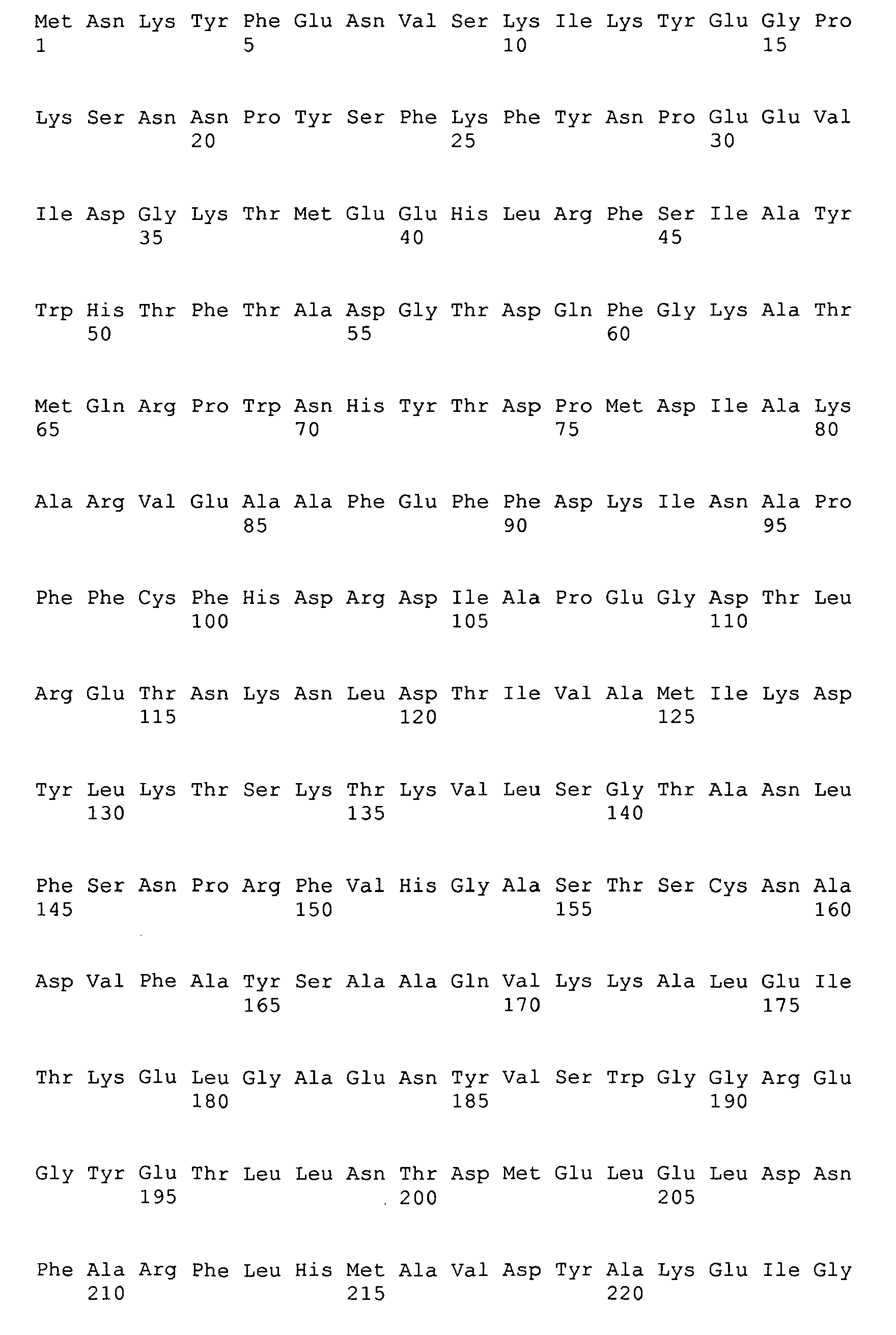

- <210> 13
<211> 439
<212> PRT
<213> Thermoanaerobacterium saccharolyticum - <400> 13


- <210> 14
<211> 439
<212> PRT
<213> Thermoanaerobacterium saccharolyticum - <400> 14


- <210> 15
<211> 439
<212> PRT
<213> Thermoanaerobacterium saccharolyticum - <400> 15


- <210> 16
<211> 439
<212> PRT
<213> Thermoanaerobacterium saccharolyticum - <400> 16


- <210> 17
<211> 439
<212> PRT
<213> Thermoanaerobacterium saccharolyticum - <400> 17


- <210> 18
<211> 439
<212> PRT
<213> Thermoanaerobacterium saccharolyticum - <400> 18


- <210> 19
<211> 439
<212> PRT
<213> Thermoanaerobacterium saccharolyticum - <400> 19


- <210> 20
<211> 439
<212> PRT
<213> Thermoanaerobacterium saccharolyticum - <400> 20


- <210> 21
<211> 439
<212> PRT
<213> Thermoanaerobacterium saccharolyticum - <400> 21


- <210> 22
<211> 439
<212> PRT
<213> Thermoanaerobacterium saccharolyticum - <400> 22


- <210> 23
<211> 439
<212> PRT
<213> Thermoanaerobacterium saccharolyticum - <400> 23


- <210> 24
<211> 439
<212> PRT
<213> Thermoanaerobacterium saccharolyticum - <400> 24

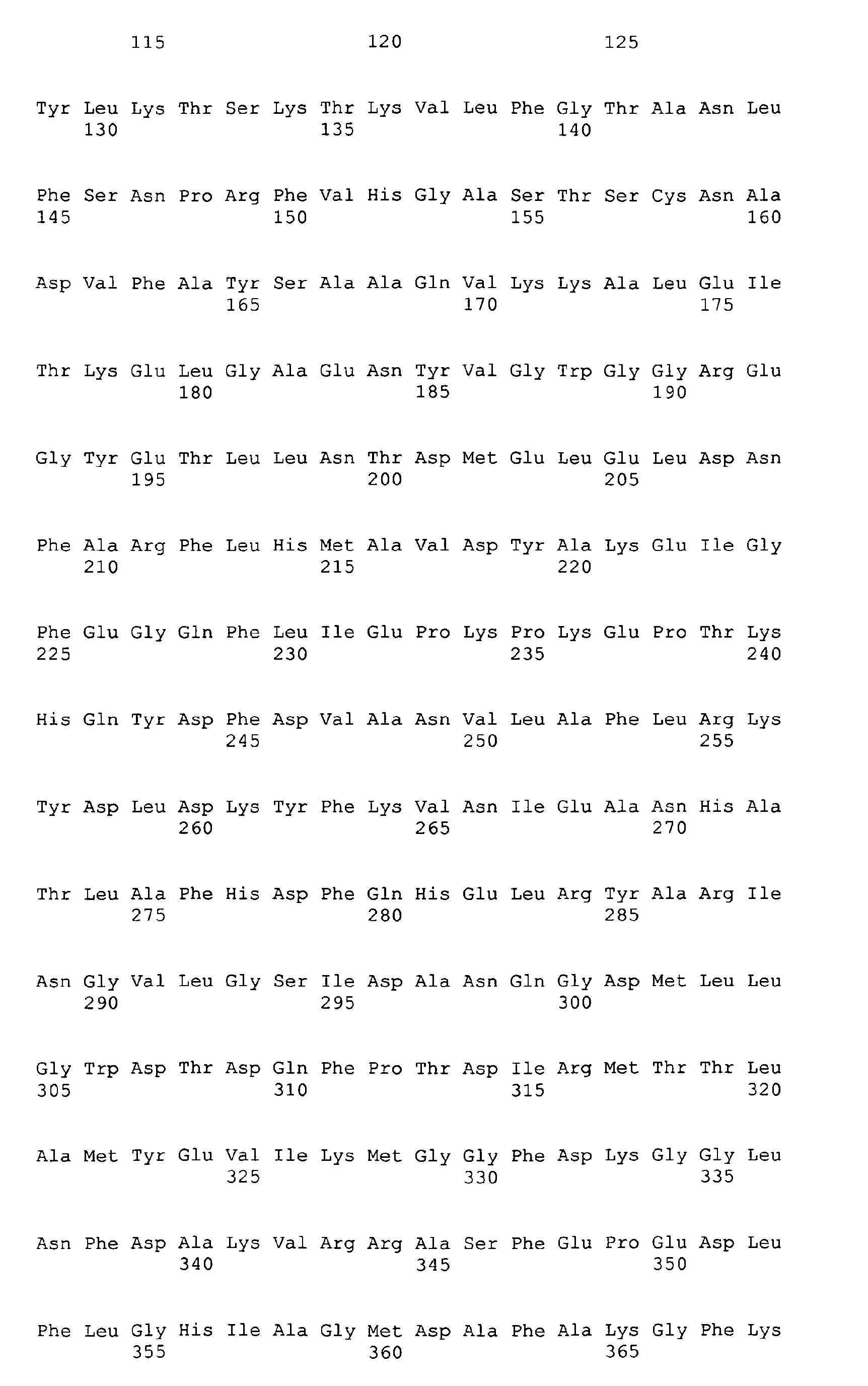

- <210> 25
<211> 439
<212> PRT
<213> Thermoanaerobacterium saccharolyticum - <400> 25


- <210> 26
<211> 439
<212> PRT
<213> Thermoanaerobacterium saccharolyticum - <400> 26


- <210> 27
<211> 439
<212> PRT
<213> Thermoanaerobacterium saccharolyticum - <400> 27
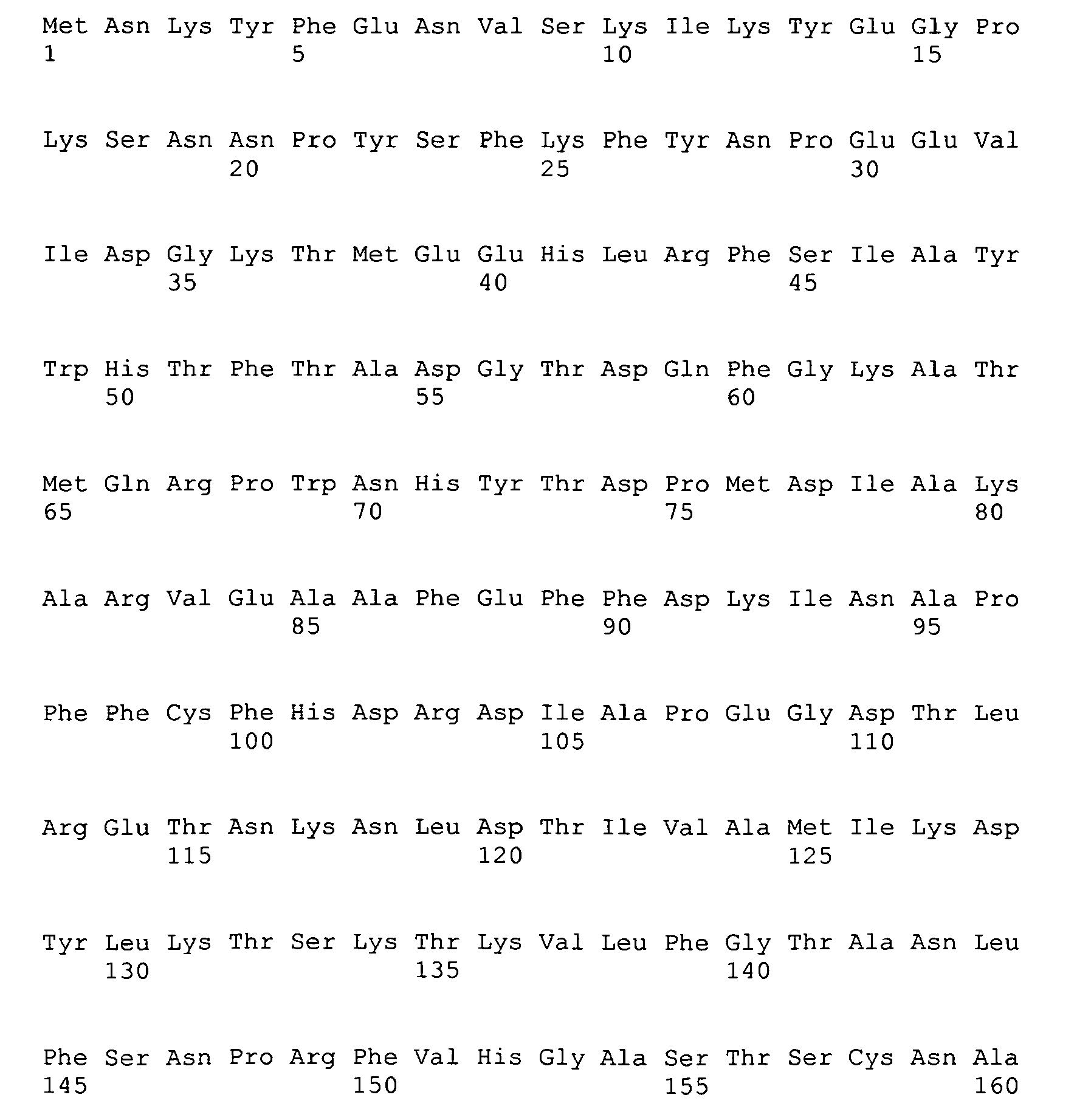


- <210> 28
<211> 439
<212> PRT
<213> Thermoanaerobacterium saccharolyticum - <400> 28


- <210> 29
<211> 439
<212> PRT
<213> Thermoanaerobacterium saccharolyticum - <400> 29


- <210> 30
<211> 439
<212> PRT
<213> Thermoanaerobacterium saccharolyticum - <400> 30


- <210> 31
<211> 439
<212> PRT
<213> Thermoanaerobacterium saccharolyticum - <400> 31


- <210> 32
<211> 439
<212> PRT
<213> Thermoanaerobacterium saccharolyticum - <400> 32


- <210> 33
<211> 439
<212> PRT
<213> Thermoanaerobacterium saccharolyticum - <400> 33
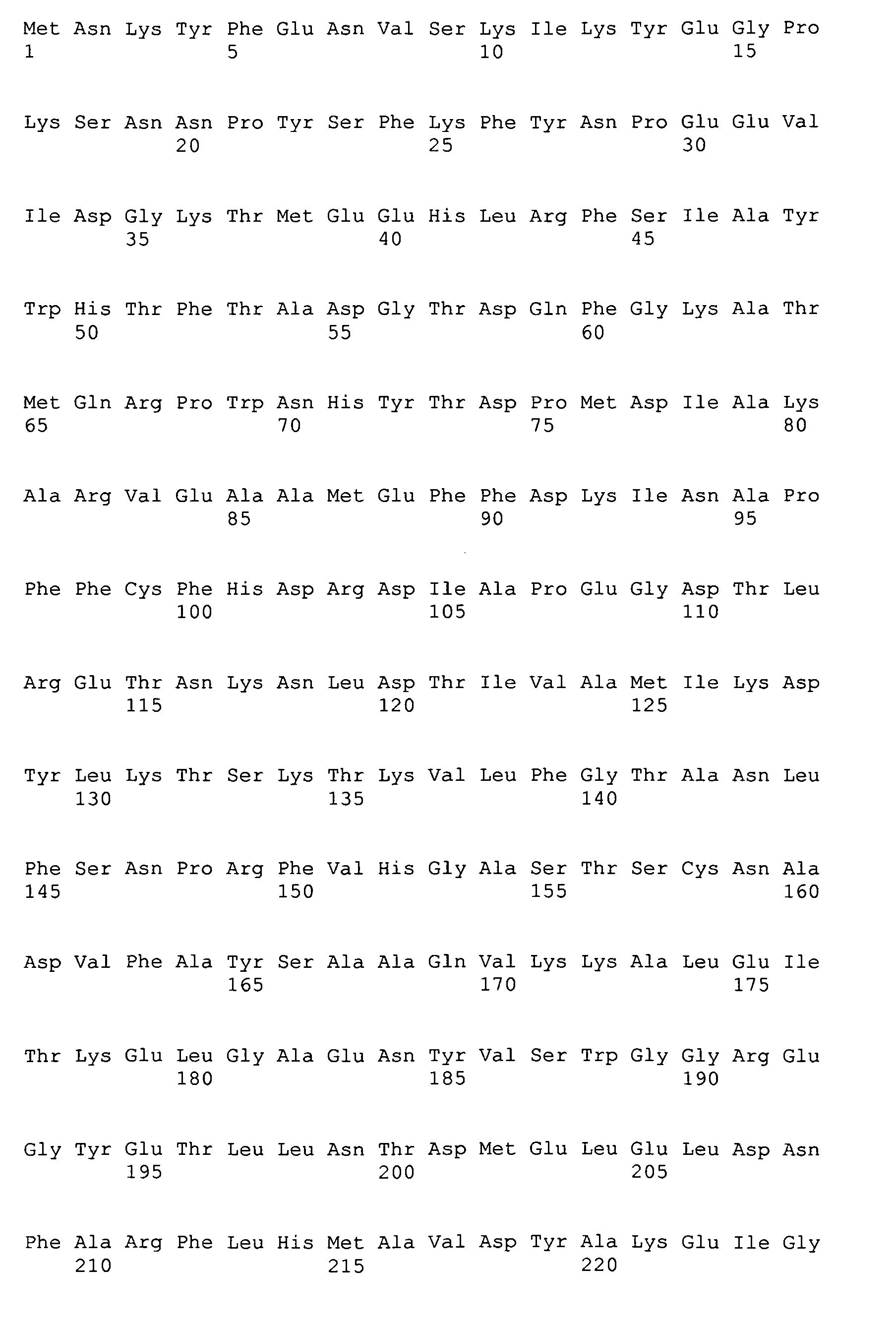

- <210> 34
<211> 439
<212> PRT
<213> Thermoanaerobacterium saccharolyticum
<400> 34

- <210> 35
<211> 439
<212> PRT
<213> Thermoanaerobacterium saccharolyticum - <400> 35


- <210> 36
<211> 439
<212> PRT
<213> Thermoanaerobacterium saccharolyticum - <400> 36



- <210> 37
<211> 439
<212> PRT
<213> Thermoanaerobacterium saccharolyticum - <400> 37


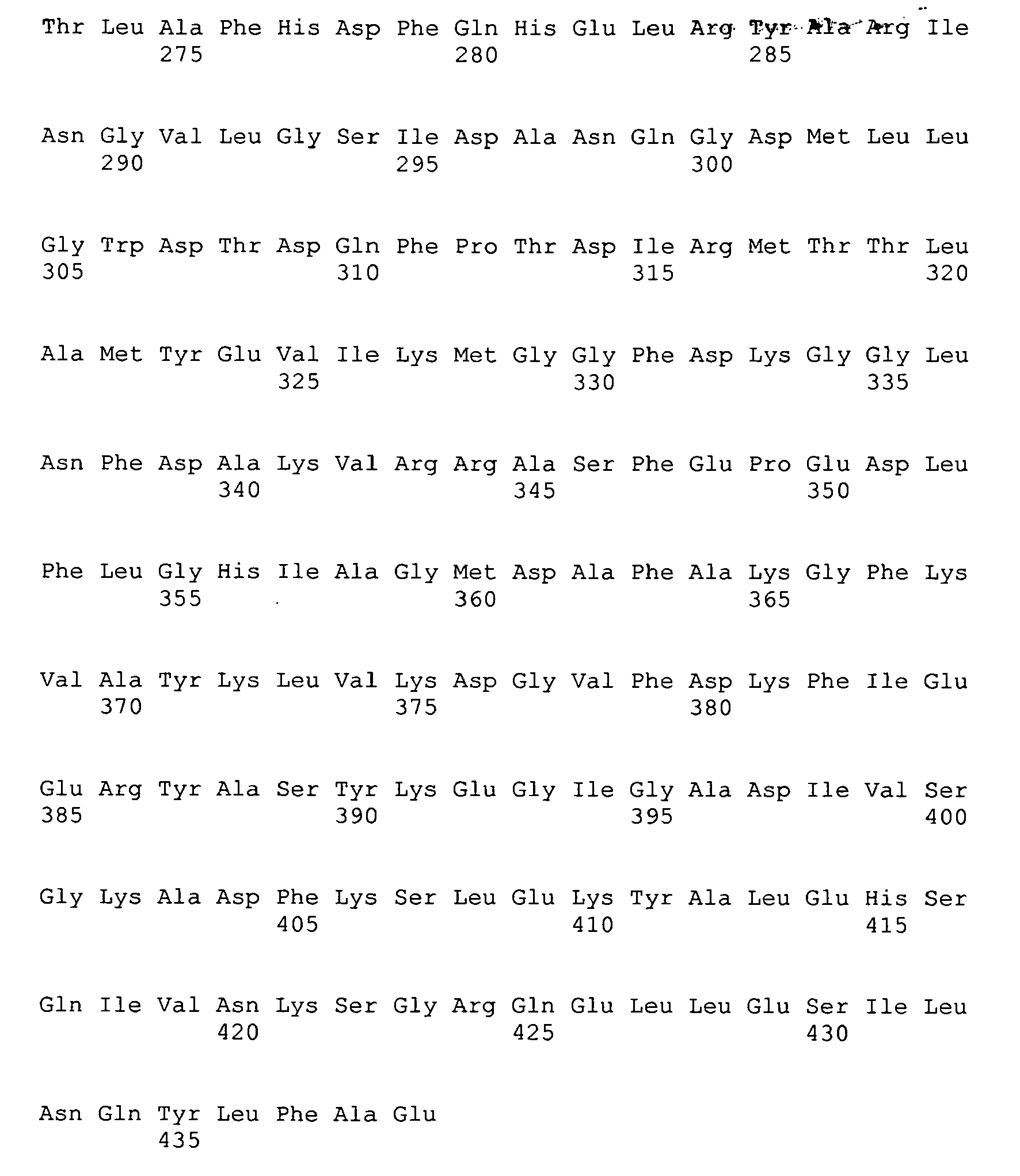
- <210> 38
<211> 439
<212> PRT
<213> Thermoanaerobacterium saccharolyticum - <400> 38


- <210> 39
<211> 439
<212> PRT
<213> Thermoanaerobacterium saccharolyticum - <400> 39


- <210> 40
<211> 439
<212> PRT
<213> Thermoanaerobacterium saccharolyticum - <400> 40


Claims (1)
- Use of a mutant of wild-type glucose isomerase in the conversion to xylulose from D-xylose during the degradation of cellulose or hemicellulose to bioethanol, said wild-type glucose isomerase originates from Thermoanaerobacterium saccharolyticum, has a length of 439 amino acids and its amino acid sequence is shown as Sequence 2 in the Sequence Listing, wherein the glucose isomerase mutant has any one of the amino acid sequences of SEQ ID NO.: 12 to SEQ ID NO.: 40 in the Sequence Listing and the mutant has a catalytic activity at least 50% higher than that of the wild-type glucose isomerase of Sequence 2 in the Sequence Listing in the conversion to xylulose using D-xylose as a substrate.
Applications Claiming Priority (2)
| Application Number | Priority Date | Filing Date | Title |
|---|---|---|---|
| CN2005101236309A CN1966702B (en) | 2005-11-18 | 2005-11-18 | Use of glucose isomerase mutant |
| PCT/CN2006/002902 WO2007056931A1 (en) | 2005-11-18 | 2006-10-30 | Use of glucose isomerase mutants |
Publications (3)
| Publication Number | Publication Date |
|---|---|
| EP1956084A1 EP1956084A1 (en) | 2008-08-13 |
| EP1956084A4 EP1956084A4 (en) | 2009-03-11 |
| EP1956084B1 true EP1956084B1 (en) | 2011-07-27 |
Family
ID=38048288
Family Applications (1)
| Application Number | Title | Priority Date | Filing Date |
|---|---|---|---|
| EP06805106A Not-in-force EP1956084B1 (en) | 2005-11-18 | 2006-10-30 | Use of glucose isomerase mutants |
Country Status (6)
| Country | Link |
|---|---|
| US (1) | US8012726B2 (en) |
| EP (1) | EP1956084B1 (en) |
| JP (1) | JP4847539B2 (en) |
| CN (1) | CN1966702B (en) |
| AT (1) | ATE517989T1 (en) |
| WO (1) | WO2007056931A1 (en) |
Families Citing this family (4)
| Publication number | Priority date | Publication date | Assignee | Title |
|---|---|---|---|---|
| CN102399804A (en) * | 2010-09-15 | 2012-04-04 | 中国农业科学院作物科学研究所 | Function and Application of Xylose Isomerase Gene |
| CN103429751A (en) | 2010-12-22 | 2013-12-04 | 马斯科马公司 | Genetically modified clostridium thermocellum engineered to ferment xylose |
| CN104745563A (en) * | 2015-03-05 | 2015-07-01 | 浙江工业大学 | Glucose isomerase and gene, mutant, engineering bacteria and application thereof |
| US11066659B2 (en) * | 2017-05-05 | 2021-07-20 | New Matterhorn, Llc | Glucose isomerase |
Citations (1)
| Publication number | Priority date | Publication date | Assignee | Title |
|---|---|---|---|---|
| WO2005116217A1 (en) * | 2004-05-26 | 2005-12-08 | Bioright Worldwide Company Limited | Glucose isomerase mutants |
Family Cites Families (8)
| Publication number | Priority date | Publication date | Assignee | Title |
|---|---|---|---|---|
| EP0351029B1 (en) | 1988-07-15 | 2002-03-06 | Genencor International, Inc. | Novel glucose isomerase enzymes and their use |
| ATE464376T1 (en) * | 1990-01-04 | 2010-04-15 | Danisco Us Inc | GLUCOSE ISOMERASES WITH ALTERED SUBSTRATE SPECIFICITY |
| US5656497A (en) | 1994-09-06 | 1997-08-12 | Michigan State University | Gene encoding hyperthermostable xylose isomerase from Thermotoga neapolitana |
| CN1088108C (en) * | 1997-09-30 | 2002-07-24 | 中国科学技术大学 | 247 position single-mutant enzyme and 138, 247 position double-mutant enzyme of glucose isomerase and configuration method thereof |
| SE9901298D0 (en) * | 1999-04-09 | 1999-04-09 | Forskarpatent I Syd Ab | Xylose isomerase with improved kinetic properties |
| JP2000333684A (en) * | 1999-05-26 | 2000-12-05 | Novo Nordisk As | Polypeptide having glucose isomerase activity and nucleic acid encoding the same |
| CN1693473A (en) * | 2004-05-08 | 2005-11-09 | 张骏 | Method of prepairing peltoglucose syrup and high temperature resistant glucose isomerase mutant |
| CN1743454A (en) * | 2004-09-02 | 2006-03-08 | 百瑞全球有限公司 | Glucose isomerase mutant and its use |
-
2005
- 2005-11-18 CN CN2005101236309A patent/CN1966702B/en not_active Expired - Fee Related
-
2006
- 2006-10-30 JP JP2008540430A patent/JP4847539B2/en not_active Expired - Fee Related
- 2006-10-30 AT AT06805106T patent/ATE517989T1/en not_active IP Right Cessation
- 2006-10-30 EP EP06805106A patent/EP1956084B1/en not_active Not-in-force
- 2006-10-30 US US12/093,881 patent/US8012726B2/en active Active
- 2006-10-30 WO PCT/CN2006/002902 patent/WO2007056931A1/en not_active Ceased
Patent Citations (1)
| Publication number | Priority date | Publication date | Assignee | Title |
|---|---|---|---|---|
| WO2005116217A1 (en) * | 2004-05-26 | 2005-12-08 | Bioright Worldwide Company Limited | Glucose isomerase mutants |
Non-Patent Citations (2)
| Title |
|---|
| DATABASE UNIPROT [online] 1 April 1993 (1993-04-01), "RecName: Full=Xylose isomerase; EC=<A HREF="http://srs.ebi.ac.uk/srsbin/cgi-bin/wgetz?[enzyme-ECNumber:5.3.1.5]+-e">5.3.1.5</A>;", retrieved from EBI accession no. UNIPROT:P30435 Database accession no. P30435 * |
| LEE YE ET AL: "Cloning, sequencing and biochemical characterization of xylose isomerase from Thermoanaerobacterium saccharolyticum strain B6A-RI", JOURNAL OF GENERAL MICROBIOLOGY, SOCIETY FOR MICROBIOLOGY, READING, GB, vol. 139, 1 June 1993 (1993-06-01), pages 1227 - 1234, XP008080918, ISSN: 0022-1287 * |
Also Published As
| Publication number | Publication date |
|---|---|
| US20090221048A1 (en) | 2009-09-03 |
| CN1966702B (en) | 2011-12-14 |
| CN1966702A (en) | 2007-05-23 |
| EP1956084A4 (en) | 2009-03-11 |
| US8012726B2 (en) | 2011-09-06 |
| WO2007056931A1 (en) | 2007-05-24 |
| JP4847539B2 (en) | 2011-12-28 |
| JP2009529316A (en) | 2009-08-20 |
| ATE517989T1 (en) | 2011-08-15 |
| EP1956084A1 (en) | 2008-08-13 |
Similar Documents
| Publication | Publication Date | Title |
|---|---|---|
| US6475768B1 (en) | Xylose isomerase with improved properties | |
| EP2679686B1 (en) | Nucleic acid molecule encoding xylose isomerase and xylose isomerase encoded thereof | |
| AU2007231208A1 (en) | Enhancement of microbial ethanol production | |
| EP1766026B1 (en) | Glucose isomerase mutants | |
| CN101323858B (en) | Xylose isomerase, and encoding gene and use thereof | |
| US8067561B2 (en) | Isolated DNA encoding recombinant glucose isomerase | |
| US8012726B2 (en) | Method of making bioethanol by using glucose isomerase mutants | |
| US8748152B1 (en) | Prevotella ruminicola xylose isomerase and co-expression with xylulokinase in yeast for xylose fermentation | |
| CN100445376C (en) | Mutated xylose isomerase and its gene and use | |
| JP5671339B2 (en) | Yeast producing ethanol from xylose | |
| KR101149001B1 (en) | Xylitol producing-strain using the glucose as the co-substrate and high-producing fermentation methods using the same | |
| JPH0556789A (en) | Termus aquaticus xylose isomerase gene, xylose isomerase and method for producing fructose using the same | |
| JP7078887B2 (en) | Mutant genes involved in improving ethanol productivity by ethanol fermentation and methods for producing ethanol using them | |
| JP7298673B2 (en) | Mutant gene involved in improving ethanol productivity by ethanol fermentation and ethanol production method using the same | |
| CN109504695B (en) | Multi-center monamphosterium xylose isomerase gene and application thereof | |
| KR100367154B1 (en) | Amylase with Acabose Resolution, Genes That Encode It, Microorganisms That Produce It, and Its Uses | |
| Ahmad et al. | Isolation and properties of a constitutive D-xylulokinase from a novel thermophilic Saccharococcus caldoxylosilyticus DSM 12041 (ATCC 700356) | |
| JP7078900B2 (en) | Transformed yeast and method for producing ethanol using it | |
| US20210062178A1 (en) | Novel xylose isomerase gene and polypeptide and uses thereof | |
| JP2022058407A (en) | Mutant genes involved in improving ethanol productivity by ethanol fermentation and methods for producing ethanol using them | |
| HK1131407A (en) | Mutants of glucose isomerase | |
| HK1130840A (en) | Mutants of glucose isomerase | |
| CN101341253A (en) | Thermophilic organisms for the conversion of lignocellulosic biomass to ethanol |
Legal Events
| Date | Code | Title | Description |
|---|---|---|---|
| PUAI | Public reference made under article 153(3) epc to a published international application that has entered the european phase |
Free format text: ORIGINAL CODE: 0009012 |
|
| 17P | Request for examination filed |
Effective date: 20080616 |
|
| AK | Designated contracting states |
Kind code of ref document: A1 Designated state(s): AT BE BG CH CY CZ DE DK EE ES FI FR GB GR HU IE IS IT LI LT LU LV MC NL PL PT RO SE SI SK TR |
|
| RAP1 | Party data changed (applicant data changed or rights of an application transferred) |
Owner name: GENEHARBOR (HONG KONG) TECHNOLOGIES LIMITED |
|
| A4 | Supplementary search report drawn up and despatched |
Effective date: 20090205 |
|
| 17Q | First examination report despatched |
Effective date: 20090515 |
|
| GRAP | Despatch of communication of intention to grant a patent |
Free format text: ORIGINAL CODE: EPIDOSNIGR1 |
|
| DAX | Request for extension of the european patent (deleted) | ||
| GRAS | Grant fee paid |
Free format text: ORIGINAL CODE: EPIDOSNIGR3 |
|
| GRAA | (expected) grant |
Free format text: ORIGINAL CODE: 0009210 |
|
| RAP1 | Party data changed (applicant data changed or rights of an application transferred) |
Owner name: BIORIGHT WORLDWIDE COMPANY LIMITED |
|
| AK | Designated contracting states |
Kind code of ref document: B1 Designated state(s): AT BE BG CH CY CZ DE DK EE ES FI FR GB GR HU IE IS IT LI LT LU LV MC NL PL PT RO SE SI SK TR |
|
| REG | Reference to a national code |
Ref country code: GB Ref legal event code: FG4D |
|
| REG | Reference to a national code |
Ref country code: CH Ref legal event code: EP |
|
| REG | Reference to a national code |
Ref country code: DE Ref legal event code: R096 Ref document number: 602006023406 Country of ref document: DE Effective date: 20110915 |
|
| REG | Reference to a national code |
Ref country code: NL Ref legal event code: VDEP Effective date: 20110727 |
|
| REG | Reference to a national code |
Ref country code: AT Ref legal event code: MK05 Ref document number: 517989 Country of ref document: AT Kind code of ref document: T Effective date: 20110727 |
|
| PG25 | Lapsed in a contracting state [announced via postgrant information from national office to epo] |
Ref country code: IS Free format text: LAPSE BECAUSE OF FAILURE TO SUBMIT A TRANSLATION OF THE DESCRIPTION OR TO PAY THE FEE WITHIN THE PRESCRIBED TIME-LIMIT Effective date: 20111127 Ref country code: BE Free format text: LAPSE BECAUSE OF FAILURE TO SUBMIT A TRANSLATION OF THE DESCRIPTION OR TO PAY THE FEE WITHIN THE PRESCRIBED TIME-LIMIT Effective date: 20110727 Ref country code: SE Free format text: LAPSE BECAUSE OF FAILURE TO SUBMIT A TRANSLATION OF THE DESCRIPTION OR TO PAY THE FEE WITHIN THE PRESCRIBED TIME-LIMIT Effective date: 20110727 Ref country code: LT Free format text: LAPSE BECAUSE OF FAILURE TO SUBMIT A TRANSLATION OF THE DESCRIPTION OR TO PAY THE FEE WITHIN THE PRESCRIBED TIME-LIMIT Effective date: 20110727 Ref country code: PT Free format text: LAPSE BECAUSE OF FAILURE TO SUBMIT A TRANSLATION OF THE DESCRIPTION OR TO PAY THE FEE WITHIN THE PRESCRIBED TIME-LIMIT Effective date: 20111128 Ref country code: NL Free format text: LAPSE BECAUSE OF FAILURE TO SUBMIT A TRANSLATION OF THE DESCRIPTION OR TO PAY THE FEE WITHIN THE PRESCRIBED TIME-LIMIT Effective date: 20110727 Ref country code: FI Free format text: LAPSE BECAUSE OF FAILURE TO SUBMIT A TRANSLATION OF THE DESCRIPTION OR TO PAY THE FEE WITHIN THE PRESCRIBED TIME-LIMIT Effective date: 20110727 |
|
| PG25 | Lapsed in a contracting state [announced via postgrant information from national office to epo] |
Ref country code: GR Free format text: LAPSE BECAUSE OF FAILURE TO SUBMIT A TRANSLATION OF THE DESCRIPTION OR TO PAY THE FEE WITHIN THE PRESCRIBED TIME-LIMIT Effective date: 20111028 Ref country code: CY Free format text: LAPSE BECAUSE OF FAILURE TO SUBMIT A TRANSLATION OF THE DESCRIPTION OR TO PAY THE FEE WITHIN THE PRESCRIBED TIME-LIMIT Effective date: 20110727 Ref country code: PL Free format text: LAPSE BECAUSE OF FAILURE TO SUBMIT A TRANSLATION OF THE DESCRIPTION OR TO PAY THE FEE WITHIN THE PRESCRIBED TIME-LIMIT Effective date: 20110727 Ref country code: SI Free format text: LAPSE BECAUSE OF FAILURE TO SUBMIT A TRANSLATION OF THE DESCRIPTION OR TO PAY THE FEE WITHIN THE PRESCRIBED TIME-LIMIT Effective date: 20110727 Ref country code: LV Free format text: LAPSE BECAUSE OF FAILURE TO SUBMIT A TRANSLATION OF THE DESCRIPTION OR TO PAY THE FEE WITHIN THE PRESCRIBED TIME-LIMIT Effective date: 20110727 Ref country code: AT Free format text: LAPSE BECAUSE OF FAILURE TO SUBMIT A TRANSLATION OF THE DESCRIPTION OR TO PAY THE FEE WITHIN THE PRESCRIBED TIME-LIMIT Effective date: 20110727 |
|
| PG25 | Lapsed in a contracting state [announced via postgrant information from national office to epo] |
Ref country code: CZ Free format text: LAPSE BECAUSE OF FAILURE TO SUBMIT A TRANSLATION OF THE DESCRIPTION OR TO PAY THE FEE WITHIN THE PRESCRIBED TIME-LIMIT Effective date: 20110727 Ref country code: SK Free format text: LAPSE BECAUSE OF FAILURE TO SUBMIT A TRANSLATION OF THE DESCRIPTION OR TO PAY THE FEE WITHIN THE PRESCRIBED TIME-LIMIT Effective date: 20110727 |
|
| PG25 | Lapsed in a contracting state [announced via postgrant information from national office to epo] |
Ref country code: MC Free format text: LAPSE BECAUSE OF NON-PAYMENT OF DUE FEES Effective date: 20111031 Ref country code: RO Free format text: LAPSE BECAUSE OF FAILURE TO SUBMIT A TRANSLATION OF THE DESCRIPTION OR TO PAY THE FEE WITHIN THE PRESCRIBED TIME-LIMIT Effective date: 20110727 Ref country code: IT Free format text: LAPSE BECAUSE OF FAILURE TO SUBMIT A TRANSLATION OF THE DESCRIPTION OR TO PAY THE FEE WITHIN THE PRESCRIBED TIME-LIMIT Effective date: 20110727 Ref country code: EE Free format text: LAPSE BECAUSE OF FAILURE TO SUBMIT A TRANSLATION OF THE DESCRIPTION OR TO PAY THE FEE WITHIN THE PRESCRIBED TIME-LIMIT Effective date: 20110727 |
|
| REG | Reference to a national code |
Ref country code: CH Ref legal event code: PL |
|
| PLBE | No opposition filed within time limit |
Free format text: ORIGINAL CODE: 0009261 |
|
| STAA | Information on the status of an ep patent application or granted ep patent |
Free format text: STATUS: NO OPPOSITION FILED WITHIN TIME LIMIT |
|
| PG25 | Lapsed in a contracting state [announced via postgrant information from national office to epo] |
Ref country code: DK Free format text: LAPSE BECAUSE OF FAILURE TO SUBMIT A TRANSLATION OF THE DESCRIPTION OR TO PAY THE FEE WITHIN THE PRESCRIBED TIME-LIMIT Effective date: 20110727 |
|
| 26N | No opposition filed |
Effective date: 20120502 |
|
| REG | Reference to a national code |
Ref country code: FR Ref legal event code: ST Effective date: 20120629 |
|
| PG25 | Lapsed in a contracting state [announced via postgrant information from national office to epo] |
Ref country code: CH Free format text: LAPSE BECAUSE OF NON-PAYMENT OF DUE FEES Effective date: 20111031 Ref country code: LI Free format text: LAPSE BECAUSE OF NON-PAYMENT OF DUE FEES Effective date: 20111031 |
|
| REG | Reference to a national code |
Ref country code: IE Ref legal event code: MM4A |
|
| REG | Reference to a national code |
Ref country code: DE Ref legal event code: R097 Ref document number: 602006023406 Country of ref document: DE Effective date: 20120502 |
|
| PG25 | Lapsed in a contracting state [announced via postgrant information from national office to epo] |
Ref country code: FR Free format text: LAPSE BECAUSE OF NON-PAYMENT OF DUE FEES Effective date: 20111102 |
|
| PG25 | Lapsed in a contracting state [announced via postgrant information from national office to epo] |
Ref country code: IE Free format text: LAPSE BECAUSE OF NON-PAYMENT OF DUE FEES Effective date: 20111030 |
|
| PG25 | Lapsed in a contracting state [announced via postgrant information from national office to epo] |
Ref country code: ES Free format text: LAPSE BECAUSE OF FAILURE TO SUBMIT A TRANSLATION OF THE DESCRIPTION OR TO PAY THE FEE WITHIN THE PRESCRIBED TIME-LIMIT Effective date: 20111107 |
|
| PG25 | Lapsed in a contracting state [announced via postgrant information from national office to epo] |
Ref country code: LU Free format text: LAPSE BECAUSE OF NON-PAYMENT OF DUE FEES Effective date: 20111030 |
|
| PG25 | Lapsed in a contracting state [announced via postgrant information from national office to epo] |
Ref country code: BG Free format text: LAPSE BECAUSE OF FAILURE TO SUBMIT A TRANSLATION OF THE DESCRIPTION OR TO PAY THE FEE WITHIN THE PRESCRIBED TIME-LIMIT Effective date: 20111027 |
|
| PG25 | Lapsed in a contracting state [announced via postgrant information from national office to epo] |
Ref country code: TR Free format text: LAPSE BECAUSE OF FAILURE TO SUBMIT A TRANSLATION OF THE DESCRIPTION OR TO PAY THE FEE WITHIN THE PRESCRIBED TIME-LIMIT Effective date: 20110727 |
|
| PG25 | Lapsed in a contracting state [announced via postgrant information from national office to epo] |
Ref country code: HU Free format text: LAPSE BECAUSE OF FAILURE TO SUBMIT A TRANSLATION OF THE DESCRIPTION OR TO PAY THE FEE WITHIN THE PRESCRIBED TIME-LIMIT Effective date: 20110727 |
|
| PGFP | Annual fee paid to national office [announced via postgrant information from national office to epo] |
Ref country code: GB Payment date: 20221019 Year of fee payment: 17 Ref country code: DE Payment date: 20221027 Year of fee payment: 17 |
|
| REG | Reference to a national code |
Ref country code: DE Ref legal event code: R119 Ref document number: 602006023406 Country of ref document: DE |
|
| GBPC | Gb: european patent ceased through non-payment of renewal fee |
Effective date: 20231030 |
|
| PG25 | Lapsed in a contracting state [announced via postgrant information from national office to epo] |
Ref country code: GB Free format text: LAPSE BECAUSE OF NON-PAYMENT OF DUE FEES Effective date: 20231030 |
|
| PG25 | Lapsed in a contracting state [announced via postgrant information from national office to epo] |
Ref country code: GB Free format text: LAPSE BECAUSE OF NON-PAYMENT OF DUE FEES Effective date: 20231030 Ref country code: DE Free format text: LAPSE BECAUSE OF NON-PAYMENT OF DUE FEES Effective date: 20240501 |