EP1954702B1 - Radiation cure silicone compositions - Google Patents
Radiation cure silicone compositions Download PDFInfo
- Publication number
- EP1954702B1 EP1954702B1 EP06838055.9A EP06838055A EP1954702B1 EP 1954702 B1 EP1954702 B1 EP 1954702B1 EP 06838055 A EP06838055 A EP 06838055A EP 1954702 B1 EP1954702 B1 EP 1954702B1
- Authority
- EP
- European Patent Office
- Prior art keywords
- composition
- occurrence
- different
- compositions
- same
- Prior art date
- Legal status (The legal status is an assumption and is not a legal conclusion. Google has not performed a legal analysis and makes no representation as to the accuracy of the status listed.)
- Active
Links
Classifications
-
- C—CHEMISTRY; METALLURGY
- C07—ORGANIC CHEMISTRY
- C07F—ACYCLIC, CARBOCYCLIC OR HETEROCYCLIC COMPOUNDS CONTAINING ELEMENTS OTHER THAN CARBON, HYDROGEN, HALOGEN, OXYGEN, NITROGEN, SULFUR, SELENIUM OR TELLURIUM
- C07F7/00—Compounds containing elements of Groups 4 or 14 of the Periodic Table
- C07F7/02—Silicon compounds
- C07F7/08—Compounds having one or more C—Si linkages
- C07F7/18—Compounds having one or more C—Si linkages as well as one or more C—O—Si linkages
-
- C—CHEMISTRY; METALLURGY
- C08—ORGANIC MACROMOLECULAR COMPOUNDS; THEIR PREPARATION OR CHEMICAL WORKING-UP; COMPOSITIONS BASED THEREON
- C08G—MACROMOLECULAR COMPOUNDS OBTAINED OTHERWISE THAN BY REACTIONS ONLY INVOLVING UNSATURATED CARBON-TO-CARBON BONDS
- C08G77/00—Macromolecular compounds obtained by reactions forming a linkage containing silicon with or without sulfur, nitrogen, oxygen or carbon in the main chain of the macromolecule
- C08G77/04—Polysiloxanes
- C08G77/20—Polysiloxanes containing silicon bound to unsaturated aliphatic groups
-
- C—CHEMISTRY; METALLURGY
- C07—ORGANIC CHEMISTRY
- C07F—ACYCLIC, CARBOCYCLIC OR HETEROCYCLIC COMPOUNDS CONTAINING ELEMENTS OTHER THAN CARBON, HYDROGEN, HALOGEN, OXYGEN, NITROGEN, SULFUR, SELENIUM OR TELLURIUM
- C07F7/00—Compounds containing elements of Groups 4 or 14 of the Periodic Table
- C07F7/02—Silicon compounds
- C07F7/08—Compounds having one or more C—Si linkages
-
- C—CHEMISTRY; METALLURGY
- C08—ORGANIC MACROMOLECULAR COMPOUNDS; THEIR PREPARATION OR CHEMICAL WORKING-UP; COMPOSITIONS BASED THEREON
- C08G—MACROMOLECULAR COMPOUNDS OBTAINED OTHERWISE THAN BY REACTIONS ONLY INVOLVING UNSATURATED CARBON-TO-CARBON BONDS
- C08G77/00—Macromolecular compounds obtained by reactions forming a linkage containing silicon with or without sulfur, nitrogen, oxygen or carbon in the main chain of the macromolecule
- C08G77/04—Polysiloxanes
-
- C—CHEMISTRY; METALLURGY
- C08—ORGANIC MACROMOLECULAR COMPOUNDS; THEIR PREPARATION OR CHEMICAL WORKING-UP; COMPOSITIONS BASED THEREON
- C08G—MACROMOLECULAR COMPOUNDS OBTAINED OTHERWISE THAN BY REACTIONS ONLY INVOLVING UNSATURATED CARBON-TO-CARBON BONDS
- C08G77/00—Macromolecular compounds obtained by reactions forming a linkage containing silicon with or without sulfur, nitrogen, oxygen or carbon in the main chain of the macromolecule
- C08G77/04—Polysiloxanes
- C08G77/045—Polysiloxanes containing less than 25 silicon atoms
-
- C—CHEMISTRY; METALLURGY
- C08—ORGANIC MACROMOLECULAR COMPOUNDS; THEIR PREPARATION OR CHEMICAL WORKING-UP; COMPOSITIONS BASED THEREON
- C08L—COMPOSITIONS OF MACROMOLECULAR COMPOUNDS
- C08L83/00—Compositions of macromolecular compounds obtained by reactions forming in the main chain of the macromolecule a linkage containing silicon with or without sulfur, nitrogen, oxygen or carbon only; Compositions of derivatives of such polymers
- C08L83/04—Polysiloxanes
- C08L83/06—Polysiloxanes containing silicon bound to oxygen-containing groups
Definitions
- the present invention relates to compositions which include compounds that are end-capped with silanes containing radiation cure groups.
- the invention relates to a method for preparing such compounds.
- the radiation cure groups are attached to the silane via a methylene linkage.
- Silicone rubber and liquid compositions exist in various forms as characterized by their differing cure chemistry, viscosity, polymer type and purity. They can be formulated into one-part or two-part systems, and a particular silicone composition can be engineered to be curable by more than one mechanism.
- Moisture-curing mechanisms, heat-curing me chanisms, and photo-initiated curing mechanisms are among the means used to initiate cure, i.e., cross-linking of reactive silicones. These mechanisms are based on either condensation reactions, whereby moisture hydrolyzes certain groups on the silicone backbone, or addition reactions that can be initiated by a form of energy, such as electromagnetic radiation or heat. In certain silicone compositions, a combination of such cure mechanisms may be used to achieve the desired results.
- reactive polyorganosiloxanes can be cured by heat in the presence of a peroxide.
- these reactive siloxanes can also be cured by heat in the presence of silicone hydride-containing (--SiH) compounds and a metallic hydrosilylation catalyst, such as an organo-platinum catalyst.
- UV curable silicone compositions including at least 50% of a specific type of silicone resin, at least 10% of a fumed silica filler and a photoinitiator, and cured compositions thereof.
- WO 2004/037868 A1 discloses fast moisture and photo/moisture curing silicone compositions and methods for the preparation thereof.
- the compositions are prepared from silanol and silane cappers.
- the cappers have an alpha-carbon bonded to the silicon atom as well as three hydrolyzable groups on the silicon.
- the alpha-carbon bonded to the silicon atom may be part of a acryloxy or methacryloxy functional group.
- the organosiloxanes may comprise (meth)acryloxyalkylsilane groups within the polymer chain.
- compositions for plate-making in printing consisting of an organopolysiloxane containing a (meth) acrylate functional group, a photosensitizer, and a solvent, which cures to a hard film]; U.S. Pat. Nos.
- compositions which include a compound of Formula (I):
- the present invention provides a method for making a composition, the method including the steps of mixing:
- the present invention provides the use of a composition, the composition including a compound of Formula (I): comprising the steps of
- the present invention provides radiation cure silicone compositions, and methods for their preparation
- hydrocarbon radical is intended to refer to a radical which is primarily composed of carbon and hydrogen atoms.
- the term encompasses aliphatic groups such as alkyl, alkenyl, and alkynyl groups; aromatic groups such as phenyl; and alicyclic groups such as cycloalkyl and cycloalkenyl.
- Hydrocarbon radicals of the invention may include heteroatoms to the extent that the heteroatoms do not detract from the hydrocarbon nature of the groups.
- hydrocarbon groups may include such functionally groups as ethers, alkoxides, carbonyls, esters, amino groups, cyano groups, sulfides, sulfates, sulfoxides, sulfones, and siilfones.
- hydrocarbon, alkyl, and phenyl radicals of the present invention may be optionally substituted.
- optionally substituted is intended to mean that one or more hydrogens on a group may be replaced with a corresponding number of substituents selected from alkyl, alkenyl, alkynyl, aryl, halo, haloalkyl, haloalkenyl, haloalkynyl, haloaryl, hydroxy, alkoxy, alkenyloxy, alkynyloxy, aryloxy, carboxy, benzyloxy, haloalkoxy, haloalkenyloxy, haloalkynyloxy, haloaryloxy, nitro, nitroalkyl, nitroalkenyl, nitroalkynyl, nitroaryl, nitroheterocyclyl, azido, amino, alkylamino, alkenylamino, alkynylamino, aryla
- halo and halogen are intended to be synonymous, and both are intended to include chlorine, fluorine, bromine, and iodine.
- (meth)acryloxy is intended to refer to both acryloxy and methacryloxy groups.
- silicone and siloxane are intended to be synonymous and interchangeable with one another.
- the present invention is directed to radiation cure compositions containing compounds of which Formula (I) is representative:
- R 1 in each occurrence may be the same or different and is selected from the group of H and C 1 to C 4 alkyl.
- R 1 encompasses those substituents present on the exterior carbon of the double bond of the (meth)acryloxy group which end-caps the compositions of the invention. Desirably, R 1 is H.
- R 2 in each occurrence may be the same or different, and is a C 1 to C 10 hydrocarbon radical.
- the inventive compositions may also undergo chain extension.
- Substituent R 2 in combination with the oxygen to which it is attached, forms a hydrolyzable group, which provides the compositions of the present invention with their ability to undergo chain extension.
- Chain extension typically occurs through exposure of the compositions of the invention to moisture.
- a silane bearing a hydrolyzable group on one compound of Formula (I) may undergo condensation with such a silane on another compound of Formula (I). This generally results in the composition becoming more viscous.
- a further aspect of the invention relates to the chain-extended polymer formed by reaction of the compositions of the invention upon exposure to moisture.
- Suitable hydrolyzable groups include alkoxy groups such as methoxy, ethoxy, propoxy, and butoxy; acyloxy groups such acetoxy; aryloxy groups such as phenoxy; oximinoxy groups such as methylethylketoximinoxy; enoxy groups such as isopropenoxy; and alkoxyalkyl groups such as CH 3 OCH 2 CH 2 -. Larger groups such as propoxy and butoxy are slower to react than smaller groups such as methoxy and ethoxy.
- R 2 is methyl.
- R 3 in each occurrence is methyl.
- R 4 in each occurrence may be the same or different and is a C 1 to C 10 hydrocarbon radical.
- R 4 is C 1 to C 4 alkyl.
- R 4 will desirably be methyl, due to the wide availability of polydimethylsiloxane starting material which is advantageously used in the synthesis of the compositions of the invention.
- R 4 may also be phenyl.
- R 5 in each occurrence may be the same or different and is selected from the group of H and C 1 to C 4 alkyl.
- R 5 encompasses the substituent on the interior of the double bond of the (meth)acryloxy group which end-caps the compositions of the invention.
- R 5 is H or methyl. More desirably, R 5 is methyl.
- the molecular weights of the silicone may vary and may be chosen to tailor the final product characteristics.
- the number of repeating units, n can be varied to achieve specific molecular weights, viscosities, and other chemical or physical properties.
- n is an integer such that the viscosity is from 25 cps to 2,500,000 cps at 25° C, such as when n is from 1 to 1,200 and desirably from 10 to 1,000.
- useful molecular weights of the polyalkylsiloxanes include molecular weights of 500 to 50,000 atomic mass units.
- the average molecular weight of the silicone is 10,000 to 8,000 atomic mass units.
- the acryloxy group to which substituents R 1 and R 5 are attached provide the compositions of the invention with their ability to undergo radiation cure. Accordingly, the present invention also relates to the reaction product of radiation and compositions which include compounds of Formula (I).
- photoinitiators may be employed as part of the present invention. Any known free radical type photoinitiator which promotes crosslinking may be used in present invention. Photoinitiators enhance the rapidity of the curing process when the photocurable compositions as a whole are exposed to electromagnetic radiation.
- UV photoinitiators that are useful in the inventive compositions include benzoins, benzophenone, dialkoxy-benzophenones, Michler's ketone (4,4'-bis(dimethylamino)benzophenone) and diethoxyacetophenone, which is an example of a silicone soluble photoinitiator.
- photoinitiators for use herein include, but are not limited to, photoinitiators available commercially from Ciba Specialty Chemicals, under the "IRGACURE” and “DAROCUR” trade names, specifically "IRGACURE” 184 (1-hydroxycyclohexyl phenyl ketone), 907 (2-methyl-1-[4-(methylthio)phenyl]-2-morpholino propan-1-one), 369 (2-benzyl-2-N,N-dimethylamino-1-(4-morpholinophenyl)-1-butanone), 500 (the combination of 1-hydroxy cyclohexyl phenyl ketone and benzophenone), 651 (2,2-dimethoxy-2-phenyl acetophenone), 1700 (the combination of bis(2,6-dimethoxybenzoyl-2,4,4-trimethyl pentyl)phosphine oxide and 2-hydroxy-2-methyl-1-phenyl-propan-1-one), and 819 [bis(
- photoinitiators useful herein include alkyl pyruvates, such as methyl, ethyl, propyl, and butyl pyruvates, and aryl pyruvates, such as phenyl, benzyl, and appropriately substituted derivatives thereof.
- Photoinitiators particularly well-suited for use herein include ultraviolet photoinitiators, such as 2,2-dimethoxy-2-phenyl acetophenone (e.g., "IRGACURE” 651), and 2-hydroxy-2-methyl-1-phenyl-1-propane (e.g., "DAROCUR” 1173), bis(2,4,6-trimethyl benzoyl) phenyl phosphine oxide (e.g., "IRGACURE 819), and the ultraviolet/visible photoinitiator combination of bis(2,6-dimethoxybenzoyl-2,4,4-trimethylpentyl)phosphine oxide and 2-hydroxy-2-methyl-1-phenyl-propan-1-one (e.g., "IRGACURE” 1700), as well as the visible photoinitiator bis (.eta..sup.5 -2,4-cyclopentadien-1-yl)-bis[2,6difluoro-3-(1H-pyrrol-1-y
- the amount of photoinitiator used in the composition will typically be in the range of between 0.1% to 10% of the composition, and desirably from 2% to 5% by weight of the composition. Depending on the characteristics of the particular photoinitiator, however, amounts outside of this range may be employed without departing from the invention so long as they perform the function of rapidly and efficiently initiating polymerization of the photocurable groups.
- the radiation which cures the inventive compositions may include UV and/or visible light.
- light-emitting diode (LED) based light generation devices may be employed. Such devices include at least one LED coupled to a power supply, which device delivers a high light output to the compositions to be cured.
- UV curing lamp assemblies which may include arc lamps, such as those disclosed in U.S. Pat. Nos. 6,520,663 to Holmes et al. and 6,881,964 to Holmes , the contents of which are incorporated herein by reference in their entirety, may be used.
- the “ZETA 7420” includes a glass filter to reduce short and medium wavelength lamp emissions.
- the assembly can emit light in the visible blue and green region.
- condensable silanes may be added to facilitate chain-extension, and in certain cases can effectuate cross-linking.
- condensable silanes include alkoxy silanes, acetoxy silanes, enoxy silane, oximino silanes, amino silanes and combinations thereof.
- Other suitable silanes include vinyl trimethoxy silane, vinyltrimethoxysilane, vinyltriisopropenoxysilane, and alpha functionalized silanes.
- a further aspect of the invention relates to the cross-linked polymer formed by reaction of the compositions of the invention upon exposure to moisture.
- the condensable silanes may be present in amounts of 0.5% to 10% by weight of the composition. A more desirable range would be 0.5-5.0%.
- Fillers optionally may be included in the compositions of the present invention.
- any suitable mineral, carbonaceous, glass, or ceramic filler may be used, including, but not limited to: fumed silica; clay; metal salts of carbonates; sulfates; phosphates; carbon black; metal oxides; titanium dioxide; ferric oxide; aluminum oxide; zinc oxide; quartz; zirconium silicate; gypsum; silicium nitride; boron nitride; zeolite; glass; plastic powder; and combinations thereof.
- the filler may be present in the composition in any suitable concentration in the curable silicone composition. Generally, concentrations of from 5% to 80 % by weight of the composition are sufficient. However, a more desirable range would be 20-60%. Desirably, fillers should not be added in quantities such that the transmission of the electromagnetic waves needed for radiation cure are unable to initiate polymerization.
- the silica may be a fumed silica, which may be untreated (hydrophilic) or treated with an adjuvant so as to render it hydrophobic.
- the fumed silica should be present at a level of at least 5% by weight of the composition in order to obtain any substantial reinforcing effect.
- optimal silica levels vary depending on the characteristics of the particular silica, it has generally been observed that the thixotropic effects of the silica produce compositions of impractically high viscosity before maximum reinforcing effect is reached.
- Hydrophobic silicas tend to display lower thixotropic ratios and therefore greater amounts can be included in a composition of desired consistency. In choosing the silica level, therefore, desired reinforcement and practical viscosities must be balanced.
- a particularly desirable fumed silica is R8200 by Degussa®.
- a moisture curable pre-mix composition may include the reactive polymer of Formula I and at least one dry filler.
- Such dry fillers generally have a water content of less than 0.5% by weight of the composition.
- Such compositions desirably are substantially free of added moisture, thereby preventing premature curing or thickening of the reactive polyorganosiloxane.
- the pre-mix compositions also may include additional reactive silanes, adhesion promoters or combinations thereof.
- Adhesion promoters also may be included in the moisture curable compositions.
- An adhesion promoter may act to enhance the adhesive character of the moisture curable composition for a specific substrate (i.e., metal, glass, plastics, ceramic, and blends thereof). Any suitable adhesion promoter may be employed for such purpose, depending on the specific substrate elements employed in a given application.
- Various organosilane compounds, particularly aminofunctional alkoxysilanes, may be desired.
- Suitable organosilane adhesion promoters include, for example, 3-aminopropyltriethoxysilane, 3-aminopropyltrimethoxysilane, 3-aminopropylmethyldiethoxysilane, 3-aminopropylmethyldimethoxysilane, methylaminopropyltrimethoxysilane, 1,3,5-tris(trimethylsilylpropyl)isocyanurate, 3-glycidoxypropyltrimethoxysilane, 3-glycidoxypropylethyldimethoxysilane, 2-glycidoxyethyltrimethoxysilane, 2-cyanoethyltrimethoxysilane, 3-cyanopropyltriethoxysilane, isocyanatopropyltriethoxysilane, isocyanatopropyltrimethoxysilane, and combinations thereof.
- Adhesion promoters when present, may be used in amounts of 0.1% to 10% by weight of the composition. Desirably, the adhesion promoter is present from 0.2% to 2.0% by weight of the composition.
- compositions also may include any number of optional additives, such as pigments or dyes, plasticizers, thixotropic agents, alcohol scavengers, stabilizers, anti-oxidants, flame retardants, UV-stabilizers, biocides, fungicides, thermal stabilizing agents, rheological additives, tackifiers, and the like or combinations thereof.
- additives such as pigments or dyes, plasticizers, thixotropic agents, alcohol scavengers, stabilizers, anti-oxidants, flame retardants, UV-stabilizers, biocides, fungicides, thermal stabilizing agents, rheological additives, tackifiers, and the like or combinations thereof.
- additives should be present in amounts suitable to effectuate their intended purpose.
- the present invention also provides a method for preparing compositions which include a compound of Formula (I).
- One approach to preparing the compound of Formula (I) includes the steps of mixing:
- silanols In condensation reactions of silanols with silanes bearing hydrolyzable groups, the reactivity of the silanes is directly proportional to the number of hydrolyzable groups attached to the silicon, presumably due to the electron withdrawing capability of typical hydrolyzable groups such as alkoxy and acetoxy groups.
- the more hydrolyzable groups there are on a silane silicon the more susceptible to nucleophilic substitution the silane is.
- condensation of silanols with tetra- or triacetoxysilanes takes place instantaneously, but condensation with diacetoxy- or mönoacetoxysilanes is orders of magnitude slower.
- the facility with which the endcapping occurs in preparing compounds of Formula (I) is believed to be due to the presence of the methylene group linking the methacryloxy substituent with the silicon.
- the methylene group may allow for a pentacoordinated silane, in which electrons from a methacryloxy oxygen are coordinated to the silicon, as shown in the representation below:
- the coordination of the electrons to the silicon is believed to enhance the reactivity of the hydrolyzable groups on the silicon.
- the endcapping reaction will desirably take place in the presence of a catalyst, which is typically produced by adding a basic component to the reaction mixture.
- Basic components such as organo-lithium compounds are particularly suitable for producing the catalyst used for the endcapping reaction.
- suitable organo-lithium compounds include, but are not limited to: methyl lithium; n-butyl lithium; sec-butyl lithium; t-butyl lithium; n-hexyl lithium; 2-ethylhexyl lithium; n-octyl lithium; phenyl lithium; vinyl lithium; lithium phenylacetylide; lithium (trimethylsilyl) acetylide; lithium dimethylamide; lithium diethylamide; lithium diisopropylamide; lithium dicyclohexylamide; lithium silanolate; lithium siloxanolate; and combinations thereof.
- the reaction may optionally take place in the presence of stabilizers such as diethylhydroxylamine.
- the inventive compositions may be used, for example, to seal or bond substrates, such as, but not limited to, gaskets.
- the moisture curable composition may be applied to one of the substrates which will form part of the gasket, cured or at least partially cured, and then joined to a second substrate to form a gasket assembly.
- gasketing applications include, for example, form-in-place gaskets.
- the compositions may be applied to a substrate and subjected to curing conditions.
- the compositions may be used to seal together substrates by applying the composition to at least one of two substrate surfaces, mating the substrate surfaces in an abutting relationship to form an assembly, and exposing the composition to moisture to effect cure.
- the substrates should be maintained in the abutting relationship for a time sufficient to effect cure.
- the viscosity of the resulting fluid was found to be 4,300 cps.
- a 40 g sample of this fluid was mixed with 0.60 g of diethoxyacetophenone. The mixture was then placed within two glass plates with a 75 mm gap and irradiated for one minute per side with a 70 mW/cm 2 UV light generated by a medium pressure mercury lamp. The formation cured to a clear rubber with a hardness measured by Shore OO durometer of 65.
- the viscosity of the resulting fluid was found to be 6,000 cps.
- a 40 g sample of this fluid was mixed with 0.60 g of diethoxyacetophenone. The mixture was then placed within two glass plates with a 75 mm gap and irradiated for one minute per side with a 70 mW/cm2 UV light generated by a medium pressure mercury lamp. The formulation cured to a clear rubber with a hardness measured by Shore OO of 65.
- the viscosity of the resulting fluid was found to be 16,400 cps.
- a 40 g sample of this fluid was mixed with 0.60 g of diethoxyacetophenone. The mixture was then placed within two glass plates with a 75 mm gap and irradiated for one minute per side with a 70 mW/cm2 light generated by a medium pressure mercury lamp. The formulation cured to a clear rubber with a hardness measured by Shore OO durometer of 52.
Landscapes
- Chemical & Material Sciences (AREA)
- Organic Chemistry (AREA)
- Health & Medical Sciences (AREA)
- Chemical Kinetics & Catalysis (AREA)
- Medicinal Chemistry (AREA)
- Polymers & Plastics (AREA)
- Silicon Polymers (AREA)
- Addition Polymer Or Copolymer, Post-Treatments, Or Chemical Modifications (AREA)
- Macromonomer-Based Addition Polymer (AREA)
- Compositions Of Macromolecular Compounds (AREA)
Description
- The present invention relates to compositions which include compounds that are end-capped with silanes containing radiation cure groups. In addition, the invention relates to a method for preparing such compounds. In particular, the radiation cure groups are attached to the silane via a methylene linkage.
- Silicone rubber and liquid compositions exist in various forms as characterized by their differing cure chemistry, viscosity, polymer type and purity. They can be formulated into one-part or two-part systems, and a particular silicone composition can be engineered to be curable by more than one mechanism.
- Moisture-curing mechanisms, heat-curing me chanisms, and photo-initiated curing mechanisms are among the means used to initiate cure, i.e., cross-linking of reactive silicones. These mechanisms are based on either condensation reactions, whereby moisture hydrolyzes certain groups on the silicone backbone, or addition reactions that can be initiated by a form of energy, such as electromagnetic radiation or heat. In certain silicone compositions, a combination of such cure mechanisms may be used to achieve the desired results.
- For example, reactive polyorganosiloxanes can be cured by heat in the presence of a peroxide. Alternatively, these reactive siloxanes can also be cured by heat in the presence of silicone hydride-containing (--SiH) compounds and a metallic hydrosilylation catalyst, such as an organo-platinum catalyst.
- Radiation curing silicones having methacryloxy functional groups are known. For instance,
U.S. Pat. No. 4,675,346 (Lin ) is directed to UV curable silicone compositions including at least 50% of a specific type of silicone resin, at least 10% of a fumed silica filler and a photoinitiator, and cured compositions thereof. -
WO 2004/037868 A1 discloses fast moisture and photo/moisture curing silicone compositions and methods for the preparation thereof. The compositions are prepared from silanol and silane cappers. The cappers have an alpha-carbon bonded to the silicon atom as well as three hydrolyzable groups on the silicon. The alpha-carbon bonded to the silicon atom may be part of a acryloxy or methacryloxy functional group. -
DE 102 19 734 A1 D2 discloses organosiloxane functionalized with specific (meth)acryloxyalkylsilane groups and methods for the preparation thereof. The organosiloxanes may comprise (meth)acryloxyalkylsilane groups within the polymer chain. - Other known radiation curing silicone compositions include those disclosed in Great
Britain Patent No. 1,323,869 U.S. Pat. Nos. 4,201,808 (Culley ) and4,348,454 (Eckberg ) (compositions of an organopolysiloxane having an average of at least one acryloxy and/or methacryloxy group per molecule; a low molecular weight polyacrylyl crosslinking agent; and a photosensitizer, reported as being suitable for release coatings and curable upon exposure to UV radiation); and GreatBritain Patent No. 2,039,287 - However, existing methods for preparing silicones capable of radiation cure can be expensive. Moreover, these processes can result in unwanted side products, such as acids and the like, which can be difficult to remove.
- Accordingly, there is a need for a simple and inexpensive method for preparing silicones capable of radiation cure.
- In one aspect, the present invention provides compositions which include a compound of Formula (I):

- In another aspect, the present invention provides a method for making a composition, the method including the steps of mixing:
- a) a siloxane of Formula (II):

- b) a compound of Formula (III) :

- In still another aspect, the present invention provides the use of a composition, the composition including a compound of Formula (I):

- a) providing the composition;
- b) applying the composition onto a substrate; and
- c) exposing the composition to conditions appropriate to cure the composition.
- In each of the above representations, the substituents, where they occur, are defined as follows:
- R1 in each occurrence may be the same or different and is selected from the group of H and C1 to C4 alkyl;
- R2 in each occurrence may be the same or different and is a C1 to C10 hydrocarbon radical;
- R3 in each occurrence is methyl;
- R4 in each occurrence may be the same or different and is a C1 to C10 hydrocarbon radical;
- R5 in each occurrence may be the same or different and is selected from the group of H and C1 to C4 alkyl; and
- n is 1 to 1,200.
- The present invention provides radiation cure silicone compositions, and methods for their preparation
- As used herein, the term "hydrocarbon radical" is intended to refer to a radical which is primarily composed of carbon and hydrogen atoms. Thus, the term encompasses aliphatic groups such as alkyl, alkenyl, and alkynyl groups; aromatic groups such as phenyl; and alicyclic groups such as cycloalkyl and cycloalkenyl. Hydrocarbon radicals of the invention may include heteroatoms to the extent that the heteroatoms do not detract from the hydrocarbon nature of the groups. Accordingly, hydrocarbon groups may include such functionally groups as ethers, alkoxides, carbonyls, esters, amino groups, cyano groups, sulfides, sulfates, sulfoxides, sulfones, and siilfones.
- The hydrocarbon, alkyl, and phenyl radicals of the present invention may be optionally substituted. As used herein the term "optionally substituted" is intended to mean that one or more hydrogens on a group may be replaced with a corresponding number of substituents selected from alkyl, alkenyl, alkynyl, aryl, halo, haloalkyl, haloalkenyl, haloalkynyl, haloaryl, hydroxy, alkoxy, alkenyloxy, alkynyloxy, aryloxy, carboxy, benzyloxy, haloalkoxy, haloalkenyloxy, haloalkynyloxy, haloaryloxy, nitro, nitroalkyl, nitroalkenyl, nitroalkynyl, nitroaryl, nitroheterocyclyl, azido, amino, alkylamino, alkenylamino, alkynylamino, arylamino, benzylamino, acyl, alkenylacyl, alkynylacyl, arylacyl, acylamino, acyloxy, aldehydo, alkylsulphonyl, aryisulphonyl, alkylsulphonylamino, arylsulphonylamino, alkylsulphonyloxy, arylsulphonyloxy, heterocyclyl, heterocycloxy, helerocyclylamino, haloheterocyclyl, alkylsulphenyl, arylsulphenyl, carboalkoxy, carboaryloxy, mercapto, alkylthio, arylthio, acylthio and the like.
- As used herein, the terms "halo" and "halogen" are intended to be synonymous, and both are intended to include chlorine, fluorine, bromine, and iodine.
- As used herein, the terms "(meth)acryloxy" is intended to refer to both acryloxy and methacryloxy groups.
- As used herein, there terms "silicone" and "siloxane" are intended to be synonymous and interchangeable with one another.
- In one aspect, the present invention is directed to radiation cure compositions containing compounds of which Formula (I) is representative:

- R1 in each occurrence may be the same or different and is selected from the group of H and C1 to C4 alkyl. R1 encompasses those substituents present on the exterior carbon of the double bond of the (meth)acryloxy group which end-caps the compositions of the invention. Desirably, R1 is H.
- R2 in each occurrence may be the same or different, and is a C1 to C10 hydrocarbon radical. The inventive compositions may also undergo chain extension. Substituent R2, in combination with the oxygen to which it is attached, forms a hydrolyzable group, which provides the compositions of the present invention with their ability to undergo chain extension. Chain extension typically occurs through exposure of the compositions of the invention to moisture. When exposed to moisture, a silane bearing a hydrolyzable group on one compound of Formula (I) may undergo condensation with such a silane on another compound of Formula (I). This generally results in the composition becoming more viscous. Thus, a further aspect of the invention relates to the chain-extended polymer formed by reaction of the compositions of the invention upon exposure to moisture. Suitable hydrolyzable groups include alkoxy groups such as methoxy, ethoxy, propoxy, and butoxy; acyloxy groups such acetoxy; aryloxy groups such as phenoxy; oximinoxy groups such as methylethylketoximinoxy; enoxy groups such as isopropenoxy; and alkoxyalkyl groups such as CH3OCH2CH2-. Larger groups such as propoxy and butoxy are slower to react than smaller groups such as methoxy and ethoxy. The rate at which the compositions of the present invention undergo chain-extension can be tailored by choosing an appropriate group for substituent R2. Advantageously, R2 is methyl.
- R3 in each occurrence is methyl.
- R4 in each occurrence may be the same or different and is a C1 to C10 hydrocarbon radical. Advantageously, R4 is C1 to C4 alkyl. For most commercial applications, R4 will desirably be methyl, due to the wide availability of polydimethylsiloxane starting material which is advantageously used in the synthesis of the compositions of the invention. In another desirable aspect, R4 may also be phenyl.
- R5 in each occurrence may be the same or different and is selected from the group of H and C1 to C4 alkyl. R5 encompasses the substituent on the interior of the double bond of the (meth)acryloxy group which end-caps the compositions of the invention. Desirably, R5 is H or methyl. More desirably, R5 is methyl.
- The molecular weights of the silicone may vary and may be chosen to tailor the final product characteristics. The number of repeating units, n, can be varied to achieve specific molecular weights, viscosities, and other chemical or physical properties. Generally, n is an integer such that the viscosity is from 25 cps to 2,500,000 cps at 25° C, such as when n is from 1 to 1,200 and desirably from 10 to 1,000. Examples of useful molecular weights of the polyalkylsiloxanes include molecular weights of 500 to 50,000 atomic mass units. Advantageously, the average molecular weight of the silicone is 10,000 to 8,000 atomic mass units.
- The acryloxy group to which substituents R1 and R5 are attached provide the compositions of the invention with their ability to undergo radiation cure. Accordingly, the present invention also relates to the reaction product of radiation and compositions which include compounds of Formula (I).
- A number of photoinitiators may be employed as part of the present invention. Any known free radical type photoinitiator which promotes crosslinking may be used in present invention. Photoinitiators enhance the rapidity of the curing process when the photocurable compositions as a whole are exposed to electromagnetic radiation.
- Non-limiting examples of UV photoinitiators that are useful in the inventive compositions include benzoins, benzophenone, dialkoxy-benzophenones, Michler's ketone (4,4'-bis(dimethylamino)benzophenone) and diethoxyacetophenone, which is an example of a silicone soluble photoinitiator.
- Examples of suitable photoinitiators for use herein include, but are not limited to, photoinitiators available commercially from Ciba Specialty Chemicals, under the "IRGACURE" and "DAROCUR" trade names, specifically "IRGACURE" 184 (1-hydroxycyclohexyl phenyl ketone), 907 (2-methyl-1-[4-(methylthio)phenyl]-2-morpholino propan-1-one), 369 (2-benzyl-2-N,N-dimethylamino-1-(4-morpholinophenyl)-1-butanone), 500 (the combination of 1-hydroxy cyclohexyl phenyl ketone and benzophenone), 651 (2,2-dimethoxy-2-phenyl acetophenone), 1700 (the combination of bis(2,6-dimethoxybenzoyl-2,4,4-trimethyl pentyl)phosphine oxide and 2-hydroxy-2-methyl-1-phenyl-propan-1-one), and 819 [bis(2,4,6-trimethyl benzoyl)phenyl phosphine oxide] and "DAROCUR" 1173 (2-hydroxy-2-methyl-1-phenyl-1-propan-1-one) and 4265 (the combination of 2,4,6-trimethylbenzoyldiphenyl-phosphine oxide and 2-hydroxy-2-methyl-1-phenyl-propan-1-one); and the visible light [blue] photoinitiators, dl-camphorquinone and "IRGACURE" 784DC. Of course, combinations of these materials may also be employed herein.
- Other photoinitiators useful herein include alkyl pyruvates, such as methyl, ethyl, propyl, and butyl pyruvates, and aryl pyruvates, such as phenyl, benzyl, and appropriately substituted derivatives thereof. Photoinitiators particularly well-suited for use herein include ultraviolet photoinitiators, such as 2,2-dimethoxy-2-phenyl acetophenone (e.g., "IRGACURE" 651), and 2-hydroxy-2-methyl-1-phenyl-1-propane (e.g., "DAROCUR" 1173), bis(2,4,6-trimethyl benzoyl) phenyl phosphine oxide (e.g., "IRGACURE 819), and the ultraviolet/visible photoinitiator combination of bis(2,6-dimethoxybenzoyl-2,4,4-trimethylpentyl)phosphine oxide and 2-hydroxy-2-methyl-1-phenyl-propan-1-one (e.g., "IRGACURE" 1700), as well as the visible photoinitiator bis (.eta..sup.5 -2,4-cyclopentadien-1-yl)-bis[2,6difluoro-3-(1H-pyrrol-1-yl)phenyl]titanium (e.g., "IRGACURE" 784DC).
- The amount of photoinitiator used in the composition will typically be in the range of between 0.1% to 10% of the composition, and desirably from 2% to 5% by weight of the composition. Depending on the characteristics of the particular photoinitiator, however, amounts outside of this range may be employed without departing from the invention so long as they perform the function of rapidly and efficiently initiating polymerization of the photocurable groups.
- The radiation which cures the inventive compositions may include UV and/or visible light. For visible light radiation, light-emitting diode (LED) based light generation devices may be employed. Such devices include at least one LED coupled to a power supply, which device delivers a high light output to the compositions to be cured.
- Examples of light sources that can provide both UV and visible light include arc lamps. Conventional arc lamps such as mercury short arc lamps may be employed. UV curing lamp assemblies, which may include arc lamps, such as those disclosed in
U.S. Pat. Nos. 6,520,663 to Holmes et al. and6,881,964 to Holmes , the contents of which are incorporated herein by reference in their entirety, may be used. - An example of a commercially available lamp assembly useful for UV and/or visible light curing is the "ZETA 7420" (available from Henkel Corporation, Rocky Hill, CT). The "Zeta 7420" includes a glass filter to reduce short and medium wavelength lamp emissions. The assembly can emit light in the visible blue and green region.
- A variety of additional useful components may be included in the present inventive compositions. For example, condensable silanes may be added to facilitate chain-extension, and in certain cases can effectuate cross-linking. Such condensable silanes include alkoxy silanes, acetoxy silanes, enoxy silane, oximino silanes, amino silanes and combinations thereof. Other suitable silanes include vinyl trimethoxy silane, vinyltrimethoxysilane, vinyltriisopropenoxysilane, and alpha functionalized silanes. Accordingly, a further aspect of the invention relates to the cross-linked polymer formed by reaction of the compositions of the invention upon exposure to moisture. The condensable silanes may be present in amounts of 0.5% to 10% by weight of the composition. A more desirable range would be 0.5-5.0%.
- Fillers optionally may be included in the compositions of the present invention. Generally, any suitable mineral, carbonaceous, glass, or ceramic filler may be used, including, but not limited to: fumed silica; clay; metal salts of carbonates; sulfates; phosphates; carbon black; metal oxides; titanium dioxide; ferric oxide; aluminum oxide; zinc oxide; quartz; zirconium silicate; gypsum; silicium nitride; boron nitride; zeolite; glass; plastic powder; and combinations thereof. The filler may be present in the composition in any suitable concentration in the curable silicone composition. Generally, concentrations of from 5% to 80 % by weight of the composition are sufficient. However, a more desirable range would be 20-60%. Desirably, fillers should not be added in quantities such that the transmission of the electromagnetic waves needed for radiation cure are unable to initiate polymerization.
- Among the more desirable fillers are reinforcing silicas. The silica may be a fumed silica, which may be untreated (hydrophilic) or treated with an adjuvant so as to render it hydrophobic. The fumed silica should be present at a level of at least 5% by weight of the composition in order to obtain any substantial reinforcing effect. Although optimal silica levels vary depending on the characteristics of the particular silica, it has generally been observed that the thixotropic effects of the silica produce compositions of impractically high viscosity before maximum reinforcing effect is reached. Hydrophobic silicas tend to display lower thixotropic ratios and therefore greater amounts can be included in a composition of desired consistency. In choosing the silica level, therefore, desired reinforcement and practical viscosities must be balanced. A particularly desirable fumed silica is R8200 by Degussa®.
- In some embodiments of the present invention, it may be desirable to incorporate a dry filler. For example, a moisture curable pre-mix composition may include the reactive polymer of Formula I and at least one dry filler. Such dry fillers generally have a water content of less than 0.5% by weight of the composition. Such compositions desirably are substantially free of added moisture, thereby preventing premature curing or thickening of the reactive polyorganosiloxane. The pre-mix compositions also may include additional reactive silanes, adhesion promoters or combinations thereof.
- Adhesion promoters also may be included in the moisture curable compositions. An adhesion promoter may act to enhance the adhesive character of the moisture curable composition for a specific substrate (i.e., metal, glass, plastics, ceramic, and blends thereof). Any suitable adhesion promoter may be employed for such purpose, depending on the specific substrate elements employed in a given application. Various organosilane compounds, particularly aminofunctional alkoxysilanes, may be desired.
- Suitable organosilane adhesion promoters include, for example, 3-aminopropyltriethoxysilane, 3-aminopropyltrimethoxysilane, 3-aminopropylmethyldiethoxysilane, 3-aminopropylmethyldimethoxysilane, methylaminopropyltrimethoxysilane, 1,3,5-tris(trimethylsilylpropyl)isocyanurate, 3-glycidoxypropyltrimethoxysilane, 3-glycidoxypropylethyldimethoxysilane, 2-glycidoxyethyltrimethoxysilane, 2-cyanoethyltrimethoxysilane, 3-cyanopropyltriethoxysilane, isocyanatopropyltriethoxysilane, isocyanatopropyltrimethoxysilane, and combinations thereof.
- Adhesion promoters, when present, may be used in amounts of 0.1% to 10% by weight of the composition. Desirably, the adhesion promoter is present from 0.2% to 2.0% by weight of the composition.
- The compositions also may include any number of optional additives, such as pigments or dyes, plasticizers, thixotropic agents, alcohol scavengers, stabilizers, anti-oxidants, flame retardants, UV-stabilizers, biocides, fungicides, thermal stabilizing agents, rheological additives, tackifiers, and the like or combinations thereof. These additives should be present in amounts suitable to effectuate their intended purpose.
- The present invention also provides a method for preparing compositions which include a compound of Formula (I). One approach to preparing the compound of Formula (I) includes the steps of mixing:
- a) a siloxane of Formula (II):

- b) a compound of Formula (III):

- In condensation reactions of silanols with silanes bearing hydrolyzable groups, the reactivity of the silanes is directly proportional to the number of hydrolyzable groups attached to the silicon, presumably due to the electron withdrawing capability of typical hydrolyzable groups such as alkoxy and acetoxy groups. The more hydrolyzable groups there are on a silane silicon, the more susceptible to nucleophilic substitution the silane is. For example, condensation of silanols with tetra- or triacetoxysilanes takes place instantaneously, but condensation with diacetoxy- or mönoacetoxysilanes is orders of magnitude slower. The facility with which the endcapping occurs in preparing compounds of Formula (I) is believed to be due to the presence of the methylene group linking the methacryloxy substituent with the silicon. The methylene group may allow for a pentacoordinated silane, in which electrons from a methacryloxy oxygen are coordinated to the silicon, as shown in the representation below:

- The coordination of the electrons to the silicon is believed to enhance the reactivity of the hydrolyzable groups on the silicon.
- The endcapping reaction will desirably take place in the presence of a catalyst, which is typically produced by adding a basic component to the reaction mixture. Basic components such as organo-lithium compounds are particularly suitable for producing the catalyst used for the endcapping reaction. Examples of suitable organo-lithium compounds include, but are not limited to: methyl lithium; n-butyl lithium; sec-butyl lithium; t-butyl lithium; n-hexyl lithium; 2-ethylhexyl lithium; n-octyl lithium; phenyl lithium; vinyl lithium; lithium phenylacetylide; lithium (trimethylsilyl) acetylide; lithium dimethylamide; lithium diethylamide; lithium diisopropylamide; lithium dicyclohexylamide; lithium silanolate; lithium siloxanolate; and combinations thereof. Other catalysts known to those skilled in the art may be useful in forming the reactive polyorganosiloxanes of the present invention, but those formed from the addition of organo-lithium compounds are preferred because of the advantages associated therewith, as described in
U.S. Patent Nos. 5,300,608 ,5,498,642 ,5,516,812 and5,663,269 (assigned to Henkel Corporation), which are incorporated herein by reference in their entirety. - The reaction may optionally take place in the presence of stabilizers such as diethylhydroxylamine.
- Also provided by the present invention is the use of compositions which include a compound of Formula (I):

- a) providing the composition;
- b) applying the composition onto a substrate; and
- c) exposing the composition to conditions appropriate to cure the composition,
- The inventive compositions may be used, for example, to seal or bond substrates, such as, but not limited to, gaskets. In gasketing applications, the moisture curable composition may be applied to one of the substrates which will form part of the gasket, cured or at least partially cured, and then joined to a second substrate to form a gasket assembly. Such gasketing applications include, for example, form-in-place gaskets. For instance, the compositions may be applied to a substrate and subjected to curing conditions. The compositions may be used to seal together substrates by applying the composition to at least one of two substrate surfaces, mating the substrate surfaces in an abutting relationship to form an assembly, and exposing the composition to moisture to effect cure. The substrates should be maintained in the abutting relationship for a time sufficient to effect cure.
- 200 g of a silanol fluid with 2200 cps was mixed with methacryloxymethylmethyldimethoxysilane (7.12g) in a 300 mL 3-neck round bottom flask. De-ioriized water (0.216 g) was introduced via a syringe. Butyllithium (0.10mL of 1:6M in hexane solution) was introduced via a syringe. The mixture was heated with vigorous stirring to 50°C. Diethylhydroxylamine (0.11 g) was then added to the stirring mixture via a syringe. The mixture was then heated to 70°C with vacuum stripping for one hour to remove the methanol byproduct.
- The viscosity of the resulting fluid was found to be 4,300 cps.
- A 40 g sample of this fluid was mixed with 0.60 g of diethoxyacetophenone. The mixture was then placed within two glass plates with a 75 mm gap and irradiated for one minute per side with a 70 mW/cm2 UV light generated by a medium pressure mercury lamp. The formation cured to a clear rubber with a hardness measured by Shore OO durometer of 65.
- 150 g of a silanol fluid with 2000 cps was mixed with 3.00 g of methacryloxymethylmethyldimethoxysilane in a 300 mL 3-neck round bottom flask. Butyllithium (0.10 mL in 1.6M in hexane solution) was introduced via a syringe. The mixture was heated with vigorous stirring at 60°C for 2 hours followed by vacuum stripping at 60°C for 1 hour to remove the methanol byproduct.
- The viscosity of the resulting fluid was found to be 6,000 cps.
- A 40 g sample of this fluid was mixed with 0.60 g of diethoxyacetophenone. The mixture was then placed within two glass plates with a 75 mm gap and irradiated for one minute per side with a 70 mW/cm2 UV light generated by a medium pressure mercury lamp. The formulation cured to a clear rubber with a hardness measured by Shore OO of 65.
- 160 g of a silanol fluid with 5000 cps was mixed with 2.04 g of methacryloxymethylmethyldimethoxysilane in a 300 mL 3-neck round bottom flask. Butyllithium (0.10 mL of 1.6 M in hexane solution) was introduced via a syringe. The mixture was heated with vigorous stirring at 60°C for 2 hours followed by vacuum stripping at 60°C for 1 hour.
- The viscosity of the resulting fluid was found to be 16,400 cps.
- A 40 g sample of this fluid was mixed with 0.60 g of diethoxyacetophenone. The mixture was then placed within two glass plates with a 75 mm gap and irradiated for one minute per side with a 70 mW/cm2 light generated by a medium pressure mercury lamp. The formulation cured to a clear rubber with a hardness measured by Shore OO durometer of 52.
Claims (8)
- A composition comprising a compound of Formula (I):
 R1 in each occurrence may be the same or different and is a member selected from the group consisting of H and C1 to C4 alkyl;R2 in each occurrence may be the same or different and is a C1 to C10 hydrocarbon radical;R3 in each occurrence is methyl;R4 in each occurrence may be the same or different and is a C1 to C10 hydrocarbon radical;R5 in each occurrence may be the same or different and is a member selected from the group consisting of H and C1 to C4 alkyl; andn is 1 to 1,200.
 - The composition of claim 1, wherein
R2 is a member selected from the group consisting of C1 to C4 alkyl and phenyl;
R3 is methyl; and
R4 is a member selected from the group consisting of methyl and phenyl. - The composition of claim lor 2, further comprising a filler.
- The composition of claim 1 to 3, further comprising a radiation cure catalyst.
- The reaction product of the composition of claim 4 upon exposure to radiation.
- A method for making a composition according to claim 1 or 2, the method comprising the steps of mixing:a) a siloxane of Formula(II):
 R4 in each occurrence may be the same or different and is a C1 to C10 hydrocarbon radical; andn is 1 to 1,200; andb) a compound of Formula (III):
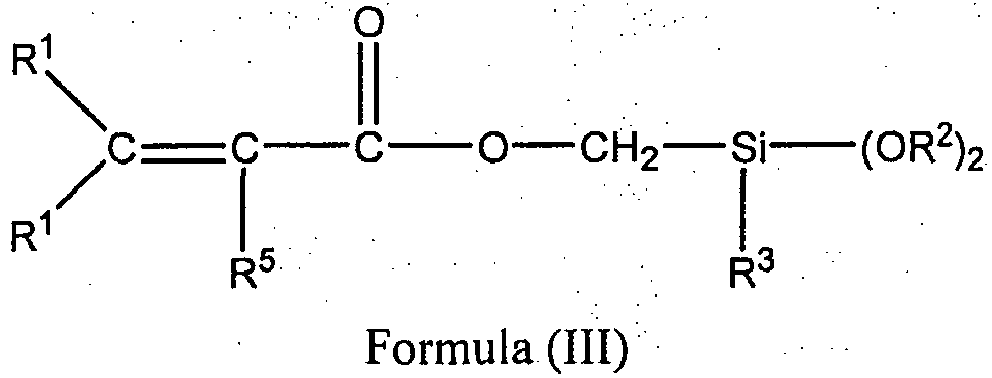 R1 in each occurrence may be the same or different and is a member selected from the group consisting of H and C1 to C4 alkyl;R2 in each occurrence may be the same or different and is a C1 to C10 hydrocarbon radical;R3 in each occurrence is methyl; andR5 in each occurrence may be the same or different and is a member selected from the group consisting of H and C1 to C4 alkyl.
 - The method of claim 6, wherein the mixing occurs in the presence of a basic component.
- Use of a composition comprising a compound of Formula (I):
 R1 in each occurrence may be the same or different and is a member selected from the group consisting of H and C1 to C4 alkyl;R2 in each occurrence may be the same or different and is a C1 to C10 hydrocarbon radical;R3 in each occurrence is methyl;R4 in each occurrence may be the same or different and is a C1 to C10 hydrocarbon radical;R5 in each occurrence may be the same or different and is a member selected from the group consisting of H and C1 to C4 alkyl; andn is 1 to 1,200,comprising the steps of:a) providing the composition;b) applying the composition onto a substrate; andc) exposing the composition to conditions appropriate to cure the composition.
Applications Claiming Priority (2)
| Application Number | Priority Date | Filing Date | Title |
|---|---|---|---|
| US74036405P | 2005-11-29 | 2005-11-29 | |
| PCT/US2006/044888 WO2007064514A1 (en) | 2005-11-29 | 2006-11-20 | Radiation cure silicone compositions |
Publications (3)
| Publication Number | Publication Date |
|---|---|
| EP1954702A1 EP1954702A1 (en) | 2008-08-13 |
| EP1954702A4 EP1954702A4 (en) | 2013-05-22 |
| EP1954702B1 true EP1954702B1 (en) | 2016-09-28 |
Family
ID=38092566
Family Applications (1)
| Application Number | Title | Priority Date | Filing Date |
|---|---|---|---|
| EP06838055.9A Active EP1954702B1 (en) | 2005-11-29 | 2006-11-20 | Radiation cure silicone compositions |
Country Status (8)
| Country | Link |
|---|---|
| US (1) | US20080268161A1 (en) |
| EP (1) | EP1954702B1 (en) |
| JP (1) | JP5271713B2 (en) |
| KR (1) | KR20080072949A (en) |
| CN (1) | CN101360753A (en) |
| ES (1) | ES2608885T3 (en) |
| PT (1) | PT1954702T (en) |
| WO (1) | WO2007064514A1 (en) |
Families Citing this family (4)
| Publication number | Priority date | Publication date | Assignee | Title |
|---|---|---|---|---|
| KR102314734B1 (en) * | 2015-06-12 | 2021-10-20 | 삼성디스플레이 주식회사 | Adhesive composition and display device |
| CN108699336A (en) * | 2015-12-03 | 2018-10-23 | 艾伦塔斯贝克有限公司 | One-component, storage-stable UV-crosslinkable organosiloxane compositions |
| JP6751370B2 (en) * | 2017-05-10 | 2020-09-02 | 信越化学工業株式会社 | Curable silicone resin composition, optical semiconductor element sealing material, and optical semiconductor device |
| US11655341B2 (en) | 2017-10-24 | 2023-05-23 | Shin-Etsu Chemical Co., Ltd. | Method for preparing a radical-polymerizable organopolysiloxane, a radiation-curable organopolysiloxane composition, and a release sheet |
Family Cites Families (25)
| Publication number | Priority date | Publication date | Assignee | Title |
|---|---|---|---|---|
| GB1323869A (en) | 1970-10-29 | 1973-07-18 | Dainippon Printing Co Ltd | Photopolymerizable compositions |
| US4201808A (en) * | 1978-06-12 | 1980-05-06 | Union Carbide Corporation | Radiation curable silicone release compositions |
| FR2447386A1 (en) | 1979-01-24 | 1980-08-22 | Rhone Poulenc Ind | PHOTOPOLYMERIZABLE ORGANOPOLYSILOXANIC COMPOSITIONS |
| GB2057476B (en) * | 1979-08-29 | 1983-06-22 | Shinetsu Chemical Co | Photocurable organopolysiloxane compositions |
| US4348454A (en) * | 1981-03-02 | 1982-09-07 | General Electric Company | Ultraviolet light curable acrylic functional silicone compositions |
| US4528081A (en) * | 1983-10-03 | 1985-07-09 | Loctite Corporation | Dual curing silicone, method of preparing same and dielectric soft-gel compositions thereof |
| US4675346A (en) | 1983-06-20 | 1987-06-23 | Loctite Corporation | UV curable silicone rubber compositions |
| JP2647285B2 (en) * | 1991-07-23 | 1997-08-27 | 信越化学工業株式会社 | Acrylic-functional organopolysiloxane and method for producing the same |
| JP2587340B2 (en) * | 1991-12-27 | 1997-03-05 | 信越化学工業株式会社 | Method for producing acrylic organopolysiloxane |
| US5498642A (en) | 1992-03-31 | 1996-03-12 | Loctite Corporation | Radiation surface-curable, room temperature vulcanizing silicone compositions |
| US5516812A (en) * | 1992-03-31 | 1996-05-14 | Loctite Corporation | UV-moisture dual cure silicone conformal coating compositions with improved surface tack |
| US5663269A (en) * | 1992-03-31 | 1997-09-02 | Loctite Corporation | Organosiloxane fluids prepared using organo-lithium reagents |
| US5300608A (en) | 1992-03-31 | 1994-04-05 | Loctite Corporation | Process for preparing alkoxy-terminated organosiloxane fluids using organo-lithium reagents |
| JP2639286B2 (en) * | 1992-07-14 | 1997-08-06 | 信越化学工業株式会社 | Curable organopolysiloxane composition |
| JPH06145357A (en) * | 1992-11-09 | 1994-05-24 | Toagosei Chem Ind Co Ltd | Production of radical-polymerizable silicone |
| JPH07216232A (en) * | 1994-01-28 | 1995-08-15 | Shin Etsu Chem Co Ltd | UV-curable organopolysiloxane composition |
| US5616629A (en) * | 1994-08-24 | 1997-04-01 | Avery Dennison Corporation | Radiation-curable organopolysiloxane release compositions |
| JPH09151366A (en) * | 1995-11-30 | 1997-06-10 | Toray Dow Corning Silicone Co Ltd | Adhesive composition |
| US6520663B1 (en) | 2000-03-23 | 2003-02-18 | Henkel Loctite Corporation | UV curing lamp assembly |
| JP3925604B2 (en) * | 2000-09-29 | 2007-06-06 | 信越化学工業株式会社 | Method for producing (meth) acryloxy group-containing organopolysiloxane |
| JP3788911B2 (en) * | 2001-02-07 | 2006-06-21 | 信越化学工業株式会社 | Organopolysiloxane composition |
| US6881964B2 (en) | 2001-03-01 | 2005-04-19 | Henkel Corporation | Integral filter support and shutter stop for UV curing system |
| DE10219734A1 (en) | 2002-05-02 | 2003-06-05 | Consortium Elektrochem Ind | Production of (meth)acrylate-functional organosiloxanes, e.g. useful in coatings, comprises reacting a hydroxy-functional organosiloxane with a (meth)acrylate-functional silane |
| US7368519B2 (en) * | 2002-10-23 | 2008-05-06 | Henkel Corporation | Fast moisture curing and UV-moisture dual curing compositions |
| US7837824B2 (en) * | 2005-01-20 | 2010-11-23 | Henkel Corporation | Reactive polyorganosiloxanes having controlled molecular weight and functionality |
-
2006
- 2006-11-20 PT PT68380559T patent/PT1954702T/en unknown
- 2006-11-20 JP JP2008543330A patent/JP5271713B2/en active Active
- 2006-11-20 KR KR1020087015679A patent/KR20080072949A/en not_active Withdrawn
- 2006-11-20 EP EP06838055.9A patent/EP1954702B1/en active Active
- 2006-11-20 CN CNA2006800509918A patent/CN101360753A/en active Pending
- 2006-11-20 WO PCT/US2006/044888 patent/WO2007064514A1/en not_active Ceased
- 2006-11-20 US US12/095,318 patent/US20080268161A1/en not_active Abandoned
- 2006-11-20 ES ES06838055.9T patent/ES2608885T3/en active Active
Also Published As
| Publication number | Publication date |
|---|---|
| JP2009517526A (en) | 2009-04-30 |
| WO2007064514A1 (en) | 2007-06-07 |
| EP1954702A1 (en) | 2008-08-13 |
| US20080268161A1 (en) | 2008-10-30 |
| ES2608885T3 (en) | 2017-04-17 |
| JP5271713B2 (en) | 2013-08-21 |
| KR20080072949A (en) | 2008-08-07 |
| EP1954702A4 (en) | 2013-05-22 |
| PT1954702T (en) | 2016-12-29 |
| CN101360753A (en) | 2009-02-04 |
Similar Documents
| Publication | Publication Date | Title |
|---|---|---|
| CA2499186C (en) | Fast moisture curing and uv-moisture dual curing compositions | |
| JP5342830B2 (en) | Photocurable organopolysiloxane composition | |
| US6828355B1 (en) | Resin-reinforced UV, moisture and UV/moisture dual curable silicone compositions | |
| EP3645643B1 (en) | Dual cure organopolysiloxane composition | |
| WO2008047892A1 (en) | Curable polyorganosiloxane composition | |
| CN107698766A (en) | Curable compositions, method, purposes and the device of side chain polysiloxane and correlation | |
| KR20140001144A (en) | Organopolysiloxane and method for producing the same | |
| JP2009516065A (en) | Fast surface-curing silicone composition | |
| JP2024117823A (en) | Two-component room temperature fast curing organopolysiloxane composition, cured product and article of said composition, and method for curing room temperature fast curing organopolysiloxane composition | |
| WO2014021419A1 (en) | Curable resin composition | |
| EP0336633B1 (en) | MTQ/polysiloxane hybrid resins, method of making the same, and coating/potting compositions containing the same | |
| US20080268161A1 (en) | Radiation Cure Silicone Compositions | |
| HK1005315B (en) | Mtq/polysiloxane hybrid resins, method of making the same, and coating/potting compositions containing the same | |
| WO2001005846A1 (en) | Resin-reinforced uv, moisture and uv/moisture dual curable silicone compositions | |
| JP2020147750A (en) | Two-component room temperature condensation curable organopolysiloxane composition | |
| JP2013147634A (en) | Thermosetting silicone resin composition for sealing optical semiconductor | |
| KR101856788B1 (en) | Curable organopolysiloxane composition | |
| WO2020203607A1 (en) | Organopolysiloxane modified with lactate silyl at both ends and method for producing same | |
| JP7793276B2 (en) | Photocoupler sealant and photocoupler | |
| JP3531426B2 (en) | Method for producing room temperature curable organopolysiloxane composition | |
| JP2006111697A (en) | Room temperature curable organopolysiloxane composition | |
| KR101826136B1 (en) | Producing method of transparent siloxane | |
| WO2024070200A1 (en) | Photo- and heat-curable silicone composition and production method for cured product thereof | |
| JP2013133382A (en) | Thermosetting silicone resin composition for optical semiconductor sealing | |
| KR20170009173A (en) | Producing method of transparent siloxane |
Legal Events
| Date | Code | Title | Description |
|---|---|---|---|
| PUAI | Public reference made under article 153(3) epc to a published international application that has entered the european phase |
Free format text: ORIGINAL CODE: 0009012 |
|
| 17P | Request for examination filed |
Effective date: 20080516 |
|
| AK | Designated contracting states |
Kind code of ref document: A1 Designated state(s): AT BE BG CH CY CZ DE DK EE ES FI FR GB GR HU IE IS IT LI LT LU LV MC NL PL PT RO SE SI SK TR |
|
| DAX | Request for extension of the european patent (deleted) | ||
| A4 | Supplementary search report drawn up and despatched |
Effective date: 20130424 |
|
| RIC1 | Information provided on ipc code assigned before grant |
Ipc: C08G 77/20 20060101ALI20130418BHEP Ipc: C08L 83/06 20060101ALI20130418BHEP Ipc: C07F 7/08 20060101ALI20130418BHEP Ipc: C08G 77/02 20060101ALI20130418BHEP Ipc: C07F 7/18 20060101AFI20130418BHEP Ipc: C08G 77/04 20060101ALI20130418BHEP |
|
| 17Q | First examination report despatched |
Effective date: 20130507 |
|
| RAP1 | Party data changed (applicant data changed or rights of an application transferred) |
Owner name: HENKEL US IP LLC |
|
| RAP1 | Party data changed (applicant data changed or rights of an application transferred) |
Owner name: HENKEL IP & HOLDING GMBH |
|
| GRAP | Despatch of communication of intention to grant a patent |
Free format text: ORIGINAL CODE: EPIDOSNIGR1 |
|
| INTG | Intention to grant announced |
Effective date: 20160428 |
|
| GRAS | Grant fee paid |
Free format text: ORIGINAL CODE: EPIDOSNIGR3 |
|
| GRAA | (expected) grant |
Free format text: ORIGINAL CODE: 0009210 |
|
| AK | Designated contracting states |
Kind code of ref document: B1 Designated state(s): AT BE BG CH CY CZ DE DK EE ES FI FR GB GR HU IE IS IT LI LT LU LV MC NL PL PT RO SE SI SK TR |
|
| REG | Reference to a national code |
Ref country code: GB Ref legal event code: FG4D |
|
| REG | Reference to a national code |
Ref country code: CH Ref legal event code: EP |
|
| REG | Reference to a national code |
Ref country code: AT Ref legal event code: REF Ref document number: 832646 Country of ref document: AT Kind code of ref document: T Effective date: 20161015 |
|
| REG | Reference to a national code |
Ref country code: IE Ref legal event code: FG4D |
|
| REG | Reference to a national code |
Ref country code: DE Ref legal event code: R096 Ref document number: 602006050441 Country of ref document: DE |
|
| REG | Reference to a national code |
Ref country code: FR Ref legal event code: PLFP Year of fee payment: 11 |
|
| REG | Reference to a national code |
Ref country code: PT Ref legal event code: SC4A Ref document number: 1954702 Country of ref document: PT Date of ref document: 20161229 Kind code of ref document: T Free format text: AVAILABILITY OF NATIONAL TRANSLATION Effective date: 20161222 |
|
| REG | Reference to a national code |
Ref country code: NL Ref legal event code: FP |
|
| REG | Reference to a national code |
Ref country code: LT Ref legal event code: MG4D |
|
| PG25 | Lapsed in a contracting state [announced via postgrant information from national office to epo] |
Ref country code: LT Free format text: LAPSE BECAUSE OF FAILURE TO SUBMIT A TRANSLATION OF THE DESCRIPTION OR TO PAY THE FEE WITHIN THE PRESCRIBED TIME-LIMIT Effective date: 20160928 Ref country code: FI Free format text: LAPSE BECAUSE OF FAILURE TO SUBMIT A TRANSLATION OF THE DESCRIPTION OR TO PAY THE FEE WITHIN THE PRESCRIBED TIME-LIMIT Effective date: 20160928 |
|
| REG | Reference to a national code |
Ref country code: AT Ref legal event code: MK05 Ref document number: 832646 Country of ref document: AT Kind code of ref document: T Effective date: 20160928 |
|
| PG25 | Lapsed in a contracting state [announced via postgrant information from national office to epo] |
Ref country code: BE Free format text: LAPSE BECAUSE OF NON-PAYMENT OF DUE FEES Effective date: 20161130 Ref country code: GR Free format text: LAPSE BECAUSE OF FAILURE TO SUBMIT A TRANSLATION OF THE DESCRIPTION OR TO PAY THE FEE WITHIN THE PRESCRIBED TIME-LIMIT Effective date: 20161229 Ref country code: LV Free format text: LAPSE BECAUSE OF FAILURE TO SUBMIT A TRANSLATION OF THE DESCRIPTION OR TO PAY THE FEE WITHIN THE PRESCRIBED TIME-LIMIT Effective date: 20160928 Ref country code: SE Free format text: LAPSE BECAUSE OF FAILURE TO SUBMIT A TRANSLATION OF THE DESCRIPTION OR TO PAY THE FEE WITHIN THE PRESCRIBED TIME-LIMIT Effective date: 20160928 |
|
| REG | Reference to a national code |
Ref country code: ES Ref legal event code: FG2A Ref document number: 2608885 Country of ref document: ES Kind code of ref document: T3 Effective date: 20170417 |
|
| PG25 | Lapsed in a contracting state [announced via postgrant information from national office to epo] |
Ref country code: EE Free format text: LAPSE BECAUSE OF FAILURE TO SUBMIT A TRANSLATION OF THE DESCRIPTION OR TO PAY THE FEE WITHIN THE PRESCRIBED TIME-LIMIT Effective date: 20160928 Ref country code: RO Free format text: LAPSE BECAUSE OF FAILURE TO SUBMIT A TRANSLATION OF THE DESCRIPTION OR TO PAY THE FEE WITHIN THE PRESCRIBED TIME-LIMIT Effective date: 20160928 |
|
| PG25 | Lapsed in a contracting state [announced via postgrant information from national office to epo] |
Ref country code: SK Free format text: LAPSE BECAUSE OF FAILURE TO SUBMIT A TRANSLATION OF THE DESCRIPTION OR TO PAY THE FEE WITHIN THE PRESCRIBED TIME-LIMIT Effective date: 20160928 Ref country code: BG Free format text: LAPSE BECAUSE OF FAILURE TO SUBMIT A TRANSLATION OF THE DESCRIPTION OR TO PAY THE FEE WITHIN THE PRESCRIBED TIME-LIMIT Effective date: 20161228 Ref country code: AT Free format text: LAPSE BECAUSE OF FAILURE TO SUBMIT A TRANSLATION OF THE DESCRIPTION OR TO PAY THE FEE WITHIN THE PRESCRIBED TIME-LIMIT Effective date: 20160928 Ref country code: BE Free format text: LAPSE BECAUSE OF FAILURE TO SUBMIT A TRANSLATION OF THE DESCRIPTION OR TO PAY THE FEE WITHIN THE PRESCRIBED TIME-LIMIT Effective date: 20160928 Ref country code: CZ Free format text: LAPSE BECAUSE OF FAILURE TO SUBMIT A TRANSLATION OF THE DESCRIPTION OR TO PAY THE FEE WITHIN THE PRESCRIBED TIME-LIMIT Effective date: 20160928 Ref country code: IS Free format text: LAPSE BECAUSE OF FAILURE TO SUBMIT A TRANSLATION OF THE DESCRIPTION OR TO PAY THE FEE WITHIN THE PRESCRIBED TIME-LIMIT Effective date: 20170128 Ref country code: PL Free format text: LAPSE BECAUSE OF FAILURE TO SUBMIT A TRANSLATION OF THE DESCRIPTION OR TO PAY THE FEE WITHIN THE PRESCRIBED TIME-LIMIT Effective date: 20160928 |
|
| REG | Reference to a national code |
Ref country code: DE Ref legal event code: R097 Ref document number: 602006050441 Country of ref document: DE |
|
| PG25 | Lapsed in a contracting state [announced via postgrant information from national office to epo] |
Ref country code: IT Free format text: LAPSE BECAUSE OF FAILURE TO SUBMIT A TRANSLATION OF THE DESCRIPTION OR TO PAY THE FEE WITHIN THE PRESCRIBED TIME-LIMIT Effective date: 20160928 |
|
| REG | Reference to a national code |
Ref country code: CH Ref legal event code: PL |
|
| PG25 | Lapsed in a contracting state [announced via postgrant information from national office to epo] |
Ref country code: DK Free format text: LAPSE BECAUSE OF FAILURE TO SUBMIT A TRANSLATION OF THE DESCRIPTION OR TO PAY THE FEE WITHIN THE PRESCRIBED TIME-LIMIT Effective date: 20160928 Ref country code: CH Free format text: LAPSE BECAUSE OF NON-PAYMENT OF DUE FEES Effective date: 20161130 Ref country code: LI Free format text: LAPSE BECAUSE OF NON-PAYMENT OF DUE FEES Effective date: 20161130 |
|
| PLBE | No opposition filed within time limit |
Free format text: ORIGINAL CODE: 0009261 |
|
| STAA | Information on the status of an ep patent application or granted ep patent |
Free format text: STATUS: NO OPPOSITION FILED WITHIN TIME LIMIT |
|
| REG | Reference to a national code |
Ref country code: IE Ref legal event code: MM4A |
|
| 26N | No opposition filed |
Effective date: 20170629 |
|
| PG25 | Lapsed in a contracting state [announced via postgrant information from national office to epo] |
Ref country code: LU Free format text: LAPSE BECAUSE OF NON-PAYMENT OF DUE FEES Effective date: 20161130 |
|
| REG | Reference to a national code |
Ref country code: FR Ref legal event code: PLFP Year of fee payment: 12 |
|
| PG25 | Lapsed in a contracting state [announced via postgrant information from national office to epo] |
Ref country code: SI Free format text: LAPSE BECAUSE OF FAILURE TO SUBMIT A TRANSLATION OF THE DESCRIPTION OR TO PAY THE FEE WITHIN THE PRESCRIBED TIME-LIMIT Effective date: 20160928 Ref country code: IE Free format text: LAPSE BECAUSE OF NON-PAYMENT OF DUE FEES Effective date: 20161120 |
|
| PG25 | Lapsed in a contracting state [announced via postgrant information from national office to epo] |
Ref country code: HU Free format text: LAPSE BECAUSE OF FAILURE TO SUBMIT A TRANSLATION OF THE DESCRIPTION OR TO PAY THE FEE WITHIN THE PRESCRIBED TIME-LIMIT; INVALID AB INITIO Effective date: 20061120 Ref country code: CY Free format text: LAPSE BECAUSE OF FAILURE TO SUBMIT A TRANSLATION OF THE DESCRIPTION OR TO PAY THE FEE WITHIN THE PRESCRIBED TIME-LIMIT Effective date: 20160928 |
|
| PG25 | Lapsed in a contracting state [announced via postgrant information from national office to epo] |
Ref country code: MC Free format text: LAPSE BECAUSE OF FAILURE TO SUBMIT A TRANSLATION OF THE DESCRIPTION OR TO PAY THE FEE WITHIN THE PRESCRIBED TIME-LIMIT Effective date: 20160928 Ref country code: TR Free format text: LAPSE BECAUSE OF FAILURE TO SUBMIT A TRANSLATION OF THE DESCRIPTION OR TO PAY THE FEE WITHIN THE PRESCRIBED TIME-LIMIT Effective date: 20160928 |
|
| PGFP | Annual fee paid to national office [announced via postgrant information from national office to epo] |
Ref country code: NL Payment date: 20181120 Year of fee payment: 13 |
|
| PGFP | Annual fee paid to national office [announced via postgrant information from national office to epo] |
Ref country code: PT Payment date: 20181018 Year of fee payment: 8 |
|
| PGFP | Annual fee paid to national office [announced via postgrant information from national office to epo] |
Ref country code: ES Payment date: 20181218 Year of fee payment: 13 Ref country code: FR Payment date: 20181123 Year of fee payment: 13 Ref country code: GB Payment date: 20181120 Year of fee payment: 13 |
|
| REG | Reference to a national code |
Ref country code: NL Ref legal event code: MM Effective date: 20191201 |
|
| PG25 | Lapsed in a contracting state [announced via postgrant information from national office to epo] |
Ref country code: PT Free format text: LAPSE BECAUSE OF NON-PAYMENT OF DUE FEES Effective date: 20200623 |
|
| GBPC | Gb: european patent ceased through non-payment of renewal fee |
Effective date: 20191120 |
|
| PG25 | Lapsed in a contracting state [announced via postgrant information from national office to epo] |
Ref country code: NL Free format text: LAPSE BECAUSE OF NON-PAYMENT OF DUE FEES Effective date: 20191201 |
|
| PG25 | Lapsed in a contracting state [announced via postgrant information from national office to epo] |
Ref country code: FR Free format text: LAPSE BECAUSE OF NON-PAYMENT OF DUE FEES Effective date: 20191130 Ref country code: GB Free format text: LAPSE BECAUSE OF NON-PAYMENT OF DUE FEES Effective date: 20191120 |
|
| REG | Reference to a national code |
Ref country code: ES Ref legal event code: FD2A Effective date: 20210528 |
|
| PG25 | Lapsed in a contracting state [announced via postgrant information from national office to epo] |
Ref country code: ES Free format text: LAPSE BECAUSE OF NON-PAYMENT OF DUE FEES Effective date: 20191121 |
|
| REG | Reference to a national code |
Ref country code: DE Ref legal event code: R081 Ref document number: 602006050441 Country of ref document: DE Owner name: HENKEL AG & CO. KGAA, DE Free format text: FORMER OWNER: HENKEL IP & HOLDING GMBH, 40589 DUESSELDORF, DE |
|
| P01 | Opt-out of the competence of the unified patent court (upc) registered |
Effective date: 20230530 |
|
| PGFP | Annual fee paid to national office [announced via postgrant information from national office to epo] |
Ref country code: DE Payment date: 20251119 Year of fee payment: 20 |