EP1949591B1 - Sicherheit in datenverarbeitungsnetzen - Google Patents
Sicherheit in datenverarbeitungsnetzen Download PDFInfo
- Publication number
- EP1949591B1 EP1949591B1 EP06808410A EP06808410A EP1949591B1 EP 1949591 B1 EP1949591 B1 EP 1949591B1 EP 06808410 A EP06808410 A EP 06808410A EP 06808410 A EP06808410 A EP 06808410A EP 1949591 B1 EP1949591 B1 EP 1949591B1
- Authority
- EP
- European Patent Office
- Prior art keywords
- nodes
- node
- digest
- information
- causing
- Prior art date
- Legal status (The legal status is an assumption and is not a legal conclusion. Google has not performed a legal analysis and makes no representation as to the accuracy of the status listed.)
- Not-in-force
Links
Images
Classifications
-
- H—ELECTRICITY
- H04—ELECTRIC COMMUNICATION TECHNIQUE
- H04L—TRANSMISSION OF DIGITAL INFORMATION, e.g. TELEGRAPHIC COMMUNICATION
- H04L63/00—Network architectures or network communication protocols for network security
- H04L63/04—Network architectures or network communication protocols for network security for providing a confidential data exchange among entities communicating through data packet networks
- H04L63/0407—Network architectures or network communication protocols for network security for providing a confidential data exchange among entities communicating through data packet networks wherein the identity of one or more communicating identities is hidden
-
- G—PHYSICS
- G09—EDUCATION; CRYPTOGRAPHY; DISPLAY; ADVERTISING; SEALS
- G09C—CIPHERING OR DECIPHERING APPARATUS FOR CRYPTOGRAPHIC OR OTHER PURPOSES INVOLVING THE NEED FOR SECRECY
- G09C1/00—Apparatus or methods whereby a given sequence of signs, e.g. an intelligible text, is transformed into an unintelligible sequence of signs by transposing the signs or groups of signs or by replacing them by others according to a predetermined system
-
- H—ELECTRICITY
- H04—ELECTRIC COMMUNICATION TECHNIQUE
- H04L—TRANSMISSION OF DIGITAL INFORMATION, e.g. TELEGRAPHIC COMMUNICATION
- H04L63/00—Network architectures or network communication protocols for network security
- H04L63/06—Network architectures or network communication protocols for network security for supporting key management in a packet data network
- H04L63/065—Network architectures or network communication protocols for network security for supporting key management in a packet data network for group communications
-
- H—ELECTRICITY
- H04—ELECTRIC COMMUNICATION TECHNIQUE
- H04L—TRANSMISSION OF DIGITAL INFORMATION, e.g. TELEGRAPHIC COMMUNICATION
- H04L63/00—Network architectures or network communication protocols for network security
- H04L63/12—Applying verification of the received information
- H04L63/126—Applying verification of the received information the source of the received data
-
- H—ELECTRICITY
- H04—ELECTRIC COMMUNICATION TECHNIQUE
- H04L—TRANSMISSION OF DIGITAL INFORMATION, e.g. TELEGRAPHIC COMMUNICATION
- H04L9/00—Cryptographic mechanisms or cryptographic arrangements for secret or secure communications; Network security protocols
- H04L9/06—Cryptographic mechanisms or cryptographic arrangements for secret or secure communications; Network security protocols the encryption apparatus using shift registers or memories for block-wise or stream coding, e.g. DES systems or RC4; Hash functions; Pseudorandom sequence generators
- H04L9/0643—Hash functions, e.g. MD5, SHA, HMAC or f9 MAC
-
- H—ELECTRICITY
- H04—ELECTRIC COMMUNICATION TECHNIQUE
- H04L—TRANSMISSION OF DIGITAL INFORMATION, e.g. TELEGRAPHIC COMMUNICATION
- H04L9/00—Cryptographic mechanisms or cryptographic arrangements for secret or secure communications; Network security protocols
- H04L9/08—Key distribution or management, e.g. generation, sharing or updating, of cryptographic keys or passwords
- H04L9/0816—Key establishment, i.e. cryptographic processes or cryptographic protocols whereby a shared secret becomes available to two or more parties, for subsequent use
- H04L9/0838—Key agreement, i.e. key establishment technique in which a shared key is derived by parties as a function of information contributed by, or associated with, each of these
- H04L9/0841—Key agreement, i.e. key establishment technique in which a shared key is derived by parties as a function of information contributed by, or associated with, each of these involving Diffie-Hellman or related key agreement protocols
-
- H—ELECTRICITY
- H04—ELECTRIC COMMUNICATION TECHNIQUE
- H04L—TRANSMISSION OF DIGITAL INFORMATION, e.g. TELEGRAPHIC COMMUNICATION
- H04L9/00—Cryptographic mechanisms or cryptographic arrangements for secret or secure communications; Network security protocols
- H04L9/32—Cryptographic mechanisms or cryptographic arrangements for secret or secure communications; Network security protocols including means for verifying the identity or authority of a user of the system or for message authentication, e.g. authorization, entity authentication, data integrity or data verification, non-repudiation, key authentication or verification of credentials
- H04L9/3236—Cryptographic mechanisms or cryptographic arrangements for secret or secure communications; Network security protocols including means for verifying the identity or authority of a user of the system or for message authentication, e.g. authorization, entity authentication, data integrity or data verification, non-repudiation, key authentication or verification of credentials using cryptographic hash functions
-
- H—ELECTRICITY
- H04—ELECTRIC COMMUNICATION TECHNIQUE
- H04L—TRANSMISSION OF DIGITAL INFORMATION, e.g. TELEGRAPHIC COMMUNICATION
- H04L2209/00—Additional information or applications relating to cryptographic mechanisms or cryptographic arrangements for secret or secure communication H04L9/00
- H04L2209/12—Details relating to cryptographic hardware or logic circuitry
-
- H—ELECTRICITY
- H04—ELECTRIC COMMUNICATION TECHNIQUE
- H04L—TRANSMISSION OF DIGITAL INFORMATION, e.g. TELEGRAPHIC COMMUNICATION
- H04L2209/00—Additional information or applications relating to cryptographic mechanisms or cryptographic arrangements for secret or secure communication H04L9/00
- H04L2209/42—Anonymization, e.g. involving pseudonyms
-
- H—ELECTRICITY
- H04—ELECTRIC COMMUNICATION TECHNIQUE
- H04L—TRANSMISSION OF DIGITAL INFORMATION, e.g. TELEGRAPHIC COMMUNICATION
- H04L2209/00—Additional information or applications relating to cryptographic mechanisms or cryptographic arrangements for secret or secure communication H04L9/00
- H04L2209/80—Wireless
Definitions
- This invention relates generally to security in computing networks and, more particularly to some protocols for bootstrapping security in ad hoc networks.
- Security can be divided into four categories:
- authentication is a basic building block of security.
- PKI Public Key Infrastructure
- a PKI enables users of a basically insecure public network, such as the Internet, to securely and privately exchange data and money through the use of a public and a private cryptographic key pair that is obtained and shared through a trusted authority.
- the public key infrastructure provides for a digital certificate that can identify an individual or an organization and directory services that can store and, when necessary, revoke the certificates.
- the use of a PKI entails that one system identifies to another that it wishes to communicate by its long-term unique name.
- the de facto standard threat model for analysing security protocols is the Dolev-Yao model, which supposes an intruder who effectively controls a communications network, and is therefore capable of overhearing messages and preventing their delivery to their intended recipient; and - within the limitations of the cryptographic mechanisms involved - of synthesising messages from data initially known to him together with fragments of any previous messages and delivering them, apparently originating from an entity under his control or indeed from any other principal.
- This model is justifiable for high bandwidth communications channels, such as the Internet. However, it is frequently pessimistic for low bandwidth empirical channels that may exist in addition to standard ones because of, for example, physical contact or proximity.
- Authentication and anonymity are not incompatible in this domain because a node can be identified by its context (such as belonging to one of the humans sitting round a table) rather than its long-term name.
- a node can be identified by its context (such as belonging to one of the humans sitting round a table) rather than its long-term name.
- no such assumption is made.
- it is required to be guaranteed that the information each trustworthy party wishes to be associated with itself has this origin and integrity authenticated to all other trustworthy parties.
- all trustworthy parties must upon completion of the protocol have sufficient information to enable secure authenticated confidential communication with all other trustworthy parties. All of this is conditional on the existence of a high bandwidth Dolev-Yao network amongst the nodes and non-spoofable, low bandwidth empirical channels between each pair of nodes.
- a further object of this invention is to achieve the same goals except that the authentication of other parties' information is required by only a single leader node, and where the empirical channels need only exist to this leader from all others.
- Case 1B it may be required to form a group consisting of a single leader and a number of other nodes referred to as slaves, where empirical channels may only exist from the other nodes to the leader, in such a way that all these other nodes are authenticated to the leader.
- all nodes are trustworthy.
- This will be referred to herein as asymmetric security, and could be used, for example, by a user who wishes a hand-held electronic device to connect (e.g. over a relatively insecure wireless network such as Bluetooth ®) securely to one or more devices such as a printer and an internet hub.
- Case 2A it may be required to form a group consisting of a number of nodes, in which a priori some of nodes may not be confident of the trustworthiness of some others.
- the goal here is that any trustworthy node is authenticated to any other trustworthy node. This will be referred to herein as corruption-tolerant symmetric security since a pair of trustworthy nodes gain mutual security even when one of more corrupt nodes are included in their group.
- Case 2B it may be required to form a group consisting of a number of nodes consisting of a trustworthy leader and a number of slaves.
- the goal here is that any trustworthy slave is authenticated to the leader.
- empirical channels are only required from slave nodes to the leader. This will be referred to herein as corruption-tolerant asymmetric security.
- Case 3 it may be required to form a group consisting of a number of nodes consisting of a set L of leaders, which contains at least two members but not the entire group.
- the goal here is that any two trustworthy members of the group are authenticated to each other on assumption that at least one member of L is trustworthy. This will referred to herein as the hybrid case.
- a system for verifying the security of communications between a set of trustworthy nodes via a high-bandwidth, insecure communications channel comprising:
- the information communicated by each participant in the group is authenticated in its origin and contents from the perspective of all members of the group and, optionally, it is guaranteed that there have been no participants other than the intended group.
- An attacker cannot convince nodes in the group that a communication has come from any member of the group unless it really has.
- the nodes will be in a position to establish secret and authenticated communication with each other.
- any pair of nodes will be able to calculate a shared secret key between them.
- the initiator node In the symmetric case, it is required that all nodes verify that there is correspondence between the digests and participant data, and that the initiator node is among the set of nodes. In the asymmetric case, it is required that the initiator node (i.e. the "leader") verifies these issues.
- a method for verifying the security of a communications network between a set of trustworthy nodes via a high-bandwidth, insecure communications channel comprising:
- a system for verifying the security of communications between a set of nodes via a high-bandwidth, insecure communications channel comprising:
- This system comprises the corruption-tolerant cases.
- each trustworthy participant in the group is authenticated to its identity from the perspective of all trustworthy members of the group and, optionally, it is guaranteed that there have been no participants other than the intended group.
- An attacker cannot convince nodes in the group that a communication has come from any trustworthy member of the group unless it really has.
- the trustworthy nodes will be in a position to establish secret and authenticated communication with each other.
- any pair of trustworthy nodes will be able to calculate a shared secret key between them.
- a method for verifying the security of communications between a set of nodes via a high-bandwidth, insecure communications channel comprising:
- This system comprises the hybrid case. In the following it is assumed that L contains at least one trustworthy node.
- each trustworthy participant in the group is authenticated to its identity from the perspective of all trustworthy members of the group.
- An attacker cannot convince nodes in the group that a communication has come from any trustworthy member of the group unless it really has.
- any pair of trustworthy nodes will be able to calculate a shared secret key between them.
- a group of processes wishes to achieve a secure link therebetween
- security over a normal Dolev-Yao network is required to be guaranteed subject to the existence of the above-mentioned empirical channels between each pair of processes in the group, which empirical channels are mediated by their respective users: the identities of the processes for which secure Dolev-Yao communication is achieved must be precisely those connected by a set of empirical channels that they select. This will be referred to herein as symmetric security, since each node is authenticated to all others.
- asymmetric security it may be required to form a group consisting of a single leader and a number of other nodes, where empirical channels may only exist from the other nodes to the leader, in such a way that all these other nodes are authenticated to the leader.
- This will be referred to herein as asymmetric security, and could be used, for example, by a user who wishes a hand-held electronic device to connect (e.g. over a relatively insecure wireless network such as Bluetooth ®) securely to one or more devices such as a printer and an internet hub.
- a system for verifying the security of a communications network between a set of nodes via a high-bandwidth, insecure communications channel comprising:
- a common secret key is achieved between systems communicating over the Dolev-Yao network, such that privacy and authentication is achieved.
- An attacker cannot confuse nodes in the group that a communication has come from another one of them when it has not, and cannot understand the messages that pass between members of the group.
- the group is defined by the set of nodes which have used empirical channels to communicate in the above protocol.
- the initiator node In the symmetric case, it is required that all nodes verify that there is correspondence between the hash values and participant data, and that the initiator node is among the set of nodes. In the asymmetric case, it is required that the initiator node (i.e. the "leader") verifies these issues.
- a method for verifying the security of a communications network between a set of nodes via a high-bandwidth, insecure communications channel comprising:
- a hash key is encrypted using the respective public key of the node to which it is to be transmitted, prior to transmission thereof to said respective node.
- each of said set of nodes additionally enables information representative of said identification data received from an initiator node to be compared with corresponding information held by the others of said set of nodes to verify the identity of the initiator node.
- the system beneficially further comprises means for enabling a shared secret, possibly the above-mentioned hash key, to be transmitted from said initiator to the other nodes of said set of nodes after verification that said hash values and participant data correspond, said shared secret forming the basis of a common secret key for use in communication between said set of nodes across said communications network.
- a digest value may be used that is generated using a model of a digest function wherein each output bit of digest (k,x) is influenced with a probability of 1 ⁇ 2 by each of the bits x, all choices being made independently in a way determined by k.
- This is the ideal implementation of the digest function model.
- all the probability 1 ⁇ 2 influences are independent in the sense of probability theory.
- Prior art systems use big hashes of very large pieces of data, whereas in the following exemplary embodiments of the invention, a short hash of a very large piece of data is used, together with one or more big hashes of small pieces of data.
- a relatively short hash function with at least the same, if not greater, degree of security relative to prior art systems, which obviously has processing capacity implications, as well as improved accuracy and speed and increased ease and convenience of use.
- the present invention extends to a method of generating a digest value (k, D) (and a system for implementing such method), given input data D with length B bits and a uniformly distributed random key k with length at least b*B bits, the method comprising:
- one bit of the digest value is calculated from each of said partitions by forming the exclusive-or of B bits.
- the present invention also relates to a method of generating a digest value (k, D) (and a system for implementing such method), given input data D with length B bits and a uniformly distributed random key k with length at least b*B bits, the method comprising:
- the b*B independent bits based on k are replaced by b*B bits generated by a (good quality) pseudo-random number generator seeded by a shorter k.
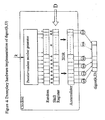
- the previous value of accumulator register A is bitwise-exclusive-or-ed with the bitwise-and of the register R and the shift register S to derive the new value to replace the current value in accumulator register A;
- said pseudo-random numbers are generated using a feedback shift register.
- said combining step comprises exclusive-or-ing said bits of each of said b groups to a single bit.
- a "software implementation" of the digest value generation system depends on the existence, in some implementing microprocessor or other system, of an efficient integer multiplication algorithm that produces the exact answer (in a register of 2c bits) of the multiplication of 2 c-bit numbers for some c greater than or equal to b. 32-bit microprocessors should have this for b at least 16, and 64-bit ones for b at least 32.
- a c-bit block will be referred to as a half-word, and a 2c bit block as a word or full-word, but this is not intended to exclude implementations where these components do not correspond to the usual word-length of the system in question.
- a method of generating a digest value (k,D) (and a system for implementing such method), where D is input data and k is a uniformly distributed random key k, the method comprising:
- At least one of the combining steps comprises exclusive-or-ing.
- the value is exclusive-or-ed with other full-word functions of said half-word and further pseudo-random numbers, which may be half-word pseudo-random numbers.
- This and the preceding step define the calculations of the contribution of the respective half-word of D to the accumulator A.
- each node A that wishes to set up a secure link between itself and one or more nodes B , sends to each B a Message 1 over the normal Dolev-Yao network (where all messages are subject to overhearing, taking out and faking).
- Message 1 consists, in combination, of a name for A, kc ( A ) which is some kind of key certificate for A (and may, in many circumstances, simply be a public key), and a nonce generated by A (which is a randomly chosen value, different from previous choices.
- Each A A ⁇ N Each B : ⁇ all Message 1's , N' A ⁇ pk ( B )
- Each recipient node A of the Message 1s adds its own nonce N' A and encrypts the resultant Message 2 under the public key for the intended recipient B, before sending it to each respective other node B in the group G,
- the boundary between Message 1 and Message 2 is determined by some means, such as a time-out.
- Each A A displays : hash ( ⁇ all decrypted Message 2's ⁇ ), number of active participants
- Each recipient node A of Message 2 decrypts the received message using their own public key, generates a one-way hash value of the decrypted Message 2 and displays this value together with the number of active participants believed to be present in the group.
- each node has a strong indication that all of them agree on the sets of participants and public keys. It also has two nonces from each participant, one which is public and one that is apparently secret.
- Each A A ⁇ N Each B : hash' ( ⁇ all decrypted Message 2 's ⁇ )
- Message 4 in this protocol simply represents the devices performing an additional round of agreements amongst themselves prompted by their users pressing "OK" after Message 3. It is not necessary to include all of the Message 2 bodies in the hash; the set of the various N' A values should suffice.
- the above-described protocol seems to bootstrap security very well.
- it has one significant disadvantage.
- the human users comparing their hash values (step 3b). Assuming they are typically impatient, they are not likely to want to handle more than a few characters.
- the hash length that is likely to be able to be used may be vulnerable to a combinatorial attack as long as an intruder (in the guise of C ) can try many N C 's so as to get a particular value in Message 3 above.
- an intruder in the guise of C
- the intruder runs Message 1 with the appropriate group S i and waits for all the nodes in G to contribute their Message 2's to the two runs. It then must invent N different nonces N' A to transmit its Message 2's. Using whatever time it has, it can search for combinations of values which make the two hash values in Message 3 the same, bearing in mind that it has all the information to compute these hashes for any choice he may make of nonces. Note that since the intruder can work with the two hashes at once, it can expect to get a coincidence if it creates just over the square root of hashes on each side, due to the well known "birthday paradox". For example, for a hash consisting of six digits (i.e. 1,000,000 possible values), only about three thousand hashes must be computed for the intruder to have a 90% chance of success. If it succeeds in doing so, the intruder transmits the appropriate Message 2's to the respective members of S 1 and S 2 .
- the humans Upon reaching Message 3, the humans (from the two groups combined) will then see identical hashes and correct counts displayed on their devices, and so will agree to proceed beyond Message 3.
- the intruder then just has to manipulate the network for Message 4 and contribute the correct final message in each of the two sessions. This leaves the intruder with apparently authenticated connections to the two sub-groups, including knowledge of all the secrets arising from the runs.
- the intruder taking one identity could hijack an attempt to run the above-mentioned protocol between two users. While one would normally increase the size of the hash to avoid this type of attack to any chosen probability, the presence of and requirement for human interaction in the loop, limits this option as a realistic probability and introduces a definite weakness in the protocol.
- the present invention proposes protocols to counter the type of combinatorial attack described above, which rely on fixing the hash value (hereinafter referred to as a 'digest value') in such a way that each node will be able to tell if it has been manipulated before any potential attacker is in a position to do a combinatorial search.
- a 'digest value' the hash value
- the users become committed to the digest value at a stage where no potential intruder could know, or search for ways of constructively manipulating, this value.
- digest functions have a key such that, for each choice of key, they represent separate hash functions, and a distinction is made between digest(hk, m ) and longhash ( m ) .
- the first of these is what the humans compare, the second has enough bits to defeat any combinatorial attack.
- longhash case it should be infeasible to compute m from the values (or indeed any number of hashes in which one or other is fixed and the other is varying) in any reasonable time.
- a special role is given to one of the members of G , who initiates the protocol and who makes all of the members of the group aware that he is playing this role. All members of G know by the end that one of their number has initiated the respective run of the protocol, that precisely the members of G have been involved in it, and secret information which they know is shared precisely by the members of G.
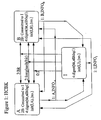
- the protocol used by a first exemplary embodiment, of the symmetric and asymmetric cases of the first aspect, of the present invention is as follows, noting that if the nodes do not wish to reveal their long-term identities they may use temporary ones instead.
- the initiating node transmits to each node their identity I , across the Dolev-Yao network N .
- the initiating node is always the "leader".
- each node A that wishes to set up a secure link between itself and one or more nodes B, sends to each B a Message 1 over the normal Dolev-Yao network (where all messages are subject to overhearing, taking out and faking).
- Message 1 consists, in combination, of a name for A, and a set of information INFO A that A wishes to have associated with it.
- INFO A will include either a public key or a Diffie-Hellman token, and contextual information such as the name of the user of the node.
- I invents a new hash key hk. It then sends each node a long hash (substantially immune to an attack due to the birthday paradox referred to above) of these values. On the basis of this information, no node, other than I, knows the value of hk, but no node that has accepted the message from I will be able to be fooled into thinking any other value of hk is correct.
- This step provides some way of ensuring that I will not send a Message 3 while any other node or agent in G is still waiting for a Message 2 .
- the most obvious way of doing this is to use the empirical channel at this point to inform I that all others are committed. For example, when a node A has received Message 2 it might display an indication on its screen, and its user might inform the user of I .
- the initiator I sends each node the hash key hk across the Dolev-Yao network under its own respective public key.
- each node can check the value of hk by testing to see if it produces the correct value for Message 2 and they only proceed if this is true.
- An intruder is so unlikely to be able to send a value of hk, that would lead to the same Message 2, such that each node really can be assured that the hk it receives was used at step 2 provided and of course, that it yields the correct value for Message 2.
- this message can be encrypted under any device contained in the INFO A s to enable secure communication from I to the other As.
- This might be A 's public key or the shared key developed from A 's and I 's Diffie-Hellman tokens.
- Each A A displays : digest(hk, all Messages 1), init(I, A), (number of participants, optionally)
- Each recipient node A of Message 1 generates a digest value of the values received as Message 1s, influenced by the value hk, and displays this value together, optionally, with the number of active participants believed to be present in the group.
- init(I, A) is displayed, which gives information about the initiator. While this information may take many forms, the only information that really needs to be displayed here is information to each user as to whether their device is the initiator of the session.
- the members of G compare the displayed digests and check the apparent number of participants (via a low-bandwidth, empirical communications channel), as in the previously described protocol. The difference in this case is that one of them must be able to confirm that they are in fact the initiator. If these checks fail, the run is abandoned. It will be appreciated that, in the asymmetric case, it is only necessary that all the subsidiary nodes communicate their values from step 4a to the leader, who compares them.
- Each implementation should ensure that the commitment deduced by the initiator I in Message 2b does not relate to an earlier run by another node A. In other words, in Message 4, A should be committed to the same hash key hk that I saw it committed to. This property will naturally hold in many human-mediated symmetric implementations, provided these users follow natural rules. In other implementations it may be necessary or desirable to enforce it via, for example, timing constraints or further empirical communications.
- HBCK Hash Commitment Before Knowledge
- AHCBK Asymmetric Hash Commitment Before Knowledge
- HCBK and AHCBK protocols can be analysed as follows:
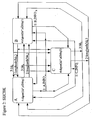
- the protocol used by an exemplary embodiment of the symmetric and asymmetric corruption-tolerant cases of the present invention is as follows, noting that if the nodes do not wish to reveal their long-term identities they may use temporary ones instead. The following, with the two variations on Message 4b specified below, works for both the symmetric and asymmetric corruption-tolerant cases
- each node A that wishes to set up a secure link between itself and one or more nodes B, sends to each B a Message 1 over the normal Dolev-Yao network (where all messages are subject to overhearing, blocking and forging).
- Message 1 consists, in combination, of a name for A, and a set of information INFO A that A wishes to have associated with it.
- INFO A will include either a public key or a Diffie-Hellman token, and contextual information such as the name of the user of the node.
- Each A ⁇ N Each B : longhash ( A,hk A )
- Each A invents a new hash key hk A . It then sends every other node a long hash (substantially immune to an attack due to the birthday paradox referred to above) of this value.
- the name A is included in this hash to prevent any other node using the value hk A as its own hash key by simply copying A's Message 2.
- the nodes can simply send longhash ( hk A ) is no node A accepts the same value of Message 2 from any participant that is the same as A has previously sent.
- no node other than A, knows the value of hk A , but no node that has accepted the message from A will be able to be fooled into thinking any other value of hk A is correct.
- the protocol could equally be designed with Messages 1 and 2 combined into one.
- the initiator I sends each node the hash key hk A across the Dolev-Yao network under its own respective public key.
- each node can check the value of hk by testing to see if it produces the correct value for Message 2 and they only proceed if this is true.
- An intruder is so unlikely to be able to send a value of hk A , that would read to the same Message 2, such that each node really can be assured that the hk it receives was used at step 2 provided, and of course, that it yields the correct value for Message 2.
- Each A A displays : digest ( hk*, all Messages 1), (number of participants, optionally)
- hk* is the bitwise exclusive-OR of all the hk B 's transmitted by members of the group.
- Each recipient node B of Message 1 generates a digest value of the values received as Message 1s, influenced by the value hk*, and displays this value together, optionally, with the number of active participants believed to be present in the group.
- the members of G compare the displayed digests and check the apparent number of participants (via a low-bandwidth, empirical communications channel), as in the previously described protocol. If these checks fail, the run is abandoned. It will be appreciated that, in the asymmetric case, it is only necessary that all the subsidiary nodes communicate their values from step 4a to the leader, who compares them.
- the above-described embodiment may be termed the 'Symmetrised Hash Commitment Before Knowledge (SHCBK) protocol', because the special role of the initiator above-described first exemplary embodiment has been removed.
- SHCBK Hash Commitment Before Knowledge
- the SHCBK protocol can be analysed as follows: suppose that A and B are both trustworthy members of the group.
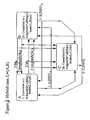
- the protocol used by a third exemplary embodiment of the present invention is as follows, noting that if the nodes do not wish to reveal their long-term identities they may use temporary ones instead. This illustrates the third, hybrid, aspect of the invention.
- the initiating node transmits to each node a set of identities, across the Dolev-Yao network N .
- These "leaders” will have the duty of each sending a committing value to the group. Note this message simply represents the fact that it may be desirable or necessary for some or all nodes (especially the leaders themselves!) to know which of them is playing this role. This is simply one example method, in the case that some I knows the identities of the members of L.
- each node A that wishes to set up a secure link between itself and one or more nodes B, sends to each B a Message 1 over the normal Dolev-Yao network (where all messages are subject to overhearing, taking out and faking).
- Message 1 consists, in combination, of a name for A, and a set of information INFO A that A wishes to have associated with it.
- INFO A will include either a public key or a Diffie-Hellman token, and contextual information such as the name of the user of the node.
- Each leader C invents a new hash key hk C . It then sends each node a long hash (substantially immune to an attack due to the birthday paradox referred to above) of these values. Again the name C is included to prevent the long hash being forwarded as its own by an untrustworthy node, and again there is the option of each C checking it is not sent its own hash back. On the basis of this information, no node, other than C , knows the value of hk C , but no node that has accepted the message from C will be able to be fooled into thinking any other value of hk C is correct.
- This step provides some way of ensuring that no leader C will send a Message 3 while any other node or agent in G is still waiting for a Message 2.
- the most obvious way of doing this is to use the empirical channel at this point to inform the leaders that all others are committed. For example, when a node A has received Message 2 it might display an indication on its screen, and its user might inform the users of the leaders C.
- a preliminary test of the probable coherence of a run of the protocol in advance of any comprehensive authentication, which may protect the users against avoidable effort. This preliminary test may comprise a Message 2a in which all nodes broadcast a public hash of the Message 1's.
- each node sends each node the hash keys hk C across the Dolev-Yao network under its own respective public key.
- each node can check the value of hk C by testing to see if it produces the correct value for the corresponding Message 2 and they only proceed if this is true.
- An intruder is so unlikely to be able to send a value of hk C , that would read to the same Message 2, such that each node really can be assured that the hk C s it receives were used at step 2 provided, and of course, that they yield the correct values for Message 2.
- Each A A displays : digest(hk*, all Messages 1), leader(L, A), (number of participants, optionally) where hk* is the bitwise exclusive OR of all the hk C
- Each recipient node A of Message 1 generates a digest value of the values received as Message 1s, influenced by the value hk*, and displays this value together, optionally, with the number of active participants believed to be present in the group. In addition the value leader(L, A) is displayed, which sets out information about the leaders for the users to see.
- the members of G compare the displayed digests and check the apparent number of participants (via a low-bandwidth, empirical communications channel. In this case sufficient nodes must confirm they are leaders that all nodes are confident that they are not all corrupt. If these checks fail, the run is abandoned.
- Each implementation should ensure that the commitment deduced by the leaders C in Message 2b does not relate to an earlier run by another node A.
- A should be committed to the same hash key hk C that C saw it committed to.
- the issues of how to enforce this are the same as in the earlier protocols to which it applied.
- HHCBK Hybrid Hash Commitment Before Knowledge
- At least one C in L is trustworthy then if A and B are any two trustworthy nodes who have completed a successful run then each of INFO A and INFO B is authenticated to the other node.
- this is because the influence of hk C on the final digest cannot be known to any intruder before A, B and C are committed to their final digest values, and because C agrees with A and B on the final value.
- a and B have been influenced by C because of the agreement on who the members of L are with each other and C itself.
- a high-bandwidth Dolev-Yao channel C can be converted into a high-bandwidth unforgeable channel if there is an empirical channel E between the same pair of principals: any communication on C can be accompanied by a hash of the same value on E.
- any communication on C can be accompanied by a hash of the same value on E.
- the asymmetric protocols described herein can remove this difficulty. Furthermore, it can do so in such a way that it only has to be run once for any number of uses of C, and indeed a single run of the protocol can assure any number of channels from different principals to the same one.
- a good digest function serves the purpose that it makes the likelihood of any attack succeeding against the protocols listed above, even by the most subtle and devious attacker, as small as possible. It will have the same effect in any other application where a group of entities wish to agree a set of data and have a key k available that has not been susceptible to constructive attack.
- this aspect of the present invention comprises the general concept of calculating a digest value comprising integer multiplication combined with the final joining of two halves.
Landscapes
- Engineering & Computer Science (AREA)
- Computer Security & Cryptography (AREA)
- Computer Networks & Wireless Communication (AREA)
- Signal Processing (AREA)
- Computing Systems (AREA)
- General Engineering & Computer Science (AREA)
- Computer Hardware Design (AREA)
- Power Engineering (AREA)
- Physics & Mathematics (AREA)
- General Physics & Mathematics (AREA)
- Theoretical Computer Science (AREA)
- Small-Scale Networks (AREA)
- Computer And Data Communications (AREA)
- Data Exchanges In Wide-Area Networks (AREA)
Claims (18)
- System zum Verifizieren der Sicherheit eines Kommunikationsnetzes zwischen einer Gruppe von Knotenpunkten mittels eines unsicheren Kommunikationskanals hoher Bandbreite, wobei das System Folgendes umfasst:● Mittel, um einem der Knotenpunkte, als Initiatorknotenpunkt bezeichnet, zu ermöglichen, einen Durchlauf zu beginnen, um den Kommunikationskanal herzustellen und sich selbst gegenüber den anderen Knotenpunkten der Gruppe von Knotenpunkten zu identifizieren;● Mittel, jedem der Gruppe von Knotenpunkten zu ermöglichen, eine einzige Sammlung von Informationen an alle anderen einschließlich seiner Identität mitzuteilen;● Mittel, um dem Initiatorknotenpunkt zu ermöglichen, die Mittel zur Berechnung eines Digest- oder Hash-Werts all der Informationen festzulegen, und ausreichende Daten, die für dieses Mittel repräsentativ sind, den anderen Knotenpunkten mitzuteilen, sodass sie diesem Digest-Verfahren verpflichtet sind, aber keine Mittel zur Berechnung, was es ist, haben;● Mittel, um dem Initiatorknotenpunkt zu ermöglichen, Daten von jedem der anderen Knotenpunkte der Gruppe von Knotenpunkten zu empfangen, die anzeigen, dass die Daten, die für das Digest-Verfahren repräsentativ sind, empfangen worden sind;● Mittel, um dem Initiatorknotenpunkt zu ermöglichen, jedem Knoten der Gruppe von Knoten ausreichende Informationen mitzuteilen, um einem jeweiligen Knotenpunkt zu ermöglichen, das Digest-Verfahren zu berechnen;● Mittel, um jedem der Gruppe von Knotenpunkten zu ermöglichen, einen Hash oder Digest der Daten, die von allen Knotenpunkten in den ersten Nachrichten empfangen wurden, zu erzeugen, gemäß dem Digest-Verfahren, das von dem Initiatorknotenpunkt empfangen wurde, und Mittel, um zu ermöglichen, dass Übereinstimmung zwischen den Digests, die von jedem der Gruppe von Knoten gehalten werden, mittels eines empirischen Kommunikationskanals verifiziert wird, und um zu bestätigen, dass der Initiatorknotenpunkt sich inmitten der Gruppe von Knotenpunkten befindet, um so die Sicherheit des Kommunikationsnetzwerks zu bestätigen.
- System gemäß Anspruch 1, wobei die erste Nachricht einen öffentlichen Schlüssel enthält, hinsichtlich dessen nur der jeweilige Knotenpunkt den doppelten geheimen Schlüssel kennt, oder wobei die erste Nachricht ein Diffie-Hellman-Token enthält.
- System gemäß einem der Ansprüche 1 bis 2, das weiter Mittel umfasst, um jedem der Gruppe von Knotenpunkten zu ermöglichen, die Anzahl von Knotenpunkten, die an dem Durchlauf teilnehmen, zu erzeugen und/oder zu bestätigen, dass die Anzahl von Teilnehmern des Durchlaufs der beabsichtigten Anzahl von Teilnehmer entspricht.
- System gemäß einem der Ansprüche 1 bis 3, wobei nur der Initiatorknotenpunkt verifiziert, dass es eine Übereinstimmung zwischen den Hash- oder Digest-Werten und (wahlweise) Teilnehmerdaten gibt.
- System gemäß einem der Ansprüche 3 oder 4, wobei jegliches Mittel zur sicheren Kommunikation, das in den ersten Nachrichten enthalten ist, wie etwa öffentliche Schlüssel oder Difffi-Hellman-Tokens, verwendet wird, um Geheiminformationen zu schützen, die durch den Initiator während des Protokolls gesendet werden, sodass ein gemeinsames Geheimnis erzeugt wird.
- Verfahren zur Verifizierung der Sicherheit eines Kommunikationsnetzes zwischen einer Gruppe von Knotenpunkten mittels eines unsicheren Kommunikationskanals hoher Bandbreite, wobei das Verfahren Folgendes umfasst:○ Veranlassen eines der Knotenpunkte, als Initiatorknotenpunkt bezeichnet, einen Durchlauf zu beginnen, um den Kommunika-○ tionskanal herzustellen und sich selbst gegenüber den anderen Knotenpunkten der Gruppe von Knotenpunkten zu identifizieren;○ Veranlassen jedes der Gruppe von Knotenpunkten eine einzige Sammlung der Informationen an alle anderen einschließlich seiner Identität mitzuteilen;○ Veranlassen des Initiatorknotenpunkts, die Mittel zur Berechnung eines Digest- oder Hash-Werts der Informationen festzulegen und ausreichende Daten, die für dieses Mittel repräsentativ sind, den anderen Knotenpunkten mitzuteilen, sodass sie auf dieses Digest-Verfahren verpflichtet sind, aber keine Mittel zur Berechnung, was es ist, haben;○ Veranlassen des Initiatorknotenpunkts, Daten von jedem der anderen Knotenpunkte der Gruppe von Knotenpunkten zu empfangen, die anzeigen, dass die Daten, die für das Mittel repräsentativ sind, empfangen worden sind;○ Veranlassen des Initiatorknotenpunkts, jedem Knotenpunkt der Gruppe von Knotenpunkten ausreichende Informationen mitzuteilen, um einem jeweiligen Knotenpunkt zu ermöglichen, das Mittel zu berechnen;○ Veranlassen jedes der Gruppe von Knotenpunkten, einen Hash oder Digest der Daten zu erzeugen, die von allen Knotenpunkten in den ersten Nachrichten empfangen wurden, unter Verwendung des Digest-Verfahrens, das von dem Initiatorknotenpunkt empfangen wurde, und Veranlassen, dass Übereinstimmung zwischen den Digests, die von jedem der Gruppe von Knotenpunkten gehalten werden, mittels eines empirischen Kommunikationskanals überprüft wird, und Bestätigen, dass der Initiatorknotenpunkt sich inmitten der Gruppe von Knotenpunkten befindet, um so die Sicherheit des Kommunikationsnetzes zu bestätigen.
- Verfahren gemäß Anspruch 6, wobei das Verfahren weiter umfasst, jeden der Gruppe von Knotenpunkten zu veranlassen, die Anzahl von Knotenpunkten, die an dem Durchlauf teilnimmt, zu erzeugen und/oder zu bestätigen, dass die Teilnehmeranzahl der beabsichtigten Anzahl von Teilnehmern entspricht.
- System zur Verifizierung der Sicherheit eines Kommunikationsnetzes zwischen einer Gruppe von Knotenpunkten mittels eines unsicheren Kommunikationskanals hoher Bandbreite, wobei das System Folgendes umfasst:● Mittel, um jedem der Anzahl von Knotenpunkten zu ermöglichen, eine einzige Sammlung von Informationen allen anderen einschließlich seiner Identität mitzuteilen;● Mittel, um jedem Knotenpunkt zu ermöglichen, ein Digest-Verfahren zu beeinflussen und zur Verpflichtung jedes Knotenpunkts auf diese Beeinflussung, ohne dass diese anderen Knotenpunkte in der Lage sind, konstruktiv abzuleiten, was dieser Einfluss ist;● Mittel für jeden Knotenpunkt, sobald er den Einflüssen aller anderer Knotenpunkte verpflichtet worden ist, jedem Knotenpunkt ausreichende Informationen mitzuteilen, um diesen anderen Knotenpunkten zu ermöglichen, seinen Einfluss auf das Digest-Verfahren zu bestimmen;● Mittel für jeden Knotenpunkt, sobald er all diese Informationen empfangen hat, um den endgültigen Digest basierend auf allen Ausgangsinformationen und den Einflüssen aller Knotenpunkte zu erzeugen;● Mittel, um zu ermöglichen, dass Übereinstimmung zwischen den Digest-Werten, die von jedem der Gruppe von Knoten gehalten werden, mittels eines empirischen Kommunikationskanals überprüft wird.
- System gemäß Anspruch 8, wobei die erste Nachricht einen öffentlichen Schlüssel enthält, hinsichtlich dessen nur der jeweilige Knotenpunktteilnehmer den doppelten geheimen Schlüssel kennt, oder wobei die erste Nachricht ein Diffie-Hellman-Token enthält.
- System gemäß einem der Ansprüche 8 bis 9, das weiter Mittel umfasst, um jedem der Gruppe von Knotenpunkten zu ermöglichen, die Anzahl von Knotenpunkten, die an dem Durchlauf teilnimmt, zu erzeugen, und/oder um zu bestätigen, dass die Anzahl von Teilnehmern eines Durchlaufs der beabsichtigten Anzahl von Teilnehmern entspricht.
- System gemäß einem der Ansprüche 8 bis 10, das Mittel umfasst, um einen der Knotenpunkte als einen Initiatorknotenpunkt zu bestimmen, welcher der einzige Knotenpunkt wird, der dafür verantwortlich ist, zu verifizieren, dass es eine Übereinstimmung zwischen den Hash- oder Digest-Werten und (wahlweise) den Teilnehmerdaten gibt.
- Verfahren zum Verifizieren der Sicherheit eines Kommunikationsnetzes zwischen einer Gruppe von Knoten mittels eines unsicheren Kommunikationskanals hoher Bandbreite, wobei das Verfahren Folgendes umfasst:● Veranlassen jedes der Gruppe von Knotenpunkten, eine einzige Sammlung von Informationen an alle anderen einschließlich seiner Identität mitzuteilen;● Veranlassen jedes Knotenpunkts, ein Digest-Verfahren zu beeinflussen und jeden Knotenpunkt auf diesen Einfluss zu verpflichten, ohne dass diese anderen Knotenpunkte in der Lage sind, konstruktiv abzuleiten, was dieser Einfluss ist;● Veranlassen jedes Knotenpunkts, sobald er auf die Einflüsse aller anderen Knotenpunkte verpflichtet worden ist, jedem Knotenpunkt ausreichende Informationen mitzuteilen, um diesen anderen Knotenpunkten zu ermöglichen, seinen Einfluss auf das Digest-Verfahren zu bestimmen;● Veranlassen jedes Knotenpunkts, sobald er all diese Informationen erhalten hat, den endgültigen Digest basierend auf allen Ausgangsinformationen und den Einflüssen aller Knotenpunkte zu erzeugen;● Veranlassen, dass Übereinstimmung zwischen den Digest-Werten, die von jedem der Gruppe von Knotenpunkten gehalten werden, mittels eines empirischen Kommunikationskanals verifiziert wird.
- Verfahren gemäß Anspruch 12, wobei das Verfahren weiter umfasst, jeden der Gruppe von Knotenpunkten zu veranlassen, die Anzahl von Knoten, die an dem Durchlauf teilnimmt, zu erzeugen, und/oder zu bestätigen, dass die Teilnehmeranzahl der beabsichtigten Anzahl von Teilnehmern entspricht.
- System zum Verifizieren der Sicherheit von Kommunikation zwischen einer Gruppe von Knotenpunkten mittels eines unsicheren Kommunikationskanals hoher Bandbreite basierend auf einer nicht leeren Gruppe L von Führungsknotenpunken, deren Größe mindestens 2 beträgt, wobei das System Folgendes umfasst:● Mittel, um jedem der Gruppe von Knotenpunkten zu ermöglichen, eine einzige Sammlung von Informationen an alle anderen einschließlich seiner Identität mitzuteilen;● Mittel, um jedem Führungsknotenpunkt zu ermöglichen, ein endgültiges Digest-Verfahren zu beeinflussen und jeden Knotenpunkt auf diesen Einfluss zu verpflichten, ohne dass diese anderen Knotenpunkte in der Lage sind, konstruktiv abzuleiten, was dieser Einfluss ist;● Mittel für jeden Knotenpunkt, um den Führungsknotenpunkten anzuzeigen, dass er solch einen Einfluss von jedem Führungsknotenpunkt empfangen hat;● Mittel für jeden Führungsknotenpunkt, sobald er gewahr ist, dass alle anderen Knotenpunkte auf seinen Einfluss verpflichtet sind, jedem Knotenpunkt ausreichende Informationen mitzuteilen, um diesen anderen Knotenpunkten zu ermöglichen, seinen Einfluss auf das endgültige Digest-Verfahren zu bestimmen;● Mittel für jeden Knotenpunkt, sobald er all diese Informationen empfangen hat, um den endgültigen Digest basierend auf allen Ausgangsinformationen unter Verwendung der Einflüsse aller Führungsknoten zu erzeugen;● Mittel zum Ermöglichen, dass Übereinstimmung zwischen den Digest-Werten, die von jedem der Gruppe von Knoten gehalten werden, mittels eines empirischen Kommunikationskanals verifiziert werden.
- System gemäß Anspruch 14, wobei die erste Nachricht einen öffentlichen Schlüssel enthält, hinsichtlich dessen nur der jeweilige Knotenpunkt den doppelten geheimen Schlüssel kennt, oder wobei die erste Nachricht ein Diffie-Hellman-Token enthält.
- System gemäß einem der Ansprüche 14 bis 15, das weiter Mittel enthält, um jedem der Gruppe von Knoten zu ermöglichen, die Anzahl von Knotenpunkten, die an dem Durchlauf teilnehmen, zu erzeugen und/oder zu bestätigen, dass die Anzahl von Teilnehmern eines Durchlaufs der beabsichtigten Anzahl von Teilnehmern entspricht.
- Verfahren zur Verifizierung der Sicherheit von Kommunikation zwischen einer Gruppe von Knotenpunkten mittels eines unsicheren Kommunikationskanals hoher Bandbreite basierend auf einer nicht leeren Gruppe L von Führungsknotenpunkten, deren Größe mindestens 2 beträgt, wobei das Verfahren Folgendes umfasst:● Veranlassen, dass jeder der Gruppe von Knotenpunkten eine einzige Sammlung von Informationen all den anderen einschließlich seiner Identität mitteilt;● Veranlassen, dass jeder Führungsknotenpunkt ein endgültiges Digest-Verfahren beeinflusst und jeder Knotenpunkt diesem Einfluss verpflichtet wird, ohne dass diese anderen Knotenpunkte in der Lage sind, konstruktiv abzuleiten, was dieser Einfluss ist;● Veranlassen, dass jeder Knotenpunkt den Führungsknotenpunkten anzeigt, dass er solch einen Einfluss von jedem Führungsknotenpunkt empfangen hat;● Veranlassen, dass jeder Führungsknotenpunkt, sobald er gewahr ist, das alle anderen Knotenpunkte seinem Einfluss verpflichtet sind, jedem Knotenpunkt ausreichende Informationen mitteilt, um diesen anderen Knotenpunkten zu ermöglichen, seinen Einfluss auf das endgültige Digest-Verfahren zu bestimmen;● Veranlassen, dass jeder Knotenpunkt, sobald er all diese Informationen empfangen hat, den endgültigen Digest basierend auf allen Ausgangsinformationen unter Verwendung der Einflüsse aller Führungsknotenpunkte erzeugt;● Veranlassen, dass Übereinstimmung zwischen den Digest-Werten, die von jedem der Gruppe von Knotenpunkten gehalten werden, mittels eines empirischen Kommunikationskanals überprüft wird.
- Verfahren gemäß Anspruch 17, wobei das Verfahren weiter umfasst, dass jeder der Gruppe von Knotenpunkten veranlasst wird, die Anzahl von Knoten, die an dem Durchlauf teilnehmen, zu erzeugen und/oder zu bestätigen, dass die Teilnehmernummer der beabsichtigten Anzahl von Teilnehmern entspricht.
Priority Applications (1)
| Application Number | Priority Date | Filing Date | Title |
|---|---|---|---|
| EP08016056A EP1998494A1 (de) | 2005-11-04 | 2006-11-03 | Sicherheit in Rechnernetzwerken |
Applications Claiming Priority (3)
| Application Number | Priority Date | Filing Date | Title |
|---|---|---|---|
| GBGB0522531.3A GB0522531D0 (en) | 2005-11-04 | 2005-11-04 | Security in computing networks |
| GBGB0615773.9A GB0615773D0 (en) | 2005-11-04 | 2006-08-09 | Security in computing networks |
| PCT/GB2006/004113 WO2007052045A2 (en) | 2005-11-04 | 2006-11-03 | Security in computing networks |
Related Child Applications (2)
| Application Number | Title | Priority Date | Filing Date |
|---|---|---|---|
| EP08016056A Division EP1998494A1 (de) | 2005-11-04 | 2006-11-03 | Sicherheit in Rechnernetzwerken |
| EP08016056.7 Division-Into | 2008-09-11 |
Publications (2)
| Publication Number | Publication Date |
|---|---|
| EP1949591A2 EP1949591A2 (de) | 2008-07-30 |
| EP1949591B1 true EP1949591B1 (de) | 2013-01-09 |
Family
ID=37813764
Family Applications (2)
| Application Number | Title | Priority Date | Filing Date |
|---|---|---|---|
| EP08016056A Withdrawn EP1998494A1 (de) | 2005-11-04 | 2006-11-03 | Sicherheit in Rechnernetzwerken |
| EP06808410A Not-in-force EP1949591B1 (de) | 2005-11-04 | 2006-11-03 | Sicherheit in datenverarbeitungsnetzen |
Family Applications Before (1)
| Application Number | Title | Priority Date | Filing Date |
|---|---|---|---|
| EP08016056A Withdrawn EP1998494A1 (de) | 2005-11-04 | 2006-11-03 | Sicherheit in Rechnernetzwerken |
Country Status (2)
| Country | Link |
|---|---|
| EP (2) | EP1998494A1 (de) |
| WO (1) | WO2007052045A2 (de) |
Families Citing this family (3)
| Publication number | Priority date | Publication date | Assignee | Title |
|---|---|---|---|---|
| GB0811210D0 (en) * | 2008-06-18 | 2008-07-23 | Isis Innovation | Improvements related to the authentication of messages |
| US9298947B2 (en) | 2013-02-07 | 2016-03-29 | Qualcomm Incorporated | Method for protecting the integrity of a fixed-length data structure |
| CN107147614A (zh) * | 2017-03-14 | 2017-09-08 | 中国科学院信息工程研究所 | 一种通信安全处理的方法、信令处理器、用户设备及系统 |
Family Cites Families (3)
| Publication number | Priority date | Publication date | Assignee | Title |
|---|---|---|---|---|
| JPH09179726A (ja) * | 1995-12-25 | 1997-07-11 | Nec Corp | 擬似乱数発生装置 |
| US6804355B1 (en) * | 2000-01-06 | 2004-10-12 | Intel Corporation | Block cipher for small selectable block sizes |
| US7082449B2 (en) * | 2002-05-03 | 2006-07-25 | Sun Microsystems, Inc. | Method and apparatus for generating pseudo-random numbers |
-
2006
- 2006-11-03 EP EP08016056A patent/EP1998494A1/de not_active Withdrawn
- 2006-11-03 WO PCT/GB2006/004113 patent/WO2007052045A2/en not_active Ceased
- 2006-11-03 EP EP06808410A patent/EP1949591B1/de not_active Not-in-force
Also Published As
| Publication number | Publication date |
|---|---|
| EP1949591A2 (de) | 2008-07-30 |
| WO2007052045A3 (en) | 2007-10-18 |
| EP1998494A1 (de) | 2008-12-03 |
| WO2007052045A2 (en) | 2007-05-10 |
Similar Documents
| Publication | Publication Date | Title |
|---|---|---|
| US12395318B2 (en) | Blockchain-based atomic swap with veiled secret value exchange | |
| EP0651533B1 (de) | Verfahren und Vorrichtung zur Geheimhaltung und Authentifizierung in einem mobilen drahtlosen Netz | |
| JP2003536320A (ja) | 複数のサーバを使用した遠隔パスワード認証のためのシステム、方法およびソフトウェア | |
| Zerrouki et al. | PUF-based mutual authentication and session key establishment protocol for IoT devices | |
| Latif et al. | A review on key management and lightweight cryptography for IoT | |
| Ding et al. | A lightweight and secure communication protocol for the IoT environment | |
| Lian et al. | Efficient and strong symmetric password authenticated key exchange with identity privacy for IoT | |
| US8230229B2 (en) | Security in computing networks | |
| CN108886466B (zh) | 计算机实现的方法及设备 | |
| Hou et al. | A Robust and Efficient Remote Authentication Scheme from Elliptic Curve Cryptosystem. | |
| Son et al. | A zero-trust authentication scheme with access control for 6G-enabled IOT environments | |
| Wang et al. | AP-CDE: Cost-efficient authentication protocol for cross-domain data exchange in IIoT | |
| Kwon et al. | Efficient verifier-based password-authenticated key exchange in the three-party setting | |
| Alzahrani | A verifiably secure and lightweight device-to-device (D2D) authentication protocol for the resource-constrained IoT networks | |
| Canetti et al. | Environmental requirements for authentication protocols | |
| EP1949591B1 (de) | Sicherheit in datenverarbeitungsnetzen | |
| Suresh et al. | Provably secure pseudo-identity three-factor authentication protocol based on extended chaotic-maps for lightweight mobile devices | |
| Chang et al. | A robust and efficient smart card based remote login mechanism for multi-server architecture | |
| CN106487502A (zh) | 一种基于口令的轻量级密钥协商方法 | |
| Fugkeaw et al. | LightPUF-IIoT: A Lightweight PUF-based Authentication Scheme with Real-time Detection of Rogue Devices in Fog-Assisted IIoT Data Sharing | |
| Jung et al. | Cryptanalysis and improvement of efficient password-based user authentication scheme using hash function | |
| Cheng et al. | Secure session between an IoT device and a cloud server based on elliptic curve cryptosystem | |
| Chen et al. | Tailoring authentication protocols to match underlying mechanisms | |
| Liu et al. | MAKA: provably secure multi-factor authenticated key agreement protocol | |
| Sampangi et al. | HiveSign: Dynamic message signatures for resource-constrained wireless networks |
Legal Events
| Date | Code | Title | Description |
|---|---|---|---|
| PUAI | Public reference made under article 153(3) epc to a published international application that has entered the european phase |
Free format text: ORIGINAL CODE: 0009012 |
|
| 17P | Request for examination filed |
Effective date: 20080603 |
|
| AK | Designated contracting states |
Kind code of ref document: A2 Designated state(s): AT BE BG CH CY CZ DE DK EE ES FI FR GB GR HU IE IS IT LI LT LU LV MC NL PL PT RO SE SI SK TR |
|
| RIN1 | Information on inventor provided before grant (corrected) |
Inventor name: ROSCOE, ANDREW, WILLIAM |
|
| 17Q | First examination report despatched |
Effective date: 20100902 |
|
| GRAP | Despatch of communication of intention to grant a patent |
Free format text: ORIGINAL CODE: EPIDOSNIGR1 |
|
| DAX | Request for extension of the european patent (deleted) | ||
| GRAS | Grant fee paid |
Free format text: ORIGINAL CODE: EPIDOSNIGR3 |
|
| GRAA | (expected) grant |
Free format text: ORIGINAL CODE: 0009210 |
|
| AK | Designated contracting states |
Kind code of ref document: B1 Designated state(s): AT BE BG CH CY CZ DE DK EE ES FI FR GB GR HU IE IS IT LI LT LU LV MC NL PL PT RO SE SI SK TR |
|
| REG | Reference to a national code |
Ref country code: GB Ref legal event code: FG4D |
|
| REG | Reference to a national code |
Ref country code: CH Ref legal event code: EP Ref country code: AT Ref legal event code: REF Ref document number: 593268 Country of ref document: AT Kind code of ref document: T Effective date: 20130115 |
|
| REG | Reference to a national code |
Ref country code: IE Ref legal event code: FG4D |
|
| REG | Reference to a national code |
Ref country code: DE Ref legal event code: R096 Ref document number: 602006034156 Country of ref document: DE Effective date: 20130307 |
|
| PG25 | Lapsed in a contracting state [announced via postgrant information from national office to epo] |
Ref country code: SI Free format text: LAPSE BECAUSE OF FAILURE TO SUBMIT A TRANSLATION OF THE DESCRIPTION OR TO PAY THE FEE WITHIN THE PRESCRIBED TIME-LIMIT Effective date: 20130109 |
|
| REG | Reference to a national code |
Ref country code: NL Ref legal event code: VDEP Effective date: 20130109 |
|
| REG | Reference to a national code |
Ref country code: AT Ref legal event code: MK05 Ref document number: 593268 Country of ref document: AT Kind code of ref document: T Effective date: 20130109 |
|
| REG | Reference to a national code |
Ref country code: LT Ref legal event code: MG4D |
|
| PG25 | Lapsed in a contracting state [announced via postgrant information from national office to epo] |
Ref country code: BE Free format text: LAPSE BECAUSE OF FAILURE TO SUBMIT A TRANSLATION OF THE DESCRIPTION OR TO PAY THE FEE WITHIN THE PRESCRIBED TIME-LIMIT Effective date: 20130109 Ref country code: SE Free format text: LAPSE BECAUSE OF FAILURE TO SUBMIT A TRANSLATION OF THE DESCRIPTION OR TO PAY THE FEE WITHIN THE PRESCRIBED TIME-LIMIT Effective date: 20130109 Ref country code: BG Free format text: LAPSE BECAUSE OF FAILURE TO SUBMIT A TRANSLATION OF THE DESCRIPTION OR TO PAY THE FEE WITHIN THE PRESCRIBED TIME-LIMIT Effective date: 20130409 Ref country code: LT Free format text: LAPSE BECAUSE OF FAILURE TO SUBMIT A TRANSLATION OF THE DESCRIPTION OR TO PAY THE FEE WITHIN THE PRESCRIBED TIME-LIMIT Effective date: 20130109 Ref country code: IS Free format text: LAPSE BECAUSE OF FAILURE TO SUBMIT A TRANSLATION OF THE DESCRIPTION OR TO PAY THE FEE WITHIN THE PRESCRIBED TIME-LIMIT Effective date: 20130509 Ref country code: AT Free format text: LAPSE BECAUSE OF FAILURE TO SUBMIT A TRANSLATION OF THE DESCRIPTION OR TO PAY THE FEE WITHIN THE PRESCRIBED TIME-LIMIT Effective date: 20130109 Ref country code: ES Free format text: LAPSE BECAUSE OF FAILURE TO SUBMIT A TRANSLATION OF THE DESCRIPTION OR TO PAY THE FEE WITHIN THE PRESCRIBED TIME-LIMIT Effective date: 20130420 |
|
| PG25 | Lapsed in a contracting state [announced via postgrant information from national office to epo] |
Ref country code: FI Free format text: LAPSE BECAUSE OF FAILURE TO SUBMIT A TRANSLATION OF THE DESCRIPTION OR TO PAY THE FEE WITHIN THE PRESCRIBED TIME-LIMIT Effective date: 20130109 Ref country code: PT Free format text: LAPSE BECAUSE OF FAILURE TO SUBMIT A TRANSLATION OF THE DESCRIPTION OR TO PAY THE FEE WITHIN THE PRESCRIBED TIME-LIMIT Effective date: 20130509 Ref country code: GR Free format text: LAPSE BECAUSE OF FAILURE TO SUBMIT A TRANSLATION OF THE DESCRIPTION OR TO PAY THE FEE WITHIN THE PRESCRIBED TIME-LIMIT Effective date: 20130410 Ref country code: NL Free format text: LAPSE BECAUSE OF FAILURE TO SUBMIT A TRANSLATION OF THE DESCRIPTION OR TO PAY THE FEE WITHIN THE PRESCRIBED TIME-LIMIT Effective date: 20130109 Ref country code: LV Free format text: LAPSE BECAUSE OF FAILURE TO SUBMIT A TRANSLATION OF THE DESCRIPTION OR TO PAY THE FEE WITHIN THE PRESCRIBED TIME-LIMIT Effective date: 20130109 Ref country code: PL Free format text: LAPSE BECAUSE OF FAILURE TO SUBMIT A TRANSLATION OF THE DESCRIPTION OR TO PAY THE FEE WITHIN THE PRESCRIBED TIME-LIMIT Effective date: 20130109 |
|
| PG25 | Lapsed in a contracting state [announced via postgrant information from national office to epo] |
Ref country code: SK Free format text: LAPSE BECAUSE OF FAILURE TO SUBMIT A TRANSLATION OF THE DESCRIPTION OR TO PAY THE FEE WITHIN THE PRESCRIBED TIME-LIMIT Effective date: 20130109 Ref country code: RO Free format text: LAPSE BECAUSE OF FAILURE TO SUBMIT A TRANSLATION OF THE DESCRIPTION OR TO PAY THE FEE WITHIN THE PRESCRIBED TIME-LIMIT Effective date: 20130109 Ref country code: CZ Free format text: LAPSE BECAUSE OF FAILURE TO SUBMIT A TRANSLATION OF THE DESCRIPTION OR TO PAY THE FEE WITHIN THE PRESCRIBED TIME-LIMIT Effective date: 20130109 Ref country code: EE Free format text: LAPSE BECAUSE OF FAILURE TO SUBMIT A TRANSLATION OF THE DESCRIPTION OR TO PAY THE FEE WITHIN THE PRESCRIBED TIME-LIMIT Effective date: 20130109 Ref country code: DK Free format text: LAPSE BECAUSE OF FAILURE TO SUBMIT A TRANSLATION OF THE DESCRIPTION OR TO PAY THE FEE WITHIN THE PRESCRIBED TIME-LIMIT Effective date: 20130109 |
|
| PLBE | No opposition filed within time limit |
Free format text: ORIGINAL CODE: 0009261 |
|
| STAA | Information on the status of an ep patent application or granted ep patent |
Free format text: STATUS: NO OPPOSITION FILED WITHIN TIME LIMIT |
|
| PG25 | Lapsed in a contracting state [announced via postgrant information from national office to epo] |
Ref country code: CY Free format text: LAPSE BECAUSE OF FAILURE TO SUBMIT A TRANSLATION OF THE DESCRIPTION OR TO PAY THE FEE WITHIN THE PRESCRIBED TIME-LIMIT Effective date: 20130109 |
|
| 26N | No opposition filed |
Effective date: 20131010 |
|
| PG25 | Lapsed in a contracting state [announced via postgrant information from national office to epo] |
Ref country code: IT Free format text: LAPSE BECAUSE OF FAILURE TO SUBMIT A TRANSLATION OF THE DESCRIPTION OR TO PAY THE FEE WITHIN THE PRESCRIBED TIME-LIMIT Effective date: 20130109 |
|
| REG | Reference to a national code |
Ref country code: DE Ref legal event code: R097 Ref document number: 602006034156 Country of ref document: DE Effective date: 20131010 |
|
| REG | Reference to a national code |
Ref country code: CH Ref legal event code: PL |
|
| PG25 | Lapsed in a contracting state [announced via postgrant information from national office to epo] |
Ref country code: CH Free format text: LAPSE BECAUSE OF NON-PAYMENT OF DUE FEES Effective date: 20131130 Ref country code: LI Free format text: LAPSE BECAUSE OF NON-PAYMENT OF DUE FEES Effective date: 20131130 Ref country code: MC Free format text: LAPSE BECAUSE OF FAILURE TO SUBMIT A TRANSLATION OF THE DESCRIPTION OR TO PAY THE FEE WITHIN THE PRESCRIBED TIME-LIMIT Effective date: 20130109 |
|
| REG | Reference to a national code |
Ref country code: IE Ref legal event code: MM4A |
|
| PG25 | Lapsed in a contracting state [announced via postgrant information from national office to epo] |
Ref country code: IE Free format text: LAPSE BECAUSE OF NON-PAYMENT OF DUE FEES Effective date: 20131103 |
|
| PG25 | Lapsed in a contracting state [announced via postgrant information from national office to epo] |
Ref country code: TR Free format text: LAPSE BECAUSE OF FAILURE TO SUBMIT A TRANSLATION OF THE DESCRIPTION OR TO PAY THE FEE WITHIN THE PRESCRIBED TIME-LIMIT Effective date: 20130109 |
|
| PG25 | Lapsed in a contracting state [announced via postgrant information from national office to epo] |
Ref country code: LU Free format text: LAPSE BECAUSE OF NON-PAYMENT OF DUE FEES Effective date: 20131103 Ref country code: HU Free format text: LAPSE BECAUSE OF FAILURE TO SUBMIT A TRANSLATION OF THE DESCRIPTION OR TO PAY THE FEE WITHIN THE PRESCRIBED TIME-LIMIT; INVALID AB INITIO Effective date: 20061103 |
|
| REG | Reference to a national code |
Ref country code: FR Ref legal event code: PLFP Year of fee payment: 10 |
|
| REG | Reference to a national code |
Ref country code: DE Ref legal event code: R081 Ref document number: 602006034156 Country of ref document: DE Owner name: OXFORD UNIVERSITY INNOVATION LIMITED, OXFORD, GB Free format text: FORMER OWNER: ISIS INNOVATION LIMITED, SUMMERTOWN, OXFORD, GB Ref country code: DE Ref legal event code: R082 Ref document number: 602006034156 Country of ref document: DE Representative=s name: GLAWE DELFS MOLL PARTNERSCHAFT MBB VON PATENT-, DE Ref country code: DE Ref legal event code: R081 Ref document number: 602006034156 Country of ref document: DE Owner name: OXFORD UNIVERSITY INNOVATION LIMITED, GB Free format text: FORMER OWNER: ISIS INNOVATION LIMITED, SUMMERTOWN, OXFORD, GB |
|
| REG | Reference to a national code |
Ref country code: FR Ref legal event code: PLFP Year of fee payment: 11 |
|
| REG | Reference to a national code |
Ref country code: FR Ref legal event code: CA Effective date: 20170710 Ref country code: FR Ref legal event code: CD Owner name: ISIS INNOVATION LIMITED Effective date: 20170710 |
|
| REG | Reference to a national code |
Ref country code: FR Ref legal event code: PLFP Year of fee payment: 12 |
|
| P01 | Opt-out of the competence of the unified patent court (upc) registered |
Effective date: 20230525 |
|
| REG | Reference to a national code |
Ref country code: DE Ref legal event code: R082 Ref document number: 602006034156 Country of ref document: DE Representative=s name: GLAWE DELFS MOLL PARTNERSCHAFT MBB VON PATENT-, DE Ref country code: DE Ref legal event code: R082 Ref document number: 602006034156 Country of ref document: DE Representative=s name: GLAWE DELFS MOLL PARTGMBB, DE |
|
| PGFP | Annual fee paid to national office [announced via postgrant information from national office to epo] |
Ref country code: GB Payment date: 20231116 Year of fee payment: 18 |
|
| PGFP | Annual fee paid to national office [announced via postgrant information from national office to epo] |
Ref country code: FR Payment date: 20231122 Year of fee payment: 18 Ref country code: DE Payment date: 20231120 Year of fee payment: 18 |
|
| REG | Reference to a national code |
Ref country code: DE Ref legal event code: R119 Ref document number: 602006034156 Country of ref document: DE |
|
| GBPC | Gb: european patent ceased through non-payment of renewal fee |
Effective date: 20241103 |
|
| PG25 | Lapsed in a contracting state [announced via postgrant information from national office to epo] |
Ref country code: DE Free format text: LAPSE BECAUSE OF NON-PAYMENT OF DUE FEES Effective date: 20250603 |
|
| PG25 | Lapsed in a contracting state [announced via postgrant information from national office to epo] |
Ref country code: GB Free format text: LAPSE BECAUSE OF NON-PAYMENT OF DUE FEES Effective date: 20241103 |
|
| PG25 | Lapsed in a contracting state [announced via postgrant information from national office to epo] |
Ref country code: FR Free format text: LAPSE BECAUSE OF NON-PAYMENT OF DUE FEES Effective date: 20241130 |