EP1938639B1 - System und verfahren zum auswählen eines untersystems zur anruf-auslösung - Google Patents
System und verfahren zum auswählen eines untersystems zur anruf-auslösung Download PDFInfo
- Publication number
- EP1938639B1 EP1938639B1 EP05802274A EP05802274A EP1938639B1 EP 1938639 B1 EP1938639 B1 EP 1938639B1 EP 05802274 A EP05802274 A EP 05802274A EP 05802274 A EP05802274 A EP 05802274A EP 1938639 B1 EP1938639 B1 EP 1938639B1
- Authority
- EP
- European Patent Office
- Prior art keywords
- subsystem
- subscriber
- reachable
- selection entity
- service
- Prior art date
- Legal status (The legal status is an assumption and is not a legal conclusion. Google has not performed a legal analysis and makes no representation as to the accuracy of the status listed.)
- Expired - Lifetime
Links
Images




Classifications
-
- H—ELECTRICITY
- H04—ELECTRIC COMMUNICATION TECHNIQUE
- H04W—WIRELESS COMMUNICATION NETWORKS
- H04W4/00—Services specially adapted for wireless communication networks; Facilities therefor
- H04W4/16—Communication-related supplementary services, e.g. call-transfer or call-hold
-
- H—ELECTRICITY
- H04—ELECTRIC COMMUNICATION TECHNIQUE
- H04W—WIRELESS COMMUNICATION NETWORKS
- H04W48/00—Access restriction; Network selection; Access point selection
- H04W48/18—Selecting a network or a communication service
-
- H—ELECTRICITY
- H04—ELECTRIC COMMUNICATION TECHNIQUE
- H04W—WIRELESS COMMUNICATION NETWORKS
- H04W76/00—Connection management
- H04W76/10—Connection setup
- H04W76/15—Setup of multiple wireless link connections
- H04W76/16—Involving different core network technologies, e.g. a packet-switched [PS] bearer in combination with a circuit-switched [CS] bearer
Definitions
- the present invention relates to a subsystem selection entity for a communication system that comprises at least two subsystems, such as a circuit switched subsystem and an Internet protocol Multimedia System (IMS) subsystem, and to a corresponding method of controlling a subsystem selection entity.
- subsystems such as a circuit switched subsystem and an Internet protocol Multimedia System (IMS) subsystem
- circuit switched networks have traditionally been used, as e.g. in the GSM system.
- GSM has been steadily updated, and also more recently developed mobile communication systems such as CDMA and WCDMA (in accordance with the third generation partnership project 3GPP) make use of circuit switching.
- IMS IP Multimedia System
- IMS IP Multimedia System
- IMS based networks are being used to provide a plurality of services to the user of a mobile terminal, such as simple messaging or presence services, but more increasingly also telephony services such as Voice-over-IP (VoIP).
- VoIP Voice-over-IP
- a solution is described for selecting a subsystem to terminate a mobile terminating call directed to a terminal that can be reached via an IMS subsystem and a CS subsystem.
- the selection is based on the registration status of the subscriber.
- the location update procedure in a GSM subsystem is used as a tool for checking the registration status of the subscriber.
- the registration status within GSM is provided to the IMS, so that the IMS knows that any calls received for said user are to be terminated via the GSM network.
- NeDS Network Domain Selection functionality
- the described network domain selection entity is arranged for conducting a subsystem selection procedure that comprises making at least one subsystem selection decision associated with a subscriber terminating service involving the terminal, for selecting one of the described subsystems or domains for terminating the subscriber terminating service at the terminal.
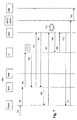
- Fig. 9 shows a logical representation of the network subsystem selection functionality explained in technical document S2-050995.
- Reference numeral 90 relates to a network domain selection entity, 91 to an IMS subsystem, 92 to a circuit switched subsystem and 93 to a mobile terminal that has the capability of communicating via the IMS subsystem 91 and the circuit switched subsystem 92.
- the basic operation of the selection entity 90 consists in for example receiving an IMS multimedia telephony terminating request 901 and then deciding to terminate the call via the IMS subsystem 91 (arrow 902) or via the circuit switched subsystem 92 (arrows 903, 904). Equally, the entity 90 could receive a telephony call to the circuit switched domain 911, and could decide to route this call through the circuit switched subsystem 92 (arrow 912), or via the IMS subsystem (arrows 913, 914).
- the object of the invention is to provide an improved subsystem selection entity and an improved method of controlling a subsystem selecting entity.
- the subsystem selection entity is not only arranged to conduct a subsystem selection procedure for selecting one of a plurality of possible subsystems, but is furthermore arranged to perform a control procedure that comprises at least one control operation for controlling how at least one of the plurality of subsystems conduct a subscriber-not-reachable service.
- a subscriber-not-reachable service is a service that is conducted by a subsystem in the event that the subscriber terminating service cannot be terminated by a selected subsystem.
- Examples of a subscriber terminating service are a call or a message to be terminated at the desired terminal, as opposed to a subscriber originating service, and an example of a subscriber-not-reachable service is the forwarding of the call or message to a predetermined rerouting point, such as in CFNRc (call forward on mobile subscriber not reachable).
- CFNRc call forward on mobile subscriber not reachable
- Handling of the subscriber terminating service and the efficiency of the overall system can be greatly improved by implementing in the subsystem selection entity a control procedure that comprises controlling how one or more of the plurality of selectable subsystems conduct a subscriber-not reachable service.
- a control procedure that comprises controlling how one or more of the plurality of selectable subsystems conduct a subscriber-not reachable service.
- the subsystem selection entity is placed in the home network of a user, then it has no knowledge about whether the user/subscriber is reachable via any particular subsystem, as this knowledge is only present in the network that the user/subscriber is visiting. If the subsystem selection entity is placed in the visited network, then information on the terminal's reachability is available, but the operator of the home network has little control of the visited network and a great number of nodes must be updated for implementation. Moreover, the interface between e.g. circuit switched and IMS home subsystems with the subsystem selection entity must occur over the roaming/transit interface. If the subsystem selection entity is placed between the home and visited networks, then it needs to be globally reachable, which requires global addressing, which in turn is difficult to administer and may cause security problems, because the interfacing between the networks is done over public networks.
- the subscriber-not-reachable control procedure can e.g. consist in sending a command or indication to a selected subsystem in the visited network, where the command or indication may instruct the visited subsystem to not perform a predetermined subscriber-not-reachable service (or not any subscriber-not reachable at all) for a given subscriber terminating service (e.g. a voice or multimedia call) that is being handled.
- the service to be terminated should be passed back to the subsystem selection entity, such that the subsystem selection entity could in that case reroute it to another subsystem over which the terminal in question might be reachable.
- the subsystem selection entity could perform a control operation that prioritises reaching the subscriber, instead of having a subscriber-not-reachable service conducted.
- the subsystem selection entity does not have to know if the terminal is reachable in any of the subsystems, such that there is no problem in having the subsystem selection entity placed in the home network.
- the subscriber-not-reachable control procedure performed by the subsystem selection entity could also e.g. consist in commanding a selected subsystem to conduct a specific subscriber-not-reachable service.
- the operator controlling the subsystem selection entity e.g. the home operator of the terminal's subscriber
- the subscriber-not-reachable control procedure performed by the subsystem selection entity could also e.g. consist in commanding a selected subsystem to conduct a specific subscriber-not-reachable service.
- the operator controlling the subsystem selection entity e.g. the home operator of the terminal's subscriber
- the subscriber-not-reachable control procedure performed by the subsystem selection entity could also e.g. consist in commanding a selected subsystem to conduct a specific subscriber-not-reachable service.
- the control of the subsystem by the subsystem selection entity can be done in any suitable or desirable way, e.g. by the sending of direct command or by choosing one of a plurality of predetermined policies, where the subsystems being controlled are aware of said policies, and then only indicating the chosen policy to one or more of the subsystems.
- Fig. 1 shows a schematic representation of an embodiment of the invention.
- Reference numeral 10 refers to an Internet protocol Multimedia System (IMS) subsystem
- reference numeral 11 describes a circuit switched subsystem.
- a mobile terminal 12 is suitable for communication with the circuit switched subsystem 11 and the IMS subsystem 10.
- Reference numerals 13 and 14 relate to further communication networks or subsystems with which the subsystems 10 and 11 can interact.
- Networks 13 and 14 could e.g. be a public switched telephone network (PSTN), a computer network such as the Internet, etc.
- PSTN public switched telephone network
- the connections shown in Fig. 1 are only an example, and the subsystems 10 and 11 could both be connected to each of the networks 13 and 14, and it is also possible that there are more or less further networks than the shown networks 13 and 14.
- reference numeral 101 relates to a control node in the IMS subsystem, where the control node is suitable for controlling the provision of a service to the mobile terminal 12.
- Reference numeral 102 describes an access node via which the mobile terminal 12 accesses the IMS subsystem 10.
- Reference numeral 111 similarly relates to a control node of the circuit switched subsystem 11, suitable for controlling and managing service provision of the circuit switched subsystem 11 to the mobile terminal 12.
- Reference numeral 112 describes an access node via which the mobile terminal 12 can access the circuit switched subsystem 11.
- Fig. 1 is only schematic, and that the subsystems will generally comprise a larger number of nodes, e.g. intermediate nodes and gateway nodes, which are not shown here for simplicity. Furthermore, it is possible that specific access networks are arranged between the mobile terminal 12 and the subsystems 10 and 11. The figure shows one mobile station for the purpose of simplicity and clarity, but it should be understood that an actual communication system will be arranged to provide service to a much larger number of mobile stations.
- the mobile station 12 is an example of a terminal that is capable of communication with two different subsystems. Nonetheless, the invention is not restricted to mobile terminals, and can be applied to any terminals that are capable of communication with two or more subsystems.
- a subsystem selection entity 15 is provided. It is noted that the term "entity” relates to any unit or system of units that is capable of providing a certain functionality, such that the subsystem selection entity 15 may be comprised in a node of one of the networks or subsystems shown in Fig. 1 , or can be provided in a unit (server) outside of these networks, or can be spread out.over several nodes and/or several separate units.
- the subsystem selection entity 15 is arranged for conducting a subsystem selection procedure that comprises making at least one subsystem selection decision associated with a subscriber terminating service.
- a subscriber terminating service is a service to be terminated at the terminal of a subscriber, such as a call (e.g. voice call, multimedia call, etc.) directed towards a terminal, or a message to be delivered to the terminal.
- the subsystem selection decision serves to select a first subsystem (e.g. IMS subsystem 10) or a second subsystem (e.g. circuit switched subsystem 11) for terminating the subscriber terminating service at the terminal 12.
- the subsystem selection entity 15 is arranged to perform a control procedure comprising at least one control operation for controlling how the first or second subsystem conduct a subscriber-not-reachable service.
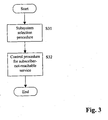
- Fig. 3 The corresponding control method is shown in Fig. 3 , where S31 represents the subsystem selection procedure and S32 represents the control procedure for controlling how one or both of subsystems 10 and 11 conduct a subscriber-not-reachable service.
- the two subsystems 10 and 11 provide overlapping subscriber terminating services, which in other words means that the two subsystems 10 and 11 offer at least some of the same services to the terminal 12.
- the subsystem selection entity 15 it is meaningful for the subsystem selection entity 15 to make a subsystem selection entity for a particular subscriber terminating service, namely if the subscriber terminating service in question can be handled by both subsystems.
- Fig. 2 shows the circuit switched subsystem and the IMS subsystem in more detail.
- Reference numeral 211 describes a mobile switching center (MSC)
- reference numeral 214 describes a home location register/visitor location register (HLR/VLRL)
- reference numeral 212 describes a radio network controller (RNC).
- Elements 211, 212 and 214 are all part of a circuit switched subsystem.
- Reference numeral 213 symbolizes a coverage area of the circuit switched subsystem, e.g. a GSM or WCDMA coverage area.
- Reference numeral 221 describes a telephony application server (TAS), reference numeral 224 a serving call/session control function (S-CSCF), reference numeral 225 relates to an interrogating call/session control function (I-CSCF), and reference numeral 226 relates to a proxy call/session control function (P-CSCF).
- Reference numeral 229 describes a home subscriber server (HSS). These elements are part of an IMS subsystem.
- the P-CSCF 226 is connected to a packet switched access network 227, which in turn is connected to a wireless local area network (WLAN) 228.
- WLAN wireless local area network
- Reference numeral 223 symbolizes the WLAN coverage area, and reference numeral 222 refers to a WLAN serving node (WSN).
- WSN WLAN serving node
- the home subscriber server 229 may comprise a home subscriber register (HSR) for the IMS subsystem, and the HLR/VLR 214 of the circuit switched subsystem.
- HLR home subscriber register
- the subsystem selection entity 15 is preferably equipped with a data base for keeping a state record of each subscriber terminating service being handled. Such a data base is indicated by reference numeral 230 in Fig. 2 .
- the subsystem selection entity is arranged such the subsystem selection procedure and/or control procedure for subscriber-not-reachable services can query the database for information to be used as a basis for making decisions.
- the subsystem selection decision can be based on any decision information that is suitable or desirable.
- the decision information may comprise one or more of the following: a reachability information associated with a reachability of the terminal 12 via one or both of the subsystems, a preference information associated with a preference set by a user of the terminal 12, a preference information associated with a preference set by an operator of the first subsystem 10 and/or an operator of the second subsystem 11, a subscription information associated with a subscription of the user of terminal 12, a time information associated with a time of day, a load information associated with a load of one or both of the first and second subsystems 10, 11, a coverage information associated with a coverage of one or both of the first and a second subsystems 10 and 11, an availability information associated with an availability of one or both of the first and second subsystems 10, 11, a service type information associated with a service type of the subscriber terminating service for which the subsystem selection entity 15 is to make a decision, a connection information associated with one or more active connections involving one or more of the
- control procedure comprising a control operation for controlling how the first or second subsystem conduct a subscriber-not-reachable service can also be based on any suitable or desirable control decision information, e.g. on one or more of the just described examples of the decision information used by the selection procedure.
- control procedure for controlling how the subsystems conduct a subscriber-not-reachable service can also be chosen as is suitable or desirable for a specific object.
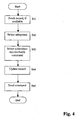
- Fig. 4 shows a flow chart of a method embodiment of the present invention.
- the procedure starts based on a predetermined triggering event, e.g. the receipt of a request for a subscriber terminating service such as a call request for the first subsystem 10 or the second subsystem 11 (see Fig. 1 ).
- the procedure first fetches a record for the desired subscriber terminating service, if available. For example, if the subscriber terminating service is a call to be terminated at terminal 12, then a data base 230 (see Fig. 2 ) is queried, in order to determine whether a record for the call in question is present or not, e.g. based on the call ID.
- the record can also be associated with an ID of the terminal and/or of the subscriber, such as the IMSI (International Mobile Subscriber Identity).
- IMSI International Mobile Subscriber Identity
- the records for subscriber terminating services can be kept in any suitable or desirable way that allows the identification of individual services for which a subsystem is to be selected.
- step S42 a subsystem is selected, e.g. based on predetermined decision information as described above.
- step S43 a subscriber-not-reachable command is selected, e.g. based on information as described above.
- step S44 the record for the subscriber terminating service in question is updated in the data base 230 (see Fig. 2 ), and then in step S45 the command selected in S43 is sent e.g. to the subsystem selected in step S42.
- the selection of a subscriber-not-reachable command in step S43 can also relate to both subsystems 10 and 11, and consequently the sending of the command S45 can also relate to both subsystems 10 and 11.
- a subsystem selection entity of the invention comprises a data base for keeping a state record of the subsystem selection decision and the control operation associated with the subscriber terminating service, where the subsystem selection procedure and the control procedure are arranged to query the state record. In this way, if the request for terminating the subscriber service in question is returned to the subsystem selection entity for any reason (e.g.
- the subsystem selection procedure (step S42) and/or the control procedure for controlling the subscriber-not-reachable service (step S43) can be conducted in accordance with reference to previous decisions made with respect to the subscriber service in question, an subsequently written into the state record (see step S44).
- the command selected in step S43 can e.g. be a command for conducting a specific subscriber-not-reachable service.
- the subsystem selection entity 15 after having selected subsystem 11 for terminating a call, may instruct subsystem 11 to apply a call-forwarding to a mailbox as a subscriber-not-reachable service in the event that the call cannot be terminated by subsystem 11.
- the basis for this command can be user preference information, e.g. the subscriber of terminal 12 may have recorded preference information according to which the call-forwarding to a mailbox is the desired subscriber-not-reachable service.
- the subscriber-not-reachable command may also be an instruction for not conducting a specific subscriber-not-reachable service.
- the user may have recorded preference information that he does not wish that calls that cannot be terminated be forwarded to a mailbox.
- the decision can also be based on preference information recorded by the network operation, or on subscription information (e.g. the user of terminal 12 has a subscription that does not provide for call-forwarding to a mailbox).
- the command for not conducting a specific subscriber-not-reachable service can be combined with a command for conducting a different specific subscriber-not-reachable service. Namely, it is possible that one or more specific subscriber-not-reachable services are considered desirable by said user preference information, and one or more other subscriber-not-reachable services are set not to be used, based on preference information set by the user.
- the command for not conducting a specific subscriber-not-reachable service can be limited insofar as the instructed subsystem only preliminarily does not conduct the indicated subscriber-not-reachable service, e.g. does not conduct the subscriber-not-reachable service in a first attempt, but can then use it in further attempts if other subscriber-not-reachable services fail to provide a result.
- the control operation may comprise sending a command for at least preliminarily not conducting any subscriber-not-reachable services.
- the purpose of such a command can be to make a best attempt to terminate the desired service at the terminal, and to avoid the invoking of a subscriber-not-reachable service, if possible.
- the basis for such a decision can again be user preference information, e.g. the user has indicated that calls should preferably be terminated and not e.g. forwarded to a mailbox.
- the subsystem selection entity could in this example first select a subsystem (see S42) and then select the command to not conduct any subscriber-not-reachable services in step S43.
- step S44 the command is sent to the selected subsystem together with the data relating to the subscriber service to be terminated, e.g. a voice call.
- the call request can be returned to the subsystem selection entity.
- the subsystem selection entity can then attempt to terminate the call via the other subsystem 10. If the terminal 12 is then reachable via subsystem 10, the call will be terminated, in accordance with the user's preference.
- the selected subsystem would return the request for the subscriber terminating service if termination was not possible and subscriber-not-reachable services were not desired.
- This can be a default adjustment in a subsystem, i.e. the subsystem operates automatically in this way.
- the control operation of the subsystem selection entity comprises sending an explicit command to the subsystem selected in the subsystem selection decision, for instructing the selected subsystem to notify the subsystem selection entity if the terminals are not reachable by the selected subsystem.
- control operation may comprise sending a request for a list of available subscriber-not-reachable services to one or both of the subsystems.
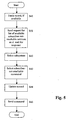
- Fig. 5 which comprises the same steps as Fig. 4 , such that a repeated description of these steps is not necessary, and additionally comprises a step S51, in which a request for a list of available subscriber-not-reachable services is sent after step S41.
- Step S51 furthermore comprises waiting for a response.
- the subsystem selection decision in step S42 and the selection decision for the subscriber-not-reachable command in step S42 is also based on the list or lists of subscriber-not-reachable services available in subsystem 10 and/or subsystem 11. For example, based on a user preference setting to which a mailbox service is the preferred subscriber-not-reachable service, and based on a list from subsystem 10 and a list from subsystem 11 according to which only subsystem 11 offers a mailbox service, the subsystem selection entity can select subsystem 11 in step S42 and select the command to apply the mailbox service.in step S43.
- control procedure for controlling how one or more subsystems conduct a subscriber-not-reachable service comprised selecting and sending an appropriate command.
- control operation it is also possible for the control operation to comprise the selecting of a policy for controlling subscriber-not-reachable services from among a plurality of policies.
- the number of different policies to choose from, and the content of each individual policy can be chosen in any suitable or desirable way. Examples of different policies will be given further on. If the choosing of a policy replaces the choosing of a subscriber-not-reachable command, then appropriate procedures can e.g.
- step S43 a policy is selected, and in step S45 the selected policy is communicated to one or more subsystems.
- the subsystems are aware of the different possible policies such that it is sufficient for the subsystem selection entity to only identify the particular policy selected.
- the step of communicating the selected policy comprises conveying details of the selected policy, such that a processing can also be performed by subsystems that are themselves not aware of each of the policies' details.
- One of said plurality of policies may comprise that the subsystem selected in the subsystem selection decision automatically applies its subscriber-not-reachable services if the terminal is not reachable, and notifies the subsystem selection entity if the terminal is reachable and no subscriber-not-reachable services are applicable. It is noted that the policy also covers a situation in which a selected subsystem has no subscriber-not-reachable services or only has a single one. This policy means that a subsystem acts in such a way that if it receives a request for a subscriber terminating service (e.g. for a call), it attempts to terminate the service. If termination is not possible (e.g.
- Said plurality of policies may also comprise a policy according to which the subsystem selected in the subsystem selection decision does not automatically apply its subscriber-not-reachable services if the terminal is not reachable, and notifies the subsystem selection entity if the terminal is not reachable and includes a list of applicable subscriber-not-reachable services.
- the subsystem selection entity is then preferably arranged in such a way that it can repeat the subsystem selection decision and/or the control operation for controlling how the subsystem conducts a subscriber-not-reachable service on the basis of the list of applicable subscriber-not-reachable services.
- the list of applicable subscriber-not-reachable services can be identical to the number of subscriber-not-reachable services available at the subsystem in question, or can be a subset thereof, e.g. if the subsystem determines that for the terminal in question only a smaller number of the available subscriber-not-reachable services is in fact applicable.
- the plurality of policies may furthermore comprise a policy according to which the subsystem selected in the subsystem selection decision does not automatically apply its subscriber-not-reachable services if the terminal is not reachable, and notifies the subsystem selection entity if the terminal is not reachable.
- Another possible policy among the plurality of policies may comprise that the subsystem selected in the subsystem selection decision automatically applies its subscriber-not-reachable services if the terminal is not reachable, and does not notify the subsystem selection entity if the terminal is not reachable.
- the concept of this policy therefore is that although a policy is selected as part of a control procedure for controlling how one or more of the subsystems conduct a subscriber-not-reachable service, the outcome of the operation is a policy according to which the subsystem or subsystems are not instructed with respect to handling subscriber-not-reachable services.
- this policy it is preferred to then also delete any records having to do with the particular subscriber terminating service (or associated with the terminal and/or subscriber) for which the subsystem selection entity is making a decision. For example, if the subscriber terminating service is a voice call, and the state record is kept with respect to the call ID, then the state record for that particular call ID is purged, such that the subsystem selection entity "loses its memory" with respect to that call. As a consequence, if at a later time (due to whatever reason) a call request for the same call is received, then the subsystem selection entity treats the call as if received for the first time.
- policies can e.g. be combined as described in the following example.
- the subsystem selection entity can be arranged to make a subsystem selection decision and a policy selection decision, preferably in dependence on the type of subscriber terminating service being handled and on state information maintained in data base 230, if available for the specific service (e.g. the specific call) being handled.
- the subsystem selection entity can be arranged to make a policy selection from the following four available policies:
- Policy 4 is preferably chosen if the subsystem selection entity is at the end of hunting, i.e. has attempted to route the subscriber terminating service through all available subsystems and has reached the last subsystem.
- the "completing" of the call means that the selected subsystem will first attempt to terminate the service, and if this is not successful, to apply available subscriber-not-reachable services. If this is also unsuccessful, then an appropriate notification is given to the originator of the subscriber terminating service (e.g. the calling terminal), as is well known in the art, e.g. through indication of a busy signal or a message that the desired subscriber is not reachable.
- a procedure that makes a policy selection is shown in Fig. 6 .
- the subsystem selection entity first reads a record for the specific service, if available, see step S61. Then, a subsystem selection is performed in S62.
- the subsystem selection decision can be performed on the basis of any one or more of the previously mentioned information examples, and especially can be based upon information from the record read in step S61.
- the record can contain information on subscriber-not-reachable services applicable by one or more of the subsystems open for selection. This information can e.g. have been provided in previous invocations of the subsystem selection entity and subsequent selections of above-mentioned policy 2.
- step S64 it is determined whether a subscriber-not-reachable service needs to be selected, which is e.g. possible if policy 2 has been selected previously in step S63. If one or more subscriber-not-reachable services need to be selected, then the procedure branches to step S66, in which the one or more subscriber-not-reachable services are appropriately selected and then communicated to the subsystem selected in step S62, together with the policy selected in step S63, see step S67.
- a subscriber-not-reachable policy e.g. one of policies 1 to 4
- step S64 if in step S64 it is determined that no subscriber-not-reachable services need to be selected, then the procedure branches to step S65, in which simply the policy selected in step jS63 is communicated to the subsystem selected in step S62.
- the communication of information can be done in any suitable or desirable way, e.g. via dedicated signalling messages or as a part of messages in which e.g. the request for the subscriber terminating service is being forwarded. If the subsystems are aware of the available policies, then no contents of a selected policy need to be communicated, and therefore it can be sufficient to simply send a policy identifier for identifying the selected policy, e.g. a flag in a message in which the request for the subscriber terminating service is being sent.
- the record for the subscriber terminating service being handled is appropriately updated.
- the updating can also consist in a deleting of the record, e.g. if policy 4 was chosen in step S63. Otherwise, the selections made in one or more of steps 562, S63 and S66 are recorded, possibly together with further information received as a part of the policy, e.g. the above-mentioned lists of subscriber-not-reachable services available in one or more of the subsystems.
- the records themselves can be kept in any suitable or desirable way, e.g. based on a service ID (such as a.call ID), such that each subscriber terminating service being processed can be identified.
- a service ID such as a.call ID
- the state records held in database 230 should preferably be purged from time to time in order to avoid memory overflow. This can be done in any suitable or desirable way, e.g. by marking each record with an initial time of recording, and subsequently regularly deleting such records for which the difference between the present time and the initial recording time exceeds a predetermined threshold.
- a timer can be set for each record upon initial recording, and the record being deleted when the timer expires.
- the setting of the above-mentioned threshold or timer value can be done based on experience for how long a typical service to be terminated at a subscriber is "alive" during the set-up phase. In other words, if the average time for setting up a terminating service is AT, when the above-mentioned threshold or timer value can be set to a predetermined multiple of AT.
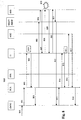
- Fig. 7 an example is shown, in which the subsystem selection entity 15 decides to first terminate a call in the circuit switched subsystem, but because the subscriber is not reachable there, a second interrogation of the subsystem selection entity 15 takes place, whereupon the IMS subsystem is selected. More specifically, the GMSC first receives a message 700 as a part of a call request, e.g. an ISUP (ISDN user part) IAM (initial address message). The GMSC then sends an appropriate request for information to the HSS, more specifically to the HLR in the HSS, see message 701, which can e.g. be a MAP (mobility application protocol) SRI (send routing indication).
- MAP mobility application protocol
- SRI send routing indication
- the HLR then sends a query 702 to the subsystem section entity 15.
- the query 702 requests a decision on selecting the circuit switched subsystem or the AMS subsystem.
- the message 702 can e.g. contain the call ID, and/or the IMSI (international mobile subscriber identity) of the subscriber for which a service is to be terminated at the terminal of said subscriber, as an information for identifying an associated record in the database 230.
- IMSI international mobile subscriber identity
- Reference numeral 713 in Fig. 7 symbolizes the procedure of selecting a subsystem and writing a record in accordance with e.g. one of the embodiments of Figs. 4 , 5 or 6 .
- Message 703 is the response of the subsystem selection entity 15 to the HLR, in which in the present example the circuit switched subsystem is identified as having been selected. Consequently, the HLR sends message 704 to the MSC, e.g. a MAP PRN (provide roaming number) message. The MSC acknowledges this with message 705. Subsequently, the HLR acknowledges message 701 with message 706. Then, the original message 700 is passed on to the MSC in message 707 e.g. as a BICC (bearer independent call control) IAM.
- BICC beam independent call control
- Symbol 714 in Fig. 7 indicates that the MSC determines that the terminal (not shown in Fig. 7 ) is not reachable via the circuit switched subsystem.
- the subsystem selection entity 15 has selected a policy in 713 according to which the selected subsystem should notify the subsystem selection entity if the subscriber is not reachable.
- 713 may have comprised selecting policy 2 or policy 3.
- the policy indication could e.g. have been sent as a flag in messages 703, 704 and/or 703, 706 and 707. If policy 2 was chosen, then message 708 may also comprise the list of subscriber-not-reachable services available in the circuit switched subsystem.
- the subsystem selection entity 15 then repeats the procedure of selecting a subsystem and performing a control operation related to the subscriber-not-reachable services, and sends a message 709 to the MSC, in which in the example of Fig. 7 it is indicated that the call is to be routed through the IMS subsystem.
- the MSC performs an ITU pivot routing via the GMSC (message 710), which then conducts a forwarding procedure to the MGCF/MGW (see message 711, e.g. a BICC IAM).
- the MGCF/MGW then hands the call to the IMS with message 712.
- the further processing is assumed to be conventional and therefore not shown further.
- Fig. 8 an example is shown in which the subsystem selection entity 15 first decides to terminate a call in the IMS.
- messages 800, 801 and 802 correspond to previously described messages 700, 701 and 702, respectively, such that a further description is not necessary.
- 819 symbolizes a decision procedure on the part of the subsystem selection entity 15, in which a subsystem and a policy is selected.
- message 803 indicates the decision to route the call to the IMS.
- Message 804 is an acknowledgement of message 801, and based on the decision communicated in message 803, the HLR routes the call to the MGCF/MGW in message 805 (e.g. a BICC IAM).
- the MGCF/MGW then appropriately notifies the IMS in message 806, e.g. with a SIP (session initiation protocol) INVITE.
- the IMS could then interrogate the subsystem selection entity 15 with message 807, where entity 15 responds with message 808 after having consulted the state record initially laid down in 819, that the IMS is indeed selected.
- Symbol 820 in Fig. 8 indicates that the IMS determines that the subscriber is not reachable via the IMS, It is furthermore assumed that a policy has been previously selected and communicated to the IMS, according to which the selected subsystem notifies the subsystem selection entity in the event that the subscriber is not reachable, see message 809.
- the subsystem selection entity 15 repeats at least a subsystem selection, and in the example it is assumed that message 810 indicates that the call is now to be routed to the circuit switched subsystem.
- the IMS passes the call to the circuit switched subsystem via e.g. ITU pivot routing, see messages 811, 812.
- the GMSC then notifies the HLR message 813, which in turn queries the subsystem selection entity 15 in message 814.
- the entity 15 then performs a renewed selection procedure, where by use of the state record that indicates the previous try via the IMS, the decision to route the call via the circuit switched subsystem is confirmed, and a "do not come back" policy (such as above-described policy 4) is chosen, as the example of Fig.
- the procedure in 821 then preferably also comprises releasing or deleting the record for the call being handled.
- the decisions are communicated to the HLR in message 815, which then proceeds to route the call in known fashion via messages 816, 817 and 818.
- the further processing is assumed to be conventional and therefore not shown for simplicity. It is to be noted that due to the selection of policy 4 in 821, there is no need for a further interrogation of the subsystem selection entity 15.
Landscapes
- Engineering & Computer Science (AREA)
- Computer Networks & Wireless Communication (AREA)
- Signal Processing (AREA)
- Mobile Radio Communication Systems (AREA)
- Telephonic Communication Services (AREA)
- Exchange Systems With Centralized Control (AREA)
Claims (16)
- Subsystemauswahlinstanz (15) für ein Kommunikationssystem, das ein erstes Subsystem (10), ein zweites Subsystem (11) und mindestens ein Endgerät (12) umfasst, das zur Kommunikation mit dem ersten (10) und zweiten (11) Subsystem geeignet ist, wobei die Subsystemauswahlinstanz (15) zum Durchführen einer Subsystemauswahlprozedur (S31) ausgelegt ist, die ein Fällen mindestens einer Subsystemauswahlentscheidung, die mit einem Teilnehmer-Beendigungsdienst assoziiert ist, der mit dem mindestens einem Endgerät (12) verbunden ist, zum Auswählen des ersten (10) oder zweiten (11) Subsystems zum Beendigen des Teilnehmer-Beendigungsdienstes an dem mindestens einen Endgerät (12) umfasst, dadurch gekennzeichnet, dass die Subsystemauswahlinstanz(15) ferner so ausgelegt ist, dass sie eine Steuerungsprozedur (S32) durchführt, die mindestens einen Steuervorgang zum Steuern dessen umfasst, wie das erste (10) oder zweite (11) Subsystem einen Teilnehmer-nicht-erreichbar-Dienst ausführt, wobei der Teilnehmer-nicht-erreichbar-Dienst ausgeführt wird, falls der Teilnehmer-Beendigungsdienst nicht durch das ausgewählte Subsystem beendigt werden kann.
- Subsystemauswahlinstanz nach Anspruch 1, wobei der Steuervorgang ein Senden eines Befehls zum Ausführen eines spezifischen Teilnehmer-nicht-erreichbar-Dienstes an eines oder beide der Subsysteme umfasst.
- Subsystemauswahlinstanz nach Anspruch 1, wobei der Steuervorgang ein Senden eines Befehls für ein wenigstens vorläufiges Nicht-Ausführen eines spezifischen Teilnehmer-nicht-erreichbar-Dienstes an eines oder beide der Subsysteme umfasst.
- Subsystemauswahlinstanz nach Anspruch 3, wobei der Steuervorgang ein Senden eines Befehls für ein wenigstens vorläufiges Nicht-Ausführen jeglicher Teilnehmer-nicht-erreichbar-Dienste an eines oder beide der Subsysteme umfasst.
- Subsystemauswahlinstanz nach Anspruch 3 oder 4, wobei der Steuervorgang ein Senden eines Befehls an das Subsystem, das bei der Subsystemauswahlentscheidung ausgewählt wird, zum Anweisen des ausgewählten Subsystems umfasst, der Subsystemauswahlinstanz zu melden, wenn das Endgerät durch das ausgewählte Subsystem nicht erreichbar ist.
- Subsystemauswahlinstanz nach einem der Ansprüche 1 bis 5, wobei der Steuervorgang ein Senden einer Anforderung für eine Liste von verfügbaren Teilnehmer-nicht-erreichbar-Diensten an eines oder beide der Subsysteme umfasst.
- Subsystemauswahlinstanz nach einem der Ansprüche 1 bis 6, wobei der Steuervorgang ein Auswählen einer Richtlinie zum Steuern von Teilnehmer-nicht-erreichbar-Diensten unter einer Mehrzahl von Richtlinien umfasst.
- Subsystemauswahlinstanz nach Anspruch 7, wobei eine der Mehrzahl von Richtlinien umfasst, dass das Subsystem, das bei der Subsystemauswahlentscheidung ausgewählt wird, seine Teilnehmer-nicht-erreichbar-Dienste automatisch anwendet, wenn das Endgerät nicht erreichbar ist, und der Subsystemauswahlinstanz meldet, wenn das Endgerät nicht erreichbar ist und keine Teilnehmer-nicht-erreichbar-Dienste anwendbar sind.
- Subsystemauswahlinstanz nach Anspruch 7 oder 8, wobei eine der Mehrzahl von Richtlinien umfasst, dass das Subsystem, das bei der Subsystemauswahlentscheidung ausgewählt wird, seine Teilnehmer-nicht-erreichbar-Dienste nicht automatisch anwendet, wenn das Endgerät nicht erreichbar ist, und der Subsystemauswahlinstanz meldet, wenn das Endgerät nicht erreichbar ist, und eine Liste von anwendbaren Teilnehmer-nicht-erreichbar-Diensten einbezieht.
- Subsystemauswahlinstanz nach Anspruch 9, wobei die Subsystemauswahlinstanz so ausgelegt ist, dass sie auf der Basis der Liste von anwendbaren Teilnehmer-nicht-erreichbar-Diensten eines oder beides von der Subsystemauswahlentscheidung und dem Steuervorgang wiederholt.
- Subsystemauswahlinstanz nach einem der Ansprüche 7 bis 10, wobei eine der Mehrzahl von Richtlinien umfasst, dass das Subsystem, das bei der Subsystemauswahlentscheidung ausgewählt wird, seine Teilnehmer-nicht-erreichbar-Dienste nicht automatisch anwendet, wenn das Endgerät nicht erreichbar ist, und der Subsystemauswahlinstanz meldet, wenn das Endgerät nicht erreichbar ist.
- Subsystemauswahlinstanz nach einem der Ansprüche 7 bis 11, wobei eine der Mehrzahl von Richtlinien umfasst, dass das Subsystem, das bei der Subsystemauswahlentscheidung ausgewählt wird, seine Teilnehmer-nicht-erreichbar-Dienste automatisch anwendet, wenn das Endgerät nicht erreichbar ist, und der Subsystemauswahlinstanz nicht meldet, wenn das Endgerät nicht erreichbar ist.
- Subsystemauswahlinstanz nach einem der Ansprüche 7 bis 12, wobei der Steuervorgang ein Senden einer Richtlinienkennung zum Identifizieren der ausgewählten Richtlinie an eines oder beide der Subsysteme umfasst.
- Subsystemauswahlinstanz nach einem der Ansprüche 1 bis 13, wobei die Subsystemauswahlentscheidung von Teilnehmer-nicht-erreichbar-Diensten abhängt, die durch eines oder beide der Subsysteme anwendbar sind.
- Subsystemauswahlinstanz nach einem der Ansprüche 1 bis 14, umfassend eine Datenbank zum Führen eines Statusprotokolls der Subsystemauswahlentscheidung und des Steuervorgangs, die mit dem Teilnehmer-Beendigungsdienst assoziiert sind, wobei die Subsystemauswahlprozedur und die Steuerungsprozedur so ausgelegt sind, dass sie das Statusprotokoll abfragen.
- Verfahren zur Steuerung einer Subsystemauswahlinstanz (15) für ein Kommunikationssystem, das ein erstes Subsystem (10), ein zweites Subsystem (11) und mindestens ein Endgerät (12) umfasst, das zur Kommunikation mit dem ersten (10) und zweiten (11) Subsystem geeignet ist, wobei das Verfahren ein Durchführen einer Subsystemauswahlprozedur (S31) umfasst, die ein Fällen mindestens einer Subsystemauswahlentscheidung, die mit einem Teilnehmer-Beendigungsdienst assoziiert ist, der mit dem mindestens einen Endgerät (12) verbunden ist, zum Auswählen des ersten (10) oder zweiten (11) Subsystems zum Beendigen des Teilnehmer-Beendigungsdienstes an dem mindestens einen Endgerät (12) umfasst, dadurch gekennzeichnet, dass es ferner ein Durchführen einer Steuerungsprozedur (S32) umfasst, die mindestens einen Steuervorgang zum Steuern dessen umfasst, wie das erste (10) oder zweite (11) Subsystem einen Teilnehmer-nicht-erreichbar-Dienst ausführt, wobei der Teilnehmer-nicht-erreichbar-Dienst ausgeführt wird, falls der Teilnehmer-Beendigungsdienst nicht durch das ausgewählte Subsystem beendigt werden kann.
Priority Applications (1)
| Application Number | Priority Date | Filing Date | Title |
|---|---|---|---|
| PL05802274T PL1938639T3 (pl) | 2005-10-21 | 2005-10-21 | System i sposób wybierania podsystemu do zakończenia połączenia |
Applications Claiming Priority (1)
| Application Number | Priority Date | Filing Date | Title |
|---|---|---|---|
| PCT/EP2005/011354 WO2007045266A1 (en) | 2005-10-21 | 2005-10-21 | System and method for selecting a subsystem for call termination |
Publications (2)
| Publication Number | Publication Date |
|---|---|
| EP1938639A1 EP1938639A1 (de) | 2008-07-02 |
| EP1938639B1 true EP1938639B1 (de) | 2011-05-11 |
Family
ID=36600709
Family Applications (1)
| Application Number | Title | Priority Date | Filing Date |
|---|---|---|---|
| EP05802274A Expired - Lifetime EP1938639B1 (de) | 2005-10-21 | 2005-10-21 | System und verfahren zum auswählen eines untersystems zur anruf-auslösung |
Country Status (7)
| Country | Link |
|---|---|
| US (1) | US8229408B2 (de) |
| EP (1) | EP1938639B1 (de) |
| CN (1) | CN101297571B (de) |
| AT (1) | ATE509491T1 (de) |
| ES (1) | ES2363781T3 (de) |
| PL (1) | PL1938639T3 (de) |
| WO (1) | WO2007045266A1 (de) |
Families Citing this family (15)
| Publication number | Priority date | Publication date | Assignee | Title |
|---|---|---|---|---|
| EP1860837A4 (de) * | 2005-03-30 | 2010-09-29 | Huawei Tech Co Ltd | Verfahren und system zur implementierung der routensteuerung |
| CN101292489B (zh) * | 2005-08-22 | 2013-03-27 | 北方电讯网络有限公司 | 用于电路交换子系统呼叫的多媒体子系统业务控制 |
| US8811954B1 (en) | 2005-10-31 | 2014-08-19 | Genband Us Llc | Network domain selection |
| CN100474854C (zh) * | 2006-01-10 | 2009-04-01 | 华为技术有限公司 | 一种选择被叫接续网络的方法及网络系统 |
| JP4138808B2 (ja) * | 2006-01-10 | 2008-08-27 | 株式会社エヌ・ティ・ティ・ドコモ | 通信システムおよび通信方法 |
| CN100579278C (zh) * | 2006-03-03 | 2010-01-06 | 华为技术有限公司 | 紧急呼叫方法、系统及呼叫会话控制功能实体 |
| WO2007113636A2 (en) * | 2006-04-03 | 2007-10-11 | Nokia Corporation | Multimedia session domain selection |
| US8180338B1 (en) | 2006-06-14 | 2012-05-15 | Genband Us Llc | Selective call anchoring in a multimedia subsystem |
| US8600006B2 (en) * | 2006-12-27 | 2013-12-03 | Genband Us Llc | Voice continuity among user terminals |
| CN101316218A (zh) * | 2007-05-29 | 2008-12-03 | 诺基亚西门子通信公司 | 一种在通信系统中实现域选择的方法、系统和服务器 |
| US8644298B1 (en) | 2007-09-12 | 2014-02-04 | Genband Us Llc | Adding a service control channel after session establishment |
| US8396040B2 (en) * | 2009-04-20 | 2013-03-12 | Qualcomm Incorporated | Systems, methods, and devices to enable selection of radio access technology |
| EP2504966B1 (de) * | 2009-11-26 | 2013-08-14 | Telefonaktiebolaget LM Ericsson (publ) | Verfahren, system und netzwerkknoten zur durchführung einer sip-transaktion in einem kommunikationsnetz auf sitzungseinleitungsprotokollbasis |
| JP2014524187A (ja) * | 2011-06-27 | 2014-09-18 | アルカテル−ルーセント | 転送先番号の過剰な「無応答」の通知 |
| US8712409B2 (en) * | 2012-03-05 | 2014-04-29 | T-Mobile Usa, Inc. | System and method for terminating communication sessions with roaming mobile devices |
Family Cites Families (4)
| Publication number | Priority date | Publication date | Assignee | Title |
|---|---|---|---|---|
| US6298232B1 (en) * | 1999-01-15 | 2001-10-02 | Telefonaktiebolaget Lm Ericsson (Publ) | Voice mail service notification between mobile systems |
| US6990087B2 (en) * | 2002-04-25 | 2006-01-24 | Raytheon Company | Dynamic wireless resource utilization |
| US7403517B2 (en) * | 2001-06-20 | 2008-07-22 | Nokia Corporation | System, device and method for providing call forwarding in dual subscription mode |
| US7133516B2 (en) * | 2003-11-24 | 2006-11-07 | Motorola, Inc. | Prevention of call forwarding loops in communication networks |
-
2005
- 2005-10-21 AT AT05802274T patent/ATE509491T1/de not_active IP Right Cessation
- 2005-10-21 PL PL05802274T patent/PL1938639T3/pl unknown
- 2005-10-21 EP EP05802274A patent/EP1938639B1/de not_active Expired - Lifetime
- 2005-10-21 ES ES05802274T patent/ES2363781T3/es not_active Expired - Lifetime
- 2005-10-21 US US12/091,000 patent/US8229408B2/en not_active Expired - Fee Related
- 2005-10-21 CN CN2005800518931A patent/CN101297571B/zh not_active Expired - Fee Related
- 2005-10-21 WO PCT/EP2005/011354 patent/WO2007045266A1/en not_active Ceased
Also Published As
| Publication number | Publication date |
|---|---|
| EP1938639A1 (de) | 2008-07-02 |
| US20080268818A1 (en) | 2008-10-30 |
| US8229408B2 (en) | 2012-07-24 |
| ATE509491T1 (de) | 2011-05-15 |
| WO2007045266A1 (en) | 2007-04-26 |
| ES2363781T3 (es) | 2011-08-16 |
| CN101297571A (zh) | 2008-10-29 |
| PL1938639T3 (pl) | 2011-09-30 |
| CN101297571B (zh) | 2012-12-12 |
Similar Documents
| Publication | Publication Date | Title |
|---|---|---|
| CN101297531B (zh) | 经由电路交换接入提供ims服务 | |
| US8908569B2 (en) | Multiple-termination routing in a wireless network environment with an internet protocol core | |
| EP1938639B1 (de) | System und verfahren zum auswählen eines untersystems zur anruf-auslösung | |
| US6954654B2 (en) | Provision of services in a communication system including an interworking mobile switching center | |
| US20080039104A1 (en) | Method and system for routing control | |
| CN101313532A (zh) | 接续被叫用户的方法、装置及其网络系统 | |
| SE526493C2 (sv) | System och metod för hantering av tilläggsfunktioner vid förekomst av en proxyswitch i ett mobilt kommunikationsnät | |
| EP1875748B1 (de) | Dienst-Routing-Entscheidungsentität | |
| US8374589B2 (en) | Controlling supplementary subscriber services in overlayed IMS-based telecommunications network | |
| US8532091B2 (en) | Method and apparatus for providing IMS services to circuit-switched controlled terminals | |
| US8326298B2 (en) | Technique for service domain selection | |
| CN101018400A (zh) | 一种基于话音业务连续性的实现呼叫业务的系统和方法 | |
| PH12015501669B1 (en) | Service control awareness for call routing between packet switched telephony domain and circuit switched telephony domain | |
| EP2367368A1 (de) | Bereitstellung eines Festnetzwerkdienstes anhand eines Mobilfunknetzes |
Legal Events
| Date | Code | Title | Description |
|---|---|---|---|
| PUAI | Public reference made under article 153(3) epc to a published international application that has entered the european phase |
Free format text: ORIGINAL CODE: 0009012 |
|
| 17P | Request for examination filed |
Effective date: 20080430 |
|
| AK | Designated contracting states |
Kind code of ref document: A1 Designated state(s): AT BE BG CH CY CZ DE DK EE ES FI FR GB GR HU IE IS IT LI LT LU LV MC NL PL PT RO SE SI SK TR |
|
| 17Q | First examination report despatched |
Effective date: 20080827 |
|
| RIC1 | Information provided on ipc code assigned before grant |
Ipc: H04W 40/00 20090101AFI20100616BHEP |
|
| GRAP | Despatch of communication of intention to grant a patent |
Free format text: ORIGINAL CODE: EPIDOSNIGR1 |
|
| GRAS | Grant fee paid |
Free format text: ORIGINAL CODE: EPIDOSNIGR3 |
|
| GRAA | (expected) grant |
Free format text: ORIGINAL CODE: 0009210 |
|
| AK | Designated contracting states |
Kind code of ref document: B1 Designated state(s): AT BE BG CH CY CZ DE DK EE ES FI FR GB GR HU IE IS IT LI LT LU LV MC NL PL PT RO SE SI SK TR |
|
| REG | Reference to a national code |
Ref country code: GB Ref legal event code: FG4D |
|
| REG | Reference to a national code |
Ref country code: CH Ref legal event code: EP |
|
| REG | Reference to a national code |
Ref country code: IE Ref legal event code: FG4D |
|
| REG | Reference to a national code |
Ref country code: DE Ref legal event code: R096 Ref document number: 602005028046 Country of ref document: DE Effective date: 20110622 |
|
| REG | Reference to a national code |
Ref country code: ES Ref legal event code: FG2A Ref document number: 2363781 Country of ref document: ES Kind code of ref document: T3 Effective date: 20110816 |
|
| REG | Reference to a national code |
Ref country code: NL Ref legal event code: T3 |
|
| REG | Reference to a national code |
Ref country code: PL Ref legal event code: T3 |
|
| PG25 | Lapsed in a contracting state [announced via postgrant information from national office to epo] |
Ref country code: PT Free format text: LAPSE BECAUSE OF FAILURE TO SUBMIT A TRANSLATION OF THE DESCRIPTION OR TO PAY THE FEE WITHIN THE PRESCRIBED TIME-LIMIT Effective date: 20110912 Ref country code: SE Free format text: LAPSE BECAUSE OF FAILURE TO SUBMIT A TRANSLATION OF THE DESCRIPTION OR TO PAY THE FEE WITHIN THE PRESCRIBED TIME-LIMIT Effective date: 20110511 Ref country code: LT Free format text: LAPSE BECAUSE OF FAILURE TO SUBMIT A TRANSLATION OF THE DESCRIPTION OR TO PAY THE FEE WITHIN THE PRESCRIBED TIME-LIMIT Effective date: 20110511 |
|
| PG25 | Lapsed in a contracting state [announced via postgrant information from national office to epo] |
Ref country code: GR Free format text: LAPSE BECAUSE OF FAILURE TO SUBMIT A TRANSLATION OF THE DESCRIPTION OR TO PAY THE FEE WITHIN THE PRESCRIBED TIME-LIMIT Effective date: 20110812 Ref country code: AT Free format text: LAPSE BECAUSE OF FAILURE TO SUBMIT A TRANSLATION OF THE DESCRIPTION OR TO PAY THE FEE WITHIN THE PRESCRIBED TIME-LIMIT Effective date: 20110511 Ref country code: IS Free format text: LAPSE BECAUSE OF FAILURE TO SUBMIT A TRANSLATION OF THE DESCRIPTION OR TO PAY THE FEE WITHIN THE PRESCRIBED TIME-LIMIT Effective date: 20110911 Ref country code: CY Free format text: LAPSE BECAUSE OF FAILURE TO SUBMIT A TRANSLATION OF THE DESCRIPTION OR TO PAY THE FEE WITHIN THE PRESCRIBED TIME-LIMIT Effective date: 20110511 Ref country code: BE Free format text: LAPSE BECAUSE OF FAILURE TO SUBMIT A TRANSLATION OF THE DESCRIPTION OR TO PAY THE FEE WITHIN THE PRESCRIBED TIME-LIMIT Effective date: 20110511 Ref country code: SI Free format text: LAPSE BECAUSE OF FAILURE TO SUBMIT A TRANSLATION OF THE DESCRIPTION OR TO PAY THE FEE WITHIN THE PRESCRIBED TIME-LIMIT Effective date: 20110511 Ref country code: LV Free format text: LAPSE BECAUSE OF FAILURE TO SUBMIT A TRANSLATION OF THE DESCRIPTION OR TO PAY THE FEE WITHIN THE PRESCRIBED TIME-LIMIT Effective date: 20110511 Ref country code: FI Free format text: LAPSE BECAUSE OF FAILURE TO SUBMIT A TRANSLATION OF THE DESCRIPTION OR TO PAY THE FEE WITHIN THE PRESCRIBED TIME-LIMIT Effective date: 20110511 |
|
| PG25 | Lapsed in a contracting state [announced via postgrant information from national office to epo] |
Ref country code: EE Free format text: LAPSE BECAUSE OF FAILURE TO SUBMIT A TRANSLATION OF THE DESCRIPTION OR TO PAY THE FEE WITHIN THE PRESCRIBED TIME-LIMIT Effective date: 20110511 Ref country code: CZ Free format text: LAPSE BECAUSE OF FAILURE TO SUBMIT A TRANSLATION OF THE DESCRIPTION OR TO PAY THE FEE WITHIN THE PRESCRIBED TIME-LIMIT Effective date: 20110511 |
|
| PG25 | Lapsed in a contracting state [announced via postgrant information from national office to epo] |
Ref country code: SK Free format text: LAPSE BECAUSE OF FAILURE TO SUBMIT A TRANSLATION OF THE DESCRIPTION OR TO PAY THE FEE WITHIN THE PRESCRIBED TIME-LIMIT Effective date: 20110511 Ref country code: RO Free format text: LAPSE BECAUSE OF FAILURE TO SUBMIT A TRANSLATION OF THE DESCRIPTION OR TO PAY THE FEE WITHIN THE PRESCRIBED TIME-LIMIT Effective date: 20110511 Ref country code: DK Free format text: LAPSE BECAUSE OF FAILURE TO SUBMIT A TRANSLATION OF THE DESCRIPTION OR TO PAY THE FEE WITHIN THE PRESCRIBED TIME-LIMIT Effective date: 20110511 |
|
| PLBE | No opposition filed within time limit |
Free format text: ORIGINAL CODE: 0009261 |
|
| STAA | Information on the status of an ep patent application or granted ep patent |
Free format text: STATUS: NO OPPOSITION FILED WITHIN TIME LIMIT |
|
| 26N | No opposition filed |
Effective date: 20120214 |
|
| PG25 | Lapsed in a contracting state [announced via postgrant information from national office to epo] |
Ref country code: IT Free format text: LAPSE BECAUSE OF FAILURE TO SUBMIT A TRANSLATION OF THE DESCRIPTION OR TO PAY THE FEE WITHIN THE PRESCRIBED TIME-LIMIT Effective date: 20110511 Ref country code: MC Free format text: LAPSE BECAUSE OF NON-PAYMENT OF DUE FEES Effective date: 20111031 |
|
| REG | Reference to a national code |
Ref country code: CH Ref legal event code: PL |
|
| REG | Reference to a national code |
Ref country code: DE Ref legal event code: R097 Ref document number: 602005028046 Country of ref document: DE Effective date: 20120214 |
|
| REG | Reference to a national code |
Ref country code: FR Ref legal event code: ST Effective date: 20120629 |
|
| PG25 | Lapsed in a contracting state [announced via postgrant information from national office to epo] |
Ref country code: LI Free format text: LAPSE BECAUSE OF NON-PAYMENT OF DUE FEES Effective date: 20111031 Ref country code: CH Free format text: LAPSE BECAUSE OF NON-PAYMENT OF DUE FEES Effective date: 20111031 |
|
| REG | Reference to a national code |
Ref country code: IE Ref legal event code: MM4A |
|
| PG25 | Lapsed in a contracting state [announced via postgrant information from national office to epo] |
Ref country code: FR Free format text: LAPSE BECAUSE OF NON-PAYMENT OF DUE FEES Effective date: 20111102 |
|
| PG25 | Lapsed in a contracting state [announced via postgrant information from national office to epo] |
Ref country code: IE Free format text: LAPSE BECAUSE OF NON-PAYMENT OF DUE FEES Effective date: 20111021 |
|
| PG25 | Lapsed in a contracting state [announced via postgrant information from national office to epo] |
Ref country code: LU Free format text: LAPSE BECAUSE OF NON-PAYMENT OF DUE FEES Effective date: 20111021 |
|
| PG25 | Lapsed in a contracting state [announced via postgrant information from national office to epo] |
Ref country code: BG Free format text: LAPSE BECAUSE OF FAILURE TO SUBMIT A TRANSLATION OF THE DESCRIPTION OR TO PAY THE FEE WITHIN THE PRESCRIBED TIME-LIMIT Effective date: 20110811 |
|
| PG25 | Lapsed in a contracting state [announced via postgrant information from national office to epo] |
Ref country code: TR Free format text: LAPSE BECAUSE OF FAILURE TO SUBMIT A TRANSLATION OF THE DESCRIPTION OR TO PAY THE FEE WITHIN THE PRESCRIBED TIME-LIMIT Effective date: 20110511 |
|
| PG25 | Lapsed in a contracting state [announced via postgrant information from national office to epo] |
Ref country code: HU Free format text: LAPSE BECAUSE OF FAILURE TO SUBMIT A TRANSLATION OF THE DESCRIPTION OR TO PAY THE FEE WITHIN THE PRESCRIBED TIME-LIMIT Effective date: 20110511 |
|
| PGFP | Annual fee paid to national office [announced via postgrant information from national office to epo] |
Ref country code: DE Payment date: 20171027 Year of fee payment: 13 |
|
| PGFP | Annual fee paid to national office [announced via postgrant information from national office to epo] |
Ref country code: PL Payment date: 20171019 Year of fee payment: 13 Ref country code: NL Payment date: 20171026 Year of fee payment: 13 Ref country code: ES Payment date: 20171102 Year of fee payment: 13 Ref country code: GB Payment date: 20171027 Year of fee payment: 13 |
|
| REG | Reference to a national code |
Ref country code: DE Ref legal event code: R119 Ref document number: 602005028046 Country of ref document: DE |
|
| REG | Reference to a national code |
Ref country code: NL Ref legal event code: MM Effective date: 20181101 |
|
| GBPC | Gb: european patent ceased through non-payment of renewal fee |
Effective date: 20181021 |
|
| PG25 | Lapsed in a contracting state [announced via postgrant information from national office to epo] |
Ref country code: DE Free format text: LAPSE BECAUSE OF NON-PAYMENT OF DUE FEES Effective date: 20190501 Ref country code: NL Free format text: LAPSE BECAUSE OF NON-PAYMENT OF DUE FEES Effective date: 20181101 |
|
| PG25 | Lapsed in a contracting state [announced via postgrant information from national office to epo] |
Ref country code: GB Free format text: LAPSE BECAUSE OF NON-PAYMENT OF DUE FEES Effective date: 20181021 |
|
| REG | Reference to a national code |
Ref country code: ES Ref legal event code: FD2A Effective date: 20191203 |
|
| PG25 | Lapsed in a contracting state [announced via postgrant information from national office to epo] |
Ref country code: ES Free format text: LAPSE BECAUSE OF NON-PAYMENT OF DUE FEES Effective date: 20181022 Ref country code: PL Free format text: LAPSE BECAUSE OF NON-PAYMENT OF DUE FEES Effective date: 20181021 |