EP1934375B1 - Mittel und verfahren zur vorhersage von gelenkzerstörung - Google Patents
Mittel und verfahren zur vorhersage von gelenkzerstörung Download PDFInfo
- Publication number
- EP1934375B1 EP1934375B1 EP06806238.9A EP06806238A EP1934375B1 EP 1934375 B1 EP1934375 B1 EP 1934375B1 EP 06806238 A EP06806238 A EP 06806238A EP 1934375 B1 EP1934375 B1 EP 1934375B1
- Authority
- EP
- European Patent Office
- Prior art keywords
- il4r
- nucleic acid
- acid sequence
- seq
- gene
- Prior art date
- Legal status (The legal status is an assumption and is not a legal conclusion. Google has not performed a legal analysis and makes no representation as to the accuracy of the status listed.)
- Not-in-force
Links
- 238000000034 method Methods 0.000 title claims description 86
- 206010023203 Joint destruction Diseases 0.000 title claims description 79
- 102100039078 Interleukin-4 receptor subunit alpha Human genes 0.000 claims description 362
- 101001033312 Homo sapiens Interleukin-4 receptor subunit alpha Proteins 0.000 claims description 361
- 206010039073 rheumatoid arthritis Diseases 0.000 claims description 139
- 230000003628 erosive effect Effects 0.000 claims description 126
- 239000002773 nucleotide Substances 0.000 claims description 103
- 125000003729 nucleotide group Chemical group 0.000 claims description 103
- 108700028369 Alleles Proteins 0.000 claims description 92
- 150000007523 nucleic acids Chemical group 0.000 claims description 91
- 230000035772 mutation Effects 0.000 claims description 72
- 108010038486 Interleukin-4 Receptors Proteins 0.000 claims description 69
- 102000010787 Interleukin-4 Receptors Human genes 0.000 claims description 66
- 108091028043 Nucleic acid sequence Proteins 0.000 claims description 60
- 239000000523 sample Substances 0.000 claims description 36
- 108090000765 processed proteins & peptides Proteins 0.000 claims description 28
- 102000004196 processed proteins & peptides Human genes 0.000 claims description 27
- 108020004707 nucleic acids Proteins 0.000 claims description 26
- 102000039446 nucleic acids Human genes 0.000 claims description 26
- 229920001184 polypeptide Polymers 0.000 claims description 26
- 239000012634 fragment Substances 0.000 claims description 24
- 238000009396 hybridization Methods 0.000 claims description 21
- KZSNJWFQEVHDMF-UHFFFAOYSA-N Valine Natural products CC(C)C(N)C(O)=O KZSNJWFQEVHDMF-UHFFFAOYSA-N 0.000 claims description 20
- 150000001413 amino acids Chemical group 0.000 claims description 20
- 239000004474 valine Substances 0.000 claims description 20
- KZSNJWFQEVHDMF-BYPYZUCNSA-N L-valine Chemical compound CC(C)[C@H](N)C(O)=O KZSNJWFQEVHDMF-BYPYZUCNSA-N 0.000 claims description 19
- 229940024606 amino acid Drugs 0.000 claims description 18
- 238000003745 diagnosis Methods 0.000 claims description 18
- FWMNVWWHGCHHJJ-SKKKGAJSSA-N 4-amino-1-[(2r)-6-amino-2-[[(2r)-2-[[(2r)-2-[[(2r)-2-amino-3-phenylpropanoyl]amino]-3-phenylpropanoyl]amino]-4-methylpentanoyl]amino]hexanoyl]piperidine-4-carboxylic acid Chemical compound C([C@H](C(=O)N[C@H](CC(C)C)C(=O)N[C@H](CCCCN)C(=O)N1CCC(N)(CC1)C(O)=O)NC(=O)[C@H](N)CC=1C=CC=CC=1)C1=CC=CC=C1 FWMNVWWHGCHHJJ-SKKKGAJSSA-N 0.000 claims description 17
- 230000027455 binding Effects 0.000 claims description 15
- 229960000310 isoleucine Drugs 0.000 claims description 14
- AGPKZVBTJJNPAG-UHFFFAOYSA-N isoleucine Natural products CCC(C)C(N)C(O)=O AGPKZVBTJJNPAG-UHFFFAOYSA-N 0.000 claims description 14
- 108010058597 HLA-DR Antigens Proteins 0.000 claims description 13
- 102000006354 HLA-DR Antigens Human genes 0.000 claims description 13
- AGPKZVBTJJNPAG-WHFBIAKZSA-N L-isoleucine Chemical compound CC[C@H](C)[C@H](N)C(O)=O AGPKZVBTJJNPAG-WHFBIAKZSA-N 0.000 claims description 13
- 238000003018 immunoassay Methods 0.000 claims description 11
- 238000012163 sequencing technique Methods 0.000 claims description 8
- 230000003321 amplification Effects 0.000 claims description 6
- 238000000338 in vitro Methods 0.000 claims description 6
- 238000003199 nucleic acid amplification method Methods 0.000 claims description 6
- 230000009870 specific binding Effects 0.000 claims description 6
- 238000005516 engineering process Methods 0.000 claims description 5
- 230000002441 reversible effect Effects 0.000 claims description 5
- 230000029087 digestion Effects 0.000 claims description 3
- 238000007834 ligase chain reaction Methods 0.000 claims description 3
- 238000000816 matrix-assisted laser desorption--ionisation Methods 0.000 claims description 2
- 230000009149 molecular binding Effects 0.000 claims 2
- 238000001840 matrix-assisted laser desorption--ionisation time-of-flight mass spectrometry Methods 0.000 claims 1
- 108090000623 proteins and genes Proteins 0.000 description 231
- 208000037265 diseases, disorders, signs and symptoms Diseases 0.000 description 91
- 201000010099 disease Diseases 0.000 description 88
- 102000004388 Interleukin-4 Human genes 0.000 description 44
- 108090000978 Interleukin-4 Proteins 0.000 description 44
- 229940028885 interleukin-4 Drugs 0.000 description 44
- 239000013615 primer Substances 0.000 description 40
- 102220257505 rs61754178 Human genes 0.000 description 34
- 108020004414 DNA Proteins 0.000 description 31
- 210000001744 T-lymphocyte Anatomy 0.000 description 29
- 210000004027 cell Anatomy 0.000 description 29
- 238000001514 detection method Methods 0.000 description 27
- 206010003246 arthritis Diseases 0.000 description 26
- 238000011282 treatment Methods 0.000 description 26
- 238000004458 analytical method Methods 0.000 description 24
- 230000006378 damage Effects 0.000 description 24
- 102000004169 proteins and genes Human genes 0.000 description 23
- 241000282414 Homo sapiens Species 0.000 description 22
- 102100036011 T-cell surface glycoprotein CD4 Human genes 0.000 description 22
- 102100020792 Interleukin-12 receptor subunit beta-2 Human genes 0.000 description 21
- 101710103840 Interleukin-12 receptor subunit beta-2 Proteins 0.000 description 21
- 210000000447 Th1 cell Anatomy 0.000 description 21
- 125000003275 alpha amino acid group Chemical group 0.000 description 20
- 230000000875 corresponding effect Effects 0.000 description 20
- 230000014509 gene expression Effects 0.000 description 20
- 239000003550 marker Substances 0.000 description 20
- 235000018102 proteins Nutrition 0.000 description 20
- 235000001014 amino acid Nutrition 0.000 description 18
- 230000024245 cell differentiation Effects 0.000 description 18
- 230000002068 genetic effect Effects 0.000 description 18
- 238000011161 development Methods 0.000 description 17
- 230000018109 developmental process Effects 0.000 description 17
- 241000219061 Rheum Species 0.000 description 16
- 238000003752 polymerase chain reaction Methods 0.000 description 15
- 239000002299 complementary DNA Substances 0.000 description 13
- 210000001503 joint Anatomy 0.000 description 13
- 108010039343 HLA-DRB1 Chains Proteins 0.000 description 12
- 238000003556 assay Methods 0.000 description 12
- 230000000694 effects Effects 0.000 description 12
- 108020004999 messenger RNA Proteins 0.000 description 12
- 239000000203 mixture Substances 0.000 description 12
- 102100040485 HLA class II histocompatibility antigen, DRB1 beta chain Human genes 0.000 description 11
- 201000004681 Psoriasis Diseases 0.000 description 11
- 101150012153 Il4r gene Proteins 0.000 description 10
- 108010076504 Protein Sorting Signals Proteins 0.000 description 10
- 210000000988 bone and bone Anatomy 0.000 description 10
- 239000000126 substance Substances 0.000 description 10
- 206010051728 Bone erosion Diseases 0.000 description 9
- 229940021182 non-steroidal anti-inflammatory drug Drugs 0.000 description 9
- 102000054765 polymorphisms of proteins Human genes 0.000 description 9
- 238000012360 testing method Methods 0.000 description 9
- 206010061818 Disease progression Diseases 0.000 description 8
- 230000000295 complement effect Effects 0.000 description 8
- 230000005750 disease progression Effects 0.000 description 8
- 230000002401 inhibitory effect Effects 0.000 description 8
- 108091026890 Coding region Proteins 0.000 description 7
- 239000004698 Polyethylene Substances 0.000 description 7
- 108010029485 Protein Isoforms Proteins 0.000 description 7
- 102000001708 Protein Isoforms Human genes 0.000 description 7
- 201000001263 Psoriatic Arthritis Diseases 0.000 description 7
- 208000036824 Psoriatic arthropathy Diseases 0.000 description 7
- 230000004069 differentiation Effects 0.000 description 7
- 238000002474 experimental method Methods 0.000 description 7
- 238000000684 flow cytometry Methods 0.000 description 7
- 238000003205 genotyping method Methods 0.000 description 7
- 230000035945 sensitivity Effects 0.000 description 7
- 108091023037 Aptamer Proteins 0.000 description 6
- 238000000729 Fisher's exact test Methods 0.000 description 6
- 102000013968 STAT6 Transcription Factor Human genes 0.000 description 6
- 108010011005 STAT6 Transcription Factor Proteins 0.000 description 6
- 230000004075 alteration Effects 0.000 description 6
- 238000004422 calculation algorithm Methods 0.000 description 6
- 239000003153 chemical reaction reagent Substances 0.000 description 6
- 239000003795 chemical substances by application Substances 0.000 description 6
- 238000009826 distribution Methods 0.000 description 6
- 210000004247 hand Anatomy 0.000 description 6
- 238000011835 investigation Methods 0.000 description 6
- 230000004048 modification Effects 0.000 description 6
- 238000012986 modification Methods 0.000 description 6
- 230000003472 neutralizing effect Effects 0.000 description 6
- 239000002987 primer (paints) Substances 0.000 description 6
- 108091032973 (ribonucleotides)n+m Proteins 0.000 description 5
- 102000004127 Cytokines Human genes 0.000 description 5
- 108090000695 Cytokines Proteins 0.000 description 5
- 102000004190 Enzymes Human genes 0.000 description 5
- 108090000790 Enzymes Proteins 0.000 description 5
- 238000011256 aggressive treatment Methods 0.000 description 5
- 239000003435 antirheumatic agent Substances 0.000 description 5
- 238000013459 approach Methods 0.000 description 5
- -1 chloroquirie Chemical compound 0.000 description 5
- 239000002988 disease modifying antirheumatic drug Substances 0.000 description 5
- 102000054766 genetic haplotypes Human genes 0.000 description 5
- 230000001965 increasing effect Effects 0.000 description 5
- 230000005764 inhibitory process Effects 0.000 description 5
- 230000007246 mechanism Effects 0.000 description 5
- 230000001404 mediated effect Effects 0.000 description 5
- 239000000041 non-steroidal anti-inflammatory agent Substances 0.000 description 5
- 230000004044 response Effects 0.000 description 5
- 229960004641 rituximab Drugs 0.000 description 5
- 230000001225 therapeutic effect Effects 0.000 description 5
- 238000002560 therapeutic procedure Methods 0.000 description 5
- 238000007399 DNA isolation Methods 0.000 description 4
- 238000002965 ELISA Methods 0.000 description 4
- 239000002253 acid Substances 0.000 description 4
- 150000007513 acids Chemical class 0.000 description 4
- 125000000539 amino acid group Chemical group 0.000 description 4
- 210000003719 b-lymphocyte Anatomy 0.000 description 4
- 238000006243 chemical reaction Methods 0.000 description 4
- 230000001066 destructive effect Effects 0.000 description 4
- 206010012601 diabetes mellitus Diseases 0.000 description 4
- 230000003292 diminished effect Effects 0.000 description 4
- 238000002866 fluorescence resonance energy transfer Methods 0.000 description 4
- 230000000670 limiting effect Effects 0.000 description 4
- 230000037452 priming Effects 0.000 description 4
- 238000004393 prognosis Methods 0.000 description 4
- 238000000746 purification Methods 0.000 description 4
- 230000007115 recruitment Effects 0.000 description 4
- 230000002829 reductive effect Effects 0.000 description 4
- 102200000436 rs1805010 Human genes 0.000 description 4
- 239000000243 solution Substances 0.000 description 4
- 238000006467 substitution reaction Methods 0.000 description 4
- 210000003857 wrist joint Anatomy 0.000 description 4
- 208000012657 Atopic disease Diseases 0.000 description 3
- 206010003645 Atopy Diseases 0.000 description 3
- 108010074051 C-Reactive Protein Proteins 0.000 description 3
- 102100032752 C-reactive protein Human genes 0.000 description 3
- 108020004705 Codon Proteins 0.000 description 3
- 102000001493 Cyclophilins Human genes 0.000 description 3
- 108010068682 Cyclophilins Proteins 0.000 description 3
- 238000001712 DNA sequencing Methods 0.000 description 3
- 206010061218 Inflammation Diseases 0.000 description 3
- FBOZXECLQNJBKD-ZDUSSCGKSA-N L-methotrexate Chemical compound C=1N=C2N=C(N)N=C(N)C2=NC=1CN(C)C1=CC=C(C(=O)N[C@@H](CCC(O)=O)C(O)=O)C=C1 FBOZXECLQNJBKD-ZDUSSCGKSA-N 0.000 description 3
- 108091034117 Oligonucleotide Proteins 0.000 description 3
- 238000011366 aggressive therapy Methods 0.000 description 3
- 239000011324 bead Substances 0.000 description 3
- 229960000074 biopharmaceutical Drugs 0.000 description 3
- 230000015572 biosynthetic process Effects 0.000 description 3
- 230000000903 blocking effect Effects 0.000 description 3
- 210000004369 blood Anatomy 0.000 description 3
- 239000008280 blood Substances 0.000 description 3
- 210000001124 body fluid Anatomy 0.000 description 3
- 238000003776 cleavage reaction Methods 0.000 description 3
- 150000001875 compounds Chemical class 0.000 description 3
- 238000004590 computer program Methods 0.000 description 3
- 239000003246 corticosteroid Substances 0.000 description 3
- 229960001334 corticosteroids Drugs 0.000 description 3
- 238000012217 deletion Methods 0.000 description 3
- 230000037430 deletion Effects 0.000 description 3
- 208000022602 disease susceptibility Diseases 0.000 description 3
- 208000035475 disorder Diseases 0.000 description 3
- 210000003743 erythrocyte Anatomy 0.000 description 3
- 238000011156 evaluation Methods 0.000 description 3
- 239000011521 glass Substances 0.000 description 3
- 229910052739 hydrogen Inorganic materials 0.000 description 3
- 239000001257 hydrogen Substances 0.000 description 3
- 230000004054 inflammatory process Effects 0.000 description 3
- 239000012528 membrane Substances 0.000 description 3
- 229960000485 methotrexate Drugs 0.000 description 3
- 238000010369 molecular cloning Methods 0.000 description 3
- 210000005259 peripheral blood Anatomy 0.000 description 3
- 239000011886 peripheral blood Substances 0.000 description 3
- 238000002360 preparation method Methods 0.000 description 3
- 238000003127 radioimmunoassay Methods 0.000 description 3
- 230000009467 reduction Effects 0.000 description 3
- 238000003757 reverse transcription PCR Methods 0.000 description 3
- 102200000447 rs1801275 Human genes 0.000 description 3
- 230000007017 scission Effects 0.000 description 3
- 239000007790 solid phase Substances 0.000 description 3
- 150000003431 steroids Chemical class 0.000 description 3
- 238000013517 stratification Methods 0.000 description 3
- YBJHBAHKTGYVGT-ZKWXMUAHSA-N (+)-Biotin Chemical compound N1C(=O)N[C@@H]2[C@H](CCCCC(=O)O)SC[C@@H]21 YBJHBAHKTGYVGT-ZKWXMUAHSA-N 0.000 description 2
- 208000023275 Autoimmune disease Diseases 0.000 description 2
- 102100038080 B-cell receptor CD22 Human genes 0.000 description 2
- 102100022005 B-lymphocyte antigen CD20 Human genes 0.000 description 2
- 239000003155 DNA primer Substances 0.000 description 2
- 238000009007 Diagnostic Kit Methods 0.000 description 2
- 208000034826 Genetic Predisposition to Disease Diseases 0.000 description 2
- 101000884305 Homo sapiens B-cell receptor CD22 Proteins 0.000 description 2
- 101000897405 Homo sapiens B-lymphocyte antigen CD20 Proteins 0.000 description 2
- 101000878605 Homo sapiens Low affinity immunoglobulin epsilon Fc receptor Proteins 0.000 description 2
- 101000914514 Homo sapiens T-cell-specific surface glycoprotein CD28 Proteins 0.000 description 2
- 108060003951 Immunoglobulin Proteins 0.000 description 2
- 108010021625 Immunoglobulin Fragments Proteins 0.000 description 2
- 102000008394 Immunoglobulin Fragments Human genes 0.000 description 2
- 102100038007 Low affinity immunoglobulin epsilon Fc receptor Human genes 0.000 description 2
- TWRXJAOTZQYOKJ-UHFFFAOYSA-L Magnesium chloride Chemical compound [Mg+2].[Cl-].[Cl-] TWRXJAOTZQYOKJ-UHFFFAOYSA-L 0.000 description 2
- 208000029725 Metabolic bone disease Diseases 0.000 description 2
- 229920013643 Mirel Polymers 0.000 description 2
- 206010049088 Osteopenia Diseases 0.000 description 2
- JGSARLDLIJGVTE-MBNYWOFBSA-N Penicillin G Chemical compound N([C@H]1[C@H]2SC([C@@H](N2C1=O)C(O)=O)(C)C)C(=O)CC1=CC=CC=C1 JGSARLDLIJGVTE-MBNYWOFBSA-N 0.000 description 2
- 239000004793 Polystyrene Substances 0.000 description 2
- 239000013614 RNA sample Substances 0.000 description 2
- 208000025747 Rheumatic disease Diseases 0.000 description 2
- 206010067868 Skin mass Diseases 0.000 description 2
- FAPWRFPIFSIZLT-UHFFFAOYSA-M Sodium chloride Chemical compound [Na+].[Cl-] FAPWRFPIFSIZLT-UHFFFAOYSA-M 0.000 description 2
- 102100027213 T-cell-specific surface glycoprotein CD28 Human genes 0.000 description 2
- 102100040247 Tumor necrosis factor Human genes 0.000 description 2
- 238000007792 addition Methods 0.000 description 2
- OIRDTQYFTABQOQ-KQYNXXCUSA-N adenosine Chemical compound C1=NC=2C(N)=NC=NC=2N1[C@@H]1O[C@H](CO)[C@@H](O)[C@H]1O OIRDTQYFTABQOQ-KQYNXXCUSA-N 0.000 description 2
- 208000006673 asthma Diseases 0.000 description 2
- 230000001363 autoimmune Effects 0.000 description 2
- 239000012472 biological sample Substances 0.000 description 2
- 239000010839 body fluid Substances 0.000 description 2
- 238000004364 calculation method Methods 0.000 description 2
- 239000000969 carrier Substances 0.000 description 2
- 238000000423 cell based assay Methods 0.000 description 2
- 238000004113 cell culture Methods 0.000 description 2
- 210000001175 cerebrospinal fluid Anatomy 0.000 description 2
- 210000000349 chromosome Anatomy 0.000 description 2
- 230000001086 cytosolic effect Effects 0.000 description 2
- UYTPUPDQBNUYGX-UHFFFAOYSA-N guanine Chemical compound O=C1NC(N)=NC2=C1N=CN2 UYTPUPDQBNUYGX-UHFFFAOYSA-N 0.000 description 2
- 210000002478 hand joint Anatomy 0.000 description 2
- 102000054663 human IL4R Human genes 0.000 description 2
- 208000026278 immune system disease Diseases 0.000 description 2
- 102000018358 immunoglobulin Human genes 0.000 description 2
- 230000006872 improvement Effects 0.000 description 2
- 230000003993 interaction Effects 0.000 description 2
- 238000002372 labelling Methods 0.000 description 2
- 230000002045 lasting effect Effects 0.000 description 2
- 210000000265 leukocyte Anatomy 0.000 description 2
- 238000007477 logistic regression Methods 0.000 description 2
- 206010025135 lupus erythematosus Diseases 0.000 description 2
- 238000002595 magnetic resonance imaging Methods 0.000 description 2
- 238000004519 manufacturing process Methods 0.000 description 2
- 239000000463 material Substances 0.000 description 2
- 239000011159 matrix material Substances 0.000 description 2
- 239000002609 medium Substances 0.000 description 2
- 238000007899 nucleic acid hybridization Methods 0.000 description 2
- 230000008506 pathogenesis Effects 0.000 description 2
- 230000007170 pathology Effects 0.000 description 2
- 239000012071 phase Substances 0.000 description 2
- 230000026731 phosphorylation Effects 0.000 description 2
- 238000006366 phosphorylation reaction Methods 0.000 description 2
- 229920002223 polystyrene Polymers 0.000 description 2
- 230000000750 progressive effect Effects 0.000 description 2
- 239000001397 quillaja saponaria molina bark Substances 0.000 description 2
- 102000005962 receptors Human genes 0.000 description 2
- 108020003175 receptors Proteins 0.000 description 2
- 238000011160 research Methods 0.000 description 2
- 230000004043 responsiveness Effects 0.000 description 2
- 230000000552 rheumatic effect Effects 0.000 description 2
- 229930182490 saponin Natural products 0.000 description 2
- 150000007949 saponins Chemical class 0.000 description 2
- 238000009738 saturating Methods 0.000 description 2
- 210000002966 serum Anatomy 0.000 description 2
- 230000011664 signaling Effects 0.000 description 2
- 238000010186 staining Methods 0.000 description 2
- 238000007619 statistical method Methods 0.000 description 2
- UCSJYZPVAKXKNQ-HZYVHMACSA-N streptomycin Chemical compound CN[C@H]1[C@H](O)[C@@H](O)[C@H](CO)O[C@H]1O[C@@H]1[C@](C=O)(O)[C@H](C)O[C@H]1O[C@@H]1[C@@H](NC(N)=N)[C@H](O)[C@@H](NC(N)=N)[C@H](O)[C@H]1O UCSJYZPVAKXKNQ-HZYVHMACSA-N 0.000 description 2
- 238000003786 synthesis reaction Methods 0.000 description 2
- 238000011269 treatment regimen Methods 0.000 description 2
- 239000002451 tumor necrosis factor inhibitor Substances 0.000 description 2
- 238000002604 ultrasonography Methods 0.000 description 2
- 210000002700 urine Anatomy 0.000 description 2
- 238000005406 washing Methods 0.000 description 2
- FDKWRPBBCBCIGA-REOHCLBHSA-N (2r)-2-azaniumyl-3-$l^{1}-selanylpropanoate Chemical compound [Se]C[C@H](N)C(O)=O FDKWRPBBCBCIGA-REOHCLBHSA-N 0.000 description 1
- GUHPRPJDBZHYCJ-SECBINFHSA-N (2s)-2-(5-benzoylthiophen-2-yl)propanoic acid Chemical compound S1C([C@H](C(O)=O)C)=CC=C1C(=O)C1=CC=CC=C1 GUHPRPJDBZHYCJ-SECBINFHSA-N 0.000 description 1
- VUAFHZCUKUDDBC-SCSAIBSYSA-N (2s)-2-[(2-methyl-2-sulfanylpropanoyl)amino]-3-sulfanylpropanoic acid Chemical compound CC(C)(S)C(=O)N[C@H](CS)C(O)=O VUAFHZCUKUDDBC-SCSAIBSYSA-N 0.000 description 1
- 101150022407 124 gene Proteins 0.000 description 1
- QKNYBSVHEMOAJP-UHFFFAOYSA-N 2-amino-2-(hydroxymethyl)propane-1,3-diol;hydron;chloride Chemical compound Cl.OCC(N)(CO)CO QKNYBSVHEMOAJP-UHFFFAOYSA-N 0.000 description 1
- 108020005345 3' Untranslated Regions Proteins 0.000 description 1
- 108020003589 5' Untranslated Regions Proteins 0.000 description 1
- BSYNRYMUTXBXSQ-FOQJRBATSA-N 59096-14-9 Chemical compound CC(=O)OC1=CC=CC=C1[14C](O)=O BSYNRYMUTXBXSQ-FOQJRBATSA-N 0.000 description 1
- CZVCGJBESNRLEQ-UHFFFAOYSA-N 7h-purine;pyrimidine Chemical compound C1=CN=CN=C1.C1=NC=C2NC=NC2=N1 CZVCGJBESNRLEQ-UHFFFAOYSA-N 0.000 description 1
- 208000017194 Affective disease Diseases 0.000 description 1
- 229920000936 Agarose Polymers 0.000 description 1
- 102000002260 Alkaline Phosphatase Human genes 0.000 description 1
- 108020004774 Alkaline Phosphatase Proteins 0.000 description 1
- 229920000856 Amylose Polymers 0.000 description 1
- 206010002556 Ankylosing Spondylitis Diseases 0.000 description 1
- 244000105975 Antidesma platyphyllum Species 0.000 description 1
- 241000972773 Aulopiformes Species 0.000 description 1
- 102100024222 B-lymphocyte antigen CD19 Human genes 0.000 description 1
- 102100026189 Beta-galactosidase Human genes 0.000 description 1
- 241000212384 Bifora Species 0.000 description 1
- MNIPYSSQXLZQLJ-UHFFFAOYSA-N Biofenac Chemical compound OC(=O)COC(=O)CC1=CC=CC=C1NC1=C(Cl)C=CC=C1Cl MNIPYSSQXLZQLJ-UHFFFAOYSA-N 0.000 description 1
- 208000020084 Bone disease Diseases 0.000 description 1
- 239000002126 C01EB10 - Adenosine Substances 0.000 description 1
- 241000282836 Camelus dromedarius Species 0.000 description 1
- 241000283707 Capra Species 0.000 description 1
- 241001227713 Chiron Species 0.000 description 1
- 238000006681 Combes synthesis reaction Methods 0.000 description 1
- CMSMOCZEIVJLDB-UHFFFAOYSA-N Cyclophosphamide Chemical compound ClCCN(CCCl)P1(=O)NCCCO1 CMSMOCZEIVJLDB-UHFFFAOYSA-N 0.000 description 1
- PMATZTZNYRCHOR-CGLBZJNRSA-N Cyclosporin A Chemical compound CC[C@@H]1NC(=O)[C@H]([C@H](O)[C@H](C)C\C=C\C)N(C)C(=O)[C@H](C(C)C)N(C)C(=O)[C@H](CC(C)C)N(C)C(=O)[C@H](CC(C)C)N(C)C(=O)[C@@H](C)NC(=O)[C@H](C)NC(=O)[C@H](CC(C)C)N(C)C(=O)[C@H](C(C)C)NC(=O)[C@H](CC(C)C)N(C)C(=O)CN(C)C1=O PMATZTZNYRCHOR-CGLBZJNRSA-N 0.000 description 1
- 108010036949 Cyclosporine Proteins 0.000 description 1
- FDKWRPBBCBCIGA-UWTATZPHSA-N D-Selenocysteine Natural products [Se]C[C@@H](N)C(O)=O FDKWRPBBCBCIGA-UWTATZPHSA-N 0.000 description 1
- VVNCNSJFMMFHPL-VKHMYHEASA-N D-penicillamine Chemical compound CC(C)(S)[C@@H](N)C(O)=O VVNCNSJFMMFHPL-VKHMYHEASA-N 0.000 description 1
- 102000053602 DNA Human genes 0.000 description 1
- 238000000018 DNA microarray Methods 0.000 description 1
- 108010008286 DNA nucleotidylexotransferase Proteins 0.000 description 1
- 102100029764 DNA-directed DNA/RNA polymerase mu Human genes 0.000 description 1
- 102000016911 Deoxyribonucleases Human genes 0.000 description 1
- 108010053770 Deoxyribonucleases Proteins 0.000 description 1
- 229920002307 Dextran Polymers 0.000 description 1
- BVTJGGGYKAMDBN-UHFFFAOYSA-N Dioxetane Chemical class C1COO1 BVTJGGGYKAMDBN-UHFFFAOYSA-N 0.000 description 1
- 108010008165 Etanercept Proteins 0.000 description 1
- 108700024394 Exon Proteins 0.000 description 1
- 241000282326 Felis catus Species 0.000 description 1
- 229920001917 Ficoll Polymers 0.000 description 1
- HTTJABKRGRZYRN-UHFFFAOYSA-N Heparin Chemical compound OC1C(NC(=O)C)C(O)OC(COS(O)(=O)=O)C1OC1C(OS(O)(=O)=O)C(O)C(OC2C(C(OS(O)(=O)=O)C(OC3C(C(O)C(O)C(O3)C(O)=O)OS(O)(=O)=O)C(CO)O2)NS(O)(=O)=O)C(C(O)=O)O1 HTTJABKRGRZYRN-UHFFFAOYSA-N 0.000 description 1
- 108091027305 Heteroduplex Proteins 0.000 description 1
- 101000980825 Homo sapiens B-lymphocyte antigen CD19 Proteins 0.000 description 1
- 101100232351 Homo sapiens IL12RB1 gene Proteins 0.000 description 1
- 101100340761 Homo sapiens IL4R gene Proteins 0.000 description 1
- 101000917858 Homo sapiens Low affinity immunoglobulin gamma Fc region receptor III-A Proteins 0.000 description 1
- 101000917839 Homo sapiens Low affinity immunoglobulin gamma Fc region receptor III-B Proteins 0.000 description 1
- 101001100327 Homo sapiens RNA-binding protein 45 Proteins 0.000 description 1
- 101000946843 Homo sapiens T-cell surface glycoprotein CD8 alpha chain Proteins 0.000 description 1
- 101000595467 Homo sapiens T-complex protein 1 subunit gamma Proteins 0.000 description 1
- 108010001336 Horseradish Peroxidase Proteins 0.000 description 1
- HEFNNWSXXWATRW-UHFFFAOYSA-N Ibuprofen Chemical compound CC(C)CC1=CC=C(C(C)C(O)=O)C=C1 HEFNNWSXXWATRW-UHFFFAOYSA-N 0.000 description 1
- 102000001706 Immunoglobulin Fab Fragments Human genes 0.000 description 1
- 108010054477 Immunoglobulin Fab Fragments Proteins 0.000 description 1
- 102000000589 Interleukin-1 Human genes 0.000 description 1
- 108010002352 Interleukin-1 Proteins 0.000 description 1
- 108010065805 Interleukin-12 Proteins 0.000 description 1
- 102000013462 Interleukin-12 Human genes 0.000 description 1
- 102100020790 Interleukin-12 receptor subunit beta-1 Human genes 0.000 description 1
- 108090000176 Interleukin-13 Proteins 0.000 description 1
- 102000003816 Interleukin-13 Human genes 0.000 description 1
- 102100030704 Interleukin-21 Human genes 0.000 description 1
- 102000004889 Interleukin-6 Human genes 0.000 description 1
- 108090001005 Interleukin-6 Proteins 0.000 description 1
- 108091092195 Intron Proteins 0.000 description 1
- UETNIIAIRMUTSM-UHFFFAOYSA-N Jacareubin Natural products CC1(C)OC2=CC3Oc4c(O)c(O)ccc4C(=O)C3C(=C2C=C1)O UETNIIAIRMUTSM-UHFFFAOYSA-N 0.000 description 1
- 208000012659 Joint disease Diseases 0.000 description 1
- ZDXPYRJPNDTMRX-VKHMYHEASA-N L-glutamine Chemical compound OC(=O)[C@@H](N)CCC(N)=O ZDXPYRJPNDTMRX-VKHMYHEASA-N 0.000 description 1
- 229930182816 L-glutamine Natural products 0.000 description 1
- 102100029185 Low affinity immunoglobulin gamma Fc region receptor III-B Human genes 0.000 description 1
- ZRVUJXDFFKFLMG-UHFFFAOYSA-N Meloxicam Chemical compound OC=1C2=CC=CC=C2S(=O)(=O)N(C)C=1C(=O)NC1=NC=C(C)S1 ZRVUJXDFFKFLMG-UHFFFAOYSA-N 0.000 description 1
- 241001465754 Metazoa Species 0.000 description 1
- 229930191564 Monensin Natural products 0.000 description 1
- GAOZTHIDHYLHMS-UHFFFAOYSA-N Monensin A Natural products O1C(CC)(C2C(CC(O2)C2C(CC(C)C(O)(CO)O2)C)C)CCC1C(O1)(C)CCC21CC(O)C(C)C(C(C)C(OC)C(C)C(O)=O)O2 GAOZTHIDHYLHMS-UHFFFAOYSA-N 0.000 description 1
- 208000019022 Mood disease Diseases 0.000 description 1
- 241001529936 Murinae Species 0.000 description 1
- 239000000020 Nitrocellulose Substances 0.000 description 1
- 108091092724 Noncoding DNA Proteins 0.000 description 1
- 238000000636 Northern blotting Methods 0.000 description 1
- 108020004711 Nucleic Acid Probes Proteins 0.000 description 1
- 239000004677 Nylon Substances 0.000 description 1
- 108010038807 Oligopeptides Proteins 0.000 description 1
- 102000015636 Oligopeptides Human genes 0.000 description 1
- 238000012408 PCR amplification Methods 0.000 description 1
- 238000002944 PCR assay Methods 0.000 description 1
- 229930040373 Paraformaldehyde Natural products 0.000 description 1
- 241001494479 Pecora Species 0.000 description 1
- 239000004743 Polypropylene Substances 0.000 description 1
- 101150090155 R gene Proteins 0.000 description 1
- 238000002123 RNA extraction Methods 0.000 description 1
- 102100038823 RNA-binding protein 45 Human genes 0.000 description 1
- 238000011530 RNeasy Mini Kit Methods 0.000 description 1
- 239000012980 RPMI-1640 medium Substances 0.000 description 1
- 102000006382 Ribonucleases Human genes 0.000 description 1
- 108010083644 Ribonucleases Proteins 0.000 description 1
- XUIMIQQOPSSXEZ-UHFFFAOYSA-N Silicon Chemical compound [Si] XUIMIQQOPSSXEZ-UHFFFAOYSA-N 0.000 description 1
- 108020004682 Single-Stranded DNA Proteins 0.000 description 1
- 238000002105 Southern blotting Methods 0.000 description 1
- 208000018359 Systemic autoimmune disease Diseases 0.000 description 1
- 230000020385 T cell costimulation Effects 0.000 description 1
- 102100034922 T-cell surface glycoprotein CD8 alpha chain Human genes 0.000 description 1
- 102100036049 T-complex protein 1 subunit gamma Human genes 0.000 description 1
- 230000029662 T-helper 1 type immune response Effects 0.000 description 1
- 206010067584 Type 1 diabetes mellitus Diseases 0.000 description 1
- 102000005918 Ubiquitin Thiolesterase Human genes 0.000 description 1
- 108010005656 Ubiquitin Thiolesterase Proteins 0.000 description 1
- 108090000203 Uteroglobin Proteins 0.000 description 1
- 238000002441 X-ray diffraction Methods 0.000 description 1
- JLCPHMBAVCMARE-UHFFFAOYSA-N [3-[[3-[[3-[[3-[[3-[[3-[[3-[[3-[[3-[[3-[[3-[[5-(2-amino-6-oxo-1H-purin-9-yl)-3-[[3-[[3-[[3-[[3-[[3-[[5-(2-amino-6-oxo-1H-purin-9-yl)-3-[[5-(2-amino-6-oxo-1H-purin-9-yl)-3-hydroxyoxolan-2-yl]methoxy-hydroxyphosphoryl]oxyoxolan-2-yl]methoxy-hydroxyphosphoryl]oxy-5-(5-methyl-2,4-dioxopyrimidin-1-yl)oxolan-2-yl]methoxy-hydroxyphosphoryl]oxy-5-(6-aminopurin-9-yl)oxolan-2-yl]methoxy-hydroxyphosphoryl]oxy-5-(6-aminopurin-9-yl)oxolan-2-yl]methoxy-hydroxyphosphoryl]oxy-5-(6-aminopurin-9-yl)oxolan-2-yl]methoxy-hydroxyphosphoryl]oxy-5-(6-aminopurin-9-yl)oxolan-2-yl]methoxy-hydroxyphosphoryl]oxyoxolan-2-yl]methoxy-hydroxyphosphoryl]oxy-5-(5-methyl-2,4-dioxopyrimidin-1-yl)oxolan-2-yl]methoxy-hydroxyphosphoryl]oxy-5-(4-amino-2-oxopyrimidin-1-yl)oxolan-2-yl]methoxy-hydroxyphosphoryl]oxy-5-(5-methyl-2,4-dioxopyrimidin-1-yl)oxolan-2-yl]methoxy-hydroxyphosphoryl]oxy-5-(5-methyl-2,4-dioxopyrimidin-1-yl)oxolan-2-yl]methoxy-hydroxyphosphoryl]oxy-5-(6-aminopurin-9-yl)oxolan-2-yl]methoxy-hydroxyphosphoryl]oxy-5-(6-aminopurin-9-yl)oxolan-2-yl]methoxy-hydroxyphosphoryl]oxy-5-(4-amino-2-oxopyrimidin-1-yl)oxolan-2-yl]methoxy-hydroxyphosphoryl]oxy-5-(4-amino-2-oxopyrimidin-1-yl)oxolan-2-yl]methoxy-hydroxyphosphoryl]oxy-5-(4-amino-2-oxopyrimidin-1-yl)oxolan-2-yl]methoxy-hydroxyphosphoryl]oxy-5-(6-aminopurin-9-yl)oxolan-2-yl]methoxy-hydroxyphosphoryl]oxy-5-(4-amino-2-oxopyrimidin-1-yl)oxolan-2-yl]methyl [5-(6-aminopurin-9-yl)-2-(hydroxymethyl)oxolan-3-yl] hydrogen phosphate Polymers Cc1cn(C2CC(OP(O)(=O)OCC3OC(CC3OP(O)(=O)OCC3OC(CC3O)n3cnc4c3nc(N)[nH]c4=O)n3cnc4c3nc(N)[nH]c4=O)C(COP(O)(=O)OC3CC(OC3COP(O)(=O)OC3CC(OC3COP(O)(=O)OC3CC(OC3COP(O)(=O)OC3CC(OC3COP(O)(=O)OC3CC(OC3COP(O)(=O)OC3CC(OC3COP(O)(=O)OC3CC(OC3COP(O)(=O)OC3CC(OC3COP(O)(=O)OC3CC(OC3COP(O)(=O)OC3CC(OC3COP(O)(=O)OC3CC(OC3COP(O)(=O)OC3CC(OC3COP(O)(=O)OC3CC(OC3COP(O)(=O)OC3CC(OC3COP(O)(=O)OC3CC(OC3COP(O)(=O)OC3CC(OC3COP(O)(=O)OC3CC(OC3CO)n3cnc4c(N)ncnc34)n3ccc(N)nc3=O)n3cnc4c(N)ncnc34)n3ccc(N)nc3=O)n3ccc(N)nc3=O)n3ccc(N)nc3=O)n3cnc4c(N)ncnc34)n3cnc4c(N)ncnc34)n3cc(C)c(=O)[nH]c3=O)n3cc(C)c(=O)[nH]c3=O)n3ccc(N)nc3=O)n3cc(C)c(=O)[nH]c3=O)n3cnc4c3nc(N)[nH]c4=O)n3cnc4c(N)ncnc34)n3cnc4c(N)ncnc34)n3cnc4c(N)ncnc34)n3cnc4c(N)ncnc34)O2)c(=O)[nH]c1=O JLCPHMBAVCMARE-UHFFFAOYSA-N 0.000 description 1
- 229960003697 abatacept Drugs 0.000 description 1
- 229960004420 aceclofenac Drugs 0.000 description 1
- 230000021736 acetylation Effects 0.000 description 1
- 238000006640 acetylation reaction Methods 0.000 description 1
- 230000004913 activation Effects 0.000 description 1
- 230000001154 acute effect Effects 0.000 description 1
- 230000033289 adaptive immune response Effects 0.000 description 1
- 229960005305 adenosine Drugs 0.000 description 1
- 238000007844 allele-specific PCR Methods 0.000 description 1
- 230000000692 anti-sense effect Effects 0.000 description 1
- 239000000427 antigen Substances 0.000 description 1
- 108091007433 antigens Proteins 0.000 description 1
- 102000036639 antigens Human genes 0.000 description 1
- 238000003491 array Methods 0.000 description 1
- 230000002917 arthritic effect Effects 0.000 description 1
- 238000012098 association analyses Methods 0.000 description 1
- 238000000376 autoradiography Methods 0.000 description 1
- 229960002170 azathioprine Drugs 0.000 description 1
- LMEKQMALGUDUQG-UHFFFAOYSA-N azathioprine Chemical compound CN1C=NC([N+]([O-])=O)=C1SC1=NC=NC2=C1NC=N2 LMEKQMALGUDUQG-UHFFFAOYSA-N 0.000 description 1
- 238000002869 basic local alignment search tool Methods 0.000 description 1
- 230000009286 beneficial effect Effects 0.000 description 1
- 230000008901 benefit Effects 0.000 description 1
- 108010005774 beta-Galactosidase Proteins 0.000 description 1
- 230000001588 bifunctional effect Effects 0.000 description 1
- 230000007321 biological mechanism Effects 0.000 description 1
- 239000000090 biomarker Substances 0.000 description 1
- 238000001574 biopsy Methods 0.000 description 1
- 229960002685 biotin Drugs 0.000 description 1
- 235000020958 biotin Nutrition 0.000 description 1
- 239000011616 biotin Substances 0.000 description 1
- 125000004057 biotinyl group Chemical group [H]N1C(=O)N([H])[C@]2([H])[C@@]([H])(SC([H])([H])[C@]12[H])C([H])([H])C([H])([H])C([H])([H])C([H])([H])C(*)=O 0.000 description 1
- 230000006287 biotinylation Effects 0.000 description 1
- 238000007413 biotinylation Methods 0.000 description 1
- 238000009534 blood test Methods 0.000 description 1
- 229960004272 bucillamine Drugs 0.000 description 1
- 239000000872 buffer Substances 0.000 description 1
- VTYYLEPIZMXCLO-UHFFFAOYSA-L calcium carbonate Substances [Ca+2].[O-]C([O-])=O VTYYLEPIZMXCLO-UHFFFAOYSA-L 0.000 description 1
- 210000004970 cd4 cell Anatomy 0.000 description 1
- 229960000590 celecoxib Drugs 0.000 description 1
- RZEKVGVHFLEQIL-UHFFFAOYSA-N celecoxib Chemical compound C1=CC(C)=CC=C1C1=CC(C(F)(F)F)=NN1C1=CC=C(S(N)(=O)=O)C=C1 RZEKVGVHFLEQIL-UHFFFAOYSA-N 0.000 description 1
- 230000003915 cell function Effects 0.000 description 1
- 229920002678 cellulose Polymers 0.000 description 1
- 235000010980 cellulose Nutrition 0.000 description 1
- 238000005119 centrifugation Methods 0.000 description 1
- 230000008859 change Effects 0.000 description 1
- 238000012512 characterization method Methods 0.000 description 1
- 230000002759 chromosomal effect Effects 0.000 description 1
- 229960001265 ciclosporin Drugs 0.000 description 1
- 238000010367 cloning Methods 0.000 description 1
- 239000000084 colloidal system Substances 0.000 description 1
- 230000002860 competitive effect Effects 0.000 description 1
- 238000002967 competitive immunoassay Methods 0.000 description 1
- 208000018631 connective tissue disease Diseases 0.000 description 1
- 238000011109 contamination Methods 0.000 description 1
- 230000008094 contradictory effect Effects 0.000 description 1
- 230000001276 controlling effect Effects 0.000 description 1
- 238000007796 conventional method Methods 0.000 description 1
- 230000002596 correlated effect Effects 0.000 description 1
- 230000008878 coupling Effects 0.000 description 1
- 238000010168 coupling process Methods 0.000 description 1
- 238000005859 coupling reaction Methods 0.000 description 1
- 238000004132 cross linking Methods 0.000 description 1
- 108010061103 cyclic citrullinated peptide Proteins 0.000 description 1
- 229960004397 cyclophosphamide Drugs 0.000 description 1
- 229930182912 cyclosporin Natural products 0.000 description 1
- 102000003675 cytokine receptors Human genes 0.000 description 1
- 108010057085 cytokine receptors Proteins 0.000 description 1
- 230000009089 cytolysis Effects 0.000 description 1
- 230000003247 decreasing effect Effects 0.000 description 1
- 238000003935 denaturing gradient gel electrophoresis Methods 0.000 description 1
- 230000001419 dependent effect Effects 0.000 description 1
- 238000013461 design Methods 0.000 description 1
- 238000003795 desorption Methods 0.000 description 1
- 229960001259 diclofenac Drugs 0.000 description 1
- DCOPUUMXTXDBNB-UHFFFAOYSA-N diclofenac Chemical compound OC(=O)CC1=CC=CC=C1NC1=C(Cl)C=CC=C1Cl DCOPUUMXTXDBNB-UHFFFAOYSA-N 0.000 description 1
- 235000021061 dietary behavior Nutrition 0.000 description 1
- BFMYDTVEBKDAKJ-UHFFFAOYSA-L disodium;(2',7'-dibromo-3',6'-dioxido-3-oxospiro[2-benzofuran-1,9'-xanthene]-4'-yl)mercury;hydrate Chemical compound O.[Na+].[Na+].O1C(=O)C2=CC=CC=C2C21C1=CC(Br)=C([O-])C([Hg])=C1OC1=C2C=C(Br)C([O-])=C1 BFMYDTVEBKDAKJ-UHFFFAOYSA-L 0.000 description 1
- 239000003814 drug Substances 0.000 description 1
- 230000007613 environmental effect Effects 0.000 description 1
- 238000006911 enzymatic reaction Methods 0.000 description 1
- 229950009760 epratuzumab Drugs 0.000 description 1
- 208000004267 erosive arthropathy Diseases 0.000 description 1
- 229960000403 etanercept Drugs 0.000 description 1
- 229960004945 etoricoxib Drugs 0.000 description 1
- MNJVRJDLRVPLFE-UHFFFAOYSA-N etoricoxib Chemical compound C1=NC(C)=CC=C1C1=NC=C(Cl)C=C1C1=CC=C(S(C)(=O)=O)C=C1 MNJVRJDLRVPLFE-UHFFFAOYSA-N 0.000 description 1
- 230000001747 exhibiting effect Effects 0.000 description 1
- 238000010195 expression analysis Methods 0.000 description 1
- GNBHRKFJIUUOQI-UHFFFAOYSA-N fluorescein Chemical compound O1C(=O)C2=CC=CC=C2C21C1=CC=C(O)C=C1OC1=CC(O)=CC=C21 GNBHRKFJIUUOQI-UHFFFAOYSA-N 0.000 description 1
- MHMNJMPURVTYEJ-UHFFFAOYSA-N fluorescein-5-isothiocyanate Chemical compound O1C(=O)C2=CC(N=C=S)=CC=C2C21C1=CC=C(O)C=C1OC1=CC(O)=CC=C21 MHMNJMPURVTYEJ-UHFFFAOYSA-N 0.000 description 1
- 238000000799 fluorescence microscopy Methods 0.000 description 1
- 229960002390 flurbiprofen Drugs 0.000 description 1
- SYTBZMRGLBWNTM-UHFFFAOYSA-N flurbiprofen Chemical compound FC1=CC(C(C(O)=O)C)=CC=C1C1=CC=CC=C1 SYTBZMRGLBWNTM-UHFFFAOYSA-N 0.000 description 1
- 238000009472 formulation Methods 0.000 description 1
- 108020001507 fusion proteins Proteins 0.000 description 1
- 102000037865 fusion proteins Human genes 0.000 description 1
- 238000003633 gene expression assay Methods 0.000 description 1
- 230000013595 glycosylation Effects 0.000 description 1
- 238000006206 glycosylation reaction Methods 0.000 description 1
- PCHJSUWPFVWCPO-UHFFFAOYSA-N gold Chemical compound [Au] PCHJSUWPFVWCPO-UHFFFAOYSA-N 0.000 description 1
- 239000010931 gold Substances 0.000 description 1
- 229940076085 gold Drugs 0.000 description 1
- 229910052737 gold Inorganic materials 0.000 description 1
- 235000009424 haa Nutrition 0.000 description 1
- 230000005802 health problem Effects 0.000 description 1
- 229960002897 heparin Drugs 0.000 description 1
- 229920000669 heparin Polymers 0.000 description 1
- 238000013537 high throughput screening Methods 0.000 description 1
- 210000003917 human chromosome Anatomy 0.000 description 1
- 230000002209 hydrophobic effect Effects 0.000 description 1
- XXSMGPRMXLTPCZ-UHFFFAOYSA-N hydroxychloroquine Chemical compound ClC1=CC=C2C(NC(C)CCCN(CCO)CC)=CC=NC2=C1 XXSMGPRMXLTPCZ-UHFFFAOYSA-N 0.000 description 1
- 229960004171 hydroxychloroquine Drugs 0.000 description 1
- 229960001680 ibuprofen Drugs 0.000 description 1
- 101150026046 iga gene Proteins 0.000 description 1
- 230000003100 immobilizing effect Effects 0.000 description 1
- 230000002519 immonomodulatory effect Effects 0.000 description 1
- 230000003053 immunization Effects 0.000 description 1
- 238000002649 immunization Methods 0.000 description 1
- 230000000984 immunochemical effect Effects 0.000 description 1
- 238000013198 immunometric assay Methods 0.000 description 1
- 238000012606 in vitro cell culture Methods 0.000 description 1
- CGIGDMFJXJATDK-UHFFFAOYSA-N indomethacin Chemical compound CC1=C(CC(O)=O)C2=CC(OC)=CC=C2N1C(=O)C1=CC=C(Cl)C=C1 CGIGDMFJXJATDK-UHFFFAOYSA-N 0.000 description 1
- 230000001939 inductive effect Effects 0.000 description 1
- 229960000598 infliximab Drugs 0.000 description 1
- 238000011850 initial investigation Methods 0.000 description 1
- 108010074108 interleukin-21 Proteins 0.000 description 1
- 230000003834 intracellular effect Effects 0.000 description 1
- 238000010212 intracellular staining Methods 0.000 description 1
- PGHMRUGBZOYCAA-UHFFFAOYSA-N ionomycin Natural products O1C(CC(O)C(C)C(O)C(C)C=CCC(C)CC(C)C(O)=CC(=O)C(C)CC(C)CC(CCC(O)=O)C)CCC1(C)C1OC(C)(C(C)O)CC1 PGHMRUGBZOYCAA-UHFFFAOYSA-N 0.000 description 1
- PGHMRUGBZOYCAA-ADZNBVRBSA-N ionomycin Chemical compound O1[C@H](C[C@H](O)[C@H](C)[C@H](O)[C@H](C)/C=C/C[C@@H](C)C[C@@H](C)C(/O)=C/C(=O)[C@@H](C)C[C@@H](C)C[C@@H](CCC(O)=O)C)CC[C@@]1(C)[C@@H]1O[C@](C)([C@@H](C)O)CC1 PGHMRUGBZOYCAA-ADZNBVRBSA-N 0.000 description 1
- 150000002500 ions Chemical class 0.000 description 1
- SZVJSHCCFOBDDC-UHFFFAOYSA-N iron(II,III) oxide Inorganic materials O=[Fe]O[Fe]O[Fe]=O SZVJSHCCFOBDDC-UHFFFAOYSA-N 0.000 description 1
- 230000002427 irreversible effect Effects 0.000 description 1
- 125000000741 isoleucyl group Chemical group [H]N([H])C(C(C([H])([H])[H])C([H])([H])C([H])([H])[H])C(=O)O* 0.000 description 1
- DKYWVDODHFEZIM-UHFFFAOYSA-N ketoprofen Chemical compound OC(=O)C(C)C1=CC=CC(C(=O)C=2C=CC=CC=2)=C1 DKYWVDODHFEZIM-UHFFFAOYSA-N 0.000 description 1
- 229960000991 ketoprofen Drugs 0.000 description 1
- 238000009533 lab test Methods 0.000 description 1
- 238000011005 laboratory method Methods 0.000 description 1
- 239000004816 latex Substances 0.000 description 1
- 229920000126 latex Polymers 0.000 description 1
- VHOGYURTWQBHIL-UHFFFAOYSA-N leflunomide Chemical compound O1N=CC(C(=O)NC=2C=CC(=CC=2)C(F)(F)F)=C1C VHOGYURTWQBHIL-UHFFFAOYSA-N 0.000 description 1
- 229960000681 leflunomide Drugs 0.000 description 1
- 238000011367 less aggressive therapy Methods 0.000 description 1
- 239000003446 ligand Substances 0.000 description 1
- 239000007791 liquid phase Substances 0.000 description 1
- 238000002865 local sequence alignment Methods 0.000 description 1
- 230000007774 longterm Effects 0.000 description 1
- HWYHZTIRURJOHG-UHFFFAOYSA-N luminol Chemical compound O=C1NNC(=O)C2=C1C(N)=CC=C2 HWYHZTIRURJOHG-UHFFFAOYSA-N 0.000 description 1
- 229960000994 lumiracoxib Drugs 0.000 description 1
- KHPKQFYUPIUARC-UHFFFAOYSA-N lumiracoxib Chemical compound OC(=O)CC1=CC(C)=CC=C1NC1=C(F)C=CC=C1Cl KHPKQFYUPIUARC-UHFFFAOYSA-N 0.000 description 1
- 239000012139 lysis buffer Substances 0.000 description 1
- 229910001629 magnesium chloride Inorganic materials 0.000 description 1
- 238000004949 mass spectrometry Methods 0.000 description 1
- 238000005259 measurement Methods 0.000 description 1
- HYYBABOKPJLUIN-UHFFFAOYSA-N mefenamic acid Chemical compound CC1=CC=CC(NC=2C(=CC=CC=2)C(O)=O)=C1C HYYBABOKPJLUIN-UHFFFAOYSA-N 0.000 description 1
- 229960001929 meloxicam Drugs 0.000 description 1
- 239000002184 metal Substances 0.000 description 1
- 229910052751 metal Inorganic materials 0.000 description 1
- 239000002923 metal particle Substances 0.000 description 1
- 150000002739 metals Chemical class 0.000 description 1
- 229960005285 mofebutazone Drugs 0.000 description 1
- REOJLIXKJWXUGB-UHFFFAOYSA-N mofebutazone Chemical compound O=C1C(CCCC)C(=O)NN1C1=CC=CC=C1 REOJLIXKJWXUGB-UHFFFAOYSA-N 0.000 description 1
- 229960005358 monensin Drugs 0.000 description 1
- GAOZTHIDHYLHMS-KEOBGNEYSA-N monensin A Chemical compound C([C@@](O1)(C)[C@H]2CC[C@@](O2)(CC)[C@H]2[C@H](C[C@@H](O2)[C@@H]2[C@H](C[C@@H](C)[C@](O)(CO)O2)C)C)C[C@@]21C[C@H](O)[C@@H](C)[C@@H]([C@@H](C)[C@@H](OC)[C@H](C)C(O)=O)O2 GAOZTHIDHYLHMS-KEOBGNEYSA-N 0.000 description 1
- 210000005087 mononuclear cell Anatomy 0.000 description 1
- RTGDFNSFWBGLEC-SYZQJQIISA-N mycophenolate mofetil Chemical compound COC1=C(C)C=2COC(=O)C=2C(O)=C1C\C=C(/C)CCC(=O)OCCN1CCOCC1 RTGDFNSFWBGLEC-SYZQJQIISA-N 0.000 description 1
- 229960004866 mycophenolate mofetil Drugs 0.000 description 1
- CMWTZPSULFXXJA-VIFPVBQESA-N naproxen Chemical compound C1=C([C@H](C)C(O)=O)C=CC2=CC(OC)=CC=C21 CMWTZPSULFXXJA-VIFPVBQESA-N 0.000 description 1
- 229920001220 nitrocellulos Polymers 0.000 description 1
- 230000036963 noncompetitive effect Effects 0.000 description 1
- 239000002853 nucleic acid probe Substances 0.000 description 1
- 229920001778 nylon Polymers 0.000 description 1
- 238000001543 one-way ANOVA Methods 0.000 description 1
- 238000004091 panning Methods 0.000 description 1
- 229920002866 paraformaldehyde Polymers 0.000 description 1
- 230000036961 partial effect Effects 0.000 description 1
- 230000007310 pathophysiology Effects 0.000 description 1
- 229960001639 penicillamine Drugs 0.000 description 1
- 229940056360 penicillin g Drugs 0.000 description 1
- 239000000816 peptidomimetic Substances 0.000 description 1
- 230000002093 peripheral effect Effects 0.000 description 1
- 230000002085 persistent effect Effects 0.000 description 1
- 229960002895 phenylbutazone Drugs 0.000 description 1
- VYMDGNCVAMGZFE-UHFFFAOYSA-N phenylbutazonum Chemical compound O=C1C(CCCC)C(=O)N(C=2C=CC=CC=2)N1C1=CC=CC=C1 VYMDGNCVAMGZFE-UHFFFAOYSA-N 0.000 description 1
- 229960002702 piroxicam Drugs 0.000 description 1
- QYSPLQLAKJAUJT-UHFFFAOYSA-N piroxicam Chemical compound OC=1C2=CC=CC=C2S(=O)(=O)N(C)C=1C(=O)NC1=CC=CC=N1 QYSPLQLAKJAUJT-UHFFFAOYSA-N 0.000 description 1
- 239000004033 plastic Substances 0.000 description 1
- 229920003023 plastic Polymers 0.000 description 1
- 229920002401 polyacrylamide Polymers 0.000 description 1
- 239000004417 polycarbonate Substances 0.000 description 1
- 229920000515 polycarbonate Polymers 0.000 description 1
- 229920000573 polyethylene Polymers 0.000 description 1
- 229920000642 polymer Polymers 0.000 description 1
- 108091033319 polynucleotide Proteins 0.000 description 1
- 102000040430 polynucleotide Human genes 0.000 description 1
- 239000002157 polynucleotide Substances 0.000 description 1
- 229920001155 polypropylene Polymers 0.000 description 1
- 230000008569 process Effects 0.000 description 1
- 238000011002 quantification Methods 0.000 description 1
- 230000002285 radioactive effect Effects 0.000 description 1
- 238000002601 radiography Methods 0.000 description 1
- 239000011535 reaction buffer Substances 0.000 description 1
- 238000003753 real-time PCR Methods 0.000 description 1
- 238000010188 recombinant method Methods 0.000 description 1
- 230000001105 regulatory effect Effects 0.000 description 1
- 230000000284 resting effect Effects 0.000 description 1
- 238000007894 restriction fragment length polymorphism technique Methods 0.000 description 1
- 238000012552 review Methods 0.000 description 1
- PYWVYCXTNDRMGF-UHFFFAOYSA-N rhodamine B Chemical compound [Cl-].C=12C=CC(=[N+](CC)CC)C=C2OC2=CC(N(CC)CC)=CC=C2C=1C1=CC=CC=C1C(O)=O PYWVYCXTNDRMGF-UHFFFAOYSA-N 0.000 description 1
- 235000019515 salmon Nutrition 0.000 description 1
- 150000003839 salts Chemical class 0.000 description 1
- 238000012216 screening Methods 0.000 description 1
- 238000004062 sedimentation Methods 0.000 description 1
- ZKZBPNGNEQAJSX-UHFFFAOYSA-N selenocysteine Natural products [SeH]CC(N)C(O)=O ZKZBPNGNEQAJSX-UHFFFAOYSA-N 0.000 description 1
- 229940055619 selenocysteine Drugs 0.000 description 1
- 235000016491 selenocysteine Nutrition 0.000 description 1
- 238000000926 separation method Methods 0.000 description 1
- 238000002864 sequence alignment Methods 0.000 description 1
- 239000011780 sodium chloride Substances 0.000 description 1
- 239000007787 solid Substances 0.000 description 1
- 238000010561 standard procedure Methods 0.000 description 1
- 238000003860 storage Methods 0.000 description 1
- 229960005322 streptomycin Drugs 0.000 description 1
- NCEXYHBECQHGNR-QZQOTICOSA-N sulfasalazine Chemical compound C1=C(O)C(C(=O)O)=CC(\N=N\C=2C=CC(=CC=2)S(=O)(=O)NC=2N=CC=CC=2)=C1 NCEXYHBECQHGNR-QZQOTICOSA-N 0.000 description 1
- 229960001940 sulfasalazine Drugs 0.000 description 1
- NCEXYHBECQHGNR-UHFFFAOYSA-N sulfasalazine Natural products C1=C(O)C(C(=O)O)=CC(N=NC=2C=CC(=CC=2)S(=O)(=O)NC=2N=CC=CC=2)=C1 NCEXYHBECQHGNR-UHFFFAOYSA-N 0.000 description 1
- 230000001629 suppression Effects 0.000 description 1
- 230000002194 synthesizing effect Effects 0.000 description 1
- 230000009885 systemic effect Effects 0.000 description 1
- 229960002871 tenoxicam Drugs 0.000 description 1
- WZWYJBNHTWCXIM-UHFFFAOYSA-N tenoxicam Chemical compound O=C1C=2SC=CC=2S(=O)(=O)N(C)C1=C(O)NC1=CC=CC=N1 WZWYJBNHTWCXIM-UHFFFAOYSA-N 0.000 description 1
- MPLHNVLQVRSVEE-UHFFFAOYSA-N texas red Chemical compound [O-]S(=O)(=O)C1=CC(S(Cl)(=O)=O)=CC=C1C(C1=CC=2CCCN3CCCC(C=23)=C1O1)=C2C1=C(CCC1)C3=[N+]1CCCC3=C2 MPLHNVLQVRSVEE-UHFFFAOYSA-N 0.000 description 1
- 238000005382 thermal cycling Methods 0.000 description 1
- 229960001312 tiaprofenic acid Drugs 0.000 description 1
- 238000013518 transcription Methods 0.000 description 1
- 230000035897 transcription Effects 0.000 description 1
- 230000002103 transcriptional effect Effects 0.000 description 1
- 238000013519 translation Methods 0.000 description 1
- 230000001960 triggered effect Effects 0.000 description 1
- 229940046728 tumor necrosis factor alpha inhibitor Drugs 0.000 description 1
- 230000029069 type 2 immune response Effects 0.000 description 1
- 125000002987 valine group Chemical group [H]N([H])C([H])(C(*)=O)C([H])(C([H])([H])[H])C([H])([H])[H] 0.000 description 1
- 229920002554 vinyl polymer Polymers 0.000 description 1
- 238000011179 visual inspection Methods 0.000 description 1
- 108700026215 vpr Genes Proteins 0.000 description 1
- 235000012431 wafers Nutrition 0.000 description 1
- XLYOFNOQVPJJNP-UHFFFAOYSA-N water Substances O XLYOFNOQVPJJNP-UHFFFAOYSA-N 0.000 description 1
- 238000001262 western blot Methods 0.000 description 1
Images




Classifications
-
- C—CHEMISTRY; METALLURGY
- C12—BIOCHEMISTRY; BEER; SPIRITS; WINE; VINEGAR; MICROBIOLOGY; ENZYMOLOGY; MUTATION OR GENETIC ENGINEERING
- C12Q—MEASURING OR TESTING PROCESSES INVOLVING ENZYMES, NUCLEIC ACIDS OR MICROORGANISMS; COMPOSITIONS OR TEST PAPERS THEREFOR; PROCESSES OF PREPARING SUCH COMPOSITIONS; CONDITION-RESPONSIVE CONTROL IN MICROBIOLOGICAL OR ENZYMOLOGICAL PROCESSES
- C12Q1/00—Measuring or testing processes involving enzymes, nucleic acids or microorganisms; Compositions therefor; Processes of preparing such compositions
- C12Q1/68—Measuring or testing processes involving enzymes, nucleic acids or microorganisms; Compositions therefor; Processes of preparing such compositions involving nucleic acids
- C12Q1/6876—Nucleic acid products used in the analysis of nucleic acids, e.g. primers or probes
- C12Q1/6883—Nucleic acid products used in the analysis of nucleic acids, e.g. primers or probes for diseases caused by alterations of genetic material
-
- C—CHEMISTRY; METALLURGY
- C12—BIOCHEMISTRY; BEER; SPIRITS; WINE; VINEGAR; MICROBIOLOGY; ENZYMOLOGY; MUTATION OR GENETIC ENGINEERING
- C12Q—MEASURING OR TESTING PROCESSES INVOLVING ENZYMES, NUCLEIC ACIDS OR MICROORGANISMS; COMPOSITIONS OR TEST PAPERS THEREFOR; PROCESSES OF PREPARING SUCH COMPOSITIONS; CONDITION-RESPONSIVE CONTROL IN MICROBIOLOGICAL OR ENZYMOLOGICAL PROCESSES
- C12Q2600/00—Oligonucleotides characterized by their use
- C12Q2600/156—Polymorphic or mutational markers
-
- C—CHEMISTRY; METALLURGY
- C12—BIOCHEMISTRY; BEER; SPIRITS; WINE; VINEGAR; MICROBIOLOGY; ENZYMOLOGY; MUTATION OR GENETIC ENGINEERING
- C12Q—MEASURING OR TESTING PROCESSES INVOLVING ENZYMES, NUCLEIC ACIDS OR MICROORGANISMS; COMPOSITIONS OR TEST PAPERS THEREFOR; PROCESSES OF PREPARING SUCH COMPOSITIONS; CONDITION-RESPONSIVE CONTROL IN MICROBIOLOGICAL OR ENZYMOLOGICAL PROCESSES
- C12Q2600/00—Oligonucleotides characterized by their use
- C12Q2600/158—Expression markers
Definitions
- the present invention relates to a method of diagnosing and/or predicting early joint destruction and/or accelerated joint destruction, in rheumatoid arthritis,comprising determining in a sample obtained from an individual independent of HLA-DR shared epitope (SE) the presence of at least one nucleic acid sequence encoding an IL-4 receptor (IL-4R) which contains a mutation in position 465 of the nucleotide sequence of the wild-type IL4R as shown in SEQ ID NO: 1, whereby at said position the nucleotide A is replaced or a nucleic acid sequence encoding an IL-4 receptor (IL-4R), said IL-4R comprising at position 75 as shown in SEQ ID NO: 2 a valine instead of an isoleucine.
- the invention provides for a method of diagnosing and/or predicting early joint destruction and/or accelerated joint destruction in rheumatoid arthritis comprising determining in a sample obtained from an individual the presence of an encoded
- IL-4 receptor which comprises at the homologous position 75 of IL-4 receptor as depicted in SEQ ID NO: 2 a mutation, said mutation comprising the exchange from an isoleucine to a valine.
- the present invention relates to a use of specific probes and/or primers for the preparation of a diagnostic composition for diagnosing and/or predicting early joint destruction and/or accelerated joint destruction.
- RA Rheumatoid arthritis
- the region located only about 2.5 Mb centromeric from D16S401 at 16p11.2-12.1 contains genes coding for specific receptor subunits of T helper type 2 (Th2) cytokines, interleukin 4 (IL4) and IL21.
- Th2 T helper type 2
- IL4 and IL4R play an important role in the pathogenesis of RA, as diminished production of IL4 was previously believed to contribute to the characteristic Th1-mediated autoimmune rheumatoid inflammation ( Skapenko (1999) J Immunol, 163:491-499 ; Simon (1994) Proc Natl Acad Sci USA, 91:8562-8566 ).
- SNPs single nucleotide polymorphisms
- I50V in the following also designated as "I75V", in particular in relation to a polypeptide which also comprises a signal sequence
- Q551R reside within sequences coding for functionally important regions of the IL4R molecule and were reported to be associated with functional alterations in cellular assays ( Mitsuyasu (1998) Nat Genet, 19(2):119-120 ; Mitsuyasu (1999) J Immunol, 162(3):1227-1231 ; Hershey (1997) N Engl J Med, 337(24):1720-1725 ; Risma (2002) J Immunol, 169(3):1604-1610 ; Stephenson (2004) J Immunol, 173(7):4523-4528 ; Wang (1999) J Immunol, 162(8):4385-4389 ; Kruse (1999) Immunology, 96(3):365-371 ).
- IL4R might be an alternative potential candidate for the prediction of disease progression, because the extent of the Thl dominance during early disease, which is controlled at least in part by inhibitory signaling through IL4R, correlates with disease progression ( Kanik (1998) J Rheumatol, 25(1):16-22 ; van der Graaff (1998) Lancet 1998;351(9120):1931 ).
- the technical problem underling the present invention was to provide means and methods for an early determination of the potentially erosive and/or fast erosive character of bone and/or joint destruction, for example in rheumatoid arthritis.
- the solution to said technical problem is achieved by providing the embodiments as characterized in the claims and in the description.
- the present invention provides for a method of diagnosing and/or predicting early joint destruction and/or accelerated joint destruction in rheumatoid arthritis, said method comprising determining in a sample obtained from an individual independent of HLA-DR shared epitope (SE) the presence of at least one nucleic acid sequence selected from the group consisting of
- the present invention relates, accordingly to an in vitro method for determining the susceptibility, predisposition, presence and/or potential risk of developing an erosive joint destruction, in particular early after the onset of the disease (i.e. rheumatoid arthritis) in a subject/patient independent of HLA-DR shared epitope (SE), said method comprising the steps of:
- the herein defined point mutation/SNP or allelic situation of IL4R can be.assessed on the level of the nucleic acid molecules (e.g. DNA or RNA) as well as on the protein level (i.e. expressed IL4R protein)
- the present invention provides for a method of predicting/diagnosing at an early point of time a modification in the joints and to predict in particular early joint destruction and/or accelerated joint destruction in rheumatoid arthritis.
- This "early point of time” relates to a diagnosis and or prognosis even before signs of a joint and/or bone disorder, in particular joint or bone destruction and/or ersosion, can be detected clinically, radiographically, by MRI or by ultrasound.
- the gist of the present invention lays in the fact that a reliable marker is provided which allows the diagnosis of the further path or prognosis of joint destruction in particular in patients suffering (or being prone to suffer from) rheumatoid arthritis.
- the means and methods provided herein provide for the first time a reliable diagnostic marker with which it is possible to deduce whether a given individual/human patient is prone to erosive or non-erosive development and/or course of joint destruction, in rheumatoid arthritis.
- the diagnostic marker provided herein is indicative for in particular, but not-limited to, "early (joint) destruction".
- the term "early destruction” or “early joint destruction” does not only relate to the specific destruction of the joints but also to corresponding bone modifications.
- Rheumatoid arthritis is diagnosed according to the 1987 revised criteria for the classification of rheumatoid arthritis (1. morning stiffness in an around joints lasting for at least one hour before maximal improvement present for at least six weeks; 2. arthritis of three or more joint areas observed by a physician present for at least six weeks; 3. arthritis of the proximal interphalangeal (PIP), metacarpophalangeal (MCP), or wrist joints present for at least six weeks; 4. symmetric arthritis present for at least six weeks; 5. subcutaneous nodules; 6. positive test for rheumatoid factor; 7. radiographic erosions or periarticular osteopenia in hand or wrist joints) if at least four of the following seven criteria are present: 1.
- An “early destruction” can be defined in context of this invention showing signs of joint and/or bone erosion before 5 years after first conventional diagnosis of RA, before 4 years after first conventional diagnosis of RA, before 3 years after first conventional diagnosis of RA and in particular before 2 years after first conventional diagnosis of RA.
- the "first conventional diagnosis of RA” relates to the determiantion of the onset of the disease.
- bone erosions occurred in more than 65% of the (mutant) V50 allele homozygous patients compared to about 37.0% of the patients homozygous for the (non-mutated) 150 allele at two years after disease onset (OR 3.86, p ⁇ 0.0001).
- the herein identified mutant of IL4R has an impact on the rapidity of disease progression and the investigation was carried out on RA patients who have either erosive or non-erosive disease based on radiographic analysis on the hands and feet two years after disease onset. Therefore, the point mutation disclosed herein is a genetic marker with high predictive value for early erosive RA.
- the methods, means and uses of this invention allow also the early determination of the potential risk of arthritis-related erosions which comprise, for example joint space narrowing and general erosion of articular bones or joint structures, normally within the first two years of disease. Accordingly, the methods and means provided herein allow for the early detection of rapid/rapidly erosive rheumatoid arthritis versus less or even non-erosive rheumatoid arthritis. However, it is to be understood that the means and methods provided herein in addition allow for the detection of the future fate, course or progress of erosive events in a patient suffering from rheumatoid arthritis, as will be detailed herein below.
- the attending physician may, at any point of time, choose a different treatment option, depending whether the patient, preferably the human patient to be treated, shows early signs of joint or bone destruction and is either homozygous for the here described "I50V"/"I75V” IL4R SNP (both alleles comprise the point mutation "V" on position 50/75 as defined herein), is heterozygous (only one allele comprises the "I50V”/ "I75V” SNP) or comprises two "wild-type” alleles of IL4R in relation to the "I50"/"I75” position, i.e.
- a human individual assessed for said point mutation is either "homozygote” for the mutant allele "V” (both genes comprise “V” on position 50/75 of the amino acid sequence of IL4R as defined herein), homozygote for the allele "I” (both genes comprise “I” on position 50/75 of the amino acid sequence of IL4R as defined herein) or "heterozygote” (i.e. one gene comprises “V” on position 50/75 of the amino acid sequence of IL4R, whereas the other gene comprises "I” on position 50/75 of the amino acid sequence of IL4R as defined herein).
- the I50V (I75V) SNP is strongly associated with the mostly fast development of joint destruction, i.e. there is a surprising difference between the erosive and the non-erosive group of patients. Therefore, the I50V/I75V SNP has, in contrast to the previously described Q551R SNP of IL-4R, a highly predictive value in particular for the early onset or potential early onset of erosive disease as well as for the erosive character of the disease.
- V50 valine 50
- RF rheumatoid factor
- SE shared epitope
- an association analysis of IL4R with RA susceptibility was performed in a well-characterized case-control cohort of 471 RA patients and 371 healthy controls.
- Two single-nucleotide polymorphisms (SNPs) (I50V and Q551R) located in the coding region of IL4R (CD124) were examined by allele-specific polymerase chain reaction using FAM-labeled allele-detecting probes.
- DD disease duration
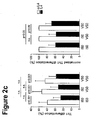
- the response of CD4 T cells from healthy individuals with known IL4R genotypes to IL4 was assessed with regard to the inhibitory effect of IL4 on Th1 cell differentiation to provide a possible mechanism underlying the association.
- V50 homozygosity for the development of joint erosion had a specificity of 0.85, and in combination with either other investigated predictive marker, SE or RF, the specificity further increased. V50 homozygosity had a higher predictive power for early erosive disease than RF and SE. Moreover, homozygosity for V50 SNP lead to a diminished inhibition by IL4 of Th1 cell differentiation and of IL12R ⁇ 2 expression on CD4 T cells. Nevertheless, it can also be demonstrated that in a heterozygous V50 situation the V50 SNP/V50 allele as described herein has a high predictive value.
- the data provided herein clearly identify the I50V SNP of IL4R (CD 124) as a reliable genetic marker for early joint destruction, in RA.
- the herein defined point mutation or "SNP" has a high predictive value for the erosive character of the disease and, i.e., for early joint destruction. This is of particular significance in the clinic and in a medical setting to identify patients with accelerated joint destruction early before the development of rheumatoid damage.
- IL4R as used herein relates to the interleukin-4 receptor and may be abbreviated herein as “IL-4R” and “IL4R”, as well as “IL-4 receptor”.
- the term is well known in the art and in the present invention it is of note that the position of nucleotides and/or amino acid residue position relate to the known ⁇ -chain of the IL-4R/IL4R.
- the IL4R is also known in the art as "cluster of differentiation 124" or "CD 124" and, accordingly, also in this invention the term "CD 124" is employed as synonym for IL4R, in particular for the IL4R ⁇ -chain.
- mutation in position 465 of the cDNA sequence encoding IL4R/IL-4R/CD124 relates to position 465 of the SEQ ID NO: 1 as provided herein below.
- SEQ ID NO: 1 corresponds to the wild-type cDNA sequence encoding IL-4R, i.e. the IL-4R ⁇ -chain.
- the variant/SNP described herein and to be employed in the diagnostic (ex vivo or in vitro) methods and the corresponding inventive uses and means relates to the exchange of isoleucine (encoded in the wild-type IL4R by the codon/triplett "auc”/”atc") to valine (encoded by het codon/triplett "guc"/"gtc”).
- the determination of homozygous or heterozygous wild-type sequence is of diagnostic value, in particular for the attending physician.
- the diagnostic value of the wild-type IL4R in the present case is the fact that a patient who suffers from rheumatoid arthritis and has, however, a wild-type IL4R (on the position 150/175 as described herein or in the corresponding encoding nucleotide sequence) requires a different medical treatment regime than a patient who has the herein described point mutation.
- a patient suffering from rheumatoid arthritis (RA) but being homozygous for the wild-type allele 150/175 can be treated less aggressively than a patient who has either homozygously or even heterozygously the mutant allele (V50/V75) described herein.
- Cases with at least one mutant (150 ⁇ V/I75 ⁇ V) allele merit aggressive treatment in order to prevent joint destruction or accelerated joint destruction, whereas (conversely) cases with the wild-type allele, in particular with homozygous wild-type alleles require and allow for a more conservative, less aggressive medical intervention/medical management.
- This sequence depicted herein above comprises in position 75 an "isoleucine” (I); wild-type sequence with 25 amino acid signal sequence.
- Said “I” is in the mutant SNP described herein replaced by a “valine” (V).
- Said point mutation is employed in the inventive methods, means and uses described herein and is a diagnostic marker for joint destruction, i.e. the prognosis or the progression of joint destruction. In particular, in case when such a point mutation is present in a human individual/human patient, it is indicated that this patient is treated in a more aggressive fashion in order to slow down and/or ameliorate joint destruction(s), in particular early joint destruction(s).
- the present invention is of high importance since an early intervention with medicaments improves the outcome in joint destruction/joint erosions in particular in rheumatoid arthritis.
- the attending physician can deduce whether an aggressive or less aggressive/moderate medical intervention is indicated in a given patient.
- the present invention is particularly useful in the deduction of patients who will suffer from a more prominent and/or early joint destruction/joint erosion. If a patient has the herein described point mutation, the likelihood to suffer from early joint destruction is much higher and said patient requires more aggressive and early treatment.
- SEQ ID NO: 2 comprises the encoded IL4R ⁇ -chain and an additional original signalpeptide of 25 amino acids. Accordingly, the SNP or variant described herein relates to an amino acid exchange from isoleucine to valine, which can be depicted and illustrated as "I75V” (relating to the polypeptide comprising the additional 25 amino acid signal sequence) and as "I50V” (relating to the encoded polypeptide without signal sequence).
- IL4R coding regions located on human chromosome 16
- X52425 gi: 33833
- AF421855 gi:15987825
- SEQ ID NO: 3 is also illustrative for an IL4R coding sequence which is homologous to the wild-type IL4R sequence shown in SEQ ID NO: 1 and which comprises additional identified variations to the wild-type sequence.
- Said SEQ ID NO: 3 is accessible under Accession number AF421855 (gi: 15987825) of the NCBI database.
- Variations to the wild-type sequence of IL4R are deducible from this NCBI entry and are also illustrated by the following information. These variations may also be comprised (and in addition) be detected in the methods provided herein. Accordingly, the exemplified variations provided below represent some naturally occurring variants or isofoms of human IL4R. The means, methods and uses provided in this invention are also related to the determination of the I50V/I75V variant of IL4R in these isoforms/variants.
- SEQ ID NO: 3 encodes for a polypeptide, comprising the herein described "I50V” (or “I75V”) SNP/variant.
- Said encoded polypeptide is shown in SEQ ID NO: 4, comprising the "V” at position 75 of the IL4R/CD124 polypeptide with a signal peptide of 25 amino acids (resulting in the "I75V” denomination).
- the present invention provides for a method of diagnosing and/or predicting early joint destruction in rheumatoid arthritis, rapidly erosive rheumatoid arthritis and/or accelerated joint destruction in rheumatoid arthritis, said method comprising determining in a sample obtained from an individual independent of HLA-DR shared epitope (SE) the presence of an encoded IL-4 receptor (IL-4) which comprises at the homologous position 75 of IL-4 receptor as depicted in SEQ ID NO: 2 a mutation, said mutation comprising the exchange from an isoleucine to a valine.
- SE HLA-DR shared epitope
- IL-4 receptor IL-4 receptor
- the wild-type allel (I50/I75) determined in a human patient i.e. a patient suffering from rheumatoid arthritis (or a related disorder)
- a human patient i.e. a patient suffering from rheumatoid arthritis (or a related disorder)
- the disorder is of less erosive character or even non-erosive character in terms of joint destruction. In such a case, a less aggressive and/or moderate treatment/medical intervention is indicated.
- the human individual/human patient has at least one mutant allele on position 50/75 of IL4R (i.e.
- the marker provided herein is a predictor for an erosive course of (rheumatoid) arthritis versus a non-ersosive course.
- the corresponding genetic disposition of an individual can, accordingly, influence the medical intervention, i.e. aggressive versus non- or less aggressive (e.g. DMARDs-treatment versus NSAIDs-treatment).
- the methods described herein i.e. the methods of diagnosing and/or predicting early joint destruction, accelerated joint destruction, rapid/rapidly erosive rheumatoid arthritis etc. may comprise PCR, MALDI-TOF, ligase chain reaction, NASBA, restriction digestion, direct sequencing, nucleic acid amplification techniques, hybridization techniques or immunoassays. Also further techniques are envisaged.
- the diagnosis of a rapid erosive rheumatoid disorder can, e.g., be effected by isolating cells from an individual, and isolating the genomic DNA of said cells. Such cells can be collected from body fluids, skin, hair, biopsies and other sources.
- peripheral blood is useful. Collection and analysis of cells from bodily fluids such as blood, urine and cerebrospinal fluid is well known to the art; see for example, Rodak, “Haematology: Clinical Principles & Applications” second ed., WB Saunders Co, 2002 ; Brunzel, “Fundamentals of Urine and Body Fluids Analysis", WB Saunders Co, 1994 ; Herndon and Brumback (Ed.), “Cerebrospinal Fluid", Kluwer Academic Pub., 1989 .
- methods for DNA isolation are well described in the art; see, for example, Sambrook et al., “Molecular Cloning: A Laboratory Manual”, 3rd edition, Cold Spring Harbor Laboratory, 2001 .
- oligonucleotide primers spanning the variant (I50V) coding region of IL4R (CD124) as described herein locus may be designed in order to amplify the genetic material by Polymerase Chain Reaction (PCR).
- PCR Polymerase Chain Reaction
- Conventional methods for designing, synthesizing, producing said oligonucleotide primers and performing PCR amplification may be found in standard textbooks, see, for example Agrawal (Ed.), "Protocols for Oligonucleotides and Analogs: Synthesis and Properties (Methods in Molecular Biology, 20)", Humana Press, 1993 ; Innis et al.
- RNA analysis may be employed in order to detect the presence or absence of the herein described I50V/I75V variant of IL4R (CD124).
- RT-PCR methods and techniques may be employed in accordance with this invention.
- Detection and analysis of variations, in particular the variant described herein, in IL4R/CD124 encoding nucleic acid sequences can also be performed using amplification refractory mutation system (ARMSTM), amplification refractory mutation system linear extension (ALEXTM), single-strand conformation polymorphism (SSCP), heteroduplex analysis, PCR-SSCP, fluorescent SSCP in an automated DNA sequencer, denaturing gradient gel electrophoresis, RNase protection assays, detection of mutations by sequence specific oligonucleotide hybridization, chemical cleavage methods, enzyme mismatch cleavage methods, cleavage fragment length methods, allele-specific oligonucleotide hybridization on DNA chips or wafers or arrays, and other such methods known in the art, see, for example Nollau et al, Clin.
- ARMSTM amplification refractory mutation system
- ALEXTM amplification refractory mutation system linear extension
- SSCP single-strand conformation poly
- SNPs and single point mutations in particular the mutation (I50V/I75V) described herein, can, inter alia, also be detected using various methods, like the analysis of restriction fragment length polymorphism and mobility shift of single-stranded DNAs ( Botstein, 1980 Am J Hum Genet 32: 314-31 ; Orita, 1989 PNAS 86: 2766-2770 ).
- PCR related methods or methods used in genotyping studies including automated DNA sequencing may provide important information about the occurrence of SNP's and single point mutations ( Saiki, 1989 PNAS 86: 6230-6234 ; Verpy, 1994 PNAS 91: 1873-1877 ). Corresponding techniques are also shown in the appended examples.
- fluorescently labelled allele- or SNP-specific hybridization probes are methods which allow rapid and reliable detection of DNA point mutations.
- Typical hybridization probes may comprise a short recognition sequence and two fluorophores whose spatial separation is governed by strand-specific hybridization. One unit serves as the reporting element and is modulated (turned on/off) by the proximity of the second by using Fluorescence resonance energy transfer (FRET) technology.
- FRET Fluorescence resonance energy transfer
- Non-limiting examples include stem-loop molecular beacons and TaqMan-type probes, which are of current interest in real-time SNP screening ( Bonnet, 1999 PNAS 96: 6171-6176 ; Marras, 1999 Genet Anal 14: 151-156 ; Livak, 1999 Genet Anal 14: 143-149 ; Gaylord, 2005 PNAS 102: 34-39 ). High-throughput screening at the nucleotide level for previously identified point mutations may be accomplished by using genotyping chips ( Wang, 1998 Science 280: 1077-1082 ).
- point mutations may be detected by using mass spectrometry techniques such as electrospray ionization-time of flight (ESI-TOF) or matrix-assisted laser desorption/ionization-time of flight (MALDI-TOF) analysis ( Taranenko,1996 Genet Anal 13: 87-94 ; Ball, 1998 Protein Sci 7: 758-764 ).
- mass spectrometry techniques such as electrospray ionization-time of flight (ESI-TOF) or matrix-assisted laser desorption/ionization-time of flight (MALDI-TOF) analysis ( Taranenko,1996 Genet Anal 13: 87-94 ; Ball, 1998 Protein Sci 7: 758-764 ).
- ESI-TOF electrospray ionization-time of flight
- MALDI-TOF matrix-assisted laser desorption/ionization-time of flight
- nucleic acid sequence means the sequence of bases comprising purine- and pyrimidine bases which are comprised by nucleic acid molecules, whereby said bases represent the primary structure of a nucleic acid molecule.
- Nucleic acid sequences include DNA, cDNA (e.g.
- RNA obtained from spliced and/or unspliced mRNA
- genomic DNA obtained from spliced and/or unspliced mRNA
- RNA obtained from spliced and/or unspliced mRNA
- synthetic forms and mixed polymers both sense and antisense strands, or may contain non-natural or derivatized nucleotide bases, as will be readily appreciated by those skilled in the art.
- the term "molecular variant”/"molecular isoform” IL4R/CD124 gene or protein as used herein means that said IL4R (CD124) gene or protein differs from the wild type IL4R (CD124) gene or protein by at least one nucleotide or amino acid substitution, deletion and/or addition. Variations and isoforms of IL4R are also provided above in context of SEQ ID NO. 3.
- the cDNA sequences of the wildtype ILAR gene as used herein is shown in SEQ ID NO: 1, and the wild-type IL4R amino acid sequence is shown in SEQ ID NO: 2.
- the methods of the present invention include that instead of determining the presence of a nucleotide sequence having the mutation described herein it is, alternatively, also possible to detect the presence of the encoded variant polypeptide of the described IL4R variant (namely the exchange from an isoleucine to a valine at position 75 of the IL4R as shown in SEQ ID NO : 2 or a similar or homologous substitution in a homologous variant (allelic variant) of the ILR as shown in SEQ ID NO: 2).
- the determination of the wild-type allel is of high diagnostic relevance since it allows for the determination of a less or even non-erosive character of the disease, i.e. in RA.
- a nucleotide sequence of human IL4R/CD124 is disclosed in NCBI nucleotide entry NCBI NM_000418 (gi: 56788409). Under the accession number AF421855 the complete cds of the IL4R gene is provided and specific variations, inter alia, the herein defined I50V/I75V variation is described. However, in the context of the present invention, the sequence as depicted in SEQ ID No:1 is referred to as the "wildtype" sequence.
- polypeptide means a peptide, a protein, or a polypeptide which encompasses amino acid chains of a given length, wherein the amino acid residues are linked by covalent peptide bonds.
- peptidomimetics of such proteins/polypeptides wherein amino acid(s) and/or peptide bond(s) have been replaced by functional analogs are also encompassed by the invention as well as other than the 20 gene-encoded amino acids, such as selenocysteine.
- Peptides, oligopeptides and proteins may be termed polypeptides.
- the terms polypeptide and protein are often used interchangeably herein.
- polypeptide also refers to, and does not exclude, modifications of the polypeptide, e.g., glycosylation, acetylation, phosphorylation and the like. Such modifications are well described in basic texts and in more detailed monographs, as well as in a voluminous research literature.
- a predisposition for a disease in particular the early joint destruction and/or rapidly erosive rheumatoid arthrits includes a tendency or susceptibility to develop a certain disease that can be triggered under certain conditions, e.g. influence of the environment, personal circumstances of a subject, such as the nutritional behavior of a subject.
- the tendency or susceptibility to develop a certain disease is associated with a genotype that increases the risk for developing a disease, if other certain conditions, such as those mentioned above, are present. Genetic testing is able to identify subjects who are genetically predisposed to certain health problems as defined herein.
- the disease for which a subject has a tendency or susceptibility to develop is preferably a disease related to the presence of a molecular variant of IL4R/CD124 as described herein and comprises early joint destruction, accelerated joint destruction and/or rapidly erosive rheumatoid arthritis.
- position when used in accordance with the present invention means the position of either an amino acid within an amino acid sequence depicted herein or the position of a nucleotide within a nucleic acid sequence depicted herein.
- corresponding as used herein also includes that a position is not only determined by the number of the preceding nucleotides/amino acids. The exact position of a given nucleotide in accordance with the present invention which may be substituted may vary due to deletions or additional nucleotides elsewhere in the IL4R/CD124 promoter or gene.
- nucleotides may differ in the indicated number (for example position “75" of the full IL4R (with signal sequence) or position 50 of the mature protein (without signal sequence) or position 465 of the nucleotide sequence representing the cDNA nucleotide sequence of a wildtype IL4R as shown in SEQ ID NO: 1 but may still have similar neighboring nucleotides.
- Said nucleotides which may be exchanged, deleted or comprise additional nucleotides are also comprised by the term "corresponding position".
- the position with respect to nucleotide sequences mentioned herein refers to the sequence shown in SEQ ID NO: 1.
- This sequence represents the cDNA nucleic acid sequence of the IL4R gene encoding the interleukin 4 receptor (CD124). It is possible for the skilled person to identify the position in the cDNA sequence corresponding to a position in SEQ ID NO: 1 by aligning the sequences.
- BLAST2.0 which stands for Basic Local Alignment Search Tool ( Altschul, Nucl. Acids Res. 25 (1997), 3389-3402 ; Altschul, J. Mol. Evol. 36 (1993), 290-300 ; Altschul, J. Mol. Biol. 215 (1990), 403-410 ), can be used to search for local sequence alignments.
- BLAST produces alignments of both nucleotide and amino acid sequences to determine sequence similarity. Because of the local nature of the alignments, BLAST is especially useful in determining exact matches or in identifying similar sequences.
- the fundamental unit of BLAST algorithm output is the High-scoring Segment Pair (HSP).
- An HSP consists of two sequence fragments of arbitrary but equal lengths whose alignment is locally maximal and for which the alignment score meets or exceeds a threshold or cutoff score set by the user.
- the BLAST approach is to look for HSPs between a query sequence and a database sequence, to evaluate the statistical significance of any matches found, and to report only those matches which satisfy the user-selected threshold of significance.
- the parameter E establishes the statistically significant threshold for reporting database sequence matches. E is interpreted as the upper bound of the expected frequency of chance occurrence of an HSP (or set of HSPs) within the context of the entire database search. Any database sequence whose match satisfies E is reported in the program output.
- BLAST Altschul (1997), loc. cit.; Altschul (1993), loc. cit.; Altschul (1990), loc. cit.) are used to search for identical or related molecules in nucleotide databases such as GenBank or EMBL. This analysis is much faster than multiple membrane-based hybridizations.
- the sensitivity of the computer search can be modified to determine whether any particular match is categorized as exact or similar.
- the basis of the search is the product score which is defined as: % sequence identity x % maximum BLAST score 100 and it takes into account both the degree of similarity between two sequences and the length of the sequence match. For example, with a product score of 40, the match will be exact within a 1-2% error; and at 70, the match will be exact.
- Similar molecules are usually identified by selecting those which show product scores between 15 and 40, although lower scores may identify related molecules.
- Another example for a program capable of generating sequence alignments is the CLUSTALW computer program ( Thompson, Nucl. Acids Res. 2 (1994), 4673-4680 ) or FASTDB ( Brutlag Comp. App. Biosci. 6 (1990), 237-245 ), as known in the art.
- the present invention describes a specific informative variant of one IL4R gene which means that at a certain position (465 of the full cDNA sequence as shown in SEQ ID NO: 1) of the wild-type IL4R/CD124 nucleotide sequence a nucleotide is replaced by a different nucleotide as described herein.
- the term "IL4R gene” or "CD 124 gene” includes the 5'UTR, exons, introns and the 3'UTR of IL4R/CD124 whose cDNA wild-type nucleotide sequences is shown in SEQ ID NO: 1.
- nucleotide residing at a position of the wild-type IL4R nucleic acid sequences mentioned herein is replaced by a nucleotide which is not the same nucleotide as that residing on the said position of the wild-type IL4R nucleic acid sequences.
- the present invention also relates to the use of nucleic acid molecules which hybridize to one of the above described nucleic acid molecules and which shows a mutation as described hereinabove in the methods and means provided herein.
- hybridizes as used in accordance with the present invention may relate to hybridizations under stringent or non-stringent conditions. If not further specified, the conditions are preferably non-stringent. Said hybridization conditions may be established according to conventional protocols described, for example, in Sambrook, Russell “Molecular Cloning, A Laboratory Manual”, Cold Spring Harbor Laboratory, N.Y. (2001 ); Ausubel, “Current Protocols in Molecular Biology”, Green Publishing Associates and Wiley Interscience, N.Y. (1989 ), or Higgins and Hames (Eds.) "Nucleic acid hybridization, a practical approach” IRL Press Oxford, Washington DC, (1985 ). The setting of conditions is well within the skill of the artisan and can be determined according to protocols described in the art.
- Non-stringent hybridization conditions for the detection of homologous or not exactly complementary sequences may be set at 6xSSC, 1% SDS at 65°C.
- the length of the probe and the composition of the nucleic acid to be determined constitute further parameters of the hybridization conditions. Note that variations in the above conditions may be accomplished through the inclusion and/or substitution of alternate blocking reagents used to suppress background in hybridization experiments. Typical blocking reagents include Denhardt's reagent, BLOTTO, heparin, denatured salmon sperm DNA, and commercially available proprietary formulations.
- Hybridizing nucleic acid molecules also comprise fragments of the above described molecules. Such fragments may represent nucleic acid sequences which code for a IL-4 receptor molecule (CD124) fragment thereof, and which have a length of at least 12 nucleotides, preferably at least 15, more preferably at least 18, more preferably of at least 21 nucleotides, more preferably at least 30 nucleotides, even more preferably at least 40 nucleotides and most preferably at least 60 nucleotides and which are capable to hybridize to a region to be amplified by recombinant techniques, said region comprising a mutation in position 465 as defined herein in context of SEQ ID NO: 1 (the cDNA wild-type IL4R sequence) and said position to be amplified or said region whereto these fragments hybridize to comprise the herein defined diagnostic mutation.
- CD124 IL-4 receptor molecule
- Hybridizing sequences in accordance with this invention may be specific primers and/or probes useful in the detection of the herein described variant/mutation of the IL4R (CD124) "I50V/"I75V".
- nucleic acid molecules which hybridize with any of the aforementioned nucleic acid molecules also include complementary fragments, derivatives and allelic variants of these molecules.
- a hybridization complex refers to a complex between two nucleic acid sequences by virtue of the formation of hydrogen bonds between complementary G and C bases and between complementary A and T bases; these hydrogen bonds may be further stabilized by base stacking interactions. The two complementary nucleic acid sequences hydrogen bond in an antiparallel configuration.
- a hybridization complex may be formed in solution (e.g., Cot or Rot analysis) or between one nucleic acid sequence present in solution and another nucleic acid sequence immobilized on a solid support (e.g., membranes, filters, chips, pins or glass slides to which, e.g., cells have been fixed).
- a solid support e.g., membranes, filters, chips, pins or glass slides to which, e.g., cells have been fixed.
- complementary or complementarity refer to the natural binding of polynucleotides under permissive salt and temperature conditions by base-pairing.
- the sequence "A-G-T” binds to the complementary sequence "T-C-A”.
- Complementarity between two single-stranded molecules may be "partial", in which only some of the nucleic acids bind, or it may be complete when total complementarity exists between single-stranded molecules.
- the degree of complementartity between nucleic acid strands has significant effects on the efficiency and strength of hybrid
- hybridizing sequences preferably refers to sequences which display a sequence identity of at least 40%, preferably at least 50%, more preferably at least 60%, even more preferably at least 70%, particularly preferred at least 80%, more particularly preferred at least 90%, even more particularly preferred at least 95% and most preferably at least 97% identity with a nucleic acid sequence as described above encoding an IL4R (CD124) protein having a described mutation.
- hybridizing sequences preferably refers to sequences encoding an IL4R (CD124) protein having a sequence identity of at least 40%, preferably at least 50%, more preferably at least 60%, even more preferably at least 70%, particularly preferred at least 80%, more particularly preferred at least 90%, even more particularly preferred at least 95% and most preferably at least 97% identity with an amino acid sequence of an IL4R (CD 124) variant comprising the herein described mutation/variation isoleucine to valine as described herein above.
- the term "identical” or “percent identity” in the context of two or more nucleic acid or amino acid sequences refers to two or more sequences or subsequences that are the same, or that have a specified percentage of amino acid residues or nucleotides that are the same (e.g., 60% or 65% identity, preferably, 70-95% identity, more preferably at least 95% identity), when compared and aligned for maximum correspondence over a window of comparison, or over a designated region as measured using a sequence comparison algorithm as known in the art, or by manual alignment and visual inspection. Sequences having, for example, 60% to 95% or greater sequence identity are considered to be substantially identical. Such a definition also applies to the complement of a test sequence.
- the described identity exists over a region that is at least about 15 to 25 amino acids or nucleotides in length, more preferably, over a region that is about 50 to 100 amino acids or nucleotides in length.
- Those having skill in the art will know how to determine percent identity between/among sequences using, for example, algorithms such as those based on CLUSTALW computer program ( Thompson Nucl. Acids Res. 2 (1994), 4673-4680 ) or FASTDB ( Brutlag Comp. App. Biosci. 6 (1990), 237-245 ), as known in the art.
- the BLASTP program uses as defaults a wordlength (W) of 3, and an expectation (E) of 10.
- W wordlength
- E expectation
- the present invention also relates to the use of nucleic acid molecules the sequence of which is degenerate in comparison with the sequence of an above-described hybridizing molecule.
- the term "being degenerate as a result of the genetic code” means that due to the redundancy of the genetic code different nucleotide sequences code for the same amino acid.
- these nucleic acid molecules are useful in the methods and means (like diagnostic kits) provided herein.
- the "I50V"/"I75V" SNP or point mutation is detected in homozygous alleles/homozygosity, in particular said mutation/SNP is detected in a sample from a homozygous individual.
- the detection in a homozygous individual is advantageous, however, also the detection of the I50V/I75V SNP/variant in a heterozygous subject or individual is conclusive and may successfully be employed in the methods and means of the invention.
- the determination of the wild-type allel(s) is/are of high diagnostic value, since it allows for the prediction whether the disases is of less (or even non-) erosive character.
- Individuals which are diagnosed in accordance with this invention to be bearer of at least one mutant allel as described herein i.e. V50/V75 of IL4R will suffer from a more erosive disease and more aggressive medical intervention is indicated in these patients.
- a more aggressive medical intervention in this erosive joint destruction is e.g.
- anti-TNF treatment anti-IL-15 treatment
- anti-IL-6 treatment treatment with CTLA-4Ig
- depletion of B-cells like with antibodies directed against CD20 or CD22; see e.g. Rituximab ®
- DMARD-therapy depletion of B-cells (like with antibodies directed against CD20 or CD22; see e.g. Rituximab ®), or the "DMARD-therapy”.
- RA rheumatoid arthritis
- Some studies have shown that patients who have active RA in multiple joints and those who show high levels of certain antibodies based on blood tests have a 70% chance of developing joint damage within this early time period.
- the present invention provides for a reliable test in particular for these subjects/patients, since it is now possible to scrutinize now at an early point of time whether a given patient will suffer from erosive, early joint destruction or whether the diseases is less or even non-erosive, in case he/she is "wild-type" for the I50/I75 allel of IL4R as described herein.
- the term "subject" means an individual in need of a treatment of an affective disorder.
- the subject is a mammalian, particularly preferred a human, a horse, a camel, a dog, a cat, a pig, a cow, a goat or a fowl.
- the present invention is particularly useful in the determination whether a given or suspected RA of a human patient is erosive or non-erosive or whether a joint destruction is to be expected early on. If this is the case, since the human patient is either homo-or heterozygous for the herin desceibd point mutation (V50/V75 of IL4R), an aggressive medical intervention is indicated.
- the present invention provides for the prediction and/or diagnosis of erosive joint destruction, in particular an early joint destruction.
- Said joint destruction is in particular associated with early erosion(s) and/or a higher severity in the progression of rheumatoid arthritis (RA).
- RA rheumatoid arthritis
- the means and methods provided herein are particularly useful, since a positive result, i.e. the presence of the I50V/I75V IL4R SNP/mutation will ideally prompt an early and more aggressive therapeutic intervention in the positively screened/scored individuals.
- a positive result i.e. the presence of the I50V/I75V IL4R SNP/mutation will ideally prompt an early and more aggressive therapeutic intervention in the positively screened/scored individuals.
- Aggressive treatment that has been shown to prevent joint damage includes treatment with substances to inhibit the activity of TNF, treatment with substances to inhibit the activity of IL-1, treatment with substances to inhibit T cell costimulation (such as neutralizing antibodies to CD28 or fusion proteins such as CTLA-4Ig or derivatives thereof), treatment with substances to inhibit the activity of IL-6, treatment with substances to inhibit the activity of IL-15, treatment with substances to inhibit the activity of IL-17 or treatment with substances to deplete B cells (such as antibodies antibodies to CD20 or CD22, like Rituximab®, Rituxan® and MabThera®, Epratuzumab® and the like).
- Aggressive treatment also refers to any combination of two or more so called “disease modifying anti-rheumatic drugs (DMARDs)", such as methotrexate, cyclosporine, azathioprine, sulfasalazine, mycophenolate mofetil, chloroquirie, hydroxychloroquine, gold, D-penicillamine, bucillamine, cyclophosphamide and leflunomide.
- DMARDs disease modifying anti-rheumatic drugs
- patients who may show signs of bone and/or joint destruction but who appear to be homozygously "wild-type" at position 50 or 75 of the IL4R ⁇ -chain as described herein may be treated with commonly used non-steroidal anti-inflammatory drugs/NSAIDs, in particular during an early phase of the disease.
- non-steroidal anti-inflammatory drugs/NSAIDs commonly used non-steroidal anti-inflammatory drugs/NSAIDs, in particular during an early phase of the disease.
- patients with a "wild-type" genetic setting of IL4R on position I50/I75 of Il4R as described herein, but already suffering from bone erosions should be treated aggressivly.
- homozygous "wild-type" (I50/I75) subject or patients who are diagnosed early on (for example during their first visit at the attending physician or rheumatologist) as suffering from RA can be treated less aggressivly, for example with non-steroidal anti-inflammatory drugs/NSAIDs such as acetylsalicylic acid, indomethazine, acemathazine, proglumethazine, mefenaminic acid, diclofenac, aceclofenac, lonacolac, ibuprofen, ketoprofen, naproxene, flurbiprofen, tiaprofenic acid, piroxicam, tenoxicam, meloxicam, lomoxicam, celecoxib, etoricoxib, lumiracoxib, phenylbutazone, mofebutazone or solely with (low-dose) corticosteroids.
- non-steroidal anti-inflammatory drugs/NSAIDs such as acet
- I on the herein defined position 50 or 75 of alpha-chain IL4R protein sequence; showing no signs of joint and/or bone destruction may be treated with, inter alia, NSAIDs and/or low dose steroids, heterozygous patients (comprising one "150V”/ "I75V” allele/SNP in IL4R) may be treated with one DMARD, low dose steroids or NSAIDs (and should be frequently controlled by radiography) and homozygous patients (comprising the "I50V”/"I75V” SNP in both IL4R alleles) should be treated with "aggressive therapy" with biologicals as identified above, e.g. TNF neutralizing agents and/or a combination of two or more DMARDs in order to prevent bone erosions.
- biologicals as identified above, e.g. TNF neutralizing agents and/or a combination of two or more DMARDs in order to prevent bone erosions.
- the following treatment regime is envisaged as a non-limiting example.
- the determination of the allels at the IL4R I50V locus can be used for a stratification of the therapy in patients with recent onset rheumatoid arthritis. If a patient with recent onset rheumatoid arthritis has not developed bone erosions at the time of presentation, a patient with homozygosity for the wildtype allel (I50I/I75I) could be treated conservatively with low dose corticosteroids (for example and non-limiting : ⁇ 10 mg/d) and NSAIDS, but without DMARDs or biologics. The expected mild course of the disease would also merit control visits in intervals of six months durings the first two years of the disease.
- a patient with a heterozygosity at the IL4R I50V/I75V locus would require more aggresive treatment regimens, such as medium doses of corticosteroids at the beginning (for example and non-limiting: 20 mg/d initially and a reduction to 10 mg over a period of six weeks), NSAIDS and one DMARD, such as methotrexate.
- the follow-up visits would be scheduled in three to six months intervals.
- the patients should be started with most aggressive therapy, such as high dose steroids (for example and non-limiting: 50 mg/d with a reduction to 10 mg/d over a period of 6 weeks), a DMARD such as methotrexate or biologics (such as TNF inhibitors).
- a DMARD such as methotrexate or biologics (such as TNF inhibitors).
- follow-up visit should be scheduled every six weeks to three months, and any indication of persistently active disease should result in the decision to add a second DMARD or to switch to a biologic, like Rituximab or Abatacept.
- the method of detecting the herein described I50V/I75V SNP of IL4R may comprise detection on the protein as well as the nucleic acid molecule level and common methods comprise PCR-technology, ligase-chain reaction, NASBA, restriction digestion, direct sequencing, nucleic acid amplification techniques, MALDI, MALDI-TOF, hybridization techniques and/or immuno assays.
- immunoassays specific antibodies and/or binding molecules directed against an epitope, comprising the defined "V" in context of the surrounding amino acids may be employed. Therefore, preferably binding molecules and/or antibodies detecting an epitope comprise, e.g. the amino acid stretch SEAHTCVPENN or a part thereof may be employed.
- the specific antibody or binding molecule may also comprise a binding molecule that specifically detects a conformational and/or split epitope which is present in the I50V variant polypeptide described herein and which is not present in a wild-type IL4R ⁇ -chain or a homologous IL4R ⁇ -chain which does not comprise the "I50V"/ "I75V” SNP/variant.
- a binding molecule may also be a specific aptamer and the like.
- Antibodies to be employed in the present methods of the invention are not limited to polyclonal or monoclonal antibodies or antibodies derived from immunization of e.g. corresponding (laboratory) animals.
- the term "antibody” also relates to modified antibodies (like humanized antibodies, CDR-grafted antibodies, single chain antibodies) or antibody fragments, like F(ab) fragments and the like.
- the term "antibody molecule” or “antibody” relates to full immunoglobulin molecules, preferably IgMs, IgDs, IgEs, IgAs or IgGs, more preferably IgG1, IgG2, IgG2a, IgG2b, IgG3 or IgG4 as well as to parts of such immunoglobulin molecules, like Fab-fragments or V L -, V H - or CDR-regions. Furthermore, the term relates to modified and/or altered antibody molecules, like chimeric, CDR-grafted and humanized antibodies.
- the term also relates to modified or altered monoclonal or polyclonal antibodies as well as to recombinantly or synthetically generated/synthesized antibodies.
- the term also relates to intact antibodies as well as to antibody fragments/parts thereof, like, separated light and heavy chains, Fab, Fab/c, Fv, Fab', F(ab') 2 .
- antibody molecule also comprises antibody derivatives, the bifunctional antibodies and antibody constructs, like single chain Fvs (scFv) or antibody-fusion proteins.
- the invention also relates to the use of specific probes and/or primers, specific antibody molecules or specific binding molecules (like aptamers) in the preparation of a diagnostic composition for diagnosing and/or predicting, early joint destruction and/or accelerated joint destruction in rheumatoid arthritis independent of HLA-DR shared epitope (SE) and/or the erosive character of the disease, said joint destruction may be associated with early erosion(s) and/or a higher severity in the progression of rheumatoid arthritis (RA).
- specific probes and/or primers, specific antibody molecules or specific binding molecules (like aptamers) in the preparation of a diagnostic composition for diagnosing and/or predicting, early joint destruction and/or accelerated joint destruction in rheumatoid arthritis independent of HLA-DR shared epitope (SE) and/or the erosive character of the disease, said joint destruction may be associated with early erosion(s) and/or a higher severity in the progression of rheumatoid arthritis (RA).
- the present invention relates to the use of specific probes, like nucleic acid probes, primers as well as specific binding molecules, like antibodies or aptamers in the preparation of a diagnostic composition.
- said diagnostic composition may, inter alia, comprise one or more of the nucleic acid sequences as defined herein above as well as other specific reagents, like specific antibodies.
- the corresponding probes/primers/antobodies and/or binding meolecules comprised in the diagnostic composition of the present invention can also be packaged in a "kit".
- the present invention also relates to a kit comprising specific probes and/or primers for diagnosing and/or predicting early joint destruction and/or accelerated joint destruction in rheumatoid arthritis independent of HLA-DR shared epitope (SE), said probes and/or primers being capable of detecting at least one nucleic acid sequence selected encoding for point mutation as desciebd herein, i.e.
- kits comprising antibodies, binding molecules, aptamers and the like which are capable of selectively binding to an encoded protein (or fragment thereof) which comprises the point mutation as described herein, e.g the I50V/I75V mutation of IL4R.
- the diagnostic composition or kit of the present invention optionally comprises suitable means for detection.
- the nucleic acid molecule(s), or polypeptide(s) described above are, for example, suitable for use in immunoassays in which they can be utilized in liquid phase or bound to a solid phase carrier.
- suitable carriers include glass, polystyrene, polyvinyl ion, polypropylene, polyethylene, polycarbonate, dextran, nylon, amyloses, natural and modified celluloses, polyacrylamides, agaroses, and magnetite.
- the nature of the carrier can be either soluble or insoluble for the purposes of the invention.
- Solid phase carriers are known to those in the art and may comprise polystyrene beads, latex beads, magnetic beads, colloid metal particles, glass and/or silicon chips and surfaces, nitrocellulose strips, membranes, sheets, duracytes and the walls of wells of a reaction tray, plastic tubes or other test tubes.
- Suitable methods of immobilizing nucleic acid molecule(s), vector(s), host(s), antibody(ies), aptamer(s), polypeptide(s), etc. on solid phases include but are not limited to ionic, hydrophobic, covalent interactions or (chemical) crosslinking and the like.
- immunoassays which can utilize said compounds of the invention are competitive and non-competitive immunoassays in either a direct or indirect format.
- Commonly used detection assays can comprise radioisotopic or non-radioisotopic methods.
- immunoassays are the radioimmunoassay (RIA), the sandwich (immunometric assay) and the Northern or Southern blot assay.
- these detection methods comprise, inter alia, IRMA (Immune Radioimmunometric Assay), EIA (Enzyme Immuno Assay), ELISA (Enzyme Linked Immuno Assay), FIA (Fluorescent Immuno Assay), and CLIA (Chemioluminescent Immune Assay).
- the diagnostic compounds of the present invention may be employed in techniques like FRET (Fluorescence Resonance Energy Transfer) assays.
- labels and methods for labeling are known to those of ordinary skill in the art.
- Examples of the types of labels which can be used in the present invention include inter alia, fluorochromes (like fluorescein, rhodamine, Texas Red, etc.), enzymes (like horse radish peroxidase, ⁇ -galactosidase, alkaline phosphatase), radioactive isotopes (like 32P, 33P, 35S or 1251), biotin, digoxygenin, colloidal metals, chemi- or bioluminescent compounds (like dioxetanes, luminol or acridiniums).
- fluorochromes like fluorescein, rhodamine, Texas Red, etc.
- enzymes like horse radish peroxidase, ⁇ -galactosidase, alkaline phosphatase
- radioactive isotopes like 32P, 33P, 35S or 1251
- biotin digoxygenin
- biomolecules A variety of techniques are available for labeling biomolecules, are well known to the person skilled in the art and are considered to be within the scope of the present invention and comprise, inter alia, covalent coupling of enzymes or biotinyl groups, phosphorylations, biotinylations, random priming, nick-translations, tailing (using terminal transferases).
- Detection methods comprise, but are not limited to, autoradiography, fluorescence microscopy, direct and indirect enzymatic reactions, etc.
- Said diagnostic composition may be used for methods for detecting the presence and/or abundance of a nucleic acid molecule described herein, i.e. a nucleic acid molecule comprising a coding sequence which leads to the I50V (I75V) variant of IL4R (CD124) as described herein, in a biological and/or medical sample and/or for detecting expression of such a nucleic acid molecule (e.g. by determining the mRNA or the expressed polypeptide).
- a nucleic acid molecule described herein i.e. a nucleic acid molecule comprising a coding sequence which leads to the I50V (I75V) variant of IL4R (CD124) as described herein
- the present invention also relates to a kit comprising the diagnostic composition as described herein or the nucleic acid molecule, the polypeptide the primer or pair of primers of the invention (the mentioned primers are also described in the appended examples and herein below) or the molecule as identified or characterized in a method herein below of the present invention.
- the kit of the present invention further comprises, optionally (a) reaction buffer(s), storage solutions and/or remaining reagents or materials required for the conduct of scientific or diagnostic assays or the like.
- parts of the kit of the invention can be packaged individually in vials or bottles or in combination in containers or multicontainer units.
- kit of the present invention may be advantageously used as diagnostic kits, as research tools or therapeutic tools. Additionally, the kit of the invention may contain means for detection suitable for scientific, medical and/or diagnostic purposes. The manufacture of the kits follows preferably standard procedures which are known to the person skilled in the art.
- a specific probe to be used may be 5'-ACACGTGTATCCCTG-3' (SEQ ID NO: 5) for the detection of "I50” allele or 5'-CACGTGTGTCCCTG-3' (SEQ ID NO: 6) for the detection of "V50" allele.
- primer or primer pairs to be employed in the inventive method or in the corresponding uses may be determined by methods known in the art.
- Such primers/primer pairs may comprise 5'-ACCCAGCCCCTGTGTCT-3' (SEQ ID NO: 7) (forward primer), 5'-CGCGCCTCCGTTGTTC-3' (SEQ ID NO: 8) (reverse primer).
- probes/primers/antibodies/binding molecules/aptamers are used in automated diagnostic devices, like diagnostic robotors, automated analysers, automated PCR assays, automated detection technologies (like nucleic acid hybridization to sequencing, automated ELISA tests.
- automated diagnostic devices like diagnostic robotors, automated analysers, automated PCR assays, automated detection technologies (like nucleic acid hybridization to sequencing, automated ELISA tests.
- Automated assays known to the skilled artisan are discussed and the person skilled in the art can easily adopt the corresponding assay system to the measurement of the herein disclosed marker/SNP/allelic situation relating to the herein described IL4R single nucleotide polymorphism I50V/I75V.
- Examples of such automated systems comprise but are not limited to Beckman-Coulter Access, Abbott ARCHITECT and AxSYM, Bayer Advia Centaur, DPC IMMULITE 2000, and Roche Modular Analytics E170 Assay systems and methods in clinical chemistry to be employed in context of this invention are also described in Fraser, C G (1986) "Interpretation of Clinical Chemistry Laboratory Data” Blackwell ; Mayne, P D (1994) "Clinical Chemistry in Diagnosis and Treatment” 6th edition.
- RA patients were stratified according to the radiological outcome into an erosive and a non-erosive group. Although no association between I50V and Q551R IL4R SNPs and disease susceptibility was identified, the I50V SNP was strongly associated with a fast development of joint destruction. The predictive power of I50V SNP for early erosive disease was higher than that of RF and the shared epitope (SE), identifying the I50V IL4R SNP as a novel genetic marker in RA with a high predictive value for early joint destruction. Furthermore, we addressed the functional role of 150V SNP by analyzing the response of CD4 T cells of healthy individuals with known I50V genotypes to IL4.
- the cells homozygous for the V50 allele demonstrated a significantly lower responsiveness to IL4 as compared to those homozygous for 150 with regard to the inhibitory effect of IL4 on Th1 cell differentiation, providing thereby a possible mechanism which might underlie the newly identified association of I50V IL4R SNP with early erosions in RA.
- autoimmune connective tissue diseases such as psoriasis/psoriatic arthritis, systemic lupus erytematosis or ankylosing spondylitis were excluded from the study.
- the patient cohort consisted of 283 patients recruited by three rheumatologists from one of the major private rheumatology practices in Central Frankonia, a region with about 300.000 inhabitants, and of 188 patients recruited at the Department of Rheumatology at the University of Er Weg-Nuremberg and the Rheumatology Clinic Ratingen.
- Clinical data with potential diagnostic value such as age, sex, disease duration (DD), erythrocyte sedimentation rate (ESR), levels of C-reactive protein (CRP) and levels of IgM RF were.provided by the physicians. Radiographs two years after disease onset were available from 302 patients. Two independent experienced rheumatologists who were unaware of the study questions assessed the presence or absence of erosive damage. Patients were deemed to have an erosive arthropathy if one or more definitive erosions were apparent on any peripheral joint radiograph. Patients were then stratified at two-year terms into two groups: erosive RA and non-erosive RA.
- DNA isolation and genotyping 10 ml of heparinized peripheral blood were obtained from the RA patients and healthy individuals. Genomic DNA was isolated from white blood cells after the lysis of red blood cells by incubating the blood samples three times with 10 ml lysis buffer (10 mM Tris-HCl, pH 7.4, 10 mM NaCl, 3 mM MgCl 2 ) for 10 min on ice. Afterwards, DNA was isolated using the AquaPure Genomic DNA isolation kit (BioRad Laboratories, Munich, Germany), dissolved in water and stored at -80°C until analysis.
- 10 ml lysis buffer 10 mM Tris-HCl, pH 7.4, 10 mM NaCl, 3 mM MgCl 2
- Genotypes for I50V and Q551R SNPs of IL4R were determined by allele specific PCR using the Assays-by-Design service for SNP genotyping from Applied Biosystems (Darmstadt, Germany).
- PCR primer and probe sequences for the I50V SNP were: 5'-ACCCAGCCCCTGTGTCT-3' (SEQ ID NO: 7) (forward primer), 5'-CGCGCCTCCGTTGTTC-3' (SEQ ID NO: 8) (reverse primer), 5'-ACACGTGTATCCCTG-3' (SEQ ID NO: 5) (VIC-labeled 150 allele-detecting probe) and 5'-CACGTGTGTCCCTG-3' (SEQ ID NO: 6) (FAM-labeled V50 allele-detecting probe).
- PCR primer and probe sequences for the Q551R SNP were: 5' GCCGAAATGTCCTCCAGCAT-3' (SEQ ID NO: 9) (forward primer), 5'-TGCTCCACCGCATGTACAA-3' (SEQ ID NO: 10) (reverse primer), 5'-CAGTGGCTATCAGGAGT-3' (SEQ ID NO: 11) (VIC-labeled Q551 allele-detecting probe) and 5'-CAGTGGCTATCGGGAGT-3' (SEQ ID NO: 12) (FAM-labeled R551 allele-detecting probe).
- PCR was performed using the TaqMan Universal PCR Master Mix (Applied Biosystems) in the ABI PRISM 7000 Sequence Detection System (Applied Biosystems).
- HLA-DRB1 typing was performed using the DRB high-resolution kit from Biotest (Dreieich, Germany) as instructed by the manufacturer in the HLA-typing laboratory of the University of Erschau.
- Antibodies and cytokines The following monoclonal antibodies (mAb) and recombinant cytokines were used for cell purification, culture and staining: anti-CD3 (OKT3), anti-CD8 (OKT8), anti-CD45RO (UCHL1), anti-CD16 (3g8FcIII; all from the American Type Culture Collection); anti-CD19 (Dako Diagnostika, Hamburg, Germany); anti-human CD28 (28.2; BD PharMingen, Heidelberg, Germany); neutralizing anti-human IL4 and human recombinant IL4 (both from Endogen, Woburn, MA); human recombinant IL2 (Chiron, Kunststoff, Germany); FITC- or PE-conjugated mAbs to CD3, CD4, CD45RA (all from Dako Diagnostika); PE-labeled anti-IL4 (MP4-25D2), PE-labeled anti-IL2 (MQ1-17H12), FITC-conjugated anti-IFN ⁇
- CD4 T cells were isolated from heparinized peripheral blood of healthy individuals with identified IL4R genotypes by gradient centrifugation over a Ficoll layer (Biotest) followed by resetting of mononuclear cells with sheep erythrocytes and negative selection of CD4 T cells from the rosette positive fraction using mAbs against CD8, CD19, and CD16.
- an additional panning with mAbs to CD45RO was performed as previously described ( Skapenko (2001) J Immunol, 166(7):4283-4292 ). The purity of the recovered cell population was assessed by flow cytometry. Typically, ⁇ 90% of the cells were positive for CD3 and CD4, ⁇ 90% of isolated naive T cells were positive for CD45RA, and ⁇ 98% of the cells were viable after purification.
- naive CD4 T cells 0.5 x 10 6 /ml were primed by plate-bound OKT3 (1 ⁇ g/ml) and soluble anti-CD28 mAbs (1 ⁇ g/ml) in the presence of IL2 (10 U/ml) and in the presence of either anti-IL4 (10 ⁇ g/ml) or IL4 (31.25 ng/ml).
- IL2 10 U/ml
- IL4 31.25 ng/ml
- the cells were harvested, washed, counted, and rested for 2.5 days at a concentration of 1 x 10 6 cells/ml in medium supplemented with IL2 (10 U/ml).
- the differentiation of the T cells was determined by intracellular flow cytometry of cytoplasmic cytokines.
- IL12R ⁇ 2 chain expression To analyze the IL12R ⁇ 2 chain expression, freshly isolated CD4 T cells were activated with immobilized OKT3 (1 ⁇ g/ml) and soluble anti-CD28 mAbs (1 ⁇ g/ml) in the presence of IL2 (10 U/ml) and either anti-IL4 (10 ⁇ g/ml) or IL4 (31.25 ng/ml for IL12R ⁇ 2 protein or 7.8 ng/ml for IL12R ⁇ 2 mRNA expression analysis). IL12R ⁇ 2 protein surface expression was assessed after 96 h of culture by flow cytometry. IL12R ⁇ 2 mRNA levels were determined by quantitative RT-PCR after 48 h of priming.
- CD4 T cells were stimulated with ionomycin (1 ⁇ M, Calbiochem, Schwalbach, Germany) and PMA (20 ng/ml, Sigma-Aldrich, Taufkirchen, Germany) for 5 h at 37°C in the presence of 2 ⁇ M monensin, harvested, washed with PBS (Gibco Invitrogen) and fixed with 3% paraformaldehyde (Sigma-Aldrich) in PBS for 10 min at 37°C.
- ionomycin 1 ⁇ M, Calbiochem, Schwalbach, Germany
- PMA 20 ng/ml, Sigma-Aldrich, Taufkirchen, Germany
- IL12R ⁇ 2 expression on the surface of activated cells 100 x 10 3 cells were washed with 2% FCS/PBS, incubated with saturating amounts of PE-labeled Abs to IL12R ⁇ 2 for 15 min at 4°C and analyzed by flow cytometry.
- RNA isolation and quantitative RT-PCR CD4 T cells were activated as described above, harvested, washed with PBS, and total RNA was isolated using the RNeasy Mini Kit (Qiagen, Hilden, Germany). To exclude genomic DNA contamination, RNA samples were treated with DNase (Qiagen). mRNA was transcribed to cDNA for 1 h at 42°C in a total volume of 20 ⁇ l containing 1 x AMV RT buffer (Promega, Mannheim, Germany), ImM dNTPs, 100 ng/ml oligo dT 12-18 (both from Amersham Pharmacia Biotech, Freiburg, Germany), and 0.25 U/ ⁇ l AMV RT (Promega).
- a set of primers consisting of 5'-TCCAGATCCAGCAAATAGCACTTG-3' (SEQ ID NO: 13) (forward primer), 5'-AGTCTATCAGGAGCCTGTCCAA-3' (SEQ ID NO: 14) (reverse primer) and 5'-TTGCAGAGGAGAAGACAC-3' (SEQ ID NO: 15) (FAM-labeled probe) was designed by the Custom TaqMan Gene Expression Assay Service (Applied Biosystems). Relative quantification of IL12R ⁇ 2 cDNA to cyclophilin was determined by calculating the difference in cross-threshold values ( ⁇ Ct) according to the formula 2 - ⁇ Ct .
- ⁇ Ct cross-threshold values
- the 471 patients represent a geographically diverse, ethnically homogeneous cohort of RA patients who are likely to be broadly representative of patients with RA seen by rheumatologists (see Table 1 above).
- the mean ⁇ SD age of the patients at time of the analysis was 56.9 ⁇ 13.4 years, and 78% were female. 353 patients (75%) were RF positive, and 309 patients (66%) were positive for at least one SE allele.
- the mean CRP ⁇ SEM value was 19.9 ⁇ 0.2 mg/l, and the mean ⁇ SEM ESR was 27.8 ⁇ 1.2 mm/h.
- mean ⁇ SD DD was 7.0 ⁇ 6.1 years. Radiographs of the hands and/or feet two years after disease onset were available from 302 patients.
- Sensitivity and specificity of IL4R as a predictive marker for early bone erosion in RA a Predictive parameter Sensitivity (95% CI) Specificity (95% CI) 1x IL4R /V50 b 0.78 (0.70 - 0.84) 0.38 (0.31 - 0.47) 2x IL4R /V50 0.33 (0.25 - 0.41) 0.85 (0.78 - 0.90) 1x IL4R /V50 + HLA-DRB1 /SE c 0.58 (0.49 - 0.66) 0.64 (0.55 - 0.71) 2x IL4R /V50 + HLA-DRB1 /SE 0.23 (0.17 - 0.31) 0.90 (0.84 - 0.94) 1x IL4R /V50 + RF 0.56 (0.49 - 0.65) 0.54 (0.46 - 0.62) 2x IL4RN50 + RF 0.27 (0.20 - 0.35) 0.89 (0.83 - 0.94) 1
- IL4R appears to be a novel genetic marker with high predictive value for early erosive RA and might therefore be of significance in the clinic to identify patients with accelerated joint destruction early before the development of rheumatoid damage.
- Th1 cell differentiation is associated with accelerated disease progression (Kanik (1998) loc. cit.; van der Graaff (1998) loc. cit.) and on the role of IL4 in controlling Th1 differentiation
- IL4R SNPs can modulate the inhibitory effect of IL4 on Th1 differentiation in healthy individuals with a known I50V SNP genotype.
- Naive CD4 T cells were primed in vitro for 5 days with anti-CD3 and anti-CD28 antibodies to induce Th1 cell differentiation.
- Neutralizing anti-IL4 antibodies or IL4 were added to the cultures to allow the assessment of the inhibitory effect of IL4.
- Th1 cell differentiation was estimated by flow cytometry of cytoplasmic IFN ⁇ and IL4 ( Figures 2A , B ). As shown in Figure 2C (left panel), Th1 cell differentiation that occurred in the presence of neutralizing anti-IL4 antibodies was comparable in all three individual groups. The presence of IL4 in the culture resulted in a significant reduction in the frequencies of IFN ⁇ -producing Th1 cells in all groups. Strikingly, however, when the extent of Th1 cell differentiation in the presence of IL4 was normalized to the respective value of Th1 differentiation in the presence of anti-IL4, a clear difference in the effect of IL4 between the three groups became apparent ( Figure 2C , right panel). In other words, the extent of the inhibition of Th1 cell differentiation by IL4 was significantly less pronounced in the group of individuals homozygous for the variant allele, V50 as compared to the groups of 1501 or I50V individuals ( Figure 2C , right panel).
- IL4 inhibition for both, protein and mRNA levels of IL12 ⁇ 2 was about two times as pronounced in T cells from 1501 individuals compared to T cells isolated from V50V individuals. Together, V50 homozygosity mediated a markedly reduced response of the T cells to IL4. This might contribute to a more intensive Th1 cell differentiation in patients homozygous for V50 and lead in those patients to accelerated erosive disease.
- the predictive value of the RF and SE alleles in combination was much lower than the predictive value of V50 homozygosity, emphasizing the powerful capacity of IL4R as a newly identified predictive parameter to identify at-risk RA patients early in the disease.
- RA is a complex autoimmune disease that is, unlike those Mendelian traits causally related to the highly penetrant rare mutations of single-genes, caused by small individual effects of many low penetrant common alleles. This makes the identification of the autoimmune disease-related genes substantially difficult.
- V50 allele of IL4R is a reliable marker for susceptibility of RA because of several reasons: 1) its chromosomal position, 2) the important role of its ligand, IL4, in the pathogenesis of the disease, 3) previous identification of SNPs leading to functional alterations of IL4R, and 4) associations of IL4R with other complex diseases characterized by a Th1/Th2 shift. Therefore, we undertook a case-control association study with 471 RA patients and 371 age- and sex-matched healthy individuals. However, no association between the IL4R and RA susceptibility was detected in our cohort of RA patients.
- STAT6 acts as a repressor of the transcription of genes involved in Th1 cell differentiation, such as IFN ⁇ , IL12R ⁇ 2, and IL18R ⁇ .
- genes involved in Th1 cell differentiation such as IFN ⁇ , IL12R ⁇ 2, and IL18R ⁇ .
- IFN ⁇ genes involved in Th1 cell differentiation
- IL12R ⁇ 2 genes involved in Th1 cell differentiation
- IL18R ⁇ genes involved in Th1 cell differentiation
- I50V SNP vicinity to the IL4-binding site of the IL4R no alterations in IL4R affinity to IL4 have been observed (Mitsuyasu (1998) loc. cit.; Mitsuyasu (1999) loc. cit.).
- STAT6-dependent transcriptional activity in Jurkat T cells transfected with the 150 allelic variant of IL4R has been detected ( Stephenson (2004) J Immunol, 173(7):4523-4528 ).
- the data provided herein identify a unique genetic marker with high predictive value that is to be used for the benefit of RA patients to identify those with erosive disease early before irreversible joint damage has occurred. According therapeutic strategies can then be developed in accordance with the genetic pre-disposition of the invidual.
- Example 4 Specificity of the IL4R Single-Nucleotide Polymorphism I50V as a Predictive Marker in Rheumatoid Arthritis: No association with Erosive Disease in Psoriatic Arthritis
- IL4 receptor polymorphisms have been demonstrated to predispose to an imbalance in the Thl/Th2 ratio of adaptive immune responses in a variety of immune disorders ( Romagnani, Immunol Today (1997) 18:263-6 ).
- association studies as provided in the above examples of two functional single nucleotide polymorphisms in the coding region of the IL-4 R gene, the I50V and the Q551R polymorphisms (which are on different haplotype blocks) has demonstrated that the inheritance of the 50V encoding SNP enhances the genetic risk for joint destruction and an erosive Th1-biased disease course in rheumatoid arthritis considerably.
- the 376 controls had no psoriasis vulgaris at the time of recruitment when average age was 32 ⁇ 10 years. All of them were healthy blood donors and recruited in Northern Germany. 59 % of probands were male.
- Genotyping of the two SNPs in the IL4R gene was performed with either Taqman SNP Genotyping Assays from Applied Biosystems (Foster City, USA) in the case of rs1805010 (I50V) or with self-designed primers and TaqMan mgb-probes for rs1801275 (Q551R). All Taqman reactions were carried out in an ABI Prism 7900HT Sequence Detection System (Applied Biosystems) with 10 ng of genomic DNA as a template in a 5 ⁇ l reaction using standard thermal cycling conditions. Sequences of primers and probes as well as assay IDs are available upon request. Taqman genotypes for both polymorphisms were verified by direct sequencing of 24 randomly chosen samples.
- Genotype rs1805010 (I50V) Yes No OR ⁇ p ⁇ AA (I) 54 21 AG 92 42 0.85 0.64 GG (V) 29 13 0.86 0.83 Erosive disease was determined by analysis of radiographs. ⁇ Values were calculated with Fisher's exact test. ⁇ Odds ratios (ORs) were calculated relative to the reference allele homozygote (AA).
- homozygosity for the IL4R 50V allele that is a risk for an erosive RA course did not prove to have the same predictive value for radiographic outcome in PsA.
- the predictive value of homozygosity for the IL4R-50V allele has been suggested to be used as a genetic marker for the decision making on therapeutic treatment strategies in early RA especially on expensive modalities such as anti-TNF-therapy that is also successfully applied to PsA. These studies suggest that this marker would not improve patient stratification according to individual risk profiles in PsA by contrast to RA where it might be beneficial. 2.
Landscapes
- Chemical & Material Sciences (AREA)
- Life Sciences & Earth Sciences (AREA)
- Proteomics, Peptides & Aminoacids (AREA)
- Health & Medical Sciences (AREA)
- Organic Chemistry (AREA)
- Wood Science & Technology (AREA)
- Analytical Chemistry (AREA)
- Zoology (AREA)
- Genetics & Genomics (AREA)
- Engineering & Computer Science (AREA)
- Pathology (AREA)
- Immunology (AREA)
- Microbiology (AREA)
- Molecular Biology (AREA)
- Biotechnology (AREA)
- Biophysics (AREA)
- Physics & Mathematics (AREA)
- Biochemistry (AREA)
- Bioinformatics & Cheminformatics (AREA)
- General Engineering & Computer Science (AREA)
- General Health & Medical Sciences (AREA)
- Measuring Or Testing Involving Enzymes Or Micro-Organisms (AREA)
Claims (12)
- Verfahren zum Diagnostizieren und/oder Prognostizieren erosiver Gelenkzerstörung bei rheumatoider Arthritis, umfassend, unabhängig von der Bestimmung des HLA-DR-Shared-Epitope (SE), das Bestimmen in einer Probe, die von einem Individuum erhalten wurde, des Vorliegens mindestens einer Nucleinsäuresequenz, die ausgewählt ist aus der Gruppe bestehend aus:(a) einer Nucleinsäuresequenz, die einen IL-4-Rezeptor (IL-4R) codiert, der eine Mutation an Position 465 der Nucleotidsequenz des wie in SEQ ID NO:1 gezeigten Wildtyp-IL4R enthält, wodurch an dieser Position das Nucleotid A durch das Nucleotid G ersetzt ist;(b) einer Nucleinsäuresequenz, die einen IL-4-Rezeptor (IL-4R) codiert, wobei der IL-4R an der wie in SEQ ID NO:2 gezeigten Position 75 ein Valin umfasst;(c) einer Nucleinsäuresequenz, die mindestens 15 Nucleotide der Nucleinsäuresequenz von (a) oder (b) umfasst und die wie in (a) oder (b) definierte Mutation umfasst;(d) einer Nucleinsäuresequenz, die eine wie in SEQ ID NO:3 gezeigte Nucleotidsequenz oder ein Fragment der wie in SEQ ID NO:3 gezeigten Sequenz umfasst, wobei das Fragment die wie an den Positionen 5758 bis 5760 der SEQ ID NO:3 gezeigte Nucleotidsequenz "gtc"/"guc" umfasst und das Fragment mindestens 15 Nucleotide umfasst;(e) einer Nucleotidsequenz, die ein Polypeptid codiert, das die in SEQ ID NO: 4 gezeigte Aminosäuresequenz umfasst; und(f) einer Nucleinsäuresequenz, die mindestens 12 Nucleotide umfasst, die unter stringenten Bedingungen an eine wie in einem von (a) bis (e) definierte Nucleotidsequenz hybridisiert und eine wie in (a) oder (b) definierte Mutation aufweist.
- Verfahren zum Diagnostizieren und/oder Prognostizieren erosiver Gelenkzerstörung bei rheumatoider Arthritis, umfassend, unabhängig von der Bestimmung des HLA-DR-Shared-Epitope (SE), das Bestimmen in einer Probe, die von einem Individuum erhalten wurde, des Vorliegens mindestens eines codierten IL-4-Rezeptors (IL-4R), der an der homologen Position 75 des wie in SEQ ID NO:2 gezeigten IL-4-Rezeptors eine Mutation umfasst, wobei die Mutation den Austausch eines Isoleucins zu einem Valin umfasst.
- Verfahren nach Anspruch 1, wobei die Mutation in homozygoten Allelen/Homozygotie nachgewiesen wird.
- Verfahren nach einem der Ansprüche 1 bis 3, wobei die Gelenkzerstörung mit Erosion(en) und/oder einem höheren Schweregrad beim Fortschreiten der rheumatoiden Arthritis (RA) in Zusammenhang steht.
- Verfahren nach einem der Ansprüche 1 bis 4, wobei das Verfahren PCR-Technik, Ligasekettenreaktion, NASBA, Restriktionsverdau, direkte Sequenzierung, Nucleinsäureamplifikationstechniken, MALDI, MALDI-TOF, Hybridisierungstechniken und/oder Immunassays umfasst.
- Verwendung spezifischer Sonden und/oder Primer bei der in vitro-Diagnose und/oder Prognose erosiver Gelenkzerstörung bei rheumatoider Arthritis unabhängig von der Bestimmung des HLA-DR-Shared-Epitope (SE), wobei die Sonden und/oder Primer in der Lage sind, mindestens eine Nucleinsäuresequenz nachzuweisen, die ausgewählt ist aus der Gruppe bestehend aus(a) einer Nucleinsäuresequenz, die einen IL-4-Rezeptor (IL-4R) codiert, der eine Mutation an Position 465 der Nucleotidsequenz des wie in SEQ ID NO:1 gezeigten Wildtyp-IL4R enthält, wodurch an dieser Position das Nucleotid A durch das Nucleotid G ersetzt ist;(b) einer Nucleinsäuresequenz, die einen IL-4-Rezeptor (IL-4R) codiert, wobei der IL-4R an der wie in SEQ ID NO:2 gezeigten Position 75 ein Valin umfasst;(c) einer Nucleinsäuresequenz, die mindestens 15 Nucleotide der Nucleinsäuresequenz von (a) oder (b) umfasst und die wie in (a) oder (b) definierte Mutation umfasst;(d) einer Nucleinsäuresequenz, die eine wie in SEQ ID NO:3 gezeigte Nucleotidsequenz oder ein Fragment der wie in SEQ ID NO:3 gezeigten Sequenz umfasst, wobei das Fragment die wie an den Positionen 5758 bis 5760 der SEQ ID NO:3 gezeigte Nucleotidsequenz "gtc"/"guc" umfasst und das Fragment mindestens 15 Nucleotide umfasst;(e) einer Nucleinsäuresequenz, die ein Polypeptid codiert, das die wie in SEQ ID NO:4 gezeigte Aminosäuresequenz umfasst; und(f) einer Nucleinsäuresequenz, die mindestens 12 Nucleotide umfasst, die unter stringenten Bedingungen an eine wie in einem von (a) bis (e) definierte Nucleotidsequenz hybridisiert und eine wie in (a) und (b) definierte Mutation aufweist.
- Verwendung spezifischer Antikörpermoleküle oder spezifischer Bindemoleküle bei der in vitro-Diagnose und/oder Prognose erosiver Gelenkzerstörung bei rheumatoider Arthritis unabhängig von der Bestimmung des HLA-DR-Shared-Epitope (SE), wobei das spezifische Antikörpermolekül oder das spezifische Bindemolekül in der Lage ist, ein Epitop spezifisch zu erkennen und/oder spezifisch an ein Epitop zu binden, das von einer Nucleinsäuresequenz codiert wird, die ausgewählt ist aus der Gruppe bestehend aus(a) einer Nucleinsäuresequenz, die einen IL-4-Rezeptor (IL-4R) codiert, der eine Mutation an Position 465 der Nucleotidsequenz des wie in SEQ ID NO:1 gezeigten Wildtyp-IL4R enthält, wodurch an dieser Position das Nucleotid A durch das Nucleotid B ersetzt ist;(b) einer Nucleinsäuresequenz, die einen IL-4-Rezeptor (IL-4R) codiert, wobei der IL-4R an der wie in SEQ ID NO:2 gezeigten Position 75 ein Valin umfasst;(c) einer Nucleinsäuresequenz, die mindestens 15 Nucleotide der Nucleinsäuresequenz von (a) oder (b) umfasst und eine wie in (a) oder (b) definierte Mutation umfasst;(d) einer Nucleinsäuresequenz, die eine wie in SEQ ID NO:3 gezeigte Nucleotidsequenz oder ein Fragment der wie in SEQ ID NO:3 gezeigten Sequenz umfasst, wobei das Fragment die wie an den Positionen 5758 bis 5760 der SEQ ID NO:3 gezeigte Nucleotidsequenz "gtc"/"guc" umfasst und wobei das Fragment mindestens 15 Nucleotide umfasst;(e) einer Nucleinsäuresequenz, die ein Polypeptid codiert, das die wie in SEQ ID NO:4 gezeigte Aminosäuresequenz umfasst; und(f) einer Nucleinsäuresequenz, die mindestens 12 Nucleotide umfasst, die unter stringenten Bedingungen an eine wie in einem von (a) bis (e) definierte Nucleotidsequenz hybridisiert und eine wie in (a) oder (b) definierte Mutation aufweist,wobei der Antikörper oder das Bindemolekül ein Epitop erkennt, das den Aminosäureabschnitt SEAHTCVPENN umfasst.
- Verwendung nach Anspruch 6 oder 7, wobei die Gelenkzerstörung mit früher Erosion/frühen Erosionen und/oder einem höheren Schweregrad beim Fortschreiten der rheumatoiden Arthritis (RA) in Zusammenhang steht.
- Verwendung nach Anspruch 6 oder 8, wobei die spezifische Sonde aus der Gruppe bestehend aus 5'-ACACGTGTATCCCTG-3' (SEQ ID NO:5) oder 5'-CACGTGTGTCCCTG-3' (SEQ ID NO:6) ausgewählt ist.
- Verwendung nach Anspruch 6, 8 oder 9, wobei der Primer aus der Gruppe bestehend aus 5'-ACCCAGCCCCTGTGTCT-3' (SEQ ID NO:7) (Vorwärts-Primer) oder 5'-CGCGCCTCCGTTGTTC-3' (SEQ ID NO:8) (Rückwärts-Primer) ausgewählt ist.
- Verwendung eines Kits, der spezifische Sonden und/oder Primer umfasst, für das Diagnostizieren und/oder Prognostizieren erosiver Gelenkzerstörung bei rheumatoider Arthritis unabhängig von der Bestimmung des HLA-DR-Shared-Epitope (SE), wobei die Sonden und/oder Primer in der Lage sind, mindestens eine Nucleinsäuresequenz nachzuweisen, die ausgewählt ist aus der Gruppe bestehend aus(a) einer Nucleinsäuresequenz, die einen IL-4-Rezeptor (IL-4R) codiert, der eine Mutation an Position 465 der Nucleotidsequenz des wie in SEQ ID NO:1 gezeigten Wildtyp-IL4R enthält, wodurch an dieser Position das Nucleotid A durch das Nucleotid G ersetzt ist;(b) einer Nucleinsäuresequenz, die einen IL-4-Rezeptor (IL-4R) codiert, wobei der IL-4R an der wie in SEQ ID NO:2 gezeigten Position 75 ein Valin umfasst;(c) einer Nucleinsäuresequenz, die mindestens 15 Nucleotide der Nucleinsäuresequenz von (a) oder (b) umfasst und die wie in (a) oder (b) definierte Mutation umfasst;(d) einer Nucleinsäuresequenz, die eine wie in SEQ ID NO:3 gezeigte Nucleotidsequenz oder ein Fragment der wie in SEQ ID NO:3 gezeigten Sequenz umfasst, wobei das Fragment die wie an den Positionen 5758 bis 5760 der SEQ ID NO:3 gezeigte Nucleotidsequenz "gtc"/"guc" umfasst und das Fragment mindestens 15 Nucleotide umfasst;(e) einer Nucleinsäuresequenz, die ein Polypeptid codiert, das die wie in SEQ ID NO:4 gezeigte Aminosäuresequenz umfasst; und(f) einer Nucleinsäuresequenz, die mindestens 12 Nucleotide umfasst, die unter stringenten Bedingungen an eine wie in einem von (a) bis (e) definierte Nucleotidsequenz hybridisiert und eine wie in (a) oder (b) definierte Mutation aufweist.
- Verwendung eines Kits, das spezifische Antikörpermoleküle oder spezifische Bindemoleküle umfasst, zum Diagnostizieren und/oder Prognostizieren erosiver Gelenkzerstörung bei rheumatoider Arthritis unabhängig von der Bestimmung des HLA-DR-Shared-Epitope (SE), wobei das spezifische Antikörpermolekül oder das spezifische Bindemolekül in der Lage ist, ein Epitop spezifisch zu erkennen und/oder spezifisch an ein Epitop zu binden, das von einer Nucleinsäuresequenz codiert wird, die ausgewählt ist aus der Gruppe bestehend aus(a) einer Nucleinsäuresequenz, die einen IL-4-Rezeptor (IL-4R) codiert, der eine Mutation an Position 465 der Nucleotidsequenz des wie in SEQ ID NO:1 gezeigten Wildtyp-IL4R enthält, wodurch an dieser Position das Nucleotid A durch das Nucleotid G ersetzt ist;(b) einer Nucleinsäuresequenz, die einen IL-4-Rezeptor (IL-4R) codiert, wobei der IL-4R an der wie in SEQ ID NO:2 gezeigten Position 75 ein Valin umfasst;(c) einer Nucleinsäuresequenz, die mindestens 15 Nucleotide der Nucleinsäuresequenz von (a) oder (b) umfasst und die wie in (a) oder (b) definierte Mutation umfasst;(d) einer Nucleinsäuresequenz, die eine wie in SEQ ID NO:3 gezeigte Nucleotidsequenz oder ein Fragment der wie in SEQ ID NO:3 gezeigten Sequenz umfasst, wobei das Fragment die wie an den Positionen 5758 bis 5760 der SEQ ID NO:3 gezeigte Nucleotidsequenz "gtc"/"guc" umfasst und das Fragment mindestens 15 Nucleotide umfasst;(e) einer Nucleinsäuresequenz, die ein Polypeptid codiert, das die wie in SEQ ID NO:4 gezeigte Aminosäuresequenz umfasst; und(f) einer Nucleinsäuresequenz, die mindestens 12 Nucleotide umfasst, die unter stringenten Bedingungen an eine wie in einem von (a) bis (e) definierte Nucleotidsequenz hybridisiert und eine wie in (a) oder (b) definierte Mutation aufweist,wobei der Antikörper oder das Bindemolekül ein Epitop detektiert, das den Aminosäureabschnitt SEAHTCVPENN umfasst.
Priority Applications (2)
| Application Number | Priority Date | Filing Date | Title |
|---|---|---|---|
| EP11172855A EP2380994A1 (de) | 2005-10-13 | 2006-10-12 | Mittel und Verfahren zur Vorhersage einer Gelenkzerstörung |
| EP06806238.9A EP1934375B1 (de) | 2005-10-13 | 2006-10-12 | Mittel und verfahren zur vorhersage von gelenkzerstörung |
Applications Claiming Priority (3)
| Application Number | Priority Date | Filing Date | Title |
|---|---|---|---|
| EP05022344 | 2005-10-13 | ||
| EP06806238.9A EP1934375B1 (de) | 2005-10-13 | 2006-10-12 | Mittel und verfahren zur vorhersage von gelenkzerstörung |
| PCT/EP2006/009884 WO2007042306A1 (en) | 2005-10-13 | 2006-10-12 | Means and methods for the prediction of joint destruction |
Related Child Applications (1)
| Application Number | Title | Priority Date | Filing Date |
|---|---|---|---|
| EP11172855A Division-Into EP2380994A1 (de) | 2005-10-13 | 2006-10-12 | Mittel und Verfahren zur Vorhersage einer Gelenkzerstörung |
Publications (2)
| Publication Number | Publication Date |
|---|---|
| EP1934375A1 EP1934375A1 (de) | 2008-06-25 |
| EP1934375B1 true EP1934375B1 (de) | 2015-04-15 |
Family
ID=37667466
Family Applications (2)
| Application Number | Title | Priority Date | Filing Date |
|---|---|---|---|
| EP06806238.9A Not-in-force EP1934375B1 (de) | 2005-10-13 | 2006-10-12 | Mittel und verfahren zur vorhersage von gelenkzerstörung |
| EP11172855A Withdrawn EP2380994A1 (de) | 2005-10-13 | 2006-10-12 | Mittel und Verfahren zur Vorhersage einer Gelenkzerstörung |
Family Applications After (1)
| Application Number | Title | Priority Date | Filing Date |
|---|---|---|---|
| EP11172855A Withdrawn EP2380994A1 (de) | 2005-10-13 | 2006-10-12 | Mittel und Verfahren zur Vorhersage einer Gelenkzerstörung |
Country Status (5)
| Country | Link |
|---|---|
| US (1) | US20090148843A1 (de) |
| EP (2) | EP1934375B1 (de) |
| CA (1) | CA2625446A1 (de) |
| DE (1) | DE06806238T1 (de) |
| WO (1) | WO2007042306A1 (de) |
Families Citing this family (5)
| Publication number | Priority date | Publication date | Assignee | Title |
|---|---|---|---|---|
| US8312486B1 (en) | 2008-01-30 | 2012-11-13 | Cinsay, Inc. | Interactive product placement system and method therefor |
| US20110191809A1 (en) | 2008-01-30 | 2011-08-04 | Cinsay, Llc | Viral Syndicated Interactive Product System and Method Therefor |
| US11227315B2 (en) | 2008-01-30 | 2022-01-18 | Aibuy, Inc. | Interactive product placement system and method therefor |
| WO2011097301A2 (en) * | 2010-02-02 | 2011-08-11 | Abbott Biotechnology Ltd. | METHODS AND COMPOSITIONS FOR PREDICTING RESPONSIVENESS TO TREATMENT WITH TNF-α INHIBITOR |
| KR101873499B1 (ko) * | 2015-02-10 | 2018-07-03 | 주식회사 원메디칼 | 혈관 질환 진단용 바이오 마커 및 이의 용도 |
Family Cites Families (8)
| Publication number | Priority date | Publication date | Assignee | Title |
|---|---|---|---|---|
| US5541308A (en) * | 1986-11-24 | 1996-07-30 | Gen-Probe Incorporated | Nucleic acid probes for detection and/or quantitation of non-viral organisms |
| GB8808015D0 (en) * | 1988-04-06 | 1988-05-05 | Ritter M A | Chemical compounds |
| EP0604693A1 (de) * | 1992-12-29 | 1994-07-06 | Schering-Plough | Monoklonale Antikörper gegen den menschlichen Interleukin-4-Rezeptor und Hybridomen die diese produzieren |
| CA2354673A1 (en) * | 1998-12-11 | 2000-06-15 | Children's Hospital Medical Center | Method for determining asthma susceptibility |
| US20020076409A1 (en) * | 2000-07-12 | 2002-06-20 | March Carl J. | Method for treating cancer |
| US20030152951A1 (en) * | 2001-07-20 | 2003-08-14 | Mirel Daniel B. | IL-4 receptor sequence variation associated with type 1 diabetes |
| US20040210400A1 (en) * | 2003-01-27 | 2004-10-21 | Perlegen Sciences, Inc. | Analysis methods for individual genotyping |
| US7732135B2 (en) * | 2003-08-05 | 2010-06-08 | Hershey Gurjit K Khurana | Genetic markers of food allergy |
-
2006
- 2006-10-12 WO PCT/EP2006/009884 patent/WO2007042306A1/en not_active Ceased
- 2006-10-12 CA CA002625446A patent/CA2625446A1/en not_active Abandoned
- 2006-10-12 US US12/089,843 patent/US20090148843A1/en not_active Abandoned
- 2006-10-12 EP EP06806238.9A patent/EP1934375B1/de not_active Not-in-force
- 2006-10-12 DE DE06806238T patent/DE06806238T1/de active Pending
- 2006-10-12 EP EP11172855A patent/EP2380994A1/de not_active Withdrawn
Also Published As
| Publication number | Publication date |
|---|---|
| WO2007042306A8 (en) | 2014-10-30 |
| EP2380994A1 (de) | 2011-10-26 |
| DE06806238T1 (de) | 2010-04-08 |
| WO2007042306A1 (en) | 2007-04-19 |
| EP1934375A1 (de) | 2008-06-25 |
| CA2625446A1 (en) | 2007-04-19 |
| US20090148843A1 (en) | 2009-06-11 |
Similar Documents
| Publication | Publication Date | Title |
|---|---|---|
| Prots et al. | Association of the IL4R single‐nucleotide polymorphism I50V with rapidly erosive rheumatoid arthritis | |
| JP2020079241A (ja) | Il−13アンアゴニストを用いて喘息を選択的に治療する方法 | |
| US10301679B2 (en) | Genetic polymorphisms, associated with rheumatoid arthritis, methods of detection and uses thereof | |
| Bridges Jr et al. | Single‐nucleotide polymorphisms in tumor necrosis factor receptor genes: definition of novel haplotypes and racial/ethnic differences | |
| AU778505B2 (en) | Genetic marker test for lupus | |
| Zheng et al. | Genetic polymorphisms of cell adhesion molecules in Behcet’s disease in a Chinese Han population | |
| WO2012006056A2 (en) | Ccr6 as a biomarker of alzheimer's disease | |
| Mohamed et al. | Influence of TRAF1/C5 and STAT4 genes polymorphisms on susceptibility and severity of rheumatoid arthritis in Egyptian population | |
| US7022476B2 (en) | Human FcγRIIB gene polymorphisms for assessing development of systemic lupus erythematosus and compositions for use thereof | |
| Wang et al. | A hypermorphic SP1-binding CD24 variant associates with risk and progression of multiple sclerosis | |
| EP1934375B1 (de) | Mittel und verfahren zur vorhersage von gelenkzerstörung | |
| Ikeuchi et al. | Polymorphisms in interleukin-4-related genes in patients with minimal change nephrotic syndrome | |
| WO2008048902A2 (en) | Methods of using single nucleotide polymorphisms in the il23r gene to predict or diagnose inflammatory bowel disease | |
| EP1536000A1 (de) | Verfahren zur beurteilung einer entzündlichen erkrankung | |
| US20110269125A1 (en) | Methods and compositions for predicting development of atopic diseases | |
| JP2014514915A (ja) | 関節リウマチとsstr2遺伝子の多型との間の遺伝的関連 | |
| EP2297347B1 (de) | Verfahren und kits zur überwachung der wirkung von immunmodulatoren auf die adaptive immunität | |
| EP1881081A1 (de) | Erhöhte Genauigkeit für die Diagnosestellung von Arthritis Rheumatoid durch die Kombination von Markern | |
| US20130064819A1 (en) | Biomarkers | |
| US20230110203A1 (en) | Therapeutic methods for the treatment of subjects with risk alelles in il33 | |
| Bakr et al. | Detection of some genetic polymorphism and serological factors associated with rheumatoid arthritis in Egyptian patients | |
| EP4256087A1 (de) | Verfahren zur vorhersage der patientenreaktion auf cd40-gerichtete therapien | |
| KORKMAZ | İSTANBUL TECHNICAL UNIVERSITY INSTITUTE OF SCIENCE AND TECHNOLOGY M. Sc. Thesis by Sinem KARAMAN, B. Sc. |
Legal Events
| Date | Code | Title | Description |
|---|---|---|---|
| PUAI | Public reference made under article 153(3) epc to a published international application that has entered the european phase |
Free format text: ORIGINAL CODE: 0009012 |
|
| 17P | Request for examination filed |
Effective date: 20080327 |
|
| AK | Designated contracting states |
Kind code of ref document: A1 Designated state(s): AT BE BG CH CY CZ DE DK EE ES FI FR GB GR HU IE IS IT LI LT LU LV MC NL PL PT RO SE SI SK TR |
|
| RIN1 | Information on inventor provided before grant (corrected) |
Inventor name: LIPSKY, PETER E. Inventor name: SKAPENKO, ALLA Inventor name: SCHULZE-KOOPS, HENDRIK |
|
| RAP1 | Party data changed (applicant data changed or rights of an application transferred) |
Owner name: SKAPENKO, ALLA Owner name: SCHULZE-KOOPS, HENDRIK |
|
| 17Q | First examination report despatched |
Effective date: 20090626 |
|
| DET | De: translation of patent claims | ||
| DAC | Divisional application: reference to earlier application (deleted) | ||
| DAX | Request for extension of the european patent (deleted) | ||
| GRAP | Despatch of communication of intention to grant a patent |
Free format text: ORIGINAL CODE: EPIDOSNIGR1 |
|
| INTG | Intention to grant announced |
Effective date: 20140930 |
|
| GRAS | Grant fee paid |
Free format text: ORIGINAL CODE: EPIDOSNIGR3 |
|
| GRAP | Despatch of communication of intention to grant a patent |
Free format text: ORIGINAL CODE: EPIDOSNIGR1 |
|
| GRAA | (expected) grant |
Free format text: ORIGINAL CODE: 0009210 |
|
| INTG | Intention to grant announced |
Effective date: 20150303 |
|
| AK | Designated contracting states |
Kind code of ref document: B1 Designated state(s): AT BE BG CH CY CZ DE DK EE ES FI FR GB GR HU IE IS IT LI LT LU LV MC NL PL PT RO SE SI SK TR |
|
| REG | Reference to a national code |
Ref country code: GB Ref legal event code: FG4D Ref country code: CH Ref legal event code: EP |
|
| REG | Reference to a national code |
Ref country code: IE Ref legal event code: FG4D |
|
| REG | Reference to a national code |
Ref country code: AT Ref legal event code: REF Ref document number: 722018 Country of ref document: AT Kind code of ref document: T Effective date: 20150515 |
|
| REG | Reference to a national code |
Ref country code: DE Ref legal event code: R096 Ref document number: 602006045145 Country of ref document: DE Effective date: 20150528 |
|
| REG | Reference to a national code |
Ref country code: NL Ref legal event code: T3 |
|
| REG | Reference to a national code |
Ref country code: NL Ref legal event code: T3 |
|
| REG | Reference to a national code |
Ref country code: AT Ref legal event code: MK05 Ref document number: 722018 Country of ref document: AT Kind code of ref document: T Effective date: 20150415 |
|
| REG | Reference to a national code |
Ref country code: LT Ref legal event code: MG4D |
|
| REG | Reference to a national code |
Ref country code: FR Ref legal event code: PLFP Year of fee payment: 10 |
|
| PG25 | Lapsed in a contracting state [announced via postgrant information from national office to epo] |
Ref country code: FI Free format text: LAPSE BECAUSE OF FAILURE TO SUBMIT A TRANSLATION OF THE DESCRIPTION OR TO PAY THE FEE WITHIN THE PRESCRIBED TIME-LIMIT Effective date: 20150415 Ref country code: LT Free format text: LAPSE BECAUSE OF FAILURE TO SUBMIT A TRANSLATION OF THE DESCRIPTION OR TO PAY THE FEE WITHIN THE PRESCRIBED TIME-LIMIT Effective date: 20150415 Ref country code: ES Free format text: LAPSE BECAUSE OF FAILURE TO SUBMIT A TRANSLATION OF THE DESCRIPTION OR TO PAY THE FEE WITHIN THE PRESCRIBED TIME-LIMIT Effective date: 20150415 Ref country code: PT Free format text: LAPSE BECAUSE OF FAILURE TO SUBMIT A TRANSLATION OF THE DESCRIPTION OR TO PAY THE FEE WITHIN THE PRESCRIBED TIME-LIMIT Effective date: 20150817 |
|
| PG25 | Lapsed in a contracting state [announced via postgrant information from national office to epo] |
Ref country code: LV Free format text: LAPSE BECAUSE OF FAILURE TO SUBMIT A TRANSLATION OF THE DESCRIPTION OR TO PAY THE FEE WITHIN THE PRESCRIBED TIME-LIMIT Effective date: 20150415 Ref country code: IS Free format text: LAPSE BECAUSE OF FAILURE TO SUBMIT A TRANSLATION OF THE DESCRIPTION OR TO PAY THE FEE WITHIN THE PRESCRIBED TIME-LIMIT Effective date: 20150815 Ref country code: GR Free format text: LAPSE BECAUSE OF FAILURE TO SUBMIT A TRANSLATION OF THE DESCRIPTION OR TO PAY THE FEE WITHIN THE PRESCRIBED TIME-LIMIT Effective date: 20150716 Ref country code: AT Free format text: LAPSE BECAUSE OF FAILURE TO SUBMIT A TRANSLATION OF THE DESCRIPTION OR TO PAY THE FEE WITHIN THE PRESCRIBED TIME-LIMIT Effective date: 20150415 |
|
| REG | Reference to a national code |
Ref country code: CH Ref legal event code: NV Representative=s name: VOSSIUS AND PARTNER, CH |
|
| REG | Reference to a national code |
Ref country code: DE Ref legal event code: R097 Ref document number: 602006045145 Country of ref document: DE |
|
| PG25 | Lapsed in a contracting state [announced via postgrant information from national office to epo] |
Ref country code: DK Free format text: LAPSE BECAUSE OF FAILURE TO SUBMIT A TRANSLATION OF THE DESCRIPTION OR TO PAY THE FEE WITHIN THE PRESCRIBED TIME-LIMIT Effective date: 20150415 Ref country code: EE Free format text: LAPSE BECAUSE OF FAILURE TO SUBMIT A TRANSLATION OF THE DESCRIPTION OR TO PAY THE FEE WITHIN THE PRESCRIBED TIME-LIMIT Effective date: 20150415 |
|
| PLBE | No opposition filed within time limit |
Free format text: ORIGINAL CODE: 0009261 |
|
| STAA | Information on the status of an ep patent application or granted ep patent |
Free format text: STATUS: NO OPPOSITION FILED WITHIN TIME LIMIT |
|
| PG25 | Lapsed in a contracting state [announced via postgrant information from national office to epo] |
Ref country code: SK Free format text: LAPSE BECAUSE OF FAILURE TO SUBMIT A TRANSLATION OF THE DESCRIPTION OR TO PAY THE FEE WITHIN THE PRESCRIBED TIME-LIMIT Effective date: 20150415 Ref country code: CZ Free format text: LAPSE BECAUSE OF FAILURE TO SUBMIT A TRANSLATION OF THE DESCRIPTION OR TO PAY THE FEE WITHIN THE PRESCRIBED TIME-LIMIT Effective date: 20150415 Ref country code: PL Free format text: LAPSE BECAUSE OF FAILURE TO SUBMIT A TRANSLATION OF THE DESCRIPTION OR TO PAY THE FEE WITHIN THE PRESCRIBED TIME-LIMIT Effective date: 20150415 Ref country code: RO Free format text: LAPSE BECAUSE OF NON-PAYMENT OF DUE FEES Effective date: 20150415 |
|
| 26N | No opposition filed |
Effective date: 20160118 |
|
| PG25 | Lapsed in a contracting state [announced via postgrant information from national office to epo] |
Ref country code: IT Free format text: LAPSE BECAUSE OF FAILURE TO SUBMIT A TRANSLATION OF THE DESCRIPTION OR TO PAY THE FEE WITHIN THE PRESCRIBED TIME-LIMIT Effective date: 20150415 |
|
| PG25 | Lapsed in a contracting state [announced via postgrant information from national office to epo] |
Ref country code: LU Free format text: LAPSE BECAUSE OF FAILURE TO SUBMIT A TRANSLATION OF THE DESCRIPTION OR TO PAY THE FEE WITHIN THE PRESCRIBED TIME-LIMIT Effective date: 20151012 Ref country code: SI Free format text: LAPSE BECAUSE OF FAILURE TO SUBMIT A TRANSLATION OF THE DESCRIPTION OR TO PAY THE FEE WITHIN THE PRESCRIBED TIME-LIMIT Effective date: 20150415 |
|
| PG25 | Lapsed in a contracting state [announced via postgrant information from national office to epo] |
Ref country code: MC Free format text: LAPSE BECAUSE OF FAILURE TO SUBMIT A TRANSLATION OF THE DESCRIPTION OR TO PAY THE FEE WITHIN THE PRESCRIBED TIME-LIMIT Effective date: 20150415 |
|
| REG | Reference to a national code |
Ref country code: CH Ref legal event code: PFA Owner name: SCHULZE-KOOPS, HENDRIK, DE Free format text: FORMER OWNER: SCHULZE-KOOPS, HENDRIK, DE |
|
| REG | Reference to a national code |
Ref country code: IE Ref legal event code: MM4A |
|
| PG25 | Lapsed in a contracting state [announced via postgrant information from national office to epo] |
Ref country code: BE Free format text: LAPSE BECAUSE OF FAILURE TO SUBMIT A TRANSLATION OF THE DESCRIPTION OR TO PAY THE FEE WITHIN THE PRESCRIBED TIME-LIMIT Effective date: 20150415 |
|
| REG | Reference to a national code |
Ref country code: FR Ref legal event code: PLFP Year of fee payment: 11 |
|
| PG25 | Lapsed in a contracting state [announced via postgrant information from national office to epo] |
Ref country code: IE Free format text: LAPSE BECAUSE OF NON-PAYMENT OF DUE FEES Effective date: 20151012 |
|
| PG25 | Lapsed in a contracting state [announced via postgrant information from national office to epo] |
Ref country code: HU Free format text: LAPSE BECAUSE OF FAILURE TO SUBMIT A TRANSLATION OF THE DESCRIPTION OR TO PAY THE FEE WITHIN THE PRESCRIBED TIME-LIMIT; INVALID AB INITIO Effective date: 20061012 Ref country code: BG Free format text: LAPSE BECAUSE OF FAILURE TO SUBMIT A TRANSLATION OF THE DESCRIPTION OR TO PAY THE FEE WITHIN THE PRESCRIBED TIME-LIMIT Effective date: 20150415 |
|
| PG25 | Lapsed in a contracting state [announced via postgrant information from national office to epo] |
Ref country code: SE Free format text: LAPSE BECAUSE OF FAILURE TO SUBMIT A TRANSLATION OF THE DESCRIPTION OR TO PAY THE FEE WITHIN THE PRESCRIBED TIME-LIMIT Effective date: 20150415 Ref country code: CY Free format text: LAPSE BECAUSE OF FAILURE TO SUBMIT A TRANSLATION OF THE DESCRIPTION OR TO PAY THE FEE WITHIN THE PRESCRIBED TIME-LIMIT Effective date: 20150415 |
|
| PG25 | Lapsed in a contracting state [announced via postgrant information from national office to epo] |
Ref country code: TR Free format text: LAPSE BECAUSE OF FAILURE TO SUBMIT A TRANSLATION OF THE DESCRIPTION OR TO PAY THE FEE WITHIN THE PRESCRIBED TIME-LIMIT Effective date: 20150415 |
|
| REG | Reference to a national code |
Ref country code: FR Ref legal event code: PLFP Year of fee payment: 12 |
|
| PGFP | Annual fee paid to national office [announced via postgrant information from national office to epo] |
Ref country code: DE Payment date: 20171027 Year of fee payment: 12 |
|
| PGFP | Annual fee paid to national office [announced via postgrant information from national office to epo] |
Ref country code: GB Payment date: 20171025 Year of fee payment: 12 Ref country code: CH Payment date: 20171025 Year of fee payment: 12 |
|
| REG | Reference to a national code |
Ref country code: FR Ref legal event code: PLFP Year of fee payment: 13 |
|
| PGFP | Annual fee paid to national office [announced via postgrant information from national office to epo] |
Ref country code: NL Payment date: 20181016 Year of fee payment: 13 |
|
| PGFP | Annual fee paid to national office [announced via postgrant information from national office to epo] |
Ref country code: FR Payment date: 20181015 Year of fee payment: 13 |
|
| REG | Reference to a national code |
Ref country code: DE Ref legal event code: R119 Ref document number: 602006045145 Country of ref document: DE |
|
| REG | Reference to a national code |
Ref country code: CH Ref legal event code: PL |
|
| GBPC | Gb: european patent ceased through non-payment of renewal fee |
Effective date: 20181012 |
|
| PG25 | Lapsed in a contracting state [announced via postgrant information from national office to epo] |
Ref country code: DE Free format text: LAPSE BECAUSE OF NON-PAYMENT OF DUE FEES Effective date: 20190501 |
|
| PG25 | Lapsed in a contracting state [announced via postgrant information from national office to epo] |
Ref country code: CH Free format text: LAPSE BECAUSE OF NON-PAYMENT OF DUE FEES Effective date: 20181031 Ref country code: LI Free format text: LAPSE BECAUSE OF NON-PAYMENT OF DUE FEES Effective date: 20181031 |
|
| PG25 | Lapsed in a contracting state [announced via postgrant information from national office to epo] |
Ref country code: GB Free format text: LAPSE BECAUSE OF NON-PAYMENT OF DUE FEES Effective date: 20181012 |
|
| REG | Reference to a national code |
Ref country code: NL Ref legal event code: MM Effective date: 20191101 |
|
| PG25 | Lapsed in a contracting state [announced via postgrant information from national office to epo] |
Ref country code: NL Free format text: LAPSE BECAUSE OF NON-PAYMENT OF DUE FEES Effective date: 20191101 |
|
| PG25 | Lapsed in a contracting state [announced via postgrant information from national office to epo] |
Ref country code: FR Free format text: LAPSE BECAUSE OF NON-PAYMENT OF DUE FEES Effective date: 20191031 |