EP1932522A1 - Therapeutic agent for liver disease containing 2-amino-1,3-propanediol derivative as active ingredient and therapeutic method for liver disease - Google Patents
Therapeutic agent for liver disease containing 2-amino-1,3-propanediol derivative as active ingredient and therapeutic method for liver disease Download PDFInfo
- Publication number
- EP1932522A1 EP1932522A1 EP06811299A EP06811299A EP1932522A1 EP 1932522 A1 EP1932522 A1 EP 1932522A1 EP 06811299 A EP06811299 A EP 06811299A EP 06811299 A EP06811299 A EP 06811299A EP 1932522 A1 EP1932522 A1 EP 1932522A1
- Authority
- EP
- European Patent Office
- Prior art keywords
- group
- carbon atoms
- liver disease
- liver
- amino
- Prior art date
- Legal status (The legal status is an assumption and is not a legal conclusion. Google has not performed a legal analysis and makes no representation as to the accuracy of the status listed.)
- Granted
Links
Images

Classifications
-
- A—HUMAN NECESSITIES
- A61—MEDICAL OR VETERINARY SCIENCE; HYGIENE
- A61K—PREPARATIONS FOR MEDICAL, DENTAL OR TOILETRY PURPOSES
- A61K31/00—Medicinal preparations containing organic active ingredients
- A61K31/13—Amines
- A61K31/135—Amines having aromatic rings, e.g. ketamine, nortriptyline
- A61K31/137—Arylalkylamines, e.g. amphetamine, epinephrine, salbutamol, ephedrine or methadone
-
- A—HUMAN NECESSITIES
- A61—MEDICAL OR VETERINARY SCIENCE; HYGIENE
- A61P—SPECIFIC THERAPEUTIC ACTIVITY OF CHEMICAL COMPOUNDS OR MEDICINAL PREPARATIONS
- A61P1/00—Drugs for disorders of the alimentary tract or the digestive system
-
- A—HUMAN NECESSITIES
- A61—MEDICAL OR VETERINARY SCIENCE; HYGIENE
- A61P—SPECIFIC THERAPEUTIC ACTIVITY OF CHEMICAL COMPOUNDS OR MEDICINAL PREPARATIONS
- A61P1/00—Drugs for disorders of the alimentary tract or the digestive system
- A61P1/16—Drugs for disorders of the alimentary tract or the digestive system for liver or gallbladder disorders, e.g. hepatoprotective agents, cholagogues, litholytics
-
- A—HUMAN NECESSITIES
- A61—MEDICAL OR VETERINARY SCIENCE; HYGIENE
- A61P—SPECIFIC THERAPEUTIC ACTIVITY OF CHEMICAL COMPOUNDS OR MEDICINAL PREPARATIONS
- A61P3/00—Drugs for disorders of the metabolism
-
- A—HUMAN NECESSITIES
- A61—MEDICAL OR VETERINARY SCIENCE; HYGIENE
- A61P—SPECIFIC THERAPEUTIC ACTIVITY OF CHEMICAL COMPOUNDS OR MEDICINAL PREPARATIONS
- A61P3/00—Drugs for disorders of the metabolism
- A61P3/08—Drugs for disorders of the metabolism for glucose homeostasis
- A61P3/10—Drugs for disorders of the metabolism for glucose homeostasis for hyperglycaemia, e.g. antidiabetics
-
- A—HUMAN NECESSITIES
- A61—MEDICAL OR VETERINARY SCIENCE; HYGIENE
- A61P—SPECIFIC THERAPEUTIC ACTIVITY OF CHEMICAL COMPOUNDS OR MEDICINAL PREPARATIONS
- A61P37/00—Drugs for immunological or allergic disorders
-
- A—HUMAN NECESSITIES
- A61—MEDICAL OR VETERINARY SCIENCE; HYGIENE
- A61P—SPECIFIC THERAPEUTIC ACTIVITY OF CHEMICAL COMPOUNDS OR MEDICINAL PREPARATIONS
- A61P37/00—Drugs for immunological or allergic disorders
- A61P37/02—Immunomodulators
- A61P37/06—Immunosuppressants, e.g. drugs for graft rejection
-
- A—HUMAN NECESSITIES
- A61—MEDICAL OR VETERINARY SCIENCE; HYGIENE
- A61P—SPECIFIC THERAPEUTIC ACTIVITY OF CHEMICAL COMPOUNDS OR MEDICINAL PREPARATIONS
- A61P43/00—Drugs for specific purposes, not provided for in groups A61P1/00-A61P41/00
Definitions
- the present invention relates to a novel therapeutic agent for treating liver diseases that contains as an active ingredient a diarylsulfide or diarylether derivative having 2-amino-1,3-propanediol structure, the compound that act as a sphingosine-1-phosphate receptor agonist, or a pharmaceutically acceptable salt and hydrate thereof.
- a liver disorder, hepatitis can be caused by viruses, alcohol and drugs. Of hepatitis of different etiology, viral hepatitis is most common. Viral hepatitis is caused by hepatitis viruses that infect the liver. In particular, hepatitis B and hepatitis C are known to lead not only to acute hepatic failure, but also to hepatic cirrhosis and liver cancer at a significantly high rate (Non-Patent Documents 1 and 2). Of the more than 40,000 deaths each year resulting from liver cancer and hepatic cirrhosis in Japan, approximately 70% are infected with hepatitis C virus and approximately 20% with hepatitis B virus (Non-Patent Document 3).
- Non-Patent Document 4 hepatitis B virus
- IFN interferons
- Non-Patent Document 6 Non-Patent Document 6
- the viruses harm the liver cells not by directly damaging the liver cells, but as a result of immune responses in which host's immune cells such as cytotoxic T cells eliminate and destroy the infected liver cells.
- the ideal treatment for the viral hepatitis is of course the elimination of virus.
- the viral load is not necessarily a function of the severity of inflammation in hepatitis B.
- Asymptomatic HBV carriers do not have liver inflammation despite a high viral load.
- Another option is to keep patients in a state of asymptomatic HBV carrier in which the virus survives but does not cause inflammation.
- the present invention provides compounds that prevent the onset of liver inflammation by suppressing T-cell activation.
- the therapeutic agent contains as an active ingredient a sphingosine-1-phosphate receptor agonist, specifically, a diarylsulfide or a diarylether derivative having 2-amino-1,3-propanediol structure, and a pharmaceutically acceptable salt and hydrate thereof.
- diarylsulfide or diarylether derivatives having 2-amino-1,3-propanediol structure the compounds that act as sphingosine-1-phosphate receptor agonists, as well as their pharmaceutically acceptable salts and hydrates, can be used as effective therapeutic agents for various diseases in organs, in particular liver diseases.
- the present invention concerns the following:
- R 1 is a halogen atom, a trihalomethyl group, a hydroxyl group, a lower alkyl group having 1 to 7 carbon atoms, a substituted or unsubstituted phenyl group, an aralkyl group, a lower alkoxy group having 1 to 4 carbon atoms, a trifluoromethyloxy group, a phenoxy group, a cyclohexylmethyloxy group, a substituted or unsubstituted aralkyloxy group, a pyridylmethyloxy group, a cinnamyloxy group, a naphthylmethyloxy group, a phenoxymethyl group, a hydroxymethyl group, a hydroxyethyl group, a lower alkylthio group having 1 to 4 carbon atoms, a lower alkylsulfinyl group having 1 to 4 carbon atoms, a lower alkylsulfonyl group having 1 to 4 carbon atoms,
- R 1 is a halogen atom, a trihalomethyl group, a hydroxyl group, a lower alkyl group having 1 to 7 carbon atoms, a substituted or unsubstituted phenyl group, an aralkyl group, a lower alkoxy group having 1 to 4 carbon atoms, a trifluoromethyloxy group, a phenoxy group, a cyclohexylmethyloxy group, a substituted or unsubstituted aralkyloxy group, a pyridylmethyloxy group, a cinnamyloxy group, a naphthylmethyloxy group, a phenoxymethyl group, a hydroxymethyl group, a hydroxyethyl group, a lower alkylthio group having 1 to 4 carbon atoms, a lower alkylsulfinyl group having 1 to 4 carbon atoms, a lower alkylsulfonyl group having 1 to 4 carbon atoms,
- a therapeutic agent for treating diseases in organs, especially liver diseases that contains as an active ingredient a diarylsulfide or diarylether derivative having 2-amino-1,3-propanediol structure, the compound that act as a sphingosine-1-phosphate receptor agonist, and a pharmaceutically acceptable salt and hydrate thereof.
- an effective method for treating hepatitis, fatty liver, toxic liver failure, hepatic cirrhosis, diabetes-associated liver diseases and other liver diseases are also provided.
- diarylsulfide or diarylether derivatives of the present invention have a 2-amino-1,3-propanediol structure and are novel sphingosine-1-phosphate receptor agonists.
- the compounds include those represented by the following general formula (1):
- R 1 is a halogen atom, a trihalomethyl group, a hydroxyl group, a lower alkyl group having 1 to 7 carbon atoms, a substituted or unsubstituted phenyl group, an aralkyl group, a lower alkoxy group having 1 to 4 carbon atoms, a trifluoromethyloxy group, a phenoxy group, a cyclohexylmethyloxy group, a substituted or unsubstituted aralkyloxy group, a pyridylmethyloxy group, a cinnamyloxy group, a naphthylmethyloxy group, a phenoxymethyl group, a hydroxymethyl group, a hydroxyethyl group, a lower alkylthio group having 1 to 4 carbon atoms, a lower alkylsulfinyl group having 1 to 4 carbon atoms, a lower alkylsulfonyl group having 1 to 4 carbon atoms,
- halogen atom includes a fluorine atom, a chlorine atom, a bromine atom and an iodine atom.
- trihalomethyl group includes a trifluoromethyl group and a trichloromethyl group.
- lower alkyl group having 1 to 7 carbon atoms refers to a straight or branched hydrocarbon having 1 to 7 carbon atoms, such as methyl, ethyl, propyl, isopropyl, butyl, t-butyl, pentyl, hexyl and heptyl.
- substituted or unsubstituted phenoxy group refers to a substituent consisting of a benzene ring that has at any of its ring positions a halogen atom (such as fluorine atom, chlorine atom, bromine atom and iodine atom), a trifluoromethyl group, a lower alkyl group having 1 to 4 carbon atoms or a lower alkoxy group having 1 to 4 carbon atoms.
- aralkyl as in “aralkyl group” and “aralkyloxy group” includes a benzyl group, a diphenylmethyl group, a phenethyl group and a phenylpropyl group.
- lower alkyl as in “lower alkoxy group having 1 to 4 carbon atoms, " “lower alkylthio group having 1 to 4 carbon atoms,” “lower alkylsulfinyl group having 1 to 4 carbon atoms” and “lower alkylsulfonyl group having 1 to 4 carbon atoms” refers to a straight or branched hydrocarbon having 1 to 4 carbon atoms, such as methyl, ethyl, propyl, isopropyl and butyl.
- substituted or unsubstituted aralkyl group refers to a substituent consisting of a benzene ring that has at any of its ring positions a halogen atom (such as fluorine atom, chlorine atom, bromine atom and iodine atom), a trifluoromethyl group, a lower alkyl group having 1 to 4 carbon atoms or a lower alkoxy group having 1 to 4 carbon atoms.
- halogen atom such as fluorine atom, chlorine atom, bromine atom and iodine atom
- the pharmaceutically acceptable salts of the compounds of the present invention represented by the general formula (1) include acid addition salts, such as hydrochlorides, hydrobromides, acetates, trifluoroacetates, methanesulfonates, citrates and tartrates.
- Specific examples of the compound of the general formula (1) include 2-amino-2-[4-(3-benzyloxyphenylthio)-2-chlorophenyl]ethyl-1,3-propanediol or hydrochlorides thereof.
- the compounds of the present invention represented by the general formula (1) are disclosed, for example, in WO 03/029184 and WO 03/029205 pamphlets and can be produced by the methods described in these publications.
- the compounds of the present invention and their pharmaceutically acceptable salts and hydrates are effective in the treatment of various diseases in organs, in particular, liver diseases.
- the therapeutic agents of the present invention may be administered either systemically or locally and either orally or parenterally. While the dosage form of the compounds may vary depending on the nature of the compounds, the compounds are typically formulated in oral or parenteral dosage forms. Specifically, the active ingredients may be mixed with pharmaceutically acceptable carriers, excipients, binders or diluents to prepare granules, powders, tablets, capsules, syrups, suppositories, suspensions or solutions.
- the compounds of the present invention may vary depending on their applications, or the body weight, age and conditions of patients receiving the treatment, the compounds are typically administered at a single dose of 0.01 to 100 mg/patient and more preferably at a single dose of 0.1 to 5 mg/patient, once to three times daily.
- Concanavalin A Male BALB/cmice, aged 8 to 12 weeks, were purchased from Charles River, Japan. Concanavalin A (referred to as "Con A,” hereinafter) was dissolved in phosphate-buffered saline (PBS). 0.2 ml of this solution was intravenously administered to the animals to deliver 40 mg/kg of Con A. KRP-203 suspended in distilled water was orally administered at a dose of 0.1 mg/10 g body weight 24 hours before the administration of Con A. The animals were sacrificed 24 hours after the administration of Con A and the serum transaminase activity was measured.
- PBS phosphate-buffered saline
- liver was perfused with 30 mL 0.1% EDTA-PBS to collect liver infiltrate ( Eur. J. Immunol., 17: 37, 1987 ). To avoid contamination with lymphocytes in the periphery blood, the first 2.5 ml of the collected 0.1% EDTA-PBS was discarded. The collected cells were stained with anti-CD4 antibody, anti-CD8 antibody, anti-CD3 antibody, anti-CD45/B220 antibody, anti-CD11b antibody, anti-Ly-49C antibody and were counted with FACS Calibur.
- Samples for histological analysis were prepared as follows: The liver was fixed in 10% formalin, embedded in paraffin, and sectioned. The resulting sections were stained with hematoxylin-eosin and observed for cell infiltration. The tissue was also frozen in liquid nitrogen in Tissue Tek, sectioned on Cryostat, and fixed in acetone. The resulting sections were immunostained with anti-mouse CD4 antibody, biotinylated anti-rat IgG antibody and streptavidin-alexa 488 and observed for infiltration of CD4 + T cells.
- Fig. 1 shows the serum ATLlevels measured 24 hours after administration of Con A.
- the animals were orally administered KRP-203 24 hours before the administration of Con A.
- ATLlevel is elevated, indicating liver damage.
- Pre-administration of 0.1 mg/kg and 1 mg/kg KRP-203 significantly suppressed the elevation of ATL levels.
- a tendency of suppression was also observed in the group administered a low dose of 0.01 mg/kg.
- the types and the numbers of cells that infiltrated the liver are shown in Table 1. The total number of infiltrated cells was decreased by about 50% in the group receiving KRP-203.
- Table 1 The types and numbers of the cells that infiltrated the liver Number of cells (X 10 5 ) Control KRP-203 1mg/kg Total cells 31.8 ⁇ 8.4 16.3 ⁇ 3.5* CD4 + 2.97 ⁇ 0.99 0.93 ⁇ 0.33* CD8 + 3.92 ⁇ 0.96 2. 53 ⁇ 0.64 CD3 + NK- 8. 24 ⁇ 2.30 2. 29 ⁇ 0.53* NK + CD3- 0.51 ⁇ 0.24 0.40 ⁇ 0.24 B220 + 6.24 ⁇ 2.06 2.06 ⁇ 0.21* CD11b + 10.72 ⁇ 4.36 8.47 ⁇ 2.75
- Figs. 2 and 3 Histological appearances of the liver are shown in Figs. 2 and 3 .
- Con A-induced infiltration of monocytes and polymorphonuclear leukocytes as well as clusters of necrosis regions were observed in the liver of untreated group. Vacuolation of hepatocytes was also observed in this group ( Fig. 2A ). Nosignificant infiltration of monocytes or necrotic changes was observed in the liver of KRP-203-treated mice ( Fig. 2B ).
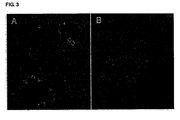
- Immunostaining of CD4 + T cells showed significant infiltration of CD4 + T cells in the control group ( Fig. 3A ), but no infiltration in the KRP-203-treated group ( Fig. 3B ).
- KRP-203 prevents the onset and spreading of inflammation by suppressing infiltration of T cells into the liver and can thus be used in the prevention and treatment of hepatitis.
- Compound (KRP-203) 0.1 mg D-mannitol 247.5 mg magnesium stearate 2.5 mg Specifically, Compound was blended with D-mannitol. Magnesium stearate was then blended into this mixture to form a mixed powder. The resulting mixed powder was packaged in a capsule to make a capsule formulation.
- the compound of the present invention prevents the onset and spreading of liver inflammation in Con A-induced hepatitis model by suppressing infiltration and accumulation of T cells in the liver.
- the diarylsulfide or diarylether derivatives having 2-amino-1,3-propanediol structure, as well as pharmaceutically acceptable salts and hydrates thereof are useful as a therapeutic agent for liver diseases.
- the compounds of the present invention are effective against diseases in other organs whose pathology primarily involves activated lymphocytes.
- diseases include renal diseases such as glomerular nephritis and tubulointerstitial disorders, vascular diseases such as arteriosclerosis, other autoimmune organ injuries (hepatitis such as autoimmune hepatitis and primary biliary cirrhosis, pancreatitis such as insulin-dependent diabetes, thyroiditis such as Basedow's disease and Hashimoto's disease, nephritis, multiplesclerosis and myasthenia gravis), and renal or cardiac organ injuries associated with ischemia reperfusion-injury.
- renal diseases such as glomerular nephritis and tubulointerstitial disorders
- vascular diseases such as arteriosclerosis, other autoimmune organ injuries (hepatitis such as autoimmune hepatitis and primary biliary cirrhosis, pancreatitis such as insulin-dependent diabetes, thyroiditis such as Basedow's disease and
- the compounds of the present invention are also effective against diseases caused by the activation of lymphocytes during infection.
- diseases include viral myocarditis; nephritis and toxic shock syndrome associated with staphylococcus infection; nephritis, toxic shock syndrome and psoriasis associated with streptococcus infection; Yersinia infection and Kawasaki's disease.
- diarylsulfide or diarylether derivatives having 2-amino-1,3-propanediol structure, and pharmaceutically acceptable salts and hydrates thereof provided in accordance with the present invention are useful as the therapeutic agent for various diseases in organs, especially liver diseases.
Landscapes
- Health & Medical Sciences (AREA)
- General Health & Medical Sciences (AREA)
- Life Sciences & Earth Sciences (AREA)
- Chemical & Material Sciences (AREA)
- Veterinary Medicine (AREA)
- Public Health (AREA)
- Medicinal Chemistry (AREA)
- Animal Behavior & Ethology (AREA)
- Pharmacology & Pharmacy (AREA)
- Engineering & Computer Science (AREA)
- Bioinformatics & Cheminformatics (AREA)
- Organic Chemistry (AREA)
- Nuclear Medicine, Radiotherapy & Molecular Imaging (AREA)
- General Chemical & Material Sciences (AREA)
- Chemical Kinetics & Catalysis (AREA)
- Immunology (AREA)
- Diabetes (AREA)
- Emergency Medicine (AREA)
- Epidemiology (AREA)
- Hematology (AREA)
- Obesity (AREA)
- Endocrinology (AREA)
- Transplantation (AREA)
- Gastroenterology & Hepatology (AREA)
- Acyclic And Carbocyclic Compounds In Medicinal Compositions (AREA)
- Pharmaceuticals Containing Other Organic And Inorganic Compounds (AREA)
Abstract

Description
- The present invention relates to a novel therapeutic agent for treating liver diseases that contains as an active ingredient a diarylsulfide or diarylether derivative having 2-amino-1,3-propanediol structure, the compound that act as a sphingosine-1-phosphate receptor agonist, or a pharmaceutically acceptable salt and hydrate thereof.
- A liver disorder, hepatitis can be caused by viruses, alcohol and drugs. Of hepatitis of different etiology, viral hepatitis is most common. Viral hepatitis is caused by hepatitis viruses that infect the liver. In particular, hepatitis B and hepatitis C are known to lead not only to acute hepatic failure, but also to hepatic cirrhosis and liver cancer at a significantly high rate (Non-Patent
Documents 1 and 2). Of the more than 40,000 deaths each year resulting from liver cancer and hepatic cirrhosis in Japan, approximately 70% are infected with hepatitis C virus and approximately 20% with hepatitis B virus (Non-Patent Document 3). - The therapeutic agents for hepatitis B and C have been intensively developed in recent years. However, even lamivudine, one of the most promising therapeutic agents for hepatitis B, is not effective to an extent that eliminates hepatitis B virus (HVB) from all of the patients (Non-Patent Document 4). Although the introduction of interferons (IFN) has brought about the recent advances in the treatment of hepatitis C, the combination therapy of IFN preparations and ribavirin is not effective enough (Non-Patent Document 5). Despite the progress of conventional therapeutic agents, many people persistently infected with the viruses are still in need of treatments since persistent hepatitis can lead to hepatic cirrhosis and, ultimately, to hepatic cell carcinoma.
- Recently, viral hepatitis has been realized as a incomplete immunological interaction between the host and the viruses without viral eliminateion (Non-Patent Document 6). It is now believed that the viruses harm the liver cells not by directly damaging the liver cells, but as a result of immune responses in which host's immune cells such as cytotoxic T cells eliminate and destroy the infected liver cells. The ideal treatment for the viral hepatitis is of course the elimination of virus. As in hepatitis C, the viral load is not necessarily a function of the severity of inflammation in hepatitis B.
- Asymptomatic HBV carriers do not have liver inflammation despite a high viral load. When elimination of the virus is impossible, another option is to keep patients in a state of asymptomatic HBV carrier in which the virus survives but does not cause inflammation. The present invention provides compounds that prevent the onset of liver inflammation by suppressing T-cell activation.
- 2-amino-1,3-propanediol derivatives described in the present application are already described compounds (
Patent Documents 1 and 2) and are known to be useful as immunosuppressors. Nonetheless, there is no previous studies or reports that demonstrate their use against liver diseases or suggest their efficacy to suppress liver inflammation. - Non-Patent
Document 1 Annu. Rev. Biochem. 56: 651 (1987) - Non-Patent Document 2 Proc. Natl. Acad. Sci. USA, 87: 6547 (1990)
- Non-Patent Document 3 Sogo Rinsyo, 54: 449 (2005)
- Non-Patent Document 4 N. Engl. J. Med., 348: 848 (2003)
- Non-Patent Document 5 N. Engl. J. Med., 347: 975 (2002)
- Non-Patent Document 6 J. Clin. Invest., 99: 1472 (1997)
-
Patent Document 1WO 2003/029184 pamphlet - Patent Document 2
WO 2003/029205 pamphlet - It is an obj ect of the present invention to provide a therapeutic agent for treating diseases in organs, especially liver diseases. The therapeutic agent contains as an active ingredient a sphingosine-1-phosphate receptor agonist, specifically, a diarylsulfide or a diarylether derivative having 2-amino-1,3-propanediol structure, and a pharmaceutically acceptable salt and hydrate thereof.
- The present inventors have devised the present invention based on our finding that diarylsulfide or diarylether derivatives having 2-amino-1,3-propanediol structure, the compounds that act as sphingosine-1-phosphate receptor agonists, as well as their pharmaceutically acceptable salts and hydrates, can be used as effective therapeutic agents for various diseases in organs, in particular liver diseases.
- Accordingly, the present invention concerns the following:
- 1) A therapeutic agent for treatment of liver disease containing as an active ingredient a diarylsulfide or diarylether derivative having 2-amino-1,3-propanediol structure and represented by the following general formula (1):
-

- 2) The therapeutic agent for treatment of liver disease

- 3) The therapeutic agent for treatment of liver disease according to 1), wherein the compound represented by the general formula (1) comprises as an active ingredient 2-amino-2-[4-(3-benzyloxyphenylthio)-2-chlorophenyl]ethyl-1,3-propanediol hydrochloride and a hydrate thereof.
- 4) The therapeutic agent for treatment of liver disease according to 1) to 3) above, wherein the liver disease is hepatitis, fatty liver, toxic liver failure, hepatic cirrhosis, or a diabetes-associated liver disease.
- 5) A method for treating liver disease using as an active ingredient a diarylsulfide or diarylether derivative having 2-amino-1, 3-propanediol structure and represented by the following general formula (1):
-

- 6) The method for treating liver disease according to 5) above, wherein the liver disease is hepatitis, fatty liver, toxic liver failure, hepatic cirrhosis, or a diabetes-associated liver disease.
- According to the present invention, there is provided a therapeutic agent for treating diseases in organs, especially liver diseases, that contains as an active ingredient a diarylsulfide or diarylether derivative having 2-amino-1,3-propanediol structure, the compound that act as a sphingosine-1-phosphate receptor agonist, and a pharmaceutically acceptable salt and hydrate thereof. According to the present invention, there is also provided an effective method for treating hepatitis, fatty liver, toxic liver failure, hepatic cirrhosis, diabetes-associated liver diseases and other liver diseases.
-
-
Fig. 1 is a graph showing the inhibitory effect of KRP-203 on the Con A-induced elevation of ALT level (p: Fisher's PLSD test) . -
Fig. 2 shows micrographs showing the inhibitory effect of KRP-203 on the Con A-induced infiltration of inflammatory cells into the liver and the Con A-induced hepatocyte necrosis (hematoxylin-eosin staining, X100) (A: Control; B: KRP-203 administered at a dose of 1 mg/kg). -
Fig. 3 shows micrographs showing the inhibitory effect of KRP-203 on the Con A-induced infiltration of CD4+ T cells into the liver (immunostaining with anti-CD4 antibody, X200) (A: Control; B: KRP-203 administered at a dose of 1 mg/kg). - The diarylsulfide or diarylether derivatives of the present invention have a 2-amino-1,3-propanediol structure and are novel sphingosine-1-phosphate receptor agonists. The compounds include those represented by the following general formula (1):
-

- In the general formula (1), the term "halogen atom" includes a fluorine atom, a chlorine atom, a bromine atom and an iodine atom. The term "trihalomethyl group" includes a trifluoromethyl group and a trichloromethyl group. The term "lower alkyl group having 1 to 7 carbon atoms" refers to a straight or branched hydrocarbon having 1 to 7 carbon atoms, such as methyl, ethyl, propyl, isopropyl, butyl, t-butyl, pentyl, hexyl and heptyl.
- The term "substituted or unsubstituted phenoxy group" refers to a substituent consisting of a benzene ring that has at any of its ring positions a halogen atom (such as fluorine atom, chlorine atom, bromine atom and iodine atom), a trifluoromethyl group, a lower alkyl group having 1 to 4 carbon atoms or a lower alkoxy group having 1 to 4 carbon atoms. The term "aralkyl" as in "aralkyl group" and "aralkyloxy group" includes a benzyl group, a diphenylmethyl group, a phenethyl group and a phenylpropyl group. The term "lower alkyl" as in "lower alkoxy group having 1 to 4 carbon atoms, " "lower alkylthio group having 1 to 4 carbon atoms," "lower alkylsulfinyl group having 1 to 4 carbon atoms" and "lower alkylsulfonyl group having 1 to 4 carbon atoms" refers to a straight or branched hydrocarbon having 1 to 4 carbon atoms, such as methyl, ethyl, propyl, isopropyl and butyl. The term "substituted or unsubstituted aralkyl group" refers to a substituent consisting of a benzene ring that has at any of its ring positions a halogen atom (such as fluorine atom, chlorine atom, bromine atom and iodine atom), a trifluoromethyl group, a lower alkyl group having 1 to 4 carbon atoms or a lower alkoxy group having 1 to 4 carbon atoms.
- The pharmaceutically acceptable salts of the compounds of the present invention represented by the general formula (1) include acid addition salts, such as hydrochlorides, hydrobromides, acetates, trifluoroacetates, methanesulfonates, citrates and tartrates.
- Specific examples of the compound of the general formula (1) include 2-amino-2-[4-(3-benzyloxyphenylthio)-2-chlorophenyl]ethyl-1,3-propanediol or hydrochlorides thereof.
- The compounds of the present invention represented by the general formula (1) are disclosed, for example, in
WO 03/029184 WO 03/029205 - The compounds of the present invention and their pharmaceutically acceptable salts and hydrates are effective in the treatment of various diseases in organs, in particular, liver diseases.
- The therapeutic agents of the present invention may be administered either systemically or locally and either orally or parenterally. While the dosage form of the compounds may vary depending on the nature of the compounds, the compounds are typically formulated in oral or parenteral dosage forms. Specifically, the active ingredients may be mixed with pharmaceutically acceptable carriers, excipients, binders or diluents to prepare granules, powders, tablets, capsules, syrups, suppositories, suspensions or solutions.
- While the clinical dose of the compounds of the present invention may vary depending on their applications, or the body weight, age and conditions of patients receiving the treatment, the compounds are typically administered at a single dose of 0.01 to 100 mg/patient and more preferably at a single dose of 0.1 to 5 mg/patient, once to three times daily.
- The present invention will now be described in detail with reference to examples. Although the following examples will describe 2-amino-2-[4-(3-benzyloxyphenylthio)-2-chlorophenyl]ethyl-1,3-propanediol hydrochloride (which will be referred to as "KRP-203," hereinafter), one of the compounds represented by the general formula, these examples are not intended to limit the scope of the invention in any way.
- Inhibitory effect on the inflammation induced by Concanavalin A Male BALB/cmice, aged 8 to 12 weeks, were purchased from Charles River, Japan. Concanavalin A (referred to as "Con A," hereinafter) was dissolved in phosphate-buffered saline (PBS). 0.2 ml of this solution was intravenously administered to the animals to deliver 40 mg/kg of Con A. KRP-203 suspended in distilled water was orally administered at a dose of 0.1 mg/10 g body weight 24 hours before the administration of Con A. The animals were sacrificed 24 hours after the administration of Con A and the serum transaminase activity was measured. Also, the liver was perfused with 30 mL 0.1% EDTA-PBS to collect liver infiltrate (Eur. J. Immunol., 17: 37, 1987). To avoid contamination with lymphocytes in the periphery blood, the first 2.5 ml of the collected 0.1% EDTA-PBS was discarded. The collected cells were stained with anti-CD4 antibody, anti-CD8 antibody, anti-CD3 antibody, anti-CD45/B220 antibody, anti-CD11b antibody, anti-Ly-49C antibody and were counted with FACS Calibur.
- Samples for histological analysis were prepared as follows: The liver was fixed in 10% formalin, embedded in paraffin, and sectioned. The resulting sections were stained with hematoxylin-eosin and observed for cell infiltration. The tissue was also frozen in liquid nitrogen in Tissue Tek, sectioned on Cryostat, and fixed in acetone. The resulting sections were immunostained with anti-mouse CD4 antibody, biotinylated anti-rat IgG antibody and streptavidin-alexa 488 and observed for infiltration of CD4+ T cells.
- The ALT activity in the Con A-induced hepatitis model was measured and the results are shown in Table 1.
Fig. 1 shows the serum ATLlevels measured 24 hours after administration of Con A. The animals were orally administered KRP-203 24 hours before the administration of Con A. When liver inflammation is induced by Con A, ATLlevel is elevated, indicating liver damage. Pre-administration of 0.1 mg/kg and 1 mg/kg KRP-203 significantly suppressed the elevation of ATL levels. A tendency of suppression was also observed in the group administered a low dose of 0.01 mg/kg. The types and the numbers of cells that infiltrated the liver are shown in Table 1. The total number of infiltrated cells was decreased by about 50% in the group receiving KRP-203. Suppression of the infiltration of CD3+ and CD4+ T cells and B220+ B cells was particularly significant in this group. Suppression of the infiltration of CD8+ T cells and NK-T cells was minor. The infiltration of NK cells and monocytes was little affected. -
Table 1: The types and numbers of the cells that infiltrated the liver Number of cells (X 105) Control KRP-203 1mg/kg Total cells 31.8 ± 8.4 16.3 ± 3.5* CD4+ 2.97 ± 0.99 0.93 ± 0.33* CD8+ 3.92 ± 0.96 2. 53 ± 0.64 CD3+ NK- 8. 24 ± 2.30 2. 29 ± 0.53* NK+ CD3- 0.51 ± 0.24 0.40 ± 0.24 B220+ 6.24 ± 2.06 2.06 ± 0.21* CD11b+ 10.72 ± 4.36 8.47 ± 2.75 - Histological appearances of the liver are shown in
Figs. 2 and3 . Con A-induced infiltration of monocytes and polymorphonuclear leukocytes as well as clusters of necrosis regions were observed in the liver of untreated group. Vacuolation of hepatocytes was also observed in this group (Fig. 2A ). Nosignificant infiltration of monocytes or necrotic changes was observed in the liver of KRP-203-treated mice (Fig. 2B ). Immunostaining of CD4+ T cells showed significant infiltration of CD4+ T cells in the control group (Fig. 3A ), but no infiltration in the KRP-203-treated group (Fig. 3B ). - These observations indicate that KRP-203 prevents the onset and spreading of inflammation by suppressing infiltration of T cells into the liver and can thus be used in the prevention and treatment of hepatitis.
-
Compound (KRP-203) 0.1 mg D-mannitol 247.5 mg magnesium stearate 2.5 mg - As set forth, it has been demonstrated the compound of the present invention prevents the onset and spreading of liver inflammation in Con A-induced hepatitis model by suppressing infiltration and accumulation of T cells in the liver. Thus, the diarylsulfide or diarylether derivatives having 2-amino-1,3-propanediol structure, as well as pharmaceutically acceptable salts and hydrates thereof, are useful as a therapeutic agent for liver diseases.
- Aside from liver diseases, the compounds of the present invention are effective against diseases in other organs whose pathology primarily involves activated lymphocytes. Among those diseases are renal diseases such as glomerular nephritis and tubulointerstitial disorders, vascular diseases such as arteriosclerosis, other autoimmune organ injuries (hepatitis such as autoimmune hepatitis and primary biliary cirrhosis, pancreatitis such as insulin-dependent diabetes, thyroiditis such as Basedow's disease and Hashimoto's disease, nephritis, multiplesclerosis and myasthenia gravis), and renal or cardiac organ injuries associated with ischemia reperfusion-injury. The compounds of the present invention are also effective against diseases caused by the activation of lymphocytes during infection. Examples of such diseases include viral myocarditis; nephritis and toxic shock syndrome associated with staphylococcus infection; nephritis, toxic shock syndrome and psoriasis associated with streptococcus infection; Yersinia infection and Kawasaki's disease.
- Thus, the diarylsulfide or diarylether derivatives having 2-amino-1,3-propanediol structure, and pharmaceutically acceptable salts and hydrates thereof provided in accordance with the present invention are useful as the therapeutic agent for various diseases in organs, especially liver diseases.
Claims (6)
- A therapeutic agent for treatment of liver disease containing as an active ingredient a diarylsulfide or diarylether derivative having 2-amino-1,3-propanediol structure and represented by the following general formula (1):

- The therapeutic agent for treatment of liver disease according to claim 1, wherein the derivative represented by the general formula (1) comprises as an active ingredient 2-amino-2-[4-(3-benzyloxyphenylthio)-2-ehlorophenyl]ethyl-1,3-propanediol, or a pharmaceutically acceptable salt and hydrate thereof.
- The therapeutic agent for treatment of liver disease according to claim 1, wherein the compound represented by the general formula (1) comprises as an active ingredient 2-amino-2-[4-(3-benzyloxyphenylthio)-2-chlorophenyl]ethyl-1,3-propanediol hydrochloride and a hydrate thereof.
- The therapeutic agent for treatment of liver disease according to any one of claims 1 to 3, wherein the liver disease is hepatitis, fatty liver, toxic liver failure, hepatic cirrhosis, or a diabetes-associated liver disease.
- A method for treating liver disease using as an active ingredient a diarylsulfide or diarylether derivative having 2-amino-1, 3-propanediol structure and represented by the following general formula (1):

- The method for treating liver disease according to claim 5, wherein the liver disease is hepatitis, fatty liver, toxic liver failure, hepatic cirrhosis, or a diabetes-associated liver disease.
Priority Applications (3)
| Application Number | Priority Date | Filing Date | Title |
|---|---|---|---|
| SI200631361T SI1932522T1 (en) | 2005-10-07 | 2006-10-05 | Therapeutic agent for liver disease containing 2-amino-1,3-propanediol derivative as active ingredient |
| PL06811299T PL1932522T3 (en) | 2005-10-07 | 2006-10-05 | Therapeutic agent for liver disease containing 2-amino-1,3-propanediol derivative as active ingredient |
| CY20121100639T CY1112911T1 (en) | 2005-10-07 | 2012-07-19 | US Disease Therapeutic Agent Containing 2-Amino-1,3-Propanediol Derivative as an Active Ingredient |
Applications Claiming Priority (2)
| Application Number | Priority Date | Filing Date | Title |
|---|---|---|---|
| JP2005295478 | 2005-10-07 | ||
| PCT/JP2006/319961 WO2007043433A1 (en) | 2005-10-07 | 2006-10-05 | Therapeutic agent for liver disease containing 2-amino-1,3-propanediol derivative as active ingredient and therapeutic method for liver disease |
Publications (3)
| Publication Number | Publication Date |
|---|---|
| EP1932522A1 true EP1932522A1 (en) | 2008-06-18 |
| EP1932522A4 EP1932522A4 (en) | 2010-07-07 |
| EP1932522B1 EP1932522B1 (en) | 2012-05-23 |
Family
ID=37942676
Family Applications (1)
| Application Number | Title | Priority Date | Filing Date |
|---|---|---|---|
| EP06811299A Active EP1932522B1 (en) | 2005-10-07 | 2006-10-05 | Therapeutic agent for liver disease containing 2-amino-1,3-propanediol derivative as active ingredient |
Country Status (16)
| Country | Link |
|---|---|
| US (1) | US8048928B2 (en) |
| EP (1) | EP1932522B1 (en) |
| JP (1) | JP5116476B2 (en) |
| KR (1) | KR101297302B1 (en) |
| CN (1) | CN101277687B (en) |
| AU (1) | AU2006300485B2 (en) |
| BR (1) | BRPI0617077A2 (en) |
| CA (1) | CA2624909C (en) |
| CY (1) | CY1112911T1 (en) |
| DK (1) | DK1932522T3 (en) |
| ES (1) | ES2385580T3 (en) |
| PL (1) | PL1932522T3 (en) |
| PT (1) | PT1932522E (en) |
| RU (1) | RU2421214C2 (en) |
| SI (1) | SI1932522T1 (en) |
| WO (1) | WO2007043433A1 (en) |
Cited By (1)
| Publication number | Priority date | Publication date | Assignee | Title |
|---|---|---|---|---|
| EP2305305A4 (en) * | 2008-05-20 | 2013-02-13 | Kyorin Seiyaku Kk | INDUCTION / MAINTENANCE TRANSMITTER |
Families Citing this family (16)
| Publication number | Priority date | Publication date | Assignee | Title |
|---|---|---|---|---|
| ATE502630T1 (en) | 2004-07-16 | 2011-04-15 | Kyorin Seiyaku Kk | METHOD FOR EFFECTIVE USE OF A MEDICATION AND METHOD FOR PREVENTING SIDE EFFECTS |
| AU2005292984B2 (en) | 2004-10-12 | 2011-01-20 | Kyorin Pharmaceutical Co., Ltd. | Process for producing 2-amino-2-[2-[4-(3-benzyloxyphenylthio)-2-chlorophenyl]ethyl]-1,3-propanediol hydrochloride or hydrate thereof and intermediate for the same |
| RU2421214C2 (en) | 2005-10-07 | 2011-06-20 | Киорин Фармасьютикал Ко., Лтд. | Therapeutic agent for treating hepatitis, and method of treating hepatitis |
| TWI389683B (en) | 2006-02-06 | 2013-03-21 | Kyorin Seiyaku Kk | A therapeutic agent for an inflammatory bowel disease or an inflammatory bowel disease treatment using a 2-amino-1,3-propanediol derivative as an active ingredient |
| US8232319B2 (en) | 2006-08-08 | 2012-07-31 | Kyorin Pharmaceutical Co., Ltd. | Amino phosphate derivative and S1P receptor modulator having same as an active ingredient |
| JP5140593B2 (en) | 2006-08-08 | 2013-02-06 | 杏林製薬株式会社 | Amino alcohol derivatives and immunosuppressants containing them as active ingredients |
| JP5198293B2 (en) * | 2007-02-13 | 2013-05-15 | 杏林製薬株式会社 | Therapeutic or preventive agent for demyelinating disease comprising amino alcohol derivative as active ingredient |
| TW200946105A (en) | 2008-02-07 | 2009-11-16 | Kyorin Seiyaku Kk | Therapeutic agent or preventive agent for inflammatory bowel disease containing amino alcohol derivative as active ingredient |
| CN106366027A (en) | 2008-03-24 | 2017-02-01 | 杏林制药株式会社 | Method for crystallization of 2-amino-2-[2-[4-(3- benzyloxyphenylthio)-2-chlorophenyl]ethyl]-1,3-propanediol hydrochloride |
| CA2786994C (en) | 2010-01-27 | 2018-01-16 | Arena Pharmaceuticals, Inc. | Processes for the preparation of (r)-2-(7-(4-cyclopentyl-3-(trifluoromethyl)benzyloxy)-1,2,3,4-tetrahydrocyclopenta[b]indol-3-yl)acetic acid and salts thereof |
| US8526213B2 (en) | 2010-11-01 | 2013-09-03 | Micron Technology, Inc. | Memory cells, methods of programming memory cells, and methods of forming memory cells |
| PL3310760T3 (en) | 2015-06-22 | 2023-03-06 | Arena Pharmaceuticals, Inc. | Crystalline l-arginine salt of (r)-2-(7-(4-cyclopentyl-3-(trifluoromethyl)benzyloxy)-1,2,3,4-tetrahydrocyclo-penta[b]indol-3-yl)acetic acid for use in s1p1 receptor-associated disorders |
| KR20190116416A (en) * | 2017-02-16 | 2019-10-14 | 아레나 파마슈티칼스, 인크. | Compounds and Methods for Treating Primary Bile Cholangitis |
| JP2020507610A (en) | 2017-02-16 | 2020-03-12 | アリーナ ファーマシューティカルズ, インコーポレイテッド | Compounds and methods for the treatment of inflammatory bowel disease with parenteral symptoms |
| AU2019280822A1 (en) | 2018-06-06 | 2021-01-07 | Arena Pharmaceuticals, Inc. | Methods of treating conditions related to the S1P1 receptor |
| CN112512516A (en) | 2018-07-27 | 2021-03-16 | 普瑞奥治疗有限公司 | Active agent for inhibiting recurrence of hematologic malignancy in patient who has undergone hematopoietic stem cell transplantation |
Family Cites Families (83)
| Publication number | Priority date | Publication date | Assignee | Title |
|---|---|---|---|---|
| EP0627406B1 (en) * | 1992-10-21 | 1998-10-28 | Yoshitomi Pharmaceutical Industries, Ltd. | 2-amino-1,3-propanediol compound and immunosuppressant |
| US5948820A (en) * | 1994-08-22 | 1999-09-07 | Yoshitomi Pharmaceutical Industries, Ltd. | Benzene compound and pharmaceutical use thereof |
| US5447922A (en) * | 1994-08-24 | 1995-09-05 | Bristol-Myers Squibb Company | α-phosphonosulfinic squalene synthetase inhibitors |
| CA2286315C (en) * | 1997-04-04 | 2007-03-06 | Yoshitomi Pharmaceutical Industries Ltd. | 2-aminopropane-1,3-diol compound, pharmaceutical use thereof and synthetic intermediates therefor |
| JPH1180026A (en) * | 1997-09-02 | 1999-03-23 | Yoshitomi Pharmaceut Ind Ltd | Novel immunosuppressants, methods of use and methods of identification thereof |
| WO2000001388A1 (en) * | 1998-07-02 | 2000-01-13 | Kyowa Hakko Kogyo Co., Ltd. | Remedies for diabetes |
| JP2000154151A (en) | 1998-09-14 | 2000-06-06 | Kyo Jo | Immunosuppressant |
| AU767241B2 (en) * | 1998-09-14 | 2003-11-06 | Qiang Xu | Immunosuppressive agents |
| US20020143034A1 (en) * | 1998-12-30 | 2002-10-03 | Fujisawa Pharmaceutical Co. Ltd. | Aminoalcohol derivatives and their use as beta 3 adrenergic agonists |
| AU2001264313A1 (en) | 2000-06-20 | 2002-01-02 | Japan Tobacco Inc. | Pyrazolopyridine compounds and use thereof as drugs |
| NZ533997A (en) * | 2000-07-13 | 2005-11-25 | Sankyo Co | Amino alcohol derivatives |
| JP2002053575A (en) | 2000-08-09 | 2002-02-19 | Sankyo Co Ltd | Aminoalcohols |
| AU8533101A (en) * | 2000-08-31 | 2002-03-13 | Merck & Co Inc | Phosphate derivatives as immunoregulatory agents |
| EP1383778B1 (en) * | 2001-01-30 | 2009-10-21 | University Of Virginia Patent Foundation | Agonists and antagonists of sphingosine-1-phosphate receptors |
| EP1364659B1 (en) * | 2001-02-08 | 2009-11-11 | Ono Pharmaceutical Co., Ltd. | Remedies for urinary diseases comprising lpa receptor controlling agents |
| CA2435739A1 (en) * | 2001-02-22 | 2002-09-06 | Novartis Ag | Use of accelerated lymphocyte homing agents for the manufacture of a medicament for the treatment of delayed graft function |
| US7326801B2 (en) * | 2001-03-26 | 2008-02-05 | Novartis Ag | 2-amino-propanol derivatives |
| JP2002316985A (en) | 2001-04-20 | 2002-10-31 | Sankyo Co Ltd | Benzothiophene derivative |
| US7179817B2 (en) * | 2001-05-10 | 2007-02-20 | Ono Pharmaceutical Co., Ltd. | Carboxylic acid derivatives and drugs containing the same as the active ingredient |
| US20040138462A1 (en) * | 2001-05-24 | 2004-07-15 | Minoru Sakurai | Aminoalcohol derivatives |
| US20040235794A1 (en) * | 2001-09-04 | 2004-11-25 | Shinji Nakade | Remedies for respiratory diseases comprising sphingosine-1-phosphate receptor controller |
| AU2002332289B2 (en) | 2001-09-27 | 2007-05-10 | Kyorin Pharmaceutical Co., Ltd. | Diaryl sulfide derivative, addition salt thereof, and immunosuppressant |
| ATE463478T1 (en) * | 2001-09-27 | 2010-04-15 | Kyorin Seiyaku Kk | DIARYL ETHER DERIVATIVE, ITS ADDITION SALT AND IMMUNOSUPPRESSANT |
| JP4035759B2 (en) | 2001-11-06 | 2008-01-23 | 独立行政法人産業技術総合研究所 | Aminoalcohol phosphate compound, production method, and method of use thereof |
| JP2003267936A (en) | 2002-01-11 | 2003-09-25 | Sankyo Co Ltd | Benzene ring compound |
| RU2330839C2 (en) * | 2002-01-11 | 2008-08-10 | Санкио Компани, Лимитед | Amino alcohol derivatives or phosphoric acid derivatives and pharmaceutical compositions containing specified derivatives |
| AU2003202994B2 (en) * | 2002-01-18 | 2007-11-22 | Merck Sharp & Dohme Corp. | N-(benzyl)aminoalkylcarboxylates, phosphinates, phosphonates and tetrazoles as Edg receptor agonists |
| US20040058894A1 (en) * | 2002-01-18 | 2004-03-25 | Doherty George A. | Selective S1P1/Edg1 receptor agonists |
| ATE441654T1 (en) * | 2002-01-18 | 2009-09-15 | Merck & Co Inc | EDG RECEPTOR AGONISTS |
| EP1482896A4 (en) * | 2002-03-01 | 2005-11-23 | Merck & Co Inc | AMINOALKYLPHOSPHONATES AND ASSOCIATED COMPOUNDS AS EDG RECEPTOR AGONISTS |
| JP2005531506A (en) * | 2002-03-01 | 2005-10-20 | メルク エンド カムパニー インコーポレーテッド | Aminoalkylphosphonates and related compounds as agonists of EDG receptors |
| JP2005533058A (en) * | 2002-06-17 | 2005-11-04 | メルク エンド カムパニー インコーポレーテッド | 1-((5-Aryl-1,2,4-oxadiazol-3-yl) benzyl) azetidine-3-carboxylate and 1-((5-aryl-1,2,4) as EDG receptor agonists -Oxadiazol-3-yl) benzyl) pyrrolidine-3-carboxylate |
| WO2004002531A1 (en) * | 2002-06-26 | 2004-01-08 | Ono Pharmaceutical Co., Ltd. | Remedies for diseases caused by vascular contraction or dilation |
| US7241790B2 (en) * | 2002-07-30 | 2007-07-10 | University Of Virginia Patent Foundation | Compounds active in spinigosine 1-phosphate signaling |
| AU2003273865A1 (en) * | 2002-09-13 | 2004-04-30 | Novartis Ag | Amino-propanol derivatives |
| AU2003264430B2 (en) * | 2002-09-19 | 2009-03-19 | Kyorin Pharmaceutical Co., Ltd. | Amino alcohol derivative, addition salt thereof, and immunosuppressant |
| MXPA05003254A (en) * | 2002-09-24 | 2005-06-08 | Novartis Ag | Sphingosine-1-phosphate receptor agonists in the treatment of demyelinating disorders. |
| TW200408393A (en) * | 2002-10-03 | 2004-06-01 | Ono Pharmaceutical Co | Antagonist of lysophosphatidine acid receptor |
| JP4140698B2 (en) | 2002-10-18 | 2008-08-27 | 第一三共株式会社 | Phosphoric acid or phosphonic acid derivatives |
| JP4516430B2 (en) * | 2002-12-20 | 2010-08-04 | メルク・シャープ・エンド・ドーム・コーポレイション | 1- (Amino) indane and (1,2-dihydro-3-amino) -benzofuran, benzothiophene and indole |
| JP4505449B2 (en) * | 2003-02-11 | 2010-07-21 | アイアールエム・リミテッド・ライアビリティ・カンパニー | Novel bicyclic compounds and compositions |
| DK1602660T3 (en) * | 2003-02-18 | 2011-05-23 | Kyorin Seiyaku Kk | Aminophosphonic acid derivatives, addition salts thereof, and S1P receptor modulators |
| JP2004307439A (en) | 2003-04-10 | 2004-11-04 | Kyorin Pharmaceut Co Ltd | Aminodiol derivative, its addition salt and immunosuppressant |
| JP2004307441A (en) | 2003-04-10 | 2004-11-04 | Kyorin Pharmaceut Co Ltd | Benzene derivative, its addition salt and immunosuppressant |
| JP2004307440A (en) | 2003-04-10 | 2004-11-04 | Kyorin Pharmaceut Co Ltd | 2-amino-1,3-propanediol derivatives and their addition salts |
| JP2004307442A (en) | 2003-04-10 | 2004-11-04 | Kyorin Pharmaceut Co Ltd | Heterocyclic derivatives, their addition salts and immunosuppressants |
| ES2392167T3 (en) * | 2003-04-30 | 2012-12-05 | Novartis Ag | Aminopropanol derivatives as sphingosine-1-phosphate receptor modulators |
| ATE547395T1 (en) * | 2003-04-30 | 2012-03-15 | Novartis Pharma Gmbh | AMINOPROPANOL DERIVATIVES AS MODULATORS OF THE SPHINGOSINE-1 PHOSPHATE RECEPTOR |
| CA2524867A1 (en) * | 2003-05-15 | 2004-12-02 | Merck & Co., Inc. | 3-(2-amino-1-azacyclyl)-5-aryl-1,2,4-oxadiazoles as s1p receptor agonists |
| CN1787817B (en) * | 2003-05-19 | 2011-09-07 | Irm责任有限公司 | Immunosuppressant compounds and compositions |
| GB0313612D0 (en) * | 2003-06-12 | 2003-07-16 | Novartis Ag | Organic compounds |
| JP2005047899A (en) | 2003-07-11 | 2005-02-24 | Sankyo Co Ltd | Amino alcohol compound |
| WO2005014603A1 (en) | 2003-08-12 | 2005-02-17 | Mitsubishi Pharma Corporation | Phosphinane compounds with immunomodulating activity |
| WO2005014525A2 (en) | 2003-08-12 | 2005-02-17 | Mitsubishi Pharma Corporation | Bi-aryl compound having immunosuppressive activity |
| MXPA06002349A (en) * | 2003-08-28 | 2006-05-22 | Novartis Ag | Aminopropanol derivatives. |
| US7825109B2 (en) * | 2003-08-29 | 2010-11-02 | Ono Pharmaceutical Co., Ltd. | Compound capable of binding S1P receptor and pharmaceutical use thereof |
| CN1859908A (en) * | 2003-10-01 | 2006-11-08 | 默克公司 | 3,5-aryl, heteroaryl or cycloalkyl substituted-1,2,4-oxadiazoles as S1P receptor agonists |
| GB0324210D0 (en) * | 2003-10-15 | 2003-11-19 | Novartis Ag | Organic compounds |
| WO2005041899A2 (en) * | 2003-11-03 | 2005-05-12 | University Of Virginia Patent Foundation | Orally available sphingosine 1-phosphate receptor agonists and antagonists |
| AU2004299456B2 (en) * | 2003-12-17 | 2010-10-07 | Merck Sharp & Dohme Corp. | (3,4-disubstituted)propanoic carboxylates as S1P (Edg) receptor agonists |
| TW200526548A (en) | 2003-12-25 | 2005-08-16 | Sankyo Co | Ether derivatives |
| GB0401332D0 (en) * | 2004-01-21 | 2004-02-25 | Novartis Ag | Organic compounds |
| TW200538433A (en) * | 2004-02-24 | 2005-12-01 | Irm Llc | Immunosuppressant compounds and compositiions |
| US7718704B2 (en) * | 2004-02-24 | 2010-05-18 | Irm Llc | Immunosuppressant compounds and compositions |
| TWI355934B (en) * | 2004-02-24 | 2012-01-11 | Sankyo Co | Pharmaceutical composition for treatment or prophy |
| JP2005247691A (en) | 2004-03-01 | 2005-09-15 | Toa Eiyo Ltd | S1P3 receptor antagonist |
| GB0405289D0 (en) * | 2004-03-09 | 2004-04-21 | Novartis Ag | Organic compounds |
| GB0411929D0 (en) * | 2004-05-27 | 2004-06-30 | Novartis Ag | Organic compounds |
| JP5315611B2 (en) * | 2004-06-23 | 2013-10-16 | 小野薬品工業株式会社 | Compound having S1P receptor binding ability and use thereof |
| ATE502630T1 (en) * | 2004-07-16 | 2011-04-15 | Kyorin Seiyaku Kk | METHOD FOR EFFECTIVE USE OF A MEDICATION AND METHOD FOR PREVENTING SIDE EFFECTS |
| TW200611687A (en) * | 2004-07-29 | 2006-04-16 | Sankyo Co | Pharmaceutical compositions used for immunosuppressant |
| AU2005272619A1 (en) * | 2004-08-13 | 2006-02-23 | Praecis Pharmaceuticals, Inc. | Methods and compositions for modulating sphingosine-1-phosphate (SIP) receptor activity |
| AU2005292984B2 (en) * | 2004-10-12 | 2011-01-20 | Kyorin Pharmaceutical Co., Ltd. | Process for producing 2-amino-2-[2-[4-(3-benzyloxyphenylthio)-2-chlorophenyl]ethyl]-1,3-propanediol hydrochloride or hydrate thereof and intermediate for the same |
| WO2006041015A1 (en) | 2004-10-12 | 2006-04-20 | Kyorin Pharmaceutical Co., Ltd. | Amino alcohol derivative, addition salt thereof and immunosuppressive agent |
| JP2008522977A (en) | 2004-12-06 | 2008-07-03 | ユニバーシティ オブ バージニア パテント ファンデーション | Sphingosine = 1-phosphate arylamide analog |
| TW200702326A (en) | 2005-05-31 | 2007-01-16 | Mitsubishi Pharma Corp | 2-aminobutanol compound and its pharmaceutical use |
| TWI418350B (en) * | 2005-06-24 | 2013-12-11 | Sankyo Co | Use of pharmaceutical compositions comprising ppar modulator |
| NZ588372A (en) * | 2005-09-09 | 2012-03-30 | Novartis Ag | Diphenyl ether or thioether derivatives for treatment of autoimmune diseases |
| RU2421214C2 (en) | 2005-10-07 | 2011-06-20 | Киорин Фармасьютикал Ко., Лтд. | Therapeutic agent for treating hepatitis, and method of treating hepatitis |
| JP5140854B2 (en) | 2005-10-12 | 2013-02-13 | トーアエイヨー株式会社 | S1P3 receptor antagonist |
| TWI389683B (en) | 2006-02-06 | 2013-03-21 | Kyorin Seiyaku Kk | A therapeutic agent for an inflammatory bowel disease or an inflammatory bowel disease treatment using a 2-amino-1,3-propanediol derivative as an active ingredient |
| BRPI0714593A2 (en) * | 2006-07-25 | 2013-05-07 | Alcon Res Ltd | endothelial differentiation gene subfamily 3 receptor antagonists (edg-3, s1p3) for the prevention and treatment of eye diseases, compositions comprising said antagonists, and uses thereof |
| US7877152B2 (en) * | 2006-07-31 | 2011-01-25 | JusJas LLC | Bipolar stimulation/recording device with widely spaced electrodes |
-
2006
- 2006-10-05 RU RU2008115613/15A patent/RU2421214C2/en not_active IP Right Cessation
- 2006-10-05 PL PL06811299T patent/PL1932522T3/en unknown
- 2006-10-05 SI SI200631361T patent/SI1932522T1/en unknown
- 2006-10-05 BR BRPI0617077-3A2A patent/BRPI0617077A2/en not_active IP Right Cessation
- 2006-10-05 ES ES06811299T patent/ES2385580T3/en active Active
- 2006-10-05 CN CN2006800367758A patent/CN101277687B/en not_active Expired - Fee Related
- 2006-10-05 CA CA2624909A patent/CA2624909C/en not_active Expired - Fee Related
- 2006-10-05 JP JP2007539899A patent/JP5116476B2/en not_active Expired - Fee Related
- 2006-10-05 US US12/083,224 patent/US8048928B2/en not_active Expired - Fee Related
- 2006-10-05 AU AU2006300485A patent/AU2006300485B2/en not_active Ceased
- 2006-10-05 KR KR1020087010354A patent/KR101297302B1/en not_active Expired - Fee Related
- 2006-10-05 DK DK06811299.4T patent/DK1932522T3/en active
- 2006-10-05 PT PT06811299T patent/PT1932522E/en unknown
- 2006-10-05 WO PCT/JP2006/319961 patent/WO2007043433A1/en not_active Ceased
- 2006-10-05 EP EP06811299A patent/EP1932522B1/en active Active
-
2012
- 2012-07-19 CY CY20121100639T patent/CY1112911T1/en unknown
Cited By (1)
| Publication number | Priority date | Publication date | Assignee | Title |
|---|---|---|---|---|
| EP2305305A4 (en) * | 2008-05-20 | 2013-02-13 | Kyorin Seiyaku Kk | INDUCTION / MAINTENANCE TRANSMITTER |
Also Published As
| Publication number | Publication date |
|---|---|
| US20090253802A1 (en) | 2009-10-08 |
| CN101277687B (en) | 2012-07-18 |
| CN101277687A (en) | 2008-10-01 |
| ES2385580T3 (en) | 2012-07-26 |
| AU2006300485B2 (en) | 2011-08-25 |
| KR20080064962A (en) | 2008-07-10 |
| DK1932522T3 (en) | 2012-07-02 |
| BRPI0617077A2 (en) | 2015-01-06 |
| WO2007043433A1 (en) | 2007-04-19 |
| RU2421214C2 (en) | 2011-06-20 |
| JPWO2007043433A1 (en) | 2009-04-16 |
| KR101297302B1 (en) | 2013-08-19 |
| AU2006300485A1 (en) | 2007-04-19 |
| RU2008115613A (en) | 2009-11-20 |
| PT1932522E (en) | 2012-06-26 |
| CA2624909A1 (en) | 2007-04-19 |
| CY1112911T1 (en) | 2016-04-13 |
| PL1932522T3 (en) | 2012-09-28 |
| US8048928B2 (en) | 2011-11-01 |
| SI1932522T1 (en) | 2012-08-31 |
| EP1932522B1 (en) | 2012-05-23 |
| CA2624909C (en) | 2013-10-01 |
| JP5116476B2 (en) | 2013-01-09 |
| EP1932522A4 (en) | 2010-07-07 |
Similar Documents
| Publication | Publication Date | Title |
|---|---|---|
| US8048928B2 (en) | Therapeutic agent for treating liver disease containing 2-amino-1,3-propanediol derivative as active ingredient, and method for treating liver disease | |
| JP5869469B2 (en) | Treatment of liver diseases where iron is involved in the pathogenesis | |
| EP1772145B1 (en) | Method of effectively using medicine and method concerning prevention of side effect | |
| US8318811B2 (en) | Method for treating an inflammatory bowel disease using 2-amino-2-[4-(3-benzyloxyphenylthio)-2-chlorophenyl]ethyl-1,3-propanediol or a salt thereof | |
| JP2006514021A5 (en) | ||
| US20230364044A1 (en) | Methods of Treating or Preventing Acute Respiratory Distress Syndrome | |
| AU728672B2 (en) | Pharmaceutical compositions comprising tyrphostins | |
| CN1492757A (en) | Use of lymphocyte homing agent in the preparation of medicines for the treatment of delayed functional recovery of grafts | |
| JPWO2007077893A1 (en) | Liver disease therapeutic agent and liver function improving agent | |
| CN101180053A (en) | Treatment of liver diseases in which iron plays a role in pathogenesis |
Legal Events
| Date | Code | Title | Description |
|---|---|---|---|
| PUAI | Public reference made under article 153(3) epc to a published international application that has entered the european phase |
Free format text: ORIGINAL CODE: 0009012 |
|
| 17P | Request for examination filed |
Effective date: 20080313 |
|
| AK | Designated contracting states |
Kind code of ref document: A1 Designated state(s): AT BE BG CH CY CZ DE DK EE ES FI FR GB GR HU IE IS IT LI LT LU LV MC NL PL PT RO SE SI SK TR |
|
| AX | Request for extension of the european patent |
Extension state: AL BA HR MK RS |
|
| A4 | Supplementary search report drawn up and despatched |
Effective date: 20100607 |
|
| 17Q | First examination report despatched |
Effective date: 20110215 |
|
| GRAP | Despatch of communication of intention to grant a patent |
Free format text: ORIGINAL CODE: EPIDOSNIGR1 |
|
| RTI1 | Title (correction) |
Free format text: THERAPEUTIC AGENT FOR LIVER DISEASE CONTAINING 2-AMINO-1,3-PROPANEDIOL DERIVATIVE AS ACTIVE INGREDIENT |
|
| RAP1 | Party data changed (applicant data changed or rights of an application transferred) |
Owner name: KYORIN PHARMACEUTICAL CO., LTD. |
|
| GRAS | Grant fee paid |
Free format text: ORIGINAL CODE: EPIDOSNIGR3 |
|
| RIN1 | Information on inventor provided before grant (corrected) |
Inventor name: KANEKO, TAKASHI Inventor name: KOBAYASHI, EIJI Inventor name: YASUE, TOKUTAROU |
|
| GRAA | (expected) grant |
Free format text: ORIGINAL CODE: 0009210 |
|
| AK | Designated contracting states |
Kind code of ref document: B1 Designated state(s): AT BE BG CH CY CZ DE DK EE ES FI FR GB GR HU IE IS IT LI LT LU LV MC NL PL PT RO SE SI SK TR |
|
| AX | Request for extension of the european patent |
Extension state: AL BA HR MK RS |
|
| REG | Reference to a national code |
Ref country code: GB Ref legal event code: FG4D |
|
| REG | Reference to a national code |
Ref country code: CH Ref legal event code: EP |
|
| REG | Reference to a national code |
Ref country code: AT Ref legal event code: REF Ref document number: 558722 Country of ref document: AT Kind code of ref document: T Effective date: 20120615 |
|
| REG | Reference to a national code |
Ref country code: IE Ref legal event code: FG4D |
|
| REG | Reference to a national code |
Ref country code: PT Ref legal event code: SC4A Free format text: AVAILABILITY OF NATIONAL TRANSLATION Effective date: 20120619 |
|
| REG | Reference to a national code |
Ref country code: DK Ref legal event code: T3 |
|
| REG | Reference to a national code |
Ref country code: RO Ref legal event code: EPE |
|
| REG | Reference to a national code |
Ref country code: DE Ref legal event code: R096 Ref document number: 602006029706 Country of ref document: DE Effective date: 20120719 |
|
| REG | Reference to a national code |
Ref country code: NL Ref legal event code: T3 |
|
| REG | Reference to a national code |
Ref country code: ES Ref legal event code: FG2A Ref document number: 2385580 Country of ref document: ES Kind code of ref document: T3 Effective date: 20120726 |
|
| REG | Reference to a national code |
Ref country code: CH Ref legal event code: NV Representative=s name: VOSSIUS & PARTNER |
|
| REG | Reference to a national code |
Ref country code: SE Ref legal event code: TRGR |
|
| REG | Reference to a national code |
Ref country code: PL Ref legal event code: T3 |
|
| REG | Reference to a national code |
Ref country code: EE Ref legal event code: FG4A Ref document number: E006853 Country of ref document: EE Effective date: 20120727 |
|
| REG | Reference to a national code |
Ref country code: GR Ref legal event code: EP Ref document number: 20120401682 Country of ref document: GR Effective date: 20120903 |
|
| REG | Reference to a national code |
Ref country code: SK Ref legal event code: T3 Ref document number: E 12267 Country of ref document: SK |
|
| PLBE | No opposition filed within time limit |
Free format text: ORIGINAL CODE: 0009261 |
|
| STAA | Information on the status of an ep patent application or granted ep patent |
Free format text: STATUS: NO OPPOSITION FILED WITHIN TIME LIMIT |
|
| REG | Reference to a national code |
Ref country code: HU Ref legal event code: AG4A Ref document number: E014531 Country of ref document: HU |
|
| 26N | No opposition filed |
Effective date: 20130226 |
|
| REG | Reference to a national code |
Ref country code: DE Ref legal event code: R097 Ref document number: 602006029706 Country of ref document: DE Effective date: 20130226 |
|
| PGFP | Annual fee paid to national office [announced via postgrant information from national office to epo] |
Ref country code: IS Payment date: 20140909 Year of fee payment: 9 Ref country code: RO Payment date: 20140918 Year of fee payment: 9 Ref country code: BG Payment date: 20140917 Year of fee payment: 9 Ref country code: NL Payment date: 20140910 Year of fee payment: 9 Ref country code: MC Payment date: 20140910 Year of fee payment: 9 Ref country code: EE Payment date: 20140929 Year of fee payment: 9 Ref country code: GR Payment date: 20140923 Year of fee payment: 9 Ref country code: LT Payment date: 20140930 Year of fee payment: 9 Ref country code: CZ Payment date: 20140911 Year of fee payment: 9 |
|
| PGFP | Annual fee paid to national office [announced via postgrant information from national office to epo] |
Ref country code: TR Payment date: 20140924 Year of fee payment: 9 Ref country code: LU Payment date: 20141013 Year of fee payment: 9 Ref country code: SK Payment date: 20140905 Year of fee payment: 9 Ref country code: PL Payment date: 20140915 Year of fee payment: 9 Ref country code: ES Payment date: 20140911 Year of fee payment: 9 |
|
| PGFP | Annual fee paid to national office [announced via postgrant information from national office to epo] |
Ref country code: DK Payment date: 20141010 Year of fee payment: 9 |
|
| PGFP | Annual fee paid to national office [announced via postgrant information from national office to epo] |
Ref country code: IE Payment date: 20141009 Year of fee payment: 9 Ref country code: FI Payment date: 20141009 Year of fee payment: 9 Ref country code: CH Payment date: 20141014 Year of fee payment: 9 Ref country code: SE Payment date: 20141013 Year of fee payment: 9 |
|
| PGFP | Annual fee paid to national office [announced via postgrant information from national office to epo] |
Ref country code: CY Payment date: 20140922 Year of fee payment: 9 Ref country code: LV Payment date: 20141007 Year of fee payment: 9 Ref country code: HU Payment date: 20140923 Year of fee payment: 9 Ref country code: PT Payment date: 20141003 Year of fee payment: 9 Ref country code: AT Payment date: 20140925 Year of fee payment: 9 Ref country code: SI Payment date: 20140929 Year of fee payment: 9 |
|
| PGFP | Annual fee paid to national office [announced via postgrant information from national office to epo] |
Ref country code: IT Payment date: 20141015 Year of fee payment: 9 |
|
| PGFP | Annual fee paid to national office [announced via postgrant information from national office to epo] |
Ref country code: BE Payment date: 20141013 Year of fee payment: 9 |
|
| REG | Reference to a national code |
Ref country code: PT Ref legal event code: MM4A Free format text: LAPSE DUE TO NON-PAYMENT OF FEES Effective date: 20160405 |
|
| REG | Reference to a national code |
Ref country code: LT Ref legal event code: MM4D Effective date: 20151005 |
|
| PG25 | Lapsed in a contracting state [announced via postgrant information from national office to epo] |
Ref country code: CZ Free format text: LAPSE BECAUSE OF NON-PAYMENT OF DUE FEES Effective date: 20151005 |
|
| REG | Reference to a national code |
Ref country code: DK Ref legal event code: EBP Effective date: 20151031 |
|
| PG25 | Lapsed in a contracting state [announced via postgrant information from national office to epo] |
Ref country code: LU Free format text: LAPSE BECAUSE OF NON-PAYMENT OF DUE FEES Effective date: 20151005 |
|
| REG | Reference to a national code |
Ref country code: SE Ref legal event code: EUG Ref country code: CH Ref legal event code: PL |
|
| REG | Reference to a national code |
Ref country code: EE Ref legal event code: MM4A Ref document number: E006853 Country of ref document: EE Effective date: 20151031 Ref country code: AT Ref legal event code: MM01 Ref document number: 558722 Country of ref document: AT Kind code of ref document: T Effective date: 20151005 |
|
| PG25 | Lapsed in a contracting state [announced via postgrant information from national office to epo] |
Ref country code: MC Free format text: LAPSE BECAUSE OF NON-PAYMENT OF DUE FEES Effective date: 20151102 |
|
| REG | Reference to a national code |
Ref country code: SK Ref legal event code: MM4A Ref document number: E 12267 Country of ref document: SK Effective date: 20151005 |
|
| REG | Reference to a national code |
Ref country code: NL Ref legal event code: MM Effective date: 20151101 |
|
| REG | Reference to a national code |
Ref country code: GR Ref legal event code: ML Ref document number: 20120401682 Country of ref document: GR Effective date: 20160506 |
|
| REG | Reference to a national code |
Ref country code: IE Ref legal event code: MM4A |
|
| PG25 | Lapsed in a contracting state [announced via postgrant information from national office to epo] |
Ref country code: IT Free format text: LAPSE BECAUSE OF NON-PAYMENT OF DUE FEES Effective date: 20151005 Ref country code: GR Free format text: LAPSE BECAUSE OF NON-PAYMENT OF DUE FEES Effective date: 20160506 Ref country code: CY Free format text: LAPSE BECAUSE OF NON-PAYMENT OF DUE FEES Effective date: 20151005 Ref country code: CH Free format text: LAPSE BECAUSE OF NON-PAYMENT OF DUE FEES Effective date: 20151031 Ref country code: LI Free format text: LAPSE BECAUSE OF NON-PAYMENT OF DUE FEES Effective date: 20151031 |
|
| REG | Reference to a national code |
Ref country code: SI Ref legal event code: KO00 Effective date: 20160603 |
|
| PG25 | Lapsed in a contracting state [announced via postgrant information from national office to epo] |
Ref country code: AT Free format text: LAPSE BECAUSE OF NON-PAYMENT OF DUE FEES Effective date: 20151005 Ref country code: EE Free format text: LAPSE BECAUSE OF NON-PAYMENT OF DUE FEES Effective date: 20151031 Ref country code: SI Free format text: LAPSE BECAUSE OF NON-PAYMENT OF DUE FEES Effective date: 20151006 Ref country code: SE Free format text: LAPSE BECAUSE OF NON-PAYMENT OF DUE FEES Effective date: 20151006 Ref country code: SK Free format text: LAPSE BECAUSE OF NON-PAYMENT OF DUE FEES Effective date: 20151005 Ref country code: IS Free format text: LAPSE BECAUSE OF FAILURE TO SUBMIT A TRANSLATION OF THE DESCRIPTION OR TO PAY THE FEE WITHIN THE PRESCRIBED TIME-LIMIT Effective date: 20160501 Ref country code: LT Free format text: LAPSE BECAUSE OF NON-PAYMENT OF DUE FEES Effective date: 20151005 Ref country code: HU Free format text: LAPSE BECAUSE OF NON-PAYMENT OF DUE FEES Effective date: 20151006 Ref country code: RO Free format text: LAPSE BECAUSE OF NON-PAYMENT OF DUE FEES Effective date: 20151005 Ref country code: LV Free format text: LAPSE BECAUSE OF NON-PAYMENT OF DUE FEES Effective date: 20151005 Ref country code: NL Free format text: LAPSE BECAUSE OF NON-PAYMENT OF DUE FEES Effective date: 20151101 Ref country code: PT Free format text: LAPSE BECAUSE OF NON-PAYMENT OF DUE FEES Effective date: 20160405 |
|
| REG | Reference to a national code |
Ref country code: FR Ref legal event code: PLFP Year of fee payment: 11 |
|
| PG25 | Lapsed in a contracting state [announced via postgrant information from national office to epo] |
Ref country code: IE Free format text: LAPSE BECAUSE OF NON-PAYMENT OF DUE FEES Effective date: 20151005 Ref country code: DK Free format text: LAPSE BECAUSE OF NON-PAYMENT OF DUE FEES Effective date: 20151031 Ref country code: BG Free format text: LAPSE BECAUSE OF NON-PAYMENT OF DUE FEES Effective date: 20160630 |
|
| PG25 | Lapsed in a contracting state [announced via postgrant information from national office to epo] |
Ref country code: PL Free format text: LAPSE BECAUSE OF NON-PAYMENT OF DUE FEES Effective date: 20151005 |
|
| PG25 | Lapsed in a contracting state [announced via postgrant information from national office to epo] |
Ref country code: ES Free format text: LAPSE BECAUSE OF NON-PAYMENT OF DUE FEES Effective date: 20151006 Ref country code: FI Free format text: LAPSE BECAUSE OF NON-PAYMENT OF DUE FEES Effective date: 20151005 |
|
| PG25 | Lapsed in a contracting state [announced via postgrant information from national office to epo] |
Ref country code: BE Free format text: LAPSE BECAUSE OF NON-PAYMENT OF DUE FEES Effective date: 20151031 |
|
| PG25 | Lapsed in a contracting state [announced via postgrant information from national office to epo] |
Ref country code: TR Free format text: LAPSE BECAUSE OF NON-PAYMENT OF DUE FEES Effective date: 20151005 |
|
| REG | Reference to a national code |
Ref country code: FR Ref legal event code: PLFP Year of fee payment: 12 |
|
| REG | Reference to a national code |
Ref country code: ES Ref legal event code: FD2A Effective date: 20180626 |
|
| REG | Reference to a national code |
Ref country code: FR Ref legal event code: PLFP Year of fee payment: 13 |
|
| PGFP | Annual fee paid to national office [announced via postgrant information from national office to epo] |
Ref country code: GB Payment date: 20200925 Year of fee payment: 15 Ref country code: FR Payment date: 20200914 Year of fee payment: 15 |
|
| PGFP | Annual fee paid to national office [announced via postgrant information from national office to epo] |
Ref country code: DE Payment date: 20200922 Year of fee payment: 15 |
|
| REG | Reference to a national code |
Ref country code: DE Ref legal event code: R119 Ref document number: 602006029706 Country of ref document: DE |
|
| GBPC | Gb: european patent ceased through non-payment of renewal fee |
Effective date: 20211005 |
|
| PG25 | Lapsed in a contracting state [announced via postgrant information from national office to epo] |
Ref country code: GB Free format text: LAPSE BECAUSE OF NON-PAYMENT OF DUE FEES Effective date: 20211005 Ref country code: DE Free format text: LAPSE BECAUSE OF NON-PAYMENT OF DUE FEES Effective date: 20220503 |
|
| PG25 | Lapsed in a contracting state [announced via postgrant information from national office to epo] |
Ref country code: FR Free format text: LAPSE BECAUSE OF NON-PAYMENT OF DUE FEES Effective date: 20211031 |