EP1921114A1 - Heat-curable silicone composition and light emitting diode element using same - Google Patents
Heat-curable silicone composition and light emitting diode element using same Download PDFInfo
- Publication number
- EP1921114A1 EP1921114A1 EP07253743A EP07253743A EP1921114A1 EP 1921114 A1 EP1921114 A1 EP 1921114A1 EP 07253743 A EP07253743 A EP 07253743A EP 07253743 A EP07253743 A EP 07253743A EP 1921114 A1 EP1921114 A1 EP 1921114A1
- Authority
- EP
- European Patent Office
- Prior art keywords
- group
- component
- carbon atoms
- organopolysiloxane
- sio
- Prior art date
- Legal status (The legal status is an assumption and is not a legal conclusion. Google has not performed a legal analysis and makes no representation as to the accuracy of the status listed.)
- Granted
Links
- 0 CCC(C)(CC[Si+](C)C(C)(C)OCCOC(C=C)=O)[Si](C)(CCC1)OC1(CC)[Si](C)(*)CC[Si](C)C(C)OCCOC(C=C)=O Chemical compound CCC(C)(CC[Si+](C)C(C)(C)OCCOC(C=C)=O)[Si](C)(CCC1)OC1(CC)[Si](C)(*)CC[Si](C)C(C)OCCOC(C=C)=O 0.000 description 1
Classifications
-
- C—CHEMISTRY; METALLURGY
- C09—DYES; PAINTS; POLISHES; NATURAL RESINS; ADHESIVES; COMPOSITIONS NOT OTHERWISE PROVIDED FOR; APPLICATIONS OF MATERIALS NOT OTHERWISE PROVIDED FOR
- C09K—MATERIALS FOR MISCELLANEOUS APPLICATIONS, NOT PROVIDED FOR ELSEWHERE
- C09K3/00—Materials not provided for elsewhere
- C09K3/10—Materials in mouldable or extrudable form for sealing or packing joints or covers
- C09K3/1006—Materials in mouldable or extrudable form for sealing or packing joints or covers characterised by the chemical nature of one of its constituents
- C09K3/1018—Macromolecular compounds having one or more carbon-to-silicon linkages
-
- C—CHEMISTRY; METALLURGY
- C08—ORGANIC MACROMOLECULAR COMPOUNDS; THEIR PREPARATION OR CHEMICAL WORKING-UP; COMPOSITIONS BASED THEREON
- C08K—Use of inorganic or non-macromolecular organic substances as compounding ingredients
- C08K5/00—Use of organic ingredients
- C08K5/04—Oxygen-containing compounds
-
- C—CHEMISTRY; METALLURGY
- C08—ORGANIC MACROMOLECULAR COMPOUNDS; THEIR PREPARATION OR CHEMICAL WORKING-UP; COMPOSITIONS BASED THEREON
- C08L—COMPOSITIONS OF MACROMOLECULAR COMPOUNDS
- C08L83/00—Compositions of macromolecular compounds obtained by reactions forming in the main chain of the macromolecule a linkage containing silicon with or without sulfur, nitrogen, oxygen or carbon only; Compositions of derivatives of such polymers
-
- C—CHEMISTRY; METALLURGY
- C08—ORGANIC MACROMOLECULAR COMPOUNDS; THEIR PREPARATION OR CHEMICAL WORKING-UP; COMPOSITIONS BASED THEREON
- C08L—COMPOSITIONS OF MACROMOLECULAR COMPOUNDS
- C08L83/00—Compositions of macromolecular compounds obtained by reactions forming in the main chain of the macromolecule a linkage containing silicon with or without sulfur, nitrogen, oxygen or carbon only; Compositions of derivatives of such polymers
- C08L83/04—Polysiloxanes
- C08L83/06—Polysiloxanes containing silicon bound to oxygen-containing groups
-
- C—CHEMISTRY; METALLURGY
- C08—ORGANIC MACROMOLECULAR COMPOUNDS; THEIR PREPARATION OR CHEMICAL WORKING-UP; COMPOSITIONS BASED THEREON
- C08L—COMPOSITIONS OF MACROMOLECULAR COMPOUNDS
- C08L83/00—Compositions of macromolecular compounds obtained by reactions forming in the main chain of the macromolecule a linkage containing silicon with or without sulfur, nitrogen, oxygen or carbon only; Compositions of derivatives of such polymers
- C08L83/14—Compositions of macromolecular compounds obtained by reactions forming in the main chain of the macromolecule a linkage containing silicon with or without sulfur, nitrogen, oxygen or carbon only; Compositions of derivatives of such polymers in which at least two but not all the silicon atoms are connected by linkages other than oxygen atoms
-
- C—CHEMISTRY; METALLURGY
- C08—ORGANIC MACROMOLECULAR COMPOUNDS; THEIR PREPARATION OR CHEMICAL WORKING-UP; COMPOSITIONS BASED THEREON
- C08K—Use of inorganic or non-macromolecular organic substances as compounding ingredients
- C08K5/00—Use of organic ingredients
- C08K5/04—Oxygen-containing compounds
- C08K5/14—Peroxides
-
- H—ELECTRICITY
- H10—SEMICONDUCTOR DEVICES; ELECTRIC SOLID-STATE DEVICES NOT OTHERWISE PROVIDED FOR
- H10H—INORGANIC LIGHT-EMITTING SEMICONDUCTOR DEVICES HAVING POTENTIAL BARRIERS
- H10H20/00—Individual inorganic light-emitting semiconductor devices having potential barriers, e.g. light-emitting diodes [LED]
- H10H20/80—Constructional details
- H10H20/85—Packages
- H10H20/852—Encapsulations
- H10H20/854—Encapsulations characterised by their material, e.g. epoxy or silicone resins
Definitions
- the present invention relates to a heat-curable silicone composition, and to a light emitting diode element in which the composition is used as a protective or adhesive material, as a material for altering or adjusting the wavelength, or as a lens material.
- silicone resins have generally been used as the sealing materials for light emitting diode elements.
- the use of silicone resins as materials within light emitting diode elements has also been disclosed in patent reference 1 and patent reference 2, which disclose trials using a silicone resin as a lens material, and in patent reference 3, which discloses a trial using a silicone resin as a wavelength-altering coating, but examples of the actual use of silicone resins are few.
- compositions include compositions in which curing proceeds via an addition reaction in the presence of a platinum catalyst, but curing-inhibiting substances within the LED can cause unsatisfactory curing of the composition.
- the present invention takes the above circumstances into consideration, with an object of providing a heat-curable silicone resin composition that yields a cured product with excellent transparency and minimal discoloration over time, and also providing a light emitting diode element that uses this composition.
- the present invention provides a heat-curable silicone composition
- a heat-curable silicone composition comprising:
- the present invention also provides a light emitting diode element having a member comprising a cured product of the above heat-curable silicone composition.
- this composition upon curing, the above composition yields a transparent cured product that exhibits excellent heat resistance and discoloration resistance. Accordingly, this composition is ideal for use within light emitting diode elements, and is useful as a material for protecting (sealing) or bonding of the element, as a material for altering or adjusting the wavelength emitted by the element, and as a lens material for the element.
- polystyrene equivalent weight average molecular weights refer to values measured using gel permeation chromatography.
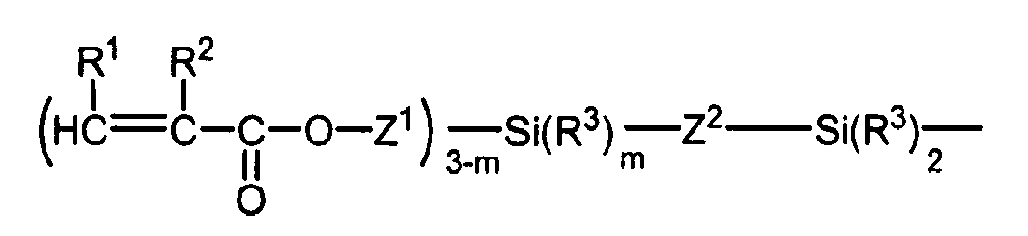
- the component (A) uses an organopolysiloxane having at least one structure represented by the general formula (1) within each molecule: (wherein, m represents an integer of 0, 1 or 2, R 1 represents a hydrogen atom, phenyl group or halogenated phenyl group, R 2 represents a hydrogen atom or methyl group, R 3 represents identical or different monovalent organic groups of 1 to 10 carbon atoms, Z 1 represents a bivalent group represented by -R 4 -, -R 4 O- or -R 4 (CH 3 ) 2 SiO- (wherein, R 4 represents identical or different bivalent organic groups of 1 to 10 carbon atoms), and Z 2 represents an oxygen atom or identical or different bivalent organic groups of 1 to 10 carbon atoms).
- R 1 represents a hydrogen atom, phenyl group or halogenated phenyl group
- R 2 represents a hydrogen atom or methyl group
- R 3 represents identical or different monovalent organic groups of 1 to 10 carbon atoms
- Z 1 represents
- the monovalent organic groups of 1 to 10 carbon atoms represented by R 3 are typically groups of 1 to 10, and preferably from 1 to 8, carbon atoms, and specific examples of suitable groups include hydrocarbon groups including alkyl groups such as a methyl group, ethyl group, propyl group, isopropyl group, butyl group, isobutyl group, tert-butyl group, pentyl group, neopentyl group, hexyl group, cyclohexyl group, octyl group, nonyl group, or decyl group; aryl groups such as a phenyl group, tolyl group, xylyl group, or naphthyl group; aralkyl groups such as a benzyl group, phenylethyl group, or phenylpropyl group; and alkenyl groups such as a vinyl group, allyl group, propenyl group, isopropenyl
- Examples of the bivalent organic group of 1 to 10 carbon atoms represented by R 4 or Z 2 include bivalent substituted or unsubstituted hydrocarbon groups, including alkylene groups such as a methylene group, ethylene group or trimethylene group, and furthermore, either a portion of, or all of, the hydrogen atoms of these hydrocarbon groups may be substituted with a halogen atom such as fluorine, bromine or chlorine atom, or a cyano group or the like. Moreover, an ether linkage or amide linkage may also be incorporated within the hydrocarbon chain of these groups.
- Z 1 represents a bivalent organic group represented by -R 4 -
- Z 2 is preferably an oxygen atom
- Z 1 represents a bivalent group represented by -R 4 O- or -R 4 (CH 3 ) 2 SiO-
- Z 2 preferably represents identical or different bivalent organic groups of 1 to 10 carbon atoms.
- the structure represented by the above general formula (1) exists in a structure represented by a general formula (2) shown below as a portion thereof: (wherein, m, R 1 , R 2 , R 3 and R 4 are as defined above in relation to the general formula (1)).
- a general formula (2) shown below as a portion thereof: (wherein, m, R 1 , R 2 , R 3 and R 4 are as defined above in relation to the general formula (1)).
- Specific examples of the structure of this general formula (2) include the structures shown below.
- the organopolysiloxane of the component (A) preferably comprises an average of at least 0.1 mol%, and even more preferably from 1 to 50 mol%, of SiO 2 units relative to the combined total of all the siloxane units that exist within the molecule of the component (A).
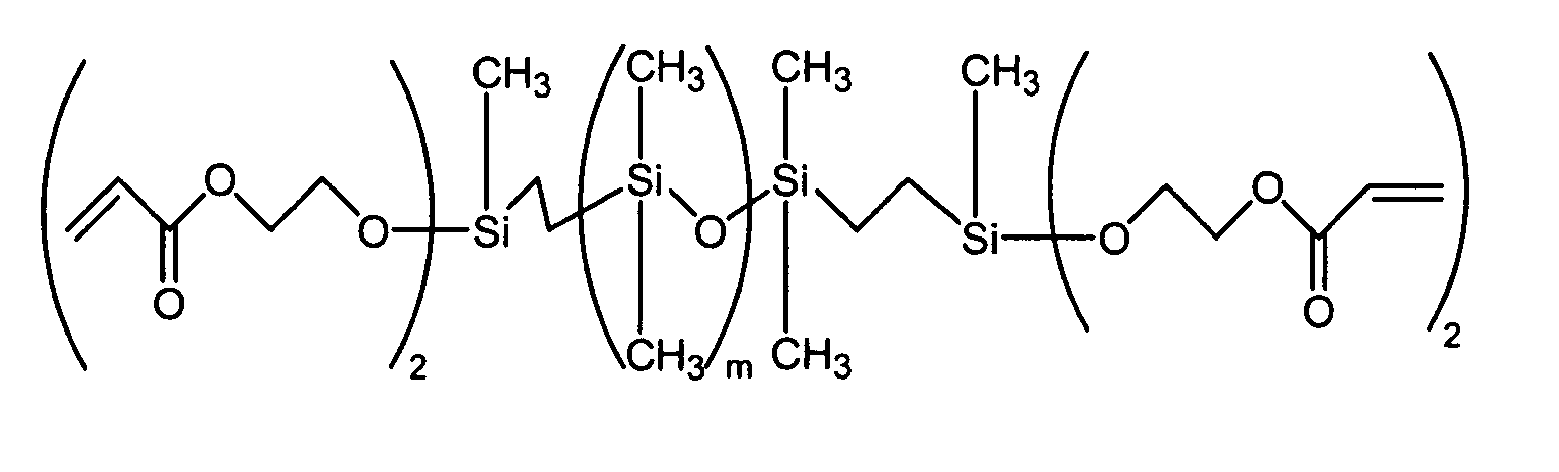
- organopolysiloxane of the component (A) examples are shown below.
- An organopolysiloxane with a polystyrene equivalent weight average molecular weight of 5,000, comprising the MA unit, M unit and Q unit shown below, wherein the molar ratio between these units is MA:M:Q 1:4:6.
- organopolysiloxanes of the component (A) may be used either alone, or in combinations of two or more different compounds.
- the organic peroxide of the component (B) functions as a curing agent (a catalyst), and cures the silicone composition of the present invention to form a silicone rubber or resin.
- organic peroxides examples include benzoyl peroxide, t-butyl perbenzoate, o-methylbenzoyl peroxide, p-methylbenzoyl peroxide, di-t-butyl peroxide, dicumyl peroxide, 1,1-bis(t-butylperoxy)-3,3,5-trimethylcyclohexane, 1,1-di(t-butylperoxy)cyclohexane, 2,5-dimethyl-2,5-di(t-butylperoxy)hexane, 2,5-dimethyl-2,5-di(t-butylperoxy)hexyne, 1,6-bis(p-toluoylperoxycarbonyloxy)hexane, and di(4-methylbenzoylperoxy)hexamethylene biscarbonate. These compounds may be used either alone, or in combinations of two or more different compounds.
- the quantity added of the component (B) need only be sufficient to be effective as a catalyst. Typically, a quantity within a range from 0.01 to 5 parts by mass per 100 parts by mass of the organopolysiloxane of the component (A) is preferred, and quantities from 0.05 to 3 parts by mass are particularly desirable.
- Reactive diluents containing silicone or reactive diluents containing no silicone may be added for purposes such as adjusting the viscosity of the composition or the hardness of the cured product.
- particularly desirable (meth)acrylates for use as reactive diluents include polyethylene glycol di(meth)acrylate, bisphenol-A di(meth)acrylates such as ethoxylated bisphenol-A (meth)acrylate (“EBIPA” or “EBIPMA”), tetrahydrofuran (meth)acrylate and di(meth)acrylate, citronellyl acrylate and citronellyl methacrylate, hydroxypropyl (meth)acrylate, hexanediol di(meth)acrylate (“HDDA” or “HDDMA”), trimethylolpropane tri(meth)acrylate, tetrahydrodicyclopentadienyl (meth)acrylate, ethoxylated trimethylolpropane triacrylate (“ETTA”), triethylene glycol diacrylate and triethylene glycol dimethacrylate (“TRIEGMA”), isobornyl acrylate and isobornyl methacrylate
- the above reactive diluent is an optional component that may be added as required, and the blend quantity is typically not more than approximately 30_parts by mass (namely, from 0 to approximately 30 parts by mass) per 100 parts by mass of the component (A). In those cases where a reactive diluent is used, the blend quantity is typically within a range from about 0.01 to about 30 parts by mass, and preferably from 0.05 to 10 parts by mass, per 100 parts by mass of the component (A).
- composition of the present invention may also include other components for modifying the cured properties or uncured properties in accordance with the requirements of specific applications.
- adhesion promoters such as (meth)acryloxypropyltrimethoxysilane, trialkyl or triallyl isocyanurates, glycidoxypropyltrimethoxysilane and vinyltrimethoxysilane may be added in quantities of up to approximately 20% by mass of the composition.
- non-(meth)acrylic silicone diluents or plasticizers may be added in quantities of up to approximately 30% by mass of the composition.
- non-(meth)acrylic silicones include trimethylsilyl-terminated oils having a viscosity at 25°C within a range from 100 to 500 mPa ⁇ s, and silicone rubbers.
- These non-(meth)acrylic silicones may also include copolymerizable groups such as vinyl groups.
- Inorganic fillers may also be added to the composition in quantities that do not impair the targeted transparency. These fillers may be reinforcing silica products such as fumed silica, and these silica products may be either untreated (hydrophilic), or in a treated hydrophobic form. Any reinforcing fumed silica can be used.
- composition may also include antioxidants such as butylhydroxytoluene or p-methoxyphenol in order to ensure better retention of the transparency.
- antioxidants such as butylhydroxytoluene or p-methoxyphenol
- the present invention also provides a method of preparing the composition, and this method comprises the step of mixing the components described above together.
- the composition of the present invention can usually be cured by heating at a temperature within a range from 80 to 200°C, and preferably from 100 to 180°C.
- the physical properties of a cured product obtained from the composition of the present invention vary depending on the molecular weight of the reactive silicone of the general formula (1) and the curing method used. Generally, larger molecular weights for the reactive silicone yield softer curing reaction products.
- a light emitting diode element of the present invention includes a member comprising a cured product of the above heat-curable silicone composition, wherein this member either functions as a coating or sealing body for protecting (sealing) or bonding the element, or altering or adjusting the wavelength of the emitted light, or functions as a lens material.
- the composition of the present invention is a low-viscosity liquid with a viscosity that is typically within a range from 3,000 to 8,000 mPa ⁇ s, and preferably from 4,000 to 6,000 mPa ⁇ s, and also exhibits favorable thixotropic properties, meaning it can be used within a typical potting process. Accordingly, when the composition of the present invention is used for the applications described above, it can simply be injected into the region requiring sealing or coating, and subsequently cured.
- the component (A) and component (B) shown below were prepared, and silicone compositions were then prepared with the blend quantities shown in Table 1. Each of the thus obtained compositions was molded into a sheet, which was then cured by heating at 150°C for 4 hours, thus generating a cured sheet with a thickness of 2 mm. The hardness and transparency of the thus obtained cured products were evaluated using the methods described below. The results are shown in Table 2.
- Hardness the hardness was measured in accordance with the prescription of JIS 6249, using a type A durometer, manufactured by Shimadzu Corporation.
- the light transmittance of a sample of the produced cured product was measured at a wavelength of 400 nm using a spectrophotometer (U-3310, manufactured by Hitachi, Ltd.), and the result was recorded as the initial light transmittance value. Subsequently, the sample was placed in a dryer at 150°C and treated in an exposed state for 500 hours, and the light transmittance was then remeasured.
- a spectrophotometer U-3310, manufactured by Hitachi, Ltd.
- Example 1 Example 2 Example 3 (A-1) 80 70 (A-2) 20 30 40 (A-3) 60 (B) 1 1 1
- This composition was poured into a mold prepared using glass plates, in sufficient quantity to generate a thickness of 3 mm, and was then cured by heating at 120°C for 30 minutes. The resulting cured product was removed from the mold and then post-cured for 2 hours in a 180°C dryer, thus yielding a sample.
- This composition was poured into a similar mold to that used in the comparative example 1, and was then cured by heating at 120°C for 30 minutes. The resulting cured product was removed from the mold and then post-cured for 2 hours in a 180°C dryer, thus yielding a sample.
- a transparent epoxy material widely used within bullet-type LEDs was obtained, and this material was poured into a mold in the same manner as the example 1 and subsequently cured by heating at 150°C for 8 hours, thus yielding a sample.
- the heat-curable silicone composition of the present invention can be used favorably for the protection, bonding, or wavelength alteration or adjustment of a light emitting diode element, or as a lens material for a light emitting diode element.
Landscapes
- Chemical & Material Sciences (AREA)
- Organic Chemistry (AREA)
- Health & Medical Sciences (AREA)
- Chemical Kinetics & Catalysis (AREA)
- Medicinal Chemistry (AREA)
- Polymers & Plastics (AREA)
- Engineering & Computer Science (AREA)
- Materials Engineering (AREA)
- Led Device Packages (AREA)
- Compositions Of Macromolecular Compounds (AREA)
- Structures Or Materials For Encapsulating Or Coating Semiconductor Devices Or Solid State Devices (AREA)
- Macromonomer-Based Addition Polymer (AREA)
- Silicon Polymers (AREA)
Abstract
(A) an organopolysiloxane having at least one structure represented by a general formula shown below within each molecule:
(B) a quantity of an organic peroxide that is effective as a curing catalyst.
Description
- The present invention relates to a heat-curable silicone composition, and to a light emitting diode element in which the composition is used as a protective or adhesive material, as a material for altering or adjusting the wavelength, or as a lens material.
- Conventionally, epoxy resins have generally been used as the sealing materials for light emitting diode elements. The use of silicone resins as materials within light emitting diode elements has also been disclosed in patent reference 1 and patent reference 2, which disclose trials using a silicone resin as a lens material, and in patent reference 3, which discloses a trial using a silicone resin as a wavelength-altering coating, but examples of the actual use of silicone resins are few.
- On the other hand, with white LEDs now attracting considerable attention, problems have emerged for epoxy resin-based sealing materials, including yellowing caused by exposure to ultraviolet light or the like during actual use of the LED, and an increased propensity to cracking caused by the increase in the heating value that accompanies miniaturization. Resolving these problems has become an urgent issue. Furthermore, the above compositions include compositions in which curing proceeds via an addition reaction in the presence of a platinum catalyst, but curing-inhibiting substances within the LED can cause unsatisfactory curing of the composition.
[Patent Reference 1]JP 10-228249 A
[Patent Reference 2]JP 10-242513 A
[Patent Reference 3]JP 2000-123981 A
[Patent Reference 4]JP 11-1619 A - The present invention takes the above circumstances into consideration, with an object of providing a heat-curable silicone resin composition that yields a cured product with excellent transparency and minimal discoloration over time, and also providing a light emitting diode element that uses this composition.
- As a result of intensive investigation, the inventors of the present invention discovered that the above object could be achieved by using a specific heat-curable silicone resin composition.
- In other words, the present invention provides a heat-curable silicone composition comprising:
- (A) an organopolysiloxane having at least one structure represented by a general formula (1) within each molecule:

- (B) a quantity of an organic peroxide that is effective as a curing catalyst.
- Furthermore, the present invention also provides a light emitting diode element having a member comprising a cured product of the above heat-curable silicone composition.
- In other words, upon curing, the above composition yields a transparent cured product that exhibits excellent heat resistance and discoloration resistance. Accordingly, this composition is ideal for use within light emitting diode elements, and is useful as a material for protecting (sealing) or bonding of the element, as a material for altering or adjusting the wavelength emitted by the element, and as a lens material for the element.
- As follows is a more detailed description of the present invention. In the following description, polystyrene equivalent weight average molecular weights refer to values measured using gel permeation chromatography.
- A sequential description of the heat-curable silicone composition according to the present invention is presented below.
- The component (A) uses an organopolysiloxane having at least one structure represented by the general formula (1) within each molecule:

- In the general formula (1), the monovalent organic groups of 1 to 10 carbon atoms represented by R3 are typically groups of 1 to 10, and preferably from 1 to 8, carbon atoms, and specific examples of suitable groups include hydrocarbon groups including alkyl groups such as a methyl group, ethyl group, propyl group, isopropyl group, butyl group, isobutyl group, tert-butyl group, pentyl group, neopentyl group, hexyl group, cyclohexyl group, octyl group, nonyl group, or decyl group; aryl groups such as a phenyl group, tolyl group, xylyl group, or naphthyl group; aralkyl groups such as a benzyl group, phenylethyl group, or phenylpropyl group; and alkenyl groups such as a vinyl group, allyl group, propenyl group, isopropenyl group, butenyl group, hexenyl group, cyclohexenyl group, or octenyl group; as well as substituted hydrocarbon groups in which a portion of, or all of, the hydrogen atoms within an aforementioned hydrocarbon group have been substituted with a halogen atom such as fluorine, bromine or chlorine atom, or a cyano group or the like, including halogenated alkyl groups such as a chloromethyl group, chloropropyl group, bromoethyl group or trifluoropropyl group, or a cyanoethyl group; and groups in which an ether linkage (an etheric oxygen atom) or an amide linkage is incorporated within a portion of the hydrocarbon chain in one of the above substituted or unsubstituted hydrocarbon groups.
- Examples of the bivalent organic group of 1 to 10 carbon atoms represented by R4 or Z2 include bivalent substituted or unsubstituted hydrocarbon groups, including alkylene groups such as a methylene group, ethylene group or trimethylene group, and furthermore, either a portion of, or all of, the hydrogen atoms of these hydrocarbon groups may be substituted with a halogen atom such as fluorine, bromine or chlorine atom, or a cyano group or the like. Moreover, an ether linkage or amide linkage may also be incorporated within the hydrocarbon chain of these groups.
- In the above general formula (1),
when Z1 represents a bivalent organic group represented by -R4-, Z2 is preferably an oxygen atom, and
when Z1 represents a bivalent group represented by -R4O- or -R4(CH3)2SiO-, Z2 preferably represents identical or different bivalent organic groups of 1 to 10 carbon atoms. - In a preferred embodiment, the structure represented by the above general formula (1) exists in a structure represented by a general formula (2) shown below as a portion thereof:


- The organopolysiloxane of the component (A) preferably comprises an average of at least 0.1 mol%, and even more preferably from 1 to 50 mol%, of SiO2 units relative to the combined total of all the siloxane units that exist within the molecule of the component (A).
- Examples of the organopolysiloxane of the component (A) are shown below.
-

-

-
-

- An organopolysiloxane with a polystyrene equivalent weight average molecular weight of 5,000, comprising the MA unit, M unit and Q unit shown below, wherein the molar ratio between these units is MA:M:Q = 1:4:6.
-

-

-
SiO4/2
- An organopolysiloxane with a polystyrene equivalent weight average molecular weight of 3,500, comprising the MA-D unit, D unit and T unit shown below, wherein the molar ratio between these units is MA-D:D:T = 2:6:7.
-

-
(CH3)2SiO2/2
-
CH3-SiO3/2
- These organopolysiloxanes of the component (A) may be used either alone, or in combinations of two or more different compounds.
- The organic peroxide of the component (B) functions as a curing agent (a catalyst), and cures the silicone composition of the present invention to form a silicone rubber or resin.
- Examples of suitable organic peroxides include benzoyl peroxide, t-butyl perbenzoate, o-methylbenzoyl peroxide, p-methylbenzoyl peroxide, di-t-butyl peroxide, dicumyl peroxide, 1,1-bis(t-butylperoxy)-3,3,5-trimethylcyclohexane, 1,1-di(t-butylperoxy)cyclohexane, 2,5-dimethyl-2,5-di(t-butylperoxy)hexane, 2,5-dimethyl-2,5-di(t-butylperoxy)hexyne, 1,6-bis(p-toluoylperoxycarbonyloxy)hexane, and di(4-methylbenzoylperoxy)hexamethylene biscarbonate. These compounds may be used either alone, or in combinations of two or more different compounds.
- The quantity added of the component (B) need only be sufficient to be effective as a catalyst. Typically, a quantity within a range from 0.01 to 5 parts by mass per 100 parts by mass of the organopolysiloxane of the component (A) is preferred, and quantities from 0.05 to 3 parts by mass are particularly desirable.
- If necessary, other components may also be added to the composition of the present invention, provided such addition does not impair the objectives or effects of the present invention.
- Reactive diluents containing silicone or reactive diluents containing no silicone may be added for purposes such as adjusting the viscosity of the composition or the hardness of the cured product.
- Examples of reactive diluents containing silicone include organopolysiloxanes exemplified by the chemical formulas shown below. These compounds may be used either alone, or in combinations of two or more different compounds.


- Examples of reactive diluents containing no silicone include (meth)acrylates such as those represented by a formula: H2C=CGCO2R5, wherein G represents a hydrogen, halogen, or alkyl group of 1 to approximately 4 carbon atoms; and R5 represents a group selected from amongst alkyl, cycloalkyl, alkenyl, cycloalkenyl, alkaryl, aralkyl and aryl groups of 1 to approximately 16 carbon atoms, and if necessary, any of these groups may also be substituted or terminated with a silane, silicon, oxygen, halogen, carbonyl, hydroxyl, ester, carboxylic acid, urea, urethane, carbamate, amine, amide, sulfur, sulfonate, sulfone or the like.
- Specific examples of particularly desirable (meth)acrylates for use as reactive diluents include polyethylene glycol di(meth)acrylate, bisphenol-A di(meth)acrylates such as ethoxylated bisphenol-A (meth)acrylate ("EBIPA" or "EBIPMA"), tetrahydrofuran (meth)acrylate and di(meth)acrylate, citronellyl acrylate and citronellyl methacrylate, hydroxypropyl (meth)acrylate, hexanediol di(meth)acrylate ("HDDA" or "HDDMA"), trimethylolpropane tri(meth)acrylate, tetrahydrodicyclopentadienyl (meth)acrylate, ethoxylated trimethylolpropane triacrylate ("ETTA"), triethylene glycol diacrylate and triethylene glycol dimethacrylate ("TRIEGMA"), isobornyl acrylate and isobornyl methacrylate.
- Combinations of two or more of these (meth)acrylates may, of course, also be used as the reactive diluent.
- The above reactive diluent is an optional component that may be added as required, and the blend quantity is typically not more than approximately 30_parts by mass (namely, from 0 to approximately 30 parts by mass) per 100 parts by mass of the component (A). In those cases where a reactive diluent is used, the blend quantity is typically within a range from about 0.01 to about 30 parts by mass, and preferably from 0.05 to 10 parts by mass, per 100 parts by mass of the component (A).
- The composition of the present invention may also include other components for modifying the cured properties or uncured properties in accordance with the requirements of specific applications. For example, adhesion promoters such as (meth)acryloxypropyltrimethoxysilane, trialkyl or triallyl isocyanurates, glycidoxypropyltrimethoxysilane and vinyltrimethoxysilane may be added in quantities of up to approximately 20% by mass of the composition.
- Furthermore, non-(meth)acrylic silicone diluents or plasticizers may be added in quantities of up to approximately 30% by mass of the composition. Examples of such non-(meth)acrylic silicones include trimethylsilyl-terminated oils having a viscosity at 25°C within a range from 100 to 500 mPa·s, and silicone rubbers. These non-(meth)acrylic silicones may also include copolymerizable groups such as vinyl groups.
- Inorganic fillers may also be added to the composition in quantities that do not impair the targeted transparency. These fillers may be reinforcing silica products such as fumed silica, and these silica products may be either untreated (hydrophilic), or in a treated hydrophobic form. Any reinforcing fumed silica can be used.
- The composition may also include antioxidants such as butylhydroxytoluene or p-methoxyphenol in order to ensure better retention of the transparency.
- The present invention also provides a method of preparing the composition, and this method comprises the step of mixing the components described above together. The composition of the present invention can usually be cured by heating at a temperature within a range from 80 to 200°C, and preferably from 100 to 180°C.
- The physical properties of a cured product obtained from the composition of the present invention vary depending on the molecular weight of the reactive silicone of the general formula (1) and the curing method used. Generally, larger molecular weights for the reactive silicone yield softer curing reaction products.
- A light emitting diode element of the present invention includes a member comprising a cured product of the above heat-curable silicone composition, wherein this member either functions as a coating or sealing body for protecting (sealing) or bonding the element, or altering or adjusting the wavelength of the emitted light, or functions as a lens material. The composition of the present invention is a low-viscosity liquid with a viscosity that is typically within a range from 3,000 to 8,000 mPa·s, and preferably from 4,000 to 6,000 mPa·s, and also exhibits favorable thixotropic properties, meaning it can be used within a typical potting process. Accordingly, when the composition of the present invention is used for the applications described above, it can simply be injected into the region requiring sealing or coating, and subsequently cured.
- As follows is a more detailed description of the present invention that presents a series of examples and comparative examples of the present invention, although the present invention is in no way limited by the examples presented below.
- The component (A) and component (B) shown below were prepared, and silicone compositions were then prepared with the blend quantities shown in Table 1. Each of the thus obtained compositions was molded into a sheet, which was then cured by heating at 150°C for 4 hours, thus generating a cured sheet with a thickness of 2 mm. The hardness and transparency of the thus obtained cured products were evaluated using the methods described below. The results are shown in Table 2.
- Hardness: the hardness was measured in accordance with the prescription of JIS 6249, using a type A durometer, manufactured by Shimadzu Corporation.
- Light Transmittance: the light transmittance of a sample of the produced cured product was measured at a wavelength of 400 nm using a spectrophotometer (U-3310, manufactured by Hitachi, Ltd.), and the result was recorded as the initial light transmittance value. Subsequently, the sample was placed in a dryer at 150°C and treated in an exposed state for 500 hours, and the light transmittance was then remeasured.
- An organopolysiloxane with a polystyrene equivalent weight average molecular weight of 5,000, comprising the MA unit, M unit and Q unit described below, wherein the molar ratio between these units is MA:M:Q = 1:4:6.
-

-
(CH3)3SiO1/2
-
SiO4/2
-

- An organopolysiloxane with a polystyrene equivalent weight average molecular weight of 3,500, comprising the MA-D unit, D unit and T unit described below, wherein the molar ratio between these units is MA-D:D:T = 2:6:7.
-

-
(CH3)2SiO2/2
-
CH3-SiO3/2
-
[Table 1] Example 1 Example 2 Example 3 (A-1) 80 70 (A-2) 20 30 40 (A-3) 60 (B) 1 1 1 - To a mixture containing 100 parts by mass of an organopolysiloxane resin copolymer (a silicone resin) comprising (C6H5)SiO3/2 units, (CH2=CH)(CH3)SiO2/2 units and (CH3)2SiO2/2 units, and with an average composition represented by a formula: (CH3)0.65(C6H5)0.55(CH2=CH)0.25SiO1.28, 20 parts by mass of a phenylmethylhydrogensiloxane containing 20 mol% of phenyl groups relative to the combined total of silicon atom-bonded methyl groups, phenyl groups and hydrogen atoms (SiH groups), and with a hydrogen gas yield of 150 ml/g and a viscosity at 25°C of 10 mPa·s, and 0.2 parts by mass of ethynylcyclohexanol, was added sufficient quantity of a platinum catalyst to provide 20 ppm of platinum atoms, thus completing preparation of a composition. This composition was poured into a mold prepared using glass plates, in sufficient quantity to generate a thickness of 3 mm, and was then cured by heating at 120°C for 30 minutes. The resulting cured product was removed from the mold and then post-cured for 2 hours in a 180°C dryer, thus yielding a sample.
- To 100 parts by mass of an organopolysiloxane resin copolymer (a silicone resin) comprising (C6H5)SiO3/2 units, (CH2=CH)(CH3)SiO2/2 units and (CH3)2SiO2/2 units, and with an average composition represented by a formula: (CH3)0.65(C6H5)0.55(CH2=CH)0.25SiO1.28, were added 20 parts by mass of a phenylmethylhydrogensiloxane containing 20 mol% of phenyl groups relative to the combined total of silicon atom-bonded methyl groups, phenyl groups and hydrogen atoms (SiH groups), and with a hydrogen gas yield of 150 ml/g and a viscosity at 25°C of 10 mPa·s, 10 parts by mass of a phenylmethylhydrogensiloxane containing 10 mol% of phenyl groups relative to the combined total of silicon atom-bonded methyl groups, phenyl groups and hydrogen atoms (SiH groups), and with a hydrogen gas yield of 120 ml/g and a viscosity at 25°C of 20 mPa·s, 0.2 parts by mass of ethynylcyclohexanol, and sufficient quantity of a platinum catalyst to provide 20 ppm of platinum atoms, thus completing preparation of a composition. This composition was poured into a similar mold to that used in the comparative example 1, and was then cured by heating at 120°C for 30 minutes. The resulting cured product was removed from the mold and then post-cured for 2 hours in a 180°C dryer, thus yielding a sample.
- A transparent epoxy material widely used within bullet-type LEDs was obtained, and this material was poured into a mold in the same manner as the example 1 and subsequently cured by heating at 150°C for 8 hours, thus yielding a sample.
- The cured products obtained in the comparative examples 1 to 3 were measured for hardness and light transmittance (an initial value and a value following heat treatment at 150°C x 500 hours) in the same manner as the examples 1 to 3. The results are shown in Table 2.
[Table 2] Example 1 Example 2 Example 3 Comparative example 1 Comparative example 2 Comparative example 3 Hardness 70 60 80 90 90 85 Initial light transmittance (%) 88 87 88 88 88 90 Following treatment at 150°C x 500 hours Light transmittance (%) 87 87 87 72 70 65 - The heat-curable silicone composition of the present invention can be used favorably for the protection, bonding, or wavelength alteration or adjustment of a light emitting diode element, or as a lens material for a light emitting diode element.
Claims (7)
- A heat-curable silicone composition, comprising:(A) an organopolysiloxane having at least one structure represented by a general formula (1) within each molecule:
 (B) a quantity of an organic peroxide that is effective as a curing catalyst.
 - The composition according to claim 1, wherein in the general formula (1) that represents the organopolysiloxane of component (A),
when Z1 represents a bivalent organic group represented by -R4-, Z2 represents an oxygen atom, and
when Z1 represents a bivalent group represented by -R4O- or -R4(CH3)2SiO-, Z2 represents identical or different bivalent organic groups of 1 to 10 carbon atoms. - The composition according to any one of claims 1 or 2, wherein the organopolysiloxane of component (A) comprises an average of at least 0.1 mol% of SiO2 units relative to a combined total of all siloxane units in the component (A).
- The composition according to claim 3, wherein the organopolysiloxane of component (A) comprises an average of 1 to 50 mol% of SiO2 units relative to a combined total of all siloxane units in the component (A).
- The composition according to claim 1, wherein the organopolysiloxane of component (A) comprises the structure represented by the general formula (1) in a structure represented by a general formula (2) shown below as a portion thereof:

- The composition according to any one of claims 1 to 5, wherein a quantity of component (B) is within a range from 0.01 to 5 parts by mass per 100 parts by mass of the organopolysiloxane of component (A).
- A light emitting diode element having a member comprising a cured product of the heat-curable silicone composition defined in any one of claims 1 through 6.
Applications Claiming Priority (1)
| Application Number | Priority Date | Filing Date | Title |
|---|---|---|---|
| JP2006256581A JP4563977B2 (en) | 2006-09-22 | 2006-09-22 | Heat-curable silicone composition and light-emitting diode device using the same |
Publications (2)
| Publication Number | Publication Date |
|---|---|
| EP1921114A1 true EP1921114A1 (en) | 2008-05-14 |
| EP1921114B1 EP1921114B1 (en) | 2009-12-02 |
Family
ID=39145241
Family Applications (1)
| Application Number | Title | Priority Date | Filing Date |
|---|---|---|---|
| EP07253743A Active EP1921114B1 (en) | 2006-09-22 | 2007-09-21 | Light emitting diode element |
Country Status (7)
| Country | Link |
|---|---|
| US (1) | US7915362B2 (en) |
| EP (1) | EP1921114B1 (en) |
| JP (1) | JP4563977B2 (en) |
| KR (1) | KR101421292B1 (en) |
| CN (1) | CN101148542B (en) |
| DE (1) | DE602007003545D1 (en) |
| TW (1) | TWI419933B (en) |
Families Citing this family (21)
| Publication number | Priority date | Publication date | Assignee | Title |
|---|---|---|---|---|
| US8945527B2 (en) * | 2008-04-25 | 2015-02-03 | The University Of North Carolina At Chapel Hill | Degradable compounds and methods of use thereof, particularly with particle replication in non-wetting templates |
| JP2010027974A (en) * | 2008-07-23 | 2010-02-04 | Sharp Corp | Method of manufacturing light-emitting device |
| JP5621211B2 (en) * | 2009-04-20 | 2014-11-12 | 横浜ゴム株式会社 | Silicone resin composition for optical semiconductor encapsulation |
| US8697458B2 (en) * | 2009-04-22 | 2014-04-15 | Shat-R-Shield, Inc. | Silicone coated light-emitting diode |
| MX2011011016A (en) * | 2009-04-22 | 2012-01-25 | Shat R Shield Inc | Silicone coated light-emitting diode. |
| JP5443940B2 (en) * | 2009-10-21 | 2014-03-19 | 東亞合成株式会社 | Curable coating composition |
| WO2011135780A1 (en) * | 2010-04-27 | 2011-11-03 | 信越化学工業株式会社 | Light-emitting device and method for manufacturing the same |
| US20130203675A1 (en) | 2010-09-16 | 2013-08-08 | Joseph M. DeSimone | Asymmetric biofunctional silyl monomers and particles thereof as prodrugs and delivery vehicles for pharmaceutical, chemical and biological agents |
| WO2012051749A1 (en) * | 2010-10-19 | 2012-04-26 | Ablestik (Shanghai) Ltd. | Hybrid silicone composition for light emitting device |
| JP5921154B2 (en) * | 2011-11-09 | 2016-05-24 | 日東電工株式会社 | Optical film, image display device, and method of manufacturing image display device |
| US10807329B2 (en) | 2013-05-10 | 2020-10-20 | Abl Ip Holding Llc | Silicone optics |
| JP6072663B2 (en) * | 2013-10-15 | 2017-02-01 | 信越化学工業株式会社 | An optical semiconductor device comprising a heat curable conductive silicone composition, a conductive adhesive comprising the composition, a conductive die bond material comprising the composition, and a cured product of the die bond material. |
| JP6285346B2 (en) * | 2014-12-08 | 2018-02-28 | 信越化学工業株式会社 | Transparent resin composition, adhesive comprising the composition, die-bonding material comprising the composition, conductive connection method using the composition, and optical semiconductor device obtained by the method |
| JP6272747B2 (en) * | 2014-12-08 | 2018-01-31 | 信越化学工業株式会社 | Heat-curable silicone composition, die-bonding material comprising the composition, and optical semiconductor device using a cured product of the die-bonding material |
| JP6622171B2 (en) * | 2016-11-08 | 2019-12-18 | 信越化学工業株式会社 | Heat curable silicone composition, die bond material and optical semiconductor device |
| EP3553840B1 (en) * | 2016-12-09 | 2022-01-05 | Momentive Performance Materials Korea Co., Ltd. | Composition for organic electronic element encapsulant and encapsulant formed using same |
| CN111164177B (en) * | 2017-09-29 | 2022-05-17 | 信越化学工业株式会社 | UV-curable silicone pressure-sensitive adhesive composition and cured product thereof |
| JP6978690B2 (en) * | 2018-05-25 | 2021-12-08 | 日亜化学工業株式会社 | A method for forming a translucent member, a method for manufacturing a light emitting device, and a light emitting device. |
| JP6962290B2 (en) * | 2018-08-02 | 2021-11-05 | 信越化学工業株式会社 | UV curable silicone composition for stereolithography and its cured product |
| JP7296748B2 (en) * | 2019-03-08 | 2023-06-23 | 信越化学工業株式会社 | Resin composition for wafer-level optical semiconductor device, and optical semiconductor device |
| JP7107279B2 (en) * | 2019-05-27 | 2022-07-27 | 信越化学工業株式会社 | Silicone rubber composition for molding and silicone rubber mold |
Citations (7)
| Publication number | Priority date | Publication date | Assignee | Title |
|---|---|---|---|---|
| US4201808A (en) * | 1978-06-12 | 1980-05-06 | Union Carbide Corporation | Radiation curable silicone release compositions |
| GB2137635A (en) * | 1983-04-06 | 1984-10-10 | Toyo Contact Lens Co Ltd | Oxygen permeable soft contact lens composition |
| EP0134678A2 (en) * | 1983-07-20 | 1985-03-20 | Loctite Corporation | Polymers with graft alpha-alkylarylate functionality |
| EP0378370A2 (en) * | 1989-01-12 | 1990-07-18 | Rohm And Haas Company | Process for making silicone-containing polymer particles |
| EP1045009A1 (en) * | 1999-04-16 | 2000-10-18 | Dow Corning Corporation | Heat curable silcone acrylate coating compositions |
| JP2001123120A (en) * | 1999-10-26 | 2001-05-08 | Bridgestone Corp | Coating for woody finishing material, and surface-coated woody finished material |
| US20050129957A1 (en) * | 2003-11-20 | 2005-06-16 | Shin-Etsu Chemical Co., Ltd. | Epoxy/silicone mixed resin composition and light-emitting semiconductor device |
Family Cites Families (16)
| Publication number | Priority date | Publication date | Assignee | Title |
|---|---|---|---|---|
| JPS58173174A (en) * | 1982-04-06 | 1983-10-12 | Japan Synthetic Rubber Co Ltd | Radical adhesive composition |
| JPS62119141A (en) * | 1985-11-19 | 1987-05-30 | Shin Etsu Chem Co Ltd | Radiation-curable optical fiber coating material |
| JPH068335B2 (en) * | 1987-01-28 | 1994-02-02 | 信越化学工業株式会社 | UV curable gel composition |
| JPH0627162B2 (en) * | 1988-05-31 | 1994-04-13 | 信越化学工業株式会社 | Photocurable organopolysiloxane composition |
| JPH0619029B2 (en) * | 1989-11-22 | 1994-03-16 | 信越化学工業株式会社 | Composition for semiconductor device protective coat and semiconductor device |
| JP3166262B2 (en) | 1992-01-22 | 2001-05-14 | 東レ株式会社 | Thermoplastic resin film with antistatic properties |
| JP2927279B2 (en) | 1996-07-29 | 1999-07-28 | 日亜化学工業株式会社 | Light emitting diode |
| JPH10228249A (en) | 1996-12-12 | 1998-08-25 | Nichia Chem Ind Ltd | Light emitting diode and LED display device using the same |
| JP3344286B2 (en) | 1997-06-12 | 2002-11-11 | 信越化学工業株式会社 | Addition-curable silicone resin composition |
| US5965299A (en) * | 1997-06-23 | 1999-10-12 | North Carolina State University | Composite electrolyte containing surface modified fumed silica |
| JP4286935B2 (en) | 1998-10-14 | 2009-07-01 | 株式会社朝日ラバー | Toning lighting device |
| US6906115B2 (en) * | 2001-06-27 | 2005-06-14 | Daikin Industries, Ltd. | Surface treatment composition and preparation thereof |
| JP2003128920A (en) * | 2001-10-26 | 2003-05-08 | Dow Corning Toray Silicone Co Ltd | Curable liquid silicone composition and semiconductor device |
| JP2006328164A (en) | 2005-05-25 | 2006-12-07 | Shin Etsu Chem Co Ltd | Thermally conductive silicone composition |
| JP5015571B2 (en) * | 2006-01-12 | 2012-08-29 | 信越化学工業株式会社 | UV curable silicone composition for light emitting diode element |
| JP5239169B2 (en) * | 2006-04-25 | 2013-07-17 | 日立化成株式会社 | Optical member |
-
2006
- 2006-09-22 JP JP2006256581A patent/JP4563977B2/en active Active
-
2007
- 2007-08-24 TW TW096131344A patent/TWI419933B/en active
- 2007-09-21 CN CN2007101543382A patent/CN101148542B/en active Active
- 2007-09-21 DE DE602007003545T patent/DE602007003545D1/en active Active
- 2007-09-21 US US11/859,123 patent/US7915362B2/en active Active
- 2007-09-21 EP EP07253743A patent/EP1921114B1/en active Active
- 2007-09-21 KR KR1020070096619A patent/KR101421292B1/en active Active
Patent Citations (7)
| Publication number | Priority date | Publication date | Assignee | Title |
|---|---|---|---|---|
| US4201808A (en) * | 1978-06-12 | 1980-05-06 | Union Carbide Corporation | Radiation curable silicone release compositions |
| GB2137635A (en) * | 1983-04-06 | 1984-10-10 | Toyo Contact Lens Co Ltd | Oxygen permeable soft contact lens composition |
| EP0134678A2 (en) * | 1983-07-20 | 1985-03-20 | Loctite Corporation | Polymers with graft alpha-alkylarylate functionality |
| EP0378370A2 (en) * | 1989-01-12 | 1990-07-18 | Rohm And Haas Company | Process for making silicone-containing polymer particles |
| EP1045009A1 (en) * | 1999-04-16 | 2000-10-18 | Dow Corning Corporation | Heat curable silcone acrylate coating compositions |
| JP2001123120A (en) * | 1999-10-26 | 2001-05-08 | Bridgestone Corp | Coating for woody finishing material, and surface-coated woody finished material |
| US20050129957A1 (en) * | 2003-11-20 | 2005-06-16 | Shin-Etsu Chemical Co., Ltd. | Epoxy/silicone mixed resin composition and light-emitting semiconductor device |
Non-Patent Citations (1)
| Title |
|---|
| DATABASE IP.COM 1 March 2006 (2006-03-01), ANONYMUS: "Härtbare Siliconmassen für Licht emittierende Dioden (LED)", XP002473018 * |
Also Published As
| Publication number | Publication date |
|---|---|
| TWI419933B (en) | 2013-12-21 |
| TW200823265A (en) | 2008-06-01 |
| JP2008074982A (en) | 2008-04-03 |
| CN101148542B (en) | 2011-10-05 |
| EP1921114B1 (en) | 2009-12-02 |
| KR101421292B1 (en) | 2014-07-18 |
| DE602007003545D1 (en) | 2010-01-14 |
| KR20080027205A (en) | 2008-03-26 |
| US7915362B2 (en) | 2011-03-29 |
| US20080076882A1 (en) | 2008-03-27 |
| JP4563977B2 (en) | 2010-10-20 |
| CN101148542A (en) | 2008-03-26 |
Similar Documents
| Publication | Publication Date | Title |
|---|---|---|
| EP1921114B1 (en) | Light emitting diode element | |
| US7105584B2 (en) | Dual-cure silicone compounds exhibiting elastomeric properties | |
| EP1424363B1 (en) | Silicone resin composition for led devices | |
| US6323253B1 (en) | Flame-retardant UV and UV/moisture curable silicone compositions | |
| US8314200B2 (en) | Pt-catalyzed, addition-crosslinking silicone compositions self-adhesive at room temperature | |
| EP1878768B1 (en) | Curable silicone rubber compositions and cured product thereof | |
| EP2463343B1 (en) | Curable polyorganosiloxane composition | |
| JP5455065B2 (en) | Cycloalkyl group-containing silicone resin composition and method of using the composition. | |
| JP5652387B2 (en) | Highly reliable curable silicone resin composition and optical semiconductor device using the same | |
| JP5735446B2 (en) | Organopolysiloxane composition, method for curing the organopolysiloxane composition, and light emitting diode | |
| US8895678B2 (en) | Cross-linkable silicone composition and cross-linked product thereof | |
| CN101035839A (en) | Organopolysiloxane and curable silicone composition containing the same | |
| JP5015571B2 (en) | UV curable silicone composition for light emitting diode element | |
| KR101549265B1 (en) | Compositions for sealing materials, cured products and organic light emitting devices | |
| KR100991025B1 (en) | Silica-containing silicone resin composition and molded article thereof | |
| KR101300933B1 (en) | Ultraviolet-Curable Silicone Composition for Light Emitting Diode Element | |
| CN111417687B (en) | Silicone rubber composition and composite material obtained using the same | |
| EP2630193B1 (en) | Hybrid silicone composition for light emitting device | |
| KR20010023087A (en) | Dual curing silicone compositions | |
| US6281261B1 (en) | Flame-retardant UV curable silicone compositions | |
| US20070260008A1 (en) | Silica-Containing Silicone Resin Composition and Its Molded Product | |
| JPH07216232A (en) | UV-curable organopolysiloxane composition | |
| US20030190484A1 (en) | Radiation curing silicone rubber composition and adhesive silicone elastomer film | |
| KR100555290B1 (en) | Adhesive Silicone Elastomer Films, and Coatings and Constructions Using the Same | |
| KR20240169642A (en) | UV curable silicone composition |
Legal Events
| Date | Code | Title | Description |
|---|---|---|---|
| PUAI | Public reference made under article 153(3) epc to a published international application that has entered the european phase |
Free format text: ORIGINAL CODE: 0009012 |
|
| AK | Designated contracting states |
Kind code of ref document: A1 Designated state(s): AT BE BG CH CY CZ DE DK EE ES FI FR GB GR HU IE IS IT LI LT LU LV MC MT NL PL PT RO SE SI SK TR |
|
| AX | Request for extension of the european patent |
Extension state: AL BA HR MK RS |
|
| 17P | Request for examination filed |
Effective date: 20081027 |
|
| 17Q | First examination report despatched |
Effective date: 20081210 |
|
| AKX | Designation fees paid |
Designated state(s): DE FR GB |
|
| GRAP | Despatch of communication of intention to grant a patent |
Free format text: ORIGINAL CODE: EPIDOSNIGR1 |
|
| RTI1 | Title (correction) |
Free format text: LIGHT EMITTING DIODE ELEMENT |
|
| GRAS | Grant fee paid |
Free format text: ORIGINAL CODE: EPIDOSNIGR3 |
|
| RIN1 | Information on inventor provided before grant (corrected) |
Inventor name: OZAI, TOSHIYUKI C/O SILICONE DENSHI ZAIRYO |
|
| RIN1 | Information on inventor provided before grant (corrected) |
Inventor name: OZAI, TOSHIYUKI |
|
| GRAA | (expected) grant |
Free format text: ORIGINAL CODE: 0009210 |
|
| RIN1 | Information on inventor provided before grant (corrected) |
Inventor name: OZAI, TOSHIYUKI |
|
| AK | Designated contracting states |
Kind code of ref document: B1 Designated state(s): DE FR GB |
|
| REG | Reference to a national code |
Ref country code: GB Ref legal event code: FG4D |
|
| REF | Corresponds to: |
Ref document number: 602007003545 Country of ref document: DE Date of ref document: 20100114 Kind code of ref document: P |
|
| PLBE | No opposition filed within time limit |
Free format text: ORIGINAL CODE: 0009261 |
|
| STAA | Information on the status of an ep patent application or granted ep patent |
Free format text: STATUS: NO OPPOSITION FILED WITHIN TIME LIMIT |
|
| 26N | No opposition filed |
Effective date: 20100903 |
|
| REG | Reference to a national code |
Ref country code: FR Ref legal event code: PLFP Year of fee payment: 10 |
|
| REG | Reference to a national code |
Ref country code: FR Ref legal event code: PLFP Year of fee payment: 11 |
|
| REG | Reference to a national code |
Ref country code: FR Ref legal event code: PLFP Year of fee payment: 12 |
|
| PGFP | Annual fee paid to national office [announced via postgrant information from national office to epo] |
Ref country code: DE Payment date: 20250730 Year of fee payment: 19 |
|
| PGFP | Annual fee paid to national office [announced via postgrant information from national office to epo] |
Ref country code: GB Payment date: 20250731 Year of fee payment: 19 |
|
| PGFP | Annual fee paid to national office [announced via postgrant information from national office to epo] |
Ref country code: FR Payment date: 20250808 Year of fee payment: 19 |