EP1920831A2 - Particulate matter (pm) oxidizing catalyst - Google Patents
Particulate matter (pm) oxidizing catalyst Download PDFInfo
- Publication number
- EP1920831A2 EP1920831A2 EP07021485A EP07021485A EP1920831A2 EP 1920831 A2 EP1920831 A2 EP 1920831A2 EP 07021485 A EP07021485 A EP 07021485A EP 07021485 A EP07021485 A EP 07021485A EP 1920831 A2 EP1920831 A2 EP 1920831A2
- Authority
- EP
- European Patent Office
- Prior art keywords
- oxide
- cerium
- oxidization
- oxidizing catalyst
- metal
- Prior art date
- Legal status (The legal status is an assumption and is not a legal conclusion. Google has not performed a legal analysis and makes no representation as to the accuracy of the status listed.)
- Granted
Links
Images







Classifications
-
- B—PERFORMING OPERATIONS; TRANSPORTING
- B01—PHYSICAL OR CHEMICAL PROCESSES OR APPARATUS IN GENERAL
- B01D—SEPARATION
- B01D53/00—Separation of gases or vapours; Recovering vapours of volatile solvents from gases; Chemical or biological purification of waste gases, e.g. engine exhaust gases, smoke, fumes, flue gases, aerosols
- B01D53/34—Chemical or biological purification of waste gases
- B01D53/92—Chemical or biological purification of waste gases of engine exhaust gases
- B01D53/94—Chemical or biological purification of waste gases of engine exhaust gases by catalytic processes
- B01D53/944—Simultaneously removing carbon monoxide, hydrocarbons or carbon making use of oxidation catalysts
-
- B—PERFORMING OPERATIONS; TRANSPORTING
- B01—PHYSICAL OR CHEMICAL PROCESSES OR APPARATUS IN GENERAL
- B01J—CHEMICAL OR PHYSICAL PROCESSES, e.g. CATALYSIS OR COLLOID CHEMISTRY; THEIR RELEVANT APPARATUS
- B01J23/00—Catalysts comprising metals or metal oxides or hydroxides, not provided for in group B01J21/00
- B01J23/002—Mixed oxides other than spinels, e.g. perovskite
-
- B—PERFORMING OPERATIONS; TRANSPORTING
- B01—PHYSICAL OR CHEMICAL PROCESSES OR APPARATUS IN GENERAL
- B01J—CHEMICAL OR PHYSICAL PROCESSES, e.g. CATALYSIS OR COLLOID CHEMISTRY; THEIR RELEVANT APPARATUS
- B01J23/00—Catalysts comprising metals or metal oxides or hydroxides, not provided for in group B01J21/00
- B01J23/10—Catalysts comprising metals or metal oxides or hydroxides, not provided for in group B01J21/00 of rare earths
-
- B—PERFORMING OPERATIONS; TRANSPORTING
- B01—PHYSICAL OR CHEMICAL PROCESSES OR APPARATUS IN GENERAL
- B01J—CHEMICAL OR PHYSICAL PROCESSES, e.g. CATALYSIS OR COLLOID CHEMISTRY; THEIR RELEVANT APPARATUS
- B01J23/00—Catalysts comprising metals or metal oxides or hydroxides, not provided for in group B01J21/00
- B01J23/16—Catalysts comprising metals or metal oxides or hydroxides, not provided for in group B01J21/00 of arsenic, antimony, bismuth, vanadium, niobium, tantalum, polonium, chromium, molybdenum, tungsten, manganese, technetium or rhenium
- B01J23/32—Manganese, technetium or rhenium
- B01J23/34—Manganese
-
- B—PERFORMING OPERATIONS; TRANSPORTING
- B01—PHYSICAL OR CHEMICAL PROCESSES OR APPARATUS IN GENERAL
- B01J—CHEMICAL OR PHYSICAL PROCESSES, e.g. CATALYSIS OR COLLOID CHEMISTRY; THEIR RELEVANT APPARATUS
- B01J23/00—Catalysts comprising metals or metal oxides or hydroxides, not provided for in group B01J21/00
- B01J23/38—Catalysts comprising metals or metal oxides or hydroxides, not provided for in group B01J21/00 of noble metals
- B01J23/54—Catalysts comprising metals or metal oxides or hydroxides, not provided for in group B01J21/00 of noble metals combined with metals, oxides or hydroxides provided for in groups B01J23/02 - B01J23/36
- B01J23/56—Platinum group metals
- B01J23/63—Platinum group metals with rare earths or actinides
-
- B—PERFORMING OPERATIONS; TRANSPORTING
- B01—PHYSICAL OR CHEMICAL PROCESSES OR APPARATUS IN GENERAL
- B01J—CHEMICAL OR PHYSICAL PROCESSES, e.g. CATALYSIS OR COLLOID CHEMISTRY; THEIR RELEVANT APPARATUS
- B01J23/00—Catalysts comprising metals or metal oxides or hydroxides, not provided for in group B01J21/00
- B01J23/38—Catalysts comprising metals or metal oxides or hydroxides, not provided for in group B01J21/00 of noble metals
- B01J23/54—Catalysts comprising metals or metal oxides or hydroxides, not provided for in group B01J21/00 of noble metals combined with metals, oxides or hydroxides provided for in groups B01J23/02 - B01J23/36
- B01J23/56—Platinum group metals
- B01J23/64—Platinum group metals with arsenic, antimony, bismuth, vanadium, niobium, tantalum, polonium, chromium, molybdenum, tungsten, manganese, technetium or rhenium
- B01J23/656—Manganese, technetium or rhenium
- B01J23/6562—Manganese
-
- B—PERFORMING OPERATIONS; TRANSPORTING
- B01—PHYSICAL OR CHEMICAL PROCESSES OR APPARATUS IN GENERAL
- B01J—CHEMICAL OR PHYSICAL PROCESSES, e.g. CATALYSIS OR COLLOID CHEMISTRY; THEIR RELEVANT APPARATUS
- B01J23/00—Catalysts comprising metals or metal oxides or hydroxides, not provided for in group B01J21/00
- B01J23/70—Catalysts comprising metals or metal oxides or hydroxides, not provided for in group B01J21/00 of the iron group metals or copper
- B01J23/76—Catalysts comprising metals or metal oxides or hydroxides, not provided for in group B01J21/00 of the iron group metals or copper combined with metals, oxides or hydroxides provided for in groups B01J23/02 - B01J23/36
- B01J23/83—Catalysts comprising metals or metal oxides or hydroxides, not provided for in group B01J21/00 of the iron group metals or copper combined with metals, oxides or hydroxides provided for in groups B01J23/02 - B01J23/36 with rare earths or actinides
-
- B—PERFORMING OPERATIONS; TRANSPORTING
- B01—PHYSICAL OR CHEMICAL PROCESSES OR APPARATUS IN GENERAL
- B01J—CHEMICAL OR PHYSICAL PROCESSES, e.g. CATALYSIS OR COLLOID CHEMISTRY; THEIR RELEVANT APPARATUS
- B01J23/00—Catalysts comprising metals or metal oxides or hydroxides, not provided for in group B01J21/00
- B01J23/70—Catalysts comprising metals or metal oxides or hydroxides, not provided for in group B01J21/00 of the iron group metals or copper
- B01J23/76—Catalysts comprising metals or metal oxides or hydroxides, not provided for in group B01J21/00 of the iron group metals or copper combined with metals, oxides or hydroxides provided for in groups B01J23/02 - B01J23/36
- B01J23/84—Catalysts comprising metals or metal oxides or hydroxides, not provided for in group B01J21/00 of the iron group metals or copper combined with metals, oxides or hydroxides provided for in groups B01J23/02 - B01J23/36 with arsenic, antimony, bismuth, vanadium, niobium, tantalum, polonium, chromium, molybdenum, tungsten, manganese, technetium or rhenium
- B01J23/889—Manganese, technetium or rhenium
- B01J23/8892—Manganese
-
- B—PERFORMING OPERATIONS; TRANSPORTING
- B01—PHYSICAL OR CHEMICAL PROCESSES OR APPARATUS IN GENERAL
- B01J—CHEMICAL OR PHYSICAL PROCESSES, e.g. CATALYSIS OR COLLOID CHEMISTRY; THEIR RELEVANT APPARATUS
- B01J23/00—Catalysts comprising metals or metal oxides or hydroxides, not provided for in group B01J21/00
- B01J23/70—Catalysts comprising metals or metal oxides or hydroxides, not provided for in group B01J21/00 of the iron group metals or copper
- B01J23/89—Catalysts comprising metals or metal oxides or hydroxides, not provided for in group B01J21/00 of the iron group metals or copper combined with noble metals
- B01J23/8933—Catalysts comprising metals or metal oxides or hydroxides, not provided for in group B01J21/00 of the iron group metals or copper combined with noble metals also combined with metals, or metal oxides or hydroxides provided for in groups B01J23/02 - B01J23/36
- B01J23/894—Catalysts comprising metals or metal oxides or hydroxides, not provided for in group B01J21/00 of the iron group metals or copper combined with noble metals also combined with metals, or metal oxides or hydroxides provided for in groups B01J23/02 - B01J23/36 with rare earths or actinides
-
- B—PERFORMING OPERATIONS; TRANSPORTING
- B01—PHYSICAL OR CHEMICAL PROCESSES OR APPARATUS IN GENERAL
- B01J—CHEMICAL OR PHYSICAL PROCESSES, e.g. CATALYSIS OR COLLOID CHEMISTRY; THEIR RELEVANT APPARATUS
- B01J37/00—Processes, in general, for preparing catalysts; Processes, in general, for activation of catalysts
- B01J37/02—Impregnation, coating or precipitation
- B01J37/024—Multiple impregnation or coating
- B01J37/0244—Coatings comprising several layers
-
- F—MECHANICAL ENGINEERING; LIGHTING; HEATING; WEAPONS; BLASTING
- F01—MACHINES OR ENGINES IN GENERAL; ENGINE PLANTS IN GENERAL; STEAM ENGINES
- F01N—GAS-FLOW SILENCERS OR EXHAUST APPARATUS FOR MACHINES OR ENGINES IN GENERAL; GAS-FLOW SILENCERS OR EXHAUST APPARATUS FOR INTERNAL-COMBUSTION ENGINES
- F01N3/00—Exhaust or silencing apparatus having means for purifying, rendering innocuous, or otherwise treating exhaust
- F01N3/02—Exhaust or silencing apparatus having means for purifying, rendering innocuous, or otherwise treating exhaust for cooling, or for removing solid constituents of, exhaust
- F01N3/021—Exhaust or silencing apparatus having means for purifying, rendering innocuous, or otherwise treating exhaust for cooling, or for removing solid constituents of, exhaust by means of filters
- F01N3/033—Exhaust or silencing apparatus having means for purifying, rendering innocuous, or otherwise treating exhaust for cooling, or for removing solid constituents of, exhaust by means of filters in combination with other devices
- F01N3/035—Exhaust or silencing apparatus having means for purifying, rendering innocuous, or otherwise treating exhaust for cooling, or for removing solid constituents of, exhaust by means of filters in combination with other devices with catalytic reactors
-
- B—PERFORMING OPERATIONS; TRANSPORTING
- B01—PHYSICAL OR CHEMICAL PROCESSES OR APPARATUS IN GENERAL
- B01D—SEPARATION
- B01D2255/00—Catalysts
- B01D2255/10—Noble metals or compounds thereof
- B01D2255/102—Platinum group metals
-
- B—PERFORMING OPERATIONS; TRANSPORTING
- B01—PHYSICAL OR CHEMICAL PROCESSES OR APPARATUS IN GENERAL
- B01D—SEPARATION
- B01D2255/00—Catalysts
- B01D2255/10—Noble metals or compounds thereof
- B01D2255/104—Silver
-
- B—PERFORMING OPERATIONS; TRANSPORTING
- B01—PHYSICAL OR CHEMICAL PROCESSES OR APPARATUS IN GENERAL
- B01D—SEPARATION
- B01D2255/00—Catalysts
- B01D2255/10—Noble metals or compounds thereof
- B01D2255/106—Gold
-
- B—PERFORMING OPERATIONS; TRANSPORTING
- B01—PHYSICAL OR CHEMICAL PROCESSES OR APPARATUS IN GENERAL
- B01D—SEPARATION
- B01D2255/00—Catalysts
- B01D2255/20—Metals or compounds thereof
- B01D2255/206—Rare earth metals
-
- B—PERFORMING OPERATIONS; TRANSPORTING
- B01—PHYSICAL OR CHEMICAL PROCESSES OR APPARATUS IN GENERAL
- B01D—SEPARATION
- B01D2255/00—Catalysts
- B01D2255/20—Metals or compounds thereof
- B01D2255/207—Transition metals
- B01D2255/20715—Zirconium
-
- B—PERFORMING OPERATIONS; TRANSPORTING
- B01—PHYSICAL OR CHEMICAL PROCESSES OR APPARATUS IN GENERAL
- B01D—SEPARATION
- B01D2255/00—Catalysts
- B01D2255/20—Metals or compounds thereof
- B01D2255/207—Transition metals
- B01D2255/20738—Iron
-
- B—PERFORMING OPERATIONS; TRANSPORTING
- B01—PHYSICAL OR CHEMICAL PROCESSES OR APPARATUS IN GENERAL
- B01D—SEPARATION
- B01D2255/00—Catalysts
- B01D2255/20—Metals or compounds thereof
- B01D2255/207—Transition metals
- B01D2255/20746—Cobalt
-
- B—PERFORMING OPERATIONS; TRANSPORTING
- B01—PHYSICAL OR CHEMICAL PROCESSES OR APPARATUS IN GENERAL
- B01D—SEPARATION
- B01D2255/00—Catalysts
- B01D2255/20—Metals or compounds thereof
- B01D2255/207—Transition metals
- B01D2255/20753—Nickel
-
- B—PERFORMING OPERATIONS; TRANSPORTING
- B01—PHYSICAL OR CHEMICAL PROCESSES OR APPARATUS IN GENERAL
- B01D—SEPARATION
- B01D2255/00—Catalysts
- B01D2255/20—Metals or compounds thereof
- B01D2255/207—Transition metals
- B01D2255/20769—Molybdenum
-
- B—PERFORMING OPERATIONS; TRANSPORTING
- B01—PHYSICAL OR CHEMICAL PROCESSES OR APPARATUS IN GENERAL
- B01D—SEPARATION
- B01D2255/00—Catalysts
- B01D2255/90—Physical characteristics of catalysts
- B01D2255/902—Multilayered catalyst
- B01D2255/9022—Two layers
-
- B—PERFORMING OPERATIONS; TRANSPORTING
- B01—PHYSICAL OR CHEMICAL PROCESSES OR APPARATUS IN GENERAL
- B01D—SEPARATION
- B01D2258/00—Sources of waste gases
- B01D2258/01—Engine exhaust gases
- B01D2258/012—Diesel engines and lean burn gasoline engines
-
- B—PERFORMING OPERATIONS; TRANSPORTING
- B01—PHYSICAL OR CHEMICAL PROCESSES OR APPARATUS IN GENERAL
- B01J—CHEMICAL OR PHYSICAL PROCESSES, e.g. CATALYSIS OR COLLOID CHEMISTRY; THEIR RELEVANT APPARATUS
- B01J2235/00—Indexing scheme associated with group B01J35/00, related to the analysis techniques used to determine the catalysts form or properties
-
- B—PERFORMING OPERATIONS; TRANSPORTING
- B01—PHYSICAL OR CHEMICAL PROCESSES OR APPARATUS IN GENERAL
- B01J—CHEMICAL OR PHYSICAL PROCESSES, e.g. CATALYSIS OR COLLOID CHEMISTRY; THEIR RELEVANT APPARATUS
- B01J2235/00—Indexing scheme associated with group B01J35/00, related to the analysis techniques used to determine the catalysts form or properties
- B01J2235/15—X-ray diffraction
-
- B—PERFORMING OPERATIONS; TRANSPORTING
- B01—PHYSICAL OR CHEMICAL PROCESSES OR APPARATUS IN GENERAL
- B01J—CHEMICAL OR PHYSICAL PROCESSES, e.g. CATALYSIS OR COLLOID CHEMISTRY; THEIR RELEVANT APPARATUS
- B01J2523/00—Constitutive chemical elements of heterogeneous catalysts
-
- B—PERFORMING OPERATIONS; TRANSPORTING
- B01—PHYSICAL OR CHEMICAL PROCESSES OR APPARATUS IN GENERAL
- B01J—CHEMICAL OR PHYSICAL PROCESSES, e.g. CATALYSIS OR COLLOID CHEMISTRY; THEIR RELEVANT APPARATUS
- B01J37/00—Processes, in general, for preparing catalysts; Processes, in general, for activation of catalysts
- B01J37/02—Impregnation, coating or precipitation
- B01J37/03—Precipitation; Co-precipitation
Definitions
- the present invention relates to a particulate matter (PM) oxidizing catalyst More in detail, the present invention relates to a PM oxidizing catalyst capable of continuously oxidizing or combusting PM from a relatively low temperature during an engine operation.
- PM particulate matter
- Conventionally known method for a diesel engine includes the following operations.
- An electric power and the like is inputted to a collected particulate matter (PM) or fuel is consumed to thereby increase temperature of the collected particle, then, oxidation or combustion reproduces a particulate filter.
- PM collected particulate matter
- the reproduction by the electric power and the like requires a great energy quantity, while the reproduction by the fuel decreases fuel economy (i.e., increasing fuel consumption) of the engine.
- PM particulate matter
- a PM combusting catalyst of the present invention is to be set forth in detail.
- “%" for concentration, blending quantity, loading quantity and the like denotes mass percentage unless otherwise specified.
- the PM oxidizing catalyst of the present invention has an oxygen releasing catalyst
- the PM oxidizing catalyst includes i) a particulate filter, and ii) an oxide presenting a lattice oxygen desorption energy ⁇ E of less than or equal to 60 kcal/mol and carried on the particulate filter.
- This PM oxidizing catalyst can oxidize PM from a relatively low temperature, typically at 400° C, and promote the PM oxidization more preferably under an excessive oxygen condition such as a lean atmosphere (for example, A/F [air to fuel ratio] of more than or equal to 15).
- a lean atmosphere for example, A/F [air to fuel ratio] of more than or equal to 15.
- the PM oxidizing catalyst of the present invention can continuously oxidize the PM, typically, during an operation of a diesel engine.
- the PM oxidizing catalyst of the present invention does not need a special temperature control (heat sequence) for the PM oxidization, that is, particulate filter reproduction. Therefore, it is not essential to input an electric power energy, and it is not necessary to consume fuel for a special heat sequence.
- particulate filter to be used is not specifically limited, examples thereof including fabric filter, alternate weather strip filter and what is called a checkered honeycomb carrier.
- examples of a first metal (Ml) other than cerium (Ce) include gallium (Ga) and the like, transition elements including scandium (Sc) to mercury (Hg) in a strict sense, lanthanoid including lanthanum (La) to lutetium (Lu), rare earth elements including actinoid such as actinium (Ac) to lawrencium (Lr), and the like.
- gallium (Ga), manganese (Mn), iron (Fe), cobalt (Co), nickel (Ni), copper (Cu), yttrium (Y), zirconium (Zr), niobium (Nb), molybdenum (Mo), silver (Ag), lanthanum (La), praseodymium (Pr), neodymium (Nd) and gold (Au) are preferable.
- the above first metal (Ml) can be used alone or in combination of two or more.
- mol ratio of Ce/(Ce + Ga) is 0.01% to 50%.
- a special oxide included in the oxygen releasing catalyst is a second oxide Ox2 that includes Ce and Pr.
- Ce and Pr have mol ratio (Ce : Pr) of 4 : 1 to 1 : 4, preferably 4 : 1 to 2 : 3.
- the above special oxide is a first oxide (Ox1) including:
- the PM oxidizing catalyst according to the second embodiment preferably includes the second oxide (Ox2) including:
- the above content ratios allow the first oxide Ox1 and the second oxide Ox2 to work significantly, thus causing the fuel efficiently and continuously.
- first oxide Ox1 and second oxide Ox2 are preferably carried on the particulate filter in such a configuration that a first layer including the Ce-Mn compound oxide Ox1 and a second layer including the Ce-Pr oxide Ox2 are formed separately.
- first oxide Ox1 and second oxide Ox2 are preferably carried on the particulate filter in such a configuration that a first layer including the Ce-Mn compound oxide Ox1 and a second layer including the Ce-Pr oxide Ox2 are formed separately.
- the following structures are preferable:
- the PM oxidizing catalyst of the present invention preferably includes a noble metal such as platinum (Pt), palladium (Pd), rhodium (Rh) and iridium (Ir) or an arbitrary combination thereof, especially Pt is preferable. Adding the above noble metal(s) improves the PM oxidization effect.
- a noble metal such as platinum (Pt), palladium (Pd), rhodium (Rh) and iridium (Ir) or an arbitrary combination thereof, especially Pt is preferable. Adding the above noble metal(s) improves the PM oxidization effect.
- CePr compound oxide ⁇ CeO 2 : Pr 6 O 11 70 : 30 (mol ratio) ⁇ made by Anan Kasei Co., Ltd (hereinafter referred to as "Anan Kasei”) was used.
- Anan Kasei an X-ray photoelectron spectroscopy
- XPS X-ray photoelectron spectroscopy
- the above electron awarding-accepting brings about an interaction between the atoms via electrons, thus ordinarily determining that a bond is present between the atoms.
- the XPS analysis of the above CePr oxide has found out the following:
- the CePr oxide was subjected to an X-ray diffraction analysis, coming up with an X-ray diffraction data, as shown in Fig. 1.
- peaks of the oxide (Ce 70 Pr 30 ) are present in a position same as those of CeO 2 , showing no peak shift.
- Ce and Pr are made compound in a state that crystal structure (fluorite structure) of CeO 2 is held, thus forming CePr compound oxide.
- the CePr compound oxide described above and a particulate matter PM were mixed at a weight ratio of 1 : 1 for 20 min by an agate mortar. Then, the thus obtained mixture was sampled by 0.02 g, which was then set in a glass reaction tube of a quadrupole mass analyzer (Q-MASS device). He gas was allowed to flow in the glass reaction tube at 100 cc/min, and then temperature was increased to an monitoring temperature (for example, 400° C, 425° C, 450° C or 500° C). The mixture was kept at rest at the arbitrary temperature for 10 min.
- Q-MASS device quadrupole mass analyzer
- Fig. 2 and table 1 show measurement results at a gas temperature 500° C after 500 sec and 100 sec.
- the lattice oxygen desorption energy ( ⁇ E) of CePr compound oxide according to the example 1 was calculated under the following condition, and the thus obtained results are also shown in table 1.
- Fig. 3 is a schematic showing an example of a model used for calculating the lattice oxygen desorption energy ⁇ E by the density functional theory.
- Fig. 3 shows a compound oxide CeXOxide obtained by adding an additive element X to CeO 2 , where a face (110) supposed to have an affluent reactivity as CeO 2 is so cut as to serves as a surface.
- Fig. 3 per se is the face (110).
- the following first energy (E1), second energy (E2) and third energy (E3) were calculated:
- a mass analyzer makes the following operations in advance: flowing CO 2 having a previously known concentration, measuring an ion intensity, and preparing a working curve. The larger the ion intensity is the more the emission quantity of CO 2 is, and in this case the working curve determines that the oxidization efficiency of PM is good.
- this CeMnOx powder was so prepared as to include 70 mol % of CeO 2 and 30 mol % of MnO 2 in storing quantity.
- the above CeMnOx powder is denoted as Ce 0.7 Mn 0.3 Ox.
- a part of the CeMuOx powder was fired at 800° C for 4 hrs, to be used for the subsequent operations.
- XRD X-ray diffraction
- the XPS result shows that Ce and Mn are bonded on the surface of the oxide, while the XRD determines that CeO 2 and Mn 2 O 3 are present separately and are not made compound.
- the oxide of this example has a compound surface, while not having a compound inner part.
- a particulate matter PM, and a powder which was made by firing Ce 0.7 Mn 0.3 Ox at 800° C were measured at weight ratio of 1 : 1, then mixed in an agate mortar for 20 min, to thereby obtain a sample.
- Fig. 7 is directed to 400° C
- Fig. 8 is directed to 450° C
- the abscissa denotes time period (sec)
- the ordinate denotes ion intensity of mass analyzer.
- the PM oxidization test was started after an elapse of 90 sec since data had been obtained 90 see before the oxygen introduction.
- table 1 also shows the calculated lattice oxygen desorption energy ⁇ E value.
- Fig. 7, Fig. 8 and table 1 show that Ce 0.7 Mn 0.3 Ox is excellent in PM oxidization capability from 400° C.
- Fig. 10 shows a state of Ce in Ce 0.7 Pr 0.3 Ox
- Fig. 11 shows a state of Ce in CeO 2 for comparison
- Fig. 12 shows a state of Pr in Ce 0.7 Pr 0.3 Ox
- Fig. 13 shows a state of Pr in Pr 6 O 11 for comparison.
- Ce 0.7 Pr 0.3 Ox made by Anan Kasei was fired in a muffle furnace at 800° C for 4 hrs. Then, the thus fired powder and a PM were taken (scaled) 1 : 1 by weight, followed by mixing for 20 min using an agate mortar.
- the two mixtures obtained by the above operations were respectively taken (scaled) 1 : 1 by weight, followed by mixing for 20 min by using an agate mortar, to thereby prepare samples for the PM oxidization test
- the thus obtained samples were subjected to the PM oxidization tests set forth above, and the thus obtained results are shown in Fig. 14 and table 2.
- the used sample was 0.04 g and O 2 5 vol % of balance gas was added at 200 cc/min.
- the performance evaluation has an index of ion intensity at a time point 360 sec (450 sec in Fig. 14) after a time point of introducing oxygen (90 sec in Fig. 14).
- the ion intensity and the CO 2 concentration are approximately linear, determining that a substantially proper CO 2 generating concentration is obtained.
- Ce 0.7 Mn 0.3 Ox and Ce 0.7 Pr 0.3 Ox are mixed as shown in Fig. 14 and table 2, bringing about an effect greater than that which may be brought about by adding respective effects when Ce 0.7 Mn 0.3 Ox and Ce 0.7 Pr 0.3 Ox are not mixed. This proves that the PM oxidization capability at a low temperature is further improved.
- CeMnOx per se has oxidization capability at 400° C, though not accomplishing a 100% oxidization. With this, it is not likely that doubling the used PM quantity increases the effect of CeMnOx. Meanwhile, CePrOx has an insufficient oxidization capability at 400° C while showing an excellent oxidization capability at 450° C. As such, CeMnOx serves as an ignition catalyst for the PM oxidization of CePrOx. This increases temperature of CeMnOx and the CePrOx oxidization is added, thereby improving the oxidization performance.
- the above description is, however, merely an assumption.
- Cerium carbonate was used for obtaining 77 % of CeO 2
- manganese carbonate was used for obtaining 8 % of Ga 2 O 3 and 15 % of MnO 4 .
- the thus obtained was precipitated in an ammonia solution, followed by firing at 600° C, to thereby obtain CeGaMn compound oxide.
- the above composition includes 77 % of CeO 2 , 8 % of Ga 2 O 3 and 15 % of MnO 4 .
- the CeGaMn compound oxide obtained above and the CePr compound oxide in the example 1 were used in such a manner as to vary mixing ratios (by mass), to thereby produce various PM oxidizing catalysts.
- the thus obtained PM oxidizing catalysts were subjected to PM oxidization rate measurements at 450° C, with 0.01 g of PM quantity and 0.01 g of PM oxidizing catalyst quantity.
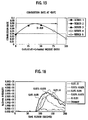
- Fig.15 shows the thus obtained results.
- the CeGaMn compound oxide obtained by the example 6 and the CePr compound oxide obtained by the example 1 are mixed such that CeGaMn: CePr are 0.01 g : 0 g, 0.075 g : 0.025 g, 0.05 g : 0.05 g, 0.025 g : 0.075 g, and 0 g : 0.01 g. 0.01 g of PM was added to each of the thus obtained mixtures, and the above PM oxidization test was implemented.
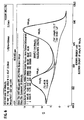
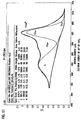
- Fig. 16 and Fig. 17 show results of the PM oxidization test Fig. 16 shows detected CO 2
- Fig. 17 shows detected O 2
- the language denoted by "dummy" in Fig. 16 and Fig. 17 denotes an inlet concentration of only PM.
- CeGaMn : CePr of 0.05 g : 0.05 g starts the oxygen consumption most rapidly after a distribution gas is switched to oxygen.
- the above means that the CO 2 is generated not only by the oxygen held by catalyst, but also by using a gas-phase oxygen. That is, the gas-phase oxygen and the PM do not make a direct reaction at a test temperature 450° C (more than or equal to 600° C required), therefore the above phenomenon can determine that the catalyst takes in the gas-phase oxygen and is activated, accomplishing a reaction between the PM and the oxygen, thus implementing a catalyzing cycle.
- the order for starting the oxygen consumption is 0.05 g : 0.05 g, followed by 0.075 g : 0.025 g or 0.025 g : 0.075 g.
- the above order is consistent with the order of the CO 2 generation rate. This means that the capability of generating CO 2 by consuming oxygen varies with mixing degree.
Landscapes
- Chemical & Material Sciences (AREA)
- Engineering & Computer Science (AREA)
- Chemical Kinetics & Catalysis (AREA)
- Materials Engineering (AREA)
- Organic Chemistry (AREA)
- Combustion & Propulsion (AREA)
- Oil, Petroleum & Natural Gas (AREA)
- General Chemical & Material Sciences (AREA)
- Analytical Chemistry (AREA)
- Environmental & Geological Engineering (AREA)
- Biomedical Technology (AREA)
- Health & Medical Sciences (AREA)
- Mechanical Engineering (AREA)
- General Engineering & Computer Science (AREA)
- Catalysts (AREA)
- Exhaust Gas Treatment By Means Of Catalyst (AREA)
- Exhaust Gas After Treatment (AREA)
Abstract
Description
- The present invention relates to a particulate matter (PM) oxidizing catalyst More in detail, the present invention relates to a PM oxidizing catalyst capable of continuously oxidizing or combusting PM from a relatively low temperature during an engine operation.
- Conventionally known method for a diesel engine includes the following operations. An electric power and the like is inputted to a collected particulate matter (PM) or fuel is consumed to thereby increase temperature of the collected particle, then, oxidation or combustion reproduces a particulate filter. However, the reproduction by the electric power and the like requires a great energy quantity, while the reproduction by the fuel decreases fuel economy (i.e., increasing fuel consumption) of the engine.
- With the above background, a catalyst capable of oxidizing PM at a relatively low temperature to thereby decrease the consumed electric power and improve fuel economy is used, and the material and component of such catalyst are improved.
US6355220 (family of laid-openJP2000507877T JP3657620
Moreover,EP1504815 (family of laid-openJP2003334443 JP3528839 - However, for oxidizing the PM from a relatively low temperature, the above conventional methods each have a room for improvement
- It is an object of the present invention to provide a particulate matter (PM) oxidizing catalyst capable of oxidizing or combusting PM from a relatively low temperature.
- According to a first aspect of the present invention, a particulate matter oxidizing catalyst comprises: at least one metal selected from the group consisting of: gallium, manganese, iron, cobalt, nickel, copper, yttrium, zirconium, niobium, molybdenum, silver, lanthanum, praseodymium, neodymium and gold; and cerium, wherein a first oxide includes: the cerium, and a first metal which is at least one element selected from the group consisting of: gallium, manganese, iron, cobalt and nickel, wherein a second oxide includes: the cerium, and a second metal which is at least one element selected from the group consisting of praseodymium, zirconium and aluminum, and wherein the second oxide and the first oxide have a content ratio of second oxide/(first oxide + second oxide) = 0.1 by mass to 0.8 by mass.
- Other objects and features of the present invention will become understood from the following description with reference to the accompanying drawings.
-
- Fig. 1 shows an XRD (X-ray diffraction) data of CePr compound oxide.
- Fig. 2 is a graph showing a result of PM (particulate matter) oxidization test by a quadrupole mass analyzer (Q-MASS device).
- Fig. 3 is a schematic showing an example of a model used for calculating a lattice oxygen desorption energy ΔE by the density functional theory.
- Fig. 4 is a chart showing XRD pattern of Ce0.7Mn0.3Ox powder.
- Fig. 5 is a graph showing a result of state analysis through an X-ray photoelectron spectroscopy (XPS) of Ce0.7Mn03Ox powder.
- Fig. 6 is a graph showing a result of state analysis through an X-ray photoelectron spectroscopy (XPS) of Mn2O3.
- Fig. 7 is a graph showing a result of PM oxidization test by Q-MASS at 400° C.
- Fig. 8 is a graph showing a result of PM oxidization test by Q-MASS at 450° C.
- Fig. 9 is a chart showing XRD pattern of Ce0.7Pr0.3Ox powder.
- Fig. 10 is a graph showing a result of state analysis of Ce in Ce0.7Pr0.3Ox by XPS.
- Fig. 11 is a graph showing a result of state analysis of Ce in CeO2 by XPS.
- Fig. 12 is a graph showing a result of state analysis of Pr in Ce0.7Pr0.3Ox by XPS.
- Fig. 13 is a graph showing a result of state analysis of Pr in Pr6O11 by XPS.
- Fig. 14 is a graph showing a result of PM oxidization test by Q-MASS at 400° C.
- Fig. 15 is a graph showing a result of PM oxidization test by Q-MASS.
- Fig. 16 is a graph showing a result of PM oxidization test by Q-MASS.
- Fig. 17 is a graph showing a result of PM oxidization test by Q-MASS.
- A PM combusting catalyst of the present invention is to be set forth in detail.
In this specification, "%" for concentration, blending quantity, loading quantity and the like denotes mass percentage unless otherwise specified.
The PM oxidizing catalyst of the present invention has an oxygen releasing catalyst Typically, the PM oxidizing catalyst includes i) a particulate filter, and ii) an oxide presenting a lattice oxygen desorption energy ΔE of less than or equal to 60 kcal/mol and carried on the particulate filter.
This PM oxidizing catalyst can oxidize PM from a relatively low temperature, typically at 400° C, and promote the PM oxidization more preferably under an excessive oxygen condition such as a lean atmosphere (for example, A/F [air to fuel ratio] of more than or equal to 15). - As such, the PM oxidizing catalyst of the present invention can continuously oxidize the PM, typically, during an operation of a diesel engine. Unlike the conventional technology, the PM oxidizing catalyst of the present invention does not need a special temperature control (heat sequence) for the PM oxidization, that is, particulate filter reproduction. Therefore, it is not essential to input an electric power energy, and it is not necessary to consume fuel for a special heat sequence.
- Herein, the particulate filter to be used is not specifically limited, examples thereof including fabric filter, alternate weather strip filter and what is called a checkered honeycomb carrier.
- In the oxide, examples of a first metal (Ml) other than cerium (Ce) include gallium (Ga) and the like, transition elements including scandium (Sc) to mercury (Hg) in a strict sense, lanthanoid including lanthanum (La) to lutetium (Lu), rare earth elements including actinoid such as actinium (Ac) to lawrencium (Lr), and the like. Especially, gallium (Ga), manganese (Mn), iron (Fe), cobalt (Co), nickel (Ni), copper (Cu), yttrium (Y), zirconium (Zr), niobium (Nb), molybdenum (Mo), silver (Ag), lanthanum (La), praseodymium (Pr), neodymium (Nd) and gold (Au) are preferable. The above first metal (Ml) can be used alone or in combination of two or more.
Preferably, mol ratio of Ce/(Ce + Ga) is 0.01% to 50%. - According to a first embodiment directed to the PM oxidizing catalyst under the present invention, a special oxide included in the oxygen releasing catalyst is a second oxide Ox2 that includes Ce and Pr.
In this case, Ce and Pr have mol ratio (Ce : Pr) of 4 : 1 to 1 : 4, preferably 4 : 1 to 2 : 3.
The mol ratio (Ce : Pr) out of 4: 1 to 1 : 4, as the case may be, fails to bring about a significant advantage (of the PM oxidization capability) over CeO2 alone or Pr6O11 alone. - Meanwhile, according to a second embodiment directed to the PM oxidizing catalyst under the present invention, the above special oxide is a first oxide (Ox1) including:
- the first metal (Ml) such as gallium (Ga), manganese (Mn), iron (Fe), cobalt (Co) and nickel (Ni) or an arbitrary combination thereof, and
- cerium (Ce).
- Moreover, the PM oxidizing catalyst according to the second embodiment preferably includes the second oxide (Ox2) including:
- a second metal (M2) such as praseodymium (Pr), zirconium (Zr) and aluminum (Al) or an arbitrary combination thereof, and
- cerium (Ce).
- In addition, with the PM fuel catalyst according to the second embodiment, combining the Ce-Pr oxide Ox2 with the Ce-Mn compound oxide Ox1 or Ce-Ga-Mn compound oxide Ox1, makes the following operations:
- 1) Ce-Mn compound oxide Ox1 or Ce-Ga-Mn compound oxide Ox1 ignites the PM from a low temperature of about 400° C, and
- 2) the Ce-Pr oxide Ox2 continuously oxidizes the PM from about 450° C.
- Herein, with the PM oxidizing catalyst of the present invention, content ratio between the second oxide Ox2 and the first oxide Ox1 is preferably Ox2/(Ox1 + Ox2) =0.1 to 0.8 by mass, more preferably 0.25 to 0.75 by mass.
The above content ratios allow the first oxide Ox1 and the second oxide Ox2 to work significantly, thus causing the fuel efficiently and continuously. - Moreover, the first oxide Ox1 and second oxide Ox2 are preferably carried on the particulate filter in such a configuration that a first layer including the Ce-Mn compound oxide Ox1 and a second layer including the Ce-Pr oxide Ox2 are formed separately.
Especially, the following structures are preferable: - 1) forming the first layer (for the Ce-Mn compound oxide Ox1) upstream relative to an exhaust gas flow, and the second layer (for the Ce-Pr oxide Ox2) downstream relative to the exhaust gas flow, and
- 2) forming the second layer (for the Ce-Pr oxide Ox2) lower and the first layer (for the Ce-Mn compound oxide Ox1) upper.
- Besides, the PM oxidizing catalyst of the present invention preferably includes a noble metal such as platinum (Pt), palladium (Pd), rhodium (Rh) and iridium (Ir) or an arbitrary combination thereof, especially Pt is preferable.
Adding the above noble metal(s) improves the PM oxidization effect. - Hereinafter, the present invention is to be set forth more in detail based on the following comparative examples and examples. The present invention is, however, not limited to the above.
- CePr compound oxide {CeO2 : Pr6O11= 70 : 30 (mol ratio)} made by Anan Kasei Co., Ltd (hereinafter referred to as "Anan Kasei") was used.
Herein, an X-ray photoelectron spectroscopy (hereinafter referred to as "XPS") is used for measuring a bonding energy and identifying valence number. When different elements are present, obtaining change of respective bonding energies can measure electron awarding-accepting between atoms. The above electron awarding-accepting brings about an interaction between the atoms via electrons, thus ordinarily determining that a bond is present between the atoms.
The XPS analysis of the above CePr oxide has found out the following: - 1) of trivalence and quadrivalence which are ordinarily observed in CeO2, Ce-Pr oxide showed decrease in Ce trivalence, and
- 2) of trivalence and quadrivalence which are ordinarily observed in Pr6O11, Ce-Pr oxide showed presence ofPr trivalence only.
- Moreover, the CePr oxide was subjected to an X-ray diffraction analysis, coming up with an X-ray diffraction data, as shown in Fig. 1. As shown in Fig. 1, peaks of the oxide (Ce70Pr30) are present in a position same as those of CeO2, showing no peak shift.
As such, from the results of the X-ray diffraction analysis and XPS analysis, in this CePr oxide, Ce and Pr are made compound in a state that crystal structure (fluorite structure) of CeO2 is held, thus forming CePr compound oxide. - The CePr compound oxide described above and a particulate matter PM were mixed at a weight ratio of 1 : 1 for 20 min by an agate mortar. Then, the thus obtained mixture was sampled by 0.02 g, which was then set in a glass reaction tube of a quadrupole mass analyzer (Q-MASS device). He gas was allowed to flow in the glass reaction tube at 100 cc/min, and then temperature was increased to an monitoring temperature (for example, 400° C, 425° C, 450° C or 500° C). The mixture was kept at rest at the arbitrary temperature for 10 min. After the mixture was stabilized,
O 2 10 vol % of balance gas was added at 100 cc/min, CO2 ion intensity {M/Z = 44 (mass number)} was monitored, thereby measuring oxidization behavior.
Fig. 2 and table 1 show measurement results at agas temperature 500° C after 500 sec and 100 sec. - The lattice oxygen desorption energy (ΔE) of CePr compound oxide according to the example 1 was calculated under the following condition, and the thus obtained results are also shown in table 1.
- Pre/post: Materials studio 3.2 (made by Accelrys)
- Solver: DMo13 (made by Accelrys)
- temperature:
Absolute 0 - Approximation: Generalized gradient approximation (GGA)
- Fig. 3 is a schematic showing an example of a model used for calculating the lattice oxygen desorption energy ΔE by the density functional theory. Fig. 3 shows a compound oxide CeXOxide obtained by adding an additive element X to CeO2, where a face (110) supposed to have an affluent reactivity as CeO2 is so cut as to serves as a surface. Herein, Fig. 3 per se is the face (110).
The following first energy (E1), second energy (E2) and third energy (E3) were calculated: - 1) a first energy (E1) obtained by substituting a Ce atom (present on a surface of CeO2) with a
transition element 20 and making an O atom (positioned adjacent to the transition element 20) defective 10, - 2) a second energy (E2) obtained by substituting the Ce atom (present on the CeO2 surface) with the
transition element 20 and making the O atom (positioned adjacent to the transition element 20) not defective 10, and - 3) a third energy (E3) of O2 molecule.
- Operations like those according to the example 1 were repeated other than that CePr compound oxide {CeO2 : Pr6O11 = 60 : 40 (mol ratio)} made by Anan Kasei was used. Results are shown in Fig. 2 and table 1.
- Operations like those according to the example 1 were repeated other than that CePr compound oxide {CeO2: Pr6O11= 90 : 10 (mol ratio)} made by Anan Kasei was used. Results are shown in Fig. 2 and table 1.
- Operations like those according to the example 1 were repeated other than that Pr6 O11 made by Anan Kasei was used in place of CePr compound oxide. Results are shown in Fig. 2 and table 1.
-
[Table 1] Result of oxidizing PM at 500° C Result of oxidizing PM at 450° C Composition Quantity of PM oxidizing catalyst Quantity of PM after 500 sec after 100 sec after 100 sec ΔE kcal/mol CO2 ion intensity (M/Z = 44) CO2 ion intensity M/Z = 44) Example 1 Ce 70 mol% - Pr 30 mol%0.01 g 0.01 g 4,46E-10 5.54E-10 4.47E-10 52.1 Example 2 Ce 60 mol% -Pr 40 mol%0.01 g 0.01 g 4,15E-10 5.08E-10 4.15E-10 52.1 Example 3 Ce 70 mol% - Mn 30 mol%0.01 g 0.01 g 3.15E-10 1.23E-09 1.22E-10 -7.3 Example4 Ce 90 mol% - Pr 10 mol%0.01 g 0.01 g 2.62E-10 3.23E-10 2.46E-10 - Comparative example 1 Pr6O11 0.01 g 0.01 g 2.92E-10 3.85E-10 2.66E-10 - - Ordinarily, a mass analyzer makes the following operations in advance: flowing CO2 having a previously known concentration, measuring an ion intensity, and preparing a working curve. The larger the ion intensity is the more the emission quantity of CO2 is, and in this case the working curve determines that the oxidization efficiency of PM is good.
- 71.5 g of Mn(NO3)2-6H2O and 207 g of Ce(NO3)2-6H2O were taken (scaled) and dissolved in 1150 g of ion exchange water, followed by stirring. After the continuous stirring of 1 hour, 25 % of ammonia water was calmly and slowly dropped in the thus obtained which is still stirred, such that PH ≥ 7. Then, the thus generated hydroxide was filtered with a centrifugal separator, and a gel of the hydroxide was left at rest for one night-and-daytime. Moreover, the thus obtained was dried at 150° C for 5 hrs, then was fired in a muffle furnace at 700° C for 5 hrs, to thereby obtain CeMnOx powder.
Herein, this CeMnOx powder was so prepared as to include 70 mol % of CeO2 and 30 mol % of MnO2 in storing quantity. The above CeMnOx powder is denoted as Ce0.7Mn0.3Ox. Moreover, a part of the CeMuOx powder was fired at 800° C for 4 hrs, to be used for the subsequent operations. - An X-ray diffraction (XRD) pattern of the CeMnOx powder is shown in Fig. 4. CeO2 and Mn2O3 were detected. Moreover, a state analysis result of the CeMnOx powder through an X-ray photoelectron spectroscopy (XPS) is shown in Fig. 5. Besides, for reference purpose, a state analysis result of Mn2O3 through the XPS is shown in Fig. 6.
As shown in Fig. 4, the XRD detected the states of CeO2 and Mn2O3. However, Fig. 6 shows that Mn is present mainly as MnO state (Mn2+) on a surface necessary for the reaction.
That is, the XPS result shows that Ce and Mn are bonded on the surface of the oxide, while the XRD determines that CeO2 and Mn2O3 are present separately and are not made compound.
As such, the oxide of this example has a compound surface, while not having a compound inner part. - A particulate matter PM, and a powder which was made by firing Ce0.7Mn0.3Ox at 800° C were measured at weight ratio of 1 : 1, then mixed in an agate mortar for 20 min, to thereby obtain a sample.
- The thus obtained sample was subjected to a PM oxidization test like that of the Example 1. However, the temperature was set to 400° C and 450° C and
mass numbers
In Fig. 7 and Fig. 8, the abscissa denotes time period (sec), while the ordinate denotes ion intensity of mass analyzer. According to this example, the PM oxidization test was started after an elapse of 90 sec since data had been obtained 90 see before the oxygen introduction.
In addition to the PM oxidization test results of this example, table 1 also shows the calculated lattice oxygen desorption energy ΔE value. - Fig. 7, Fig. 8 and table 1 show that Ce0.7Mn0.3Ox is excellent in PM oxidization capability from 400° C.
- Operations like those according to the example 3 were repeated, to thereby prepare samples.
- Ce0.7Pr0.3OX made by Anan Kasei was fired at 800° C for 4 hrs in a muffle furnace.
An XRD pattern of the thus fired powder is shown in Fig. 9. No collection attributable to Pr is shown and CeO2 alone was detected.
Moreover, a state analysis result of the thus fired powder through an X-ray photoelectron spectroscopy (XPS) is shown in Fig. 10 to Fig. 13.
Fig. 10 shows a state of Ce in Ce0.7Pr0.3Ox, while Fig. 11 shows a state of Ce in CeO2 for comparison. Fig. 12 shows a state of Pr in Ce0.7Pr0.3Ox, while Fig. 13 shows a state of Pr in Pr6O11 for comparison. - Ce0.7Pr0.3Ox made by Anan Kasei was fired in a muffle furnace at 800° C for 4 hrs. Then, the thus fired powder and a PM were taken (scaled) 1 : 1 by weight, followed by mixing for 20 min using an agate mortar.
- The two mixtures obtained by the above operations were respectively taken (scaled) 1 : 1 by weight, followed by mixing for 20 min by using an agate mortar, to thereby prepare samples for the PM oxidization test
The thus obtained samples were subjected to the PM oxidization tests set forth above, and the thus obtained results are shown in Fig. 14 and table 2. Herein, the used sample was 0.04 g andO 2 5 vol % of balance gas was added at 200 cc/min. - 0.02 g of Ce0.7Pr0.3Ox + PM of the example 5 was used, and the above PM oxidization test was likewise implemented. The thus obtained results are shown in Fig. 14 and table 2.
-
[Table 2] Result of oxidizing PM at 400° C Composition Quantity of PM oxidizing catalyst Quantity of PM Ion intensity of M/Z = 44 at time point 360 sec after oxygen introduction Example 5 Ce 70 mol% - Mn 30 mol%/Ce 70 mol% - Pr30 mol%0.01 g/0.01 g 0.01 g/0.01 g L73E-07 Comparative example 2 Ce 70 mol% - Pr 30 mol%0.01 g 0.01 g 2.01E-08 - In table 2, the performance evaluation has an index of ion intensity at a time point 360 sec (450 sec in Fig. 14) after a time point of introducing oxygen (90 sec in Fig. 14). With the device and concentration used above, the ion intensity and the CO2 concentration are approximately linear, determining that a substantially proper CO2 generating concentration is obtained.
Moreover, Ce0.7Mn0.3Ox and Ce0.7Pr0.3Ox are mixed as shown in Fig. 14 and table 2, bringing about an effect greater than that which may be brought about by adding respective effects when Ce0.7Mn0.3Ox and Ce0.7Pr0.3Ox are not mixed. This proves that the PM oxidization capability at a low temperature is further improved. - Calculation has found out that CeMnOx is likely to generate an oxygen defect when CeMnOx is greater than CeO2 in energy difference ΔE (between when the oxygen defect is present on the surface of the oxide and when not present).
Though an ordinary Mn is trivalent in Mn2O3, the XPS result shows that the surface of the oxide is MnO, i.e., Mn is divalent This signifies an oxygen shortage, that is, an oxygen defect The above oxygen defect allows an oxygen movement which is necessary for oxidizing the PM. - Moreover, it is presumed that mixing CeMnOx with CePrOx improves PM oxidization performance at 400° C for the following reason.
CeMnOx per se has oxidization capability at 400° C, though not accomplishing a 100% oxidization. With this, it is not likely that doubling the used PM quantity increases the effect of CeMnOx. Meanwhile, CePrOx has an insufficient oxidization capability at 400° C while showing an excellent oxidization capability at 450° C.
As such, CeMnOx serves as an ignition catalyst for the PM oxidization of CePrOx. This increases temperature of CeMnOx and the CePrOx oxidization is added, thereby improving the oxidization performance. The above description is, however, merely an assumption. - Cerium carbonate was used for obtaining 77 % of CeO2, and manganese carbonate was used for obtaining 8 % of Ga2O3 and 15 % of MnO4. Then, the thus obtained was precipitated in an ammonia solution, followed by firing at 600° C, to thereby obtain CeGaMn compound oxide. The above composition includes 77 % of CeO2, 8 % of Ga2O3 and 15 % of MnO4.
- The CeGaMn compound oxide obtained above and the CePr compound oxide in the example 1 were used in such a manner as to vary mixing ratios (by mass), to thereby produce various PM oxidizing catalysts.
As set forth above, the thus obtained PM oxidizing catalysts were subjected to PM oxidization rate measurements at 450° C, with 0.01 g of PM quantity and 0.01 g of PM oxidizing catalyst quantity. Fig.15 shows the thus obtained results. - As shown in Fig.15, mixing the CeGaMn compound oxide with the CePr compound oxide at a mixing ratio of CePr/(CeGaMn + CePr) = 0.1 to 0.8 (mass ratio) brings about an excellent PM oxidization effect.
- The CeGaMn compound oxide obtained by the example 6 and the CePr compound oxide obtained by the example 1 are mixed such that CeGaMn: CePr are 0.01 g : 0 g, 0.075 g : 0.025 g, 0.05 g : 0.05 g, 0.025 g : 0.075 g, and 0 g : 0.01 g. 0.01 g of PM was added to each of the thus obtained mixtures, and the above PM oxidization test was implemented.
Fig. 16 and Fig. 17 show results of the PM oxidization test Fig. 16 shows detected CO2, while Fig. 17 shows detected O2 Besides, the language denoted by "dummy" in Fig. 16 and Fig. 17 denotes an inlet concentration of only PM. - In Fig. 16 and Fig. 17, when the oxygen consumption is present, CO2 and O2 are detected lower relative to the inlet concentration. The above difference is oxygen consumption quantity.
With both the CO2 generation quantity and the oxygen consumption quantity observed, the results in Fig. 16 and Fig. 17 verify whether the oxidization is sequentially implemented - CeGaMn : CePr of 0.05 g : 0.05 g starts the oxygen consumption most rapidly after a distribution gas is switched to oxygen. The above means that the CO2 is generated not only by the oxygen held by catalyst, but also by using a gas-phase oxygen.
That is, the gas-phase oxygen and the PM do not make a direct reaction at atest temperature 450° C (more than or equal to 600° C required), therefore the above phenomenon can determine that the catalyst takes in the gas-phase oxygen and is activated, accomplishing a reaction between the PM and the oxygen, thus implementing a catalyzing cycle. - Herein, the order for starting the oxygen consumption is 0.05 g : 0.05 g, followed by 0.075 g : 0.025 g or 0.025 g : 0.075 g.
The above order is consistent with the order of the CO2 generation rate. This means that the capability of generating CO2 by consuming oxygen varies with mixing degree. - Although the present invention has been described above by reference to certain embodiments, the present invention is not limited to the embodiments described above. Modifications and variations of the embodiments described above will occur to those skilled in the art, in light of the above teachings.
- This application is based on prior
Japanese Patent Application Nos. P2006-3 02632 (filed on November 8, 2006 in Japan P2007-179880 (filed on July 9, 2007 in Japan Japanese Patent Application Nos. P2006-302632 P2007-179880 - The scope of the present invention is defined with reference to the following claims.

Claims (5)
- A particulate matter oxidizing catalyst comprising:at least one metal selected from the group consisting of:gallium, manganese, iron, cobalt, nickel, copper, yttrium, zirconium, niobium, molybdenum, silver, lanthanum, praseodymium, neodymium and gold; andcerium,wherein a first oxide includes:the cerium, anda first metal which is at least one element selected from the group consisting of:wherein a second oxide includes:gallium, manganese, iron, cobalt and nickel,the cerium, anda second metal which is at least one element selected from the group consisting of:wherein the second oxide and the first oxide have a content ratio of second oxide/(first oxide + second oxide) = 0.1 by mass to 0.8 by mass.praseodymium, zirconium and aluminum, and
- The particulate matter oxidizing catalyst according to claim 1, wherein
the second metal of the second oxide is the praseodymium. - The particulate matter oxidizing catalyst according to claim 2, wherein
the cerium and the praseodymium which are included in the second oxide have a mol ratio of cerium : praseodymium = 4 : 1 to 1:4. - The particulate matter oxidizing catalyst according to any one of claims 1 to 3, wherein
a first layer including the first oxide is formed at a particulate filter, the first oxide including:the cerium, andthe first metal which is at least one element selected from the group consisting of:a second layer including the second oxide is formed at the particulate filter in such a configuration as to be separated from the first layer, the second oxide including:gallium, manganese, iron, cobalt, nickel, andthe cerium, andthe second metal which is at least one element selected from the group consisting of:praseodymium, zirconium and aluminum. - The particulate matter oxidizing catalyst according to any one of claims I to 4, further comprising:a noble metal which is at least one element selected from the group consisting of Platinum, palladium, rhodium and iridium.
Applications Claiming Priority (2)
| Application Number | Priority Date | Filing Date | Title |
|---|---|---|---|
| JP2006302632 | 2006-11-08 | ||
| JP2007179880 | 2007-07-09 |
Publications (3)
| Publication Number | Publication Date |
|---|---|
| EP1920831A2 true EP1920831A2 (en) | 2008-05-14 |
| EP1920831A3 EP1920831A3 (en) | 2010-12-01 |
| EP1920831B1 EP1920831B1 (en) | 2020-06-03 |
Family
ID=39148629
Family Applications (1)
| Application Number | Title | Priority Date | Filing Date |
|---|---|---|---|
| EP07021485.3A Ceased EP1920831B1 (en) | 2006-11-08 | 2007-11-05 | Compound oxide-based particulate matter oxidizing catalyst |
Country Status (3)
| Country | Link |
|---|---|
| US (1) | US7723259B2 (en) |
| EP (1) | EP1920831B1 (en) |
| JP (1) | JP5286746B2 (en) |
Cited By (4)
| Publication number | Priority date | Publication date | Assignee | Title |
|---|---|---|---|---|
| EP2179789A4 (en) * | 2007-08-13 | 2011-08-03 | Nissan Motor | Oxidation catalyst and method for producing oxidation catalyst |
| CN103702745A (en) * | 2011-05-31 | 2014-04-02 | 庄信万丰股份有限公司 | Dual function catalytic filter |
| EP2363206A4 (en) * | 2008-11-21 | 2015-04-15 | Nissan Motor | MATERIAL FOR REMOVING PARTICLE SUBSTANCE, FILTER CATALYZER FOR REMOVING PARTICLE SUBSTANCE, USING THE MATERIAL FOR REMOVING PARTICLE SUBSTANCE, AND METHOD FOR REGENERATING FILTER CATALYST TO REMOVE PARTICULAR SUBSTANCE |
| RU2825302C1 (en) * | 2023-12-14 | 2024-08-23 | Федеральное государственное автономное образовательное учреждение высшего образования "Национальный исследовательский Томский государственный университет" | Method of preparing block catalyst |
Families Citing this family (5)
| Publication number | Priority date | Publication date | Assignee | Title |
|---|---|---|---|---|
| EP2021309B1 (en) * | 2006-05-30 | 2014-05-07 | Starchem Technologies, Inc. | Methanol production process |
| JP5190308B2 (en) * | 2008-06-30 | 2013-04-24 | Agcセイミケミカル株式会社 | Exhaust gas purification catalyst |
| WO2012057161A1 (en) * | 2010-10-26 | 2012-05-03 | 三井金属鉱業株式会社 | Method for producing carbon monoxide and production apparatus |
| JP5605642B2 (en) * | 2010-12-16 | 2014-10-15 | 日産自動車株式会社 | PM oxidation catalyst |
| JP5974850B2 (en) * | 2012-11-20 | 2016-08-23 | マツダ株式会社 | Particulate filter with catalyst |
Family Cites Families (24)
| Publication number | Priority date | Publication date | Assignee | Title |
|---|---|---|---|---|
| CA1131198A (en) * | 1979-02-01 | 1982-09-07 | Carus Corporation | Rare earth-manganese oxidation catalysts and process of producing |
| US5057483A (en) * | 1990-02-22 | 1991-10-15 | Engelhard Corporation | Catalyst composition containing segregated platinum and rhodium components |
| US5948377A (en) * | 1996-09-04 | 1999-09-07 | Engelhard Corporation | Catalyst composition |
| US5898014A (en) * | 1996-09-27 | 1999-04-27 | Engelhard Corporation | Catalyst composition containing oxygen storage components |
| JPH10151348A (en) * | 1996-11-22 | 1998-06-09 | Toyota Central Res & Dev Lab Inc | Oxidation catalyst |
| FR2757425B3 (en) * | 1996-12-23 | 1999-03-19 | Rhodia Chimie Sa | PROCESS FOR THE TREATMENT OF EXHAUST GASES FROM INTERNAL COMBUSTION ENGINES OPERATING WITH SULFUR CONTAINING FUEL |
| JP2003521363A (en) * | 1998-11-13 | 2003-07-15 | エンゲルハード・コーポレーシヨン | Catalyst and method for reducing exhaust emissions |
| JP2002079106A (en) * | 2000-06-29 | 2002-03-19 | Mazda Motor Corp | Exhaust gas purification catalyst and exhaust gas purification device |
| JP2002361090A (en) * | 2001-06-12 | 2002-12-17 | Toyota Motor Corp | Exhaust gas purification catalyst |
| FR2836069B1 (en) * | 2002-02-15 | 2007-02-23 | Faurecia Sys Echappement | DEVICE USABLE IN THE TREATMENT OF EXHAUST GASES OF MOTORS OPERATING IN LOW MIXTURE, IN PARTICULAR |
| DE10214343A1 (en) * | 2002-03-28 | 2003-10-09 | Omg Ag & Co Kg | Filter for removing particulates from diesel engine exhaust gas has a catalytic coating comprising barium and magnesium compounds and a platinum-group metal |
| EP1378288A3 (en) * | 2002-04-18 | 2004-01-14 | Ford Global Technologies, LLC, A subsidary of Ford Motor Company | Platinum-group-metal free catalytic washcoats for particulate exhaust gas filter applications |
| US7297656B2 (en) * | 2002-04-22 | 2007-11-20 | Umicore Ag & Co. Kg | Particulate filter and method for treating soot |
| JP3528839B2 (en) * | 2002-05-15 | 2004-05-24 | トヨタ自動車株式会社 | Particulate oxidizer and oxidation catalyst |
| KR101225517B1 (en) * | 2002-09-13 | 2013-01-23 | 존슨 맛쎄이 퍼블릭 리미티드 컴파니 | Compression ignition engine and exhaust system therefor |
| US7465690B2 (en) * | 2003-06-19 | 2008-12-16 | Umicore Ag & Co. Kg | Methods for making a catalytic element, the catalytic element made therefrom, and catalyzed particulate filters |
| US7375056B2 (en) * | 2003-07-23 | 2008-05-20 | Unicore Ag & Co. Kg | Method of making a NOx adsorber catalyst |
| US7399728B2 (en) * | 2003-12-19 | 2008-07-15 | Umicore Ag & Co Kg | Catalyst formulation, exhaust system, and gas treatment device |
| US20050282698A1 (en) * | 2004-06-22 | 2005-12-22 | Southward Barry W | Particulate filter device and exhaust treatment system, and methods of regenerating the same |
| JP4449656B2 (en) * | 2004-08-26 | 2010-04-14 | マツダ株式会社 | Diesel particulate filter |
| FR2875149B1 (en) * | 2004-09-15 | 2006-12-15 | Rhodia Chimie Sa | PROCESS FOR MANUFACTURING A CATALYSIS PARTICLE FILTER AND FILTER THUS OBTAINED |
| JP4501012B2 (en) * | 2004-12-20 | 2010-07-14 | 田中貴金属工業株式会社 | Combustion catalyst for diesel exhaust gas treatment and diesel exhaust gas treatment method |
| JP2006326573A (en) * | 2005-04-27 | 2006-12-07 | Mazda Motor Corp | Diesel particulate filter |
| JP5119508B2 (en) * | 2005-11-21 | 2013-01-16 | 国立大学法人 熊本大学 | PM combustion oxidation catalyst, diesel engine exhaust gas purification method, filter and purification apparatus using the same |
-
2007
- 2007-11-05 EP EP07021485.3A patent/EP1920831B1/en not_active Ceased
- 2007-11-07 US US11/936,488 patent/US7723259B2/en active Active
- 2007-11-08 JP JP2007290425A patent/JP5286746B2/en not_active Expired - Fee Related
Cited By (7)
| Publication number | Priority date | Publication date | Assignee | Title |
|---|---|---|---|---|
| EP2179789A4 (en) * | 2007-08-13 | 2011-08-03 | Nissan Motor | Oxidation catalyst and method for producing oxidation catalyst |
| US9457317B2 (en) | 2007-08-13 | 2016-10-04 | Nissan Motor Co., Ltd. | Oxidation catalyst and method for producing the oxidation catalyst |
| EP2363206A4 (en) * | 2008-11-21 | 2015-04-15 | Nissan Motor | MATERIAL FOR REMOVING PARTICLE SUBSTANCE, FILTER CATALYZER FOR REMOVING PARTICLE SUBSTANCE, USING THE MATERIAL FOR REMOVING PARTICLE SUBSTANCE, AND METHOD FOR REGENERATING FILTER CATALYST TO REMOVE PARTICULAR SUBSTANCE |
| US9222382B2 (en) | 2008-11-21 | 2015-12-29 | Nissan Motor Co., Ltd. | Particulate matter purifying material, filter catalyst for purifying particulate matter using particulate matter purifying material, and method of regenerating filter catalyst for purifying particulate matter |
| CN103702745A (en) * | 2011-05-31 | 2014-04-02 | 庄信万丰股份有限公司 | Dual function catalytic filter |
| US20140093442A1 (en) * | 2011-05-31 | 2014-04-03 | Johnson Matthey Public Limited Company | Dual Function Catalytic Filter |
| RU2825302C1 (en) * | 2023-12-14 | 2024-08-23 | Федеральное государственное автономное образовательное учреждение высшего образования "Национальный исследовательский Томский государственный университет" | Method of preparing block catalyst |
Also Published As
| Publication number | Publication date |
|---|---|
| US20080318771A1 (en) | 2008-12-25 |
| JP2009034661A (en) | 2009-02-19 |
| EP1920831A3 (en) | 2010-12-01 |
| JP5286746B2 (en) | 2013-09-11 |
| EP1920831B1 (en) | 2020-06-03 |
| US7723259B2 (en) | 2010-05-25 |
Similar Documents
| Publication | Publication Date | Title |
|---|---|---|
| US7723259B2 (en) | Particulate matter (PM) oxidizing catalyst | |
| EP1985354B1 (en) | Exhaust gas purification catalyst and manufacturing method thereof | |
| US7384888B2 (en) | Cerium-zirconium composite metal oxide | |
| Wu et al. | Superior TWC activity of Rh supported on pyrochlore-phase ceria zirconia | |
| EP2754489A1 (en) | Catalyst carrier for exhaust gas purification and catalyst for exhaust gas purification | |
| JPH10216509A (en) | Oxygen storing cerium-based compounded oxide | |
| CN103801288B (en) | For the composite oxide catalysts and preparation method thereof of oxidation of nitric oxide | |
| Zhong et al. | Ce incorporated pyrochlore Pr2Zr2O7 solid electrolytes for enhanced mild-temperature NO2 sensing | |
| WO2007113981A1 (en) | Catalyst composition | |
| JP5408518B2 (en) | PM oxidation catalyst and production method thereof | |
| EP1516855B1 (en) | Cerium-zirconium composite metal oxide with a cerium oxide core surrounded by zirconium oxide | |
| US20120122672A1 (en) | Exhaust gas-purifying catalyst | |
| EP2457657A1 (en) | Exhaust gas purification catalyst | |
| KR20100037164A (en) | Exhaust gas purifying catalyst | |
| EP1759763B1 (en) | Exhaust gas purification catalyst and catalyst-equipped diesel particulate filter | |
| EP4349479A1 (en) | Exhaust gas purification catalyst | |
| US9144788B2 (en) | Exhaust gas purification catalyst and method for producing the same | |
| JP2002333428A (en) | Electrode containing rare earth element and electrochemical cell provided with the electrode | |
| JP5506286B2 (en) | Exhaust gas purification catalyst | |
| JP2003181246A (en) | Exhaust gas purification reactor | |
| US9457317B2 (en) | Oxidation catalyst and method for producing the oxidation catalyst | |
| EP4159309A1 (en) | Method of manufacturing catalyst intermediate | |
| US20050016864A1 (en) | Method and apparatus for electrochemical reduction of nitrogen oxides in a mixture of nitrogen oxides and oxygen | |
| US20140235433A1 (en) | Exhaust gas purification catalyst and method for producing the same | |
| JPH1157475A (en) | Exhaust gas purification catalyst material |
Legal Events
| Date | Code | Title | Description |
|---|---|---|---|
| PUAI | Public reference made under article 153(3) epc to a published international application that has entered the european phase |
Free format text: ORIGINAL CODE: 0009012 |
|
| 17P | Request for examination filed |
Effective date: 20071105 |
|
| AK | Designated contracting states |
Kind code of ref document: A2 Designated state(s): AT BE BG CH CY CZ DE DK EE ES FI FR GB GR HU IE IS IT LI LT LU LV MC MT NL PL PT RO SE SI SK TR |
|
| AX | Request for extension of the european patent |
Extension state: AL BA HR MK RS |
|
| PUAL | Search report despatched |
Free format text: ORIGINAL CODE: 0009013 |
|
| AK | Designated contracting states |
Kind code of ref document: A3 Designated state(s): AT BE BG CH CY CZ DE DK EE ES FI FR GB GR HU IE IS IT LI LT LU LV MC MT NL PL PT RO SE SI SK TR |
|
| AX | Request for extension of the european patent |
Extension state: AL BA HR MK RS |
|
| AKX | Designation fees paid |
Designated state(s): DE FR GB |
|
| 17Q | First examination report despatched |
Effective date: 20120221 |
|
| REG | Reference to a national code |
Ref country code: DE Ref legal event code: R079 Ref document number: 602007060306 Country of ref document: DE Free format text: PREVIOUS MAIN CLASS: B01J0023100000 Ipc: B01J0037020000 |
|
| RIC1 | Information provided on ipc code assigned before grant |
Ipc: B01J 37/02 20060101AFI20200121BHEP Ipc: B01J 23/00 20060101ALI20200121BHEP Ipc: B01J 37/03 20060101ALN20200121BHEP |
|
| RIC1 | Information provided on ipc code assigned before grant |
Ipc: B01J 23/889 20060101ALI20200130BHEP Ipc: B01J 23/83 20060101ALI20200130BHEP Ipc: B01J 23/10 20060101ALI20200130BHEP Ipc: B01J 23/00 20060101ALI20200130BHEP Ipc: B01J 23/656 20060101ALI20200130BHEP Ipc: B01J 37/03 20060101ALN20200130BHEP Ipc: B01J 23/89 20060101ALI20200130BHEP Ipc: F01N 3/035 20060101ALI20200130BHEP Ipc: B01J 35/00 20060101ALI20200130BHEP Ipc: B01J 23/34 20060101ALI20200130BHEP Ipc: B01J 37/02 20060101AFI20200130BHEP Ipc: B01J 23/63 20060101ALI20200130BHEP Ipc: B01D 53/94 20060101ALI20200130BHEP |
|
| GRAP | Despatch of communication of intention to grant a patent |
Free format text: ORIGINAL CODE: EPIDOSNIGR1 |
|
| INTG | Intention to grant announced |
Effective date: 20200306 |
|
| GRAS | Grant fee paid |
Free format text: ORIGINAL CODE: EPIDOSNIGR3 |
|
| GRAA | (expected) grant |
Free format text: ORIGINAL CODE: 0009210 |
|
| STAA | Information on the status of an ep patent application or granted ep patent |
Free format text: STATUS: THE PATENT HAS BEEN GRANTED |
|
| AK | Designated contracting states |
Kind code of ref document: B1 Designated state(s): DE FR GB |
|
| REG | Reference to a national code |
Ref country code: GB Ref legal event code: FG4D |
|
| REG | Reference to a national code |
Ref country code: DE Ref legal event code: R096 Ref document number: 602007060306 Country of ref document: DE |
|
| REG | Reference to a national code |
Ref country code: DE Ref legal event code: R097 Ref document number: 602007060306 Country of ref document: DE |
|
| PLBE | No opposition filed within time limit |
Free format text: ORIGINAL CODE: 0009261 |
|
| STAA | Information on the status of an ep patent application or granted ep patent |
Free format text: STATUS: NO OPPOSITION FILED WITHIN TIME LIMIT |
|
| 26N | No opposition filed |
Effective date: 20210304 |
|
| REG | Reference to a national code |
Ref country code: DE Ref legal event code: R084 Ref document number: 602007060306 Country of ref document: DE |
|
| REG | Reference to a national code |
Ref country code: GB Ref legal event code: 746 Effective date: 20231002 |
|
| PGFP | Annual fee paid to national office [announced via postgrant information from national office to epo] |
Ref country code: GB Payment date: 20231019 Year of fee payment: 17 |
|
| PGFP | Annual fee paid to national office [announced via postgrant information from national office to epo] |
Ref country code: FR Payment date: 20231019 Year of fee payment: 17 Ref country code: DE Payment date: 20231019 Year of fee payment: 17 |
|
| REG | Reference to a national code |
Ref country code: DE Ref legal event code: R119 Ref document number: 602007060306 Country of ref document: DE |
|
| GBPC | Gb: european patent ceased through non-payment of renewal fee |
Effective date: 20241105 |
|
| PG25 | Lapsed in a contracting state [announced via postgrant information from national office to epo] |
Ref country code: DE Free format text: LAPSE BECAUSE OF NON-PAYMENT OF DUE FEES Effective date: 20250603 |
|
| PG25 | Lapsed in a contracting state [announced via postgrant information from national office to epo] |
Ref country code: GB Free format text: LAPSE BECAUSE OF NON-PAYMENT OF DUE FEES Effective date: 20241105 |
|
| PG25 | Lapsed in a contracting state [announced via postgrant information from national office to epo] |
Ref country code: FR Free format text: LAPSE BECAUSE OF NON-PAYMENT OF DUE FEES Effective date: 20241130 |