EP1916630B1 - Verfahren zur Verwaltung von Behältern vertraulicher, zu vernichtender Daten und Vorrichtungen zur Ausführung eines solches Verfahrens - Google Patents
Verfahren zur Verwaltung von Behältern vertraulicher, zu vernichtender Daten und Vorrichtungen zur Ausführung eines solches Verfahrens Download PDFInfo
- Publication number
- EP1916630B1 EP1916630B1 EP20060425733 EP06425733A EP1916630B1 EP 1916630 B1 EP1916630 B1 EP 1916630B1 EP 20060425733 EP20060425733 EP 20060425733 EP 06425733 A EP06425733 A EP 06425733A EP 1916630 B1 EP1916630 B1 EP 1916630B1
- Authority
- EP
- European Patent Office
- Prior art keywords
- lock
- key
- level
- code
- subject
- Prior art date
- Legal status (The legal status is an assumption and is not a legal conclusion. Google has not performed a legal analysis and makes no representation as to the accuracy of the status listed.)
- Ceased
Links
- 238000000034 method Methods 0.000 title claims abstract description 28
- 238000007726 management method Methods 0.000 description 11
- 230000006378 damage Effects 0.000 description 5
- 230000008859 change Effects 0.000 description 4
- 230000004044 response Effects 0.000 description 3
- 230000005540 biological transmission Effects 0.000 description 2
- 238000004519 manufacturing process Methods 0.000 description 2
- 229910000838 Al alloy Inorganic materials 0.000 description 1
- 125000004122 cyclic group Chemical group 0.000 description 1
- 238000012217 deletion Methods 0.000 description 1
- 230000037430 deletion Effects 0.000 description 1
- 230000006870 function Effects 0.000 description 1
- 230000007246 mechanism Effects 0.000 description 1
- 238000004064 recycling Methods 0.000 description 1
- 230000000007 visual effect Effects 0.000 description 1
- 239000002699 waste material Substances 0.000 description 1
Images



Classifications
-
- G—PHYSICS
- G07—CHECKING-DEVICES
- G07C—TIME OR ATTENDANCE REGISTERS; REGISTERING OR INDICATING THE WORKING OF MACHINES; GENERATING RANDOM NUMBERS; VOTING OR LOTTERY APPARATUS; ARRANGEMENTS, SYSTEMS OR APPARATUS FOR CHECKING NOT PROVIDED FOR ELSEWHERE
- G07C9/00—Individual registration on entry or exit
- G07C9/00174—Electronically operated locks; Circuits therefor; Nonmechanical keys therefor, e.g. passive or active electrical keys or other data carriers without mechanical keys
- G07C9/00182—Electronically operated locks; Circuits therefor; Nonmechanical keys therefor, e.g. passive or active electrical keys or other data carriers without mechanical keys operated with unidirectional data transmission between data carrier and locks
-
- B—PERFORMING OPERATIONS; TRANSPORTING
- B65—CONVEYING; PACKING; STORING; HANDLING THIN OR FILAMENTARY MATERIAL
- B65F—GATHERING OR REMOVAL OF DOMESTIC OR LIKE REFUSE
- B65F1/00—Refuse receptacles; Accessories therefor
- B65F1/14—Other constructional features; Accessories
- B65F1/1452—Lifting, hoisting, elevating mechanisms or the like for refuse receptacles
-
- B—PERFORMING OPERATIONS; TRANSPORTING
- B65—CONVEYING; PACKING; STORING; HANDLING THIN OR FILAMENTARY MATERIAL
- B65F—GATHERING OR REMOVAL OF DOMESTIC OR LIKE REFUSE
- B65F1/00—Refuse receptacles; Accessories therefor
- B65F1/14—Other constructional features; Accessories
- B65F1/1484—Other constructional features; Accessories relating to the adaptation of receptacles to carry identification means
-
- B—PERFORMING OPERATIONS; TRANSPORTING
- B65—CONVEYING; PACKING; STORING; HANDLING THIN OR FILAMENTARY MATERIAL
- B65F—GATHERING OR REMOVAL OF DOMESTIC OR LIKE REFUSE
- B65F1/00—Refuse receptacles; Accessories therefor
- B65F1/14—Other constructional features; Accessories
- B65F1/16—Lids or covers
- B65F1/1615—Lids or covers with means for locking, fastening or permanently closing thereof
-
- B—PERFORMING OPERATIONS; TRANSPORTING
- B65—CONVEYING; PACKING; STORING; HANDLING THIN OR FILAMENTARY MATERIAL
- B65F—GATHERING OR REMOVAL OF DOMESTIC OR LIKE REFUSE
- B65F2240/00—Types of refuse collected
- B65F2240/156—Paper
- B65F2240/1562—Paper confidential
-
- G—PHYSICS
- G07—CHECKING-DEVICES
- G07C—TIME OR ATTENDANCE REGISTERS; REGISTERING OR INDICATING THE WORKING OF MACHINES; GENERATING RANDOM NUMBERS; VOTING OR LOTTERY APPARATUS; ARRANGEMENTS, SYSTEMS OR APPARATUS FOR CHECKING NOT PROVIDED FOR ELSEWHERE
- G07C9/00—Individual registration on entry or exit
- G07C9/00174—Electronically operated locks; Circuits therefor; Nonmechanical keys therefor, e.g. passive or active electrical keys or other data carriers without mechanical keys
- G07C2009/00753—Electronically operated locks; Circuits therefor; Nonmechanical keys therefor, e.g. passive or active electrical keys or other data carriers without mechanical keys operated by active electrical keys
- G07C2009/00761—Electronically operated locks; Circuits therefor; Nonmechanical keys therefor, e.g. passive or active electrical keys or other data carriers without mechanical keys operated by active electrical keys with data transmission performed by connected means, e.g. mechanical contacts, plugs, connectors
-
- G—PHYSICS
- G07—CHECKING-DEVICES
- G07C—TIME OR ATTENDANCE REGISTERS; REGISTERING OR INDICATING THE WORKING OF MACHINES; GENERATING RANDOM NUMBERS; VOTING OR LOTTERY APPARATUS; ARRANGEMENTS, SYSTEMS OR APPARATUS FOR CHECKING NOT PROVIDED FOR ELSEWHERE
- G07C9/00—Individual registration on entry or exit
- G07C9/00174—Electronically operated locks; Circuits therefor; Nonmechanical keys therefor, e.g. passive or active electrical keys or other data carriers without mechanical keys
- G07C9/00857—Electronically operated locks; Circuits therefor; Nonmechanical keys therefor, e.g. passive or active electrical keys or other data carriers without mechanical keys where the code of the data carrier can be programmed
-
- Y—GENERAL TAGGING OF NEW TECHNOLOGICAL DEVELOPMENTS; GENERAL TAGGING OF CROSS-SECTIONAL TECHNOLOGIES SPANNING OVER SEVERAL SECTIONS OF THE IPC; TECHNICAL SUBJECTS COVERED BY FORMER USPC CROSS-REFERENCE ART COLLECTIONS [XRACs] AND DIGESTS
- Y02—TECHNOLOGIES OR APPLICATIONS FOR MITIGATION OR ADAPTATION AGAINST CLIMATE CHANGE
- Y02W—CLIMATE CHANGE MITIGATION TECHNOLOGIES RELATED TO WASTEWATER TREATMENT OR WASTE MANAGEMENT
- Y02W30/00—Technologies for solid waste management
- Y02W30/50—Reuse, recycling or recovery technologies
- Y02W30/64—Paper recycling
Definitions
- the present invention relates to a method for managing containers of confidential data intended to be destroyed and to devices that allow actuating such method.
- Data destruction, or deletion, is subject to privacy law no. 675 of 31.12.96.
- the need of guaranteeing the confidentiality of personal information has brought to the establishment of businesses (hereinafter called "disposal firms") specialising in the destruction of such data.
- dispenser firms offer a service of collection, transport, storage of media, not just paper, for any type of confidential and personal documents, up to the destruction and recycling centre. In the practice, the latter is the "final station” of all bank, industrial, assurance secrets, and so on.
- disposal firms provide their clients with containers, for example of aluminium alloy, with locked lid, with different capacities (for example, 70 to 600 litres), to use as document folders.
- Each container is provided with a lock, integrated in the lid, with coded cylinder that directly acts on the spring latch.
- the coding may be the same for the containers intended for a certain client, or is may differ for each container.
- EP 1450312 discloses a method for managing locks provided with such coding. Furthermore WO 02/40381 discloses the management of waste collection by means of containers provided with IDtags.
- the containers are manufactured by a manufacturing firm and are delivered to the disposal firms that manage the collecting service at their clients'.
- Empty containers are loaded in lorries and carried by a disposal firm to its clients; here, the service managers open the containers, using the keys hung externally to the various containers and corresponding to the cylinders mounted thereon, for checking that they are completely empty, after which they put the key into the container and close the lid.
- the optional opening of the container by the user, for any reason, may be carried out with a master key provided beforehand by the disposal firm.
- the end user's manager calls the disposal firm to change the containers so that full containers are replaced with as many empty containers.
- Full containers are then collected and carried by the disposal firm to their premises, by vans, provided with oil-pressure loading/unloading tailboard; afterwards, they are manually opened with the master key, and then emptied, by an electro-mechanical tipper, into a grinding machine to destroy the contents.
- the inside key is removed and arranged outside, the lid is closed and the containers are stored for a new use.
- the object of the present invention is to propose a method for managing containers of confidential data to be destroyed which should allow obtaining a more qualified, safe, rational and quick management of such containers while offering additional services and options.
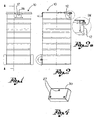
- Figure 1 shows a front view of a container for confidential documents to be destroyed according to the invention
- Figure 2 shows a longitudinal section of the container along line A-A in figure 1 ;
- Figure 2a shows an enlarged view of the electronic lock of the container of figure 2 ;
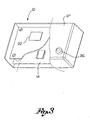
- Figure 3 schematically shows a cutaway view of the lock only
- Figure 4 shows a perspective view of an electronic key associable to the lock of figure 3 ;
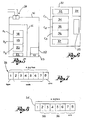
- Figure 5 schematically shows the electronic board of an electronic lock
- Figure 6 schematically shows the electronic board of an electronic key
- Figure 7 shows a string of bytes associated to the serial number of the electronic key
- Figure 8 shows a string of bytes used for the opening codes of the electronic key
- Figures 9a, 9b , 9c and 9d show portions of an example of a software code that implements a lock configuration and opening algorithm
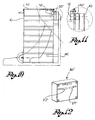
- Figure 10 shows a side view of the container connected to a tilting device
- Figure 11 shows an enlarged view of the circled detail in figure 10 ;
- Figure 12 shows an electronic key mounted on the tilting device of figures 10 and 11 ;
- Figure 13 shows the container moved by the tilting device in a position for emptying the contents thereof.
- the container management method and the relevant devices shall be described for a typical situation that involves three subjects or operators in the management of the containers: the manufacturer A of the containers, at least one disposal firm B, that receives the containers from the manufacturer and carries out the destruction of the confidential documents, and at least one client C of the disposal firm, or end user, that is, the subject that has the confidential documents to be placed in the containers for the destruction thereof at the disposal firm's.
- the management method described could in any case be extended to any number of subjects of a hierarchical relation of the supplier-client type, by configuring the physical devices that allow actuating such method accordingly.
- Reference numeral 10 denotes a container suitable for collecting confidential documents to be destroyed.
- Container 10 is provided with an electronic lock 12 which can be associated to an electronic key 30 for the opening thereof.
- Lock 12 comprises an electronic microprocessor board 14 with permanent memory 16 for storing three opening codes to which three respective levels are assigned, corresponding, as clarified hereinafter, to three different accessibility levels:
- Disposal firm code 19 (second level)
- Memory 16 further stores a secret code 21, whose function shall be explained in the following description.
- lock 12 further comprises a read-only RFID transponder 22 with unique identification code 23.
- Lock 12 is provided with an electrical supply terminal 24 connectable to the external mains.
- lock 12 is provided, on a side 12' of the enclosure thereof accessible from the outside, with electrical contacts 26 suitable for taking the electrical supply from corresponding electrical contacts 27 provided on the outer enclosure of the key and connected to a battery 25 internal thereto.
- electrical contacts 26 suitable for taking the electrical supply from corresponding electrical contacts 27 provided on the outer enclosure of the key and connected to a battery 25 internal thereto.
- the exchange of information between key and lock occurs through such contacts 26, 27.
- Lock 12 is associated to a set of electronic keys 30, one for each subject involved in the container management, as described hereinafter.
- Each key 30 comprises a permanent electronic memory 32 which can be written only after having carried out an authentication procedure (for example according to a challenge-response protocol), which shall be better described hereinafter.
- Memory 32 of key 30 contains the following information: a serial number 33, three opening codes 34-36, and a secrete code 37.
- This code prevents the key duplication and allows the unique association of the key to an owner.
- the "crc” allows checking that the code is not altered during the reading.
- the opening codes 34-36 are readable and writable and, as like the lock, are divided into three different levels corresponding to three different access levels: manufacturer code 34 (first level), disposal firm code 35 (second level) and user code 36 (third level).
- the opening codes occupy 8 bytes of memory: 1 byte for the manufacturer code 34, 2 bytes for the disposal firm code 35, 3 bytes for the user code 36, and the remaining 2 bytes are reserved for the crc.
- the possible combinations for the manufacturer code therefore are 256; the possible combinations for the disposal firm code are 65536 (that is, the maximum number of clients of a same manufacturer); the possible combinations for the user code are about 16,000,000 (that is, the maximum number of all the possible clients of a disposal firm (each disposal firm can manage 16 million clients).
- the crc ensures that the code is not altered during the reading.
- Opening codes requires knowing the secret code 37 stored in the key. Therefore, once written, the opening codes are always readable and after the key configuration are not altered anymore.
- the secret code 37 is unique for all the keys of a manufacturer A and is written during the key creation step. Afterwards, it is not readable anymore. According to an embodiment, the secret code 37 is comprised of 8 bytes.
- keys 30 are physically substantially all the same, they are configured in a different way according to the owner thereof. More in detail, the keys of manufacturer A, in the following description also called first level keys, are configured for opening any container manufactured by the manufacturer and therefore exhibit the highest access level; the keys of disposal firm B, called “second level keys”, are configured for opening any container supplied to disposal firm B by manufacturer A, and therefore exhibit an intermediate access level; the keys of end user C, called “third level keys”, are configured for opening only the containers assigned by its disposal firm B thereto, and therefore exhibit the lowest access level.
- first level keys are configured for opening any container manufactured by the manufacturer and therefore exhibit the highest access level
- the keys of disposal firm B called “second level keys”
- second level keys are configured for opening any container supplied to disposal firm B by manufacturer A, and therefore exhibit an intermediate access level
- the keys of end user C called “third level keys” are configured for opening only the containers assigned by its disposal firm B thereto, and therefore exhibit the lowest access level.
- Such access hierarchy to locks 12 takes place thanks to the possibility of dynamically configuring the locks themselves so that they become lock of manufacturer A (openable only by manufacturer A, and therefore with the lowest accessibility level), lock of disposal firm B (lock openable only by manufacturer A and by disposal firm B, therefore having an intermediate accessibility level), or lock of end user C (lock openable by manufacturer A, by disposal firm B and by user C, therefore having the highest accessibility).
- Microprocessor 14 of lock 12 is programmed so that it is capable of recognising the access level of key 30 interacting with lock 12 and, if this is the same as the current accessibility level of the lock, makes the comparison between the opening codes for allowing or not the opening of the container, whereas if it is higher than the current level of the lock, copies the opening codes of the key on the opening codes of the lock, thus enabling the opening of the container.
- the keys themselves configure the locks, provided that the first are of a higher level than the latter.
- the first level key has the first level opening code 34 initialised with the code of a manufacturer A, whereas the codes of the other two levels are null.
- the second level key has the first level opening code initialised with the code of a manufacturer A, the second level opening code initialised with the code of a disposal firm B, and the third level opening code null.
- the third level key has the first level opening code initialised with the code of a manufacturer A, the second level opening code initialised with the code of a disposal firm B, and the third level opening code initialised with the code of an end user C.
- C1, C2 and C3 as the three opening codes of key 34-36 and S1, S2 and S3 as the opening codes of lock 18-20 for shortness, there can be the following combinations:
- key 30 communicates with lock 12 through a serial data transmission system.
- the connection between key and lock is actuated after the key has authenticated against the container.
- the container must be sure that the key that wants to open it is authorised.
- a key is authorised to open a container if key and container come from a same manufacturer A.
- the authentication procedure is required because if the transmission were clear, it would be easily possible to read the code sent by a key and duplicate it.
- a key is authorised to open a lock if the secret code 37 of the key matches the secret code 21 of the lock.
- the key authentication is carried out with a challenge-response protocol.
- lock 12 reads serial number 33 and the opening codes 34-36 of the key, then sends a random number to the key.
- the latter calculates a message authentication code (MAC) of the random number, of its opening codes and of the secret code, and sends the calculated code to the lock.
- the lock calculates the MAC of the same parameters (knowing its secret code 21). If the two MAC match, the key is acknowledged, otherwise it is considered as invalid.
- the safety of electronic locks is therefore based on the sharing of a secret code 21, 37 between locks and keys.
- Manufacturer A and disposal firms B are provided with a program for changing and/or creating the keys.
- a program for changing and/or creating the keys.
- This program allows manufacturer A and disposal firms B to create as many keys as the respective clients.
- This program must know the secret code to be usable.
- this program is enabled by a hardware device that must be installed on the computer used for executing the same program (for example, a device with USB interface) and that contains a secret code.
- Such device uses a mechanism similar to the challenge-response protocol used between lock and key, but uses a different secret code.
- Each disposal firm will have a device for enabling its key creation-changing program, unique and different from that of all the other disposal firms.
- the key creation-changing program used by the disposal firms cannot change the first two levels of the keys.
- the keys configure the locks after the locks have authenticated them and therefore it is not possible to change the lock codes with devices other than the certified keys.
- the devices for managing the containers further comprise an operator terminal for the container loading and unloading operations and for the tipper management.
- the operator terminal for the loading and unloading operations is a PDA capable of connecting to the disposal firm IT network and of reading the container transponders by an RFID reader. It is provided with the software for carrying out the container loading and unloading procedures and authentication procedures for enabled operators. In addition, it can print the receipt of the operations carried out to be delivered to the client.
- the tipper is a motor vehicle capable of unloading the containers and locally disposing of the contents thereof.
- the operator terminal for the tipper is a PDA capable of carrying out the following operations:
- the tipper comprises a tipping device 40 capable of moving containers 10 up to tilting them for the emptying thereof.
- the tipping device 40 exhibits, at the level of lock 12 of the container, a second level key 30' which, when a container 10 is placed on such tipping device 40, opens lock 12 releasing lid 10' of container 10.
- Key 30' is provided with electrical spring contacts 27' suitable for realising the electrical contact with contact 26 of the locks.
- Manufacturer A has a first level key, or manufacturer key, and N second level keys, or disposal firm keys, one for each disposal firm client thereof.
- first level key or manufacturer key
- second level keys or disposal firm keys, one for each disposal firm client thereof.
- the disposal firm key recipient of the container
- programs the disposal firm code as second level code. In this way, each disposal firm receives containers already configured with their own second level code that cannot be changed anymore but by the manufacturer.
- the manufacturer reads the code from the transponder using the operator terminal and associates the container to its disposal firm client (with date, time, operator, etc.).
- the disposal firm has a second level key and as many third level keys as its end clients. Before delivering a container, the disposal firm reads the code from the transponder using the operator terminal and associates the container to the client (with date, time, operator, etc.). Then, it introduces the client key and programs the client code as third level code. If it is not carried out by the disposal firm, this last operation can also be carried out upon the first opening carried out by the client.
- the disposal firm collects the container it can open it with its second level key and at the same time it clears the client code. Moreover, it can read and store the container collection with the PDA.
- the operations are concurrent if the container is emptied by a tooled lorry (tipper).
- the manufacturer has a sufficiently wide range of combinations available (some tenths thousands) to meet all of its clients, guaranteeing a series of dedicated and exclusive combinations to each of them.
- the disposal firm B upon the delivery of the containers to client C, has the possibility of customising with a code (alphanumerical combinations) the containers themselves to the client (since up to that moment they are anonymous it is possible to deliver any amount to any recipient, according to the request, upon the delivery itself) storing the number of containers left on site.
- the manager of the end user C always has the possibility of opening all of their containers available at the time with a simple third level electronic key.
- the disposal firm driver collects the full containers and returns them to the premises, without having to record anything but any administrative/tax documents.
- the containers After unloading the lorry, the containers are ready to be sent to the tipper for the subsequent emptying.
- Another advantageous aspect of the invention consists in having considerably simplified the "acknowledgement” and the “traceability” of the container upon the delivery and/or collection at the client's.
- Another advantageous aspect of the invention consists in having considerably simplified the "acknowledgement” and the “traceability” of the container upon the delivery and/or collection at the client's.
Landscapes
- Engineering & Computer Science (AREA)
- Mechanical Engineering (AREA)
- Computer Networks & Wireless Communication (AREA)
- Physics & Mathematics (AREA)
- General Physics & Mathematics (AREA)
- Lock And Its Accessories (AREA)
- Storage Device Security (AREA)
Claims (10)
- Verfahren zum Verwalten von Behältern (10) mit vertraulichem Datenmaterial, das vernichtet werden sollen, wobei das Verwalten der Behälter wenigstens einen ersten Lieferanten-Subjekt (A, B) und wenigstens ein zweites Subjekt (B, C), der Kunde des ersten ist, betrifft, folgende Schritte umfassend:- Zuordnen eines elektronischen Schlosses (12) zu jedem Behälter (10),- Bereitstellen wenigstens eines elektronischen Schlüssels eines ersten Niveaus für das erste Subjekt und eines elektronischen Schlüssels eines zweiten Niveaus für das elektronische Schloss für das zweite Subjekt, wobei- jedes elektronische Schloss und jeder elektronische Schlüssel wenigstens einen ersten Speicherabschnitt, in dem ein Zugangscode eines ersten Niveaus gespeichert werden kann, und einen zweiten Speicherabschnitt, in dem ein Zugangscode eines zweiten Niveaus gespeichert werden kann, umfassen,- der Schlüssel eines ersten Niveaus einen ersten Subjekt-Code, der in dem ersten Speicherabschnitt gespeichert ist, und einen Nullcode, der in dem zweiten Speicherabschnitt gespeichert ist, aufweist,- der Schlüssel eines zweiten Niveaus einen ersten Subjekt-Code, der in dem ersten Speicherabschnitt gespeichert ist, und einen zweiten Subjekt-Code, der in dem zweiten Speicherabschnitt gespeichert ist, aufweist, wobei das Verfahren folgende Schritte umfasst:- Ausliefern eines Behälters von dem ersten Subjekt an das zweite Subjekt durch Konfigurieren eines elektronischen Schlosses als ein elektronisches Schloss zweiten Niveaus, wobei ein Schlüssel zweiten Niveaus in das Schloss eingeführt wird und der Zugangscode eines zweiten Niveaus des Schlüssels in den zweiten Speicherabschnitt des Schlosses geschrieben wird,- Verwenden des Behälters durch das zweite Subjekt, wobei der Schlüssel zweiten Niveaus des zweiten Subjekts nur ein Schloss zweiten Niveaus, das die gleichen ersten und zweiten Zugangscodes aufweist, öffnet, und- Abholen eines Behälters von dem zweiten Subjekt und liefern an das erste Subjekt, wobei der elektronische Schlüssel ersten Niveaus ein elektronisches Schloss öffnet, das den gleichen Code ersten Niveaus und irgenden einen Code zweiten Niveaus aufweist, und wobei der Nullzugangscode zweiten Niveaus in den zweiten Speicherabschnitt des Schlosses geschrieben wird.
- Verfahren gemäß Anspruch 1, wobei die Behälterverwaltung ein erstes Subjekt (A), Hersteller der Behälter, wenigstens ein zweites Vernichtungsfirma-Subjekt (B), das die Behälter von dem Hersteller erhält, und wenigstens ein drittes Endverbraucher-Subjekt, das die leeren Behälter von der Vernichtungsfirma (B) erhält und diese voll zurück an die Vernichtungsfirma zum Entleeren derselben liefert, wobei jedes elektronische Schloss und jeder elektronische Schlüssel einen ersten, einen zweiten und einen dritten Speicherabschnitt aufweist, in dem jeweils ein erster Zugangscode, ein zweiter Zugangscode und ein dritter Zugangscode gespeichert werden kann.
- Verfahren gemäß Anspruch 1 oder 2, wobei das erste Lieferanten-Subjekt (A, B) die elektronischen Schlüssel (30), die an jedes zweite Kunden-Subjekt (B, C) ausgeliefert werden, erzeugen und/oder abändern kann.
- Verfahren gemäß Anspruch 3, wobei die elektronischen Schlüssel unterschiedliche Zugangsniveaus zu den Schlössern gemäß dem Subjekt, dem diese zugewiesen sind, aufweisen, und wobei die Schlösser mit unterschiedlichen Zugangsniveaus konfigurierbar sind, so dass die Schlösser der Behälter der Lieferanten-Subjekte nicht durch die Schlüssel der Kunden-Subjekte geöffnet werden können.
- Verfahren gemäß Anspruch 4, wobei die Schlösser dynamisch konfigurierbar sind, um ein Zugangsniveau durch Verwendung des Schlüssels eines höheren Niveaus als die Konfigurationsmittel anzunehmen.
- Verfahren gemäß irgend einem der vorangehenden Ansprüche, wobei, wenn ein Schlüssel mit einem Schloss verbunden wird, ein Schlüsselauthentifizierungsschritt zum Bestätigen, dass der Schlüssel berechtigt ist, das Schloss zu öffnen, vorgesehen ist.
- Verfahren gemäß Anspruch 6, wobei der Authentifizierungsschritt auf der Identitätsüberprüfung zwischen einem geheimen Code, der dem Schloss zugehört, und einem geheimen Code, der dem Schlüssel zugehört, basiert.
- Behälter zur Vernichtung von geheimen Dokumenten umfassend ein elektronisches Schloss (12), das eine elektronische Mikroprozessorplattine (14) mit einem Permanentspeicher (16) aufweist, der wenigstens einen ersten und einen zweiten Speicherabschnitt umfasst, wobei in diesen wenigstens ein erster und ein zweiter Zugangscode (18, 19, 20) gespeichert sind, wobei der Mikroprozessor zum Ausführen eines Vergleichs zwischen seinen eigenen Öffnungscodes und den entsprechenden ersten und zweiten Zugangscodes eines Schlüssels programmiert ist, der in das Schloss zum Erlauben oder Versagen des Öffnens des Behälters eingeführt wird, wobei, wenn die ersten Zugangscodes übereinstimmen, und- wenn der zweite Zugangscode des Schlüssels null ist, der Mikroprozessor den Nullcode in den zweiten Speicherabschnitt des Schlosses schreibt und das Schloss öffnet,- wenn die zweiten Zugangscodes des Schlüssels und des Schlosses nicht null sind, der Vergleich zwischen den Codes ausgeführt wird und das Schloss, nur dann wenn sie übereinstimmen, geöffnet wird,- wenn der zweite Zugangscode des Schlosses null ist und der zweite Zugangscode des Schlüssels nicht null ist, der Mikroprozessor den letzteren in den zweiten Speicherabschnitt des Schlosses schreibt und das Schloss öffnet.
- Behälter gemäß Anspruch 8, ferner umfassend einen schreibgeschützten RFID-Transponder (22) mit einem einzigartigen Identifikationscode (23).
- Kippfahrzeug umfassend eine Kippvorrichtung (40), die zum Bewegen der Behälter (10) mit vertraulichen Dokumenten gemäß Anspruch 8 oder 9 bis zum Kippen derselben zum Entleeren geeignet ist, umfassend- einen elektronischen Schlüssel ersten Niveaus zum Öffnen des Schlosses des zu entleerenden Behälters, wobei der elektronische Schlüssel ersten Subjekt-Niveaus einen ersten Subjekt-Code als Zugangscode ersten Niveaus, der in einem ersten Speicherabschnitt gespeichert ist, und einen Nullcode als Zugangscode zweiten Niveaus, der in einem zweiten Speicherabschnitt gespeichert ist, aufweist, so dass, wenn der Zugangscode ersten Niveaus des Behälterschlosses mit dem Zugangscode ersten Niveaus des elektronischen Schlüssels übereinstimmt, der Schlüssel das Schloss öffnet und den Nullcode des Schlüssels in den zweiten Speicherabschnitt des Schlosses schreibt,- Mittel, die zum Lesen des RFID-Codes des Behälters und Speichern desselben, zum Ausdrucken des Berichtes der entleerten Behälter und zum Verbinden mit dem Kippfahrzeugserver zum Herunterladen der Daten der ausgeführten Arbeitsschritte geeignet sind.
Priority Applications (3)
| Application Number | Priority Date | Filing Date | Title |
|---|---|---|---|
| DE200660017231 DE602006017231D1 (de) | 2006-10-24 | 2006-10-24 | Verfahren zur Verwaltung von Behältern vertraulicher, zu vernichtender Daten und Vorrichtungen zur Ausführung eines solches Verfahrens |
| EP20060425733 EP1916630B1 (de) | 2006-10-24 | 2006-10-24 | Verfahren zur Verwaltung von Behältern vertraulicher, zu vernichtender Daten und Vorrichtungen zur Ausführung eines solches Verfahrens |
| AT06425733T ATE483214T1 (de) | 2006-10-24 | 2006-10-24 | Verfahren zur verwaltung von behältern vertraulicher, zu vernichtender daten und vorrichtungen zur ausführung eines solches verfahrens |
Applications Claiming Priority (1)
| Application Number | Priority Date | Filing Date | Title |
|---|---|---|---|
| EP20060425733 EP1916630B1 (de) | 2006-10-24 | 2006-10-24 | Verfahren zur Verwaltung von Behältern vertraulicher, zu vernichtender Daten und Vorrichtungen zur Ausführung eines solches Verfahrens |
Publications (2)
| Publication Number | Publication Date |
|---|---|
| EP1916630A1 EP1916630A1 (de) | 2008-04-30 |
| EP1916630B1 true EP1916630B1 (de) | 2010-09-29 |
Family
ID=37888059
Family Applications (1)
| Application Number | Title | Priority Date | Filing Date |
|---|---|---|---|
| EP20060425733 Ceased EP1916630B1 (de) | 2006-10-24 | 2006-10-24 | Verfahren zur Verwaltung von Behältern vertraulicher, zu vernichtender Daten und Vorrichtungen zur Ausführung eines solches Verfahrens |
Country Status (3)
| Country | Link |
|---|---|
| EP (1) | EP1916630B1 (de) |
| AT (1) | ATE483214T1 (de) |
| DE (1) | DE602006017231D1 (de) |
Families Citing this family (2)
| Publication number | Priority date | Publication date | Assignee | Title |
|---|---|---|---|---|
| WO2012136623A1 (de) * | 2011-04-04 | 2012-10-11 | Hw Verwaltungs Gmbh | Verfahren zum verschluss und der sicherung von behältern gegen ein unbefugtes öffnen |
| GB2515832B (en) * | 2013-07-05 | 2015-12-30 | Bag It Up Ltd | Receptacle |
Family Cites Families (5)
| Publication number | Priority date | Publication date | Assignee | Title |
|---|---|---|---|---|
| US4712398A (en) * | 1986-03-21 | 1987-12-15 | Emhart Industries, Inc. | Electronic locking system and key therefor |
| FR2816723B1 (fr) * | 2000-11-16 | 2003-11-21 | Patrick Schiltz | Procede et dispositif de collecte d'ordures menageres |
| US20030179073A1 (en) * | 2002-03-20 | 2003-09-25 | Ohanes Ghazarian | Electronic secure locking system |
| US6880470B2 (en) * | 2002-06-18 | 2005-04-19 | Eco Tekk International, Llc | Waste disposal apparatus |
| US20040160305A1 (en) * | 2003-02-18 | 2004-08-19 | Michael Remenih | Electronic access control system |
-
2006
- 2006-10-24 EP EP20060425733 patent/EP1916630B1/de not_active Ceased
- 2006-10-24 DE DE200660017231 patent/DE602006017231D1/de active Active
- 2006-10-24 AT AT06425733T patent/ATE483214T1/de not_active IP Right Cessation
Also Published As
| Publication number | Publication date |
|---|---|
| DE602006017231D1 (de) | 2010-11-11 |
| ATE483214T1 (de) | 2010-10-15 |
| EP1916630A1 (de) | 2008-04-30 |
Similar Documents
| Publication | Publication Date | Title |
|---|---|---|
| US6005487A (en) | Electronic security system with novel electronic T-handle lock | |
| EP0527886B1 (de) | Elektronisches sicherheitssystem | |
| EP0635182B1 (de) | Elektronisches sicherheitssystem | |
| US7821395B2 (en) | Vending machines with field-programmable locks | |
| US7495543B2 (en) | Vending machines with field-programmable electronic locks | |
| US20070096867A1 (en) | Vending machines with field-programmable electronic locks | |
| CZ304736B6 (cs) | Zařízení klíče a zámku | |
| DE4407966A1 (de) | Elektronisches Code-Schloß, insbesondere zum Deaktivieren einer Kraftfahrzeug-Wegfahrsperre | |
| CN104757789A (zh) | 一种药品智能保险柜及药品智能管理系统 | |
| NZ336537A (en) | Electronic lock including a mechanical drive train and a solenoid engageable with a drive member | |
| NZ564196A (en) | Electronic lock for security system and key on a wireless device including methods of encoding data | |
| CN1373958A (zh) | 安全交易调制解调器 | |
| CN1331824A (zh) | 远程访问和安全系统 | |
| WO2015042502A1 (en) | System and method of initializing and controlling locks | |
| EP1916630B1 (de) | Verfahren zur Verwaltung von Behältern vertraulicher, zu vernichtender Daten und Vorrichtungen zur Ausführung eines solches Verfahrens | |
| US20020194024A1 (en) | Sabotage-proof and censorship-resistant personal electronic health file | |
| CN1375094A (zh) | 用于操作设计成执行可重新装载的功能程序的数据载体的方法 | |
| JP2004051067A (ja) | 建設機械の盗難防止装置および建設機械の管理方法 | |
| US20100211488A1 (en) | License enforcement | |
| CA2157480C (en) | Electronic security system with novel electronic t-handle lock | |
| WO1999004355A1 (en) | Method and system for identification of registered articles | |
| JPH08277664A (ja) | 電子キーシステム | |
| US20100223662A1 (en) | Programmable electronic access control system | |
| HUP0303162A2 (en) | System consisting of lockable individual containers and a collecting container into which such lockable individual containers can be emptied | |
| JP2002092716A (ja) | 自動販売機、自動販売機用鍵情報配布方法、装置及びシステム |
Legal Events
| Date | Code | Title | Description |
|---|---|---|---|
| PUAI | Public reference made under article 153(3) epc to a published international application that has entered the european phase |
Free format text: ORIGINAL CODE: 0009012 |
|
| AK | Designated contracting states |
Kind code of ref document: A1 Designated state(s): AT BE BG CH CY CZ DE DK EE ES FI FR GB GR HU IE IS IT LI LT LU LV MC NL PL PT RO SE SI SK TR |
|
| AX | Request for extension of the european patent |
Extension state: AL BA HR MK RS |
|
| 17P | Request for examination filed |
Effective date: 20081021 |
|
| AKX | Designation fees paid |
Designated state(s): AT BE BG CH CY CZ DE DK EE ES FI FR GB GR HU IE IS IT LI LT LU LV MC NL PL PT RO SE SI SK TR |
|
| 17Q | First examination report despatched |
Effective date: 20090128 |
|
| GRAP | Despatch of communication of intention to grant a patent |
Free format text: ORIGINAL CODE: EPIDOSNIGR1 |
|
| GRAS | Grant fee paid |
Free format text: ORIGINAL CODE: EPIDOSNIGR3 |
|
| GRAA | (expected) grant |
Free format text: ORIGINAL CODE: 0009210 |
|
| AK | Designated contracting states |
Kind code of ref document: B1 Designated state(s): AT BE BG CH CY CZ DE DK EE ES FI FR GB GR HU IE IS IT LI LT LU LV MC NL PL PT RO SE SI SK TR |
|
| REG | Reference to a national code |
Ref country code: GB Ref legal event code: FG4D |
|
| REG | Reference to a national code |
Ref country code: CH Ref legal event code: EP |
|
| REG | Reference to a national code |
Ref country code: IE Ref legal event code: FG4D |
|
| REF | Corresponds to: |
Ref document number: 602006017231 Country of ref document: DE Date of ref document: 20101111 Kind code of ref document: P |
|
| PG25 | Lapsed in a contracting state [announced via postgrant information from national office to epo] |
Ref country code: FI Free format text: LAPSE BECAUSE OF FAILURE TO SUBMIT A TRANSLATION OF THE DESCRIPTION OR TO PAY THE FEE WITHIN THE PRESCRIBED TIME-LIMIT Effective date: 20100929 Ref country code: AT Free format text: LAPSE BECAUSE OF FAILURE TO SUBMIT A TRANSLATION OF THE DESCRIPTION OR TO PAY THE FEE WITHIN THE PRESCRIBED TIME-LIMIT Effective date: 20100929 Ref country code: LT Free format text: LAPSE BECAUSE OF FAILURE TO SUBMIT A TRANSLATION OF THE DESCRIPTION OR TO PAY THE FEE WITHIN THE PRESCRIBED TIME-LIMIT Effective date: 20100929 |
|
| REG | Reference to a national code |
Ref country code: NL Ref legal event code: VDEP Effective date: 20100929 |
|
| LTIE | Lt: invalidation of european patent or patent extension |
Effective date: 20100929 |
|
| PG25 | Lapsed in a contracting state [announced via postgrant information from national office to epo] |
Ref country code: SI Free format text: LAPSE BECAUSE OF FAILURE TO SUBMIT A TRANSLATION OF THE DESCRIPTION OR TO PAY THE FEE WITHIN THE PRESCRIBED TIME-LIMIT Effective date: 20100929 |
|
| PG25 | Lapsed in a contracting state [announced via postgrant information from national office to epo] |
Ref country code: SE Free format text: LAPSE BECAUSE OF FAILURE TO SUBMIT A TRANSLATION OF THE DESCRIPTION OR TO PAY THE FEE WITHIN THE PRESCRIBED TIME-LIMIT Effective date: 20100929 Ref country code: LV Free format text: LAPSE BECAUSE OF FAILURE TO SUBMIT A TRANSLATION OF THE DESCRIPTION OR TO PAY THE FEE WITHIN THE PRESCRIBED TIME-LIMIT Effective date: 20100929 Ref country code: GR Free format text: LAPSE BECAUSE OF FAILURE TO SUBMIT A TRANSLATION OF THE DESCRIPTION OR TO PAY THE FEE WITHIN THE PRESCRIBED TIME-LIMIT Effective date: 20101230 |
|
| PG25 | Lapsed in a contracting state [announced via postgrant information from national office to epo] |
Ref country code: PT Free format text: LAPSE BECAUSE OF FAILURE TO SUBMIT A TRANSLATION OF THE DESCRIPTION OR TO PAY THE FEE WITHIN THE PRESCRIBED TIME-LIMIT Effective date: 20110131 Ref country code: CZ Free format text: LAPSE BECAUSE OF FAILURE TO SUBMIT A TRANSLATION OF THE DESCRIPTION OR TO PAY THE FEE WITHIN THE PRESCRIBED TIME-LIMIT Effective date: 20100929 Ref country code: SK Free format text: LAPSE BECAUSE OF FAILURE TO SUBMIT A TRANSLATION OF THE DESCRIPTION OR TO PAY THE FEE WITHIN THE PRESCRIBED TIME-LIMIT Effective date: 20100929 Ref country code: IS Free format text: LAPSE BECAUSE OF FAILURE TO SUBMIT A TRANSLATION OF THE DESCRIPTION OR TO PAY THE FEE WITHIN THE PRESCRIBED TIME-LIMIT Effective date: 20110129 Ref country code: NL Free format text: LAPSE BECAUSE OF FAILURE TO SUBMIT A TRANSLATION OF THE DESCRIPTION OR TO PAY THE FEE WITHIN THE PRESCRIBED TIME-LIMIT Effective date: 20100929 Ref country code: EE Free format text: LAPSE BECAUSE OF FAILURE TO SUBMIT A TRANSLATION OF THE DESCRIPTION OR TO PAY THE FEE WITHIN THE PRESCRIBED TIME-LIMIT Effective date: 20100929 Ref country code: MC Free format text: LAPSE BECAUSE OF NON-PAYMENT OF DUE FEES Effective date: 20101031 Ref country code: RO Free format text: LAPSE BECAUSE OF FAILURE TO SUBMIT A TRANSLATION OF THE DESCRIPTION OR TO PAY THE FEE WITHIN THE PRESCRIBED TIME-LIMIT Effective date: 20100929 |
|
| REG | Reference to a national code |
Ref country code: CH Ref legal event code: PL |
|
| PG25 | Lapsed in a contracting state [announced via postgrant information from national office to epo] |
Ref country code: BE Free format text: LAPSE BECAUSE OF FAILURE TO SUBMIT A TRANSLATION OF THE DESCRIPTION OR TO PAY THE FEE WITHIN THE PRESCRIBED TIME-LIMIT Effective date: 20100929 |
|
| PG25 | Lapsed in a contracting state [announced via postgrant information from national office to epo] |
Ref country code: CH Free format text: LAPSE BECAUSE OF NON-PAYMENT OF DUE FEES Effective date: 20101031 Ref country code: ES Free format text: LAPSE BECAUSE OF FAILURE TO SUBMIT A TRANSLATION OF THE DESCRIPTION OR TO PAY THE FEE WITHIN THE PRESCRIBED TIME-LIMIT Effective date: 20110109 Ref country code: LI Free format text: LAPSE BECAUSE OF NON-PAYMENT OF DUE FEES Effective date: 20101031 |
|
| PLBE | No opposition filed within time limit |
Free format text: ORIGINAL CODE: 0009261 |
|
| STAA | Information on the status of an ep patent application or granted ep patent |
Free format text: STATUS: NO OPPOSITION FILED WITHIN TIME LIMIT |
|
| PG25 | Lapsed in a contracting state [announced via postgrant information from national office to epo] |
Ref country code: DK Free format text: LAPSE BECAUSE OF FAILURE TO SUBMIT A TRANSLATION OF THE DESCRIPTION OR TO PAY THE FEE WITHIN THE PRESCRIBED TIME-LIMIT Effective date: 20100929 Ref country code: PL Free format text: LAPSE BECAUSE OF FAILURE TO SUBMIT A TRANSLATION OF THE DESCRIPTION OR TO PAY THE FEE WITHIN THE PRESCRIBED TIME-LIMIT Effective date: 20100929 |
|
| REG | Reference to a national code |
Ref country code: DE Ref legal event code: R097 Ref document number: 602006017231 Country of ref document: DE Effective date: 20110630 |
|
| PG25 | Lapsed in a contracting state [announced via postgrant information from national office to epo] |
Ref country code: IE Free format text: LAPSE BECAUSE OF NON-PAYMENT OF DUE FEES Effective date: 20101024 |
|
| PG25 | Lapsed in a contracting state [announced via postgrant information from national office to epo] |
Ref country code: CY Free format text: LAPSE BECAUSE OF FAILURE TO SUBMIT A TRANSLATION OF THE DESCRIPTION OR TO PAY THE FEE WITHIN THE PRESCRIBED TIME-LIMIT Effective date: 20100929 |
|
| PG25 | Lapsed in a contracting state [announced via postgrant information from national office to epo] |
Ref country code: HU Free format text: LAPSE BECAUSE OF FAILURE TO SUBMIT A TRANSLATION OF THE DESCRIPTION OR TO PAY THE FEE WITHIN THE PRESCRIBED TIME-LIMIT Effective date: 20110330 Ref country code: BG Free format text: LAPSE BECAUSE OF FAILURE TO SUBMIT A TRANSLATION OF THE DESCRIPTION OR TO PAY THE FEE WITHIN THE PRESCRIBED TIME-LIMIT Effective date: 20100929 Ref country code: LU Free format text: LAPSE BECAUSE OF NON-PAYMENT OF DUE FEES Effective date: 20101024 |
|
| PG25 | Lapsed in a contracting state [announced via postgrant information from national office to epo] |
Ref country code: TR Free format text: LAPSE BECAUSE OF FAILURE TO SUBMIT A TRANSLATION OF THE DESCRIPTION OR TO PAY THE FEE WITHIN THE PRESCRIBED TIME-LIMIT Effective date: 20100929 |
|
| PG25 | Lapsed in a contracting state [announced via postgrant information from national office to epo] |
Ref country code: BG Free format text: LAPSE BECAUSE OF FAILURE TO SUBMIT A TRANSLATION OF THE DESCRIPTION OR TO PAY THE FEE WITHIN THE PRESCRIBED TIME-LIMIT Effective date: 20101229 |
|
| REG | Reference to a national code |
Ref country code: FR Ref legal event code: PLFP Year of fee payment: 10 |
|
| REG | Reference to a national code |
Ref country code: FR Ref legal event code: PLFP Year of fee payment: 11 |
|
| REG | Reference to a national code |
Ref country code: FR Ref legal event code: PLFP Year of fee payment: 12 |
|
| REG | Reference to a national code |
Ref country code: FR Ref legal event code: PLFP Year of fee payment: 13 |
|
| PGFP | Annual fee paid to national office [announced via postgrant information from national office to epo] |
Ref country code: GB Payment date: 20211022 Year of fee payment: 16 Ref country code: DE Payment date: 20211020 Year of fee payment: 16 |
|
| PGFP | Annual fee paid to national office [announced via postgrant information from national office to epo] |
Ref country code: IT Payment date: 20211006 Year of fee payment: 16 Ref country code: FR Payment date: 20211029 Year of fee payment: 16 |
|
| REG | Reference to a national code |
Ref country code: DE Ref legal event code: R119 Ref document number: 602006017231 Country of ref document: DE |
|
| GBPC | Gb: european patent ceased through non-payment of renewal fee |
Effective date: 20221024 |
|
| PG25 | Lapsed in a contracting state [announced via postgrant information from national office to epo] |
Ref country code: FR Free format text: LAPSE BECAUSE OF NON-PAYMENT OF DUE FEES Effective date: 20221031 Ref country code: DE Free format text: LAPSE BECAUSE OF NON-PAYMENT OF DUE FEES Effective date: 20230503 |
|
| PG25 | Lapsed in a contracting state [announced via postgrant information from national office to epo] |
Ref country code: IT Free format text: LAPSE BECAUSE OF NON-PAYMENT OF DUE FEES Effective date: 20221024 Ref country code: GB Free format text: LAPSE BECAUSE OF NON-PAYMENT OF DUE FEES Effective date: 20221024 |