EP1915617B1 - Methods and compositions for identifying a peptide having an intermolecular interaction with a target of interest - Google Patents
Methods and compositions for identifying a peptide having an intermolecular interaction with a target of interest Download PDFInfo
- Publication number
- EP1915617B1 EP1915617B1 EP06766136A EP06766136A EP1915617B1 EP 1915617 B1 EP1915617 B1 EP 1915617B1 EP 06766136 A EP06766136 A EP 06766136A EP 06766136 A EP06766136 A EP 06766136A EP 1915617 B1 EP1915617 B1 EP 1915617B1
- Authority
- EP
- European Patent Office
- Prior art keywords
- interest
- peptide
- target
- protein
- protease
- Prior art date
- Legal status (The legal status is an assumption and is not a legal conclusion. Google has not performed a legal analysis and makes no representation as to the accuracy of the status listed.)
- Active
Links
- 108090000765 processed proteins & peptides Proteins 0.000 title claims abstract description 366
- 230000009878 intermolecular interaction Effects 0.000 title claims abstract description 59
- 238000000034 method Methods 0.000 title claims description 75
- 239000000203 mixture Substances 0.000 title description 7
- 102000004196 processed proteins & peptides Human genes 0.000 claims abstract description 189
- 108090000623 proteins and genes Proteins 0.000 claims abstract description 178
- 102000004169 proteins and genes Human genes 0.000 claims abstract description 171
- 229920001184 polypeptide Polymers 0.000 claims abstract description 133
- 108091005804 Peptidases Proteins 0.000 claims abstract description 126
- 239000004365 Protease Substances 0.000 claims abstract description 124
- 241001515965 unidentified phage Species 0.000 claims abstract description 109
- 238000003776 cleavage reaction Methods 0.000 claims abstract description 78
- 230000007017 scission Effects 0.000 claims abstract description 78
- 238000009739 binding Methods 0.000 claims abstract description 38
- 230000027455 binding Effects 0.000 claims abstract description 37
- 150000001413 amino acids Chemical class 0.000 claims abstract description 29
- 108010067902 Peptide Library Proteins 0.000 claims abstract description 16
- 230000002829 reductive effect Effects 0.000 claims abstract description 12
- 102100037486 Reverse transcriptase/ribonuclease H Human genes 0.000 claims abstract 24
- 102000004190 Enzymes Human genes 0.000 claims description 86
- 108090000790 Enzymes Proteins 0.000 claims description 86
- 102000005962 receptors Human genes 0.000 claims description 83
- 108020003175 receptors Proteins 0.000 claims description 83
- 208000015181 infectious disease Diseases 0.000 claims description 48
- 239000013598 vector Substances 0.000 claims description 39
- 239000000758 substrate Substances 0.000 claims description 29
- 108020004414 DNA Proteins 0.000 claims description 27
- 239000012634 fragment Substances 0.000 claims description 27
- 230000002458 infectious effect Effects 0.000 claims description 24
- 239000003446 ligand Substances 0.000 claims description 24
- 239000000556 agonist Substances 0.000 claims description 16
- 239000005557 antagonist Substances 0.000 claims description 16
- 230000003042 antagnostic effect Effects 0.000 claims description 14
- -1 antibody Substances 0.000 claims description 14
- 239000000427 antigen Substances 0.000 claims description 14
- 108091007433 antigens Proteins 0.000 claims description 14
- 102000036639 antigens Human genes 0.000 claims description 14
- 230000007501 viral attachment Effects 0.000 claims description 14
- 230000001270 agonistic effect Effects 0.000 claims description 13
- 102000034356 gene-regulatory proteins Human genes 0.000 claims description 13
- 108091006104 gene-regulatory proteins Proteins 0.000 claims description 13
- 229940088597 hormone Drugs 0.000 claims description 12
- 239000005556 hormone Substances 0.000 claims description 12
- 239000003053 toxin Substances 0.000 claims description 12
- 231100000765 toxin Toxicity 0.000 claims description 12
- 108700012359 toxins Proteins 0.000 claims description 12
- 108091032973 (ribonucleotides)n+m Proteins 0.000 claims description 11
- 230000009385 viral infection Effects 0.000 claims description 11
- 108091034117 Oligonucleotide Proteins 0.000 claims description 10
- 239000012190 activator Substances 0.000 claims description 9
- 102100021238 Dynamin-2 Human genes 0.000 claims description 8
- 101000817607 Homo sapiens Dynamin-2 Proteins 0.000 claims description 8
- 239000002532 enzyme inhibitor Substances 0.000 claims description 8
- 230000019491 signal transduction Effects 0.000 claims description 8
- 239000007787 solid Substances 0.000 claims description 8
- 239000003248 enzyme activator Substances 0.000 claims description 7
- 229940125532 enzyme inhibitor Drugs 0.000 claims description 7
- 238000013507 mapping Methods 0.000 claims description 6
- 108091006106 transcriptional activators Proteins 0.000 claims description 5
- 108091006107 transcriptional repressors Proteins 0.000 claims description 5
- 229920000642 polymer Polymers 0.000 claims description 3
- 230000002265 prevention Effects 0.000 claims description 3
- 239000006187 pill Substances 0.000 abstract description 3
- 241000700605 Viruses Species 0.000 description 202
- 210000004027 cell Anatomy 0.000 description 146
- 235000018102 proteins Nutrition 0.000 description 144
- 102000035195 Peptidases Human genes 0.000 description 102
- 235000019419 proteases Nutrition 0.000 description 89
- 229940088598 enzyme Drugs 0.000 description 68
- 230000014509 gene expression Effects 0.000 description 28
- 235000001014 amino acid Nutrition 0.000 description 27
- 229940024606 amino acid Drugs 0.000 description 27
- 230000003993 interaction Effects 0.000 description 26
- 150000007523 nucleic acids Chemical class 0.000 description 22
- 241000894006 Bacteria Species 0.000 description 19
- 239000002609 medium Substances 0.000 description 17
- 241000588724 Escherichia coli Species 0.000 description 16
- 102000039446 nucleic acids Human genes 0.000 description 16
- 108020004707 nucleic acids Proteins 0.000 description 16
- 230000001524 infective effect Effects 0.000 description 15
- 230000001580 bacterial effect Effects 0.000 description 14
- 102000037865 fusion proteins Human genes 0.000 description 14
- 108020001507 fusion proteins Proteins 0.000 description 14
- 238000011534 incubation Methods 0.000 description 13
- 101000747867 Homo sapiens Upstream-binding protein 1 Proteins 0.000 description 12
- 108091028043 Nucleic acid sequence Proteins 0.000 description 12
- 102400000757 Ubiquitin Human genes 0.000 description 12
- 108090000848 Ubiquitin Proteins 0.000 description 12
- 102100040065 Upstream-binding protein 1 Human genes 0.000 description 12
- ROHFNLRQFUQHCH-YFKPBYRVSA-N L-leucine Chemical compound CC(C)C[C@H](N)C(O)=O ROHFNLRQFUQHCH-YFKPBYRVSA-N 0.000 description 11
- ROHFNLRQFUQHCH-UHFFFAOYSA-N Leucine Natural products CC(C)CC(N)C(O)=O ROHFNLRQFUQHCH-UHFFFAOYSA-N 0.000 description 11
- 239000013612 plasmid Substances 0.000 description 10
- 230000010076 replication Effects 0.000 description 10
- 102000007056 Recombinant Fusion Proteins Human genes 0.000 description 9
- 108010008281 Recombinant Fusion Proteins Proteins 0.000 description 9
- 238000003556 assay Methods 0.000 description 9
- 125000000539 amino acid group Chemical group 0.000 description 8
- 230000001404 mediated effect Effects 0.000 description 8
- 210000000234 capsid Anatomy 0.000 description 7
- 208000037265 diseases, disorders, signs and symptoms Diseases 0.000 description 7
- 239000003814 drug Substances 0.000 description 7
- 230000006870 function Effects 0.000 description 7
- 239000003112 inhibitor Substances 0.000 description 7
- 238000012216 screening Methods 0.000 description 7
- 239000000126 substance Substances 0.000 description 7
- 229940079593 drug Drugs 0.000 description 6
- 238000005516 engineering process Methods 0.000 description 6
- 238000012360 testing method Methods 0.000 description 6
- 241000701959 Escherichia virus Lambda Species 0.000 description 5
- 240000004808 Saccharomyces cerevisiae Species 0.000 description 5
- 238000006243 chemical reaction Methods 0.000 description 5
- 238000003780 insertion Methods 0.000 description 5
- 230000037431 insertion Effects 0.000 description 5
- 239000003550 marker Substances 0.000 description 5
- 230000035772 mutation Effects 0.000 description 5
- 230000008569 process Effects 0.000 description 5
- 239000000243 solution Substances 0.000 description 5
- 108010037414 Cytoskeletal Proteins Proteins 0.000 description 4
- 102000010831 Cytoskeletal Proteins Human genes 0.000 description 4
- 230000004568 DNA-binding Effects 0.000 description 4
- 108010043121 Green Fluorescent Proteins Proteins 0.000 description 4
- 102000004144 Green Fluorescent Proteins Human genes 0.000 description 4
- 230000004570 RNA-binding Effects 0.000 description 4
- 102000009661 Repressor Proteins Human genes 0.000 description 4
- 102000040945 Transcription factor Human genes 0.000 description 4
- 108091023040 Transcription factor Proteins 0.000 description 4
- 230000004913 activation Effects 0.000 description 4
- 125000003275 alpha amino acid group Chemical group 0.000 description 4
- 230000015572 biosynthetic process Effects 0.000 description 4
- HVYWMOMLDIMFJA-DPAQBDIFSA-N cholesterol Chemical compound C1C=C2C[C@@H](O)CC[C@]2(C)[C@@H]2[C@@H]1[C@@H]1CC[C@H]([C@H](C)CCCC(C)C)[C@@]1(C)CC2 HVYWMOMLDIMFJA-DPAQBDIFSA-N 0.000 description 4
- 239000002299 complementary DNA Substances 0.000 description 4
- 150000001875 compounds Chemical class 0.000 description 4
- 208000035475 disorder Diseases 0.000 description 4
- 230000000694 effects Effects 0.000 description 4
- 239000013604 expression vector Substances 0.000 description 4
- 239000005090 green fluorescent protein Substances 0.000 description 4
- 230000002401 inhibitory effect Effects 0.000 description 4
- 230000002101 lytic effect Effects 0.000 description 4
- 239000002245 particle Substances 0.000 description 4
- 230000002797 proteolythic effect Effects 0.000 description 4
- 238000013518 transcription Methods 0.000 description 4
- 230000035897 transcription Effects 0.000 description 4
- 230000002103 transcriptional effect Effects 0.000 description 4
- OYPRJOBELJOOCE-UHFFFAOYSA-N Calcium Chemical compound [Ca] OYPRJOBELJOOCE-UHFFFAOYSA-N 0.000 description 3
- 108010005843 Cysteine Proteases Proteins 0.000 description 3
- 208000012239 Developmental disease Diseases 0.000 description 3
- 241000196324 Embryophyta Species 0.000 description 3
- 241000724791 Filamentous phage Species 0.000 description 3
- 108091006027 G proteins Proteins 0.000 description 3
- 108090000288 Glycoproteins Proteins 0.000 description 3
- 102000003886 Glycoproteins Human genes 0.000 description 3
- 208000031886 HIV Infections Diseases 0.000 description 3
- 208000037357 HIV infectious disease Diseases 0.000 description 3
- 241000238631 Hexapoda Species 0.000 description 3
- 206010028980 Neoplasm Diseases 0.000 description 3
- 239000011230 binding agent Substances 0.000 description 3
- 230000033228 biological regulation Effects 0.000 description 3
- 210000004899 c-terminal region Anatomy 0.000 description 3
- 239000011575 calcium Substances 0.000 description 3
- 201000011510 cancer Diseases 0.000 description 3
- 238000010367 cloning Methods 0.000 description 3
- 238000012217 deletion Methods 0.000 description 3
- 230000037430 deletion Effects 0.000 description 3
- 201000010099 disease Diseases 0.000 description 3
- 108091006047 fluorescent proteins Proteins 0.000 description 3
- 102000034287 fluorescent proteins Human genes 0.000 description 3
- 208000033519 human immunodeficiency virus infectious disease Diseases 0.000 description 3
- 238000000338 in vitro Methods 0.000 description 3
- 230000001939 inductive effect Effects 0.000 description 3
- 208000030159 metabolic disease Diseases 0.000 description 3
- 238000010369 molecular cloning Methods 0.000 description 3
- 239000000843 powder Substances 0.000 description 3
- 230000004850 protein–protein interaction Effects 0.000 description 3
- 230000017854 proteolysis Effects 0.000 description 3
- 238000010188 recombinant method Methods 0.000 description 3
- 230000001105 regulatory effect Effects 0.000 description 3
- 230000003362 replicative effect Effects 0.000 description 3
- 230000001177 retroviral effect Effects 0.000 description 3
- 239000000523 sample Substances 0.000 description 3
- 238000000926 separation method Methods 0.000 description 3
- 238000012163 sequencing technique Methods 0.000 description 3
- 238000003786 synthesis reaction Methods 0.000 description 3
- 210000001519 tissue Anatomy 0.000 description 3
- 238000001890 transfection Methods 0.000 description 3
- 230000009466 transformation Effects 0.000 description 3
- 238000013519 translation Methods 0.000 description 3
- YBJHBAHKTGYVGT-ZKWXMUAHSA-N (+)-Biotin Chemical compound N1C(=O)N[C@@H]2[C@H](CCCCC(=O)O)SC[C@@H]21 YBJHBAHKTGYVGT-ZKWXMUAHSA-N 0.000 description 2
- HSINOMROUCMIEA-FGVHQWLLSA-N (2s,4r)-4-[(3r,5s,6r,7r,8s,9s,10s,13r,14s,17r)-6-ethyl-3,7-dihydroxy-10,13-dimethyl-2,3,4,5,6,7,8,9,11,12,14,15,16,17-tetradecahydro-1h-cyclopenta[a]phenanthren-17-yl]-2-methylpentanoic acid Chemical compound C([C@@]12C)C[C@@H](O)C[C@H]1[C@@H](CC)[C@@H](O)[C@@H]1[C@@H]2CC[C@]2(C)[C@@H]([C@H](C)C[C@H](C)C(O)=O)CC[C@H]21 HSINOMROUCMIEA-FGVHQWLLSA-N 0.000 description 2
- KDCGOANMDULRCW-UHFFFAOYSA-N 7H-purine Chemical compound N1=CNC2=NC=NC2=C1 KDCGOANMDULRCW-UHFFFAOYSA-N 0.000 description 2
- BPYKTIZUTYGOLE-IFADSCNNSA-N Bilirubin Chemical compound N1C(=O)C(C)=C(C=C)\C1=C\C1=C(C)C(CCC(O)=O)=C(CC2=C(C(C)=C(\C=C/3C(=C(C=C)C(=O)N\3)C)N2)CCC(O)=O)N1 BPYKTIZUTYGOLE-IFADSCNNSA-N 0.000 description 2
- 108010041397 CD4 Antigens Proteins 0.000 description 2
- 101710132601 Capsid protein Proteins 0.000 description 2
- 102000019034 Chemokines Human genes 0.000 description 2
- 108010012236 Chemokines Proteins 0.000 description 2
- 101710094648 Coat protein Proteins 0.000 description 2
- 108091026890 Coding region Proteins 0.000 description 2
- 102000008186 Collagen Human genes 0.000 description 2
- 108010035532 Collagen Proteins 0.000 description 2
- 108010056643 Corticotropin-Releasing Hormone Receptors Proteins 0.000 description 2
- 108700020473 Cyclic AMP Receptor Proteins 0.000 description 2
- 102000005927 Cysteine Proteases Human genes 0.000 description 2
- 102000053602 DNA Human genes 0.000 description 2
- 238000001712 DNA sequencing Methods 0.000 description 2
- 102000052510 DNA-Binding Proteins Human genes 0.000 description 2
- 101710096438 DNA-binding protein Proteins 0.000 description 2
- 102000001301 EGF receptor Human genes 0.000 description 2
- 108060006698 EGF receptor Proteins 0.000 description 2
- 102100031780 Endonuclease Human genes 0.000 description 2
- 108010042407 Endonucleases Proteins 0.000 description 2
- 102000030782 GTP binding Human genes 0.000 description 2
- 108091000058 GTP-Binding Proteins 0.000 description 2
- 102100021181 Golgi phosphoprotein 3 Human genes 0.000 description 2
- NTYJJOPFIAHURM-UHFFFAOYSA-N Histamine Chemical compound NCCC1=CN=CN1 NTYJJOPFIAHURM-UHFFFAOYSA-N 0.000 description 2
- 102000009438 IgE Receptors Human genes 0.000 description 2
- 108010073816 IgE Receptors Proteins 0.000 description 2
- 108050006617 Interleukin-1 receptor Proteins 0.000 description 2
- 102000019223 Interleukin-1 receptor Human genes 0.000 description 2
- 102000011782 Keratins Human genes 0.000 description 2
- 108010076876 Keratins Proteins 0.000 description 2
- 235000019687 Lamb Nutrition 0.000 description 2
- 101710125418 Major capsid protein Proteins 0.000 description 2
- 102000000380 Matrix Metalloproteinase 1 Human genes 0.000 description 2
- 108010016113 Matrix Metalloproteinase 1 Proteins 0.000 description 2
- 108010015302 Matrix metalloproteinase-9 Proteins 0.000 description 2
- 241001465754 Metazoa Species 0.000 description 2
- PVNIIMVLHYAWGP-UHFFFAOYSA-N Niacin Chemical compound OC(=O)C1=CC=CN=C1 PVNIIMVLHYAWGP-UHFFFAOYSA-N 0.000 description 2
- MWUXSHHQAYIFBG-UHFFFAOYSA-N Nitric oxide Chemical group O=[N] MWUXSHHQAYIFBG-UHFFFAOYSA-N 0.000 description 2
- 108020005497 Nuclear hormone receptor Proteins 0.000 description 2
- 108091005461 Nucleic proteins Proteins 0.000 description 2
- 101710141454 Nucleoprotein Proteins 0.000 description 2
- 241001452677 Ogataea methanolica Species 0.000 description 2
- 102000002512 Orexin Human genes 0.000 description 2
- 108010001014 Plasminogen Activators Proteins 0.000 description 2
- 102000001938 Plasminogen Activators Human genes 0.000 description 2
- 101710083689 Probable capsid protein Proteins 0.000 description 2
- 102000013009 Pyruvate Kinase Human genes 0.000 description 2
- 108020005115 Pyruvate Kinase Proteins 0.000 description 2
- 108010034634 Repressor Proteins Proteins 0.000 description 2
- 102000012479 Serine Proteases Human genes 0.000 description 2
- 108010022999 Serine Proteases Proteins 0.000 description 2
- 108010056088 Somatostatin Proteins 0.000 description 2
- 102000005157 Somatostatin Human genes 0.000 description 2
- 101710172711 Structural protein Proteins 0.000 description 2
- 239000004098 Tetracycline Substances 0.000 description 2
- 241000953561 Toia Species 0.000 description 2
- 108060008683 Tumor Necrosis Factor Receptor Proteins 0.000 description 2
- 101710185494 Zinc finger protein Proteins 0.000 description 2
- 102100023597 Zinc finger protein 816 Human genes 0.000 description 2
- MMWCIQZXVOZEGG-HOZKJCLWSA-N [(1S,2R,3S,4S,5R,6S)-2,3,5-trihydroxy-4,6-diphosphonooxycyclohexyl] dihydrogen phosphate Chemical compound O[C@H]1[C@@H](O)[C@H](OP(O)(O)=O)[C@@H](OP(O)(O)=O)[C@H](O)[C@H]1OP(O)(O)=O MMWCIQZXVOZEGG-HOZKJCLWSA-N 0.000 description 2
- 230000009471 action Effects 0.000 description 2
- OIRDTQYFTABQOQ-KQYNXXCUSA-N adenosine Chemical compound C1=NC=2C(N)=NC=NC=2N1[C@@H]1O[C@H](CO)[C@@H](O)[C@H]1O OIRDTQYFTABQOQ-KQYNXXCUSA-N 0.000 description 2
- 150000001408 amides Chemical group 0.000 description 2
- AVKUERGKIZMTKX-NJBDSQKTSA-N ampicillin Chemical compound C1([C@@H](N)C(=O)N[C@H]2[C@H]3SC([C@@H](N3C2=O)C(O)=O)(C)C)=CC=CC=C1 AVKUERGKIZMTKX-NJBDSQKTSA-N 0.000 description 2
- 229960000723 ampicillin Drugs 0.000 description 2
- 239000007864 aqueous solution Substances 0.000 description 2
- 210000004507 artificial chromosome Anatomy 0.000 description 2
- 230000008901 benefit Effects 0.000 description 2
- 239000003613 bile acid Substances 0.000 description 2
- 229910052791 calcium Inorganic materials 0.000 description 2
- 210000000170 cell membrane Anatomy 0.000 description 2
- 210000002421 cell wall Anatomy 0.000 description 2
- 239000001913 cellulose Substances 0.000 description 2
- 229920002678 cellulose Polymers 0.000 description 2
- 239000003153 chemical reaction reagent Substances 0.000 description 2
- 239000003795 chemical substances by application Substances 0.000 description 2
- 235000012000 cholesterol Nutrition 0.000 description 2
- OROGSEYTTFOCAN-DNJOTXNNSA-N codeine Chemical compound C([C@H]1[C@H](N(CC[C@@]112)C)C3)=C[C@H](O)[C@@H]1OC1=C2C3=CC=C1OC OROGSEYTTFOCAN-DNJOTXNNSA-N 0.000 description 2
- 229920001436 collagen Polymers 0.000 description 2
- 238000001514 detection method Methods 0.000 description 2
- 150000001982 diacylglycerols Chemical class 0.000 description 2
- VYFYYTLLBUKUHU-UHFFFAOYSA-N dopamine Chemical compound NCCC1=CC=C(O)C(O)=C1 VYFYYTLLBUKUHU-UHFFFAOYSA-N 0.000 description 2
- 230000007783 downstream signaling Effects 0.000 description 2
- 229940000406 drug candidate Drugs 0.000 description 2
- 239000003623 enhancer Substances 0.000 description 2
- 210000003527 eukaryotic cell Anatomy 0.000 description 2
- 238000002866 fluorescence resonance energy transfer Methods 0.000 description 2
- 230000004927 fusion Effects 0.000 description 2
- 230000002068 genetic effect Effects 0.000 description 2
- 239000010931 gold Substances 0.000 description 2
- 229910052739 hydrogen Inorganic materials 0.000 description 2
- 239000001257 hydrogen Substances 0.000 description 2
- 230000028993 immune response Effects 0.000 description 2
- 230000005764 inhibitory process Effects 0.000 description 2
- NOESYZHRGYRDHS-UHFFFAOYSA-N insulin Chemical compound N1C(=O)C(NC(=O)C(CCC(N)=O)NC(=O)C(CCC(O)=O)NC(=O)C(C(C)C)NC(=O)C(NC(=O)CN)C(C)CC)CSSCC(C(NC(CO)C(=O)NC(CC(C)C)C(=O)NC(CC=2C=CC(O)=CC=2)C(=O)NC(CCC(N)=O)C(=O)NC(CC(C)C)C(=O)NC(CCC(O)=O)C(=O)NC(CC(N)=O)C(=O)NC(CC=2C=CC(O)=CC=2)C(=O)NC(CSSCC(NC(=O)C(C(C)C)NC(=O)C(CC(C)C)NC(=O)C(CC=2C=CC(O)=CC=2)NC(=O)C(CC(C)C)NC(=O)C(C)NC(=O)C(CCC(O)=O)NC(=O)C(C(C)C)NC(=O)C(CC(C)C)NC(=O)C(CC=2NC=NC=2)NC(=O)C(CO)NC(=O)CNC2=O)C(=O)NCC(=O)NC(CCC(O)=O)C(=O)NC(CCCNC(N)=N)C(=O)NCC(=O)NC(CC=3C=CC=CC=3)C(=O)NC(CC=3C=CC=CC=3)C(=O)NC(CC=3C=CC(O)=CC=3)C(=O)NC(C(C)O)C(=O)N3C(CCC3)C(=O)NC(CCCCN)C(=O)NC(C)C(O)=O)C(=O)NC(CC(N)=O)C(O)=O)=O)NC(=O)C(C(C)CC)NC(=O)C(CO)NC(=O)C(C(C)O)NC(=O)C1CSSCC2NC(=O)C(CC(C)C)NC(=O)C(NC(=O)C(CCC(N)=O)NC(=O)C(CC(N)=O)NC(=O)C(NC(=O)C(N)CC=1C=CC=CC=1)C(C)C)CC1=CN=CN1 NOESYZHRGYRDHS-UHFFFAOYSA-N 0.000 description 2
- 230000003834 intracellular effect Effects 0.000 description 2
- 238000002955 isolation Methods 0.000 description 2
- 150000002611 lead compounds Chemical class 0.000 description 2
- 239000006193 liquid solution Substances 0.000 description 2
- 230000028744 lysogeny Effects 0.000 description 2
- 238000012423 maintenance Methods 0.000 description 2
- 238000004519 manufacturing process Methods 0.000 description 2
- 230000000813 microbial effect Effects 0.000 description 2
- 244000005700 microbiome Species 0.000 description 2
- 108091005573 modified proteins Proteins 0.000 description 2
- BQJCRHHNABKAKU-KBQPJGBKSA-N morphine Chemical compound O([C@H]1[C@H](C=C[C@H]23)O)C4=C5[C@@]12CCN(C)[C@@H]3CC5=CC=C4O BQJCRHHNABKAKU-KBQPJGBKSA-N 0.000 description 2
- 102000006255 nuclear receptors Human genes 0.000 description 2
- 108020004017 nuclear receptors Proteins 0.000 description 2
- 239000002773 nucleotide Substances 0.000 description 2
- 125000003729 nucleotide group Chemical group 0.000 description 2
- 108060005714 orexin Proteins 0.000 description 2
- 230000008520 organization Effects 0.000 description 2
- 150000002902 organometallic compounds Chemical class 0.000 description 2
- 230000000144 pharmacologic effect Effects 0.000 description 2
- 239000013600 plasmid vector Substances 0.000 description 2
- 229940127126 plasminogen activator Drugs 0.000 description 2
- 229920001223 polyethylene glycol Polymers 0.000 description 2
- 125000002924 primary amino group Chemical group [H]N([H])* 0.000 description 2
- 230000002062 proliferating effect Effects 0.000 description 2
- 235000004252 protein component Nutrition 0.000 description 2
- 230000022532 regulation of transcription, DNA-dependent Effects 0.000 description 2
- 230000004044 response Effects 0.000 description 2
- 108091008146 restriction endonucleases Proteins 0.000 description 2
- 230000028327 secretion Effects 0.000 description 2
- QZAYGJVTTNCVMB-UHFFFAOYSA-N serotonin Chemical compound C1=C(O)C=C2C(CCN)=CNC2=C1 QZAYGJVTTNCVMB-UHFFFAOYSA-N 0.000 description 2
- 239000002904 solvent Substances 0.000 description 2
- NHXLMOGPVYXJNR-ATOGVRKGSA-N somatostatin Chemical compound C([C@H]1C(=O)N[C@H](C(N[C@@H](CO)C(=O)N[C@@H](CSSC[C@@H](C(=O)N[C@@H](CCCCN)C(=O)N[C@@H](CC(N)=O)C(=O)N[C@@H](CC=2C=CC=CC=2)C(=O)N[C@@H](CC=2C=CC=CC=2)C(=O)N[C@@H](CC=2C3=CC=CC=C3NC=2)C(=O)N[C@@H](CCCCN)C(=O)N[C@H](C(=O)N1)[C@@H](C)O)NC(=O)CNC(=O)[C@H](C)N)C(O)=O)=O)[C@H](O)C)C1=CC=CC=C1 NHXLMOGPVYXJNR-ATOGVRKGSA-N 0.000 description 2
- 229960000553 somatostatin Drugs 0.000 description 2
- 241000894007 species Species 0.000 description 2
- 238000002198 surface plasmon resonance spectroscopy Methods 0.000 description 2
- 229960002180 tetracycline Drugs 0.000 description 2
- 229930101283 tetracycline Natural products 0.000 description 2
- 235000019364 tetracycline Nutrition 0.000 description 2
- 150000003522 tetracyclines Chemical class 0.000 description 2
- 239000001226 triphosphate Substances 0.000 description 2
- 102000003298 tumor necrosis factor receptor Human genes 0.000 description 2
- 241000701447 unidentified baculovirus Species 0.000 description 2
- 238000012800 visualization Methods 0.000 description 2
- MTCFGRXMJLQNBG-REOHCLBHSA-N (2S)-2-Amino-3-hydroxypropansäure Chemical compound OC[C@H](N)C(O)=O MTCFGRXMJLQNBG-REOHCLBHSA-N 0.000 description 1
- QDZOEBFLNHCSSF-PFFBOGFISA-N (2S)-2-[[(2R)-2-[[(2S)-1-[(2S)-6-amino-2-[[(2S)-1-[(2R)-2-amino-5-carbamimidamidopentanoyl]pyrrolidine-2-carbonyl]amino]hexanoyl]pyrrolidine-2-carbonyl]amino]-3-(1H-indol-3-yl)propanoyl]amino]-N-[(2R)-1-[[(2S)-1-[[(2R)-1-[[(2S)-1-[[(2S)-1-amino-4-methyl-1-oxopentan-2-yl]amino]-4-methyl-1-oxopentan-2-yl]amino]-3-(1H-indol-3-yl)-1-oxopropan-2-yl]amino]-1-oxo-3-phenylpropan-2-yl]amino]-3-(1H-indol-3-yl)-1-oxopropan-2-yl]pentanediamide Chemical compound C([C@@H](C(=O)N[C@H](CC=1C2=CC=CC=C2NC=1)C(=O)N[C@@H](CC(C)C)C(=O)N[C@@H](CC(C)C)C(N)=O)NC(=O)[C@@H](CC=1C2=CC=CC=C2NC=1)NC(=O)[C@H](CCC(N)=O)NC(=O)[C@@H](CC=1C2=CC=CC=C2NC=1)NC(=O)[C@H]1N(CCC1)C(=O)[C@H](CCCCN)NC(=O)[C@H]1N(CCC1)C(=O)[C@H](N)CCCNC(N)=N)C1=CC=CC=C1 QDZOEBFLNHCSSF-PFFBOGFISA-N 0.000 description 1
- HWYCFZUSOBOBIN-AQJXLSMYSA-N (2s)-2-[[(2s)-1-[(2s)-5-amino-2-[[(2s)-2-[[(2s)-2-[[(2s)-2-amino-3-phenylpropanoyl]amino]-4-methylpentanoyl]amino]-3-phenylpropanoyl]amino]-5-oxopentanoyl]pyrrolidine-2-carbonyl]amino]-n-[(2s)-1-[[(2s)-1-amino-1-oxo-3-phenylpropan-2-yl]amino]-5-(diaminome Chemical compound C([C@H](N)C(=O)N[C@@H](CC(C)C)C(=O)N[C@@H](CC=1C=CC=CC=1)C(=O)N[C@@H](CCC(N)=O)C(=O)N1[C@@H](CCC1)C(=O)N[C@@H](CCC(N)=O)C(=O)N[C@@H](CCCN=C(N)N)C(=O)N[C@@H](CC=1C=CC=CC=1)C(N)=O)C1=CC=CC=C1 HWYCFZUSOBOBIN-AQJXLSMYSA-N 0.000 description 1
- BHQCQFFYRZLCQQ-UHFFFAOYSA-N (3alpha,5alpha,7alpha,12alpha)-3,7,12-trihydroxy-cholan-24-oic acid Natural products OC1CC2CC(O)CCC2(C)C2C1C1CCC(C(CCC(O)=O)C)C1(C)C(O)C2 BHQCQFFYRZLCQQ-UHFFFAOYSA-N 0.000 description 1
- 230000006269 (delayed) early viral mRNA transcription Effects 0.000 description 1
- PEXKIPRKGNEQPD-UHFFFAOYSA-N 1,2-dichloro-3-(2,2,2-trichloro-1-phenylethyl)benzene Chemical compound ClC=1C(=C(C=CC=1)C(C(Cl)(Cl)Cl)C1=CC=CC=C1)Cl PEXKIPRKGNEQPD-UHFFFAOYSA-N 0.000 description 1
- BWEUYKNMLNSHIJ-UHFFFAOYSA-N 2,2,3-trimethyldecane Chemical compound CCCCCCCC(C)C(C)(C)C BWEUYKNMLNSHIJ-UHFFFAOYSA-N 0.000 description 1
- HVAUUPRFYPCOCA-AREMUKBSSA-N 2-O-acetyl-1-O-hexadecyl-sn-glycero-3-phosphocholine Chemical compound CCCCCCCCCCCCCCCCOC[C@@H](OC(C)=O)COP([O-])(=O)OCC[N+](C)(C)C HVAUUPRFYPCOCA-AREMUKBSSA-N 0.000 description 1
- ZOOGRGPOEVQQDX-UUOKFMHZSA-N 3',5'-cyclic GMP Chemical class C([C@H]1O2)OP(O)(=O)O[C@H]1[C@@H](O)[C@@H]2N1C(N=C(NC2=O)N)=C2N=C1 ZOOGRGPOEVQQDX-UUOKFMHZSA-N 0.000 description 1
- LVRVABPNVHYXRT-BQWXUCBYSA-N 52906-92-0 Chemical compound C([C@H](N)C(=O)N[C@H](C(=O)N1CCC[C@H]1C(=O)N[C@@H]([C@@H](C)CC)C(=O)N[C@@H](CC=1C=CC=CC=1)C(=O)N[C@@H]([C@@H](C)O)C(=O)N[C@@H](CC=1C=CC(O)=CC=1)C(=O)NCC(=O)N[C@@H](CCC(O)=O)C(=O)N[C@@H](CC(C)C)C(=O)N[C@@H](CCC(N)=O)C(=O)N[C@@H](CCCNC(N)=N)C(=O)N[C@@H](CCSC)C(=O)N[C@@H](CCC(N)=O)C(=O)N[C@@H](CCC(O)=O)C(=O)N[C@@H](CCCCN)C(=O)N[C@@H](CCC(O)=O)C(=O)N[C@@H](CCCNC(N)=N)C(=O)N[C@@H](CC(N)=O)C(=O)N[C@@H](CCCCN)C(=O)NCC(=O)N[C@@H](CCC(N)=O)C(O)=O)C(C)C)C1=CC=CC=C1 LVRVABPNVHYXRT-BQWXUCBYSA-N 0.000 description 1
- 102100026802 72 kDa type IV collagenase Human genes 0.000 description 1
- HWYLVHOPQMLNRJ-NAKBKFBQSA-N 76862-65-2 Chemical compound C([C@H]1C(=O)N[C@@H](CO)C(=O)N[C@@H](CSSC[C@H]2C(=O)N[C@@H](CC(N)=O)C(=O)N3CCC[C@H]3C(=O)N[C@H](C(N[C@@H](CSSC[C@H](NC(=O)[C@@H](N)CCC(O)=O)C(=O)N2)C(=O)NCC(=O)N[C@@H](CCCN=C(N)N)C(=O)N[C@@H](CC=2NC=NC=2)C(=O)N1)=O)C)C(N)=O)C1=CC=C(O)C=C1 HWYLVHOPQMLNRJ-NAKBKFBQSA-N 0.000 description 1
- 108010004276 A18Famide Proteins 0.000 description 1
- 101710159080 Aconitate hydratase A Proteins 0.000 description 1
- 101710159078 Aconitate hydratase B Proteins 0.000 description 1
- 102000007469 Actins Human genes 0.000 description 1
- 108010085238 Actins Proteins 0.000 description 1
- ZKHQWZAMYRWXGA-KQYNXXCUSA-N Adenosine triphosphate Chemical compound C1=NC=2C(N)=NC=NC=2N1[C@@H]1O[C@H](COP(O)(=O)OP(O)(=O)OP(O)(O)=O)[C@@H](O)[C@H]1O ZKHQWZAMYRWXGA-KQYNXXCUSA-N 0.000 description 1
- 108060003345 Adrenergic Receptor Proteins 0.000 description 1
- 102000017910 Adrenergic receptor Human genes 0.000 description 1
- 241000242764 Aequorea victoria Species 0.000 description 1
- 101710135856 Alpha-conotoxin GI Proteins 0.000 description 1
- 108090000915 Aminopeptidases Proteins 0.000 description 1
- 102000004400 Aminopeptidases Human genes 0.000 description 1
- 108010089414 Anaphylatoxins Proteins 0.000 description 1
- 102100032187 Androgen receptor Human genes 0.000 description 1
- 102000015427 Angiotensins Human genes 0.000 description 1
- 108010064733 Angiotensins Proteins 0.000 description 1
- 108010052412 Apelin Proteins 0.000 description 1
- 102000018746 Apelin Human genes 0.000 description 1
- 108010039627 Aprotinin Proteins 0.000 description 1
- 239000004475 Arginine Substances 0.000 description 1
- 102000005427 Asialoglycoprotein Receptor Human genes 0.000 description 1
- 108010011485 Aspartame Proteins 0.000 description 1
- 102000030907 Aspartate Carbamoyltransferase Human genes 0.000 description 1
- 102000004580 Aspartic Acid Proteases Human genes 0.000 description 1
- 108010017640 Aspartic Acid Proteases Proteins 0.000 description 1
- 102000035101 Aspartic proteases Human genes 0.000 description 1
- 108091005502 Aspartic proteases Proteins 0.000 description 1
- 101710192393 Attachment protein G3P Proteins 0.000 description 1
- 241000271566 Aves Species 0.000 description 1
- 244000063299 Bacillus subtilis Species 0.000 description 1
- 235000014469 Bacillus subtilis Nutrition 0.000 description 1
- 208000035143 Bacterial infection Diseases 0.000 description 1
- 102100038495 Bile acid receptor Human genes 0.000 description 1
- 108070000005 Bile acid receptors Proteins 0.000 description 1
- 102000013585 Bombesin Human genes 0.000 description 1
- 108010051479 Bombesin Proteins 0.000 description 1
- 241000588832 Bordetella pertussis Species 0.000 description 1
- 101800004538 Bradykinin Proteins 0.000 description 1
- 102400000967 Bradykinin Human genes 0.000 description 1
- 108091005539 Brain-specific angiogenesis inhibitors Proteins 0.000 description 1
- 239000002126 C01EB10 - Adenosine Substances 0.000 description 1
- YDNKGFDKKRUKPY-JHOUSYSJSA-N C16 ceramide Natural products CCCCCCCCCCCCCCCC(=O)N[C@@H](CO)[C@H](O)C=CCCCCCCCCCCCCC YDNKGFDKKRUKPY-JHOUSYSJSA-N 0.000 description 1
- XMWRBQBLMFGWIX-UHFFFAOYSA-N C60 fullerene Chemical compound C12=C3C(C4=C56)=C7C8=C5C5=C9C%10=C6C6=C4C1=C1C4=C6C6=C%10C%10=C9C9=C%11C5=C8C5=C8C7=C3C3=C7C2=C1C1=C2C4=C6C4=C%10C6=C9C9=C%11C5=C5C8=C3C3=C7C1=C1C2=C4C6=C2C9=C5C3=C12 XMWRBQBLMFGWIX-UHFFFAOYSA-N 0.000 description 1
- 101100149536 Caenorhabditis elegans skn-1 gene Proteins 0.000 description 1
- 108010001789 Calcitonin Receptors Proteins 0.000 description 1
- 102100038520 Calcitonin receptor Human genes 0.000 description 1
- 101000808346 Canavalia ensiformis Urease Proteins 0.000 description 1
- CURLTUGMZLYLDI-UHFFFAOYSA-N Carbon dioxide Chemical compound O=C=O CURLTUGMZLYLDI-UHFFFAOYSA-N 0.000 description 1
- 102000005367 Carboxypeptidases Human genes 0.000 description 1
- 108010006303 Carboxypeptidases Proteins 0.000 description 1
- 102000053642 Catalytic RNA Human genes 0.000 description 1
- 108090000994 Catalytic RNA Proteins 0.000 description 1
- 108090000258 Cathepsin D Proteins 0.000 description 1
- 102000003908 Cathepsin D Human genes 0.000 description 1
- 102000016289 Cell Adhesion Molecules Human genes 0.000 description 1
- 108010067225 Cell Adhesion Molecules Proteins 0.000 description 1
- 102000000844 Cell Surface Receptors Human genes 0.000 description 1
- 108010001857 Cell Surface Receptors Proteins 0.000 description 1
- 229920002101 Chitin Polymers 0.000 description 1
- 101800001982 Cholecystokinin Proteins 0.000 description 1
- 102100025841 Cholecystokinin Human genes 0.000 description 1
- 239000004380 Cholic acid Substances 0.000 description 1
- 102000009660 Cholinergic Receptors Human genes 0.000 description 1
- 108010009685 Cholinergic Receptors Proteins 0.000 description 1
- 108020004705 Codon Proteins 0.000 description 1
- 108020004635 Complementary DNA Proteins 0.000 description 1
- KQLDDLUWUFBQHP-UHFFFAOYSA-N Cordycepin Natural products C1=NC=2C(N)=NC=NC=2N1C1OCC(CO)C1O KQLDDLUWUFBQHP-UHFFFAOYSA-N 0.000 description 1
- 108010051219 Cre recombinase Proteins 0.000 description 1
- 241000938605 Crocodylia Species 0.000 description 1
- 102100026398 Cyclic AMP-responsive element-binding protein 3 Human genes 0.000 description 1
- IVOMOUWHDPKRLL-KQYNXXCUSA-N Cyclic adenosine monophosphate Chemical class C([C@H]1O2)OP(O)(=O)O[C@H]1[C@@H](O)[C@@H]2N1C(N=CN=C2N)=C2N=C1 IVOMOUWHDPKRLL-KQYNXXCUSA-N 0.000 description 1
- 102000018832 Cytochromes Human genes 0.000 description 1
- 108010052832 Cytochromes Proteins 0.000 description 1
- 102000004127 Cytokines Human genes 0.000 description 1
- 108090000695 Cytokines Proteins 0.000 description 1
- 108010001132 DNA Polymerase beta Proteins 0.000 description 1
- 102000003915 DNA Topoisomerases Human genes 0.000 description 1
- 108090000323 DNA Topoisomerases Proteins 0.000 description 1
- 102100022302 DNA polymerase beta Human genes 0.000 description 1
- 230000004543 DNA replication Effects 0.000 description 1
- 108010014303 DNA-directed DNA polymerase Proteins 0.000 description 1
- 102000016928 DNA-directed DNA polymerase Human genes 0.000 description 1
- 108090000626 DNA-directed RNA polymerases Proteins 0.000 description 1
- 102000004163 DNA-directed RNA polymerases Human genes 0.000 description 1
- 108010092160 Dactinomycin Proteins 0.000 description 1
- 108010082610 Deoxyribonuclease (Pyrimidine Dimer) Proteins 0.000 description 1
- 108010005054 Deoxyribonuclease BamHI Proteins 0.000 description 1
- 108010054576 Deoxyribonuclease EcoRI Proteins 0.000 description 1
- 102000007260 Deoxyribonuclease I Human genes 0.000 description 1
- 108010008532 Deoxyribonuclease I Proteins 0.000 description 1
- 108010093668 Deubiquitinating Enzymes Proteins 0.000 description 1
- 102000001477 Deubiquitinating Enzymes Human genes 0.000 description 1
- 229920002307 Dextran Polymers 0.000 description 1
- 108091000126 Dihydroorotase Proteins 0.000 description 1
- 101001023124 Drosophila melanogaster Myosin heavy chain, non-muscle Proteins 0.000 description 1
- 108010065372 Dynorphins Proteins 0.000 description 1
- KCXVZYZYPLLWCC-UHFFFAOYSA-N EDTA Chemical compound OC(=O)CN(CC(O)=O)CCN(CC(O)=O)CC(O)=O KCXVZYZYPLLWCC-UHFFFAOYSA-N 0.000 description 1
- 238000002965 ELISA Methods 0.000 description 1
- 102100037696 Endonuclease V Human genes 0.000 description 1
- 108050009340 Endothelin Proteins 0.000 description 1
- 102000002045 Endothelin Human genes 0.000 description 1
- 241000702224 Enterobacteria phage M13 Species 0.000 description 1
- 241000588921 Enterobacteriaceae Species 0.000 description 1
- 108010062466 Enzyme Precursors Proteins 0.000 description 1
- 102000010911 Enzyme Precursors Human genes 0.000 description 1
- 241001522878 Escherichia coli B Species 0.000 description 1
- 241001302584 Escherichia coli str. K-12 substr. W3110 Species 0.000 description 1
- 108700039887 Essential Genes Proteins 0.000 description 1
- 108091092566 Extrachromosomal DNA Proteins 0.000 description 1
- 108010060374 FSH Receptors Proteins 0.000 description 1
- 102000008175 FSH Receptors Human genes 0.000 description 1
- 102000009123 Fibrin Human genes 0.000 description 1
- 108010073385 Fibrin Proteins 0.000 description 1
- BWGVNKXGVNDBDI-UHFFFAOYSA-N Fibrin monomer Chemical compound CNC(=O)CNC(=O)CN BWGVNKXGVNDBDI-UHFFFAOYSA-N 0.000 description 1
- 108010049003 Fibrinogen Proteins 0.000 description 1
- 102000008946 Fibrinogen Human genes 0.000 description 1
- 241000233866 Fungi Species 0.000 description 1
- 102000034286 G proteins Human genes 0.000 description 1
- 108010013216 GATATC-specific type II deoxyribonucleases Proteins 0.000 description 1
- 108700012941 GNRH1 Proteins 0.000 description 1
- 102400001370 Galanin Human genes 0.000 description 1
- 101800002068 Galanin Proteins 0.000 description 1
- 102100039556 Galectin-4 Human genes 0.000 description 1
- 101710179596 Gene 3 protein Proteins 0.000 description 1
- 101800001586 Ghrelin Proteins 0.000 description 1
- 102400000442 Ghrelin-28 Human genes 0.000 description 1
- 108010063919 Glucagon Receptors Proteins 0.000 description 1
- 102100040890 Glucagon receptor Human genes 0.000 description 1
- 229920001503 Glucan Polymers 0.000 description 1
- 102000003676 Glucocorticoid Receptors Human genes 0.000 description 1
- 108090000079 Glucocorticoid Receptors Proteins 0.000 description 1
- DHMQDGOQFOQNFH-UHFFFAOYSA-N Glycine Natural products NCC(O)=O DHMQDGOQFOQNFH-UHFFFAOYSA-N 0.000 description 1
- 239000004471 Glycine Substances 0.000 description 1
- NMJREATYWWNIKX-UHFFFAOYSA-N GnRH Chemical compound C1CCC(C(=O)NCC(N)=O)N1C(=O)C(CC(C)C)NC(=O)C(CC=1C2=CC=CC=C2NC=1)NC(=O)CNC(=O)C(NC(=O)C(CO)NC(=O)C(CC=1C2=CC=CC=C2NC=1)NC(=O)C(CC=1NC=NC=1)NC(=O)C1NC(=O)CC1)CC1=CC=C(O)C=C1 NMJREATYWWNIKX-UHFFFAOYSA-N 0.000 description 1
- QXZGBUJJYSLZLT-UHFFFAOYSA-N H-Arg-Pro-Pro-Gly-Phe-Ser-Pro-Phe-Arg-OH Natural products NC(N)=NCCCC(N)C(=O)N1CCCC1C(=O)N1C(C(=O)NCC(=O)NC(CC=2C=CC=CC=2)C(=O)NC(CO)C(=O)N2C(CCC2)C(=O)NC(CC=2C=CC=CC=2)C(=O)NC(CCCN=C(N)N)C(O)=O)CCC1 QXZGBUJJYSLZLT-UHFFFAOYSA-N 0.000 description 1
- 108010078851 HIV Reverse Transcriptase Proteins 0.000 description 1
- 108010006464 Hemolysin Proteins Proteins 0.000 description 1
- 108010022901 Heparin Lyase Proteins 0.000 description 1
- 208000009889 Herpes Simplex Diseases 0.000 description 1
- 108010056307 Hin recombinase Proteins 0.000 description 1
- 108010033040 Histones Proteins 0.000 description 1
- 102000009331 Homeodomain Proteins Human genes 0.000 description 1
- 108010048671 Homeodomain Proteins Proteins 0.000 description 1
- 241000282412 Homo Species 0.000 description 1
- 101500027325 Homo sapiens Atrial natriuretic peptide Proteins 0.000 description 1
- 101500024092 Homo sapiens Beta-endorphin Proteins 0.000 description 1
- 101000741445 Homo sapiens Calcitonin Proteins 0.000 description 1
- 101000933179 Homo sapiens Cathepsin G Proteins 0.000 description 1
- 101000909983 Homo sapiens Chymase Proteins 0.000 description 1
- 101000855520 Homo sapiens Cyclic AMP-responsive element-binding protein 3 Proteins 0.000 description 1
- 101000851054 Homo sapiens Elastin Proteins 0.000 description 1
- 101000608765 Homo sapiens Galectin-4 Proteins 0.000 description 1
- 101000851058 Homo sapiens Neutrophil elastase Proteins 0.000 description 1
- 101000611183 Homo sapiens Tumor necrosis factor Proteins 0.000 description 1
- 101000939387 Homo sapiens Urocortin-3 Proteins 0.000 description 1
- 241000713772 Human immunodeficiency virus 1 Species 0.000 description 1
- XQFRJNBWHJMXHO-RRKCRQDMSA-N IDUR Chemical compound C1[C@H](O)[C@@H](CO)O[C@H]1N1C(=O)NC(=O)C(I)=C1 XQFRJNBWHJMXHO-RRKCRQDMSA-N 0.000 description 1
- 108091054729 IRF family Proteins 0.000 description 1
- DGAQECJNVWCQMB-PUAWFVPOSA-M Ilexoside XXIX Chemical compound C[C@@H]1CC[C@@]2(CC[C@@]3(C(=CC[C@H]4[C@]3(CC[C@@H]5[C@@]4(CC[C@@H](C5(C)C)OS(=O)(=O)[O-])C)C)[C@@H]2[C@]1(C)O)C)C(=O)O[C@H]6[C@@H]([C@H]([C@@H]([C@H](O6)CO)O)O)O.[Na+] DGAQECJNVWCQMB-PUAWFVPOSA-M 0.000 description 1
- 101000668058 Infectious salmon anemia virus (isolate Atlantic salmon/Norway/810/9/99) RNA-directed RNA polymerase catalytic subunit Proteins 0.000 description 1
- 102000004877 Insulin Human genes 0.000 description 1
- 108090001061 Insulin Proteins 0.000 description 1
- 102000003746 Insulin Receptor Human genes 0.000 description 1
- 108010001127 Insulin Receptor Proteins 0.000 description 1
- 101710125507 Integrase/recombinase Proteins 0.000 description 1
- 108010015268 Integration Host Factors Proteins 0.000 description 1
- 102000016854 Interferon Regulatory Factors Human genes 0.000 description 1
- 102000006992 Interferon-alpha Human genes 0.000 description 1
- 108010047761 Interferon-alpha Proteins 0.000 description 1
- 108010002352 Interleukin-1 Proteins 0.000 description 1
- 102000000589 Interleukin-1 Human genes 0.000 description 1
- XUJNEKJLAYXESH-REOHCLBHSA-N L-Cysteine Chemical compound SC[C@H](N)C(O)=O XUJNEKJLAYXESH-REOHCLBHSA-N 0.000 description 1
- CKLJMWTZIZZHCS-REOHCLBHSA-N L-aspartic acid Chemical compound OC(=O)[C@@H](N)CC(O)=O CKLJMWTZIZZHCS-REOHCLBHSA-N 0.000 description 1
- WHUUTDBJXJRKMK-VKHMYHEASA-N L-glutamic acid Chemical compound OC(=O)[C@@H](N)CCC(O)=O WHUUTDBJXJRKMK-VKHMYHEASA-N 0.000 description 1
- 125000002842 L-seryl group Chemical group O=C([*])[C@](N([H])[H])([H])C([H])([H])O[H] 0.000 description 1
- 102000007330 LDL Lipoproteins Human genes 0.000 description 1
- 108010007622 LDL Lipoproteins Proteins 0.000 description 1
- 108090001030 Lipoproteins Proteins 0.000 description 1
- 102000004895 Lipoproteins Human genes 0.000 description 1
- 229930184725 Lipoxin Natural products 0.000 description 1
- 208000016604 Lyme disease Diseases 0.000 description 1
- 239000004472 Lysine Substances 0.000 description 1
- KDXKERNSBIXSRK-UHFFFAOYSA-N Lysine Natural products NCCCCC(N)C(O)=O KDXKERNSBIXSRK-UHFFFAOYSA-N 0.000 description 1
- JLVVSXFLKOJNIY-UHFFFAOYSA-N Magnesium ion Chemical compound [Mg+2] JLVVSXFLKOJNIY-UHFFFAOYSA-N 0.000 description 1
- 241000124008 Mammalia Species 0.000 description 1
- 102000000424 Matrix Metalloproteinase 2 Human genes 0.000 description 1
- 108010016165 Matrix Metalloproteinase 2 Proteins 0.000 description 1
- 102000002274 Matrix Metalloproteinases Human genes 0.000 description 1
- 108010000684 Matrix Metalloproteinases Proteins 0.000 description 1
- 102000001776 Matrix metalloproteinase-9 Human genes 0.000 description 1
- 102100030412 Matrix metalloproteinase-9 Human genes 0.000 description 1
- 102400001132 Melanin-concentrating hormone Human genes 0.000 description 1
- 101800002739 Melanin-concentrating hormone Proteins 0.000 description 1
- 108010008364 Melanocortins Proteins 0.000 description 1
- 101710151321 Melanostatin Proteins 0.000 description 1
- YJPIGAIKUZMOQA-UHFFFAOYSA-N Melatonin Natural products COC1=CC=C2N(C(C)=O)C=C(CCN)C2=C1 YJPIGAIKUZMOQA-UHFFFAOYSA-N 0.000 description 1
- 108010036176 Melitten Proteins 0.000 description 1
- 102000018697 Membrane Proteins Human genes 0.000 description 1
- 108010052285 Membrane Proteins Proteins 0.000 description 1
- 101710180087 Met repressor Proteins 0.000 description 1
- 102000005741 Metalloproteases Human genes 0.000 description 1
- 108010006035 Metalloproteases Proteins 0.000 description 1
- 108060004795 Methyltransferase Proteins 0.000 description 1
- 102000016397 Methyltransferase Human genes 0.000 description 1
- 108090000375 Mineralocorticoid Receptors Proteins 0.000 description 1
- 102100021316 Mineralocorticoid receptor Human genes 0.000 description 1
- 108010006519 Molecular Chaperones Proteins 0.000 description 1
- 102000005431 Molecular Chaperones Human genes 0.000 description 1
- 102000002419 Motilin Human genes 0.000 description 1
- 101800002372 Motilin Proteins 0.000 description 1
- 102000016943 Muramidase Human genes 0.000 description 1
- 108010014251 Muramidase Proteins 0.000 description 1
- 241000018434 Mycobacterium phage TM4 Species 0.000 description 1
- 241000023297 Mycobacterium phage U2 Species 0.000 description 1
- 241000023298 Mycobacterium virus Bethlehem Species 0.000 description 1
- 241001135877 Mycobacterium virus D29 Species 0.000 description 1
- 241001429274 Mycobacterium virus L5 Species 0.000 description 1
- 102100030856 Myoglobin Human genes 0.000 description 1
- 108010062374 Myoglobin Proteins 0.000 description 1
- 108060008487 Myosin Proteins 0.000 description 1
- 102000003505 Myosin Human genes 0.000 description 1
- 108010062010 N-Acetylmuramoyl-L-alanine Amidase Proteins 0.000 description 1
- CRJGESKKUOMBCT-VQTJNVASSA-N N-acetylsphinganine Chemical compound CCCCCCCCCCCCCCC[C@@H](O)[C@H](CO)NC(C)=O CRJGESKKUOMBCT-VQTJNVASSA-N 0.000 description 1
- 101001059392 Neisseria gonorrhoeae Type IV major pilin protein PilE Proteins 0.000 description 1
- 101001059397 Neisseria gonorrhoeae Type IV major pilin protein PilE1 Proteins 0.000 description 1
- 102100038813 Neuromedin-U Human genes 0.000 description 1
- 102400001090 Neuropeptide AF Human genes 0.000 description 1
- 102100038842 Neuropeptide B Human genes 0.000 description 1
- 102400001095 Neuropeptide FF Human genes 0.000 description 1
- 102100025257 Neuropeptide S Human genes 0.000 description 1
- 101710100554 Neuropeptide S Proteins 0.000 description 1
- 102100021875 Neuropeptide W Human genes 0.000 description 1
- 101710100561 Neuropeptide W Proteins 0.000 description 1
- 102400000064 Neuropeptide Y Human genes 0.000 description 1
- 102400001103 Neurotensin Human genes 0.000 description 1
- 101800001814 Neurotensin Proteins 0.000 description 1
- 102000007999 Nuclear Proteins Human genes 0.000 description 1
- 108010089610 Nuclear Proteins Proteins 0.000 description 1
- 102000012547 Olfactory receptors Human genes 0.000 description 1
- 108050002069 Olfactory receptors Proteins 0.000 description 1
- 108700020796 Oncogene Proteins 0.000 description 1
- 102400000050 Oxytocin Human genes 0.000 description 1
- 101800000989 Oxytocin Proteins 0.000 description 1
- XNOPRXBHLZRZKH-UHFFFAOYSA-N Oxytocin Natural products N1C(=O)C(N)CSSCC(C(=O)N2C(CCC2)C(=O)NC(CC(C)C)C(=O)NCC(N)=O)NC(=O)C(CC(N)=O)NC(=O)C(CCC(N)=O)NC(=O)C(C(C)CC)NC(=O)C1CC1=CC=C(O)C=C1 XNOPRXBHLZRZKH-UHFFFAOYSA-N 0.000 description 1
- 108050008994 PDZ domains Proteins 0.000 description 1
- 102000000470 PDZ domains Human genes 0.000 description 1
- 108010058828 Parathyroid Hormone Receptors Proteins 0.000 description 1
- 102000006461 Parathyroid Hormone Receptors Human genes 0.000 description 1
- 108090000445 Parathyroid hormone Proteins 0.000 description 1
- 102100036893 Parathyroid hormone Human genes 0.000 description 1
- 108010068563 PepT tripeptidase Proteins 0.000 description 1
- 102000003728 Peroxisome Proliferator-Activated Receptors Human genes 0.000 description 1
- 108090000029 Peroxisome Proliferator-Activated Receptors Proteins 0.000 description 1
- 102000045595 Phosphoprotein Phosphatases Human genes 0.000 description 1
- 108700019535 Phosphoprotein Phosphatases Proteins 0.000 description 1
- 102000002808 Pituitary adenylate cyclase-activating polypeptide Human genes 0.000 description 1
- 108010004684 Pituitary adenylate cyclase-activating polypeptide Proteins 0.000 description 1
- 108010003541 Platelet Activating Factor Proteins 0.000 description 1
- 239000002202 Polyethylene glycol Substances 0.000 description 1
- 102100033237 Pro-epidermal growth factor Human genes 0.000 description 1
- 102100032251 Pro-thyrotropin-releasing hormone Human genes 0.000 description 1
- 102100024622 Proenkephalin-B Human genes 0.000 description 1
- 108010087786 Prolactin-Releasing Hormone Proteins 0.000 description 1
- 102100028850 Prolactin-releasing peptide Human genes 0.000 description 1
- 102000001253 Protein Kinase Human genes 0.000 description 1
- 102000004022 Protein-Tyrosine Kinases Human genes 0.000 description 1
- 108090000412 Protein-Tyrosine Kinases Proteins 0.000 description 1
- 102100027378 Prothrombin Human genes 0.000 description 1
- 108010094028 Prothrombin Proteins 0.000 description 1
- 241000589516 Pseudomonas Species 0.000 description 1
- 241000589517 Pseudomonas aeruginosa Species 0.000 description 1
- 241000589776 Pseudomonas putida Species 0.000 description 1
- 102000044126 RNA-Binding Proteins Human genes 0.000 description 1
- 101710105008 RNA-binding protein Proteins 0.000 description 1
- 102100022851 Rab5 GDP/GTP exchange factor Human genes 0.000 description 1
- 101100083855 Rattus norvegicus Pou2f3 gene Proteins 0.000 description 1
- 108010091086 Recombinases Proteins 0.000 description 1
- 102000018120 Recombinases Human genes 0.000 description 1
- 102000003743 Relaxin Human genes 0.000 description 1
- 108090000103 Relaxin Proteins 0.000 description 1
- 102000016983 Releasing hormones receptors Human genes 0.000 description 1
- 241000242739 Renilla Species 0.000 description 1
- 101710119735 Replication termination protein Proteins 0.000 description 1
- 101710203837 Replication-associated protein Proteins 0.000 description 1
- 108700008625 Reporter Genes Proteins 0.000 description 1
- 102100040756 Rhodopsin Human genes 0.000 description 1
- 108090000820 Rhodopsin Proteins 0.000 description 1
- 108010039491 Ricin Proteins 0.000 description 1
- 102000014400 SH2 domains Human genes 0.000 description 1
- 108050003452 SH2 domains Proteins 0.000 description 1
- 241001354013 Salmonella enterica subsp. enterica serovar Enteritidis Species 0.000 description 1
- 241000293869 Salmonella enterica subsp. enterica serovar Typhimurium Species 0.000 description 1
- 241000242583 Scyphozoa Species 0.000 description 1
- MTCFGRXMJLQNBG-UHFFFAOYSA-N Serine Natural products OCC(N)C(O)=O MTCFGRXMJLQNBG-UHFFFAOYSA-N 0.000 description 1
- 241000607715 Serratia marcescens Species 0.000 description 1
- 241000589973 Spirochaeta Species 0.000 description 1
- 101000857870 Squalus acanthias Gonadoliberin Proteins 0.000 description 1
- 102400000096 Substance P Human genes 0.000 description 1
- 101800003906 Substance P Proteins 0.000 description 1
- 108010044281 TATA-Box Binding Protein Proteins 0.000 description 1
- 102000006467 TATA-Box Binding Protein Human genes 0.000 description 1
- 102000043171 TFIIB family Human genes 0.000 description 1
- 108091085003 TFIIB family Proteins 0.000 description 1
- 102000003141 Tachykinin Human genes 0.000 description 1
- 101710097834 Thiol protease Proteins 0.000 description 1
- 108010022394 Threonine synthase Proteins 0.000 description 1
- 102000011923 Thyrotropin Human genes 0.000 description 1
- 108010061174 Thyrotropin Proteins 0.000 description 1
- 108090000253 Thyrotropin Receptors Proteins 0.000 description 1
- 102100029337 Thyrotropin receptor Human genes 0.000 description 1
- 101800004623 Thyrotropin-releasing hormone Proteins 0.000 description 1
- 108010020764 Transposases Proteins 0.000 description 1
- 102000008579 Transposases Human genes 0.000 description 1
- 108050004197 Trp repressor Proteins 0.000 description 1
- 108010027252 Trypsinogen Proteins 0.000 description 1
- 102000018690 Trypsinogen Human genes 0.000 description 1
- 102000001400 Tryptase Human genes 0.000 description 1
- 108060005989 Tryptase Proteins 0.000 description 1
- IVOMOUWHDPKRLL-UHFFFAOYSA-N UNPD107823 Natural products O1C2COP(O)(=O)OC2C(O)C1N1C(N=CN=C2N)=C2N=C1 IVOMOUWHDPKRLL-UHFFFAOYSA-N 0.000 description 1
- 229910052770 Uranium Inorganic materials 0.000 description 1
- 102100029794 Urocortin-3 Human genes 0.000 description 1
- 108010011107 Urotensins Proteins 0.000 description 1
- 102000026557 Urotensins Human genes 0.000 description 1
- GXBMIBRIOWHPDT-UHFFFAOYSA-N Vasopressin Natural products N1C(=O)C(CC=2C=C(O)C=CC=2)NC(=O)C(N)CSSCC(C(=O)N2C(CCC2)C(=O)NC(CCCN=C(N)N)C(=O)NCC(N)=O)NC(=O)C(CC(N)=O)NC(=O)C(CCC(N)=O)NC(=O)C1CC1=CC=CC=C1 GXBMIBRIOWHPDT-UHFFFAOYSA-N 0.000 description 1
- 108010004977 Vasopressins Proteins 0.000 description 1
- 102000002852 Vasopressins Human genes 0.000 description 1
- 108700005077 Viral Genes Proteins 0.000 description 1
- 108010067390 Viral Proteins Proteins 0.000 description 1
- 208000036142 Viral infection Diseases 0.000 description 1
- JLCPHMBAVCMARE-UHFFFAOYSA-N [3-[[3-[[3-[[3-[[3-[[3-[[3-[[3-[[3-[[3-[[3-[[5-(2-amino-6-oxo-1H-purin-9-yl)-3-[[3-[[3-[[3-[[3-[[3-[[5-(2-amino-6-oxo-1H-purin-9-yl)-3-[[5-(2-amino-6-oxo-1H-purin-9-yl)-3-hydroxyoxolan-2-yl]methoxy-hydroxyphosphoryl]oxyoxolan-2-yl]methoxy-hydroxyphosphoryl]oxy-5-(5-methyl-2,4-dioxopyrimidin-1-yl)oxolan-2-yl]methoxy-hydroxyphosphoryl]oxy-5-(6-aminopurin-9-yl)oxolan-2-yl]methoxy-hydroxyphosphoryl]oxy-5-(6-aminopurin-9-yl)oxolan-2-yl]methoxy-hydroxyphosphoryl]oxy-5-(6-aminopurin-9-yl)oxolan-2-yl]methoxy-hydroxyphosphoryl]oxy-5-(6-aminopurin-9-yl)oxolan-2-yl]methoxy-hydroxyphosphoryl]oxyoxolan-2-yl]methoxy-hydroxyphosphoryl]oxy-5-(5-methyl-2,4-dioxopyrimidin-1-yl)oxolan-2-yl]methoxy-hydroxyphosphoryl]oxy-5-(4-amino-2-oxopyrimidin-1-yl)oxolan-2-yl]methoxy-hydroxyphosphoryl]oxy-5-(5-methyl-2,4-dioxopyrimidin-1-yl)oxolan-2-yl]methoxy-hydroxyphosphoryl]oxy-5-(5-methyl-2,4-dioxopyrimidin-1-yl)oxolan-2-yl]methoxy-hydroxyphosphoryl]oxy-5-(6-aminopurin-9-yl)oxolan-2-yl]methoxy-hydroxyphosphoryl]oxy-5-(6-aminopurin-9-yl)oxolan-2-yl]methoxy-hydroxyphosphoryl]oxy-5-(4-amino-2-oxopyrimidin-1-yl)oxolan-2-yl]methoxy-hydroxyphosphoryl]oxy-5-(4-amino-2-oxopyrimidin-1-yl)oxolan-2-yl]methoxy-hydroxyphosphoryl]oxy-5-(4-amino-2-oxopyrimidin-1-yl)oxolan-2-yl]methoxy-hydroxyphosphoryl]oxy-5-(6-aminopurin-9-yl)oxolan-2-yl]methoxy-hydroxyphosphoryl]oxy-5-(4-amino-2-oxopyrimidin-1-yl)oxolan-2-yl]methyl [5-(6-aminopurin-9-yl)-2-(hydroxymethyl)oxolan-3-yl] hydrogen phosphate Polymers Cc1cn(C2CC(OP(O)(=O)OCC3OC(CC3OP(O)(=O)OCC3OC(CC3O)n3cnc4c3nc(N)[nH]c4=O)n3cnc4c3nc(N)[nH]c4=O)C(COP(O)(=O)OC3CC(OC3COP(O)(=O)OC3CC(OC3COP(O)(=O)OC3CC(OC3COP(O)(=O)OC3CC(OC3COP(O)(=O)OC3CC(OC3COP(O)(=O)OC3CC(OC3COP(O)(=O)OC3CC(OC3COP(O)(=O)OC3CC(OC3COP(O)(=O)OC3CC(OC3COP(O)(=O)OC3CC(OC3COP(O)(=O)OC3CC(OC3COP(O)(=O)OC3CC(OC3COP(O)(=O)OC3CC(OC3COP(O)(=O)OC3CC(OC3COP(O)(=O)OC3CC(OC3COP(O)(=O)OC3CC(OC3COP(O)(=O)OC3CC(OC3CO)n3cnc4c(N)ncnc34)n3ccc(N)nc3=O)n3cnc4c(N)ncnc34)n3ccc(N)nc3=O)n3ccc(N)nc3=O)n3ccc(N)nc3=O)n3cnc4c(N)ncnc34)n3cnc4c(N)ncnc34)n3cc(C)c(=O)[nH]c3=O)n3cc(C)c(=O)[nH]c3=O)n3ccc(N)nc3=O)n3cc(C)c(=O)[nH]c3=O)n3cnc4c3nc(N)[nH]c4=O)n3cnc4c(N)ncnc34)n3cnc4c(N)ncnc34)n3cnc4c(N)ncnc34)n3cnc4c(N)ncnc34)O2)c(=O)[nH]c1=O JLCPHMBAVCMARE-UHFFFAOYSA-N 0.000 description 1
- 238000010521 absorption reaction Methods 0.000 description 1
- OIPILFWXSMYKGL-UHFFFAOYSA-N acetylcholine Chemical compound CC(=O)OCC[N+](C)(C)C OIPILFWXSMYKGL-UHFFFAOYSA-N 0.000 description 1
- 229960004373 acetylcholine Drugs 0.000 description 1
- 239000002253 acid Substances 0.000 description 1
- 229930183665 actinomycin Natural products 0.000 description 1
- 230000003213 activating effect Effects 0.000 description 1
- 229960005305 adenosine Drugs 0.000 description 1
- 102000030621 adenylate cyclase Human genes 0.000 description 1
- 108060000200 adenylate cyclase Proteins 0.000 description 1
- 238000001042 affinity chromatography Methods 0.000 description 1
- 238000001261 affinity purification Methods 0.000 description 1
- 238000003314 affinity selection Methods 0.000 description 1
- 238000004873 anchoring Methods 0.000 description 1
- 108010080146 androgen receptors Proteins 0.000 description 1
- 230000000692 anti-sense effect Effects 0.000 description 1
- BWVPHIKGXQBZPV-QKFDDRBGSA-N apelin Chemical compound NCC(=O)N[C@@H](CO)C(=O)N[C@@H](CC(C)C)C(=O)N[C@@H](CCSC)C(=O)N1CCC[C@H]1C(=O)N[C@@H](CC(C)C)C(=O)N1[C@H](C(=O)N[C@@H](CC(O)=O)C(=O)NCC(=O)N[C@@H](CC(N)=O)C(=O)NCC(=O)N[C@@H](CC(C)C)C(=O)N[C@@H](CCC(O)=O)C(=O)N[C@@H](CC(O)=O)C(=O)NCC(=O)N[C@@H](CC(N)=O)C(=O)N[C@@H](C(C)C)C(=O)N[C@@H](CCCNC(N)=N)C(=O)N[C@@H](CC=2NC=NC=2)C(=O)N[C@@H](CC(C)C)C(=O)N[C@@H](C(C)C)C(=O)N[C@@H](CCC(N)=O)C(=O)N2[C@@H](CCC2)C(=O)N[C@@H](CCCNC(N)=N)C(=O)NCC(=O)N[C@@H](CO)C(=O)N[C@@H](CCCNC(N)=N)C(=O)N[C@@H](CC(N)=O)C(=O)NCC(=O)N2[C@@H](CCC2)C(=O)NCC(=O)N2[C@@H](CCC2)C(=O)N[C@@H](CC=2C3=CC=CC=C3NC=2)C(=O)N[C@@H](CCC(N)=O)C(=O)NCC(=O)NCC(=O)N[C@@H](CCCNC(N)=N)C(=O)N[C@@H](CCCNC(N)=N)C(=O)N[C@@H](CCCCN)C(=O)N[C@@H](CC=2C=CC=CC=2)C(=O)N[C@@H](CCCNC(N)=N)C(=O)N[C@@H](CCCNC(N)=N)C(=O)N[C@@H](CCC(N)=O)C(=O)N[C@@H](CCCNC(N)=N)C(=O)N2[C@@H](CCC2)C(=O)N[C@@H](CCCNC(N)=N)C(=O)N[C@@H](CC(C)C)C(=O)N[C@@H](CO)C(=O)N[C@@H](CC=2NC=NC=2)C(=O)N[C@@H](CCCCN)C(=O)NCC(=O)N2[C@@H](CCC2)C(=O)N[C@@H](CCSC)C(=O)N2[C@@H](CCC2)C(=O)N[C@@H](CC=2C=CC=CC=2)C(O)=O)CCC1 BWVPHIKGXQBZPV-QKFDDRBGSA-N 0.000 description 1
- 238000013459 approach Methods 0.000 description 1
- 229960004405 aprotinin Drugs 0.000 description 1
- 239000012736 aqueous medium Substances 0.000 description 1
- 239000003125 aqueous solvent Substances 0.000 description 1
- ODKSFYDXXFIFQN-UHFFFAOYSA-N arginine Natural products OC(=O)C(N)CCCNC(N)=N ODKSFYDXXFIFQN-UHFFFAOYSA-N 0.000 description 1
- KBZOIRJILGZLEJ-LGYYRGKSSA-N argipressin Chemical compound C([C@H]1C(=O)N[C@@H](CCC(N)=O)C(=O)N[C@@H](CC(N)=O)C(=O)N[C@@H](CSSC[C@@H](C(N[C@@H](CC=2C=CC(O)=CC=2)C(=O)N1)=O)N)C(=O)N1[C@@H](CCC1)C(=O)N[C@@H](CCCN=C(N)N)C(=O)NCC(N)=O)C1=CC=CC=C1 KBZOIRJILGZLEJ-LGYYRGKSSA-N 0.000 description 1
- 239000010425 asbestos Substances 0.000 description 1
- 108010006523 asialoglycoprotein receptor Proteins 0.000 description 1
- IAOZJIPTCAWIRG-QWRGUYRKSA-N aspartame Chemical compound OC(=O)C[C@H](N)C(=O)N[C@H](C(=O)OC)CC1=CC=CC=C1 IAOZJIPTCAWIRG-QWRGUYRKSA-N 0.000 description 1
- 239000000605 aspartame Substances 0.000 description 1
- 229960003438 aspartame Drugs 0.000 description 1
- 235000010357 aspartame Nutrition 0.000 description 1
- 229940009098 aspartate Drugs 0.000 description 1
- 208000022362 bacterial infectious disease Diseases 0.000 description 1
- 244000052616 bacterial pathogen Species 0.000 description 1
- 230000003851 biochemical process Effects 0.000 description 1
- 230000003115 biocidal effect Effects 0.000 description 1
- 229960002685 biotin Drugs 0.000 description 1
- 235000020958 biotin Nutrition 0.000 description 1
- 239000011616 biotin Substances 0.000 description 1
- 230000006287 biotinylation Effects 0.000 description 1
- 238000007413 biotinylation Methods 0.000 description 1
- 230000000903 blocking effect Effects 0.000 description 1
- 239000003114 blood coagulation factor Substances 0.000 description 1
- DNDCVAGJPBKION-DOPDSADYSA-N bombesin Chemical compound C([C@@H](C(=O)N[C@@H](CC(C)C)C(=O)N[C@@H](CCSC)C(N)=O)NC(=O)CNC(=O)[C@@H](NC(=O)[C@H](C)NC(=O)[C@H](CC=1NC2=CC=CC=C2C=1)NC(=O)[C@H](CCC(N)=O)NC(=O)[C@H](CC(N)=O)NC(=O)CNC(=O)[C@H](CC(C)C)NC(=O)[C@H](CCCNC(N)=N)NC(=O)[C@H](CCC(N)=O)NC(=O)[C@H]1NC(=O)CC1)C(C)C)C1=CN=CN1 DNDCVAGJPBKION-DOPDSADYSA-N 0.000 description 1
- QXZGBUJJYSLZLT-FDISYFBBSA-N bradykinin Chemical compound NC(=N)NCCC[C@H](N)C(=O)N1CCC[C@H]1C(=O)N1[C@H](C(=O)NCC(=O)N[C@@H](CC=2C=CC=CC=2)C(=O)N[C@@H](CO)C(=O)N2[C@@H](CCC2)C(=O)N[C@@H](CC=2C=CC=CC=2)C(=O)N[C@@H](CCCNC(N)=N)C(O)=O)CCC1 QXZGBUJJYSLZLT-FDISYFBBSA-N 0.000 description 1
- GEHJBWKLJVFKPS-UHFFFAOYSA-N bromochloroacetic acid Chemical compound OC(=O)C(Cl)Br GEHJBWKLJVFKPS-UHFFFAOYSA-N 0.000 description 1
- 229910001424 calcium ion Inorganic materials 0.000 description 1
- 239000001506 calcium phosphate Substances 0.000 description 1
- 229910000389 calcium phosphate Inorganic materials 0.000 description 1
- 235000011010 calcium phosphates Nutrition 0.000 description 1
- 229930003827 cannabinoid Natural products 0.000 description 1
- 239000003557 cannabinoid Substances 0.000 description 1
- 150000001720 carbohydrates Chemical class 0.000 description 1
- 229910002090 carbon oxide Inorganic materials 0.000 description 1
- 230000015556 catabolic process Effects 0.000 description 1
- 108020001778 catalytic domains Proteins 0.000 description 1
- 230000021164 cell adhesion Effects 0.000 description 1
- 238000004113 cell culture Methods 0.000 description 1
- 230000022131 cell cycle Effects 0.000 description 1
- 239000013592 cell lysate Substances 0.000 description 1
- 230000012292 cell migration Effects 0.000 description 1
- 230000004656 cell transport Effects 0.000 description 1
- 230000001413 cellular effect Effects 0.000 description 1
- 230000033077 cellular process Effects 0.000 description 1
- 230000004715 cellular signal transduction Effects 0.000 description 1
- 238000005119 centrifugation Methods 0.000 description 1
- 229940106189 ceramide Drugs 0.000 description 1
- ZVEQCJWYRWKARO-UHFFFAOYSA-N ceramide Natural products CCCCCCCCCCCCCCC(O)C(=O)NC(CO)C(O)C=CCCC=C(C)CCCCCCCCC ZVEQCJWYRWKARO-UHFFFAOYSA-N 0.000 description 1
- 230000008859 change Effects 0.000 description 1
- 229940107137 cholecystokinin Drugs 0.000 description 1
- BHQCQFFYRZLCQQ-OELDTZBJSA-N cholic acid Chemical compound C([C@H]1C[C@H]2O)[C@H](O)CC[C@]1(C)[C@@H]1[C@@H]2[C@@H]2CC[C@H]([C@@H](CCC(O)=O)C)[C@@]2(C)[C@@H](O)C1 BHQCQFFYRZLCQQ-OELDTZBJSA-N 0.000 description 1
- 235000019416 cholic acid Nutrition 0.000 description 1
- 229960002471 cholic acid Drugs 0.000 description 1
- BFGKITSFLPAWGI-UHFFFAOYSA-N chromium(3+) Chemical compound [Cr+3] BFGKITSFLPAWGI-UHFFFAOYSA-N 0.000 description 1
- 238000000749 co-immunoprecipitation Methods 0.000 description 1
- 229910017052 cobalt Inorganic materials 0.000 description 1
- 239000010941 cobalt Substances 0.000 description 1
- 229960004126 codeine Drugs 0.000 description 1
- 238000004891 communication Methods 0.000 description 1
- 230000001268 conjugating effect Effects 0.000 description 1
- 239000000470 constituent Substances 0.000 description 1
- 230000008602 contraction Effects 0.000 description 1
- 238000007796 conventional method Methods 0.000 description 1
- OFEZSBMBBKLLBJ-BAJZRUMYSA-N cordycepin Chemical compound C1=NC=2C(N)=NC=NC=2N1[C@@H]1O[C@H](CO)C[C@H]1O OFEZSBMBBKLLBJ-BAJZRUMYSA-N 0.000 description 1
- OFEZSBMBBKLLBJ-UHFFFAOYSA-N cordycepine Natural products C1=NC=2C(N)=NC=NC=2N1C1OC(CO)CC1O OFEZSBMBBKLLBJ-UHFFFAOYSA-N 0.000 description 1
- 229910021419 crystalline silicon Inorganic materials 0.000 description 1
- 238000012258 culturing Methods 0.000 description 1
- ZOOGRGPOEVQQDX-UHFFFAOYSA-N cyclic GMP Chemical class O1C2COP(O)(=O)OC2C(O)C1N1C=NC2=C1NC(N)=NC2=O ZOOGRGPOEVQQDX-UHFFFAOYSA-N 0.000 description 1
- 229940095074 cyclic amp Drugs 0.000 description 1
- 125000004122 cyclic group Chemical group 0.000 description 1
- 235000018417 cysteine Nutrition 0.000 description 1
- XUJNEKJLAYXESH-UHFFFAOYSA-N cysteine Natural products SCC(N)C(O)=O XUJNEKJLAYXESH-UHFFFAOYSA-N 0.000 description 1
- 230000003436 cytoskeletal effect Effects 0.000 description 1
- 230000002950 deficient Effects 0.000 description 1
- 238000006731 degradation reaction Methods 0.000 description 1
- 238000000432 density-gradient centrifugation Methods 0.000 description 1
- KXGVEGMKQFWNSR-UHFFFAOYSA-N deoxycholic acid Natural products C1CC2CC(O)CCC2(C)C2C1C1CCC(C(CCC(O)=O)C)C1(C)C(O)C2 KXGVEGMKQFWNSR-UHFFFAOYSA-N 0.000 description 1
- 238000011161 development Methods 0.000 description 1
- 238000003745 diagnosis Methods 0.000 description 1
- CGMRCMMOCQYHAD-UHFFFAOYSA-J dicalcium hydroxide phosphate Chemical compound [OH-].[Ca++].[Ca++].[O-]P([O-])([O-])=O CGMRCMMOCQYHAD-UHFFFAOYSA-J 0.000 description 1
- 102000004419 dihydrofolate reductase Human genes 0.000 description 1
- XEYBRNLFEZDVAW-ARSRFYASSA-N dinoprostone Chemical compound CCCCC[C@H](O)\C=C\[C@H]1[C@H](O)CC(=O)[C@@H]1C\C=C/CCCC(O)=O XEYBRNLFEZDVAW-ARSRFYASSA-N 0.000 description 1
- 229960002986 dinoprostone Drugs 0.000 description 1
- 239000006185 dispersion Substances 0.000 description 1
- 229960003638 dopamine Drugs 0.000 description 1
- 238000002337 electrophoretic mobility shift assay Methods 0.000 description 1
- 238000004520 electroporation Methods 0.000 description 1
- ZUBDGKVDJUIMQQ-UBFCDGJISA-N endothelin-1 Chemical compound C([C@@H](C(=O)N[C@@H](CC(C)C)C(=O)N[C@@H](CC(O)=O)C(=O)N[C@@H]([C@@H](C)CC)C(=O)N[C@@H]([C@@H](C)CC)C(=O)N[C@@H](CC=1C2=CC=CC=C2NC=1)C(O)=O)NC(=O)[C@H]1NC(=O)[C@H](CC=2C=CC=CC=2)NC(=O)[C@@H](CC=2C=CC(O)=CC=2)NC(=O)[C@H](C(C)C)NC(=O)[C@H]2CSSC[C@@H](C(N[C@H](CO)C(=O)N[C@@H](CO)C(=O)N[C@H](CC(C)C)C(=O)N[C@@H](CCSC)C(=O)N[C@H](CC(O)=O)C(=O)N[C@@H](CCCCN)C(=O)N[C@@H](CCC(O)=O)C(=O)N2)=O)NC(=O)[C@@H](CO)NC(=O)[C@H](N)CSSC1)C1=CNC=N1 ZUBDGKVDJUIMQQ-UBFCDGJISA-N 0.000 description 1
- 239000002158 endotoxin Substances 0.000 description 1
- 230000002708 enhancing effect Effects 0.000 description 1
- 230000007613 environmental effect Effects 0.000 description 1
- 102000015694 estrogen receptors Human genes 0.000 description 1
- 108010038795 estrogen receptors Proteins 0.000 description 1
- 230000001747 exhibiting effect Effects 0.000 description 1
- 229950003499 fibrin Drugs 0.000 description 1
- 229940012952 fibrinogen Drugs 0.000 description 1
- 102000034240 fibrous proteins Human genes 0.000 description 1
- 108091005899 fibrous proteins Proteins 0.000 description 1
- 238000011049 filling Methods 0.000 description 1
- 239000000706 filtrate Substances 0.000 description 1
- 238000001914 filtration Methods 0.000 description 1
- 235000021588 free fatty acids Nutrition 0.000 description 1
- 238000010230 functional analysis Methods 0.000 description 1
- 238000001502 gel electrophoresis Methods 0.000 description 1
- GNKDKYIHGQKHHM-RJKLHVOGSA-N ghrelin Chemical compound C([C@H](NC(=O)[C@@H](NC(=O)[C@H](CO)NC(=O)CN)COC(=O)CCCCCCC)C(=O)N[C@@H](CC(C)C)C(=O)N[C@@H](CO)C(=O)N1[C@@H](CCC1)C(=O)N[C@@H](CCC(O)=O)C(=O)N[C@@H](CC=1N=CNC=1)C(=O)N[C@@H](CCC(N)=O)C(=O)N[C@@H](CCCNC(N)=N)C(=O)N[C@@H](C(C)C)C(=O)N[C@@H](CCC(N)=O)C(=O)N[C@@H](CCC(N)=O)C(=O)N[C@@H](CCCNC(N)=N)C(=O)N[C@@H](CCCCN)C(=O)N[C@@H](CCC(O)=O)C(=O)N[C@@H](CO)C(=O)N[C@@H](CCCCN)C(=O)N[C@@H](CCCCN)C(=O)N1[C@@H](CCC1)C(=O)N1[C@@H](CCC1)C(=O)N[C@@H](C)C(=O)N[C@@H](CCCCN)C(=O)N[C@@H](CC(C)C)C(=O)N[C@@H](CCC(N)=O)C(=O)N1[C@@H](CCC1)C(=O)N[C@@H](CCCNC(N)=N)C(O)=O)C1=CC=CC=C1 GNKDKYIHGQKHHM-RJKLHVOGSA-N 0.000 description 1
- 229930195712 glutamate Natural products 0.000 description 1
- 150000004676 glycans Chemical class 0.000 description 1
- 125000003630 glycyl group Chemical group [H]N([H])C([H])([H])C(*)=O 0.000 description 1
- 229910052737 gold Inorganic materials 0.000 description 1
- 239000003228 hemolysin Substances 0.000 description 1
- RVRCFVVLDHTFFA-UHFFFAOYSA-N heptasodium;tungsten;nonatriacontahydrate Chemical compound O.O.O.O.O.O.O.O.O.O.O.O.O.O.O.O.O.O.O.O.O.O.O.O.O.O.O.O.O.O.O.O.O.O.O.O.O.O.O.[Na+].[Na+].[Na+].[Na+].[Na+].[Na+].[Na+].[W].[W].[W].[W].[W].[W].[W].[W].[W].[W].[W] RVRCFVVLDHTFFA-UHFFFAOYSA-N 0.000 description 1
- 229960001340 histamine Drugs 0.000 description 1
- 102000052896 human CTSG Human genes 0.000 description 1
- 102000052502 human ELANE Human genes 0.000 description 1
- 102000054289 human ELN Human genes 0.000 description 1
- 102000057041 human TNF Human genes 0.000 description 1
- 229940045644 human calcitonin Drugs 0.000 description 1
- OROGSEYTTFOCAN-UHFFFAOYSA-N hydrocodone Natural products C1C(N(CCC234)C)C2C=CC(O)C3OC2=C4C1=CC=C2OC OROGSEYTTFOCAN-UHFFFAOYSA-N 0.000 description 1
- 238000001727 in vivo Methods 0.000 description 1
- 206010022000 influenza Diseases 0.000 description 1
- ZPNFWUPYTFPOJU-LPYSRVMUSA-N iniprol Chemical compound C([C@H]1C(=O)NCC(=O)NCC(=O)N[C@H]2CSSC[C@H]3C(=O)N[C@@H](CCCCN)C(=O)N[C@@H](C)C(=O)N[C@@H](CCCNC(N)=N)C(=O)N[C@H](C(N[C@H](C(=O)N[C@@H](CCCNC(N)=N)C(=O)N[C@@H](CC=4C=CC(O)=CC=4)C(=O)N[C@@H](CC=4C=CC=CC=4)C(=O)N[C@@H](CC=4C=CC(O)=CC=4)C(=O)N[C@@H](CC(N)=O)C(=O)N[C@@H](C)C(=O)N[C@@H](CCCCN)C(=O)N[C@@H](C)C(=O)NCC(=O)N[C@@H](CC(C)C)C(=O)N[C@@H](CSSC[C@H](NC(=O)[C@H](CC(O)=O)NC(=O)[C@H](CCC(O)=O)NC(=O)[C@H](C)NC(=O)[C@H](CO)NC(=O)[C@H](CCCCN)NC(=O)[C@H](CC=4C=CC=CC=4)NC(=O)[C@H](CC(N)=O)NC(=O)[C@H](CC(N)=O)NC(=O)[C@H](CCCNC(N)=N)NC(=O)[C@H](CCCCN)NC(=O)[C@H](C)NC(=O)[C@H](CCCNC(N)=N)NC2=O)C(=O)N[C@@H](CCSC)C(=O)N[C@@H](CCCNC(N)=N)C(=O)N[C@@H]([C@@H](C)O)C(=O)N[C@@H](CSSC[C@H](NC(=O)[C@H](CC=2C=CC=CC=2)NC(=O)[C@H](CC(O)=O)NC(=O)[C@H]2N(CCC2)C(=O)[C@@H](N)CCCNC(N)=N)C(=O)N[C@@H](CC(C)C)C(=O)N[C@@H](CCC(O)=O)C(=O)N2[C@@H](CCC2)C(=O)N2[C@@H](CCC2)C(=O)N[C@@H](CC=2C=CC(O)=CC=2)C(=O)N[C@@H]([C@@H](C)O)C(=O)NCC(=O)N2[C@@H](CCC2)C(=O)N3)C(=O)NCC(=O)NCC(=O)N[C@@H](C)C(O)=O)C(=O)N[C@@H](CCC(N)=O)C(=O)N[C@H](C(=O)N[C@@H](CC=2C=CC=CC=2)C(=O)N[C@H](C(=O)N1)C(C)C)[C@@H](C)O)[C@@H](C)CC)=O)[C@@H](C)CC)C1=CC=C(O)C=C1 ZPNFWUPYTFPOJU-LPYSRVMUSA-N 0.000 description 1
- 230000000977 initiatory effect Effects 0.000 description 1
- 238000002347 injection Methods 0.000 description 1
- 239000007924 injection Substances 0.000 description 1
- 150000002484 inorganic compounds Chemical class 0.000 description 1
- 229910010272 inorganic material Inorganic materials 0.000 description 1
- 229940125396 insulin Drugs 0.000 description 1
- 230000002427 irreversible effect Effects 0.000 description 1
- BPHPUYQFMNQIOC-NXRLNHOXSA-N isopropyl beta-D-thiogalactopyranoside Chemical compound CC(C)S[C@@H]1O[C@H](CO)[C@H](O)[C@H](O)[C@H]1O BPHPUYQFMNQIOC-NXRLNHOXSA-N 0.000 description 1
- 102000035110 latrophilin Human genes 0.000 description 1
- 108091005543 latrophilin Proteins 0.000 description 1
- 150000002617 leukotrienes Chemical class 0.000 description 1
- 108020001756 ligand binding domains Proteins 0.000 description 1
- 230000000670 limiting effect Effects 0.000 description 1
- 150000002632 lipids Chemical class 0.000 description 1
- 229920006008 lipopolysaccharide Polymers 0.000 description 1
- 239000002502 liposome Substances 0.000 description 1
- 150000002639 lipoxins Chemical class 0.000 description 1
- 238000011068 loading method Methods 0.000 description 1
- 230000004807 localization Effects 0.000 description 1
- 230000001320 lysogenic effect Effects 0.000 description 1
- 229960000274 lysozyme Drugs 0.000 description 1
- 239000004325 lysozyme Substances 0.000 description 1
- 235000010335 lysozyme Nutrition 0.000 description 1
- 229920002521 macromolecule Polymers 0.000 description 1
- 229910001425 magnesium ion Inorganic materials 0.000 description 1
- 238000004949 mass spectrometry Methods 0.000 description 1
- 239000000463 material Substances 0.000 description 1
- 239000011159 matrix material Substances 0.000 description 1
- ORRDHOMWDPJSNL-UHFFFAOYSA-N melanin concentrating hormone Chemical compound N1C(=O)C(C(C)C)NC(=O)C(CCCNC(N)=N)NC(=O)CNC(=O)C(C(C)C)NC(=O)C(CCSC)NC(=O)C(NC(=O)C(CCCNC(N)=N)NC(=O)C(NC(=O)C(NC(=O)C(N)CC(O)=O)C(C)O)CCSC)CSSCC(C(=O)NC(CC=2C3=CC=CC=C3NC=2)C(=O)NC(CCC(O)=O)C(=O)NC(C(C)C)C(O)=O)NC(=O)C2CCCN2C(=O)C(CCCNC(N)=N)NC(=O)C1CC1=CC=C(O)C=C1 ORRDHOMWDPJSNL-UHFFFAOYSA-N 0.000 description 1
- 239000002865 melanocortin Substances 0.000 description 1
- 229960003987 melatonin Drugs 0.000 description 1
- DRLFMBDRBRZALE-UHFFFAOYSA-N melatonin Chemical compound COC1=CC=C2NC=C(CCNC(C)=O)C2=C1 DRLFMBDRBRZALE-UHFFFAOYSA-N 0.000 description 1
- VDXZNPDIRNWWCW-UHFFFAOYSA-N melitten Chemical compound NCC(=O)NC(C(C)CC)C(=O)NCC(=O)NC(C)C(=O)NC(C(C)C)C(=O)NC(CC(C)C)C(=O)NC(CCCCN)C(=O)NC(C(C)C)C(=O)NC(CC(C)C)C(=O)NC(C(C)O)C(=O)NC(C(C)O)C(=O)NCC(=O)NC(CC(C)C)C(=O)N1CCCC1C(=O)NC(C)C(=O)NC(CC(C)C)C(=O)NC(C(C)CC)C(=O)NC(CO)C(=O)NC(C(=O)NC(C(C)CC)C(=O)NC(CCCCN)C(=O)NC(CCCNC(N)=N)C(=O)NC(CCCCN)C(=O)NC(CCCNC(N)=N)C(=O)NC(CCC(N)=O)C(=O)NC(CCC(N)=O)C(N)=O)CC1=CNC2=CC=CC=C12 VDXZNPDIRNWWCW-UHFFFAOYSA-N 0.000 description 1
- 239000012528 membrane Substances 0.000 description 1
- 108020004999 messenger RNA Proteins 0.000 description 1
- 229910021645 metal ion Inorganic materials 0.000 description 1
- 230000011987 methylation Effects 0.000 description 1
- 238000007069 methylation reaction Methods 0.000 description 1
- 238000000520 microinjection Methods 0.000 description 1
- 238000013508 migration Methods 0.000 description 1
- 230000003278 mimic effect Effects 0.000 description 1
- 230000004048 modification Effects 0.000 description 1
- 238000012986 modification Methods 0.000 description 1
- 102000035118 modified proteins Human genes 0.000 description 1
- 239000002991 molded plastic Substances 0.000 description 1
- SLZIZIJTGAYEKK-CIJSCKBQSA-N molport-023-220-247 Chemical compound C([C@@H](C(=O)N[C@@H](C)C(=O)N[C@@H]([C@@H](C)CC)C(=O)N[C@@H](CC(O)=O)C(=O)N[C@@H](CC(N)=O)C(=O)N[C@@H](CC=1N=CNC=1)C(=O)N[C@@H](CCCNC(N)=N)C(=O)N[C@@H](CO)C(=O)N[C@@H](CC=1C=CC=CC=1)C(=O)N[C@@H](CC=1N=CNC=1)C(=O)N[C@@H](CC(O)=O)C(=O)N[C@@H](CCCCN)C(=O)N[C@@H](CC=1C=CC(O)=CC=1)C(=O)NCC(=O)N[C@@H](CC(C)C)C(=O)N[C@@H](C)C(N)=O)NC(=O)[C@H]1N(CCC1)C(=O)CNC(=O)[C@H](CC(C)C)NC(=O)[C@H](CC(C)C)NC(=O)[C@H](CC=1C=CC(O)=CC=1)NC(=O)CNC(=O)[C@H](C)NC(=O)[C@H](CO)NC(=O)[C@H](CC(N)=O)NC(=O)[C@H](CC(C)C)NC(=O)[C@@H](NC(=O)[C@H](CC=1C2=CC=CC=C2NC=1)NC(=O)CN)[C@@H](C)O)C1=CNC=N1 SLZIZIJTGAYEKK-CIJSCKBQSA-N 0.000 description 1
- 239000000178 monomer Substances 0.000 description 1
- 229960005181 morphine Drugs 0.000 description 1
- 230000003551 muscarinic effect Effects 0.000 description 1
- 238000002703 mutagenesis Methods 0.000 description 1
- 231100000350 mutagenesis Toxicity 0.000 description 1
- 108010021512 neuromedin U Proteins 0.000 description 1
- ZRCUKBVXFDZBKP-XJEBPGRNSA-N neuropepetide s Chemical compound C([C@@H](C(=O)N[C@@H](CCCNC(N)=N)C(=O)N[C@@H](CC(N)=O)C(=O)NCC(=O)N[C@H](C(=O)NCC(=O)N[C@H](C(=O)NCC(=O)N[C@@H](CCSC)C(=O)N[C@@H](CCCCN)C(=O)N[C@@H](CCCCN)C(=O)N[C@@H]([C@@H](C)O)C(=O)N[C@@H](CO)C(=O)N[C@@H](CC=1C=CC=CC=1)C(=O)N[C@@H](CCC(N)=O)C(=O)N[C@@H](CCCNC(N)=N)C(=O)N[C@@H](C)C(=O)N[C@@H](CCCCN)C(=O)N[C@@H](CO)C(O)=O)[C@@H](C)O)C(C)C)NC(=O)[C@@H](N)CO)C1=CC=CC=C1 ZRCUKBVXFDZBKP-XJEBPGRNSA-N 0.000 description 1
- 108010085094 neuropeptide B Proteins 0.000 description 1
- PCJGZPGTCUMMOT-ISULXFBGSA-N neurotensin Chemical compound C([C@@H](C(=O)N[C@@H]([C@@H](C)CC)C(=O)N[C@@H](CC(C)C)C(O)=O)NC(=O)[C@H]1N(CCC1)C(=O)[C@H](CCCN=C(N)N)NC(=O)[C@H](CCCN=C(N)N)NC(=O)[C@H]1N(CCC1)C(=O)[C@H](CCCCN)NC(=O)[C@H](CC(N)=O)NC(=O)[C@H](CCC(O)=O)NC(=O)[C@H](CC=1C=CC(O)=CC=1)NC(=O)[C@H](CC(C)C)NC(=O)[C@H]1NC(=O)CC1)C1=CC=C(O)C=C1 PCJGZPGTCUMMOT-ISULXFBGSA-N 0.000 description 1
- VVGIYYKRAMHVLU-UHFFFAOYSA-N newbouldiamide Natural products CCCCCCCCCCCCCCCCCCCC(O)C(O)C(O)C(CO)NC(=O)CCCCCCCCCCCCCCCCC VVGIYYKRAMHVLU-UHFFFAOYSA-N 0.000 description 1
- 229960003512 nicotinic acid Drugs 0.000 description 1
- 235000001968 nicotinic acid Nutrition 0.000 description 1
- 239000011664 nicotinic acid Substances 0.000 description 1
- 230000009871 nonspecific binding Effects 0.000 description 1
- URPYMXQQVHTUDU-OFGSCBOVSA-N nucleopeptide y Chemical compound C([C@@H](C(=O)N[C@@H]([C@@H](C)CC)C(=O)N[C@@H](CC(N)=O)C(=O)N[C@@H](CC(C)C)C(=O)N[C@@H]([C@@H](C)CC)C(=O)N[C@@H]([C@@H](C)O)C(=O)N[C@@H](CCCNC(N)=N)C(=O)N[C@@H](CCC(N)=O)C(=O)N[C@@H](CCCNC(N)=N)C(=O)N[C@@H](CC=1C=CC(O)=CC=1)C(N)=O)NC(=O)[C@H](CC=1NC=NC=1)NC(=O)[C@H](CCCNC(N)=N)NC(=O)[C@H](CC(C)C)NC(=O)[C@H](C)NC(=O)[C@H](CO)NC(=O)[C@H](CC=1C=CC(O)=CC=1)NC(=O)[C@H](CC=1C=CC(O)=CC=1)NC(=O)[C@H](CCCNC(N)=N)NC(=O)[C@H](C)NC(=O)[C@H](CC(C)C)NC(=O)[C@H](CC(O)=O)NC(=O)[C@H](CCC(O)=O)NC(=O)[C@H](C)NC(=O)[C@H]1N(CCC1)C(=O)[C@H](C)NC(=O)[C@H](CC(O)=O)NC(=O)[C@H](CCC(O)=O)NC(=O)CNC(=O)[C@H]1N(CCC1)C(=O)[C@H](CC(N)=O)NC(=O)[C@H](CC(O)=O)NC(=O)[C@H]1N(CCC1)C(=O)[C@H](CCCCN)NC(=O)[C@H](CO)NC(=O)[C@H]1N(CCC1)C(=O)[C@@H](N)CC=1C=CC(O)=CC=1)C1=CC=C(O)C=C1 URPYMXQQVHTUDU-OFGSCBOVSA-N 0.000 description 1
- 239000002777 nucleoside Substances 0.000 description 1
- 150000003833 nucleoside derivatives Chemical class 0.000 description 1
- 210000003463 organelle Anatomy 0.000 description 1
- 229920000620 organic polymer Polymers 0.000 description 1
- XNOPRXBHLZRZKH-DSZYJQQASA-N oxytocin Chemical compound C([C@H]1C(=O)N[C@H](C(N[C@@H](CCC(N)=O)C(=O)N[C@@H](CC(N)=O)C(=O)N[C@@H](CSSC[C@H](N)C(=O)N1)C(=O)N1[C@@H](CCC1)C(=O)N[C@@H](CC(C)C)C(=O)NCC(N)=O)=O)[C@@H](C)CC)C1=CC=C(O)C=C1 XNOPRXBHLZRZKH-DSZYJQQASA-N 0.000 description 1
- 229960001723 oxytocin Drugs 0.000 description 1
- 230000035515 penetration Effects 0.000 description 1
- 125000001151 peptidyl group Chemical group 0.000 description 1
- 238000002823 phage display Methods 0.000 description 1
- 108010055752 phenylalanyl-leucyl-phenylalanyl-glutaminyl-prolyl-glutaminyl-arginyl-phenylalaninamide Proteins 0.000 description 1
- 150000003906 phosphoinositides Chemical class 0.000 description 1
- 230000026731 phosphorylation Effects 0.000 description 1
- 238000006366 phosphorylation reaction Methods 0.000 description 1
- 230000035790 physiological processes and functions Effects 0.000 description 1
- 230000008488 polyadenylation Effects 0.000 description 1
- 102000040430 polynucleotide Human genes 0.000 description 1
- 108091033319 polynucleotide Proteins 0.000 description 1
- 229920001282 polysaccharide Polymers 0.000 description 1
- 239000005017 polysaccharide Substances 0.000 description 1
- 238000001556 precipitation Methods 0.000 description 1
- 239000003755 preservative agent Substances 0.000 description 1
- 230000002335 preservative effect Effects 0.000 description 1
- 102000003998 progesterone receptors Human genes 0.000 description 1
- 108090000468 progesterone receptors Proteins 0.000 description 1
- 210000001236 prokaryotic cell Anatomy 0.000 description 1
- 239000002877 prolactin releasing hormone Substances 0.000 description 1
- 230000000644 propagated effect Effects 0.000 description 1
- XEYBRNLFEZDVAW-UHFFFAOYSA-N prostaglandin E2 Natural products CCCCCC(O)C=CC1C(O)CC(=O)C1CC=CCCCC(O)=O XEYBRNLFEZDVAW-UHFFFAOYSA-N 0.000 description 1
- 150000003180 prostaglandins Chemical class 0.000 description 1
- 229940127293 prostanoid Drugs 0.000 description 1
- 150000003814 prostanoids Chemical class 0.000 description 1
- 235000019833 protease Nutrition 0.000 description 1
- 238000003498 protein array Methods 0.000 description 1
- 210000004777 protein coat Anatomy 0.000 description 1
- 108060006633 protein kinase Proteins 0.000 description 1
- 230000007026 protein scission Effects 0.000 description 1
- 229940024999 proteolytic enzymes for treatment of wounds and ulcers Drugs 0.000 description 1
- 229940039716 prothrombin Drugs 0.000 description 1
- 210000001938 protoplast Anatomy 0.000 description 1
- 238000010379 pull-down assay Methods 0.000 description 1
- 230000002285 radioactive effect Effects 0.000 description 1
- 102000016914 ras Proteins Human genes 0.000 description 1
- 108010014186 ras Proteins Proteins 0.000 description 1
- 230000006798 recombination Effects 0.000 description 1
- 238000005215 recombination Methods 0.000 description 1
- 230000020129 regulation of cell death Effects 0.000 description 1
- 230000021014 regulation of cell growth Effects 0.000 description 1
- 208000007865 relapsing fever Diseases 0.000 description 1
- 230000008439 repair process Effects 0.000 description 1
- 230000000717 retained effect Effects 0.000 description 1
- 230000002441 reversible effect Effects 0.000 description 1
- 108020004418 ribosomal RNA Proteins 0.000 description 1
- 108091092562 ribozyme Proteins 0.000 description 1
- 229910052895 riebeckite Inorganic materials 0.000 description 1
- 150000003839 salts Chemical class 0.000 description 1
- 230000035945 sensitivity Effects 0.000 description 1
- 125000003607 serino group Chemical group [H]N([H])[C@]([H])(C(=O)[*])C(O[H])([H])[H] 0.000 description 1
- 230000000862 serotonergic effect Effects 0.000 description 1
- 108091006024 signal transducing proteins Proteins 0.000 description 1
- 102000034285 signal transducing proteins Human genes 0.000 description 1
- 230000008054 signal transmission Effects 0.000 description 1
- 230000011664 signaling Effects 0.000 description 1
- IZTQOLKUZKXIRV-YRVFCXMDSA-N sincalide Chemical compound C([C@@H](C(=O)N[C@@H](CCSC)C(=O)NCC(=O)N[C@@H](CC=1C2=CC=CC=C2NC=1)C(=O)N[C@@H](CCSC)C(=O)N[C@@H](CC(O)=O)C(=O)N[C@@H](CC=1C=CC=CC=1)C(N)=O)NC(=O)[C@@H](N)CC(O)=O)C1=CC=C(OS(O)(=O)=O)C=C1 IZTQOLKUZKXIRV-YRVFCXMDSA-N 0.000 description 1
- 102000030938 small GTPase Human genes 0.000 description 1
- 108060007624 small GTPase Proteins 0.000 description 1
- 239000011734 sodium Substances 0.000 description 1
- 229910001415 sodium ion Inorganic materials 0.000 description 1
- 125000006850 spacer group Chemical group 0.000 description 1
- 238000009987 spinning Methods 0.000 description 1
- 238000006467 substitution reaction Methods 0.000 description 1
- 208000006379 syphilis Diseases 0.000 description 1
- 108060008037 tachykinin Proteins 0.000 description 1
- 239000013077 target material Substances 0.000 description 1
- 125000000341 threoninyl group Chemical group [H]OC([H])(C([H])([H])[H])C([H])(N([H])[H])C(*)=O 0.000 description 1
- 229960003766 thrombin (human) Drugs 0.000 description 1
- 102000004217 thyroid hormone receptors Human genes 0.000 description 1
- 108090000721 thyroid hormone receptors Proteins 0.000 description 1
- 229960000874 thyrotropin Drugs 0.000 description 1
- 230000001748 thyrotropin Effects 0.000 description 1
- 238000010361 transduction Methods 0.000 description 1
- 230000026683 transduction Effects 0.000 description 1
- 238000012546 transfer Methods 0.000 description 1
- 230000001131 transforming effect Effects 0.000 description 1
- 230000001052 transient effect Effects 0.000 description 1
- 230000032258 transport Effects 0.000 description 1
- QORWJWZARLRLPR-UHFFFAOYSA-H tricalcium bis(phosphate) Chemical compound [Ca+2].[Ca+2].[Ca+2].[O-]P([O-])([O-])=O.[O-]P([O-])([O-])=O QORWJWZARLRLPR-UHFFFAOYSA-H 0.000 description 1
- 235000011178 triphosphate Nutrition 0.000 description 1
- UNXRWKVEANCORM-UHFFFAOYSA-N triphosphoric acid Chemical compound OP(O)(=O)OP(O)(=O)OP(O)(O)=O UNXRWKVEANCORM-UHFFFAOYSA-N 0.000 description 1
- 239000002753 trypsin inhibitor Substances 0.000 description 1
- OUYCCCASQSFEME-UHFFFAOYSA-N tyrosine Natural products OC(=O)C(N)CC1=CC=C(O)C=C1 OUYCCCASQSFEME-UHFFFAOYSA-N 0.000 description 1
- 239000000780 urotensin Substances 0.000 description 1
- 229960003726 vasopressin Drugs 0.000 description 1
- 239000013603 viral vector Substances 0.000 description 1
- 210000002845 virion Anatomy 0.000 description 1
- 230000003612 virological effect Effects 0.000 description 1
- 230000006516 vital cellular process Effects 0.000 description 1
- 102000009310 vitamin D receptors Human genes 0.000 description 1
- 108050000156 vitamin D receptors Proteins 0.000 description 1
- XLYOFNOQVPJJNP-UHFFFAOYSA-N water Substances O XLYOFNOQVPJJNP-UHFFFAOYSA-N 0.000 description 1
- 238000001086 yeast two-hybrid system Methods 0.000 description 1
- 239000010457 zeolite Substances 0.000 description 1
Images
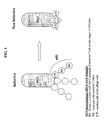

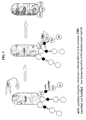


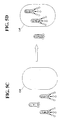
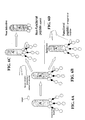
Classifications
-
- C—CHEMISTRY; METALLURGY
- C12—BIOCHEMISTRY; BEER; SPIRITS; WINE; VINEGAR; MICROBIOLOGY; ENZYMOLOGY; MUTATION OR GENETIC ENGINEERING
- C12N—MICROORGANISMS OR ENZYMES; COMPOSITIONS THEREOF; PROPAGATING, PRESERVING, OR MAINTAINING MICROORGANISMS; MUTATION OR GENETIC ENGINEERING; CULTURE MEDIA
- C12N15/00—Mutation or genetic engineering; DNA or RNA concerning genetic engineering, vectors, e.g. plasmids, or their isolation, preparation or purification; Use of hosts therefor
- C12N15/09—Recombinant DNA-technology
- C12N15/10—Processes for the isolation, preparation or purification of DNA or RNA
- C12N15/1034—Isolating an individual clone by screening libraries
- C12N15/1037—Screening libraries presented on the surface of microorganisms, e.g. phage display, E. coli display
-
- C—CHEMISTRY; METALLURGY
- C12—BIOCHEMISTRY; BEER; SPIRITS; WINE; VINEGAR; MICROBIOLOGY; ENZYMOLOGY; MUTATION OR GENETIC ENGINEERING
- C12N—MICROORGANISMS OR ENZYMES; COMPOSITIONS THEREOF; PROPAGATING, PRESERVING, OR MAINTAINING MICROORGANISMS; MUTATION OR GENETIC ENGINEERING; CULTURE MEDIA
- C12N15/00—Mutation or genetic engineering; DNA or RNA concerning genetic engineering, vectors, e.g. plasmids, or their isolation, preparation or purification; Use of hosts therefor
- C12N15/09—Recombinant DNA-technology
- C12N15/10—Processes for the isolation, preparation or purification of DNA or RNA
- C12N15/1034—Isolating an individual clone by screening libraries
- C12N15/1058—Directional evolution of libraries, e.g. evolution of libraries is achieved by mutagenesis and screening or selection of mixed population of organisms
-
- C—CHEMISTRY; METALLURGY
- C40—COMBINATORIAL TECHNOLOGY
- C40B—COMBINATORIAL CHEMISTRY; LIBRARIES, e.g. CHEMICAL LIBRARIES
- C40B10/00—Directed molecular evolution of macromolecules, e.g. RNA, DNA or proteins
-
- C—CHEMISTRY; METALLURGY
- C40—COMBINATORIAL TECHNOLOGY
- C40B—COMBINATORIAL CHEMISTRY; LIBRARIES, e.g. CHEMICAL LIBRARIES
- C40B40/00—Libraries per se, e.g. arrays, mixtures
- C40B40/02—Libraries contained in or displayed by microorganisms, e.g. bacteria or animal cells; Libraries contained in or displayed by vectors, e.g. plasmids; Libraries containing only microorganisms or vectors
-
- G—PHYSICS
- G01—MEASURING; TESTING
- G01N—INVESTIGATING OR ANALYSING MATERIALS BY DETERMINING THEIR CHEMICAL OR PHYSICAL PROPERTIES
- G01N33/00—Investigating or analysing materials by specific methods not covered by groups G01N1/00 - G01N31/00
- G01N33/48—Biological material, e.g. blood, urine; Haemocytometers
- G01N33/50—Chemical analysis of biological material, e.g. blood, urine; Testing involving biospecific ligand binding methods; Immunological testing
- G01N33/5005—Chemical analysis of biological material, e.g. blood, urine; Testing involving biospecific ligand binding methods; Immunological testing involving human or animal cells
- G01N33/5008—Chemical analysis of biological material, e.g. blood, urine; Testing involving biospecific ligand binding methods; Immunological testing involving human or animal cells for testing or evaluating the effect of chemical or biological compounds, e.g. drugs, cosmetics
- G01N33/502—Chemical analysis of biological material, e.g. blood, urine; Testing involving biospecific ligand binding methods; Immunological testing involving human or animal cells for testing or evaluating the effect of chemical or biological compounds, e.g. drugs, cosmetics for testing non-proliferative effects
- G01N33/5023—Chemical analysis of biological material, e.g. blood, urine; Testing involving biospecific ligand binding methods; Immunological testing involving human or animal cells for testing or evaluating the effect of chemical or biological compounds, e.g. drugs, cosmetics for testing non-proliferative effects on expression patterns
-
- G—PHYSICS
- G01—MEASURING; TESTING
- G01N—INVESTIGATING OR ANALYSING MATERIALS BY DETERMINING THEIR CHEMICAL OR PHYSICAL PROPERTIES
- G01N33/00—Investigating or analysing materials by specific methods not covered by groups G01N1/00 - G01N31/00
- G01N33/48—Biological material, e.g. blood, urine; Haemocytometers
- G01N33/50—Chemical analysis of biological material, e.g. blood, urine; Testing involving biospecific ligand binding methods; Immunological testing
- G01N33/53—Immunoassay; Biospecific binding assay; Materials therefor
- G01N33/569—Immunoassay; Biospecific binding assay; Materials therefor for microorganisms, e.g. protozoa, bacteria, viruses
- G01N33/56983—Viruses
-
- C—CHEMISTRY; METALLURGY
- C07—ORGANIC CHEMISTRY
- C07K—PEPTIDES
- C07K2319/00—Fusion polypeptide
- C07K2319/50—Fusion polypeptide containing protease site
-
- C—CHEMISTRY; METALLURGY
- C07—ORGANIC CHEMISTRY
- C07K—PEPTIDES
- C07K2319/00—Fusion polypeptide
- C07K2319/70—Fusion polypeptide containing domain for protein-protein interaction
-
- G—PHYSICS
- G01—MEASURING; TESTING
- G01N—INVESTIGATING OR ANALYSING MATERIALS BY DETERMINING THEIR CHEMICAL OR PHYSICAL PROPERTIES
- G01N2333/00—Assays involving biological materials from specific organisms or of a specific nature
- G01N2333/90—Enzymes; Proenzymes
- G01N2333/914—Hydrolases (3)
- G01N2333/948—Hydrolases (3) acting on peptide bonds (3.4)
- G01N2333/95—Proteinases, i.e. endopeptidases (3.4.21-3.4.99)
Definitions
- This invention is directed to a method of identifying a polypeptide having an intermolecular interaction with a target of interest and functional features thereof.
- Phage display has become a powerful method for screening populations of peptide or polypeptides, mutated proteins, and cDNAs for members that have affinity to target molecules of interest. It is possible to generate many different recombinants from which one or more clones can be selected with affinity to antigens, antibodies, cell surface receptors, protein chaperones, DNA, metal ions, etc. Screening libraries are versatile because the displayed elements are expressed on the surface of the virus as capsid-fusion proteins. The most important consequence of this arrangement is that there is a physical linkage between phenotype and genotype.
- virus particles which have been isolated from libraries by affinity selection can be regenerated by simple bacterial infection and 2) the primary structure of the displayed binding peptide or protein can be easily deduced by DNA sequencing of the cloned segment in the viral genome.
- Synthetic oligonucleotides that are fixed in length, but with multiple unspecified codons can be cloned into genes III, VI, or VIII of bacteriophage M13 where they are expressed on the capsid fusion protein.
- the libraries often referred to as random peptide libraries, can be screened for binding to target molecules of interest.
- this invention provides a recombinant bacteriophage library wherein each bacteriophage comprises a pIII protein, a peptide or polypeptide which differs by at least a single amino acid from another peptide or polypeptide in said library, and a modified protease cleavage site that is proximal to said peptide or polypeptide and to segments of said pIII protein, wherein said cleavage site is modified such that a protease mediating cleavage has a reduced binding affinity for said cleavage site as compared to a non-modified cleavage site.
- the invention provides a system comprising the recombinant bacteriophage library of claim 1 and a target of interest complex wherein the target of interest complex comprises a protease, a flexible linker attached to said protease, and a target of interest attached to said flexible linker, wherein said target of interest participates in an intermolecular interaction.
- this invention provides a method of identifying a peptide or polypeptide having an intermolecular interaction with a target of interest comprising the steps of: (a) contacting a recombinant virus library as described hereinabove with a plurality of complexes as described hereinabove; (b) contacting said library with a plurality of cells; (c) isolating viruses that did not infect said cells; (d) providing infectious clones of isolated viruses by amplifying and expressing the genomes of said isolated viruses; (e) repeating the above steps; and (f) identifying peptides expressed by said viruses whereby intermolecular interactions between said target of interest and a peptide expressed by said recombinant virus result in said protease being in close proximity to said cleavage site, resulting in cleavage of said pIII protein thereof, and prevention of entry of a virus that had comprised a peptide involved in intermolecular interactions into said cells, wherein said virus is a bacter
- this invention provides a kit for identifying a peptide or polypeptide involved in an intermolecular interaction with a target of interest comprising a recombinant virus peptide library as described hereinabove, a target of interest complex as described hereinabove, and cells that are susceptible to viral attachment, infection or a combination thereof, wherein said virus is a bacteriophage.
- this invention provides a method for identifying an agonistic or antagonistic feature of a peptide or polypeptide that has an intermolecular interaction with a receptor of interest comprising the steps of: (a) contacting the recombinant virus library as described hereinabove with a plurality of complexes as described hereinabove, wherein the target of interest is a receptor; (b) contacting said recombinant virus library of step (a) with cells; (c) isolating viruses in (b) which have not infected said cells; (d) providing infectious clones of first isolated viruses of (c) by amplifying and expressing the genomes of said first isolated viruses; (e) contacting infectious clones of viruses of step (c) with the receptor of interest, wherein said receptor is not attached to a protease; (f) contacting the viruses of step (e) with a protein attached to a protease via a flexible linker, wherein said protein is involved in the downstream signal transduction pathway of said receptor
- this invention provides a method for identifying a peptide or polypeptide that inhibits an enzyme of interest comprising the steps of: (a) contacting the recombinant virus library as described hereinabove with a plurality of complexes as described hereinabove, wherein the target of interest is an enzyme; (b) contacting said recombinant virus library of step (a) with cells; (c) isolating viruses in (b) which have not infected said cells; (d) providing infectious clones of first isolated viruses of (c) by amplifying and expressing the genomes of said first isolated viruses; (e) contacting infectious clones of viruses of step (c) with the enzyme of interest, wherein said enzyme is not attached to a protease; (f) contacting the viruses of step (e) with a substrate of the enzyme attached to a protease via a flexible linker; (g) contacting the viruses of step (f) with cells; (h) separating viruses in (g) which have not inf
- This invention provides a recombinant virus library according to claim 1 and its use in identifying interacting polypeptides, which may find application in diagnostics and/or therapeutics.
- this virus is a bacteriophage.
- a recombinant virus of this invention comprises: a pIII protein, comprising segments which are involved in viral attachment to, infection of or a combination thereof of a host cell; a peptide or polypeptide involved in an intermolecular interaction; and a modified protease cleavage site that is proximal to said peptide and to said segments of said pIII protein, wherein the cleavage site is modified such that a protease mediating cleavage has a reduced binding affinity for said cleavage site, as compared to a non-modified cleavage site.
- a virus of the present invention is a bacteriophage.
- a virus of the present invention may be a filamentous bacteriophage.
- a virus of the present invention may be M13.
- it may be lambda phage, fd, f1, or T4.
- a virus of the present invention may be Mycobacteria phage.
- it might be Mycobacteria phage D29, Mycobacteriophage Bethlehem, Mycobacteriophage U2, Mycobacterium phage L5, or Mycobacterium phage TM4.
- Bacteriophage are viruses that have a specific affinity for and infect bacteria. Phages consist of a protein coat or capsid enclosing the genetic material (DNA or RNA) that is injected into a bacterium upon infection. Phages may be lytic or temperate. Lytic phages lyse, or break apart, the host cell, while temperate phages integrate their DNA into that of the host (lysogeny). In the case of lytic phages, all synthesis of host DNA, RNA and proteins ceases, and the phage genome is used to direct the synthesis of phage nucleic acids and proteins using the host's transcriptional and translational apparatus. These phage components then self assemble to form new phage particles.
- phage lysozyme leads to rupture of the bacterial cell wall releasing typically 100-200 phage progeny.
- the temperate phages such as lambda, may also show this lytic cycle when they infect a cell, but more frequently they induce lysogeny.
- Examples of bacteriophages that attack Escherichia coli are lambda phage and the T even phages, T2, T4 and T6.
- viruses are lysogenic, while in another embodiment, viruses are temperate.
- the term "recombinant virus” refers to viruses that are engineered to express foreign or modified protein or proteins, which are not natively expressed in that virus. At least one protein or protein fragment is expressed by the recombinant virus.
- the virus can be modified in any of various ways known in the art, such as to introduce temperature sensitivity, to introduce a reporter gene, to be rendered replication-deficient, or to eliminate other viral genes. Methods of such modifications are standard in the art.
- the virus is modified to express the peptide on the surface of the virus, as by engineering the virus genome to encode a fusion protein for a coat protein and the peptide.
- the present invention further provides a recombinant virus comprising a selectable marker or label such that the label can be directly detected.
- the selectable marker can be any selectable marker, which is known in the art, such as antibiotic resistance protein, for example, without being limited, ampicillin.
- the selectable marker can be also used for deletion mutants counter selection, when there is a need to select cells that are infected by virus that did not lose essential genes.
- the term “protein or protein fragment” refers to a molecule comprised of amino acid residues joined by peptide (i.e., amide) bonds and includes peptides, polypeptides, and proteins.
- the pIII protein comprises segments which are involved in viral attachment, infection, or a combination thereof.
- segment refers to a sequence of amino acids of any length with functional or structural homology to proteins known to mediate viral attachment, infection, or a combination thereof.
- a “tail” refers to a protein involved in viral attachment, infection, or a combination thereof.
- a segment of said pIII protein mediates attachment.
- the term "attachment” refers to a physical connection between a virus and a host cell. In the process of viral infection, a virus attaches to a host cell in order to enter or penetrate it. Many viruses comprise a protein expressed on its surface, sometimes refered to as an "antireceptor” which binds to a constituent of the cell surface of a potential host cell, sometimes referred to as a "receptor.”
- the proteins or protein segments involved in viral attachment comprise the pIII protein. In one embodiment, the proteins or protein segments involved in viral attachment comprise the N2 domain of the pIII protein (a.k.a. Coat Protein A) of filamentous bacteriophage (M13, fd, f1, 12-2, If1, Ike, Pf1).
- a segment of said pill protein mediates infection.
- the term “infection”, “entry,” “fusion” and “penetration” refer to fusion of a virus with the membrane of a host cell to allow the passage of genetic material or a complete virus into the host cell.
- Some viruses comprise a protein or a protein segment that is involved in cell entry.
- the proteins or protein segments involved in infection comprise the pIII protein.
- a protein or a protein segment that is involved in infection is the N1 domain of the pIII protein of filamentous bacteriophage.
- the segment involved in viral attachment, infection or a combination thereof are synthetically constructed using methods well known in the art.
- Each recombinant virus of the present invention comprises a peptide involved in at least one intermolecular interaction.
- the term "polypeptide” or “peptide” refers to a molecule comprised of amino acid residues joined by peptide (i.e., amide) bonds and includes peptides, polypeptides, and proteins.
- the polypeptides of this invention may have single or multiple chains of covalently linked amino acids and may further contain intrachain or interchain linkages comprised of disulfide bonds.
- some polypeptides may also form a subunit of a multiunit macromolecular complex.
- the polypeptides can be expected to possess conformational preferences and to exhibit a three-dimensional structure.
- Both the conformational preferences and the three-dimensional structure will usually be defined by the polypeptide's primary (i.e., amino acid) sequence and/or the presence (or absence) of disulfide bonds or other covalent or non-covalent intrachain or interchain interactions.
- the polypeptides do not possess conformational preferences or exhibit a three-dimensional structure.
- peptides can be used interchangeably and refer to more than one peptide or polypeptide.
- the polypeptide of the present invention can be of any size. As can be expected, the polypeptides can exhibit a wide variety of molecular weights, some exceeding 150 to 200 kilodaltons (kD). Typically, the polypeptides may have a molecular weight ranging from about 5,000 to about 100,000 daltons. Still others may fall in a narrower range, for example, about 10,000 to about 75,000 daltons, or about 20,000 to about 50,000 daltons. In an alternative embodiment, the polypeptides of the present invention may be 1-250 amino acid residues long. In another embodiment, the polypeptides of the present invention may be 10-200 amino acid residues long. In an alternative embodiment, the polypeptides of the present invention may be 50-100 amino acid residues long. In an alternative embodiment, the polypeptides of the present invention may be 1-250 amino acid residues long. In an alternative embodiment, the polypeptides of the present invention may be 1-250 amino acid residues long. In an alternative embodiment, the polypeptides of the present invention may be
- the peptides or polypeptides, or the DNA sequences encoding same may be obtained from a variety of natural or unnatural sources, such as a prokaryotic or a eukaryotic cell.
- the source cell may be wild type, recombinant, or mutant.
- the plurality of peptides or polypeptides may be endogenous to microorganism, such as bacteria, yeast, or fungi, to a virus, to an animal (including mammals, invertebrates, reptiles, birds, and insects) or to a plant cell.
- the peptides or polypeptides may be obtained from more specific sources, such as the surface coat of a virion particle, a particular cell lysate, a tissue extract, or they may be restricted to those polypeptides that are expressed on the surface of a cell membrane.
- the peptide or polypeptide is derived from a particular cell or tissue type, developmental stage or disease condition or stage.
- the disease condition or stage is cancer, in another embodiment, it's an infection, in another embodiment, it's an HIV infection, in another embodiment, it's a developmental disorder, while in another embodiment, it's a metabolic disorder.
- the peptide or polypeptide is obtained from a peptide or polypeptide library as is described hereinbelow. In another embodiment, it's created synthetically and inserted into a vector as is well known in the art.
- the term "vector" is used to refer to a carrier nucleic acid molecule into which a nucleic acid sequence can be inserted for introduction into a cell where it can be replicated.
- the peptide or polypeptide is expressed on the external surface of the virus. In another embodiment, the peptide or polypeptide is not the most terminal peptide on a protein or recombinant protein expressed on the external surface of the virus. In one embodiment, "terminal" refers to the absolute end of a protein or polypeptide. In one embodiment, the peptide or polypeptide is not at the 3' end of a protein or recombinant protein expressed on the external surface of the virus, while in another embodiment, it is not at 5' end of a protein or recombinant protein. In one embodiment, the peptide or polypeptide is not among the last 50 amino acids of a protein or recombinant protein.
- the peptide or polypeptide is not among the last 100 amino acids of a protein or recombinant protein. In another embodiment, the peptide or polypeptide is not among the last 500 amino acids of a protein or recombinant protein.
- the peptide or polypeptide is connected to the proximal segments of the protein or protein fragment involved in viral attachment, infection, or a combination thereof via a flexible linker.
- the linker is G1 or G2 of the protein pIII of M13.
- the flexible linker is a (Gly-Gly-Gly-Ser)n synthetic linker. In another embodiment, any other flexible linker could be used.
- the peptides or polypeptides are agonists. In another embodiment, the peptides or polypeptides are antagonists. In another embodiment, the peptides or polypeptides are antigens. In another embodiment, the peptides or polypeptides are enzymes. In another embodiment, the peptides or polypeptides are activators of enzymes or other substrates. In another embodiment, the peptides or polypeptides are inhibitors of enzymes or other substrates. In another embodiment, the peptides or polypeptides are hormones. In another embodiment, the peptides or polypeptides are regulatory proteins.
- the peptides or polypeptides are cytoskeletal proteins. Cytoskeletal proteins form a flexible framework for the cell, provide attachment points for organelles and formed bodies, and make communication between parts of the cell possible.
- the peptides or polypeptides are toxins.
- the peptides or polypeptides are functional fragments of agonists, antagonists, antigens, enzymes, enzyme activators, enzyme inhibitors, enzyme substrates, hormones, regulatory proteins, cytoskeletal proteins, or toxins.
- “Functional fragments” are meant to indicate a portion of the peptide or polypeptide which is capable of performing one or more of the functions of the peptide or polypeptide, even in the absence of the remainder of the peptide or polypeptide.
- the functional fragment is sufficient to mediate an intermolecular interaction with a target of interest.
- the peptide binds DNA or RNA or a fragment thereof.
- the DNA or RNA binding peptide may be any of the many known in the art including, but not limited to: Zinc finger proteins such as Beta-beta-alpha zinc finger proteins, Nuclear receptor proteins, Loop-sheet-helix type protein, and GAL4 type protein; the Helix-turn-helix proteins such as Cro and repressor proteins, LacI purine repressor proteins (PurR), FokI restriction endonuclease (DNA-recognition region), Gamma-delta recombinase protein (C-terminal domain), Hin recombinase protein, Trp repressor protein, Diptheria tox repressor, Catabolite gene activator proteins (CAP), Homeodomain proteins, RAP1 protein, Prd paired protein, Tc3 transposase protein, TFIIB family, Interferon regulatory factor, Transcription factor family, and ETS domain family bacterioph
- the DNA or RNA binding peptide may be other alpha-helix proteins such as Cre recombinase family, Papillomavirus-1 E2 protein, Histone family, Ebnal nuclear protein family, Skn-1 transcription factor, High mobility group family, and MADS box family; Beta-sheet proteins such as TATA Box-Binding Proteins; Beta-hairpin/ribbon proteins such as Met repressor protein, Tus replication terminator protein, Integration host factor protein, Hyperthermophile DNA binding protein, Arc repressor, Transcription factor T domain; and other protein families such as Rel homology region proteins and Stat family.
- Cre recombinase family Papillomavirus-1 E2 protein, Histone family, Ebnal nuclear protein family, Skn-1 transcription factor, High mobility group family, and MADS box family
- Beta-sheet proteins such as TATA Box-Binding Proteins
- Beta-hairpin/ribbon proteins such as Met repressor protein, Tus replication terminator protein, Integration host factor protein
- the DNA or RNA binding peptide may be enzymes such as Methyl transferase proteins, PvuII Endonuclease protein, Endonuclease V protein, EcoRV Endonuclease family, BamHI Endonuclease family, EcoRI endonuclease family, DNA mismatch endonuclease, DNA polymerase I protein, DNA polymerase T7, Dnase I proteins, DNA polymerase beta proteins, Uraci-DNA glycosylase, Methyladenine-DNA glycosylase, Homing endonuclease, and Topoisomerase I or viral proteins such as HIV reverse transcriptase.
- enzymes such as Methyl transferase proteins, PvuII Endonuclease protein, Endonuclease V protein, EcoRV Endonuclease family, BamHI Endonuclease family, EcoRI endonuclease family, DNA mismatch end
- the peptide or polypeptide is a transcriptional or translational activator or a fragment thereof. In another embodiment, the peptide or polypeptide is a transcriptional or translational repressor or a fragment thereof. In another embodiment, the peptide or polypeptide is a receptor or a fragment thereof. In another embodiment, the peptide or polypeptide is an organic molecule, inorganic compound, or organometallic compound or a fragment thereof.
- the peptide or polypeptide may represent a cognate peptide of any of the peptides or polypeptides described hereinabove.
- a "cognate” peptide is any peptide that interacts and/or binds to another molecule.
- the peptide or polypeptide identified by this invention can be in another embodiment, a potential drug candidate or a "lead" compound.
- Lead compounds Compounds that pass an initial, in vitro screening test, such as the methods of the present invention, are known as "lead” compounds. These lead compounds are then put through further testing, including, eventually, in vivo testing in animals and humans, from which the promise shown by the lead compounds in the original in vitro tests is either, confirmed or refuted. See Remington's Pharmaceutical Sciences, 1990, A. R. Gennaro, ed., Chapter 8, pages 60-62, Mack Publishing Co., Easton, Pa .; Ecker and Crooke, 1995, Bio/Technology 13:351-360 .
- the term "intermolecular interaction" refers to an expressed peptide or polypeptide of a virus of the present invention which has the capacity to bind to a target of interest.
- the interaction is of high affinity, while in another embodiment, it is of low affinity.
- the interaction is mediated by a covalent bond, an ionic bond, a hydrogen bond, Van der Waal's force (a.k.a. weak London dispersion forces), dipole-dipole forces, metallic bonding or any attractive force which provides a physical proximity of between, in one embodiment, 0.1-0.5 nanometer (1-5 angstroms), in another embodiment, 0.1-2 nanometer (1-20 angstroms).
- the peptide may perform a particular function with a target of interest.
- the intermolecular interaction may give rise to a biological, chemical, or physiological consequence.
- the consequence may be reversible, while in another embodiment, it may be irreversible.
- the intermolecular interaction induces a conformational change, a transformation into a different chemical state of the functional domain or of molecules acted upon by the functional domain, the transduction of an intracellular or intercellular signal, the regulation of gene or protein expression, the regulation of cell growth or death, the activation or inhibition of an immune response, or any combination thereof.
- the term "intermolecular interaction” refers to an affinity between a peptide and a target of interest, i.e. the tendency of a peptide to attach to a specific protein target.
- the affinity binding is a measure of the intrinsic binding strength of the ligand binding reaction.
- the intrinsic attractiveness of the binder for the ligand is typically expressed as the equilibrium association constant (Ka) of the reaction.
- Ka [Ligand-Binder]/[Ligand][Binder], where [ ] represents the molar concentration of the material at equilibrium.
- the Ka describing the affinity between the peptide and the target of interest can be 10 -4 , 10 -5 , 10 -6 , 10 -7 , 10 -8 , 10 -9 , 10 -10 , 10 -11 , 10 -12 , 10 -13 , 10 -14 , 10 -15 M or lower.
- the intermolecular interaction may be between a receptor and a ligand, a receptor and a downstream signal transduction molecule, a receptor and a hormone, a DNA binding protein and a DNA oligonucleotide, an RNA binding protein and an RNA oligonucleotide, an enzyme and a substrate, a toxin and a receptor, a protease and a cleavage site oligonucleotide, an antigen and an antibody, two cell adhesion molecules, or two cytoskeletal proteins.
- the intermolecular interaction may refer to an association of any of the above proteins with a protein that enhances binding or activity of the protein or with a protein that inhibits bind binding or activity of the protein.
- the intermolecular interaction may involve proteins involved in the regulation of cellular events such as signal transduction, the cell cycle, protein trafficking, targeted proteolysis, cytoskeletal organization and gene expression.
- the environmental conditions such as salt concentration, pH, hydrophobicity, temperature and pressure may affect the nature of an intermolecular interaction, and those factors can be adjusted to the interaction of interest by a person skilled in the art.
- the viruses of the present invention further comprise modified protease cleavage sites.
- modified protease cleavage site refers to a cleavage site that has a reduced binding affinity to a protease mediating its cleavage.
- a reduced binding affinity is a relative determination where binding affinity of the modified cleavage site is lower than that of the natural cleavage site.
- the capacity of the modified cleavage site to be cleaved is similar to that of the natural cleavage site. Cleavage is mediated by proteases.
- the term “reduced binding affinity,” “significantly reduced binding affinity” or “reduced affinity” means that the binding affinity of the protease mediating cleavage to the cleavage site is as low as possible using the methods existing in the art, such as ELISA, Gel Shift, Plasmon Resonance (BioCore) etc.
- the reduced binding affinity is reflected by changes in off-rate, on-rate, free energy, interatomic distances, binding entropy or binding enthalpy.
- the modified protease cleavage site of the present invention is proximal to the peptide and pIII protein segment portions of the invention.
- "Proximal” refers, in one embodiment, to a distance of between 1 and 1000 nucleotides between the modified cleavage site and a peptide or between the modified cleavage site and a pIII protein involved in attachment or infection.
- the modified cleavage site and a peptide are inserted in any order between the domain of a pIII protein involved in attachment or infection that anchors the protein to the phage coat and the domain of said protein that mediates attachment.
- the modified cleavage site and a peptide are inserted in any order between a domain of a pIII protein that mediates attachment and a domain that mediates infection.
- a recombinant virus may be created by constructing a recombinant vector using standard recombinant techniques (see, for example, Maniatis, et al., Molecular Cloning, A laboratory Manual (Cold Spring Harbor, 1990 ) and Ausubel, et al., 1994, Current Protocols In Molecular Biology (John Wiley & Sons , 1996)), as is well know by one of skill in the art.
- Cells may be transfected with the vector, allowed to multiply, and DNA isolated therefrom. Alternatively, viruses may be transduced with the vector.
- a recombinant bacteriophage of the present invention may be used in a method to identify a peptide or polypeptide that has an intermolecular interaction with a target of interest as described hereinbelow.
- the recombinant bacteriophage may be used as part of a kit for identifying a peptide or polypeptide that has an intermolecular interaction with a target of interest, as described hereinbelow.
- the recombinant bacteriophage may be used in a method to identify an agonistic feature, an antagonistic feature of a peptide or polypeptide that has an intermolecular interaction with a receptor of interest, as described hereinbelow.
- the recombinant bacteriophage may be used in a method to identify a peptide or polypeptide that inhibits an enzyme of interest, as described hereinbelow. In another embodiment, the recombinant bacteriophage may be used in a method to identify a peptide or polypeptide that has a functional feature with a receptor of interest, as described hereinbelow.
- the recombinant virus library is a recombinant bacteriophage library.
- the recombinant virus library of the present invention comprises a plurality of viruses as described hereinabove.
- Each virus of the virus library comprises a peptide that differs by at least one amino acid from a peptide expressed by another virus of the virus library.
- the viruses of the present invention comprise peptides involved in an intermolecular interaction.
- the peptides can be in one embodiment, conveniently selected from any peptide library. In one embodiment, they are selected from random peptide libraries, in another embodiment, combinatorial peptide libraries, while in another embodiment, simulated molecular evolution peptide libraries.
- a random peptide library may generate a collection of peptides in which the probability of finding a particular amino acid at a given position of the peptide is the same for all amino acids.
- a bias is introduced into the library. For example, a bias that a lysine occurs every fifth amino acid or that positions 4, 8, and 9 of a decapeptide library be fixed to include only arginine may be specified. Clearly, many types of biases can be contemplated, and this invention is not restricted to any particular bias.
- the peptide or polypeptide library is created as is well known in the art.
- a sample of genomic DNA is mechanically sheared or partly digested by restriction enzymes to form large fragments.
- this population of overlapping DNA fragments may then be separated by gel electrophoresis to isolate a set of a particular length (15 kb for example).
- synthetic linkers may be attached to the ends of these fragments, in one embodiment, cohesive ends may be formed, while in another embodiment, blunt ends may be formed.
- the fragments are then inserted into a vector.
- the recombinant vector represents the virus of this invention.
- the vector is a plasmid, a bacmid, a phagemid, a cosmid, a phage, a virus or an artificial chromosome.
- the vector is derived from a bacteriophage, which infects E. coli.
- the vector is derived from a lambda phage, M13, fd, f1, or T4. Cells may be transfected with the vector, and DNA isolated therefrom. In one embodiment, cells are propagated so the library can be used repeatedly.
- the virus library may utilize, in one embodiment, a recombinant plasmids or cosmids.
- plasmid is meant to refer to an autonomously replicating extrachromosomal DNA molecule or other genetic particle, often, but not always, comprised of circular double-stranded DNA. Plasmids may become incorporated into the genome of the host or may remain independent.
- the term "cosmid,” is meant to refer to a hybrid plasmid that contains cos sites at each end. Cos sites are recognized during head filling of lambda phages. Cosmids are useful for cloning large segments of foreign DNA (up to 50 kb).
- the library comprises a plurality of polypeptides from a polypeptide expression library.
- the polypeptide expression library may be obtained, in one embodiment, from cDNA, fragmented genomic DNA, etc.
- the library is a cDNA library comprising total poly A+ RNA of a given organism.
- the polypeptide is labeled using a label as described hereinbelow.
- the recombinant virus library may be used in a method to identify a peptide or polypeptide that has an intermolecular interaction with a target of interest as described hereinbelow.
- the library may be used as part of a kit for identifying a peptide or polypeptide that has an intermolecular interaction with a target of interest, as described hereinbelow.
- the library may be used in a method to identify an agonistic feature, an antagonistic feature of a peptide or polypeptide that has an intermolecular interaction with a receptor of interest, as described hereinbelow.
- the library may be used in a method to identify a peptide or polypeptide that inhibits an enzyme of interest, as described hereinbelow.
- the invention comprises a plurality of cells comprising a recombinant virus library of the present invention as described hereinabove.
- a plurality of cells is meant to indicate more than one cell.
- Cell types may include but are not limited to mammalian, insect, plant, or bacterial cells.
- the terms "cell,” “cell line,” and “cell culture” may be used interchangeably. In one embodiment, all of these terms also include their progeny, which is any and all subsequent generations. It is understood that all progeny may not be identical due to deliberate or inadvertent mutations. In one embodiment, host cells will have been engineered to express a screenable or selectable marker which is activated by the transcription factor that is part of a fusion protein.
- host cell refers to a prokaryotic or eukaryotic cell that is capable of replicating a vector and/or expressing a heterologous gene encoded by a vector.
- engineered or “recombinant” cells or host cells, e.g., a cell into which an non-endogenous nucleic acid sequence, such as, for example, a vector, has been introduced. Therefore, recombinant cells are distinguishable from naturally-occurring cells which do not contain a recombinantly introduced nucleic acid.
- non-endogenous refer to a molecule that it is foreign to the cell into which it is being introduced.
- the non-endogenous molecule is DNA.
- non-endogenous refers to a nucleic acid sequence that is homologous to a sequence in the cell but is in a position within the host cell nucleic acid in which the sequence is ordinarily not found.
- a plasmid or cosmid can be introduced into a prokaryote host cell for replication of many vectors.
- Cell types available for vector replication and/or expression include, but are not limited to, bacteria, such as E. coli (e.g., E . coli strain RR1, E. coli LE392 , E. coli B, E . coli X 1776 (ATCC No.
- E. coli W3110 F-, lambda- , prototrophic, ATCC No. 273325
- DHS ⁇ DHS ⁇
- JM109 DHS ⁇
- JM109 KC8
- bacilli such as Bacillus subtilis
- other enterobacteriaceae such as Salmonella typhimurium , Serratia marcescens , various Pseudomonas species, as well as a number of commercially available bacterial hosts such as SURER Competent Cells and SOLOPACK TM Gold Cells (STRATAGENE, La Jolla).
- bacterial cells such as E . coli LE392 are particularly contemplated as host cells for phage viruses.
- E. Coli may be used as a host cell. Useful strain of E. Coli may be determined using Genbank ( http://www.ncbi.nlm.nih.gov/Genbank/index.html ) by one skilled in the art.
- eukaryotic host cells for replication and/or expression of a vector examples include, but are not limited to, HeLa, NIH3T3, Jurkat, 293, COS, CHO, Saos, and PC12. Many host cells from various cell types and organisms are available and would be known to one of skill in the art. Similarly, a viral vector may be used in conjunction with either a eukaryotic or prokaryotic host cell, particularly one that is permissive for replication or expression of the vector.
- the present invention also provides a plurality of oligonucleotide vectors of the recombinant virus library of the present invention as described hereinabove. In another embodiment, the present invention provides the use of oligonucleotide vectors of the present invention to prepare a recombinant virus library.
- a recombinant virus library of the present invention may be used in a method to identify a peptide or polypeptide that has an intermolecular interaction with a target of interest as described hereinbelow.
- the recombinant virus library may be used as part of a kit for identifying a peptide or polypeptide that has an intermolecular interaction with a target of interest, as described hereinbelow.
- the recombinant virus library may be used in a method to identify an agonistic feature, an antagonistic feature of a peptide or polypeptide that has an intermolecular interaction with a receptor of interest, as described hereinbelow.
- the recombinant virus library may be used in a method to identify a peptide or polypeptide that inhibits an enzyme of interest, as described hereinbelow. In another embodiment, the recombinant virus library may be used in a method to identify a peptide or polypeptide that has a functional feature with a receptor of interest, as described hereinbelow.
- Embodiments of the invention involve a protein-protein or protein-non-protein complex (referred to herein as “Target of interest (TOI) complex”) comprising a protease or functional domain thereof, a target of interest involved in an intermolecular interaction, and a flexible linker that attaches the protease and target of interest.
- TOI target of interest
- the cleavage site is modified such that a protease mediating cleavage has a reduced binding affinity for said site, as compared to a non-modified cleavage site.
- "Protease” refers to the enzymes included under E.C.3.4. (Cf. Kirk-Othmer, Encyclopedia of Chemical Technology, 3rd edition, volume 9, pages 173-223, J. Wiley 1980 ; E. Pfleiderer and R. Reiner in H. J. Rehm & G. Reed, Biotechnology, volume 6b, pages 729-742, VCH 1988 ; K. Aunstrup in Industrial Aspects of Biochemistry, B. Spencer, editor, volume 30(I), pages 23-46, North Holland 1974 ).
- proteases are well characterized enzymes that cleave other proteins at a particular site.
- One family the Ser/Thr proteases, cleave at serine and threonine residues.
- Other proteases include cysteine or thiol proteases, aspartic proteases, metalloproteinases, aminopeptidases, di & tripeptidases, carboxypeptidases, and peptidyl peptidases. The choice of these is left to the skilled artisan and certainly need not be limited to the molecules described herein. It is well known that enzymes have catalytic domains and these can be used in place of full length proteases. Such are encompassed by the invention as well.
- One preferred embodiment is the ubiquitin binding protein-1 protease, or an active portion thereof. Other specific cleavage sites for proteases may also be used, as will be clear to the skilled artisan.
- the proteases of the invention may be, for example, specific ubiquitin protease UBP1. aspartyl protease, herpes protease, herpes simplex 1 protease, retroviral protease, cysteine protease, matrix metalloproteinase, interstitial collagenase (MMP-1), gelatinase A (MMP-2) and gelatinase B (MMP-9); serine proteases such as plasminogen activator (PA) and the like.
- PKA plasminogen activator
- the methods of the present invention are not limited to these particular proteases.
- Endogenous proteolytic enzymes provide a variety of useful functions, including the degradation of invading organisms, antigen-antibody complexes, and certain tissue proteins that are no longer necessary.
- the serine proteases comprise a large family of enzymes that use an activated serine residue in the substrate-binding site to catalytically hydrolyze peptide bonds the aspartate-specific cysteine proteases (ASCPs).
- ASCPs aspartate-specific cysteine proteases
- any member of a particular family of proteases may be used in place of the protease specifically described. Further, any member of a particular family of proteases may be used on a particular modified cleavage site.
- the recombinant bacteriophage library of claim 1 wherein said protease cleavage site is located between: (a) pIII segments which are involved in viral attachment, infection, or a combination thereof,; and (b) pIII segments that serve as an anchor.
- An “anchoring protein or fragment” refers to a protein or fragment that connects another protein or fragment to a larger body such as a cell wall or cell membrane.
- all components of the TOI complex are separated by long flexible linkers or spacers to enable a good degree of freedom that would allow the components of the system to interact with each other.
- the linkers allow structural folding, while in another embodiment, they allow hydrogen bonding.
- the linkers can be, without limitation, leucine zipper, SH2 domains, PDZ domains, antibody domains, and the like. Any other flexible linker could be used as well.
- the flexible linker is at least 3 amino acids in length. In another embodiment the flexible linker is at least 5 amino acids in length. In another embodiment the flexible linker is at least 7 amino acids in length, In another embodiment the flexible linker is at least 9 amino acids in length. In another embodiment the flexible linker is at least 13 amino acids in length. In another embodiment the flexible linker is at least 15 amino acids in length. In another embodiment the flexible linker is at least 18 amino acids in length. In another embodiment the flexible linker is between 1 and 20 amino acids in length. In another embodiment the flexible linker is between 3 and 15 amino acids in length.
- the flexible linker is between 3 and 10 amino acids in length. In another embodiment the flexible linker is between 5 and 10 amino acids in length. In another embodiment the flexible linker is between 10 and 15 amino acids in length. In another embodiment the flexible linker is between 15 and 20 amino acids in length. In another embodiment, the target of interest is bound directly to a protease without a linker.
- the TOI complex of the present invention comprises a target of interest.
- the target of interest is in one embodiment, a receptor.
- the term "receptor" refers to receptors that bind peptide messengers with high affinity and regulate intracellular signals which influence the behavior of cells.
- the target of interest is an agonist.
- the target of interest is an antagonist.
- the target of interest is an antibody.
- the target of interest is an antigen.
- the target of interest is an enzyme.
- the target of interest is an enzyme-activating substrate.
- the target of interest is an inhibitor.
- the target of interest is a hormone.
- the target of interest is a cytoskeletal protein.
- the target of interest is a toxin. In another embodiment, the target of interest is synthetic or physiological polymer. In another embodiment, the target of interest is a small organic molecule. In another embodiment, the target of interest is a DNA sequence. In another embodiment, the target of interest is a RNA sequence. In another embodiment, the target of interest is an oligonucleotide. In another embodiment, the target of interest is a transcriptional activator or repressor. In another embodiment, the target of interest is a translational activator or repressor.
- the target of interest is a functional fragment of an agonist, antagonist, receptor, antibody, antigen, enzyme, enzyme activator, enzyme inhibitor, enzyme substrate, hormone, regulatory protein, cytoskeletal protein, toxin, synthetic or physiological polymer, small organic molecule, DNA, RNA, oligonucleotide, transcriptional activator or repressor, translational activator or repressor.
- the target of interest is a carrier.
- the target of interest is an information protein.
- Information proteins are proteins involved in DNA replication, repair, recombination and transcription.
- the target of interest is a structural protein.
- Structural proteins are fibrous proteins, including keratins, actin, myosin, and collagens involved building components inside the cell and around it.
- the target of interest is a regulatory protein. Regulatory proteins command the numerous interactions that govern the expression and replication of genes, the performance of enzymes, the interplay between cells and their environment, and many other manifestations.
- the target of interest is a DNA or RNA binding peptide.
- the target materials may be organic macromolecules, such as polypeptides, lipids, polynucleic acids, and polysaccharides, but are not so limited. Almost any molecule that is stable in aqueous solvent may be used as a target.
- the following list of possible targets is given as illustration and not as limitation.
- the categories are not strictly mutually exclusive. The omission of any category is not to be construed to imply that said category is unsuitable as a target. Merck Index refers to the Eleventh Edition.
- the target of interest may be a peptide such as human ⁇ endorphin (Merck Index 3528), dynorphin (MI 3458), Substance P (MI 8834), Porcine somatostatin (MI 8671), human atrial natriuretic factor (MI 887), human calcitonin, or glucagons.
- the target of interest may be a hormone such as human TNF (MI-9411), Interleukin-1 (MI 4895), Interferon-.lambda. (MI 4894), Thyrotropin (MI 9709), Interferon- ⁇ (MI 4892), or Insulin (MI 4887, p.789).
- the target of interest may be an enzyme such as human neutrophil elastase, Human thrombin, human Cathepsin G, human tryptase, human chymase, human blood clotting Factor Xa, any retro-viral Pol protease, any retro-viral Gag protease, dihydrofolate reductase, Pseudomonas putida cytochrome P450 CAM , human pyruvate kinase, E. Coli pyruvate kinase, jack bean urease, or aspartate transcarbamylase (E. coli), ras protein, or any protein-tyrosine kinase.
- an enzyme such as human neutrophil elastase, Human thrombin, human Cathepsin G, human tryptase, human chymase, human blood clotting Factor Xa, any retro-viral Pol protease, any retro
- the target of interest may be an inhibitor such as aprotinin (MI 784), human el-anti-trypsin, or phage .lambda. cI (inhibits DNA transcription).
- the target of interest may be a receptor, such as TNF receptor, IgE receptor, LamB, CD4, or IL-1 receptor.
- the target of interest may be a toxin such as ricin (also an enzyme), ⁇ Conotoxin GI, mellitin, Bordetella pertussis adenylate cyclase (also an enzyme), or Pseudomonas aeruginosa hemolysin.
- the target of interest may be another protein such as horse heart myoglobin, human sickle-cell haemoglobin, human deoxy haemoglobin, human CO haemoglobin, human low-density lipoprotein (a lipoprotein), human IgG (combining site removed or blocked) (a glycoprotein), influenza haemagglutinin, phage .lambda.
- another protein such as horse heart myoglobin, human sickle-cell haemoglobin, human deoxy haemoglobin, human CO haemoglobin, human low-density lipoprotein (a lipoprotein), human IgG (combining site removed or blocked) (a glycoprotein), influenza haemagglutinin, phage .lambda.
- the target of interest may be an insoluble protein such as silk, human elastin, keratin, collagen, or fibrin.
- the target of interest may be a nucleic acid such as DNA, RNA, yeast Phe tRNA, ribosomal RNA, or a segment of mRNA.
- the target of interest may be an organic monomer (not peptide, protein, or nucleic acid) such as cholesterol, aspartame, bilirubin, morphine, codeine, heroine, dichlorodiphenyltrichlorethane (DDT), prostaglandin PGE2, actinomycin, 2,2,3 trimethyldecane, Buckminsterfullerene, or cortavazol (MI 2536, p.397).
- the target of interest may be an organic polymer such as cellulose or chitin.
- the target of interest may be O-antigen of Salmonella enteritidis (a lipopolysaccharide).
- the target of interest may be an inorganic
- the target of interest may be an organometallic compound such as iron(III) haem, cobalt haem, cobalamine, or (isopropylamino) 6 Cr(III).
- the peptide or polypeptide may represent a cognate peptide of any of the peptides or polypeptides described herein.
- said target of interest has one or more intermolecular interactions with a cognate ligand, antigen, enzyme substrate, enzyme, regulatory protein, or cytoskeletal protein expressed on the surface of a recombinant virus.
- An "enzyme substrate” is a substrate on which an enzyme acts to catalyze a reaction.
- said target of interest has one or more intermolecular interactions with an agonist, antagonist, antigen, enzyme activator, enzyme inhibitor, hormone, regulatory protein, toxin, or a functional fragment thereof.
- the target of interest is a peptide, which has approximately 6 to 60 amino acid residues. In another embodiment, a peptide target of interest has approximately 20-100 amino acids, or in another embodiment 20-50 amino acids.
- the target of interest may be a bile acid, such as cholic acid or cholesterol, and may have a molecular weight of about 300 to about 600 kDa. If the functional domain relates to transcriptional control, the target of interest may be a portion of a transcriptional factor, which may bind to a region of a gene of interest or to an RNA polymerase.
- the target of interest may even be a nucleoside analog, such as cordycepin or the triphosphate thereof, capable of inhibiting RNA, biosynthesis.
- the target of interest may also be the carbohydrate portion of a glycoprotein, which may have a selective affinity for the asialoglycoprotein receptor, or the repeating glucan unit that exhibits a selective affinity for cellulose binding domain or the active site of heparinase.
- the target of interest may refer to a functional domain of a target of interest.
- the functional domain may include a ligand binding domain, an activation domain, or any other domain of a target of interest.
- the target of interest is labeled.
- the TOI complex additionally comprises a tag that allows affinity purification.
- the tag is a His-Tag.
- vectors include plasmids, cosmids, viruses (bacteriophage, mammalian viruses, and plant viruses), and artificial chromosomes (e.g., YACs).
- viruses bacteriophage, mammalian viruses, and plant viruses
- artificial chromosomes e.g., YACs.
- One of skill in the art would be well equipped to construct a vector through standard recombinant techniques (see, for example, Maniatis, et al., Molecular Cloning, A laboratory Manual (Cold Spring Harbor, 1990 ) and Ausubel, et al., 1994, Current Protocols In Molecular Biology (John Wiley & Sons , 1996), both incorporated herein by reference).
- expression vector refers to any type of genetic construct comprising a nucleic acid coding for a RNA capable of being transcribed. In some cases, RNA molecules are then translated into a protein, polypeptide, or peptide. In other cases, these sequences are not translated, for example, in the production of antisense molecules or ribozymes.
- Expression vectors can contain a variety of "control sequences” which refer to nucleic acid sequences necessary for the transcription and possibly translation of an operably linked coding sequence in a particular host cell. In addition to control sequences that govern transcription and translation, vectors and expression vectors may contain nucleotide sequences that serve other functions as well and are described infra.
- the TOI complex of the present invention is produced by methods know in the art. In one embodiment, the TOI complex is produced by in vitro translation.
- a plasmid vector is contemplated for use in cloning and gene transfer. In general, plasmid vectors containing replicon and control sequences which are derived from species compatible with the host cell are used in connection with these hosts. The vector ordinarily carries a replication site, as well as marking sequences which are capable of providing phenotypic selection in transformed cells. In a non-limiting example, E. coli is often transformed using derivatives of pBR322, a plasmid derived from an E. coli species.
- pBR322 contains genes for ampicillin and tetracycline resistance and thus provides an easy means for identifying transformed cells.
- the pBR plasmid, or other microbial plasmid or phage must also contain, or be modified to contain, for example, promoters which can be used by the microbial organism for expression of its own proteins.
- phage vectors containing replicon and control sequences that are compatible with the host microorganism can be used as transforming vectors in connection with these hosts.
- the phage lambda GEMTM-11 may be utilized in making a recombinant phage vector which can be used to transform host cells, such as, for example, E. coli LE392.
- Bacterial host cells for example, E. coli, comprising the expression vector, are grown in any of a number of suitable media, for example, LB.
- suitable media for example, LB.
- the expression of the recombinant protein in certain vectors may be induced, as would be understood by those of skill in the art, by contacting a host cell with an agent specific for certain promoters, e.g., by adding IPTG to the media or by switching incubation to a higher temperature. After culturing the bacteria for a further period, generally between 2 and 24 h, the cells are collected by centrifugation and washed to remove residual media.
- prokaryotic vectors can be used to transform eukaryotic host cells.
- Expression systems hare been designed for regulated and/or high level expression in such cells.
- the insect cell/baculovirus system can produce a high level of protein expression of a heterologous nucleic acid segment, such as described in U.S. Patents 5, 871,986 and 4,879,236 , both herein incorporated by reference, and which can be bought, for example, under the name MAXBAC® 2.0 from INVITROGEN® and BACPACKTM BACULOVIRUS EXPRESSION SYSTEM from CLONTECH®.
- expression systems include STRATAGENE®'S COMPLETE CONTROLTM Inducible Mammalian Expression System, which involves a synthetic ecdysone-inducible receptor, or its pET Expression System, an E. coli expression system.
- an inducible expression system is available from INVITROGEN®, which carries the T-REXTM (tetracycline-regulated expression) System, an inducible mammalian expression system that uses the full-length CMV promoter.
- INVITROGEN® also provides a yeast expression system called the Pichia methanolica Expression System, which is designed for high-level production of recombinant proteins in the methylotrophic yeast Pichia methanolica.
- a vector such as an expression construct, to produce a nucleic acid sequence or its cognate polypeptide, protein, or peptide.
- the construct may contain additional 5' and/or 3' elements, such as promoters, enhancers, poly A sequences, and so forth.
- the elements may be derived from the host cell, i.e., homologous to the host, or they may be derived from distinct source, i.e., heterologous. It is to be understood that various elements of the vector may be manipulated such as, for example, promoters, enhancers, high copy or low copy, etc as will be understood by one skilled in the art. Any manipulation of the vector is considered to be part of the present invention.
- Vectors can include a multiple cloning site (MCS), donor and/or acceptor splicing sites, termination signals, polyadenylation sites, etc., as are well known to those of skill in the art of recombinant technology.
- MCS multiple cloning site
- donor and/or acceptor splicing sites termination signals
- polyadenylation sites etc.
- a vector in a host cell may contain one or more origins of replication (often termed "ori") sites', which are specific nucleotide sequences at which replication is initiated.
- ori origins of replication
- ARS autonomously replicating sequence
- Suitable methods for nucleic acid delivery for use with the current invention are believed to include virtually any method by which a nucleic acid molecule (e.g., DNA) can be introduced into a cell as described herein or as would be known to one of ordinary skill in the art.
- a nucleic acid molecule e.g., DNA
- Such methods include, but are not limited to, direct delivery of DNA such as by ex vivo transfection, including microinjection; by electroporation; by calcium phosphate precipitation; by using DEAE-dextran followed by polyethylene glycol; by direct sonic loading; by liposome mediated transfection and receptor-mediated transfection; by PEG-mediated transformation of protoplasts; by desiccation/inhibition-mediated DNA uptake, and any combination of such methods, as are well known to those skilled in the art.
- TOI complexes comprising non-protein components are tested for binding specificity using any of the methods known in the art including but not limited to electrophoretic mobility shift assay (EMSA, Gel Shift Assay, or Band Shift Assay), footprinting, and methylation interference with a known ligand of the target of interest as a probe.
- ESA electrophoretic mobility shift assay
- Gel Shift Assay Gel Shift Assay
- Band Shift Assay Band Shift Assay
- TOI complexes comprising protein components, once created by any method known in the art, are tested for binding specificity using any of the methods known in the art including but not limited to co-immunoprecipitation, yeast two-hybrid, density gradient centrifugation, GFP tagging (fluorescence resonance energy transfer (FRET)), protein affinity chromatography, protein arrays, surface plasmon resonance (SPR) and GST pulldown assay with a known ligand of the target of interest as a probe. These same methods will be used to confirm the interaction of the target of interest and a peptide expressed by a recombinant virus.
- FRET fluorescence resonance energy transfer
- SPR surface plasmon resonance
- the present invention provides the use of any of the peptides, polypeptides, proteins, protein fragments, and TOI complexes of the present invention in executing the methods of this invention.
- a TOI complex of the present invention may be used in a method to identify a peptide or polypeptide that has an intermolecular interaction with a target of interest as described hereinbelow.
- the TOI complex may be used as part of a kit for identifying a peptide or polypeptide that has an intermolecular interaction with a target of interest, as described hereinbelow.
- the TOI complex may be used in a method to identify an agonistic feature, an antagonistic feature of a peptide or polypeptide that has an intermolecular interaction with a receptor of interest, as described hereinbelow.
- the TOI complex may be used in a method to identify a peptide or polypeptide that inhibits an enzyme of interest, as described hereinbelow. In another embodiment, the TOI complex may be used in a method to identify a peptide or polypeptide that has a functional feature with a receptor of interest, as described hereinbelow.
- this invention provides a method of identifying a peptide or polypeptide having an intermolecular interaction with a target of interest by employing a recombinant virus library of the present invention with a TOI complex also of the present invention or any embodiment thereof.
- the method comprises the steps of: contacting a recombinant virus library as exemplified hereinabove with a TOI complex as exemplified hereinabove, contacting said library with a plurality of cells, isolating viruses that did not infect said cells, providing infectious clones of isolated viruses by amplifying and expressing the genomes of said isolated viruses, repeating the above steps, and identifying peptides expressed by said viruses whereby intermolecular interactions between said target of interest and a peptide expressed by said recombinant virus result in said protease being in close proximity to said cleavage site, resulting in cleavage of said protein or protein fragment, comprising segments which are involved in viral attachment to, infection of, or a combination thereof of cells, and prevention of entry of a virus comprising a peptide involved in intermolecular interactions into said cells.
- the method is predicated on the fact that viruses are inhibited or prevented from entry into a host cell as a result of the cleavage of their pIII protein as depicted in Figs. 1 and 4 .
- a protease were to cleave the pIII proteins of a bacteriophage at a site between the N2 and CT domains of pIII, the M13 bacteriophage would not be infective.
- a protease were to cleave the pIII proteins of a bacteriophage at a site between the N1 and N2 domains of pIII the M13 bacteriophage would not be infective.
- the pIII protein cleavage is mediated by a protease that was brought into proximity of its cleavage site by the interaction of a target of interest proximal to the protease with a peptide proximal to the modified cleavage site on the pIII protein of the virus as depicted in Fig. 2 .
- background clones refers to clones which harbor peptides that do not bind to a target of interest. In one embodiment, the number of cycles ranges between 3 and 50.
- the identified peptide that has an intermolecular interaction with the target of interest is isolated.
- the isolated viruses which have been prevented from entering into cells are found in the medium.
- the step of the isolation can be performed using methods that are well known in the art.
- the separation is performed by filtration.
- the separation is performed by spinning down, for example in a centrifuge.
- the separation can be conducted by selectively providing conditions for the maintenance of the infected cells or, alternatively, conditions for the maintenance of the non-infective viruses.
- the isolated viruses which have not infected cells are attached to the surface of the cells, but have not entered said cells.
- a recombinant bacteriophage comprising a label such that the label can be directly detected may be used.
- the recombinant virus can express on its surface a peptide that has an intermolecular interaction with a selected protein.
- directly detected is meant that the recombinant virus be labeled in advance and still comprise a peptide that binds its target upon addition of the target.
- label is meant a means for visualization, such as a recognition site for direct phosphorylation, biotinylation, chemical linkages, etc.
- the recombinant virus expresses a fluorescent protein or is labeled by a radioactive moiety.
- Recombinant virus can be modified to include a label in advance, allowed to interact with the fusion protein of the present invention, be exposed to cells, and the cells separated from free recombinant virus in solution. Recombinant virus can then be visualized to detect the presence and localization of the recombinant virus, whether in the solution or in the cell fraction. Visualization may or may not require a chemical reaction.
- An example of a fluorescent protein is the green fluorescent protein (GFP) originally isolated from the jellyfish Aequorea Victoria.
- Another example of a fluorescent protein is the green fluorescent protein originally isolated from
- Renilla reniforms which demonstrates a single absorption peak at 498 nm and an emission peak at 509 nm. ( Cubitt, et el. (1995) TUBS 20: 448-455 ).
- amino acid sequence of the identified peptide can be determined directly by conventional means of amino acid sequencing, or the coding sequence of the DNA encoding the polypeptide can frequently be determined more conveniently by use of standard DNA sequencing methods. The primary amino acid sequence can then be deduced from the corresponding DNA sequence.
- the amino acid sequence is to be determined from the polypeptide itself, one may use micro sequencing techniques.
- the sequencing technique may include mass spectroscopy.
- the nucleic acid and protein sequences of the present invention can further be used as a "query sequence" to perform a search against sequence databases to, for example, identify other family members or related sequences.
- Such searches can be performed using the NBLAST and XBLAST programs (version 2.0) of Altschul, et al. (J. Mol. Biol. 215:403-10 (1990 )).
- Gapped BLAST can be utilized as described in Altschul et al. (Nucleic Acids Res. 25(17): 3389-3402 (1997 )).
- the default parameters of the respective programs e.g., XBLAST and NBLAST
- XBLAST and NBLAST can be used.
- the recombinant virus libray is contacted with a plurality of cells.
- the step of "contacting” or “introducing” refers hereinafter to bringing a solution comprising at least one element, (e.g., the recombinant virus) in contact with another element (e.g., the cells or a composition which comprise the cells).
- the recombinant virus library of the method of identifying a peptide or polypeptide with an intermolecular interaction with a target of interest is produced in a phage.
- the recombinant library is produced in M13 bacteriophage.
- the recombinant viruses comprise peptides with mutations that abrogate binding to target of interest.
- mutation refers to an insertion, deletion, or substitution of one or more natural or wild type nucleic acids for alternate nucleic acids.
- abrogate means to abolish, do away with, or annul.
- the peptide identified by this invention can serve for epitope mapping of the target of interest.
- Epitope mapping refers to methods used for studying the interactions of antibodies with specific regions of protein antigens.
- the polypeptide is labeled.
- the target of interest is labeled.
- a wide range of labels can be used, including but not limited to conjugating the target to biotin by conventional means.
- the label may comprise a fluorogen, an enzyme, an epitope, a chromogen, or a radionuclide.
- the detection means employed to detect the label will depend on the nature of the label and are known in the art, e.g., film to detect a radionuclide; an enzyme substrate that gives rise to a detectable signal to detect the presence of an enzyme; antibody to detect the presence of an epitope, etc.
- the target is not bound to a solid support and is added to the medium by, for example, contacting the solution of the recombinant virus with a solution that comprises the target of interest.
- the target of interest of this invention may be bound to a solid support.
- this invention provides a kit for identifying a peptide or polypeptide involved in an intermolecular interaction with a target of interest comprising a recombinant virus peptide library of the present invention as exemplified hereinabove, a TOI complex of the present invention as exemplified hereinabove, and cells that are susceptible to viral attachment, infection or a combination thereof.
- the kit of the present invention comprises a virus of the present invention, a library of the present invention, a TOI complex of the present invention or any combination thereof.
- kits will thus comprise, in suitable container means for the vectors or cells of the present invention, and any additional agents that can be used in accordance with the present invention.
- any container of the kit will additionally comprise a preservative, which, in one embodiment, will increase the "shelf life" of the kit component or components to which it is added.
- kits may comprise suitably aliquoted compositions of the present invention.
- the components of the kits may be packaged either in aqueous media or in lyophilized form.
- the container means of the kits will generally include at least one vial, test tube, flask, bottle, syringe or other container means, into which a component may be placed, and preferably, suitably aliquoted. Where there is more than one component in the kit, the kit also will generally contain a second, third or other additional container into which the additional components may be separately placed. However, various combinations of components may be comprised in a vial.
- kits of the present invention also will typically include a means for containing reagent containers in close confinement for commercial sale.
- Such containers may include injection or blow-molded plastic containers into which the desired vials are retained.
- the liquid solution is an aqueous solution, with a sterile aqueous solution being particularly preferred.
- the components of the kit may be provided as dried powder(s).
- the powder can be reconstituted by the addition of a suitable solvent. It is envisioned that the solvent may also be provided in another container means.
- the kit optionally further comprises a means for detecting the presence of an interaction between a polypeptide and a target of interest or the absence of an interaction thereof.
- the recombinant virus library of the kit for identifying a peptide or polypeptide with an intermolecular interaction with a target of interest is produced in a phage.
- the recombinant library is produced in M13 bacteriophage.
- the recombinant viruses of the kit comprise peptides with mutations that abrogate binding to target of interest.
- the peptide identified by said kit can be used for epitope mapping of the target of interest.
- the target of interest of the kit is not bound to a solid support.
- this invention enables, in one embodiment, to determine whether the peptide is an agonist or an antagonist to a receptor or if it is an inhibitor of an enzyme.
- this invention provides a method of identifying a peptide or polypeptide that has an agonistic or an antagonistic effect on the target of interest of the invention by employing a recombinant virus or recombinant virus library of the present invention with a TOI complex also of the present invention or any embodiment thereof.
- peptides or polypeptides that have an agonistic or an antagonistic effect on the target of interest of the invention, can be identified by the process of the invention, which comprises: (a) contacting the recombinant virus library as described hereinabove with a plurality of complexes as described hereinabove wherein the target of interest is a receptor; (b) contacting said recombinant virus library of step (a) with cells; (c) isolating viruses in (b) which have not infected said cells; (d) providing infectious clones of first isolated viruses of (c) by amplifying and expressing the genomes of said first isolated viruses; (e) contacting infectious clones of viruses of step (c) with the receptor of interest, wherein said receptor is not attached to a protease; (f) contacting the viruses of step (e) with a protein attached to a protease via a flexible linker, wherein said protein is involved in the downstream signal transduction pathway of
- a polypeptide exhibits a selective affinity to a target of interest
- a drug that can exert an effect on the polypeptide-target of interest interaction, e.g., either as an agonist or as an antagonist of the interaction.
- this assay one can screen a collection of candidate "drugs" for the one exhibiting the most desired characteristic, e.g., the most efficacious in reverting the required vital process or function and whether it is an agonist or an antagonist to the target of interest.
- the term "agonist” refers to an endogenous substance or drug that can interact with a receptor and initiate a physiological or a pharmacological response characteristic of that receptor (contraction, relaxation, secretion, enzyme activation, etc.)
- the term "antagonist” refers to an endogenous substance or drug that blocks or nullifies an action of another endogenous substance or drug, such as a drug that binds to a receptor without initiating a physiological or a pharmacological response characteristic of that receptor.
- the medium further comprises a ligand, which naturally binds the receptor of interest, and other components, may be added if required for the activation of the receptor, for example without limitation calcium, sodium, and magnesium ions, ATP, EDTA, DTT, etc.
- a ligand which naturally binds the receptor of interest, and other components, may be added if required for the activation of the receptor, for example without limitation calcium, sodium, and magnesium ions, ATP, EDTA, DTT, etc.
- the receptor of interest may be any receptor from the following families, including subtypes thereof: 5-Hydroxytryptamine, Acetylcholine (muscarinic), Adenosine, Adrenoceptors, Anaphylatoxin, Angiotensin, Apelin, Bombesin, Bradykinin, Cannabinoid, Chemokine, Cholecystokinin, Dopamine, Endothelin, Free fatty acid, G protein-coupled bile acid, Galanin, Motilin, Ghrelin, Glycoprotein hormone, GnRH, Histamine, KiSS1-derived peptide, Leukotriene and lipoxin, Lysophospholipid, Melanin-concentrating hormone, Melanocortin, Melatonin, Neuromedin U, Neuropeptide FF/neuropeptide AF, Neuropeptide S, Neuropeptide W/neuropeptide B, Neuropeptide Y, Neurotensin, N-Formyl
- the receptor of interest may be any receptor from the following families, including subtypes thereof: Calcitonin receptor family, CRF receptor family, CRF receptor family, Glucagon receptor family, PTH receptor family, VIP/PACAP, LNB7TM, LNB7TM:Brain specific angiogenesis inhibitor, LNB7TM:Protocadherin, LNB7TM:EGF, mucin-like receptor, LNB7TM, or LNB7TM:Latrophilin substrate.
- the receptor of interest may be any receptor from the following families, including subtypes thereof: GABA B , Metabotropic glutamate, Calcium sensor, GPRC5, or Unclassified.
- the receptor of interest may be TNF receptor, IgE receptor, LamB, CD4, or IL-1 receptor, any of the serotonergic receptors, cholinergic receptors, rhodopsin receptor, thyroid-stimulating hormone receptor, follicle-stimulating hormone receptor, any of the odorant receptors, and parathyroid hormone receptor.
- the receptor of interest may be a nuclear receptor such as an estrogen receptor, progesterone receptor, androgen receptor, thyroid receptor, Vitamin D receptor, glucocorticoid receptor, mineralocorticoid receptor, peroxisome proliferator-activated receptor, insulin receptor, gonadotrophin-releasing hormone receptor, or cathepsin D receptor.
- the protein involved in the downstream signal transduction pathway of the receptor of interest is a guanine nucleotide binding protein (G protein) or any subunit thereof, a small GTPase, a cyclic nucleotide such as cyclic AMP or cyclic GMP, calcium, phosphoinositide derivatives such as phosphatidylinositol-triphosphate (PIP 3 ), Diacylglycerol (DAG) or inositol-triphosphate (IP 3 ), or various protein kinases or phosphatases.
- the protein involved in the downstream signal transduction pathway of the receptor of interest is nitric oxide, carbon oxide, ceramide, or lysophosphatic acid.
- this invention provides a method for identifying a peptide or polypeptide that inhibits an enzyme of interest by employing a recombinant virus library of the present invention with a TOI complex also of the present invention or any embodiment thereof.
- this invention provides a method for identifying a peptide or polypeptide that inhibits an enzyme of interest comprising the steps of: (a) contacting the recombinant virus library as described hereinabove with a plurality of complexes as described hereinabove wherein the target of interest is an enzyme; (b) contacting said recombinant virus library of step (a) with cells; (c) isolating viruses in (b) which have not infected said cells; (d) providing infectious clones of first isolated viruses of (c) by amplifying and expressing the genomes of said first isolated viruses; (e) contacting infectious clones of viruses of step (c) with the enzyme of interest, wherein said enzyme is not attached to a protease; (f)
- step (i) by amplifying and expressing the genomes of said second isolated viruses; (j) repeating steps (a) - (i); and (k) identifying peptides expressed by the viruses in step (h), whereby viruses which have not infected said cells in (h) express a peptide which does not affect said enzyme of interest, and viruses which have infected said cells in (h) express a peptide which inhibits said enzyme.
- this invention provides a method of identifying a peptide or polypeptide which has a functional feature with a receptor of interest by employing a recombinant virus library of the present invention with a TOI complex also of the present invention or any embodiment thereof.
- this invention provides a method of identifying a peptide or polypeptide which has a functional feature with a receptor of interest comprising the steps of: (a) contacting the recombinant virus library as described hereinabove with a plurality of complexes as described hereinabove wherein the target of interest is a receptor: (b) contacting said recombinant virus library of step (a) with cells; (c) isolating viruses in (b) which have not infected said cells; (d) providing infectious clones of first isolated viruses of (c) by amplifying and expressing the genomes of said first isolated viruses; (e) contacting infectious clones of viruses of step (c) with the receptor of interest, wherein said receptor is not attached to a protease; (f) contacting the viruses of step (e) with a ligand of the receptor attached to a protease via a flexible linker; (g) contacting the viruses of step (f) with cells; (h) separating viruses in (
- the recombinant virus library of the method for identifying a peptide or polypeptide with an agonistic, antagonistic, enzyme inhibitory, or functional effect with respect to a target of interest is produced in a phage.
- the recombinant library is produced in M13 bacteriophage.
- the recombinant viruses of the methods comprise peptides with mutations that abrogate binding to target of interest.
- the receptor or enzyme of interest is not bound to a solid support.
- the isolated viruses which have not infected cells are attached to the surface of the cells, but have not entered said cells.
- This invention is also directed to a composition which can be useful in the screening of drug candidates.
- this invention provides a composition comprising: a recombinant virus peptide library made in accordance with the embodiments of the present invention and a target of interest connected to a protease.
- peptides for the one that exhibits the most desired characteristic. For example, the peptide that is most efficacious in activating the target of interest may be selected. Alternatively, the peptide that is most efficacious in blocking, inhibiting or competing with a ligand, which binds and activates the target of interest, may be selected.
- an advantage to the present methodology may comprise functional selection, which is an inherent part of the assay, saving cumbersome and time-consuming screenings at later stages.
- sporadic deletion mutants that occur in the selection process using conventional techniques are avoided in the technology of the present invention.
- non-specific binding problems resulting from tagging targets to a solid matrix are avoided, because a solid support is not necessary for the technology.
- transient interactions such as enzymes with their substrates can be detected by this technology.
- this invention allows superior detection of proteins with either low- or high-affinity binding to a target of interest.
- the function of the polypeptides can be identified, i.e. this invention enables, in one embodiment, to determine whether the polypeptide can block the action of a toxin or whether it has an enhancing or an inhibiting effect on other processes such as cellular, biochemical, or physiological processes, such as cellular signal transduction, transcriptional regulation, translational regulation, cell adhesion, migration or transport, cytokine secretion and other aspects of the immune response, and the like.
- the peptides identified by the present invention may be used for diagnosis of a disease or for treating a disorder characterized by an absence of, inappropriate, or unwanted expression of the protein. Accordingly, methods for treatment include the use of the identified protein or fragments thereof.
- the peptides identified by the present invention may be used to identify a person who is vulnerable to or has a proliferative disorder, which in one embodiment, is a cancer.
- a proliferative disorder which in one embodiment, is a cancer.
- peptides identified by the present invention may be used to treat a person with cancer.
- peptides identified by the present invention may be used to treat a person with a proliferative disorder, an infection, an HIV infection, a developmental disorder, or a metabolic disorder. In another embodiment, it may be used to suppress, inhibit, or prevent any of the disorders mentioned hereinabove.
- M13 as well as fd and f1, is a filamentous Ff bacteriophage.
- the phage minor coat gene 3 protein (pIII) of M13 bacteriophage (Fig. 1A) allows the phage to infect bacteria by interacting with the bacterial F pilus and later with the integral membrane protein ToIA.
- the CT domain of pIII anchors pIII to the phage coat, while the N2 domain interacts with bacterial F pilus and the N1 domain forms a complex with the C-terminal of ToIA at later stages of infection.
- M13 is only active (i.e. able to infect) when the N2 and N1 domains are tightly linked to the CT domain, which is linked to the capsid of the phage.
- a phage remains active if any one of its 3-5 pIII units is functional.
- insertion of a protease cleavage site between the CT and the N2 domains of pIII would render the phage inactive (Fig. 1B) upon incubation with a suitable amount and type of protease.
- a protease and protease cleavage site pair is chosen, wherein cleavage will only occur if the protease and the protease cleavage site are brought into close proximity by another group ( Fig. 2 ).
- an appropriate modified protease cleavage site of the pair should have minimal affinity for its protease but at the same time, should sustain high proteolytic activity when it comes into contact with its protease.
- the protease described above is fused to a target protein and the protease cleavage site in the pIII protein is cross-linked to a target protein ligand, the specific proteolytic activity of the protease will be activated by bringing the protease and protease cleavage site into close proximity ( Fig. 2 ). A higher affinity of the target protein to the target protein ligand would be expected to increase the proteolytic activity.
- Each of the recombinant proteins in the system are separated by long flexible linkers to enable a good degree of rotational freedom, which in turn allows interaction between the components of the system.
- the linkers chosen may include a leucine zipper. Any other flexible linker could be used as well.
- UBP1 The 76 amino acid-long ubiquitin proteolytic site (Genbank X01474; PID: g4741) and one of ubiquitin's specific proteases, UBP1 (Genbank M63484; PID: g173126) are identified as suitable candidates for modified cleavage site and protease, respectively ( Fig. 3 ).
- UBP1 specifically cleaves ubiquitin after its C-terminal glycine.
- a modified ubiquitin structure that is bound by UBP1 with very low or no affinity but has a preserved UBP1 cleavage site is generated using a mutagenesis library of ubiquitin generated by PCR.
- the two parts of a leucine-zipper are used to evaluate the functionality of the modified ubiquitin system in the present invention ( Fig. 3 ).
- the protease cleavage site is cross-linked to one part of the leucine zipper, and the protease is engineered as a fusion protein with another part of the leucine zipper.
- the two parts of the leucine zipper interact, resulting in the association of the UBP1 with modified ubiquitin. Any other two interacting molecules could be used, but they should preferably be small and have a strong affinity for one another.
- Engineered and wild type bacteriophages are incubated with and without the target ligand fusion protein. After incubation of the phages with the fusion protein, bacteria are added to the medium. After incubation of the phages with bacteria, bacteria are removed from the medium to separate bacteriophages in the medium from those that invaded the bacterial host cell ( Fig. 4 ). Bacteria are then washed and resuspended in water. The genomes of the inactive phages that are not able to infect the bacterial cells are rescued from the filtrate by PCR. Alternatively, the genomes of the active phages from the bacterial cells are rescued by PCR.
- Wild type bacteriophages and engineered bacteriophages that were not exposed to the target protein ligand are found in high levels in the host bacteria.
- bacteriophages engineered with the leucine zipper construct cross-linked to the modified ubiquitin described above are found in high levels in the incubation medium, indicating that the pIII protein was cleaved and the phage thus rendered non-infective.
- the inability of a phage to invade a host cell indicates the presence of a protein-protein interaction.
- SoIP assay to identify peptide that interacts with a target of interest
- a library of M13 bacteriophages which contain an insertion of the modified protease cleavage site (ubiquitin) and a random peptide between the CT and N2 domains of pIII ( Fig. 2 , 5A ).
- the target protein is fused to one half of a leucine zipper, and a protease (UBP1) is fused to a second half of a leucine zipper.
- the target protein and UBP1 are then cross-linked by the leucine zipper ( Fig. 2 , 5A ), creating a complex comprising the target of interest.
- bacteria are added to the medium ( Fig. 5C ).
- bacteria are separated from the medium, and the genomes of the active and inactive phages are separated, recovered, and sequenced as described hereinabove.
- Bacteriophages that successfully invade the bacterial host cell are expected have at least one intact pIII protein, indicating that the target protein and target protein ligand did not have a high affinity ( Fig. 4 ). Bacteriophage in the medium are expected to be missing all of their pIII proteins, indicating that the target protein and target protein ligand displayed high affinity binding ( Fig. 4 ). In this way, novel targets of a characterized protein can be isolated from libraries.
- SoIP assay to identify a functional interaction between peptide and target of interest
- novel targets of a characterized protein may be characterized using the method described herein.
- the first step is to perform the technique described Example 3 to screen a peptide library for a peptide that interacts with a receptor protein whose downstream signaling molecule is characterized. Then, clones of cells that were non-infective in Example 3 are incubated with a receptor protein that is not fused to a protease (UBP1). Next, the protease (UBP1) is engineered as a fusion protein with a protein known to be involved in the downstream signaling of the target ( Fig. 6B ). After incubation of the recombinant virus library with the known signaling molecule fusion protein, bacteria are added to the medium. After an appropriate incubation, bacteria are separated from the medium, and the genomes of the active and inactive phages are separated and recovered as described hereinabove.
- the peptide expressed by the recombinant bacteriophage is an antagonist of the receptor of interest, then it will bind the receptor of interest and prevent an interaction of the receptor with its downstream protein. Thus, there will be no opportunity for interaction between the protease and modified cleavage site, because the downstream protein, which is linked to a protease, will not interact with the receptor of interest and the peptide, which are in close proximity to the modified cleavage site. Thus, the pIII protein of the bacteriophage will remain intact, along with the ability of the phage to infect ( Fig. 6D ). Thus, bacteriophage localized in cells express peptides that are antagonistic with respect to the receptor of interest.
- the peptide expressed by the recombinant bacteriophage is an agonist of the receptor of interest, then it will bind the receptor of interest and lead to an interaction of the activated receptor with its downstream protein.
- the proximity of the downstream protein, which is linked to a protease, to the receptor of interest and the peptide, which are in close proximity to the modified cleavage site, will lead to the cleavage of the cleavage site by the protease, the loss of the pIII protein, and the loss of ability to infect ( Fig. 6C ).
- bacteriophage in the medium express peptides that are agonistic with respect to the receptor of interest.
- a second illustration of the assay's ability to exhibit functionality of a peptide is the case where the target of interest is an enzyme.
- the first step is to perform the technique described Example 3 to screen a peptide library for a peptide or peptides that interact with an enzyme whose substrate is characterized. Then, clones of cells that were non-infective in Example 3 are incubated with an enzyme that is not fused to a protease (UBP1). Next, the protease (UBP1) is engineered as a fusion protein with the enzyme substrate ( Fig. 6B ). After incubation of the recombinant virus library with the known enzyme substrate fusion protein, bacteria are added to the medium. After an appropriate incubation, bacteria are separated from the medium, and the genomes of the active and inactive phages are separated and recovered as described hereinabove.
- the peptide expressed by the recombinant bacteriophage is an inhibitor of the enzyme of interest, then it will bind the enzyme of interest and prevent an interaction of the enzyme with its substrate. Thus, there will be no opportunity for interaction between the protease and modified cleavage site, because the enzyme substrate, which is linked to a protease, will not interact with the enzyme of interest and the peptide, which are in close proximity to the modified cleavage site. Thus, the pIII protein of the bacteriophage will remain intact, along with the ability of the phage to infect ( Fig. 6D ). Thus, bacteriophage localized in cells express peptides that are inhibitors of the enzyme of interest.
- the peptide expressed by the recombinant bacteriophage is an activator of the enzyme of interest, then it will bind the enzyme of interest and lead to an interaction of the activated enzyme with its substrate.
- the proximity of the substrate, which is linked to a protease, to the enzyme of interest and the peptide, which are in close proximity to the modified cleavage site, will lead to the cleavage of the cleavage site by the protease, the loss of the pIII protein, and the loss of ability to infect ( Fig. 6C ).
- bacteriophage in the medium express peptides that are activators of the enzyme of interest. In this way, the way in which the novel peptide affects characterized target-ligand interactions may be assessed.
Landscapes
- Health & Medical Sciences (AREA)
- Life Sciences & Earth Sciences (AREA)
- Engineering & Computer Science (AREA)
- Chemical & Material Sciences (AREA)
- Biomedical Technology (AREA)
- Molecular Biology (AREA)
- Organic Chemistry (AREA)
- Genetics & Genomics (AREA)
- Biotechnology (AREA)
- Immunology (AREA)
- Bioinformatics & Cheminformatics (AREA)
- Biochemistry (AREA)
- General Health & Medical Sciences (AREA)
- Microbiology (AREA)
- Zoology (AREA)
- General Engineering & Computer Science (AREA)
- Wood Science & Technology (AREA)
- Physics & Mathematics (AREA)
- Hematology (AREA)
- Urology & Nephrology (AREA)
- Medicinal Chemistry (AREA)
- Virology (AREA)
- Biophysics (AREA)
- Plant Pathology (AREA)
- Crystallography & Structural Chemistry (AREA)
- Tropical Medicine & Parasitology (AREA)
- General Physics & Mathematics (AREA)
- Pathology (AREA)
- Food Science & Technology (AREA)
- Analytical Chemistry (AREA)
- Cell Biology (AREA)
- Bioinformatics & Computational Biology (AREA)
- Ecology (AREA)
- General Chemical & Material Sciences (AREA)
- Chemical Kinetics & Catalysis (AREA)
- Toxicology (AREA)
- Peptides Or Proteins (AREA)
- Measuring Or Testing Involving Enzymes Or Micro-Organisms (AREA)
- Investigating Or Analysing Biological Materials (AREA)
- Micro-Organisms Or Cultivation Processes Thereof (AREA)
Abstract
Description
- This invention is directed to a method of identifying a polypeptide having an intermolecular interaction with a target of interest and functional features thereof.
- Phage display has become a powerful method for screening populations of peptide or polypeptides, mutated proteins, and cDNAs for members that have affinity to target molecules of interest. It is possible to generate many different recombinants from which one or more clones can be selected with affinity to antigens, antibodies, cell surface receptors, protein chaperones, DNA, metal ions, etc. Screening libraries are versatile because the displayed elements are expressed on the surface of the virus as capsid-fusion proteins. The most important consequence of this arrangement is that there is a physical linkage between phenotype and genotype. There are several other advantages as well: 1) virus particles which have been isolated from libraries by affinity selection can be regenerated by simple bacterial infection and 2) the primary structure of the displayed binding peptide or protein can be easily deduced by DNA sequencing of the cloned segment in the viral genome.
- Synthetic oligonucleotides that are fixed in length, but with multiple unspecified codons can be cloned into genes III, VI, or VIII of bacteriophage M13 where they are expressed on the capsid fusion protein. The libraries, often referred to as random peptide libraries, can be screened for binding to target molecules of interest.
- Most vital cellular processes are regulated by the transmission of signals wherein such signal transduction is likely mediated by protein-protein interactions involving modular domains within the signaling proteins.
- Methods for isolating partner proteins involved in protein-protein interactions have generally focused on finding a ligand to a characterized protein. Such approaches have included using anti-idiotypic antibodies that mimic the known protein to screen cDNA expression libraries for a binding ligand (Jerne, 1974, Ann. Immunol. (Inst. Pasteur) 125c:373-389; Sudol, 1994, Oncogene 9:2145-2152). Skolnick et al. (1991, Cell 65:83-90) isolated a binding partner for PI3-kinase by screening a cDNA expression library with the 32P-labeled tyrosine phosphorylated carboxyl terminus of the epidermal growth factor receptor (EGFR). While current methods provide for the identification and isolation of a peptides having an intermolecular interaction with a target of interest, functional analysis of the screening steps is currently lacking.
- In one embodiment, this invention provides a recombinant bacteriophage library wherein each bacteriophage comprises a pIII protein, a peptide or polypeptide which differs by at least a single amino acid from another peptide or polypeptide in said library, and a modified protease cleavage site that is proximal to said peptide or polypeptide and to segments of said pIII protein, wherein said cleavage site is modified such that a protease mediating cleavage has a reduced binding affinity for said cleavage site as compared to a non-modified cleavage site.
- In another embodiment, the invention provides a system comprising the recombinant bacteriophage library of claim 1 and a target of interest complex wherein the target of interest complex comprises a protease, a flexible linker attached to said protease, and a target of interest attached to said flexible linker, wherein said target of interest participates in an intermolecular interaction.
- In another embodiment, this invention provides a method of identifying a peptide or polypeptide having an intermolecular interaction with a target of interest comprising the steps of: (a) contacting a recombinant virus library as described hereinabove with a plurality of complexes as described hereinabove; (b) contacting said library with a plurality of cells; (c) isolating viruses that did not infect said cells; (d) providing infectious clones of isolated viruses by amplifying and expressing the genomes of said isolated viruses; (e) repeating the above steps; and (f) identifying peptides expressed by said viruses whereby intermolecular interactions between said target of interest and a peptide expressed by said recombinant virus result in said protease being in close proximity to said cleavage site, resulting in cleavage of said pIII protein thereof, and prevention of entry of a virus that had comprised a peptide involved in intermolecular interactions into said cells, wherein said virus is a bacteriophage.
- In another embodiment, this invention provides a kit for identifying a peptide or polypeptide involved in an intermolecular interaction with a target of interest comprising a recombinant virus peptide library as described hereinabove, a target of interest complex as described hereinabove, and cells that are susceptible to viral attachment, infection or a combination thereof, wherein said virus is a bacteriophage.
- In another embodiment, this invention provides a method for identifying an agonistic or antagonistic feature of a peptide or polypeptide that has an intermolecular interaction with a receptor of interest comprising the steps of: (a) contacting the recombinant virus library as described hereinabove with a plurality of complexes as described hereinabove, wherein the target of interest is a receptor; (b) contacting said recombinant virus library of step (a) with cells; (c) isolating viruses in (b) which have not infected said cells; (d) providing infectious clones of first isolated viruses of (c) by amplifying and expressing the genomes of said first isolated viruses; (e) contacting infectious clones of viruses of step (c) with the receptor of interest, wherein said receptor is not attached to a protease; (f) contacting the viruses of step (e) with a protein attached to a protease via a flexible linker, wherein said protein is involved in the downstream signal transduction pathway of said receptor of interest; (g) contacting the viruses of step (f) with cells; (h) separating viruses in (g) that have not infected said cells from viruses which have infected cells; (i) providing infectious clones of second isolated viruses of step (h) by amplifying and expressing the genomes of said second isolated viruses; (j) repeating steps (a) - (i); and (k) identifying peptides expressed by the viruses in step (h), whereby viruses which have not infected said cells in (h) express a peptide which has agonistic activity for said receptor of interest, and viruses which have infected said cells in (h) express a peptide which has antagonistic activity for said receptor, wherein said virus is a bacteriophage.
- in another embodiment, this invention provides a method for identifying a peptide or polypeptide that inhibits an enzyme of interest comprising the steps of: (a) contacting the recombinant virus library as described hereinabove with a plurality of complexes as described hereinabove, wherein the target of interest is an enzyme; (b) contacting said recombinant virus library of step (a) with cells; (c) isolating viruses in (b) which have not infected said cells; (d) providing infectious clones of first isolated viruses of (c) by amplifying and expressing the genomes of said first isolated viruses; (e) contacting infectious clones of viruses of step (c) with the enzyme of interest, wherein said enzyme is not attached to a protease; (f) contacting the viruses of step (e) with a substrate of the enzyme attached to a protease via a flexible linker; (g) contacting the viruses of step (f) with cells; (h) separating viruses in (g) which have not infected said cells from viruses which have infected cells; (i) providing infectious clones of second isolated viruses of step (i) by amplifying and expressing the genomes of said second isolated viruses; (j) repeating steps (a) - (i); and (k) identifying peptides expressed by the viruses in step (h), whereby viruses which have not infected said cells in (h) express a peptide which does not affect said enzyme of interest, and viruses which have infected said cells in (h) express a peptide which inhibits said enzyme, wherein said virus is a bacteriophage.
-
-
Fig. 1 is an illustration of the conversion, in one embodiment, of an infective (A) to a non-infective (B) via cleavage of the N1 and N2 domains from the CT domain of the phage minor coat gene 3 (pIII) protein of the M13 bacteriophage, which is attached to the bacteriophage capsid. -
Fig. 2 is an illustration in one embodiment of a genetically engineered infective M13 bacteriophage termed SoIP. SoIP comprises the pIII domains of wild type bacteriophage, but with an insertion of a modified protease site and a peptide between the N2 and CT domains of each pIII protein. Cleavage of the N1 and N2 domains of pIII occurs in SoIP when a target protein (Target) which is fused to a protease (Protease) binds to the peptide expressed on the pIII protein (Peptide). The resultant proximity of Protease to the modified protease site results in proteolysis of N1, N2, the peptide, and the modified protease site from the CT domain of pIII pIII and the capsid. -
Fig. 3 is an illustration of a preferred embodiment of a SoIP, specifying the identity of the modified protease site. SoIP comprises the pIII domains of wild type bacteriophage, but with an insertion of a modified ubiquitin sequence (mUb) and one half of a leucine zipper peptide (LeuZip2) between the N2 and CT domains of each pIII protein. Cleavage of the N1 and N2 domains of pIII occurs in SoIP when the second half of a leucine zipper peptide (LeuZip1), which is fused to a UBP protease, binds to LeuZip2 expressed on the pIII protein, The resultant proximity of UBP to mUb results in proteolysis of N1, N2, LeuZip2, and mUb from the CT domain of pIII and the capsid. -
Fig. 4 is an illustration in one embodiment of the method of incubating infective and non-infective SoIP with bacteria. Only infective SoIP are able to enter the bacterial cell. After incubation, bacterial cells containing infecting SoIP are removed, and non-infective SoIP remain in the medium. -
Figs. 5A-D are an illustration in one embodiment of the method of identifying proteins that interact with a protein of interest. A recombinant virus library, in which each recombinant virus expresses a peptide unique from those expressed by other recombinant viruses in the library, is incubated with a fusion protein comprising a known target peptide or polypeptide fused to a protease via a flexible linker. Library peptides with an affinity for the target will be cleaved. The library is then incubated with cells. Recombinant viruses with cleaved pIII proteins will be unable to infect cells. -
Fig. 6 is an illustration of an embodiment of the present invention in which the invention can distinguish between functional and non-functional peptides or polypeptides using the SoIP assay. Functional proteins may be further categorized as antagonist, agonist, and/or inhibitor. Recombinant viruses that comprise a peptide from the peptide library (referred to as "Peptide") that demonstrates binding to a target protein of interest are incubated with the target. Next, a fusion protein comprising a protease fused to a known target ligand is added to the incubation mixture. If the peptide facilitates or does not affect the binding of the target and its ligand, they will bind, bringing the protease and the modified protease site into close proximity. This will lead to the cleavage of the pIII protein, which will render the recombinant virus non-infective. If the peptide inhibits the binding of the target and its ligand, the pIII protein will not be cleaved and the recombinant virus will remain infective. - This invention provides a recombinant virus library according to claim 1 and its use in identifying interacting polypeptides, which may find application in diagnostics and/or therapeutics. In all embodiments of this invention, this virus is a bacteriophage.
- In one embodiment, a recombinant virus of this invention comprises: a pIII protein, comprising segments which are involved in viral attachment to, infection of or a combination thereof of a host cell; a peptide or polypeptide involved in an intermolecular interaction; and a modified protease cleavage site that is proximal to said peptide and to said segments of said pIII protein, wherein the cleavage site is modified such that a protease mediating cleavage has a reduced binding affinity for said cleavage site, as compared to a non-modified cleavage site.
- A virus of the present invention is a bacteriophage. In one embodiment, a virus of the present invention may be a filamentous bacteriophage. In another embodiment, a virus of the present invention may be M13. In another embodiment, it may be lambda phage, fd, f1, or T4. In another embodiment, a virus of the present invention may be Mycobacteria phage. In one embodiment, it might be Mycobacteria phage D29, Mycobacteriophage Bethlehem, Mycobacteriophage U2, Mycobacterium phage L5, or Mycobacterium phage TM4.
- Bacteriophage (phage) are viruses that have a specific affinity for and infect bacteria. Phages consist of a protein coat or capsid enclosing the genetic material (DNA or RNA) that is injected into a bacterium upon infection. Phages may be lytic or temperate. Lytic phages lyse, or break apart, the host cell, while temperate phages integrate their DNA into that of the host (lysogeny). In the case of lytic phages, all synthesis of host DNA, RNA and proteins ceases, and the phage genome is used to direct the synthesis of phage nucleic acids and proteins using the host's transcriptional and translational apparatus. These phage components then self assemble to form new phage particles. The synthesis of a phage lysozyme leads to rupture of the bacterial cell wall releasing typically 100-200 phage progeny. The temperate phages, such as lambda, may also show this lytic cycle when they infect a cell, but more frequently they induce lysogeny. Examples of bacteriophages that attack Escherichia coli are lambda phage and the T even phages, T2, T4 and T6.
- In one embodiment, viruses are lysogenic, while in another embodiment, viruses are temperate.
- In one embodiment, the term "recombinant virus" refers to viruses that are engineered to express foreign or modified protein or proteins, which are not natively expressed in that virus. At least one protein or protein fragment is expressed by the recombinant virus.
- In another embodiment, the virus can be modified in any of various ways known in the art, such as to introduce temperature sensitivity, to introduce a reporter gene, to be rendered replication-deficient, or to eliminate other viral genes. Methods of such modifications are standard in the art. In one embodiment, the virus is modified to express the peptide on the surface of the virus, as by engineering the virus genome to encode a fusion protein for a coat protein and the peptide. In one embodiment, the present invention further provides a recombinant virus comprising a selectable marker or label such that the label can be directly detected. The selectable marker can be any selectable marker, which is known in the art, such as antibiotic resistance protein, for example, without being limited, ampicillin. The selectable marker can be also used for deletion mutants counter selection, when there is a need to select cells that are infected by virus that did not lose essential genes.
- In one embodiment, the term "protein or protein fragment" refers to a molecule comprised of amino acid residues joined by peptide (i.e., amide) bonds and includes peptides, polypeptides, and proteins. The pIII protein comprises segments which are involved in viral attachment, infection, or a combination thereof. In one embodiment, the term "segment" refers to a sequence of amino acids of any length with functional or structural homology to proteins known to mediate viral attachment, infection, or a combination thereof. In one embodiment, a "tail" refers to a protein involved in viral attachment, infection, or a combination thereof.
- In one embodiment, a segment of said pIII protein mediates attachment. In one embodiment, the term "attachment" refers to a physical connection between a virus and a host cell. In the process of viral infection, a virus attaches to a host cell in order to enter or penetrate it. Many viruses comprise a protein expressed on its surface, sometimes refered to as an "antireceptor" which binds to a constituent of the cell surface of a potential host cell, sometimes referred to as a "receptor." The proteins or protein segments involved in viral attachment comprise the pIII protein. In one embodiment, the proteins or protein segments involved in viral attachment comprise the N2 domain of the pIII protein (a.k.a. Coat Protein A) of filamentous bacteriophage (M13, fd, f1, 12-2, If1, Ike, Pf1).
- In one embodiment, a segment of said pill protein mediates infection. In one embodiment, the term "infection", "entry," "fusion" and "penetration" refer to fusion of a virus with the membrane of a host cell to allow the passage of genetic material or a complete virus into the host cell. Some viruses comprise a protein or a protein segment that is involved in cell entry. In all embodiments of this invention, the proteins or protein segments involved in infection comprise the pIII protein. In one embodiment, a protein or a protein segment that is involved in infection is the N1 domain of the pIII protein of filamentous bacteriophage.
- In one embodiment, the segment involved in viral attachment, infection or a combination thereof are synthetically constructed using methods well known in the art.
- Each recombinant virus of the present invention comprises a peptide involved in at least one intermolecular interaction. In one embodiment, the term "polypeptide" or "peptide" refers to a molecule comprised of amino acid residues joined by peptide (i.e., amide) bonds and includes peptides, polypeptides, and proteins. Hence, in one embodiment, the polypeptides of this invention may have single or multiple chains of covalently linked amino acids and may further contain intrachain or interchain linkages comprised of disulfide bonds. In one embodiment, some polypeptides may also form a subunit of a multiunit macromolecular complex. In one embodiment, the polypeptides can be expected to possess conformational preferences and to exhibit a three-dimensional structure. Both the conformational preferences and the three-dimensional structure will usually be defined by the polypeptide's primary (i.e., amino acid) sequence and/or the presence (or absence) of disulfide bonds or other covalent or non-covalent intrachain or interchain interactions. In another embodiment, the polypeptides do not possess conformational preferences or exhibit a three-dimensional structure.
- In one embodiment, the terms "peptides", "polypeptides", "plurality of peptides" or "plurality of polypeptides" can be used interchangeably and refer to more than one peptide or polypeptide.
- The polypeptide of the present invention can be of any size. As can be expected, the polypeptides can exhibit a wide variety of molecular weights, some exceeding 150 to 200 kilodaltons (kD). Typically, the polypeptides may have a molecular weight ranging from about 5,000 to about 100,000 daltons. Still others may fall in a narrower range, for example, about 10,000 to about 75,000 daltons, or about 20,000 to about 50,000 daltons. In an alternative embodiment, the polypeptides of the present invention may be 1-250 amino acid residues long. In another embodiment, the polypeptides of the present invention may be 10-200 amino acid residues long. In an alternative embodiment, the polypeptides of the present invention may be 50-100 amino acid residues long. In an alternative embodiment, the polypeptides of the present invention may be 1-250 amino acid residues long. In an alternative embodiment, the polypeptides of the present invention may be 1-250 amino acid residues long.
- The peptides or polypeptides, or the DNA sequences encoding same, may be obtained from a variety of natural or unnatural sources, such as a prokaryotic or a eukaryotic cell. In one embodiment, the source cell may be wild type, recombinant, or mutant. In another embodiment, the plurality of peptides or polypeptides may be endogenous to microorganism, such as bacteria, yeast, or fungi, to a virus, to an animal (including mammals, invertebrates, reptiles, birds, and insects) or to a plant cell.
- In another embodiment, the peptides or polypeptides may be obtained from more specific sources, such as the surface coat of a virion particle, a particular cell lysate, a tissue extract, or they may be restricted to those polypeptides that are expressed on the surface of a cell membrane.
- In another embodiment, the peptide or polypeptide is derived from a particular cell or tissue type, developmental stage or disease condition or stage. In one embodiment, the disease condition or stage is cancer, in another embodiment, it's an infection, in another embodiment, it's an HIV infection, in another embodiment, it's a developmental disorder, while in another embodiment, it's a metabolic disorder.
- In one embodiment, the peptide or polypeptide is obtained from a peptide or polypeptide library as is described hereinbelow. In another embodiment, it's created synthetically and inserted into a vector as is well known in the art. In one embodiment, the term "vector" is used to refer to a carrier nucleic acid molecule into which a nucleic acid sequence can be inserted for introduction into a cell where it can be replicated.
- In one embodiment, the peptide or polypeptide is expressed on the external surface of the virus. In another embodiment, the peptide or polypeptide is not the most terminal peptide on a protein or recombinant protein expressed on the external surface of the virus. In one embodiment, "terminal" refers to the absolute end of a protein or polypeptide. In one embodiment, the peptide or polypeptide is not at the 3' end of a protein or recombinant protein expressed on the external surface of the virus, while in another embodiment, it is not at 5' end of a protein or recombinant protein. In one embodiment, the peptide or polypeptide is not among the last 50 amino acids of a protein or recombinant protein. In another embodiment, the peptide or polypeptide is not among the last 100 amino acids of a protein or recombinant protein. In another embodiment, the peptide or polypeptide is not among the last 500 amino acids of a protein or recombinant protein.
- In another embodiment, the peptide or polypeptide is connected to the proximal segments of the protein or protein fragment involved in viral attachment, infection, or a combination thereof via a flexible linker. In one embodiment, the linker is G1 or G2 of the protein pIII of M13. In another embodiment, the flexible linker is a (Gly-Gly-Gly-Ser)n synthetic linker. In another embodiment, any other flexible linker could be used.
- In another embodiment, the peptides or polypeptides are agonists. In another embodiment, the peptides or polypeptides are antagonists. In another embodiment, the peptides or polypeptides are antigens. In another embodiment, the peptides or polypeptides are enzymes. In another embodiment, the peptides or polypeptides are activators of enzymes or other substrates. In another embodiment, the peptides or polypeptides are inhibitors of enzymes or other substrates. In another embodiment, the peptides or polypeptides are hormones. In another embodiment, the peptides or polypeptides are regulatory proteins. Regulatory proteins command the numerous interactions that govern the expression and replication of genes, the performance of enzymes, the interplay between cells and their environment, and many other manifestations. In another embodiment, the peptides or polypeptides are cytoskeletal proteins. Cytoskeletal proteins form a flexible framework for the cell, provide attachment points for organelles and formed bodies, and make communication between parts of the cell possible. In another embodiment, the peptides or polypeptides are toxins. In another embodiment, the peptides or polypeptides are functional fragments of agonists, antagonists, antigens, enzymes, enzyme activators, enzyme inhibitors, enzyme substrates, hormones, regulatory proteins, cytoskeletal proteins, or toxins. "Functional fragments" are meant to indicate a portion of the peptide or polypeptide which is capable of performing one or more of the functions of the peptide or polypeptide, even in the absence of the remainder of the peptide or polypeptide. In one embodiment, the functional fragment is sufficient to mediate an intermolecular interaction with a target of interest.
- In an alternative embodiment, the peptide binds DNA or RNA or a fragment thereof. In one embodiment, the DNA or RNA binding peptide may be any of the many known in the art including, but not limited to: Zinc finger proteins such as Beta-beta-alpha zinc finger proteins, Nuclear receptor proteins, Loop-sheet-helix type protein, and GAL4 type protein; the Helix-turn-helix proteins such as Cro and repressor proteins, LacI purine repressor proteins (PurR), FokI restriction endonuclease (DNA-recognition region), Gamma-delta recombinase protein (C-terminal domain), Hin recombinase protein, Trp repressor protein, Diptheria tox repressor, Catabolite gene activator proteins (CAP), Homeodomain proteins, RAP1 protein, Prd paired protein, Tc3 transposase protein, TFIIB family, Interferon regulatory factor, Transcription factor family, and ETS domain family bacteriophage; and the Leucine zipper proteins such as Basic zipper proteins and Zipper-type proteins (helix-loop-helix). In another embodiment, the DNA or RNA binding peptide may be other alpha-helix proteins such as Cre recombinase family, Papillomavirus-1 E2 protein, Histone family, Ebnal nuclear protein family, Skn-1 transcription factor, High mobility group family, and MADS box family; Beta-sheet proteins such as TATA Box-Binding Proteins; Beta-hairpin/ribbon proteins such as Met repressor protein, Tus replication terminator protein, Integration host factor protein, Hyperthermophile DNA binding protein, Arc repressor, Transcription factor T domain; and other protein families such as Rel homology region proteins and Stat family. In another embodiment, the DNA or RNA binding peptide may be enzymes such as Methyl transferase proteins, PvuII Endonuclease protein, Endonuclease V protein, EcoRV Endonuclease family, BamHI Endonuclease family, EcoRI endonuclease family, DNA mismatch endonuclease, DNA polymerase I protein, DNA polymerase T7, Dnase I proteins, DNA polymerase beta proteins, Uraci-DNA glycosylase, Methyladenine-DNA glycosylase, Homing endonuclease, and Topoisomerase I or viral proteins such as HIV reverse transcriptase.
- In another embodiment, the peptide or polypeptide is a transcriptional or translational activator or a fragment thereof. In another embodiment, the peptide or polypeptide is a transcriptional or translational repressor or a fragment thereof. In another embodiment, the peptide or polypeptide is a receptor or a fragment thereof. In another embodiment, the peptide or polypeptide is an organic molecule, inorganic compound, or organometallic compound or a fragment thereof.
- In one embodiment, the peptide or polypeptide may represent a cognate peptide of any of the peptides or polypeptides described hereinabove. A "cognate" peptide is any peptide that interacts and/or binds to another molecule.
- The peptide or polypeptide identified by this invention can be in another embodiment, a potential drug candidate or a "lead" compound.
- Compounds that pass an initial, in vitro screening test, such as the methods of the present invention, are known as "lead" compounds. These lead compounds are then put through further testing, including, eventually, in vivo testing in animals and humans, from which the promise shown by the lead compounds in the original in vitro tests is either, confirmed or refuted. See Remington's Pharmaceutical Sciences, 1990, A. R. Gennaro, ed., Chapter 8, pages 60-62, Mack Publishing Co., Easton, Pa.; Ecker and Crooke, 1995, Bio/Technology 13:351-360.
- In one embodiment, the term "intermolecular interaction" refers to an expressed peptide or polypeptide of a virus of the present invention which has the capacity to bind to a target of interest. In one embodiment, the interaction is of high affinity, while in another embodiment, it is of low affinity. In one embodiment, the interaction is mediated by a covalent bond, an ionic bond, a hydrogen bond, Van der Waal's force (a.k.a. weak London dispersion forces), dipole-dipole forces, metallic bonding or any attractive force which provides a physical proximity of between, in one embodiment, 0.1-0.5 nanometer (1-5 angstroms), in another embodiment, 0.1-2 nanometer (1-20 angstroms).
- In another embodiment, the peptide may perform a particular function with a target of interest. In one embodiment, the intermolecular interaction may give rise to a biological, chemical, or physiological consequence. In one embodiment, the consequence may be reversible, while in another embodiment, it may be irreversible. In one embodiment, the intermolecular interaction induces a conformational change, a transformation into a different chemical state of the functional domain or of molecules acted upon by the functional domain, the transduction of an intracellular or intercellular signal, the regulation of gene or protein expression, the regulation of cell growth or death, the activation or inhibition of an immune response, or any combination thereof.
- In one embodiment, the term "intermolecular interaction" refers to an affinity between a peptide and a target of interest, i.e. the tendency of a peptide to attach to a specific protein target. The affinity binding is a measure of the intrinsic binding strength of the ligand binding reaction. The intrinsic attractiveness of the binder for the ligand is typically expressed as the equilibrium association constant (Ka) of the reaction. The equilibrium constant Ka = [Ligand-Binder]/[Ligand][Binder], where [ ] represents the molar concentration of the material at equilibrium. The Ka describing the affinity between the peptide and the target of interest can be 10-4, 10-5, 10-6, 10-7, 10-8, 10-9, 10-10, 10-11, 10-12, 10-13, 10-14, 10-15 M or lower.
- In one embodiment, the intermolecular interaction may be between a receptor and a ligand, a receptor and a downstream signal transduction molecule, a receptor and a hormone, a DNA binding protein and a DNA oligonucleotide, an RNA binding protein and an RNA oligonucleotide, an enzyme and a substrate, a toxin and a receptor, a protease and a cleavage site oligonucleotide, an antigen and an antibody, two cell adhesion molecules, or two cytoskeletal proteins. In another embodiment, the intermolecular interaction may refer to an association of any of the above proteins with a protein that enhances binding or activity of the protein or with a protein that inhibits bind binding or activity of the protein. In another embodiment, the intermolecular interaction may involve proteins involved in the regulation of cellular events such as signal transduction, the cell cycle, protein trafficking, targeted proteolysis, cytoskeletal organization and gene expression.
- In one embodiment, the environmental conditions such as salt concentration, pH, hydrophobicity, temperature and pressure may affect the nature of an intermolecular interaction, and those factors can be adjusted to the interaction of interest by a person skilled in the art.
- The viruses of the present invention further comprise modified protease cleavage sites. In one embodiment, the term "modified protease cleavage site" refers to a cleavage site that has a reduced binding affinity to a protease mediating its cleavage. In one embodiment, a reduced binding affinity is a relative determination where binding affinity of the modified cleavage site is lower than that of the natural cleavage site. In one embodiment, the capacity of the modified cleavage site to be cleaved is similar to that of the natural cleavage site. Cleavage is mediated by proteases.
- In one embodiment, the term "reduced binding affinity," "significantly reduced binding affinity" or "reduced affinity", means that the binding affinity of the protease mediating cleavage to the cleavage site is as low as possible using the methods existing in the art, such as ELISA, Gel Shift, Plasmon Resonance (BioCore) etc. In one embodiment, the reduced binding affinity is reflected by changes in off-rate, on-rate, free energy, interatomic distances, binding entropy or binding enthalpy.
- In one embodiment, the modified protease cleavage site of the present invention is proximal to the peptide and pIII protein segment portions of the invention. "Proximal" refers, in one embodiment, to a distance of between 1 and 1000 nucleotides between the modified cleavage site and a peptide or between the modified cleavage site and a pIII protein involved in attachment or infection. In one embodiment, the modified cleavage site and a peptide are inserted in any order between the domain of a pIII protein involved in attachment or infection that anchors the protein to the phage coat and the domain of said protein that mediates attachment. In another embodiment, the modified cleavage site and a peptide are inserted in any order between a domain of a pIII protein that mediates attachment and a domain that mediates infection.
- A recombinant virus may be created by constructing a recombinant vector using standard recombinant techniques (see, for example, Maniatis, et al., Molecular Cloning, A laboratory Manual (Cold Spring Harbor, 1990) and Ausubel, et al., 1994, Current Protocols In Molecular Biology (John Wiley & Sons, 1996)), as is well know by one of skill in the art. Cells may be transfected with the vector, allowed to multiply, and DNA isolated therefrom. Alternatively, viruses may be transduced with the vector.
- In one embodiment, a recombinant bacteriophage of the present invention may be used in a method to identify a peptide or polypeptide that has an intermolecular interaction with a target of interest as described hereinbelow. In another embodiment, the recombinant bacteriophage may be used as part of a kit for identifying a peptide or polypeptide that has an intermolecular interaction with a target of interest, as described hereinbelow. In another embodiment, the recombinant bacteriophage may be used in a method to identify an agonistic feature, an antagonistic feature of a peptide or polypeptide that has an intermolecular interaction with a receptor of interest, as described hereinbelow. In another embodiment, the recombinant bacteriophage may be used in a method to identify a peptide or polypeptide that inhibits an enzyme of interest, as described hereinbelow. In another embodiment, the recombinant bacteriophage may be used in a method to identify a peptide or polypeptide that has a functional feature with a receptor of interest, as described hereinbelow.
- In all embodiments, the recombinant virus library is a recombinant bacteriophage library. The recombinant virus library of the present invention comprises a plurality of viruses as described hereinabove. Each virus of the virus library comprises a peptide that differs by at least one amino acid from a peptide expressed by another virus of the virus library. The viruses of the present invention comprise peptides involved in an intermolecular interaction. The peptides can be in one embodiment, conveniently selected from any peptide library. In one embodiment, they are selected from random peptide libraries, in another embodiment, combinatorial peptide libraries, while in another embodiment, simulated molecular evolution peptide libraries.
- In one embodiment, a random peptide library may generate a collection of peptides in which the probability of finding a particular amino acid at a given position of the peptide is the same for all amino acids. In another embodiment, a bias is introduced into the library. For example, a bias that a lysine occurs every fifth amino acid or that positions 4, 8, and 9 of a decapeptide library be fixed to include only arginine may be specified. Clearly, many types of biases can be contemplated, and this invention is not restricted to any particular bias.
- In another embodiment, the peptide or polypeptide library is created as is well known in the art. For example, in one embodiment, a sample of genomic DNA is mechanically sheared or partly digested by restriction enzymes to form large fragments. In one embodiment, this population of overlapping DNA fragments may then be separated by gel electrophoresis to isolate a set of a particular length (15 kb for example). In one embodiment, synthetic linkers may be attached to the ends of these fragments, in one embodiment, cohesive ends may be formed, while in another embodiment, blunt ends may be formed.
- In one embodiment, the fragments are then inserted into a vector. In one embodiment, the recombinant vector represents the virus of this invention. In one embodiment, the vector is a plasmid, a bacmid, a phagemid, a cosmid, a phage, a virus or an artificial chromosome. In one embodiment, the vector is derived from a bacteriophage, which infects E. coli. In one embodiment, the vector is derived from a lambda phage, M13, fd, f1, or T4. Cells may be transfected with the vector, and DNA isolated therefrom. In one embodiment, cells are propagated so the library can be used repeatedly.
- As described above, the virus library may utilize, in one embodiment, a recombinant plasmids or cosmids. In one embodiment, the term "plasmid" is meant to refer to an autonomously replicating extrachromosomal DNA molecule or other genetic particle, often, but not always, comprised of circular double-stranded DNA. Plasmids may become incorporated into the genome of the host or may remain independent. In one embodiment, the term "cosmid," is meant to refer to a hybrid plasmid that contains cos sites at each end. Cos sites are recognized during head filling of lambda phages. Cosmids are useful for cloning large segments of foreign DNA (up to 50 kb).
- In another embodiment, the library comprises a plurality of polypeptides from a polypeptide expression library. The polypeptide expression library may be obtained, in one embodiment, from cDNA, fragmented genomic DNA, etc. In one embodiment, the library is a cDNA library comprising total poly A+ RNA of a given organism. In one embodiment, the polypeptide is labeled using a label as described hereinbelow.
- In one embodiment, the recombinant virus library may be used in a method to identify a peptide or polypeptide that has an intermolecular interaction with a target of interest as described hereinbelow. In another embodiment, the library may be used as part of a kit for identifying a peptide or polypeptide that has an intermolecular interaction with a target of interest, as described hereinbelow. In another embodiment, the library may be used in a method to identify an agonistic feature, an antagonistic feature of a peptide or polypeptide that has an intermolecular interaction with a receptor of interest, as described hereinbelow. In another embodiment, the library may be used in a method to identify a peptide or polypeptide that inhibits an enzyme of interest, as described hereinbelow.
- In one embodiment, the invention comprises a plurality of cells comprising a recombinant virus library of the present invention as described hereinabove. "A plurality of cells" is meant to indicate more than one cell. Cell types may include but are not limited to mammalian, insect, plant, or bacterial cells.
- In one embodiment, the terms "cell," "cell line," and "cell culture" may be used interchangeably. In one embodiment, all of these terms also include their progeny, which is any and all subsequent generations. It is understood that all progeny may not be identical due to deliberate or inadvertent mutations. In one embodiment, host cells will have been engineered to express a screenable or selectable marker which is activated by the transcription factor that is part of a fusion protein.
- In the context of expressing a heterologous nucleic acid sequence, "host cell" refers to a prokaryotic or eukaryotic cell that is capable of replicating a vector and/or expressing a heterologous gene encoded by a vector. When host cells are "transfected", "transformed", or "transduced" with nucleic acid molecules, they are referred to as "engineered" or "recombinant" cells or host cells, e.g., a cell into which an non-endogenous nucleic acid sequence, such as, for example, a vector, has been introduced. Therefore, recombinant cells are distinguishable from naturally-occurring cells which do not contain a recombinantly introduced nucleic acid. In one embodiment, "non-endogenous" refer to a molecule that it is foreign to the cell into which it is being introduced. In one embodiment, the non-endogenous molecule is DNA. In another embodiment, non-endogenous refers to a nucleic acid sequence that is homologous to a sequence in the cell but is in a position within the host cell nucleic acid in which the sequence is ordinarily not found.
- Numerous cell lines and cultures are available for use as a host cell, and they can be obtained through the American Type Culture Collection (ATCC), which is an organization that serves as an archive for living cultures and genetic materials (www.atcc.org). An appropriate host can be determined by one of skill in the art based on the vector backbone and the desired result. A plasmid or cosmid, for example, can be introduced into a prokaryote host cell for replication of many vectors. Cell types available for vector replication and/or expression include, but are not limited to, bacteria, such as E. coli (e.g., E. coli strain RR1, E. coli LE392, E. coli B, E. coli X 1776 (ATCC No. 31537) as well as E. coli W3110 (F-, lambda- , prototrophic, ATCC No. 273325), DHSα, JM109, and KC8, bacilli such as Bacillus subtilis, and other enterobacteriaceae such as Salmonella typhimurium, Serratia marcescens, various Pseudomonas species, as well as a number of commercially available bacterial hosts such as SURER Competent Cells and SOLOPACK™ Gold Cells (STRATAGENE, La Jolla). In certain embodiments, bacterial cells such as E. coli LE392 are particularly contemplated as host cells for phage viruses. In one embodiment, E. Coli may be used as a host cell. Useful strain of E. Coli may be determined using Genbank (http://www.ncbi.nlm.nih.gov/Genbank/index.html) by one skilled in the art.
- Examples of eukaryotic host cells for replication and/or expression of a vector include, but are not limited to, HeLa, NIH3T3, Jurkat, 293, COS, CHO, Saos, and PC12. Many host cells from various cell types and organisms are available and would be known to one of skill in the art. Similarly, a viral vector may be used in conjunction with either a eukaryotic or prokaryotic host cell, particularly one that is permissive for replication or expression of the vector.
- In another embodiment, the present invention also provides a plurality of oligonucleotide vectors of the recombinant virus library of the present invention as described hereinabove. In another embodiment, the present invention provides the use of oligonucleotide vectors of the present invention to prepare a recombinant virus library.
- In one embodiment, a recombinant virus library of the present invention may be used in a method to identify a peptide or polypeptide that has an intermolecular interaction with a target of interest as described hereinbelow. In another embodiment, the recombinant virus library may be used as part of a kit for identifying a peptide or polypeptide that has an intermolecular interaction with a target of interest, as described hereinbelow. In another embodiment, the recombinant virus library may be used in a method to identify an agonistic feature, an antagonistic feature of a peptide or polypeptide that has an intermolecular interaction with a receptor of interest, as described hereinbelow. In another embodiment, the recombinant virus library may be used in a method to identify a peptide or polypeptide that inhibits an enzyme of interest, as described hereinbelow. In another embodiment, the recombinant virus library may be used in a method to identify a peptide or polypeptide that has a functional feature with a receptor of interest, as described hereinbelow.
- Embodiments of the invention involve a protein-protein or protein-non-protein complex (referred to herein as "Target of interest (TOI) complex") comprising a protease or functional domain thereof, a target of interest involved in an intermolecular interaction, and a flexible linker that attaches the protease and target of interest.
- The cleavage site is modified such that a protease mediating cleavage has a reduced binding affinity for said site, as compared to a non-modified cleavage site. "Protease" refers to the enzymes included under E.C.3.4. (Cf. Kirk-Othmer, Encyclopedia of Chemical Technology, 3rd edition, volume 9, pages 173-223, J. Wiley 1980; E. Pfleiderer and R. Reiner in H. J. Rehm & G. Reed, Biotechnology, volume 6b, pages 729-742, VCH 1988; K. Aunstrup in Industrial Aspects of Biochemistry, B. Spencer, editor, volume 30(I), pages 23-46, North Holland 1974). Proteases are well characterized enzymes that cleave other proteins at a particular site. One family, the Ser/Thr proteases, cleave at serine and threonine residues. Other proteases include cysteine or thiol proteases, aspartic proteases, metalloproteinases, aminopeptidases, di & tripeptidases, carboxypeptidases, and peptidyl peptidases. The choice of these is left to the skilled artisan and certainly need not be limited to the molecules described herein. It is well known that enzymes have catalytic domains and these can be used in place of full length proteases. Such are encompassed by the invention as well. One preferred embodiment is the ubiquitin binding protein-1 protease, or an active portion thereof. Other specific cleavage sites for proteases may also be used, as will be clear to the skilled artisan.
- The proteases of the invention may be, for example, specific ubiquitin protease UBP1. aspartyl protease, herpes protease, herpes simplex 1 protease, retroviral protease, cysteine protease, matrix metalloproteinase, interstitial collagenase (MMP-1), gelatinase A (MMP-2) and gelatinase B (MMP-9); serine proteases such as plasminogen activator (PA) and the like. However, the methods of the present invention are not limited to these particular proteases. Endogenous proteolytic enzymes provide a variety of useful functions, including the degradation of invading organisms, antigen-antibody complexes, and certain tissue proteins that are no longer necessary. The serine proteases comprise a large family of enzymes that use an activated serine residue in the substrate-binding site to catalytically hydrolyze peptide bonds the aspartate-specific cysteine proteases (ASCPs).
- In one embodiment, any member of a particular family of proteases may be used in place of the protease specifically described. Further, any member of a particular family of proteases may be used on a particular modified cleavage site.
- In one embodiment, there is provided the recombinant bacteriophage library of claim 1, wherein said protease cleavage site is located between: (a) pIII segments which are involved in viral attachment, infection, or a combination thereof,; and (b) pIII segments that serve as an anchor. An "anchoring protein or fragment" refers to a protein or fragment that connects another protein or fragment to a larger body such as a cell wall or cell membrane.
- In one embodiment, all components of the TOI complex are separated by long flexible linkers or spacers to enable a good degree of freedom that would allow the components of the system to interact with each other. In one embodiment, the linkers allow structural folding, while in another embodiment, they allow hydrogen bonding.
- The linkers can be, without limitation, leucine zipper, SH2 domains, PDZ domains, antibody domains, and the like. Any other flexible linker could be used as well. In one embodiment, the flexible linker is at least 3 amino acids in length. In another embodiment the flexible linker is at least 5 amino acids in length. In another embodiment the flexible linker is at least 7 amino acids in length, In another embodiment the flexible linker is at least 9 amino acids in length. In another embodiment the flexible linker is at least 13 amino acids in length. In another embodiment the flexible linker is at least 15 amino acids in length. In another embodiment the flexible linker is at least 18 amino acids in length. In another embodiment the flexible linker is between 1 and 20 amino acids in length. In another embodiment the flexible linker is between 3 and 15 amino acids in length. In another embodiment the flexible linker is between 3 and 10 amino acids in length. In another embodiment the flexible linker is between 5 and 10 amino acids in length. In another embodiment the flexible linker is between 10 and 15 amino acids in length. In another embodiment the flexible linker is between 15 and 20 amino acids in length. In another embodiment, the target of interest is bound directly to a protease without a linker.
- In one embodiment, the TOI complex of the present invention comprises a target of interest. The target of interest is in one embodiment, a receptor. In one embodiment, the term "receptor" refers to receptors that bind peptide messengers with high affinity and regulate intracellular signals which influence the behavior of cells. In another embodiment, the target of interest is an agonist. In another embodiment, the target of interest is an antagonist. In another embodiment, the target of interest is an antibody. In another embodiment, the target of interest is an antigen. In another embodiment, the target of interest is an enzyme. In another embodiment, the target of interest is an enzyme-activating substrate. In another embodiment, the target of interest is an inhibitor. In another embodiment, the target of interest is a hormone. In another embodiment, the target of interest is a cytoskeletal protein. In another embodiment, the target of interest is a toxin. In another embodiment, the target of interest is synthetic or physiological polymer. In another embodiment, the target of interest is a small organic molecule. In another embodiment, the target of interest is a DNA sequence. In another embodiment, the target of interest is a RNA sequence. In another embodiment, the target of interest is an oligonucleotide. In another embodiment, the target of interest is a transcriptional activator or repressor. In another embodiment, the target of interest is a translational activator or repressor. In another embodiment, the target of interest is a functional fragment of an agonist, antagonist, receptor, antibody, antigen, enzyme, enzyme activator, enzyme inhibitor, enzyme substrate, hormone, regulatory protein, cytoskeletal protein, toxin, synthetic or physiological polymer, small organic molecule, DNA, RNA, oligonucleotide, transcriptional activator or repressor, translational activator or repressor.
- In another embodiment, the target of interest is a carrier. In another embodiment, the target of interest is an information protein. Information proteins are proteins involved in DNA replication, repair, recombination and transcription. In another embodiment, the target of interest is a structural protein. Structural proteins are fibrous proteins, including keratins, actin, myosin, and collagens involved building components inside the cell and around it. In another embodiment, the target of interest is a regulatory protein. Regulatory proteins command the numerous interactions that govern the expression and replication of genes, the performance of enzymes, the interplay between cells and their environment, and many other manifestations. In another embodiment, the target of interest is a DNA or RNA binding peptide.
- In one embodiment, the target materials may be organic macromolecules, such as polypeptides, lipids, polynucleic acids, and polysaccharides, but are not so limited. Almost any molecule that is stable in aqueous solvent may be used as a target. The following list of possible targets is given as illustration and not as limitation. The categories are not strictly mutually exclusive. The omission of any category is not to be construed to imply that said category is unsuitable as a target. Merck Index refers to the Eleventh Edition.
- In one embodiment, the target of interest may be a peptide such as human β endorphin (Merck Index 3528), dynorphin (MI 3458), Substance P (MI 8834), Porcine somatostatin (MI 8671), human atrial natriuretic factor (MI 887), human calcitonin, or glucagons. In another embodiment, the target of interest may be a hormone such as human TNF (MI-9411), Interleukin-1 (MI 4895), Interferon-.lambda. (MI 4894), Thyrotropin (MI 9709), Interferon-α (MI 4892), or Insulin (MI 4887, p.789). In another embodiment, the target of interest may be an enzyme such as human neutrophil elastase, Human thrombin, human Cathepsin G, human tryptase, human chymase, human blood clotting Factor Xa, any retro-viral Pol protease, any retro-viral Gag protease, dihydrofolate reductase, Pseudomonas putida cytochrome P450CAM, human pyruvate kinase, E. Coli pyruvate kinase, jack bean urease, or aspartate transcarbamylase (E. coli), ras protein, or any protein-tyrosine kinase. In another embodiment, the target of interest may be an inhibitor such as aprotinin (MI 784), human el-anti-trypsin, or phage .lambda. cI (inhibits DNA transcription). In another embodiment, the target of interest may be a receptor, such as TNF receptor, IgE receptor, LamB, CD4, or IL-1 receptor. In another embodiment, the target of interest may be a toxin such as ricin (also an enzyme), α Conotoxin GI, mellitin, Bordetella pertussis adenylate cyclase (also an enzyme), or Pseudomonas aeruginosa hemolysin. In another embodiment, the target of interest may be another protein such as horse heart myoglobin, human sickle-cell haemoglobin, human deoxy haemoglobin, human CO haemoglobin, human low-density lipoprotein (a lipoprotein), human IgG (combining site removed or blocked) (a glycoprotein), influenza haemagglutinin, phage .lambda. capsid, fibrinogen, HIV-1 gp120, Neisseria gonorrhoeae pilin, fibril or flagellar protein from spirochaete bacterial species such as those that cause syphilis, Lyme disease, or relapsing fever, or pro-enzymes such as prothrombin or trypsinogen. In another embodiment, the target of interest may be an insoluble protein such as silk, human elastin, keratin, collagen, or fibrin. In another embodiment, the target of interest may be a nucleic acid such as DNA, RNA, yeast Phe tRNA, ribosomal RNA, or a segment of mRNA. In another embodiment, the target of interest may be an organic monomer (not peptide, protein, or nucleic acid) such as cholesterol, aspartame, bilirubin, morphine, codeine, heroine, dichlorodiphenyltrichlorethane (DDT), prostaglandin PGE2, actinomycin, 2,2,3 trimethyldecane, Buckminsterfullerene, or cortavazol (MI 2536, p.397). In another embodiment, the target of interest may be an organic polymer such as cellulose or chitin. In another embodiment, the target of interest may be O-antigen of Salmonella enteritidis (a lipopolysaccharide). In another embodiment, the target of interest may be an inorganic
- compound such as asbestos, zeolites, hydroxylapatite, 111 face of crystalline silicon, paulingite, U (IV) (uranium ions), or Au(III) (gold ions). In another embodiment, the target of interest may be an organometallic compound such as iron(III) haem, cobalt haem, cobalamine, or (isopropylamino)6 Cr(III).
- In one embodiment, the peptide or polypeptide may represent a cognate peptide of any of the peptides or polypeptides described herein. In another embodiment, said target of interest has one or more intermolecular interactions with a cognate ligand, antigen, enzyme substrate, enzyme, regulatory protein, or cytoskeletal protein expressed on the surface of a recombinant virus. An "enzyme substrate" is a substrate on which an enzyme acts to catalyze a reaction. In another embodiment, said target of interest has one or more intermolecular interactions with an agonist, antagonist, antigen, enzyme activator, enzyme inhibitor, hormone, regulatory protein, toxin, or a functional fragment thereof.
- In one embodiment, the target of interest is a peptide, which has approximately 6 to 60 amino acid residues. In another embodiment, a peptide target of interest has approximately 20-100 amino acids, or in another embodiment 20-50 amino acids. In the case of a bile acid receptor, for example, the target of interest may be a bile acid, such as cholic acid or cholesterol, and may have a molecular weight of about 300 to about 600 kDa. If the functional domain relates to transcriptional control, the target of interest may be a portion of a transcriptional factor, which may bind to a region of a gene of interest or to an RNA polymerase. The target of interest may even be a nucleoside analog, such as cordycepin or the triphosphate thereof, capable of inhibiting RNA, biosynthesis. The target of interest may also be the carbohydrate portion of a glycoprotein, which may have a selective affinity for the asialoglycoprotein receptor, or the repeating glucan unit that exhibits a selective affinity for cellulose binding domain or the active site of heparinase.
- In one embodiment, the target of interest may refer to a functional domain of a target of interest. In another embodiment, the functional domain may include a ligand binding domain, an activation domain, or any other domain of a target of interest.
- In one embodiment, the target of interest is labeled. In another embodiment, the TOI complex additionally comprises a tag that allows affinity purification. In another embodiment, the tag is a His-Tag.
- As described hereinabove, vectors include plasmids, cosmids, viruses (bacteriophage, mammalian viruses, and plant viruses), and artificial chromosomes (e.g., YACs). One of skill in the art would be well equipped to construct a vector through standard recombinant techniques (see, for example, Maniatis, et al., Molecular Cloning, A laboratory Manual (Cold Spring Harbor, 1990) and Ausubel, et al., 1994, Current Protocols In Molecular Biology (John Wiley & Sons, 1996), both incorporated herein by reference).
- The term "expression vector" refers to any type of genetic construct comprising a nucleic acid coding for a RNA capable of being transcribed. In some cases, RNA molecules are then translated into a protein, polypeptide, or peptide. In other cases, these sequences are not translated, for example, in the production of antisense molecules or ribozymes. Expression vectors can contain a variety of "control sequences" which refer to nucleic acid sequences necessary for the transcription and possibly translation of an operably linked coding sequence in a particular host cell. In addition to control sequences that govern transcription and translation, vectors and expression vectors may contain nucleotide sequences that serve other functions as well and are described infra.
- In one embodiment, the TOI complex of the present invention is produced by methods know in the art. In one embodiment, the TOI complex is produced by in vitro translation. In certain embodiments, a plasmid vector is contemplated for use in cloning and gene transfer. In general, plasmid vectors containing replicon and control sequences which are derived from species compatible with the host cell are used in connection with these hosts. The vector ordinarily carries a replication site, as well as marking sequences which are capable of providing phenotypic selection in transformed cells. In a non-limiting example, E. coli is often transformed using derivatives of pBR322, a plasmid derived from an E. coli species. pBR322 contains genes for ampicillin and tetracycline resistance and thus provides an easy means for identifying transformed cells. The pBR plasmid, or other microbial plasmid or phage must also contain, or be modified to contain, for example, promoters which can be used by the microbial organism for expression of its own proteins.
- In addition, phage vectors containing replicon and control sequences that are compatible with the host microorganism can be used as transforming vectors in connection with these hosts. For example, the phage lambda GEMTM-11 may be utilized in making a recombinant phage vector which can be used to transform host cells, such as, for example, E. coli LE392.
- Bacterial host cells, for example, E. coli, comprising the expression vector, are grown in any of a number of suitable media, for example, LB. The expression of the recombinant protein in certain vectors may be induced, as would be understood by those of skill in the art, by contacting a host cell with an agent specific for certain promoters, e.g., by adding IPTG to the media or by switching incubation to a higher temperature. After culturing the bacteria for a further period, generally between 2 and 24 h, the cells are collected by centrifugation and washed to remove residual media.
- In another embodiment, prokaryotic vectors can be used to transform eukaryotic host cells. However, it may be desirable to select vectors that have been modified for the specific purpose of expressing proteins in eukaryotic host cells. Expression systems hare been designed for regulated and/or high level expression in such cells. For example, the insect cell/baculovirus system can produce a high level of protein expression of a heterologous nucleic acid segment, such as described in
U.S. Patents 5, 871,986 and4,879,236 , both herein incorporated by reference, and which can be bought, for example, under the name MAXBAC® 2.0 from INVITROGEN® and BACPACKTM BACULOVIRUS EXPRESSION SYSTEM from CLONTECH®. - Other examples of expression systems include STRATAGENE®'S COMPLETE CONTROLTM Inducible Mammalian Expression System, which involves a synthetic ecdysone-inducible receptor, or its pET Expression System, an E. coli expression system. Another example of an inducible expression system is available from INVITROGEN®, which carries the T-REXTM (tetracycline-regulated expression) System, an inducible mammalian expression system that uses the full-length CMV promoter. INVITROGEN® also provides a yeast expression system called the Pichia methanolica Expression System, which is designed for high-level production of recombinant proteins in the methylotrophic yeast Pichia methanolica. One of skill in the art would know how to express a vector, such as an expression construct, to produce a nucleic acid sequence or its cognate polypeptide, protein, or peptide.
- The construct may contain additional 5' and/or 3' elements, such as promoters, enhancers, poly A sequences, and so forth. The elements may be derived from the host cell, i.e., homologous to the host, or they may be derived from distinct source, i.e., heterologous. It is to be understood that various elements of the vector may be manipulated such as, for example, promoters, enhancers, high copy or low copy, etc as will be understood by one skilled in the art. Any manipulation of the vector is considered to be part of the present invention.
- Vectors can include a multiple cloning site (MCS), donor and/or acceptor splicing sites, termination signals, polyadenylation sites, etc., as are well known to those of skill in the art of recombinant technology.
- In order to propagate a vector in a host cell, it may contain one or more origins of replication (often termed "ori") sites', which are specific nucleotide sequences at which replication is initiated. Alternatively, an autonomously replicating sequence (ARS) can be employed if the host cell is yeast.
- Suitable methods for nucleic acid delivery for use with the current invention are believed to include virtually any method by which a nucleic acid molecule (e.g., DNA) can be introduced into a cell as described herein or as would be known to one of ordinary skill in the art. Such methods include, but are not limited to, direct delivery of DNA such as by ex vivo transfection, including microinjection; by electroporation; by calcium phosphate precipitation; by using DEAE-dextran followed by polyethylene glycol; by direct sonic loading; by liposome mediated transfection and receptor-mediated transfection; by PEG-mediated transformation of protoplasts; by desiccation/inhibition-mediated DNA uptake, and any combination of such methods, as are well known to those skilled in the art.
- In one embodiment, TOI complexes comprising non-protein components, once created by any method known in the art, are tested for binding specificity using any of the methods known in the art including but not limited to electrophoretic mobility shift assay (EMSA, Gel Shift Assay, or Band Shift Assay), footprinting, and methylation interference with a known ligand of the target of interest as a probe. In another embodiment, TOI complexes comprising protein components, once created by any method known in the art, are tested for binding specificity using any of the methods known in the art including but not limited to co-immunoprecipitation, yeast two-hybrid, density gradient centrifugation, GFP tagging (fluorescence resonance energy transfer (FRET)), protein affinity chromatography, protein arrays, surface plasmon resonance (SPR) and GST pulldown assay with a known ligand of the target of interest as a probe. These same methods will be used to confirm the interaction of the target of interest and a peptide expressed by a recombinant virus.
- In another embodiment, the present invention provides the use of any of the peptides, polypeptides, proteins, protein fragments, and TOI complexes of the present invention in executing the methods of this invention.
- In one embodiment, a TOI complex of the present invention may be used in a method to identify a peptide or polypeptide that has an intermolecular interaction with a target of interest as described hereinbelow. In another embodiment, the TOI complex may be used as part of a kit for identifying a peptide or polypeptide that has an intermolecular interaction with a target of interest, as described hereinbelow. In another embodiment, the TOI complex may be used in a method to identify an agonistic feature, an antagonistic feature of a peptide or polypeptide that has an intermolecular interaction with a receptor of interest, as described hereinbelow. In another embodiment, the TOI complex may be used in a method to identify a peptide or polypeptide that inhibits an enzyme of interest, as described hereinbelow. In another embodiment, the TOI complex may be used in a method to identify a peptide or polypeptide that has a functional feature with a receptor of interest, as described hereinbelow.
- In another embodiment, this invention provides a method of identifying a peptide or polypeptide having an intermolecular interaction with a target of interest by employing a recombinant virus library of the present invention with a TOI complex also of the present invention or any embodiment thereof. The method comprises the steps of: contacting a recombinant virus library as exemplified hereinabove with a TOI complex as exemplified hereinabove, contacting said library with a plurality of cells, isolating viruses that did not infect said cells, providing infectious clones of isolated viruses by amplifying and expressing the genomes of said isolated viruses, repeating the above steps, and identifying peptides expressed by said viruses whereby intermolecular interactions between said target of interest and a peptide expressed by said recombinant virus result in said protease being in close proximity to said cleavage site, resulting in cleavage of said protein or protein fragment, comprising segments which are involved in viral attachment to, infection of, or a combination thereof of cells, and prevention of entry of a virus comprising a peptide involved in intermolecular interactions into said cells.
- In one embodiment, the method is predicated on the fact that viruses are inhibited or prevented from entry into a host cell as a result of the cleavage of their pIII protein as depicted in
Figs. 1 and4 . In one embodiment, if a protease were to cleave the pIII proteins of a bacteriophage at a site between the N2 and CT domains of pIII, the M13 bacteriophage would not be infective. In another embodiment, if a protease were to cleave the pIII proteins of a bacteriophage at a site between the N1 and N2 domains of pIII the M13 bacteriophage would not be infective. In one embodiment, the pIII protein cleavage is mediated by a protease that was brought into proximity of its cleavage site by the interaction of a target of interest proximal to the protease with a peptide proximal to the modified cleavage site on the pIII protein of the virus as depicted inFig. 2 . - The steps are repeated for any number of cycles deemed sufficient to enrich the fraction for recombinant viruses that harbor peptides that bind to a target of interest and until there is a negligible number of background clones. In one embodiment, background clones refers to clones which harbor peptides that do not bind to a target of interest. In one embodiment, the number of cycles ranges between 3 and 50.
- In one embodiment, the identified peptide that has an intermolecular interaction with the target of interest is isolated. In one embodiment, the isolated viruses which have been prevented from entering into cells are found in the medium. The step of the isolation can be performed using methods that are well known in the art. In one embodiment the separation is performed by filtration. In another embodiment the separation is performed by spinning down, for example in a centrifuge. In another embodiment, the separation can be conducted by selectively providing conditions for the maintenance of the infected cells or, alternatively, conditions for the maintenance of the non-infective viruses.
- In another embodiment, the isolated viruses which have not infected cells are attached to the surface of the cells, but have not entered said cells. In one embodiment, a recombinant bacteriophage, comprising a label such that the label can be directly detected may be used. The recombinant virus can express on its surface a peptide that has an intermolecular interaction with a selected protein. By "directly detected" is meant that the recombinant virus be labeled in advance and still comprise a peptide that binds its target upon addition of the target. Furthermore, by "label" is meant a means for visualization, such as a recognition site for direct phosphorylation, biotinylation, chemical linkages, etc. engineered into the recombinant virus, or such as a directly visualized label requiring no chemical reaction to detect, e.g., the recombinant virus expresses a fluorescent protein or is labeled by a radioactive moiety. Recombinant virus can be modified to include a label in advance, allowed to interact with the fusion protein of the present invention, be exposed to cells, and the cells separated from free recombinant virus in solution. Recombinant virus can then be visualized to detect the presence and localization of the recombinant virus, whether in the solution or in the cell fraction. Visualization may or may not require a chemical reaction. An example of a fluorescent protein is the green fluorescent protein (GFP) originally isolated from the jellyfish Aequorea Victoria. Another example of a fluorescent protein is the green fluorescent protein originally isolated from
- Renilla reniforms, which demonstrates a single absorption peak at 498 nm and an emission peak at 509 nm. (Cubitt, et el. (1995) TUBS 20: 448-455).
- The amino acid sequence of the identified peptide can be determined directly by conventional means of amino acid sequencing, or the coding sequence of the DNA encoding the polypeptide can frequently be determined more conveniently by use of standard DNA sequencing methods. The primary amino acid sequence can then be deduced from the corresponding DNA sequence.
- If the amino acid sequence is to be determined from the polypeptide itself, one may use micro sequencing techniques. The sequencing technique may include mass spectroscopy.
- The nucleic acid and protein sequences of the present invention can further be used as a "query sequence" to perform a search against sequence databases to, for example, identify other family members or related sequences. Such searches can be performed using the NBLAST and XBLAST programs (version 2.0) of Altschul, et al. (J. Mol. Biol. 215:403-10 (1990)). BLAST nucleotide searches can be performed with the NBLAST program, score=100, word length=12 to obtain nucleotide sequences homologous to the nucleic acid molecules of the invention. BLAST protein searches can be performed with the XBLAST program, score=50, word length=3 to obtain amino acid sequences homologous to the proteins of the invention. To obtain gapped alignments for comparison purposes, Gapped BLAST can be utilized as described in Altschul et al. (Nucleic Acids Res. 25(17): 3389-3402 (1997)). When utilizing BLAST and gapped BLAST programs, the default parameters of the respective programs (e.g., XBLAST and NBLAST) can be used.
- In the method of the present invention, the recombinant virus libray is contacted with a plurality of cells. The step of "contacting" or "introducing" refers hereinafter to bringing a solution comprising at least one element, (e.g., the recombinant virus) in contact with another element (e.g., the cells or a composition which comprise the cells).
- The recombinant virus library of the method of identifying a peptide or polypeptide with an intermolecular interaction with a target of interest is produced in a phage. In another embodiment, the recombinant library is produced in M13 bacteriophage.
- In another embodiment, the recombinant viruses comprise peptides with mutations that abrogate binding to target of interest.
- In one embodiment, the term "mutation" refers to an insertion, deletion, or substitution of one or more natural or wild type nucleic acids for alternate nucleic acids. In one embodiment, the term "abrogate" means to abolish, do away with, or annul.
- In another embodiment, the peptide identified by this invention can serve for epitope mapping of the target of interest. "Epitope mapping" refers to methods used for studying the interactions of antibodies with specific regions of protein antigens.
- In one embodiment, the polypeptide is labeled. In another embodiment, the target of interest is labeled. A wide range of labels can be used, including but not limited to conjugating the target to biotin by conventional means. Alternatively, the label may comprise a fluorogen, an enzyme, an epitope, a chromogen, or a radionuclide. The detection means employed to detect the label will depend on the nature of the label and are known in the art, e.g., film to detect a radionuclide; an enzyme substrate that gives rise to a detectable signal to detect the presence of an enzyme; antibody to detect the presence of an epitope, etc.
- In one embodiment, the target is not bound to a solid support and is added to the medium by, for example, contacting the solution of the recombinant virus with a solution that comprises the target of interest. In another embodiment, the target of interest of this invention may be bound to a solid support.
- In another embodiment, this invention provides a kit for identifying a peptide or polypeptide involved in an intermolecular interaction with a target of interest comprising a recombinant virus peptide library of the present invention as exemplified hereinabove, a TOI complex of the present invention as exemplified hereinabove, and cells that are susceptible to viral attachment, infection or a combination thereof. In one embodiment, the kit of the present invention comprises a virus of the present invention, a library of the present invention, a TOI complex of the present invention or any combination thereof.
- Any of the compositions described herein may be comprised in a kit. The kits will thus comprise, in suitable container means for the vectors or cells of the present invention, and any additional agents that can be used in accordance with the present invention. In one embodiment, any container of the kit will additionally comprise a preservative, which, in one embodiment, will increase the "shelf life" of the kit component or components to which it is added.
- The kits may comprise suitably aliquoted compositions of the present invention. The components of the kits may be packaged either in aqueous media or in lyophilized form. The container means of the kits will generally include at least one vial, test tube, flask, bottle, syringe or other container means, into which a component may be placed, and preferably, suitably aliquoted. Where there is more than one component in the kit, the kit also will generally contain a second, third or other additional container into which the additional components may be separately placed. However, various combinations of components may be comprised in a vial.
- The kits of the present invention also will typically include a means for containing reagent containers in close confinement for commercial sale. Such containers may include injection or blow-molded plastic containers into which the desired vials are retained.
- When the components of the kit are provided in one and/or more liquid solutions, the liquid solution is an aqueous solution, with a sterile aqueous solution being particularly preferred. However, the components of the kit may be provided as dried powder(s). When reagents and/or components are provided as a dry powder, the powder can be reconstituted by the addition of a suitable solvent. It is envisioned that the solvent may also be provided in another container means.
- The kit optionally further comprises a means for detecting the presence of an interaction between a polypeptide and a target of interest or the absence of an interaction thereof.
- The recombinant virus library of the kit for identifying a peptide or polypeptide with an intermolecular interaction with a target of interest is produced in a phage. In another embodiment, the recombinant library is produced in M13 bacteriophage. In another embodiment, the recombinant viruses of the kit comprise peptides with mutations that abrogate binding to target of interest. In another embodiment, the peptide identified by said kit can be used for epitope mapping of the target of interest. In another embodiment, the target of interest of the kit is not bound to a solid support.
- It should be likewise be apparent that the function of polypeptides can be identified, i.e. this invention enables, in one embodiment, to determine whether the peptide is an agonist or an antagonist to a receptor or if it is an inhibitor of an enzyme. In one embodiment, this invention provides a method of identifying a peptide or polypeptide that has an agonistic or an antagonistic effect on the target of interest of the invention by employing a recombinant virus or recombinant virus library of the present invention with a TOI complex also of the present invention or any embodiment thereof.
- It should likewise be apparent that a wide range of peptides or polypeptides that have an agonistic or an antagonistic effect on the target of interest of the invention, can be identified by the process of the invention, which comprises: (a) contacting the recombinant virus library as described hereinabove with a plurality of complexes as described hereinabove wherein the target of interest is a receptor; (b) contacting said recombinant virus library of step (a) with cells; (c) isolating viruses in (b) which have not infected said cells; (d) providing infectious clones of first isolated viruses of (c) by amplifying and expressing the genomes of said first isolated viruses; (e) contacting infectious clones of viruses of step (c) with the receptor of interest, wherein said receptor is not attached to a protease; (f) contacting the viruses of step (e) with a protein attached to a protease via a flexible linker, wherein said protein is involved in the downstream signal transduction pathway of said receptor of interest; (g) contacting the viruses of step (f) with cells; (h) separating viruses in (g) that have not infected said cells from viruses which have infected cells; (i) providing infectious clones of second isolated viruses of step (h) by amplifying and expressing the genomes of said second isolated viruses; (j) repeating steps (a) - (i); and (k) identifying peptides expressed by the viruses in step (h), whereby viruses which have not infected said cells in (h) express a peptide which has agonistic activity for said receptor of interest, and viruses which have infected said cells in (h) express a peptide which has antagonistic activity for said receptor.
- Knowing that a polypeptide exhibits a selective affinity to a target of interest, one may attempt to identify a drug that can exert an effect on the polypeptide-target of interest interaction, e.g., either as an agonist or as an antagonist of the interaction. With this assay, one can screen a collection of candidate "drugs" for the one exhibiting the most desired characteristic, e.g., the most efficacious in reverting the required vital process or function and whether it is an agonist or an antagonist to the target of interest.
- In one embodiment, the term "agonist" refers to an endogenous substance or drug that can interact with a receptor and initiate a physiological or a pharmacological response characteristic of that receptor (contraction, relaxation, secretion, enzyme activation, etc.)
- In one embodiment, the term "antagonist" refers to an endogenous substance or drug that blocks or nullifies an action of another endogenous substance or drug, such as a drug that binds to a receptor without initiating a physiological or a pharmacological response characteristic of that receptor.
- In order to isolate a peptide which has an antagonistic feature, the medium further comprises a ligand, which naturally binds the receptor of interest, and other components, may be added if required for the activation of the receptor, for example without limitation calcium, sodium, and magnesium ions, ATP, EDTA, DTT, etc.
- In one embodiment, the receptor of interest may be any receptor from the following families, including subtypes thereof: 5-Hydroxytryptamine, Acetylcholine (muscarinic), Adenosine, Adrenoceptors, Anaphylatoxin, Angiotensin, Apelin, Bombesin, Bradykinin, Cannabinoid, Chemokine, Cholecystokinin, Dopamine, Endothelin, Free fatty acid, G protein-coupled bile acid, Galanin, Motilin, Ghrelin, Glycoprotein hormone, GnRH, Histamine, KiSS1-derived peptide, Leukotriene and lipoxin, Lysophospholipid, Melanin-concentrating hormone, Melanocortin, Melatonin, Neuromedin U, Neuropeptide FF/neuropeptide AF, Neuropeptide S, Neuropeptide W/neuropeptide B, Neuropeptide Y, Neurotensin, N-Formylpeptide family, Nicotinic acid, Opioid, Opsin-like, Orexin (hypocretin), P2Y, Peptide P518, Platelet-activating factor, Prokineticin, Prolactin-releasing peptide, Prostanoid, Protease-activated, Relaxin, Somatostatin, SPC/LPC, Tachykinin, Trace Amine, TRH, Urotensin, Vasopressin/oxytocin, OrphanA1, OrphanA2, OrphanA3, OrphanA4, OrphanA6, OrphanA7, OrphanA9, OrphanA12, OrphanA13, OrphanA14, OrphanA15, OrphanLGR, OrphanSREB, Orphan, Orphan (chemokine receptor-like), Orphan (Mas-related), Orphan (melatonin-like), Orphan (P2Y-like), Orphan (trace amine-like), or Other orphan genes. In another embodiment, the receptor of interest may be any receptor from the following families, including subtypes thereof: Calcitonin receptor family, CRF receptor family, CRF receptor family, Glucagon receptor family, PTH receptor family, VIP/PACAP, LNB7TM, LNB7TM:Brain specific angiogenesis inhibitor, LNB7TM:Protocadherin, LNB7TM:EGF, mucin-like receptor, LNB7TM, or LNB7TM:Latrophilin substrate. In another embodiment, the receptor of interest may be any receptor from the following families, including subtypes thereof: GABAB, Metabotropic glutamate, Calcium sensor, GPRC5, or Unclassified.
- In another embodiment, the receptor of interest may be TNF receptor, IgE receptor, LamB, CD4, or IL-1 receptor, any of the serotonergic receptors, cholinergic receptors, rhodopsin receptor, thyroid-stimulating hormone receptor, follicle-stimulating hormone receptor, any of the odorant receptors, and parathyroid hormone receptor. In another embodiment, the receptor of interest may be a nuclear receptor such as an estrogen receptor, progesterone receptor, androgen receptor, thyroid receptor, Vitamin D receptor, glucocorticoid receptor, mineralocorticoid receptor, peroxisome proliferator-activated receptor, insulin receptor, gonadotrophin-releasing hormone receptor, or cathepsin D receptor.
- In another embodiment, the protein involved in the downstream signal transduction pathway of the receptor of interest is a guanine nucleotide binding protein (G protein) or any subunit thereof, a small GTPase, a cyclic nucleotide such as cyclic AMP or cyclic GMP, calcium, phosphoinositide derivatives such as phosphatidylinositol-triphosphate (PIP3), Diacylglycerol (DAG) or inositol-triphosphate (IP3), or various protein kinases or phosphatases. In another embodiment, the protein involved in the downstream signal transduction pathway of the receptor of interest is nitric oxide, carbon oxide, ceramide, or lysophosphatic acid.
- In another embodiment, this invention provides a method for identifying a peptide or polypeptide that inhibits an enzyme of interest by employing a recombinant virus library of the present invention with a TOI complex also of the present invention or any embodiment thereof. In another embodiment, this invention provides a method for identifying a peptide or polypeptide that inhibits an enzyme of interest comprising the steps of: (a) contacting the recombinant virus library as described hereinabove with a plurality of complexes as described hereinabove wherein the target of interest is an enzyme; (b) contacting said recombinant virus library of step (a) with cells; (c) isolating viruses in (b) which have not infected said cells; (d) providing infectious clones of first isolated viruses of (c) by amplifying and expressing the genomes of said first isolated viruses; (e) contacting infectious clones of viruses of step (c) with the enzyme of interest, wherein said enzyme is not attached to a protease; (f) contacting the viruses of step (e) with a substrate of the enzyme attached to a protease via a flexible linker; (g) contacting the viruses of step (f) with cells; (h) separating viruses in (g) which have not infected said cells from viruses which have infected cells; (i) providing infectious
- clones of second isolated viruses of step (i) by amplifying and expressing the genomes of said second isolated viruses; (j) repeating steps (a) - (i); and (k) identifying peptides expressed by the viruses in step (h), whereby viruses which have not infected said cells in (h) express a peptide which does not affect said enzyme of interest, and viruses which have infected said cells in (h) express a peptide which inhibits said enzyme.
- In another embodiment, this invention provides a method of identifying a peptide or polypeptide which has a functional feature with a receptor of interest by employing a recombinant virus library of the present invention with a TOI complex also of the present invention or any embodiment thereof. In another embodiment, this invention provides a method of identifying a peptide or polypeptide which has a functional feature with a receptor of interest comprising the steps of: (a) contacting the recombinant virus library as described hereinabove with a plurality of complexes as described hereinabove wherein the target of interest is a receptor: (b) contacting said recombinant virus library of step (a) with cells; (c) isolating viruses in (b) which have not infected said cells; (d) providing infectious clones of first isolated viruses of (c) by amplifying and expressing the genomes of said first isolated viruses; (e) contacting infectious clones of viruses of step (c) with the receptor of interest, wherein said receptor is not attached to a protease; (f) contacting the viruses of step (e) with a ligand of the receptor attached to a protease via a flexible linker; (g) contacting the viruses of step (f) with cells; (h) separating viruses in (g) which have not infected said cells from viruses which have infected cells; (i) providing infectious clones of second isolated viruses of step (i) by amplifying and expressing the genomes of said second isolated viruses; (j) repeating steps (a) - (i); and (k) identifying peptides expressed by the viruses in step (h), whereby viruses which have not infected said cells in (h) express a peptide which does not have a functional feature, and viruses which have infected said cells in (h) express a peptide which has a functional feature with regards to said receptor of interest.
- The recombinant virus library of the method for identifying a peptide or polypeptide with an agonistic, antagonistic, enzyme inhibitory, or functional effect with respect to a target of interest is produced in a phage. In another embodiment, the recombinant library is produced in M13 bacteriophage. In another embodiment, the recombinant viruses of the methods comprise peptides with mutations that abrogate binding to target of interest. In another embodiment, the receptor or enzyme of interest is not bound to a solid support. In another embodiment, the isolated viruses which have not infected cells, either after the step of introducing the receptor or enzyme of interest attached to a protease or after the step of introducing the protein (downstream signal transducer or enzyme substrate) attached to a protease or both, are attached to the surface of the cells, but have not entered said cells.
- This invention is also directed to a composition which can be useful in the screening of drug candidates. In one embodiment of the invention, this invention provides a composition comprising: a recombinant virus peptide library made in accordance with the embodiments of the present invention and a target of interest connected to a protease.
- With this assay, one can screen a collection of peptides for the one that exhibits the most desired characteristic. For example, the peptide that is most efficacious in activating the target of interest may be selected. Alternatively, the peptide that is most efficacious in blocking, inhibiting or competing with a ligand, which binds and activates the target of interest, may be selected.
- In one embodiment, an advantage to the present methodology may comprise functional selection, which is an inherent part of the assay, saving cumbersome and time-consuming screenings at later stages. In another embodiment, sporadic deletion mutants that occur in the selection process using conventional techniques are avoided in the technology of the present invention. In another embodiment, non-specific binding problems resulting from tagging targets to a solid matrix are avoided, because a solid support is not necessary for the technology. In another embodiment, transient interactions, such as enzymes with their substrates can be detected by this technology. Finally, in another embodiment, this invention allows superior detection of proteins with either low- or high-affinity binding to a target of interest.
- It should be likewise be apparent that the function of the polypeptides can be identified, i.e. this invention enables, in one embodiment, to determine whether the polypeptide can block the action of a toxin or whether it has an enhancing or an inhibiting effect on other processes such as cellular, biochemical, or physiological processes, such as cellular signal transduction, transcriptional regulation, translational regulation, cell adhesion, migration or transport, cytokine secretion and other aspects of the immune response, and the like.
- In one embodiment, the peptides identified by the present invention may be used for diagnosis of a disease or for treating a disorder characterized by an absence of, inappropriate, or unwanted expression of the protein. Accordingly, methods for treatment include the use of the identified protein or fragments thereof. In another embodiment, the peptides identified by the present invention may be used to identify a person who is vulnerable to or has a proliferative disorder, which in one embodiment, is a cancer. In another embodiment, may be used to identify a person who is vulnerable to or has an infection, in another embodiment, an HIV infection, in another embodiment, a developmental disorder, while in another embodiment, a metabolic disorder. In another embodiment, peptides identified by the present invention may be used to treat a person with cancer. In another embodiment, peptides identified by the present invention may be used to treat a person with a proliferative disorder, an infection, an HIV infection, a developmental disorder, or a metabolic disorder. In another embodiment, it may be used to suppress, inhibit, or prevent any of the disorders mentioned hereinabove.
- M13, as well as fd and f1, is a filamentous Ff bacteriophage. The phage minor coat gene 3 protein (pIII) of M13 bacteriophage (Fig. 1A) allows the phage to infect bacteria by interacting with the bacterial F pilus and later with the integral membrane protein ToIA. Specifically, the CT domain of pIII anchors pIII to the phage coat, while the N2 domain interacts with bacterial F pilus and the N1 domain forms a complex with the C-terminal of ToIA at later stages of infection.
- One of skill in the art would be well equipped to construct a vector through standard recombinant techniques (see, for example, Maniatis, et al., Molecular Cloning, A laboratory Manual (Cold Spring Harbor, 1990) and Ausubel, et al., 1994, Current Protocols In Molecular Biology (John Wiley & Sons, 1996)).
- M13 is only active (i.e. able to infect) when the N2 and N1 domains are tightly linked to the CT domain, which is linked to the capsid of the phage. In addition, a phage remains active if any one of its 3-5 pIII units is functional. Thus, insertion of a protease cleavage site between the CT and the N2 domains of pIII would render the phage inactive (Fig. 1B) upon incubation with a suitable amount and type of protease.
- In order to develop a system in which interaction of heterologous proteins may be assessed, a protease and protease cleavage site pair is chosen, wherein cleavage will only occur if the protease and the protease cleavage site are brought into close proximity by another group (
Fig. 2 ). Thus, an appropriate modified protease cleavage site of the pair should have minimal affinity for its protease but at the same time, should sustain high proteolytic activity when it comes into contact with its protease. Thus, if the protease described above is fused to a target protein and the protease cleavage site in the pIII protein is cross-linked to a target protein ligand, the specific proteolytic activity of the protease will be activated by bringing the protease and protease cleavage site into close proximity (Fig. 2 ). A higher affinity of the target protein to the target protein ligand would be expected to increase the proteolytic activity. - Each of the recombinant proteins in the system, such as the protease-target protein and the modified cleavage site-target protein ligand, are separated by long flexible linkers to enable a good degree of rotational freedom, which in turn allows interaction between the components of the system. The linkers chosen may include a leucine zipper. Any other flexible linker could be used as well.
- The 76 amino acid-long ubiquitin proteolytic site (Genbank X01474; PID: g4741) and one of ubiquitin's specific proteases, UBP1 (Genbank M63484; PID: g173126) are identified as suitable candidates for modified cleavage site and protease, respectively (
Fig. 3 ). UBP1 specifically cleaves ubiquitin after its C-terminal glycine. A modified ubiquitin structure that is bound by UBP1 with very low or no affinity but has a preserved UBP1 cleavage site is generated using a mutagenesis library of ubiquitin generated by PCR. - The two parts of a leucine-zipper are used to evaluate the functionality of the modified ubiquitin system in the present invention (
Fig. 3 ). The protease cleavage site is cross-linked to one part of the leucine zipper, and the protease is engineered as a fusion protein with another part of the leucine zipper. When combined, the two parts of the leucine zipper interact, resulting in the association of the UBP1 with modified ubiquitin. Any other two interacting molecules could be used, but they should preferably be small and have a strong affinity for one another. - Engineered and wild type bacteriophages are incubated with and without the target ligand fusion protein. After incubation of the phages with the fusion protein, bacteria are added to the medium. After incubation of the phages with bacteria, bacteria are removed from the medium to separate bacteriophages in the medium from those that invaded the bacterial host cell (
Fig. 4 ). Bacteria are then washed and resuspended in water. The genomes of the inactive phages that are not able to infect the bacterial cells are rescued from the filtrate by PCR. Alternatively, the genomes of the active phages from the bacterial cells are rescued by PCR. - Wild type bacteriophages and engineered bacteriophages that were not exposed to the target protein ligand are found in high levels in the host bacteria. However, bacteriophages engineered with the leucine zipper construct cross-linked to the modified ubiquitin described above are found in high levels in the incubation medium, indicating that the pIII protein was cleaved and the phage thus rendered non-infective. Thus, in the engineered bacteriophage system described hereinabove, the inability of a phage to invade a host cell indicates the presence of a protein-protein interaction.
- Next, a library of M13 bacteriophages is created which contain an insertion of the modified protease cleavage site (ubiquitin) and a random peptide between the CT and N2 domains of pIII (
Fig. 2 ,5A ). The target protein is fused to one half of a leucine zipper, and a protease (UBP1) is fused to a second half of a leucine zipper. The target protein and UBP1 are then cross-linked by the leucine zipper (Fig. 2 ,5A ), creating a complex comprising the target of interest. After incubation of the M13 library with the target fusion protein(Fig. 5A-B ), bacteria are added to the medium (Fig. 5C ). After an appropriate incubation (Fig. 5D ), bacteria are separated from the medium, and the genomes of the active and inactive phages are separated, recovered, and sequenced as described hereinabove. - Bacteriophages that successfully invade the bacterial host cell are expected have at least one intact pIII protein, indicating that the target protein and target protein ligand did not have a high affinity (
Fig. 4 ). Bacteriophage in the medium are expected to be missing all of their pIII proteins, indicating that the target protein and target protein ligand displayed high affinity binding (Fig. 4 ). In this way, novel targets of a characterized protein can be isolated from libraries. - The positive or negative functionality of novel targets of a characterized protein may be characterized using the method described herein.
- In the case where the target of interest is a receptor, the first step is to perform the technique described Example 3 to screen a peptide library for a peptide that interacts with a receptor protein whose downstream signaling molecule is characterized. Then, clones of cells that were non-infective in Example 3 are incubated with a receptor protein that is not fused to a protease (UBP1). Next, the protease (UBP1) is engineered as a fusion protein with a protein known to be involved in the downstream signaling of the target (
Fig. 6B ). After incubation of the recombinant virus library with the known signaling molecule fusion protein, bacteria are added to the medium. After an appropriate incubation, bacteria are separated from the medium, and the genomes of the active and inactive phages are separated and recovered as described hereinabove. - If the peptide expressed by the recombinant bacteriophage is an antagonist of the receptor of interest, then it will bind the receptor of interest and prevent an interaction of the receptor with its downstream protein. Thus, there will be no opportunity for interaction between the protease and modified cleavage site, because the downstream protein, which is linked to a protease, will not interact with the receptor of interest and the peptide, which are in close proximity to the modified cleavage site. Thus, the pIII protein of the bacteriophage will remain intact, along with the ability of the phage to infect (
Fig. 6D ). Thus, bacteriophage localized in cells express peptides that are antagonistic with respect to the receptor of interest. - If the peptide expressed by the recombinant bacteriophage is an agonist of the receptor of interest, then it will bind the receptor of interest and lead to an interaction of the activated receptor with its downstream protein. The proximity of the downstream protein, which is linked to a protease, to the receptor of interest and the peptide, which are in close proximity to the modified cleavage site, will lead to the cleavage of the cleavage site by the protease, the loss of the pIII protein, and the loss of ability to infect (
Fig. 6C ). Thus, bacteriophage in the medium express peptides that are agonistic with respect to the receptor of interest. - A second illustration of the assay's ability to exhibit functionality of a peptide is the case where the target of interest is an enzyme. The first step is to perform the technique described Example 3 to screen a peptide library for a peptide or peptides that interact with an enzyme whose substrate is characterized. Then, clones of cells that were non-infective in Example 3 are incubated with an enzyme that is not fused to a protease (UBP1). Next, the protease (UBP1) is engineered as a fusion protein with the enzyme substrate (
Fig. 6B ). After incubation of the recombinant virus library with the known enzyme substrate fusion protein, bacteria are added to the medium. After an appropriate incubation, bacteria are separated from the medium, and the genomes of the active and inactive phages are separated and recovered as described hereinabove. - If the peptide expressed by the recombinant bacteriophage is an inhibitor of the enzyme of interest, then it will bind the enzyme of interest and prevent an interaction of the enzyme with its substrate. Thus, there will be no opportunity for interaction between the protease and modified cleavage site, because the enzyme substrate, which is linked to a protease, will not interact with the enzyme of interest and the peptide, which are in close proximity to the modified cleavage site. Thus, the pIII protein of the bacteriophage will remain intact, along with the ability of the phage to infect (
Fig. 6D ). Thus, bacteriophage localized in cells express peptides that are inhibitors of the enzyme of interest. - If the peptide expressed by the recombinant bacteriophage is an activator of the enzyme of interest, then it will bind the enzyme of interest and lead to an interaction of the activated enzyme with its substrate. The proximity of the substrate, which is linked to a protease, to the enzyme of interest and the peptide, which are in close proximity to the modified cleavage site, will lead to the cleavage of the cleavage site by the protease, the loss of the pIII protein, and the loss of ability to infect (
Fig. 6C ). Thus, bacteriophage in the medium express peptides that are activators of the enzyme of interest. In this way, the way in which the novel peptide affects characterized target-ligand interactions may be assessed.
Claims (21)
- A recombinant bacteriophage peptide library wherein each recombinant bacteriophage comprises:(a) a pIII protein;(b) a peptide or polypeptide, which differs by at least one amino acid from another peptide or polypeptide in said library; and(c) a modified protease cleavage site proximal to said peptide or polypeptide and to segments of said pIII protein,
wherein said protease cleavage site is modified such that a protease mediating cleavage has a reduced binding affinity for said site, as compared to a non-modified protease cleavage site. - The recombinant bacteriophage library of claim 1, wherein said peptide or polypeptide is involved in at least one intermolecular interaction.
- The recombinant bacteriophage library of claim 1, wherein said peptide or polypeptide is an agonist, antagonist, antigen, enzyme, enzyme activator, enzyme inhibitor, enzyme substrate, hormone, regulatory protein, cytoskeletal protein, toxin, or a functional fragment thereof.
- The recombinant bacteriophage library of claim 1, wherein said protease cleavage site is located between:(a) pIII segments which are involved in viral attachment, infection, or a combination thereof,; and(b) pIII segments that serve as an anchor.
- The recombinant bacteriophage library of claim 1, wherein said reduced binding affinity is reflected as a modified off-rate, a modified on-rate, or an altered binding enthalpy.
- A plurality of oligonucleotide vectors of the recombinant bacteriophage library of claim 1.
- A plurality of cells comprising the recombinant bacteriophage library of claim 1.
- A system comprising the recombinant bacteriophage library of claim 1 and a target of interest complex wherein the target of interest complex comprises a protease, a flexible linker attached to said protease, and a target of interest attached to said flexible linker, wherein said target of interest participates in an intermolecular interaction.
- The system of claim 8, wherein the target of interest is an agonist, antagonist, receptor, antibody, antigen, enzyme, enzyme activator, enzyme inhibitor, enzyme substrate, hormone, regulatory protein, cytoskeletal protein, toxin, synthetic or physiological polymer, small organic molecule, DNA, RNA, oligonucleotide, transcriptional activator or repressor, translational activator or repressor, or a functional fragment thereof.
- The system of claim 8, wherein said target of interest has one or more intermolecular interactions with a cognate ligand, antigen, enzyme substrate, enzyme, regulatory protein, or cytoskeletal protein expressed on the surface of a recombinant bacteriophage.
- The system of claim 8, wherein the flexible linker is at least 3 amino acids in length.
- A method for identifying a peptide or a polypeptide, which has an intermolecular interaction with a target of interest comprising the steps of:(a) contacting said recombinant bacteriophage peptide library of claim 1 with a target of interest complex, wherein the target of interest complex comprises a protease, a flexible linker attached to said protease, and a target of interest attached to said flexible linker, wherein said target of interest participates in an intermolecular interaction;(b) contacting the library of step (a) with a plurality of cells;(c) isolating bacteriophages in (b) which have not infected said cells;(d) providing infectious clones of isolated bacteriophages of step (c) by amplifying and expressing the genomes of said isolated bacteriophages;(e) repeating steps (a - d);(f) identifying peptides expressed by the bacteriophages in step (c); whereby intermolecular interactions between said target of interest and a peptide expressed by said recombinant bacteriophage result in said protease being in close proximity to said cleavage site, resulting in cleavage of said pIII protein, and prevention of entry of a bacteriophage that had comprised a peptide involved in intermolecular interactions into said cells.
- The method of claim 12, wherein said peptide or polypeptide is used for epitope mapping of the target of interest.
- The method of claim 12, wherein said peptide or polypeptide is an agonist, antagonist, antigen, enzyme, enzyme activator, enzyme inhibitor, enzyme substrate, hormone, regulatory protein, cytoskeletal protein, toxin, transcriptional activator or repressor, translational activator or repressor, or a functional fragment thereof.
- A kit for identifying a peptide or polypeptide involved in an intermolecular interaction with a target of interest comprising:(a) a recombinant bacteriophage peptide library of claim 1;(b) a target of interest attached to a protease via a flexible linker; and(c) cells that are susceptible to viral attachment, infection or a combination thereof.
- The kit of claim 15, wherein said peptide or polypeptide is used for epitope mapping of the target of interest.
- The kit of claim 15, wherein said peptide or polypeptide is an agonist, antagonist, antigen, enzyme, enzyme activator, enzyme inhibitor, enzyme substrate, hormone, regulatory protein, cytoskeletal protein, toxin, transcriptional activator or repressor, translational activator or repressor, or a functional fragment thereof.
- A method of identifying a peptide or polypeptide comprising an agonistic or antagonistic activity, said peptide comprising an intermolecular interaction with a receptor of interest comprising the steps of:(a) contacting a recombinant bacteriophage library of claim 1 with a plurality of target of interest complexes, wherein the target of interest complex comprises a protease, a flexible linker attached to said protease, and a target of interest attached to said flexible linker, wherein said target of interest participates in an intermolecular interaction;(b) contacting said recombinant bacteriophage library of step (a) with cells;(c) isolating bacteriophages in (b) which have not infected said cells;(d) providing infectious clones of first isolated bacteriophages of (c) by amplifying and expressing the genomes of said first isolated bacteriophages;(e) contacting infectious clones of bacteriophages of step (c) with the receptor of interest, wherein said receptor is not attached to a protease;(f) contacting the bacteriophages of step (e) with a protein attached to a protease via a flexible linker, wherein said protein is involved in the downstream signal transduction pathway of said receptor of interest;(g) contacting the bacteriophages of step (f) with cells;(h) separating bacteriophages in (g) that have not infected said cells from bacteriophages which have infected cells;(i) providing infectious clones of second isolated bacteriophages of step (h) by amplifying and expressing the genomes of said second isolated bacteriophages;(j) repeating steps (a) - (i); and(k) identifying peptides expressed by the bacteriophages in step (h), whereby bacteriophages which have not infected said cells in (h) express a peptide which has agonistic activity for said receptor of interest, and bacteriophages which have infected said cells in (h) express a peptide which has antagonistic activity for said receptor.
- A method of identifying a peptide or polypeptide that inhibits an enzyme of interest comprising the steps of:(a) contacting the recombinant bacteriophage library of claim 1 with a plurality of complexes, wherein the target of interest complex comprises a protease, a flexible linker attached to said protease, and a target of interest attached to said flexible linker, wherein said target of interest participates in an intermolecular interaction, and wherein the target of interest is an enzyme;(b) contacting said recombinant bacteriophage library of step (a) with cells;(c) isolating bacteriophages in (b) which have not infected said cells;(d) providing infectious clones of first isolated bacteriophages of (c) by amplifying and expressing the genomes of said first isolated bacteriophages;(e) contacting infectious clones of bacteriophages of step (c) with the enzyme of interest, wherein said enzyme is not attached to a protease;(f) contacting the bacteriophages of step (e) with a substrate of the enzyme attached to a protease via a flexible linker;(g) contacting the bacteriophages of step (f) with cells;(h) separating bacteriophages in (g) which have not infected said cells from bacteriophages which have infected cells;(i) providing infectious clones of second isolated bacteriophages of step (h) by amplifying and expressing the genomes of said second isolated bacteriophages;(j) repeating steps (a) - (i); and(k) identifying peptides expressed by the bacteriophages in step (h), whereby bacteriophages which have not infected said cells in (h) express a peptide which does not affect said enzyme of interest, and bacteriophages which have infected said cells in (h) express a peptide which inhibits said enzyme.
- The methods of claims 18 or 19, wherein said receptor or enzyme of interest is not bound to a solid support.
- The methods of claims 18 or 19, wherein isolated bacteriophages of steps (c) and (h) are attached to the surface of said cells.
Applications Claiming Priority (2)
| Application Number | Priority Date | Filing Date | Title |
|---|---|---|---|
| US70109205P | 2005-07-21 | 2005-07-21 | |
| PCT/IL2006/000815 WO2007010525A2 (en) | 2005-07-21 | 2006-07-12 | Methods and compositions for identifying a peptide having an intermolecular interaction with a target of interest |
Publications (3)
| Publication Number | Publication Date |
|---|---|
| EP1915617A2 EP1915617A2 (en) | 2008-04-30 |
| EP1915617A4 EP1915617A4 (en) | 2009-11-11 |
| EP1915617B1 true EP1915617B1 (en) | 2011-09-14 |
Family
ID=37669225
Family Applications (1)
| Application Number | Title | Priority Date | Filing Date |
|---|---|---|---|
| EP06766136A Active EP1915617B1 (en) | 2005-07-21 | 2006-07-12 | Methods and compositions for identifying a peptide having an intermolecular interaction with a target of interest |
Country Status (5)
| Country | Link |
|---|---|
| US (2) | US20090305898A1 (en) |
| EP (1) | EP1915617B1 (en) |
| AT (1) | ATE524579T1 (en) |
| DK (1) | DK1915617T3 (en) |
| WO (1) | WO2007010525A2 (en) |
Families Citing this family (4)
| Publication number | Priority date | Publication date | Assignee | Title |
|---|---|---|---|---|
| EP2771456B1 (en) * | 2011-10-27 | 2018-08-15 | The Governors of the University of Alberta | Device and method for bacterial culture and assay |
| IL265236B2 (en) | 2016-09-29 | 2023-11-01 | Aebi Ltd | Therapeutic multi-targeting constructs and uses thereof |
| SG11202100721SA (en) | 2018-07-23 | 2021-02-25 | Univ Alberta | Genetically-encoded bicyclic peptide libraries |
| AU2020204988A1 (en) * | 2019-01-04 | 2021-07-15 | Repertoire Immune Medicines, Inc. | Methods of producing high diversity peptide libraries and promoting protein folding |
Family Cites Families (7)
| Publication number | Priority date | Publication date | Assignee | Title |
|---|---|---|---|---|
| US4879236A (en) * | 1984-05-16 | 1989-11-07 | The Texas A&M University System | Method for producing a recombinant baculovirus expression vector |
| US6312699B1 (en) * | 1994-03-28 | 2001-11-06 | Uab Research Foundation | Ligands added to adenovirus fiber |
| US5871986A (en) * | 1994-09-23 | 1999-02-16 | The General Hospital Corporation | Use of a baculovirus to express and exogenous gene in a mammalian cell |
| DK1078051T3 (en) * | 1998-05-13 | 2008-04-07 | Domantis Ltd | Phage display selection system for selection of properly folded proteins |
| US20030186329A1 (en) * | 1999-03-22 | 2003-10-02 | The Scripps Research Institute | Use of substrate subtraction libraries to distinguish enzyme specificities |
| US6743893B2 (en) * | 2000-11-30 | 2004-06-01 | The Uab Research Foundation | Receptor-mediated uptake of peptides that bind the human transferrin receptor |
| US7049076B2 (en) * | 2003-07-09 | 2006-05-23 | Sentigen Biosciences, Inc. | Method for assaying protein—protein interaction |
-
2006
- 2006-07-12 AT AT06766136T patent/ATE524579T1/en not_active IP Right Cessation
- 2006-07-12 EP EP06766136A patent/EP1915617B1/en active Active
- 2006-07-12 DK DK06766136.3T patent/DK1915617T3/en active
- 2006-07-12 US US11/989,203 patent/US20090305898A1/en not_active Abandoned
- 2006-07-12 WO PCT/IL2006/000815 patent/WO2007010525A2/en not_active Ceased
-
2015
- 2015-10-27 US US14/923,855 patent/US10160967B2/en active Active
Also Published As
| Publication number | Publication date |
|---|---|
| US20090305898A1 (en) | 2009-12-10 |
| EP1915617A4 (en) | 2009-11-11 |
| WO2007010525A2 (en) | 2007-01-25 |
| ATE524579T1 (en) | 2011-09-15 |
| DK1915617T3 (en) | 2011-11-21 |
| EP1915617A2 (en) | 2008-04-30 |
| WO2007010525A3 (en) | 2009-04-30 |
| US20160046929A1 (en) | 2016-02-18 |
| US10160967B2 (en) | 2018-12-25 |
Similar Documents
| Publication | Publication Date | Title |
|---|---|---|
| JP7774084B2 (en) | Multimolecular luciferase | |
| US12275760B2 (en) | Amino acid-specific binder and selectively identifying an amino acid | |
| US20220356508A1 (en) | In vitro and cell based assays for measuring the activity of botulinum neurotoxins | |
| CN101333555B (en) | Novel horizontal screening system construct by recipient cell G protein coupling and applications | |
| JP2025162556A (en) | Multimolecular luciferase peptides and polypeptides | |
| CA2698362C (en) | Identifying molecules that modulate protein- protein interactions using protease activated reporters | |
| US10160967B2 (en) | Methods and compositions for identifying a peptide having an intermolecular interaction with a target of interest | |
| EP3044322A1 (en) | Bimolecular protease-based biosensor | |
| WO2016149109A1 (en) | Universal antibody-mediated biosensor | |
| JP2003523502A (en) | Proteome investigation | |
| KR101670188B1 (en) | Botulinum neurotoxin type E-specific polypeptides and uses thereof | |
| US20120196760A1 (en) | Methods and compositions for identifying modulators of anti-tetherin activity to inhibit propagation of viruses | |
| US20080070791A1 (en) | Libraries Of Chimeric Cellulose Binding Proteins And Methods Of Use Thereof | |
| US20050118729A1 (en) | Microarrays of cellulose binding chimeric proteins and methods of use thereof | |
| US20060088901A1 (en) | Methods and kits for determining ubiquitin protein ligase (E3) activity | |
| Kim et al. | New fast BiFC plasmid assay system for in vivo protein-protein interactions | |
| KR101963502B1 (en) | Live cell-based biosensor and sensing method for external stimuli or bio-signal molecules using thereof | |
| KR102923529B1 (en) | Novel peptide for specific detection of Influenza A virus | |
| Yamabhai | BAP-fusion: A versatile molecular probe for biotechnology research | |
| US20230417736A1 (en) | Monitoring membrane protein trafficking for drug discovery and drug development | |
| US20080261327A1 (en) | Cell Free Assay for Determining a Substance of Interest and Molecular Complexes Used Therefore | |
| WO2001009180A1 (en) | Creating novel biosensors from natural biological receptors | |
| JP2009512454A (en) | Screening method for modulators of metalation pathways of metalloproteins | |
| Leon et al. | Application to the Understanding of Peroxisome Biogenesis | |
| WO2000061745A1 (en) | Method for screening g protein-coupled receptor ligand and method for expression cloning g protein-coupled receptor |
Legal Events
| Date | Code | Title | Description |
|---|---|---|---|
| PUAI | Public reference made under article 153(3) epc to a published international application that has entered the european phase |
Free format text: ORIGINAL CODE: 0009012 |
|
| 17P | Request for examination filed |
Effective date: 20080201 |
|
| AK | Designated contracting states |
Kind code of ref document: A2 Designated state(s): AT BE BG CH CY CZ DE DK EE ES FI FR GB GR HU IE IS IT LI LT LU LV MC NL PL PT RO SE SI SK TR |
|
| AX | Request for extension of the european patent |
Extension state: AL BA HR MK RS |
|
| R17D | Deferred search report published (corrected) |
Effective date: 20090430 |
|
| RIC1 | Information provided on ipc code assigned before grant |
Ipc: G01N 33/53 20060101ALI20090518BHEP Ipc: C40B 40/10 20060101ALI20090518BHEP Ipc: C40B 40/02 20060101AFI20090518BHEP |
|
| RA4 | Supplementary search report drawn up and despatched (corrected) |
Effective date: 20090914 |
|
| A4 | Supplementary search report drawn up and despatched |
Effective date: 20090914 |
|
| 17Q | First examination report despatched |
Effective date: 20091130 |
|
| GRAP | Despatch of communication of intention to grant a patent |
Free format text: ORIGINAL CODE: EPIDOSNIGR1 |
|
| GRAS | Grant fee paid |
Free format text: ORIGINAL CODE: EPIDOSNIGR3 |
|
| GRAA | (expected) grant |
Free format text: ORIGINAL CODE: 0009210 |
|
| AK | Designated contracting states |
Kind code of ref document: B1 Designated state(s): AT BE BG CH CY CZ DE DK EE ES FI FR GB GR HU IE IS IT LI LT LU LV MC NL PL PT RO SE SI SK TR |
|
| AX | Request for extension of the european patent |
Extension state: AL BA HR MK RS |
|
| REG | Reference to a national code |
Ref country code: GB Ref legal event code: FG4D |
|
| REG | Reference to a national code |
Ref country code: CH Ref legal event code: EP |
|
| REG | Reference to a national code |
Ref country code: IE Ref legal event code: FG4D |
|
| REG | Reference to a national code |
Ref country code: DE Ref legal event code: R096 Ref document number: 602006024414 Country of ref document: DE Effective date: 20111117 |
|
| REG | Reference to a national code |
Ref country code: DK Ref legal event code: T3 |
|
| REG | Reference to a national code |
Ref country code: NL Ref legal event code: T3 |
|
| REG | Reference to a national code |
Ref country code: CH Ref legal event code: NV Representative=s name: BOHEST AG |
|
| PG25 | Lapsed in a contracting state [announced via postgrant information from national office to epo] |
Ref country code: LT Free format text: LAPSE BECAUSE OF FAILURE TO SUBMIT A TRANSLATION OF THE DESCRIPTION OR TO PAY THE FEE WITHIN THE PRESCRIBED TIME-LIMIT Effective date: 20110914 Ref country code: SE Free format text: LAPSE BECAUSE OF FAILURE TO SUBMIT A TRANSLATION OF THE DESCRIPTION OR TO PAY THE FEE WITHIN THE PRESCRIBED TIME-LIMIT Effective date: 20110914 Ref country code: FI Free format text: LAPSE BECAUSE OF FAILURE TO SUBMIT A TRANSLATION OF THE DESCRIPTION OR TO PAY THE FEE WITHIN THE PRESCRIBED TIME-LIMIT Effective date: 20110914 |
|
| LTIE | Lt: invalidation of european patent or patent extension |
Effective date: 20110914 |
|
| PG25 | Lapsed in a contracting state [announced via postgrant information from national office to epo] |
Ref country code: GR Free format text: LAPSE BECAUSE OF FAILURE TO SUBMIT A TRANSLATION OF THE DESCRIPTION OR TO PAY THE FEE WITHIN THE PRESCRIBED TIME-LIMIT Effective date: 20111215 Ref country code: SI Free format text: LAPSE BECAUSE OF FAILURE TO SUBMIT A TRANSLATION OF THE DESCRIPTION OR TO PAY THE FEE WITHIN THE PRESCRIBED TIME-LIMIT Effective date: 20110914 Ref country code: CY Free format text: LAPSE BECAUSE OF FAILURE TO SUBMIT A TRANSLATION OF THE DESCRIPTION OR TO PAY THE FEE WITHIN THE PRESCRIBED TIME-LIMIT Effective date: 20110914 Ref country code: LV Free format text: LAPSE BECAUSE OF FAILURE TO SUBMIT A TRANSLATION OF THE DESCRIPTION OR TO PAY THE FEE WITHIN THE PRESCRIBED TIME-LIMIT Effective date: 20110914 Ref country code: AT Free format text: LAPSE BECAUSE OF FAILURE TO SUBMIT A TRANSLATION OF THE DESCRIPTION OR TO PAY THE FEE WITHIN THE PRESCRIBED TIME-LIMIT Effective date: 20110914 |
|
| REG | Reference to a national code |
Ref country code: AT Ref legal event code: MK05 Ref document number: 524579 Country of ref document: AT Kind code of ref document: T Effective date: 20110914 |
|
| PG25 | Lapsed in a contracting state [announced via postgrant information from national office to epo] |
Ref country code: BE Free format text: LAPSE BECAUSE OF FAILURE TO SUBMIT A TRANSLATION OF THE DESCRIPTION OR TO PAY THE FEE WITHIN THE PRESCRIBED TIME-LIMIT Effective date: 20110914 |
|
| PG25 | Lapsed in a contracting state [announced via postgrant information from national office to epo] |
Ref country code: CZ Free format text: LAPSE BECAUSE OF FAILURE TO SUBMIT A TRANSLATION OF THE DESCRIPTION OR TO PAY THE FEE WITHIN THE PRESCRIBED TIME-LIMIT Effective date: 20110914 Ref country code: SK Free format text: LAPSE BECAUSE OF FAILURE TO SUBMIT A TRANSLATION OF THE DESCRIPTION OR TO PAY THE FEE WITHIN THE PRESCRIBED TIME-LIMIT Effective date: 20110914 Ref country code: IS Free format text: LAPSE BECAUSE OF FAILURE TO SUBMIT A TRANSLATION OF THE DESCRIPTION OR TO PAY THE FEE WITHIN THE PRESCRIBED TIME-LIMIT Effective date: 20120114 |
|
| PG25 | Lapsed in a contracting state [announced via postgrant information from national office to epo] |
Ref country code: PL Free format text: LAPSE BECAUSE OF FAILURE TO SUBMIT A TRANSLATION OF THE DESCRIPTION OR TO PAY THE FEE WITHIN THE PRESCRIBED TIME-LIMIT Effective date: 20110914 Ref country code: EE Free format text: LAPSE BECAUSE OF FAILURE TO SUBMIT A TRANSLATION OF THE DESCRIPTION OR TO PAY THE FEE WITHIN THE PRESCRIBED TIME-LIMIT Effective date: 20110914 Ref country code: RO Free format text: LAPSE BECAUSE OF FAILURE TO SUBMIT A TRANSLATION OF THE DESCRIPTION OR TO PAY THE FEE WITHIN THE PRESCRIBED TIME-LIMIT Effective date: 20110914 |
|
| PLBE | No opposition filed within time limit |
Free format text: ORIGINAL CODE: 0009261 |
|
| STAA | Information on the status of an ep patent application or granted ep patent |
Free format text: STATUS: NO OPPOSITION FILED WITHIN TIME LIMIT |
|
| 26N | No opposition filed |
Effective date: 20120615 |
|
| REG | Reference to a national code |
Ref country code: DE Ref legal event code: R097 Ref document number: 602006024414 Country of ref document: DE Effective date: 20120615 |
|
| PG25 | Lapsed in a contracting state [announced via postgrant information from national office to epo] |
Ref country code: MC Free format text: LAPSE BECAUSE OF NON-PAYMENT OF DUE FEES Effective date: 20120731 |
|
| PG25 | Lapsed in a contracting state [announced via postgrant information from national office to epo] |
Ref country code: ES Free format text: LAPSE BECAUSE OF FAILURE TO SUBMIT A TRANSLATION OF THE DESCRIPTION OR TO PAY THE FEE WITHIN THE PRESCRIBED TIME-LIMIT Effective date: 20111225 |
|
| REG | Reference to a national code |
Ref country code: IE Ref legal event code: MM4A |
|
| PG25 | Lapsed in a contracting state [announced via postgrant information from national office to epo] |
Ref country code: BG Free format text: LAPSE BECAUSE OF FAILURE TO SUBMIT A TRANSLATION OF THE DESCRIPTION OR TO PAY THE FEE WITHIN THE PRESCRIBED TIME-LIMIT Effective date: 20111214 |
|
| PG25 | Lapsed in a contracting state [announced via postgrant information from national office to epo] |
Ref country code: IE Free format text: LAPSE BECAUSE OF NON-PAYMENT OF DUE FEES Effective date: 20120712 |
|
| PG25 | Lapsed in a contracting state [announced via postgrant information from national office to epo] |
Ref country code: TR Free format text: LAPSE BECAUSE OF FAILURE TO SUBMIT A TRANSLATION OF THE DESCRIPTION OR TO PAY THE FEE WITHIN THE PRESCRIBED TIME-LIMIT Effective date: 20110914 |
|
| PG25 | Lapsed in a contracting state [announced via postgrant information from national office to epo] |
Ref country code: LU Free format text: LAPSE BECAUSE OF NON-PAYMENT OF DUE FEES Effective date: 20120712 |
|
| REG | Reference to a national code |
Ref country code: CH Ref legal event code: PCAR Free format text: NEW ADDRESS: HOLBEINSTRASSE 36-38, 4051 BASEL (CH) |
|
| PG25 | Lapsed in a contracting state [announced via postgrant information from national office to epo] |
Ref country code: HU Free format text: LAPSE BECAUSE OF FAILURE TO SUBMIT A TRANSLATION OF THE DESCRIPTION OR TO PAY THE FEE WITHIN THE PRESCRIBED TIME-LIMIT Effective date: 20060712 Ref country code: PT Free format text: LAPSE BECAUSE OF FAILURE TO SUBMIT A TRANSLATION OF THE DESCRIPTION OR TO PAY THE FEE WITHIN THE PRESCRIBED TIME-LIMIT Effective date: 20110914 |
|
| REG | Reference to a national code |
Ref country code: FR Ref legal event code: PLFP Year of fee payment: 11 |
|
| REG | Reference to a national code |
Ref country code: FR Ref legal event code: PLFP Year of fee payment: 12 |
|
| REG | Reference to a national code |
Ref country code: FR Ref legal event code: PLFP Year of fee payment: 13 |
|
| REG | Reference to a national code |
Ref country code: DE Ref legal event code: R082 Ref document number: 602006024414 Country of ref document: DE Representative=s name: DEHNSGERMANY PARTNERSCHAFT VON PATENTANWAELTEN, DE |
|
| PGFP | Annual fee paid to national office [announced via postgrant information from national office to epo] |
Ref country code: NL Payment date: 20220621 Year of fee payment: 17 Ref country code: IT Payment date: 20220621 Year of fee payment: 17 Ref country code: GB Payment date: 20220621 Year of fee payment: 17 Ref country code: DK Payment date: 20220622 Year of fee payment: 17 |
|
| PGFP | Annual fee paid to national office [announced via postgrant information from national office to epo] |
Ref country code: FR Payment date: 20220622 Year of fee payment: 17 |
|
| PGFP | Annual fee paid to national office [announced via postgrant information from national office to epo] |
Ref country code: DE Payment date: 20220621 Year of fee payment: 17 |
|
| PGFP | Annual fee paid to national office [announced via postgrant information from national office to epo] |
Ref country code: CH Payment date: 20220801 Year of fee payment: 17 |
|
| REG | Reference to a national code |
Ref country code: DE Ref legal event code: R119 Ref document number: 602006024414 Country of ref document: DE |
|
| REG | Reference to a national code |
Ref country code: DK Ref legal event code: EBP Effective date: 20230731 |
|
| REG | Reference to a national code |
Ref country code: CH Ref legal event code: PL |
|
| REG | Reference to a national code |
Ref country code: NL Ref legal event code: MM Effective date: 20230801 |
|
| GBPC | Gb: european patent ceased through non-payment of renewal fee |
Effective date: 20230712 |
|
| PG25 | Lapsed in a contracting state [announced via postgrant information from national office to epo] |
Ref country code: NL Free format text: LAPSE BECAUSE OF NON-PAYMENT OF DUE FEES Effective date: 20230801 |
|
| PG25 | Lapsed in a contracting state [announced via postgrant information from national office to epo] |
Ref country code: NL Free format text: LAPSE BECAUSE OF NON-PAYMENT OF DUE FEES Effective date: 20230801 Ref country code: DE Free format text: LAPSE BECAUSE OF NON-PAYMENT OF DUE FEES Effective date: 20240201 Ref country code: CH Free format text: LAPSE BECAUSE OF NON-PAYMENT OF DUE FEES Effective date: 20230731 Ref country code: GB Free format text: LAPSE BECAUSE OF NON-PAYMENT OF DUE FEES Effective date: 20230712 |
|
| PG25 | Lapsed in a contracting state [announced via postgrant information from national office to epo] |
Ref country code: FR Free format text: LAPSE BECAUSE OF NON-PAYMENT OF DUE FEES Effective date: 20230731 |
|
| PG25 | Lapsed in a contracting state [announced via postgrant information from national office to epo] |
Ref country code: DK Free format text: LAPSE BECAUSE OF NON-PAYMENT OF DUE FEES Effective date: 20230731 |
|
| PG25 | Lapsed in a contracting state [announced via postgrant information from national office to epo] |
Ref country code: IT Free format text: LAPSE BECAUSE OF NON-PAYMENT OF DUE FEES Effective date: 20230712 Ref country code: DK Free format text: LAPSE BECAUSE OF NON-PAYMENT OF DUE FEES Effective date: 20230731 |