EP1914636A1 - Client-server-informationssystem und -verfahren zur präsentation einer graphischen benutzeroberfläche - Google Patents
Client-server-informationssystem und -verfahren zur präsentation einer graphischen benutzeroberfläche Download PDFInfo
- Publication number
- EP1914636A1 EP1914636A1 EP05851084A EP05851084A EP1914636A1 EP 1914636 A1 EP1914636 A1 EP 1914636A1 EP 05851084 A EP05851084 A EP 05851084A EP 05851084 A EP05851084 A EP 05851084A EP 1914636 A1 EP1914636 A1 EP 1914636A1
- Authority
- EP
- European Patent Office
- Prior art keywords
- server
- client
- information system
- self
- objects
- Prior art date
- Legal status (The legal status is an assumption and is not a legal conclusion. Google has not performed a legal analysis and makes no representation as to the accuracy of the status listed.)
- Withdrawn
Links
Images


Classifications
-
- G—PHYSICS
- G06—COMPUTING OR CALCULATING; COUNTING
- G06F—ELECTRIC DIGITAL DATA PROCESSING
- G06F8/00—Arrangements for software engineering
- G06F8/30—Creation or generation of source code
- G06F8/38—Creation or generation of source code for implementing user interfaces
-
- H—ELECTRICITY
- H04—ELECTRIC COMMUNICATION TECHNIQUE
- H04L—TRANSMISSION OF DIGITAL INFORMATION, e.g. TELEGRAPHIC COMMUNICATION
- H04L63/00—Network architectures or network communication protocols for network security
- H04L63/08—Network architectures or network communication protocols for network security for authentication of entities
- H04L63/0807—Network architectures or network communication protocols for network security for authentication of entities using tickets, e.g. Kerberos
-
- H—ELECTRICITY
- H04—ELECTRIC COMMUNICATION TECHNIQUE
- H04L—TRANSMISSION OF DIGITAL INFORMATION, e.g. TELEGRAPHIC COMMUNICATION
- H04L63/00—Network architectures or network communication protocols for network security
- H04L63/16—Implementing security features at a particular protocol layer
- H04L63/168—Implementing security features at a particular protocol layer above the transport layer
Definitions
- the invention relates to the data transmission in computer networks and could be used in distributed information systems.
- Information client-server system means a distributed information system consisting of a server computer (the back computer) and one or more client computers (the front computers), in this system each client being coupled with the server by a communication channel.
- the Internet environment is the most often used as the communication channels.
- the main function of the client-server system is performed by the server computer. A user of the information system interacts with the client computer.
- Request means a signal sequence sent via a communication channel from the client computer to a server computer.
- the request signals define what operations must be performed by the server, as well as the nature of the data expected by the client from the server.
- Response means a signal sequence sent via a communication channel from the server computer to the client computer.
- the response comprises data for the client.
- Program object means a signal ensemble organized in a certain manner in a computer memory.
- Program objects are created and used during computer operation in accordance with the algorithms of the object-oriented programming.
- Each program object possesses a specific set of the object methods (functions and/or procedures) and is characterized by a set of object property values.
- the program objects interact with each other, calling the each other's methods. Usually, the interaction takes place by means of the event handlers.
- Object method means a signal ensemble organized in a certain manner in a computer memory. Calling (executing) the method brings these signals into an action. The method can return data being a result of performing the method.
- Object property means an object characteristic containing the data of one of the predetermined types. Recording and reading the property are carried out through calling the corresponding object methods.
- Program object configuration means particular value set of properties of this obj ect.
- Program object description means data containing a program object configuration.
- Various binary or text formats can be used for program object descriptions.
- Program object description version means additional data related to a program object description, permitting to distinguish variants of object configurations.
- Program Interface means a certain set of methods and properties. In order to support a program interface, an object must possess all methods and properties related to this interface.
- Object behavior means object response to events in the system, depending on the object configuration.
- Program objects possess initially some behavior, i.e., predetermined response to events in the system depending on the object configuration.
- Event handler means a signal ensemble organized in a certain manner in a computer memory, which ensemble being executed in response to occurrence of particular event in the computer system.
- Event handlers define, in a great measure, the program object behavior. They modify the initial behavior of objects; they are the means of individualizing this behavior and provide usually the interactions between the objects.
- Script means a text containing a program in one of the programming languages and embedded into a web page or other document.
- Event handlers can be implemented by interpreting dynamically the script text into a signal ensemble of corresponding event handlers.
- Web application means an information client-server system using a web browser as a client program.
- a behavior of program objects of the web application client portion is assigned using the scripts introduced into web pages.
- Thin client architecture means in accordance with this concept, a client program (the so-called “thin client”) reflects only the user interface elements, and all user interface events are processed at a server. It create an additional (besides usual requests and responses in the client-server system) communication traffic.
- Caching means storing the web pages and other documents at a machine readable medium (hard drive) of client computer for the purpose of their reusing, and thus decreasing communication traffic.
- machine readable medium hard drive
- the caching mechanism of the web browser has usually to be switched off, since it can prevent for updating (can lead to misuse of stale stored data).
- Hashing means a variation of encryption without possibility for decryption (one-way encryption).
- User authentication means a procedure executed while connecting a user to the system, when the user certifies his/her user rights by means of the conventional name and password.
- User authorization means a procedure for confirming a user authority during the information system operation.
- Self-sufficient object means a program object not requiring any event handlers for its operation.
- Self-sufficient program objects are capable of functioning adequately only as a part of a certain system.
- System of self-sufficient objects means a system of program objects organized in a certain manner, where interrelations between these objects are solely defined by their configuration. Interrelations between the self-sufficient objects established in a certain manner allow the system to function adequately without using the event handlers in any form, including the possibility to function without use of scripts. Below a mechanism is described providing operation of the system of self-sufficient object.
- information client-server systems are widely used.
- a person being a user of the information client-server system, interacts directly with the client computer.
- the client computer operating under the control of the client program sends request signals to the server computer via a communication channel.
- the client program provides a user interface at the client computer and converts the user's actions into the signals of request to the server.
- the server computer operates under the control of the server program.
- the server Upon receiving the request signals, the server, according to the request, performs some conversions of the data stored at the machine-readable media, derives a data sample from the same or other machine-readable media, and sends these data in the form of respective signals to the client computer via the communication channel.
- the client computer Upon receiving the response signals, the client computer provides the data received form the server to the user in the form convenient for him/her and, if necessary, records a part or all received data onto a machine-readable medium of the client computer.
- the request-signal and the response-signal exchange in the system lasts as long as is necessary for the user in order for solving a particular problem.
- the client role could be performed by a mobile telephone or other communication device operating under the control of the client program.
- the server program has an access to information resources in the form of databases and carries out the main activity in the client-server system.
- the client program carries out a small part of the work, providing a user interface and performing requests to the server.
- program Web browsers such as Microsoft® Internet Explorer, Mozilla or Opera are used as a client program, i.e., these information systems are Web applications.
- the Web application operates interactively and provides Web pages created dynamically in accordance with the user request.
- a strong point of the Web applications consists in the fact that the universal program (web browser) is used as a client in all Web applications.
- the Web browser is installed once at a client computer, often when installing an operating system. Then it could be used as the client program in most various Web applications. This excludes a necessity for installing customized client programs for every separate Web application.
- logic of information system operation and a method for providing a client with the information is defined entirely by the server side. Therefore, changes in these logic and methods for providing information require fairly often no changes in the client program.
- the purpose of this invention is providing a technology (system and method) for developing information client-server systems with advanced graphical user interface, wherein the business logic and methods for representing information are entirely at the server side, and the client part is represented by a universal program requiring no reinstallation for every separate application.
- an operation of the graphical user interface i.e., an adequate interaction of the user interface objects both with a user and between each other must occur exclusively at the client computer without accessing the server.
- the technical result of the invention consists in excluding the additional communication traffic created by sending the establishing packets and updated versions of the client programs.
- the closest analogue of the present invention is [ WO 2004/019160 ].
- This application proposes to create dynamically the program objects of the user interface at the client computer on the basis of descriptions obtained from the server in any of the markup languages (XML, XSL, DHTML, XHTML, HTML). Individualization of the behavior of the program objects of the user interface is achieved using the scripts in the JavaScript language. It is believed that such systems can possess the extendibility property, i.e., new type objects can be added into the system as necessary. However, for functioning the script, it is usually necessary to assign an object model, a set of the predetermined object types (classes, in term of the object-oriented programming), which contradicts the extendibility principle.
- the set task is solved in the invention by means of using at the client side a universal system of dynamically created self-sufficient program objects and managing the information client-server system in accordance with a certain algorithm.
- the program objects at the client computer are created dynamically by descriptions thereof obtained from the server, but in the present invention the objects of the user interface are not embedded into a Web browser and operate as a part of the universal client program.
- the present invention in contrast to the [ US 2002/0130900 and US 2003/0135825 ], does not require the step of accessing the server for the user interface operation.
- the present invention does not require the step of supporting the script mechanism for the system operation.
- the usage of the system of the self-sufficient program objects in the present invention excludes the complexities for implementing the universal mechanism of the script support.
- a format being used for describing the self-sufficient objects is of no principal importance for performing the present invention.
- the behavior of the self-sufficient program object is defined entirely by specifying the configuration thereof, i.e., by a value set of properties of this object.
- An event response of the self-sufficient program object in the system depends on the object configuration, but at each specific configuration, this response is predetermined and cannot be modified using the event handlers.
- the objects at the client side in the invention are clustered into a system of the self-sufficient program objects, which system operation takes into account the unified character of the object interactions within the framework of the client-server system.
- All self-sufficient objects in the system are divisible into several categories. Object belonging to one or another category defines its role and behavior in the system. The following categories of objects are specified in the system of the self-sufficient objects:
- Initiators are the buttons, the menu items, and other objects capable for initiating a request to the server based on the user actions (the key presses or the mouse clicks).
- Recipients are the labels, text input control, the lists, the grids, the diagrams, and other objects capable for receiving and, possibly, displaying the data received from the server.
- Requesters are the single-line text input controls, the text areas, the lists, the grids, and other objects capable for providing the data contained therein for forming a server request.
- Decorations are the pictures and other graphical design elements not capable for interacting with a user.
- the decorations do not impact the information system operation, their presence or their absence defines solely a layout of the windows forms.
- Brokers are special self-sufficient objects being a link between the objects of the other categories.
- Some self-sufficient objects could fall into several categories at once, for example, being simultaneously requesters and recipients.
- Belonging to some category requires the availability of attributes obligatory for this category, i.e., a support of the corresponding interface.
- the Decoration interface is not required.
- the listed set of methods and properties does not include the properties that are necessary for protecting the data by means of the complete or the selective encryption of requests and responses and storing cached descriptions of the objects in the encrypted form (see below).
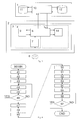
- the user 6 brings the Initiator 7 into action (button, menu item, etc.) (block 21).
- the Initiator 7 calls the Go method for the Broker 8 (block 22).
- the Broker 8 calls the FormRequest method for the Container 9 (block 23).
- the Container 9 interrogates the self-sufficient objects-requesters related thereto (loop, blocks 24 to 26) by calling the ReceiveRequest method for each of them (block 24), then forms a request from the portions corresponding with the requesters (block 25), and returns the formed request to the Broker 8 (block 27). (The block 26 checks the condition, whether all requesters have been processed).
- the Broker 8 sends the request to the Server Program 10 at the ServerAddress (block 28).
- the Server Program 10 modifies the data in the Database 12 (block 29), requests and receives data from the Database 12 (block 30).
- the Server Program 10 transforms the data to a necessary format (block 31) and sends them to the Broker 8 (block 32).
- the Broker 8 transmits the received data to the already existed Container 13 by calling the DistributeData method (the Container 13 can be the same as the initial Container 9) (block 33).
- the Container 13 distributes the received data between the self-sufficient objects-recipients related thereto (loop, blocks 34 to 35) by calling the SetData method for every recipient (block 34). (The block 35 checks the condition, whether all recipients have been processed).
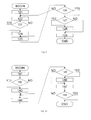
- the Initiator 7 calls the Go method for the Broker 8 (block 42).
- the Broker 8 calls the FormRequest method for the Container 9 (block 43).
- the Container 9 interrogates the self-sufficient objects-requesters related thereto (loop, blocks 44 to 46) by calling the ReceiveRequest method for each of them (block 44), then forms a request from the portions corresponding with the requesters (block 45), and returns the formed request to the Broker 8 (block 47). (The block 46 checks the condition, whether all requesters have been processed).
- the Broker 8 sends the request to the Server Program 10 at the ServerAddress (block 48).
- the Server Program 10 finds and reads the new container description situated at the Server Machine-Readable Medium 11 (block 49).
- the Server Program 10 sends the new container description to the Broker 8 (block 50).
- the Broker 8 creates the New Container 14 in accordance with the received description (block 51).
- the Broker 8 sends the second request to the server, now for receiving data for the New Container 14 (block 52).
- the Server Program 10 requests and receives data from the Database 12 (block 53).
- the Server Program 10 reduces data to a necessary format and sends them to the Broker 8 (block 54).
- the Broker 8 transmits the received data to the already existed New Container 14 by calling the DistributeData method (block 55).
- the Container 14 distributes the received data between the self-sufficient objects-recipients related thereto (loop, blocks 56 to 57) by calling the SetData method for every recipient (block 56). (The block 57 checks the condition, whether all recipients have been processed).
- the Broker 8 sends the request to the Server Program 10 at the ServerAddress (block 64).
- the Server Program 10 finds and reads the new container description and the description version situated at the Server Machine-Readable Medium 11 (block 65).
- the Server Program 10 compares the description versions from the client 15 and the server 11 of the machine-readable media (block 66). If the description versions do not distinguish, then the Server Program includes a respective flag into the response (block 67). In this case, the description and its version are not sent to the client computer. If the versions distinguish, or the description version is absent in the request, then the Server Program includes the description and its version into the response (block 68).
- the Server Program 10 sends the response to the Broker 8 (block 69).
- the Broker 8 analyses the response. If the flag of the version coincidence is absent (block 70), then the Broker stores the received description and its version at the Client Machine-Readable Medium 15, replacing, if necessary, the existing description and its version (block 71). Otherwise, the description already existed is used (block 72).
- the Broker 8 creates the New Container 14 in accordance with the existed description (perhaps, just received) (block 73).
- the container descriptions will be read from the client machine-readable medium. Only the versions of the container descriptions and the flag that the descriptions have not been changed will be sent via the communication channels. As the need arises for amending the information system operation logic or the data representation method, it is sufficient, besides amendments in the server program operation, to amend the descriptions of respective containers stored at the server machine-readable medium and to alter the versions of these descriptions. In this case, the descriptions of respective containers stored at the server machine-readable medium will be updated in the next operation session.
- the caching mechanism permits, on one hand, to update promptly the information system operation logic or the data representation methods, and reduces, on another hand, the communication traffic by means of updating the description of each container only if it is necessary.
- Fig. 1 to 6 illustrates interactions within the self-sufficient objects.
- the system operation uses the "request-response" mode to the full extent, which is typical for any client-server system.
- the system operation just in this mode permits to formulate the universal operation sequences. It is important to note that the considered operation sequences can be performed without engaging any event handlers including those based on scripts.
- the proposed system can be easily appended by new self-sufficient objects, i.e., the system is extensible.
- the self-sufficient objects supplementing the system can be placed in the files of dynamic link libraries at the machine-readable medium of the client computer. After recording the dynamic link library at the machine-readable medium of the client computer, the self-sufficient objects contained in that library can be used in a variety of information systems.
- the extension of the self-sufficient object system requires only a single transmission of small dynamic link libraries via communication channels.
- the techniques of this interaction are defined completely by the configuration of these self-sufficient objects.
- the self-sufficient objects are perceived by the information system user as the elements of the graphic user interface. In their substance, they must provide an advanced graphical user interface typical for the client platforms such as Windows, MacOS, XWindow or Java. Therefore, they are created on the basis of the application programming interfaces of a specific client platform.
- the adequate behavior of the user interface objects assumes:
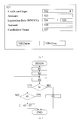
- Fig 7 shows schematically the window form 101 designed for carrying out payments by credit cards (for the sake of simplicity, not all necessary fields being depicted).
- the drop-down list 102 is the specialized object comprising the list of supported credit cards, for example, VISA, American Express, etc.
- the input fields 103 to 107 are designed for inputting respective alpha-numeric data: 103 for the credit card account, 104 and 105 for the month and year of the credit card expiration date, 106 for the payment amount, and 107 for the cardholder name.
- the objects 102 to 107 are the requesters.
- buttons 108 and 109 initiate the operations for transmitting the request to the server and for closing the window form, respectively.
- Fig. 7 does not show the broker being presented in the container 101 but invisible for the user.
- the Container property of the broker must point to the window form 101.
- the Broker property of the button 108 must point to the existing broker.
- the restrictions for the input fields can be associated with the ContentType and MaxLength properties.
- the MaxLength property defines the maximum possible number of the input symbols.
- the ContentType property defines what symbols can be input into the input control. So, for the input fields 103 to 105, the ContentType property must be set to the Integer value. This type of the content allows the input of digital symbols only. For the input field 106, the ContentType property must be set to the Monetary value. This type of the content allows the input of the digital symbols and the decimal fraction symbol (point or comma depending on the regional adjustments) only. Other input fields are adjusted similarly.
- the object checks the correspondence of the symbols being input with the ContentType property value and ignores the inadmissible symbols. It is important that the input check is performed by the object itself rather than an event handler being external relative to the object.
- the Broker calls the FormRequest method for the Container 101 (which is pointed out by the Container property) (block 82).
- the Container 101 searches the self-sufficient objects, requesters 102 to 107 related thereto (loop, blocks 83 to 86), calling for each of them the ReceiveRequest method (block 83). (The block 86 checks, whether all the requesters have been processed).
- the user action adequacy check takes place (block 84). In this case, the check is being performed whether the user has selected the credit card type. If the user has not selected the credit card type, which is the inadequate action, the program operation is interrupted, and the drop-down list opens the message box (block 85) with the text "The credit card type has not been selected" for the user.
- each field checks itself the user action adequacy (block 84). For the input fields this means the check whether this field has been filled. If the user has not filled the control 103, which is the inadequate action, the program operation is interrupted, and the input field 103 opens the message box (block 85) with the text "The field 'Credit card number' has not been filled” for the user. (The text 'Credit card number' must be contained in the FieldName property of the input control 103.)
- a number of digits in the credit card number (the input control 103) depend on the credit card type selected in the drop-down list 102. So, for example, the number of the VISA credit card can be composed of 13 or 16 digits, the number of the American Express credit card consists of 15 digits, the number of the Dinners Club credit card consists of 14 digits, and so on. Moreover, the correct numbers of the credit cards comply with the rules specific for each particular type of the card. Therefore, just the objects 102 and 103 must operate consistently.
- the input field for the credit card number must possess the CreditCardList property pointing to the list 102.
- the permissible amount of the input digits can be made consistent with the credit card type selected in the list 102, and, in the case of calling the ReceiveRequest method for the control 103, it is possible to carry out the check of whether the input number complies with the credit card type in accordance with the respective algorithm.
- the user can be warned with the respective message. It is important that this operation is performed by the object itself rather than by the event handler.
- the above discussed operation sequences form essentially the basis for the original operation protocol of the information client-server system, which can be formulated after a certain formal characterization.
- This protocol can be executed over the known network protocols such as TCP/IP, HTTP, HTTPS, SOAP [ Internet and World Wide Web. How to Program, 3rd Edition. By Harvey M. Deitel, Paul J. Deitel, Andrew B. Goldberg. Published Nov 24, 2003 by Prentice Hall. 1296 pages ] and others, for example, the protocols for data transfer in the mobile networks.
- Choosing of the basic network protocol does not fundamental meaning and affects only the implementation features.
- Choosing of the higher-level protocol permits to simplify the implementation process.
- choosing of the low-level protocol permits to make the transmitted data packets more compact and to decrease the amount of data transferred via communication channels.
- the client and the server communication is carried out via a security connection (for example, the HTTPS protocol [3] has been selected as the basic), then the user's name and password can be transmitted via the communication channels to the server directly in the authentication request. In this case, one request is sufficient for the authentication (the first level).
- a security connection for example, the HTTPS protocol [3] has been selected as the basic
- the authentication will require performing two requests (the second level) and can be made in two steps, like the digest authentication or by the Kerberos protocol [hacking Exposed Web Applications. By Joel Scambray, Mile Shema, Caleb Sima, Publisher: McGraw-Hill Osborne Media; 1 edition (June 19, 2002 )].
- the successful authentication means assigning a unique session identifier to the user.
- the session identifier is assigned to the user without checking the name and password.
- the session identifier can be included into all the requests for receiving data and containers, thus the user authentication is performed in each request.
- the Requester, Recipient and Container interfaces include the following properties:
- the encryption algorithms can be implemented in the form of the dynamic link libraries. Different algorithms can be used for the complete and/or partial request encryption and response decryption. Thus, up to 4 different algorithms can be used simultaneously.
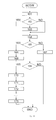
- the container interrogates the self-sufficient objects, requesters related thereto (loop, blocks 122 to 126) by calling for each of them the ReceiveRequest method (block 122). If the EncryptRequest property is being set in the requester (block 123), the container encrypts this request portion (block 124) using the dynamic link library and includes this library into the complete request (block 125) in the encrypted form. The block 126 checks whether all the requesters have been processed. If the EncryptCompleteRequest property is set in the container (block 127) then the formed request is encrypted (block 128) before sending to the server (block 129).
- the encryption keys can be received from the server when authenticating the user according to the Kerberos protocol [hacking Exposed Web Applications. By Joel Scambray, Mile Shema, Caleb Sima, Publisher: McGraw-Hill Osborne Media; 1 edition (June 19, 2002 )]. These keys operate during one operation session.
- the encryption of the data comprising the container descriptions can be organized similarly.
- the container descriptions must be transmitted via a communication channel and stored at the client machine-readable medium in the encrypted form.
- the responsibility for decrypting the descriptions can be imposed at the broker.
- the necessity of the decryption can be indicated by setting the DecryptContainerDescription property of the broker.
- the session key cannot be used for decrypting the container description, since this description could be read from the client machine-readable medium many times during several operation sessions.
- the user password can be used as the key for decrypting the container description either directly or in the hashing form.
- the universal client program must include a rich set of the self-sufficient objects, such that can satisfy the requirements of the majority of the businesslike information systems. Including the object into the system means that the objects of such a type can be created and configured about their descriptions. Those few information systems, for which the standard set of the self-sufficient objects is insufficient, could be replenished by additional objects contained in the dynamic link libraries.
- the client program is sufficient to have the following data:
- the client computer under the control of the universal client program based on the system of the self-sufficient program objects could perform the operation which logic is defined entirely by the server.
- the client program is universal, it can control the client computer operation in various information systems, with providing the advanced graphical user interface. It is not necessary to reset the client program for operating in other information systems, as well as when changing the operation logic and the data representation methods. This leads to the achievement of the needed technical result, i.e., reducing the load on the communication channels because of excluding the additional traffic that is created by sending the installation packets and updated versions of the client programs.
- the communication channels traffic being specific for the client-server systems in the thin client architecture is also excluded.
Landscapes
- Engineering & Computer Science (AREA)
- Software Systems (AREA)
- General Engineering & Computer Science (AREA)
- Theoretical Computer Science (AREA)
- Human Computer Interaction (AREA)
- Physics & Mathematics (AREA)
- General Physics & Mathematics (AREA)
- Information Transfer Between Computers (AREA)
Applications Claiming Priority (1)
| Application Number | Priority Date | Filing Date | Title |
|---|---|---|---|
| PCT/RU2005/000394 WO2007001206A1 (en) | 2005-07-27 | 2005-07-27 | Client-server information system and method for presentation of a graphical user's interface |
Publications (2)
| Publication Number | Publication Date |
|---|---|
| EP1914636A1 true EP1914636A1 (de) | 2008-04-23 |
| EP1914636A4 EP1914636A4 (de) | 2009-12-23 |
Family
ID=37595374
Family Applications (1)
| Application Number | Title | Priority Date | Filing Date |
|---|---|---|---|
| EP05851084A Withdrawn EP1914636A4 (de) | 2005-07-27 | 2005-07-27 | Client-server-informationssystem und -verfahren zur präsentation einer graphischen benutzeroberfläche |
Country Status (4)
| Country | Link |
|---|---|
| US (1) | US20080208964A1 (de) |
| EP (1) | EP1914636A4 (de) |
| JP (1) | JP2009508184A (de) |
| WO (1) | WO2007001206A1 (de) |
Families Citing this family (9)
| Publication number | Priority date | Publication date | Assignee | Title |
|---|---|---|---|---|
| US20070078927A1 (en) * | 2005-09-12 | 2007-04-05 | Microsoft Corporation | Server-side service framework |
| US8875259B2 (en) * | 2007-11-15 | 2014-10-28 | Salesforce.Com, Inc. | On-demand service security system and method for managing a risk of access as a condition of permitting access to the on-demand service |
| US20110172155A1 (en) * | 2008-03-17 | 2011-07-14 | Regenerx Biopharmaceuticals, Inc. | Beta thymosin fragments |
| JP2010165202A (ja) * | 2009-01-16 | 2010-07-29 | Alpine Electronics Inc | 情報処理装置及びファイル高速読み出し方法 |
| US9619779B2 (en) * | 2011-08-26 | 2017-04-11 | Apple Inc. | Client-side policy enforcement of developer API use |
| US9232025B2 (en) * | 2013-02-01 | 2016-01-05 | Schweitzer Engineering Laboratories, Inc. | Entry of electric power delivery system data in a web-based interface |
| CN104202331B (zh) * | 2014-09-15 | 2018-01-02 | 北京奇虎科技有限公司 | 客户端功能的生成方法和装置 |
| EP3561672B1 (de) * | 2015-04-07 | 2022-06-01 | Huawei Technologies Co., Ltd. | Verfahren und vorrichtung für auf einer mobilen vorrichtung basierenden clusterdatenverarbeitungsinfrastruktur |
| CN114661851B (zh) * | 2022-05-23 | 2022-08-16 | 山东省国土测绘院 | 一种在线轻量级快速响应的自然资源空间信息处理方法 |
Family Cites Families (25)
| Publication number | Priority date | Publication date | Assignee | Title |
|---|---|---|---|---|
| US6061512A (en) * | 1997-04-29 | 2000-05-09 | Global Adsi Solutions | Methods and apparatus for creating automated servers for display telephones |
| US6061727A (en) * | 1997-09-30 | 2000-05-09 | The United States Of America As Represented By The Secretary Of The Navy | Robust computer systems permitting autonomously switching between alternative/redundant components |
| US6469714B2 (en) * | 1998-01-26 | 2002-10-22 | International Business Machines Corporation | Infocenter user interface for applets and components |
| US6297819B1 (en) * | 1998-11-16 | 2001-10-02 | Essential Surfing Gear, Inc. | Parallel web sites |
| US7188240B1 (en) * | 1999-07-15 | 2007-03-06 | International Business Machines Corporation | Method and system for encryption of web browser cache |
| US6654784B1 (en) * | 2000-01-14 | 2003-11-25 | Nexaweb Technologies, Inc | Computing architecture |
| US7487440B2 (en) * | 2000-12-04 | 2009-02-03 | International Business Machines Corporation | Reusable voiceXML dialog components, subdialogs and beans |
| DE10065419B4 (de) * | 2000-12-27 | 2011-01-20 | Siemens Ag | Industrielle Steuerung mit taktsynchronem Ablaufebenenmodell |
| JP2002207762A (ja) * | 2001-01-05 | 2002-07-26 | Ntt-X Inc | 店舗情報供給システムおよび店舗情報供給プログラムが記録されたコンピュータ読み取り可能な記録媒体 |
| US20020130900A1 (en) | 2001-03-16 | 2002-09-19 | Tomorrowsoft Corporation | System for generating an interface for software applications in a client-server environment |
| US20030135825A1 (en) | 2001-12-05 | 2003-07-17 | Matthew Gertner | Dynamically generated mark-up based graphical user interfaced with an extensible application framework with links to enterprise resources |
| ATE320059T1 (de) * | 2001-12-12 | 2006-03-15 | Koninkl Philips Electronics Nv | Anzeigensystem mit taktiler führung |
| JP2003242111A (ja) * | 2002-02-14 | 2003-08-29 | Meidensha Corp | 業務統合システム |
| JP2003271388A (ja) * | 2002-03-14 | 2003-09-26 | Victor Co Of Japan Ltd | 通信システム |
| US7565537B2 (en) * | 2002-06-10 | 2009-07-21 | Microsoft Corporation | Secure key exchange with mutual authentication |
| US20040003341A1 (en) * | 2002-06-20 | 2004-01-01 | Koninklijke Philips Electronics N.V. | Method and apparatus for processing electronic forms for use with resource constrained devices |
| WO2004019160A2 (en) | 2002-08-23 | 2004-03-04 | Jway Group, Inc. | Extensible user interface (xui) framework and development environment |
| AU2002952106A0 (en) * | 2002-10-15 | 2002-10-31 | Silverbrook Research Pty Ltd | Methods and systems (npw008) |
| EP1420337A1 (de) * | 2002-11-15 | 2004-05-19 | Hewlett-Packard Company, A Delaware Corporation | System und Verfahren zum Liefern einer flexiblen Benutzeroberfläche |
| US20040187090A1 (en) * | 2003-03-21 | 2004-09-23 | Meacham Randal P. | Method and system for creating interactive software |
| US7552451B2 (en) * | 2003-04-11 | 2009-06-23 | Microsoft Corporation | Persisting state across navigations in a navigation-based application and responding to navigation-related events throughout an application |
| WO2005022337A2 (en) * | 2003-08-29 | 2005-03-10 | Yahoo! Inc. | Extensible user interface |
| US20070011126A1 (en) * | 2005-03-21 | 2007-01-11 | Primitive Logic, Inc. | Service-oriented architecture |
| US20060253773A1 (en) * | 2005-05-09 | 2006-11-09 | Hsieh Cheng H | Web-based client/server interaction method and system |
| US9772689B2 (en) * | 2008-03-04 | 2017-09-26 | Qualcomm Incorporated | Enhanced gesture-based image manipulation |
-
2005
- 2005-07-27 WO PCT/RU2005/000394 patent/WO2007001206A1/ru not_active Ceased
- 2005-07-27 JP JP2008523837A patent/JP2009508184A/ja active Pending
- 2005-07-27 US US11/996,860 patent/US20080208964A1/en not_active Abandoned
- 2005-07-27 EP EP05851084A patent/EP1914636A4/de not_active Withdrawn
Also Published As
| Publication number | Publication date |
|---|---|
| JP2009508184A (ja) | 2009-02-26 |
| WO2007001206A1 (en) | 2007-01-04 |
| EP1914636A4 (de) | 2009-12-23 |
| US20080208964A1 (en) | 2008-08-28 |
Similar Documents
| Publication | Publication Date | Title |
|---|---|---|
| US9098482B2 (en) | Method and system for cross-platform form creation and deployment | |
| US20070250711A1 (en) | System and method for presenting and inputting information on a mobile device | |
| AU2005247050B2 (en) | System for accessing a POS terminal, method for downloading and updating applications and method for performing electronic operation using such a system | |
| US5963952A (en) | Internet browser based data entry architecture | |
| US7519905B2 (en) | Automatic formatting and validating of text for a markup language graphical user interface | |
| EP1233333A1 (de) | Verfahren zur Ausführung eines herunterladbaren Dienstes mittels des Empfangs einschränkender Zugriffrechte mindestens einer Profildatei | |
| US7389355B2 (en) | Customer access solutions architecture | |
| US20040205525A1 (en) | Automatic identification of form contents | |
| US20090100321A1 (en) | Universal contextual actions menu across windows applications | |
| US20040205554A1 (en) | Systems and methods for accessing multiple internal information sources of a business from a composite web document | |
| JP2009531793A (ja) | ウェブコミュニティおよびウェブアプリケーションのデータを変換するシステムおよび方法 | |
| US20020193142A1 (en) | System and method for controlling access to personal information | |
| US20030154265A1 (en) | Process for executing a downloadable service through a telecommunication network, and cache system and service for doing the same | |
| US6754819B1 (en) | Method and system for providing cryptographic services in a distributed application | |
| US20080208964A1 (en) | Client-Server Information System and Method for Providing Graphical User Interface | |
| RU2313824C2 (ru) | Информационная система клиент - сервер и способ предоставления графического пользовательского интерфейса | |
| US7266838B2 (en) | Secure resource | |
| EP2040190A2 (de) | Verarbeitung von HTML-Erweiterungen, um Unterstützung von Informationskarten durch einen darauf angewiesenen Teilnehmer zu ermöglichen | |
| CN113743055B (zh) | 文本信息处理方法、装置、电子设备、服务器及存储介质 | |
| EP1626349A1 (de) | Benutzer-Interface für Smart Card Anwendungen | |
| CA2381832A1 (en) | Method and system for cross-platform form creation and deployment | |
| EP1982245B1 (de) | Sicherheitsschlüssel mit anweisungen | |
| US20030081243A1 (en) | System and method for automated access of a network page | |
| US20020078051A1 (en) | Method and apparatus in mark-up language documents for providing mark-up language hidden attributes | |
| CN117669529B (zh) | 数据处理方法、装置、设备以及介质 |
Legal Events
| Date | Code | Title | Description |
|---|---|---|---|
| PUAI | Public reference made under article 153(3) epc to a published international application that has entered the european phase |
Free format text: ORIGINAL CODE: 0009012 |
|
| 17P | Request for examination filed |
Effective date: 20080227 |
|
| AK | Designated contracting states |
Kind code of ref document: A1 Designated state(s): AT BE BG CH CY CZ DE DK EE ES FI FR GB GR HU IE IS IT LI LT LU LV MC NL PL PT RO SE SI SK TR |
|
| A4 | Supplementary search report drawn up and despatched |
Effective date: 20091120 |
|
| RIC1 | Information provided on ipc code assigned before grant |
Ipc: G06F 15/16 20060101AFI20070219BHEP Ipc: G06F 9/44 20060101ALI20091116BHEP |
|
| 17Q | First examination report despatched |
Effective date: 20100419 |
|
| STAA | Information on the status of an ep patent application or granted ep patent |
Free format text: STATUS: THE APPLICATION IS DEEMED TO BE WITHDRAWN |
|
| 18D | Application deemed to be withdrawn |
Effective date: 20120201 |
|
| DAX | Request for extension of the european patent (deleted) |