EP1908462A2 - Dichloracetat in Kombination mit kardioprotektiven oder hämodynamischen Medikamenten - Google Patents
Dichloracetat in Kombination mit kardioprotektiven oder hämodynamischen Medikamenten Download PDFInfo
- Publication number
- EP1908462A2 EP1908462A2 EP07020297A EP07020297A EP1908462A2 EP 1908462 A2 EP1908462 A2 EP 1908462A2 EP 07020297 A EP07020297 A EP 07020297A EP 07020297 A EP07020297 A EP 07020297A EP 1908462 A2 EP1908462 A2 EP 1908462A2
- Authority
- EP
- European Patent Office
- Prior art keywords
- dca
- cardioprotective
- subject
- administered
- metoprolol
- Prior art date
- Legal status (The legal status is an assumption and is not a legal conclusion. Google has not performed a legal analysis and makes no representation as to the accuracy of the status listed.)
- Withdrawn
Links
Images










Classifications
-
- A—HUMAN NECESSITIES
- A61—MEDICAL OR VETERINARY SCIENCE; HYGIENE
- A61K—PREPARATIONS FOR MEDICAL, DENTAL OR TOILETRY PURPOSES
- A61K45/00—Medicinal preparations containing active ingredients not provided for in groups A61K31/00 - A61K41/00
- A61K45/06—Mixtures of active ingredients without chemical characterisation, e.g. antiphlogistics and cardiaca
-
- A—HUMAN NECESSITIES
- A61—MEDICAL OR VETERINARY SCIENCE; HYGIENE
- A61K—PREPARATIONS FOR MEDICAL, DENTAL OR TOILETRY PURPOSES
- A61K31/00—Medicinal preparations containing organic active ingredients
- A61K31/13—Amines
- A61K31/135—Amines having aromatic rings, e.g. ketamine, nortriptyline
- A61K31/137—Arylalkylamines, e.g. amphetamine, epinephrine, salbutamol, ephedrine or methadone
-
- A—HUMAN NECESSITIES
- A61—MEDICAL OR VETERINARY SCIENCE; HYGIENE
- A61K—PREPARATIONS FOR MEDICAL, DENTAL OR TOILETRY PURPOSES
- A61K31/00—Medicinal preparations containing organic active ingredients
- A61K31/13—Amines
- A61K31/135—Amines having aromatic rings, e.g. ketamine, nortriptyline
- A61K31/138—Aryloxyalkylamines, e.g. propranolol, tamoxifen, phenoxybenzamine
-
- A—HUMAN NECESSITIES
- A61—MEDICAL OR VETERINARY SCIENCE; HYGIENE
- A61K—PREPARATIONS FOR MEDICAL, DENTAL OR TOILETRY PURPOSES
- A61K31/00—Medicinal preparations containing organic active ingredients
- A61K31/33—Heterocyclic compounds
- A61K31/395—Heterocyclic compounds having nitrogen as a ring hetero atom, e.g. guanethidine or rifamycins
- A61K31/55—Heterocyclic compounds having nitrogen as a ring hetero atom, e.g. guanethidine or rifamycins having seven-membered rings, e.g. azelastine, pentylenetetrazole
- A61K31/554—Heterocyclic compounds having nitrogen as a ring hetero atom, e.g. guanethidine or rifamycins having seven-membered rings, e.g. azelastine, pentylenetetrazole having at least one nitrogen and one sulfur as ring hetero atoms, e.g. clothiapine, diltiazem
-
- A—HUMAN NECESSITIES
- A61—MEDICAL OR VETERINARY SCIENCE; HYGIENE
- A61K—PREPARATIONS FOR MEDICAL, DENTAL OR TOILETRY PURPOSES
- A61K31/00—Medicinal preparations containing organic active ingredients
- A61K31/70—Carbohydrates; Sugars; Derivatives thereof
- A61K31/7028—Compounds having saccharide radicals attached to non-saccharide compounds by glycosidic linkages
- A61K31/7034—Compounds having saccharide radicals attached to non-saccharide compounds by glycosidic linkages attached to a carbocyclic compound, e.g. phloridzin
- A61K31/704—Compounds having saccharide radicals attached to non-saccharide compounds by glycosidic linkages attached to a carbocyclic compound, e.g. phloridzin attached to a condensed carbocyclic ring system, e.g. sennosides, thiocolchicosides, escin, daunorubicin
-
- A—HUMAN NECESSITIES
- A61—MEDICAL OR VETERINARY SCIENCE; HYGIENE
- A61K—PREPARATIONS FOR MEDICAL, DENTAL OR TOILETRY PURPOSES
- A61K31/00—Medicinal preparations containing organic active ingredients
- A61K31/70—Carbohydrates; Sugars; Derivatives thereof
- A61K31/7042—Compounds having saccharide radicals and heterocyclic rings
- A61K31/7048—Compounds having saccharide radicals and heterocyclic rings having oxygen as a ring hetero atom, e.g. leucoglucosan, hesperidin, erythromycin, nystatin, digitoxin or digoxin
-
- A—HUMAN NECESSITIES
- A61—MEDICAL OR VETERINARY SCIENCE; HYGIENE
- A61K—PREPARATIONS FOR MEDICAL, DENTAL OR TOILETRY PURPOSES
- A61K38/00—Medicinal preparations containing peptides
- A61K38/16—Peptides having more than 20 amino acids; Gastrins; Somatostatins; Melanotropins; Derivatives thereof
- A61K38/164—Peptides having more than 20 amino acids; Gastrins; Somatostatins; Melanotropins; Derivatives thereof from bacteria
- A61K38/166—Streptokinase
-
- A—HUMAN NECESSITIES
- A61—MEDICAL OR VETERINARY SCIENCE; HYGIENE
- A61K—PREPARATIONS FOR MEDICAL, DENTAL OR TOILETRY PURPOSES
- A61K38/00—Medicinal preparations containing peptides
- A61K38/16—Peptides having more than 20 amino acids; Gastrins; Somatostatins; Melanotropins; Derivatives thereof
- A61K38/43—Enzymes; Proenzymes; Derivatives thereof
- A61K38/46—Hydrolases (3)
- A61K38/48—Hydrolases (3) acting on peptide bonds (3.4)
- A61K38/49—Urokinase; Tissue plasminogen activator
-
- A—HUMAN NECESSITIES
- A61—MEDICAL OR VETERINARY SCIENCE; HYGIENE
- A61P—SPECIFIC THERAPEUTIC ACTIVITY OF CHEMICAL COMPOUNDS OR MEDICINAL PREPARATIONS
- A61P43/00—Drugs for specific purposes, not provided for in groups A61P1/00-A61P41/00
-
- A—HUMAN NECESSITIES
- A61—MEDICAL OR VETERINARY SCIENCE; HYGIENE
- A61P—SPECIFIC THERAPEUTIC ACTIVITY OF CHEMICAL COMPOUNDS OR MEDICINAL PREPARATIONS
- A61P9/00—Drugs for disorders of the cardiovascular system
- A61P9/04—Inotropic agents, i.e. stimulants of cardiac contraction; Drugs for heart failure
-
- A—HUMAN NECESSITIES
- A61—MEDICAL OR VETERINARY SCIENCE; HYGIENE
- A61P—SPECIFIC THERAPEUTIC ACTIVITY OF CHEMICAL COMPOUNDS OR MEDICINAL PREPARATIONS
- A61P9/00—Drugs for disorders of the cardiovascular system
- A61P9/10—Drugs for disorders of the cardiovascular system for treating ischaemic or atherosclerotic diseases, e.g. antianginal drugs, coronary vasodilators, drugs for myocardial infarction, retinopathy, cerebrovascula insufficiency, renal arteriosclerosis
Definitions
- the present invention relates to the field of cardiovascular disease and more particularly, the treatment of cardiac dysfunction with cardioprotective or hemodynamic drugs.
- the heart is capable of utilizing a variety of energy substrates in order to meet its extremely high energy demands.
- the main fuels involved in maintaining cardiac function are glucose, lactate, and fatty acids. Under normal physiological conditions, a balance between fatty acid and carbohydrate utilization occurs, depending largely on the supply of either substrate.
- myocardial glucose oxidation decreases dramatically, and fatty acids become the dominant oxidative substrate.
- Experimental and clinical data have shown that increased fatty acid oxidation results in increased ischemic injury.
- therapies for ischemic heart disease which modulate myocardial metabolism, have been developed.
- One such metabolic modulator is dichloroacetate (DCA).
- DCA is the prototype of a class of compounds known as "direct pyruvate dehydrogenase complex activators", or PDH activators.
- PDH converts pyruvate into acetyl CoA where it then enters the TCA cycle in the mitochondria.
- PDH kinase phosphorylates and inactivates PDH.
- DCA stimulates the PDH complex, by inhibiting the negative regulatory effects of PDH kinase.
- glucose and lactate oxidation increase and carbohydrate-derived mitochondrial acetyl CoA rises.
- Glucose oxidation is therefore increased at the expense of fatty acids ( Lopaschuk G.D., et al. J Pharmacol Exp Ther.
- DCA was subsequently shown to reduce myocardial oxygen consumption in closed chest dogs and reduce indicators of ischemic stress during brief open-chest coronary occlusions in the same model ( Mjos O.D et al. Cardiovasc Res 10:427-436 (1976) ).
- pharmacological agents are currently being used to treat a wide variety of cardiovascular disorders.
- Some of the classes of compounds that have had the most success are digitalis glycosides, inotropes, beta-blockers and calcium channel blockers.
- An example of a cardiac glycoside is digoxin.
- Digoxin causes a reversible inhibition of myocardial membrane bound (Na + + K + )-ATPase.
- Intracellular accumulation of Na + (and decrease in intracellular K + ) promotes Ca 2+ entry into the cell.
- Subsequent release of Ca 2+ from sarcoplasmic reticulum causes a positive inotrope effect, the primary therapeutic action.
- a class of compounds with similar actions are calcium channel blockers (calcium entry blocker or calcium antagonists). When an effective stimulus is applied to a muscle cell the result is an influx of Ca 2+ , which in turn triggers the intracellular events leading to muscle contraction.
- diltiazem can block this sequence of Ca 2+ dependent steps.
- diltiazem has been shown to be an effective treatment, possibly due to the suppression of coronary vasospasm.
- Another class of compounds which alter Ca 2+ influx is ⁇ 1 -adrenoreceptor agonists (catecholamine).
- catecholamine ⁇ 1 -adrenoreceptor agonists
- G s stimulatory guanine-nucleotide-binding regulatory protein
- G s binds with guanosine triphosphate (GTP) to from a complex that stimulates adenylate cyclase activity and catalyzes the formation of intracellular cyclic AMP.
- Cyclic AMP combines with a protein kinase that catalyzes the phosphorylation of specific enzymes, the end result of which are elevated Ca 2+ levels in cardiac and other cells.
- Dobutamine has a positive inotropic effect on the heart through stimulation of ⁇ -receptors. In clinical studies, the action of dobutamine on the heart is unique in that it increases the force of contraction without increasing the heart rate significantly.
- a selective antagonist of ⁇ 1 -adrenoreceptors is metoprolol.
- ⁇ 1 -adrenoreceptor antagonists are used extensively in the treatment of cardiovascular diseases, e.g., hypertension, angina pectoris, cardiac arrhythmias and in the secondary prevention of myocardial infarction and sudden death in patients with coronary thrombosis.
- Metoprolol has been used in the prophylaxis of angina pectoris and in the treatment of hypertension. Furthermore there has been demonstrations of the ability of metabolic agents to function in the presence of these beneficial pharmacological agents ( Cross, H.R Exp. Opin. Pharmacother. 2:857-875 (2001) ).
- inotropes such as calcium, dopamine, epinephrine, ephedrine, phenylephrine, and dobutamine.
- agents such as dobutamine have been demonstrated to increase cardiac work, they have also been demonstrated to increase cardiac oxygen consumption and therefore may not enhance overall mechanical efficiency ( Bersin, R.M., et al. JACC 23(7):1617-1624 (1994) ), particularly since those patients requiring the drugs are generally in situations of reduced blood flow or circulation leading to reduced availability of oxygen to the cardiac environment.
- the potential for inotropes or drugs with inotropic effect to increase oxygen consumption to a greater extent than contractile function has been termed an oxygen wasting effect ( Chandler, B.Met al. Circ.
- Inotropic drugs are also reportedly associated with increases in intracellular calcium concentration and heart rate, which may also be potentially harmful, especially in hearts with impaired energy balance (Hasenfuss, G et al. 94:3155-3160 (1996)).
- the present invention provides for a method to ameliorate the negative side effects of a serum concentration of a cardioprotective or hemodynamic drug higher than that used in normal clinical practice; through administration of DCA prior to, simultaneous with or subsequent to administration of the cardioprotective or hemodynamic drug.
- the amelioration of negative side effects results from the metabolic effects of DCA administered prior to, simultaneous with or subsequent to administration of the cardioprotective or hemodynamic drug.
- a further aspect of the present invention provides for the metabolic effects of DCA administered prior to, simultaneous with or subsequent to administration of the cardioprotective or hemodynamic drug to include an increase in glucose metabolism.
- the present invention provides for a composition of a unit dosage form of DCA and a cardioprotective or hemodynamic drug wherein the cardioprotective or hemodynamic drug attains a serum concentration greater than that which would be attained in normal clinical practice.
- the composition may be used in patients in need of treatment without substantial increase in side effects compared to the use of cardioprotective or hemodynamic drug alone at concentrations used in normal clinical practice.
- the present invention provides for a composition of said unit dosage form of DCA with a cardioprotective or hemodynamic drug, where the cardioprotective or hemodynamic drug is a Na + /K + ATPase inhibitor.
- a further aspect of the present invention provides for a composition of said unit dosage form of DCA with a Na + /K + ATPase inhibitor, where the Na + /K + ATPase inhibitor is digoxin.
- a further aspect of the present invention provides for a composition of said unit dosage form of DCA with digoxin, where the digoxin attains a serum concentration of greater than 2.5nM.
- a further aspect of the present invention provides for a composition of said unit dosage form of DCA with digoxin, where the digoxin attains a serum concentration of between 2.5nM to 10.0nM.
- the present invention provides for a composition of said unit dosage form of DCA with a cardioprotective or hemodynamic drug, where the cardioprotective or hemodynamic drug is a calcium channel blocker.
- a further aspect of the present invention provides for a composition of said unit dosage form of DCA with a calcium channel blocker, where the calcium channel blocker is diltiazem.
- a further aspect of the present invention provides for a composition of said unit dosage form of DCA with diltiazem, where the diltiazem attains a serum concentration of greater than 0.5 ⁇ M.
- a further aspect of the present invention provides for a composition of said unit dosage form of DCA with diltiazem where, the diltiazem attains a serum concentration of between 0.5 ⁇ M to 5.0 ⁇ M.
- the present invention provides for a composition of said unit dosage form of DCA with a cardioprotective or hemodynamic drug where, the cardioprotective or hemodynamic drug is a ⁇ 1 -adrenoreceptor agonist.
- a further aspect of the present invention provides for a composition of said unit dosage form of DCA with a ⁇ 1 -adrenoreceptor agonist, where the ⁇ 1 -adrenoreceptor agonist is dobutamine.
- a further aspect of the present invention provides for a composition of said unit dosage form of DCA with dobutamine, where the dobutamine attains a serum concentration of greater than 0.6 ⁇ M.
- a further aspect of the present invention provides for a composition of said unit dosage form of DCA with dobutamine, where the dobutamine attains a serum concentration of between 0.6 ⁇ M to 5.0 ⁇ M.
- the present invention provides for a composition of said unit dosage form of DCA with a cardioprotective or hemodynamic drug, where the cardioprotective or hemodynamic drug is a ⁇ 1 - adrenoreceptor antagonist.
- a further aspect of the present invention provides for a composition of said unit dosage form of DCA with a ⁇ 1 - adrenoreceptor antagonist, where the ⁇ 1 - adrenoreceptor antagonist is metoprolol.
- a further aspect of the present invention provides for a composition of said unit dosage form of DCA with metoprolol, where the metoprolol attains a serum concentration of greater than 0.4 ⁇ M.
- a further aspect of the present invention provides for a composition of said unit dosage form of DCA with metoprolol, where the metoprolol attains a serum concentration of between 0.4 ⁇ M to 5.0 ⁇ M.
- the present invention provides for a composition of said unit dosage form of DCA with a cardioprotective or hemodynamic drug, where the cardioprotective or hemodynamic drug is a thrombolytic agent.
- a further aspect of the present invention provides for a composition of said unit dosage form of DCA with a thrombolytic agent, where the thrombolytic agent is tissue plasminogen activator or streptokinase.
- An aspect of the present invention provides for a composition comprising said unit dosage form of DCA and a cardioprotective or hemodynamic drug where the cardioprotective or hemodynamic drug decreases heart rate, decreases arrhythmia, decreases vasospasm, decreases fatty acid oxidation, increases contractile force or increases coronary blood flow.
- An aspect of the present invention provides for a kit comprising said unit dosage form of DCA and a cardioprotective or hemodynamic drug, and instructions sufficient to enable one skilled in the art to administer the DCA and cardioprotective or hemodynamic drug to give a cardioprotective or hemodynamic effect.
- a further aspect of the present invention provides for a kit comprising said unit dosage form of DCA and cardioprotective or hemodynamic drug, packaged individually.
- a further aspect of the present invention provides for a kit comprising said unit dosage form of DCA and cardioprotective or hemodynamic drug.
- An aspect of the present invention provides for a kit comprising said unit dosage form of DCA and a cardioprotective or hemodynamic drug, where the cardioprotective or hemodynamic drug is a Na + /K + ATPase inhibitor.
- a further aspect of the present invention provides for a kit comprising said unit dosage form of DCA and a Na + /K + ATPase inhibitor, where the Na + /K + ATPase inhibitor is digoxin.
- An aspect of the present invention provides for a kit comprising said unit dosage form of DCA and a cardioprotective or hemodynamic drug, where the cardioprotective or hemodynamic drug is a calcium channel blocker.
- a further aspect of the present invention provides for a kit comprising said unit dosage form of DCA and a calcium channel blocker; where the calcium channel blocker is diltiazem.
- An aspect of the present invention provides for a kit comprising said unit dosage form of DCA and a cardioprotective or hemodynamic drug, where the cardioprotective or hemodynamic drug is a ⁇ 1 -adrenoreceptor agonist.
- a further aspect of the present invention provides for a kit comprising said unit dosage form of DCA and a ⁇ 1 -adrenoreceptor agonist, where the ⁇ 1 -adrenoreceptor agonist is dobutamine.
- An aspect of the present invention provides for a kit comprising said unit dosage form of DCA and a cardioprotective or hemodynamic drug, where the cardioprotective or hemodynamic drug is a ⁇ 1 -adrenoreceptor antagonist
- a further aspect of the present invention provides for a kit comprising said unit dosage form of DCA and a ⁇ 1 -adrenoreceptor antagonist, where the ⁇ 1 -adrenoreceptor antagonist is metoprolol.
- the present invention provides for kit comprising said unit dosage form of DCA and a cardioprotective or hemodynamic drug, where the cardioprotective or hemodynamic drug is a thrombolytic agent.
- a further aspect of the present invention provides for a kit comprising said unit dosage form of DCA and a thrombolytic agent, where the thrombolytic agent is tissue plasminogen activator or streptokinase.
- An aspect of the present invention provides for a method of treating a subject in need of cardioprotective of hemodynamic drugs, where the cardioprotective or hemodynamic drug can attain a higher serum concentration than that used in normal clinical practice.
- the present invention provides for a method of treating a subject in which DCA is co-administered with a cardioprotective or hemodynamic drug which attains a serum concentration greater than that used in normal clinical practice, where the cardioprotective or hemodynamic drug is a Na + /K + ATPase inhibitor.
- a further aspect of the present invention provides for a method of treating a subject in which DCA is co-administered with a Na + /K + ATPase inhibitor which attains a serum concentration greater than that used in normal clinical practice, where the Na + /K + ATPase inhibitor is digoxin.
- a further aspect of the present invention provides for a method of treating a subject in which DCA is co-administered with digoxin, where the digoxin attains a serum concentration of greater than 2.5nM.
- a further aspect of the present invention provides for a method of treating a subject in which DCA is co-administered with digoxin, where the digoxin attains a serum concentration ofbetween 2.5nM to 10.0nM.
- the present invention provides for a method of treating a subject in which DCA is co-administered with a cardioprotective or hemodynamic drug which attains a serum concentration greater than that used in normal clinical practice, where the cardioprotective or hemodynamic drug is a calcium channel blocker.
- a further aspect of the present invention provides for a method of treating a subject in which DCA is co-administered with a calcium channel blocker which attains a serum concentration greater than that used in normal clinical practice, where the calcium channel blocker is diltiazem.
- a further aspect of the present invention provides for a method of treating a subject in which DCA is co-administered with diltiazem, where the diltiazem attains a serum concentration of greater than 0.5 ⁇ M.
- a further aspect of the present invention provides for a method of treating a subject in which DCA is co-administered with diltiazem, where the diltiazem attains a serum concentration of between 0.5 ⁇ M to 5.0 ⁇ M.
- the present invention provides for a method of treating a subject in which DCA is co-administered with a cardioprotective or hemodynamic drug which attains a serum concentration greater than that used in normal clinical practice, where the cardioprotective or hemodynamic drug is a ⁇ 1 -adrenoreceptor agonist.
- a further aspect of the present invention provides for a method of treating a subject in which DCA is co-administered with a ⁇ 1 -adrenoreceptor agonist which attains a serum concentration greater than that used in normal clinical practice, where the ⁇ 1 -adrenoreceptor agonist is dobutamine.
- a further aspect of the present invention provides for a method of treating a subject in which DCA is co-administered with dobutamine, where the dobutamine attains a serum concentration of greater than 0.6 ⁇ M.
- a further aspect of the present invention provides for a method of treating a subject in which DCA is co-administered with dobutamine, where the dobutamine attains a serum concentration of between 0.6 ⁇ M to 5.0 ⁇ M.
- the present invention provides for a method of treating a subject in which DCA is co-administered with a cardioprotective or hemodynamic drug which attains a serum concentration greater than that used in normal clinical practice, where the cardioprotective or hemodynamic drug is a ⁇ 1 -adrenoreceptor antagonist.
- a further aspect of the present invention provides for a method of treating a subject in which DCA is co-administered with a ⁇ 1 -adrenoreceptor antagonist which attains a serum concentration greater than that used in normal clinical practice, where the ⁇ 1 -adrenoreceptor antagonist is metoprolol.
- a further aspect of the present invention provides for a method of treating a subj ect in which DCA is co-administered with metoprolol, where the metoprolol attains a serum concentration of greater than 0.4 ⁇ M.
- a further aspect of the present invention provides for a method of treating a subject in which DCA is co-administered with metoprolol, where the metoprolol attains a serum concentration of between 0.4 ⁇ M to 5.0 ⁇ M.
- the present invention provides for a method of treating a subject in which DCA is co-administered with a cardioprotective or hemodynamic drug which attains a serum concentration greater than that used in normal clinical practice, where the cardioprotective or hemodynamic drug is a thrombolytic agent.
- a further aspect of the present invention provides for a method of treating a subject in which DCA is co-administered with a ⁇ 1 -adrenoreceptor antagonist which attains a serum concentration greater than that used in normal clinical practice, where the thrombolytic agent is tissue plasminogen activator or streptokinase.
- An aspect of the present invention provides for a method of treating a subject in which DCA is co-administered with cardioprotective or hemodynamic drugs which attain a serum concentration greater than that used in normal clinical practice, where the cardioprotective or hemodynamic drug decreases heart rate, decreases arrhythmia, decreases vasospasm, decreases fatty acid oxidation, increases contractile force or increases coronary blood flow.
- An aspect of the present invention provides for a method of treating a subject in which DCA is co-administered with cardioprotective or hemodynamic drugs which attain a serum concentration greater than that used in normal clinical practice, where the subject is at risk for hypertension, coronary ischemia, angina pectoris, arrhythmia, coronary thrombosis, myocardial infarction or enlarged heart.
- An aspect of the present invention provides for a method of treating a subject in which DCA is co-administered with cardioprotective or hemodynamic drugs which attain a serum concentration greater than that used in normal clinical practice, where the subject is experiencing an ischemic event.
- An aspect of the present invention provides for a method of treating a subject in which DCA is co-administered with cardioprotective or hemodynamic drugs which attain a serum concentration greater than that used in normal clinical practice, where the subject is recovering from an ischemic event.
- a further aspect of the present invention provides for the ischemic event to result from a surgical procedure.
- a further aspect of the present invention provides for the surgical procedure to be heart surgery.
- An aspect of the present invention provides for methods of increasing the efficacy of a cardioprotective or hemodynamic drug without substantially increasing the side effects, by administration of cardioprotective or hemodynamic drugs which attain a serum concentration in the patient greater than that which would be attained in normal clinical practice, wherein DCA is administered prior to, simultaneous with or subsequent to the cardioprotective or hemodynamic drug.
- An aspect of the present invention provides for methods of increasing the efficacy of a cardioprotective or hemodynamic drug without substantially increasing the side effects, by administration of cardioprotective or hemodynamic drugs which attain a serum concentration in the patient greater than that which would be attained in normal clinical practice, wherein DCA is administered as a combination or adjuvant therapy.
- An aspect of the present invention provides for methods of increasing the ability to use higher than clinical levels of cardioprotective or hemodynamic drugs without substantially increasing the side effects, by administration of cardioprotective or hemodynamic drugs which attain a serum concentration in the patient greater than that which could be attained in normal clinical practice, wherein DCA is administered prior to, simultaneous with or subsequent to the cardioprotective or hemodynamic drug.
- An aspect of the present invention provides for methods of increasing the ability to use higher than clinical levels of cardioprotective or hemodynamic drugs without substantially increasing the side effects, by administration of cardioprotective or hemodynamic drugs which attain a serum concentration in the patient greater than that which could be attained in normal clinical practice, wherein DCA is administered as a combination or adjuvant therapy.
- the present invention provides for combination therapy of DCA with cardioprotective or hemodynamic drugs, enabling administration of higher amounts of cardioprotective or hemodynamic drugs than used in normal clinical practice.
- One aspect of the present invention is directed to a method of increasing the amount of cardioprotective or hemodynamic drugs capable of being administered to a patient without increasing the negative side effects associated with the cardioprotective or hemodynamic drug, which comprises administration to said patient amounts of cardioprotective or hemodynamic drugs, at greater than that used in normal clinical practice, in combination with an amount of DCA sufficient to diminish or attenuate the negative side effects arising from the higher amount of cardioprotective or hemodynamic drug.
- a further aspect of the present invention provides for a method of administration of DCA in combination with amounts of cardioprotective or hemodynamic drug at greater than that used in normal clinical practice, where the DCA achieves a concentration of 1mM to 3mM in the patient.
- a further aspect of the present invention provides for a method of administration of DCA in combination with amounts of cardioprotective or hemodynamic drug at greater than that used in normal clinical practice, where the DCA achieves a concentration of 2mM in the patient.
- An aspect of the present invention provides for a method of treating a subject in which DCA is administered prior to, simultaneous with or subsequent to a cardioprotective or hemodynamic drug.
- a further aspect of the present invention provides for a method of treating a subject in which DCA is administered prior to, simultaneous with or subsequent to a cardioprotective or hemodynamic drug, where the cardioprotective or hemodynamic drug is a Na+/K+ ATPase.
- a further aspect of the present invention provides for a method of treating a subject in which DCA is administered prior to, simultaneous with or subsequent to a Na+/K+ ATPase, where the Na+/K+ ATPase is digoxin.
- a further aspect of the present invention provides for a method of treating a subject in which DCA is administered prior to, simultaneous with or subsequent to a Na+/K+ ATPase; in which the subject would benefit from an increase in cardiac efficiency.
- a further aspect of the present invention provides for a method of treating a subject in which DCA is administered prior to, simultaneous with or subsequent to a Na+/K+ ATPase; in which the subject would benefit from a decrease in oxygen consumption.
- Unit dosage form refers to physically discrete units, suitable as unit dosages, each unit containing a predetermined quantity of active ingredient calculated to produce the desired therapeutic effect in association with the required pharmaceutical carrier.
- Normal clinical practice refers to that currently known in the art, or determinable from the art, as proper and reasonable practice and care in a clinical setting giving due consideration and attention to the individual patient's care, safety and clinical outcome.
- “Serum concentration” as used herein refers to the amount of drug of interest in the serum of a subject, wherein the amount of drug is determined in accordance with methods known to the art or determinable from the art.
- Thrombolytic refers to a member of the class of drug referred to in the art as thrombolytic agents or drugs having the ability to directly or indirectly dissolve, reduce or remove cardiac or cardiac related blockages arising from blood clots or other naturally occurring blockages.
- Repetitive contraction of cardiac muscle requires an efficient and ready source of ATP production to sustain mechanical activity.
- Glycolysis is an anaerobic process and produces 2ATP per mole of glucose converted to pyruvate.
- Fatty acid, lactate and glucose oxidation are aerobic processes, that is, requiring oxygen, and produce 129 moles of ATP, 18 moles of ATP and 36 moles of ATP per mole of substrate metabolized, respectively.
- Bing et al identified that the adult human heart primarily utilizes glucose, lactate and fatty acids as the major sources of energy ( Bing, R.J., et al. Am. J. Med. 15:284-296 (1953) ).
- the type of energy substrate used by the heart can have a profound impact on the ability of the heart to withstand an episode of hypoxia or ischemia ( Lopaschuk, G.D., et al. Circ. Res. 63(6): 1036-1043 (1988) ).
- changes in energy substrate preference during maturation of the heart should influence the outcome of hypoxia or ischemia.
- fatty acids are the primary energy substrate in the adult heart, with glucose oxidation providing only 30 to 40 percent of myocardial ATP production.
- glucose oxidation provides an even smaller portion of ATP production in hearts reperfused following a period of global ischemia ( Lopaschuk, G.D et al. Circ. Res. 66:546-553 (1990) ).
- One of the primary factors resulting in low glucose oxidation rates post-ischemia is the circulating level of fatty acids: serum fatty acids are potent inhibitors of myocardial glucose oxidation.
- dichloroacetate directly stimulates PDC, resulting in a marked stimulation of glucose oxidation ( McVeigh, J.J et al. (1990) Am. J. Physiol. 259:H1079-1085 ).
- Rat hearts were cannulated for isolated working heart perfusions as described in " An imbalance between glycolysis and glucose oxidation is a possible explanation for the detrimental effects of high levels of fatty acids during aerobic reperfusion of ischemic hearts.”, (J Pharmacol Exp Ther. 264:135 (1993 ); herein incorporated by reference.
- male Sprague-Dawley rats (0.3-0.35 kg) were anesthetized with pentobarbital sodium (60 mg/kg IP) and hearts were quickly excised, the aorta was cannulated and a retrograde perfusion at 37°C was initiated at a hydrostatic pressure of 60 mm Hg.
- Hearts were trimmed of excess tissue, and the pulmonary artery and the opening to the left atrium were then cannulated. After 15 min of Langendorff perfusion, hearts were switched to the working mode by clamping the aortic inflow line from the Langendorff reservoir and opening the left atrial inflow line. The perfusate was delivered from an oxygenator into the left atrium at a constant preload pressure of 11 mm Hg. Perfusate was ejected from spontaneously beating hearts into a compliance chamber (containing 1 ml of air) and into the aortic outflow line. The afterload was set at a hydrostatic pressure of 80 mm Hg.
- Heart rate and aortic pressure were measured with a Biopac Systems Inc. blood pressure transducer connected to the aortic outflow line.
- Cardiac output and aortic flow were measured with Transonic T206 ultrasonic flow probes in the preload and afterload lines, respectively.
- Coronary flow was calculated as the difference between cardiac output and aortic flow.
- the O 2 contents of the perfusate entering and leaving the heart were measured using YSI TM micro oxygen electrodes placed in the preload and pulmonary arterial lines, respectively.
- Myocardial O 2 consumption (MVO 2 ) was calculated according to the Fick principle, using coronary flow rates and the arteriovenous difference in perfusate O 2 concentration.
- Cardiac work was calculated as the product of systolic pressure and cardiac output. Cardiac efficiency was defined as a ratio of cardiac work to MVO 2 .
- Hearts that were subjected to global ischemia were initially aerobically perfused for 30 minutes, and then subjected to 30 minutes of global no flow ischemia by clamping the left atrial inflow line and the aortic outflow line. This was followed by 60 minutes of reperfusion, which was produced by removing the clamps from the left atrial inflow line and the aortic outflow line. All tested compounds were introduced into the perfusate five minutes prior to reperfusion.
- Hearts that were subjected to a low flow demand ischemia were first perfused aerobically for 30 minutes then a low flow demand ischemia was induced by attenuating coronary flow with a diastolic backflow controller located in the aortic outflow line.
- a diastolic backflow controller located in the aortic outflow line.
- All tested compounds were introduced into the perfusate five minutes into initiation of aerobic perfusion.
- Glycolysis and glucose oxidation were measured simultaneously by perfusing hearts with [5- 3 H/U- 14 C] glucose ( Liu H., et al. Am J PhysioL 270:H72-H80 (1996 ); Taegtmeyer Het al. Am J CardioL 80:3A-10A (1997 )).
- the total myocardial 3 H 2 O production and 14 CO 2 production were determined at 10 minute intervals for the entirety of the aerobic period, 60 minutes for normal hearts and 30 minutes for the global ischemia and low flow demand ischemia models. In the global ischemia model, the total myocardial 3 H 2 O and 14 CO 2 production were determined at 20 minute intervals for the 60 minute reperfusion period.
- Table 1 Effect of various drugs on heart rate, peak systolic pressure and heart function Condition Heart Rate Peak Systolic Pressure HRxPSP (beats•min -1 ) (mmHg) (beats•min -1 • mmHg•10 -2) AEROBICALLY PERFUSED Control (0.05%DMSO) 239 ⁇ 12 137 ⁇ 5 32 ⁇ 1 DCA (2mM) 239 ⁇ 8 125 ⁇ 3 32 ⁇ 1 Diltiazem (0.8 ⁇ M) 202 ⁇ 3 127 ⁇ 4 25 ⁇ 1 +DCA (2mM) 230 ⁇ 19 131 ⁇ 9 29 ⁇ 3 Digoxin (3nM) 258 ⁇ 11 129 ⁇ 4 32 ⁇ 1 +DCA (2mM) 254 ⁇ 7 121 ⁇ 1 30 ⁇ 1 Metoprolol (1 ⁇ M) 250 ⁇ 26 130 ⁇ 2 32 ⁇ 4 +DCA(2mM) 40 ⁇ 6 129 ⁇ 5 30 ⁇ 1 Dobutamine (1
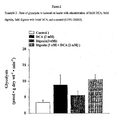
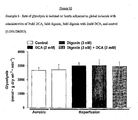
- DCA showed an increase in glycolysis when compared to control, but this increase was not significant (8.917 ⁇ 3.060 vs. 3.430 ⁇ 0.604, respectively).
- Digoxin alone increased glycolytic rates when compared to control (5.651 ⁇ 1.298 vs. 3.430 ⁇ 0.604, respectively; Figure 2).
- Digoxin with DCA increased glycolytic rates when compared to control rates (9.028, vs. 3.430 ⁇ 0.604, respectively; Figure 2) and DCA alone (9.028 vs. 8.917 ⁇ 3.060; Figure 2).
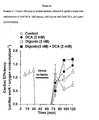
- Table 2 shows that digoxin has a small but significant effect on aortic outflow when compared to control (31 ⁇ 1 vs. 27 ⁇ 1, respectively). Treatment with digoxin and DCA together returned the aortic out flow to control levels. However, when digoxin is used in conjunction with DCA, cardiac work is significantly reduced when compared to control (53 ⁇ 1 vs. 72 ⁇ 10, respectively). As well, when compared to digoxin treatment alone, digoxin and DCA together cause a significant decrease in cardiac work (67 ⁇ 3 vs. 53 ⁇ 1, respectively).
- Diltiazem is a Ca 2+ channel blocker.
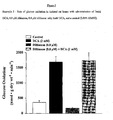
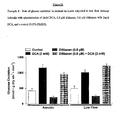
- Figure 3 shows that when compared to control hearts, diltiazem caused a significant decrease in the rates of glucose oxidation (361 ⁇ 43 vs 175:1 ⁇ 24 respectively).
- the effect of diltiazem alone on glucose oxidation was blocked and a significant increase in glucose oxidation was seen when compared to control (1737 ⁇ 237 vs. 361 ⁇ 63; Figure 3). Though, this increase in glucose oxidation was no different than treating the hearts with DCA alone (1737 ⁇ 264 vs. 1526 ⁇ 79; Figure 3).
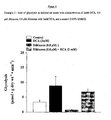
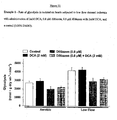
- Diltiazem alone also had an effect on glycolytic rates when compared to control (0.727 ⁇ 0.160 vs. 3.430 ⁇ 0.604, respectively; Figure 4).
- Diltiazem and DCA together result in an attenuation of the effect of DCA alone (6.865 ⁇ 0.887 vs. 8.917 ⁇ 3.060, respectively; Figure 4).
- DCA was able to overcome the attenuating effects of diltiazem.
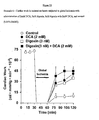
- diltiazem caused a significant decrease in aortic outflow when compared to controls (21 ⁇ 1 vs 27 ⁇ 1, respectively). Though significant, a decrease in cardiac work was observed when comparing diltiazem treated hearts to control hearts (51 ⁇ 1 vs. 72 ⁇ 10).
- the calcium channel blocker diltiazem has the ability to block the influx of Ca 2+ into muscle cell and therefore prevents contraction.
- Diltiazem causes a reduced heart rate as well as a decrease in cardiac work.
- the overall effect of diltiazem is a reduction in the functional performance of the heart, resulting in a concommitment drop in metabolism.
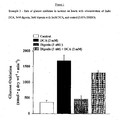
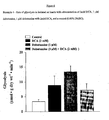
- Dobutamine is a ⁇ 1 -adrenoreceptor agonist (catecholamine). When compared to control, there is a large and significant increase in glucose oxidation (361 ⁇ 43 vs 1707 ⁇ 435, respectively; Figure 5). The effects of dobutamine on glucose oxidation mirrored that of DCA, but no significant additive effect was seen when the hearts were treated with DCA and dobutamine (1697 ⁇ 179 vs. 2105 ⁇ 232, respectively; Figure 5).
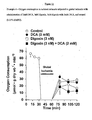
- Table 2 shows that treatment with dobutamine alone has no significant effect on the functional parameters shown. Though, when dobutamine is used in conjunction with DCA, a significant increase in O 2 consumption is observed and a decrease in cardiac efficiency is observed as well.
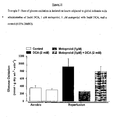
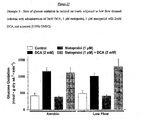
- Metoprolol is a ⁇ 1 -adrenoreceptor antagonist. Its effect on glucose oxidation, when compared to control, was insignificant (361 ⁇ 43 vs. 651 ⁇ 222 respectively; Figure 7). When combined with DCA, a trend was seen towards the attenuation of the effects of DCA on glucose oxidation, but this trend was not significant (1297 ⁇ 40 vs. 1697 ⁇ 179, respectively; Figure 7).
- Table 1 and Table 2 show that metoprolol had no significant effect on any of the functional parameters shown. However, when metoprolol is used in combination with DCA, coronary flow and cardiac work significantly reduced.
- DCA appears to have significantly higher glucose oxidation rates when compared to either the aerobic control, reperfused control, or digoxin alone.
- the combination of digoxin and DCA appears to enhance the ability of DCA to improve glucose oxidation rates and is significantly higher than DCA alone.
- neither DCA, digoxin, nor digoxin with DCA altered glycolytic rates as compared to control.
- DCA, digoxin, or digoxin with DCA significantly improves the recovery of cardiac function of previously ischemic hearts, when compared to the recovery of control hearts during the reperfusion period.
- DCA, digoxin, or digoxin with DCA appear to significantly improve the recovery of cardiac work of previously ischemic hearts when compared to the recovery of control hearts during the reperfusion period.
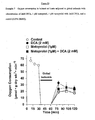
- DCA, digoxin, or digoxin with DCA significantly improve the recovery of oxygen consumption of previously ischemic hearts when compared to the recovery of control hearts during the reperfusion period.
- DCA, digoxin, or digoxin with DCA significantly improve the recovery of cardiac efficiency of previously ischemic hearts, when compared to the recovery of control hearts during the reperfusion period.
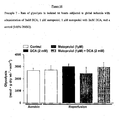
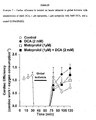
- the ⁇ 1 -adrenoreceptor antagonist metoprolol and metoprolol with DCA significantly improved functional parameters of the hearts during the reperfusion period, compared to control (Table 1, Table 2). As shown in Figure 15, the metoprolol had no effect on glucose oxidation rates during the reperfusion period.
- DCA appears to significantly improve the recovery of cardiac function of previously ischemic hearts when compared to the recovery of control hearts during the reperfusion period.
- metoprolol or the combination of metoprolol with DCA does not change cardiac function as compared to control.
- DCA, metoprolol, or metoprolol with DCA appear to significantly improve the recovery of cardiac work of previously ischemic hearts when compared to the recovery of control hearts during the reperfusion period.
- the combination of DCA with metoprolol did not show an additive effect when compared to DCA alone.
- DCA or metoprolol with DCA appear to significantly improve the recovery of cardiac efficiency of previously ischemic hearts when compared to the recovery of control hearts during the reperfusion period.
- metoprolol alone does not As well the combination of DCA with metoprolol did not show an additive effect when compared to DCA alone.
- diltiazem did not appear to interfere with the ability of DCA to increase glucose oxidation in either the aerobic or low-flow ischemic perfusions. There did appear to be some attenuation of glycolysis by diltiazem alone, or with DCA in both aerobic and low-flow ischemic perfusions (Figure 22).
- Metabolic modulators such as DCA
- DCA can be used to shift the metabolism of the heart away from fatty acids oxidation and towards glucose oxidation. This shift has been shown to be beneficial during periods of cardiac stress such as angina, myocardial infarction or post-cardiac surgery.
- Isolated perfused working rat hearts were perfused in the presence of 5.5 mM glucose and 1.2 mM palmitate. Glucose oxidation and glycolysis were measured using [5- 3 H/U-14- 14 C] glucose.
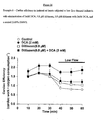
- diltiazem In aerobically perfused hearts, diltiazem causes an overall decrease in cardiac work and glucose metabolism. In our low flow ischemia model (which mimics angina), diltiazem has the same effect. This decrease in cardiac work with a maintenance of oxygen consumption led to a decrease in overall cardiac efficiency, both during the aerobic period and during low flow ischemia.
- DCA and diltiazem led to a reversal of these functional and metabolic decreases with a significant improvement in cardiac work, cardiac efficiency and glucose oxidation.
- the combination of DCA and diltiazem is synergistic in combination and is more efficacious than DCA alone, with respect to maintenance of cardiac efficiency during low flow ischemia events such as angina.
- metoprolol alone has no effect on glucose oxidation, nor does it alter any functional parameters in aerobically perfused hearts. While metoprolol alone has a beneficial effect on recovery of previously ischemic hearts, the combination of metoprolol and DCA significantly improves recovery beyond that of the control hearts and beyond that of metoprolol alone, with respect to cardiac function.
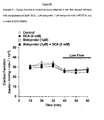
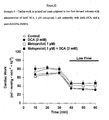
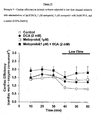
- DCA and metoprolol appear to show a marked improvement in cardiac efficiency when compared to control during the low flow ischemic period.
- the combination of metoprolol and DCA significantly improve cardiac efficiency above that of control and DCA or metoprolol alone during the low flow ischemic period. This suggests that metoprolol with DCA is synergistic with respect to improving cardiac efficiency in treating ischemic conditions such as post myocardial infarction and heart failure.
- DCA is able to significantly increase glucose metabolism and maintain function the presence of dobutamine, digoxin, diltiazem and metoprolol; thereby ameliorating the negative side effects of these drugs and drug classes. Furthermore the data indicates that DCA is synergistic with metoprolol, diltiazem and digoxin with respect to improving cardiac efficiency.
- the invention furthermore comprises the following items;
Landscapes
- Health & Medical Sciences (AREA)
- Life Sciences & Earth Sciences (AREA)
- General Health & Medical Sciences (AREA)
- Chemical & Material Sciences (AREA)
- Veterinary Medicine (AREA)
- Medicinal Chemistry (AREA)
- Public Health (AREA)
- Pharmacology & Pharmacy (AREA)
- Animal Behavior & Ethology (AREA)
- Epidemiology (AREA)
- Engineering & Computer Science (AREA)
- Bioinformatics & Cheminformatics (AREA)
- Nuclear Medicine, Radiotherapy & Molecular Imaging (AREA)
- Cardiology (AREA)
- General Chemical & Material Sciences (AREA)
- Chemical Kinetics & Catalysis (AREA)
- Organic Chemistry (AREA)
- Molecular Biology (AREA)
- Heart & Thoracic Surgery (AREA)
- Gastroenterology & Hepatology (AREA)
- Immunology (AREA)
- Proteomics, Peptides & Aminoacids (AREA)
- Urology & Nephrology (AREA)
- Vascular Medicine (AREA)
- Biomedical Technology (AREA)
- Hospice & Palliative Care (AREA)
- Emergency Medicine (AREA)
- Acyclic And Carbocyclic Compounds In Medicinal Compositions (AREA)
- Medicinal Preparation (AREA)
Applications Claiming Priority (2)
| Application Number | Priority Date | Filing Date | Title |
|---|---|---|---|
| US39070902P | 2002-06-20 | 2002-06-20 | |
| EP03739889A EP1517705B1 (de) | 2002-06-20 | 2003-06-20 | Dichloracetat in kombination mit kardioprotektiven oder hämodynamischen medikamenten |
Related Parent Applications (1)
| Application Number | Title | Priority Date | Filing Date |
|---|---|---|---|
| EP03739889A Division EP1517705B1 (de) | 2002-06-20 | 2003-06-20 | Dichloracetat in kombination mit kardioprotektiven oder hämodynamischen medikamenten |
Publications (2)
| Publication Number | Publication Date |
|---|---|
| EP1908462A2 true EP1908462A2 (de) | 2008-04-09 |
| EP1908462A3 EP1908462A3 (de) | 2008-06-25 |
Family
ID=39148495
Family Applications (1)
| Application Number | Title | Priority Date | Filing Date |
|---|---|---|---|
| EP07020297A Withdrawn EP1908462A3 (de) | 2002-06-20 | 2003-06-20 | Dichloracetat in Kombination mit kardioprotektiven oder hämodynamischen Medikamenten |
Country Status (1)
| Country | Link |
|---|---|
| EP (1) | EP1908462A3 (de) |
Family Cites Families (3)
| Publication number | Priority date | Publication date | Assignee | Title |
|---|---|---|---|---|
| GB9410320D0 (en) * | 1994-05-24 | 1994-07-13 | Fisons Corp | Novel therapeutic method |
| AU703842B2 (en) * | 1994-10-17 | 1999-04-01 | Robert M. Bersin | Compositions comprising carbonate/bicarbonate buffered dichloroacetic acid and methods for treatment of metabolic and cardiovascular disorders |
| WO1999017763A1 (en) * | 1997-10-03 | 1999-04-15 | The Governors Of The University Of Alberta | Postsurgical treatment with dichloroacetate |
-
2003
- 2003-06-20 EP EP07020297A patent/EP1908462A3/de not_active Withdrawn
Also Published As
| Publication number | Publication date |
|---|---|
| EP1908462A3 (de) | 2008-06-25 |
Similar Documents
| Publication | Publication Date | Title |
|---|---|---|
| US20120064056A1 (en) | Dichloracetate in combination with clinically high levels of cardioprotective or hemodynamic drugs | |
| Stanley | Myocardial energy metabolism during ischemia and the mechanisms of metabolic therapies | |
| JP2004503585A (ja) | 薬剤混合物 | |
| Opie et al. | Adrenaline-induced “oxygen-wastage” and enzyme release from working rat heart. Effects of calcium antagonism, β-blockade, nicotinic acid and coronary artery ligation | |
| US6465516B1 (en) | Method of stimulating nitric oxide synthase | |
| Haylor et al. | Nitric oxide synthesis inhibitor prevents vasodilation by insulin-like growth factor I | |
| CA2201784C (en) | Method and formulation of stimulating nitric oxide synthesis | |
| Rosenfeldt | Metabolic supplementation with orotic acid and magnesium orotate | |
| Doenst et al. | Therapy with insulin in cardiac surgery: controversies and possible solutions | |
| Strijbos | Nitric oxide in cerebral ischemic neurodegeneration and excitotoxicity | |
| US20030124503A1 (en) | Pyruvate cardioplegia solutions for administration to the heart during cardiopulmonary surgery and methods of use thereof | |
| CA2051369C (en) | Thyroid hormone cardiac treatment | |
| US7432247B2 (en) | Methods of cardioprotection using dichloroacetate in combination with an inotrope | |
| US5944020A (en) | Use of fructose-1 6-diphosphate as an inotrope drug after cardiopulmonary bypass surgery | |
| US20060194878A1 (en) | Methods of cardioprotection using dichloroacetate in combination with an inotrope | |
| Miatello et al. | Mechanisms of cardiovascular changes in an experimental model of syndrome X and pharmacological intervention on the renin-angiotensin-system | |
| Adeagbo et al. | The effects of perfusion rate and NG‐nitro‐L‐arginine methyl ester on cirazoline‐and KCl‐induced responses in the perfused mesenteric arterial bed of rats | |
| Bjerneroth | Alkaline buffers for correction of metabolic acidosis during cardiopulmonary resuscitation with focus on Tribonat®—A review | |
| HK1118720A (en) | Dichloroacetate in combination with cardioprotective or hemodynamic drugs | |
| CA2305183C (en) | Postsurgical treatment with dichloroacetate | |
| Dhalla et al. | Pathogenesis of catecholamine-induced cardiomyopathy | |
| Ramasamy | Aldose reductase: a novel target for cardioprotective interventions | |
| Ruschitzka et al. | Is there a rationale for combining angiotensinconverting enzyme inhibitors and calcium antagonists in cardiovascular disease? | |
| Chu et al. | Portal adrenergic blockade does not inhibit the gluconeogenic effects of circulating catecholamines on the liver | |
| GROSS | Cardioprotective Properties of Potassium Channel Modulators |
Legal Events
| Date | Code | Title | Description |
|---|---|---|---|
| PUAI | Public reference made under article 153(3) epc to a published international application that has entered the european phase |
Free format text: ORIGINAL CODE: 0009012 |
|
| AC | Divisional application: reference to earlier application |
Ref document number: 1517705 Country of ref document: EP Kind code of ref document: P |
|
| AK | Designated contracting states |
Kind code of ref document: A2 Designated state(s): AT BE BG CH CY CZ DE DK EE ES FI FR GB GR HU IE IT LI LU MC NL PT RO SE SI SK TR |
|
| AX | Request for extension of the european patent |
Extension state: AL LT LV MK |
|
| PUAL | Search report despatched |
Free format text: ORIGINAL CODE: 0009013 |
|
| AK | Designated contracting states |
Kind code of ref document: A3 Designated state(s): AT BE BG CH CY CZ DE DK EE ES FI FR GB GR HU IE IT LI LU MC NL PT RO SE SI SK TR |
|
| AX | Request for extension of the european patent |
Extension state: AL LT LV MK |
|
| 17P | Request for examination filed |
Effective date: 20081219 |
|
| REG | Reference to a national code |
Ref country code: HK Ref legal event code: DE Ref document number: 1118720 Country of ref document: HK |
|
| 17Q | First examination report despatched |
Effective date: 20090130 |
|
| AKX | Designation fees paid |
Designated state(s): AT BE BG CH CY CZ DE DK EE ES FI FR GB GR HU IE IT LI LU MC NL PT RO SE SI SK TR |
|
| AXX | Extension fees paid |
Extension state: MK Payment date: 20081219 Extension state: LV Payment date: 20081219 Extension state: LT Payment date: 20081219 Extension state: AL Payment date: 20081219 |
|
| GRAP | Despatch of communication of intention to grant a patent |
Free format text: ORIGINAL CODE: EPIDOSNIGR1 |
|
| STAA | Information on the status of an ep patent application or granted ep patent |
Free format text: STATUS: THE APPLICATION IS DEEMED TO BE WITHDRAWN |
|
| 18D | Application deemed to be withdrawn |
Effective date: 20120510 |