EP1908235B1 - Prevention contre l'itinerance de points d'acces indesirables - Google Patents
Prevention contre l'itinerance de points d'acces indesirables Download PDFInfo
- Publication number
- EP1908235B1 EP1908235B1 EP06773030.9A EP06773030A EP1908235B1 EP 1908235 B1 EP1908235 B1 EP 1908235B1 EP 06773030 A EP06773030 A EP 06773030A EP 1908235 B1 EP1908235 B1 EP 1908235B1
- Authority
- EP
- European Patent Office
- Prior art keywords
- access point
- wireless
- address
- mobile device
- list
- Prior art date
- Legal status (The legal status is an assumption and is not a legal conclusion. Google has not performed a legal analysis and makes no representation as to the accuracy of the status listed.)
- Active
Links
Images



Classifications
-
- H—ELECTRICITY
- H04—ELECTRIC COMMUNICATION TECHNIQUE
- H04L—TRANSMISSION OF DIGITAL INFORMATION, e.g. TELEGRAPHIC COMMUNICATION
- H04L63/00—Network architectures or network communication protocols for network security
- H04L63/10—Network architectures or network communication protocols for network security for controlling access to devices or network resources
- H04L63/101—Access control lists [ACL]
-
- H—ELECTRICITY
- H04—ELECTRIC COMMUNICATION TECHNIQUE
- H04L—TRANSMISSION OF DIGITAL INFORMATION, e.g. TELEGRAPHIC COMMUNICATION
- H04L63/00—Network architectures or network communication protocols for network security
- H04L63/14—Network architectures or network communication protocols for network security for detecting or protecting against malicious traffic
- H04L63/1408—Network architectures or network communication protocols for network security for detecting or protecting against malicious traffic by monitoring network traffic
-
- H—ELECTRICITY
- H04—ELECTRIC COMMUNICATION TECHNIQUE
- H04L—TRANSMISSION OF DIGITAL INFORMATION, e.g. TELEGRAPHIC COMMUNICATION
- H04L63/00—Network architectures or network communication protocols for network security
- H04L63/14—Network architectures or network communication protocols for network security for detecting or protecting against malicious traffic
- H04L63/1433—Vulnerability analysis
-
- H—ELECTRICITY
- H04—ELECTRIC COMMUNICATION TECHNIQUE
- H04W—WIRELESS COMMUNICATION NETWORKS
- H04W12/00—Security arrangements; Authentication; Protecting privacy or anonymity
- H04W12/12—Detection or prevention of fraud
- H04W12/121—Wireless intrusion detection systems [WIDS]; Wireless intrusion prevention systems [WIPS]
- H04W12/122—Counter-measures against attacks; Protection against rogue devices
-
- Y—GENERAL TAGGING OF NEW TECHNOLOGICAL DEVELOPMENTS; GENERAL TAGGING OF CROSS-SECTIONAL TECHNOLOGIES SPANNING OVER SEVERAL SECTIONS OF THE IPC; TECHNICAL SUBJECTS COVERED BY FORMER USPC CROSS-REFERENCE ART COLLECTIONS [XRACs] AND DIGESTS
- Y10—TECHNICAL SUBJECTS COVERED BY FORMER USPC
- Y10S—TECHNICAL SUBJECTS COVERED BY FORMER USPC CROSS-REFERENCE ART COLLECTIONS [XRACs] AND DIGESTS
- Y10S707/00—Data processing: database and file management or data structures
- Y10S707/99941—Database schema or data structure
- Y10S707/99944—Object-oriented database structure
- Y10S707/99945—Object-oriented database structure processing
-
- Y—GENERAL TAGGING OF NEW TECHNOLOGICAL DEVELOPMENTS; GENERAL TAGGING OF CROSS-SECTIONAL TECHNOLOGIES SPANNING OVER SEVERAL SECTIONS OF THE IPC; TECHNICAL SUBJECTS COVERED BY FORMER USPC CROSS-REFERENCE ART COLLECTIONS [XRACs] AND DIGESTS
- Y10—TECHNICAL SUBJECTS COVERED BY FORMER USPC
- Y10S—TECHNICAL SUBJECTS COVERED BY FORMER USPC CROSS-REFERENCE ART COLLECTIONS [XRACs] AND DIGESTS
- Y10S707/00—Data processing: database and file management or data structures
- Y10S707/99941—Database schema or data structure
- Y10S707/99948—Application of database or data structure, e.g. distributed, multimedia, or image
Definitions
- Wireless networks and/or devices such as, but not limited to, wireless local area networks (WLAN), Bluetooth, sub-networks (e.g., wireless mouse and personal computer), portable digital assistants (PDA's), mice, keyboards, speakers, monitors, routers, phones, cellular communication devices, wireless devices, access points, ... facilitate functionality with mitigation of wires and accompanied restrictions.
- WLAN wireless local area networks
- PDA's portable digital assistants
- mice keyboards, speakers, monitors, routers, phones, cellular communication devices, wireless devices, access points, ... facilitate functionality with mitigation of wires and accompanied restrictions.
- wireless devices and/or networks are advantageous to hard-wired networks and/or devices for numerous reasons. Wireless systems are pleasing to the eye since the clutter of unwanted hard-wires is eliminated.
- plasma flat-screen televisions involve mounting on a wall similar to that of a painting mounted to a wall.
- the wires for the television would not be seen hanging from the wall, and the result is a more pleasant looking, wall-mounted television.
- a hard-wire is a physical restriction by limiting the range of the device and/or network with the actual length of the wire.
- a hard-wired Ethernet connection for a laptop can only be utilized within physical constraints of length of the Ethernet cable.
- hard-wires have to be connected, which can involve matching an endless amount of plugs and connectors.
- wireless networks and/or devices employed within the personal computer realm (e.g ., wireless keyboards, mice, speakers, ...), but common households are increasing use of wireless home networks and/or devices.
- broad-band connections are becoming more affordable for home users in which multiple personal computers anticipate connectivity.
- a network can be employed in order to distribute and utilize the broad-band connection:
- common problems of using hard-wires for the network can arise (e.g ., cost, degree of freedom, eye-pleasing, ).
- wireless networks and/or devices can be utilized in order to cure the foregoing problems.
- wireless network security can be seen as a negative in comparison to the benefits associated therewith.
- wireless networks and/or devices provide a vast amount of benefits, a hard-wire network and/or device is typically more secure based at least upon the physical connection assumed to be authenticated.
- wireless networks and/or devices are prone to "sniffing" (e.g ., the act of eavesdropping on messages such as, but not limited to, confidential business data or passwords in transit), rogue access points, and other hack techniques (e.g ., port scanning, transfer communication protocol (TCP) spoofing, user datagram protocol (UDP) spoofing, TCP session spoofing, ...) which are utilized in order to intrude and exploit the wireless network security.
- TCP transfer communication protocol
- UDP user datagram protocol
- US 2005/060 576 A1 discloses a method, apparatus and system for detection of and reaction to rogue access points.
- a security agent is introduced to compare at least a subset of information received from a wired network device with information previously stored to determine if a rogue access point is present.
- US 2004/023530 A1 discloses a system and method for detecting an unauthorized access point accessing a communication network.
- An authorized access point and/or an authorized mobile unit detects a beacon generated by a transmitting access point.
- the beacon includes identification information of the transmitting access point.
- a computing arrangement verifies the identification information of the transmitting access point with a preexisting database of the communication network.
- the preexisting database includes data corresponding to identification information of a plurality of authorized access points.
- the computing arrangement initiates a tracking procedure to determine a location of the unauthorized access point where the verification of the transmitting access point identification information with the preexisting database fails.
- WO 2005/018162 A1 discloses a method, an apparatus, and a software program to implement a method to detect a rogue access point of a wireless network.
- the method includes maintaining an AP database that includes information about managed access point (APs) and friendly APs, including the MAC address of each managed AP.
- the method further includes sending a scan request to one or more managed APs, including one or more of a request for the receiving managed AP to scan for beacons and probe responses and a request for the receiving managed AP to request its clients to' scan for beacons and probe responses.
- the method further includes receiving reports from at least one of the receiving managed APs, a report including information on any beacon or probe response received that was sent by an AP.
- the method For each beacon or probe response on which information is received, the method analyzes the information received in the report about the AP that sent the beacon or probe response, the analyzing including ascertaining if the MAC address of the AP that sent the beacon or probe response matches a MAC address of an AP in the AP database to ascertain whether or not the AP is a potential rogue AP or a managed or friendly AP.
- Us 2005/128989 A1 discloses method for monitoring a selected region of an airspace associated with local area networks of computing devices.
- the method includes providing one or more segments of a legacy local area network to be protected in a selected geographic region.
- the legacy local area network has an unsecured airspace within the selected geographic region.
- the method includes determining a security policy associated with the one or more segments of the legacy local area network.
- the security policy at least characterizes a type of wireless activity in the unsecured airspace to be permitted, denied, or ignored.
- the method includes connecting one or more sniffer devices into the legacy local area network.
- the one or more sniffer devices are spatially disposed within the selected geographic region to cause at least a portion of the unsecured airspace to be secured according to the security policy.
- the method includes coupling a security appliance to the legacy local area network.
- the method also includes determining if at least one of the sniffer devices is coupled to each of the one or more segments of the legacy local area network to be protected and determining if the one or more sniffer devices substantially covers the portion of the unsecured airspace to be secured.
- the method additionally includes monitoring wireless activity in the airspace using the one or more sniffer devices, and automatically classifying, using a classification process, a portion of information associated with the monitoring of the wireless activity to at least determine if the wireless activity communicates to at least one of the one or more segments to be protected.
- the method includes detecting a violation of the security policy based upon at least the classifying of the portion of the information from the monitoring of the wireless activity, and automatically processing an action associated with the violation in accordance to the security policy for the one or more segments in the legacy local area network to be protected.
- the subject innovation relates to systems and/or methods that facilitate enhancing security associated with a mobile device, as set forth in claims 1, 16, and 18.
- a security component can provide enhanced security to a mobile device that utilizes a wireless connection.
- the US 2005/060 576 A1 discloses a method, apparatus and system for detection of and reaction to rogue access points.
- a security agent is introduced to compare at least a subset of information received from a wired network device with information previously stored to determine if a rogue access point is present.
- US 2004/023530 A1 discloses a system and method for detecting an unauthorized access point accessing a communication network.
- An authorized access point and/or an authorized mobile unit detects a beacon generated by a transmitting access point.
- the beacon includes identification information of the transmitting access point.
- a computing arrangement verifies the identification information of the transmitting access point with a preexisting database of the communication network.
- the preexisting database includes data corresponding to identification information of a plurality of authorized access points.
- the computing arrangement initiates a tracking procedure to determine a location of the unauthorized access point where the verification of the transmitting access point identification information with the preexisting database fails.
- WO 2005/018162 A1 discloses a method, an apparatus, and a software program to implement a method to detect a rogue access point of a wireless network.
- the method includes maintaining an AP database that includes information about managed access point (APs) and friendly APs, including the MAC address of each managed AP.
- the method further includes sending a scan request to one or more managed APs, including one or more of a request for the receiving managed AP to scan for beacons and probe responses and a request for the receiving managed AP to request its clients to' scan for beacons and probe responses.
- the method further includes receiving reports from at least one of the receiving managed APs, a report including information on any beacon or probe response received that was sent by an AP.
- the method For each beacon or probe response on which information is received, the method analyzes the information received in the report about the AP that sent the beacon or probe response, the analyzing including ascertaining if the MAC address of the AP that sent the beacon or probe response matches a MAC address of an AP in the AP database to ascertain whether or not the AP is a potential rogue AP or a managed or friendly AP.
- Us 2005/128989 A1 discloses method for monitoring a selected region of an airspace associated with local area networks of computing devices.
- the method includes providing one or more segments of a legacy local area network to be protected in a selected geographic region.
- the legacy local area network has an unsecured airspace within the selected geographic region.
- the method includes determining a security policy associated with the one or more segments of the legacy local area network.
- the security policy at least characterizes a type of wireless activity in the unsecured airspace to be permitted, denied, or ignored.
- the method includes connecting one or more sniffer devices into the legacy local area network.
- the one or more sniffer devices are spatially disposed within the selected geographic region to cause at least a portion of the unsecured airspace to be secured according to the security policy.
- the method includes coupling a security appliance to the legacy local area network.
- the method also includes determining if at least one of the sniffer devices is coupled to each of the one or more segments of the legacy local area network to be protected and determining if the one or more sniffer devices substantially covers the portion of the unsecured airspace to be secured.
- the method additionally includes monitoring wireless activity in the airspace using the one or more sniffer devices, and automatically classifying, using a classification process, a portion of information associated with the monitoring of the wireless activity to at least determine if the wireless activity communicates to at least one of the one or more segments to be protected.
- the method includes detecting a violation of the security policy based upon at least the classifying of the portion of the information from the monitoring of the wireless activity, and automatically processing an action associated with the violation in accordance to the security policy for the one or more segments in the legacy local area network to be protected.
- US2004/0023640 provides a communication network that may include wireless local area networks (WLANs), each of which includes at least one access point that is connected to a server.
- WLANs wireless local area networks
- the access points periodically transmit beacon signals.
- a mobile unit uses the beacon signals to find the access point with the strongest signal, and uses that access point to gain access to the network.
- Each access point scans for the beacons from other access points.
- the scanned beacons may include the MAC address and a service set identification (SSID), among other information, of the transmitting access point.
- SSID service set identification
- Each scanning access point determines, for example, based on the manufacturer identifier in the MAC address or by comparing the SSID in the beacon against a list of valid SSIDs, whether the beacon signal is from an authorized or unauthorized access point.
- the mobile unit may scan for beacons on all network channels.
- a security component can provide enhanced security to a mobile device that utilizes a wireless connection.
- the mobile device can be, but is not limited to, a computer, a laptop, a network, a wireless keyboard, a wireless speaker, a mouse, a monitor, a router, an access point, a printer, a hard drive, a modem, a cell phone, a portable digital assistant (PDA), a smart phone, a hand held, and/or any device that utilizes a wireless connection.
- PDA portable digital assistant
- the wireless connection can be, but is not limited to, wireless local area network (WLAN), Bluetooth, wireless fidelity (WiFi), ultra wideband, etc.
- the security component can utilize an association control list, wherein the list can provide at least one of a valid list of internet protocol (IP) addresses and/or media access control (MAC) addresses and/or a list of invalid ( e.g ., rogue) IP addresses and/or media access control (MAC) addresses.
- IP internet protocol
- MAC media access control
- the security component can create the association control list by adding a list of valid and/or invalid access points, wherein the address of the access points can be at least one of an IP address and/or a media access control (MAC) address.
- the security component can add an access point to the association control list by at least one of the following: adding a media access control (MAC) address of an access point; adding a range of media access control (MAC) addresses of access points; and adding a media access control (MAC) with a wild card character to match multiple MAC addresses.
- the security component can include a data store to provide storage for any association control list associated with the mobile device.
- various association control lists can be stored for a portion of access points and/or all of the access points.
- the mobile device can further include a wireless component that provides wireless connectivity to the access point. It is to be appreciated that the association control list can be specific to a particular wireless network.
- methods are provided that facilitate enhancing security associated with a mobile device.
- ком ⁇ онент can be a process running on a processor, a processor, an object, an executable, a program, and/or a computer.
- a component can be a process running on a processor, a processor, an object, an executable, a program, and/or a computer.
- an application running on a server and the server can be a component.
- One or more components can reside within a process and a component can be localized on one computer and/or distributed between two or more computers.
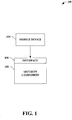
- Fig. 1 illustrates a system 100 that facilitates enhancing security associated with a mobile device.
- a security component 102 can provide enhanced security to a mobile device 104 that utilizes a wireless connection.
- the mobile device 104 can be, but is not limited to, a computer, a laptop, a network, a wireless keyboard, a wireless speaker, a mouse, a monitor, a router, an access point, a printer, a hard drive, a modem, a cell phone, a portable digital assistant (PDA), a smart phone, a hand held, and/or any device that utilizes a wireless connection.
- PDA portable digital assistant
- the wireless connection can be, but is not limited to, wireless local area network (WLAN), Bluetooth, wireless fidelity (WiFi), ultra wideband, etc.
- the security component 102 can utilize an association control list, wherein the list can provide at least one of a valid list of internet protocol (IP) addresses and/or media access control (MAC) addresses and/or a list of invalid (e.g., rogue) IP addresses and/or media access control (MAC) addresses.
- IP internet protocol
- MAC media access control
- MAC media access control
- the security component 102 provides a dynamic and/or static listing of addresses associated with a wireless connection to eliminate hostile and/or rogue attacks.
- a mobile device 104 can be a laptop, wherein various access points can be utilized within a particular network to provide wireless connection.
- the laptop can utilize the security component 102 to provide a listing of invalid access points (e.g ., rogue access points) and/or valid access points to increase security and/or protection associated with the wireless connection and/or network.
- a network administrator can create and/or provide the association control list to various mobile devices to allow enhanced protection.
- the association control list can be updated dynamically via email, download, and/or upload.
- the security component 102 can add the association control list to the mobile device 104 by a plurality of techniques.
- the following examples can be implemented by the security component 102 but it is to be appreciated that any suitable technique can be utilized and the claimed subject matter is not so limited.
- the media access control (MAC) address of access points can be added to the mobile device 104.
- the association control list can provide a listing of any valid access point associated with the wireless connection.
- the association control list can provide a listing of invalid access points associated with a rogue wireless connection.
- a range of MAC addresses of access points can be added the mobile device 104.
- the range of MAC addresses can include a listing of valid address and/or a listing of invalid address.
- a MAC address utilizing a wild card can be added to the mobile device 104.
- the association control list can contain a wild card character that allows addresses to be included on such a list. It is to be appreciated that although the above examples utilize MAC addresses, any suitable addresses can be utilized such as, for instance, an IP address.
- a computer can utilize a wireless network card, wherein the security component 102 provides an association control list.
- a network administrator for instance, can provide a wild card character "*" in a listing of an IP address to designate valid access points.
- an address of 101.01.01** can include the IP addresses 101.01.01.05, 101.01.01.38, etc.
- the association control list can also provide a listing of invalid access point addresses and the claimed subject matter is not so limited.
- the system 100 can include any suitable and/or necessary interface component 106, which provides various adapters, connectors, channels, communication paths, etc. to integrate the security component 102 into virtually any operating and/or database system(s).
- the interface component 106 can provide various adapters, connectors, channels, communication paths, etc., that provide for interaction with the security component 102 and the mobile device 104.
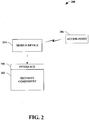
- Fig. 2 illustrates a system 200 that facilitates providing security in relation to a mobile device on a wireless network that utilizes an access point.
- a security component 202 can enhance security associated with a mobile device 204 that utilizes a wireless connection in relation to an access point 206.
- the mobile device 204 can be, but is not limited to, a computer, a laptop, a network, a wireless keyboard, a wireless speaker, a mouse, a monitor, a router, an access point, a printer, a hard drive, a modem, a cell phone, a portable digital assistant (PDA), a smart phone, a hand held, and/or any device that utilizes a wireless connection that relates to the access point 206.
- PDA portable digital assistant
- the wireless connection can be, but is not limited to, wireless local area network, Bluetooth, wireless fidelity, ultra wideband, etc.
- the security component 202 can utilize an association control list, wherein the list can provide at least one of a valid list of internet protocol (IP) addresses and/or media access control (MAC) addresses associated with the access point 206 and/or a list of invalid ( e.g ., rogue) IP addresses and/or media access control (MAC) addresses associated with a rogue access point.
- IP internet protocol
- MAC media access control
- MAC media access control
- the security component 202 provides a listing of addresses associated with the access point 206 to eliminate hostile and/or rogue attacks.
- the security component 202 and the mobile device 204 can be substantially similar to the security component 102 and the mobile device 104 described in Fig. 1 respectively.
- a user and/or a network administrator can create an association control list that includes access point 206 valid addresses such that any mobile device utilizing the wireless connection can safely connect therewith.
- the list can be added to the mobile device 204 by at least one of the following: adding a MAC address of the access point 206; adding a range of MAC addresses that include the address of access point 206; and/or adding a MAC address with wild card characters to match multiple MAC addresses associated with the access point 206.
- the association control list can also provide a list of invalid addresses as well as a list of valid address. It is to be appreciated that although the above examples utilize MAC addresses, any suitable addresses can be utilized such as, for instance, an IP address.
- Fig. 3 illustrates a system 300 that facilitates providing security to a mobile device that connects to a plurality of access points via wireless communication.
- a security component 302 can provide an association control list to a mobile device 304, wherein the mobile device 304 utilizes a wireless connection via at least one access point 306.
- the security component 302 allows the mobile device 304 to connect to at least one access point 306 in confidence such that the address associated therewith is valid and not a rogue access point and/or rogue IP address.
- the mobile device 304 can eliminate and/or filter out any harmful access points that can be a potential safety hazard.
- the mobile device 304 can be, but is not limited to, a computer, a laptop, a network, a wireless keyboard, a wireless speaker, a mouse, a monitor, a router, an access point, a printer, a hard drive, a modem, a cell phone, a portable digital assistant (PDA), a smart phone, a hand held, and/or any device that utilizes a wireless connection that relates to at least one access point 306.
- the wireless connection can be, but is not limited to, wireless local area network (WLAN), Bluetooth, wireless fidelity (WiFi), ultra wideband, etc.
- WLAN wireless local area network
- WiFi wireless fidelity
- ultra wideband etc.
- the mobile device 304 can connect to a plurality of access points 306 to provide wireless connectivity. It is to be appreciated and understood that the mobile device 304 can connect via any number of access points 306 from 1 to N, where N is an integer greater than or equal to 1. In other words, the mobile device 304 can connect with any access point associated with the wireless connection when the address associated therewith is listed on the association control list created by the security component 302. It is to be appreciated that the security component 302 can be incorporated into the mobile device 304, a stand-alone component, and/or any combination thereof in order to provide enhanced security via the association control list. In addition, it is to be appreciated that the security component 302 can create and/or utilize a plurality of association control lists associated with a portion of the wireless network.
- the security component 302 can provide additional security techniques in addition to the association control list.
- the security component 302 can provide security techniques such as, but not limited to, a user name and password, personal identification number (PIN), biometric indicia (e.g ., fingerprint, inductance, retina), human interactive proofs (HIPs), voice recognition, etc. to further protect and/or safeguard the wireless connection associated with the mobile device 304.
- PIN personal identification number
- biometric indicia e.g ., fingerprint, inductance, retina
- HIPs human interactive proofs
- voice recognition e.g., voice recognition, etc.
- the security component 302 can include a data store 308, wherein the data store 308 can store various data related to the system 300.
- the data store 308 can provide storage for the association control list.
- the data store 308 can provide storage for addresses, IP addresses, access points, mobile devices, usernames, passwords, network information, etc.
- the data store 308 can be, for example, either volatile memory or nonvolatile memory, or can include both volatile and nonvolatile memory.
- nonvolatile memory can include read only memory (ROM), programmable ROM (PROM), electrically programmable ROM (EPROM), electrically erasable programmable ROM (EEPROM), or flash memory.
- Volatile memory can include random access memory (RAM), which acts as external cache memory.
- RAM random access memory
- RAM is available in many forms such as static RAM (SRAM), dynamic RAM (DRAM), synchronous DRAM (SDRAM), double data rate SDRAM (DDR SDRAM), enhanced SDRAM (ESDRAM), Synchlink DRAM (SLDRAM), Rambus direct RAM (RDRAM), direct Rambus dynamic RAM (DRDRAM), and Rambus dynamic RAM (RDRAM).
- SRAM static RAM
- DRAM dynamic RAM
- SDRAM synchronous DRAM
- DDR SDRAM double data rate SDRAM
- ESDRAM enhanced SDRAM
- SLDRAM Synchlink DRAM
- RDRAM Rambus direct RAM
- DRAM direct Rambus dynamic RAM
- RDRAM Rambus dynamic RAM
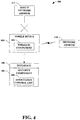
- Fig. 4 illustrates a system 400 that facilitates eliminating rogue access points that attack mobile devices.
- a security component 402 can create and/or implement an association control list 408 that provides at least one of a listing of valid access points and/or a listing of invalid access points.
- a mobile device 404 can connect via a wireless connection to at least one access point on a particular network. By allowing the mobile device 404 to connect to a valid address related to an access point, any rogue access points and/or rogue attacks can be prevented.
- the mobile device 404 can be, but is not limited to, a computer, a laptop, a network, a wireless keyboard, a wireless speaker, a mouse, a monitor, a router, an access point, a printer, a hard drive, a modem, a cell phone, a portable digital assistant (PDA), a smart phone, a hand held, and/or any device that utilizes a wireless connection that relates to the access point.
- the wireless connection can be, but is not limited to, wireless local area network (WLAN), Bluetooth, wireless fidelity (WiFi), ultra wideband, etc. It is to be appreciated that the security component 402 and the mobile device 404 can be substantially similar to previously described components and devices.
- the mobile device can include a wireless component 406 that provides wireless connectivity to any access point.
- the association control list 408 can provide a listing of valid and/or invalid addresses related to at least one access point, wherein the wireless component 406 can solely connect to a valid access point listed on such association control list 408.
- the mobile device 404 can connect to a network address 410 based at least in part upon the address being on the association control list 408.
- the mobile device 404 does not connect to a rogue network address 412 based at least in part upon the address being listed as an invalid address in the association control list 408 and/or the address not being listed as a valid address.
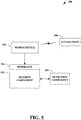
- Fig. 5 illustrates a system 500 that facilitates enhancing security for a wireless mobile device that utilizes access points.
- a security component 502 can enhance security associated with a mobile device 504 that utilizes a wireless connection in relation to an access point 506.
- the mobile device 504 can be, but is not limited to, a computer, a laptop, a network, a wireless keyboard, a wireless speaker, a mouse, a monitor, a router, an access point, a printer, a hard drive, a modem, a cell phone, a portable digital assistant (PDA), a smart phone, a hand held, and/or any device that utilizes a wireless connection that relates to the access point 506.
- PDA portable digital assistant
- the wireless connection can be, but is not limited to, wireless local area network (WLAN), Bluetooth, wireless fidelity (WiFi), ultra wideband, etc.
- the security component 502 can utilize an association control list, wherein the list can provide at least one of a valid list of addresses associated with the access point 506 and/or a list of invalid ( e.g ., rogue) addresses associated with a rogue access point. In other words, the security component 502 provides a listing of addresses associated with the access point 506 to eliminate hostile and/or rogue attacks.
- the security component 502 can utilize a detection component 508 to facilitate creating the association control list.
- the detection component 508 can provide rogue access point and/or rogue address detection, wherein such detection can be utilized to create a list of invalid addresses related to the association control list. It is to be appreciated that any suitable detection component 508 can be implemented.
- the detection component 508 can utilize conventional techniques to sniff and/or detect rogue access points, rogue attempts to threaten a system, rogue addresses, etc.
- a network administrator and/or user can create an association control list of valid addresses related to at least one access point in a wireless network.
- the detection component 508 can detect various rogue access points and/or addresses, wherein the user and/or network administrator can then utilize such detection as a basis for creating a list of invalid addresses in the association control list.
- the detection component 508 provides the system 500 with an efficient and/or accurate technique to add invalid (e.g., rogue) addresses to the association control list.
- Fig. 6 illustrates a system 600 that employs intelligence to facilitate enhancing security associated with a mobile device.
- the system 600 can include a security component 602, a mobile device 604, and an interface 606 that can all be substantially similar to respective components, devices, and interfaces described in previous figures.
- the system 600 further includes an intelligent component 608.
- the intelligent component 608 can be utilized by the security component 602 to facilitate enhancing security for the mobile device 604 in relation to connecting to an access point via a wireless connection.
- the intelligent component 608 can infer the listing of addresses associated with valid access points, and/or the listing of addresses associated with invalid access points based at least in part upon historical data.
- the intelligent component 608 can provide for reasoning about or infer states of the system, environment, and/or user from a set of observations as captured via events and/or data. Inference can be employed to identify a specific context or action, or can generate a probability distribution over states, for example.
- the inference can be probabilistic - that is, the computation of a probability distribution over states of interest based on a consideration of data and events.
- Inference can also refer to techniques employed for composing higher-level events from a set of events and/or data. Such inference results in the construction of new events or actions from a set of observed events and/or stored event data, whether or not the events are correlated in close temporal proximity, and whether the events and data come from one or several event and data sources.
- Such classification can employ a probabilistic and/or statistical-based analysis (e.g ., factoring into the analysis utilities and costs) to prognose or infer an action that a user desires to be automatically performed.
- a support vector machine (SVM) is an example of a classifier that can be employed. The SVM operates by finding a hypersurface in the space of possible inputs, which hypersurface attempts to split the triggering criteria from the non-triggering events.
- Other directed and undirected model classification approaches include, e.g ., naive Bayes, Bayesian networks, decision trees, neural networks, fuzzy logic models, and probabilistic classification models providing different patterns of independence can be employed.
- Classification as used herein also is inclusive of statistical regression that is utilized to develop models of priority.
- a presentation component 610 can provide various types of user interfaces to facilitate interaction between a user and any component coupled to the security component 602. As depicted, the presentation component 610 is a separate entity that can be utilized with the security component 602. However, it is to be appreciated that the presentation component 610 and/or similar view components can be incorporated into the security component 602 and/or a stand-alone unit.
- the presentation component 610 can provide one or more graphical user interfaces (GUIs), command line interfaces, and the like.
- GUIs graphical user interfaces
- a GUI can be rendered that provides a user with a region or means to load, import, read, etc., data, and can include a region to present the results of such.
- These regions can comprise known text and/or graphic regions comprising dialogue boxes, static controls, drop-down-menus, list boxes, pop-up menus, as edit controls, combo boxes, radio buttons, check boxes, push buttons, and graphic boxes.
- utilities to facilitate the presentation such vertical and/or horizontal scroll bars for navigation and toolbar buttons to determine whether a region will be viewable can be employed.
- the user can interact with one or more of the components coupled to the security component 602.
- the user can also interact with the regions to select and provide information via various devices such as a mouse, a roller ball, a keypad, a keyboard, a pen and/or voice activation, for example.
- a mechanism such as a push button or the enter key on the keyboard can be employed subsequent entering the information in order to initiate the search.
- a command line interface can be employed.
- the command line interface can prompt (e.g ., via a text message on a display and an audio tone) the user for information via providing a text message.
- command line interface can be employed in connection with a GUI and/or API.
- command line interface can be employed in connection with hardware (e.g ., video cards) and/or displays (e.g ., black and white, and EGA) with limited graphic support, and/or low bandwidth communication channels.
- Figs. 7-8 illustrate methodologies in accordance with the claimed subject matter.
- the methodologies are depicted and described as a series of acts. It is to be understood and appreciated that the subject innovation is not limited by the acts illustrated and/or by the order of acts, for example acts can occur in various orders and/or concurrently, and with other acts not presented and described herein. Furthermore, not all illustrated acts may be required to implement the methodologies in accordance with the claimed subject matter.
- the methodologies could alternatively be represented as a series of interrelated states via a state diagram or events.
- Fig. 7 illustrates a methodology 700 for enhancing security for wireless networks and mobile devices.
- a valid access point address is determined. For instance, a user and/or network administrator can initialize a wireless network utilizing various access points, wherein the user and/or administrator can determine the valid access points and/or addresses associated therewith.
- an invalid (e.g ., rogue) access point address can be determined.
- a user and/or network administrator can determine the invalid access point address.
- a detection system can be utilized to determine a rogue and/or invalid access point address. It is to be appreciated that the address can be an IP address and/or a MAC address.
- the valid and/or invalid addresses can be utilized by a mobile device to wirelessly connect to an access point listed as a valid address.
- the mobile device can be, but is not limited to, a computer, a laptop, a network, a wireless keyboard, a wireless speaker, a mouse, a monitor, a router, an access point, a printer, a hard drive, a modem, a cell phone, a portable digital assistant (PDA), a smart phone, a hand held, and/or any device that utilizes a wireless connection that relates to the access point.
- the wireless connection can be, but is not limited to, wireless local area network (WLAN), Bluetooth, wireless fidelity (WiFi), ultra wideband, etc. It is to be appreciated that the valid and/or invalid access point addresses can be accumulated into an association control list that any suitable mobile device can incorporate to provide enhanced security.
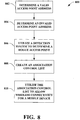
- Fig. 8 illustrates a methodology 800 that facilitates providing security in relation to a mobile device on a wireless network that utilizes an access point.
- a valid access point address can be determined.
- an invalid access point address can be determined. It is to be appreciated that the determination of the valid and/or invalid access point addresses can be by a user and/or a network administrator.
- a detection system can be utilized to determine a rogue and/or invalid access point and/or access point address.
- an association control list can be created.
- the association control list can be created based at least in part upon the determination of valid and/or invalid access point addresses.
- the association control list can be utilized to allow wireless connectivity for a mobile device. In other words, the mobile device can wirelessly connect to an access point solely if the access point is considered a valid access point and/or valid access point address.
- the mobile device can be, but is not limited to, a computer, a laptop, a network, a wireless keyboard, a wireless speaker, a mouse, a monitor, a router, an access point, a printer, a hard drive, a modem, a cell phone, a portable digital assistant (PDA), a smart phone, a hand held, and/or any device that utilizes a wireless connection that relates to the access point.
- the wireless connection can be, but is not limited to, wireless local area network (WLAN), Bluetooth, wireless fidelity (WiFi), ultra wideband, etc.
- Figs. 9-10 and the following discussion is intended to provide a brief, general description of a suitable computing environment in which the various aspects of the subject innovation may be implemented. While the claimed subject matter has been described above in the general context of computer-executable instructions of a computer program that runs on a local computer and/or remote computer, those skilled in the art will recognize that the subject innovation also may be implemented in combination with other program modules. Generally, program modules include routines, programs, components, data structures, etc., that perform particular tasks and/or implement particular abstract data types.
- inventive methods may be practiced with other computer system configurations, including single-processor or multi-processor computer systems, minicomputers, mainframe computers, as well as personal computers, hand-held computing devices, microprocessor-based and/or programmable consumer electronics, and the like, each of which may operatively communicate with one or more associated devices.
- the illustrated aspects of the claimed subject matter may also be practiced in distributed computing environments where certain tasks are performed by remote processing devices that are linked through a communications network. However, some, if not all, aspects of the subject innovation may be practiced on stand-alone computers.
- program modules may be located in local and/or remote memory storage devices.
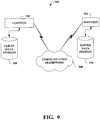
- Fig. 9 is a schematic block diagram of a sample-computing environment 900 with which the claimed subject matter can interact.
- the system 900 includes one or more client(s) 910.
- the client(s) 910 can be hardware and/or software (e.g ., threads, processes, computing devices).
- the system 900 also includes one or more server(s) 920.
- the server(s) 920 can be hardware and/or software (e.g ., threads, processes, computing devices).
- the servers 920 can house threads to perform transformations by employing the subject innovation, for example.
- One possible communication between a client 910 and a server 920 can be in the form of a data packet adapted to be transmitted between two or more computer processes.
- the system 900 includes a communication framework 940 that can be employed to facilitate communications between the client(s) 910 and the server(s) 920.
- the client(s) 910 are operably connected to one or more client data store(s) 950 that can be employed to store information local to the client(s) 910.
- the server(s) 920 are operably connected to one or more server data store(s) 930 that can be employed to store information local to the servers 920.
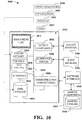
- an exemplary environment 1000 for implementing various aspects of the claimed subject matter includes a computer 1012.
- the computer 1012 includes a processing unit 1014, a system memory 1016, and a system bus 1018.
- the system bus 1018 couples system components including, but not limited to, the system memory 1016 to the processing unit 1014.
- the processing unit 1014 can be any of various available processors. Dual microprocessors and other multiprocessor architectures also can be employed as the processing unit 1014.
- the system bus 1018 can be any of several types of bus structure(s) including the memory bus or memory controller, a peripheral bus or external bus, and/or a local bus using any variety of available bus architectures including, but not limited to, Industrial Standard Architecture (ISA), Micro-Channel Architecture (MSA), Extended ISA (EISA), Intelligent Drive Electronics (IDE), VESA Local Bus (VLB), Peripheral Component Interconnect (PCI), Card Bus, Universal Serial Bus (USB), Advanced Graphics Port (AGP), Personal Computer Memory Card International Association bus (PCMCIA), Firewire (IEEE 1394), and Small Computer Systems Interface (SCSI).
- ISA Industrial Standard Architecture
- MSA Micro-Channel Architecture
- EISA Extended ISA
- IDE Intelligent Drive Electronics
- VLB VESA Local Bus
- PCI Peripheral Component Interconnect
- Card Bus Universal Serial Bus
- USB Universal Serial Bus
- AGP Advanced Graphics Port
- PCMCIA Personal Computer Memory Card International Association bus
- Firewire IEEE 1394
- SCSI Small Computer Systems Interface
- the system memory 1016 includes volatile memory 1020 and nonvolatile memory 1022.
- the basic input/output system (BIOS) containing the basic routines to transfer information between elements within the computer 1012, such as during start-up, is stored in nonvolatile memory 1022.
- nonvolatile memory 1022 can include read only memory (ROM), programmable ROM (PROM), electrically programmable ROM (EPROM), electrically erasable programmable ROM (EEPROM), or flash memory.
- Volatile memory 1020 includes random access memory (RAM), which acts as external cache memory.
- RAM is available in many forms such as static RAM (SRAM), dynamic RAM (DRAM), synchronous DRAM (SDRAM), double data rate SDRAM (DDR SDRAM), enhanced SDRAM (ESDRAM), Synchlink DRAM (SLDRAM), Rambus direct RAM (RDRAM), direct Rambus dynamic RAM (DRDRAM), and Rambus dynamic RAM (RDRAM).
- SRAM static RAM
- DRAM dynamic RAM
- SDRAM synchronous DRAM
- DDR SDRAM double data rate SDRAM
- ESDRAM enhanced SDRAM
- SLDRAM Synchlink DRAM
- RDRAM Rambus direct RAM
- DRAM direct Rambus dynamic RAM
- RDRAM Rambus dynamic RAM
- Computer 1012 also includes removable/non-removable, volatile/nonvolatile computer storage media.
- Fig. 10 illustrates, for example a disk storage 1024.
- Disk storage 1024 includes, but is not limited to, devices like a magnetic disk drive, floppy disk drive, tape drive, Jaz drive, Zip drive, LS-100 drive, flash memory card, or memory stick.
- disk storage 1024 can include storage media separately or in combination with other storage media including, but not limited to, an optical disk drive such as a compact disk ROM device (CD-ROM), CD recordable drive (CD-R Drive), CD rewritable drive (CD-RW Drive) or a digital versatile disk ROM drive (DVD-ROM).
- CD-ROM compact disk ROM device
- CD-R Drive CD recordable drive
- CD-RW Drive CD rewritable drive
- DVD-ROM digital versatile disk ROM drive
- a removable or non-removable interface is typically used such as interface 1026.
- Fig. 10 describes software that acts as an intermediary between users and the basic computer resources described in the suitable operating environment 1000.
- Such software includes an operating system 1028.
- Operating system 1028 which can be stored on disk storage 1024, acts to control and allocate resources of the computer system 1012.
- System applications 1030 take advantage of the management of resources by operating system 1028 through program modules 1032 and program data 1034 stored either in system memory 1016 or on disk storage 1024. It is to be appreciated that the claimed subject matter can be implemented with various operating systems or combinations of operating systems.
- Input devices 1036 include, but are not limited to, a pointing device such as a mouse, trackball, stylus, touch pad, keyboard, microphone, joystick, game pad, satellite dish, scanner, TV tuner card, digital camera, digital video camera, web camera, and the like.
- These and other input devices connect to the processing unit 1014 through the system bus 1018 via interface port(s) 1038.
- Interface port(s) 1038 include, for example, a serial port, a parallel port, a game port, and a universal serial bus (USB).
- Output device(s) 1040 use some of the same type of ports as input device(s) 1036.
- a USB port may be used to provide input to computer 1012, and to output information from computer 1012 to an output device 1040.
- Output adapter 1042 is provided to illustrate that there are some output devices 1040 like monitors, speakers, and printers, among other output devices 1040, which require special adapters.
- the output adapters 1042 include, by way of illustration and not limitation, video and sound cards that provide a means of connection between the output device 1040 and the system bus 1018. It should be noted that other devices and/or systems of devices provide both input and output capabilities such as remote computer(s) 1044.
- Computer 1012 can operate in a networked environment using logical connections to one or more remote computers, such as remote computer(s) 1044.
- the remote computer(s) 1044 can be a personal computer, a server, a router, a network PC, a workstation, a microprocessor based appliance, a peer device or other common network node and the like, and typically includes many or all of the elements described relative to computer 1012. For purposes of brevity, only a memory storage device 1046 is illustrated with remote computer(s) 1044.
- Remote computer(s) 1044 is logically connected to computer 1012 through a network interface 1048 and then physically connected via communication connection 1050.
- Network interface 1048 encompasses wire and/or wireless communication networks such as local-area networks (LAN) and wide-area networks (WAN).
- LAN technologies include Fiber Distributed Data Interface (FDDI), Copper Distributed Data Interface (CDDI), Ethernet, Token Ring and the like.
- WAN technologies include, but are not limited to, point-to-point links, circuit switching networks like Integrated Services Digital Networks (ISDN) and variations thereon, packet switching networks, and Digital Subscriber Lines (DSL).
- ISDN Integrated Services Digital Networks
- DSL Digital Subscriber Lines
- Communication connection(s) 1050 refers to the hardware/software employed to connect the network interface 1048 to the bus 1018. While communication connection 1050 is shown for illustrative clarity inside computer 1012, it can also be external to computer 1012.
- the hardware/software necessary for connection to the network interface 1048 includes, for exemplary purposes only, internal and external technologies such as, modems including regular telephone grade modems, cable modems and DSL modems, ISDN adapters, and Ethernet cards.
- the terms (including a reference to a "means") used to describe such components are intended to correspond, unless otherwise indicated, to any component which performs the specified function of the described component (e.g ., a functional equivalent), even though not structurally equivalent to the disclosed structure, which performs the function in the herein illustrated exemplary aspects of the claimed subject matter.
- the innovation includes a system as well as a computer-readable medium having computer-executable instructions for performing the acts and/or events of the various methods of the claimed subject matter.
Landscapes
- Engineering & Computer Science (AREA)
- Computer Security & Cryptography (AREA)
- Computer Networks & Wireless Communication (AREA)
- Signal Processing (AREA)
- Computer Hardware Design (AREA)
- Computing Systems (AREA)
- General Engineering & Computer Science (AREA)
- Mobile Radio Communication Systems (AREA)
Claims (15)
- Un système qui facilite l'amélioration de la sécurité dans un réseau sans fil, comprenant:a) un composant sans fil (406) qui établit une connexion sans fil entre un dispositif mobile (404) et au moins un point d'accès (206);b) un composant de sécurité (402) configuré pour créer une ou plusieurs listes de contrôle d'association associées à une partie d'un réseau sans fil et pour fournir une liste de contrôle d'association (408) associée à la partie du réseau sans fil au dispositif mobile;
caractérisé en ce quec) la liste de contrôle d'association comprend une liste d'adresses pour le au moins un point d'accès (206) comprenant une adresse indésirable à laquelle le dispositif mobile (404) ne doit pas se connecter et une adresse valide à laquelle le dispositif mobile (404) peut relier. - Le système selon la revendication 1, dans lequel le dispositif mobile (404) est l'un des suivants: un ordinateur; un ordinateur portable; un réseau; un clavier sans fil; un haut-parleur sans fil; une souris; un moniteur; un routeur; un point d'accès; une imprimante; un disque dur; un modem; un téléphone cellulaire; un assistant numérique portable (PDA); un téléphone intelligent; un appareil portatif; et un dispositif qui utilise une connexion sans fil qui se rapporte au point d'accès.
- Le système selon la revendication 1 ou la revendication 2, dans lequel la connexion sans fil est une connexion de réseau local sans fil (WLAN); une connexion sans fil (WiFi); ou une connexion ultra large bande.
- Le système selon l'une quelconque des revendications précédentes, dans lequel la liste d'association (408) comprend au moins l'une d'une adresse IP ou d'une adresse MAC (Media Access Control) d'au moins un point d'accès.
- Le système selon l'une quelconque des revendications 1 à 4, dans lequel la liste d'association (408) comprend au moins l'une parmi une plage d'adresses IP ou une plage d'adresse MAC d'au moins un point d'accès.
- Le système selon l'une quelconque des revendications 1 à 4, dans lequel la liste d'association (408) comprend au moins l'une d'une adresse IP ou d'un adresse MAC avec un caractère générique à associer à au moins une adresse MAC divergente.
- Le système selon l'une quelconque des revendications précédentes, le composant de sécurité (402) comprenant en outre un magasin de données (308) qui stocke la liste de contrôle d'association (408).
- Le système selon la revendication 7, dans lequel le magasin de données (308) fournit un stockage pour au moins une des adresses, adresses IP, points d'accès, dispositifs mobiles, noms d'utilisateur, mots de passe ou informations de réseau.
- Le système selon l'une quelconque des revendications précédentes, comprenant en outre un composant de détection (508) qui détecte au moins l'un d'un point d'accès pirate non autorisé ou d'une adresse IP de point d'accès pirate non autorisé.
- Le système selon la revendication 9, dans lequel au moins l'un parmi le point d'accès pirate non autorisé détecté ou l'adresse IP de point d'accès pirate détectée est ajouté à la liste de contrôle d'association (408) en tant que point d'accès pirate non autorisé.
- Le système selon l'une quelconque des revendications précédentes, dans lequel la liste de contrôle d'association (408) comprend une liste d'adresses IP invalides qui référencent le point d'accès pirate.
- Le système selon l'une quelconque des revendications 1 à 10, dans lequel la liste de contrôle d'association (408) comprend en outre une liste d'un ou plusieurs points d'accès valides auxquels le dispositif mobile peut se connecter.
- Le système selon l'une quelconque des revendications précédentes, dans lequel le composant de sécurité (402) est en outre adapté pour fournir une technique de sécurité supplémentaire qui est l'une des suivantes:un nom d'utilisateur et un mot de passe; un numéro d'identification personnel; un indice biométrique; une preuve interactive humaine; ou une reconnaissance vocale.
- Le système selon l'une quelconque des revendications précédentes, comprenant en outre un composant intelligent (608) qui utilise une analyse probabiliste et / ou statistique pour pronostiquer ou déduire une action à exécuter automatiquement.
- Une méthode mise en oeuvre par ordinateur qui facilite l'amélioration de la sécurité associée à un dispositif mobile (404), comprenant:a) déterminer une adresse de point d'accès valide;b) déterminer une adresse de point d'accès invalide;c) créer une ou plusieurs listes de contrôle d'association associées à une partie d'un réseau sans fil sur la base en partie des déterminations; etd) incorporer la ou les listes de contrôle d'association associées à la partie du réseau sans fil dans le dispositif mobile en fonction au moins en partie des déterminations, caractérisé en ce que la liste de contrôle d'association comprend une liste d'adresses pour au moins un point d'accès, incluant l'adresse de point d'accès invalide à laquelle le dispositif mobile (404) ne doit pas se connecter et une adresse de point d'accès valide à laquelle le dispositif mobile (404) peut se connecter.
Applications Claiming Priority (2)
| Application Number | Priority Date | Filing Date | Title |
|---|---|---|---|
| US11/191,391 US7486666B2 (en) | 2005-07-28 | 2005-07-28 | Rogue AP roaming prevention |
| PCT/US2006/022979 WO2007018733A2 (fr) | 2005-07-28 | 2006-06-13 | Prevention contre l'itinerance de points d'acces indesirables |
Publications (3)
| Publication Number | Publication Date |
|---|---|
| EP1908235A2 EP1908235A2 (fr) | 2008-04-09 |
| EP1908235A4 EP1908235A4 (fr) | 2011-05-18 |
| EP1908235B1 true EP1908235B1 (fr) | 2018-01-24 |
Family
ID=37694192
Family Applications (1)
| Application Number | Title | Priority Date | Filing Date |
|---|---|---|---|
| EP06773030.9A Active EP1908235B1 (fr) | 2005-07-28 | 2006-06-13 | Prevention contre l'itinerance de points d'acces indesirables |
Country Status (5)
| Country | Link |
|---|---|
| US (1) | US7486666B2 (fr) |
| EP (1) | EP1908235B1 (fr) |
| CN (1) | CN101496364B (fr) |
| CA (1) | CA2616191C (fr) |
| WO (1) | WO2007018733A2 (fr) |
Cited By (1)
| Publication number | Priority date | Publication date | Assignee | Title |
|---|---|---|---|---|
| US11074615B2 (en) | 2008-09-08 | 2021-07-27 | Proxicom Wireless Llc | Efficient and secure communication using wireless service identifiers |
Families Citing this family (36)
| Publication number | Priority date | Publication date | Assignee | Title |
|---|---|---|---|---|
| US7486666B2 (en) * | 2005-07-28 | 2009-02-03 | Symbol Technologies, Inc. | Rogue AP roaming prevention |
| US20070049323A1 (en) * | 2005-08-25 | 2007-03-01 | Research In Motion Limited | Rogue access point detection and restriction |
| US7808958B1 (en) * | 2006-09-28 | 2010-10-05 | Symantec Corporation | Rogue wireless access point detection |
| EA015331B1 (ru) * | 2007-01-30 | 2011-06-30 | Датаски, Ллк | Система и способ для фильтрации сотовых телефонных сообщений |
| US20090016529A1 (en) * | 2007-07-11 | 2009-01-15 | Airtight Networks, Inc. | Method and system for prevention of unauthorized communication over 802.11w and related wireless protocols |
| US8625538B2 (en) * | 2007-11-13 | 2014-01-07 | International Business Machines Corporation | Method and apparatus for association control in mobile wireless networks |
| US8217793B2 (en) * | 2008-12-12 | 2012-07-10 | Symbol Technologies, Inc. | Rogue RFID detector |
| EP2446654A2 (fr) * | 2009-06-24 | 2012-05-02 | Nokia Corp. | Procédés et appareils permettant d'éviter les attaques de déni de services par des points d'accès malveillants |
| CN102577261A (zh) * | 2009-07-31 | 2012-07-11 | 惠普发展公司,有限责任合伙企业 | 用于检测欺骗无线接入点的方法 |
| US9531844B2 (en) * | 2009-10-01 | 2016-12-27 | Sony Corporation | Automatic internet connection sharing among related devices |
| US20110081640A1 (en) * | 2009-10-07 | 2011-04-07 | Hsia-Yen Tseng | Systems and Methods for Protecting Websites from Automated Processes Using Visually-Based Children's Cognitive Tests |
| FR2951897B1 (fr) * | 2009-10-23 | 2016-09-16 | Sagem Securite | Dispositif et procede de gestion des droits d'acces a un reseau sans fil |
| US20110191827A1 (en) * | 2010-01-29 | 2011-08-04 | Rajini Balay | Detecting Unauthorized Router Access Points or Rogue APs in the Wired Network |
| WO2011119137A1 (fr) | 2010-03-22 | 2011-09-29 | Lrdc Systems, Llc | Procédé destiné à identifier et à protéger l'intégrité d'un ensemble de données de source |
| JP4852161B2 (ja) * | 2010-03-31 | 2012-01-11 | 株式会社東芝 | 情報処理装置 |
| US9060320B1 (en) * | 2010-11-18 | 2015-06-16 | Google Inc. | Identifying trapping access points |
| JP5761993B2 (ja) * | 2010-12-28 | 2015-08-12 | キヤノン株式会社 | アクセスポイント探索装置、アクセスポイントの探索方法、およびプログラム |
| US9824609B2 (en) | 2011-04-08 | 2017-11-21 | Wombat Security Technologies, Inc. | Mock attack cybersecurity training system and methods |
| US9558677B2 (en) | 2011-04-08 | 2017-01-31 | Wombat Security Technologies, Inc. | Mock attack cybersecurity training system and methods |
| US10749887B2 (en) | 2011-04-08 | 2020-08-18 | Proofpoint, Inc. | Assessing security risks of users in a computing network |
| WO2012139127A1 (fr) * | 2011-04-08 | 2012-10-11 | Wombat Security Technologies, Inc. | Systèmes, appareils et procédés d'apprentissage sensibles au contexte |
| EP2600648A1 (fr) * | 2011-11-30 | 2013-06-05 | British Telecommunications public limited company | Détection d'un point d'accès sans fil non autorisé |
| WO2014108755A1 (fr) * | 2013-01-11 | 2014-07-17 | Nokia Corporation | Vérification de données de localisation mémorisées pour des points d'accès à un wlan |
| CN103415016A (zh) * | 2013-07-05 | 2013-11-27 | 惠州Tcl移动通信有限公司 | 一种移动wifi热点连接处理方法及系统 |
| CN104754651A (zh) * | 2013-12-25 | 2015-07-01 | 任子行网络技术股份有限公司 | 一种基于伪ap诱联的wlan无线数据捕获方法及系统 |
| CN105101396B (zh) * | 2014-04-29 | 2019-01-25 | 国基电子(上海)有限公司 | 无线接入点以及无线连接方法 |
| US9398029B2 (en) | 2014-08-01 | 2016-07-19 | Wombat Security Technologies, Inc. | Cybersecurity training system with automated application of branded content |
| CN104219668A (zh) * | 2014-09-10 | 2014-12-17 | 北京金山安全软件有限公司 | 确定无线网络接入点安全性的方法、装置、服务器及移动终端 |
| CN105577466B (zh) * | 2014-11-07 | 2018-12-21 | 阿里巴巴集团控股有限公司 | 一种网络环境的确定方法及装置 |
| CN104955051B (zh) * | 2015-06-23 | 2016-08-31 | 北京奇虎科技有限公司 | 一种钓鱼wifi的识别方法、装置及传感器 |
| CN104955028A (zh) * | 2015-06-23 | 2015-09-30 | 北京奇虎科技有限公司 | 一种钓鱼wifi的识别方法、装置及传感器 |
| US9544798B1 (en) * | 2015-07-23 | 2017-01-10 | Qualcomm Incorporated | Profiling rogue access points |
| CN106507360A (zh) * | 2016-11-24 | 2017-03-15 | 奇酷互联网络科技(深圳)有限公司 | 一种wifi网络访问控制方法及装置 |
| CN107222911A (zh) * | 2017-06-09 | 2017-09-29 | 上海斐讯数据通信技术有限公司 | 无线终端漫游控制方法及系统及装置 |
| CN107623916B (zh) * | 2017-09-07 | 2020-08-14 | 上海掌门科技有限公司 | 一种进行WiFi网络安全监控的方法与设备 |
| US11336621B2 (en) * | 2018-05-08 | 2022-05-17 | Shlomo Touboul | WiFiwall |
Family Cites Families (8)
| Publication number | Priority date | Publication date | Assignee | Title |
|---|---|---|---|---|
| US7016948B1 (en) * | 2001-12-21 | 2006-03-21 | Mcafee, Inc. | Method and apparatus for detailed protocol analysis of frames captured in an IEEE 802.11 (b) wireless LAN |
| US7508799B2 (en) * | 2002-01-29 | 2009-03-24 | Arch Wireless Operating Company, Inc. | Managing wireless network data |
| US7068999B2 (en) * | 2002-08-02 | 2006-06-27 | Symbol Technologies, Inc. | System and method for detection of a rogue wireless access point in a wireless communication network |
| US7340768B2 (en) * | 2002-09-23 | 2008-03-04 | Wimetrics Corporation | System and method for wireless local area network monitoring and intrusion detection |
| US7286515B2 (en) | 2003-07-28 | 2007-10-23 | Cisco Technology, Inc. | Method, apparatus, and software product for detecting rogue access points in a wireless network |
| US20050060576A1 (en) * | 2003-09-15 | 2005-03-17 | Kime Gregory C. | Method, apparatus and system for detection of and reaction to rogue access points |
| US7002943B2 (en) * | 2003-12-08 | 2006-02-21 | Airtight Networks, Inc. | Method and system for monitoring a selected region of an airspace associated with local area networks of computing devices |
| US7486666B2 (en) * | 2005-07-28 | 2009-02-03 | Symbol Technologies, Inc. | Rogue AP roaming prevention |
-
2005
- 2005-07-28 US US11/191,391 patent/US7486666B2/en active Active
-
2006
- 2006-06-13 CN CN200680027722.XA patent/CN101496364B/zh active Active
- 2006-06-13 CA CA2616191A patent/CA2616191C/fr active Active
- 2006-06-13 WO PCT/US2006/022979 patent/WO2007018733A2/fr not_active Ceased
- 2006-06-13 EP EP06773030.9A patent/EP1908235B1/fr active Active
Non-Patent Citations (1)
| Title |
|---|
| None * |
Cited By (6)
| Publication number | Priority date | Publication date | Assignee | Title |
|---|---|---|---|---|
| US11074615B2 (en) | 2008-09-08 | 2021-07-27 | Proxicom Wireless Llc | Efficient and secure communication using wireless service identifiers |
| US11334918B2 (en) | 2008-09-08 | 2022-05-17 | Proxicom Wireless, Llc | Exchanging identifiers between wireless communication to determine further information to be exchanged or further services to be provided |
| US11443344B2 (en) | 2008-09-08 | 2022-09-13 | Proxicom Wireless Llc | Efficient and secure communication using wireless service identifiers |
| US11687971B2 (en) | 2008-09-08 | 2023-06-27 | Proxicom Wireless Llc | Efficient and secure communication using wireless service identifiers |
| US11995685B2 (en) | 2008-09-08 | 2024-05-28 | Proxicom Wireless Llc | Efficient and secure communication using wireless service identifiers |
| US12430667B2 (en) | 2008-09-08 | 2025-09-30 | Secure Communication Technologies, Llc | Efficient and secure communication using wireless service identifiers |
Also Published As
| Publication number | Publication date |
|---|---|
| WO2007018733A2 (fr) | 2007-02-15 |
| EP1908235A4 (fr) | 2011-05-18 |
| CN101496364B (zh) | 2014-03-26 |
| US7486666B2 (en) | 2009-02-03 |
| EP1908235A2 (fr) | 2008-04-09 |
| CN101496364A (zh) | 2009-07-29 |
| CA2616191C (fr) | 2015-08-04 |
| US20070025334A1 (en) | 2007-02-01 |
| CA2616191A1 (fr) | 2007-02-15 |
| WO2007018733A3 (fr) | 2009-04-16 |
Similar Documents
| Publication | Publication Date | Title |
|---|---|---|
| US7486666B2 (en) | Rogue AP roaming prevention | |
| EP1894314B1 (fr) | Provisionnement de connectivité de réseau sans fil pour des dispositifs utilisant des communications de proximité | |
| US8321913B2 (en) | Location based authentication | |
| US7724703B2 (en) | System and method for wireless network monitoring | |
| US7561554B2 (en) | Method and system for detecting rogue access points and device for identifying rogue access points | |
| US11140175B2 (en) | Multi-factor authentication with geolocation and short-range communication | |
| US20080282327A1 (en) | Network authorization status notification | |
| US11201873B2 (en) | Multi-factor authentication with geolocation and voice command | |
| US12160742B2 (en) | Zero trust wireless monitoring—system and method for behavior based monitoring of radio frequency environments | |
| KR20130079453A (ko) | 안전한 클라우드 환경 구현을 위한 단말기 | |
| EP2742711A1 (fr) | Détection de points d'accès sans fil suspects | |
| US10769872B2 (en) | Multi-factor authentication with geolocation and short-range communication with indoor-outdoor detection | |
| US20230344872A1 (en) | Dynamic Hyper Context-Driven Microsegmentation | |
| CA2557128C (fr) | Detection et restriction de point d'acces non autorise | |
| US9100429B2 (en) | Apparatus for analyzing vulnerability of wireless local area network | |
| Shourbaji et al. | Wireless intrusion detection systems (WIDS) | |
| KR102823857B1 (ko) | 장소 기반의 와이파이 방화벽 구축 시스템 및 방법 | |
| Hasan et al. | Protecting Regular and Social Network Users in a Wireless Network by Detecting Rogue Access Point: Limitations and Countermeasures | |
| Hasan | Building Simple Protection for Wireless-Fidelity Network | |
| CN118301616A (zh) | 无线网络安全防护方法及装置 | |
| Hung et al. | Security for Ubiquitous Computing: Problems and Proposed Solutionl | |
| ABDULLAH | WIRELESS LOCAL AREA NETWORK: A COMPREHENSIVE REVIEW OF ATTACKS AND METRICS | |
| Ejelike | A sensor-based online clustering approach for wireless intrusion detection | |
| Ahmed | Building Simple Protection for Wireless-Fidelity Network Manar Y. Ahmed Mohammed Z. Hasan | |
| Sarwade et al. | Evil Twin Detection by analysing the Network |
Legal Events
| Date | Code | Title | Description |
|---|---|---|---|
| PUAI | Public reference made under article 153(3) epc to a published international application that has entered the european phase |
Free format text: ORIGINAL CODE: 0009012 |
|
| 17P | Request for examination filed |
Effective date: 20080128 |
|
| AK | Designated contracting states |
Kind code of ref document: A2 Designated state(s): AT BE BG CH CY CZ DE DK EE ES FI FR GB GR HU IE IS IT LI LT LU LV MC NL PL PT RO SE SI SK TR |
|
| AX | Request for extension of the european patent |
Extension state: AL BA HR MK RS |
|
| R17D | Deferred search report published (corrected) |
Effective date: 20090416 |
|
| A4 | Supplementary search report drawn up and despatched |
Effective date: 20110419 |
|
| RIC1 | Information provided on ipc code assigned before grant |
Ipc: H04L 12/66 20060101AFI20070320BHEP Ipc: H04L 29/06 20060101ALI20110413BHEP |
|
| DAX | Request for extension of the european patent (deleted) | ||
| 17Q | First examination report despatched |
Effective date: 20120918 |
|
| RAP1 | Party data changed (applicant data changed or rights of an application transferred) |
Owner name: SYMBOL TECHNOLOGIES, LLC |
|
| STAA | Information on the status of an ep patent application or granted ep patent |
Free format text: STATUS: EXAMINATION IS IN PROGRESS |
|
| GRAP | Despatch of communication of intention to grant a patent |
Free format text: ORIGINAL CODE: EPIDOSNIGR1 |
|
| STAA | Information on the status of an ep patent application or granted ep patent |
Free format text: STATUS: GRANT OF PATENT IS INTENDED |
|
| RIC1 | Information provided on ipc code assigned before grant |
Ipc: H04L 12/66 20060101AFI20170803BHEP Ipc: H04L 29/06 20060101ALI20170803BHEP Ipc: H04W 12/12 20090101ALI20170803BHEP |
|
| INTG | Intention to grant announced |
Effective date: 20170821 |
|
| GRAS | Grant fee paid |
Free format text: ORIGINAL CODE: EPIDOSNIGR3 |
|
| GRAA | (expected) grant |
Free format text: ORIGINAL CODE: 0009210 |
|
| STAA | Information on the status of an ep patent application or granted ep patent |
Free format text: STATUS: THE PATENT HAS BEEN GRANTED |
|
| AK | Designated contracting states |
Kind code of ref document: B1 Designated state(s): AT BE BG CH CY CZ DE DK EE ES FI FR GB GR HU IE IS IT LI LT LU LV MC NL PL PT RO SE SI SK TR |
|
| REG | Reference to a national code |
Ref country code: GB Ref legal event code: FG4D |
|
| REG | Reference to a national code |
Ref country code: CH Ref legal event code: EP |
|
| REG | Reference to a national code |
Ref country code: AT Ref legal event code: REF Ref document number: 966355 Country of ref document: AT Kind code of ref document: T Effective date: 20180215 |
|
| REG | Reference to a national code |
Ref country code: IE Ref legal event code: FG4D |
|
| REG | Reference to a national code |
Ref country code: DE Ref legal event code: R096 Ref document number: 602006054611 Country of ref document: DE |
|
| REG | Reference to a national code |
Ref country code: NL Ref legal event code: MP Effective date: 20180124 |
|
| REG | Reference to a national code |
Ref country code: FR Ref legal event code: PLFP Year of fee payment: 13 |
|
| REG | Reference to a national code |
Ref country code: LT Ref legal event code: MG4D |
|
| REG | Reference to a national code |
Ref country code: AT Ref legal event code: MK05 Ref document number: 966355 Country of ref document: AT Kind code of ref document: T Effective date: 20180124 |
|
| PG25 | Lapsed in a contracting state [announced via postgrant information from national office to epo] |
Ref country code: NL Free format text: LAPSE BECAUSE OF FAILURE TO SUBMIT A TRANSLATION OF THE DESCRIPTION OR TO PAY THE FEE WITHIN THE PRESCRIBED TIME-LIMIT Effective date: 20180124 |
|
| PG25 | Lapsed in a contracting state [announced via postgrant information from national office to epo] |
Ref country code: FI Free format text: LAPSE BECAUSE OF FAILURE TO SUBMIT A TRANSLATION OF THE DESCRIPTION OR TO PAY THE FEE WITHIN THE PRESCRIBED TIME-LIMIT Effective date: 20180124 Ref country code: LT Free format text: LAPSE BECAUSE OF FAILURE TO SUBMIT A TRANSLATION OF THE DESCRIPTION OR TO PAY THE FEE WITHIN THE PRESCRIBED TIME-LIMIT Effective date: 20180124 Ref country code: ES Free format text: LAPSE BECAUSE OF FAILURE TO SUBMIT A TRANSLATION OF THE DESCRIPTION OR TO PAY THE FEE WITHIN THE PRESCRIBED TIME-LIMIT Effective date: 20180124 Ref country code: CY Free format text: LAPSE BECAUSE OF FAILURE TO SUBMIT A TRANSLATION OF THE DESCRIPTION OR TO PAY THE FEE WITHIN THE PRESCRIBED TIME-LIMIT Effective date: 20180124 |
|
| PG25 | Lapsed in a contracting state [announced via postgrant information from national office to epo] |
Ref country code: GR Free format text: LAPSE BECAUSE OF FAILURE TO SUBMIT A TRANSLATION OF THE DESCRIPTION OR TO PAY THE FEE WITHIN THE PRESCRIBED TIME-LIMIT Effective date: 20180425 Ref country code: IS Free format text: LAPSE BECAUSE OF FAILURE TO SUBMIT A TRANSLATION OF THE DESCRIPTION OR TO PAY THE FEE WITHIN THE PRESCRIBED TIME-LIMIT Effective date: 20180524 Ref country code: PL Free format text: LAPSE BECAUSE OF FAILURE TO SUBMIT A TRANSLATION OF THE DESCRIPTION OR TO PAY THE FEE WITHIN THE PRESCRIBED TIME-LIMIT Effective date: 20180124 Ref country code: SE Free format text: LAPSE BECAUSE OF FAILURE TO SUBMIT A TRANSLATION OF THE DESCRIPTION OR TO PAY THE FEE WITHIN THE PRESCRIBED TIME-LIMIT Effective date: 20180124 Ref country code: LV Free format text: LAPSE BECAUSE OF FAILURE TO SUBMIT A TRANSLATION OF THE DESCRIPTION OR TO PAY THE FEE WITHIN THE PRESCRIBED TIME-LIMIT Effective date: 20180124 Ref country code: AT Free format text: LAPSE BECAUSE OF FAILURE TO SUBMIT A TRANSLATION OF THE DESCRIPTION OR TO PAY THE FEE WITHIN THE PRESCRIBED TIME-LIMIT Effective date: 20180124 Ref country code: BG Free format text: LAPSE BECAUSE OF FAILURE TO SUBMIT A TRANSLATION OF THE DESCRIPTION OR TO PAY THE FEE WITHIN THE PRESCRIBED TIME-LIMIT Effective date: 20180424 |
|
| REG | Reference to a national code |
Ref country code: DE Ref legal event code: R097 Ref document number: 602006054611 Country of ref document: DE |
|
| PG25 | Lapsed in a contracting state [announced via postgrant information from national office to epo] |
Ref country code: EE Free format text: LAPSE BECAUSE OF FAILURE TO SUBMIT A TRANSLATION OF THE DESCRIPTION OR TO PAY THE FEE WITHIN THE PRESCRIBED TIME-LIMIT Effective date: 20180124 Ref country code: IT Free format text: LAPSE BECAUSE OF FAILURE TO SUBMIT A TRANSLATION OF THE DESCRIPTION OR TO PAY THE FEE WITHIN THE PRESCRIBED TIME-LIMIT Effective date: 20180124 Ref country code: RO Free format text: LAPSE BECAUSE OF FAILURE TO SUBMIT A TRANSLATION OF THE DESCRIPTION OR TO PAY THE FEE WITHIN THE PRESCRIBED TIME-LIMIT Effective date: 20180124 |
|
| PG25 | Lapsed in a contracting state [announced via postgrant information from national office to epo] |
Ref country code: CZ Free format text: LAPSE BECAUSE OF FAILURE TO SUBMIT A TRANSLATION OF THE DESCRIPTION OR TO PAY THE FEE WITHIN THE PRESCRIBED TIME-LIMIT Effective date: 20180124 Ref country code: DK Free format text: LAPSE BECAUSE OF FAILURE TO SUBMIT A TRANSLATION OF THE DESCRIPTION OR TO PAY THE FEE WITHIN THE PRESCRIBED TIME-LIMIT Effective date: 20180124 Ref country code: SK Free format text: LAPSE BECAUSE OF FAILURE TO SUBMIT A TRANSLATION OF THE DESCRIPTION OR TO PAY THE FEE WITHIN THE PRESCRIBED TIME-LIMIT Effective date: 20180124 |
|
| PLBE | No opposition filed within time limit |
Free format text: ORIGINAL CODE: 0009261 |
|
| STAA | Information on the status of an ep patent application or granted ep patent |
Free format text: STATUS: NO OPPOSITION FILED WITHIN TIME LIMIT |
|
| 26N | No opposition filed |
Effective date: 20181025 |
|
| REG | Reference to a national code |
Ref country code: CH Ref legal event code: PL |
|
| PG25 | Lapsed in a contracting state [announced via postgrant information from national office to epo] |
Ref country code: SI Free format text: LAPSE BECAUSE OF FAILURE TO SUBMIT A TRANSLATION OF THE DESCRIPTION OR TO PAY THE FEE WITHIN THE PRESCRIBED TIME-LIMIT Effective date: 20180124 |
|
| REG | Reference to a national code |
Ref country code: BE Ref legal event code: MM Effective date: 20180630 |
|
| REG | Reference to a national code |
Ref country code: IE Ref legal event code: MM4A |
|
| PG25 | Lapsed in a contracting state [announced via postgrant information from national office to epo] |
Ref country code: LU Free format text: LAPSE BECAUSE OF NON-PAYMENT OF DUE FEES Effective date: 20180613 Ref country code: MC Free format text: LAPSE BECAUSE OF FAILURE TO SUBMIT A TRANSLATION OF THE DESCRIPTION OR TO PAY THE FEE WITHIN THE PRESCRIBED TIME-LIMIT Effective date: 20180124 |
|
| PG25 | Lapsed in a contracting state [announced via postgrant information from national office to epo] |
Ref country code: LI Free format text: LAPSE BECAUSE OF NON-PAYMENT OF DUE FEES Effective date: 20180630 Ref country code: IE Free format text: LAPSE BECAUSE OF NON-PAYMENT OF DUE FEES Effective date: 20180613 Ref country code: CH Free format text: LAPSE BECAUSE OF NON-PAYMENT OF DUE FEES Effective date: 20180630 |
|
| PG25 | Lapsed in a contracting state [announced via postgrant information from national office to epo] |
Ref country code: BE Free format text: LAPSE BECAUSE OF NON-PAYMENT OF DUE FEES Effective date: 20180630 |
|
| PG25 | Lapsed in a contracting state [announced via postgrant information from national office to epo] |
Ref country code: TR Free format text: LAPSE BECAUSE OF FAILURE TO SUBMIT A TRANSLATION OF THE DESCRIPTION OR TO PAY THE FEE WITHIN THE PRESCRIBED TIME-LIMIT Effective date: 20180124 |
|
| PG25 | Lapsed in a contracting state [announced via postgrant information from national office to epo] |
Ref country code: PT Free format text: LAPSE BECAUSE OF FAILURE TO SUBMIT A TRANSLATION OF THE DESCRIPTION OR TO PAY THE FEE WITHIN THE PRESCRIBED TIME-LIMIT Effective date: 20180124 Ref country code: HU Free format text: LAPSE BECAUSE OF FAILURE TO SUBMIT A TRANSLATION OF THE DESCRIPTION OR TO PAY THE FEE WITHIN THE PRESCRIBED TIME-LIMIT; INVALID AB INITIO Effective date: 20060613 |
|
| P01 | Opt-out of the competence of the unified patent court (upc) registered |
Effective date: 20230416 |
|
| PGFP | Annual fee paid to national office [announced via postgrant information from national office to epo] |
Ref country code: DE Payment date: 20250520 Year of fee payment: 20 |
|
| PGFP | Annual fee paid to national office [announced via postgrant information from national office to epo] |
Ref country code: GB Payment date: 20250520 Year of fee payment: 20 |
|
| PGFP | Annual fee paid to national office [announced via postgrant information from national office to epo] |
Ref country code: FR Payment date: 20250520 Year of fee payment: 20 |