EP1908210B1 - Trusted cryptographic processor - Google Patents
Trusted cryptographic processor Download PDFInfo
- Publication number
- EP1908210B1 EP1908210B1 EP06786507.1A EP06786507A EP1908210B1 EP 1908210 B1 EP1908210 B1 EP 1908210B1 EP 06786507 A EP06786507 A EP 06786507A EP 1908210 B1 EP1908210 B1 EP 1908210B1
- Authority
- EP
- European Patent Office
- Prior art keywords
- cryptographic
- packet
- processing
- data packet
- redundantly
- Prior art date
- Legal status (The legal status is an assumption and is not a legal conclusion. Google has not performed a legal analysis and makes no representation as to the accuracy of the status listed.)
- Expired - Lifetime
Links
Images



Classifications
-
- G—PHYSICS
- G06—COMPUTING OR CALCULATING; COUNTING
- G06F—ELECTRIC DIGITAL DATA PROCESSING
- G06F21/00—Security arrangements for protecting computers, components thereof, programs or data against unauthorised activity
- G06F21/70—Protecting specific internal or peripheral components, in which the protection of a component leads to protection of the entire computer
- G06F21/71—Protecting specific internal or peripheral components, in which the protection of a component leads to protection of the entire computer to assure secure computing or processing of information
- G06F21/72—Protecting specific internal or peripheral components, in which the protection of a component leads to protection of the entire computer to assure secure computing or processing of information in cryptographic circuits
-
- G—PHYSICS
- G06—COMPUTING OR CALCULATING; COUNTING
- G06Q—INFORMATION AND COMMUNICATION TECHNOLOGY [ICT] SPECIALLY ADAPTED FOR ADMINISTRATIVE, COMMERCIAL, FINANCIAL, MANAGERIAL OR SUPERVISORY PURPOSES; SYSTEMS OR METHODS SPECIALLY ADAPTED FOR ADMINISTRATIVE, COMMERCIAL, FINANCIAL, MANAGERIAL OR SUPERVISORY PURPOSES, NOT OTHERWISE PROVIDED FOR
- G06Q20/00—Payment architectures, schemes or protocols
- G06Q20/02—Payment architectures, schemes or protocols involving a neutral party, e.g. certification authority, notary or trusted third party [TTP]
- G06Q20/027—Payment architectures, schemes or protocols involving a neutral party, e.g. certification authority, notary or trusted third party [TTP] involving a payment switch or gateway
-
- G—PHYSICS
- G09—EDUCATION; CRYPTOGRAPHY; DISPLAY; ADVERTISING; SEALS
- G09C—CIPHERING OR DECIPHERING APPARATUS FOR CRYPTOGRAPHIC OR OTHER PURPOSES INVOLVING THE NEED FOR SECRECY
- G09C1/00—Apparatus or methods whereby a given sequence of signs, e.g. an intelligible text, is transformed into an unintelligible sequence of signs by transposing the signs or groups of signs or by replacing them by others according to a predetermined system
-
- H—ELECTRICITY
- H04—ELECTRIC COMMUNICATION TECHNIQUE
- H04L—TRANSMISSION OF DIGITAL INFORMATION, e.g. TELEGRAPHIC COMMUNICATION
- H04L9/00—Cryptographic mechanisms or cryptographic arrangements for secret or secure communications; Network security protocols
- H04L9/06—Cryptographic mechanisms or cryptographic arrangements for secret or secure communications; Network security protocols the encryption apparatus using shift registers or memories for block-wise or stream coding, e.g. DES systems or RC4; Hash functions; Pseudorandom sequence generators
-
- H—ELECTRICITY
- H04—ELECTRIC COMMUNICATION TECHNIQUE
- H04L—TRANSMISSION OF DIGITAL INFORMATION, e.g. TELEGRAPHIC COMMUNICATION
- H04L2209/00—Additional information or applications relating to cryptographic mechanisms or cryptographic arrangements for secret or secure communication H04L9/00
- H04L2209/12—Details relating to cryptographic hardware or logic circuitry
- H04L2209/125—Parallelization or pipelining, e.g. for accelerating processing of cryptographic operations
-
- H—ELECTRICITY
- H04—ELECTRIC COMMUNICATION TECHNIQUE
- H04L—TRANSMISSION OF DIGITAL INFORMATION, e.g. TELEGRAPHIC COMMUNICATION
- H04L2209/00—Additional information or applications relating to cryptographic mechanisms or cryptographic arrangements for secret or secure communication H04L9/00
- H04L2209/34—Encoding or coding, e.g. Huffman coding or error correction
Definitions
- This disclosure relates in general to cryptographic processing and, but not by way of limitation, to programmable cryptographic processing.
- Cryptographic systems are used to secure information. Information systems have advanced as we progress into the Information Age. Cryptographic systems have not kept pace. Only a single algorithm is supported along a single processing path to process items at the highest security levels.
- Us 6 101 255 A discloses a programmable cryptographic processing system having two programmable cryptographic engines.
- GB 2 399 426 A discloses the use of redundancy in a fault detection data processing apparatus.
- the invention provides a processor according to claim 1.
- FIG. 1 a block diagram of a prior art high-assurance system 100 is shown that has multiple ports and operates redundantly.
- each channel is handled by one processing element 104 and each processing element 104 has a dedicated redundant processing element 106.
- Each channel has a dedicated comparison logic circuit 108 that determines if the outputs of the processing element 104 and redundant processing element 106 match and, if so, forwards the answer onto the output circuit (not shown).
- each additional channel increases the size of the resulting circuitry in a linear fashion.
- FIG. 2 a block diagram of an embodiment of a multi-port cryptographic system 200 is shown.
- This embodiment re-uses resources for a multi-port cryptosystem 200.
- a single channel processing element 204 and a redundant processing element 206 are shared by all the input channels 1 through n.
- Each channel has its own comparison logic that is controlled by a task switching controller (not shown).
- the embodiment of FIG. 2 has improved efficiency over the prior art in FIG. 1 .
- the single redundant processing element 204, 206 can handle multiple channels.
- the single redundant processing element 204, 206 switches among multiple channels.
- the redundant processing element 204, 206 is reconfigurable to use different algorithms for each channel. Where different ports are to be serviced with different algorithms, the redundant processing element 204, 206 reconfigures itself for each channel.
- Each output port (1 through m ) in this embodiment has its own comparison logic 208 to detect any errors in the processing element 204 or redundant processing element 206.
- FIG. 3 illustrates a block diagram of another embodiment of a multi-port cryptographic system 300.
- This embodiment shows redundant arbitration logic 312, 314 that multiplexes 316 input channels and demultiplexes 320 output channels.
- Multiple input ports vie for the single redundant processing elements 204, 206.
- the processing elements direct their results to one of m outputs under the direction of the redundant arbitration logic 312, 314.
- the outputs of the redundant processing element 204, 206 are matched with comparison logic 208 to ensure consistent processing. Any mismatch of the data path processing from the processing element 204 and the redundant processing element 206 would generate an alarm.
- redundant arbitration logic 312, 314 error in the redundant arbitration logic 312, 314 would trigger an alarm.
- the allowable combinations of input ports and their associated outputs can be restrained through the use of the arbitration logic 312, 314.
- Both redundant arbitration logic 312, 314 open the same port before it is usable, implementing redundancy in this manner. For example, if the arbitration logic 312 opens a first port and the redundant arbitration logic 314 opens a second port, neither will open until the both arbitration logic 312, 314 are in agreement.
- FIG. 3 can be collapsed in one embodiment to be used in a single channel system that has a single bi-directional plaintext (PT) interface, and a single bi-directional ciphertext (CT) interface.
- PT plaintext
- CT bi-directional ciphertext
- FIG. 4 a bi-directional single-channel cryptographic system 400 of this type is shown.
- Each interface 450, 454 is separated from the cryptographic engines 404 with input and output ports 428, 424 that are individually controlled according to the direction that the data is intended to be routed through the redundant cryptographic engines 404-1 and 404-2.
- Each interface is bidirectional to include both an input port 428 and an output port 424.
- the cryptographic engines 404 are programmably capable encryption, decryption, filtering, guarding, hashing, signing, and bypass for each packet.
- the type of processing and ports 424, 428 used can be preconfigured for a particular path from input port 428 to output port 424 and/or configured on a packet-by-packet basis.
- a block diagram of an embodiment a multi-port cryptographic system 500 is shown that has bi-directional interfaces. This allows for multiple, physically separate PT or CT interfaces 454, 450 to utilize a single redundant cryptographic engine 404. The number of additional PT or CT interfaces 454, 450 is limited only by the layout of the circuitry. This embodiment has two PT interfaces 454 and one CT interface 450. Additionally, the arbitration logic 312, 314 is shown. Redundancy is used throughout this specification to refer to multiple circuits that generally perform the same function, but may implement that function in the same or different ways. A redundant element mirrors another element to provide a way to check that the mirrored element is behaving properly and vice versa. A comparison is generally performed that may allow for differences in the time the result is produced by the redundant element.
- Each cryptographic engine 404 has a dedicated input data bus from the input ports 428.
- a request is sent to redundant port arbitration logic 312, 314 to open the appropriate input port 428.
- the PT interface 1 454-1 will request redundant input port 428-1, 428-2 to be opened.
- the arbitration logic 312, 314 ensures that only one input port 428 is open at a time, and that only one output port 424 is opened at a time.
- the cryptographic system 500 When the cryptographic system 500 receives the data packet, a determination is made to which output port 424 the data packet should be routed to and a request is sent to the arbitration logic 312, 314 to open the appropriate output port 424.
- This exemplary embodiment employs redundant comparison logic 208, 210 to compare the redundant data packets as the packets leave the cryptographic engines 404 to ensure that both cryptographic engines 404 produce the same output. The data packets are then out the open output port 424. When the entire data packet has been sent out of the output port 424, the arbitration logic 312, 314 is instructed to close all of the output ports 424. At this time, the cryptographic system 500 is ready to receive additional data packets that would cause the arbitration logic 312, 314 to configure the ports 424, 428 appropriately.
- the cryptographic system 500 architecture allows multiple interfaces 450, 454 on either side of the red/black boundary to be added by simply adding a set of input and/or output ports 428, 424, and routing the appropriate control signals to the arbitration logic 312, 314.
- the arbitration logic 312, 314 and redundant cryptographic engine 404 are configured to use any new ports 428, 424 without additional arbitration logic 312, 314 and cryptographic engines 404.
- Some embodiments allow reprogramming ports 428, 424 to allow changing CT interfaces 450 to PT interfaces 454 and vice-versa. In one embodiment, this can be done during normal operation, while other embodiments allow reassignment only during system configuration.
- the arbitration logic 312, 314 accepts requests from single or redundant elements and acts upon them based upon some pre-established priority. If asynchronous requests result in mis-synchronization of port selection into the data path, the cryptographic system 500 forces the arbitration logic 312, 314 to re-arbitrate. This process would continue until two matching tasks are established. When the port selections do not agree for points leaving the data path, an alarm is generated.
- One advantage to this embodiment is that decisions are made in a fully independent fashion and results independently compared.
- FIG. 6 a flowchart of an embodiment of a process 600 for processing packets with the cryptographic system is illustrated.
- the depicted portion of the process 600 begins in block 608 where a PT or CT packet is received on the appropriate interface 450, 454.
- the arbitration logic 312, 314 is manipulated to configure the input port 428, the output port 424, and any multiplexing 316 and de-multiplexing 320 in block 612.
- the packet is redundantly processed in block 616.
- a task matching process may be used to keep the processing somewhat synchronized.
- the results are compared. Some embodiments have synchronizers to realign the results before comparison. A determination is made in block 624 to conclude if there is a match between the results. Where there are errors in the match process as determined in block 628, the process 600 ends. Where there is no error found, processing goes from block 628 to block 632 where the CT or PT packet is sent out of the cryptographic system.
- FIG. 7 a flowchart of an embodiment of a process 700 for arbitrating ports for the cryptographic system is illustrated.
- the depicted portion of the process 700 may begin in block 704 where paths through the cryptographic system may be preconfigured.
- paths through the cryptographic system may be preconfigured.
- a particular input port 428 can be dedicated to a particular output port 424 along with particular cryptographic processing.
- Certain paths can be also configured to be disallowed, for example plaintext interface 454 to ciphertext interface 428 bypass could be made an invalid path.
- Codes or status lines for selecting particular paths could be configured.
- Some embodiments can work in preconfigured or configured on-the-fly modes. For on-the-fly mode, each packet can have a path configured dynamically.
- the path for a packet is somehow conveyed to the arbitration logic 312, 314.
- This path could be preconfigured, conveyed in a metadata header, conveyed in a separate message, and/or signaled with a status line in various embodiments.
- the input redundant ports 428 indicated by the selected path are opened by the arbitration logic 314 in block 712. Additionally, the packet received on those redundant ports 428 may be checked in various ways to check for improper formatting or corruption. A packet that is received on redundant input ports 428 in a manner inconsistent with the selected path can be rejected.
- the packet is routed to the redundant cryptographic engines 404 for processing consistent with what was specified.
- the cryptographic engines 404 are aware of the path and request the output port in block 720.
- the arbitration logic 312, 314 configures the output port 424 without help from the cryptographic engine 404.
- the arbitration logic opens the output port requested by the cryptographic engine 404, if allowed. Certain paths are configured to be unallowable and the specified path indicates the output port. Should the arbitration logic 312, 314 find something inconsistent with the configuration or path is requested, nothing will be opened. Both redundant arbitration logic 312, 314 are in agreement before a particular output port 424 is opened.
- the processed packet is transferred through the comparison logic 208, 210 in block 728 to the selected output port 424.
- the arbitration logic 312, 314 closes the input and/or output ports 428, 424. This completes the processing of a particular packet. Control over the ports in a cryptographic system, which reuses cryptographic engines, for multiple packet streams is provided in this manner for one embodiment.
- the term storage or machine-readable medium may represent one or more devices for storing data, including read only memory (ROM), random access memory (RAM), magnetic RAM, core memory, magnetic disk storage mediums, optical storage mediums, flash memory devices and/or other machine readable mediums for storing information.
- ROM read only memory
- RAM random access memory
- magnetic RAM magnetic RAM
- core memory magnetic disk storage mediums
- optical storage mediums flash memory devices and/or other machine readable mediums for storing information.
- machine-readable medium includes, but is not limited to portable or fixed storage devices, optical storage devices, wireless channels, and/or various other mediums capable of storing, containing or carrying instruction(s) and/or data.
- embodiments may be implemented by hardware, software, scripting languages, firmware, middleware, microcode, hardware description languages, and/or any combination thereof.
- the program code or code segments to perform the necessary tasks may be stored in a machine readable medium such as a storage medium.
- a code segment or machine-executable instruction may represent a procedure, a function, a subprogram, a program, a routine, a subroutine, a module, a software package, a script, a class, or any combination of instructions, data structures, and/or program statements.
- a code segment may be coupled to another code segment or a hardware circuit by passing and/or receiving information, data, arguments, parameters, and/or memory contents. Information, arguments, parameters, data, etc. may be passed, forwarded, or transmitted via any suitable means including memory sharing, message passing, token passing, network transmission, etc.
- Implementation of the techniques, blocks, steps and means described above may be done in various ways. For example, these techniques, blocks, steps and means may be implemented in hardware, software, or a combination thereof.
- the processing units may be implemented within one or more application specific integrated circuits (ASICs), digital signal processors (DSPs), digital signal processing devices (DSPDs), programmable logic devices (PLDs), field programmable gate arrays (FPGAs), processors, controllers, micro-controllers, microprocessors, other electronic units designed to perform the functions described above, and/or a combination thereof.
- ASICs application specific integrated circuits
- DSPs digital signal processors
- DSPDs digital signal processing devices
- PLDs programmable logic devices
- FPGAs field programmable gate arrays
- processors controllers, micro-controllers, microprocessors, other electronic units designed to perform the functions described above, and/or a combination thereof.
- the techniques, processes and functions described herein may be implemented with modules (e.g., procedures, functions, and so on) that perform the functions described herein.
- the software codes may be stored in memory units and executed by processors.
- the memory unit may be implemented within the processor or external to the processor, in which case the memory unit can be communicatively coupled to the processor using various known techniques.
Landscapes
- Engineering & Computer Science (AREA)
- Physics & Mathematics (AREA)
- Theoretical Computer Science (AREA)
- Computer Security & Cryptography (AREA)
- General Physics & Mathematics (AREA)
- Computer Hardware Design (AREA)
- Business, Economics & Management (AREA)
- General Business, Economics & Management (AREA)
- Strategic Management (AREA)
- Accounting & Taxation (AREA)
- Computer Networks & Wireless Communication (AREA)
- Signal Processing (AREA)
- Mathematical Physics (AREA)
- Software Systems (AREA)
- General Engineering & Computer Science (AREA)
- Data Exchanges In Wide-Area Networks (AREA)
- Multi Processors (AREA)
- Hardware Redundancy (AREA)
Description
- This application claims the benefit of
US Patent Application No. 11/428,505 filed on July 3, 2006 US Provisional Application No. 60/697,071 filed on July 5, 2005 US Provisional Application No. 60/697,072 filed on July 5, 2005 - This disclosure relates in general to cryptographic processing and, but not by way of limitation, to programmable cryptographic processing.
- Cryptographic systems are used to secure information. Information systems have advanced as we progress into the Information Age. Cryptographic systems have not kept pace. Only a single algorithm is supported along a single processing path to process items at the highest security levels.
- New developments in cryptographic design often obsolete older systems. Cryptographic systems are inflexible and cannot incorporate new developments once fielded. Design of new cryptographic systems is expensive and time consuming. Often a new cryptographic system must be produced for each deployment to cover different classification levels and security issues.
- In modern cryptosystems, there is a need for multi-port (multi-channel) operation, where one cryptosystem can support multiple interfaces on both the plaintext and ciphertext interfaces. Current cryptosystems are designed in an unscalable architecture such that ports are added with a linear rise in circuit size and/or complexity. For more complex cryptographic systems, multiple paths at multiple classifications may also be used. Each path may have a separate cryptographic device, for example. Interfacing various devices make for a complex system. Each different cryptographic device may be different or configured differently to support complex data transport paths.
- In high-assurance applications such as cryptosystems, there is typically a need to have redundant functions operating in parallel and continuously monitored to ensure correct operations. This monitoring can be particularly problematic when multiple microprocessors need to operate in a synchronized but independent manner. Regardless of whether the microprocessors share the same clock or have independent clocks, the microprocessors must respond to asynchronous events such as interrupts. Because of the asynchronous environment, the processors may execute instructions out of order from time to time, even when they are executing the same code base. This can result in different outputs from the microprocessors causing external monitoring functions to detect a mismatch and suspend operations. High assurance design principles dictate certain levels of functional and physical separation. The design issue arises because redundant data processing elements must always be ensured of processing the same information in the same order with the same results.
- In a secure system, there is often a need to have data path reconfiguration for different system operations. In a high-assurance secure system, this reconfiguration function is typically established by the same redundant system elements that perform the primary functions. Both these types of processes must also be monitored to ensure correct operations. This monitoring can be particularly problematic, for example, when requests for data path reconfiguration occur asynchronously to the redundant decision making logic. Because of the asynchronous environment, the redundant decision making logic may occasionally come to different outcomes and the monitoring logic needs to provide a recovery mechanism to re-arbitrate for the correct data path before the data path is reconfigured.
- Us 6 101 255 A discloses a programmable cryptographic processing system having two programmable cryptographic engines.
-
GB 2 399 426 A - The invention provides a processor according to
claim 1. - Further areas of applicability of the present disclosure will become apparent from the detailed description provided hereinafter. It should be understood that the detailed description and specific examples, while indicating various embodiments, are intended for purposes of illustration only and are not intended to necessarily limit the scope of the disclosure.
- The present disclosure is described in conjunction with the appended figures:
-
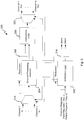
FIG. 1 depicts a block diagram of a prior art high-assurance system that has multiple ports and operates redundantly; -
FIG. 2 depicts a block diagram of an embodiment of a multi-port cryptographic system; -
FIG. 3 depicts a block diagram of another embodiment of the multi-port cryptographic system; -
FIG. 4 depicts a block diagram of an embodiment of a bi-directional single-channel cryptographic system; -
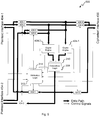
FIG. 5 depicts a block diagram of yet another embodiment of the multi-port cryptographic system; -
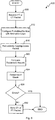
FIG. 6 illustrates a flowchart of an embodiment of a process for processing packets with the cryptographic system; and -
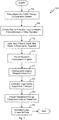
FIG. 7 illustrates a flowchart of an embodiment of a process for arbitrating ports for the cryptographic system. - In the appended figures, similar components and/or features may have the same reference label. Further, various components of the same type may be distinguished by following the reference label by a dash and a second label that distinguishes among the similar components. If only the first reference label is used in the specification, the description is applicable to any one of the similar components having the same first reference label irrespective of the second reference label.
- The ensuing description provides preferred exemplary embodiment(s) only, and is not intended to limit the scope, applicability or configuration of the disclosure. Rather, the ensuing description of the preferred exemplary embodiment(s) will provide those skilled in the art with an enabling description for implementing a preferred exemplary embodiment. It being understood that various changes may be made in the function and arrangement of elements without departing from the scope as set forth in the appended claims.
- Referring initially to
FIG. 1 , a block diagram of a prior art high-assurance system 100 is shown that has multiple ports and operates redundantly. Here, each channel is handled by oneprocessing element 104 and eachprocessing element 104 has a dedicatedredundant processing element 106. Each channel has a dedicatedcomparison logic circuit 108 that determines if the outputs of theprocessing element 104 andredundant processing element 106 match and, if so, forwards the answer onto the output circuit (not shown). In this configuration of n channels, each additional channel increases the size of the resulting circuitry in a linear fashion. - With reference to
FIG. 2 , a block diagram of an embodiment of a multi-portcryptographic system 200 is shown. This embodiment re-uses resources for amulti-port cryptosystem 200. Here, a singlechannel processing element 204 and aredundant processing element 206 are shared by all theinput channels 1 through n. Each channel has its own comparison logic that is controlled by a task switching controller (not shown). - The embodiment of
FIG. 2 has improved efficiency over the prior art inFIG. 1 . The singleredundant processing element redundant processing element redundant processing element redundant processing element own comparison logic 208 to detect any errors in theprocessing element 204 orredundant processing element 206. -
FIG. 3 illustrates a block diagram of another embodiment of amulti-port cryptographic system 300. This embodiment showsredundant arbitration logic demultiplexes 320 output channels. There are n input channels and m output channels in this embodiment (e.g., n=4 and m=4). Multiple input ports vie for the singleredundant processing elements redundant arbitration logic redundant processing element comparison logic 208 to ensure consistent processing. Any mismatch of the data path processing from theprocessing element 204 and theredundant processing element 206 would generate an alarm. Additionally, error in theredundant arbitration logic arbitration logic redundant arbitration logic arbitration logic 312 opens a first port and theredundant arbitration logic 314 opens a second port, neither will open until the botharbitration logic - The architecture of
FIG. 3 can be collapsed in one embodiment to be used in a single channel system that has a single bi-directional plaintext (PT) interface, and a single bi-directional ciphertext (CT) interface. Referring next toFIG. 4 , a bi-directional single-channel cryptographic system 400 of this type is shown. Eachinterface - With reference to
FIG. 5 , a block diagram of an embodiment amulti-port cryptographic system 500 is shown that has bi-directional interfaces. This allows for multiple, physically separate PT or CT interfaces 454, 450 to utilize a single redundant cryptographic engine 404. The number of additional PT or CT interfaces 454, 450 is limited only by the layout of the circuitry. This embodiment has twoPT interfaces 454 and oneCT interface 450. Additionally, thearbitration logic - Each cryptographic engine 404 has a dedicated input data bus from the input ports 428. When one of the
interfaces port arbitration logic PT interface 1 454-1 will request redundant input port 428-1, 428-2 to be opened. Thearbitration logic cryptographic system 500 receives the data packet, a determination is made to which output port 424 the data packet should be routed to and a request is sent to thearbitration logic redundant comparison logic arbitration logic cryptographic system 500 is ready to receive additional data packets that would cause thearbitration logic - The
cryptographic system 500 architecture allowsmultiple interfaces arbitration logic arbitration logic additional arbitration logic CT interfaces 450 toPT interfaces 454 and vice-versa. In one embodiment, this can be done during normal operation, while other embodiments allow reassignment only during system configuration. - The
arbitration logic cryptographic system 500 forces thearbitration logic - Referring next to
FIG. 6 , a flowchart of an embodiment of aprocess 600 for processing packets with the cryptographic system is illustrated. The depicted portion of theprocess 600 begins inblock 608 where a PT or CT packet is received on theappropriate interface arbitration logic multiplexing 316 and de-multiplexing 320 inblock 612. The packet is redundantly processed inblock 616. A task matching process may be used to keep the processing somewhat synchronized. - In
block 620, the results are compared. Some embodiments have synchronizers to realign the results before comparison. A determination is made inblock 624 to conclude if there is a match between the results. Where there are errors in the match process as determined inblock 628, theprocess 600 ends. Where there is no error found, processing goes fromblock 628 to block 632 where the CT or PT packet is sent out of the cryptographic system. - Referring next to
FIG. 7 , a flowchart of an embodiment of aprocess 700 for arbitrating ports for the cryptographic system is illustrated. The depicted portion of theprocess 700 may begin inblock 704 where paths through the cryptographic system may be preconfigured. For example, a particular input port 428 can be dedicated to a particular output port 424 along with particular cryptographic processing. Certain paths can be also configured to be disallowed, forexample plaintext interface 454 to ciphertext interface 428 bypass could be made an invalid path. Codes or status lines for selecting particular paths could be configured. Some embodiments can work in preconfigured or configured on-the-fly modes. For on-the-fly mode, each packet can have a path configured dynamically. - In
block 708, the path for a packet is somehow conveyed to thearbitration logic arbitration logic 314 inblock 712. Additionally, the packet received on those redundant ports 428 may be checked in various ways to check for improper formatting or corruption. A packet that is received on redundant input ports 428 in a manner inconsistent with the selected path can be rejected. - In
block 716, the packet is routed to the redundant cryptographic engines 404 for processing consistent with what was specified. The cryptographic engines 404 are aware of the path and request the output port inblock 720. In other embodiments, thearbitration logic block 724 where the arbitration logic opens the output port requested by the cryptographic engine 404, if allowed. Certain paths are configured to be unallowable and the specified path indicates the output port. Should thearbitration logic redundant arbitration logic - The processed packet is transferred through the
comparison logic block 728 to the selected output port 424. Inblock 732, thearbitration logic - A number of variations and modifications of the disclosed embodiments can also be used. For example, some of the above embodiments discuss working with packetized information. This specification is also applicable to streams of information. Those streams can be packetized outside of the cryptographic system or within. In either event, the single redundant cryptographic engine or channel processing element can switch between processing for two or more input ports. The processed packets and be reassembled into a stream internal to the cryptographic system or outside. Some embodiments of the cryptographic system may accept packetized information and produce a stream or vice versa.
- Specific details are given in the above description to provide a thorough understanding of the embodiments. However, it is understood that the embodiments may be practiced without these specific details. For example, circuits may be shown in block diagrams in order not to obscure the embodiments in unnecessary detail. In other instances, well-known circuits, processes, algorithms, structures, and techniques may be shown without unnecessary detail in order to avoid obscuring the embodiments.
- Moreover, as disclosed herein, the term storage or machine-readable medium may represent one or more devices for storing data, including read only memory (ROM), random access memory (RAM), magnetic RAM, core memory, magnetic disk storage mediums, optical storage mediums, flash memory devices and/or other machine readable mediums for storing information. The term "machine-readable medium" includes, but is not limited to portable or fixed storage devices, optical storage devices, wireless channels, and/or various other mediums capable of storing, containing or carrying instruction(s) and/or data.
- Furthermore, embodiments may be implemented by hardware, software, scripting languages, firmware, middleware, microcode, hardware description languages, and/or any combination thereof. When implemented in software, firmware, middleware, scripting language, and/or microcode, the program code or code segments to perform the necessary tasks may be stored in a machine readable medium such as a storage medium. A code segment or machine-executable instruction may represent a procedure, a function, a subprogram, a program, a routine, a subroutine, a module, a software package, a script, a class, or any combination of instructions, data structures, and/or program statements. A code segment may be coupled to another code segment or a hardware circuit by passing and/or receiving information, data, arguments, parameters, and/or memory contents. Information, arguments, parameters, data, etc. may be passed, forwarded, or transmitted via any suitable means including memory sharing, message passing, token passing, network transmission, etc.
- Implementation of the techniques, blocks, steps and means described above may be done in various ways. For example, these techniques, blocks, steps and means may be implemented in hardware, software, or a combination thereof. For a hardware implementation, the processing units may be implemented within one or more application specific integrated circuits (ASICs), digital signal processors (DSPs), digital signal processing devices (DSPDs), programmable logic devices (PLDs), field programmable gate arrays (FPGAs), processors, controllers, micro-controllers, microprocessors, other electronic units designed to perform the functions described above, and/or a combination thereof.
- For a software implementation, the techniques, processes and functions described herein may be implemented with modules (e.g., procedures, functions, and so on) that perform the functions described herein. The software codes may be stored in memory units and executed by processors. The memory unit may be implemented within the processor or external to the processor, in which case the memory unit can be communicatively coupled to the processor using various known techniques.
- While the principles of the disclosure have been described above in connection with specific apparatuses and methods, it is to be clearly understood that this description is made only by way of example and not as limitation on the scope of the disclosure.
Claims (9)
- A cryptographic processor (500) for redundantly-processing cryptographic operations, the cryptographic processor comprising:a bi-directional plaintext interface;a bi-directional ciphertext interface;at least one additional bi-directional plaintext interface or bi-directional ciphertext interface,wherein each of the interfaces is bi-directional to include an input port (428) and an output port (424), wherein at least one of the input ports is configured to receive a first plaintext data packet and a first ciphertext data packet, wherein at least one of the output ports is configured to send out a second ciphertext data packet and a second plaintext data packet;a first cryptographic engine (404-1) coupled to the input ports of the interfaces;a second cryptographic engine (404-2) coupled to the input ports of the interfaces,the first cryptographic engine (404-1) and the second cryptographic engine (404-2) being each configured to perform encryption of the first plaintext data packet to produce the second ciphertext data packet as an output and decryption of the first ciphertext data packet to produce the second plaintext data packet as an output;a first arbitration logic (312) and a second arbitration logic (314) configured to:receive a request to open the appropriate input port (428) when one of the interfaces has a data packet to be routed through the first cryptographic engine (404-1) and the second cryptographic engine (404-2), and open the appropriate input port (428 according to the request;receive a request to open the appropriate output port (424) when the first cryptographic engine (404-1) and the second cryptographic engine (404-2) receive the data packet, and open the appropriate output port (424) according to the request; andensure that only one input port (428) is opened at a time, and that only one output port (424) is opened at a time, the first arbitration logic (312) and the second arbitration logic (314) being configured to be instructed to close all of the output ports (424) when an entire data packet has been sent out of the output port (424),wherein a port (428-1, 428-2, 428-3, 428-4, 424-1, 424-3) is only opened if the first arbitration logic (312) and the second arbitration logic (314) are in agreement as to which port (428-1, 428-2, 428-3, 428-4, 424-1, 424-3) to open; andcomparison logic (208, 210) configured to compare the redundant data packets as the packets leave the first cryptographic engine (404-1) and the second cryptographic engine (404-2), to ensure that the first cryptographic engine (404-1) and the second cryptographic engine (404-2) produce a same output.
- The cryptographic processor for redundantly-processing cryptographic operations as recited in claim 1, further comprising:a first bus, wherein:the first bus is coupled to the input ports of the interfaces, andthe first bus is coupled to at least one of the first and second cryptographic engines; anda second bus, wherein:the second bus is coupled to the input ports of the interfaces, andthe second bus is coupled to at least one of the first and second cryptographic engines.
- The cryptographic processor for redundantly-processing cryptographic operations as recited in claim 1, wherein the first and second cryptographic engines are programmably configured to further perform filtering, guarding, hashing, signing, and bypass.
- The cryptographic processor for redundantly-processing cryptographic operations as recited in claim 1, wherein the first plaintext packet cryptographically corresponds to the second ciphertext packet.
- The cryptographic processor for redundantly-processing cryptographic operations as recited in claim 1, wherein the first ciphertext packet cryptographically corresponds to the second plaintext packet.
- The cryptographic processor for redundantly-processing cryptographic operations as recited in claim 1, wherein the first plaintext packet is received coextensively in time with the first ciphertext packet.
- The cryptographic processor for redundantly-processing cryptographic operations as recited in claim 1, wherein the first plaintext packet is received at a different time than the first ciphertext packet.
- The cryptographic processor for redundantly-processing cryptographic operations as recited in claim 1, wherein the first and second cryptographic engines perform some tasks at the same time, but not other tasks.
- The cryptographic processor for redundantly-processing cryptographic operations as recited in claim 1, wherein the first and second cryptographic engines do not perform tasks in lock-step.
Priority Applications (1)
| Application Number | Priority Date | Filing Date | Title |
|---|---|---|---|
| EP18184299.8A EP3447675B1 (en) | 2005-07-05 | 2006-07-05 | Trusted cryptographic processor |
Applications Claiming Priority (4)
| Application Number | Priority Date | Filing Date | Title |
|---|---|---|---|
| US69707105P | 2005-07-05 | 2005-07-05 | |
| US69707205P | 2005-07-05 | 2005-07-05 | |
| US11/428,505 US8190877B2 (en) | 2005-07-05 | 2006-07-03 | Trusted cryptographic processor |
| PCT/US2006/026374 WO2007006011A2 (en) | 2005-07-05 | 2006-07-05 | Trusted cryptographic processor |
Related Child Applications (2)
| Application Number | Title | Priority Date | Filing Date |
|---|---|---|---|
| EP18184299.8A Division-Into EP3447675B1 (en) | 2005-07-05 | 2006-07-05 | Trusted cryptographic processor |
| EP18184299.8A Division EP3447675B1 (en) | 2005-07-05 | 2006-07-05 | Trusted cryptographic processor |
Publications (3)
| Publication Number | Publication Date |
|---|---|
| EP1908210A2 EP1908210A2 (en) | 2008-04-09 |
| EP1908210A4 EP1908210A4 (en) | 2011-06-29 |
| EP1908210B1 true EP1908210B1 (en) | 2018-09-05 |
Family
ID=37605228
Family Applications (2)
| Application Number | Title | Priority Date | Filing Date |
|---|---|---|---|
| EP18184299.8A Expired - Lifetime EP3447675B1 (en) | 2005-07-05 | 2006-07-05 | Trusted cryptographic processor |
| EP06786507.1A Expired - Lifetime EP1908210B1 (en) | 2005-07-05 | 2006-07-05 | Trusted cryptographic processor |
Family Applications Before (1)
| Application Number | Title | Priority Date | Filing Date |
|---|---|---|---|
| EP18184299.8A Expired - Lifetime EP3447675B1 (en) | 2005-07-05 | 2006-07-05 | Trusted cryptographic processor |
Country Status (5)
| Country | Link |
|---|---|
| US (1) | US8190877B2 (en) |
| EP (2) | EP3447675B1 (en) |
| CA (1) | CA2614377A1 (en) |
| IL (1) | IL188415A (en) |
| WO (1) | WO2007006011A2 (en) |
Families Citing this family (21)
| Publication number | Priority date | Publication date | Assignee | Title |
|---|---|---|---|---|
| US8527741B2 (en) * | 2005-07-05 | 2013-09-03 | Viasat, Inc. | System for selectively synchronizing high-assurance software tasks on multiple processors at a software routine level |
| US8190877B2 (en) | 2005-07-05 | 2012-05-29 | Viasat, Inc. | Trusted cryptographic processor |
| US8883354B2 (en) | 2006-02-15 | 2014-11-11 | Optodot Corporation | Separators for electrochemical cells |
| JP5397691B2 (en) * | 2007-05-23 | 2014-01-22 | 日本電気株式会社 | Information sharing system, computer, project management server, and information sharing method used therefor |
| WO2009018479A1 (en) * | 2007-07-31 | 2009-02-05 | Viasat, Inc. | Trusted labeler |
| US8713327B1 (en) * | 2009-02-02 | 2014-04-29 | Xilinx, Inc. | Circuit for and method of enabling communication of cryptographic data |
| US20110060915A1 (en) * | 2009-09-10 | 2011-03-10 | International Business Machines Corporation | Managing Encryption of Data |
| US8499163B2 (en) * | 2010-02-26 | 2013-07-30 | General Dynamics C4 Systems, Inc. | Serial architecture for high assurance processing |
| WO2013074096A1 (en) * | 2011-11-16 | 2013-05-23 | Authentec, Inc. | Authentication device including template validation and related methods |
| US9280697B2 (en) | 2011-11-16 | 2016-03-08 | Apple Inc. | Authentication device including template validation and related methods |
| US9374344B1 (en) | 2013-03-29 | 2016-06-21 | Secturion Systems, Inc. | Secure end-to-end communication system |
| US9524399B1 (en) * | 2013-04-01 | 2016-12-20 | Secturion Systems, Inc. | Multi-level independent security architecture |
| JP2016517161A (en) | 2013-04-29 | 2016-06-09 | マディコ インコーポレイテッド | Nanoporous composite separator with enhanced thermal conductivity |
| US9465766B1 (en) | 2013-10-29 | 2016-10-11 | Xilinx, Inc. | Isolation interface for master-slave communication protocols |
| US9047474B1 (en) | 2014-02-21 | 2015-06-02 | Xilinx, Inc. | Circuits for and methods of providing isolation in an integrated circuit |
| US9213866B1 (en) | 2014-04-01 | 2015-12-15 | Xilinx, Inc. | Circuits for and methods of preventing unauthorized access in an integrated circuit |
| KR20190075363A (en) * | 2017-12-21 | 2019-07-01 | 삼성전자주식회사 | Semiconductor memory device, memory system and memory module including the same |
| EP4331033A2 (en) | 2021-04-29 | 2024-03-06 | 24M Technologies, Inc. | Electrochemical cells with multiple separators, and methods of producing the same |
| TW202443944A (en) | 2022-12-16 | 2024-11-01 | 美商24M科技公司 | Systems and methods for minimizing and preventing dendrite formation in electrochemical cells |
| US12549333B1 (en) * | 2023-07-05 | 2026-02-10 | Auradine, Inc. | Error-aware hashing engine |
| US12431545B1 (en) | 2024-03-26 | 2025-09-30 | 24M Technologies, Inc. | Systems and methods for minimizing and preventing dendrite formation in electrochemical cells |
Family Cites Families (31)
| Publication number | Priority date | Publication date | Assignee | Title |
|---|---|---|---|---|
| EP0306211A3 (en) | 1987-09-04 | 1990-09-26 | Digital Equipment Corporation | Synchronized twin computer system |
| US5249188A (en) | 1991-08-26 | 1993-09-28 | Ag Communication Systems Corporation | Synchronizing two processors as an integral part of fault detection |
| US5751932A (en) | 1992-12-17 | 1998-05-12 | Tandem Computers Incorporated | Fail-fast, fail-functional, fault-tolerant multiprocessor system |
| JP2826028B2 (en) | 1993-01-28 | 1998-11-18 | 富士通株式会社 | Distributed memory processor system |
| JPH0773059A (en) | 1993-03-02 | 1995-03-17 | Tandem Comput Inc | Fault-tolerant computer system |
| US5544304A (en) | 1994-03-25 | 1996-08-06 | International Business Machines Corporation | Fault tolerant command processing |
| JP2812312B2 (en) * | 1996-01-12 | 1998-10-22 | 三菱電機株式会社 | Encryption system |
| IT1288076B1 (en) | 1996-05-30 | 1998-09-10 | Antonio Esposito | ELECTRONIC NUMERICAL MULTIPROCESSOR PARALLEL MULTIPROCESSOR WITH REDUNDANCY OF COUPLED PROCESSORS |
| US5915082A (en) | 1996-06-07 | 1999-06-22 | Lockheed Martin Corporation | Error detection and fault isolation for lockstep processor systems |
| DE19625195A1 (en) | 1996-06-24 | 1998-01-02 | Siemens Ag | Synchronization method |
| US6101255A (en) | 1997-04-30 | 2000-08-08 | Motorola, Inc. | Programmable cryptographic processing system and method |
| US5896523A (en) | 1997-06-04 | 1999-04-20 | Marathon Technologies Corporation | Loosely-coupled, synchronized execution |
| DE69804489T2 (en) | 1997-11-14 | 2002-11-14 | Marathon Technologies Corp., Boxboro | METHOD FOR MAINTAINING SYNCHRONIZED VERSION IN FAULT-RELIABLE / FAULT-TOLERANT COMPUTER SYSTEMS |
| US6067633A (en) | 1998-03-31 | 2000-05-23 | International Business Machines Corp | Design and methodology for manufacturing data processing systems having multiple processors |
| DE19815263C2 (en) | 1998-04-04 | 2002-03-28 | Astrium Gmbh | Device for fault-tolerant execution of programs |
| US6226742B1 (en) | 1998-04-20 | 2001-05-01 | Microsoft Corporation | Cryptographic technique that provides fast encryption and decryption and assures integrity of a ciphertext message through use of a message authentication code formed through cipher block chaining of the plaintext message |
| US6853988B1 (en) * | 1999-09-20 | 2005-02-08 | Security First Corporation | Cryptographic server with provisions for interoperability between cryptographic systems |
| US6363464B1 (en) | 1999-10-08 | 2002-03-26 | Lucent Technologies Inc. | Redundant processor controlled system |
| GB0012352D0 (en) | 2000-05-22 | 2000-07-12 | Northern Telecom Ltd | Reliable hardware support for the use of formal languages in high assurance systems |
| US20030039354A1 (en) * | 2001-08-27 | 2003-02-27 | Kimble David E. | FIFO architecture with in-place cryptographic service |
| CN1643532A (en) | 2002-01-23 | 2005-07-20 | 英特泰克公司 | Management system, method and device for license delivery and billing for electronic circuits |
| CN100571131C (en) * | 2002-05-09 | 2009-12-16 | 奥尼西克集团有限公司 | Encryption device and method and encryption system |
| JP2004046599A (en) | 2002-07-12 | 2004-02-12 | Nec Corp | Fault tolerant computer apparatus, resynchronization method and resynchronization program |
| GB2399426A (en) | 2003-03-12 | 2004-09-15 | Sharp Kk | Fault detection in data processing apparatus |
| US6981082B2 (en) * | 2003-05-16 | 2005-12-27 | Agere Systems Inc. | On chip streaming multiple bus protocol with dedicated arbiter |
| JP2005167526A (en) | 2003-12-02 | 2005-06-23 | Hitachi Ltd | Method and apparatus for embedding and detecting digital watermark information based on a plurality of control information |
| US7234782B2 (en) * | 2005-02-18 | 2007-06-26 | Sandvik Intellectual Property Ab | Tool holder block and sleeve retained therein by interference fit |
| EP3651027A1 (en) | 2005-07-05 | 2020-05-13 | ViaSat Inc. | Synchronized high-assurance circuits |
| US7802075B2 (en) | 2005-07-05 | 2010-09-21 | Viasat, Inc. | Synchronized high-assurance circuits |
| US8527741B2 (en) | 2005-07-05 | 2013-09-03 | Viasat, Inc. | System for selectively synchronizing high-assurance software tasks on multiple processors at a software routine level |
| US8190877B2 (en) | 2005-07-05 | 2012-05-29 | Viasat, Inc. | Trusted cryptographic processor |
-
2006
- 2006-07-03 US US11/428,505 patent/US8190877B2/en active Active
- 2006-07-05 WO PCT/US2006/026374 patent/WO2007006011A2/en not_active Ceased
- 2006-07-05 CA CA002614377A patent/CA2614377A1/en not_active Abandoned
- 2006-07-05 EP EP18184299.8A patent/EP3447675B1/en not_active Expired - Lifetime
- 2006-07-05 EP EP06786507.1A patent/EP1908210B1/en not_active Expired - Lifetime
-
2007
- 2007-12-25 IL IL188415A patent/IL188415A/en active IP Right Grant
Non-Patent Citations (1)
| Title |
|---|
| None * |
Also Published As
| Publication number | Publication date |
|---|---|
| IL188415A0 (en) | 2008-11-03 |
| WO2007006011A3 (en) | 2009-04-30 |
| WO2007006011A2 (en) | 2007-01-11 |
| EP1908210A2 (en) | 2008-04-09 |
| EP3447675A1 (en) | 2019-02-27 |
| EP3447675B1 (en) | 2022-03-16 |
| CA2614377A1 (en) | 2007-01-11 |
| EP1908210A4 (en) | 2011-06-29 |
| IL188415A (en) | 2013-06-27 |
| US20070245141A1 (en) | 2007-10-18 |
| US8190877B2 (en) | 2012-05-29 |
Similar Documents
| Publication | Publication Date | Title |
|---|---|---|
| EP3447675B1 (en) | Trusted cryptographic processor | |
| US20230049021A1 (en) | Multi-level independent security architecture | |
| US11783089B2 (en) | Multi-tenancy architecture | |
| US8095800B2 (en) | Secure configuration of programmable logic device | |
| CN107005446B (en) | Dual-Channel Architecture with Redundant CCDL | |
| US20070245413A1 (en) | Trusted Cryptographic Switch | |
| US20190182367A1 (en) | Execution of Packet-Specified Actions at Forwarding Element | |
| US11223657B2 (en) | One-way coupling device, request apparatus and method for feedback-free transmission of data | |
| WO2017074887A1 (en) | Multi-independent level secure (mils) storage encryption | |
| US20150280919A1 (en) | Control systems for unmanned vehicles | |
| JP6280590B2 (en) | Method and apparatus for operating a network traffic policing module | |
| WO2009018479A1 (en) | Trusted labeler | |
| CN114731292B (en) | Low latency medium access control security authentication | |
| US8880868B1 (en) | Secure deterministic fabric for safe and secure product design | |
| US7802075B2 (en) | Synchronized high-assurance circuits | |
| Shreejith et al. | Zero latency encryption with FPGAs for secure time-triggered automotive networks | |
| EP2725442A1 (en) | Control system and method for unmanned vehicles | |
| JP2018101241A (en) | Processing device | |
| CN111149105B (en) | Method and apparatus for immediate and reaction-free transmission of log messages | |
| US11646977B2 (en) | Avionic system of an aircraft | |
| US10740199B2 (en) | Controlling device, controlling method, and fault tolerant apparatus | |
| US9806885B1 (en) | Dual use cryptographic system and method | |
| US11805099B2 (en) | Computing system and method for operating a computing system | |
| CN111742300B (en) | Method and system for controlling the operation of complex electronic components | |
| US10826721B2 (en) | Method of operating a network with a multi-master redundancy protocol |
Legal Events
| Date | Code | Title | Description |
|---|---|---|---|
| PUAI | Public reference made under article 153(3) epc to a published international application that has entered the european phase |
Free format text: ORIGINAL CODE: 0009012 |
|
| 17P | Request for examination filed |
Effective date: 20080131 |
|
| AK | Designated contracting states |
Kind code of ref document: A2 Designated state(s): AT BE BG CH CY CZ DE DK EE ES FI FR GB GR HU IE IS IT LI LT LU LV MC NL PL PT RO SE SI SK TR |
|
| AX | Request for extension of the european patent |
Extension state: AL BA HR MK RS |
|
| R17D | Deferred search report published (corrected) |
Effective date: 20090430 |
|
| A4 | Supplementary search report drawn up and despatched |
Effective date: 20110527 |
|
| RIC1 | Information provided on ipc code assigned before grant |
Ipc: H04L 9/00 20060101AFI20070226BHEP Ipc: G06F 21/02 20060101ALI20110523BHEP |
|
| DAX | Request for extension of the european patent (deleted) | ||
| 17Q | First examination report despatched |
Effective date: 20130205 |
|
| STAA | Information on the status of an ep patent application or granted ep patent |
Free format text: STATUS: EXAMINATION IS IN PROGRESS |
|
| GRAP | Despatch of communication of intention to grant a patent |
Free format text: ORIGINAL CODE: EPIDOSNIGR1 |
|
| STAA | Information on the status of an ep patent application or granted ep patent |
Free format text: STATUS: GRANT OF PATENT IS INTENDED |
|
| RIC1 | Information provided on ipc code assigned before grant |
Ipc: G06F 21/72 20130101ALI20180213BHEP Ipc: H04L 9/00 20060101AFI20180213BHEP |
|
| INTG | Intention to grant announced |
Effective date: 20180309 |
|
| GRAS | Grant fee paid |
Free format text: ORIGINAL CODE: EPIDOSNIGR3 |
|
| GRAA | (expected) grant |
Free format text: ORIGINAL CODE: 0009210 |
|
| STAA | Information on the status of an ep patent application or granted ep patent |
Free format text: STATUS: THE PATENT HAS BEEN GRANTED |
|
| AK | Designated contracting states |
Kind code of ref document: B1 Designated state(s): AT BE BG CH CY CZ DE DK EE ES FI FR GB GR HU IE IS IT LI LT LU LV MC NL PL PT RO SE SI SK TR |
|
| REG | Reference to a national code |
Ref country code: GB Ref legal event code: FG4D |
|
| REG | Reference to a national code |
Ref country code: CH Ref legal event code: EP |
|
| REG | Reference to a national code |
Ref country code: AT Ref legal event code: REF Ref document number: 1039133 Country of ref document: AT Kind code of ref document: T Effective date: 20180915 |
|
| REG | Reference to a national code |
Ref country code: IE Ref legal event code: FG4D |
|
| REG | Reference to a national code |
Ref country code: DE Ref legal event code: R096 Ref document number: 602006056264 Country of ref document: DE |
|
| REG | Reference to a national code |
Ref country code: NL Ref legal event code: MP Effective date: 20180905 |
|
| REG | Reference to a national code |
Ref country code: LT Ref legal event code: MG4D |
|
| PG25 | Lapsed in a contracting state [announced via postgrant information from national office to epo] |
Ref country code: FI Free format text: LAPSE BECAUSE OF FAILURE TO SUBMIT A TRANSLATION OF THE DESCRIPTION OR TO PAY THE FEE WITHIN THE PRESCRIBED TIME-LIMIT Effective date: 20180905 Ref country code: LT Free format text: LAPSE BECAUSE OF FAILURE TO SUBMIT A TRANSLATION OF THE DESCRIPTION OR TO PAY THE FEE WITHIN THE PRESCRIBED TIME-LIMIT Effective date: 20180905 Ref country code: BG Free format text: LAPSE BECAUSE OF FAILURE TO SUBMIT A TRANSLATION OF THE DESCRIPTION OR TO PAY THE FEE WITHIN THE PRESCRIBED TIME-LIMIT Effective date: 20181205 Ref country code: GR Free format text: LAPSE BECAUSE OF FAILURE TO SUBMIT A TRANSLATION OF THE DESCRIPTION OR TO PAY THE FEE WITHIN THE PRESCRIBED TIME-LIMIT Effective date: 20181206 Ref country code: SE Free format text: LAPSE BECAUSE OF FAILURE TO SUBMIT A TRANSLATION OF THE DESCRIPTION OR TO PAY THE FEE WITHIN THE PRESCRIBED TIME-LIMIT Effective date: 20180905 |
|
| REG | Reference to a national code |
Ref country code: AT Ref legal event code: MK05 Ref document number: 1039133 Country of ref document: AT Kind code of ref document: T Effective date: 20180905 |
|
| PG25 | Lapsed in a contracting state [announced via postgrant information from national office to epo] |
Ref country code: ES Free format text: LAPSE BECAUSE OF FAILURE TO SUBMIT A TRANSLATION OF THE DESCRIPTION OR TO PAY THE FEE WITHIN THE PRESCRIBED TIME-LIMIT Effective date: 20180905 Ref country code: LV Free format text: LAPSE BECAUSE OF FAILURE TO SUBMIT A TRANSLATION OF THE DESCRIPTION OR TO PAY THE FEE WITHIN THE PRESCRIBED TIME-LIMIT Effective date: 20180905 |
|
| PG25 | Lapsed in a contracting state [announced via postgrant information from national office to epo] |
Ref country code: IS Free format text: LAPSE BECAUSE OF FAILURE TO SUBMIT A TRANSLATION OF THE DESCRIPTION OR TO PAY THE FEE WITHIN THE PRESCRIBED TIME-LIMIT Effective date: 20190105 Ref country code: EE Free format text: LAPSE BECAUSE OF FAILURE TO SUBMIT A TRANSLATION OF THE DESCRIPTION OR TO PAY THE FEE WITHIN THE PRESCRIBED TIME-LIMIT Effective date: 20180905 Ref country code: PL Free format text: LAPSE BECAUSE OF FAILURE TO SUBMIT A TRANSLATION OF THE DESCRIPTION OR TO PAY THE FEE WITHIN THE PRESCRIBED TIME-LIMIT Effective date: 20180905 Ref country code: AT Free format text: LAPSE BECAUSE OF FAILURE TO SUBMIT A TRANSLATION OF THE DESCRIPTION OR TO PAY THE FEE WITHIN THE PRESCRIBED TIME-LIMIT Effective date: 20180905 Ref country code: CZ Free format text: LAPSE BECAUSE OF FAILURE TO SUBMIT A TRANSLATION OF THE DESCRIPTION OR TO PAY THE FEE WITHIN THE PRESCRIBED TIME-LIMIT Effective date: 20180905 Ref country code: NL Free format text: LAPSE BECAUSE OF FAILURE TO SUBMIT A TRANSLATION OF THE DESCRIPTION OR TO PAY THE FEE WITHIN THE PRESCRIBED TIME-LIMIT Effective date: 20180905 Ref country code: RO Free format text: LAPSE BECAUSE OF FAILURE TO SUBMIT A TRANSLATION OF THE DESCRIPTION OR TO PAY THE FEE WITHIN THE PRESCRIBED TIME-LIMIT Effective date: 20180905 |
|
| PG25 | Lapsed in a contracting state [announced via postgrant information from national office to epo] |
Ref country code: SK Free format text: LAPSE BECAUSE OF FAILURE TO SUBMIT A TRANSLATION OF THE DESCRIPTION OR TO PAY THE FEE WITHIN THE PRESCRIBED TIME-LIMIT Effective date: 20180905 Ref country code: PT Free format text: LAPSE BECAUSE OF FAILURE TO SUBMIT A TRANSLATION OF THE DESCRIPTION OR TO PAY THE FEE WITHIN THE PRESCRIBED TIME-LIMIT Effective date: 20190105 |
|
| REG | Reference to a national code |
Ref country code: DE Ref legal event code: R097 Ref document number: 602006056264 Country of ref document: DE |
|
| PLBE | No opposition filed within time limit |
Free format text: ORIGINAL CODE: 0009261 |
|
| STAA | Information on the status of an ep patent application or granted ep patent |
Free format text: STATUS: NO OPPOSITION FILED WITHIN TIME LIMIT |
|
| PG25 | Lapsed in a contracting state [announced via postgrant information from national office to epo] |
Ref country code: DK Free format text: LAPSE BECAUSE OF FAILURE TO SUBMIT A TRANSLATION OF THE DESCRIPTION OR TO PAY THE FEE WITHIN THE PRESCRIBED TIME-LIMIT Effective date: 20180905 |
|
| 26N | No opposition filed |
Effective date: 20190606 |
|
| PG25 | Lapsed in a contracting state [announced via postgrant information from national office to epo] |
Ref country code: SI Free format text: LAPSE BECAUSE OF FAILURE TO SUBMIT A TRANSLATION OF THE DESCRIPTION OR TO PAY THE FEE WITHIN THE PRESCRIBED TIME-LIMIT Effective date: 20180905 |
|
| PG25 | Lapsed in a contracting state [announced via postgrant information from national office to epo] |
Ref country code: MC Free format text: LAPSE BECAUSE OF FAILURE TO SUBMIT A TRANSLATION OF THE DESCRIPTION OR TO PAY THE FEE WITHIN THE PRESCRIBED TIME-LIMIT Effective date: 20180905 |
|
| REG | Reference to a national code |
Ref country code: CH Ref legal event code: PL |
|
| PG25 | Lapsed in a contracting state [announced via postgrant information from national office to epo] |
Ref country code: TR Free format text: LAPSE BECAUSE OF FAILURE TO SUBMIT A TRANSLATION OF THE DESCRIPTION OR TO PAY THE FEE WITHIN THE PRESCRIBED TIME-LIMIT Effective date: 20180905 |
|
| REG | Reference to a national code |
Ref country code: BE Ref legal event code: MM Effective date: 20190731 |
|
| PG25 | Lapsed in a contracting state [announced via postgrant information from national office to epo] |
Ref country code: BE Free format text: LAPSE BECAUSE OF NON-PAYMENT OF DUE FEES Effective date: 20190731 Ref country code: LU Free format text: LAPSE BECAUSE OF NON-PAYMENT OF DUE FEES Effective date: 20190705 Ref country code: LI Free format text: LAPSE BECAUSE OF NON-PAYMENT OF DUE FEES Effective date: 20190731 Ref country code: CH Free format text: LAPSE BECAUSE OF NON-PAYMENT OF DUE FEES Effective date: 20190731 |
|
| PG25 | Lapsed in a contracting state [announced via postgrant information from national office to epo] |
Ref country code: IE Free format text: LAPSE BECAUSE OF NON-PAYMENT OF DUE FEES Effective date: 20190705 |
|
| PG25 | Lapsed in a contracting state [announced via postgrant information from national office to epo] |
Ref country code: CY Free format text: LAPSE BECAUSE OF FAILURE TO SUBMIT A TRANSLATION OF THE DESCRIPTION OR TO PAY THE FEE WITHIN THE PRESCRIBED TIME-LIMIT Effective date: 20180905 |
|
| PG25 | Lapsed in a contracting state [announced via postgrant information from national office to epo] |
Ref country code: HU Free format text: LAPSE BECAUSE OF FAILURE TO SUBMIT A TRANSLATION OF THE DESCRIPTION OR TO PAY THE FEE WITHIN THE PRESCRIBED TIME-LIMIT; INVALID AB INITIO Effective date: 20060705 |
|
| P01 | Opt-out of the competence of the unified patent court (upc) registered |
Effective date: 20230529 |
|
| PGFP | Annual fee paid to national office [announced via postgrant information from national office to epo] |
Ref country code: DE Payment date: 20250729 Year of fee payment: 20 |
|
| PGFP | Annual fee paid to national office [announced via postgrant information from national office to epo] |
Ref country code: IT Payment date: 20250721 Year of fee payment: 20 |
|
| PGFP | Annual fee paid to national office [announced via postgrant information from national office to epo] |
Ref country code: GB Payment date: 20250728 Year of fee payment: 20 |
|
| PGFP | Annual fee paid to national office [announced via postgrant information from national office to epo] |
Ref country code: FR Payment date: 20250725 Year of fee payment: 20 |
|
| REG | Reference to a national code |
Ref country code: DE Ref legal event code: R071 Ref document number: 602006056264 Country of ref document: DE |