EP1908199B1 - Erkennung von inkongruenzen bei virtuellen verknüpfungssequenzen - Google Patents
Erkennung von inkongruenzen bei virtuellen verknüpfungssequenzen Download PDFInfo
- Publication number
- EP1908199B1 EP1908199B1 EP06787816.5A EP06787816A EP1908199B1 EP 1908199 B1 EP1908199 B1 EP 1908199B1 EP 06787816 A EP06787816 A EP 06787816A EP 1908199 B1 EP1908199 B1 EP 1908199B1
- Authority
- EP
- European Patent Office
- Prior art keywords
- sequence numbers
- sequence
- vcat
- sequence number
- invalid
- Prior art date
- Legal status (The legal status is an assumption and is not a legal conclusion. Google has not performed a legal analysis and makes no representation as to the accuracy of the status listed.)
- Not-in-force
Links
Images
Classifications
-
- H—ELECTRICITY
- H04—ELECTRIC COMMUNICATION TECHNIQUE
- H04J—MULTIPLEX COMMUNICATION
- H04J3/00—Time-division multiplex systems
- H04J3/02—Details
- H04J3/14—Monitoring arrangements
-
- H—ELECTRICITY
- H04—ELECTRIC COMMUNICATION TECHNIQUE
- H04J—MULTIPLEX COMMUNICATION
- H04J2203/00—Aspects of optical multiplex systems other than those covered by H04J14/05 and H04J14/07
- H04J2203/0001—Provisions for broadband connections in integrated services digital network using frames of the Optical Transport Network [OTN] or using synchronous transfer mode [STM], e.g. SONET, SDH
- H04J2203/0057—Operations, administration and maintenance [OAM]
- H04J2203/006—Fault tolerance and recovery
-
- H—ELECTRICITY
- H04—ELECTRIC COMMUNICATION TECHNIQUE
- H04J—MULTIPLEX COMMUNICATION
- H04J2203/00—Aspects of optical multiplex systems other than those covered by H04J14/05 and H04J14/07
- H04J2203/0001—Provisions for broadband connections in integrated services digital network using frames of the Optical Transport Network [OTN] or using synchronous transfer mode [STM], e.g. SONET, SDH
- H04J2203/0089—Multiplexing, e.g. coding, scrambling, SONET
- H04J2203/0094—Virtual Concatenation
Definitions
- the present invention relates generally to optical networks. More specifically, the present invention relates to detecting sequence mismatch defects associated with virtual concatenation groups at a dynamic sink.
- Synchronous Optical Network SONET
- Synchronous Digital Hierarchy SDH
- TDM time division multiplexing
- VCAT virtual concatenation
- VCAT Virtual concatenation
- VCAT is generally an inverse multiplexing technique that enables multiple SONET or SDH channels to be substantially bound into a VCAT group.
- VCAT is defined, for example, within ITU-T G.707 and ITU-T G.783.
- a VCAT group, which includes "N" members, is effectively a byte-synchronous stream. If the VCAT group is symmetric, there are “N” receiving members of the group and "N" transmitting members of the group. Alternatively, if the VCAT group is asymmetric, there may be “N" receiving members of the group and any number of transmitting members of the group.
- VCAT enables data, e.g ., SONET or SDH payloads, to be carried in smaller bandwidth "containers" such as synchronous payload envelopes through a network to a destination at which the data is reassembled.
- the smaller bandwidth containers are effectively used to create a higher bandwidth overall connection between two end points.
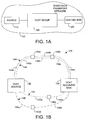
- FIG. 1A is a block diagram representation of a virtual concatenation (VCAT) group within a network.
- VCAT virtual concatenation
- data may be sent from a source 110 to a destination 120.
- source 110 and destination 120 are generally network elements that send and to receive, respectively.
- Source 110 and destination 120 are in communication over a VCAT group 106 that is arranged to include different paths over which data may travel at substantially the same time.
- VCAT group 106 includes a VCAT source 132 and a VCAT receiver or sink 134.
- VCAT receiver 134 is generally a path terminating device.
- VCAT group 106 includes "N" member or paths.
- VCAT group 106 is shown as including four paths, namely paths 144, 148, 152, 156.
- Path 144 passes through network elements 140a, 140b, and includes links 144a-c.
- Path 148 also passes through network elements 140a, 140b, but includes links 148a-c.
- Path 152 includes links 152a, 152b, and passes through a network element 140c, while path 156 includes links 156a, 156b, and passes through a network element 140d.
- Each path 144, 148, 152, 156 may be identified by a sequence number. Sequence numbers typically range from zero to "N-1". As VCAT group 106 includes four paths, sequence numbers associated with VCAT group 106 range from zero to three. Typically, sequence numbers associated with paths 144, 148, 152, 156 must be verified by VCAT receiver 134. That is, VCAT receiver 134 verifies that the sequence numbers associated with paths 144, 148, 152, 156 match expected sequence numbers stored within VCAT receiver 134. VCAT receiver 134 uses the sequence numbers to reconstruct an overall data stream that was sent on paths 144, 148, 152, 156.
- the ability to verify sequence numbers or, more specifically, to identify sequence mismatch defects associated with a VCAT group is crucial to ensure the integrity of the VCAT group.
- a person responsible configuring the VCAT group generally must have a detailed understanding of the hardware capabilities of a VCAT receiver associated with the VCAT group, as that person typically specifies the expected sequence numbers in the VCAT receiver.
- Specifying expected sequence numbers in a VCAT receiver may be a time-consuming task, as the hardware capabilities of the VCAT receiver are often complicated to comprehend.
- expected sequence numbers that are used to identify sequence mismatch defects are programmed into a VCAT receiver dynamically based on sequence numbers received, for example, during a polling cycle associated with the VCAT receiver. Such programming may occur using software or using hardware which programs expected sequence numbers in real-time.
- a static VCAT receiver has provisioned, expected sequence numbers. These expected sequence numbers may be supplied by network elements that are in communication with the static VCAT receiver either explicitly or implicitly, e.g., derived from a parameter provided by the network elements.
- a dynamic VCAT receiver typically does not have any provisioned, expected sequence numbers. For a static VCAT receiver, an issue arises regarding the accuracy of received sequence numbers that are used as expected sequence numbers.
- the present invention relates to identifying sequence mismatch defects associated with members of a virtual concatenation (VCAT) group.
- VCAT virtual concatenation
- the first sequence number is determined to be invalid if it is either a duplicate of a second sequence number of the first set, or if it is out of bounds. In such an embodiment, the first sequence number may also be determined to be invalid if it does not match sequence numbers stored in a second set of sequence numbers that was obtained during a previous polling cycle.
- a VCAT sink is configured to identify sequence mismatch defects by comparing current sequence numbers obtained from a VCAT group against previously obtained sequence numbers, the VCAT sink may verify the sequence numbers efficiently and effectively. Further, the need to use expected sequence numbers stored in the VCAT sink to identify sequence mismatch defects is substantially eliminated. If there are discrepancies between the current sequence numbers and the previous sequence numbers, there may be sequence mismatch defects associated with the current sequence numbers. For VCAT sinks in which expected sequence numbers are stored, information pertaining to current sequence numbers and previously obtained sequence numbers may be used to allows the expected sequence numbers to be accurately updated.
- the devices also store previous sequence numbers associated with the VCAT group into a second data structure in the memory. In such an embodiment, the devices may also compare the set of current sequence numbers against the set of previous sequence numbers to identify sequence mismatch defects. In another embodiment, the devices may be either or both hardware devices and program code devices that the processor may cause to execute.
- the method also includes setting a first variable to a first value to indicate that the set of current sequence numbers includes substantially only valid sequence numbers if the set of current sequence numbers does not include the invalid sequence numbers. If the set of previous sequence numbers includes at least one invalid sequence number, the first variable is such that it was previously set to a second value, e.g., a. value that indicated that the set of previous sequence numbers includes at least one invalid sequence number.
- VCAT virtual concatenation
- SONET Synchronous Optical Network
- SDH Synchronous Digital Hierarchy
- VCAT receivers which store expected sequence numbers
- information pertaining to current sequence numbers and previously obtained sequence numbers may be used to both facilitate the identification of the expected sequence numbers and to increase the likelihood that the expected sequence numbers are valid.
- expected sequence numbers may be derived from received sequence numbers, and may not need to be known in advance.
- Current sequence numbers and previously obtained sequence numbers may generally be stored in memory within a VCAT receiver.
- both the current sequence numbers and the previously obtained sequence numbers may be stored at least temporarily in arrays within memory associated with the VCAT receiver.
- Current sequence numbers may be obtained periodically, as for example every few milliseconds or every polling cycle. Whenever the contents are updated in the array in which the current sequence numbers are to be stored, the previous contents of that array may be copied into the array in which previously obtained sequence numbers are to be stored.
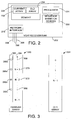
- FIG. 2 is a block diagram representation of a VCAT receiver in accordance with one embodiment of the present invention.
- a VCAT receiver or sink 202 is a device or path terminating element that is arranged to effectively be a terminating point or node for members or paths 206 of a VCAT group with "N" receiving members.
- VCAT receiver 202 is also arranged to substantially reconstruct a data stream by collecting data received from any or all members or paths 206.
- VCAT receiver 202 may either be configured with information relating to how many components are associated with the VCAT group, or may be arranged to be informed of how many components are in the VCAT group.
- Members or paths 206 may generally be SONET paths or SDH paths. Members or paths 206 may effectively be in communication with VCAT receiver 202 via a network interface 210. It should be appreciated that network interface 210 may enable data to be received by VCAT receiver 202 and also enable data to be set by VCAT receiver 202.
- VCAT receiver 202 includes sequence mismatch devices 220 which, in one embodiment, are hardware devices that may cooperate with a processor 224 to allow sequence mismatch defects associated with members or paths 206 to be identified.
- the hardware devices may include various electrical components such as integrated circuits, e.g., application specific integrated circuits, that are arranged to identify sequence mismatch defects.
- sequence mismatch devices 220 may also include software or program code devices stored on a computer-readable medium which may be executed by processor 224. Sequence mismatch devices 220 may obtain the sequence numbers associated with members or paths 206, and cause a current array 230 in a memory 228 to store the obtained sequence numbers.
- Sequence mismatch defects may be identified by sequence mismatch devices 220 during processing of the contents of current array 230, as well as processing of the contents of a previous or old array 234 in memory 228 that is arranged to store previous sequence numbers.
- the contents of previous array 234 are typically sequence numbers associated with the VCAT group that were previously obtained, as for example during the immediately preceding polling in which an attempt was made to identify sequence mismatch defects.
- Sequence mismatch devices 220 are generally arranged to mark current array 230 to indicate the elements within current array 230 which contain sequence mismatch defects.
- Current array 230 may be marked when markers or values are placed into an array or column of current array 230 that is appropriate for identifying particular sequence numbers stored in another row or column, respectively, as having a sequence mismatch defect.
- a sequence mismatch defect, or a loss of sequence may involve an out of bounds sequence number, or a sequence number that is higher than "N-1" for a VCAT group with "N" receiving members or lower than "0.”
- a sequence mismatch defect may also involve duplicate sequence numbers, as well as sequence numbers that do not match those stored in previous array 234.
- a VCAT receiver for a VCAT group with "N" receiving members expects received sequence numbers to be a member of the set of positive integer numbers between “0" and "N-1". Any sequence number that is not in the set of positive integers between “0” and “N-1” is considered to be out of bounds. Hence, sequence numbers that are either positive integers that are greater than or equal to "N" for a VCAT group with "N" receiving members or are negative integers may be considered to be out of bounds.
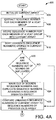
- a current array 330 includes an area 364 in which sequence numbers associated with a VCAT group with "N” receiving members are located.
- a VCAT group with "N” receiving members will generally be described as a VCAT group with "N” members. It should be appreciated that such a VCAT group, i.e., a VCAT group with "N” members, includes “N” receiving members and may generally include any number of transmitting members.
- sequence mismatch defects may be identified by placing a bit or bits in an area 360.
- areas 360, 364 are columns, a sequence mismatch defect indicator may be placed within column 360 in the same row in which mismatched sequence number is stored within column 364.
- a sequence number 370 is an out of bounds sequence number, as "N+3" is a larger number than the maximum permissible sequence number, i.e., sequence number "N-1", associated with the VCAT group with N members.
- N represents the maximum number of members within a VCAT group, and may vary widely.
- N may have a value of approximately 256
- N may have a value of approximately 64
- “N” has a value that falls in the range between 1 and 256.
- sequence number 370 As sequence number 370 is out of bounds, an indication 380a that sequence number 370 has a sequence mismatch defect is placed in area 360. Sequence numbers 368 are duplicates and, as a result, are each identified as having sequence mismatch defects with indications 380b, 380c in area 360. Though sequence number 372 is neither out of bounds nor a duplicate of any other sequence number stored in area 364, sequence number 372 does not match any sequence number in a previous array 334 that is arranged to store sequence numbers obtained previously, e.g., during a previous polling cycle associated with a VCAT receiver such as receiver 202 of FIG. 2 . Hence, sequence number 372 is marked in area 360 with an indication 380d that is arranged to identify sequence number 372 as having a sequence mismatch defect.
- sequence numbers that are out of bounds such as sequence number 370 may be marked the same way as duplicate sequence numbers 368. That is, sequence mismatch defects may be marked so as not to differentiate between different types of sequence mismatch defects. However, it should be appreciated that sequence numbers that are out of bounds may instead be marked differently from sequence numbers that are duplicates. Similarly, although sequence numbers such as sequence number 372 that does not match sequence numbers stored in previous or old array 334 may be marked differently than those sequence numbers that are out of bounds or duplicates, as shown, substantially all sequence mismatch defects may be indicated using the same marker.
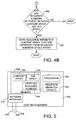
- a process 400 of detecting or identifying sequence mismatch defects begins at step 404 in which a current array is initialized.
- a current array which may be stored in a memory of a VCAT receiver, is arranged to hold the sequence numbers of current members or paths in a VCAT group. Initializing the current array may involve setting the values of an empty array, as for example to values of zero, if the array has not been used.
- initializing the current array may include substantially copying sequence numbers associated with the VCAT group into another array, e.g., a previous or old array, and then setting the values in the current array to values of zero.
- the sequence number for each member of the VCAT group is extracted or otherwise obtained in step 408.
- Components of the VCAT receiver as for example sequence mismatch devices 220 of FIG. 2 , may be arranged to allow the sequence number for each member of the VCAT group to be extracted.
- each extracted sequence number is stored into the current array in step 412.
- the stored sequence numbers may be sorted. That is, the contents of the current array may be sorted such that the sequence numbers are effectively in numerical order, e.g ., either ascending or descending.
- the sorting of sequence numbers in numerical order generally facilitates the processing of the sequence numbers.
- step 420 If it is determined in step 420 that none of the sequence numbers are out of bounds or duplicates, i.e., that all of the sequence numbers are in bounds and non-duplicated, the indication is that there are no sequence mismatch defects associated with the sequence numbers stored in the current array. Accordingly, none of the sequence numbers stored in the current array are marked as having sequence mismatch defects, and process flow moves from step 420 to step 428 in which the unmarked sequence numbers stored in the current array are compared to the sequence numbers stored in a previous, or old, array.
- step 432 it is determined in step 432 whether there are any sequence numbers that are different between the current array and the previous array. That is, a determination is made regarding whether the sequence numbers stored in the current array match the sequence numbers stored in the previous array. If the determination is that substantially all of the sequence numbers stored in the current array match the sequence numbers stored in the previous array, then the process of identifying sequence mismatch defects is completed.
- step 432 if it is determined in step 432 that there are differences between the sequence numbers stored in the current array and the sequence numbers stored in the previous array, the indication is that there is at least one sequence mismatch defect associated with the current array.
- step 436 any sequence numbers in the current array that are different from the sequence numbers in the previous array are marked as having a sequence mismatch defect. After the sequence numbers in the current array are marked as appropriate, the process of identifying sequence mismatch defects is completed.
- step 420 if it is determined that there is at least one sequence number in the current array that is either out of bounds or duplicated, the indication is that there is at least one sequence mismatch defect associated with the current array and, hence, the VCAT group for which sequence numbers are stored in the current array. Accordingly, process flow moves from step 420 to step 424 in which any out of bounds sequence number or duplicate sequence number is marked as having a sequence mismatch defect.
- a column of the current array may be arranged to be marked to indicate which sequence numbers stored in the current array have sequence mismatch defects. Once the sequence mismatch defects are marked, the sequence numbers stored in the current array that are unmarked are compared to sequence numbers stored in a previous array in step 428.
- VCAT receivers are such that expected sequence numbers are stored on the VCAT receivers. Expected sequence numbers generally correspond to the sequence numbers that are expected to correspond to a VCAT group that terminates at the VCAT receiver. Such VCAT receivers may have expected sequence numbers programmed therein, either in hardware or in software.
- FIG. 5 is a block diagram representation of a VCAT receiver in which expected sequence numbers are stored in accordance with one embodiment of the present invention.
- a VCAT receiver 502 includes sequence mismatch devices 520 and a processor 524 that are arranged to cooperate to identify sequence mismatch defects associated with paths 506 associated with a VCAT group that terminates at VCAT receiver 502.
- a memory 528 of is arranged to contain a current array 530 that holds the most current sequence numbers associated with paths 506.
- An old array 534 which is also stored in memory 534, is arranged to contain previously obtained sequence numbers associated with paths 506.
- Expected sequence numbers 544 are also stored in memory 528.
- Expected sequence numbers 544 which may be stored in substantially any suitable data structure, are generally the sequence numbers that paths 506 are expected to have.
- expected sequence numbers 544 enable expected sequence numbers 544 to be relatively accurate.
- expected sequence numbers 544 that are substantially programmed into VCAT receiver 502 when VCAT receiver 502 is effectively initialized may not be entirely accurate, the ability to update expected sequence number 544 when information that may be more accurate or up-to-date is available.
- Information that is more accurate may correspond to sequence numbers that are stored in current array 530 and old array 534. For example, if current array 530 and old array 534 contain substantially the same sequence numbers, then those sequence numbers may be considered to accurately reflect the sequence numbers that may be expected.
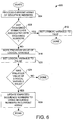
- a process of updating expected sequence numbers 600 begins at step 604 in which a current array of sequence numbers is processed.
- Processing a current array of sequence numbers may include writing sequence numbers into an array, as for example using sequence mismatch devices of a VCAT receiver, sorting the sequence numbers stored within the current array, and identifying any sequence mismatch defects in the current array.
- One method of processing a current array to identify sequence mismatch defects is described above with respect to FIGS. 4A and 4B .
- step 608 the previous or existing value of the logical variable that is used to indicate whether a current array has sequence mismatch defects is noted in step 616.
- the previous value of the logical variable generally indicates whether there are sequence mismatches in an old array, as for example old array 534 of FIG. 5 .
- the logical variable is set in step 620 to indicate that the current array does not have sequence mismatch defects.
- setting the logical variable to indicate that the current array does not have sequence mismatch defects includes setting the logical variable to a false value.
- step 624 it is determined whether the previous value of the logical variable was true. That is, it is determined in step 624 whether the old array contained sequence mismatch defects when it was processed to identify sequence mismatch defects. If it is determined that the previous value of the logical variable was not true, then the indication is that the sequence numbers are relatively stable. Hence, the expected sequence values stored within the VCAT receiver are considered to be relatively accurate. As such, the process of updating expected sequence numbers is terminated.
- step 624 if it is determined in step 624 that the previous value of the logical variable was true, then the implication is that the sequence numbers stored in the current array are likely to be the expected sequence numbers and, further that the current expected sequence numbers are likely to be outdated. Accordingly, in step 628, the expected sequence numbers are updated or reset within the VCAT receiver using the sequence numbers stored in the current array.
- the expected sequence numbers are, hence, effectively set dynamically, e.g., using software code devices. Once the expected sequence numbers are updated, the process of updating expected sequence numbers is completed.
- sequence numbers have been described as being stored in an array for comparison purposes, the sequence numbers may be stored in substantially any suitable data structure. That is, arrays are but one example of a data structure in which current and previous sequence numbers may be stored.
- sequence numbers may instead be stored in temporary variables within a memory associated with a VCAT receiver.
- a method for detecting sequence mismatch defects may be performed using substantially only hardware components.
- such a method may be implemented using an application specific integrated circuit (ASIC) or using a field-programmable gate array (FPGA).
- ASIC application specific integrated circuit
- FPGA field-programmable gate array
- a sequence number has generally been described as being invalid or illegal when that sequence number is either out of bounds or duplicated. That is, a sequence mismatch defect has been described as being detected when a sequence number is out of bounds or duplicated. It should be understood, however, that a sequence number is not limited to being invalid only if the sequence number is out of bounds or duplicated.
- VCAT sequence mismatch defect detection of the present invention has been described as being suitable for use in either a SONET transport network or an SDH transport network, the VCAT sequence mismatch defect detection described above may generally be implemented within any suitable network. Further, although a VCAT sequence mismatch defect detection scheme may be a hardware oriented implementation, such a scheme may also be implemented as a combination hardware and software implementation, or as a substantially software implementation.
- a VCAT receiver may be a component of a network element such as a router or a computing system. If a VCAT receiver is a component of a computing system, the VCAT receiver may cooperate with other components of the computing system to perform sequence mismatch defect detection. Other components of the computing system may include, but are not limited to, a processor, a random access memory, a read only memory, a network interface, input devices, and display devices.
- VCAT groups with N members may symmetric and bidirectional. It should be appreciated, however, that VCAT groups may instead by asymmetric and unidirectional.
- a VCAT group may include both symmetric and asymmetric members.
- the present invention describes the behavior of a VCAT receiver that terminates "N" receiving members of a VCAT group, though the number of transmitting members of the VCAT group may or may not be "N". For a symmetric VCAT group, there are “N" receiving members and “N” transmitting members. In an asymmetric VCAT group, there may be "N" receiving members and substantially any number of transmitting members.
- steps associated with the processes associated with sequence mismatch defect detection may vary widely. Steps may be added, removed, altered, and reordered without departing from the spirit or scope of the present invention.
- the step of sorting the contents of an array to facilitate checking for sequence numbers that are duplicates or out of bounds may be removed or replaced without departing from the spirit or the scope of the present invention. In other words, sorting the contents of an array may be optional.
- sequence mismatch defects may occur substantially without comparing the contents of a current array against the contents of an old array. That is, sequence mismatch defects may be identified by checking for sequence numbers that are out of bounds as well as sequence numbers that are duplicates among the sequence numbers stored in a current array, and without checking to see if the sequence numbers stored in the current array match the sequence numbers stored in an old array. In such an embodiment, it may not be necessary to maintain an old array. Therefore, the present examples are to be considered as illustrative and not restrictive, and the invention is not to be limited to the details given herein, but may be modified within the scope of the appended claims.
Landscapes
- Engineering & Computer Science (AREA)
- Computer Networks & Wireless Communication (AREA)
- Signal Processing (AREA)
- Time-Division Multiplex Systems (AREA)
- Circuits Of Receivers In General (AREA)
Claims (26)
- Verfahren zur Erkennung von Sequenzinkongruenzen im Zusammenhang mit einer virtuellen Verknüpfungsgruppe, VCAT-Gruppe, (106), die eine Vielzahl von Mitgliedern (206) aufweist, wobei die VCAT-Gruppe (106) einer VCAT-Senke (202) zugeordnet ist und das Verfahren durch Folgendes gekennzeichnet ist:Erhalten eines ersten Satzes (330) von Sequenznummern von der VCAT-Gruppe (106) zu einem ersten Zeitpunkt, wobei jede Sequenznummer des ersten Satzes (330) einem jeweiligen Mitglied (206) der VCAT-Gruppe (106) zugeordnet ist;Erhalten eines zweiten Satzes (334) von Sequenznummern, der der VCAT-Gruppe (106) zugeordnet ist, zu einem zweiten Zeitpunkt, wobei der zweite Zeitpunkt vor dem ersten Zeitpunkt stattfindet und der zweite Satz (334) von Sequenznummern von der VCAT-Gruppe (106) erhalten wird;Bestimmen, ob eine erste Sequenznummer des ersten Satzes (330) von Sequenznummern ungültig ist, indem die erste Sequenznummer mit dem zweiten Satz (334) von Sequenznummern verglichen wird, um zu bestimmen, ob die erste Sequenznummer mit einer der Sequenznummern des zweiten Satzes (334) übereinstimmt, und zu bestimmen, ob die erste Sequenznummer ungültig ist, wenn die erste Sequenznummer mit keiner der Sequenznummern des zweiten Satzes (334) übereinstimmt; undIdentifizieren der ersten Sequenznummer als Sequenznummer mit einer Sequenzinkongruenz, wenn bestimmt wird, dass die erste Sequenznummer ungültig ist.
- Verfahren nach Anspruch 1, wobei der erste Satz (330) von Sequenznummern eine zweite Sequenznummer umfasst und das Bestimmen, ob mindestens die erste Sequenznummer ungültig ist, das Bestimmen umfasst, ob die erste Sequenznummer und die zweite Sequenznummer gleich sind.
- Verfahren nach Anspruch 2, wobei, wenn bestimmt wird, dass die erste Sequenznummer und die zweite Sequenznummer gleich sind, das Verfahren ferner das Identifizieren umfasst, dass sowohl die erste Sequenznummer als auch die zweite Sequenznummer Sequenzinkongruenzen aufweist.
- Verfahren nach Anspruch 1, wobei das Bestimmen, ob die erste Sequenznummer ungültig ist, das Bestimmen umfasst, ob die erste Sequenznummer außerhalb der Grenzen liegt.
- Verfahren nach Anspruch 4, wobei die VCAT-Gruppe (106) N Mitglieder (206) umfasst und das Bestimmen, ob die erste Sequenznummer außerhalb der Grenzen liegt, das Bestimmen umfasst, ob die erste Sequenznummer einen Wert von Eins kleiner als N übersteigt.
- Verfahren nach Anspruch 1, wobei die VCAT-Senke (202) einen Speicher (228) umfasst und das Verfahren ferner Folgendes umfasst:Speichern des ersten Satzes (330) von Sequenznummern in einer ersten Anordnung, wobei die erste Anordnung in dem Speicher (228) angeordnet wird.
- Verfahren nach einem der Ansprüche 1 bis 6, das ferner Folgendes umfasst:Speichern des ersten Satzes (330) von Sequenznummern in einer ersten Anordnung, wobei der erste Anordnung in einem Speicher (228) der VCAT-Senke (202) angeordnet wird; und Speichern des zweiten Satzes (334) von Sequenznummern in einer zweiten Anordnung, wobei die zweite Anordnung in dem Speicher (228) angeordnet wird.
- Verfahren nach Anspruch 1, das ferner Folgendes umfasst: Sortieren des ersten Satzes (330) von Sequenznummern.
- Vorrichtung zur Erkennung von Sequenzinkongruenzen im Zusammenhang mit einer virtuellen Verknüpfungsgruppe, VCAT-Gruppe, (106), die eine Vielzahl von Mitgliedern (206) aufweist, wobei die VCAT-Gruppe (106) mit der Vorrichtung in Kommunikation steht und die Vorrichtung durch Folgendes gekennzeichnet ist: Mittel zum Erhalten eines ersten Satzes (330) von Sequenznummern von der VCAT-Gruppe (106) zu einem ersten Zeitpunkt, wobei jede Sequenznummer des ersten Satzes (330) einem jeweiligen Mitglied (206) der VCAT-Gruppe (106) zugeordnet ist; Mittel zum Erhalten eines zweiten Satzes (334) von Sequenznummern, der der VCAT-Gruppe (106) zugeordnet ist, zu einem zweiten Zeitpunkt, wobei der zweite Zeitpunkt vor dem ersten Zeitpunkt stattfindet und der zweite Satz (334) von Sequenznummern von der VCAT-Gruppe (106) erhalten wird;
Mittel zum Bestimmen, ob eine erste Sequenznummer des ersten Satzes (330) von Sequenznummern ungültig ist, indem die erste Sequenznummer mit dem zweiten Satz (334) von Sequenznummern verglichen wird, um zu bestimmen, ob die erste Sequenznummer mit einer der Sequenznummern des zweiten Satzes (334) übereinstimmt, wobei bestimmt wird, dass die erste Sequenznummer ungültig ist, wenn die erste Sequenznummer mit keiner der Sequenznummern des zweiten Satzes (334) übereinstimmt; und
Mittel zum Identifizieren der ersten Sequenznummer als Sequenznummer mit einer Sequenzinkongruenz, wenn bestimmt wird, dass die erste Sequenznummer ungültig ist. - Vorrichtung nach Anspruch 9, wobei der erste Satz (330) von Sequenznummern eine zweite Sequenznummer umfasst und das Mittel zum Bestimmen, ob mindestens die erste Sequenznummer ungültig ist, Mittel zum Bestimmen umfasst, ob die erste Sequenznummer und die zweite Sequenznummer gleich sind.
- Vorrichtung nach Anspruch 9, wobei das Mittel zum Bestimmen, ob die erste Sequenznummer ungültig ist, Mittel zum Bestimmen umfasst, ob die erste Sequenznummer außerhalb der Grenzen liegt.
- Vorrichtung nach Anspruch 9, die ferner Folgendes umfasst:einen Speicher (228); undMittel zum Speichern des ersten Satzes (330) von Sequenznummern in einer ersten Anordnung, wobei die erste Anordnung in dem Speicher (228) angeordnet wird.
- Vorrichtung nach einem der Ansprüche 9 bis 12, die ferner Folgendes umfasst:einen Speicher (228);Mittel zum Speichern des ersten Satzes (330) von Sequenznummern in einer ersten Anordnung, wobei die erste Anordnung in dem Speicher (228) angeordnet wird; undMittel zum Speichern des zweiten Satzes (334) von Sequenznummern in einer zweiten Anordnung, wobei die zweite Anordnung in dem Speicher (228) angeordnet wird.
- Verfahren zum Aktualisieren eines Satzes von erwarteten Sequenznummern, die entsprechenden Mitgliedern (206) einer virtuellen Verknüpfungsgruppe, VCAT-Gruppe, (106) zugeordnet sind, und das Verfahren durch Folgendes gekennzeichnet ist:Erhalten eines Satzes (330) von aktuellen Sequenznummern, die entsprechenden Mitgliedern (206) der VCAT-Gruppe (106) zugeordnet sind; Bestimmen, ob der Satz (330) der aktuellen Sequenznummern, die entsprechenden Mitgliedern (206) der VCAT-Gruppe (106) zugeordnet sind, eine erste ungültige Sequenznummer umfassen; Bestimmen, ob der Satz (334) der erwarteten Sequenznummern, die entsprechenden Mitgliedern (206) der VCAT-Gruppe (106) zugeordnet sind, mindestens eine ungültige Sequenznummer umfasst, wenn bestimmt wird, dass der Satz (330) der aktuellen Sequenznummern nicht die erste ungültige Sequenznummer umfasst; und Ersetzen des Satzes (334) der erwarteten Sequenznummern durch den Satz (330) der aktuellen Sequenznummern, wenn bestimmt wird, dass der Satz (334) der erwarteten Sequenznummern die mindestens eine ungültige Sequenznummer umfasst.
- Verfahren nach Anspruch 14, das ferner Folgendes umfasst:Setzen einer ersten Variablen auf einen ersten Wert, um anzuzeigen, dass der Satz (330) der aktuellen Sequenznummern im Wesentlichen nur gültige Sequenznummern umfasst, wenn bestimmt wird, dass der Satz (330) der aktuellen Sequenznummern nicht die ungültigen Sequenznummern umfasst.
- Verfahren nach Anspruch 15, wobei die erste Variable zuvor auf einen zweiten Wert gesetzt wurde, um anzuzeigen, dass der Satz (334) der erwarteten Sequenznummern die mindestens eine ungültige Sequenznummer umfasst.
- Verfahren nach Anspruch 16, das ferner Folgendes umfasst: wobei das Bestimmen, ob der Satz (334) der erwarteten Sequenznummern die mindestens eine ungültige Sequenznummer umfasst, das Bestimmen umfasst, ob die erste Variable zuvor auf den zweiten Wert gesetzt wurde.
- Verfahren nach Anspruch 14, wobei das Bestimmen, ob der Satz (330) der aktuellen Sequenznummern nicht die erste ungültige Sequenznummer umfasst, die Bestimmung umfasst, ob der Satz (330) der aktuellen Sequenznummern im Wesentlichen nur in Grenzen Sequenznummern und nicht duplizierte Sequenznummern umfasst.
- Verfahren nach Anspruch 18, wobei das Bestimmen, ob der Satz (330) der aktuellen Sequenznummern nicht die erste ungültige Sequenznummer umfasst, ferner das Bestimmen umfasst, ob der Satz (330) der aktuellen Sequenznummern nicht Sequenznummern umfasst, die nicht auch in dem Satz (334) der erwarteten Sequenznummern enthalten sind.
- Verfahren nach Anspruch 14, das ferner Folgendes umfasst: Sortieren des Satzes (330) von aktuellen Sequenznummern.
- Vorrichtung zum Aktualisieren eines Satzes von erwarteten Sequenznummern, die entsprechenden Mitgliedern (206) einer virtuellen Verknüpfungsgruppe, VCAT-Gruppe, (106) zugeordnet sind, wobei die Vorrichtung durch Folgendes gekennzeichnet ist:Mittel zum Erhalten eines Satzes (330) von aktuellen Sequenznummern, die entsprechenden Mitgliedern (206) der VCAT-Gruppe (106) zugeordnet sind;Mittel zum Bestimmen, ob der Satz (330) der aktuellen Sequenznummern, der jeweiligen Mitgliedern (206) der VCAT-Gruppe (106) zugeordnet ist, eine erste ungültige Sequenznummer umfasst;Mittel zum Bestimmen, ob der Satz (334) der erwarteten Sequenznummern, die entsprechenden Mitgliedern (206) der VCAT-Gruppe (106) zugeordnet sind, mindestens eine ungültige Sequenznummer umfasst, wenn bestimmt wird, dass der Satz (330) der aktuellen Sequenznummern nicht die erste ungültige Sequenznummer umfasst; undMittel zum Ersetzen des Satzes (334) der erwarteten Sequenznummern durch den Satz (330) der aktuellen Sequenznummern, wenn bestimmt wird, dass der Satz (334) der erwarteten Sequenznummern die mindestens eine ungültige Sequenznummer umfasst.
- Vorrichtung nach Anspruch 21, die ferner Folgendes umfasst:Mittel zum Setzen einer ersten Variablen auf einen ersten Wert, um anzuzeigen, dass der Satz (330) der aktuellen Sequenznummern im Wesentlichen nur gültige Sequenznummern umfasst, wenn bestimmt wird, dass der Satz (330) der aktuellen Sequenznummern nicht die ungültigen Sequenznummern umfasst.
- Vorrichtung nach Anspruch 22, wobei die erste Variable zuvor auf einen zweiten Wert gesetzt wurde, um anzuzeigen, dass der Satz (334) der erwarteten Sequenznummern die mindestens eine ungültige Sequenznummer umfasst, wobei das Mittel zum Bestimmen, ob der Satz (334) der erwarteten Sequenznummern die mindestens eine ungültige Sequenznummer umfasst, Mittel zum Bestimmen umfasst, ob die erste Variable zuvor auf den zweiten Wert gesetzt wurde.
- Vorrichtung nach Anspruch 21, wobei das Mittel zum Bestimmen, ob der Satz (330) der aktuellen Sequenznummern nicht die erste ungültige Sequenznummer umfasst, Mittel zum Bestimmen umfasst, ob der Satz (330) der aktuellen Sequenznummern im Wesentlichen nur in Grenzen Sequenznummern und nicht duplizierte Sequenznummern umfasst.
- Vorrichtung nach Anspruch 24, wobei das Mittel zum Bestimmen, ob der Satz (330) der aktuellen Sequenznummern nicht die erste ungültige Sequenznummer umfasst, ferner Mittel zum Bestimmen umfasst, ob der Satz (330) der aktuellen Sequenznummern keine Sequenznummer umfasst, die nicht auch in dem Satz (334) der erwarteten Sequenznummern enthalten ist.
- Computerprogrammprodukt zur Erkennung von Sequenzinkongruenzen im Zusammenhang mit einer virtuellen Verknüpfungsgruppe, VCAT-Gruppe, (106), wobei die VCAT-Gruppe (106) einer VCAT-Senke (202) zugeordnet ist und das Computerprogrammprodukt Befehle zur Durchführung eines Verfahrens nach einem der Ansprüche 1 bis 7 oder 14 bis 20 umfasst.
Applications Claiming Priority (2)
| Application Number | Priority Date | Filing Date | Title |
|---|---|---|---|
| US11/191,553 US7903662B2 (en) | 2005-07-28 | 2005-07-28 | Virtual concatenation sequence mismatch defect detection |
| PCT/US2006/027976 WO2007015899A1 (en) | 2005-07-28 | 2006-07-18 | Virtual concatenation sequence mismatch defect detection |
Publications (2)
| Publication Number | Publication Date |
|---|---|
| EP1908199A1 EP1908199A1 (de) | 2008-04-09 |
| EP1908199B1 true EP1908199B1 (de) | 2016-02-03 |
Family
ID=37433845
Family Applications (1)
| Application Number | Title | Priority Date | Filing Date |
|---|---|---|---|
| EP06787816.5A Not-in-force EP1908199B1 (de) | 2005-07-28 | 2006-07-18 | Erkennung von inkongruenzen bei virtuellen verknüpfungssequenzen |
Country Status (3)
| Country | Link |
|---|---|
| US (1) | US7903662B2 (de) |
| EP (1) | EP1908199B1 (de) |
| WO (1) | WO2007015899A1 (de) |
Families Citing this family (27)
| Publication number | Priority date | Publication date | Assignee | Title |
|---|---|---|---|---|
| US8918675B2 (en) * | 2011-12-19 | 2014-12-23 | Microsoft Corporation | Rectifying corrupt sequence values in distributed systems |
| US10873429B1 (en) * | 2019-03-28 | 2020-12-22 | Rockwell Collins, Inc. | Data frame error recovery for multi-node systems |
| US12504496B2 (en) | 2019-11-27 | 2025-12-23 | Rockwell Collins, Inc. | Station keeping using doppler null scanning |
| US12326506B2 (en) | 2019-11-27 | 2025-06-10 | Rockwell Collins, Inc. | DNS spatial discoveries with on-going traffic |
| US11977173B2 (en) | 2019-11-27 | 2024-05-07 | Rockwell Collins, Inc. | Spoofing and denial of service detection and protection with doppler nulling (spatial awareness) |
| US12137048B2 (en) | 2019-11-27 | 2024-11-05 | Rockwell Collins, Inc. | System and method for spatial awareness network routing |
| US12546845B2 (en) | 2021-11-23 | 2026-02-10 | Rockwell Collins, Inc. | Search and rescue system with doppler-nulling spatial awareness |
| US11665658B1 (en) | 2021-04-16 | 2023-05-30 | Rockwell Collins, Inc. | System and method for application of doppler corrections for time synchronized transmitter and receiver |
| US12335138B2 (en) | 2019-11-27 | 2025-06-17 | Rockwell Collins, Inc. | Spatial awareness navigation techniques on unmanned aerial vehicles (spatial awareness) |
| US12571868B2 (en) | 2019-11-27 | 2026-03-10 | Rockwell Collins, Inc. | Doppler null scanning for coordination including expendable platforms (spatial awareness) |
| US12553978B2 (en) | 2019-11-27 | 2026-02-17 | Rockwell Collins, Inc. | Proactive link acquisition (spatial awareness) |
| US11737121B2 (en) | 2021-08-20 | 2023-08-22 | Rockwell Collins, Inc. | System and method to compile and distribute spatial awareness information for network |
| US12153150B2 (en) | 2019-11-27 | 2024-11-26 | Rockwell Collins, Inc. | Doppler nulling scanning (DNS) security (spatial awareness) |
| US12584986B2 (en) | 2019-11-27 | 2026-03-24 | Rockwell Collins, Inc. | Reliable efficient flooding with Doppler nulling (spatial awareness) |
| US12050279B2 (en) | 2019-11-27 | 2024-07-30 | Rockwell Collins, Inc. | Doppler nulling spatial awareness (DNSA) solutions for non-terrestrial networks |
| US11726162B2 (en) | 2021-04-16 | 2023-08-15 | Rockwell Collins, Inc. | System and method for neighbor direction and relative velocity determination via doppler nulling techniques |
| US12540997B2 (en) | 2019-11-27 | 2026-02-03 | Rockwell Collins, Inc. | System and method for application of doppler null scanning (DNS) to position navigation timing (PNT) |
| US12523733B2 (en) | 2019-11-27 | 2026-01-13 | Rockwell Collins, Inc | Directional enhancements for mobile ad hoc networks (MANET) via doppler null scanning (DNS) |
| US12407393B2 (en) | 2019-11-27 | 2025-09-02 | Rockwell Collins, Inc. | System and method for spatial awareness overlay onto mobile ad hoc network (MANET) frequent message preambles |
| US12531596B2 (en) | 2019-11-27 | 2026-01-20 | Rockwell Collins, Inc. | Doppler-nulling for directional networks (spatial awareness) |
| US12316403B2 (en) | 2022-05-20 | 2025-05-27 | Rockwell Collins, Inc. | Situational awareness (SA) in radio silence (spatial awareness) |
| US12111406B2 (en) | 2019-11-27 | 2024-10-08 | Rockwell Collins, Inc. | Adaptive doppler-nulling digitization for high-resolution |
| US12366625B2 (en) | 2019-11-27 | 2025-07-22 | Rockwell Collins, Inc. | System and method using passive spatial awareness for GEO network routing |
| US12498442B2 (en) | 2019-11-27 | 2025-12-16 | Rockwell Collins, Inc. | Robust addressing schema for spatial awareness via doppler null scanning (DNS) |
| US12474431B2 (en) | 2019-11-27 | 2025-11-18 | Rockwell Collins, Inc. | Doppler-nulling and two-way timing and ranging (spatial awareness) |
| US12477583B2 (en) | 2022-06-22 | 2025-11-18 | Rockwell Collins, Inc. | Aliasing for cell-based manet |
| US12618929B2 (en) | 2019-11-27 | 2026-05-05 | Rockwell Collins, Inc. | Navigational beaconing via doppler null scanning (DNS) |
Citations (1)
| Publication number | Priority date | Publication date | Assignee | Title |
|---|---|---|---|---|
| US20040120362A1 (en) * | 2002-12-18 | 2004-06-24 | Transwitch Corporation | Methods and apparatus for the hardware implementation of virtual concatenation and link capacity adjustment over SONET/SDH frames |
Family Cites Families (12)
| Publication number | Priority date | Publication date | Assignee | Title |
|---|---|---|---|---|
| US5001708A (en) | 1989-05-12 | 1991-03-19 | Alcatel Na | Sonet H4 byte generator |
| DE19813168A1 (de) | 1998-03-25 | 1999-09-30 | Siemens Ag | Verfahren zur Datenübertragung, Codierer sowie Decodierer |
| US6856627B2 (en) * | 1999-01-15 | 2005-02-15 | Cisco Technology, Inc. | Method for routing information over a network |
| AT407319B (de) * | 1999-06-10 | 2001-02-26 | Siemens Ag Oesterreich | Verfahren und vorrichtung zum umwandeln virtuell verketteter datenströme in kontingent verkettete |
| EP1229692A1 (de) * | 2001-02-02 | 2002-08-07 | BRITISH TELECOMMUNICATIONS public limited company | Verfahren und Vorrichtung zur Tunneldurchleitung von Daten in einem Netzwerk |
| US7167442B2 (en) * | 2001-05-22 | 2007-01-23 | Nortel Networks Limited | Hitless protection switching |
| US7415048B2 (en) * | 2001-08-30 | 2008-08-19 | Pmc-Sierra, Inc. | Differential delay compensation |
| US7724781B1 (en) * | 2001-08-30 | 2010-05-25 | Pmc-Sierra, Inc. | Receive virtual concatenation processor |
| US7620030B1 (en) * | 2003-11-21 | 2009-11-17 | Exar Corporation | Method and apparatus for terminating/generating physically and virtually concatenated signals |
| US7573898B2 (en) * | 2003-12-29 | 2009-08-11 | Fujitsu Limited | Method and apparatus to double LAN service unit bandwidth |
| WO2006081150A2 (en) * | 2005-01-21 | 2006-08-03 | Raza Microelectronics, Inc. | System and method for performing concatenation of diversely routed channels |
| US8081665B2 (en) * | 2005-03-04 | 2011-12-20 | PMC—Sierra, Inc. | Virtual concatenation of PDH signals |
-
2005
- 2005-07-28 US US11/191,553 patent/US7903662B2/en active Active
-
2006
- 2006-07-18 WO PCT/US2006/027976 patent/WO2007015899A1/en not_active Ceased
- 2006-07-18 EP EP06787816.5A patent/EP1908199B1/de not_active Not-in-force
Patent Citations (1)
| Publication number | Priority date | Publication date | Assignee | Title |
|---|---|---|---|---|
| US20040120362A1 (en) * | 2002-12-18 | 2004-06-24 | Transwitch Corporation | Methods and apparatus for the hardware implementation of virtual concatenation and link capacity adjustment over SONET/SDH frames |
Also Published As
| Publication number | Publication date |
|---|---|
| US7903662B2 (en) | 2011-03-08 |
| US20070168785A1 (en) | 2007-07-19 |
| EP1908199A1 (de) | 2008-04-09 |
| WO2007015899A1 (en) | 2007-02-08 |
Similar Documents
| Publication | Publication Date | Title |
|---|---|---|
| US7903662B2 (en) | Virtual concatenation sequence mismatch defect detection | |
| US7350020B2 (en) | Generating and merging lookup results to apply multiple features | |
| US7689485B2 (en) | Generating accounting data based on access control list entries | |
| US6765880B1 (en) | Method and apparatus for eliminating unprotectable paths from consideration during computation of a protectable shortest path tree | |
| US7176792B2 (en) | Method and apparatus for identifying faults in a network that has generated a plurality of fault alarms | |
| US20040170172A1 (en) | Associative memory entries with force no-hit and priority indications of particular use in implementing policy maps in communication devices | |
| US20030118042A1 (en) | Packet communications method and apparatus | |
| US6539340B1 (en) | Methods and apparatus for measuring resource usage within a computer system | |
| JP2009182925A (ja) | フレームカウンタ補正装置及び対向装置 | |
| CN110995805B (zh) | 一种集群网卡的确定方法、装置、设备及可读存储介质 | |
| SE443692B (sv) | Forfarande och anordning for ramsynkronisering i ett digitalt tdm-kommunikationssystem | |
| US11128400B2 (en) | Bit assignment estimating device, bit assignment estimating method, and program | |
| CN112787930A (zh) | 一种监控对等体的运行状态的方法、装置及存储介质 | |
| US12289165B2 (en) | Counting packet loss in sequence recovery method | |
| AU2004300978A1 (en) | Method and apparatus for providing tandem connection, performance monitoring, and protection architectures over ethernet protocols | |
| US6484171B1 (en) | System method and computer program for prioritizing filter rules | |
| CN107977310B (zh) | 一种遍历测试命令生成方法及装置 | |
| CN115118635A (zh) | 一种时延检测方法、装置、设备及存储介质 | |
| CN112286966A (zh) | 一种数据流处理、恢复方法以及设备和存储介质 | |
| JP7762211B2 (ja) | Oam情報ブロックの受信方法及び装置 | |
| US7697445B2 (en) | Autonomous data path verification in multi-module shelf configuration | |
| EP1524788B1 (de) | Verbesserte Verwaltung von Pointerprozessoren bei verketteter Nutzlast in SDH oder SONET Rahmen | |
| CN116545573B (zh) | 一种基于fpga实现的虚级联组成员自动识别方法及系统 | |
| JP6660897B2 (ja) | 伝送品質測定方法 | |
| CN107070922B (zh) | 一种加快消息生成的方法及装置 |
Legal Events
| Date | Code | Title | Description |
|---|---|---|---|
| PUAI | Public reference made under article 153(3) epc to a published international application that has entered the european phase |
Free format text: ORIGINAL CODE: 0009012 |
|
| 17P | Request for examination filed |
Effective date: 20071128 |
|
| AK | Designated contracting states |
Kind code of ref document: A1 Designated state(s): AT BE BG CH CY CZ DE DK EE ES FI FR GB GR HU IE IS IT LI LT LU LV MC NL PL PT RO SE SI SK TR |
|
| RIN1 | Information on inventor provided before grant (corrected) |
Inventor name: COHN, JONATHAN D. |
|
| 17Q | First examination report despatched |
Effective date: 20091009 |
|
| DAX | Request for extension of the european patent (deleted) | ||
| GRAP | Despatch of communication of intention to grant a patent |
Free format text: ORIGINAL CODE: EPIDOSNIGR1 |
|
| INTG | Intention to grant announced |
Effective date: 20150811 |
|
| GRAS | Grant fee paid |
Free format text: ORIGINAL CODE: EPIDOSNIGR3 |
|
| GRAA | (expected) grant |
Free format text: ORIGINAL CODE: 0009210 |
|
| AK | Designated contracting states |
Kind code of ref document: B1 Designated state(s): AT BE BG CH CY CZ DE DK EE ES FI FR GB GR HU IE IS IT LI LT LU LV MC NL PL PT RO SE SI SK TR |
|
| REG | Reference to a national code |
Ref country code: GB Ref legal event code: FG4D |
|
| REG | Reference to a national code |
Ref country code: AT Ref legal event code: REF Ref document number: 774104 Country of ref document: AT Kind code of ref document: T Effective date: 20160215 Ref country code: CH Ref legal event code: EP |
|
| REG | Reference to a national code |
Ref country code: IE Ref legal event code: FG4D |
|
| REG | Reference to a national code |
Ref country code: DE Ref legal event code: R096 Ref document number: 602006047896 Country of ref document: DE |
|
| REG | Reference to a national code |
Ref country code: LT Ref legal event code: MG4D Ref country code: NL Ref legal event code: MP Effective date: 20160203 |
|
| REG | Reference to a national code |
Ref country code: AT Ref legal event code: MK05 Ref document number: 774104 Country of ref document: AT Kind code of ref document: T Effective date: 20160203 |
|
| REG | Reference to a national code |
Ref country code: FR Ref legal event code: PLFP Year of fee payment: 11 |
|
| PG25 | Lapsed in a contracting state [announced via postgrant information from national office to epo] |
Ref country code: IT Free format text: LAPSE BECAUSE OF FAILURE TO SUBMIT A TRANSLATION OF THE DESCRIPTION OR TO PAY THE FEE WITHIN THE PRESCRIBED TIME-LIMIT Effective date: 20160203 Ref country code: ES Free format text: LAPSE BECAUSE OF FAILURE TO SUBMIT A TRANSLATION OF THE DESCRIPTION OR TO PAY THE FEE WITHIN THE PRESCRIBED TIME-LIMIT Effective date: 20160203 Ref country code: FI Free format text: LAPSE BECAUSE OF FAILURE TO SUBMIT A TRANSLATION OF THE DESCRIPTION OR TO PAY THE FEE WITHIN THE PRESCRIBED TIME-LIMIT Effective date: 20160203 Ref country code: GR Free format text: LAPSE BECAUSE OF FAILURE TO SUBMIT A TRANSLATION OF THE DESCRIPTION OR TO PAY THE FEE WITHIN THE PRESCRIBED TIME-LIMIT Effective date: 20160504 |
|
| PG25 | Lapsed in a contracting state [announced via postgrant information from national office to epo] |
Ref country code: AT Free format text: LAPSE BECAUSE OF FAILURE TO SUBMIT A TRANSLATION OF THE DESCRIPTION OR TO PAY THE FEE WITHIN THE PRESCRIBED TIME-LIMIT Effective date: 20160203 Ref country code: LV Free format text: LAPSE BECAUSE OF FAILURE TO SUBMIT A TRANSLATION OF THE DESCRIPTION OR TO PAY THE FEE WITHIN THE PRESCRIBED TIME-LIMIT Effective date: 20160203 Ref country code: NL Free format text: LAPSE BECAUSE OF FAILURE TO SUBMIT A TRANSLATION OF THE DESCRIPTION OR TO PAY THE FEE WITHIN THE PRESCRIBED TIME-LIMIT Effective date: 20160203 Ref country code: LT Free format text: LAPSE BECAUSE OF FAILURE TO SUBMIT A TRANSLATION OF THE DESCRIPTION OR TO PAY THE FEE WITHIN THE PRESCRIBED TIME-LIMIT Effective date: 20160203 Ref country code: SE Free format text: LAPSE BECAUSE OF FAILURE TO SUBMIT A TRANSLATION OF THE DESCRIPTION OR TO PAY THE FEE WITHIN THE PRESCRIBED TIME-LIMIT Effective date: 20160203 Ref country code: PT Free format text: LAPSE BECAUSE OF FAILURE TO SUBMIT A TRANSLATION OF THE DESCRIPTION OR TO PAY THE FEE WITHIN THE PRESCRIBED TIME-LIMIT Effective date: 20160603 Ref country code: PL Free format text: LAPSE BECAUSE OF FAILURE TO SUBMIT A TRANSLATION OF THE DESCRIPTION OR TO PAY THE FEE WITHIN THE PRESCRIBED TIME-LIMIT Effective date: 20160203 Ref country code: IS Free format text: LAPSE BECAUSE OF FAILURE TO SUBMIT A TRANSLATION OF THE DESCRIPTION OR TO PAY THE FEE WITHIN THE PRESCRIBED TIME-LIMIT Effective date: 20160603 |
|
| PG25 | Lapsed in a contracting state [announced via postgrant information from national office to epo] |
Ref country code: EE Free format text: LAPSE BECAUSE OF FAILURE TO SUBMIT A TRANSLATION OF THE DESCRIPTION OR TO PAY THE FEE WITHIN THE PRESCRIBED TIME-LIMIT Effective date: 20160203 Ref country code: DK Free format text: LAPSE BECAUSE OF FAILURE TO SUBMIT A TRANSLATION OF THE DESCRIPTION OR TO PAY THE FEE WITHIN THE PRESCRIBED TIME-LIMIT Effective date: 20160203 |
|
| REG | Reference to a national code |
Ref country code: DE Ref legal event code: R097 Ref document number: 602006047896 Country of ref document: DE |
|
| PG25 | Lapsed in a contracting state [announced via postgrant information from national office to epo] |
Ref country code: RO Free format text: LAPSE BECAUSE OF FAILURE TO SUBMIT A TRANSLATION OF THE DESCRIPTION OR TO PAY THE FEE WITHIN THE PRESCRIBED TIME-LIMIT Effective date: 20160203 Ref country code: SK Free format text: LAPSE BECAUSE OF FAILURE TO SUBMIT A TRANSLATION OF THE DESCRIPTION OR TO PAY THE FEE WITHIN THE PRESCRIBED TIME-LIMIT Effective date: 20160203 Ref country code: CZ Free format text: LAPSE BECAUSE OF FAILURE TO SUBMIT A TRANSLATION OF THE DESCRIPTION OR TO PAY THE FEE WITHIN THE PRESCRIBED TIME-LIMIT Effective date: 20160203 |
|
| PLBE | No opposition filed within time limit |
Free format text: ORIGINAL CODE: 0009261 |
|
| STAA | Information on the status of an ep patent application or granted ep patent |
Free format text: STATUS: NO OPPOSITION FILED WITHIN TIME LIMIT |
|
| PG25 | Lapsed in a contracting state [announced via postgrant information from national office to epo] |
Ref country code: BE Free format text: LAPSE BECAUSE OF FAILURE TO SUBMIT A TRANSLATION OF THE DESCRIPTION OR TO PAY THE FEE WITHIN THE PRESCRIBED TIME-LIMIT Effective date: 20160203 |
|
| 26N | No opposition filed |
Effective date: 20161104 |
|
| PG25 | Lapsed in a contracting state [announced via postgrant information from national office to epo] |
Ref country code: BG Free format text: LAPSE BECAUSE OF FAILURE TO SUBMIT A TRANSLATION OF THE DESCRIPTION OR TO PAY THE FEE WITHIN THE PRESCRIBED TIME-LIMIT Effective date: 20160503 Ref country code: SI Free format text: LAPSE BECAUSE OF FAILURE TO SUBMIT A TRANSLATION OF THE DESCRIPTION OR TO PAY THE FEE WITHIN THE PRESCRIBED TIME-LIMIT Effective date: 20160203 |
|
| REG | Reference to a national code |
Ref country code: CH Ref legal event code: PL |
|
| PG25 | Lapsed in a contracting state [announced via postgrant information from national office to epo] |
Ref country code: MC Free format text: LAPSE BECAUSE OF FAILURE TO SUBMIT A TRANSLATION OF THE DESCRIPTION OR TO PAY THE FEE WITHIN THE PRESCRIBED TIME-LIMIT Effective date: 20160203 |
|
| PG25 | Lapsed in a contracting state [announced via postgrant information from national office to epo] |
Ref country code: CH Free format text: LAPSE BECAUSE OF NON-PAYMENT OF DUE FEES Effective date: 20160731 Ref country code: LI Free format text: LAPSE BECAUSE OF NON-PAYMENT OF DUE FEES Effective date: 20160731 |
|
| REG | Reference to a national code |
Ref country code: IE Ref legal event code: MM4A |
|
| REG | Reference to a national code |
Ref country code: FR Ref legal event code: PLFP Year of fee payment: 12 |
|
| PG25 | Lapsed in a contracting state [announced via postgrant information from national office to epo] |
Ref country code: IE Free format text: LAPSE BECAUSE OF NON-PAYMENT OF DUE FEES Effective date: 20160718 |
|
| PG25 | Lapsed in a contracting state [announced via postgrant information from national office to epo] |
Ref country code: LU Free format text: LAPSE BECAUSE OF NON-PAYMENT OF DUE FEES Effective date: 20160718 |
|
| PG25 | Lapsed in a contracting state [announced via postgrant information from national office to epo] |
Ref country code: HU Free format text: LAPSE BECAUSE OF FAILURE TO SUBMIT A TRANSLATION OF THE DESCRIPTION OR TO PAY THE FEE WITHIN THE PRESCRIBED TIME-LIMIT; INVALID AB INITIO Effective date: 20060718 Ref country code: CY Free format text: LAPSE BECAUSE OF FAILURE TO SUBMIT A TRANSLATION OF THE DESCRIPTION OR TO PAY THE FEE WITHIN THE PRESCRIBED TIME-LIMIT Effective date: 20160203 |
|
| PG25 | Lapsed in a contracting state [announced via postgrant information from national office to epo] |
Ref country code: TR Free format text: LAPSE BECAUSE OF FAILURE TO SUBMIT A TRANSLATION OF THE DESCRIPTION OR TO PAY THE FEE WITHIN THE PRESCRIBED TIME-LIMIT Effective date: 20160203 |
|
| REG | Reference to a national code |
Ref country code: FR Ref legal event code: PLFP Year of fee payment: 13 |
|
| P01 | Opt-out of the competence of the unified patent court (upc) registered |
Effective date: 20230525 |
|
| PGFP | Annual fee paid to national office [announced via postgrant information from national office to epo] |
Ref country code: DE Payment date: 20240724 Year of fee payment: 19 |
|
| PGFP | Annual fee paid to national office [announced via postgrant information from national office to epo] |
Ref country code: GB Payment date: 20240719 Year of fee payment: 19 |
|
| PGFP | Annual fee paid to national office [announced via postgrant information from national office to epo] |
Ref country code: FR Payment date: 20240722 Year of fee payment: 19 |
|
| REG | Reference to a national code |
Ref country code: DE Ref legal event code: R119 Ref document number: 602006047896 Country of ref document: DE |
|
| GBPC | Gb: european patent ceased through non-payment of renewal fee |
Effective date: 20250718 |
|
| PG25 | Lapsed in a contracting state [announced via postgrant information from national office to epo] |
Ref country code: GB Free format text: LAPSE BECAUSE OF NON-PAYMENT OF DUE FEES Effective date: 20250718 |
|
| PG25 | Lapsed in a contracting state [announced via postgrant information from national office to epo] |
Ref country code: DE Free format text: LAPSE BECAUSE OF NON-PAYMENT OF DUE FEES Effective date: 20260203 |
|
| PG25 | Lapsed in a contracting state [announced via postgrant information from national office to epo] |
Ref country code: FR Free format text: LAPSE BECAUSE OF NON-PAYMENT OF DUE FEES Effective date: 20250731 |