EP1906541A2 - Verfahren zur Steuerung des Niedrigverbrauchszustands eines mobilen Handapparats - Google Patents
Verfahren zur Steuerung des Niedrigverbrauchszustands eines mobilen Handapparats Download PDFInfo
- Publication number
- EP1906541A2 EP1906541A2 EP07117384A EP07117384A EP1906541A2 EP 1906541 A2 EP1906541 A2 EP 1906541A2 EP 07117384 A EP07117384 A EP 07117384A EP 07117384 A EP07117384 A EP 07117384A EP 1906541 A2 EP1906541 A2 EP 1906541A2
- Authority
- EP
- European Patent Office
- Prior art keywords
- state
- low
- power
- shifting
- idle state
- Prior art date
- Legal status (The legal status is an assumption and is not a legal conclusion. Google has not performed a legal analysis and makes no representation as to the accuracy of the status listed.)
- Withdrawn
Links
Images


Classifications
-
- H—ELECTRICITY
- H04—ELECTRIC COMMUNICATION TECHNIQUE
- H04W—WIRELESS COMMUNICATION NETWORKS
- H04W52/00—Power management, e.g. Transmission Power Control [TPC] or power classes
- H04W52/02—Power saving arrangements
- H04W52/0209—Power saving arrangements in terminal devices
- H04W52/0261—Power saving arrangements in terminal devices managing power supply demand, e.g. depending on battery level
- H04W52/0287—Power saving arrangements in terminal devices managing power supply demand, e.g. depending on battery level changing the clock frequency of a controller in the equipment
- H04W52/029—Power saving arrangements in terminal devices managing power supply demand, e.g. depending on battery level changing the clock frequency of a controller in the equipment reducing the clock frequency of the controller
-
- H—ELECTRICITY
- H04—ELECTRIC COMMUNICATION TECHNIQUE
- H04W—WIRELESS COMMUNICATION NETWORKS
- H04W52/00—Power management, e.g. Transmission Power Control [TPC] or power classes
- H04W52/02—Power saving arrangements
-
- H—ELECTRICITY
- H04—ELECTRIC COMMUNICATION TECHNIQUE
- H04B—TRANSMISSION
- H04B1/00—Details of transmission systems, not covered by a single one of groups H04B3/00 - H04B13/00; Details of transmission systems not characterised by the medium used for transmission
- H04B1/38—Transceivers, i.e. devices in which transmitter and receiver form a structural unit and in which at least one part is used for functions of transmitting and receiving
- H04B1/40—Circuits
-
- Y—GENERAL TAGGING OF NEW TECHNOLOGICAL DEVELOPMENTS; GENERAL TAGGING OF CROSS-SECTIONAL TECHNOLOGIES SPANNING OVER SEVERAL SECTIONS OF THE IPC; TECHNICAL SUBJECTS COVERED BY FORMER USPC CROSS-REFERENCE ART COLLECTIONS [XRACs] AND DIGESTS
- Y02—TECHNOLOGIES OR APPLICATIONS FOR MITIGATION OR ADAPTATION AGAINST CLIMATE CHANGE
- Y02D—CLIMATE CHANGE MITIGATION TECHNOLOGIES IN INFORMATION AND COMMUNICATION TECHNOLOGIES [ICT], I.E. INFORMATION AND COMMUNICATION TECHNOLOGIES AIMING AT THE REDUCTION OF THEIR OWN ENERGY USE
- Y02D30/00—Reducing energy consumption in communication networks
- Y02D30/70—Reducing energy consumption in communication networks in wireless communication networks
Definitions
- the present invention relates to a method for controlling a low-power state in a mobile handset; and, more particularly, to a method for controlling a low-power state in a mobile handset that can provide a low-power state disconnected with a mobile communication network by inactivating a mobile communication function through manipulation of a user and controlling a control clock.
- a mobile handset is a potable terminal capable of transmitting/receiving voice, messages and video data through a mobile communication network, such as a Personal Communication Service (PCS) terminal, a Personal Digital Assistant (PDA), a smart phone, an International Mobile Telecommunication 2000 (IMT-2000) terminal, a wireless local area network (LAN) terminal.
- a mobile communication network such as a Personal Communication Service (PCS) terminal, a Personal Digital Assistant (PDA), a smart phone, an International Mobile Telecommunication 2000 (IMT-2000) terminal, a wireless local area network (LAN) terminal.
- PCS Personal Communication Service
- PDA Personal Digital Assistant
- IMT-2000 International Mobile Telecommunication 2000
- LAN wireless local area network
- Figs. 1 to 2 illustrate state machines of a conventional mobile handset.
- the state machine of the conventional mobile handset includes a power-off state 100 in which power is not supplied and an active state 110 in which power is supplied and functions are activated.
- the active state 110 includes a traffic state 111, an access state 112, an idle state and a sleep state 114.
- Each of states is shifted by users' manual or control of a power manager which pre-programmed corresponding to the current state of the mobile handset.
- the traffic state 111, the access state 112, the idle state 113 and the sleep state 114 are operated by a 150 MHz control clock.
- the sleep state 114 is a power-saving mode periodically searching a specific slot of a paging channel in predetermined time.
- a cycle of one slot is 1.28 seconds and one cycle includes 16 slots. After all, there are a total of 128 cycles and 2048 slots and the CDMA system enters the power-saving mode by setting up an index value for the cycle of slot.
- the power-saving mode is provided in a Wideband Code Division Multiple Access (WCDMA) and a Global System for Mobile communication (GSM) similarly to the power-saving mode of the CDMA system.
- WCDMA Wideband Code Division Multiple Access
- GSM Global System for Mobile communication
- the user of the conventional mobile handset turns off the power of the handset or converts the mode of the handset to a manners mode, e.g., vibration or silence, when the user is in a public place such as a conference room or a theater.
- a manners mode e.g., vibration or silence
- An embodiment of the present invention is directed to providing a method for controlling a low-power state in a mobile handset that can reduce power consumption and eliminate unnecessary received calls by inactivating a mobile communication function automatically in predetermined time or upon manipulation of a user, controlling a control clock and providing a low-power state, which is a state that the handset is disconnected with a mobile communication network, when the mobile communication function is not necessary or when the user is in a public place which the mobile handset is used for additional functions such as watch, address management, schedule management, camera, voice recording and music playing more than the mobile communication function.
- Another embodiment of the present invention is directed to providing a method for controlling a low-power state in a mobile handset that can receive call information such as short messages and absent calls in the low-power state by inactivating a mobile communication function, accessing to the mobile communication network automatically, receiving the call information and performing disconnection of the access.
- a method for controlling a low-power state in a mobile handset including: shifting from an active state to a low-power id le state by blocking power of modules for a mobile communication function and decreasing a frequency of a control clock when an inactive request of the mobile communication function is received from a user; shifting from the low-power idle state to a low-power access state by increasing the frequency of the control clock when an additional service request is received from the user in the low-power idle state; shifting from the low-power access state to the low-power idle state if the additional service request is not received any more in the low-power access state; shifting from the low-power idle state to a suspension state by setting an input interrupt and a timer interrupt and suspending the control clock when a request from the user is not received for predetermined time in the low-power idle state; and shifting from the suspension state to the low-power idle state when the input interrupt and the timer interrupt occur in the suspension state.
- a mobile handset in a low-power mode that adjusts a clock frequency of a clock generating unit and a power voltage of a controlling unit dynamically and uses an active state and an inactive state of a mobile communication modem different from the conventional mobile handset.
- a mobile handset can provide call information such as short messages and absent calls received by periodically shifting from a mobile communication inactive state to the active state based on manipulation of a user or a power management program and accessing to the mobile communication network.
- Figs. 1 to 2 illustrate state machines of a conventional mobile handset.
- Fig. 3 illustrates a state machine of a mobile handset in accordance with an embodiment of the present invention.
- Fig. 4 illustrates a low-power state of a mobile handset in accordance with an embodiment of the present invention.
- Fig. 5 is a block diagram illustrating a mobile handset to which the present invention is applied.
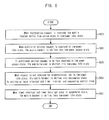
- Fig. 6 is a flowchart showing a method for controlling a low-power state of the mobile handset in accordance with an embodiment of the present invention.
- Fig. 3 illustrates a state machine of a mobile handset in accordance with an embodiment of the present invention.
- the state machine of the mobile handset in accordance with the present invention includes a power-off state 100, an active state 110 and a mobile communication function inactive state 310. Since the power-off state 100 and the active state 110 are the same as those of the conventional handset, additional description of them will be omitted.
- a shifting from the mobile communication function inactive state 310 to the active state 110 and vice versa can be performed by inputting a state shifting signal through a separate key in a keypad or by using a graphic user interface (GUI) of a menu.
- GUI graphic user interface
- a shifting method based on the GUI of the menu provides a timer function so that the mobile handset can be kept in the mobile communication function inactive state 310 for a predetermined time, e.g., intensive working time or sleeping time.
- Fig. 4 illustrates a low-power state of the mobile handset in accordance with an embodiment of the present invention.
- the low-power state of the mobile handset i.e., the mobile communication function in the active state 310
- the low-power state of the mobile handset i.e., the mobile communication function in the active state 310
- a control unit 55 when a control unit 55 receives a mobile communication function inactive request from a user, the control unit 55 cuts off power supplied to modules such as a transmitting unit 51, a receiving unit 52 and a modem unit 53 for the mobile communication function and is shifted into the low-power idle state 312.
- the control unit 55 shifts an original clock frequency into a lower clock frequency by controlling a clock generator 54.
- the clock frequency of the low-power access state 311 may range from 50 to 150 MHz; the clock frequency of the low-power idle state 312 may be from 0 to 50 MHz; and the clock frequency of the suspension state 313 is 0 Hz.
- the clock frequency and the operation voltage of the control unit 55 are decreased. Since the power consumption is proportional to the clock frequency and square of the operation voltage, the low-power state consumes a smaller amount of power than the active state.
- control unit 55 of the mobile handset is shifted into the low-power access state 311.
- the control unit 55 shifts clock frequency of the clock generator 54 to the original frequency and provides the additional function service upon receipt of a user's request.
- control unit 55 if a request is not received from the user for predetermined time in the low-power idle state 312, the control unit 55 is shifted into the suspension state 313.
- the control unit 55 of the mobile handset suspends the mobile communication function and additional functions, sets an input interrupt receiving key inputs from the user and a timer interrupt and suspends the clock frequency of the clock generator 54. Since almost functions of the mobile handset are suspended in the suspension state 313, power is scarcely consumed.
- control unit 55 shifts from the suspension state to the low-power idle state 312.
- the mobile handset of the present invention cannot receive urgent calls in the mobile communication function inactive state, and when the user forgets to convert into the active state, the mobile handset can be the mobile communication function inactive state for very long time.
- the mobile handset may receive the call information such as short messages and absent calls in the mobile communication function inactive state.
- the mobile handset periodically shifts from the mobile communication function inactive state to the active state 110 upon manipulation of a user or a power management program and re-accesses to the mobile communication network for receiving the call information in the mobile communication function inactive state.
- the mobile handset shifts from the mobile communication function inactive state 310 to the active state 110.
- the additional services are still available.
- the mobile handset shifts from the active state to the low-power idle state 312.
- processes handled by the control unit 55 have characteristics of hard real-time, which is sensitive to real-time performance, in the active state 110, it is desirable that the processes have to be operated at the maximum speed.
- processes handled by the control unit 55 have characteristics of soft real-time, which is not sensitive to real-time performance, in the mobile communication function inactive state, the clock frequency can be dynamically adjusted corresponding to loads.
- Fig. 6 is a flowchart showing a method for controlling a low-power state of the mobile handset in accordance with an embodiment of the present invention.
- the mobile handset is shifted into a low-power idle state by blocking power of modules for the mobile communication functions and decreasing frequency of a control clock at step S601.
- the mobile handset is shifted into the low-power access state by increasing the clock frequency at step S602.
- the mobile handset is shifted into the low-power idle state at step S603.
- the mobile handset is shifted into a suspension state by setting up an input interrupt and a timer interrupt and suspending the control clock at step S604.
- the mobile handset is shifted into the low-power idle state at step S605.
- the mobile handset is shifted from the low-power state to the active state, and receives absent messages and absent call records from a base station.
- the mobile handset is shifts into the low-power idle state.
- the above described method according to the present invention can be embodied as a program and be stored on a computer readable recording medium.
- the computer readable recording medium is any data storage device that can store data which can be read by the computer system.
- the computer readable recording medium includes a read-only memory (ROM), a random-access memory (RAM), a CD-ROM, a floppy disk, a hard disk and an optical magnetic disk.
- the present invention can reduce power consumption and eliminate unnecessarily received calls by automatically inactivating a mobile communication functions in a predetermined time or upon manipulation of a user, controlling a control clock and providing a low-power state disconnected with a mobile communication network when the mobile communication functions are not necessary or the user is in a public place and the mobile handset is used for additional functions such as watch, address management, schedule management, camera, voice recording and music playing more than the mobile communication function.
- the present invention can hold call operation with a small amount of power consumption by activating the mobile communication function of the mobile handset in every predetermined time without user's management and providing access and disconnection with the mobile communication network.
Landscapes
- Engineering & Computer Science (AREA)
- Computer Networks & Wireless Communication (AREA)
- Signal Processing (AREA)
- Telephone Function (AREA)
- Mobile Radio Communication Systems (AREA)
Applications Claiming Priority (1)
| Application Number | Priority Date | Filing Date | Title |
|---|---|---|---|
| KR1020060094382A KR100768104B1 (ko) | 2006-09-27 | 2006-09-27 | 이동통신 단말기에서의 저전력 동작 상태 제어 방법 |
Publications (2)
| Publication Number | Publication Date |
|---|---|
| EP1906541A2 true EP1906541A2 (de) | 2008-04-02 |
| EP1906541A3 EP1906541A3 (de) | 2014-01-22 |
Family
ID=38815112
Family Applications (1)
| Application Number | Title | Priority Date | Filing Date |
|---|---|---|---|
| EP07117384.3A Withdrawn EP1906541A3 (de) | 2006-09-27 | 2007-09-27 | Verfahren zur Steuerung des Niedrigverbrauchszustands eines mobilen Handapparats |
Country Status (3)
| Country | Link |
|---|---|
| US (1) | US8868138B2 (de) |
| EP (1) | EP1906541A3 (de) |
| KR (1) | KR100768104B1 (de) |
Cited By (1)
| Publication number | Priority date | Publication date | Assignee | Title |
|---|---|---|---|---|
| CN110012520A (zh) * | 2018-01-05 | 2019-07-12 | 中国移动通信有限公司研究院 | 一种寻呼方法、设备及计算机可读存储介质 |
Families Citing this family (4)
| Publication number | Priority date | Publication date | Assignee | Title |
|---|---|---|---|---|
| JP5539947B2 (ja) * | 2011-11-07 | 2014-07-02 | 株式会社ソニー・コンピュータエンタテインメント | 電子機器 |
| JP2014239401A (ja) * | 2013-06-10 | 2014-12-18 | 富士通株式会社 | 携帯端末装置および周波数制御方法 |
| CN111163504A (zh) * | 2019-12-19 | 2020-05-15 | 上海传英信息技术有限公司 | 一种省电处理方法、移动终端及计算机存储介质 |
| CN119487922A (zh) * | 2022-07-18 | 2025-02-18 | 三星电子株式会社 | 支持twt模式或省电模式的电子装置及其操作方法 |
Family Cites Families (21)
| Publication number | Priority date | Publication date | Assignee | Title |
|---|---|---|---|---|
| JP2001186251A (ja) * | 1999-12-27 | 2001-07-06 | Nec Corp | 携帯情報端末装置及び電源電力供給制御方法 |
| US6725060B1 (en) * | 2000-02-15 | 2004-04-20 | Qualcomm, Incorporated | Method and apparatus for conserving power in an integrated electronic device that includes a PDA and A wireless telephone |
| JP3438135B2 (ja) * | 2000-05-19 | 2003-08-18 | 富士通株式会社 | 情報機器及び省電力モード切替方法及び省電力モード切替プログラムを格納した記録媒体 |
| US20030022704A1 (en) | 2001-07-26 | 2003-01-30 | Inventec Appliances Corp. | Method for saving power of cellular phone |
| US6816977B2 (en) * | 2001-12-03 | 2004-11-09 | Hewlett-Packard Development Company, L.P. | Power reduction in computing devices using micro-sleep intervals |
| JP3879565B2 (ja) | 2002-04-03 | 2007-02-14 | 株式会社日立製作所 | 携帯電話機 |
| JP4030792B2 (ja) | 2002-04-26 | 2008-01-09 | 株式会社ルネサステクノロジ | 無線通信装置及びマイクロコンピュータ |
| US7421291B2 (en) * | 2002-08-12 | 2008-09-02 | Broadcom Corporation | Method for selective power management for a hand held host |
| KR100837062B1 (ko) * | 2002-12-11 | 2008-06-11 | 엘지전자 주식회사 | 이동통신 단말기의 대기 시간 연장 방법 |
| CA2427369A1 (en) * | 2002-12-24 | 2004-06-24 | Research In Motion Limited | Methods and apparatus for controlling power to electrical circuitry of a wireless communication device having a subscriber identity module (sim) interface |
| TWI225982B (en) * | 2003-03-18 | 2005-01-01 | Jeng-Shiung Chen | Power shutdown method of wireless peripheral device |
| KR100547734B1 (ko) * | 2003-06-13 | 2006-01-31 | 삼성전자주식회사 | 직교 주파수 분할 다중 방식을 사용하는 이동 통신시스템에서 매체 접속 제어 계층의 동작 상태 제어 방법 |
| US20040259540A1 (en) * | 2003-06-19 | 2004-12-23 | International Business Machines Corporation | Method and apparatus for providing an indication of a reason for a power-off state of a mobile communication device |
| US7200379B2 (en) * | 2004-03-26 | 2007-04-03 | Broadcom Corporation | Low-power mode clock management for wireless communication devices |
| JP4628162B2 (ja) * | 2004-04-16 | 2011-02-09 | 株式会社ソニー・コンピュータエンタテインメント | 通信端末装置、通信システムおよび電力制御方法 |
| US8036710B2 (en) * | 2004-05-07 | 2011-10-11 | Qualcomm, Incorporated | Power-efficient multi-antenna wireless device |
| US7315521B2 (en) * | 2004-06-29 | 2008-01-01 | Intel Corporation | Mobile computing device to provide virtual office usage model |
| KR101176487B1 (ko) | 2004-08-10 | 2012-08-22 | 엘지전자 주식회사 | 이동통신 단말기 및 그 전원절약방법 |
| US7406341B2 (en) * | 2005-02-25 | 2008-07-29 | Intel Corporation | Receive-aware power saving in a wireless communications device |
| KR100614940B1 (ko) * | 2005-06-16 | 2006-08-25 | 삼성전기주식회사 | 휴대폰 절전 방법 및 그 장치 |
| US8532718B2 (en) * | 2005-10-06 | 2013-09-10 | Broadcom Corporation | Mobile communication device with low power signal detector |
-
2006
- 2006-09-27 KR KR1020060094382A patent/KR100768104B1/ko not_active Expired - Fee Related
-
2007
- 2007-09-25 US US11/860,595 patent/US8868138B2/en not_active Expired - Fee Related
- 2007-09-27 EP EP07117384.3A patent/EP1906541A3/de not_active Withdrawn
Cited By (2)
| Publication number | Priority date | Publication date | Assignee | Title |
|---|---|---|---|---|
| CN110012520A (zh) * | 2018-01-05 | 2019-07-12 | 中国移动通信有限公司研究院 | 一种寻呼方法、设备及计算机可读存储介质 |
| CN110012520B (zh) * | 2018-01-05 | 2022-04-26 | 中国移动通信有限公司研究院 | 一种寻呼方法、设备及计算机可读存储介质 |
Also Published As
| Publication number | Publication date |
|---|---|
| EP1906541A3 (de) | 2014-01-22 |
| US20080076485A1 (en) | 2008-03-27 |
| US8868138B2 (en) | 2014-10-21 |
| KR100768104B1 (ko) | 2007-10-17 |
Similar Documents
| Publication | Publication Date | Title |
|---|---|---|
| CN100420158C (zh) | 在包含个人数字助理和无线电话的集成电子装置中省电的方法和设备 | |
| CN101124789B (zh) | 用于提供通信代理系统的方法和装置 | |
| RU2488221C2 (ru) | Спящий режим для устройства мобильной связи | |
| US6560453B1 (en) | Systems, methods, and computer program products for dynamically adjusting the paging channel monitoring frequency of a mobile terminal based on the operating environment | |
| US7408887B2 (en) | Methods and apparatus for operating a wireless electronic device based on usage pattern | |
| US8032190B2 (en) | System and method for facilitating short-range wireless communications between a mobile wireless device and an auxiliary system | |
| CN107071799A (zh) | 网络切片配置方法及装置、无线接入网ran节点和终端 | |
| AU2007243496A1 (en) | Method of controlling wakeup frequency in a wireless communication system | |
| CN101404828A (zh) | 双待机模式移动终端及其通信模式控制方法 | |
| US8868138B2 (en) | Method for controlling low-power state in mobile handset | |
| CN1832494A (zh) | 通信终端的操作模式的控制方法和设备 | |
| KR100820325B1 (ko) | 이동 통신 단말기에서 초절전 모드의 제공 방법 및 장치 | |
| US20040203976A1 (en) | Power management for nodes coupled to a communication link | |
| KR20050023822A (ko) | 이동통신단말기에서 저전력모드 수행 방법 | |
| US20060121954A1 (en) | Power consumption management for the playback of multimedia messages | |
| US20100016017A1 (en) | Power saving mobile phone and method thereof | |
| CN114390654A (zh) | 5g移动终端的智能控制方法和装置、存储介质、移动终端 | |
| EP2373098B1 (de) | Automatisierte Leistungsverwaltung eines Peripheriegerätes | |
| CN201286125Y (zh) | 一种手机来电短期阻止系统 | |
| JP2008278050A (ja) | 無線通信端末装置 | |
| KR20020046057A (ko) | 휴대폰의 절전 방법 | |
| KR20000056042A (ko) | 슬롯 모드 강제 할당을 이용한 이동통신 단말기의 전류 소모 감소방법 | |
| KR20090034237A (ko) | 단말기 상태 표시 방법 및 시스템 | |
| KR20030002934A (ko) | 이동통신 단말기의 타이머 장치 및 이를 이용한 제어방법 |
Legal Events
| Date | Code | Title | Description |
|---|---|---|---|
| PUAI | Public reference made under article 153(3) epc to a published international application that has entered the european phase |
Free format text: ORIGINAL CODE: 0009012 |
|
| AK | Designated contracting states |
Kind code of ref document: A2 Designated state(s): AT BE BG CH CY CZ DE DK EE ES FI FR GB GR HU IE IS IT LI LT LU LV MC MT NL PL PT RO SE SI SK TR |
|
| AX | Request for extension of the european patent |
Extension state: AL BA HR MK YU |
|
| PUAL | Search report despatched |
Free format text: ORIGINAL CODE: 0009013 |
|
| AK | Designated contracting states |
Kind code of ref document: A3 Designated state(s): AT BE BG CH CY CZ DE DK EE ES FI FR GB GR HU IE IS IT LI LT LU LV MC MT NL PL PT RO SE SI SK TR |
|
| AX | Request for extension of the european patent |
Extension state: AL BA HR MK RS |
|
| RIC1 | Information provided on ipc code assigned before grant |
Ipc: H04B 1/16 20060101AFI20131217BHEP Ipc: H04W 52/02 20090101ALI20131217BHEP |
|
| 17P | Request for examination filed |
Effective date: 20140722 |
|
| RBV | Designated contracting states (corrected) |
Designated state(s): AT BE BG CH CY CZ DE DK EE ES FI FR GB GR HU IE IS IT LI LT LU LV MC MT NL PL PT RO SE SI SK TR |
|
| AKX | Designation fees paid |
Designated state(s): AT BE BG CH CY CZ DE DK EE ES FI FR GB GR HU IE IS IT LI LT LU LV MC MT NL PL PT RO SE SI SK TR |
|
| STAA | Information on the status of an ep patent application or granted ep patent |
Free format text: STATUS: THE APPLICATION IS DEEMED TO BE WITHDRAWN |
|
| 18D | Application deemed to be withdrawn |
Effective date: 20140723 |
|
| R17P | Request for examination filed (corrected) |
Effective date: 20070927 |