EP1906306A2 - System und Verfahren zur Erhöhung der Plattformstart-Effizienz - Google Patents
System und Verfahren zur Erhöhung der Plattformstart-Effizienz Download PDFInfo
- Publication number
- EP1906306A2 EP1906306A2 EP07253877A EP07253877A EP1906306A2 EP 1906306 A2 EP1906306 A2 EP 1906306A2 EP 07253877 A EP07253877 A EP 07253877A EP 07253877 A EP07253877 A EP 07253877A EP 1906306 A2 EP1906306 A2 EP 1906306A2
- Authority
- EP
- European Patent Office
- Prior art keywords
- boot
- partition
- memory
- platform
- boot target
- Prior art date
- Legal status (The legal status is an assumption and is not a legal conclusion. Google has not performed a legal analysis and makes no representation as to the accuracy of the status listed.)
- Withdrawn
Links
Images
Classifications
-
- G—PHYSICS
- G06—COMPUTING OR CALCULATING; COUNTING
- G06F—ELECTRIC DIGITAL DATA PROCESSING
- G06F9/00—Arrangements for program control, e.g. control units
- G06F9/06—Arrangements for program control, e.g. control units using stored programs, i.e. using an internal store of processing equipment to receive or retain programs
- G06F9/44—Arrangements for executing specific programs
- G06F9/4401—Bootstrapping
-
- G—PHYSICS
- G06—COMPUTING OR CALCULATING; COUNTING
- G06F—ELECTRIC DIGITAL DATA PROCESSING
- G06F9/00—Arrangements for program control, e.g. control units
- G06F9/06—Arrangements for program control, e.g. control units using stored programs, i.e. using an internal store of processing equipment to receive or retain programs
- G06F9/22—Microcontrol or microprogram arrangements
- G06F9/24—Loading of the microprogram
-
- G—PHYSICS
- G06—COMPUTING OR CALCULATING; COUNTING
- G06F—ELECTRIC DIGITAL DATA PROCESSING
- G06F9/00—Arrangements for program control, e.g. control units
- G06F9/06—Arrangements for program control, e.g. control units using stored programs, i.e. using an internal store of processing equipment to receive or retain programs
- G06F9/44—Arrangements for executing specific programs
- G06F9/455—Emulation; Interpretation; Software simulation, e.g. virtualisation or emulation of application or operating system execution engines
- G06F9/45533—Hypervisors; Virtual machine monitors
- G06F9/45558—Hypervisor-specific management and integration aspects
-
- G—PHYSICS
- G06—COMPUTING OR CALCULATING; COUNTING
- G06F—ELECTRIC DIGITAL DATA PROCESSING
- G06F9/00—Arrangements for program control, e.g. control units
- G06F9/06—Arrangements for program control, e.g. control units using stored programs, i.e. using an internal store of processing equipment to receive or retain programs
- G06F9/44—Arrangements for executing specific programs
- G06F9/455—Emulation; Interpretation; Software simulation, e.g. virtualisation or emulation of application or operating system execution engines
- G06F9/45533—Hypervisors; Virtual machine monitors
- G06F9/45558—Hypervisor-specific management and integration aspects
- G06F2009/45579—I/O management, e.g. providing access to device drivers or storage
Definitions
- An embodiment of the present invention relates generally to computing platforms and, more specifically, to decreasing boot time by utilizing virtualization or partitioning techniques.
- a hypervisor/platform partition will control the platform and allow for the initialization of a remaining main partition.
- booting comprises powering on the platform and proceeding to the point of getting a user login prompt or being able to run user applications.
- OS operating system
- the time required to launch an operating system (OS) may vary based on the complexity of the OS.
- a typical desktop platform may take 7.5 seconds to boot to launch of the OS.
- the actual standards are driven by the industry as a whole. This is also evident in the server environment to accommodate highly available systems. The shorter the boot time, the more available the server will be after maintenance or crash. Faster boot times are extremely desirable in systems having a requirement to be highly available/reliable or in Internet cafés where systems are rebooted after each user's session.
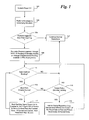
- Figure 1 is a flow diagram showing an exemplary method for boot caching, according to an embodiment of the invention
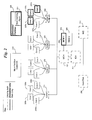
- FIG. 2 is a block diagram showing a boot caching agent residing in an embedded partition on a platform with multiple partitions, according to an embodiment of the invention.
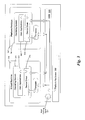
- FIG. 3 is a block diagram of an exemplary platform where the boot caching agent resides in a virtual machine monitor (VMM), according to an embodiment of the invention.
- VMM virtual machine monitor
- An embodiment of the present invention is a system and method relating to speeding boot time using a boot caching agent.
- the present invention is intended to cache selected boot target data in a fast memory, typically volatile system memory, and intercept requests to access the cached boot target data rather than read the data from a slower boot target memory, on a reboot or reset.
- a virtual machine monitor (VMM) or hypervisor is used to effectuate a more efficient boot.
- VMM may keep track of the system during boot.
- the VMM virtualizes access to hardware and provides abstractions for certain devices. Some devices may be made visible to the operating system (OS) while it is booting, while other devices are hidden from the OS during boot, by the VMM.
- OS operating system
- PRLs platform resource layers
- a platform resource layer may be implemented as a chipset assisted topology that may be enabled in future silicon product releases, for instance, from Intel Corporation.
- PRL platform resource layer
- These chipset features may support the ability to provide for hardware assisted, yet software programmable isolation, of various execution environments.
- This chipset provides measured solution which simulates many of the control points of traditional software VMMs, but is accomplished via hardware assistance in various components of the underlying platform hardware/chipset.
- This chipset assisted topology allows multiple partitions to be defined on a platform. An embedded, or system partition may control the boot process, as further described below.
- a boot caching agent which may be part of the VMM, monitors what the platform is doing during boot.
- the agent is relatively static. In a traditional environment, one would pull the power plug and the entire system acquiesces and the boot starts over from the beginning. However, parts of the system remain fairly static and starting from scratch is often unnecessary. Pieces of the system may remain sentient, i.e., resident and operational, while the platform is booting.
- the hardware is initialized; the boot target is determined; boot code is loaded from target media and executed; etc. In all, hundreds of megabytes of data may be required to be read from the boot target media.
- the OS may be loaded from disk, as well as, required drivers.
- a caching agent monitors the boot process and may store information about portions of the boot process in system memory (RAM), including information retrieved from the boot target.
- RAM system memory
- This memory is typically fast and highly accessible to processors on the platform.
- the OS loader retrieves a certain amount of data and instructions from the boot target, typically a hard drive.
- the boot caching agent monitors the retrieval of this data up to a predetermined point, and may copy or mirror the information in a portion of system memory. This method takes advantage of the fact that the likelihood is that when the system is booted again, this same information will be required, with little or no modification.
- the firmware loads the first sector of data (i.e., boot record) from the hard drive (boot target media), and then the boot record which was populated on the hard drive by the operating system acts as an OS loader.
- the OS application often known as the OS loader
- the OS loader proceeds to load the remaining data needed for booting from the boot target media. This remaining data is often unmodified from the previous boot.
- the boot caching agent may provide this data to the OS or firmware and avoid having to access a slower media device, such as a hard drive.
- a boot caching agent may have dedicated resources, for instance, a separate processor, memory, etc.
- the boot caching agent may store and retrieve boot data from dedicated resources that are not available to the main OS.
- the OS dedicated memory is initialized as usual, but this does not interfere with memory dedicated to the boot caching agent.
- FIG. 1 there is shown an exemplary method for a boot caching agent, according to embodiments of the invention.
- the system is powered on, or a reset request is made in block 101.
- the underlying structure of platform is initialized, if necessary, for instance, when booting for the first time, in block 103.
- a determination is made as to whether the platform supports boot path caching in block 105. If not, the platform continues to boot from the boot target media in block 107.
- the platform supports boot path caching, then the requisite routing of data is enabled, in block 109.
- the VMM virtualizes I/O access and enables the boot caching agent to control data retrieval from the boot media.
- the boot caching agent is enabled to mirror the sector data in a volatile store and index the sectors retrieved, for later use.
- the boot caching agent residing in the embedded platform controls device access automatically, and is enabled to mirror the boot data in partitioned memory, for later use.
- the boot caching agent intercepts the requests to read boot data from the boot target. If a requested sector is located in the boot caching agent index, then the sector is retrieved from the volatile store instead of the boot target media.
- the method used for interception depends on platform architecture, i.e., VMM or chipset partitioning (PRL).
- normal operations i.e., normal boot, may be resumed in block 107.
- a target policy may be consulted to determine whether the boot data should be cached. For instance, in some cases, a platform may be enabled to boot both Microsoft® WindowsTM and Linux®. There may be limited memory available for caching boot target data and a user may choose to only cache data for one operating system or the other. Boot data may then be cached based on which boot target has been selected for reset/boot. In other cases, a frequency of use for the boot target may be saved and only the most frequently used boot target is to be cached. In other cases, the boot target, or a portion thereof, will always be cached. It will be understood by one of ordinary skill in the art that various policies may be tailored for platforms having different functions.
- the sectors retrieved from the boot target are mirrored in a volatile or faster store, in block 119. While embodiments of the present invention describe caching the data in volatile memory, it is contemplated that any memory may be used for caching that is faster than the boot target and still reap the benefits of the disclosed method.
- processing continues again at block 111 to determine whether the main partition should be rebooted and whether data may be retrieved from a fast store, as opposed to the boot target media.
- the VMM acts as an intermediary to reset requests.
- the VMM intercepts the reset request and resets only the portion of memory and resources used by the virtual machine running the OS making the request. Other components of the platform may not be reset.
- the chipset may act as the intermediary and intercept the reset request.
- PRL platform resource layer
- embedded partition architecture various components of the platform are enhanced to enable partitioning of processor, memory and other resources.
- FIG 2 there is shown an exemplary block diagram of a PRL architecture, according to embodiments of the invention.
- components that are available to the main partition 210 are drawn with solid blocks.
- Components available to the embedded, or system partition 220 are drawn with bold, solid blocks.
- Components available to both partitions are drawn with a block alternating with dots and dashes.
- a platform has four multi-core processors in Sockets 0-3 (231-234). While this example shows only four processor sockets, it will be apparent to one of ordinary skill in the art that various configurations of processors and cores may be used to practice embodiments of the invention.
- Socket 0 (231) may have four processing cores 235a-d.
- the illustrated embodiment has 16 effective processors on the platform (e.g., four sockets with four cores in each socket).
- Sockets 0-2 (231-233) are available only to the main partition 210.
- Socket 3 (234) is available to both the main partition 210 and to the embedded partition 220.
- core 0 is available only to the main partition 210
- cores 1-3 are available only to the embedded partition 220.
- the embedded partition 220 has the boot caching agent 221, as more fully discussed above and below.
- the platform has a memory controller hub (MCH) 201 (also known as north bridge ) coupled to memory 202.
- Memory 202 may have two partitions MEM1 (203) and MEM2 (205).
- Memory partition MEM1 (203) is available only to the embedded partition and memory partition MEM2 (205) is available only to the main partition.
- the chipset containing the MCH is configured to partition the memory using hardware constructs, in contrast to a VMM solution which uses software constructs.
- memory 202 may be a hard disk, a floppy disk, random access memory (RAM), read only memory (ROM), flash memory, or any other type of medium readable by processor.
- Memory 202 may store instructions for performing the execution of embodiments of the present invention. While only two partitions are shown in this example, it will be understood that there may be more than one guest OS, each running in its own partition.
- the MCH 201 may communicate with an I/O controller hub (ICH) 207, also known as South bridge, via a peripheral component interconnect (PCI) bus.
- the ICH 207 may be coupled to one or more components such as PCI hard drives, legacy components such as IDE, USB, LAN and Audio, and a Super I/O (SIO) controller via a low pin count (LPC) bus (not shown).
- the ICH 207 is shown coupled to a hard disk drive 209 and to a network interface controller (NIC) 211.
- NIC network interface controller
- the MCH 201 is configured to control accesses to memory and the ICH 207 is configured to control I/O accesses.
- the chipset is configured by the firmware, upon boot, to partition the various resources on the platform. In some cases, there may be only one partition and the platform acts like a legacy platform in most respects. In the example shown, there are two partitions, a main partition 210 and an embedded partition 220. Each partition designated is given a unique partition identifier (ID).
- ID partition identifier
- an embedded partition configuration when a device sends an alert, the chipset may properly route the alert to the appropriate partition, as this information is encoded at boot time.
- the hardware passes the device alerts to the VMM (virtualized devices) and the software routes the information appropriately to the various virtual machines.
- An embedded partition may act as hardware assisted virtualization.
- a boot caching agent is embodied within a VMM which controls all guest virtual machines (VMs) and guest operating systems (OS's) running on the platform.
- the boot caching agent is embodied in a privileged partition, process or hypervisor that controls I/O requests for individual OS's.
- the boot caching agent selectively mirrors data retrieved from boot or other target media during an initial boot and returns this data upon subsequent boots to avoid reading from slower media.
- device access is virtualized and the boot caching agent acts as a software intermediary to retrieve data from the device.
- a virtual machine (VM) 310 has a guest OS 311.
- Various user applications 313 may run under the guest OS 311.
- the OS has device drivers 315 which may be virtualized within the VMM 320.
- Access to platform hardware 330, including a boot target (not shown) will require the use of the VMM.
- a boot caching agent 321 within the VMM 320 may intercept device access to the boot target and control whether sectors are read from the slower boot target or faster volatile memory.
- a platform partition, or more privileged partition 340 having its own OS 341, user applications 343, device drivers 345 is shown.
- This platform partition may also have virtualized devices via the VMM 320.
- the boot caching agent will cache boot target data for this partition, as well.
- the boot caching agent caches information based on sectors, or logical block addresses, requested during boot. During the boot process, specific sectors are read from the boot media and these sectors are mirrored by the cache boot agent to partitioned or dedicated volatile memory. In an embodiment, the boot caching agent stores an index of the stored sectors in a buffer, along with the actual sector data. During a subsequent reboot, the boot caching agent intercepts requests to read from the boot media. If a sector is requested that has been previously mirrored to the volatile store, the boot caching agent returns this data at a significant time savings compared to reading the data from a non-volatile memory store (boot media).
- boot media non-volatile memory store
- the techniques described herein are not limited to any particular hardware or software configuration; they may find applicability in any computing, consumer electronics, or processing environment.
- the techniques may be implemented in hardware, software, or a combination of the two.
- program code may represent hardware using a hardware description language or another functional description language which essentially provides a model of how designed hardware is expected to perform.
- Program code may be assembly or machine language, or data that may be compiled and/or interpreted.
- Each program may be implemented in a high level procedural or object-oriented programming language to communicate with a processing system.
- programs may be implemented in assembly or machine language, if desired. In any case, the language may be compiled or interpreted.
- Program instructions may be used to cause a general-purpose or special-purpose processing system that is programmed with the instructions to perform the operations described herein. Alternatively, the operations may be performed by specific hardware components that contain hardwired logic for performing the operations, or by any combination of programmed computer components and custom hardware components.
- the methods described herein may be provided as a computer program product that may include a machine accessible medium having stored thereon instructions that may be used to program a processing system or other electronic device to perform the methods.
- Program code, or instructions may be stored in, for example, volatile and/or non-volatile memory, such as storage devices and/or an associated machine readable or machine accessible medium including solid-state memory, hard-drives, floppy-disks, optical storage, tapes, flash memory, memory sticks, digital video disks, digital versatile discs (DVDs), etc., as well as more exotic mediums such as machine-accessible biological state preserving storage.
- volatile and/or non-volatile memory such as storage devices and/or an associated machine readable or machine accessible medium including solid-state memory, hard-drives, floppy-disks, optical storage, tapes, flash memory, memory sticks, digital video disks, digital versatile discs (DVDs), etc.
- machine-accessible biological state preserving storage such as machine-accessible biological state preserving storage.
- a machine readable medium may include any mechanism for storing, transmitting, or receiving information in a form readable by a machine, and the medium may include a tangible medium through which electrical, optical, acoustical or other form of propagated signals or carrier wave encoding the program code may pass, such as antennas, optical fibers, communications interfaces, etc.
- Program code may be transmitted in the form of packets, serial data, parallel data, propagated signals, etc., and may be used in a compressed or encrypted format.
- Program code may be implemented in programs executing on programmable machines such as mobile or stationary computers, personal digital assistants, set top boxes, cellular telephones and pagers, consumer electronics devices (including DVD players, personal video recorders, personal video players, satellite receivers, stereo receivers, cable TV receivers), and other electronic devices, each including a processor, volatile and/or non-volatile memory readable by the processor, at least one input device and/or one or more output devices.
- Program code may be applied to the data entered using the input device to perform the described embodiments and to generate output information. The output information may be applied to one or more output devices.
- embodiments of the disclosed subject matter can be practiced with various computer system configurations, including multiprocessor or multiple-core processor systems, minicomputers, mainframe computers, as well as pervasive or miniature computers or processors that may be embedded into virtually any device.
- embodiments of the disclosed subject matter can also be practiced in distributed computing environments where tasks or portions thereof may be performed by remote processing devices that are linked through a communications network.
Landscapes
- Engineering & Computer Science (AREA)
- Software Systems (AREA)
- Theoretical Computer Science (AREA)
- Physics & Mathematics (AREA)
- General Engineering & Computer Science (AREA)
- General Physics & Mathematics (AREA)
- Computer Security & Cryptography (AREA)
- Stored Programmes (AREA)
- Memory System Of A Hierarchy Structure (AREA)
Applications Claiming Priority (1)
| Application Number | Priority Date | Filing Date | Title |
|---|---|---|---|
| US11/541,242 US8082431B2 (en) | 2006-09-29 | 2006-09-29 | System and method for increasing platform boot efficiency |
Publications (2)
| Publication Number | Publication Date |
|---|---|
| EP1906306A2 true EP1906306A2 (de) | 2008-04-02 |
| EP1906306A3 EP1906306A3 (de) | 2009-06-10 |
Family
ID=38935894
Family Applications (1)
| Application Number | Title | Priority Date | Filing Date |
|---|---|---|---|
| EP07253877A Withdrawn EP1906306A3 (de) | 2006-09-29 | 2007-09-28 | System und Verfahren zur Erhöhung der Plattformstart-Effizienz |
Country Status (5)
| Country | Link |
|---|---|
| US (1) | US8082431B2 (de) |
| EP (1) | EP1906306A3 (de) |
| JP (1) | JP5001773B2 (de) |
| KR (1) | KR20080029947A (de) |
| CN (1) | CN101226478B (de) |
Cited By (1)
| Publication number | Priority date | Publication date | Assignee | Title |
|---|---|---|---|---|
| EP2251781A1 (de) * | 2009-04-20 | 2010-11-17 | Intel Corporation | Booten eines Betriebssystems eines System mit einer Vorauslesetechnik |
Families Citing this family (23)
| Publication number | Priority date | Publication date | Assignee | Title |
|---|---|---|---|---|
| WO2010100757A1 (ja) * | 2009-03-06 | 2010-09-10 | 富士通株式会社 | 演算処理システム、再同期方法、およびファームプログラム |
| JP5333579B2 (ja) * | 2009-03-30 | 2013-11-06 | 富士通株式会社 | 管理サーバ、ブートサーバ、ネットワークブートシステムおよびネットワークブート方法 |
| JP5460167B2 (ja) * | 2009-07-31 | 2014-04-02 | キヤノン株式会社 | 情報処理装置、情報処理装置の制御方法及び制御プログラム |
| US20110225408A1 (en) * | 2010-03-10 | 2011-09-15 | Ren Guo | Cache boot mechanism |
| JP5692590B2 (ja) * | 2011-04-20 | 2015-04-01 | 日本電気株式会社 | リブート、ブート、シャットダウン高速化装置並びにリブート、ブート、シャットダウン高速化方法 |
| KR20130068630A (ko) * | 2011-12-15 | 2013-06-26 | 한국전자통신연구원 | 임베디드 디바이스의 초기화 방법 및 장치 |
| AU2012375273B2 (en) * | 2012-03-31 | 2016-05-26 | Intel Corporation | Method and system for verifying proper operation of a computing device after a system change |
| CN102707966B (zh) | 2012-04-12 | 2014-09-03 | 腾讯科技(深圳)有限公司 | 加速操作系统启动的方法及装置、预取信息生成方法及装置和终端 |
| KR101997079B1 (ko) * | 2012-07-26 | 2019-07-08 | 삼성전자주식회사 | 가변 저항 메모리를 포함하는 저장 장치 및 그것의 동작 방법 |
| CA2887601C (en) | 2012-10-15 | 2020-08-25 | Verifi Llc | Sneak water detection for concrete delivery vehicles |
| US9110677B2 (en) * | 2013-03-14 | 2015-08-18 | Sandisk Technologies Inc. | System and method for predicting and improving boot-up sequence |
| CN103929678A (zh) * | 2014-05-07 | 2014-07-16 | 上海联彤网络通讯技术有限公司 | 基于安全电视子系统实现智能机顶盒服务的系统及方法 |
| US9684532B2 (en) | 2014-08-22 | 2017-06-20 | Netapp, Inc. | Virtual machine reboot information persistence into host memory |
| KR102379202B1 (ko) | 2015-09-30 | 2022-03-28 | 삼성전자주식회사 | 전자 장치 및 그 부팅 방법 |
| US9898307B2 (en) * | 2015-12-21 | 2018-02-20 | Intel Corporation | Starting application processors of a virtual machine |
| US9952890B2 (en) * | 2016-02-29 | 2018-04-24 | Red Hat Israel, Ltd. | Kernel state data collection in a protected kernel environment |
| KR102327065B1 (ko) * | 2016-03-10 | 2021-11-16 | 에스케이텔레콤 주식회사 | 부트워킹셋을 이용한 가상머신 프로비저닝 가속장치와 가상머신 관리장치 및 방법 |
| US9965315B1 (en) | 2016-06-17 | 2018-05-08 | Rockwell Collins, Inc. | Multi-core guest operating system loading approach |
| US10474473B2 (en) * | 2017-04-11 | 2019-11-12 | Intel Corporation | Technology to facilitate rapid booting with high-speed and low-speed nonvolatile memory |
| KR102570033B1 (ko) * | 2018-05-18 | 2023-08-23 | 이슬기 | 가상화 시스템 |
| US11249791B2 (en) * | 2019-04-30 | 2022-02-15 | Acronis International Gmbh | System and method of selectively restoring a computer system to an operational state |
| CA3146521C (en) * | 2021-02-02 | 2026-01-20 | The Boeing Company | System and method of timekeeping for a virtual machine having multiple virtual processing cores |
| US11972265B2 (en) | 2022-04-22 | 2024-04-30 | Red Hat, Inc. | Parallel booting operating system |
Family Cites Families (16)
| Publication number | Priority date | Publication date | Assignee | Title |
|---|---|---|---|---|
| JP2970589B2 (ja) | 1997-04-18 | 1999-11-02 | 日本電気株式会社 | 大規模メモリを用いた高速システム起動方式 |
| JP2001101034A (ja) * | 1999-09-29 | 2001-04-13 | Hitachi Ltd | 異種os間制御による障害復旧方法 |
| US7487330B2 (en) * | 2001-05-02 | 2009-02-03 | International Business Machines Corporations | Method and apparatus for transferring control in a computer system with dynamic compilation capability |
| US6965989B1 (en) * | 2001-08-14 | 2005-11-15 | Network Appliance, Inc. | System and method for fast reboot of a file server |
| US20030142561A1 (en) | 2001-12-14 | 2003-07-31 | I/O Integrity, Inc. | Apparatus and caching method for optimizing server startup performance |
| US7272664B2 (en) * | 2002-12-05 | 2007-09-18 | International Business Machines Corporation | Cross partition sharing of state information |
| ES2315469T3 (es) * | 2003-04-09 | 2009-04-01 | Virtuallogix Sa | Sistemas operativos. |
| WO2004090719A2 (en) * | 2003-04-09 | 2004-10-21 | Jaluna Sa | Operating systems |
| US7127600B2 (en) | 2003-09-30 | 2006-10-24 | Intel Corporation | Aggressive content pre-fetching during pre-boot runtime to support speedy OS booting |
| US7376949B2 (en) | 2003-10-01 | 2008-05-20 | Hewlett-Packard Development Company, L.P. | Resource allocation and protection in a multi-virtual environment |
| US7496961B2 (en) * | 2003-10-15 | 2009-02-24 | Intel Corporation | Methods and apparatus to provide network traffic support and physical security support |
| US7162560B2 (en) * | 2003-12-31 | 2007-01-09 | Intel Corporation | Partitionable multiprocessor system having programmable interrupt controllers |
| US7296143B2 (en) | 2004-06-22 | 2007-11-13 | Lenovo (Singapore) Pte. Ltd. | Method and system for loading processor boot code from serial flash memory |
| JP2006126987A (ja) * | 2004-10-27 | 2006-05-18 | Ricoh Co Ltd | 画像処理装置 |
| US20060136664A1 (en) * | 2004-12-16 | 2006-06-22 | Trika Sanjeev N | Method, apparatus and system for disk caching in a dual boot environment |
| US7398382B2 (en) | 2004-12-29 | 2008-07-08 | Intel Corporation | Method and apparatus to enhance platform boot efficiency |
-
2006
- 2006-09-29 US US11/541,242 patent/US8082431B2/en not_active Expired - Fee Related
-
2007
- 2007-09-28 EP EP07253877A patent/EP1906306A3/de not_active Withdrawn
- 2007-09-29 CN CN200710192949.6A patent/CN101226478B/zh not_active Expired - Fee Related
- 2007-10-01 KR KR1020070098869A patent/KR20080029947A/ko not_active Ceased
- 2007-10-01 JP JP2007257926A patent/JP5001773B2/ja not_active Expired - Fee Related
Cited By (3)
| Publication number | Priority date | Publication date | Assignee | Title |
|---|---|---|---|---|
| EP2251781A1 (de) * | 2009-04-20 | 2010-11-17 | Intel Corporation | Booten eines Betriebssystems eines System mit einer Vorauslesetechnik |
| EP3032411A1 (de) * | 2009-04-20 | 2016-06-15 | Intel Corporation | Booten eines Betriebssystems eines System mit einer Vorauslesetechnik |
| US10073703B2 (en) | 2009-04-20 | 2018-09-11 | Intel Corporation | Booting an operating system of a system using a read ahead technique |
Also Published As
| Publication number | Publication date |
|---|---|
| US20080082808A1 (en) | 2008-04-03 |
| KR20080029947A (ko) | 2008-04-03 |
| EP1906306A3 (de) | 2009-06-10 |
| JP2008135009A (ja) | 2008-06-12 |
| US8082431B2 (en) | 2011-12-20 |
| CN101226478A (zh) | 2008-07-23 |
| CN101226478B (zh) | 2014-10-22 |
| JP5001773B2 (ja) | 2012-08-15 |
Similar Documents
| Publication | Publication Date | Title |
|---|---|---|
| EP1906306A2 (de) | System und Verfahren zur Erhöhung der Plattformstart-Effizienz | |
| US8688965B2 (en) | System and method for increasing platform network boot efficiency | |
| CN102707900B (zh) | 虚拟盘存储技术 | |
| US9152573B2 (en) | Sharing memory pages having regular expressions within a virtual machine | |
| US9020801B2 (en) | Cluster-based operating system-agnostic virtual computing system | |
| US9575786B2 (en) | System and method for raw device mapping in traditional NAS subsystems | |
| US9529620B1 (en) | Transparent virtual machine offloading in a heterogeneous processor | |
| US7792918B2 (en) | Migration of a guest from one server to another | |
| US20120066677A1 (en) | On demand virtual machine image streaming | |
| US20050216920A1 (en) | Use of a virtual machine to emulate a hardware device | |
| US20080162680A1 (en) | Internet memory access | |
| US9043789B2 (en) | Managing safe removal of a passthrough device in a virtualization system | |
| US20090307444A1 (en) | Systems and Methods For Virtualizing Storage For WPAR Clients Using Node Port ID Virtualization | |
| US20060005003A1 (en) | Method for guest operating system integrity validation | |
| US9058196B2 (en) | Host machine level template caching in virtualization environments | |
| US20140068606A1 (en) | Activity based device removal management | |
| US20080244212A1 (en) | System and method to enable hierarchical data spilling | |
| US20070038996A1 (en) | Remote I/O for virtualized systems | |
| US10742491B2 (en) | Reducing initial network launch time of container applications | |
| US10592425B2 (en) | Virtualizing NVDIMM WPQ flushing with minimal overhead | |
| US10387187B2 (en) | Saving data for virtual machine (VM) sessions upon update of host operating system | |
| Ngoc et al. | HyperTP: A unified approach for live hypervisor replacement in datacenters | |
| US9229763B2 (en) | Virtual media shelf | |
| Rehr et al. | The PS3 Grid-Resource Model. | |
| CN119213416A (zh) | 针对冲刷加重新加载高速缓存侧通道攻击减轻的系统和方法 |
Legal Events
| Date | Code | Title | Description |
|---|---|---|---|
| PUAI | Public reference made under article 153(3) epc to a published international application that has entered the european phase |
Free format text: ORIGINAL CODE: 0009012 |
|
| AK | Designated contracting states |
Kind code of ref document: A2 Designated state(s): AT BE BG CH CY CZ DE DK EE ES FI FR GB GR HU IE IS IT LI LT LU LV MC MT NL PL PT RO SE SI SK TR |
|
| AX | Request for extension of the european patent |
Extension state: AL BA HR MK YU |
|
| 17P | Request for examination filed |
Effective date: 20080325 |
|
| PUAL | Search report despatched |
Free format text: ORIGINAL CODE: 0009013 |
|
| AK | Designated contracting states |
Kind code of ref document: A3 Designated state(s): AT BE BG CH CY CZ DE DK EE ES FI FR GB GR HU IE IS IT LI LT LU LV MC MT NL PL PT RO SE SI SK TR |
|
| AX | Request for extension of the european patent |
Extension state: AL BA HR MK RS |
|
| 17Q | First examination report despatched |
Effective date: 20090805 |
|
| AKX | Designation fees paid |
Designated state(s): AT BE BG CH CY CZ DE DK EE ES FI FR GB GR HU IE IS IT LI LT LU LV MC MT NL PL PT RO SE SI SK TR |
|
| STAA | Information on the status of an ep patent application or granted ep patent |
Free format text: STATUS: THE APPLICATION IS DEEMED TO BE WITHDRAWN |
|
| 18D | Application deemed to be withdrawn |
Effective date: 20131029 |