EP1904460B1 - Multidentate aza ligands able to complex metal ions and the use thereof in diagnostics and therapy - Google Patents
Multidentate aza ligands able to complex metal ions and the use thereof in diagnostics and therapy Download PDFInfo
- Publication number
- EP1904460B1 EP1904460B1 EP06777373A EP06777373A EP1904460B1 EP 1904460 B1 EP1904460 B1 EP 1904460B1 EP 06777373 A EP06777373 A EP 06777373A EP 06777373 A EP06777373 A EP 06777373A EP 1904460 B1 EP1904460 B1 EP 1904460B1
- Authority
- EP
- European Patent Office
- Prior art keywords
- compound
- formula
- group
- mmol
- amino
- Prior art date
- Legal status (The legal status is an assumption and is not a legal conclusion. Google has not performed a legal analysis and makes no representation as to the accuracy of the status listed.)
- Active
Links
Images

Classifications
-
- C—CHEMISTRY; METALLURGY
- C07—ORGANIC CHEMISTRY
- C07C—ACYCLIC OR CARBOCYCLIC COMPOUNDS
- C07C209/00—Preparation of compounds containing amino groups bound to a carbon skeleton
- C07C209/62—Preparation of compounds containing amino groups bound to a carbon skeleton by cleaving carbon-to-nitrogen, sulfur-to-nitrogen, or phosphorus-to-nitrogen bonds, e.g. hydrolysis of amides, N-dealkylation of amines or quaternary ammonium compounds
-
- A—HUMAN NECESSITIES
- A61—MEDICAL OR VETERINARY SCIENCE; HYGIENE
- A61K—PREPARATIONS FOR MEDICAL, DENTAL OR TOILETRY PURPOSES
- A61K49/00—Preparations for testing in vivo
- A61K49/0002—General or multifunctional contrast agents, e.g. chelated agents
-
- A—HUMAN NECESSITIES
- A61—MEDICAL OR VETERINARY SCIENCE; HYGIENE
- A61K—PREPARATIONS FOR MEDICAL, DENTAL OR TOILETRY PURPOSES
- A61K49/00—Preparations for testing in vivo
- A61K49/06—Nuclear magnetic resonance [NMR] contrast preparations; Magnetic resonance imaging [MRI] contrast preparations
- A61K49/08—Nuclear magnetic resonance [NMR] contrast preparations; Magnetic resonance imaging [MRI] contrast preparations characterised by the carrier
- A61K49/085—Nuclear magnetic resonance [NMR] contrast preparations; Magnetic resonance imaging [MRI] contrast preparations characterised by the carrier conjugated systems
-
- A—HUMAN NECESSITIES
- A61—MEDICAL OR VETERINARY SCIENCE; HYGIENE
- A61K—PREPARATIONS FOR MEDICAL, DENTAL OR TOILETRY PURPOSES
- A61K49/00—Preparations for testing in vivo
- A61K49/06—Nuclear magnetic resonance [NMR] contrast preparations; Magnetic resonance imaging [MRI] contrast preparations
- A61K49/08—Nuclear magnetic resonance [NMR] contrast preparations; Magnetic resonance imaging [MRI] contrast preparations characterised by the carrier
- A61K49/10—Organic compounds
- A61K49/101—Organic compounds the carrier being a complex-forming compound able to form MRI-active complexes with paramagnetic metals
- A61K49/106—Organic compounds the carrier being a complex-forming compound able to form MRI-active complexes with paramagnetic metals the complex-forming compound being cyclic, e.g. DOTA
-
- A—HUMAN NECESSITIES
- A61—MEDICAL OR VETERINARY SCIENCE; HYGIENE
- A61K—PREPARATIONS FOR MEDICAL, DENTAL OR TOILETRY PURPOSES
- A61K49/00—Preparations for testing in vivo
- A61K49/06—Nuclear magnetic resonance [NMR] contrast preparations; Magnetic resonance imaging [MRI] contrast preparations
- A61K49/08—Nuclear magnetic resonance [NMR] contrast preparations; Magnetic resonance imaging [MRI] contrast preparations characterised by the carrier
- A61K49/10—Organic compounds
- A61K49/12—Macromolecular compounds
- A61K49/122—Macromolecular compounds dimers of complexes or complex-forming compounds
-
- A—HUMAN NECESSITIES
- A61—MEDICAL OR VETERINARY SCIENCE; HYGIENE
- A61K—PREPARATIONS FOR MEDICAL, DENTAL OR TOILETRY PURPOSES
- A61K49/00—Preparations for testing in vivo
- A61K49/06—Nuclear magnetic resonance [NMR] contrast preparations; Magnetic resonance imaging [MRI] contrast preparations
- A61K49/08—Nuclear magnetic resonance [NMR] contrast preparations; Magnetic resonance imaging [MRI] contrast preparations characterised by the carrier
- A61K49/10—Organic compounds
- A61K49/14—Peptides, e.g. proteins
-
- A—HUMAN NECESSITIES
- A61—MEDICAL OR VETERINARY SCIENCE; HYGIENE
- A61K—PREPARATIONS FOR MEDICAL, DENTAL OR TOILETRY PURPOSES
- A61K51/00—Preparations containing radioactive substances for use in therapy or testing in vivo
- A61K51/02—Preparations containing radioactive substances for use in therapy or testing in vivo characterised by the carrier, i.e. characterised by the agent or material covalently linked or complexing the radioactive nucleus
- A61K51/04—Organic compounds
- A61K51/08—Peptides, e.g. proteins, carriers being peptides, polyamino acids, proteins
- A61K51/088—Peptides, e.g. proteins, carriers being peptides, polyamino acids, proteins conjugates with carriers being peptides, polyamino acids or proteins
-
- A—HUMAN NECESSITIES
- A61—MEDICAL OR VETERINARY SCIENCE; HYGIENE
- A61P—SPECIFIC THERAPEUTIC ACTIVITY OF CHEMICAL COMPOUNDS OR MEDICINAL PREPARATIONS
- A61P35/00—Antineoplastic agents
-
- A—HUMAN NECESSITIES
- A61—MEDICAL OR VETERINARY SCIENCE; HYGIENE
- A61P—SPECIFIC THERAPEUTIC ACTIVITY OF CHEMICAL COMPOUNDS OR MEDICINAL PREPARATIONS
- A61P43/00—Drugs for specific purposes, not provided for in groups A61P1/00-A61P41/00
-
- A—HUMAN NECESSITIES
- A61—MEDICAL OR VETERINARY SCIENCE; HYGIENE
- A61P—SPECIFIC THERAPEUTIC ACTIVITY OF CHEMICAL COMPOUNDS OR MEDICINAL PREPARATIONS
- A61P7/00—Drugs for disorders of the blood or the extracellular fluid
- A61P7/02—Antithrombotic agents; Anticoagulants; Platelet aggregation inhibitors
-
- A—HUMAN NECESSITIES
- A61—MEDICAL OR VETERINARY SCIENCE; HYGIENE
- A61P—SPECIFIC THERAPEUTIC ACTIVITY OF CHEMICAL COMPOUNDS OR MEDICINAL PREPARATIONS
- A61P9/00—Drugs for disorders of the cardiovascular system
- A61P9/10—Drugs for disorders of the cardiovascular system for treating ischaemic or atherosclerotic diseases, e.g. antianginal drugs, coronary vasodilators, drugs for myocardial infarction, retinopathy, cerebrovascula insufficiency, renal arteriosclerosis
-
- C—CHEMISTRY; METALLURGY
- C07—ORGANIC CHEMISTRY
- C07D—HETEROCYCLIC COMPOUNDS
- C07D243/00—Heterocyclic compounds containing seven-membered rings having two nitrogen atoms as the only ring hetero atoms
- C07D243/06—Heterocyclic compounds containing seven-membered rings having two nitrogen atoms as the only ring hetero atoms having the nitrogen atoms in positions 1 and 4
- C07D243/08—Heterocyclic compounds containing seven-membered rings having two nitrogen atoms as the only ring hetero atoms having the nitrogen atoms in positions 1 and 4 not condensed with other rings
-
- C—CHEMISTRY; METALLURGY
- C07—ORGANIC CHEMISTRY
- C07D—HETEROCYCLIC COMPOUNDS
- C07D243/00—Heterocyclic compounds containing seven-membered rings having two nitrogen atoms as the only ring hetero atoms
- C07D243/06—Heterocyclic compounds containing seven-membered rings having two nitrogen atoms as the only ring hetero atoms having the nitrogen atoms in positions 1 and 4
- C07D243/10—Heterocyclic compounds containing seven-membered rings having two nitrogen atoms as the only ring hetero atoms having the nitrogen atoms in positions 1 and 4 condensed with carbocyclic rings or ring systems
- C07D243/14—1,4-Benzodiazepines; Hydrogenated 1,4-benzodiazepines
-
- C—CHEMISTRY; METALLURGY
- C07—ORGANIC CHEMISTRY
- C07F—ACYCLIC, CARBOCYCLIC OR HETEROCYCLIC COMPOUNDS CONTAINING ELEMENTS OTHER THAN CARBON, HYDROGEN, HALOGEN, OXYGEN, NITROGEN, SULFUR, SELENIUM OR TELLURIUM
- C07F9/00—Compounds containing elements of Groups 5 or 15 of the Periodic Table
- C07F9/02—Phosphorus compounds
- C07F9/28—Phosphorus compounds with one or more P—C bonds
- C07F9/30—Phosphinic acids [R2P(=O)(OH)]; Thiophosphinic acids ; [R2P(=X1)(X2H) (X1, X2 are each independently O, S or Se)]
- C07F9/301—Acyclic saturated acids which can have further substituents on alkyl
-
- C—CHEMISTRY; METALLURGY
- C07—ORGANIC CHEMISTRY
- C07F—ACYCLIC, CARBOCYCLIC OR HETEROCYCLIC COMPOUNDS CONTAINING ELEMENTS OTHER THAN CARBON, HYDROGEN, HALOGEN, OXYGEN, NITROGEN, SULFUR, SELENIUM OR TELLURIUM
- C07F9/00—Compounds containing elements of Groups 5 or 15 of the Periodic Table
- C07F9/02—Phosphorus compounds
- C07F9/28—Phosphorus compounds with one or more P—C bonds
- C07F9/38—Phosphonic acids [RP(=O)(OH)2]; Thiophosphonic acids ; [RP(=X1)(X2H)2(X1, X2 are each independently O, S or Se)]
- C07F9/3804—Phosphonic acids [RP(=O)(OH)2]; Thiophosphonic acids ; [RP(=X1)(X2H)2(X1, X2 are each independently O, S or Se)] not used, see subgroups
- C07F9/3808—Acyclic saturated acids which can have further substituents on alkyl
-
- C—CHEMISTRY; METALLURGY
- C07—ORGANIC CHEMISTRY
- C07F—ACYCLIC, CARBOCYCLIC OR HETEROCYCLIC COMPOUNDS CONTAINING ELEMENTS OTHER THAN CARBON, HYDROGEN, HALOGEN, OXYGEN, NITROGEN, SULFUR, SELENIUM OR TELLURIUM
- C07F9/00—Compounds containing elements of Groups 5 or 15 of the Periodic Table
- C07F9/02—Phosphorus compounds
- C07F9/28—Phosphorus compounds with one or more P—C bonds
- C07F9/48—Phosphonous acids [RP(OH)2] including [RHP(=O)(OH)]; Thiophosphonous acids including [RP(SH)2], [RHP(=S)(SH)]; Derivatives thereof
- C07F9/4808—Phosphonous acids [RP(OH)2] including [RHP(=O)(OH)]; Thiophosphonous acids including [RP(SH)2], [RHP(=S)(SH)]; Derivatives thereof the acid moiety containing a substituent or structure which is considered as characteristic
- C07F9/4816—Acyclic saturated acids or derivatices which can have further substituents on alkyl
-
- C—CHEMISTRY; METALLURGY
- C07—ORGANIC CHEMISTRY
- C07F—ACYCLIC, CARBOCYCLIC OR HETEROCYCLIC COMPOUNDS CONTAINING ELEMENTS OTHER THAN CARBON, HYDROGEN, HALOGEN, OXYGEN, NITROGEN, SULFUR, SELENIUM OR TELLURIUM
- C07F9/00—Compounds containing elements of Groups 5 or 15 of the Periodic Table
- C07F9/02—Phosphorus compounds
- C07F9/547—Heterocyclic compounds, e.g. containing phosphorus as a ring hetero atom
- C07F9/645—Heterocyclic compounds, e.g. containing phosphorus as a ring hetero atom having two nitrogen atoms as the only ring hetero atoms
Definitions
- the present invention relates to novel aza ligands able to complex metal ions, in particular paramagnetic ions, and the use of the corresponding complexes as contrast agents for magnetic resonance imaging (MRI).
- MRI magnetic resonance imaging
- a number of complexes of paramagnetic metal ions with cyclic and acyclic aza ligands arc known as contrast agents in the MRI diagnostic technique (see for instance: The Chemistry of Contrast Agents in Medical Magnetic Resonance Imaging, Merbach A. E. and Toth E. Eds., John Wiley and sons, Chichester, 2001 ; Caravan P. et al. Chem. Rev. 1999, 99, 2293-2352 and US 4,885,363 ; US 4,916,246 ; US 5,132,409 ; US 6,149,890 ). Some of these complexes (Gd-DTPA, Gd-DOTA, Gd-HPDO3A, and the like) have recently been marketed.
- the paramagnetic metal ions most extensively used in MRI diagnostics are either in the transitions metals and in the Lanthanide series.
- the attention is essentially focused on Gd(III) ion both for its high paramagnets (7 unpaired electrons) and for its favourable properties in terms of electronic relaxation.
- This metal does not possess any physiological function in mammalians, and its administration as free ion is strongly toxic even at low doses (10-20 micromol/Kg). For this reason, it is necessary to use ligands that form chelates with the lanthanide ion endowed with high thermodynamic and kinetic stability.
- the chelating ligand should exhibit a high level of affinity and selectivity for the relevant paramagnetic ions as opposed to the physiological ions.
- the ligand should show suitable pharmacokinetic properties (excretion, binding to plasma proteins, metabolical inertia, and the like), and optimal relaxivity properties, that is to say that the values of this parameter should be and remain high, independently of the surrounding environment, in particular the presence of physiological anions and pH changes.
- Retaxivity ( r lp ) is an intrinsic property of paramagnetic complexes which characterizes their ability to increase the nuclear magnetic relaxation rate of vicinal protons. High relaxation rates ensure increased contrast in the image, which makes it possible to obtain physiological information in a short amount of time with obvious advantages in terms of both image quality and economic cost.
- the relaxivity of a Gd(III) complex is a property directly related to the number ( q ) of water molecules of the inner coordination sphere of the metal ion.
- contrast agents for magnetic resonance imaging (MRI) are mostly represented by stable complexes of Gd(III) ions the large majority of which are based on octadentate ligands to ensure a high thermodynamic stability. This choice has however implied that only one water molecule may enter in the inner coordination sphere of the GD(III) ion which has a coordination number of nine ( The Chemistry of Contrast Agents in Medical Magnetic Resonance Imaging, Merbach A. E. and Toth E. Ends., John Wiley and sons, Chichester, 2001 ).
- a further contribution to the observed relaxation rate (of the water protons in an aqueous solution containing a paramagnetic complex) derives from the exchange between the molecule(s) of coordinated water and the molecules of the remaining solvent.
- the increase of the observed relaxation rate is inversely related to the residence time (t M ) of the protons of the water molecule(s) which are coordinated to the paramagnetic center the inner coordination sphere. Higher relaxivity is obtained at fast exchange conditions.
- the ligands of the invention forms complexes whose high starting relaxivity is consistent with the presence of two water molecules in the inner coordination sphere and with simultaneous favorable t M values.
- the ligands of the invention have the following general formula (I): in which:
- the above compounds can have one or more acids (or group bearing acidic moieties) or amines (or group bearing amino moieties). Thus, it is understood and within the scope of this invention that one or more of these groups may be protected by one or more protecting groups.
- protecting groups for the compounds of the present invention will be recognized from the present application taking into account the level of skill in the art, and with reference to standard textbooks, such as Greene et al., Protective Groups in Organic Synthesis (New York: Wiley, 1991 ).
- protecting groups include tert-butyl, t-butyloxycarbonyl (Boc), benzyloxycarbonyl (Cbz), Fluorenylmethoxycarbonyl (Fmoc) and trichloroethoxycarbonyl (Troc) as carboxyl protecting groups and tetrachloro-phthaloyl (TCP), phthaloyl, pipecolinic acid (Pic-OH), Boc, COCF 3 and Cbz as amine protecting groups.
- protecting groups are well known in the art and this list is not meant to be limiting on the scope of the invention. Any suitable protecting group is understood to be within the scope of the present inventions.
- Functional groups which allow conjugation with targeting molecules or other molecules that are able to interact with physiological systems are known to those skilled in the art. Such groups include, for example, carboxylic acids, amines, aldehydes, alkyl halogens, alkyl maleimdes, sulfhydryl groups, hydroxyl groups, etc. Carboxylic acids and amines are particularly preferred.
- the invention further relates to the chelates of compounds of formula (I) with paramagnetic or radioactive metal ions, in particular with the bi-trivalent ions of the metal elements having atomic number ranging between 20 and 31, 39, 42, 43, 44, 49, and between 57 and 83, as well as the salts thereof with physiologically compatible bases or acids.
- paramagnetic ions such as Fe( 2+ ), Fe( 3+ ), Cu( 2+ ), Cr(3 + ), Gd( 3+ ), Eu( 3+ ), Dy( 3+ ), La( 3+ ), Yb( 3+ ), Mn( 2+ ), Mn( 3+ ), Co( 2+ ), Ni( 2+ ), Pr( 3+ ), Nd( 3+ ), Sm( 3+ ), Gd( 3+ ), Tb( 3+ ), Ho( 3+ ) and Er( 3+ ), and in particular gadolinium complexes.
- paramagnetic ions such as Fe( 2+ ), Fe( 3+ ), Cu( 2+ ), Cr(3 + ), Gd( 3+ ), Eu( 3+ ), Dy( 3+ ), La( 3+ ), Yb( 3+ ), Mn( 2+ ), Mn( 3+ ), Co( 2+ ), Ni( 2+ ), Pr( 3+ ), Nd( 3+
- preferred complexes are those with 203 Pb, 67 Ga, 68 Ga, 72 As, 111 In, 113 In, 90 Y, 97 Ru, 62 Cu, 64 Cu, 52 Fe, 52m Mn, 140 La, 175 Yb, 153 Sm, 166 Ho, 149 Pm, 177 Lu, 142 Pr, 159 Gd, 212 Bi, 47 Sc, 149 Pm, 67 Cu, 111 Ag, 199 Au, 161 Tb, 51 Cr, 167 Tm, 141 Ce, 168 Yb, 88 Y, 165 Dy, 166 Dy, 97 Ru, 103 Ru, 186 Re, 188 Re, 99 m Tc, 211 Bi, 212 Bi, 213 Bi, 214 Bi, 105 Rh, 109 Pd, 117m Sn, 177 Sn and 199 Au and oxides and nitrides thereof.
- the choice of metal will be determined based on the desired therapeutic or diagnostic application.
- the preferred radionuclides include 64 Cu, 67 Ga, and 111 In, with 111 In being especially preferred.
- the preferred radionuclides include 64 Cu, 90 Y, 105 Rh, 111 In, 117m Sn, 149 Pm, 153 Sm, 161 Tb, 166 Dy, 166 Ho, 175 Yb, 177 Lu, 186/188 Re, and 199 Au, with 177 Lu and 90 Y being particularly preferred.
- the chelates of the invention can also be in the form of salts, when the ligand has salifiable functions.
- Preferred cations of inorganic bases which can be suitably used to salify the complexes of the invention comprise ions of alkali or alkaline-earth metals such as potassium, sodium, calcium, magnesium.
- Preferred cations of organic bases comprise, inter alia, those of primary, secondary and tertiary amines such as ethanolamine, diethanolamine, morpholine, glucamine, N-methylglucamine, N,N-dimethylglucamine.
- Preferred anions of inorganic acids which can be suitably used to salify the complexes of the invention comprise the ions of halo acids such as chlorides, bromides, iodides or other ions such as sulfate.
- Preferred anions of organic acids comprise those of acids routinely used in pharmaceutical technique for the salification of basic substances, such as acetate, succinate, citrate, fumarate, maleate, oxalate.
- Preferred cations and anions of amino acids comprise, for example, those of taurine, glycine, lysine, arginine or ornithine or of aspartic and glutamic acids.
- the C 1 -C 20 alkyl group is a straight or branched group and preferably is a C 1 -C 6 group, more preferably methyl, ethyl, propyl, isopropyl.
- the C 3 -C 10 cycloalkyl group is preferably a cyclopropyl, cyclopentyl or cyclohexyl group, optionally in turn substituted at one of the position of the ring, by an alkyl group as defined above.
- the C 4 -C 20 cycloalkylalkyl group is preferably cyclopropylmethyl, cyclohexylethyl, cyclohexylmethyl, cyclopentylmethyl, cyclopentylethyl.
- Aryl is preferably phenyl or phenyl substituted with one to five substituents, which can be the same or different, selected from hydroxy, C 1 -C 2 alkoxy, halogen, cyano, nitro, methyl, ethyl, carboxy, amino, C 1 -C 2 alkyl- or dialkylamino, or alkyl groups variously substituted with one to three substituents such as hydroxy, C 1 -C 2 alkoxy, halogen, cyano, nitro, methyl, ethyl, carboxy, amino, C 1 -C 2 alkyl- or dialkylamino.
- Ortho-disubstituted arylene is preferably optionally substituted 1,2-phenylene as indicated above.
- C 1 -C 20 Alkyl substituted with carboxy groups is preferably carboxymethyl.
- FG is preferably a carboxy group.
- R 2 is preferably methyl, alkyl as defined above, aryl or arylalkyl, all optionally substituted with functional groups such as optionally protected carboxy, amino, formyl, hydroxy or mercapto, which can be used as conjugation sites with other compounds without interfering with the structural integrity of the molecule.
- R 3 is preferably hydrogen.
- R 4 is preferably hydrogen or methyl.
- R 5 is preferably hydrogen.
- Preferred compounds of formula (I) are those in which the two R 1 groups form together an alkylene, in particular ethylene or propylene, preferably ethylene, or a cyclic alkylene and the other groups are as defined for the general formula (I) or have the preferred meanings indicated above.
- two compounds of formula (I) can form a dimer with each other through their R 2 substituents.
- This type of compound is shown in Example 10 below.
- the preparation of dimers can he prepared by direct linking of two compounds of 5 formula (I) via R 2 as in example 5 or by amide bond formation of an alkyl carboxyl or alkyl amine group at R 2 to a corresponding diamine or diacid.
- This approach can be generalized to prepare multimers by having a polyamine or polyacid for the attachment of the alkyl acid or alkyl amine of R 2 .
- the amide bond formation step to prepare dimers or multimers from compounds of formula (I) can be substituted by alkylation, acylation esterification, or reductive amination methods.
- the polyamine or polyacid can also be optionally substituted with a conjugating group to allow targeting of a peptide or antibody.
- the addition of 2 or more Gd-chelates in a molecule increases the relaxivity by at least an additive manner.
- Amines of formula (IX), both in the protected and unprotected form, are novel and are a further object of the invention, as intermediates.
- the compounds of the invention can further be conjugated with one or more suitable molecules able to interact with physiological systems.
- suitable molecules are bile acids, peptides, proteins, hormones, oligonucleotides, antibiotics, antibodies, enzymes, growth factors and the like.
- a targeting moiety is any molecule that has a binding affinity for particular site or a specific metabolic function.
- the targeting moiety or moieties directs the compounds of the invention to the appropriate site, or involves the compounds in a reaction, where the desired diagnostic or therapeutic activity will occur.
- a targeting moiety may be a peptide, equivalent, derivative or analog thereof which functions as a ligands that binds to a particular site.
- the targeting moiety may be an enzyme, or a molecule that hinds to an enzyme.
- the targeting moiety may be an antibiotic.
- a targeting moiety may be an antibody or fragment thereof that binds to a site of interest, such as for example, a desired receptor.
- the targeting moiety comprises a peptide that binds to a receptor or enzyme of interest.
- the targeting peptide may be a peptide hormone such as, for example, luteinizing hormone releasing hormone (LHRH) such as that described in the literature [ e.g ., Radiometal-Binding Analogues of Luteinizing Hormone Releasing Hormone PCT/US96/08695 ; PCT/US97/12084 ( WO 98/02192 )]; insulin; oxytosin; somatostatin; Neuro kinin-1 (NK-1); Vasoactive Intestinal Peptide (VIP) including both linear and cyclic versions as delineated in the literature, [e.g., Comparison of Cyclic and Linear Analogs of Vasoactive Intestinal Peptide.
- LHRH luteinizing hormone releasing hormone
- Other useful targeting peptides include analogues of somatostatin which, for example, are Lanreotide (Nal-Gys-Thr-DTrp-Lys-Val-Cys-Thr-NH 2 ), Octreotide (Nal-Cys-Thr-DTrp-Lys-Val-Cys-Thr-ol), and Maltose (Phe-Cys -Thr-DTrp-Lys-Val-Cys-Thr-ol).
- Lanreotide Nal-Gys-Thr-DTrp-Lys-Val-Cys-Thr-NH 2
- Octreotide Nal-Cys-Thr-DTrp-Lys-Val-Cys-Thr-ol
- Maltose Phe-Cys -Thr-DTrp-Lys-Val-Cys-Thr-ol.
- peptides which target angiogenesis-related receptors such as, for example, VEGF receptors may be used as targeting moieties. Examples of such peptides are disclosed in PCT/US03/28787 ; USSN 10/939,890 ; USSN 091871,974 ; and PCT/US01/18053 , which are incorporated herein by reference.
- Still other useful targeting peptides include Substance P agonists [ e.g ., G. Bitan, G. Byk, Y. Mahriki, M. Hanani, D. Halle, Z. Selinger, C. Gilon, Peptides: Chemistry, Structure and Biology, Pravin T. P. Kaumaya, and Roberts S. Hodges (Eds), Mayflower Scientific LTD., 1996, pgs 697-698 ; G Protein Antagonists A novel hydrophobic peptide competes with receptor for G protein binding, Hidehito Mukai, Eisuke Munekata, Tsutomu Higashijima, J. Biol. Chem.
- NPY(Y1) e.g ., Novel Analogues of Neuropeptide Y with a Preference for the Y1-receptor, Richard M. Soll, Michaela, C. Dinger, Ingrid Lundell, Dan Larhammer, Annette G. Beck-Sickinger, Eur. J. Biochem. 2001, 268, 2828-2837 ; 99mTc-Labeled Neuropeptide Y Analogues as Potential Tumor Imaging Agents, Michael Langer, Roberto La Bella, Elisa Garcia-Garayoa, Annette G. Beck-Sickinger, Bioconjugate Chem.
- Literature which gives a general review of targeting peptides, can be found, for example, in the following: The Role of Peptides and Their Receptors as Tumor Markers, Jean-Claude Reubi, Gastrointestinal Hormones in Medicine, Pg 899-939 ; Peptide Radiopharmaceutical in Nuclear Medicine, D. Blok, R. I. J. Feitsma, P. Vermeij, E. J. K. Pauwels, Eur. J. Nucl Med. 1999, 26, 1511-1519 ; and Radiolabeled Peptides and Other Ligands for Receptors Overexpressed in Tumor Cells for Imaging Neoplasms, John G. McAfee, Ronald D.
- peptide references include the following: Co-expressed peptide receptors in breast cancer as a molecular basis of in vivo multireceptor tumour targeting. Jean Claude Reubi, Mathias Gugger, Beatrice Waser. Eur. J. Nucl Med.
- analogues of a targeting peptide can be used. These analogues include molecules that target a desired site receptor with avidity that is greater than or equal to the targeting peptide itself, as well as muteins, retropeptides and retro-inverso-peptides of the targeting peptide.
- these analogues may also contain modifications which include substitutions, and/or deletions and/or additions of one or several amino acids, insofar that these modifications do not negatively alter the biological activity of the peptides described therein. These substitutions may be carried out by replacing one or more amino acids by their synonymous amino acids.
- Synonymous amino acids within a group are defined as amino acids that have sufficiently similar physicochemical properties to allow substitution between members of a group in order to preserve the biological function of the molecule.
- Synonymous amino acids as used herein include synthetic derivatives of these amino acids (such as for example the D-forms of amino acids and other synthetic derivatives).
- Deletions or insertions of amino acids may also be introduced into the defined sequences provided they do not alter the biological functions of said sequences. Preferentially such insertions or deletions should be limited to 1, 2, 3, 4 or 5 amino acids and should not remove or physically disturb or displace amino acids which are critical to the functional conformation.
- Muteins of the peptides or polypeptides described herein may have a sequence homologous to the sequence disclosed in the present specification in which amino acid substitutions, deletions, or insertions are present at one or more amino acid positions. Muteins may have a biological activity that is at least 40%, preferably at least 50%, more preferably 60-70%, most preferably 80-90% of the peptides described herein.
- Analogues of targeting peptides also include peptidomimetics or pseudopeptides incorporating changes to the amide bonds of the peptide backbone, including thioamides, methylene amines, and E-olefins. Also peptides based on the structure of a targeting peptide or its peptide analogues with amino acids replaced by N-substituted hydrazine carbonyl compounds (also known as aza amino acids) are included in the term analogues as used herein.
- Targeting molecule may be attached via the methods diclosed herein and those known to the skilled artisan.
- targeting peptides may be attached to a linker or to the chelator via the N or C terminus or via attachment to the epsilon nitrogen of lysine, the gamma nitrogen or ornithine or the second carboxyl group of aspartic or glutamic acid.
- the present invention also includes coupling conditions for coupling functionalized Aazta-derivatives with targeting moieties.
- Examples 3, 4 below disclose Aazta derivatives with an amino group or a protected amino group (deprotected before coupling). They can be coupled to T-NH2 (Targeting moiety containing an amino group) by method 1.
- T-CO 2 H (Targeting moiety containing a carboxylic acid group) can be coupled to Aazta-NH 2 by method 2. (Activation methods known in the literature can be used)
- Examples 7, 8, 9 below describe Aazta derivatives with a carboxylic acid side chain.
- The can be coupled to T-NH 2 targeting moiety containing an amino group by the methods shown below
- the targeting molecule targets fibrin or a GRP (gastrin releasing peptide) receptor (GRP-R).
- GRP GRP
- the compounds of the invention when labeled with an appropriate metal, can be used to image or treat tumors expressing GRP receptors, such as, for example, primary or metastatic prostate, breast and lung tumors.
- a targeting molecule binds fibrin
- compounds of the invention when labeled with an appropriate metal, can be used to image or treat fibrin containing blood clots/thrombus, plaques, or tumors,
- Cardiovascular disease is a major cause of death in the world. Sudden plaque rupture can lead to stroke and heart attacks and death. The ability to image plaques and especially unstable plaques is an important area of diagnostic imaging. These plaques contain fibrin, which can be effectivety targeted with peptides or antibodies. Fibrin is also present in thrombus and in cancerous tumors. This provides additional applications for fibrin imaging.
- spacer or “linker” group to create a physical separation between the metal chelator and the targeting agent.
- spacer or linker
- the use of a spacer or linker is described in more detail in U.S. Patent No. 5,976,495 to Pollak, et al , which is incorporated herein by reference.
- Linking groups include a chemical group that serves to couple the chelator of the invention to the targeting moiety or moieties while not adversely affecting either the targeting function of the targeting moiety or the diagnostic or therapeutic function of the chelator.
- Suitable linking groups include, for example, peptides (i.e ., amino acids linked together) alone, a non-peptide group ( e.g ., hydrocarbon chain) or a combination of an amino acid sequence and a non-peptide spacer.
- Other suitable linkers include polyethylene glycol (PEG) linkers.
- linking groups include L-glutamine and hydrocarbon chains, or a combination thereof.
- linking groups include a pure peptide linking group consisting of a series of amino acids (e.g ., diglycine, triglycine, gly-gly-glu, gly-ser-gly, et.).
- R 1 is a group (e.g., H 2 N-, HS-, - COOH) that can be used as a site for covalently linking the ligand backbone or the preformed metal chelator or metal complexing backbone
- R 2 is a group that is used for covalent coupling to the N-terminal NH 2 -group of a given
- linking groups may be formed from linker precursors having electrophiles or nucleophiles as set forth below:
- the linker contains at least one substituted bile acid.
- Bile acids are found in bile (a secretion of the liver) and are steroids having a hydroxyl group and a five carbon atom side chain terminating in a carboxyl group.
- substituted bile acids at least one atom such as a hydrogen atom of the bile acid is substituted with another atom, molecule or chemical group.
- substiuted bile acids include those having a 3-amino, 24-carboxyl function optionally substituted at positions 7 and 12 with hydrogen, hydroxyl or keto functionality.
- substituted bile acids in the present invention include substistuted cholic acids and derivatives thereof.
- Specific substistuted cholic acid derivatives include:
- the complexes of compounds (I) can be administered as MRI contrast agents or radiopharmaceuticals parenterally, preferably formulated as a sterile aqueous solution or suspension, whose pH can range for example from 6.0 to 8.5.
- Said aqueous solutions or suspensions can be administered in concentrations ranging from 0.002 to 1.0 molar.
- Said formulations can be freeze-dried and supplied as such, to be reconstituted prior to use.
- these agents can be formulated as a solution or suspension containing suitable additives in order to, for example, control viscosity.
- the oral administration they can be formulated according to preparation methods routinely used in pharmaceutical technique, optionally also as coated formulations to gain extra protection from the acid pH of the stomach, inhibiting the release of the chelated metal ion, which usually occurs at typical pH values of gastric juices.
- excipients such as sweetening agents and/o flavoring agents, can also be added according to known techniques of pharmaceutical formulation.
- Paramagnetic Gd(III) complexes with ligands of formula (I) are endowed with a particularly good starting relaxivity which can be explained with the presence of two water molecules in the inner coordination sphere of said complexes and with simultaneous favorable fast exchange rate of coordinated water molecules.
- compounds of the present invention can also be used to treat and/or detect diseases such as cancers, including tumors, as well as cardiovascular diseases, by procedures established in the arts of diagnostic imaging, radiodiagnostics and radiotherapeutics. [Bushbaum, 1995; Fischman et al., 1993; Schubiger et al., 1996; Lowbertz et al., 1994; Krenning et al., 1994].
- the diagnostic application of these compounds can be as a first line diagnostic screen for the presence of targeted cells using diagnostic imaging (such as, for example, scintigraphic or magnetic resonance imaging), as an agent for targeting selected tissue using hand-held radiation detection instrumentation in the field of radioimmuno guided surgery (RIGS), as a means to obtain dosimetry data prior to administration of the matched pair radiotherapeutic compound, and as a means to assess a targeted receptor population as a function of treatment over time.
- diagnostic imaging such as, for example, scintigraphic or magnetic resonance imaging
- RIGS radioimmuno guided surgery
- Radioisotope therapy involves the administration of a radiolabeled compound in sufficient quantity to damage or destroy the targeted tissue. After administration of the compound (by e.g., intravenous, subcutaneous, or intraperitonal injection), the radiolabeled pharmaceutical localizes preferentially at the disease site (e.g., tumor tissue, etc,) Once localized, the radiolabeled compound then damages or destroys the diseased tissue with the energy that is released during the radioactive decay of the isotope that is administered. As discussed herein, the compounds of the invention may be used in radiotherapy in combination with adjuvant chemotherapy (or in combination with any other appropriate therapeutic agent).
- the chelators of the present invention when complexed with an appropriate radionuclide and, preferably targeting group and linker are useful for radiotherapy.
- Compounds of the invention useful for radiotherapy are advantageously complexed with a 3+ metal ion from the class of elements known as the lanthanides (elements of atomic number 57-71) and their analogs (i.e. M3+ metals such as yttrium and indium).
- Typical radioactive metals in this class include the isotopes 90-Yttrium, 111-Indium, 149-Promethium, 153-Samarium, 166-Dysprosium, 166-Holmium, 175-Ytterbium, and 177-Lutetium.
- the chealtors of the invention complex with and prevent the release of free (unbound) radiometal into the body. This is important, as in vivo dissociation of 3+ radiometals from their chelate can result in uptake of the radiometal in the liver, bone and spleen [ Brechbiel MW, Gansow OA, "Backbone-substituted DTPA ligands for 90Y radioimmunotherapy", Bioconj. Chem. 1991; 2: 187-194 ; Li, WP. Ma DS, Higginbotham C, Hoffman T, Ketring AR, Cutler CS, Jurisson, SS, " Development of an in vitro model for assessing the in vivo stability of lanthanide chelates.” Nucl.
- lanthanides and lanthanoids include radioisotopes that have nuclear properties that make them suitable for use as radiotherapeutic agents, as they emit beta particles. Some of these are listed in the table below. Isotope Half-Life(days) Max b-energy(McV) Gamma energy(keV) Approximate range of b-particle(cell diameters) 149 -Pm 2.21 1.1 286 60 153 -Sm 1.93 0.69 103 30 166 -Dy 3.40 0.40 82.5 15 166 -Ho 1.12 1.8 80.6 117 175 -Yb 4.19 0.47 396 17 177 -Lu 6.71 0.50 208 20 90 -Y 2.67 2.28 - 150 111 -In 2.810 Auger electron emitter 173, 247 ⁇ 5*m Pm:Promethium, Sm:Samarium. Dy:Dysprosium. Ho:Holmium, Yb:Ytterbium. Lu:Lutet
- Radiopharmaceutical that will be used as a first line therapy in the treatment of a disease such as cancer, as a combination therapy where the radiotherapeutic agents of the invention could be utilized in conjunction with adjuvant chemotherapy (e.g, with one of the other therapeutic agents disclosed herein), or as the therapeutic part of a matched pair therapeutic agent.
- the matched pair concept refers to a single unmetallated compound which can serve as both a diagnostic and a therapeutic agent depending on the radiometal that has been selected for binding to the appropriate chelate. If the chelator cannot accommodate the desired metals appropriate substitutions can be made to accommodate the different metal while maintaining the pharmacology such that the behaviour of the diagnostic compound in vivo can be used to predict the behaviour of the radiotherapeutic compound.
- N,N'dibenzylethylenediamine diacetate (18.4 g, 51.0 mmol) and nitroethane (3.66 mL, 50.9 mmol) are dissolved in ethanol (80 mL).
- Paraformaldehyde (5.00 g, 166.5 mmol) is added in portions to the solution and the resulting suspension is refluxed.
- the mixture becomes homogeneous (dissolution of paraformaldehyde) at about 60°C and a slightly exothermic reaction takes place.
- the mixture is evaporated, taken up with aqueous saturated Na 2 CO 3 solution and the organic product is repeatedly extracted with methylene chloride. The combined organic extracts are washed with water and dried over Na 2 SO 4 . After filtration and evaporation of methylene chloride, the waxy residue is purified by silica gel chromatography.
- the ligand from d) (3.61 g, 10 mmol) is suspended in 30 mL of H 2 O, 1N NaOH (10 mL) is added to obtain a clear solution, to which Gd 2 O 3 (1.81 g, 5 mmol) and heated at 50°C for 15 hours. After cooling at room temperature, the solution is filtered and evaporated to dryness to obtain a white solid.
- the relaxivity determined at 25°C, pH 7 and 20 MHz for said complex is 7.1 mM -1 s -1 .
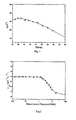
- Fig. 2 shows the NMRD profile of the Gd(III) complex of the example 1, from whose fitting we could calculate a t R (the molecular reorientational time) value of 80 ps and electronic relaxation time values similar to those of other small-sized Gd(III) complexes (see Merbac A.E., cited above).
- t R the molecular reorientational time
- the relaxation rate of the tested complex compound was found to be substantially constant over all the investigated pH range. This result clearly indicates that the Gd complex with the ligands of the invention shows a low affinity for hydroxyl and carbamate anions present in solution at basic pH. On the contrary, they would have remarkably reduced the measured relativity.
- a test, to further evaluate the lack of formation of ternary complexes was performed.
- the Gd complex of Ligand 1 which does not show any measurable association constant, is definitely the complex having lower affinity for this anion.
- the high exchange rate of coordinated water makes this type of paramagnetic complexes particularly interesting for obtaining high relaxivities (r1 and/or r2) once their molecular motion is slowed for example through binding with macromolecules.
- a number of procedures are available to carry out the binding (both covalent and non-covalent) of a ligand and/or of a metal complex thereof (both covalent and non-covalent) with the concerned molecules.
- Phthalimido derivative 1 (21.0 g, 42.0 mmol) was added to a mixture of CH 3 NH 2 /THF (40.0 mL) CH 3 NH 2 /H 2 O (80 mL) and stirred at room temperature for 48 h. Excess methylamine was removed by passing a stream of nitrogen and the solvent was removed under vacuum. The solid obtained was dissolved in a mixture of tetrahydrofuran (100 mL) and water (10 mL). Di-tert- butyl dicarbonate (19.0 g, 87.0 mmol) was added to the THF-water solution and stirred for 16 h.
- the final compound or a derivatized version including, e.g., a targeting moiety may be de-protected and labeled with, for example, Gd or 117 Lu, using procedures known in the art or disclosed herein.
- the final compound, a dimer may be de-protected and labeled with, for example, Gd or 177 Lu, using procedures known in the art or disclosed herein.
- the alkyl linker between the two compounds of Formula 1 can be further substituted with an amino alkyl or carboxy alkyl group that would allow attachment of a targeting moity.
- Fmoc deprotection was carried out with 20% piperidine in NMP.
- the peptide bound resin was washed, dried and cleaved from the resin (using reagent B: TFA/ triisopropylsilane/phenol/H20 8.6 mL, 0.4 mL, 0.5 g, 0.5 mL) for further manipulations or the cleaved peptides were cyclized in DMSO at pH 7.5-8.0 and purified by preparative HPLC using CH3CN/Water containing 0.1% Column: Water's X Terra, 50 mm x 250 mm i.d.: C18, Particle size: 10 microns; Eluents: A: Water (0.1% TPA), B: acetonitrile (0.1% TFA); Elution: Initial condition: 10 % B, linear gradient 10-70% B over 70 min; Flow rate: 100 mL/min: Detection: UV @ 220 nm.
- a 1 mg/mL solution of ligand was prepared in 0.2 M sodium acetate buffer (pH 4.8). An aliquot of this solution (2 to 5 1) and 6 to 10 mCi of 177 LuCl 3 (in 0.05 N HCl, specific activity 2.8-4.09 Ci/ ⁇ mol) were added to 100 to 200 ⁇ L of 0.2 M, pH 4.8 NaOAc buffer to achieve a ligand to Lu molar ratio of 2:1. After incubation at room temperature for 5 min, 10 ⁇ L of 10 mM Na 2 EDTA ⁇ 2H 2 O) was added to terminate the reaction and scavenge any remaining free 177 Lu in the solution.
- the radiolabeled compounds were prepared as described above except that a 1:1 molar ratio of ligand to Lutetium was used to guarantee complete chelation of all starting ligand.
- the HPLC peak containing the resulting 177 Lu complex was collected in 1 mL of 9:1 Bacteriostatic saline/ASCOR L500® solution containing 0.1 % HSA, and the organic solvents were removed using a speed-vacuum device. The remaining solution was further diluted to the required radioconcentration using Bacteriostatic saline/ASCOR L500® Ascorbic Acid Injection USP mixed in a 9 to 1 [v/v]) ratio. The radiochemical purity of all samples was ⁇ 95%.
- HPLC analysis All HPLC studies were performed at a flow rate of 1.5 mL/min using a column temperature of 37°C.
- the final compound or a derivatized version including, e.g. one or more targeting moieties may be labeled with, for example, Gd or 177 Lu, using procedures known in the art or disclosed herein.
- Benzyl bromoacetate (0.41 mL; 2.60 mmol) was added to a mixture of 76 (0.83 g; 1.05 mmol), K 2 CO 3 (0.41 g; 2.80 mmol) and Na 2 SO 4 (0.22 g) in MeCN (5 mL) cooled to 0° C. After the addition, the reaction mixture was allowed to warm to room temperature, refluxed for 6 h. Further amounts of benzyl bromoacetate (0.05 g; 0.30 mmol) and K 2 CO 3 (0.04 g; 0.28 mmol) were added to the mixture that was refluxed for more 8 h. The mixture was filtered, evaporated and the residue taken up with CH 2 Cl 2 (10 mL).
- the final compound or a derivatized version including, e.g. one or more targeting moieties may be labeled with, for example, Gd or 177 Lu, using procedures known in the art or disclosed herein.
- the final compound or a derivatized version including, e.g. a targeting moiety may be de-protected and labeled with, for example, Gd or 177 Lu, using procedures known in the art or disclosed herein.
- the final compound or a derivatized version including, e.g. one or more targeting moieties may be de-protected and labeled with, for example, Gd or 117 Lu, using procedures known in the an or disclosed herein.
- N 8 -carbobenzyloxy-L-lysine 88 (commercial product) (15g; 0.052 mol) was dissolved in 6M HBr (45mL) at 0°C. NaNO 2 (3.97 g; 0.057mol) was added in little portions over 30 min. The reaction solution was stirred at room temperature for 2 h, then extracted with ethyl acetate (3x100mL). The organic phase was dried (Na 2 SO 4 ), filtered and evaporated under vacuum. The crude was purified by column chromatography to give the compound 89 (14.06 g) as an orange oil. Yield 79%.
- the final compound or a derivatized version including, e.g. one or more targeting moieties may be de-protected and labeled with, for example, Gd or 177 Lu, using procedures known in the art or disclosed herein.
Landscapes
- Health & Medical Sciences (AREA)
- Chemical & Material Sciences (AREA)
- Organic Chemistry (AREA)
- Life Sciences & Earth Sciences (AREA)
- General Health & Medical Sciences (AREA)
- Public Health (AREA)
- Animal Behavior & Ethology (AREA)
- Veterinary Medicine (AREA)
- Nuclear Medicine, Radiotherapy & Molecular Imaging (AREA)
- Medicinal Chemistry (AREA)
- Epidemiology (AREA)
- Biochemistry (AREA)
- Radiology & Medical Imaging (AREA)
- Molecular Biology (AREA)
- Pharmacology & Pharmacy (AREA)
- Bioinformatics & Cheminformatics (AREA)
- Engineering & Computer Science (AREA)
- Chemical Kinetics & Catalysis (AREA)
- General Chemical & Material Sciences (AREA)
- Proteomics, Peptides & Aminoacids (AREA)
- Optics & Photonics (AREA)
- Physics & Mathematics (AREA)
- Vascular Medicine (AREA)
- Urology & Nephrology (AREA)
- Cardiology (AREA)
- Heart & Thoracic Surgery (AREA)
- Diabetes (AREA)
- Hematology (AREA)
- Medicines Containing Antibodies Or Antigens For Use As Internal Diagnostic Agents (AREA)
- Peptides Or Proteins (AREA)
- Medicinal Preparation (AREA)
- Medicines That Contain Protein Lipid Enzymes And Other Medicines (AREA)
- Organic Low-Molecular-Weight Compounds And Preparation Thereof (AREA)
Abstract
Description
- The present invention relates to novel aza ligands able to complex metal ions, in particular paramagnetic ions, and the use of the corresponding complexes as contrast agents for magnetic resonance imaging (MRI).
- A number of complexes of paramagnetic metal ions with cyclic and acyclic aza ligands arc known as contrast agents in the MRI diagnostic technique (see for instance: The Chemistry of Contrast Agents in Medical Magnetic Resonance Imaging, Merbach A. E. and Toth E. Eds., John Wiley and sons, Chichester, 2001; Caravan P. et al. Chem. Rev. 1999, 99, 2293-2352 and
US 4,885,363 ;US 4,916,246 ;US 5,132,409 ;US 6,149,890 ). Some of these complexes (Gd-DTPA, Gd-DOTA, Gd-HPDO3A, and the like) have recently been marketed. - The paramagnetic metal ions most extensively used in MRI diagnostics are either in the transitions metals and in the Lanthanide series. As far as Lanthanides are concerned, the attention is essentially focused on Gd(III) ion both for its high paramagnets (7 unpaired electrons) and for its favourable properties in terms of electronic relaxation. This metal does not possess any physiological function in mammalians, and its administration as free ion is strongly toxic even at low doses (10-20 micromol/Kg). For this reason, it is necessary to use ligands that form chelates with the lanthanide ion endowed with high thermodynamic and kinetic stability. This means that the chelating ligand should exhibit a high level of affinity and selectivity for the relevant paramagnetic ions as opposed to the physiological ions. Moreover, the ligand should show suitable pharmacokinetic properties (excretion, binding to plasma proteins, metabolical inertia, and the like), and optimal relaxivity properties, that is to say that the values of this parameter should be and remain high, independently of the surrounding environment, in particular the presence of physiological anions and pH changes.
- A novel class of ligands has now been found, which form complexes having particularly favorable characteristics, above all in terms of stability and relativity.
- Retaxivity (rlp ) is an intrinsic property of paramagnetic complexes which characterizes their ability to increase the nuclear magnetic relaxation rate of vicinal protons. High relaxation rates ensure increased contrast in the image, which makes it possible to obtain physiological information in a short amount of time with obvious advantages in terms of both image quality and economic cost.
- The relaxivity of a Gd(III) complex is a property directly related to the number (q) of water molecules of the inner coordination sphere of the metal ion. As said before, contrast agents for magnetic resonance imaging (MRI) are mostly represented by stable complexes of Gd(III) ions the large majority of which are based on octadentate ligands to ensure a high thermodynamic stability. This choice has however implied that only one water molecule may enter in the inner coordination sphere of the GD(III) ion which has a coordination number of nine (The Chemistry of Contrast Agents in Medical Magnetic Resonance Imaging, Merbach A. E. and Toth E. Ends., John Wiley and sons, Chichester, 2001).
- A further contribution to the observed relaxation rate (of the water protons in an aqueous solution containing a paramagnetic complex) derives from the exchange between the molecule(s) of coordinated water and the molecules of the remaining solvent. In particular, the increase of the observed relaxation rate is inversely related to the residence time (tM) of the protons of the water molecule(s) which are coordinated to the paramagnetic center the inner coordination sphere. Higher relaxivity is obtained at fast exchange conditions.
- The ligands of the invention forms complexes whose high starting relaxivity is consistent with the presence of two water molecules in the inner coordination sphere and with simultaneous favorable tM values.
- The ligands of the invention have the following general formula (I):

- R1, R2, R3, R4, R5 and FG are as defined in claim 1
- Substituents within the definitions above are known to those skilled in the art and are illustrated by the compounds of the invention set forth in the Examples.
- The above compounds can have one or more acids (or group bearing acidic moieties) or amines (or group bearing amino moieties). Thus, it is understood and within the scope of this invention that one or more of these groups may be protected by one or more protecting groups.
- When an acid or amine is "protected", this means that the group is in modified form to preclude undesired side reactions at the protected site. Suitable protecting groups for the compounds of the present invention will be recognized from the present application taking into account the level of skill in the art, and with reference to standard textbooks, such as Greene et al., Protective Groups in Organic Synthesis (New York: Wiley, 1991).
- Examples of protecting groups include tert-butyl, t-butyloxycarbonyl (Boc), benzyloxycarbonyl (Cbz), Fluorenylmethoxycarbonyl (Fmoc) and trichloroethoxycarbonyl (Troc) as carboxyl protecting groups and tetrachloro-phthaloyl (TCP), phthaloyl, pipecolinic acid (Pic-OH), Boc, COCF3 and Cbz as amine protecting groups. Again, protecting groups are well known in the art and this list is not meant to be limiting on the scope of the invention. Any suitable protecting group is understood to be within the scope of the present inventions.
- Functional groups which allow conjugation with targeting molecules or other molecules that are able to interact with physiological systems are known to those skilled in the art. Such groups include, for example, carboxylic acids, amines, aldehydes, alkyl halogens, alkyl maleimdes, sulfhydryl groups, hydroxyl groups, etc. Carboxylic acids and amines are particularly preferred. The invention further relates to the chelates of compounds of formula (I) with paramagnetic or radioactive metal ions, in particular with the bi-trivalent ions of the metal elements having atomic number ranging between 20 and 31, 39, 42, 43, 44, 49, and between 57 and 83, as well as the salts thereof with physiologically compatible bases or acids.
- Particularly preferred for the diagnostic use as MRI contrast agents, are the complexes with paramagnetic ions such as Fe(2+), Fe(3+), Cu(2+), Cr(3+), Gd(3+), Eu(3+), Dy(3+), La(3+), Yb(3+), Mn(2+), Mn(3+), Co(2+), Ni(2+), Pr(3+), Nd(3+), Sm(3+), Gd(3+), Tb(3+), Ho(3+) and Er(3+), and in particular gadolinium complexes.
- On the other hand, for uses in (radiotherapy or radiodiagnostics, preferred complexes are those with 203Pb, 67Ga, 68Ga, 72As, 111In, 113In, 90Y, 97 Ru, 62 Cu, 64Cu, 52Fe, 52mMn, 140La, 175Yb, 153Sm, 166Ho, 149Pm, 177Lu, 142Pr, 159Gd, 212Bi, 47Sc, 149Pm, 67Cu, 111Ag, 199Au, 161Tb, 51Cr, 167Tm, 141Ce, 168Yb, 88Y, 165Dy, 166Dy, 97Ru, 103Ru, 186Re, 188Re, 99mTc, 211Bi, 212Bi, 213Bi, 214Bi, 105Rh, 109Pd, 117mSn, 177Sn and 199Au and oxides and nitrides thereof. The choice of metal will be determined based on the desired therapeutic or diagnostic application. For example, for diagnostic purposes (e.g., to diagnose and monitor therapeutic progress in e.g., primary tumors and metastases), the preferred radionuclides include 64Cu, 67Ga, and 111In, with 111In being especially preferred. For therapeutic purposes (e.g., to provide radiotherapy for primary tumors and metastasis related to cancers of the prostate, breast, lung, etc.), the preferred radionuclides include 64Cu, 90Y, 105Rh, 111In, 117mSn, 149Pm, 153Sm, 161Tb, 166Dy, 166Ho, 175Yb, 177Lu, 186/188Re, and 199Au, with 177Lu and 90Y being particularly preferred.
- The chelates of the invention can also be in the form of salts, when the ligand has salifiable functions.
- Preferred cations of inorganic bases which can be suitably used to salify the complexes of the invention comprise ions of alkali or alkaline-earth metals such as potassium, sodium, calcium, magnesium.
- Preferred cations of organic bases comprise, inter alia, those of primary, secondary and tertiary amines such as ethanolamine, diethanolamine, morpholine, glucamine, N-methylglucamine, N,N-dimethylglucamine.
- Preferred anions of inorganic acids which can be suitably used to salify the complexes of the invention comprise the ions of halo acids such as chlorides, bromides, iodides or other ions such as sulfate.
- Preferred anions of organic acids comprise those of acids routinely used in pharmaceutical technique for the salification of basic substances, such as acetate, succinate, citrate, fumarate, maleate, oxalate.
- Preferred cations and anions of amino acids comprise, for example, those of taurine, glycine, lysine, arginine or ornithine or of aspartic and glutamic acids.
- The C1-C20 alkyl group is a straight or branched group and preferably is a C1-C6 group, more preferably methyl, ethyl, propyl, isopropyl.
- The C3-C10 cycloalkyl group is preferably a cyclopropyl, cyclopentyl or cyclohexyl group, optionally in turn substituted at one of the position of the ring, by an alkyl group as defined above.
- The C4-C20 cycloalkylalkyl group is preferably cyclopropylmethyl, cyclohexylethyl, cyclohexylmethyl, cyclopentylmethyl, cyclopentylethyl.
- Aryl is preferably phenyl or phenyl substituted with one to five substituents, which can be the same or different, selected from hydroxy, C1-C2 alkoxy, halogen, cyano, nitro, methyl, ethyl, carboxy, amino, C1-C2 alkyl- or dialkylamino, or alkyl groups variously substituted with one to three substituents such as hydroxy, C1-C2 alkoxy, halogen, cyano, nitro, methyl, ethyl, carboxy, amino, C1-C2 alkyl- or dialkylamino.
- Ortho-disubstituted arylene is preferably optionally substituted 1,2-phenylene as indicated above.
- C1-C20 Alkyl substituted with carboxy groups is preferably carboxymethyl.
- FG is preferably a carboxy group.
- R2 is preferably methyl, alkyl as defined above, aryl or arylalkyl, all optionally substituted with functional groups such as optionally protected carboxy, amino, formyl, hydroxy or mercapto, which can be used as conjugation sites with other compounds without interfering with the structural integrity of the molecule.
- R3 is preferably hydrogen.
- R4 is preferably hydrogen or methyl.
- R5 is preferably hydrogen.
- Preferred compounds of formula (I) are those in which the two R1 groups form together an alkylene, in particular ethylene or propylene, preferably ethylene, or a cyclic alkylene and the other groups are as defined for the general formula (I) or have the preferred meanings indicated above.
- In an alternative embodiment, two compounds of formula (I) can form a dimer with each other through their R2 substituents. One example of this type of compound is shown in Example 10 below.
- The preparation of dimers can he prepared by direct linking of two compounds of 5 formula (I) via R2 as in example 5 or by amide bond formation of an alkyl carboxyl or alkyl amine group at R2 to a corresponding diamine or diacid. This approach can be generalized to prepare multimers by having a polyamine or polyacid for the attachment of the alkyl acid or alkyl amine of R2. It is understood by those in the field that the amide bond formation step to prepare dimers or multimers from compounds of formula (I) can be substituted by alkylation, acylation esterification, or reductive amination methods. The polyamine or polyacid can also be optionally substituted with a conjugating group to allow targeting of a peptide or antibody. The addition of 2 or more Gd-chelates in a molecule increases the relaxivity by at least an additive manner.
- Compounds of formula (I) in which the two R1 groups taken together form an alkylene group are obtained with a process comprising:
- a) reacting a compound (II) with formaldehyde or a primary aliphatic aldehyde and a diamine of formula (VII)


- b) reducing the nitro group and removing the benzyl groups, e.g. by catalytic hydrogenation, from compound (VIII) to give a compound of formula (IX)

- c) reacting (IX) with haloacetic acid esters to give a compound (X)

- d) hydrolyzing the carboxy ester groups to give compounds (I) wherein the R1 groups form together an alkylene.
- Amines of formula (IX), both in the protected and unprotected form, are novel and are a further object of the invention, as intermediates.
- The compounds of the invention can further be conjugated with one or more suitable molecules able to interact with physiological systems. Useful examples thereof, are bile acids, peptides, proteins, hormones, oligonucleotides, antibiotics, antibodies, enzymes, growth factors and the like.
- Molecules able to interact with physiological systems are also called targeting moieties. A targeting moiety is any molecule that has a binding affinity for particular site or a specific metabolic function. The targeting moiety or moieties directs the compounds of the invention to the appropriate site, or involves the compounds in a reaction, where the desired diagnostic or therapeutic activity will occur. In an exemplary embodiment, a targeting moiety may be a peptide, equivalent, derivative or analog thereof which functions as a ligands that binds to a particular site. In another exemplary embodiment, the targeting moiety may be an enzyme, or a molecule that hinds to an enzyme. In another exemplary embodiment, the targeting moiety may be an antibiotic. In yet another embodiment a targeting moiety may be an antibody or fragment thereof that binds to a site of interest, such as for example, a desired receptor.
- In a preferred embodiment, the targeting moiety (or moieties) comprises a peptide that binds to a receptor or enzyme of interest. For example, the targeting peptide may be a peptide hormone such as, for example, luteinizing hormone releasing hormone (LHRH) such as that described in the literature [e.g., Radiometal-Binding Analogues of Luteinizing Hormone Releasing Hormone
PCT/US96/08695 PCT/US97/12084 WO 98/02192 - Other useful targeting peptides include analogues of somatostatin which, for example, are Lanreotide (Nal-Gys-Thr-DTrp-Lys-Val-Cys-Thr-NH2), Octreotide (Nal-Cys-Thr-DTrp-Lys-Val-Cys-Thr-ol), and Maltose (Phe-Cys -Thr-DTrp-Lys-Val-Cys-Thr-ol). These analogues are described in the literature [e.g., Potent Somatostatin Analogs Containing N-terminal Modifications, S. H. Kim, J. Z. Dong, T. D. Gordon, H. L. Kimball, S. C. Moreau, J.-P. Moreau, B.A. Morgan, W. A. Murphy and J. E. Taylor; Peptides: Chemistry, Structure and Biology Pravin T. P. Kaumaya, and Roberts S. Hodges (Eds)., Mayflower Scientific LTD., 1996, pgs 241-243.] Similarly, peptides which target angiogenesis-related receptors, such as, for example, VEGF receptors may be used as targeting moieties. Examples of such peptides are disclosed in
PCT/US03/28787 ;USSN 10/939,890USSN 091871,974 PCT/US01/18053 , which are incorporated herein by reference. - Still other useful targeting peptides include Substance P agonists [e.g., G. Bitan, G. Byk, Y. Mahriki, M. Hanani, D. Halle, Z. Selinger, C. Gilon, Peptides: Chemistry, Structure and Biology, Pravin T. P. Kaumaya, and Roberts S. Hodges (Eds), Mayflower Scientific LTD., 1996, pgs 697-698; G Protein Antagonists A novel hydrophobic peptide competes with receptor for G protein binding, Hidehito Mukai, Eisuke Munekata, Tsutomu Higashijima, J. Biol. Chem. 1992, 267, 16237-16243]; NPY(Y1) [e.g., Novel Analogues of Neuropeptide Y with a Preference for the Y1-receptor, Richard M. Soll, Michaela, C. Dinger, Ingrid Lundell, Dan Larhammer, Annette G. Beck-Sickinger, Eur. J. Biochem. 2001, 268, 2828-2837; 99mTc-Labeled Neuropeptide Y Analogues as Potential Tumor Imaging Agents, Michael Langer, Roberto La Bella, Elisa Garcia-Garayoa, Annette G. Beck-Sickinger, Bioconjugate Chem. 2001, 12, 1028-1034; Novel Peptide Conjugates for Tumor-Specific Chemotherapy, Michael Langer, Felix Kratz, Barbara Rothen-Rutishauser, Heidi Wnderli-Allenspach, Annette G. Beck-Sickinger, J. Med. Chem. 2001, 44, 1341-1348]; oxytocin; endothelin A and endothelin B; bradykinin; Epidural Growth Factor (EGF); Interleukin-I [Anti-IL-1 Activity of Peptide Fragments of IL-1 Family Proteins, 1. Z. Siemion, A. Kluczyk, Zhigtniew Wieczorek, Peptides 1998, 19, 373-382]; and cholecystokinin (CCK-B) [Cholecystokinin Receptor Imaging Using an Octapeptide DTPA-CCK Analogue in Patients with Medullary Thryroid Carcinoma, Eur. J. Nucl Med. 200, 27, 1312-1317].
- Literature which gives a general review of targeting peptides, can be found, for example, in the following: The Role of Peptides and Their Receptors as Tumor Markers, Jean-Claude Reubi, Gastrointestinal Hormones in Medicine, Pg 899-939; Peptide Radiopharmaceutical in Nuclear Medicine, D. Blok, R. I. J. Feitsma, P. Vermeij, E. J. K. Pauwels, Eur. J. Nucl Med. 1999, 26, 1511-1519; and Radiolabeled Peptides and Other Ligands for Receptors Overexpressed in Tumor Cells for Imaging Neoplasms, John G. McAfee, Ronald D. Neumann, Nuclear Medicine and Biology, 1996, 23, 673-676 (somatostatin, VIP, CCK, GRP, Substance P, Galanan, MSH, LHRH, Arginine-vasopressin, endothelin). All of the aforementioned literature in the preceding paragraphs are herein incorporated by reference in their entirety.
- Other targeting peptide references include the following: Co-expressed peptide receptors in breast cancer as a molecular basis of in vivo multireceptor tumour targeting. Jean Claude Reubi, Mathias Gugger, Beatrice Waser. Eur. J. Nucl Med. 2002, 29, 855-862, (includes NPY, GRP); Radiometal-Binding Analogues of Leutenizing Hormone Releasing Hormone
PCT/US96/08695 PCT/US97/12084 WO 98/02192 EP90/01169 (radiotherapy peptides);WO 91/01144 PCT/EP00/01553 (molecules for the treatment and diagnosis of tumours), all of which are herein incorporated by reference in their entirety. - Additionally, analogues of a targeting peptide can be used. These analogues include molecules that target a desired site receptor with avidity that is greater than or equal to the targeting peptide itself, as well as muteins, retropeptides and retro-inverso-peptides of the targeting peptide. One of ordinary skill will appreciate that these analogues may also contain modifications which include substitutions, and/or deletions and/or additions of one or several amino acids, insofar that these modifications do not negatively alter the biological activity of the peptides described therein. These substitutions may be carried out by replacing one or more amino acids by their synonymous amino acids. Synonymous amino acids within a group are defined as amino acids that have sufficiently similar physicochemical properties to allow substitution between members of a group in order to preserve the biological function of the molecule. Synonymous amino acids as used herein include synthetic derivatives of these amino acids (such as for example the D-forms of amino acids and other synthetic derivatives).
- Deletions or insertions of amino acids may also be introduced into the defined sequences provided they do not alter the biological functions of said sequences. Preferentially such insertions or deletions should be limited to 1, 2, 3, 4 or 5 amino acids and should not remove or physically disturb or displace amino acids which are critical to the functional conformation. Muteins of the peptides or polypeptides described herein may have a sequence homologous to the sequence disclosed in the present specification in which amino acid substitutions, deletions, or insertions are present at one or more amino acid positions. Muteins may have a biological activity that is at least 40%, preferably at least 50%, more preferably 60-70%, most preferably 80-90% of the peptides described herein. However, they may also have a biological activity greater than the peptides specifically exemplified, and thus do not necessarily have to be identical to the biological function of the exemplified peptides. Analogues of targeting peptides also include peptidomimetics or pseudopeptides incorporating changes to the amide bonds of the peptide backbone, including thioamides, methylene amines, and E-olefins. Also peptides based on the structure of a targeting peptide or its peptide analogues with amino acids replaced by N-substituted hydrazine carbonyl compounds (also known as aza amino acids) are included in the term analogues as used herein.
- Targeting molecule may be attached via the methods diclosed herein and those known to the skilled artisan. For example, targeting peptides may be attached to a linker or to the chelator via the N or C terminus or via attachment to the epsilon nitrogen of lysine, the gamma nitrogen or ornithine or the second carboxyl group of aspartic or glutamic acid.
- The present invention also includes coupling conditions for coupling functionalized Aazta-derivatives with targeting moieties. For example, Examples 3, 4 below disclose Aazta derivatives with an amino group or a protected amino group (deprotected before coupling). They can be coupled to T-NH2 (Targeting moiety containing an amino group) by method 1. T-CO2H (Targeting moiety containing a carboxylic acid group) can be coupled to Aazta-NH2 by
method 2. (Activation methods known in the literature can be used)

- Examples 7, 8, 9 below describe Aazta derivatives with a carboxylic acid side chain. The can be coupled to T-NH2 targeting moiety containing an amino group by the methods shown below


- In two exemplary embodiments of the invention, shown more fully below, the targeting molecule targets fibrin or a GRP (gastrin releasing peptide) receptor (GRP-R). Where a targeting molecule binds to a GRP-R the compounds of the invention, when labeled with an appropriate metal, can be used to image or treat tumors expressing GRP receptors, such as, for example, primary or metastatic prostate, breast and lung tumors. Where a targeting molecule binds fibrin, compounds of the invention, when labeled with an appropriate metal, can be used to image or treat fibrin containing blood clots/thrombus, plaques, or tumors,
- Cardiovascular disease is a major cause of death in the world. Sudden plaque rupture can lead to stroke and heart attacks and death. The ability to image plaques and especially unstable plaques is an important area of diagnostic imaging. These plaques contain fibrin, which can be effectivety targeted with peptides or antibodies. Fibrin is also present in thrombus and in cancerous tumors. This provides additional applications for fibrin imaging.
- Also included within the scope of the present invention is the use of one or more "spacer" or "linker" group to create a physical separation between the metal chelator and the targeting agent. The use of a spacer or linker is described in more detail in
U.S. Patent No. 5,976,495 to Pollak, et al , which is incorporated herein by reference. - Linking groups include a chemical group that serves to couple the chelator of the invention to the targeting moiety or moieties while not adversely affecting either the targeting function of the targeting moiety or the diagnostic or therapeutic function of the chelator. Suitable linking groups include, for example, peptides (i.e., amino acids linked together) alone, a non-peptide group (e.g., hydrocarbon chain) or a combination of an amino acid sequence and a non-peptide spacer. Other suitable linkers include polyethylene glycol (PEG) linkers.
- In one embodiment, linking groups include L-glutamine and hydrocarbon chains, or a combination thereof.
- In another embodiment, linking groups include a pure peptide linking group consisting of a series of amino acids (e.g., diglycine, triglycine, gly-gly-glu, gly-ser-gly, et.).
- In yet a further embodiment, linking groups can also include a hydrocarbon chain [i.e., R1-(CH2)n-R2] wherein n is 0-10, preferably n = 3 to 9, R1 is a group (e.g., H2N-, HS-, - COOH) that can be used as a site for covalently linking the ligand backbone or the preformed metal chelator or metal complexing backbone ; and R2 is a group that is used for covalent coupling to the N-terminal NH2-group of a given targeting peptide (e.g., R2 is an activated COOH group). Several chemical methods for conjugating ligands (i.e., chelators) or chelates (chelators/ligands complexed with a radionuclide) to biomolecules (such as targeting moieties) have been well described in the literature [Wilbur, 1992; Parker, 1990; Hermanson, 1996; Frizberg et al., 1995]. One or more of these methods could be used to link either the uncomplexed ligand (chelator) or the radiometal chelate to the linker or to link the linker to the targeting moiety or other diagnostic or therapeutic moiety. These methods include the formation of acid anhydrides, aldehydes, arytisothiocyanates, activated esters, or N-hydroxysuccinimides [Wilbur, 1992; Parker, 1990; Hermanson, 1996; Frizberg et al., 1995].
- In a preferred embodiment, linking groups may be formed from linker precursors having electrophiles or nucleophiles as set forth below:
- LPI : a linker precursor having on at least two locations of the linker the same electrophile E1 or the same nucleophile Nu1;
- LP2: a linker precursor having an electrophile E1 and on another location of the linker a different electrophile E2;
- LP3: a linker precursor having a nucleophile Nu1 and on another location of the linker a different nucleophile Nu2; or
- LP4: a linker precursor having one end functionalized with an electrophile E1 and the other with a nucleophile Nu1.
- In one embodiment of the present invention, the linker contains at least one substituted bile acid. Bile acids are found in bile (a secretion of the liver) and are steroids having a hydroxyl group and a five carbon atom side chain terminating in a carboxyl group. In substituted bile acids, at least one atom such as a hydrogen atom of the bile acid is substituted with another atom, molecule or chemical group. For example, substiuted bile acids include those having a 3-amino, 24-carboxyl function optionally substituted at positions 7 and 12 with hydrogen, hydroxyl or keto functionality.
- Other useful substituted bile acids in the present invention include substistuted cholic acids and derivatives thereof. Specific substistuted cholic acid derivatives include:
- (3β,5β)-3-aminocholan-24-oic acid;
- (3β,5β,12α)-3-amino-12-hydroxycholan-24-oic acid;
- (3β,5β,7α,12α)-3-amino-7,12-dihydroxycholan-24-oic acid;
- Lys-(3,6,9)-trioxaundecane-1,11-dicarbonyl-3,7-dideoxy-3-aminocholic acid);
- (3β,5β,7α)-3-amino-7-hydroxy-12-oxocholan-24-oic acid; and
- (3β,5β,7α)-3-amino-7-hydroxycholan-24-oic acid.
- 8-amino-3,6-dioxaoctanoic acid;
- N-4-aminoethyl-N-1-acetic acid; and
- polyethylene glycol derivatives having the formula NH2-(CH2CH2O)n-CH2CO2Hor NH2-(CH2CH2O)n-CH2CH2CO2H where n = 2 to 100.
- 4-aminobenzoic acid (hereinafter referred to as "Abz4 in the specification")
- 3-aminobenzoic acid
- 4-aminomethyl benzoic acid8-aminooctanoic acid
- trans-4-aminomethylcyclohexane carboxylic acid
- 4-(2-aminoethoxy)benzoic acid
- isonipecotic acid
- 2-aminomethylbenzoic acid
- 4-amino-3-nitrobenzoic acid
- 4-(3-carboxymethyl-2-keto-1-benzimidazolyl-piperidine
- 6-(piperazin-1-yl)-4-(3H)-quinaxolinone-3-acetic acid
- (2S,5S)-5-amino-1,2,4,5,6,7-hexahydro-azepino[3,21 - hi]indole-4-one-2-carboxylic acid
- (4S,7R)-4-amino-6-aza-5-oxo-9-thiabicyclo[4.3.0]nonane-7-carboxylic acid
- 3-carboxymethy)-1-phenyl-1,3,8-triazaspiro[4.5]decan-4-one N1-piperazincacetic acid
- N-4-aminoethyl-N-1-piperazineacetic acid
- (3S)-3-amino-1-carboxymethylcaprolactam
- (2S,6S,9)-6-amino-2-carboxymethyl-3,8-diazabicyclo-[4,3,0]-nonane-1,4-dione
- 3-amino-3-deoxycholic acid
- 4-hydroxybenzoic acid
- 4-aminophenytacetic acid
- 3-hydroxy-4-aminobenzoic acid
- 3-methyl-4-aminobenzoic acid
- 3-chloro-4-aminobenzoic acid
- 3-methoxy-4-aminobenzoic acid
- 6-aminonaphthoic acid
- N,N'-Bis(2-aminoethyl)-succinamic acid
- The complexes of compounds (I) can be administered as MRI contrast agents or radiopharmaceuticals parenterally, preferably formulated as a sterile aqueous solution or suspension, whose pH can range for example from 6.0 to 8.5.
- Said aqueous solutions or suspensions can be administered in concentrations ranging from 0.002 to 1.0 molar.
- Said formulations can be freeze-dried and supplied as such, to be reconstituted prior to use. For the gastrointestinal use or for injection to body cavities, these agents can be formulated as a solution or suspension containing suitable additives in order to, for example, control viscosity.
- For the oral administration they can be formulated according to preparation methods routinely used in pharmaceutical technique, optionally also as coated formulations to gain extra protection from the acid pH of the stomach, inhibiting the release of the chelated metal ion, which usually occurs at typical pH values of gastric juices.
- Other excipients, such as sweetening agents and/o flavoring agents, can also be added according to known techniques of pharmaceutical formulation.
- Paramagnetic Gd(III) complexes with ligands of formula (I) are endowed with a particularly good starting relaxivity which can be explained with the presence of two water molecules in the inner coordination sphere of said complexes and with simultaneous favorable fast exchange rate of coordinated water molecules.
- It has been reported that for some Gd(III) complexes with q = 2 (i.e. Gd-DO3A-like systems, a decrease in relaxivity was observed upon increasing of the solution pH. This decrease is most probably due to the fact that some anions present in the solution, such as the and hydroxyl ions, are in competition with the water molecules for the coordination sites on Gd(III) and, through the formation of ternary complexes with metal chelate, remarkably reduces the relaxivity thereof (S. Aime et al, J.Biol.lnorg.Chem., 5, 488-497, (2000). Decrease in relaxivity is also observed when bidentate ligands are present in solution. Systems showing such behaviour are usually characterized by a small relaxation enhancement upon binding to proteins such as HSA. This is due to the replacement of the water molecules by donor atoms on the protein.
- Conversely, tests performed with the "Reference Compound" Gd(III) complex of example 1 quite interestingly pointed out the ligands of the invention show a very low affinity for any anions and anionic metabolites present in solution.
- This result strongly indicates that the relaxivity of the complex compounds of the invention is not "lowered" even in the presence of high concentrations of bidentate anions.
- It further indicates that the ligands of the invention can advantageously be used to prepare paramagnetic complex compounds with q = 2, able to be conjugated to or to non-covalently interact with human serum albumin or other suitable macromolecules without that the donor atoms on said macromolecule, (for example, from aspartate or glutamate), could interact with the coordination sites of Gd(III) and induce a reduction of the attainable relaxivity.
- Most probably, the substantial change in the ligands structure when compared with that of (DO3A) and of the corresponding DO3MA trimethyl-derivate is responsible of the completely different hehavior of the complex towards the bidentate anions.
- When labeled with diagnostically or therapeutically useful metals, compounds of the present invention can also be used to treat and/or detect diseases such as cancers, including tumors, as well as cardiovascular diseases, by procedures established in the arts of diagnostic imaging, radiodiagnostics and radiotherapeutics. [Bushbaum, 1995; Fischman et al., 1993; Schubiger et al., 1996; Lowbertz et al., 1994; Krenning et al., 1994].
- The diagnostic application of these compounds can be as a first line diagnostic screen for the presence of targeted cells using diagnostic imaging (such as, for example, scintigraphic or magnetic resonance imaging), as an agent for targeting selected tissue using hand-held radiation detection instrumentation in the field of radioimmuno guided surgery (RIGS), as a means to obtain dosimetry data prior to administration of the matched pair radiotherapeutic compound, and as a means to assess a targeted receptor population as a function of treatment over time.
- The compounds of the invention are also therapeutically useful. Specifically, compounds of the invention labeled with the appropriate therapeutic radionuclide are useful in radioisotope therapy . Radioisotope therapy (radiotherapy) involves the administration of a radiolabeled compound in sufficient quantity to damage or destroy the targeted tissue. After administration of the compound (by e.g., intravenous, subcutaneous, or intraperitonal injection), the radiolabeled pharmaceutical localizes preferentially at the disease site (e.g., tumor tissue, etc,) Once localized, the radiolabeled compound then damages or destroys the diseased tissue with the energy that is released during the radioactive decay of the isotope that is administered. As discussed herein, the compounds of the invention may be used in radiotherapy in combination with adjuvant chemotherapy (or in combination with any other appropriate therapeutic agent).
- The design of a successful radiotherapeutic involves several critical factors:
- 1. selection of an appropriate targeting group to deliver the radioactivity to the disease site;
- 2. selection of an appropriate radionuclide that releases sufficient energy to damage that disease site, without substantially damaging adjacent normal tissues; and
- 3. selection of an appropriate combination of the targeting group and the radionuclide without adversely affecting the ability of this conjugate to localize at the disease site. For radiometals, this often involves a chelating group that coordinates lightly to the radionuclide, combined with a linker that couples said chelate to the targeting group, and that affects the overall biodistribution of the compound to maximize uptake in target tissues and minimize uptake in normal, non-target organs.
- The chelators of the present invention when complexed with an appropriate radionuclide and, preferably targeting group and linker are useful for radiotherapy.
- Compounds of the invention useful for radiotherapy are advantageously complexed with a 3+ metal ion from the class of elements known as the lanthanides (elements of atomic number 57-71) and their analogs (i.e. M3+ metals such as yttrium and indium). Typical radioactive metals in this class include the isotopes 90-Yttrium, 111-Indium, 149-Promethium, 153-Samarium, 166-Dysprosium, 166-Holmium, 175-Ytterbium, and 177-Lutetium. All of these metals (and others in the lanthanide series) have very similar chemistries, in that they remain in the +3 oxidation state, and prefer to complex to ligands that bear hard (oxygen/nitrogen) donor atoms, such as the chelators of the invention.
- The chealtors of the invention complex with and prevent the release of free (unbound) radiometal into the body. This is important, as in vivo dissociation of 3+ radiometals from their chelate can result in uptake of the radiometal in the liver, bone and spleen [Brechbiel MW, Gansow OA, "Backbone-substituted DTPA ligands for 90Y radioimmunotherapy", Bioconj. Chem. 1991; 2: 187-194; Li, WP. Ma DS, Higginbotham C, Hoffman T, Ketring AR, Cutler CS, Jurisson, SS, " Development of an in vitro model for assessing the in vivo stability of lanthanide chelates." Nucl. Med. Biol. 2001; 28(2): 145-154; Kasokat T, Urich K. Arzneim.-Forsch, "Quantification of dechelation of gadopentetate dimeglumine in rats". 1992; 42(6): 869-76]. Unless one is specifically targeting these organs, such non-specific uptake is highly undesirable, as it leads to non-specific irradiation of non-target tissues, which can lead to such problems as hematopoietic suppression due to irradiation of bone marrow.
- The selection of a proper radionuclide for use in a particular radiotherapeutic application depends on many factors, including:
- a. Physical half-life - This should be long enough to allow synthesis and purification of the radiotherapeutic construct from radiometal and conjugate, and delivery of said construct to the site of injection, without significant radioactive decay prior to injection. Preferably, the radionuclide should have a physical half-life between about 0.5 and 8 days.
- b. Energy of the emission(s) from the radionuclide - Radionuclides that are particle emitters (such as alpha emitters, beta emitters and Auger electron emitters) are particularly useful, as they emit highly energetic particles that deposit their energy over short distances, thereby producing highly localized damage. Beta emitting radionuclides are particularly preferred, as the energy from beta particle emissions from these isotopes is deposited within 5 to about 150 cell diameters. Radiotherapeutic agents prepared from these nuclides are capable of killing diseased cells that are relatively close to their site of localization, but cannot travel long distances to damage adjacent normal tissue such as bone marrow.
- c. Specific activity (i.e. radioactivity per mass of the radionuclide) - Radionuclides that have high specific activity (e.g. generator produced 90-Y, 111-In. 177-Lu) are particularly preferred. The specific activity of a radionuclide is determined by its method of production, the particular target that is used to produce it, and the properties of the isotope in question.
- Many of the lanthanides and lanthanoids include radioisotopes that have nuclear properties that make them suitable for use as radiotherapeutic agents, as they emit beta particles. Some of these are listed in the table below.
Isotope Half-Life(days) Max b-energy(McV) Gamma energy(keV) Approximate range of b-particle(cell diameters) 149 -Pm 2.21 1.1 286 60 153 -Sm 1.93 0.69 103 30 166 -Dy 3.40 0.40 82.5 15 166 -Ho 1.12 1.8 80.6 117 175 -Yb 4.19 0.47 396 17 177 -Lu 6.71 0.50 208 20 90 -Y 2.67 2.28 - 150 111 -In 2.810 Auger electron emitter 173, 247 <5*m Pm:Promethium, Sm:Samarium. Dy:Dysprosium. Ho:Holmium, Yb:Ytterbium. Lu:Lutetium, Y:Yttrium, In:Indium - Methods for the preparation of radiometals such as beta-emitting lanthanide radioisotopes are known to those skilled in the art, and have been described elsewhere [e.g., Cutler C S, Smith CJ, Ehrhardt GJ.: Tyler TT, Jurisson SS. Deutsch E. "Current and potential therapeutic uses of lanthanide radioisotopes." Cancer Biother. Radiopharm. 2000; 15(6): 531-545]. Many of these isotopes can be produced in high yield for relatively low cost, and many (e.g. 90-Y, 149-Pm, 177-Lu) can be produced at close to carrier-free specific activities (i.e. the vast majority of atoms are radioactive). Since non-radioactive atoms can compete with their radioactive analogs for binding to receptors on the target tissue, the use of high specific activity radioisotope is important, to allow delivery of as high a dose of radioactivity to the target tissue as possible.
- Therapeutic application of compounds of the invention complexed with therapeutic radionuclides can be defined either as radiopharmaceutical that will be used as a first line therapy in the treatment of a disease such as cancer, as a combination therapy where the radiotherapeutic agents of the invention could be utilized in conjunction with adjuvant chemotherapy (e.g, with one of the other therapeutic agents disclosed herein), or as the therapeutic part of a matched pair therapeutic agent. The matched pair concept refers to a single unmetallated compound which can serve as both a diagnostic and a therapeutic agent depending on the radiometal that has been selected for binding to the appropriate chelate. If the chelator cannot accommodate the desired metals appropriate substitutions can be made to accommodate the different metal while maintaining the pharmacology such that the behaviour of the diagnostic compound in vivo can be used to predict the behaviour of the radiotherapeutic compound.
- The following examples illustrate the invention in greater detail.
- Reference Compound 1,4-Bis(carboxymethyl)-5-[bis(carboxymethyl)amino]-6-methyl-perhydro-1,4-

- In a 250 mL round-bottom flask N,N'dibenzylethylenediamine diacetate (18.4 g, 51.0 mmol) and nitroethane (3.66 mL, 50.9 mmol) are dissolved in ethanol (80 mL). Paraformaldehyde (5.00 g, 166.5 mmol) is added in portions to the solution and the resulting suspension is refluxed. The mixture becomes homogeneous (dissolution of paraformaldehyde) at about 60°C and a slightly exothermic reaction takes place. After 3 h at reflux, the mixture is evaporated, taken up with aqueous saturated Na2CO3 solution and the organic product is repeatedly extracted with methylene chloride. The combined organic extracts are washed with water and dried over Na2SO4. After filtration and evaporation of methylene chloride, the waxy residue is purified by silica gel chromatography.
- Elution with methylene chloride yields the pure title compound (15.65 g, 90.6%). Increasing the polarity of the eluent (CH2Cl2/MeOH 9:1), the acyclic derivative N,N'-dibenzyl-N-(2-nitropropyl)ethanediamine (0.350 g, 2.1%) is obtained.
- Waxy white solid, m.p. 49.5-50°C (n-hexane)
1H-NMR (CDCl3)
7.32 (m, 10H), 3.78 (d, 2H, J = 13.2 Hz), 3.65 (d, 2H, J = 13.2 Hz), 3.60 (d, 2H, J = 14.1 Hz), 2.96 (d, 2H, J = 14.1 Hz), 2.60 (m, 4H), 1.35 (s, 3H).
13C-NMR (CDCl3)
139.0 (s), 128.8 (d), 128.1 (d), 127.1 (d), 91.5 (s), 63.7 (t), 63.4 (t), 58.1 (t), 24.2 (q). MS (CI) 340 (MH+). - Anal. Calc. for C20H25N3O2 (339.43): C, 70.77; H, 7.42: N, 12.38. Found: C, 70.57; H, 7.60; N, 12.27.
- To a solution of the compound obtained in a) (6.00 g, 17.7 mmol) in a mixture of ethanol (45 mL) and water (5 mL) is added the catalyst consisting of 10% palladium on charcoal (1.0 g). The mixture is introduced in a Parr apparatus, hydrogenated at 28 atm (2.84 MPa) and room temperature. After 2h, hydrogen is no longer absorded. The reaction mixture is filtered through Celite®. The filrate is evaporated to obtain the title compound (2.25 g, 98.3%) sufficiently pure for the subsequent step, in the form of a colorless oil.
1H-NMR (CDCl3)
2.82 (m, 4H), 2.63 (d, 2H, J = 13.6 Hz), 2.57 (d, 2H, J = 13.6 Hz), 1.86 (bs, 4H, exchange with D2O), 0.96 (s, 3H).
13C-NMR (CDCl3)
62.2 (t), 53.8 (s), 51.7 (t), 26.5 (q).
MS (CI) 130 (MH+).
Anal. Calc. for C6H15N3 (129.21): C, 55.78; H, 11.70; N, 32.52. Found: C, 55.56; H, 11.91; N, 32.29. - To a solution of the compound obtained in b) (0.909 g, 7.04 mmol) in dry acetonitrile (25 mL), powdered potassium carbonate (6.53 g, 47.24 mmol) and sodium sulfate (ca. 3 g) are added. After cooling to 0-5°C (ice bath) t-butyl bromoacetate (4.50 mL, 30.45 mmol) is added in 10 minutes and the mixture is left at this temperature for 15 minutes. Subsequently, the reaction mixture is refluxed for 4 hours, then cooled to room temperature, inorganic salts are filtered off and the filtrate is evaporated under vacuum. The resulting residue is purified by "flash" chromatography on silica gel. Elution with n-hexane/ethyl acetate 8:2 yields the pure title compound (3.15 g, 76.4%) as colorless oil.
1H-NMR (CDCl3)
3.68 (s, 4H), 3.27 (s, 4H), 3.03 (d, 2H, J = 14.1 Hz), 2.72 (m, 4H), 2.61 (d, 2H, J = 14.1 Hz), 1.44 (s, 36H), 1.09 (s, 3H).
13C-NMR (CDCl3)
172.6 (s), 170.8 (s), 80.6 (s), 80.1 (s), 66.1 (t), 62.3 (t), 60.6 (s), 59.1 (t), 51.5 (t), 28.1 (q), 28.0 (q), 24.1 (q).
MS (CI) 586 (MH+).
Anal. Calc. for C30H55N3O8 (585.78): C, 61.51; H, 9.46; N, 7.17. Found: C, 61.42; H, 9.62; N, 6.98. - In a 50 mL round-bottom flask, the ester obtained in c) (3.03 g, 5.17 mmol) is dissolved in trifluoroacetic acid (10 mL). The resulting solution is left at room temperature overnight, then is evaporated under vacuum, concentrated HCl is added and evaporated to dryness. The solid residue is loaded on an Amberlite® XAD1600 resin column (3cm ID x 30 cm). Elution with water/acetone (100/0→70/30) yields the pure title compound (1.33 g, 71.1%) as white crystals, m.p. 178-181°C (dec.) (H2O).
1H-NMR (D2O)
3.65 (s, 8H), 3.51 (m, 4H), 3.38 (m, 4H), 1.06 (s, 3H)
13C-NMR (D2O)
175.9 (s), 173.3 (s), 65.7 (s), 61.2 (t), 61.1 (t), 56.1 (t), 54.3 (t), 19.5 (q).
MS (FAB+) 362 (MH+).
Anal. Calc. for C14H23N3O8 (361.35): C, 46.53; H, 6.42; N, 11.63. Found: C, 46.56; H, 6.70; N, 11.39. - In a 100 mL round-bottom flask, the ligand from d) (3.61 g, 10 mmol) is suspended in 30 mL of H2O, 1N NaOH (10 mL) is added to obtain a clear solution, to which Gd2O3 (1.81 g, 5 mmol) and heated at 50°C for 15 hours. After cooling at room temperature, the solution is filtered and evaporated to dryness to obtain a white solid.
- Anal. Calc. for C14H19GdN3NaO8(537.56): C, 31.28; H, 3.56; N, 7.82; Na 4.28; Gd 29.25. Found: C, 30.98; H, 3.71; N, 7.99; Na 4.01; Gd 29.59.
- This procedure (together with any modifications known to one skilled in the art) may be used to label any of the compounds of the invention with a paramagnetic metal such as gadolinium.
- All the pH metric measurements (pH = -log [H+]) were carried out in degassed 0.1 mol dm-3 NMe4NO3 solutions, at 298.1 K, by using a Metrohm 670 Titroprocessor equipped with a Metrohm 6.0203.100 combined pH electrode. Prior to each potentiometric titration, the combined Metrohm electrode was calibrated as a hydrogen concentration probe by titrating known amounts of HCl with CO2-free NMe4OH solutions and determining the equivalent point by the Gran's method which allows to determine the standard potential EO. and the ionic product of water. In the complexation experiments the metal ion concentration was about 80% of the ligand concentration. At least three measurements (about 100 data points each one) were performed for each system in the pH range 2.5-10.5 and the relevant e.m.f. data were treated by means of the computer programs SUPERQUAD and HYPERQUAD which furnished the protonation and the complexation constants.
Reaction Log KH H+L=HL 11.80 (2) HL+H=H2L 6.55 (2) H2L + H = H3L 4.09 (3) H3L + H = H4L 2.60 (3) H4L+H=H5L 1.44 (4) Reaction LogKGd M+L=ML 21.52(1) LogKGd (conditional, pH 7.4) = 17.06 - The relaxivity determined at 25°C,
pH 7 and 20 MHz for said complex is 7.1 mM-1 s-1. - The exchange time (tM) value of the Gd(III) complex of the example 1 has been assessed by measuring the transverse water 17O NMR relaxation time at variable temperature according to the procedure described by Aime et al., in the above cited literature. The results are included in
Fig. 1 . - Obtained value turned out to be 90 ns at 298 K. Albeit the optimal value (about 30 ns) has not been attained, this exchange rate can be considered quite fast, especially if compared with that of (Gd-DO3A), the Gd(III) complex of reference, with two water molecules in the inner sphere, whose tM value is 160 ns.
-
Fig. 2 shows the NMRD profile of the Gd(III) complex of the example 1, from whose fitting we could calculate a tR (the molecular reorientational time) value of 80 ps and electronic relaxation time values similar to those of other small-sized Gd(III) complexes (see Merbac A.E., cited above). - The relaxivity of this complex was further tested as a function of the pH.
Fig. 3 shows the obtained results. - Surprisingly enough, the relaxation rate of the tested complex compound was found to be substantially constant over all the investigated pH range. This result clearly indicates that the Gd complex with the ligands of the invention shows a low affinity for hydroxyl and carbamate anions present in solution at basic pH. On the contrary, they would have remarkably reduced the measured relativity.
- A test, to further evaluate the lack of formation of ternary complexes was performed. As a non-limiting example, we measured the affinity of the compound of example 1 for lactate and phosphate ions. The determination was performed directly by adding increasing amounts of each anion to a 1 mM solution of the Gd(III) complex. The obtained results, shown in
Fig. 4 , indicate the complete absence of interaction even in presence of high concentration of bidentate endogenous anions. - Conversely analogous titrations of Gd-DO3A and Gd-DO3MA (both endowed with q=2) with lactate ions yielded KA values of 150 M-1 and 1 10 M-1, respectively.
- The Gd complex of Ligand 1, which does not show any measurable association constant, is definitely the complex having lower affinity for this anion.
- This result shows that the relaxivity of the Gd-complexes with the ligands of the invention is not "lowered" even in the presence of high concentrations of bidentate endogenous anions.
- Furthermore, the high exchange rate of coordinated water makes this type of paramagnetic complexes particularly interesting for obtaining high relaxivities (r1 and/or r2) once their molecular motion is slowed for example through binding with macromolecules. As it is known by those skilled in the art, a number of procedures are available to carry out the binding (both covalent and non-covalent) of a ligand and/or of a metal complex thereof (both covalent and non-covalent) with the concerned molecules.
-

- Compound (1). Acetic acid (6.0 mL) was added to a solution of N, N-dibenzylethylene diamine (12.18 g, 50.6 mmol) in ethanol (80 mL) and the solution was stirred at 60 °C for 10 min (A white solid formed which dissolved on heating to 80 °C). N-(3-nitropropyl) phthalimide 1 (11.7 g, 50.0 mmol) was added and the stirring was continued at 80 °C to obtain a clear solution. Paraformaldehyde (5.0 g, 166 mmol) was added to this solution in small portions over a period of 30 min and the stirring continued for 5 h at 80 °C. The reaction mixture was cooled and the solid formed was filtered, washed with cold ethanol and dried under vacuum. Yield 22.0 g (88%).
MS: 499.5 (M+H). - Compound (2). Phthalimido derivative 1 (21.0 g, 42.0 mmol) was added to a mixture of CH3NH2/THF (40.0 mL) CH3NH2/H2O (80 mL) and stirred at room temperature for 48 h. Excess methylamine was removed by passing a stream of nitrogen and the solvent was removed under vacuum. The solid obtained was dissolved in a mixture of tetrahydrofuran (100 mL) and water (10 mL). Di-tert- butyl dicarbonate (19.0 g, 87.0 mmol) was added to the THF-water solution and stirred for 16 h. Solvents were removed and the pasty solid obtained was dissolved in ethyl acetate (400 mL), washed with sodium chloride solution (2 x 200 mL) and dried (Na2SO4). Evaporation of ethyl acetate gave a yellow oil, which was purified by silica gel column chromatography using hexane-ethyl acetate (7:3). UV visible fractions were collected and evaporated to give 2, as an oil. Yield 18.20 g (92%).
MS: 469.2 (M+H). - Compound (3). Pd-
C 10% (750 mg) was added to a solution of the nitro compound 2 (2.0 g, 4.27 mmol) in methanol (40 mL), and the mixture was hydrogenated at 45 psi for 24 h. The catalyst was removed by filtration and methanol was removed on a rotary evaporator to give theamine 3 as a thick oil. Yield 1.0 g (91 %).
MS: 259.2 (M+H). - Compound (4). tert-Butyl bromoacetate (3.8 g, 2.88 mL, 19.5 mmol) was added to a mixture of the amine 3 (1.0 g, 3.87 mmol) and potassium carbonate (2.69 g, 19.5 mmol) in DMF (4 mL) and the mixture was stirred at 40 °C for 12 h. DMF was removed under vacuum and the oil obtained was dissolved in ethyl acetate (150.0 mL), washed with water and dried. (Na2SO4). Evaporation of ethyl acetate gave an oil which was purified by column chromatography using hexane-ethyl acetate (7:3). Product containing fractions (Rf 0.7) were collected and evaporated to give a thick oil. Yield 1.10 g (40%).
MS: 715.5 (M+H), 737.4 (M+Na) - Compound (5). Boc derivative 4 (0.82 g 1.15 mmol) was added to a mixture of methylene chloride (5 mL), t-butyl acetate (15 mL), and TFA (4 mL) and the mixture was stirred for 10 min. Methanesulfonic acid (300 µL) in methylene chloride (1 mL) was added in portions over a period of 10 min and stirred for 12 h. The solution was neutralized by sodium bicarbonate solution and extracted with ethyl acetate. The ethyl acetate solution was washed with water and dried (Na2SO4). Evaporation of ethyl acetate gave an oil which was dried under vacuum to give a foamy solid. Yield 0.7 g (99%).
MS: 615.4 (M+H). -

- Compound (7). Bromo-ester2 6 (0.8 g, 2.24 mmol was added to a mixture of the amine 3 (0.26 g, 1.0 mmol) and potassium carbonate (0.5 g, 3.62 mmol) in acetonitrile (4 mL) and the mixture was stirred for 8 h. The reaction mixture was filtered and acetonitrile was evaporated under vacuum. The thick oil obtained was dissolved in ethyl acetate, washed with water and dried (Na2SO4). Evaporation of methyl acetate gave an oil which was purified by silica gel column chromatography using methylene chloride-methanol (95:5). Fractions (Rf 0.5) were collected and evaporated to give the ester 7 as an oil. Yield 0.3 g (37%).
MS: 811.4 (M+H), 849.3 (M+K) - Compound (8). tert-Butyl bromoacetate (0.29 g, 0.22 mL, 1.4 mmol) was added to a mixture of the amine 7 (0.3 g, 0.37 mmol), and potassium carbonate (0.2 g, 1.45 mmol) in acetonitrile (3 mL) and the mixture was stirred at 70 °C for 24 h. Acetonitrile (15 mL) was added to the reaction mixture and filtered. Acetonitrile was removed and the oil obtained was dissolved in ethyl acetate, washed with water (2 x 10 mL) and dried (Na2SO4). Evaporation of the solvent gave a brown oil, which was purified by column chromatography (silica gel, hexane-ethyl acetate, 7:3). UV visible fraction (Rf 0.45) were collected and evaporated to give 8, as an oil, which solidified on standing. Yield 0.27g (70%).
MS: 1040.4 (M+H) - The final compound or a derivatized version including, e.g., a targeting moiety, may be de-protected and labeled with, for example, Gd or 117Lu, using procedures known in the art or disclosed herein.
-

- Compound (31). Acetic acid (3 mL) was added to a solution of N, N-dibenzylethylene diamine (6.0 g, 25.3 mmol) in ethanol (40 mL) and the solution was stirred at 60°C for 10 min. A white solid formed which dissolved on heating to 80 °C. 1,5-Dinitropentane (2.03 g, 12.5 mmol) was added and the stirring was continued at 60 °C for additional 10 min. Paraformaldehyde (5.0 g, 166 mmol) was added to this solution in small portions over a period of 30 min and the suspension was stirred for 5 h at 80 °C. The reaction mixture was cooled and the solid formed was filtered, washed with cold ethanol and dried under vacuum. Yield 6.0 g (70%).
MS : 691.4 (M+H). - Compound (32). Pd-
C 10% (750 mg) was added to a hot slurry of the nitro compound 31 (1.0 g, 1.45 mmol) in methanol (50 mL), and the mixture was hydrogenated at 45 psi for 24 h. The catalyst was removed by filtration and methanol was removed on a rotary evaporator to give the amine 32 as a thick oil. Yield 0.38 g (97%).
MS : 271.3 (M+H). - Compound (33). Benzyl 2-bromoacetate (3.76 g, 2.2 mL, 16.6 mmol) was added to a mixture of the amine 32 (0.45 g, 1.66 mmol and potassium carbonate (2.69 g, 16.6 mmol) in DMF (4 mL) and the mixture was stirred at 70 °C for 18 h. DMF was removed under vacuum and the oil obtained was dissolved in ethyl acetate (150.0 mL), washed with water and dried. (Na2SO4). Evaporation of ethyl acetate gave an oil, which was purified by column chromatography using hexane-ethyl acetate (7:3). Product containing fractions (Rf 0.7) were collected and evaporated to give a thick oil. The thick oil obtained was further purified by preparative HPLC (CH3CN / H2O/ 0.1 % TFA). Fractions containing the pure product were collected and freeze dried to give 33 as a glassy solid. Yield 0.42 g (17.0%).
MS: 1455.7 (M+H), 1477.6 (M+Na) - Compound (34). Pd-
C 10% (750 mg) was added to a solution of the benzylester 31 (0.3 g, 0.2 mmol) in methanol (50 mL), and the mixture was hydrogenated at 45 psi for 24 h. The catalyst was removed by filtration and methanol was removed to give the amine 32 as a thick oil. The oil obtained was dissolved in a mixture of acetonitrile and water and freeze dried to give compound 34 as a white solid. Yield 0.11 g (75%).
MS: 733.3 (M-H), 366.2(M-2H/2) - The final compound, a dimer, may be de-protected and labeled with, for example, Gd or 177Lu, using procedures known in the art or disclosed herein. To allow attachment of a targeting molecule, optionally the alkyl linker between the two compounds of Formula 1 can be further substituted with an amino alkyl or carboxy alkyl group that would allow attachment of a targeting moity.
- General procedure for the synthesis of peptides. Synthesis of peptides was carried out on a 0.25 mmol scale using ABI 433 A synthesizer with the FastMoc protocol (Applied Biosystems Inc.). In each cycle of this protocol, 1.0 mmol of a dry protected amino acid in a cartridge was dissolved in a solution of 0.9 mmol of HBTU, 2 mmol of DIEA, and 0.9 mmol of HOBt in DMF with additional NMP added. The peptides were made using 0.1 mmol of Fmoc-PAL-PEG-PS resin (resin substitution 0.18 mmol/g). The coupling time in this protocol was 21 min. Fmoc deprotection was carried out with 20% piperidine in NMP. The peptide bound resin was washed, dried and cleaved from the resin (using reagent B: TFA/ triisopropylsilane/phenol/H20 8.6 mL, 0.4 mL, 0.5 g, 0.5 mL) for further manipulations or the cleaved peptides were cyclized in DMSO at pH 7.5-8.0 and purified by preparative HPLC using CH3CN/Water containing 0.1% Column: Water's X Terra, 50 mm x 250 mm i.d.: C18, Particle size: 10 microns; Eluents: A: Water (0.1% TPA), B: acetonitrile (0.1% TFA); Elution: Initial condition: 10 % B, linear gradient 10-70% B over 70 min; Flow rate: 100 mL/min: Detection: UV @ 220 nm.
- Typically, a 1 mg/mL solution of ligand was prepared in 0.2 M sodium acetate buffer (pH 4.8). An aliquot of this solution (2 to 5 1) and 6 to 10 mCi of 177LuCl3 (in 0.05 N HCl, specific activity 2.8-4.09 Ci/µmol) were added to 100 to 200 µL of 0.2 M, pH 4.8 NaOAc buffer to achieve a ligand to Lu molar ratio of 2:1. After incubation at room temperature for 5 min, 10 µL of 10 mM Na2EDTA·2H2O) was added to terminate the reaction and scavenge any remaining free 177Lu in the solution. A 9:1 (v/v) mixture of Bacteriostatic 0.9% Sodium Chloride Injection USP/ASCOR L500® Ascorbic Acid Injection USP (0.2 mL) was then added to inhibit radiolysis of the resulting radiocomplex. The radiochemical purity (RCP) was determined by HPLC. Complete coordination of Lu-177 was observed within 5 min of incubation at room temperature for all the tested ligands.
- For biodistribution studies, the radiolabeled compounds were prepared as described above except that a 1:1 molar ratio of ligand to Lutetium was used to guarantee complete chelation of all starting ligand. The HPLC peak containing the resulting 177Lu complex was collected in 1 mL of 9:1 Bacteriostatic saline/ASCOR L500® solution containing 0.1 % HSA, and the organic solvents were removed using a speed-vacuum device. The remaining solution was further diluted to the required radioconcentration using Bacteriostatic saline/ASCOR L500® Ascorbic Acid Injection USP mixed in a 9 to 1 [v/v]) ratio. The radiochemical purity of all samples was ≥95%.
HPLC analysis: All HPLC studies were performed at a flow rate of 1.5 mL/min using a column temperature of 37°C. -


- A solution of NaNO2 (5.88 g; 85.2 mmol) in water (60 mL) was added dropwise in 30 min to a mixture of L-aspartic acid β benzyl ester 65 (commercial product) (10.0 g; 44.8 mmol) and NaBr (17.1 g; 165.8 mmol) in 1 N HBr (200 mL) cooled to 0° C. After 3 h at 0 °C conc. H2SO4 (4.4 mL) was added and the solution extracted with Et2O (3 x 200 mL). The combined 69 nic phases were washed with brine (2 x 200 mL), dried (Na2SO4) and evaporated under reduced pressure. The crude product was purified by flash chromatography to give 66 (9.3 g) as a colourless oil. Yield 73%.
- A solution of compound 66 (9.3 g; 27.1 mmol) in t-butyl acetate (100 mL) and 70% HClO4 (0.08 mL) was stirred at room temperature for 12 h. Water (300 mL) was added and the solution was extracted with EtOAc (3 x 100 mL). The combined organic phases were washed with 5% aq. Na2CO3 (200 mL), water (200 mL) and then dried (Na2SO4) and evaporated under reduced pressure. The crude product was purified by flash chromatography to give 67 (8.4 g) as a colourless oil. Yield 90%.
- A mixture of 67 (5.98 g; 17.4 mmol), 6-amino-6-methyl-perhydro- 1,4-diazepine 68 (Aime, S. et al. Inorg. Chem. 2004, 43, 7588) (0.5 g; 3.9 mmol and K2CO3 (2.4 g; 17.4 mmol) in MeCN (50 mL) was stirred for 24 h. The solution was evaporated under reduced pressure and then water (100 mL) and CHCl3 (100 mL) were added. The organic phase was dried (Na2SO4) and evaporated. The crude product was purified by flash chromatography to give 69 (1.3 g) as a pale yellow oil. Yield 37%.
- t-Butyl bromoacetate (0.32 mL; 2.18 mmol) was added to a stirred solution of 69 (0.80 g; 0.87 mmol), K2CO3 (0.46 g; 3.32 mmol) and Na2SO4 (0.22 g) in MeCN (8 mL) cooled at 0° C. After 30 min at room temperature the solution was refluxed for 5 h and 30 min. After 14 h at room temperature, the solution was evaporated and treated with 8:2 petroleum ether/EtOAc (20 mL). The precipitate was discharged and the liquid phase evaporated to give a crude (0.90 g) that was purified by flash chromatography to give 70 (0.66 g) as a yellow oil. Yield 86%.
- 5% Pd/C (0.18 g) was added to a solution of compound 70 (0.60 g; 0.68 mmol) in abs. EtOH (50 mL). The reaction mixture was stirred under a hydrogen atmosphere for 1 h. The mixture was filtered through a Millipore® apparatus (FH 0.5 µm) and evaporated to give 71 (0.41 g) as a white solid. Yield 89%.
- The final compound or a derivatized version including, e.g. one or more targeting moieties, may be labeled with, for example, Gd or 177Lu, using procedures known in the art or disclosed herein.
-

- A solution of NaNO2 (1.35 g; 19.6 mmol) in water (15 mL) was added dropwise over 30 min to a mixture of L-glutamic acid 5-tbutyl ester 72 (commercial product) (2.0 g; 9.8 mmol) and KBr (4.31 g; 36.0 mmol) in 1 N HBr (45 mL) cooled to 0° C. After 3 h at 0 °C the solution was extracted with EtOAc (3x100 mL). The combined organic phases were washed with brine (80 mL), dried (Na2SO4) and evaporated under reduced pressure. The crude product was purified by column chromatography to give (0.53 g) 73 as a colourless oil.
Yield 20%. - A solution of compound 73 (1.38 g; 5.2 mmol), benzyl alcohol (0.58 mL; 5.7 mmol), N,N'-dicyclohexylcarbodiimide (DCC) (1.18 g; 5.7 mmol) and 4-dimethylaminopyridine (DMAP) (0.06 g; 0.52 mmol) in CH2Cl2 (25 mL) and was stirred at room temperature for 3 h. The precipitated dicyclohexylurea was filtered off and the filtrate was washed with 5% aq. AcOH (20 mL) and water (3 x 20 mL), dried (Na2SO4) and evaporated under reduced pressure. The crude product was purified by column chromatography to give 74 (1.31 g) as a colourless oil. Yield 71 %.
- A solution of 74 (1.30 g; 3.65 mmol) in MeCN (2 mL) was added dropwise over 5 min. to a mixture of 6-amino-hexahydro-1H-1,4-diazepine-6-propanoic acid 1,1-dimethylethyl ester 75 (Aime, S. et al. Inorg. Chem. 2004, 43, 7588) (0.40 g; 1.66 mmol) and K2CO3 (0.57 g; 4.15 mmol) in MeCN (13 mL) cooled at 0°C. The reaction mixture was allowed to warm to rt and stirred for 29 h. Salts were filtered off and the filtrate evaporated under reduced pressure. The crude product was purified by column chromatography to give 76 (0.91 g) as a yellow oil. Yield 69%.
- Benzyl bromoacetate (0.41 mL; 2.60 mmol) was added to a mixture of 76 (0.83 g; 1.05 mmol), K2CO3 (0.41 g; 2.80 mmol) and Na2SO4 (0.22 g) in MeCN (5 mL) cooled to 0° C. After the addition, the reaction mixture was allowed to warm to room temperature, refluxed for 6 h. Further amounts of benzyl bromoacetate (0.05 g; 0.30 mmol) and K2CO3 (0.04 g; 0.28 mmol) were added to the mixture that was refluxed for more 8 h. The mixture was filtered, evaporated and the residue taken up with CH2Cl2 (10 mL). The organic phase was washed with water (2 x 10 mL), dried (Na2SO4) and evaporated under reduced pressure. The crude was purified by column chromatography to give 77 (0.22 g) as a yellow oil. Yield 19 %.
- A solution of compound 77 (0.22 g; 0.20 mmol) in CF3COOH (2.5 mL) was stirred at room temperature for 60 h. The mixture was then evaporated, the residue taken up with CH2Cl2 (10 mL) and the solution evaporated under reduced pressure. The operation was repeated two more times to afford a crude that was purified by column chromatography to give 78 (0.12 g) as a pale yellow oil. Yield 65 %.
- The final compound or a derivatized version including, e.g. one or more targeting moieties, may be labeled with, for example, Gd or 177Lu, using procedures known in the art or disclosed herein.
-

- A solution of L-glutamic acid γ benzyl ester 79 (commercial product) (20 g, 84.3 mmol) in 1M HBr (400 mL) was cooled to -7 °C under mechanical stirring, then NaBr (32.1g, 311.9 mmol) was added. A solution of NaNO2 (11.05 g, 160.2 mmol) in water (40 mL) was dropped into the reaction solution in 35 min. After 1h, conc.H2SO4 (10 mL) was added and the mixture was extracted with Et2O (4 x 200 mL); the combined organic phases were washed with brine (2 x 150 mL), dried (Na2SO4) and evaporated at reduced pressure. The crude was purified by column chromatography to give the desired product 80 (13.79 g). Yield: 54 %.
- Compound 79 (13.46 g, 44.7 mmol) was dissolved in tert-butylacetate (179 mL), then 70 % HClO4 was added (193 L) and the solution stired at room temperature. Water (180 mL) was added after 24 h and the organic phase was separated, washed with water (130 mL), 5 % aq. NaHCO3 (130 mL) and water again (130 mL), dried (Na2SO4) and evaporated at reduced pressure. The crude was purified by column chromatography to give the product 81 (10.75 g). Yield: 67 %.
- A solution of bromoderivative 81 (5.5 g; 15.4 mmol) in MeCN (30 mL) was dropped in 35 min into a suspension of 6-amino-6-methyl-perhydro-1,4-diazepine 68 (Aime, S. et al. Inorg. Chem. 2004, 43, 7588) (6.62 g; 51.3 mmol) and K2CO3 (2.13 g; 15.4 mmol) in McCN (130 mL) cooled with an ice bath. After this time, the cooling bath was removed and the reaction mixture was stirred at room temperature. After 4 h the mixture was filtered and the solvent evaporated at reduced pressure. The crude was dissolved in EtOAc (150 mL) and washed with water (3 x 100 mL). The organic phase was washed with diluted HBr, the aqueous phase was brought to pH 9 with 25 % NH4OH, then extracted with EtOAc (4 x 70 mL). The combined organic phases were washed with water (100 mL), dried over Na2SO4 and evaporated to give the product 82 (4.8 g). Yield: 77 %.
- t-Butyl bromoacetate (7.86 g, 40.3 mmol) was added to a suspension of compound 82 (4.65 g, 11.5 mmol), K2CO3 (6.36 g, 46 mmol) and Na2SO4 (1.5 g, 10.6 mmol) in MeCN (80 mL) and the mixture was heated at reflux. After 16 h the mixture was filtered and evaporated at reduced pressure. The crude was purified by flash chromatography to give the desired product 83 (7.24 g). Yield: 84 %.
- Compound 83 (572 mg, 0.77 mmol) was dissolved in EtOH (50 mL) and hydrogenated on 10 % Pd/C (100 mg) at atmospheric pressure. The mixture was filtered through a Millipore® apparatus (FH 0.5 µm) and evaporated at reduced pressure to give product 84 (430 mg). Yield: 85 %.
- The final compound or a derivatized version including, e.g. a targeting moiety, may be de-protected and labeled with, for example, Gd or 177Lu, using procedures known in the art or disclosed herein.
-

- A mixture of 81 (see EXAMPLE 3) (1.7 g; 4.8 mmol), 6-amino-6-methyl-perhydro-1.4-diazepine 68 (Aime, S. et al. Inorg. Chem. 2004, 43, 7588) (0.25 g; 1.9 mmol) and K2CO3 (0.67 g; 4.8 mmol) in MeCN (10 mL) was stirred for 72 h. The suspension was filtered and evaporated under reduced pressure. The residue was dissolved in CH2Cl2 (30 mL), then washed with water (2 x 20 mL) and brine (2x20 mL). After separation the organic phase was dried (Na2SO4) and evaporated. The crude product was purified by flash chromatography to give 85 (1.1 g) as a yellow oil. Yield 85%.
- t-Butyl bromoacetate (0.41 mL; 2.79 mmol) was added to a stirred solution of 85 (0.76 g; 1.11 mmol), K2CO3 (0.54 g; 3.90 mmol) and Na2SO4 (0.3 g) in MeCN (20 mL) cooled to 0° C. After the addition, the suspension was refluxed under nitrogen for 15 h then stirred at 60°C for another 15 h. More t-butyl bromoacetate (0.41 mL; 2,79 mmol) was added and the reaction mixture was stirred at reflux for 8 h then at 60°C for 15h. The suspension was cooled to room temperature, filtered and the solvent evaporated. The residue was dissolved in CH2Cl2 (20 mL) and washed with H2O (2x10 mL) and 5% aq. NaHCO3 (2x10 mL). The organic phase was dried (Na2SO4), filtered and evaporated. The crude orange oil was purified by flash chromatography to give 86 (0.65 g) as a yellow oil. Yield 64%.
- 10% Pd/C (100 mg) was added to a solution of compound 86 (0.5 g:0.55 mmol) in MeOH (20 mL). The reaction mixture was stirred under hydrogen atmosphere for 5 h. The mixture was filtered through a Millipore® apparatus (FH 0.5 µm) and evaporated to give 87 (0.4 g) as a yellow solid. Yield 99%.
- The final compound or a derivatized version including, e.g. one or more targeting moieties, may be de-protected and labeled with, for example, Gd or 117Lu, using procedures known in the an or disclosed herein.
-

- N8 -carbobenzyloxy-L-lysine 88 (commercial product) (15g; 0.052 mol) was dissolved in 6M HBr (45mL) at 0°C. NaNO2 (3.97 g; 0.057mol) was added in little portions over 30 min. The reaction solution was stirred at room temperature for 2 h, then extracted with ethyl acetate (3x100mL). The organic phase was dried (Na2SO4), filtered and evaporated under vacuum. The crude was purified by column chromatography to give the compound 89 (14.06 g) as an orange oil. Yield 79%.
- 70% aq. HClO4 (1.5mL) was added dropwise to a solution of the compound 89 (13 g; 0.0377 mol) in tert-butylacetate (160mL). The reaction mixture was stirred at room temperature for 24 h. Then was washed with water (2x200mL) and with 5% aq. NaHCO3 (2 x 150 mL). The organic phase was dried (Na2SO4), filtered and evaporated under vacuum. The crude was purified by column chromatography and the product 90 (9.66g) was obtain as a yellow oil. Yield 64%.
- A solution of compound 90 (4.6 g; 0. 115 mol) in MeCN (25 mL) was added dropwise in 30 min to a mixture of 6-amino-6-methyl-perhydro-1,4-diazepine 68 (Aime, S. et al. Inorg. Chem. 2004, 43, 7588) (5 g; 0.039 mol) and K2CO3 (1.59g; 0.0115 mol) in MeCN (25 mL) at 0°C. The mixture was stirred at room temperature for 4 h then evaporated under vacuum. The crude was dissolved in EtOAc (25 mL) and washed with water (3x25 mL). The organic phaser was dried (Na2SO4), filtered and evaporated under vacuum. The crude was dissolved in EtOAc (25 mL) and washed with aq. HBr. The aqueous phases were collected, the pH was brought to 9 by addition of aq. NH4OH and extracted with ethyl acetate (
3x 100 mL). The organic phases were dried (Na2SO4) filtered and evaporated to give product 91 (3.3 g). Yield 64%. - A solution of t-butyl bromoacetate (3.8 mL) in MeCN (20 mL) was added dropwise to a stirred suspension of compound 91 (3.28 g; 7.3 mmol), K2CO3 (3.6 g) and Na2SO4 (0.5 g) in MeCN (30mL) at 0°C. At the end of the addition the mixture was heated at reflux for 14 h. Then was filtered and evaporated under vacuum. The crude was dissolved in CH2Cl2 (50mL), washed with water (50 mL) and 5% aq. NaHCO3 (2x50mL); the organic layer was dried (Na2SO4), filtered and evaporated under vacuum. The crude was purified by column chromatography and the product 92 (3.32 g) was obtain like a yellow oil. Yield 58%.
- 10% Pd/C (400 mg) was added to a solution of compound 92 (3.32 g; 4.2 mmol)) in MeOH (20 mL). The reaction mixture was stirred under hydrogen atmosphere for 2 h. The mixture was filtered through a Millipore® apparatus (FH 0.5 µm) and evaporated to give compound 93 (2.42 g) as a yellow oil. Yield 90%.
- The final compound or a derivatized version including, e.g. one or more targeting moieties, may be de-protected and labeled with, for example, Gd or 177Lu, using procedures known in the art or disclosed herein.
In another embodiment of the invention, the linker contains at least one non-alpha amino acid. Non-alpha amino acids are known in the art and include those which are naturally occurring or synthetic. Preferred non-alpha amino acids include:
In yet another embodiment of the present invention, the linker contains at least one non-alpha amino acid with a cyclic group. Non-alpha amino acids with a cyclic group include substituted phenyl, biphenyl, cyclohexyl or other amine and carboxyl containing cyclic aliphatic or heterocyclic moieties. Examples of such include:
Claims (22)
- A compound of general formula (I):
 the two R1 groups, taken together, form a straight or cyclic C2-C10 alkylene group or an ortho-disubstituted arylene;R2 is carboxy, or an optionally substituted group selected from C1-C20 alkyl, C3-C10 cycloalkyl, C4-C20 cycloalkylalkyl, aryl, arylalkyl, a group bearing an acidic moiety or a group bearing an amino moiety, each of which may be further optionally substituted with functional groups which allow conjugation with a suitable molecule able to interact with physiological systems;R3 is hydrogen, carboxy, a group bearing an acidic moiety or a group bearing an amino moiety, each of which may be further optionally substituted with functional groups which allow conjugation with a suitable molecule able to interact with physiological systems; wherein at least one of R3 is carboxy, a group bearing an acidic moiety or a group bearing an amino moiety;R4 and R5, which can be the same or different, are hydrogen, carboxy, or an optionally substituted group selected from C1-C20 alkyl, C3-C10 cycloalkyl, C4-C20 cycloalkylalkyl, aryl, arylalkyl, a group bearing an acidic moiety or a group bearing an amino moiety, each of which may be further optionally substituted with functional groups which allow conjugation with a suitable molecule able to interact with physiological systems;FG, which can be the same or different, is a carboxy group in an optionally protected form;as well as the salts thereof with physiologically compatible bases or acids.
 - A compound of formula (I), according to claim 1, complexed with a metal selected from the group consisting of the metal elements having atomic number ranging between 20 and 31, 39, 42, 43, 44, 49, and between 57 and 83, and radioisotopes chosen among 203Pb 67Ga, 68Ga, 72As, 111In, 113In, 90Y, 97Ru, 62Cu, 64Cu, 52Fe, 52mMn, 140La, 175Yb, 153Sm 166Ho, 149Pm, 177Lu, 142Pr, 159Gd, 212Bi, 47Sc, 149Pm, 67Cu, 111Ag, 199Au, 161Tb, 51Cr, 167Tm, 141Ce, 168Yb, 88Y, 165Dy, 166Dy, 97Ru, 103Ru, 186Re, 188Re, 99mTc, 211Bi, 212Bi, 213Bi, 214Bi, 105Rh, 109Pd, 117mSn, 177Sn and 199Au.
- A compound of formula (I), according to claim 2, complexed with a paramagnetic ion selected from the group consisting of Fe(2+), Fe(3+), Cu(2+), Cr(3+), Gd(3+), Eu(3+), Dy(3+), La(3+), Yb(3+) and Mn(2+) or with a radioisotope.
- A compound of formula (I), according to claim 3, complexed with gadolinium or with a radioisotope.
- A compound of formula (I), according to any one of claims from 1 to 4, wherein R2 is methyl or a group selected from alkyl, aryl or arylalkyl optionally substituted with optionally protected carboxy or amino groups.
- A compound of formula (I), according to any one of claims from 1 to 4 , wherein the two R1 groups form together an ethylene group.
- A compound of formula (I), according to any one of claims from 1 to 4, wherein, within the meanings of any one of R2, R3, R4, R5 or FG, the group bearing an acidic moiety is an optionally substituted group bearing a carboxylic moiety.
- A compound of formula (I), according to any one of claims from 1 to 4, wherein any functional group which allows conjugation with a suitable molecule able to interact with physiological systems is selected from the group consisting of carboxyl, amino, aldehyde, haloalkyl, maleimidoalkyl, hydroxyl and sulfhydryl groups.
- A compound of formula (I), according to claim 8, wherein any functional group which allows conjugation with a suitable molecule able to interact with physiological systems is selected from optionally protected carboxyl and amino groups.
- A compound of formula (I), according to claim 1, wherein R2 is a group as therein defined, conjugated with a molecule able to interact with physiological systems.
- A compound of formula (I), according to claim 10, wherein the molecule able to interact with physiological systems is a peptide.
- A compound of formula (I), according to claim 11, wherein the peptide is a fibrin-binding targeting peptide or a gastrin releasing peptide.
- A compound of formula (I), according to claim 2, for use as diagnostic or therapeutic agent.
- A compound of formula (I) complexed with a paramagnetic metal ion, according to claim 2, for use as an MRI contrast agent.
- A compound of formula (I) complexed with a radioisotope useful for diagnosis, according to claim 2, for use as radioimaging agent.
- A compound of formula (I) complexed with a therapeutic radioisotope, according to claim 2, for use as radiotherapeutic agent.
- A compound of formula (I) wherein one or more of R2, R3, R4, R5 or FG is conjugated to a molecule able to selectively bind to a tumor, and wherein the compound of formula (I) is complexed with a radioactive metal ion therapeutically effective against the tumor, for use as antitumor agent.
- Use of a compound of formula (I), according to claim 2, in the preparation of a diagnostic or therapeutic agent.
- A therapeutic or diagnostic composition comprising an effective amount of a compound of formula (I), according to claim 2, in admixture with any pharmacologically acceptable carrier or excipient.
- A compound, optionally protected or de-protected, complexed with a metal and/or attached to a targeting moiety, having formula (71), (78), (84), (87), and (93) below


- A dimer or a multimer comprising two or more compounds of formula (I), according to claim 1, wherein the said compounds are linked through their R2 substituents, optionally via amide or polyamide bond formation.
- A dimeric compound according to claim 21, optionally protected or de-protected, complexed with a metal ion and/or attached to a targeting moiety, having the formula (34) below

Applications Claiming Priority (2)
| Application Number | Priority Date | Filing Date | Title |
|---|---|---|---|
| US11/165,793 US7893223B2 (en) | 2001-07-17 | 2005-06-24 | Multidentate AZA ligands able to complex metal ions and the use thereof in diagnostics and therapy |
| PCT/EP2006/063368 WO2006136564A1 (en) | 2005-06-24 | 2006-06-20 | Multidentate aza ligands able to complex metal ions and the use thereof in diagnostics and therapy |
Publications (2)
| Publication Number | Publication Date |
|---|---|
| EP1904460A1 EP1904460A1 (en) | 2008-04-02 |
| EP1904460B1 true EP1904460B1 (en) | 2012-05-16 |
Family
ID=36968183
Family Applications (1)
| Application Number | Title | Priority Date | Filing Date |
|---|---|---|---|
| EP06777373A Active EP1904460B1 (en) | 2005-06-24 | 2006-06-20 | Multidentate aza ligands able to complex metal ions and the use thereof in diagnostics and therapy |
Country Status (8)
| Country | Link |
|---|---|
| US (3) | US7893223B2 (en) |
| EP (1) | EP1904460B1 (en) |
| JP (1) | JP5623013B2 (en) |
| CN (1) | CN101233117B (en) |
| DK (1) | DK1904460T3 (en) |
| ES (1) | ES2388075T3 (en) |
| PT (1) | PT1904460E (en) |
| WO (1) | WO2006136564A1 (en) |
Families Citing this family (23)
| Publication number | Priority date | Publication date | Assignee | Title |
|---|---|---|---|---|
| US7893223B2 (en) * | 2001-07-17 | 2011-02-22 | Bracco Imaging S.P.A. | Multidentate AZA ligands able to complex metal ions and the use thereof in diagnostics and therapy |
| US7922998B2 (en) * | 2003-01-13 | 2011-04-12 | Bracco Imaging S.P.A. | Gastrin releasing peptide compounds |
| CA2523197C (en) * | 2003-04-22 | 2016-05-24 | Societe De Conseils De Recherches Et D'applications Scientifiques S.A.S. | Peptide vectors |
| EP2097438B1 (en) * | 2006-12-11 | 2015-08-26 | Bracco Imaging S.p.A | Fibrin binding peptide conjugates for diagnostic and therapeutic applications |
| US9193763B2 (en) | 2007-08-17 | 2015-11-24 | Purdue Research Foundation | PSMA binding ligand-linker conjugates and methods for using |
| GB201002508D0 (en) * | 2010-02-12 | 2010-03-31 | Algeta As | Product |
| US9951324B2 (en) | 2010-02-25 | 2018-04-24 | Purdue Research Foundation | PSMA binding ligand-linker conjugates and methods for using |
| JP6219841B2 (en) * | 2011-12-21 | 2017-10-25 | アイソセラピューティクス グループ リミティド ライアビリティー カンパニーIsoTherapeutics Group LLC | Radioactive compositions and methods of their therapeutic use |
| CA2862760A1 (en) | 2012-03-05 | 2013-09-12 | Bracco Imaging Spa | Dynamic contrast enhanced-mri method and agents for the assessment of the macromolecular transport within pathologic tissues |
| EP2639227A1 (en) * | 2012-03-14 | 2013-09-18 | Bracco Imaging S.p.A | A new class of diazepine derivative chelating agents and complexes with paramagnetic metals as MRI contrast agents |
| WO2014037498A2 (en) * | 2012-09-07 | 2014-03-13 | Bracco Imaging Spa | Paramagnetic solid lipid nanoparticles (pslns) containing metal amphiphilic complexes for mri. |
| US9155804B2 (en) | 2012-09-26 | 2015-10-13 | General Electric Company | Contrast enhancement agents and method of use thereof |
| AU2013344778C1 (en) | 2012-11-15 | 2024-06-27 | Endocyte, Inc. | Conjugates for treating diseases caused by PSMA expressing cells |
| DE102013106066A1 (en) | 2013-06-11 | 2014-12-11 | Johannes-Gutenberg-Universität Mainz | Bifunctional chelating agents based on the 1,4-diazepine scaffold (DAZA) for non-invasive molecular imaging |
| US9259725B2 (en) * | 2013-10-10 | 2016-02-16 | Lawrence Livermore National Security, Llc | Acyclic aza-containing ligands for use as catalytic carbon capture systems |
| EP3456700A1 (en) | 2013-10-18 | 2019-03-20 | Deutsches Krebsforschungszentrum | Labeled inhibitors of prostate specific membrane antigen (psma), their use as imaging agents and pharmaceutical agents for the treatment of prostate cancer |
| CN105849568B (en) | 2013-11-14 | 2018-05-04 | 恩多塞特公司 | Compounds for Positron Emission Tomography |
| US10188759B2 (en) | 2015-01-07 | 2019-01-29 | Endocyte, Inc. | Conjugates for imaging |
| DE102017129405A1 (en) | 2017-12-11 | 2019-06-13 | Universitätsklinikum Jena | New DAZA chelators as ligands in liver imaging |
| CN108129269B (en) * | 2018-01-30 | 2021-05-25 | 湖北远大富驰医药化工股份有限公司 | Method for synthesizing 1,3-diphenyl-1-propanol from 1,3-diphenyl-1-propanol and nitromethane |
| KR20210003135A (en) | 2018-04-17 | 2021-01-11 | 엔도사이트, 인코포레이티드 | Cancer treatment method |
| EP3880635B1 (en) * | 2018-11-12 | 2023-01-04 | Bracco Imaging SPA | Chelating aazta conjugate, complexes thereof and use |
| JP7604397B2 (en) | 2019-05-20 | 2024-12-23 | エンドサイト・インコーポレイテッド | Methods for preparing PSMA conjugates |
Family Cites Families (18)
| Publication number | Priority date | Publication date | Assignee | Title |
|---|---|---|---|---|
| US3107260A (en) * | 1960-11-29 | 1963-10-15 | Geigy Chem Corp | Triaminopropane hexa-acetic acid and metal chelates thereof |
| US4885363A (en) | 1987-04-24 | 1989-12-05 | E. R. Squibb & Sons, Inc. | 1-substituted-1,4,7-triscarboxymethyl-1,4,7,10-tetraazacyclododecane and analogs |
| IT1213029B (en) | 1986-01-30 | 1989-12-07 | Bracco Ind Chimica Spa | PARAMAGNETIC METAL ION CHELATES. |
| US5132409A (en) | 1987-01-12 | 1992-07-21 | Bracco Industria Chimica S.P.A. | Macrocyclic chelating agents and chelates thereof |
| DE69018226T2 (en) | 1989-07-20 | 1995-09-21 | Sandoz-Patent-Gmbh, 79539 Loerrach | MARKED POLYPEPTIDE DERIVATIVES. |
| DE3938992A1 (en) * | 1989-11-21 | 1991-05-23 | Schering Ag | Cascade polymer-bound complex formers, their complexes and conjugates, process for their preparation and pharmaceutical compositions containing them |
| CA2074484A1 (en) | 1990-11-26 | 1992-05-27 | Edward J. Carlin | Stabilized hexahydro-5-pyrimidinamine compounds in aqueous solution and methods for preparing same |
| JPH05320147A (en) * | 1992-05-20 | 1993-12-03 | Teijin Ltd | Pendant type bifunctional macrocyclic chelate ligand, its production method and metal complex |
| US5662885A (en) | 1994-07-22 | 1997-09-02 | Resolution Pharmaceuticals Inc. | Peptide derived radionuclide chelators |
| EP0975374B1 (en) | 1996-07-12 | 2007-12-05 | Immunomedics, Inc. | Radiometal-binding peptide analogues |
| US6403055B1 (en) * | 1996-08-02 | 2002-06-11 | Dibra S.P.A. | Diagnostic imaging contrast agent with improved in serum relaxivity |
| IT1283650B1 (en) | 1996-08-02 | 1998-04-23 | Bracco Spa | HIGH RELAXATION PARAMAGNETIC CHELATES IN SERUM |
| IT1291624B1 (en) | 1997-04-18 | 1999-01-11 | Bracco Spa | COMPLEX CHELATES OF PARAMAGNETIC METALS WITH LOW TOXICITY |
| US6244356B1 (en) * | 2000-12-08 | 2001-06-12 | John Luna | Ball mark repair tool |
| ITMI20011518A1 (en) * | 2001-07-17 | 2003-01-17 | Bracco Imaging Spa | MULTIDENTATED NITROGEN BINDERS CAPABLE OF COMPLEXING METAL IONS AND THEIR USE IN DIAGNOSTICS AND THERAPY |
| US7893223B2 (en) * | 2001-07-17 | 2011-02-22 | Bracco Imaging S.P.A. | Multidentate AZA ligands able to complex metal ions and the use thereof in diagnostics and therapy |
| US7226577B2 (en) * | 2003-01-13 | 2007-06-05 | Bracco Imaging, S. P. A. | Gastrin releasing peptide compounds |
| US9608695B1 (en) | 2016-01-27 | 2017-03-28 | Taiwan Semiconductor Manufacturing Company, Ltd. | Communication system |
-
2005
- 2005-06-24 US US11/165,793 patent/US7893223B2/en not_active Expired - Lifetime
-
2006
- 2006-06-20 ES ES06777373T patent/ES2388075T3/en active Active
- 2006-06-20 CN CN2006800227555A patent/CN101233117B/en active Active
- 2006-06-20 EP EP06777373A patent/EP1904460B1/en active Active
- 2006-06-20 DK DK06777373.9T patent/DK1904460T3/en active
- 2006-06-20 PT PT06777373T patent/PT1904460E/en unknown
- 2006-06-20 WO PCT/EP2006/063368 patent/WO2006136564A1/en not_active Ceased
- 2006-06-20 JP JP2008517490A patent/JP5623013B2/en not_active Expired - Fee Related
-
2009
- 2009-09-03 US US12/553,421 patent/US8105567B2/en not_active Expired - Fee Related
-
2010
- 2010-11-18 US US12/949,306 patent/US20110082280A1/en not_active Abandoned
Also Published As
| Publication number | Publication date |
|---|---|
| PT1904460E (en) | 2012-07-18 |
| EP1904460A1 (en) | 2008-04-02 |
| US20100069628A1 (en) | 2010-03-18 |
| WO2006136564A1 (en) | 2006-12-28 |
| ES2388075T3 (en) | 2012-10-08 |
| JP5623013B2 (en) | 2014-11-12 |
| US8105567B2 (en) | 2012-01-31 |
| JP2009505946A (en) | 2009-02-12 |
| CN101233117A (en) | 2008-07-30 |
| US20060034773A1 (en) | 2006-02-16 |
| US7893223B2 (en) | 2011-02-22 |
| US20110082280A1 (en) | 2011-04-07 |
| DK1904460T3 (en) | 2012-06-25 |
| CN101233117B (en) | 2013-03-27 |
| WO2006136564A9 (en) | 2008-02-07 |
Similar Documents
| Publication | Publication Date | Title |
|---|---|---|
| US8105567B2 (en) | Multidentate AZA ligands able to complex metal ions and the use thereof in diagnostics and therapy | |
| US8414864B2 (en) | Gastrin releasing peptide compounds | |
| CA2526556C (en) | Stable radiopharmaceutical compositions and methods for their preparation | |
| CN108368067B (en) | Dimeric contrast agent | |
| Failla et al. | Peptide-based positron emission tomography probes: current strategies for synthesis and radiolabelling | |
| CA2069154C (en) | Polypeptides | |
| US20040156786A1 (en) | Multidentate aza ligands able to complex metal ions and the use therof in diagnostics and therapy | |
| AU2002331348A1 (en) | Multidentate aza ligands able to complex metal ions and the use thereof in diagnostics and therapy | |
| US20080124270A1 (en) | Compounds Useful as Metal Chelators | |
| WO2007109475A2 (en) | Chelation of metals to thiol groups using in situ reduction of disulfide-containing compounds by phosphines | |
| WO2012150302A1 (en) | Tetraaza-cycloalkanes based ligands and their use in nuclear medicine and molecular imaging | |
| US20060239923A1 (en) | Gastrin releasing peptide compounds | |
| HK1257515B (en) | Dimeric contrast agents | |
| HK1257515A1 (en) | Dimeric contrast agents | |
| MXPA06007322A (en) | Improved gastrin releasing peptide compounds | |
| JP2014522808A (en) | Bifunctional phosphonate chelator |
Legal Events
| Date | Code | Title | Description |
|---|---|---|---|
| PUAI | Public reference made under article 153(3) epc to a published international application that has entered the european phase |
Free format text: ORIGINAL CODE: 0009012 |
|
| 17P | Request for examination filed |
Effective date: 20080121 |
|
| AK | Designated contracting states |
Kind code of ref document: A1 Designated state(s): AT BE BG CH CY CZ DE DK EE ES FI FR GB GR HU IE IS IT LI LT LU LV MC NL PL PT RO SE SI SK TR |
|
| DAX | Request for extension of the european patent (deleted) | ||
| DAX | Request for extension of the european patent (deleted) | ||
| 17Q | First examination report despatched |
Effective date: 20080930 |
|
| GRAP | Despatch of communication of intention to grant a patent |
Free format text: ORIGINAL CODE: EPIDOSNIGR1 |
|
| GRAS | Grant fee paid |
Free format text: ORIGINAL CODE: EPIDOSNIGR3 |
|
| GRAA | (expected) grant |
Free format text: ORIGINAL CODE: 0009210 |
|
| AK | Designated contracting states |
Kind code of ref document: B1 Designated state(s): AT BE BG CH CY CZ DE DK EE ES FI FR GB GR HU IE IS IT LI LT LU LV MC NL PL PT RO SE SI SK TR |
|
| REG | Reference to a national code |
Ref country code: GB Ref legal event code: FG4D |
|
| REG | Reference to a national code |
Ref country code: CH Ref legal event code: EP |
|
| REG | Reference to a national code |
Ref country code: AT Ref legal event code: REF Ref document number: 558037 Country of ref document: AT Kind code of ref document: T Effective date: 20120615 |
|
| REG | Reference to a national code |
Ref country code: IE Ref legal event code: FG4D |
|
| REG | Reference to a national code |
Ref country code: DK Ref legal event code: T3 |
|
| REG | Reference to a national code |
Ref country code: DE Ref legal event code: R096 Ref document number: 602006029533 Country of ref document: DE Effective date: 20120712 |
|
| REG | Reference to a national code |
Ref country code: PT Ref legal event code: SC4A Free format text: AVAILABILITY OF NATIONAL TRANSLATION Effective date: 20120711 |
|
| REG | Reference to a national code |
Ref country code: SE Ref legal event code: TRGR |
|
| REG | Reference to a national code |
Ref country code: NL Ref legal event code: T3 |
|
| REG | Reference to a national code |
Ref country code: ES Ref legal event code: FG2A Ref document number: 2388075 Country of ref document: ES Kind code of ref document: T3 Effective date: 20121008 |
|
| REG | Reference to a national code |
Ref country code: LT Ref legal event code: MG4D Effective date: 20120516 |
|
| PG25 | Lapsed in a contracting state [announced via postgrant information from national office to epo] |
Ref country code: FI Free format text: LAPSE BECAUSE OF FAILURE TO SUBMIT A TRANSLATION OF THE DESCRIPTION OR TO PAY THE FEE WITHIN THE PRESCRIBED TIME-LIMIT Effective date: 20120516 Ref country code: CY Free format text: LAPSE BECAUSE OF FAILURE TO SUBMIT A TRANSLATION OF THE DESCRIPTION OR TO PAY THE FEE WITHIN THE PRESCRIBED TIME-LIMIT Effective date: 20120516 Ref country code: PL Free format text: LAPSE BECAUSE OF FAILURE TO SUBMIT A TRANSLATION OF THE DESCRIPTION OR TO PAY THE FEE WITHIN THE PRESCRIBED TIME-LIMIT Effective date: 20120516 Ref country code: LT Free format text: LAPSE BECAUSE OF FAILURE TO SUBMIT A TRANSLATION OF THE DESCRIPTION OR TO PAY THE FEE WITHIN THE PRESCRIBED TIME-LIMIT Effective date: 20120516 Ref country code: IS Free format text: LAPSE BECAUSE OF FAILURE TO SUBMIT A TRANSLATION OF THE DESCRIPTION OR TO PAY THE FEE WITHIN THE PRESCRIBED TIME-LIMIT Effective date: 20120916 |
|
| REG | Reference to a national code |
Ref country code: AT Ref legal event code: MK05 Ref document number: 558037 Country of ref document: AT Kind code of ref document: T Effective date: 20120516 |
|
| PG25 | Lapsed in a contracting state [announced via postgrant information from national office to epo] |
Ref country code: GR Free format text: LAPSE BECAUSE OF FAILURE TO SUBMIT A TRANSLATION OF THE DESCRIPTION OR TO PAY THE FEE WITHIN THE PRESCRIBED TIME-LIMIT Effective date: 20120817 Ref country code: LV Free format text: LAPSE BECAUSE OF FAILURE TO SUBMIT A TRANSLATION OF THE DESCRIPTION OR TO PAY THE FEE WITHIN THE PRESCRIBED TIME-LIMIT Effective date: 20120516 Ref country code: SI Free format text: LAPSE BECAUSE OF FAILURE TO SUBMIT A TRANSLATION OF THE DESCRIPTION OR TO PAY THE FEE WITHIN THE PRESCRIBED TIME-LIMIT Effective date: 20120516 |
|
| PG25 | Lapsed in a contracting state [announced via postgrant information from national office to epo] |
Ref country code: SK Free format text: LAPSE BECAUSE OF FAILURE TO SUBMIT A TRANSLATION OF THE DESCRIPTION OR TO PAY THE FEE WITHIN THE PRESCRIBED TIME-LIMIT Effective date: 20120516 Ref country code: EE Free format text: LAPSE BECAUSE OF FAILURE TO SUBMIT A TRANSLATION OF THE DESCRIPTION OR TO PAY THE FEE WITHIN THE PRESCRIBED TIME-LIMIT Effective date: 20120516 Ref country code: AT Free format text: LAPSE BECAUSE OF FAILURE TO SUBMIT A TRANSLATION OF THE DESCRIPTION OR TO PAY THE FEE WITHIN THE PRESCRIBED TIME-LIMIT Effective date: 20120516 Ref country code: RO Free format text: LAPSE BECAUSE OF FAILURE TO SUBMIT A TRANSLATION OF THE DESCRIPTION OR TO PAY THE FEE WITHIN THE PRESCRIBED TIME-LIMIT Effective date: 20120516 Ref country code: CZ Free format text: LAPSE BECAUSE OF FAILURE TO SUBMIT A TRANSLATION OF THE DESCRIPTION OR TO PAY THE FEE WITHIN THE PRESCRIBED TIME-LIMIT Effective date: 20120516 Ref country code: MC Free format text: LAPSE BECAUSE OF NON-PAYMENT OF DUE FEES Effective date: 20120630 |
|
| PLBE | No opposition filed within time limit |
Free format text: ORIGINAL CODE: 0009261 |
|
| STAA | Information on the status of an ep patent application or granted ep patent |
Free format text: STATUS: NO OPPOSITION FILED WITHIN TIME LIMIT |
|
| REG | Reference to a national code |
Ref country code: IE Ref legal event code: MM4A |
|
| 26N | No opposition filed |
Effective date: 20130219 |
|
| PG25 | Lapsed in a contracting state [announced via postgrant information from national office to epo] |
Ref country code: IE Free format text: LAPSE BECAUSE OF NON-PAYMENT OF DUE FEES Effective date: 20120620 |
|
| REG | Reference to a national code |
Ref country code: DE Ref legal event code: R097 Ref document number: 602006029533 Country of ref document: DE Effective date: 20130219 |
|
| PG25 | Lapsed in a contracting state [announced via postgrant information from national office to epo] |
Ref country code: BG Free format text: LAPSE BECAUSE OF FAILURE TO SUBMIT A TRANSLATION OF THE DESCRIPTION OR TO PAY THE FEE WITHIN THE PRESCRIBED TIME-LIMIT Effective date: 20120816 |
|
| PG25 | Lapsed in a contracting state [announced via postgrant information from national office to epo] |
Ref country code: TR Free format text: LAPSE BECAUSE OF FAILURE TO SUBMIT A TRANSLATION OF THE DESCRIPTION OR TO PAY THE FEE WITHIN THE PRESCRIBED TIME-LIMIT Effective date: 20120516 |
|
| PG25 | Lapsed in a contracting state [announced via postgrant information from national office to epo] |
Ref country code: LU Free format text: LAPSE BECAUSE OF NON-PAYMENT OF DUE FEES Effective date: 20120620 |
|
| PG25 | Lapsed in a contracting state [announced via postgrant information from national office to epo] |
Ref country code: HU Free format text: LAPSE BECAUSE OF FAILURE TO SUBMIT A TRANSLATION OF THE DESCRIPTION OR TO PAY THE FEE WITHIN THE PRESCRIBED TIME-LIMIT Effective date: 20060620 |
|
| REG | Reference to a national code |
Ref country code: FR Ref legal event code: PLFP Year of fee payment: 11 |
|
| REG | Reference to a national code |
Ref country code: FR Ref legal event code: PLFP Year of fee payment: 12 |
|
| REG | Reference to a national code |
Ref country code: FR Ref legal event code: PLFP Year of fee payment: 13 |
|
| PGFP | Annual fee paid to national office [announced via postgrant information from national office to epo] |
Ref country code: NL Payment date: 20230626 Year of fee payment: 18 Ref country code: DK Payment date: 20230628 Year of fee payment: 18 |
|
| PGFP | Annual fee paid to national office [announced via postgrant information from national office to epo] |
Ref country code: SE Payment date: 20230627 Year of fee payment: 18 |
|
| PGFP | Annual fee paid to national office [announced via postgrant information from national office to epo] |
Ref country code: BE Payment date: 20230627 Year of fee payment: 18 |
|
| PGFP | Annual fee paid to national office [announced via postgrant information from national office to epo] |
Ref country code: ES Payment date: 20230703 Year of fee payment: 18 |
|
| PGFP | Annual fee paid to national office [announced via postgrant information from national office to epo] |
Ref country code: GB Payment date: 20240627 Year of fee payment: 19 |
|
| PGFP | Annual fee paid to national office [announced via postgrant information from national office to epo] |
Ref country code: DE Payment date: 20240627 Year of fee payment: 19 |
|
| PGFP | Annual fee paid to national office [announced via postgrant information from national office to epo] |
Ref country code: FR Payment date: 20240625 Year of fee payment: 19 |
|
| PGFP | Annual fee paid to national office [announced via postgrant information from national office to epo] |
Ref country code: PT Payment date: 20240606 Year of fee payment: 19 |
|
| PGFP | Annual fee paid to national office [announced via postgrant information from national office to epo] |
Ref country code: IT Payment date: 20240619 Year of fee payment: 19 |
|
| PGFP | Annual fee paid to national office [announced via postgrant information from national office to epo] |
Ref country code: CH Payment date: 20240704 Year of fee payment: 19 |
|
| REG | Reference to a national code |
Ref country code: DK Ref legal event code: EBP Effective date: 20240630 |
|
| REG | Reference to a national code |
Ref country code: SE Ref legal event code: EUG |
|
| REG | Reference to a national code |
Ref country code: NL Ref legal event code: MM Effective date: 20240701 |
|
| PG25 | Lapsed in a contracting state [announced via postgrant information from national office to epo] |
Ref country code: NL Free format text: LAPSE BECAUSE OF NON-PAYMENT OF DUE FEES Effective date: 20240701 |
|
| PG25 | Lapsed in a contracting state [announced via postgrant information from national office to epo] |
Ref country code: NL Free format text: LAPSE BECAUSE OF NON-PAYMENT OF DUE FEES Effective date: 20240701 |
|
| PG25 | Lapsed in a contracting state [announced via postgrant information from national office to epo] |
Ref country code: BE Free format text: LAPSE BECAUSE OF NON-PAYMENT OF DUE FEES Effective date: 20240630 |
|
| REG | Reference to a national code |
Ref country code: BE Ref legal event code: MM Effective date: 20240630 |
|
| PG25 | Lapsed in a contracting state [announced via postgrant information from national office to epo] |
Ref country code: DK Free format text: LAPSE BECAUSE OF NON-PAYMENT OF DUE FEES Effective date: 20240630 |
|
| REG | Reference to a national code |
Ref country code: ES Ref legal event code: FD2A Effective date: 20250801 |
|
| PG25 | Lapsed in a contracting state [announced via postgrant information from national office to epo] |
Ref country code: ES Free format text: LAPSE BECAUSE OF NON-PAYMENT OF DUE FEES Effective date: 20240621 |
|
| PG25 | Lapsed in a contracting state [announced via postgrant information from national office to epo] |
Ref country code: SE Free format text: LAPSE BECAUSE OF NON-PAYMENT OF DUE FEES Effective date: 20240621 |
|
| REG | Reference to a national code |
Ref country code: DE Ref legal event code: R119 Ref document number: 602006029533 Country of ref document: DE |
|
| PG25 | Lapsed in a contracting state [announced via postgrant information from national office to epo] |
Ref country code: PT Free format text: LAPSE BECAUSE OF NON-PAYMENT OF DUE FEES Effective date: 20251222 |
|
| REG | Reference to a national code |
Ref country code: CH Ref legal event code: H13 Free format text: ST27 STATUS EVENT CODE: U-0-0-H10-H13 (AS PROVIDED BY THE NATIONAL OFFICE) Effective date: 20260127 |
|
| GBPC | Gb: european patent ceased through non-payment of renewal fee |
Effective date: 20250620 |
|
| PG25 | Lapsed in a contracting state [announced via postgrant information from national office to epo] |
Ref country code: GB Free format text: LAPSE BECAUSE OF NON-PAYMENT OF DUE FEES Effective date: 20250620 |
|
| PG25 | Lapsed in a contracting state [announced via postgrant information from national office to epo] |
Ref country code: DE Free format text: LAPSE BECAUSE OF NON-PAYMENT OF DUE FEES Effective date: 20260101 |
|
| PG25 | Lapsed in a contracting state [announced via postgrant information from national office to epo] |
Ref country code: IT Free format text: LAPSE BECAUSE OF NON-PAYMENT OF DUE FEES Effective date: 20250620 |
|
| PG25 | Lapsed in a contracting state [announced via postgrant information from national office to epo] |
Ref country code: FR Free format text: LAPSE BECAUSE OF NON-PAYMENT OF DUE FEES Effective date: 20250630 |
|
| PG25 | Lapsed in a contracting state [announced via postgrant information from national office to epo] |
Ref country code: CH Free format text: LAPSE BECAUSE OF NON-PAYMENT OF DUE FEES Effective date: 20250630 |