EP1903333A1 - Moisture sensor - Google Patents
Moisture sensor Download PDFInfo
- Publication number
- EP1903333A1 EP1903333A1 EP06768212A EP06768212A EP1903333A1 EP 1903333 A1 EP1903333 A1 EP 1903333A1 EP 06768212 A EP06768212 A EP 06768212A EP 06768212 A EP06768212 A EP 06768212A EP 1903333 A1 EP1903333 A1 EP 1903333A1
- Authority
- EP
- European Patent Office
- Prior art keywords
- water content
- detection sensor
- low resistance
- water
- sensor according
- Prior art date
- Legal status (The legal status is an assumption and is not a legal conclusion. Google has not performed a legal analysis and makes no representation as to the accuracy of the status listed.)
- Granted
Links
- 239000004020 conductor Substances 0.000 claims abstract description 96
- XLYOFNOQVPJJNP-UHFFFAOYSA-N water Substances O XLYOFNOQVPJJNP-UHFFFAOYSA-N 0.000 claims abstract description 88
- 238000001514 detection method Methods 0.000 claims abstract description 48
- 239000011248 coating agent Substances 0.000 claims abstract description 35
- 238000000576 coating method Methods 0.000 claims abstract description 35
- 229920005989 resin Polymers 0.000 claims description 20
- 239000011347 resin Substances 0.000 claims description 20
- 238000007639 printing Methods 0.000 claims description 18
- 210000002700 urine Anatomy 0.000 claims description 12
- 239000002904 solvent Substances 0.000 claims description 10
- OKTJSMMVPCPJKN-UHFFFAOYSA-N Carbon Chemical compound [C] OKTJSMMVPCPJKN-UHFFFAOYSA-N 0.000 claims description 8
- 229910052799 carbon Inorganic materials 0.000 claims description 8
- 238000003475 lamination Methods 0.000 claims description 8
- 229920000728 polyester Polymers 0.000 claims description 7
- JOYRKODLDBILNP-UHFFFAOYSA-N urethane group Chemical group NC(=O)OCC JOYRKODLDBILNP-UHFFFAOYSA-N 0.000 claims description 6
- 239000012948 isocyanate Substances 0.000 claims description 4
- 150000002513 isocyanates Chemical class 0.000 claims description 4
- 239000004645 polyester resin Substances 0.000 claims description 3
- 229920001225 polyester resin Polymers 0.000 claims description 3
- 239000000126 substance Substances 0.000 claims description 3
- 239000000976 ink Substances 0.000 description 43
- 230000027939 micturition Effects 0.000 description 8
- 239000011230 binding agent Substances 0.000 description 5
- 239000000945 filler Substances 0.000 description 4
- 229910052751 metal Inorganic materials 0.000 description 4
- 239000002184 metal Substances 0.000 description 4
- 239000000843 powder Substances 0.000 description 4
- 229920000915 polyvinyl chloride Polymers 0.000 description 3
- 239000004800 polyvinyl chloride Substances 0.000 description 3
- VEXZGXHMUGYJMC-UHFFFAOYSA-N Hydrochloric acid Chemical group Cl VEXZGXHMUGYJMC-UHFFFAOYSA-N 0.000 description 2
- PXHVJJICTQNCMI-UHFFFAOYSA-N Nickel Chemical compound [Ni] PXHVJJICTQNCMI-UHFFFAOYSA-N 0.000 description 2
- ISWSIDIOOBJBQZ-UHFFFAOYSA-N Phenol Chemical compound OC1=CC=CC=C1 ISWSIDIOOBJBQZ-UHFFFAOYSA-N 0.000 description 2
- 239000003795 chemical substances by application Substances 0.000 description 2
- 230000001276 controlling effect Effects 0.000 description 2
- 239000002270 dispersing agent Substances 0.000 description 2
- 125000003700 epoxy group Chemical group 0.000 description 2
- 238000007646 gravure printing Methods 0.000 description 2
- 230000009545 invasion Effects 0.000 description 2
- 238000004898 kneading Methods 0.000 description 2
- 238000000034 method Methods 0.000 description 2
- 239000000049 pigment Substances 0.000 description 2
- 229920000098 polyolefin Polymers 0.000 description 2
- -1 polypropylene Polymers 0.000 description 2
- 238000007650 screen-printing Methods 0.000 description 2
- RYGMFSIKBFXOCR-UHFFFAOYSA-N Copper Chemical compound [Cu] RYGMFSIKBFXOCR-UHFFFAOYSA-N 0.000 description 1
- 239000004952 Polyamide Substances 0.000 description 1
- 239000004698 Polyethylene Substances 0.000 description 1
- 239000004642 Polyimide Substances 0.000 description 1
- 239000004743 Polypropylene Substances 0.000 description 1
- 239000004793 Polystyrene Substances 0.000 description 1
- BQCADISMDOOEFD-UHFFFAOYSA-N Silver Chemical compound [Ag] BQCADISMDOOEFD-UHFFFAOYSA-N 0.000 description 1
- 230000002776 aggregation Effects 0.000 description 1
- 238000004220 aggregation Methods 0.000 description 1
- 239000004411 aluminium Substances 0.000 description 1
- 229910052782 aluminium Inorganic materials 0.000 description 1
- XAGFODPZIPBFFR-UHFFFAOYSA-N aluminium Chemical compound [Al] XAGFODPZIPBFFR-UHFFFAOYSA-N 0.000 description 1
- 230000015572 biosynthetic process Effects 0.000 description 1
- 239000003086 colorant Substances 0.000 description 1
- 239000010949 copper Substances 0.000 description 1
- 229910052802 copper Inorganic materials 0.000 description 1
- 238000010168 coupling process Methods 0.000 description 1
- 238000005859 coupling reaction Methods 0.000 description 1
- 230000003247 decreasing effect Effects 0.000 description 1
- 230000000694 effects Effects 0.000 description 1
- 239000005357 flat glass Substances 0.000 description 1
- PCHJSUWPFVWCPO-UHFFFAOYSA-N gold Chemical compound [Au] PCHJSUWPFVWCPO-UHFFFAOYSA-N 0.000 description 1
- 229910052737 gold Inorganic materials 0.000 description 1
- 239000010931 gold Substances 0.000 description 1
- 230000001788 irregular Effects 0.000 description 1
- 239000000203 mixture Substances 0.000 description 1
- 238000012986 modification Methods 0.000 description 1
- 230000004048 modification Effects 0.000 description 1
- 229910052759 nickel Inorganic materials 0.000 description 1
- 230000000149 penetrating effect Effects 0.000 description 1
- 229920002647 polyamide Polymers 0.000 description 1
- 229920000515 polycarbonate Polymers 0.000 description 1
- 239000004417 polycarbonate Substances 0.000 description 1
- 229920000573 polyethylene Polymers 0.000 description 1
- 229920001721 polyimide Polymers 0.000 description 1
- 229920001155 polypropylene Polymers 0.000 description 1
- 229920002223 polystyrene Polymers 0.000 description 1
- 239000004814 polyurethane Substances 0.000 description 1
- 229920002635 polyurethane Polymers 0.000 description 1
- 230000001105 regulatory effect Effects 0.000 description 1
- 230000035945 sensitivity Effects 0.000 description 1
- 229910052709 silver Inorganic materials 0.000 description 1
- 239000004332 silver Substances 0.000 description 1
- 239000012463 white pigment Substances 0.000 description 1
Images




Classifications
-
- G—PHYSICS
- G01—MEASURING; TESTING
- G01N—INVESTIGATING OR ANALYSING MATERIALS BY DETERMINING THEIR CHEMICAL OR PHYSICAL PROPERTIES
- G01N27/00—Investigating or analysing materials by the use of electric, electrochemical, or magnetic means
- G01N27/02—Investigating or analysing materials by the use of electric, electrochemical, or magnetic means by investigating impedance
- G01N27/04—Investigating or analysing materials by the use of electric, electrochemical, or magnetic means by investigating impedance by investigating resistance
-
- G—PHYSICS
- G01—MEASURING; TESTING
- G01N—INVESTIGATING OR ANALYSING MATERIALS BY DETERMINING THEIR CHEMICAL OR PHYSICAL PROPERTIES
- G01N27/00—Investigating or analysing materials by the use of electric, electrochemical, or magnetic means
- G01N27/02—Investigating or analysing materials by the use of electric, electrochemical, or magnetic means by investigating impedance
- G01N27/04—Investigating or analysing materials by the use of electric, electrochemical, or magnetic means by investigating impedance by investigating resistance
- G01N27/048—Investigating or analysing materials by the use of electric, electrochemical, or magnetic means by investigating impedance by investigating resistance for determining moisture content of the material
-
- A—HUMAN NECESSITIES
- A61—MEDICAL OR VETERINARY SCIENCE; HYGIENE
- A61F—FILTERS IMPLANTABLE INTO BLOOD VESSELS; PROSTHESES; DEVICES PROVIDING PATENCY TO, OR PREVENTING COLLAPSING OF, TUBULAR STRUCTURES OF THE BODY, e.g. STENTS; ORTHOPAEDIC, NURSING OR CONTRACEPTIVE DEVICES; FOMENTATION; TREATMENT OR PROTECTION OF EYES OR EARS; BANDAGES, DRESSINGS OR ABSORBENT PADS; FIRST-AID KITS
- A61F13/00—Bandages or dressings; Absorbent pads
- A61F13/15—Absorbent pads, e.g. sanitary towels, swabs or tampons for external or internal application to the body; Supporting or fastening means therefor; Tampon applicators
- A61F13/42—Absorbent pads, e.g. sanitary towels, swabs or tampons for external or internal application to the body; Supporting or fastening means therefor; Tampon applicators with wetness indicator or alarm
-
- G—PHYSICS
- G01—MEASURING; TESTING
- G01N—INVESTIGATING OR ANALYSING MATERIALS BY DETERMINING THEIR CHEMICAL OR PHYSICAL PROPERTIES
- G01N27/00—Investigating or analysing materials by the use of electric, electrochemical, or magnetic means
-
- B—PERFORMING OPERATIONS; TRANSPORTING
- B60—VEHICLES IN GENERAL
- B60S—SERVICING, CLEANING, REPAIRING, SUPPORTING, LIFTING, OR MANOEUVRING OF VEHICLES, NOT OTHERWISE PROVIDED FOR
- B60S1/00—Cleaning of vehicles
- B60S1/02—Cleaning windscreens, windows or optical devices
- B60S1/04—Wipers or the like, e.g. scrapers
- B60S1/06—Wipers or the like, e.g. scrapers characterised by the drive
- B60S1/08—Wipers or the like, e.g. scrapers characterised by the drive electrically driven
- B60S1/0818—Wipers or the like, e.g. scrapers characterised by the drive electrically driven including control systems responsive to external conditions, e.g. by detection of moisture, dirt or the like
- B60S1/0822—Wipers or the like, e.g. scrapers characterised by the drive electrically driven including control systems responsive to external conditions, e.g. by detection of moisture, dirt or the like characterized by the arrangement or type of detection means
- B60S1/0851—Resistive rain sensor
Definitions
- the present invention relates to a water content (or merely water) detection sensor.
- an object of the present invention is to provide a water content detection sensor capable of surely detecting the presence of water content or water between electrodes.
- a water content detection sensor comprising: a circuit member in which low resistance conductors (1,2) disposed in parallel to each other and a high resistance conductor (3) connecting end portions of the respective low resistance conductors (1,2) so as to provide a series of line; a carrier body (4) having a water-proof property and an insulating property; and a coating body (5) having a water-proof property and an insulating property, the circuit member being disposed between the carrier body (4) and the coating body (5), wherein a plurality of exposure holes (6) are formed to the carrier body (4) or the coating body (5) so that the low resistance conductors (1,2) are exposed at plural portions, and when water content (W) adheres between the exposure holes (6) and the low resistance conductors (1,2) are then short-circuited in a current conduction state, a current value is made larger than that before the water content (W) adheres.
- the low resistance conductors (1,2) and the high resistance conductor (3) may be formed by being printed on the carrier body (4) in form of film and the coating body (5) is printed thereon.
- Portions of the low resistance conductors (1,2) corresponding to the exposure holes (6) may be formed as enlarged portions (6a) each having an area larger than that of the exposure hole (6) .
- Extending portions (1a,2a) of the low resistance conductors (1,2) and the exposure holes (6) may be formed to portions at which the water content (W) is likely concentrated.
- the carrier body (4) and the coating body (5) may be formed with through holes (9a,9b) through which water passes.
- the low resistance conductors and the high resistance conductor may be printed with conductive ink including conductive carbon.
- the printing ink of the low resistance conductor includes the conductive carbon of an amount larger than that included in the printing ink of the high resistance conductor.
- the coating body or the carrier body, to which the exposure holes are formed may be formed as a lamination member composed of printing ink layers, and at least one layer of the lamination member is formed of urine resist ink.
- the urine resist ink may be urethane combined ink of polyester polyal and isocyanate or UV hardened resin ink.
- the solvent resist ink may be a polyester resin ink.
- the low and high resistance conductors may be formed by being printed with conductive ink including only conductive carbon as conductive substance.
- the water content detection sensor can be made thin, and hence, it can be disposed in a narrow portion or irregular surface portion.
- portions of the low resistance conductors corresponding to the exposure holes are formed as enlarged portions each having an area larger than that of the exposure hole,. even in the case of fine low resistance conductors, the water content detection sensor having high precision can be provided.
- the sensitivity of the water content detection sensor can be improved.
- the through holes (9a,9b) are formed to the carrier body and the coating body, even in the case where the water exists on the side opposite to the exposure holes (6), the water content (W) can be exactly detected.
- a water content (or merely water) detection sensor of this embodiment is provided with a circuit member including low resistance conductors 1, 2 extending in parallel and a high resistance conductor 3 connecting both ends of the low resistance conductors 1 and 2 so as to provide a series of line.
- the circuit member is interposed between a carrier or carrier body 4 and a coating body 5 both having water-proof property and insulating property, and the coating body 5 is formed with a plurality of holes as exposure holes 6 through which the low resistance conductors are exposed.
- the exposure holes 6 may be formed to the carrier body 4.
- the carrier body or carrier 4 is formed into a bendable belt-shape and adapted to carry the entire structure of the water content detection sensor.
- the carrier body 4 has a water-proof property so as not to pass the water content and also has an electrically insulating property.
- the carrier body 4 is formed from a biaxially oriented film formed of polypropylene, polyethylene, polyvinyl-chloride, polyester, polyamide, polyimide, polycarbonate, polystyrene or like. It is also desirable for the carrier body 4 to have a thickness of 30 to 300 ⁇ m or, more preferably, 50 to 100 ⁇ m.
- the circuit member includes the plural low resistance conductors 1 and 2, which extend in parallel along both the side edges of the belt-shaped film forming the carrier body 4.
- the low resistance conductors 1 and 2 are formed by printing the carrier body 4 with electrically conductive ink.
- the conductive ink is formed by kneading binder, conductive metal powder and another filler, and as the binder, there may be used a polyvinyl chloride group resin, a polyacryl group resin, an epoxy group resin, a polyester group resin, polyacrylic urethane group resin, a polyolefin group resin, a urethane group resin, phenol or like resin.
- the conductive metal powder there may be used silver, gold, copper, nickel, aluminium, conductive carbon or like.
- the filler includes a viscosity controlling agent, a dispersing agent and the like.
- the low resistance conductors 1 and 2 are formed by coating the conductive ink on the carrier body 4 in fine belt-like form through screen printing, direct gravure printing, flexographic printing or like printing process. Each of the low resistance conductors 1 and 2 is printed with such conductive ink so as to have, for example, a width of 1 mm, and a thickness of 10 ⁇ m, preferably, 5 to 30 ⁇ m.
- the resistances of these low resistance conductors 1 and 2 are made to be 0 to 200k ⁇ , preferably, less than 100k ⁇ by regulating the content of the conductive metal powder of the conductive ink. In this embodiment, it is set to be about 100k ⁇ .
- the high resistance conductor 3 in the circuit member is formed by being printed with the conductive ink of the composition substantially the same as that of the low resistance conductor 1 (2).
- the resistance value of the high resistance conductor 3 is set to be larger than that of the low resistance conductor 1 (2), for example, to several M ⁇ .
- the high resistance conductor 3 is formed to have a fine shape having thickness of, for example, 0.5 mm.
- the high resistance conductor 3 extends, from one end of one of the low resistance conductors 1, to the other end along this low resistance conductor 1, then to other one end of the other low resistance conductor 2 and further toward one end of this low resistance conductor 2 therealong.
- the high and low resistance conductors 3, 1 and 2 are connected in form of a series of line on the carrier body 4 as one conductor, and a potential difference is caused between the rear end portions of the low resistance conductors 1 and 2 so that the electric current of a constant rate passes.
- Lead wires 7 and 8 are connected to the other ends of the two low resistance conductors 1 and 2, respectively. These lead wires 7 and 8 are also formed by being printed on the carrier body 4 with the conductive ink, which is the same as or similar to that for the low resistance conductors 1 and 2.
- the low resistance conductors 1 and 2 have extensions 1a and 2a to the front end portion of the carrier 4, for example, on which the water content is likely concentrated. More specifically, one ends of the respective low resistance conductors 1 and 2 extend, in a bend form, to the opposing side low resistance conductors 2 and 1 so as to cross the carrier body 4. Further, the high resistance conductor 3 is also bent and extend as like as the low resistance conductors 1 and 2.
- the coating body 5 is coated on the surface of the carrier body 4 from the upper portion of the circuit member so as to insulate the circuit member together with the carrier body 4.
- the coating body is formed of the printing ink.
- the printing ink is formed by kneading a binder, pigment and other fillers.
- a binder there may be used a polyvinyl chloride group resin, polyacrylic group resin, epoxy group resin, polyester group resin, polyacrylic urethane group resin, polyolefin group resin, polyurethane group resin, or phenol group resin.
- the binder further formed through urethane-coupling of polyester polyal and isocyanate or UV hardened resin.
- the pigment there may be used a white pigment, for example, for easy identification from the circuit.
- the filler may include a viscosity controlling agent, dispersing agent and the like.
- Such printing ink is coated on the surface of the carrier above the circuit member, through the screen printing, direct gravure printing process or like, with the lead wires 7 and 8 remaining uncoated, thus providing the coating body 5.
- This coating (coated) body 5 serves as insulating film and water-proof film.
- a plurality of exposure holes 6 are formed on the coating body 5 at which the low resistance conductors 1 and 2 are exposed. These exposure holes 6 are formed at the same time as the printing time of the coating body 5. In the illustrated example, these exposure holes 6 are formed at a predetermined interval along the two low resistance conductors 1 and 2 extending in parallel, and one or plural exposure holes 6 are also formed to the extending portions 1a and 2a. In the illustrated example, each of the exposure holes 6 also has a circular shape, but it may take elliptical shape, rectangular shape or like shape as occasion demands. Further, an enlarged portion 6a having an area larger than the exposure hole 6 may be formed, as occasion demands, on the low resistance conductor 1 (2) corresponding to the exposure hole 6.
- the carrier body 4 is formed with water passing holes 9a penetrating the carrier 4.
- water passing hole 9 is perforated into approximately rectangular shape between the low resistance conductors 1 and 2 or between the extended portions 1a and 1b, but it may be perforated as an aggregation of many perforations. Accordingly, even in the case where the water content W adheres on the side of the coating body 5, it passes through the water passing holes 9a and 9b to the exposure hole side to thereby properly detect the water content W.
- the circuit member and the coating body 5 of the water content detection sensor are printed, with different colors of inks, on the carrier body 4 formed from a transparent film, so that the presence of disconnection (breaking of wire) of the circuit or presence of fault of the coating body 5 can be immediately visually observed, thus easily discriminating the performance of the water content detection sensor itself.
- the lead wires 7 and 8 are connected to a power source, not shown, to thereby apply a voltage on the circuit member, the current passes from one of the low resistance conductor 1 to the other low resistance conductor 2 through the high resistance conductor 3. By detecting this current, the performance of the water content detection sensor can be judged.
- the water content detection sensor is used in a manner that it is bonded on a vehicle body, a window glass or others of an automobile so that the exposure hole side is exposed outward, or it may be bonded to a diaper.
- the lead wires 7 and 8 are connected to the power source such as battery so as to apply voltage to the circuit member, the current passes from one of the low resistance conductor 1 to the other low resistance conductor 2 through the high resistance conductor 3. By detecting this current, it is judged whether the water content detection sensor operates normally or not.
- a high resistance conductor 10 in the circuit member of the water content detection sensor is made short in comparison with that of the first embodiment.
- a high resistance conductor 11 in the circuit portion of the water content detection sensor is made further short in comparison with those of the first and second embodiments so as to extend linearly between two low resistance conductors 1 and 2.
- the coating body 5 formed to the exposure hole 6 is formed as a lamination member of a printed ink layer. More specifically, the lamination member of the coating body includes three printing ink layers such that a first solvent resist ink layer 5a is printed on the low and high resistance conductors 1, 2 and 3 of the circuit member of the surface of the carrier body 4, an urine resist ink layer 5b is printed on the first layer 5a and a second solvent resist ink layer 5c is printed further on the urine resist ink layer 5b. In the printing operations of the respective layers, the exposure holes 6 are simultaneously formed as non-printed portion.
- Polyester resin ink will be used as the solvent resist ink, and as the urine resist ink, there will be used urethane combined ink of polyester polyal and isocyanate, or UV hardened resin ink.
- the low and high resistance conductors 1, 2 and 3 are protected by the coating body 5 consisting of the multi-layers of the printing ink layers 5a to 5c, the intrusion of the urination from the urine resist ink layer 5b into the low and high resistance conductors 1, 2 and 3 can be prevented. Accordingly, the low and high resistance conductors at the circuit member can be also prevented from changing in the resistance values thereof. As a result, urination can be properly detected in a plurality of times and the diaper can be used for the plural urinations.
- the invasion of the solvent component of the urine resist ink layer 5b into the circuit member can be shut off by the first solvent resist ink layer 5a, and the invasion on the side opposite to the circuit portion can be also shut off by the second solvent resist ink layer 5c.
- the low and high resistance conductors 1, 2 and 3 in the first to fourth embodiments is printed with a conductive ink including only conductive carbon as conductive substance. Accordingly, the low and high resistance conductors 1, 2 and 3 exhibit high resistance against urine component, and hence, the variation of the resistance value can be suppressed. As a result, in the case when such water content detection sensor is applied to the diaper, the urination can be properly detected in plural times.
- the exposure holes may be formed to the carrier body instead of the coating body.
- the coating body is formed with the printing ink layers, but it may be formed with a film member as like as the carrier body.
Landscapes
- Health & Medical Sciences (AREA)
- Chemical & Material Sciences (AREA)
- Life Sciences & Earth Sciences (AREA)
- General Health & Medical Sciences (AREA)
- Chemical Kinetics & Catalysis (AREA)
- Pathology (AREA)
- Immunology (AREA)
- General Physics & Mathematics (AREA)
- Biochemistry (AREA)
- Analytical Chemistry (AREA)
- Physics & Mathematics (AREA)
- Electrochemistry (AREA)
- Vascular Medicine (AREA)
- Veterinary Medicine (AREA)
- Public Health (AREA)
- Animal Behavior & Ethology (AREA)
- Heart & Thoracic Surgery (AREA)
- Biomedical Technology (AREA)
- Engineering & Computer Science (AREA)
- Epidemiology (AREA)
- Investigating Or Analyzing Materials By The Use Of Electric Means (AREA)
- Investigating Or Analyzing Materials By The Use Of Fluid Adsorption Or Reactions (AREA)
Abstract
Description
- The present invention relates to a water content (or merely water) detection sensor.
- Generally, there is known a water content detection sensor for detecting presence or generation of water content or moisture at a time when the water content or water adheres between electrodes and electric current passes(Such water content detection sensors are disclosed, for example, in Patent Literature1,2,3.).Such water content detection sensors are utilized for automatic wipers of automobiles, diapers and so on.
-
- Patent Literature 1:
JP-63-290950 - Patent Literature 2:
JP-2000-19136 - Patent Literature 3:
JP-2002-82080 - In the water content detection sensor of the structure described in the above prior art references, for example, under the presence of a potential difference between the electrodes, when an electric current passes upon adherence of the water content between the electrodes, a signal is generated by the detection of the current and an output signal is then detected. In such structure, however, the performance of a circuit itself including the electrodes could not be judged, and it is therefore impossible to detect the generation or presence of the water content or water at the time of adhesion of the water content between the electrodes because of no generation of any signal due to fault of the circuit such as electrodes.
Furthermore, a conventional water content detection sensor is also utilized for diapers for detecting urination or evacuation. In such a case, when it is desired to detect the urination through plural times, resistance values may be changed, which results in a cause of erroneous operation of the detector. - Accordingly, the present invention was conceived in consideration of the circumstances mentioned above and an object of the present invention is to provide a water content detection sensor capable of surely detecting the presence of water content or water between electrodes.
- The above and other objects can be achieved according to the present invention by providing a water content detection sensor comprising: a circuit member in which low resistance conductors (1,2) disposed in parallel to each other and a high resistance conductor (3) connecting end portions of the respective low resistance conductors (1,2) so as to provide a series of line; a carrier body (4) having a water-proof property and an insulating property; and a coating body (5) having a water-proof property and an insulating property, the circuit member being disposed between the carrier body (4) and the coating body (5), wherein a plurality of exposure holes (6) are formed to the carrier body (4) or the coating body (5) so that the low resistance conductors (1,2) are exposed at plural portions, and when water content (W) adheres between the exposure holes (6) and the low resistance conductors (1,2) are then short-circuited in a current conduction state, a current value is made larger than that before the water content (W) adheres.
- In a preferred embodiment of the above aspect of the present invention, the low resistance conductors (1,2) and the high resistance conductor (3) may be formed by being printed on the carrier body (4) in form of film and the coating body (5) is printed thereon.
- Portions of the low resistance conductors (1,2) corresponding to the exposure holes (6) may be formed as enlarged portions (6a) each having an area larger than that of the exposure hole (6) .
- Extending portions (1a,2a) of the low resistance conductors (1,2) and the exposure holes (6) may be formed to portions at which the water content (W) is likely concentrated.
- The carrier body (4) and the coating body (5) may be formed with through holes (9a,9b) through which water passes.
- The low resistance conductors and the high resistance conductor may be printed with conductive ink including conductive carbon.
- It may be desired that the printing ink of the low resistance conductor includes the conductive carbon of an amount larger than that included in the printing ink of the high resistance conductor.
- The coating body or the carrier body, to which the exposure holes are formed, may be formed as a lamination member composed of printing ink layers, and at least one layer of the lamination member is formed of urine resist ink.
- It may be desired that at least one of the layers of the lamination member disposed between the urine resist ink layer and the low and high resistance conductors is formed of solvent resist ink. The urine resist ink may be urethane combined ink of polyester polyal and isocyanate or UV hardened resin ink. The solvent resist ink may be a polyester resin ink.
- The low and high resistance conductors may be formed by being printed with conductive ink including only conductive carbon as conductive substance.
- According to the present invention of the characters mentioned above, when the water (W) or like adheres between the exposure holes (6) in the current conduction state and the low resistance conductors (1,2) extending in parallel is then short-circuited, the current passing through the circuit increases in comparison with the case before the water (W) adhesion, so that the water content detection sensor can surely detect the water content (W) by observing the state of the circuit.
- By printing the low and high resistance conductors on the film shaped carrier body or coating body, the water content detection sensor can be made thin, and hence, it can be disposed in a narrow portion or irregular surface portion.
- By portions of the low resistance conductors corresponding to the exposure holes are formed as enlarged portions each having an area larger than that of the exposure hole,. even in the case of fine low resistance conductors, the water content detection sensor having high precision can be provided.
- In addition, since extending portions of the low resistance conductors and the exposure holes are formed to portions at which the water content is likely concentrated, the sensitivity of the water content detection sensor can be improved.
- In the embodiment in which the through holes (9a,9b) are formed to the carrier body and the coating body, even in the case where the water exists on the side opposite to the exposure holes (6), the water content (W) can be exactly detected.
-
-
Fig. 1 is a front view of a water content detection sensor according to a first embodiment of the present invention; -
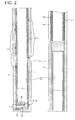
Fig. 2 is a rear view of the water content detection sensor of the first embodiment; -
Fig. 3 is a plan view of a circuit member of the water content detection sensor; -
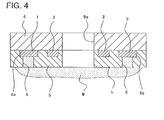
Fig. 4 is a sectional view taken along the line IV-IV inFig. 1 ; -
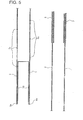
Fig. 5 is a plan view showing a circuit member of a water content detection sensor according to a second embodiment of the present invention; -
Fig. 6 is a plan view showing a circuit member of a water content detection sensor according to a third embodiment of the present invention; -
Fig. 7 is a sectional view, like that ofFig. 4 , of a water content detection sensor according to a fourth embodiment of the present invention. - 1 , 2 ··· low resistance conductor, 1 a , 2 a ··· extension portion, 3 ··· high resistance conductor, 4 ··· carrier body, 5 ··· coating body, 6 ··· exposure hole, 6 a ··· enlarged portion, 9 a , 9 b ···
water passing holes 9a. W···water - Hereunder, preferred embodiments of the present invention will be described with reference to the accompanying drawings.
- As shown in
Figs. 1 to 4 , a water content (or merely water) detection sensor of this embodiment is provided with a circuit member includinglow resistance conductors high resistance conductor 3 connecting both ends of thelow resistance conductors carrier body 4 and acoating body 5 both having water-proof property and insulating property, and thecoating body 5 is formed with a plurality of holes asexposure holes 6 through which the low resistance conductors are exposed. Theexposure holes 6 may be formed to thecarrier body 4. - The carrier body or
carrier 4 is formed into a bendable belt-shape and adapted to carry the entire structure of the water content detection sensor. Thecarrier body 4 has a water-proof property so as not to pass the water content and also has an electrically insulating property. In addition, it is desirable for thecarrier body 4 to be formed to be transparent for the easy observation of the condition of the circuit member. Thecarrier body 4 is formed from a biaxially oriented film formed of polypropylene, polyethylene, polyvinyl-chloride, polyester, polyamide, polyimide, polycarbonate, polystyrene or like. It is also desirable for thecarrier body 4 to have a thickness of 30 to 300 µ m or, more preferably, 50 to 100 µ m. - The circuit member includes the plural
low resistance conductors carrier body 4. Thelow resistance conductors carrier body 4 with electrically conductive ink. - The conductive ink is formed by kneading binder, conductive metal powder and another filler, and as the binder, there may be used a polyvinyl chloride group resin, a polyacryl group resin, an epoxy group resin, a polyester group resin, polyacrylic urethane group resin, a polyolefin group resin, a urethane group resin, phenol or like resin.
As the conductive metal powder, there may be used silver, gold, copper, nickel, aluminium, conductive carbon or like.
The filler includes a viscosity controlling agent, a dispersing agent and the like.
Thelow resistance conductors carrier body 4 in fine belt-like form through screen printing, direct gravure printing, flexographic printing or like printing process. Each of thelow resistance conductors low resistance conductors - On the other hand, the
high resistance conductor 3 in the circuit member is formed by being printed with the conductive ink of the composition substantially the same as that of the low resistance conductor 1 (2). However, less amount of the conductive metal powder is contained in the conductive ink, and as a result, the resistance value of thehigh resistance conductor 3 is set to be larger than that of the low resistance conductor 1 (2), for example, to several MΩ. In addition, in order to easily distinguish from thelow resistance conductors high resistance conductor 3 is formed to have a fine shape having thickness of, for example, 0.5 mm. Furthermore, thehigh resistance conductor 3 extends, from one end of one of thelow resistance conductors 1, to the other end along thislow resistance conductor 1, then to other one end of the otherlow resistance conductor 2 and further toward one end of thislow resistance conductor 2 therealong. As a result, the high andlow resistance conductors carrier body 4 as one conductor, and a potential difference is caused between the rear end portions of thelow resistance conductors high resistance conductor 3 to have a resistance value of 1 to 10M Ω, preferably of 2 to 6 M Ω. -
Lead wires low resistance conductors lead wires carrier body 4 with the conductive ink, which is the same as or similar to that for thelow resistance conductors - The
low resistance conductors extensions carrier 4, for example, on which the water content is likely concentrated. More specifically, one ends of the respectivelow resistance conductors low resistance conductors carrier body 4. Further, thehigh resistance conductor 3 is also bent and extend as like as thelow resistance conductors - The
coating body 5 is coated on the surface of thecarrier body 4 from the upper portion of the circuit member so as to insulate the circuit member together with thecarrier body 4. The coating body is formed of the printing ink. - The printing ink is formed by kneading a binder, pigment and other fillers.
As the binder, there may be used a polyvinyl chloride group resin, polyacrylic group resin, epoxy group resin, polyester group resin, polyacrylic urethane group resin, polyolefin group resin, polyurethane group resin, or phenol group resin. The binder further formed through urethane-coupling of polyester polyal and isocyanate or UV hardened resin.
As the pigment, there may be used a white pigment, for example, for easy identification from the circuit. Further, the filler may include a viscosity controlling agent, dispersing agent and the like.
Such printing ink is coated on the surface of the carrier above the circuit member, through the screen printing, direct gravure printing process or like, with thelead wires coating body 5. This coating (coated)body 5 serves as insulating film and water-proof film. - A plurality of exposure holes 6 are formed on the
coating body 5 at which thelow resistance conductors coating body 5. In the illustrated example, these exposure holes 6 are formed at a predetermined interval along the twolow resistance conductors portions
Further, anenlarged portion 6a having an area larger than theexposure hole 6 may be formed, as occasion demands, on the low resistance conductor 1 (2) corresponding to theexposure hole 6. According to the formation of suchenlarged portion 6a, even if theexposure hole 6 is formed in a manner slightly offset, thelow resistance conductors low resistance conductors - The
carrier body 4 is formed withwater passing holes 9a penetrating thecarrier 4. In the illustrated example, such water passing hole 9 is perforated into approximately rectangular shape between thelow resistance conductors extended portions 1a and 1b, but it may be perforated as an aggregation of many perforations. Accordingly, even in the case where the water content W adheres on the side of thecoating body 5, it passes through thewater passing holes - Hereunder, the functions of the water content detection sensor of the structure mentioned above will be described.
- The circuit member and the
coating body 5 of the water content detection sensor are printed, with different colors of inks, on thecarrier body 4 formed from a transparent film, so that the presence of disconnection (breaking of wire) of the circuit or presence of fault of thecoating body 5 can be immediately visually observed, thus easily discriminating the performance of the water content detection sensor itself. - Incidentally, when the
lead wires low resistance conductor 1 to the otherlow resistance conductor 2 through thehigh resistance conductor 3. By detecting this current, the performance of the water content detection sensor can be judged. - The water content detection sensor is used in a manner that it is bonded on a vehicle body, a window glass or others of an automobile so that the exposure hole side is exposed outward, or it may be bonded to a diaper.
When thelead wires low resistance conductor 1 to the otherlow resistance conductor 2 through thehigh resistance conductor 3. By detecting this current, it is judged whether the water content detection sensor operates normally or not. - When the water content W of, for example, rainwater, adheres so as to straddle the
exposure hole 6 on the twolow resistance conductors
In the case of the diaper, when discharged urination adheres so as to bridge across theexposure hole 6 on thelow resistance conductors - In this second embodiment, as shown in
Fig. 5 , ahigh resistance conductor 10 in the circuit member of the water content detection sensor is made short in comparison with that of the first embodiment. - Further, in this second embodiment, the same reference numerals are added to members or elements corresponding to those in the first embodiment and duplicated explanation is omitted herein.
- In this third embodiment, as shown in
Fig. 6 , ahigh resistance conductor 11 in the circuit portion of the water content detection sensor is made further short in comparison with those of the first and second embodiments so as to extend linearly between twolow resistance conductors - Further, in third embodiment, the same reference numerals are added to members or elements corresponding to those in the first or second embodiment and duplicated explanation is omitted herein.
- In a water content detection sensor of this fourth embodiment, as shown in
Fig. 7 , thecoating body 5 formed to theexposure hole 6 is formed as a lamination member of a printed ink layer. More specifically, the lamination member of the coating body includes three printing ink layers such that a first solvent resistink layer 5a is printed on the low andhigh resistance conductors carrier body 4, an urine resistink layer 5b is printed on thefirst layer 5a and a second solvent resistink layer 5c is printed further on the urine resistink layer 5b. In the printing operations of the respective layers, the exposure holes 6 are simultaneously formed as non-printed portion. - Polyester resin ink will be used as the solvent resist ink, and as the urine resist ink, there will be used urethane combined ink of polyester polyal and isocyanate, or UV hardened resin ink.
- In the case of application of the water content detection sensor to the diaper, since the low and
high resistance conductors coating body 5 consisting of the multi-layers of the printing ink layers 5a to 5c, the intrusion of the urination from the urine resistink layer 5b into the low andhigh resistance conductors ink layer 5b into the circuit member can be shut off by the first solvent resistink layer 5a, and the invasion on the side opposite to the circuit portion can be also shut off by the second solvent resistink layer 5c. - Further, in this fourth embodiment, the same reference numerals are added to members or elements corresponding to those in the first to third embodiment and duplicated explanation is omitted herein.
- In the water content detection sensor of the fifth embodiment, the low and
high resistance conductors high resistance conductors - It is to be noted that the present invention is not limited to the described embodiments and many other changes and modifications may be made without departing from the scopes of the appended claims. For example, the exposure holes may be formed to the carrier body instead of the coating body. In addition, the coating body is formed with the printing ink layers, but it may be formed with a film member as like as the carrier body.
Claims (12)
- A water content detection sensor comprising: a circuit member in which low resistance conductors disposed in parallel to each other and a high resistance conductor connecting end portions of the respective low resistance conductors; a carrier body having a water-proof property and an insulating property; and a coating body having a water-proof property and an insulating property, the circuit member being disposed between the carrier body and the coating body, wherein a plurality of exposure holes are formed to the carrier body or the coating body so as to expose the low resistance conductors at plural portions, and when water content adheres between the exposure holes and the low resistance conductors are then short-circuited in a current conduction state, a current value is made larger than that before the water content adheres.
- The water detection sensor according to claim 1, wherein the low resistance conductors and the high resistance conductor are formed by being printed on the carrier body in form of film and the coating body is printed thereon.
- The water detection sensor according to claim 1 or 2, wherein portions of the low resistance conductors corresponding to the exposure holes are formed as enlarged portions each having an area larger than that of the exposure hole.
- The water content detection sensor according to any one of claims 1 to 3, wherein extending portions of the low resistance conductors and the exposure holes are formed to portions at which the water content is likely concentrated.
- The water content detection sensor according to claim 1 to 4, wherein the carrier body and the coating body are formed with through holes through which water passes.
- The water content detection sensor according to claim 1, wherein the low resistance conductors and the high resistance conductor are printed with conductive ink including conductive carbon.
- The water content detection sensor according to claim 6, wherein the printing ink of the low resistance conductor includes the conductive carbon of an amount larger than that included in the printing ink of the high resistance conductor.
- The water content detection sensor according to claim 1, wherein the coating body or the carrier body, to which the exposure holes are formed, is formed as a lamination member composed of printing ink layers, and at least one layer of the lamination member is formed of urine resist ink.
- The water content detection sensor according to claim 8, wherein at least one of layers of the lamination member disposed between the urine resist ink layer and the low and high resistance conductors is formed of solvent resist ink.
- The water content detection sensor according to claim 9, wherein the solvent resist ink is a polyester resin ink.
- The water content detection sensor according to claim 8, wherein the urine resist ink is urethane combined ink of polyester polyal and isocyanate or UV hardened resin ink.
- The water content detection sensor according to claim 1, wherein the low and high resistance conductors are formed by being printed with conductive ink including only conductive carbon as conductive substance.
Applications Claiming Priority (3)
| Application Number | Priority Date | Filing Date | Title |
|---|---|---|---|
| JP2005205974 | 2005-07-14 | ||
| JP2006180319A JP5037043B2 (en) | 2005-07-14 | 2006-06-29 | Moisture detection sensor |
| PCT/JP2006/314052 WO2007007874A1 (en) | 2005-07-14 | 2006-07-14 | Moisture sensor |
Publications (3)
| Publication Number | Publication Date |
|---|---|
| EP1903333A1 true EP1903333A1 (en) | 2008-03-26 |
| EP1903333A4 EP1903333A4 (en) | 2011-09-21 |
| EP1903333B1 EP1903333B1 (en) | 2014-12-10 |
Family
ID=37637249
Family Applications (1)
| Application Number | Title | Priority Date | Filing Date |
|---|---|---|---|
| EP06768212.0A Not-in-force EP1903333B1 (en) | 2005-07-14 | 2006-07-14 | Moisture sensor |
Country Status (6)
| Country | Link |
|---|---|
| US (2) | US8183876B2 (en) |
| EP (1) | EP1903333B1 (en) |
| JP (1) | JP5037043B2 (en) |
| KR (1) | KR20080031023A (en) |
| TW (2) | TWI408365B (en) |
| WO (1) | WO2007007874A1 (en) |
Cited By (1)
| Publication number | Priority date | Publication date | Assignee | Title |
|---|---|---|---|---|
| AU2011347417B2 (en) * | 2010-12-23 | 2016-03-10 | Essity Hygiene And Health Aktiebolag | Tool for analysing liquid discharge data in an absorbent article, an absorbent article adapted for liquid discharge data collection and a control unit interacting with the absorbent article for collecting the liquid discharge data |
Families Citing this family (16)
| Publication number | Priority date | Publication date | Assignee | Title |
|---|---|---|---|---|
| US7977529B2 (en) | 2004-11-03 | 2011-07-12 | Fred Bergman Healthcare Pty Ltd. | Incontinence management system and diaper |
| JP5037043B2 (en) * | 2005-07-14 | 2012-09-26 | ユニ・チャーム株式会社 | Moisture detection sensor |
| US9907707B2 (en) | 2011-06-03 | 2018-03-06 | The Procter & Gamble Company | Sensor systems comprising auxiliary articles |
| CN102590096B (en) * | 2012-02-08 | 2013-10-23 | 杨英杰 | Moisture detecting method for overheated steam of steam pipeline of turbine |
| JP6232216B2 (en) * | 2013-06-24 | 2017-11-15 | ユニ・チャーム株式会社 | Absorbent articles |
| GB2531224B (en) | 2013-08-08 | 2020-02-12 | Procter & Gamble | Sensor systems for absorbent articles comprising sensor gates |
| KR102446664B1 (en) * | 2015-12-23 | 2022-09-26 | 주식회사 아모센스 | moisture detection device |
| US10285871B2 (en) | 2016-03-03 | 2019-05-14 | The Procter & Gamble Company | Absorbent article with sensor |
| JP7034677B2 (en) * | 2017-11-17 | 2022-03-14 | ソニー・オリンパスメディカルソリューションズ株式会社 | Medical circuit boards and medical devices |
| WO2019107165A1 (en) * | 2017-11-30 | 2019-06-06 | 東レ株式会社 | Circuit, detector, wireless communication device, moisture sensing system, diaper, notification system, and circuit manufacturing method |
| US11918506B2 (en) | 2017-12-22 | 2024-03-05 | Coloplast A/S | Medical appliance with selective sensor points and related methods |
| LT3727234T (en) * | 2017-12-22 | 2022-04-25 | Coloplast A/S | OSTOMIC DEVICE WITH ANGLE DETECTION |
| US11819443B2 (en) | 2017-12-22 | 2023-11-21 | Coloplast A/S | Moisture detecting base plate for a medical appliance and a system for determining moisture propagation in a base plate and/or a sensor assembly part |
| EP3787583A1 (en) | 2018-05-04 | 2021-03-10 | The Procter & Gamble Company | Sensor devices and systems for monitoring the basic needs of an infant |
| US11051996B2 (en) | 2018-08-27 | 2021-07-06 | The Procter & Gamble Company | Sensor devices and systems for monitoring the basic needs of an infant |
| WO2020076607A1 (en) * | 2018-10-09 | 2020-04-16 | Hollister Incorporated | Ostomy appliance having conductive ink circuit for leakage detection |
Family Cites Families (30)
| Publication number | Priority date | Publication date | Assignee | Title |
|---|---|---|---|---|
| US3356979A (en) * | 1966-02-28 | 1967-12-05 | George J Bouyoucos | Moisture sensitive resistor |
| GB1541893A (en) * | 1975-08-19 | 1979-03-14 | Asahi Chemical Ind | Printed circuit board and method for preparing the same |
| JPS585641A (en) * | 1981-07-01 | 1983-01-13 | Murata Mfg Co Ltd | Detector for dew condensation and frost-forming |
| JPS63290950A (en) * | 1987-05-25 | 1988-11-28 | Kyohei Mizushima | Moisture sensor |
| JPH0230038U (en) * | 1988-08-18 | 1990-02-26 | ||
| JP2502134B2 (en) | 1988-09-29 | 1996-05-29 | 富士写真フイルム株式会社 | Photographic exposure amount determination device |
| JPH032653A (en) * | 1989-05-31 | 1991-01-09 | Junkosha Co Ltd | Leaked-liquid detecting apparatus |
| JPH0590339A (en) | 1991-09-26 | 1993-04-09 | Matsushita Electric Ind Co Ltd | Manufacture of semiconductor device |
| JPH0590339U (en) * | 1992-04-30 | 1993-12-10 | 昭和電線電纜株式会社 | Leak detection cable |
| FI92440C (en) * | 1993-08-23 | 1994-11-10 | Vaisala Oy | Detector and method for observing the presence of a liquid and / or a change thereof |
| DE4424985A1 (en) | 1994-07-15 | 1996-01-18 | Vdo Schindling | Rain sensor esp. for automatic motor vehicle windscreen wiper control |
| WO1997042613A2 (en) * | 1996-05-07 | 1997-11-13 | Knox Security Engineering Corporation | Moisture detecting devices such as for diapers and diapers having such devices |
| JPH1030998A (en) * | 1996-07-15 | 1998-02-03 | Akio Takahashi | Paper diaper having moisture detecting sensor built in |
| US5868723A (en) * | 1997-07-15 | 1999-02-09 | Al-Sabah; Sabah Naser | Moisture sensing and audio indicating apparatus for garments and associated methods |
| TW388712B (en) * | 1998-04-22 | 2000-05-01 | Yang Shiau Lei | Diaper alarm system for distinguish urine from feces |
| JP2000019136A (en) * | 1998-07-02 | 2000-01-21 | Hokuriku Electric Ind Co Ltd | Moisture detecting device |
| JP2000093448A (en) * | 1998-09-18 | 2000-04-04 | Panetto:Kk | Sensor for diaper and diaper containing the same |
| JP2002082080A (en) | 2000-09-08 | 2002-03-22 | Matsushita Electric Works Ltd | Water content sensor |
| US20040095225A1 (en) * | 2001-03-19 | 2004-05-20 | Nelson Charles Scott | Independently housed trim resistor and a method for fabricating same |
| US6906534B2 (en) * | 2001-11-20 | 2005-06-14 | 3M Innovative Properties Company | Breathable moisture barrier for an occupant sensing system |
| US6637257B2 (en) * | 2002-01-02 | 2003-10-28 | Integrated Sensing Systems | Micromachined fluid analysis device and method |
| JP2005526261A (en) * | 2002-05-15 | 2005-09-02 | グラクソ グループ リミテッド | Microelectromechanical system and method for measuring temperature and moisture profiles in pharmaceutical packaging |
| US6882338B2 (en) * | 2002-08-16 | 2005-04-19 | Leapfrog Enterprises, Inc. | Electrographic position location apparatus |
| JP2004177120A (en) * | 2002-10-04 | 2004-06-24 | Awajitec:Kk | Moisture detector |
| JP4479175B2 (en) * | 2003-06-06 | 2010-06-09 | コニカミノルタオプト株式会社 | Hard coat film, method for producing the same, polarizing plate and display device |
| TWI240795B (en) * | 2003-11-20 | 2005-10-01 | Yiing-Ing Kwo | Liquid check band |
| JP4979999B2 (en) * | 2005-07-13 | 2012-07-18 | ユニ・チャーム株式会社 | Urine sensor |
| JP5037043B2 (en) * | 2005-07-14 | 2012-09-26 | ユニ・チャーム株式会社 | Moisture detection sensor |
| CN101223437B (en) * | 2005-07-14 | 2011-04-13 | 尤妮佳股份有限公司 | Water content detection sensor |
| US7892488B2 (en) * | 2006-02-10 | 2011-02-22 | Honeywell International, Inc. | Thermal liquid flow sensor and method of forming same |
-
2006
- 2006-06-29 JP JP2006180319A patent/JP5037043B2/en not_active Expired - Fee Related
- 2006-07-14 TW TW095125828A patent/TWI408365B/en not_active IP Right Cessation
- 2006-07-14 TW TW102115228A patent/TWI424157B/en not_active IP Right Cessation
- 2006-07-14 US US11/988,781 patent/US8183876B2/en not_active Expired - Fee Related
- 2006-07-14 KR KR1020087001650A patent/KR20080031023A/en not_active Abandoned
- 2006-07-14 EP EP06768212.0A patent/EP1903333B1/en not_active Not-in-force
- 2006-07-14 WO PCT/JP2006/314052 patent/WO2007007874A1/en not_active Ceased
-
2012
- 2012-02-03 US US13/365,292 patent/US8779785B2/en not_active Expired - Fee Related
Cited By (3)
| Publication number | Priority date | Publication date | Assignee | Title |
|---|---|---|---|---|
| AU2011347417B2 (en) * | 2010-12-23 | 2016-03-10 | Essity Hygiene And Health Aktiebolag | Tool for analysing liquid discharge data in an absorbent article, an absorbent article adapted for liquid discharge data collection and a control unit interacting with the absorbent article for collecting the liquid discharge data |
| US9408757B2 (en) | 2010-12-23 | 2016-08-09 | Sca Hygiene Products Ab | Tool for analysing liquid discharge data in an absorbent article, an absorbent article adapted for liquid discharge data collection and a control unit interacting with the absorbent article for collecting the liquid discharge data |
| EP2654648B1 (en) * | 2010-12-23 | 2018-05-23 | Sca Hygiene Products AB | Tool for analysing liquid discharge data in an absorbent article, an absorbent article adapted for liquid discharge data collection and a control unit interacting with the absorbent article for collecting the liquid discharge data |
Also Published As
| Publication number | Publication date |
|---|---|
| TW200710388A (en) | 2007-03-16 |
| EP1903333A4 (en) | 2011-09-21 |
| US20120200310A1 (en) | 2012-08-09 |
| EP1903333B1 (en) | 2014-12-10 |
| TWI424157B (en) | 2014-01-21 |
| WO2007007874A1 (en) | 2007-01-18 |
| US8183876B2 (en) | 2012-05-22 |
| TWI408365B (en) | 2013-09-11 |
| TW201335590A (en) | 2013-09-01 |
| JP5037043B2 (en) | 2012-09-26 |
| JP2007047153A (en) | 2007-02-22 |
| US20090219041A1 (en) | 2009-09-03 |
| US8779785B2 (en) | 2014-07-15 |
| KR20080031023A (en) | 2008-04-07 |
Similar Documents
| Publication | Publication Date | Title |
|---|---|---|
| US8779785B2 (en) | Water content detection sensor | |
| EP2034299B1 (en) | Excrement-detecting sensor | |
| DE69629036T2 (en) | BATTERY CONDITION TESTER | |
| US5036249A (en) | Electroluminescent lamp panel and method of fabricating same | |
| DE69636651T2 (en) | BATTERIEZUSTANDSPRÜFGERÄT | |
| US20090045824A1 (en) | Proximity sensor with an edge connection, and method for manufacturing the same | |
| JP4200184B1 (en) | Moisture detection sensor | |
| CA2671163C (en) | An electric sensor web, system and a method for its manufacture | |
| DE102008055107A1 (en) | Measuring probe for electrochemical measurements | |
| DE102018006951A1 (en) | Construction film | |
| DE102018222454A1 (en) | Detection arrangement, motor vehicle and method for the detection of liquid | |
| DE102022200849A1 (en) | Control device for a component of a motor vehicle, vehicle steering system and motor vehicle | |
| JPH10332509A (en) | Piezoelectric pressure sensor | |
| EP2728752B1 (en) | Electronic sensor unit for detecting a contact-free actuation of a door or hatch on a motor vehicle | |
| DE102019204464A1 (en) | SMOKE AND FIRE DETECTION SYSTEM, FIRE PROTECTION SYSTEM FOR AIRCRAFT AND METHOD FOR DETECTING SMOKE AND FIRE SOURCES | |
| WO2019014363A1 (en) | Occupant detection system, sensing mat and electrical switch | |
| EP1619522A1 (en) | Capacitive transmitter electrode | |
| DE102025128389A1 (en) | Hydrogen sulfide detection device | |
| WO2008037762A1 (en) | Sensor and sensor arrangement |
Legal Events
| Date | Code | Title | Description |
|---|---|---|---|
| PUAI | Public reference made under article 153(3) epc to a published international application that has entered the european phase |
Free format text: ORIGINAL CODE: 0009012 |
|
| 17P | Request for examination filed |
Effective date: 20071211 |
|
| AK | Designated contracting states |
Kind code of ref document: A1 Designated state(s): AT BE BG CH CY CZ DE DK EE ES FI FR GB GR HU IE IS IT LI LT LU LV MC NL PL PT RO SE SI SK TR |
|
| DAX | Request for extension of the european patent (deleted) | ||
| A4 | Supplementary search report drawn up and despatched |
Effective date: 20110824 |
|
| RIC1 | Information provided on ipc code assigned before grant |
Ipc: B60S 1/08 20060101ALI20110818BHEP Ipc: G01N 27/04 20060101AFI20110818BHEP Ipc: A61F 13/42 20060101ALI20110818BHEP |
|
| 17Q | First examination report despatched |
Effective date: 20111104 |
|
| DAX | Request for extension of the european patent (deleted) | ||
| GRAP | Despatch of communication of intention to grant a patent |
Free format text: ORIGINAL CODE: EPIDOSNIGR1 |
|
| INTG | Intention to grant announced |
Effective date: 20140821 |
|
| RIN1 | Information on inventor provided before grant (corrected) |
Inventor name: WADA, ICHIRO Inventor name: UEMATSU, HIROSHI Inventor name: HAYASHI, MASAHO Inventor name: SUZUKI, MIOU Inventor name: TODA, KIYOSHI Inventor name: UENISHI, TOSHIHIKO Inventor name: HIRAI, YUICHI |
|
| GRAS | Grant fee paid |
Free format text: ORIGINAL CODE: EPIDOSNIGR3 |
|
| GRAA | (expected) grant |
Free format text: ORIGINAL CODE: 0009210 |
|
| AK | Designated contracting states |
Kind code of ref document: B1 Designated state(s): AT BE BG CH CY CZ DE DK EE ES FI FR GB GR HU IE IS IT LI LT LU LV MC NL PL PT RO SE SI SK TR |
|
| REG | Reference to a national code |
Ref country code: GB Ref legal event code: FG4D |
|
| REG | Reference to a national code |
Ref country code: CH Ref legal event code: EP |
|
| REG | Reference to a national code |
Ref country code: IE Ref legal event code: FG4D |
|
| REG | Reference to a national code |
Ref country code: AT Ref legal event code: REF Ref document number: 700892 Country of ref document: AT Kind code of ref document: T Effective date: 20150115 |
|
| REG | Reference to a national code |
Ref country code: DE Ref legal event code: R096 Ref document number: 602006043963 Country of ref document: DE Effective date: 20150122 |
|
| REG | Reference to a national code |
Ref country code: NL Ref legal event code: T3 |
|
| REG | Reference to a national code |
Ref country code: SE Ref legal event code: TRGR |
|
| REG | Reference to a national code |
Ref country code: AT Ref legal event code: MK05 Ref document number: 700892 Country of ref document: AT Kind code of ref document: T Effective date: 20141210 |
|
| PG25 | Lapsed in a contracting state [announced via postgrant information from national office to epo] |
Ref country code: ES Free format text: LAPSE BECAUSE OF FAILURE TO SUBMIT A TRANSLATION OF THE DESCRIPTION OR TO PAY THE FEE WITHIN THE PRESCRIBED TIME-LIMIT Effective date: 20141210 Ref country code: LT Free format text: LAPSE BECAUSE OF FAILURE TO SUBMIT A TRANSLATION OF THE DESCRIPTION OR TO PAY THE FEE WITHIN THE PRESCRIBED TIME-LIMIT Effective date: 20141210 Ref country code: FI Free format text: LAPSE BECAUSE OF FAILURE TO SUBMIT A TRANSLATION OF THE DESCRIPTION OR TO PAY THE FEE WITHIN THE PRESCRIBED TIME-LIMIT Effective date: 20141210 |
|
| REG | Reference to a national code |
Ref country code: LT Ref legal event code: MG4D |
|
| PG25 | Lapsed in a contracting state [announced via postgrant information from national office to epo] |
Ref country code: AT Free format text: LAPSE BECAUSE OF FAILURE TO SUBMIT A TRANSLATION OF THE DESCRIPTION OR TO PAY THE FEE WITHIN THE PRESCRIBED TIME-LIMIT Effective date: 20141210 Ref country code: LV Free format text: LAPSE BECAUSE OF FAILURE TO SUBMIT A TRANSLATION OF THE DESCRIPTION OR TO PAY THE FEE WITHIN THE PRESCRIBED TIME-LIMIT Effective date: 20141210 Ref country code: GR Free format text: LAPSE BECAUSE OF FAILURE TO SUBMIT A TRANSLATION OF THE DESCRIPTION OR TO PAY THE FEE WITHIN THE PRESCRIBED TIME-LIMIT Effective date: 20150311 |
|
| PG25 | Lapsed in a contracting state [announced via postgrant information from national office to epo] |
Ref country code: RO Free format text: LAPSE BECAUSE OF FAILURE TO SUBMIT A TRANSLATION OF THE DESCRIPTION OR TO PAY THE FEE WITHIN THE PRESCRIBED TIME-LIMIT Effective date: 20141210 Ref country code: CZ Free format text: LAPSE BECAUSE OF FAILURE TO SUBMIT A TRANSLATION OF THE DESCRIPTION OR TO PAY THE FEE WITHIN THE PRESCRIBED TIME-LIMIT Effective date: 20141210 Ref country code: PT Free format text: LAPSE BECAUSE OF FAILURE TO SUBMIT A TRANSLATION OF THE DESCRIPTION OR TO PAY THE FEE WITHIN THE PRESCRIBED TIME-LIMIT Effective date: 20150410 Ref country code: EE Free format text: LAPSE BECAUSE OF FAILURE TO SUBMIT A TRANSLATION OF THE DESCRIPTION OR TO PAY THE FEE WITHIN THE PRESCRIBED TIME-LIMIT Effective date: 20141210 Ref country code: SK Free format text: LAPSE BECAUSE OF FAILURE TO SUBMIT A TRANSLATION OF THE DESCRIPTION OR TO PAY THE FEE WITHIN THE PRESCRIBED TIME-LIMIT Effective date: 20141210 |
|
| PG25 | Lapsed in a contracting state [announced via postgrant information from national office to epo] |
Ref country code: PL Free format text: LAPSE BECAUSE OF FAILURE TO SUBMIT A TRANSLATION OF THE DESCRIPTION OR TO PAY THE FEE WITHIN THE PRESCRIBED TIME-LIMIT Effective date: 20141210 Ref country code: IS Free format text: LAPSE BECAUSE OF FAILURE TO SUBMIT A TRANSLATION OF THE DESCRIPTION OR TO PAY THE FEE WITHIN THE PRESCRIBED TIME-LIMIT Effective date: 20150410 |
|
| REG | Reference to a national code |
Ref country code: DE Ref legal event code: R097 Ref document number: 602006043963 Country of ref document: DE |
|
| PLBE | No opposition filed within time limit |
Free format text: ORIGINAL CODE: 0009261 |
|
| STAA | Information on the status of an ep patent application or granted ep patent |
Free format text: STATUS: NO OPPOSITION FILED WITHIN TIME LIMIT |
|
| PG25 | Lapsed in a contracting state [announced via postgrant information from national office to epo] |
Ref country code: DK Free format text: LAPSE BECAUSE OF FAILURE TO SUBMIT A TRANSLATION OF THE DESCRIPTION OR TO PAY THE FEE WITHIN THE PRESCRIBED TIME-LIMIT Effective date: 20141210 |
|
| 26N | No opposition filed |
Effective date: 20150911 |
|
| PG25 | Lapsed in a contracting state [announced via postgrant information from national office to epo] |
Ref country code: IT Free format text: LAPSE BECAUSE OF FAILURE TO SUBMIT A TRANSLATION OF THE DESCRIPTION OR TO PAY THE FEE WITHIN THE PRESCRIBED TIME-LIMIT Effective date: 20141210 |
|
| PG25 | Lapsed in a contracting state [announced via postgrant information from national office to epo] |
Ref country code: MC Free format text: LAPSE BECAUSE OF FAILURE TO SUBMIT A TRANSLATION OF THE DESCRIPTION OR TO PAY THE FEE WITHIN THE PRESCRIBED TIME-LIMIT Effective date: 20141210 Ref country code: SI Free format text: LAPSE BECAUSE OF FAILURE TO SUBMIT A TRANSLATION OF THE DESCRIPTION OR TO PAY THE FEE WITHIN THE PRESCRIBED TIME-LIMIT Effective date: 20141210 |
|
| REG | Reference to a national code |
Ref country code: CH Ref legal event code: PL |
|
| PG25 | Lapsed in a contracting state [announced via postgrant information from national office to epo] |
Ref country code: LU Free format text: LAPSE BECAUSE OF FAILURE TO SUBMIT A TRANSLATION OF THE DESCRIPTION OR TO PAY THE FEE WITHIN THE PRESCRIBED TIME-LIMIT Effective date: 20150714 |
|
| REG | Reference to a national code |
Ref country code: IE Ref legal event code: MM4A |
|
| PG25 | Lapsed in a contracting state [announced via postgrant information from national office to epo] |
Ref country code: CH Free format text: LAPSE BECAUSE OF NON-PAYMENT OF DUE FEES Effective date: 20150731 Ref country code: LI Free format text: LAPSE BECAUSE OF NON-PAYMENT OF DUE FEES Effective date: 20150731 |
|
| PG25 | Lapsed in a contracting state [announced via postgrant information from national office to epo] |
Ref country code: BE Free format text: LAPSE BECAUSE OF FAILURE TO SUBMIT A TRANSLATION OF THE DESCRIPTION OR TO PAY THE FEE WITHIN THE PRESCRIBED TIME-LIMIT Effective date: 20141210 |
|
| REG | Reference to a national code |
Ref country code: FR Ref legal event code: PLFP Year of fee payment: 11 |
|
| PG25 | Lapsed in a contracting state [announced via postgrant information from national office to epo] |
Ref country code: IE Free format text: LAPSE BECAUSE OF NON-PAYMENT OF DUE FEES Effective date: 20150714 |
|
| PGFP | Annual fee paid to national office [announced via postgrant information from national office to epo] |
Ref country code: GB Payment date: 20160606 Year of fee payment: 11 |
|
| PGFP | Annual fee paid to national office [announced via postgrant information from national office to epo] |
Ref country code: NL Payment date: 20160630 Year of fee payment: 11 |
|
| PGFP | Annual fee paid to national office [announced via postgrant information from national office to epo] |
Ref country code: DE Payment date: 20160920 Year of fee payment: 11 |
|
| PGFP | Annual fee paid to national office [announced via postgrant information from national office to epo] |
Ref country code: SE Payment date: 20160719 Year of fee payment: 11 Ref country code: FR Payment date: 20160721 Year of fee payment: 11 |
|
| PG25 | Lapsed in a contracting state [announced via postgrant information from national office to epo] |
Ref country code: HU Free format text: LAPSE BECAUSE OF FAILURE TO SUBMIT A TRANSLATION OF THE DESCRIPTION OR TO PAY THE FEE WITHIN THE PRESCRIBED TIME-LIMIT; INVALID AB INITIO Effective date: 20060714 Ref country code: BG Free format text: LAPSE BECAUSE OF FAILURE TO SUBMIT A TRANSLATION OF THE DESCRIPTION OR TO PAY THE FEE WITHIN THE PRESCRIBED TIME-LIMIT Effective date: 20141210 |
|
| PG25 | Lapsed in a contracting state [announced via postgrant information from national office to epo] |
Ref country code: CY Free format text: LAPSE BECAUSE OF FAILURE TO SUBMIT A TRANSLATION OF THE DESCRIPTION OR TO PAY THE FEE WITHIN THE PRESCRIBED TIME-LIMIT Effective date: 20141210 |
|
| PG25 | Lapsed in a contracting state [announced via postgrant information from national office to epo] |
Ref country code: TR Free format text: LAPSE BECAUSE OF FAILURE TO SUBMIT A TRANSLATION OF THE DESCRIPTION OR TO PAY THE FEE WITHIN THE PRESCRIBED TIME-LIMIT Effective date: 20141210 |
|
| REG | Reference to a national code |
Ref country code: DE Ref legal event code: R119 Ref document number: 602006043963 Country of ref document: DE |
|
| REG | Reference to a national code |
Ref country code: NL Ref legal event code: MM Effective date: 20170801 |
|
| REG | Reference to a national code |
Ref country code: SE Ref legal event code: EUG |
|
| GBPC | Gb: european patent ceased through non-payment of renewal fee |
Effective date: 20170714 |
|
| REG | Reference to a national code |
Ref country code: FR Ref legal event code: ST Effective date: 20180330 |
|
| PG25 | Lapsed in a contracting state [announced via postgrant information from national office to epo] |
Ref country code: SE Free format text: LAPSE BECAUSE OF NON-PAYMENT OF DUE FEES Effective date: 20170715 Ref country code: DE Free format text: LAPSE BECAUSE OF NON-PAYMENT OF DUE FEES Effective date: 20180201 Ref country code: GB Free format text: LAPSE BECAUSE OF NON-PAYMENT OF DUE FEES Effective date: 20170714 Ref country code: NL Free format text: LAPSE BECAUSE OF NON-PAYMENT OF DUE FEES Effective date: 20170801 |
|
| PG25 | Lapsed in a contracting state [announced via postgrant information from national office to epo] |
Ref country code: FR Free format text: LAPSE BECAUSE OF NON-PAYMENT OF DUE FEES Effective date: 20170731 |