EP1902394B1 - Moving data from file on storage volume to alternate location to free space - Google Patents
Moving data from file on storage volume to alternate location to free space Download PDFInfo
- Publication number
- EP1902394B1 EP1902394B1 EP06786914.9A EP06786914A EP1902394B1 EP 1902394 B1 EP1902394 B1 EP 1902394B1 EP 06786914 A EP06786914 A EP 06786914A EP 1902394 B1 EP1902394 B1 EP 1902394B1
- Authority
- EP
- European Patent Office
- Prior art keywords
- file
- ghosting
- data
- ghosted
- ghosted file
- Prior art date
- Legal status (The legal status is an assumption and is not a legal conclusion. Google has not performed a legal analysis and makes no representation as to the accuracy of the status listed.)
- Active
Links
Images


Classifications
-
- G—PHYSICS
- G06—COMPUTING OR CALCULATING; COUNTING
- G06F—ELECTRIC DIGITAL DATA PROCESSING
- G06F16/00—Information retrieval; Database structures therefor; File system structures therefor
- G06F16/10—File systems; File servers
- G06F16/17—Details of further file system functions
- G06F16/1737—Details of further file system functions for reducing power consumption or coping with limited storage space, e.g. in mobile devices
-
- G—PHYSICS
- G06—COMPUTING OR CALCULATING; COUNTING
- G06F—ELECTRIC DIGITAL DATA PROCESSING
- G06F17/00—Digital computing or data processing equipment or methods, specially adapted for specific functions
- G06F17/40—Data acquisition and logging
-
- Y—GENERAL TAGGING OF NEW TECHNOLOGICAL DEVELOPMENTS; GENERAL TAGGING OF CROSS-SECTIONAL TECHNOLOGIES SPANNING OVER SEVERAL SECTIONS OF THE IPC; TECHNICAL SUBJECTS COVERED BY FORMER USPC CROSS-REFERENCE ART COLLECTIONS [XRACs] AND DIGESTS
- Y10—TECHNICAL SUBJECTS COVERED BY FORMER USPC
- Y10S—TECHNICAL SUBJECTS COVERED BY FORMER USPC CROSS-REFERENCE ART COLLECTIONS [XRACs] AND DIGESTS
- Y10S707/00—Data processing: database and file management or data structures
- Y10S707/99951—File or database maintenance
- Y10S707/99952—Coherency, e.g. same view to multiple users
- Y10S707/99953—Recoverability
Definitions
- the present invention relates to an architecture and methods that allow data from a computer file stored on a storage volume to be moved or ghosted' to an alternate location to free space on the storage volume. More particularly, the present invention relates to such an architecture and methods whereby the remainder of the ghosted file stays on the storage volume and the ghosted data at the alternate location can if necessary be retrieved and placed back into the ghosted file to result in a de-ghosted file.
- data is typically persistently stored on the computing device in the form of local computer files resident on one or more local storage volumes of the computing device.
- Each such storage volume may reside on a hard drive of the computing device or the like, and such storage volume may be organized by, accessed through, and otherwise controlled by a file system running on the computing device, as is also known.
- data files of an organization or the like are to be replicated at multiple branch locations of the organization, perhaps from a central location such as a hub.
- a central location such as a hub.
- an architectural design firm may wish to have all architectural design files thereof available at any one of several branches of such firm.
- a networked system can be constructed to replicate a copy of each file to each branch, and to keep all files at all branches current.
- a centralized hub server would store each such file, and a replication service would be employed to distribute a copy of each file at the hub over a network to a branch server or the like at each branch.
- a replication service would be employed to distribute a copy of each file at the hub over a network to a branch server or the like at each branch.
- the number of files of the organization increases, and as the size of each file increases, and as the number of branches increases, the amount of traffic over the network also increases, perhaps to a point that exceeds available bandwidth.
- the overall size of all the files at the hub server increases, it may in fact become the case that each branch server does not have enough space available thereon to store all of such files as replicated from the hub server.
- the data for such ghosted file may be retrieved from the hub server, the ghosted file may be reconstituted based on thereon, and such reconstituted file may then be employed.
- US 2004/172423 A1 relates to synchronizing data shared among peer computing devices.
- Selected data objects files and folders
- a data synchronization service running on each selected device monitors the selected data objects for changes, in some examples by intercepting calls to the device's file system.
- the data synchronization service sends a notification of the change to the other devices so that they can update their copies of the data object.
- the copies of the data object are kept in synchrony on all of the selected devices.
- a user can access a data object from any of the selected devices, knowing that he will retrieve the latest version of the data object. If one device is temporarily not available, then the latest version can still be accessed from another device.
- Some files may be very large, such as audio or video clips. Instead of incurring the costs of storing such a file on every computing device, a user can choose to "ghost" the file on some devices.
- a ghosting device stores only metadata about the file (such as its name and version date) rather than the entire file. The user can still access the file through the ghost: the access requests are sent to a device that holds the actual contents, and those contents are then presented to the user as if they were stored locally.
- US 2004/039891 A1 relates to techniques for automatically optimizing storage capacity utilization among multiple storage units in a storage environment based upon data storage costs associated with the storage units. In examples, it is automatically determined when data movement is needed to optimize storage utilization for a group of storage units. According to an example, in order to optimize storage utilization and storage costs, files are moved from the source storage unit to a target storage unit that has a lower data storage cost associated with it than the source storage unit.
- US 2005/021566 A1 relates to techniques for facilitating backup and restore operations in a storage environment comprising recreated files. Backup and restore operations on recreated files are performed without triggering recall while maintaining data integrity.
- US 6 161 104 A relates to high-speed transfer to and sharing of a disk drives and other storage devices on a networked digital data processing system.
- a method is provide in connection with a computing device having a storage volume, a file system managing the storage volume, and a plurality of files stored on the storage volume by the file system and accessed by such file system.
- Each file is defined to include data and metadata relating to the data, and at least a portion of the data of the file has been removed from the file and stored at one of a plurality of alternate locations such that the data does not occupy substantially any space on the volume and the file is in a reduced, ghosted form.
- the computing device has for each of the plurality of alternate locations a corresponding ghosting manager, where each ghosting manager is for being employed to communicate with the alternate location corresponding thereto.
- a single ghosting filter on the computing device locates ghosting information in the metadata of the ghosted file and locates within the ghosting information an identification of a particular ghosting manager of the computing device, where the identified ghosting manager is responsible for the ghosted file. Thereafter, the ghosting filter communicates to the identified ghosting manager a request to obtain data of the ghosted file from the corresponding alternate location, and the identified ghosting manager does in fact obtain such requested data from such alternate location. Upon receiving the requested data of the ghosted file from the identified ghosting manager, then, the ghosting filter reconstitutes the received data to the ghosted file.
- the single ghosting filter is generic to all of the ghosting managers of the computing device.
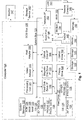
- Fig. 1 and the following discussion are intended to provide a brief general description of a suitable computing environment in which the present invention and/or portions thereof may be implemented.
- the invention is described in the general context of computer-executable instructions, such as program modules, being executed by a computer, such as a client workstation or a server.
- program modules include routines, programs, objects, components, data structures and the like that perform particular tasks or implement particular abstract data types.
- the invention and/or portions thereof may be practiced with other computer system configurations, including handheld devices, multi-processor systems, microprocessor-based or programmable consumer electronics, network PCs, minicomputers, mainframe computers and the like.
- the invention may also be practiced in distributed computing environments where tasks are performed by remote processing devices that are linked through a communications network.
- program modules may be located in both local and remote memory storage devices.
- an exemplary general purpose computing system includes a conventional personal computer 120 or the like, including a processing unit 121, a system memory 122, and a system bus 123 that couples various system components including the system memory to the processing unit 121.
- the system bus 123 may be any of several types of bus structures including a memory bus or memory controller, a peripheral bus, and a local bus using any of a variety of bus architectures.
- the system memory includes read-only memory (ROM) 124 and random access memory (RAM) 125.
- ROM read-only memory
- RAM random access memory
- a basic input/output system 126 (BIOS) containing the basic routines that help to transfer information between elements within the personal computer 120, such as during start-up, is stored in ROM 124.
- the personal computer 120 may further include a hard disk drive 127 for reading from and writing to a hard disk (not shown), a magnetic disk drive 128 for reading from or writing to a removable magnetic disk 129, and an optical disk drive 130 for reading from or writing to a removable optical disk 131 such as a CD-ROM or other optical media.
- the hard disk drive 127, magnetic disk drive 128, and optical disk drive 130 are connected to the system bus 123 by a hard disk drive interface 132, a magnetic disk drive interface 133, and an optical drive interface 134, respectively.
- the drives and their associated computer-readable media provide non-volatile storage of computer readable instructions, data structures, program modules and other data for the personal computer 120.
- exemplary environment described herein employs a hard disk, a removable magnetic disk 129, and a removable optical disk 131
- other types of computer readable media which can store data that is accessible by a computer may also be used in the exemplary operating environment.
- Such other types of media include a magnetic cassette, a flash memory card, a digital video disk, a Bernoulli cartridge, a random access memory (RAM), a read-only memory (ROM), and the like.
- a number of program modules may be stored on the hard disk, magnetic disk 129, optical disk 131, ROM 124 or RAM 125, including an operating system 135, one or more application programs 136, other program modules 137 and program data 138.
- a user may enter commands and information into the personal computer 120 through input devices such as a keyboard 140 and pointing device 142.
- Other input devices may include a microphone, joystick, game pad, satellite disk, scanner, or the like.
- serial port interface 146 that is coupled to the system bus, but may be connected by other interfaces, such as a parallel port, game port, or universal serial bus (USB).
- a monitor 147 or other type of display device is also connected to the system bus 123 via an interface, such as a video adapter 148.
- a personal computer typically includes other peripheral output devices (not shown), such as speakers and printers.
- the exemplary system of Fig. 1 also includes a host adapter 155, a Small Computer System Interface (SCSI) bus 156, and an external storage device 162 connected to the SCSI bus 156.
- SCSI Small Computer System Interface
- the personal computer 120 may operate in a networked environment using logical connections to one or more remote computers, such as a remote computer 149.
- the remote computer 149 may be another personal computer, a server, a router, a network PC, a peer device or other common network node, and typically includes many or all of the elements described above relative to the personal computer 120, although only a memory storage device 150 has been illustrated in Fig. 1 .
- the logical connections depicted in Fig. 1 include a local area network (LAN) 151 and a wide area network (WAN) 152.
- LAN local area network
- WAN wide area network
- Such networking environments are commonplace in offices, enterprise-wide computer networks, intranets, and the Internet.
- the personal computer 120 When used in a LAN networking environment, the personal computer 120 is connected to the LAN 151 through a network interface or adapter 153. When used in a WAN networking environment, the personal computer 120 typically includes a modem 154 or other means for establishing communications over the wide area network 152, such as the Internet.
- the modem 154 which may be internal or external, is connected to the system bus 123 via the serial port interface 146.
- program modules depicted relative to the personal computer 120, or portions thereof may be stored in the remote memory storage device. It will be appreciated that the network connections shown are exemplary and other means of establishing a communications link between the computers may be used.
- a computing device 10 such as a personal computer or a computer server or the like has a storage volume 12 such as a hard drive or a persistent RAM drive or the like, the volume 12 has stored thereon a number of computer files 14, and the files 14 on the volume 12 are organized by, accessed through, and otherwise controlled by a file system 16 running on the computing device 10.
- the computing device 10, volume 12, files 14, and file system 16 may be any type of computing device, volume, file, and file system without departing from the scope of the present invention.
- the computing device 10 is a personal computer or the like and at least some of the files 14 on the volume 12 thereof have been determined to be cold in that such files 14 for example have not been accessed for some extended length of time and/or likely will not be accessed for some extended length of time, and therefore have little if any real value in remaining on the volume 12.
- coldness of a file 14 may be defined in any appropriate manner without departing from the scope of the present invention.
- a file 14 is not deleted from the volume 12 but instead is reduced in size on the volume 12 by removing at least some data 20 thereof to an alternate location 18.
- Such alternate location 18 may be local to the computing device or may be remote therefrom. In general, such alternate location 18 is appropriately coupled to the computing device 10 and may be any appropriate storage location without departing from the scope of the present invention.
- the alternate location 18 may be another volume 12 on the storage device 10, another volume 12 on another computing device 10, a file warehouse at a server, a long-term storage device at a remote server, or the like.
- the computing device 10 is a branch server or the like and at least some of the files 14 on the volume 12 thereof have been determined to be irrelevant in that such files 14 for example are not relevant to a branch office associated with such branch server.
- a file 14 may be defined in any appropriate manner without departing from the scope of the present invention.
- an irrelevant file 14 is maintained on the volume 12 of the branch server 10 in a reduced format without at least some data 20 thereof.
- data 20 is stored at an alternate location 18 such as a centralized hub server as maintained by an organization of which the branch office is a branch.
- hub server 18 is appropriately coupled to the branch server 10.
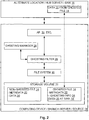
- 'ghosting' involves a file 14 on a volume 12 at a source 10, as seen in Fig. 2 , where a determination has been made that the file 14 should only be present on the volume 12 in a reduced format that does not include some portion of the data 20 associated with such file 14. Accordingly, and as seen in Fig. 2 , such data 20 is stored at a sink 18 appropriately coupled to the source 10.
- a ghosted file 14 on the volume 12 is present in a reduced or 'stub' form.
- the ghosted file 14 is reconstituted by retrieving the data 20 thereof from the sink 18 and re-associating such retrieved data 20 with such ghosted file 14 to form the reconstituted file 14.
- the file 14 may then in fact be employed at the source 10 as necessary.
- the stub of a ghosted file 14 as present on the volume of a source 10 is stored in the same location on the volume 12 as the original file 14.
- the file system 16 looking in a particular location for a file 14 that has been ghosted should find the stub for the file 14, i.e., the ghosted file 14, at such location.
- the ghosted file 14 as resident on the volume 12 of the source 10 contains all metadata 22 from the original, non-ghosted file 14, and also contains ghosting information 24 that may be employed to retrieve the data 20 for the file 14 from the sink 18, among other things.
- ghosting information 24 may be added to the metadata 22 for the file 14 or may be stored in another location of the file 14.
- a user or the like can browse the entire volume 12 of the source 10 by way of the file system 16 even if some of the files 14 on the volume 12 are ghosted and some of the files 14 on the volume 12 are not ghosted.
- the metadata 22 associated with a ghosted file 14 may be employed during such browsing to, among other things, identify the ghosted file 14, provide size information, date information, and the like.
- the data 20 thereof is retrieved based on the ghosting information 24 present in the ghosted file 14, the ghosted file 14 is reconstituted into a non-ghosted file 14, and the non-ghosted file 14 may then in fact be accessed by the user.
- a non-ghosted file 14 as may be resident on a volume 12 at the source 10 includes metadata 22 that may be organized into a header or the like, where such metadata 22 includes information relating to the data 20 of the un-ghosted file 14 such as a logical file size, a size on the volume 12, a create time, a modify time, an access time, access permissions, and various file attributes.
- metadata 22 includes information relating to the data 20 of the un-ghosted file 14 such as a logical file size, a size on the volume 12, a create time, a modify time, an access time, access permissions, and various file attributes.
- such non-ghosted file 14 as resident on the volume 12 at the source 10 includes the actual data 20 of the file 14. Note here that such actual data 20 may be organized as primary data and alternate data, where the primary data is the data 20 from the file 14 as may be employed by an application 30 or the like ( Fig.
- alternate data is the data from the file 14 that has been created for other uses.
- alternate data may include a graphic representation such as a 'thumbnail' that can be employed when displaying a representation of the file 14, perhaps by the application 30 or the file system 16 at the source 10.
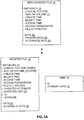
- the primary data is the bulk of the data 20 by size. Accordingly, when the non-ghosted file 14 is in fact ghosted, it may in fact be the case that only the primary data of the data 20 is removed from the remainder of non-ghosted file 14 to form the ghosted file 14, and that only such primary data is stored at the sink 18, perhaps along with an identification of the ghosted file 14, as is shown in Fig. 3A . Of course, other portions of the file 14 may also be removed during ghosting of a file 14 without departing from the scope of the present invention.
- non-ghosted file 14 is in fact ghosted in the context of a branch server 10 and a hub server 18, where the hub server 18 replicates files 14 to the branch server 10
- the hub server 18 replicates files 14 to the branch server 10
- the entirety of such file 14 is stored at the sink 18, perhaps along with an identification of the ghosted file 14, as is shown in Fig. 3B .
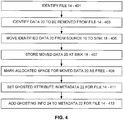
- the file 14 is first identified (step 401), and thereafter the data 20 to be removed from the file 14 is identified (step 403). Again, such data 20 is typically the primary data of the data 20, but could be other data from such data 20.
- the identified data 20 is then moved from the source 10 to the sink 18 by way of an appropriate transport mechanism and conduit (step 405), and such moved data 20 is then stored at the sink 18 in an appropriate format (step 407).
- storing the data 20 at the sink 18 may be done in any appropriate format and manner without departing from the scope of the present invention.
- the data 20 may be compressed and/or encrypted if so desired, and such data 20 should be stored in a manner so that such data 20 can be retrieved with relative ease upon a request to reconstitute the file 14.
- data 20 may be stored according to an ID employed for retrieval, as will be set forth in more detail below.
- the space occupied by such data 20 on the volume 12 of the source 10 need not remain allocated to the file 14, as may be appreciated. Accordingly, such allocated space can be marked as free (step 409), with the result being that the now-ghosted file 14 is marked as being sparse.
- the logical file size of the now-ghosted file 14 should not be changed in the metadata 22 for such file 14 or elsewhere, although the size on volume 12 for the file 14 may in fact be changed to reflect such freed space.
- the metadata 22 for the now-ghosted file 14 is amended to show that such file 14 is now ghosted (step 411).
- a 'ghosted' attribute may be set in the metadata 22.
- such set ghosted attribute may be employed primarily as a signal to an inquiring application 30 or the like that the file 14 is in fact ghosted. With such a signal, then, the inquiring application 30 can appreciate not only that the file 14 is in fact ghosted but that accessing such file 14 involves a cost in that such file 14 must first be reconstituted into a non-ghosted form.
- such cost may be in terms of bandwidth needed to access the data 20 for the file 14 from the sink 18, space required for the data 20 on the volume 12, and/or latency to access the data 20 at the sink 18 and reconstitute the file 14 based thereon, among other things.
- the metadata 22 for the now-ghosted file 14 is amended to include the aforementioned ghosting information 24 (step 413).
- ghosting information 24 includes information that may be employed to retrieve the data 20 for the file 14 from the sink 18, among other things.
- such ghosting information 24 may include the ID stored with and identifying the data 20 at the sink 18, as well as an amount of storage that can be employed to store other information relevant to the ghosted file 14, including information on how to locate the sink 18, how to reconstitute the file 14, and/or the like.
- Such storage in the ghosting information 24 can be a variable or fixed amount, and in the latter case might be limited to 16 kilobytes or so.
- such ghosting information 24 is employed primarily by whatever construct is employed to reconstitute the file 14, and is not typically used by the aforementioned inquiring application 30 or the like, although such use may nevertheless occur without departing from the scope of the present invention.
- a ghosted file 14 as ghosted may reside undisturbed on the volume 12 of the source 10 for a short time, for a long time, for a very long time, or forever, at least until the volume 12 no longer remains in operation.
- a request to access the stored data 20 of the ghosted file 14 may be received from an application 30, a user at such application 30, etc. (step 501).
- a request to access the metadata 22 of such ghosted file 14 may also be received.
- the aforementioned application 30 may access the set ghosted attribute in the metadata 22 of such ghosted file 14 to determine that the file 14 is in fact ghosted, or the file system 16 that controls the volume 12 may access the metadata 22 in the course of compiling a directory listing or the like. In the latter case, and notably, the file system 16, the application 30, or another entity may also access the alternate data of the data 22 to obtain the aforementioned graphic that can be employed when displaying a representation of the file 14.
- the ghosted file 14 is in fact reconstituted in the following manner.
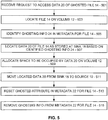
- the file 14 is located on the volume 12 (step 503), and thereafter the ghosting information 24 in the metadata 22 of the file 14 is identified (step 505).
- the data 20 of the file 14 as stored at the sink 18 is located based on such identified ghosting information 24 (step 507), and such located data 20 can then be moved from the sink 18 to the source 10 by way of an appropriate transport mechanism and conduit (step 511).
- step 509 space to be occupied by such data 20 on the volume 12 of the source 10 must be allocated (step 509), with the result being that the no-longer-ghosted file 1.4 is no longer marked as being sparse.
- the metadata 22 for the no-longer-ghosted file 14 is amended to show that such file 14 is not ghosted (step 513), such as for example by resetting the ghosted attribute in such metadata 22.
- the metadata 22 for the no-longer-ghosted file 14 is amended to remove the ghosting information 24 (step 515). Accordingly, the file 14 is now in a non-ghosted form.
- the file 14 is created directly as a ghosted file 14 on the volume 12.
- Such ghost creation may be typical in a replication architecture such as that set forth above with a branch server 10 and a hub server 18.
- a replication engine may decide to simply create ghosted copies of the files 14 on the branch servers 10.
- the data 20 associated with any particular ghosted file 14 at any particular branch server 10 then, may be retrieved from the hub server 18 on demand as and when necessary to reconstitute such particular ghosted file 14 into a non-ghosted file 14 at such particular branch server 10.
- the file 14 is created as a non-ghosted file 14 on the volume 12 and is at some later time converted to a ghosted file 14 on such volume 12.
- Such non-ghost creation may be typical in a space-saving architecture such as that set forth above with a personal computer or the like and an alternate location 18.
- space on a volume 12 of the personal computer or the like is reclaimed by moving data 20 associated with files 14 that are, for example, seldom used, to the alternate location 18, which may be another media or to another system.
- the data 20 associated with any particular ghosted file 14 at the personal computer or the like may be retrieved from the alternate location 18 on demand as and when necessary to reconstitute such particular ghosted file 14 into a non-ghosted file 14.
- the operations of Fig. 5 that are performed at the source 10 on behalf of a user or application 30 and with respect to a ghosted file 14 are in fact performed with the aid of a ghosting filter 26, as may be seen in Fig. 2 .
- Such operations may be performed transparently or with notice to the user or application 30, although transparency is likely preferable to such user or application 30.
- the file system 16 upon receiving a request for such access will discover that the ghosted file 14 does not contain the removed data 20 and thus return an error which the ghosting filter 26 will intercept.
- the ghosting filter 26 Upon such interception, then, the ghosting filter 26 employs the file system 16 to obtain the ghosting information 24 from the metadata 22 for the ghosted file 14, and based on the obtained ghosting information 24 such ghosting filter 26 triggers reconstituting of such ghosted file 14, as will be set forth in more detail below, so that the request for access may ultimately be honored.
- the ghosting filter 26 may be a lower-level construct without much functionality and without access to network resources such as the sink 18.
- the ghosting filter 26 may interface with a higher-level construct such as a ghosting manager 28, where such ghosting manager 28 includes additional ghosting functionality and direct access to network resources such as the sink 18.
- the ghosting manager 28 performs the bulk of such reconstituting functionality for the source 10 as is shown in connection with Fig. 5 , as will be set forth in more detail below.
- Such ghosting manager 28 may also perform the bulk of the ghosting functionality for the source 10 as is shown in connection with Fig. 4 .
- the application 30 begins the process by issuing the open command with respect to a particular ghosted file 14 on the volume 12, and such open command ultimately is received by the file system 16 (step 601).
- the application 30 in issuing such open command is not expected to have any knowledge that the particular file 14 is in fact ghosted, although the application 30 could in fact make such a determination by commanding the file system 16 to report whether the ghosted attribute is set for the file 14.
- the file system 16 upon receiving the open command notes that the ghosted file 14 does not contain the removed data 20 and thus returns an error (step 603), and the ghosting filter 26 intercepts such returned error and perceives based thereon that the file 14 at issue is in fact in a ghosted format (step 605). Accordingly, the ghosting filter 26 itself commands the file system 16 to retrieve the ghosting information 24 from such ghosted file 14 and in fact receives such ghosting information 24 (step 607). Based on such ghosting information 24, then, the ghosting filter 26 creates a buffer and a handle corresponding to the ghosted file 14, and delivers the handle to the application 30 as the (normal) response to the open command therefrom (step 609).
- the handle for the ghosted file 14 as received by the application 30 represents an instance of the ghosted file 14 as opened, and is employed by the application 30 as the reference to such file 14 when issuing further commands with respect to such file 14, such as for example a read command or a close command.
- such handle for the ghosted file 14 as created by the ghosting filter 26 and as employed as a handle parameter of a command from the application 30 will cause such command to be delivered directly to the ghosting filter 26 and not to the file system 16.
- the buffer for the ghosted file 14 is employed by the ghosting filter 26 to store information relating to the ghosted file 14, such as for example the ghosting information 24 thereof.
- changes to such ghosting information 24 can be recorded in the buffer and need not be written back to the file 14.
- such recorded changes in the buffer can be written back to the ghosting information 24 for the file 14 if need be.
- the application 30 may proceed by issuing the read command with respect to the particular ghosted file 14 on the volume 12, where such read command has parameters including the handle, an offset into the data 20 for the file, a read length with respect to such data 20 starting from such offset, and the like. Accordingly, such read command based on having such handle as a parameter thereof ultimately is received by the ghosting filter 26 and not the file system 16 (step 611). However, and as should be evident, the data 20 is not in fact present in the ghosted file 14, and accordingly the ghosting filter stores the read command in a queue or the like for awaiting further processing (step 613).
- Such further processing primarily comprises obtaining the data 20 for the ghosted file 14 from the sink 18.
- the ghosting filter 26 initiates reconstituting of the ghosted file 14 based on the data 20 thereof at the sink 18 (step 615), where such reconstituting may occur in the following manner.
- the ghosting filter 26 may interface with the ghosting manager 28 to perform higher-level ghosting functionality and direct access to network resources such as the sink 18, the ghosting filter 26 issues to the ghosting manager 28 a request to obtain some portion of the data 20 for the ghosted file 14 from the sink 18 (step 615a), where such request includes the ID from the ghosting information 24 of the ghosted file 14, an offset into the data 20, and a length of data 20 to be obtained starting from such offset. Thereafter, the ghosting manager 28 in fact obtains the requested portion of such data 20 from the sink 18 (step 615b).
- the ghosting manager 28 includes all necessary functionality to so obtain, and does so in a manner that is known or should be apparent to the relevant public and which need not be set forth herein in any detail. Accordingly, any particular method of so obtaining may be employed without departing from the scope of the present invention.
- the ghosting manager 28 may wish to maintain a pending data list representing each portion of data 20 that has been requested from the sink 18 and not yet obtained therefrom, perhaps along with a corresponding request time.
- an identification of each requested portion of data is added to the pending data list upon being so requested, and is removed from such pending data list upon being received and stored with the ghosted file 14.
- pending data list it may be the case that all pending requests for data 20 are monitored for age, and that requests that are not satisfied within a certain period of time may be timed out.
- such ghosting manager 28 delivers such requested portion to the ghosting filter 26 (step 615c), and such ghosting filter 26 then writes such requested portion to an appropriate location of the file 14 at issue by way of appropriate command to the file system 16 (step 615d).
- Writing such requested portion to the appropriate location of the file 14 at issue is known or should be apparent to the relevant public and therefore need not be set forth herein in any detail. Accordingly, any particular method of so writing may be employed without departing from the scope of the present invention.
- the ghosting filter 26 issues commands as necessary to the file system 14 to fix the metadata 22 of such now-reconstituted file 14, including removing the ghosting information 24 and resetting the ghosted attribute (step 617).
- the ghosting filter 26 retrieves all read commands for the file 14 from the queue and passes such read commands to the file system 16 for further processing (step 619), whereby the read command from the application 30 is in fact responded to with the data 20 at issue.
- the handle for the opened file 14 remains associated with the ghosting filter 26 and continues to direct commands from the application 30 in connection with such now-reconstituted file 14 to such ghosting filter 26. Accordingly, it may be the case that the ghosting filter 26 forwards such commands to the file system 16, it may be the case that the ghosting filtering 26 re-associates the handle with the file system 16, or it may be the case that the ghosting filter commands another construct to re-associate the handle with the file system 16, or the like.
- an application 30 is able to read only a few bytes of a file if need be without triggering a complete reconstitution of the file 14.
- an application 30 is able to read only a few bytes of a file if need be without triggering a complete reconstitution of the file 14.
- first frame of a video file 14 is needed, such first frame would be obtained from the data 20 for the file 14 at the sink 18, and not the entire amount of data 20 for the ghosted file 14, which could be on the order of 10 or even 100 gigabytes.
- Partially reconstituting then, fetches only as much of the data 20 at the sink 18 for a ghosted file 14 as is necessary, to satisfy a particular read request from an application 30, and no more.
- a record must be maintained to note what portions of the ghosted file 14 are in fact reconstituted so that the ghosting filter 26 can determine whether such portions are present in the ghosted file 14. Accordingly, and in one embodiment of the present invention, such a record is maintained in the ghosting information 24 in the metadata 22 of such ghosted file 14.
- the ghosting information 24 includes therefor a section reference including an offset describing the beginning of the section and a length describing a contiguous amount of such section.
- the ghosting information 24 for a ghosted file 14 including the aforementioned records of partially reconstituted data 20 is maintained by the ghosting filter 26.
- the ghosting filter 26 in the course of manipulating the ghosted file 14 instead initially obtains such ghosting information 24 from such metadata 22 and stores such ghosting information 24 in a buffer created in connection with the ghosted file 14 as at step 609 of Fig. 6 , then maintains and updates such ghosting information 24 during the course of manipulating the ghosted file 14, and upon concluding writes such ghosting information 24 from the buffer to the metadata 22 for the ghosted file 14.
- the partial reconstituting of a ghosted file 14 may be interrupted, for example by a loss of power or network connectivity at the source 12.
- the buffer for the ghosted file 14 is lost, especially in the case of a loss of power and where the buffer is maintained in a volatile RAM or the like.
- the ghosting information 24 as maintained and updated is lost and not written from the buffer to the metadata 22 for the file 14, and in effect not only is such ghosting information 24 lost, but all partially reconstituted data 20 associated therewith is also lost even though physically present at the source 10, especially inasmuch as such data 20 cannot be located without such ghosting information 24.
- such ghosting information 24 as maintained and updated is periodically written from the buffer to the metadata 22 for the file 14, such as for example once every minute or so.
- the metadata 22 for the file 14 such as for example once every minute or so.
- a ghosted file 14 is only partially reconstituted based on an appropriate command from the application 30 requesting data 20 from such ghosted file 14. Accordingly, such application 30 must first check with the file system 16 to determine whether the ghosted attribute is set for a particular file 14 to determine whether such file 14 is in fact ghosted, and if so the application 30 may then by appropriate command request a partial reconstitution of a portion or portions of the data 20 for such ghosted file 14.
- the ghosting filter 26 in response to a read command with regard to ghosted file 14 such as that given at step 611 of Fig. 6 responds thereto by first reviewing any section references in the ghosting information 24 for such ghosted file 14 as stored in a corresponding buffer, and then determines from the section references whether the requested data 20 or a portion thereof is already present in the ghosted file 14 at the source 10. If all of the requested data 20 is in fact present, such data 20 is read from the ghosted file 14 at the source 10 without need for obtaining such data 20 from the sink 18.
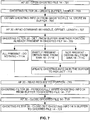
- the ghosting filter 26 in response to a command from an application 30 to open a ghosted file 14 from which partial reconstituting may be required (step 701), the ghosting filter 26 again creates a buffer and a handle corresponding to the ghosted file 14, and delivers the handle to the application 30 as the (normal) response to the open command therefrom as at step 609 (step 703).
- the ghosting filter 26 initially obtains the ghosting information 24 from the metadata 22 for the ghosted file 14 and stores such ghosting information 24 in the created buffer (step 705).
- the application 30 issues a read command for a portion of the data 20 of the particular ghosted file 14 on the volume 12, where such read command includes the handle, and defines the offset and length of the portion as at step 611 (step 707).
- the ghosting filter 26 determines based on the ghosting information 24 in the buffer for the ghosted file 14 whether such portion as defined is at least partially already present in the ghosted file 14 as resident at the source 10 (step 709). Making such a determination is known or should be apparent to the relevant public and therefore need not be set forth herein in any detail. Accordingly, and method of making such determination may be employed without departing from the scope of the present invention.
- the ghosting filter 26 updates the ghosting information 24 for the ghosted file 14 as stored in the buffer to appropriately reflect that the part of the data 20 is now resident with and reconstituted to the ghosted file 14 (step 713). At any rate, with the requested portion of the data 20 now resident at the source 10, such requested portion now may in fact be read by the application 30 as at step 619 (step 715).
- the ghosting filter 26 periodically writes the ghosting information 24 in its most current form from the buffer to the metadata 22 for the file 14 so that such ghosting information 24 and the partially reconstituted data 20 associated therewith is not wholly lost in the event of a loss of the buffer (step 717).
- the ghosting filter 26 closes out the buffer by writing the ghosting information 24 in its most current form from such buffer to the metadata 22 for the file 14 (step 721), presuming of course that the ghosted file 14 has not been fully reconstituted.
- such ghosting information 24 in its most current form may again be retrieved at some later time as at step 705.
- An application 30 in issuing a read command with respect to a ghosted file 14 does not take into consideration the state of the ghosted file 14, and in particular does not take into consideration whether the ghosted file 14 has already been partially reconstituted and/or is already in the process of being partially reconstituted. That is, and turning now to Fig.
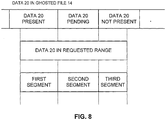
- a particular read command with respect to a ghosted file 14 specifies a particular portion of the data 20, and that such particular portion corresponds to a first segment comprising data 20 that is already present in the ghosted file 14, a second segment comprising data 20 that is pending to be copied from the sink 18 to the ghosted file 14, and a third segment comprising data 20 that is not present in the ghosted file 14 but is instead stored at the sink 18 only.
- the ghosting filter 26 processes such a read command for a particular portion of data 20 by first identifying with regard to such particular portion of data 20 corresponding segments in the ghosted file 14 that are already present (i.e., first segments), corresponding segments in the ghosted file 14 that are already pending (i.e., second segments), and corresponding segments in the ghosted file 14 that are not present or pending (i.e., third segments), and then in fact obtaining only such third segments.
- the ghosting filter 26 strips out from the read command all segments that need not in fact be read from the sink 18. By performing such a.
- the read command is handled faster in that such 'fast read' obtains only that data 20 from the sink that in fact is needed and not data 20 that is already present in the ghosted file 14 or that is pending.
- the fast read as performed by the ghosting filter 26 results in a faster response to the read command from the application 30, and concomitantly reduces the amount of bandwidth necessary for such read command.
- the ghosting filter 26 identifies each first segment in the ghosted file 14 that is already present with reference to the ghosting information 24 maintained for such ghosted file 14. As was set forth above, such ghosting information 24 may be referred to as located in the metadata 22 for such ghosted file 14, or may be referred to as located in a buffer corresponding to such ghosted file 14. Likewise, in one embodiment of the present invention, the ghosting filter 26 identifies each second segment in the ghosted file 14 that is already pending with reference to information in the pending data list disclosed above in connection with step 615b of Fig. 6 .
- the remainder is the third segment(s), and by process of elimination, then, such third segments of the ghosted file 14 that are not present or pending are identified.
- such third segments may in fact be requested from the sink 18 and upon receipt copied to the ghosted file 14.
- each such third segment in effect becomes a second, pending segment.
- each second segment in effect becomes a first, present segment.
- such first segment is available to in fact be read by the application 30 in response to the read command therefrom.
- an application 30 has not issued a read command for particular data 20 in a ghosted file 14, the ghost filter 26 nevertheless should move such data 20 from the sink 18 to the ghosted file 14 in anticipation of such a read command, especially if the ghosting filter 14 is not otherwise occupied.
- streaming content such as a ghosted audio file 14, a ghosted video file 14, or a ghosted multimedia file 14
- it is reasonable to anticipate that a read command for data 20 at a particular time period T0 will be followed by a read command for data 20 at a following time period T1.
- the ghosting filter 26 if not otherwise occupied can avail itself of the opportunity to obtain such data 20 for the time period T1 from the sink 18 even without a specific read command from the application 30.
- the ghosting filter 26 may perform such action as a fast read in the manner set forth above.
- the ghosting filter 26 performs a fast read in response to a read command from an application 30 in the following manner.
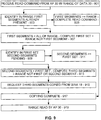
- the read command is indeed received from the application 30, where such read command specifying a portion or range of the data 30 to be read from a ghosted file 14 (step 901).
- such range is expressed as an offset and a length with respect to the data 30.
- the ghosting filter 26 first identifies within such range of data 20 corresponding first segments of data 20 in the ghosted file 14 that are already present (step 903). Again, such identification is performed with reference to the ghosting information 24 maintained for such ghosted file 14, either in the metadata 22 for such ghosted file 14 or in a buffer corresponding to such ghosted file 14. If the identified first segments comprise all of the requested range of data 20, the ghosted file 14 has already been reconstituted to the extent necessary to satisfy the read command, and such read command may thus be completed without any further copying of data 20 from the sink 18 and without waiting for any pending data 20 (step 905).
- the ghosting filter 26 computes a first set comprising the range of each segment of the requested range of data 20 that is not a first segment (step 907). Thereafter, and similar to before, the ghosting filter 26 identifies within the first set corresponding second segments of data 20 in the ghosted file 14 that are pending (step 909). Again, such identification is performed with reference to the pending data list.
- the ghosted file 14 is pending to be reconstituted to the extent necessary to satisfy the read command, and such read command may be completed when all pending data 20 is in fact copied to the ghosted file 14 (step 911).
- the ghosting filter 26 computes a second set comprising the range of each segment of the requested range of data 20 that is not a first segment and not a second segment (step 913), i.e., the third segments. Thereafter, the ghosting filter 26 requests the second set / third segments be copied from the sink 18 to the ghosted file 14 (step 915).
- each third segment as requested become a second, pending segment, and each second segment as in fact copied becomes a first, present segment, until all copying is complete (step 917). Thereafter, the requested range of the read command is available to in fact be read by the application 30 in response to such read command (step 919).
- a ghosted file 14 that has been reconstituted or partially reconstituted can at some point be re-ghosted, for example if additional space is required at the source 10.
- a file 14 that has never been ghosted likewise can at some point be ghosted for similar reasons.
- a ghosted file 14 has been partially or fully reconstituted or once a file 14 is installed at the source 10, such file 14 continues to reside at the source 10 in such form unless such file 14 is re-ghosted or ghosted (hereinafter, 're-ghosted').
- re-ghosting is triggered by some event, which may for example be a determination of a need for space at the source 10, a determination that the file 14 has not been accessed for some period of time, etc.
- any changes to the file 14 at the source 10 or the sink 18 may be replicated to the sink 18 or the source 10, respectively, to keep the file 14 up-to-date.
- re-ghosting at the source 10 is performed according to a re-ghosting algorithm which takes into account factors such as last access time, remaining free space on the volume, frequency of access to the data, modifications to the file 14 that take place elsewhere, and/or the like.
- the re-ghosting algorithm in considering such factors should have as a goal reducing the likelihood of a ghosted file 14 being reconstituted again shortly after being re-ghosted. Thus, bandwidth necessary for such ghosting and re-ghosting may be minimized if not reduced.
- the re-ghosting algorithm is performed by an application 30 at the source 10 or by the ghosting manager 28 at the source 10, although other entities may perform such re-ghosting algorithm without departing from the scope of the present invention.
- the re-ghosting algorithm as employed to re-ghost files 14 at a source 10 may be defined at least partially based on configurable policy.
- such re-ghosting algorithm may be triggered at least partially based on configurable policy, and such re-ghosting algorithm may decide to re-ghost a particular file 14 at least partially based on configurable policy.
- policy may be configurable by a user of the source 10, by an administrator of the source 10, or the like.
- Possible triggering parameters employed in connection with a re-ghosting algorithm include but are not limited to:
- Possible selection factors for determining whether to re-ghost a particular file 14 include but are not limited to:
- files 14 selected for re-ghosting may in fact be re-ghosted, or may instead merely be designated as candidates for preferential re-ghosting. In the latter case in particular, re-ghosting may be performed only until a particular stop trigger has been reached.
- a stop trigger may correspond to the triggering parameter that initiated a re-ghosting session, may correspond to criteria for selecting candidate files 14 for re-ghosting, or may be another trigger without departing from the scope of the present invention.
- candidate files 14 are selected based on having a minimum file size of 10 megabytes, it may be advisable to first re-ghost all of such candidates with a file size greater than 1 gigabyte, then if necessary to re-ghost all of such candidates with a file size greater than 100 megabytes, then if necessary 50 megabytes, etc. until the stop trigger is activated.
- some processing is required to create a list of the candidate files 14, to sort the list, to generate one or more rounds of re-ghosting, and the like.
- re-ghosting may be employed to maintain consistency of files 14 at the source 10 and at the sink 18, especially in the situation where different versions of the file 14 may be located in both places.
- re-ghosting may be performed to replace the data 20 at the sink 18 with the data at the source 10.
- re-ghosting may be performed only to delete such data 20 at the source 10, with the expectation that a later reconstitution of such file will copy the data 20 at the sink 18 to the source 10.
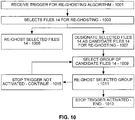
- re-ghosting of files 14 on a volume 12 may be performed according to a re-ghosting algorithm, where such re-ghosting algorithm is performed by some entity in the following manner.
- the re-ghosting algorithm is triggered by some event (step 1001), where such trigger may be internally generated by the entity or externally received by such entity.
- the re-ghosting algorithm selects files 14 from among the fully and partially reconstituted files 14 and the never-ghosted files 14 based on some selection criteria (step 1003).
- the re-ghosting algorithm may merely commence by re-ghosting the selected files 14 (step 1005), or may instead consider the selected files 14 to be candidate files 14 for possible re-ghosting (step 1007).
- the candidate files 14 are then selected for re-ghosting in one or more rounds until a stop trigger is activated.
- a group of the candidate files 14 is selected (step 1009), such selected group is re-ghosted (step 1011), and a determination is made of whether the stop trigger has been activated. If so, the process ends (step 1013). If not, the process continues by returning to select another group as at step 1009 (step 1015).
- all files 14 that are ghosted at a particular source 10 are in particular ghosted such that the data 20 thereof resides at a single sink 18.
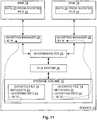
- the data 20 of each ghosted file 14 at a particular source 10 may reside at any of a plurality of such sinks 18, as is shown in Fig. 11 .
- the ghosting filter 26 of the present invention need not necessarily be restricted to working with a single ghosting manager 28 to ghost data 20 from a file 14 to a single sink 18.
- the ghost filter can in fact work with a plurality of ghosting managers 28, wherein each such ghosting manager 28 performs ghosting functions with regard to a particular one of a plurality of sinks 18.
- a particular branch server 10 can interface with multiple hub servers 18.
- one hub server 18 interfaced with the particular branch server 10 has data 20 from a first source while another hub server 18 interfaced with such particular branch server 10 has data 20 from a second source.
- a particular computing device 10 can store data 20 at multiple alternate locations.
- one alternate location 18 for a particular computing device 10 is designated as storing data 20 from files 14 of a first particular type, while another alternate location 18 for the particular computing device 10 is designated as storing data 20 from files 14 of a second particular type.
- the number of sinks 18 employed and the criteria for dividing data 20 as between such sinks 18 may be any appropriate number and criteria without departing from the scope of the present invention.
- the ghosting filter 26 upon encountering any particular ghosted file 14 and reading the ghosting information 24 therefrom can obtain from such ghosting information 24 the identification of the ghosting manager 28 to be employed in connection with such particular ghosted file 14, and based thereon can communicate with such identified ghosting manager 28 to access such sink 18 as appropriate.
- the ghosting filter 26 is generic to all of the ghosting managers 28, and the identified ghosting manager 28 controls or 'owns' such particular ghosted file 14 inasmuch as the ghosting filter 26 should not ever communicate with any other ghosting manager 28 in connection with such particular ghosted file 14.
- each ghosting manager 28 includes all functionality and information necessary to communicate with the sink 18 corresponding thereto, such that the ghosting filter 26 need not be concerned with such matters.
- communicating with the identified ghosting manager 28 in connection with a particular ghosted file 14 is all that is required to access the corresponding sink 18, and such ghosting filter 26 need not in fact be concerned with how such identified ghosting manager 28 communicates with such corresponding sink 18, how such identified ghosting manager 28 locates such corresponding sink 18, or the like.
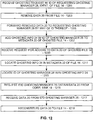
- the ghosting filter 26 then forwards such removed data 20 as necessary to the requesting ghosting manager 28 by way of the ID thereof (step 1205), and such ghosting manager 28 may then forward such removed data to the corresponding sink 18 based on whatever protocols for doing so have been included with such ghosting manager 28.
- the ghosting manager 28 may in fact choose to not send such removed data to the sink 18, such as for example if the sink 18 replicated the file 14 at issue to the source 10 in a read-only manner.
- the ghosting request from the ghosting manager 28 informed the ghosting filter to in fact not perform step 1205 as being unnecessary.
- the ghosting filter 26 amends the metadata 22 for the now-ghosted file by setting the 'ghosted' attribute and adding the ghosting information 24 (step 1207).
- ghosting information should include the ID of the ghosting manager 28 for later use when reconstituting the ghosted file 14.
- the request ultimately arrives at the ghosting filter 26 as was set forth above (step 1209) and such ghosting filter 26 locates the ghosting information 24 in the metadata 22 of the file 14 (step 1211).
- the data 20 of the file 14 as stored at the sink 18 is located based on such identified ghosting information 24, although in this instance the ghosting filter 26 first locates within such ghosting information 24 the ID of the ghosting manager 28 responsible for such ghosted file 14 (step 1213), and with such ID communicates to the corresponding ghosting manager 28 a request to in fact obtain such data 20 from the corresponding sink 18 (step 1215). Presumably, such ghosting manager 28 does in fact obtain such data 20 from such sink 18 and supplies same to the ghosting filter 26 (step 1217), and such ghosting filter then reconstitutes such data 20 to the file 14 at issue (step 1219).
- the present invention comprises a new and useful method and mechanism by which a file 14 at a source 10 such as a. local volume 12, a computing device 10, or a branch server 10 may be replicated or ghosted such that the data 20 thereof is stored at a sink 18 such as an alternate location 18 or a hub server 18, and the file 14 at the source is thus in a reduced or ghosted form that can be reconstituted if need be.
- the ghosted file 14 may be formed and reconstituted, as necessary.
Landscapes
- Engineering & Computer Science (AREA)
- Theoretical Computer Science (AREA)
- General Engineering & Computer Science (AREA)
- Physics & Mathematics (AREA)
- Data Mining & Analysis (AREA)
- Databases & Information Systems (AREA)
- General Physics & Mathematics (AREA)
- Computer Hardware Design (AREA)
- Mathematical Physics (AREA)
- Software Systems (AREA)
- Information Retrieval, Db Structures And Fs Structures Therefor (AREA)
- Testing, Inspecting, Measuring Of Stereoscopic Televisions And Televisions (AREA)
Applications Claiming Priority (2)
| Application Number | Priority Date | Filing Date | Title |
|---|---|---|---|
| US11/181,063 US7506003B2 (en) | 2005-07-14 | 2005-07-14 | Moving data from file on storage volume to alternate location to free space |
| PCT/US2006/026926 WO2007011585A2 (en) | 2005-07-14 | 2006-07-10 | The ghost file |
Publications (3)
| Publication Number | Publication Date |
|---|---|
| EP1902394A2 EP1902394A2 (en) | 2008-03-26 |
| EP1902394A4 EP1902394A4 (en) | 2011-04-27 |
| EP1902394B1 true EP1902394B1 (en) | 2019-11-06 |
Family
ID=37662872
Family Applications (1)
| Application Number | Title | Priority Date | Filing Date |
|---|---|---|---|
| EP06786914.9A Active EP1902394B1 (en) | 2005-07-14 | 2006-07-10 | Moving data from file on storage volume to alternate location to free space |
Country Status (7)
| Country | Link |
|---|---|
| US (1) | US7506003B2 (enExample) |
| EP (1) | EP1902394B1 (enExample) |
| JP (1) | JP4955678B2 (enExample) |
| KR (1) | KR20080031279A (enExample) |
| CN (1) | CN101535964B (enExample) |
| ES (1) | ES2766448T3 (enExample) |
| WO (1) | WO2007011585A2 (enExample) |
Families Citing this family (13)
| Publication number | Priority date | Publication date | Assignee | Title |
|---|---|---|---|---|
| JPWO2005064476A1 (ja) * | 2003-12-25 | 2007-07-19 | ソニー株式会社 | コンテンツ記録再生装置及びコンテンツ記録再生方法、情報処理装置、並びにコンテンツ記録再生システム |
| US8135763B1 (en) * | 2005-09-30 | 2012-03-13 | Emc Corporation | Apparatus and method for maintaining a file system index |
| US20090240116A1 (en) * | 2008-03-21 | 2009-09-24 | Computerized Screening, Inc. | Triage based managed health kiosk system |
| US8762325B2 (en) * | 2008-10-06 | 2014-06-24 | Foxit Corporation | Processing of files for electronic content management |
| US8825920B2 (en) * | 2010-01-20 | 2014-09-02 | Spansion Llc | Field upgradable firmware for electronic devices |
| US8625353B2 (en) | 2011-06-16 | 2014-01-07 | Spansion Llc | Method and apparatus for staggered start-up of a predefined, random, or dynamic number of flash memory devices |
| US8949367B2 (en) * | 2011-10-31 | 2015-02-03 | Oracle International Corporation | Cooperative storage management |
| US9588931B2 (en) * | 2012-02-15 | 2017-03-07 | Lattice Semiconductor Corporation | Communication bridging between devices via multiple bridge elements |
| US9646010B2 (en) * | 2014-08-27 | 2017-05-09 | Mokhtarzada Holdings, Llc | Method and system for expanding storage capacity of a drive using cloud storage systems |
| CN106295386B (zh) * | 2015-06-02 | 2021-04-27 | 阿里巴巴集团控股有限公司 | 数据文件的保护方法、装置及终端设备 |
| CN106202273A (zh) * | 2016-06-30 | 2016-12-07 | 宇龙计算机通信科技(深圳)有限公司 | 文件管理方法及系统 |
| CN106951341A (zh) * | 2017-01-20 | 2017-07-14 | 天翼阅读文化传播有限公司 | 一种实现分布式架构的数据库备份方法 |
| CN110750388B (zh) * | 2019-10-30 | 2022-06-17 | 苏州龙信信息科技有限公司 | 一种备份解析方法、装置、设备和介质 |
Family Cites Families (34)
| Publication number | Priority date | Publication date | Assignee | Title |
|---|---|---|---|---|
| US5214768A (en) | 1989-11-01 | 1993-05-25 | E-Systems, Inc. | Mass data storage library |
| US5504873A (en) | 1989-11-01 | 1996-04-02 | E-Systems, Inc. | Mass data storage and retrieval system |
| US5832526A (en) | 1996-01-24 | 1998-11-03 | Symantec Corporation | Method and apparatus using slack area of file storage structures for file reconstruction |
| JPH1063551A (ja) * | 1996-08-16 | 1998-03-06 | Nec Off Syst Ltd | 情報処理装置 |
| US5794256A (en) * | 1996-12-12 | 1998-08-11 | Microsoft Corporation | Pointer swizzling facility using three-state references to manage access to referenced objects |
| US5950203A (en) | 1997-12-31 | 1999-09-07 | Mercury Computer Systems, Inc. | Method and apparatus for high-speed access to and sharing of storage devices on a networked digital data processing system |
| US7010532B1 (en) * | 1997-12-31 | 2006-03-07 | International Business Machines Corporation | Low overhead methods and apparatus for shared access storage devices |
| US6694317B1 (en) | 1997-12-31 | 2004-02-17 | International Business Machines Corporation | Method and apparatus for high-speed access to and sharing of storage devices on a networked digital data processing system |
| US6119131A (en) | 1998-06-12 | 2000-09-12 | Microsoft Corporation | Persistent volume mount points |
| US7010554B2 (en) | 2002-04-04 | 2006-03-07 | Emc Corporation | Delegation of metadata management in a storage system by leasing of free file system blocks and i-nodes from a file system owner |
| US6499039B1 (en) | 1999-09-23 | 2002-12-24 | Emc Corporation | Reorganization of striped data during file system expansion in a data storage system |
| US6421579B1 (en) | 1999-11-05 | 2002-07-16 | International Business Machines Corporation | Multiple independent intelligent pickers with dynamic routing in an automated data storage library |
| US6718372B1 (en) * | 2000-01-07 | 2004-04-06 | Emc Corporation | Methods and apparatus for providing access by a first computing system to data stored in a shared storage device managed by a second computing system |
| US6981005B1 (en) * | 2000-08-24 | 2005-12-27 | Microsoft Corporation | Partial migration of an object to another storage location in a computer system |
| US6732125B1 (en) * | 2000-09-08 | 2004-05-04 | Storage Technology Corporation | Self archiving log structured volume with intrinsic data protection |
| TW527802B (en) * | 2000-11-14 | 2003-04-11 | Farstone Technology Inc | Network recovery system and its backup/recovery method |
| GB2377542B (en) | 2001-05-12 | 2005-06-15 | M4 Data Ltd | Data storage |
| US6948038B2 (en) | 2001-07-24 | 2005-09-20 | Microsoft Corporation | System and method for backing up and restoring data |
| US20040039891A1 (en) | 2001-08-31 | 2004-02-26 | Arkivio, Inc. | Optimizing storage capacity utilization based upon data storage costs |
| US6600967B2 (en) | 2001-12-20 | 2003-07-29 | Storage Technology Corporation | Automated physical disk storage and management |
| US7064913B2 (en) | 2002-01-09 | 2006-06-20 | Quantum Corporation | Enhanced read margining using dither enhanced write marginalization for mass data storage applications |
| US6795904B1 (en) | 2002-03-28 | 2004-09-21 | Hewlett-Packard Development Company, L.P. | System and method for improving performance of a data backup operation |
| GB2393804B (en) | 2002-10-02 | 2005-05-18 | Hewlett Packard Co | Retrieval of records from data storage media |
| GB2397936A (en) | 2003-01-31 | 2004-08-04 | Hewlett Packard Co | Automated storage apparatus having diagnostic means |
| US7743022B2 (en) * | 2003-02-28 | 2010-06-22 | Microsoft Corporation | Method and system for synchronizing data shared among peer computing devices |
| US7373416B2 (en) * | 2003-04-24 | 2008-05-13 | Akamai Technologies, Inc. | Method and system for constraining server usage in a distributed network |
| WO2004109663A2 (en) * | 2003-05-30 | 2004-12-16 | Arkivio, Inc. | Techniques for facilitating backup and restore of migrated files |
| US7284156B2 (en) | 2003-09-19 | 2007-10-16 | International Business Machines Corporation | Debugging a grid environment using ghost agents |
| WO2005036405A1 (en) * | 2003-10-08 | 2005-04-21 | Unisys Corporation | Computer system para-virtualization using a hypervisor that is implemented in a partition of the host system |
| US20050138306A1 (en) * | 2003-12-19 | 2005-06-23 | Panchbudhe Ankur P. | Performance of operations on selected data in a storage area |
| US20050177777A1 (en) * | 2004-01-23 | 2005-08-11 | Seaburg Gunnar P. | Cluster-based disk backup and restoration |
| JP4521865B2 (ja) | 2004-02-27 | 2010-08-11 | 株式会社日立製作所 | ストレージシステム、計算機システムまたは記憶領域の属性設定方法 |
| US7293044B2 (en) | 2004-04-09 | 2007-11-06 | Microsoft Corporation | Method and system for verifying integrity of storage |
| US8412685B2 (en) * | 2004-07-26 | 2013-04-02 | Riverbed Technology, Inc. | Method and system for managing data |
-
2005
- 2005-07-14 US US11/181,063 patent/US7506003B2/en active Active
-
2006
- 2006-07-10 CN CN200680025690XA patent/CN101535964B/zh not_active Expired - Fee Related
- 2006-07-10 KR KR1020087001008A patent/KR20080031279A/ko not_active Abandoned
- 2006-07-10 WO PCT/US2006/026926 patent/WO2007011585A2/en not_active Ceased
- 2006-07-10 JP JP2008521538A patent/JP4955678B2/ja not_active Expired - Fee Related
- 2006-07-10 ES ES06786914T patent/ES2766448T3/es active Active
- 2006-07-10 EP EP06786914.9A patent/EP1902394B1/en active Active
Non-Patent Citations (1)
| Title |
|---|
| None * |
Also Published As
| Publication number | Publication date |
|---|---|
| US20070016618A1 (en) | 2007-01-18 |
| JP2009501396A (ja) | 2009-01-15 |
| EP1902394A4 (en) | 2011-04-27 |
| WO2007011585A3 (en) | 2009-04-16 |
| CN101535964A (zh) | 2009-09-16 |
| ES2766448T3 (es) | 2020-06-12 |
| KR20080031279A (ko) | 2008-04-08 |
| CN101535964B (zh) | 2013-06-12 |
| EP1902394A2 (en) | 2008-03-26 |
| US7506003B2 (en) | 2009-03-17 |
| JP4955678B2 (ja) | 2012-06-20 |
| WO2007011585A2 (en) | 2007-01-25 |
Similar Documents
| Publication | Publication Date | Title |
|---|---|---|
| US7860907B2 (en) | Data processing | |
| US7984255B2 (en) | Optimizing reclamation of data space | |
| US6922761B2 (en) | Method and system for migrating data | |
| US8095678B2 (en) | Data processing | |
| US7506005B2 (en) | Moving data from file on storage volume to alternate location to free space | |
| US8090925B2 (en) | Storing data streams in memory based on upper and lower stream size thresholds | |
| EP1902394B1 (en) | Moving data from file on storage volume to alternate location to free space | |
| US7080102B2 (en) | Method and system for migrating data while maintaining hard links | |
| US8176087B2 (en) | Data processing | |
| US7506004B2 (en) | Moving data from file on storage volume to alternate location to free space | |
| US7505986B2 (en) | Moving data from file on storage volume to alternate location to free space | |
| US6952699B2 (en) | Method and system for migrating data while maintaining access to data with use of the same pathname | |
| US7873681B2 (en) | Moving data from file on storage volume to alternate location to free space | |
| US7383292B2 (en) | Moving data from file on storage volume to alternate location to free space | |
| US8886656B2 (en) | Data processing | |
| US8290993B2 (en) | Data processing |
Legal Events
| Date | Code | Title | Description |
|---|---|---|---|
| PUAI | Public reference made under article 153(3) epc to a published international application that has entered the european phase |
Free format text: ORIGINAL CODE: 0009012 |
|
| 17P | Request for examination filed |
Effective date: 20080110 |
|
| AK | Designated contracting states |
Kind code of ref document: A2 Designated state(s): AT BE BG CH CY CZ DE DK EE ES FI FR GB GR HU IE IS IT LI LT LU LV MC NL PL PT RO SE SI SK TR |
|
| AX | Request for extension of the european patent |
Extension state: AL BA HR MK YU |
|
| RAX | Requested extension states of the european patent have changed |
Extension state: RS Extension state: MK Extension state: HR Extension state: BA Extension state: AL |
|
| RIN1 | Information on inventor provided before grant (corrected) |
Inventor name: HAVEWALA, SAROSH CYRUS Inventor name: MOHAMED, AHMED H.MICROSOFT CORPORATION Inventor name: ROBERT, CHRISTOPHE FRANCK Inventor name: SURIYANARAYANAN, GUHAN |
|
| R17D | Deferred search report published (corrected) |
Effective date: 20090416 |
|
| RIC1 | Information provided on ipc code assigned before grant |
Ipc: G06F 12/00 20060101AFI20090515BHEP |
|
| A4 | Supplementary search report drawn up and despatched |
Effective date: 20110330 |
|
| RIC1 | Information provided on ipc code assigned before grant |
Ipc: G06F 17/30 20060101AFI20110324BHEP |
|
| DAX | Request for extension of the european patent (deleted) | ||
| RAP1 | Party data changed (applicant data changed or rights of an application transferred) |
Owner name: MICROSOFT TECHNOLOGY LICENSING, LLC |
|
| STAA | Information on the status of an ep patent application or granted ep patent |
Free format text: STATUS: EXAMINATION IS IN PROGRESS |
|
| 17Q | First examination report despatched |
Effective date: 20170316 |
|
| GRAP | Despatch of communication of intention to grant a patent |
Free format text: ORIGINAL CODE: EPIDOSNIGR1 |
|
| STAA | Information on the status of an ep patent application or granted ep patent |
Free format text: STATUS: GRANT OF PATENT IS INTENDED |
|
| INTG | Intention to grant announced |
Effective date: 20190102 |
|
| GRAJ | Information related to disapproval of communication of intention to grant by the applicant or resumption of examination proceedings by the epo deleted |
Free format text: ORIGINAL CODE: EPIDOSDIGR1 |
|
| STAA | Information on the status of an ep patent application or granted ep patent |
Free format text: STATUS: EXAMINATION IS IN PROGRESS |
|
| REG | Reference to a national code |
Ref country code: DE Ref legal event code: R079 Ref document number: 602006058786 Country of ref document: DE Free format text: PREVIOUS MAIN CLASS: G06F0017300000 Ipc: G06F0016300000 |
|
| INTC | Intention to grant announced (deleted) | ||
| GRAP | Despatch of communication of intention to grant a patent |
Free format text: ORIGINAL CODE: EPIDOSNIGR1 |
|
| STAA | Information on the status of an ep patent application or granted ep patent |
Free format text: STATUS: GRANT OF PATENT IS INTENDED |
|
| RIC1 | Information provided on ipc code assigned before grant |
Ipc: G06F 16/17 20190101ALN20190509BHEP Ipc: G06F 16/30 20190101AFI20190509BHEP |
|
| INTG | Intention to grant announced |
Effective date: 20190611 |
|
| GRAS | Grant fee paid |
Free format text: ORIGINAL CODE: EPIDOSNIGR3 |
|
| GRAA | (expected) grant |
Free format text: ORIGINAL CODE: 0009210 |
|
| STAA | Information on the status of an ep patent application or granted ep patent |
Free format text: STATUS: THE PATENT HAS BEEN GRANTED |
|
| AK | Designated contracting states |
Kind code of ref document: B1 Designated state(s): AT BE BG CH CY CZ DE DK EE ES FI FR GB GR HU IE IS IT LI LT LU LV MC NL PL PT RO SE SI SK TR |
|
| REG | Reference to a national code |
Ref country code: GB Ref legal event code: FG4D |
|
| REG | Reference to a national code |
Ref country code: CH Ref legal event code: EP Ref country code: AT Ref legal event code: REF Ref document number: 1199741 Country of ref document: AT Kind code of ref document: T Effective date: 20191115 |
|
| REG | Reference to a national code |
Ref country code: DE Ref legal event code: R096 Ref document number: 602006058786 Country of ref document: DE |
|
| REG | Reference to a national code |
Ref country code: IE Ref legal event code: FG4D |
|
| REG | Reference to a national code |
Ref country code: NL Ref legal event code: FP |
|
| REG | Reference to a national code |
Ref country code: LT Ref legal event code: MG4D |
|
| PG25 | Lapsed in a contracting state [announced via postgrant information from national office to epo] |
Ref country code: FI Free format text: LAPSE BECAUSE OF FAILURE TO SUBMIT A TRANSLATION OF THE DESCRIPTION OR TO PAY THE FEE WITHIN THE PRESCRIBED TIME-LIMIT Effective date: 20191106 Ref country code: BG Free format text: LAPSE BECAUSE OF FAILURE TO SUBMIT A TRANSLATION OF THE DESCRIPTION OR TO PAY THE FEE WITHIN THE PRESCRIBED TIME-LIMIT Effective date: 20200206 Ref country code: GR Free format text: LAPSE BECAUSE OF FAILURE TO SUBMIT A TRANSLATION OF THE DESCRIPTION OR TO PAY THE FEE WITHIN THE PRESCRIBED TIME-LIMIT Effective date: 20200207 Ref country code: LT Free format text: LAPSE BECAUSE OF FAILURE TO SUBMIT A TRANSLATION OF THE DESCRIPTION OR TO PAY THE FEE WITHIN THE PRESCRIBED TIME-LIMIT Effective date: 20191106 Ref country code: PL Free format text: LAPSE BECAUSE OF FAILURE TO SUBMIT A TRANSLATION OF THE DESCRIPTION OR TO PAY THE FEE WITHIN THE PRESCRIBED TIME-LIMIT Effective date: 20191106 Ref country code: SE Free format text: LAPSE BECAUSE OF FAILURE TO SUBMIT A TRANSLATION OF THE DESCRIPTION OR TO PAY THE FEE WITHIN THE PRESCRIBED TIME-LIMIT Effective date: 20191106 Ref country code: LV Free format text: LAPSE BECAUSE OF FAILURE TO SUBMIT A TRANSLATION OF THE DESCRIPTION OR TO PAY THE FEE WITHIN THE PRESCRIBED TIME-LIMIT Effective date: 20191106 Ref country code: PT Free format text: LAPSE BECAUSE OF FAILURE TO SUBMIT A TRANSLATION OF THE DESCRIPTION OR TO PAY THE FEE WITHIN THE PRESCRIBED TIME-LIMIT Effective date: 20200306 |
|
| PG25 | Lapsed in a contracting state [announced via postgrant information from national office to epo] |
Ref country code: IS Free format text: LAPSE BECAUSE OF FAILURE TO SUBMIT A TRANSLATION OF THE DESCRIPTION OR TO PAY THE FEE WITHIN THE PRESCRIBED TIME-LIMIT Effective date: 20200306 |
|
| REG | Reference to a national code |
Ref country code: ES Ref legal event code: FG2A Ref document number: 2766448 Country of ref document: ES Kind code of ref document: T3 Effective date: 20200612 |
|
| PG25 | Lapsed in a contracting state [announced via postgrant information from national office to epo] |
Ref country code: RO Free format text: LAPSE BECAUSE OF FAILURE TO SUBMIT A TRANSLATION OF THE DESCRIPTION OR TO PAY THE FEE WITHIN THE PRESCRIBED TIME-LIMIT Effective date: 20191106 Ref country code: CZ Free format text: LAPSE BECAUSE OF FAILURE TO SUBMIT A TRANSLATION OF THE DESCRIPTION OR TO PAY THE FEE WITHIN THE PRESCRIBED TIME-LIMIT Effective date: 20191106 Ref country code: EE Free format text: LAPSE BECAUSE OF FAILURE TO SUBMIT A TRANSLATION OF THE DESCRIPTION OR TO PAY THE FEE WITHIN THE PRESCRIBED TIME-LIMIT Effective date: 20191106 Ref country code: DK Free format text: LAPSE BECAUSE OF FAILURE TO SUBMIT A TRANSLATION OF THE DESCRIPTION OR TO PAY THE FEE WITHIN THE PRESCRIBED TIME-LIMIT Effective date: 20191106 |
|
| REG | Reference to a national code |
Ref country code: DE Ref legal event code: R097 Ref document number: 602006058786 Country of ref document: DE |
|
| REG | Reference to a national code |
Ref country code: AT Ref legal event code: MK05 Ref document number: 1199741 Country of ref document: AT Kind code of ref document: T Effective date: 20191106 |
|
| PG25 | Lapsed in a contracting state [announced via postgrant information from national office to epo] |
Ref country code: SK Free format text: LAPSE BECAUSE OF FAILURE TO SUBMIT A TRANSLATION OF THE DESCRIPTION OR TO PAY THE FEE WITHIN THE PRESCRIBED TIME-LIMIT Effective date: 20191106 |
|
| PLBE | No opposition filed within time limit |
Free format text: ORIGINAL CODE: 0009261 |
|
| STAA | Information on the status of an ep patent application or granted ep patent |
Free format text: STATUS: NO OPPOSITION FILED WITHIN TIME LIMIT |
|
| 26N | No opposition filed |
Effective date: 20200807 |
|
| PG25 | Lapsed in a contracting state [announced via postgrant information from national office to epo] |
Ref country code: AT Free format text: LAPSE BECAUSE OF FAILURE TO SUBMIT A TRANSLATION OF THE DESCRIPTION OR TO PAY THE FEE WITHIN THE PRESCRIBED TIME-LIMIT Effective date: 20191106 Ref country code: SI Free format text: LAPSE BECAUSE OF FAILURE TO SUBMIT A TRANSLATION OF THE DESCRIPTION OR TO PAY THE FEE WITHIN THE PRESCRIBED TIME-LIMIT Effective date: 20191106 |
|
| PG25 | Lapsed in a contracting state [announced via postgrant information from national office to epo] |
Ref country code: MC Free format text: LAPSE BECAUSE OF FAILURE TO SUBMIT A TRANSLATION OF THE DESCRIPTION OR TO PAY THE FEE WITHIN THE PRESCRIBED TIME-LIMIT Effective date: 20191106 |
|
| REG | Reference to a national code |
Ref country code: CH Ref legal event code: PL |
|
| REG | Reference to a national code |
Ref country code: BE Ref legal event code: MM Effective date: 20200731 |
|
| PG25 | Lapsed in a contracting state [announced via postgrant information from national office to epo] |
Ref country code: LI Free format text: LAPSE BECAUSE OF NON-PAYMENT OF DUE FEES Effective date: 20200731 Ref country code: CH Free format text: LAPSE BECAUSE OF NON-PAYMENT OF DUE FEES Effective date: 20200731 Ref country code: LU Free format text: LAPSE BECAUSE OF NON-PAYMENT OF DUE FEES Effective date: 20200710 |
|
| PG25 | Lapsed in a contracting state [announced via postgrant information from national office to epo] |
Ref country code: BE Free format text: LAPSE BECAUSE OF NON-PAYMENT OF DUE FEES Effective date: 20200731 |
|
| PG25 | Lapsed in a contracting state [announced via postgrant information from national office to epo] |
Ref country code: IE Free format text: LAPSE BECAUSE OF NON-PAYMENT OF DUE FEES Effective date: 20200710 |
|
| PG25 | Lapsed in a contracting state [announced via postgrant information from national office to epo] |
Ref country code: TR Free format text: LAPSE BECAUSE OF FAILURE TO SUBMIT A TRANSLATION OF THE DESCRIPTION OR TO PAY THE FEE WITHIN THE PRESCRIBED TIME-LIMIT Effective date: 20191106 Ref country code: CY Free format text: LAPSE BECAUSE OF FAILURE TO SUBMIT A TRANSLATION OF THE DESCRIPTION OR TO PAY THE FEE WITHIN THE PRESCRIBED TIME-LIMIT Effective date: 20191106 |
|
| P01 | Opt-out of the competence of the unified patent court (upc) registered |
Effective date: 20230505 |
|
| PGFP | Annual fee paid to national office [announced via postgrant information from national office to epo] |
Ref country code: NL Payment date: 20230622 Year of fee payment: 18 Ref country code: IT Payment date: 20230620 Year of fee payment: 18 Ref country code: FR Payment date: 20230621 Year of fee payment: 18 |
|
| PGFP | Annual fee paid to national office [announced via postgrant information from national office to epo] |
Ref country code: GB Payment date: 20230620 Year of fee payment: 18 Ref country code: ES Payment date: 20230801 Year of fee payment: 18 |
|
| PGFP | Annual fee paid to national office [announced via postgrant information from national office to epo] |
Ref country code: DE Payment date: 20230620 Year of fee payment: 18 |
|
| REG | Reference to a national code |
Ref country code: DE Ref legal event code: R119 Ref document number: 602006058786 Country of ref document: DE |
|
| REG | Reference to a national code |
Ref country code: NL Ref legal event code: MM Effective date: 20240801 |
|
| GBPC | Gb: european patent ceased through non-payment of renewal fee |
Effective date: 20240710 |
|
| PG25 | Lapsed in a contracting state [announced via postgrant information from national office to epo] |
Ref country code: DE Free format text: LAPSE BECAUSE OF NON-PAYMENT OF DUE FEES Effective date: 20250201 |
|
| PG25 | Lapsed in a contracting state [announced via postgrant information from national office to epo] |
Ref country code: NL Free format text: LAPSE BECAUSE OF NON-PAYMENT OF DUE FEES Effective date: 20240801 |
|
| PG25 | Lapsed in a contracting state [announced via postgrant information from national office to epo] |
Ref country code: FR Free format text: LAPSE BECAUSE OF NON-PAYMENT OF DUE FEES Effective date: 20240731 |
|
| PG25 | Lapsed in a contracting state [announced via postgrant information from national office to epo] |
Ref country code: GB Free format text: LAPSE BECAUSE OF NON-PAYMENT OF DUE FEES Effective date: 20240710 |
|
| PG25 | Lapsed in a contracting state [announced via postgrant information from national office to epo] |
Ref country code: IT Free format text: LAPSE BECAUSE OF NON-PAYMENT OF DUE FEES Effective date: 20240710 |
|
| REG | Reference to a national code |
Ref country code: ES Ref legal event code: FD2A Effective date: 20250828 |
|
| PG25 | Lapsed in a contracting state [announced via postgrant information from national office to epo] |
Ref country code: ES Free format text: LAPSE BECAUSE OF NON-PAYMENT OF DUE FEES Effective date: 20240711 |