EP1901143A1 - Onboard simulation device and simulation method - Google Patents
Onboard simulation device and simulation method Download PDFInfo
- Publication number
- EP1901143A1 EP1901143A1 EP06120729A EP06120729A EP1901143A1 EP 1901143 A1 EP1901143 A1 EP 1901143A1 EP 06120729 A EP06120729 A EP 06120729A EP 06120729 A EP06120729 A EP 06120729A EP 1901143 A1 EP1901143 A1 EP 1901143A1
- Authority
- EP
- European Patent Office
- Prior art keywords
- simulation
- information
- question
- criterion
- generated
- Prior art date
- Legal status (The legal status is an assumption and is not a legal conclusion. Google has not performed a legal analysis and makes no representation as to the accuracy of the status listed.)
- Granted
Links
Images



Classifications
-
- G—PHYSICS
- G06—COMPUTING OR CALCULATING; COUNTING
- G06F—ELECTRIC DIGITAL DATA PROCESSING
- G06F13/00—Interconnection of, or transfer of information or other signals between, memories, input/output devices or central processing units
- G06F13/10—Program control for peripheral devices
- G06F13/105—Program control for peripheral devices where the program performs an input/output emulation function
-
- G—PHYSICS
- G05—CONTROLLING; REGULATING
- G05B—CONTROL OR REGULATING SYSTEMS IN GENERAL; FUNCTIONAL ELEMENTS OF SUCH SYSTEMS; MONITORING OR TESTING ARRANGEMENTS FOR SUCH SYSTEMS OR ELEMENTS
- G05B17/00—Systems involving the use of models or simulators of said systems
- G05B17/02—Systems involving the use of models or simulators of said systems electric
-
- G—PHYSICS
- G09—EDUCATION; CRYPTOGRAPHY; DISPLAY; ADVERTISING; SEALS
- G09B—EDUCATIONAL OR DEMONSTRATION APPLIANCES; APPLIANCES FOR TEACHING, OR COMMUNICATING WITH, THE BLIND, DEAF OR MUTE; MODELS; PLANETARIA; GLOBES; MAPS; DIAGRAMS
- G09B7/00—Electrically-operated teaching apparatus or devices working with questions and answers
- G09B7/02—Electrically-operated teaching apparatus or devices working with questions and answers of the type wherein the student is expected to construct an answer to the question which is presented or wherein the machine gives an answer to the question presented by a student
- G09B7/04—Electrically-operated teaching apparatus or devices working with questions and answers of the type wherein the student is expected to construct an answer to the question which is presented or wherein the machine gives an answer to the question presented by a student characterised by modifying the teaching program in response to a wrong answer, e.g. repeating the question or supplying a further explanation
-
- G—PHYSICS
- G09—EDUCATION; CRYPTOGRAPHY; DISPLAY; ADVERTISING; SEALS
- G09B—EDUCATIONAL OR DEMONSTRATION APPLIANCES; APPLIANCES FOR TEACHING, OR COMMUNICATING WITH, THE BLIND, DEAF OR MUTE; MODELS; PLANETARIA; GLOBES; MAPS; DIAGRAMS
- G09B9/00—Simulators for teaching or training purposes
- G09B9/02—Simulators for teaching or training purposes for teaching control of vehicles or other craft
- G09B9/08—Simulators for teaching or training purposes for teaching control of vehicles or other craft for teaching control of aircraft, e.g. Link trainer
-
- G—PHYSICS
- G06—COMPUTING OR CALCULATING; COUNTING
- G06F—ELECTRIC DIGITAL DATA PROCESSING
- G06F11/00—Error detection; Error correction; Monitoring
- G06F11/22—Detection or location of defective computer hardware by testing during standby operation or during idle time, e.g. start-up testing
- G06F11/26—Functional testing
- G06F11/261—Functional testing by simulating additional hardware, e.g. fault simulation
-
- G—PHYSICS
- G06—COMPUTING OR CALCULATING; COUNTING
- G06F—ELECTRIC DIGITAL DATA PROCESSING
- G06F30/00—Computer-aided design [CAD]
Definitions
- the invention relates in general to a simulation device.
- the invention relates to a device and arrangement for generating answers to posed questions by means of simulations.
- the invention also relates to a simulation method for generating answers to posed questions.
- the invention relates to a method for generating answers to a posed question by means of simulations.
- the invention relates to software adapted to perform steps of the simulation method when executed on a computer.
- the present invention relates to situation analysis and choice of tactics onboard a platform, for example a flying platform, such as an airplane, manned or unmanned.
- a driver of a platform e.g. a pilot of an airplane, has to make many decisions in real time to drive in a safe and correct way.
- Different means for assisting a pilot is typically provided in platforms of today.
- situation analysis relates to the analysis the driver performs in different situations while driving the platform.
- One situation may be an air plane-to-plane combat situation. Such a situation is generally very stressful and complicated for each involved pilot, seeing that the required analysis of the situation is mentally trying. This especially holds true when the situation is of a jumbly sort, e.g. involving a plurality of hostile airplanes.
- the driver of the platform must more or less continuously process provided information to perform a mental analysis so as to try to answer relevant questions. Examples of questions may be:
- the term "choice of tactics” relates to considerations and choices performed by the driver regarding actions of airplanes within the own group or even only regarding future actions of the own airplane.
- the driver of the platform must also here, more or less continuously, process provided data so as to perform a mental analysis so as to try to answer relevant questions. Examples of questions may be:
- the platform may alternatively be an UAV (Unmanned Aerial Vehicle), wherein an autonomous decision maker needs to be provided with adequate basic data, answers to questions exemplified above, among others.
- UAV Unmanned Aerial Vehicle
- An object according to an aspect of present invention is to provide a simulation device which allows generation of an answer to complex questions relating to situations analysis and/or choice of tactics within a platform.
- Another object according to an aspect of present invention is to provide a simulation device which allows solving of tasks of operational analysis character "on-line" within a platform.
- An aspect of the invention relates to the problem of ennobling provided information in a fast and cost effective manner.
- An aspect of the invention relates to the problem of achieving a user-friendly means for effective support regarding situation analysis and/or choice of tactics within a platform.
- a simulation device for generating an answer to a question inputted thereto, said device comprising:
- a computer programme comprising a programme code for performing the simulation method steps, when said computer programme is run on a computer.
- a computer programme product comprising a program code stored on a computer readable media for performing the simulation method steps, when said computer programme is run on the computer.
- a computer programme product directly storable in an internal memory of a computer, comprising a computer programme for performing the simulation method steps, when said computer programme is run on the computer.
- One positive outcome of the simulation device and the simulation method is that more reliable static and dynamic calculations may be performed within a platform by implementing use of the invention.
- Implementation of the method according to the invention provides a more robust procedure for generating an answer to a posed complex question, wherein the driver of the platform is provided with a powerful tool allowing reduced stress in stressful situations. Further, the simulation device is user friendly.
- the simulation device By using the simulation device as a complement to indicators provided in the platform, a positive synergetic effect is achieved. Namely, the information indicated by the indicators may be used for the different simulations without reducing the overall performance of the platform.
- the present invention further provides improved accuracy of information required to make appropriate decisions within a platform in different flight situations.
- a beneficial contribution resulting from application of the method according to an aspect of the invention is improved overview and understanding of the surrounding of the platform, and further leads to a reduced amount of information provided to a driver/pilot of the platform, so as to facilitate decisions during complex flight situations.
- the present invention may also be used in so called embedded training, which results in a very cost effective training of drivers.
- the simulation device is provided in a simulation centre allowing safe training of said drivers.
- Another beneficial contribution resulting from application of the method according to the invention is that more complex situations may be managed regarding situation analysis using the simulation method according to the invention. Also, a greater number of situations to be analysed may be managed using the simulation method according to the invention because a plurality of simulation can be run simultaneously.
- the architecture of the simulation device is thus providing a flexible arrangement for answering to different types of complex posed questions by means of simulations.
- Fig. 5 schematically illustrates four different types of simulations, each relating to a particular type of question. The respective questions are posed at a time point t. According to one embodiment there are four different types of simulations, which are listed below.
- An example question of the first simulation type [1] may be -"Is a surrounding platform X within reach of any missile Y of the platform 10?". In other words, "Is it possible to fight a particular entity, such as a potentially hostile fighter, with a particular missile of the platform 10?".
- This is a static question wherein an answer to the question provided as a direct answer, namely, YES or NO, alternatively N/A.
- the answer of a question of this type may be presented promptly, i.e. less than a one second (1 s).
- An example question of the second simulation type [2] may be-"Is a particular platform X potentially dangerous for this platform 10?".
- This simulation may comprise a plurality of sub-simulations. For example, to determine if a particular platform X is dangerous for the own platform, a unique set-up of fictive weapon systems of the platform X may be included in each sub-simulation.
- the simulation (sub simulations) is run in real time and an answer to the posed question is provided after a simulation stop criteria is fulfilled, for example simulation run time of 10, 20 or 30 seconds.
- An example question of the third simulation type [3] may be-"Can platform X escape from this platform 10?".
- This question may have relevance in a fighter-to-fighter combat scenario, for example.
- a simulation requiring prediction is generally run faster than real time regarding a time point of relevance t rel in the future.
- the answer to the posed question is given 2-20 seconds after the question is posed, i.e. 2-20 after time t as indicated in Fig. 5.
- the answer to the posed question is given after less than one second (1 s). More preferably, the answer to the posed question is given after less than 0.1 second.
- This simulation type [3] may comprise a plurality of sub-simulations.
- An example question of the fourth simulation type [4] may be-"Has the airplane X energized, at the prospect of attacking own platform, since time Y?
- the answer to the posed question is provided 2-20 seconds after the question is posed, i.e. 2-20 after time t as indicated in Fig. 5.
- historical information corresponding to a time period t period is used.
- the time period may be of arbitrary length, for example 10, 45, 90 seconds, or longer.
- the answer to the posed question is provided 1-2 seconds after the time point t.
- the platform may be an autonomous platform, such as an unmanned aerial vehicle (UAV).
- UAV unmanned aerial vehicle
- the platform may be an airplane, such as a passenger traffic airplane.
- the airplane can be a military aircraft, such as a fighter, bomber, reconnaissance airplane, or a combination thereof.
- the autonomous platform can also be any kind of a helicopter, robot or missile.
- the platform 10 alternatively can be a ground vehicle, water craft or underwater craft, e.g. an automobile, ship or submarine.
- the platform 10 can be a space craft or a satellite.
- the platform 10 comprises a simulation device 100, which is depicted in greater detail below.
- the platform 10 is provided with a plurality of sensors and meters 101, hereinafter referred to as a set of sensors 101.
- the platform 10 is also provided with a communication unit 102 having a user interface.
- the communication unit 102 may comprise a touch-screen, key-pad, computer and/or monitor, for example.
- the communication unit 102 is also referred to as communication terminal 102.
- the set of sensors 101 and the communication unit 102 are both arranged for communication with the simulation device 100 as depicted in greater detail below.
- the simulation device 100 is schematically shown.
- the simulation device 100 is, according to a preferred embodiment of the invention, provided in the platform 10.
- the simulation device 100 is also referred to as simulation arrangement 100.
- link refers to a communication link which may be a physical connector, such as an optoelectronic communication wire, or a non-physical connector such as a wireless connection, for example a radio or microwave link.
- the simulation device 100 is connected to the set of sensors 101 and the communication unit 102.
- the set of sensors 101 comprises a variety of different sensors.
- the number of sensors is an arbitrary number.
- Each sensor of the set of sensors is arranged to detect and/or measure at least one parameter and to communicate the sensor parameter information data 12 to the simulation device 100.
- Schematically shown in Figure 2 the set of sensors 101 is arranged to communicate sensor parameter information data 12 to the simulation device 100 via a link 181.
- each sensor of the set of sensors 101 is arranged for communication with the simulation arrangement 100 by a separate link, respectively.
- Typical sensors are radar-, IR- and optical sensors. Further, other typical are sensors arranged to measure rudder angles, air pressure, and sensors arranged to provide information from other platform's links, such as an aircraft link or a robot link.
- the communication unit 102 is according to one example embodiment a touch screen.
- the touch screen may be provided in a cock-pit of the platform 10.
- the communication unit may be of a different kind, such as a keypad and corresponding monitor or a voice controlled display unit.
- Other user communication units which could be used are keyboards, mouse, keypads, handles etc.
- the communication unit 102 is arranged to allow inputting of questions to the simulation device 100.
- the questions are pre-defined questions stored in a memory 15.
- the memory 15 is a database.
- the communication unit 102 is arranged for communication with the memory 15 via a question information requesting unit 160.
- a user of the simulation device 100 e.g. a driver/pilot of the platform 10, may use the communication unit 102 so as to select questions to be answered by means of a simulation.
- Preferably questions are chosen and inputted in a sequential manner.
- the question information requesting unit 160 is arranged to request question data 13 from the memory 15.
- the question information 13 comprises information required for performing a relevant simulation so as to generate an answer to the posed question.
- the question information requesting unit is arranged to forward the question data to scenario modifying unit 165, which is depicted in greater detail below.
- An updating unit 105 is arranged to receive environment information 12 from the set of sensors 101 via the link 181.
- the updating unit 105 is alternatively arranged to receive a part of the environment information 12 from an external source (not shown), such as a control tower and/or another platform.
- the updating unit 105 is arranged to receive environment information 12 from both the set of sensors 101 and the external source simultaneously.
- the updating unit 105 is arranged to process said received information 12.
- the updating unit 105 is arranged to process the received information 12 and to update representations of existing registered entities in an environment of the platform 10.
- the updating process is preformed with regard to for example existence, positions of the entities and velocity vectors of the registered entities and a representation of the platform 10.
- the term "entities” is synonymous with the term "platform”.
- An information processing unit 110 is arranged to continuously receive updated information from the updating unit 105 via a link 182.
- the information processing unit 110 is arranged to provide an environment model, which is continuously generated depending upon received updated information, which is sent from the updating unit 105.
- the environment model comprises information about the environment of the platform 10. More specifically, the environment model comprises information about existing entities, including the platform 10, having reference to for example existence, type of entities, positions of the entities and corresponding velocity vectors.
- the information processing unit 110 is arranged to store an updated generated environment model in an internal memory 111 on a regular basis, for example every second.
- the information processing unit 110 is arranged to continuously store an updated generated environment model in the internal memory of the information processing unit 110.
- the latest stored environment model is corresponding to a best current description of the environment of the platform 10.
- the environment model also comprises information about spatial data, position, velocities, accelerations, attitudes, angular velocities, angular velocities, and other sensor data, such as e.g. radar signature and optical picture.
- the environment model also comprises information about different air plane models.
- a copy of the latest stored environment model is made.
- This copy is transferred to a simulation preparation unit 120 via a link 184 from the information processing unit 110.
- the simulation preparation unit 120 is arranged to receive and store the copy of the environment model (CEM).
- the simulation preparation unit 120 is arranged to assign different models to the entities of the received copy of the environment model. According to one embodiment of the invention default models are assigned to the different entities of the received copy of the environment model. A number of default models are stored in a default model storing unit 125, which is arranged for communication with the simulation preparation unit 120 via a link 186.
- the default model storing unit 125 is arranged to send one or more adequate default models to the simulation preparation unit 120 depending upon a request generated by the simulation preparation unit 120, which request is sent to the model storing unit 125.
- the default models are applied to the copy of the updated environment model, i.e. the environment model is prepared and processed for the simulation. Choice of default model is depending upon what particular question is posed.
- a matching procedure is preformed wherein measured sensor data, for example related to another platform, and pre-stored sensor data is used so as to identify a most appropriate default model.
- One way to express this procedure is that the updated environment model is "frozen" (copied) at the time when a question is posed by means of the communication unit 102. Information based on the environment model at this time is further sent to the simulation preparation unit 120 so as to constitute the base of a simulation model.
- the question information requesting unit 160 is arranged to request and receive question information 13 stored in the memory 15 as a response to a request sent to the memory 15.
- the memory 15 can alternatively be located external of the simulation device 100.
- the question data information 13 comprises information relevant for further processing of the question posed by means of the communication terminal 102.
- a scenario modification unit 165 is arranged to communicate with the simulation preparation unit 120 via a link 195.
- the scenario modification unit 165 is arranged to modify a scenario of a simulation relevant for the posed question.
- entities of the copy of the environment model provided in the simulation preparation unit 120 can be deleted.
- additional fictive entities may be added to the environment model.
- the modification is performed depending upon the particular posed question.
- the modification is performed depending upon the particular type of the posed question. This can be performed before or after the one or more default model has been applied to the copy of the environment model.
- each entity of the environment model is a unique model of a particular predefined platform.
- At least one, preferably all, of the representations of the originally detected entities and the added fictive entities can be modified such that a predetermined behavior of the entity can be changed. For example, in case one entity initially is assigned a behavior of an airplane in fighter mode, it can be changed to a behavior of an airplane being in reconnaissance mode.
- the scenario modification unit 165 is arranged for communication with a question category information generating unit 170 via a link 193.
- the question category information generating unit 170 is also referred to as adjustment unit 170.
- the question category generating unit 170 is arranged for communication with the simulation preparation unit 120 via a link 194.
- the question category information generating unit 170 is arranged to generate question category information depending upon the type of the posed question. This generated question category information may be used as input information to the simulation preparation unit120.
- the question category information is sent to the simulation preparation unit 120 via the link 194.
- the question category information comprises information about start and stop criterion for the simulation. Further the question category information comprises information about stop criterion, time, predetermined conditions etc.
- the simulation preparation unit 120 is arranged for communication with a simulation unit 130 via a link 187.
- one predetermined scenario for at least one predetermined question there is provided one predetermined scenario for at least one predetermined question.
- the information processing unit 110 is arranged for communication with a simulation history information unit 115.
- the simulation history information unit 115 is arranged to receive simulation information from the information processing unit 110 via a link 183.
- the received simulation information is stored in the simulation history unit 115.
- the simulation information comprises information about the updated environment models corresponding to a past time. According to an embodiment of the invention an arbitrary number of environment models are stored in the simulation history information unit 115. According to an embodiment of the invention only predetermined parts of the different environmental models are saved and stored in the simulation history information unit 115 for use in future simulations.
- a simulation unit 130 is arranged to perform a simulation process so as to achieve an answer to an inputted question.
- the simulation process can be of different types, depending upon what type of question is posed. This is depicted in greater detail herein.
- the simulation unit 130 is arranged to perform simulations for different types of posed questions, for example "static question”, “dynamic question”, “question requiring prediction simulation” and “question requiring estimation of historical data”, according to what is depicted above.
- the simulation unit 130 is arranged for communication with a logging unit 140 via link 188.
- the logging unit 140 is arranged for receiving the simulation result information sent from the simulation unit 130.
- the logging unit 140 is arranged to check stop criterions during the at least one simulation being performed.
- the logging unit 140 is arranged for communication with a valuing unit 150 via a link 189.
- the logging unit 140 is arranged to send the logged simulation result information to the valuing unit 150.
- the valuing unit 150 is arranged to evaluate the logged simulation result information.
- the valuing unit 150 is arranged to output answer information 14 via a link 199. According to one embodiment the output answer information 14 is outputted to the communication terminal 102. According to one embodiment, in particular with ref erence to the question type 2, present status of relevant measurements is also outputted.
- the answer information 14 is preferably displayed or in any other way communicated to the driver of the platform.
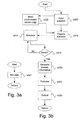
- Figure 3a schematically illustrates a method for, within a platform, generating an answer to a posed question within a platform 10 by a simulation process according to an aspect of the invention.
- the method comprises a first method step s301.
- the first method step s301 comprises the sub-steps of:
- the simulation method comprises the steps of:
- the simulation method comprises the step of:
- the simulation method comprises the step of:
- the simulation method comprises the steps of:
- the simulation method comprises the step of:
- the first criterion is relating to a category/type of the selected question and the second criterion is a stop criterion.
- FIG. 3b schematically illustrates in greater detail a simulation method according to an aspect of the invention.
- the method comprises a first method step s307.
- a driver/pilot of the platform 10 selects a question from a list of predetermined questions and input the same to the simulation device 100 according to the invention.
- a subsequent method step s309 is performed.
- a copy is made of a continuously updated environmental model.
- the copy of the environment model is made depending upon the posed inputted question, i.e. when the question is inputted; a copy is made immediately thereafter.
- the copy is generated as a direct consequence of the fact that a question is inputted.
- the copy is made substantially immediately after the posed question is inputted.
- the simulation is prepared.
- a scenario of the simulation is prepared. This is performed by applying at least one default model to the environment model.
- the default model may for example comprise one or more characteristics associated with the representations of the entities in the surroundings of the platform 10.
- the simulation scenario may be modified regarding the number of entities in the surroundings of the platform, as well as their respective behaviour, performance, equipment, characteristics, [weapons, loads, missions and routes, etc].
- a subsequent method step s314 is performed.
- step s314 the actual simulation is performed.
- the simulation may be performed in a variety of different ways, of which four are depicted with reference to the herein disclosed simulation examples 1-4 below.
- the simulation unit 130 is arranged to perform a plurality of simulations simultaneously, wherein each simulation is relating to one posed question. According to an embodiment of the invention the simulation unit 130 is arranged to perform a plurality of simulations simultaneously, wherein each simulation is relating to at least one posed question. It should further be noted that the simulation unit 130 is arranged to perform a plurality of sub-simulations simultaneously, wherein each sub-simulation is relating to a posed question, or to an aspect of a posed question.
- a loop comprising the method step s318 is continuously performed so as to check whether the simulation is completed or not. This can for example be performed by checking if a preset stop criterion is met. If the simulation is completed a subsequent method step s320 is performed. If the simulation is not completed, the simulation is continued.
- the method step s318 is optional according to one embodiment of the invention.
- step s320 answer information is generated.
- the answer information is generated depending upon the result of the simulation.
- the answer information may consist of a text string giving the answer to the posed question.
- During simulation status information may be provided continuously if desired regarding a particular posed question. After a simulation is completed the answer is associated with more presentation friendly information. For example, if the answer to a posed question is "45 seconds", the answer may be associated with an information piece comprising information indicating that "if own platform will continue on course a hostile zone will be reached".
- a subsequent method step s323 is performed.
- the result of the simulation is evaluated.
- Evaluation of the simulation result here means checking validity of the same.
- the matching procedure may involve a comparison between the simulation result and pre-stored predetermined boundary values relevant for a particular posed question and a given scenario modification.
- the method steps s320 and 323 is according to one embodiment sequentially interchangeable.
- the answer information is outputted.
- the outputted answer information is provided to means for presenting the information, such as a display or a loud speaker, for example.
- This example relates to a simulation regarding a "static" question in real time.
- the copy of the environmental model is sent from the updating unit 110 to the simulation preparation unit 120.
- the simulation is performed in the unit 130 and a valuated simulation result (answer information) is outputted according to the description above.
- This example relates to a simulation regarding a "dynamic" question in real time.
- the copy of the environmental model is sent from the updating unit 110 to the simulation preparation unit 120.
- the updating unit 110 is providing the simulation unit 130 with updated information.
- the updating unit 110 is continuously providing the simulation unit 130 with information associated with updated environment models for use in the actual simulation.
- the updating unit is providing the updated information via the link 210 direct to the simulation unit 130.
- the updated information is provided to the simulation unit 130 via the simulation preparation unit 120 or the unit 115.
- This example relates to a simulation regarding a simulation relating to a question requiring prediction simulation.
- the procedure of performing the simulation in this case corresponds to what is depicted with reference to the example 1.
- only the environment information provided to the simulation preparation unit 120 as a copy of the updated environment model generated in the updating unit 110 is used as basic information of the simulation.
- This example relates to a simulation regarding a simulation relating to a question requiring estimation of historical data.
- the unit 115 is providing the simulation unit 130 with history information to be incorporated in the simulation.
- the history information is according to one embodiment a batch of copies of former updated environment models generated by the updating unit 110.
- This batch of environment models is relating to a particular passed time period, for example the latest 30 seconds relative a given moment, preferably the time point when the posed question was inputted to the simulation device 100 via the communication unit 102. This time point is also referred to as t, with reference to Fig. 5.
- the architecture of the simulation device is thus providing a flexible arrangement for answering to different types of complex posed questions by means of simulations.
- Apparatus 900 comprises a non-volatile memory 920, a data processing device 910 and a read/write memory 950.
- Non-volatile memory 920 has a first memory portion 930 wherein a computer program, such as an operating system, is stored for controlling the function of apparatus 900.
- apparatus 900 comprises a bus controller, a serial communication port, I/O-means, an A/D-converter, a time date entry and transmission unit, an event counter and an interrupt controller (not shown).
- Non-volatile memory 920 also has a second memory portion 940.
- a computer program comprising routines for autonomous controlling of control systems of a platform is provided.
- the program may be stored in an executable manner or in a compressed state in a separate memory 960 and/or in read/write memory 950.
- data processing device 910 When it is stated that data processing device 910 performs a certain function it should be understood that data processing device 910 performs a certain part of the program which is stored in separate memory 960, or a certain part of the program which is stored in read/write memory 950.
- Data processing device 910 may communicate with a data port 999 by means of a data bus 915.
- Non-volatile memory 920 is adapted for communication with data processing device 910 via a data bus 912.
- Separate memory 960 is adapted to communicate with data processing device 910 via a data bus 911.
- Read/write memory 950 is adapted to communicate with data processing device 910 via a data bus 914.
- data received on data port 999 When data is received on data port 999 it is temporarily stored in second memory portion 940. When the received input data has been temporarily stored, data processing device 910 is set up to perform execution of code in a manner described above.
- data received on data port 999 comprises information such as input signals from sub-systems of the platform. This information can be used by apparatus 400 so as to perform controlling of the autonomous platform according to the invention.
- Parts of the methods described herein can be performed by apparatus 400 by means of data processing device 910 running the program stored in separate memory 960 or read/write memory 950. When apparatus 400 runs the program, parts of the methods described herein are executed.
- An aspect of the invention relates to a computer programme comprising a programme code for performing the method steps depicted with reference to Fig. 3a and 3b, respectively, when the computer programme is run on a computer.
- An aspect of the invention relates to a computer programme product comprising a program code stored on computer-readable media for performing the method steps depicted with reference to Fig. 3a and 3b, respectively, when the computer programme is run on the computer.
- An aspect of the invention relates to a computer programme product directly storable in an internal memory of a computer, comprising a computer programme for performing the method steps depicted with reference to Fig. 3a and 3b, respectively, when the computer programme is run on the computer.
Landscapes
- Engineering & Computer Science (AREA)
- Theoretical Computer Science (AREA)
- General Physics & Mathematics (AREA)
- Physics & Mathematics (AREA)
- Educational Administration (AREA)
- Educational Technology (AREA)
- Business, Economics & Management (AREA)
- Automation & Control Theory (AREA)
- Aviation & Aerospace Engineering (AREA)
- General Engineering & Computer Science (AREA)
- Management, Administration, Business Operations System, And Electronic Commerce (AREA)
- Testing And Monitoring For Control Systems (AREA)
- Test And Diagnosis Of Digital Computers (AREA)
Abstract
-communication means (102) for inputting a selected question associated with a first criterion and a second criterion;
-means for generating a copy of a continuously updated environment model;
- means for generating a simulation scenario, depending upon said first criterion;
- means for modifying the generated simulation scenario;
- means for applying the modified generated simulation scenario to the generated copy of the continuously updated environment model;
- means for performing a simulation process in accordance with the second criterion;
- means for generating answer information, depending upon a result of said simulation process.
Description
- The invention relates in general to a simulation device. In particular the invention relates to a device and arrangement for generating answers to posed questions by means of simulations.
- The invention also relates to a simulation method for generating answers to posed questions. In particular the invention relates to a method for generating answers to a posed question by means of simulations.
- Furthermore, the invention relates to software adapted to perform steps of the simulation method when executed on a computer.
- The present invention relates to situation analysis and choice of tactics onboard a platform, for example a flying platform, such as an airplane, manned or unmanned.
- A driver of a platform, e.g. a pilot of an airplane, has to make many decisions in real time to drive in a safe and correct way. Different means for assisting a pilot is typically provided in platforms of today.
- The term "situation analysis" relates to the analysis the driver performs in different situations while driving the platform. One situation may be an air plane-to-plane combat situation. Such a situation is generally very stressful and complicated for each involved pilot, seeing that the required analysis of the situation is mentally trying. This especially holds true when the situation is of a jumbly sort, e.g. involving a plurality of hostile airplanes. The driver of the platform must more or less continuously process provided information to perform a mental analysis so as to try to answer relevant questions. Examples of questions may be:
- which of the different airplanes are hostile?
- how threatened is my own airplane by a particular hostile airplane?
- if a hostile target tracking/radar measurement is supposed to be more than one hostile airplane, is the own platform/own group of platforms threatened?
- The term "choice of tactics" relates to considerations and choices performed by the driver regarding actions of airplanes within the own group or even only regarding future actions of the own airplane. The driver of the platform must also here, more or less continuously, process provided data so as to perform a mental analysis so as to try to answer relevant questions. Examples of questions may be:
- should a weapon be fired now, later, or not at all?
- should present mission be aborted?
In a civilian application: If own platform and an approaching airplane continue on course, will there later be a make way situation? - Thus, complex situation analysis and choice of tactics are today duties of the driver. The driver is today performing the situation analysis and the choice of tactics based on information provided by different indicators. It therefore exist a need to provide means arranged to facilitate the analysis process within a platform, such as an airplane.
- It should be noted that the platform may alternatively be an UAV (Unmanned Aerial Vehicle), wherein an autonomous decision maker needs to be provided with adequate basic data, answers to questions exemplified above, among others.
- An object according to an aspect of present invention is to provide a simulation device which allows generation of an answer to complex questions relating to situations analysis and/or choice of tactics within a platform.
- Another object according to an aspect of present invention is to provide a simulation device which allows solving of tasks of operational analysis character "on-line" within a platform.
- An aspect of the invention relates to the problem of ennobling provided information in a fast and cost effective manner.
- An aspect of the invention relates to the problem of achieving a user-friendly means for effective support regarding situation analysis and/or choice of tactics within a platform.
- These problems are solved by a simulation device for generating an answer to a question inputted thereto, said device comprising:
- communication means for inputting a selected question associated with a first criterion and a second criterion;
- means for generating a copy of a continuously updated environment model;
- means for generating a simulation scenario, depending upon said first criterion;
- means for modifying the generated simulation scenario;
- means for applying the modified generated simulation scenario to the generated copy of the continuously updated environment model;
- means for performing a simulation process in accordance with the second criterion;
- means for generating answer information, depending upon a result of said simulation process.
- Further advantageous features of the simulation device are set out in the dependent claims 2-7.
- These problems are also solved by the simulation method according to the independent claim 9. Further advantageous features of the simulation method are set out in the dependent claims 10-14.
- These problems are also solved by a computer programme comprising a programme code for performing the simulation method steps, when said computer programme is run on a computer.
- These problems are also solved by a computer programme product comprising a program code stored on a computer readable media for performing the simulation method steps, when said computer programme is run on the computer.
- These problems are also solved by a computer programme product directly storable in an internal memory of a computer, comprising a computer programme for performing the simulation method steps, when said computer programme is run on the computer.
- One positive outcome of the simulation device and the simulation method is that more reliable static and dynamic calculations may be performed within a platform by implementing use of the invention.
- Implementation of the method according to the invention provides a more robust procedure for generating an answer to a posed complex question, wherein the driver of the platform is provided with a powerful tool allowing reduced stress in stressful situations. Further, the simulation device is user friendly.
- By using the simulation device as a complement to indicators provided in the platform, a positive synergetic effect is achieved. Namely, the information indicated by the indicators may be used for the different simulations without reducing the overall performance of the platform.
- The present invention further provides improved accuracy of information required to make appropriate decisions within a platform in different flight situations.
- A beneficial contribution resulting from application of the method according to an aspect of the invention is improved overview and understanding of the surrounding of the platform, and further leads to a reduced amount of information provided to a driver/pilot of the platform, so as to facilitate decisions during complex flight situations.
- The present invention may also be used in so called embedded training, which results in a very cost effective training of drivers. In this case the simulation device is provided in a simulation centre allowing safe training of said drivers.
- Another beneficial contribution resulting from application of the method according to the invention is that more complex situations may be managed regarding situation analysis using the simulation method according to the invention. Also, a greater number of situations to be analysed may be managed using the simulation method according to the invention because a plurality of simulation can be run simultaneously.
- The architecture of the simulation device is thus providing a flexible arrangement for answering to different types of complex posed questions by means of simulations.
- Additional objects, advantages and novel features of the present invention will become apparent to those skilled in the art from the following details, as well as by practice of the invention. While the invention is described below, it should be understood that the invention is not limited to the specific details disclosed. A person skilled in the art having access to the teachings herein will recognise additional applications, modifications and embodiments in other fields, which are within the scope of the invention.
- For a more complete understanding of the present invention and further objects and advantages thereof, reference is now made to the examples shown in the accompanying drawings, in which:
- Figure 1 schematically illustrates a platform according to an aspect of the present invention.
- Figure 2 schematically illustrates an overview of a simulation device according to an aspect of the present invention.
- Figure 3a schematically illustrates a simulation method according to an aspect of the present invention.
- Figure 3b schematically illustrates in greater detail a simulation method according to an aspect of the present invention.
- Figure 4 schematically illustrates an apparatus according to an aspect of the present invention.
- Figure 5 schematically illustrates an overview of different simulation representations according to an aspect of the present invention.
- Fig. 5 schematically illustrates four different types of simulations, each relating to a particular type of question. The respective questions are posed at a time point t. According to one embodiment there are four different types of simulations, which are listed below.
- 1. Simulation relating to a "static" question in real time;
- 2. Simulation relating to a "dynamic" question in real time;
- 3. Simulation relating to a question requiring prediction simulation;
- 4. Simulation relating to a question requiring estimation of historical data.
- An example question of the first simulation type [1] may be -"Is a surrounding platform X within reach of any missile Y of the
platform 10?". In other words, "Is it possible to fight a particular entity, such as a potentially hostile fighter, with a particular missile of theplatform 10?". This is a static question wherein an answer to the question provided as a direct answer, namely, YES or NO, alternatively N/A. The answer of a question of this type may be presented promptly, i.e. less than a one second (1 s). - An example question of the second simulation type [2] may be-"Is a particular platform X potentially dangerous for this
platform 10?". This simulation may comprise a plurality of sub-simulations. For example, to determine if a particular platform X is dangerous for the own platform, a unique set-up of fictive weapon systems of the platform X may be included in each sub-simulation. The simulation (sub simulations) is run in real time and an answer to the posed question is provided after a simulation stop criteria is fulfilled, for example simulation run time of 10, 20 or 30 seconds. - An example question of the third simulation type [3] may be-"Can platform X escape from this
platform 10?". This question may have relevance in a fighter-to-fighter combat scenario, for example. A simulation requiring prediction is generally run faster than real time regarding a time point of relevance trel in the future. According to an embodiment of the invention the answer to the posed question is given 2-20 seconds after the question is posed, i.e. 2-20 after time t as indicated in Fig. 5. Preferably, the answer to the posed question is given after less than one second (1 s). More preferably, the answer to the posed question is given after less than 0.1 second. This simulation type [3] may comprise a plurality of sub-simulations. - An example question of the fourth simulation type [4] may be-"Has the airplane X energized, at the prospect of attacking own platform, since time Y?
- This simulation is using "historical" surrounding information so as to perform an estimation process. According to an embodiment of the invention the answer to the posed question is provided 2-20 seconds after the question is posed, i.e. 2-20 after time t as indicated in Fig. 5. According to an embodiment historical information corresponding to a time period tperiod is used. The time period may be of arbitrary length, for example 10, 45, 90 seconds, or longer. Preferably, the answer to the posed question is provided 1-2 seconds after the time point t.
- With reference to Figure 1 a
platform 10 is schematically shown. The platform may be an autonomous platform, such as an unmanned aerial vehicle (UAV). The platform may be an airplane, such as a passenger traffic airplane. Alternatively the airplane can be a military aircraft, such as a fighter, bomber, reconnaissance airplane, or a combination thereof. The autonomous platform can also be any kind of a helicopter, robot or missile. - It should be noted that the
platform 10 alternatively can be a ground vehicle, water craft or underwater craft, e.g. an automobile, ship or submarine. Alternatively, theplatform 10 can be a space craft or a satellite. Theplatform 10 comprises asimulation device 100, which is depicted in greater detail below. - The
platform 10 is provided with a plurality of sensors andmeters 101, hereinafter referred to as a set ofsensors 101. Theplatform 10 is also provided with acommunication unit 102 having a user interface. Thecommunication unit 102 may comprise a touch-screen, key-pad, computer and/or monitor, for example. Thecommunication unit 102 is also referred to ascommunication terminal 102. The set ofsensors 101 and thecommunication unit 102 are both arranged for communication with thesimulation device 100 as depicted in greater detail below. - With reference to Figure 2 the
simulation device 100 is schematically shown. Thesimulation device 100 is, according to a preferred embodiment of the invention, provided in theplatform 10. Thesimulation device 100 is also referred to assimulation arrangement 100. - Hereinafter the term "link" refers to a communication link which may be a physical connector, such as an optoelectronic communication wire, or a non-physical connector such as a wireless connection, for example a radio or microwave link.
- The
simulation device 100 is connected to the set ofsensors 101 and thecommunication unit 102. The set ofsensors 101 comprises a variety of different sensors. The number of sensors is an arbitrary number. Each sensor of the set of sensors is arranged to detect and/or measure at least one parameter and to communicate the sensorparameter information data 12 to thesimulation device 100. Schematically shown in Figure 2 the set ofsensors 101 is arranged to communicate sensorparameter information data 12 to thesimulation device 100 via alink 181. According to one embodiment of the invention, each sensor of the set ofsensors 101 is arranged for communication with thesimulation arrangement 100 by a separate link, respectively. Typical sensors are radar-, IR- and optical sensors. Further, other typical are sensors arranged to measure rudder angles, air pressure, and sensors arranged to provide information from other platform's links, such as an aircraft link or a robot link. - The
communication unit 102 is according to one example embodiment a touch screen. The touch screen may be provided in a cock-pit of theplatform 10. Of course the communication unit may be of a different kind, such as a keypad and corresponding monitor or a voice controlled display unit. Other user communication units which could be used are keyboards, mouse, keypads, handles etc. - The
communication unit 102 is arranged to allow inputting of questions to thesimulation device 100. The questions are pre-defined questions stored in amemory 15. According to one embodiment thememory 15 is a database. Thecommunication unit 102 is arranged for communication with thememory 15 via a questioninformation requesting unit 160. A user of thesimulation device 100, e.g. a driver/pilot of theplatform 10, may use thecommunication unit 102 so as to select questions to be answered by means of a simulation. Preferably questions are chosen and inputted in a sequential manner. The questioninformation requesting unit 160 is arranged to requestquestion data 13 from thememory 15. Thequestion information 13 comprises information required for performing a relevant simulation so as to generate an answer to the posed question. The question information requesting unit is arranged to forward the question data toscenario modifying unit 165, which is depicted in greater detail below. - An updating
unit 105 is arranged to receiveenvironment information 12 from the set ofsensors 101 via thelink 181. The updatingunit 105 is alternatively arranged to receive a part of theenvironment information 12 from an external source (not shown), such as a control tower and/or another platform. According to one embodiment the updatingunit 105 is arranged to receiveenvironment information 12 from both the set ofsensors 101 and the external source simultaneously. The updatingunit 105 is arranged to process said receivedinformation 12. The updatingunit 105 is arranged to process the receivedinformation 12 and to update representations of existing registered entities in an environment of theplatform 10. The updating process is preformed with regard to for example existence, positions of the entities and velocity vectors of the registered entities and a representation of theplatform 10. Herein the term "entities" is synonymous with the term "platform". - An
information processing unit 110 is arranged to continuously receive updated information from the updatingunit 105 via alink 182. Theinformation processing unit 110 is arranged to provide an environment model, which is continuously generated depending upon received updated information, which is sent from the updatingunit 105. The environment model comprises information about the environment of theplatform 10. More specifically, the environment model comprises information about existing entities, including theplatform 10, having reference to for example existence, type of entities, positions of the entities and corresponding velocity vectors. Theinformation processing unit 110 is arranged to store an updated generated environment model in aninternal memory 111 on a regular basis, for example every second. Preferably theinformation processing unit 110 is arranged to continuously store an updated generated environment model in the internal memory of theinformation processing unit 110. The latest stored environment model is corresponding to a best current description of the environment of theplatform 10. The environment model (EM) also comprises information about spatial data, position, velocities, accelerations, attitudes, angular velocities, angular velocities, and other sensor data, such as e.g. radar signature and optical picture. The environment model also comprises information about different air plane models. - At a moment when an answer to a question is posed, i.e. chosen and inputted (Time t), by means of the
communication unit 102, a copy of the latest stored environment model (EM) is made. This copy is transferred to asimulation preparation unit 120 via alink 184 from theinformation processing unit 110. Thesimulation preparation unit 120 is arranged to receive and store the copy of the environment model (CEM). Thesimulation preparation unit 120 is arranged to assign different models to the entities of the received copy of the environment model. According to one embodiment of the invention default models are assigned to the different entities of the received copy of the environment model. A number of default models are stored in a defaultmodel storing unit 125, which is arranged for communication with thesimulation preparation unit 120 via alink 186. The defaultmodel storing unit 125 is arranged to send one or more adequate default models to thesimulation preparation unit 120 depending upon a request generated by thesimulation preparation unit 120, which request is sent to themodel storing unit 125. The default models are applied to the copy of the updated environment model, i.e. the environment model is prepared and processed for the simulation. Choice of default model is depending upon what particular question is posed. According to one embodiment a matching procedure is preformed wherein measured sensor data, for example related to another platform, and pre-stored sensor data is used so as to identify a most appropriate default model. One way to express this procedure is that the updated environment model is "frozen" (copied) at the time when a question is posed by means of thecommunication unit 102. Information based on the environment model at this time is further sent to thesimulation preparation unit 120 so as to constitute the base of a simulation model. - The question
information requesting unit 160 is arranged to request and receivequestion information 13 stored in thememory 15 as a response to a request sent to thememory 15. Thememory 15 can alternatively be located external of thesimulation device 100. Thequestion data information 13 comprises information relevant for further processing of the question posed by means of thecommunication terminal 102. - A
scenario modification unit 165 is arranged to communicate with thesimulation preparation unit 120 via alink 195. Thescenario modification unit 165 is arranged to modify a scenario of a simulation relevant for the posed question. This means that entities of the copy of the environment model (CEM) provided in thesimulation preparation unit 120 can be modified. Alternatively, entities of the copy of the environment model provided in thesimulation preparation unit 120 can be deleted. Alternatively, additional fictive entities may be added to the environment model. According to an embodiment the modification is performed depending upon the particular posed question. According to an embodiment the modification is performed depending upon the particular type of the posed question. This can be performed before or after the one or more default model has been applied to the copy of the environment model. - According to one embodiment of the invention each entity of the environment model is a unique model of a particular predefined platform.
- At least one, preferably all, of the representations of the originally detected entities and the added fictive entities can be modified such that a predetermined behavior of the entity can be changed. For example, in case one entity initially is assigned a behavior of an airplane in fighter mode, it can be changed to a behavior of an airplane being in reconnaissance mode.
- The
scenario modification unit 165 is arranged for communication with a question categoryinformation generating unit 170 via alink 193. The question categoryinformation generating unit 170 is also referred to asadjustment unit 170. The questioncategory generating unit 170 is arranged for communication with thesimulation preparation unit 120 via alink 194. The question categoryinformation generating unit 170 is arranged to generate question category information depending upon the type of the posed question. This generated question category information may be used as input information to the simulation preparation unit120. The question category information is sent to thesimulation preparation unit 120 via thelink 194. The question category information comprises information about start and stop criterion for the simulation. Further the question category information comprises information about stop criterion, time, predetermined conditions etc. Thesimulation preparation unit 120 is arranged for communication with asimulation unit 130 via alink 187. - According to an embodiment of the invention there is provided one predetermined scenario for at least one predetermined question. According to an embodiment of the invention there is provided at least one, or a plurality of predetermined scenarios for each at least one predetermined question, respectively.
- The
information processing unit 110 is arranged for communication with a simulationhistory information unit 115. The simulationhistory information unit 115 is arranged to receive simulation information from theinformation processing unit 110 via alink 183. The received simulation information is stored in thesimulation history unit 115. The simulation information comprises information about the updated environment models corresponding to a past time. According to an embodiment of the invention an arbitrary number of environment models are stored in the simulationhistory information unit 115. According to an embodiment of the invention only predetermined parts of the different environmental models are saved and stored in the simulationhistory information unit 115 for use in future simulations. - According to an embodiment of the invention a
simulation unit 130 is arranged to perform a simulation process so as to achieve an answer to an inputted question. The simulation process can be of different types, depending upon what type of question is posed. This is depicted in greater detail herein. Thesimulation unit 130 is arranged to perform simulations for different types of posed questions, for example "static question", "dynamic question", "question requiring prediction simulation" and "question requiring estimation of historical data", according to what is depicted above. - The
simulation unit 130 is arranged for communication with alogging unit 140 vialink 188. Thelogging unit 140 is arranged for receiving the simulation result information sent from thesimulation unit 130. According to one embodiment of the invention thelogging unit 140 is arranged to check stop criterions during the at least one simulation being performed. - The
logging unit 140 is arranged for communication with a valuingunit 150 via alink 189. Thelogging unit 140 is arranged to send the logged simulation result information to the valuingunit 150. The valuingunit 150 is arranged to evaluate the logged simulation result information. - The valuing
unit 150 is arranged tooutput answer information 14 via alink 199. According to one embodiment theoutput answer information 14 is outputted to thecommunication terminal 102. According to one embodiment, in particular with ref erence to thequestion type 2, present status of relevant measurements is also outputted. Theanswer information 14 is preferably displayed or in any other way communicated to the driver of the platform. - Figure 3a schematically illustrates a method for, within a platform, generating an answer to a posed question within a
platform 10 by a simulation process according to an aspect of the invention. The method comprises a first method step s301. The first method step s301 comprises the sub-steps of: - inputting a selected question associated with a first criterion and a second criterion;
- generating a copy of a continuously updated environment model;
- generating a simulation scenario, depending upon said first criterion;
- modifying the generated simulation scenario;
- applying the modified generated simulation scenario to the generated copy of the continuously updated environment model;
- performing a simulation process in accordance with the second criterion;
- generating answer information, depending upon a result of said simulation process.
- Preferably the simulation method comprises the steps of:
- valuating the generated answer information;
- performing a filtering process, depending upon a result of said valuating step.
- Preferably the simulation method comprises the step of:
- logging said generated answer information.
- Preferably the simulation method comprises the step of:
- providing said generated answer information.
- Preferably the simulation method comprises the steps of:
- providing information associated with updated environment models
- performing the simulation depending upon said provided information associated with updated environment models in real-time.
- Preferably the simulation method comprises the step of:
- providing historical information comprising information generated depending upon environment models corresponding to a time period before inputting the selected question.
- Preferably the first criterion is relating to a category/type of the selected question and the second criterion is a stop criterion.
- Figure 3b schematically illustrates in greater detail a simulation method according to an aspect of the invention. The method comprises a first method step s307.
In the method step s307 a driver/pilot of theplatform 10 selects a question from a list of predetermined questions and input the same to thesimulation device 100 according to the invention. After the method step s307 a subsequent method step s309 is performed. - In the method step s309 a copy is made of a continuously updated environmental model. The copy of the environment model is made depending upon the posed inputted question, i.e. when the question is inputted; a copy is made immediately thereafter. According to one embodiment the copy is generated as a direct consequence of the fact that a question is inputted. According to one embodiment the copy is made substantially immediately after the posed question is inputted. After the method step s309 a subsequent method step s310 is performed.
- In the method step s310 the simulation is prepared. Among other things a scenario of the simulation is prepared. This is performed by applying at least one default model to the environment model. The default model may for example comprise one or more characteristics associated with the representations of the entities in the surroundings of the
platform 10. The simulation scenario may be modified regarding the number of entities in the surroundings of the platform, as well as their respective behaviour, performance, equipment, characteristics, [weapons, loads, missions and routes, etc]. After the method step s310 a subsequent method step s314 is performed. - In the method step s314 the actual simulation is performed. The simulation may be performed in a variety of different ways, of which four are depicted with reference to the herein disclosed simulation examples 1-4 below.
- It should be noted that the
simulation unit 130 is arranged to perform a plurality of simulations simultaneously, wherein each simulation is relating to one posed question. According to an embodiment of the invention thesimulation unit 130 is arranged to perform a plurality of simulations simultaneously, wherein each simulation is relating to at least one posed question. It should further be noted that thesimulation unit 130 is arranged to perform a plurality of sub-simulations simultaneously, wherein each sub-simulation is relating to a posed question, or to an aspect of a posed question. - A loop comprising the method step s318 is continuously performed so as to check whether the simulation is completed or not. This can for example be performed by checking if a preset stop criterion is met. If the simulation is completed a subsequent method step s320 is performed. If the simulation is not completed, the simulation is continued. The method step s318 is optional according to one embodiment of the invention.
- In the method step s320 answer information is generated. The answer information is generated depending upon the result of the simulation. For example, the answer information may consist of a text string giving the answer to the posed question.
- During simulation status information may be provided continuously if desired regarding a particular posed question. After a simulation is completed the answer is associated with more presentation friendly information. For example, if the answer to a posed question is "45 seconds", the answer may be associated with an information piece comprising information indicating that "if own platform will continue on course a hostile zone will be reached".
- After the method step s320 a subsequent method step s323 is performed. In the method step s323 the result of the simulation is evaluated. Evaluation of the simulation result here means checking validity of the same. This can be performed by a matching procedure so as to determine if the simulation result is reasonable. The matching procedure may involve a comparison between the simulation result and pre-stored predetermined boundary values relevant for a particular posed question and a given scenario modification. The method steps s320 and 323 is according to one embodiment sequentially interchangeable. After the method step s323 a subsequent method step s325 is performed.
- In the method step s325 the answer information is outputted. Preferably, the outputted answer information is provided to means for presenting the information, such as a display or a loud speaker, for example. After the method step s325 the method ends.
- This example relates to a simulation regarding a "static" question in real time. In particular with reference to Fig. 2 and Fig. 3a-b, the copy of the environmental model is sent from the updating
unit 110 to thesimulation preparation unit 120. After scenario editing etc. the simulation is performed in theunit 130 and a valuated simulation result (answer information) is outputted according to the description above. - This example relates to a simulation regarding a "dynamic" question in real time. In particular with reference to Fig. 2 and Fig. 3a-b, the copy of the environmental model is sent from the updating
unit 110 to thesimulation preparation unit 120. However, in this case the updatingunit 110 is providing thesimulation unit 130 with updated information. According to one embodiment the updatingunit 110 is continuously providing thesimulation unit 130 with information associated with updated environment models for use in the actual simulation. According to one embodiment of the invention the updating unit is providing the updated information via thelink 210 direct to thesimulation unit 130. According to another embodiment the updated information is provided to thesimulation unit 130 via thesimulation preparation unit 120 or theunit 115. - This example relates to a simulation regarding a simulation relating to a question requiring prediction simulation. The procedure of performing the simulation in this case corresponds to what is depicted with reference to the example 1. Thus, only the environment information provided to the
simulation preparation unit 120 as a copy of the updated environment model generated in the updatingunit 110 is used as basic information of the simulation. - This example relates to a simulation regarding a simulation relating to a question requiring estimation of historical data. In this case the
unit 115 is providing thesimulation unit 130 with history information to be incorporated in the simulation. The history information is according to one embodiment a batch of copies of former updated environment models generated by the updatingunit 110. This batch of environment models is relating to a particular passed time period, for example the latest 30 seconds relative a given moment, preferably the time point when the posed question was inputted to thesimulation device 100 via thecommunication unit 102. This time point is also referred to as t, with reference to Fig. 5. - The architecture of the simulation device is thus providing a flexible arrangement for answering to different types of complex posed questions by means of simulations.
- With reference to Figure 4, a diagram of one embodiment of an apparatus 900 is shown. Apparatus 900 comprises a
non-volatile memory 920, adata processing device 910 and a read/write memory 950.Non-volatile memory 920 has afirst memory portion 930 wherein a computer program, such as an operating system, is stored for controlling the function of apparatus 900. Further, apparatus 900 comprises a bus controller, a serial communication port, I/O-means, an A/D-converter, a time date entry and transmission unit, an event counter and an interrupt controller (not shown).Non-volatile memory 920 also has asecond memory portion 940. - A computer program comprising routines for autonomous controlling of control systems of a platform is provided. The program may be stored in an executable manner or in a compressed state in a
separate memory 960 and/or in read/write memory 950. - When it is stated that
data processing device 910 performs a certain function it should be understood thatdata processing device 910 performs a certain part of the program which is stored inseparate memory 960, or a certain part of the program which is stored in read/write memory 950. -
Data processing device 910 may communicate with adata port 999 by means of adata bus 915.Non-volatile memory 920 is adapted for communication withdata processing device 910 via adata bus 912.Separate memory 960 is adapted to communicate withdata processing device 910 via adata bus 911. Read/write memory 950 is adapted to communicate withdata processing device 910 via adata bus 914. - When data is received on
data port 999 it is temporarily stored insecond memory portion 940. When the received input data has been temporarily stored,data processing device 910 is set up to perform execution of code in a manner described above. According to one embodiment, data received ondata port 999 comprises information such as input signals from sub-systems of the platform. This information can be used by apparatus 400 so as to perform controlling of the autonomous platform according to the invention. - Parts of the methods described herein can be performed by apparatus 400 by means of
data processing device 910 running the program stored inseparate memory 960 or read/write memory 950. When apparatus 400 runs the program, parts of the methods described herein are executed. - An aspect of the invention relates to a computer programme comprising a programme code for performing the method steps depicted with reference to Fig. 3a and 3b, respectively, when the computer programme is run on a computer.
- An aspect of the invention relates to a computer programme product comprising a program code stored on computer-readable media for performing the method steps depicted with reference to Fig. 3a and 3b, respectively, when the computer programme is run on the computer.
- An aspect of the invention relates to a computer programme product directly storable in an internal memory of a computer, comprising a computer programme for performing the method steps depicted with reference to Fig. 3a and 3b, respectively, when the computer programme is run on the computer.
- The foregoing description of the preferred embodiments of the present invention has been provided for the purposes of illustration and description. It is not intended to be exhaustive or to limit the invention to the precise forms disclosed. Obviously, many modifications and variations will be apparent to practitioners skilled in the art. The embodiments were chosen and described in order to best explain the principles of the invention and its practical applications, thereby enabling others skilled in the art to understand the invention for various embodiments and with the various modifications as are suited to the particular use contemplated.
Claims (17)
- Simulation device for generating an answer to a question inputted thereto, said device being provided on a platform, the device comprises:- communication means (102) for inputting a selected question associated with a first criterion and a second criterion;- means for generating a copy of a continuously updated environment model;- means for generating a simulation scenario, depending upon said first criterion;- means for modifying the generated simulation scenario;- means for applying the modified generated simulation scenario to the generated copy of the continuously updated environment model;- means for performing a simulation process in accordance with the second criterion;- means for generating answer information, depending upon a result of said simulation process.
- Simulation device according to claim 1, further characterized by:- means for valuating the generated answer information; and means for performing a filtering process, depending upon a result of said valuating step.
- Simulation device according to claim 1 or 2, further characterized by means for logging said generated answer information.
- Simulation device according to any of claims 1-3, further characterized by means for providing said generated answer information.
- Simulation device according to any of claims 1-4, further characterized by means for providing information associated with updated environment models, and means for performing the simulation depending upon said provided information associated with updated environment models in real-time.
- Simulation device according to any of claims 1-4, further characterized by means for providing historical information comprising information generated depending upon environment models corresponding to a time period before inputting the selected question.
- Simulation device according to any of claims 1-6, further characterized by that the first criterion is relating to a category/type of the selected question; and that the second criterion is a stop criterion.
- Platform comprising a simulation device according to any of claims 1-7, wherein the platform is a flying vehicle, preferably a vehicle selected from the group consisting of: an aircraft, an airplane, and a helicopter, or where the platform is a watercraft or an under watercraft, preferably selected from the group consisting of: a boat, a ship, and a submarine, or wherein the platform is a land vehicle, preferably a land vehicle selected from the group consisting of: an automobile, a train, and a cross-country vehicle.
- Simulation method for, within a platform, generating answers to a question fed to a simulation device, comprising the steps of:- inputting a selected question associated with a first criterion and a second criterion;- generating a copy of a continuously updated environment model;- generating a simulation scenario, depending upon said first criterion;- modifying the generated simulation scenario;- applying the modified generated simulation scenario to the generated copy of the continuously updated environment model;- performing a simulation process in accordance with the second criterion;- generating answer information, depending upon a result of said simulation process.
- Simulation method according to claim 9, further characterized by the steps of:- valuating the generated answer information;- performing a filtering process, depending upon a result of said valuating step.
- Simulation method according to claim 9 or 10, further characterized by the step of:- logging said generated answer information.
- Simulation method according to any of claims 9-11, further characterized by the step of:- providing said generated answer information.
- Simulation method according to any of claims 9-12, further characterized by the steps of:- providing information associated with updated environment models- performing the simulation depending upon said provided information associated with updated environment models in real-time.
- Simulation method according to any of claims 9-12, further characterized by the step of:- providing historical information comprising information generated depending upon environment models corresponding to a time period before inputting the selected question.
- Computer programme comprising a programme code for performing the method steps of any of claims 9-14, when said computer programme is run on a computer.
- Computer programme product comprising a program code stored on a computer readable media for performing the method steps of any of claims 9-14, when said computer programme is run on the computer.
- Computer programme product directly storable in an internal memory of a computer, comprising a computer programme for performing the method steps according to any of claims 9-14, when said computer programme is run on the computer.
Priority Applications (5)
| Application Number | Priority Date | Filing Date | Title |
|---|---|---|---|
| AT06120729T ATE473471T1 (en) | 2006-09-15 | 2006-09-15 | ON BOARD SIMULATION SYSTEM AND SIMULATION PROCEDURES |
| EP06120729A EP1901143B1 (en) | 2006-09-15 | 2006-09-15 | Onboard simulation device and simulation method |
| DE602006015315T DE602006015315D1 (en) | 2006-09-15 | 2006-09-15 | On board simulation system and simulation method |
| ES06120729T ES2345995T3 (en) | 2006-09-15 | 2006-09-15 | SIMULATION DEVICE AND ON-BOARD SIMULATION PROCEDURE. |
| US11/898,877 US8781802B2 (en) | 2006-09-15 | 2007-09-17 | Simulation device and simulation method |
Applications Claiming Priority (1)
| Application Number | Priority Date | Filing Date | Title |
|---|---|---|---|
| EP06120729A EP1901143B1 (en) | 2006-09-15 | 2006-09-15 | Onboard simulation device and simulation method |
Publications (2)
| Publication Number | Publication Date |
|---|---|
| EP1901143A1 true EP1901143A1 (en) | 2008-03-19 |
| EP1901143B1 EP1901143B1 (en) | 2010-07-07 |
Family
ID=37923074
Family Applications (1)
| Application Number | Title | Priority Date | Filing Date |
|---|---|---|---|
| EP06120729A Active EP1901143B1 (en) | 2006-09-15 | 2006-09-15 | Onboard simulation device and simulation method |
Country Status (5)
| Country | Link |
|---|---|
| US (1) | US8781802B2 (en) |
| EP (1) | EP1901143B1 (en) |
| AT (1) | ATE473471T1 (en) |
| DE (1) | DE602006015315D1 (en) |
| ES (1) | ES2345995T3 (en) |
Cited By (17)
| Publication number | Priority date | Publication date | Assignee | Title |
|---|---|---|---|---|
| EP2309476A1 (en) * | 2009-09-15 | 2011-04-13 | BAE Systems PLC | Maritime vehicle with onboard simulation system |
| CN103309242A (en) * | 2013-04-24 | 2013-09-18 | 上海卫星工程研究所 | Image navigation/registration demonstration and verification system based on real-time simulation platform and method |
| EP2281268A4 (en) * | 2008-04-25 | 2013-12-11 | Intific Inc | Composite assets for use in multiple simulation environments |
| CN103856483A (en) * | 2013-12-31 | 2014-06-11 | 中国人民解放军空军航空大学军事仿真技术研究所 | Communication method for flight simulator |
| CN104122800A (en) * | 2014-07-22 | 2014-10-29 | 清华大学深圳研究生院 | Space robot electric integration test technology demonstration verification system |
| CN104281060A (en) * | 2014-10-20 | 2015-01-14 | 中国运载火箭技术研究院 | Aircraft hardware-in-the-loop access test measurement and control system |
| CN104615010A (en) * | 2014-12-26 | 2015-05-13 | 成都飞机工业(集团)有限责任公司 | FlightGear and VC hybrid system developing method based on network communication |
| CN105204512A (en) * | 2015-09-14 | 2015-12-30 | 北京航空航天大学 | Six-degree-of-freedom unmanned combat aerial vehicle short-range dogfight method based on simplified model machine game |
| CN105788394A (en) * | 2016-04-16 | 2016-07-20 | 吉林医药学院 | Maintenance detection simulated training system for unmanned plane |
| CN108563144A (en) * | 2018-03-30 | 2018-09-21 | 西安电子科技大学 | A kind of missile-borne radar signal processing semi-hardware type simulation test system |
| CN108595811A (en) * | 2018-04-16 | 2018-09-28 | 东南大学 | A kind of unexpected incidents emulation mode for unmanned vehicle training simulation |
| CN108780328A (en) * | 2017-12-18 | 2018-11-09 | 深圳市大疆灵眸科技有限公司 | A kind of cloud platform control method, unmanned plane, holder and storage medium |
| CN109313418A (en) * | 2016-06-23 | 2019-02-05 | 深圳市大疆创新科技有限公司 | System and method for controlling the behavior of movable objects |
| WO2019061022A1 (en) * | 2017-09-26 | 2019-04-04 | 深圳市大疆创新科技有限公司 | Simulation method, terminal device, and flight controller for unmanned aerial vehicle |
| CN109581892A (en) * | 2019-01-29 | 2019-04-05 | 西北工业大学 | Full strapdown missile guidance control system pair turntable semi-matter simulating system and method |
| CN111913408A (en) * | 2020-08-27 | 2020-11-10 | 北京航空航天大学 | A simplified flight control simulation method for single rotor with tail rotor helicopter |
| CN119356125A (en) * | 2024-10-23 | 2025-01-24 | 北京方州科技有限公司 | A multi-sample simulation control method and system for air-ground game |
Families Citing this family (14)
| Publication number | Priority date | Publication date | Assignee | Title |
|---|---|---|---|---|
| US8515786B2 (en) | 2008-02-22 | 2013-08-20 | Accenture Global Services Gmbh | Rule generation system adapted for an insurance claim processing system |
| US8478769B2 (en) * | 2008-02-22 | 2013-07-02 | Accenture Global Services Limited | Conversational question generation system adapted for an insurance claim processing system |
| US20090217185A1 (en) * | 2008-02-22 | 2009-08-27 | Eugene Goldfarb | Container generation system for a customizable application |
| CN101995825B (en) * | 2010-11-08 | 2012-07-18 | 大连理工大学 | Satellite dynamic and control distributed simulation platform |
| CN102819222B (en) * | 2012-08-22 | 2015-09-09 | 北京二十一世纪科技发展有限公司 | A kind of ground artificial system based on small satellite intelligent technology |
| US9916766B2 (en) * | 2014-07-18 | 2018-03-13 | Ca, Inc. | Methods, systems, and computer program products for user paced learning based on historical programming errors and solutions using electronic flash cards |
| IL240831A (en) | 2015-08-25 | 2017-03-30 | Elbit Systems Ltd | System and method for identifying a deviation of an operator of a vehicle from a doctrine |
| US10884503B2 (en) * | 2015-12-07 | 2021-01-05 | Sri International | VPA with integrated object recognition and facial expression recognition |
| US20180170392A1 (en) * | 2016-12-20 | 2018-06-21 | Baidu Usa Llc | Method and System to Recognize Individual Driving Preference for Autonomous Vehicles |
| CN108427323A (en) * | 2018-04-11 | 2018-08-21 | 中国人民解放军陆军炮兵防空兵学院 | A kind of unmanned plane HWIL simulation operating control device |
| CN108732942A (en) * | 2018-06-06 | 2018-11-02 | 北京科技大学 | The analogue system and method for flapping flight robot pose control |
| CN111177885B (en) * | 2019-12-09 | 2023-09-12 | 上海航天控制技术研究所 | A ground experimental method for dynamic characteristics of large flexible spacecraft formations |
| CN116127611B (en) * | 2023-04-13 | 2023-06-20 | 中国人民解放军国防科技大学 | A method for dynamic simulation of underwater vehicle |
| EP4471692A1 (en) * | 2023-06-01 | 2024-12-04 | Airbus S.A.S. | Method for assisting a trainee during a pilot training on a pilot training simulator, data processing apparatus, a pilot training simulator and a computer program |
Citations (2)
| Publication number | Priority date | Publication date | Assignee | Title |
|---|---|---|---|---|
| US5549477A (en) * | 1992-11-17 | 1996-08-27 | Honeywell Inc. | Integrated aircraft survivability equipment in-flight simulation |
| US20030215771A1 (en) * | 2002-04-15 | 2003-11-20 | Bartoldus Klaus H. | Autonomous weapons system simulation system for generating and displaying virtual scenarios on board and in flight |
Family Cites Families (60)
| Publication number | Priority date | Publication date | Assignee | Title |
|---|---|---|---|---|
| US4057913A (en) * | 1976-03-26 | 1977-11-15 | The Singer Company | Simulated training system that utilizes operational equipment |
| US4176468A (en) * | 1978-06-22 | 1979-12-04 | Marty William B Jr | Cockpit display simulator for electronic countermeasure training |
| US4424038A (en) * | 1980-01-31 | 1984-01-03 | Sanders Associates, Inc. | Inflight aircraft training system |
| US4490117A (en) * | 1982-06-11 | 1984-12-25 | The United States Of America As Represented By The Administrator Of The National Aeronautics And Space Administration | Inflight IFR procedures simulator |
| US4729737A (en) * | 1986-06-02 | 1988-03-08 | Teledyne Industries, Inc. | Airborne laser/electronic warfare training system |
| US4959015A (en) * | 1988-12-19 | 1990-09-25 | Honeywell, Inc. | System and simulator for in-flight threat and countermeasures training |
| US5002490A (en) * | 1989-12-21 | 1991-03-26 | Blackstone Michael E | Mock air battle system |
| FR2657160B1 (en) * | 1990-01-12 | 1992-05-07 | Aerospatiale | ON-BOARD SYSTEM FOR DETERMINING THE POSITION OF AN AIR VEHICLE AND ITS APPLICATIONS. |
| IL95990A (en) * | 1990-10-15 | 1994-07-31 | B V R Technologies Ltd | Anti-collision warning system |
| AU2261292A (en) * | 1991-06-21 | 1993-01-25 | Unitech Research, Inc. | Real time three dimensional geo-referenced digital orthophotograph-based positioning, navigation, collision avoidance and decision support system |
| US5428530A (en) * | 1992-05-05 | 1995-06-27 | Kaman Sciences Corporation | Airborne reactive threat simulator |
| US5378155A (en) * | 1992-07-21 | 1995-01-03 | Teledyne, Inc. | Combat training system and method including jamming |
| US5474453A (en) * | 1993-02-17 | 1995-12-12 | Atari Games Corporation | Scenario development system for vehicle simulators |
| DE4314811A1 (en) * | 1993-05-05 | 1994-12-08 | Vdo Luftfahrtgeraete Werk Gmbh | Procedure for displaying flight guidance information |
| US5587904A (en) * | 1993-06-10 | 1996-12-24 | Israel Aircraft Industries, Ltd. | Air combat monitoring system and methods and apparatus useful therefor |
| US5421728A (en) * | 1994-03-07 | 1995-06-06 | Honeywell Inc. | In-flight radar warning receiver training system |
| US6865477B2 (en) * | 1994-05-31 | 2005-03-08 | Winged Systems Corporation | High resolution autonomous precision positioning system |
| US5807109A (en) * | 1995-03-16 | 1998-09-15 | B.V.R. Technologies Ltd. | Airborne avionics simulator system |
| FR2747492B1 (en) * | 1996-04-15 | 1998-06-05 | Dassault Electronique | TERRAIN ANTI-COLLISION DEVICE FOR AIRCRAFT WITH TURN PREDICTION |
| US5995903A (en) * | 1996-11-12 | 1999-11-30 | Smith; Eric L. | Method and system for assisting navigation using rendered terrain imagery |
| US5838262A (en) * | 1996-12-19 | 1998-11-17 | Sikorsky Aircraft Corporation | Aircraft virtual image display system and method for providing a real-time perspective threat coverage display |
| US6080063A (en) * | 1997-01-06 | 2000-06-27 | Khosla; Vinod | Simulated real time game play with live event |
| GB2322611B (en) * | 1997-02-26 | 2001-03-21 | British Aerospace | Apparatus for indicating air traffic and terrain collision threat to an aircraft |
| SE510436C2 (en) * | 1997-06-19 | 1999-05-25 | Celsiustech Sustems Ab | Target type estimation at target tracking |
| JP3052286B2 (en) * | 1997-08-28 | 2000-06-12 | 防衛庁技術研究本部長 | Flight system and pseudo visual field forming device for aircraft |
| US6259378B1 (en) * | 1997-09-22 | 2001-07-10 | Sandel Avionics | Display system for airplane cockpit or other vehicle |
| JP3123501B2 (en) * | 1998-03-16 | 2001-01-15 | 日本電気株式会社 | Space viewpoint controller |
| US6360193B1 (en) * | 1998-09-17 | 2002-03-19 | 21St Century Systems, Inc. | Method and system for intelligent agent decision making for tactical aerial warfare |
| ATE269572T1 (en) * | 1998-10-16 | 2004-07-15 | Universal Avionics Sys Corp | ALERT PROCEDURE AND SYSTEM FOR FLIGHT PLANS |
| US6262679B1 (en) * | 1999-04-08 | 2001-07-17 | Honeywell International Inc. | Midair collision avoidance system |
| US6496760B1 (en) * | 1999-07-21 | 2002-12-17 | Honeywell International Inc. | Flight information display with plane of flight view |
| US6433729B1 (en) * | 1999-09-27 | 2002-08-13 | Honeywell International Inc. | System and method for displaying vertical profile of intruding traffic in two dimensions |
| ATE269983T1 (en) * | 1999-12-21 | 2004-07-15 | Lockheed Corp | METHOD AND DEVICE FOR SPATIAL COLLISION AVOIDANCE |
| US6283756B1 (en) * | 2000-01-20 | 2001-09-04 | The B.F. Goodrich Company | Maneuver training system using global positioning satellites, RF transceiver, and laser-based rangefinder and warning receiver |
| GB2384080B (en) * | 2000-07-20 | 2005-02-09 | Viraf Savak Kapadia | System and method for transportation vehicle monitoring, and or analysing |
| IL143603A0 (en) * | 2001-06-06 | 2003-06-24 | C T S Combat Training Simulati | Combat simulation system and method |
| US20030059743A1 (en) * | 2001-08-29 | 2003-03-27 | The Boeing Company | Method and apparatus for automatically generating a terrain model for display during flight simulation |
| US20030132860A1 (en) * | 2001-09-21 | 2003-07-17 | Honeywell International, Inc. | Interface for visual cueing and control for tactical flightpath management |
| US7010398B2 (en) * | 2001-10-11 | 2006-03-07 | The Boeing Company | Control system providing perspective flight guidance |
| US6604044B1 (en) * | 2002-02-14 | 2003-08-05 | The Mitre Corporation | Method for generating conflict resolutions for air traffic control of free flight operations |
| US6725152B2 (en) * | 2002-02-21 | 2004-04-20 | Lockheed Martin Corporation | Real-time route and sensor planning system with variable mission objectives |
| US7647232B2 (en) * | 2002-02-21 | 2010-01-12 | Lockheed Martin Corporation | Real-time team coordination system for reconnaissance and surveillance missions |
| US6842674B2 (en) * | 2002-04-22 | 2005-01-11 | Neal Solomon | Methods and apparatus for decision making of system of mobile robotic vehicles |
| US6963800B1 (en) * | 2002-05-10 | 2005-11-08 | Solider Vision | Routing soldiers around enemy attacks and battlefield obstructions |
| US6822583B2 (en) * | 2002-08-12 | 2004-11-23 | Bae Systems Information And Electronic Systems Integration Inc. | Method for passive “360-degree coverage” tactical fighter target tracking incorporating adaptive pilot maneuver cue processing |
| IL153291A (en) * | 2002-12-05 | 2010-05-31 | Nir Padan | System and method for situation assessment and dynamic guidance to aerial vehicles for the optimal conduct of close-in maneuvering air combat |
| US6885939B2 (en) * | 2002-12-31 | 2005-04-26 | Robert Bosch Gmbh | System and method for advanced 3D visualization for mobile navigation units |
| US6972696B2 (en) * | 2003-03-22 | 2005-12-06 | Rogers Steven P | Aircraft future position and flight path indicator symbology |
| US7215256B2 (en) * | 2004-03-12 | 2007-05-08 | Honeywell International Inc. | Method and apparatus for displaying attitude, heading, and terrain data |
| US7337043B2 (en) * | 2004-06-30 | 2008-02-26 | Rockwell Collins, Inc. | Terrain maneuver advisory envelope system and method |
| US20060178758A1 (en) * | 2005-02-08 | 2006-08-10 | Israel Aircraft Industries Ltd. | Training methods and systems |
| US8784107B2 (en) * | 2005-03-14 | 2014-07-22 | Cubic Corporation | Flight training system |
| US7283064B2 (en) * | 2005-04-12 | 2007-10-16 | Honeywell International, Inc. | System and method for facilitating target aiming and aircraft control using aircraft displays |
| US7403132B2 (en) * | 2005-04-21 | 2008-07-22 | Honeywell International Inc. | System and method for management of a ground obstacle display |
| US7148835B1 (en) * | 2005-06-24 | 2006-12-12 | Lockheed Martin Corporation | Method and apparatus for identifying ownship threats |
| US7375678B2 (en) * | 2005-06-29 | 2008-05-20 | Honeywell International, Inc. | Displaying obstacles in perspective view |
| FR2897975B1 (en) * | 2006-02-28 | 2008-10-17 | Airbus France Sas | METHOD AND DEVICE FOR ASSISTING THE CONTROL OF AN AIRCRAFT. |
| IL177080A0 (en) * | 2006-03-15 | 2007-08-19 | Israel Aerospace Ind Ltd | Combat training system and method |
| WO2008002875A2 (en) * | 2006-06-26 | 2008-01-03 | Lockheed Martin Corporation | Method and system for providing a perspective view image by intelligent fusion of a plurality of sensor data |
| US8005657B2 (en) * | 2008-04-23 | 2011-08-23 | Lockheed Martin Corporation | Survivability mission modeler |
-
2006
- 2006-09-15 ES ES06120729T patent/ES2345995T3/en active Active
- 2006-09-15 DE DE602006015315T patent/DE602006015315D1/en active Active
- 2006-09-15 EP EP06120729A patent/EP1901143B1/en active Active
- 2006-09-15 AT AT06120729T patent/ATE473471T1/en not_active IP Right Cessation
-
2007
- 2007-09-17 US US11/898,877 patent/US8781802B2/en active Active
Patent Citations (2)
| Publication number | Priority date | Publication date | Assignee | Title |
|---|---|---|---|---|
| US5549477A (en) * | 1992-11-17 | 1996-08-27 | Honeywell Inc. | Integrated aircraft survivability equipment in-flight simulation |
| US20030215771A1 (en) * | 2002-04-15 | 2003-11-20 | Bartoldus Klaus H. | Autonomous weapons system simulation system for generating and displaying virtual scenarios on board and in flight |
Cited By (22)
| Publication number | Priority date | Publication date | Assignee | Title |
|---|---|---|---|---|
| EP2281268A4 (en) * | 2008-04-25 | 2013-12-11 | Intific Inc | Composite assets for use in multiple simulation environments |
| AU2009238404B2 (en) * | 2008-04-25 | 2015-11-12 | Cubic Corporation | Composite assets for use in multiple simulation environments |
| EP2309476A1 (en) * | 2009-09-15 | 2011-04-13 | BAE Systems PLC | Maritime vehicle with onboard simulation system |
| CN103309242A (en) * | 2013-04-24 | 2013-09-18 | 上海卫星工程研究所 | Image navigation/registration demonstration and verification system based on real-time simulation platform and method |
| CN103309242B (en) * | 2013-04-24 | 2015-08-05 | 上海卫星工程研究所 | Based on framing and the registration demonstration and verification system and method for real-time simulation platform |
| CN103856483A (en) * | 2013-12-31 | 2014-06-11 | 中国人民解放军空军航空大学军事仿真技术研究所 | Communication method for flight simulator |
| CN104122800A (en) * | 2014-07-22 | 2014-10-29 | 清华大学深圳研究生院 | Space robot electric integration test technology demonstration verification system |
| CN104122800B (en) * | 2014-07-22 | 2016-12-07 | 清华大学深圳研究生院 | Robot for space Electricity Federation examination ATD system |
| CN104281060A (en) * | 2014-10-20 | 2015-01-14 | 中国运载火箭技术研究院 | Aircraft hardware-in-the-loop access test measurement and control system |
| CN104615010A (en) * | 2014-12-26 | 2015-05-13 | 成都飞机工业(集团)有限责任公司 | FlightGear and VC hybrid system developing method based on network communication |
| CN104615010B (en) * | 2014-12-26 | 2018-04-13 | 成都飞机工业(集团)有限责任公司 | FlightGear and VC hybrid system development approaches based on network service |
| CN105204512A (en) * | 2015-09-14 | 2015-12-30 | 北京航空航天大学 | Six-degree-of-freedom unmanned combat aerial vehicle short-range dogfight method based on simplified model machine game |
| CN105204512B (en) * | 2015-09-14 | 2017-10-31 | 北京航空航天大学 | A kind of six degree of freedom UCAV short range combat method based on simplified model game playing by machine |
| CN105788394A (en) * | 2016-04-16 | 2016-07-20 | 吉林医药学院 | Maintenance detection simulated training system for unmanned plane |
| CN109313418A (en) * | 2016-06-23 | 2019-02-05 | 深圳市大疆创新科技有限公司 | System and method for controlling the behavior of movable objects |
| WO2019061022A1 (en) * | 2017-09-26 | 2019-04-04 | 深圳市大疆创新科技有限公司 | Simulation method, terminal device, and flight controller for unmanned aerial vehicle |
| CN108780328A (en) * | 2017-12-18 | 2018-11-09 | 深圳市大疆灵眸科技有限公司 | A kind of cloud platform control method, unmanned plane, holder and storage medium |
| CN108563144A (en) * | 2018-03-30 | 2018-09-21 | 西安电子科技大学 | A kind of missile-borne radar signal processing semi-hardware type simulation test system |
| CN108595811A (en) * | 2018-04-16 | 2018-09-28 | 东南大学 | A kind of unexpected incidents emulation mode for unmanned vehicle training simulation |
| CN109581892A (en) * | 2019-01-29 | 2019-04-05 | 西北工业大学 | Full strapdown missile guidance control system pair turntable semi-matter simulating system and method |
| CN111913408A (en) * | 2020-08-27 | 2020-11-10 | 北京航空航天大学 | A simplified flight control simulation method for single rotor with tail rotor helicopter |
| CN119356125A (en) * | 2024-10-23 | 2025-01-24 | 北京方州科技有限公司 | A multi-sample simulation control method and system for air-ground game |
Also Published As
| Publication number | Publication date |
|---|---|
| US20080189092A1 (en) | 2008-08-07 |
| ES2345995T3 (en) | 2010-10-07 |
| EP1901143B1 (en) | 2010-07-07 |
| ATE473471T1 (en) | 2010-07-15 |
| DE602006015315D1 (en) | 2010-08-19 |
| US8781802B2 (en) | 2014-07-15 |
Similar Documents
| Publication | Publication Date | Title |
|---|---|---|
| US8781802B2 (en) | Simulation device and simulation method | |
| US8725472B2 (en) | Arrangement and method for generating information | |
| US11645434B2 (en) | Systems and methods for autonomous vehicle systems testing | |
| US9099009B2 (en) | Performance-based simulation system for an aircraft | |
| US9286807B2 (en) | Collision avoidance system and a method for determining an escape manoeuvre trajectory for collision avoidance | |
| US20230274657A1 (en) | System and method for identifying a deviation of an operator of a vehicle from a doctrine | |
| US10964226B2 (en) | Instructional assessment system for a vehicle | |
| EP3035635A1 (en) | System and method for evaluating cyber-attacks on aircraft | |
| US10556703B1 (en) | Predictive aircraft performance systems and methods | |
| KR102244988B1 (en) | Swarm flight controlling system and method for a plurality of unmanned aerial vehicles for swarm flight | |
| CN116627157B (en) | Carrier rocket operation control method, device and equipment | |
| WO2018109438A1 (en) | System and method for coordination among a plurality of vehicles | |
| KR20200003525A (en) | Ground control station for controlling of suicide type unmanned plane | |
| JP5148409B2 (en) | Simulation system | |
| KR20190031059A (en) | Apparatus and method for navigation performance evaluation of inertial navigation system for high speed underwater guided weapon | |
| US12535835B2 (en) | Machine learning based unmanned aerial anti-tampering trigger system design apparatus and method | |
| KR102749094B1 (en) | Method and apparatus for performing diversified simulation training using single ground control station within unmanned aerial system | |
| US20200143700A1 (en) | Uav quality certification testing system using uav simulator, and method thereof | |
| CN112799421B (en) | Unmanned aerial vehicle control method and device, storage medium and electronic equipment | |
| KR102522264B1 (en) | Drone hils system for detecting explosives | |
| US20250021715A1 (en) | Apparatus Management System For Controlling At Least One Function Of An Apparatus | |
| Ramirez | AUTONOMOUS NAVIGATION OF UNMANNED AERIAL VEHICLE IN GPS DENIED INDOORS ENVIRONMENTS | |
| Nam et al. | Performance analysis of autonomous flight models based on reinforcement learning for military UAV | |
| KR20240127154A (en) | Apparatus and method for operational capability evaluation for heterogeneous multi-platform integrated remote control on off road | |
| Cox et al. | The use of simulation to de-risk maritime uav operations |
Legal Events
| Date | Code | Title | Description |
|---|---|---|---|
| PUAI | Public reference made under article 153(3) epc to a published international application that has entered the european phase |
Free format text: ORIGINAL CODE: 0009012 |
|
| AK | Designated contracting states |
Kind code of ref document: A1 Designated state(s): AT BE BG CH CY CZ DE DK EE ES FI FR GB GR HU IE IS IT LI LT LU LV MC NL PL PT RO SE SI SK TR |
|
| AX | Request for extension of the european patent |
Extension state: AL BA HR MK YU |
|
| 17P | Request for examination filed |
Effective date: 20080908 |
|
| 17Q | First examination report despatched |
Effective date: 20081013 |
|
| AKX | Designation fees paid |
Designated state(s): AT BE BG CH CY CZ DE DK EE ES FI FR GB GR HU IE IS IT LI LT LU LV MC NL PL PT RO SE SI SK TR |
|
| GRAP | Despatch of communication of intention to grant a patent |
Free format text: ORIGINAL CODE: EPIDOSNIGR1 |
|
| GRAS | Grant fee paid |
Free format text: ORIGINAL CODE: EPIDOSNIGR3 |
|
| GRAA | (expected) grant |
Free format text: ORIGINAL CODE: 0009210 |
|
| AK | Designated contracting states |
Kind code of ref document: B1 Designated state(s): AT BE BG CH CY CZ DE DK EE ES FI FR GB GR HU IE IS IT LI LT LU LV MC NL PL PT RO SE SI SK TR |
|
| REG | Reference to a national code |
Ref country code: GB Ref legal event code: FG4D |
|
| REG | Reference to a national code |
Ref country code: CH Ref legal event code: EP |
|
| REG | Reference to a national code |
Ref country code: IE Ref legal event code: FG4D |
|
| REF | Corresponds to: |
Ref document number: 602006015315 Country of ref document: DE Date of ref document: 20100819 Kind code of ref document: P |
|
| REG | Reference to a national code |
Ref country code: ES Ref legal event code: FG2A Ref document number: 2345995 Country of ref document: ES Kind code of ref document: T3 |
|
| REG | Reference to a national code |
Ref country code: NL Ref legal event code: VDEP Effective date: 20100707 |
|
| PG25 | Lapsed in a contracting state [announced via postgrant information from national office to epo] |
Ref country code: SI Free format text: LAPSE BECAUSE OF FAILURE TO SUBMIT A TRANSLATION OF THE DESCRIPTION OR TO PAY THE FEE WITHIN THE PRESCRIBED TIME-LIMIT Effective date: 20100707 |
|
| LTIE | Lt: invalidation of european patent or patent extension |
Effective date: 20100707 |
|
| PG25 | Lapsed in a contracting state [announced via postgrant information from national office to epo] |
Ref country code: AT Free format text: LAPSE BECAUSE OF FAILURE TO SUBMIT A TRANSLATION OF THE DESCRIPTION OR TO PAY THE FEE WITHIN THE PRESCRIBED TIME-LIMIT Effective date: 20100707 Ref country code: FI Free format text: LAPSE BECAUSE OF FAILURE TO SUBMIT A TRANSLATION OF THE DESCRIPTION OR TO PAY THE FEE WITHIN THE PRESCRIBED TIME-LIMIT Effective date: 20100707 Ref country code: LT Free format text: LAPSE BECAUSE OF FAILURE TO SUBMIT A TRANSLATION OF THE DESCRIPTION OR TO PAY THE FEE WITHIN THE PRESCRIBED TIME-LIMIT Effective date: 20100707 Ref country code: NL Free format text: LAPSE BECAUSE OF FAILURE TO SUBMIT A TRANSLATION OF THE DESCRIPTION OR TO PAY THE FEE WITHIN THE PRESCRIBED TIME-LIMIT Effective date: 20100707 |
|
| PG25 | Lapsed in a contracting state [announced via postgrant information from national office to epo] |
Ref country code: PL Free format text: LAPSE BECAUSE OF FAILURE TO SUBMIT A TRANSLATION OF THE DESCRIPTION OR TO PAY THE FEE WITHIN THE PRESCRIBED TIME-LIMIT Effective date: 20100707 Ref country code: IS Free format text: LAPSE BECAUSE OF FAILURE TO SUBMIT A TRANSLATION OF THE DESCRIPTION OR TO PAY THE FEE WITHIN THE PRESCRIBED TIME-LIMIT Effective date: 20101107 Ref country code: CY Free format text: LAPSE BECAUSE OF FAILURE TO SUBMIT A TRANSLATION OF THE DESCRIPTION OR TO PAY THE FEE WITHIN THE PRESCRIBED TIME-LIMIT Effective date: 20100707 Ref country code: BG Free format text: LAPSE BECAUSE OF FAILURE TO SUBMIT A TRANSLATION OF THE DESCRIPTION OR TO PAY THE FEE WITHIN THE PRESCRIBED TIME-LIMIT Effective date: 20101007 Ref country code: PT Free format text: LAPSE BECAUSE OF FAILURE TO SUBMIT A TRANSLATION OF THE DESCRIPTION OR TO PAY THE FEE WITHIN THE PRESCRIBED TIME-LIMIT Effective date: 20101108 |
|
| PG25 | Lapsed in a contracting state [announced via postgrant information from national office to epo] |
Ref country code: GR Free format text: LAPSE BECAUSE OF FAILURE TO SUBMIT A TRANSLATION OF THE DESCRIPTION OR TO PAY THE FEE WITHIN THE PRESCRIBED TIME-LIMIT Effective date: 20101008 Ref country code: SE Free format text: LAPSE BECAUSE OF FAILURE TO SUBMIT A TRANSLATION OF THE DESCRIPTION OR TO PAY THE FEE WITHIN THE PRESCRIBED TIME-LIMIT Effective date: 20100707 Ref country code: LV Free format text: LAPSE BECAUSE OF FAILURE TO SUBMIT A TRANSLATION OF THE DESCRIPTION OR TO PAY THE FEE WITHIN THE PRESCRIBED TIME-LIMIT Effective date: 20100707 Ref country code: BE Free format text: LAPSE BECAUSE OF FAILURE TO SUBMIT A TRANSLATION OF THE DESCRIPTION OR TO PAY THE FEE WITHIN THE PRESCRIBED TIME-LIMIT Effective date: 20100707 |
|
| PG25 | Lapsed in a contracting state [announced via postgrant information from national office to epo] |
Ref country code: MC Free format text: LAPSE BECAUSE OF NON-PAYMENT OF DUE FEES Effective date: 20100930 Ref country code: DK Free format text: LAPSE BECAUSE OF FAILURE TO SUBMIT A TRANSLATION OF THE DESCRIPTION OR TO PAY THE FEE WITHIN THE PRESCRIBED TIME-LIMIT Effective date: 20100707 |
|
| REG | Reference to a national code |
Ref country code: CH Ref legal event code: PL |
|
| PLBE | No opposition filed within time limit |
Free format text: ORIGINAL CODE: 0009261 |
|
| STAA | Information on the status of an ep patent application or granted ep patent |
Free format text: STATUS: NO OPPOSITION FILED WITHIN TIME LIMIT |
|
| PG25 | Lapsed in a contracting state [announced via postgrant information from national office to epo] |
Ref country code: SK Free format text: LAPSE BECAUSE OF FAILURE TO SUBMIT A TRANSLATION OF THE DESCRIPTION OR TO PAY THE FEE WITHIN THE PRESCRIBED TIME-LIMIT Effective date: 20100707 Ref country code: CZ Free format text: LAPSE BECAUSE OF FAILURE TO SUBMIT A TRANSLATION OF THE DESCRIPTION OR TO PAY THE FEE WITHIN THE PRESCRIBED TIME-LIMIT Effective date: 20100707 Ref country code: RO Free format text: LAPSE BECAUSE OF FAILURE TO SUBMIT A TRANSLATION OF THE DESCRIPTION OR TO PAY THE FEE WITHIN THE PRESCRIBED TIME-LIMIT Effective date: 20100707 Ref country code: EE Free format text: LAPSE BECAUSE OF FAILURE TO SUBMIT A TRANSLATION OF THE DESCRIPTION OR TO PAY THE FEE WITHIN THE PRESCRIBED TIME-LIMIT Effective date: 20100707 |
|
| 26N | No opposition filed |
Effective date: 20110408 |
|
| REG | Reference to a national code |
Ref country code: DE Ref legal event code: R097 Ref document number: 602006015315 Country of ref document: DE Effective date: 20110408 |
|
| PG25 | Lapsed in a contracting state [announced via postgrant information from national office to epo] |
Ref country code: LI Free format text: LAPSE BECAUSE OF NON-PAYMENT OF DUE FEES Effective date: 20100930 Ref country code: CH Free format text: LAPSE BECAUSE OF NON-PAYMENT OF DUE FEES Effective date: 20100930 Ref country code: IE Free format text: LAPSE BECAUSE OF NON-PAYMENT OF DUE FEES Effective date: 20100915 |
|
| PG25 | Lapsed in a contracting state [announced via postgrant information from national office to epo] |
Ref country code: HU Free format text: LAPSE BECAUSE OF FAILURE TO SUBMIT A TRANSLATION OF THE DESCRIPTION OR TO PAY THE FEE WITHIN THE PRESCRIBED TIME-LIMIT Effective date: 20110108 Ref country code: LU Free format text: LAPSE BECAUSE OF NON-PAYMENT OF DUE FEES Effective date: 20100915 |
|
| PG25 | Lapsed in a contracting state [announced via postgrant information from national office to epo] |
Ref country code: TR Free format text: LAPSE BECAUSE OF FAILURE TO SUBMIT A TRANSLATION OF THE DESCRIPTION OR TO PAY THE FEE WITHIN THE PRESCRIBED TIME-LIMIT Effective date: 20100707 |
|
| REG | Reference to a national code |
Ref country code: FR Ref legal event code: PLFP Year of fee payment: 11 |
|
| REG | Reference to a national code |
Ref country code: FR Ref legal event code: PLFP Year of fee payment: 12 |
|
| REG | Reference to a national code |
Ref country code: FR Ref legal event code: PLFP Year of fee payment: 13 |
|
| PGFP | Annual fee paid to national office [announced via postgrant information from national office to epo] |
Ref country code: FR Payment date: 20190918 Year of fee payment: 14 Ref country code: IT Payment date: 20190923 Year of fee payment: 14 |
|
| PGFP | Annual fee paid to national office [announced via postgrant information from national office to epo] |
Ref country code: ES Payment date: 20191001 Year of fee payment: 14 |
|
| PG25 | Lapsed in a contracting state [announced via postgrant information from national office to epo] |
Ref country code: FR Free format text: LAPSE BECAUSE OF NON-PAYMENT OF DUE FEES Effective date: 20200930 |
|
| REG | Reference to a national code |
Ref country code: ES Ref legal event code: FD2A Effective date: 20220117 |
|
| PG25 | Lapsed in a contracting state [announced via postgrant information from national office to epo] |
Ref country code: IT Free format text: LAPSE BECAUSE OF NON-PAYMENT OF DUE FEES Effective date: 20200915 |
|
| PG25 | Lapsed in a contracting state [announced via postgrant information from national office to epo] |
Ref country code: ES Free format text: LAPSE BECAUSE OF NON-PAYMENT OF DUE FEES Effective date: 20200916 |
|
| PGFP | Annual fee paid to national office [announced via postgrant information from national office to epo] |
Ref country code: DE Payment date: 20250821 Year of fee payment: 20 |
|
| PGFP | Annual fee paid to national office [announced via postgrant information from national office to epo] |
Ref country code: GB Payment date: 20250718 Year of fee payment: 20 |