EP1895420A1 - Multiprocessor system, system board, and cache replacement request handling method - Google Patents
Multiprocessor system, system board, and cache replacement request handling method Download PDFInfo
- Publication number
- EP1895420A1 EP1895420A1 EP07107214A EP07107214A EP1895420A1 EP 1895420 A1 EP1895420 A1 EP 1895420A1 EP 07107214 A EP07107214 A EP 07107214A EP 07107214 A EP07107214 A EP 07107214A EP 1895420 A1 EP1895420 A1 EP 1895420A1
- Authority
- EP
- European Patent Office
- Prior art keywords
- request
- cache replacement
- loop
- issued
- replacement request
- Prior art date
- Legal status (The legal status is an assumption and is not a legal conclusion. Google has not performed a legal analysis and makes no representation as to the accuracy of the status listed.)
- Granted
Links
Images






Classifications
-
- G—PHYSICS
- G06—COMPUTING OR CALCULATING; COUNTING
- G06F—ELECTRIC DIGITAL DATA PROCESSING
- G06F12/00—Accessing, addressing or allocating within memory systems or architectures
- G06F12/02—Addressing or allocation; Relocation
- G06F12/08—Addressing or allocation; Relocation in hierarchically structured memory systems, e.g. virtual memory systems
- G06F12/0802—Addressing of a memory level in which the access to the desired data or data block requires associative addressing means, e.g. caches
- G06F12/0806—Multiuser, multiprocessor or multiprocessing cache systems
- G06F12/0815—Cache consistency protocols
- G06F12/0831—Cache consistency protocols using a bus scheme, e.g. with bus monitoring or watching means
- G06F12/0833—Cache consistency protocols using a bus scheme, e.g. with bus monitoring or watching means in combination with broadcast means (e.g. for invalidation or updating)
-
- G—PHYSICS
- G06—COMPUTING OR CALCULATING; COUNTING
- G06F—ELECTRIC DIGITAL DATA PROCESSING
- G06F15/00—Digital computers in general; Data processing equipment in general
- G06F15/16—Combinations of two or more digital computers each having at least an arithmetic unit, a program unit and a register, e.g. for a simultaneous processing of several programs
- G06F15/177—Initialisation or configuration control
-
- G—PHYSICS
- G06—COMPUTING OR CALCULATING; COUNTING
- G06F—ELECTRIC DIGITAL DATA PROCESSING
- G06F15/00—Digital computers in general; Data processing equipment in general
- G06F15/16—Combinations of two or more digital computers each having at least an arithmetic unit, a program unit and a register, e.g. for a simultaneous processing of several programs
Definitions
- the present invention relates to a technique for controlling requests from CPUs in a multiprocessor system. More particularly, the present invention relates to a multiprocessor system, a system board, and a cache replacement request processing method for efficiently handling cache replacement requests.
- FIG. 11 shows an exemplary configuration of a multiprocessor system.
- the multiprocessor system shown in FIG. 11 is composed of four system boards 100a to 100d and an address crossbar board 200. Each of the system boards 100a to 100d and the address crossbar board 200 are connected to each other by local buses 300a to 300d, a global bus 301, local signaling paths 302a to 302d, and a global signaling path 303.
- the system board 100a has a system controller 110 and four CPUs 120a to 120d.
- the CPU 120a and the CPU 120b are connected to the system controller 110 by a CPU bus 130a, and the CPU 120c and the CPU 120d by a CPU bus 130c.
- Other system boards 100b to 100d have a similar configuration as the system board 100a.
- the CPUs 120a to 120d have cache memory 121a to 121d and a cache tag 122a to 122d, respectively. This example assumes that the cache memory 121 is controlled in 4-way set associative method.
- the system controller 110 has snoop tags 111a to 111d, a CPU-issued request queues 112a and 112c, a local arbiter 113, a request handling section 114, and a request execution section 115.
- the snoop tags 111a to 111d correspond to the cache tags 122a to 122d, respectively.
- the CPU-issued request queue 112 retains requests issued by the CPUs 120 for each of the CPU buses 130.
- requests issued by the CPU 120a and 120b are retained in the CPU-issued request queue 112a and ones issued by the CPUs 120c and 120d are retained in the CPU-issued request queue 112c.
- the local arbiter 113 outputs requests retained in the CPU-issued request queues 112 to the local bus 300a.
- the request handling section 114 performs handling of requests sent from the global bus 301.
- the request handling section 114 has a resource management section 116 and a request execution activating section 117.
- the resource management section 116 performs checking of resource and the like for handling requests.
- the request execution activating section 117 activates the request execution section 115 and/or updates the snoop tags 111.
- the address crossbar board 200 has a global arbiter 210 and an executability determination circuit 220.
- the global arbiter 210 outputs requests input from the local buses 300a to 300d to all the system boards 100a to 100d via the global bus 301.
- the executability determination circuit 220 determines whether it is possible to execute a request based on a notification inputted from the local signaling paths 302a to 302d and notifies the result and information necessary for executing the request to each of the system boards 100a to 100d via the global signaling path 303.
- the operation of the system illustrated in FIG. 11 will be described for a case where the CPU 120a makes a read request. It is assumed here that the CPU 120a performs read from an address of 1000.
- the MESI protocol is used for cache coherency.
- the MESI protocol is a kind of cache coherency protocol which controls each line of cache by classifying it as one af M (modified state: Modified), E (exclusive state: Exclusive), S (shared state: Shared), and I (invalid state: Invalid).
- the CPU 120a To confirm whether data from the address of 1000 is present in its own cache memory 121a, the CPU 120a first searches the cache tag 122a. If it determines from the search that there is no valid data in its own cache memory 121a, the CPU 120a issues a read request onto the CPU bus 130a.
- the request issued by the CPU 120a is input to the global arbiter 210 by way of the CPU-issued request queue 112a, the local arbiter 113, and the local bus 300a.
- the request input to the global arbiter 210 is notified to all the system boards 100a to 100d simultaneously via the global bus 301.
- the request is input to the request handling section 114 from the global bus 301.
- the request handling section 114 reads each snoop tag 111 and the resource management section 116 checks if there is resource and the like for handling the request.
- the result is sent to the executability determination circuit 220 via the local signaling path 302a.
- the executability determination circuit 220 determines whether it is possible to execute the request based on notifications from all the local signaling paths 302a to 302d and notifies the result and information necessary for execution of the request to the request execution activating section 117 via the global signaling path 303.
- the request execution activating section 117 updates the snoop tags 111 and/or activates the request execution section 115 based on the result of determining whether the request can be executed and the information necessary for executing the request.
- the request execution activating section 117 registers address of 1000 in the snoop tag 111a. A state to be registered depends on the issued request.
- the request execution section 115 performs a read from the address of 1000 in memory and sends obtained data to the CPU 120a.
- the CPU 120a updates the cache tag 122a.
- the request execution activating section 117 registers address of 1000 in the snoop tag 111a.
- a state to be registered depends on the issued request.
- the state of address of 1000 in the snoop tag 111c is changed to S (Shared) or I (Invalid). The state after the change depends on the issued request.
- the request execution section 115 gives an instruction to the CPU 120c to send M data at address of 1000, and sends the output data to the CPU 120a.
- the CPU 120a updates the cache tag 122a and the CPU 120c updates the cache tag 122c.
- FIG. 12 illustrates an example of handling a cache replacement request.
- FIG. 12 illustrates a case which gives attention to the system board 100a that mainly includes the CPU 120a, CPU 120b and system controller 110 as well as the address crossbar board 200 that mainly includes the global arbiter 210 in FIG. 11. It is assumed here that the CPU 120a issues a cache replacement request.
- FIG. 12 Arrows of thick lines in FIG. 12 indicate routes by which a cache replacement request is delivered.
- a cache replacement request issued by the CPU 120a is delivered to the request handling section 114 of the system controller 110 on each of the system boards 100a to 100d by way of the CPU bus 130a, the CPU-issued request queue 112a, the local arbiter 113, the local bus 300a, the global arbiter 210, and the global bus 310, as with other requests.
- FIG. 13 illustrates Eviction.
- Eviction refers to an instruction to discharge contents in cache given from the system controller 110 side to the CPU 120. Eviction will be described below with reference to the example shown in FIG. 13.
- phase 1 assumes that a certain common index of both the cache tag 122 and the snoop tag 111 is empty. If the CPU 120 reads address A in this state, address A is registered to both the cache tag 122 and the snoop tag 111 as illustrated at phase 1. As the CPU 120 further continues to read addresses B, C and D of the same index, it results in way-full as illustrated at phase 2.
- any one piece of data in the cache tag 122 has to be deleted first. Assume that address A is deleted here. If the CPU 120 does not support cache replacement requests and the state of address A is not M (Modified), silent drop of address A occurs in the CPU 120. As illustrated at phase 3, address A in the cache tag 122 is deleted. Silent drop means deletion of data without notifying it externally.
- any one piece of data has to be deleted from the snoop tag 111. It is assumed here that address B is deleted. At this point, because of a rule of inclusion that "what is present in the cache tag 122 must be present in the snoop tag 111", the system controller 110 should have the CPU 120 delete what it deleted, so the system controller 110 has to issue an unload request to the CPU 120 as illustrated at phase 4. This unload request is called Eviction. As both the cache tag 122 and the snoop tag 111 will finally have an available space, address E can be registered in both of them as illustrated at phase 5.
- Patent Document 1 National Publication of International Patent Application No. 2002-522827 ), for example.
- Patent Document 1 describes a technique for a multiprocessor computer system in which nodes are coupled to each other in a ring.
- the technique described in Patent Document 1 cannot solve problems mentioned below.
- a multiprocessor system consisting of a number of system boards 100 has a problem that very heavy burden is placed on the global bus 301 and, when a cache replacement request is flowed on the global bus 301, the capability to handle other requests reduces. Another problem is that, because a cache replacement request could lead to occurrence of Eviction if it is not handled before a read request which is its parent, intended effect of the cache replacement request may not be obtained in such a situation.
- An embodiment of the present invention is a multiprocessor system which is characterized in that, when a request issued by a CPU on a system board is a cache replacement request, the system board does not send the request to an address crossbar board but loops it back within the system board to handle it.
- an embodiment of a first aspect of the present invention is a multiprocessor system that includes a plurality of system boards each of which has CPUs and a request handing section for handling requests issued by the CPUs, and an address crossbar board that provides arbitration of requests from the system boards, characterized in that each of the system boards includes a cache replacement request loop-back circuit that determines whether a request issued by a CPU on that system board is a cache replacement request or not, and if the request is not a cache replacement request, sends the request to the address crossbar board, and if the request is a cache replacement request, sends the request from within the system board to the request handling section.
- an embodiment of a second aspect of the present invention is the multiprocessor system described above, characterized in that the cache replacement request loop-back circuit includes a loop-back section queue that retains cache replacement requests issued by the CPUs on the same system board. This can prevent delay in issuance of a request other than a cache replacement request even when the global bus is busy and a cache replacement request cannot be handled immediately.
- an embodiment of a third aspect of the present invention is the multiprocessor system described above, characterized in that, if a cache replacement request is newly issued by a CPU on the system board when all the entries of the loop-back section queue already retain cache replacement requests, the cache replacement request loop-back circuit overwrites a cache replacement request retained in any one entry of the loop-back section queue with the newly issued cache replacement request. This can effectively prevent delay in issuance of a request other than a cache replacement request even if the loop-back section queue has a small number of entries.
- An embodiment of the present invention can prevent burden due to a cache replacement request from being placed on a global bus and prevent occurrence of unnecessary Eviction. Consequently, cache replacement requests can be handled efficiently and system performance is increased.
- FIG. 1 shows an exemplary configuration of a multiprocessor system according to an embodiment of the present invention.
- the multiprocessor system shown in FIG. 1 focuses on the system board 100 that mainly includes the CPU 120a, CPU 120b and the system controller 110 as well as the address crossbar board 200 that mainly includes the global arbiter 210 of the configuration shown in FIG. 11.
- Other components are omitted as they are similar to ones of conventional arts.
- the multiprocessor system shown in FIG. 1 consists of four system boards 100a to 100d and an address crossbar board 200. Each of the system boards 100a to 100d and the address crossbar board 200 are connected to each other by local buses 300a to 300d, a global bus 301 and so forth.
- the system boards 100a has a system controller 110 and two CPUs 120a and 120b.
- the two CPUs 120a and 120b are connected to the system controller 110 by a CPU bus 130a.
- Other system boards 100b to 100d have a similar configuration as the system board 100a.
- the CPUs 120a and 120b have cache memory 121a and 121b and a cache tag 122a and 122b, respectively.
- the cache memory 121 is controlled in 4-way set associative method.
- the system controller 110 includes a CPU-issued request queue 112a, a local arbiter 113, a request handling section 114, and a cache replacement request loop-back circuit 140.
- the CPU-issued request queue 112a retains requests issued by the CPUs 120a and 120b.
- the local arbiter 113 outputs requests retained in the CPU-issued request queue 112a onto the local bus 300a.
- the request handling section 114 processes requests issued by the CPUs 120.
- the cache replacement request loop-back circuit 140 is means for looping back only cache replacement requests within the system controller 110 and sending them to the request handling section 114 and includes a loop-back determination circuit 141 and a selector 142.
- the loop-back determination circuit 141 classifies requests issued by the local arbiter 113 as cache replacement requests that will be looped back within the system controller 110 and requests other than cache replacement requests that will be output to the local bus 300a. If there is a valid request on the global bus 301, the selector 142 sends it to the request handling section 114, and if there is no valid request on the global bus 301, the selector 142 sends a cache replacement request to the request handling section 114.
- the address crossbar board 200 has a global arbiter 210.
- the global arbiter 210 outputs requests inputted from the local buses 300a to 300d to all the system boards 100a to 100d via the global bus 301.
- arrows of thick lines indicate a route by which a cache replacement request is delivered. It is assumed here that the CPU 120a issues a cache replacement request.
- the cache replacement request issued by the CPU 120a is delivered to the request handling section 114 by way of the CPU bus 130a, the CPU-issued request queue 112a, the local arbiter 113, the loop-back determination circuit 141, and the selector 142.
- a request other than a cache replacement request such as a read request is input from the local bus 300a to the selector 142 of each system board 100a to 100d via the global arbiter 210 and the global bus 301.
- a cache replacement request does not go through the address crossbar board 200. Since a cache replacement request is an instruction to set an appropriate address in the snoop tag 111 corresponding to the issuing CPU 120 to I (Invalid), it is not necessary to deliver it outside the system board 100 concerned.
- FIG. 2 illustrates an example of the cache replacement request loop-back circuit.
- a signal for a request issued by the local arbiter 113 consists of valid signal (V), an operation code (OP), an address and so forth (ADR, etc).
- the loop-back determination circuit 141 includes a cache replacement request determination circuit 150, an AND circuit 151, and an AND circuit 152.
- the cache replacement request determination circuit 150 determines whether a request is a cache replacement request or not based on the operation code (OP) of the request issued by the local arbiter 113. If the request is a cache replacement request, the circuit 150 sends a valid signal, and if the request is not a cache replacement request, it sends an invalid signal.
- the AND circuit 151 receives a signal from the cache replacement request determination circuit 150 inversing it and the AND circuit 152 receives a signal from the cache replacement request determination circuit 150 as it is.
- the AND circuit 151 sends a valid signal if the valid signal (V) for a request issued by the local arbiter 113 is valid and inversion of a signal from the cache replacement request determination circuit 150 is valid. Otherwise, it sends an invalid signal.
- a signal for a request consisting of valid signal (V) sent from the AND circuit 151, the operation code (OP) of the request issued by the local arbiter 113, and an address and so forth (ADR, etc) is output onto the local bus 300.
- the AND circuit 152 sends a valid signal if the valid signal (V) for a request issued by the local arbiter 113 is valid and a signal from the cache replacement request determination circuit 150 is valid. Otherwise, it sends an invalid signal.
- the signal for the request consisting of valid signal (V) sent by the AND circuit 152, the operation code (OP) of the request issued by the local arbiter 113, an address and so forth (ADR, etc) is output to the selector 142.
- the selector 142 sends the request (other than cache replacement requests) outputted by the global arbiter 210 to the request handling section 114. If the valid signal (V) for the request output by the global arbiter 210 is invalid "0", that is, there is a space on the global bus 301, the selector sends a request (a cache replacement request) outputted by the loop-back determination circuit 141 to the request handling section 114.
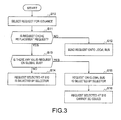
- FIG. 3 is a flowchart illustrating the process of looping back a cache replacement request in this embodiment.
- the cache replacement request loop-back circuit 140 determines whether the selected request is a cache replacement request or not (step S11). If the selected request is not a cache replacement request, the selected request is sent onto the local bus 300 (step S12).
- step S11 determination is made as to whether there is a valid request on the global bus 301 (step S13). If there is no valid request on the global bus 301, the request selected at step S10 (a cache replacement request) is selected by the selector 142 (step S14).
- step S15 If there is a valid request on the global bus 301 at the determination at step S13, the request on the global bus 301 is selected by the selector 142 (step S15). At this point, the request selected at step S10 (a cache replacement request) cannot be issued (step S16). Its issuance is postponed to the next time or later.
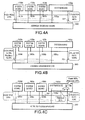
- FIGs. 4A, 4B and 4C illustrate the effect of looping back a cache replacement request within the system controller.
- "Read” refers to a read request
- "Replace” refers to a cache replacement request.
- the total utilization rate of the global bus 301 will be 80%.
- each of the system boards 100a to 100d further issues a cache replacement request that accounts for 20% of utilization of the global bus 301 simultaneously with the read requests.
- the cache replacement requests are delivered to the local bus 300, address crossbar board 200 and global bus 301 as with a read request.
- cache replacement requests do not flow onto the global bus 301 and thus the performance of the global bus 301 does not reduce.
- cache replacement requests are looped back within the system board 100. Performance of the global bus 301 is maintained at 80% and there will be no performance degradation because cache replacement requests looped back within the system board 100 are merged in available 20% by the selector 142.
- FIG. 5 illustrates an exemplary configuration of the multiprocessor system according to the embodiment.
- the multiprocessor system shown in FIG. 5 further has a loop-back section queue 143 which is provided in the cache replacement request loop-back circuit 140 of the configuration shown in FIG. 1.
- the loop-back section queue 143 retains cache replacement requests output by the local arbiter 113.
- arrows of thick lines indicate a route by which a cache replacement request is delivered. It is assumed here that the CPU 120a issues a cache replacement request.
- the cache replacement request issued by the CPU 120a is retained in the loop-back section queue 143 by way of the CPU bus 130a, the CPU-issued request queue 112a, the local arbiter 113, and the loop-back determination circuit 141.
- the selector 142 sends cache replacement request retained in the loop-back section queue 143 to the request handling section 114 when there is no valid request on the global bus 301.
- FIG. 6 illustrates an example of the cache replacement request loop-back circuit.
- the loop-back determination circuit 141 shown in FIG. 6 operates in a similar way to the loop-back determination circuit 141 shown in FIG. 2.
- a signal for a request consisting of valid signal (V) sent from the AND circuit 152, an operation code (OP) of the request issued by the local arbiter 113, an address and so forth (ADR, etc.) is retained in the loop-back section queue 143.
- V valid signal
- OP operation code
- ADR address and so forth
- the selector 142 sends the request outputted by the global arbiter 210 (other than cache replacement requests) to the request handling section 114. If the valid signal (V) for the request output by the global arbiter 210 is invalid "0", the selector 142 sends a request retained in the loop-back section queue 143 (a cache replacement request) to the request handling section 114.
- FIG. 7 shows a flowchart illustrating the process of looping back a cache replacement request according to the embodiment.
- the function of the selector 144 shown in FIG. 6 will be described being included in the selector 142.
- the local arbiter 113 selects a request to be issued onto the local bus 300 (step S20).
- the cache replacement request loop-back circuit 140 determines if the selected request is a cache replacement request or not (step S21). If the selected request is not a cache replacement request, the cache replacement request loop-back circuit 140 sends the selected request onto the local bus 300 (step S22).
- the selected request is a cache replacement request at the determination at step S21, it is determined whether there is a valid request on the global bus 301 (step S23). If there is no valid request on the global bus 301 and the loop-back section queue 143 is empty (YES at step S24), the request selected at step S20 (a cache replacement request) is selected by the selector 142 and sent to the request handling section 114 (step S25).
- a request retained in the loop-back section queue 143 (a cache replacement request) is selected by the selector 142 (step S26), and the selected request is deleted from the loop-back section queue 143 (step S27).
- the request selected at step S20 is retained in the loop-back section queue 143 (step S28).
- the request on the global bus 301 is selected by the selector 142 and sent to the request handling section 114 (step S29). If the loop-back section queue 143 is not full at this time (NO at step S30), the request selected at step S20 is retained in the loop-back section queue 143 (step S28).
- the request selected at step S20 (a cache replacement request) cannot be issued (step S31). Issuance of the request is postponed to the next time or later.
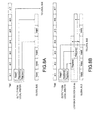
- FIGs. 8A and 8B illustrate the effect of providing the loop-back section queue in the cache replacement request loop-back circuit.
- FIG. 8A illustrates a case where the loop-back section queue 143 is not provided in the cache replacement request loop-back circuit 140
- FIG. 8B illustrates a case where the loop-back section queue 143 is provided in the cache replacement request loop-back circuit 140.
- horizontally arranged figures denote progress of time.
- requests can be issued from the local arbiter 113 at time #1 in the order of a cache replacement request (Replace 1), a cache replacement request (Replace 2) and a read request (Read 1).
- "Valid" on the global bus 301 means that there is a valid request on the global bus 301 at the time.
- the cache replacement request (Replace 1) is sent from the selector 142 to the request handling section 114 for the first time at time #4 when there is no valid request on the global bus 301.
- the cache replacement request (Replace 2) is sent from the selector 142 to the request handling section 114 at time #6.
- the read request (Read 1) is output onto the local bus 300 as late as at time #7.
- the cache replacement request (Replace 1) is retained in the loop-back section queue 143 at time #2 regardless of whether there is a valid request on the global bus 301 or not as illustrated in FIG. 8B.
- the cache replacement request (Replace 1) retained in the loop-back section queue 143 is sent from the selector 142 to the request handling section 114 at time #4 when there is no valid request on the global bus 301.
- the cache replacement request (Replace 2) is retained in the loop-back section queue 143 at time #3 and sent from the selector 142 to the request handling section 114 at time #6.
- the read request (Read 1) is output to the local bus 300 at time #4.
- the loop-back section queue 143 may have overwriting function.
- the loop-back section queue 143 may have overwriting function.
- a cache replacement request is newly issued from the local arbiter 113 when the entries of the loop-back section queue 143 are full, a cache replacement request in one entry is deleted in the loop-back section queue 143 and the newly issued cache replacement request is retained therein.
- the entries of the loop-back section queue 143 can be reduced.
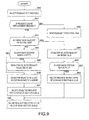
- FIG. 9 shows a flowchart illustrating the process of looping back a cache replacement request in this embodiment.
- the function of the selector 144 shown in FIG. 6 will be described herein being included in the selector 142.
- the cache replacement request loop-back circuit 140 determines whether the selected request is a cache replacement request or not (step S41). If the selected request is not a cache replacement request, the selected request is sent onto the local bus 300 (step S42).
- the selected request is a cache replacement request at the determination at step S41, it is determined whether there is a valid request on the global bus 301 (step S43). If there is no valid request on the global bus 301 and the loop-back section queue 143 is empty (YES at step S44), the request selected at step S40 (a cache replacement request) is selected by the selector 142 and sent to the request handling section 114 (step S45).
- a request retained in the loop-back section queue 143 (a cache replacement request) is selected by the selector 142 and sent to the request handling section 114 (step S46), and the selected request is deleted from the loop-back section queue 143 (step S47).
- the request selected at step S40 is retained in the loop-back section queue 143 (step S48).
- step S43 If there is a valid request on the global bus 301 (YES at step S43), that request on the global bus 301 is selected by the selector 142 and sent to the request handling section 114 (step S49). If the loop-back section queue 143 is not full then (NO at step S50), the request selected at step S40 is retained in the loop-back section queue 143 (step S48).
- step S50 If the loop-back section queue 143 is full (YES at step S50), a request in one entry is deleted in the loop-back section queue 143 (step S51), and the request selected at step S40 is retained in the loop-back section queue 143 (step S48).
- FIGs. 10A and 10B illustrate the effect obtained when the loop-back section queue has overwriting function.
- FIG. 10A illustrates a case where the loop-back section queue 143 does not have overwriting function
- FIG. 10B illustrates a case where the loop-back section queue 143 has overwriting function.
- horizontally arranged figures denote progress of time.
- requests can be output from the local arbiter 113 at time #1 in the order of a cache replacement request (Replace 1), a cache replacement request (Replace 2), a cache replacement request (Replace 3), and a read request (Read 1).
- "Valid" on the global bus 301 means that there is a valid request on the global bus 301 at the time. It is assumed that the loop-back section queue 143 has two entries.
- the cache replacement request (Replace 1) is retained in the loop-back section queue 143 at time #2, and similarly, the cache replacement request (Replace 2) is retained in the loop-back section queue 143 at time #3 as illustrated in FIG. 10A.
- the cache replacement request (Replace 3) cannot be output from the local arbiter 113.
- the cache replacement request (Replace 1) retained in the loop-back section queue 143 is sent from the selector 142 to the request handling section 114 at time #6 when there is no valid request on the global bus 301.
- the cache replacement request (Replace 3) is finally retained in the loop-back section queue 143 at time #7 and the read request (Read 1) is output onto the local bus 300 at time #8.
- the cache replacement request (Replace 3) can be retained in the loop-back section queue 143 at time #4 by overwriting it even if the loop-back section queue 143 has no space as illustrated in FIG. 10B.
- the cache replacement request (Replace 1) is lost due to overwriting, but it does not lead to a problem as long as the system implements Eviction function.
- the read request corresponding to the overwritten cache replacement request (Replace 1) is handled as a read request that does not have a cache replacement request.
- the read request (Read 1) is output onto the local bus 300 at time #5.
- the loop-back section queue 143 has overwriting function, it is possible to expedite issuance of a read request even when the loop-back section queue 143 has no space. Also, when the loop-back section queue 143 has overwriting function, the capability to issue a read request does not reduce even if a large number of entries are not prepared in the loop-back section queue 143. On the contrary, if the loop-back section queue 143 has many entries, requests would stay in the queue 143 for a longer time and consequently a cache replacement request might be processed after a parent read request that goes through the global bus 301. Accordingly, the number of entries of the loop-back section queue 143 is preferably less.
- the present invention is not limited thereto.
- a cache replacement request is newly issued when the loop-back section queue 143 is full, a cache replacement request retained in the loop-back section queue 143 is overwritten with the issued cache replacement request.
Landscapes
- Engineering & Computer Science (AREA)
- Theoretical Computer Science (AREA)
- Physics & Mathematics (AREA)
- General Engineering & Computer Science (AREA)
- General Physics & Mathematics (AREA)
- Computer Hardware Design (AREA)
- Software Systems (AREA)
- Memory System Of A Hierarchy Structure (AREA)
Abstract
Description
- The present invention relates to a technique for controlling requests from CPUs in a multiprocessor system. More particularly, the present invention relates to a multiprocessor system, a system board, and a cache replacement request processing method for efficiently handling cache replacement requests.
- In recent years, with wide utilization of information processing apparatuses in various fields, increasingly high processing capability is required of chip sets in a multiprocessor configuration.
- FIG. 11 shows an exemplary configuration of a multiprocessor system. The multiprocessor system shown in FIG. 11 is composed of four
system boards 100a to 100d and anaddress crossbar board 200. Each of thesystem boards 100a to 100d and theaddress crossbar board 200 are connected to each other bylocal buses 300a to 300d, aglobal bus 301,local signaling paths 302a to 302d, and aglobal signaling path 303. - The
system board 100a has asystem controller 110 and fourCPUs 120a to 120d. TheCPU 120a and theCPU 120b are connected to thesystem controller 110 by aCPU bus 130a, and theCPU 120c and theCPU 120d by aCPU bus 130c.Other system boards 100b to 100d have a similar configuration as thesystem board 100a. - The
CPUs 120a to 120d havecache memory 121a to 121d and acache tag 122a to 122d, respectively. This example assumes that the cache memory 121 is controlled in 4-way set associative method. - The
system controller 110 hassnoop tags 111a to 111d, a CPU-issuedrequest queues local arbiter 113, arequest handling section 114, and arequest execution section 115. - The
snoop tags 111a to 111d correspond to thecache tags 122a to 122d, respectively. The CPU-issued request queue 112 retains requests issued by the CPUs 120 for each of the CPU buses 130. Here, requests issued by theCPU request queue 112a and ones issued by theCPUs request queue 112c. Thelocal arbiter 113 outputs requests retained in the CPU-issued request queues 112 to thelocal bus 300a. - The
request handling section 114 performs handling of requests sent from theglobal bus 301. Therequest handling section 114 has aresource management section 116 and a requestexecution activating section 117. Theresource management section 116 performs checking of resource and the like for handling requests. The requestexecution activating section 117 activates therequest execution section 115 and/or updates thesnoop tags 111. - The
address crossbar board 200 has aglobal arbiter 210 and anexecutability determination circuit 220. Theglobal arbiter 210 outputs requests input from thelocal buses 300a to 300d to all thesystem boards 100a to 100d via theglobal bus 301. Theexecutability determination circuit 220 determines whether it is possible to execute a request based on a notification inputted from thelocal signaling paths 302a to 302d and notifies the result and information necessary for executing the request to each of thesystem boards 100a to 100d via theglobal signaling path 303. - The operation of the system illustrated in FIG. 11 will be described for a case where the
CPU 120a makes a read request. It is assumed here that theCPU 120a performs read from an address of 1000. The MESI protocol is used for cache coherency. The MESI protocol is a kind of cache coherency protocol which controls each line of cache by classifying it as one af M (modified state: Modified), E (exclusive state: Exclusive), S (shared state: Shared), and I (invalid state: Invalid). - To confirm whether data from the address of 1000 is present in its
own cache memory 121a, theCPU 120a first searches thecache tag 122a. If it determines from the search that there is no valid data in itsown cache memory 121a, theCPU 120a issues a read request onto theCPU bus 130a. - The request issued by the
CPU 120a is input to theglobal arbiter 210 by way of the CPU-issuedrequest queue 112a, thelocal arbiter 113, and thelocal bus 300a. The request input to theglobal arbiter 210 is notified to all thesystem boards 100a to 100d simultaneously via theglobal bus 301. - On the system board 110a, the request is input to the
request handling section 114 from theglobal bus 301. Therequest handling section 114 reads eachsnoop tag 111 and theresource management section 116 checks if there is resource and the like for handling the request. The result is sent to theexecutability determination circuit 220 via thelocal signaling path 302a. - The
executability determination circuit 220 determines whether it is possible to execute the request based on notifications from all thelocal signaling paths 302a to 302d and notifies the result and information necessary for execution of the request to the requestexecution activating section 117 via theglobal signaling path 303. The requestexecution activating section 117 updates thesnoop tags 111 and/or activates therequest execution section 115 based on the result of determining whether the request can be executed and the information necessary for executing the request. - For example, if resource can be secured and results of searching the
snoop tags 111 are all Invalid, the requestexecution activating section 117 registers address of 1000 in thesnoop tag 111a. A state to be registered depends on the issued request. At the same time, therequest execution section 115 performs a read from the address of 1000 in memory and sends obtained data to theCPU 120a. TheCPU 120a updates thecache tag 122a. - Or, if resource can be secured and searches of the
snoop tags 111 show that address of 1000 is registered in thesnoop tag 111c as M (Modified), for example, the requestexecution activating section 117 registers address of 1000 in thesnoop tag 111a. A state to be registered depends on the issued request. Also, the state of address of 1000 in thesnoop tag 111c is changed to S (Shared) or I (Invalid). The state after the change depends on the issued request. At the same time, therequest execution section 115 gives an instruction to theCPU 120c to send M data at address of 1000, and sends the output data to theCPU 120a. TheCPU 120a updates thecache tag 122a and theCPU 120c updates thecache tag 122c. - FIG. 12 illustrates an example of handling a cache replacement request. FIG. 12 illustrates a case which gives attention to the
system board 100a that mainly includes theCPU 120a,CPU 120b andsystem controller 110 as well as theaddress crossbar board 200 that mainly includes theglobal arbiter 210 in FIG. 11. It is assumed here that theCPU 120a issues a cache replacement request. - Arrows of thick lines in FIG. 12 indicate routes by which a cache replacement request is delivered. A cache replacement request issued by the
CPU 120a is delivered to therequest handling section 114 of thesystem controller 110 on each of thesystem boards 100a to 100d by way of theCPU bus 130a, the CPU-issuedrequest queue 112a, thelocal arbiter 113, thelocal bus 300a, theglobal arbiter 210, and the global bus 310, as with other requests. - FIG. 13 illustrates Eviction. Eviction refers to an instruction to discharge contents in cache given from the
system controller 110 side to the CPU 120. Eviction will be described below with reference to the example shown in FIG. 13. - First, as illustrated at
phase 0, assume that a certain common index of both thecache tag 122 and thesnoop tag 111 is empty. If the CPU 120 reads address A in this state, address A is registered to both thecache tag 122 and thesnoop tag 111 as illustrated atphase 1. As the CPU 120 further continues to read addresses B, C and D of the same index, it results in way-full as illustrated atphase 2. - If the CPU 120 further wants to read address E of the same index in this way-full state, any one piece of data in the
cache tag 122 has to be deleted first. Assume that address A is deleted here. If the CPU 120 does not support cache replacement requests and the state of address A is not M (Modified), silent drop of address A occurs in the CPU 120. As illustrated atphase 3, address A in thecache tag 122 is deleted. Silent drop means deletion of data without notifying it externally. - Similarly, because the
system controller 110 also should register address E in response to the read of address E by the CPU 120, any one piece of data has to be deleted from the snooptag 111. It is assumed here that address B is deleted. At this point, because of a rule of inclusion that "what is present in thecache tag 122 must be present in the snooptag 111", thesystem controller 110 should have the CPU 120 delete what it deleted, so thesystem controller 110 has to issue an unload request to the CPU 120 as illustrated atphase 4. This unload request is called Eviction. As both thecache tag 122 and the snooptag 111 will finally have an available space, address E can be registered in both of them as illustrated atphase 5. - Documents on conventional arts that describe techniques associated with multiprocessor systems include Patent Document 1 (National Publication of International Patent Application
No. 2002-522827 ), for example.Patent Document 1 describes a technique for a multiprocessor computer system in which nodes are coupled to each other in a ring. However, the technique described inPatent Document 1 cannot solve problems mentioned below. - A multiprocessor system consisting of a number of
system boards 100 has a problem that very heavy burden is placed on theglobal bus 301 and, when a cache replacement request is flowed on theglobal bus 301, the capability to handle other requests reduces. Another problem is that, because a cache replacement request could lead to occurrence of Eviction if it is not handled before a read request which is its parent, intended effect of the cache replacement request may not be obtained in such a situation. - It is desirable to provide a technique that can prevent burden due to a cache replacement request from being placed on a global bus and prevent occurrence of unnecessary Eviction.
- An embodiment of the present invention is a multiprocessor system which is characterized in that, when a request issued by a CPU on a system board is a cache replacement request, the system board does not send the request to an address crossbar board but loops it back within the system board to handle it.
- Specifically, an embodiment of a first aspect of the present invention is a multiprocessor system that includes a plurality of system boards each of which has CPUs and a request handing section for handling requests issued by the CPUs, and an address crossbar board that provides arbitration of requests from the system boards, characterized in that each of the system boards includes a cache replacement request loop-back circuit that determines whether a request issued by a CPU on that system board is a cache replacement request or not, and if the request is not a cache replacement request, sends the request to the address crossbar board, and if the request is a cache replacement request, sends the request from within the system board to the request handling section.
- Consequently, since cache replacement requests are not output onto the global bus, burden on the global bus can be reduced in terms of throughput. In addition, because a cache replacement request is looped back within the system board on which it originated and handled before a read request which is its parent, occurrence of unnecessary Eviction can be prevented.
- Also, an embodiment of a second aspect of the present invention is the multiprocessor system described above, characterized in that the cache replacement request loop-back circuit includes a loop-back section queue that retains cache replacement requests issued by the CPUs on the same system board. This can prevent delay in issuance of a request other than a cache replacement request even when the global bus is busy and a cache replacement request cannot be handled immediately.
- Also, an embodiment of a third aspect of the present invention is the multiprocessor system described above, characterized in that, if a cache replacement request is newly issued by a CPU on the system board when all the entries of the loop-back section queue already retain cache replacement requests, the cache replacement request loop-back circuit overwrites a cache replacement request retained in any one entry of the loop-back section queue with the newly issued cache replacement request. This can effectively prevent delay in issuance of a request other than a cache replacement request even if the loop-back section queue has a small number of entries.
- An embodiment of the present invention can prevent burden due to a cache replacement request from being placed on a global bus and prevent occurrence of unnecessary Eviction. Consequently, cache replacement requests can be handled efficiently and system performance is increased.
-
- FIG. 1 shows an exemplary configuration of a multiprocessor system according to an embodiment;
- FIG. 2 illustrates an example of a cache replacement request loop-back circuit;
- FIG. 3 is a flowchart illustrating cache replacement request loop-back;
- FIGS. 4A, 4B and 4C illustrate the effect of looping back a cache replacement request within a system controller;
- FIG. 5 shows an exemplary configuration of the multiprocessor system according to the embodiment;
- FIG. 6 illustrates an example of a cache replacement request loop-back circuit;
- FIG. 7 is a flowchart illustrating the process of looping back a cache replacement request;
- FIGs. 8A and 8B illustrate the effect of providing a loop-back section queue in the cache replacement request loop-back circuit;
- FIG. 9 is a flowchart illustrating the process of looping back a cache replacement request;.
- FIGs. 10A and 10B illustrate the effect obtained when the loop-back section queue has overwriting function;
- FIG. 11 shows an exemplary configuration of a multiprocessor system;
- FIG. 12 illustrates an example of handling of a cache replacement request; and
- FIG. 13 illustrates Eviction.
- FIG. 1 shows an exemplary configuration of a multiprocessor system according to an embodiment of the present invention. The multiprocessor system shown in FIG. 1 focuses on the
system board 100 that mainly includes theCPU 120a,CPU 120b and thesystem controller 110 as well as theaddress crossbar board 200 that mainly includes theglobal arbiter 210 of the configuration shown in FIG. 11. Other components are omitted as they are similar to ones of conventional arts. - The multiprocessor system shown in FIG. 1 consists of four
system boards 100a to 100d and anaddress crossbar board 200. Each of thesystem boards 100a to 100d and theaddress crossbar board 200 are connected to each other bylocal buses 300a to 300d, aglobal bus 301 and so forth. - The
system boards 100a has asystem controller 110 and twoCPUs CPUs system controller 110 by aCPU bus 130a.Other system boards 100b to 100d have a similar configuration as thesystem board 100a. - The
CPUs cache memory cache tag - The
system controller 110 includes a CPU-issuedrequest queue 112a, alocal arbiter 113, arequest handling section 114, and a cache replacement request loop-back circuit 140. - The CPU-issued
request queue 112a retains requests issued by theCPUs local arbiter 113 outputs requests retained in the CPU-issuedrequest queue 112a onto thelocal bus 300a. Therequest handling section 114 processes requests issued by the CPUs 120. - The cache replacement request loop-
back circuit 140 is means for looping back only cache replacement requests within thesystem controller 110 and sending them to therequest handling section 114 and includes a loop-back determination circuit 141 and aselector 142. The loop-back determination circuit 141 classifies requests issued by thelocal arbiter 113 as cache replacement requests that will be looped back within thesystem controller 110 and requests other than cache replacement requests that will be output to thelocal bus 300a. If there is a valid request on theglobal bus 301, theselector 142 sends it to therequest handling section 114, and if there is no valid request on theglobal bus 301, theselector 142 sends a cache replacement request to therequest handling section 114. - The
address crossbar board 200 has aglobal arbiter 210. Theglobal arbiter 210 outputs requests inputted from thelocal buses 300a to 300d to all thesystem boards 100a to 100d via theglobal bus 301. - In FIG. 1, arrows of thick lines indicate a route by which a cache replacement request is delivered. It is assumed here that the
CPU 120a issues a cache replacement request. The cache replacement request issued by theCPU 120a is delivered to therequest handling section 114 by way of theCPU bus 130a, the CPU-issuedrequest queue 112a, thelocal arbiter 113, the loop-back determination circuit 141, and theselector 142. A request other than a cache replacement request such as a read request is input from thelocal bus 300a to theselector 142 of eachsystem board 100a to 100d via theglobal arbiter 210 and theglobal bus 301. - Unlike other requests, a cache replacement request does not go through the
address crossbar board 200. Since a cache replacement request is an instruction to set an appropriate address in the snooptag 111 corresponding to the issuing CPU 120 to I (Invalid), it is not necessary to deliver it outside thesystem board 100 concerned. - FIG. 2 illustrates an example of the cache replacement request loop-back circuit. A signal for a request issued by the
local arbiter 113 consists of valid signal (V), an operation code (OP), an address and so forth (ADR, etc). The loop-back determination circuit 141 includes a cache replacementrequest determination circuit 150, an ANDcircuit 151, and an ANDcircuit 152. - The cache replacement
request determination circuit 150 determines whether a request is a cache replacement request or not based on the operation code (OP) of the request issued by thelocal arbiter 113. If the request is a cache replacement request, thecircuit 150 sends a valid signal, and if the request is not a cache replacement request, it sends an invalid signal. The ANDcircuit 151 receives a signal from the cache replacementrequest determination circuit 150 inversing it and the ANDcircuit 152 receives a signal from the cache replacementrequest determination circuit 150 as it is. - The AND
circuit 151 sends a valid signal if the valid signal (V) for a request issued by thelocal arbiter 113 is valid and inversion of a signal from the cache replacementrequest determination circuit 150 is valid. Otherwise, it sends an invalid signal. A signal for a request consisting of valid signal (V) sent from the ANDcircuit 151, the operation code (OP) of the request issued by thelocal arbiter 113, and an address and so forth (ADR, etc) is output onto thelocal bus 300. - The AND
circuit 152 sends a valid signal if the valid signal (V) for a request issued by thelocal arbiter 113 is valid and a signal from the cache replacementrequest determination circuit 150 is valid. Otherwise, it sends an invalid signal. The signal for the request consisting of valid signal (V) sent by the ANDcircuit 152, the operation code (OP) of the request issued by thelocal arbiter 113, an address and so forth (ADR, etc) is output to theselector 142. - If the valid signal (V) for a request output from the
global arbiter 210 is valid "1", theselector 142 sends the request (other than cache replacement requests) outputted by theglobal arbiter 210 to therequest handling section 114. If the valid signal (V) for the request output by theglobal arbiter 210 is invalid "0", that is, there is a space on theglobal bus 301, the selector sends a request (a cache replacement request) outputted by the loop-back determination circuit 141 to therequest handling section 114. - FIG. 3 is a flowchart illustrating the process of looping back a cache replacement request in this embodiment. When the
local arbiter 113 selects a request that will be issued to the local bus 300 (step S10), the cache replacement request loop-back circuit 140 determines whether the selected request is a cache replacement request or not (step S11). If the selected request is not a cache replacement request, the selected request is sent onto the local bus 300 (step S12). - If the selected request is a cache replacement request at the determination at step S11, determination is made as to whether there is a valid request on the global bus 301 (step S13). If there is no valid request on the
global bus 301, the request selected at step S10 (a cache replacement request) is selected by the selector 142 (step S14). - If there is a valid request on the
global bus 301 at the determination at step S13, the request on theglobal bus 301 is selected by the selector 142 (step S15). At this point, the request selected at step S10 (a cache replacement request) cannot be issued (step S16). Its issuance is postponed to the next time or later. - FIGs. 4A, 4B and 4C illustrate the effect of looping back a cache replacement request within the system controller. In FIGs. 4A, 4B and 4C, "Read" refers to a read request and "Replace" refers to a cache replacement request.
- Assuming that each of the
system boards 100a to 100d issues a read request that accounts for 20% of utilization of theglobal bus 301 as illustrated in FIG. 4A, the total utilization rate of theglobal bus 301 will be 80%. - Then, assume that each of the
system boards 100a to 100d further issues a cache replacement request that accounts for 20% of utilization of theglobal bus 301 simultaneously with the read requests. If thesystem boards 100 do not include the cache replacement request loop-back circuit 140, the cache replacement requests are delivered to thelocal bus 300,address crossbar board 200 andglobal bus 301 as with a read request. Assuming that all the requests flow onto theglobal bus 301 simultaneously, the total utilization rate is:
which exceeds the throughput of theglobal bus 301. Consequently, read capability drops to as low as 12.5% as illustrated in FIG. 4B. - On the other hand, when the
system board 100 has the cache replacement request loop-back circuit 140, cache replacement requests do not flow onto theglobal bus 301 and thus the performance of theglobal bus 301 does not reduce. As illustrated in FIG. 4C, cache replacement requests are looped back within thesystem board 100. Performance of theglobal bus 301 is maintained at 80% and there will be no performance degradation because cache replacement requests looped back within thesystem board 100 are merged in available 20% by theselector 142. - FIG. 5 illustrates an exemplary configuration of the multiprocessor system according to the embodiment. The multiprocessor system shown in FIG. 5 further has a loop-back
section queue 143 which is provided in the cache replacement request loop-back circuit 140 of the configuration shown in FIG. 1. The loop-backsection queue 143 retains cache replacement requests output by thelocal arbiter 113. - In FIG. 5, arrows of thick lines indicate a route by which a cache replacement request is delivered. It is assumed here that the
CPU 120a issues a cache replacement request. The cache replacement request issued by theCPU 120a is retained in the loop-backsection queue 143 by way of theCPU bus 130a, the CPU-issuedrequest queue 112a, thelocal arbiter 113, and the loop-back determination circuit 141. Theselector 142 sends cache replacement request retained in the loop-backsection queue 143 to therequest handling section 114 when there is no valid request on theglobal bus 301. - FIG. 6 illustrates an example of the cache replacement request loop-back circuit. The loop-
back determination circuit 141 shown in FIG. 6 operates in a similar way to the loop-back determination circuit 141 shown in FIG. 2. However, a signal for a request consisting of valid signal (V) sent from the ANDcircuit 152, an operation code (OP) of the request issued by thelocal arbiter 113, an address and so forth (ADR, etc.) is retained in the loop-backsection queue 143. When the valid signal (V) for a request outputted by theglobal arbiter 210 is invalid "0" and when the loop-backsection queue 143 is empty, a cache replacement request is not retained in the loop-backsection queue 143 but is sent to theselector 142 via theselector 144. - If the valid signal (V) for the request output by the
global arbiter 210 is valid "1", theselector 142 sends the request outputted by the global arbiter 210 (other than cache replacement requests) to therequest handling section 114. If the valid signal (V) for the request output by theglobal arbiter 210 is invalid "0", theselector 142 sends a request retained in the loop-back section queue 143 (a cache replacement request) to therequest handling section 114. - FIG. 7 shows a flowchart illustrating the process of looping back a cache replacement request according to the embodiment. The function of the
selector 144 shown in FIG. 6 will be described being included in theselector 142. - The
local arbiter 113 selects a request to be issued onto the local bus 300 (step S20). The cache replacement request loop-back circuit 140 determines if the selected request is a cache replacement request or not (step S21). If the selected request is not a cache replacement request, the cache replacement request loop-back circuit 140 sends the selected request onto the local bus 300 (step S22). - If the selected request is a cache replacement request at the determination at step S21, it is determined whether there is a valid request on the global bus 301 (step S23). If there is no valid request on the
global bus 301 and the loop-backsection queue 143 is empty (YES at step S24), the request selected at step S20 (a cache replacement request) is selected by theselector 142 and sent to the request handling section 114 (step S25). - If the loop-back
section queue 143 is not empty (NO at step S24), a request retained in the loop-back section queue 143 (a cache replacement request) is selected by the selector 142 (step S26), and the selected request is deleted from the loop-back section queue 143 (step S27). The request selected at step S20 is retained in the loop-back section queue 143 (step S28). - If there is a valid request on the
global bus 301 at the determination at step S23, the request on theglobal bus 301 is selected by theselector 142 and sent to the request handling section 114 (step S29). If the loop-backsection queue 143 is not full at this time (NO at step S30), the request selected at step S20 is retained in the loop-back section queue 143 (step S28). - If the loap-back
section queue 143 is full (YES at step S30), the request selected at step S20 (a cache replacement request) cannot be issued (step S31). Issuance of the request is postponed to the next time or later. - FIGs. 8A and 8B illustrate the effect of providing the loop-back section queue in the cache replacement request loop-back circuit. FIG. 8A illustrates a case where the loop-back
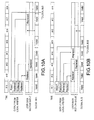
section queue 143 is not provided in the cache replacement request loop-back circuit 140, whereas FIG. 8B illustrates a case where the loop-backsection queue 143 is provided in the cache replacement request loop-back circuit 140. In FIGs. 8A and 8B, horizontally arranged figures denote progress of time. In this case, requests can be issued from thelocal arbiter 113 attime # 1 in the order of a cache replacement request (Replace 1), a cache replacement request (Replace 2) and a read request (Read 1). "Valid" on theglobal bus 301 means that there is a valid request on theglobal bus 301 at the time. - When the loop-back
section queue 143 does not have the cache replacement request loop-back circuit 140, it is impossible to temporarily retain a cache replacement request. Thus, as illustrated in FIG. 8A, the cache replacement request (Replace 1) is sent from theselector 142 to therequest handling section 114 for the first time attime # 4 when there is no valid request on theglobal bus 301. Similarly, the cache replacement request (Replace 2) is sent from theselector 142 to therequest handling section 114 attime # 6. The read request (Read 1) is output onto thelocal bus 300 as late as attime # 7. - Thus, when the cache replacement request loop-
back circuit 140 does not have the loop-backsection queue 143, issuance of the read request is delayed. - On the other hand, when the loop-back
section queue 143 is provided in the cache replacement request loop-back circuit 140, the cache replacement request (Replace 1) is retained in the loop-backsection queue 143 attime # 2 regardless of whether there is a valid request on theglobal bus 301 or not as illustrated in FIG. 8B. The cache replacement request (Replace 1) retained in the loop-backsection queue 143 is sent from theselector 142 to therequest handling section 114 attime # 4 when there is no valid request on theglobal bus 301. Similarly, the cache replacement request (Replace 2) is retained in the loop-backsection queue 143 attime # 3 and sent from theselector 142 to therequest handling section 114 attime # 6. The read request (Read 1) is output to thelocal bus 300 attime # 4. - Thus, by providing the loop-back
section queue 143 in the cache replacement request loop-back circuit 140, it is not necessary for thelocal arbiter 113 to wait for issuance of a cache replacement request, and thus issuance of a read request can be expedited. - While the description so far assumed that the loop-back
section queue 143 does not have overwriting function, the loop-backsection queue 143 may have overwriting function. In the configurations shown in FIGS. 5 and 6, if a cache replacement request is newly issued from thelocal arbiter 113 when the entries of the loop-backsection queue 143 are full, a cache replacement request in one entry is deleted in the loop-backsection queue 143 and the newly issued cache replacement request is retained therein. By providing the loop-backsection queue 143 with overwriting function, the entries of the loop-backsection queue 143 can be reduced. - FIG. 9 shows a flowchart illustrating the process of looping back a cache replacement request in this embodiment. The function of the
selector 144 shown in FIG. 6 will be described herein being included in theselector 142. - When the
local arbiter 113 selects a request to be issued onto the local bus 300 (step S40), the cache replacement request loop-back circuit 140 determines whether the selected request is a cache replacement request or not (step S41). If the selected request is not a cache replacement request, the selected request is sent onto the local bus 300 (step S42). - If the selected request is a cache replacement request at the determination at step S41, it is determined whether there is a valid request on the global bus 301 (step S43). If there is no valid request on the
global bus 301 and the loop-backsection queue 143 is empty (YES at step S44), the request selected at step S40 (a cache replacement request) is selected by theselector 142 and sent to the request handling section 114 (step S45). - If the loop-back
section queue 143 is not empty (NO at step S44), a request retained in the loop-back section queue 143 (a cache replacement request) is selected by theselector 142 and sent to the request handling section 114 (step S46), and the selected request is deleted from the loop-back section queue 143 (step S47). The request selected at step S40 is retained in the loop-back section queue 143 (step S48). - If there is a valid request on the global bus 301 (YES at step S43), that request on the
global bus 301 is selected by theselector 142 and sent to the request handling section 114 (step S49). If the loop-backsection queue 143 is not full then (NO at step S50), the request selected at step S40 is retained in the loop-back section queue 143 (step S48). - If the loop-back
section queue 143 is full (YES at step S50), a request in one entry is deleted in the loop-back section queue 143 (step S51), and the request selected at step S40 is retained in the loop-back section queue 143 (step S48). - FIGs. 10A and 10B illustrate the effect obtained when the loop-back section queue has overwriting function. FIG. 10A illustrates a case where the loop-back
section queue 143 does not have overwriting function, whereas FIG. 10B illustrates a case where the loop-backsection queue 143 has overwriting function. In FIGS. 10A and 10B, horizontally arranged figures denote progress of time. In this example, requests can be output from thelocal arbiter 113 attime # 1 in the order of a cache replacement request (Replace 1), a cache replacement request (Replace 2), a cache replacement request (Replace 3), and a read request (Read 1). "Valid" on theglobal bus 301 means that there is a valid request on theglobal bus 301 at the time. It is assumed that the loop-backsection queue 143 has two entries. - When the loop-back
section queue 143 does not have overwriting function, the cache replacement request (Replace 1) is retained in the loop-backsection queue 143 attime # 2, and similarly, the cache replacement request (Replace 2) is retained in the loop-backsection queue 143 attime # 3 as illustrated in FIG. 10A. - Because the loop-back
section queue 143 has no more available entry now, the cache replacement request (Replace 3) cannot be output from thelocal arbiter 113. The cache replacement request (Replace 1) retained in the loop-backsection queue 143 is sent from theselector 142 to therequest handling section 114 attime # 6 when there is no valid request on theglobal bus 301. The cache replacement request (Replace 3) is finally retained in the loop-backsection queue 143 attime # 7 and the read request (Read 1) is output onto thelocal bus 300 attime # 8. - Thus, when the loop-back
section queue 143 does not have overwriting function, issuance of a read request is delayed when there is no space in the loop-backsection queue 143. - On the other hand, when the loop-back
section queue 143 has overwriting function, the cache replacement request (Replace 3) can be retained in the loop-backsection queue 143 attime # 4 by overwriting it even if the loop-backsection queue 143 has no space as illustrated in FIG. 10B. At this point, the cache replacement request (Replace 1) is lost due to overwriting, but it does not lead to a problem as long as the system implements Eviction function. The read request corresponding to the overwritten cache replacement request (Replace 1) is handled as a read request that does not have a cache replacement request. The read request (Read 1) is output onto thelocal bus 300 attime # 5. - Thus, when the loop-back
section queue 143 has overwriting function, it is possible to expedite issuance of a read request even when the loop-backsection queue 143 has no space. Also, when the loop-backsection queue 143 has overwriting function, the capability to issue a read request does not reduce even if a large number of entries are not prepared in the loop-backsection queue 143. On the contrary, if the loop-backsection queue 143 has many entries, requests would stay in thequeue 143 for a longer time and consequently a cache replacement request might be processed after a parent read request that goes through theglobal bus 301. Accordingly, the number of entries of the loop-backsection queue 143 is preferably less. - While the embodiment of the present invention has been described, the present invention is not limited thereto. For example, in the above embodiment, if a cache replacement request is newly issued when the loop-back
section queue 143 is full, a cache replacement request retained in the loop-backsection queue 143 is overwritten with the issued cache replacement request. However, it is also possible to discard the newly issued cache replacement request.
Claims (9)
- A multiprocessor system comprisinga plurality of system boards each of which has CPUs and a request handing section for handling requests issued by the CPUs, andan address crossbar board that provides arbitration of requests from the system boards,
wherein each of the system board comprises a cache replacement request loop-back circuit that determines whether a request issued by a CPU on that system board is a cache replacement request or not, and if the request is not a cache replacement request, sends the request to the address crossbar board, and if the request is a cache replacement request, sends the request to the request handling section provided on that system board without sending it from within the system board to the address crossbar board. - The multiprocessor system according to Claim 1, wherein the cache replacement request loop-back circuit comprises a loop-back section queue that retains cache replacement requests issued by the CPUs on the same system board.
- The multiprocessor system according to Claim 2, wherein, if a cache replacement request is newly issued by a CPU on the system board when all the entries of the loop-back section queue already retain cache replacement requests, the cache replacement request loop-back circuit overwrites a cache replacement request retained in any one entry of the loop-back section queue with the newly issued cache replacement request.
- A system board in a multiprocessor system that comprises a plurality of system boards each of which has CPUs and a request handing section for handling requests issued by the CPUs, and an address crossbar board that provides arbitration of requests from the system boards, the system board comprising
a cache replacement request loop-back circuit that determines whether a request issued by a CPU on that system board is a cache replacement request or not, and if the request is not a cache replacement request, sends the request to the address crossbar board, and if the request is a cache replacement request, sends the request to the request handling section provided on the system board without sending the request from within the system board to the address crossbar board. - The system board according to Claim 4, wherein the cache replacement request loop-back circuit comprises a loop-back section queue that retains cache replacement requests issued by the CPUs on the same system board.
- The system board according to Claim 5, wherein, if a cache replacement request is newly issued by a CPU on the system board when all the entries of the loop-back section queue already retain cache replacement requests, the cache replacement request loop-back circuit overwrites a cache replacement request retained in any one entry of the loop-back section queue with the newly issued cache replacement request.
- A method for handling cache replacement requests by a multiprocessor system that comprises a plurality of system boards each of which has CPUs and a request handing section for handling requests issued by the CPUs, and an address crossbar board that provides arbitration of requests from the system boards, comprising the steps of:determining whether a request issued by a CPU on that system board is a cache replacement request or not;sending the issued request to the address crossbar board if the issued request is not a cache replacement request; andsending the issued request to the request handling section provided on that system board without sending it from within the system board to the address crossbar board if the issued request is a cache replacement request.
- The cache replacement request handling method according to Claim 7, further comprising the step of retaining the issued request in a loop-back section queue provided on that system board before sending it to the request handling section if the issued request is a cache replacement request.
- The cache replacement request handling method according to Claim 8, wherein, when the all entries of the loop-back section queue already retain cache replacement requests, the step of retaining the issued request in the loop-back section queue overwrites a cache replacement request retained in any one entry of the loop-back section queue with the issued cache replacement request.
Applications Claiming Priority (1)
| Application Number | Priority Date | Filing Date | Title |
|---|---|---|---|
| JP2006222990A JP4912789B2 (en) | 2006-08-18 | 2006-08-18 | Multiprocessor system, system board, and cache replacement request processing method |
Publications (2)
| Publication Number | Publication Date |
|---|---|
| EP1895420A1 true EP1895420A1 (en) | 2008-03-05 |
| EP1895420B1 EP1895420B1 (en) | 2011-01-19 |
Family
ID=38691924
Family Applications (1)
| Application Number | Title | Priority Date | Filing Date |
|---|---|---|---|
| EP07107214A Ceased EP1895420B1 (en) | 2006-08-18 | 2007-04-30 | Multiprocessor system, system board, and cache replacement request handling method |
Country Status (6)
| Country | Link |
|---|---|
| US (1) | US8090912B2 (en) |
| EP (1) | EP1895420B1 (en) |
| JP (1) | JP4912789B2 (en) |
| KR (1) | KR100865102B1 (en) |
| CN (1) | CN100538665C (en) |
| DE (1) | DE602007012028D1 (en) |
Families Citing this family (2)
| Publication number | Priority date | Publication date | Assignee | Title |
|---|---|---|---|---|
| US20070005725A1 (en) * | 2005-06-30 | 2007-01-04 | Morris Robert P | Method and apparatus for browsing network resources using an asynchronous communications protocol |
| JP5011885B2 (en) * | 2006-08-18 | 2012-08-29 | 富士通株式会社 | Snoop tag control device |
Citations (1)
| Publication number | Priority date | Publication date | Assignee | Title |
|---|---|---|---|---|
| US20030217235A1 (en) * | 2002-05-15 | 2003-11-20 | Broadcom Corporation | Ambiguous virtual channels |
Family Cites Families (15)
| Publication number | Priority date | Publication date | Assignee | Title |
|---|---|---|---|---|
| US4695943A (en) * | 1984-09-27 | 1987-09-22 | Honeywell Information Systems Inc. | Multiprocessor shared pipeline cache memory with split cycle and concurrent utilization |
| JP3078303B2 (en) * | 1990-07-12 | 2000-08-21 | 沖電気工業株式会社 | Cache memory control circuit |
| JPH0683712A (en) * | 1992-09-03 | 1994-03-25 | Nec Ic Microcomput Syst Ltd | Microprocessor |
| US5875472A (en) * | 1997-01-29 | 1999-02-23 | Unisys Corporation | Address conflict detection system employing address indirection for use in a high-speed multi-processor system |
| US6112283A (en) | 1998-08-06 | 2000-08-29 | Intel Corporation | Out-of-order snooping for multiprocessor computer systems |
| US6615323B1 (en) | 1999-09-02 | 2003-09-02 | Thomas Albert Petersen | Optimizing pipelined snoop processing |
| KR20020048513A (en) * | 2000-12-18 | 2002-06-24 | 구자홍 | Circuit of controlling data in cache memory |
| US6901485B2 (en) * | 2001-06-21 | 2005-05-31 | International Business Machines Corporation | Memory directory management in a multi-node computer system |
| JP2003030048A (en) * | 2001-07-18 | 2003-01-31 | Hitachi Ltd | Multiprocessor system |
| US7290093B2 (en) * | 2003-01-07 | 2007-10-30 | Intel Corporation | Cache memory to support a processor's power mode of operation |
| US7194587B2 (en) * | 2003-04-24 | 2007-03-20 | International Business Machines Corp. | Localized cache block flush instruction |
| JP4522817B2 (en) * | 2004-10-25 | 2010-08-11 | 富士通株式会社 | System control apparatus, information processing apparatus, and information processing apparatus control method |
| JP4882233B2 (en) * | 2005-01-24 | 2012-02-22 | 富士通株式会社 | Memory control apparatus and control method |
| US20060179174A1 (en) * | 2005-02-02 | 2006-08-10 | Bockhaus John W | Method and system for preventing cache lines from being flushed until data stored therein is used |
| JP3843116B2 (en) * | 2005-05-26 | 2006-11-08 | 株式会社日立製作所 | network |
-
2006
- 2006-08-18 JP JP2006222990A patent/JP4912789B2/en not_active Expired - Fee Related
-
2007
- 2007-02-23 KR KR1020070018303A patent/KR100865102B1/en not_active Expired - Fee Related
- 2007-04-24 US US11/790,265 patent/US8090912B2/en active Active
- 2007-04-30 DE DE602007012028T patent/DE602007012028D1/en active Active
- 2007-04-30 EP EP07107214A patent/EP1895420B1/en not_active Ceased
- 2007-05-17 CN CNB2007101039687A patent/CN100538665C/en not_active Expired - Fee Related
Patent Citations (1)
| Publication number | Priority date | Publication date | Assignee | Title |
|---|---|---|---|---|
| US20030217235A1 (en) * | 2002-05-15 | 2003-11-20 | Broadcom Corporation | Ambiguous virtual channels |
Also Published As
| Publication number | Publication date |
|---|---|
| CN101127006A (en) | 2008-02-20 |
| CN100538665C (en) | 2009-09-09 |
| KR100865102B1 (en) | 2008-10-24 |
| DE602007012028D1 (en) | 2011-03-03 |
| JP4912789B2 (en) | 2012-04-11 |
| US8090912B2 (en) | 2012-01-03 |
| KR20080016419A (en) | 2008-02-21 |
| JP2008046949A (en) | 2008-02-28 |
| EP1895420B1 (en) | 2011-01-19 |
| US20080046656A1 (en) | 2008-02-21 |
Similar Documents
| Publication | Publication Date | Title |
|---|---|---|
| US6976135B1 (en) | Memory request reordering in a data processing system | |
| US6732242B2 (en) | External bus transaction scheduling system | |
| AU2003287320B2 (en) | Pipeline accelerator and related system and method | |
| US20040136241A1 (en) | Pipeline accelerator for improved computing architecture and related system and method | |
| US20020083244A1 (en) | Processing requests to efficiently access a limited bandwidth storage area | |
| EP1895423B1 (en) | System controller, identical-address-request-queuing preventing method, and information processing apparatus having identical address-request-queuing preventing function | |
| US7818511B2 (en) | Reducing number of rejected snoop requests by extending time to respond to snoop request | |
| JP2002510079A (en) | Method and apparatus for forcing ordered execution of reads and writes between memory interfaces | |
| WO2004042562A2 (en) | Pipeline accelerator and related system and method | |
| EP4031964B1 (en) | Dynamic hammock branch training for branch hammock detection in an instruction stream executing in a processor | |
| US7688815B2 (en) | Method and system for a multi-stage interconnect switch | |
| EP1895420B1 (en) | Multiprocessor system, system board, and cache replacement request handling method | |
| US5594880A (en) | System for executing a plurality of tasks within an instruction in different orders depending upon a conditional value | |
| JPH0997184A (en) | Information-processing system inclusive of efficient interrupt handling | |
| KR100869297B1 (en) | System controller, snoop tag modification method and information processing apparatus | |
| JP2004334863A (en) | System and method for in-order queue draining | |
| KR100330529B1 (en) | Toggle for split transaction mode of pci-x bridge buffer | |
| EP1650667B1 (en) | Apparatus for controlling a multi-processor system, scalable node, scalable multi-processor system, and method of controlling a multi-processor system | |
| US20080189719A1 (en) | Operation processor apparatus | |
| JP2001167068A (en) | Memory access method and multiprocessor system | |
| JP2002024007A (en) | Processor system | |
| EP1622005B1 (en) | Branch instruction control apparatus and control method with a branch reservation station | |
| CN119854738B (en) | 5G message receipt sending method, device and electronic equipment | |
| JP4631442B2 (en) | Processor | |
| JP4595549B2 (en) | Information processing device |
Legal Events
| Date | Code | Title | Description |
|---|---|---|---|
| PUAI | Public reference made under article 153(3) epc to a published international application that has entered the european phase |
Free format text: ORIGINAL CODE: 0009012 |
|
| AK | Designated contracting states |
Kind code of ref document: A1 Designated state(s): AT BE BG CH CY CZ DE DK EE ES FI FR GB GR HU IE IS IT LI LT LU LV MC MT NL PL PT RO SE SI SK TR |
|
| AX | Request for extension of the european patent |
Extension state: AL BA HR MK YU |
|
| 17P | Request for examination filed |
Effective date: 20080529 |
|
| AKX | Designation fees paid |
Designated state(s): DE FR GB |
|
| 17Q | First examination report despatched |
Effective date: 20090206 |
|
| GRAP | Despatch of communication of intention to grant a patent |
Free format text: ORIGINAL CODE: EPIDOSNIGR1 |
|
| GRAS | Grant fee paid |
Free format text: ORIGINAL CODE: EPIDOSNIGR3 |
|
| GRAA | (expected) grant |
Free format text: ORIGINAL CODE: 0009210 |
|
| AK | Designated contracting states |
Kind code of ref document: B1 Designated state(s): DE FR GB |
|
| REG | Reference to a national code |
Ref country code: GB Ref legal event code: FG4D |
|
| REF | Corresponds to: |
Ref document number: 602007012028 Country of ref document: DE Date of ref document: 20110303 Kind code of ref document: P |
|
| REG | Reference to a national code |
Ref country code: DE Ref legal event code: R096 Ref document number: 602007012028 Country of ref document: DE Effective date: 20110303 |
|
| PLBE | No opposition filed within time limit |
Free format text: ORIGINAL CODE: 0009261 |
|
| STAA | Information on the status of an ep patent application or granted ep patent |
Free format text: STATUS: NO OPPOSITION FILED WITHIN TIME LIMIT |
|
| 26N | No opposition filed |
Effective date: 20111020 |
|
| REG | Reference to a national code |
Ref country code: DE Ref legal event code: R097 Ref document number: 602007012028 Country of ref document: DE Effective date: 20111020 |
|
| REG | Reference to a national code |
Ref country code: FR Ref legal event code: PLFP Year of fee payment: 10 |
|
| REG | Reference to a national code |
Ref country code: FR Ref legal event code: PLFP Year of fee payment: 11 |
|
| PGFP | Annual fee paid to national office [announced via postgrant information from national office to epo] |
Ref country code: FR Payment date: 20170313 Year of fee payment: 11 |
|
| PGFP | Annual fee paid to national office [announced via postgrant information from national office to epo] |
Ref country code: GB Payment date: 20170426 Year of fee payment: 11 Ref country code: DE Payment date: 20170426 Year of fee payment: 11 |
|
| REG | Reference to a national code |
Ref country code: DE Ref legal event code: R119 Ref document number: 602007012028 Country of ref document: DE |
|
| GBPC | Gb: european patent ceased through non-payment of renewal fee |
Effective date: 20180430 |
|
| PG25 | Lapsed in a contracting state [announced via postgrant information from national office to epo] |
Ref country code: DE Free format text: LAPSE BECAUSE OF NON-PAYMENT OF DUE FEES Effective date: 20181101 |
|
| PG25 | Lapsed in a contracting state [announced via postgrant information from national office to epo] |
Ref country code: GB Free format text: LAPSE BECAUSE OF NON-PAYMENT OF DUE FEES Effective date: 20180430 |
|
| PG25 | Lapsed in a contracting state [announced via postgrant information from national office to epo] |
Ref country code: FR Free format text: LAPSE BECAUSE OF NON-PAYMENT OF DUE FEES Effective date: 20180430 |