EP1891965A1 - Hip-Kinase für Fertilitätskontrolle - Google Patents
Hip-Kinase für Fertilitätskontrolle Download PDFInfo
- Publication number
- EP1891965A1 EP1891965A1 EP06076585A EP06076585A EP1891965A1 EP 1891965 A1 EP1891965 A1 EP 1891965A1 EP 06076585 A EP06076585 A EP 06076585A EP 06076585 A EP06076585 A EP 06076585A EP 1891965 A1 EP1891965 A1 EP 1891965A1
- Authority
- EP
- European Patent Office
- Prior art keywords
- hipk4
- polypeptide
- pharmaceutical composition
- nucleic acid
- seq
- Prior art date
- Legal status (The legal status is an assumption and is not a legal conclusion. Google has not performed a legal analysis and makes no representation as to the accuracy of the status listed.)
- Ceased
Links
- 230000035558 fertility Effects 0.000 title description 6
- 108090000765 processed proteins & peptides Proteins 0.000 claims abstract description 61
- 102000004196 processed proteins & peptides Human genes 0.000 claims abstract description 60
- 229920001184 polypeptide Polymers 0.000 claims abstract description 55
- 108090000623 proteins and genes Proteins 0.000 claims abstract description 33
- 239000008194 pharmaceutical composition Substances 0.000 claims abstract description 27
- 150000007523 nucleic acids Chemical class 0.000 claims abstract description 26
- 238000012360 testing method Methods 0.000 claims abstract description 26
- 102000004169 proteins and genes Human genes 0.000 claims abstract description 23
- 239000000758 substrate Substances 0.000 claims abstract description 21
- 239000000126 substance Substances 0.000 claims abstract description 20
- 108020004707 nucleic acids Proteins 0.000 claims abstract description 18
- 102000039446 nucleic acids Human genes 0.000 claims abstract description 18
- 238000003745 diagnosis Methods 0.000 claims abstract description 16
- 230000000694 effects Effects 0.000 claims abstract description 13
- 208000021267 infertility disease Diseases 0.000 claims abstract description 13
- 239000012636 effector Substances 0.000 claims abstract description 11
- 238000000018 DNA microarray Methods 0.000 claims abstract description 10
- 230000000692 anti-sense effect Effects 0.000 claims abstract description 10
- 230000026731 phosphorylation Effects 0.000 claims abstract description 10
- 238000006366 phosphorylation reaction Methods 0.000 claims abstract description 10
- 239000003795 chemical substances by application Substances 0.000 claims abstract description 6
- 208000037265 diseases, disorders, signs and symptoms Diseases 0.000 claims abstract description 6
- 201000010099 disease Diseases 0.000 claims abstract description 4
- 239000002773 nucleotide Substances 0.000 claims abstract description 4
- 125000003729 nucleotide group Chemical group 0.000 claims abstract description 4
- 239000013076 target substance Substances 0.000 claims abstract description 4
- 239000008177 pharmaceutical agent Substances 0.000 claims abstract description 3
- 239000003446 ligand Substances 0.000 claims abstract 2
- 210000001550 testis Anatomy 0.000 claims description 20
- 238000000034 method Methods 0.000 claims description 19
- 239000000203 mixture Substances 0.000 claims description 11
- 108091028043 Nucleic acid sequence Proteins 0.000 claims description 9
- 238000002360 preparation method Methods 0.000 claims description 8
- 239000012634 fragment Substances 0.000 claims description 7
- 238000004519 manufacturing process Methods 0.000 claims description 7
- 238000001415 gene therapy Methods 0.000 claims description 6
- 230000009368 gene silencing by RNA Effects 0.000 claims description 5
- 238000011534 incubation Methods 0.000 claims description 5
- 230000008569 process Effects 0.000 claims description 5
- 108091030071 RNAI Proteins 0.000 claims description 4
- 230000000295 complement effect Effects 0.000 claims description 4
- 238000009472 formulation Methods 0.000 claims description 3
- 239000003112 inhibitor Substances 0.000 claims description 3
- 239000003814 drug Substances 0.000 claims description 2
- 210000003101 oviduct Anatomy 0.000 claims description 2
- 125000003275 alpha amino acid group Chemical group 0.000 claims 3
- 108020004711 Nucleic Acid Probes Proteins 0.000 claims 1
- 108020004459 Small interfering RNA Proteins 0.000 claims 1
- 230000004075 alteration Effects 0.000 claims 1
- 238000002955 isolation Methods 0.000 claims 1
- 239000002853 nucleic acid probe Substances 0.000 claims 1
- 108091000080 Phosphotransferase Proteins 0.000 abstract description 14
- 102000020233 phosphotransferase Human genes 0.000 abstract description 14
- 108020004414 DNA Proteins 0.000 abstract description 13
- 150000001413 amino acids Chemical class 0.000 abstract description 4
- 238000002156 mixing Methods 0.000 abstract description 2
- 230000002452 interceptive effect Effects 0.000 abstract 2
- 238000012258 culturing Methods 0.000 abstract 1
- 239000000463 material Substances 0.000 abstract 1
- 230000010534 mechanism of action Effects 0.000 abstract 1
- 210000004027 cell Anatomy 0.000 description 18
- FAPWRFPIFSIZLT-UHFFFAOYSA-M Sodium chloride Chemical compound [Na+].[Cl-] FAPWRFPIFSIZLT-UHFFFAOYSA-M 0.000 description 12
- 239000000243 solution Substances 0.000 description 10
- 241000282414 Homo sapiens Species 0.000 description 8
- 238000004458 analytical method Methods 0.000 description 8
- 238000006243 chemical reaction Methods 0.000 description 8
- 239000002299 complementary DNA Substances 0.000 description 8
- 230000021595 spermatogenesis Effects 0.000 description 8
- 108091032973 (ribonucleotides)n+m Proteins 0.000 description 7
- 102000004190 Enzymes Human genes 0.000 description 7
- 108090000790 Enzymes Proteins 0.000 description 7
- 241000699670 Mus sp. Species 0.000 description 7
- 108091034117 Oligonucleotide Proteins 0.000 description 7
- 230000006801 homologous recombination Effects 0.000 description 7
- 238000002744 homologous recombination Methods 0.000 description 7
- 108020004999 messenger RNA Proteins 0.000 description 7
- ZHNUHDYFZUAESO-UHFFFAOYSA-N Formamide Chemical compound NC=O ZHNUHDYFZUAESO-UHFFFAOYSA-N 0.000 description 6
- 238000011161 development Methods 0.000 description 6
- 208000000509 infertility Diseases 0.000 description 6
- 230000036512 infertility Effects 0.000 description 6
- 231100000535 infertility Toxicity 0.000 description 6
- 239000000523 sample Substances 0.000 description 6
- 239000011780 sodium chloride Substances 0.000 description 6
- 241000282412 Homo Species 0.000 description 5
- 241001465754 Metazoa Species 0.000 description 5
- 241000699666 Mus <mouse, genus> Species 0.000 description 5
- JLCPHMBAVCMARE-UHFFFAOYSA-N [3-[[3-[[3-[[3-[[3-[[3-[[3-[[3-[[3-[[3-[[3-[[5-(2-amino-6-oxo-1H-purin-9-yl)-3-[[3-[[3-[[3-[[3-[[3-[[5-(2-amino-6-oxo-1H-purin-9-yl)-3-[[5-(2-amino-6-oxo-1H-purin-9-yl)-3-hydroxyoxolan-2-yl]methoxy-hydroxyphosphoryl]oxyoxolan-2-yl]methoxy-hydroxyphosphoryl]oxy-5-(5-methyl-2,4-dioxopyrimidin-1-yl)oxolan-2-yl]methoxy-hydroxyphosphoryl]oxy-5-(6-aminopurin-9-yl)oxolan-2-yl]methoxy-hydroxyphosphoryl]oxy-5-(6-aminopurin-9-yl)oxolan-2-yl]methoxy-hydroxyphosphoryl]oxy-5-(6-aminopurin-9-yl)oxolan-2-yl]methoxy-hydroxyphosphoryl]oxy-5-(6-aminopurin-9-yl)oxolan-2-yl]methoxy-hydroxyphosphoryl]oxyoxolan-2-yl]methoxy-hydroxyphosphoryl]oxy-5-(5-methyl-2,4-dioxopyrimidin-1-yl)oxolan-2-yl]methoxy-hydroxyphosphoryl]oxy-5-(4-amino-2-oxopyrimidin-1-yl)oxolan-2-yl]methoxy-hydroxyphosphoryl]oxy-5-(5-methyl-2,4-dioxopyrimidin-1-yl)oxolan-2-yl]methoxy-hydroxyphosphoryl]oxy-5-(5-methyl-2,4-dioxopyrimidin-1-yl)oxolan-2-yl]methoxy-hydroxyphosphoryl]oxy-5-(6-aminopurin-9-yl)oxolan-2-yl]methoxy-hydroxyphosphoryl]oxy-5-(6-aminopurin-9-yl)oxolan-2-yl]methoxy-hydroxyphosphoryl]oxy-5-(4-amino-2-oxopyrimidin-1-yl)oxolan-2-yl]methoxy-hydroxyphosphoryl]oxy-5-(4-amino-2-oxopyrimidin-1-yl)oxolan-2-yl]methoxy-hydroxyphosphoryl]oxy-5-(4-amino-2-oxopyrimidin-1-yl)oxolan-2-yl]methoxy-hydroxyphosphoryl]oxy-5-(6-aminopurin-9-yl)oxolan-2-yl]methoxy-hydroxyphosphoryl]oxy-5-(4-amino-2-oxopyrimidin-1-yl)oxolan-2-yl]methyl [5-(6-aminopurin-9-yl)-2-(hydroxymethyl)oxolan-3-yl] hydrogen phosphate Polymers Cc1cn(C2CC(OP(O)(=O)OCC3OC(CC3OP(O)(=O)OCC3OC(CC3O)n3cnc4c3nc(N)[nH]c4=O)n3cnc4c3nc(N)[nH]c4=O)C(COP(O)(=O)OC3CC(OC3COP(O)(=O)OC3CC(OC3COP(O)(=O)OC3CC(OC3COP(O)(=O)OC3CC(OC3COP(O)(=O)OC3CC(OC3COP(O)(=O)OC3CC(OC3COP(O)(=O)OC3CC(OC3COP(O)(=O)OC3CC(OC3COP(O)(=O)OC3CC(OC3COP(O)(=O)OC3CC(OC3COP(O)(=O)OC3CC(OC3COP(O)(=O)OC3CC(OC3COP(O)(=O)OC3CC(OC3COP(O)(=O)OC3CC(OC3COP(O)(=O)OC3CC(OC3COP(O)(=O)OC3CC(OC3COP(O)(=O)OC3CC(OC3CO)n3cnc4c(N)ncnc34)n3ccc(N)nc3=O)n3cnc4c(N)ncnc34)n3ccc(N)nc3=O)n3ccc(N)nc3=O)n3ccc(N)nc3=O)n3cnc4c(N)ncnc34)n3cnc4c(N)ncnc34)n3cc(C)c(=O)[nH]c3=O)n3cc(C)c(=O)[nH]c3=O)n3ccc(N)nc3=O)n3cc(C)c(=O)[nH]c3=O)n3cnc4c3nc(N)[nH]c4=O)n3cnc4c(N)ncnc34)n3cnc4c(N)ncnc34)n3cnc4c(N)ncnc34)n3cnc4c(N)ncnc34)O2)c(=O)[nH]c1=O JLCPHMBAVCMARE-UHFFFAOYSA-N 0.000 description 5
- 238000007901 in situ hybridization Methods 0.000 description 5
- 239000013598 vector Substances 0.000 description 5
- 238000005406 washing Methods 0.000 description 5
- LFQSCWFLJHTTHZ-UHFFFAOYSA-N Ethanol Chemical class CCO LFQSCWFLJHTTHZ-UHFFFAOYSA-N 0.000 description 4
- PEDCQBHIVMGVHV-UHFFFAOYSA-N Glycerine Chemical compound OCC(O)CO PEDCQBHIVMGVHV-UHFFFAOYSA-N 0.000 description 4
- 208000007466 Male Infertility Diseases 0.000 description 4
- 102000001253 Protein Kinase Human genes 0.000 description 4
- 238000002105 Southern blotting Methods 0.000 description 4
- 239000003433 contraceptive agent Substances 0.000 description 4
- 201000010063 epididymitis Diseases 0.000 description 4
- 230000006870 function Effects 0.000 description 4
- 238000009396 hybridization Methods 0.000 description 4
- 108060006633 protein kinase Proteins 0.000 description 4
- QKNYBSVHEMOAJP-UHFFFAOYSA-N 2-amino-2-(hydroxymethyl)propane-1,3-diol;hydron;chloride Chemical compound Cl.OCC(N)(CO)CO QKNYBSVHEMOAJP-UHFFFAOYSA-N 0.000 description 3
- QTBSBXVTEAMEQO-UHFFFAOYSA-N Acetic acid Chemical compound CC(O)=O QTBSBXVTEAMEQO-UHFFFAOYSA-N 0.000 description 3
- 108700028369 Alleles Proteins 0.000 description 3
- 238000002965 ELISA Methods 0.000 description 3
- WSFSSNUMVMOOMR-UHFFFAOYSA-N Formaldehyde Chemical compound O=C WSFSSNUMVMOOMR-UHFFFAOYSA-N 0.000 description 3
- HLFSDGLLUJUHTE-SNVBAGLBSA-N Levamisole Chemical compound C1([C@H]2CN3CCSC3=N2)=CC=CC=C1 HLFSDGLLUJUHTE-SNVBAGLBSA-N 0.000 description 3
- 241001529936 Murinae Species 0.000 description 3
- 238000011529 RT qPCR Methods 0.000 description 3
- MTCFGRXMJLQNBG-UHFFFAOYSA-N Serine Natural products OCC(N)C(O)=O MTCFGRXMJLQNBG-UHFFFAOYSA-N 0.000 description 3
- 230000003321 amplification Effects 0.000 description 3
- 230000008859 change Effects 0.000 description 3
- 229940124558 contraceptive agent Drugs 0.000 description 3
- 230000002950 deficient Effects 0.000 description 3
- 238000001514 detection method Methods 0.000 description 3
- 238000009826 distribution Methods 0.000 description 3
- 210000000918 epididymis Anatomy 0.000 description 3
- 238000003205 genotyping method Methods 0.000 description 3
- 229960001614 levamisole Drugs 0.000 description 3
- 230000035800 maturation Effects 0.000 description 3
- 230000035772 mutation Effects 0.000 description 3
- 238000003199 nucleic acid amplification method Methods 0.000 description 3
- 238000000746 purification Methods 0.000 description 3
- 239000011541 reaction mixture Substances 0.000 description 3
- 230000001105 regulatory effect Effects 0.000 description 3
- 238000010186 staining Methods 0.000 description 3
- 239000003826 tablet Substances 0.000 description 3
- IJGRMHOSHXDMSA-UHFFFAOYSA-N Atomic nitrogen Chemical compound N#N IJGRMHOSHXDMSA-UHFFFAOYSA-N 0.000 description 2
- 102000053602 DNA Human genes 0.000 description 2
- 108010067770 Endopeptidase K Proteins 0.000 description 2
- 101150101098 HIPK1 gene Proteins 0.000 description 2
- 241000238631 Hexapoda Species 0.000 description 2
- AYFVYJQAPQTCCC-GBXIJSLDSA-N L-threonine Chemical compound C[C@@H](O)[C@H](N)C(O)=O AYFVYJQAPQTCCC-GBXIJSLDSA-N 0.000 description 2
- 108090001090 Lectins Proteins 0.000 description 2
- 102000004856 Lectins Human genes 0.000 description 2
- 241001494479 Pecora Species 0.000 description 2
- 108010077524 Peptide Elongation Factor 1 Proteins 0.000 description 2
- NBIIXXVUZAFLBC-UHFFFAOYSA-N Phosphoric acid Chemical compound OP(O)(O)=O NBIIXXVUZAFLBC-UHFFFAOYSA-N 0.000 description 2
- OFOBLEOULBTSOW-UHFFFAOYSA-N Propanedioic acid Natural products OC(=O)CC(O)=O OFOBLEOULBTSOW-UHFFFAOYSA-N 0.000 description 2
- 108050002122 Protein kinase domains Proteins 0.000 description 2
- 102000012515 Protein kinase domains Human genes 0.000 description 2
- 102000004642 Retinoblastoma-Like Protein p130 Human genes 0.000 description 2
- 108010003494 Retinoblastoma-Like Protein p130 Proteins 0.000 description 2
- 240000004808 Saccharomyces cerevisiae Species 0.000 description 2
- AYFVYJQAPQTCCC-UHFFFAOYSA-N Threonine Natural products CC(O)C(N)C(O)=O AYFVYJQAPQTCCC-UHFFFAOYSA-N 0.000 description 2
- 239000004473 Threonine Substances 0.000 description 2
- GSEJCLTVZPLZKY-UHFFFAOYSA-N Triethanolamine Chemical compound OCCN(CCO)CCO GSEJCLTVZPLZKY-UHFFFAOYSA-N 0.000 description 2
- 238000013459 approach Methods 0.000 description 2
- 230000008827 biological function Effects 0.000 description 2
- 230000033228 biological regulation Effects 0.000 description 2
- 230000000903 blocking effect Effects 0.000 description 2
- 210000004556 brain Anatomy 0.000 description 2
- 239000003153 chemical reaction reagent Substances 0.000 description 2
- 238000010367 cloning Methods 0.000 description 2
- 230000007547 defect Effects 0.000 description 2
- 238000012217 deletion Methods 0.000 description 2
- 230000037430 deletion Effects 0.000 description 2
- 230000001419 dependent effect Effects 0.000 description 2
- 239000002552 dosage form Substances 0.000 description 2
- 238000001502 gel electrophoresis Methods 0.000 description 2
- 230000002068 genetic effect Effects 0.000 description 2
- 210000005260 human cell Anatomy 0.000 description 2
- 108010045069 keyhole-limpet hemocyanin Proteins 0.000 description 2
- 238000000021 kinase assay Methods 0.000 description 2
- 239000002523 lectin Substances 0.000 description 2
- VZCYOOQTPOCHFL-UPHRSURJSA-N maleic acid Chemical compound OC(=O)\C=C/C(O)=O VZCYOOQTPOCHFL-UPHRSURJSA-N 0.000 description 2
- 239000011976 maleic acid Substances 0.000 description 2
- 239000012188 paraffin wax Substances 0.000 description 2
- 238000012342 propidium iodide staining Methods 0.000 description 2
- 238000007894 restriction fragment length polymorphism technique Methods 0.000 description 2
- 238000003757 reverse transcription PCR Methods 0.000 description 2
- 210000002863 seminiferous tubule Anatomy 0.000 description 2
- 210000002966 serum Anatomy 0.000 description 2
- 230000008685 targeting Effects 0.000 description 2
- VZCYOOQTPOCHFL-UHFFFAOYSA-N trans-butenedioic acid Natural products OC(=O)C=CC(O)=O VZCYOOQTPOCHFL-UHFFFAOYSA-N 0.000 description 2
- 230000009261 transgenic effect Effects 0.000 description 2
- 241000701161 unidentified adenovirus Species 0.000 description 2
- XLYOFNOQVPJJNP-UHFFFAOYSA-N water Substances O XLYOFNOQVPJJNP-UHFFFAOYSA-N 0.000 description 2
- MTCFGRXMJLQNBG-REOHCLBHSA-N (2S)-2-Amino-3-hydroxypropansäure Chemical compound OC[C@H](N)C(O)=O MTCFGRXMJLQNBG-REOHCLBHSA-N 0.000 description 1
- NIXOWILDQLNWCW-UHFFFAOYSA-N Acrylic acid Chemical group OC(=O)C=C NIXOWILDQLNWCW-UHFFFAOYSA-N 0.000 description 1
- 239000011547 Bouin solution Substances 0.000 description 1
- 229920002134 Carboxymethyl cellulose Polymers 0.000 description 1
- 229920000623 Cellulose acetate phthalate Polymers 0.000 description 1
- KRKNYBCHXYNGOX-UHFFFAOYSA-K Citrate Chemical compound [O-]C(=O)CC(O)(CC([O-])=O)C([O-])=O KRKNYBCHXYNGOX-UHFFFAOYSA-K 0.000 description 1
- 229920002261 Corn starch Polymers 0.000 description 1
- FBPFZTCFMRRESA-FSIIMWSLSA-N D-Glucitol Natural products OC[C@H](O)[C@H](O)[C@@H](O)[C@H](O)CO FBPFZTCFMRRESA-FSIIMWSLSA-N 0.000 description 1
- FBPFZTCFMRRESA-KVTDHHQDSA-N D-Mannitol Chemical compound OC[C@@H](O)[C@@H](O)[C@H](O)[C@H](O)CO FBPFZTCFMRRESA-KVTDHHQDSA-N 0.000 description 1
- FBPFZTCFMRRESA-JGWLITMVSA-N D-glucitol Chemical compound OC[C@H](O)[C@@H](O)[C@H](O)[C@H](O)CO FBPFZTCFMRRESA-JGWLITMVSA-N 0.000 description 1
- 101100187684 Drosophila melanogaster Ntmt gene Proteins 0.000 description 1
- KCXVZYZYPLLWCC-UHFFFAOYSA-N EDTA Chemical compound OC(=O)CN(CC(O)=O)CCN(CC(O)=O)CC(O)=O KCXVZYZYPLLWCC-UHFFFAOYSA-N 0.000 description 1
- 241000588724 Escherichia coli Species 0.000 description 1
- 108010010803 Gelatin Proteins 0.000 description 1
- WQZGKKKJIJFFOK-GASJEMHNSA-N Glucose Natural products OC[C@H]1OC(O)[C@H](O)[C@@H](O)[C@@H]1O WQZGKKKJIJFFOK-GASJEMHNSA-N 0.000 description 1
- HTTJABKRGRZYRN-UHFFFAOYSA-N Heparin Chemical compound OC1C(NC(=O)C)C(O)OC(COS(O)(=O)=O)C1OC1C(OS(O)(=O)=O)C(O)C(OC2C(C(OS(O)(=O)=O)C(OC3C(C(O)C(O)C(O3)C(O)=O)OS(O)(=O)=O)C(CO)O2)NS(O)(=O)=O)C(C(O)=O)O1 HTTJABKRGRZYRN-UHFFFAOYSA-N 0.000 description 1
- 101001045363 Homo sapiens Homeodomain-interacting protein kinase 4 Proteins 0.000 description 1
- 102000003839 Human Proteins Human genes 0.000 description 1
- 108090000144 Human Proteins Proteins 0.000 description 1
- 208000026350 Inborn Genetic disease Diseases 0.000 description 1
- OUYCCCASQSFEME-QMMMGPOBSA-N L-tyrosine Chemical compound OC(=O)[C@@H](N)CC1=CC=C(O)C=C1 OUYCCCASQSFEME-QMMMGPOBSA-N 0.000 description 1
- 239000007993 MOPS buffer Substances 0.000 description 1
- 241000829100 Macaca mulatta polyomavirus 1 Species 0.000 description 1
- 241000124008 Mammalia Species 0.000 description 1
- 229930195725 Mannitol Natural products 0.000 description 1
- 241000699660 Mus musculus Species 0.000 description 1
- 206010028980 Neoplasm Diseases 0.000 description 1
- 239000000020 Nitrocellulose Substances 0.000 description 1
- 238000000636 Northern blotting Methods 0.000 description 1
- CTQNGGLPUBDAKN-UHFFFAOYSA-N O-Xylene Chemical compound CC1=CC=CC=C1C CTQNGGLPUBDAKN-UHFFFAOYSA-N 0.000 description 1
- 241000283973 Oryctolagus cuniculus Species 0.000 description 1
- 238000010222 PCR analysis Methods 0.000 description 1
- 229910019142 PO4 Inorganic materials 0.000 description 1
- 102000010292 Peptide Elongation Factor 1 Human genes 0.000 description 1
- 108010067902 Peptide Library Proteins 0.000 description 1
- 241000235648 Pichia Species 0.000 description 1
- 229920001213 Polysorbate 20 Polymers 0.000 description 1
- 229940124158 Protease/peptidase inhibitor Drugs 0.000 description 1
- 108010029485 Protein Isoforms Proteins 0.000 description 1
- 102000001708 Protein Isoforms Human genes 0.000 description 1
- 238000002123 RNA extraction Methods 0.000 description 1
- 238000012228 RNA interference-mediated gene silencing Methods 0.000 description 1
- 239000013614 RNA sample Substances 0.000 description 1
- 102000006382 Ribonucleases Human genes 0.000 description 1
- 108010083644 Ribonucleases Proteins 0.000 description 1
- 241000700584 Simplexvirus Species 0.000 description 1
- 108020004682 Single-Stranded DNA Proteins 0.000 description 1
- 229920002472 Starch Polymers 0.000 description 1
- 239000007983 Tris buffer Substances 0.000 description 1
- 241000700605 Viruses Species 0.000 description 1
- 210000001015 abdomen Anatomy 0.000 description 1
- 238000009825 accumulation Methods 0.000 description 1
- 230000003213 activating effect Effects 0.000 description 1
- 230000004913 activation Effects 0.000 description 1
- 239000011543 agarose gel Substances 0.000 description 1
- 238000013019 agitation Methods 0.000 description 1
- 239000000783 alginic acid Substances 0.000 description 1
- 235000010443 alginic acid Nutrition 0.000 description 1
- 229920000615 alginic acid Polymers 0.000 description 1
- 229960001126 alginic acid Drugs 0.000 description 1
- 150000004781 alginic acids Chemical class 0.000 description 1
- 229910000147 aluminium phosphate Inorganic materials 0.000 description 1
- 125000003277 amino group Chemical group 0.000 description 1
- 230000001174 ascending effect Effects 0.000 description 1
- 238000003556 assay Methods 0.000 description 1
- 230000001363 autoimmune Effects 0.000 description 1
- 230000035578 autophosphorylation Effects 0.000 description 1
- 206010003883 azoospermia Diseases 0.000 description 1
- 239000011324 bead Substances 0.000 description 1
- 239000011230 binding agent Substances 0.000 description 1
- 230000015572 biosynthetic process Effects 0.000 description 1
- 210000001109 blastomere Anatomy 0.000 description 1
- 210000001124 body fluid Anatomy 0.000 description 1
- 239000010839 body fluid Substances 0.000 description 1
- 201000011510 cancer Diseases 0.000 description 1
- 239000002775 capsule Substances 0.000 description 1
- 239000001768 carboxy methyl cellulose Substances 0.000 description 1
- 235000010948 carboxy methyl cellulose Nutrition 0.000 description 1
- 239000008112 carboxymethyl-cellulose Substances 0.000 description 1
- 229940105329 carboxymethylcellulose Drugs 0.000 description 1
- 229940096529 carboxypolymethylene Drugs 0.000 description 1
- 239000000969 carrier Substances 0.000 description 1
- 229940081734 cellulose acetate phthalate Drugs 0.000 description 1
- 238000001311 chemical methods and process Methods 0.000 description 1
- 150000001875 compounds Chemical class 0.000 description 1
- 230000002254 contraceptive effect Effects 0.000 description 1
- 239000008120 corn starch Substances 0.000 description 1
- 238000004925 denaturation Methods 0.000 description 1
- 230000036425 denaturation Effects 0.000 description 1
- 239000008121 dextrose Substances 0.000 description 1
- 239000007884 disintegrant Substances 0.000 description 1
- VHJLVAABSRFDPM-QWWZWVQMSA-N dithiothreitol Chemical compound SC[C@@H](O)[C@H](O)CS VHJLVAABSRFDPM-QWWZWVQMSA-N 0.000 description 1
- 239000008298 dragée Substances 0.000 description 1
- 230000004064 dysfunction Effects 0.000 description 1
- 230000008482 dysregulation Effects 0.000 description 1
- 238000005516 engineering process Methods 0.000 description 1
- 230000002255 enzymatic effect Effects 0.000 description 1
- DEFVIWRASFVYLL-UHFFFAOYSA-N ethylene glycol bis(2-aminoethyl)tetraacetic acid Chemical compound OC(=O)CN(CC(O)=O)CCOCCOCCN(CC(O)=O)CC(O)=O DEFVIWRASFVYLL-UHFFFAOYSA-N 0.000 description 1
- 239000013604 expression vector Substances 0.000 description 1
- 239000000284 extract Substances 0.000 description 1
- 230000004720 fertilization Effects 0.000 description 1
- 239000007941 film coated tablet Substances 0.000 description 1
- 239000007850 fluorescent dye Substances 0.000 description 1
- 229920000159 gelatin Polymers 0.000 description 1
- 239000008273 gelatin Substances 0.000 description 1
- 235000019322 gelatine Nutrition 0.000 description 1
- 235000011852 gelatine desserts Nutrition 0.000 description 1
- 208000016361 genetic disease Diseases 0.000 description 1
- 210000004602 germ cell Anatomy 0.000 description 1
- 239000011521 glass Substances 0.000 description 1
- 229960002897 heparin Drugs 0.000 description 1
- 229920000669 heparin Polymers 0.000 description 1
- 102000048491 human HIPK4 Human genes 0.000 description 1
- 238000003018 immunoassay Methods 0.000 description 1
- 230000016784 immunoglobulin production Effects 0.000 description 1
- 238000003364 immunohistochemistry Methods 0.000 description 1
- 239000003701 inert diluent Substances 0.000 description 1
- 208000015181 infectious disease Diseases 0.000 description 1
- 230000002401 inhibitory effect Effects 0.000 description 1
- 230000005764 inhibitory process Effects 0.000 description 1
- 238000002347 injection Methods 0.000 description 1
- 239000007924 injection Substances 0.000 description 1
- 230000003993 interaction Effects 0.000 description 1
- 230000010262 intracellular communication Effects 0.000 description 1
- 238000011835 investigation Methods 0.000 description 1
- 238000011813 knockout mouse model Methods 0.000 description 1
- 239000007788 liquid Substances 0.000 description 1
- 239000000314 lubricant Substances 0.000 description 1
- 239000012139 lysis buffer Substances 0.000 description 1
- 239000000594 mannitol Substances 0.000 description 1
- 235000010355 mannitol Nutrition 0.000 description 1
- 230000013011 mating Effects 0.000 description 1
- 230000001404 mediated effect Effects 0.000 description 1
- 239000012528 membrane Substances 0.000 description 1
- 230000004060 metabolic process Effects 0.000 description 1
- 230000004660 morphological change Effects 0.000 description 1
- 239000002547 new drug Substances 0.000 description 1
- 229920001220 nitrocellulos Polymers 0.000 description 1
- 229910052757 nitrogen Inorganic materials 0.000 description 1
- 208000008634 oligospermia Diseases 0.000 description 1
- 230000036616 oligospermia Effects 0.000 description 1
- 231100000528 oligospermia Toxicity 0.000 description 1
- 210000000056 organ Anatomy 0.000 description 1
- 238000007911 parenteral administration Methods 0.000 description 1
- 239000008188 pellet Substances 0.000 description 1
- 239000000137 peptide hydrolase inhibitor Substances 0.000 description 1
- 239000000546 pharmaceutical excipient Substances 0.000 description 1
- 235000021317 phosphate Nutrition 0.000 description 1
- 229940080469 phosphocellulose Drugs 0.000 description 1
- OXNIZHLAWKMVMX-UHFFFAOYSA-N picric acid Chemical compound OC1=C([N+]([O-])=O)C=C([N+]([O-])=O)C=C1[N+]([O-])=O OXNIZHLAWKMVMX-UHFFFAOYSA-N 0.000 description 1
- 239000006187 pill Substances 0.000 description 1
- 239000000256 polyoxyethylene sorbitan monolaurate Substances 0.000 description 1
- 235000010486 polyoxyethylene sorbitan monolaurate Nutrition 0.000 description 1
- 229920000136 polysorbate Polymers 0.000 description 1
- 229920002689 polyvinyl acetate Polymers 0.000 description 1
- 239000011118 polyvinyl acetate Substances 0.000 description 1
- 229940075065 polyvinyl acetate Drugs 0.000 description 1
- 239000001267 polyvinylpyrrolidone Substances 0.000 description 1
- 229920000036 polyvinylpyrrolidone Polymers 0.000 description 1
- 235000013855 polyvinylpyrrolidone Nutrition 0.000 description 1
- 239000000843 powder Substances 0.000 description 1
- 238000012545 processing Methods 0.000 description 1
- 238000011002 quantification Methods 0.000 description 1
- 238000003127 radioimmunoassay Methods 0.000 description 1
- 230000001850 reproductive effect Effects 0.000 description 1
- 108091008146 restriction endonucleases Proteins 0.000 description 1
- 230000019491 signal transduction Effects 0.000 description 1
- 239000010703 silicon Substances 0.000 description 1
- 229910052710 silicon Inorganic materials 0.000 description 1
- 239000000600 sorbitol Substances 0.000 description 1
- 235000010356 sorbitol Nutrition 0.000 description 1
- 238000010561 standard procedure Methods 0.000 description 1
- 239000008107 starch Substances 0.000 description 1
- 235000019698 starch Nutrition 0.000 description 1
- 238000003860 storage Methods 0.000 description 1
- 235000000346 sugar Nutrition 0.000 description 1
- 239000000829 suppository Substances 0.000 description 1
- 238000003786 synthesis reaction Methods 0.000 description 1
- 230000009897 systematic effect Effects 0.000 description 1
- 230000002381 testicular Effects 0.000 description 1
- 238000002560 therapeutic procedure Methods 0.000 description 1
- -1 therefore Proteins 0.000 description 1
- 125000000341 threoninyl group Chemical group [H]OC([H])(C([H])([H])[H])C([H])(N([H])[H])C(*)=O 0.000 description 1
- 238000011830 transgenic mouse model Methods 0.000 description 1
- 238000013519 translation Methods 0.000 description 1
- LENZDBCJOHFCAS-UHFFFAOYSA-N tris Chemical compound OCC(N)(CO)CO LENZDBCJOHFCAS-UHFFFAOYSA-N 0.000 description 1
- OUYCCCASQSFEME-UHFFFAOYSA-N tyrosine Natural products OC(=O)C(N)CC1=CC=C(O)C=C1 OUYCCCASQSFEME-UHFFFAOYSA-N 0.000 description 1
- 125000001493 tyrosinyl group Chemical group [H]OC1=C([H])C([H])=C(C([H])=C1[H])C([H])([H])C([H])(N([H])[H])C(*)=O 0.000 description 1
- 241000701447 unidentified baculovirus Species 0.000 description 1
- 238000010200 validation analysis Methods 0.000 description 1
- 238000001262 western blot Methods 0.000 description 1
- 239000008096 xylene Substances 0.000 description 1
- 238000001086 yeast two-hybrid system Methods 0.000 description 1
Images


Classifications
-
- A—HUMAN NECESSITIES
- A61—MEDICAL OR VETERINARY SCIENCE; HYGIENE
- A61K—PREPARATIONS FOR MEDICAL, DENTAL OR TOILETRY PURPOSES
- A61K38/00—Medicinal preparations containing peptides
- A61K38/16—Peptides having more than 20 amino acids; Gastrins; Somatostatins; Melanotropins; Derivatives thereof
- A61K38/43—Enzymes; Proenzymes; Derivatives thereof
- A61K38/45—Transferases (2)
-
- A—HUMAN NECESSITIES
- A61—MEDICAL OR VETERINARY SCIENCE; HYGIENE
- A61P—SPECIFIC THERAPEUTIC ACTIVITY OF CHEMICAL COMPOUNDS OR MEDICINAL PREPARATIONS
- A61P15/00—Drugs for genital or sexual disorders; Contraceptives
- A61P15/08—Drugs for genital or sexual disorders; Contraceptives for gonadal disorders or for enhancing fertility, e.g. inducers of ovulation or of spermatogenesis
-
- A—HUMAN NECESSITIES
- A61—MEDICAL OR VETERINARY SCIENCE; HYGIENE
- A61P—SPECIFIC THERAPEUTIC ACTIVITY OF CHEMICAL COMPOUNDS OR MEDICINAL PREPARATIONS
- A61P15/00—Drugs for genital or sexual disorders; Contraceptives
- A61P15/16—Masculine contraceptives
-
- C—CHEMISTRY; METALLURGY
- C12—BIOCHEMISTRY; BEER; SPIRITS; WINE; VINEGAR; MICROBIOLOGY; ENZYMOLOGY; MUTATION OR GENETIC ENGINEERING
- C12N—MICROORGANISMS OR ENZYMES; COMPOSITIONS THEREOF; PROPAGATING, PRESERVING, OR MAINTAINING MICROORGANISMS; MUTATION OR GENETIC ENGINEERING; CULTURE MEDIA
- C12N9/00—Enzymes; Proenzymes; Compositions thereof; Processes for preparing, activating, inhibiting, separating or purifying enzymes
- C12N9/10—Transferases (2.)
- C12N9/12—Transferases (2.) transferring phosphorus containing groups, e.g. kinases (2.7)
- C12N9/1205—Phosphotransferases with an alcohol group as acceptor (2.7.1), e.g. protein kinases
-
- C—CHEMISTRY; METALLURGY
- C12—BIOCHEMISTRY; BEER; SPIRITS; WINE; VINEGAR; MICROBIOLOGY; ENZYMOLOGY; MUTATION OR GENETIC ENGINEERING
- C12Q—MEASURING OR TESTING PROCESSES INVOLVING ENZYMES, NUCLEIC ACIDS OR MICROORGANISMS; COMPOSITIONS OR TEST PAPERS THEREFOR; PROCESSES OF PREPARING SUCH COMPOSITIONS; CONDITION-RESPONSIVE CONTROL IN MICROBIOLOGICAL OR ENZYMOLOGICAL PROCESSES
- C12Q1/00—Measuring or testing processes involving enzymes, nucleic acids or microorganisms; Compositions therefor; Processes of preparing such compositions
- C12Q1/48—Measuring or testing processes involving enzymes, nucleic acids or microorganisms; Compositions therefor; Processes of preparing such compositions involving transferase
- C12Q1/485—Measuring or testing processes involving enzymes, nucleic acids or microorganisms; Compositions therefor; Processes of preparing such compositions involving transferase involving kinase
-
- A—HUMAN NECESSITIES
- A61—MEDICAL OR VETERINARY SCIENCE; HYGIENE
- A61K—PREPARATIONS FOR MEDICAL, DENTAL OR TOILETRY PURPOSES
- A61K48/00—Medicinal preparations containing genetic material which is inserted into cells of the living body to treat genetic diseases; Gene therapy
-
- G—PHYSICS
- G01—MEASURING; TESTING
- G01N—INVESTIGATING OR ANALYSING MATERIALS BY DETERMINING THEIR CHEMICAL OR PHYSICAL PROPERTIES
- G01N2333/00—Assays involving biological materials from specific organisms or of a specific nature
- G01N2333/90—Enzymes; Proenzymes
- G01N2333/91—Transferases (2.)
- G01N2333/912—Transferases (2.) transferring phosphorus containing groups, e.g. kinases (2.7)
- G01N2333/91205—Phosphotransferases in general
- G01N2333/9121—Phosphotransferases in general with an alcohol group as acceptor (2.7.1), e.g. general tyrosine, serine or threonine kinases
-
- G—PHYSICS
- G01—MEASURING; TESTING
- G01N—INVESTIGATING OR ANALYSING MATERIALS BY DETERMINING THEIR CHEMICAL OR PHYSICAL PROPERTIES
- G01N2800/00—Detection or diagnosis of diseases
- G01N2800/36—Gynecology or obstetrics
- G01N2800/367—Infertility, e.g. sperm disorder, ovulatory dysfunction
Definitions
- the present invention relates to the enzyme Hip-kinase 4, which is closely related to male infertility. It is accordingly suitable for the diagnosis and treatment of male infertility and as a means of creating contraceptives.
- the object of the present invention is to provide new means by which disorders of the enzyme metabolism in the testes of man and in particular male infertility can be diagnosed and treated, and which can be used for fertility control.
- Hip kinase 4 belongs to a new family of enzymes that interact with domains of other proteins in a yeast two hybrid screen system. These proteins contain a conserved protein kinase domain and a protein interacting with other proteins, therefore, protein kinases are referred to as "homeodomain-interacting protein kinases (HipKs)." So far, four isoforms have been known: HipK1, HipK2, HipK3, and HipK4 ( Kim, Choi et al. 1998, J Biol Chem 273 (40): 25875-9 .).
- Protein kinases belong to a larger family of kinases that are regulated by tyrosine phosphorylation and catalyze their autophosphorylation on serine / threonine and tyrosine residues, but phosphorylate their substrates only at serine / threonine residues ( Zhang, Li et al. 2005, Genomics 85 (1): 117-30 ).
- the Hipk1, 2 and 3 could be detected in the nucleus, as well as some substrates could be identified.
- HipK4 The sequence of HipK4 was first claimed in the application WO04 / 087901 (Wyeth).
- HipK4 plays an important role in the processes of spermatogenesis / spermatogenesis.
- HipK4 is expressed mainly in the testes.
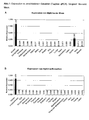
- the quantitative tissue distribution of Hip kinase 4 was determined in mice and humans by Q-RT-PCR (Fig.1 A and B).
- Fig.1 A and B Q-RT-PCR
- HipK4 is mainly expressed in the testes.
- expression in the brain was detected in the mouse, which represents 37% of the level of expression of the testis ( Figure 1 B).
- HipK4-deficient mouse line clearly demonstrated the essential function of this kinase in spermatogenesis.
- HipK4 modulators can be developed as a novel contraceptive and the analysis of HipK4 functionality can be used to diagnose infertility.
- the present invention solves the present problem by providing a novel therapy method in which the enzyme Hip-kinase 4 and modulators of this enzyme serve as target substance for the development of new drugs suitable for both the diagnosis of infertility and fertility control.
- the present invention relates to the use of a pharmaceutical composition which contains as active component at least one substance selected from the group of a HipK4 nucleic acid according to SEQ ID No. 1, a HipK4 polypeptide according to SEQ ID No. 2, modulators of HipK4, antibodies are directed against HipK4, a HipK4 antisense and a HipK4 RNAi, for the diagnosis and treatment of fertility disorders, for contraception and also for the manufacture of a medicament for the treatment of fertility disorders.
- HipK4 nucleic acids include both single- or double-stranded DNA, e.g. cDNA and RNA, e.g. mRNA, cRNA, pre-mRNA, or parts thereof.
- the DNA and protein sequences are shown in SEQ ID NOs 1 and 4 (SEQ ID No 1: HipK4 Human: nucleotide sequence ID ENST00000291823 and SEQ ID No 2: HipK4 human protein sequence ID ENSP00000291823).
- the nucleic acid shown in Seq ID No. 1 encodes a human HipK4 protein.
- nucleic acid comprises a protein-coding portion of the nucleic acid sequence shown in SEQ ID No. 1.
- a protein coding portion of the sequence shown in Seq ID No. 1 is in the range of 286-2166.
- the nucleic acid is obtainable from mammals, for example human cells, or from a cDNA library or a genomic library obtained eg from human cells. It can be made according to known techniques using short sections of those shown in Seq ID No 1 Nucleic acid sequence can be isolated as hybridization probes or amplification primer.
- the invention furthermore relates to the abovementioned use of a pharmaceutical composition in which the polypeptide comprises the amino acid sequence shown in SEQ ID No. 2.
- the polypeptide may be a recombinant polypeptide, a natural, isolated polypeptide or a synthetic polypeptide.
- the mRNA of the polypeptide according to Seq ID No. 2 is transcribed in testes and in germ cells.
- the present invention relates to the above-mentioned use of a pharmaceutical composition containing a polypeptide fragment corresponding to the amino acid sequence according to Seq ID No 2 from position 1 to 616.
- the HipK4 polypeptide or portions thereof can be used to produce antibodies.
- the polypeptides or peptides can be bound eg to KLH (keyhole limpet hemocyanin) and injected into animals, eg rabbits. They can also be used to produce monoclonal antibodies.
- KLH keyhole limpet hemocyanin
- a HipK4 polypeptide or peptide or a mixture of several HipK4 peptides may be used.
- the preparation of the antibodies is carried out according to standard methods, such as in Kohler, G. and Milstein, C., Nature 1975, 256, 495-497 and Nelson, PN et al., Mol. Pathol. 2000, 53, 111-117 are described.
- the invention relates to the use of a pharmaceutical composition containing antibodies directed against the HipK4 polypeptide for the diagnosis of fertility disorders.
- the antibodies can be used to detect the HipK4 polypeptides. This can e.g. done by immunohistochemistry.
- the antibodies may also be used in other immunoassays, e.g. an enzyme-linked immunosorbent assay (ELISA) or in radioimmunoassays.
- ELISA enzyme-linked immunosorbent assay
- the concentration of polypeptide can be detected in tissue or cell extracts.
- the detection of the expression of the polypeptide can also be carried out via the detection of mRNA in the cells.
- the invention therefore also provides the use of a probe having nucleic acid sequences which are complementary to the nucleic acid sequences coding for the polypeptide comprising the amino acid sequence shown in Seq. ID No. 2 for the preparation of a reagent for detecting the presence of mRNA in cells.
- a probe is a short RNA or DNA piece of at least 14 nucleotides.
- the probes of the invention may e.g. be used in a Northern blot analysis. This method is e.g. in Sambrook, J. et al., 1989, Cold Spring Harbor Laboratory Press. Other methods of detecting RNA are in situ hybridization, RNAse protection assay or PCR.
- the invention also relates to the use of a pharmaceutical composition containing molecules which are directed against the nucleic acid sequence and which can suppress expression of the HipK4 protein, e.g. Antisense molecules and synthetic molecules that inhibit the stability or translation of HipK4 mRNA. Such molecules can be used specifically for contraception.
- the present invention also relates to the use of a composition comprising as active component at least one HipK4 nucleic acid, or a HipK4 polypeptide or a HipK4 antisense molecule as target substance for the preparation of an agent for the treatment of diseases causally related to the HipK4 Gene and / or protein.
- the invention relates to methods for the diagnosis of diseases whose causes include mutations of the HipK4 protein.
- DNA chips can be used.
- the invention therefore relates to a DNA chip on which at least one oligonucleotide is immobilized which corresponds to the complete cDNA sequence or a partial sequence or complementary sequence to that described in SEQ ID No. 1.
- the invention thus further relates to the use of a DNA chip according to the invention for the diagnosis of fertility disorders u. a. in the testicle and Oviduct.
- DNA chips also known as DNA microarrays, are miniaturized carriers, usually made of glass or silicon, on the surface of which DNA molecules of known sequence are immobilized in an ordered grid in high density.
- the surface-bound DNA molecules are hybridized with complementary, possibly labeled nucleic acids.
- the label may be a fluorescent dye.
- the oligonucleotides which may be bound to a DNA chip according to the invention, are partial sequences of the gene products (mRNA or cDNA derived therefrom).
- One or more oligonucleotides per gene may be bound to the DNA chip.
- Preferred are 25-nucleotide-long oligonucleotides. These are preferably selected from the respective 3'untranslated end of the gene.
- cDNA chips For cDNA chips, the complete gene products (cDNAs) or subfragments (200-500 bp in length) are bound on the chip. The method is z. In Eckmann L et al., J. Biol. Chem., 2000, 275 (19), 14084-14094 described.
- Suitable sequences are those that can hybridize with the selected gene transcripts.
- the oligonucleotides are then replaced by a chemical process based on photolithographic process, produced on the chip.
- photolithographic masks are used, which were generated by suitable computer algorithms.
- the labeled RNA is incubated with the chip in a hybridization oven. Subsequently, the chip is analyzed in a scanner that determines the hybridization profiles. This can be used to determine if changes in the transcript have occurred (e.g., mutations, truncations). It also allows the quantitation of the transcript and thus of the HipK4 protein and allows conclusions to be drawn, e.g. a mutation in the promoter.
- the invention relates to methods based on the use of RNAi (RNA interference) to alter the HipK4 transcript.
- RNAi RNA interference
- Such an application can be used specifically to create contraceptives.
- RNAi oligonucleotides based on the Seq ID No 1 are used, which lead by interaction with the body's HipK4 RNA to change the transcript.
- the invention also relates to the use of a pharmaceutical composition containing as active component a HipK4 nucleic acid which can be used in the form of a gene therapy approach for the treatment of male infertility.
- Gene therapy is any procedure that deals with the cause of genetic disorders by altering the genome. In this procedure, the missing genetic information is fed directly to the body. Vectors containing the gene are injected or inhaled to get to their functional location.
- the invention further relates to cells which are transfected with a coding for the HipK4 receptor nucleic acid sequence or with a vector.
- cells for example, E. coli, yeast, Pichia, Sf9, HEK-293, CHO, COS, CV-1 or BHK can be used. These cells can be used for the production of the HipK4 polypeptide or for test systems.
- the subject matter of the present invention is also a process for the production of the HipK4 polypeptides, characterized in that the host cells are cultured under conditions which allow the expression of the DNA sequence, and whereby the expression product can be obtained from the culture mixture.
- the function of a protein kinase is the phosphorylation of specific substrate proteins. This generally leads to a change in the biochemical property of the substrate, which can be manifested by the change in the state of activity or the binding properties.
- the development of a contraceptive agent may now be based on the regulation of kinase activity. However, this presupposes that the protein to be regulated has enzymatic activity and does not act only as a binding partner within intracellular communication.
- Evidence that HipK4 has intrinsic kinase activity is provided by a kinase assay using the general kinase substrate MBA ( Figure 4). The intensity of phosphorylation is dependent on the amount of HipK4 used.
- MBA being a general kinase substrate, contains a variety of serine and threonine phosphorylation residues and is therefore not an ideal substrate for the identification of inhibitors and the investigation of kinase kinetics.
- An ideal substrate was identified by a systematic study of a peptide library, the sequence of the peptides used being based on known phosphorylation sites and activation loops of described substrates.
- HipK4 substrates were identified as HipK4 substrates; FoxO3a (NP_963853) and RBL2 (NM_005611).
- FoxO3a and RBL2 have been shown to play an important role in spermatogenesis or are essential for fertility (Yan, Kero et al 2001, Hosaka, Biggs et al., 2004). That not only HipK4 but also the substrates phosphorylated by HipK4 are important components of the regulation of the fertility of humans and mice, can be omitted conclude the essential function of the kinase activity of HipK4 in the affected signaling pathways.
- the identification of HipK4 substrates can not only help to clarify the biological function but also generate information necessary for the further analysis and development of HipK4 modulators.
- the peptides identified as substrate are used to establish a HTS technology optimized for HipK4.
- the invention further relates to a test system for identifying effectors of a HipK4 polypeptide, wherein a HipK4 polypeptide as a whole or partial sequences thereof can be incubated with a modulator and, for example, the binding of a molecule to the HipK4 polypeptide is measured. Furthermore, the invention relates to a test system for the identification of effectors of the HipK4 polypeptide. This purified enzyme is incubated with radiolabelled ATP and the substrate MTB and after a corresponding incubation time the degree of phosphorylation of the substrate is determined (Figure 4).
- the effectors of the HipK4 polypeptide can be used for diagnosis, promotion of fertility as well as contraception in men.
- the preferred formulations consist of a dosage form which is suitable for oral, enteral or parenteral administration.
- dosage forms are, for example, tablets, film-coated tablets, dragees, pills, capsules, powders or depot forms and suppositories.
- Corresponding tablets can be obtained, for example, by mixing the active compound with known excipients, for example inert diluents such as dextrose, sugar, sorbitol, mannitol, polyvinylpyrrolidone, disintegrants such as corn starch or alginic acid, binders such as starch or gelatin, lubricants such as carboxypolymethylene, carboxymethylcellulose, cellulose acetate phthalate or polyvinyl acetate ,
- the tablets can also consist of several layers.
- the pharmaceutical composition of the present invention can be used to diagnose infertility.
- the amounts of HipK4 are determined, for example, by an ELISA test or a protein chip.
- the present invention also relates to the use of the pharmaceutical composition according to the invention for the diagnosis of autoimmune antibodies in body fluids.
- the present invention can also be used by using the pharmaceutical composition as a gene therapy agent.
- the effects of HipK4 are blocked by the use of gene therapy.
- a vector containing a HipK4 antisense sequence is constructed and applied. Examples are vectors derived from adenovirus, adenovirus-associated virus, herpes simplex virus or SV40.
- Gene therapy can be as described ( Gomez-Navarro et al. 1999, Eur. J. Cancer, 35, 867-885 ) be performed.
- the application can be local, ie directly into the abdomen, or systemically, ie via the bloodstream. This leads to a blockade of the expression of HipK4 in the testes. This inhibits the biological function mediated by HipK4.
- the section base pair 286-2136 of Seq ID No 1 is amplified by standard PCR and cloned via the restriction sites HindIII-Notl in the expression vector pBB4.5.
- Bakuloviruses for expressing HipK4 in insect cells are generated using Invitrogen's "Bac-N-Blue Kit” according to the manufacturer's instructions.
- SF9 insect cells (11) are infected at a multiplicity of infection (MOI) of 3 with the HipK4 baculoviruses and cultured for 3 days.
- the cell pellet is digested with a lysis buffer (50 mM Tris, pH 7.5, 150 mM NaCl, protease inhibitor cocktail (Sigma)) and the HipK4 protein is purified by means of anit FLAG affinity columns (Sigma) according to instructions.
- a lysis buffer 50 mM Tris, pH 7.5, 150 mM NaCl, protease inhibitor cocktail (Sigma)
- the HipK4 protein is purified by means of anit FLAG affinity columns (Sigma) according to instructions.
- the efficiency and purity of the purification is checked by standard SDS gel electrophoresis followed by Western blotting ( Figure 3).
- RNA preparation the respective organs are transferred to liquid nitrogen and stored until further processing (human RNA samples were purchased from Contech).
- the RNA isolation is carried out by means of Trizol (Invitrogen), for the synthesis of the cDNA the "SuperScript III First Strand” kit (Invitrogen) is used. Both procedures are carried out strictly according to the manufacturer's instructions.
- Testes and epididymides of wild-type and HipK4-deficient mice are prepared for histological analysis and swirled overnight in Bouin's fixative solution (0.9% picric acid, 9.5% formaldehyde and 4.8% acetic acid). The following day, the preparations are dehydrated in an ascending ethanol series and embedded in paraffin. The subsequently prepared 5 ⁇ M tissue sections can now be treated with a standard H & E stain.
- the PCR reactions are set up using the iQ-SYBR Green Supermix (BIO-RAD) according to the standard protocol (manufacturer's instructions) using the following primer pairs (mouse-HipK4 5'-CCGTCTGTCATCCCACAAC-3 'and 5'-TAGGGTCCATTCTGGCTCAC- 3 ', human-HipK4 5'-CCCGCTGCCCCTTCA-3 and 5'-GCACCTCGCTGAAAATGCT-3').
- the reaction mixtures are combined by using a master mix containing the primers and the SYBR-Green mix. This is then added to the submitted cDNA.
- PCR program denaturation 95 ° C, 2 min; Amplification (40 cycles) 94 ° C, 15 seconds and 60 ° C, 60 seconds.
- the DNA concentration is detected during amplification.
- tissue samples are always combined to form a total pool.
- all PCR reactions are set at least in triplicates. For later quantification, the mean value is used taking into account the standard deviation.
- the incubation and washing steps are carried out at room temperature.
- the paraffin sections are dewaxed by immersing twice in xylene for 10 minutes each and transferred to pure PBS by a descending series of ethanol / PBS. This is followed by a post-fixation in 4% PFA for 20 min, followed by washing twice in PBS for 5 min each.
- a proteinase K treatment (10 mg / ml proteinase K in 100 mM Tris-HCl, pH 7.5) are dipped in 0.2% glycerol / PBS for 10 minutes to inhibit the reaction. After washing twice in PBS for 5 min, it is fixed for a second time in 4% PFA for 10 min.
- the sections are then washed with PBS for 5 min, immersed in a 0.2 N HCl solution for 15 min, washed again twice with PBS for 5 min and in the TEA solution (0.1 M triethanolamine, pH 8, 10 min) for 10 min. 0, 0.25% Essiganhydrid) incubated to saturate amino groups.
- the sections are then washed for 5 min in PBS and DEPC-H 2 O and then prehybridized for 2 h at 70 ° C.
- TNT 10mM Tris-HCl, pH 7.5, 0.5M NaCl, 0.1% Tween-20
- sections are rinsed twice for 30 min with 100 ⁇ g / ml RNase in TNT at 37 ° C treated.
- the sections are then incubated in TNT: Solution 11 (1: 1) at RT three times for 30 min in Solution 11 (50% formamide; 2 x SSC pH 4.5, 0.2% SDS, in not DEPC-treated water) at 63 ° C.
- MAP solution 100 mM maleic acid, 150 mM NaCl, 2 mM levamisole, pH 7.5
- blocking of the free binding sites in MAP / block / sheep serum 2% Roche blocking reagent in 100 mM maleic acid, 150 mM NaCl, 2 mM levamisole, pH 7.5, 10% sheep serum
- 200 ml of antibody solution (anti-digoxinin) per slide are applied and incubated overnight at 4 ° C.
- the sections are washed three times for 10 minutes and four times for 1 hour in MAP solution.
- the sections are then rinsed three times with NTMT (100 mM Tris-HCl, pH 9.5, 50 mM MgCl 2, 100 mM NaCl) for 10 min.
- NTMT 100 mM Tris-HCl, pH 9.5, 50 mM MgCl 2, 100 mM NaCl
- the staining reaction is then carried out in BM-Purple (Roche, Switzerland), 2 mM levamisole, until the signal is detectable, maximum overnight.
- the staining is stopped by washing three times in PBT, pH 4.5, respectively for 5 min at RT.
- the histological specimens are capped in MOVIOL ® for storage.
- Purified Hip kinase 4 is mixed in varying amounts with 20mM MOPS, pH 7.2, 25mM ⁇ -glycerol phosphates, 5mM EGTA, 1mM Na 3 VO 4 , 1mM dithiothreitol, 10mM MgOAc, and 25 ⁇ M ATP (inc. 10 ⁇ Ci of [ ⁇ - 33 P] ATP), together with 25 ⁇ g of MBP (Upstate Biotechnology), in a final volume of 60 ul incubated. After a two hour incubation at room temperature, 10 ⁇ l of the reaction mixture is added to Whatman P81 phosphocellulose paper. The filter is then washed with 0.75% phosphoric acid, dried and the remaining radioactivity measured.
- Fig. 3 To identify putative substrates in an HTS procedure, reduce the reaction volume to 15 ⁇ l and carry out the reaction in a 384-well microtiter plate. The peptides are diluted in water and added to the reaction mixture in a final concentration of 2.5 ⁇ M. The reaction is incubated with 10ng of HipK4 protein for one hour and quenched by the addition of 50mM EDTA, 3.33mg / ml Streptavidin-SPA beads (Amersham) in PBS. The plate is mixed for 10 min, centrifuged at 1000 RPM, and the scintillation signal is quantified using a Wallac microbeta reader.
- the cloning of the targeting vector is carried out by means of a C57BL / 6J BAC DNA collection (Artemis).
- Successful homologous recombination leads to the deletion of exon 2-3 of the murine HipK4 allele and thus to a partial deletion of the protein kinase domain.
- the ES cell clone B-B2 (genetic background C57BU6N) is identified by Southern blot to be positive for homologous recombination ( Figure 5) (Artemis).
- Figure 5 the genomic DNA of various ES cell clones with the restriction enzyme Hind III digested and separated on an agarose gel.
- the restriction fragment length polymorphisms (RFLPs) resulting from homologous recombination can be detected using a 3 'external probe ( Figure 5).
- Two fragments are expected for wild-type clones and three fragments for clones with successful homologous recombination on one allele. 11.2 kb and 8.7 kb fragments for the wild type clone and an additional 5.3 kb fragment for clones with successful homologous recombination (HR).
- the ES cell clone BB-2 is used for injection into C57BU6 N blastocytes and the resulting chimeras mated with C57BU6 N females.
- Genotyping of the transgenic offspring is performed by PCR analysis using tail tip genomic DNA.
- the primers HipK4-A 5'CTACTGCACAACTAAATCTGTAGC-3 'and HipK4-B 5'-CAGCGGTAGAGGAAGATAGAGG-3' used for this purpose hybridize in intron 2 (HipK4-A) and in intron 3 (HipK4-B) of the murine HipK4 gene.
- HipK4-A intron 2
- HipK4-B intron 3
- Homozygous knockouts are generated by mating heterozygous mice.
- Fig. 1 Expression in different tissues (TaqMan qPCR), human comparison (Fig. 1 B) / mouse (Fig. 1A). In mice as well as in humans, HipK4 is mainly expressed in the testes (Figs. 1 A and B). In the mouse, an expression in the brain could be detected, which shows 37% of the level of expression of the testis (Fig. 1 B).
- Fig. 2 Expression of HipK4 in rat testis (in situ hybridization) HipK4 is expressed exclusively in postmeiotic round spermatids. In combination with a PNA lectin and propidium iodide staining, expression of HipK4 during spermatogenesis could be restricted to developmental levels 4-6.
- Fig. 3 Expression and purification of HipK4 Standard SDS gel electrophoresis to verify the efficiency and purity of human HipK4 purification.
- Fig. 4 HipK4 phosphorylation of MBP
- the general kinase substrate MBA is phosphorylated.
- the intensity of phosphorylation is dependent on the amount of HipK4 used.
- Fig. 5 Southern blot to prove "targeting" Positive identification of ES cell clone B-B2 by Southern blot for homologous recombination.
- Fig. 6 Genotyping of the transgenic mice Transgenic progeny are taken for genotyping from the tail tip of genomic DNA, which is analyzed by PCR.
- Fig. 7 Validation of the knockout Detection of the absence of the HipK4 transcript in homozygous knockout animals by RT-PCR
- Fig. 8 and Fig. 9 Comparison of testes from wild-type animals with knockout animals Histological analysis of testes and epididymis. In the testes, the lack of HipK4 leads to an influence on the spermiogenesis (atypical arrangement of the developing spermatids, Fig. 8, arrow). The spermiogenesis defect leads to the release of a reduced number of spermatozoa in the testes (Fig. 9).
- the HipK4 shares only 74% sequence identity in the ATP binding pocket with its closest homologues, the HipK1 and HipK2.
Landscapes
- Health & Medical Sciences (AREA)
- Life Sciences & Earth Sciences (AREA)
- Chemical & Material Sciences (AREA)
- Organic Chemistry (AREA)
- Engineering & Computer Science (AREA)
- Bioinformatics & Cheminformatics (AREA)
- Zoology (AREA)
- General Health & Medical Sciences (AREA)
- Wood Science & Technology (AREA)
- Proteomics, Peptides & Aminoacids (AREA)
- Medicinal Chemistry (AREA)
- Molecular Biology (AREA)
- Genetics & Genomics (AREA)
- Microbiology (AREA)
- Immunology (AREA)
- Biochemistry (AREA)
- Biotechnology (AREA)
- General Engineering & Computer Science (AREA)
- Public Health (AREA)
- Veterinary Medicine (AREA)
- Animal Behavior & Ethology (AREA)
- Pharmacology & Pharmacy (AREA)
- Reproductive Health (AREA)
- Endocrinology (AREA)
- General Chemical & Material Sciences (AREA)
- Nuclear Medicine, Radiotherapy & Molecular Imaging (AREA)
- Chemical Kinetics & Catalysis (AREA)
- Physics & Mathematics (AREA)
- Biophysics (AREA)
- Analytical Chemistry (AREA)
- Gastroenterology & Hepatology (AREA)
- Epidemiology (AREA)
- Biomedical Technology (AREA)
- Gynecology & Obstetrics (AREA)
- Pregnancy & Childbirth (AREA)
- Measuring Or Testing Involving Enzymes Or Micro-Organisms (AREA)
- Medicines That Contain Protein Lipid Enzymes And Other Medicines (AREA)
- Enzymes And Modification Thereof (AREA)
- Medicines Containing Antibodies Or Antigens For Use As Internal Diagnostic Agents (AREA)
- Pharmaceuticals Containing Other Organic And Inorganic Compounds (AREA)
Abstract
Die vorliegende Erfindung betrifft die Verwendung einer pharmazeutischen Zusammensetzung, die als aktive Komponente mindestens eine HipK4-Nukleinsäure, ein HipK4-Polypeptid, Modulatoren der HipK4, HipK4-Antikörper, eine HipK4-Antisense und eine HipK4-RNAi eunthält zur Diagnose und Behandlung von Fertilitätsstörungen und zur Kontrazeption. Die Erifndung betrifft weiterhin die Verwendung dieser pharmazeutischen Zusammensetzung zur Herstellung eines Medikaments für die Behandlung von Fertilitätsstörungen.
Description
- Die vorliegende Erfindung betrifft das Enzym Hip-Kinase 4, das im engen Zusammenhang mit der männlichen Infertilität steht. Es ist demgemäß zur Diagnose und Behandlung männlicher Infertilität sowie als Mittel zur Schaffung von Kontrazeptiva geeignet.
- Derzeit sind etwa 15 % aller Paare in Deutschland ungewollt kinderlos, ihr Anteil nimmt ständig zu. Die Ursachen für die Unfruchtbarkeit liegen zu gleichen Teilen bei Mann und Frau. Während die Ursachen bei der Frau weitgehend erforscht und diagnostizierbar sind, können beim Mann nur in etwa 30 % der Fälle organische Ursachen festgestellt werden. Etwa ein Drittel der verbleibenden Fälle lassen sich auf Oligospermie unbekannten Ursprungs zurückführen, während die Ursachen bei den restlichen Fällen nach dem bisherigen Wissenstand noch unklar sind. Insbesondere bei der idiopathischen Infertilität, bei der trotz einer ausreichenden Anzahl von Spermien im Ejakulat keine Befruchtung der weiblichen Eizelle erfolgt (H.W.G. Baker, Male Reproductive Dysfunction, 341 ff, 1986), wird eine Störung der im Nebenhoden stattfindenden Spermienreifung vermutet.
- Bei der Spermienreifung greifen eine Vielzahl von enzymatisch regulierten Prozessen ineinander. Es ist davon auszugehen, dass Störungen, die durch die Dysregulation eines Enzyms verursacht werden, zu Störungen der Spermienreifung und so zu befruchtungsunfähigen Spermien führen.
- Die Aufgabe der vorliegenden Erfindung besteht in der Bereitstellung neuer Mittel, mit denen Störungen des Enzymstoffwechsels im Hoden des Menschen und insbesondere die männliche Infertilität diagnostiziert und therapiert werden können, und die zur Fertilitätskontrolle eingesetzt werden können.
- Die Hip-Kinase 4 gehört zu einer neuen Familie von Enzymen, die in einem Hefe-Di-Hybrid Systems ("yeast two hybrid screen") mit Domänen anderer Proteine interagieren. Diese Proteine enthalten eine konservierte Proteinkinase-Domäne und eine mit anderen Proteinen interagierende Domäne, daher werden die Proteinkinasen als "homeodomain-interacting protein kinases (HipKs) bezeichnet. Bisher sind 4 Isoformen bekannt: HipK1, HipK2, HipK3 and HipK4 (Kim, Choi et al. 1998, J Biol Chem 273(40): 25875-9.). Diese Proteinkinasen gehören zu einer größeren Familie von Kinasen, die durch Tyrosinphosphorylierung reguliert werden und ihre Autophosphorylierung an Serin/Threonin- und an Tyrosinresten katalysieren, ihre Substrate jedoch nur an Serin/Threoninresten phosphorylieren (Zhang, Li et al. 2005, Genomics 85(1): 117-30). Die Hipk1, 2 und 3 konnten im Zellkern nachgewiesen werden, ebenso konnten einige Substrate identifiziert werden.
- Über die HipK4 ist bisher weniger bekannt. Die Sequenz der HipK4 wurde erstmalig beansprucht in der Anmeldung
WO04/087901 - Bisher gab es jedoch keine funktionelle Information für die HipK4 (Kim, Choi et al. 1998, J Biol Chem 273(40): 25875-9; Moilanen, Karvonen et al. 1998, Mol Biol Cell 9(9): 2527-43; Rochat-Steiner, Becker et al. 2000, J Exp Med 192(8): 1165-74; Ecsedy, Michaelson et al. 2003, Mol Cell Biol 23(3): 950-60.; Zhang, Li et al. 2005; Zhang, Nottke et al. 2005, Proc Natl Acad Sci U S A 102(8): 2802-7).
- In der vorliegenden Erfindung konnte nun erstmalig gezeigt werden, dass die HipK4 eine wichtige Rolle bei den Prozessen der Spermatogenese/Spermiogenese spielt.
- Es konnte gezeigt werden, dass die HipK4 vor allem im Hoden exprimiert wird. Die quantitative Gewebeverteilung der Hip-Kinase 4 wurde in Mäusen und Menschen mittels Q-RT-PCR bestimmt (Abb.1 A u. B). In Mäusen sowie im Menschen wird HipK4 vor allem im Hoden exprimiert. In der Maus konnte außerdem eine Expression im Gehirn nachgewiesen werden, die 37 % der Intensität des Expressionsniveaus des Hodens aufweist (Abb. 1 B).
- Die detaillierte Untersuchung der Expression von HipK4 mittels der in-situ Hybridisierung im Rattenhoden konnte nachweisen, dass HipK4 exklusiv in postmeiotischen runden Spermatiden exprimiert wird (Abb. 2). In Kombination mit einer PNA-Lektin (Aktrosomenfärbung) und Propidiumjodid-Färbung konnte die Expression von HipK4 während der Spermiogenese auf die Entwicklungsstufe 4-6 eingeschränkt werden (Abb. 2). Diese nahezu hodenspezifische, auf postmeiotische runde Spermatiden beschränkte HipK4-Expression, bestärkt die essentielle Rolle der Hip-Kinase 4 in der postmeiotischen Spermiogenese und unterstützt somit die Möglichkeit der Entwicklung eines Mittels zur Diagnose von Fertilitätsstörungen sowie zur Kontrazeption basierend auf der Inhibierung von HipK4.
- Mittels einer HipK4-knockout-Mauslinie konnte durch eine histologische Analyse von Hoden und Nebenhoden gezeigt werden, dass HipK4 eine essentielle Rolle während der Spermiogenese spielt (Abb. 8-9). Im Hoden führt der Mangel an HipK4 zu einer Beeinflussung der Spermiogenese, was sich in einer untypischen Anordnung der sich entwickelnden Spermatiden in den Hodenkanälchen zeigt (Abb. 8). Eine morphologische Veränderung der Spermatiden ist am stärksten in den Stadien kurz vor der Freisetzung der Spermien in den Lumen der Hodenkanälchen zu beobachten (Abb. 8 Kreis). Dabei weisen die Spermien der HipK4-defizienten Mauslinie nicht mehr die für dieses Entwicklungsstadium charakteristische längliche Form auf, sondern weisen eine veränderte Morphologie auf. Letztendlich führt dieser Spermiogenesedefekt zur Freisetzung einer drastisch verminderten Anzahl an Spermien im Hoden und somit zu einer Ansammlung dieser deformierten Spermien im Nebenhodenschwanz (Abb. 9).
- Die Analyse der HipK4-defizienten Mauslinie konnte eindeutig die essentielle Funktion dieser Kinase in der Spermiogenese nachweisen. Somit ist anzunehmen, dass das Fehlen von HipK4 zur Infertilität führt. Modulatoren von HipK4 können folglich als neuartiges Arzneimittel zur Kontrazeption entwickelt und die Analyse der HipK4-Funktionalität zur Diagnose der Infertilität genutzt werden.
- Daher löst die vorliegende Erfindung durch Bereitstellung einer neuen Therapiemethode, bei der das Enzym Hip-Kinase 4 und Modulatoren dieses Enzyms als Zielsubstanz für die Entwicklung neuer Arzneimittel dienen, die sowohl zur Diagnose der Infertilität als auch zur Fertilitätskontrolle geeignet sind, das vorliegende Problem.
- Die vorliegende Erfindung betrifft die Verwendung einer pharmazeutischen Zusammensetzung, die als aktive Komponente mindestens eine Substanz, ausgewählt aus der Gruppe von einer HipK4-Nukleinsäure entsprechend Seq ID No 1, einem HipK4-Polypeptid entsprechend Seq ID No 2, Modulatoren der HipK4, Antikörpern, die gegen die HipK4 gerichtet sind, einer HipK4-Antisense sowie einer HipK4-RNAi, zur Diagnose und Behandlung von Fertilitätsstörungen, zur Kontrazeption und auch zur Herstellung eines Medikaments für die Behandlung von Fertilitätsstörungen.
- HipK4-Nukleinsäuren umfassen sowohl einzel- oder doppelsträngige DNA, z.B. cDNA und RNA, z.B. mRNA, cRNA, pre-mRNA, bzw. Teile davon. Die DNA-und Proteinsequenzen sind in Seq ID No 1 und 4 dargestellt (Seq ID No 1: HipK4 Human: Nukleotidsequenz ID ENST00000291823 und Seq ID No 2: HipK4 Human Proteinsequenz ID ENSP00000291823). Die in Seq ID No 1 dargestellte Nukleinsäure kodiert für ein humanes HipK4 Protein.
- Bevorzugt ist die Verwendung einer pharmazeutischen Zusammensetzung, in der die Nukleinsäure einen Protein kodierenden Abschnitt der in Seq ID No 1 dargestellten Nukleinsäuresequenz umfasst. Ein Protein kodierender Abschnitt der in Seq ID No 1 dargestellten Sequenz liegt im Bereich von 286 - 2136.
- Die Nukleinsäure ist aus Säugern, z.B. humanen Zellen, oder aus einer cDNA-Bibliothek oder einer genomischen Bibliothek, die z.B. aus menschlichen Zellen gewonnen wird, erhältlich. Sie kann nach bekannten Techniken unter Verwendung kurzer Abschnitte der in Seq ID No 1 gezeigten Nukleinsäuresequenz als Hybridisierungssonden oder Amplifikationsprimer isoliert werden.
- Weiterhin Gegenstand der Erfindung ist die oben genannte Verwendung einer pharmazeutischen Zusammensetzung, in der das Polypeptid die in Seq ID No 2 dargestellte Aminosäuresequenz umfasst.
- Das Polypeptid kann ein rekombinantes Polypeptid, ein natürliches, isoliertes Polypeptid oder ein synthetisches Polypeptid sein.
- Die mRNA des Polypeptids nach Seq ID No 2 wird in Hoden und in Keimzellen transkribiert.
- Gegenstand der vorliegenden Erfindung ist die oben genannte Verwendung einer pharmazeutischen Zusammensetzung, die ein Polypeptidfragment entsprechend der Aminosäuresequenz gemäß Seq ID No 2 von Position 1 bis 616 enthält.
- Das HipK4 Polypeptid oder Teilbereiche davon (Peptide) können zur Herstellung von Antikörpern verwendet werden. Zur Herstellung polyklonaler Antikörper können die Polypeptide oder Peptide z.B. an KLH (Keyhole Limpet Hemocyanin) gebunden werden und Tieren, z.B. Kaninchen, gespritzt werden. Sie können auch zur Herstellung monoklonaler Antikörper verwendet werden. Zur Antikörperherstellung kann ein HipK4-Polypeptid oder Peptid oder eine Mischung mehrerer HipK4-Peptide verwendet werden. Die Herstellung der Antikörper erfolgt dabei nach Standardverfahren, wie sie z.B. in Kohler, G. und Milstein, C., Nature 1975, 256, 495 - 497 und Nelson, P. N. et al., Mol. Pathol. 2000, 53, 111 - 117 beschrieben sind.
- Gegenstand der Erfindung ist die Verwendung einer pharmazeutischen Zusammensetzung, die Antikörper beinhaltet, die gegen das HipK4-Polypeptid gerichtet sind, zur Diagnose von Fertilitätsstörungen.
- Die Antikörper können zur Detektion der HipK4-Polypeptide verwendet werden. Dies kann z.B. durch Immunhistochemie erfolgen. Die Antikörper können auch in anderen Immuntests, wie z.B. einem ELISA (enzyme linked immunosorbent assay) oder in Radioimmunotests, eingesetzt werden. So kann die Konzentration an Polypeptid in Gewebe- oder Zellextrakten nachgewiesen werden.
- Der Nachweis der Expression des Polypeptids kann auch über den Nachweis von mRNA in den Zellen erfolgen. Gegenstand der Erfindung ist daher auch die Verwendung einer Sonde mit Nukleinsäuresequenzen, die komplementär zu den Nukleinsäuresequenzen sind, die für das Polypeptid, das die in Seq ID No 2 dargestellte Aminosäuresequenz umfasst kodiert, zur Herstellung eines Reagenz zum Nachweis der Gegenwart von mRNA in Zellen. Eine Sonde ist ein kurzes RNA- oder DNA-Stück mit mindestens 14 Nukleotiden. Die erfindungsgemäßen Sonden können z.B. in einer Northern Blot Analyse verwendet werden. Diese Methode ist z.B. in Sambrook, J. et al., 1989, Cold Spring Harbor Laboratory Press, beschrieben. Andere Methoden zum Nachweis der RNA sind in situ Hybridisierung, RNAse Protection Assay oder PCR.
- Die Erfindung betrifft außerdem die Verwendung einer pharmazeutischen Zusammensetzung, die Moleküle enthält, die gegen die Nukleinsäuresequenz gerichtet sind und die Expression des HipK4-Proteins unterdrücken können, wie z.B. Antisense-Moleküle und synthetische Moleküle, die die Stabilität oder Translation der HipK4-mRNA hemmen. Derartige Moleküle können gezielt zur Kontrazeption eingesetzt werden.
- Gegenstand der vorliegenden Erfindung ist auch die Verwendung einer Zusammensetzung, die als aktive Komponente mindestens eine HipK4-Nukleinsäure, oder ein HipK4-Polypeptids oder ein HipK4-Antisense-Moleküls als Zielsubstanz zur Herstellung eines Mittels für die Behandlung von Krankheiten, die ursächlich mit dem HipK4-Gen und/oder Protein zusammenhängen, enthält.
- Weiterhin betrifft die Erfindung Verfahren zur Diagnostik von Erkrankungen, deren Ursachen Mutationen des HipK4-Proteins beinhalten. Hierzu können DNA-Chips verwendet werden. Die Erfindung betrifft daher einen DNA-Chip, auf dem mindestens ein Oligonukleotid immobilisiert ist, das der vollständigen cDNA-Sequenz oder einer Teilsequenz bzw. komplementären Sequenz zu der in Seq ID No 1 beschriebenen, entspricht. Die Erfindung betrifft somit ferner die Verwendung eines erfindungsgemäßen DNA-Chips zur Diagnose von Fertilitätsstörungen u. a. im Hoden und Ovidukt.
- DNA-Chips, auch als DNA-Mikroarrays bekannt, sind miniaturisierte Träger, meist aus Glas oder Silizium, auf deren Oberfläche DNA-Moleküle bekannter Sequenz in einem geordneten Raster in hoher Dichte immobilisiert werden. Die Oberflächen-gebundenen DNA-Moleküle werden mit komplementären, eventuell markierten Nukleinsäuren hybridisiert. Die Markierung kann ein Fluoreszenzfarbstoff sein.
- Bei Oligonukleotid-Chips stellen die Oligonukleotide, die auf einem erfindungsgemäßen DNA-Chip gebunden sein können, Teilsequenzen der Genprodukte (mRNA bzw. daraus abgeleitete cDNA) dar. Es können ein oder mehrere Oligonukleotide pro Gen auf dem DNA-Chip gebunden sein. Bevorzugt sind 25-Nukleotid-lange Oligonukleotide. Diese werden bevorzugt aus dem jeweiligen 3'untranslatierten Ende des Gens ausgewählt. Methoden zur Herstellung und Verwendung von DNA-Chips sind z.B. in den
US-Patenten Nr. 5,578,832 ;5,556,752 und5,510,270 beschrieben. - Bei cDNA-Chips sind die vollständigen Genprodukte (cDNAs) oder Subfragmente (200-500bp lang) auf dem Chip gebunden. Die Methode wird z. B. in Eckmann L et al., J. Biol. Chem., 2000, 275(19), 14084-14094 beschrieben.
- Zuerst werden die geeigneten DNA-Sequenzen gemäß Seq ID No 1 bestimmt. Geeignet sind Sequenzen, die mit den ausgewählten Gentranskripten hybridisieren können. Die Oligonukleotide werden dann durch einen chemischen Prozess, der auf photolithographischen Verfahren basiert, auf dem Chip hergestellt. Dazu werden photolithographische Masken verwendet, die durch geeignete Computer-Algorithmen erzeugt wurden.
- Die markierte RNA wird mit dem Chip in einem Hybridisierungsofen inkubiert. Anschließend wird der Chip in einem Scanner analysiert, der die Hybridisierungsprofile bestimmt. Dadurch kann festgestellt werden, ob Veränderungen des Transkripts erfolgt sind (z.B. Mutationen, Trunkierungen). Ebenso ermöglicht es die Quantifizierung des Transkripts und so des HipK4-Proteins und ermöglicht Rückschlüsse auf z.B. eine Mutation im Promoter.
- Weiterhin betrifft die Erfindung Verfahren, die auf der Verwendung von RNAi (RNA interference) zur Veränderung des HipK4-Transkriptes beruhen. Eine solche Anwendung kann gezielt zur Schaffung von Kontrazeptiva angewandt werden. Bei der RNAi werden Oligonukleotide basierend auf der Seq ID No 1 eingesetzt, die durch Interaktion mit der körpereigenen HipK4-RNA zur Veränderung des Transkriptes führen.
- Die Erfindung betrifft außerdem die Verwendung einer pharmazeutischen Zusammensetzung, die als aktive Komponente eine HipK4-Nukleinsäure enthält, welche in Form eines gentherapeutischen Ansatzes zur Behandlung von männlicher Infertilität verwendet werden kann. Unter Gentherapie versteht man alle Verfahren, die die Ursache genetisch bedingter Erkrankungen durch Veränderung des Genoms behandeln. Bei diesem Verfahren werden die fehlenden Erbinformationen dem Körper direkt zugeführt. Vektoren, die das Gen enthalten, werden injiziert oder inhaliert und gelangen so an ihren Funktionsort.
- Die Erfindung betrifft ferner Zellen, die mit einer für den HipK4-Rezeptor kodierenden Nukleinsäuresequenz oder mit einem Vektor transfiziert sind. Als Zellen können z.B. E. coli, Hefe, Pichia, Sf9, HEK-293, CHO, COS, CV-1 oder BHK verwendet werden. Diese Zellen können für die Produktion des HipK4 Polypeptids oder für Testsysteme verwendet werden.
- Gegenstand der vorliegenden Erfindung ist auch ein Verfahren zur Herstellung der HipK4-Polypeptide, dadurch gekennzeichnet, dass die Wirtszellen unter Bedingungen kultiviert werden, welche die Expression der DNA-Sequenz erlauben, und wodurch das Expressionsprodukt aus dem Kulturansatz gewonnen werden kann.
- Die Funktion einer Protein-Kinase besteht in der Phosphorylierung von spezifischen Substratproteinen. Dies führt im allgemeinen zu einer Veränderung der biochemischen Eigenschaft des Substrates, was sich durch die Veränderung des Aktivitätszustandes oder der Bindungseigenschaften äußern kann. Die Entwicklung eines Mittels zur Kontrazeption kann nun auf der Regulierung der Aktivität einer Kinase beruhen. Dies setzt jedoch voraus, dass das zu regulierende Protein eine enzymatische Aktivität aufweist und nicht nur als Bindungspartner innerhalb der intrazellulären Kommunikation agiert. Der Nachweis, dass HipK4 eine intrinsische Kinaseaktivität besitzt, erfolgt durch einen Kinase-Assay, bei dem das generelle Kinasesubstrat MBA eingesetzt wird (Abb. 4). Die Intensität der Phosphorylierung erfolgt in Abhängigkeit zur eingesetzten Menge an HipK4. MBA mit seiner Eigenschaft als generelles Kinasesubstrat enthält eine Vielzahl an Serin- und Threonin-Phorphorylierungsresten und ist somit kein ideales Substrat für die Identifizierung von Inhibitoren und der Untersuchung der Kinasekinetik. Ein ideales Substrat wurde durch eine systematische Untersuchung einer Peptidbank identifiziert, wobei die Sequenz der eingesetzten Peptide auf bekannte Phosphorylierungsstellen und Aktivierungsschleifen beschriebener Substrate beruht.
- Mit Hilfe eines solchen experimentellen Ansatzes wurden u. a. folgende Proteine als HipK4 Substrate identifiziert; FoxO3a (NP_963853) und RBL2 (NM_005611). Interessanterweise besitzen FoxO3a und RBL2 nachweislich eine wichtige Funktion in der Spermatogenese oder sind essentiell für die Fertilität (Yan, Kero et al. 2001; Hosaka, Biggs et al. 2004). Dass nicht nur HipK4 sondern auch die von HipK4 phosphorylierten Substrate wichtige Bestandteile der Regulierung der Fertilität von Mensch und Maus sind, lässt auf die essentielle Funktion der Kinaseaktivität von HipK4 in den betroffenen Signalwegen schließen. Die Identifizierung von HipK4-Substraten kann jedoch nicht nur zur Klärung der biologischen Funktion beitragen sondern auch Informationen generieren, die zur weiteren Analyse und Entwicklung von HipK4-Modulatoren notwendig sind. Dabei werden die als Substrat identifizierten Peptide zur Etablierung einer auf HipK4 optimierten HTS-Technologie eingesetzt.
- Durch Sequenzvergleiche konnte gezeigt werden, dass die HipK4 nur 74 % Sequenzidentität in der ATP-Bindungstasche mit seinen engsten Homologen, der Hipk1 und HipK2 teilt (Tabelle 1). Eine solche geringe Homologie mit anderen Proteinen speziell in der ATP-Bindungstasche, welche die hauptsächliche Zielregion von mutmaßlichen Inhibitoren darstellt, erleichtert die Entwicklung eines spezifischen HipK4-Modulators, weil davon ausgegangen werden kann, dass die HipK4-Modulatoren aufgrund der geringen Sequenzidentität keine weiteren Proteine binden werden.
- Ebenfalls Gegenstand der vorliegenden Erfindung ist die Verwendung
- a) einer HipK4 Nukleinsäure,
- b) eines HipK4 Polypeptids, oder
- c) einer Zelle, die HipK4 exprimiert
- Die Erfindung betrifft weiterhin ein Testsystem zur Identifizierung von Effektoren eines HipK4 Polypeptids, wobei ein HipK4 Polypeptid als ganzes oder Teilsequenzen davon mit einem Modulator inkubiert werden kann und beispielsweise die Bindung eines Moleküls an das HipK4 Polypeptid gemessen wird. Weiterhin betrifft die Erfindung ein Testsystem zur Identifizierung von Effektoren des HipK4 Polypeptids. Hierbei wird aufgereinigtes Enzym mit radioaktiv markiertem ATP und dem Substrat MTB inkubiert und nach einer entsprechenden Inkubationszeit wird der Phosphorylierungsgrad des Substrates bestimmt (Abb. 4).
- Ebenfalls Gegenstand der vorliegenden Erfindung ist ein Verfahren zur Bereitstellung eines pharmazeutischen Mittels, wobei
- a) Substanzen mit einem Testsystem zur Identifizierung von HipK4 Effektoren in Kontakt gebracht werden,
- b) die Wirkung der Substanzen auf das Testsystem im Vergleich zu Kontrollen gemessen wird,
- c) eine Substanz, die in Schritt b) eine Modulation der Aktivität des HipK4 Polypeptids zeigt, identifiziert wird,
- d) und die in Schritt c) identifizierte Substanz mit in der Pharmazie üblichen Formulierungsstoffen gemischt wird.
- Die Effektoren des HipK4 Polypeptids können sowohl zur Diagnose, zur Förderung der Fertilität als auch zur Kontrazeption bei dem Mann eingesetzt werden.
- Die bevorzugten Zubereitungen bestehen in einer Darreichungsform, die zur oralen, enteralen oder parenteralen Applikation geeignet ist. Solche Darreichungsformen sind beispielsweise Tabletten, Filmtabletten, Dragees, Pillen, Kapseln, Pulver oder Depotformen sowie Suppositorien. Entsprechende Tabletten können beispielsweise durch Mischen des Wirkstoffs mit bekannten Hilfsstoffen, beispielweise inerten Verdünnungsmitteln wie Dextrose, Zucker, Sorbit, Mannit, Polyvinylpyrrolidon, Sprengmitteln wie Maisstärke oder Alginsäure, Bindemitteln wie Stärke oder Gelatine, Gleitmittel wie Carboxypolymethylen, Carboxymethylcellulose, Celluloseacetatphthalat oder Polyvinylacetat, erhalten werden. Die Tabletten können auch aus mehreren Schichten bestehen.
- Ebenfalls kann die erfindungsgemäße pharmazeutische Zusammensetzung zur Diagnose von Infertilität verwendet werden. Hierbei werden die Mengen an HipK4 zum Beispiel durch einen ELISA-Test oder einen Protein-Chip bestimmt.
- Gegenstand der vorliegenden Erfindung ist auch die Verwendung der erfindungsgemäßen pharmazeutischen Zusammensetzung zur Diagnose von Autoimmun-Antikörpern in Körperflüssigkeiten.
- Die vorliegende Erfindung kann außerdem durch Verwendung der pharmazeutischen Zusammensetzung als Mittel zur Gentherapie Einsatz finden. Hierbei werden die Effekte von HipK4 durch den Einsatz der Gentherapie blockiert. Dabei wird ein Vektor, der eine HipK4-Antisense Sequenz enthält, konstruiert und appliziert. Beispiele sind Vektoren, die aus Adenovirus, Adenovirus-associated virus, Herpes simplex virus oder SV40 abgeleitet sind. Die Gentherapie kann wie beschrieben (Gomez-Navarro et al. 1999, Eur. J. Cancer, 35, 867-885) durchgeführt werden. Die Applikation kann lokal, d.h. direkt in den Bauchraum, oder systemisch, d.h. über den Blutkreislauf, erfolgen. Dies führt zu einer Blockade der Expression von HipK4 im Hoden. Dadurch wird die biologische Funktion, die durch den HipK4 vermittelt wird, gehemmt.
- Der Abschnitt Basenpaar 286-2136 der Seq ID No 1 wird mittels Standard-PCR amplifiziert und über die Restriktionsschnittstellen Hindlll-Notl in den Expressionsvektor pBB4.5 kloniert. Bakuloviren zur Expression von HipK4 in Insektenzellen werden mit Hilfe des "Bac-N-Blue Kits" von Invitrogen nach Anleitung des Herstellers generiert. SF9-Insektenzellen (11) werden bei einer MOl (multiplicity of infection) von 3 mit den HipK4 Bakuloviren infiziert und für 3 Tage kultiviert. Anschließend wird das Zellpellet mit einem Lysispuffer (50 mM Tris, pH 7.5, 150 mM NaCl, Protease Inhibitor Cocktail (Sigma)) aufgeschlossen und das HipK4-Protein mittels Anit-FLAG-Affinitätssäulen (Sigma) nach Gebrauchsanleitung aufgereinigt. Die Effizienz und Reinheit der Aufreinigung wird durch eine Standard SDS-Gel-Elektrophorese mit anschließenden Western-Blot geprüft (Abb. 3).
- Zur RNA-Präparation werden die jeweiligen Organe in flüssigen Stickstoff überführt und bis zur weiteren Verarbeitung gelagert (Humane RNA-Proben wurden von Contech erworben). Die RNA-Isolierung erfolgt mittels Trizol (Invitrogen), zur Synthese der cDNA wird das "SuperScript III First Strand" Kit (Invitrogen) verwendet. Beide Verfahren werden strikt nach Anleitung des Herstellers durchgeführt. Hoden und Nebenhoden von Wildtyp und HipK4-defizienten Mäusen werden zur histologischen Analyse präpariert und über Nacht in Bouin's Fixierlösung (0.9 % Pikrinsäure, 9.5 % Formaldehyd und 4.8 % Essigsäure) geschwenkt. Am darauf folgenden Tag werden die Präparate in einer ansteigenden Ethanolreihe dehydriert und in Paraffin eingebettet. Die darauf folgend angefertigten 5 µM Gewebeschnitte können nun mit einer Standard H&E-Färbung behandelt werden.
- Um die unterschiedlichen Expressionsniveaus von HipK4 in den verschiedenen Geweben in Mensch und Maus zu detektieren, werden Teile der Transkripte mittels PCR quantifiziert (Real-Time TaqMan, Applied Biosystems). Das Haushaltsgen elongation factor 1 alpha (EF1α) wird verwendet, um die cDNA Mengen zu normalisieren. Die PCR-Reaktionen werden unter Verwendung des iQ-SYBR Green Supermix (BIO-RAD) entsprechend des Standardprotokolls (Anleitung des Herstellers) angesetzt, wobei folgende Primerpaare verwendet werden (Maus-HipK4 5'-CCGTCTGTCATCCCACAAC-3' und 5'-TAGGGTCCATTCTGGCTCAC-3'; Human-HipK4 5'-CCCGCTGCCCCTTCA-3 und 5'-GCACCTCGCTGAAAATGCT-3'). Um Abweichungen durch Pipettierfehler zu verringern, werden die Reaktionsansätze durch Verwendung eines Mastermixes, der die Primer und den SYBR-Green-Mix enthält, vereinigt. Dieser wird dann auf die vorgelegte cDNA gegeben. PCR-Programm: Denaturierung 95°C, 2 min; Amplifikation (40 Zyklen) 94°C, 15 Sekunden und 60°C, 60 Sekunden. Die DNA-Konzentration wird während der Amplifikation detektiert. Um Expressionsunterschiede zwischen verschiedenen Individuen zu vermindern, werden immer mehrere Gewebeproben zu einem Gesamtpool vereinigt. Um Pipettier- und PCR-Durchführungsfehler zu reduzieren, werden alle PCR-Reaktionen mindestens in Triplikaten angesetzt. Für die spätere Quantifizierung wird der Mittelwert unter Berücksichtigung der Standardabweichung verwendet.
- Soweit nicht anders angegeben, werden die Inkubations- und Waschschritte bei Raumtemperatur durchgeführt. Die Paraffinschnitte werden durch zweimaliges Eintauchen in Xylol für jeweils 10 min entwachst und durch eine absteigende Reihe von Ethanol/PBS in reines PBS überführt. Darauf folgt eine Nachfixierung in 4 % PFA für 20 min, gefolgt von zweimaligem Waschen in PBS für jeweils 5 min. Nachdem die Schnitte für 10 min einer Proteinase K-Behandlung unterzogen werden (10 mg/ml Proteinase K in 100 mM Tris-HCl, pH 7,5), werden sie zur Inhibierung der Reaktion für 10 min in 0,2 % Glycerin/PBS eingetaucht. Nach zweimaligem Waschen in PBS für 5 min, wird zum zweiten Mal für 10 min in 4 % PFA fixiert. Dann werden die Schnitte für 5 min mit PBS gewaschen, für 15 min in eine 0,2 N HCI-Lösung eingetaucht, erneut zweimal 5 min mit PBS gewaschen und 10 min in der TEA-Lösung (0,1 M Triethanolamin, pH 8,0; 0,25 % Essiganhydrid) inkubiert, um Aminogruppen abzusättigen. Nun werden die Schnitte für jeweils 5 min in PBS und DEPC-H2O gewaschen, um sie anschließend für 2 h bei 70°C zu prähybridisieren (in 50 % Formamid; 5 x SSC (20 x SSC: 3 M NaCl; 0,3 M Na-Citrat, pH 7,0), 50 µg/ml Hefe-tRNA; 1 % SDS; 50 µg/ml Heparin; 1 x Denhards; 0,1 % Tween). Die Hybridisierung erfolgt bei 70°C über Nacht mit 3 mg/ml Digoxyginin-markierter Probe in der Prähybridisierungs-Lösung. Am darauf folgenden Tag werden die Schnitte dreimal für 30 min in Lösung 1 (50 % Formamid; 5 x SSC pH 4,5 und 1 % SDS in ddH2O) bei 67°C gewaschen. Nach drei Inkubationen in TNT (10 mM Tris-HCl, pH 7,5; 0,5 M NaCl; 0.1 % Tween-20) für 5 min bei RT werden die Schnitte zweimal 30 min mit 100 µg/ml RNase in TNT bei 37°C behandelt. Anschließend werden die Schnitte nach einem kurzen Waschschritt für 5 min in TNT: Lösung 11 (1:1) bei RT dreimal für 30 min in Lösung 11 (50 % Formamid; 2 x SSC pH 4,5; 0,2 % SDS, in nicht DEPC-behandeltem Wasser) bei 63°C inkubiert. Nachdem die Schnitte dreimal für jeweils 5 min in MAP-Lösung (100 mM Maleinsäure; 150 mM NaCl; 2 mM Levamisol, pH 7,5) gewaschen werden, folgt das Blockieren der freien Bindungsstellen in MAP/Block/Schafserum (2 % Roche Blockingreagenz in 100 mM Maleinsäure; 150 mM NaCl; 2 mM Levamisol, pH 7,5; 10 % Schafserum) für 3 Stunden bei RT unter konstanter Bewegung auf dem Schüttler. Schließlich werden jeweils 200 ml Antikörper-Lösung (anti-Digoxyginin) pro Objektträger aufgetragen und über Nacht bei 4°C inkubiert. Am dritten Tag der ISH werden die Schnitte dreimal für 10 min und viermal für 1 Stunde in MAP-Lösung gewaschen. Daraufhin werden die Schnitte dreimal 10 min mit NTMT (100 mM Tris-HCl, pH 9,5; 50 mM MgCl2; 100 mM NaCl) gespült. Die Färbereaktion erfolgt anschließend in BM-Purple (Roche, Schweiz), 2 mM Levamisol, so lange, bis das Signal erkennbar ist, maximal über Nacht. Gestoppt wird die Färbung durch dreimaliges Waschen in PBT, pH 4,5, jeweils für 5 min bei RT. Die histologischen Präparate werden zur Aufbewahrung in MOVIOL® eingedeckelt.
- Aufgereinigte Hip-Kinase 4 wird in unterschiedlicher Quantität zusammen mit 20 mM MOPS, pH 7.2, 25 mM β-Glycerolphosphate, 5 mM EGTA, 1 mM Na3VO4, 1 mM Dithiothreitol, 10 mM MgOAc, und 25 µM ATP (ink. 10 µCi of [γ-33P]ATP), zusammen mit 25 µg MBP (Upstate Biotechnology), in einem finalen Volumen von 60 µl inkubiert. Nach einer zweistündigen Inkubation bei Raumtemperatur werden 10 µl des Reaktionsgemisches auf ein Whatman-P81-Phosphozellulosepapier gegeben. Der Filter wird nun mit 0.75 % Phosphorsäure gewaschen, getrocknet und die verbleibende Radioaktivität gemessen. Das Resultat ist in Abb. 3 dargestellt. Zur Identifizierung von putativen Substraten in einem HTS-Verfahren wird das Reaktionsvolumen auf 15 µl reduziert und die Reaktion in einer 384-Loch Mikrotiterplatte durchgeführt. Die Peptide werden in Wasser verdünn und in einer finalen Konzentration von 2.5 µM zum Reaktionsgemisch gegeben. Die Reaktion wird mit 10 ng HipK4 Protein für eine Stunde inkubiert und durch Zugabe von 50 mM EDTA, 3.33 mg/ml Streptavidin-SPA Kügelchen (Amersham) in PBS gestoppt. Die Platte wird für 10 min durchmischt, bei 1000 RPM zentrifugiert und das Scintillations-Signal mittels eines Wallac Mikrobeta-Lesers quantifiziert.
- Die Klonierung des Targetingvektors erfolgt mittels einer C57BL/6J BAC-DNA-Sammlung (Artemis). Erfolgreiche homologe Rekombination führt zur Deletion von Exon 2-3 des murinen HipK4-Allels und somit auch zu einer partiellen Deletion der Proteinkinase-Domäne. Der ES-Zellklon B-B2 (genetischer Hintergrund C57BU6 N) wird mittels Southern-Blot als positiv bezüglich der homologen Rekombination identifiziert (Abb. 5) (Artemis). Hierzu wird die genomische DNA von diversen ES-Zellklonen mit dem Restriktionsenzym Hind III verdaut und über ein Agarosegel aufgetrennt. Nachdem die verdaute DNA per Southern-Blot auf eine Nitrozellulosemembran transferiert wird, können die durch die homologe Rekombination entstandenen Restrikitons-Fragment-Längen-Polymorphismen (RFLPs) durch Verwendung einer 3'externen Sonde detektiert werden (Abb. 5). Zu erwarten sind zwei Fragmente für Wildtypklone und 3 Fragmente für Klone mit erfolgreicher homologen Rekombination auf einem Allel. 11,2 kb und 8,7 kb große Fragmente für den Wildtypklon und ein zusätzliches 5,3 kb großes Fragment für Klone mit erfolgreicher homologer Rekombination (HR). Der ES-Zellklon B-B-2 wird zur Injektion in Blastozyten C57BU6 N verwendet und die daraus resultierenden Chimären mit C57BU6 N-Weibchen verpaart. Das Genotypisieren der transgenen Nachkommen wird mittels PCR-Analyse mit Einsatz von genomischer DNA aus der Schwanzspitze durchgeführt. Die hierzu eingesetzten Primer HipK4-A 5'CTACTGCACAACTAAATCTGTAGC-3' und HipK4-B 5'-CAGCGGTAGAGGAAGATAGAGG-3' hybridisieren in Intron 2 (HipK4-A) und in Intron 3 (HipK4-B) des murinen HipK4-Gens. Bei der Verwendung dieser Primer wird für das Wildtypallel ein 364 Basenpaar und für das Knockoutallel ein 2850 Basenpaar großes Fragment vermehrt (Abb. 6). Die Generierung von homozygoten Knockouts erfolgt durch Verpaarung von heterozygoten Mäusen. Der Nachweis des Fehlens eines HipK4-Transkriptes in den homozygoten Knockout-Tieren kann mit einer klassischen RT-PCR erbracht werden (Abb. 7). Hierzu werden folgende Primer eingesetzt: HipK4-C 5'-TGCAGACTCAGGTCATCGAG-3' und HipK4-D 5'-GCAAGGCTCACCACTTCTTC-3' sowie die folgenden Primer für die Kontrollreaktion mit dem elongation factor 1 alpha: E-A 5'AATTCACCAACACCAGCAGCAA-3' E-B 5'-TGCCCCAGGACACAGAGACTTCA-3').
- Abb.1: Expression in verschiedenen Geweben (TaqMan qPCR), Vergleich Mensch (Abb 1 B) / Maus (Abb 1A).
In Mäusen sowie im Menschen wird die HipK4 vor allem im Hoden exprimiert (Abb 1 A und B). In der Maus konnte außerdem eine Expression im Gehirn nachgewiesen werden, die 37 % der Intensität des Expressionsniveaus des Hodens aufweist (Abb 1 B). - Abb. 2: Expression von HipK4 im Rattenhoden (in-situ Hybridisierung)
HipK4 wird exklusiv in postmeiotischen runden Spermatiden exprimiert. In Kombination mit einer PNA-Lektin und Propidiumjodid-Färbung konnte die Expression von HipK4 während der Spermiogenese auf die Entwicklungsstufe 4-6 eingeschränkt werden. - Abb. 3: Expression und Aufreinigung von HipK4
Standard SDS-Gel-Elektrophorese zur Überprüfung der Effizienz und Reinheit der Aufreinigung von humaner HipK4. - Abb. 4: HipK4 Phosphorylierung von MBP
Das generelle Kinasesubstrat MBA wird phosphoryliert. Die Intensität der Phosphorylierung erfolgt in Abhängigkeit zur eingesetzten Menge an HipK4. - Abb. 5: Southern-Blot zum Nachweis des "targetings"
Positive Identifizierung des ES-Zellklons B-B2 mittels Southern-Blot in bezug auf die homologe Rekombination. - Abb. 6: Genotypisierung der transgenen Mäuse
Transgenen Nachkommen wird zur Genotypisierung aus der Schwanzspitze genomische DNA entnommen, die mittels PCR analysiert wird. - Abb. 7: Validierung des Knockouts
Nachweis des Fehlens des HipK4 Transkripts in homozygoten Knockout-Tieren mittels RT-PCR - Abb. 8 und Abb. 9: Vergleich von Hoden von Wildtyp- mit Knockout-Tieren
Histologische Analyse von Hoden und Nebenhoden. Im Hoden führt der Mangel an HipK4 zu einer Beeinflussung der Spermiogenese (untypische Anordnung der sich entwickelnden Spermatiden, Abb. 8, Pfeil). Der Spermiogenesedefekt führt zur Freisetzung einer verminderten Anzahl an Spermien im Hoden (Abb 9). - Die HipK4 teilt nur 74 % Sequenzidentität in der ATP-Bindungstasche mit seinen engsten Homologen, der HipK1 und HipK2.


Claims (20)
- Verwendung einer pharmazeutischen Zusammensetzung, die als aktive Komponente mindestens eine Substanz, ausgewählt aus der Gruppe von einer HipK4-Nukleinsäure entsprechend Seq ID No 1, einem HipK4-Polypeptid, entsprechend Seq ID No 2, Modulatoren der HipK4, Antikörpern, die gegen die HipK4 gerichtet sind, einer HipK4-Antisense sowie einer HipK4-RNAi, zur Diagnose und Behandlung von Fertilitätsstörungen, zur Kontrazeption und auch zur Herstellung eines Medikaments für die Behandlung von Fertilitätsstörungen.
- Verwendung der pharmazeutischen Zusammensetzung nach Anspruch 1, wobei die Nukleinsäure einen Protein-kodierenden Abschnitt, der der in Seq ID No 1 dargestellten Nukleinsäuresequenz entspricht, umfasst.
- Verwendung der pharmazeutischen Zusammensetzung nach Anspruch 1, wobei die Nukleinsäure für ein Polypeptid mit der in Seq ID No 2 dargestellten Aminosäuresequenz kodiert.
- Verwendung gemäß Anspruch 3, wobei der proteinkodierende Abschnitt im Bereich von Nukleotid 286 - 2136 der in Seq ID No 1 dargestellten Sequenz liegt.
- Verwendung der pharmazeutischen Zusammensetzung nach Anspruch 1, wobei das enthaltene HipK4 Polypeptid ein Polypeptidfragment umfasst, das im Bereich von Position 1 bis Position 616 der Aminosäuresequenz gemäß Seq ID No 2 liegt.
- Verwendung der pharmazeutischen Zusammensetzung nach Anspruch 1, wobei die enthaltenen Antikörper gegen das HipK4-Polypeptid gerichtet sind, zur Diagnose von Fertilitätsstörungen.
- Verwendung der pharmazeutischen Zusammensetzung nach Anspruch 1, wobei die Zusammensetzung eine Nukleinsäuresonde enthält, die komplementär zu den Nukleinsäuresequenzen sind, die für das Polypeptid, das die in Seq ID No 4 dargestellte Aminosäuresequenz umfasst, kodiert, zur Diagnose von Fertilitätsstörungen.
- Verwendung gemäß Anspruch 7, wobei die Nukleotidsequenzen mit einem nachweisbaren Marker versehen sind.
- Verwendung der pharmazeutischen Zusammensetzung nach Anspruch 1, wobei die Zusammensetzung Moleküle enthält, die die Expression von HipK4 unterdrücken können, zur Kontrazeption.
- Verwendung gemäß Anspruch 9, wobei es sich bei dem Molekül um ein Antisense-Molekül handelt.
- Verwendung der pharmazeutischen Zusammensetzung nach Anspruch 1, die als aktive Komponente mindestens eine HipK4 Nukleinsäure, oder ein HipK4 Polypeptid oder ein HipK4 Antisense-Molekül als Zielsubstanz zur Herstellung eines Mittels für die Behandlung von Krankheiten, die ursächlich mit dem HipK4 Gen und/oder Protein zusammenhängen, enthält.
- Verwendung der pharmazeutischen Zusammensetzung nach Anspruch 1 als Mittel zur Gentherapie, wobei die aktive Komponente eine HipK4-Nukleinsäure ist.
- Verfahren zur Herstellung der Proteine oder Polypeptide, die in der pharmazeutischen Zusammensetzung gemäß Anspruch 4 und 5 enthalten sind, dadurch gekennzeichnet, dass Wirtszellen unter Bedingungen kultiviert werden, welche die Expression der DNA-Sequenz erlauben und wodurch das Expressionsprodukt aus dem Kulturansatz gewonnen werden kann.
- Verwendung der Proteine oder Polypeptide, die in der pharmazeutischen Zusammensetzung gemäß Anspruch 1 enthalten sind, zur Isolierung und Herstellung von spezifischen Liganden.
- Verwendung einer pharmazeutischen Zusammensetzung nach Anspruch 1, die eine HipK4 Nukleinsäure, ein HipK4 Polypeptid oder eine Zelle, die HipK4 exprimiert, enthält, zur Identifizierung von Effektoren eines HipK4 Polypeptids.
- Testsystem zur Identifizierung von Effektoren eines HipK4 Polypeptids, wobei ein HipK4 Polypeptid als ganzes oder Teilsequenzen davon mit einem Modulator inkubiert wird und die Bindung eines Moleküls an das HipK4 Polypeptid gemessen wird, wobei HipK4 mit radioaktiv markiertem ATP und dem Substrat MBP inkubiert wird und nach einer entsprechenden Inkubationszeit der Phosphorylierungsgrad des Substrates bestimmt wird.
- Verwendung der pharmazeutischen Zusammensetzung nach Anspruch 1, wobei es sich bei dem Effektor um einen Inhibitor der HipK4 handelt, zur Kontrazeption.
- Verfahren zur Bereitstellung eines pharmazeutischen Mittels, wobeia) Substanzen mit einem Testsystem nach Anspruch 16 zur Identifizierung von HipK4 Effektoren in Kontakt gebracht werden,b) die Wirkung der Substanzen auf das Testsystem im Vergleich zu Kontrollen gemessen wird,c) eine Substanz, die in Schritt b) eine Modulation der Aktivität des HipK4 Polypeptids zeigt, identifiziert wird,d) und die in Schritt c) identifizierte Substanz mit in der Pharmazie üblichen Formulierungsstoffen gemischt wird.
- Verwendung eines erfindungsgemäßen DNA-Chips zur Diagnose von Fertilitätsstörungen vorzugsweise im Hoden und Ovidukt.
- Verwendung der pharmazeutischen Zusammensetzung gemäß Anspruch 1, wobei eine siRNA enthalten ist, die die Veränderung des HipK4-Transkriptes zur Folge hat, zur Kontrazeption.
Priority Applications (4)
| Application Number | Priority Date | Filing Date | Title |
|---|---|---|---|
| EP06076585A EP1891965A1 (de) | 2006-08-16 | 2006-08-16 | Hip-Kinase für Fertilitätskontrolle |
| EP07075601A EP1889626A1 (de) | 2006-08-16 | 2007-07-12 | Hüftkinase zur Fruchtbarkeitskontrolle |
| US11/889,212 US20090238836A1 (en) | 2006-08-16 | 2007-08-09 | Hip kinase for fertility control |
| JP2007211352A JP2008094827A (ja) | 2006-08-16 | 2007-08-14 | 受精調節のためのHipキナーゼ |
Applications Claiming Priority (1)
| Application Number | Priority Date | Filing Date | Title |
|---|---|---|---|
| EP06076585A EP1891965A1 (de) | 2006-08-16 | 2006-08-16 | Hip-Kinase für Fertilitätskontrolle |
Publications (1)
| Publication Number | Publication Date |
|---|---|
| EP1891965A1 true EP1891965A1 (de) | 2008-02-27 |
Family
ID=37744270
Family Applications (1)
| Application Number | Title | Priority Date | Filing Date |
|---|---|---|---|
| EP06076585A Ceased EP1891965A1 (de) | 2006-08-16 | 2006-08-16 | Hip-Kinase für Fertilitätskontrolle |
Country Status (3)
| Country | Link |
|---|---|
| US (1) | US20090238836A1 (de) |
| EP (1) | EP1891965A1 (de) |
| JP (1) | JP2008094827A (de) |
Families Citing this family (1)
| Publication number | Priority date | Publication date | Assignee | Title |
|---|---|---|---|---|
| CN102262159B (zh) * | 2010-05-27 | 2014-03-26 | 李建远 | 用于检测生育相关人睾丸和附睾表达305种精子定位蛋白的方法 |
Citations (2)
| Publication number | Priority date | Publication date | Assignee | Title |
|---|---|---|---|---|
| WO2002053717A2 (en) * | 2000-12-28 | 2002-07-11 | Pe Corporation (Ny) | Isolated human kinase proteins, nucleic acid molecules encoding human kinase proteins, and uses thereof |
| WO2004087901A2 (en) * | 2003-03-25 | 2004-10-14 | Wyeth | Brain-localized protein kinases homologous to homeodomain-interacting protein kinases |
-
2006
- 2006-08-16 EP EP06076585A patent/EP1891965A1/de not_active Ceased
-
2007
- 2007-08-09 US US11/889,212 patent/US20090238836A1/en not_active Abandoned
- 2007-08-14 JP JP2007211352A patent/JP2008094827A/ja active Pending
Patent Citations (2)
| Publication number | Priority date | Publication date | Assignee | Title |
|---|---|---|---|---|
| WO2002053717A2 (en) * | 2000-12-28 | 2002-07-11 | Pe Corporation (Ny) | Isolated human kinase proteins, nucleic acid molecules encoding human kinase proteins, and uses thereof |
| WO2004087901A2 (en) * | 2003-03-25 | 2004-10-14 | Wyeth | Brain-localized protein kinases homologous to homeodomain-interacting protein kinases |
Non-Patent Citations (1)
| Title |
|---|
| KIM ET AL: "Homeodomain-interacting Protein Kinases, a novel Family of Co-repressors", JOURNAL OF BIOLOGICAL CHEMISTRY, AMERICAN SOCIETY OF BIOLOCHEMICAL BIOLOGISTS, BIRMINGHAM,, US, vol. 273, no. 40, 2 October 1998 (1998-10-02), pages 25875 - 25879, XP002208114, ISSN: 0021-9258 * |
Also Published As
| Publication number | Publication date |
|---|---|
| US20090238836A1 (en) | 2009-09-24 |
| JP2008094827A (ja) | 2008-04-24 |
Similar Documents
| Publication | Publication Date | Title |
|---|---|---|
| Zhu et al. | Two bifunctional inositol pyrophosphate kinases/phosphatases control plant phosphate homeostasis | |
| Larschan et al. | MSL complex is attracted to genes marked by H3K36 trimethylation using a sequence-independent mechanism | |
| Schreiber et al. | Poly (ADP-ribose) polymerase-2 (PARP-2) is required for efficient base excision DNA repair in association with PARP-1 and XRCC1 | |
| US6258536B1 (en) | Expression monitoring of downstream genes in the BRCA1 pathway | |
| WO2001036684A2 (en) | Mammalian toxicological response markers | |
| Loos et al. | In vitro anti-echinococcal and metabolic effects of metformin involve activation of AMP-activated protein kinase in larval stages of Echinococcus granulosus | |
| EP0861896B1 (de) | Zellvolumenregulierte humane Kinase h-sgk | |
| Pinter et al. | Embryonic expression of AMPK γ subunits and the identification of a novel γ2 transcript variant in adult heart | |
| Xiong et al. | Targeting MRTF/SRF in CAP2-dependent dilated cardiomyopathy delays disease onset | |
| Rafia et al. | Sestrin-like protein from Dictyostelium discoideum is involved in autophagy under starvation stress | |
| Alsiddig et al. | Association of single nucleotide polymorphism in melatonin receptor 1A gene with egg production traits in Yangzhou geese | |
| Sun et al. | Chronic nicotine treatment leads to induction of tyrosine hydroxylase in locus ceruleus neurons: the role of transcriptional activation | |
| WO2009144480A1 (en) | Treatment and diagnosis of behavioural disorders | |
| Ninomiya et al. | Insect cytokine, growth‐blocking peptide, is a primary regulator of melanin‐synthesis enzymes in armyworm larval cuticle | |
| El-Gamal et al. | Evaluation of circANKLE2 & circL3MBTL4-RNAs expression in fertile and infertile men | |
| Petty et al. | Restricting dosage compensation complex binding to the X chromosomes by H2A. Z/HTZ-1 | |
| JP2002523112A (ja) | 毒物学的反応マーカー | |
| Lacey et al. | Expression of α2-and β-adrenoceptor subtypes in human islets of Langerhans | |
| Gelmedin et al. | Evidence for integrin–venus kinase receptor 1 alliance in the ovary of schistosoma mansoni females controlling cell survival | |
| Naumenko et al. | Quantitative assay of 5-HT1A receptor gene expression in the brain | |
| DE3686786T2 (de) | Menschliche proteine des chinolinesterase-typs und ihre herstellung. | |
| EP1891965A1 (de) | Hip-Kinase für Fertilitätskontrolle | |
| Kokotović et al. | Transcription factor mesenchyme homeobox protein 2 (MEOX2) modulates nociceptor function | |
| Li et al. | A 17-bp InDel (rs668420586) within goat CHCHD7 gene located in growth-related QTL affecting body measurement traits | |
| Nitiss | Topoisomerase assays |
Legal Events
| Date | Code | Title | Description |
|---|---|---|---|
| PUAI | Public reference made under article 153(3) epc to a published international application that has entered the european phase |
Free format text: ORIGINAL CODE: 0009012 |
|
| AK | Designated contracting states |
Kind code of ref document: A1 Designated state(s): AT BE BG CH CY CZ DE DK EE ES FI FR GB GR HU IE IS IT LI LT LU LV MC NL PL PT RO SE SI SK TR |
|
| AX | Request for extension of the european patent |
Extension state: AL BA HR MK YU |
|
| STAA | Information on the status of an ep patent application or granted ep patent |
Free format text: STATUS: THE APPLICATION HAS BEEN REFUSED |
|
| 18R | Application refused |
Effective date: 20071218 |