EP1887482B1 - Mobiles System zur Lieferung von Audioinhalten - Google Patents
Mobiles System zur Lieferung von Audioinhalten Download PDFInfo
- Publication number
- EP1887482B1 EP1887482B1 EP07015640A EP07015640A EP1887482B1 EP 1887482 B1 EP1887482 B1 EP 1887482B1 EP 07015640 A EP07015640 A EP 07015640A EP 07015640 A EP07015640 A EP 07015640A EP 1887482 B1 EP1887482 B1 EP 1887482B1
- Authority
- EP
- European Patent Office
- Prior art keywords
- content
- macd
- network
- audio content
- audio
- Prior art date
- Legal status (The legal status is an assumption and is not a legal conclusion. Google has not performed a legal analysis and makes no representation as to the accuracy of the status listed.)
- Not-in-force
Links
Images




Classifications
-
- G—PHYSICS
- G06—COMPUTING OR CALCULATING; COUNTING
- G06Q—INFORMATION AND COMMUNICATION TECHNOLOGY [ICT] SPECIALLY ADAPTED FOR ADMINISTRATIVE, COMMERCIAL, FINANCIAL, MANAGERIAL OR SUPERVISORY PURPOSES; SYSTEMS OR METHODS SPECIALLY ADAPTED FOR ADMINISTRATIVE, COMMERCIAL, FINANCIAL, MANAGERIAL OR SUPERVISORY PURPOSES, NOT OTHERWISE PROVIDED FOR
- G06Q30/00—Commerce
- G06Q30/02—Marketing; Price estimation or determination; Fundraising
-
- H—ELECTRICITY
- H04—ELECTRIC COMMUNICATION TECHNIQUE
- H04L—TRANSMISSION OF DIGITAL INFORMATION, e.g. TELEGRAPHIC COMMUNICATION
- H04L67/00—Network arrangements or protocols for supporting network services or applications
- H04L67/01—Protocols
- H04L67/04—Protocols specially adapted for terminals or networks with limited capabilities; specially adapted for terminal portability
-
- H—ELECTRICITY
- H04—ELECTRIC COMMUNICATION TECHNIQUE
- H04L—TRANSMISSION OF DIGITAL INFORMATION, e.g. TELEGRAPHIC COMMUNICATION
- H04L67/00—Network arrangements or protocols for supporting network services or applications
- H04L67/50—Network services
- H04L67/56—Provisioning of proxy services
-
- H—ELECTRICITY
- H04—ELECTRIC COMMUNICATION TECHNIQUE
- H04L—TRANSMISSION OF DIGITAL INFORMATION, e.g. TELEGRAPHIC COMMUNICATION
- H04L67/00—Network arrangements or protocols for supporting network services or applications
- H04L67/50—Network services
- H04L67/56—Provisioning of proxy services
- H04L67/568—Storing data temporarily at an intermediate stage, e.g. caching
- H04L67/5681—Pre-fetching or pre-delivering data based on network characteristics
-
- H—ELECTRICITY
- H04—ELECTRIC COMMUNICATION TECHNIQUE
- H04M—TELEPHONIC COMMUNICATION
- H04M3/00—Automatic or semi-automatic exchanges
- H04M3/42—Systems providing special services or facilities to subscribers
- H04M3/487—Arrangements for providing information services, e.g. recorded voice services or time announcements
- H04M3/493—Interactive information services, e.g. directory enquiries ; Arrangements therefor, e.g. interactive voice response [IVR] systems or voice portals
- H04M3/4938—Interactive information services, e.g. directory enquiries ; Arrangements therefor, e.g. interactive voice response [IVR] systems or voice portals comprising a voice browser which renders and interprets, e.g. VoiceXML
-
- H—ELECTRICITY
- H04—ELECTRIC COMMUNICATION TECHNIQUE
- H04L—TRANSMISSION OF DIGITAL INFORMATION, e.g. TELEGRAPHIC COMMUNICATION
- H04L67/00—Network arrangements or protocols for supporting network services or applications
- H04L67/50—Network services
- H04L67/53—Network services using third party service providers
-
- H—ELECTRICITY
- H04—ELECTRIC COMMUNICATION TECHNIQUE
- H04L—TRANSMISSION OF DIGITAL INFORMATION, e.g. TELEGRAPHIC COMMUNICATION
- H04L67/00—Network arrangements or protocols for supporting network services or applications
- H04L67/50—Network services
- H04L67/75—Indicating network or usage conditions on the user display
-
- H—ELECTRICITY
- H04—ELECTRIC COMMUNICATION TECHNIQUE
- H04M—TELEPHONIC COMMUNICATION
- H04M2207/00—Type of exchange or network, i.e. telephonic medium, in which the telephonic communication takes place
- H04M2207/18—Type of exchange or network, i.e. telephonic medium, in which the telephonic communication takes place wireless networks
Definitions
- the present invention relates to the delivery of mobile audio entertainment content. More particularly, the present invention relates to the electronic and mobile delivery of various media content, such as print periodicals and print news articles, by converting them into audio format and enabling such content along with other audio content to be delivered to consumers over wireless telephone networks.
- various media content such as print periodicals and print news articles
- US 2004/172254 A1 discloses a multi-modal system which enables documents to be interpreted as either or both of voice browser-based documents and/or visual browser-based documents for a thin client such as a portable telephone. Special techniques and additions are added into the document to enable the document to be converted between voice markup and visual markup languages. In addition, the document can be simultaneously viewed in both of the voice markup and the visual markup languages. Special techniques are used to allow keeping track of the browsing position within this document.
- US-B1-6 888 929 discloses a system and method for generating revenue from providing pages of voice content when users input a voice code corresponding to that content.
- Voice codes (“VCodes”) have content stored corresponding thereto and when users view publicly displayed VCodes in proximity to an object, attraction or subject, the users may selectively access the stored content via telephone by calling a central number and entering the VCode or verbally describing the object, attraction or subject, in which case the verbal description is associated with a VCode or collection of VCodes.
- a fee is collected based on the information retrieved and may be distributed between participants within the voice network access provider system.
- WO 2006/076516 A discloses a system and method for delivering customizable audio content.
- the user specifies his/her preferences for content, audio and delivery methods and the audio content provided to the user is customized based on his/her preferences.
- Textual content is identified based on pre-stored content preferences or user selections content. This identified textual content is then disaggregated into smaller units and these units are automatically converted into audio files based on user's audio preferences and audio format preferences. These audio files are then delivered to the user based on his/her delivery preferences.
- mobile audio content delivery system including networking platforms and computing and communication components, that provides portable content services wherein entertainment and other content could be downloaded, streamed, or otherwise played over any mobile telephone or other mobile handset.
- mobile-capable audio content could be delivered using a combination of 2G and 3G voice and wireless data communication technologies to allow wireless service providers, content providers, or other independent entities to offer mobile audio content delivery services to their entire subscriber base as opposed to only a targeted subscriber base required to have newer or specialized telephone units.
- the mobile audio content delivery system provided in embodiments of the present invention enables existing wireless consumers to access original audio content and audio content converted from print content regardless of their phone type or network affiliation, and does not require users to invest in a new mobile telephone unit or an other specialized device in order to access content from their favorite publications. Additionally, the systems of the present invention enable a user to multi-task and listen to desired mobile-capable audio content in a hands-free and eyes-free manner. Thus, users can listen to the content while engaged in other time-consuming tasks, such as commuting, exercising, or traveling, and without the user having to carry with them a device tasked solely for digital media entertainment (such as a portable digital media player).
- systems in the present invention provide users with a familiar interface to the digital media content that utilizes voice commands, touch-tone commands, or mobile web "click" commands to navigate among, search, select, and, ultimately, consume mobile-capable audio content.
- users can select and review the content without learning a new interface or navigation skills.
- systems of the present invention place users in control of their content by enabling them to identify and/or select articles, stories, or other publications they want whenever and wherever they have time to do so. Users, therefore, do not have to remember to allocate time in their busy days to stop and synchronize a device or download media files well in advance of when they intend to listen to them.
- a mobile audio content delivery system contains three basic elements, a mobile audio content delivery network, a wireless communication network, and various content producing inputs (e.g., publishers).
- the wireless communication network has a plurality of subscribers each having a mobile communication device (e.g., a mobile telephone).
- the wireless communication network comprises any type of mobile, or cellular, telephone network, and, in particular, the wireless communication network optionally may be operated by a service provider that desires to provide their subscribers with the option to utilize the services of the mobile audio content delivery network.
- the mobile audio content delivery network and wireless communication network may operate in partnership, or operate independently of one another, to provide mobile-capable audio content services to mobile telephone service subscribers.
- the system may connect the mobile audio content delivery network with various different wireless communication networks to provide a mobile-capable audio content service as an independent service to mobile telephone subscribers of the different wireless communication networks.
- the mobile audio content delivery network includes a content acquisition system that collects digital print media and digital audio media, and uses automated text-to-speech ("TTS") transformation tools to convert the print media into synthesized speech files "reading" the print content.
- TTS text-to-speech
- This converted print content and other audio content is stored in a content database, wherein it may later be accessed on-the-go and on-demand by mobile subscribers utilizing a multi-modal user interface.
- Embodiments of the present invention can be adapted to utilize various alternative revenue models for the mobile audio content delivery system.
- a first such revenue model includes a subscription model where subscriber consumers pay a monthly subscription rate (e.g., collected by the mobile audio content delivery network) in order to get access to specific content.
- various levels of subscription could be set up so as to provide access to "standard” content for a first fee (or for free) and particular areas of "premium" content for additional and/or higher fees.
- a second such revenue model could rely upon advertising revenues. The cost of providing the content to the customer by the mobile audio content delivery network in this second model would be supported by advertising revenue being received by publishers.
- a significant feature of embodiments of the present invention that utilize advertising revenue model is that the mobile audio content delivery network can be designed to allow advertisers to better target mobile consumers such that offering those targeting advertising capabilities may be used as a way to support the costs of delivering those services and generating profit.
- the systems optionally may be adapted to employ click-through or speak-through advertising, wherein additional fees are charged to advertisers depending upon whether and how much customers exposed to the advertisements interact in some way with the advertisement.
- advertising fees could increase based upon how long, if at all, the average customer listens to a subject advertisement.
- a particular advertisement could be interactive where it could say, for example, "Press '7' to receive more information on this product" which, if initiated by the subscriber listener, would cause a text message, email, or other follow up communication to be sent to the user's telephone for later review. Subscriber interaction with an advertisement in this manner could likewise be used in determining advertiser fees.
- a first aspect of the invention relates to a mobile audio content delivery (“MACD”) system for collecting and converting print media and delivering said media in the form of audio content to a plurality of subscribers.
- the MACD system includes one or more wireless service provider networks that provide wireless communication access to the subscribers via mobile devices.
- the wireless service provide network includes a mobile telephone core network.
- the MACD system also includes one or more print media input sources that produce the print media, and a MACD network in electronic communication with the wireless service provider networks.
- the MACD network has a content acquisition subsystem adapted to collect the print media from the input sources.
- This content acquisition subsystem includes a content processing engine for transforming the collected print media into audio content files.
- the MACD network further has a content repository database for storing the audio content files, and means for delivering the audio content files to the mobile devices of the subscribers on demand via the wireless service provider networks.
- the means for delivering the audio content files includes a multi-modal interface that enables the subscribers to use different mechanisms for browsing, navigating, and selecting desired audio content files from the content repository database and playing back the desired audio content files.
- a second aspect of the invention relates to a MACD process for collecting and converting print media and delivering the media in the form of audio content to a plurality of subscribers.
- This MACD process includes establishing a MACD network where that network includes a content acquisition subsystem, a content repository database, and means for delivering audio files, and where that subsystem includes a content processing engine.
- the process further includes collecting digital print media with the content acquisition subsystem from one or more input sources electronically.
- the collected digital print media are transformed into audio content files with the content processing engine, and those files are stored in the content repository database.
- the stored content files are tagged and cataloged in the content repository database according to content categories.
- the process includes receiving requests from subscribers via a wireless service provider network.
- the wireless service provider networks provide wireless communication access to the subscribers via mobile devices of the subscribers. These requests relate to particular audio content files stored in the content repository database.
- the process includes delivering the particular audio content files from the content repository database via the wireless service provider network to appropriate mobile devices for appropriate subscribers making the requests.
- the means for delivering the audio content files includes a multi-modal interface that enables the subscribers to use different mechanisms for browsing, navigating, and selecting the particular audio content files from the content repository database during the requests.
- FIG. 1 is a flow diagram depicting a mobile-capable audio content development and delivery process according to an embodiment of the present invention.
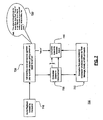
- FIG. 2 is a schematic diagram showing a mobile audio content delivery system according to an embodiment of the present invention.
- FIG. 3 is a schematic diagram showing a detailed mobile audio content delivery system and related computing network according to one advantageous embodiment of the present invention.
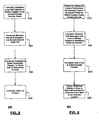
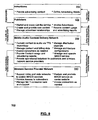
- FIG. 4 is a flow diagram depicting a use case for a particular access scenario that may be utilized by subscribers according to one particular embodiment of the present invention.
- FIG. 5 is a flow diagram depicting a use case for another access scenario that may be utilized by subscribers according to one particular embodiment of the present invention.
- FIG. 6 is a flow diagram depicting a use case for yet another access scenario that may be utilized by subscribers according to one particular embodiment of the present invention.
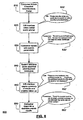
- FIG. 7 is a flow diagram depicting a use case for a typical subscriber advertisement experience that may be provided according to on particular embodiment of the present invention.
- FIG. 8 is a flow diagram depicting a use case for a typical subscriber interactive classified advertisement experience that may be provided according to a preferred embodiment of the present invention.
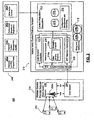
- FIG. 9 is a schematic diagram illustrating an operations model and related process flows and responsibilities for a preferred implementation of a mobile audio content delivery system according to embodiments of the present invention.
- FIG. 10 is a combination schematic and flow diagram showing information flows between various elements of a mobile audio content delivery system according to embodiments of the present invention.
- a first aspect of the present invention includes a process 100 for developing and delivering mobile-capable audio content to subscriber consumers using a mobile audio content delivery ("MACD") system of the present invention.
- the mobile-capable audio content delivery process 100 can be conceptualized as first having the MACD system obtain print media in various digital forms from content producers at step 110.
- the content is transformed from print digital media into a synthesized spoken audio recorded in a digital media format.
- the majority and/or all of the content in print digital format is converted via electronic TTS technologies that provide automated simulations of human speaking voices reading the digital print media.
- real-life celebrity or other syndicated readers can alternatively be utilized to record readings of certain print media into an audio file.
- the celebrity or syndicated readers will not be suitable for all situations as they will necessarily insert a lag-time into the process for converting digital print media into digital audio media and significantly increase costs.
- the mobile-capable audio content developed in steps 110 and 120 could be supplemented with other content in forms other than text, such as content already in audio and/or video format (pre-recorded radio shows, podcasts, commercial advertisement announcements, etc.).
- the process 100 may obtain digital audio files (i.e., content already in digital audio forma) for use by subsequent steps of the process 100.
- step 130 then proceeds with the mobile audio content delivery system tagging, cataloging, and storing the collected content in appropriate databases such that they be later accessed by subscriber consumers as needed.
- the mobile-capable audio content could be saved in a plurality of electronic databases as digital audio files that may be quickly searched to access particular content via metadata tags associated with each such digital file.
- the process 100 proceeds to deliver the mobile-capable audio content to a plurality of subscriber consumers via their own respective mobile devices (e.g., mobile telephones).
- a first mechanism could include an interactive voice recognition ("IVR") navigation module (such as is commonly encountered in many contemporary telephone help lines) serving as the interface for a computer-driven menu system.
- IVR interactive voice recognition
- consumers could also be provided with the option of utilizing the mobile web capabilities of their device/phone to browse various menus to review and select audio content.
- users could be provided with a third mechanism for selecting content which takes advantage of various text messaging capabilities (such as SMS or MMS messages sent daily to their customer serving as an updated table of contents).
- users may be provided the capability to define profiles, such as via a web site Internet portal associated with the MACD system, that define the type and timing of such instant messages.
- a first mechanism for consumption of the downloaded digital audio content can comprise playing that content over the mobile telephone's voice network during the course of a voice telephone call.
- a second alternative mechanism could include streaming the appropriate audio content files via unicast over a data network call to the user.
- the selected digital audio content could be downloaded via a data call or mobile web browsing , cached (or stored), and then played back locally by the subscriber immediately or at a later time.
- Process 100 concludes at step 150 with customer account reconciliation.
- step 150 denotes the tracking, cataloging and reconciling of content use and delivery on a publisher by publisher basis and on a consumer by consumer basis in order to reconcile charges between the various entities described above.
- the transformation at step 120 can optionally include a sub-step comprising a review of the transformed content wherein a person listens to the automatically created audio file while simultaneously reading the original print source of the content. This person can thereby note and flag for correction any apparent errors in the automatically generated audio content.
- FIG. 2 there is depicted in schematic form an example of a MACD system 200 adapted to compile and deliver mobile-capable audio content according to a first embodiment of the invention.
- system 200 includes a mobile audio content delivery network 210 in electronic communication with a wireless service provider network 230.
- wireless service provider network 230 may be, for example, any type of suitable mobile telephone network operated by a commercial service provider.
- This service provider could operate independent of the operator of the mobile audio content delivery network (i.e., a "MACD service provider"), or in partnership to provide its mobile phone subscribers with a service bundling option to utilize the services enabled by the MACD network 210.
- the MACD service provider operates the MACD network 210 independently of any mobile telephone service provider, and instead enables subscribers to its mobile audio content delivery services to access its content via any suitable wireless service provider network regardless or the service provider or carrier.
- wireless service provider network 230 could be any suitable network as is commonly used in conventional commercial cellular telephone networks.
- a network would include a radio access network 232, including a plurality of radio communication towers 232a and supporting equipment for enabling those towers to communicate with mobile electronic devices 250 (e.g., a mobile telephone, PDA, etc.) as they move among carious towers 232a arranged into a cellular network, and core network 234 that provides various features and services to the mobile electronic devices in communication with the radio access network.
- any one wireless communication network 230 may be in communication with one or more mobile devices 250, which mobile devices can include any type of mobile device (cell phones, PDAs, etc.) supported by that network 230.
- the core network 234 of the wireless communication network 230 as depicted in FIG. 2 therefore could include various conventional subsystems found in a conventional CDMA, GSM, TDMA, or other types of mobile telephone networks that are used to provide standard service features to cellular customers. While subsystems other than those necessary to achieve mobile telephony voice calls via the network 230 are not necessary for implementation of embodiments of the present invention as herein described, many common types of such subsystems would of course likely be present in the network 230 of a commercial mobile telephone service provider.
- the core network 234 could include an assisted GPS subsystem, a voicemail subsystem, and a push-to-talk subsystem although such subsystems provide no functionality ultimately necessary for mobile audio content delivery according to embodiments of the present invention.
- the core network 234 it will be advantageous for the core network 234 to have certain communication subsystems present in addition to standard telephony subsystems, which additional subsystems will enable subscriber consumers connecting via network 230 to be able to use various different mechanisms for communicating with the MACD network 210.
- SMSC short messaging service center subsystem
- subscriber consumers having suitably equipped mobile devices could utilize text messaging to interact with the MACD network 210 as described below.
- MMSC multi-media messaging service center subsystem
- subscriber consumers could utilize photo or video messaging features to interact with the mobile audio content delivery network 210.
- a WAP or other mobile wireless networking protocol subsystem would enable, for example, mobile web browsing or other data transmissions.
- a particular subscriber consumer interacts with the MACD network 210 will be necessarily limited by the capabilities of their mobile device 250 and the network services that are available to them at any given time.
- the MACD network 210 is in communication with various content sources 240.
- the content sources 240 could provide printed content from publisher websites and RSS feeds from the Internet 240a, print content stored in electronic publisher content management systems 240b, content from professional bloggers or podcasts 240c, and other content 240d already in audio form (such as provided by a publisher, or by advertisers in the form of commercial announcements).
- These various types of content from content sources 240 are communicated to the MACD network 210 at various times (such as by daily updates requested by the mobile audio content delivery network, "crawling" of the Internet, updates pushed by the publishers to the mobile audio content delivery network, and the like) where they are handled by the content acquisition subsystem 211 of the network 210.
- the content acquisition subsystem 211 will recognize this audio material and store and tag this content (according to acquisition and processing rules stored in a configuration database 214) in an appropriate content database 212.
- a content acquisition engine 211 of subsystem 211 typically will utilize TTS applications to automatically convert the digital print copy into a digital audio file.
- content acquisition subsystem 211 can utilize the TTS capabilities of commercially available digital audio content creation tools such as the Speechify application commercially offered by Nuance Communications Incorporated or other like applications such as those commercially offered by Fonix Speech Corp.
- digital audio content creation tools such as the Speechify application commercially offered by Nuance Communications Incorporated or other like applications such as those commercially offered by Fonix Speech Corp.
- those audio files are also stored in the content database 212 and tagged as appropriate.
- the source content database 212 is built to include a variety of content that would be attractive to a broad audience of potential customers.
- digital audio content files can be created in conventional form by utilizing an actor or other person to read particular print content for recording.
- Such conventionally created digital audio content would likewise be collected, tagged and stored in the content database 212 as dictated by the various configuration rules of the configuration database 214.
- content acquisition system 211 would further include a configuration management and monitoring interface 213 that would enable administrators to review and monitor content stored in content database 212 and to assign various configuration rules (to be stored in configuration database 214) that configure how the TTS tool and other engines of the content acquisition subsystem 211 collects, processes, tags, stores, and otherwise handles certain audio content.
- configuration database 214 various configuration rules that configure how the TTS tool and other engines of the content acquisition subsystem 211 collects, processes, tags, stores, and otherwise handles certain audio content.
- newly created files stored in content database 212 could optionally be reviewed for transformation accuracy relative to the original print content by an administrator tasked with that job using the interface 213.
- components, and features of the content acquisition subsystem 211, with databases 212 and 214 being broken into multiple databases and interface 213 being split into multiple interfaces serving various purposes, is described in further detail below with respect to FIG. 3 .
- the MACD network also includes means 220 for mobile users to interface with the mobile audio content delivery network 210 and browse and retrieve desired content from the content database 212.
- Such means would include an initial service interface 219 that interacts directly with (consumer generated) requests from the wireless communication network 230 and one or more back end components enabling the particular types of navigation and communication by subscriber consumers.
- These components could include, as depicted, an audio streaming subsystem 217, a web server subsystem 216, and an IVR telephony interface 215. Browsing and/or content requests from subscriber consumers are fed as needed to various different components of the MACD network 210.
- a web server system 216 could be utilized to provide multi-channel user interface capabilities with the content database (such as when a potential user navigates through content utilizing a WAP wireless web gateway via a web serving engine 216a or text messaging via a messaging engine 216b as depicted).
- an IVR telephony interface 215 can be utilized where a particular mobile user desires to browse and navigate the content repository utilizing IVR voice commands over a standard voice telephone call from a wireless telecommunication network (e.g., network 230).
- the mobile audio content delivery network 210 could also include an audio streamer system 217 configured to provide audio media content via digital unicasts.
- the particular embodiment of a MACD network 210 as depicted in FIG. 2 also includes a billing and settlements subsystem 218 that interacts with the service interface 219.
- Subsystem 218 monitors which users (i.e., devices 250) of the wireless communication network 230 utilize which content from the content acquisition subsystem 211 and cross-references that monitored usage with subscriber, content provider, and advertiser agreements data stored in agreements database 218a.
- the cross-referencing is used to create usage records and billing notations that are stored in a settlements database 218b such that they can be used for billing reconciliation.
- appropriate payments can be arranged to content sources 240 and (depending upon billing arrangements with the end user consumers) bills for the various subscriber consumers and advertisers of the MACD network 210 can be adjusted as appropriate.
- compensation can be determined for the content providers in situations where their compensation for use of their content is variable based upon the amount of times it is delivered to subscriber consumers.
- FIG. 3 there is depicted a functional component overview of another embodiment of a MACD system 300 according to the present invention.
- the content flows from the content production stage (at the far left), through subsequent stages of content acquisition, content preprocessing, information and content storage, navigation and delivery, and finally to a consumption stage (on the far right) where mobile-capable audio content is delivered to mobile devices 350 of a subscriber consumer.
- MACD system 300 contains three basic elements, a MACD network 310, a wireless communication network 330 (for communicating with mobile devices 350 of end user subscribers as depicted), and various content producing inputs 340.
- FIG. 3 depicts the MACD network 310 in additional detail relative to FIG. 2 and therefore should be considered in conjunction with FIG. 2 as an example of various components and elements, including multiple databases, engines, and interfaces according to one particularly suitable embodiment of the invention, for performing the particular functions and providing the particular features described herein.
- the content inputs 340 can be of various types from various different publishers, including print stories/articles or other print content on publisher's website 342, RSS ("really simple syndication") feeds 344 of print media content, print content stored on legacy content management systems 346 of publishers, or digital audio content 348 already made by a publisher.
- RSS is a standardized form of XML-encoded text commonly used in publication to enable the rapid exchange of publication materials in a common electronic format. It provides users with a link to a printed publication in electronic format and provides a title and a short synopsis.
- Content management systems 346 are the internal systems used by the publishers to store their content.
- the content acquisition subsystem in embodiments of the present invention to have direct electronic access to such content management systems and the stored content.
- Such systems often contain, in addition to the information, meta data concerning, for example, when the article was written, how many words it has, when it was first published, authors, keywords, and the like.
- Publisher audio based content 348 includes any kind of pre-recorded audio content, including podcasts, clips of radio programs, and the like.
- Advertiser audio content 360 comprises audio advertisements (similar to radio advertisements, including traditional 15-second and 5-second spots). Such advertisements can be sourced from publishers (e.g., where a publisher requires or requests that a certain advertisement be run with certain piece of print content upon mediacast), or from third party advertisers. Thus, as shown in FIG. 3 , advertiser content in the form of advertiser digital audio files is also a source of content that can be regularly transferred into the content acquisition subsystem of the mobile audio content delivery network 310 as described below.
- content sources can take the form of print media (e.g., newspapers, magazines, and on-line text content), audio content (e.g., podcasts, music (i.e. individual songs, albums or radio programming), and audio from talk/news radio and TV programming), location-based information (e.g., weather and/or traffic reports, restaurant and entertainment listings and guides), email, internet web logs (i.e., "blogs"), interactive educational or self help courses (e.g., continuing education, textbook supplements for college and high school, language learning, and religious materials), business/work content (e.g., real-time information (e.g., stock quotes, breaking corporate news), real-time company data (e.g., sales metrics), and analyst reports and industry research, and company training courses).
- print media e.g., newspapers, magazines, and on-line text content
- audio content e.g., podcasts, music (i.e. individual songs, albums or radio programming), and audio from talk/news radio and TV programming
- location-based information e.g.
- embodiments of the present invention could additionally support and distribute other types of audio content.
- audio content can include traffic and weather forecasts, enterprise and commercial training and education materials, university lectures for students, restaurant entertainment listings and guides, and the like.
- the media files obtained from the content inputs 340 and advertiser audio content 360 flow into various elements of the MACD network's content acquisition subsystem, which, in the particular embodiment depicted includes both a content acquisition engine 311a and a content preprocessing engine 311b.
- the entertainment content is collected from the various inputs 340 and advertisers 360.
- the collection is a largely automated process undertaken by the content acquisition engine 311a which collects contents via various mechanisms from various inputs as dictated by content acquisition rules stored in a content acquisition database 314a.
- the rules in this database are defined and revised periodically by administrators of the network 310 using a content processing management interface 313a.
- the content acquisition engine 311a forms an important part of the content acquisition subsystem, and is a computer program that is adapted to identify and collect digital print content from the content inputs 340 of participating publishers, and optionally advertising content 360.
- the engine 311a is preferably capable of obtaining new content on a scheduled "pull" basis and on an unscheduled "push” basis without requiring significant interaction by administrators of the mobile audio content delivery network 310.
- new print content can be downloaded on a scheduled basis (such as from publisher's websites or content management systems) and converted to a daily feed of headlines, or content can be actively submitted by publishers as desired, such as for breaking news stories.
- the operation of engine 311a can be controlled by administrators of the MACD network 310 using interface 313a to define acquisition rules for how and from where to collect print and/or audio content, which rules are then stored in acquisition engine database 314a where they are continuously available to engine 311a.
- the media file inputs collected by the content acquisition engine 311a flows into the content preprocessing engine 311b.
- This content preprocessing engine 311b performs any necessary TTS conversions for the content acquisition subsystem, and engine 311b will typically comprise a commercial TTS conversion application.
- the TTS application will communicate with a lexicon database 314d to convert digital media print content into audio format according to various preprocessing rules contained in preprocessing rules database 314b.
- the lexicon database 314d is specifically adapted for the particular TTS conversion application selected, and contains the various sounds, voices, and other components that support the translation of print media content into synthesized spoken audio content by the content preprocessing engine 311b. Additionally, the preprocessing rules database 314b is also accessed by the preprocessing engine 311b during content preprocessing. Database 314b enables administrators of the mobile audio content delivery network 310 to define specific content preprocessing rules relating to how certain printed words will be treated by the content preprocessing engine 311b under certain circumstances. This, for example, allows augmentation to the lexicon database 314d for the pronunciation of words on a context-related basis.
- the name can have a defined pronunciation in the rules database 314b.
- a name could have multiple pronunciations and the rules database 314b can be utilized by administrators to define various context based rules that determine when to use one pronunciation relative to the other.
- some acronyms are commonly pronounced similar in manner to a spoken word while other acronyms are spoken by reciting the individual letters making up the acronym.
- the rules in the preprocessing rules database could likewise be used to identify such rules on a context-sensitive basis in order to provide an audio recording having the most realistic synthetic spoken recitation of the original print content being processed.
- the content preprocessing engine 311b has the capability to handle TTS conversions phonetically on an as-needed basis.
- the rules database 314b enables the engine 311b to know whenever it encounters a particular text string whether to utilize a perfect word match as defined by the preprocessing rules database 314b or to sound it out using the standard rules of the TTS conversion application (defined in lexicon database 314d) depending upon the type of content (subject area, content provider source, etc.) that is being processed.
- Content acquisition subsystem of network 310 additionally includes a processing management interface (e.g., a front end application for use by administrators) that enables users to interact with the scheduling and source database 314a and the preprocessing rules database 314b.
- a processing management interface e.g., a front end application for use by administrators
- content preprocessing engine 311b converts incoming print media into synthesized audio media in a queued fashion, it may be necessary or desired at times to convert certain print media into digital audio media on a faster basis.
- the processing management interface 313a can allow administrators of the network 310 to dictate that certain types of print content (e.g., breaking news), certain publisher's content, or even certain particular pieces of content be given a higher priority for being processed by engine 311b into synthesized audio. In this manner, for example, current news articles could be given a higher conversion priority than classified advertisements, which in turn are given a higher priority than archived articles.
- the audio media files proceed to information and content storage, as depicted in FIG. 3 .
- the various audio media files are stored in either a content repository database 312a or an advertisement repository database 213b, where they are tagged such that they can be easily accessed, retrieved, and delivered during the next navigation and delivery stage.
- Content repository database 312a is the primary database of the content acquisition subsystem as it contains all of the synthesized or pre-prepared audio content (e.g., WAV files, MP3 files) for synthesized audio content, plus any associated meta data for the audio files (e.g., publisher, author, subject, information).
- Advertisement repository database 312b likewise contains all of the audio files and meta data for the advertising spots.
- a presentation management interface 313b is provided to administrators of the network 310.
- This interface 313b permits the administrator to define navigation, prompting, presentation, and advertisement insertion rules (NPPAIR) in a NPPAIR database 314c, which rules help sort the audio content and advertisement files in databases 312a and 312b into readily searchable and accessible categories to make content easier to locate for subscriber consumers-Further, database 314c contains rules for inserting the advertisement content within audio content during delivery, as described below, and interface 313b enables MACD network administrators to set these rules.
- NPPAIR navigation, prompting, presentation, and advertisement insertion rules
- embodiments of the present invention may implement targeted advertising to generate revenues for publishers, operators of the mobile audio content delivery network, and cellular service providers.
- Content and advertising repository database 312 is also adapted to store and catalog advertising audio files for delivery to users as dictated by advertisement insertion rules stored by an administrator in the NPPAIR database 314c.
- IVR subsystem denoted telephony interface in FIG. 3
- That IVR subsystem will automatically identify that the user is browsing (e.g., using a mobile web application) with a particular type of device.
- the IVR system may be augmented to establish a multi-modal session going across multiple machine interfaces for browsers and voice/data calls by pushing the user directly into a call for immediate delivery of the requested content.
- a subscriber consumer therefore is not required to navigate via initial voice navigation menus upon initiation of the call into the IVR telephony interface 315, but rather is taken directly into delivery of the requested content (or brought to the lowest level voice navigation menu to confirm delivery of the requested content).
- a user could use various features of the system 300 to configure various short cuts for obtaining the types of content they want. For example, a user that likes to read the lead articles of a particular newspaper every morning (or other type of frequently updated print content), could request that a series of text messages get pushed to his or her device identifying recently published articles of potential interest. In this regard, one user could get the headlines delivered for the politics section of a newspaper while a second user could request to be notified of any new articles across a wide variety of publishing sources regarding a particular topic, such as business articles on a particular industry of interest.
- the user could review their customized content list on his or her device and then initiate delivery of interesting content by a single action on their telephone.
- a similar direct navigation approach to bypass the initial IVR menus of the IVR telephony interface could be provided through WAP or other forms of mobile web.
- FIG. 4 , FIG. 5, and FIG. 6 depict different use cases for particular access scenarios that may be supported by the multi-modal interface according to one preferred embodiment of the present invention. Such use cases are described below in detail.
- this interface 319 includes a web portal that provides individual password-protected accounts for each subscriber consumer once they register to use the MACD service. These accounts would enable the subscriber consumers to update their preferences regarding content choices , content navigation, and content delivery, as well as account billing, and have those preferences stored in a subscriber profile database 316a, which database in turn is accessible by the various networking elements of the delivery means 320.
- a MACD network 310 may also comprise one or more web servers that support this subscriber web portal to provide subscriber consumers with a self-service mechanism for updating their subscription and account information.
- a home page could be provided that identifies and describes the various types of content, the different publishers, and the different levels of subscriptions that are available for premium content. Additionally, if a particular user is considering subscribing to a given publisher, he or she can be provided with information regarding costs, a free sample of content, and/or an option to update his or her service agreement by subscribing to a particular content/publisher or canceling a current subscription. Additionally, the web portal may provide a capability to users to review reports regarding what content types of content they have recently used, such as a report detailing what content from which publishers a given user has listened to in the previous month or to configure their profile. Furthermore, users may be permitted to configure notification parameters to define what types of articles they want to receive instant text message notifications about.
- NPPAIR database 314c contains various delivery rules defined via the presentation management interface 313b by administrators that define various ways how the content stored in the content repository database 312a is used. These delivery rules, for example, define how all content for a particular publisher will be organized and presented to subscribers for navigation. A newspaper publisher may wish for its mobile-capable audio content to be presented to subscribers organized in a manner that parallels their print presentation of that content. A given publisher, for example, in this manner might want its mobile-capable audio content organized by front page articles, editorials, sports, life, technology, money, financial, etc. NPPAIR database 314c also provides any given advertiser with the ability to define delivery rules that dictate how advertisements in advertisement repository database 312b are positioned with respect to its mobile-capable audio content.
- a particular publisher might request (and a suitable delivery rule would be defined to ensure) that a first piece of advertising is run X number of times a second piece of advertising is to run Y number of times, but that the first should be run at certain times of day for a certain topical area of content while the second is run only to subscribers calling from a limited geographic and requesting content from a different topical area.
- publishers can accommodate wishes of their advertisers to make certain that, for example, medical advertisements are run with content categorized into the lifestyle or technology sections, while advertisements for financial services by a brokerage house are run with content taken from that publisher's financial section.
- the navigation and delivery system of the mobile audio content delivery network will not only insert advertisements into delivered content (such as placing a selected ad before a requested article while providing the user with the chance to "opt out” of listening to the entire advertisement by the pressing of a key on their keypad), but will also track advertisement information and content usage information to increase the effectiveness of the advertising using an analytics engine within the delivery means 320.
- the analytics engine 3 automatically tracks to what types of content particular subscriber consumers frequently listen and stores that information user demographics information within or otherwise associated with subscriber profile database 316a so that that usage information may be analyzed to increase the effectiveness of advertising.
- the demographics information thus identifies which subscribers access what content, when they accessed it, and what portions they listened to so as to provide multidimensional analyses to advertisers and publishers that report how many customers listen to advertisements of a certain type, or placed along certain types of content, the frequency of "click-through” or “speak-through” interactions with advertisements, etc.
- the information collected and stored in the subscriber profile database 316a of the MACD network 310 would enable conclusions to be drawn regarding the types of information, products, and services that would be of high interest to a given user.
- By tracking what kind of mobile audio content delivery content to which a given user listens one can make educated guesses regarding whether a user is interested in sports, home care, politics, and the like. Understandably, such information could also provide insight into a particular subscriber's gender, income, and age.
- Such information will allow advertisers to target particular advertisements specifically at users in conjunction with or independent of demographic (or geographic) information provided by the cell phone company.
- mobile audio content delivery network 310 includes an accounting and settlements interface 318 that enables administrators to generate and provide reports from the settlements database 316b. These reports could be produced regularly, such as at the end of the month, to participating publishers, advertisers and/or wireless service providers summarizing the number of subscribers to the mobile audio content delivery over the last month, the number of advertisements run, etc., and generates invoices requesting payments according to service level agreements for the advertisements, usage agreements, and content arrangements. Publishers and advertisers will find such reports helpful as they will describe how many subscribers consumed particular types of content, how many click-throughs/speak-throughs were experienced with given ads. Publishers could also utilize such reports to set expectations for revenue sharing for upcoming months, and operators of the mobile audio content delivery network could utilize such reports to justify charges to publishers and/or advertisers.
- publishers as well as the advertisers may operate jointly or separately with regard to associating advertisements with content.
- established publishers can rely upon their existing advertising relationships to schedule advertisements for their content presented in the mobile audio content delivery format.
- a publisher could dictate what content gets configured for mediacast delivery and what exact advertisements get paired with particular mobile-capable audio content.
- multiple publishers and/or a mobile audio content delivery service provider may collectively approach advertisers directly for cultivating group advertisement relationships specific to the mobile audio content delivery content area. Publishers then don't have to go out and manage advertising relationships.
- it would be expected that publishers and/or advertisers would still place restrictions preventing associations with certain advertisers, certain content areas, etc., allowing publishers and advertisers to opt-in and opt-out with respect to with whom they deal.
- FIG. 4 there is depicted a flow diagram depicting a sample process 400 by which a subscriber consumer according to one particular embodiment of the present invention could interact with an IVR telephony interface of a MACD network.
- the subscriber consumer is using the handsfree feature of his mobile telephone at step 410 (such as with a Bluetooth or wired headset), and places a regular voice telephone call to a telephone access number associated with the MACD service at step 420.
- This telephone call connects the consumer to the IVR telephony interface of the MACD network, which prompts the consumer with audio commands to speak certain navigation commands at step 430 to identify and select appropriate content and to begin playback, as reflected in sample script 430'.
- the consumer thereafter listens to the selected content at step 440, and the user terminates playback either by using present IVR interface commands (e.g., "stop playback") or by hanging up at step 450.
- present IVR interface commands e.g., "stop playback
- FIG. 5 is a flow diagram depicting a second sample process 500 by which a subscriber consumer according to one particular embodiment of the present invention could interact with a mobile web (e.g., WAP) interface of a MACD network via their mobile device.
- Process 500 begins with the subscriber consumer navigating using the WAP browser of their mobile telephone at step 510 to a mobile web portal associated with the MACD service.
- the consumer browses at step 520 menus of available content, makes various menu choices, and eventually selects one or more desired audio files.
- the consumer is prompted after making the content selection(s) to select how they want to receive the content (i.e., download, stream, playback via voice call, etc.).
- the consumer thereafter listens to the content at step 540 in the manner dictated by the selection at step 530.
- FIG. 6 is a flow diagram depicting a third sample process 600 by which a subscriber consumer according to one particular embodiment of the present invention could utilize the subscriber web portal to simple audio content selection and playback.
- the subscriber consumer logs in to his personal account on the MACD service's web portal and configures content preferences, including the identification of certain types of content for which he desires to receive notifications.
- the consumer later receives a text message on his mobile telephone from the MACD service. This text message provides links (such as mobile web URL addresses that link directly to a content page) for each content file that meet the criteria preset by the consumer.
- the user uses the links to select desired content, which, for example, could automatically launch the mobile web client of the consumer's mobile telephone and direct it to a particular URL for the selected content or a specific URL for the consumer.
- desired content for example, could automatically launch the mobile web client of the consumer's mobile telephone and direct it to a particular URL for the selected content or a specific URL for the consumer.
- the mobile telephone could initiate a voice or data call to the MACD network at step 640, which call is automatically detected by the MACD network and causes immediate playback of the associated content.
- FIG. 7 provides a flow diagram depicting a sample advertisement process 700 that may be provided according to a preferred embodiment of the present invention.
- Process 700 starts at step 710 with the audio content playback being initiated by the subscriber consumer (such as according to the voice call mechanism illustrated above in FIG. 4 ).
- the IVR telephony interface announces the sponsor immediately prior to audio content playback at step 720 using a pre-recorder advertisement announcement script 720'.
- the user at any time may say "skip ad," which command will transition the consumer immediately from listening to the advertisement (step 730) to listening to the selected article (step 740).
- step 740 If the consumer listens to the entire advertisement at step 730 without saying "skip ad,” then playback of the selected article begins (step 740). Further, as depicted in FIG. 7 , at any time during playing of the advertisement, the consumer may use one or more IVR interface voice commands to request additional information regarding the advertisement (such as via text message or email), or follow up on the advertisement by, for example, placing e-commerce orders.
- FIG. 8 provides a flow diagram depicting an interactive classified advertisement process 800 that may be provided according to a preferred embodiment of the present invention.
- Process 800 utilizes the example of someone looking for a new rental home, and begins with a subscriber consumer entering a classified advertisement section of the MACD service at step 810, such as by using the IVR telephony interface.
- the consumer is prompted by the IVR interface to speak into his classified advertisement query at step 820 (such as by prompt script 820).
- the consumer replies verbally with his search parameters, for example describing his need for a rental home in northwest Washington, DC having a maximum rent of $2,000 (as reflected in reply script 830').
- the IVR interface would then interact with a classified advertisements search engine at step 840 to parse the verbal search parameters perform a search for classified advertisements for rental homes meeting that qualification and then begin to read them back over the telephone. Understandably, this search could access a variety of online databases in real time.
- the IVR interface provides a summary of results (such as by reading summaries of each match as shown in results script 850'), and enables follow up by the subscriber. Subscribers could use voice commands such as "next,” “back,” “repeat,” “delete” or “save” to sift through the search results. Also, for example, if the user wanted more information on a given advertisement, he or she could respond at step 860 by speaking a request for follow up actions or information (see response script 860' in FIG. 8 ).
- a newspaper publisher may often do reviews of restaurants and movies. Understandably, such reviews form suitable print content that can be converted into mobile-capable audio content like many other topical areas of print content.
- Such reviews in particularly preferred embodiments of the invention can also be made interactive in much the same manner as classified advertisements are.
- such preferred embodiments of the invention may allow subscribers to link from a review of a concert or some other kind of an event (e.g., a movie), or even if it's not a review but rather a listing of a concert or an event, to an e-commerce ticketing capability for that same event.
- an event e.g., a movie
- the mobile audio content delivery network can optionally include speech-to-text (“STT") capabilities integrated within the IVR menu options.
- STT speech-to-text
- users it would be possible for users to dial into the mobile audio content delivery network via their mobile device and record voice messages which are then converted into text by, for example, a commercial STT software application.
- the mobile audio content delivery network would be able to be used by registered users as a means for converting audio notes into text messages that can be stored on their telephone (or received at a preset time in the future as dictated by the user).
- Such functionality could be useful for the preparation of, for example, shopping lists and other reminders.
- FIG. 9 there is depicted an operations model 900 that depicts the various process flows and responsibilities for advertisers 910, publishers 920, the MACD network 930, and the wireless service provide network 940 according to embodiments of the present invention.
- each entity e.g., 910-940
- FIG. 10 is a combination schematic and flow diagram that further illustrates these information flows between various entities that interact in the mobile audio content delivery system.
- MACD system 1000 connects one or more subscriber consumers 1050 who have mobile devices adapted to communicate via the networks of one or more wireless network service providers 1030 with the MACD network operated by the MACD network service provider 1010.
- the MACD network service provider 1010 deals directly with content providers and advertisers 1040.
- the various arrows between entities 1010-1040 distinguish between information exchanges relating to content collection, production, and delivery (solid arrow lines), and information exchanges relating to support functions, such as billing and usage data (dotted arrow lines).
- the content providers and advertisers 1040 interact only with the MACD service provider 1010 by providing content (flow 1100d) in the form of text or audio media.
- the content providers receive payment for use of the content (flow 1100a), and the advertisers make payments for placement of their announcements (flow 1100b).
- the MACD service provider 1010 could provide periodic advertisement impact analyses, customer data, and other such financial reports (flow 1100c) to the advertisers.
- Various flows also connect the wireless network service providers 1030 with the MACD service provider 1010 as shown in FIG. 10 .
- the MACD service provider 1010 delivers mobile-capable audio content (flow 1100j) and submits customer billing data (flow 1100m) to the wireless network service providers 1030, while it in turn simultaneously collects customer usage data (flow 1100k) and receives payments for use of the MACD services (flow 1100n) from the providers 1030.
- the subscriber consumers 1050 interact with the wireless network providers 1030 in various ways. As shown, the subscriber consumers 1050 select, receive and/or listen to mobile-capable audio content (flows 1100i and 1100h) via the wireless network service providers 1030, and receive and pay invoices relating to usage of the wireless network (flows 1100f and 1100g).
- the MACD service provider also provides various customer care functions (flow 1100e) to the subscriber consumers, as depicted.
- Various processes and methods described herein may be implemented using software stored in the memory for execution by suitable processors.
- the mobile devices and/or servers may implement such processes and methods in hardware or a combination of software and hardware, including any number of processors independently executing various programs and dedicated hardware, such as application specific integrated circuits (ASICs), field programmable gate arrays (FPGAs), and the like.
- ASICs application specific integrated circuits
- FPGAs field programmable gate arrays
Landscapes
- Engineering & Computer Science (AREA)
- Signal Processing (AREA)
- Computer Networks & Wireless Communication (AREA)
- Business, Economics & Management (AREA)
- Accounting & Taxation (AREA)
- Development Economics (AREA)
- Strategic Management (AREA)
- Finance (AREA)
- Game Theory and Decision Science (AREA)
- Entrepreneurship & Innovation (AREA)
- Economics (AREA)
- Marketing (AREA)
- Physics & Mathematics (AREA)
- General Business, Economics & Management (AREA)
- General Physics & Mathematics (AREA)
- Theoretical Computer Science (AREA)
- Mobile Radio Communication Systems (AREA)
- Information Transfer Between Computers (AREA)
Claims (30)
- Mobiles System (200, 300) zur Lieferung von Audioinhalten ("MACD") zum Sammeln und Umwandeln von Druck- bzw. Printmedien und Liefern dieser Medien in der Form von Audioinhalten an eine Vielzahl von Teilnehmern, wobei das MACD-System (200, 300) umfasst:ein oder mehrere drahtlose Dienstanbieternetze (230, 330), wobei die drahtlosen Dienstanbieternetze (230, 330) einen drahtlosen Kommunikationszugang zu den Teilnehmern über Mobilvorrichtungen (350) bereitstellen und ein Mobiltelefon-Kernnetz (234) umfassen;eine oder mehrere Printmedien-Eingangsquellen, welche die Printmedien herstellen; undein MACD-Netz (210, 310) in elektronischer Kommunikation mit den drahtlosen Dienstanbieternetzen (230, 330), wobei das MACD-Netz (210, 310) umfasst:ein Inhalterfassungsteilsystem (211), das geeignet ist, die Printmedien von den Eingangsquellen zu sammeln, und das eine Inhaltverarbeitungsmaschine zum Umwandeln der gesammelten Printmedien in Audioinhaltsdateien umfasst;eine Inhaltsablagedatenbank (212) zum Speichern der Audioinhaltsdateien,Mittel, um die Audioinhaltsdateien auf Anforderung über die drahtlosen Dienstanbieternetze (230, 330) an die Mobilvorrichtungen (350) der Teilnehmer zu liefern; undeine Analytikmaschine (3) zum automatischen Verfolgen, welche Arten von Inhalt ein Teilnehmer häufig anhört, und Speichern dieser Information als Benutzerdemographieinformation in einer Teilnehmerprofildatenbank (316a),wobei das Mittel zum Liefern der Audioinhaltsdateien eine multimodale Schnittstelle (220) umfasst, die den Teilnehmern ermöglicht, verschiedene Mechanismen zum Überfliegen, Navigieren und Auswählen gewünschter Audioinhaltsdateien aus der Inhaltsablagedatenbank (212) zu nutzen und die gewünschten Audioinhaltsdateien abzuspielen, undwobei das Mittel zum Liefern geeignet ist, Textnachrichten an Mobilvorrichtungen (350) eines Teilnehmers zu senden, um den Teilnehmer in Bezug auf neue Audioinhaltsdateien zu benachrichtigen, welche die von dem Teilnehmer vorab festgelegten Kriterien für eine bevorzugte Art von Inhalt erfüllen, für welche der Teilnehmer Benachrichtigungen empfangen möchte.
- MACD-System (200, 300) nach Anspruch 1, wobei die multimodale Schnittstelle eine erste Dienstschnittstelle (219), die geeignet ist, um mit dem drahtlosen Dienstanbieternetz (230, 330) zu kommunizieren, und eine interaktive Spracherkennungs- ("IVR"-) Telefonieschnittstelle (215) umfasst, die ein sprachbetätigtes Menüsystem für die Interaktion mit Teilnehmern unterstützt.
- MACD-System (200, 300) nach einem der vorhergehenden Ansprüche, wobei die multimodale Schnittstelle ferner ein Audiostreamersystem (217) für das Streaming der gewünschten Audiodateien über Anrufe umfasst, die von Mobilvorrichtungen (350) über das drahtlose Dienstanbieternetz (230, 330) eingeleitet werden.
- MACD-System (200, 300) nach einem der vorhergehenden Ansprüche, wobei die multimodale Schnittstelle eine erste Dienstschnittstelle (219) umfasst, die geeignet ist, mit dem drahtlosen Dienstanbieternetz (230, 330) und dem Webserver-Teilsystem mit Datenaustauschmaschinen (216a, 216b) und Webservermaschinen zu kommunizieren, wobei das Webserver-Teilsystem die Teilnehmer in die Lage versetzt, mit diesem Mittel zur Lieferung unter Verwendung mobiler Webprotokolle zu kommunizieren.
- MACD-System (200, 300) nach einem der vorhergehenden Ansprüche, wobei das MACD-Netz (210, 310) ferner ein Gebührenerfassungs- und Abwicklungsteilsystem (218) in elektronischer Kommunikation mit dem Mittel zur Lieferung umfasst, wobei das Gebührenerfassungs- und Abwicklungsteilsystem (218) eine Abwicklungsdatenbank umfasst, wobei das Gebührenerfassungs- und Abwicklungsteilsystem (218) geeignet ist, die Teilnehmerinteraktion mit dem MACD-Netz (210, 310) als Inhaltsdateneinträge, die beschreiben, welche Audioinhaltsdateien geliefert werden, in der Abwicklungsdatenbank (218b) zu verfolgen.
- MACD-System (200, 300) nach Anspruch 5, wobei das Mittel zur Lieferung geeignet ist, Ankündigungs- bzw. Werbungsdateien mit gewünschten Audioinhaltsdateien an Teilnehmer zu liefern, und das Gebührenerfassungs- und Abwicklungsteilsystem (218) ferner geeignet ist, die Teilnehmerinteraktion mit den gelieferten Werbungen als Werbungsdateneinträge in der Abwicklungsdatenbank (218b) zu verfolgen.
- MACD-System (200, 300) nach Anspruch 6, wobei das Gebührenerfassungs- und Abwicklungsteilsystem ferner geeignet ist, um Gebührenerfassungsberichte in Bezug auf die Inhaltsdateneinträge und die Werbungsdateneinträge von der Abwicklungsdatenbank zu erzeugen.
- MACD-System (200, 300) nach Anspruch 7, wobei wenigstens eines der drahtlosen Dienstanbieternetze (230, 330) mit dem MACD-Netz (210, 310) einen Vertrag geschlossen hat, um MACD-Dienste an mobile Nutzer des wenigstens einen drahtlosen Dienstanbieternetzes (230, 330) bereitzustellen, und wobei die Gebührenerfassungsberichte regelmäßig an das wenigstens eine drahtlose Dienstanbieternetz (230, 330) übertragen werden, um Rechnungen für einen der mobilen Nutzer zu erzeugen, die MACD-Dienste abonnieren.
- MACD-System (200, 300) nach Anspruch 6, 7 oder 8, wobei das Gebührenerfassungs- und Abwicklungsteilsystem ferner geeignet ist, demographische Berichte in Bezug auf spezifische Teilnehmer basierend auf den Inhaltsdateneinträgen und den Werbungsdateneinträgen aus der Abwicklungsdatenbank (218b) zu erzeugen, wobei die demographischen Berichte nützlich sind, um mit Werbungsdateien auf die spezifischen Teilnehmer zu zielen.
- MACD-System (200, 300) nach einem der vorhergehenden Ansprüche, wobei das MACD-Netz (210, 310) ferner eine Teilnehmer-Nutzerschnittstelle einschließlich eines sicheren Webportals umfasst, wobei Teilnehmer Vorlieben für Inhalte, Vorlieben für Lieferungen und Kontoverwaltungsinformationen für das MACD-Netz (210, 310) festlegen und aktualisieren können.
- MACD-System (200, 300) nach Anspruch 10, wobei die Vorlieben für Inhalte eine Identifikation für bevorzugte Typen von Audioinhalt umfassen, zu denen ein gegebener Teilnehmer einen vereinfachten Zugang wünscht.
- MACD-System (200, 300) nach Anspruch 11, wobei der vereinfachte Zugang individuell angepasste Menüauswahlen umfasst, die dem gegebenen Teilnehmer über eine interaktive Spracherkennungs- ("IVR"-) Telefonieschnittstelle (215) oder eine mobile Webzugriffsseite verfügbar gemacht werden.
- MACD-System (200, 300) nach Anspruch 1, wobei die Textnachrichten Links enthalten, die den gegebenen Teilnehmer dabei unterstützen, den vereinfachten Zugang und die anschließende Lieferung des neuen Audioinhalts herbeizuführen.
- MACD-System (200, 300) nach Anspruch 1, wobei die Printmedien-Eingangsquellen klassifizierte Werbungen enthalten und wobei das Mittel zur Lieferung Mittel für Teilnehmer umfasst, um Durchsuchungen der klassifizierten Werbungen auszuführen und die Suchergebnisse anzuhören.
- MACD-System (200, 300) nach Anspruch 14, wobei das Inhaltserfassungssystem (211) eine Inhaltserfassungsmaschine umfasst, die von einer Datenbank mit vorab festgelegten Zeitablauf- und Quellenregeln gesteuert wird, um automatisch Printmedien elektronisch von den Quellen zu sammeln und die gesammelten Printmedien an eine Inhaltsvorverarbeitungsmaschine zu überführen.
- MACD-System (200, 300) nach Anspruch 15, wobei die Inhaltsvorverarbeitungsmaschine (311b) von einer Datenbank mit vorab festgelegten Vorverarbeitungsregeln gesteuert wird, welche eine kontextsensitive Behandlung für das Umwandeln der Printmedien in Audioinhaltsdateien vorschreiben.
- MACD-System (200, 300) nach Anspruch 1, wobei das MACD-Netz (210, 310) ferner eine Darstellungsverwaltungsschnittstelle für die Verwendung von Administratoren umfasst, um Regeln für das Einfügen von Werbung in die Lieferung der gewünschten Audioinhaltsdateien vorzuschreiben.
- MACD-System (200, 300) nach Anspruch 17, wobei das Mittel zur Lieferung eine erste Dienstschnittstelle (219), eine interaktive Spracherkennungs-("IVD"-) Telefonieschnittstelle, ein Webserver-Teilsystem und ein Audiostreamersystem (217) umfasst.
- MACD-System (200, 300) nach Anspruch 1, wobei die Printmedien-Eingangsquellen Herausgeber-Webangebote (240a, 342), Really-Simple-Syndication- ("RSS"-) Internet-Feeds (240a, 344), Herausgeber-Content-Managementsysteme (240b, 346) und professionelle Blogger-Webseiten (240c) umfassen.
- MACD-System (200, 300) nach Anspruch 1, wobei das Inhaltserfassungssystem ferner geeignet ist, um Medieninhalte, die bereits im Audioformat sind, zu sammeln, welche aus der Gruppe ausgewählt sind, die aus Podcasts und Werbeanzeigen bestehen.
- Mobiles Verfahren zur Lieferung von Audioinhalten ("MACD") zum Sammeln und Umwandeln von Printmedien und Liefern dieser Medien in der Form von Audioinhalten an eine Vielzahl von Teilnehmern über Mobilvorrichtungen, die mit einem oder mehreren drahtlosen Dienstanbieternetzen verbunden sind, wobei das MACD-Verfahren umfasst:Einrichten eines MACD-Netzes (210, 310), wobei das MACD-Netz (210, 310) ein Inhalterfassungsteilsystem (211) umfasst, das eine Inhaltsverarbeitungsmaschine, eine Inhaltsablagedatenbank (212), Mittel zur Lieferung von Audiodateien und eine Analytikmaschine umfasst;elektronisches Sammeln digitaler Printmedien mit dem Inhalterfassungsteilsystem (211) aus einer oder mehreren Eingangsquellen;Umwandeln der gesammelten digitalen Printmedien in Audioinhaltsdateien mit der Inhaltsverarbeitungsmaschine;Speichern der Audioinhaltsdateien in der Inhaltsablagedatenbank (212), wobei die gespeicherten Inhaltsdateien in der Inhaltsablagedatenbank (212) gemäß Inhaltskategorien ausgezeichnet und katalogisiert werden;automatisches Verfolgen durch die Analytikmaschine, welche Arten von Inhalt ein Teilnehmer häufig anhört, und Speichern dieser Information als benutzerdemographische Information in einer Teilnehmerprofildatenbank;Empfangen von Anforderungen von Teilnehmern über ein drahtloses Dienstanbieternetz (230, 330), wobei die drahtlosen Dienstanbieternetze (230, 330) Teilnehmern über Mobilvorrichtungen (350) der Teilnehmer einen drahtlosen Kommunikationszugang bereitstellen, wobei die Anforderungen sich auf bestimmte Audioinhaltsdateien beziehen, die in der Inhaltsablagedatenbank (212) gespeichert sind; undLiefern der bestimmten Audioinhaltsdateien von der Inhaltsablagedatenbank (212) über das drahtlose Dienstanbieternetz (230, 330) an passende Mobilvorrichtungen (350) für passende Teilnehmer, die die Anforderungen stellen,wobei das Mittel zur Lieferung der Audioinhaltsdateien eine multimodale Schnittstelle umfasst, die den Teilnehmern ermöglicht, während der Anforderungen verschiedene Mechanismen zum Überfliegen, Navigieren und Auswählen gewünschter Audioinhaltsdateien aus der Inhaltsablagedatenbank (212) zu nutzen, undwobei die Anforderungen von den Teilnehmern ansprechend auf von dem MACD-Netz (210, 310) empfangenen Textnachrichten eingeleitet werden, wobei die Textnachrichten den Teilnehmer in Bezug auf neue Audioinhaltsdateien benachrichtigen, welche die von dem Teilnehmer vorab festgelegten Kriterien für eine bevorzugte Art von Inhalt erfüllen, für welche der Teilnehmer Benachrichtigungen empfangen möchte, und die Textnachrichten Links enthalten, die einen gegebenen Teilnehmer dabei unterstützen, den vereinfachten Zugang und die anschließende Lieferung von neu erzeugten Audioinhaltsdateien herbeizuführen.
- MACD-Verfahren nach Anspruch 21, wobei die multimodale Schnittstelle eine erste Dienstschnittstelle (219), die geeignet ist, um mit dem drahtlosen Dienstanbieternetz (230, 330) zu kommunizieren, und eine interaktive Spracherkennungs- ("IVR"-) Telefonieschnittstelle (215) umfasst, die ein sprachbetätigtes Menüsystem für die Interaktion mit Teilnehmern unterstützt.
- MACD-Verfahren nach Anspruch 22, wobei die multimodale Schnittstelle ferner ein Audiostreamersystem (217) für das Streaming der gewünschten Audiodateien über Anrufe umfasst, die von Mobilvorrichtungen (350) über das drahtlose Dienstanbieternetz (230, 330) eingeleitet werden.
- MACD-Verfahren nach Anspruch 21, wobei die multimodale Schnittstelle eine erste Dienstschnittstelle (219) umfasst, die geeignet ist, mit dem drahtlosen Dienstanbieternetz (230, 330) und dem Webserver-Teilsystem mit Datenaustauschmaschinen und Webservermaschinen zu kommunizieren, wobei das Webserver-Teilsystem die Teilnehmer in die Lage versetzt, unter Verwendung mobiler Webprotokolle zu kommunizieren.
- MACD-Verfahren nach Anspruch 21, wobei das MACD-Netz (210, 310) ferner ein Gebührenerfassungs- und Abwicklungsteilsystem (218) in elektronischer Kommunikation mit dem Mittel zur Lieferung umfasst, wobei das Gebührenerfassungs- und Abwicklungsteilsystem (218) eine Abwicklungsdatenbank (218b) umfasst, wobei das Verfahren ferner die Verfolgung der Teilnehmerinteraktion mit dem MACD-Netz (210, 310) als Inhaltsdateneinträge in der Abwicklungsdatenbank (218b) umfasst, wobei die Inhaltsdateneinträge beschreiben, welche Audioinhaltsdateien geliefert werden.
- MACD-Verfahren nach Anspruch 21, das ferner das Liefern von Werbungsdateien mit den bestimmten Audioinhaltsdateien an Teilnehmer und das Verfolgen der Teilnehmerinteraktion mit den gelieferten Werbungen als Werbungsdateneinträge in der Abwicklungsdatenbank (218b) umfasst.
- MACD-Verfahren nach Anspruch 26, das ferner das Erzeugen von Gebührenerfassungsberichten in Bezug auf die Inhaltsdateneinträge und die Werbungsdateneinträge aus der Abwicklungsdatenbank (218b) umfasst.
- MACD-Verfahren nach Anspruch 21, wobei die Printmedien-Eingangsquellen klassifizierte Werbungen umfassen, und wobei das Mittel zur Lieferung Mittel für Teilnehmer umfasst, um Durchsuchungen von klassifizierten Werbungen auszuführen und Suchergebnisse anzuhören.
- MACD-Verfahren nach Anspruch 21, wobei die Printmedien-Eingangsquellen Herausgeber-Webangebote (240a, 342), Really-Simple-Syndication- ("RSS"-) Internet-Feeds (240a, 344), Herausgeber-Content-Managementsysteme (240b, 346) und professionelle Blogger-Webseiten (240c) umfassen, die alle über das MACD-Netz (210, 310) elektronisch zugänglich sind.
- Computerprogrammprodukt, das computerlesbare Anweisungen umfasst, die, wenn sie auf ein geeignetes System geladen und ausgeführt werden, die Schritte eines MACD-Verfahrens nach einem der vorhergehenden Ansprüche 21 bis 29 durchführen.
Applications Claiming Priority (2)
| Application Number | Priority Date | Filing Date | Title |
|---|---|---|---|
| US83612506P | 2006-08-08 | 2006-08-08 | |
| US11/890,475 US7844215B2 (en) | 2006-08-08 | 2007-08-07 | Mobile audio content delivery system |
Publications (2)
| Publication Number | Publication Date |
|---|---|
| EP1887482A1 EP1887482A1 (de) | 2008-02-13 |
| EP1887482B1 true EP1887482B1 (de) | 2011-10-26 |
Family
ID=38622051
Family Applications (1)
| Application Number | Title | Priority Date | Filing Date |
|---|---|---|---|
| EP07015640A Not-in-force EP1887482B1 (de) | 2006-08-08 | 2007-08-08 | Mobiles System zur Lieferung von Audioinhalten |
Country Status (3)
| Country | Link |
|---|---|
| US (1) | US7844215B2 (de) |
| EP (1) | EP1887482B1 (de) |
| AT (1) | ATE530990T1 (de) |
Families Citing this family (61)
| Publication number | Priority date | Publication date | Assignee | Title |
|---|---|---|---|---|
| US9799039B2 (en) * | 2005-09-01 | 2017-10-24 | Xtone, Inc. | System and method for providing television programming recommendations and for automated tuning and recordation of television programs |
| US11102342B2 (en) | 2005-09-01 | 2021-08-24 | Xtone, Inc. | System and method for displaying the history of a user's interaction with a voice application |
| US11153425B2 (en) * | 2005-09-01 | 2021-10-19 | Xtone, Inc. | System and method for providing interactive services |
| US20100158217A1 (en) * | 2005-09-01 | 2010-06-24 | Vishal Dhawan | System and method for placing telephone calls using a distributed voice application execution system architecture |
| KR100573037B1 (ko) * | 2005-10-20 | 2006-05-03 | (주)인트로모바일 | 알에스에스 기반의 컨텐츠 추출 서버와 방법 및 그 서버관리 장치, 이를 이용하는 이동통신 단말장치의 대기화면 제공 시스템 |
| US9417758B2 (en) * | 2006-11-21 | 2016-08-16 | Daniel E. Tsai | AD-HOC web content player |
| US8103509B2 (en) * | 2006-12-05 | 2012-01-24 | Mobile Voice Control, LLC | Wireless server based text to speech email |
| US8712781B2 (en) * | 2007-01-05 | 2014-04-29 | Johnson Controls Technology Company | System and method for customized prompting |
| US20080249876A1 (en) * | 2007-04-06 | 2008-10-09 | James Rice | Method and system using distributions for making and optimizing offer selections |
| US20080263589A1 (en) * | 2007-04-23 | 2008-10-23 | Alan Jacobson | System and method using web database and video caching and streaming programming for video classified advertisements |
| US9087331B2 (en) * | 2007-08-29 | 2015-07-21 | Tveyes Inc. | Contextual advertising for video and audio media |
| WO2009049196A1 (en) * | 2007-10-11 | 2009-04-16 | Manesh Nasser K | Multi-modal mobile platform |
| US20090204243A1 (en) * | 2008-01-09 | 2009-08-13 | 8 Figure, Llc | Method and apparatus for creating customized text-to-speech podcasts and videos incorporating associated media |
| US20090187577A1 (en) * | 2008-01-20 | 2009-07-23 | Aviv Reznik | System and Method Providing Audio-on-Demand to a User's Personal Online Device as Part of an Online Audio Community |
| US8160919B2 (en) * | 2008-03-21 | 2012-04-17 | Unwired Nation | System and method of distributing audio content |
| US8943122B2 (en) * | 2008-08-05 | 2015-01-27 | Blackberry Limited | Method and system for authoring mobile content in word for delivery to a mobile device |
| US8290125B2 (en) | 2008-09-02 | 2012-10-16 | International Business Machines Corporation | Voice response unit shortcutting |
| US8615396B2 (en) * | 2008-09-02 | 2013-12-24 | International Business Machines Corporation | Voice response unit mapping |
| US9106745B2 (en) * | 2008-09-16 | 2015-08-11 | International Business Machines Corporation | Voice response unit harvesting |
| US9003300B2 (en) * | 2008-10-03 | 2015-04-07 | International Business Machines Corporation | Voice response unit proxy utilizing dynamic web interaction |
| US8121842B2 (en) | 2008-12-12 | 2012-02-21 | Microsoft Corporation | Audio output of a document from mobile device |
| US8438485B2 (en) * | 2009-03-17 | 2013-05-07 | Unews, Llc | System, method, and apparatus for generating, customizing, distributing, and presenting an interactive audio publication |
| US8600416B2 (en) * | 2009-08-31 | 2013-12-03 | Verizon Patent And Licensing Inc. | Method and system for providing messaging gateway services |
| US8995427B1 (en) * | 2009-09-18 | 2015-03-31 | Alpine Audio Now, LLC | System and method for advertisement augmentation via a called voice connection |
| WO2011051736A1 (es) * | 2009-10-26 | 2011-05-05 | Lopez Ruben Antonio | Sistema de solicitud y distribución de contenido digital y reproducción de audio |
| US8351600B2 (en) * | 2009-10-30 | 2013-01-08 | Cleversafe, Inc. | Distributed storage network and method for encrypting and decrypting data using hash functions |
| WO2011100518A2 (en) * | 2010-02-12 | 2011-08-18 | Movik Networks, Inc. | Charging-invariant and origin-server-friendly transit caching in mobile networks |
| US20110276401A1 (en) | 2010-05-10 | 2011-11-10 | Research In Motion Limited Research In Motion Corporation | System and method for distributing messages to an electronic device based on correlation of data relating to a user of the device |
| WO2012012334A2 (en) | 2010-07-19 | 2012-01-26 | Movik Networks | Content pre-fetching and cdn assist methods in a wireless mobile network |
| US20120203765A1 (en) * | 2011-02-04 | 2012-08-09 | Microsoft Corporation | Online catalog with integrated content |
| US20120245984A1 (en) * | 2011-03-21 | 2012-09-27 | Sungil Lee | Systems and methods for acquiring a captive customer base within a cloud environment |
| US20120250865A1 (en) * | 2011-03-23 | 2012-10-04 | Selerity, Inc | Securely enabling access to information over a network across multiple protocols |
| US8949258B2 (en) | 2011-03-28 | 2015-02-03 | Microsoft Corporation | Techniques to manage file conversions |
| US9754045B2 (en) * | 2011-04-01 | 2017-09-05 | Harman International (China) Holdings Co., Ltd. | System and method for web text content aggregation and presentation |
| EE05713B1 (et) * | 2011-06-15 | 2014-04-15 | Timo Engstr�m | Informatsiooni prioritiseerimisega terminalip?hine interaktiivne k?nede vastamise süsteem |
| US9032042B2 (en) | 2011-06-27 | 2015-05-12 | Microsoft Technology Licensing, Llc | Audio presentation of condensed spatial contextual information |
| US20130085864A1 (en) * | 2011-10-03 | 2013-04-04 | Hassan Ahmed | Mobile content delivery |
| US9711134B2 (en) | 2011-11-21 | 2017-07-18 | Empire Technology Development Llc | Audio interface |
| US8958569B2 (en) | 2011-12-17 | 2015-02-17 | Microsoft Technology Licensing, Llc | Selective spatial audio communication |
| US9252916B2 (en) | 2012-02-13 | 2016-02-02 | Affirmed Networks, Inc. | Mobile video delivery |
| KR101977072B1 (ko) * | 2012-05-07 | 2019-05-10 | 엘지전자 주식회사 | 음성 파일과 관련된 텍스트의 표시 방법 및 이를 구현한 전자기기 |
| WO2014058431A1 (en) * | 2012-10-11 | 2014-04-17 | Affirmed Networks, Inc. | Expansion of a stream set and transcoding of http adaptive streaming videos in a mobile network |
| SG2012081279A (en) * | 2012-11-05 | 2014-06-27 | My Manisku Pte Ltd | Method, system and computer program to broker the monetized broadcasts of users through a subscription based information ecosystem |
| CN107493690A (zh) * | 2013-03-04 | 2017-12-19 | 丘炎卫 | 支持交互关联系统的音频信息信号 |
| US9820110B2 (en) | 2013-09-27 | 2017-11-14 | Nec Corporation | Common service device, distribution device, communication network, distribution method, and non-transitory computer readable medium |
| US9400634B2 (en) | 2013-10-28 | 2016-07-26 | Google Technology Holdings LLC | Systems and methods for communicating notifications and textual data associated with applications |
| AR099758A1 (es) * | 2014-03-13 | 2016-08-17 | Chikka Pte Ltd | Sistema y método para facilitar la venta de productos y servicios a un usuario de dispositivo móvil |
| US10776419B2 (en) * | 2014-05-16 | 2020-09-15 | Gracenote Digital Ventures, Llc | Audio file quality and accuracy assessment |
| US9990433B2 (en) | 2014-05-23 | 2018-06-05 | Samsung Electronics Co., Ltd. | Method for searching and device thereof |
| US11314826B2 (en) | 2014-05-23 | 2022-04-26 | Samsung Electronics Co., Ltd. | Method for searching and device thereof |
| WO2016033289A1 (en) * | 2014-08-27 | 2016-03-03 | WavSTAR, LLC | Content acquisition, protection, and conversion system |
| US20160125470A1 (en) * | 2014-11-02 | 2016-05-05 | John Karl Myers | Method for Marketing and Promotion Using a General Text-To-Speech Voice System as Ancillary Merchandise |
| CN109802926B (zh) * | 2017-11-16 | 2021-08-03 | 北京乐我无限科技有限责任公司 | 内容分发网络的推荐模型建立方法、直播方法及装置 |
| US10917700B2 (en) | 2018-02-02 | 2021-02-09 | Microsoft Technology Licensing, Llc | Estimating bandwidth savings for adaptive bit rate streaming |
| US10872126B2 (en) * | 2018-09-28 | 2020-12-22 | Block Communications, Inc. | Electronic newspaper delivery platform |
| US11805158B2 (en) * | 2019-03-20 | 2023-10-31 | Zoom Video Communications, Inc. | Method and system for elevating a phone call into a video conferencing session |
| CN119296533A (zh) * | 2019-08-15 | 2025-01-10 | 深圳引望智能技术有限公司 | 语音交互方法、装置、终端及存储介质 |
| US11477325B2 (en) | 2021-01-28 | 2022-10-18 | Zoom Video Communications, Inc. | Elevating a telephone call to a virtual meeting |
| US11886497B2 (en) | 2022-04-29 | 2024-01-30 | Picked Cherries Inc. | System for creating video file for audio snippet of podcast audio file and related methods |
| US11650789B1 (en) | 2022-04-29 | 2023-05-16 | Picked Cherries Inc. | System for creating audio snippet of the given podcast audio file and related methods |
| US12289426B2 (en) * | 2022-10-28 | 2025-04-29 | Cisco Technology, Inc. | Automated conversational menu overlay with IVR in contact centers |
Family Cites Families (7)
| Publication number | Priority date | Publication date | Assignee | Title |
|---|---|---|---|---|
| US6888929B1 (en) * | 1999-08-24 | 2005-05-03 | Microstrategy, Inc. | Revenue generation method for use with voice network access provider system and method |
| US6816703B1 (en) * | 1999-11-30 | 2004-11-09 | Leapfrog Enterprises, Inc. | Interactive communications appliance |
| US20010037240A1 (en) * | 2000-03-27 | 2001-11-01 | Marks Michael B. | Internet radio device and system |
| US20040077332A1 (en) * | 2002-02-08 | 2004-04-22 | Dafna Ephraim | Management of pre-paid billing system for wireless communication |
| WO2004066125A2 (en) * | 2003-01-14 | 2004-08-05 | V-Enable, Inc. | Multi-modal information retrieval system |
| US7242925B2 (en) * | 2003-05-08 | 2007-07-10 | Bellsouth Intellectual Property Corporation | Wireless market place for multiple access internet portal |
| WO2006076516A2 (en) | 2005-01-12 | 2006-07-20 | Howard Friedman | Customizable delivery of audio information |
-
2007
- 2007-08-07 US US11/890,475 patent/US7844215B2/en not_active Expired - Fee Related
- 2007-08-08 EP EP07015640A patent/EP1887482B1/de not_active Not-in-force
- 2007-08-08 AT AT07015640T patent/ATE530990T1/de not_active IP Right Cessation
Also Published As
| Publication number | Publication date |
|---|---|
| ATE530990T1 (de) | 2011-11-15 |
| US20080039010A1 (en) | 2008-02-14 |
| EP1887482A1 (de) | 2008-02-13 |
| US7844215B2 (en) | 2010-11-30 |
Similar Documents
| Publication | Publication Date | Title |
|---|---|---|
| EP1887482B1 (de) | Mobiles System zur Lieferung von Audioinhalten | |
| CA2596456C (en) | Mobile audio content delivery system | |
| US8214067B1 (en) | Interactive audio content delivery system and method | |
| US7457397B1 (en) | Voice page directory system in a voice page creation and delivery system | |
| US8849659B2 (en) | Spoken mobile engine for analyzing a multimedia data stream | |
| US7904505B2 (en) | Service to push author-spoken audio content with targeted audio advertising to users | |
| US9111534B1 (en) | Creation of spoken news programs | |
| US8271331B2 (en) | Integrated, interactive telephone and computer network communications system | |
| US8185096B2 (en) | Systems and methods for multi-modal mobile media services | |
| US7680699B2 (en) | Method, system, and medium for sharing digital content and purchasing products at live performances | |
| US20070174258A1 (en) | Targeted mobile device advertisements | |
| US20040140989A1 (en) | Content subscription and delivery service | |
| US20070294725A1 (en) | Message-to-wap link for content and advertising | |
| US20080107102A1 (en) | Phonecasting systems and methods | |
| JP2010531626A (ja) | モバイルコンテンツの一部に関連するコンテキストデータ及び挙動データに基づくモバイル通信設備へのコンテンツの提供 | |
| WO2000067091A2 (en) | Speech recognition interface with natural language engine for audio information retrieval over cellular network | |
| EP1982280A2 (de) | Gezielte werbung auf mobilgeräten | |
| US20120096018A1 (en) | Method and system for selecting music | |
| US20070208564A1 (en) | Telephone based search system | |
| US20070226763A1 (en) | System And Method Of Provising User Specified Information And Advertising | |
| US20080108302A1 (en) | Multi-radio mobile application | |
| JP2005017741A (ja) | 着信メロディー広告代理・配信代行システム |
Legal Events
| Date | Code | Title | Description |
|---|---|---|---|
| PUAI | Public reference made under article 153(3) epc to a published international application that has entered the european phase |
Free format text: ORIGINAL CODE: 0009012 |
|
| AK | Designated contracting states |
Kind code of ref document: A1 Designated state(s): AT BE BG CH CY CZ DE DK EE ES FI FR GB GR HU IE IS IT LI LT LU LV MC MT NL PL PT RO SE SI SK TR |
|
| AX | Request for extension of the european patent |
Extension state: AL BA HR MK YU |
|
| 17P | Request for examination filed |
Effective date: 20080808 |
|
| 17Q | First examination report despatched |
Effective date: 20080916 |
|
| AKX | Designation fees paid |
Designated state(s): AT BE BG CH CY CZ DE DK EE ES FI FR GB GR HU IE IS IT LI LT LU LV MC MT NL PL PT RO SE SI SK TR |
|
| GRAP | Despatch of communication of intention to grant a patent |
Free format text: ORIGINAL CODE: EPIDOSNIGR1 |
|
| RAP1 | Party data changed (applicant data changed or rights of an application transferred) |
Owner name: ACCENTURE GLOBAL SERVICES LIMITED |
|
| GRAS | Grant fee paid |
Free format text: ORIGINAL CODE: EPIDOSNIGR3 |
|
| GRAA | (expected) grant |
Free format text: ORIGINAL CODE: 0009210 |
|
| RIN1 | Information on inventor provided before grant (corrected) |
Inventor name: MITCHELL, CLARENCE Inventor name: GOWANS, ROBERT Inventor name: JOHNSON, KYLE W. Inventor name: VANCE, JEREMY B. |
|
| AK | Designated contracting states |
Kind code of ref document: B1 Designated state(s): AT BE BG CH CY CZ DE DK EE ES FI FR GB GR HU IE IS IT LI LT LU LV MC MT NL PL PT RO SE SI SK TR |
|
| REG | Reference to a national code |
Ref country code: GB Ref legal event code: FG4D |
|
| REG | Reference to a national code |
Ref country code: CH Ref legal event code: EP |
|
| REG | Reference to a national code |
Ref country code: IE Ref legal event code: FG4D |
|
| REG | Reference to a national code |
Ref country code: DE Ref legal event code: R096 Ref document number: 602007018140 Country of ref document: DE Effective date: 20111222 |
|
| REG | Reference to a national code |
Ref country code: NL Ref legal event code: VDEP Effective date: 20111026 |
|
| LTIE | Lt: invalidation of european patent or patent extension |
Effective date: 20111026 |
|
| REG | Reference to a national code |
Ref country code: AT Ref legal event code: MK05 Ref document number: 530990 Country of ref document: AT Kind code of ref document: T Effective date: 20111026 |
|
| PG25 | Lapsed in a contracting state [announced via postgrant information from national office to epo] |
Ref country code: LT Free format text: LAPSE BECAUSE OF FAILURE TO SUBMIT A TRANSLATION OF THE DESCRIPTION OR TO PAY THE FEE WITHIN THE PRESCRIBED TIME-LIMIT Effective date: 20111026 Ref country code: IS Free format text: LAPSE BECAUSE OF FAILURE TO SUBMIT A TRANSLATION OF THE DESCRIPTION OR TO PAY THE FEE WITHIN THE PRESCRIBED TIME-LIMIT Effective date: 20120226 Ref country code: BE Free format text: LAPSE BECAUSE OF FAILURE TO SUBMIT A TRANSLATION OF THE DESCRIPTION OR TO PAY THE FEE WITHIN THE PRESCRIBED TIME-LIMIT Effective date: 20111026 |
|
| PG25 | Lapsed in a contracting state [announced via postgrant information from national office to epo] |
Ref country code: GR Free format text: LAPSE BECAUSE OF FAILURE TO SUBMIT A TRANSLATION OF THE DESCRIPTION OR TO PAY THE FEE WITHIN THE PRESCRIBED TIME-LIMIT Effective date: 20120127 Ref country code: PT Free format text: LAPSE BECAUSE OF FAILURE TO SUBMIT A TRANSLATION OF THE DESCRIPTION OR TO PAY THE FEE WITHIN THE PRESCRIBED TIME-LIMIT Effective date: 20120227 Ref country code: SI Free format text: LAPSE BECAUSE OF FAILURE TO SUBMIT A TRANSLATION OF THE DESCRIPTION OR TO PAY THE FEE WITHIN THE PRESCRIBED TIME-LIMIT Effective date: 20111026 Ref country code: LV Free format text: LAPSE BECAUSE OF FAILURE TO SUBMIT A TRANSLATION OF THE DESCRIPTION OR TO PAY THE FEE WITHIN THE PRESCRIBED TIME-LIMIT Effective date: 20111026 Ref country code: PL Free format text: LAPSE BECAUSE OF FAILURE TO SUBMIT A TRANSLATION OF THE DESCRIPTION OR TO PAY THE FEE WITHIN THE PRESCRIBED TIME-LIMIT Effective date: 20111026 Ref country code: NL Free format text: LAPSE BECAUSE OF FAILURE TO SUBMIT A TRANSLATION OF THE DESCRIPTION OR TO PAY THE FEE WITHIN THE PRESCRIBED TIME-LIMIT Effective date: 20111026 Ref country code: SE Free format text: LAPSE BECAUSE OF FAILURE TO SUBMIT A TRANSLATION OF THE DESCRIPTION OR TO PAY THE FEE WITHIN THE PRESCRIBED TIME-LIMIT Effective date: 20111026 |
|
| PG25 | Lapsed in a contracting state [announced via postgrant information from national office to epo] |
Ref country code: CY Free format text: LAPSE BECAUSE OF FAILURE TO SUBMIT A TRANSLATION OF THE DESCRIPTION OR TO PAY THE FEE WITHIN THE PRESCRIBED TIME-LIMIT Effective date: 20111026 |
|
| PG25 | Lapsed in a contracting state [announced via postgrant information from national office to epo] |
Ref country code: SK Free format text: LAPSE BECAUSE OF FAILURE TO SUBMIT A TRANSLATION OF THE DESCRIPTION OR TO PAY THE FEE WITHIN THE PRESCRIBED TIME-LIMIT Effective date: 20111026 Ref country code: EE Free format text: LAPSE BECAUSE OF FAILURE TO SUBMIT A TRANSLATION OF THE DESCRIPTION OR TO PAY THE FEE WITHIN THE PRESCRIBED TIME-LIMIT Effective date: 20111026 Ref country code: DK Free format text: LAPSE BECAUSE OF FAILURE TO SUBMIT A TRANSLATION OF THE DESCRIPTION OR TO PAY THE FEE WITHIN THE PRESCRIBED TIME-LIMIT Effective date: 20111026 Ref country code: BG Free format text: LAPSE BECAUSE OF FAILURE TO SUBMIT A TRANSLATION OF THE DESCRIPTION OR TO PAY THE FEE WITHIN THE PRESCRIBED TIME-LIMIT Effective date: 20120126 Ref country code: CZ Free format text: LAPSE BECAUSE OF FAILURE TO SUBMIT A TRANSLATION OF THE DESCRIPTION OR TO PAY THE FEE WITHIN THE PRESCRIBED TIME-LIMIT Effective date: 20111026 |
|
| PG25 | Lapsed in a contracting state [announced via postgrant information from national office to epo] |
Ref country code: RO Free format text: LAPSE BECAUSE OF FAILURE TO SUBMIT A TRANSLATION OF THE DESCRIPTION OR TO PAY THE FEE WITHIN THE PRESCRIBED TIME-LIMIT Effective date: 20111026 Ref country code: IT Free format text: LAPSE BECAUSE OF FAILURE TO SUBMIT A TRANSLATION OF THE DESCRIPTION OR TO PAY THE FEE WITHIN THE PRESCRIBED TIME-LIMIT Effective date: 20111026 |
|
| PLBE | No opposition filed within time limit |
Free format text: ORIGINAL CODE: 0009261 |
|
| STAA | Information on the status of an ep patent application or granted ep patent |
Free format text: STATUS: NO OPPOSITION FILED WITHIN TIME LIMIT |
|
| 26N | No opposition filed |
Effective date: 20120727 |
|
| REG | Reference to a national code |
Ref country code: DE Ref legal event code: R097 Ref document number: 602007018140 Country of ref document: DE Effective date: 20120727 |
|
| PG25 | Lapsed in a contracting state [announced via postgrant information from national office to epo] |
Ref country code: AT Free format text: LAPSE BECAUSE OF FAILURE TO SUBMIT A TRANSLATION OF THE DESCRIPTION OR TO PAY THE FEE WITHIN THE PRESCRIBED TIME-LIMIT Effective date: 20111026 |
|
| REG | Reference to a national code |
Ref country code: CH Ref legal event code: PL |
|
| PG25 | Lapsed in a contracting state [announced via postgrant information from national office to epo] |
Ref country code: MC Free format text: LAPSE BECAUSE OF NON-PAYMENT OF DUE FEES Effective date: 20120831 |
|
| PG25 | Lapsed in a contracting state [announced via postgrant information from national office to epo] |
Ref country code: LI Free format text: LAPSE BECAUSE OF NON-PAYMENT OF DUE FEES Effective date: 20120831 Ref country code: ES Free format text: LAPSE BECAUSE OF FAILURE TO SUBMIT A TRANSLATION OF THE DESCRIPTION OR TO PAY THE FEE WITHIN THE PRESCRIBED TIME-LIMIT Effective date: 20120206 Ref country code: CH Free format text: LAPSE BECAUSE OF NON-PAYMENT OF DUE FEES Effective date: 20120831 |
|
| REG | Reference to a national code |
Ref country code: IE Ref legal event code: MM4A |
|
| PG25 | Lapsed in a contracting state [announced via postgrant information from national office to epo] |
Ref country code: FI Free format text: LAPSE BECAUSE OF FAILURE TO SUBMIT A TRANSLATION OF THE DESCRIPTION OR TO PAY THE FEE WITHIN THE PRESCRIBED TIME-LIMIT Effective date: 20111026 |
|
| PG25 | Lapsed in a contracting state [announced via postgrant information from national office to epo] |
Ref country code: IE Free format text: LAPSE BECAUSE OF NON-PAYMENT OF DUE FEES Effective date: 20120808 |
|
| PG25 | Lapsed in a contracting state [announced via postgrant information from national office to epo] |
Ref country code: MT Free format text: LAPSE BECAUSE OF FAILURE TO SUBMIT A TRANSLATION OF THE DESCRIPTION OR TO PAY THE FEE WITHIN THE PRESCRIBED TIME-LIMIT Effective date: 20111026 |
|
| PG25 | Lapsed in a contracting state [announced via postgrant information from national office to epo] |
Ref country code: TR Free format text: LAPSE BECAUSE OF FAILURE TO SUBMIT A TRANSLATION OF THE DESCRIPTION OR TO PAY THE FEE WITHIN THE PRESCRIBED TIME-LIMIT Effective date: 20111026 |
|
| PG25 | Lapsed in a contracting state [announced via postgrant information from national office to epo] |
Ref country code: LU Free format text: LAPSE BECAUSE OF NON-PAYMENT OF DUE FEES Effective date: 20120808 |
|
| PG25 | Lapsed in a contracting state [announced via postgrant information from national office to epo] |
Ref country code: HU Free format text: LAPSE BECAUSE OF FAILURE TO SUBMIT A TRANSLATION OF THE DESCRIPTION OR TO PAY THE FEE WITHIN THE PRESCRIBED TIME-LIMIT Effective date: 20070808 |
|
| REG | Reference to a national code |
Ref country code: FR Ref legal event code: PLFP Year of fee payment: 10 |
|
| REG | Reference to a national code |
Ref country code: FR Ref legal event code: PLFP Year of fee payment: 11 |
|
| REG | Reference to a national code |
Ref country code: FR Ref legal event code: PLFP Year of fee payment: 12 |
|
| REG | Reference to a national code |
Ref country code: DE Ref legal event code: R079 Ref document number: 602007018140 Country of ref document: DE Free format text: PREVIOUS MAIN CLASS: G06F0017300000 Ipc: G06F0016000000 |
|
| PGFP | Annual fee paid to national office [announced via postgrant information from national office to epo] |
Ref country code: FR Payment date: 20220609 Year of fee payment: 16 |
|
| PGFP | Annual fee paid to national office [announced via postgrant information from national office to epo] |
Ref country code: GB Payment date: 20220706 Year of fee payment: 16 Ref country code: DE Payment date: 20220608 Year of fee payment: 16 |
|
| REG | Reference to a national code |
Ref country code: DE Ref legal event code: R119 Ref document number: 602007018140 Country of ref document: DE |
|
| GBPC | Gb: european patent ceased through non-payment of renewal fee |
Effective date: 20230808 |
|
| PG25 | Lapsed in a contracting state [announced via postgrant information from national office to epo] |
Ref country code: GB Free format text: LAPSE BECAUSE OF NON-PAYMENT OF DUE FEES Effective date: 20230808 |
|
| PG25 | Lapsed in a contracting state [announced via postgrant information from national office to epo] |
Ref country code: GB Free format text: LAPSE BECAUSE OF NON-PAYMENT OF DUE FEES Effective date: 20230808 Ref country code: FR Free format text: LAPSE BECAUSE OF NON-PAYMENT OF DUE FEES Effective date: 20230831 Ref country code: DE Free format text: LAPSE BECAUSE OF NON-PAYMENT OF DUE FEES Effective date: 20240301 |