EP1884064B1 - Koexistenz von statischem und dynamischem ip-multicast - Google Patents
Koexistenz von statischem und dynamischem ip-multicast Download PDFInfo
- Publication number
- EP1884064B1 EP1884064B1 EP06795340A EP06795340A EP1884064B1 EP 1884064 B1 EP1884064 B1 EP 1884064B1 EP 06795340 A EP06795340 A EP 06795340A EP 06795340 A EP06795340 A EP 06795340A EP 1884064 B1 EP1884064 B1 EP 1884064B1
- Authority
- EP
- European Patent Office
- Prior art keywords
- message
- static
- multicast
- group
- router
- Prior art date
- Legal status (The legal status is an assumption and is not a legal conclusion. Google has not performed a legal analysis and makes no representation as to the accuracy of the status listed.)
- Not-in-force
Links
Images



Classifications
-
- H—ELECTRICITY
- H04—ELECTRIC COMMUNICATION TECHNIQUE
- H04L—TRANSMISSION OF DIGITAL INFORMATION, e.g. TELEGRAPHIC COMMUNICATION
- H04L12/00—Data switching networks
- H04L12/02—Details
- H04L12/16—Arrangements for providing special services to substations
- H04L12/18—Arrangements for providing special services to substations for broadcast or conference, e.g. multicast
- H04L12/185—Arrangements for providing special services to substations for broadcast or conference, e.g. multicast with management of multicast group membership
-
- H—ELECTRICITY
- H04—ELECTRIC COMMUNICATION TECHNIQUE
- H04W—WIRELESS COMMUNICATION NETWORKS
- H04W4/00—Services specially adapted for wireless communication networks; Facilities therefor
- H04W4/06—Selective distribution of broadcast services, e.g. multimedia broadcast multicast service [MBMS]; Services to user groups; One-way selective calling services
- H04W4/08—User group management
-
- H—ELECTRICITY
- H04—ELECTRIC COMMUNICATION TECHNIQUE
- H04L—TRANSMISSION OF DIGITAL INFORMATION, e.g. TELEGRAPHIC COMMUNICATION
- H04L12/00—Data switching networks
- H04L12/28—Data switching networks characterised by path configuration, e.g. LAN [Local Area Networks] or WAN [Wide Area Networks]
-
- H—ELECTRICITY
- H04—ELECTRIC COMMUNICATION TECHNIQUE
- H04L—TRANSMISSION OF DIGITAL INFORMATION, e.g. TELEGRAPHIC COMMUNICATION
- H04L45/00—Routing or path finding of packets in data switching networks
- H04L45/16—Multipoint routing
-
- H—ELECTRICITY
- H04—ELECTRIC COMMUNICATION TECHNIQUE
- H04L—TRANSMISSION OF DIGITAL INFORMATION, e.g. TELEGRAPHIC COMMUNICATION
- H04L45/00—Routing or path finding of packets in data switching networks
- H04L45/48—Routing tree calculation
-
- H—ELECTRICITY
- H04—ELECTRIC COMMUNICATION TECHNIQUE
- H04L—TRANSMISSION OF DIGITAL INFORMATION, e.g. TELEGRAPHIC COMMUNICATION
- H04L61/00—Network arrangements, protocols or services for addressing or naming
- H04L61/50—Address allocation
- H04L61/5069—Address allocation for group communication, multicast communication or broadcast communication
-
- H—ELECTRICITY
- H04—ELECTRIC COMMUNICATION TECHNIQUE
- H04L—TRANSMISSION OF DIGITAL INFORMATION, e.g. TELEGRAPHIC COMMUNICATION
- H04L45/00—Routing or path finding of packets in data switching networks
- H04L45/48—Routing tree calculation
- H04L45/484—Routing tree calculation using multiple routing trees
Definitions
- the invention relates to IP multicasting in communication networks, and more particularly to IP address ranges for use in creation of IP multicast distribution trees.
- Dynamic IP Multicast To establish a multicast tree from a source which provides multicast content to several hosts which desire to receive the traffic, two general approaches are Dynamic IP Multicast and Static IP Multicast.
- a multicast protocol such as Protocol Independent Multicast - Sparse Mode (PIM-SM) or Protocol Independent Multicast - Source Specific Mode (PIM-SSM) is used to create and propagate the multicast tree from multicast hosts to a multicast source.
- PIM-SM Protocol Independent Multicast - Sparse Mode
- PIM-SSM Protocol Independent Multicast - Source Specific Mode
- static multicast the multicast protocol is not responsible for establishing and propagating the multicast tree. Rather, establishment of the multicast tree is effected by other means such as network management or through configuration.
- a shortest path tree In PIM-SM, a shortest path tree (SPT) cannot be established directly between the source and hosts because the hosts are unaware of the identification of the source. The hosts can only identify the content as belonging to a multicast group.
- Rendezvous Points RPs are routers used as temporary waypoints in order to assist in creation of the SPT. All routers have access to an identical mapping between multicast groups and RPs, one RP being associated with each group.
- a router receives an IGMP-JOIN (*, G) or a PIM-JOIN (*, G) message, the router establishes a route towards the RP associated with the group. As numerous routers establish routes to the RP, an RP tree (RPT) is established.
- the router connected to the source has the same mapping between RPs and groups.
- the source router starts registration of the packets with the RP by encapsulating the IP packets and forwarding them to the RP.
- the routers within the RPT connected to the hosts receive the IP packets via the RPT, they learn the identification of the source, create SPT routes to the source, and tear down the routes to the RP. The RTP is thereby converted into a SPT.
- PIM-SSM the hosts are aware of the source of the multicast content for a given group.
- a set top box STB
- STB set top box
- S, G source S for the channel
- S, G IGMP JOIN
- the multicast group is defined by a Class D IP address within the range 224/4.
- the host router first establishes internal connections between an outgoing interface (OIF) to the STB and an incoming interface (IIF) to the next router.
- OFIF outgoing interface
- IIF incoming interface
- the host router determines the next router through which the source can be reached, and forwards a PIM JOIN (S, G) message to the next upstream router.
- the next router creates its own internal connections and forwards the PIM JOIN (S, G) message to an upstream router towards the source S. This is repeated until a PIM JOIN (S, G) message reaches either the router attached to the source or reaches a router which already has (S, G) state.
- any router receives a PIM JOIN (S, G) message and the multicast distribution tree is already supported for (S, G) at the router because a PIM JOIN (S, G) or an IGMP JOIN (S, G) for the same source and group have already been received from a different router or another host, then the router simply establishes the internal connection between the OIF through which the newly arrived PIM JOIN (S, G) message arrived and the IIF which leads to the source.
- PIM-SM if a host no longer wishes access to the group, the host sends an IGMP LEAVE (*, G) message to the host router.
- the host router first removes the connection between the OIF of the host and the IIF leading to the RP. If no other hosts are currently willing to receive traffic for the same group, then the host router then sends a PIM PRUNE (*, G) message to the upstream router towards the RP. This is repeated by the upstream routers until either the RP or a router supporting more than one host for the group is reached, at which point the internal connection to the OIF is removed and the PIM PRUNE (*, G) message is not forwarded.
- PIM-SSM if a host no longer wishes access to the group, the host sends an IGMP LEAVE (S, G) message to the host router.
- the host router first removes the connection between the OIF of the host and the IIF leading to the next upstream router. If no other hosts are currently willing to receive traffic for the same group and from the same source then the host router then sends a PIM PRUNE (S, G) message to the upstream router. This is repeated by the upstream routers until either the source router or a router supporting more than one host for the group and source is reached, at which point the internal connection to the OIF is removed and the PIM PRUNE (S, G) message is not forwarded.
- IGMP LEAVE S 1 , G 1
- PIM PRUNE PIM PRUNE
- PIM JOIN PIM JOIN(S 2 ,G 2 ) message upstream.
- a portion of the shortest path tree is torn down and a new shortest path tree or portion of a shortest path tree is created. This consumes processing power at the routers, and more importantly (for the customer) can result in unacceptable delay in channel surfing because the PIM-SMM messages are transmitted around the network to tear down the old multicast tree and rebuild a new one.
- Static multicasting provides a solution to this problem.
- the multicast distribution tree is established once for each multicast group (or channel) from end-user hosts to multicast source without using any multicast protocol.
- Such a method is disclosed in OHTA ET AL : "Static Multicast,” draft - ohta - static - multicast - ol. txt , June 1999.
- To setup a static multicast tree from a host for group G to a multicast source S the multicast connections should be created on each router from the host router to the multicast source, similar to the PIM-SSM protocol.
- static multicast lacks the flexibility offered by dynamic multicast in automatic creation and maintenance of SPT trees as groups are added.
- Static multicast also requires that OIFs and IIFs be reserved for SPT trees, even if there are no hosts currently receiving multicast content over the SPT tree.
- a system which allowed the coexistence of static multicast and dynamic multicast without conflict would allow the advantages of each multicast method to be realized.
- Such a system must allow PIM-SM and PIM-SSM protocols to run in a network in which static multicast states are provisioned, without resulting in tearing down or corruption of the static multicast SPTs.
- Such a system should allow addition or removal of dynamic multicast states and static multicast states independently of each other. In this way, more commonly used groups may be established using static multicast and paths of less commonly used groups may be accessed only as needed using the dynamic multicast. This would provide less delay to users as they switch between commonly used groups while maintaining efficient use of router resources.
- a method for implementing IP multicasting in a communication network is provided.
- a multicast Static-Range is defined, being a set of at least one Class D IP address.
- Each IP address within the multicast Static-Range is reserved for static IP multicasting.
- At least one dynamic IP multicasting group is established in the network, each such dynamic IP multicasting group having a respective IP address lying outside the multicast Static-Range.
- At least one static IP multicasting group is established in the network, each such static IP multicasting group having a respective IP address lying within the multicast Static-Range, and PIM-SSM messaging and PIM-SM messaging is ignored for such groups.
- a method for supporting coexistence of static IP multicasting and dynamic IP multicasting at a router in a communication network.
- a multicast Static-Range is stored in memory, the multicast Static-Range being a set of at least one Class D IP address reserved for static IP multicasting.
- Upon receipt of a PIM message or an IGMP message it is determined whether the message pertains to a static multicasting group. If the message does not pertain to a static multicasting group, the message is processed in accordance with dynamic IP multicast. If the message does pertain to a static multicasting group and the message is a PIM message, the message is discarded.
- the message pertains to a static multicasting group and the message is an IGMP JOIN message specifying a source, a connection identifiable by the source and the group is established within the router without forwarding a PIM message to an upstream router. If the message pertains to a static multicasting group and the message is an IGMP LEAVE message specifying a source, a connection within the router and identifiable by the source and the group is removed, without forwarding a PIM message to an upstream router.
- a router for use in a communication network.
- the router includes a memory for storing a multicast Static-Range, the multicast Static-Range being a set of at least one Class D IP address, each IP address within the multicast Static-Range being reserved for static multicasting.
- the router includes means for determining, upon receipt of a message, whether the message pertains to a static multicast group.
- the router includes means for ignoring a received PIM message in the event that the message pertains to a static multicast group.
- the router includes means for processing a received PIM message in accordance with PIM protocol in the event that the message does not pertain to a static multicast group.
- the router includes means for, upon receipt of an IGMP message, determining whether the message pertains to a static multicast group.
- the router includes means for, upon receipt of an IGMP JOIN message specifying a source, establishing a connection within the router without forwarding a corresponding PIM message to an upstream router in the event that the IGMP JOIN message pertains to a static multicast group.
- the router includes means for, upon receipt of an IGMP LEAVE message specifying a source, removing a connection within the router without forwarding a corresponding PIM message to an upstream router in the event that the IGMP LEAVE message pertains to a static multicast group.
- the router includes means for processing a received IGMP message in accordance with dynamic IP multicast in the event that the message does not pertain to a static multicast group.
- the methods of the invention may be stored on computer-readable media as instructions executable by a processor.
- the methods and apparatus of the present invention allow both dynamic and static IP multicast to coexist and allow the states created by both multicast methods to be maintained independently.
- network routers can distinguish static multicast groups from dynamic multicast groups and can apply a new rule set to PIM JOIN/PRUNE and IGMP JOIN/LEAVE messages. Static channels can thereby be added or removed at the routers without triggering any dynamic multicast.
- the methods and the apparatus of the invention may find particular use in TV broadcasting, where commonly accessed TV channels may be configured using static multicast while less commonly accessed TV channels or specialty channels (such as pay-per-view channels) may be configured using dynamic multicast.
- a host 10 operated by a user, is connected to the network through a host router 12.
- the host 10 may be any device capable of requesting and receiving IP multicast traffic, such as a set top box (STB).
- a multicast source 14 is connected to the network through a source router 16, and offers IP multicast content for multicast group G 1 .
- the host router 12 and the source router 16 communicate through an intermediate router 18.
- the layout of FIG. 1 is for example purposes only, and more generally there may be a plurality of hosts, a plurality of host routers, a plurality of sources, a plurality of source routers, and a plurality of intermediate routers between host routers and source routers.
- the source typically offers content in more than one multicast group.
- Class D IP addresses are reserved for IP multicasting, and include IP addresses from 224.0.0.0 to 239.255.255.255.
- a range of IP addresses within Class D is already reserved for PIM-SSM, from 232.0.0.0 to 238.255.255.255 (238/8). This range is known as SSM-Range, and is defined by IETF (Meyer et al ., "Source-Specific Protocol Independent Multicast in 232/8", IETF Draft, March 2004).
- a range of IP addresses, referred to herein as the multicast Static-Range within Class D is reserved for static multicasting.
- the range of static multicasting IP addresses may be a set of any Class D IP addresses which do not overlap the SSM-Range.
- any router which receives an IGMP or a PIM message determines the group G defined within the message. If the group G lies within the multicast Static-Range, the router does not use the PIM protocol. Otherwise, the router uses the PIM protocol.
- IP multicasting groups can be defined as static by assigning them an IP address lying within the Static-Range.
- the host router tears down the internal connections between OIF and IIF but does not propagate any PIM-PRUNE (S, G) message to upstream routers.
- IGMP LEAVE S, G
- the routers employ either the PIM-SM or PIM-SSM protocol to build and tear down shortest path trees or the RP trees, or to register a multicast source with an RP in the case of PIM-SM.
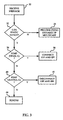
- the router receives either a PIM message or an IGMP message.
- the multicast Static-Range is configured in memory within the router.
- the router determines the group G in the message, and at step 32 the router determines whether the group G lies within the multicast Static-Range. If the group G does not lie within the multicast Static-Range, the router processes the message using conventional dynamic IP multicast.
- the router determines at step 36 whether the message is an IGMP JOIN (S, G) message. If the message is an IGMP JOIN (S, G) message, then at step 38 the router establishes a connection between the downstream outgoing interface (OIF) through which the message arrived and the upstream incoming interface (IIF) leading to the source S specified by the message.
- OIF downstream outgoing interface
- IIF upstream incoming interface
- the router determines whether the message is an IGMP LEAVE (S, G) message. If the message is an IGMP LEAVE (S, G) message, then at step 42 the router removes the connection between the OIF through which the message arrived and the IIF leading to the source S specified by the message.
- the router ignores the message. Any such message will be either a PIM JOIN (S, G) message, a PIM JOIN (*, G) message, a PIM PRUNE (S, G) message, a PIM PRUNE (*, G) message, a PIM REGISTER message, an IGMP JOIN(*, G) message, or an IGMP LEAVE (*, G) message, none of which are to be processed for group addresses which lie within the multicast Static-Range.
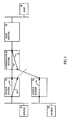
- the example communication network of FIG. 1 is shown following establishment of a Static IP Multicast connection according to one embodiment of the invention.
- the source 14 offers IP multicasting for a group G 1 appropriate for Static Multicasting, such as a television channel which will requested and dropped frequently by users.
- the group G 1 is a multicast IP address lying within the multicast Static-Range and is configured on each router. Since there is no dynamic protocol running in the network for this group (since it lies within the multicast Static-Range), the connection between the downstream OIFs and the upstream IIFs leading to the source at each router (except the host router 12) must be established by configuration or by an automated method.
- the source router 16 is provided, either manually or by an automated method, with an IGMP JOIN (S, G 1 ) message at an OIF leading to the downstream intermediate router 18.
- the source router 16 establishes a connection 50 between the IIF leading to the source 14 and the OIF leading to the intermediate router.
- the intermediate router 18 is provided with an IGMP JOIN (S, G 1 ) message at an OIF leading to the downstream host router 12, which causes the intermediate router 18 to establish a connection 52 between the OIF leading to the host router and the IIF leading to the source 14.
- the intermediate router 18 does not propagate a PIM JOIN (S, G 1 ) message to the upstream source router 16, as the intermediate router recognizes that the IP address of the Group G 1 lies within the multicast Static-Range.
- OIFs at the source router 16 and the intermediate router 18 may similarly be provided with IGMP JOIN (S, G 1 ) messages, if these OIFs lead towards other routers that may be interested in receiving traffic for the group G 1 .
- IGMP JOIN S, G 1
- a connection 54 may be established between the same IIF as connection 52 and an OIF leading to a second host router (not shown in FIG. 4 ).
- the host 10 When the host 10 wishes to receive multicast traffic for the group G 1 , the host sends an IGMP JOIN (S, G 1 ) message to an OIF of the host router 12, and the host router 12 establishes a connection 56 between the OIF leading to the host and an IIF leading to the source.
- the host router 12 recognizes that the IP address of the group G 1 lies within the multicast Static-Range and, contrary to normal PIM-SMM behavior, does not then send a PIM JOIN (S, G 1 ) message to the upstream intermediate router 18. This is because the multicast connections on all upstream routers towards the source 14 have already been established separately ahead of time for group G 1 . Because most of the path leading to the source 14 already exists, the host 10 has access to the group G 1 much more quickly than if Dynamic IP Multicasting was being used and some or all of the shortest path tree had to be established.
- the host router 12 removes the connection 56 but does not send a PIM PRUNE (S, G 1 ) message to the intermediate router 18.
- the host 10 If the host 10 wishes to join a different multicast tree defined for a group G 2 , the host 10 sends an IGMP (S, G 2 ) message to the host router 12. If the group G 2 does not lie within the configured Static-Range (as described above with reference to step 32 of FIG. 3 ), the host router 12 processes the IGMP JOIN (S, G 2 ) message as a dynamic IP multicast. As a result, the PIM-SSM protocol establishes a connection between the OIF over which the IGMP JOIN (S, G 2 ) message was received and an IIF leading towards the specified source S, and then sends a PIM-JOIN (S, G 2 ) to the appropriate upstream router. The upstream routers establish internal connections and propagate PIM-JOIN (S, G 2 ) messages upstream, in accordance with usual PIM-SSM behavior, since the IP address of group G 2 is not within the multicast Static-Range.
- the host 10 wishes to join a multicast tree (*, G 3 )
- the host sends an IGMP JOIN (*, G 3 ) message to the host router 12.
- the group G 3 should not lie within the Static-Range.
- the host router 12 determines that the IP address of the group G 3 does not lie within the multicast Static-Range (as described above with reference to step 32 of FIG. 3 ), and processes the IGMP JOIN (*, G 3 ) message as a dynamic IP multicast.
- Internal router connections are established and PIM-JOIN (*, G 3 ) messages are propagated upstream towards the RP in accordance with usual PIM-SM behavior.
- the invention provides flexibility in configuring additional static multicasting trees or removing existing multicast trees.
- a static multicast tree can be added or removed without interrupting either static or dynamic networks.
- FIG. 5 the example communication network of FIG. 4 is shown following establishment of a second static multicasting tree according to one embodiment of the invention.
- Group G 1 remains configured in the form of connections 50, 52, and 54 between respective OIFs and IIFs.
- a second group G 4 having an IP address lying within the multicast Static-Range, is offered by a second source 70 S 2 is configured similarly as is described above for configuration of group G 1 with reference to FIG. 4 .
- An IGMP-JOIN (S 2 , G 4 ) message is provided to an OIF on a second source router 72 which leads to the intermediate router 18.
- the second source router 72 determines that the IP address of the group G 4 lies within the multicast Static-Range, and establishes a connection between the OIF and the IIF leading to the second source.
- An IGMP-JOIN (S 2 , G 4 ) message is provided to the OIF on the intermediate router which leads towards the host router 12, and in response thereto the intermediate router 18 establishes a connection between the OIF and an IIF leading towards the source router 72. It can be seen that in establishing the internal connections, the existing static multicasting group G 1 (originating at source 14) and any dynamic multicasting groups currently in effect are not affected by configuration of the second static multicasting group G 4 .
- the method by which the routers process the PIM control messages, described above with reference to FIG. 3 is preferably carried out in the form of software instructions within one or more processors, but may more generally be stored and accessed as instructions in the form of any combination of software and hardware, including hardware within an integrated circuit. If in the form of software instructions, the software instructions may be stored on a computer-readable medium.
- the invention has been described with reference to a range of Class D IP addresses reserved for use in static IP multicasting, referred to as the multicast Static-Range.
- the IP addresses reserved for static IP multicasting need not be contiguous.
- the invention can be easily understood to be more generally operational with a multicast Static-Range defined as a set of IP addresses reserved for use in static IP multicasting being not necessarily contiguous.
- using a set of IP addresses defined as a contiguous range simplifies implementation of the invention as it is easier to determine whether the IP address of a multicast group identified in a PIM or IGMP message is within a contiguous set specified by upper and lower values.
Landscapes
- Engineering & Computer Science (AREA)
- Computer Networks & Wireless Communication (AREA)
- Signal Processing (AREA)
- Multimedia (AREA)
- Data Exchanges In Wide-Area Networks (AREA)
- Glass Compositions (AREA)
Claims (4)
- Ein Verfahren zur Implementierung von Internet Protokoll, IP, Multicasting in einem Kommunikationsnetzwerk, wobei das Verfahren umfasst:Definieren einer Multicast Static-Range, bestehend aus einem Satz von mindestens einer IP-Adresse der Klasse D;Vorbehalten jeder IP-Adresse innerhalb der Multicast Static-Range für statisches IP-Multicasting;dadurch gekennzeichnet, dass es umfasst:Einrichten, im Netzwerk, von mindestens einer dynamischen IP-Multicasting-Gruppe, wobei jede dynamische Multicasting-Gruppe über eine entsprechende IP-Adresse außerhalb der Multicast Static-Range verfügt; undEinrichten, im Netzwerk, von mindestens einer statischen Multicasting-Gruppe, für welche die Benachrichtigungen Protocol Independent Multicast-Source Specific Mode, PIM-SSM, und Protocol Independent Multicast-Sparse Mode, PIM-SM, ignoriert werden, wobei jede statische Multicasting-Gruppe eine entsprechende IP-Adresse aufweist, welche innerhalb der Multicast Static-Range liegt.
- Ein Verfahren zur Unterstützung der Koexistenz von statischem IP-Multicasting und dynamischem IP-Multicasting an einem Router in einem Kommunikationsnetzwerk, dadurch gekennzeichnet, dass es umfasst:Speichern einer Multicast Static-Range im Speicher, wobei die Multicast Static-Range ein Satz von mindestens einer IP-Adresse der Klasse D ist, welcher dem statischen IP-Multicasting vorbehalten ist;Bestimmen, nach Empfang einer PIM-Nachricht oder einer Internet Group Management Protocol, IGMP, Nachricht, ob die Nachricht eine statische Multicasting-Gruppe betrifft;Wenn die Nachricht nicht eine statische Multicasting-Gruppe betrifft, Verarbeiten der Nachricht entsprechend dem dynamischen IP-Multicast;wenn die Nachricht eine statische Multicasting-Gruppe betrifft und die Nachricht eine PIM-Nachricht ist, Verwerfen der Nachricht;wenn die Nachricht eine statische Multicasting-Gruppe betrifft und die Nachricht eine IGMP JOIN Nachricht ist, welche eine Quelle spezifiziert, Herstellen einer Verbindung im Router, von der Quelle und der Gruppe identifizierbar, ohne Senden einer PIM-Nachricht an einen Upstream Router; undwenn die Nachricht eine statische Multicasting-Gruppe betrifft und die Nachricht eine IGMP-Nachricht ist, welche eine Quelle spezifiziert, Abbauen einer Verbindung im Router, identifizierbar durch die Quelle und die Gruppe, ohne Senden einer PIM-Nachricht an einen Upstream-Router.
- Ein Router zur Anwendung in einem Kommunikationsnetzwerk, dadurch gekennzeichnet, dass er umfasst:Einen Speicher zum Speichern einer Multicast Static-Range, bestehend aus einem Satz von mindestens einer IP-Adresse der Klasse D, wobei jede IP-Adresse innerhalb der Multicast Static-Range dem statischen Multicasting vorbehalten ist;Mittel zum Bestimmen, nach Empfang einer PIM-Nachricht, ob die Nachricht eine statische Multicast-Gruppe betrifft;Mittel zum Ignorieren einer empfangenen PIM-Nachricht, wenn die Nachricht eine statische Multicast-Gruppe betrifft;Mittel zum Verarbeiten einer empfangenen PIM-Nachricht entsprechend dem PIM-Protokoll, wenn die Nachricht nicht einer Multicast-Gruppe entspricht;Mittel zum Bestimmen, nach Empfang einer IGMP-Nachricht, ob die Nachricht eine statische Multicast-Gruppe betrifft;Mittel zum Herstellen, nach Empfang einer IGMP JOIN-Nachricht, welche eine Quelle spezifiziert, einer Verbindung im Router, ohne Senden einer entsprechenden PIM-Nachricht an einen Upstream-Router, wenn die IGMP JOIN-Nachricht eine statische Multicast-Gruppe betrifft;Mittel zum Entfernen, nach Empfang einer IGMP LEAVE-Nachricht, welche eine Quelle spezifiziert, einer Verbindung im Router, ohne Senden einer entsprechenden PIM-Nachricht an einen Upstream-Router, wenn die IGMP LEAVE-Nachricht eine statische Multicast-Gruppe betrifft; undMittel zum Verarbeiten einer empfangenen IGMP-Nachricht entsprechend einem dynamischen IP-Multicast, wenn die Nachricht nicht eine statische Multicast-Gruppe betrifft.
- Der Router nach Anspruch 3, wobei das Mittel zum Bestimmen, ob eine PIM-Nachricht eine statische Multicast-Gruppe betrifft, die Ermittlung einer IP-Adresse einer von der PIM-Nachricht spezifizierten Gruppe und die Ermittlung, dass die Nachricht eine statistische Multicast-Gruppe betrifft, wenn sich die IP-Adresse der Gruppe innerhalb der Multicast Static-Range befindet, umfasst, und wobei das Mittel zum Bestimmen, ob eine IGMP-Nachricht eine statische Multicast-Gruppe betrifft, das Bestimmen einer IP-Adresse einer von der IGMP-Nachricht spezifizierten Gruppe und das Bestimmen, dass die Nachricht eine statische Multicast-Gruppe, wenn sich die IP-Adresse der Gruppe innerhalb der Multicast Static-Range befindet, umfasst.
Applications Claiming Priority (2)
| Application Number | Priority Date | Filing Date | Title |
|---|---|---|---|
| US11/130,171 US8675653B2 (en) | 2005-05-17 | 2005-05-17 | Co-existing static and dynamic IP multicast |
| PCT/IB2006/002327 WO2007004064A1 (en) | 2005-05-17 | 2006-05-15 | Co-existing static and dynamic ip multicast |
Publications (2)
| Publication Number | Publication Date |
|---|---|
| EP1884064A1 EP1884064A1 (de) | 2008-02-06 |
| EP1884064B1 true EP1884064B1 (de) | 2008-11-05 |
Family
ID=37402545
Family Applications (1)
| Application Number | Title | Priority Date | Filing Date |
|---|---|---|---|
| EP06795340A Not-in-force EP1884064B1 (de) | 2005-05-17 | 2006-05-15 | Koexistenz von statischem und dynamischem ip-multicast |
Country Status (7)
| Country | Link |
|---|---|
| US (1) | US8675653B2 (de) |
| EP (1) | EP1884064B1 (de) |
| KR (1) | KR101168369B1 (de) |
| CN (1) | CN1913491B (de) |
| AT (1) | ATE413743T1 (de) |
| DE (1) | DE602006003551D1 (de) |
| WO (1) | WO2007004064A1 (de) |
Families Citing this family (31)
| Publication number | Priority date | Publication date | Assignee | Title |
|---|---|---|---|---|
| JP4881564B2 (ja) * | 2005-02-04 | 2012-02-22 | 株式会社日立製作所 | データ転送装置、マルチキャストシステム、およびプログラム |
| US7911977B2 (en) * | 2005-05-31 | 2011-03-22 | Cisco Technology, Inc. | Designated router assignment per multicast group address/range |
| US7701937B2 (en) * | 2005-10-13 | 2010-04-20 | Motorola, Inc. | Method and apparatus for IP multicasting |
| US7808993B2 (en) * | 2005-10-26 | 2010-10-05 | Cisco Technology, Inc. | Bidirectional multicast protocol with upstream and downstream join messages |
| US7936702B2 (en) * | 2005-12-01 | 2011-05-03 | Cisco Technology, Inc. | Interdomain bi-directional protocol independent multicast |
| DE602005026466D1 (de) * | 2005-12-28 | 2011-03-31 | Telecom Italia Spa | Verfahren und system zur verwaltung von multicast-ablieferungsinhalt in kommunikationsnetzen |
| KR100799586B1 (ko) * | 2006-02-23 | 2008-01-30 | 한국전자통신연구원 | 휴대인터넷 망에서의 ip 멀티캐스트 그룹의 가입 메시지범람을 방지하기 위한 bs 장치 및 그 방법 |
| CN100550757C (zh) * | 2006-12-26 | 2009-10-14 | 上海贝尔阿尔卡特股份有限公司 | 组播通信网络中联合注册的方法及装置 |
| KR101344015B1 (ko) | 2007-02-09 | 2013-12-23 | 삼성전자주식회사 | PIM―SSM을 이용하는 네트워크에서 Join 메시지부하 조절 시스템 및 방법 |
| CN101304325B (zh) * | 2007-05-10 | 2013-04-24 | 华为技术有限公司 | 一种组播方法和装置 |
| US20100046516A1 (en) * | 2007-06-26 | 2010-02-25 | Media Patents, S.L. | Methods and Devices for Managing Multicast Traffic |
| JP5196685B2 (ja) * | 2007-06-26 | 2013-05-15 | メディア パテンツ エセ.エレ. | マルチキャストグループを管理する方法と装置 |
| US8379623B2 (en) * | 2007-07-10 | 2013-02-19 | Motorola Solutions, Inc. | Combining mobile VPN and internet protocol |
| US8064449B2 (en) * | 2007-10-15 | 2011-11-22 | Media Patents, S.L. | Methods and apparatus for managing multicast traffic |
| WO2009049659A1 (en) * | 2007-10-15 | 2009-04-23 | Soporte Multivendor S.L. | Method for managing multicast traffic in a data network and network equipment using said method |
| WO2009056175A1 (en) * | 2007-10-30 | 2009-05-07 | Soporte Multivendor S.L. | Method for managing multicast traffic between routers communicating by means of a protocol integrating the pim protocol; and router and switch involved in said method |
| WO2009095041A1 (en) * | 2008-02-01 | 2009-08-06 | Soporte Multivendor S.L. | Method for managing multicast traffic through a switch operating in the layer 2 of the osi model, and router and switch involved in said method |
| US9031068B2 (en) * | 2008-02-01 | 2015-05-12 | Media Patents, S.L. | Methods and apparatus for managing multicast traffic through a switch |
| WO2009109684A1 (es) * | 2008-03-05 | 2009-09-11 | Media Patents, S. L. | Procedimiento para monitorizar o gestionar equipos conectados a una red de datos |
| US8189584B2 (en) * | 2009-07-27 | 2012-05-29 | Media Patents, S. L. | Multicast traffic management in a network interface |
| EP2293493B1 (de) * | 2009-09-08 | 2017-02-22 | Alcatel Lucent | Verfahren zur Bereitstellung eines Rundsendekommunikationsdienstes |
| US20110149960A1 (en) * | 2009-12-17 | 2011-06-23 | Media Patents, S.L. | Method and apparatus for filtering multicast packets |
| US8776256B2 (en) * | 2011-04-29 | 2014-07-08 | At&T Intellectual Property I, L.P. | System and method for controlling multicast geographic distribution |
| WO2012162671A1 (en) | 2011-05-25 | 2012-11-29 | Comscore, Inc. | Combining measurements based on beacon data |
| CN102611947B (zh) * | 2011-11-24 | 2017-11-17 | 中兴通讯股份有限公司 | 创建组播频道的方法、系统和媒体服务器 |
| CN103546381B (zh) * | 2012-07-12 | 2017-06-09 | 华为技术有限公司 | 基于内部网关协议创建双向组播分发树的方法、装置及系统 |
| US9674075B1 (en) * | 2014-12-22 | 2017-06-06 | Juniper Networks, Inc. | Multicast only fast re-route for PIM ASM mode |
| CN104683769B (zh) * | 2015-03-11 | 2017-12-12 | 瑞斯康达科技发展股份有限公司 | 一种在环网环境下实现组播点播的方法及装置 |
| US10291957B2 (en) * | 2015-05-22 | 2019-05-14 | Telefonaktiebolaget Lm Ericsson (Publ) | Quicker IPTV channel with static group on IGMP loopback interface |
| CN112887115B (zh) * | 2019-11-29 | 2022-11-18 | 华为技术有限公司 | 一种用于配置静态组播组的方法及装置 |
| CN118041846B (zh) * | 2024-04-11 | 2024-06-25 | 深圳市丰润达科技有限公司 | 静态组播自动化测试方法、装置、设备及存储介质 |
Family Cites Families (11)
| Publication number | Priority date | Publication date | Assignee | Title |
|---|---|---|---|---|
| US5553083B1 (en) * | 1995-01-19 | 2000-05-16 | Starburst Comm Corp | Method for quickly and reliably transmitting frames of data over communications links |
| US6331983B1 (en) * | 1997-05-06 | 2001-12-18 | Enterasys Networks, Inc. | Multicast switching |
| US6721318B1 (en) * | 1999-07-29 | 2004-04-13 | Nortel Networks Limited | Extending router functionality to report static group membership |
| US6785294B1 (en) * | 1999-12-30 | 2004-08-31 | Intel Corporation | Methods and apparatuses for supporting IGMP and GMRP concurrently |
| US7280492B2 (en) * | 2000-02-22 | 2007-10-09 | Ncast Corporation | Videoconferencing system |
| US7107606B2 (en) * | 2000-08-30 | 2006-09-12 | The Chinese University Of Hong Kong | System and method for highly scalable video on demand |
| US7471645B2 (en) * | 2002-10-25 | 2008-12-30 | Hughes Network Systems, Llc | Method and system for multicast in a broadband satellite system |
| US8046809B2 (en) * | 2003-06-30 | 2011-10-25 | World Wide Packets, Inc. | Multicast services control system and method |
| US7301914B2 (en) * | 2004-06-15 | 2007-11-27 | Motorola, Inc. | Method and apparatus for sending a multicast message |
| WO2006053027A2 (en) * | 2004-11-09 | 2006-05-18 | Nexthop Technologies, Inc. | Systems and methods for multicast routing on packet switched networks |
| US7940765B2 (en) * | 2004-11-14 | 2011-05-10 | Cisco Technology, Inc. | Limiting unauthorized sources in a multicast distribution tree |
-
2005
- 2005-05-17 US US11/130,171 patent/US8675653B2/en not_active Expired - Fee Related
-
2006
- 2006-05-15 EP EP06795340A patent/EP1884064B1/de not_active Not-in-force
- 2006-05-15 AT AT06795340T patent/ATE413743T1/de not_active IP Right Cessation
- 2006-05-15 DE DE602006003551T patent/DE602006003551D1/de active Active
- 2006-05-15 WO PCT/IB2006/002327 patent/WO2007004064A1/en not_active Ceased
- 2006-05-15 KR KR1020077029226A patent/KR101168369B1/ko not_active Expired - Fee Related
- 2006-05-17 CN CN2006100928947A patent/CN1913491B/zh not_active Expired - Fee Related
Also Published As
| Publication number | Publication date |
|---|---|
| KR20080021666A (ko) | 2008-03-07 |
| WO2007004064A1 (en) | 2007-01-11 |
| EP1884064A1 (de) | 2008-02-06 |
| DE602006003551D1 (en) | 2008-12-18 |
| US20060262792A1 (en) | 2006-11-23 |
| US8675653B2 (en) | 2014-03-18 |
| ATE413743T1 (de) | 2008-11-15 |
| CN1913491B (zh) | 2011-03-30 |
| KR101168369B1 (ko) | 2012-07-31 |
| CN1913491A (zh) | 2007-02-14 |
Similar Documents
| Publication | Publication Date | Title |
|---|---|---|
| EP1884064B1 (de) | Koexistenz von statischem und dynamischem ip-multicast | |
| US8243643B2 (en) | Active multicast information protocol | |
| US7590749B2 (en) | Method and apparatus for multicast management of user interface in a network access device | |
| US6914907B1 (en) | Method and apparatus for providing multi-cast transmissions using a distributed router | |
| US8111633B1 (en) | Multicast trees for virtual private local area network (LAN) service multicast | |
| JP4825696B2 (ja) | パケット中継装置 | |
| AU720817B2 (en) | Multicast switching | |
| EP2154821B1 (de) | Verfahren und vorrichtung zum senden und empfangen von multicast-paketen | |
| CN100531040C (zh) | 实现组播虚拟专用网绑定的方法及设备 | |
| US7228356B2 (en) | IGMP expedited leave triggered by MAC address | |
| US8050264B2 (en) | System and method for re-routing a multicast stream | |
| US8681668B2 (en) | Methods and apparatus for transmitting multicast traffic in a data network | |
| US20070058646A1 (en) | Device and method for forwarding multicast traffic in a hybrid device | |
| CN101766000A (zh) | 管理组播组的方法和设备 | |
| CN103748835A (zh) | 标签交换路径的动态更新 | |
| US7593402B2 (en) | Method of multicast source filtering | |
| US7327730B2 (en) | Data packet transmission method and network switch applying same thereto | |
| US20230155921A1 (en) | Multicast packet sending method, apparatus, and system | |
| CN109862437A (zh) | 一种转发表项创建方法及bras | |
| US8611254B2 (en) | Systems and methods for configuring a network for multicasting | |
| CN100477635C (zh) | 一种域间组播的传输方法及边缘设备 | |
| EP2068513B1 (de) | Verfahren, system und einrichtung zum verteilen und empfangen von multicast-daten im medien-gateway | |
| US10764337B2 (en) | Communication system and communication method | |
| US7716363B1 (en) | Method and apparatus of providing zero configuration single source multicasting reporting | |
| US12445368B2 (en) | Hardware offload of multicast control plane functions |
Legal Events
| Date | Code | Title | Description |
|---|---|---|---|
| PUAI | Public reference made under article 153(3) epc to a published international application that has entered the european phase |
Free format text: ORIGINAL CODE: 0009012 |
|
| 17P | Request for examination filed |
Effective date: 20071217 |
|
| AK | Designated contracting states |
Kind code of ref document: A1 Designated state(s): AT BE BG CH CY CZ DE DK EE ES FI FR GB GR HU IE IS IT LI LT LU LV MC NL PL PT RO SE SI SK TR |
|
| GRAP | Despatch of communication of intention to grant a patent |
Free format text: ORIGINAL CODE: EPIDOSNIGR1 |
|
| DAX | Request for extension of the european patent (deleted) | ||
| GRAS | Grant fee paid |
Free format text: ORIGINAL CODE: EPIDOSNIGR3 |
|
| GRAA | (expected) grant |
Free format text: ORIGINAL CODE: 0009210 |
|
| AK | Designated contracting states |
Kind code of ref document: B1 Designated state(s): AT BE BG CH CY CZ DE DK EE ES FI FR GB GR HU IE IS IT LI LT LU LV MC NL PL PT RO SE SI SK TR |
|
| REG | Reference to a national code |
Ref country code: GB Ref legal event code: FG4D |
|
| REG | Reference to a national code |
Ref country code: CH Ref legal event code: EP |
|
| REG | Reference to a national code |
Ref country code: IE Ref legal event code: FG4D |
|
| REF | Corresponds to: |
Ref document number: 602006003551 Country of ref document: DE Date of ref document: 20081218 Kind code of ref document: P |
|
| NLV1 | Nl: lapsed or annulled due to failure to fulfill the requirements of art. 29p and 29m of the patents act | ||
| LTIE | Lt: invalidation of european patent or patent extension |
Effective date: 20081105 |
|
| PG25 | Lapsed in a contracting state [announced via postgrant information from national office to epo] |
Ref country code: LT Free format text: LAPSE BECAUSE OF FAILURE TO SUBMIT A TRANSLATION OF THE DESCRIPTION OR TO PAY THE FEE WITHIN THE PRESCRIBED TIME-LIMIT Effective date: 20081105 Ref country code: ES Free format text: LAPSE BECAUSE OF FAILURE TO SUBMIT A TRANSLATION OF THE DESCRIPTION OR TO PAY THE FEE WITHIN THE PRESCRIBED TIME-LIMIT Effective date: 20090216 Ref country code: AT Free format text: LAPSE BECAUSE OF FAILURE TO SUBMIT A TRANSLATION OF THE DESCRIPTION OR TO PAY THE FEE WITHIN THE PRESCRIBED TIME-LIMIT Effective date: 20081105 |
|
| PG25 | Lapsed in a contracting state [announced via postgrant information from national office to epo] |
Ref country code: LV Free format text: LAPSE BECAUSE OF FAILURE TO SUBMIT A TRANSLATION OF THE DESCRIPTION OR TO PAY THE FEE WITHIN THE PRESCRIBED TIME-LIMIT Effective date: 20081105 Ref country code: IS Free format text: LAPSE BECAUSE OF FAILURE TO SUBMIT A TRANSLATION OF THE DESCRIPTION OR TO PAY THE FEE WITHIN THE PRESCRIBED TIME-LIMIT Effective date: 20090305 Ref country code: SI Free format text: LAPSE BECAUSE OF FAILURE TO SUBMIT A TRANSLATION OF THE DESCRIPTION OR TO PAY THE FEE WITHIN THE PRESCRIBED TIME-LIMIT Effective date: 20081105 Ref country code: FI Free format text: LAPSE BECAUSE OF FAILURE TO SUBMIT A TRANSLATION OF THE DESCRIPTION OR TO PAY THE FEE WITHIN THE PRESCRIBED TIME-LIMIT Effective date: 20081105 Ref country code: PL Free format text: LAPSE BECAUSE OF FAILURE TO SUBMIT A TRANSLATION OF THE DESCRIPTION OR TO PAY THE FEE WITHIN THE PRESCRIBED TIME-LIMIT Effective date: 20081105 Ref country code: NL Free format text: LAPSE BECAUSE OF FAILURE TO SUBMIT A TRANSLATION OF THE DESCRIPTION OR TO PAY THE FEE WITHIN THE PRESCRIBED TIME-LIMIT Effective date: 20081105 |
|
| PG25 | Lapsed in a contracting state [announced via postgrant information from national office to epo] |
Ref country code: DK Free format text: LAPSE BECAUSE OF FAILURE TO SUBMIT A TRANSLATION OF THE DESCRIPTION OR TO PAY THE FEE WITHIN THE PRESCRIBED TIME-LIMIT Effective date: 20081105 Ref country code: BE Free format text: LAPSE BECAUSE OF FAILURE TO SUBMIT A TRANSLATION OF THE DESCRIPTION OR TO PAY THE FEE WITHIN THE PRESCRIBED TIME-LIMIT Effective date: 20081105 Ref country code: RO Free format text: LAPSE BECAUSE OF FAILURE TO SUBMIT A TRANSLATION OF THE DESCRIPTION OR TO PAY THE FEE WITHIN THE PRESCRIBED TIME-LIMIT Effective date: 20081105 Ref country code: EE Free format text: LAPSE BECAUSE OF FAILURE TO SUBMIT A TRANSLATION OF THE DESCRIPTION OR TO PAY THE FEE WITHIN THE PRESCRIBED TIME-LIMIT Effective date: 20081105 Ref country code: BG Free format text: LAPSE BECAUSE OF FAILURE TO SUBMIT A TRANSLATION OF THE DESCRIPTION OR TO PAY THE FEE WITHIN THE PRESCRIBED TIME-LIMIT Effective date: 20090205 |
|
| PG25 | Lapsed in a contracting state [announced via postgrant information from national office to epo] |
Ref country code: PT Free format text: LAPSE BECAUSE OF FAILURE TO SUBMIT A TRANSLATION OF THE DESCRIPTION OR TO PAY THE FEE WITHIN THE PRESCRIBED TIME-LIMIT Effective date: 20090406 Ref country code: CZ Free format text: LAPSE BECAUSE OF FAILURE TO SUBMIT A TRANSLATION OF THE DESCRIPTION OR TO PAY THE FEE WITHIN THE PRESCRIBED TIME-LIMIT Effective date: 20081105 Ref country code: SE Free format text: LAPSE BECAUSE OF FAILURE TO SUBMIT A TRANSLATION OF THE DESCRIPTION OR TO PAY THE FEE WITHIN THE PRESCRIBED TIME-LIMIT Effective date: 20090205 |
|
| PLBE | No opposition filed within time limit |
Free format text: ORIGINAL CODE: 0009261 |
|
| STAA | Information on the status of an ep patent application or granted ep patent |
Free format text: STATUS: NO OPPOSITION FILED WITHIN TIME LIMIT |
|
| PG25 | Lapsed in a contracting state [announced via postgrant information from national office to epo] |
Ref country code: SK Free format text: LAPSE BECAUSE OF FAILURE TO SUBMIT A TRANSLATION OF THE DESCRIPTION OR TO PAY THE FEE WITHIN THE PRESCRIBED TIME-LIMIT Effective date: 20081105 |
|
| 26N | No opposition filed |
Effective date: 20090806 |
|
| PG25 | Lapsed in a contracting state [announced via postgrant information from national office to epo] |
Ref country code: MC Free format text: LAPSE BECAUSE OF NON-PAYMENT OF DUE FEES Effective date: 20090531 |
|
| PG25 | Lapsed in a contracting state [announced via postgrant information from national office to epo] |
Ref country code: IE Free format text: LAPSE BECAUSE OF NON-PAYMENT OF DUE FEES Effective date: 20090515 |
|
| PG25 | Lapsed in a contracting state [announced via postgrant information from national office to epo] |
Ref country code: GR Free format text: LAPSE BECAUSE OF FAILURE TO SUBMIT A TRANSLATION OF THE DESCRIPTION OR TO PAY THE FEE WITHIN THE PRESCRIBED TIME-LIMIT Effective date: 20090206 |
|
| REG | Reference to a national code |
Ref country code: CH Ref legal event code: PL |
|
| PG25 | Lapsed in a contracting state [announced via postgrant information from national office to epo] |
Ref country code: LI Free format text: LAPSE BECAUSE OF NON-PAYMENT OF DUE FEES Effective date: 20100531 Ref country code: CH Free format text: LAPSE BECAUSE OF NON-PAYMENT OF DUE FEES Effective date: 20100531 |
|
| PG25 | Lapsed in a contracting state [announced via postgrant information from national office to epo] |
Ref country code: LU Free format text: LAPSE BECAUSE OF NON-PAYMENT OF DUE FEES Effective date: 20090515 |
|
| PG25 | Lapsed in a contracting state [announced via postgrant information from national office to epo] |
Ref country code: HU Free format text: LAPSE BECAUSE OF FAILURE TO SUBMIT A TRANSLATION OF THE DESCRIPTION OR TO PAY THE FEE WITHIN THE PRESCRIBED TIME-LIMIT Effective date: 20090506 |
|
| PG25 | Lapsed in a contracting state [announced via postgrant information from national office to epo] |
Ref country code: TR Free format text: LAPSE BECAUSE OF FAILURE TO SUBMIT A TRANSLATION OF THE DESCRIPTION OR TO PAY THE FEE WITHIN THE PRESCRIBED TIME-LIMIT Effective date: 20081105 |
|
| PG25 | Lapsed in a contracting state [announced via postgrant information from national office to epo] |
Ref country code: CY Free format text: LAPSE BECAUSE OF FAILURE TO SUBMIT A TRANSLATION OF THE DESCRIPTION OR TO PAY THE FEE WITHIN THE PRESCRIBED TIME-LIMIT Effective date: 20081105 |
|
| REG | Reference to a national code |
Ref country code: GB Ref legal event code: 732E Free format text: REGISTERED BETWEEN 20131114 AND 20131120 |
|
| REG | Reference to a national code |
Ref country code: FR Ref legal event code: GC Effective date: 20140717 |
|
| REG | Reference to a national code |
Ref country code: FR Ref legal event code: PLFP Year of fee payment: 10 |
|
| REG | Reference to a national code |
Ref country code: FR Ref legal event code: PLFP Year of fee payment: 11 |
|
| REG | Reference to a national code |
Ref country code: FR Ref legal event code: PLFP Year of fee payment: 12 |
|
| PGFP | Annual fee paid to national office [announced via postgrant information from national office to epo] |
Ref country code: DE Payment date: 20170523 Year of fee payment: 12 Ref country code: FR Payment date: 20170523 Year of fee payment: 12 Ref country code: GB Payment date: 20170519 Year of fee payment: 12 |
|
| PGFP | Annual fee paid to national office [announced via postgrant information from national office to epo] |
Ref country code: IT Payment date: 20170526 Year of fee payment: 12 |
|
| REG | Reference to a national code |
Ref country code: DE Ref legal event code: R119 Ref document number: 602006003551 Country of ref document: DE |
|
| GBPC | Gb: european patent ceased through non-payment of renewal fee |
Effective date: 20180515 |
|
| PG25 | Lapsed in a contracting state [announced via postgrant information from national office to epo] |
Ref country code: DE Free format text: LAPSE BECAUSE OF NON-PAYMENT OF DUE FEES Effective date: 20181201 Ref country code: FR Free format text: LAPSE BECAUSE OF NON-PAYMENT OF DUE FEES Effective date: 20180531 Ref country code: IT Free format text: LAPSE BECAUSE OF NON-PAYMENT OF DUE FEES Effective date: 20180515 Ref country code: GB Free format text: LAPSE BECAUSE OF NON-PAYMENT OF DUE FEES Effective date: 20180515 |