EP1881962B1 - Thiosuccinic acid derivatives and the use thereof - Google Patents
Thiosuccinic acid derivatives and the use thereof Download PDFInfo
- Publication number
- EP1881962B1 EP1881962B1 EP06724695.9A EP06724695A EP1881962B1 EP 1881962 B1 EP1881962 B1 EP 1881962B1 EP 06724695 A EP06724695 A EP 06724695A EP 1881962 B1 EP1881962 B1 EP 1881962B1
- Authority
- EP
- European Patent Office
- Prior art keywords
- disease
- hepatitis
- capsules
- pharmaceutical composition
- compound
- Prior art date
- Legal status (The legal status is an assumption and is not a legal conclusion. Google has not performed a legal analysis and makes no representation as to the accuracy of the status listed.)
- Expired - Lifetime
Links
Images

Classifications
-
- C—CHEMISTRY; METALLURGY
- C07—ORGANIC CHEMISTRY
- C07K—PEPTIDES
- C07K14/00—Peptides having more than 20 amino acids; Gastrins; Somatostatins; Melanotropins; Derivatives thereof
- C07K14/001—Peptides having more than 20 amino acids; Gastrins; Somatostatins; Melanotropins; Derivatives thereof by chemical synthesis
-
- A—HUMAN NECESSITIES
- A61—MEDICAL OR VETERINARY SCIENCE; HYGIENE
- A61P—SPECIFIC THERAPEUTIC ACTIVITY OF CHEMICAL COMPOUNDS OR MEDICINAL PREPARATIONS
- A61P11/00—Drugs for disorders of the respiratory system
-
- A—HUMAN NECESSITIES
- A61—MEDICAL OR VETERINARY SCIENCE; HYGIENE
- A61P—SPECIFIC THERAPEUTIC ACTIVITY OF CHEMICAL COMPOUNDS OR MEDICINAL PREPARATIONS
- A61P11/00—Drugs for disorders of the respiratory system
- A61P11/06—Antiasthmatics
-
- A—HUMAN NECESSITIES
- A61—MEDICAL OR VETERINARY SCIENCE; HYGIENE
- A61P—SPECIFIC THERAPEUTIC ACTIVITY OF CHEMICAL COMPOUNDS OR MEDICINAL PREPARATIONS
- A61P17/00—Drugs for dermatological disorders
-
- A—HUMAN NECESSITIES
- A61—MEDICAL OR VETERINARY SCIENCE; HYGIENE
- A61P—SPECIFIC THERAPEUTIC ACTIVITY OF CHEMICAL COMPOUNDS OR MEDICINAL PREPARATIONS
- A61P17/00—Drugs for dermatological disorders
- A61P17/06—Antipsoriatics
-
- A—HUMAN NECESSITIES
- A61—MEDICAL OR VETERINARY SCIENCE; HYGIENE
- A61P—SPECIFIC THERAPEUTIC ACTIVITY OF CHEMICAL COMPOUNDS OR MEDICINAL PREPARATIONS
- A61P25/00—Drugs for disorders of the nervous system
-
- A—HUMAN NECESSITIES
- A61—MEDICAL OR VETERINARY SCIENCE; HYGIENE
- A61P—SPECIFIC THERAPEUTIC ACTIVITY OF CHEMICAL COMPOUNDS OR MEDICINAL PREPARATIONS
- A61P25/00—Drugs for disorders of the nervous system
- A61P25/28—Drugs for disorders of the nervous system for treating neurodegenerative disorders of the central nervous system, e.g. nootropic agents, cognition enhancers, drugs for treating Alzheimer's disease or other forms of dementia
-
- A—HUMAN NECESSITIES
- A61—MEDICAL OR VETERINARY SCIENCE; HYGIENE
- A61P—SPECIFIC THERAPEUTIC ACTIVITY OF CHEMICAL COMPOUNDS OR MEDICINAL PREPARATIONS
- A61P31/00—Antiinfectives, i.e. antibiotics, antiseptics, chemotherapeutics
- A61P31/12—Antivirals
-
- A—HUMAN NECESSITIES
- A61—MEDICAL OR VETERINARY SCIENCE; HYGIENE
- A61P—SPECIFIC THERAPEUTIC ACTIVITY OF CHEMICAL COMPOUNDS OR MEDICINAL PREPARATIONS
- A61P35/00—Antineoplastic agents
-
- A—HUMAN NECESSITIES
- A61—MEDICAL OR VETERINARY SCIENCE; HYGIENE
- A61P—SPECIFIC THERAPEUTIC ACTIVITY OF CHEMICAL COMPOUNDS OR MEDICINAL PREPARATIONS
- A61P37/00—Drugs for immunological or allergic disorders
-
- A—HUMAN NECESSITIES
- A61—MEDICAL OR VETERINARY SCIENCE; HYGIENE
- A61P—SPECIFIC THERAPEUTIC ACTIVITY OF CHEMICAL COMPOUNDS OR MEDICINAL PREPARATIONS
- A61P9/00—Drugs for disorders of the cardiovascular system
-
- A—HUMAN NECESSITIES
- A61—MEDICAL OR VETERINARY SCIENCE; HYGIENE
- A61P—SPECIFIC THERAPEUTIC ACTIVITY OF CHEMICAL COMPOUNDS OR MEDICINAL PREPARATIONS
- A61P9/00—Drugs for disorders of the cardiovascular system
- A61P9/04—Inotropic agents, i.e. stimulants of cardiac contraction; Drugs for heart failure
-
- A—HUMAN NECESSITIES
- A61—MEDICAL OR VETERINARY SCIENCE; HYGIENE
- A61P—SPECIFIC THERAPEUTIC ACTIVITY OF CHEMICAL COMPOUNDS OR MEDICINAL PREPARATIONS
- A61P9/00—Drugs for disorders of the cardiovascular system
- A61P9/06—Antiarrhythmics
-
- A—HUMAN NECESSITIES
- A61—MEDICAL OR VETERINARY SCIENCE; HYGIENE
- A61P—SPECIFIC THERAPEUTIC ACTIVITY OF CHEMICAL COMPOUNDS OR MEDICINAL PREPARATIONS
- A61P9/00—Drugs for disorders of the cardiovascular system
- A61P9/10—Drugs for disorders of the cardiovascular system for treating ischaemic or atherosclerotic diseases, e.g. antianginal drugs, coronary vasodilators, drugs for myocardial infarction, retinopathy, cerebrovascula insufficiency, renal arteriosclerosis
-
- C—CHEMISTRY; METALLURGY
- C07—ORGANIC CHEMISTRY
- C07C—ACYCLIC OR CARBOCYCLIC COMPOUNDS
- C07C323/00—Thiols, sulfides, hydropolysulfides or polysulfides substituted by halogen, oxygen or nitrogen atoms, or by sulfur atoms not being part of thio groups
- C07C323/50—Thiols, sulfides, hydropolysulfides or polysulfides substituted by halogen, oxygen or nitrogen atoms, or by sulfur atoms not being part of thio groups containing thio groups and carboxyl groups bound to the same carbon skeleton
- C07C323/51—Thiols, sulfides, hydropolysulfides or polysulfides substituted by halogen, oxygen or nitrogen atoms, or by sulfur atoms not being part of thio groups containing thio groups and carboxyl groups bound to the same carbon skeleton having the sulfur atoms of the thio groups bound to acyclic carbon atoms of the carbon skeleton
- C07C323/57—Thiols, sulfides, hydropolysulfides or polysulfides substituted by halogen, oxygen or nitrogen atoms, or by sulfur atoms not being part of thio groups containing thio groups and carboxyl groups bound to the same carbon skeleton having the sulfur atoms of the thio groups bound to acyclic carbon atoms of the carbon skeleton the carbon skeleton being further substituted by nitrogen atoms, not being part of nitro or nitroso groups
- C07C323/58—Thiols, sulfides, hydropolysulfides or polysulfides substituted by halogen, oxygen or nitrogen atoms, or by sulfur atoms not being part of thio groups containing thio groups and carboxyl groups bound to the same carbon skeleton having the sulfur atoms of the thio groups bound to acyclic carbon atoms of the carbon skeleton the carbon skeleton being further substituted by nitrogen atoms, not being part of nitro or nitroso groups with amino groups bound to the carbon skeleton
-
- C—CHEMISTRY; METALLURGY
- C07—ORGANIC CHEMISTRY
- C07K—PEPTIDES
- C07K5/00—Peptides containing up to four amino acids in a fully defined sequence; Derivatives thereof
- C07K5/02—Peptides containing up to four amino acids in a fully defined sequence; Derivatives thereof containing at least one abnormal peptide link
- C07K5/0215—Peptides containing up to four amino acids in a fully defined sequence; Derivatives thereof containing at least one abnormal peptide link containing natural amino acids, forming a peptide bond via their side chain functional group, e.g. epsilon-Lys, gamma-Glu
Definitions
- the present invention relates to thiosuccinic acid derivatives and the use thereof for preparing a drug as well as drugs containing these derivatives.
- fumaric acid dialkyl esters For a long time, fumaric acid dialkyl esters, fumaric acid monoalkyl esters and salts thereof have been successfully used for treating psoriasis. Said use is described in a number of patents, for example EP-B-0 312 697 .
- fumaric acid mono- and diesters are also described for the treatment of autoimmune diseases such as polyarthritis, also called rheumatoid arthritis, or multiple sclerosis (cf. DE 197 21 099.6 and DE 198 53 487.6 ), but also for use in transplantation medicine (cf. DE 198 53 487.6 and DE 198 39 566.3 ).
- autoimmune diseases such as polyarthritis, also called rheumatoid arthritis, or multiple sclerosis (cf. DE 197 21 099.6 and DE 198 53 487.6 ), but also for use in transplantation medicine (cf. DE 198 53 487.6 and DE 198 39 566.3 ).
- the use of fumaric acid mono- and diesters for the treatment of NF-kappaB mediated diseases such as the treatment of mitochondrial diseases is also known from DE 101 01 307.8 and DE 100 00 577.2 . All of the cited documents describe fumaric acid mono- and diesters, optionally in the
- fumaric acid esters Because of their volatility or sublimability, however, the above-mentioned fumaric acid esters have the disadvantage of being difficult to handle when preparing pharmaceutical products, especially those in solid form for oral administration. Specifically, the preparation of such products requires protective measures such as the use of breathing masks, gloves, protective clothing, etc.
- the fumaric acid esters are absorbed in the gastro-intestinal tract after oral administration and taken up unspecifically from the bloodstream by all body cells. Therefore, it is necessary to administer high dosages.
- Such high dosages in turn lead to the known side effects of a fumaric acid therapy like flush symptoms (reddening) or gastrointestinal irritation (nausea, diarrhoea, winds). Even though such side effects may be reduced considerably by administering the active ingredient in the form of micro-tablets as described in the above-cited prior art, they cannot be avoided altogether.
- the fumaric acid esters are rapidly hydrolysed in the blood and the products of said hydrolysis, alcohol and fumaric acid or fumaric acid monoester, metabolised. In order to maintain therapeutically effective levels repeated administration is therefore necessary. Even though a certain adaptation is observed concerning the side effects upon repeated administration, a further reduction of the side effect rate would be desirable.
- fumaric acid mono- and -diamides have been used as known from DE 101 33 004 . These amides are formed with amino acids and preferably with certain peptides. Binding them to a peptide also permits specifically transporting the fumaric acid derivative to individual target cells.
- the above-mentioned fumaric acid amide derivatives have the disadvantage of being expensive to produce.
- DE 102 17 314.1 has proposed carbocyclic and oxacarbocyclic fumaric acid oligomers.
- This patent relates to carbocyclic and oxacarbocyclic fumaric acid oligomers comprising 2 to 10 units derived from fumaric acid and/or esters and/or amides thereof as repeating units.
- Such fumaric acid derivatives are more stable against hydrolysis, easier to produce than the amides and less difficult to handle than fumaric acid esters and salts thereof.
- the above-mentioned fumaric acid derivatives have the disadvantage of having a pKa in the acidic range. Secondly, they hydrolyse quickly, releasing the fumaric acid basic skeleton or a pertinent monoester. Both properties contribute to the known side effects of a fumaric acid therapy such as flushing and gastrointestinal problems upon oral administration.
- the present invention therefore relates to compounds of the formula (I)
- the present invention also relates to a pharmaceutical composition
- a pharmaceutical composition comprising these compounds or a pharmaceutically acceptable salt thereof and drugs containing these compounds.
- the compound or pharmaceutically acceptable salt thereof or the pharmaceutical composition of the invention for treating a disclose as set forth in the appended claims.
- a first aspect of the invention relates to compounds of the formula (I) as defined above.
- These thiosuccinic acid compounds may be considered adducts of thiols to the double bond of a fumaric acid or a fumaric acid derivative. This addition is reversible.
- the present invention is based on the finding that this reversibility may be used to advantage to reduce the side effects of a fumaric acid therapy.
- the thiosuccinic acid derivatives of the formula (1) are acid esters, amides and thioesters of succinic acid or mixed forms (when X 1 is not equal to X 2 ) which are substituted with a thiol (R 3 ) in position 2 (i.e. in ⁇ -position to a carboxyl group).
- Cysteine or a peptide or protein, respectively, which contains cysteine have the advantage that an endogenous, non-toxic molecule is released in addition to the fumaric acid derivative when the thiol is separated.
- this molecule may have its own desirable therapeutic effects.
- X 1 and X 2 are oxygen (diester). In a second embodiment, X 1 and X 2 are NH (diamide). In a third embodiment, either X 1 or X 2 may be oxygen, the remaining X 1 or X 2 being NH (ester amides).
- R 1 and R 2 are methyl. X 1 and X 2 are most preferably oxygen.
- R 3 is a cysteine-S-yl residue or N-acetyl cysteine.
- the invention relates to compounds of the formula (I) wherein R 3 is -S-CH 2 -CH(NH 2 )(COOH) (cysteine-S-yl) or N-acetyl cysteine-S-yl.
- R 3 is -S-CH 2 -CH(NH 2 )(COOH) (cysteine-S-yl) or N-acetyl cysteine-S-yl.
- the mono- and diesters are preferred among these cysteine-S-yl succinic acid derivatives.
- Especially preferred compound is dimethyl- ⁇ -cysteine-S-yl succinic acid diester. This corresponds to the formula III.
- the present invention provides the use of the compounds of the formula (I) as drugs.
- the compounds of the formula (I) may preferably be used for preparing a pharmaceutical composition:
- the compounds of the formula (I) are not limited to certain stereomers such as enantiomers or diastereomers, those stereomers producing a fumaric acid derivative instead of a maleic acid derivative when R 3 and H are separated are preferred.
- the effectiveness is not limited to certain polymorphs, enantiomers or diastereomers of the claimed compound. Quite the opposite - both enantiomers resulting from the chirality centre of the carbon atom of succinic acid, which centre is linked to R 3 , are expressly included in the invention.
- the compounds of the invention may be prepared by addition.
- addition may be carried out according to the following scheme:
- Suitable mechanisms of addition are the nucleophilic addition (or Michael addition), the electrophilic addition or the free-radical addition. These reactions are known and described, for example, in " Organic Chemistry of Sulfur", edited by S. Oae, Plenum Press, New York and Lond on. In each case, the corresponding fumaric acid derivative which is converted into a succinic acid derivative of the formula (I) by the addition of the thiol acts as the unsaturated compound. Preparation by addition is a preferred method of production, but other methods known to the person skilled in the art may be used, too.
- the thiol is deprotonated under basic conditions and the thiolate anion added to the fumaric acid derivative.
- This type of addition is also called Michael addition.
- Suitable reaction conditions are obvious to the person skilled in the art and may be selected by routine experimentation.
- the fumaric acid derivative is deprotonated and the thiol reacts with the carbocationic interim stage.
- the reaction conditions for this type of reaction are also obvious to a person skilled in the art and may be determined by routine experimentation.
- the nucleophilic or electrophilic addition of the cysteine radical to the fumaric acid derivative is the method of choice.
- a suitable solvent such as DMSO or THF and a basic catalyst such as an amine, preferably trimethyl amine or triethyl amine, may be used for the nucleophilic addition.
- the reaction may also be carried out in an aqueous medium using a mild base. If it is intended to carry out the electrophilic addition, it is recommended to use an acid, a Lewis acid or halogenated acid, as the catalyst. Thionyl chloride is preferred.
- the present invention finally relates to a drug comprising one or more of the compounds of the formula (I), preferably as the only active ingredient. It is preferred that the drug be present in a form suitable for injection. The drug may also be present in a form suitable for oral, rectal, transdermal, ophthalmological, nasal or pulmonary administration. In addition to the active ingredient, the drug may contain the usual adjuvants.
- the drug may be present, for example, in the form of tablets, coated tablets, capsules, granulate, solutions for drinking, liposomes, nano-particles, nano-capsules, micro-capsules, micro-tablets, pellets or powders as well as granulate filled in capsules, micro-tablets filled in capsules, pellets filled in capsules, nano-particles filled in capsules or powder filled in capsules.
- the drug is preferably present in the form of nano-particles, micro-pellets or micro-tablets which may optionally be filled into sachets or capsules. These micro-pellets or micro-tablets usually have a diameter (without coating) of about ⁇ 5000 ⁇ m, preferably 300 to 2000 ⁇ m.
- All of the solid oral dosage forms may preferably be provided with an enteric coating. This may be applied, for example, to the tablets, micro-tablets, micro-pellets, etc., or may be applied to the capsules containing the same.
- the drug forms of the invention may be prepared by the classic tabletting method, but also by direct tabletting and as solid dispersions by the melting method or the spray drying method.
- an enteric coating may be applied by known processes in a classic coating pan or a fluid bed device. After drying is completed, a film coat may be applied in the same apparatus.
- a mixture of active ingredients it is possible to prepare pellets of the individual active ingredients and to mix these in the desired quantity, optionally after providing them with a film coat.
- the drug is available in a suitable form, for example as a sterile solution or emulsion.
- suitable adjuvants are known to the person skilled in the art.
- a physiological salt solution that may optionally be buffered with phosphate is suitable for parenteral administration by injection, for example.
- the solution for injection may also contain stabilisers such as human serum albumin or PVP, means for adjusting osmolality such as mannitol, buffers such as citrate, phosphate or carbonate, and such like.
- Liposome or vesicle formulations are also suitable.
- the drug of the invention contains an amount of the compound(s) according to the invention which is appropriate for the therapeutic purpose. This amount may be determined by the person skilled in the art by routine experimentation. As a rule, the drug will contain an amount of succinic acid derivatives which corresponds to 10 to 500 mg of fumaric acid, preferably 30 to 200 mg of fumaric acid, and most preferably 100 mg of fumaric acid.
- the use of the succinic acid derivatives of the invention has the advantage that they are generally tolerated more easily. Therefore, the succinic acid derivatives of the invention are suitable for all common forms of administration, especially for injections. In particular, the uses according to the invention are less irritating and therefore cause fewer side effects.
- a tenfold excess of a fumaric acid derivative A is mixed with a 0.01 M aqueous ammonium acetate solution at a pH of 7.4 and a 0.001 M thiol solution B at 37°C.
- a mass spectrum was taken.
- the fumaric acid derivatives and thiols, respectively, and the products to be expected are shown in table 1.
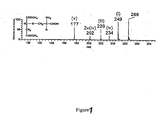
- the mass spectra recorded are shown in Fig. 1 .
- the active ingredient is added to the entire powder mixture, mixed, homogenised by means of a sieve 200 and processed with a 2 % aqueous solution of polyvinyl pyrrolidone (PVP, Kolli-don® 25) in the usual manner into binder granules, and then mixed with the outer phase in a dry state.
- PVP polyvinyl pyrrolidone
- the latter consists of 2 kg of a so-called FST complex containing 80 % of talcum, 10 % of silicic acid and 10 % of magnesium stearate.
- HPMCP hydroxy propyl methyl cellulose phthalate
- a solvent mixture consisting of 2.5 litres ofdemineralised water, 13 litres of acetone (Ph. Helv. VII) and 13 litres of ethanol (94 % by weight) and then 0.24 kg of castor oil (Ph. Eur. II) are added to the solution.
- the solution is poured or sprayed in portions onto the tablet cores in a coating pan in a conventional manner.
- the film coating is applied.
- Said coating consists of a solution of 4.8 kg of Eudragit E 12.5 %®, 0.34 kg of talcum (Ph. Eur.), 0.52 kg of titanium(VI) oxide Cronus RN 56®, 0.21 of coloured lacquer ZLT-2 blue (Siegle), and 0.12 kg of polyethylene glycol 6000 (Ph. Helv. VII) in a solvent mixture of 8.2 kg of 2-propanol (Ph. Helv. VII), 0.06 kg of glycerine triacetate (Triacetin®) and 0.2 kg of demineralised water. After homogenous distribution in the coating pan or the fluidised bed, the mixture is dried and polished in the usual manner.
- the enteric-coated micro-tablets are analysed to determine their ingredients and then filled into gelatine hard capsules up to the pertinent net weight and sealed.
- Peparatio sicca Dimethyl-2-(acetyl cysteine-S-yl) succinate 20 mg Mannitol (isotonisation, kyro-protector) 40 mg Solvent: Water for injection purposes in glass 1 ml
Landscapes
- Health & Medical Sciences (AREA)
- Chemical & Material Sciences (AREA)
- Organic Chemistry (AREA)
- Life Sciences & Earth Sciences (AREA)
- General Health & Medical Sciences (AREA)
- Medicinal Chemistry (AREA)
- General Chemical & Material Sciences (AREA)
- Chemical Kinetics & Catalysis (AREA)
- Bioinformatics & Cheminformatics (AREA)
- Engineering & Computer Science (AREA)
- Public Health (AREA)
- Veterinary Medicine (AREA)
- Nuclear Medicine, Radiotherapy & Molecular Imaging (AREA)
- Pharmacology & Pharmacy (AREA)
- Animal Behavior & Ethology (AREA)
- Cardiology (AREA)
- Biophysics (AREA)
- Biochemistry (AREA)
- Proteomics, Peptides & Aminoacids (AREA)
- Molecular Biology (AREA)
- Heart & Thoracic Surgery (AREA)
- Genetics & Genomics (AREA)
- Biomedical Technology (AREA)
- Neurology (AREA)
- Neurosurgery (AREA)
- Pulmonology (AREA)
- Gastroenterology & Hepatology (AREA)
- Dermatology (AREA)
- Hospice & Palliative Care (AREA)
- Urology & Nephrology (AREA)
- Psychiatry (AREA)
- Vascular Medicine (AREA)
- Oncology (AREA)
- Communicable Diseases (AREA)
- Virology (AREA)
- Immunology (AREA)
- Medicines That Contain Protein Lipid Enzymes And Other Medicines (AREA)
- Acyclic And Carbocyclic Compounds In Medicinal Compositions (AREA)
- Pharmaceuticals Containing Other Organic And Inorganic Compounds (AREA)
- Peptides Or Proteins (AREA)
Description
- The present invention relates to thiosuccinic acid derivatives and the use thereof for preparing a drug as well as drugs containing these derivatives.
- For a long time, fumaric acid dialkyl esters, fumaric acid monoalkyl esters and salts thereof have been successfully used for treating psoriasis. Said use is described in a number of patents, for example
EP-B-0 312 697 . - The use of fumaric acid mono- and diesters is also described for the treatment of autoimmune diseases such as polyarthritis, also called rheumatoid arthritis, or multiple sclerosis (cf.
DE 197 21 099.6 andDE 198 53 487.6 ), but also for use in transplantation medicine (cf.DE 198 53 487.6 andDE 198 39 566.3 ). The use of fumaric acid mono- and diesters for the treatment of NF-kappaB mediated diseases such as the treatment of mitochondrial diseases is also known fromDE 101 01 307.8 andDE 100 00 577.2 . All of the cited documents describe fumaric acid mono- and diesters, optionally in the form of certain salts. - Because of their volatility or sublimability, however, the above-mentioned fumaric acid esters have the disadvantage of being difficult to handle when preparing pharmaceutical products, especially those in solid form for oral administration. Specifically, the preparation of such products requires protective measures such as the use of breathing masks, gloves, protective clothing, etc.
- In addition, the fumaric acid esters are absorbed in the gastro-intestinal tract after oral administration and taken up unspecifically from the bloodstream by all body cells. Therefore, it is necessary to administer high dosages. Such high dosages in turn lead to the known side effects of a fumaric acid therapy like flush symptoms (reddening) or gastrointestinal irritation (nausea, diarrhoea, winds). Even though such side effects may be reduced considerably by administering the active ingredient in the form of micro-tablets as described in the above-cited prior art, they cannot be avoided altogether.
- At the same time, the fumaric acid esters are rapidly hydrolysed in the blood and the products of said hydrolysis, alcohol and fumaric acid or fumaric acid monoester, metabolised. In order to maintain therapeutically effective levels repeated administration is therefore necessary. Even though a certain adaptation is observed concerning the side effects upon repeated administration, a further reduction of the side effect rate would be desirable.
- In order to avoid these disadvantages fumaric acid mono- and -diamides have been used as known from
DE 101 33 004 . These amides are formed with amino acids and preferably with certain peptides. Binding them to a peptide also permits specifically transporting the fumaric acid derivative to individual target cells. However, the above-mentioned fumaric acid amide derivatives have the disadvantage of being expensive to produce. - In addition,
DE 102 17 314.1 has proposed carbocyclic and oxacarbocyclic fumaric acid oligomers. This patent relates to carbocyclic and oxacarbocyclic fumaric acid oligomers comprising 2 to 10 units derived from fumaric acid and/or esters and/or amides thereof as repeating units. Such fumaric acid derivatives are more stable against hydrolysis, easier to produce than the amides and less difficult to handle than fumaric acid esters and salts thereof. - First of all, the above-mentioned fumaric acid derivatives have the disadvantage of having a pKa in the acidic range. Secondly, they hydrolyse quickly, releasing the fumaric acid basic skeleton or a pertinent monoester. Both properties contribute to the known side effects of a fumaric acid therapy such as flushing and gastrointestinal problems upon oral administration.
- Therefore, it is an object of the present invention to provide compounds which are easy to prepare, well tolerated and more resistant to hydrolysis and which, at the same time, may be administered by any desired route. In particular, it is intended to administer the fumaric acid derivatives by the parenteral route (by injection).
- This objective is achieved by a number of thiosuccinic acid derivatives. The applicant has found surprisingly that the effect of such substances is similar to that of fumaric acid derivatives. The inventors assume that this is due to the conversion of the thiosuccinic acid derivatives to the active fumaric acid derivatives under physiological conditions. In a first aspect, the present invention therefore relates to compounds of the formula (I)

- wherein X1 and X2 are independently chosen from O, NH and S,
- R1 and R2 are both methyl, and
- R3 is
- -S-CH2-CH(NH2)(COOH) (cysteine-S-yl) or N-acetyl cysteine-S-yl
- The present invention also relates to a pharmaceutical composition comprising these compounds or a pharmaceutically acceptable salt thereof and drugs containing these compounds.
the compound or pharmaceutically acceptable salt thereof or the pharmaceutical composition of the invention for treating a disclose as set forth in the appended claims. -
- Fig. 1:
- Structure and fragmentation spectra of the products of the interaction of dimethyl fumarate with cysteine.
- Fig. 2:
- Time dependence of the product formation in equimolar mixtures of cysteine and dimethyl fumarate, measured by the flow injection APCI/MS (cysteine) and ESI/MS method.
- Specifically, a first aspect of the invention relates to compounds of the formula (I) as defined above. These thiosuccinic acid compounds may be considered adducts of thiols to the double bond of a fumaric acid or a fumaric acid derivative. This addition is reversible. The present invention is based on the finding that this reversibility may be used to advantage to reduce the side effects of a fumaric acid therapy.
- Without wishing to be bound by a certain theory, the inventors assume that, by separation of the R3 group and a hydrogen atom on the adjacent carbon atom under physiological conditions, the compounds of the invention release the corresponding fumaric acid derivative such as a fumaric acid mono- or dialkyl ester (X1 = X2 = O; R1 + R2 = H or C1-30 alkyl). Therefore, it is assumed that the effectiveness of the claimed thiosuccinic acids is due to the release of a fumaric acid derivative.
- The thiosuccinic acid derivatives of the formula (1) are acid esters, amides and thioesters of succinic acid or mixed forms (when X1 is not equal to X2) which are substituted with a thiol (R3) in position 2 (i.e. in α-position to a carboxyl group). Cysteine or a peptide or protein, respectively, which contains cysteine have the advantage that an endogenous, non-toxic molecule is released in addition to the fumaric acid derivative when the thiol is separated. Optionally, this molecule may have its own desirable therapeutic effects.
- In a first embodiment, X1 and X2 are oxygen (diester). In a second embodiment, X1 and X2 are NH (diamide). In a third embodiment, either X1 or X2 may be oxygen, the remaining X1 or X2 being NH (ester amides).
- R1 and R2 are methyl. X1 and X2 are most preferably oxygen.
- R3 is a cysteine-S-yl residue or N-acetyl cysteine.
- The invention relates to compounds of the formula (I) wherein R3 is -S-CH2-CH(NH2)(COOH) (cysteine-S-yl) or N-acetyl cysteine-S-yl. In turn, the mono- and diesters are preferred among these cysteine-S-yl succinic acid derivatives. Especially preferred compound is dimethyl-α-cysteine-S-yl succinic acid diester. This corresponds to the formula III.
- In addition, the present invention provides the use of the compounds of the formula (I) as drugs. The compounds of the formula (I) may preferably be used for preparing a pharmaceutical composition:
- for the therapy of an autoimmune disease selected from the group consisting of polyarthritis, also called rheumatoid arthritis, multiple sclerosis, graft-versus-host reactions, juvenile-onset diabetes, Hashimoto's thyroiditis, Grave's disease (Basedow disease), systemic Lupus erythematodes (SLE), Sjogren's syndrome, pernicious anaemia and chronic active (= lupoid) hepatitis;
- for use in transplantation medicine;
- for the therapy of mitochondrial diseases selected from the group consisting of Parkinson syndrome, Alzheimer's disease, Chorea Huntington disease, retinopathia pigmentosa or forms of mitochondrial encephalomyopathies; as well as
- for the therapy ofNF-kappaB mediated diseases selected from the group consisting of progressive systemic sclerodermia, osteochondritis syphilitica (Wegener's disease), cutis marmorata (livedo reticularis), Behcet disease, panarteriitis, colitis ulcerosa, vasculitis, osteoarthritis, gout, arteriosclerosis, Reiter's disease, pulmonary granulomatosis, types of encephalitis, endotoxic shock (septic-toxic shock), sepsis, pneumonia, encephalomyelitis, anorexia nervosa, hepatitis (acute hepatitis, chronic hepatitis, toxic hepatitis, alcohol-induced hepatitis, viral hepatitis, jaundice, liver insufficiency and cytomegaloviral hepatitis), Rennert T-lymphomatosis, mesangial nephritis, post-angioplastic restenosis, reperfusion syndrome, cytomegaloviral retinopathy, adenoviral diseases such as adenoviral colds, adenoviral pharyngoconjunctival fever and adenoviral ophthalmia, AIDS, Guillain-Barré syndrome, post-herpetic or post-zoster neuralgia, inflammatory demyelinising polyneuropathy, mononeuropathia multiplex, mucoviscidosis, Bechterew's disease, Barett oesophagus, EBV (Epstein-Barr virus) infection, cardiac remodeling, interstitial cystitis, diabetes mellitus type II, radiosensitisation of malignant tumours, multi-resistance of malignant cells to chemotherapeutic agents (multidrug resistance in chemotherapy), granuloma annulare and cancers such as mamma carcinoma, colon carcinoma, melanoma, primary liver cell carcinoma, adenocarcinoma, kaposi's sarcoma, prostate carcinoma, leukaemia such as acute myeloid leukaemia, multiple myeloma (plasmocytoma), Burkitt lymphoma and Castleman tumour,
- for the therapy of psoriasis, psoriatic arthritis, neurodermitis and enteritis regionalis Crohn,
- for the therapy of cardiac insufficiency, especially left-ventricular failure, cardiac infarction, as a drug against cardiac arrest (cardioplebicum), as an anti-ischaemic drug and as a drug against angina pectoris,
- for the therapy of chronic obstructive pulmonary diseases and asthma, especially job-induced or stress-induced asthma or asthma cardiale and for inhibiting the cell proliferation of the non-striated muscles of the bronchi.
- According to the invention, it is possible to use a combination of two or more of the above-mentioned compounds.
- Even though the compounds of the formula (I) are not limited to certain stereomers such as enantiomers or diastereomers, those stereomers producing a fumaric acid derivative instead of a maleic acid derivative when R3 and H are separated are preferred. However, the effectiveness is not limited to certain polymorphs, enantiomers or diastereomers of the claimed compound. Quite the opposite - both enantiomers resulting from the chirality centre of the carbon atom of succinic acid, which centre is linked to R3, are expressly included in the invention.
- The compounds of the invention may be prepared by addition. In general, addition may be carried out according to the following scheme:

- Suitable mechanisms of addition are the nucleophilic addition (or Michael addition), the electrophilic addition or the free-radical addition. These reactions are known and described, for example, in "Organic Chemistry of Sulfur", edited by S. Oae, Plenum Press, New York and London. In each case, the corresponding fumaric acid derivative which is converted into a succinic acid derivative of the formula (I) by the addition of the thiol acts as the unsaturated compound. Preparation by addition is a preferred method of production, but other methods known to the person skilled in the art may be used, too.
- In case of nucleophilic addition, the thiol is deprotonated under basic conditions and the thiolate anion added to the fumaric acid derivative. This type of addition is also called Michael addition. Suitable reaction conditions are obvious to the person skilled in the art and may be selected by routine experimentation.
- In case of an electrophilic addition, the fumaric acid derivative is deprotonated and the thiol reacts with the carbocationic interim stage. The reaction conditions for this type of reaction are also obvious to a person skilled in the art and may be determined by routine experimentation.
- If it is intended to prepare a compound of the invention wherein R3-H is cysteine or linked to the succinic acid derivative via a cysteine residue, the nucleophilic or electrophilic addition of the cysteine radical to the fumaric acid derivative is the method of choice. A suitable solvent such as DMSO or THF and a basic catalyst such as an amine, preferably trimethyl amine or triethyl amine, may be used for the nucleophilic addition. However, the reaction may also be carried out in an aqueous medium using a mild base. If it is intended to carry out the electrophilic addition, it is recommended to use an acid, a Lewis acid or halogenated acid, as the catalyst. Thionyl chloride is preferred.
- In a further aspect, the present invention finally relates to a drug comprising one or more of the compounds of the formula (I), preferably as the only active ingredient. It is preferred that the drug be present in a form suitable for injection. The drug may also be present in a form suitable for oral, rectal, transdermal, ophthalmological, nasal or pulmonary administration. In addition to the active ingredient, the drug may contain the usual adjuvants.
- For oral administration, the drug may be present, for example, in the form of tablets, coated tablets, capsules, granulate, solutions for drinking, liposomes, nano-particles, nano-capsules, micro-capsules, micro-tablets, pellets or powders as well as granulate filled in capsules, micro-tablets filled in capsules, pellets filled in capsules, nano-particles filled in capsules or powder filled in capsules. The drug is preferably present in the form of nano-particles, micro-pellets or micro-tablets which may optionally be filled into sachets or capsules. These micro-pellets or micro-tablets usually have a diameter (without coating) of about ≤ 5000 µm, preferably 300 to 2000 µm.
- All of the solid oral dosage forms may preferably be provided with an enteric coating. This may be applied, for example, to the tablets, micro-tablets, micro-pellets, etc., or may be applied to the capsules containing the same.
- As a matter of principle, the drug forms of the invention may be prepared by the classic tabletting method, but also by direct tabletting and as solid dispersions by the melting method or the spray drying method. If desired, an enteric coating may be applied by known processes in a classic coating pan or a fluid bed device. After drying is completed, a film coat may be applied in the same apparatus. When a mixture of active ingredients is used, it is possible to prepare pellets of the individual active ingredients and to mix these in the desired quantity, optionally after providing them with a film coat.
- In case of parenteral application, the drug is available in a suitable form, for example as a sterile solution or emulsion. The correct formulations and suitable adjuvants are known to the person skilled in the art. A physiological salt solution that may optionally be buffered with phosphate is suitable for parenteral administration by injection, for example. The solution for injection may also contain stabilisers such as human serum albumin or PVP, means for adjusting osmolality such as mannitol, buffers such as citrate, phosphate or carbonate, and such like. Liposome or vesicle formulations are also suitable.
- The drug of the invention contains an amount of the compound(s) according to the invention which is appropriate for the therapeutic purpose. This amount may be determined by the person skilled in the art by routine experimentation. As a rule, the drug will contain an amount of succinic acid derivatives which corresponds to 10 to 500 mg of fumaric acid, preferably 30 to 200 mg of fumaric acid, and most preferably 100 mg of fumaric acid.
- In comparison with the known pharmaceutically active fumaric acid derivatives, the use of the succinic acid derivatives of the invention has the advantage that they are generally tolerated more easily. Therefore, the succinic acid derivatives of the invention are suitable for all common forms of administration, especially for injections. In particular, the uses according to the invention are less irritating and therefore cause fewer side effects.
- The invention will now be illustrated, but not limited by the following examples.
- A tenfold excess of a fumaric acid derivative A is mixed with a 0.01 M aqueous ammonium acetate solution at a pH of 7.4 and a 0.001 M thiol solution B at 37°C. Immediately after mixing and after two hours of stirring, a mass spectrum was taken. The fumaric acid derivatives and thiols, respectively, and the products to be expected are shown in table 1. The mass spectra recorded are shown in
Fig. 1 . - All mass spectra were recorded by means of a LCQ Ion Trap mass spectrometer (Finnigan MAT, USA) equipped with an electrospray ioniser (ESI) and a chemical atmospheric pressure ionising interface (APCI), and a Reflex IV Time-of-Flight (TOF) mass spectrometer (Bruker, Germany) equipped with a matrix-supported laser desorption/ionisation (MALDI).
Table 1 Example No. A B Product MS spectrum 1 DMF1) Cysteine Dimethyl-α-cysteine-S-yl succinic acid ester 1c, 2c - In order to rule out the possibility that the products of the interaction between the fumaric acid derivative and cysteine were generated during ionisation in the ion source, two control experiments were carried out.
- In a first experiment, the solutions of cysteine, were mixed with dimethyl fumarate and the time dependence of the increase or decrease of the reaction feedstock and products observed by flow injection analysis. For this purpose, samples were taken from each of the reaction mixtures of example 1 and injected into the carrier liquid stream and the ion source. The surfaces of the quasimolecular ion peaks were recorded as percent of the sum of the two compounds tracked vs. time. The result is shown in
Fig. 2 . It confirms the addition in solution. The spectra also confirm that the thiol group is added to the double bond of the fumaric acid. - Taking the necessary precautions (breathing mask, gloves, protective clothing, etc.), 10 kg of dimethyl-2-(cysteine-S-yl) succinate are crushed, mixed intensely and homogenised by means of a sieve 800. Then an excipient mixture of the following composition is prepared: 21 kg of starch derivative (STA-RX 1500®), 2 kg of micro-crystalline cellulose (Avicel PH 101®), 0.6 kg of polyvinyl pyrrolidone (PVP, Kollidon® 25), 4 kg of Primogel®, 0.3 kg of colloidal silicic acid (Aerosil®).
- The active ingredient is added to the entire powder mixture, mixed, homogenised by means of a
sieve 200 and processed with a 2 % aqueous solution of polyvinyl pyrrolidone (PVP, Kolli-don® 25) in the usual manner into binder granules, and then mixed with the outer phase in a dry state. The latter consists of 2 kg of a so-called FST complex containing 80 % of talcum, 10 % of silicic acid and 10 % of magnesium stearate. - Thereafter the mixture is pressed into convex tablets with a weight of 400 mg and a diameter of 10.0 mm by the usual method. Instead of these classic compaction methods, other methods such as direct compaction or solid dispersions according to the melting and spray drying method may also be used for preparing tablets.
- A solution of 2.25 kg of hydroxy propyl methyl cellulose phthalate (HPMCP, Pharmacoat HP® 50) is dissolved in a solvent mixture consisting of 2.5 litres ofdemineralised water, 13 litres of acetone (Ph. Helv. VII) and 13 litres of ethanol (94 % by weight) and then 0.24 kg of castor oil (Ph. Eur. II) are added to the solution. The solution is poured or sprayed in portions onto the tablet cores in a coating pan in a conventional manner.
- After appropriate drying, the film coating is applied. Said coating consists of a solution of 4.8 kg of Eudragit E 12.5 %®, 0.34 kg of talcum (Ph. Eur.), 0.52 kg of titanium(VI) oxide Cronus RN 56®, 0.21 of coloured lacquer ZLT-2 blue (Siegle), and 0.12 kg of polyethylene glycol 6000 (Ph. Helv. VII) in a solvent mixture of 8.2 kg of 2-propanol (Ph. Helv. VII), 0.06 kg of glycerine triacetate (Triacetin®) and 0.2 kg of demineralised water. After homogenous distribution in the coating pan or the fluidised bed, the mixture is dried and polished in the usual manner.
- 12 kg of dimethyl-2-(acetyl cysteine-S-yl) succinate are crushed and homogenised as described above. Then an excipient mixture of the following composition is prepared: 23.2 kg of micro-crystalline cellulose (Avicel® PH 200), 3 kg of croscarmelose sodium (AC-Di-SOL-SD-711), 2.5 kg of talcum, 0.1 kg of anhydrous silica (Aerosil® 200) and 1 kg of magnesium stearate. The active ingredient is added to the entire powder mixture and subjected to homogenous mixing. Then the powder mixture is pressed by the direct tabletting method into convex tablets with a gross mass of 10.0 mg and a diameter of 2.0 mm. Then a solution of 0.94 kg of Eudragit® in isopropanol is prepared which also contains 0.07 kg of dibutyl phthalate. This solution is sprayed onto the tablets. After that, a dispersion of 17.32 kg of Eudragit® L D-55 and a mixture of 2.8 kg of micro-talcum, 2 kg of Macrogol 6000 and 0.07 kg of dimethicone is prepared in water and sprayed onto the tablet cores.
- The enteric-coated micro-tablets are analysed to determine their ingredients and then filled into gelatine hard capsules up to the pertinent net weight and sealed.
-
Peparatio sicca: Dimethyl-2-(acetyl cysteine-S-yl) succinate 20 mg Mannitol (isotonisation, kyro-protector) 40 mg Solvent: Water for injection purposes in glass 1 ml - Using standard techniques, the above-mentioned ingredients are processed into a parenteral form of administration.
Claims (11)
- A compound of the formula (I)
 wherein X1 and X2 are independently chosen from O, NH, and S,R1 and R2 are both methyl, andR3 is -S-CH2-CH(NH2)(COOH) or N-acetylcysteine-S-yl,or a pharmaceutically acceptable salt thereof.
 - The compound according to claim 1 wherein X1 and X2 are oxygen.
- The compound according to claim 1 or claim 2, wherein R3 is N-acetylcysteine-S-yl.
- A pharmaceutical composition comprising a compound or a pharmaceutically acceptable salt thereof, as defined in any one of claims 1 to 3.
- The pharmaceutical composition according to claim 4, wherein the pharmaceutical composition is in a form suitable for oral, rectal, transdermal, dermal, ophthalmological, nasal, pulmonary, or parenteral application.
- The pharmaceutical composition according to claim 4, wherein the pharmaceutical composition is in a form suitable for parenteral application.
- The pharmaceutical composition according to claim 4, wherein the pharmaceutical composition is in a form chosen from tablets, coated tablets, capsules, granulates, solutions for drinking, liposomes, nano-particles, nanocapsules, micro-capsules, micro-tablets, pellets, powders, granulate filled in capsules, micro-tablets filled in capsules, pellets filled in capsules, nano-particles filled in capsules, and powder filled in capsules.
- A compound or a pharmaceutically acceptable salt thereof as defined in any one of claims 1 to 3, or the pharmaceutical composition according to any one of claims 4 to 7 for treating a disease chosen from
an autoimmune disease chosen from polyarthritis, multiple sclerosis, graft-versus-host reactions, juvenile-onset diabetes, Hashimoto's thyroiditis, Grave's disease (Basedow disease), systemic Lupus erythematodes (SLE), Sjogren's syndrome, pernicious anaemia, and chronic active (= lupoid) hepatitis;
transplantation;
mitochondrial diseases chosen from Parkinson syndrome, Alzheimer's disease, Chorea Huntington disease, retinopathia pigmentosa, and forms of mitochondrial encephalomyopathies;
NF-kappaB mediated diseases chosen from progressive systemic sclerodermia, osteochondritis syphilitica (Wegener's disease), cutis marmorata (livedo reticularis), Behcet disease, panarteritis, colitis ulcerosa, vasculitis, osteoarthritis, gout, arteriosclerosis, Reiter's disease, pulmonary granulomatosis, types of encephalitis, endotoxic shock (septic-toxic shock), sepsis, pneumonia, encephalomyelitis, anorexia nervosa, hepatitis, Rennert T-lymphomatosis, mesangial nephritis, post-angioplastic restenosis, reperfusion syndrome, cytomegaloviral retinopathy, adenoviral diseases, adenoviral pharyngoconjunctival fever, adenoviral ophthalmia, AIDS, Guillain-Barré syndrome, post-herpetic or post-zoster neuralgia, inflammatory demyelinising polyneuropathy, mononeuropathia multiplex, mucoviscidosis, Bechterew's disease, Barett oesophagus, EBV (Epstein-Barr virus) infection, cardiac remodeling, interstitial cystitis, diabetes mellitus type II, radiosensitisation of malignant tumours, multi-resistance of malignant cells to chemotherapeutic agents (multidrug resistance in chemotherapy), granuloma annulare, and cancers;
psoriasis, psoriatic arthritis, neurodermitis, and enteritis regionalis Crohn;
cardiac insufficiency, left-ventricular failure, cardiac infarction, cardiac arrest (cardio-plebicum), ischaemia, and angina pectoris; and
chronic obstructive pulmonary diseases and asthma. - The compound of claim 8, wherein the disease is hepatitis and is selected from the group consisting of acute hepatitis, chronic hepatitis, toxic hepatitis, alcohol-induced hepatitis, viral hepatitis, jaundice, and cytomegaloviral hepatitis.
- The compound of claim 8, wherein the disease is an adenoviral disease that is an adenoviral cold.
- The compound of claim 8, wherein the disease is cancer and is selected from the group consisting of mamma carcinoma, colon carcinoma, melanoma, primary liver cell carcinoma, adenocarcinoma, kaposi's sarcoma, prostate carcinoma, leukaemia, acute myeloid leukaemia, multiple myeloma (plasmocytoma), Burkitt lymphoma, and Castleman tumour.
Applications Claiming Priority (2)
| Application Number | Priority Date | Filing Date | Title |
|---|---|---|---|
| DE102005022845A DE102005022845A1 (en) | 2005-05-18 | 2005-05-18 | Thiosuccinic acid derivatives and their use |
| PCT/EP2006/004134 WO2006122652A2 (en) | 2005-05-18 | 2006-05-03 | Thiosuccinic acid derivatives and the use thereof |
Publications (2)
| Publication Number | Publication Date |
|---|---|
| EP1881962A2 EP1881962A2 (en) | 2008-01-30 |
| EP1881962B1 true EP1881962B1 (en) | 2014-04-16 |
Family
ID=36649738
Family Applications (1)
| Application Number | Title | Priority Date | Filing Date |
|---|---|---|---|
| EP06724695.9A Expired - Lifetime EP1881962B1 (en) | 2005-05-18 | 2006-05-03 | Thiosuccinic acid derivatives and the use thereof |
Country Status (5)
| Country | Link |
|---|---|
| US (1) | US8067467B2 (en) |
| EP (1) | EP1881962B1 (en) |
| DE (1) | DE102005022845A1 (en) |
| ES (1) | ES2474614T3 (en) |
| WO (1) | WO2006122652A2 (en) |
Families Citing this family (33)
| Publication number | Priority date | Publication date | Assignee | Title |
|---|---|---|---|---|
| DE19853487A1 (en) | 1998-11-19 | 2000-05-25 | Fumapharm Ag Muri | Use of dialkyl fumarate for treating transplant rejection and autoimmune disease |
| WO2005023241A1 (en) * | 2003-09-09 | 2005-03-17 | Fumapharm Ag | The use of fumaric acid derivatives for treating cardiac insufficiency, and asthma |
| SI2801354T1 (en) * | 2004-10-08 | 2017-07-31 | Forward Pharma A/S | Controlled release pharmaceutical compositions comprising a fumaric acid ester |
| DK2653873T3 (en) | 2007-02-08 | 2022-07-25 | Biogen Ma Inc | Compositions and uses for the treatment of multiple sclerosis |
| PT2139467T (en) * | 2007-02-08 | 2016-12-16 | Biogen Ma Inc | Neuroprotection in demyelinating diseases |
| DK2334378T3 (en) | 2008-08-19 | 2014-07-07 | Xenoport Inc | Methyl hydrogen fumarate prodrugs, pharmaceutical compositions thereof and methods of use |
| JP6385273B6 (en) | 2011-06-08 | 2023-12-15 | バイオジェン・エムエイ・インコーポレイテッド | Preparation method of high purity crystalline dimethyl fumarate |
| HK1202885A1 (en) * | 2011-12-16 | 2015-10-09 | Biogen Ma Inc. | Silicon-containing fumaric acid esters |
| US9504679B2 (en) | 2011-12-19 | 2016-11-29 | Bjoern Colin Kahrs | Pharmaceutical compositions comprising glitazones and Nrf2 activators |
| US20130158077A1 (en) | 2011-12-19 | 2013-06-20 | Ares Trading S.A. | Pharmaceutical compositions |
| JP5918395B2 (en) | 2012-02-07 | 2016-05-18 | ゼノポート,インコーポレイティド | Morpholinoalkyl fumarate compounds, pharmaceutical compositions and methods of use |
| US20140348915A9 (en) | 2012-08-22 | 2014-11-27 | Xenoport, Inc. | Oral Dosage Forms of Methyl Hydrogen Fumarate and Prodrugs Thereof |
| JP2015527372A (en) | 2012-08-22 | 2015-09-17 | ゼノポート,インコーポレイティド | Method for administering monomethyl fumarate and prodrug thereof for reducing side effects |
| JP6506174B2 (en) | 2012-12-21 | 2019-04-24 | バイオジェン エムエー インコーポレイテッド | Deuterium-substituted fumaric acid derivatives |
| CN105452213B (en) | 2013-03-14 | 2017-09-22 | 阿尔克梅斯制药爱尔兰有限公司 | Fumarate prodrugs and their application in the treatment of various diseases |
| US8669281B1 (en) | 2013-03-14 | 2014-03-11 | Alkermes Pharma Ireland Limited | Prodrugs of fumarates and their use in treating various diseases |
| US20140275250A1 (en) * | 2013-03-15 | 2014-09-18 | Xenoport, Inc. | Methods of Administering Monomethyl Fumarate |
| WO2014160633A1 (en) | 2013-03-24 | 2014-10-02 | Xenoport, Inc. | Pharmaceutical compositions of dimethyl fumarate |
| US9302977B2 (en) | 2013-06-07 | 2016-04-05 | Xenoport, Inc. | Method of making monomethyl fumarate |
| US9421182B2 (en) | 2013-06-21 | 2016-08-23 | Xenoport, Inc. | Cocrystals of dimethyl fumarate |
| TW201516020A (en) | 2013-09-06 | 2015-05-01 | Xenoport Inc | Crystalline forms of (N,N-diethylcarbamoyl)methyl methyl (2E)but-2-ene-1,4-dioate, methods of synthesis and use |
| CA2940845C (en) | 2014-02-24 | 2019-09-24 | Alkermes Pharma Ireland Limited | Sulfonamide and sulfinamide prodrugs of fumarates and their use in treating various diseases |
| US9999672B2 (en) | 2014-03-24 | 2018-06-19 | Xenoport, Inc. | Pharmaceutical compositions of fumaric acid esters |
| WO2016061393A1 (en) | 2014-10-15 | 2016-04-21 | Xenoport, Inc. | Fumarate compounds, pharmaceutical compositions, and methods of use |
| EP3270911A4 (en) * | 2015-03-17 | 2018-08-29 | Hetero Labs Limited | Pharmaceutical compositions of dimethyl fumarate |
| US11155577B2 (en) | 2015-06-22 | 2021-10-26 | University Of Utah Research Foundation | Thiol-ene based peptide stapling and uses thereof |
| WO2017060400A1 (en) | 2015-10-07 | 2017-04-13 | Neurovive Pharmaceutical Ab | Protected carboxylic acid-based metabolites for the treatment of disesases related to mitochondrial dysfunctions |
| US11034720B2 (en) | 2016-07-17 | 2021-06-15 | University Of Utah Research Foundation | Thiol-yne based peptide stapling and uses thereof |
| US10016520B1 (en) | 2017-01-09 | 2018-07-10 | SeeCure Taiwan Co., Ltd. | Compound and pharmaceutical composition for tumor imaging and tumor therapy |
| EP3793991A4 (en) * | 2018-05-16 | 2022-01-12 | Rigel Pharmaceuticals, Inc. | PRODRUGS OF NRF2 ENHANCING COMPOUNDS AND THEIR USES |
| WO2020094767A1 (en) | 2018-11-08 | 2020-05-14 | INSERM (Institut National de la Santé et de la Recherche Médicale) | Use of nrf2 activators for the treatment of staphylococcus aureus infections |
| EP3956287B1 (en) | 2019-04-17 | 2025-04-09 | Myto Therapeutics, Inc. | Prodrugs of monomethyl fumarate |
| WO2024047248A1 (en) | 2022-09-02 | 2024-03-07 | Institut National de la Santé et de la Recherche Médicale | Use of nrf2 activators for the treatment of cerebral small vessel disease |
Family Cites Families (4)
| Publication number | Priority date | Publication date | Assignee | Title |
|---|---|---|---|---|
| US3345327A (en) | 1964-06-05 | 1967-10-03 | Geigy Chem Corp | Stabilization of propylene |
| TW225992B (en) * | 1992-07-17 | 1994-07-01 | Senju Pharma Co | |
| IL102646A (en) * | 1992-07-26 | 1996-05-14 | Yeda Res & Dev | Non-peptidic surrogates of the ldv sequence and pharmaceutical compositions comprising them |
| AU2002219236B2 (en) * | 2001-01-12 | 2006-02-09 | Biogen International Gmbh | Fumaric acid amides |
-
2005
- 2005-05-18 DE DE102005022845A patent/DE102005022845A1/en not_active Withdrawn
-
2006
- 2006-05-03 ES ES06724695.9T patent/ES2474614T3/en not_active Expired - Lifetime
- 2006-05-03 WO PCT/EP2006/004134 patent/WO2006122652A2/en not_active Ceased
- 2006-05-03 US US11/914,426 patent/US8067467B2/en active Active
- 2006-05-03 EP EP06724695.9A patent/EP1881962B1/en not_active Expired - Lifetime
Also Published As
| Publication number | Publication date |
|---|---|
| WO2006122652A2 (en) | 2006-11-23 |
| US8067467B2 (en) | 2011-11-29 |
| EP1881962A2 (en) | 2008-01-30 |
| ES2474614T3 (en) | 2014-07-09 |
| WO2006122652A3 (en) | 2007-04-05 |
| US20090011986A1 (en) | 2009-01-08 |
| DE102005022845A1 (en) | 2006-11-23 |
Similar Documents
| Publication | Publication Date | Title |
|---|---|---|
| ES2474614T3 (en) | Derivatives of thiosuccinic acid and their use | |
| US7906659B2 (en) | Carbocyclic and oxacarbocyclic fumaric acid oligomers | |
| US20230190721A1 (en) | Solid forms of fxr agonists | |
| CN1153569C (en) | Use of fumaric acid derivatives | |
| EP3740487B1 (en) | Benzamide compounds as bci inhibitors for the treatment of hiv | |
| US7432240B2 (en) | Fumaric acid amides | |
| US20080233185A1 (en) | Fumaric Acid Derivatives as NF-kappaB Inhibitor | |
| US3558640A (en) | Certain pyridyl and thiazolyl methylthiopropionic acids and derivatives | |
| US11123310B2 (en) | Amphetamine controlled release, prodrug, and abuse-deterrent dosage forms | |
| BG63393B1 (en) | GUANISH DIVISION | |
| US6683112B2 (en) | Gabapentin prodrugs and formulations | |
| CN111635309B (en) | A new type of antipyretic and analgesic drug and its preparation method and use | |
| US8754129B2 (en) | Crystalline vorinostat form VI | |
| NZ319877A (en) | Butyrate prodrugs of lactic acid | |
| US4464379A (en) | Indol acetic acid derivatives and anti-inflamatory and related uses thereof | |
| EP0047358B1 (en) | Indol acetic derivatives, process for producing the same and pharmaceutical compositions comprising the same | |
| CN115298159A (en) | Treatment of disorders associated with oxidative stress and compounds therefor | |
| US9969674B2 (en) | MMF-derivatives of ethyleneglycols | |
| EP4023212A1 (en) | Chidamide pharmaceutical composition, preparation method therefor and application thereof | |
| WO2024213129A1 (en) | Acyl ethyl ester polycyclic compound, and pharmaceutical composition and use thereof | |
| HK40104840A (en) | Substituted pyridotriazine compounds and uses thereof | |
| US20230321010A1 (en) | Amphetamine Controlled Release, Prodrug, and Abuse-deterrent Dosage Forms | |
| HK40068426A (en) | Chidamide pharmaceutical composition, preparation method therefor and application thereof | |
| HK40122633A (en) | Jak inhibitor analogs, formulations, and uses thereof | |
| HK40040853A (en) | Benzamide compounds as bci inhibitors for the treatment of hiv |
Legal Events
| Date | Code | Title | Description |
|---|---|---|---|
| PUAI | Public reference made under article 153(3) epc to a published international application that has entered the european phase |
Free format text: ORIGINAL CODE: 0009012 |
|
| 17P | Request for examination filed |
Effective date: 20071126 |
|
| AK | Designated contracting states |
Kind code of ref document: A2 Designated state(s): AT BE BG CH CY CZ DE DK EE ES FI FR GB GR HU IE IS IT LI LT LU LV MC NL PL PT RO SE SI SK TR |
|
| AX | Request for extension of the european patent |
Extension state: AL BA HR MK YU |
|
| RIN1 | Information on inventor provided before grant (corrected) |
Inventor name: JOSHI, RAJENDRA, KUMAR Inventor name: STREBEL, HANS-PETER Inventor name: ULRICHOVA, JITKA Inventor name: SCHMIDT, THOMAS, J. |
|
| 17Q | First examination report despatched |
Effective date: 20090827 |
|
| GRAP | Despatch of communication of intention to grant a patent |
Free format text: ORIGINAL CODE: EPIDOSNIGR1 |
|
| RIC1 | Information provided on ipc code assigned before grant |
Ipc: A61P 9/10 20060101ALI20130904BHEP Ipc: A61K 38/10 20060101ALI20130904BHEP Ipc: C07C 323/58 20060101AFI20130904BHEP Ipc: A61P 9/06 20060101ALI20130904BHEP Ipc: C07K 14/00 20060101ALI20130904BHEP Ipc: A61K 31/198 20060101ALI20130904BHEP Ipc: A61P 11/06 20060101ALI20130904BHEP Ipc: A61K 38/16 20060101ALI20130904BHEP Ipc: A61P 25/28 20060101ALI20130904BHEP Ipc: C07K 5/02 20060101ALI20130904BHEP |
|
| GRAJ | Information related to disapproval of communication of intention to grant by the applicant or resumption of examination proceedings by the epo deleted |
Free format text: ORIGINAL CODE: EPIDOSDIGR1 |
|
| GRAP | Despatch of communication of intention to grant a patent |
Free format text: ORIGINAL CODE: EPIDOSNIGR1 |
|
| INTG | Intention to grant announced |
Effective date: 20131007 |
|
| INTG | Intention to grant announced |
Effective date: 20131028 |
|
| GRAS | Grant fee paid |
Free format text: ORIGINAL CODE: EPIDOSNIGR3 |
|
| GRAA | (expected) grant |
Free format text: ORIGINAL CODE: 0009210 |
|
| AK | Designated contracting states |
Kind code of ref document: B1 Designated state(s): AT BE BG CH CY CZ DE DK EE ES FI FR GB GR HU IE IS IT LI LT LU LV MC NL PL PT RO SE SI SK TR |
|
| AX | Request for extension of the european patent |
Extension state: AL BA HR MK YU |
|
| REG | Reference to a national code |
Ref country code: GB Ref legal event code: FG4D |
|
| REG | Reference to a national code |
Ref country code: CH Ref legal event code: EP |
|
| REG | Reference to a national code |
Ref country code: AT Ref legal event code: REF Ref document number: 662453 Country of ref document: AT Kind code of ref document: T Effective date: 20140515 |
|
| REG | Reference to a national code |
Ref country code: IE Ref legal event code: FG4D |
|
| REG | Reference to a national code |
Ref country code: DE Ref legal event code: R096 Ref document number: 602006041087 Country of ref document: DE Effective date: 20140528 |
|
| REG | Reference to a national code |
Ref country code: ES Ref legal event code: FG2A Ref document number: 2474614 Country of ref document: ES Kind code of ref document: T3 Effective date: 20140709 |
|
| REG | Reference to a national code |
Ref country code: AT Ref legal event code: MK05 Ref document number: 662453 Country of ref document: AT Kind code of ref document: T Effective date: 20140416 |
|
| REG | Reference to a national code |
Ref country code: NL Ref legal event code: VDEP Effective date: 20140416 |
|
| REG | Reference to a national code |
Ref country code: LT Ref legal event code: MG4D |
|
| PG25 | Lapsed in a contracting state [announced via postgrant information from national office to epo] |
Ref country code: CY Free format text: LAPSE BECAUSE OF FAILURE TO SUBMIT A TRANSLATION OF THE DESCRIPTION OR TO PAY THE FEE WITHIN THE PRESCRIBED TIME-LIMIT Effective date: 20140416 Ref country code: IS Free format text: LAPSE BECAUSE OF FAILURE TO SUBMIT A TRANSLATION OF THE DESCRIPTION OR TO PAY THE FEE WITHIN THE PRESCRIBED TIME-LIMIT Effective date: 20140816 Ref country code: GR Free format text: LAPSE BECAUSE OF FAILURE TO SUBMIT A TRANSLATION OF THE DESCRIPTION OR TO PAY THE FEE WITHIN THE PRESCRIBED TIME-LIMIT Effective date: 20140717 Ref country code: FI Free format text: LAPSE BECAUSE OF FAILURE TO SUBMIT A TRANSLATION OF THE DESCRIPTION OR TO PAY THE FEE WITHIN THE PRESCRIBED TIME-LIMIT Effective date: 20140416 Ref country code: NL Free format text: LAPSE BECAUSE OF FAILURE TO SUBMIT A TRANSLATION OF THE DESCRIPTION OR TO PAY THE FEE WITHIN THE PRESCRIBED TIME-LIMIT Effective date: 20140416 Ref country code: BG Free format text: LAPSE BECAUSE OF FAILURE TO SUBMIT A TRANSLATION OF THE DESCRIPTION OR TO PAY THE FEE WITHIN THE PRESCRIBED TIME-LIMIT Effective date: 20140716 Ref country code: LT Free format text: LAPSE BECAUSE OF FAILURE TO SUBMIT A TRANSLATION OF THE DESCRIPTION OR TO PAY THE FEE WITHIN THE PRESCRIBED TIME-LIMIT Effective date: 20140416 |
|
| PG25 | Lapsed in a contracting state [announced via postgrant information from national office to epo] |
Ref country code: LV Free format text: LAPSE BECAUSE OF FAILURE TO SUBMIT A TRANSLATION OF THE DESCRIPTION OR TO PAY THE FEE WITHIN THE PRESCRIBED TIME-LIMIT Effective date: 20140416 Ref country code: AT Free format text: LAPSE BECAUSE OF FAILURE TO SUBMIT A TRANSLATION OF THE DESCRIPTION OR TO PAY THE FEE WITHIN THE PRESCRIBED TIME-LIMIT Effective date: 20140416 Ref country code: SE Free format text: LAPSE BECAUSE OF FAILURE TO SUBMIT A TRANSLATION OF THE DESCRIPTION OR TO PAY THE FEE WITHIN THE PRESCRIBED TIME-LIMIT Effective date: 20140416 Ref country code: PL Free format text: LAPSE BECAUSE OF FAILURE TO SUBMIT A TRANSLATION OF THE DESCRIPTION OR TO PAY THE FEE WITHIN THE PRESCRIBED TIME-LIMIT Effective date: 20140416 |
|
| PG25 | Lapsed in a contracting state [announced via postgrant information from national office to epo] |
Ref country code: PT Free format text: LAPSE BECAUSE OF FAILURE TO SUBMIT A TRANSLATION OF THE DESCRIPTION OR TO PAY THE FEE WITHIN THE PRESCRIBED TIME-LIMIT Effective date: 20140818 |
|
| REG | Reference to a national code |
Ref country code: CH Ref legal event code: PL |
|
| REG | Reference to a national code |
Ref country code: DE Ref legal event code: R097 Ref document number: 602006041087 Country of ref document: DE |
|
| PG25 | Lapsed in a contracting state [announced via postgrant information from national office to epo] |
Ref country code: RO Free format text: LAPSE BECAUSE OF FAILURE TO SUBMIT A TRANSLATION OF THE DESCRIPTION OR TO PAY THE FEE WITHIN THE PRESCRIBED TIME-LIMIT Effective date: 20140416 Ref country code: DK Free format text: LAPSE BECAUSE OF FAILURE TO SUBMIT A TRANSLATION OF THE DESCRIPTION OR TO PAY THE FEE WITHIN THE PRESCRIBED TIME-LIMIT Effective date: 20140416 Ref country code: SK Free format text: LAPSE BECAUSE OF FAILURE TO SUBMIT A TRANSLATION OF THE DESCRIPTION OR TO PAY THE FEE WITHIN THE PRESCRIBED TIME-LIMIT Effective date: 20140416 Ref country code: EE Free format text: LAPSE BECAUSE OF FAILURE TO SUBMIT A TRANSLATION OF THE DESCRIPTION OR TO PAY THE FEE WITHIN THE PRESCRIBED TIME-LIMIT Effective date: 20140416 Ref country code: MC Free format text: LAPSE BECAUSE OF FAILURE TO SUBMIT A TRANSLATION OF THE DESCRIPTION OR TO PAY THE FEE WITHIN THE PRESCRIBED TIME-LIMIT Effective date: 20140416 Ref country code: LI Free format text: LAPSE BECAUSE OF NON-PAYMENT OF DUE FEES Effective date: 20140531 Ref country code: CZ Free format text: LAPSE BECAUSE OF FAILURE TO SUBMIT A TRANSLATION OF THE DESCRIPTION OR TO PAY THE FEE WITHIN THE PRESCRIBED TIME-LIMIT Effective date: 20140416 Ref country code: BE Free format text: LAPSE BECAUSE OF FAILURE TO SUBMIT A TRANSLATION OF THE DESCRIPTION OR TO PAY THE FEE WITHIN THE PRESCRIBED TIME-LIMIT Effective date: 20140416 Ref country code: CH Free format text: LAPSE BECAUSE OF NON-PAYMENT OF DUE FEES Effective date: 20140531 |
|
| PLBE | No opposition filed within time limit |
Free format text: ORIGINAL CODE: 0009261 |
|
| STAA | Information on the status of an ep patent application or granted ep patent |
Free format text: STATUS: NO OPPOSITION FILED WITHIN TIME LIMIT |
|
| REG | Reference to a national code |
Ref country code: IE Ref legal event code: MM4A |
|
| 26N | No opposition filed |
Effective date: 20150119 |
|
| PG25 | Lapsed in a contracting state [announced via postgrant information from national office to epo] |
Ref country code: IE Free format text: LAPSE BECAUSE OF NON-PAYMENT OF DUE FEES Effective date: 20140503 |
|
| REG | Reference to a national code |
Ref country code: DE Ref legal event code: R097 Ref document number: 602006041087 Country of ref document: DE Effective date: 20150119 |
|
| REG | Reference to a national code |
Ref country code: FR Ref legal event code: PLFP Year of fee payment: 10 |
|
| REG | Reference to a national code |
Ref country code: DE Ref legal event code: R082 Ref document number: 602006041087 Country of ref document: DE Representative=s name: SCHWABE SANDMAIR MARX, DE Ref country code: DE Ref legal event code: R081 Ref document number: 602006041087 Country of ref document: DE Owner name: BIOGEN INTERNATIONAL GMBH, CH Free format text: FORMER OWNER: BIOGEN IDEC INTERNATIONAL GMBH, ZUG, CH Ref country code: DE Ref legal event code: R082 Ref document number: 602006041087 Country of ref document: DE Representative=s name: SCHWABE SANDMAIR MARX PATENTANWAELTE RECHTSANW, DE |
|
| PG25 | Lapsed in a contracting state [announced via postgrant information from national office to epo] |
Ref country code: SI Free format text: LAPSE BECAUSE OF FAILURE TO SUBMIT A TRANSLATION OF THE DESCRIPTION OR TO PAY THE FEE WITHIN THE PRESCRIBED TIME-LIMIT Effective date: 20140416 |
|
| REG | Reference to a national code |
Ref country code: FR Ref legal event code: CD Owner name: BIOGEN INTERNATIONAL GMBH Effective date: 20151012 |
|
| REG | Reference to a national code |
Ref country code: FR Ref legal event code: PLFP Year of fee payment: 11 |
|
| REG | Reference to a national code |
Ref country code: ES Ref legal event code: PC2A Owner name: BIOGEN INTERNATIONAL GMBH Effective date: 20160622 |
|
| PG25 | Lapsed in a contracting state [announced via postgrant information from national office to epo] |
Ref country code: HU Free format text: LAPSE BECAUSE OF FAILURE TO SUBMIT A TRANSLATION OF THE DESCRIPTION OR TO PAY THE FEE WITHIN THE PRESCRIBED TIME-LIMIT; INVALID AB INITIO Effective date: 20060503 Ref country code: TR Free format text: LAPSE BECAUSE OF FAILURE TO SUBMIT A TRANSLATION OF THE DESCRIPTION OR TO PAY THE FEE WITHIN THE PRESCRIBED TIME-LIMIT Effective date: 20140416 Ref country code: LU Free format text: LAPSE BECAUSE OF NON-PAYMENT OF DUE FEES Effective date: 20140503 |
|
| REG | Reference to a national code |
Ref country code: FR Ref legal event code: PLFP Year of fee payment: 12 |
|
| REG | Reference to a national code |
Ref country code: FR Ref legal event code: PLFP Year of fee payment: 13 |
|
| REG | Reference to a national code |
Ref country code: DE Ref legal event code: R082 Ref document number: 602006041087 Country of ref document: DE Representative=s name: SSM SANDMAIR PATENTANWAELTE RECHTSANWALT PARTN, DE Ref country code: DE Ref legal event code: R081 Ref document number: 602006041087 Country of ref document: DE Owner name: BIOGEN INTERNATIONAL GMBH, CH Free format text: FORMER OWNER: BIOGEN INTERNATIONAL GMBH, ZUG, CH |
|
| PGFP | Annual fee paid to national office [announced via postgrant information from national office to epo] |
Ref country code: DE Payment date: 20250423 Year of fee payment: 20 |
|
| PGFP | Annual fee paid to national office [announced via postgrant information from national office to epo] |
Ref country code: GB Payment date: 20250423 Year of fee payment: 20 Ref country code: ES Payment date: 20250602 Year of fee payment: 20 |
|
| PGFP | Annual fee paid to national office [announced via postgrant information from national office to epo] |
Ref country code: IT Payment date: 20250423 Year of fee payment: 20 |
|
| PGFP | Annual fee paid to national office [announced via postgrant information from national office to epo] |
Ref country code: FR Payment date: 20250423 Year of fee payment: 20 |
|
| REG | Reference to a national code |
Ref country code: DE Ref legal event code: R071 Ref document number: 602006041087 Country of ref document: DE |