EP1880969A1 - Control device for elevator - Google Patents
Control device for elevator Download PDFInfo
- Publication number
- EP1880969A1 EP1880969A1 EP06714967A EP06714967A EP1880969A1 EP 1880969 A1 EP1880969 A1 EP 1880969A1 EP 06714967 A EP06714967 A EP 06714967A EP 06714967 A EP06714967 A EP 06714967A EP 1880969 A1 EP1880969 A1 EP 1880969A1
- Authority
- EP
- European Patent Office
- Prior art keywords
- door
- closing
- extension
- extension operation
- elevator
- Prior art date
- Legal status (The legal status is an assumption and is not a legal conclusion. Google has not performed a legal analysis and makes no representation as to the accuracy of the status listed.)
- Withdrawn
Links
Images

Classifications
-
- B—PERFORMING OPERATIONS; TRANSPORTING
- B66—HOISTING; LIFTING; HAULING
- B66B—ELEVATORS; ESCALATORS OR MOVING WALKWAYS
- B66B13/00—Doors, gates, or other apparatus controlling access to, or exit from, cages or lift well landings
- B66B13/02—Door or gate operation
- B66B13/14—Control systems or devices
-
- B—PERFORMING OPERATIONS; TRANSPORTING
- B66—HOISTING; LIFTING; HAULING
- B66B—ELEVATORS; ESCALATORS OR MOVING WALKWAYS
- B66B13/00—Doors, gates, or other apparatus controlling access to, or exit from, cages or lift well landings
- B66B13/02—Door or gate operation
- B66B13/14—Control systems or devices
- B66B13/143—Control systems or devices electrical
- B66B13/146—Control systems or devices electrical method or algorithm for controlling doors
Definitions
- the present invention relates to a control device for an elevator provided with a function in which closing of a car door can be extended for only a constant time so as not to lock in without opening the door in response to a landing call with respect to work required to perform in a state where the car door closes, such as cleaning of the inside of the car door.
- a conventional elevator is designed such that a car door can be usually opened from a landing side so that users are not locked in.
- extension technique for closing the door is disclosed in patent documents 1, 2, and 3 or the like, an extension technique for closing the door in a state where the car door closes is not disclosed and each of their objects is different.
- a usual elevator is designed such that the car door can be opened from a landing side so that users are not locked in; and, as in the following example, it surely becomes a state where the door opens after a state where the door closes.
- control is made to ban the opening of the door while the door closes without responding to a landing button call; however, the door finally surely opens responding to a registered call for arrival at a specified stair or arrival at an emergency stair.
- an elevator runs in response to only a car call but does not respond to a landing call; however, it also becomes a state where the door is also being opened at a landing during stop in order to always use the elevator. Further, when the work is done in a state where the door closes for a long time, maintenance workers and installation workers implement the work by manually closing the door; however, door control is released so as to be able to manually open the door from a landing during problem occurrence.
- a sliding door switch mounted in the car is set to the independent operation so as not to respond to a landing call; a car call is made and the door is closed; and cleaning is performed while the elevator is operated to a specified stair of the car call.
- complicated operation is made by the cleaning worker having no specialized skills and therefore there is a problem in that there is a risk to cause failure due to erroneous operation.
- an elevator is required to have needs that there is no risk of generating locking in and that has a function in which a state of closing a door can be maintained by simple operation, and it is an object of the present invention to provide a control device for an elevator responding to the needs.
- a control device for an elevator including: control means of extension operation of closing a door having a parameter setting section for respectively changing setting control parameters including a time slot capable of the extension operation of closing the door specified on the basis of an operation state of the elevator and a movement time of operation from start of the extension operation of closing the door set by a time timer of extension of closing the door initialized at the start of the extension operation of closing the door to cancellation; and cancellation control means of the extension operation of closing the door for actuating in accordance with an operation cancellation command and outputting a cancellation command of the extension operation of closing the door, wherein a state of closing the door is maintained without allocating a landing call during the movement time of operation of closing the door according to the control means of the extension operation of closing the door in a state where the cancellation command of the extension operation of closing the door is not received.
- a control device for the elevator in which the parameter setting section of the control means of the extension operation of closing the door further includes the number of operation times of the extension operation of closing the door set in the time slot of extension of closing the door as the control parameters for changing setting.
- the control device for the elevator of the present invention false operation can be prevented because an operable time slot is capable of being set and changed and locking in can be avoided by automatic cancellation of operation at expiration of a movement time of operation. Since the door is not opened during inspection and test, it prevents passengers from entering by mistake. Cleaning of the inside of the car door and the inside of the car can be safely and efficiently performed during the extension operation of closing the door. Further, maintenance work or the like of the elevator can be efficiently performed while the door is closed by the extension operation of closing the door. Furthermore, since the operation can be repeatedly performed N times in a time slot, a time of closing the door can be prolonged.
- FIG. 1 is a conceptual view for explaining a control device of extension operation of closing a door of a first embodiment according to the present invention
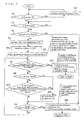
- Fig. 2 is an operation flow chart thereof.
- the control device of extension operation of closing the door is configured by a system including: a car operation panel (button) capable of performing button input and display and annunciation, or an other input and output unit E such as an exclusive switch, a maintenance computer, and the like; a landing operation panel D; a door C capable of opening and closing a door; a parameter setting section A capable of changing setting of control parameters to be described later; a control section B for functionally controlling an elevator in accordance with the control parameters; and the like, and having a function capable of performing extension operation of closing of the door without allocating a landing call for a constant time.
- the parameter setting section A has the following four functions for changing setting of the control parameters for the control section B:
- the control section B operates as shown in the flow chart shown in Fig. 2.
- an input for example, a block sign due to pressing a plurality of buttons for a long time, ON of the exclusive switch, an input command of the maintenance computer, and the like
- an input for example, a block sign due to pressing a plurality of buttons for a long time, ON of the exclusive switch, an input command of the maintenance computer, and the like
- the car operation panel button
- the other input and output unit E step B3
- step B7 When the process proceeds to a mode of extension operation of closing the door (step B7), the operation is as follows:
- the operation is as follows: The time timer t continues time counting; whether or not shifting to an operation mode other than an automatic operation is required is judged in step B8; and if NO, whether or not being off the time slot W is judged in step B9. If the judgment is NO, whether there is a button input of the car door opening (whether there is a cancellation command of the extension operation of closing the door) is judged in step 10; if NO, the time timer t judges in step B11 whether or not one movement time of operation is not less than L of expiration; and if NO, the process returns to step B8.
- step B3 the operation can be repeated up to N times by an input from the car operation panel (button) or the like E where necessary (step B3); if an operation time is short in one movement time of operation, a plurality of times can be continuously performed by repeating the input from E, whereby the extension operation of closing the door with necessary time length is possible.
- the process does not proceed to the extension operation of closing the door, but it shifts to an automatic operation mode in step B41.
- operation cancellation can be made by inputting cancellation commands from a car button (door opening button) and the input device E (if YES in step B10).
- a car button door opening button
- the input device E if YES in step B10.
Landscapes
- Engineering & Computer Science (AREA)
- Automation & Control Theory (AREA)
- Elevator Door Apparatuses (AREA)
Abstract
A control device for an elevator includes: control means of extension operation of closing a door having a parameter setting section for respectively changing setting control parameters including a time slot capable of the extension operation of closing the door specified on the basis of an operation state of the elevator and a movement time of operation from start of the extension operation of closing the door set by a time timer of extension of closing the door initialized at the start of the extension operation of closing the door to cancellation; and cancellation control means of the extension operation of closing the door for actuating in accordance with an operation cancellation command and outputting a cancellation command of the extension operation of closing the door, wherein a state of closing the door is maintained without allocating a landing call during movement time of operation of closing the door according to the control means of the extension operation of closing the door in a state where the cancellation command of the extension operation of closing the door is not received.
Description
- The present invention relates to a control device for an elevator provided with a function in which closing of a car door can be extended for only a constant time so as not to lock in without opening the door in response to a landing call with respect to work required to perform in a state where the car door closes, such as cleaning of the inside of the car door.
- A conventional elevator is designed such that a car door can be usually opened from a landing side so that users are not locked in. However, in the case of performing work required to perform in a state where the car door closes, such as cleaning of the inside of the car door, it is necessary to have a function in which the closing of the car door can be extended for only a constant time so as not to lock in without opening the door in response to a landing call.
Although such extension technique for closing the door is disclosed inpatent documents 1, 2, and 3 or the like, an extension technique for closing the door in a state where the car door closes is not disclosed and each of their objects is different. -
- Patent Document 1:
Japanese Unexamined Patent Application Publication No. 2001-97656 - Patent Document 2:
Japanese Unexamined Patent Application Publication No. 2003-146565 - Patent Document 3:
Japanese Unexamined Patent Application Publication No. 6-32567 - As described above, the extension technique for closing the door of the conventional elevator has objects different from those of the present invention.
A usual elevator is designed such that the car door can be opened from a landing side so that users are not locked in; and, as in the following example, it surely becomes a state where the door opens after a state where the door closes.
For example, in the case of passing as full-loaded operation and fire control operation, control is made to ban the opening of the door while the door closes without responding to a landing button call; however, the door finally surely opens responding to a registered call for arrival at a specified stair or arrival at an emergency stair.
Furthermore, in the case of an independent operation, an elevator runs in response to only a car call but does not respond to a landing call; however, it also becomes a state where the door is also being opened at a landing during stop in order to always use the elevator.
Further, when the work is done in a state where the door closes for a long time, maintenance workers and installation workers implement the work by manually closing the door; however, door control is released so as to be able to manually open the door from a landing during problem occurrence. - As described above, in the current elevator, the actual situation is that, a function for controlling the closing of the door, in which the landing call is not assigned to the elevator and the door opening including manually opening cannot be performed, is not mounted in an attempt to prevent from locking in.
However, since an elevator has been of a machine room-less, the work performed in a machine room by maintenance workers has been implemented at a bid, landing, and the inside of a car; and it further tends to increase the work required for performing at the inside of the car depending on customers' convenience and contents.
For example, there is a building where the decorated surfaces of the inside of the car door attracting user's attention are cleaned every day; and in the case that the work is implemented by elevator maintenance workers, control of the car door is cut off and the door is manually closed. However, there is a problem in that it is bad efficient to manually open and close the door every time only for performing a simple work that is the door cleaning. - Furthermore, when a cleaning worker of the building performs such a work, if there is an independent operation function, a sliding door switch mounted in the car is set to the independent operation so as not to respond to a landing call; a car call is made and the door is closed; and cleaning is performed while the elevator is operated to a specified stair of the car call. In this case, complicated operation is made by the cleaning worker having no specialized skills and therefore there is a problem in that there is a risk to cause failure due to erroneous operation.
Further, when the cleaning worker cleans an elevator which cannot be set to the independent operation, the worker cannot help performing the work during automatic operation and therefore there is a risk that the door suddenly opens in a stopped state; and when the worker cleans while the elevator is running, the work is performed during operation of the elevator and therefore it is inefficient and inconvenience.
Therefore, an elevator is required to have needs that there is no risk of generating locking in and that has a function in which a state of closing a door can be maintained by simple operation, and it is an object of the present invention to provide a control device for an elevator responding to the needs. - According to the present invention, there is provided a control device for an elevator including: control means of extension operation of closing a door having a parameter setting section for respectively changing setting control parameters including a time slot capable of the extension operation of closing the door specified on the basis of an operation state of the elevator and a movement time of operation from start of the extension operation of closing the door set by a time timer of extension of closing the door initialized at the start of the extension operation of closing the door to cancellation; and cancellation control means of the extension operation of closing the door for actuating in accordance with an operation cancellation command and outputting a cancellation command of the extension operation of closing the door, wherein a state of closing the door is maintained without allocating a landing call during the movement time of operation of closing the door according to the control means of the extension operation of closing the door in a state where the cancellation command of the extension operation of closing the door is not received.
Furthermore, according to the present invention, there is provided a control device for the elevator in which the parameter setting section of the control means of the extension operation of closing the door further includes the number of operation times of the extension operation of closing the door set in the time slot of extension of closing the door as the control parameters for changing setting. - According to the control device for the elevator of the present invention, false operation can be prevented because an operable time slot is capable of being set and changed and locking in can be avoided by automatic cancellation of operation at expiration of a movement time of operation. Since the door is not opened during inspection and test, it prevents passengers from entering by mistake. Cleaning of the inside of the car door and the inside of the car can be safely and efficiently performed during the extension operation of closing the door. Further, maintenance work or the like of the elevator can be efficiently performed while the door is closed by the extension operation of closing the door.
Furthermore, since the operation can be repeatedly performed N times in a time slot, a time of closing the door can be prolonged. - Each embodiment according to the present invention will be described below based on the drawings. First Embodiment
Fig. 1 is a conceptual view for explaining a control device of extension operation of closing a door of a first embodiment according to the present invention, and Fig. 2 is an operation flow chart thereof.
In Fig. 1, the control device of extension operation of closing the door according to the first embodiment is configured by a system including: a car operation panel (button) capable of performing button input and display and annunciation, or an other input and output unit E such as an exclusive switch, a maintenance computer, and the like; a landing operation panel D; a door C capable of opening and closing a door; a parameter setting section A capable of changing setting of control parameters to be described later; a control section B for functionally controlling an elevator in accordance with the control parameters; and the like, and having a function capable of performing extension operation of closing of the door without allocating a landing call for a constant time. - The parameter setting section A has the following four functions for changing setting of the control parameters for the control section B:
- (1) time slot W: specify a time slot capable of performing the extension operation of closing the door in accordance with the operation state of the elevator;
- (2) single movement time of operation L: set a time from the start of the extension operation of closing the door to automatic cancellation;
- (3) number of operation times N : set the maximum number of operation times capable of starting the extension operation of closing the door in the time slot W; and
- (4) necessity of display and annunciation V: specify whether or not display and annunciation with respect to E or D during the extension operation of closing the door are performed.
- The control section B operates as shown in the flow chart shown in Fig. 2.
First, in an out-of-period of the time slot W (if NO in step B1) in a state where the control parameters of the parameter setting section A are set preliminarily, the number of times n of the extension operation of closing the door is initialized to 0 (step B2).
Next, an input (for example, a block sign due to pressing a plurality of buttons for a long time, ON of the exclusive switch, an input command of the maintenance computer, and the like) is made from the car operation panel (button) or the other input and output unit E (step B3). If the number of operation times is within N (step B4) by the input, a time timer t of extension of closing the door is initialized (t=0) (step B5), the number of operation times is counted (step B6), and the extension operation of closing the door is started (step B7).
When the process proceeds to a mode of extension operation of closing the door (step B7), the operation is as follows: - (1) the door is controlled to a state of closing the door;
- (2) the landing call is not allocated;
- (3) moving up and down operation in a hoistway is possible (registerable for a car calling);
- (4) even it is operated in response to the car call, the opening of the door is not made after arrival; and
- (5) display and annunciation are made to the landing and the car in accordance with the control parameters at each time of starting operation, during operation, and canceling operation.
- Further, during the extension operation of closing the door, the operation is as follows:
The time timer t continues time counting; whether or not shifting to an operation mode other than an automatic operation is required is judged in step B8; and if NO, whether or not being off the time slot W is judged in step B9. If the judgment is NO, whether there is a button input of the car door opening (whether there is a cancellation command of the extension operation of closing the door) is judged in step 10; if NO, the time timer t judges in step B11 whether or not one movement time of operation is not less than L of expiration; and if NO, the process returns to step B8.
Therefore, if within the time slot W, the operation can be repeated up to N times by an input from the car operation panel (button) or the like E where necessary (step B3); if an operation time is short in one movement time of operation, a plurality of times can be continuously performed by repeating the input from E, whereby the extension operation of closing the door with necessary time length is possible.
In addition, if the number of operation times is already not less than n in step B4, the process does not proceed to the extension operation of closing the door, but it shifts to an automatic operation mode in step B41. - Furthermore, the extension operation of closing the door is cancelled to shift to an operation mode of step B81 or step B41, if cancellation conditions of the extension operation of closing the door of the followings (1) to (4) are established as follows:
- (1) in the case of shifting to an other operation mode such as a control operation (if YES in step B8);
- (2) in the case of being off the time slot W (if YES in step B9);
- (3) in the case that the car door opening button and the cancellation command of the extension operation of closing the door are issued (if YES in step B10); and
- (4) in the case that the movement time of operation L is expired (elapsed) from starting the extension operation of closing the door (if YES in step B11).
In addition, in the case of (2) (if YES in step B9), the time timer t is set to L of expiration and the process shifts to the automatic operation mode in step B41 via step B11 (if YES). - Still furthermore, in the case of requiring cancellation within the movement time of operation, operation cancellation can be made by inputting cancellation commands from a car button (door opening button) and the input device E (if YES in step B10).
Although not shown in the drawing, since passengers cannot use the elevator at the start of the extension operation of closing the door, during the operation, and at the operation cancellation, display and annunciation are performed in accordance with necessity of display and annunciation to the landing and car set by the control parameters depending on use for the purpose of informing workers in the car of the cancellation. -
- Fig. 1 is a conceptual view for explaining a control device of extension operation of closing a door of a first embodiment according to the present invention; and
- Fig. 2 is an operation flow chart of the control device of extension operation of closing the door of the first embodiment according to the present invention.
-
- A
- Parameter setting section
- B
- Control section
- C
- Door
- D
- Landing operation panel
- E
- Car operation panel (button), or other input and output unit
- W
- Time slot
- L
- Single movement time of operation
- N
- Number of operation times
- V
- Necessity of display and annunciation
Claims (2)
- A control device for an elevator comprising:control means of extension operation of closing a door having a parameter setting section for respectively changing setting control parameters including a time slot capable of the extension operation of closing the door specified on the basis of an operation state of the elevator and a movement time of operation from start of the extension operation of closing the door set by a time timer of extension of closing the door initialized at the start of the extension operation of closing the door to cancellation; andcancellation control means of the extension operation of closing the door for actuating in accordance with an operation cancellation command and outputting a cancellation command of the extension operation of closing the door,wherein a state of closing the door is maintained without allocating a landing call during the movement time of operation of closing the door according to said control means of the extension operation of closing the door in a state where said cancellation command of the extension operation of closing the door is not received.
- The control device for the elevator according to claim 1, wherein said parameter setting section of said control means of the extension operation of closing the door further includes the number of operation times of the extension operation of closing the door set in said time slot of extension of closing the door as the control parameters for changing setting.
Applications Claiming Priority (2)
| Application Number | Priority Date | Filing Date | Title |
|---|---|---|---|
| JP2005113715A JP2006290552A (en) | 2005-04-11 | 2005-04-11 | Elevator control device |
| PCT/JP2006/303849 WO2006109373A1 (en) | 2005-04-11 | 2006-03-01 | Control device for elevator |
Publications (2)
| Publication Number | Publication Date |
|---|---|
| EP1880969A1 true EP1880969A1 (en) | 2008-01-23 |
| EP1880969A4 EP1880969A4 (en) | 2013-05-01 |
Family
ID=37086667
Family Applications (1)
| Application Number | Title | Priority Date | Filing Date |
|---|---|---|---|
| EP06714967.4A Withdrawn EP1880969A4 (en) | 2005-04-11 | 2006-03-01 | CONTROL DEVICE FOR ELEVATOR |
Country Status (5)
| Country | Link |
|---|---|
| EP (1) | EP1880969A4 (en) |
| JP (1) | JP2006290552A (en) |
| KR (1) | KR100855162B1 (en) |
| CN (1) | CN100537393C (en) |
| WO (1) | WO2006109373A1 (en) |
Family Cites Families (10)
| Publication number | Priority date | Publication date | Assignee | Title |
|---|---|---|---|---|
| JPS63136678U (en) * | 1987-02-27 | 1988-09-08 | ||
| JP2504257B2 (en) * | 1990-02-16 | 1996-06-05 | 三菱電機株式会社 | Door control device for elevator |
| JP2583642B2 (en) * | 1990-05-25 | 1997-02-19 | 三菱電機株式会社 | Elevator door control device |
| JPH0632567A (en) * | 1992-07-14 | 1994-02-08 | Hitachi Building Syst Eng & Service Co Ltd | Elevator driving equipment |
| JP3336702B2 (en) * | 1993-11-15 | 2002-10-21 | 三菱電機株式会社 | Elevator door opening and closing control device |
| KR970001197A (en) * | 1995-06-22 | 1997-01-21 | 이종수 | How to extend elevator door |
| JP2003146565A (en) * | 2001-11-06 | 2003-05-21 | Hitachi Building Systems Co Ltd | Elevator security driving device |
| JP4291550B2 (en) * | 2002-06-12 | 2009-07-08 | 東芝エレベータ株式会社 | Elevator control device |
| JP4242609B2 (en) * | 2002-07-08 | 2009-03-25 | 株式会社日立製作所 | Elevator operation control device with crime prevention function |
| JP4012120B2 (en) * | 2003-05-27 | 2007-11-21 | 株式会社日立ビルシステム | Security operation method of elevator |
-
2005
- 2005-04-11 JP JP2005113715A patent/JP2006290552A/en active Pending
-
2006
- 2006-03-01 CN CNB2006800009264A patent/CN100537393C/en not_active Expired - Fee Related
- 2006-03-01 EP EP06714967.4A patent/EP1880969A4/en not_active Withdrawn
- 2006-03-01 KR KR1020077003481A patent/KR100855162B1/en not_active Expired - Fee Related
- 2006-03-01 WO PCT/JP2006/303849 patent/WO2006109373A1/en not_active Ceased
Non-Patent Citations (2)
| Title |
|---|
| No further relevant documents disclosed * |
| See also references of WO2006109373A1 * |
Also Published As
| Publication number | Publication date |
|---|---|
| CN100537393C (en) | 2009-09-09 |
| JP2006290552A (en) | 2006-10-26 |
| CN101031496A (en) | 2007-09-05 |
| KR20070065303A (en) | 2007-06-22 |
| EP1880969A4 (en) | 2013-05-01 |
| WO2006109373A1 (en) | 2006-10-19 |
| KR100855162B1 (en) | 2008-08-29 |
Similar Documents
| Publication | Publication Date | Title |
|---|---|---|
| EP2316771B1 (en) | Elevator group management control device | |
| KR101374988B1 (en) | Method of controlling access to an elevator car | |
| CN101272976B (en) | Elevator control system | |
| US6257373B1 (en) | Apparatus for controlling allocation of elevators based on learned travel direction and traffic | |
| CN101531300B (en) | Elevator | |
| US7793762B2 (en) | Destination entry passenger interface with multiple functions | |
| EP1864933A1 (en) | System for driving and operating elevator | |
| CN105314475B (en) | The group management control apparatus of elevator and the group management control method of elevator | |
| US5427206A (en) | Assigning a hall call to an elevator car based on remaining response time of other registered calls | |
| EP1880969A1 (en) | Control device for elevator | |
| JP2006062760A (en) | Elevator control device | |
| US5467844A (en) | Assigning a hall call to a full elevator car | |
| US4685539A (en) | Operating system for elevator | |
| US6230847B1 (en) | Flashing “door open” button for an elevator car | |
| JP2006256830A (en) | Elevator system | |
| KR102361662B1 (en) | Car call control device for hybrid destination selecting system | |
| JP7293416B1 (en) | Pit inspection method and elevator control system | |
| JPH0986812A (en) | Elevator control device | |
| JP4353750B2 (en) | Elevator control device | |
| KR102359659B1 (en) | Elevator with door closing time output module | |
| JPH0920485A (en) | Group management elevator | |
| JPH05139670A (en) | Elevator controller | |
| JP2017001829A (en) | Elevator control device | |
| JPH0859150A (en) | Door opening / closing control device for elevator | |
| JP2023013101A (en) | Display device for elevator |
Legal Events
| Date | Code | Title | Description |
|---|---|---|---|
| PUAI | Public reference made under article 153(3) epc to a published international application that has entered the european phase |
Free format text: ORIGINAL CODE: 0009012 |
|
| 17P | Request for examination filed |
Effective date: 20070118 |
|
| AK | Designated contracting states |
Kind code of ref document: A1 Designated state(s): DE |
|
| DAX | Request for extension of the european patent (deleted) | ||
| RBV | Designated contracting states (corrected) |
Designated state(s): DE |
|
| A4 | Supplementary search report drawn up and despatched |
Effective date: 20130402 |
|
| RIC1 | Information provided on ipc code assigned before grant |
Ipc: B66B 13/14 20060101AFI20130325BHEP |
|
| STAA | Information on the status of an ep patent application or granted ep patent |
Free format text: STATUS: THE APPLICATION IS DEEMED TO BE WITHDRAWN |
|
| 18D | Application deemed to be withdrawn |
Effective date: 20131030 |