EP1878734A1 - Novel lactam compound - Google Patents
Novel lactam compound Download PDFInfo
- Publication number
- EP1878734A1 EP1878734A1 EP06746180A EP06746180A EP1878734A1 EP 1878734 A1 EP1878734 A1 EP 1878734A1 EP 06746180 A EP06746180 A EP 06746180A EP 06746180 A EP06746180 A EP 06746180A EP 1878734 A1 EP1878734 A1 EP 1878734A1
- Authority
- EP
- European Patent Office
- Prior art keywords
- group
- formula
- compound
- pharmaceutically acceptable
- acceptable salt
- Prior art date
- Legal status (The legal status is an assumption and is not a legal conclusion. Google has not performed a legal analysis and makes no representation as to the accuracy of the status listed.)
- Withdrawn
Links
- 0 C[C@](*)CC=CC=C([C@](C1=C(C)CNC1=O)N([C@]1[C@@](*)CCCC1)C(*)=O)[U](C)C Chemical compound C[C@](*)CC=CC=C([C@](C1=C(C)CNC1=O)N([C@]1[C@@](*)CCCC1)C(*)=O)[U](C)C 0.000 description 10
- FIJCCVGFUYLMNE-UHFFFAOYSA-N O=C(N(CC(NC1CCCCC1)=C1)C1=O)OCc1ccccc1 Chemical compound O=C(N(CC(NC1CCCCC1)=C1)C1=O)OCc1ccccc1 FIJCCVGFUYLMNE-UHFFFAOYSA-N 0.000 description 2
- DHEJIZSVHGOKMJ-UHFFFAOYSA-N C=Cc1ccccc1C=O Chemical compound C=Cc1ccccc1C=O DHEJIZSVHGOKMJ-UHFFFAOYSA-N 0.000 description 1
- QJGKPHFEDVSHGL-UHFFFAOYSA-N CSc1c(C=O)[s]cc1 Chemical compound CSc1c(C=O)[s]cc1 QJGKPHFEDVSHGL-UHFFFAOYSA-N 0.000 description 1
- WWDGTWAATSJUIM-UHFFFAOYSA-N Cc1cccc2ccn[n]12 Chemical compound Cc1cccc2ccn[n]12 WWDGTWAATSJUIM-UHFFFAOYSA-N 0.000 description 1
- ZOCCTLRIWDKHMZ-ZGELDQQJSA-N O=C(C(F)F)N([C@H](CCCC1)C1CCCC(CN1)=C2C1=O)[C@@H]2c1c2ncccc2ccc1 Chemical compound O=C(C(F)F)N([C@H](CCCC1)C1CCCC(CN1)=C2C1=O)[C@@H]2c1c2ncccc2ccc1 ZOCCTLRIWDKHMZ-ZGELDQQJSA-N 0.000 description 1
- OTQYWPOSRXKVMJ-UHFFFAOYSA-N O=C1NCC(CCCC2CCCCC2)=C1 Chemical compound O=C1NCC(CCCC2CCCCC2)=C1 OTQYWPOSRXKVMJ-UHFFFAOYSA-N 0.000 description 1
- CLXXUGOCVBQNAI-UHFFFAOYSA-N O=Cc1cccc2c1OCC2 Chemical compound O=Cc1cccc2c1OCC2 CLXXUGOCVBQNAI-UHFFFAOYSA-N 0.000 description 1
- OVZQVGZERAFSPI-UHFFFAOYSA-N O=Cc1cccc2c1nccc2 Chemical compound O=Cc1cccc2c1nccc2 OVZQVGZERAFSPI-UHFFFAOYSA-N 0.000 description 1
- SGNBVQKSJWCGOJ-UHFFFAOYSA-N O=Cc1cccc2ccn[n]12 Chemical compound O=Cc1cccc2ccn[n]12 SGNBVQKSJWCGOJ-UHFFFAOYSA-N 0.000 description 1
- NKBREVUJRFSFFD-IDHHARJASA-N OCC(N([C@H](CCCC1)[C@@H]1NC(CN1)=C2C1=O)[C@@H]2c1c2OCCc2ccc1)=O Chemical compound OCC(N([C@H](CCCC1)[C@@H]1NC(CN1)=C2C1=O)[C@@H]2c1c2OCCc2ccc1)=O NKBREVUJRFSFFD-IDHHARJASA-N 0.000 description 1
Classifications
-
- C—CHEMISTRY; METALLURGY
- C07—ORGANIC CHEMISTRY
- C07D—HETEROCYCLIC COMPOUNDS
- C07D207/00—Heterocyclic compounds containing five-membered rings not condensed with other rings, with one nitrogen atom as the only ring hetero atom
- C07D207/02—Heterocyclic compounds containing five-membered rings not condensed with other rings, with one nitrogen atom as the only ring hetero atom with only hydrogen or carbon atoms directly attached to the ring nitrogen atom
- C07D207/30—Heterocyclic compounds containing five-membered rings not condensed with other rings, with one nitrogen atom as the only ring hetero atom with only hydrogen or carbon atoms directly attached to the ring nitrogen atom having two double bonds between ring members or between ring members and non-ring members
- C07D207/34—Heterocyclic compounds containing five-membered rings not condensed with other rings, with one nitrogen atom as the only ring hetero atom with only hydrogen or carbon atoms directly attached to the ring nitrogen atom having two double bonds between ring members or between ring members and non-ring members with hetero atoms or with carbon atoms having three bonds to hetero atoms with at the most one bond to halogen, e.g. ester or nitrile radicals, directly attached to ring carbon atoms
- C07D207/36—Oxygen or sulfur atoms
- C07D207/38—2-Pyrrolones
-
- A—HUMAN NECESSITIES
- A61—MEDICAL OR VETERINARY SCIENCE; HYGIENE
- A61K—PREPARATIONS FOR MEDICAL, DENTAL OR TOILETRY PURPOSES
- A61K31/00—Medicinal preparations containing organic active ingredients
- A61K31/33—Heterocyclic compounds
- A61K31/395—Heterocyclic compounds having nitrogen as a ring hetero atom, e.g. guanethidine or rifamycins
- A61K31/55—Heterocyclic compounds having nitrogen as a ring hetero atom, e.g. guanethidine or rifamycins having seven-membered rings, e.g. azelastine, pentylenetetrazole
-
- A—HUMAN NECESSITIES
- A61—MEDICAL OR VETERINARY SCIENCE; HYGIENE
- A61P—SPECIFIC THERAPEUTIC ACTIVITY OF CHEMICAL COMPOUNDS OR MEDICINAL PREPARATIONS
- A61P13/00—Drugs for disorders of the urinary system
- A61P13/12—Drugs for disorders of the urinary system of the kidneys
-
- A—HUMAN NECESSITIES
- A61—MEDICAL OR VETERINARY SCIENCE; HYGIENE
- A61P—SPECIFIC THERAPEUTIC ACTIVITY OF CHEMICAL COMPOUNDS OR MEDICINAL PREPARATIONS
- A61P25/00—Drugs for disorders of the nervous system
- A61P25/02—Drugs for disorders of the nervous system for peripheral neuropathies
-
- A—HUMAN NECESSITIES
- A61—MEDICAL OR VETERINARY SCIENCE; HYGIENE
- A61P—SPECIFIC THERAPEUTIC ACTIVITY OF CHEMICAL COMPOUNDS OR MEDICINAL PREPARATIONS
- A61P27/00—Drugs for disorders of the senses
- A61P27/02—Ophthalmic agents
-
- A—HUMAN NECESSITIES
- A61—MEDICAL OR VETERINARY SCIENCE; HYGIENE
- A61P—SPECIFIC THERAPEUTIC ACTIVITY OF CHEMICAL COMPOUNDS OR MEDICINAL PREPARATIONS
- A61P3/00—Drugs for disorders of the metabolism
- A61P3/04—Anorexiants; Antiobesity agents
-
- A—HUMAN NECESSITIES
- A61—MEDICAL OR VETERINARY SCIENCE; HYGIENE
- A61P—SPECIFIC THERAPEUTIC ACTIVITY OF CHEMICAL COMPOUNDS OR MEDICINAL PREPARATIONS
- A61P3/00—Drugs for disorders of the metabolism
- A61P3/08—Drugs for disorders of the metabolism for glucose homeostasis
-
- A—HUMAN NECESSITIES
- A61—MEDICAL OR VETERINARY SCIENCE; HYGIENE
- A61P—SPECIFIC THERAPEUTIC ACTIVITY OF CHEMICAL COMPOUNDS OR MEDICINAL PREPARATIONS
- A61P3/00—Drugs for disorders of the metabolism
- A61P3/08—Drugs for disorders of the metabolism for glucose homeostasis
- A61P3/10—Drugs for disorders of the metabolism for glucose homeostasis for hyperglycaemia, e.g. antidiabetics
-
- A—HUMAN NECESSITIES
- A61—MEDICAL OR VETERINARY SCIENCE; HYGIENE
- A61P—SPECIFIC THERAPEUTIC ACTIVITY OF CHEMICAL COMPOUNDS OR MEDICINAL PREPARATIONS
- A61P43/00—Drugs for specific purposes, not provided for in groups A61P1/00-A61P41/00
-
- A—HUMAN NECESSITIES
- A61—MEDICAL OR VETERINARY SCIENCE; HYGIENE
- A61P—SPECIFIC THERAPEUTIC ACTIVITY OF CHEMICAL COMPOUNDS OR MEDICINAL PREPARATIONS
- A61P9/00—Drugs for disorders of the cardiovascular system
-
- C—CHEMISTRY; METALLURGY
- C07—ORGANIC CHEMISTRY
- C07D—HETEROCYCLIC COMPOUNDS
- C07D487/00—Heterocyclic compounds containing nitrogen atoms as the only ring hetero atoms in the condensed system, not provided for by groups C07D451/00 - C07D477/00
- C07D487/02—Heterocyclic compounds containing nitrogen atoms as the only ring hetero atoms in the condensed system, not provided for by groups C07D451/00 - C07D477/00 in which the condensed system contains two hetero rings
- C07D487/04—Ortho-condensed systems
Definitions
- the present invention relates to a medicinal drug, and in particular, to a novel lactam compound having sugar transport enhancement action and having excellent hypoglycemic action, a preparation method thereof, and a preparation intermediate thereof.
- the present invention also relates to a pharmaceutical composition comprising the lactam compound.
- Medicinal treatment of type II diabetes is positioned as a therapeutic method for patients for whom sufficient improvement cannot be seen by nutritional therapy or exercise therapy, and so far, formulations using insulin, which is an endogenous hormone in charge of hypoglycemic action, or peroral hypoglycemic agent having actions such as promotion of insulin secretion or improvement of peripheral insulin resistance have been developed.
- insulin which is an endogenous hormone in charge of hypoglycemic action
- peroral hypoglycemic agent having actions such as promotion of insulin secretion or improvement of peripheral insulin resistance
- methods using a peroral hypoglycemic agent to adjust blood glucose stringently are the mainstream medicinal treatments of type II diabetes; however, in cases where sufficient insulin action to correct for hyperglycemia cannot be obtained, insulin therapy is carried out as major means. Meanwhile, administration of insulin therapy is the sole treatment with respect to type I diabetes, as insulin secretion capability of the patient is abolished.
- insulin therapy being an injectable agent
- problems such as cumbersome procedure and education of the patients, and from the aspect of improving compliance, improvement of the administration method is strongly desired.
- some attempts have been made in the development of insulin administration method by various non-injection formulations substituted for injectables; however, due to problems such as the absorption efficiency is low and the absorption does not stabilize, they are not in practical use.
- Non-Patent Reference 2 Khim. Farm. Zh. 1991, 25 (11 ); Non-Patent Reference 3: Pharmaceutical Chemical Journal, 1991, 25 (11), 768 ; Non-Patent Reference 4: pharmaceutical sciences journal, 1986, 715 ; Non-Patent Reference 5: Chem, Pharm. Bull. 1984, 3724 ; Non-Patent Reference 6: Journal of the Pharmaceutical Society of Japan, 1984, 1004 ; Non-Patent Reference 7: J. Org. Chem. 1983, 4367 ). However, they have structures that are different from the compound of the present invention, furthermore, the relationship between these compounds and the action of enhancing sugar transport of peripheral cells or the action of decreasing blood glucose level is not reported at all.
- An object of the present invention is to provide an agent for the treatment of diabetes mellitus that exerts hypoglycemic action at low dose, with little side effects and having excellent physical properties as medicinal drug.
- an object is to provide an agent for the treatment of diabetes mellitus for oral administration use having excellent membrane permeability.
- An object of the present invention is to provide a novel lactam compound, or a pharmaceutically acceptable salt thereof.
- An object of the present invention is to provide also a preparation method for a lactam compound containing the above-mentioned lactam compound, or a pharmaceutically acceptable salt thereof, and a preparation intermediate thereof.
- An object of the present invention is to provide also a sugar transport enhancement agent.
- An object of the present invention is to provide also a hypoglycemic agent.
- An object of the present invention is to provide also an agent for the prevention and/or treatment of diabetes mellitus, diabetic peripheral neuropathy, diabetic nephropathy, diabetic retinopathy, diabetic macrovascular disease, glucose tolerance anomaly, or obesity.
- An object of the present invention is to provide also a pharmaceutical composition.
- the present inventors synthesized a variety of lactam compounds, found an unexpected high hypoglycemic action in a specific lactam compound having chemical structural characteristics, in having at the ring portion containing U of the following Formula (1) compound (having at the A portion of the following Formula (1-1) compound) a specific fused bicyclic heterocycle, or having at the A 2 portion of the following Formula (1-2) compound a specific substituted thiophene and a substituted benzene, and reached completion of the present invention. Furthermore, high membrane permeability was found in these and the present invention reached completion. By the completion of the present invention, reduction in the dosage, and the like, become possible.
- the present invention provides the following inventions.
- the compound represented by Formula (1), (1-1) or (1-2) has sugar transport enhancement action and high hypoglycemic action, and is useful as an agent for the prevention and/or treatment of diabetes mellitus, diabetic peripheral neuropathy, diabetic nephropathy, diabetic retinopathy, diabetic macrovascular disease, glucose tolerance anomaly or obesity.
- the compound represented by Formula (1), (1-1) or (1-2) has, for instance, excellent solubility and membrane permeability, and is provided with desirable physical properties as medicinal drug.
- the membrane permeability being excellent, absorbability is high in oral administration, allowing the variation in blood concentration within an individual or from individual to individual to be lowered.
- the sugar transport enhancement action in the present invention indicates an action that enhances sugar transport capability through a biological membrane, and may be an action on either the sugar transport from the external side to the internal side of a biological membrane or the sugar transport from the internal side to the external side of a biological membrane. More specifically, the action includes, for instance, insulin action, i.e., action enhancing glucose transport to the interior of muscle cells and the interior of adipocytes, and the like.
- sugar in sugar transport indicates pentose and hexose present in vivo. More specifically, the sugar may include, for instance glucose, mannose, arabinose, galactose, fructose, and the like, with glucose being preferred.
- May have 1 to 3 substituents indicates cases with no substitution, or having 1 to 3 substituents, each independently selected, and in cases having substituents, if the substituents are all halogen groups, the number of substituents is preferably 2 to 3, if other than a halogen group, 1 is preferable.
- “Lower alkyl group” indicates a straight chain or branched chain or cyclic alkyl group with a number of carbons of 1 to 6. More specifically, the lower alkyl groups may include, for instance, a methyl group, ethyl group, n-propyl group, n-butyl group, n-pentyl group, n-hexyl group, isopropyl group, isobutyl group, sec-butyl group, tert-butyl group, isopentyl group, tert-pentyl group, neopentyl group, 2-pentyl group, 3-pentyl group, n-hexyl group, 2-hexyl group, cyclopropyl group, cyclobutyl group, cyclopentyl group, cyclohexyl group, and the like. Those with a number of carbons of 1 to 3 are preferred. In particular, a methyl group, ethyl group
- lower alkyl group that may have 1 to 3 substituents may include, for instance, a methyl group, ethyl group, cyclopropyl group, hydroxymethyl group, 1-hydroxyethyl group, 2-hydroxyethyl group, methoxymethyl group, ethoxymethyl group, difluoromethyl group, trifluoromethyl group, and the like.
- “Lower alkoxy group” indicates an alkoxy group having a straight chain or branched chain or cyclic alkyl group with a number of carbons of 1 to 6. More specifically, the lower alkoxy groups may include, for instance, a methoxy group, ethoxy group, n-propoxy group, n-butoxy group, n-pentyloxy group, n-hexyloxy group, isopropoxy group, isobutoxy group, sec-butoxy group, tert-butoxy group, cyclopropyloxy group, cyclobutoxy group, cyclopentyloxy group, cyclohexyloxy group, and the like. Those with a number of carbons of 1 to 3 are preferred. In particular, a methoxy group and ethoxy group are preferred.
- Lower alkenyl group indicate a straight chain or branched chain or cyclic alkenyl group with a number of carbons of 1 to 6. More specifically, the lower alkenyl groups may include, for instance, vinyl group, 1-propenyl group, 2-propenyl group, isopropenyl group, 1-butenyl group, 2-butenyl group, 3-butenyl group, and the like. Those with a number of carbons of 1 to 3 are preferred. In particular, a vinyl group and 1-propenyl group are preferred.
- “Lower alkynyl group” indicates a straight chain or branched chain alkynyl group with a number of carbons of 1 to 6. More specifically, the lower alkynyl groups may include, for instance, ethinyl group, 1-propynyl group, 2-propynyl group, 1-butynyl group, 2-butynyl group, 3-butynyl group, and the like. Those with a number of carbons of 1 to 3 are preferred. In particular, an ethinyl group, 1-propynyl group and 2-propynyl group are preferred.
- “Lower alkylthio group” indicates an alkylthio group having a straight chain or branched chain or cyclic alkyl group with a number of carbons of 1 to 6. More specifically, the lower alkylthio groups may include, for instance, a methylthio group, ethylthio group, n-propylthio group, isopropylthio group, n-butylthio group, isobutylthio group, sec-butylthio group, tert-butylthio group, cyclopropylthio group, cyclobutylthio group, cyclopentylthio group, cyclobutylthio group, and the like. Those with a number of carbons of 1 to 3 are preferred.
- Lower alkylamino group indicates an amino group monosubstituted or disubstituted with a lower alkyl group, and as examples of this lower alkyl group, those indicated in the previous "lower alkyl group” may be cited. More specifically, the lower alkylamino groups may include, for instance, methylamino group, ethylamino group, propylamino group, isopropylamino group, dimethylamino group, diethylamino group, dipropylamino group, diisopropylamino group, methylethylamino group, and the like.
- Halogen group represents fluorine atom, chlorine atom and bromine atom, and in particular, fluorine atom is preferred.
- the "pharmaceutically acceptable salt thereof' may include, for instance, regarding the compound of the present invention that is acidic enough, ammonium salt thereof, alkaline metal salt (sodium salt, potassium salt and the like, are indicated as examples, these being referred) thereof, alkaline earth metal salt (calcium salt, magnesium salt and the like are indicated as examples, these being preferred) thereof, salt thereof with an organic base, and the like.
- the organic base salts may include, for example, dicyclohexyl amine salt, benzathine salt, N-methyl-D-glucan salt, hydramine salt, salt of amino acid such as arginine or lysine, and the like.
- the satls may include acid addition salt thereof, for instance, salt of inorganic acid, such as hydrochloric acid, sulfuric acid, nitric acid and phosphoric acid, or salt of organic acid, such as acetic acid, lactic acid, citric acid, tartaric acid, maleic acid, fumaric acid and monomethyl sulfuric acid, and the like.
- the salt may be a hydrous compound or a hydrate.
- the present invention includes all isomers such as optical isomers and geometric isomers, hydrates, solvates, and furthermore, mixtures thereof. Furthermore the present invention also includes prodrugs, i.e., compounds converted, in the body, to generate the lactam Compound (1), (1-1) or (1-2) of the present invention.
- R is preferably a lower alkyl group or a lower alkoxy group, which may have 1 to 3 substituents.
- organic groups of Formulae (2) to (7) indicated by A may be further substituted with 1 to 3 substituents, in which case, the substituent is a fluorine atom, with the proviso that the organic groups having no such substituent is preferred.
- O or NH is preferred as X, CH, C-Me or N is preferred as Y, and in particular CH or C-Me is preferred.
- R As group represented by R, preferred is a methyl group, ethyl group, cyclopropyl group, hydroxymethyl group, methoxymethyl group, difluoromethyl group, trifluoromethyl group or methoxy group. Among these groups, a hydroxymethyl group, methoxymethyl group or cyclopropyl group is particularly preferred, with the hydroxymethyl group being even more preferred.
- a halogen group preferred is a halogen group, hydroxyl group, methoxy group, ethoxy group, methylthio group, methylamino group or dimethylamino group.
- a halogen group, hydroxyl group and methoxy group are preferred.
- R 2 preferred is a methyl group, ethyl group, cyclopropyl group, hydroxymethyl group, methoxymethyl group, difluoromethyl group, trifluoromethyl group or methoxy group.
- a hydroxymethyl group, methoxymethyl group or cyclopropyl group is particularly preferred, with the hydroxymethyl group being even more preferred.
- R 2 ' a methyl group or ethyl group is preferred as R 2 ', and in Formula (3-2), a hydrogen atom or methyl group is preferred as R 2 ".
- the compounds of the present invention (1), (1-1) and (1-2), and in particular, compounds described in Examples, and the like, can be obtained.
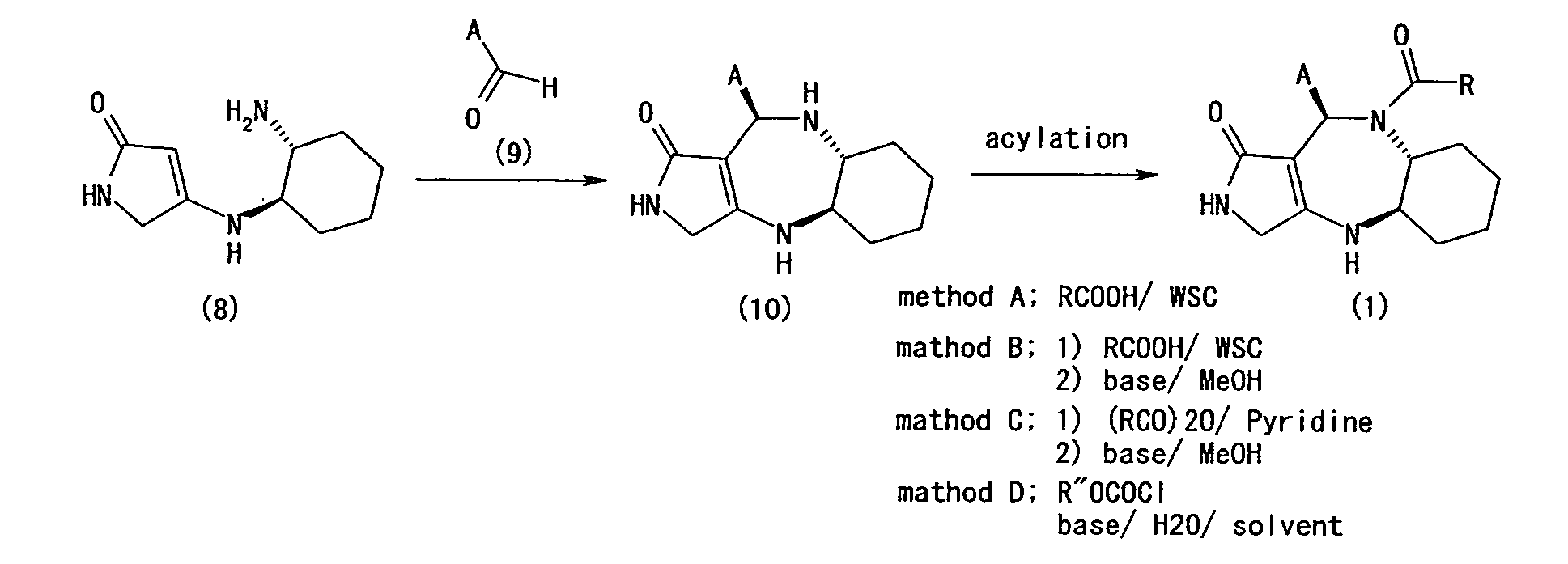
- a compound for which R in Formula (1), (1-1) or (1-2) represents an optionally substituted lower alkyl group can be synthesized, for example, by reacting the cyclized Compound (10) with the corresponding carboxylic acid using a condensation agent such as WSC ⁇ HCl ⁇ 1-[3-(dimethylamino)propyl]-3-ethylcarbodiimide hydrochloride ⁇ (method A), or, by reacting with acid anhydride that is derived from carboxylic acid by a general method or commercially available, under basic conditions.
- a condensation agent such as WSC ⁇ HCl ⁇ 1-[3-(dimethylamino)propyl]-3-ethylcarbodiimide hydrochloride ⁇ (method A)
- acylating if a diacyl compound containing two acyl groups with respect to the cyclized compound (10) is partially generated as a by-product, conversion to a monoacyl compound (1), (1-1) or (1-2) is possible by subjecting the reaction products to basic treatment as is (Methods B and C).
- a compound in which R is a hydroxymethyl group in particular, can be obtained by carrying out WSC condensation using acetoxy acetic acid as the corresponding carboxylic acid, then by carrying out de-protection of acetyl group by basic treatment (in cases where diacyl body is generated as by-product, at the same time as deacylation).
- Aldehyde (9) can be commercially available ones (for instance, (9c) and (9h) are commercialized by Lancaster Synthesis Ltd.), or can be obtained by using known synthesis methods as-is, or by performing a simple application thereto.
- aldehydes (9a) to (9j) indicated in the following Table 1 can be obtained by methods described in the references indicated in the following Table 1, or the methods indicated in the Reference Examples.
- Compound (1), (1-1) or (1-2) of the present invention can be prepared according to the above preparation methods, or by performing a simple application thereto.
- Compound (1), (1-1) or (1-2) of the present invention obtained by the above methods can be purified using methods used in general organic synthesis, such as, extraction, distillation, crystallization and column chromatography.
- the starting material 4-(2-aminocyclohexylamino)-3-pyrroline-2-one (8) can be synthesized according to methods described in WO02/44180 (Patent Reference 1), as follows:
- tetramic acid (11) is known to generate dehydration dimers readily and to be unstable ( Mulholland et al., J. Chem. Soc. Perkin Trans 1,1972, pages 2121 to 2128 , Non-Patent Reference 8), such that obtaining Compound (8) stably with this method is thought to be difficult, and another method is desired.
- the present inventors conducted earnest research to complete the following preparation method for Compound (8) with Compound (12) as the starting material, which can be obtained without going through tetramic acid. According to the present method, Compound (8) can be obtained more stably and with good yields, as a result, the compound of the present invention (1), (1-1) or (1-2) can be obtained more stably with good yield.
- Compound (12) can be obtained similarly to the methods described in J. Heterocyclic Chemistry, 1996, Volume 33, pages 825 to 829 (Non-Patent Reference 9).
- hydrogen atoms are preferred as R3 and R3', and compounds in which R3 and R3' represent hydrogen atoms in Formula (12) can be prepared with N-(benzyloxycarbonyl)-glycine and Meldrum's acid as source materials.
- R3 and R3' hydrogen atoms are preferred as R3 and R3', and in addition, a compound in which the configuration of the 2-aminocyclohexylamino group moiety is (1R,2R) is preferred.
- Compound (13) may be a salt thereof with chemically acceptable acids.
- Compound (13) can be prepared by reacting Compound (12) and 1,2-diaminocyclohexane, in so doing, although there are no particular limitations on the proportions of Compound (12) and 1,2-diaminocyclohexane, from an economic point of view, a molar ratio of 1:0.8 to 1:1.2 is preferred, and a molar ratio of 1:0.9 to 1:1.1 is more preferred.
- acid is present in this reaction for obtaining Compound (13).
- hydrogen halides such as hydrogen chloride and hydrogen bromide, sulfuric acid, nitric acid, phosphoric acid, sulfonic acids such as p-toluene sulfonic acid and methanesulfonic acid, organic acid such as acetic acid, propionic acid and succinic acid, and mixtures thereof are used as the acid, with hydrogen chloride being particularly preferred.
- sources for hydrogen chloride organic solvent solutions of hydrogen chloride gas, such as hydrogen chloride-ethyl acetate, hydrogen chloride-methanol and hydrogen chloride-dioxane can be used, and in addition, hydrochloric acid can be used.
- the acid may be used at a molar ratio of 0.01 or greater with respect to 1,2-diaminocyclohexane, preferably 0.8 to 1.2, and more preferably 0.9 to 1.1.
- the reaction solvents may include alcohols such as methanol, ethanol, and 2-propanol, ethers such as tetrahydrofuran, dioxane and 1,2-dimethoxy ethane, esters such as ethyl acetate, isopropyl acetate, hydrocarbons such as hexane and heptane, aromatic hydrocarbons such as toluene and xylene, halogenated hydrocarbons such as dichloromethane, chloroform and chlorobenzene, nitriles such as acetonitrile and propionitrile, amides such as N,N-dimethyl formamide and N-methyl pyrrolidone, dimethylsulfoxide and mixtures thereof. From the point of view of solubility and ease of isolation of the products, alcohols, esters, and mixtures thereof are preferred. In particular, a mixture of ethanol and ethyl acetate is preferably used.
- the reaction is performed in the interval from 0°C to the boiling point of the reaction mixture. Preferably 30°C to 80°C is used, and more preferably 50°C to 70°C.
- reaction time depends on the type of solvent and the temperature, it is roughly 1 to 24 hours.
- the course of the reaction can be analyzed, for instance, by high performance liquid chromatography.
- Compound (13) can be purified and isolated by such methods as solidification, crystallization, extraction and chromatography, or combination of these methods.
- solidification or crystallization performance is possible by adding a poor solvent to the solution or the mixture containing Compound (13).
- poor solvent for example, heptane, toluene, ethyl acetate, or the like, can be used.
- solidification or crystallization can also be carried out by cooling the solution or the mixture containing Compound (13).
- addition of poor solvent and cooling can also be used in combination. If the morphology to be isolated is free form, it is desirable to eliminate the acid used in the reaction.
- the methods for eliminating acid may include washing of the solution or mixture containing Compound (13) with an alkaline aqueous solution.
- the morphology to be isolated may be a chemically acceptable salt, in which case, isolation as a salt with the acid used in the reaction is desirable.
- Compound (13) can also be subjected to the following step without isolation.
- the chemically acceptable acids may include inorganic acid (for instance, hydrochloric acid, sulfuric acid, phosphoric acid, nitric acid, bromide hydrogen acid and the like), organic carboxylic acid (for instance, acetic acid, citric acid, benzoic acid, maleic acid, fumaric acid, tartaric acid, succinic acid, trifluoroacetic acid, tannic acid, butyric acid, hibenzoic acid, pamoic acid, enanthic acid, decanoic acid, teoclic acid, salicylic acid, lactic acid, oxalic acid, mandelic acid, malic acid and the like), and organic sulfonic acid (for instance, methane sulfonic acid, p-toluene sulfonic acid, benzene sulfonic acid and the like).
- organic carboxylic acid for instance, acetic acid, citric acid, benzoic acid, maleic acid, fumaric acid, tartaric acid
- hydrochloride is preferred.
- free form is also preferred.
- Compound (8) can be obtained by deprotecting Compound (13), i.e., by eliminating the benzyloxy carbonyl group.
- method for deprotection conventional methods for eliminating a benzyloxy carbonyl group can be used.
- the deprotection method may include hydrogen reduction using a noble metal catalyst, proton transfer reaction using a noble metal catalyst and a hydrogen donor, and the like.
- the hydrogen reduction using a noble metal catalyst is preferred.
- the noble metal catalysts may include palladium catalyst, platinum catalyst, rhodium catalyst, and the like, with the palladium catalyst being preferred.
- palladium catalyst palladium black or palladium carried by various carriers can be used.
- the palladium catalysts may include palladium black, palladium-carbon, palladium-alumina, palladium-calcium carbonate, palladium-barium sulfate, hydroxy palladium-carbon, and the like, with the palladium carbon being preferred.
- the reaction solvents may include alcohols such as methanol, ethanol and 2-propanol, ethers such as tetrahydrofuran, dioxane and 1,2-dimethoxy ethane, esters such as ethyl acetate and isopropyl acetate, hydrocarbons such as hexane and heptane, aromatic hydrocarbons such as toluene and xylene, halogenated hydrocarbons such as dichloromethane, chloroform and chlorobenzene, nitriles such as acetonitrile and propionitrile, amides such as N,N-dimethyl formamide and N-methyl pyrrolidone, and mixtures thereof.
- alcohols which well dissolve Compound (8) that is the product, or the salt thereof, with methanol being particularly preferred.
- the reaction is performed in the interval from 0°C to the boiling point of the reaction mixture.
- 10°C to 50°C is used, and more preferably 20°C to 40°C.
- Compound (8) or salt thereof can be purified and isolated by methods, such as solidification, crystallization, extraction and chromatography, or a combination of these methods, or can also be used as-is.
- Compound (8) can be obtained readily in free form, for instance, by carrying out the above-mentioned reaction with Compound (13), which is in free form, as source material.
- the compound of the present invention (1), (1-1) or (1-2) can be convereted to a pharmaceutically acceptable salt thereof by conventional methods.
- the methods may include mixing a compound of Formula (1), (1-1) or (1-2) and a necessary acid or base at an adequate quantity ratio in a solvent and dispersant, and carrying out cation exchange or anion exchange from another salt form.
- the compound of the present invention When using the compound of the present invention as an agent for the prevention and/or treatment of diabetes mellitus, diabetic peripheral neuropathy, diabetic nephropathy, diabetic retinopathy, diabetic macrovascular disease, glucose tolerance anomaly or obesity, oral administration, intravascular administration or percutaneous administration is possible.
- the dosage differs depending on the symptoms and age of the patient to be administered, and the administration method, and is in general 0.001 to 1000mg/kg/day as the amount of the active ingredient compound.
- the compound of the present invention can be formulated by conventional methods.
- the formulation/dosage forms may include, injectable, tablet, granule, subtle granule, powdered drug, encapsulated formulation, cream agent, suppository, and the like.
- the formulation carriers may include, for instance, lactose, glucose, D-mannitol, starch, crystalline cellulose, calcium carbonate, kaolin, starch, gelatin, hydroxypropyl cellulose, hydroxypropylmethyl cellulose, polyvinylpyrrolidone, ethanol, carboxymethyl cellulose, carboxymethyl cellulose calcium salt, magnesium stearate, talc, acetyl cellulose, white sugar, titanium oxide, benzoic acid, paraoxy benzoate, sodium dehydroacetate, gum arabic, tragacanth, methyl cellulose, vitelline, surfactant, white sugar, simple syrup, citric acid, distilled water, ethanol, glycerin, propylene glycol, macrogol, sodium hydrogen phosphate, sodium dihydrogen phosphate, sodium phosphate, glucose, sodium chloride, phenol, thimerosal, paraoxybenzoate ester, sodium hydrogen sulfite, and the like, and can be combined with the compound of the present invention depending upon the
- the content in active ingredient of the present invention inside the formulation of the present invention varies considerably depending on the formulation form, is not limited in particular, and is in general 0.01 to 100 percent in weight with respect to the total amount of composition, and preferably 1 to 100 percent in weight.
- a suspension of potassium carbonate (50.0g, 362mmol) in 100ml of DMF was added sequentially with 2-bromophenol (20.6g, 120mmol) and bromoacetaldehyde dimethyl acetal (20.2g, 120mmol) and stirred at 95°C for 15 hours.
- the reaction solution was concentrated, liquid separation was carried out with ethyl acetate-water, the organic layer was sequentially washed with an aqueous solution of 1M-sodium hydroxide and saturated sodium chloride water, and dried with anhydrous magnesium sulfate.
- the residue obtained by concentration was dissolved in 200ml of chlorobenzene, added at room temperature to a solution comprising diphosphorus pentoxide (8.07g, 56.8mmol) and 85% phosphoric acid (27ml), which was stirred at 95°C for 15 hours. After cooling to room temperature, the mixture was poured over ice water, stirred, and then extracted with dichloromethane. The organic layer was washed with saturated sodium chloride water and dried with anhydrous magnesium sulfate. The residue obtained by concentration was purified by silica gel chromatography (100% hexane) to obtain an oily product (10.4g, 47%).
- the reaction was stopped by adding 50ml of a saturated aqueous solution of ammonium chloride, the organic solvent was evaporated, and then liquid separation was carried out with ethyl acetate-water.
- the aqueous layer was extracted three times with ethyl acetate, and the pooled organic layer was washed with saturated sodium chloride water and dried with anhydrous magnesium sulfate.
- Step 1 compound (504mg, 2.39mmol) was dissolved in N,N-diethyl aniline (2.5ml). This solution was added with cesium fluoride (392mg, 2.58mmol) and heated at 250°C for 5 hours. The reaction solution was cooled to room temperature, then, diethyl ether was added to eliminate insoluble matter by filtration, and the filtrate was washed sequentially with 1M-hydrochloric acid and saturated sodium chloride water, and dried with anhydrous sodium sulfate. Concentration under reduced pressure, then, purification by thin layer silica gel column chromatography (100% hexane) were carried out to obtain the title compound (351mg, 70.2%) as a yellow oily product.
- Step 2 compound (499mg, 2.36mmol) was dissolved in THF (12ml) and cooled to -78°C. This solution was added with n-butyl lithium (1.57M hexane solution, 1.66ml, 2.61mmol), stirred for one hour, added with DMF (0.37ml, 4.74mmol) and stirred at -78°C for two and a half hours. The mixture was added with 2M-hydrochloric acid, extracted with ethyl acetate, washed with saturated sodium chloride water and dried with anhydrous sodium sulfate.
- Step 1 compound (2.81g, 10.00mmol) in THF (30ml) was added with 2-propenyl magnesium bromide (0.5M-THF solution, 60.0ml, 30.00mmol) at -40°C and stirred for one hour.
- the reaction was stopped by adding saturated ammonium chloride, 1M-hydrochloric acid (60ml) was added, and the solution was stirred at room temperature for 15 minutes.
- the solution was neutralized by adding 2M-sodium hydroxide and extracted with ethyl acetate. The organic layer was washed with saturated sodium chloride water and dried with anhydrous sodium sulfate.
- Step 1 Compound (10a) (72mg, 0.222mmol) in 5ml of DMF was sequentially added with acetoxy acetic acid (263mg, 2.22mmol) and WSC ⁇ HCl (341mg, 1.78mmol), and stirred at room temperature for 14 hours.
- the reaction solution was concentrated, then, liquid separation was carried out with ethyl acetate-water, and the organic layer was sequentially washed with saturated sodium bicarbonate water and saturated sodium chloride water. After drying with anhydrous sodium sulfate, concentration and dissolution in 5ml of methanol were carried out. Potassium carbonate (307mg, 2.22mmol) was added and the solution was stirred at room temperature for 30 minutes.
- Example 1 Compound (59mg, 70%) as a white solid.
- Example 1 Step 2 a solution of Example 1 Step 1 Compound (10a) (75mg, 0.232mmol) in 6ml of DMF was sequentially added with cyclopropane carboxylic acid (0.185ml, 2.32mmol) and WSC ⁇ HCl (356mg, 1.86mmol) and stirred at room temperature for 19 hours. The reaction solution was concentrated, then, liquid separation was carried out with ethyl acetate-water, and the solution was washed with saturated sodium chloride water.
- Example 2 Compound (61mg, 67%).
- Example 1 Step 1 Compound (10a) (150mg, 0.464mmol), 3ml of acetonitrile and 3ml of water was sequentially added with potassium carbonate (641mg, 4.64mmol) and methyl chloroformate (0.358ml, 4.64mmol) and stirred at room temperature for two hours. After evaporating acetonitrile, the remaining aqueous layer was extracted with dichloromethane and washed with saturated sodium chloride water. After drying with anhydrous sodium sulfate, then, concentration, purification by silica gel column chromatography were carried out to obtain Example 3 Compound (55mg, 31 %).
- Example 1 Step 1 Compound (10a) (150mg, 0.464mmol) in 7.5ml of pyridine was added with anhydrous propionic acid (0.595ml, 4.64mmol), stirred at room temperature for 4 hours, and then stirred at 70°C for 16 hours. After concentration and toluene azeotropy were carried out, liquid separation was carried out with dichloromethane-water, and the organic layer was washed with saturated sodium chloride water. After drying with anhydrous sodium sulfate then concentration, dissolution in 7.5ml of methanol was carried out, potassium carbonate (321mg, 2.33mmol) was added, and the mixture was stirred at room temperature for two hours.
- anhydrous propionic acid 0.595ml, 4.64mmol
- Example 4 Compound (132mg, 75%).
- Example 1 Step 1 a solution of 4-[(1R,2R)-2-aminocyclohexylamino]-3-pyrroline-2-one (8) (404mg, 2.07mmol) in 20ml of methanol was sequentially added with 7-formyl indole (9c) (300mg, 2.07mmol) and acetic acid (0.059ml), and stirred at 50°C for 18 hours.
- Step 1 Compound (10c) (50mg, 0.155mmol) in 1ml of DMF was sequentially added with methoxy acetic acid (0.071ml, 0.929mmol) and WSC ⁇ HCl (119mg, 0.620mmol) and stirred at room temperature for 14 hours.
- the reaction solution was concentrated, then, liquid separation was carried out with ethyl acetate-water, and the solution was washed with saturated sodium chloride water. After drying with anhydrous sodium sulfate and concentration, dissolution in 2.5ml of methanol was carried out. Potassium carbonate (107mg, 0.775mmol) was added, and the solution was stirred at room temperature for two hours.
- Example 5 Compound (24mg, 39%).
- Step 1 Compound (10d) (149mg, 0.444mmol) and acetoxy acetic acid (266mg, 2.25mmol) were dissolved in DMF (2.5ml). This solution was added with WSC ⁇ HCl (383mg, 2.00mmol) and stirred at room temperature for 3 hours. Acetoxy acetic acid (159mg, 1.35mmol) and WSC ⁇ HCl (255mg, 1.33mmol) were further added and the mixture was stirred at room temperature for 13 hours. Dilution with ethyl acetate, washing with water, an aqueous solution of sodium bicarbonate and sodium chloride water, and drying with anhydrous sodium sulfate were carried out.
- Step 1 Compound (10e) (107mg, 0.318mmol) in DMF (5ml) was added with methoxy acetic acid (0.244ml, 3.18mmol) and WSC-HCl (488mg, 2.55mmol) and stirred at room temperature overnight.
- the solution was further added with methoxy acetic acid (0.244ml, 3.18mmol) and WSC ⁇ HCl (488mg, 2.55mmol), stirred at room temperature overnight, further added with methoxy acetic acid (0.122ml, 1.59mmol) and WSC ⁇ HCl (244mg, 1.27mmol), stirred at room temperature overnight, then further added with methoxy acetic acid (0.244ml, 3.18mmol) and WSC ⁇ HCl (488mg, 2.55mmol) and stirred at room temperature overnight.
- the reaction solution was concentrated, the residue was diluted with ethyl acetate, washed with water, saturated sodium bicarbonate and saturated sodium chloride water, and then dried with anhydrous magnesium sulfate.
- Example 6 to 8, 10 to 11, and 13 to 19 shown in Table 3 were also obtained by similar methods to Example 1 Step 1, after obtaining the closed ring compound (10) from 4-[(1R,2R)-2-aminocyclohexylamino]-3-pyrroline-2-one (8) and the corresponding aldehyde (9), and carrying out acylation using the conditions in the corresponding acylation of the above Examples 1 to 5.
- the deposited solid was separated with a centrifuge, and washed with 17.8L of a cooled mixed solution of ethyl acetate-ethanol (volume ratio: 75:25).
- the obtained wet solid was dried under reduced pressure at 50°C for 19 hours to obtain 6342g of 4-[(1R,2R)-2-aminocyclohexylamino]-2-oxo-3-pyrroline-1-carboxylic acid benzyl ester hydrochloride.
- the deposited solid was separated by filtration, and washed with 30mL of methanol-tetrahydrofuran (volume ratio: 1:1) that was cooled to 10°C. Drying was carried out under reduced pressure at 50°C overnight to obtain 7.50g of solid. Furthermore, 7.0g of this solid was dried under reduced pressure at 50°C overnight to obtain 6.19g of 4-[(1R,2R)-2-aminocyclohexylamino]-3-pyrroline-2-one hydrochloride.
- the source material 4-[(1R,2R)-2-aminocyclohexylamino]-2-oxo-3-pyrroline-1-carboxylic acid benzyl ester was not detected, and 4-[(1R,2R)-2-aminocyclohexylamino]-3-pyrroline-2-one hydrochloride was found to be generated quantitatively.
- Palladium carbon was separated by filtration using a pressure filter, washed with 8.0L of methanol, and the wash and the filtrate were pooled to obtain a methanol solution of 4-[(1R,2R)-2-aminocyclohexylamino]-3-pyrroline-2-one hydrochloride.
- BSA bovine serum albumin
- the evaluation of sugar transport activity of the compound of the present invention was carried out with the methods described in the literature ( Annual Review of Biochemistry, Volume 55, Page 1059, 1986 ) as a reference. That is to say, the above adipocyte suspension was distributed into polystyrene test tube, 200 ⁇ l each, 100 ⁇ l of solution of test substance (10mg/ml of dimethylsulfoxide solution diluted with KRH) was added, and cultured while shaking at 37°C for 30 minutes.
- the sugar transport activity was evaluated by measuring the amount of 2-[ 14 C (U)]-deoxy-D-glucose incorporated per time unit. That is to say, an adipocyte suspension for which the preculture was finished was added with 2-[ 14 C (U)]-deoxy-D-glucose (final concentration: 0.5 ⁇ Ci/sample), and cytochalasin B (final concentration: 10 ⁇ M) was added after 5 minutes to stop sugar transport. Adipocytes and buffer were separated by laying over dinonyl phthalate and centrifuging, the amount of 2-[ 14 C (U)]-deoxy-D-glucose contained in the adipocyte layer was measured with a liquid scintillation counter, to quantify the amount of sugar incorporated. In the present evaluation system, insulin (100nM), which has sugar transport enhancement action, exhibited on the order of 3-9 times enhancement action compared to non-insulin added control group.
- the results of evaluation of sugar transport activity of the compound of the present invention are shown in Table 4.
- the sugar transport activity was determined as the concentration of test compound corresponding to 50% enhancement action (EC50: ⁇ g/ml) when the enhancement action of insulin (100nM) is taken as 100%.
- Test Example 2 Evaluation of hypoglycemic action in pathologic mouse or rat
- C57BL/KsJ-db/dbJcl mice (8 to 9 weeks old) or GK/Jcl rats fasted for 20 hours were administered with the test compound by a single oral administration, blood was collected from the tail vein immediately before administration and 30, 60, 120 and 180 minutes after administration, and the blood glucose level was measured with Fuji DryChem5500 (glucose oxidase method).
- a group comprised 4 to 5 subjects, and the blood glucose level was determined as mean values.
- the test compound was administered by dissolving in an aqueous solution of 50% polyethyleneglycol 400, or 100% polyethyleneglycol 400.
- the degrees of hypoglycemia calculated based on the blood glucose levels measured according to the methods described above are shown in Table 5 (mouse) and Table 6 (rat).
- the degree of hypoglycemia was calculated as the percentage of the difference between the blood glucose level at one time point 120 minutes after administration and blood glucose level immediately before administration, with respect to the blood glucose level immediately before administration.
- Example 129 in WO02/44180 (Patent Reference 1) [same as compound in Example 129 of US2004/0048847 (Patent Reference 2), and compound of Example 1 (II) in WO2004/069259 (Patent Reference 3)].
- Table 5 Degree of hypoglycemia in C57BL/KsJ-db/dbJcl mouse (%) Example No.
- the compound of the present invention was evaluated for membrane permeability using MDCK cells, according to the method below.
- the membrane permeability is thought to reflect satisfactorily the permeability-absorbability in the human intestinal tract. The results are shown in Table 7.
- An epithelial cell line derived from dog renal tubule, MDCK (Madin Darby Canine Kidney cell line), is cultured for 3 to 4 days in a flask containing 10% FBS-added D-MEM/F12 culture medium (Manufactured by Gibco) at 37°C in a carbon dioxide incubator.
- the cells are detached from the flask with a Trypsin/EDTA solution (Manufactured by Gibco), and unicellularized by pipetting.
- the cells are suspended in the same medium as described above and placed in a transwell (mucous membrane-side well) of a Transwell plate (manufactured by COSTAR) at 2 ⁇ 10 5 cell/well in a volume of 0.1ml.
- the transwell is transferred to the basal membrane-side well where 0.6ml of the same culture medium has been placed, and the cells are cultured at 37°C in a carbon dioxide incubator for 3 days. After the culture, the culture media in the mucous membrane-side well and the basal membrane-side well are exchanged for the same culture medium, incubated under the same condition for one day. Thus, satisfactory MDCK monolayer culture cells are obtained.
- the culture media are eliminated from both wells, the mucous membrane-side well is washed with PBS buffer solution (pH 6.5), and the basal membrane-side well is washed with PBS buffer solution (pH 7.4).
- PBS buffer solution pH 7.4
- 0.1ml of PBS buffer solution (pH6.5) is added to the mucous membrane-side well
- 0.6ml of PBS buffer solution (pH 7.4) is added to the basal membrane-side well, and equilibration is carried out by incubating for 15 minutes in a 37°C incubator.
- the mucous membrane-side well is exchanged for 0.1ml of a solution containing the test substance prepared with PBS buffer solution (pH6.5), and time point when the well is transferred to the basal membrane-side well substituted with 0.6ml of PBS buffer solution (pH7.4) is taken as the permeation-absorption start time, and thereafter, sampling is performed from the basal membrane-side well over time.
- the amounts of test substance in the samples sampled in this way are measured by HPLC analysis, and the amount of the substance permeated and absorbed from the mucous membrane side to the basal membrane side according to the reaction time is determined to determine the permeation coefficient (cm/sec).
- the compound of the present invention has sugar transport enhancement action and exhibit excellent hypoglycemic action at low doses, such that it is thought to become a therapeutic agent useful against diabetes mellitus, diabetic peripheral neuropathy, diabetic nephropathy, diabetic retinopathy, diabetic macrovascular disease, glucose tolerance anomaly, or obesity.
- the excellent hypoglycemic action of the compound of the present invention can also be evaluated similarly to the above, using a normal mouse or a KK-Ay/Ta Jcl mouse.
- the compound of the present invention has excellent membrane permeability. It exhibits high absorbability in oral administration, and is thought to become an orally administered agent having little variation within an individual or between individuals, which is easy to use.
- the compound represented by Formula (1), (1-1) or (1-2) of the present invention has sugar transport enhancement action and high hypoglycemic action, and is useful as an agent for the prevention and/or treatment of diabetes mellitus, diabetic peripheral neuropathy, diabetic nephropathy, diabetic retinopathy, diabetic macrovascular disease, glucose tolerance anomaly, or obesity.
Landscapes
- Health & Medical Sciences (AREA)
- Chemical & Material Sciences (AREA)
- Organic Chemistry (AREA)
- Animal Behavior & Ethology (AREA)
- Veterinary Medicine (AREA)
- General Health & Medical Sciences (AREA)
- Public Health (AREA)
- Life Sciences & Earth Sciences (AREA)
- Pharmacology & Pharmacy (AREA)
- Medicinal Chemistry (AREA)
- Chemical Kinetics & Catalysis (AREA)
- Nuclear Medicine, Radiotherapy & Molecular Imaging (AREA)
- Engineering & Computer Science (AREA)
- Bioinformatics & Cheminformatics (AREA)
- General Chemical & Material Sciences (AREA)
- Diabetes (AREA)
- Obesity (AREA)
- Hematology (AREA)
- Emergency Medicine (AREA)
- Endocrinology (AREA)
- Cardiology (AREA)
- Ophthalmology & Optometry (AREA)
- Child & Adolescent Psychology (AREA)
- Neurology (AREA)
- Biomedical Technology (AREA)
- Heart & Thoracic Surgery (AREA)
- Neurosurgery (AREA)
- Urology & Nephrology (AREA)
- Epidemiology (AREA)
- Pharmaceuticals Containing Other Organic And Inorganic Compounds (AREA)
- Nitrogen Condensed Heterocyclic Rings (AREA)
- Pyrrole Compounds (AREA)
- Nitrogen And Oxygen Or Sulfur-Condensed Heterocyclic Ring Systems (AREA)
Abstract
Description
- The present invention relates to a medicinal drug, and in particular, to a novel lactam compound having sugar transport enhancement action and having excellent hypoglycemic action, a preparation method thereof, and a preparation intermediate thereof.
- The present invention also relates to a pharmaceutical composition comprising the lactam compound.
- Medicinal treatment of type II diabetes is positioned as a therapeutic method for patients for whom sufficient improvement cannot be seen by nutritional therapy or exercise therapy, and so far, formulations using insulin, which is an endogenous hormone in charge of hypoglycemic action, or peroral hypoglycemic agent having actions such as promotion of insulin secretion or improvement of peripheral insulin resistance have been developed. Currently, methods using a peroral hypoglycemic agent to adjust blood glucose stringently are the mainstream medicinal treatments of type II diabetes; however, in cases where sufficient insulin action to correct for hyperglycemia cannot be obtained, insulin therapy is carried out as major means. Meanwhile, administration of insulin therapy is the sole treatment with respect to type I diabetes, as insulin secretion capability of the patient is abolished.
- Although used as an important therapy as stated above, insulin therapy, being an injectable agent, has the problems such as cumbersome procedure and education of the patients, and from the aspect of improving compliance, improvement of the administration method is strongly desired. In recent years, some attempts have been made in the development of insulin administration method by various non-injection formulations substituted for injectables; however, due to problems such as the absorption efficiency is low and the absorption does not stabilize, they are not in practical use.
- As one major hypoglycemic action of insulin, the action of enhancing the sugar transport capability of peripheral cells to cause the blood sugar to be taken up by the peripheral cells, consequently decreasing the blood glucose level, may be cited. It is expected that if a novel oral medicine that would drop the blood glucose level by enhancing the sugar transport action of peripheral cells could be found, it would become a promising therapy against diabetes mellitus diseases.
- As a lactam compound having the action of enhancing sugar transport of peripheral cells and having the action of decreasing the blood glucose level, compound represented by the following formula and the synthesis methods thereof are known (Patent Reference 1:
International Publication WO02/44180 A1 US2004/0048847 A1 , Patent Reference 3: International PublicationWO2004/069259 A1 brochure). However, there is no concrete description of the compound of the present invention.
- In addition to the above, as compounds having the action of enhancing sugar transport of peripheral cells and having the action of decreasing blood glucose level, the compounds described in
International Publication WO00/71506 A1 International Publication WO02/40485 A1 - In addition, regarding compounds having a lactam structure, several compounds have been reported (Non-Patent Reference 2: Khim. Farm. Zh. 1991, 25 (11); Non-Patent Reference 3: Pharmaceutical Chemical Journal, 1991, 25 (11), 768; Non-Patent Reference 4: pharmaceutical sciences journal, 1986, 715; Non-Patent Reference 5: Chem, Pharm. Bull. 1984, 3724; Non-Patent Reference 6: Journal of the Pharmaceutical Society of Japan, 1984, 1004; Non-Patent Reference 7: J. Org. Chem. 1983, 4367). However, they have structures that are different from the compound of the present invention, furthermore, the relationship between these compounds and the action of enhancing sugar transport of peripheral cells or the action of decreasing blood glucose level is not reported at all.
- An object of the present invention is to provide an agent for the treatment of diabetes mellitus that exerts hypoglycemic action at low dose, with little side effects and having excellent physical properties as medicinal drug. In particular, among these, an object is to provide an agent for the treatment of diabetes mellitus for oral administration use having excellent membrane permeability.
- An object of the present invention is to provide a novel lactam compound, or a pharmaceutically acceptable salt thereof.
- An object of the present invention is to provide also a preparation method for a lactam compound containing the above-mentioned lactam compound, or a pharmaceutically acceptable salt thereof, and a preparation intermediate thereof.
- An object of the present invention is to provide also a sugar transport enhancement agent.
- An object of the present invention is to provide also a hypoglycemic agent.
- An object of the present invention is to provide also an agent for the prevention and/or treatment of diabetes mellitus, diabetic peripheral neuropathy, diabetic nephropathy, diabetic retinopathy, diabetic macrovascular disease, glucose tolerance anomaly, or obesity.
- An object of the present invention is to provide also a pharmaceutical composition.
- In order to solve the above issues, the present inventors synthesized a variety of lactam compounds, found an unexpected high hypoglycemic action in a specific lactam compound having chemical structural characteristics, in having at the ring portion containing U of the following Formula (1) compound (having at the A portion of the following Formula (1-1) compound) a specific fused bicyclic heterocycle, or having at the A2 portion of the following Formula (1-2) compound a specific substituted thiophene and a substituted benzene, and reached completion of the present invention. Furthermore, high membrane permeability was found in these and the present invention reached completion. By the completion of the present invention, reduction in the dosage, and the like, become possible.
- That is to say, the present invention provides the following inventions.
- [1] A lactam compound represented by the following Formula (1), or a pharmaceutically acceptable salt thereof.

Y represents either N or CR' (either NH or CHR' when the bonds indicated by c and d are both single bonds), R' represents a hydrogen atom, or a lower alkyl group, a lower alkenyl group, a lower alkynyl group, a lower alkoxy group, a lower alkylthio group, a lower alkylamino group, a halogen group, a nitro group or a cyano group, which may have one to three substituents (chosen from Substituent Group 1 described below),
U represents C or N,
in regard to the bonds indicated by a, b, c and d, and V,- i) when U represents C,
a represents a double bond, b and d represent single bonds, and c represents either a single bond or a double bond,
V represents -X-, or -CH2-O-, -O-CH2-, -CH=N-, -N=N-or -N=CH- from the side of Y, - ii) when U represents N,
a and c represent single bonds, b and d represent double bonds, V represents -N-, or -CH-X- from the side of Y,
X represents O, S or NH, and
the bicyclic fused ring containing U may be substituted with one to three fluorine atoms.
Substituent Group 1: halogen group, hydroxyl group, methoxy group, ethoxy group, acetoxy group, methylthio group, methane sulfonyl group, amino group, methylamino group, dimethylamino group, acetylamino group, methoxy carbamoyl group.
- i) when U represents C,
- [2] The lactam compound as described in [1] represented by the following Formula (1-1), or a pharmaceutically acceptable salt thereof.

A represents any of the organic groups of the following Formulae (2) to (7).

- [3] The lactam compound or a pharmaceutically acceptable salt thereof as described in [2], wherein R represents a methyl group, an ethyl group, a cyclopropyl group, a hydroxymethyl group, a methoxymethyl group, a difluoromethyl group, a trifluoromethyl group or a methoxy group in Formula (1-1).
- [4] The lactam compound or a pharmaceutically acceptable salt thereof as described in [2], wherein A represents an organic group represented by Formula (2), (3), (4) or (5) in Formula (1-1).
- [5] The lactam compound or a pharmaceutically acceptable salt thereof as described in [2], wherein A represents an organic group represented by Formula (2) in Formula (1-1), and Y represents CR' in Formula (2).
- [6] The lactam compound or a pharmaceutically acceptable salt thereof as described in [2], wherein A represents an organic group represented by Formula (2) in Formula (1-1), and Y represents CR' and R' represents a hydrogen atom or a lower alkyl group in Formula (2).
- [7] The lactam compound or a pharmaceutically acceptable salt thereof as described in [2], wherein A represents an organic group represented by Formula (5) in Formula (1-1).
- [8] The lactam compound or a pharmaceutically acceptable salt thereof as described in [2], wherein the compound represented by Formula (1-1) is chosen from the compound group represented by the following Formulae (a) to (j).


- [9] The lactam compound or a pharmaceutically acceptable salt thereof as described in [8], wherein the compound represented by Formula (1-1) is the compound represented by Formula (a).
- [10] The lactam compound or a pharmaceutically acceptable salt thereof as described in [8], wherein the compound represented by Formula (1-1) is the compound represented by Formula (b).
- [11] The lactam compound or a pharmaceutically acceptable salt thereof as described in [8], wherein the compound represented by Formula (1-1) is the compound represented by Formula (c).
- [12] The lactam compound or a pharmaceutically acceptable salt thereof as described in [8], wherein the compound represented by Formula (1-1) is the compound represented by Formula (d).
- [13] The lactam compound or a pharmaceutically acceptable salt thereof as described in [8], wherein the compound represented by Formula (1-1) is the compound represented by Formula (e).
- [14] The lactam compound or a pharmaceutically acceptable salt thereof as described in [8], wherein the compound represented by Formula (1-1) is the compound represented by Formula (f).
- [15] The lactam compound or a pharmaceutically acceptable salt thereof as described in [8], wherein the compound represented by Formula (1-1) is the compound represented by Formula (g).
- [16] The lactam compound or a pharmaceutically acceptable salt thereof as described in [8], wherein the compound represented by Formula (1-1) is the compound represented by Formula (h).
- [17] The lactam compound or a pharmaceutically acceptable salt thereof as described in [8], wherein the compound represented by Formula (1-1) is the compound represented by Formula (i).
- [18] The lactam compound or a pharmaceutically acceptable salt thereof as described in [8], wherein the compound represented by Formula (1-1) is the compound represented by Formula (j).
- [19] A lactam compound represented by the following Formula (1-2), or a pharmaceutically acceptable salt thereof.

A2 represents any of the following Formulae (2-2) and (3-2).
- [20] The lactam compound or a pharmaceutically acceptable salt thereof as described in [19], selected from the compound group represented by the following formulae.

- [21] A sugar transport enhancement agent comprising as an active ingredient the lactam compound or a pharmaceutically acceptable salt thereof as described in any of [1] to [20].
- [22] A hypoglycemic agent comprising as an active ingredient the lactam compound or a pharmaceutically acceptable salt thereof as described in any of [1] to [20].
- [23] An agent for the prevention and/or treatment of diabetes mellitus, diabetic peripheral neuropathy, diabetic nephropathy, diabetic retinopathy, diabetic macrovascular disease, glucose tolerance anomaly or obesity, comprising as an active ingredient the lactam compound or a pharmaceutically acceptable salt thereof as described in any of [1] to [20].
- [24] A pharmaceutical composition comprising as an active ingredient the lactam compound or a pharmaceutically acceptable salt thereof as described in any of [1] to [20].
- [25] A pharmaceutical composition comprising as an active ingredient the lactam compound or a pharmaceutically acceptable salt thereof as described in any of [1] to [20].
- [26] Use of the lactam compound or a pharmaceutically acceptable salt thereof as described in any of [1] to [20], for preparing a hypoglycemic agent.
The present invention provides also the following inventions related to synthesis intermediates of a lactam compound containing Formula (1), (1-1) or (1-2) or the like - [27] A cyclohexane derivative represented by the following Formula (1-3), or a salt thereof with chemically acceptable acids.

- [28] The compound represented by the following Formula (2-3), wherein R3 and R3' represent hydrogen atoms in Formula (1-3), and the configuration of the 2-aminocyclohexylamino group portion is (1R,2R), or a salt thereof with chemically acceptable acids

- [29] A preparation method for the compound represented by Formula (4-3), or a salt thereof with chemically acceptable acids, wherein the compound represented by Formula (3-3) and 1,2-diaminocyclohexane are reacted.

- [30] A preparation method for the compound represented by Formula (1-3), or a salt thereof with chemically acceptable acids, wherein the compound represented by Formula (5-3) and 1,2-diaminocyclohexane are reacted.

- As shown in the following Test Examples, the compound represented by Formula (1), (1-1) or (1-2) has sugar transport enhancement action and high hypoglycemic action, and is useful as an agent for the prevention and/or treatment of diabetes mellitus, diabetic peripheral neuropathy, diabetic nephropathy, diabetic retinopathy, diabetic macrovascular disease, glucose tolerance anomaly or obesity.
- In addition, the compound represented by Formula (1), (1-1) or (1-2) has, for instance, excellent solubility and membrane permeability, and is provided with desirable physical properties as medicinal drug. In particular, the membrane permeability being excellent, absorbability is high in oral administration, allowing the variation in blood concentration within an individual or from individual to individual to be lowered.
- In addition, the compound represented by Formula (1), (1-1) or (1-2) has little side effects.
- In addition, the compound represented by Formula (1), (1-1) or (1-2), and the like can be synthesized more stably via the synthesis intermediate represented by Formula (1-3).
- Hereinafter, the present invention will be described in detail.
- The sugar transport enhancement action in the present invention indicates an action that enhances sugar transport capability through a biological membrane, and may be an action on either the sugar transport from the external side to the internal side of a biological membrane or the sugar transport from the internal side to the external side of a biological membrane. More specifically, the action includes, for instance, insulin action, i.e., action enhancing glucose transport to the interior of muscle cells and the interior of adipocytes, and the like.
- "Sugar" in sugar transport indicates pentose and hexose present in vivo. More specifically, the sugar may include, for instance glucose, mannose, arabinose, galactose, fructose, and the like, with glucose being preferred.
- "May have 1 to 3 substituents" indicates cases with no substitution, or having 1 to 3 substituents, each independently selected, and in cases having substituents, if the substituents are all halogen groups, the number of substituents is preferably 2 to 3, if other than a halogen group, 1 is preferable.
- "Lower alkyl group" indicates a straight chain or branched chain or cyclic alkyl group with a number of carbons of 1 to 6. More specifically, the lower alkyl groups may include, for instance, a methyl group, ethyl group, n-propyl group, n-butyl group, n-pentyl group, n-hexyl group, isopropyl group, isobutyl group, sec-butyl group, tert-butyl group, isopentyl group, tert-pentyl group, neopentyl group, 2-pentyl group, 3-pentyl group, n-hexyl group, 2-hexyl group, cyclopropyl group, cyclobutyl group, cyclopentyl group, cyclohexyl group, and the like. Those with a number of carbons of 1 to 3 are preferred. In particular, a methyl group, ethyl group, cyclopropyl group, and the like, are preferred.
- Specific examples of "lower alkyl group that may have 1 to 3 substituents" may include, for instance, a methyl group, ethyl group, cyclopropyl group, hydroxymethyl group, 1-hydroxyethyl group, 2-hydroxyethyl group, methoxymethyl group, ethoxymethyl group, difluoromethyl group, trifluoromethyl group, and the like.
- "Lower alkoxy group" indicates an alkoxy group having a straight chain or branched chain or cyclic alkyl group with a number of carbons of 1 to 6. More specifically, the lower alkoxy groups may include, for instance, a methoxy group, ethoxy group, n-propoxy group, n-butoxy group, n-pentyloxy group, n-hexyloxy group, isopropoxy group, isobutoxy group, sec-butoxy group, tert-butoxy group, cyclopropyloxy group, cyclobutoxy group, cyclopentyloxy group, cyclohexyloxy group, and the like. Those with a number of carbons of 1 to 3 are preferred. In particular, a methoxy group and ethoxy group are preferred.
- "Lower alkenyl group" indicate a straight chain or branched chain or cyclic alkenyl group with a number of carbons of 1 to 6. More specifically, the lower alkenyl groups may include, for instance, vinyl group, 1-propenyl group, 2-propenyl group, isopropenyl group, 1-butenyl group, 2-butenyl group, 3-butenyl group, and the like. Those with a number of carbons of 1 to 3 are preferred. In particular, a vinyl group and 1-propenyl group are preferred.
- "Lower alkynyl group" indicates a straight chain or branched chain alkynyl group with a number of carbons of 1 to 6. More specifically, the lower alkynyl groups may include, for instance, ethinyl group, 1-propynyl group, 2-propynyl group, 1-butynyl group, 2-butynyl group, 3-butynyl group, and the like. Those with a number of carbons of 1 to 3 are preferred. In particular, an ethinyl group, 1-propynyl group and 2-propynyl group are preferred.
- "Lower alkylthio group" indicates an alkylthio group having a straight chain or branched chain or cyclic alkyl group with a number of carbons of 1 to 6. More specifically, the lower alkylthio groups may include, for instance, a methylthio group, ethylthio group, n-propylthio group, isopropylthio group, n-butylthio group, isobutylthio group, sec-butylthio group, tert-butylthio group, cyclopropylthio group, cyclobutylthio group, cyclopentylthio group, cyclobutylthio group, and the like. Those with a number of carbons of 1 to 3 are preferred.
- "Lower alkylamino group" indicates an amino group monosubstituted or disubstituted with a lower alkyl group, and as examples of this lower alkyl group, those indicated in the previous "lower alkyl group" may be cited. More specifically, the lower alkylamino groups may include, for instance, methylamino group, ethylamino group, propylamino group, isopropylamino group, dimethylamino group, diethylamino group, dipropylamino group, diisopropylamino group, methylethylamino group, and the like.
- "Halogen group" represents fluorine atom, chlorine atom and bromine atom, and in particular, fluorine atom is preferred.
- The "pharmaceutically acceptable salt thereof' may include, for instance, regarding the compound of the present invention that is acidic enough, ammonium salt thereof, alkaline metal salt (sodium salt, potassium salt and the like, are indicated as examples, these being referred) thereof, alkaline earth metal salt (calcium salt, magnesium salt and the like are indicated as examples, these being preferred) thereof, salt thereof with an organic base, and the like. The organic base salts may include, for example, dicyclohexyl amine salt, benzathine salt, N-methyl-D-glucan salt, hydramine salt, salt of amino acid such as arginine or lysine, and the like. Furthermore, regarding the compound of the present invention that is basic enough, the satls may include acid addition salt thereof, for instance, salt of inorganic acid, such as hydrochloric acid, sulfuric acid, nitric acid and phosphoric acid, or salt of organic acid, such as acetic acid, lactic acid, citric acid, tartaric acid, maleic acid, fumaric acid and monomethyl sulfuric acid, and the like. In addition, in some cases, the salt may be a hydrous compound or a hydrate.
- In addition, the present invention includes all isomers such as optical isomers and geometric isomers, hydrates, solvates, and furthermore, mixtures thereof. Furthermore the present invention also includes prodrugs, i.e., compounds converted, in the body, to generate the lactam Compound (1), (1-1) or (1-2) of the present invention.
- In the above Formula (1),
- R is preferably a lower alkyl group or a lower alkoxy group, which may have 1 to 3 substituents.
- In the above Formula (1-1),
- The organic groups of Formulae (2) to (7) indicated by A may be further substituted with 1 to 3 substituents, in which case, the substituent is a fluorine atom, with the proviso that the organic groups having no such substituent is preferred.
- As groups represented by A, preferred are the groups indicated as A in the following Table 2, regarding Examples 1 to 17.
- In Formulae (2) and (3), O or NH is preferred as X, CH, C-Me or N is preferred as Y, and in particular CH or C-Me is preferred.
- As group represented by R, preferred is a methyl group, ethyl group, cyclopropyl group, hydroxymethyl group, methoxymethyl group, difluoromethyl group, trifluoromethyl group or methoxy group. Among these groups, a hydroxymethyl group, methoxymethyl group or cyclopropyl group is particularly preferred, with the hydroxymethyl group being even more preferred.
- Among the substituents represented in Substituent Group 1, preferred is a halogen group, hydroxyl group, methoxy group, ethoxy group, methylthio group, methylamino group or dimethylamino group. In particular, a halogen group, hydroxyl group and methoxy group are preferred.
- In the above Formula (1-2),
- As groups represented by A2, preferred are the groups indicated by A in the following Table 2, regarding Example 18 and 19.
- As groups represented by R2, preferred is a methyl group, ethyl group, cyclopropyl group, hydroxymethyl group, methoxymethyl group, difluoromethyl group, trifluoromethyl group or methoxy group. Among these groups, a hydroxymethyl group, methoxymethyl group or cyclopropyl group is particularly preferred, with the hydroxymethyl group being even more preferred.
- In Formula (2-2), a methyl group or ethyl group is preferred as R2', and in Formula (3-2), a hydrogen atom or methyl group is preferred as R2".
- In the present invention, a compound comprising a combination of the preferred groups for each of the above symbols is preferred.
- In addition, more concretely, although not limited to these, compounds described in the Examples are respectively preferred.
- Hereinafter, representative preparation methods for the compounds of the present invention (1), (1-1) and (1-2) will be described.
- For instance, using as starting material 4-[(1R,2R)-2-aminocyclohexylamino]-3-pyrroline-2-one (8) synthesized by the methods described later, and reacting with a corresponding aldehyde (9) by a method similar to the method described in
WO02/44180 - By subjecting the cyclized Compound (10) obtained in this way to acylation under generally used acylation conditions, the compounds of the present invention (1), (1-1) and (1-2), and in particular, compounds described in Examples, and the like, can be obtained.
- For instance, a compound for which R in Formula (1), (1-1) or (1-2) represents an optionally substituted lower alkyl group can be synthesized, for example, by reacting the cyclized Compound (10) with the corresponding carboxylic acid using a condensation agent such as WSC·HCl {1-[3-(dimethylamino)propyl]-3-ethylcarbodiimide hydrochloride} (method A), or, by reacting with acid anhydride that is derived from carboxylic acid by a general method or commercially available, under basic conditions. When acylating, if a diacyl compound containing two acyl groups with respect to the cyclized compound (10) is partially generated as a by-product, conversion to a monoacyl compound (1), (1-1) or (1-2) is possible by subjecting the reaction products to basic treatment as is (Methods B and C). In addition, a compound in which R is a hydroxymethyl group, in particular, can be obtained by carrying out WSC condensation using acetoxy acetic acid as the corresponding carboxylic acid, then by carrying out de-protection of acetyl group by basic treatment (in cases where diacyl body is generated as by-product, at the same time as deacylation).
- In addition, compounds in which R in Compound (1), (1-1) or (1-2) is a lower alkoxy group can be obtained by action on the cyclized Compound (10) of alkyl chloroformate in a hydrous solvent under basic conditions (method D).
- Aldehyde (9) can be commercially available ones (for instance, (9c) and (9h) are commercialized by Lancaster Synthesis Ltd.), or can be obtained by using known synthesis methods as-is, or by performing a simple application thereto. For example, aldehydes (9a) to (9j) indicated in the following Table 1, can be obtained by methods described in the references indicated in the following Table 1, or the methods indicated in the Reference Examples.
Table 1 
Aldehyde Synthesis method 9a Benassi, Rois, J. Chem. Soc. Perkin Trans 2, 9, 1984, 1479-1486 or, Reference Example 1 9b Noyce, D. S et.al, J. Org. Chem, 1974,39,2828 9d Usha Rao et. al, Tetrahedron Lett, 24, 45, 1983, 5023-5024 or, Reference Example 2 9e Reference Example 3 9f Reference Example 4 9g Gmeiner, P. et.al, J. Med. Chem, 2001, 44, 2691 9i Onyamboko, N. V et.al, Bull. Soc. Chim. Belg, 89, 9, 1980, 773-778 9j Kerins, F. et.al, J. Org. Chem, 2002, 67 (14), 4968-4971 - Compound (1), (1-1) or (1-2) of the present invention can be prepared according to the above preparation methods, or by performing a simple application thereto. In addition, Compound (1), (1-1) or (1-2) of the present invention obtained by the above methods can be purified using methods used in general organic synthesis, such as, extraction, distillation, crystallization and column chromatography.
- The starting material 4-(2-aminocyclohexylamino)-3-pyrroline-2-one (8) can be synthesized according to methods described in
WO02/44180 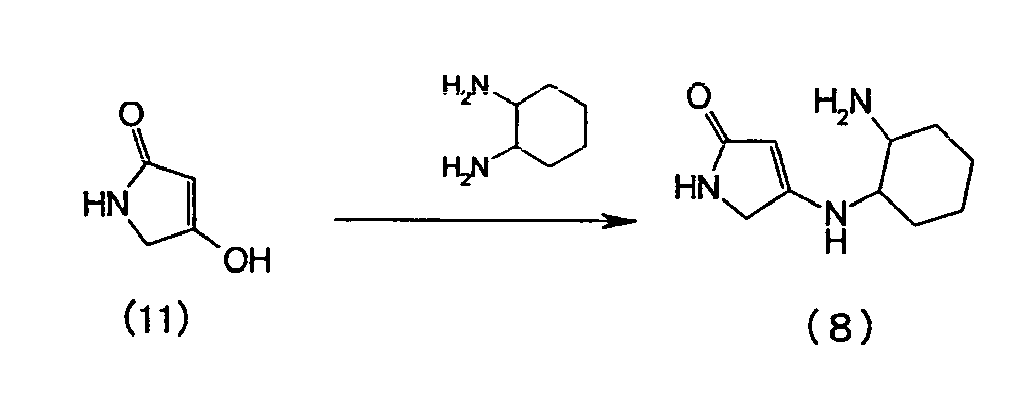
- However, tetramic acid (11) is known to generate dehydration dimers readily and to be unstable (Mulholland et al., J. Chem. Soc. Perkin Trans 1,1972, pages 2121 to 2128, Non-Patent Reference 8), such that obtaining Compound (8) stably with this method is thought to be difficult, and another method is desired.
- Therefore the present inventors conducted earnest research to complete the following preparation method for Compound (8) with Compound (12) as the starting material, which can be obtained without going through tetramic acid. According to the present method, Compound (8) can be obtained more stably and with good yields, as a result, the compound of the present invention (1), (1-1) or (1-2) can be obtained more stably with good yield.

- That is to say, it is a synthesis method in which Compound (12) and 1,2-diaminocyclohexane are reacted to obtain a novel synthesis Intermediate (13), then, Intermediate (13) is de-protected to obtain Compound (8).
- Compound (12) can be obtained similarly to the methods described in J. Heterocyclic Chemistry, 1996, Volume 33, pages 825 to 829 (Non-Patent Reference 9). In Formula (12), hydrogen atoms are preferred as R3 and R3', and compounds in which R3 and R3' represent hydrogen atoms in Formula (12) can be prepared with N-(benzyloxycarbonyl)-glycine and Meldrum's acid as source materials.
- In Formula (13), hydrogen atoms are preferred as R3 and R3', and in addition, a compound in which the configuration of the 2-aminocyclohexylamino group moiety is (1R,2R) is preferred. In addition, Compound (13) may be a salt thereof with chemically acceptable acids.
- While Compound (13) can be prepared by reacting Compound (12) and 1,2-diaminocyclohexane, in so doing, although there are no particular limitations on the proportions of Compound (12) and 1,2-diaminocyclohexane, from an economic point of view, a molar ratio of 1:0.8 to 1:1.2 is preferred, and a molar ratio of 1:0.9 to 1:1.1 is more preferred.
- It is preferable that acid is present in this reaction for obtaining Compound (13). In so doing, hydrogen halides such as hydrogen chloride and hydrogen bromide, sulfuric acid, nitric acid, phosphoric acid, sulfonic acids such as p-toluene sulfonic acid and methanesulfonic acid, organic acid such as acetic acid, propionic acid and succinic acid, and mixtures thereof are used as the acid, with hydrogen chloride being particularly preferred. As sources for hydrogen chloride, organic solvent solutions of hydrogen chloride gas, such as hydrogen chloride-ethyl acetate, hydrogen chloride-methanol and hydrogen chloride-dioxane can be used, and in addition, hydrochloric acid can be used. The acid may be used at a molar ratio of 0.01 or greater with respect to 1,2-diaminocyclohexane, preferably 0.8 to 1.2, and more preferably 0.9 to 1.1.
- The reaction solvents may include alcohols such as methanol, ethanol, and 2-propanol, ethers such as tetrahydrofuran, dioxane and 1,2-dimethoxy ethane, esters such as ethyl acetate, isopropyl acetate, hydrocarbons such as hexane and heptane, aromatic hydrocarbons such as toluene and xylene, halogenated hydrocarbons such as dichloromethane, chloroform and chlorobenzene, nitriles such as acetonitrile and propionitrile, amides such as N,N-dimethyl formamide and N-methyl pyrrolidone, dimethylsulfoxide and mixtures thereof. From the point of view of solubility and ease of isolation of the products, alcohols, esters, and mixtures thereof are preferred. In particular, a mixture of ethanol and ethyl acetate is preferably used.
- The reaction is performed in the interval from 0°C to the boiling point of the reaction mixture. Preferably 30°C to 80°C is used, and more preferably 50°C to 70°C.
- Although the reaction time depends on the type of solvent and the temperature, it is roughly 1 to 24 hours. The course of the reaction can be analyzed, for instance, by high performance liquid chromatography.
- Generated by the reaction, Compound (13) can be purified and isolated by such methods as solidification, crystallization, extraction and chromatography, or combination of these methods. When carrying out solidification or crystallization, performance is possible by adding a poor solvent to the solution or the mixture containing Compound (13). As poor solvent, for example, heptane, toluene, ethyl acetate, or the like, can be used. In addition, solidification or crystallization can also be carried out by cooling the solution or the mixture containing Compound (13). Furthermore, addition of poor solvent and cooling can also be used in combination. If the morphology to be isolated is free form, it is desirable to eliminate the acid used in the reaction. The methods for eliminating acid may include washing of the solution or mixture containing Compound (13) with an alkaline aqueous solution. The morphology to be isolated may be a chemically acceptable salt, in which case, isolation as a salt with the acid used in the reaction is desirable. Obviously, Compound (13) can also be subjected to the following step without isolation.
- In the present specification, the chemically acceptable acids may include inorganic acid (for instance, hydrochloric acid, sulfuric acid, phosphoric acid, nitric acid, bromide hydrogen acid and the like), organic carboxylic acid (for instance, acetic acid, citric acid, benzoic acid, maleic acid, fumaric acid, tartaric acid, succinic acid, trifluoroacetic acid, tannic acid, butyric acid, hibenzoic acid, pamoic acid, enanthic acid, decanoic acid, teoclic acid, salicylic acid, lactic acid, oxalic acid, mandelic acid, malic acid and the like), and organic sulfonic acid (for instance, methane sulfonic acid, p-toluene sulfonic acid, benzene sulfonic acid and the like).
- In the compound represented by Formula (13), hydrochloride is preferred. In addition, the free form is also preferred.
- Compound (8) can be obtained by deprotecting Compound (13), i.e., by eliminating the benzyloxy carbonyl group. As method for deprotection, conventional methods for eliminating a benzyloxy carbonyl group can be used. For example, the deprotection method may include hydrogen reduction using a noble metal catalyst, proton transfer reaction using a noble metal catalyst and a hydrogen donor, and the like. The hydrogen reduction using a noble metal catalyst is preferred. The noble metal catalysts may include palladium catalyst, platinum catalyst, rhodium catalyst, and the like, with the palladium catalyst being preferred. As palladium catalyst, palladium black or palladium carried by various carriers can be used. For instance, the palladium catalysts may include palladium black, palladium-carbon, palladium-alumina, palladium-calcium carbonate, palladium-barium sulfate, hydroxy palladium-carbon, and the like, with the palladium carbon being preferred.
- In the reaction to eliminate benzyloxy carbonyl group, the reaction solvents may include alcohols such as methanol, ethanol and 2-propanol, ethers such as tetrahydrofuran, dioxane and 1,2-dimethoxy ethane, esters such as ethyl acetate and isopropyl acetate, hydrocarbons such as hexane and heptane, aromatic hydrocarbons such as toluene and xylene, halogenated hydrocarbons such as dichloromethane, chloroform and chlorobenzene, nitriles such as acetonitrile and propionitrile, amides such as N,N-dimethyl formamide and N-methyl pyrrolidone, and mixtures thereof. From the point of view of elimination of the noble metal catalyst, preferred are alcohols which well dissolve Compound (8) that is the product, or the salt thereof, with methanol being particularly preferred.
- The reaction is performed in the interval from 0°C to the boiling point of the reaction mixture. Preferably, 10°C to 50°C is used, and more preferably 20°C to 40°C.
- Obtained as described above, Compound (8) or salt thereof can be purified and isolated by methods, such as solidification, crystallization, extraction and chromatography, or a combination of these methods, or can also be used as-is.
- In addition, Compound (8) can be obtained readily in free form, for instance, by carrying out the above-mentioned reaction with Compound (13), which is in free form, as source material.
- Further, not only the synthesized Intermediate Compound (8) can be led to the compound of the present invention (1), (1-1) or (1-2), it can also be led to the agent for the treatment of diabetes mellitus described in Patent References 1 and 2 by the methods described in Patent References 1 and 2, for instance, by reaction with benzaldehyde or substituted benzaldehyde.
- The compound of the present invention (1), (1-1) or (1-2) can be convereted to a pharmaceutically acceptable salt thereof by conventional methods. For instance, the methods may include mixing a compound of Formula (1), (1-1) or (1-2) and a necessary acid or base at an adequate quantity ratio in a solvent and dispersant, and carrying out cation exchange or anion exchange from another salt form.
- When using the compound of the present invention as an agent for the prevention and/or treatment of diabetes mellitus, diabetic peripheral neuropathy, diabetic nephropathy, diabetic retinopathy, diabetic macrovascular disease, glucose tolerance anomaly or obesity, oral administration, intravascular administration or percutaneous administration is possible. The dosage differs depending on the symptoms and age of the patient to be administered, and the administration method, and is in general 0.001 to 1000mg/kg/day as the amount of the active ingredient compound.
- The compound of the present invention can be formulated by conventional methods. The formulation/dosage forms may include, injectable, tablet, granule, subtle granule, powdered drug, encapsulated formulation, cream agent, suppository, and the like. The formulation carriers may include, for instance, lactose, glucose, D-mannitol, starch, crystalline cellulose, calcium carbonate, kaolin, starch, gelatin, hydroxypropyl cellulose, hydroxypropylmethyl cellulose, polyvinylpyrrolidone, ethanol, carboxymethyl cellulose, carboxymethyl cellulose calcium salt, magnesium stearate, talc, acetyl cellulose, white sugar, titanium oxide, benzoic acid, paraoxy benzoate, sodium dehydroacetate, gum arabic, tragacanth, methyl cellulose, vitelline, surfactant, white sugar, simple syrup, citric acid, distilled water, ethanol, glycerin, propylene glycol, macrogol, sodium hydrogen phosphate, sodium dihydrogen phosphate, sodium phosphate, glucose, sodium chloride, phenol, thimerosal, paraoxybenzoate ester, sodium hydrogen sulfite, and the like, and can be combined with the compound of the present invention depending upon the dosage form.
- In addition, the content in active ingredient of the present invention inside the formulation of the present invention varies considerably depending on the formulation form, is not limited in particular, and is in general 0.01 to 100 percent in weight with respect to the total amount of composition, and preferably 1 to 100 percent in weight.
- Hereinafter, the present invention will be described in further details by means of Examples, Reference Examples and Test Examples; however, the present invention is not imited to these Examples. In addition, the structures of the compounds prepared in each Example are described later in Tables.
- A suspension of potassium carbonate (50.0g, 362mmol) in 100ml of DMF was added sequentially with 2-bromophenol (20.6g, 120mmol) and bromoacetaldehyde dimethyl acetal (20.2g, 120mmol) and stirred at 95°C for 15 hours. The reaction solution was concentrated, liquid separation was carried out with ethyl acetate-water, the organic layer was sequentially washed with an aqueous solution of 1M-sodium hydroxide and saturated sodium chloride water, and dried with anhydrous magnesium sulfate. The residue obtained by concentration was dissolved in 200ml of chlorobenzene, added at room temperature to a solution comprising diphosphorus pentoxide (8.07g, 56.8mmol) and 85% phosphoric acid (27ml), which was stirred at 95°C for 15 hours. After cooling to room temperature, the mixture was poured over ice water, stirred, and then extracted with dichloromethane. The organic layer was washed with saturated sodium chloride water and dried with anhydrous magnesium sulfate. The residue obtained by concentration was purified by silica gel chromatography (100% hexane) to obtain an oily product (10.4g, 47%).
1H-NMR (300MHz, CDCl3) δ=6.84 (1H, d, J=2.4Hz), 7.12 (1H, t, J=7.8Hz), 7.46 (1H, dd, J=2.4, 7.8Hz), 7.54 (1H, dd, J=2.4, 7.8Hz), 7.69 (1H, d, J=2.4Hz). - Magnesium powder (1.33g, 54.7mmol) was dried by reduced pressure while heating, cooled to room temperature, then THF was added so as to soak the magnesium. An amount of 10mg of iodide was added, 0.45g of Step 1 compound was gradually added, at the point when heating started, a solution of 10.0g of Step 1 compound in 106ml of THF was added drop-wise gradually (total Step 1 compound: 10.45g, 53.0mmol). The reaction solution in reflux state was heated further to 85°C and stirred for 1.5 hours. The reaction solution was cooled to 0°C, was added with DMF (6.15ml, 73.9mmol), and stirred at room temperature for 30 minutes. The reaction was stopped by adding 50ml of a saturated aqueous solution of ammonium chloride, the organic solvent was evaporated, and then liquid separation was carried out with ethyl acetate-water. The aqueous layer was extracted three times with ethyl acetate, and the pooled organic layer was washed with saturated sodium chloride water and dried with anhydrous magnesium sulfate. The residue obtained by concentration was purified by silica gel chromatography (hexane:ethyl acetate=80:20) to obtain the title compound (6.62g, 85%).
1H-NMR (300MHz, CDCl3) δ=6.87 (1H, d, J=2.4Hz), 7.39 (1H, t, J=7.8Hz), 7.78 (1H, d, J=2.4Hz), 7.80 (1H, dd, J=2.4, 7.8Hz), 7.88 (1H, dd, J=2.4, 7.8Hz), 10.45 (1H, s). - 2-bromophenol (6.12g, 35.3mmol) and propargyl bromide (5.67g, 38.1mmol) were dissolved in DMF (34ml). This solution was added with potassium carbonate (10.9g, 78.9mmol) and stirred at room temperature for 14 hours. The reaction solution was added with ethyl acetate, sequentially washed with water and saturated sodium chloride water, and dried with anhydrous sodium sulfate. Concentration under reduced pressure was carried out to obtain the title compound (7.91g, 98.0%) as a yellow oily product.
1H-NMR (300MHz, CDCl3) δ= 2.54 (1H, J = 2.3Hz, t), 4.78 (2H, J = 2.3Hz, d), 6.89 (1H, J = 1.5, 7.3, 7.9Hz, ddd), 7.07 (1H, J = 1.5, 8.2Hz, dd), 7.28 (1H, J = 1.8, 7.3, 8.2Hz, ddd), 7.55 (1H, J = 1.8, 7.9Hz, dd). - Step 1 compound (504mg, 2.39mmol) was dissolved in N,N-diethyl aniline (2.5ml). This solution was added with cesium fluoride (392mg, 2.58mmol) and heated at 250°C for 5 hours. The reaction solution was cooled to room temperature, then, diethyl ether was added to eliminate insoluble matter by filtration, and the filtrate was washed sequentially with 1M-hydrochloric acid and saturated sodium chloride water, and dried with anhydrous sodium sulfate. Concentration under reduced pressure, then, purification by thin layer silica gel column chromatography (100% hexane) were carried out to obtain the title compound (351mg, 70.2%) as a yellow oily product.
1H-NMR (300MHz, CDCl3) δ=2.50 (3H, J = 0.9Hz, d), 6.43 (1H, J = 0.9Hz, d), 7.04 (1H, J = 7.6, 7.6Hz, dd), 7.35 (1H, J = 0.8, 7.6Hz, dd), 7.39 (1H, J = 0.8, 7.6Hz, dd). - Step 2 compound (499mg, 2.36mmol) was dissolved in THF (12ml) and cooled to -78°C. This solution was added with n-butyl lithium (1.57M hexane solution, 1.66ml, 2.61mmol), stirred for one hour, added with DMF (0.37ml, 4.74mmol) and stirred at -78°C for two and a half hours. The mixture was added with 2M-hydrochloric acid, extracted with ethyl acetate, washed with saturated sodium chloride water and dried with anhydrous sodium sulfate. Concentration under reduced pressure, then, purification by thin layer silica gel column chromatography (hexane:ethyl acetate=4:1) were carried out to obtain the target compound (346mg, 91.1%) as a yellow oily product.
1H-NMR (300MHz, CDCl3) δ=2.54 (3H, s), 6.45-6.48 (1H, m), 7.31 (1H, J = 7.6Hz, t), 7.75-7.78 (2H, m), 10.4 (1H, s). - A solution comprising 2-nitrobenzaldehyde (4.53g, 30.0mmol), 1-butanol (13.7ml, 150mmol) and toluene (60ml) was added with p-toluene sulfonic acid monohydrate (57mg, 0.300mmol) and molecular sieves-4A (1g), and refluxed for two days. The mixture was filtered through celite, washed with saturated sodium bicarbonate and saturated sodium chloride water, and then dried with anhydrous magnesium sulfate. The solution was concentrated to obtain Step 1 compound (8.43g, quant) as a brown oily substance.
1H-NMR (300MHz, CDCl3) δ=0.92 (6H, t, J=7.2Hz), 1.32-1.45 (4H, m), 1.53-1.64 (4H, m), 3.48-3.67 (4H, m), 6.02 (1H, s), 7.45 (1H, dt, J=1.5, 8.1Hz), 7.59 (1H, dt, J=1.2, 7.5Hz), 7.78-7.83 (2H, m). - A solution of Step 1 compound (2.81g, 10.00mmol) in THF (30ml) was added with 2-propenyl magnesium bromide (0.5M-THF solution, 60.0ml, 30.00mmol) at -40°C and stirred for one hour. The reaction was stopped by adding saturated ammonium chloride, 1M-hydrochloric acid (60ml) was added, and the solution was stirred at room temperature for 15 minutes. The solution was neutralized by adding 2M-sodium hydroxide and extracted with ethyl acetate. The organic layer was washed with saturated sodium chloride water and dried with anhydrous sodium sulfate. The residue obtained by concentrating the solution was purified by silica gel column chromatography (ethyl acetate:n-hexane=1:5) to obtain the title compound (655mg, 41%).
1H-NMR (300MHz, CDCl3) δ=2.50 (3H, s), 6.28-6.30 (1H, m), 7.23 (1H, t, J=7.8Hz), 7.56 (1H, d, J=7.8Hz), 7.80 (1H, d, J=7.8Hz), 9.87 (1H, brs), 10.09 (1H, s). - A solution comprising 2,6-dibromophenol (3.90g, 15.00mmol), potassium carbonate (2.48g, 17.94mmol) and DMF (40nl) was added with 1-bromo-2-chloro ethane (4.30g, 29.98mmol) and stirred at room temperature for 16 hours. The reaction solution was concentrated and liquid separation was carried out with ethyl acetate-water. The organic layer was washed with saturated sodium chloride water and dried with anhydrous sodium sulfate. The residue obtained by concentration was purified by silica gel column chromatography (n-hexane) to obtain the target compound (4.75g, quant.) as a colorless oily substance.
1H-NMR (300MHz, CDCl3) δ=3.91 (2H, t, J=6.6Hz), 4.27 (2H, t, J=6.6Hz), 6.89 (1H, t, J=7.8Hz), 7.51 (2H, d, J=7.8Hz). - A solution of n-butyl lithium (1.54M-n-hexane solution, 29.2ml, 44.97mmol) in THF (40ml) was added with a solution of Step 1 compound (4.75g, 15.00mmol) in THF (20ml) at -40°C and stirred for 15 minutes. Next, DMF (2.19g, 44.97mmol) was added and the mixture was stirred at -40°C for 1.5 hours. The reaction was stopped by adding water, and the reaction solution was concentrated. Liquid separation was carried out with ethyl acetate-water, the organic layer was washed with 1M-hydrochloric acid and saturated sodium chloride water, dried with anhydrous sodium sulfate, and concentrated to obtain the title compound (2.32g, quant) as a colorless crystal.
1H-NMR (300MHz, CDCl3) δ=3.25 (2H, t, J=7.2Hz), 4.74 (2H, t, J=7.2Hz), 6.93 (1H, t, J=7.5Hz), 7.41 (2H, d, J=7.5Hz), 7.58 (1H, d, J=7.5Hz), 10.20 (1H, s). - A solution of 4-[(1R,2R)-2-aminocyclohexylamino]-3-pyrroline-2-one (8) (115mg, 0.589mmol) in 5ml of methanol was sequentially added with 7-formyl-1-benzofuran (9a) (86mg, 0.589mmol) and acetic acid (0.02ml) and stirred at 50°C for 12 hours. The main product was purified by silica gel column chromatography to obtain the cyclized compound Compound (10a) (148mg, 78%).
- A solution of Step 1 Compound (10a) (72mg, 0.222mmol) in 5ml of DMF was sequentially added with acetoxy acetic acid (263mg, 2.22mmol) and WSC·HCl (341mg, 1.78mmol), and stirred at room temperature for 14 hours. The reaction solution was concentrated, then, liquid separation was carried out with ethyl acetate-water, and the organic layer was sequentially washed with saturated sodium bicarbonate water and saturated sodium chloride water. After drying with anhydrous sodium sulfate, concentration and dissolution in 5ml of methanol were carried out. Potassium carbonate (307mg, 2.22mmol) was added and the solution was stirred at room temperature for 30 minutes. The reaction solution was concentrated, then, liquid separation was carried out with ethyl acetate-water, and the organic layer was washed with saturated sodium chloride water. After drying with anhydrous sodium sulfate and concentration, the obtained residue was subjected to reverse phase HPLC having chemically bonded octadodecyl group silica gel as filler, eluted with a mixed solution of water and acetonitrile containing 0.1% (v/v) trifluoroacetic acid, and the target fraction was lyophilized to obtain Example 1 Compound (59mg, 70%) as a white solid.
- Similarly to Example 1 Step 2, a solution of Example 1 Step 1 Compound (10a) (75mg, 0.232mmol) in 6ml of DMF was sequentially added with cyclopropane carboxylic acid (0.185ml, 2.32mmol) and WSC·HCl (356mg, 1.86mmol) and stirred at room temperature for 19 hours. The reaction solution was concentrated, then, liquid separation was carried out with ethyl acetate-water, and the solution was washed with saturated sodium chloride water. After drying with anhydrous sodium sulfate and concentration, the obtained residue was subjected to reverse phase HPLC having chemically bonded octadodecyl group silica gel as filler, eluted with a mixed solution of water and acetonitrile containing 0.1% (v/v) trifluoroacetic acid, and the target fraction was lyophilized to obtain, Example 2 Compound (61mg, 67%).
- A solution comprising Example 1 Step 1 Compound (10a) (150mg, 0.464mmol), 3ml of acetonitrile and 3ml of water was sequentially added with potassium carbonate (641mg, 4.64mmol) and methyl chloroformate (0.358ml, 4.64mmol) and stirred at room temperature for two hours. After evaporating acetonitrile, the remaining aqueous layer was extracted with dichloromethane and washed with saturated sodium chloride water. After drying with anhydrous sodium sulfate, then, concentration, purification by silica gel column chromatography were carried out to obtain Example 3 Compound (55mg, 31 %).
- A solution of Example 1 Step 1 Compound (10a) (150mg, 0.464mmol) in 7.5ml of pyridine was added with anhydrous propionic acid (0.595ml, 4.64mmol), stirred at room temperature for 4 hours, and then stirred at 70°C for 16 hours. After concentration and toluene azeotropy were carried out, liquid separation was carried out with dichloromethane-water, and the organic layer was washed with saturated sodium chloride water. After drying with anhydrous sodium sulfate then concentration, dissolution in 7.5ml of methanol was carried out, potassium carbonate (321mg, 2.33mmol) was added, and the mixture was stirred at room temperature for two hours. After concentration, liquid separation was carried out with dichloromethane-water, and the organic layer was washed with saturated sodium chloride water. After drying with anhydrous sodium sulfate, concentration, and suspension in a mixed solvent of dichloromethane-diethyl ether, the deposited solid was filtered, and the remaining filtrate was further concentrated and purified by silica gel column chromatography to obtain Example 4 Compound (132mg, 75%).
- Similarly to Example 1 Step 1, a solution of 4-[(1R,2R)-2-aminocyclohexylamino]-3-pyrroline-2-one (8) (404mg, 2.07mmol) in 20ml of methanol was sequentially added with 7-formyl indole (9c) (300mg, 2.07mmol) and acetic acid (0.059ml), and stirred at 50°C for 18 hours. The reaction solution was concentrated, suspended in a solution of methanol:dichloromethane=1:30, the deposited solid was filtered to obtain cyclized compound Compound (10c) (151mg, 23%) as a white solid.
- A solution of Step 1 Compound (10c) (50mg, 0.155mmol) in 1ml of DMF was sequentially added with methoxy acetic acid (0.071ml, 0.929mmol) and WSC·HCl (119mg, 0.620mmol) and stirred at room temperature for 14 hours. The reaction solution was concentrated, then, liquid separation was carried out with ethyl acetate-water, and the solution was washed with saturated sodium chloride water. After drying with anhydrous sodium sulfate and concentration, dissolution in 2.5ml of methanol was carried out. Potassium carbonate (107mg, 0.775mmol) was added, and the solution was stirred at room temperature for two hours. The reaction solution was concentrated, then, neutralized with 1M-hydrochloric acid, liquid separation was carried out with ethyl acetate-water, and the organic layer was washed with saturated sodium chloride water. After drying with anhydrous sodium sulfate and concentration, purification by thin layer column chromatography was carried out to obtain Example 5 Compound (24mg, 39%).
- By a similar method to Example 1 Step 1, 4-[(1R,2R)-2-aminocyclohexylamino]-3-pyrroline-2-one (8) (421mg, 2.16mmol) was dissolved in 21ml of ethanol instead of methanol, aldehyde (9d) (346mg, 2.16mmol), acetic acid (0.025ml) were sequentially added, and the mixture was stirred at 60°C for two hours. The reaction solution was concentrated, dichloromethane and diethyl ether were added, and the obtained solid was filtered to obtain the title compound (10d) (598mg, 82%).
- Step 1 Compound (10d) (149mg, 0.444mmol) and acetoxy acetic acid (266mg, 2.25mmol) were dissolved in DMF (2.5ml). This solution was added with WSC·HCl (383mg, 2.00mmol) and stirred at room temperature for 3 hours. Acetoxy acetic acid (159mg, 1.35mmol) and WSC·HCl (255mg, 1.33mmol) were further added and the mixture was stirred at room temperature for 13 hours. Dilution with ethyl acetate, washing with water, an aqueous solution of sodium bicarbonate and sodium chloride water, and drying with anhydrous sodium sulfate were carried out. After concentration under reduced pressure, the residue was dissolved in methanol (3.0ml), potassium carbonate (617mg, 4.46mmol) was added, and the mixture was stirred at room temperature for one hour. After concentration under reduced pressure, the residue was added with water, and the deposited solid was filtered to obtain the title compound (122mg, 69.4%).
- By a similar method to Example 1 Step 1, a solution of 4-[(1R,2R)-2-aminocyclohexylamino]-3-pyrroline-2-one (8) (782mg, 4.01mmol) in methanol (20ml) was sequentially added with aldehyde (9e) (638mg, 4.01mmol) and acetic acid (0.046ml, 0.800mmol) and stirred at 50°C for 12 hours. The reaction solution was concentrated, the obtained residue was added with methanol and dichloromethane, and the obtained solid was filtered to obtain the title compound (10e) (221mg, 16%).
- A solution of Step 1 Compound (10e) (107mg, 0.318mmol) in DMF (5ml) was added with methoxy acetic acid (0.244ml, 3.18mmol) and WSC-HCl (488mg, 2.55mmol) and stirred at room temperature overnight. The solution was further added with methoxy acetic acid (0.244ml, 3.18mmol) and WSC·HCl (488mg, 2.55mmol), stirred at room temperature overnight, further added with methoxy acetic acid (0.122ml, 1.59mmol) and WSC·HCl (244mg, 1.27mmol), stirred at room temperature overnight, then further added with methoxy acetic acid (0.244ml, 3.18mmol) and WSC·HCl (488mg, 2.55mmol) and stirred at room temperature overnight. The reaction solution was concentrated, the residue was diluted with ethyl acetate, washed with water, saturated sodium bicarbonate and saturated sodium chloride water, and then dried with anhydrous magnesium sulfate. The residue obtained by concentration was dissolved in methanol (5ml), added with potassium carbonate (410mg, 2.97mmol), and the solution was stirred at room temperature for 30 minutes. Dichloromethane (15ml) was added, the deposited insoluble matter was filtered, and the obtained filtrate was concentrated and then crudely purified by silica gel chromatography (dichloromethane:methanol=9:1). A further purification was carried out by reverse phase HPLC similarly to Example 1 Step 2 to obtain the title compound (38mg, 37%) as a white solid.
- The compounds of Examples 6 to 8, 10 to 11, and 13 to 19 shown in Table 3 were also obtained by similar methods to Example 1 Step 1, after obtaining the closed ring compound (10) from 4-[(1R,2R)-2-aminocyclohexylamino]-3-pyrroline-2-one (8) and the corresponding aldehyde (9), and carrying out acylation using the conditions in the corresponding acylation of the above Examples 1 to 5.
- During synthesis of the cyclized compound (10), if two species of diastereomers are generated as main products, the target diastereomer can be obtained by purification of the high polarity side constituent when developed with thin layer silica gel chromatography (methanol:chloroform=1:6).
- Structural and physical properties data of the closed ring compounds (10) obtained as intermediates of Examples 1 to 19 are shown in Table 2. {The abbreviations in the table respectively represent: No: compound number; D: compound data; MS: ESI-MS m/z; N1: 1H-NMR (DMSO-d6, TMS internal standard, δppm); and Y: yield of the closed ring compound (10) obtained by the reaction of 4-[(1R,2R)-2-aminocyclohexylamino]-3-pyrroline-2-one (8) and corresponding aldehyde (9).}
Table 2 
No. A Y D 10a 
78% N1: 0.75-1.20(4H, m), 1.35-1.55(2H, m), 1.75-1.90(1H, m), 2.10-2.25(2H, m), 2.75-2.90(1 H, m), 3.72(1 H, d, J=16.8Hz), 3.84(1H, d, J=16.8Hz), 5.30(1H, s), 6.36(1H, s), 6.72(1 H, s), 6.80(1 H, d, J=7.5Hz), 6.93(1 H, d, J=2.1Hz), 7.09(1 H, t, J=7.5Hz), 7.48(1 H, d, J=7.5Hz), 7.98(1 H, d, J=2.1 Hz) MS: 324(M+H)+. 10b 
29% N1: 0.79-0.90 (1H, m), 0.96-1.14 (3H, m), 1,39-1.54 (3H, m), 1.84-1.91 (1H, m), 1.94-2.06 (1H, m), 2.76-2.86 (m, 1H), 3.75 (1H, J = 16.2Hz, d), 3.91 (1H, J = 16.2Hz, d), 5.03 (1H, s), 6.39 (1H, s), 6.79 (1H, s), 6.90-6.94 (1H, m), 7.26 (1H, J = 7.2Hz, dd), 7.42 (1H, J = 5.4Hz, d), 7.69 (1H, J = 5.4Hz, d), 7.73 (1H, J = 7.2Hz, d) MS: 340 (M+H)+ 10c 
23% N1: 0.70-2.90 (11H, m), 3.71 (1H, d, J = 16.2Hz), 3.87 (1H, d, J = 16.2Hz), 5.23 (1H, s), 6.24 (1H, s), 6.39(1H, brs), 6.58(1H, d, J = 7.5Hz), 6.69 (1H, s), 6.81(1H, t, J = 7.5Hz), 7.28(1H, brs), 7.35(1H, d, J = 7.5Hz). MS: 323 (M+H)+ 10d 
82% N1: 0.78-0.98 (1H, m), 0.99-1.23 (2H, m), 1.38-1.71 (3H, m), 1.76-1.95 (2H, m), 2.15-2.27 (1H, m), 2.47 (3H, s), 2.80-2.92 (1 H, m), 3.73 (1H, J = 16.4Hz, d), 3.86 (1 H, J = 16.4Hz, d), 4.08 (1 H, s), 5.28 (1H, s), 6.36 (1 H, s), 6.55 (1 H, s), 6.72 (1H, s), 6.67 (1 H, J = 7.6Hz, d), 7.05 (1 H, J = 7.6, 7.6Hz, dd), 7.34 (1H, J = 7.6Hz, d) MS: 338(M+H)+ 10e 
16% N1: 0.78-0.93(1H, m), 0.99-1.29(4H, m), 1.40-1.50(2H, m), 1.70-1.96(1H, m), 2.13-2.31(1H, m), 2.40(3H, s), 2.78-2.90(1H, m), 3.67(1H, d, J=16.5Hz), 3.86(1H, d, J=16.5Hz), 5.22(1H, s), 6.09(1H, s), 6.23(1H, s), 6.52(1H, d, J=7.5Hz), 6.68(1H, s), 6.76(1H, t, J=7.5Hz), 7.21(1H, d, J=7.5Hz), 10.72(1H, s). MS: 337(M+H)+. 10f 
quant. N1: 0.82-1.35(5H, m), 1.45-1.68(2H, m), 1.77-1.87(1H, m), 2.06-2.19(1H, m), 2.78-2.88(1H, m), 3.17(2H, t, J=8.4Hz), 3.69(1H, d, J=16.5Hz), 3.83(1H, d, J=16.5Hz), 4,56(2H, d, J=8.4Hz), 4.85(1H, s), 6.29(1H, s), 6.58(1H, d, J=7.5Hz), 6.65-6.70(2H, m), 7.07(1H, d, J=7.5Hz). MS: 326(M+H)+. 10g 
60% N1: 0.77-1.00 (2H, m), 1.01-1.16 (3H, m), 1.36-1.62 (2H, m), 1.78-1.88 (1H, m), 2.04-2.15 (1H, m), 2.83-2.95 (1H, m), 3.78 (1H, J = 16.4Hz, d), 3.89-3.94 (1H, J = 16.4Hz, d), 5.40 (1H, s), 6.43 (1H, J = 0.9, 6.7Hz, d), 6.55 (1H, s), 6.67 (1H, J = 2.3Hz, d), 6.83 (1H, s), 7.17 (1H, J = 6.7, 8.8Hz, dd), 7.57 (1H, J = 0.9, 8.8Hz, dd), 8.09 (1H, J = 2.3Hz, d) MS: 324(M+H)+ 10h 
69% N1: 0.69-0.90 (2H, m), 0.95-1.19 (3H, m), 1.28-1.42 (1H, m), 1.42-1.53 (1H, m), 1.76-1.87 (1H, m), 2.05-2.17 (1H, m), 2.82-2.95 (1H, m), 3.77 (1H, J = 16.4Hz, d), 3.91 (1H, J = 16.4Hz, d), 5.82 (1H, s), 6.37 (1H, s), 6.94 (1H, s), 7.24 (1 H, J = 0.9, 7.0Hz, dd), 7.48 (1H, J = 7.0, 7.3Hz, dd), 7.55 (1H, J = 4.4, 8.2Hz, dd), 7.84 (1H, J = 0.9, 8.2Hz, dd), 8.38 (1H, J = 1.7, 8.2Hz, dd), 8.96 (1H, 1.7, 4.4Hz, dd) MS: 335(M+H)+ 10i 
42% N1: 1.02-1.41(4H, m), 1.51-1.82(4H, m), 2.46(3H, s), 2.49-2.62(1H, m), 2.96-3.12(1H, m), 3.82-4.22(2H, m), 5.36-5.50(1H, m), 7.03(1H, d, J=4.2Hz), 7.09(1H, d, J=4.2Hz). MS: 336(M+H)+. 10j 
65% N1: 0.70-3.40(11H, m), 3.70(1H, d, J=16.2Hz), 3.85(1H, d, J=16.2Hz), 5.02 (1H, s), 5.29(1H, dd, J=11.1, 1.5Hz), 5.66(1H, dd, J=17.7, 1.5Hz), 6.29(1H, s), 6.69(1H, s), 6.86-6.92(1H, m), 7.06-7.22(2H, m), 7.32-7.52(2H, m) MS: 310(M+H)+. - Structural and physical properties data of Examples 1 to 19 are shown in Table 3. {The abbreviations in the table respectively represent: No: Example No.; D: compound data; MS: ESI-MS m/z, N1: 1H-NMR (DMSO-d6, TMS internal standard, δppm); and Y: yield of acylation with the corresponding closed ring compound (10) as source. }
Table 3 
Ex. No. A -R Y D 1 
-CH2OH 70% N1: 0.45-0.62(1H, m), 0.64-0.75(1H, m), 0.92-1.18(2H, m), 1.33-1.52(2H, m), 1.95-2.06(2H, m), 2.37-2.55(1H, m), 2.88(1H, dt, J=4.5, 10.5Hz), 3.82(1H, d, J=16.8Hz), 3.90(1H, d, J=16.8Hz), 3.93-4.06(1H, m), 4.08(1H, d, J=15.3Hz), 4.68 (1H, d, J=15.3Hz), 5.83(1H, s), 6.85(1H, s), 6.99(1H, d, J=2.1Hz), 7.00(1H, d, J=7.5Hz), 7.22(1H, t, J=7.5Hz), 7.63(1H, d, J=7.5Hz), 8.05(1H, d, J=2.1Hz) MS: 382(M+H)+ 2 

67% N1: 0.45-1.14(8H, m), 1.30-1.48(2H, m), 1.88-2.02(1H, m), 2.22-2.52(2H, m), 2.83-2.96(2H, m), 3.83(1H, d, J=16.8Hz), 3.86(1H, d, J=16.8Hz), 3.95-4.08(1H, m), 6.61(1H, s), 6.73(1H, s), 6.99(1H, d, J=2.1Hz), 7.03(1H, d, J=7.5Hz), 7.22(1H, t, J=7.5Hz), 7.62(1H, d, J=7.5Hz), 8.03(1H, d, J=2.1Hz) MS: 392(M+H)+ 3 
-OMe 31% N1: 0.48-2.90(9H, m), 3.68(3H, s), 3.76(1H, d, J=17.4Hz), 3.85(1H, d, J=17.4Hz), 3.71-3.89(1H, m), 6.38-6.52(1H, m), 6.66(1H, s), 6.76(1H, s), 6.92-8.03(5H, m). MS: 382(M+H)+ 4 
-CH2CH3 75% N1: 0.40-2.93(11H, m), 1.05(3H, t, J=7.5Hz), 3.79(1H, d, J=16.2Hz), 3.87(1H, d, J=16.2Hz), 3.95-4.08(1H, m), 6.11(1H, s), 6.73(1H, s), 6.79(1H, s), 6.70-8.05(5H, m). MS: 380(M+H)+. 5 
-CH2OMe 39% N1: 0.30-2.90(9H, m), 3.42(3H, s), 3.80(1H, d, J=16.2Hz), 3.89(1H, d, J=16.2Hz), 3.90-4.09(1H, m), 4.42-4.55(1H, m), 5.89(1H, brs), 6.46(1H, brs), 6.70-6.85(3H, m), 6.94(1H, t, J=9.0Hz), 7.37(1H, brs), 7.50(1H, d, J=9.0Hz), 10.38 (1H, brs). MS: 395(M+H)+ 6 
-CF2H 65% N1: 0.45-0.64(2H, m), 0.92-1.18(2H, m), 1.31-1.50(2H, m), 1.95-2.06(1H, m), 2.29-2.47(1H, m), 2.97(1H, dt, J=4.5, 11.4Hz), 3.84(1H, d, J=16.5Hz), 3.88(1H, d, J=16.5Hz), 3.92-4.01(1H, m), 6.18(1H, s), 6.87(1H, s), 6.88(1H, s), 7.00(1H, d, J=2.4Hz), 7.04(1H, d, J=7.5Hz), 7.08(1H, t, J=52.8Hz), 7.24(1H, t, J=7.5Hz), 7.65(1H, d, J=7.5Hz), 8.04(1H, d, J=2.4Hz). MS: 402(M+H)+. 7 
-CF3 69% N1: 0.42-0.60(1H, m), 0.69-0.80(1H, m), 0.92-1.12(2H, m), 1.34-1.52(2H, m), 1.97-2.07(1H, m), 2.24-2.41(1H, m), 3.02(1H, dt, J=4.2, 11.1Hz), 3.84(1H, d, J=16.5Hz), 3.90-4.00(2H, m), 6.23(1H, s), 6.94(1H, s), 6.97(1H, s), 7.02(1H, d, J=2.4Hz), 7.03(1H, d, J=7.8Hz), 7.26(1H, t, J=7.8Hz), 7.69(1H, d, J=7.8Hz), 8.06(1H, d, J=2.4Hz). MS: 420(M+H)+. 8 
-CH2OH 73% N1: 0.45-0.58 (1H, m), 0.90-1.25 (3H, m), 1.35-1.44 (2H, m), 1.8-2.1 (1H, m), 2.50-2.76 (1H, m), 2.68-2.81 (1H, m), 3.83 (1H, J = 16.4Hz, d), 3.93 (1H, J = 16.4Hz, d), 3.88-4.0 (2H, m), 4.71 (1H, J = 12Hz, d), 5.58 (1H, s), 6.90 (1H, m), 7.06 (1H, J = 5.7Hz, d), 7.39 (1H, J = 6.9Hz, t), 7.52 (1H, J = 5.7Hz, t), 7.74-7.81 (1H, m), 7.85-7.90(1H, m) MS: 398 (M+H)+ 9 
-CH2OH 69% N1: 0.46-0.67 (1H, m), 0.68-0.81 (1H, m), 0.92-1.21 (2H, m), 1.34-1.54 (2H, m), 1.94-2.06 (1H, m), 2.38-2.59 (1H, m), 2.45 (3H, s), 2.88-3.01 (1H, m), 3.80 (d, J =16.4Hz, 1H), 3.93 (d, J = 16.4Hz, 1H), 3.93-4.05 (1H, m), 4.09 (1 H, J = 4.4, 15.2Hz, dd), 4.53 (1H, J = 4.4Hz, t), 4.65 (1H,. J = 4.4, 15.2Hz, dd), 5.80 (1H, s), 6.60 (1H, s), 6.82 (1H, s), 6.82 (1H, s), 6.90 (1H, J = 7.3Hz, d), 7.14 (1H., J = 7.3, 7.3Hz, dd), 7.48 (1H, J = 7.3Hz, d) MS:396(M+H)+ 10 
-CH2OMe 56% N1: 0.44-0.64 (1H, m), 0.65-0.77(1H, m), 0.91-1.14 (2H, m), 1.32-1.54 (2H, m), 1.92-2.08 (1H, m), 2.37-2.45 (1H, m), 2.45 (3H, s), 2.89 (1H, J = 4.1, 11.1Hz, dt), 3.80 (1H, J = 16.4Hz, d), 3.87 (1H, J= 16.4Hz, d), 3.96-4.08 (1H, m), 4.22 (1H, J = 14.7Hz, d), 4.56 (1H, J = 14.7Hz, d), 5.93 (1H, s), 6.60 (1H, s), 6.79 (1H, s), 6.79 (1H, s), 6.90 (1H, J = 7.3Hz, d), 7.13 (1H, J = 7.3, 7.3Hz, dd), 7.49 (1H, J = 7.3Hz, d) MS: 410(M+H)+ 11 
-CH2OH 47% N1: 0.36-0.58(1H, m), 0.76-1.18(3H, m), 1.31-1.49(2H, m), 1.89-2.02(1H, m), 2.24-2.46(4H, m), 2.83-2.95(1H, m), 3.80(1H, d, J=16.5Hz), 3.88-4.07(3H, m), 4.56(1H, d, J=13.2Hz), 6.01(1H, s), 6.16(1H, s), 6.69(1H, d, J=7.5Hz), 6.74(1H, s), 6.89(1H, t, J=7.5Hz), 7.36(1H, d, J=7.5Hz), 10.57(1H, s). MS: 395(M+H)+. 12 
-CH2OMe 37% N1: 0.35-0.57(1H, m), 0.73-1.18(3H, m), 1.30-1.49(2H, m), 1.91-2.05(1H, m), 2.27-2.48(4H, m), 2.82-2.96(1H, m), 3.47 (3H, s), 3.80(1H, d, J=16.5Hz), 3.86-4.10(3H, m), 4.41(1H, d, J=12.0Hz), 5.90(1H, s), 6.18(1H, s), 6.69(1H, d, J=7.5Hz), 6.76(1H, s), 6.90(1H, t, J=7.5Hz), 7.37(1H, d, J=7.5Hz), 10.13(1H, s). MS: 409(M+H)+. 13 
-CH2OH 48% N1: 0.57-0.76(1H, m), 0.91-1.10(3H, m), 1.41-1.56(2H, m), 1.92-2.06(1H, m), 2.28-2.61(1 H, m), 2.90(1H, dt, J=4.5,11.4Hz), 3.19(2H, t, J=8.4Hz), 3.78(1H, d, J=15.9Hz), 3.82(1H, d, J=15.9Hz), 3.86-4.03(2H, m), 4.34(1H, t, J=4.8Hz), 4.42-4.63(3H, m), 5.37(1H, s), 6.67-6.79(4H, m), 7.19(1H, t, J=4.2Hz). MS: 384(M+H)+. 14 
-CH2OH 19% N1: 0.527-0.723 (2H, m), 1.03-1.14 (2H, m), 1.33-1.55 (2H, m), 1.98-2.07 (1H, m), 2.32-2.47 (1H, m), 2.95-3.08 (1H, m), 3.81 (1H, J = 16.7Hz, d), 3.93 (1H, J = 16.7Hz, d), 3.96-4.11 (2H, m), 4.49 (1H, J = 5.3Hz, t), 5.05 (1H, J = 5.3, 15.5Hz, dd), 5.97 (1H, s), 6.73 (1H, J = 2.3Hz, d), 6.76 (1H, s), 6.91 (1H, s), 6.95-6.98 (1H, m), 7.24 (1H, J = 6.8, 8.8Hz, dd), 7.75 (1H, J = 8.8Hz, d), 8.10 (1H, J = 2.3Hz, d) MS: 382(M+H)+ 15 
-CH2OMe 43% N1: 0.45-3.10(9H, m), 3.32(3H, s), 3.81(1H, d, J=16.5Hz), 3.87(1H, d, J=16.5Hz), 3.95-4.10(1H, m), 4.34(1H, d, J=14.1Hz), 4.81(1H, d, J=14.1Hz), 6.05(1H, s), 6.68-6.76(2H, m), 6.85(1H, s), 6.88(1H, s), 7.18-7.26(1H, m), 7.70-7.76(1H, m), 8.06-8.12(1H, m). MS: 396(M+H)+. 16 
-CH2OH 70% N1: 0.40-0.58(2H, m), 1.00-1.10(2H, m), 1.2-1.3 (1H, m), 1.39-1.46 (1H, m), 1.94-2.02 (1H, m), 2.25-2.40 (1H, m), 2.98 (1H, J = 3.0, 4.2, 12Hz, ddd), 3.80 (1H, J = 16Hz, d), 3.89 (1H, J = 16Hz, d), 3.95-4.03 (1H, m), 4.09 (1H, J = 5.1, 15Hz, dd), 4.42 (1H, J = 5.1Hz, d, OH), 5.19 (1H, J = 5.1, 15Hz, dd), 6.40 (1H, s), 6.78 (1H, s), 6.80 (1H, s), 7.49-7.60 (3H, s), 7.95 (1H, J = 1.8, 8.1Hz, dd), 8.40 (1H, J = 1.5, 5.7Hz, dd), 8.90 (1H, J = 1.8, 4.2Hz, dd) MS: 393(M+H)+ 17 
-CF2H 61% N1: 0.30-0.42(1H, m), 0.48-0.67(1H, m), 0.97-1.18(2H, m), 1.26-1.37(1H, m), 1.40-1.50(1H, m), 1.99-2.08(1H, m), 2.18-2.35(1H, m), 3.14(1H, dt, J=4.8, 10.8Hz), 3.84(1H, d, J=16.2Hz), 3.41(1H, d, J=16.2Hz), 3.93-4.04(1H, m), 6.64(1H, d, J=3.0Hz), 6.84(1H, s), 6.84 (1H, s), 7.56-7.65(3H, m), 7.74(1H, t, J=54.0Hz), 8.01(1H, dd, J=7.5, 1.8Hz), 8.45(1H, dd, J=8.1, 1.8Hz), 8.98(1H, dd, J=7.5, 1.8Hz). MS: 413(M+H)+. 18 
-CH2OH 59% N1: 0.61-0.80(1H, m), 0.92-1.23(2H, m), 1.25-1.37(1H, m), 1.44-1.60(2H, m), 1.93-2.06(1H, m), 2.37-2.62(4H, m), 2.93-3.05(1H, m), 3.68-4.01(4H, m), 4.51(1H, t, J=4.8Hz), 4.63(1H, d, J=15.3Hz), 5.41(1H, s), 6.83(1H, s), 6.90(1H, s), 7.15(1H, d, J=5 .4Hz), 7.46(1H, dd, J=5.4, 1.2Hz). MS: 394(M+H)+. 19 
-CH2OH 39% N1: 0.40-3.40(9H, m), 3.70-4.02(4H, m), 4.39-4.64(2H, m), 5.39-5.41(1H, m), 5.47(1H, brs), 5.67(1H, d, J=18.0Hz), 6.70-7.60(7H, m). MS: 368(M+H)+ -

- (1R,2R)-1,2-diaminocyclohexane 2294g (20.09mol) was dissolved in 3.1L of ethanol to make a solution. To a 100L glass lined reactor equipped with a stirrer, were added 26.8L of ethyl acetate, 4635g of 4-hydroxy-2-oxo-3-pyrroline-1-carboxylic acid benzyl ester (content: 96.2%, 19.12mol) synthesized according to the methods of Non-Patent Reference 9 and 12.5L of ethanol, furthermore, a previously prepared ethanol solution of (1R,2R)-1,2-diaminocyclohexane was added at 15 to 21°C. For washing, 2.2L of ethanol was used. Next, 3.35L of 6M hydrochloric acid (20.1mol) was added at 19 to 25°C. For washing, 0.3L of water was used. The reaction mixture was heated to 60°C, and reacted at the same temperature for 3 hours. While holding the temperature at approximately 60°C, 4.4L of ethyl acetate was added, the mixture was cooled to 50°C, 2.4g of seed crystal was added, and the solution was kept at 50°C for one hour. While holding the temperature at approximately 50°C, 22.3L of ethyl acetate was added over one hour, the solution was kept at 50°C for one hour, cooling to 10°C over 4.6 hours, and kept at 10°C for another 10 hours. The deposited solid was separated with a centrifuge, and washed with 17.8L of a cooled mixed solution of ethyl acetate-ethanol (volume ratio: 75:25). The obtained wet solid was dried under reduced pressure at 50°C for 19 hours to obtain 6342g of 4-[(1R,2R)-2-aminocyclohexylamino]-2-oxo-3-pyrroline-1-carboxylic acid benzyl ester hydrochloride.
Proton NMR (DMSO-d6; 400MHz) : δ8.30 (br-s, 3H), 7.69 (d, J=8.7Hz, 1H), 7.28 to 7.46 (m, 5H), 5.19 (m, 2H), 4.82 (s, 1H), 4.34 (d, J=16.3Hz, 1H), 4.20 (d, J=16.3Hz, 1H), 3.20 (m, 1H), 2.94 (m, 1H), 2.05 (br-d, 1H), 1.91 (br-s, 1H), 1.67 (br-s, 2H), 1.46 (m, 1H), 1.15 to 1.35 (m,3H) Mass spectrum (ESI): m/Z=330 [M+H]+,364 [M+Cl]- -

- 4-[(1R,2R)-2-aminocyclohexylamino]-2-oxo-3-pyrroline-1-carboxylic acid benzyl ester hydrochloride 13.0g (35.5mmol) was added with 50.3mL of methanol and 1.58g of 5% palladium carbon (moisture: 50%), and the mixture was stirred under hydrogen gas atmosphere at 25°C for 3 hours. Palladium carbon was separated by filtration, washed with 13mL of methanol, and the wash was pooled with filtrate. While stirring, this solution was added drop-wise with 60mL of tetrahydrofuran at 30°C over 30 minutes. The solution was cooled to 10°C over 2 hours, and stirred at 10°C overnight. The deposited solid was separated by filtration, and washed with 30mL of methanol-tetrahydrofuran (volume ratio: 1:1) that was cooled to 10°C. Drying was carried out under reduced pressure at 50°C overnight to obtain 7.50g of solid. Furthermore, 7.0g of this solid was dried under reduced pressure at 50°C overnight to obtain 6.19g of 4-[(1R,2R)-2-aminocyclohexylamino]-3-pyrroline-2-one hydrochloride.
Proton NMR (DMSO-d6; 400MHz) : δ8.19 (br-s, 3H), 6.87 (d, J=8.8Hz, 1H), 6.66 (s, 1H), 4.57 (d, J=0.96Hz, 1H), 3.83 (d, J=16.5Hz, 1H), 3.73 (d, J=16.5Hz, 1H), 3.08 (m, 1H), 2.91 (m, 1H), 2.04 (br-d, 1H), 1.93 (br-d, 1H), 1.67 (br-s, 2H), 1.44 (m, 1H), 1.13 to 1.33 (m,3H) Mass spectrum (ESI): m/Z=196 [M+H]+, 230 [M+Cl]- - In addition, by converting the source material benzyl ester hydrochloride to free form by a conventional method including liquid separation manipulation for extraction into organic solvent, and with this free form as source material, carrying out deprotection reaction by catalytic reduction similarly to the above, 4-[(1R,2R)-2-aminocyclohexylamino]-3-pyrroline-2-one can be obtained in free form (that is to say, not taking the morphology of salt).
- To 32L of methanol, 3999g of 4-[(1R,2R)-2-aminocyclohexylamino]-2-oxo-3-pyrroline-1-carboxylic acid benzyl ester hydrochloride and 486g of 5% palladium carbon (moisture: 52%) were added, hydrogen gas blown in while vigorously stirring at 25°C for 4.5 hours. When analyzed by high performance liquid chromatography, the source material 4-[(1R,2R)-2-aminocyclohexylamino]-2-oxo-3-pyrroline-1-carboxylic acid benzyl ester was not detected, and 4-[(1R,2R)-2-aminocyclohexylamino]-3-pyrroline-2-one hydrochloride was found to be generated quantitatively. Palladium carbon was separated by filtration using a pressure filter, washed with 8.0L of methanol, and the wash and the filtrate were pooled to obtain a methanol solution of 4-[(1R,2R)-2-aminocyclohexylamino]-3-pyrroline-2-one hydrochloride.
- In addition, the compounds for which the chemical structural formulae are shown below are readily prepared almost similarly to methods described in the previous examples or preparation methods, or by applying thereto slightly modified procedures obvious to those skilled in the art.


- Three male Wistar rats (6 to 7 weeks old) were bled by decapitation, and then laparotomized to extract 3g of paratesticular fat tissue. This was added with KRH (Krebs Ringer HEPES: composition, 130mM sodium chloride, 4.7mM potassium chloride, 1.2mM potassium dihydrogen phosphate, 1.2mM magnesium sulfate, 1mM calcium chloride, 25mM HEPES, pH=7.6) containing 2% BSA (bovine serum albumin) so that the total amount of adipocyte was 4ml, and chopped with scissors for 5 minutes. An amount of 8mg of collagenase (Type I) was added to carry out digestion treatment for 35 minutes, and undigested fragments were eliminated with a nylon mesh to obtain approximately 3ml of isolated adipocytes. Collagenase was eliminated by buffer exchange, then, 2% BSA/KRH solution was added for re-suspension to obtain 15ml of adipocyte suspension.
- The evaluation of sugar transport activity of the compound of the present invention was carried out with the methods described in the literature (Annual Review of Biochemistry, Volume 55, Page 1059, 1986) as a reference. That is to say, the above adipocyte suspension was distributed into polystyrene test tube, 200µl each, 100µl of solution of test substance (10mg/ml of dimethylsulfoxide solution diluted with KRH) was added, and cultured while shaking at 37°C for 30 minutes.
- The sugar transport activity was evaluated by measuring the amount of 2-[14C (U)]-deoxy-D-glucose incorporated per time unit. That is to say, an adipocyte suspension for which the preculture was finished was added with 2-[14C (U)]-deoxy-D-glucose (final concentration: 0.5µCi/sample), and cytochalasin B (final concentration: 10µM) was added after 5 minutes to stop sugar transport. Adipocytes and buffer were separated by laying over dinonyl phthalate and centrifuging, the amount of 2-[14C (U)]-deoxy-D-glucose contained in the adipocyte layer was measured with a liquid scintillation counter, to quantify the amount of sugar incorporated. In the present evaluation system, insulin (100nM), which has sugar transport enhancement action, exhibited on the order of 3-9 times enhancement action compared to non-insulin added control group.
- The results of evaluation of sugar transport activity of the compound of the present invention are shown in Table 4. In the table, the sugar transport activity was determined as the concentration of test compound corresponding to 50% enhancement action (EC50: µg/ml) when the enhancement action of insulin (100nM) is taken as 100%.
Table 4 No. EC50 (µg/ml) 1 0.65 2 0.39 5 0.26 6 0.58 7 1.94 8 0.61 9 0.92 11 0.73 12 0.63 13 0.90 14 1.3 16 1.36 17 0.59 18 3.1 19 0.45 - C57BL/KsJ-db/dbJcl mice (8 to 9 weeks old) or GK/Jcl rats fasted for 20 hours were administered with the test compound by a single oral administration, blood was collected from the tail vein immediately before administration and 30, 60, 120 and 180 minutes after administration, and the blood glucose level was measured with Fuji DryChem5500 (glucose oxidase method). For the test animals, a group comprised 4 to 5 subjects, and the blood glucose level was determined as mean values. The test compound was administered by dissolving in an aqueous solution of 50% polyethyleneglycol 400, or 100% polyethyleneglycol 400.
- The degrees of hypoglycemia calculated based on the blood glucose levels measured according to the methods described above are shown in Table 5 (mouse) and Table 6 (rat). The degree of hypoglycemia was calculated as the percentage of the difference between the blood glucose level at one time point 120 minutes after administration and blood glucose level immediately before administration, with respect to the blood glucose level immediately before administration.
- In addition (star) is the compound of Example 129 in
WO02/44180 US2004/0048847 (Patent Reference 2), and compound of Example 1 (II) inWO2004/069259 (Patent Reference 3)].Table 5: Degree of hypoglycemia in C57BL/KsJ-db/dbJcl mouse (%) Example No. Dosage (mg/kg) 100 30 10 3 1 - - 51 4 5 - - 41 28 8 - - 23 26 16 - - 36 12 18 - - 41 21 19 - - 36 31 * 64 30 16 - - : not
evaluatedTable 6: Degree of hypoglycemia in GK/Jcl rat (%) Example No. Dosage (mg/kg) 100 30 10 3 2 - - 43 - 9 - - 37 30 12 - - 34 - 14 - - 36 - 17 - - 35 - * 38 22 - - - : not evaluated - The compound of the present invention was evaluated for membrane permeability using MDCK cells, according to the method below. The membrane permeability is thought to reflect satisfactorily the permeability-absorbability in the human intestinal tract. The results are shown in Table 7.
- An epithelial cell line derived from dog renal tubule, MDCK (Madin Darby Canine Kidney cell line), is cultured for 3 to 4 days in a flask containing 10% FBS-added D-MEM/F12 culture medium (Manufactured by Gibco) at 37°C in a carbon dioxide incubator. The cells are detached from the flask with a Trypsin/EDTA solution (Manufactured by Gibco), and unicellularized by pipetting. The cells are suspended in the same medium as described above and placed in a transwell (mucous membrane-side well) of a Transwell plate (manufactured by COSTAR) at 2×10⁵ cell/well in a volume of 0.1ml. The transwell is transferred to the basal membrane-side well where 0.6ml of the same culture medium has been placed, and the cells are cultured at 37°C in a carbon dioxide incubator for 3 days. After the culture, the culture media in the mucous membrane-side well and the basal membrane-side well are exchanged for the same culture medium, incubated under the same condition for one day. Thus, satisfactory MDCK monolayer culture cells are obtained.
- During in vitro permeation-absorption experiments, the culture media are eliminated from both wells, the mucous membrane-side well is washed with PBS buffer solution (pH 6.5), and the basal membrane-side well is washed with PBS buffer solution (pH 7.4). Next, 0.1ml of PBS buffer solution (pH6.5) is added to the mucous membrane-side well, 0.6ml of PBS buffer solution (pH 7.4) is added to the basal membrane-side well, and equilibration is carried out by incubating for 15 minutes in a 37°C incubator.
- The mucous membrane-side well is exchanged for 0.1ml of a solution containing the test substance prepared with PBS buffer solution (pH6.5), and time point when the well is transferred to the basal membrane-side well substituted with 0.6ml of PBS buffer solution (pH7.4) is taken as the permeation-absorption start time, and thereafter, sampling is performed from the basal membrane-side well over time. The amounts of test substance in the samples sampled in this way are measured by HPLC analysis, and the amount of the substance permeated and absorbed from the mucous membrane side to the basal membrane side according to the reaction time is determined to determine the permeation coefficient (cm/sec).
-
Table 7 Example Permeation coefficient (10-7 cm/sec) 1 8 2 10 5 20 6 8 9 40 12 20 16 9 17 10 19 10 - As is clear from the above results, the compound of the present invention has sugar transport enhancement action and exhibit excellent hypoglycemic action at low doses, such that it is thought to become a therapeutic agent useful against diabetes mellitus, diabetic peripheral neuropathy, diabetic nephropathy, diabetic retinopathy, diabetic macrovascular disease, glucose tolerance anomaly, or obesity.
- Note that the excellent hypoglycemic action of the compound of the present invention can also be evaluated similarly to the above, using a normal mouse or a KK-Ay/Ta Jcl mouse.
- Furthermore, the compound of the present invention has excellent membrane permeability. It exhibits high absorbability in oral administration, and is thought to become an orally administered agent having little variation within an individual or between individuals, which is easy to use.
- The compound represented by Formula (1), (1-1) or (1-2) of the present invention, has sugar transport enhancement action and high hypoglycemic action, and is useful as an agent for the prevention and/or treatment of diabetes mellitus, diabetic peripheral neuropathy, diabetic nephropathy, diabetic retinopathy, diabetic macrovascular disease, glucose tolerance anomaly, or obesity.
Claims (29)
- A lactam compound represented by the following Formula (1), or a pharmaceutically acceptable salt thereof:

Y represents either N or CR' (either NH or CHR' when the bonds indicated by c and d are both single bonds), R' represents a hydrogen atom, or a lower alkyl group, a lower alkenyl group, a lower alkynyl group, a lower alkoxy group, a lower alkylthio group, a lower alkylamino group, a halogen group, a nitro group or a cyano group, which may have one to three substituents (chosen from Substituent Group 1 described below),
U represents C or N,
in regard to the bonds indicated by a, b, c and d, and V,i) when U represents C,
a represents a double bond, b and d represent single bonds, and c represents either a single bond or a double bond,
V represents -X-, or -CH2-O-, -O-CH2-, -CH=N-, -N=N-or -N=CH- from the side of Y,ii) when U represents N,
a and c represent single bonds, b and d represent double bonds, V represents -N-, or -CH-X-from the side of Y,
X represents O, S or NH, and
the bicyclic fused ring containing U may be substituted with one to three fluorine atoms:Substituent Group 1: halogen group, hydroxyl group, methoxy group, ethoxy group, acetoxy group, methylthio group, methane sulfonyl group, amino group, methylamino group, dimethylamino group, acetylamino group, methoxy carbamoyl group. - The lactam compound according to Claim 1 represented by the following Formula (1-1), or a pharmaceutically acceptable salt thereof:

A represents any of the organic groups of the following Formulae (2) to (7):

- The lactam compound or a pharmaceutically acceptable salt thereof according to Claim 2, wherein R represents a methyl group, an ethyl group, a cyclopropyl group, a hydroxymethyl group, a methoxymethyl group, a difluoromethyl group, a trifluoromethyl group or a methoxy group in Formula (1-1).
- The lactam compound or a pharmaceutically acceptable salt thereof according to Claim 2, wherein A represents an organic group represented by Formula (2), (3), (4) or (5) in Formula (1-1).
- The lactam compound or a pharmaceutically acceptable salt thereof according to Claim 2, wherein A represents an organic group represented by Formula (2) in Formula (1-1), and Y represents CR' in Formula (2).
- The lactam compound or a pharmaceutically acceptable salt thereof according to Claim 2, wherein A represents an organic group represented by Formula (2) in Formula (1-1), and Y represents CR' and R' represents a hydrogen atom or a lower alkyl group in Formula (2).
- The lactam compound or a pharmaceutically acceptable salt thereof according to 2, wherein A represents an organic group represented by Formula (5) in Formula (1-1).
- The lactam compound or a pharmaceutically acceptable salt thereof according to Claim 2, wherein the compound represented by Formula (1-1) is chosen from the compound group represented by the following Formulae (a) to (j).


- The lactam compound or a pharmaceutically acceptable salt thereof according to Claim 8, wherein the compound represented by Formula (1-1) is the compound represented by Formula (a).
- The lactam compound or a pharmaceutically acceptable salt thereof according to Claim 8, wherein the compound represented by Formula (1-1) is the compound represented by Formula (b).
- The lactam compound or a pharmaceutically acceptable salt thereof according to Claim 8, wherein the compound represented by Formula (1-1) is the compound represented by Formula (c).
- The lactam compound or a pharmaceutically acceptable salt thereof according to Claim 8, wherein the compound represented by Formula (1-1) is the compound represented by Formula (d).
- The lactam compound or a pharmaceutically acceptable salt thereof according to Claim 8, wherein the compound represented by Formula (1-1) is the compound represented by Formula (e).
- The lactam compound or a pharmaceutically acceptable salt thereof according to Claim 8, wherein the compound represented by Formula (1-1) is the compound represented by Formula (f).
- The lactam compound or a pharmaceutically acceptable salt thereof according to Claim 8, wherein the compound represented by Formula (1-1) is the compound represented by Formula (g).
- The lactam compound or a pharmaceutically acceptable salt thereof according to Claim 8, wherein the compound represented by Formula (1-1) is the compound represented by Formula (h).
- The lactam compound or a pharmaceutically acceptable salt thereof according to Claim 8, wherein the compound represented by Formula (1-1) is the compound represented by Formula (i).
- The lactam compound or a pharmaceutically acceptable salt thereof according to Claim 8, wherein the compound represented by Formula (1-1) is the compound represented by Formula (j).
- A lactam compound represented by the following Formula (1-2), or a pharmaceutically acceptable salt thereof:

A2 represents any of the following Formulae (2-2) and (3-2):
- The lactam compound or a pharmaceutically acceptable salt thereof according to Claim 19, selected from the compound group represented by the following formulae.
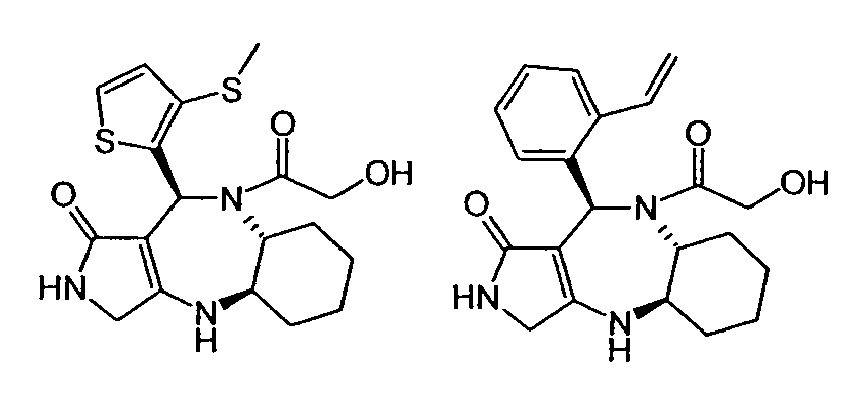
- A sugar transport enhancement agent comprising as an active ingredient the lactam compound or a pharmaceutically acceptable salt thereof according to any one of claims 1 through 20.
- A hypoglycemic agent comprising as an active ingredient the lactam compound or a pharmaceutically acceptable salt thereof according to any one of claims 1 through 20.
- An agent for the prevention and/or treatment of diabetes mellitus, diabetic peripheral neuropathy, diabetic nephropathy, diabetic retinopathy, diabetic macrovascular disease, glucose tolerance anomaly or obesity, comprising as an active ingredient the lactam compound or a pharmaceutically acceptable salt thereof according to any one of claims 1 through 20.
- A pharmaceutical composition comprising as an active ingredient the lactam compound or a pharmaceutically acceptable salt thereof according to any one of claims 1 through 20.
- A pharmaceutical composition comprising as an active ingredient the lactam compound or a pharmaceutically acceptable salt thereof according to any one of claims 1 through 20.
- Use of the lactam compound or a pharmaceutically acceptable salt thereof according to any one of claims 1 through 20, for preparing a hypoglycemic agent.
- A cyclohexane derivative represented by the following Formula (1-3), or a salt thereof with chemically acceptable acids:

- A compound represented by the following Formula (2-3), wherein R3 and R3' represent hydrogen atoms in the Formula (1-3) according to Claim 27, and the configuration of the 2-aminocyclohexylamino group portion is (1R,2R), or a salt thereof with chemically acceptable acids.

- A preparation method for the compound represented by Formula (4-3), or a salt thereof with chemically acceptable acids, wherein the compound represented by Formula (3-3) and 1,2-diaminocyclohexane are reacted.

Applications Claiming Priority (2)
| Application Number | Priority Date | Filing Date | Title |
|---|---|---|---|
| JP2005130879 | 2005-04-28 | ||
| PCT/JP2006/309349 WO2006118341A1 (en) | 2005-04-28 | 2006-04-28 | Novel lactam compound |
Publications (2)
| Publication Number | Publication Date |
|---|---|
| EP1878734A1 true EP1878734A1 (en) | 2008-01-16 |
| EP1878734A4 EP1878734A4 (en) | 2010-02-17 |
Family
ID=37308118
Family Applications (1)
| Application Number | Title | Priority Date | Filing Date |
|---|---|---|---|
| EP06746180A Withdrawn EP1878734A4 (en) | 2005-04-28 | 2006-04-28 | Novel lactam compound |
Country Status (14)
| Country | Link |
|---|---|
| US (1) | US7951799B2 (en) |
| EP (1) | EP1878734A4 (en) |
| JP (1) | JP5056412B2 (en) |
| KR (1) | KR20080004632A (en) |
| CN (1) | CN101166742B (en) |
| AU (1) | AU2006241684A1 (en) |
| BR (1) | BRPI0610034A2 (en) |
| CA (1) | CA2607506A1 (en) |
| IL (1) | IL186972A0 (en) |
| NO (1) | NO20076040L (en) |
| NZ (2) | NZ563131A (en) |
| RU (1) | RU2007144076A (en) |
| WO (1) | WO2006118341A1 (en) |
| ZA (1) | ZA200709235B (en) |
Families Citing this family (13)
| Publication number | Priority date | Publication date | Assignee | Title |
|---|---|---|---|---|
| CA2544310A1 (en) * | 2003-10-31 | 2005-05-12 | Ajinomoto Co., Inc. | New fused polycyclic compounds having a heterocyclic ring(s) and pharmaceutical use thereof |
| JP5672699B2 (en) | 2007-04-11 | 2015-02-18 | 味の素株式会社 | Screening method for hypoglycemic compound |
| WO2008139576A1 (en) * | 2007-04-27 | 2008-11-20 | Ajinomoto Co., Inc. | Method for producing lactam compound and production intermediate thereof |
| WO2008139574A1 (en) * | 2007-04-27 | 2008-11-20 | Ajinomoto Co., Inc. | Crystalline form of lactam compound and process for producing the same |
| WO2008136393A1 (en) * | 2007-04-27 | 2008-11-13 | Ajinomoto Co., Inc. | Crystal of lactam compound, and method for production thereof |
| JP2012180282A (en) * | 2009-07-02 | 2012-09-20 | Ajinomoto Co Inc | Method for producing lactam compound and production intermediate thereof |
| JP2012180283A (en) * | 2009-07-02 | 2012-09-20 | Ajinomoto Co Inc | Method for producing lactam compound and production intermediate thereof |
| PT2661266T (en) | 2011-01-07 | 2020-11-30 | Anji Pharma Us Llc | Chemosensory receptor ligand-based therapies |
| US9795792B2 (en) | 2011-02-25 | 2017-10-24 | Medtronic, Inc. | Emergency mode switching for non-pacing modes |
| SG10201901922VA (en) | 2012-01-06 | 2019-04-29 | Elcelyx Therapeutics Inc | Compositions and methods for treating metabolic disorders |
| MX2014008190A (en) | 2012-01-06 | 2015-02-04 | Elcelyx Therapeutics Inc | Biguanide compositions and methods of treating metabolic disorders. |
| HK1210825A1 (en) | 2012-07-11 | 2016-05-06 | Elcelyx Therapeutics, Inc. | Compositions comprising statins, biguanides and further agents for reducing cardiometabolic risk |
| EA039530B1 (en) | 2013-01-05 | 2022-02-08 | Анджи Фарма (Юс) Элэлси | Delayed release composition comprising biguanide |
Family Cites Families (7)
| Publication number | Priority date | Publication date | Assignee | Title |
|---|---|---|---|---|
| TWI234557B (en) | 1999-05-26 | 2005-06-21 | Telik Inc | Novel naphthalene ureas as glucose uptake enhancers |
| US7067520B2 (en) | 2000-11-17 | 2006-06-27 | Ishihara Sangyo Kaisha, Ltd. | Preventive or therapeutic medicines for diabetes containing fused-heterocyclic compounds or their salts |
| CN100577651C (en) | 2000-12-01 | 2010-01-06 | 味之素株式会社 | Lactam compounds and their medicinal uses |
| JP4345097B2 (en) * | 2002-06-05 | 2009-10-14 | 味の素株式会社 | Fused polycyclic compounds and pharmaceutical uses thereof |
| BRPI0407303A (en) | 2003-02-07 | 2006-02-07 | Ajinomoto Kk | Pharmaceutical Composition |
| CA2544310A1 (en) * | 2003-10-31 | 2005-05-12 | Ajinomoto Co., Inc. | New fused polycyclic compounds having a heterocyclic ring(s) and pharmaceutical use thereof |
| EP1707567A4 (en) | 2004-01-14 | 2009-08-19 | Ajinomoto Kk | Novel fused-ring compound |
-
2006
- 2006-04-28 CN CN2006800142330A patent/CN101166742B/en not_active Expired - Fee Related
- 2006-04-28 KR KR1020077027532A patent/KR20080004632A/en not_active Withdrawn
- 2006-04-28 ZA ZA200709235A patent/ZA200709235B/en unknown
- 2006-04-28 EP EP06746180A patent/EP1878734A4/en not_active Withdrawn
- 2006-04-28 RU RU2007144076/04A patent/RU2007144076A/en not_active Application Discontinuation
- 2006-04-28 WO PCT/JP2006/309349 patent/WO2006118341A1/en not_active Ceased
- 2006-04-28 JP JP2007514876A patent/JP5056412B2/en not_active Expired - Fee Related
- 2006-04-28 NZ NZ563131A patent/NZ563131A/en unknown
- 2006-04-28 AU AU2006241684A patent/AU2006241684A1/en not_active Abandoned
- 2006-04-28 BR BRPI0610034-1A patent/BRPI0610034A2/en not_active IP Right Cessation
- 2006-04-28 NZ NZ587672A patent/NZ587672A/en unknown
- 2006-04-28 CA CA002607506A patent/CA2607506A1/en not_active Abandoned
-
2007
- 2007-10-28 IL IL186972A patent/IL186972A0/en unknown
- 2007-10-29 US US11/926,745 patent/US7951799B2/en not_active Expired - Fee Related
- 2007-11-23 NO NO20076040A patent/NO20076040L/en not_active Application Discontinuation
Also Published As
| Publication number | Publication date |
|---|---|
| RU2007144076A (en) | 2009-06-10 |
| EP1878734A4 (en) | 2010-02-17 |
| CN101166742B (en) | 2011-07-13 |
| CN101166742A (en) | 2008-04-23 |
| IL186972A0 (en) | 2008-02-09 |
| NZ563131A (en) | 2010-09-30 |
| KR20080004632A (en) | 2008-01-09 |
| ZA200709235B (en) | 2009-09-30 |
| US20080108604A1 (en) | 2008-05-08 |
| JP5056412B2 (en) | 2012-10-24 |
| US7951799B2 (en) | 2011-05-31 |
| BRPI0610034A2 (en) | 2011-10-18 |
| WO2006118341A1 (en) | 2006-11-09 |
| CA2607506A1 (en) | 2006-11-09 |
| NO20076040L (en) | 2008-01-28 |
| NZ587672A (en) | 2011-12-22 |
| AU2006241684A1 (en) | 2006-11-09 |
| JPWO2006118341A1 (en) | 2008-12-18 |
Similar Documents
| Publication | Publication Date | Title |
|---|---|---|
| US7951799B2 (en) | Lactam compound, a method for producing the same, and a diabetic therapy by administering the same | |
| AU2002313542B2 (en) | N-phenylpyrrole guanidine derivatives as melanocortin reception ligands | |
| US20240166610A1 (en) | Substituted pyridazine phenol derivatives | |
| AU2010220722B2 (en) | Salts of tetrahydroimidazo [1,5-a] pyrazine derivatives, preparation methods and pharmaceutical use thereof | |
| CA2542727A1 (en) | Derivatives of n-[phenyl(pyrrolidine-2-yl)methyl]benzamide and n-[(azepan-2-yl)phenylmethyl]benzamide, preparation method thereof and application of same in therapeutics | |
| AU2002313542A1 (en) | N-phenylpyrrole guanidine derivatives as melanocortin reception ligands | |
| KR20080109067A (en) | Bicyclooctane Derivatives, Method of Preparation and Medical Use | |
| JPH06135963A (en) | Substituted benzylaminoquinuclidine | |
| CZ20032696A3 (en) | Thiohydantoins and their use when treating diabetes mellitus | |
| CZ20031520A3 (en) | Lactam compounds and their pharmaceutical use | |
| KR20020025215A (en) | Substituted pyrrolidin-2,3,4-trion-3-oxime derivatives useful as NMDA-receptor antagonists | |
| WO2006030847A1 (en) | Novel bicyclic pyrazole derivative | |
| TWI275588B (en) | 1-trifluoromethyl-4-hydroxy-7-piperidinylaminomethylchroman derivatives | |
| TW202542126A (en) | Quaternary ammonium compounds and pharmaceutical uses thereof | |
| FR2610932A1 (en) | NOVEL PIPERAZINECARBOXYLIC ACID, ITS PREPARATION AND ITS USE AS A MEDICINAL PRODUCT | |
| US6121280A (en) | Azabicyclic rotomase inhibitors | |
| Antropov et al. | Synthesis of bridged azaheterocycles peri-annulated to the indole core | |
| WO2004041781A1 (en) | Preparation of 3-aminoalkyl-substituted indole derivatives from phenylhydrazines and aminoketones | |
| WO2000044721A1 (en) | 3,7-disubstituted indole derivatives and medicinal compositions containing the same | |
| JPS6045577A (en) | 2-azabicylo(2,2,2)octane derivative | |
| Annunziata et al. | Mild synthesis of enantiomerically pure imidazo-[1, 2-a] azepines mediated by Yb (OTf) 3 | |
| WO2024213088A1 (en) | Crystal of pyrimidine tricyclic derivative and use | |
| Zhang et al. | Synthesis and characterization of N, N'-substituted bis (2, 5-dimethyl-3, 4-diacetyl) pyrrole derivatives and N, N'-substituted bispyrrolo [3, 4-d] pyridazine derivatives | |
| NZ199437A (en) | 4-(2,1,3-benzoxadiazol-4-yl)-2,6-dimethyl-1,4-dihydro-3-methoxycarbonylpyridine-5-carboxylic acid isopropyl ester and pharmaceutical compositions | |
| FR2679231A1 (en) | Imidazo[2,1-b]benzothiazole-3-acetamide derivatives, their preparation and their application in therapeutics |
Legal Events
| Date | Code | Title | Description |
|---|---|---|---|
| PUAI | Public reference made under article 153(3) epc to a published international application that has entered the european phase |
Free format text: ORIGINAL CODE: 0009012 |
|
| 17P | Request for examination filed |
Effective date: 20071119 |
|
| AK | Designated contracting states |
Kind code of ref document: A1 Designated state(s): AT BE BG CH CY CZ DE DK EE ES FI FR GB GR HU IE IS IT LI LT LU LV MC NL PL PT RO SE SI SK TR |
|
| AX | Request for extension of the european patent |
Extension state: AL BA HR MK YU |
|
| A4 | Supplementary search report drawn up and despatched |
Effective date: 20100120 |
|
| 17Q | First examination report despatched |
Effective date: 20100423 |
|
| GRAP | Despatch of communication of intention to grant a patent |
Free format text: ORIGINAL CODE: EPIDOSNIGR1 |
|
| STAA | Information on the status of an ep patent application or granted ep patent |
Free format text: STATUS: THE APPLICATION IS DEEMED TO BE WITHDRAWN |
|
| 18D | Application deemed to be withdrawn |
Effective date: 20130326 |