EP1877370B1 - Method for producing hydrazone derivatives - Google Patents
Method for producing hydrazone derivatives Download PDFInfo
- Publication number
- EP1877370B1 EP1877370B1 EP06746036A EP06746036A EP1877370B1 EP 1877370 B1 EP1877370 B1 EP 1877370B1 EP 06746036 A EP06746036 A EP 06746036A EP 06746036 A EP06746036 A EP 06746036A EP 1877370 B1 EP1877370 B1 EP 1877370B1
- Authority
- EP
- European Patent Office
- Prior art keywords
- reaction
- general formula
- bis
- compound represented
- compound
- Prior art date
- Legal status (The legal status is an assumption and is not a legal conclusion. Google has not performed a legal analysis and makes no representation as to the accuracy of the status listed.)
- Expired - Lifetime
Links
- 0 C1C*C*C1 Chemical compound C1C*C*C1 0.000 description 4
Classifications
-
- C—CHEMISTRY; METALLURGY
- C07—ORGANIC CHEMISTRY
- C07C—ACYCLIC OR CARBOCYCLIC COMPOUNDS
- C07C317/00—Sulfones; Sulfoxides
- C07C317/02—Sulfones; Sulfoxides having sulfone or sulfoxide groups bound to acyclic carbon atoms
-
- C—CHEMISTRY; METALLURGY
- C07—ORGANIC CHEMISTRY
- C07C—ACYCLIC OR CARBOCYCLIC COMPOUNDS
- C07C315/00—Preparation of sulfones; Preparation of sulfoxides
- C07C315/02—Preparation of sulfones; Preparation of sulfoxides by formation of sulfone or sulfoxide groups by oxidation of sulfides, or by formation of sulfone groups by oxidation of sulfoxides
-
- C—CHEMISTRY; METALLURGY
- C07—ORGANIC CHEMISTRY
- C07C—ACYCLIC OR CARBOCYCLIC COMPOUNDS
- C07C249/00—Preparation of compounds containing nitrogen atoms doubly-bound to a carbon skeleton
- C07C249/16—Preparation of compounds containing nitrogen atoms doubly-bound to a carbon skeleton of hydrazones
-
- C—CHEMISTRY; METALLURGY
- C07—ORGANIC CHEMISTRY
- C07C—ACYCLIC OR CARBOCYCLIC COMPOUNDS
- C07C251/00—Compounds containing nitrogen atoms doubly-bound to a carbon skeleton
- C07C251/72—Hydrazones
-
- C—CHEMISTRY; METALLURGY
- C07—ORGANIC CHEMISTRY
- C07C—ACYCLIC OR CARBOCYCLIC COMPOUNDS
- C07C251/00—Compounds containing nitrogen atoms doubly-bound to a carbon skeleton
- C07C251/72—Hydrazones
- C07C251/74—Hydrazones having doubly-bound carbon atoms of hydrazone groups bound to hydrogen atoms or to acyclic carbon atoms
-
- C—CHEMISTRY; METALLURGY
- C07—ORGANIC CHEMISTRY
- C07C—ACYCLIC OR CARBOCYCLIC COMPOUNDS
- C07C45/00—Preparation of compounds having >C = O groups bound only to carbon or hydrogen atoms; Preparation of chelates of such compounds
- C07C45/51—Preparation of compounds having >C = O groups bound only to carbon or hydrogen atoms; Preparation of chelates of such compounds by pyrolysis, rearrangement or decomposition
- C07C45/518—Preparation of compounds having >C = O groups bound only to carbon or hydrogen atoms; Preparation of chelates of such compounds by pyrolysis, rearrangement or decomposition involving transformation of sulfur-containing compounds to >C = O groups
Definitions
- the present invention relates to a process for producing a hydrazone derivative which is one of the important intermediate for the manufacture of sapropterin hydrochloride and like drug medicines.
- Sapropterin hydrochloride (L-tetrahydrobiopterin dihydrochloride) is widely used as a therapeutic agent for atypical hyperphenylalaninemia.
- Sapropterin hydrochloride is produced by first producing a hydrazone derivative from L-rhamnose through L-rhamnose diethyl mercaptal (REM) and 5-deoxy-L-arabinose (5-DA), then acetylating the resultant hydrazone derivative and reacting the acetylated hydrazone derivative with 6-hydroxy-2,4,5-triaminopyrimidine, eliminating acetyl groups therefrom, and subsequently subjecting the thus deacetylated product to asymmetric reduction (cf. patent literature 1 and nonpatent literature 1).
- REM L-rhamnose diethyl mercaptal
- 5-DA 5-deoxy-L-arabinose
- the hydrazone derivative is an important intermediate in the production process of sapropterin hydrochloride.
- this method has so far been disadvantageously affected by the difficulties that the steps covering from the L- rhamnose diethyl mercaptal (REM) to 5-DA above in the production process of hydrazone derivative involve a very low reaction yield and a very inferior reproducibility along with a long reaction time and complicated postprocessing.
- REM L- rhamnose diethyl mercaptal
- an object of the present invention is to provide an industrially advantageous process for producing a hydrazone derivative which is an important intermediate for the production of sapropterin hydrochloride, as described previously.
- the present invention provides a process for producing a 1,1-bis-alkylsulfonyl compound represented by the general formula (2) (where R 1 represents an alkyl group) comprising: reacting a 1,1-bis-alkylsulfanyl compound represented by the general formula (1): (where, R 1 is the same as defined above) with a monopersulfate to produce a 1,1-bis-alkylsulfonyl compound represented by the general formula (2) above.
- the present invention provides a process for producing an aldehyde compound represented by the general formula (3) , comprising:
- the present invention provides a process for producing hydrazone derivative represented by the general formula (5), (wherein R 2 and R 3 , which may be the same or different from each other, each represents an hydrogen atom, an alkyl group, or aryl group) comprising: reacting a 1,1-bis-alkylsulfanyl compound represented by the general formula (1) (wherein R 1 represents an alkyl group) with a monopersulfate to produce a 1,1-bis-alkylsulfonyl compound represented by the general formula (2) (wherein R 1 is the same as defined above), and reacting the resultant 1,1-bis-alkylsulfonyl compound (2) with ammonium to produce an aldehyde compound represented by the general formula (3): and reacting with the resultant aldehyde compound (3) with a hydrazine compound represented by the general formula (4): (wherein R 2 and R 3 are the same as defined above.)
- the oxidation reaction of the thioethers proceeds quickly to complete in a very short time with a high yield
- the reaction control can be readily accomplished due to substantial nonoccurence of any side reactions, and all three process steps leading up to the hydrazone derivative proceed as substantially quantitatively expected.
- all the reactions from the thioethers to the hydrazone derivative do not undergo side reactions, all the three process steps involved may be performed in one-pot operation.
- the method of the present invention may be represented by the following reaction formula:
- the 1,1-bis-alkylsulfanyl compound (1) which is the starting material for the present invention may be produced, for example, by adding 2 molar equivalents of ethanethiol to L-rhamnose in an aqueous solution of hydrochloric acid under ice cooling so as to react the ethanethiol with the L-rhamnose over a 20 hours period of time still under ice cooling, then filtering the resultant solution to separate out the deposited crystals therefrom, washing the resultant crystals with iced water and n-hexane, and drying the washed crystals.
- the alkyl group represented by R 1 includes linear or branched alkyl groups having a 1 to 8 carbon atoms, such as methyl group, ethyl group, n-propyl group, isopropyl group, n-butyl group, or etc., and preferable examples of R 1 include alkyl groups having 1 to 5 carbon atoms and particularly preferably ethyl group.
- the compound (2) is produced by reacting the compound (1) with a monopersulfate.
- a monopersulfate alkali metal monopersulfates may be used, including potassium monopersulfate (KHSO 5 ), sodium monopersulfate (NaHSO 5 ), and etc.
- KHSO 5 potassium monopersulfate
- NaHSO 5 sodium monopersulfate
- the monopersulfate may be in the form of a mixture such as one having a 2KHSO 5 ⁇ KHSO 4 ⁇ K 2 SO 4 formulation commercially available under the tradename "OXONE" from DuPont.
- the reaction solvent it is preferable to use water or lower alcohols and above all water is preferred.
- such preferable lower alcohols include those alcohols having 1 to 5 carbon atoms , such as methanol, ethanol, isopropanol, or etc.
- the reaction solvent may be used preferably 10 to 30 times and particularly preferably 10 to 20 times the volume of the compound (1).
- the reaction temperature may range preferably from 5 °C to 20 °C and more preferably from 5 °C to 15 °C, and particularly preferably 5 °C to 10 °C in order to prevent any side reactions from occurring.
- the reaction time may range preferably from 1 to 10 hours, more preferably from 1 to 5 hours and particularly preferably from 2 to 5 hours in order to prevent any side reactions and to fully complete the reaction.
- the compound (3) is produced by reacting the compound (2) in the resultant solution above with ammonia. This reaction may be carried out just as a continued process from the preceding step producing the compound (2) from the compound (1).
- the ammonia may be provided in the form of a 14 to 28 % ammonia water.
- This reaction is carried out preferably at pH8 or above, preferably at pH8 to pH10 and particularly preferably at pH9 to pH10. Also, it is preferred that the reaction be carried out at 5 °C to 35°C over 1 to 50 hours period of time and particularly over 10 to 40 hours.
- the compound (3) can be readily obtained with a high purity merely by washing the reaction product with ethyl acetate, toluene, chloroform or a like organic solvent.
- the compound (5) (hydrazone derivative) is produced by reacting the compound (3) with the compound (4).
- the alkyl groups represented by R 2 and R 3 in the above formula (4) may include linear or branched lower alkyl groups having 1 to 7 carbon atoms such as, for example, methyl group and ethyl group, of which the methyl group is preferred.
- the aryl groups represented by R 2 and R 3 may include those aryl groups having 6 to 14 carbon atoms such as, for example, phenyl group and naphthyl group, among which the phenyl group is preferred. Hydrogen atom or phenyl group is particularly preferred for the atom groups represented by R 2 and R 3 .
- the hydrazine compounds (4) used for this process step may include, for example, hydrazine, 1,1-dimethyldiazine and phenylhydrazine, among which the phenylhydrazine is particularly preferred.
- This reaction may be carried out in a solvent such as water, alcohol, or etc., among which water is particularly preferred.
- the hydrazine compounds (4) may be added preferably 1 to 1.5 molar equivalents to the compound (3) and particularly preferably 1 to 1.1 molar equivalents.
- the reaction of this step may be carried out under acidic condition preferably at about pH4.0 to about pH6.5. Acids added to the reaction solution in this step may include organic acids such as acetic acid and inorganic acids such as hydrochloric acid and sulfuric acid.
- reaction be carried out at about 0 °C to 50 °C over 1 to 20 hours period of time.
- the compound (5) can be readily obtained with a high purity by extracting the aqueous layer of the reaction solution with an organic solvent.
- all the process steps producing the compound (5) from the compound (1) may be performed in a single solvent, particularly in an aqueous solution. Moreover, all of the process steps, especially the oxidation reaction, requires only a short reaction time without necessity of any postprocessing steps, thus providing industrially advantageous features.
- the present invention provides an industrially advantageous manufacturing method in that the process steps producing the compound (5) from the compound (1) are substantially free from any side effects and thus can dispense with any column operations or concentration operations as used in the prior art.
- the resultant hydrazone derivative (5) produced above may be used for the production process of sapropterin hydrochloride known in the art as herein described previously.
- a quantitative analysis of the ethyl acetate solution and the separated aqueous layer for the resultant phenylhydrazone derivative contained therein revealed a 102.4 % yield in the ethyl acetate solution and a 0.58% yield in the aqueous layer, respectively, based on the phenylhydrazone derivative content.
- HPLC high-performance liquid chromatography
- column Inertsil ODS-2, 4.6 mm x 250 mm, column temperature: 40 °C
- measurement wavelength 247 nm
- analysis time 30 minutes
- internal standard nitrobenzene
- operational procedure 1ml reaction solution was taken and methanol was added thereto until the 20 ml marked line is reached. 5 ⁇ l of the resultant solution was injected into the column for analysis.
- the resultant reaction solution After stirring the resultant reaction solution at a 40 °C external temperature over about 9 hours period of time, it was cooled at a 10 °C external temperature, and 750 ml of an aqueous solution containing 60.02 g dissolved sodium acetate was added to the reaction solution, which was then stirred all night.
- the resultant reaction solution was cooled at a 0 °C external temperature and 3 l of an aqueous solution containing 525.27 g dissolved sodium hydrosulfite was dripped until the oxidation-reduction potential reached 436 mV, and the resultant solution was stirred all night at 5 °C external temperature.
- the reaction solution was subjected to vacuum concentration at a 60 °C external temperature until the internal temperature stopped rising.
- the concentration residue was used for the next process step.
- Several spots of the side reaction products were observed in a thin-layer chromatography (TLC) of the concentration residue (under the same TLC conditions as in the example 1 above).
- TLC thin-layer chromatography
- the reaction solution was subjected to an ammoniation step and then a phenylhydrazonation step, like the example 1. This resulted in an yield of 45 % to 75 % of the hydrazone derivative.
- a 2.337 g mixture of a white solid and an oily matter was obtained as the concentration residue.
- a TLC of the concentration residue revealed that the reaction product mainly comprised a dehydrated product (6,6-bis-ethanesulfonyl-hex-5-ene-2,3,4-triol).
Landscapes
- Chemical & Material Sciences (AREA)
- Organic Chemistry (AREA)
- Organic Low-Molecular-Weight Compounds And Preparation Thereof (AREA)
Abstract
Description
- The present invention relates to a process for producing a hydrazone derivative which is one of the important intermediate for the manufacture of sapropterin hydrochloride and like drug medicines.
- Sapropterin hydrochloride (L-tetrahydrobiopterin dihydrochloride) is widely used as a therapeutic agent for atypical hyperphenylalaninemia. Sapropterin hydrochloride is produced by first producing a hydrazone derivative from L-rhamnose through L-rhamnose diethyl mercaptal (REM) and 5-deoxy-L-arabinose (5-DA), then acetylating the resultant hydrazone derivative and reacting the acetylated hydrazone derivative with 6-hydroxy-2,4,5-triaminopyrimidine, eliminating acetyl groups therefrom, and subsequently subjecting the thus deacetylated product to asymmetric reduction (cf. patent literature 1 and nonpatent literature 1).

- As described above, the hydrazone derivative is an important intermediate in the production process of sapropterin hydrochloride. However, this method has so far been disadvantageously affected by the difficulties that the steps covering from the L- rhamnose diethyl mercaptal (REM) to 5-DA above in the production process of hydrazone derivative involve a very low reaction yield and a very inferior reproducibility along with a long reaction time and complicated postprocessing.
- [Patent literature 1] Japanese published unexamined patent application
JP A S59-186986 - [Nonpatent literature 1] Helv. Chim. Acta 68(6)1639-1643(1985)
- [Patent literature 2]
U.S. Patent No. 3,505,329 - [Nonpatent literature 2] J. Am. Chem. Soc. 96. 6781(1974)
- Accordingly, an object of the present invention is to provide an industrially advantageous process for producing a hydrazone derivative which is an important intermediate for the production of sapropterin hydrochloride, as described previously.
- In the course of studying from various aspects what causes the reduction in the yield of hydrazone derivative, the inventors have found that it is attributable to the oxidation process of REM. Specifically, to oxidize REM on an industrial scale, hydrogen peroxide, perbenzoic acid, peracetic acid or like agents are used as oxidants (cf. patent literature 2 and nonpatent literature 2), it has been revealed that when such oxidizing agents are used, the reaction inevitably accompanies side reactions such as the decomposition of the reaction product and the generation of dehydration products as the reaction proceeds, thus substantially interfering with the improvement of the reaction yield. Further, it has been proved that such side reactions occurring this way act to reduce the yields in the reaction from the oxidized intermediate to 5-DA and in the hydrazonation reaction and also to lower the purity of the resultant hydrazone derivative. Moreover, the prior art method has a problem of low working efficiency or productivity in that the process undergoes intense heat generation when dripping or charging the above-described conventional oxidizing agents and thus there is involved a problem of low working efficiency with extended working hours. For the postprocessing method, using the conventional oxidizing agents also has a number of problems of requiring complicated and multistep processes, including the time required for adding a reducing agent and a step of concentrating the solvent.
- Under these circumstances, the inventors have found that, when a monopersulfate is used as an oxidizing agent of the REM, substantially any such side reactions as observed in the prior art method do not occur unexpectedly with the reaction solution maintained very cleanly, and the formation of 5-DA and the hydrazonation reaction also proceed as quantitatively expected, and have accomplished the present invention.
- Accordingly, the present invention provides a process for producing a 1,1-bis-alkylsulfonyl compound represented by the general formula (2)

comprising:
reacting a 1,1-bis-alkylsulfanyl compound represented by the general formula (1):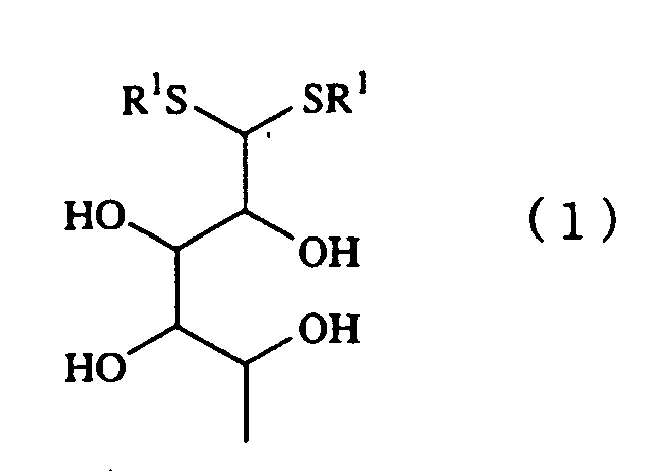
with a monopersulfate to produce a 1,1-bis-alkylsulfonyl compound represented by the general formula (2) above. - Also, the present invention provides a process for producing an aldehyde compound represented by the general formula (3)

- reacting a 1,1-bis-alkylsulfanyl compound represented by the general formula (1)

- Further, the present invention provides a process for producing hydrazone derivative represented by the general formula (5),

comprising:
reacting a 1,1-bis-alkylsulfanyl compound represented by the general formula (1)
with a monopersulfate to produce a 1,1-bis-alkylsulfonyl compound represented by the general formula (2)
and reacting the resultant 1,1-bis-alkylsulfonyl compound (2) with ammonium to produce an aldehyde compound represented by the general formula (3):

- According to the method of the present invention; the oxidation reaction of the thioethers proceeds quickly to complete in a very short time with a high yield, the reaction control can be readily accomplished due to substantial nonoccurence of any side reactions, and all three process steps leading up to the hydrazone derivative proceed as substantially quantitatively expected. Further, since all the reactions from the thioethers to the hydrazone derivative do not undergo side reactions, all the three process steps involved may be performed in one-pot operation.
- The method of the present invention may be represented by the following reaction formula:

- The 1,1-bis-alkylsulfanyl compound (1) which is the starting material for the present invention may be produced, for example, by adding 2 molar equivalents of ethanethiol to L-rhamnose in an aqueous solution of hydrochloric acid under ice cooling so as to react the ethanethiol with the L-rhamnose over a 20 hours period of time still under ice cooling, then filtering the resultant solution to separate out the deposited crystals therefrom, washing the resultant crystals with iced water and n-hexane, and drying the washed crystals. Here, the alkyl group represented by R1 includes linear or branched alkyl groups having a 1 to 8 carbon atoms, such as methyl group, ethyl group, n-propyl group, isopropyl group, n-butyl group, or etc., and preferable examples of R1 include alkyl groups having 1 to 5 carbon atoms and particularly preferably ethyl group.
- The compound (2) is produced by reacting the compound (1) with a monopersulfate. As the monopersulfate, alkali metal monopersulfates may be used, including potassium monopersulfate (KHSO5), sodium monopersulfate (NaHSO5), and etc. The monopersulfate may be in the form of a mixture such as one having a 2KHSO5·KHSO4·K2SO4 formulation commercially available under the tradename "OXONE" from DuPont. When using OXONE® as the monopersulfate, the OXONE® (=2KHSO5 · KHSO4 · K2SO4) may be added preferably 2 to 3.5 molar equivalents to the compound (1), more preferably 2 to 3 molar equivalents and particularly preferably 2.2-2.4 molar equivalents.
- For the reaction solvent according to the present invention, it is preferable to use water or lower alcohols and above all water is preferred. Here, such preferable lower alcohols include those alcohols having 1 to 5 carbon atoms , such as methanol, ethanol, isopropanol, or etc. The reaction solvent may be used preferably 10 to 30 times and particularly preferably 10 to 20 times the volume of the compound (1). Besides, the reaction temperature may range preferably from 5 °C to 20 °C and more preferably from 5 °C to 15 °C, and particularly preferably 5 °C to 10 °C in order to prevent any side reactions from occurring. Meanwhile, the reaction time may range preferably from 1 to 10 hours, more preferably from 1 to 5 hours and particularly preferably from 2 to 5 hours in order to prevent any side reactions and to fully complete the reaction.
- The compound (3) is produced by reacting the compound (2) in the resultant solution above with ammonia. This reaction may be carried out just as a continued process from the preceding step producing the compound (2) from the compound (1).
- Here, the ammonia may be provided in the form of a 14 to 28 % ammonia water. This reaction is carried out preferably at pH8 or above, preferably at pH8 to pH10 and particularly preferably at pH9 to pH10. Also, it is preferred that the reaction be carried out at 5 °C to 35°C over 1 to 50 hours period of time and particularly over 10 to 40 hours.
- Upon completing the reaction, the compound (3) can be readily obtained with a high purity merely by washing the reaction product with ethyl acetate, toluene, chloroform or a like organic solvent.
- The compound (5) (hydrazone derivative) is produced by reacting the compound (3) with the compound (4).
- The alkyl groups represented by R2 and R3 in the above formula (4) may include linear or branched lower alkyl groups having 1 to 7 carbon atoms such as, for example, methyl group and ethyl group, of which the methyl group is preferred. The aryl groups represented by R2 and R3 may include those aryl groups having 6 to 14 carbon atoms such as, for example, phenyl group and naphthyl group, among which the phenyl group is preferred. Hydrogen atom or phenyl group is particularly preferred for the atom groups represented by R2 and R3. The hydrazine compounds (4) used for this process step may include, for example, hydrazine, 1,1-dimethyldiazine and phenylhydrazine, among which the phenylhydrazine is particularly preferred.
- This reaction may be carried out in a solvent such as water, alcohol, or etc., among which water is particularly preferred. The hydrazine compounds (4) may be added preferably 1 to 1.5 molar equivalents to the compound (3) and particularly preferably 1 to 1.1 molar equivalents. The reaction of this step may be carried out under acidic condition preferably at about pH4.0 to about pH6.5. Acids added to the reaction solution in this step may include organic acids such as acetic acid and inorganic acids such as hydrochloric acid and sulfuric acid.
- It is preferred that the reaction be carried out at about 0 °C to 50 °C over 1 to 20 hours period of time. Upon completion of the reaction, the compound (5) can be readily obtained with a high purity by extracting the aqueous layer of the reaction solution with an organic solvent.
- According to the method of the present invention, all the process steps producing the compound (5) from the compound (1) may be performed in a single solvent, particularly in an aqueous solution. Moreover, all of the process steps, especially the oxidation reaction, requires only a short reaction time without necessity of any postprocessing steps, thus providing industrially advantageous features. The present invention provides an industrially advantageous manufacturing method in that the process steps producing the compound (5) from the compound (1) are substantially free from any side effects and thus can dispense with any column operations or concentration operations as used in the prior art.
- The resultant hydrazone derivative (5) produced above may be used for the production process of sapropterin hydrochloride known in the art as herein described previously.
- Hereinafter, the present invention will be described in further detail with reference to examples thereof, but the present invention is not in any manner limited to such specific examples.
-
- 1. 1,1-bis-ethylsulfanylhexane-2,3,4,5-tetraol (REM) (200.00 g, 0.7396 mol) and water (3,000 mℓ) were placed in a 5,000 mℓ 4-neck reaction flask to be suspended therein and then cooled down to an external temperature of 5 °C. To this reaction solution, were added OXONE® (produced by DuPont; 1,046 g, 1.701 mol) while keeping an internal temperature at 20 °C or below. After the OXONE® introduction, the mixture was stirred at 5 °C for 2 hours and the reaction endpoint was determined using thin-layer chromatography (TLC) (compound (1): Rf=0.7, compound (2): Rf=0.45, TLC conditions; plate: silica gel for thin layer chromatograph, spot volume: 2 µℓ, developing solvent: chloroform/methanol/acetic acid (10:2:1), developed length: 5-10 cm, coloring reagent: (1:1) mixture of 1 % aqueous solution of cerium (IV) sulfate/10 % sulfuric acid, operational procedure: The TLC plate having undergone the development under the above-described conditions were sprayed uniformly with the coloring reagent and heated.) A 28% ammonia water was dripped into the suspended reaction solution while keeping the flask internal temperature at 25 °C or below so as to adjust the reaction solution to pH9 - pH10. After stirring the suspended reaction solution at an external temperature of 10 °C over 15.5 hours period of time from the termination of the ammonia water dripping, the reaction endpoint was determined by TLC (under the same conditions as above, compound (3): Rf=0.3). Then, after filtering the reaction solution, the filtration residue was successively knead-washed first with ethyl acetate (1000 mℓ) and then water (200 mℓ), and the residue was checked by TLC (under the same conditions as above) to see if the target product (2, 3, 4-trihydroxypentanal) remains there. After separating the filtrate and washing the aqueous layer twice with ethyl acetate (1000 mℓ), the organic layer was mixed therewith and then water (200 mℓ) was added thereto and the resultant mixture was subjected to extraction again. Then, the aqueous layer was mixed therewith to obtain an aqueous solution (4,485 g) containing 2,3,4-trihydroxypentanal (5-DA).
- 2. The aqueous solution (897g) prepared in the preceding process steps above containing 5-DA was introduced into the 2,000 mℓ 4-neck flask and the resultant reaction solution was cooled to an external temperature of 10 °C in an argon stream. Acetic acid (4.20g) was added to the reaction solution to adjust it to pH5 to pH6, and subsequently phenylhydrazine (16.00g, 0.148 mol) was added thereto. After stirring the reaction solution at a flask external temperature of 10 °C for 1 hour, the reaction endpoint was determined by TLC (under the same TLC conditions as in the example 1 above; compound (5): Rf=0.56). A 20% aqueous solution of sodium hydroxide (4.05 g) was added to the reaction solution so that the pH value of the orange-colored suspended reaction solution came to around 7, and then ethyl acetate (200 mℓ) and sodium chloride (225 g) were added. After separating the reaction solution, ethyl acetate (200 mℓ) was added to the aqueous layer and the resultant reaction solution was subjected to extraction again. Then, the organic layer was mixed therewith and anhydrous sodium sulfate (40 g) was added thereto, and the resultant mixture was dehydrated and filtered to obtain an ethyl acetate solution (500 mℓ) containing phenylhydrazone derivative(5).
- A quantitative analysis of the ethyl acetate solution and the separated aqueous layer for the resultant phenylhydrazone derivative contained therein revealed a 102.4 % yield in the ethyl acetate solution and a 0.58% yield in the aqueous layer, respectively, based on the phenylhydrazone derivative content.
- The HPLC (high-performance liquid chromatography) conditions; column: Inertsil ODS-2, 4.6 mm x 250 mm, column temperature: 40 °C, mobile phase: 10 mM KH2PO4 (pH3-pH3.3)/acetonitrile = 7:3, flow rate: 1.0 mℓ/min., measurement wavelength: 247 nm, analysis time: 30 minutes, internal standard: nitrobenzene, operational procedure: 1mℓ reaction solution was taken and methanol was added thereto until the 20 mℓ marked line is reached. 5 µℓ of the resultant solution was injected into the column for analysis.
- 1 g REM was suspended in 15 mℓ water and stirred at an external temperature of 5 °C, and then OXONE® of 2.1 to 2.4 molar equivalents was added thereto and the resultant reaction was tracked using TLC (under the same TLC conditions as in the example 1 above). As a result, the oxidation reaction was fully completed in 2 to 5 hours. Moreover, this reaction did not undergo generation of spots of the side reaction products as observed in the comparative examples 1 through 3, to be described herein later, in which other peracids were used.
- 1 g REM was suspended in 15 mℓ water and OXONE® of 2.3 molar equivalents was added to the suspension with the reaction temperature set at 5 °C to 10 °C, and the resultant reaction was tracked using TLC (under the same TLC conditions as in the example 1 above). As a result, the oxidation reaction was fully completed at 5 °C to 10 °C in 2 to 5 hours without hardly undergoing any side reactions.
- 100 g REM was dissolved in 1.5 ℓ methanol and OXONF® of 3 molar equivalents was added to the solution at an external temperature of 20°C, and the resultant reaction was tracked using TLC (under the same TLC conditions as in the example 1 above). Sixteen hours later therefrom, the oxidation reaction was completed without hardly undergoing any side reactions.
- 8.25 ℓ acetic acid was added to 1.5 Kg REM and stirred at a 15 °C external temperature and 1,185.64 g of 35 % hydrogen peroxide solution was dripped there at an internal temperature of 30 °C or below over about 8 hours period of time. After stirring the reaction solution all night, 18.04 g concentrated hydrochloric acid was added thereto and the resultant reactant solution was warmed to 40 °C external temperature, and then 1778.39 g of 35% hydrogen peroxide solution was again dripped into the reaction solution over about 30 minutes period of time. After stirring the resultant reaction solution at a 40 °C external temperature over about 9 hours period of time, it was cooled at a 10 °C external temperature, and 750 mℓ of an aqueous solution containing 60.02 g dissolved sodium acetate was added to the reaction solution, which was then stirred all night. The resultant reaction solution was cooled at a 0 °C external temperature and 3 ℓ of an aqueous solution containing 525.27 g dissolved sodium hydrosulfite was dripped until the oxidation-reduction potential reached 436 mV, and the resultant solution was stirred all night at 5 °C external temperature. The reaction solution was subjected to vacuum concentration at a 60 °C external temperature until the internal temperature stopped rising. The concentration residue was used for the next process step. Several spots of the side reaction products were observed in a thin-layer chromatography (TLC) of the concentration residue (under the same TLC conditions as in the example 1 above). Thereafter, the reaction solution was subjected to an ammoniation step and then a phenylhydrazonation step, like the example 1. This resulted in an yield of 45 % to 75 % of the hydrazone derivative.
- 3.55 g of 32 % peracetic acid (diluted acetic acid solution) and 1 mℓ water were introduced into a flask and stirred at a 10 °C external temperature, and 1 g REM was added dividedly to the reaction solution. The reaction solution was stirred all night at a 30 °C external temperature and 21 hours later a reaction endpoint was determined using TLC (under the same TLC condition as in the axample 1 above). The reaction solution was ice-cooled and 0.35 g of sodium hydrosulfite was added slowly thereto, and upon determining a disappearance of peroxides in the reaction solution with a potassium iodide starch test paper the reaction solution was subjected to vacuum concentration at 50 °C external temperature. A 2.337 g mixture of a white solid and an oily matter was obtained as the concentration residue. A TLC of the concentration residue revealed that the reaction product mainly comprised a dehydrated product (6,6-bis-ethanesulfonyl-hex-5-ene-2,3,4-triol).
- 12 ℓ of 1,4-dioxane was added to 1260 g REM and warmed to 40 °C, and after determining a dissolution of REM the reaction solution was water-cooled, 5,700 g of metachloro perbenzoic acid (with 68 % content) was added gradually to the reaction solution over 4 hours period of time. Then, 12 ℓ ethyl acetate was added to the reaction solution and after leaving to stand overnight the reaction solution was stored in a cold room for 4 hours, and subsequently the deposited crystals were separated out by filtration. A similar operation was repeated using 1,390 g of REM, and the deposited crystals of the first and second operations were mixed together and washed with 15 ℓ of ethyl acetate in a suction funnel. The resultant crystals were air dried over 3 days to obtain 2,965 g of the compound (2) (1,1-bis-ethanesulfonyl-hexane-2,3,4,5-tetraol). An infrared (IR) analysis of the resultant compound (2) revealed an inclusion of metachlorobenzoic aid.
- As is clearly understood when comparing the examples 1 through 4 of the present invention with the comparative examples 1 through 3 above, since the method according to the present invention hardly undergoes occurrence of any side reactions, not only the control of reaction time and conditions can be facilitated and the postprocessings may be accomplished with a simplified operation, but also the reaction time can be shortened and a very high yield is achieved.
with a monopersulfate to produce a 1,1-bis-alkylsulfonyl compound represented by the general formula (2)

and reacting the resultant 1,1-bis-alkylsulfonyl compound (2) with ammonia.
Claims (4)
- A process for producing a 1,1-bis-alkylsulfonyl compound represented by the general formula (2)

comprising:reacting a 1,1-bis-alkylsulfanyl compound represented by the general formula (1) with a monopersulfate.
 - A process for producing an aldehyde compound represented by the general formula (3)
 reacting a 1,1-bis-alkylsulfanyl compound represented by the general formula (1)
 with a monopersulfate to produce a 1,1-bis-alkylsulfonyl compound represented by the general formula (2)
 (wherein, R1 is the same as defined above);and reacting the resultant 1,1-bis-alkylsulfonyl compound (2) with ammonia.
 - A process for producing a hydrazone derivative represented by the general formula (5)
 reacting a 1,1-bis-alkylsulfanyl compound represented by the general formula (1)
 with a monopersulfate to produce a 1,1-bis-alkylsulfonyl compound represented by the general formula (2)
 and reacting the resultant 1,1-bis-alkylsulfonyl compound (2) with ammonia to produce an aldehyde compound represented by the general formula (3)
 and reacting with the resultant aldehyde compound (3) with a hydrazine compound represented by the formula (4)
- A process according to any one of the preceding claims 1 through 3, wherein any reactions thereof are carried out in a water-based solvent or alcohol solvent.
Priority Applications (1)
| Application Number | Priority Date | Filing Date | Title |
|---|---|---|---|
| PL06746036T PL1877370T3 (en) | 2005-04-28 | 2006-04-27 | Method for producing hydrazone derivatives |
Applications Claiming Priority (2)
| Application Number | Priority Date | Filing Date | Title |
|---|---|---|---|
| JP2005133148 | 2005-04-28 | ||
| PCT/JP2006/309204 WO2006118322A1 (en) | 2005-04-28 | 2006-04-27 | Method for producing hydrazone derivatives |
Publications (2)
| Publication Number | Publication Date |
|---|---|
| EP1877370A1 EP1877370A1 (en) | 2008-01-16 |
| EP1877370B1 true EP1877370B1 (en) | 2009-02-25 |
Family
ID=36658689
Family Applications (1)
| Application Number | Title | Priority Date | Filing Date |
|---|---|---|---|
| EP06746036A Expired - Lifetime EP1877370B1 (en) | 2005-04-28 | 2006-04-27 | Method for producing hydrazone derivatives |
Country Status (15)
| Country | Link |
|---|---|
| US (1) | US7582799B2 (en) |
| EP (1) | EP1877370B1 (en) |
| JP (1) | JP5042843B2 (en) |
| KR (1) | KR101277074B1 (en) |
| CN (1) | CN101163671B (en) |
| AT (1) | ATE423764T1 (en) |
| AU (1) | AU2006241673B2 (en) |
| BR (1) | BRPI0609421B1 (en) |
| CA (1) | CA2606977C (en) |
| DE (1) | DE602006005349D1 (en) |
| DK (1) | DK1877370T3 (en) |
| ES (1) | ES2321760T3 (en) |
| PL (1) | PL1877370T3 (en) |
| PT (1) | PT1877370E (en) |
| WO (1) | WO2006118322A1 (en) |
Families Citing this family (8)
| Publication number | Priority date | Publication date | Assignee | Title |
|---|---|---|---|---|
| WO2009088979A1 (en) | 2008-01-07 | 2009-07-16 | Biomarin Pharmaceutical Inc. | Method of synthesizing tetrahydrobiopterin |
| CN102086167B (en) * | 2010-12-09 | 2013-05-08 | 济南大学 | Method for preparing ethylsulfonyl acetonitrile |
| US9216178B2 (en) | 2011-11-02 | 2015-12-22 | Biomarin Pharmaceutical Inc. | Dry blend formulation of tetrahydrobiopterin |
| US11072614B2 (en) | 2016-11-29 | 2021-07-27 | Ptc Therapeutics Mp, Inc. | Polymorphs of sepiapterin and salts thereof |
| EP3548487A4 (en) | 2016-11-29 | 2020-04-29 | Censa Pharmaceuticals Inc. | POLYMORPHIC FORM OF SEPIAPTERIN |
| CA3073957A1 (en) | 2017-09-01 | 2019-03-07 | Censa Pharmaceuticals Inc. | Pharmaceutical compositions comprising sepiapterin and uses thereof |
| PT3801534T (en) | 2018-05-30 | 2026-04-28 | Ptc Therapeutics Mp Inc | Compositions and methods for increasing tetrahydrobiopterin plasma exposure |
| MD3801536T2 (en) | 2018-05-30 | 2024-11-30 | Ptc Therapeutics Mp Inc | Administration of sepiapterin without food for use in a method for increasing sepiapterin plasma exposure |
Family Cites Families (5)
| Publication number | Priority date | Publication date | Assignee | Title |
|---|---|---|---|---|
| US3505329A (en) * | 1968-02-06 | 1970-04-07 | Smithkline Corp | Process for the synthesis of biopterin |
| US4419298A (en) * | 1981-08-12 | 1983-12-06 | Ciba-Geigy Corporation | Ethanolamine salts of di-perfluoroalkyl group containing acids |
| JPS59186986A (en) * | 1984-03-17 | 1984-10-23 | Kanegafuchi Chem Ind Co Ltd | Preparation of 1',2'-diacyl-l-biopterin |
| GB9016978D0 (en) * | 1990-08-02 | 1990-09-19 | Ici Plc | Acetamide derivatives |
| ZA939517B (en) | 1992-12-23 | 1995-01-31 | Smithkline Beecham Corp | Process |
-
2006
- 2006-04-27 DK DK06746036T patent/DK1877370T3/en active
- 2006-04-27 US US11/911,441 patent/US7582799B2/en active Active
- 2006-04-27 CA CA2606977A patent/CA2606977C/en not_active Expired - Lifetime
- 2006-04-27 WO PCT/JP2006/309204 patent/WO2006118322A1/en not_active Ceased
- 2006-04-27 CN CN2006800135248A patent/CN101163671B/en not_active Expired - Lifetime
- 2006-04-27 AU AU2006241673A patent/AU2006241673B2/en not_active Expired
- 2006-04-27 KR KR1020077024893A patent/KR101277074B1/en not_active Expired - Lifetime
- 2006-04-27 JP JP2007539416A patent/JP5042843B2/en not_active Expired - Lifetime
- 2006-04-27 PT PT06746036T patent/PT1877370E/en unknown
- 2006-04-27 ES ES06746036T patent/ES2321760T3/en not_active Expired - Lifetime
- 2006-04-27 BR BRPI0609421-0A patent/BRPI0609421B1/en active IP Right Grant
- 2006-04-27 AT AT06746036T patent/ATE423764T1/en active
- 2006-04-27 EP EP06746036A patent/EP1877370B1/en not_active Expired - Lifetime
- 2006-04-27 DE DE602006005349T patent/DE602006005349D1/en not_active Expired - Lifetime
- 2006-04-27 PL PL06746036T patent/PL1877370T3/en unknown
Also Published As
| Publication number | Publication date |
|---|---|
| AU2006241673B2 (en) | 2011-02-24 |
| CN101163671A (en) | 2008-04-16 |
| EP1877370A1 (en) | 2008-01-16 |
| CA2606977A1 (en) | 2006-11-09 |
| KR20080005235A (en) | 2008-01-10 |
| AU2006241673A1 (en) | 2006-11-09 |
| DE602006005349D1 (en) | 2009-04-09 |
| KR101277074B1 (en) | 2013-06-25 |
| DK1877370T3 (en) | 2009-05-11 |
| CA2606977C (en) | 2013-05-21 |
| WO2006118322A1 (en) | 2006-11-09 |
| BRPI0609421B1 (en) | 2021-06-01 |
| PT1877370E (en) | 2009-06-02 |
| US7582799B2 (en) | 2009-09-01 |
| JP5042843B2 (en) | 2012-10-03 |
| PL1877370T3 (en) | 2009-07-31 |
| BRPI0609421A2 (en) | 2010-03-30 |
| JP2008539163A (en) | 2008-11-13 |
| US20090076305A1 (en) | 2009-03-19 |
| ES2321760T3 (en) | 2009-06-10 |
| CN101163671B (en) | 2011-05-11 |
| ATE423764T1 (en) | 2009-03-15 |
Similar Documents
| Publication | Publication Date | Title |
|---|---|---|
| JP2791046B2 (en) | Method for producing methylene derivative of androsta-1,4-diene-3,17-dione | |
| AU2006241673B2 (en) | Method for producing hydrazone derivatives | |
| US7361759B2 (en) | Method for producing L-biopterin | |
| AU755699B2 (en) | A reference compound for use in the analysis of levosimendan batches | |
| EP2551265B2 (en) | Novel process for the preparation of 1-(6-methylpyridin-3-yl)-2-[4-(methylsulfonyl)phenyl]ethanone, an intermediate of etoricoxib. | |
| KR20210025517A (en) | Method for producing α-azidoaniline derivatives or α,α'-diazide derivatives | |
| EP3708562B1 (en) | Method for producing semicarbazide compound | |
| EP2349980B1 (en) | Process for preparing 2-amino-6-nitro-benzoic acid | |
| EP0675877A1 (en) | A process for preparing sulfones | |
| KR19990087905A (en) | A process for the preparation of 4-(des-dimethylamino)-tetracyclines | |
| JP2959811B2 (en) | Manufacturing method of acid chloride | |
| JP4065576B2 (en) | Process for producing 2,6-di-tert-alkylcyclohexanols | |
| CN115611870A (en) | Preparation method of isavuconazole intermediate V | |
| JPS6140669B2 (en) | ||
| EP0539451B1 (en) | Vinylsulphonyl pristinamycin and preparation thereof | |
| CN115536643A (en) | Preparation method of key intermediate of isavuconazole medicine | |
| JP3810842B2 (en) | Process for producing Ca salt dihydrate of isoxazole derivative | |
| JPH05202002A (en) | Production of 2-aryl-2h-1,2,3-triazole | |
| JP2022028990A (en) | Production method for amide alcohol compound | |
| HU188280B (en) | Process for preparing benzofuroxana |
Legal Events
| Date | Code | Title | Description |
|---|---|---|---|
| PUAI | Public reference made under article 153(3) epc to a published international application that has entered the european phase |
Free format text: ORIGINAL CODE: 0009012 |
|
| 17P | Request for examination filed |
Effective date: 20070907 |
|
| AK | Designated contracting states |
Kind code of ref document: A1 Designated state(s): AT BE BG CH CY CZ DE DK EE ES FI FR GB GR HU IE IS IT LI LT LU LV MC NL PL PT RO SE SI SK TR |
|
| AX | Request for extension of the european patent |
Extension state: AL BA HR MK YU |
|
| GRAP | Despatch of communication of intention to grant a patent |
Free format text: ORIGINAL CODE: EPIDOSNIGR1 |
|
| GRAS | Grant fee paid |
Free format text: ORIGINAL CODE: EPIDOSNIGR3 |
|
| GRAA | (expected) grant |
Free format text: ORIGINAL CODE: 0009210 |
|
| AK | Designated contracting states |
Kind code of ref document: B1 Designated state(s): AT BE BG CH CY CZ DE DK EE ES FI FR GB GR HU IE IS IT LI LT LU LV MC NL PL PT RO SE SI SK TR |
|
| AX | Request for extension of the european patent |
Extension state: AL BA HR MK YU |
|
| REG | Reference to a national code |
Ref country code: GB Ref legal event code: FG4D |
|
| REG | Reference to a national code |
Ref country code: CH Ref legal event code: NV Representative=s name: BOVARD AG PATENTANWAELTE Ref country code: CH Ref legal event code: EP |
|
| REG | Reference to a national code |
Ref country code: SE Ref legal event code: TRGR |
|
| REG | Reference to a national code |
Ref country code: IE Ref legal event code: FG4D |
|
| REF | Corresponds to: |
Ref document number: 602006005349 Country of ref document: DE Date of ref document: 20090409 Kind code of ref document: P |
|
| REG | Reference to a national code |
Ref country code: DE Ref legal event code: R096 Ref document number: 602006005349 Country of ref document: DE Effective date: 20090409 |
|
| REG | Reference to a national code |
Ref country code: DK Ref legal event code: T3 |
|
| REG | Reference to a national code |
Ref country code: PT Ref legal event code: SC4A Free format text: AVAILABILITY OF NATIONAL TRANSLATION Effective date: 20090525 |
|
| REG | Reference to a national code |
Ref country code: ES Ref legal event code: FG2A Ref document number: 2321760 Country of ref document: ES Kind code of ref document: T3 |
|
| REG | Reference to a national code |
Ref country code: GR Ref legal event code: EP Ref document number: 20090401268 Country of ref document: GR |
|
| PG25 | Lapsed in a contracting state [announced via postgrant information from national office to epo] |
Ref country code: SI Free format text: LAPSE BECAUSE OF FAILURE TO SUBMIT A TRANSLATION OF THE DESCRIPTION OR TO PAY THE FEE WITHIN THE PRESCRIBED TIME-LIMIT Effective date: 20090225 Ref country code: LT Free format text: LAPSE BECAUSE OF FAILURE TO SUBMIT A TRANSLATION OF THE DESCRIPTION OR TO PAY THE FEE WITHIN THE PRESCRIBED TIME-LIMIT Effective date: 20090225 |
|
| REG | Reference to a national code |
Ref country code: PL Ref legal event code: T3 |
|
| PG25 | Lapsed in a contracting state [announced via postgrant information from national office to epo] |
Ref country code: LV Free format text: LAPSE BECAUSE OF FAILURE TO SUBMIT A TRANSLATION OF THE DESCRIPTION OR TO PAY THE FEE WITHIN THE PRESCRIBED TIME-LIMIT Effective date: 20090225 Ref country code: IS Free format text: LAPSE BECAUSE OF FAILURE TO SUBMIT A TRANSLATION OF THE DESCRIPTION OR TO PAY THE FEE WITHIN THE PRESCRIBED TIME-LIMIT Effective date: 20090625 |
|
| PG25 | Lapsed in a contracting state [announced via postgrant information from national office to epo] |
Ref country code: EE Free format text: LAPSE BECAUSE OF FAILURE TO SUBMIT A TRANSLATION OF THE DESCRIPTION OR TO PAY THE FEE WITHIN THE PRESCRIBED TIME-LIMIT Effective date: 20090225 Ref country code: CZ Free format text: LAPSE BECAUSE OF FAILURE TO SUBMIT A TRANSLATION OF THE DESCRIPTION OR TO PAY THE FEE WITHIN THE PRESCRIBED TIME-LIMIT Effective date: 20090225 |
|
| PG25 | Lapsed in a contracting state [announced via postgrant information from national office to epo] |
Ref country code: SK Free format text: LAPSE BECAUSE OF FAILURE TO SUBMIT A TRANSLATION OF THE DESCRIPTION OR TO PAY THE FEE WITHIN THE PRESCRIBED TIME-LIMIT Effective date: 20090225 Ref country code: RO Free format text: LAPSE BECAUSE OF FAILURE TO SUBMIT A TRANSLATION OF THE DESCRIPTION OR TO PAY THE FEE WITHIN THE PRESCRIBED TIME-LIMIT Effective date: 20090225 |
|
| PLBE | No opposition filed within time limit |
Free format text: ORIGINAL CODE: 0009261 |
|
| STAA | Information on the status of an ep patent application or granted ep patent |
Free format text: STATUS: NO OPPOSITION FILED WITHIN TIME LIMIT |
|
| PG25 | Lapsed in a contracting state [announced via postgrant information from national office to epo] |
Ref country code: BG Free format text: LAPSE BECAUSE OF FAILURE TO SUBMIT A TRANSLATION OF THE DESCRIPTION OR TO PAY THE FEE WITHIN THE PRESCRIBED TIME-LIMIT Effective date: 20090525 |
|
| 26N | No opposition filed |
Effective date: 20091126 |
|
| REG | Reference to a national code |
Ref country code: DE Ref legal event code: R097 Ref document number: 602006005349 Country of ref document: DE Effective date: 20091126 |
|
| REG | Reference to a national code |
Ref country code: NL Ref legal event code: SD Effective date: 20100818 |
|
| REG | Reference to a national code |
Ref country code: GB Ref legal event code: 732E Free format text: REGISTERED BETWEEN 20100923 AND 20100929 |
|
| REG | Reference to a national code |
Ref country code: CH Ref legal event code: PUEA Owner name: DAIICHI SANKYO COMPANY, LIMITED Free format text: ASUBIO PHARMA CO., LTD.#9-11 AKASAKA 2-CHOME#MINATO-KU TOKYO 107-8541 (JP) $ SHIRATORI PHARMACEUTICAL CO., LTD.#6-11-24, TSUDANUMA#NARASHINO-SHI CHIBA 275-0016 (JP) -TRANSFER TO- DAIICHI SANKYO COMPANY, LIMITED#3-5-1, NIHONBASHI HONCHO CHUO-KU#TOKYO (JP) $ SHIRATORI PHARMACEUTICAL CO., LTD.#6-11-24, TSUDANUMA#NARASHINO-SHI CHIBA 275-0016 (JP) |
|
| REG | Reference to a national code |
Ref country code: FR Ref legal event code: TQ |
|
| REG | Reference to a national code |
Ref country code: DE Ref legal event code: R081 Ref document number: 602006005349 Country of ref document: DE Owner name: DAIICHI SANKYO COMPANY, LIMITED, JP Free format text: FORMER OWNERS: ASUBIO PHARMA CO., LTD., TOKYO, JP; SHIRATORI PHARMACEUTICAL CO. LTD., NARASHINO-SHI, CHIBA, JP Effective date: 20101115 Ref country code: DE Ref legal event code: R081 Ref document number: 602006005349 Country of ref document: DE Owner name: SHIRATORI PHARMACEUTICAL CO. LTD., NARASHINO-S, JP Free format text: FORMER OWNERS: ASUBIO PHARMA CO., LTD., TOKYO, JP; SHIRATORI PHARMACEUTICAL CO. LTD., NARASHINO-SHI, CHIBA, JP Effective date: 20101115 |
|
| REG | Reference to a national code |
Ref country code: CH Ref legal event code: PFA Owner name: DAIICHI SANKYO COMPANY, LIMITED Free format text: DAIICHI SANKYO COMPANY, LIMITED#3-5-1, NIHONBASHI HONCHO CHUO-KU#TOKYO (JP) $ SHIRATORI PHARMACEUTICAL CO., LTD.#6-11-24, TSUDANUMA#NARASHINO-SHI CHIBA 275-0016 (JP) -TRANSFER TO- DAIICHI SANKYO COMPANY, LIMITED#3-5-1, NIHONBASHI HONCHO CHUO-KU#TOKYO (JP) $ SHIRATORI PHARMACEUTICAL CO., LTD.#6-11-24, TSUDANUMA#NARASHINO-SHI CHIBA 275-0016 (JP) |
|
| PG25 | Lapsed in a contracting state [announced via postgrant information from national office to epo] |
Ref country code: HU Free format text: LAPSE BECAUSE OF FAILURE TO SUBMIT A TRANSLATION OF THE DESCRIPTION OR TO PAY THE FEE WITHIN THE PRESCRIBED TIME-LIMIT Effective date: 20090826 |
|
| PG25 | Lapsed in a contracting state [announced via postgrant information from national office to epo] |
Ref country code: CY Free format text: LAPSE BECAUSE OF FAILURE TO SUBMIT A TRANSLATION OF THE DESCRIPTION OR TO PAY THE FEE WITHIN THE PRESCRIBED TIME-LIMIT Effective date: 20090225 |
|
| REG | Reference to a national code |
Ref country code: FR Ref legal event code: PLFP Year of fee payment: 11 |
|
| REG | Reference to a national code |
Ref country code: FR Ref legal event code: PLFP Year of fee payment: 12 |
|
| REG | Reference to a national code |
Ref country code: FR Ref legal event code: PLFP Year of fee payment: 13 |
|
| P01 | Opt-out of the competence of the unified patent court (upc) registered |
Effective date: 20230512 |
|
| PGFP | Annual fee paid to national office [announced via postgrant information from national office to epo] |
Ref country code: SE Payment date: 20250310 Year of fee payment: 20 |
|
| PGFP | Annual fee paid to national office [announced via postgrant information from national office to epo] |
Ref country code: MC Payment date: 20250327 Year of fee payment: 20 |
|
| PGFP | Annual fee paid to national office [announced via postgrant information from national office to epo] |
Ref country code: NL Payment date: 20250314 Year of fee payment: 20 |
|
| PGFP | Annual fee paid to national office [announced via postgrant information from national office to epo] |
Ref country code: IE Payment date: 20250310 Year of fee payment: 20 |
|
| PGFP | Annual fee paid to national office [announced via postgrant information from national office to epo] |
Ref country code: GR Payment date: 20250318 Year of fee payment: 20 Ref country code: BE Payment date: 20250318 Year of fee payment: 20 |
|
| PGFP | Annual fee paid to national office [announced via postgrant information from national office to epo] |
Ref country code: FR Payment date: 20250310 Year of fee payment: 20 Ref country code: PL Payment date: 20250327 Year of fee payment: 20 |
|
| PGFP | Annual fee paid to national office [announced via postgrant information from national office to epo] |
Ref country code: IT Payment date: 20250320 Year of fee payment: 20 Ref country code: GB Payment date: 20250306 Year of fee payment: 20 |
|
| PGFP | Annual fee paid to national office [announced via postgrant information from national office to epo] |
Ref country code: LU Payment date: 20250416 Year of fee payment: 20 |
|
| PGFP | Annual fee paid to national office [announced via postgrant information from national office to epo] |
Ref country code: FI Payment date: 20250421 Year of fee payment: 20 |
|
| PGFP | Annual fee paid to national office [announced via postgrant information from national office to epo] |
Ref country code: DE Payment date: 20250305 Year of fee payment: 20 |
|
| PGFP | Annual fee paid to national office [announced via postgrant information from national office to epo] |
Ref country code: ES Payment date: 20250506 Year of fee payment: 20 Ref country code: DK Payment date: 20250411 Year of fee payment: 20 |
|
| PGFP | Annual fee paid to national office [announced via postgrant information from national office to epo] |
Ref country code: PT Payment date: 20250424 Year of fee payment: 20 |
|
| PGFP | Annual fee paid to national office [announced via postgrant information from national office to epo] |
Ref country code: CH Payment date: 20250501 Year of fee payment: 20 |
|
| PGFP | Annual fee paid to national office [announced via postgrant information from national office to epo] |
Ref country code: AT Payment date: 20250325 Year of fee payment: 20 |
|
| PGFP | Annual fee paid to national office [announced via postgrant information from national office to epo] |
Ref country code: TR Payment date: 20250411 Year of fee payment: 20 |
|
| REG | Reference to a national code |
Ref country code: CH Ref legal event code: H14 Free format text: ST27 STATUS EVENT CODE: U-0-0-H10-H14 (AS PROVIDED BY THE NATIONAL OFFICE) Effective date: 20260427 Ref country code: DE Ref legal event code: R071 Ref document number: 602006005349 Country of ref document: DE |
|
| REG | Reference to a national code |
Ref country code: NL Ref legal event code: MK Effective date: 20260426 |
|
| REG | Reference to a national code |
Ref country code: DK Ref legal event code: EUP Expiry date: 20260427 |
|
| REG | Reference to a national code |
Ref country code: ES Ref legal event code: FD2A Effective date: 20260505 |