EP1874934B1 - Transformed plants accumulating terpenes - Google Patents
Transformed plants accumulating terpenes Download PDFInfo
- Publication number
- EP1874934B1 EP1874934B1 EP06727961.2A EP06727961A EP1874934B1 EP 1874934 B1 EP1874934 B1 EP 1874934B1 EP 06727961 A EP06727961 A EP 06727961A EP 1874934 B1 EP1874934 B1 EP 1874934B1
- Authority
- EP
- European Patent Office
- Prior art keywords
- synthase
- patchoulol
- plant
- nucleotide sequence
- dna
- Prior art date
- Legal status (The legal status is an assumption and is not a legal conclusion. Google has not performed a legal analysis and makes no representation as to the accuracy of the status listed.)
- Expired - Lifetime
Links
Images


Classifications
-
- C—CHEMISTRY; METALLURGY
- C12—BIOCHEMISTRY; BEER; SPIRITS; WINE; VINEGAR; MICROBIOLOGY; ENZYMOLOGY; MUTATION OR GENETIC ENGINEERING
- C12N—MICROORGANISMS OR ENZYMES; COMPOSITIONS THEREOF; PROPAGATING, PRESERVING, OR MAINTAINING MICROORGANISMS; MUTATION OR GENETIC ENGINEERING; CULTURE MEDIA
- C12N9/00—Enzymes; Proenzymes; Compositions thereof; Processes for preparing, activating, inhibiting, separating or purifying enzymes
- C12N9/10—Transferases (2.)
- C12N9/1085—Transferases (2.) transferring alkyl or aryl groups other than methyl groups (2.5)
-
- C—CHEMISTRY; METALLURGY
- C12—BIOCHEMISTRY; BEER; SPIRITS; WINE; VINEGAR; MICROBIOLOGY; ENZYMOLOGY; MUTATION OR GENETIC ENGINEERING
- C12N—MICROORGANISMS OR ENZYMES; COMPOSITIONS THEREOF; PROPAGATING, PRESERVING, OR MAINTAINING MICROORGANISMS; MUTATION OR GENETIC ENGINEERING; CULTURE MEDIA
- C12N15/00—Mutation or genetic engineering; DNA or RNA concerning genetic engineering, vectors, e.g. plasmids, or their isolation, preparation or purification; Use of hosts therefor
- C12N15/09—Recombinant DNA-technology
- C12N15/63—Introduction of foreign genetic material using vectors; Vectors; Use of hosts therefor; Regulation of expression
- C12N15/79—Vectors or expression systems specially adapted for eukaryotic hosts
- C12N15/82—Vectors or expression systems specially adapted for eukaryotic hosts for plant cells, e.g. plant artificial chromosomes (PACs)
- C12N15/8241—Phenotypically and genetically modified plants via recombinant DNA technology
- C12N15/8242—Phenotypically and genetically modified plants via recombinant DNA technology with non-agronomic quality (output) traits, e.g. for industrial processing; Value added, non-agronomic traits
- C12N15/8243—Phenotypically and genetically modified plants via recombinant DNA technology with non-agronomic quality (output) traits, e.g. for industrial processing; Value added, non-agronomic traits involving biosynthetic or metabolic pathways, i.e. metabolic engineering, e.g. nicotine, caffeine
-
- C—CHEMISTRY; METALLURGY
- C12—BIOCHEMISTRY; BEER; SPIRITS; WINE; VINEGAR; MICROBIOLOGY; ENZYMOLOGY; MUTATION OR GENETIC ENGINEERING
- C12N—MICROORGANISMS OR ENZYMES; COMPOSITIONS THEREOF; PROPAGATING, PRESERVING, OR MAINTAINING MICROORGANISMS; MUTATION OR GENETIC ENGINEERING; CULTURE MEDIA
- C12N9/00—Enzymes; Proenzymes; Compositions thereof; Processes for preparing, activating, inhibiting, separating or purifying enzymes
- C12N9/88—Lyases (4.)
Definitions
- the present invention relates to transformed plants over-accumulating a specific mono- or sesquiterpene.
- the present invention further relates to a transformed plant with an altered content of a specific terpene, a vector comprising at least one nucleotide sequence encoding a prenyl transferase (PRT) and/or a mono- or sesquiterpene synthase (TS), methods for altering the content of specific terpenes in a plant, a method for increasing the content of specific terpenes in a plant, a method of producing a specific terpene and the use of at least one nucleotide sequence for producing plants having an altered terpene content.
- PRT prenyl transferase
- TS mono- or sesquiterpene synthase
- Terpenes can be classified by the number of isoprene units present in their structure: monoterpenes (C 10 ), sesquiterpenes (C 15 ), diterpenes (C 20 ), triterpenes (C 30 ), tetraterpenes (C 40 ) and polyterpenes (C n , n equal to or greater than 45 carbons).
- the plant kingdom contains a high diversity of mono- and sesquiterpenes representing thousands of different structures.
- IPP isopentenyl diphosphate
- MCA mevalonate pathway
- DOXP/MEP deoxyxylulose or methyl-D-erythritol phosphate pathway
- the MVA pathway in the cytoplasm is responsible for the biosynthesis of sterols, sesquiterpenes, and polyterpenes
- the plastid (MEP pathway) provides C 5 -units for the synthesis of monoterpenes, diterpenes, for example kaurene (C 20 ), and polyterpenes, for example carotenoids (C 40 ) and plastoquinone-9 (C 45 ).
- prenyl transferases PRT
- GPP geranyl-diphosphate
- FPP farnesyl-diphosphate
- GGPP geranylgeranyl-diphosphate
- transgenic plants are also the subject of US 6,841,717 , which relates to genes associated with the MEP-pathway.
- This reference teaches a DNA molecule encoding an kIMBPP-Synthase (GCPE protein), which was linked to a chloroplast transit peptide and was thus used to produce a transgenic plant. While this reference deals with the accumulation of tocopherol substrates, it is silent how other terpene compounds can effectively be accumulated.
- GCPE protein kIMBPP-Synthase
- WO 02/33060 A2 discloses nucleic acid sequences and methods for producing plants and seeds having altered tocopherol content and compositions.
- EP 1 063 297 provides cDNA sequences coding for farnesyl diphosphate synthase and transgenic plants expressing heterologous farnesyl diphosphate synthase.
- WO 02/064764 discloses isolated or recombinent nucleic acid sequences capable of synthesizing a monoterpene linalool and/or a sesquiterpene nerolidol when contacted with the respective precursor.
- the difficulty of producing sesquiterpenes in transgenic plants is acknowledged, and no concrete results in this respect are presented.
- the present inventors address the problem of producing or accumulating a specific, selected terpene.
- a method is provided, which is suitable to produce not only a pre-determined, but any terpene of interest.
- the objective is thus to provide a system which allows, for example, the accumulation of any of the above-indicated sesquiterpenes, such as cubebol, valencene, germacrene, patchoulol, but which is also suitable to accumulate other terpenes.
- This problem has so far not been solved by the prior art, the latter basically suggesting recombinant organisms having modified properties in the MVA or MEP pathway, and observing that certain terpene end products get accumulated.
- a further objective of the present invention is to provide means for generating any selected terpene, preferably a sesquiterpene, in a stereochemically pure form and with a reliable and cost effective production platform.
- An important problem addressed by the present inventors is the increased accumulation of a selected terpene, preferably a sesquiterpene, in plants.
- a selected terpene preferably a sesquiterpene
- yields of a maximum of about 10 ⁇ g terpene per g fresh weight plant material are reported.
- accumulation remains particularly low, in general in the order of micro-grams or below. It is thus an objective of the present invention to provide a possibility of accumulating more significant amounts of any terpene at the choice of the skilled person in a plant, and in particular of a sesquiterpene.
- the plant can easily be cultivated.
- It is a further objective to accumulate the terpene in plant organs that provide a high biomass with respect to the total weight of the adult plant.
- Another objective of the present invention is to provide plants accumulating sufficient amounts of terpenes for inhibiting growth of plant pathogens and attack by herbivores.
- the present invention provides, in a first aspect a transformed plant with an altered content of patchoulol, which is transformed to comprise either
- the present invention provides a vector comprising at least one nucleotide sequence encoding a farnesyl diphosphate synthase and a patchoulol synthase as set out in SEQ ID NO:1, or at least one nucleotide sequence as set out in SEQ ID NO:3 encoding a fusion protein of a farnesyl diphosphate synthase and a patchoulol synthase.
- the present invention provides a method for altering the content of patchoulol in a plant, the method comprising the steps of either
- the invention provides a use of either
- the present invention provides a method of producing patchoulol, the method comprising the step of isolating patchoulol from a transformed plant.
- the present invention relates to a transformed plant accumulating a specific mono-, or sesquiterpene.
- the invention also relates to transformed plants with an altered content of a specific terpene, the plant comprising structural genes targeted to the plastids of the plant.
- a “transformed plant”, for the purpose of the present invention, is a plant, which was subjected to genetic engineering.
- a “transformed plant” includes asexually (vegetative) and sexually derived material from an individual plant that has been transformed.
- plants obtained by crossing of a plant having individually been transformed with an untransformed plants is encompassed by the present invention, if the progeny contains at least a nucleotide sequence encoding a PRT and a terpene synthase targeted to the plastid of the plant, according to the invention.
- the plant may be any plant, preferably, it is a plant which is suitable to be transformed according to the present invention.
- the plant is a plant, which naturally produces high amounts of terpenes.
- the plant is selected from the family of Solanaceae, Poaceae or Lamiaceae.
- the plant is selected from the genera Nicotiana, Solanum, Sorghum, Arabidopsis, Medicago (alfalfa), Gossypium (cotton), Brassica (rape).
- the plant belongs to the species of Nicotiana tabacum.
- the present invention is preferably related to plants, its concepts can equally well be used with other organelle-containing organisms.
- the present description also applies to algae and fungi.
- it applies to plastid-containing organisms such as algae and plants.
- altered content of a specific terpene or “accumulating a specific terpene” means the content of a specific terpene of a plant transformed according to the present invention is higher than the content of the same terpene in the same plant not so transformed.
- the invention thus covers two main situations: First, the invention relates to plants, the wild-type of which does not produce the terpene of specific interest. By transformation according to the invention, these plants will accumulate the terpene of interest and thus have an altered content of the specific terpene. According to another situation encompassed by the invention, a plant already produces the terpene of interest. By transformation, the plant will produce more of the specific terpene and thus have an altered terpene content.
- the term “accumulating” or “over-accumulating” refers to a higher content of a specific terpene in a transformed plant if compared to the same plant not so transformed.
- the term "expression" "or over-expression" of a PRT and/or a TS gene refers to plants having a higher content of PRT and/or TS RNA in any plant organs, for example leaves, than compared to a control, non-transformed plant.
- a “terpene”, is a hydrocarbon based on or composed of isoprene units (C 5 H 8 ), which may be acyclic or cyclic.
- a "monoterpene” is a terpene based on a C 10 structure and includes monoterpene derivatives. Examples are menthol, limonene, ⁇ -pinene, ⁇ -pinene, S-linalool, just to mention specific examples for illustration.
- a "sesquiterpene” is a terpene based on a C 15 structure. Examples are cyclosativene, cyclocopacamphene, cyclocopacamphenol epimers, cyclocopacamphenal epimers, cyclocopacamphenic acid epimers, cis- ⁇ -bergamotene, trans- ⁇ -bergamotene, (+)-epi- ⁇ -santalene, ⁇ -bisabolene, and trans - ⁇ -bisabolene.
- terpene also includes terpene derivatives, such as terpenoids, which are terpene derivatives including molecules that have undergone one or more steps of functionalization such as hydroxylations, isomerizations, oxido-reductions, dimethylation, or acylation, for example.
- terpenoids which are terpene derivatives including molecules that have undergone one or more steps of functionalization such as hydroxylations, isomerizations, oxido-reductions, dimethylation, or acylation, for example.
- the plant may be transformed to comprise a structural gene comprising a nucleotide sequence encoding a prenyltransferase (PRT) targeted to the plastid of the plant.
- PRT prenyltransferase
- the plant is transformed to comprise a structural gene comprising a nucleotide sequence encoding a terpene synthase (TS) targeted to the plastid of the plant.
- TS terpene synthase
- targeted to the plastids of the plant refers to the fact that the PRT and/or the TS will be present in the plastids.
- These proteins may be targeted to the plastids by nuclear transformation with genes comprising plastid-targeting sequences resulting in gene products being actively transported into the plastids by the plant cell.
- Another possibility of targeting proteins to the plastids is by transforming the plastid genome directly, in case of which plastid-targeting sequences may no longer be necessary, for example.
- the plants of the present invention are preferably transformed to comprise genes encoding a PRT and a specific TS targeted to the plastids of the plant cell.
- the plants express PRT and/or TS.
- the plants over-express PRT and/or TS.
- Expression of PRT or TS is preferably determined by RNA extraction and quantitative RT-PCR analysis following the protocol given in the examples.
- PRT Prenyl transferases
- DMAPP dimethylallyl diphosphate
- IPP residues for example farnesyl diphosphate (FPP), geranyl diphosphate (GPP), geranlygeranyl diphosphate (GGPP), or others.
- FPP farnesyl diphosphate
- GPP geranyl diphosphate
- GGPP geranlygeranyl diphosphate
- PRT also includes one or several distinct enzymes capable of catalysing one or a sequence of reactions leading to the polyprenyl diphosphate precursor for the various terpenoid families.
- At least one nucleotide sequence encoding a PRT encompasses sequences encoding for polypeptides having quaternary structures comprising homo- and hetero mixtures of mono-, di-, tri-, tetra-, and ologomeric proteins.
- the PRT may be a monomer, a hetero- and/or a homo-dimer.
- the geranyl diphosphate synthase from oil glands of peppermint may serve as an example for the complex genetic organisation of certain PRTs encompassed by the present invention, as this enzyme has been purified and was revealed to be a heterodimer, with both subunits required to produce GPP from IPP and DMAPP precursors.
- At least one nucleotide sequence encoding a PRT encodes one or more proteins having the activity of a geranyl-diphosphate (GPP) synthase, and/or a farnesyl-diphosphate (FPP) synthase.
- GPP geranyl-diphosphate
- FPP farnesyl-diphosphate
- GDS Geranyl-diphosphate synthases
- the PRT is a farnesyl diphosphate synthase (FPS).
- FPSs are enzymes that catalyse, for example, the condensations of geranyl diphosphate (GPP) with IPP to give farnesyl diphosphate.
- the FPS is capable of catalysing the sequential condensation of isopentenyl diphosphate (IPP) with the allylic diphosphates, dimethylallyl diphosphate (DMAPP), and then with the resultant geranyl diphosphate (GPP) to the ultimate product farnesyl diphosphate.
- the PRT present in the transformed plant is isolated from a species different from the transformed plant.
- the PRT is a non-plant PRT.
- the PRT is an animal or fungal PRT, more preferably an animal PRT.
- the PRT vertebrate more preferably from a bird.
- the PRT is a non-plant farnesyl diphosphate synthase.
- the transformed plant preferably comprises genes encoding a specific TS and the PRT capable of synthesising the direct precursor of the specific TS as indicated above.
- a plastid targeted sesquiterpene synthase and a plastid targeted FPS are particularly preferred embodiment of the present invention, because it utilises the MEP pathway for producing sesquiterpenes, which has previously not been demonstrated.
- the plants is transformed to comprises genes encoding a plastid targeted GDS and a plastid targeted monoterpene synthase.
- nucleotide sequences encoding PRTs isolated from various organisms are readily available to the skilled person and can be downloaded from public databases. It is an important advantage that the nucleotide sequence of any PRTs capable of synthesising the precursor of any corresponding TS may be interchangeably employed in the plants.
- nucleotide sequences encoding PRTs or TS are, for example, the database of the European Bioinformatics Institute, (http://www.ebi.ac.uk/swisspro1iindex.html), the EXPASY database (http://www.expasy.orglenzyme/), the NCBI database (http://www.ncbi.nlm.nih.gov) and many others.
- TS are enzymes that catalyse the formation of a mono- or sesquiterpene from a given precursor compound.
- An important advantage is the exchangeability of the specific terpene synthase.
- any corresponding TS can be selected and the nucleotide sequence encoding it can be used for transforming the plant.
- a "specific" terpene may be a compound having desirable properties as a fragrance, a flavor, a medicinal compound, a vitamin, a insect control agent, a plant control agent, just to mention a few, and may be selected by the skilled person due to any of these properties.
- the present invention then provides a versatile system that allows for the production or accumulation of the very terpene of interest in plants.
- the specific TS is a terpene synthase which utilizes any of GPP and/or FPP as an intermediate or precursor up-stream in the terpene biosynthetic pathway in which it naturally occurs.
- the carbon flux is more extensively directed towards the accumulation of the specific terpene synthetised by the TS.
- the TS has farnesyl diphosphate as its direct substrate.
- the TS is preferably selected from the group consisting of a monoterpene and a sesquiterpene synthase. Any terpene synthase may be used for the purpose of the present specification. Examples of monoterpene synthases with available sequences are the limonene synthase (LS), (Ohara et al , 2003), S-linalool synthase (LIS), (Lucker et al 2001).
- LS limonene synthase
- LIS S-linalool synthase
- the TS is a sesquiterpene synthase. Any sesquiterpene synthase is suitable for the purpose of the disclosure, as these enzymes often catalyse a series of reactions leading to a specific sesquiterpene.
- TS include enzymes forming the trans -humulyl cation to synthesise ⁇ -caryophyllene and ⁇ -humulene, amongst others.
- Other TSs form the intermediate E,E-germacradienyl cation to obtain germacrene A, B, C, D, valencene, aristolochene, vetiapinadiene, for example.
- TS are known and can be employed for the purpose of the present invention.
- the TS is a sesquiterpene synthase selected from the group consisting of a patchoulol synthase, valencene synthase, and a cubebol synthase.
- the TS is a ⁇ -curcumene, (-)-germacrene D, (+)-germacrene D, bicyclo-germacrene, cubebol and/or ⁇ -cadiene synthase. Genes encoding such synthases have been disclosed in the international applications PCT/IB/2004/003836 and WO 2004/031376 .
- the structural genes in the plant of the present invention encode a functional FPS and a functional TS.
- the gene encoding the PRT and/or the TS may be isolated from the plant to be transformed itself. In this case, the transformation of the plant results in additional copies of genes encoding the PRT and/or TS in the transformed plant. Preferably, however, the FPS and/or the TS are heterologously expressed enzymes in the transformed plant.
- the genes comprising a nucleotide sequence encoding a TS and/or a PRT are transgenes.
- the transformed plant of the present invention accumulates at least 1.5 as much of a specific terpene that can be synthesized by the TS if compared to a native, untransformed plant.
- the transformed plant accumulates at least twice, three times, more preferably at least four times and most preferably at least 6 times as much of the specific terpene.
- the transformed plant accumulates at least 1000 ng (nanograms)/ per g of fresh leaf of a specific terpene that can be synthesized by the TS.
- the transformed plant accumulates at least 1000 ng, more preferably at least 4000 ng, even more preferably at least 5000 ng, still more preferably at least 7000 ng of the specific terpene that can be synthesized by the recombinant TS present in the transformed plant.
- the transformed plant accumulates at least 10000 ng / g of a terpene, preferably a sesquiterpene, that can be synthesized by the TS.
- the transformed plant accumulates at least 13'000 ng, more preferably at least 20'000 ng, even more preferably at least 25'000 ng and most preferably more than 30'000 ng of the specific terpene per g of fresh leaf.
- the quantity of the specific terpene may also be expressed in weight of dry matter.
- dry matter plant materials, and in particular leaves corresponds to about 10% of the values for fresh weight. Accordingly, at least 10, 40, 50, 70, 100, 130, 200, 250, 300 ⁇ g terpene per g of dry leaf are accumulated.
- any plant organ producing or accumulating terpenes may be taken as a reference.
- green leaves having the same age are taken from the transformed and non-transformed plant, respectively, for comparison. In general, adult leaves are taken.
- the analysis is preferably conducted according to the protocol "Terpene analysis" outlined in the examples.
- fresh leaves are analysed directly after cutting from the plant. Leaves may be frozen after harvesting and be analysed in the frozen state.
- the transformed plant according to the invention is the transformed Nicotiana tabacum. Seeds of the plant of the present invention have been deposited at the ATCC, 10801 University Boulevard, Manassas, VA 20110-2209, USA, under the depositor's sample references "tpPTS+tpFPS-4" and "pBtpPTS+tpFPS-4"and the Patent Deposit Designations ATCC PTA-6659 and PTA-6660, respectively.
- the transformed plants may comprise knock-out, deletion or other forms of deleterious mutations in selected wild-type genes participating to the terpene biosynthetic pathways suitable to deviate the carbon flux away from the TS of the present invention.
- the plants of the present invention may have one or more non-functional genes downstream the FPP, GPP and/or GGPP synthases encoding genes leading to the synthesis of sterols, polyprenoids, phytols and carotenoids. In this way, carbon-flux may more efficiently be directed towards the synthesis of the specific terpene.
- the present specification provides for methods of altering and/or increasing the content of specific terpenes in a plant, said methods including a step of transforming plant material with at least one DNA construct comprising structural genes targeted to the plastids of the plant.
- any method for transforming plants with the structural genes of the present invention may be employed.
- plant cells that have been stripped of their protective cell walls take up pure DNA when treated with certain membrane-active agents or with electroporation.
- DNA can also be microinjected into target plant cells using very thin glass needles.
- a recently developed method of plant transformation, biolistics involves accelerating very small particles of tungsten or gold coated with DNA into cells using an electrostatic pulse, air pressure, or gunpowder percussion.
- the structural genes may be directly engineered into the plastid, preferably along with a suitable plastid expression vector.
- suitable methods for transforming the plastid genome of plants are disclosed in Lutz K.A., Corneille S, Azhagiri A. K., Svab Z., Maliga P. (2004) A novel approach to plastid transformation utilizes the phiC31 phage integrase. Plant journal 37: 906-913 .
- the present specification describes, plants in which the structural genes encoding a PRT and a TS are present within the plastid genome and are operatively linked to a plastid expression promoter.
- the gene products may be targeted to the plastids by transforming plant material on the level of its nuclear DNA.
- the invention provides, in a preferred embodiment, plants in which the structural genes comprising nucleotide sequences encoding a PRT and a TS are nuclear genes and comprise, linked to the nucleotide sequence encoding a PRT and a TS, a plastid targeting sequence.
- the terpene preferably the sesquiterpene
- the terpene is, at least in part bio-synthesised via the MEP pathway.
- at least 30% of the terpene that can be synthesised by the terpene synthase is bio-synthesised via the MEP pathway.
- at least 50%, more preferably at least 60% and most preferably at least 80% are obtained through the MEP pathway.
- the MEP pathway generally uses glyceraldehydes and pyruvate as substrates for synthesising isopentenyl-diphsophate. This pathway is characterized by the intermediate 2-C-methyl-D-erythritol-4-phosphate. It generally takes place in the plastids.
- a further pathway for IPP, the MVA pathway generally takes place in the cytosol.
- plasmid constructs comprising at least one of the structural genes of the present invention, flanked by nucleotide sequences that allow integration of the structural genes into the plant nuclear chromosome DNA are used.
- a vector comprising a nucleotide sequence encoding a PRT and/or a TS, or a fusion protein of a PRT and a TS, said structural gene further comprising a plastid targeting sequence up-stream or downstream the sequence encoding a PRT, TS or fusion protein.
- the vector may comprise only one or both of a nucleotide sequence encoding a PRT and a TS, or a nucleotide sequence encoding a fusion protein of both.
- Suitable plastid targeting sequences include sequences encoding a plastid or chloroplast transit peptide. Plastid targeting sequences are known to the skilled person and can be linked in frame to the nucleotide sequence encoding the PRT and/or the TS. One out of many possible examples of available plastid targeting sequences are the Arabidopsis thaliana RUBisCO small unit gene (GenBank accession no. NM123102).
- the plastid targeting sequence is situated at the N-terminal end of the structural gene encoding a PRT and/or TS.
- the vector further comprises promoter and terminator sequences, preferably up-stream and downstream the nucleotide sequence including the plastid targeting sequence and the structural gene for the PRT and/or TS, respectively.
- the vector comprises strong constitutive promoters. Examples for promoters are the MOS and NOS promoter.
- the promoters are selected to be independent from control and/or feed back regulation mechanisms of the untransformed host plant.
- the recombinant PRT and TS have up-stream promoter sequences. More preferably, they have each different promoter sequences.
- the vector may further comprise tags suitable for antibody binding, such as His-tags and/or myc tags.
- the vector of the present invention further comprises a marker suitable for selecting transformed plants.
- the vector may comprise genes conferring a hygromycin or a kanamycin resistance, or any other kind of marker suitable to select for successfully transformed plants.
- the vector of the present invention further comprises a left and a right border region, flanking the PRT and TS including optional promoter, terminator, tagging and/or plastid targeting sequences, as well as plant resistance markers, in order to facilitate integration of the structural genes into the plant nuclear genome.
- the vector of the present invention preferably comprises structural genes encoding a PRT and a TS, linked to at least one plastid targeting sequence, and a marker for selection of transformed plants, flanked by left and right border regions facilitating insertion into the plant genome.
- the vector further comprises, outside the left and right border region, a marker for selecting positive bacterial transformants used to clone bacteria comprising the vector or used for transformation of plants ( A. tumefaciens ) .
- Transformation of plant material with a DNA construct comprising structural genes targeted to the plastids of the plant may be performed by standard methods, see Schardl et al, Gene (1987) 6: 61:1-11 ; Berger et al, Proc Natl Acad Sci USA (1989) 86:8402-8406 ; and Horsch et al, Science (1985) 27:1229-1231 , the latter method describing the "leaf disk method", which is particularly suitable for transforming Nicotiana tabacum.
- the methods of the described herein may further comprise the step of regenerating the transformed plant from the transformed plant material.
- Methods for regenerating entire plants from transformed plant material are routinely applied by the skilled person. For example, the method disclosed by Horsch et al (1985) may be employed. In general, segments of leaves comprising transformed cells may be grown in selective media until callus and regenerated plant shoots are evident. Shoots of 1-3 cm in size may be transferred to T-Media (Schardl, 1987) containing antibiotics to stimulate root development. Once root systems are established, the plantlets may be transferred to commercially available potting soil and propagated in a greenhouse.
- the present specification further comprises a method for altering the content of specific terpenes produced in a plant, the method comprising the steps of
- the above method is a variant method for obtaining the transformed plant in that different plant material is separately transformed with a structural gene encoding a PRT or a TS, and transformed plants are regenerated comprising only one of the two recombinant genes.
- sexually derived progeny is obtained from crossing plants containing recombinant PRT DNA with plants comprising recombinant TS DNA.
- crossing refers to genetic, also called Mendelian crossing. This may typically be done by cross-pollinating.
- individuals expressing both, the recombinant PRT as well as the TS are selected.
- the present invention further provides a method for producing a specific terpene, the method comprising the step of isolating the terpene from the transformed plant of the invention.
- the transformed plant may be cultivated and harvested, preferably in sufficiently high amount to render the process economically favourable.
- the specific terpenes of the invention may be isolated by any method used in the art including but not limited to chromatography, for example gas chromatography (GC) extraction and distillation.
- the attached sequence listings include nucleic acid sequences encoding sesquiterpene synthases and an avian farnesyl diphosphate synthase, coupled to transit peptide sequences.
- tpPTS The nucleotide sequence encoding a patchoulol synthase (bp187 - bp1845) linked via a linker sequence to a plastid targeting sequence (bp1 - bp171) is named tpPTS (SEQ. ID. NO:1).
- tpFPS The nucleotide sequence encoding an avian farnesyl diphosphate synthase synthase (bp211 - bp1314) linked via a linker sequence to a plastid targeting sequence (bp1 - bp171) is named tpFPS (SEQ. ID. NO:2).
- tpFPS-PTS The nucleotide sequence encoding a fusion protein in which a PTS encoding region (bp1321 - bp2979) is fused to an avian FPS-encoding region (bp211 - bp1311) avian farnesyl diphosphate synthase and further linked via a linker sequence to a plastid targeting sequence (bp1 - bp171) is named tpFPS-PTS (SEQ. ID. NO:3)
- tpADS The nucleotide sequence encoding a amorpha-4,11-diene synthase (bp181-bp1821) linked via a linker sequence to a plastid targeting sequence (bp1 - bp171) is named tpADS (SEQ. ID. NO:4).
- Peptide fragments used for preparing antibodies for western blotting are listed under SEQ. ID. NO. 71-78.
- the plant material used to produce plants having their nuclear DNA transformed are Nicotiana tabacum L. cv. Xanthi. Plants having their plastidic DNA transformed are Nicotiana tobacco LA63.
- the hygromycin selection marker (Hajdukiewicz et al., 1994) was chosen for creating a selection marker for transformed plants. New vectors were engineered with appropriate recombination cloning sites as described by Hartley et al. (2000).
- the pBI101 vector (Invitrogen, Carlsbad, CA) was digested with the restriction enzymes Sph1 and Sst1 and the DNA fragment corresponding to the plasmid vector (not including the RB border and NPTII gene cassette) was isolated by agarose gel purification (Sambrook et al., 1989) (13).
- an attp recombination cassette including the ccdb gene and chloroamphenical resistance gene was amplified from the pDON221 vector (Invitrogen, Carlsbad, CA) using standard PCR conditions with primers Attp1-SstI-FW and Attp2-SphI-RV.
- the PCR amplified DNA fragment was restricted with the Sph1/Sst1 enzymes, gel purified and ligated into the corresponding sites of the similarly digested pBI101 vector described above to yield the intermediate pBattp vector (14).
- a hygromycin gene cassette was prepared in a 2-step process.
- the hygromycin gene and CaUTR terminal sequence
- the right border (RB) and the NOS-promoter (P-NOS) regions were amplified from pBI101 using the PCR primers TB-SphI- FD and TB-NotI-RV (16), then T/A cloned into the pT7Blue vector giving rise to vector pTRBP (17).
- the hygromycin resistance gene cassette was released from vector pTHPT via digestion with Not1/Xba1 (18), and cloned into the similarly digested pTRBP vector, resulting in vector pTRBPHPTT (19).
- the NOS promoter-hygromycin-CaUTR cassette was then amplified from this vector using the primers TB-SphI- FD and HPT-SphI-R (20). The amplified product was digested with Sph1 and ligated into the corresponding site of pBattp, yielding the pBDON vector (21).
- the pBDON Ti-vector ( Figure 8 ) contains an NPTII selection marker outside the T-DNA region for selection in bacteria and the hygromycin gene (HPT) for plant transformation selection.
- the embedded attp cassette hence provides for the easy insertion of target gene constructs flanked with attB sites into the pBDON vector.
- the pTMON vector was constructed by first amplifying the cassava mosaic virus promoter from a modified pBI101 vector with a forward PCR primer containing a Nde1 restriction site and an attB1 sequence embedded into the primer CSMV-ATTB1-SGFI-FD, and the reverse primer CSMV-ECORI-RV containing an EcoR1 site (22).
- the PCR fragment was T/A cloned into the pGem-Teasy vector (Promega, Madison, WI) (23), then re-isolated as a Nde1/EcoR1 digestion product (24).
- the isolated digestion product was ligated into the corresponding restriction sites of the pECVS vector, a pET28a derivative harboring a terpene synthase gene ("Gene 1"), to generate pEPCVS (25).
- the NOS terminator (TNOS) sequence of pBI101 was amplified with the forward primer Tnos-XhoI-FW and the reverse primer Tnos-attB2-RV (26), which incorporated an attB2 recombination site downstream of the TNOS sequence.
- the PCR fragment was T/A cloned into the pGEM-Teasy vector, yielding the pTTNOS vector (27).
- An Nde1/Xho1 digestion fragment of pEPCVS was subsequently ligated into the corresponding sites of pTTNOS to generate pTMON (28) ( Figure 9 A) .
- the pTMON vector was constructed for insertion of a single target gene behind a cassava mosiac virus promoter (Pcv) (Frey et al. 2001) and followed by the Nos terminator sequence.
- Pcv cassava mosiac virus promoter
- a plastid targeting sequence was engineered into the pTMON vector. Accordingly, the plastid targeting sequence of the Arabidopsis small subunit RUBP carboxylase/oxygenase gene (GenBank accession NM123202) was amplified using the primers TP-ASCF and TP-ASCR, digested with Asc1, and ligated into the corresponding restriction site of the mutated pTMON vector.
- the pTDUAL vector was constructed in a multi-step process ( Figure 13 , part I and II).
- the cauliflower mosaic virus promoter (Benfy et al. 1990) was amplified from the pBI121 vector (Invitrogen) using the primers PCaMV-XbaI-FW and PCaMV-SpeI-RV (29), and T/A cloned into the pT7Blue vector (30).
- the promoter element was subsequently released from this vector by digestion with Xba1 and Spe1 (31).
- telomere sequence was amplified with the primers 7120D-SpeI-FW and 7120D-KpnI-RV, followed by digestion with Spe1/Kpn1 and ligation into the corresponding site of a pT7Blue vector and yielding pTHPO (32).
- pTHPO was then digested with Xba1/Spe1 and the CaMV promoter fragment similarly released from pTPCa were ligated together to give pTPHPO (33).
- the NOS terminator sequence was amplified from the pGTNOS vector with primers Tnos-KpnI-FW and Tnos-attB2-RV3, T/A cloned into the pGem-Teasy vector (34) followed by subsequent re-isolation of the fragment by digestion of the pGTNOSK plasmid with Kpn1 and Sac1 (25). This fragment was then cloned into the corresponding restriction sites of pTPHPO to yield pTPHPOT (36) (part I of Figure 11 ).
- a fragment of the pTMON vector spanning from the attB1 site to the nos-terminator sequence downstream of the inserted terpene synthase gene was amplified using starndard PCR conditions (37).
- the amplification product was obtained with primers CsMV-attB1-SgfI-FD and TNOS-XbaI-RV, which also engineered terminal Sph1 and Xba1 sites onto the fragment.
- the PCR fragment was digested and ligated into the corresponding Sph1/Xba1 sites of the pT7Blue vector, generating pTPCVST (38).
- the pTDUAL vector ( Figure 9 B) was designed for the insertion of two genes into transgenic plants. Expression of the first gene is directed by the cassava mosaic virus promoter (Frey et al. 2001), while expression of the second gene is directed by a cauliflower mosaic virus promoter (Benfey et al. 1990).
- a plastid targeting sequence was engineered into the pTDUAL vectors as for the pTMON vector.
- the plastid targeting sequence of the Arabidopsis small subunit RUBP carboxylase/oxygenase gene (GenBank accession NM123202) was amplified with the either the primer pair TP-SpeFW; TP-SpeRV, or TP-ASCF; TP-ASCR, then digested with Spe1 or Asc1 respectively, before ligating the targeting sequence into the corresponding sites of the pTDUAL vector.
- PTS and PTS + FPS expression vectors were greatly facilitated by the appropriate recombination cloning sites associated with the pTMON, pTDUAL and pBDON vectors ( Figure 14 ).
- the PTS ( WO 2004/031376 ) or FPS genes (Tarshis et al, 1994) and plastid targeting sequences were amplified with primer pairs PTS-AscF and PTS-XhoR, or FPP-SpeFW and FPP-KpnRV, respectively (41), digested with either Asc1/Xho1 or Spe1/Kpn1, then ligated into the corresponding sites of the pTMON (42) or pTDUAL (43) vectors.
- the FPS-PTS gene fusion was created by amplifying the FPS gene with primers FPS-AscF and FPS-AscR, digesting the resulting PCR fragment with Asc1 and ligating this fragment into the corresponding Asc1 site found 5' to the PTS gene in the pTMON and pTDUAL vectors.
- the resulting plasmids were then used to mobilize the corresponding PTS, PTS+FPS and FPS-PTS gene cassettes into the pBDON vector by standard recombination cloning (Hartley et al. 2000) generating a family of Ti-plasmid vectors ( Figure 8 ).
- ADS cDNA (Genbank accession number AF138959) was kindly provided by Dr. Peter Brodelius, Kalmar University, Kalmar Sweden, was PCR amplified using the primers ADS-AscF and ADS-XhoR, and substitution cloned for the PTS gene in the pTDUAL vector also containing the tpFPS gene.
- NM23202 was PCR amplified with AscI restriction sites associated with the primers (primer sequences TP-ASCF and TP-ASCR), digested with the AscI restriction enzyme and introduced into the same restriction site 5' to the ADS cDNA gene, creating pTDUAL vector tpADS+tpFPS.
- the resulting plasmid was then used to mobilize the corresponding tpADS+tpFPS gene cassette into the pBDON vector by standard recombination cloning (Hartley et al., 2000) generating the corresponding Ti-plasmid vector ( Fig. 10B , last construct).
- leaves from plants grown under sterile conditions were placed into the Agrobacterium cultures, cut into approximate 1 cm segments, and the leaf segments plated on non-selective media plates (Murashige and Skoog, 1962). After 3 days, the leaf explants were transferred to media plates containing 15 ⁇ g/mL hygromycin (Invitrogen, Carlsbad, CA) and 500 ⁇ g/mL cefotaxime (Bioworld, Dublin, OH) and subsequently to the same selection media weekly until callus and re-generated plant shoots were evident. Shoots of 1- 3 cm in size were then transferred to T- media (Murashige and Skoog, 1962) (containing the same antibiotics) to stimulate root development. Once root systems were established, the plantlets were transferred to commercially available potting soil and propagated in a greenhouse.
- hygromycin Invitrogen, Carlsbad, CA
- cefotaxime Bioworld, Dublin, OH
- Sesquiterpenes extracted from leaf material of transformed plants obtained in Example 6 were identified and quantified by GC-MS analysis. Frozen leaf samples of 250-500 mg were ground in liquid nitrogen, then extracted with 3 mL of a hexane:ethyl acetate mixture (v/v 85:15) containing 200 ng of ⁇ -cedrene as an external internal standard. The extract was partially purified by running the sample over a silica column eluted with the same 85:15 mixture of ethyl acetate: hexane. The eluate was concentrated under a stream of nitrogen to 30 ⁇ L before analyzing 1 ⁇ L aliquots by GC-MS (Takahashi S, 2005).
- Figure 1 shows the results of terpene analysis of a control tobacco line (WT) and one transformed with a tpPTS + tpFPS gene construct for sesquiterpene content.
- WT control tobacco line
- tpPTS + tpFPS gene construct for sesquiterpene content.
- a total ion chromatogram for a transgenic line harboring the tpPTS + tpFPS gene construct (A) is compared to that for a control plant (non-transformant) (B). Peaks were identified by comparison of their mass spectra to available standards or by spectral matches available in the NIST library. For example, the MS for peak 12 (C) is compared to the MS for authentic patchoulol (D).
- Figure 2 shows the results of terpene analysis of a control tobacco line (WT) and one transformed with a tpADS + tpFPS gene construct for sesquiterpene content. Similar to Figure 1 , a total ion chromatogram of the transgenic line is compared to that for a control plant. The highest peak corresponds to Amorpha-4,11-diene, while the second highest peak is cubenol. The arrow indicates the presence of ⁇ -cedrene, which was used as an internal standard.
- Figures 1 and 2 are the result of a GC-MC analysis and illustrates that plants specifically transformed with plastid targeted genes encoding a specific terpene (patchoulol or amorpha-4,11-diene) synthase of interest and a PRT (farnesyl diphosphate synthase) (A) had an altered terpene content if compared to the wild type (B) and over-accumulated patchoulol and amorpha-4,11-diene, respectively, besides other terpenes synthesised by the same terpene synthase.
- a specific terpene patchoulol or amorpha-4,11-diene
- PRT farnesyl diphosphate synthase
- Figure 3 is a quantitative analysis of sesquiterpene (patchoulol) content of plants transformed with different constructs.
- HisPTS refers to plants transformed with recombinant genes encoding a patchoulol synthase (PTS) linked to a His-tag.
- FPSPTS refers to a fusion protein of farnesyl diphosphate sythase (FPS) and PTS
- PTS + FPS refers to plants transformed with individual genes encoding PTS and FPS.
- tp plastid targeting sequence
- Amorpha-4,11-diene accumulation was also quantified in the plants transformed with tpADS +tpFPS and was found to be approximately 30 ⁇ g/g FW. More detailed sesquiterpene accumulation of individual transgenic lines are shown in Table 3 (do you mean Table 3 below? Note - there are examples here below 10 ⁇ g/g!). Control plants (not shown) did not accumulate any amorpha-4,11-diene, Table 3: Quantiative analysis of amorpha-4,11-diene accumulation in transgenic lines Line Yield ( ⁇ g/g) 1a 11.47 2 11.61 4a 25.41 5 27.88 6m 6.38 8 6.23
- Example 8 RNA extraction and quantitative RT-PCR analysis
- RNA of each line was isolated from 500 mg of young leaves with Trizol reagent according to the manufacturer (Invitrogen Life Technologies, Carlsbad, CA).
- First-strand cDNA was synthesized in 20 ⁇ L reactions with 5 ⁇ g of total RNA, 200 ng of oligodT12-16 primer and Reverse Transcriptase (Superscript II, Invitrogen Life Technologies) in reaction buffer and conditions as recommended by the manufacturer.
- One ⁇ L of RNase H was subsequently added to the cDNA preparations and incubated at 37°C for 1 hour to remove complementary RNA.
- a quantitative RT-PCR method was used to determine mRNA levels in different transgenic lines. Optimal concentrations for linear PCR amplification were determined by varying the amount of added cDNA template and using number of PCR cycles (10, 15, 20, 25 and 30).
- the primers PTS-8F and PTS-160R were used to amplify PTS gene, while FPP-1F and FPP-160R) were used for the FPS gene.
- Another primer pair, RBCS-FW and RBCS-RV was used to amplify the RUBisCO small subunit gene as an internal standard.
- Typical PCR conditions consisted of 1x Taq buffer (as supplied by the manufacturer), 1.5 mM MgCl 2 , 0.2 mM dNTP mixture, 2 ⁇ M of each primers, 1.25 ⁇ L cDNA, and 1 unit Taq DNA polymerase in a total of 25 ⁇ L mixture.
- PCR amplifications was carried out for 20 temperature cycles, each consisting of denaturation at 94°C for 30 sec, annealing at 60°C for 30 sec, and extension at 72°C for 60 sec.
- PCR products were separated by agarose gel electrophoresis, stained with ethidium bromide, and photographed.
- FIG. 4 The results of the PTS and FPS mRNA analysis is shown in Figure 4 .
- the figure shows RT-PCR products derived from mRNA isolated from plants transformed with constructs containing a patchoulol synthase (PTS) gene, or a plastid targeted PTS (tpPTS) gene, or a construct containing a patchoulol synthase and a FPS genes (PTS+FPS), or a construct containing distinct genes for a plastid targeted PTS and FPS (tpPTS+tpFPS), or a construct encoding for a fusion protein of FPS and PTS (FPS-PTS), or a corresponding, plastid targeted fusion protein (tpFPS-PTS).
- RBCS is the RT-PCR product derived from the Rubisco small subunit mRNA, present in the wild-type (WT) and transgenic plants, and serves as an internal standard.
- WT wild-type plants did not express PTS or FPS.
- expression of the plastid targeted tpPTS gene in combination with tpFPS, either as separate genes or as a fusion gene resulted in similar expression levels of the PTS mRNA and yielded accumulation of significantly higher levels of patchoulol.
- a mixture of 4 to 5 synthesized peptides was used as antigens to prepare antibodies of PTS and FPS.
- the antigenic peptides were predicted by a free software (http://bio.dfci.harvard.edu/Tools/antigenic.html) and selected by direct 3Dstructural analysis (PDB: 1FPS) for FPS or homology model comparison with an available structure EAS (PDB: 5EAS) for PTS.
- PTS46 5 antigenic peptides
- PTS108 PTS108; PTS353; PTS462; PTS475
- 4 antigenic peptides FPP41; FPP59; FPP218; FPP320
- peptides were synthesized in a 10mg scale at immunological grade by Sigma-Genosys (The Woodland, TX, US). Each of the peptide mixtures were then conjugated to KLH (Keyhole Limpet Hemocyanin) carrier protein and injected into rabbits by Strategic Biosolutions (Windham, ME). Polyclonal antibodies for PTS and FPS were further purified by preparative antigenic affinity column prepared with CNBR-activated sepharose 4B resin coupled with purified PTS or FPS protein according to the manufacturer's instruction (Amersham Biosciences, Buckinghamshire, England).
- KLH Keyhole Limpet Hemocyanin
- FIG. 5 Expression levels and processing of the patchoulol synthase (PTS) and farnesyl diphosphate synthase (FPS) proteins in transgenic plants are shown in Figure 5 .
- the numbers above lanes in Figure 5 represent independent transgenic plant lines engineered to contain a patchoulol synthase (PTS) gene, or a plastid targeted PTS (tpPTS) gene, or a construct containing a patchoulol synthase and a FPS genes (PTS+FPS), or a construct containing distinct genes for a plastid targeted PTS and FPS (tpPTS+tpFPS), or a construct encoding for a fusion protein of FPS and PTS (FPS-PTS), or a corresponding, plastid targeted fusion protein (tpFPS-PTS).
- the positive control used are PTS and FPS proteins or the corresponding protein containing an amino-terminal plastid targeting peptide (respectively lanes PTS, FPS, tpPTS, tpFPS) purified from bacteria transformed to over-express these proteins.
- Lane WT1 extract from the leaves of a wild-type plant. Upper panels show membranes probed with the PTS antibodies and the two membranes in the lower part of the figure show membranes probed with the FPS antibodies. It can be seen in Figure 5 that no protein was imunologically detected in the wild type plants. For most of the transgenic lines analysed, PTS and/or FPS proteins could be detected in the leaf extracts and the expression pattern was generally consistent with the patchoulol accumulation.
- the apparent molecular weight of the PTS and FPS proteins detected in plants transformed with constructs containing the corresponding genes linked to a plastid targeted sequence are identical to the molecular weight of the same protein expressed in plants or bacteria without plastid targeting signal (for example PTS, 2PTS or 2PTS+FPS).
- expression of the PTS or FPS with plastid targeting peptide in bacteria leads to proteins having clearly a higher molecular weight.
- 8PTS10 transgenic plant lines expressing PTS in the cytosol
- 2tpPTS+tpFPS12 plastidic
- Figure 6 shows the predicted 13 C labelling patterns in patchoulol synthesised from IPP emerging from the MVA and the MEP pathway, respectively, in transgenic seedlings fed on [1- 13 C]-glucose.
- Patchoulol synthesised from IPP of the MVA pathway is predicted to have 9 13 C-carbons at positions 1, 3, 5, 7, 9, 12, 13 14 and 15, whereas its counterpart from the MEP pathway is expected to have only 6 13 C-carbons, namely art positions 2, 6, 8, 12, 13 and 15.
- Figure 7 Results of GC-MS analysis are shown in Figure 7 , in which Figure 7 b shows MS parent ions for patchoulol synthesised by plants fed 12 C-glucose (control) and Figures 7 c and d plants fed on 13 C-glucose producing patchoulol by the (cytosolic) MVA and (plastidic) MEP pathway, respectively.
- Table 2 13 C enrichment into pachoulol synthesized by the cytosoloic MVA and plastidic MEP pathways from 1-C 13 -glucose Carbon atom Dc (ppm) % 13 C 8PTS-10 2tpPTS+tpFPS-12 1 74.9 13.0 0.0 2 33.1 3.0 13.8 3 28.9 21.8 4.2 4 28.1 2.9 2.7 5 43.8 19.1 2.4 6 24.5 22.2* 18.4 7 39.4 19.3 2.7 8 24.9 2.9 17.3 9 29.1 17.1 3.6 10 37.8 1.6 2.0 11 40.3 1.4 4.0 12 18.8 22.9 19.1 13 20.9 20.2 17.9 14 27.3 22.0 6.1 15 24.7 15.8 13.8 *signal due to contaminate
- Table 2 shows that in patchoulol from plants having PTS and FPS targeted to the plastids, carbon atoms 2, 6, 8, 12, 13 and 15 are enriched with 13C.
- the labelling thus shows that the sesquiterpene is actually synthesised from IPP resulting from the MEP-pathway and hence, in the plastids.
- a universal plastid transformation vector pLvec ( Figure 15 I-III ) was constructed, using the pT7Blue (Novagen, Madison, WI) vector as the backbone.
- the pT7Blue vector DNA was digested with the HindIII restriction enzyme. Following treatment with T4 polymerase and self-ligation, the HindIII restrict enzyme site was knocked out and the resulting plasmid designated as ⁇ HindIII pT7Blue.
- the attP recombination site was amplified by primer attP-XbaF and Attp-SphR and ligated into the XbaI-SphI sites of pLlink vector and designated as pLattP
- aadA cassette (including Prrn promoter and Trbc1 terminator) was amplified using Primer Prm-XbaF and TrbcL -KpnR and ligated into the pLattP XbaI-KpnI site to make vector pLattP+aadA.
- Prrn promoter was amplified a second time with primer Prm-KpnF and Prm-SmaR. After digestion with the corresponding restriction enzymes, this fragment was ligated into the Kpn-SmaI sites of pLattP+aadA to make pLattp+aadA+prrn.
- Nicotiana tabacum ATP synthase alpha subunit operon terminator (Tatp) was amplified from tobacco with primers Tatp-SmaF and Tatp-NotR. This fragment was ligated into SmaI-NotI site of vector pLattp+aadA+prrn+Tatp.
- Trbc1 A new terminator Trbc1 was amplified from tobacco with primer Trbcl-SpeF and Trbcl-NotR. The amplified fragment was digested with SpecI and NotI, and ligated into the vector pLattp+aadA+LacI to make pLattP+aadA+lacI+TrbcI.
- PrrnlacI was generated by two-successive PCR amplification with PrrnlacI-SgfF as forward primer and PrrnlacI-R1nest following PrrnlacI-BamHR as reverse primer. After digestion, PrrnlacI was ligated into the SgfI-BamHI sites of pLattp+aadA+LacI+TrbcI to make the universal vector pLvec ( Figure 15 parts II and III).
- GUS gene was amplified from Ti vector of pB121 with primer GUS-BamF and GUS-SpeR. After digestion with corresponding strict enzymes, the GUS gene was ligated into the pLvec vector to make construct pLGUS.
- FPS-(AscI)-PTS fragment was amplified from ptpFPS+tpPTS construct for nuclear transformation with primers FPS-BamF and PTS-SpeR. After digestion with corresponding strict enzymes, FPS-(AscI)-PTS was ligated into pLvec to make construct pLFPS-PTS.
- Trbcl-(SpeI)-PrrnlacI construct was constructed in a T/A helper vector. Trbc1 was first PCR amplified using Trbcl-AscF and Trbcl-SpeR and T/A cloned into the pGEM-T Easy vector (Promega). To obtain sequence orientation, a clone harboring the Trbc1 gene 5' to 3' from the T7 promoter to the SP6 promoter was identified and used for the next ligation. This intermediate vector was designated as pTTrbcl.
- PrrnlacI was amplified in a same way as described above by using primers PrrnlacI-SpeF and Prrnlac-AscI-SpeR. After digestion with SpecI, PrmLacI was ligated into the SpecI site of pTTrbcl. A clone having the correct orientation was identified by strategic restriction enzyme digestion and designated as pTTrbcl-(SpeI) -PrrnlacI.
- Trbcl-(SpeI)-PrrnlacI fragment was ligated into the pLFPS-PTS AscI site to make the final construct LFPS+PTS.
- Leaf segments were then cut into small pieces and transferred into TOM media containing spectinomycin (500 ng/l) for callus generation.
- Leaf segments were transferred to fresh selection plates every 15 days until plant shoots were visible.
- Regenerated shoots were transferred into rooting medium with same spectinomycin selection.
- Regenerated plantlets were assessed for GUS expression or terpene accumulation as described above.
- GUS staining methods was used. First, the regenerated leaves or shoots (only for GUS construction) were incubated with liquid TOM media with spectinomycin (500ng/l) and also with 1 mM IPTG for induction for 3 days. The induced shoots/leaves were moved into GUS staining solution (50mM potassium phosphate buffer, 12 mM 2-mecarptoethanol, 0.1% Triton X-100, 500 ⁇ g/ml 5-bromo-4-chloro-3-indolyl-b-D-glucuronide (Research Products International Corp., Mt. Prospect, IL), 2.5 ⁇ M potassium ferricyanide, 2.5 ⁇ M potassium ferrocyanide) for another day of incubation, then destained in 70% ethanol.
- GUS staining solution 50mM potassium phosphate buffer, 12 mM 2-mecarptoethanol, 0.1% Triton X-100
Landscapes
- Health & Medical Sciences (AREA)
- Life Sciences & Earth Sciences (AREA)
- Genetics & Genomics (AREA)
- Engineering & Computer Science (AREA)
- Chemical & Material Sciences (AREA)
- Zoology (AREA)
- Bioinformatics & Cheminformatics (AREA)
- Wood Science & Technology (AREA)
- Organic Chemistry (AREA)
- Biotechnology (AREA)
- General Engineering & Computer Science (AREA)
- Biomedical Technology (AREA)
- Molecular Biology (AREA)
- Microbiology (AREA)
- Biochemistry (AREA)
- General Health & Medical Sciences (AREA)
- Medicinal Chemistry (AREA)
- Nutrition Science (AREA)
- Cell Biology (AREA)
- Physics & Mathematics (AREA)
- Biophysics (AREA)
- Plant Pathology (AREA)
- Breeding Of Plants And Reproduction By Means Of Culturing (AREA)
- Micro-Organisms Or Cultivation Processes Thereof (AREA)
- Enzymes And Modification Thereof (AREA)
Description
- The present invention relates to transformed plants over-accumulating a specific mono- or sesquiterpene. The present invention further relates to a transformed plant with an altered content of a specific terpene, a vector comprising at least one nucleotide sequence encoding a prenyl transferase (PRT) and/or a mono- or sesquiterpene synthase (TS), methods for altering the content of specific terpenes in a plant, a method for increasing the content of specific terpenes in a plant, a method of producing a specific terpene and the use of at least one nucleotide sequence for producing plants having an altered terpene content.
- Terpenes and terpenoids are found in most organisms. Their important commercial value, which is constantly increasing, is linked to the diverse range of bioactivities and functionalities encompassed by different terpenes. Accordingly, many vitamins, hormones, insect repellents, drugs, flavors and fragrances are found amongst this very large class of compounds, which all are made starting from units of 5 carbons called isoprene units.
- Terpenes can be classified by the number of isoprene units present in their structure: monoterpenes (C10), sesquiterpenes (C15), diterpenes (C20), triterpenes (C30), tetraterpenes (C40) and polyterpenes (Cn, n equal to or greater than 45 carbons). The plant kingdom contains a high diversity of mono- and sesquiterpenes representing thousands of different structures.
- The chemical synthesis of higher terpenes such as sesqui- and diterpenes is very complex and environmentally acceptable processes for their preparation have not yet been realized. Therefore, it is a first objective of the present invention to provide methods for efficiently producing or accumulating specific terpenes while avoiding multiple-step chemical synthesis.
- Studies on the biosynthetic pathway of terpenes revealed that the common C5-precursor to all terpenes is isopentenyl diphosphate (IPP). Two distinct pathways for IPP biosynthesis coexist in the plants. The mevalonate pathway (MVA) is found in the cytosol in association with the endoplasmic reticulum and the non-mevalonate pathway, also called deoxyxylulose or methyl-D-erythritol phosphate pathway (DOXP/MEP) is found in the plastids of higher plants. The starting products, the enzymes involved and the catalysed reactions are different in both pathways, and, in the cells of higher plants they operate in parallel and complement each other. Accordingly, the MVA pathway in the cytoplasm is responsible for the biosynthesis of sterols, sesquiterpenes, and polyterpenes, whereas the plastid (MEP pathway) provides C5-units for the synthesis of monoterpenes, diterpenes, for example kaurene (C20), and polyterpenes, for example carotenoids (C40) and plastoquinone-9 (C45).
- Following the synthesis of IPP, it is repetitively condensed by prenyl transferases (PRT) to form the acyclic prenyl diphosphate terpene precursors for each class of terpenes, that is, geranyl-diphosphate (GPP) for the monoterpenes, farnesyl-diphosphate (FPP) for the sesquiterpenes, geranylgeranyl-diphosphate (GGPP) for the diterpenes. These precursors in turn serve as substrate for the terpene synthases or cyclases, which are specific for each class of terpene, e.g. monoterpene, sesquiterpene or diterpene synthases. Terpene synthases can catalyze complex multiple step cyclizations to form the large diversity of carbon skeleton of the terpene compounds.
- Attempts have been made to isolate specific terpene synthases and
WO 2004/031376 reports the isolation of the genes encoding cubebol, valencene and germacrene synthases. When E. coli cells were transformed with plasmids containing these genes, the corresponding fragrance compounds could be found in the cultivating medium. Generally, in view prior art concerned with heterologous expression of terpene synthases, it is an objective to provide means and methods for accumulating specific terpenes in still higher amounts. - In
US 5,589,619 ,US 5,365,017 ,US 5,349,126 andUS 5,349,126 processes for increasing squalene and sterol accumulation in transgenic plants are disclosed. These references, however, are silent as to how the accumulation of other classes of terpenes, such as mono- sesqui- and diterpenes could be increased. - The preparation of transgenic plants is also the subject of
US 6,841,717 , which relates to genes associated with the MEP-pathway. This reference teaches a DNA molecule encoding an kIMBPP-Synthase (GCPE protein), which was linked to a chloroplast transit peptide and was thus used to produce a transgenic plant. While this reference deals with the accumulation of tocopherol substrates, it is silent how other terpene compounds can effectively be accumulated. - In
US 6,653,530 a method for increasing carotenoid production in seed is disclosed, in which a host plant is transformed witht nucleic acid sequence of Erwinia uredora encoding a phytoene synthase. -
WO 00/22150 -
WO 02/33060 A2 - In
WO 91/13078 -
EP 1 063 297 provides cDNA sequences coding for farnesyl diphosphate synthase and transgenic plants expressing heterologous farnesyl diphosphate synthase. -
WO 02/064764 - Similarly, in a publication of Aharoni et al. "Terpenoid Metabolism in Wild-Type and Transgenic Arabidobsis Plants", the Plant cell, Vol. 15, 2866-2884, only very low levels of nerolidol were synthesized by linalool/nerolidol synthase targeted to the plastids.
- The present inventors address the problem of producing or accumulating a specific, selected terpene. Preferably, a method is provided, which is suitable to produce not only a pre-determined, but any terpene of interest. The objective is thus to provide a system which allows, for example, the accumulation of any of the above-indicated sesquiterpenes, such as cubebol, valencene, germacrene, patchoulol, but which is also suitable to accumulate other terpenes. This problem has so far not been solved by the prior art, the latter basically suggesting recombinant organisms having modified properties in the MVA or MEP pathway, and observing that certain terpene end products get accumulated.
- A further objective of the present invention is to provide means for generating any selected terpene, preferably a sesquiterpene, in a stereochemically pure form and with a reliable and cost effective production platform.
- An important problem addressed by the present inventors is the increased accumulation of a selected terpene, preferably a sesquiterpene, in plants. In the prior art, yields of a maximum of about 10 µg terpene per g fresh weight plant material are reported. In particular with respect to sesquiterpenes, accumulation remains particularly low, in general in the order of micro-grams or below. It is thus an objective of the present invention to provide a possibility of accumulating more significant amounts of any terpene at the choice of the skilled person in a plant, and in particular of a sesquiterpene. Preferably, the plant can easily be cultivated. It is a further objective to accumulate the terpene in plant organs that provide a high biomass with respect to the total weight of the adult plant.
- Another objective of the present invention is to provide plants accumulating sufficient amounts of terpenes for inhibiting growth of plant pathogens and attack by herbivores.
- Accordingly, the present invention provides, in a first aspect a transformed plant with an altered content of patchoulol, which is transformed to comprise either
- (a) Structural genes comprising at least one nucleotide sequence encoding a farnesyl diphosphate synthase and at least one nucleotide sequence encoding a patchoulol synthase as set out in SEQ ID NO:1, further comprising a plastid targeting sequence linked in frame to both said nucleotide sequence encoding a farnesyl diphosphate synthase and to said nucleotide sequence encoding a patchoulol synthase as set out in SEQ ID NO:1; or
- (b) at least one nucleotide sequence set out in SEQ ID NO:3 encoding a fusion protein of a farnesyl diphosphate synthase and a patchoulol synthase, further comprising a plastid targeting sequence linked in frame to said nucleotide sequence encoding said fusion protein;
- In another aspect, the present invention provides a vector comprising at least one nucleotide sequence encoding a farnesyl diphosphate synthase and a patchoulol synthase as set out in SEQ ID NO:1, or at least one nucleotide sequence as set out in SEQ ID NO:3 encoding a fusion protein of a farnesyl diphosphate synthase and a patchoulol synthase.
- In still a further aspect, the present invention provides a method for altering the content of patchoulol in a plant, the method comprising the steps of either
- (a) transforming plant material with at least one DNA construct comprising at least one nucleotide sequence encoding a farnesyl diphosphate synthase and at least one nucleotide sequence encoding a patchoulol synthase as set out in SEQ ID NO:1, further comprising a plastid targeting sequence linked in frame to both said nucleotide sequence encoding a farnesyl diphosphate synthase and to said nucleotide sequence encoding a patchoulol synthase as set out in SEQ ID NO:1; or
- (b) transforming plant material with at least one DNA construct comprising at least one nucleotide sequence as set out in SEQ ID NO:3 encoding a fusion protein of a farnesyl diphosphate synthase and a patchoulol synthase, further comprising a plastid targeting sequence linked in frame to said nucleotide sequence encoding said fusion protein; and
- (c) regenerating the transformed plant from the transformed plant material.
- In still yet a further aspect, the invention provides a use of either
- (a) a nucleotide sequence comprising at least one nucleotide sequence encoding a farnesyl diphosphate synthase and at least one nucleotide sequence encoding a patchoulol synthase as set out in SEQ ID NO:1, further comprising a plastid targeting sequence linked in frame to both said nucleotide sequence encoding a farnesyl diphosphate synthase and to said nucleotide sequence encoding a patchoulol synthase as set out in SEQ ID NO:1; or
- (b) at least one nucleotide sequence as set out in SEQ ID NO:3 encoding a fusion of a farnesyl diphosphate synthase and a patchoulol synthase, further comprising a plastid targeting sequence linked in frame to said nucleotide sequence encoding said fusion protein; for producing plants having an altered patchoulol content.
- In still yet another embodiment, the present invention provides a method of producing patchoulol, the method comprising the step of isolating patchoulol from a transformed plant.
-
-
Figure 1 shows GC-MS analysis of a control tobacco line (WT) and one transformed with a construct comprising plastid targeted genes encoding a sesquiterpene (patchoulol) synthase and a farnesyl diphosphate synthase (tpPTS + tpFPS). Peak 12 in chromatogram A is analysed by MS in part C and could be identified as patchoulol by comparison to authentic patchoulol (D). Peak 3 was used as an internal standard (3-α-cedrene). -
Figure 2 shows GC-MS analysis of a control tobacco line (WT) and one transformed with a construct comprising plastid targeted genes encoding another sesquiterpene (amorpha-4,11-diene) synthase and a farnesyl diphosphate synthase (tpADS + tpFPS). The main peek shows accumulation of amorpha-4,11-diene in transformed plants. -
Figure 3 shows patchoulol content in leaves of plants transformed with different constructs (see detailFigure 2 ). The comparison reveals that high yields of patchoulol (> 10'000 ng/g of fresh leaf FW) were accumulated in plants transformed with plastid targeted PTS and FPS, be it in the form of distinct gene products or in the form of a fusion protein. Cytosol targeted constructs remained below 2000 ng/g FW. -
Figure 4 quantitatively shows the mRNA expression levels in regenerated transgenic plant lines overexpressing a farnesyl diphosphate synthase (FPS), a sesquiterpene (patchoulol) synthase (PTS), or both. -
Figure 5 shows Expression levels and processing of the patchoulol synthase (PTS) and farnesyl diphosphate synthase (FPS) proteins in transgenic plants as measured immunodetection. -
Figure 6 shows predicted 13C-labeling patterns in patchoulol bio-synthesised through the MEP or MVA pathway in seedlings grown on [1-13C]-glucose. -
Figure 7 compares MS parent ions for patchoulol synthesized by plants fed 12C-glucose (upper panel), versus synthesis from [1-13C]-glucose by plants engineered for cytosolic (middle) or plastidic (bottom) biosynthesis. -
Figure 8 shows the organisation of a vector ("pBDON") suitable for A. tumefaciens-mediated transformation of plants, in which the region between the attp2 and the attp1 sequence (cm ccdB) may in vitro and site-specifically be recombined to harbour a TS, and/or PRT targeted to the plastid of the plant. The vector comprises border regions for transformation of plants, promoters, terminators, and the attp1/2 recombination sequences, as discussed in further detail in the examples. -
Figure 9 A and 9 B show helper vectors ("pTMON" and "pTDUAL") comprising, between the attp2 and the attp1 sequence, one or two structural genes, respectively, to be inserted by site-specific recombination into the vector pBDON ofFigure 6 . Part A shows the helper vector suitable to insert one gene at a time into the pBDON vector, while part B shows the helper vector suitable to insert two genes at a time into pBDON. The vectors comprises promotor, terminator, attpl/2 recombination and place-holder sequences CVS, HPO, as discussed in further detail in the examples. -
Figure 10 A and 10 B show the organisation of the T-DNA region of different plant transformation vectors. The HPT region provides hygromycin resistance, PTS encodes a terpene (patchoulol) synthase and FPS a farnesyl diphosphate synthase (a PRT). In some vectors, genes are flanked by a His-tag, or a plastid-targeting sequence (tp). The vector further comprises suitable promoter and terminator sequences. -
Figure 11 schematically shows the construction of pBDON vector (Figure 8 ). -
Figure 12 schematically shows the construction of PTMON helper vector (Figure 9 A) . -
Figure 13 part I and II schematically show the construction of pTDUAL helper vector (Figure 9 B) . -
Figure 14 shows the insertion of relevant fragments from helper vectors pTMON and pTDUAL (Figure 10 A and B ) into the pBDON vector to obtain a family of suitable plant transformation vectors. -
Figure 15 parts I - III show the details of the preparation of a vector for transformation of plant plastidic DNA with genes encoding sesquiterpene and farnesyl diphosphate synthases. -
Figure 16 shows the organisation of vectors pLGUS and pLFPP+PTS for transforming the plastid genome of plants with genes encoding GUS and FPS + PTS, respectively. Nt-LA63 is a Nicotiana tabacum strain of which the integration site for the transgenes, attB, is indicated. - The present invention relates to a transformed plant accumulating a specific mono-, or sesquiterpene. The invention also relates to transformed plants with an altered content of a specific terpene, the plant comprising structural genes targeted to the plastids of the plant.
- A "transformed plant", for the purpose of the present invention, is a plant, which was subjected to genetic engineering. A "transformed plant", includes asexually (vegetative) and sexually derived material from an individual plant that has been transformed. For example, plants obtained by crossing of a plant having individually been transformed with an untransformed plants is encompassed by the present invention, if the progeny contains at least a nucleotide sequence encoding a PRT and a terpene synthase targeted to the plastid of the plant, according to the invention. The plant may be any plant, preferably, it is a plant which is suitable to be transformed according to the present invention. Preferably, the plant is a plant, which naturally produces high amounts of terpenes. For example, the plant is selected from the family of Solanaceae, Poaceae or Lamiaceae. For example, the plant is selected from the genera Nicotiana, Solanum, Sorghum, Arabidopsis, Medicago (alfalfa), Gossypium (cotton), Brassica (rape). Preferably, the plant belongs to the species of Nicotiana tabacum.
- While the present invention is preferably related to plants, its concepts can equally well be used with other organelle-containing organisms. For example, the present description also applies to algae and fungi. Preferably, it applies to plastid-containing organisms such as algae and plants.
- The terms "altered content of a specific terpene" or "accumulating a specific terpene" means the content of a specific terpene of a plant transformed according to the present invention is higher than the content of the same terpene in the same plant not so transformed. The invention thus covers two main situations: First, the invention relates to plants, the wild-type of which does not produce the terpene of specific interest. By transformation according to the invention, these plants will accumulate the terpene of interest and thus have an altered content of the specific terpene. According to another situation encompassed by the invention, a plant already produces the terpene of interest. By transformation, the plant will produce more of the specific terpene and thus have an altered terpene content.
- Similarly, the term "accumulating" or "over-accumulating" refers to a higher content of a specific terpene in a transformed plant if compared to the same plant not so transformed.
- Accordingly, the term "expression" "or over-expression" of a PRT and/or a TS gene refers to plants having a higher content of PRT and/or TS RNA in any plant organs, for example leaves, than compared to a control, non-transformed plant.
- A "terpene", is a hydrocarbon based on or composed of isoprene units (C5H8), which may be acyclic or cyclic.
- As used herein, a "monoterpene" is a terpene based on a C10 structure and includes monoterpene derivatives. Examples are menthol, limonene, α-pinene, β-pinene, S-linalool, just to mention specific examples for illustration.
- As used herein, a "sesquiterpene" is a terpene based on a C15 structure. Examples are cyclosativene, cyclocopacamphene, cyclocopacamphenol epimers, cyclocopacamphenal epimers, cyclocopacamphenic acid epimers, cis-α-bergamotene, trans-α-bergamotene, (+)-epi-β-santalene, β-bisabolene, and trans-γ-bisabolene.
- The terms "terpene", "mono"-, and "sesquiterpenes", for the purpose of the present invention, also includes terpene derivatives, such as terpenoids, which are terpene derivatives including molecules that have undergone one or more steps of functionalization such as hydroxylations, isomerizations, oxido-reductions, dimethylation, or acylation, for example.
- Within the context of this specification the word "comprises" is taken to mean "includes, among other things". It is not intended to be construed as "consists only of".
- The plant may be transformed to comprise a structural gene comprising a nucleotide sequence encoding a prenyltransferase (PRT) targeted to the plastid of the plant.
- According to another preferred aspect, the plant is transformed to comprise a structural gene comprising a nucleotide sequence encoding a terpene synthase (TS) targeted to the plastid of the plant.
- The term "targeted to the plastids of the plant" refers to the fact that the PRT and/or the TS will be present in the plastids. These proteins may be targeted to the plastids by nuclear transformation with genes comprising plastid-targeting sequences resulting in gene products being actively transported into the plastids by the plant cell. Another possibility of targeting proteins to the plastids is by transforming the plastid genome directly, in case of which plastid-targeting sequences may no longer be necessary, for example. The plants of the present invention are preferably transformed to comprise genes encoding a PRT and a specific TS targeted to the plastids of the plant cell.
- Preferably, the plants express PRT and/or TS. Preferably, the plants over-express PRT and/or TS. Expression of PRT or TS is preferably determined by RNA extraction and quantitative RT-PCR analysis following the protocol given in the examples.
- Prenyl transferases (PRT), also called polyprenyl diphosphate synthases or polyprenyl pyrophosphate synthases are enzymes that catalyse alkylation steps involving dimethylallyl diphosphate (DMAPP) and one or more IPP residues, for example farnesyl diphosphate (FPP), geranyl diphosphate (GPP), geranlygeranyl diphosphate (GGPP), or others. The term PRT also includes one or several distinct enzymes capable of catalysing one or a sequence of reactions leading to the polyprenyl diphosphate precursor for the various terpenoid families. Therefore, at least one nucleotide sequence encoding a PRT, for the purpose of the present invention, encompasses sequences encoding for polypeptides having quaternary structures comprising homo- and hetero mixtures of mono-, di-, tri-, tetra-, and ologomeric proteins. In particular, the PRT may be a monomer, a hetero- and/or a homo-dimer. The geranyl diphosphate synthase from oil glands of peppermint (Mentha piperita) may serve as an example for the complex genetic organisation of certain PRTs encompassed by the present invention, as this enzyme has been purified and was revealed to be a heterodimer, with both subunits required to produce GPP from IPP and DMAPP precursors.
- Preferably, PRTs encompass enzymes classified under EC number EC 2.5.1, for example.
- At least one nucleotide sequence encoding a PRT encodes one or more proteins having the activity of a geranyl-diphosphate (GPP) synthase, and/or a farnesyl-diphosphate (FPP) synthase. GPP and FPP are the precursors for mono-, and sesquiterpenes, respectively.
- Geranyl-diphosphate synthases (GDS), also called dimethyl-allyl-transtransferases, are examples for PRTs.
- According to a preferred disclosure, the PRT is a farnesyl diphosphate synthase (FPS). FPSs are enzymes that catalyse, for example, the condensations of geranyl diphosphate (GPP) with IPP to give farnesyl diphosphate. Preferably, the FPS is capable of catalysing the sequential condensation of isopentenyl diphosphate (IPP) with the allylic diphosphates, dimethylallyl diphosphate (DMAPP), and then with the resultant geranyl diphosphate (GPP) to the ultimate product farnesyl diphosphate.Preferably, the PRT present in the transformed plant is isolated from a species different from the transformed plant. According to a preferred embodiment, the PRT is a non-plant PRT. Preferably, the PRT is an animal or fungal PRT, more preferably an animal PRT. Preferably, the PRT vertebrate, more preferably from a bird. Preferably, the PRT is a non-plant farnesyl diphosphate synthase.
- For the purpose of the present invention, the transformed plant preferably comprises genes encoding a specific TS and the PRT capable of synthesising the direct precursor of the specific TS as indicated above. For example, a plastid targeted sesquiterpene synthase and a plastid targeted FPS. This is a particularly preferred embodiment of the present invention, because it utilises the MEP pathway for producing sesquiterpenes, which has previously not been demonstrated. As another example, the plants is transformed to comprises genes encoding a plastid targeted GDS and a plastid targeted monoterpene synthase.
- A large number of nucleotide sequences encoding PRTs isolated from various organisms are readily available to the skilled person and can be downloaded from public databases. It is an important advantage that the nucleotide sequence of any PRTs capable of synthesising the precursor of any corresponding TS may be interchangeably employed in the plants.
- Publicly available databases suitable for obtaining nucleotide sequences encoding PRTs or TS are, for example, the database of the European Bioinformatics Institute, (http://www.ebi.ac.uk/swisspro1iindex.html), the EXPASY database (http://www.expasy.orglenzyme/), the NCBI database (http://www.ncbi.nlm.nih.gov) and many others. For the mere purpose of illustrating the many possibilities of FPSs available to the skilled person that could be used for the purpose of the present invention, one could cite a geranyl diphosphate synthase isolated from Ips pini (NCBI Accession number (AN): AY 953508.1), a farnesyl diphosphate synthase isolated from Vibrio fischeri (NCBI AN: YP 203660), and an avian farnesyl diphosphate synthase reported by Tarshis et al (1994). Of course, any other PRT could be selected from any database.
- TS are enzymes that catalyse the formation of a mono- or sesquiterpene from a given precursor compound. An important advantage is the exchangeability of the specific terpene synthase. Depending on the particular sesquiterpene that the skilled person is interested in, any corresponding TS can be selected and the nucleotide sequence encoding it can be used for transforming the plant.
- The term "specific" or "selected" terpene, TS or PRT refers to a TS or PRT at the choice of the skilled person. Depending on the "specific" terpene of interest, the nucleotide sequences encoding the PRT and the TS that are capable of synthesising the respective precursor and the terpene of interest are used to prepare the transformed plants. Preferably, the nucleotide sequence encoding the specific TS or PRT, which may be any TS or PRT, is readily available or can be isolated by the skilled person. For example, a "specific" terpene may be a compound having desirable properties as a fragrance, a flavor, a medicinal compound, a vitamin, a insect control agent, a plant control agent, just to mention a few, and may be selected by the skilled person due to any of these properties. The present invention then provides a versatile system that allows for the production or accumulation of the very terpene of interest in plants.
- Preferably, the specific TS is a terpene synthase which utilizes any of GPP and/or FPP as an intermediate or precursor up-stream in the terpene biosynthetic pathway in which it naturally occurs. In this case, the carbon flux is more extensively directed towards the accumulation of the specific terpene synthetised by the TS. For example, the TS has farnesyl diphosphate as its direct substrate.
- The TS is preferably selected from the group consisting of a monoterpene and a sesquiterpene synthase. Any terpene synthase may be used for the purpose of the present specification. Examples of monoterpene synthases with available sequences are the limonene synthase (LS), (Ohara et al, 2003), S-linalool synthase (LIS), (Lucker et al 2001).
- Genes or nucleotide sequences encoding terpene synthases isolated from various organisms can readily be downloaded from publicly accessible databases (see above for PRTs) and are also disclosed in the literature.
- According to an embodiment, the TS is a sesquiterpene synthase. Any sesquiterpene synthase is suitable for the purpose of the disclosure, as these enzymes often catalyse a series of reactions leading to a specific sesquiterpene.
- Amongst the large number of known sesquiterpenes, one can differentiate different classes according to the intermediate carbocation of the diphosphate precursor before obtention of the final sesquiterpene. For example, TS include enzymes forming the trans-humulyl cation to synthesise β-caryophyllene and α-humulene, amongst others. Other TSs form the intermediate E,E-germacradienyl cation to obtain germacrene A, B, C, D, valencene, aristolochene, vetiapinadiene, for example. Of course many other TS are known and can be employed for the purpose of the present invention.
- In a preferred aspect, the TS is a sesquiterpene synthase selected from the group consisting of a patchoulol synthase, valencene synthase, and a cubebol synthase. Alternatively, the TS is a γ-curcumene, (-)-germacrene D, (+)-germacrene D, bicyclo-germacrene, cubebol and/or δ-cadiene synthase. Genes encoding such synthases have been disclosed in the international applications
PCT/IB/2004/003836 andWO 2004/031376 . - The above examples represent only very few, arbitrarily selected examples of the large number of published sequences suitable for the purpose of providing a sequence encoding a PRT or a TS. Accordingly, these few examples of different TSs and PRTs suitably illustrate the wide applicability of the terpene production platform, according to which a suitable way for producing any terpene at the discretion of the skilled person is provided.
- The structural genes in the plant of the present invention encode a functional FPS and a functional TS.
- The gene encoding the PRT and/or the TS may be isolated from the plant to be transformed itself. In this case, the transformation of the plant results in additional copies of genes encoding the PRT and/or TS in the transformed plant. Preferably, however, the FPS and/or the TS are heterologously expressed enzymes in the transformed plant.
- Preferably, the genes comprising a nucleotide sequence encoding a TS and/or a PRT are transgenes.
- In a preferred embodiment, the transformed plant of the present invention accumulates at least 1.5 as much of a specific terpene that can be synthesized by the TS if compared to a native, untransformed plant. Preferably, the transformed plant accumulates at least twice, three times, more preferably at least four times and most preferably at least 6 times as much of the specific terpene.
- According to another embodiment of the invention, the transformed plant accumulates at least 1000 ng (nanograms)/ per g of fresh leaf of a specific terpene that can be synthesized by the TS. Preferably, the transformed plant accumulates at least 1000 ng, more preferably at least 4000 ng, even more preferably at least 5000 ng, still more preferably at least 7000 ng of the specific terpene that can be synthesized by the recombinant TS present in the transformed plant. According to a preferred embodiment, the transformed plant accumulates at least 10000 ng / g of a terpene, preferably a sesquiterpene, that can be synthesized by the TS. Preferably, the transformed plant accumulates at least 13'000 ng, more preferably at least 20'000 ng, even more preferably at least 25'000 ng and most preferably more than 30'000 ng of the specific terpene per g of fresh leaf. The quantity of the specific terpene may also be expressed in weight of dry matter. In this case, dry matter plant materials, and in particular leaves, corresponds to about 10% of the values for fresh weight. Accordingly, at least 10, 40, 50, 70, 100, 130, 200, 250, 300 µg terpene per g of dry leaf are accumulated.
- In case the native, untransformed plant already produces the specific terpene, the above values valid for the transformed plant are added to the amount of the specific terpene natively present in the untransformed plant.
- For determination of the content of the specific terpene in the plant of the present invention, any plant organ producing or accumulating terpenes may be taken as a reference. Preferably, green leaves having the same age are taken from the transformed and non-transformed plant, respectively, for comparison. In general, adult leaves are taken. The analysis is preferably conducted according to the protocol "Terpene analysis" outlined in the examples. Preferably, fresh leaves are analysed directly after cutting from the plant. Leaves may be frozen after harvesting and be analysed in the frozen state.
- According to a preferred embodiment, the transformed plant according to the invention is the transformed Nicotiana tabacum. Seeds of the plant of the present invention have been deposited at the ATCC, 10801 University Blvd, Manassas, VA 20110-2209, USA, under the depositor's sample references "tpPTS+tpFPS-4" and "pBtpPTS+tpFPS-4"and the Patent Deposit Designations ATCC PTA-6659 and PTA-6660, respectively.
- Preferably, the transformed plants may comprise knock-out, deletion or other forms of deleterious mutations in selected wild-type genes participating to the terpene biosynthetic pathways suitable to deviate the carbon flux away from the TS of the present invention. For example, the plants of the present invention may have one or more non-functional genes downstream the FPP, GPP and/or GGPP synthases encoding genes leading to the synthesis of sterols, polyprenoids, phytols and carotenoids. In this way, carbon-flux may more efficiently be directed towards the synthesis of the specific terpene.
- The present specification provides for methods of altering and/or increasing the content of specific terpenes in a plant, said methods including a step of transforming plant material with at least one DNA construct comprising structural genes targeted to the plastids of the plant.
- Generally, any method for transforming plants with the structural genes of the present invention may be employed. For example, plant cells that have been stripped of their protective cell walls take up pure DNA when treated with certain membrane-active agents or with electroporation. DNA can also be microinjected into target plant cells using very thin glass needles. A recently developed method of plant transformation, biolistics, involves accelerating very small particles of tungsten or gold coated with DNA into cells using an electrostatic pulse, air pressure, or gunpowder percussion.
- For example, the structural genes may be directly engineered into the plastid, preferably along with a suitable plastid expression vector. Suitable methods for transforming the plastid genome of plants are disclosed in Lutz K.A., Corneille S, Azhagiri A. K., Svab Z., Maliga P. (2004) A novel approach to plastid transformation utilizes the phiC31 phage integrase. Plant journal 37: 906-913.
- Accordingly, the present specification describes, plants in which the structural genes encoding a PRT and a TS are present within the plastid genome and are operatively linked to a plastid expression promoter.
- Alternatively, the gene products may be targeted to the plastids by transforming plant material on the level of its nuclear DNA. Accordingly, the invention provides, in a preferred embodiment, plants in which the structural genes comprising nucleotide sequences encoding a PRT and a TS are nuclear genes and comprise, linked to the nucleotide sequence encoding a PRT and a TS, a plastid targeting sequence.
- According to a preferred embodiment of the invention, the terpene, preferably the sesquiterpene, is, at least in part bio-synthesised via the MEP pathway. Preferably, at least 30% of the terpene that can be synthesised by the terpene synthase is bio-synthesised via the MEP pathway. Preferably, at least 50%, more preferably at least 60% and most preferably at least 80% are obtained through the MEP pathway. The MEP pathway generally uses glyceraldehydes and pyruvate as substrates for synthesising isopentenyl-diphsophate. This pathway is characterized by the intermediate 2-C-methyl-D-erythritol-4-phosphate. It generally takes place in the plastids. A further pathway for IPP, the MVA pathway, generally takes place in the cytosol.
- In IPP synthesised by the MEP pathway, carbons of the IPP are differently arranged than if IPP was synthesised through the MEV pathway, resulting in a different arrangement of carbon atoms in the resulting terpene. The different way of arranging carbons in the MEP and the MVA pathways can be utilised for identifying the biosynthetic origin of a terpene in labelling experiments. For example, incorporation of [1-13C]-glucose by the MEP pathway results in IPP having 2 13C-labelled carbon atoms, whereas 3 such atoms should be present in IPP resulting from the MVA pathway.
- The present inventors have obtained good results with the Agrobacterium tumefaciens-mediated transformation. Preferably, plasmid constructs (vectors) comprising at least one of the structural genes of the present invention, flanked by nucleotide sequences that allow integration of the structural genes into the plant nuclear chromosome DNA are used.
- Also described is a vector comprising a nucleotide sequence encoding a PRT and/or a TS, or a fusion protein of a PRT and a TS, said structural gene further comprising a plastid targeting sequence up-stream or downstream the sequence encoding a PRT, TS or fusion protein. In other words, the vector may comprise only one or both of a nucleotide sequence encoding a PRT and a TS, or a nucleotide sequence encoding a fusion protein of both.
- Suitable plastid targeting sequences include sequences encoding a plastid or chloroplast transit peptide. Plastid targeting sequences are known to the skilled person and can be linked in frame to the nucleotide sequence encoding the PRT and/or the TS. One out of many possible examples of available plastid targeting sequences are the Arabidopsis thaliana RUBisCO small unit gene (GenBank accession no. NM123102).
- Preferably, the plastid targeting sequence is situated at the N-terminal end of the structural gene encoding a PRT and/or TS.
- Preferably, the vector further comprises promoter and terminator sequences, preferably up-stream and downstream the nucleotide sequence including the plastid targeting sequence and the structural gene for the PRT and/or TS, respectively. Preferably, the vector comprises strong constitutive promoters. Examples for promoters are the MOS and NOS promoter. Preferably, the promoters are selected to be independent from control and/or feed back regulation mechanisms of the untransformed host plant. Preferably, the recombinant PRT and TS have up-stream promoter sequences. More preferably, they have each different promoter sequences.
- Optionally, the vector may further comprise tags suitable for antibody binding, such as His-tags and/or myc tags.
- Preferably, the vector of the present invention further comprises a marker suitable for selecting transformed plants. For example, the vector may comprise genes conferring a hygromycin or a kanamycin resistance, or any other kind of marker suitable to select for successfully transformed plants.
- Preferably, the vector of the present invention further comprises a left and a right border region, flanking the PRT and TS including optional promoter, terminator, tagging and/or plastid targeting sequences, as well as plant resistance markers, in order to facilitate integration of the structural genes into the plant nuclear genome.
- Accordingly, the vector of the present invention preferably comprises structural genes encoding a PRT and a TS, linked to at least one plastid targeting sequence, and a marker for selection of transformed plants, flanked by left and right border regions facilitating insertion into the plant genome.
- Preferably, the vector further comprises, outside the left and right border region, a marker for selecting positive bacterial transformants used to clone bacteria comprising the vector or used for transformation of plants (A. tumefaciens).
- Transformation of plant material with a DNA construct comprising structural genes targeted to the plastids of the plant may be performed by standard methods, see Schardl et al, Gene (1987) 6: 61:1-11; Berger et al, Proc Natl Acad Sci USA (1989) 86:8402-8406; and Horsch et al, Science (1985) 27:1229-1231, the latter method describing the "leaf disk method", which is particularly suitable for transforming Nicotiana tabacum.
- The methods of the described herein may further comprise the step of regenerating the transformed plant from the transformed plant material. Methods for regenerating entire plants from transformed plant material are routinely applied by the skilled person. For example, the method disclosed by Horsch et al (1985) may be employed. In general, segments of leaves comprising transformed cells may be grown in selective media until callus and regenerated plant shoots are evident. Shoots of 1-3 cm in size may be transferred to T-Media (Schardl, 1987) containing antibiotics to stimulate root development. Once root systems are established, the plantlets may be transferred to commercially available potting soil and propagated in a greenhouse.
- The present specification further comprises a method for altering the content of specific terpenes produced in a plant, the method comprising the steps of
- transforming a first plant material with a nucleic acid encoding PRT,
- transforming a second plant material with a nucleic acid encoding a TS,
- regenerating a first and a second plant from the first and the second transformed plant material, respectively,
- crossing the first and the second plant, and,
- selecting from progeny obtained by the crossing for plants over-expressing both, the recombinant PRT and the recombinant TS.
- The above method is a variant method for obtaining the transformed plant in that different plant material is separately transformed with a structural gene encoding a PRT or a TS, and transformed plants are regenerated comprising only one of the two recombinant genes.
- In a following step, sexually derived progeny is obtained from crossing plants containing recombinant PRT DNA with plants comprising recombinant TS DNA. Preferably, crossing refers to genetic, also called Mendelian crossing. This may typically be done by cross-pollinating. Among the progeny, individuals expressing both, the recombinant PRT as well as the TS are selected.
- The present invention further provides a method for producing a specific terpene, the method comprising the step of isolating the terpene from the transformed plant of the invention. The transformed plant may be cultivated and harvested, preferably in sufficiently high amount to render the process economically favourable. The specific terpenes of the invention may be isolated by any method used in the art including but not limited to chromatography, for example gas chromatography (GC) extraction and distillation.
- The following examples are intended to illustrate the disclosure without limiting the scope as a result. Methods and protocols of the examples are generally performed following standard protocols supplied by the manufacturer of specific materials or kits, or by following well-established protocols defined by Sambrook et al (1989) and Ausubel et al. (1987).
- The attached sequence listings include nucleic acid sequences encoding sesquiterpene synthases and an avian farnesyl diphosphate synthase, coupled to transit peptide sequences.
- The nucleotide sequence encoding a patchoulol synthase (bp187 - bp1845) linked via a linker sequence to a plastid targeting sequence (bp1 - bp171) is named tpPTS (SEQ. ID. NO:1).
- The nucleotide sequence encoding an avian farnesyl diphosphate synthase synthase (bp211 - bp1314) linked via a linker sequence to a plastid targeting sequence (bp1 - bp171) is named tpFPS (SEQ. ID. NO:2).
- The nucleotide sequence encoding a fusion protein in which a PTS encoding region (bp1321 - bp2979) is fused to an avian FPS-encoding region (bp211 - bp1311) avian farnesyl diphosphate synthase and further linked via a linker sequence to a plastid targeting sequence (bp1 - bp171) is named tpFPS-PTS (SEQ. ID. NO:3)
- The nucleotide sequence encoding a amorpha-4,11-diene synthase (bp181-bp1821) linked via a linker sequence to a plastid targeting sequence (bp1 - bp171) is named tpADS (SEQ. ID. NO:4).
- Primers used in the PCR reactions described in the examples are listed under SEQ. ID. NO. 5-70.
- Peptide fragments used for preparing antibodies for western blotting are listed under SEQ. ID. NO. 71-78.
- For some method or protocol steps, reference is made to the literature, which is listed further below in more detail.
- The plant material used to produce plants having their nuclear DNA transformed are Nicotiana tabacum L. cv. Xanthi. Plants having their plastidic DNA transformed are Nicotiana tobacco LA63.
- The hygromycin selection marker (Hajdukiewicz et al., 1994) was chosen for creating a selection marker for transformed plants. New vectors were engineered with appropriate recombination cloning sites as described by Hartley et al. (2000).
- The pBI101 vector (Invitrogen, Carlsbad, CA) was digested with the restriction enzymes Sph1 and Sst1 and the DNA fragment corresponding to the plasmid vector (not including the RB border and NPTII gene cassette) was isolated by agarose gel purification (Sambrook et al., 1989) (13). In parallel, an attp recombination cassette including the ccdb gene and chloroamphenical resistance gene was amplified from the pDON221 vector (Invitrogen, Carlsbad, CA) using standard PCR conditions with primers Attp1-SstI-FW and Attp2-SphI-RV. The PCR amplified DNA fragment was restricted with the Sph1/Sst1 enzymes, gel purified and ligated into the corresponding sites of the similarly digested pBI101 vector described above to yield the intermediate pBattp vector (14).
- A hygromycin gene cassette was prepared in a 2-step process. First, the hygromycin gene and CaUTR (termination sequence) was PCR amplified from the pCAMBIA1301 (Cambia, Canberra, AU) vector using the PCR primers HPT-NotI-FD and HPT-Xba1-RV, and T/A cloned (Taq-Amplified PCR products directly from the PCR reaction mix) into the pT7Blue vector (Novagen, Madison, WI) to yield pTHPT (15). The right border (RB) and the NOS-promoter (P-NOS) regions were amplified from pBI101 using the PCR primers TB-SphI- FD and TB-NotI-RV (16), then T/A cloned into the pT7Blue vector giving rise to vector pTRBP (17). The hygromycin resistance gene cassette was released from vector pTHPT via digestion with Not1/Xba1 (18), and cloned into the similarly digested pTRBP vector, resulting in vector pTRBPHPTT (19). The NOS promoter-hygromycin-CaUTR cassette was then amplified from this vector using the primers TB-SphI- FD and HPT-SphI-R (20). The amplified product was digested with Sph1 and ligated into the corresponding site of pBattp, yielding the pBDON vector (21).
- The pBDON Ti-vector (
Figure 8 ) contains an NPTII selection marker outside the T-DNA region for selection in bacteria and the hygromycin gene (HPT) for plant transformation selection. The embedded attp cassette hence provides for the easy insertion of target gene constructs flanked with attB sites into the pBDON vector. - Two different attB help vectors with attB sites (
Figure 9 A and B ) were constructed following the protocol given inFigures 12 and13 . One for single gene insertion (pTMON,Figure 9 A) and the other for two target gene insertions into the pBDON vector (pTDUAL,Figure 9 B) . - The pTMON vector was constructed by first amplifying the cassava mosaic virus promoter from a modified pBI101 vector with a forward PCR primer containing a Nde1 restriction site and an attB1 sequence embedded into the primer CSMV-ATTB1-SGFI-FD, and the reverse primer CSMV-ECORI-RV containing an EcoR1 site (22). The PCR fragment was T/A cloned into the pGem-Teasy vector (Promega, Madison, WI) (23), then re-isolated as a Nde1/EcoR1 digestion product (24). The isolated digestion product was ligated into the corresponding restriction sites of the pECVS vector, a pET28a derivative harboring a terpene synthase gene ("
Gene 1"), to generate pEPCVS (25). - In parallel, the NOS terminator (TNOS) sequence of pBI101 was amplified with the forward primer Tnos-XhoI-FW and the reverse primer Tnos-attB2-RV (26), which incorporated an attB2 recombination site downstream of the TNOS sequence. The PCR fragment was T/A cloned into the pGEM-Teasy vector, yielding the pTTNOS vector (27). An Nde1/Xho1 digestion fragment of pEPCVS was subsequently ligated into the corresponding sites of pTTNOS to generate pTMON (28) (
Figure 9 A) . - The pTMON vector was constructed for insertion of a single target gene behind a cassava mosiac virus promoter (Pcv) (Frey et al. 2001) and followed by the Nos terminator sequence.
- A plastid targeting sequence was engineered into the pTMON vector. Accordingly, the plastid targeting sequence of the Arabidopsis small subunit RUBP carboxylase/oxygenase gene (GenBank accession NM123202) was amplified using the primers TP-ASCF and TP-ASCR, digested with Asc1, and ligated into the corresponding restriction site of the mutated pTMON vector.
- The pTDUAL vector was constructed in a multi-step process (
Figure 13 , part I and II). First, the cauliflower mosaic virus promoter (Benfy et al. 1990) was amplified from the pBI121 vector (Invitrogen) using the primers PCaMV-XbaI-FW and PCaMV-SpeI-RV (29), and T/A cloned into the pT7Blue vector (30). The promoter element was subsequently released from this vector by digestion with Xba1 and Spe1 (31). In parallel, another terpene synthase gene ("Gene 2") was amplified with the primers 7120D-SpeI-FW and 7120D-KpnI-RV, followed by digestion with Spe1/Kpn1 and ligation into the corresponding site of a pT7Blue vector and yielding pTHPO (32). pTHPO was then digested with Xba1/Spe1 and the CaMV promoter fragment similarly released from pTPCa were ligated together to give pTPHPO (33). - In parallel to building pTPHPO, the NOS terminator sequence was amplified from the pGTNOS vector with primers Tnos-KpnI-FW and Tnos-attB2-RV3, T/A cloned into the pGem-Teasy vector (34) followed by subsequent re-isolation of the fragment by digestion of the pGTNOSK plasmid with Kpn1 and Sac1 (25). This fragment was then cloned into the corresponding restriction sites of pTPHPO to yield pTPHPOT (36) (part I of
Figure 11 ). - In the final steps of constructing the pTDUAL vector, a fragment of the pTMON vector spanning from the attB1 site to the nos-terminator sequence downstream of the inserted terpene synthase gene was amplified using starndard PCR conditions (37). The amplification product was obtained with primers CsMV-attB1-SgfI-FD and TNOS-XbaI-RV, which also engineered terminal Sph1 and Xba1 sites onto the fragment. The PCR fragment was digested and ligated into the corresponding Sph1/Xba1 sites of the pT7Blue vector, generating pTPCVST (38). Finally, an Xba1 to Sac1 digestion fragment (39) from pTPHPOT was ligated into the corresponding sites of pTPCVST (40) to create the pTDUAL vector, which allows for the insertion of 2 gene sequences downstream of strong, constitutive expression promoters (
Figure 13 part II). - The pTDUAL vector (
Figure 9 B) was designed for the insertion of two genes into transgenic plants. Expression of the first gene is directed by the cassava mosaic virus promoter (Frey et al. 2001), while expression of the second gene is directed by a cauliflower mosaic virus promoter (Benfey et al. 1990). - A plastid targeting sequence was engineered into the pTDUAL vectors as for the pTMON vector. In these cases, the plastid targeting sequence of the Arabidopsis small subunit RUBP carboxylase/oxygenase gene (GenBank accession NM123202) was amplified with the either the primer pair TP-SpeFW; TP-SpeRV, or TP-ASCF; TP-ASCR, then digested with Spe1 or Asc1 respectively, before ligating the targeting sequence into the corresponding sites of the pTDUAL vector.
- Generation of the PTS and PTS + FPS expression vectors were greatly facilitated by the appropriate recombination cloning sites associated with the pTMON, pTDUAL and pBDON vectors (
Figure 14 ). The PTS (WO 2004/031376 ) or FPS genes (Tarshis et al, 1994) and plastid targeting sequences were amplified with primer pairs PTS-AscF and PTS-XhoR, or FPP-SpeFW and FPP-KpnRV, respectively (41), digested with either Asc1/Xho1 or Spe1/Kpn1, then ligated into the corresponding sites of the pTMON (42) or pTDUAL (43) vectors. The FPS-PTS gene fusion was created by amplifying the FPS gene with primers FPS-AscF and FPS-AscR, digesting the resulting PCR fragment with Asc1 and ligating this fragment into the corresponding Asc1 site found 5' to the PTS gene in the pTMON and pTDUAL vectors. The resulting plasmids were then used to mobilize the corresponding PTS, PTS+FPS and FPS-PTS gene cassettes into the pBDON vector by standard recombination cloning (Hartley et al. 2000) generating a family of Ti-plasmid vectors (Figure 8 ). - ADS cDNA (Genbank accession number AF138959) was kindly provided by Dr. Peter Brodelius, Kalmar University, Kalmar Sweden, was PCR amplified using the primers ADS-AscF and ADS-XhoR, and substitution cloned for the PTS gene in the pTDUAL vector also containing the tpFPS gene. DNA sequence encoding for the Arabidopsis transit peptide found associated with the small unit of ribulose-1, 5-bisphosphate carboxylase (RubisCO, GenBank accession no. NM23202) was PCR amplified with AscI restriction sites associated with the primers (primer sequences TP-ASCF and TP-ASCR), digested with the AscI restriction enzyme and introduced into the same restriction site 5' to the ADS cDNA gene, creating pTDUAL vector tpADS+tpFPS. The resulting plasmid was then used to mobilize the corresponding tpADS+tpFPS gene cassette into the pBDON vector by standard recombination cloning (Hartley et al., 2000) generating the corresponding Ti-plasmid vector (
Fig. 10B , last construct). - Individual pBDON vector constructs (
Figures 10 A and 10 B ) were transformed into Agrobacterium tumefaciens strain GV3850 by electroporation (Mersereau et al. 1990) and transformants selected for kanamycin resistance. Selected colonies were verified for the transgene constructs by limited DNA sequencing and subsequently grown in 50 mL of LB media containing 100 mg kanamycin/L. Overnight cultures having an OD600 equal to 0.6-0.8 were concentrated by centrifugation, resuspended in a 30 mL of fresh LB medium (without antibiotic) and used for inoculation of leaf explants as described previous (Chappell et al., 1995; Horsch et al, 1985). In brief, leaves from plants grown under sterile conditions were placed into the Agrobacterium cultures, cut into approximate 1 cm segments, and the leaf segments plated on non-selective media plates (Murashige and Skoog, 1962). After 3 days, the leaf explants were transferred to media plates containing 15 µg/mL hygromycin (Invitrogen, Carlsbad, CA) and 500 µg/mL cefotaxime (Bioworld, Dublin, OH) and subsequently to the same selection media weekly until callus and re-generated plant shoots were evident. Shoots of 1- 3 cm in size were then transferred to T- media (Murashige and Skoog, 1962) (containing the same antibiotics) to stimulate root development. Once root systems were established, the plantlets were transferred to commercially available potting soil and propagated in a greenhouse. - Sesquiterpenes extracted from leaf material of transformed plants obtained in Example 6 were identified and quantified by GC-MS analysis. Frozen leaf samples of 250-500 mg were ground in liquid nitrogen, then extracted with 3 mL of a hexane:ethyl acetate mixture (v/v 85:15) containing 200 ng of α-cedrene as an external internal standard. The extract was partially purified by running the sample over a silica column eluted with the same 85:15 mixture of ethyl acetate: hexane. The eluate was concentrated under a stream of nitrogen to 30 µL before analyzing 1 µL aliquots by GC-MS (Takahashi S, 2005). Samples were injected onto a Trace GC-MS (ThermoFinnigan, Somerset, NJ) equipped with a Restec Rtx-5 capillary column (30 m X 0.32 mm, 0.25 µm phase thickness) operated in the splitless mode with an injector temperature of 250°C and an initial oven temperature of 70°C for 1 min, followed by a 4°C per min gradient to 230°C. Mass spectra were recorded at 70 eV, scanning from 35 to 300 atomic mass units, and compared to library standards (NIST library) and authentic standards for verification.
-
Figure 1 shows the results of terpene analysis of a control tobacco line (WT) and one transformed with a tpPTS + tpFPS gene construct for sesquiterpene content. InFigure 1 , a total ion chromatogram for a transgenic line harboring the tpPTS + tpFPS gene construct (A) is compared to that for a control plant (non-transformant) (B). Peaks were identified by comparison of their mass spectra to available standards or by spectral matches available in the NIST library. For example, the MS for peak 12 (C) is compared to the MS for authentic patchoulol (D). Other peak identifications: 1-β-patchoulene; 2-β-elemene; 3-α-cedrene (internal standard); 4-caryophyllene; 5-α-guaiene; 6-unknown; 7-α-patchoulene; 8- seychellene; 9-unknown, 10-δ-guaiene; 11-globulol; and 12-patchoulol. -
Figure 2 shows the results of terpene analysis of a control tobacco line (WT) and one transformed with a tpADS + tpFPS gene construct for sesquiterpene content. Similar toFigure 1 , a total ion chromatogram of the transgenic line is compared to that for a control plant. The highest peak corresponds to Amorpha-4,11-diene, while the second highest peak is cubenol. The arrow indicates the presence of α-cedrene, which was used as an internal standard. -
Figures 1 and2 are the result of a GC-MC analysis and illustrates that plants specifically transformed with plastid targeted genes encoding a specific terpene (patchoulol or amorpha-4,11-diene) synthase of interest and a PRT (farnesyl diphosphate synthase) (A) had an altered terpene content if compared to the wild type (B) and over-accumulated patchoulol and amorpha-4,11-diene, respectively, besides other terpenes synthesised by the same terpene synthase. -
Figure 3 is a quantitative analysis of sesquiterpene (patchoulol) content of plants transformed with different constructs. HisPTS refers to plants transformed with recombinant genes encoding a patchoulol synthase (PTS) linked to a His-tag. FPSPTS refers to a fusion protein of farnesyl diphosphate sythase (FPS) and PTS, and PTS + FPS refers to plants transformed with individual genes encoding PTS and FPS. On the right hand of the graph, similar constructs further linked to at least one plastid targeting sequence (tp) are shown. Wildtype plants did not accumulate any patchoulol nor any of the other sesquiterpenes associated with the transgenic lines (Fig. 1 ). - Amorpha-4,11-diene accumulation was also quantified in the plants transformed with tpADS +tpFPS and was found to be approximately 30 µg/g FW. More detailed sesquiterpene accumulation of individual transgenic lines are shown in Table 3 (do you mean Table 3 below? Note - there are examples here below 10 µg/g!). Control plants (not shown) did not accumulate any amorpha-4,11-diene,
Table 3: Quantiative analysis of amorpha-4,11-diene accumulation in transgenic lines Line Yield (µg/g) 1a 11.47 2 11.61 4a 25.41 5 27.88 6m 6.38 8 6.23 - The total RNA of each line was isolated from 500 mg of young leaves with Trizol reagent according to the manufacturer (Invitrogen Life Technologies, Carlsbad, CA). First-strand cDNA was synthesized in 20 µL reactions with 5 µg of total RNA, 200 ng of oligodT12-16 primer and Reverse Transcriptase (Superscript II, Invitrogen Life Technologies) in reaction buffer and conditions as recommended by the manufacturer. One µL of RNase H was subsequently added to the cDNA preparations and incubated at 37°C for 1 hour to remove complementary RNA.
- A quantitative RT-PCR method was used to determine mRNA levels in different transgenic lines. Optimal concentrations for linear PCR amplification were determined by varying the amount of added cDNA template and using number of PCR cycles (10, 15, 20, 25 and 30). The primers PTS-8F and PTS-160R were used to amplify PTS gene, while FPP-1F and FPP-160R) were used for the FPS gene. Another primer pair, RBCS-FW and RBCS-RV, was used to amplify the RUBisCO small subunit gene as an internal standard. Typical PCR conditions consisted of 1x Taq buffer (as supplied by the manufacturer), 1.5 mM MgCl2, 0.2 mM dNTP mixture, 2 µM of each primers, 1.25 µL cDNA, and 1 unit Taq DNA polymerase in a total of 25 µL mixture. PCR amplifications was carried out for 20 temperature cycles, each consisting of denaturation at 94°C for 30 sec, annealing at 60°C for 30 sec, and extension at 72°C for 60 sec. PCR products were separated by agarose gel electrophoresis, stained with ethidium bromide, and photographed.
- The results of the PTS and FPS mRNA analysis is shown in
Figure 4 . The figure shows RT-PCR products derived from mRNA isolated from plants transformed with constructs containing a patchoulol synthase (PTS) gene, or a plastid targeted PTS (tpPTS) gene, or a construct containing a patchoulol synthase and a FPS genes (PTS+FPS), or a construct containing distinct genes for a plastid targeted PTS and FPS (tpPTS+tpFPS), or a construct encoding for a fusion protein of FPS and PTS (FPS-PTS), or a corresponding, plastid targeted fusion protein (tpFPS-PTS). RBCS is the RT-PCR product derived from the Rubisco small subunit mRNA, present in the wild-type (WT) and transgenic plants, and serves as an internal standard. - It can be seen that wild-type (WT) plants did not express PTS or FPS. Many of the lines harboring the hisPTS, PTS+FPS, PTS-FPS and tpPTS contructs expressed readily detectable levels of the PTS mRNA, but patchoulol accumulation was relatively modest and poorly correlated with the PTS mRNA expression levels. In contast, expression of the plastid targeted tpPTS gene in combination with tpFPS, either as separate genes or as a fusion gene, resulted in similar expression levels of the PTS mRNA and yielded accumulation of significantly higher levels of patchoulol.
- A mixture of 4 to 5 synthesized peptides was used as antigens to prepare antibodies of PTS and FPS. The antigenic peptides were predicted by a free software (http://bio.dfci.harvard.edu/Tools/antigenic.html) and selected by direct 3Dstructural analysis (PDB: 1FPS) for FPS or homology model comparison with an available structure EAS (PDB: 5EAS) for PTS. We designed 5 antigenic peptides (PTS46; PTS108; PTS353; PTS462; PTS475) for PTS, and 4 antigenic peptides (FPP41; FPP59; FPP218; FPP320) for FPS. All the peptides were synthesized in a 10mg scale at immunological grade by Sigma-Genosys (The Woodland, TX, US). Each of the peptide mixtures were then conjugated to KLH (Keyhole Limpet Hemocyanin) carrier protein and injected into rabbits by Strategic Biosolutions (Windham, ME). Polyclonal antibodies for PTS and FPS were further purified by preparative antigenic affinity column prepared with CNBR-activated sepharose 4B resin coupled with purified PTS or FPS protein according to the manufacturer's instruction (Amersham Biosciences, Buckinghamshire, England).
- To measure PTS and FPS protein levels in transgenic plant material, 100 mg of young leave material was ground in liquid nitrogen, then extracted with 800 µL of 80mM potassium phosphate (pH 7.0), 10% glycerol, 10mM sodium metabisulfide, 15 mM MgCl2, 10mM sodium ascorbate, 1% polyvinylpyrrolidone, and 14 mM α-mercaptoethanol. The crude protein extracts were centrifuged at 4°C for 20 min at full speed in a table top microfuge, and the resulting supernatant used as the protein source. Samples containing 40 µg of supernatant protein was electrophoresized in a 15% SDS-PAGE gel and blotted into a nitrocellulose membrane (BIO-RAD, Hercules, CA). Membranes were blocked with standard Tween 80/Tris-buffered saline (TTBS) blocking solution containing 5% dried milk before adding the purified PTS or FPS antibody. Membranes were then incubated for 3-7 hrs at room temperature with shaking, washed three times with TTBS, and then incubated with goat peroxidase labeled anti-rabit IgG (Kirkegaard and Perry Laboratories, Gaithersburg, MD) in TTBS blocking solution for another 3 hours at room temperature. Chemiluminescent detection of the secondary antibody was performed with an ECL reagent kit according to the manufactuer's instructions (Amersham Biosciences, Buckinghamshire, England).
- Expression levels and processing of the patchoulol synthase (PTS) and farnesyl diphosphate synthase (FPS) proteins in transgenic plants are shown in
Figure 5 . The numbers above lanes inFigure 5 represent independent transgenic plant lines engineered to contain a patchoulol synthase (PTS) gene, or a plastid targeted PTS (tpPTS) gene, or a construct containing a patchoulol synthase and a FPS genes (PTS+FPS), or a construct containing distinct genes for a plastid targeted PTS and FPS (tpPTS+tpFPS), or a construct encoding for a fusion protein of FPS and PTS (FPS-PTS), or a corresponding, plastid targeted fusion protein (tpFPS-PTS). The positive control used are PTS and FPS proteins or the corresponding protein containing an amino-terminal plastid targeting peptide (respectively lanes PTS, FPS, tpPTS, tpFPS) purified from bacteria transformed to over-express these proteins. Lane WT1, extract from the leaves of a wild-type plant. Upper panels show membranes probed with the PTS antibodies and the two membranes in the lower part of the figure show membranes probed with the FPS antibodies. It can be seen inFigure 5 that no protein was imunologically detected in the wild type plants. For most of the transgenic lines analysed, PTS and/or FPS proteins could be detected in the leaf extracts and the expression pattern was generally consistent with the patchoulol accumulation. Interestingly, the apparent molecular weight of the PTS and FPS proteins detected in plants transformed with constructs containing the corresponding genes linked to a plastid targeted sequence (for example the lines 2tpPTS and 2tpPTS+tpFPS), are identical to the molecular weight of the same protein expressed in plants or bacteria without plastid targeting signal (for example PTS, 2PTS or 2PTS+FPS). In addition, expression of the PTS or FPS with plastid targeting peptide in bacteria (which can not cleave the targeting peptide) leads to proteins having clearly a higher molecular weight. These observations show that the chloroplast targeted proteins were effectively processed and thus, that these proteins are actually transported to the plastids. - Seeds of 8PTS10 (transgenic plant lines expressing PTS in the cytosol) and 2tpPTS+tpFPS12 (plastidic) were germinated on solid MS medium with the addition of hygromycin (15 mg/l).
- For GC-MS analysis, thirty 4-week-old seedlings were subsequently transferred to 25ml flasks containing 5 ml of liquid MS medium without sucrose and incubated with gentle shaking (125 rpm) in the dark. One day later, 100 mg of [1-13C]-glucose (Sigma) was added into media and plant material collected at daily intervals. For GC analysis, 100 mg samples were extracted as described in Example 7.
- For NMR analysis, 1000 seedlings of above two transgenic lines were used, with 100 seedling grown in a 250 ml flask containing 50 ml of liquid MS medium with the addition of 1 g [1-13C]-glucose. All labeled seedlings were collected after one week and extracted as above. Concentrated extracts (3 ml) were then purified by preparative TLC separations using silica TLC plates and hexane: ethylacetate (9: 1) as the developing solvent..
- 250 µg of purified 13C-labeled patchoulol from line 2tpPTS+tpFPS12 and 500 µg from 8PTS10 were subsequently analyzed by 13C-NMR (750 mHz, CDCl3 by Bob Coates in the Chemistry Department, University of Illinois, Champaign, IL). Carbon positions and enrichments were assigned relative to un-labeled patchoulol purified from control plants.
-
Figure 6 shows the predicted 13C labelling patterns in patchoulol synthesised from IPP emerging from the MVA and the MEP pathway, respectively, in transgenic seedlings fed on [1-13C]-glucose. Patchoulol synthesised from IPP of the MVA pathway is predicted to have 9 13C-carbons atpositions art positions - Results of GC-MS analysis are shown in
Figure 7 , in whichFigure 7 b shows MS parent ions for patchoulol synthesised by plants fed 12C-glucose (control) andFigures 7 c and d plants fed on 13C-glucose producing patchoulol by the (cytosolic) MVA and (plastidic) MEP pathway, respectively. It can be seen that patcholoul emerging from plants fed on 13C have heavier ions, with the effect being less pronounced with the plastidic patchoulol: the mass of the major parent ion is shift from 222 to 225, and an M+8 mass parent ion can be observed when the cytosolic pathway is engineered; and the mass of the major parent ion is shifted to 224 and an M+6 mass parent ion can be observed when the chloroplast pathway is engineered. These observation are consistent with the labelling prediction. Results of NRM-analysis are shown in Table 2 below.Table 2: 13C enrichment into pachoulol synthesized by the cytosoloic MVA and plastidic MEP pathways from 1-C13 -glucose Carbon atom Dc (ppm) % 13C 8PTS-10 2tpPTS+tpFPS-12 1 74.9 13.0 0.0 2 33.1 3.0 13.8 3 28.9 21.8 4.2 4 28.1 2.9 2.7 5 43.8 19.1 2.4 6 24.5 22.2* 18.4 7 39.4 19.3 2.7 8 24.9 2.9 17.3 9 29.1 17.1 3.6 10 37.8 1.6 2.0 11 40.3 1.4 4.0 12 18.8 22.9 19.1 13 20.9 20.2 17.9 14 27.3 22.0 6.1 15 24.7 15.8 13.8 *signal due to contaminate - In accordance with predicted labelling patterns shown in
Figure 6 , Table 2 shows that in patchoulol from plants having PTS and FPS targeted to the plastids,carbon atoms - The system of recombination cloning into the plastid genome developed by the Maliga laboratory (Lutz et al 2004) has been used and modified. We used Nicotiana tobacco LA63 as the recipient tobacco host material. LA63 has one attB site integrated in chloroplast genome DNA allowing for foreign DNA insertion into this site. A suitable transformation vector was re-constructed as shown in (
Figure 15 I - III ). We included an IPTG inducible Prrn promoter based on previously published work (Muhlbauer and Koop 2005) for providing for regulated gene expression. - A universal plastid transformation vector pLvec (
Figure 15 I-III ) was constructed, using the pT7Blue (Novagen, Madison, WI) vector as the backbone. - The pT7Blue vector DNA was digested with the HindIII restriction enzyme. Following treatment with T4 polymerase and self-ligation, the HindIII restrict enzyme site was knocked out and the resulting plasmid designated as ΔHindIII pT7Blue.
- A linker consisting of two primers (pLlinkF and pLlinkR) were introduced into the EcoRI/KpnI sites of pT7blue to create new multiple cloning sites SgfI-BamHI-SpeI-NotI-SmaI. The previous EcoRI site was simultaneously removed by linker designing (the last C for the EcoRI recognition sequence was removed). The generated vector was desingated as pLlink.
- The attP recombination site was amplified by primer attP-XbaF and Attp-SphR and ligated into the XbaI-SphI sites of pLlink vector and designated as pLattP
- An aadA cassette (including Prrn promoter and Trbc1 terminator) was amplified using Primer Prm-XbaF and TrbcL -KpnR and ligated into the pLattP XbaI-KpnI site to make vector pLattP+aadA.
- The Prrn promoter was amplified a second time with primer Prm-KpnF and Prm-SmaR. After digestion with the corresponding restriction enzymes, this fragment was ligated into the Kpn-SmaI sites of pLattP+aadA to make pLattp+aadA+prrn.
- The Nicotiana tabacum ATP synthase alpha subunit operon terminator (Tatp) was amplified from tobacco with primers Tatp-SmaF and Tatp-NotR. This fragment was ligated into SmaI-NotI site of vector pLattp+aadA+prrn+Tatp.
- Lac repressor gene (LacI) gene was amplified from E. coli with primers LacI-SmaF and LacI-SmaR. After digestion with SmaI, this fragment was ligated into the SmaI site of pLattp+aada+prrn+Tatp to make vector pLattp+aadA+LacI.
- A new terminator Trbc1 was amplified from tobacco with primer Trbcl-SpeF and Trbcl-NotR. The amplified fragment was digested with SpecI and NotI, and ligated into the vector pLattp+aadA+LacI to make pLattP+aadA+lacI+TrbcI.
- Based on the publication of Muhlbauer and Koop (2005), an IPTG inducible primer PrrnlacI was generated by two-successive PCR amplification with PrrnlacI-SgfF as forward primer and PrrnlacI-R1nest following PrrnlacI-BamHR as reverse primer. After digestion, PrrnlacI was ligated into the SgfI-BamHI sites of pLattp+aadA+LacI+TrbcI to make the universal vector pLvec (
Figure 15 parts II and III). - GUS gene was amplified from Ti vector of pB121 with primer GUS-BamF and GUS-SpeR. After digestion with corresponding strict enzymes, the GUS gene was ligated into the pLvec vector to make construct pLGUS.
- A FPS-(AscI)-PTS fragment was amplified from ptpFPS+tpPTS construct for nuclear transformation with primers FPS-BamF and PTS-SpeR. After digestion with corresponding strict enzymes, FPS-(AscI)-PTS was ligated into pLvec to make construct pLFPS-PTS.
- A Trbcl-(SpeI)-PrrnlacI construct was constructed in a T/A helper vector. Trbc1 was first PCR amplified using Trbcl-AscF and Trbcl-SpeR and T/A cloned into the pGEM-T Easy vector (Promega). To obtain sequence orientation, a clone harboring the Trbc1 gene 5' to 3' from the T7 promoter to the SP6 promoter was identified and used for the next ligation. This intermediate vector was designated as pTTrbcl. Another gene PrrnlacI was amplified in a same way as described above by using primers PrrnlacI-SpeF and Prrnlac-AscI-SpeR. After digestion with SpecI, PrmLacI was ligated into the SpecI site of pTTrbcl. A clone having the correct orientation was identified by strategic restriction enzyme digestion and designated as pTTrbcl-(SpeI) -PrrnlacI.
- After digestion of pTTrbcl-(SpeI) -PrmlacI with AscI, the Trbcl-(SpeI)-PrrnlacI fragment was ligated into the pLFPS-PTS AscI site to make the final construct LFPS+PTS.
- 7.5 mg (sufficient for 9 shots) of 1.0 micron gold particles (Bio-rad, Hercules, CA) were first sterilized with 1 ml ethanol. After centrifuging, the ethanol was removed and 111 µl fresh ethanol was added. The gold particles were separated into three equal sized aliquots, each with 35 µl ethanol/gold mixture. 1.0 ml of sterilize water was added to each of the ethanol/gold aliquots. After centrifuge 5min at 200rpm, the water/ethanol supernatant was removed and gold particles were ready for DNA coating. Five µls of plasmid DNA (pLGUS or pLFPS+PTS, ca. 1 µg/µl), 220 µl sterilized water, 250 µl CaCl2 (2.5M), 100 µl Spermidine (1M) were added in order and mixed thoroughly. The DNA/gold mixture was then incubated on ice for 2 min, followed by centrifugation (5min, 1000rpm) and removal of the supernatant. The DNA/gold pellet was then rinsed with 600 µl ethanol and resuspended in 36 µl of ethanol and placed on ice for 1 hour before using for shooting (bioballistic treatment).
- Burin DNA/gold precipitation on ice, plant materials were prepared. One-month old sterile tobacco leaves of line LA63 were cut and placed on water-wetted filter paper (5 cm I.D.) in a petri dish.
- 10 µl of ice-treated DNA/gold pellet in ethanol was transferred into micro carries and shot into the leaf material using a particle delivery system (Gene Gun) (model PDS-1000, Dupont) following manufacturer's instructions.
- "Shot" leaf segments were transferred onto TOM medium and incubated in the dark for 24 hrs.
- Leaf segments were then cut into small pieces and transferred into TOM media containing spectinomycin (500 ng/l) for callus generation.
- Leaf segments were transferred to fresh selection plates every 15 days until plant shoots were visible.
- Regenerated shoots were transferred into rooting medium with same spectinomycin selection.
- Regenerated plantlets were assessed for GUS expression or terpene accumulation as described above. For GUS expression test, GUS staining methods was used. First, the regenerated leaves or shoots (only for GUS construction) were incubated with liquid TOM media with spectinomycin (500ng/l) and also with 1 mM IPTG for induction for 3 days. The induced shoots/leaves were moved into GUS staining solution (50mM potassium phosphate buffer, 12 mM 2-mecarptoethanol, 0.1% Triton X-100, 500 µg/ml 5-bromo-4-chloro-3-indolyl-b-D-glucuronide (Research Products International Corp., Mt. Prospect, IL), 2.5 µM potassium ferricyanide, 2.5 µM potassium ferrocyanide) for another day of incubation, then destained in 70% ethanol.
- Positive transformants of the plastidic genome showed blue staining. It was thus shown that plastidic genomic DNA of plants were transformed to harbour heterologous genes encoding a sesquiterpene synthase and a farnesyl diphosphate synthase.
- Three healthy leaves of the approximate same developmental age (W 5cm x L 8cm) were collected for line 2tpPTS+tpFPS-12 and wild type 14-2, then placed within an equal distance of one another (ca. 1cm) within an enclosed box. Six commercially available hornworms (Manduca sexta) (Carolina Bilogical Supply Company, Burlington, NC), at the second instar stage of development were placed onto each leaf evenly so that each hornworms had an equal opportunity to eat the leaf or move to another. The experiment was run for 6hr before counting the digested leaf areas and recording hornworm numbers on each leaf after migration.
- Ausubel FM, Brent R, Kingston RE, Moore DD, Seidman JG, Smith JA, Struhl K (1987) Current Protocols in Molecular Biology.
- Benfey PN, Chua NH (1990) The Cauliflower Mosaic Virus-35s Promoter - Combinatorial Regulation Of Transcription In Plants. Science 250: 959-966
- Chappell J, Wolf F, Proulx J, Cuellar R, Saunders C (1995) Is The Reaction Catalyzed By 3-Hydroxy-3-Methylglutaryl Coenzyme-A Reductase A Rate-Limiting Step For Isoprenoid Biosynthesis In Plants. Plant Physiology 109: 1337-1343
- Chin DJ, Gil G, Russell DW, Liscum L, Luskey KL, Basu SK, Okayama H, Berg P,Goldstein JL, Brown MS (1984) Nucleotide-Sequence Of 3-Hydroxy-3-Methyl-Glutaryl Coenzyme-A Reductase, A Glycoprotein Of Endoplasmic-Reticulum. Nature 308: 613-617
- Frey PM, Scharer-Hernandez NG, Futterer J, Potrykus I, Puonti-Kaerlas J (2001) Simultaneous analysis of the bidirectional African cassava mosaic virus promoter activity using two different luciferase genes. Virus Genes 22: 231-242
- Hajdukiewicz P, Svab Z, Maliga P (1994) The Small, Versatile Ppzp Family Of Agrobacterium Binary Vectors For Plant Transformation. Plant Molecular Biology 25: 989-994
- Hartley JL, Temple GF, Brasch MA (2000) DNA cloning using in vitro site-specific recombination. Genome Research 10: 1788-1795
- Horsch RB, Fry JE, Hoffmann NL, Eichholtz D, Rogers SG, Fraley RT (1985) A Simple And General-Method For Transferring Genes Into Plants. Science 227: 1229-1231 Lucker et al (2001) Expression of Clarkia S-linalool synthase in transgenic petunia plants results in the accumulation of S-linalyl-beta-D-glucopyranoside; Plant J. 4:315-24
- Lutz et al (2004) Plant J. 37: 906-913
- Mau CJ, West CA (1994) Cloning of casbene synthase cDNA: evidence for conserved structural features among terpenoid cyclases in plants Proc Natl Acad Sci USA; 91(18):8497-501.
- Mersereau M, Pazour GJ, Das A (1990) Efficient Transformation Of Agrobacterium-Tumefaciens By Electroporation. Gene 90: 149-151
- Muhlbauer and Koop (2005) Plant J. 43:941-946
- Murashige T, Skoog F (1962) A Revised Medium For Rapid Growth And Bio Assays With Tobacco Tissue Cultures. Physiologia Plantarum 15: 473-&
- Ohara et al (2003) Limonene production in tobacco with Perilla limonene synthase cDNA. J. Exp. Bot.
- Peters et al (2000) Biochemistry;39(50):15592-602
- Sambrook J, Fritsch EF, Maniatis T (1989) Molecular Cloning - a laboratory manual (2nd Edition). Cold Spring Harbor Press, Cold Spring Harbor, NY
- Schardl CL, Byrd AD, Benzion G, Altschuler MA, Hildebrand DF, Hunt AG (1987) Design And Construction Of A Versatile System For The Expression Of Foreign Genes In Plants. Gene 61: 1-11
- Shirai, K., Masuda, K. and Oosawa, K. 2002. Cloning and Sequencing of Ent-kKaurene Synthase CDNA from Cucumber. Acta Hort. (ISHS) 588:317-320
- Takahashi S, Zhao Y, O'Maille PE, Greenhagen BT, Noel JP, Coates RM, Chappell J (2005) Kinetic and molecular analysis of 5-epiaristolochene-1,3-dihydroxylase, a cytochrome P450 enzyme catalyzing successvie hydroxylations of sesquiterpenes. Journal of Biological Chemistry 280: 3686-3696
- Tarshis LC, Yan MJ, Poulter CD, Sacchettini JC (1994) Crystal-Structure Of Recombinant Farnesyl Diphosphate Synthase At 2.6-Angstrom Resolution. Biochemistry 33: 10871-10877
-
- <110> The University of Kentucky Research Foundation
- <120> Transformed Plants Accumulating Terpenes
- <130> 6450-PROV-PCT
- <160> 79
- <170> Patent in version 3.3
- <210> 1
<211> 1845
<212> DNA
<213> Artificial - <220>
<223> Patchoulol synthase cDNA of Pogostemon cablin linked to a plastid
transit peptide sequence - <400> 1


- <210> 2
<211> 1314
<212> DNA
<213> Artificial - <220>
<223> Famesyl diphosphate cDNA of Gallus gallus linked to a plastid
transit peptide sequence - <400> 2


- <210> 3
<211> 2979
<212> DNA
<213> Artificial - <220>
<223> Fused patchoulol synthase (Progostemon cablin) and farnesyl
disphosphate synthase (Gallus gallus) cDNA including a plastid transit peptide sequence - <400> 3


- <210> 4
<211> 1821
<212> DNA
<213> Artificial - <220>
<223> Amorpho-4,11-diene synthase encoding cDNA of Artemisia annua
linked to a plastid transit peptide sequence - <400> 4


- <210> 5
<211> 27
<212> DNA
<213> Artificial - <220>
<223> Attp1-Sstl-FW (Primer) - <400> 5
agtcacgagc tcgtaaaacg acggcca 27 - <210> 6
<211> 23
<212> DNA
<213> Artificial - <220>
<223> Attp2-SphI-RV (Primer) - <400> 6
gcatgccagg aaacagctat gac 23 - <210> 7
<211> 26
<212> DNA
<213> Artificial - <220>
<223> HPT-NotI-FD (Primer) - <400> 7
gcggccgcat gaaaaagcct gaactc 26 - <210> 8
<211> 25
<212> DNA
<213> Artificial - <220>
<223> HPT-Xba1-RV (Primer) - <400> 8
tctagataat tcgggggatc tggat 25 - <210> 9
<211> 26
<212> DNA
<213> Artificial - <220>
<223> TB-SphI- FD (Primer) - <400> 9
gtggttggca tgcacataca aatgga 26 - <210> 10
<211> 26
<212> DNA
<213> Artificial - <220>
<223> TB-NotI-RV (Primer) - <400> 10
gcggccgcgc gaaacgatcc agatcc 26 - <210> 11
<211> 28
<212> DNA
<213> Artificial - <220>
<223> HPT-SphI-RV (Primer) - <400> 11
ggggcatgct aattcggggg atctggat 28 - <210> 12
<211> 56
<212> DNA
<213> Artificial - <220>
<223> CSMV-ATTB1-SGFI-FD (Primer) - <400> 12
ggggacaagt ttgtacaaaa aagcaggctg cgatcgccct atgttcaaaa atgaag 56 - <210> 13
<211> 31
<212> DNA
<213> Artificial - <220>
<223> CSMV-ECORI-RV (Primer) - <400> 13
tacgaattca caaatttctc tgaagttgta t 31 - <210> 14
<211> 31
<212> DNA
<213> Artificial - <220>
<223> Tnos-XhoI-FW (Primer) - <400> 14
cggatgctcg aggatcgttc aaacatttgg c 31 - <210> 15
<211> 49
<212> DNA
<213> Artificial - <220>
<223> Tnos-attB2-RV (Primer) - <400> 15
ggggaccact ttgtacaaga aagctgggtg atctagtaac atagatgac 49 - <210> 16
<211> 35
<212> DNA
<213> Artificial - <220>
<223> His-EcoF (Primer) - <400> 16
aattcggcgc gccatgcatc atcatcatca tcacg 35 - <210> 17
<211> 35
<212> DNA
<213> Artificial - <220>
<223> His-EcoR (Primer) - <400> 17
aattcgtgat gatgatgatg atgcatggcg cgccg 35 - <210> 18
<211> 44
<212> DNA
<213> Artificial - <220>
<223> mHisPTS-F (Primer) - <400> 18
cttcagagaa atttgtgaat tatacatcat catcatcatc acgg 44 - <210> 19
<211> 44
<212> DNA
<213> Artificial - <220>
<223> mHisPTS-R (Primer) - <400> 19
ccgtgatgat gatgatgatg tataattcac aaatttctct gaag 44 - <210> 20
<211> 31
<212> DNA
<213> Artificial - <220>
<223> TP-ASCF (Primer) - <400> 20
ttggcgcgcc tatggcttcc tctatgctct c 31 - <210> 21
<211> 31
<212> DNA
<213> Artiflcial - <220>
<223> TP-ASCR (Primer) - <400> 21
ttggcgcgcc cttcatgcag ctagatcttc c 31 - <210> 22
<211> 31
<212> DNA
<213> Artificial - <220>
<223> PCaMV-XbaI-FW (Primer) - <400> 22
tcagtttcta gacatggagt caaagattca a 31 - <210> 23
<211> 27
<212> DNA
<213> Artificial - <220>
<223> PCaMV-SpeI-RV (Primer) - <400> 23
accatgacta gtcccccgtg ttctctc 27 - <210> 24
<211> 28
<212> DNA
<213> Artificial - <220>
<223> 7120D-SpeI-FW (Primer) - <400> 24
actagtatgc aattcttcag cttggttt 28 - <210> 25
<211> 33
<212> DNA
<213> Artificial - <220>
<223> 7120D-KpnI-RV (Primer) - <400> 25
cggggtacct tactcccgag aaggttgata agg 33 - <210> 26
<211> 28
<212> DNA
<213> Artificial - <220>
<223> Tnos-KpnI-FW (Primer) - <400> 26
cggggtaccg atcgttcaaa catttggc 28 - <210> 27
<211> 21
<212> DNA
<213> Artificial - <220>
<223> Tnos-attB2-RV3 (Primer) - <400> 27
gagctcgggg accactttgt a 21 - <210> 28
<211> 56
<212> DNA
<213> Artificial - <220>
<223> CsMV-attB1-SgfI-FD (Primer) - <400> 28
ggggacaagt ttgtacaaaa aagcaggctg cgatcgccct atgttcaaaa atgaag 56 - <210> 29
<211> 28
<212> DNA
<213> Artificial - <220>
<223> TNOS-XbaI-RV (Primer) - <400> 29
gctctagaga tctagtaaca tagatgac 28 - <210> 30
<211> 30
<212> DNA
<213> Artificial - <220>
<223> TP-SpeFW (Primer) - <400> 30
ggggactagt atggcttcct ctatgctctc 30 - <210> 31
<211> 31
<212> DNA
<213> Artificial - <220>
<223> TP-SpeRV (Primer) - <400> 31
ggggactagt cttcatgcag ctagatcttc c 31 - <210> 32
<211> 34
<212> DNA
<213> Artificial - <220>
<223> PTS-AscF (Primer) - <400> 32
ggggagctcg gcgcgccgat ggagttgtat gccc 34 - <210> 33
<211> 31
<212> DNA
<213> Artificial - <220>
<223> PTS-XhoR (Primer) - <400> 33
ggggctcgag ttaatatgga acagggtgaa g 31 - <210> 34
<211> 35
<212> DNA
<213> Artificial - <220>
<223> FPP-SpeFW (Primer) - <400> 34
ggggactagt atgcagcccc atcatcatca taaag 35 - <210> 35
<211> 31
<212> DNA
<213> Artificial - <220>
<223> FPP-KpnRV (Primer) - <400> 35
cggggtacct catttctggc gtttgtagat c 31 - <210> 36
<211> 30
<212> DNA
<213> Artificial - <220>
<223> FPS-AscF (Primer) - <400> 36
ttggcgcgcc tatgcagccc catcatcatc 30 - <210> 37
<211> 30
<212> DNA
<213> Artificial - <220>
<223> FPS-AscR (Primer) - <400> 37
ttggcgcgcc ttttctggcg tttgtagatc 30 - <210> 38
<211> 24
<212> DNA
<213> Artificial - <220>
<223> PTS-8F (Primer) - <400> 38
gagtgggtgc tgcttctcgt cctc 24 - <210> 39
<211> 24
<212> DNA
<213> Artificial - <220>
<223> PTS-160R (Primer) - <400> 39
ctccatggac tctgagatgc gtgg 24 - <210> 40
<211> 26
<212> DNA
<213> Artificial - <220>
<223> FPP-1 F (Primer) - <400> 40
gcagccccat catcatcata aagagg 26 - <210> 41
<211> 23
<212> DNA
<213> Artificial - <220>
<223> FPP-160R58 (Primer) - <400> 41
gaggactcga ggaggaagga gtc 23 - <210> 42
<211> 21
<212> DNA
<213> Artificial - <220>
<223> RBCS-FW (Primer) - <400> 42
atgcaggtgt ggccaccaatt 21 - <210> 43
<211> 21
<212> DNA
<213> Artificial - <220>
<223> RBCS-RV (Primer) - <400> 43
ttagtagcct tctggcttgt a 21 - <210> 44
<211> 34
<212> DNA
<213> Artificial - <220>
<223> ADS-AscF (Primer) - <400> 44
ttggcgcgcc gatgtcactt acagaagaaa aacc 34 - <210> 45
<211> 34
<212> DNA
<213> Artificial - <220>
<223> ADS-XhoR (Primer) - <400> 45
ggggctcgag tcatatactc ataggataaa cgag 34 - <210> 46
<211> 43
<212> DNA
<213> Artificial - <220>
<223> pLlinkF (Primer) - <400> 46
aattgcgatc gcggattcac tagtgcggcc gccccgggggtac 43 - <210> 47
<211> 35
<212> DNA
<213> Artificial - <220>
<223> pLlinkR (Primer) - <400> 47
ccccggggcg gccgcactag tgaatccgcg atcgc 35 - <210> 48
<211> 26
<212> DNA
<213> Artificial - <220>
<223> attP-XbaF (Primer) - <400> 48
gctctagaga gcaatcgccc tgggtg 26 - <210> 49
<211> 28
<212> DNA
<213> Artificial - <220>
<223> Attp-SphR (Primer) - <400> 49
gggggcatgc cccggtcaca accccttg 28 - <210> 50
<211> 28
<212> DNA
<213> Artificial - <220>
<223> Prm-XbaF (Primer) - <400> 50
gctctagaag agtgtcacct tgacgtgg 28 - <210> 51
<211> 30
<212> DNA
<213> Artificial - <220>
<223> TrbcL-KpnR (Primer) - <400> 51
ggggtaccgt attcggctca atccttttag 30 - <210> 52
<211> 28
<212> DNA
<213> Artificial - <220>
<223> Prrn-Kpnf (Primer) - <400> 52
ggggtaccag agtgtcacct tgacgtgg 28 - <210> 53
<211> 28
<212> DNA
<213> Artificial - <220>
<223> Prm-SmaR (Primer) - <400> 53
tcccccggga aatccctccc tacaactg 28 - <210> 54
<211> 29
<212> DNA
<213> Artificial - <220>
<223> Tatp-SmaF (Primer) - <400> 54
tcccccggga gaaatattga tcacttttg 29 - <210> 55
<211> 31
<212> DNA
<213> Artificial - <220>
<223> Tatp-NotR (Primer) - <400> 55
ggggcggccg catttatttc catatatatt t 31 - <210> 56
<211> 31
<212> DNA
<213> Artificial - <220>
<223> LacI-SmaF (Primer) - <400> 56
tcccccggga tgaaaccagt aacgttatac g 31 - <210> 57
<211> 30
<212> DNA
<213> Artificial - <220>
<223> LacI-SmaR (Primer) - <400> 57
tcccccgggt cactgcccgc tttccagtcg 30 - <210> 58
<211> 32
<212> DNA
<213> Artificial - <220>
<223> TrbcI-SpeF (Primer) - <400> 58
ggactagtaa aacagtagac attagcagataa 32 - <210> 59
<211> 34
<212> DNA
<213> Artificial - <220>
<223> TrbcI-NotR (Primer) - <400> 59
gggggcggcc gcgtattcgg ctcaatcctt ttag 34 - <210> 60
<211> 33
<212> DNA
<213> Artificial - <220>
<223> PrrnlacI-SgfF (Primer) - <400> 60
ggggcgatcg cagagtgtca ccttgacgtg gtg 33 - <210> 61
<211> 60
<212> DNA
<213> Artificial - <220>
<223> PrrnlacI-R1 nest (Primer) - <400> 61
attcgcccgg agttcgctcc cagaaatata ttgttatccg ctcacaatcg tcaatcccac 60 - <210> 62
<211> 59
<212> DNA
<213> Artificial - <220>
<223> PrrnlacI-BamHR (Primer) - <400> 62
cgggatccaa atccctccct acaactgtat ccaagcgctt cgtattcgcc cggagttcg 59 - <210> 63
<211> 29
<212> DNA
<213> Artificial - <220>
<223> GUS-BamF (Primer) - <400> 63
cgggattcat gttacgtcct gtagaaacc 29 - <210> 64
<211> 30
<212> DNA
<213> Artificial - <220>
<223> GUS-SpeR (Primer) - <400> 64
ggactagttc attgtttgcc tccctgctgc 30 - <210> 65
<211> 33
<212> DNA
<213> Artificial - <220>
<223> FPS-BamF (Primer) - <400> 65
cgggattcat gcagccccat catcatcata aag 33 - <210> 66
<211> 29
<212> DNA
<213> Artificial - <220>
<223> PTS-SpeR (Primer) - <400> 66
ggactagttt aatatggaac agggtgaag 29 - <210> 67
<211> 30
<212> DNA
<213> Artificial - <220>
<223> TrbcI-AscF (Primer) - <400> 67
ttggcgcgcc aaaacagtag acattagcag 30 - <210> 68
<211> 30
<212> DNA
<213> Artificial - <220>
<223> TrbcI-SpeR (Primer) - <400> 68
ggactagtgt attcggctca atccttttag 30 - <210> 69
<211> 30
<212> DNA
<213> Artificial - <220>
<223> PrmlacI-SpeF (Primer) - <400> 69
ggactagtag agtgtcacct tgacgtggtg 30 - <210> 70
<211> 40
<212> DNA
<213> Artificial - <220>
<223> Prrnlac-AscI-SpeR (Primer) - <400> 70
ggactagtgg cgcgccaaat ccctccctac aactgtatcc 40 - <210> 71
<211> 7
<212> PRT
<213> Artificial - <220>
<223> PTS46 antigenic peptide - <400> 71

- <210> 72
<211> 20
<212> PRT
<213> Artificial - <220>
<223> PTS108 antigenic peptide - <400> 72
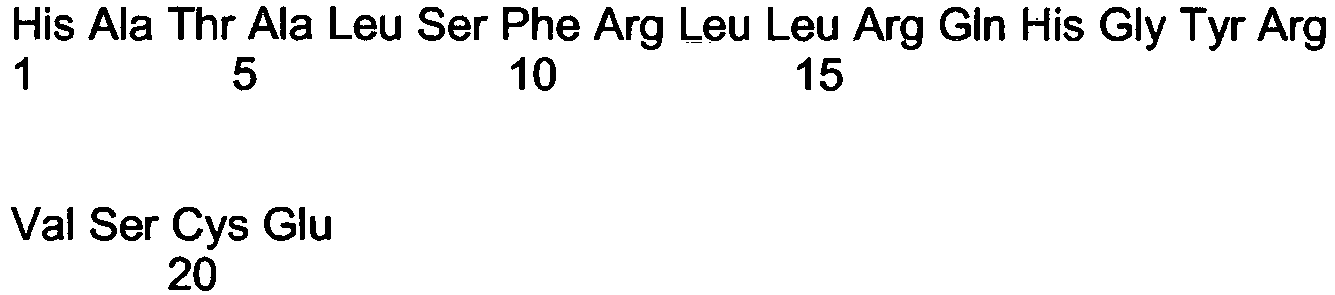
- <210> 73
<211> 13
<212> PRT
<213> Artificial - <220>
<223> PTS353 antigenic peptide - <400> 73

- <210> 74
<211> 11
<212> PRT
<213> Artificial - <220>
<223> PTS462 antigenic peptide - <400> 74

- <210> 75
<211> 10
<212> PRT
<213> Artificial - <220>
<223> PTS475 antigenic peptide - <400> 75

- <210> 76
<211> 11
<212> PRT
<213> Artificial - <220>
<223> FPP41 antigenic peptide - <400> 76

- <210> 77
<211> 18
<212> PRT
<213> Artificial - <220>
<223> FPP59 antigenic peptide - <400> 77

- <210> 78
<211> 20
<212> PRT
<213> Artificial - <220>
<223> FPP218 antigenic peptide - <400> 78

- <210> 79
<211> 13
<212> PRT
<213> Artificial - <220>
<223> FPP320 antigenic peptide - <400> 79

Claims (8)
- A transformed plant with an altered content of patchoulol, which is transformed to comprise either(a) structural genes comprising at least one nucleotide sequence encoding a farnesyl diphosphate synthase and at least one nucleotide sequence encoding a patchoulol synthase as set out in SEQ ID NO:1, further comprising a plastid targeting sequence linked in frame to both said nucleotide sequence encoding a farnesyl diphosphate synthase and to said nucleotide sequence encoding a patchoulol synthase as set out in SEQ ID NO:1; or(b) at least one nucleotide sequence set out in SEQ ID NO:3 encoding a fusion protein of a farnesyl diphosphate synthase and a patchoulol synthase, further comprising a plastid targeting sequence linked in frame to said nucleotide sequence encoding said fusion protein;
wherein said altered content of patchoulol being higher than the content of patchoulol in the same plant not so transformed. - The plant according to claim 1, in which the accumulated patchoulol is, at least in part, bio-synthesised via the MEP pathway.
- The plant according to claim 1, in which the farnesyl diphosphate synthase is a non-plant prenyl transferase.
- The plant according to any of the preceding claims, in which the transformed plant accumulates at least 10'000 ng/g of fresh leaf of patchoulol.
- A vector comprising at least one nucleotide sequence encoding a farnesyl diphosphate synthase and a patchoulol synthase as set out in SEQ ID NO:1, or at least one nucleotide sequence as set out in SEQ ID NO:3 encoding a fusion protein of a farnesyl diphosphate synthase and a patchoulol synthase.
- A method for altering the content of patchoulol in a plant, the method comprising the steps of either(a) transforming plant material with at least one DNA construct comprising at least one nucleotide sequence encoding a farnesyl diphosphate synthase and at least one nucleotide sequence encoding a patchoulol synthase as set out in SEQ ID NO:1, further comprising a plastid targeting sequence linked in frame to both said nucleotide sequence encoding a farnesyl diphosphate synthase and to said nucleotide sequence encoding a patchoulol synthase as set out in SEQ ID NO:1; or(b) transforming plant material with at least one DNA construct comprising at least one nucleotide sequence as set out in SEQ ID NO:3 encoding a fusion protein of a farnesyl diphosphate synthase and a patchoulol synthase, further comprising a plastid targeting sequence linked in frame to said nucleotide sequence encoding said fusion protein; and(c) regenerating the transformed plant from the transformed plant material.
- Use of either(a) a nucleotide sequence comprising at least one nucleotide sequence encoding a farnesyl diphosphate synthase and at least one nucleotide sequence encoding a patchoulol synthase as set out in SEQ ID NO:1, further comprising a plastid targeting sequence linked in frame to both said nucleotide sequence encoding a farnesyl diphosphate synthase and to said nucleotide sequence encoding a patchoulol synthase as set out in SEQ ID NO:1; or(b) at least one nucleotide sequence as set out in SEQ ID NO:3 encoding a fusion of a farnesyl diphosphate synthase and a patchoulol synthase, further comprising a plastid targeting sequence linked in frame to said nucleotide sequence encoding said fusion protein; for producing plants having an altered patchoulol content.
- A method of producing patchoulol, the method comprising the step of isolating patchoulol from the plant of any of claims 1 to 5.
Priority Applications (1)
| Application Number | Priority Date | Filing Date | Title |
|---|---|---|---|
| EP06727961.2A EP1874934B1 (en) | 2005-04-19 | 2006-04-18 | Transformed plants accumulating terpenes |
Applications Claiming Priority (4)
| Application Number | Priority Date | Filing Date | Title |
|---|---|---|---|
| US67301905P | 2005-04-19 | 2005-04-19 | |
| EP05105281 | 2005-06-16 | ||
| EP06727961.2A EP1874934B1 (en) | 2005-04-19 | 2006-04-18 | Transformed plants accumulating terpenes |
| PCT/IB2006/051198 WO2006111924A2 (en) | 2005-04-19 | 2006-04-18 | Transformed plants accumulating terpenes |
Related Child Applications (1)
| Application Number | Title | Priority Date | Filing Date |
|---|---|---|---|
| EP11150321.5 Division-Into | 2011-01-06 |
Publications (2)
| Publication Number | Publication Date |
|---|---|
| EP1874934A2 EP1874934A2 (en) | 2008-01-09 |
| EP1874934B1 true EP1874934B1 (en) | 2013-11-27 |
Family
ID=35276543
Family Applications (1)
| Application Number | Title | Priority Date | Filing Date |
|---|---|---|---|
| EP06727961.2A Expired - Lifetime EP1874934B1 (en) | 2005-04-19 | 2006-04-18 | Transformed plants accumulating terpenes |
Country Status (4)
| Country | Link |
|---|---|
| US (1) | US8017835B2 (en) |
| EP (1) | EP1874934B1 (en) |
| CN (1) | CN101163795B (en) |
| WO (1) | WO2006111924A2 (en) |
Families Citing this family (21)
| Publication number | Priority date | Publication date | Assignee | Title |
|---|---|---|---|---|
| WO2007003346A2 (en) * | 2005-07-06 | 2007-01-11 | MAX-PLANCK-Gesellschaft zur Förderung der Wissenschaften e.V. | Fungicidal agents |
| CA2692893C (en) | 2007-06-01 | 2015-06-23 | The Scripps Research Institute | High throughput screening of genetically modified photosynthetic organisms |
| NZ583620A (en) | 2007-09-11 | 2012-08-31 | Sapphire Energy Inc | Methods of producing organic fuel products with photosynthetic organisms |
| CA2698801A1 (en) * | 2007-09-11 | 2009-03-19 | Sapphire Energy, Inc. | Molecule production by photosynthetic organisms |
| EP2337848A4 (en) * | 2008-09-15 | 2012-05-09 | Agriculture Victoria Serv Pty | Modification of fructan biosynthesis, increasing plant biomass, and enhancing productivity of biochemical pathways in a plant |
| US9078448B2 (en) | 2009-10-28 | 2015-07-14 | Fundo de Defesa da Citricultura—Fundecitrus | Repellent compositions and genetic approaches for controlling huanglongbing |
| CN103282492A (en) | 2010-10-29 | 2013-09-04 | 奥利里克斯股份有限公司 | Modified valencene synthase polypeptides, encoding nucleic acid molecules and uses thereof |
| CN102732499B (en) * | 2011-04-02 | 2014-07-16 | 中国科学院上海生命科学研究院 | Artemisia annua amorpha-4,11-diene synthase mutant with improved enzyme activity and application thereof |
| EP2783004B1 (en) | 2011-11-21 | 2019-08-07 | The University of British Columbia | Diterpene synthases and method for producing diterpenoids |
| WO2013170265A1 (en) * | 2012-05-11 | 2013-11-14 | Donald Danforth Plant Science Center | Methods for high yield production of terpenes |
| EP2880159A1 (en) | 2012-07-30 | 2015-06-10 | Allylix, Inc. | Sclareol and labdenediol diphosphate synthase polypeptides encoding nucleic acid molecules and uses thereof |
| BR112015009774A2 (en) | 2012-11-01 | 2017-12-05 | Univ British Columbia | cytochrome p450 and cytochrome p450 reductase polypeptides encoding nucleic acid molecules and their uses |
| AU2014223541A1 (en) * | 2013-02-26 | 2015-09-10 | Chromatin, Inc. | Methods for enabling farnesene accumulation in plants and related compositions |
| HUE035866T2 (en) | 2013-03-14 | 2018-05-28 | Evolva Inc | Valencene synthase polypeptides, encoding nucleic acid molecules and uses thereof |
| EP3126492A2 (en) | 2014-03-31 | 2017-02-08 | Evolva, Inc. | Modified santalene synthase polypeptides, encoding nucleic acid molecules and uses thereof |
| CN105255921B (en) * | 2014-06-30 | 2019-05-31 | 中国科学院上海生命科学研究院 | Method and Microorganism for Heterologous Synthesis of Crosholol |
| CN106367508B (en) * | 2016-09-13 | 2019-10-29 | 东北农业大学 | A kind of degenerate primer and application for identifying heterozygous isoprenoid compounds producing strains |
| CN110951758B (en) * | 2019-12-24 | 2022-12-27 | 中国烟草总公司郑州烟草研究院 | Recombinant vector pLD-TS for expressing taxadiene in chloroplast |
| US11319613B2 (en) | 2020-08-18 | 2022-05-03 | Enviro Metals, LLC | Metal refinement |
| CN116042658B (en) * | 2021-10-28 | 2025-08-08 | 武汉大学 | A terpenoid biosynthetic gene cluster and its expression cassette, expression vector and recombinant microbial strain |
| CN118048396A (en) * | 2024-04-15 | 2024-05-17 | 云南师范大学 | Construction and application of plant genetic transformation screening system |
Family Cites Families (8)
| Publication number | Priority date | Publication date | Assignee | Title |
|---|---|---|---|---|
| DE69132769T2 (en) | 1990-03-02 | 2002-04-18 | Bp Corp. North America Inc., Chicago | BIOSYNTHESIS OF CAROTINOIDS IN GENETICALLY PRODUCED HOST CELLS |
| US6291745B1 (en) | 1993-04-02 | 2001-09-18 | Pioneer Hi-Bred International, Inc. | Limonene and other downstream metabolites of geranyl pyrophosphate for insect control in plants |
| EP0982404A1 (en) * | 1998-08-27 | 2000-03-01 | Wallaart, Thorvald Eelco | DNA encoding amorpha-4,11-diene synthase |
| ATE417932T1 (en) | 1999-06-22 | 2009-01-15 | Korea Kumho Petrochem Co Ltd | FARNESYLPYROPHOSPHATE SYNTHASE (FPS) FROM SUNFLOWER SEEDLINGS (HELIANTHUS ANNUS) |
| WO2002033060A2 (en) | 2000-10-14 | 2002-04-25 | Calgene Llc | Nucleic acid sequences to proteins involved in tocopherol synthesis |
| EP1231273A1 (en) * | 2001-02-12 | 2002-08-14 | Plant Research International B.V. | Terpene synthase/cyclase and olefin synthase and uses thereof |
| ATE546521T1 (en) | 2002-10-04 | 2012-03-15 | Firmenich & Cie | SESQUITERPENE SYNTHASES AND METHODS OF USE |
| DE602004019811D1 (en) * | 2003-11-26 | 2009-04-16 | Firmenich & Cie | SQUESTRIAN SYNTHESIS FROM PATCHOULI |
-
2006
- 2006-04-18 CN CN200680013053.0A patent/CN101163795B/en not_active Expired - Fee Related
- 2006-04-18 WO PCT/IB2006/051198 patent/WO2006111924A2/en not_active Ceased
- 2006-04-18 US US11/911,660 patent/US8017835B2/en not_active Expired - Fee Related
- 2006-04-18 EP EP06727961.2A patent/EP1874934B1/en not_active Expired - Lifetime
Also Published As
| Publication number | Publication date |
|---|---|
| CN101163795A (en) | 2008-04-16 |
| WO2006111924A2 (en) | 2006-10-26 |
| US8017835B2 (en) | 2011-09-13 |
| EP1874934A2 (en) | 2008-01-09 |
| WO2006111924A3 (en) | 2007-04-26 |
| CN101163795B (en) | 2014-04-23 |
| US20090123984A1 (en) | 2009-05-14 |
Similar Documents
| Publication | Publication Date | Title |
|---|---|---|
| US8017835B2 (en) | Transformed plants accumulating terpenes | |
| Besumbes et al. | Metabolic engineering of isoprenoid biosynthesis in Arabidopsis for the production of taxadiene, the first committed precursor of Taxol | |
| CN101688191B (en) | Genes encoding z,z-farnesyl diphosphate synthase and a sesquiterpene synthase with multiple products and uses thereof | |
| CN114641573B (en) | transferase | |
| US20140148622A1 (en) | Engineering Plants to Produce Farnesene and Other Terpenoids | |
| NZ531985A (en) | Manipulation of flavonoid biosynthesis in Trifolium repens (white clover), Lolium perenne (ryegrass) and Festuca (fescue) | |
| US20240124899A1 (en) | Methods for production of novel diterpene scaffolds | |
| US5880332A (en) | DNA constructs related to capsanthin capsorubin synthase, cells and plants derived therefrom | |
| EP1904637B1 (en) | Transformed plants accumulating mono- and/or sesquiterpenes | |
| Zhang et al. | Identification and differential expression of two isogenes encoding 1-deoxy-D-xylulose 5-phosphate reductoisomerase in Glycine max | |
| Kawasaki et al. | Metabolic engineering of flavonoids with prenyltransferase and chalcone isomerase genes in tomato fruits | |
| US20050150002A1 (en) | Novel carotenoid hydroxylases for use in engineering carotenoid metabolism in plants | |
| Dong et al. | Metabolic Engineering Boosts Strigolactone Production in Nicotiana benthamiana and Uncovers a Novel P450 Function | |
| WO2024134685A1 (en) | A recombinant vector comprising 4cl11 orf from ocimum kilimandscharicum, and implementations thereof | |
| KR20160093813A (en) | Composition for inducing anthocyanin biosynthesis comprising AT1G70000 and use thereof | |
| Shasany | RNAi ofSterol Methyl Transferase1Reveals its Direct Role in Diverting Intermediates Towards Withanolide/Phytosterol Biosynthesis inWithania somnifera | |
| Kazmi | The effects of Arabidopsis thaliana Sulfotransferase 2a (AtST2a) over-expression on tuber formation |
Legal Events
| Date | Code | Title | Description |
|---|---|---|---|
| PUAI | Public reference made under article 153(3) epc to a published international application that has entered the european phase |
Free format text: ORIGINAL CODE: 0009012 |
|
| 17P | Request for examination filed |
Effective date: 20071119 |
|
| AK | Designated contracting states |
Kind code of ref document: A2 Designated state(s): AT BE BG CH CY CZ DE DK EE ES FI FR GB GR HU IE IS IT LI LT LU LV MC NL PL PT RO SE SI SK TR |
|
| DAX | Request for extension of the european patent (deleted) | ||
| 17Q | First examination report despatched |
Effective date: 20090109 |
|
| GRAP | Despatch of communication of intention to grant a patent |
Free format text: ORIGINAL CODE: EPIDOSNIGR1 |
|
| INTG | Intention to grant announced |
Effective date: 20130730 |
|
| GRAS | Grant fee paid |
Free format text: ORIGINAL CODE: EPIDOSNIGR3 |
|
| GRAA | (expected) grant |
Free format text: ORIGINAL CODE: 0009210 |
|
| AK | Designated contracting states |
Kind code of ref document: B1 Designated state(s): AT BE BG CH CY CZ DE DK EE ES FI FR GB GR HU IE IS IT LI LT LU LV MC NL PL PT RO SE SI SK TR |
|
| REG | Reference to a national code |
Ref country code: GB Ref legal event code: FG4D |
|
| REG | Reference to a national code |
Ref country code: CH Ref legal event code: EP |
|
| REG | Reference to a national code |
Ref country code: AT Ref legal event code: REF Ref document number: 642741 Country of ref document: AT Kind code of ref document: T Effective date: 20131215 |
|
| REG | Reference to a national code |
Ref country code: IE Ref legal event code: FG4D |
|
| REG | Reference to a national code |
Ref country code: DE Ref legal event code: R096 Ref document number: 602006039418 Country of ref document: DE Effective date: 20140123 |
|
| REG | Reference to a national code |
Ref country code: NL Ref legal event code: VDEP Effective date: 20131127 |
|
| REG | Reference to a national code |
Ref country code: AT Ref legal event code: MK05 Ref document number: 642741 Country of ref document: AT Kind code of ref document: T Effective date: 20131127 |
|
| REG | Reference to a national code |
Ref country code: LT Ref legal event code: MG4D |
|
| PG25 | Lapsed in a contracting state [announced via postgrant information from national office to epo] |
Ref country code: SE Free format text: LAPSE BECAUSE OF FAILURE TO SUBMIT A TRANSLATION OF THE DESCRIPTION OR TO PAY THE FEE WITHIN THE PRESCRIBED TIME-LIMIT Effective date: 20131127 Ref country code: LT Free format text: LAPSE BECAUSE OF FAILURE TO SUBMIT A TRANSLATION OF THE DESCRIPTION OR TO PAY THE FEE WITHIN THE PRESCRIBED TIME-LIMIT Effective date: 20131127 Ref country code: IS Free format text: LAPSE BECAUSE OF FAILURE TO SUBMIT A TRANSLATION OF THE DESCRIPTION OR TO PAY THE FEE WITHIN THE PRESCRIBED TIME-LIMIT Effective date: 20140327 Ref country code: NL Free format text: LAPSE BECAUSE OF FAILURE TO SUBMIT A TRANSLATION OF THE DESCRIPTION OR TO PAY THE FEE WITHIN THE PRESCRIBED TIME-LIMIT Effective date: 20131127 Ref country code: FI Free format text: LAPSE BECAUSE OF FAILURE TO SUBMIT A TRANSLATION OF THE DESCRIPTION OR TO PAY THE FEE WITHIN THE PRESCRIBED TIME-LIMIT Effective date: 20131127 |
|
| PG25 | Lapsed in a contracting state [announced via postgrant information from national office to epo] |
Ref country code: CY Free format text: LAPSE BECAUSE OF FAILURE TO SUBMIT A TRANSLATION OF THE DESCRIPTION OR TO PAY THE FEE WITHIN THE PRESCRIBED TIME-LIMIT Effective date: 20131127 Ref country code: BE Free format text: LAPSE BECAUSE OF FAILURE TO SUBMIT A TRANSLATION OF THE DESCRIPTION OR TO PAY THE FEE WITHIN THE PRESCRIBED TIME-LIMIT Effective date: 20131127 Ref country code: ES Free format text: LAPSE BECAUSE OF FAILURE TO SUBMIT A TRANSLATION OF THE DESCRIPTION OR TO PAY THE FEE WITHIN THE PRESCRIBED TIME-LIMIT Effective date: 20131127 Ref country code: LV Free format text: LAPSE BECAUSE OF FAILURE TO SUBMIT A TRANSLATION OF THE DESCRIPTION OR TO PAY THE FEE WITHIN THE PRESCRIBED TIME-LIMIT Effective date: 20131127 Ref country code: AT Free format text: LAPSE BECAUSE OF FAILURE TO SUBMIT A TRANSLATION OF THE DESCRIPTION OR TO PAY THE FEE WITHIN THE PRESCRIBED TIME-LIMIT Effective date: 20131127 |
|
| PG25 | Lapsed in a contracting state [announced via postgrant information from national office to epo] |
Ref country code: PT Free format text: LAPSE BECAUSE OF FAILURE TO SUBMIT A TRANSLATION OF THE DESCRIPTION OR TO PAY THE FEE WITHIN THE PRESCRIBED TIME-LIMIT Effective date: 20140327 |
|
| PG25 | Lapsed in a contracting state [announced via postgrant information from national office to epo] |
Ref country code: EE Free format text: LAPSE BECAUSE OF FAILURE TO SUBMIT A TRANSLATION OF THE DESCRIPTION OR TO PAY THE FEE WITHIN THE PRESCRIBED TIME-LIMIT Effective date: 20131127 |
|
| REG | Reference to a national code |
Ref country code: DE Ref legal event code: R097 Ref document number: 602006039418 Country of ref document: DE |
|
| PG25 | Lapsed in a contracting state [announced via postgrant information from national office to epo] |
Ref country code: RO Free format text: LAPSE BECAUSE OF FAILURE TO SUBMIT A TRANSLATION OF THE DESCRIPTION OR TO PAY THE FEE WITHIN THE PRESCRIBED TIME-LIMIT Effective date: 20131127 Ref country code: CZ Free format text: LAPSE BECAUSE OF FAILURE TO SUBMIT A TRANSLATION OF THE DESCRIPTION OR TO PAY THE FEE WITHIN THE PRESCRIBED TIME-LIMIT Effective date: 20131127 Ref country code: SK Free format text: LAPSE BECAUSE OF FAILURE TO SUBMIT A TRANSLATION OF THE DESCRIPTION OR TO PAY THE FEE WITHIN THE PRESCRIBED TIME-LIMIT Effective date: 20131127 Ref country code: PL Free format text: LAPSE BECAUSE OF FAILURE TO SUBMIT A TRANSLATION OF THE DESCRIPTION OR TO PAY THE FEE WITHIN THE PRESCRIBED TIME-LIMIT Effective date: 20131127 |
|
| PG25 | Lapsed in a contracting state [announced via postgrant information from national office to epo] |
Ref country code: DK Free format text: LAPSE BECAUSE OF FAILURE TO SUBMIT A TRANSLATION OF THE DESCRIPTION OR TO PAY THE FEE WITHIN THE PRESCRIBED TIME-LIMIT Effective date: 20131127 |
|
| PLBE | No opposition filed within time limit |
Free format text: ORIGINAL CODE: 0009261 |
|
| STAA | Information on the status of an ep patent application or granted ep patent |
Free format text: STATUS: NO OPPOSITION FILED WITHIN TIME LIMIT |
|
| 26N | No opposition filed |
Effective date: 20140828 |
|
| PG25 | Lapsed in a contracting state [announced via postgrant information from national office to epo] |
Ref country code: MC Free format text: LAPSE BECAUSE OF FAILURE TO SUBMIT A TRANSLATION OF THE DESCRIPTION OR TO PAY THE FEE WITHIN THE PRESCRIBED TIME-LIMIT Effective date: 20131127 Ref country code: LU Free format text: LAPSE BECAUSE OF FAILURE TO SUBMIT A TRANSLATION OF THE DESCRIPTION OR TO PAY THE FEE WITHIN THE PRESCRIBED TIME-LIMIT Effective date: 20140418 |
|
| REG | Reference to a national code |
Ref country code: DE Ref legal event code: R097 Ref document number: 602006039418 Country of ref document: DE Effective date: 20140828 |
|
| REG | Reference to a national code |
Ref country code: IE Ref legal event code: MM4A |
|
| PG25 | Lapsed in a contracting state [announced via postgrant information from national office to epo] |
Ref country code: SI Free format text: LAPSE BECAUSE OF FAILURE TO SUBMIT A TRANSLATION OF THE DESCRIPTION OR TO PAY THE FEE WITHIN THE PRESCRIBED TIME-LIMIT Effective date: 20131127 |
|
| PG25 | Lapsed in a contracting state [announced via postgrant information from national office to epo] |
Ref country code: IT Free format text: LAPSE BECAUSE OF FAILURE TO SUBMIT A TRANSLATION OF THE DESCRIPTION OR TO PAY THE FEE WITHIN THE PRESCRIBED TIME-LIMIT Effective date: 20131127 |
|
| PG25 | Lapsed in a contracting state [announced via postgrant information from national office to epo] |
Ref country code: IE Free format text: LAPSE BECAUSE OF NON-PAYMENT OF DUE FEES Effective date: 20140418 |
|
| REG | Reference to a national code |
Ref country code: FR Ref legal event code: PLFP Year of fee payment: 11 |
|
| PG25 | Lapsed in a contracting state [announced via postgrant information from national office to epo] |
Ref country code: BG Free format text: LAPSE BECAUSE OF FAILURE TO SUBMIT A TRANSLATION OF THE DESCRIPTION OR TO PAY THE FEE WITHIN THE PRESCRIBED TIME-LIMIT Effective date: 20131127 |
|
| PG25 | Lapsed in a contracting state [announced via postgrant information from national office to epo] |
Ref country code: GR Free format text: LAPSE BECAUSE OF FAILURE TO SUBMIT A TRANSLATION OF THE DESCRIPTION OR TO PAY THE FEE WITHIN THE PRESCRIBED TIME-LIMIT Effective date: 20140228 |
|
| PG25 | Lapsed in a contracting state [announced via postgrant information from national office to epo] |
Ref country code: TR Free format text: LAPSE BECAUSE OF FAILURE TO SUBMIT A TRANSLATION OF THE DESCRIPTION OR TO PAY THE FEE WITHIN THE PRESCRIBED TIME-LIMIT Effective date: 20131127 Ref country code: HU Free format text: LAPSE BECAUSE OF FAILURE TO SUBMIT A TRANSLATION OF THE DESCRIPTION OR TO PAY THE FEE WITHIN THE PRESCRIBED TIME-LIMIT; INVALID AB INITIO Effective date: 20060418 |
|
| REG | Reference to a national code |
Ref country code: FR Ref legal event code: PLFP Year of fee payment: 12 |
|
| PGFP | Annual fee paid to national office [announced via postgrant information from national office to epo] |
Ref country code: CH Payment date: 20170516 Year of fee payment: 12 |
|
| REG | Reference to a national code |
Ref country code: FR Ref legal event code: PLFP Year of fee payment: 13 |
|
| PGFP | Annual fee paid to national office [announced via postgrant information from national office to epo] |
Ref country code: GB Payment date: 20180329 Year of fee payment: 13 |
|
| PGFP | Annual fee paid to national office [announced via postgrant information from national office to epo] |
Ref country code: FR Payment date: 20180326 Year of fee payment: 13 |
|
| PGFP | Annual fee paid to national office [announced via postgrant information from national office to epo] |
Ref country code: DE Payment date: 20180404 Year of fee payment: 13 |
|
| REG | Reference to a national code |
Ref country code: CH Ref legal event code: PL |
|
| PG25 | Lapsed in a contracting state [announced via postgrant information from national office to epo] |
Ref country code: CH Free format text: LAPSE BECAUSE OF NON-PAYMENT OF DUE FEES Effective date: 20180430 Ref country code: LI Free format text: LAPSE BECAUSE OF NON-PAYMENT OF DUE FEES Effective date: 20180430 |
|
| REG | Reference to a national code |
Ref country code: DE Ref legal event code: R119 Ref document number: 602006039418 Country of ref document: DE |
|
| GBPC | Gb: european patent ceased through non-payment of renewal fee |
Effective date: 20190418 |
|
| PG25 | Lapsed in a contracting state [announced via postgrant information from national office to epo] |
Ref country code: DE Free format text: LAPSE BECAUSE OF NON-PAYMENT OF DUE FEES Effective date: 20191101 Ref country code: GB Free format text: LAPSE BECAUSE OF NON-PAYMENT OF DUE FEES Effective date: 20190418 |
|
| PG25 | Lapsed in a contracting state [announced via postgrant information from national office to epo] |
Ref country code: FR Free format text: LAPSE BECAUSE OF NON-PAYMENT OF DUE FEES Effective date: 20190430 |