EP1853083B1 - System und Verfahren zur Steuerung des Netzwerkzugangs - Google Patents
System und Verfahren zur Steuerung des Netzwerkzugangs Download PDFInfo
- Publication number
- EP1853083B1 EP1853083B1 EP07107329.0A EP07107329A EP1853083B1 EP 1853083 B1 EP1853083 B1 EP 1853083B1 EP 07107329 A EP07107329 A EP 07107329A EP 1853083 B1 EP1853083 B1 EP 1853083B1
- Authority
- EP
- European Patent Office
- Prior art keywords
- service
- network
- radio access
- access node
- event
- Prior art date
- Legal status (The legal status is an assumption and is not a legal conclusion. Google has not performed a legal analysis and makes no representation as to the accuracy of the status listed.)
- Active
Links
Images



Classifications
-
- H—ELECTRICITY
- H04—ELECTRIC COMMUNICATION TECHNIQUE
- H04W—WIRELESS COMMUNICATION NETWORKS
- H04W48/00—Access restriction; Network selection; Access point selection
- H04W48/18—Selecting a network or a communication service
Definitions
- the present invention relates to telecommunication systems that can be accessed via an unlicensed-radio access network, and is particularly, but not exclusively, related to controlling the provision of network services based on radio access connection characteristics.
- GSM Global System for Mobile communications
- UMTS Universal Mobile Telecommunications Services
- CDMA Code Division Multiple Access
- GSM Global System for Mobile communications
- UMTS Universal Mobile Telecommunications Services
- CDMA Code Division Multiple Access
- Each base station is assigned a specific coverage area that defines a so-called cell, and a mobile station located within the coverage area of the cell is able to establish a radio connection with the base station using a predetermined radio frequency within a licensed frequency range.
- the base station is a connection point between the mobile station and the core network.
- Unlicensed-radio access networks that is to say networks that utilise radio technology that does not require an operating licence from a licensing authority, provide additional connection points to cellular mobile communication systems.
- These additional access networks typically comprise a connection point in the form of an access controller, which, as for the base station, is connected to the core network of the cellular mobile communication systems over the conventional network interface.
- the access controller appears like a base station controller of a licensed radio access network.
- Both licensed and unlicensed networks typically provide access to service-specific applications from which mobile stations can receive service in the event that the mobile station has been successfully authenticated by the access controller, and, irrespective of whether the radio link is via a licensed or unlicensed radio access node, access to a given service application is coordinated by functions within the core network portion.
- the unlicensed-radio access networks are typically short-range networks (e.g. which use wireless LAN (W-LAN) protocol, Bluetooth or Digital Enhanced Cordless Telecommunications (DECT) protocols).
- WLAN wireless LAN
- DECT Digital Enhanced Cordless Telecommunications
- Example of prior art service provisioning control mechanism can be found in WO 03/071761 A .
- Examples of prior art mechanisms for selecting an appropriate network node to route a call can be found in WO 2005/114911 A and US 2001/046860 A1 .
- Example of prior art event processing system can be found in WO 2005/099239 A .
- An object of the present invention is to provide a system for efficiently controlling the provision of network services in an event processing system served by different radio access networks.
- event processing apparatus for use in controlling the provision of network services in an event processing system, the event processing system comprising a first radio access node, a second radio access node, and a serving node operable to transceive data to and from the first radio access node and to and from the second radio access node, wherein the first radio access node is associated with a first network and the second radio access node is associated with a second network, different to said first network, and wherein the apparatus is connectable to a plurality of service nodes from which a subscriber is able to receive service during processing of a network event, the service nodes being associated with one of the first or second radio access nodes, the apparatus comprising a function arranged, on receiving a service initiation request message sent by a serving node in a network currently involved in processing of said network event, to identify the radio access node involved in the network event and to selectively control operation of at least some of said plurality of
- embodiments of the invention provide a means of selecting service nodes corresponding to the network to which the subscriber is connected, thereby effectively filtering out those service applications that are not appropriate to the current connection and reducing the number of messages transmitted during set-up of a network event.
- Preferably embodiments of the invention utilise information sent by the radio access network in order to identify the radio access node involved in the network event; suitable information might be the location of the base station/access controller associated with the identified (i.e. connected) radio access node, or the network code associated with the access controller, or other location parameters included within the service initiation request message.
- embodiments of the present invention are concerned with controlling the provision of network services in dependence on radio access technology.
- the various parts and steps involved in controlling service provision will be described in detail below, but first, and in order to aid understanding of embodiments of the invention, the parts and operation of a conventional mobile network will be presented with reference to Figure 1 .
- Figure 1 shows a telecommunications system 1 having a core network 11, comprising mobile switching centres (MSC) 8, home location register (HLR) 20 and visitor location register (VLR) 22, and a first, cellular, radio access network 13, comprising a base station controller (BSC) 6 and a base station (BS) 4.
- MSC mobile switching centres
- HLR home location register
- VLR visitor location register
- BSC base station controller
- BS base station
- the telecommunications system 1 includes a plurality of second radio access networks 15a, 15b, each comprising an Unlicensed Network Controller (UNC) 12a, 12b and an Access Point (AP) 14a, 14b.
- UNC Unlicensed Network Controller
- AP Access Point
- an unlicensed-radio access network 15a, 15b any radio protocol that does not require the operator running the mobile network to have obtained a license from a regulatory body.
- unlicensed-radio technologies are low power and thus offer a restricted range compared to licensed mobile radio services.
- the radio interface associated with the AP 14a, 14b may utilise any suitable unlicensed-radio protocol, for example a wireless LAN (W-LAN) protocol, Bluetooth or Digital Enhanced Cordless Telecommunications (DECT) protocols.
- WLAN wireless LAN
- DECT Digital Enhanced Cordless Telecommunications
- communications via a given access point AP 14a, 14b are controlled by a network controller UNC 12a, 12b, which communicates with the MSC 8 over the GSM standard air interface so as to enable the mobile station 2 to access the GSM network components 8, 20 etc.
- the unlicensed radio access network 15a, 15b emulates the operation of the BS and BSC 4, 6 such that, when viewed from e.g. MSC 8, it looks like a conventional GSM radio access network.
- the interface between the AP 14a, 14b and the network controller UNC 12a, 12b is provided by a packet-switched broadband network, which may be a fixed network. Suitable networks might include those based on ADSL, Ethernet, LMDS, or the like. As also shown in Figure 1 , the AP 14a, 14b may serve as a dedicated access point to the IP network N2, via authentication server (AAA) 18. In common configurations the AP 14a, 14b serves as a transparent access point, simply relaying all information at the IP level and above between the mobile station 2 and the network components 12a, 12b, 18.
- AAA authentication server
- the mobile station 2 establishes a connection with the UNC 12a or AAA server 18 without recognising the AP 14a as a node in the connection.
- the UNC 12a can establish a connection with the mobile station 2 directly.
- the MS 2 in order to communicate with components of an unlicensed radio access network 15a, 15b, the MS 2 includes firmware and software for sending and receiving IP data to and from IP applications via networks N1 and/or N2.
- the UNC 12a, 12b When transmitted via the UNC 12a, 12b, and in order to appear as conventional GSM traffic, the UNC 12a, 12b encapsulates the IP traffic in accordance with Section 6.1.1 entitled "Up CS Domain Signalling Protocol Architecture" of UMA Architecture (Stage 2) R1.0.4 (2005-05-02); the encapsulated data include a location indicator, enabling the MSC 8 and other GSM processing applications to identify the radio access portion (unlicensed or licensed) that conveyed the traffic.
- the identity of a mobile station is checked and its operation and right to access the network are authenticated using various elements within the core network portion, such as the Home Location Register (HLR).
- HLR Home Location Register
- Various authorisation mechanisms for accessing the unlicensed radio access network exist, such as that described in International patent application having publication number WO2005104592 or that described in the applicant's co-pending British patent application having application number 0604001.8 .
- embodiments of the present invention coordinate requests for services - services that are managed by the core network portion -in dependence on the radio access network from where the requests emanate. More specifically, embodiments of the invention include a Service Interaction Function (SIF) 30, which interacts with the MSC 8 and distributes messages both to UMA service nodes 10, 44 and various intelligent network service nodes within the intelligent network N3 based on the location identifier specifying the radio access portion that conveyed the network service request.
- SIF Service Interaction Function
- One radio access network might be a publicly accessible unlicensed-radio access network (identified in Figure 1 by reference numeral 15a), another might be a private unlicensed-radio access network (identified in Figure 1 by reference numeral 15b), and another might be a cellular access network; since the respective radio access networks operate independently of one another, each radio access network includes its own particular authentication mechanisms.
- the mobile station has been suitably authorised for service via whichever radio access network the request for a network service has been received, and that, in the case of the unlicensed-radio access networks 15a, 15b, the associated authorisation data are stored in conjunction with the service nodes corresponding to the authorised unlicensed-radio access network (one of unlicensed-radio access network 15a, 15b).
- the mobile station 2 to have been authorised for access to the public unlicensed radio access network 15a, details of the authenticated mobile station 2 will be stored by application 10
- the mobile station 2 has been authorised for access to the public unlicensed radio access network 15b
- details of the authenticated mobile station 2 will be stored by application 44.
- the SIF 30 is configured to cooperate with a database SPS 32, which stores a list of services (IN and Open Service Architecture (OSA), Session Initiation Protocol (SIP), IMS (IP Multimedia Subsystems) etc.) and the relationships there between, in terms of network event processing, for all subscribers of the core network 11.
- the IN and OSA services are preferably keyed in accordance with subscriber identities and service triggers, so that, for any given subscriber identity and trigger, the services available to the subscriber can be selected when a call involving a certain trigger is due to be processed. Further details of the SIF 30 and SPS 32 are provided in applicant's co-pending international patent application having publication number WO2005/099239 .
- the SPS 32 In addition to holding data indicative of the IN and OSA services, the SPS 32 holds data indicative of whether or not the mobile station 2 is UMA enabled. Details of the various UMA applications can be stored in the SPS 32 or in a separate database DB1 when the UMA application registers with an unlicensed-radio access network, and any given entry typically includes data including the identity of the associated unlicensed-radio access network; this database is accessible to the SIF 30 when processing a network event.
- the SIF 30 includes a location identifying component 141, which receives data via the interface 140 (these having been received from the MSC 8) and identifies the category of radio access network (e.g. licensed or unlicensed; cellular or short range etc.) to which the mobile station 2 is attached, and can additionally classify radio access networks within their categories.
- a location identifying component 141 which receives data via the interface 140 (these having been received from the MSC 8) and identifies the category of radio access network (e.g. licensed or unlicensed; cellular or short range etc.) to which the mobile station 2 is attached, and can additionally classify radio access networks within their categories.
- the category of radio access network e.g. licensed or unlicensed; cellular or short range etc.
- the location identifying component 141 is configured so as to categorise the radio layer on the basis of data received from the radio access network; as described above, Section 6.1.1 entitled " Up CS Domain Signalling Protocol Architecture" of UMA Architecture (Stage 2) R1.0.4 (2005-05-02 ) specifies that the service initiation request will include a location indicator, and this can take the form of a radio access identifier; network identity; and/or location indicator. This could for example be indicated by the location of a central UNC or perhaps by use of a different network indicator in the Country Code (CC) or Network Code (NC) code of the UNC, or other location parameters included within the service initiation request message.
- the location identifying component 141 is configured to review the content of the service request message for these data.
- the location identifying component 141 can include means for determining the authentication mechanism used to authenticate the mobile station 2 to the radio access network, and to categorise the radio access layer on the basis of authentication mechanism (since different authentication mechanisms are used for licensed and unlicensed radio access networks).
- the mobile station 2 has been authenticated to access the private unlicensed radio access network 15b for a voice call.
- the mobile station 2 issues a call set up request message, which is forwarded by the UNC 12b as a service initiation request message to the switch MSC 8 and from thence to the SIF 30, the service initiation request message comprising call set up parameters including the IDP and the identity of the requesting device MS 2.
- the SIF 30 queries the SPS 32 for all services relating to parameters including either or both of the identity of the requesting mobile station 2 and the IDP received from the MSC 8 (step S2.5).
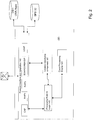
- the embodiment shown in Figure 3 relates to a situation in which there are no IN or OSA applications that correspond to these query parameters, but where the mobile station 2 is UMA enabled.
- the SPS 32 simply includes an entry detailing whether or not the mobile station 2 is UMA enabled, leaving it to the SIF 30 and/or the UMA applications to manage their part in processing of the call, so that the data returned at step S2.7 simply includes a UMA-enabled identifier.
- the location identifying component 141 shown in Figure 2 is arranged to examine the location identifier included in the data sent at step S2.1 - this specifying the radio access portion that conveyed the network service request - and to compare the location identifier with a pre-stored list of radio access portions 15a, 15b, etc. so as to identify which of the pre-registered UMA applications can participate to provide service in the voice call (step S2.9).
- this step essentially involves classifying the unlicensed-radio access network as one of public or private, and then selecting that (those) application(s) listed in DB1 that is/are registered in respect of the classified unlicensed-radio access network.
- the SIF 30 ascertains that the MS 2 is attached to private unlicensed network 15b, and thus identifies that the only UMA application that can be invoked in relation to the requested voice call is UMA private VPN application 44. Accordingly, at step S2.11, the SIF 30 sends a service request message M1 comprising the IDP and identity of the requesting mobile station MS 2, and at step S2.13 the SIF 30 receives a service response message M2 issued by the UMA application 44, the service response message M2 including instructions for use in completing the voice call. The call set-up process then continues in accordance with standard methods.
- the location identifying component 141 of the SIF 30 does not classify the type of unlicensed-radio access network, instead leaving it to the registered UMA applications to participate, or otherwise, in the requested network service.
- An example of this embodiment is shown in Figure 4 : the SIF 30 examines the location identifier in response to data received from the MSC 8 at step S2.9, but instead of using the location identifier to classify the unlicensed-radio access network and thence selecting UMA applications corresponding to the classification, the SIF 30 sends service response messages M1, M3 (steps S2.11 & S2.15) to all of the UMA applications registered as capable of providing service (irrespective of their relationship with the unlicensed-radio access network with which the mobile station 2 is connected), leaving it to the applications to participate, or otherwise, in the requested network service.
- step S2.11 and S2.15 messages M1 and M3 are sent to both application 10 (public) and application 44 (private), despite the fact that mobile station 2 is connected to the private unlicensed-radio access network 15b. Since the MS 2 is connected to private network 15b, the public UMA network 15a, and thus public UMA application 10, knows nothing about MS 2; as a result, the list of authenticated mobile stations associated with UMA application 10 does not include identifier data corresponding to mobile station MS 2 and the service response message M2 transmitted at step S2.13 simply comprises a Continue message or a Release message (meaning that any application returning a continue or connect message would take precedence). In this example the mobile station 2 has been authenticated for service with private unlicensed-radio access network 15b, so the private UMA application 44 returns a service response message M4 including instructions for use in completing the call (step S2.17).
- FIG. 5 A further example of the functionality of the SIF 30 is shown in Figure 5 for the case in which, in response to receipt of the query parameters IDP, MS2 transmitted at step S2.7, the SPS 32 retrieves data identifying at least one GSM intelligent network service IN1 in addition to data identifying the mobile station MS 2 as being UMA enabled.
- the location identifying component of the SIF classifies the type of unlicensed-radio access network as described in relation to the first embodiment, and that the mobile station 2 is identified to have attached to the public UMA radio access network 15a. Accordingly at step S2.11 the SIF 30 transmits a first service request message M1 to the Public UMA application 10 and a second service request message M3 to the intelligent network service IN1.
- These applications 10, IN1 then respectively transmit service response messages M2, M4 to the SIF 30, which applies various service interaction rules on the basis of the content of the service responses M2, M4 so as to ascertain a connection instruction to send to the MSC 8.
- the SIF 30 can collect all service-related information involved with processing the network event - the information being derived from service response messages M2 and M4 - and, before progressing the network event, to send a billing request message M5 containing the service-related information to a billing application 50 (step S2.19); when received, the billing application 50 processes the service information and returns a billing response message M6 comprising an event notification such as an ApplyCharging (AC) instruction (step S2.21).
- AC ApplyCharging
- the billing request message M5 is preferably embodied as an enhanced IDP message, for which the extensions field of the IDP message is populated with data identifying the various service applications identified by the SIF 30 as being involved in providing the requested network service.
- the SIF 30 examines the network information included in the call set-up request received from the MSC 8, responsive to data from the SPS 32 indicating that that mobile station 2 is UMA enabled, the SIF 30 could alternatively send service request messages to all UMA applications, irrespective of the radio access network to which the mobile station 2 is connected.
- the SIF 30 sends service response messages to whichever intelligent network nodes are listed in respect of the mobile station 2 (as per the data returned by the SPS 32 at step S2.7) and to any UMA applications that have registered. Since the mobile station 2 is not attached to an unlicensed-radio access network node, the mobile station 2 will not have been authenticated by any of the UMA applications, and each UMA application will simply return a service response message comprising a Continue message.
- the SIF 30 does not classify the type of unlicensed radio access network to which the mobile station 2 has attached, with the result that the SIF 30 sends service request messages blindly to all of the UMA applications.
- the SIF 30 could alternatively select UMA applications - e.g. based on contextual data such as time of day.
- the features and functionality of the SIF 30 will now be described in more detail with reference to Figure 2 .
- the event model logic returned from the SPS 32 (typically in the form of rules) is effectively used to control the sequence in which applications are invoked with initial and subsequent messages. Where the output of one service application influences operation of another service application, invocation is synchronous, but if the output from various service applications is simply combined by an event processing engine 143, the service applications are preferably invoked asynchronously so as to improve latency. It can therefore be seen that inter-application processing is managed at the time of processing a call by means of the rules retrieved from the SPS 32.
- the event processing engine 143 is additionally arranged to control operation of multiple service applications that generate conflicting events and actions. Taking a simple example, if multiple service applications return a CONNECT (IN) or routeRequest() (OSA) message, the event processing engine 143 applies various rules in order to identify which of the messages 'wins'; and in another simple example, if a CONNECT/routeRequest() message and a RELEASE (IN) or release() (OSA) message is returned by different service applications, the event processing engine 143 applies various rules to identify which of the two conflicting actions is taken. Essentially, therefore, the outputs are processed in accordance with an appropriate rule retrieved from the SPS 32 associated with the conflicting event and/or action. Events and actions are triggered and coordinated by the SIF 30 independently of the type of application (UMA, OSA, GSM, SIP etc.), and the job of the SIF 30 is to coordinate allocation of resources required by the various services in an application-agnostic manner.
- the event processing engine 143 is arranged to handle communication failures, in accordance with the rules retrieved from the SPS 32, dependent on the type of failure. For example, if a first service application aborts, one option is that the whole transaction aborts, whilst another might be that if the first service application succeeds but the second fails, the response from the first should take precedence.
- the event processing engine 143 is also configured to monitor for responses within a predetermined time period, wherein, in the event that a service application response or response from the network fails to arrive, the SIF 30 performs one of a plurality of actions. For example, in the case of a service application failing to respond within the specified time period, the SIF could trigger the sending of a Protocol TCAP failure response into the network depending on the associated error rules.
- the error and timeout rules are preferably embodied as static rules stored and maintained by the SIF 30.
Landscapes
- Engineering & Computer Science (AREA)
- Computer Security & Cryptography (AREA)
- Computer Networks & Wireless Communication (AREA)
- Signal Processing (AREA)
- Mobile Radio Communication Systems (AREA)
Claims (20)
- Ereignisverarbeitungssystem (1) zur Verwendung beim Steuern der Bereitstellung von Netzwerkdiensten, wobei das Ereignisverarbeitungssystem eine Ereignisverarbeitungsvorrichtung umfasst, die eine Dienstinteraktionsfunktion, SIF, (30), einen ersten Funkzugangsknoten (4), einen zweiten Funkzugangsknoten (14a; 14b) und einen Andienknoten (8), der betreibbar ist zum Sendeempfangen von Daten zu und von dem ersten Funkzugangsknoten (4) und zu und von dem zweiten Funkzugangsknoten (14a; 14b), bereitstellt, wobei der Andienknoten (8) ein Mobilvermittlungszentrum eines Kernnetzwerks ist, das mit einem lizensierten Netzwerk verknüpft ist, wobei der erste Funkzugangsknoten (4) mit einem ersten lizensierten Netzwerk (13) verknüpft ist und der zweite Funkzugangsknoten (14a; 14b) mit einem zweiten unlizensierten Netzwerk (15a; 15b) verknüpft ist, das sich von dem ersten Netzwerk unterscheidet, und wobei die Ereignisverarbeitungsvorrichtung verbindbar ist mit dem Andienknoten und mehreren Dienstknoten (10; 44), von denen ein Teilnehmer in der Lage ist, während Verarbeitung eines Netzwerkereignisses einen Dienst zu empfangen, wobei die Dienstknoten (10; 44) mit einem des ersten oder des zweiten Funkzugangsknotens verknüpft sind und wobei die SIF ausgelegt ist zum Zusammenwirken mit einer Datenbank, welche ausgelegt ist zum Speichern einer Liste von Diensten und der Beziehungen zwischen diesen hinsichtlich Netzwerkereignisverarbeitung für alle Teilnehmer des Kernnetzwerks, wobei die Ereignisverarbeitungsvorrichtung (30) eine Funktion umfasst, die eingerichtet ist, bei Empfang einer Dienstinitiierungsanfragenachricht von dem Andienknoten (8), die von dem ersten oder dem zweiten Netzwerk ausgeht, das aktuell beim Verarbeiten des Netzwerkereignisses involviert ist, zum Identifizieren des beim Verarbeiten des Netzwerkereignisses involvierten Funkzugangsknotens (14a; 14b) und zum Wählen von mindestens einigen der mehreren Dienstknoten (10; 44), um am Bereitstellen des angefragten Dienstes auf der Grundlage des identifizierten Funkzugangsknotens teilzunehmen, wodurch das Netzwerkereignis verarbeitet wird.
- Ereignisverarbeitungssystem (1) nach Anspruch 1, wobei der erste Funkzugangsknoten (4) eine Funkzugangstechnologie verwendet, die sich von Funkzugangstechnologieanforderungen, die mit dem zweiten Funkzugangsknoten (14a; 14b) verknüpft sind, unterscheidet, und die Funktion eingerichtet ist zum Identifizieren der Funkzugangstechnologie, die mit der Dienstinitiierungsanfragenachricht verknüpft ist, wodurch der bei dem Netzwerkereignis involvierte Funkzugangsknoten (14a; 14b) identifiziert wird.
- Ereignisverarbeitungssystem (1) nach Anspruch 1 oder 2, wobei der erste Funkzugangsknoten (4) einen Authentifizierungsdienst verwendet, der sich von dem Authentifizierungsdienst, der mit dem zweiten Funkzugangsknoten (14a; 14b) verknüpft ist, unterscheidet, und die Funktion eingerichtet ist zum Identifizieren des Authentifizierungsdienstes, wodurch der bei dem Netzwerkereignis involvierte Funkzugangsknoten (14a; 14b) identifiziert wird.
- Ereignisverarbeitungssystem (1) nach einem der vorhergehenden Ansprüche, wobei die Funktion eingerichtet ist zum Bestimmen einer Ortskennung aus der Dienstinitiierungsanfragenachricht, wodurch der bei dem Netzwerkereignis involvierte Funkzugangsknoten (14a; 14b) identifiziert wird.
- Ereignisverarbeitungssystem (1) nach Anspruch 4, wobei die Funktion eingerichtet ist zum Bestimmen einer Netzwerkortskennung aus der Dienstinitiierungsanfragenachricht.
- Ereignisverarbeitungssystem (1) nach Anspruch 4, wobei die Funktion eingerichtet ist zum Bestimmen einer geographischen Ortskennung aus der Dienstinitiierungsanfragenachricht.
- Ereignisverarbeitungssystem (1) nach einem der vorhergehenden Ansprüche, wobei die Funktion eingerichtet ist zum Klassifizieren des identifizierten Funkzugangsknotens (14a; 14b) und zum selektiven Steuern des Betriebs der Dienstknoten (10; 44) auf der Grundlage der Klassifikation.
- Ereignisverarbeitungssystem (1) nach Anspruch 7, wobei die Klassifikationen einen öffentlichen Funkzugangsknoten und einen privaten Funkzugangsknoten beinhalten, und die Funktion eingerichtet ist zum Betrieb, um der Klassifikation entsprechende Dienstknoten auszuwählen.
- Ereignisverarbeitungssystem (1) nach einem der vorhergehenden Ansprüche, wobei die Dienstinitiierungsanfragenachricht Daten beinhaltet, die einen entsprechenden Dienstinitiierungsauslöser identifizieren, und die Funktion eingerichtet ist zum Zugreifen auf Daten, die Dienstknoten (10; 44) identifizieren, die dem Dienstinitiierungsauslöser entsprechen, und darauf basierend ferner zum selektiven Steuern des Betriebs der Dienstknoten (10; 44).
- Ereignisverarbeitungssystem (1) nach Anspruch 9, wobei die Funktion eingerichtet ist zum Senden einer Dienstanfragenachricht an die ausgewählten Dienstknoten (10; 44), wobei mindestens eine Dienstanfragenachricht Daten umfasst, die einen oder mehrere Dienstinitiierungsauslöser anzeigen, die der ersten Dienstanfragenachricht entsprechen.
- Ereignisverarbeitungssystem (1) nach einem der vorhergehenden Ansprüche, wobei die Funktion eingerichtet ist zum Überwachen hinsichtlich einer Dienstantwortnachricht von ausgewählten Dienstknoten (10; 44) und zum Verarbeiten des Netzwerkereignisses auf der Grundlage des Inhalts der Dienstantwortnachricht.
- Ereignisverarbeitungssystem (1) nach Anspruch 11, wobei zumindest einige der Netzwerkdienste einen nichtauthentifizierten Zustand und einen authentifizierten Zustand aufweisen und der Inhalt Daten beinhaltet, die den angefragten Netzwerkdienst, der sich in einem nichtauthentifizierten Zustand befindet, angeben.
- Ereignisverarbeitungssystem (1) nach einem der vorhergehenden Ansprüche, wobei mindestens einer der Dienstknoten mit mehreren des ersten und des zweiten Funkzugangsknotens (4 oder 14a; 14b) verknüpft ist.
- Ereignisverarbeitungssystem (1) nach einem der vorhergehenden Ansprüche, wobei mindestens einer der Dienstknoten (10; 44) mit dem ersten Funkzugangsknoten (4) und dem zweiten Funkzugangsknoten (14a; 14b) verknüpft ist.
- Ereignisverarbeitungssystem (30) eines Ereignisverarbeitungssystems nach einem der vorhergehenden Ansprüche.
- Verfahren zum Steuern der Bereitstellung von Netzwerkdiensten in einem Ereignisverarbeitungssystem, wobei das Ereignisverarbeitungssystem eine Ereignisverarbeitungsvorrichtung umfasst, die eine Dienstinteraktionsfunktion, SIF, (30), einen ersten Funkzugangsknoten (4), einen zweiten Funkzugangsknoten (14a; 14b) und einen Andienknoten (8), der betreibbar ist zum Sendeempfangen von Daten zu und von dem ersten Funkzugangsknoten (4) und zu und von dem zweiten Funkzugangsknoten (14a; 14b), bereitstellt, wobei der Andienknoten (8) ein Mobilvermittlungszentrum eines Kernnetzwerks ist, das mit einem lizensierten Netzwerk verknüpft ist, wobei der erste Funkzugangsknoten (4) mit einem ersten lizensierten Netzwerk (13) verknüpft ist und der zweite Funkzugangsknoten (14a; 14b) mit einem zweiten unlizensierten Netzwerk (15a; 15b) verknüpft ist, das sich von dem ersten Netzwerk unterscheidet, wobei die Ereignisverarbeitungsvorrichtung verbindbar ist mit dem Andienknoten und mehreren Dienstknoten (10; 44), von denen ein Teilnehmer in der Lage ist, während der Verarbeitung eines Netzwerkereignisses einen Dienst zu empfangen, wobei die Dienstknoten (10; 44) mit einem des ersten oder des zweiten Funkzugangsknotens (4, 14a; 14b) verknüpft sind und wobei die SIF ausgelegt ist zum Zusammenwirken mit einer Datenbank, welche ausgelegt ist zum Speichern einer Liste von Diensten und der Beziehungen zwischen diesen hinsichtlich Netzwerkereignisverarbeitung für alle Teilnehmer des Kernnetzwerks,
wobei das Verfahren bei Empfang einer Dienstinitiierungsanfragenachricht von dem Andienknoten (8), die von einem Netzwerk ausgeht, das aktuell beim Verarbeiten des Netzwerkereignisses involviert ist, die folgenden von der Ereignisverarbeitungsvorrichtung durchgeführten Schritte umfasst:Identifizieren des bei dem Netzwerkereignis involvierten Funkzugangsknotens (14a; 14b); undWählen von mindestens einigen der mehreren Dienstknoten (10; 44), um am Bereitstellen des angefragten Dienstes auf der Grundlage des identifizierten Funkzugangsknotens (14a; 14b) teilzunehmen, wodurch das Netzwerkereignis verarbeitet wird. - Verfahren nach Anspruch 16, beinhaltend Bestimmen einer Ortskennung aus der Dienstinitiierungsanfragenachricht, wodurch der bei dem Netzwerkereignis involvierte Funkzugangsknoten (14a; 14b) identifiziert wird.
- Verfahren nach Anspruch 16 oder 17, beinhaltend Senden einer Dienstanfragenachricht an die ausgewählten Dienstknoten (10; 44), wobei mindestens eine Dienstanfragenachricht Daten umfasst, die einen oder mehrere Dienstinitiierungsauslöser anzeigen, die der ersten Dienstanfragenachricht entsprechen.
- Verfahren nach einem der Ansprüche 16 bis 18, beinhaltend Überwachen hinsichtlich Dienstantwortnachrichten von den ausgewählten Dienstknoten (10; 44) und Verarbeiten des Netzwerkereignisses auf der Grundlage des Inhalts der Dienstantwortnachrichten.
- Verfahren nach Anspruch 19, bei dem zumindest einige der Netzwerkdienste einen nichtauthentifizierten Zustand und einen authentifizierten Zustand aufweisen, wobei das Verfahren Analysieren des Inhalts auf Daten, die den angefragten Netzwerkdienst, der sich hinsichtlich eines gegebenen ausgewählten Dienstknotens (10; 44) in einem nichtauthentifizierten Zustand befindet, angeben, und als Reaktion darauf Ausschließen des ausgewählten Dienstknotens (10; 44) von dem angefragten Netzwerkereignis, beinhaltet.
Applications Claiming Priority (1)
| Application Number | Priority Date | Filing Date | Title |
|---|---|---|---|
| GB0608588A GB0608588D0 (en) | 2006-05-02 | 2006-05-02 | System and method for controlling network access |
Publications (2)
| Publication Number | Publication Date |
|---|---|
| EP1853083A1 EP1853083A1 (de) | 2007-11-07 |
| EP1853083B1 true EP1853083B1 (de) | 2019-07-17 |
Family
ID=36590115
Family Applications (1)
| Application Number | Title | Priority Date | Filing Date |
|---|---|---|---|
| EP07107329.0A Active EP1853083B1 (de) | 2006-05-02 | 2007-05-02 | System und Verfahren zur Steuerung des Netzwerkzugangs |
Country Status (2)
| Country | Link |
|---|---|
| EP (1) | EP1853083B1 (de) |
| GB (1) | GB0608588D0 (de) |
Families Citing this family (2)
| Publication number | Priority date | Publication date | Assignee | Title |
|---|---|---|---|---|
| US9025445B2 (en) | 2012-09-28 | 2015-05-05 | Intel Corporation | Machine type communication monitoring framework for 3GPP systems |
| US9832719B2 (en) * | 2014-10-17 | 2017-11-28 | Qualcomm Incorporated | Selection of a serving node in a wireless communication system |
Family Cites Families (4)
| Publication number | Priority date | Publication date | Assignee | Title |
|---|---|---|---|---|
| KR100362569B1 (ko) | 2000-05-24 | 2002-11-29 | 삼성전자 주식회사 | 공중 및 사설 공용 이동통신 시스템에서의 발 호서비스방법 및 그를 위한 장치 |
| US8880639B2 (en) | 2002-02-22 | 2014-11-04 | Nokia Solutions And Networks Oy | Method and system for provisioning services to a terminal |
| EP2375715B1 (de) | 2004-04-07 | 2013-06-05 | France Telecom | Ereignisverarbeitungssystem in einem Kommunikationsnetz |
| JP4499783B2 (ja) | 2004-05-13 | 2010-07-07 | テレフオンアクチーボラゲット エル エム エリクソン(パブル) | 免許不要の無線アクセスネットワークにおいてコアネットワークへ移動機を割り当てるためのシステム |
-
2006
- 2006-05-02 GB GB0608588A patent/GB0608588D0/en not_active Ceased
-
2007
- 2007-05-02 EP EP07107329.0A patent/EP1853083B1/de active Active
Non-Patent Citations (1)
| Title |
|---|
| None * |
Also Published As
| Publication number | Publication date |
|---|---|
| EP1853083A1 (de) | 2007-11-07 |
| GB0608588D0 (en) | 2006-06-07 |
Similar Documents
| Publication | Publication Date | Title |
|---|---|---|
| CN115136731B (zh) | 边缘计算系统中根据无线通信网络类型提供服务的设备和方法 | |
| CN111629401B (zh) | 一种边缘应用的数据分流方法及系统 | |
| CN110166409B (zh) | 设备接入方法、相关平台及计算机存储介质 | |
| CN111512650B (zh) | 紧急网络切片和用于在分组交换通信网络中处理紧急通信的方法 | |
| CN110730499B (zh) | 一种mec信息获取方法及装置 | |
| CN114615154B (zh) | 服务质量管理的方法及装置、通信系统 | |
| CN107040481A (zh) | 一种网络切片选择方法、策略生成方法及网络节点 | |
| CN101340462A (zh) | 为配备远程信息服务的车辆提供数据相关服务的方法 | |
| CN116806436A (zh) | 移动边缘计算应用的移动网络运营商之间的协作 | |
| CN110602803B (zh) | 一种限制用户终端接入upf的方法 | |
| CN117676916A (zh) | 通信资源管理方法、装置、系统及存储介质 | |
| WO2024140021A1 (zh) | 5g sa网络物联网终端接入和访问限制的方法、系统及介质 | |
| US9374710B2 (en) | Mediation server, control method therefor, communication device, control method therefor, communication system, and computer program | |
| US7330710B1 (en) | Private emergency or service-specific call approach in GSM systems | |
| KR20210104540A (ko) | 에지 컴퓨팅 시스템에서 무선 통신 네트워크 타입에 따른 서비스 제공 장치 및 방법 | |
| US9705731B2 (en) | Mediation server, communication device, and connecting method | |
| EP1853083B1 (de) | System und Verfahren zur Steuerung des Netzwerkzugangs | |
| CN108471600B (zh) | 一种实现呼叫限制的方法、智能网络系统和终端设备 | |
| EP2721859B1 (de) | Handhabung von betreiberverbindungsangeboten in einem kommunikationsnetz | |
| CN118317308A (zh) | 网络地址分配方法、设备、存储介质及程序产品 | |
| US20120244858A1 (en) | Method and Arrangement for Connectivity in a Communication Network | |
| JP2024523637A (ja) | 位置サービスエンティティ選択方法、装置、電子デバイス、および読み取り可能な記憶媒体 | |
| CN117014987A (zh) | 通信方法及装置 | |
| EP1997337B1 (de) | System und verfahren zur kontrolle des netzwerkzuganges | |
| CN111586682A (zh) | 含两个时间控制的集成订户身份模块的移动无线通信设备 |
Legal Events
| Date | Code | Title | Description |
|---|---|---|---|
| PUAI | Public reference made under article 153(3) epc to a published international application that has entered the european phase |
Free format text: ORIGINAL CODE: 0009012 |
|
| AK | Designated contracting states |
Kind code of ref document: A1 Designated state(s): AT BE BG CH CY CZ DE DK EE ES FI FR GB GR HU IE IS IT LI LT LU LV MC MT NL PL PT RO SE SI SK TR |
|
| AX | Request for extension of the european patent |
Extension state: AL BA HR MK YU |
|
| 17P | Request for examination filed |
Effective date: 20080507 |
|
| 17Q | First examination report despatched |
Effective date: 20080606 |
|
| AKX | Designation fees paid |
Designated state(s): AT BE BG CH CY CZ DE DK EE ES FI FR GB GR HU IE IS IT LI LT LU LV MC MT NL PL PT RO SE SI SK TR |
|
| REG | Reference to a national code |
Ref country code: DE Ref legal event code: R079 Ref document number: 602007058837 Country of ref document: DE Free format text: PREVIOUS MAIN CLASS: H04Q0007380000 Ipc: H04W0048180000 |
|
| RIC1 | Information provided on ipc code assigned before grant |
Ipc: H04W 48/18 20090101AFI20160218BHEP |
|
| STAA | Information on the status of an ep patent application or granted ep patent |
Free format text: STATUS: EXAMINATION IS IN PROGRESS |
|
| GRAP | Despatch of communication of intention to grant a patent |
Free format text: ORIGINAL CODE: EPIDOSNIGR1 |
|
| GRAJ | Information related to disapproval of communication of intention to grant by the applicant or resumption of examination proceedings by the epo deleted |
Free format text: ORIGINAL CODE: EPIDOSDIGR1 |
|
| GRAP | Despatch of communication of intention to grant a patent |
Free format text: ORIGINAL CODE: EPIDOSNIGR1 |
|
| STAA | Information on the status of an ep patent application or granted ep patent |
Free format text: STATUS: GRANT OF PATENT IS INTENDED |
|
| INTG | Intention to grant announced |
Effective date: 20190307 |
|
| GRAS | Grant fee paid |
Free format text: ORIGINAL CODE: EPIDOSNIGR3 |
|
| GRAA | (expected) grant |
Free format text: ORIGINAL CODE: 0009210 |
|
| STAA | Information on the status of an ep patent application or granted ep patent |
Free format text: STATUS: THE PATENT HAS BEEN GRANTED |
|
| AK | Designated contracting states |
Kind code of ref document: B1 Designated state(s): AT BE BG CH CY CZ DE DK EE ES FI FR GB GR HU IE IS IT LI LT LU LV MC MT NL PL PT RO SE SI SK TR |
|
| REG | Reference to a national code |
Ref country code: GB Ref legal event code: FG4D |
|
| REG | Reference to a national code |
Ref country code: CH Ref legal event code: EP |
|
| REG | Reference to a national code |
Ref country code: DE Ref legal event code: R096 Ref document number: 602007058837 Country of ref document: DE |
|
| REG | Reference to a national code |
Ref country code: IE Ref legal event code: FG4D |
|
| REG | Reference to a national code |
Ref country code: AT Ref legal event code: REF Ref document number: 1156985 Country of ref document: AT Kind code of ref document: T Effective date: 20190815 |
|
| REG | Reference to a national code |
Ref country code: NL Ref legal event code: MP Effective date: 20190717 |
|
| REG | Reference to a national code |
Ref country code: LT Ref legal event code: MG4D |
|
| REG | Reference to a national code |
Ref country code: AT Ref legal event code: MK05 Ref document number: 1156985 Country of ref document: AT Kind code of ref document: T Effective date: 20190717 |
|
| PG25 | Lapsed in a contracting state [announced via postgrant information from national office to epo] |
Ref country code: BG Free format text: LAPSE BECAUSE OF FAILURE TO SUBMIT A TRANSLATION OF THE DESCRIPTION OR TO PAY THE FEE WITHIN THE PRESCRIBED TIME-LIMIT Effective date: 20191017 Ref country code: AT Free format text: LAPSE BECAUSE OF FAILURE TO SUBMIT A TRANSLATION OF THE DESCRIPTION OR TO PAY THE FEE WITHIN THE PRESCRIBED TIME-LIMIT Effective date: 20190717 Ref country code: LT Free format text: LAPSE BECAUSE OF FAILURE TO SUBMIT A TRANSLATION OF THE DESCRIPTION OR TO PAY THE FEE WITHIN THE PRESCRIBED TIME-LIMIT Effective date: 20190717 Ref country code: FI Free format text: LAPSE BECAUSE OF FAILURE TO SUBMIT A TRANSLATION OF THE DESCRIPTION OR TO PAY THE FEE WITHIN THE PRESCRIBED TIME-LIMIT Effective date: 20190717 Ref country code: PT Free format text: LAPSE BECAUSE OF FAILURE TO SUBMIT A TRANSLATION OF THE DESCRIPTION OR TO PAY THE FEE WITHIN THE PRESCRIBED TIME-LIMIT Effective date: 20191118 Ref country code: NL Free format text: LAPSE BECAUSE OF FAILURE TO SUBMIT A TRANSLATION OF THE DESCRIPTION OR TO PAY THE FEE WITHIN THE PRESCRIBED TIME-LIMIT Effective date: 20190717 Ref country code: SE Free format text: LAPSE BECAUSE OF FAILURE TO SUBMIT A TRANSLATION OF THE DESCRIPTION OR TO PAY THE FEE WITHIN THE PRESCRIBED TIME-LIMIT Effective date: 20190717 |
|
| PG25 | Lapsed in a contracting state [announced via postgrant information from national office to epo] |
Ref country code: GR Free format text: LAPSE BECAUSE OF FAILURE TO SUBMIT A TRANSLATION OF THE DESCRIPTION OR TO PAY THE FEE WITHIN THE PRESCRIBED TIME-LIMIT Effective date: 20191018 Ref country code: LV Free format text: LAPSE BECAUSE OF FAILURE TO SUBMIT A TRANSLATION OF THE DESCRIPTION OR TO PAY THE FEE WITHIN THE PRESCRIBED TIME-LIMIT Effective date: 20190717 Ref country code: IS Free format text: LAPSE BECAUSE OF FAILURE TO SUBMIT A TRANSLATION OF THE DESCRIPTION OR TO PAY THE FEE WITHIN THE PRESCRIBED TIME-LIMIT Effective date: 20191117 Ref country code: ES Free format text: LAPSE BECAUSE OF FAILURE TO SUBMIT A TRANSLATION OF THE DESCRIPTION OR TO PAY THE FEE WITHIN THE PRESCRIBED TIME-LIMIT Effective date: 20190717 |
|
| PG25 | Lapsed in a contracting state [announced via postgrant information from national office to epo] |
Ref country code: TR Free format text: LAPSE BECAUSE OF FAILURE TO SUBMIT A TRANSLATION OF THE DESCRIPTION OR TO PAY THE FEE WITHIN THE PRESCRIBED TIME-LIMIT Effective date: 20190717 |
|
| PG25 | Lapsed in a contracting state [announced via postgrant information from national office to epo] |
Ref country code: IT Free format text: LAPSE BECAUSE OF FAILURE TO SUBMIT A TRANSLATION OF THE DESCRIPTION OR TO PAY THE FEE WITHIN THE PRESCRIBED TIME-LIMIT Effective date: 20190717 Ref country code: DK Free format text: LAPSE BECAUSE OF FAILURE TO SUBMIT A TRANSLATION OF THE DESCRIPTION OR TO PAY THE FEE WITHIN THE PRESCRIBED TIME-LIMIT Effective date: 20190717 Ref country code: EE Free format text: LAPSE BECAUSE OF FAILURE TO SUBMIT A TRANSLATION OF THE DESCRIPTION OR TO PAY THE FEE WITHIN THE PRESCRIBED TIME-LIMIT Effective date: 20190717 Ref country code: PL Free format text: LAPSE BECAUSE OF FAILURE TO SUBMIT A TRANSLATION OF THE DESCRIPTION OR TO PAY THE FEE WITHIN THE PRESCRIBED TIME-LIMIT Effective date: 20190717 Ref country code: RO Free format text: LAPSE BECAUSE OF FAILURE TO SUBMIT A TRANSLATION OF THE DESCRIPTION OR TO PAY THE FEE WITHIN THE PRESCRIBED TIME-LIMIT Effective date: 20190717 |
|
| PG25 | Lapsed in a contracting state [announced via postgrant information from national office to epo] |
Ref country code: CZ Free format text: LAPSE BECAUSE OF FAILURE TO SUBMIT A TRANSLATION OF THE DESCRIPTION OR TO PAY THE FEE WITHIN THE PRESCRIBED TIME-LIMIT Effective date: 20190717 Ref country code: IS Free format text: LAPSE BECAUSE OF FAILURE TO SUBMIT A TRANSLATION OF THE DESCRIPTION OR TO PAY THE FEE WITHIN THE PRESCRIBED TIME-LIMIT Effective date: 20200224 Ref country code: SK Free format text: LAPSE BECAUSE OF FAILURE TO SUBMIT A TRANSLATION OF THE DESCRIPTION OR TO PAY THE FEE WITHIN THE PRESCRIBED TIME-LIMIT Effective date: 20190717 |
|
| REG | Reference to a national code |
Ref country code: DE Ref legal event code: R097 Ref document number: 602007058837 Country of ref document: DE |
|
| PLBE | No opposition filed within time limit |
Free format text: ORIGINAL CODE: 0009261 |
|
| STAA | Information on the status of an ep patent application or granted ep patent |
Free format text: STATUS: NO OPPOSITION FILED WITHIN TIME LIMIT |
|
| PG2D | Information on lapse in contracting state deleted |
Ref country code: IS |
|
| 26N | No opposition filed |
Effective date: 20200603 |
|
| PG25 | Lapsed in a contracting state [announced via postgrant information from national office to epo] |
Ref country code: SI Free format text: LAPSE BECAUSE OF FAILURE TO SUBMIT A TRANSLATION OF THE DESCRIPTION OR TO PAY THE FEE WITHIN THE PRESCRIBED TIME-LIMIT Effective date: 20190717 |
|
| PG25 | Lapsed in a contracting state [announced via postgrant information from national office to epo] |
Ref country code: LI Free format text: LAPSE BECAUSE OF NON-PAYMENT OF DUE FEES Effective date: 20200531 Ref country code: MC Free format text: LAPSE BECAUSE OF FAILURE TO SUBMIT A TRANSLATION OF THE DESCRIPTION OR TO PAY THE FEE WITHIN THE PRESCRIBED TIME-LIMIT Effective date: 20190717 Ref country code: CH Free format text: LAPSE BECAUSE OF NON-PAYMENT OF DUE FEES Effective date: 20200531 |
|
| REG | Reference to a national code |
Ref country code: BE Ref legal event code: MM Effective date: 20200531 |
|
| PG25 | Lapsed in a contracting state [announced via postgrant information from national office to epo] |
Ref country code: LU Free format text: LAPSE BECAUSE OF NON-PAYMENT OF DUE FEES Effective date: 20200502 |
|
| PG25 | Lapsed in a contracting state [announced via postgrant information from national office to epo] |
Ref country code: IE Free format text: LAPSE BECAUSE OF NON-PAYMENT OF DUE FEES Effective date: 20200502 |
|
| PG25 | Lapsed in a contracting state [announced via postgrant information from national office to epo] |
Ref country code: BE Free format text: LAPSE BECAUSE OF NON-PAYMENT OF DUE FEES Effective date: 20200531 |
|
| PG25 | Lapsed in a contracting state [announced via postgrant information from national office to epo] |
Ref country code: MT Free format text: LAPSE BECAUSE OF FAILURE TO SUBMIT A TRANSLATION OF THE DESCRIPTION OR TO PAY THE FEE WITHIN THE PRESCRIBED TIME-LIMIT Effective date: 20190717 Ref country code: CY Free format text: LAPSE BECAUSE OF FAILURE TO SUBMIT A TRANSLATION OF THE DESCRIPTION OR TO PAY THE FEE WITHIN THE PRESCRIBED TIME-LIMIT Effective date: 20190717 |
|
| PGFP | Annual fee paid to national office [announced via postgrant information from national office to epo] |
Ref country code: DE Payment date: 20250423 Year of fee payment: 19 |
|
| PGFP | Annual fee paid to national office [announced via postgrant information from national office to epo] |
Ref country code: GB Payment date: 20250423 Year of fee payment: 19 |
|
| PGFP | Annual fee paid to national office [announced via postgrant information from national office to epo] |
Ref country code: FR Payment date: 20250423 Year of fee payment: 19 |