EP1851985B1 - Positionssteuerung in einem mobilkommunikationsnetz - Google Patents
Positionssteuerung in einem mobilkommunikationsnetz Download PDFInfo
- Publication number
- EP1851985B1 EP1851985B1 EP05715546A EP05715546A EP1851985B1 EP 1851985 B1 EP1851985 B1 EP 1851985B1 EP 05715546 A EP05715546 A EP 05715546A EP 05715546 A EP05715546 A EP 05715546A EP 1851985 B1 EP1851985 B1 EP 1851985B1
- Authority
- EP
- European Patent Office
- Prior art keywords
- location
- mobile station
- access
- network
- mobile
- Prior art date
- Legal status (The legal status is an assumption and is not a legal conclusion. Google has not performed a legal analysis and makes no representation as to the accuracy of the status listed.)
- Expired - Lifetime
Links
- 238000010295 mobile communication Methods 0.000 title description 4
- 238000000034 method Methods 0.000 claims abstract description 72
- 238000000060 site-specific infrared dichroism spectroscopy Methods 0.000 claims description 4
- 238000004891 communication Methods 0.000 description 4
- 230000011664 signaling Effects 0.000 description 4
- 230000001934 delay Effects 0.000 description 3
- 238000005516 engineering process Methods 0.000 description 3
- 101150012579 ADSL gene Proteins 0.000 description 1
- 102100020775 Adenylosuccinate lyase Human genes 0.000 description 1
- 108700040193 Adenylosuccinate lyases Proteins 0.000 description 1
- 230000001413 cellular effect Effects 0.000 description 1
- 238000006243 chemical reaction Methods 0.000 description 1
- 230000000694 effects Effects 0.000 description 1
- 230000006870 function Effects 0.000 description 1
- 238000009434 installation Methods 0.000 description 1
- 230000008407 joint function Effects 0.000 description 1
- 230000001105 regulatory effect Effects 0.000 description 1
Images
Classifications
-
- H—ELECTRICITY
- H04—ELECTRIC COMMUNICATION TECHNIQUE
- H04W—WIRELESS COMMUNICATION NETWORKS
- H04W64/00—Locating users or terminals or network equipment for network management purposes, e.g. mobility management
Definitions
- the invention is directed to mobile telecommunication networks and has particular relevance for GSM networks that are extended by access networks using other mobile technologies.
- location service entities disposed in or connected to the base station subsystems. These location service entities respond to a location request from the core network by estimating the location of the mobile station and return the result to the core network. In performing this estimation the location service entities can use various access network resources, including the base station, the mobile station and also dedicated resources to obtain the necessary information.
- the information may include the cell location, timing advance information, mobile assisted enhanced observed time difference, mobile based enhanced observed time difference and radio channel parameters for the mobile station.
- GAN Generic Access Networks
- 3GPP 3rd Generation Partnership Project
- 43.318 Stage-2
- 44.318 Stage 3
- the access networks are designed to be used together with the core elements of a standard public mobile network.
- the access network is constructed so that the core elements, such as the mobile switching centres MSC, of the public mobile core network views the unlicensed-radio access network as a conventional base station system BSS.
- Access points in these access networks are connected to an access controller (Generic Access Controller - GAN) by a - preferably existing - broadband network, which may include the Internet. Consequently, access points are easily installed and moved so that a number of access points within the same access network may be located many kilometres apart, possibly in different states or countries. For this reason a single cell identifier in an unlicensed radio access network typically refers to many access points. Indeed in some proposals for an unlicensed radio access network all access points are allocated the same cell identifier regardless of their physical location in order to simplify configuration of the core network. This naturally complicates the positional tracking of a mobile station since the normal identification information used within a GSM access network cannot reveal the true physical location of a mobile station.
- the location service entities are responsible for selecting an appropriate location method to perform positioning.
- Available positioning support in the network is configured in advanced in the location service entities. This configuration defines the support that can be provided by individual nodes.
- the support provided by a BSC is quite different from that available from a generic access network controller (GANC), which complicates the configuration.
- GANC generic access network controller If the node is a combined BSC/GANC there is no indication to the location entities of how the mobile station is connected to the network. In this case the location service entities may use a trial and error approach to select an appropriate positioning method, but this delays the positioning, possibly to an unacceptable extent in the case of emergency calls.
- a method of determining the location of a mobile station within a mobile telecommunication network including the steps of: receiving a location request from a network element; the location request including information indicative of at least one positioning method supported by the network element; selecting at least one of the positioning methods indicated in the location request and utilising the selected positioning method to determine the location of the mobile station; and returning information indicative of the mobile station location to said network element.
- the location service entities By providing the location service entities with information on the location methods to use, there is no need to configure the location service entities with this information in advance. Moreover, the process is flexible and can be tailored to the network element making the request and thus to the type of connection actually used by the mobile station. There is no need for the location entities to launch several location methods before retrieving sufficiently accurate information since the most suitable methods are communicated in advance.
- the step of receiving a location request includes receiving data specific to the mobile station for use in at least one of the indicated positioning methods, and said step of utilising one of the positioning methods includes utilising the data in the positioning method.
- the above objects are achieved in a method of requesting the location of a mobile station performed in an access controller forming part of an access network providing a connection between a mobile station and a core network portion of a telecommunications network.
- the method includes the steps of: generating a location request including an information element indicating at least one positioning method supported by the access controller in the connection with the mobile station and preferably also including the relevant information for the positioning methods supported; sending this location request to a location centre; receiving a location request response from the location centre.
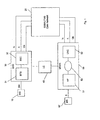
- Fig. 1 illustrates schematically the location service elements present with a mobile communication network.
- the figure shows two mobile stations 10 and 10', each of which is connected to a core network portion 20 via an access network.
- the first mobile station 10 shown in the uppermost half top of Fig. 1 is connected via a wireless link Um to a GSM access network or base station subsystem BSS 30.
- the base station subsystem BSS 30 includes a base station controller BSC 32 and a number of base transceiver stations, of which one is illustrated 31.
- This base transceiver station 31 supports the wireless link Um to the mobile station 10.
- Each base station transceiver is connected to, and controlled by, the base station controller BSC 32.
- the access network 30 is in turn connected to the core network 20, which is either a GSM or UMTS core network, or alternatively supports both standards.
- the various interfaces between the access network 30 and core network support GSM telephony traffic over the A-interface, General Packet Radio Service (GPRS) traffic over the Gb-interface or UMTS telephony traffic and packet services over the lu-interface.
- GPRS General Packet Radio Service
- the second mobile station 10' located in the lower half of Fig. 1 is capable of supporting an unlicensed radio interface X with an unlicensed radio access network, possibly in addition to a conventional (licensed) mobile communications radio interface.
- the mobile station 10' communicates over the unlicensed radio link X with an access point 51 of an unlicensed radio access network 50.
- the components making up this unlicensed-radio access network 50 also enable the mobile station 10' to access the GSM/UMTS core network portion, and through this, other communication networks.
- unlicensed-radio is meant any radio protocol that does not require the operator running the mobile network to have obtained a license from the appropriate regulatory body. In general, such unlicensed-radio technologies must be low power and thus of limited range compared to licensed mobile radio services.
- the radio interface may utilise any suitable unlicensed-radio protocol, for example a wireless LAN (W-LAN) protocol, Digital Enhanced Cordless Telecommunications (DECT) or Bluetooth.
- WLAN wireless LAN
- DECT Digital Enhanced Cordless
- Fig. 1 Only one access point AP 51 is illustrated in Fig. 1 , but it will be understood that many hundreds of these elements may be included in the unlicensed-radio access network 50.
- This element handles the radio link protocols with the mobile station MS 10' and contains radio transceivers that define a coverage area or cell in a similar manner to the operation of a conventional GSM base station transceiver BTS 101.
- All communication via the access points AP 51 is controlled by an access controller GANC 53, which communicates with the various nodes in the core network portion 20 via the standard A, Gb and/or lu interfaces.
- the joint function of the access point AP 51 and the access controller GANC 53 emulates the operation of the BSS 30 towards the core network 20.
- the access network portion 50 constituted by the access points AP 51 and the access controller GANC 53 looks like a conventional access network portion 30.
- the interface between the access point AP 51 and the access controller GANC 53 is provided by a packet-switched broadband network 52, which may be a fixed network.
- the access point 51 is intended to be a small device that a subscriber can purchase and install in a desired location such as the home or an office environment to obtain a fixed access to the mobile network. However, they could also be installed by operators in traffic hotspots.
- the interface between the access point 51 and the access controller 53 preferably exploits a connection provided by an already existing network 52. Suitable networks might include those based on ADSL, Ethernet, LMDS, or the like. Home connections to such networks are increasingly available to subscribers while access points to such networks are becoming widespread in public and commercial buildings.
- the access point AP 51 may be connected to a network terminal giving access to the network 52, while the access controller GANC 53 may be connected to an edge router ER of the network 52 that also links the network 52 to other networks such as intranets and the internet.
- the Internet protocol, IP is used for communication over the network 52 to render the transport of data independent of the network type.
- the access point AP 51 may serve as a dedicated access point to the unlicensed-radio access network.
- the access point AP 51 is capable of communicating independently with the mobile station 10' over the unlicensed-radio interface X or with the access controller GANC 53 over the broadband network 52.
- the access point AP 51 may serve as an essentially transparent access point when viewed both from the access controller 53 and the mobile station 10'.
- this access point AP 51 relays all information at the IP level and above between the mobile station 1 and the access controller GANC 53. It simply effects the conversion between the OSI reference model layers 1 and 2 unlicensed-radio and terrestrial access layer services. Accordingly, the mobile station 10' establishes a connection with the access controller GANC 53 without recognising the access point AP 51 as a node in the Layer 3 connection. Similarly the access controller GANC 53 could establish a connection with the mobile station 10' directly.
- each access point is allocated a unique identifier AP-ID.
- the form of the identifier depends on the unlicensed radio technology utilised and may also be operator specific. For example, when the Bluetooth radio protocol is used, the identifier may be a Bluetooth Device Address. Alternatively it can consist of different identifiers, such as the PAN Service name. Similarly for WLAN access points, the identifier may contain a MAC address, possibly in combination with the SSID.
- either the access point AP 51 or the mobile station 10' is allocated an IP address on the broadband packet switched network 52 and communication to and from the access controller GANC 53 uses the allocated IP address.
- a processing element referred to here as a location centre 40 is connected to both the base station subsystem (the GSM access network) 30 and the unlicensed radio access network 50. This is a stand-alone element that is accessible by several access networks.
- the location centre 40 is a similar entity to the Serving Mobile Location Centre SMLC specified in the 3GPP GERAN (GSM EDGE Radio Access Network) system but has extended functions.
- the procedures and messages passed over the interface between the location centre 40 and the access network 30 include many of those passed over the Lb interface between a SMLC and BSS as defined in 3GPP TS 49.031 and 3GPP TS 48.071.
- the location centre 40 responds to a request for the position of a mobile station, for example, relayed from the core network by an access network, by determining the mobile station location using one or more pre-configured positioning methods and responding with a location response.
- the access network does not simply relay or generate a request for location information, but instead includes additional information in this request indicating the positioning methods supported by the access network for this particular mobile station. This is described in more detail with reference to Figs. 2 and 3 .
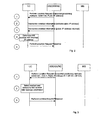
- Fig. 2 shows the signalling between the location centre LC, access network controller and mobile station following a request from the core network or an internal location service client to provide location information for a specific mobile station.
- the access network controller may be a GSM base station controller BSC or an generic access network controller GANC; the procedure is the same in both cases.
- an initial Perform Location Request message is sent from the access controller to the location centre.
- this message includes an information element that specifies which methods are supported by the access network and specifically, the methods that are supported for the actual connection to the mobile station.
- this message includes an information element that specifies which methods are supported by the access network and specifically, the methods that are supported for the actual connection to the mobile station.
- the supported positioning methods include using the GSM cell global identifier CGI and the public IP address of the mobile station or the MAC address of the access point to which it is attached. E.g. the Time Advanced method is not possible to use.
- the location centre LC selects one of the indicated methods and proceeds to determine the mobile station location. This is done by sending a request to the access controller for the public IP address of the mobile station at step 2 and receiving the public IP address from the access controller at step 3. With this IP address the location centre then determines the mobile station location at step 4. The location information is then returned to the access controller in step 5.
- the information communicated to the location centre LC for use in a location method may include one or more of the following:
- the above list is not exhaustive and may include other aids to locating the mobile station depending on the type of connection used by the mobile station.
- the first five items in the list would normally be used for a GSM connection and would thus be sent by a GSM BSC.
- the remaining information elements are used when the mobile is connected to an unlicensed radio access point and so would be communicated by a generic access network controller GANC.
- location service control within the present 3GPP GERAN system uses the methods for a GSM connection as detailed above, the location service entity (SMLC) is configured with this information prior to any request.
- the location centre with the available methods. All the information necessary is supplied with each location request.
- the LC can directly select a suitable positioning method to use for the individual mobile station.
- Fig. 3 there is illustrated an alternative method in accordance with the present invention.
- Fig. 3 also shows the signalling between the location centre LC and access controller (BSC/GANC) following a location request from the core network, for example.
- the access controller sends a Perform Location Request message and as in the method illustrated in Fig. 2 this message includes an information element identifying the location methods supported by the access network for the actual connection with the mobile station.
- the message also contains the data relevant for each location method listed.
- the message identifies the use of the GSM cell global identifier CGI and the public IP address as methods and also provides the GSM CGI and the public IP address for the mobile station connection.
- the location centre LC can proceed with determining the mobile station location using one or more of the communicated methods and the data for each method.
- the location centre LC then returns the mobile station location to the access controller in a Perform Location Request Response message.
- GSM networks As a conventional public mobile network. It will be understood by those skilled in the art, however, that description applies for other conventional public mobile networks, such as UMTS or CDMA2000, in an analogous manner.
Landscapes
- Engineering & Computer Science (AREA)
- Computer Networks & Wireless Communication (AREA)
- Signal Processing (AREA)
- Mobile Radio Communication Systems (AREA)
Claims (8)
- Verfahren zum Bestimmen der Position einer Mobilstation innerhalb eines Mobiltelekommunikationsnetzes, folgende Schritte umfassend:Empfangen einer Positionsanforderung von einer Zugangssteuerung an einem Location Center, wobei die Zugangssteuerung Teil eines Zugangsnetzes bildet, das eine Verbindung zwischen der Mobilstation und einem Kernnetzteil des Mobiltelekommunikationsnetzes bildet, wobei die Positionsanforderung ein Informationselement einschließt, das für mindestens ein Positionierungsverfahren bezeichnend ist, das von der Zugangssteuerung in der Verbindung mit der Mobilstation unterstützt wird,Auswählen von mindestens einem der Positionierungsverfahren, das in der Positionsanforderung angezeigt ist, und Nutzen des ausgewählten Positionierungsverfahrens, um die Position der Mobilstation zu bestimmen und die Information, die für die Position der Mobilstation bezeichnend ist, an die Zugangssteuerung zurückzuleiten.
- Verfahren nach Anspruch 1, worin der Schritt des Empfangens einer Positionsanforderung das Empfangen von Daten einschließt, die für die Mobilstation zur Verwendung in mindestens einem der angezeigten Positionierungsverfahren spezifisch sind, und der Schritt des Nutzens von einem der Positionierungsverfahren das Nutzen der Daten im Positionierungsverfahren einschließt.
- Verfahren nach Anspruch 1, worin der Schritt des Nutzens von einem der Positionierungsverfahren einschließt, von einer Zugangssteuerung Daten anzufordern, die für die Mobilstation zur Verwendung im ausgewählten Positionierungsverfahren spezifisch sind.
- Verfahren nach einem vorhergehenden Anspruch, worin die Positionierungsverfahren das Verwenden von mindestens einem der folgenden Parameter einschließen:Timing Advance (Zeitversatz), mobilunterstützte Enhanced Observed Time Difference (verbesserte beobachtete Zeitdifferenz) (E-OTD), mobilbasierte Enhanced Observed Time Difference (E-OTD), Global Positioning System (GPS), Uplink Time Difference of Arrival (Uplink-Ankunftszeitdifferenz) (U-TDOA), Cell Global Identifier (globaler Zellenidentifikator) CGI, öffentliche IP-Adresse, private IP-Adresse, Zugangspunkt-Identifikator AP-ID, WLAN SSID, Bluetooth PAN-Dienstname.
- Verfahren zum Anfordern der Position einer Mobilstation von einer Zugangssteuerung (32; 53), die einen Teil eines Zugangsnetzes (30; 50) bildet, das eine Verbindung zwischen einer Mobilstation (10; 10') und einem Kernnetzteil (20) eines Telekommunikationsnetzes bereitstellt, wobei das Verfahren folgende Schritte einschließt:Erzeugen einer Positionsanforderung, ein Informationselement einschließend, das mindestens ein Positionierungsverfahren anzeigt, das von der Zugangssteuerung (32; 53) in der Verbindung mit der Mobilstation (10; 10') unterstützt wird;Senden dieser Positionsanforderung an ein Location Center (40);Empfangen einer Information vom Location Center, die für die Position der Mobilstation bezeichnend ist, wobei die Position durch Auswählen von mindestens einem der Positionierungsverfahren bestimmt wird, das in der Positionsanforderung angezeigt ist.
- Verfahren nach Anspruch 4, worin das Informationselement außerdem Daten einschließt, die für die Mobilstation zur Verwendung in den angezeigten Positionierungsverfahren spezifisch sind.
- Verfahren nach Anspruch 5 oder 6, worin die angezeigten Positionierungsverfahren die Verwendung von mindestens einem der folgenden Parameter einschließen:Timing Advance (Zeitversatz), mobilunterstützte Enhanced Observed Time Difference (verbesserte beobachtete Zeitdifferenz) (E-OTD), mobilbasierte Enhanced Observed Time Difference (E-OTD), Global Positioning System (GPS), Uplink Time Difference of Arrival (Uplink-Ankunftszeitdifferenz) (U-TDOA).
- Verfahren nach einem der Ansprüche 5 bis 7, worin das Zugangsnetz ein unlizenziertes Funkzugangsnetz ist, eine Vielzahl von Zugangspunkten (51) einschließend, die dazu angepasst sind, eine unlizenzierte Funkverbindung mit der Mobilstation (10') und einem paketvermitteltes Breitbandnetz (52) zu unterstützen, das die Zugangssteuerung (53) an die Zugangspunkte anschließt, und worin die angezeigten Positionierungsverfahren das Verwenden von mindestens einem der folgenden Parameter einschließt: Cell Global Identifier (globaler Zellenidentifikator) CGI, öffentliche IP-Adresse auf dem paketvermittelten Breitbandnetz, private IP-Adresse auf dem paketvermittelten Breitbandnetz, Zugangspunkt-Identifikator AP-ID, WLAN SSID, Bluetooth PAN-Dienstname.
Applications Claiming Priority (1)
| Application Number | Priority Date | Filing Date | Title |
|---|---|---|---|
| PCT/EP2005/002005 WO2006089567A1 (en) | 2005-02-25 | 2005-02-25 | Location control in a mobile communications network |
Publications (2)
| Publication Number | Publication Date |
|---|---|
| EP1851985A1 EP1851985A1 (de) | 2007-11-07 |
| EP1851985B1 true EP1851985B1 (de) | 2011-11-23 |
Family
ID=34981343
Family Applications (1)
| Application Number | Title | Priority Date | Filing Date |
|---|---|---|---|
| EP05715546A Expired - Lifetime EP1851985B1 (de) | 2005-02-25 | 2005-02-25 | Positionssteuerung in einem mobilkommunikationsnetz |
Country Status (7)
| Country | Link |
|---|---|
| US (1) | US20080227468A1 (de) |
| EP (1) | EP1851985B1 (de) |
| CN (1) | CN101129082B (de) |
| AT (1) | ATE535121T1 (de) |
| BR (1) | BRPI0520029A2 (de) |
| ES (1) | ES2373665T3 (de) |
| WO (1) | WO2006089567A1 (de) |
Families Citing this family (9)
| Publication number | Priority date | Publication date | Assignee | Title |
|---|---|---|---|---|
| US7843900B2 (en) | 2005-08-10 | 2010-11-30 | Kineto Wireless, Inc. | Mechanisms to extend UMA or GAN to inter-work with UMTS core network |
| US8649799B2 (en) | 2007-07-09 | 2014-02-11 | Telefonaktiebolaget L M Ericsson (Publ) | Unlicensed mobile access (UMA) terminal location in a communications network |
| WO2009088942A1 (en) * | 2008-01-02 | 2009-07-16 | Malcolm Wade Pipes | Automatic emergency call activation and notification system and method using supporting emergency notification server |
| US8676226B2 (en) * | 2009-07-09 | 2014-03-18 | Htc Corporation | Method of handling location service and related communication device |
| WO2014022857A1 (en) * | 2012-08-03 | 2014-02-06 | Huawei Technologies Co., Ltd. | System and method to support multiple radio access technology relays with a unified backhaul transport network |
| EP2885949B1 (de) * | 2012-08-15 | 2020-05-13 | Telefonaktiebolaget LM Ericsson (publ) | Verfahren und vorrichtung zur bestimmung der beziehungen in heterogenen netzwerken |
| CN110520747B (zh) * | 2016-11-01 | 2023-02-17 | 瑞典爱立信有限公司 | 向网络提供移动台同步的估计准确性 |
| US20190215797A1 (en) * | 2017-05-17 | 2019-07-11 | Tink Labs Limited | Systems, devices, and methods for determining a location of a computing device via a current state of and signals received by and/or from the computing device |
| EP3845001B1 (de) * | 2018-08-31 | 2023-10-04 | Telefonaktiebolaget LM Ericsson (publ) | Verkehr in einem verteilten cloud-system |
Family Cites Families (12)
| Publication number | Priority date | Publication date | Assignee | Title |
|---|---|---|---|---|
| US6002936A (en) * | 1998-03-09 | 1999-12-14 | Ericsson Inc. | System and method for informing network of terminal-based positioning method capabilities |
| US6295454B1 (en) * | 1999-03-18 | 2001-09-25 | Ericsson Inc. | System and method for providing chronicled location information for terminal-based position calculation |
| WO2001069951A1 (en) * | 2000-03-13 | 2001-09-20 | Nokia Corporation | Service provision in a communication system |
| FI108372B (fi) * | 2000-06-30 | 2002-01-15 | Nokia Corp | Menetelmõ ja laite paikanmõõritykseen |
| SE0100351D0 (sv) * | 2001-02-06 | 2001-02-06 | Sergio Luciani | Traffic monitoring system and method |
| US6950664B2 (en) * | 2002-01-24 | 2005-09-27 | Lucent Technologies Inc. | Geolocation using enhanced timing advance techniques |
| US7885644B2 (en) * | 2002-10-18 | 2011-02-08 | Kineto Wireless, Inc. | Method and system of providing landline equivalent location information over an integrated communication system |
| US7369859B2 (en) * | 2003-10-17 | 2008-05-06 | Kineto Wireless, Inc. | Method and system for determining the location of an unlicensed mobile access subscriber |
| US7640008B2 (en) * | 2002-10-18 | 2009-12-29 | Kineto Wireless, Inc. | Apparatus and method for extending the coverage area of a licensed wireless communication system using an unlicensed wireless communication system |
| JP4474831B2 (ja) * | 2003-01-28 | 2010-06-09 | 日本電気株式会社 | 移動通信網における移動局位置特定システム、制御装置及び移動局 |
| US8099104B2 (en) * | 2004-02-26 | 2012-01-17 | Telcordia Licensing Company Llc | Location based services for integrated cellular and LAN networks |
| US8843995B2 (en) * | 2004-11-02 | 2014-09-23 | Blackberry Limited | Generic access network (GAN) controller selection in PLMN environment |
-
2005
- 2005-02-25 BR BRPI0520029-6A patent/BRPI0520029A2/pt not_active Application Discontinuation
- 2005-02-25 WO PCT/EP2005/002005 patent/WO2006089567A1/en not_active Ceased
- 2005-02-25 CN CN2005800486752A patent/CN101129082B/zh not_active Expired - Fee Related
- 2005-02-25 ES ES05715546T patent/ES2373665T3/es not_active Expired - Lifetime
- 2005-02-25 EP EP05715546A patent/EP1851985B1/de not_active Expired - Lifetime
- 2005-02-25 AT AT05715546T patent/ATE535121T1/de active
- 2005-02-25 US US11/817,076 patent/US20080227468A1/en not_active Abandoned
Also Published As
| Publication number | Publication date |
|---|---|
| WO2006089567A8 (en) | 2006-10-05 |
| ES2373665T3 (es) | 2012-02-07 |
| CN101129082B (zh) | 2013-03-13 |
| CN101129082A (zh) | 2008-02-20 |
| ATE535121T1 (de) | 2011-12-15 |
| BRPI0520029A2 (pt) | 2009-08-18 |
| WO2006089567A1 (en) | 2006-08-31 |
| EP1851985A1 (de) | 2007-11-07 |
| US20080227468A1 (en) | 2008-09-18 |
Similar Documents
| Publication | Publication Date | Title |
|---|---|---|
| RU2409009C2 (ru) | Поддержка экстренных вызовов в беспроводной локальной вычислительной сети | |
| US7929977B2 (en) | Method and system for determining the location of an unlicensed mobile access subscriber | |
| CN102752737B (zh) | 用于无线站的方法及无线站 | |
| JP5021753B2 (ja) | 無線通信ネットワーク内のアクセスポイントの位置を推定するための方法及び装置 | |
| US7640008B2 (en) | Apparatus and method for extending the coverage area of a licensed wireless communication system using an unlicensed wireless communication system | |
| CN1387733B (zh) | 位置管理器控制功能在基站控制器中的到达时间定位结构 | |
| US20070264996A1 (en) | Mobile communication with unlicensed-radio access networks | |
| KR20070039487A (ko) | 비허가 모바일 액세스 가입자를 망 제어기에 등록하기 위한방법 및 시스템 | |
| EP1987691B1 (de) | Gebührenberechnung- und ortsindikationen in einem generischen zugangsnetz | |
| WO2008147716A1 (en) | Discovering cellular network elements | |
| MX2007001579A (es) | Limitacion de redirecciones en una red de acceso movil no licenciada. | |
| WO2011046573A1 (en) | System and method of location based services from wireless terminals | |
| US20080227468A1 (en) | Location Control in a Mobile Communications Network | |
| JP4499783B2 (ja) | 免許不要の無線アクセスネットワークにおいてコアネットワークへ移動機を割り当てるためのシステム | |
| US7471953B2 (en) | Location services for unlicensed mobile access | |
| US20080267120A1 (en) | Location Services for Unlicensed Mobile Access | |
| HK1106086A (en) | System for allocating mobile stations to a core network in an unlicensed radio access network |
Legal Events
| Date | Code | Title | Description |
|---|---|---|---|
| PUAI | Public reference made under article 153(3) epc to a published international application that has entered the european phase |
Free format text: ORIGINAL CODE: 0009012 |
|
| 17P | Request for examination filed |
Effective date: 20070911 |
|
| AK | Designated contracting states |
Kind code of ref document: A1 Designated state(s): AT BE BG CH CY CZ DE DK EE ES FI FR GB GR HU IE IS IT LI LT LU MC NL PL PT RO SE SI SK TR |
|
| RIN1 | Information on inventor provided before grant (corrected) |
Inventor name: NYLANDER, TOMAS Inventor name: VIKBERG, JARI Inventor name: NISKA, HAKAN |
|
| DAX | Request for extension of the european patent (deleted) | ||
| REG | Reference to a national code |
Ref country code: DE Ref legal event code: R079 Ref document number: 602005031336 Country of ref document: DE Free format text: PREVIOUS MAIN CLASS: H04Q0007380000 Ipc: H04W0064000000 |
|
| RIC1 | Information provided on ipc code assigned before grant |
Ipc: H04W 64/00 20090101AFI20110420BHEP |
|
| GRAP | Despatch of communication of intention to grant a patent |
Free format text: ORIGINAL CODE: EPIDOSNIGR1 |
|
| GRAS | Grant fee paid |
Free format text: ORIGINAL CODE: EPIDOSNIGR3 |
|
| GRAA | (expected) grant |
Free format text: ORIGINAL CODE: 0009210 |
|
| AK | Designated contracting states |
Kind code of ref document: B1 Designated state(s): AT BE BG CH CY CZ DE DK EE ES FI FR GB GR HU IE IS IT LI LT LU MC NL PL PT RO SE SI SK TR |
|
| REG | Reference to a national code |
Ref country code: GB Ref legal event code: FG4D |
|
| REG | Reference to a national code |
Ref country code: DE Ref legal event code: R081 Ref document number: 602005031336 Country of ref document: DE Owner name: UNWIRED PLANET INTERNATIONAL LTD., IE Free format text: FORMER OWNER: TELEFONAKTIEBOLAGET LM ERICSSON (PUBL), STOCKHOLM, SE |
|
| REG | Reference to a national code |
Ref country code: CH Ref legal event code: EP |
|
| REG | Reference to a national code |
Ref country code: IE Ref legal event code: FG4D |
|
| REG | Reference to a national code |
Ref country code: DE Ref legal event code: R096 Ref document number: 602005031336 Country of ref document: DE Effective date: 20120119 |
|
| REG | Reference to a national code |
Ref country code: ES Ref legal event code: FG2A Ref document number: 2373665 Country of ref document: ES Kind code of ref document: T3 Effective date: 20120207 |
|
| REG | Reference to a national code |
Ref country code: NL Ref legal event code: VDEP Effective date: 20111123 |
|
| LTIE | Lt: invalidation of european patent or patent extension |
Effective date: 20111123 |
|
| PG25 | Lapsed in a contracting state [announced via postgrant information from national office to epo] |
Ref country code: LT Free format text: LAPSE BECAUSE OF FAILURE TO SUBMIT A TRANSLATION OF THE DESCRIPTION OR TO PAY THE FEE WITHIN THE PRESCRIBED TIME-LIMIT Effective date: 20111123 Ref country code: IS Free format text: LAPSE BECAUSE OF FAILURE TO SUBMIT A TRANSLATION OF THE DESCRIPTION OR TO PAY THE FEE WITHIN THE PRESCRIBED TIME-LIMIT Effective date: 20120323 |
|
| PG25 | Lapsed in a contracting state [announced via postgrant information from national office to epo] |
Ref country code: GR Free format text: LAPSE BECAUSE OF FAILURE TO SUBMIT A TRANSLATION OF THE DESCRIPTION OR TO PAY THE FEE WITHIN THE PRESCRIBED TIME-LIMIT Effective date: 20120224 Ref country code: BE Free format text: LAPSE BECAUSE OF FAILURE TO SUBMIT A TRANSLATION OF THE DESCRIPTION OR TO PAY THE FEE WITHIN THE PRESCRIBED TIME-LIMIT Effective date: 20111123 Ref country code: SI Free format text: LAPSE BECAUSE OF FAILURE TO SUBMIT A TRANSLATION OF THE DESCRIPTION OR TO PAY THE FEE WITHIN THE PRESCRIBED TIME-LIMIT Effective date: 20111123 Ref country code: SE Free format text: LAPSE BECAUSE OF FAILURE TO SUBMIT A TRANSLATION OF THE DESCRIPTION OR TO PAY THE FEE WITHIN THE PRESCRIBED TIME-LIMIT Effective date: 20111123 Ref country code: PT Free format text: LAPSE BECAUSE OF FAILURE TO SUBMIT A TRANSLATION OF THE DESCRIPTION OR TO PAY THE FEE WITHIN THE PRESCRIBED TIME-LIMIT Effective date: 20120323 Ref country code: NL Free format text: LAPSE BECAUSE OF FAILURE TO SUBMIT A TRANSLATION OF THE DESCRIPTION OR TO PAY THE FEE WITHIN THE PRESCRIBED TIME-LIMIT Effective date: 20111123 |
|
| PG25 | Lapsed in a contracting state [announced via postgrant information from national office to epo] |
Ref country code: CY Free format text: LAPSE BECAUSE OF FAILURE TO SUBMIT A TRANSLATION OF THE DESCRIPTION OR TO PAY THE FEE WITHIN THE PRESCRIBED TIME-LIMIT Effective date: 20111123 |
|
| PG25 | Lapsed in a contracting state [announced via postgrant information from national office to epo] |
Ref country code: SK Free format text: LAPSE BECAUSE OF FAILURE TO SUBMIT A TRANSLATION OF THE DESCRIPTION OR TO PAY THE FEE WITHIN THE PRESCRIBED TIME-LIMIT Effective date: 20111123 Ref country code: EE Free format text: LAPSE BECAUSE OF FAILURE TO SUBMIT A TRANSLATION OF THE DESCRIPTION OR TO PAY THE FEE WITHIN THE PRESCRIBED TIME-LIMIT Effective date: 20111123 Ref country code: DK Free format text: LAPSE BECAUSE OF FAILURE TO SUBMIT A TRANSLATION OF THE DESCRIPTION OR TO PAY THE FEE WITHIN THE PRESCRIBED TIME-LIMIT Effective date: 20111123 Ref country code: BG Free format text: LAPSE BECAUSE OF FAILURE TO SUBMIT A TRANSLATION OF THE DESCRIPTION OR TO PAY THE FEE WITHIN THE PRESCRIBED TIME-LIMIT Effective date: 20120223 Ref country code: CZ Free format text: LAPSE BECAUSE OF FAILURE TO SUBMIT A TRANSLATION OF THE DESCRIPTION OR TO PAY THE FEE WITHIN THE PRESCRIBED TIME-LIMIT Effective date: 20111123 |
|
| PG25 | Lapsed in a contracting state [announced via postgrant information from national office to epo] |
Ref country code: PL Free format text: LAPSE BECAUSE OF FAILURE TO SUBMIT A TRANSLATION OF THE DESCRIPTION OR TO PAY THE FEE WITHIN THE PRESCRIBED TIME-LIMIT Effective date: 20111123 Ref country code: IT Free format text: LAPSE BECAUSE OF FAILURE TO SUBMIT A TRANSLATION OF THE DESCRIPTION OR TO PAY THE FEE WITHIN THE PRESCRIBED TIME-LIMIT Effective date: 20111123 Ref country code: RO Free format text: LAPSE BECAUSE OF FAILURE TO SUBMIT A TRANSLATION OF THE DESCRIPTION OR TO PAY THE FEE WITHIN THE PRESCRIBED TIME-LIMIT Effective date: 20111123 |
|
| REG | Reference to a national code |
Ref country code: AT Ref legal event code: MK05 Ref document number: 535121 Country of ref document: AT Kind code of ref document: T Effective date: 20111123 |
|
| PG25 | Lapsed in a contracting state [announced via postgrant information from national office to epo] |
Ref country code: MC Free format text: LAPSE BECAUSE OF NON-PAYMENT OF DUE FEES Effective date: 20120229 |
|
| PLBE | No opposition filed within time limit |
Free format text: ORIGINAL CODE: 0009261 |
|
| REG | Reference to a national code |
Ref country code: CH Ref legal event code: PL |
|
| STAA | Information on the status of an ep patent application or granted ep patent |
Free format text: STATUS: NO OPPOSITION FILED WITHIN TIME LIMIT |
|
| 26N | No opposition filed |
Effective date: 20120824 |
|
| PG25 | Lapsed in a contracting state [announced via postgrant information from national office to epo] |
Ref country code: CH Free format text: LAPSE BECAUSE OF NON-PAYMENT OF DUE FEES Effective date: 20120229 Ref country code: LI Free format text: LAPSE BECAUSE OF NON-PAYMENT OF DUE FEES Effective date: 20120229 |
|
| REG | Reference to a national code |
Ref country code: IE Ref legal event code: MM4A |
|
| REG | Reference to a national code |
Ref country code: FR Ref legal event code: ST Effective date: 20121031 |
|
| REG | Reference to a national code |
Ref country code: DE Ref legal event code: R097 Ref document number: 602005031336 Country of ref document: DE Effective date: 20120824 |
|
| PG25 | Lapsed in a contracting state [announced via postgrant information from national office to epo] |
Ref country code: FR Free format text: LAPSE BECAUSE OF NON-PAYMENT OF DUE FEES Effective date: 20120229 Ref country code: IE Free format text: LAPSE BECAUSE OF NON-PAYMENT OF DUE FEES Effective date: 20120225 Ref country code: AT Free format text: LAPSE BECAUSE OF FAILURE TO SUBMIT A TRANSLATION OF THE DESCRIPTION OR TO PAY THE FEE WITHIN THE PRESCRIBED TIME-LIMIT Effective date: 20111123 |
|
| PG25 | Lapsed in a contracting state [announced via postgrant information from national office to epo] |
Ref country code: FI Free format text: LAPSE BECAUSE OF FAILURE TO SUBMIT A TRANSLATION OF THE DESCRIPTION OR TO PAY THE FEE WITHIN THE PRESCRIBED TIME-LIMIT Effective date: 20111123 |
|
| PG25 | Lapsed in a contracting state [announced via postgrant information from national office to epo] |
Ref country code: TR Free format text: LAPSE BECAUSE OF FAILURE TO SUBMIT A TRANSLATION OF THE DESCRIPTION OR TO PAY THE FEE WITHIN THE PRESCRIBED TIME-LIMIT Effective date: 20111123 |
|
| PG25 | Lapsed in a contracting state [announced via postgrant information from national office to epo] |
Ref country code: LU Free format text: LAPSE BECAUSE OF NON-PAYMENT OF DUE FEES Effective date: 20120225 |
|
| PG25 | Lapsed in a contracting state [announced via postgrant information from national office to epo] |
Ref country code: HU Free format text: LAPSE BECAUSE OF FAILURE TO SUBMIT A TRANSLATION OF THE DESCRIPTION OR TO PAY THE FEE WITHIN THE PRESCRIBED TIME-LIMIT Effective date: 20050225 |
|
| REG | Reference to a national code |
Ref country code: DE Ref legal event code: R082 Ref document number: 602005031336 Country of ref document: DE Representative=s name: GRUENECKER PATENT- UND RECHTSANWAELTE PARTG MB, DE Ref country code: DE Ref legal event code: R082 Ref document number: 602005031336 Country of ref document: DE Representative=s name: DF-MP DOERRIES FRANK-MOLNIA & POHLMAN PATENTAN, DE Ref country code: DE Ref legal event code: R081 Ref document number: 602005031336 Country of ref document: DE Owner name: UNWIRED PLANET INTERNATIONAL LTD., IE Free format text: FORMER OWNER: TELEFONAKTIEBOLAGET L M ERICSSON (PUBL), STOCKHOLM, SE |
|
| REG | Reference to a national code |
Ref country code: GB Ref legal event code: 732E Free format text: REGISTERED BETWEEN 20150813 AND 20150819 |
|
| REG | Reference to a national code |
Ref country code: ES Ref legal event code: PC2A Effective date: 20150909 |
|
| REG | Reference to a national code |
Ref country code: GB Ref legal event code: 732E Free format text: REGISTERED BETWEEN 20150820 AND 20150826 |
|
| PGFP | Annual fee paid to national office [announced via postgrant information from national office to epo] |
Ref country code: DE Payment date: 20170119 Year of fee payment: 13 |
|
| PGFP | Annual fee paid to national office [announced via postgrant information from national office to epo] |
Ref country code: GB Payment date: 20170124 Year of fee payment: 13 |
|
| REG | Reference to a national code |
Ref country code: DE Ref legal event code: R082 Ref document number: 602005031336 Country of ref document: DE Representative=s name: GRUENECKER PATENT- UND RECHTSANWAELTE PARTG MB, DE |
|
| PGFP | Annual fee paid to national office [announced via postgrant information from national office to epo] |
Ref country code: ES Payment date: 20170123 Year of fee payment: 13 |
|
| REG | Reference to a national code |
Ref country code: GB Ref legal event code: 732E Free format text: REGISTERED BETWEEN 20180510 AND 20180516 |
|
| REG | Reference to a national code |
Ref country code: DE Ref legal event code: R119 Ref document number: 602005031336 Country of ref document: DE |
|
| GBPC | Gb: european patent ceased through non-payment of renewal fee |
Effective date: 20180225 |
|
| PG25 | Lapsed in a contracting state [announced via postgrant information from national office to epo] |
Ref country code: DE Free format text: LAPSE BECAUSE OF NON-PAYMENT OF DUE FEES Effective date: 20180901 |
|
| PG25 | Lapsed in a contracting state [announced via postgrant information from national office to epo] |
Ref country code: GB Free format text: LAPSE BECAUSE OF NON-PAYMENT OF DUE FEES Effective date: 20180225 |
|
| REG | Reference to a national code |
Ref country code: ES Ref legal event code: FD2A Effective date: 20190801 |
|
| PG25 | Lapsed in a contracting state [announced via postgrant information from national office to epo] |
Ref country code: ES Free format text: LAPSE BECAUSE OF NON-PAYMENT OF DUE FEES Effective date: 20180226 |