EP1849466A2 - Infusion fluid for dialysis patients - Google Patents
Infusion fluid for dialysis patients Download PDFInfo
- Publication number
- EP1849466A2 EP1849466A2 EP07251707A EP07251707A EP1849466A2 EP 1849466 A2 EP1849466 A2 EP 1849466A2 EP 07251707 A EP07251707 A EP 07251707A EP 07251707 A EP07251707 A EP 07251707A EP 1849466 A2 EP1849466 A2 EP 1849466A2
- Authority
- EP
- European Patent Office
- Prior art keywords
- amino acid
- pharmaceutical preparation
- dialysis
- infusion fluid
- patients
- Prior art date
- Legal status (The legal status is an assumption and is not a legal conclusion. Google has not performed a legal analysis and makes no representation as to the accuracy of the status listed.)
- Granted
Links
- 238000000502 dialysis Methods 0.000 title claims abstract description 133
- 239000003978 infusion fluid Substances 0.000 title claims abstract description 85
- 229940024606 amino acid Drugs 0.000 claims abstract description 139
- 235000001014 amino acid Nutrition 0.000 claims abstract description 139
- 150000001413 amino acids Chemical class 0.000 claims abstract description 139
- 239000000825 pharmaceutical preparation Substances 0.000 claims abstract description 63
- 229910019142 PO4 Inorganic materials 0.000 claims abstract description 55
- 235000020776 essential amino acid Nutrition 0.000 claims abstract description 55
- 239000003797 essential amino acid Substances 0.000 claims abstract description 55
- NBIIXXVUZAFLBC-UHFFFAOYSA-K phosphate Chemical compound [O-]P([O-])([O-])=O NBIIXXVUZAFLBC-UHFFFAOYSA-K 0.000 claims abstract description 55
- 239000010452 phosphate Substances 0.000 claims abstract description 55
- 210000002966 serum Anatomy 0.000 claims abstract description 44
- 230000015556 catabolic process Effects 0.000 claims abstract description 38
- 235000018102 proteins Nutrition 0.000 claims abstract description 37
- 102000004169 proteins and genes Human genes 0.000 claims abstract description 37
- 108090000623 proteins and genes Proteins 0.000 claims abstract description 37
- 102000003951 Erythropoietin Human genes 0.000 claims abstract description 35
- 108090000394 Erythropoietin Proteins 0.000 claims abstract description 35
- 229940105423 erythropoietin Drugs 0.000 claims abstract description 35
- OXCMYAYHXIHQOA-UHFFFAOYSA-N potassium;[2-butyl-5-chloro-3-[[4-[2-(1,2,4-triaza-3-azanidacyclopenta-1,4-dien-5-yl)phenyl]phenyl]methyl]imidazol-4-yl]methanol Chemical compound [K+].CCCCC1=NC(Cl)=C(CO)N1CC1=CC=C(C=2C(=CC=CC=2)C2=N[N-]N=N2)C=C1 OXCMYAYHXIHQOA-UHFFFAOYSA-N 0.000 claims abstract description 35
- 208000007502 anemia Diseases 0.000 claims abstract description 34
- DHMQDGOQFOQNFH-UHFFFAOYSA-N Glycine Chemical compound NCC(O)=O DHMQDGOQFOQNFH-UHFFFAOYSA-N 0.000 claims abstract description 32
- HNDVDQJCIGZPNO-YFKPBYRVSA-N L-histidine Chemical compound OC(=O)[C@@H](N)CC1=CN=CN1 HNDVDQJCIGZPNO-YFKPBYRVSA-N 0.000 claims abstract description 32
- AYFVYJQAPQTCCC-GBXIJSLDSA-N L-threonine Chemical compound C[C@@H](O)[C@H](N)C(O)=O AYFVYJQAPQTCCC-GBXIJSLDSA-N 0.000 claims abstract description 32
- MTCFGRXMJLQNBG-REOHCLBHSA-N (2S)-2-Amino-3-hydroxypropansäure Chemical compound OC[C@H](N)C(O)=O MTCFGRXMJLQNBG-REOHCLBHSA-N 0.000 claims abstract description 30
- WHUUTDBJXJRKMK-VKHMYHEASA-N L-glutamic acid Chemical compound OC(=O)[C@@H](N)CCC(O)=O WHUUTDBJXJRKMK-VKHMYHEASA-N 0.000 claims abstract description 30
- ROHFNLRQFUQHCH-YFKPBYRVSA-N L-leucine Chemical compound CC(C)C[C@H](N)C(O)=O ROHFNLRQFUQHCH-YFKPBYRVSA-N 0.000 claims abstract description 30
- KZSNJWFQEVHDMF-BYPYZUCNSA-N L-valine Chemical compound CC(C)[C@H](N)C(O)=O KZSNJWFQEVHDMF-BYPYZUCNSA-N 0.000 claims abstract description 30
- OUYCCCASQSFEME-QMMMGPOBSA-N L-tyrosine Chemical compound OC(=O)[C@@H](N)CC1=CC=C(O)C=C1 OUYCCCASQSFEME-QMMMGPOBSA-N 0.000 claims abstract description 28
- 239000004473 Threonine Substances 0.000 claims abstract description 18
- 229960002885 histidine Drugs 0.000 claims abstract description 18
- 239000000203 mixture Substances 0.000 claims abstract description 18
- 229960002898 threonine Drugs 0.000 claims abstract description 18
- 239000004471 Glycine Substances 0.000 claims abstract description 16
- ONIBWKKTOPOVIA-BYPYZUCNSA-N L-Proline Chemical compound OC(=O)[C@@H]1CCCN1 ONIBWKKTOPOVIA-BYPYZUCNSA-N 0.000 claims abstract description 16
- QNAYBMKLOCPYGJ-REOHCLBHSA-N L-alanine Chemical compound C[C@H](N)C(O)=O QNAYBMKLOCPYGJ-REOHCLBHSA-N 0.000 claims abstract description 16
- CKLJMWTZIZZHCS-REOHCLBHSA-N L-aspartic acid Chemical compound OC(=O)[C@@H](N)CC(O)=O CKLJMWTZIZZHCS-REOHCLBHSA-N 0.000 claims abstract description 16
- AGPKZVBTJJNPAG-WHFBIAKZSA-N L-isoleucine Chemical compound CC[C@H](C)[C@H](N)C(O)=O AGPKZVBTJJNPAG-WHFBIAKZSA-N 0.000 claims abstract description 16
- FFEARJCKVFRZRR-BYPYZUCNSA-N L-methionine Chemical compound CSCC[C@H](N)C(O)=O FFEARJCKVFRZRR-BYPYZUCNSA-N 0.000 claims abstract description 16
- 229960003767 alanine Drugs 0.000 claims abstract description 16
- 229960005261 aspartic acid Drugs 0.000 claims abstract description 16
- 229960002989 glutamic acid Drugs 0.000 claims abstract description 16
- 229960000310 isoleucine Drugs 0.000 claims abstract description 16
- 229960003136 leucine Drugs 0.000 claims abstract description 16
- 229960004452 methionine Drugs 0.000 claims abstract description 16
- 229960002429 proline Drugs 0.000 claims abstract description 16
- 229960001153 serine Drugs 0.000 claims abstract description 16
- 229960004295 valine Drugs 0.000 claims abstract description 16
- CKLJMWTZIZZHCS-UHFFFAOYSA-N D-OH-Asp Natural products OC(=O)C(N)CC(O)=O CKLJMWTZIZZHCS-UHFFFAOYSA-N 0.000 claims abstract description 14
- QNAYBMKLOCPYGJ-UHFFFAOYSA-N D-alpha-Ala Natural products CC([NH3+])C([O-])=O QNAYBMKLOCPYGJ-UHFFFAOYSA-N 0.000 claims abstract description 14
- QNAYBMKLOCPYGJ-UWTATZPHSA-N L-Alanine Natural products C[C@@H](N)C(O)=O QNAYBMKLOCPYGJ-UWTATZPHSA-N 0.000 claims abstract description 14
- CKLJMWTZIZZHCS-UWTATZPHSA-N L-Aspartic acid Natural products OC(=O)[C@H](N)CC(O)=O CKLJMWTZIZZHCS-UWTATZPHSA-N 0.000 claims abstract description 14
- FFEARJCKVFRZRR-UHFFFAOYSA-N L-Methionine Natural products CSCCC(N)C(O)=O FFEARJCKVFRZRR-UHFFFAOYSA-N 0.000 claims abstract description 14
- ODKSFYDXXFIFQN-BYPYZUCNSA-N L-arginine Chemical compound OC(=O)[C@@H](N)CCCN=C(N)N ODKSFYDXXFIFQN-BYPYZUCNSA-N 0.000 claims abstract description 14
- 229930064664 L-arginine Natural products 0.000 claims abstract description 14
- 235000014852 L-arginine Nutrition 0.000 claims abstract description 14
- 229930182844 L-isoleucine Natural products 0.000 claims abstract description 14
- 239000004395 L-leucine Substances 0.000 claims abstract description 14
- 235000019454 L-leucine Nutrition 0.000 claims abstract description 14
- 229930195722 L-methionine Natural products 0.000 claims abstract description 14
- 229930182821 L-proline Natural products 0.000 claims abstract description 14
- 229960004441 tyrosine Drugs 0.000 claims abstract description 14
- QDGAVODICPCDMU-UHFFFAOYSA-N 2-amino-3-[3-[bis(2-chloroethyl)amino]phenyl]propanoic acid Chemical compound OC(=O)C(N)CC1=CC=CC(N(CCCl)CCCl)=C1 QDGAVODICPCDMU-UHFFFAOYSA-N 0.000 claims abstract description 7
- 229960002449 glycine Drugs 0.000 claims abstract description 7
- WPLOVIFNBMNBPD-ATHMIXSHSA-N subtilin Chemical compound CC1SCC(NC2=O)C(=O)NC(CC(N)=O)C(=O)NC(C(=O)NC(CCCCN)C(=O)NC(C(C)CC)C(=O)NC(=C)C(=O)NC(CCCCN)C(O)=O)CSC(C)C2NC(=O)C(CC(C)C)NC(=O)C1NC(=O)C(CCC(N)=O)NC(=O)C(CC(C)C)NC(=O)C(NC(=O)C1NC(=O)C(=C/C)/NC(=O)C(CCC(N)=O)NC(=O)C(CC(C)C)NC(=O)C(C)NC(=O)CNC(=O)C(NC(=O)C(NC(=O)C2NC(=O)CNC(=O)C3CCCN3C(=O)C(NC(=O)C3NC(=O)C(CC(C)C)NC(=O)C(=C)NC(=O)C(CCC(O)=O)NC(=O)C(NC(=O)C(CCCCN)NC(=O)C(N)CC=4C5=CC=CC=C5NC=4)CSC3)C(C)SC2)C(C)C)C(C)SC1)CC1=CC=CC=C1 WPLOVIFNBMNBPD-ATHMIXSHSA-N 0.000 claims abstract description 7
- IFGCUJZIWBUILZ-UHFFFAOYSA-N sodium 2-[[2-[[hydroxy-(3,4,5-trihydroxy-6-methyloxan-2-yl)oxyphosphoryl]amino]-4-methylpentanoyl]amino]-3-(1H-indol-3-yl)propanoic acid Chemical compound [Na+].C=1NC2=CC=CC=C2C=1CC(C(O)=O)NC(=O)C(CC(C)C)NP(O)(=O)OC1OC(C)C(O)C(O)C1O IFGCUJZIWBUILZ-UHFFFAOYSA-N 0.000 claims abstract description 6
- PWKSKIMOESPYIA-UHFFFAOYSA-N 2-acetamido-3-sulfanylpropanoic acid Chemical compound CC(=O)NC(CS)C(O)=O PWKSKIMOESPYIA-UHFFFAOYSA-N 0.000 claims abstract 5
- XOAAWQZATWQOTB-UHFFFAOYSA-N taurine Chemical compound NCCS(O)(=O)=O XOAAWQZATWQOTB-UHFFFAOYSA-N 0.000 claims description 60
- 229960003080 taurine Drugs 0.000 claims description 30
- 238000000034 method Methods 0.000 claims description 24
- XUJNEKJLAYXESH-REOHCLBHSA-N L-Cysteine Chemical compound SC[C@H](N)C(O)=O XUJNEKJLAYXESH-REOHCLBHSA-N 0.000 claims description 19
- QIVBCDIJIAJPQS-VIFPVBQESA-N L-tryptophane Chemical compound C1=CC=C2C(C[C@H](N)C(O)=O)=CNC2=C1 QIVBCDIJIAJPQS-VIFPVBQESA-N 0.000 claims description 19
- KDXKERNSBIXSRK-YFKPBYRVSA-N L-lysine Chemical compound NCCCC[C@H](N)C(O)=O KDXKERNSBIXSRK-YFKPBYRVSA-N 0.000 claims description 18
- 210000003462 vein Anatomy 0.000 claims description 17
- COLNVLDHVKWLRT-QMMMGPOBSA-N L-phenylalanine Chemical compound OC(=O)[C@@H](N)CC1=CC=CC=C1 COLNVLDHVKWLRT-QMMMGPOBSA-N 0.000 claims description 16
- 229960004799 tryptophan Drugs 0.000 claims description 11
- 239000004472 Lysine Substances 0.000 claims description 10
- 229960002433 cysteine Drugs 0.000 claims description 10
- 239000004201 L-cysteine Substances 0.000 claims description 9
- 235000013878 L-cysteine Nutrition 0.000 claims description 9
- 229960005190 phenylalanine Drugs 0.000 claims description 9
- 235000019766 L-Lysine Nutrition 0.000 claims description 8
- 238000004519 manufacturing process Methods 0.000 claims description 2
- 235000003715 nutritional status Nutrition 0.000 abstract description 12
- 230000001668 ameliorated effect Effects 0.000 abstract description 3
- 238000001631 haemodialysis Methods 0.000 description 33
- 230000000322 hemodialysis Effects 0.000 description 33
- 238000002360 preparation method Methods 0.000 description 24
- 208000020832 chronic kidney disease Diseases 0.000 description 22
- 208000022831 chronic renal failure syndrome Diseases 0.000 description 22
- 230000003247 decreasing effect Effects 0.000 description 20
- 210000004369 blood Anatomy 0.000 description 18
- 239000008280 blood Substances 0.000 description 18
- 238000011282 treatment Methods 0.000 description 12
- 208000002720 Malnutrition Diseases 0.000 description 11
- 235000000824 malnutrition Nutrition 0.000 description 11
- 230000001071 malnutrition Effects 0.000 description 11
- 208000015380 nutritional deficiency disease Diseases 0.000 description 11
- QTBSBXVTEAMEQO-UHFFFAOYSA-N Acetic acid Natural products CC(O)=O QTBSBXVTEAMEQO-UHFFFAOYSA-N 0.000 description 10
- 230000007423 decrease Effects 0.000 description 10
- 208000001647 Renal Insufficiency Diseases 0.000 description 9
- 201000006370 kidney failure Diseases 0.000 description 9
- -1 inorganic acid salts Chemical class 0.000 description 8
- 230000036470 plasma concentration Effects 0.000 description 8
- 238000001802 infusion Methods 0.000 description 7
- UIIMBOGNXHQVGW-UHFFFAOYSA-M Sodium bicarbonate Chemical compound [Na+].OC([O-])=O UIIMBOGNXHQVGW-UHFFFAOYSA-M 0.000 description 6
- KRKNYBCHXYNGOX-UHFFFAOYSA-N citric acid Chemical compound OC(=O)CC(O)(C(O)=O)CC(O)=O KRKNYBCHXYNGOX-UHFFFAOYSA-N 0.000 description 6
- 201000005991 hyperphosphatemia Diseases 0.000 description 6
- 210000003205 muscle Anatomy 0.000 description 6
- 238000012360 testing method Methods 0.000 description 6
- WQZGKKKJIJFFOK-GASJEMHNSA-N Glucose Natural products OC[C@H]1OC(O)[C@H](O)[C@@H](O)[C@@H]1O WQZGKKKJIJFFOK-GASJEMHNSA-N 0.000 description 5
- 229940079593 drug Drugs 0.000 description 5
- 239000003814 drug Substances 0.000 description 5
- 230000000694 effects Effects 0.000 description 5
- 239000008103 glucose Substances 0.000 description 5
- 238000007427 paired t-test Methods 0.000 description 5
- 235000000346 sugar Nutrition 0.000 description 5
- 208000024891 symptom Diseases 0.000 description 5
- 239000011573 trace mineral Substances 0.000 description 5
- 235000013619 trace mineral Nutrition 0.000 description 5
- IJGRMHOSHXDMSA-UHFFFAOYSA-N Atomic nitrogen Chemical compound N#N IJGRMHOSHXDMSA-UHFFFAOYSA-N 0.000 description 4
- 206010058116 Nephrogenic anaemia Diseases 0.000 description 4
- AYFVYJQAPQTCCC-UHFFFAOYSA-N Threonine Natural products CC(O)C(N)C(O)=O AYFVYJQAPQTCCC-UHFFFAOYSA-N 0.000 description 4
- 229960000583 acetic acid Drugs 0.000 description 4
- HNDVDQJCIGZPNO-UHFFFAOYSA-N histidine Natural products OC(=O)C(N)CC1=CN=CN1 HNDVDQJCIGZPNO-UHFFFAOYSA-N 0.000 description 4
- 230000017854 proteolysis Effects 0.000 description 4
- 239000000243 solution Substances 0.000 description 4
- 102000009027 Albumins Human genes 0.000 description 3
- 108010088751 Albumins Proteins 0.000 description 3
- VTYYLEPIZMXCLO-UHFFFAOYSA-L Calcium carbonate Chemical compound [Ca+2].[O-]C([O-])=O VTYYLEPIZMXCLO-UHFFFAOYSA-L 0.000 description 3
- VEXZGXHMUGYJMC-UHFFFAOYSA-M Chloride anion Chemical compound [Cl-] VEXZGXHMUGYJMC-UHFFFAOYSA-M 0.000 description 3
- PEDCQBHIVMGVHV-UHFFFAOYSA-N Glycerine Chemical compound OCC(O)CO PEDCQBHIVMGVHV-UHFFFAOYSA-N 0.000 description 3
- 102000001554 Hemoglobins Human genes 0.000 description 3
- 108010054147 Hemoglobins Proteins 0.000 description 3
- 102000007562 Serum Albumin Human genes 0.000 description 3
- 108010071390 Serum Albumin Proteins 0.000 description 3
- HEMHJVSKTPXQMS-UHFFFAOYSA-M Sodium hydroxide Chemical compound [OH-].[Na+] HEMHJVSKTPXQMS-UHFFFAOYSA-M 0.000 description 3
- QIVBCDIJIAJPQS-UHFFFAOYSA-N Tryptophan Natural products C1=CC=C2C(CC(N)C(O)=O)=CNC2=C1 QIVBCDIJIAJPQS-UHFFFAOYSA-N 0.000 description 3
- 230000000567 anti-anemic effect Effects 0.000 description 3
- 239000011575 calcium Substances 0.000 description 3
- 235000005911 diet Nutrition 0.000 description 3
- 238000005534 hematocrit Methods 0.000 description 3
- 230000006872 improvement Effects 0.000 description 3
- 229940088417 precipitated calcium carbonate Drugs 0.000 description 3
- 238000004393 prognosis Methods 0.000 description 3
- 238000001243 protein synthesis Methods 0.000 description 3
- 230000009467 reduction Effects 0.000 description 3
- 229920005989 resin Polymers 0.000 description 3
- 239000011347 resin Substances 0.000 description 3
- 235000017557 sodium bicarbonate Nutrition 0.000 description 3
- 229910000030 sodium bicarbonate Inorganic materials 0.000 description 3
- 150000008163 sugars Chemical class 0.000 description 3
- 230000014616 translation Effects 0.000 description 3
- GHOKWGTUZJEAQD-ZETCQYMHSA-N (D)-(+)-Pantothenic acid Chemical compound OCC(C)(C)[C@@H](O)C(=O)NCCC(O)=O GHOKWGTUZJEAQD-ZETCQYMHSA-N 0.000 description 2
- PHIQHXFUZVPYII-ZCFIWIBFSA-N (R)-carnitine Chemical compound C[N+](C)(C)C[C@H](O)CC([O-])=O PHIQHXFUZVPYII-ZCFIWIBFSA-N 0.000 description 2
- GVJHHUAWPYXKBD-UHFFFAOYSA-N (±)-α-Tocopherol Chemical compound OC1=C(C)C(C)=C2OC(CCCC(C)CCCC(C)CCCC(C)C)(C)CCC2=C1C GVJHHUAWPYXKBD-UHFFFAOYSA-N 0.000 description 2
- 208000010444 Acidosis Diseases 0.000 description 2
- 239000004475 Arginine Substances 0.000 description 2
- CIWBSHSKHKDKBQ-JLAZNSOCSA-N Ascorbic acid Chemical compound OC[C@H](O)[C@H]1OC(=O)C(O)=C1O CIWBSHSKHKDKBQ-JLAZNSOCSA-N 0.000 description 2
- DCXYFEDJOCDNAF-UHFFFAOYSA-N Asparagine Natural products OC(=O)C(N)CC(N)=O DCXYFEDJOCDNAF-UHFFFAOYSA-N 0.000 description 2
- OYPRJOBELJOOCE-UHFFFAOYSA-N Calcium Chemical compound [Ca] OYPRJOBELJOOCE-UHFFFAOYSA-N 0.000 description 2
- CURLTUGMZLYLDI-UHFFFAOYSA-N Carbon dioxide Chemical compound O=C=O CURLTUGMZLYLDI-UHFFFAOYSA-N 0.000 description 2
- 206010010582 Congenital osteodystrophy Diseases 0.000 description 2
- 208000007652 Dysostoses Diseases 0.000 description 2
- 201000001324 Dysostosis Diseases 0.000 description 2
- WHUUTDBJXJRKMK-UHFFFAOYSA-N Glutamic acid Natural products OC(=O)C(N)CCC(O)=O WHUUTDBJXJRKMK-UHFFFAOYSA-N 0.000 description 2
- VEXZGXHMUGYJMC-UHFFFAOYSA-N Hydrochloric acid Chemical compound Cl VEXZGXHMUGYJMC-UHFFFAOYSA-N 0.000 description 2
- ROHFNLRQFUQHCH-UHFFFAOYSA-N Leucine Natural products CC(C)CC(N)C(O)=O ROHFNLRQFUQHCH-UHFFFAOYSA-N 0.000 description 2
- KDXKERNSBIXSRK-UHFFFAOYSA-N Lysine Natural products NCCCCC(N)C(O)=O KDXKERNSBIXSRK-UHFFFAOYSA-N 0.000 description 2
- PVNIIMVLHYAWGP-UHFFFAOYSA-N Niacin Chemical compound OC(=O)C1=CC=CN=C1 PVNIIMVLHYAWGP-UHFFFAOYSA-N 0.000 description 2
- ONIBWKKTOPOVIA-UHFFFAOYSA-N Proline Natural products OC(=O)C1CCCN1 ONIBWKKTOPOVIA-UHFFFAOYSA-N 0.000 description 2
- MTCFGRXMJLQNBG-UHFFFAOYSA-N Serine Natural products OCC(N)C(O)=O MTCFGRXMJLQNBG-UHFFFAOYSA-N 0.000 description 2
- KHNXRSIBRKBJDI-UHFFFAOYSA-N Sevelamer hydrochloride Chemical compound Cl.NCC=C.ClCC1CO1 KHNXRSIBRKBJDI-UHFFFAOYSA-N 0.000 description 2
- KZSNJWFQEVHDMF-UHFFFAOYSA-N Valine Natural products CC(C)C(N)C(O)=O KZSNJWFQEVHDMF-UHFFFAOYSA-N 0.000 description 2
- 235000004279 alanine Nutrition 0.000 description 2
- 238000013459 approach Methods 0.000 description 2
- ODKSFYDXXFIFQN-UHFFFAOYSA-N arginine Natural products OC(=O)C(N)CCCNC(N)=N ODKSFYDXXFIFQN-UHFFFAOYSA-N 0.000 description 2
- 235000009697 arginine Nutrition 0.000 description 2
- 229960001230 asparagine Drugs 0.000 description 2
- 235000009582 asparagine Nutrition 0.000 description 2
- 235000003704 aspartic acid Nutrition 0.000 description 2
- 230000008901 benefit Effects 0.000 description 2
- 102000015736 beta 2-Microglobulin Human genes 0.000 description 2
- 108010081355 beta 2-Microglobulin Proteins 0.000 description 2
- WQZGKKKJIJFFOK-VFUOTHLCSA-N beta-D-glucose Chemical compound OC[C@H]1O[C@@H](O)[C@H](O)[C@@H](O)[C@@H]1O WQZGKKKJIJFFOK-VFUOTHLCSA-N 0.000 description 2
- OQFSQFPPLPISGP-UHFFFAOYSA-N beta-carboxyaspartic acid Natural products OC(=O)C(N)C(C(O)=O)C(O)=O OQFSQFPPLPISGP-UHFFFAOYSA-N 0.000 description 2
- 239000011230 binding agent Substances 0.000 description 2
- 229910052791 calcium Inorganic materials 0.000 description 2
- 230000009084 cardiovascular function Effects 0.000 description 2
- 235000015165 citric acid Nutrition 0.000 description 2
- 230000002950 deficient Effects 0.000 description 2
- 239000000385 dialysis solution Substances 0.000 description 2
- 230000000378 dietary effect Effects 0.000 description 2
- 239000003792 electrolyte Substances 0.000 description 2
- 230000029142 excretion Effects 0.000 description 2
- OVBPIULPVIDEAO-LBPRGKRZSA-N folic acid Chemical compound C=1N=C2NC(N)=NC(=O)C2=NC=1CNC1=CC=C(C(=O)N[C@@H](CCC(O)=O)C(O)=O)C=C1 OVBPIULPVIDEAO-LBPRGKRZSA-N 0.000 description 2
- 235000013305 food Nutrition 0.000 description 2
- 235000013922 glutamic acid Nutrition 0.000 description 2
- 239000004220 glutamic acid Substances 0.000 description 2
- ZDXPYRJPNDTMRX-UHFFFAOYSA-N glutamine Natural products OC(=O)C(N)CCC(N)=O ZDXPYRJPNDTMRX-UHFFFAOYSA-N 0.000 description 2
- 230000003394 haemopoietic effect Effects 0.000 description 2
- 229940088597 hormone Drugs 0.000 description 2
- 239000005556 hormone Substances 0.000 description 2
- 239000007924 injection Substances 0.000 description 2
- 238000002347 injection Methods 0.000 description 2
- NOESYZHRGYRDHS-UHFFFAOYSA-N insulin Chemical compound N1C(=O)C(NC(=O)C(CCC(N)=O)NC(=O)C(CCC(O)=O)NC(=O)C(C(C)C)NC(=O)C(NC(=O)CN)C(C)CC)CSSCC(C(NC(CO)C(=O)NC(CC(C)C)C(=O)NC(CC=2C=CC(O)=CC=2)C(=O)NC(CCC(N)=O)C(=O)NC(CC(C)C)C(=O)NC(CCC(O)=O)C(=O)NC(CC(N)=O)C(=O)NC(CC=2C=CC(O)=CC=2)C(=O)NC(CSSCC(NC(=O)C(C(C)C)NC(=O)C(CC(C)C)NC(=O)C(CC=2C=CC(O)=CC=2)NC(=O)C(CC(C)C)NC(=O)C(C)NC(=O)C(CCC(O)=O)NC(=O)C(C(C)C)NC(=O)C(CC(C)C)NC(=O)C(CC=2NC=NC=2)NC(=O)C(CO)NC(=O)CNC2=O)C(=O)NCC(=O)NC(CCC(O)=O)C(=O)NC(CCCNC(N)=N)C(=O)NCC(=O)NC(CC=3C=CC=CC=3)C(=O)NC(CC=3C=CC=CC=3)C(=O)NC(CC=3C=CC(O)=CC=3)C(=O)NC(C(C)O)C(=O)N3C(CCC3)C(=O)NC(CCCCN)C(=O)NC(C)C(O)=O)C(=O)NC(CC(N)=O)C(O)=O)=O)NC(=O)C(C(C)CC)NC(=O)C(CO)NC(=O)C(C(C)O)NC(=O)C1CSSCC2NC(=O)C(CC(C)C)NC(=O)C(NC(=O)C(CCC(N)=O)NC(=O)C(CC(N)=O)NC(=O)C(NC(=O)C(N)CC=1C=CC=CC=1)C(C)C)CC1=CN=CN1 NOESYZHRGYRDHS-UHFFFAOYSA-N 0.000 description 2
- AGPKZVBTJJNPAG-UHFFFAOYSA-N isoleucine Natural products CCC(C)C(N)C(O)=O AGPKZVBTJJNPAG-UHFFFAOYSA-N 0.000 description 2
- 230000003907 kidney function Effects 0.000 description 2
- JVTAAEKCZFNVCJ-UHFFFAOYSA-N lactic acid Chemical compound CC(O)C(O)=O JVTAAEKCZFNVCJ-UHFFFAOYSA-N 0.000 description 2
- 230000007774 longterm Effects 0.000 description 2
- 235000018977 lysine Nutrition 0.000 description 2
- 238000012423 maintenance Methods 0.000 description 2
- 239000000463 material Substances 0.000 description 2
- 235000013372 meat Nutrition 0.000 description 2
- 239000012528 membrane Substances 0.000 description 2
- 229910052751 metal Inorganic materials 0.000 description 2
- 239000002184 metal Substances 0.000 description 2
- 229930182817 methionine Natural products 0.000 description 2
- 229910052757 nitrogen Inorganic materials 0.000 description 2
- 230000003204 osmotic effect Effects 0.000 description 2
- COLNVLDHVKWLRT-UHFFFAOYSA-N phenylalanine Natural products OC(=O)C(N)CC1=CC=CC=C1 COLNVLDHVKWLRT-UHFFFAOYSA-N 0.000 description 2
- 229920000098 polyolefin Polymers 0.000 description 2
- 150000003839 salts Chemical class 0.000 description 2
- 229960003027 sevelamer hydrochloride Drugs 0.000 description 2
- 239000000126 substance Substances 0.000 description 2
- 238000002636 symptomatic treatment Methods 0.000 description 2
- 210000002700 urine Anatomy 0.000 description 2
- 239000004474 valine Substances 0.000 description 2
- 229930003231 vitamin Natural products 0.000 description 2
- 235000013343 vitamin Nutrition 0.000 description 2
- 239000011782 vitamin Substances 0.000 description 2
- 229940088594 vitamin Drugs 0.000 description 2
- HDTRYLNUVZCQOY-UHFFFAOYSA-N α-D-glucopyranosyl-α-D-glucopyranoside Natural products OC1C(O)C(O)C(CO)OC1OC1C(O)C(O)C(O)C(CO)O1 HDTRYLNUVZCQOY-UHFFFAOYSA-N 0.000 description 1
- YBJHBAHKTGYVGT-ZKWXMUAHSA-N (+)-Biotin Chemical compound N1C(=O)N[C@@H]2[C@H](CCCCC(=O)O)SC[C@@H]21 YBJHBAHKTGYVGT-ZKWXMUAHSA-N 0.000 description 1
- BJEPYKJPYRNKOW-REOHCLBHSA-N (S)-malic acid Chemical compound OC(=O)[C@@H](O)CC(O)=O BJEPYKJPYRNKOW-REOHCLBHSA-N 0.000 description 1
- VXNZUUAINFGPBY-UHFFFAOYSA-N 1-Butene Chemical compound CCC=C VXNZUUAINFGPBY-UHFFFAOYSA-N 0.000 description 1
- OWEGMIWEEQEYGQ-UHFFFAOYSA-N 100676-05-9 Natural products OC1C(O)C(O)C(CO)OC1OCC1C(O)C(O)C(O)C(OC2C(OC(O)C(O)C2O)CO)O1 OWEGMIWEEQEYGQ-UHFFFAOYSA-N 0.000 description 1
- FPIPGXGPPPQFEQ-UHFFFAOYSA-N 13-cis retinol Natural products OCC=C(C)C=CC=C(C)C=CC1=C(C)CCCC1(C)C FPIPGXGPPPQFEQ-UHFFFAOYSA-N 0.000 description 1
- BRMWTNUJHUMWMS-UHFFFAOYSA-N 3-Methylhistidine Natural products CN1C=NC(CC(N)C(O)=O)=C1 BRMWTNUJHUMWMS-UHFFFAOYSA-N 0.000 description 1
- WSSSPWUEQFSQQG-UHFFFAOYSA-N 4-methyl-1-pentene Chemical compound CC(C)CC=C WSSSPWUEQFSQQG-UHFFFAOYSA-N 0.000 description 1
- 206010000060 Abdominal distension Diseases 0.000 description 1
- QTBSBXVTEAMEQO-UHFFFAOYSA-M Acetate Chemical compound CC([O-])=O QTBSBXVTEAMEQO-UHFFFAOYSA-M 0.000 description 1
- 206010068780 Acetate intolerance Diseases 0.000 description 1
- 206010003210 Arteriosclerosis Diseases 0.000 description 1
- BVKZGUZCCUSVTD-UHFFFAOYSA-M Bicarbonate Chemical compound OC([O-])=O BVKZGUZCCUSVTD-UHFFFAOYSA-M 0.000 description 1
- BHPQYMZQTOCNFJ-UHFFFAOYSA-N Calcium cation Chemical compound [Ca+2] BHPQYMZQTOCNFJ-UHFFFAOYSA-N 0.000 description 1
- GHOKWGTUZJEAQD-UHFFFAOYSA-N Chick antidermatitis factor Natural products OCC(C)(C)C(O)C(=O)NCCC(O)=O GHOKWGTUZJEAQD-UHFFFAOYSA-N 0.000 description 1
- 206010010774 Constipation Diseases 0.000 description 1
- RYGMFSIKBFXOCR-UHFFFAOYSA-N Copper Chemical class [Cu] RYGMFSIKBFXOCR-UHFFFAOYSA-N 0.000 description 1
- FBPFZTCFMRRESA-FSIIMWSLSA-N D-Glucitol Natural products OC[C@H](O)[C@H](O)[C@@H](O)[C@H](O)CO FBPFZTCFMRRESA-FSIIMWSLSA-N 0.000 description 1
- ZZZCUOFIHGPKAK-UHFFFAOYSA-N D-erythro-ascorbic acid Natural products OCC1OC(=O)C(O)=C1O ZZZCUOFIHGPKAK-UHFFFAOYSA-N 0.000 description 1
- FBPFZTCFMRRESA-JGWLITMVSA-N D-glucitol Chemical compound OC[C@H](O)[C@@H](O)[C@H](O)[C@H](O)CO FBPFZTCFMRRESA-JGWLITMVSA-N 0.000 description 1
- RGHNJXZEOKUKBD-UHFFFAOYSA-N D-gluconic acid Natural products OCC(O)C(O)C(O)C(O)C(O)=O RGHNJXZEOKUKBD-UHFFFAOYSA-N 0.000 description 1
- 206010011953 Decreased activity Diseases 0.000 description 1
- 208000007342 Diabetic Nephropathies Diseases 0.000 description 1
- 206010013975 Dyspnoeas Diseases 0.000 description 1
- 229930091371 Fructose Natural products 0.000 description 1
- 239000005715 Fructose Substances 0.000 description 1
- RFSUNEUAIZKAJO-ARQDHWQXSA-N Fructose Chemical compound OC[C@H]1O[C@](O)(CO)[C@@H](O)[C@@H]1O RFSUNEUAIZKAJO-ARQDHWQXSA-N 0.000 description 1
- RGHNJXZEOKUKBD-SQOUGZDYSA-N Gluconic acid Natural products OC[C@@H](O)[C@@H](O)[C@H](O)[C@@H](O)C(O)=O RGHNJXZEOKUKBD-SQOUGZDYSA-N 0.000 description 1
- 206010019280 Heart failures Diseases 0.000 description 1
- 208000037147 Hypercalcaemia Diseases 0.000 description 1
- 206010049645 Hypercatabolism Diseases 0.000 description 1
- 206010061218 Inflammation Diseases 0.000 description 1
- 102000004877 Insulin Human genes 0.000 description 1
- 108090001061 Insulin Proteins 0.000 description 1
- DCXYFEDJOCDNAF-REOHCLBHSA-N L-asparagine Chemical compound OC(=O)[C@@H](N)CC(N)=O DCXYFEDJOCDNAF-REOHCLBHSA-N 0.000 description 1
- JLVVSXFLKOJNIY-UHFFFAOYSA-N Magnesium ion Chemical compound [Mg+2] JLVVSXFLKOJNIY-UHFFFAOYSA-N 0.000 description 1
- GUBGYTABKSRVRQ-PICCSMPSSA-N Maltose Natural products O[C@@H]1[C@@H](O)[C@H](O)[C@@H](CO)O[C@@H]1O[C@@H]1[C@@H](CO)OC(O)[C@H](O)[C@H]1O GUBGYTABKSRVRQ-PICCSMPSSA-N 0.000 description 1
- 206010027417 Metabolic acidosis Diseases 0.000 description 1
- JDHILDINMRGULE-LURJTMIESA-N N(pros)-methyl-L-histidine Chemical compound CN1C=NC=C1C[C@H](N)C(O)=O JDHILDINMRGULE-LURJTMIESA-N 0.000 description 1
- OVBPIULPVIDEAO-UHFFFAOYSA-N N-Pteroyl-L-glutaminsaeure Natural products C=1N=C2NC(N)=NC(=O)C2=NC=1CNC1=CC=C(C(=O)NC(CCC(O)=O)C(O)=O)C=C1 OVBPIULPVIDEAO-UHFFFAOYSA-N 0.000 description 1
- OAICVXFJPJFONN-UHFFFAOYSA-N Phosphorus Chemical compound [P] OAICVXFJPJFONN-UHFFFAOYSA-N 0.000 description 1
- 239000004698 Polyethylene Substances 0.000 description 1
- 239000004743 Polypropylene Substances 0.000 description 1
- AUNGANRZJHBGPY-SCRDCRAPSA-N Riboflavin Chemical compound OC[C@@H](O)[C@@H](O)[C@@H](O)CN1C=2C=C(C)C(C)=CC=2N=C2C1=NC(=O)NC2=O AUNGANRZJHBGPY-SCRDCRAPSA-N 0.000 description 1
- BUGBHKTXTAQXES-UHFFFAOYSA-N Selenium Chemical class [Se] BUGBHKTXTAQXES-UHFFFAOYSA-N 0.000 description 1
- DWAQJAXMDSEUJJ-UHFFFAOYSA-M Sodium bisulfite Chemical compound [Na+].OS([O-])=O DWAQJAXMDSEUJJ-UHFFFAOYSA-M 0.000 description 1
- FAPWRFPIFSIZLT-UHFFFAOYSA-M Sodium chloride Chemical compound [Na+].[Cl-] FAPWRFPIFSIZLT-UHFFFAOYSA-M 0.000 description 1
- HDTRYLNUVZCQOY-WSWWMNSNSA-N Trehalose Natural products O[C@@H]1[C@@H](O)[C@@H](O)[C@@H](CO)O[C@@H]1O[C@@H]1[C@H](O)[C@@H](O)[C@@H](O)[C@@H](CO)O1 HDTRYLNUVZCQOY-WSWWMNSNSA-N 0.000 description 1
- FPIPGXGPPPQFEQ-BOOMUCAASA-N Vitamin A Natural products OC/C=C(/C)\C=C\C=C(\C)/C=C/C1=C(C)CCCC1(C)C FPIPGXGPPPQFEQ-BOOMUCAASA-N 0.000 description 1
- 229930003756 Vitamin B7 Natural products 0.000 description 1
- 229930003268 Vitamin C Natural products 0.000 description 1
- 229930003316 Vitamin D Natural products 0.000 description 1
- QYSXJUFSXHHAJI-XFEUOLMDSA-N Vitamin D3 Natural products C1(/[C@@H]2CC[C@@H]([C@]2(CCC1)C)[C@H](C)CCCC(C)C)=C/C=C1\C[C@@H](O)CCC1=C QYSXJUFSXHHAJI-XFEUOLMDSA-N 0.000 description 1
- 229930003427 Vitamin E Natural products 0.000 description 1
- 229930003448 Vitamin K Natural products 0.000 description 1
- 208000016463 Wild type ABeta2M amyloidosis Diseases 0.000 description 1
- TVXBFESIOXBWNM-UHFFFAOYSA-N Xylitol Natural products OCCC(O)C(O)C(O)CCO TVXBFESIOXBWNM-UHFFFAOYSA-N 0.000 description 1
- HCHKCACWOHOZIP-UHFFFAOYSA-N Zinc Chemical class [Zn] HCHKCACWOHOZIP-UHFFFAOYSA-N 0.000 description 1
- 238000009825 accumulation Methods 0.000 description 1
- 230000007950 acidosis Effects 0.000 description 1
- 208000026545 acidosis disease Diseases 0.000 description 1
- 239000000654 additive Substances 0.000 description 1
- 230000002411 adverse Effects 0.000 description 1
- FPIPGXGPPPQFEQ-OVSJKPMPSA-N all-trans-retinol Chemical compound OC\C=C(/C)\C=C\C=C(/C)\C=C\C1=C(C)CCCC1(C)C FPIPGXGPPPQFEQ-OVSJKPMPSA-N 0.000 description 1
- HDTRYLNUVZCQOY-LIZSDCNHSA-N alpha,alpha-trehalose Chemical compound O[C@@H]1[C@@H](O)[C@H](O)[C@@H](CO)O[C@@H]1O[C@@H]1[C@H](O)[C@@H](O)[C@H](O)[C@@H](CO)O1 HDTRYLNUVZCQOY-LIZSDCNHSA-N 0.000 description 1
- BJEPYKJPYRNKOW-UHFFFAOYSA-N alpha-hydroxysuccinic acid Natural products OC(=O)C(O)CC(O)=O BJEPYKJPYRNKOW-UHFFFAOYSA-N 0.000 description 1
- 206010002022 amyloidosis Diseases 0.000 description 1
- 208000011775 arteriosclerosis disease Diseases 0.000 description 1
- GUBGYTABKSRVRQ-QUYVBRFLSA-N beta-maltose Chemical compound OC[C@H]1O[C@H](O[C@H]2[C@H](O)[C@@H](O)[C@H](O)O[C@@H]2CO)[C@H](O)[C@@H](O)[C@@H]1O GUBGYTABKSRVRQ-QUYVBRFLSA-N 0.000 description 1
- 230000036765 blood level Effects 0.000 description 1
- 230000002308 calcification Effects 0.000 description 1
- 229910001424 calcium ion Inorganic materials 0.000 description 1
- 235000019577 caloric intake Nutrition 0.000 description 1
- 239000001569 carbon dioxide Substances 0.000 description 1
- 229910002092 carbon dioxide Inorganic materials 0.000 description 1
- AGVAZMGAQJOSFJ-WZHZPDAFSA-M cobalt(2+);[(2r,3s,4r,5s)-5-(5,6-dimethylbenzimidazol-1-yl)-4-hydroxy-2-(hydroxymethyl)oxolan-3-yl] [(2r)-1-[3-[(1r,2r,3r,4z,7s,9z,12s,13s,14z,17s,18s,19r)-2,13,18-tris(2-amino-2-oxoethyl)-7,12,17-tris(3-amino-3-oxopropyl)-3,5,8,8,13,15,18,19-octamethyl-2 Chemical compound [Co+2].N#[C-].[N-]([C@@H]1[C@H](CC(N)=O)[C@@]2(C)CCC(=O)NC[C@@H](C)OP(O)(=O)O[C@H]3[C@H]([C@H](O[C@@H]3CO)N3C4=CC(C)=C(C)C=C4N=C3)O)\C2=C(C)/C([C@H](C\2(C)C)CCC(N)=O)=N/C/2=C\C([C@H]([C@@]/2(CC(N)=O)C)CCC(N)=O)=N\C\2=C(C)/C2=N[C@]1(C)[C@@](C)(CC(N)=O)[C@@H]2CCC(N)=O AGVAZMGAQJOSFJ-WZHZPDAFSA-M 0.000 description 1
- 238000004891 communication Methods 0.000 description 1
- 229910052802 copper Inorganic materials 0.000 description 1
- 239000010949 copper Chemical class 0.000 description 1
- XUJNEKJLAYXESH-UHFFFAOYSA-N cysteine Natural products SCC(N)C(O)=O XUJNEKJLAYXESH-UHFFFAOYSA-N 0.000 description 1
- 235000018417 cysteine Nutrition 0.000 description 1
- 230000007812 deficiency Effects 0.000 description 1
- 208000033679 diabetic kidney disease Diseases 0.000 description 1
- 230000037213 diet Effects 0.000 description 1
- 230000002907 effect on anemia Effects 0.000 description 1
- 150000002148 esters Chemical class 0.000 description 1
- 229920006226 ethylene-acrylic acid Polymers 0.000 description 1
- 239000012530 fluid Substances 0.000 description 1
- 229960000304 folic acid Drugs 0.000 description 1
- 235000019152 folic acid Nutrition 0.000 description 1
- 239000011724 folic acid Substances 0.000 description 1
- WIGCFUFOHFEKBI-UHFFFAOYSA-N gamma-tocopherol Natural products CC(C)CCCC(C)CCCC(C)CCCC1CCC2C(C)C(O)C(C)C(C)C2O1 WIGCFUFOHFEKBI-UHFFFAOYSA-N 0.000 description 1
- 239000007789 gas Substances 0.000 description 1
- 230000002496 gastric effect Effects 0.000 description 1
- 239000012362 glacial acetic acid Substances 0.000 description 1
- 239000011521 glass Substances 0.000 description 1
- 230000024924 glomerular filtration Effects 0.000 description 1
- 239000000174 gluconic acid Substances 0.000 description 1
- 235000012208 gluconic acid Nutrition 0.000 description 1
- 229940093915 gynecological organic acid Drugs 0.000 description 1
- 230000036541 health Effects 0.000 description 1
- 230000000148 hypercalcaemia Effects 0.000 description 1
- 208000030915 hypercalcemia disease Diseases 0.000 description 1
- 230000002157 hypercatabolic effect Effects 0.000 description 1
- 230000004054 inflammatory process Effects 0.000 description 1
- 229940125396 insulin Drugs 0.000 description 1
- 210000003734 kidney Anatomy 0.000 description 1
- 239000004310 lactic acid Substances 0.000 description 1
- 235000014655 lactic acid Nutrition 0.000 description 1
- 238000011866 long-term treatment Methods 0.000 description 1
- 229910001425 magnesium ion Inorganic materials 0.000 description 1
- 239000001630 malic acid Substances 0.000 description 1
- 235000011090 malic acid Nutrition 0.000 description 1
- HEBKCHPVOIAQTA-UHFFFAOYSA-N meso ribitol Natural products OCC(O)C(O)C(O)CO HEBKCHPVOIAQTA-UHFFFAOYSA-N 0.000 description 1
- 235000013336 milk Nutrition 0.000 description 1
- 239000008267 milk Substances 0.000 description 1
- 210000004080 milk Anatomy 0.000 description 1
- 150000007522 mineralic acids Chemical class 0.000 description 1
- 238000002156 mixing Methods 0.000 description 1
- 238000000465 moulding Methods 0.000 description 1
- 235000001968 nicotinic acid Nutrition 0.000 description 1
- 229960003512 nicotinic acid Drugs 0.000 description 1
- 239000011664 nicotinic acid Substances 0.000 description 1
- 235000015097 nutrients Nutrition 0.000 description 1
- 235000016709 nutrition Nutrition 0.000 description 1
- 230000035764 nutrition Effects 0.000 description 1
- 150000007524 organic acids Chemical class 0.000 description 1
- 235000005985 organic acids Nutrition 0.000 description 1
- 239000003002 pH adjusting agent Substances 0.000 description 1
- 229940055726 pantothenic acid Drugs 0.000 description 1
- 235000019161 pantothenic acid Nutrition 0.000 description 1
- 239000011713 pantothenic acid Substances 0.000 description 1
- 230000002093 peripheral effect Effects 0.000 description 1
- 239000002694 phosphate binding agent Substances 0.000 description 1
- 229910052698 phosphorus Inorganic materials 0.000 description 1
- 239000011574 phosphorus Substances 0.000 description 1
- SHUZOJHMOBOZST-UHFFFAOYSA-N phylloquinone Natural products CC(C)CCCCC(C)CCC(C)CCCC(=CCC1=C(C)C(=O)c2ccccc2C1=O)C SHUZOJHMOBOZST-UHFFFAOYSA-N 0.000 description 1
- 229920000573 polyethylene Polymers 0.000 description 1
- 229920000642 polymer Polymers 0.000 description 1
- 229920001155 polypropylene Polymers 0.000 description 1
- 229910001414 potassium ion Inorganic materials 0.000 description 1
- 238000003825 pressing Methods 0.000 description 1
- 102000004196 processed proteins & peptides Human genes 0.000 description 1
- 108090000765 processed proteins & peptides Proteins 0.000 description 1
- 238000000746 purification Methods 0.000 description 1
- ZUFQODAHGAHPFQ-UHFFFAOYSA-N pyridoxine hydrochloride Chemical compound Cl.CC1=NC=C(CO)C(CO)=C1O ZUFQODAHGAHPFQ-UHFFFAOYSA-N 0.000 description 1
- 230000004044 response Effects 0.000 description 1
- 229910052711 selenium Chemical class 0.000 description 1
- 239000011669 selenium Chemical class 0.000 description 1
- 238000007493 shaping process Methods 0.000 description 1
- 239000011780 sodium chloride Substances 0.000 description 1
- 229940079827 sodium hydrogen sulfite Drugs 0.000 description 1
- 235000010267 sodium hydrogen sulphite Nutrition 0.000 description 1
- 239000000600 sorbitol Substances 0.000 description 1
- 238000011146 sterile filtration Methods 0.000 description 1
- 238000003860 storage Methods 0.000 description 1
- 238000002560 therapeutic procedure Methods 0.000 description 1
- DPJRMOMPQZCRJU-UHFFFAOYSA-M thiamine hydrochloride Chemical compound Cl.[Cl-].CC1=C(CCO)SC=[N+]1CC1=CN=C(C)N=C1N DPJRMOMPQZCRJU-UHFFFAOYSA-M 0.000 description 1
- 235000021476 total parenteral nutrition Nutrition 0.000 description 1
- 235000019155 vitamin A Nutrition 0.000 description 1
- 239000011719 vitamin A Substances 0.000 description 1
- 239000011691 vitamin B1 Substances 0.000 description 1
- 239000011715 vitamin B12 Substances 0.000 description 1
- 239000011716 vitamin B2 Substances 0.000 description 1
- 239000011726 vitamin B6 Substances 0.000 description 1
- 239000011735 vitamin B7 Substances 0.000 description 1
- 235000011912 vitamin B7 Nutrition 0.000 description 1
- 235000019154 vitamin C Nutrition 0.000 description 1
- 239000011718 vitamin C Substances 0.000 description 1
- 235000019166 vitamin D Nutrition 0.000 description 1
- 239000011710 vitamin D Substances 0.000 description 1
- 150000003710 vitamin D derivatives Chemical class 0.000 description 1
- 235000019165 vitamin E Nutrition 0.000 description 1
- 239000011709 vitamin E Substances 0.000 description 1
- 229940046009 vitamin E Drugs 0.000 description 1
- 235000019168 vitamin K Nutrition 0.000 description 1
- 239000011712 vitamin K Substances 0.000 description 1
- 150000003721 vitamin K derivatives Chemical class 0.000 description 1
- 229940045997 vitamin a Drugs 0.000 description 1
- 229940046008 vitamin d Drugs 0.000 description 1
- 229940046010 vitamin k Drugs 0.000 description 1
- 239000002699 waste material Substances 0.000 description 1
- XLYOFNOQVPJJNP-UHFFFAOYSA-N water Chemical compound O XLYOFNOQVPJJNP-UHFFFAOYSA-N 0.000 description 1
- 239000008215 water for injection Substances 0.000 description 1
- 230000003313 weakening effect Effects 0.000 description 1
- 239000000811 xylitol Substances 0.000 description 1
- HEBKCHPVOIAQTA-SCDXWVJYSA-N xylitol Chemical compound OC[C@H](O)[C@@H](O)[C@H](O)CO HEBKCHPVOIAQTA-SCDXWVJYSA-N 0.000 description 1
- 229960002675 xylitol Drugs 0.000 description 1
- 235000010447 xylitol Nutrition 0.000 description 1
- 239000011701 zinc Substances 0.000 description 1
- 229910052725 zinc Inorganic materials 0.000 description 1
Images




Classifications
-
- A—HUMAN NECESSITIES
- A61—MEDICAL OR VETERINARY SCIENCE; HYGIENE
- A61K—PREPARATIONS FOR MEDICAL, DENTAL OR TOILETRY PURPOSES
- A61K9/00—Medicinal preparations characterised by special physical form
- A61K9/0012—Galenical forms characterised by the site of application
- A61K9/0019—Injectable compositions; Intramuscular, intravenous, arterial, subcutaneous administration; Compositions to be administered through the skin in an invasive manner
-
- A—HUMAN NECESSITIES
- A61—MEDICAL OR VETERINARY SCIENCE; HYGIENE
- A61K—PREPARATIONS FOR MEDICAL, DENTAL OR TOILETRY PURPOSES
- A61K31/00—Medicinal preparations containing organic active ingredients
- A61K31/185—Acids; Anhydrides, halides or salts thereof, e.g. sulfur acids, imidic, hydrazonic or hydroximic acids
- A61K31/19—Carboxylic acids, e.g. valproic acid
- A61K31/195—Carboxylic acids, e.g. valproic acid having an amino group
-
- A—HUMAN NECESSITIES
- A61—MEDICAL OR VETERINARY SCIENCE; HYGIENE
- A61K—PREPARATIONS FOR MEDICAL, DENTAL OR TOILETRY PURPOSES
- A61K31/00—Medicinal preparations containing organic active ingredients
- A61K31/185—Acids; Anhydrides, halides or salts thereof, e.g. sulfur acids, imidic, hydrazonic or hydroximic acids
- A61K31/19—Carboxylic acids, e.g. valproic acid
- A61K31/195—Carboxylic acids, e.g. valproic acid having an amino group
- A61K31/197—Carboxylic acids, e.g. valproic acid having an amino group the amino and the carboxyl groups being attached to the same acyclic carbon chain, e.g. gamma-aminobutyric acid [GABA], beta-alanine, epsilon-aminocaproic acid or pantothenic acid
- A61K31/198—Alpha-amino acids, e.g. alanine or edetic acid [EDTA]
-
- A—HUMAN NECESSITIES
- A61—MEDICAL OR VETERINARY SCIENCE; HYGIENE
- A61K—PREPARATIONS FOR MEDICAL, DENTAL OR TOILETRY PURPOSES
- A61K31/00—Medicinal preparations containing organic active ingredients
- A61K31/33—Heterocyclic compounds
- A61K31/395—Heterocyclic compounds having nitrogen as a ring hetero atom, e.g. guanethidine or rifamycins
- A61K31/40—Heterocyclic compounds having nitrogen as a ring hetero atom, e.g. guanethidine or rifamycins having five-membered rings with one nitrogen as the only ring hetero atom, e.g. sulpiride, succinimide, tolmetin, buflomedil
- A61K31/401—Proline; Derivatives thereof, e.g. captopril
-
- A—HUMAN NECESSITIES
- A61—MEDICAL OR VETERINARY SCIENCE; HYGIENE
- A61K—PREPARATIONS FOR MEDICAL, DENTAL OR TOILETRY PURPOSES
- A61K31/00—Medicinal preparations containing organic active ingredients
- A61K31/33—Heterocyclic compounds
- A61K31/395—Heterocyclic compounds having nitrogen as a ring hetero atom, e.g. guanethidine or rifamycins
- A61K31/40—Heterocyclic compounds having nitrogen as a ring hetero atom, e.g. guanethidine or rifamycins having five-membered rings with one nitrogen as the only ring hetero atom, e.g. sulpiride, succinimide, tolmetin, buflomedil
- A61K31/403—Heterocyclic compounds having nitrogen as a ring hetero atom, e.g. guanethidine or rifamycins having five-membered rings with one nitrogen as the only ring hetero atom, e.g. sulpiride, succinimide, tolmetin, buflomedil condensed with carbocyclic rings, e.g. carbazole
- A61K31/404—Indoles, e.g. pindolol
- A61K31/405—Indole-alkanecarboxylic acids; Derivatives thereof, e.g. tryptophan, indomethacin
-
- A—HUMAN NECESSITIES
- A61—MEDICAL OR VETERINARY SCIENCE; HYGIENE
- A61K—PREPARATIONS FOR MEDICAL, DENTAL OR TOILETRY PURPOSES
- A61K45/00—Medicinal preparations containing active ingredients not provided for in groups A61K31/00 - A61K41/00
- A61K45/06—Mixtures of active ingredients without chemical characterisation, e.g. antiphlogistics and cardiaca
-
- A—HUMAN NECESSITIES
- A61—MEDICAL OR VETERINARY SCIENCE; HYGIENE
- A61P—SPECIFIC THERAPEUTIC ACTIVITY OF CHEMICAL COMPOUNDS OR MEDICINAL PREPARATIONS
- A61P3/00—Drugs for disorders of the metabolism
- A61P3/12—Drugs for disorders of the metabolism for electrolyte homeostasis
-
- A—HUMAN NECESSITIES
- A61—MEDICAL OR VETERINARY SCIENCE; HYGIENE
- A61P—SPECIFIC THERAPEUTIC ACTIVITY OF CHEMICAL COMPOUNDS OR MEDICINAL PREPARATIONS
- A61P7/00—Drugs for disorders of the blood or the extracellular fluid
-
- A—HUMAN NECESSITIES
- A61—MEDICAL OR VETERINARY SCIENCE; HYGIENE
- A61P—SPECIFIC THERAPEUTIC ACTIVITY OF CHEMICAL COMPOUNDS OR MEDICINAL PREPARATIONS
- A61P7/00—Drugs for disorders of the blood or the extracellular fluid
- A61P7/06—Antianaemics
Definitions
- the present invention relates to an infusion fluid for dialysis patients and in particular, to a treatment for anemia in dialysis patients receiving hemodialysis, hemodiafiltration or other hemodialytic treatments.
- the present invention also relates to a method for ameliorating anemia in patients with chronic renal failure. The method requires a reduced amount of erythropoietin (EPO), a hematopoietic hormone administered to chronic renal failure patients to treat anemia.
- EPO erythropoietin
- Hemodialysis is one of the blood purification techniques used to treat patients with chronic renal failure.
- One problem with hemodialysis is that it removes not only waste products, but also useful substances such as amino acids, from the body of a patient.
- renal anemia specifically called "renal anemia”
- patients with severe anemia can easily become short of breath while walking a short distance.
- Severe renal anemia can also lead to decreased activities of daily living (ADL) and cause heart failure and other secondary complications. Therefore, renal anemia is a serious problem for dialysis patients.
- ADL daily living
- EPO erythropoietin
- Hyperphosphatemia is generally defined as a condition in which the serum phosphate level is elevated to 5.0 mg/dL or higher. Hyperphosphatemia is caused by (i) increased phosphate released from the cells, (ii) increased phosphate intake or (iii) decreased renal phosphate excretion. Serum phosphate levels also increase when the glomerular filtration rate (GFR) is decreased to 30% or less of the normal rate due to defective renal functions such as renal failure.
- GFR glomerular filtration rate
- patients with renal failure tend to have high serum phosphate levels and are recommended to avoid phosphorus-rich food products such as meat and milk. This also facilitates the reduction of albumin and amino acids, thus resulting in significant protein catabolism.
- phosphate binders such as sevelamer hydrochloride and precipitated calcium carbonate (Non-Patent Document 7) are currently used to prevent elevation of serum phosphate levels.
- decreasing the blood phosphate levels is considered merely a symptomatic treatment and regarded as a last resort since phosphate is not adequately utilized in myolysis and dysostosis. Therefore, a desirable treatment is to make phosphate available by constantly controlling the serum phosphate levels within an optimum range, rather than to simply decrease the phosphate levels.
- a phosphate binder for treating hyperphosphatemia in renal failure patients receiving dialysis is administered at a particular dose so that the serum phosphate level is kept below 6.0 mg/L.
- the dose is adjusted depending on the serum phosphate level.
- the adjustment of serum phosphate levels by phosphate binders is only a symptomatic treatment and regarded as a last resort.
- Embodiments of the pharmaceutical preparation desirably prevent or alleviate anemia in patients by ameliorating malnutrition.
- Embodiments of the pharmaceutical preparation desirably control the serum phosphate levels within a specific range by ameliorating malnutrition in patients.
- the present inventor has found that the continuous infusion of an amino acid solution formulated to replace amino acids lost during hemodialysis alleviates anemia in dialysis patients and, as a result, the dose of erythropoietin can be effectively reduced.
- the present inventor has also found that the continuous infusion of such an amino acid solution ameliorates nutritional status of dialysis patients, so that the serum phosphate levels in the patients can be controlled within an optimum range.
- taurine is normally present at considerably high concentrations in muscles and at low concentrations in blood: The ratio of taurine concentration in muscles to that in plasma is normally 300 or higher.
- advanced myolysis or protein catabolism causes a release of taurine into blood, resulting in high plasma taurine levels.
- the present inventor has discovered that the plasma taurine levels can be used as an index of myolysis and protein catabolism and the continuous infusion of the above-described amino acid solution can be carried out based on this index in order to ameliorate protein catabolism in dialysis patients.
- a first aspect of the present invention concerns a pharmaceutical preparation for treating anemia in patients receiving dialysis.
- An essential embodiment of the first aspect, the invention of claim 1 comprises the pharmaceutical preparation comprising an amino acid infusion fluid containing at least one essential amino acid.
- the invention of claim 2 comprises the pharmaceutical preparation according to claim 1, wherein the amino acid infusion fluid has an amino acid composition comprising at least L-isoleucine, L-leucine, L-lysine, L-methionine, L-phenylalanine, L-threonine, L-tryptophan, L-valine, L-alanine, L-arginine, L-aspartic acid, L-glutamic acid, L-histidine, L-proline, L-serine, L-tyrosine, glycine and L-cysteine with the ratio of essential amino acids to non-essential amino acids being 2.5 or higher.
- amino acid infusion fluid has an amino acid composition comprising at least L-isoleucine, L-leucine, L-lysine, L-methionine, L-phenylalanine, L-threonine, L-tryptophan, L-valine, L-alanine, L-arginine, L-aspartic acid, L
- the invention of claim 3, comprises the pharmaceutical preparation according to claim 1, wherein the amino acid infusion fluid has the following amino acid composition: L-isoleucine 5.0 - 10.0 g/L L-leucine 8.0 - 12.0 g/L L-lysine (as acetate) 4.5 - 10.5 g/L L-methionine 3.5 - 6.5 g/L L-phenylalanine 3.5 - 6.5 g/L L-threonine 1.8 - 3.3 g/L L-tryptophan 1.8 - 3.3 g/L L-valine 5.0 - 10.0 g/L L-alanine 1.5 - 4.5 g/L L-arginine 1.5 - 4.5 g/L L-aspartic acid 0.2 - 0.4 g/L L-glutamic acid 0.2 - 0.4 g/L L-histidine 1.8 - 3.3 g/L L-proline 1.0 - 3.
- the pharmaceutical preparation according to the first aspect of the present invention is continuously infused by means of a pump into the vein side of the dialysis circuit.
- a second aspect of the present invention concerns a pharmaceutical preparation for reducing the dose of erythropoietin in patients receiving dialysis.
- An essential embodiment of the second aspect, the invention of claim 5 comprises the pharmaceutical preparation comprising an amino acid infusion fluid containing at least one essential amino acid.
- the invention of claim 6 comprises the pharmaceutical preparation according to claim 5, wherein the amino acid infusion fluid has the amino acid composition according to claim 2.
- the invention of claim 6 comprises the pharmaceutical preparation according to claim 5, wherein the amino acid infusion fluid has the amino acid composition according to claim 3.
- a third aspect of the present invention concerns a pharmaceutical preparation for controlling serum phosphate levels in patients receiving dialysis.
- An essential embodiment of the third aspect, the invention of claim 9 comprises the pharmaceutical preparation comprising an amino acid infusion fluid containing at least one essential amino acid.
- the invention of claim 10 comprises the pharmaceutical preparation according to claim 9, wherein the amino acid infusion fluid has the amino acid composition according to claim 2.
- the invention of claim 11 comprises the pharmaceutical preparation of claim 9, wherein the amino acid infusion fluid has the amino acid composition according to claim 3.
- Another specific embodiment of the third aspect comprises any of the pharmaceutical preparations of the third aspect, wherein the serum phosphate levels in dialysis patients are controlled within a range of 3.5 to 6.0 mg/dL.
- the present invention also concerns a method for controlling serum phosphate blood levels in patients receiving dialysis, comprising administering any of the pharmaceutical preparations of the third aspect to patients with renal failure.
- a fourth aspect of the present invention concerns a pharmaceutical preparation for suppressing protein catabolism in patients receiving dialysis.
- An essential embodiment of the fourth aspect, the invention of claim 13 comprises the pharmaceutical preparation comprising an amino acid infusion fluid containing at least one essential amino acid.
- the invention of claim 14 a most specific embodiment of the fourth aspect, comprises the pharmaceutical preparation according to claim 13, wherein the amino acid infusion fluid has the amino acid composition according to claim 2.
- the invention of claim 15 comprises the pharmaceutical preparation according to claim 13, wherein the amino acid infusion fluid has the amino acid composition according to claim 3.
- the invention of claim 17 comprises a method for suppressing protein catabolism in patients receiving dialysis using plasma taurine levels as an index of protein catabolism. Still another aspect, the invention of claim 18 comprises a method for determining the degree of protein catabolism.
- Still another aspect of the present invention concerns a specific method for administering an amino acid infusion fluid to patients receiving dialysis.
- the invention of claim 19 comprises the method comprising pressurizing the infusion fluid and infusing it into the vein side of the dialysis circuit over the course of dialysis.
- Still another aspect of the present invention concerns a method for ameliorating anemia, or reducing the dose of erythropoietin, or suppressing protein catabolism in patients receiving dialysis, in which the specific amino acid infusion fluid of the present invention is pressurized and continuously infused into the vein side of the dialysis circuit over the course of dialysis.
- a specific embodiment of this aspect comprises the method in which the infusion fluid is pressurized and continuously infused into the vein side of the dialysis circuit over the course of dialysis for at least a three-month period.
- the first and the second aspects of the present invention serve to replace or replenish amino acids lost during hemodialysis in patients with chronic renal failure and suppress protein degradation or protein catabolism in these patients, thereby maintaining and ameliorating the nutritional status of the patients. As a result, anemia in these patients can be alleviated.
- the blood hemoglobin (Hb) level was maintained at 10 to 11 g/dL and the hematocrit (Ht) was maintained at about 30 to 33% by the use of the invention.
- the amelioration of anemia leads to a reduction in the dose of erythropoietin administered during dialysis, which in turn decreases the medication cost that patients with chronic renal failure have to pay to receive hemodialysis. This is particularly advantageous in countries like Japan where the dialysis cost specified by the health insurance system includes medication cost because the patients can receive more sophisticated dialysis therapies under such insurance system.
- the reduction in the dose of erythropoietin provides another benefit to patients because the frequency of side effects can be decreased, making dialysis a safer treatment.
- the third aspect of the present invention serves to replace amino acids lost during hemodialysis in patients with chronic renal failure and suppress protein degradation or protein catabolism in these patients. This helps maintain and improve the nutritional status of the patients.
- the serum phosphate levels in these patients can be controlled within a predetermined range. Specifically, the serum phosphate levels in patients with chronic renal failure can be decreased to fall within a predetermined range if they are too high or maintained within that range if they are already in the range.
- the pharmaceutical preparation of the present invention for controlling serum phosphate levels can be used in conjunction with traditional treatments for hyperphosphatemia to compensate for their insufficient effects.
- the fourth aspect of the present invention serves to suppress the protein catabolism, thereby preventing or alleviating these symptoms in patients receiving long-term hemodialysis.
- 3-methyl-histidine (3-m-His) is often used as an index of protein catabolism and myolysis. 3-m-His produced in muscles is released into blood under hypercatabolic conditions and is ultimately excreted in urine. However, it is argued that 3-m-His can serve as an accurate index of catabolism since plasma 3-m-His levels are significantly increased when the excretion of 3-m-His is disrupted due to reduced renal functions.
- Taurine is an amino acid excreted in urine. Since taurine is present in muscle at very high concentrations, nearly 400 times higher than in plasma, it is released into blood in significantly larger amounts when myolysis occurs. As a result, the plasma taurine levels are significantly increased.
- an increase in the plasma taurine levels or an increased taurine concentration in dialysates should indicate the occurrence of hypercatabolism and a decrease in these amounts should indicate suppressed catabolism.
- the amino acid infusion fluid contains at least the following eight essential amino acids: L-isoleucine, L-leucine, L-lysine, L-methionine, L-phenylalanine, L-threonine, L-tryptophan and L-valine.
- L-isoleucine L-isoleucine
- L-leucine L-lysine
- L-methionine L-phenylalanine
- L-threonine L-tryptophan
- L-valine L-valine
- the infusion fluid may contain additional amino acids, including L-alanine, L-arginine, L-aspartic acid, L-glutamic acid, L-proline, L-serine, L-tyrosine, glycine and L-cysteine.
- amino acids are not necessarily used in the form of free amino acids: They may be used in the form of pharmaceutically or dietary acceptable salts. For example, they may be used in the form of pharmaceutically or dietary acceptable inorganic acid salts, organic acid salts, hydrolyzable esters or N-acyl derivatives. They may also be used in the form of peptides consisting of the same or different amino acids linked by peptide bonds.
- the amino acid infusion fluid of the present invention is preferably formulated so that it is rich in essential amino acids.
- the infusion fluid is formulated such that the ratio of essential amino acids to non-essential amino acids is 2.5 or higher, preferably 3.0 or higher, and most preferably 3.2 or higher.
- the amino acid infusion fluid for use in the method of the present invention contains amino acids in amounts that can effectively replace amino acids and nutrients lost during hemodialysis.
- 200 ml of the infusion fluid may contain 11 g to 13 g of amino acids in total with about 70% or more being essential amino acids.
- the infusion fluid contains amino acids at a concentration of about 5.5 to about 6.5 w/v%.
- the amino acid infusion fluid of the present invention may further contain electrolytes. Examples include potassium ions, calcium ions, magnesium ions, chloride ions, bicarbonate ions and gluconic acid ions.
- the infusion fluid may further contain lactic acid, citric acid and malic acid and may be made free of acetic acid ions to avoid acetate intolerance.
- the amino acid infusion fluid of the present invention may be infused into peripheral veins during hemodialysis, or it may be continuously infused through central vein lines by total parenteral nutrition technique.
- the infusion fluid is continuously infused, along with a dialysate, over the course of dialysis.
- the infusion fluid of the present invention is continuously infused over the entire course of dialysis (typically about 4 hours) as opposed to traditional amino acid infusion fluids for renal failure, which are typically started 90 to 60 minutes before the end of dialysis and terminated at the end of dialysis. This is because albumin and amino acids start to be lost at the beginning of dialysis.
- the infusion fluid is continuously infused into the dialysis circuit that returns the dialyzed blood to the body by applying pressure with a pump.
- the infusion fluid pressurized with a pump is continuously infused into the vein side of the dialysis circuit over the entire course of dialysis for at least a three-month period.
- the present invention in one aspect provides a specific method for administering the amino acid infusion fluid to dialysis patients.
- the amino acid infusion fluid of the present invention that serves as a pharmaceutical preparation for treating a variety of conditions in dialysis patients is formulated as an injection that contains total nitrogen of 8.1 mg/mL and total free amino acids at a concentration of 5.90 w/v% with the ratio of essential amino acids to non-essential amino acids being 3.21.
- the amino acid infusion fluid suitable for use in the present invention has the following amino acid composition (in 200 mL): L-isoleucine 1.5 g L-leucine 2.0 g L-lysine (as acetate) 1.4 g L-methionine 1.0 g L-phenylalanine 1.0 g L-threonine 0.5 g L-tryptophan 0.5 g L-valine 1.5 g L-alanine 0.6 g L-arginine 0.6 g L-aspartic acid 0.05 g L-glutamic acid 0.05 g L-histidine 0.5 g L-proline 0.4 g L-serine 0.2 g L-tyrosine 0.1 g glycine 0.3 g L-cysteine 0.05 g.
- L-isoleucine 1.5 g L-leucine 2.0 g L-lysine (as acetate)
- L-methionine 1.0 g L-phenylalanine 1.0
- L-lysine is provided in the form of acetate, it may be given as chloride to ensure that the infusion fluid is free of acetic acid.
- the amino acid infusion fluid of the present invention may contain L-carnitine.
- the amino acids are not necessarily used in their free forms: They may be provided in the form of inorganic acid salts or organic acid salts.
- L-carnitine is preferably added at a concentration of 0.1 to 10 g/L, more preferably at a concentration of 1 to 5 g/L.
- the amino acid infusion fluid of the present invention may further contain a sugar depending on the conditions of patients. While any sugar commonly used in infusion fluids may be used, reducing sugars, such as glucose, fructose and maltose, and nonreducing sugars, such as trehalose, xylitol, sorbitol and glycerol, are preferably used. Of these sugars, glucose is particularly preferred in terms of nutrition.
- the amino acid infusion fluid of the present invention when used, for example, in dialysis patients with diabetic nephropathy receiving insulin treatments, it preferably contains glucose at a concentration commonly used in dialysates for artificial kidneys (i.e., 0.05 to 0.2 w/v%).
- the amino acid infusion fluid of the present invention preferably contains glucose at a concentration of 0.75 to 3.5 w/v%.
- the glucose concentration in the infusion fluid is from 0.05 to 0.2 w/v% and it is desired to facilitate utilization of the supplied amino acids in protein synthesis, patients are advised to have a nonprotein calorie intake of 500 Kcal or above for every 1.6 g of total nitrogen intake during hemodialysis.
- the amino acid infusion fluid of the present invention may further contain various vitamins, including vitamin B 1 , vitamin B 2 , vitamin B 6 , vitamin B 12 , vitamin C, vitamin A, vitamin D, vitamin E, vitamin K, vitamin H, folic acid, pantothenic acid and nicotinic acid. Vitamins facilitate maintenance and improvement of nutritional status.
- the amino acid infusion fluid of the present invention may further contain trace elements.
- trace element refers to a metal element that is present in the body in trace amounts but is essential to the proper functioning of the body.
- preferred trace elements are inorganic or organic salts of zinc, copper and selenium, each a metal element decreased in dialysis patients with chronic renal failure.
- Administration of the trace elements serves not only to prevent deficiencies of these elements, but also to facilitate protein synthesis, as well as maintenance and improvement of nutritional status.
- the trace elements are added to the infusion fluid to meet daily requirements.
- the amino acid infusion fluid of the present invention has a pH of 6.6 to 7.6 and an osmotic ratio to saline of about 2.
- the pH of the infusion fluid can be adjusted by inorganic acids, such as sodium hydroxide and hydrochloric acid, organic acids, such as acetic acid and citric acid, and gases, such as carbon dioxide.
- the amino acid infusion fluid of the present invention to make various pharmaceutical preparations for use in dialysis patients are preferably packaged in suitable containers.
- different components of the infusion fluid may be packaged in different compartments defined in a container. These compartments may be separated by separators that are designed to bring the compartments into fluid communication with each other to allow mixing of the components.
- amino acids that are unstable at high pH values such as cysteine and tryptophan, be packaged separately from sodium bicarbonate. Amino acids are packaged separately from sodium bicarbonate when the presence of amino acids lowers the pH and, thus, the concentration of sodium bicarbonate.
- the amino acid infusion fluid of the present invention When used to treat anemia in dialysis patients, it is preferably packaged in a container made of a soft resin material that has high flexibility and transparency and hardly breaks when dropped onto a hard surface after storage at low temperatures.
- Polyolefins a material commonly used in medical containers, are particularly preferred for this purpose. Examples of the polyolefin include polyethylene, polypropylene, poly-1-butene, poly-4-methyl-1-pentene and other polymers.
- the container may be made of shaping the above-describe resins by blow injection, or by inflation or deflation molding techniques. Alternatively, a pair of resin sheets may be welded along the periphery to form a pouch.
- Example 1 Preparation of antianemic preparation (amino acid infusion fluid)
- the preparation had a pH of 6.6 to 7.6 and an osmotic ratio of about 2.
- Table 1 Components In 200mL L-isoleucine 1.500g L-leucine 2.000g L-lysine (as acetate) 1.400g L-methionine 1.000g L-phenylalanine 1.000g L-threonine 0.500g L-tryptophan 0.500g L-valine 1.500g L-alanine 0.600g L-arginine 0.600g L-aspartic acid 0.050g L-glutamic acid 0.050g L-histidine 0.500g L-proline 0.400g L-serine 0.200g L-tyrosine 0.100g Glycine 0.300g Total Amino Acid 12.200g Amino Acid concentration 6.100 w/v% Additives In 200mL L-cysteine 0.050g Sodium hydrogen sulfite 0.050g Glacial acetic acid (pH adjuster) As desired
- the amino acid infusion fluid formulated according to Example 1 also serves as any of the following: A pharmaceutical preparation for reducing the dose of erythropoietin (the second aspect of the invention), a pharmaceutical preparation for controlling the serum phosphate levels (the third aspect of the invention) and a pharmaceutical preparation for suppressing protein catabolism (the fourth aspect of the invention).
- Example 2 Determination of the ability of the pharmaceutical preparation to ameliorate anemia and reduce the dose of erythropoietin
- Example 1 A commercially available amino acid infusion fluid "NEOAMYU (registered trademark)" (200 mL preparation, Ajinomoto Pharma Co., Ltd.) formulated according to Example 1 was used.
- Necessary checkups, tests and examinations were conducted on the day of the first dialysis (Monday or Tuesday) during the week before the administration period.
- the "NEOAMYU" preparation was continuously administered over a time period of 12 weeks and one day (the day of 37th dialysis).
- one bottle (200 mL) of the preparation was infused at each dialysis session into the vein side of the dialysis circuit. The preparation was delivered over the entire course of dialysis.
- EPO Erythropoietin
- the dose of EPO was required to maintain the Hb concentration and the Ht was 6,125 ⁇ 3,163.7 units/week before administration of "NEOAMYU" product (Week 0). 6 weeks after the start of administration (Week 6), the dose was decreased to 4,875 ⁇ 3,111.0 units/week. On Week 13, the dose was significantly decreased to 3,375 ⁇ 3,557.6 units/week (p ⁇ 0.01 on Wilcoxon Matched-Pair Signed-Rank Test).
- the Hb concentration and Ht were kept stable during the administration of the product.
- amino acid infusion fluid of the present invention can effectively ameliorate anemia in dialysis patients, thus reducing the dose of EPO administered to these patients.
- Example 3 Determination of the ability of the pharmaceutical preparation to control the serum phosphate levels
- Example 1 A commercially available amino acid infusion fluid "NEOAMYU” (200 mL preparation, Ajinomoto Pharma Co., Ltd.) formulated according to Example 1 was used.
- Necessary checkups, tests and examinations were conducted on the day of the first dialysis (Monday or Tuesday) during the week before the administration period.
- the "NEOAMYU" product was continuously administered over a time period of 12 weeks and one day (the day of 37th dialysis).
- one bottle (200 mL) of the preparation was infused at each dialysis session into the vein side of the dialysis circuit.
- the preparation was delivered over the entire course of dialysis.
- the serum phosphate levels were measured on Week 0 (before administration) and on Week 13.
- the serum phosphate level significantly decreased from 6.48 ⁇ 1.752 mg/dL on Week 0 (before administration of the pharmaceutical preparation of the present invention) to 5.41 ⁇ 1.253 mg/dL (p ⁇ 0.01 vs. Week 0 on Paired t-test) on Week 13.
- the serum phosphate level in patients who had an initial serum phosphate level within the target range (3.5 to 6.0 mg/dL) remained within the range. In comparison, the blood phosphate level decreased significantly in patients who had an initial serum phosphate level of higher than 6.0 mg/dL.
- the product of the serum phosphate level and the serum calcium level (Ca x P) was 56.7 ⁇ 13.88 (mg/dL) 2 on Week 0 (before administration) and decreased significantly (p ⁇ 0.01 vs. Week 0 on Paired t-test) to 48.5 ⁇ 13.89 (mg/dL) 2 on Week 13, which was within the target range (55 or less).
- Example 1 A commercially available amino acid infusion fluid "NEOAMYU” (200 mL preparation, Ajinomoto Pharma Co., Ltd.) formulated according to Example 1 was used.
- Necessary checkups, tests and examinations were conducted on the day of the first dialysis (Monday or Tuesday) during the week before the administration period.
- the "NEOAMYU" product was continuously administered over a time period of 12 weeks and one day (the day of 37th dialysis).
- one bottle (200 mL) of the preparation was infused at each dialysis session into the vein side of the dialysis circuit.
- the preparation was delivered over the entire course of dialysis.
- the plasma 3-m-His levels, 3-m-His concentrations in dialysate, plasma taurine levels and taurine concentrations in dialysate were measured on Week 0 (before administration), on Week 6 and on Week 13.
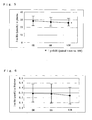
- the plasma 3-m-His levels and the concentrations of 3-m-His in dialysate are shown in Fig. 5 and Fig. 6, respectively.
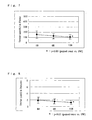
- the plasma taurine levels and the concentrations of taurine in dialysate are shown in Fig. 7 and Fig. 8, respectively.
- the plasma 3-m-His level a common index of myolysis, was 28.04 ⁇ 6.255 ⁇ mol/L on Week 0 (before administration of the pharmaceutical preparation of the present invention) and decreased to 27.32 ⁇ 6.254 ⁇ mol/L on Week 6 and significantly to 26.56 ⁇ 5.27 ⁇ mol/L (p ⁇ 0.05 vs. Week 0 on Paired t-test).
- the 3-m-His concentration in dialysate which was 0.29 ⁇ 0.19 ⁇ mol on Week 0 and 0.29 ⁇ 0.20 ⁇ mol on Week 6, also decreased to 0.24 ⁇ 0.18 ⁇ mol on Week 13, when the plasma level showed a significant decrease.
- the 3-m-His concentration in dialysate indicated the presence of myolysis on Week 13.
- the plasma taurine level decreased from 156.08 ⁇ 72.74 ⁇ mol/L on Week 0 (before administration of the pharmaceutical preparation of the present invention) to 127.80 ⁇ 50.90 ⁇ mol/L on Week 6 and significantly to 107.44 ⁇ 42.30 ⁇ mol/L on Week 13 (p ⁇ 0.05 vs. Week 0 on Paired t-test).
- the concentration of taurine in dialysate also significantly decreased from 1.92 ⁇ 1.13 ⁇ mol on Week 0 to 1.45 ⁇ 0.78 ⁇ mol on Week 6 and to 1.20 ⁇ 0.65 ⁇ mol on Week 13 (p ⁇ 0.05 vs. Week 0 on Paired t-test), when the plasma level showed a significant decrease.
- Example 5 Determination of the blood amino acid levels in dialysis patients
- Necessary checkups, tests and examinations were conducted on the day of the first dialysis (Monday or Tuesday) during the week before the administration period.
- the "NEOAMYU" preparation was continuously administered over a time period of 12 weeks and one day (the day of 37th dialysis).
- one bottle (200 mL) of the preparation was infused at each dialysis session into the vein side of the dialysis circuit. The preparation was delivered over the entire course of dialysis.
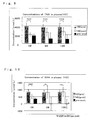
- the total amino acid concentration in plasma was decreased by half, from about 4000 ⁇ mol/L before dialysis to about 2000 ⁇ mol/L after dialysis.
- the total amino acid (TAA) concentration showed a slight increase during dialysis by the administration of "NEOAMYU".
- EAA essential amino acids
- NEAA non-essential amino acids
- amino acids administered during dialysis will be immediately removed by dialysis.
- NEOAMYU the amino acid infusion fluid of the present example, contains 11.8g of amino acid, suggest that the amino acid infusion fluid continuously infused during dialysis keeps amino acids, in particular essential amino acids, from being eliminated from the body and serves to maintain the blood amino acid levels.
- the method of the present invention for administering the specific amino acid infusion fluid improves various conditions of dialysis patients and, as a result, anemia can be ameliorated and protein catabolism can be suppressed in these patients.
- the plasma concentrations of essential amino acids and non-essential amino acids are shown in Tables 2 through 4 below.
- Table 2 shows plasma concentrations of essential amino acids before administration of the amino acid infusion fluid (Week 0).
- Table 3 shows plasma concentrations of essential amino acids after administration of the amino acid infusion fluid (Week 13).
- Table 2 Standards Administration Difference Dialysate Rate of removal (%) Dialysate/ before administration Before After Min. Max. Average Average Average Threonine 74.2 216.1 131.3 68.3 63.0 1.87 48.0 0.014 Valine 156.2 360.4 188.9 105.6 83.3 2.98 44.1 0.016 methionine 15.5 38.6 31.2 16.5 14.8 0.49 47.3 0.016 isoleucine 37.0 100.4 71.7 47.4 24.3 1.19 33.9 0.017 Leucine 74.2 169.1 106.5 81.2 25.3 1.77 23.8 0.017 phenylalanine 43.5 79.8 73.8 51.5 22.3 1.36 30.2 0.018 Lysine 125.7 281.9 208.2 110.9 97.3 2.82 46.7 0.014 tryptophan 36.2 79.3 22.1 21.5 0.7 0.57 3.0 0.020 Histidine 63.0 105.2 101.9 57.7
- Table 4 shows plasma concentrations of non-essential amino acids before administration of the amino acid infusion fluid (Week 0).
- Table 5 shows plasma concentrations of non-essential amino acids after administration of the amino acid infusion fluid (Week 13).
- Table 4 Standards Administration Difference Dialysate Rate of removal (%) Dialysate/ before administration Before After Min. Max. Average Average Average aspartic acid 0.0 7.2 5.0 3.3 1.6 - 32.7 - asparagine 43.8 90.6 74.5 45.5 29.0 2.03 38.9 0.027 serine 91.5 186.4 122.7 72.7 50.0 1.84 40.7 0.015 glutamic acid 12.2 82.7 70.1 79.3 -9.2 1.33 -13.1 0.019 glutamine 418.0 739.8 601.5 393.9 207.5 9.78 34.5 0.016 proline 71.3 373.0 299.1 163.4 135.6 7.11 45.4 0.024 glycine 140.4 427.3 366.5 202.4 164.1 5.34 44.8 0.015 alanine 258.8 615.2 456.8 204.5 252.3 5.86 55.2 0.013 histidine 4.7 34.8 111.7 27.1 84.6 1.65 75.7
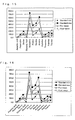
- the plasma aminograms based on the plasma amino acid concentrations are shown in Figs. 13 through 16.
- the amino acid infusion fluid of the present invention which serves as a pharmaceutical preparation for ameliorating anemia in dialysis patients, can be continuously administered to patients with chronic renal failure receiving hemodialysis to suppress protein degradation and maintain/improve nutritional status of such patients.
- anemia can be ameliorated and, consequently, the dose of erythropoietin administered during dialysis can be reduced in these patients.
- the pharmaceutical preparation of the present invention for controlling the serum phosphate levels can suppress protein degradation and maintain/improve nutritional status of patients with chronic renal failure receiving hemodialysis.
- the serum phosphate levels in such patients can be controlled within a predetermined range.
- the serum phosphate levels in patients with chronic renal failure can be decreased to fall within a predetermined range when they are too high or maintained within that range when they are already in the range.
- the amino acid infusion fluid of the present invention which also serves as a pharmaceutical preparation for suppressing protein catabolism, can be continuously administered to patients with chronic renal failure receiving hemodialysis to prevent muscle weakening and a decrease in cardiovascular functions and decreased QOL of such patients, symptoms resulting from hemodialysis.
- the amino acid infusion fluid of the present invention can prevent or alleviate these symptoms even when patients are receiving long-term hemodialysis.
- the amino acid infusion fluid of the present invention can be used to avoid risks of complications in patients with chronic renal failure receiving hemodialysis and to thereby improve quality of life (QOL) and prognosis of such patients.
- QOL quality of life
- the present invention therefore is of significant medical importance.
Landscapes
- Health & Medical Sciences (AREA)
- Chemical & Material Sciences (AREA)
- Medicinal Chemistry (AREA)
- Pharmacology & Pharmacy (AREA)
- Life Sciences & Earth Sciences (AREA)
- Animal Behavior & Ethology (AREA)
- General Health & Medical Sciences (AREA)
- Public Health (AREA)
- Veterinary Medicine (AREA)
- Epidemiology (AREA)
- Diabetes (AREA)
- Organic Chemistry (AREA)
- Engineering & Computer Science (AREA)
- Hematology (AREA)
- Chemical Kinetics & Catalysis (AREA)
- General Chemical & Material Sciences (AREA)
- Nuclear Medicine, Radiotherapy & Molecular Imaging (AREA)
- Bioinformatics & Cheminformatics (AREA)
- Dermatology (AREA)
- Obesity (AREA)
- Pharmaceuticals Containing Other Organic And Inorganic Compounds (AREA)
- Acyclic And Carbocyclic Compounds In Medicinal Compositions (AREA)
- External Artificial Organs (AREA)
- Medicinal Preparation (AREA)
- Medicines Containing Material From Animals Or Micro-Organisms (AREA)
Abstract
Description
- The present invention relates to an infusion fluid for dialysis patients and in particular, to a treatment for anemia in dialysis patients receiving hemodialysis, hemodiafiltration or other hemodialytic treatments. The present invention also relates to a method for ameliorating anemia in patients with chronic renal failure. The method requires a reduced amount of erythropoietin (EPO), a hematopoietic hormone administered to chronic renal failure patients to treat anemia.
- Hemodialysis (HD) is one of the blood purification techniques used to treat patients with chronic renal failure. One problem with hemodialysis is that it removes not only waste products, but also useful substances such as amino acids, from the body of a patient. Recent dialysis techniques adapted to long-term treatment are often associated with a condition known as dialysis-related amyloidosis, which develops as a result of the accumulation of a relatively large protein, beta-2 microglobulin (MW = 11800). To prevent amyloidosis, many of these techniques involve the use of high-performance membranes for removing beta-2 microglobulin. However, high-performance membranes can remove serum albumin (MW = several tens of thousands), along with the microglobulin. As a result, the patients may suffer from iatrogenically caused malnutrition.
- As albumin and amino acids are continually lost during dialysis, myolysis, or protein catabolism, occurs. The protein catabolism is more significant in hemodialysis (HD) than in hemodiafiltration (HFD which is performed to positively remove dissolved substances).
- Malnutrition adversely affects the prognosis of patients, and improving nutritional status in dialysis patients is a highly important issue.
- With rare exceptions, chronic renal failure is associated with anemia (specifically called "renal anemia"). Patients with severe anemia can easily become short of breath while walking a short distance. Severe renal anemia can also lead to decreased activities of daily living (ADL) and cause heart failure and other secondary complications. Therefore, renal anemia is a serious problem for dialysis patients.
- The most important cause of anemia in dialysis patients is the defective production of a hematopoietic hormone erythropoietin (EPO). Most of the patients currently receiving dialysis also receive EPO to treat their anemia. Dialysis patients with malnutrition generally show a poor response to EPO. In other words, normal doses of EPO do not have sufficient effect on anemia in these patients. Thus, dialysis patients with malnutrition often require EPO administered in large doses.
- Recent studies report that EPO treatment of anemia in dialysis patients ameliorates not only anemia itself, but also nutritional status of the patients (See, for example, Non-Patent
Documents 1 through 6). This observation suggests that the EPO treatment for anemia might be responsible for the improvement in nutritional status. - As described above, serum albumin and amino acids are rapidly removed from the blood of patients during dialysis. Such drastic changes, which are not normally experienced by healthy people, cause severe malnutrition in dialysis patients during dialysis. Metabolic acidosis, renal anemia, inflammation and other symptoms of patients with renal failure can also cause catabolism of amino acids and proteins, leading to malnutrition.
- One effective approach to avoid such rapid changes in the blood is the continuous infusion of amino acids, which quickly replaces amino acids lost during dialysis. In dialysis patients who suffer from amino acid depletion of the sort that is never experienced by healthy people, it is extremely important to replace the amino acids lost during dialysis. The replacement of the lost amino acids can prevent or alleviate malnutrition or protein catabolism during dialysis.
- From that point of view, improving the nutritional status in dialysis patients by replacing the amino acids, especially essential amino acids, is considered the most effective way to ameliorate anemia in such patients. Such an approach to ameliorate anemia can decrease the dose of EPO administered to dialysis patients.
- While various amino acid preparations have been developed for use in patients with renal failure, no literatures or reports exist that describe the use of these drugs to ameliorate malnutrition-associated anemia in dialysis patients or the advantage of using these drugs to reduce the dose of EPO.
- Hyperphosphatemia is generally defined as a condition in which the serum phosphate level is elevated to 5.0 mg/dL or higher. Hyperphosphatemia is caused by (i) increased phosphate released from the cells, (ii) increased phosphate intake or (iii) decreased renal phosphate excretion. Serum phosphate levels also increase when the glomerular filtration rate (GFR) is decreased to 30% or less of the normal rate due to defective renal functions such as renal failure.
- Thus, patients with renal failure tend to have high serum phosphate levels and are recommended to avoid phosphorus-rich food products such as meat and milk. This also facilitates the reduction of albumin and amino acids, thus resulting in significant protein catabolism.
- An increase in the phosphate levels causes binding of phosphate to calcium in blood, which can lead to ectopic calcification, a major cause of arteriosclerosis.
- In addition to diet, phosphate binders (such as sevelamer hydrochloride and precipitated calcium carbonate (Non-Patent Document 7) are currently used to prevent elevation of serum phosphate levels. However, decreasing the blood phosphate levels is considered merely a symptomatic treatment and regarded as a last resort since phosphate is not adequately utilized in myolysis and dysostosis. Therefore, a desirable treatment is to make phosphate available by constantly controlling the serum phosphate levels within an optimum range, rather than to simply decrease the phosphate levels.
- Preferably, a phosphate binder for treating hyperphosphatemia in renal failure patients receiving dialysis is administered at a particular dose so that the serum phosphate level is kept below 6.0 mg/L. The dose is adjusted depending on the serum phosphate level. However, as described above, the adjustment of serum phosphate levels by phosphate binders is only a symptomatic treatment and regarded as a last resort.
- As described above, serum albumin and amino acids are rapidly removed from the blood of patients during dialysis. As a result, dialysis patients will experience severe protein catabolism. To prevent this, the loss of amino acids is compensated for by continuous infusion of amino acids, which quickly replaces the amino acids lost during dialysis. Replenishing amino acids prevents or alleviates malnutrition or protein catabolism during dialysis, thereby suppressing the elevation of serum phosphate levels due to myolysis. In this manner, the serum phosphate levels can be controlled.
- While various amino acid preparations have become available for use in patients with renal failure, no literatures or reports exist that describe the use of these drugs to control the serum phosphate levels in dialysis patients within an optimum range.
- Non-Patent Document 1: Gunnell J., et al.: Am. J. Kid. Dis., 33, 63-71 (1999)
- Non-Patent Document 2: Balaskaa E. V., et al.: Miner Electrolyte Metab., 25, 324-332 (1999)
- Non-Patent Document 3: Navarro J. F., et al.: Am. J. Clin. Nutr., 71, 765-773 (2000)
- Non-Patent Document 4: Serna-Thome M. G., et al.: Curr. Opinion Clin. Nutr. Metab. Care 5, 293-296 (2002)
- Non-Patent Document 5: Pupim L. B., et al.: J. Clin. Invest., 110, 483-492 (2002)
- Non-Patent Document 6: Pupim L. B., et al.: J. Am. Soc. Nephrol., 15, 1920-1926 (2004)
- Non-Patent Document 7: Japanese Pharmacopoeia 14th ed., Paragraphs regarding precipitated calcium carbonate
- Embodiments of the invention are described below, by way of example only, and with reference to the accompanying drawings, of which:
- Fig. 1 is a graph showing changes in the dose of EPO according to Example 2.
- Fig. 2 is a graph showing changes in the hemoglobin (Hb) concentration according to Example 2.
- Fig. 3 is a graph showing changes in the hematocrit (Ht) according to Example 2.
- Fig. 4 is a graph showing changes in the serum phosphate level (for individual patients) according to Example 3.
- Fig. 5 is a graph showing changes in the 3-m-His concentration in plasma according to Example 4.
- Fig. 6 is a graph showing changes in the 3-m-His concentration in dialysate according to Example 4.
- Fig. 7 is a graph showing changes in the taurine concentration in plasma according to Example 4.
- Fig. 8 is a graph showing changes in the taurine concentration in dialysate according to Example 4.
- Fig. 9 shows a comparison of the total amino acid concentrations in plasma according to Example 5.
- Fig. 10 shows a comparison of the concentrations of essential amino acids in plasma according to Example 5.
- Fig. 11 shows a comparison of the concentrations of non-essential amino acids in plasma according to Example 5.
- Fig. 12 shows a comparison of the concentrations of total amino acids, essential amino acids and non-essential amino acids in dialysate according to Example 5.
- Fig. 13 is an aminogram of essential amino acids prior to administration (0W) according to Example 5.
- Fig. 14 is an aminogram of essential amino acids 37 weeks after administration (37W) according to Example 5.
- Fig. 15 is an aminogram of non-essential amino acids prior to administration (0W) according to Example 5.
- Fig. 16 is an aminogram of non-essential amino acids 37 weeks after administration (37W) according to Example 5.
- In view of the above-described state of the art, it is an object of the present invention to provide a pharmaceutical preparation for treating anemia in patients with chronic renal failure receiving hemodialysis. Embodiments of the pharmaceutical preparation desirably prevent or alleviate anemia in patients by ameliorating malnutrition.
- It is another object of the present invention to provide a method for ameliorating anemia in dialysis patients. It is another object of the invention to provide a method for reducing the dose of erythropoietin administered to dialysis patients.
- It is another object of the present invention to provide a pharmaceutical preparation for controlling serum phosphate levels in patients with chronic renal failure receiving hemodialysis. Embodiments of the pharmaceutical preparation desirably control the serum phosphate levels within a specific range by ameliorating malnutrition in patients.
- It is another object of the present invention to provide a pharmaceutical preparation for suppressing protein catabolism in patients with chronic renal failure receiving hemodialysis.
- It is another object of the present invention to provide a method for suppressing myolysis or protein catabolism in dialysis patients using plasma taurine levels as an index.
- In the course of studies to achieve the above-described objects of the invention, the present inventor has found that the continuous infusion of an amino acid solution formulated to replace amino acids lost during hemodialysis alleviates anemia in dialysis patients and, as a result, the dose of erythropoietin can be effectively reduced.
- The present inventor has also found that the continuous infusion of such an amino acid solution ameliorates nutritional status of dialysis patients, so that the serum phosphate levels in the patients can be controlled within an optimum range. These findings have ultimately led to the present invention.
- It is known that taurine is normally present at considerably high concentrations in muscles and at low concentrations in blood: The ratio of taurine concentration in muscles to that in plasma is normally 300 or higher. However, advanced myolysis or protein catabolism causes a release of taurine into blood, resulting in high plasma taurine levels. The present inventor has discovered that the plasma taurine levels can be used as an index of myolysis and protein catabolism and the continuous infusion of the above-described amino acid solution can be carried out based on this index in order to ameliorate protein catabolism in dialysis patients.
- Accordingly, a first aspect of the present invention concerns a pharmaceutical preparation for treating anemia in patients receiving dialysis. An essential embodiment of the first aspect, the invention of
claim 1 comprises the pharmaceutical preparation comprising an amino acid infusion fluid containing at least one essential amino acid. - A more specific embodiment of the first aspect, the invention of
claim 2 comprises the pharmaceutical preparation according toclaim 1, wherein the amino acid infusion fluid has an amino acid composition comprising at least L-isoleucine, L-leucine, L-lysine, L-methionine, L-phenylalanine, L-threonine, L-tryptophan, L-valine, L-alanine, L-arginine, L-aspartic acid, L-glutamic acid, L-histidine, L-proline, L-serine, L-tyrosine, glycine and L-cysteine with the ratio of essential amino acids to non-essential amino acids being 2.5 or higher. - The invention of
claim 3, a most specific embodiment of the first aspect, comprises the pharmaceutical preparation according toclaim 1, wherein the amino acid infusion fluid has the following amino acid composition:L-isoleucine 5.0 - 10.0 g/L L-leucine 8.0 - 12.0 g/L L-lysine (as acetate) 4.5 - 10.5 g/L L-methionine 3.5 - 6.5 g/L L-phenylalanine 3.5 - 6.5 g/L L-threonine 1.8 - 3.3 g/L L-tryptophan 1.8 - 3.3 g/L L-valine 5.0 - 10.0 g/L L-alanine 1.5 - 4.5 g/L L-arginine 1.5 - 4.5 g/L L-aspartic acid 0.2 - 0.4 g/L L-glutamic acid 0.2 - 0.4 g/L L-histidine 1.8 - 3.3 g/L L-proline 1.0 - 3.0 g/L L-serine 0.5 - 1.5 g/L L-tyrosine 0.3 - 0.7 g/L glycine 1.2 - 1.7 g/L L-cysteine 0.2 - 0.4 g/L. - Preferably, the pharmaceutical preparation according to the first aspect of the present invention is continuously infused by means of a pump into the vein side of the dialysis circuit.
- A second aspect of the present invention concerns a pharmaceutical preparation for reducing the dose of erythropoietin in patients receiving dialysis. An essential embodiment of the second aspect, the invention of
claim 5 comprises the pharmaceutical preparation comprising an amino acid infusion fluid containing at least one essential amino acid. - A more specific embodiment of the second aspect, the invention of
claim 6 comprises the pharmaceutical preparation according toclaim 5, wherein the amino acid infusion fluid has the amino acid composition according toclaim 2. - A most specific embodiment of the second aspect, the invention of
claim 6 comprises the pharmaceutical preparation according toclaim 5, wherein the amino acid infusion fluid has the amino acid composition according toclaim 3. - A third aspect of the present invention concerns a pharmaceutical preparation for controlling serum phosphate levels in patients receiving dialysis. An essential embodiment of the third aspect, the invention of
claim 9 comprises the pharmaceutical preparation comprising an amino acid infusion fluid containing at least one essential amino acid. - A more specific embodiment of the third aspect, the invention of
claim 10 comprises the pharmaceutical preparation according toclaim 9, wherein the amino acid infusion fluid has the amino acid composition according toclaim 2. - A most specific embodiment of the third aspect, the invention of claim 11 comprises the pharmaceutical preparation of
claim 9, wherein the amino acid infusion fluid has the amino acid composition according toclaim 3. - Another specific embodiment of the third aspect comprises any of the pharmaceutical preparations of the third aspect, wherein the serum phosphate levels in dialysis patients are controlled within a range of 3.5 to 6.0 mg/dL.
- The present invention also concerns a method for controlling serum phosphate blood levels in patients receiving dialysis, comprising administering any of the pharmaceutical preparations of the third aspect to patients with renal failure.
- A fourth aspect of the present invention concerns a pharmaceutical preparation for suppressing protein catabolism in patients receiving dialysis. An essential embodiment of the fourth aspect, the invention of claim 13 comprises the pharmaceutical preparation comprising an amino acid infusion fluid containing at least one essential amino acid.
- The invention of
claim 14, a most specific embodiment of the fourth aspect, comprises the pharmaceutical preparation according to claim 13, wherein the amino acid infusion fluid has the amino acid composition according toclaim 2. - A most specific embodiment of the fourth aspect, the invention of
claim 15 comprises the pharmaceutical preparation according to claim 13, wherein the amino acid infusion fluid has the amino acid composition according toclaim 3. - Another aspect of the present invention, the invention of claim 17 comprises a method for suppressing protein catabolism in patients receiving dialysis using plasma taurine levels as an index of protein catabolism. Still another aspect, the invention of claim 18 comprises a method for determining the degree of protein catabolism.
- Still another aspect of the present invention concerns a specific method for administering an amino acid infusion fluid to patients receiving dialysis. A specific embodiment of this aspect, the invention of claim 19 comprises the method comprising pressurizing the infusion fluid and infusing it into the vein side of the dialysis circuit over the course of dialysis.
- Still another aspect of the present invention concerns a method for ameliorating anemia, or reducing the dose of erythropoietin, or suppressing protein catabolism in patients receiving dialysis, in which the specific amino acid infusion fluid of the present invention is pressurized and continuously infused into the vein side of the dialysis circuit over the course of dialysis. A specific embodiment of this aspect comprises the method in which the infusion fluid is pressurized and continuously infused into the vein side of the dialysis circuit over the course of dialysis for at least a three-month period.
- The first and the second aspects of the present invention serve to replace or replenish amino acids lost during hemodialysis in patients with chronic renal failure and suppress protein degradation or protein catabolism in these patients, thereby maintaining and ameliorating the nutritional status of the patients. As a result, anemia in these patients can be alleviated.
- It turned out that, in practice, the blood hemoglobin (Hb) level was maintained at 10 to 11 g/dL and the hematocrit (Ht) was maintained at about 30 to 33% by the use of the invention.
- This observation, together with the fact that erythropoietin is generally administered to a patient with a blood Hb level of 10 g/dL or below or an Ht of less than 30%, suggests that the present invention effectively alleviates anemia in dialysis patients.
- The amelioration of anemia leads to a reduction in the dose of erythropoietin administered during dialysis, which in turn decreases the medication cost that patients with chronic renal failure have to pay to receive hemodialysis. This is particularly advantageous in countries like Japan where the dialysis cost specified by the health insurance system includes medication cost because the patients can receive more sophisticated dialysis therapies under such insurance system.
- The reduction in the dose of erythropoietin provides another benefit to patients because the frequency of side effects can be decreased, making dialysis a safer treatment.
- Likewise, the third aspect of the present invention serves to replace amino acids lost during hemodialysis in patients with chronic renal failure and suppress protein degradation or protein catabolism in these patients. This helps maintain and improve the nutritional status of the patients. As a result, the serum phosphate levels in these patients can be controlled within a predetermined range. Specifically, the serum phosphate levels in patients with chronic renal failure can be decreased to fall within a predetermined range if they are too high or maintained within that range if they are already in the range.
- This significantly reduces the risk of complications in hemodialysis patients with chronic renal failure. As a result, the quality of life (QOL) of the patients can be improved, as can the prognosis of the patients.
- It is known that each of the existing treatments for hyperphosphatemia has its own side effects. For example, precipitated calcium carbonate causes hypercalcemia, whereas sevelamer hydrochloride causes constipation, abdominal distension and other gastrointestinal symptoms and chloride acidosis. Due to these side effects, the traditional treatments for hyperphosphatemia cannot be used in doses high enough to lower the serum phosphate levels to the desired level. In particular, patients with significantly high serum phosphate levels require correspondingly high doses of the treatments, which result in an increased risk of side effects. Thus, these patients often receive insufficient doses of the treatments.
- While some of the incidences of abnormally high serum phosphate levels are caused by excessive consumption of phosphate-rich food, such as meat, others which are considered to be caused by protein catabolism, or dysostosis. The pharmaceutical preparation of the present invention for controlling serum phosphate levels can be used in conjunction with traditional treatments for hyperphosphatemia to compensate for their insufficient effects.
- It is known that weakened muscles, decreased cardiovascular functions and decreased QOL will result when hemodialysis-associated protein catabolism is chronically repeated three times a week. The fourth aspect of the present invention serves to suppress the protein catabolism, thereby preventing or alleviating these symptoms in patients receiving long-term hemodialysis.
- 3-methyl-histidine (3-m-His) is often used as an index of protein catabolism and myolysis. 3-m-His produced in muscles is released into blood under hypercatabolic conditions and is ultimately excreted in urine. However, it is argued that 3-m-His can serve as an accurate index of catabolism since plasma 3-m-His levels are significantly increased when the excretion of 3-m-His is disrupted due to reduced renal functions. Taurine is an amino acid excreted in urine. Since taurine is present in muscle at very high concentrations, nearly 400 times higher than in plasma, it is released into blood in significantly larger amounts when myolysis occurs. As a result, the plasma taurine levels are significantly increased.
- Thus, an increase in the plasma taurine levels or an increased taurine concentration in dialysates should indicate the occurrence of hypercatabolism and a decrease in these amounts should indicate suppressed catabolism.
- The amino acid infusion fluid, a pharmaceutical preparation provided in accordance with the present invention, contains at least the following eight essential amino acids: L-isoleucine, L-leucine, L-lysine, L-methionine, L-phenylalanine, L-threonine, L-tryptophan and L-valine. When the infusion fluid is intended for use in patients with renal failure, it further contains L-histidine, which is also essential to these patients. The infusion fluid may contain additional amino acids, including L-alanine, L-arginine, L-aspartic acid, L-glutamic acid, L-proline, L-serine, L-tyrosine, glycine and L-cysteine.
- These amino acids are not necessarily used in the form of free amino acids: They may be used in the form of pharmaceutically or dietary acceptable salts. For example, they may be used in the form of pharmaceutically or dietary acceptable inorganic acid salts, organic acid salts, hydrolyzable esters or N-acyl derivatives. They may also be used in the form of peptides consisting of the same or different amino acids linked by peptide bonds.
- The amino acid infusion fluid of the present invention is preferably formulated so that it is rich in essential amino acids. Specifically, the infusion fluid is formulated such that the ratio of essential amino acids to non-essential amino acids is 2.5 or higher, preferably 3.0 or higher, and most preferably 3.2 or higher.
- The amino acid infusion fluid for use in the method of the present invention contains amino acids in amounts that can effectively replace amino acids and nutrients lost during hemodialysis. For example, 200 ml of the infusion fluid may contain 11 g to 13 g of amino acids in total with about 70% or more being essential amino acids. Preferably, the infusion fluid contains amino acids at a concentration of about 5.5 to about 6.5 w/v%.
- The amino acid infusion fluid of the present invention may further contain electrolytes. Examples include potassium ions, calcium ions, magnesium ions, chloride ions, bicarbonate ions and gluconic acid ions. The infusion fluid may further contain lactic acid, citric acid and malic acid and may be made free of acetic acid ions to avoid acetate intolerance.
- The amino acid infusion fluid of the present invention may be infused into peripheral veins during hemodialysis, or it may be continuously infused through central vein lines by total parenteral nutrition technique. Preferably, the infusion fluid is continuously infused, along with a dialysate, over the course of dialysis.
- Specifically, the infusion fluid of the present invention is continuously infused over the entire course of dialysis (typically about 4 hours) as opposed to traditional amino acid infusion fluids for renal failure, which are typically started 90 to 60 minutes before the end of dialysis and terminated at the end of dialysis. This is because albumin and amino acids start to be lost at the beginning of dialysis.
- Preferably, the infusion fluid is continuously infused into the dialysis circuit that returns the dialyzed blood to the body by applying pressure with a pump. Specifically, the infusion fluid pressurized with a pump is continuously infused into the vein side of the dialysis circuit over the entire course of dialysis for at least a three-month period.
- Thus, the present invention in one aspect provides a specific method for administering the amino acid infusion fluid to dialysis patients.
- Most preferably, the amino acid infusion fluid of the present invention that serves as a pharmaceutical preparation for treating a variety of conditions in dialysis patients is formulated as an injection that contains total nitrogen of 8.1 mg/mL and total free amino acids at a concentration of 5.90 w/v% with the ratio of essential amino acids to non-essential amino acids being 3.21.
- Preferably, the amino acid infusion fluid suitable for use in the present invention has the following amino acid composition (in 200 mL):
L-isoleucine 1.5 g L-leucine 2.0 g L-lysine (as acetate) 1.4 g L-methionine 1.0 g L-phenylalanine 1.0 g L-threonine 0.5 g L-tryptophan 0.5 g L-valine 1.5 g L-alanine 0.6 g L-arginine 0.6 g L-aspartic acid 0.05 g L-glutamic acid 0.05 g L-histidine 0.5 g L-proline 0.4 g L-serine 0.2 g L-tyrosine 0.1 g glycine 0.3 g L-cysteine 0.05 g. - While L-lysine is provided in the form of acetate, it may be given as chloride to ensure that the infusion fluid is free of acetic acid.
- In addition to the above-described amino acids, the amino acid infusion fluid of the present invention may contain L-carnitine. The amino acids are not necessarily used in their free forms: They may be provided in the form of inorganic acid salts or organic acid salts. L-carnitine is preferably added at a concentration of 0.1 to 10 g/L, more preferably at a concentration of 1 to 5 g/L.
- The amino acid infusion fluid of the present invention may further contain a sugar depending on the conditions of patients. While any sugar commonly used in infusion fluids may be used, reducing sugars, such as glucose, fructose and maltose, and nonreducing sugars, such as trehalose, xylitol, sorbitol and glycerol, are preferably used. Of these sugars, glucose is particularly preferred in terms of nutrition.
- When the amino acid infusion fluid of the present invention is used, for example, in dialysis patients with diabetic nephropathy receiving insulin treatments, it preferably contains glucose at a concentration commonly used in dialysates for artificial kidneys (i.e., 0.05 to 0.2 w/v%). For the purpose of facilitating utilization of the supplied amino acids in protein synthesis, the amino acid infusion fluid of the present invention preferably contains glucose at a concentration of 0.75 to 3.5 w/v%. When the glucose concentration in the infusion fluid is from 0.05 to 0.2 w/v% and it is desired to facilitate utilization of the supplied amino acids in protein synthesis, patients are advised to have a nonprotein calorie intake of 500 Kcal or above for every 1.6 g of total nitrogen intake during hemodialysis.
- The amino acid infusion fluid of the present invention may further contain various vitamins, including vitamin B1, vitamin B2, vitamin B6, vitamin B12, vitamin C, vitamin A, vitamin D, vitamin E, vitamin K, vitamin H, folic acid, pantothenic acid and nicotinic acid. Vitamins facilitate maintenance and improvement of nutritional status.
- The amino acid infusion fluid of the present invention may further contain trace elements. The term "trace element" as used herein refers to a metal element that is present in the body in trace amounts but is essential to the proper functioning of the body. Among preferred trace elements are inorganic or organic salts of zinc, copper and selenium, each a metal element decreased in dialysis patients with chronic renal failure. Administration of the trace elements serves not only to prevent deficiencies of these elements, but also to facilitate protein synthesis, as well as maintenance and improvement of nutritional status. The trace elements are added to the infusion fluid to meet daily requirements.
- Preferably, the amino acid infusion fluid of the present invention has a pH of 6.6 to 7.6 and an osmotic ratio to saline of about 2. The pH of the infusion fluid can be adjusted by inorganic acids, such as sodium hydroxide and hydrochloric acid, organic acids, such as acetic acid and citric acid, and gases, such as carbon dioxide.
- The amino acid infusion fluid of the present invention to make various pharmaceutical preparations for use in dialysis patients, are preferably packaged in suitable containers. When necessary, different components of the infusion fluid may be packaged in different compartments defined in a container. These compartments may be separated by separators that are designed to bring the compartments into fluid communication with each other to allow mixing of the components. It is preferred that amino acids that are unstable at high pH values, such as cysteine and tryptophan, be packaged separately from sodium bicarbonate. Amino acids are packaged separately from sodium bicarbonate when the presence of amino acids lowers the pH and, thus, the concentration of sodium bicarbonate.
- When the amino acid infusion fluid of the present invention is used to treat anemia in dialysis patients, it is preferably packaged in a container made of a soft resin material that has high flexibility and transparency and hardly breaks when dropped onto a hard surface after storage at low temperatures. Polyolefins, a material commonly used in medical containers, are particularly preferred for this purpose. Examples of the polyolefin include polyethylene, polypropylene, poly-1-butene, poly-4-methyl-1-pentene and other polymers. The container may be made of shaping the above-describe resins by blow injection, or by inflation or deflation molding techniques. Alternatively, a pair of resin sheets may be welded along the periphery to form a pouch.
- Embodiments of the present invention will now be described with reference to examples, which are not intended to limit the scope of the invention in any way.
- The components shown in Table 1 below were dissolved in water for injection in the specified amounts. The solution was subjected to sterile filtration and placed in a glass vial. The vial was sealed and autoclaved to make an antianemic preparation (amino acid infusion fluid).
- The preparation had a pH of 6.6 to 7.6 and an osmotic ratio of about 2.
Table 1: Components In 200mL L-isoleucine 1.500g L-leucine 2.000g L-lysine (as acetate) 1.400g L-methionine 1.000g L-phenylalanine 1.000g L-threonine 0.500g L-tryptophan 0.500g L-valine 1.500g L-alanine 0.600g L-arginine 0.600g L-aspartic acid 0.050g L-glutamic acid 0.050g L-histidine 0.500g L-proline 0.400g L-serine 0.200g L-tyrosine 0.100g Glycine 0.300g Total Amino Acid 12.200g Amino Acid concentration 6.100 w/v% Additives In 200mL L-cysteine 0.050g Sodium hydrogen sulfite 0.050g Glacial acetic acid (pH adjuster) As desired - The amino acid infusion fluid formulated according to Example 1 also serves as any of the following: A pharmaceutical preparation for reducing the dose of erythropoietin (the second aspect of the invention), a pharmaceutical preparation for controlling the serum phosphate levels (the third aspect of the invention) and a pharmaceutical preparation for suppressing protein catabolism (the fourth aspect of the invention).
- 18 patients with chronic renal failure receiving hemodialysis (HD: 9 patients) or hemodiafiltration (HDF: 9 patients) were administered an exemplary antianemic preparation of the present invention to examine the ability of the preparation to ameliorate anemia and decrease the dose of erythropoietin.
- A commercially available amino acid infusion fluid "NEOAMYU (registered trademark)" (200 mL preparation, Ajinomoto Pharma Co., Ltd.) formulated according to Example 1 was used.
- Necessary checkups, tests and examinations were conducted on the day of the first dialysis (Monday or Tuesday) during the week before the administration period. Starting one week after the checkups, the "NEOAMYU" preparation was continuously administered over a time period of 12 weeks and one day (the day of 37th dialysis). Specifically, one bottle (200 mL) of the preparation was infused at each dialysis session into the vein side of the dialysis circuit. The preparation was delivered over the entire course of dialysis.
- Erythropoietin (EPO) was intravenously administered three times a week at each of the dialysis sessions during the week. Specifically, the dose of EPO was adjusted so that the hemoglobin (Hb) concentration was maintained in the range of 10 to 11 g/dL and the hematocrit (Ht) was maintained in the range of 30 to 33%.
- Changes in the dose of EPO are shown in Fig. 1. Changes in the Hb concentration and the Ht are shown in Figs. 2 and 3, respectively.
- As can be seen from the results of these figures, the dose of EPO was required to maintain the Hb concentration and the Ht was 6,125 ± 3,163.7 units/week before administration of "NEOAMYU" product (Week 0). 6 weeks after the start of administration (Week 6), the dose was decreased to 4,875 ± 3,111.0 units/week. On Week 13, the dose was significantly decreased to 3,375 ± 3,557.6 units/week (p < 0.01 on Wilcoxon Matched-Pair Signed-Rank Test).
- The Hb concentration and Ht were kept stable during the administration of the product.
- These observations indicate that the amino acid infusion fluid of the present invention can effectively ameliorate anemia in dialysis patients, thus reducing the dose of EPO administered to these patients.
- 8 patients with chronic renal failure receiving hemodialysis (HD) were administered an exemplary serum phosphate-controlling preparation of the present invention to examine the changes in the serum phosphate levels.
- A commercially available amino acid infusion fluid "NEOAMYU" (200 mL preparation, Ajinomoto Pharma Co., Ltd.) formulated according to Example 1 was used.
- Necessary checkups, tests and examinations were conducted on the day of the first dialysis (Monday or Tuesday) during the week before the administration period. Starting one week after the checkups, the "NEOAMYU" product was continuously administered over a time period of 12 weeks and one day (the day of 37th dialysis). Specifically, one bottle (200 mL) of the preparation was infused at each dialysis session into the vein side of the dialysis circuit. The preparation was delivered over the entire course of dialysis. The serum phosphate levels were measured on Week 0 (before administration) and on Week 13.
- The results are shown in Fig. 4.
- As can be seen from the results of the figure, the serum phosphate level significantly decreased from 6.48 ± 1.752 mg/dL on Week 0 (before administration of the pharmaceutical preparation of the present invention) to 5.41 ± 1.253 mg/dL (p < 0.01 vs.
Week 0 on Paired t-test) on Week 13. - The serum phosphate level in patients who had an initial serum phosphate level within the target range (3.5 to 6.0 mg/dL) remained within the range. In comparison, the blood phosphate level decreased significantly in patients who had an initial serum phosphate level of higher than 6.0 mg/dL.
- The product of the serum phosphate level and the serum calcium level (Ca x P) was 56.7 ± 13.88 (mg/dL)2 on Week 0 (before administration) and decreased significantly (p < 0.01 vs.
Week 0 on Paired t-test) to 48.5 ± 13.89 (mg/dL)2 on Week 13, which was within the target range (55 or less). - These results indicate that the pharmaceutical preparation of the present invention can effectively control the serum phosphate levels in dialysis patients.
- 9 patients with chronic renal failure receiving hemodialysis (HD) were administered an exemplary catabolism-suppressing preparation of the present invention to examine the changes in plasma 3-m-His levels, 3-m-His concentrations in dialysate, plasma taurine levels and taurine concentrations in dialysate.
- A commercially available amino acid infusion fluid "NEOAMYU" (200 mL preparation, Ajinomoto Pharma Co., Ltd.) formulated according to Example 1 was used.
- Necessary checkups, tests and examinations were conducted on the day of the first dialysis (Monday or Tuesday) during the week before the administration period. Starting one week after the checkups, the "NEOAMYU" product was continuously administered over a time period of 12 weeks and one day (the day of 37th dialysis). Specifically, one bottle (200 mL) of the preparation was infused at each dialysis session into the vein side of the dialysis circuit. The preparation was delivered over the entire course of dialysis. The plasma 3-m-His levels, 3-m-His concentrations in dialysate, plasma taurine levels and taurine concentrations in dialysate were measured on Week 0 (before administration), on
Week 6 and on Week 13. - The plasma 3-m-His levels and the concentrations of 3-m-His in dialysate are shown in Fig. 5 and Fig. 6, respectively. The plasma taurine levels and the concentrations of taurine in dialysate are shown in Fig. 7 and Fig. 8, respectively.
- As can be seen from the results of the figure, the plasma 3-m-His level, a common index of myolysis, was 28.04 ± 6.255 µmol/L on Week 0 (before administration of the pharmaceutical preparation of the present invention) and decreased to 27.32 ± 6.254 µmol/L on
Week 6 and significantly to 26.56 ± 5.27 µmol/L (p < 0.05 vs.Week 0 on Paired t-test). - The 3-m-His concentration in dialysate, which was 0.29 ± 0.19 µmol on
Week 0 and 0.29 ± 0.20 µmol onWeek 6, also decreased to 0.24 ± 0.18 µmol on Week 13, when the plasma level showed a significant decrease. Thus, the 3-m-His concentration in dialysate indicated the presence of myolysis on Week 13. - In comparison, the plasma taurine level decreased from 156.08 ± 72.74 µmol/L on Week 0 (before administration of the pharmaceutical preparation of the present invention) to 127.80 ± 50.90 µmol/L on
Week 6 and significantly to 107.44 ± 42.30 µmol/L on Week 13 (p < 0.05 vs.Week 0 on Paired t-test). - The concentration of taurine in dialysate also significantly decreased from 1.92 ± 1.13 µmol on
Week 0 to 1.45 ± 0.78 µmol onWeek 6 and to 1.20 ± 0.65 µmol on Week 13 (p < 0.05 vs.Week 0 on Paired t-test), when the plasma level showed a significant decrease. - Thus, it has been demonstrated that changes observed for taurine were more significant than those observed for 3-m-His, suggesting that taurine serves as a more sensitive index of protein catabolism than 3-m-His in dialysis patients.
- The blood amino acid levels in dialysis patients undergoing the above-described tests were measured.
- 9 patients with chronic renal failure receiving hemodialysis (HD) were administered the amino acid infusion fluid "NEOAMYU" (Ajinomoto Pharma Co., Ltd.) according to the method of the present invention. The blood amino acid levels and amino acid concentrations in dialysate were measured.
- Necessary checkups, tests and examinations were conducted on the day of the first dialysis (Monday or Tuesday) during the week before the administration period. Starting one week after the checkups, the "NEOAMYU" preparation was continuously administered over a time period of 12 weeks and one day (the day of 37th dialysis). Specifically, one bottle (200 mL) of the preparation was infused at each dialysis session into the vein side of the dialysis circuit. The preparation was delivered over the entire course of dialysis.
- The total amino acid concentration in plasma was decreased by half, from about 4000 µmol/L before dialysis to about 2000 µmol/L after dialysis. The total amino acid (TAA) concentration showed a slight increase during dialysis by the administration of "NEOAMYU". When essential amino acids (EAA) and non-essential amino acids (NEAA) were considered separately, however, the EAA concentration remained substantially the same throughout dialysis. This observation suggests that the continuous infusion of ""NEOAMYU" (200 mL preparation) prevents the decrease in the EAA concentration.
- In comparison, the NEAA concentration remained substantially unchanged during dialysis, and the dominance of EAAs (NEAAs: EAA (E/N) = 3.21) was maintained during dialysis.
- As it turned out, the amount of amino acids in dialysate, which was 6 g before administration of "NEOAMYU" (control), increased by about 3 g on
Week 6 by the administration of "NEOAMYU" and returned to the initial level on Week 13. - It is generally believed that amino acids administered during dialysis will be immediately removed by dialysis. However, these results, together with the fact that "NEOAMYU", the amino acid infusion fluid of the present example, contains 11.8g of amino acid, suggest that the amino acid infusion fluid continuously infused during dialysis keeps amino acids, in particular essential amino acids, from being eliminated from the body and serves to maintain the blood amino acid levels.
- Thus, it is concluded that the method of the present invention for administering the specific amino acid infusion fluid improves various conditions of dialysis patients and, as a result, anemia can be ameliorated and protein catabolism can be suppressed in these patients.
- These results are collectively shown in Fig. 9 through Fig. 12.
- The plasma concentrations of essential amino acids and non-essential amino acids are shown in Tables 2 through 4 below.
- Table 2 shows plasma concentrations of essential amino acids before administration of the amino acid infusion fluid (Week 0).
- Table 3 shows plasma concentrations of essential amino acids after administration of the amino acid infusion fluid (Week 13).
Table 2: Standards Administration Difference Dialysate Rate of removal (%) Dialysate/ before administration Before After Min. Max. Average Average Average Threonine 74.2 216.1 131.3 68.3 63.0 1.87 48.0 0.014 Valine 156.2 360.4 188.9 105.6 83.3 2.98 44.1 0.016 methionine 15.5 38.6 31.2 16.5 14.8 0.49 47.3 0.016 isoleucine 37.0 100.4 71.7 47.4 24.3 1.19 33.9 0.017 Leucine 74.2 169.1 106.5 81.2 25.3 1.77 23.8 0.017 phenylalanine 43.5 79.8 73.8 51.5 22.3 1.36 30.2 0.018 Lysine 125.7 281.9 208.2 110.9 97.3 2.82 46.7 0.014 tryptophan 36.2 79.3 22.1 21.5 0.7 0.57 3.0 0.020 Histidine 63.0 105.2 101.9 57.7 44.2 1.49 43.3 0.015 Table 3: Standards Administration Difference Dialysate Rate of removal (%) Dialysate/ before administration Before After Min. Max. Average Average Average threonine 74.2 216.1 143.8 108.9 34.9 24.3 24.3 0.169 valine 156.2 360.4 183.0 195.8 -12.8 43.4 -7.0 0.237 methionine 15.5 38.6 28.1 42.2 -14.1 11.2 -50.1 0.399 isoleucine 37.0 100.4 59.4 81.7 -22.3 20.6 -37.6 0.347 leucine 74.2 169.1 99.6 137.4 -37.8 69.3 -38.0 0.696 phenylalanine 43.5 79.8 64.3 77.4 -13.1 15.1 -20.4 0.235 lysine 125.7 281.9 214.7 151.0 63.7 25.0 29.7 0.117 tryptophan 36.2 79.3 23.7 34.3 -10.5 6.6 -44.4 0.276 histidine 63.0 105.2 109.5 75.6 33.9 14.4 31.0 0.132 - Table 4 shows plasma concentrations of non-essential amino acids before administration of the amino acid infusion fluid (Week 0).
- Table 5 shows plasma concentrations of non-essential amino acids after administration of the amino acid infusion fluid (Week 13).
Table 4: Standards Administration Difference Dialysate Rate of removal (%) Dialysate/ before administration Before After Min. Max. Average Average Average aspartic acid 0.0 7.2 5.0 3.3 1.6 - 32.7 - asparagine 43.8 90.6 74.5 45.5 29.0 2.03 38.9 0.027 serine 91.5 186.4 122.7 72.7 50.0 1.84 40.7 0.015 glutamic acid 12.2 82.7 70.1 79.3 -9.2 1.33 -13.1 0.019 glutamine 418.0 739.8 601.5 393.9 207.5 9.78 34.5 0.016 proline 71.3 373.0 299.1 163.4 135.6 7.11 45.4 0.024 glycine 140.4 427.3 366.5 202.4 164.1 5.34 44.8 0.015 alanine 258.8 615.2 456.8 204.5 252.3 5.86 55.2 0.013 histidine 4.7 34.8 111.7 27.1 84.6 1.65 75.7 0.015 threonine 38.4 89.4 42.1 26.0 16.0 0.54 38.1 0.013 arginine 31.8 149.5 74.2 53.3 20.9 1.41 28.1 0.019 taurine 46.4 128.2 224.8 72.8 152.0 2.73 67.6 0.012 Table 5: Standards Administration Difference Dialysate Rate of removal (%) Dialysate/ before administration Before After Min. Max. Average Average Average aspartic acid 0.0 7.2 4.6 4.2 0.4 2.1 9.0 0.459 asparagine 43.8 90.6 66.3 44.6 21.7 9.8 32.7 0.147 serine 91.5 186.4 118.4 83.4 34.7 11.2 29.3 0.094 glutamic acid 12.2 82.7 80.2 91.5 -11.3 14.2 -14.1 0.177 glutamine 418.0 739.8 565.5 411.8 153.7 105.3 27.2 0.186 proline 71.3 373.0 254.6 204.5 50.1 39.1 19.7 0.153 glycine 140.4 427.3 347.5 219.7 127.9 35.6 36.8 0.102 alanine 258.8 615.2 419.1 282.8 136.3 67.7 32.5 0.162 histidine 4.7 34.8 111.7 22.5 89.2 11.9 79.9 0.106 threonine 38.4 89.4 37.2 30.8 6.3 3.6 17.1 0.096 arginine 31.8 149.5 90.0 44.5 45.5 20.6 50.6 0.229 taurine 46.4 128.2 181.9 76.2 120.6 13.9 66.3 0.077 - As can be seen from a comparison between Tables 4 and 5, no significant differences were observed between the concentrations of non-essential amino acids measured before administration and those measured after administration. Thus, the dominance of essential amino acids (NEAAs: EAA (E/N) = 3.21) was maintained.
- The plasma aminograms based on the plasma amino acid concentrations are shown in Figs. 13 through 16.
- These results demonstrate that the amino acid infusion fluid of the present invention maintains the plasma amino acid levels in dialysis patients in a well-balanced manner throughout the administration period.
- As set forth, the amino acid infusion fluid of the present invention, which serves as a pharmaceutical preparation for ameliorating anemia in dialysis patients, can be continuously administered to patients with chronic renal failure receiving hemodialysis to suppress protein degradation and maintain/improve nutritional status of such patients. As a result, anemia can be ameliorated and, consequently, the dose of erythropoietin administered during dialysis can be reduced in these patients.
- The pharmaceutical preparation of the present invention for controlling the serum phosphate levels can suppress protein degradation and maintain/improve nutritional status of patients with chronic renal failure receiving hemodialysis. As a result, the serum phosphate levels in such patients can be controlled within a predetermined range. Specifically, the serum phosphate levels in patients with chronic renal failure can be decreased to fall within a predetermined range when they are too high or maintained within that range when they are already in the range.
- In addition, the amino acid infusion fluid of the present invention, which also serves as a pharmaceutical preparation for suppressing protein catabolism, can be continuously administered to patients with chronic renal failure receiving hemodialysis to prevent muscle weakening and a decrease in cardiovascular functions and decreased QOL of such patients, symptoms resulting from hemodialysis. The amino acid infusion fluid of the present invention can prevent or alleviate these symptoms even when patients are receiving long-term hemodialysis.
- Thus, the amino acid infusion fluid of the present invention can be used to avoid risks of complications in patients with chronic renal failure receiving hemodialysis and to thereby improve quality of life (QOL) and prognosis of such patients. The present invention therefore is of significant medical importance.
Claims (22)
- A pharmaceutical preparation for treating anemia in a patient receiving dialysis, comprising an amino acid infusion fluid containing at least one essential amino acid.
- The pharmaceutical preparation for treating anemia in a patient receiving dialysis according to claim 1, having an amino acid composition comprising at least L-isoleucine, L-leucine, L-lysine, L-methionine, L-phenylalanine, L-threonine, L-tryptophan, L-valine, L-alanine, L-arginine, L-aspartic acid, L-glutamic acid, L-histidine, L-proline, L-serine, L-tyrosine, glycine and L-cysteine, wherein a ratio of essential amino acids to non-essential amino acids is 2.5 or higher.
- The pharmaceutical preparation for treating anemia in a patient receiving dialysis according to claim 1 or 2, comprising the amino acid infusion fluid having the following amino acid composition:
L-isoleucine 5.0 - 10.0 g/L L-leucine 8.0 - 12.0 g/L L-lysine (as acetate) 4.5 - 10.5 g/L L-methionine 3.5 - 6.5 g/L L-phenylalanine 3.5 - 6.5 g/L L-threonine 1.8 - 3.3 g/L L-tryptophan 1.8 - 3.3 g/L L-valine 5.0 - 10.0 g/L L-alanine 1.5 - 4.5 g/L L-arginine 1.5 - 4.5 g/L L-aspartic acid 0.2 - 0.4 g/L L-glutamic acid 0.2 - 0.4 g/L L-histidine 1.8 - 3.3 g/L L-proline 1.0 - 3.0 g/L L-serine 0.5 - 1.5 g/L L-tyrosine 0.3 - 0.7 g/L glycine 1.2 - 1.7 g/L L-cysteine 0.2 - 0.4 g/L. - The pharmaceutical preparation for treating anemia in a patient receiving dialysis according to claim 1, 2 or 3, wherein the pharmaceutical preparation is continuously infused by means of a pump into a vein side of a dialysis circuit.
- A pharmaceutical preparation for reducing a dose of erythropoietin in a patient receiving dialysis, comprising an amino acid infusion fluid containing at least one essential amino acid.
- The pharmaceutical preparation for reducing a dose of erythropoietin in a patient receiving dialysis according to claim 5, having an amino acid composition comprising at least L-isoleucine, L-leucine, L-lysine, L-methionine, L-phenylalanine, L-threonine, L-tryptophan, L-valine, L-alanine, L-arginine, L-aspartic acid, L-glutamic acid, L-histidine, L-proline, L-serine, L-tyrosine, glycine and L-cysteine, wherein a ratio of essential amino acids to non-essential amino acids is 2.5 or higher.
- The pharmaceutical preparation for reducing a dose of erythropoietin in a patient receiving dialysis according to claim 5 or 6, having the following amino acid composition:
L-isoleucine 5.0 - 10.0 g/L L-leucine 8.0 - 12.0 g/L L-lysine (as acetate) 4.5 - 10.5 g/L L-methionine 3.5 - 6.5 g/L L-phenylalanine 3.5 - 6.5 g/L L-threonine 1.8 - 3.3 g/L L-tryptophan 1.8 - 3.3 g/L L-valine 5.0 - 10.0 g/L L-alanine 1.5 - 4.5 g/L L-arginine 1.5 - 4.5 g/L L-aspartic acid 0.2 - 0.4 g/L L-glutamic acid 0.2 - 0.4 g/L L-histidine 1.8 - 3.3 g/L L-proline 1.0 - 3.0 g/L L-serine 0.5 - 1.5 g/L L-tyrosine 0.3 - 0.7 g/L glycine 1.2 - 1.7 g/L L-cysteine 0.2 - 0.4 g/L. - The pharmaceutical preparation for reducing a dose of erythropoietin in a patient receiving dialysis according to claim 5, 6 or 7, wherein the pharmaceutical preparation is continuously infused by means of a pump into a vein side of a dialysis circuit.
- A pharmaceutical preparation for controlling serum phosphate levels in a patient receiving dialysis, comprising an amino acid infusion fluid containing at least one essential amino acid.
- The pharmaceutical preparation for controlling serum phosphate levels in a patient receiving dialysis according to claim 9, having an amino acid composition comprising at least L-isoleucine, L-leucine, L-lysine, L-methionine, L-phenylalanine, L-threonine, L-tryptophan, L-valine, L-alanine, L-arginine, L-aspartic acid, L-glutamic acid, L-histidine, L-proline, L-serine, L-tyrosine, glycine and L-cysteine, wherein a ratio of essential amino acids to non-essential amino acids is 2.5 or higher.
- The pharmaceutical preparation for controlling serum phosphate levels in a patient receiving dialysis according to claim 9 or 10, comprising the amino acid infusion fluid having the following amino acid composition:
L-isoleucine 5.0 - 10.0 g/L L-leucine 8.0 - 12.0 g/L L-lysine (as acetate) 4.5 - 10.5 g/L L-methionine 3.5 - 6.5 g/L L-phenylalanine 3.5 - 6.5 g/L L-threonine 1.8 - 3.3 g/L L-tryptophan 1.8 - 3.3 g/L L-valine 5.0 - 10.0 g/L L-alanine 1.5 - 4.5 g/L L-arginine 1.5 - 4.5 g/L L-aspartic acid 0.2 - 0.4 g/L L-glutamic acid 0.2 - 0.4 g/L L-histidine 1.8 - 3.3 g/L L-proline 1.0 - 3.0 g/L L-serine 0.5 - 1.5 g/L L-tyrosine 0.3 - 0.7 g/L glycine 1.2 - 1.7 g/L L-cysteine 0.2 - 0.4 g/L. - The pharmaceutical preparation for controlling serum phosphate levels in a patient receiving dialysis according to claim 9, 10 or 11, wherein the pharmaceutical preparation is continuously infused by means of a pump into a vein side of a dialysis circuit.
- A pharmaceutical preparation for suppressing protein catabolism in a patient receiving dialysis, comprising an amino acid infusion fluid containing at least one essential amino acid.
- The pharmaceutical preparation for suppressing protein catabolism in a patient receiving dialysis according to claim 13, having an amino acid composition comprising at least L-isoleucine, L-leucine, L-lysine, L-methionine, L-phenylalanine, L-threonine, L-tryptophan, L-valine, L-alanine, L-arginine, L-aspartic acid, L-glutamic acid, L-histidine, L-proline, L-serine, L-tyrosine, glycine and L-cysteine, wherein a ratio of essential amino acids to non-essential amino acids is 2.5 or higher.
- The pharmaceutical preparation for suppressing protein catabolism in a patient receiving dialysis according to claim 13 or 14, comprising the amino acid infusion fluid having the following amino acid composition:
L-isoleucine 5.0 - 10.0 g/L L-leucine 8.0 - 12.0 g/L L-lysine (as acetate) 4.5 - 10.5 g/L L-methionine 3.5 - 6.5 g/L L-phenylalanine 3.5 - 6.5 g/L L-threonine 1.8 - 3.3 g/L L-tryptophan 1.8 - 3.3 g/L L-valine 5.0 - 10.0 g/L L-alanine 1.5 - 4.5 g/L L-arginine 1.5 - 4.5 g/L L-aspartic acid 0.2 - 0.4 g/L L-glutamic acid 0.2 - 0.4 g/L L-histidine 1.8 - 3.3 g/L L-proline 1.0 - 3.0 g/L L-serine 0.5 - 1.5 g/L L-tyrosine 0.3 - 0.7 g/L glycine 1.2 - 1.7 g/L L-cysteine 0.2 - 0.4 g/L. - The pharmaceutical preparation for suppressing protein catabolism in a patient receiving dialysis according to claim 13, 14 or 15, wherein the pharmaceutical preparation is continuously infused by means of a pump into the vein side of a dialysis circuit.
- Use of at least one essential amino acid in the manufacture of a pharmaceutical preparation according to any one of the preceding claims.
- Use according to claim 17 wherein the infusion fluid is pressurized and infused into a vein side of a dialysis circuit over the course of dialysis.
- A use according to claim 18 wherein the infusion fluid is continuously infused.
- Use according to any of claims 17 to 19 wherein the infusion fluid is pressurized and continuously infused into the vein side of the dialysis circuit over the course of dialysis for at least a three-month period.
- A use according to any one of claims 17 to 20 wherein the pharmaceutical preparation is for suppressing protein catabolism in a patient whose plasma taurine levels are used as an index of protein catabolism.
- A method for determining a degree of protein catabolism using plasma taurine levels as an index of protein catabolism.
Applications Claiming Priority (3)
| Application Number | Priority Date | Filing Date | Title |
|---|---|---|---|
| JP2006119694 | 2006-04-24 | ||
| JP2006124235 | 2006-04-27 | ||
| JP2006171886A JP5316918B2 (en) | 2006-04-24 | 2006-06-21 | Infusion for dialysis patients |
Publications (4)
| Publication Number | Publication Date |
|---|---|
| EP1849466A2 true EP1849466A2 (en) | 2007-10-31 |
| EP1849466A3 EP1849466A3 (en) | 2007-12-26 |
| EP1849466B1 EP1849466B1 (en) | 2012-01-18 |
| EP1849466B8 EP1849466B8 (en) | 2012-11-07 |
Family
ID=38319570
Family Applications (1)
| Application Number | Title | Priority Date | Filing Date |
|---|---|---|---|
| EP07251707A Active EP1849466B8 (en) | 2006-04-24 | 2007-04-24 | Infusion fluid for treating anemia in dialysis patients |
Country Status (4)
| Country | Link |
|---|---|
| US (1) | US20070281985A1 (en) |
| EP (1) | EP1849466B8 (en) |
| JP (1) | JP5316918B2 (en) |
| AT (1) | ATE541568T1 (en) |
Cited By (2)
| Publication number | Priority date | Publication date | Assignee | Title |
|---|---|---|---|---|
| US8927505B2 (en) | 2008-07-07 | 2015-01-06 | Pentec Health, Inc. | Nutritive compositions and methods of using same |
| US9326963B2 (en) | 2008-07-07 | 2016-05-03 | Pentec Health, Inc. | Nutritive compositions and methods of using same |
Families Citing this family (5)
| Publication number | Priority date | Publication date | Assignee | Title |
|---|---|---|---|---|
| JP5376206B2 (en) | 2007-12-05 | 2013-12-25 | 富士フイルム株式会社 | Location system and program |
| JPWO2010106871A1 (en) * | 2009-03-19 | 2012-09-20 | 国立大学法人富山大学 | Osmotic pressure regulator |
| US20160309753A1 (en) | 2015-04-21 | 2016-10-27 | Calwood Nutritionals, Llc | Methods of ameliorating post-dialysis washout and nutritional supplements for use in such methods |
| CU20200106A7 (en) * | 2018-06-20 | 2021-08-06 | Axcella Health Inc | COMPOSITIONS AND METHODS FOR THE TREATMENT OF HEMOGLOBINOPATHIES AND THALASEMIAS |
| US20220347141A1 (en) * | 2019-09-17 | 2022-11-03 | Yale University | Methods of treating phosphate concentration disorders with l-baiba |
Family Cites Families (4)
| Publication number | Priority date | Publication date | Assignee | Title |
|---|---|---|---|---|
| US6830692B1 (en) * | 1999-09-20 | 2004-12-14 | Degussa Ag | Amino acid composition for hemodialysis |
| US6787039B2 (en) * | 2001-01-26 | 2004-09-07 | Degussa Ag | Amino acid composition for hemodialysis |
| US20050148647A1 (en) * | 2003-10-31 | 2005-07-07 | Landry Donald W. | Hemodialysis solutions and uses thereof |
| WO2005089743A1 (en) * | 2004-03-19 | 2005-09-29 | Ajinomoto Co., Inc. | Therapeutic agent for renal anemia |
-
2006
- 2006-06-21 JP JP2006171886A patent/JP5316918B2/en active Active
-
2007
- 2007-04-24 EP EP07251707A patent/EP1849466B8/en active Active
- 2007-04-24 AT AT07251707T patent/ATE541568T1/en active
- 2007-04-24 US US11/790,159 patent/US20070281985A1/en not_active Abandoned
Non-Patent Citations (1)
| Title |
|---|
| None |
Cited By (3)
| Publication number | Priority date | Publication date | Assignee | Title |
|---|---|---|---|---|
| US8927505B2 (en) | 2008-07-07 | 2015-01-06 | Pentec Health, Inc. | Nutritive compositions and methods of using same |
| US9326963B2 (en) | 2008-07-07 | 2016-05-03 | Pentec Health, Inc. | Nutritive compositions and methods of using same |
| US9937125B2 (en) | 2008-07-07 | 2018-04-10 | Pentec Health, Inc. | Intradialytic parenteral nutrition compositions |
Also Published As
| Publication number | Publication date |
|---|---|
| JP5316918B2 (en) | 2013-10-16 |
| JP2007314497A (en) | 2007-12-06 |
| EP1849466B8 (en) | 2012-11-07 |
| EP1849466B1 (en) | 2012-01-18 |
| US20070281985A1 (en) | 2007-12-06 |
| ATE541568T1 (en) | 2012-02-15 |
| EP1849466A3 (en) | 2007-12-26 |
Similar Documents
| Publication | Publication Date | Title |
|---|---|---|
| EP1849466B1 (en) | Infusion fluid for treating anemia in dialysis patients | |
| US5728678A (en) | Method and composition for providing nutrition to a renal failure patient | |
| EP2374452B1 (en) | Nutrient composition | |
| KR102057555B1 (en) | Carboxylic Acid Mixtures to Treat Patients with Renal Failure | |
| US20120178672A1 (en) | Compositions and Methods for Sparing Muscle in Renal Insufficiency and During Hemodialysis | |
| CN101861153A (en) | peritoneal dialysis solution | |
| CN102421431A (en) | Hemodialysis and peritoneal dialysis solutions comprising one or more creatine compounds | |
| EP1632233B1 (en) | Transfusion preparation for peripheral intravenous administration and method of stabilizing vitamin b1 | |
| CN101472577B (en) | Infusion for dialysis patients | |
| JPH0116809B2 (en) | ||
| JPH0579049B2 (en) | ||
| EP1153609B1 (en) | Amino acid-containing albumin preparations | |
| JPWO2000043035A1 (en) | Amino acid-containing albumin preparation | |
| JP2007056013A (en) | Supplementary liquid for dialysis | |
| KR20060096261A (en) | Use of alpha-ketoglutaric acid to treat malnutrition or high plasma glucose conditions | |
| JP2008247896A (en) | Oral amino acid composition for dialysis patients | |
| JP2008247896A6 (en) | Oral amino acid composition for dialysis patients | |
| JP2013163699A (en) | Infusion fluid for dialysis patient | |
| US6713501B1 (en) | Supplement for dialysis patients | |
| JP5823303B2 (en) | Oral amino acid composition | |
| Smolle et al. | Influence of a novel amino acid solution (enriched with the dipeptide glycyl-tyrosine) on plasma amino acid concentration of patients with acute renal failure | |
| JP5769354B2 (en) | Infusion for central venous administration | |
| JP5271480B2 (en) | Body temperature reduction inhibitor | |
| WO2005089743A1 (en) | Therapeutic agent for renal anemia | |
| JP6014861B2 (en) | Infusion formulation for peripheral intravenous administration |
Legal Events
| Date | Code | Title | Description |
|---|---|---|---|
| PUAI | Public reference made under article 153(3) epc to a published international application that has entered the european phase |
Free format text: ORIGINAL CODE: 0009012 |
|
| AK | Designated contracting states |
Kind code of ref document: A2 Designated state(s): AT BE BG CH CY CZ DE DK EE ES FI FR GB GR HU IE IS IT LI LT LU LV MC MT NL PL PT RO SE SI SK TR |
|
| AX | Request for extension of the european patent |
Extension state: AL BA HR MK YU |
|
| PUAL | Search report despatched |
Free format text: ORIGINAL CODE: 0009013 |
|
| AK | Designated contracting states |
Kind code of ref document: A3 Designated state(s): AT BE BG CH CY CZ DE DK EE ES FI FR GB GR HU IE IS IT LI LT LU LV MC MT NL PL PT RO SE SI SK TR |
|
| AX | Request for extension of the european patent |
Extension state: AL BA HR MK YU |
|
| 17P | Request for examination filed |
Effective date: 20080220 |
|
| 17Q | First examination report despatched |
Effective date: 20080429 |
|
| AKX | Designation fees paid |
Designated state(s): AT BE BG CH CY CZ DE DK EE ES FI FR GB GR HU IE IS IT LI LT LU LV MC MT NL PL PT RO SE SI SK TR |
|
| AXX | Extension fees paid |
Extension state: MK Payment date: 20070514 Extension state: HR Payment date: 20070514 Extension state: RS Payment date: 20070514 Extension state: AL Payment date: 20070514 Extension state: BA Payment date: 20070514 |
|
| GRAP | Despatch of communication of intention to grant a patent |
Free format text: ORIGINAL CODE: EPIDOSNIGR1 |
|
| RTI1 | Title (correction) |
Free format text: INFUSION FLUID FOR TREATING ANEMIA IN DIALYSIS PATIENTS |
|
| GRAS | Grant fee paid |
Free format text: ORIGINAL CODE: EPIDOSNIGR3 |
|
| GRAA | (expected) grant |
Free format text: ORIGINAL CODE: 0009210 |
|
| AK | Designated contracting states |
Kind code of ref document: B1 Designated state(s): AT BE BG CH CY CZ DE DK EE ES FI FR GB GR HU IE IS IT LI LT LU LV MC MT NL PL PT RO SE SI SK TR |
|
| AX | Request for extension of the european patent |
Extension state: AL BA HR MK RS |
|
| REG | Reference to a national code |
Ref country code: GB Ref legal event code: FG4D |
|
| REG | Reference to a national code |
Ref country code: CH Ref legal event code: EP |
|
| REG | Reference to a national code |
Ref country code: AT Ref legal event code: REF Ref document number: 541568 Country of ref document: AT Kind code of ref document: T Effective date: 20120215 Ref country code: IE Ref legal event code: FG4D |
|
| REG | Reference to a national code |
Ref country code: DE Ref legal event code: R096 Ref document number: 602007020131 Country of ref document: DE Effective date: 20120315 |
|
| REG | Reference to a national code |
Ref country code: NL Ref legal event code: VDEP Effective date: 20120118 |
|
| LTIE | Lt: invalidation of european patent or patent extension |
Effective date: 20120118 |
|
| PG25 | Lapsed in a contracting state [announced via postgrant information from national office to epo] |
Ref country code: NL Free format text: LAPSE BECAUSE OF FAILURE TO SUBMIT A TRANSLATION OF THE DESCRIPTION OR TO PAY THE FEE WITHIN THE PRESCRIBED TIME-LIMIT Effective date: 20120118 Ref country code: BE Free format text: LAPSE BECAUSE OF FAILURE TO SUBMIT A TRANSLATION OF THE DESCRIPTION OR TO PAY THE FEE WITHIN THE PRESCRIBED TIME-LIMIT Effective date: 20120118 Ref country code: IS Free format text: LAPSE BECAUSE OF FAILURE TO SUBMIT A TRANSLATION OF THE DESCRIPTION OR TO PAY THE FEE WITHIN THE PRESCRIBED TIME-LIMIT Effective date: 20120518 Ref country code: LT Free format text: LAPSE BECAUSE OF FAILURE TO SUBMIT A TRANSLATION OF THE DESCRIPTION OR TO PAY THE FEE WITHIN THE PRESCRIBED TIME-LIMIT Effective date: 20120118 Ref country code: BG Free format text: LAPSE BECAUSE OF FAILURE TO SUBMIT A TRANSLATION OF THE DESCRIPTION OR TO PAY THE FEE WITHIN THE PRESCRIBED TIME-LIMIT Effective date: 20120418 |
|
| PG25 | Lapsed in a contracting state [announced via postgrant information from national office to epo] |
Ref country code: PT Free format text: LAPSE BECAUSE OF FAILURE TO SUBMIT A TRANSLATION OF THE DESCRIPTION OR TO PAY THE FEE WITHIN THE PRESCRIBED TIME-LIMIT Effective date: 20120518 Ref country code: FI Free format text: LAPSE BECAUSE OF FAILURE TO SUBMIT A TRANSLATION OF THE DESCRIPTION OR TO PAY THE FEE WITHIN THE PRESCRIBED TIME-LIMIT Effective date: 20120118 Ref country code: PL Free format text: LAPSE BECAUSE OF FAILURE TO SUBMIT A TRANSLATION OF THE DESCRIPTION OR TO PAY THE FEE WITHIN THE PRESCRIBED TIME-LIMIT Effective date: 20120118 Ref country code: LV Free format text: LAPSE BECAUSE OF FAILURE TO SUBMIT A TRANSLATION OF THE DESCRIPTION OR TO PAY THE FEE WITHIN THE PRESCRIBED TIME-LIMIT Effective date: 20120118 Ref country code: GR Free format text: LAPSE BECAUSE OF FAILURE TO SUBMIT A TRANSLATION OF THE DESCRIPTION OR TO PAY THE FEE WITHIN THE PRESCRIBED TIME-LIMIT Effective date: 20120419 |
|
| REG | Reference to a national code |
Ref country code: AT Ref legal event code: MK05 Ref document number: 541568 Country of ref document: AT Kind code of ref document: T Effective date: 20120118 |
|
| PG25 | Lapsed in a contracting state [announced via postgrant information from national office to epo] |
Ref country code: CY Free format text: LAPSE BECAUSE OF FAILURE TO SUBMIT A TRANSLATION OF THE DESCRIPTION OR TO PAY THE FEE WITHIN THE PRESCRIBED TIME-LIMIT Effective date: 20120118 |
|
| REG | Reference to a national code |
Ref country code: DE Ref legal event code: R082 Ref document number: 602007020131 Country of ref document: DE Representative=s name: STREHL, SCHUEBEL-HOPF & PARTNER, DE |
|
| PG25 | Lapsed in a contracting state [announced via postgrant information from national office to epo] |
Ref country code: SE Free format text: LAPSE BECAUSE OF FAILURE TO SUBMIT A TRANSLATION OF THE DESCRIPTION OR TO PAY THE FEE WITHIN THE PRESCRIBED TIME-LIMIT Effective date: 20120118 Ref country code: CZ Free format text: LAPSE BECAUSE OF FAILURE TO SUBMIT A TRANSLATION OF THE DESCRIPTION OR TO PAY THE FEE WITHIN THE PRESCRIBED TIME-LIMIT Effective date: 20120118 Ref country code: SI Free format text: LAPSE BECAUSE OF FAILURE TO SUBMIT A TRANSLATION OF THE DESCRIPTION OR TO PAY THE FEE WITHIN THE PRESCRIBED TIME-LIMIT Effective date: 20120118 Ref country code: DK Free format text: LAPSE BECAUSE OF FAILURE TO SUBMIT A TRANSLATION OF THE DESCRIPTION OR TO PAY THE FEE WITHIN THE PRESCRIBED TIME-LIMIT Effective date: 20120118 Ref country code: RO Free format text: LAPSE BECAUSE OF FAILURE TO SUBMIT A TRANSLATION OF THE DESCRIPTION OR TO PAY THE FEE WITHIN THE PRESCRIBED TIME-LIMIT Effective date: 20120118 Ref country code: EE Free format text: LAPSE BECAUSE OF FAILURE TO SUBMIT A TRANSLATION OF THE DESCRIPTION OR TO PAY THE FEE WITHIN THE PRESCRIBED TIME-LIMIT Effective date: 20120118 |
|
| RAP2 | Party data changed (patent owner data changed or rights of a patent transferred) |
Owner name: AJINOMOTO CO., INC. |
|
| PLBE | No opposition filed within time limit |
Free format text: ORIGINAL CODE: 0009261 |
|
| STAA | Information on the status of an ep patent application or granted ep patent |
Free format text: STATUS: NO OPPOSITION FILED WITHIN TIME LIMIT |
|
| PG25 | Lapsed in a contracting state [announced via postgrant information from national office to epo] |
Ref country code: MC Free format text: LAPSE BECAUSE OF NON-PAYMENT OF DUE FEES Effective date: 20120430 Ref country code: IT Free format text: LAPSE BECAUSE OF FAILURE TO SUBMIT A TRANSLATION OF THE DESCRIPTION OR TO PAY THE FEE WITHIN THE PRESCRIBED TIME-LIMIT Effective date: 20120118 Ref country code: SK Free format text: LAPSE BECAUSE OF FAILURE TO SUBMIT A TRANSLATION OF THE DESCRIPTION OR TO PAY THE FEE WITHIN THE PRESCRIBED TIME-LIMIT Effective date: 20120118 |
|
| REG | Reference to a national code |
Ref country code: CH Ref legal event code: PL |
|
| REG | Reference to a national code |
Ref country code: DE Ref legal event code: R081 Ref document number: 602007020131 Country of ref document: DE Owner name: AJINOMOTO CO., INC., JP Free format text: FORMER OWNER: AJINOMOTO CO., LTD., TOKIO/TOKYO, JP Effective date: 20121016 Ref country code: DE Ref legal event code: R081 Ref document number: 602007020131 Country of ref document: DE Owner name: AJINOMOTO CO., INC., JP Free format text: FORMER OWNER: AJINOMOTO CO., INC., TOKIO/TOKYO, JP Effective date: 20120124 Ref country code: DE Ref legal event code: R082 Ref document number: 602007020131 Country of ref document: DE Representative=s name: STREHL, SCHUEBEL-HOPF & PARTNER, DE Effective date: 20121016 Ref country code: DE Ref legal event code: R082 Ref document number: 602007020131 Country of ref document: DE Representative=s name: PATENTANWAELTE STREHL, SCHUEBEL-HOPF & PARTNER, DE Effective date: 20121016 Ref country code: DE Ref legal event code: R082 Ref document number: 602007020131 Country of ref document: DE Representative=s name: STREHL SCHUEBEL-HOPF & PARTNER MBB PATENTANWAE, DE Effective date: 20121016 |
|
| REG | Reference to a national code |
Ref country code: FR Ref legal event code: RM Effective date: 20121115 |
|
| 26N | No opposition filed |
Effective date: 20121019 |
|
| REG | Reference to a national code |
Ref country code: IE Ref legal event code: MM4A |
|
| PG25 | Lapsed in a contracting state [announced via postgrant information from national office to epo] |
Ref country code: CH Free format text: LAPSE BECAUSE OF NON-PAYMENT OF DUE FEES Effective date: 20120430 Ref country code: IE Free format text: LAPSE BECAUSE OF NON-PAYMENT OF DUE FEES Effective date: 20120424 Ref country code: LI Free format text: LAPSE BECAUSE OF NON-PAYMENT OF DUE FEES Effective date: 20120430 Ref country code: AT Free format text: LAPSE BECAUSE OF FAILURE TO SUBMIT A TRANSLATION OF THE DESCRIPTION OR TO PAY THE FEE WITHIN THE PRESCRIBED TIME-LIMIT Effective date: 20120118 |
|
| REG | Reference to a national code |
Ref country code: DE Ref legal event code: R097 Ref document number: 602007020131 Country of ref document: DE Effective date: 20121019 |
|
| PG25 | Lapsed in a contracting state [announced via postgrant information from national office to epo] |
Ref country code: ES Free format text: LAPSE BECAUSE OF FAILURE TO SUBMIT A TRANSLATION OF THE DESCRIPTION OR TO PAY THE FEE WITHIN THE PRESCRIBED TIME-LIMIT Effective date: 20120429 |
|
| PG25 | Lapsed in a contracting state [announced via postgrant information from national office to epo] |
Ref country code: MT Free format text: LAPSE BECAUSE OF FAILURE TO SUBMIT A TRANSLATION OF THE DESCRIPTION OR TO PAY THE FEE WITHIN THE PRESCRIBED TIME-LIMIT Effective date: 20120118 |
|
| PG25 | Lapsed in a contracting state [announced via postgrant information from national office to epo] |
Ref country code: TR Free format text: LAPSE BECAUSE OF FAILURE TO SUBMIT A TRANSLATION OF THE DESCRIPTION OR TO PAY THE FEE WITHIN THE PRESCRIBED TIME-LIMIT Effective date: 20120118 |
|
| PG25 | Lapsed in a contracting state [announced via postgrant information from national office to epo] |
Ref country code: LU Free format text: LAPSE BECAUSE OF NON-PAYMENT OF DUE FEES Effective date: 20120424 |
|
| PG25 | Lapsed in a contracting state [announced via postgrant information from national office to epo] |
Ref country code: HU Free format text: LAPSE BECAUSE OF FAILURE TO SUBMIT A TRANSLATION OF THE DESCRIPTION OR TO PAY THE FEE WITHIN THE PRESCRIBED TIME-LIMIT Effective date: 20070424 |
|
| PGFP | Annual fee paid to national office [announced via postgrant information from national office to epo] |
Ref country code: GB Payment date: 20140423 Year of fee payment: 8 |
|
| PGFP | Annual fee paid to national office [announced via postgrant information from national office to epo] |
Ref country code: DE Payment date: 20140430 Year of fee payment: 8 Ref country code: FR Payment date: 20140409 Year of fee payment: 8 |
|
| REG | Reference to a national code |
Ref country code: DE Ref legal event code: R119 Ref document number: 602007020131 Country of ref document: DE |
|
| GBPC | Gb: european patent ceased through non-payment of renewal fee |
Effective date: 20150424 |
|
| PG25 | Lapsed in a contracting state [announced via postgrant information from national office to epo] |
Ref country code: DE Free format text: LAPSE BECAUSE OF NON-PAYMENT OF DUE FEES Effective date: 20151103 Ref country code: GB Free format text: LAPSE BECAUSE OF NON-PAYMENT OF DUE FEES Effective date: 20150424 |
|
| REG | Reference to a national code |
Ref country code: FR Ref legal event code: ST Effective date: 20151231 |
|
| PG25 | Lapsed in a contracting state [announced via postgrant information from national office to epo] |
Ref country code: FR Free format text: LAPSE BECAUSE OF NON-PAYMENT OF DUE FEES Effective date: 20150430 |