EP1846153B1 - Microcapsules and emulsions containing low bloom gelatin and methods of making and using thereof - Google Patents
Microcapsules and emulsions containing low bloom gelatin and methods of making and using thereof Download PDFInfo
- Publication number
- EP1846153B1 EP1846153B1 EP06727590.9A EP06727590A EP1846153B1 EP 1846153 B1 EP1846153 B1 EP 1846153B1 EP 06727590 A EP06727590 A EP 06727590A EP 1846153 B1 EP1846153 B1 EP 1846153B1
- Authority
- EP
- European Patent Office
- Prior art keywords
- microcapsule
- gelatin
- oil
- loading substance
- fish
- Prior art date
- Legal status (The legal status is an assumption and is not a legal conclusion. Google has not performed a legal analysis and makes no representation as to the accuracy of the status listed.)
- Expired - Lifetime
Links
Images

Classifications
-
- B—PERFORMING OPERATIONS; TRANSPORTING
- B01—PHYSICAL OR CHEMICAL PROCESSES OR APPARATUS IN GENERAL
- B01J—CHEMICAL OR PHYSICAL PROCESSES, e.g. CATALYSIS OR COLLOID CHEMISTRY; THEIR RELEVANT APPARATUS
- B01J13/00—Colloid chemistry, e.g. the production of colloidal materials or their solutions, not otherwise provided for; Making microcapsules or microballoons
- B01J13/02—Making microcapsules or microballoons
- B01J13/06—Making microcapsules or microballoons by phase separation
- B01J13/10—Complex coacervation, i.e. interaction of oppositely charged particles
-
- A—HUMAN NECESSITIES
- A23—FOODS OR FOODSTUFFS; TREATMENT THEREOF, NOT COVERED BY OTHER CLASSES
- A23L—FOODS, FOODSTUFFS OR NON-ALCOHOLIC BEVERAGES, NOT OTHERWISE PROVIDED FOR; PREPARATION OR TREATMENT THEREOF
- A23L29/00—Foods or foodstuffs containing additives; Preparation or treatment thereof
- A23L29/20—Foods or foodstuffs containing additives; Preparation or treatment thereof containing gelling or thickening agents
- A23L29/275—Foods or foodstuffs containing additives; Preparation or treatment thereof containing gelling or thickening agents of animal origin, e.g. chitin
- A23L29/281—Proteins, e.g. gelatin or collagen
-
- A—HUMAN NECESSITIES
- A23—FOODS OR FOODSTUFFS; TREATMENT THEREOF, NOT COVERED BY OTHER CLASSES
- A23P—SHAPING OR WORKING OF FOODSTUFFS, NOT FULLY COVERED BY A SINGLE OTHER SUBCLASS
- A23P10/00—Shaping or working of foodstuffs characterised by the products
- A23P10/30—Encapsulation of particles, e.g. foodstuff additives
-
- A—HUMAN NECESSITIES
- A23—FOODS OR FOODSTUFFS; TREATMENT THEREOF, NOT COVERED BY OTHER CLASSES
- A23P—SHAPING OR WORKING OF FOODSTUFFS, NOT FULLY COVERED BY A SINGLE OTHER SUBCLASS
- A23P10/00—Shaping or working of foodstuffs characterised by the products
- A23P10/30—Encapsulation of particles, e.g. foodstuff additives
- A23P10/35—Encapsulation of particles, e.g. foodstuff additives with oils, lipids, monoglycerides or diglycerides
-
- A—HUMAN NECESSITIES
- A23—FOODS OR FOODSTUFFS; TREATMENT THEREOF, NOT COVERED BY OTHER CLASSES
- A23V—INDEXING SCHEME RELATING TO FOODS, FOODSTUFFS OR NON-ALCOHOLIC BEVERAGES AND LACTIC OR PROPIONIC ACID BACTERIA USED IN FOODSTUFFS OR FOOD PREPARATION
- A23V2002/00—Food compositions, function of food ingredients or processes for food or foodstuffs
-
- Y—GENERAL TAGGING OF NEW TECHNOLOGICAL DEVELOPMENTS; GENERAL TAGGING OF CROSS-SECTIONAL TECHNOLOGIES SPANNING OVER SEVERAL SECTIONS OF THE IPC; TECHNICAL SUBJECTS COVERED BY FORMER USPC CROSS-REFERENCE ART COLLECTIONS [XRACs] AND DIGESTS
- Y10—TECHNICAL SUBJECTS COVERED BY FORMER USPC
- Y10T—TECHNICAL SUBJECTS COVERED BY FORMER US CLASSIFICATION
- Y10T428/00—Stock material or miscellaneous articles
- Y10T428/29—Coated or structually defined flake, particle, cell, strand, strand portion, rod, filament, macroscopic fiber or mass thereof
- Y10T428/2982—Particulate matter [e.g., sphere, flake, etc.]
- Y10T428/2984—Microcapsule with fluid core [includes liposome]
-
- Y—GENERAL TAGGING OF NEW TECHNOLOGICAL DEVELOPMENTS; GENERAL TAGGING OF CROSS-SECTIONAL TECHNOLOGIES SPANNING OVER SEVERAL SECTIONS OF THE IPC; TECHNICAL SUBJECTS COVERED BY FORMER USPC CROSS-REFERENCE ART COLLECTIONS [XRACs] AND DIGESTS
- Y10—TECHNICAL SUBJECTS COVERED BY FORMER USPC
- Y10T—TECHNICAL SUBJECTS COVERED BY FORMER US CLASSIFICATION
- Y10T428/00—Stock material or miscellaneous articles
- Y10T428/29—Coated or structually defined flake, particle, cell, strand, strand portion, rod, filament, macroscopic fiber or mass thereof
- Y10T428/2982—Particulate matter [e.g., sphere, flake, etc.]
- Y10T428/2984—Microcapsule with fluid core [includes liposome]
- Y10T428/2985—Solid-walled microcapsule from synthetic polymer
-
- Y—GENERAL TAGGING OF NEW TECHNOLOGICAL DEVELOPMENTS; GENERAL TAGGING OF CROSS-SECTIONAL TECHNOLOGIES SPANNING OVER SEVERAL SECTIONS OF THE IPC; TECHNICAL SUBJECTS COVERED BY FORMER USPC CROSS-REFERENCE ART COLLECTIONS [XRACs] AND DIGESTS
- Y10—TECHNICAL SUBJECTS COVERED BY FORMER USPC
- Y10T—TECHNICAL SUBJECTS COVERED BY FORMER US CLASSIFICATION
- Y10T428/00—Stock material or miscellaneous articles
- Y10T428/29—Coated or structually defined flake, particle, cell, strand, strand portion, rod, filament, macroscopic fiber or mass thereof
- Y10T428/2982—Particulate matter [e.g., sphere, flake, etc.]
- Y10T428/2991—Coated
Definitions
- microcapsules for delivering compounds to a subject has been well-established.
- the selection of the microencapsulating material can vary depending upon the desired release pattern and the compound to be encapsulated.
- One such material that has been used is gelatin.
- Gelatins are widely used to formulate food products and drug formulations.
- a particular class of gelatins that are of interest are low Bloom gelatins.
- fish gelatin has gained interest over the years as an alternative to bovine and porcine gelatin, especially as a result of concerns over BSE (1).
- Fish gelatin can also be a kosher product unlike porcine gelatin.
- US4867986 A describes storage-stable, bio-available, free-flowing, microemulsified, omega-three acid-containing oil compositions in the form of microspheres and macrospheres, said compositions consisting essentially of (1) up to about 70% by weight of Omega-three acid-containing oil, and (2) gelatin, in which the oil is microemulsified by the gelatin. Also described are processes for their preparation and product applications including tablet-type solid forms, dry powders, and spoonable, drinkable emulsions.
- US3526682 A describes a method of preparing microcapsules of an aqueous dispersion of water-immiscible pharmaceuticals in colloid sol by centrifugally forcing minute portions of the dispersion through a gelatin sol film. The resulting droplets are coated and encapsulated by the gelatin sol which is then cooled before substantial diffusion of said dispersion into the coating. The capsules may be dried to physically change the coating to a hardened impermeable shell.
- WO2004041251 A1 describes single-core and multi-core microcapsules having multiple shells, at least one of which is formed of a complex a coacervate of two components of shell materials.
- the complex coacervate may be the same or different for each shell. Also provided are methods for making the microcapsules.
- the invention relates to a microcapsule, a process for preparing the microcapsule, a foodstuff comprising the microcapsule, a pharmaceutical formulation comprising the microcapsule and a method for delivering a non-therapeutical loading substance to a subject as defined in the claims.
- microcapsules and emulsions prepared from low Bloom gelatin Described herein are microcapsules and emulsions prepared from low Bloom gelatin and methods of making and using thereof.
- the advantages described herein will be set forth in part in the description which follows, and in part will be obvious from the description, or may be learned by practice of the aspects described below. The advantages described below will be realized and attained by means of the elements and combinations particularly pointed out in the appended claims. It is to be understood that both the foregoing general description and the following detailed description are exemplary and explanatory only and are not restrictive.
- Ranges may be expressed herein as from “about” one particular value, and/or to "about” another particular value. When such a range is expressed, another aspect includes from the one particular value and/or to the other particular value. Similarly, when values are expressed as approximations, by use of the antecedent "about,” it will be understood that the particular value forms another aspect. It will be further understood that the endpoints of each of the ranges are significant both in relation to the other endpoint, and independently of the other endpoint.
- each of the combinations A-E, A-F, B-D, B-E, B-F, C-D, C-E, and C-F are specifically contemplated and should be considered disclosed from disclosure of A, B, and C; D, E, and F; and the example combination A-D.
- any subset or combination of these is also specifically contemplated and disclosed.
- the sub-group of A-E, B-F, and C-E are specifically contemplated and should be considered disclosed from disclosure of A, B, and C; D, E, and F; and the example combination A-D.
- This concept applies to all aspects of this disclosure including, but not limited to, steps in methods of making and using the disclosed compositions.
- steps in methods of making and using the disclosed compositions are if there are a variety of additional steps that can be performed it is understood that each of these additional steps can be performed with any specific embodiment or combination of embodiments of the disclosed methods, and that each such combination is specifically contemplated and should be considered disclosed.
- microcapsules comprising an agglomeration of primary microcapsules and a loading substance, each individual primary microcapsule having a primary shell, wherein the loading substance is encapsulated by the primary shell, wherein the agglomeration is encapsulated by an outer shell, wherein the primary shell and/or the outer shell comprises gelatin having a Bloom number less than 50.
- multicore microcapsules Referring to Figure 1 , the loading substance is in core 10 and surrounded by primary shell 12. The primary shells are then encapsulated by outer shell 14.
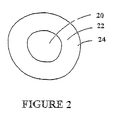
- microcapsules comprising a loading substance, a primary shell, and a secondary shell, wherein the primary shell encapsulates the loading substance, and the secondary shell encapsulates the loading substance and primary shell, wherein the primary shell and/or the secondary shell comprises gelatin having a Bloom number less than 50.
- These microcapsules are referred to herein as "single-core microcapsules.” Referring to Figure 2 , the loading substance is in core 20 and surrounded by primary shell 22. The primary shell is then encapsulated by the secondary shell 24.
- the loading substance can be any substance that is not entirely soluble in the aqueous mixture.
- the loading substance is a solid, a hydrophobic liquid, or a mixture of a solid and a hydrophobic liquid.
- the loading substance comprises a grease, an oil, a lipid, a drug (e.g., small molecule), a biologically active substance, a nutritional supplement (e.g., vitamins), a flavour compound, or a mixture thereof.
- oils include, but are not limited to, animal oils (e.g., fish oil, marine mammal oil, etc.), vegetable oils (e.g., canola or rapeseed), mineral oils, derivatives thereof or mixtures thereof.
- the loading substance can be a purified or partially purified oily substance such as a fatty acid, a triglyceride or ester thereof, or a mixture thereof.
- the loading substance can be a carotenoid (e.g., lycopene), a satiety agent, a flavor compound, a drug (e.g., a water insoluble drug), a particulate, an agricultural chemical (e.g., herbicides, insecticides, fertilizers), or an aquaculture ingredient (e.g., feed, pigment).
- a fish oil any fish oil can be used.
- suitable fish oils include, but are not limited to, Atlantic fish oils, Pacific fish oils, Mediterranean fish oils, light pressed fish oil, alkaline treated fish oil, heat treated fish oil, light and heavy brown fish oil, tuna oil, sea bass oil, halibut oil, spearfish oil, barracuda oil, cod oil, menhaden oil, sardine oil, anchovy oil, capelin oil, Atlantic cod oil, Atlantic herring oil, Atlantic mackerel oil, Atlantic menhaden oil, salmonids oil, shark oil, and the like.
- the loading substance comprises one or more fatty acids.
- the fatty acid comprises at least 10, at least 12, at least 14, at least 16, at least 18, or at least 20 carbon atoms.
- the fatty acids and residues thereof can contain 10, 11, 12, 13, 14, 15, 16, 17, 18, 19, 20, 21, 22, 23, 24, 25, 26, 27, 28, 29, 30, 31, 32, 33, 34, 35, 36, 37, 38, 39, 40, 41, 42, 43, 44, or 45 carbon atoms, where any of the stated values can form an upper or lower endpoint when appropriate.
- the fatty acids can comprise a mixture of fatty acids having a range of carbon atoms.
- the fatty acids can comprise from about 6 to about 40, from about 12 to about 38, from about 14 to about 36, from about 16 to about 34, from about 18 to about 32, or from about 20 to 30 carbon atoms.
- the fatty acids can be saturated, unsaturated, or a mixture of saturated and unsaturated fatty acids.
- saturated is meant that the molecule contains no carbon-carbon double or triple bounds.
- unsaturated is meant that the molecule contains at least one carbon-carbon double or triple bond.
- the loading substance can be an omega-3 fatty acid.
- omega-3 fatty acids include, but are not limited to, ⁇ -linolenic acid (18:3 ⁇ 3), octadecatetraenoic acid (18:4 ⁇ 3), eicosapentaenoic acid (20:5 ⁇ 3) (EPA), docosahexaenoic acid (22:6 ⁇ 3) (DHA), docosapentaenoic acid (22:5 ⁇ 3) (DPA), eicosatetraenoic acid (20:4 ⁇ 3), uncosapentaenoic acid (21:5 ⁇ 3), docosapentaenoic acid (22:5 ⁇ 3) and derivatives thereof and mixtures thereof
- omega-3 fatty acids include, but are not limited to, ⁇ -linolenic acid (18:3 ⁇ 3), octadecatetraenoic acid (18:4 ⁇ 3), eicosapentaenoic acid (20:5 ⁇ 3) (EPA), docosahe
- suitable derivatives include, but are not limited to, esters, such as phytosterol esters, branched or unbranched C 1 -C 30 alkyl esters, branched or unbranched C 2 -C 30 alkenyl esters, or branched or unbranched C 3 -C 30 cycloalkyl esters such as phytosterol esters and C 1 -C 6 alkyl esters.
- esters such as phytosterol esters, branched or unbranched C 1 -C 30 alkyl esters, branched or unbranched C 2 -C 30 alkenyl esters, or branched or unbranched C 3 -C 30 cycloalkyl esters such as phytosterol esters and C 1 -C 6 alkyl esters.
- Sources of oils can be derived from aquatic organisms (e.g., anchovies, capelin, Atlantic cod, Atlantic herring, Atlantic mackerel, Atlantic menhaden, salmonids, sardines, shark, tuna, etc) and plants (e.g., flax, vegetables, etc) and microorganisms (e.g., fungi and algae).
- aquatic organisms e.g., anchovies, capelin, Atlantic cod, Atlantic herring, Atlantic mackerel, Atlantic menhaden, salmonids, sardines, shark, tuna, etc
- plants e.g., flax, vegetables, etc
- microorganisms e.g., fungi and algae
- the loading substance can contain an antioxidant.
- antioxidants include, but are not limited to, vitamin E, CoQ 10 , tocopherols, lipid soluble derivatives of more polar antioxidants such as ascobyl fatty acid esters (e.g., ascobyl palmitate), plant extracts (e.g., rosemary, sage and oregano oils), algal extracts, and synthetic antioxidants (e.g., BHT, TBHQ, ethoxyquin, alkyl gallates, hydroquinones, tocotrienols).
- One or more of the shell layers in the single and multicore microcapsules comprises gelatin having a Bloom number less than 50.
- This gelatin is referred to herein as "low Bloom gelatin.”
- the Bloom number describes the gel strength formed at 10 °C with a 6.67% solution gelled for 18 hours.
- the low Bloom gelatin has a Bloom number less than 40, less than 30, less than 20, or less than 10.
- the gelatin has a Bloom number of 45, 40, 35, 30, 25, 20, 15, 10, 9, 8, 7, 6, 5, 4, 3, 2, 1, or 0, where any two values can be used to produce a range.
- the low Bloom gelatin is in both the primary shell and the outer shell of the multicore microcapsule.
- the low Bloom gelatin is gelatin type A.
- the low Bloom gelatin is gelatin type A produced by Kenney & Ross Ltd., R.R. #3 Shelburne, NS Canada.
- polymers may be present in the shell layers of the single and multicore microcapsules besides low Bloom gelatin.
- examples of such polymers include, but are not limited to, a protein, a polyphosphate, a polysaccharide, or a mixture thereof.
- the shell material used to prepare the single- and multicore microcapsules further comprises high Bloom gelatin type A (Bloom number greater than or equal to 50), gelatin type B, polyphosphate, gum arabic, alginate, chitosan, carrageenan, pectin, starch, modified starch, alfa-lactalbumin, beta-lactoglobumin, ovalbumin, polysorbiton, maltodextrins, cyclodextrins, cellulose, methyl cellulose, ethyl cellulose, hydropropylmethylcellulose, carboxymethylcellulose, milk protein, whey protein, soy protein, canola protein, albumin, or a mixture thereof. It is also contemplated that derivatives of these polymers can be used as well.
- the polymer can be kosher gelatin, non-kosher gelatin, Halal gelatin, or non-Halal gelatin.
- the material used to make the shells of the single- or multicore microcapsules is a two-component system made from a mixture of low Bloom gelatin and one or more different types of polymers.
- the material is a complex coacervate between low Bloom gelatin and one or more polymer components. Complex coacervation is caused by the interaction between two oppositely charged polymers.
- the shell material used to produce the single and multicore microcapsules is composed of (1) low Bloom gelatin and (2) gelatin type B, polyphosphate, gum arabic, alginate, chitosan, carrageenan, pectin, starch, modified starch, alfa-lactalbumin, beta-lactoglobumin, ovalbumin, polysorbiton, maltodextrins, cyclodextrins, cellulose, methyl cellulose, ethyl cellulose, hydropropylmethylcellulose, carboxymethylcellulose, milk protein, whey protein, soy protein, canola protein, albumin, or a mixture thereof.
- the dry weight ratio of low Bloom gelatin to the other polymer component depends on the loading substance and polymer selected.
- the molar ratio is from 1:5 to 15:1.
- the dry weight ratio of low Bloom gelatin to polyphosphate is about 8:1 to about 12:1; when low Bloom gelatin and gelatin type B are used, the dry weight ratio is 2:1 to 1:2; and when low Bloom gelatin and alginate are used, the dry weight ratio is 3:1 to 20:1.
- the amount of low Bloom gelatin and other polymer components provided in the aqueous mixture is typically sufficient to form both the primary shells and the outer shells of the encapsulated agglomeration of microcapsules.
- the low Bloom gelatin is provided in an amount of from about 1% to about 15% by weight of the aqueous mixture, from about 3% to about 8% by weight, or from about 6% by weight.
- Processing aids can be included in the shell material (e.g., primary or outer shells). Processing aids can be used for a variety of reasons. For example, they may be used to promote agglomeration of the primary microcapsules, stabilize the emulsion system, improve the properties of the outer shells, control microcapsule size and/or to act as an antioxidant.
- the processing aid can be an emulsifier, a fatty acid, a lipid, a wax, a microbial cell (e.g., yeast cell lines), a clay, or an inorganic compound (e.g., calcium carbonate). Not wishing to be bound by theory, these processing aids can improve the barrier properties of the microcapsules.
- one or more antioxidants can be added to the shell material. Antioxidant properties are useful both during the process ( e.g. during coacervation and/or spray drying) and in the microcapsules after they are formed ( i.e. to extend shelf-life, etc). Preferably a small number of processing aids that perform a large number of functions can be used.
- the antioxidant can be a phenolic compound, a plant extract, or a sulphur-containing amino acid.
- ascorbic acid or a salt thereof such as sodium or potassium ascorbate
- the antioxidant can be used in an amount of about 100 ppm to about 12,000 ppm, or from about 1,000 ppm to about 5,000 ppm.
- Other processing aids such as, for example, metal chelators, can be used as well.
- ethylene diamine tetraacetic acid can be used to bind metal ions, which can reduce the catalytic oxidation of the loading substance.
- the primary microcapsules (primary shells) have an average diameter of about 40 nm to about 10 ⁇ m, 0.1 ⁇ m to about 10 ⁇ m, 1 ⁇ m to about 10 ⁇ m, 1 ⁇ m to about 8 ⁇ m, 1 ⁇ m to about 6 ⁇ m, 1 ⁇ m to about 4 ⁇ m, or 1 ⁇ m to about 2 ⁇ m, or 1 ⁇ m.
- the multicore microcapsules can have an average diameter of from about 1 ⁇ m to about 2000 ⁇ m, 20 ⁇ m to about 1000 ⁇ m, from about 20 ⁇ m to about 100 ⁇ m, or from about 30 ⁇ m to about 80 ⁇ m.
- the single-core microcapsules have an outer diameter of from 1 ⁇ m to 2,000 ⁇ m.
- microcapsules described herein generally have a combination of high payload and structural strength.
- payloads of loading substance can be from 20% to 90%, 50% to 70% by weight, or 60% by weight of the single or multicore microcapsules.
- one or more additional shell layers can be placed on the outer shell of the single or multicore microcapsules.
- the techniques described in International Publication No. WO 2004/041251 A1 can be used to add additional shell layers to the single and multicore microcapsules.
- microcapsules described herein have good rupture strength to help reduce or prevent breaking of the microcapsules during use (e.g., incorporation into food or other formulations). Indeed, the microcapsules described herein are stable even in boiling water. Furthermore, the microcapsule's shells are for the most part insoluble in both aqueous and oily media, and can help reduce or prevent oxidation and/or deterioration of the loading substance during preparation of the microcapsules, during long-term storage, and/or during incorporation of the microcapsules into a formulation vehicle, and /or during storage of a formulation vehicle containing the microcapsules.
- any of the low Bloom gelatins can be used to stabilize emulsions containing any of the loading substances described herein.
- the low Bloom gelatin can be admixed with an aqueous solution (i.e., emulsion) of loading substance such as, for example, fish oil, which contains optional additives such as antioxidants, emulsifiers (surfactants), metal ion chelators, flavorants, or viscosifiers (polysaccharides).
- the emulsion can then be "washed” with nitrogen gas to remove any off-odors and packaged under nitrogen.
- the emulsion further comprises a protein, a polyphosphate, a polysaccharide, or a mixture thereof.
- the emulsion further comprises gelatin type A, gelatin type B, polyphosphate, gum arabic, alginate, chitosan, carrageenan, pectin, starch, modified starch, alfa-lactalbumin, beta-lactoglobumin, ovalbumin, polysorbiton, maltodextrins, cyclodextrins, cellulose, methyl cellulose, ethyl cellulose, hydropropylmethylcellulose, carboxymethylcellulose, milk protein, whey protein, soy protein, canola protein, albumin, or a mixture thereof.
- the gelatin has a Bloom number of zero. The resultant emulsions can then be incorporated into a foodstuff or other formulation.
- the no Bloom gelatin has a gelation temperature close to refrigeration temperature, and remains as a liquid when it is above refrigeration temperature. Thus the emulsion will not form a gel at room temperature.
- the emulsion can be produced at or below room temperature, which allows the loading materials such as, for example, fish oil, to avoid harsh conditions (e.g., high process temperatures), which can be detrimental to the stability of the loading substance.
- the emulsion has a loading payload of 20 to 90%, 50 to 70%, or 60% based on dry weight.
- the emulsion can be in the form of an aqueous mixture, which can then be used as is.
- the emulsion can be dried to form a microcapsule using the techniques described below.
- the microcapsule can exist in a variety of different forms depending upon the drying technique used.
- the microcapsule e.g., single or multicore
- the loading substance has a primary shell and is exposed to a matrix of one or more different polymers.
- the dried emulsion may contain no water or small amounts of moisture (from 5% or less by weight of the emulsion).
- the method comprises:
- the loading substance and the low Bloom gelatin can be admixed in any order. It is also contemplated that any of the polymers described above (referred to herein as the "second polymer component") can be admixed in step (a).
- the aqueous mixture may be a mechanical mixture, a suspension or an emulsion.
- the aqueous mixture is preferably an emulsion of the loading material, the low Bloom gelatin, and the optional second polymer component. Any of the loading substances and polymers described above can be used in the methods described herein to produce the microcapsules.
- step (a) comprises (i) dispersing the loading substance into the aqueous mixture of the low Bloom gelatin and (ii) adding the second polymer to the aqueous mixture of loading substance and gelatin.
- a processing aid such as, for example, an antioxidant, can be added as well.
- the loading substance can then be dispersed into the aqueous mixture, for example, by using a homogenizer.
- the loading substance is a hydrophobic liquid, an emulsion can be formed, in which a fraction of the low Bloom gelatin (or its complex with the second polymer component) begins to deposit around individual droplets of loading substance to form the primary shells.
- the loading substance is a solid particle
- a suspension is formed in which a fraction of the low Bloom gelatin (or its complex with the second polymer component) begins to deposit around individual particles to begin the formation of primary shells.
- another aqueous solution of first and/or second polymer component can be added to the aqueous mixture if it is not added before the emulsification step.
- the admixture can be emulsified.
- the emulsification speed it is possible to produce single or multicore microcapsules.
- lower emulsification speeds e.g., 1,000 to 2,000 rpm
- the droplets of the loading substance are large enough to form a single particle, which upon encapsulation, produces a single core microcapsule.
- high emulsification speeds e.g., 5,000 to 15,000 rpm
- the resultant droplets of loading substance are small (e.g., from 1 to 10 ⁇ m).
- the emulsification step can be achieved by techniques known in the art including, but not limited to, homogenization and high pressure/high shear pumps.
- droplets or particles of the loading substance in the aqueous mixture have an average diameter of less than 100 ⁇ m, less than 75 ⁇ m, less than 50 ⁇ m, and less than 25 ⁇ m. Droplets or particles of the loading substance having an average diameter less than 10 ⁇ m, less than 5 ⁇ m, less than 3 ⁇ m or less than 1 ⁇ m can be used. Particle size can be measured using any typical equipment known in the art, for example, a CoulterTM LS230 Particle Size Analyzer, Miami, Florida, USA.
- the pH, temperature, concentration, mixing speed or a combination thereof is then adjusted to accelerate the formation of the primary shells around the droplets or particles of the loading substance.
- the low Bloom gelatin and the second polymer component will form a complex coacervation, which further deposits around the loading substance to form primary shells of shell material.
- the pH adjustment depends on the type of shell material to be formed. In one aspect, the pH may be adjusted to a value from 3.5 to 5.0, or from 4.0 to 5.0. If the pH of the mixture starts in the desired range, then little or no pH adjustment is required.
- the initial temperature of the aqueous mixture is from about 20 °C to about 60 °C, or about 30 to 50°C.
- Mixing can be adjusted so that there is good mixing without breaking the microcapsules as they form.
- Particular mixing parameters depend on the type of equipment being used. Any of a variety of types of mixing equipment known in the art may be used.
- an axial flow impeller such as LightninTM A310 or A510, can be used.
- the aqueous mixture can then be cooled under controlled cooling rate and mixing parameters to permit agglomeration of the primary shells to form encapsulated agglomerations of primary shells.
- the encapsulated agglomerations are discrete particles themselves. It is advantageous to control the formation of the encapsulated agglomerations at a temperature above the gel point of the shell material, and to let excess shell material form a thicker outer shell. It is also possible at this stage to add more polymer, where the polymer is the same or different, in order to thicken the outer shell and/or produce microcapsules having primary and outer shells of different composition.
- the temperature is lowered at a rate of 1°C/10 minutes until it reaches a temperature of from about 0 °C to about 10 °C, or about 5°C.
- the outer shell encapsulates the agglomeration of primary shells to form a rigid encapsulated agglomeration of microcapsules.
- a cross-linker may be added to further increase the rigidity of the single and multicore microcapsules by cross-linking the shell material in both the outer and primary shells and to make the shells insoluble in both aqueous and oily media.
- the cross-linker is added after the outer shell of the microcapsule is produced. Any suitable cross-linker can be used and the choice of cross-linker can vary depending upon the selection of the low Bloom gelatin and second polymer component.
- the cross-linkers can be enzymatic cross-linkers (e.g. transglutaminase), aldehydes (e.g. formaldehyde or gluteraldehyde), tannic acid, alum or a mixture thereof.
- the cross-linker can be a plant extract or a phenolic. It is also contemplated that one or more loading substances (e.g., antioxidants) can be used with the cross-linker.
- the cross-linkers are preferably non-toxic or of sufficiently low toxicity.
- the amount of cross-linker used depends on the low Bloom gelatin and other components selected and can be adjusted to provide more or less structural rigidity as desired. In one aspect, the amount of cross-linker that can be used is in the amount of about 0.1% to about 5.0%, 0.5% to about 5.0%, 1.0% to about 5.0%, about 2.0% to about 4.0%, or about 2.5%, by weight of the low Bloom gelatin. In general, one skilled in the art may routinely determine the desired amount in any given case by simple experimentation.
- the microcapsules can be washed with water and/or dried to provide a free-flowing powder. Drying can be accomplished by a number of methods known in the art such as, for example, freeze drying, drying with ethanol, or spray drying. In one aspect, spray drying can be used for drying the microcapsules. Spray drying techniques are disclosed in " Spray Drying Handbook", K. Masters, 5th edition, Longman Scientific Technical UK, 1991 .
- microcapsules In another aspect, described herein is a process for preparing microcapsules, the process comprising:
- any of the loading substances and low Bloom gelatins described herein can be used in this embodiment. Furthermore, by adjusting the pH, temperature, concentration, mixing speed or a combination thereof, it is possible to prepare single or multicore microcapsules prior to drying.
- the emulsion prior to drying step (a) is an aqueous emulsion.
- any of the second polymer components described above can be used in combination with the low Bloom gelatin to produce the powder.
- the drying step can be any technique known in the art including, but not limited to, spray drying, fluidized bed drying, freeze drying, or drum drying. When the drying technique is spray drying, the drying step requires short process times, which can reduce possible degradation of the loading substance.
- microcapsules described herein can be used to prepare liquids as free-flowing powders or compressed solids, to store a substance, to separate reactive substances, to reduce toxicity of a substance, to protect a substance against oxidation, to deliver a substance to a specified environment and/or to control the rate of release of a substance.
- the microcapsules and emulsions described herein can be used for delivering any of the loading substances described herein to a subject.
- subjects include mammals such as mice, rats, cows or cattle, horses, sheep, goats, and primates, including apes, chimpanzees, orangatangs, fish, shellfish, crustaceans, birds (e.g., chickens, roosters, etc.), humans or domesticated animals (e.g., dogs and cats).
- mammals such as mice, rats, cows or cattle, horses, sheep, goats, and primates, including apes, chimpanzees, orangatangs, fish, shellfish, crustaceans, birds (e.g., chickens, roosters, etc.), humans or domesticated animals (e.g., dogs and cats).
- foodstuffs comprising any of the microcapsules and emulsions disclosed herein.
- foodstuff' is meant any article that can be consumed (e.g., eaten, drank, or ingested) by a subject.
- the microcapsules can be used as nutritional supplements to a foodstuff.
- the microcapsules and emulsions can be loaded with vitamins, omega-3 fatty acids, and other compounds that provide health benefits.
- the foodstuff is a baked good, a pasta, a meat product, a frozen dairy product, a milk product, a cheese product, an egg product, a condiment, a soup mix, a snack food, a nut product, a plant protein product, a hard candy, a soft candy, a poultry product, a processed fruit juice, a granulated sugar (e.g., white or brown), a sauce, a gravy, a syrup, a nutritional bar, a beverage, a dry beverage powder, a jam or jelly, a fish product, or pet companion food.
- the foodstuff is bread, tortillas, cereal, sausage, chicken, ice cream, yogurt, milk, salad dressing, rice bran, fruit juice, a dry beverage powder, rolls, cookies, crackers, fruit pies, or cakes.
- compositions comprising any of the microcapsules or emulsions described herein and a pharmaceutically acceptable carrier.
- pharmaceutically acceptable is meant a material that is not biologically or otherwise undesirable, i.e., the material may be administered to a subject without causing any undesirable biological effects or interacting in a deleterious manner with any of the other components of the pharmaceutical formulation in which it is contained.
- the carrier would naturally be selected to minimize any degradation of the active ingredient and to minimize any adverse side effects in the subject, as would be well known to one of skill in the art.
- Pharmaceutical carriers are known to those skilled in the art. These most typically would be standard carriers for administration of drugs to humans, including solutions such as sterile water, saline, and buffered solutions at physiological pH. Suitable carriers and their formulations are described in Remington: The Science and Practice of Pharmacy (19th ed.) Gennaro, ed., Mack Publishing Company, Easton, PA, 1995 that teachs carriers and pharmaceutical formulations. Typically, an appropriate amount of a pharmaceutically-acceptable salt is used in the formulation to render the formulation isotonic. Examples of the pharmaceutically-acceptable carrier include, but are not limited to, saline, Ringer's solution and dextrose solution. The pH of the solution is preferably from about 5 to about 8, and more preferably from about 7 to about 7.5.
- Further carriers include sustained release preparations such as semipermeable matrices of solid hydrophobic polymers containing the disclosed compounds, which matrices are in the form of shaped articles, e.g., films, liposomes, microparticles, or microcapsules. It will be apparent to those persons skilled in the art that certain carriers can be more preferable depending upon, for instance, the route of administration and concentration of composition being administered. Other compounds can be administered according to standard procedures used by those skilled in the art.
- compositions can include additional carriers, as well as thickeners, diluents, buffers, preservatives, surface active agents and the like in addition to the compounds disclosed herein.
- Pharmaceutical formulations can also include one or more additional active ingredients such as antimicrobial agents, antiinflammatory agents, anesthetics, and the like.
- the pharmaceutical formulation can be administered in a number of ways depending on whether local or systemic treatment is desired, and on the area to be treated. Administration may be topically (including ophthalmically, vaginally, rectally, intranasally), orally, by inhalation, or parenterally, for example by intravenous drip, subcutaneous, intraperitoneal or intramuscular injection.
- the disclosed compounds can be administered intravenously, intraperitoneally, intramuscularly, subcutaneously, intracavity, or transdermally.
- Preparations for parenteral administration include sterile aqueous or non-aqueous solutions, suspensions, and emulsions.
- non-aqueous solvents are propylene glycol, polyethylene glycol, vegetable oils such as olive oil, fish oils, and injectable organic esters such as ethyl oleate.
- Aqueous carriers include water, alcoholic/aqueous solutions, emulsions or suspensions, including saline and buffered media.
- Parenteral vehicles include sodium chloride solution, Ringer's dextrose, dextrose and sodium chloride, lactated Ringer's, or fixed oils.
- Intravenous vehicles include fluid and nutrient replenishers, electrolyte replenishers (such as those based on Ringer's dextrose), and the like. Preservatives and other additives may also be present such as, for example, antimicrobials, anti-oxidants, chelating agents, and inert gases and the like.
- compositions for topical administration may include ointments, lotions, creams, gels, drops, suppositories, sprays, liquids and powders.
- Conventional pharmaceutical carriers, aqueous, powder or oily bases, thickeners and the like may be necessary or desirable.
- compositions for oral administration include, but are not limited to, powders or granules, suspensions or solutions in water or non-aqueous media, capsules, sachets, or tablets. Thickeners, flavorings, diluents, emulsifiers, dispersing aids or binders may be desirable.
- Some of the formulations can potentially be administered as a pharmaceutically acceptable acid- or base- addition salt, formed by reaction with inorganic acids such as hydrochloric acid, hydrobromic acid, perchloric acid, nitric acid, thiocyanic acid, sulfuric acid, and phosphoric acid, and organic acids such as formic acid, acetic acid, propionic acid, glycolic acid, lactic acid, pyruvic acid, oxalic acid, malonic acid, succinic acid, maleic acid, and fumaric acid, or by reaction with an inorganic base such as sodium hydroxide, ammonium hydroxide, potassium hydroxide, and organic bases such as mono-, di-, trialkyl and aryl amines and substituted ethanolamines.
- inorganic acids such as hydrochloric acid, hydrobromic acid, perchloric acid, nitric acid, thiocyanic acid, sulfuric acid, and phosphoric acid
- organic acids such as formic acid, acetic acid, propionic
- the microcapsules and emulsions can be used to treat or prevent a variety of diseases depending upon the selection of the loading substance.
- the loading substance is an omega-3 fatty acid
- the microcapsule can be used to lower cholesterol levels, triglyceride levels, or a combination thereof in a subject.
- reaction conditions e.g., component concentrations, desired solvents, solvent mixtures, temperatures, pressures and other reaction ranges and conditions that can be used to optimize the product purity and yield obtained from the described process. Only reasonable and routine experimentation will be required to optimize such process conditions.
- Zero Bloom high molecular weight fish gelatin provided by Kenney & Ross Ltd., R.R. #3 Shelburne, NS Canada (44.0 g) was mixed with 482.0 g of distilled water.
- the gelatin dissolved after being dispersed in water and heated at 25 °C, where a reactor was connected to a circulator with the temperature set at 25 °C.
- Distilled water (889.0 g) was added to the reactor and the temperature was controlled by the circulator (25 °C).
- the above suspension containing the microcapsule agglomerations was then cooled to 4 °C within 2.5 hr.
- An enzyme preparation of transglutaminase was added at 1% w/w and the temperature was adjusted to 5 °C for crosslinking for 5 hr followed by 20 °C for emzymatic hardening for 9 hr.
- the finished suspension of microcapsules was spray dried.
- the microcapsules were a free flowing powder and the surface free oil was below 0.1% w/w.
Landscapes
- Chemical & Material Sciences (AREA)
- Life Sciences & Earth Sciences (AREA)
- Polymers & Plastics (AREA)
- Food Science & Technology (AREA)
- Engineering & Computer Science (AREA)
- Health & Medical Sciences (AREA)
- Organic Chemistry (AREA)
- Dispersion Chemistry (AREA)
- Zoology (AREA)
- Nutrition Science (AREA)
- Chemical Kinetics & Catalysis (AREA)
- Biophysics (AREA)
- Molecular Biology (AREA)
- Manufacturing Of Micro-Capsules (AREA)
- Medicinal Preparation (AREA)
Description
- The use of microcapsules for delivering compounds to a subject has been well-established. The selection of the microencapsulating material can vary depending upon the desired release pattern and the compound to be encapsulated. One such material that has been used is gelatin. Gelatins are widely used to formulate food products and drug formulations. A particular class of gelatins that are of interest are low Bloom gelatins. For example, fish gelatin has gained interest over the years as an alternative to bovine and porcine gelatin, especially as a result of concerns over BSE (1). Fish gelatin can also be a kosher product unlike porcine gelatin. Fish gelatin produced from warm water fish has Bloom numbers similar to bovine and porcine gelatin with less undesirable off-flavor and off-odor (2), but it is a limited resource and commands a higher price. In contrast, gelatin from cold water fish has no Bloom number but comes from less utilised resources. Thus, there is a strong economic justification for the attempt to use a low Bloom fish gelatin over high Bloom gelatin. Additionally, the use of low Bloom gelatin requires lower reaction temperatures, which can prolong the stability of the microencapsulated compound as well as reduce processing times and reduce energy consumption. Described herein are microcapsules and emulsions prepared from low Bloom gelatin and methods of making and using thereof.
-
US4867986 A describes storage-stable, bio-available, free-flowing, microemulsified, omega-three acid-containing oil compositions in the form of microspheres and macrospheres, said compositions consisting essentially of (1) up to about 70% by weight of Omega-three acid-containing oil, and (2) gelatin, in which the oil is microemulsified by the gelatin. Also described are processes for their preparation and product applications including tablet-type solid forms, dry powders, and spoonable, drinkable emulsions. -
US3526682 A describes a method of preparing microcapsules of an aqueous dispersion of water-immiscible pharmaceuticals in colloid sol by centrifugally forcing minute portions of the dispersion through a gelatin sol film. The resulting droplets are coated and encapsulated by the gelatin sol which is then cooled before substantial diffusion of said dispersion into the coating. The capsules may be dried to physically change the coating to a hardened impermeable shell. -
WO2004041251 A1 describes single-core and multi-core microcapsules having multiple shells, at least one of which is formed of a complex a coacervate of two components of shell materials. The complex coacervate may be the same or different for each shell. Also provided are methods for making the microcapsules. - The invention relates to a microcapsule, a process for preparing the microcapsule, a foodstuff comprising the microcapsule, a pharmaceutical formulation comprising the microcapsule and a method for delivering a non-therapeutical loading substance to a subject as defined in the claims.
- Described herein are microcapsules and emulsions prepared from low Bloom gelatin and methods of making and using thereof. The advantages described herein will be set forth in part in the description which follows, and in part will be obvious from the description, or may be learned by practice of the aspects described below. The advantages described below will be realized and attained by means of the elements and combinations particularly pointed out in the appended claims. It is to be understood that both the foregoing general description and the following detailed description are exemplary and explanatory only and are not restrictive.
- The accompanying drawings, which are incorporated in and constitute a part of this specification, illustrate several aspects described below.
-
Figure 1 shows a drawing of a multicore microcapsule. -
Figure 2 shows a drawing of a single-core microcapsule. -
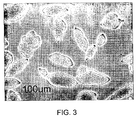
Figure 3 shows microcapsules (60% loading substance) prepared by emulsification of fish oil in a zero Bloom fish gelatin solution (40 °C) at 7,500 rpm for 5 minutes, followed by complex coacervation, cooling to 4 °C and crosslinking with a transglutaminase. - Before the present compounds, composites, compositions, and/or methods are disclosed and described, it is to be understood that the aspects described below are not limited to specific compounds, synthetic methods, or uses as such may, of course, vary. It is also to be understood that the terminology used herein is for the purpose of describing particular aspects only and is not intended to be limiting.
- In this specification and in the claims that follow, reference will be made to a number of terms that shall be defined to have the following meanings:
- It must be noted that, as used in the specification and the appended claims, the singular forms "a," "an" and "the" include plural referents unless the context clearly dictates otherwise. Thus, for example, reference to "a pharmaceutical carrier" includes mixtures of two or more such carriers, and the like.
- "Optional" or "optionally" means that the subsequently described event or circumstance can or cannot occur, and that the description includes instances where the event or circumstance occurs and instances where it does not. For example, the phrase "optionally substituted lower alkyl" means that the lower alkyl group can or can not be substituted and that the description includes both unsubstituted lower alkyl and lower alkyl where there is substitution.
- Ranges may be expressed herein as from "about" one particular value, and/or to "about" another particular value. When such a range is expressed, another aspect includes from the one particular value and/or to the other particular value. Similarly, when values are expressed as approximations, by use of the antecedent "about," it will be understood that the particular value forms another aspect. It will be further understood that the endpoints of each of the ranges are significant both in relation to the other endpoint, and independently of the other endpoint.
- Disclosed are materials, compositions, and components that can be used for, can be used in conjunction with, can be used in preparation for, or are products of the disclosed method and compositions. These and other materials are disclosed herein, and it is understood that when combinations, subsets, interactions, groups, etc. of these materials are disclosed that while specific reference of each various individual and collective combinations and permutation of these compounds may not be explicitly disclosed, each is specifically contemplated and described herein. Thus, if a class of molecules A, B, and C are disclosed as well as a class of molecules D, E, and F and an example of a combination molecule, A-D is disclosed, then even if each is not individually recited, each is individually and collectively contemplated. Thus, in this example, each of the combinations A-E, A-F, B-D, B-E, B-F, C-D, C-E, and C-F are specifically contemplated and should be considered disclosed from disclosure of A, B, and C; D, E, and F; and the example combination A-D. Likewise, any subset or combination of these is also specifically contemplated and disclosed. Thus, for example, the sub-group of A-E, B-F, and C-E are specifically contemplated and should be considered disclosed from disclosure of A, B, and C; D, E, and F; and the example combination A-D. This concept applies to all aspects of this disclosure including, but not limited to, steps in methods of making and using the disclosed compositions. Thus, if there are a variety of additional steps that can be performed it is understood that each of these additional steps can be performed with any specific embodiment or combination of embodiments of the disclosed methods, and that each such combination is specifically contemplated and should be considered disclosed.
- Described herein are microcapsules comprising an agglomeration of primary microcapsules and a loading substance, each individual primary microcapsule having a primary shell, wherein the loading substance is encapsulated by the primary shell, wherein the agglomeration is encapsulated by an outer shell, wherein the primary shell and/or the outer shell comprises gelatin having a Bloom number less than 50. These microcapsules are referred to herein as "multicore microcapsules." Referring to
Figure 1 , the loading substance is incore 10 and surrounded byprimary shell 12. The primary shells are then encapsulated byouter shell 14. - Described herein are microcapsules comprising a loading substance, a primary shell, and a secondary shell, wherein the primary shell encapsulates the loading substance, and the secondary shell encapsulates the loading substance and primary shell, wherein the primary shell and/or the secondary shell comprises gelatin having a Bloom number less than 50. These microcapsules are referred to herein as "single-core microcapsules." Referring to
Figure 2 , the loading substance is incore 20 and surrounded byprimary shell 22. The primary shell is then encapsulated by thesecondary shell 24. - The loading substance can be any substance that is not entirely soluble in the aqueous mixture. In one aspect, the loading substance is a solid, a hydrophobic liquid, or a mixture of a solid and a hydrophobic liquid. In another aspect, the loading substance comprises a grease, an oil, a lipid, a drug (e.g., small molecule), a biologically active substance, a nutritional supplement (e.g., vitamins), a flavour compound, or a mixture thereof. Examples of oils include, but are not limited to, animal oils (e.g., fish oil, marine mammal oil, etc.), vegetable oils (e.g., canola or rapeseed), mineral oils, derivatives thereof or mixtures thereof. The loading substance can be a purified or partially purified oily substance such as a fatty acid, a triglyceride or ester thereof, or a mixture thereof. In another aspect, the loading substance can be a carotenoid (e.g., lycopene), a satiety agent, a flavor compound, a drug (e.g., a water insoluble drug), a particulate, an agricultural chemical (e.g., herbicides, insecticides, fertilizers), or an aquaculture ingredient (e.g., feed, pigment). When the loading the loading substance is a fish oil, any fish oil can be used. Specific examples of suitable fish oils include, but are not limited to, Atlantic fish oils, Pacific fish oils, Mediterranean fish oils, light pressed fish oil, alkaline treated fish oil, heat treated fish oil, light and heavy brown fish oil, tuna oil, sea bass oil, halibut oil, spearfish oil, barracuda oil, cod oil, menhaden oil, sardine oil, anchovy oil, capelin oil, Atlantic cod oil, Atlantic herring oil, Atlantic mackerel oil, Atlantic menhaden oil, salmonids oil, shark oil, and the like.
- In one aspect, the loading substance comprises one or more fatty acids. In one aspect, the fatty acid comprises at least 10, at least 12, at least 14, at least 16, at least 18, or at least 20 carbon atoms. In some specific examples, the fatty acids and residues thereof can contain 10, 11, 12, 13, 14, 15, 16, 17, 18, 19, 20, 21, 22, 23, 24, 25, 26, 27, 28, 29, 30, 31, 32, 33, 34, 35, 36, 37, 38, 39, 40, 41, 42, 43, 44, or 45 carbon atoms, where any of the stated values can form an upper or lower endpoint when appropriate. In other examples, the fatty acids can comprise a mixture of fatty acids having a range of carbon atoms. For example, the fatty acids can comprise from about 6 to about 40, from about 12 to about 38, from about 14 to about 36, from about 16 to about 34, from about 18 to about 32, or from about 20 to 30 carbon atoms.
- The fatty acids can be saturated, unsaturated, or a mixture of saturated and unsaturated fatty acids. By "saturated" is meant that the molecule contains no carbon-carbon double or triple bounds. By "unsaturated" is meant that the molecule contains at least one carbon-carbon double or triple bond.
- In one aspect, the loading substance can be an omega-3 fatty acid. Examples of omega-3 fatty acids include, but are not limited to, α-linolenic acid (18:3ω3), octadecatetraenoic acid (18:4ω3), eicosapentaenoic acid (20:5ω3) (EPA), docosahexaenoic acid (22:6ω3) (DHA), docosapentaenoic acid (22:5ω3) (DPA), eicosatetraenoic acid (20:4ω3), uncosapentaenoic acid (21:5ω3), docosapentaenoic acid (22:5ω3) and derivatives thereof and mixtures thereof Many types of derivatives of omega-3 fatty acids are well known in the art. Examples of suitable derivatives include, but are not limited to, esters, such as phytosterol esters, branched or unbranched C1-C30 alkyl esters, branched or unbranched C2-C30 alkenyl esters, or branched or unbranched C3-C30 cycloalkyl esters such as phytosterol esters and C1-C6 alkyl esters. Sources of oils can be derived from aquatic organisms (e.g., anchovies, capelin, Atlantic cod, Atlantic herring, Atlantic mackerel, Atlantic menhaden, salmonids, sardines, shark, tuna, etc) and plants (e.g., flax, vegetables, etc) and microorganisms (e.g., fungi and algae).
- In one aspect, the loading substance can contain an antioxidant. Examples of antioxidants include, but are not limited to, vitamin E, CoQ10, tocopherols, lipid soluble derivatives of more polar antioxidants such as ascobyl fatty acid esters (e.g., ascobyl palmitate), plant extracts (e.g., rosemary, sage and oregano oils), algal extracts, and synthetic antioxidants (e.g., BHT, TBHQ, ethoxyquin, alkyl gallates, hydroquinones, tocotrienols).
- One or more of the shell layers in the single and multicore microcapsules comprises gelatin having a Bloom number less than 50. This gelatin is referred to herein as "low Bloom gelatin." The Bloom number describes the gel strength formed at 10 °C with a 6.67% solution gelled for 18 hours. In one aspect, the low Bloom gelatin has a Bloom number less than 40, less than 30, less than 20, or less than 10. In another aspect, the gelatin has a Bloom number of 45, 40, 35, 30, 25, 20, 15, 10, 9, 8, 7, 6, 5, 4, 3, 2, 1, or 0, where any two values can be used to produce a range. In another aspect, the low Bloom gelatin is in both the primary shell and the outer shell of the multicore microcapsule. In one aspect, the low Bloom gelatin is gelatin type A. In another aspect, the low Bloom gelatin is gelatin type A produced by Kenney & Ross Ltd., R.R. #3 Shelburne, NS Canada.
- Other polymers may be present in the shell layers of the single and multicore microcapsules besides low Bloom gelatin. Examples of such polymers include, but are not limited to, a protein, a polyphosphate, a polysaccharide, or a mixture thereof. In another aspect, the shell material used to prepare the single- and multicore microcapsules further comprises high Bloom gelatin type A (Bloom number greater than or equal to 50), gelatin type B, polyphosphate, gum arabic, alginate, chitosan, carrageenan, pectin, starch, modified starch, alfa-lactalbumin, beta-lactoglobumin, ovalbumin, polysorbiton, maltodextrins, cyclodextrins, cellulose, methyl cellulose, ethyl cellulose, hydropropylmethylcellulose, carboxymethylcellulose, milk protein, whey protein, soy protein, canola protein, albumin, or a mixture thereof. It is also contemplated that derivatives of these polymers can be used as well. In another aspect, the polymer can be kosher gelatin, non-kosher gelatin, Halal gelatin, or non-Halal gelatin.
- In one aspect, the material used to make the shells of the single- or multicore microcapsules is a two-component system made from a mixture of low Bloom gelatin and one or more different types of polymers. In one aspect, the material is a complex coacervate between low Bloom gelatin and one or more polymer components. Complex coacervation is caused by the interaction between two oppositely charged polymers. In one aspect, the shell material used to produce the single and multicore microcapsules is composed of (1) low Bloom gelatin and (2) gelatin type B, polyphosphate, gum arabic, alginate, chitosan, carrageenan, pectin, starch, modified starch, alfa-lactalbumin, beta-lactoglobumin, ovalbumin, polysorbiton, maltodextrins, cyclodextrins, cellulose, methyl cellulose, ethyl cellulose, hydropropylmethylcellulose, carboxymethylcellulose, milk protein, whey protein, soy protein, canola protein, albumin, or a mixture thereof. The dry weight ratio of low Bloom gelatin to the other polymer component depends on the loading substance and polymer selected. In one aspect, the molar ratio is from 1:5 to 15:1. For example, when low Bloom gelatin and polyphosphate are used, the dry weight ratio of low Bloom gelatin to polyphosphate is about 8:1 to about 12:1; when low Bloom gelatin and gelatin type B are used, the dry weight ratio is 2:1 to 1:2; and when low Bloom gelatin and alginate are used, the dry weight ratio is 3:1 to 20:1. The amount of low Bloom gelatin and other polymer components provided in the aqueous mixture is typically sufficient to form both the primary shells and the outer shells of the encapsulated agglomeration of microcapsules. In one aspect, the low Bloom gelatin is provided in an amount of from about 1% to about 15% by weight of the aqueous mixture, from about 3% to about 8% by weight, or from about 6% by weight.
- Processing aids can be included in the shell material (e.g., primary or outer shells). Processing aids can be used for a variety of reasons. For example, they may be used to promote agglomeration of the primary microcapsules, stabilize the emulsion system, improve the properties of the outer shells, control microcapsule size and/or to act as an antioxidant. In one aspect, the processing aid can be an emulsifier, a fatty acid, a lipid, a wax, a microbial cell (e.g., yeast cell lines), a clay, or an inorganic compound (e.g., calcium carbonate). Not wishing to be bound by theory, these processing aids can improve the barrier properties of the microcapsules. In one aspect, one or more antioxidants can be added to the shell material. Antioxidant properties are useful both during the process (e.g. during coacervation and/or spray drying) and in the microcapsules after they are formed (i.e. to extend shelf-life, etc). Preferably a small number of processing aids that perform a large number of functions can be used. In one aspect, the antioxidant can be a phenolic compound, a plant extract, or a sulphur-containing amino acid. In one aspect, ascorbic acid (or a salt thereof such as sodium or potassium ascorbate) can be used to promote agglomeration of the primary microcapsules, to control microcapsule size and to act as an antioxidant. The antioxidant can be used in an amount of about 100 ppm to about 12,000 ppm, or from about 1,000 ppm to about 5,000 ppm. Other processing aids such as, for example, metal chelators, can be used as well. For example, ethylene diamine tetraacetic acid can be used to bind metal ions, which can reduce the catalytic oxidation of the loading substance.
- In one aspect, the primary microcapsules (primary shells) have an average diameter of about 40 nm to about 10 µm, 0.1 µm to about 10 µm, 1 µm to about 10 µm, 1 µm to about 8 µm, 1 µm to about 6 µm, 1 µm to about 4 µm, or 1 µm to about 2 µm, or 1 µm. In another aspect, the multicore microcapsules can have an average diameter of from about 1 µm to about 2000 µm, 20 µm to about 1000 µm, from about 20 µm to about 100 µm, or from about 30 µm to about 80 µm. In another aspect, the single-core microcapsules have an outer diameter of from 1 µm to 2,000 µm.
- The microcapsules described herein generally have a combination of high payload and structural strength. For example, payloads of loading substance can be from 20% to 90%, 50% to 70% by weight, or 60% by weight of the single or multicore microcapsules.
- It is also contemplated that one or more additional shell layers can be placed on the outer shell of the single or multicore microcapsules. The techniques described in International Publication No.
WO 2004/041251 A1 can be used to add additional shell layers to the single and multicore microcapsules. - The microcapsules described herein have good rupture strength to help reduce or prevent breaking of the microcapsules during use (e.g., incorporation into food or other formulations). Indeed, the microcapsules described herein are stable even in boiling water. Furthermore, the microcapsule's shells are for the most part insoluble in both aqueous and oily media, and can help reduce or prevent oxidation and/or deterioration of the loading substance during preparation of the microcapsules, during long-term storage, and/or during incorporation of the microcapsules into a formulation vehicle, and /or during storage of a formulation vehicle containing the microcapsules.
- In another aspect, any of the low Bloom gelatins can be used to stabilize emulsions containing any of the loading substances described herein. For example, the low Bloom gelatin can be admixed with an aqueous solution (i.e., emulsion) of loading substance such as, for example, fish oil, which contains optional additives such as antioxidants, emulsifiers (surfactants), metal ion chelators, flavorants, or viscosifiers (polysaccharides). In this example, the emulsion can then be "washed" with nitrogen gas to remove any off-odors and packaged under nitrogen. In one aspect, the emulsion further comprises a protein, a polyphosphate, a polysaccharide, or a mixture thereof. In another aspect, the emulsion further comprises gelatin type A, gelatin type B, polyphosphate, gum arabic, alginate, chitosan, carrageenan, pectin, starch, modified starch, alfa-lactalbumin, beta-lactoglobumin, ovalbumin, polysorbiton, maltodextrins, cyclodextrins, cellulose, methyl cellulose, ethyl cellulose, hydropropylmethylcellulose, carboxymethylcellulose, milk protein, whey protein, soy protein, canola protein, albumin, or a mixture thereof. In a further aspect, the gelatin has a Bloom number of zero. The resultant emulsions can then be incorporated into a foodstuff or other formulation.
- There are several advantages to using low Bloom gelatin as a stabilizer of emulsions. First, the no Bloom gelatin has a gelation temperature close to refrigeration temperature, and remains as a liquid when it is above refrigeration temperature. Thus the emulsion will not form a gel at room temperature. Second, the emulsion can be produced at or below room temperature, which allows the loading materials such as, for example, fish oil, to avoid harsh conditions (e.g., high process temperatures), which can be detrimental to the stability of the loading substance.
- In one aspect, the emulsion has a loading payload of 20 to 90%, 50 to 70%, or 60% based on dry weight. In one aspect, the emulsion can be in the form of an aqueous mixture, which can then be used as is. In another aspect, the emulsion can be dried to form a microcapsule using the techniques described below. The microcapsule can exist in a variety of different forms depending upon the drying technique used. For example, the microcapsule (e.g., single or multicore) can be in a polymeric matrix. In one aspect, the loading substance has a primary shell and is exposed to a matrix of one or more different polymers. The dried emulsion may contain no water or small amounts of moisture (from 5% or less by weight of the emulsion).
- Described herein are methods for preparing microcapsules. In one aspect, the method comprises:
- (a) providing an aqueous mixture comprising a loading substance, a gelatin having a Bloom number less than 50 (referred to herein as "a first polymer component"),
- (b) adjusting the pH, temperature, concentration, mixing speed or a combination thereof to form a primary shell comprising the gelatin around the loading substance;
- (c) further adjusting pH and cooling the aqueous mixture to a temperature above the gel point of the gelatin until the primary shells form an agglomeration; and,
- (d) cooling the aqueous mixture to form an outer shell around the agglomeration.
- In step (a), the loading substance and the low Bloom gelatin can be admixed in any order. It is also contemplated that any of the polymers described above (referred to herein as the "second polymer component") can be admixed in step (a). The aqueous mixture may be a mechanical mixture, a suspension or an emulsion. When a liquid loading material is used, particularly a hydrophobic liquid, the aqueous mixture is preferably an emulsion of the loading material, the low Bloom gelatin, and the optional second polymer component. Any of the loading substances and polymers described above can be used in the methods described herein to produce the microcapsules.
- In one aspect, step (a) comprises (i) dispersing the loading substance into the aqueous mixture of the low Bloom gelatin and (ii) adding the second polymer to the aqueous mixture of loading substance and gelatin. In one aspect, a processing aid such as, for example, an antioxidant, can be added as well. In this aspect, the loading substance can then be dispersed into the aqueous mixture, for example, by using a homogenizer. Not wishing to be bound by theory, if the loading substance is a hydrophobic liquid, an emulsion can be formed, in which a fraction of the low Bloom gelatin (or its complex with the second polymer component) begins to deposit around individual droplets of loading substance to form the primary shells. If the loading substance is a solid particle, a suspension is formed in which a fraction of the low Bloom gelatin (or its complex with the second polymer component) begins to deposit around individual particles to begin the formation of primary shells. At this point, another aqueous solution of first and/or second polymer component can be added to the aqueous mixture if it is not added before the emulsification step.
- In one aspect, after the loading substance, the low Bloom gelatin, and the optional second polymer component have been admixed, the admixture can be emulsified. Not wishing to be bound by theory, by varying the emulsification speed it is possible to produce single or multicore microcapsules. For example, when lower emulsification speeds are used (e.g., 1,000 to 2,000 rpm) are used, the droplets of the loading substance are large enough to form a single particle, which upon encapsulation, produces a single core microcapsule. Conversely, if high emulsification speeds (e.g., 5,000 to 15,000 rpm), the resultant droplets of loading substance are small (e.g., from 1 to 10 µm). These tiny droplets have higher surface energy and will readily form agglomerations when pH and/or temperature is adjusted accordingly, which results in the formation of multicore microcapsules upon encapsulation. The emulsification step can be achieved by techniques known in the art including, but not limited to, homogenization and high pressure/high shear pumps.
- In one aspect, droplets or particles of the loading substance in the aqueous mixture have an average diameter of less than 100 µm, less than 75 µm, less than 50 µm, and less than 25 µm. Droplets or particles of the loading substance having an average diameter less than 10 µm, less than 5 µm, less than 3 µm or less than 1 µm can be used. Particle size can be measured using any typical equipment known in the art, for example, a Coulter™ LS230 Particle Size Analyzer, Miami, Florida, USA.
- The pH, temperature, concentration, mixing speed or a combination thereof is then adjusted to accelerate the formation of the primary shells around the droplets or particles of the loading substance. In one aspect, the low Bloom gelatin and the second polymer component will form a complex coacervation, which further deposits around the loading substance to form primary shells of shell material. The pH adjustment depends on the type of shell material to be formed. In one aspect, the pH may be adjusted to a value from 3.5 to 5.0, or from 4.0 to 5.0. If the pH of the mixture starts in the desired range, then little or no pH adjustment is required. In one aspect, the initial temperature of the aqueous mixture is from about 20 °C to about 60 °C, or about 30 to 50°C. Mixing can be adjusted so that there is good mixing without breaking the microcapsules as they form. Particular mixing parameters depend on the type of equipment being used. Any of a variety of types of mixing equipment known in the art may be used. In one aspect, an axial flow impeller, such as Lightnin™ A310 or A510, can be used.
- The aqueous mixture can then be cooled under controlled cooling rate and mixing parameters to permit agglomeration of the primary shells to form encapsulated agglomerations of primary shells. Not wishing to be bound by theory, the encapsulated agglomerations are discrete particles themselves. It is advantageous to control the formation of the encapsulated agglomerations at a temperature above the gel point of the shell material, and to let excess shell material form a thicker outer shell. It is also possible at this stage to add more polymer, where the polymer is the same or different, in order to thicken the outer shell and/or produce microcapsules having primary and outer shells of different composition. In one aspect, the temperature is lowered at a rate of 1°C/10 minutes until it reaches a temperature of from about 0 °C to about 10 °C, or about 5°C. The outer shell encapsulates the agglomeration of primary shells to form a rigid encapsulated agglomeration of microcapsules.
- A cross-linker may be added to further increase the rigidity of the single and multicore microcapsules by cross-linking the shell material in both the outer and primary shells and to make the shells insoluble in both aqueous and oily media. In one aspect, the cross-linker is added after the outer shell of the microcapsule is produced. Any suitable cross-linker can be used and the choice of cross-linker can vary depending upon the selection of the low Bloom gelatin and second polymer component. In one aspect, the cross-linkers can be enzymatic cross-linkers (e.g. transglutaminase), aldehydes (e.g. formaldehyde or gluteraldehyde), tannic acid, alum or a mixture thereof. In another aspect, the cross-linker can be a plant extract or a phenolic. It is also contemplated that one or more loading substances (e.g., antioxidants) can be used with the cross-linker. When the microcapsules are to be used to deliver a biologically active substance to an organism, the cross-linkers are preferably non-toxic or of sufficiently low toxicity. The amount of cross-linker used depends on the low Bloom gelatin and other components selected and can be adjusted to provide more or less structural rigidity as desired. In one aspect, the amount of cross-linker that can be used is in the amount of about 0.1% to about 5.0%, 0.5% to about 5.0%, 1.0% to about 5.0%, about 2.0% to about 4.0%, or about 2.5%, by weight of the low Bloom gelatin. In general, one skilled in the art may routinely determine the desired amount in any given case by simple experimentation.
- In one aspect, the microcapsules can be washed with water and/or dried to provide a free-flowing powder. Drying can be accomplished by a number of methods known in the art such as, for example, freeze drying, drying with ethanol, or spray drying. In one aspect, spray drying can be used for drying the microcapsules. Spray drying techniques are disclosed in "Spray Drying Handbook", K. Masters, 5th edition, Longman Scientific Technical UK, 1991.
- In another aspect, described herein is a process for preparing microcapsules, the process comprising:
- (a) providing an emulsion comprising a loading substance and a gelatin having a Bloom number less than 50; and
- (b) drying the emulsion to produce the microcapsules.
- Any of the loading substances and low Bloom gelatins described herein can be used in this embodiment. Furthermore, by adjusting the pH, temperature, concentration, mixing speed or a combination thereof, it is possible to prepare single or multicore microcapsules prior to drying. In general, the emulsion prior to drying step (a) is an aqueous emulsion. It is also contemplated that any of the second polymer components described above can be used in combination with the low Bloom gelatin to produce the powder. The drying step can be any technique known in the art including, but not limited to, spray drying, fluidized bed drying, freeze drying, or drum drying. When the drying technique is spray drying, the drying step requires short process times, which can reduce possible degradation of the loading substance.
- The microcapsules described herein can be used to prepare liquids as free-flowing powders or compressed solids, to store a substance, to separate reactive substances, to reduce toxicity of a substance, to protect a substance against oxidation, to deliver a substance to a specified environment and/or to control the rate of release of a substance. In one aspect, the microcapsules and emulsions described herein can be used for delivering any of the loading substances described herein to a subject. Examples of subjects include mammals such as mice, rats, cows or cattle, horses, sheep, goats, and primates, including apes, chimpanzees, orangatangs, fish, shellfish, crustaceans, birds (e.g., chickens, roosters, etc.), humans or domesticated animals (e.g., dogs and cats).
- Also disclosed herein are foodstuffs comprising any of the microcapsules and emulsions disclosed herein. By "foodstuff' is meant any article that can be consumed (e.g., eaten, drank, or ingested) by a subject. In one aspect, the microcapsules can be used as nutritional supplements to a foodstuff. For example, the microcapsules and emulsions can be loaded with vitamins, omega-3 fatty acids, and other compounds that provide health benefits. In one aspect, the foodstuff is a baked good, a pasta, a meat product, a frozen dairy product, a milk product, a cheese product, an egg product, a condiment, a soup mix, a snack food, a nut product, a plant protein product, a hard candy, a soft candy, a poultry product, a processed fruit juice, a granulated sugar (e.g., white or brown), a sauce, a gravy, a syrup, a nutritional bar, a beverage, a dry beverage powder, a jam or jelly, a fish product, or pet companion food. In another aspect, the foodstuff is bread, tortillas, cereal, sausage, chicken, ice cream, yogurt, milk, salad dressing, rice bran, fruit juice, a dry beverage powder, rolls, cookies, crackers, fruit pies, or cakes.
- In one aspect, provided are pharmaceutical formulations comprising any of the microcapsules or emulsions described herein and a pharmaceutically acceptable carrier. By "pharmaceutically acceptable" is meant a material that is not biologically or otherwise undesirable, i.e., the material may be administered to a subject without causing any undesirable biological effects or interacting in a deleterious manner with any of the other components of the pharmaceutical formulation in which it is contained. The carrier would naturally be selected to minimize any degradation of the active ingredient and to minimize any adverse side effects in the subject, as would be well known to one of skill in the art.
- Pharmaceutical carriers are known to those skilled in the art. These most typically would be standard carriers for administration of drugs to humans, including solutions such as sterile water, saline, and buffered solutions at physiological pH. Suitable carriers and their formulations are described in Remington: The Science and Practice of Pharmacy (19th ed.) Gennaro, ed., Mack Publishing Company, Easton, PA, 1995 that teachs carriers and pharmaceutical formulations. Typically, an appropriate amount of a pharmaceutically-acceptable salt is used in the formulation to render the formulation isotonic. Examples of the pharmaceutically-acceptable carrier include, but are not limited to, saline, Ringer's solution and dextrose solution. The pH of the solution is preferably from about 5 to about 8, and more preferably from about 7 to about 7.5. Further carriers include sustained release preparations such as semipermeable matrices of solid hydrophobic polymers containing the disclosed compounds, which matrices are in the form of shaped articles, e.g., films, liposomes, microparticles, or microcapsules. It will be apparent to those persons skilled in the art that certain carriers can be more preferable depending upon, for instance, the route of administration and concentration of composition being administered. Other compounds can be administered according to standard procedures used by those skilled in the art.
- Pharmaceutical formulations can include additional carriers, as well as thickeners, diluents, buffers, preservatives, surface active agents and the like in addition to the compounds disclosed herein. Pharmaceutical formulations can also include one or more additional active ingredients such as antimicrobial agents, antiinflammatory agents, anesthetics, and the like.
- The pharmaceutical formulation can be administered in a number of ways depending on whether local or systemic treatment is desired, and on the area to be treated. Administration may be topically (including ophthalmically, vaginally, rectally, intranasally), orally, by inhalation, or parenterally, for example by intravenous drip, subcutaneous, intraperitoneal or intramuscular injection. The disclosed compounds can be administered intravenously, intraperitoneally, intramuscularly, subcutaneously, intracavity, or transdermally.
- Preparations for parenteral administration include sterile aqueous or non-aqueous solutions, suspensions, and emulsions. Examples of non-aqueous solvents are propylene glycol, polyethylene glycol, vegetable oils such as olive oil, fish oils, and injectable organic esters such as ethyl oleate. Aqueous carriers include water, alcoholic/aqueous solutions, emulsions or suspensions, including saline and buffered media. Parenteral vehicles include sodium chloride solution, Ringer's dextrose, dextrose and sodium chloride, lactated Ringer's, or fixed oils. Intravenous vehicles include fluid and nutrient replenishers, electrolyte replenishers (such as those based on Ringer's dextrose), and the like. Preservatives and other additives may also be present such as, for example, antimicrobials, anti-oxidants, chelating agents, and inert gases and the like.
- Pharmaceutical formulations for topical administration may include ointments, lotions, creams, gels, drops, suppositories, sprays, liquids and powders. Conventional pharmaceutical carriers, aqueous, powder or oily bases, thickeners and the like may be necessary or desirable.
- Pharmaceutical formulations for oral administration include, but are not limited to, powders or granules, suspensions or solutions in water or non-aqueous media, capsules, sachets, or tablets. Thickeners, flavorings, diluents, emulsifiers, dispersing aids or binders may be desirable.
- Some of the formulations can potentially be administered as a pharmaceutically acceptable acid- or base- addition salt, formed by reaction with inorganic acids such as hydrochloric acid, hydrobromic acid, perchloric acid, nitric acid, thiocyanic acid, sulfuric acid, and phosphoric acid, and organic acids such as formic acid, acetic acid, propionic acid, glycolic acid, lactic acid, pyruvic acid, oxalic acid, malonic acid, succinic acid, maleic acid, and fumaric acid, or by reaction with an inorganic base such as sodium hydroxide, ammonium hydroxide, potassium hydroxide, and organic bases such as mono-, di-, trialkyl and aryl amines and substituted ethanolamines.
- The microcapsules and emulsions can be used to treat or prevent a variety of diseases depending upon the selection of the loading substance. For example, when the loading substance is an omega-3 fatty acid, the microcapsule can be used to lower cholesterol levels, triglyceride levels, or a combination thereof in a subject.
- The following examples are put forth so as to provide those of ordinary skill in the art with a complete disclosure and description of how the compounds, compositions, and methods described and claimed herein are made and evaluated, and are intended to be purely exemplary and are not intended to limit the scope of the invention defined by the claims. Efforts have been made to ensure accuracy with respect to numbers (e.g., amounts, temperature, etc.) but some errors and deviations should be accounted for. Unless indicated otherwise, parts are parts by weight, temperature is in °C or is at ambient temperature, and pressure is at or near atmospheric. There are numerous variations and combinations of reaction conditions, e.g., component concentrations, desired solvents, solvent mixtures, temperatures, pressures and other reaction ranges and conditions that can be used to optimize the product purity and yield obtained from the described process. Only reasonable and routine experimentation will be required to optimize such process conditions.
- Zero Bloom high molecular weight fish gelatin provided by Kenney & Ross Ltd., R.R. #3 Shelburne, NS Canada (44.0 g) was mixed with 482.0 g of distilled water. The gelatin dissolved after being dispersed in water and heated at 25 °C, where a reactor was connected to a circulator with the temperature set at 25 °C. Distilled water (889.0 g) was added to the reactor and the temperature was controlled by the circulator (25 °C).
- After the gelatin dissolved, the mixture was heated up to 35.2°C. Fish oil (72.0 g) was mixed with the gelatin and emulsified at 7500 rpm for 5 minutes. An emulsion formed and contained oil droplets about 1-5 µm in diameter. The emulsion was added to the reactor, which contained water at 25 °C. The mixture had a pH value of 6. Sodium ascorbate (7.3 g) was added to the mixture. An aliquot of 88.1 g of 5% w/w sodium polyphosphate solution at room temperature was further added to the reactor. The pH value was adjusted to 4.7, which permitted the agglomeration to grow up to about 50 µm as determined by an optical microscope.
- The above suspension containing the microcapsule agglomerations was then cooled to 4 °C within 2.5 hr. An enzyme preparation of transglutaminase was added at 1% w/w and the temperature was adjusted to 5 °C for crosslinking for 5 hr followed by 20 °C for emzymatic hardening for 9 hr. The finished suspension of microcapsules was spray dried. The microcapsules were a free flowing powder and the surface free oil was below 0.1% w/w.
-
- 1. Haug, I.J., Draget, K.I. and Smidsrod, O., Physical and Rheological Properties of Fish Gelatin Compared to Mammalian Gelatin, Food Hydrocolloids, 18 (2004) 203-213.
- 2. Choi, S.S. and Regenstein, J.M., Physicochemical and Sensory Characteristics of Fish Gelatin, J. of Food Science: Food Chemistry and Toxicology, 65 (2000) 194-199.
Claims (76)
Priority Applications (1)
| Application Number | Priority Date | Filing Date | Title |
|---|---|---|---|
| PL06727590T PL1846153T3 (en) | 2005-01-21 | 2006-01-12 | Microcapsules and emulsions containing low bloom gelatin and methods of making and using thereof |
Applications Claiming Priority (3)
| Application Number | Priority Date | Filing Date | Title |
|---|---|---|---|
| US11/040,820 US6969530B1 (en) | 2005-01-21 | 2005-01-21 | Microcapsules and emulsions containing low bloom gelatin and methods of making and using thereof |
| US11/227,961 US8034450B2 (en) | 2005-01-21 | 2005-09-15 | Microcapsules and emulsions containing low bloom gelatin and methods of making and using thereof |
| PCT/IB2006/001214 WO2006085227A2 (en) | 2005-01-21 | 2006-01-12 | Microcapsules and emulsions containing low bloom gelatin and methods of making and using thereof |
Publications (2)
| Publication Number | Publication Date |
|---|---|
| EP1846153A2 EP1846153A2 (en) | 2007-10-24 |
| EP1846153B1 true EP1846153B1 (en) | 2013-11-06 |
Family
ID=36693877
Family Applications (1)
| Application Number | Title | Priority Date | Filing Date |
|---|---|---|---|
| EP06727590.9A Expired - Lifetime EP1846153B1 (en) | 2005-01-21 | 2006-01-12 | Microcapsules and emulsions containing low bloom gelatin and methods of making and using thereof |
Country Status (8)
| Country | Link |
|---|---|
| US (1) | US8034450B2 (en) |
| EP (1) | EP1846153B1 (en) |
| AU (1) | AU2006213503C1 (en) |
| CA (1) | CA2541931C (en) |
| ES (1) | ES2445623T3 (en) |
| IL (1) | IL182127A0 (en) |
| PL (1) | PL1846153T3 (en) |
| WO (1) | WO2006085227A2 (en) |
Cited By (1)
| Publication number | Priority date | Publication date | Assignee | Title |
|---|---|---|---|---|
| EP3582631B1 (en) * | 2017-02-14 | 2023-11-22 | Société des Produits Nestlé S.A. | Method of preparing a dried hydrogel co-gel |
Families Citing this family (28)
| Publication number | Priority date | Publication date | Assignee | Title |
|---|---|---|---|---|
| US6974592B2 (en) | 2002-04-11 | 2005-12-13 | Ocean Nutrition Canada Limited | Encapsulated agglomeration of microcapsules and method for the preparation thereof |
| EP1906759A2 (en) * | 2005-07-07 | 2008-04-09 | Ocean Nutrition Canada Limited | Food articles with delivery devices and methods for the preparation thereof |
| US9968120B2 (en) * | 2006-05-17 | 2018-05-15 | Dsm Nutritional Products Ag | Homogenized formulations containing microcapsules and methods of making and using thereof |
| US8663690B2 (en) * | 2006-10-31 | 2014-03-04 | William Marsh Rice University | Method for nanoencapsulation |
| US8356606B2 (en) | 2007-06-01 | 2013-01-22 | Philip Morris Usa Inc. | Production of micronized encapsulated tobacco particles for tobacco flavor delivery from an oral pouch |
| WO2009010826A2 (en) * | 2007-07-13 | 2009-01-22 | Ocean Nutrition Canada Ltd. | Novel genes and methods of producing carotenoids |
| US9186640B2 (en) * | 2007-08-28 | 2015-11-17 | Pepsico, Inc. | Delivery and controlled release of encapsulated lipophilic nutrients |
| US20100272859A1 (en) * | 2007-08-28 | 2010-10-28 | Pepsico, Inc. | Delivery and controlled release of encapsulated water-insoluble flavorants |
| US9167835B2 (en) | 2008-12-30 | 2015-10-27 | Philip Morris Usa Inc. | Dissolvable films impregnated with encapsulated tobacco, tea, coffee, botanicals, and flavors for oral products |
| US9167847B2 (en) * | 2009-03-16 | 2015-10-27 | Philip Morris Usa Inc. | Production of coated tobacco particles suitable for usage in a smokeless tobacoo product |
| US9743688B2 (en) | 2010-03-26 | 2017-08-29 | Philip Morris Usa Inc. | Emulsion/colloid mediated flavor encapsulation and delivery with tobacco-derived lipids |
| US8846863B2 (en) | 2010-04-30 | 2014-09-30 | University Of Tennessee Research Foundation | Heat stable protein ingredients |
| GB201107221D0 (en) * | 2011-05-03 | 2011-06-15 | Givaudan Sa | Process |
| JP5982382B2 (en) * | 2011-09-13 | 2016-08-31 | 理研ビタミン株式会社 | Method for producing multi-core gelatin microcapsules |
| EP2825057B8 (en) * | 2012-03-12 | 2020-06-24 | Innolipid As | Oxidixable fatty acid composition delivery form |
| IN2014DN08911A (en) * | 2012-04-27 | 2015-05-22 | Procter & Gamble | |
| EP2841506B1 (en) * | 2012-04-27 | 2016-03-23 | Basf Se | Phthalocyanine particles and the use thereof |
| US8617610B2 (en) | 2012-05-21 | 2013-12-31 | Dsm Nutritional Products Ag | Compositions and methods for increasing the stability of food product additives |
| KR101983871B1 (en) | 2012-05-21 | 2019-05-29 | 디에스엠 뉴트리셔널 프라덕츠 아게 | Compositions and methods for increasing the stability of food product additives |
| US9637706B2 (en) | 2012-07-31 | 2017-05-02 | Dsm Ip Assets B.V. | Refinement of oils using green tea extract antioxidants |
| JP6791861B6 (en) * | 2015-02-06 | 2020-12-16 | ビーエイエスエフ・ソシエタス・エウロパエアBasf Se | Microcapsules containing lutein or lutein ester |
| US10773231B2 (en) | 2015-06-19 | 2020-09-15 | Nexentia S.A.S. | Method for producing colloidosome microcapsules |
| RS61928B1 (en) | 2016-05-13 | 2021-06-30 | Rockwool Int | Mineral wool products |
| CN107183767B (en) * | 2017-06-08 | 2018-06-22 | 北京工商大学 | A kind of monokaryon edible oil and fat microcapsules and preparation method thereof |
| US12616235B2 (en) | 2018-12-31 | 2026-05-05 | Kraft Foods Group Brands Llc | Multilayer edible products comprising a center and a barrier layer |
| WO2020182792A1 (en) | 2019-03-12 | 2020-09-17 | Dsm Ip Assets B.V. | Coated coacervate capsules |
| US20220312772A1 (en) * | 2019-07-11 | 2022-10-06 | Newleaf Symbiotics, Inc. | Microbial compositions |
| CN116869190B (en) * | 2023-05-12 | 2025-12-23 | 王叔和生物医药(武汉)有限公司 | A method for preparing CoQ10/O2 burst beads that can quickly alleviate altitude sickness and its application. |
Family Cites Families (104)
| Publication number | Priority date | Publication date | Assignee | Title |
|---|---|---|---|---|
| DE1035319B (en) | 1952-05-07 | 1958-07-31 | Hoffmann La Roche | Process for the production of a powder containing vitamins |
| US2800457A (en) | 1953-06-30 | 1957-07-23 | Ncr Co | Oil-containing microscopic capsules and method of making them |
| BE530008A (en) | 1953-06-30 | |||
| NL246985A (en) | 1958-12-31 | |||
| NL246986A (en) * | 1959-01-02 | 1900-01-01 | ||
| NL128441C (en) * | 1960-03-10 | 1900-01-01 | ||
| US3526682A (en) | 1966-08-23 | 1970-09-01 | Pfizer & Co C | Microencapsulation of pharmaceuticals |
| SE344686B (en) | 1968-01-29 | 1972-05-02 | Ncr | |
| GB1274718A (en) | 1968-07-02 | 1972-05-17 | Jacobus Rinse | Metal oxide acylates |
| US3697437A (en) | 1970-05-27 | 1972-10-10 | Ncr Co | Encapsulation process by complex coacervation using inorganic polyphosphates and organic hydrophilic polymeric material |
| US4273672A (en) | 1971-08-23 | 1981-06-16 | Champion International Corporation | Microencapsulation process |
| US4010037A (en) | 1973-12-06 | 1977-03-01 | Fuji Photo Film Co., Ltd. | Spectrally sensitized silver halide photographic emulsion |
| JPS5814253B2 (en) * | 1974-04-10 | 1983-03-18 | カンザキセイシ カブシキガイシヤ | Bisyou capsule no Seizouhouhou |
| JPS5833011B2 (en) | 1977-01-28 | 1983-07-16 | 神崎製紙株式会社 | Method for manufacturing microcapsules |
| US4222891A (en) | 1977-08-17 | 1980-09-16 | Kanzaki Paper Mfg. Co., Ltd. | Method of making oil-containing microcapsules |
| US4217370A (en) | 1977-08-25 | 1980-08-12 | Blue Wing Corporation | Lipid-containing feed supplements and foodstuffs |
| JPS5655310A (en) | 1979-10-15 | 1981-05-15 | Mitsubishi Paper Mills Ltd | Production of double-layered capsule |
| US4485172A (en) | 1981-01-19 | 1984-11-27 | Cpc International Inc. | Multistage process for the preparation of fats and oils |
| NZ199218A (en) | 1981-01-19 | 1985-03-20 | Cpc International Inc | Production of fats and oils by cultivating yeast cells |
| GB2115768A (en) | 1982-02-11 | 1983-09-14 | Kms Fusion Inc | Containment of hazardous fluids |
| JPS59131355A (en) | 1983-01-17 | 1984-07-28 | 森下仁丹株式会社 | Multiple soft capsule |
| US4808408A (en) | 1983-05-11 | 1989-02-28 | Bend Research, Inc. | Microcapsules prepared by coacervation |
| US4670247A (en) | 1983-07-05 | 1987-06-02 | Hoffman-Laroche Inc. | Process for preparing fat-soluble vitamin active beadlets |
| US4923855A (en) | 1983-07-08 | 1990-05-08 | The William Seroy Group | Synthetic GTF chromium material and process therefor |
| US4954492A (en) | 1983-07-08 | 1990-09-04 | The William Seroy Group | Synthetic GTF chromium material for decreasing blood lipid levels and process therefor |
| US5194615A (en) | 1983-07-08 | 1993-03-16 | The William Seroy Group | Synthetic GTF chromium nicotinate material and its preparation |
| US4749620A (en) | 1984-02-15 | 1988-06-07 | Massachusetts Institute Of Technology | Encapsulated active material system |
| US4744933A (en) | 1984-02-15 | 1988-05-17 | Massachusetts Institute Of Technology | Process for encapsulation and encapsulated active material system |
| US4963367A (en) | 1984-04-27 | 1990-10-16 | Medaphore, Inc. | Drug delivery compositions and methods |
| FR2608456B1 (en) | 1986-12-18 | 1993-06-18 | Mero Rousselot Satia | MICROCAPSULES BASED ON GELATIN AND POLYSACCHARIDES AND PROCESS FOR OBTAINING THEM |
| JPH0665280B2 (en) | 1987-03-04 | 1994-08-24 | 味の素株式会社 | Protein gelling agent and protein gelling method using the same |
| US4861627A (en) | 1987-05-01 | 1989-08-29 | Massachusetts Institute Of Technology | Preparation of multiwall polymeric microcapsules |
| IT1205043B (en) * | 1987-05-28 | 1989-03-10 | Innova Di Ridolfi Flora & C S | PROCEDURE FOR THE EXTRACTION OF POLYUNSATURATED FATTY ACID ESTERS FROM FISH OILS AND PHARMACEUTICAL AND DIETARY COMPOSITIONS CONTAINING SUCH ESTERS |
| US4867986A (en) * | 1987-07-17 | 1989-09-19 | Pharmachem Laboratories, Inc. | Dry stabilized microemulsified omega-three acid-containing oils |
| EP0301777A1 (en) | 1987-07-28 | 1989-02-01 | Queen's University At Kingston | Multiple membrane microencapsulation |
| US4895725A (en) | 1987-08-24 | 1990-01-23 | Clinical Technologies Associates, Inc. | Microencapsulation of fish oil |
| US5035896A (en) | 1988-06-15 | 1991-07-30 | Warner-Lambert Company | Water insoluble drugs coated by coacervated fish gelatin |
| US5330778A (en) | 1988-09-19 | 1994-07-19 | Opta Food Ingredients, Inc. | Hydrophobic protein microparticles |
| EP0434760B1 (en) | 1988-09-19 | 1994-01-12 | Opta Food Ingredients, Inc. | Hydrophobic protein microparticles and preparation thereof |
| US5059622A (en) | 1989-08-29 | 1991-10-22 | Biosyn, Inc. | Method for reducing blood pressure levels in hypertensive persons |
| US4946624A (en) | 1989-02-27 | 1990-08-07 | The Procter & Gamble Company | Microcapsules containing hydrophobic liquid core |
| NO903844L (en) | 1989-09-05 | 1991-03-06 | Neophore Tech Inc | MEDICINAL DELIVERY MIXTURES BASED ON BIOLOGICAL CELLS OR COMPONENTS THEREOF AND PROCEDURES. |
| US5204029A (en) | 1989-09-25 | 1993-04-20 | Morgan Food Products, Inc. | Methods of encapsulating liquids in fatty matrices, and products thereof |
| FI905333A7 (en) | 1989-10-31 | 1991-05-01 | Warner Lambert Co | Encapsulated delivery system for sweeteners and flavoring agents and method for its preparation |
| FR2663222A1 (en) | 1990-06-13 | 1991-12-20 | Medgenix Group Sa | OILY LIQUID MICROCAPSULE. |
| DE4141351A1 (en) | 1991-12-14 | 1993-06-17 | Basf Ag | STABLE POWDERFUL VITAMIN AND / OR CAROTINOIDE PREPARATES AND PROCESS FOR THEIR PREPARATION |
| US5573934A (en) | 1992-04-20 | 1996-11-12 | Board Of Regents, The University Of Texas System | Gels for encapsulation of biological materials |
| US5759599A (en) | 1992-03-30 | 1998-06-02 | Givaudan Roure Flavors Corporation | Method of flavoring and mechanically processing foods with polymer encapsulated flavor oils |
| ES2181691T5 (en) | 1992-06-11 | 2007-10-01 | Alkermes Controlled Therapeutics, Inc. | ERYTHROPOYETINE PROTEIN DISTRIBUTION SYSTEM. |
| US5700397A (en) | 1992-06-16 | 1997-12-23 | Fuji Oil Co., Ltd. | Emulsifier, emulsion composition, and powder composition |
| EP0595030A3 (en) * | 1992-10-01 | 1995-06-07 | Tanabe Seiyaku Co | Composition of microspheres with several delayed release nuclei and its preparation process. |
| US5378413A (en) | 1993-01-21 | 1995-01-03 | The United States Of America As Represented By The Secretary Of The Navy | Process for preparing microcapsules having gelatin walls crosslinked with quinone |
| JPH0731871A (en) | 1993-05-18 | 1995-02-03 | Canon Inc | Membrane structure |
| GB9315253D0 (en) | 1993-07-23 | 1993-09-08 | Res Inst Medicine Chem | Chemical compounds |
| US5853755A (en) | 1993-07-28 | 1998-12-29 | Pharmaderm Laboratories Ltd. | Biphasic multilamellar lipid vesicles |
| US5428014A (en) | 1993-08-13 | 1995-06-27 | Zymogenetics, Inc. | Transglutaminase cross-linkable polypeptides and methods relating thereto |
| US5997863A (en) | 1994-07-08 | 1999-12-07 | Ibex Technologies R And D, Inc. | Attenuation of wound healing processes |
| DE69533188T2 (en) | 1994-10-11 | 2005-02-17 | Ajinomoto Co., Inc. | STABILIZED TRANSGLUTAMINASE AND ENZYMATIC PREPARATION CONTAINING THEREOF |
| US5827531A (en) | 1994-12-02 | 1998-10-27 | The United States Of America As Represented By The Administrator Of The National Aeronautics And Space Administration | Microcapsules and methods for making |
| US5603952A (en) | 1994-12-30 | 1997-02-18 | Tastemaker | Method of encapsulating food or flavor particles using warm water fish gelatin, and capsules produced therefrom |
| US5916790A (en) | 1995-03-03 | 1999-06-29 | Metabolex, Inc. | Encapsulation compositions, and methods |
| US5576097A (en) | 1995-04-24 | 1996-11-19 | Brite-Line Industries, Inc. | High brightness durable retro-reflecting microspheres and method of making the same |
| DE19600285C2 (en) | 1996-01-05 | 1998-10-15 | Stoever Adolf Bautex Kg | Curtain train |
| JP3545148B2 (en) | 1996-01-08 | 2004-07-21 | 味の素株式会社 | Edible microcapsules and foods containing the same |
| JP3555640B2 (en) | 1996-05-10 | 2004-08-18 | ライオン株式会社 | Multicapsulated microcapsules containing natural carotenoids, tablets, food and pharmaceutical compounds |
| JP3635801B2 (en) | 1996-08-01 | 2005-04-06 | 味の素株式会社 | Milk whey protein-containing powder and processed food using the same |
| US5766637A (en) | 1996-10-08 | 1998-06-16 | University Of Delaware | Microencapsulation process using supercritical fluids |
| WO1998024415A1 (en) | 1996-12-02 | 1998-06-11 | The Regents Of The University Of California | A bilayer structure which encapsulates multiple containment units and uses thereof |
| US6039901A (en) | 1997-01-31 | 2000-03-21 | Givaudan Roure Flavors Corporation | Enzymatically protein encapsulating oil particles by complex coacervation |
| IT1291113B1 (en) | 1997-03-20 | 1998-12-29 | Sigma Tau Ind Farmaceuti | NUTRITIONAL THERAPEUTIC COMPOSITION FOR SUBJECTS WITH DIABETES MELLITUS |
| GB9715444D0 (en) | 1997-07-22 | 1997-09-24 | Scotia Holdings Plc | Therapeutic and dietary compositions |
| DK0897970T3 (en) | 1997-08-22 | 2004-11-08 | Unilever Nv | Process for the preparation of stanol esters |
| US6106875A (en) | 1997-10-08 | 2000-08-22 | Givaudan Roure (International) Sa | Method of encapsulating flavors and fragrances by controlled water transport into microcapsules |
| JPH11130698A (en) | 1997-10-31 | 1999-05-18 | Freunt Ind Co Ltd | Alginate polyvalent metal salt spherical fine particle aggregate, controlled release preparation carrying poorly soluble drug on the spherical fine particle aggregate, and methods for producing them |
| DE19830375A1 (en) | 1998-07-08 | 2000-01-13 | K D Pharma Bexbach Gmbh | Microencapsulated unsaturated fatty acid or fatty acid compound or mixture of fatty acids and / or fatty acid compounds |
| DE19838189A1 (en) | 1998-08-24 | 2000-03-02 | Basf Ag | Stable powdered vitamin and carotenoid preparations and process for their preparation |
| IT1304406B1 (en) | 1998-10-21 | 2001-03-19 | Danital Italia S R L | PREPARATION FOR THE VEHICULATION OF ACTIVE INGREDIENTS BASED ON POLYUNSATURATED ACIDIGIDS OF THE OMEGA GROUP 3. |
| US6103378A (en) | 1998-11-23 | 2000-08-15 | The Mead Company | Capsules having discrete solvent/color former and diluent capsule encapsulated phases |
| ZA200003120B (en) | 1999-06-30 | 2001-01-02 | Givaudan Roure Int | Encapsulation of active ingredients. |
| EP1064912B1 (en) | 1999-07-02 | 2004-01-28 | Cognis Iberia, S.L. | Microcapsules |
| DE60027576T2 (en) | 1999-08-17 | 2007-05-03 | Luminex Corp., Austin | SECULATION OF FLUORESCENT PARTICLES |
| US6328995B1 (en) | 1999-09-24 | 2001-12-11 | Basf Aktiengesellschaft | Stable vitamin and/or carotenoid products in powder form and process for their production |
| AU782212B2 (en) | 1999-11-18 | 2005-07-14 | Quest International B.V. | Stable, spray-dried composition in a carbohydrate substrate and process for obtaining said composition |
| DE10001172A1 (en) | 2000-01-13 | 2001-07-26 | Max Planck Gesellschaft | Templating solid particles with polymer multilayers |
| US6534926B1 (en) | 2000-04-12 | 2003-03-18 | Tmc Enterprises, A Division Of Tasco Industries, Inc. | Portable fluorescent drop-light |
| AR023940A1 (en) | 2000-05-03 | 2002-09-04 | Eriochem Sa | PROCEDURE FOR THE PRODUCTION OF PROLONGED WATERPROOF PEPTIDE MICROCAPSULES IN WATER |
| US6365176B1 (en) | 2000-08-08 | 2002-04-02 | Functional Foods, Inc. | Nutritional supplement for patients with type 2 diabetes mellitus for lipodystrophy |
| US6441050B1 (en) | 2000-08-29 | 2002-08-27 | Raj K. Chopra | Palatable oral coenzyme Q liquid |
| CN1665566A (en) | 2000-09-21 | 2005-09-07 | 营养21公司 | Methods and compositions for the treatment of diabetes, the reduction of body fat, improvement of insulin sensitivity, reduction of hyperglycemia, and reduction of hypercholesterolemia with chromium c |
| US6300377B1 (en) | 2001-02-22 | 2001-10-09 | Raj K. Chopra | Coenzyme Q products exhibiting high dissolution qualities |
| US20030044380A1 (en) * | 2001-07-19 | 2003-03-06 | Zhu Yong Hua | Adhesive including medicament |
| US6544926B1 (en) | 2001-10-11 | 2003-04-08 | Appleton Papers Inc. | Microcapsules having improved printing and efficiency |
| US6861458B2 (en) | 2001-11-15 | 2005-03-01 | Xerox Corporation | Photoprotective and lightfastness-enhancing siloxanes |
| US6652891B2 (en) | 2001-12-12 | 2003-11-25 | Herbasway Laboratories, Llc | Co-enzyme Q10 dietary supplement |
| US6974592B2 (en) | 2002-04-11 | 2005-12-13 | Ocean Nutrition Canada Limited | Encapsulated agglomeration of microcapsules and method for the preparation thereof |
| JP4833553B2 (en) | 2002-11-04 | 2011-12-07 | オーシャン・ニュートリション・カナダ・リミテッド | Microcapsules having a plurality of shells and methods for their preparation |
| US8017651B2 (en) | 2002-11-22 | 2011-09-13 | Bionexus, Ltd. | Compositions and methods for the treatment of HIV-associated fat maldistribution and hyperlipidemia |
| GB0319071D0 (en) | 2003-08-14 | 2003-09-17 | Avecia Ltd | Catalyst and process |
| US6972592B2 (en) | 2003-11-24 | 2005-12-06 | Lsi Logic Corporation | Self-timed scan circuit for ASIC fault testing |
| WO2006078284A2 (en) * | 2004-05-04 | 2006-07-27 | University Of South Carolina | Methods and compositions related to antiviral therapy using algae and cyanobacteria |
| US6969530B1 (en) | 2005-01-21 | 2005-11-29 | Ocean Nutrition Canada Ltd. | Microcapsules and emulsions containing low bloom gelatin and methods of making and using thereof |
| US20070059340A1 (en) | 2005-09-09 | 2007-03-15 | Anthony Bello | Omega-3 Fatty Acids Encapsulated In Zein Coatings and Food Products Incorporating the Same |
| US20070078071A1 (en) | 2005-09-30 | 2007-04-05 | Kaiping Lee | Spray dry capsule products and methods for preparing and using same |
| US20070141211A1 (en) | 2005-12-16 | 2007-06-21 | Solae, Llc | Encapsulated Phospholipid-Stabilized Oxidizable Material |
-
2005
- 2005-09-15 US US11/227,961 patent/US8034450B2/en not_active Expired - Fee Related
-
2006
- 2006-01-12 ES ES06727590.9T patent/ES2445623T3/en not_active Expired - Lifetime
- 2006-01-12 EP EP06727590.9A patent/EP1846153B1/en not_active Expired - Lifetime
- 2006-01-12 WO PCT/IB2006/001214 patent/WO2006085227A2/en not_active Ceased
- 2006-01-12 PL PL06727590T patent/PL1846153T3/en unknown
- 2006-01-12 AU AU2006213503A patent/AU2006213503C1/en not_active Ceased
- 2006-01-12 CA CA002541931A patent/CA2541931C/en not_active Expired - Lifetime
-
2007
- 2007-03-22 IL IL182127A patent/IL182127A0/en unknown
Cited By (1)
| Publication number | Priority date | Publication date | Assignee | Title |
|---|---|---|---|---|
| EP3582631B1 (en) * | 2017-02-14 | 2023-11-22 | Société des Produits Nestlé S.A. | Method of preparing a dried hydrogel co-gel |
Also Published As
| Publication number | Publication date |
|---|---|
| WO2006085227A2 (en) | 2006-08-17 |
| WO2006085227A3 (en) | 2007-02-08 |
| PL1846153T3 (en) | 2015-02-27 |
| IL182127A0 (en) | 2007-07-24 |
| AU2006213503C1 (en) | 2012-07-05 |
| US8034450B2 (en) | 2011-10-11 |
| CA2541931A1 (en) | 2006-07-21 |
| ES2445623T3 (en) | 2014-03-04 |
| AU2006213503A1 (en) | 2006-08-17 |
| CA2541931C (en) | 2007-08-21 |
| EP1846153A2 (en) | 2007-10-24 |
| US20060165990A1 (en) | 2006-07-27 |
| AU2006213503B2 (en) | 2011-01-06 |
Similar Documents
| Publication | Publication Date | Title |
|---|---|---|
| US6969530B1 (en) | Microcapsules and emulsions containing low bloom gelatin and methods of making and using thereof | |
| US8034450B2 (en) | Microcapsules and emulsions containing low bloom gelatin and methods of making and using thereof | |
| EP2124905B1 (en) | Microcapsules including pea protein | |
| AU2007238985B2 (en) | Emulsions and microcapsules with substances having low interfacial tension, methods of making and using thereof | |
| CA2654031C (en) | Microcapsules with improved shells | |
| US20070269566A1 (en) | Homogenized formulations containing microcapsules and methods of making and using thereof | |
| HK1138214B (en) | Microcapsules including pea protein |
Legal Events
| Date | Code | Title | Description |
|---|---|---|---|
| PUAI | Public reference made under article 153(3) epc to a published international application that has entered the european phase |
Free format text: ORIGINAL CODE: 0009012 |
|
| 17P | Request for examination filed |
Effective date: 20070807 |
|
| AK | Designated contracting states |
Kind code of ref document: A2 Designated state(s): AT BE BG CH CY CZ DE DK EE ES FI FR GB GR HU IE IS IT LI LT LU LV MC NL PL PT RO SE SI SK TR |
|
| 17Q | First examination report despatched |
Effective date: 20071214 |
|
| DAX | Request for extension of the european patent (deleted) | ||
| REG | Reference to a national code |
Ref country code: HK Ref legal event code: DE Ref document number: 1110258 Country of ref document: HK |
|
| APBK | Appeal reference recorded |
Free format text: ORIGINAL CODE: EPIDOSNREFNE |
|
| APBN | Date of receipt of notice of appeal recorded |
Free format text: ORIGINAL CODE: EPIDOSNNOA2E |
|
| APBR | Date of receipt of statement of grounds of appeal recorded |
Free format text: ORIGINAL CODE: EPIDOSNNOA3E |
|
| APAF | Appeal reference modified |
Free format text: ORIGINAL CODE: EPIDOSCREFNE |
|
| APBT | Appeal procedure closed |
Free format text: ORIGINAL CODE: EPIDOSNNOA9E |
|
| REG | Reference to a national code |
Ref country code: DE Ref legal event code: R079 Ref document number: 602006039118 Country of ref document: DE Free format text: PREVIOUS MAIN CLASS: B01J0013100000 Ipc: A23L0001056200 |
|
| RIC1 | Information provided on ipc code assigned before grant |
Ipc: A23L 1/00 20060101ALI20130321BHEP Ipc: B01J 13/02 20060101ALI20130321BHEP Ipc: A61K 9/50 20060101ALI20130321BHEP Ipc: A23L 1/0562 20060101AFI20130321BHEP Ipc: B01J 13/10 20060101ALI20130321BHEP Ipc: A23L 1/056 20060101ALI20130321BHEP Ipc: A61J 3/07 20060101ALI20130321BHEP Ipc: B01J 13/08 20060101ALI20130321BHEP |
|
| GRAP | Despatch of communication of intention to grant a patent |
Free format text: ORIGINAL CODE: EPIDOSNIGR1 |
|
| INTG | Intention to grant announced |
Effective date: 20130529 |
|
| GRAS | Grant fee paid |
Free format text: ORIGINAL CODE: EPIDOSNIGR3 |
|
| GRAA | (expected) grant |
Free format text: ORIGINAL CODE: 0009210 |
|
| AK | Designated contracting states |
Kind code of ref document: B1 Designated state(s): AT BE BG CH CY CZ DE DK EE ES FI FR GB GR HU IE IS IT LI LT LU LV MC NL PL PT RO SE SI SK TR |
|
| REG | Reference to a national code |
Ref country code: GB Ref legal event code: FG4D |
|
| REG | Reference to a national code |
Ref country code: CH Ref legal event code: EP |
|
| REG | Reference to a national code |
Ref country code: AT Ref legal event code: REF Ref document number: 638819 Country of ref document: AT Kind code of ref document: T Effective date: 20131215 |
|
| REG | Reference to a national code |
Ref country code: IE Ref legal event code: FG4D |
|
| REG | Reference to a national code |
Ref country code: DE Ref legal event code: R096 Ref document number: 602006039118 Country of ref document: DE Effective date: 20140102 |
|
| REG | Reference to a national code |
Ref country code: ES Ref legal event code: FG2A Ref document number: 2445623 Country of ref document: ES Kind code of ref document: T3 Effective date: 20140304 |
|
| RAP2 | Party data changed (patent owner data changed or rights of a patent transferred) |
Owner name: DSM NUTRITIONAL PRODUCTS AG |
|
| REG | Reference to a national code |
Ref country code: NL Ref legal event code: VDEP Effective date: 20131106 |
|
| REG | Reference to a national code |
Ref country code: AT Ref legal event code: MK05 Ref document number: 638819 Country of ref document: AT Kind code of ref document: T Effective date: 20131106 |
|
| REG | Reference to a national code |
Ref country code: LT Ref legal event code: MG4D |
|
| PG25 | Lapsed in a contracting state [announced via postgrant information from national office to epo] |
Ref country code: IS Free format text: LAPSE BECAUSE OF FAILURE TO SUBMIT A TRANSLATION OF THE DESCRIPTION OR TO PAY THE FEE WITHIN THE PRESCRIBED TIME-LIMIT Effective date: 20140306 Ref country code: FI Free format text: LAPSE BECAUSE OF FAILURE TO SUBMIT A TRANSLATION OF THE DESCRIPTION OR TO PAY THE FEE WITHIN THE PRESCRIBED TIME-LIMIT Effective date: 20131106 Ref country code: NL Free format text: LAPSE BECAUSE OF FAILURE TO SUBMIT A TRANSLATION OF THE DESCRIPTION OR TO PAY THE FEE WITHIN THE PRESCRIBED TIME-LIMIT Effective date: 20131106 Ref country code: SE Free format text: LAPSE BECAUSE OF FAILURE TO SUBMIT A TRANSLATION OF THE DESCRIPTION OR TO PAY THE FEE WITHIN THE PRESCRIBED TIME-LIMIT Effective date: 20131106 Ref country code: LT Free format text: LAPSE BECAUSE OF FAILURE TO SUBMIT A TRANSLATION OF THE DESCRIPTION OR TO PAY THE FEE WITHIN THE PRESCRIBED TIME-LIMIT Effective date: 20131106 |
|
| PG25 | Lapsed in a contracting state [announced via postgrant information from national office to epo] |
Ref country code: LV Free format text: LAPSE BECAUSE OF FAILURE TO SUBMIT A TRANSLATION OF THE DESCRIPTION OR TO PAY THE FEE WITHIN THE PRESCRIBED TIME-LIMIT Effective date: 20131106 Ref country code: BE Free format text: LAPSE BECAUSE OF FAILURE TO SUBMIT A TRANSLATION OF THE DESCRIPTION OR TO PAY THE FEE WITHIN THE PRESCRIBED TIME-LIMIT Effective date: 20131106 Ref country code: AT Free format text: LAPSE BECAUSE OF FAILURE TO SUBMIT A TRANSLATION OF THE DESCRIPTION OR TO PAY THE FEE WITHIN THE PRESCRIBED TIME-LIMIT Effective date: 20131106 |
|
| PG25 | Lapsed in a contracting state [announced via postgrant information from national office to epo] |
Ref country code: PT Free format text: LAPSE BECAUSE OF FAILURE TO SUBMIT A TRANSLATION OF THE DESCRIPTION OR TO PAY THE FEE WITHIN THE PRESCRIBED TIME-LIMIT Effective date: 20140306 |
|
| PG25 | Lapsed in a contracting state [announced via postgrant information from national office to epo] |
Ref country code: EE Free format text: LAPSE BECAUSE OF FAILURE TO SUBMIT A TRANSLATION OF THE DESCRIPTION OR TO PAY THE FEE WITHIN THE PRESCRIBED TIME-LIMIT Effective date: 20131106 |
|
| REG | Reference to a national code |
Ref country code: DE Ref legal event code: R097 Ref document number: 602006039118 Country of ref document: DE |
|
| REG | Reference to a national code |
Ref country code: HK Ref legal event code: WD Ref document number: 1110258 Country of ref document: HK |
|
| REG | Reference to a national code |
Ref country code: GB Ref legal event code: 732E Free format text: REGISTERED BETWEEN 20140731 AND 20140806 |
|
| PG25 | Lapsed in a contracting state [announced via postgrant information from national office to epo] |
Ref country code: MC Free format text: LAPSE BECAUSE OF FAILURE TO SUBMIT A TRANSLATION OF THE DESCRIPTION OR TO PAY THE FEE WITHIN THE PRESCRIBED TIME-LIMIT Effective date: 20131106 Ref country code: SK Free format text: LAPSE BECAUSE OF FAILURE TO SUBMIT A TRANSLATION OF THE DESCRIPTION OR TO PAY THE FEE WITHIN THE PRESCRIBED TIME-LIMIT Effective date: 20131106 Ref country code: LU Free format text: LAPSE BECAUSE OF FAILURE TO SUBMIT A TRANSLATION OF THE DESCRIPTION OR TO PAY THE FEE WITHIN THE PRESCRIBED TIME-LIMIT Effective date: 20140112 Ref country code: CZ Free format text: LAPSE BECAUSE OF FAILURE TO SUBMIT A TRANSLATION OF THE DESCRIPTION OR TO PAY THE FEE WITHIN THE PRESCRIBED TIME-LIMIT Effective date: 20131106 Ref country code: RO Free format text: LAPSE BECAUSE OF FAILURE TO SUBMIT A TRANSLATION OF THE DESCRIPTION OR TO PAY THE FEE WITHIN THE PRESCRIBED TIME-LIMIT Effective date: 20131106 |
|
| REG | Reference to a national code |
Ref country code: CH Ref legal event code: PL |
|
| PLBE | No opposition filed within time limit |
Free format text: ORIGINAL CODE: 0009261 |
|
| STAA | Information on the status of an ep patent application or granted ep patent |
Free format text: STATUS: NO OPPOSITION FILED WITHIN TIME LIMIT |
|
| PG25 | Lapsed in a contracting state [announced via postgrant information from national office to epo] |
Ref country code: DK Free format text: LAPSE BECAUSE OF FAILURE TO SUBMIT A TRANSLATION OF THE DESCRIPTION OR TO PAY THE FEE WITHIN THE PRESCRIBED TIME-LIMIT Effective date: 20131106 |
|
| 26N | No opposition filed |
Effective date: 20140807 |
|
| REG | Reference to a national code |
Ref country code: DE Ref legal event code: R081 Ref document number: 602006039118 Country of ref document: DE Owner name: DSM NUTRITIONAL PRODUCTS AG, CH Free format text: FORMER OWNER: OCEAN NUTRITION CANADA LTD., DARTMOUTH, NOVA SCOTIA, CA Effective date: 20140922 |
|
| PG25 | Lapsed in a contracting state [announced via postgrant information from national office to epo] |
Ref country code: CH Free format text: LAPSE BECAUSE OF NON-PAYMENT OF DUE FEES Effective date: 20140131 Ref country code: LI Free format text: LAPSE BECAUSE OF NON-PAYMENT OF DUE FEES Effective date: 20140131 |
|
| REG | Reference to a national code |
Ref country code: IE Ref legal event code: MM4A |
|
| REG | Reference to a national code |
Ref country code: DE Ref legal event code: R097 Ref document number: 602006039118 Country of ref document: DE Effective date: 20140807 |
|
| REG | Reference to a national code |
Ref country code: DE Ref legal event code: R082 Ref document number: 602006039118 Country of ref document: DE |
|
| PG25 | Lapsed in a contracting state [announced via postgrant information from national office to epo] |
Ref country code: IE Free format text: LAPSE BECAUSE OF NON-PAYMENT OF DUE FEES Effective date: 20140112 |
|
| PG25 | Lapsed in a contracting state [announced via postgrant information from national office to epo] |
Ref country code: SI Free format text: LAPSE BECAUSE OF FAILURE TO SUBMIT A TRANSLATION OF THE DESCRIPTION OR TO PAY THE FEE WITHIN THE PRESCRIBED TIME-LIMIT Effective date: 20131106 |
|
| REG | Reference to a national code |
Ref country code: PL Ref legal event code: T3 |
|
| REG | Reference to a national code |
Ref country code: FR Ref legal event code: PLFP Year of fee payment: 11 |
|
| PG25 | Lapsed in a contracting state [announced via postgrant information from national office to epo] |
Ref country code: BG Free format text: LAPSE BECAUSE OF FAILURE TO SUBMIT A TRANSLATION OF THE DESCRIPTION OR TO PAY THE FEE WITHIN THE PRESCRIBED TIME-LIMIT Effective date: 20131106 |
|
| PG25 | Lapsed in a contracting state [announced via postgrant information from national office to epo] |
Ref country code: GR Free format text: LAPSE BECAUSE OF FAILURE TO SUBMIT A TRANSLATION OF THE DESCRIPTION OR TO PAY THE FEE WITHIN THE PRESCRIBED TIME-LIMIT Effective date: 20140207 Ref country code: CY Free format text: LAPSE BECAUSE OF FAILURE TO SUBMIT A TRANSLATION OF THE DESCRIPTION OR TO PAY THE FEE WITHIN THE PRESCRIBED TIME-LIMIT Effective date: 20131106 |
|
| PG25 | Lapsed in a contracting state [announced via postgrant information from national office to epo] |
Ref country code: HU Free format text: LAPSE BECAUSE OF FAILURE TO SUBMIT A TRANSLATION OF THE DESCRIPTION OR TO PAY THE FEE WITHIN THE PRESCRIBED TIME-LIMIT; INVALID AB INITIO Effective date: 20060112 |
|
| REG | Reference to a national code |
Ref country code: FR Ref legal event code: PLFP Year of fee payment: 12 |
|
| PG25 | Lapsed in a contracting state [announced via postgrant information from national office to epo] |
Ref country code: IT Free format text: LAPSE BECAUSE OF NON-PAYMENT OF DUE FEES Effective date: 20160112 |
|
| REG | Reference to a national code |
Ref country code: FR Ref legal event code: PLFP Year of fee payment: 13 |
|
| PG25 | Lapsed in a contracting state [announced via postgrant information from national office to epo] |
Ref country code: IT Free format text: LAPSE BECAUSE OF NON-PAYMENT OF DUE FEES Effective date: 20160112 |
|
| PGRI | Patent reinstated in contracting state [announced from national office to epo] |
Ref country code: IT Effective date: 20171107 |
|
| PGFP | Annual fee paid to national office [announced via postgrant information from national office to epo] |
Ref country code: ES Payment date: 20220202 Year of fee payment: 17 |
|
| PGFP | Annual fee paid to national office [announced via postgrant information from national office to epo] |
Ref country code: GB Payment date: 20221201 Year of fee payment: 18 Ref country code: FR Payment date: 20221208 Year of fee payment: 18 |
|
| PGFP | Annual fee paid to national office [announced via postgrant information from national office to epo] |
Ref country code: PL Payment date: 20221214 Year of fee payment: 18 |
|
| PGFP | Annual fee paid to national office [announced via postgrant information from national office to epo] |
Ref country code: TR Payment date: 20230112 Year of fee payment: 18 Ref country code: IT Payment date: 20221213 Year of fee payment: 18 Ref country code: DE Payment date: 20221130 Year of fee payment: 18 |
|
| P01 | Opt-out of the competence of the unified patent court (upc) registered |
Effective date: 20230520 |
|
| REG | Reference to a national code |
Ref country code: ES Ref legal event code: FD2A Effective date: 20240401 |
|
| PG25 | Lapsed in a contracting state [announced via postgrant information from national office to epo] |
Ref country code: ES Free format text: LAPSE BECAUSE OF NON-PAYMENT OF DUE FEES Effective date: 20230113 |
|
| PG25 | Lapsed in a contracting state [announced via postgrant information from national office to epo] |
Ref country code: ES Free format text: LAPSE BECAUSE OF NON-PAYMENT OF DUE FEES Effective date: 20230113 |
|
| REG | Reference to a national code |
Ref country code: DE Ref legal event code: R119 Ref document number: 602006039118 Country of ref document: DE |
|
| GBPC | Gb: european patent ceased through non-payment of renewal fee |
Effective date: 20240112 |
|
| PG25 | Lapsed in a contracting state [announced via postgrant information from national office to epo] |
Ref country code: DE Free format text: LAPSE BECAUSE OF NON-PAYMENT OF DUE FEES Effective date: 20240801 |
|
| PG25 | Lapsed in a contracting state [announced via postgrant information from national office to epo] |
Ref country code: GB Free format text: LAPSE BECAUSE OF NON-PAYMENT OF DUE FEES Effective date: 20240112 |
|
| PG25 | Lapsed in a contracting state [announced via postgrant information from national office to epo] |
Ref country code: FR Free format text: LAPSE BECAUSE OF NON-PAYMENT OF DUE FEES Effective date: 20240131 |
|
| PG25 | Lapsed in a contracting state [announced via postgrant information from national office to epo] |
Ref country code: GB Free format text: LAPSE BECAUSE OF NON-PAYMENT OF DUE FEES Effective date: 20240112 Ref country code: FR Free format text: LAPSE BECAUSE OF NON-PAYMENT OF DUE FEES Effective date: 20240131 Ref country code: DE Free format text: LAPSE BECAUSE OF NON-PAYMENT OF DUE FEES Effective date: 20240801 |
|
| PG25 | Lapsed in a contracting state [announced via postgrant information from national office to epo] |
Ref country code: PL Free format text: LAPSE BECAUSE OF NON-PAYMENT OF DUE FEES Effective date: 20240112 |