EP1841251A1 - Rekonfiguration von Funknetzen - Google Patents
Rekonfiguration von Funknetzen Download PDFInfo
- Publication number
- EP1841251A1 EP1841251A1 EP06006976A EP06006976A EP1841251A1 EP 1841251 A1 EP1841251 A1 EP 1841251A1 EP 06006976 A EP06006976 A EP 06006976A EP 06006976 A EP06006976 A EP 06006976A EP 1841251 A1 EP1841251 A1 EP 1841251A1
- Authority
- EP
- European Patent Office
- Prior art keywords
- network
- reconfiguration
- operating state
- radio network
- active terminals
- Prior art date
- Legal status (The legal status is an assumption and is not a legal conclusion. Google has not performed a legal analysis and makes no representation as to the accuracy of the status listed.)
- Granted
Links
- 238000000034 method Methods 0.000 claims abstract description 21
- 230000011664 signaling Effects 0.000 claims description 4
- 230000005540 biological transmission Effects 0.000 claims description 2
- 230000003595 spectral effect Effects 0.000 claims description 2
- 238000010295 mobile communication Methods 0.000 abstract 1
- 230000003068 static effect Effects 0.000 abstract 1
- 238000005516 engineering process Methods 0.000 description 3
- 238000004891 communication Methods 0.000 description 2
- 238000010276 construction Methods 0.000 description 1
- 230000002349 favourable effect Effects 0.000 description 1
Images


Classifications
-
- H—ELECTRICITY
- H04—ELECTRIC COMMUNICATION TECHNIQUE
- H04L—TRANSMISSION OF DIGITAL INFORMATION, e.g. TELEGRAPHIC COMMUNICATION
- H04L47/00—Traffic control in data switching networks
- H04L47/70—Admission control; Resource allocation
- H04L47/82—Miscellaneous aspects
- H04L47/824—Applicable to portable or mobile terminals
-
- H—ELECTRICITY
- H04—ELECTRIC COMMUNICATION TECHNIQUE
- H04L—TRANSMISSION OF DIGITAL INFORMATION, e.g. TELEGRAPHIC COMMUNICATION
- H04L47/00—Traffic control in data switching networks
- H04L47/70—Admission control; Resource allocation
-
- H—ELECTRICITY
- H04—ELECTRIC COMMUNICATION TECHNIQUE
- H04L—TRANSMISSION OF DIGITAL INFORMATION, e.g. TELEGRAPHIC COMMUNICATION
- H04L47/00—Traffic control in data switching networks
- H04L47/70—Admission control; Resource allocation
- H04L47/74—Admission control; Resource allocation measures in reaction to resource unavailability
- H04L47/748—Negotiation of resources, e.g. modification of a request
-
- H—ELECTRICITY
- H04—ELECTRIC COMMUNICATION TECHNIQUE
- H04L—TRANSMISSION OF DIGITAL INFORMATION, e.g. TELEGRAPHIC COMMUNICATION
- H04L47/00—Traffic control in data switching networks
- H04L47/70—Admission control; Resource allocation
- H04L47/76—Admission control; Resource allocation using dynamic resource allocation, e.g. in-call renegotiation requested by the user or requested by the network in response to changing network conditions
- H04L47/762—Admission control; Resource allocation using dynamic resource allocation, e.g. in-call renegotiation requested by the user or requested by the network in response to changing network conditions triggered by the network
-
- H—ELECTRICITY
- H04—ELECTRIC COMMUNICATION TECHNIQUE
- H04W—WIRELESS COMMUNICATION NETWORKS
- H04W24/00—Supervisory, monitoring or testing arrangements
- H04W24/02—Arrangements for optimising operational condition
-
- Y—GENERAL TAGGING OF NEW TECHNOLOGICAL DEVELOPMENTS; GENERAL TAGGING OF CROSS-SECTIONAL TECHNOLOGIES SPANNING OVER SEVERAL SECTIONS OF THE IPC; TECHNICAL SUBJECTS COVERED BY FORMER USPC CROSS-REFERENCE ART COLLECTIONS [XRACs] AND DIGESTS
- Y02—TECHNOLOGIES OR APPLICATIONS FOR MITIGATION OR ADAPTATION AGAINST CLIMATE CHANGE
- Y02D—CLIMATE CHANGE MITIGATION TECHNOLOGIES IN INFORMATION AND COMMUNICATION TECHNOLOGIES [ICT], I.E. INFORMATION AND COMMUNICATION TECHNOLOGIES AIMING AT THE REDUCTION OF THEIR OWN ENERGY USE
- Y02D30/00—Reducing energy consumption in communication networks
- Y02D30/70—Reducing energy consumption in communication networks in wireless communication networks
Definitions
- the invention relates to a method for the reconfiguration of radio networks
- Wireless users with different access technologies are available for the users of mobile devices. These are, for example, mobile networks of the 2nd or 3rd generation (GSM, UMTS, Wireless Local Area Networks (WLAN) or so-called WIMAX radio networks (Worldwide Interoperability for Microwave Access) according to the IEEE 802.16 standard.
- GSM 2nd or 3rd generation
- WLAN Wireless Local Area Networks
- WIMAX radio networks Worldwide Interoperability for Microwave Access
- the user has the option of selecting the most advantageous network for his communication at a specific location, such as an airport, for example.
- the invention has for its object to provide a method which can form the basis for the decision for the reconfiguration of a radio network.
- this is done with a method of the aforementioned type, in which an optimal operating state of a radio network is determined on the basis of statistical network data and the technical performance profiles of the active terminals, that in the case in which the current operating state does not correspond to the optimal operating state, the current readiness of the active terminals of the network is checked for reconfiguration and in which this information is used to decide on the reconfiguration of the network.
- the statement about the expediency of a reconfiguration of the network can be refined and dynamically adapted to the current needs of the network subscribers.
- the spectral efficiency, interferences and the utilization of the transmission paths are used as parameters for determining the optimum operating state of a radio network.
- the parameters mentioned are particularly suitable for describing the network situation.
- the battery state of charge, and / or the local position in the network and / or the state of the services used is used as a parameter for determining the current readiness of the active terminals of the network.
- the resulting disadvantages are acceptable to the subscriber only if he intends to use the existing service, eg a data connection, for a longer period of time. If, on the contrary For example, due to the state of the battery, due to the duration of a particular service, or due to a foreseeable network change, because the subscriber for example, a geographic network boundary moves towards an early end of the active state is foreseeable, then a change of configuration for the subscriber is not appropriate
- the signaling methods of the network are used to check the current readiness of the active terminals of the network for reconfiguration.
- step 2 On the basis of statistical network data and the subscriber profiles, it is determined whether the network or parts thereof, such as individual radio cells and the respective subscriber terminals, are in an optimal operating state. 1. If reconfiguration is expedient on the basis of these data, a check of the network resources is performed in step 2 made a preliminary decision regarding the possible reconfiguration.
- This preliminary decision is communicated to the active terminals via the existing signaling connections, to inactive terminals, this decision is sent via the broadcast control channel.
- the active terminals then check their respective readiness for reconfiguration, which only makes sense if the benefits of the reconfiguration, e.g. higher available data rate, higher quality of service, etc., outweigh the temporary restriction of the network's functionality due to the reconfiguration and then send their respective decision to the network entity responsible for the reconfiguration process (step 4).
- the operating state is reevaluated in step 5 and a final decision on the reconfiguration is made (step 6).
- This decision is distributed on the one hand by means of broadcast methods, via the Broadcast Control Channel BCCH (step 10), and on the other hand is communicated to the active terminals via the existing signaling connections (step 7).
- step 8 the network is reconfigured and in step 9 the completion of the reconfiguration is communicated to the subscribers.
- the reconfiguration of the network and its elements can be supported, for example, by reconfiguration servers, which store the states of the different operating states, such as the respectively used radio access technologies for the network elements and the terminals.
- Fig. 2 the process of the application of a terminal UE is shown in more detail to a network.
- the current suboptimal operating state RAT is first applied by the terminal (11).
- the network element responsible for the reconfiguration for example a base station of a mobile radio network BS
- the time limit for the reconfiguration can be met by the network element BS, this is signaled to the terminal UE together with a probable period of time, the reconfiguration initiated and the conclusion of which is communicated by means of broadcast methods (24, 26).
- the terminal UE then remains in a waiting state (25) for the duration of the reconfiguration and logs on again after completion of the process in the optimal operating state (27).
- the application is handled by the network element in the manner intended for that mode of operation (28).
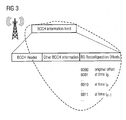
- FIG. 3 shows by way of example the construction of a system information block SIB of the broadcast control channel.
Landscapes
- Engineering & Computer Science (AREA)
- Computer Networks & Wireless Communication (AREA)
- Signal Processing (AREA)
- Mobile Radio Communication Systems (AREA)
- Input Circuits Of Receivers And Coupling Of Receivers And Audio Equipment (AREA)
- Processes Of Treating Macromolecular Substances (AREA)
- Developing Agents For Electrophotography (AREA)
Abstract
Description
- Die Erfindung betrifft ein Verfahren zur Rekonfiguration von Funknetzen
- Für die Benutzer mobiler Endgeräte stehen Funknetze mit unterschiedlichen Zugriffstechniken zur Verfügung. Dabei handelt es sich beispielsweise um Mobilfunknetze der 2. oder 3. Generation (GSM, UMTS, Wireless Local Area Networks (WLAN) oder auch sogenannte WIMAX- Funknetze (Worldwide Interoperability for Microwave Access) gemäß Standard IEEE 802.16.
- Mit einem entsprechend ausgerüsteten, d.h. multimode-fähigen Endgerät hat daher der Benutzer die Möglichkeit, an einem bestimmten Ort wie beispielweise einem Flughafen das für ihn vorteilhafteste Netz für seine Kommunikation auszuwählen.
- Es bestehen darüber hinaus Bestrebungen künftige Netze hinsichtlich ihrer Technologie dynamisch konfigurierbar zu gestalten um sie so an die Bedürfnisse der Benutzer optimal anzupassen. Ein derartiges Projekt wird von der Europäischen Kommission im Rahmen des 6. Rahmenprogrammes unter dem Titel End-to-End Reconfigurability - E2R verfolgt. Wesentliches Element bei einer Rekonfiguration eines Netzes ist die Entscheidung, wann und unter welchen Umständen ein Netzwerk rekonfigurieren soll, d.h. beispielsweise von einem Mobilfunknetz der zweiten Generation nach dem GSM Standard auf ein Mobilfunknetz der dritten Generation nach dem UMTS Standard wechseln soll.
- Der Erfindung liegt die Aufgabe zugrunde, ein Verfahren anzugeben, welches die Entscheidungsgrundlage für die Rekonfiguration eines Funknetzes bilden kann.
- Erfindungsgemäß geschieht dies mit einem Verfahren der eingangs genannten Art, bei dem auf der Basis von statistischen Netzwerkdaten und den technischen Leistungsprofilen der aktiven Endgeräte ein optimaler Betriebszustand eines Funknetzes ermittelt wird, dass in dem Fall, bei dem der derzeitige Betriebszustand nicht dem optimalen Betriebszustand entspricht, die aktuelle Bereitschaft der aktiven Endgeräte des Netzwerkes zu einer Rekonfiguration überprüft wird und bei dem diese Informationen zur Entscheidung über die Rekonfiguration des Netzwerkes herangezogen werden.
- Durch Berücksichtigung der aktuellen Stati der Teilnehmer eines Netzes kann die Aussage über die Zweckmäßigkeit einer Rekonfiguration des Netzes verfeinert und dynamisch an die aktuellen Bedürfnisse der Netzteilnehmer angepasst werden.
- Vorteilhaft ist es, wenn als Parameter für die Ermittlung des optimalen Betriebszustandes eines Funknetzes die spektrale Effizienz, Interferenzen und die Auslastung der Übertragungswege herangezogen wird. Die genannten Parameter sind besonders zur Beschreibung der Netzsituation geeignet.
- Vorteilhaft ist es weiterhin, wenn als Parameter für die Ermittlung der aktuellen Bereitschaft der aktiven Endgeräte des Netzwerkes deren Akku-Ladezustand, und/oder die lokale Position im Netz und/ oder der Zustand der genutzten Dienste herangezogen wird.
- Eine Rekonfiguration führt vorübergehend zu einer eingeschränkten Funktionsfähigkeit des Netzes. Die sich daraus ergebenden Nachteile sind für den Teilnehmer nur dann akzeptabel, wenn er die Absicht hat, den bestehenden Dienst, z.b. eine Datenverbindung noch länger zu nutzen. Wenn hingegen beispielsweise aufgrund des Akkuzustandes, aufgrund der Dauer eines bestimmten Dienstes, oder aber aufgrund eines absehbaren Netzwechsels, weil sich der Teilnehmer beispielsweise auf eine geografische Netzgrenze zubewegt ein baldiges Ende des aktiven Zustandes absehbar ist, dann ist ein Konfigurationswechsel für den Teilnehmer nicht zweckmäßig
- Es ist günstig, wenn Endgeräte, die sich während der Rekonfiguration eines Netzes neu anmelden, sofort die Zielkonfiguration übernehmen.
- Vorteilhaft ist es weiterhin, wenn zur Überprüfung der aktuellen Bereitschaft der aktiven Endgeräte des Netzwerkes zu einer Rekonfiguration die Signalisierungsverfahren des Netzwerkes herangezogen werden.
- Vorteilhaft ist es auch, wenn einzelne Zellen eines Funknetzes unterschiedliche Betriebszustände aufweisen und einzelne Rekonfigurationsvorgänge eine oder mehrere Zellen dieses Netzes betreffen können. Dadurch wird die Flexibilität eines Funknetzes weiter erhöht.
- Die Erfindung wird anhand von Figuren näher erläutert. Dies zeigen beispielhaft
- Fig. 1 den Ablauf eines erfindungsgemäßen Verfahrens zur Entscheidung über eine Rekonfiguration
- Fig. 2 den Ablauf der Anmeldung eines Endgerätes UE an ein Netz.
- Fig. 3 den Aufbau eines System Information Blocks des Broadcast Control Channels
- Der Ablauf des in Fig.1 dargestellten beispielhaften Verfahrens ist wie folgt:
- Aufgrund statistischer Netzwerkdaten und der Teilnehmerprofile wird ermittelt, ob sich das Netzwerk bzw. Teile davon wie einzelne Funkzellen und die jeweiligen Teilnehmerendgeräte in einem optimalen Betriebszustand befinden 1. Wenn aufgrund dieser Daten eine Rekonfiguration zweckmäßig erscheint, wird in Schritt 2 eine Überprüfung der Netzwerkresourcen durchgeführt und eine Vorentscheidung bezüglich der möglichen Rekonfiguration getroffen.
- Diese Vorentscheidung wird an die aktiven Endgeräte über die bestehenden Signalisierungsverbindungen kommuniziert, an inaktive Endgeräte wird diese Entscheidung über den Broadcast-Control Channel gesendet.
- Die aktiven Endgeräte überprüfen daraufhin ihre jeweilige Bereitschaft zu einer Rekonfiguration, die nur dann Sinn macht, wenn die Vorteile der Rekonfiguration, z.B. höhere verfügbare Datenrate, höhere Quality of Service etc. die durch die Rekonfiguration bedingte vorübergehende Einschränkung der Funktionsfähigkeit des Netzes überwiegen und senden daraufhin ihre jeweilige Entscheidung an die für den Rekonfigurationsprozess verantwortliche Netzeinheit (Schritt 4).
- Auf Basis der eingetroffenen Antworten wird in Schritt 5 der Betriebszustand neu bewertet und eine endgültige Entscheidung über die Rekonfiguration getroffen (Schritt 6). Diese Entscheidung wird einerseits mittels Broadcast-Verfahren, über den Broadcast Control Channel BCCH (Schritt 10) verbreitet und andererseits den aktiven Endgeräten über die bestehenden Signalisierungsverbindungen kommuniziert (Schritt 7).
- Danach wird in Schritt 8 das Netzwerk neu konfiguriert und in Schritt 9 der Abschluss der Rekonfiguration den Teilnehmern kommuniziert.
- Die Rekonfiguration des Netzes und seiner Elemente, beispielsweise der Basisstationen kann beispielsweise durch Rekonfigurationsserver unterstützt werden, welche die Stati der unterschiedlichen Betriebszustände wie beispielsweise der jeweils verwendeten Funk-Zugangstechnologien für die Netzelemente und die Endgeräte abrufbar speichern.
- Es ist auch zweckmäßig, wenn einzelne Zellen eines Funknetzes unterschiedliche Betriebszustände aufweisen und einzelne Rekonfigurationsvorgänge eine oder mehrere Zellen dieses Netzes betreffen.
- Dabei kann für die Rekonfiguration der Teilnehmer vorgesehen werden, dass zur Vermeidung von instabilen Zuständen ein zeitverzögerter Wechsel in den neuen Betriebszustand vorgesehen wird.
- In Fig. 2 ist der Ablauf der Anmeldung eines Endgerätes UE an ein Netz näher dargestellt. In diesem Fall wird von Seiten des Endgerätes zuerst der aktuelle suboptimale Betriebszustand RAT angewendet (11). Von Seiten des für die Rekonfiguration verantwortlichen Netzelementes beispielsweise einer Basestation eines Mobilfunknetzes BS wird überprüft, ob auch eine Anwendung des für das Endgerät optimalen Betriebszustandes möglich wäre und eine ggf. vorliegende Bereitschaft zur Unterstützung dieses optimalen Betriebszustandes an das Endgerät UE signalisiert (22). Dieses überprüft anhand seiner Betriebsparamter die Zweckmäßigkeit einer Rekonfiguration und signalisiert diese dem Netzelement BS zusammen mit einem Zeitlimit für die Rekonfiguration (23). Wenn vom Netzelement BS das Zeitlimit für die Rekonfiguration eingehalten werden kann, wird dies dem Endgerät UE zusammen mit einer voraussichtlichen Zeitdauer signalisiert, die Rekonfiguration eingeleitet und der Abschluss derselben mittels Broadcast- Verfahren kommuniziert (24, 26). Das Endgerät UE verharrt dann für die Dauer der Rekonfiguration in einem Wartezustand (25) und meldet sich nach Abschluss des Vorganges im optimalen Betriebszustand erneut an (27). Die Anmeldung wird vom Netzelement in der für diesen Betriebszustand vorgesehenen Weise behandelt (28).
- In Fig.3 ist beispielhaft der Aufbau eines System Information Blocks SIB des Broadcast Control Channels dargestellt. Durch Erweiterung dieser Nachricht um Information zur Rekonfiguration wird eine einfache Lösung zur Kommunikation mit inaktiven Endgeräten im Netzbereich geschaffen.
Claims (6)
- Verfahren zur Rekonfiguration von Funknetzen, dadurch gekennzeichnet, dass auf der Basis von statistischen Netzwerkdaten und den technischen Leistungsprofilen der aktiven Endgeräte ein optimaler Betriebszustand eines Funknetzes ermittelt wird, dass in dem Fall, dass der derzeitige Betriebszustand nicht dem optimalen Betriebszustand entspricht, die aktuelle Bereitschaft der aktiven Endgeräte des Netzwerkes zu einer Rekonfiguration überprüft wird und dass diese Informationen zur Entscheidung über die Rekonfiguration des Netzwerkes herangezogen werden.
- Verfahren nach Anspruch 1, dadurch gekennzeichnet, dass als Parameter für die Ermittlung des optimalen Betriebszustandes eines Funknetzes die spektrale Effizienz, Interferenzen und die Auslastung der Übertragungswege herangezogen wird.
- Verfahren nach Anspruch 1 oder 2, dadurch gekennzeichnet, dass als Parameter für die Ermittlung der aktuellen Bereitschaft der aktiven Endgeräte des Netzwerkes deren Akku-Ladezustand, und/oder die lokale Position im Netz und/ oder der Zustand der genutzten Dienste herangezogen wird.
- Verfahren nach einem der Ansprüche 1 bis 3, dadurch gekennzeichnet, dass während der Rekonfiguration eines Netzes neu angemeldete Endgeräte sofort die Zielkonfiguration übernehmen.
- Verfahren nach einem der Ansprüche 1 bis 4, dadurch gekennzeichnet, dass zur Überprüfung der aktuellen Bereitschaft der aktiven Endgeräte des Netzwerkes zu einer Rekonfiguration die Signalisierungsverfahren des Netzwerkes herangezogen werden.
- Verfahren nach einem der Ansprüche 1 bis 5, dadurch gekennzeichnet, dass einzelne Zellen eines Funknetzes unterschiedliche Betriebszustände aufweisen und einzelne Rekonfigurationsvorgänge eine oder mehrere Zellen dieses Netzes betreffen können.
Priority Applications (3)
| Application Number | Priority Date | Filing Date | Title |
|---|---|---|---|
| DE502006004168T DE502006004168D1 (de) | 2006-03-31 | 2006-03-31 | Rekonfiguration von Funknetzen |
| AT06006976T ATE436163T1 (de) | 2006-03-31 | 2006-03-31 | Rekonfiguration von funknetzen |
| EP06006976A EP1841251B1 (de) | 2006-03-31 | 2006-03-31 | Rekonfiguration von Funknetzen |
Applications Claiming Priority (1)
| Application Number | Priority Date | Filing Date | Title |
|---|---|---|---|
| EP06006976A EP1841251B1 (de) | 2006-03-31 | 2006-03-31 | Rekonfiguration von Funknetzen |
Publications (2)
| Publication Number | Publication Date |
|---|---|
| EP1841251A1 true EP1841251A1 (de) | 2007-10-03 |
| EP1841251B1 EP1841251B1 (de) | 2009-07-08 |
Family
ID=36954676
Family Applications (1)
| Application Number | Title | Priority Date | Filing Date |
|---|---|---|---|
| EP06006976A Expired - Lifetime EP1841251B1 (de) | 2006-03-31 | 2006-03-31 | Rekonfiguration von Funknetzen |
Country Status (3)
| Country | Link |
|---|---|
| EP (1) | EP1841251B1 (de) |
| AT (1) | ATE436163T1 (de) |
| DE (1) | DE502006004168D1 (de) |
Cited By (3)
| Publication number | Priority date | Publication date | Assignee | Title |
|---|---|---|---|---|
| WO2009152855A1 (en) * | 2008-06-18 | 2009-12-23 | Telefonaktiebolaget Lm Ericsson (Publ) | Network configuration |
| EP2141947A1 (de) * | 2008-07-04 | 2010-01-06 | Nokia Siemens Networks OY | Verfahren zur dynamischen Rekonfiguration eines Kommunikationsnetzwerks |
| WO2022178859A1 (en) * | 2021-02-26 | 2022-09-01 | Nec Corporation | Method, device and computer storage medium of communication |
Citations (2)
| Publication number | Priority date | Publication date | Assignee | Title |
|---|---|---|---|---|
| US20040203719A1 (en) * | 2002-07-01 | 2004-10-14 | Ross David J. | Wireless network optimization through remote device data |
| US6829491B1 (en) * | 2001-08-15 | 2004-12-07 | Kathrein-Werke Kg | Dynamic and self-optimizing smart network |
-
2006
- 2006-03-31 DE DE502006004168T patent/DE502006004168D1/de not_active Expired - Lifetime
- 2006-03-31 AT AT06006976T patent/ATE436163T1/de active
- 2006-03-31 EP EP06006976A patent/EP1841251B1/de not_active Expired - Lifetime
Patent Citations (2)
| Publication number | Priority date | Publication date | Assignee | Title |
|---|---|---|---|---|
| US6829491B1 (en) * | 2001-08-15 | 2004-12-07 | Kathrein-Werke Kg | Dynamic and self-optimizing smart network |
| US20040203719A1 (en) * | 2002-07-01 | 2004-10-14 | Ross David J. | Wireless network optimization through remote device data |
Non-Patent Citations (1)
| Title |
|---|
| E2R II PROJECT - MOTOROLA LABS: "End-to-end Reconfigurability System Requirements", E2R WHITE PAPER (PHASE 1), January 2006 (2006-01-01), pages 1 - 12, XP002400147, Retrieved from the Internet <URL:http://e2r.motlabs.com/whitepapers/> [retrieved on 20060920] * |
Cited By (3)
| Publication number | Priority date | Publication date | Assignee | Title |
|---|---|---|---|---|
| WO2009152855A1 (en) * | 2008-06-18 | 2009-12-23 | Telefonaktiebolaget Lm Ericsson (Publ) | Network configuration |
| EP2141947A1 (de) * | 2008-07-04 | 2010-01-06 | Nokia Siemens Networks OY | Verfahren zur dynamischen Rekonfiguration eines Kommunikationsnetzwerks |
| WO2022178859A1 (en) * | 2021-02-26 | 2022-09-01 | Nec Corporation | Method, device and computer storage medium of communication |
Also Published As
| Publication number | Publication date |
|---|---|
| DE502006004168D1 (de) | 2009-08-20 |
| ATE436163T1 (de) | 2009-07-15 |
| EP1841251B1 (de) | 2009-07-08 |
Similar Documents
| Publication | Publication Date | Title |
|---|---|---|
| DE602005001329T2 (de) | Verfahren zur Auswahl eines Kommunikationsnetzes, anhand durch ein mobiles Kommunikationsnetz ausgesandten Informationen über drahtloses LAN Zugriffspunkte | |
| DE69807041T2 (de) | Zentralisierte funknetzsteuerung in einem mobilkommunikationssystem | |
| DE69737829T2 (de) | Inter-system-anruf für sanftes inter-system-weiterreichen | |
| DE19681600C2 (de) | Aktivitätssteuerung für eine mobile Station in einem drahtlosen Übertragungssystem | |
| DE60208382T2 (de) | Hybrides UMTS/WLAN Telekommunikationssystem | |
| DE602005006230T2 (de) | Sende-und empfangsbestätigung von kontrollinformation für punkt-zu-mehrpunkt-dienst in einem drahtlosen kommunikationssystem | |
| DE102012101863A1 (de) | Kommunikationsvorrichtungen und Verfahren zur Netzwerk-Signalisierung | |
| EP1143759A2 (de) | Funkkommunikationssystem und Komponenten für ein Funkübertragungsverfahren nach verschiedenen Funkübertragungsmodi | |
| DE102016214738A1 (de) | Vorrichtungen, Systeme und Verfahren für einen verbesserten Übergabemechanismus und Zellenneuauswahl | |
| DE112013004115T5 (de) | Verfahren und Vorrichtung zur automatischen Erzeugung eines standortbezogenen Gesprächsgruppenrufs mit reduziertem Benachrichtigungsoverhead | |
| DE112014003704T5 (de) | Verfahren zur Zellauswahl in einer Multi-RAT-Umgebung | |
| DE202005014249U1 (de) | Drahtloser Kommunikationszugangspunkt, der konfiguriert ist, um den Kanalwechsel in einem drahtlosen lokalen Netzwerk zu implementieren | |
| DE102012017923A1 (de) | Verfahren zum Teilen von Netzinformationen und Kommunikationsvorrichtungen, welche dieselbe verwenden | |
| DE102012024869A1 (de) | Verfahren zum Optimieren einer Mobilfunkanbindung eines Kraftwagens | |
| DE102012106254A1 (de) | Systeme und Verfahren für ein übergangsloses Schalten zwischen einer Vielzahl von Funkverbindungen für Funkübertragungen | |
| DE112016006085T5 (de) | Endeinrichtung, Kommunikationssystem und Verbindungsziel-Auswahlverfahren | |
| EP1864438A1 (de) | Optimale auswahl eines kommunikationsnetzes im aufenthaltsort eines endgerätes | |
| DE60101571T2 (de) | Datenträger in einem kommunikationssystem | |
| EP1841251B1 (de) | Rekonfiguration von Funknetzen | |
| WO2019120682A1 (de) | Bootstrap-server und verfahren zum aufbauen einer roaming-verbindung über einen bootstrap-server | |
| EP3503600B1 (de) | Netzwerkzugangs-entität und verfahren zum aufbauen einer roaming-verbindung über eine netzwerkzugangs-entität | |
| DE60225685T2 (de) | Mobiles kommunikationsnetz | |
| WO2006084776A1 (de) | Verfahren zur anpassung einer verbindung zwischen einem diensteanbieter und einem kommunikationsgerät und entsprechendes kommunikationssystem | |
| WO2012143376A1 (de) | Verfahren zum leiten von telekommunikationsverbindungen zu einem mobilfunk- endgerät sowie mobilfunk- gateway | |
| EP2613494B1 (de) | Vorrichtung zur Verfügungstellung einer Schnittstelle für eine Fernwartung von elektronischen, mit dem Internet verbundenen IP-Geräten und Verfahren zur Herstellung einer Kommunikationsverbindung für die Fernwartung von elektronischen, mit dem Internet verbundenen IP-Geräten über eine Schnittstelle |
Legal Events
| Date | Code | Title | Description |
|---|---|---|---|
| PUAI | Public reference made under article 153(3) epc to a published international application that has entered the european phase |
Free format text: ORIGINAL CODE: 0009012 |
|
| AK | Designated contracting states |
Kind code of ref document: A1 Designated state(s): AT BE BG CH CY CZ DE DK EE ES FI FR GB GR HU IE IS IT LI LT LU LV MC NL PL PT RO SE SI SK TR |
|
| AX | Request for extension of the european patent |
Extension state: AL BA HR MK YU |
|
| RAP3 | Party data changed (applicant data changed or rights of an application transferred) |
Owner name: NOKIA SIEMENS NETWORKS S.P.A. |
|
| RAP3 | Party data changed (applicant data changed or rights of an application transferred) |
Owner name: NOKIA SIEMENS NETWORKS GMBH & CO. KG |
|
| 17P | Request for examination filed |
Effective date: 20080403 |
|
| 17Q | First examination report despatched |
Effective date: 20080508 |
|
| AKX | Designation fees paid |
Designated state(s): AT BE BG CH CY CZ DE DK EE ES FI FR GB GR HU IE IS IT LI LT LU LV MC NL PL PT RO SE SI SK TR |
|
| GRAP | Despatch of communication of intention to grant a patent |
Free format text: ORIGINAL CODE: EPIDOSNIGR1 |
|
| GRAS | Grant fee paid |
Free format text: ORIGINAL CODE: EPIDOSNIGR3 |
|
| GRAA | (expected) grant |
Free format text: ORIGINAL CODE: 0009210 |
|
| AK | Designated contracting states |
Kind code of ref document: B1 Designated state(s): AT BE BG CH CY CZ DE DK EE ES FI FR GB GR HU IE IS IT LI LT LU LV MC NL PL PT RO SE SI SK TR |
|
| REG | Reference to a national code |
Ref country code: GB Ref legal event code: FG4D Free format text: NOT ENGLISH |
|
| REG | Reference to a national code |
Ref country code: CH Ref legal event code: EP |
|
| REG | Reference to a national code |
Ref country code: IE Ref legal event code: FG4D |
|
| REF | Corresponds to: |
Ref document number: 502006004168 Country of ref document: DE Date of ref document: 20090820 Kind code of ref document: P |
|
| PG25 | Lapsed in a contracting state [announced via postgrant information from national office to epo] |
Ref country code: SI Free format text: LAPSE BECAUSE OF FAILURE TO SUBMIT A TRANSLATION OF THE DESCRIPTION OR TO PAY THE FEE WITHIN THE PRESCRIBED TIME-LIMIT Effective date: 20090708 |
|
| NLV1 | Nl: lapsed or annulled due to failure to fulfill the requirements of art. 29p and 29m of the patents act | ||
| PG25 | Lapsed in a contracting state [announced via postgrant information from national office to epo] |
Ref country code: FI Free format text: LAPSE BECAUSE OF FAILURE TO SUBMIT A TRANSLATION OF THE DESCRIPTION OR TO PAY THE FEE WITHIN THE PRESCRIBED TIME-LIMIT Effective date: 20090708 Ref country code: IS Free format text: LAPSE BECAUSE OF FAILURE TO SUBMIT A TRANSLATION OF THE DESCRIPTION OR TO PAY THE FEE WITHIN THE PRESCRIBED TIME-LIMIT Effective date: 20091108 Ref country code: ES Free format text: LAPSE BECAUSE OF FAILURE TO SUBMIT A TRANSLATION OF THE DESCRIPTION OR TO PAY THE FEE WITHIN THE PRESCRIBED TIME-LIMIT Effective date: 20091019 Ref country code: LT Free format text: LAPSE BECAUSE OF FAILURE TO SUBMIT A TRANSLATION OF THE DESCRIPTION OR TO PAY THE FEE WITHIN THE PRESCRIBED TIME-LIMIT Effective date: 20090708 |
|
| REG | Reference to a national code |
Ref country code: IE Ref legal event code: FD4D |
|
| PG25 | Lapsed in a contracting state [announced via postgrant information from national office to epo] |
Ref country code: NL Free format text: LAPSE BECAUSE OF FAILURE TO SUBMIT A TRANSLATION OF THE DESCRIPTION OR TO PAY THE FEE WITHIN THE PRESCRIBED TIME-LIMIT Effective date: 20090708 Ref country code: PL Free format text: LAPSE BECAUSE OF FAILURE TO SUBMIT A TRANSLATION OF THE DESCRIPTION OR TO PAY THE FEE WITHIN THE PRESCRIBED TIME-LIMIT Effective date: 20090708 Ref country code: LV Free format text: LAPSE BECAUSE OF FAILURE TO SUBMIT A TRANSLATION OF THE DESCRIPTION OR TO PAY THE FEE WITHIN THE PRESCRIBED TIME-LIMIT Effective date: 20090708 |
|
| PG25 | Lapsed in a contracting state [announced via postgrant information from national office to epo] |
Ref country code: PT Free format text: LAPSE BECAUSE OF FAILURE TO SUBMIT A TRANSLATION OF THE DESCRIPTION OR TO PAY THE FEE WITHIN THE PRESCRIBED TIME-LIMIT Effective date: 20091109 Ref country code: BG Free format text: LAPSE BECAUSE OF FAILURE TO SUBMIT A TRANSLATION OF THE DESCRIPTION OR TO PAY THE FEE WITHIN THE PRESCRIBED TIME-LIMIT Effective date: 20091008 |
|
| PG25 | Lapsed in a contracting state [announced via postgrant information from national office to epo] |
Ref country code: RO Free format text: LAPSE BECAUSE OF FAILURE TO SUBMIT A TRANSLATION OF THE DESCRIPTION OR TO PAY THE FEE WITHIN THE PRESCRIBED TIME-LIMIT Effective date: 20090708 Ref country code: IE Free format text: LAPSE BECAUSE OF FAILURE TO SUBMIT A TRANSLATION OF THE DESCRIPTION OR TO PAY THE FEE WITHIN THE PRESCRIBED TIME-LIMIT Effective date: 20090708 Ref country code: DK Free format text: LAPSE BECAUSE OF FAILURE TO SUBMIT A TRANSLATION OF THE DESCRIPTION OR TO PAY THE FEE WITHIN THE PRESCRIBED TIME-LIMIT Effective date: 20090708 Ref country code: CZ Free format text: LAPSE BECAUSE OF FAILURE TO SUBMIT A TRANSLATION OF THE DESCRIPTION OR TO PAY THE FEE WITHIN THE PRESCRIBED TIME-LIMIT Effective date: 20090708 Ref country code: EE Free format text: LAPSE BECAUSE OF FAILURE TO SUBMIT A TRANSLATION OF THE DESCRIPTION OR TO PAY THE FEE WITHIN THE PRESCRIBED TIME-LIMIT Effective date: 20090708 |
|
| PLBE | No opposition filed within time limit |
Free format text: ORIGINAL CODE: 0009261 |
|
| STAA | Information on the status of an ep patent application or granted ep patent |
Free format text: STATUS: NO OPPOSITION FILED WITHIN TIME LIMIT |
|
| PG25 | Lapsed in a contracting state [announced via postgrant information from national office to epo] |
Ref country code: SK Free format text: LAPSE BECAUSE OF FAILURE TO SUBMIT A TRANSLATION OF THE DESCRIPTION OR TO PAY THE FEE WITHIN THE PRESCRIBED TIME-LIMIT Effective date: 20090708 |
|
| 26N | No opposition filed |
Effective date: 20100409 |
|
| BERE | Be: lapsed |
Owner name: NOKIA SIEMENS NETWORKS G.M.B.H. & CO. KG Effective date: 20100331 |
|
| PG25 | Lapsed in a contracting state [announced via postgrant information from national office to epo] |
Ref country code: MC Free format text: LAPSE BECAUSE OF NON-PAYMENT OF DUE FEES Effective date: 20100331 Ref country code: GR Free format text: LAPSE BECAUSE OF FAILURE TO SUBMIT A TRANSLATION OF THE DESCRIPTION OR TO PAY THE FEE WITHIN THE PRESCRIBED TIME-LIMIT Effective date: 20091009 |
|
| REG | Reference to a national code |
Ref country code: CH Ref legal event code: PL |
|
| REG | Reference to a national code |
Ref country code: FR Ref legal event code: ST Effective date: 20101130 |
|
| PG25 | Lapsed in a contracting state [announced via postgrant information from national office to epo] |
Ref country code: FR Free format text: LAPSE BECAUSE OF NON-PAYMENT OF DUE FEES Effective date: 20100331 |
|
| PG25 | Lapsed in a contracting state [announced via postgrant information from national office to epo] |
Ref country code: LI Free format text: LAPSE BECAUSE OF NON-PAYMENT OF DUE FEES Effective date: 20100331 Ref country code: BE Free format text: LAPSE BECAUSE OF NON-PAYMENT OF DUE FEES Effective date: 20100331 Ref country code: CH Free format text: LAPSE BECAUSE OF NON-PAYMENT OF DUE FEES Effective date: 20100331 |
|
| PG25 | Lapsed in a contracting state [announced via postgrant information from national office to epo] |
Ref country code: IT Free format text: LAPSE BECAUSE OF FAILURE TO SUBMIT A TRANSLATION OF THE DESCRIPTION OR TO PAY THE FEE WITHIN THE PRESCRIBED TIME-LIMIT Effective date: 20090708 |
|
| PG25 | Lapsed in a contracting state [announced via postgrant information from national office to epo] |
Ref country code: CY Free format text: LAPSE BECAUSE OF FAILURE TO SUBMIT A TRANSLATION OF THE DESCRIPTION OR TO PAY THE FEE WITHIN THE PRESCRIBED TIME-LIMIT Effective date: 20090708 |
|
| PG25 | Lapsed in a contracting state [announced via postgrant information from national office to epo] |
Ref country code: SE Free format text: LAPSE BECAUSE OF FAILURE TO SUBMIT A TRANSLATION OF THE DESCRIPTION OR TO PAY THE FEE WITHIN THE PRESCRIBED TIME-LIMIT Effective date: 20090708 Ref country code: LU Free format text: LAPSE BECAUSE OF NON-PAYMENT OF DUE FEES Effective date: 20100331 Ref country code: HU Free format text: LAPSE BECAUSE OF FAILURE TO SUBMIT A TRANSLATION OF THE DESCRIPTION OR TO PAY THE FEE WITHIN THE PRESCRIBED TIME-LIMIT Effective date: 20100109 |
|
| PG25 | Lapsed in a contracting state [announced via postgrant information from national office to epo] |
Ref country code: TR Free format text: LAPSE BECAUSE OF FAILURE TO SUBMIT A TRANSLATION OF THE DESCRIPTION OR TO PAY THE FEE WITHIN THE PRESCRIBED TIME-LIMIT Effective date: 20090708 |
|
| REG | Reference to a national code |
Ref country code: AT Ref legal event code: MM01 Ref document number: 436163 Country of ref document: AT Kind code of ref document: T Effective date: 20110331 |
|
| PG25 | Lapsed in a contracting state [announced via postgrant information from national office to epo] |
Ref country code: AT Free format text: LAPSE BECAUSE OF NON-PAYMENT OF DUE FEES Effective date: 20110331 |
|
| REG | Reference to a national code |
Ref country code: DE Ref legal event code: R081 Ref document number: 502006004168 Country of ref document: DE Owner name: NOKIA SOLUTIONS AND NETWORKS GMBH & CO. KG, DE Free format text: FORMER OWNER: NOKIA SIEMENS NETWORKS GMBH & CO. KG, 81541 MUENCHEN, DE Effective date: 20140731 |
|
| PGFP | Annual fee paid to national office [announced via postgrant information from national office to epo] |
Ref country code: DE Payment date: 20150320 Year of fee payment: 10 |
|
| PGFP | Annual fee paid to national office [announced via postgrant information from national office to epo] |
Ref country code: GB Payment date: 20150319 Year of fee payment: 10 |
|
| REG | Reference to a national code |
Ref country code: DE Ref legal event code: R119 Ref document number: 502006004168 Country of ref document: DE |
|
| GBPC | Gb: european patent ceased through non-payment of renewal fee |
Effective date: 20160331 |
|
| PG25 | Lapsed in a contracting state [announced via postgrant information from national office to epo] |
Ref country code: GB Free format text: LAPSE BECAUSE OF NON-PAYMENT OF DUE FEES Effective date: 20160331 Ref country code: DE Free format text: LAPSE BECAUSE OF NON-PAYMENT OF DUE FEES Effective date: 20161001 |