EP1828113B1 - 2-methylene-19,26,27-trinor-(20s)-1-alpha-hydroxyvitamin d3 and its uses - Google Patents
2-methylene-19,26,27-trinor-(20s)-1-alpha-hydroxyvitamin d3 and its uses Download PDFInfo
- Publication number
- EP1828113B1 EP1828113B1 EP05849147A EP05849147A EP1828113B1 EP 1828113 B1 EP1828113 B1 EP 1828113B1 EP 05849147 A EP05849147 A EP 05849147A EP 05849147 A EP05849147 A EP 05849147A EP 1828113 B1 EP1828113 B1 EP 1828113B1
- Authority
- EP
- European Patent Office
- Prior art keywords
- compound
- formula
- hydrogen
- hydroxy
- protecting group
- Prior art date
- Legal status (The legal status is an assumption and is not a legal conclusion. Google has not performed a legal analysis and makes no representation as to the accuracy of the status listed.)
- Expired - Lifetime
Links
Images


Classifications
-
- C—CHEMISTRY; METALLURGY
- C07—ORGANIC CHEMISTRY
- C07C—ACYCLIC OR CARBOCYCLIC COMPOUNDS
- C07C401/00—Irradiation products of cholesterol or its derivatives; Vitamin D derivatives, 9,10-seco cyclopenta[a]phenanthrene or analogues obtained by chemical preparation without irradiation
-
- A—HUMAN NECESSITIES
- A61—MEDICAL OR VETERINARY SCIENCE; HYGIENE
- A61P—SPECIFIC THERAPEUTIC ACTIVITY OF CHEMICAL COMPOUNDS OR MEDICINAL PREPARATIONS
- A61P1/00—Drugs for disorders of the alimentary tract or the digestive system
-
- A—HUMAN NECESSITIES
- A61—MEDICAL OR VETERINARY SCIENCE; HYGIENE
- A61P—SPECIFIC THERAPEUTIC ACTIVITY OF CHEMICAL COMPOUNDS OR MEDICINAL PREPARATIONS
- A61P11/00—Drugs for disorders of the respiratory system
- A61P11/06—Antiasthmatics
-
- A—HUMAN NECESSITIES
- A61—MEDICAL OR VETERINARY SCIENCE; HYGIENE
- A61P—SPECIFIC THERAPEUTIC ACTIVITY OF CHEMICAL COMPOUNDS OR MEDICINAL PREPARATIONS
- A61P13/00—Drugs for disorders of the urinary system
- A61P13/12—Drugs for disorders of the urinary system of the kidneys
-
- A—HUMAN NECESSITIES
- A61—MEDICAL OR VETERINARY SCIENCE; HYGIENE
- A61P—SPECIFIC THERAPEUTIC ACTIVITY OF CHEMICAL COMPOUNDS OR MEDICINAL PREPARATIONS
- A61P17/00—Drugs for dermatological disorders
-
- A—HUMAN NECESSITIES
- A61—MEDICAL OR VETERINARY SCIENCE; HYGIENE
- A61P—SPECIFIC THERAPEUTIC ACTIVITY OF CHEMICAL COMPOUNDS OR MEDICINAL PREPARATIONS
- A61P17/00—Drugs for dermatological disorders
- A61P17/06—Antipsoriatics
-
- A—HUMAN NECESSITIES
- A61—MEDICAL OR VETERINARY SCIENCE; HYGIENE
- A61P—SPECIFIC THERAPEUTIC ACTIVITY OF CHEMICAL COMPOUNDS OR MEDICINAL PREPARATIONS
- A61P19/00—Drugs for skeletal disorders
- A61P19/08—Drugs for skeletal disorders for bone diseases, e.g. rachitism, Paget's disease
-
- A—HUMAN NECESSITIES
- A61—MEDICAL OR VETERINARY SCIENCE; HYGIENE
- A61P—SPECIFIC THERAPEUTIC ACTIVITY OF CHEMICAL COMPOUNDS OR MEDICINAL PREPARATIONS
- A61P25/00—Drugs for disorders of the nervous system
-
- A—HUMAN NECESSITIES
- A61—MEDICAL OR VETERINARY SCIENCE; HYGIENE
- A61P—SPECIFIC THERAPEUTIC ACTIVITY OF CHEMICAL COMPOUNDS OR MEDICINAL PREPARATIONS
- A61P29/00—Non-central analgesic, antipyretic or antiinflammatory agents, e.g. antirheumatic agents; Non-steroidal antiinflammatory drugs [NSAID]
-
- A—HUMAN NECESSITIES
- A61—MEDICAL OR VETERINARY SCIENCE; HYGIENE
- A61P—SPECIFIC THERAPEUTIC ACTIVITY OF CHEMICAL COMPOUNDS OR MEDICINAL PREPARATIONS
- A61P3/00—Drugs for disorders of the metabolism
- A61P3/04—Anorexiants; Antiobesity agents
-
- A—HUMAN NECESSITIES
- A61—MEDICAL OR VETERINARY SCIENCE; HYGIENE
- A61P—SPECIFIC THERAPEUTIC ACTIVITY OF CHEMICAL COMPOUNDS OR MEDICINAL PREPARATIONS
- A61P3/00—Drugs for disorders of the metabolism
- A61P3/08—Drugs for disorders of the metabolism for glucose homeostasis
- A61P3/10—Drugs for disorders of the metabolism for glucose homeostasis for hyperglycaemia, e.g. antidiabetics
-
- A—HUMAN NECESSITIES
- A61—MEDICAL OR VETERINARY SCIENCE; HYGIENE
- A61P—SPECIFIC THERAPEUTIC ACTIVITY OF CHEMICAL COMPOUNDS OR MEDICINAL PREPARATIONS
- A61P35/00—Antineoplastic agents
-
- A—HUMAN NECESSITIES
- A61—MEDICAL OR VETERINARY SCIENCE; HYGIENE
- A61P—SPECIFIC THERAPEUTIC ACTIVITY OF CHEMICAL COMPOUNDS OR MEDICINAL PREPARATIONS
- A61P35/00—Antineoplastic agents
- A61P35/02—Antineoplastic agents specific for leukemia
-
- A—HUMAN NECESSITIES
- A61—MEDICAL OR VETERINARY SCIENCE; HYGIENE
- A61P—SPECIFIC THERAPEUTIC ACTIVITY OF CHEMICAL COMPOUNDS OR MEDICINAL PREPARATIONS
- A61P37/00—Drugs for immunological or allergic disorders
-
- A—HUMAN NECESSITIES
- A61—MEDICAL OR VETERINARY SCIENCE; HYGIENE
- A61P—SPECIFIC THERAPEUTIC ACTIVITY OF CHEMICAL COMPOUNDS OR MEDICINAL PREPARATIONS
- A61P37/00—Drugs for immunological or allergic disorders
- A61P37/02—Immunomodulators
- A61P37/06—Immunosuppressants, e.g. drugs for graft rejection
-
- C—CHEMISTRY; METALLURGY
- C07—ORGANIC CHEMISTRY
- C07F—ACYCLIC, CARBOCYCLIC OR HETEROCYCLIC COMPOUNDS CONTAINING ELEMENTS OTHER THAN CARBON, HYDROGEN, HALOGEN, OXYGEN, NITROGEN, SULFUR, SELENIUM OR TELLURIUM
- C07F7/00—Compounds containing elements of Groups 4 or 14 of the Periodic Table
- C07F7/02—Silicon compounds
- C07F7/08—Compounds having one or more C—Si linkages
- C07F7/18—Compounds having one or more C—Si linkages as well as one or more C—O—Si linkages
- C07F7/1804—Compounds having Si-O-C linkages
-
- C—CHEMISTRY; METALLURGY
- C07—ORGANIC CHEMISTRY
- C07C—ACYCLIC OR CARBOCYCLIC COMPOUNDS
- C07C2601/00—Systems containing only non-condensed rings
- C07C2601/12—Systems containing only non-condensed rings with a six-membered ring
- C07C2601/14—The ring being saturated
-
- C—CHEMISTRY; METALLURGY
- C07—ORGANIC CHEMISTRY
- C07C—ACYCLIC OR CARBOCYCLIC COMPOUNDS
- C07C2602/00—Systems containing two condensed rings
- C07C2602/02—Systems containing two condensed rings the rings having only two atoms in common
- C07C2602/14—All rings being cycloaliphatic
- C07C2602/24—All rings being cycloaliphatic the ring system containing nine carbon atoms, e.g. perhydroindane
-
- Y—GENERAL TAGGING OF NEW TECHNOLOGICAL DEVELOPMENTS; GENERAL TAGGING OF CROSS-SECTIONAL TECHNOLOGIES SPANNING OVER SEVERAL SECTIONS OF THE IPC; TECHNICAL SUBJECTS COVERED BY FORMER USPC CROSS-REFERENCE ART COLLECTIONS [XRACs] AND DIGESTS
- Y02—TECHNOLOGIES OR APPLICATIONS FOR MITIGATION OR ADAPTATION AGAINST CLIMATE CHANGE
- Y02P—CLIMATE CHANGE MITIGATION TECHNOLOGIES IN THE PRODUCTION OR PROCESSING OF GOODS
- Y02P20/00—Technologies relating to chemical industry
- Y02P20/50—Improvements relating to the production of bulk chemicals
- Y02P20/55—Design of synthesis routes, e.g. reducing the use of auxiliary or protecting groups
Definitions
- This invention relates to vitamin D compounds, and more particularly to 2-methylene-19,26,27-trinor-(20S)-1 ⁇ -Hydroxyvitamin D 3 and its pharmaceutical uses.
- the natural hormone, 1 ⁇ ,25-dihydroxyvitamin D 3 and its analog in ergosterol series, i.e. 1 ⁇ ,25-dihydroxyvitamin D 2 are known to be highly potent regulators of calcium homeostasis in animals and humans, and their activity in cellular differentiation has also been established, Ostrem et al., Proc. Natl. Acad. Sci. USA, 84, 2610 (1987 ). Many structural analogs of these metabolites have been prepared and tested, including 1 ⁇ -hydroxyvitamin D 3 , 1 ⁇ -hydroxyvitamin D 2 , various side chain homologated vitamins and fluorinated analogs. Some of these compounds exhibit an interesting separation of activities in cell differentiation and calcium regulation. This difference in activity may be useful in the treatment of a variety of diseases such as renal osteodystrophy, vitamin D-resistant rickets, osteoporosis, psoriasis, and certain malignancies.
- diseases such as renal osteodystrophy, vitamin D-resistant ricket
- Another class of vitamin D analogs i.e. the so called 19-nor-vitamin D compounds, is characterized by the replacement of the A-ring exocyclic methylene group (carbon 19), typical of the vitamin D system, by two hydrogen atoms.
- Biological testing of such 19-nor-analogs e.g., 1 ⁇ ,25-dihydroxy-19-nor-vitamin D 3
- these compounds are potentially useful as therapeutic agents for the treatment of malignancies, or the treatment of various skin disorders.
- Two different methods of synthesis of such 19-nor-vitamin D analogs have been described ( Perlman et al., Tetrahedron Lett. 31, 1823 (1990 ); Perlman et al., Tetrahedron Lett. 32, 7663 (1991 ), and DeLuca et al., U.S. Pat. No. 5,086,191 ).
- the present invention is directed toward 2-methylene-19,26,27-trinor-(20S)-vitamin D analogs, and more specifically toward 2-methylene-19,26,27-trinor-(20S)-1 ⁇ -hydroxyvitamin D 3 , their biological activity, and various pharmaceutical uses for these compounds.
- the above compounds of formula I exhibit a desired, and highly advantageous, pattern of biological activity.
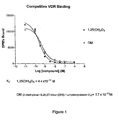
- These compounds are characterized by relatively high binding to vitamin D receptors, but very low intestinal calcium transport activity, as compared to that of 1 ⁇ ,25-dihydroxyvitamin D 3 , and have very low ability to mobilize calcium from bone, as compared to 1 ⁇ ,25-dihydroxyvitamin D 3 .
- these compounds can be characterized as having little, if any, calcemic activity. It is undesirable to raise serum calcium to supraphysiologic levels when suppressing the preproparathyroid hormone gene ( Darwish & DeLuca, Arch. Biochem. Biophys. 365, 123-130, 1999 ) and parathyroid gland proliferation.
- These analogs having little or no calcemic activity while very active on differentiation are expected to be useful as a therapy for suppression of secondary hyperparathyroidism of renal osteodystrophy.
- the compounds I, and particularly Ia, of the invention have also been discovered to be especially suited for treatment and prophylaxis of human disorders which are characterized by an imbalance in the immune system, e.g. in autoimmune diseases, including multiple sclerosis, lupus, diabetes mellitus, host versus graft rejection, and rejection of organ transplants; and additionally for the treatment of inflammatory diseases, such as rheumatoid arthritis, asthma, and inflammatory bowel diseases such as celiac disease, ulcerative colitis and Crohn's disease. Acne, alopecia and hypertension are other conditions which may be treated with the compounds of the invention.
- autoimmune diseases including multiple sclerosis, lupus, diabetes mellitus, host versus graft rejection, and rejection of organ transplants
- inflammatory diseases such as rheumatoid arthritis, asthma, and inflammatory bowel diseases such as celiac disease, ulcerative colitis and Crohn's disease.
- Acne, alopecia and hypertension are
- the above compounds I, and particularly Ia are also characterized by relatively high cell differentiation activity.
- these compounds also provide a therapeutic agent for the treatment of psoriasis, or as an anti-cancer agent, especially against leukemia, colon cancer, breast cancer, skin cancer and prostate cancer.
- these compounds provide a therapeutic agent for the treatment of various skin conditions including wrinkles, lack of adequate dermal hydration, i.e. dry skin, lack of adequate skin firmness, i.e. slack skin, and insufficient sebum secretion. Use of these compounds thus not only result in moisturizing of skin but also improves the barrier function of skin.
- a method of preventing or treating obesity, inhibiting adipocyte differentiation, inhibiting SCD-1 gene transcription, and/or reducing body fat in an animal subject includes administering to the animal subject, an effective amount of one or more of the compounds or a pharmaceutical composition that includes one or more of the compounds of formula I.
- Administration of one or more of the compounds or the pharmaceutical compositions to the subject inhibits adipocyte differentiation, inhibits gene transcription, and/or reduces body fat in the animal subject.
- One or more of the compounds may be present in a composition to treat the above-noted diseases and disorders in an amount from about 0.01 ⁇ g/gm to about 1000 ⁇ g/gm of the composition, preferably from about 0.1 ⁇ g/gm to about 500 ⁇ g/gm of the composition, and may be administered topically, transdermally, orally, rectally, nasally, sublingually or parenterally in dosages of from about 0.01 ⁇ g/day to about 1000 ⁇ g/day, preferably from about 0.1 ⁇ g/day to about 500 ⁇ g/day.
- groups X 1 and X 2 are hydroxy-protecting groups, preferably t-butyldimethylsilyl, it being also understood that any functionalities that might be sensitive, or that interfere with the condensation reaction, be suitably protected as is well-known in the art.
- the process shown above represents an application of the convergent synthesis concept, which has been applied effectively for the preparation of vitamin D compounds [e.g. Lythgoe et al., J. Chem. Soc. Perkin Trans. I, 590 (1978 ); Lythgoe, Chem. Soc. Rev. 9, 449 (1983 ); Toh et al., J. Org. Chem. 48, 1414 (1983 ); Baggiolini et al., J.
- the hydrindanone of the general structure II is not known. It can be prepared by the method shown on Schemes 1 and 2 (see the preparation of compound OM).
- hydroxy-protecting group signifies any group commonly used for the temporary protection of hydroxy functions, such as for example, alkoxycarbonyl, acyl, alkylsilyl or alkylarylsilyl groups (hereinafter referred to simply as “silyl” groups), and alkoxyalkyl groups.
- Alkoxycarbonyl protecting groups are alkyl-O-CO- groupings such as methoxycarbonyl, ethoxycarbonyl, propoxycarbonyl, isopropoxycarbonyl, butoxycarbonyl, isobutoxycarbonyl, tert-butoxycarbonyl, benzyloxycarbonyl or allyloxycarbonyl.
- acyl signifies an alkanoyl group of 1 to 6 carbons, in all of its isomeric forms, or a carboxyalkanoyl group of 1 to 6 carbons, such as an oxalyl, malonyl, succinyl, glutaryl group, or an aromatic acyl group such as benzoyl, or a halo, nitro or alkyl substituted benzoyl group.
- alkyl as used in the description or the claims, denotes a straight-chain or branched alkyl radical of 1 to 10 carbons, in all its isomeric forms.
- Alkoxyalkyl protecting groups are groupings such as methoxymethyl, ethoxymethyl, methoxyethoxymethyl, or tetrahydrofuranyl and tetrahydropyranyl.
- Preferred silyl-protecting groups are trimethylsilyl, triethylsilyl, t-butyldimethylsilyl, dibutylmethylsilyl, diphenylmethylsilyl, phenyldimethylsilyl, diphenyl-t-butylsilyl and analogous alkylated silyl radicals.
- aryl specifies a phenyl-, or an alkyl-, nitro- or halo-substituted phenyl group.
- a “protected hydroxy” group is a hydroxy group derivatised or protected by any of the above groups commonly used for the temporary or permanent protection of hydroxy functions, e.g. the silyl, alkoxyalkyl, acyl or alkoxycarbonyl groups, as previously defined.
- hydroxyalkyl deuteroalkyl
- fluoroalkyl refer to an alkyl radical substituted by one or more hydroxy, deuterium or fluoro groups respectively.
- Ozone was passed through a solution of vitamin D 2 (3 g, 7.6 mmol) in methanol (250 mL) and pyridine (2.44 g, 2.5 mL, 31 mmol) for 50 min at -78 °C.
- the reaction mixture was then flushed with an oxygen for 15 min to remove the residual ozone and the solution was treated with NaBH 4 (0.75 g, 20 mmol).
- the second portion of NaBH 4 (0.75 g, 20 mmol) was added and the mixture was allowed to warm to room temperature.
- the third portion of NaBH 4 (0.75 g, 20 mmol) was then added and the reaction mixture was stirred for 18 h.
- tert -Butyldimethylsilyl trifluoromethanesulfonate (3.24 mL, 3.72 g, 14.1 mmol) was added to a solution of the 8 ⁇ ,20-diol 1 (1 g, 4.7 mmol) and 2,6-lutidine (1.64 mL, 1.51g, 14.1 mmol) in anhydrous DMF (15 mL) at 0 °C. The mixture was stirred under argon at 0 °C for 1 h and then at room temperature for 18 h. The reaction was quenched with water (50mL) and extracted with ethyl acetate (3 ⁇ 30 mL).
- the aldehyde 3 (364 mg, 1.12 mmol) was dissolved in methylene chloride (15 mL) and a 40% aq. n-Bu 4 NOH solution (1.47 mL, 1.45 g, 2.24 mmol) was added. The resulting mixture was stirred under argon at room temperature for 16 h, diluted with methylene chloride (20 mL), washed with water, dried (Na 2 SO 4 ) and concentrated under reduced pressure. A residue was chromatographed on silica gel with hexane/ethyl acetate (95:5) to afford a mixture of aldehyde 3 and its 20-epimer (292 mg, 80% yield) in ca. 1:2 ratio (by 1 H NMR).
- Lithium aluminium hydride (20 mg, 0.53 mmol) was added to a solution of ester 6 (188 mg, 0.28 mmol) in anhydrous THE (5 mL) at 0 °C. The reaction mixture was stirred for 30 min at 0 °C, then a cooling bath was removed and the stirring was continued for additional 19 h at room temperature. The excess hydride was quenched by careful, successive addition of sat. aq. NH 4 Cl. Methylene chloride (15 mL) and Celite (0.5 g) were added and the slurry was stirred for 20 min. The aluminium salts were separated by vacuum filtering the slurry through a Celite pad. The salts were repeatedly washed with methylene chloride.
- the protected alcohol 8 (84 mg, 0.24 mmol) was dissolved in anhydrous THF (5 mL) and anhydrous methanol (5 mL). Hydrogen fluoride-pyridine complex (4 mL) was added followed at room temperature and the mixture was stirred for 19 h. Ethyl acetate (20 mL) was added and the organic phase was washed with brine and water, dried (Na 2 SO 4 ) and concentrated under reduced pressure.
- Protected vitamin 12 (8 mg, 13 ⁇ mol) was dissolved in anhydrous THF (4 mL) and a solution of tetrabutylammonium fluoride (1 M in THF, 100 ⁇ L, 100 ⁇ mol) was added, followed by freshly activated molecular sieves 4A (300 mg). The mixture was stirred under argon at room temperature for 4 h, then diluted with 2 mL of hexane/ethyl acetate (9:1) and applied on a Waters silica Sep-Pak cartridge (2 g).
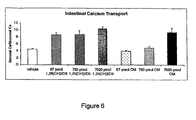
- Figure 6 shows that OM has very little activity as compared to that of 1,25-dihydroxyvitamin D 3 (1,25(OH) 2 D 3 ), the natural hormone, in stimulating intestinal calcium transport.
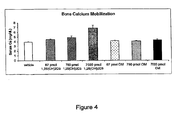
- Figures 4 and 5 demonstrate that OM has very little bone calcium mobilization activity, as compared to 1,25(OH) 2 D 3 .
- Figures 4-6 thus illustrate that OM may be characterized as having little, if any, calcemic activity.
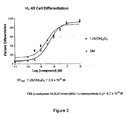
- Figure 2 illustrates that OM is almost as potent as 1,25(OH) 2 D 3 on HL-60 cell differentiation, making it an excellent candidate for the treatment of psoriasis and cancer, especially against leukemia, colon cancer, breast cancer, skin cancer and prostate cancer.
- this compound provides a therapeutic agent for the treatment of various skin conditions including wrinkles, lack of adequate dermal hydration, i.e. dry skin, lack of adequate skin firmness, i.e. slack skin, and insufficient sebum secretion. Use of this compound thus not only results in moisturizing of skin but also improves the barrier function of skin.
- Figure 3 illustrates that the compound OM has transcriptional activity in bone cells, but less than 1 ⁇ ,25-dihydroxyvitamin D 3 .
- This result together with the cell differentiation activity of Figure 2 , suggests that OM will be very effective in psoriasis because it has direct cellular activity in causing cell differentiation and in suppressing cell growth.
- OM may have significant activity as an anti-cancer agent, especially against leukemia, colon cancer, breast cancer, skin cancer and prostate cancer.
- the strong activity of OM on HL-60 differentiation suggests it will be active in suppressing growth of parathyroid glands and in the suppression of the preproparathyroid gene.
- Full-length recombinant rat receptor was expressed in E. coli BL21 (DE3) Codon Plus RIL cells and purified to homogeneity using two different column chromatography systems.
- the first system was a nickel affinity resin that utilizes the C-terminal histidine tag on this protein.
- the protein that was eluted from this resin was further purified using ion exchange chromatography (S-Sepharose Fast Flow). Aliquots of the purified protein were quick frozen in liquid nitrogen and stored at -80°C until use.
- the protein was diluted in TEDK 50 (50 mM Tris, 1.5 mM EDTA, pH7.4, 5 mM DTT, 150 mM KCl) with 0.1% Chaps detergent.
- the receptor protein and ligand concentration were optimized such that no more than 20% of the added radiolabeled ligand was bound to the receptor.
- Radiolabeled and unlabeled ligands were added to 100 mcl of the diluted protein at a final ethanol concentration of ⁇ 10%, mixed and incubated overnight on ice to reach binding equilibrium. The following day, 100 mcl of hydroxylapatite slurry (50%) was added to each tube and mixed at 10-minute intervals for 30 minutes. The hydroxylapaptite was collected by centrifugation and then washed three times with Tris-EDTA buffer (50 mM Tris, 1.5 mM EDTA, pH 7.4) containing 0.5% Titron X-100.
- Tris-EDTA buffer 50 mM Tris, 1.5 mM EDTA, pH 7.4
- the pellets were transferred to scintillation vials containing 4 ml of Biosafe II scintillation cocktail, mixed and placed in a scintillation counter. Total binding was determined from the tubes containing only radiolabeled ligand.
- the study drugs were dissolved in ethanol and the concentrations determined using UV spectrophotometry. Serial dilutions were prepared so that a range of drug concentrations could be tested without changing the final concentration of ethanol ( ⁇ 0.2%) present in the cell cultures.
- HL60 Human promyelocytic leukemia (HL60) cells were grown in RPMI-1640 medium containing 10% fetal bovine serum. The cells were incubated at 37°C in the presence of 5% CO 2 .
- HL60 cells were plated at 1.2 x 10 5 cells/ml. Eighteen hours after plating, cells in duplicate were treated with drug. Four days later, the cells were harvested and a nitro blue tetrazolium reduction assay was performed ( Collins et al., 1979; J. Exp. Med. 149:969-974 ). The percentage of differentiated cells was determined by counting a total of 200 cells and recording the number that contained intracellular black-blue formazan deposits. Verification of differentiation to monocytic cells was determined by measuring phagocytic activity (data not shown).
- OM will be very effective in psoriasis because it has direct cellular activity in causing cell differentiation and in suppressing cell growth.
- OM will have significant activity as an anti-cancer agent, especially against leukemia, colon cancer, breast cancer, skin cancer and prostate cancer, as well as against skin conditions such as dry skin (lack of dermal hydration), undue skin slackness (insufficient skin firmness), insufficient sebum secretion and wrinkles. It would also be expected to be very active in suppressing secondary hyperparathyroidism.
- Intestinal calcium transport was evaluated in the same groups of animals using the everted gut sac method ( Figure 6 ). These results show that the compound OM does not promote intestinal calcium transport when administered at either 87 or 780 pmol/day, whereas 1,25(OH) 2 D 3 promotes a significant increase at the 87 and 780 pmol/day doses. It was only when 7020 pmol/day of OM was administered that significant intestinal calcium transport activity was recorded, an almost 10-fold increase in dosage over the 780 pmol/day dose. Thus, it may be concluded that OM is essentially devoid of intestinal calcium transport activity at the recommended lower doses.
- OM is an excellent candidate for numerous human therapies as described herein, and that it may be particularly useful in a number of circumstances such as suppression of secondary hyperparathyroidism of renal osteodystrophy, autoimmune diseases, cancer, and psoriasis.
- OM is an excellent candidate for treating psoriasis because: (1) it has significant VDR binding, transcription activity and cellular differentiation activity; (2) it is devoid of hypercalcemic liability unlike 1,25(OH) 2 D 3 ; and (3) it is easily synthesized. Since OM has significant binding activity to the vitamin D receptor, but has little ability to raise blood serum calcium, it may also be particularly useful for the treatment of secondary hyperparathyroidism of renal osteodystrophy.
- the compound OM of the invention may be especially suited for treatment and prophylaxis of human disorders which are characterized by an imbalance in the immune system, e.g. in autoimmune diseases, including multiple sclerosis, lupus, diabetes mellitus, host versus graft rejection, and rejection of organ transplants; and additionally for the treatment of inflammatory diseases, such as rheumatoid arthritis, asthma, and inflammatory bowel diseases such as celiac disease, ulcerative colitis and Crohn's disease. Acne, alopecia and hypertension are other conditions which may be treated with the compound OM of the invention.
- autoimmune diseases including multiple sclerosis, lupus, diabetes mellitus, host versus graft rejection, and rejection of organ transplants
- inflammatory diseases such as rheumatoid arthritis, asthma, and inflammatory bowel diseases such as celiac disease, ulcerative colitis and Crohn's disease.
- Acne, alopecia and hypertension are other conditions which may be treated with
- a method of preventing or treating obesity, inhibiting adipocyte differentiation, inhibiting SCD-1 gene transcription, and/or reducing body fat in an animal subject includes administering to the animal subject, an effective amount of one or more of the compounds or a pharmaceutical composition that includes one or more of the compounds of formula I.
- Administration of the compound or the pharmaceutical compositions to the subject inhibits adipocyte differentiation, inhibits gene transcription, and/or reduces body fat in the animal subject.
- the animal may be a human, a domestic animal such as a dog or a cat, or an agricultural animal, especially those that provide meat for human consumption, such as fowl like chickens, turkeys, pheasant or quail, as well as bovine, ovine, caprine, or porcine animals.
- the compounds of this invention defined by formula I may be formulated for pharmaceutical applications as a solution in innocuous solvents, or as an emulsion, suspension or dispersion in suitable solvents or carriers, or as pills, tablets or capsules, together with solid carriers, according to conventional methods known in the art. Any such formulations may also contain other pharmaceutically-acceptable and non-toxic excipients such as stabilizers, anti-oxidants, binders, coloring agents or emulsifying or taste-modifying agents.
- the compounds of formula I, and particularly OM may be administered orally, topically, parenterally, rectally, nasally, sublingually or transdermally.
- the compounds may be advantageously administered by injection or by intravenous infusion or suitable sterile solutions, or in the form of liquid or solid doses via the alimentary canal, or in the form of creams, ointments, patches, or similar vehicles suitable for transdermal applications.
- a dose of from 0.01 ⁇ g to 1000 ⁇ g per day of the compounds I, and particularly compound OM, preferably from about 0.1 ⁇ g to about 500 ⁇ g per day, is appropriate for prevention and/or treatment purposes, such dose being adjusted according to the disease to be treated, its severity and the response of the subject as is well understood in the art.
- each may be suitably administered alone, or together with graded doses of another active vitamin D compound -- e.g. 1 ⁇ -hydroxyvitamin D 2 or D 3 , or 1 ⁇ ,25-dihydroxyvitamin D 3 -- in situations where different degrees of bone mineral mobilization and calcium transport stimulation is found to be advantageous.
- another active vitamin D compound e.g. 1 ⁇ -hydroxyvitamin D 2 or D 3 , or 1 ⁇ ,25-dihydroxyvitamin D 3 -- in situations where different degrees of bone mineral mobilization and calcium transport stimulation is found to be advantageous.
- compositions for use in the above-mentioned treatments comprise an effective amount of the compounds, particularly the compound OM as defined by the above formula I and Ia as the active ingredient, and a suitable carrier.
- An effective amount of such compound for use in accordance with this invention is from about 0.01 ⁇ g to about 1000 ⁇ g per gm of composition, preferably from about 0.1 ⁇ g to about 500 ⁇ g per gram of composition, and may be administered topically, transdermally, orally, rectally, nasally, sublingually or parenterally in dosages of from about 0.01 ⁇ g/day to about 1000 ⁇ g/day, and preferably from about 0.1 ⁇ g/day to about 500 ⁇ g/day.
- the compounds I, and particularly compound OM may be formulated as creams, lotions, ointments, topical patches, pills, capsules or tablets, suppositories, aerosols, or in liquid form as solutions, emulsions, dispersions, or suspensions in pharmaceutically innocuous and acceptable solvent or oils, and such preparations may contain in addition other pharmaceutically innocuous or beneficial components, such as stabilizers, antioxidants, emulsifiers, coloring agents, binders or taste-modifying agents.
- the compounds I, and particularly compound OM is advantageously administered in amounts sufficient to effect the differentiation of promyelocytes to normal macrophages. Dosages as described above are suitable, it being understood that the amounts given are to be adjusted in accordance with the severity of the disease, and the condition and response of the subject as is well understood in the art.
- compositions of the present invention comprise an active ingredient in association with a pharmaceutically acceptable carrier therefore and optionally other therapeutic ingredients.
- the carrier must be "acceptable” in the sense of being compatible with the other ingredients of the formulations and not deleterious to the recipient thereof.
- Formulations of the present invention suitable for oral administration may be in the form of discrete units as capsules, sachets, tablets or lozenges, each containing a predetermined amount of the active ingredient; in the form of a powder or granules; in the form of a solution or a suspension in an aqueous liquid or non-aqueous liquid; or in the form of an oil-in-water emulsion or a water-in-oil emulsion.
- Formulations for rectal administration may be in the form of a suppository incorporating the active ingredient and carrier such as cocoa butter, or in the form of an enema.
- Formulations suitable for parenteral administration conveniently comprise a sterile oily or aqueous preparation of the active ingredient which is preferably isotonic with the blood of the recipient.
- Formulations suitable for topical administration include liquid or semi-liquid preparations such as liniments, lotions, applicants, oil-in-water or water-in-oil emulsions such as creams, ointments or pastes; or solutions or suspensions such as drops; or as sprays.
- a nebulizer or an atomizer can be used for nasal administration, inhalation of powder, self-propelling or spray formulations, dispensed with a spray can.
- the formulations, when dispensed, preferably have a particle size in the range of 10 to 100 ⁇ .
- dosage unit a unitary, i.e. a single dose which is capable of being administered to a patient as a physically and chemically stable unit dose comprising either the active ingredient as such or a mixture of it with solid or liquid pharmaceutical diluents or carriers.
Landscapes
- Health & Medical Sciences (AREA)
- Chemical & Material Sciences (AREA)
- Organic Chemistry (AREA)
- Public Health (AREA)
- Life Sciences & Earth Sciences (AREA)
- Veterinary Medicine (AREA)
- General Health & Medical Sciences (AREA)
- Chemical Kinetics & Catalysis (AREA)
- General Chemical & Material Sciences (AREA)
- Medicinal Chemistry (AREA)
- Nuclear Medicine, Radiotherapy & Molecular Imaging (AREA)
- Animal Behavior & Ethology (AREA)
- Pharmacology & Pharmacy (AREA)
- Bioinformatics & Cheminformatics (AREA)
- Engineering & Computer Science (AREA)
- Immunology (AREA)
- Diabetes (AREA)
- Hematology (AREA)
- Dermatology (AREA)
- Obesity (AREA)
- Physical Education & Sports Medicine (AREA)
- Pulmonology (AREA)
- Rheumatology (AREA)
- Pain & Pain Management (AREA)
- Biomedical Technology (AREA)
- Neurology (AREA)
- Neurosurgery (AREA)
- Child & Adolescent Psychology (AREA)
- Transplantation (AREA)
- Urology & Nephrology (AREA)
- Endocrinology (AREA)
- Emergency Medicine (AREA)
- Orthopedic Medicine & Surgery (AREA)
- Oncology (AREA)
- Pharmaceuticals Containing Other Organic And Inorganic Compounds (AREA)
- Organic Low-Molecular-Weight Compounds And Preparation Thereof (AREA)
Applications Claiming Priority (2)
| Application Number | Priority Date | Filing Date | Title |
|---|---|---|---|
| US62996504P | 2004-11-22 | 2004-11-22 | |
| PCT/US2005/041671 WO2006057886A2 (en) | 2004-11-22 | 2005-11-18 | 2-METHYLENE-19,26,27-TRINOR-(20S)-1α-HYDROXYVITAMIN D3 AND ITS USES |
Publications (2)
| Publication Number | Publication Date |
|---|---|
| EP1828113A2 EP1828113A2 (en) | 2007-09-05 |
| EP1828113B1 true EP1828113B1 (en) | 2010-05-12 |
Family
ID=36203195
Family Applications (1)
| Application Number | Title | Priority Date | Filing Date |
|---|---|---|---|
| EP05849147A Expired - Lifetime EP1828113B1 (en) | 2004-11-22 | 2005-11-18 | 2-methylene-19,26,27-trinor-(20s)-1-alpha-hydroxyvitamin d3 and its uses |
Country Status (10)
| Country | Link |
|---|---|
| US (2) | US7244719B2 (enExample) |
| EP (1) | EP1828113B1 (enExample) |
| JP (1) | JP2008520691A (enExample) |
| AT (1) | ATE467614T1 (enExample) |
| AU (1) | AU2005309791A1 (enExample) |
| CA (1) | CA2588415C (enExample) |
| DE (1) | DE602005021245D1 (enExample) |
| MX (1) | MX2007006543A (enExample) |
| NZ (1) | NZ555281A (enExample) |
| WO (1) | WO2006057886A2 (enExample) |
Families Citing this family (14)
| Publication number | Priority date | Publication date | Assignee | Title |
|---|---|---|---|---|
| US8404667B2 (en) * | 2006-12-29 | 2013-03-26 | Wisconsin Alumni Research Foundation | Compounds, compositions, kits and methods of use to orally and topically treat acne and other skin conditions by 19-Nor vitamin D analog |
| US7713951B2 (en) * | 2004-04-09 | 2010-05-11 | Wisconsin Alumni Research Foundation | 2-alkylidene-18,19-dinor-vitamin D compounds |
| US8193169B2 (en) * | 2006-04-06 | 2012-06-05 | Wisconsin Alumni Research Foundation | (20R)-2α-methyl-19,26,2-trinor-vitamin D analogs |
| US7879829B2 (en) * | 2008-07-10 | 2011-02-01 | Wisconsin Alumni Research Foundation | 19-nor-vitamin D analogs with 1,2-dihydrofuran ring |
| US8193170B2 (en) * | 2008-07-10 | 2012-06-05 | Wisconsin Alumni Research Foundation | 2-methylene-19,26-dinor-(20R,22E,25R)-vitamin D analogs |
| US8399439B2 (en) | 2008-07-10 | 2013-03-19 | Wisconsin Alumni Research Foundation | 2-methylene-19,26-dinor-(20S,22E,25R)-vitamin D analogs |
| US7648974B1 (en) * | 2008-07-10 | 2010-01-19 | Wisconsin Alumni Research Foundation | 19-nor-vitamin D analogs with 3,2-dihydrofuran ring |
| WO2011041596A2 (en) | 2009-10-02 | 2011-04-07 | Wisconsin Alumni Research Foundation | 19-nor-vitamin d analogs with 1,2-or 3,2-cyclopentene ring |
| EP2525799B1 (en) | 2009-10-02 | 2014-09-03 | Wisconsin Alumni Research Foundation | (20s,22e)-2-methylene-19-nor-22-ene-1alpha,25-dihydroxyvitamin d3 analogs |
| MX2012005936A (es) * | 2009-11-30 | 2012-09-07 | Wisconsin Alumni Res Found | 2-metilen-19,26-nor-(20s)-1a-hidroxivitamina d3. |
| US20110237557A1 (en) * | 2010-03-23 | 2011-09-29 | Deluca Hector F | Diastereomers of 2-methylene-19-nor-22-methyl-1alpha,25-dihydroxyvitamin d3 |
| US8664206B2 (en) | 2010-03-23 | 2014-03-04 | Wisconsin Alumni Research Foundation | Diastereomers of 2-methylene-19-nor-22-methyl-1α,25-dihydroxyvitamin D3 |
| US8604009B2 (en) * | 2010-03-23 | 2013-12-10 | Wisconsin Alumni Research Foundation | (20S)-2-methylene-19-nor-22-dimethyl-1α,25-dihydroxyvitamin D3 and (20R)-2-methylene-19-nor-22-dimethyl-1α,25-hydroxyvitamin D3 |
| CA2824870C (en) * | 2011-06-14 | 2018-08-14 | Wisconsin Alumni Research Foundation | 3-desoxy-2-methylene-19-nor-vitamin d analogs and their uses |
Family Cites Families (28)
| Publication number | Priority date | Publication date | Assignee | Title |
|---|---|---|---|---|
| US3846811A (en) * | 1972-03-29 | 1974-11-05 | Canon Kk | Flash unit for use with camera |
| US4486333A (en) * | 1981-04-10 | 1984-12-04 | Felix Sebba | Preparation of biliquid foam compositions |
| US4666634A (en) * | 1984-12-05 | 1987-05-19 | Chugai Seiyaku Kabushiki Kaisha | vitamin D3 derivatives having a substituent at 2-position |
| US4800198A (en) | 1985-04-23 | 1989-01-24 | Wisconsin Alumni Research Foundation | Method of inducing the differentiation of malignant cells with secosterol |
| CA1333616C (en) | 1989-03-09 | 1994-12-20 | Hector F. Deluca | 19-nor-vitamin d compounds |
| US5459136A (en) | 1990-08-24 | 1995-10-17 | Wisconsin Alumni Research Foundation | Methods using vitamin D compounds for improvement of skin conditions |
| US5086191A (en) * | 1991-05-28 | 1992-02-04 | Wisconsin Alumni Research Foundation | Intermediates for the synthesis of 19-nor vitamin D compounds |
| JP2898882B2 (ja) * | 1993-04-05 | 1999-06-02 | ウイスコンシン アラムナイ リサーチ フオンデーシヨン | 2−位に置換基を有する19−ノル−ビタミンd3 化合物 |
| US5552392A (en) * | 1993-11-03 | 1996-09-03 | Wisconsin Alumni Research Foundation | Method of treating hypoparathyroidism with (20S) vitamin D compounds |
| US5877168A (en) | 1995-02-10 | 1999-03-02 | Chugai Seiyaku Kabushiki Kaisha | Vitamin D derivative with substituent at the 2β-position |
| US5843928A (en) | 1997-03-17 | 1998-12-01 | Wisconsin Alumni Research Foundation | 2-alkylidene-19-nor-vitamin D compounds |
| US5945410A (en) * | 1997-03-17 | 1999-08-31 | Wisconsin Alumni Research Foundation | 2-alkyl-19-nor-vitamin D compounds |
| US6316642B1 (en) * | 1997-03-17 | 2001-11-13 | Wisconsin Alumni Research Foundation | 26,27-Homologated-20-EPI-2alkyl-19-nor-vitamin D compounds |
| US6392071B1 (en) | 1997-03-17 | 2002-05-21 | Wisconsin Alumni: Research Foundation | 26,27-homologated-20-EPI-2-alkylidene-19-nor-vitamin D compounds |
| SI3146969T1 (en) * | 1999-04-23 | 2018-08-31 | Leo Pharma A/S | Ointment for topical treatment of psoriasis |
| US6806262B2 (en) | 2000-05-31 | 2004-10-19 | Wisconsin Alumni Research Foundation | 2-ethyl and 2-ethylidene-19-nor-vitamin D compounds |
| EP1301189A2 (en) * | 2000-07-14 | 2003-04-16 | Wisconsin Alumni Research Foundation | USE OF 2-METHYLENE-19-NOR-20(S)-1$g(a),25-DIHYDROXYVITAMIN D 3? TO INCREASE BONE STRENGTH |
| AU7544501A (en) * | 2000-09-08 | 2002-03-22 | Wisconsin Alumni Res Found | 1alpha-hydroxy-2-methylene-19-nor-homopregnacalciferol and its therapeutic applications |
| WO2003051828A2 (en) * | 2001-12-13 | 2003-06-26 | Wisconsin Alumni Research Foundation | (20s)-1alpha-hydroxy-2-methylene-19-nor-bishomopregnacalciferol and its uses |
| US6627622B2 (en) | 2002-02-18 | 2003-09-30 | Wisconsin Alumni Research Foundation | (20S)-1α-hydroxy-2-methylene-19-nor-bishomopregnacalciferol and its uses |
| US6566352B1 (en) * | 2002-02-18 | 2003-05-20 | Wisconsin Alumni Research Foudation | 1 α-hydroxy-2-methylene-19-nor-pregnacalciferol and its uses |
| ATE346839T1 (de) * | 2002-03-29 | 2006-12-15 | Wisconsin Alumni Res Found | Ein verfahren zur herstellung von 1-alpha-hydroxy-2-methylen-19-nor-homopregnacal iferol |
| US6846811B2 (en) | 2002-04-22 | 2005-01-25 | Wisconsin Alumni Research Foundation | (20S) 1α-hydroxy-2α-methyl and 2β-methyl-19-nor-vitamin D3 and their uses |
| WO2005051396A2 (en) | 2003-11-25 | 2005-06-09 | Deltanoid Pharmaceuticals, Inc. | Methods for reducing body fat using vitamin d compounds |
| WO2005051323A2 (en) * | 2003-11-25 | 2005-06-09 | Wisconsin Alumni Research Foundation | Vitamin d analogs for obesity prevention and treatment |
| AU2005309804B9 (en) | 2004-11-22 | 2011-12-08 | Wisconsin Alumni Research Foundation | 2alpha-methyl-19-nor-(20S)-1alpha-hydroxy-bishomopregnacalciferol and its uses |
| WO2006057884A2 (en) | 2004-11-22 | 2006-06-01 | Wisconsin Alumni Research Foundation | 2α-METHYL AND 2ß-METHYL ANALOGS OF 19,26,27-TRINOR-(20S)-1α-HYDROXYVITAMIN D3 AND THEIR USES |
| AU2005309806B2 (en) | 2004-11-22 | 2012-03-08 | Wisconsin Alumni Research Foundation | 2-methylene-19-nor-1alpha-hydroxy-17-ene-homopregnacalciferol and its uses |
-
2005
- 2005-11-18 DE DE602005021245T patent/DE602005021245D1/de not_active Expired - Lifetime
- 2005-11-18 AU AU2005309791A patent/AU2005309791A1/en not_active Abandoned
- 2005-11-18 US US11/283,306 patent/US7244719B2/en not_active Expired - Lifetime
- 2005-11-18 EP EP05849147A patent/EP1828113B1/en not_active Expired - Lifetime
- 2005-11-18 WO PCT/US2005/041671 patent/WO2006057886A2/en not_active Ceased
- 2005-11-18 CA CA2588415A patent/CA2588415C/en not_active Expired - Fee Related
- 2005-11-18 NZ NZ555281A patent/NZ555281A/en not_active IP Right Cessation
- 2005-11-18 MX MX2007006543A patent/MX2007006543A/es active IP Right Grant
- 2005-11-18 AT AT05849147T patent/ATE467614T1/de not_active IP Right Cessation
- 2005-11-18 JP JP2007543229A patent/JP2008520691A/ja not_active Ceased
-
2007
- 2007-07-09 US US11/775,087 patent/US7713952B2/en not_active Expired - Fee Related
Also Published As
| Publication number | Publication date |
|---|---|
| CA2588415A1 (en) | 2006-06-01 |
| US7713952B2 (en) | 2010-05-11 |
| AU2005309791A1 (en) | 2006-06-01 |
| WO2006057886A3 (en) | 2006-06-29 |
| US7244719B2 (en) | 2007-07-17 |
| WO2006057886A2 (en) | 2006-06-01 |
| JP2008520691A (ja) | 2008-06-19 |
| NZ555281A (en) | 2011-01-28 |
| CA2588415C (en) | 2012-07-10 |
| US20070249567A1 (en) | 2007-10-25 |
| DE602005021245D1 (de) | 2010-06-24 |
| ATE467614T1 (de) | 2010-05-15 |
| MX2007006543A (es) | 2007-07-25 |
| US20060142246A1 (en) | 2006-06-29 |
| WO2006057886A8 (en) | 2007-11-22 |
| EP1828113A2 (en) | 2007-09-05 |
Similar Documents
| Publication | Publication Date | Title |
|---|---|---|
| US8614202B2 (en) | 2α-methyl and 2β-methyl analogs of 19,26,27-trinor-(20S)-1α-hydroxyvitamin D3 and their uses | |
| US7713952B2 (en) | 2-methylene-19,26,27-trinor-(20S)-1α-hydroxyvitamin D3 and its uses | |
| US20070249569A1 (en) | 2-Methylene-19-nor-1alpha-hydroxy-17-ene-homopregnacalciferol and its uses | |
| US7741314B2 (en) | 2-Methylene-(20R,25S)-19,27-Dinor-(22E)-Vitamin D Analogs | |
| US7718638B2 (en) | (20R)-23,23-difluoro-2-methylene-19-nor-bishomopregnacalciferol-vitamin D analogs | |
| US20090170820A1 (en) | 2-Methylene-(20S,25R)-19,26-Dinor-Vitamin D Analogs | |
| US8193170B2 (en) | 2-methylene-19,26-dinor-(20R,22E,25R)-vitamin D analogs | |
| EP2069296B1 (en) | 2-methylene-(20s,25s)-19,27-dinor-(22e)-vitamin d analogs | |
| WO2010006169A2 (en) | 2-methylene-19, 26-dinor-(20s, 22e, 25r)-vitamin d analogs | |
| EP1817278B1 (en) | 2-methylene-18,19-dinor-1alfa-hydroxy-homopregnacalciferol and its uses | |
| US7893043B2 (en) | 2-methylene-(17Z)-17(20)-dehydro-19,21-dinor-vitamin D analogs | |
| US7947666B2 (en) | 2-methylene-(20S,25S)-19,26-dinor-vitamin D analogs | |
| US8193169B2 (en) | (20R)-2α-methyl-19,26,2-trinor-vitamin D analogs | |
| WO2010006129A2 (en) | 2-methylene-(22e)-25-(1-methylene-hexyl)-26,27-cyclo-22-dehydro-19-nor-vitamin d analogs |
Legal Events
| Date | Code | Title | Description |
|---|---|---|---|
| PUAI | Public reference made under article 153(3) epc to a published international application that has entered the european phase |
Free format text: ORIGINAL CODE: 0009012 |
|
| 17P | Request for examination filed |
Effective date: 20070612 |
|
| AK | Designated contracting states |
Kind code of ref document: A2 Designated state(s): AT BE BG CH CY CZ DE DK EE ES FI FR GB GR HU IE IS IT LI LT LU LV MC NL PL PT RO SE SI SK TR |
|
| R17D | Deferred search report published (corrected) |
Effective date: 20071122 |
|
| DAX | Request for extension of the european patent (deleted) | ||
| 17Q | First examination report despatched |
Effective date: 20080922 |
|
| GRAP | Despatch of communication of intention to grant a patent |
Free format text: ORIGINAL CODE: EPIDOSNIGR1 |
|
| GRAS | Grant fee paid |
Free format text: ORIGINAL CODE: EPIDOSNIGR3 |
|
| GRAA | (expected) grant |
Free format text: ORIGINAL CODE: 0009210 |
|
| AK | Designated contracting states |
Kind code of ref document: B1 Designated state(s): AT BE BG CH CY CZ DE DK EE ES FI FR GB GR HU IE IS IT LI LT LU LV MC NL PL PT RO SE SI SK TR |
|
| REG | Reference to a national code |
Ref country code: GB Ref legal event code: FG4D |
|
| REG | Reference to a national code |
Ref country code: CH Ref legal event code: EP |
|
| REG | Reference to a national code |
Ref country code: IE Ref legal event code: FG4D |
|
| REF | Corresponds to: |
Ref document number: 602005021245 Country of ref document: DE Date of ref document: 20100624 Kind code of ref document: P |
|
| REG | Reference to a national code |
Ref country code: NL Ref legal event code: VDEP Effective date: 20100512 |
|
| LTIE | Lt: invalidation of european patent or patent extension |
Effective date: 20100512 |
|
| PG25 | Lapsed in a contracting state [announced via postgrant information from national office to epo] |
Ref country code: LT Free format text: LAPSE BECAUSE OF FAILURE TO SUBMIT A TRANSLATION OF THE DESCRIPTION OR TO PAY THE FEE WITHIN THE PRESCRIBED TIME-LIMIT Effective date: 20100512 Ref country code: SE Free format text: LAPSE BECAUSE OF FAILURE TO SUBMIT A TRANSLATION OF THE DESCRIPTION OR TO PAY THE FEE WITHIN THE PRESCRIBED TIME-LIMIT Effective date: 20100512 Ref country code: NL Free format text: LAPSE BECAUSE OF FAILURE TO SUBMIT A TRANSLATION OF THE DESCRIPTION OR TO PAY THE FEE WITHIN THE PRESCRIBED TIME-LIMIT Effective date: 20100512 Ref country code: ES Free format text: LAPSE BECAUSE OF FAILURE TO SUBMIT A TRANSLATION OF THE DESCRIPTION OR TO PAY THE FEE WITHIN THE PRESCRIBED TIME-LIMIT Effective date: 20100823 |
|
| PG25 | Lapsed in a contracting state [announced via postgrant information from national office to epo] |
Ref country code: SI Free format text: LAPSE BECAUSE OF FAILURE TO SUBMIT A TRANSLATION OF THE DESCRIPTION OR TO PAY THE FEE WITHIN THE PRESCRIBED TIME-LIMIT Effective date: 20100512 Ref country code: AT Free format text: LAPSE BECAUSE OF FAILURE TO SUBMIT A TRANSLATION OF THE DESCRIPTION OR TO PAY THE FEE WITHIN THE PRESCRIBED TIME-LIMIT Effective date: 20100512 Ref country code: FI Free format text: LAPSE BECAUSE OF FAILURE TO SUBMIT A TRANSLATION OF THE DESCRIPTION OR TO PAY THE FEE WITHIN THE PRESCRIBED TIME-LIMIT Effective date: 20100512 Ref country code: IS Free format text: LAPSE BECAUSE OF FAILURE TO SUBMIT A TRANSLATION OF THE DESCRIPTION OR TO PAY THE FEE WITHIN THE PRESCRIBED TIME-LIMIT Effective date: 20100912 Ref country code: LV Free format text: LAPSE BECAUSE OF FAILURE TO SUBMIT A TRANSLATION OF THE DESCRIPTION OR TO PAY THE FEE WITHIN THE PRESCRIBED TIME-LIMIT Effective date: 20100512 |
|
| PG25 | Lapsed in a contracting state [announced via postgrant information from national office to epo] |
Ref country code: CY Free format text: LAPSE BECAUSE OF FAILURE TO SUBMIT A TRANSLATION OF THE DESCRIPTION OR TO PAY THE FEE WITHIN THE PRESCRIBED TIME-LIMIT Effective date: 20100512 Ref country code: GR Free format text: LAPSE BECAUSE OF FAILURE TO SUBMIT A TRANSLATION OF THE DESCRIPTION OR TO PAY THE FEE WITHIN THE PRESCRIBED TIME-LIMIT Effective date: 20100813 Ref country code: PL Free format text: LAPSE BECAUSE OF FAILURE TO SUBMIT A TRANSLATION OF THE DESCRIPTION OR TO PAY THE FEE WITHIN THE PRESCRIBED TIME-LIMIT Effective date: 20100512 |
|
| PG25 | Lapsed in a contracting state [announced via postgrant information from national office to epo] |
Ref country code: EE Free format text: LAPSE BECAUSE OF FAILURE TO SUBMIT A TRANSLATION OF THE DESCRIPTION OR TO PAY THE FEE WITHIN THE PRESCRIBED TIME-LIMIT Effective date: 20100512 Ref country code: DK Free format text: LAPSE BECAUSE OF FAILURE TO SUBMIT A TRANSLATION OF THE DESCRIPTION OR TO PAY THE FEE WITHIN THE PRESCRIBED TIME-LIMIT Effective date: 20100512 Ref country code: PT Free format text: LAPSE BECAUSE OF FAILURE TO SUBMIT A TRANSLATION OF THE DESCRIPTION OR TO PAY THE FEE WITHIN THE PRESCRIBED TIME-LIMIT Effective date: 20100913 |
|
| PG25 | Lapsed in a contracting state [announced via postgrant information from national office to epo] |
Ref country code: BE Free format text: LAPSE BECAUSE OF FAILURE TO SUBMIT A TRANSLATION OF THE DESCRIPTION OR TO PAY THE FEE WITHIN THE PRESCRIBED TIME-LIMIT Effective date: 20100512 Ref country code: SK Free format text: LAPSE BECAUSE OF FAILURE TO SUBMIT A TRANSLATION OF THE DESCRIPTION OR TO PAY THE FEE WITHIN THE PRESCRIBED TIME-LIMIT Effective date: 20100512 Ref country code: RO Free format text: LAPSE BECAUSE OF FAILURE TO SUBMIT A TRANSLATION OF THE DESCRIPTION OR TO PAY THE FEE WITHIN THE PRESCRIBED TIME-LIMIT Effective date: 20100512 Ref country code: CZ Free format text: LAPSE BECAUSE OF FAILURE TO SUBMIT A TRANSLATION OF THE DESCRIPTION OR TO PAY THE FEE WITHIN THE PRESCRIBED TIME-LIMIT Effective date: 20100512 |
|
| PLBE | No opposition filed within time limit |
Free format text: ORIGINAL CODE: 0009261 |
|
| STAA | Information on the status of an ep patent application or granted ep patent |
Free format text: STATUS: NO OPPOSITION FILED WITHIN TIME LIMIT |
|
| PG25 | Lapsed in a contracting state [announced via postgrant information from national office to epo] |
Ref country code: IT Free format text: LAPSE BECAUSE OF FAILURE TO SUBMIT A TRANSLATION OF THE DESCRIPTION OR TO PAY THE FEE WITHIN THE PRESCRIBED TIME-LIMIT Effective date: 20100512 |
|
| 26N | No opposition filed |
Effective date: 20110215 |
|
| REG | Reference to a national code |
Ref country code: DE Ref legal event code: R097 Ref document number: 602005021245 Country of ref document: DE Effective date: 20110214 |
|
| PG25 | Lapsed in a contracting state [announced via postgrant information from national office to epo] |
Ref country code: MC Free format text: LAPSE BECAUSE OF NON-PAYMENT OF DUE FEES Effective date: 20101130 |
|
| REG | Reference to a national code |
Ref country code: CH Ref legal event code: PL |
|
| GBPC | Gb: european patent ceased through non-payment of renewal fee |
Effective date: 20101118 |
|
| PG25 | Lapsed in a contracting state [announced via postgrant information from national office to epo] |
Ref country code: LI Free format text: LAPSE BECAUSE OF NON-PAYMENT OF DUE FEES Effective date: 20101130 Ref country code: CH Free format text: LAPSE BECAUSE OF NON-PAYMENT OF DUE FEES Effective date: 20101130 |
|
| REG | Reference to a national code |
Ref country code: FR Ref legal event code: ST Effective date: 20110801 |
|
| REG | Reference to a national code |
Ref country code: DE Ref legal event code: R119 Ref document number: 602005021245 Country of ref document: DE Effective date: 20110601 Ref country code: DE Ref legal event code: R119 Ref document number: 602005021245 Country of ref document: DE Effective date: 20110531 |
|
| PG25 | Lapsed in a contracting state [announced via postgrant information from national office to epo] |
Ref country code: FR Free format text: LAPSE BECAUSE OF NON-PAYMENT OF DUE FEES Effective date: 20101130 Ref country code: IE Free format text: LAPSE BECAUSE OF NON-PAYMENT OF DUE FEES Effective date: 20101118 |
|
| PG25 | Lapsed in a contracting state [announced via postgrant information from national office to epo] |
Ref country code: GB Free format text: LAPSE BECAUSE OF NON-PAYMENT OF DUE FEES Effective date: 20101118 |
|
| PG25 | Lapsed in a contracting state [announced via postgrant information from national office to epo] |
Ref country code: HU Free format text: LAPSE BECAUSE OF FAILURE TO SUBMIT A TRANSLATION OF THE DESCRIPTION OR TO PAY THE FEE WITHIN THE PRESCRIBED TIME-LIMIT Effective date: 20101113 Ref country code: LU Free format text: LAPSE BECAUSE OF NON-PAYMENT OF DUE FEES Effective date: 20101118 Ref country code: BG Free format text: LAPSE BECAUSE OF FAILURE TO SUBMIT A TRANSLATION OF THE DESCRIPTION OR TO PAY THE FEE WITHIN THE PRESCRIBED TIME-LIMIT Effective date: 20100512 |
|
| PG25 | Lapsed in a contracting state [announced via postgrant information from national office to epo] |
Ref country code: TR Free format text: LAPSE BECAUSE OF FAILURE TO SUBMIT A TRANSLATION OF THE DESCRIPTION OR TO PAY THE FEE WITHIN THE PRESCRIBED TIME-LIMIT Effective date: 20100512 |
|
| PG25 | Lapsed in a contracting state [announced via postgrant information from national office to epo] |
Ref country code: DE Free format text: LAPSE BECAUSE OF NON-PAYMENT OF DUE FEES Effective date: 20110531 |
|
| PG25 | Lapsed in a contracting state [announced via postgrant information from national office to epo] |
Ref country code: BG Free format text: LAPSE BECAUSE OF FAILURE TO SUBMIT A TRANSLATION OF THE DESCRIPTION OR TO PAY THE FEE WITHIN THE PRESCRIBED TIME-LIMIT Effective date: 20100812 |