EP1819165A1 - Encoding device and method, decoding device and method, program, recording medium, and data structure - Google Patents
Encoding device and method, decoding device and method, program, recording medium, and data structure Download PDFInfo
- Publication number
- EP1819165A1 EP1819165A1 EP05814422A EP05814422A EP1819165A1 EP 1819165 A1 EP1819165 A1 EP 1819165A1 EP 05814422 A EP05814422 A EP 05814422A EP 05814422 A EP05814422 A EP 05814422A EP 1819165 A1 EP1819165 A1 EP 1819165A1
- Authority
- EP
- European Patent Office
- Prior art keywords
- picture
- aspect ratio
- sub
- main
- main picture
- Prior art date
- Legal status (The legal status is an assumption and is not a legal conclusion. Google has not performed a legal analysis and makes no representation as to the accuracy of the status listed.)
- Withdrawn
Links
Images











Classifications
-
- H—ELECTRICITY
- H04—ELECTRIC COMMUNICATION TECHNIQUE
- H04N—PICTORIAL COMMUNICATION, e.g. TELEVISION
- H04N5/00—Details of television systems
- H04N5/44—Receiver circuitry for the reception of television signals according to analogue transmission standards
- H04N5/445—Receiver circuitry for the reception of television signals according to analogue transmission standards for displaying additional information
-
- H—ELECTRICITY
- H04—ELECTRIC COMMUNICATION TECHNIQUE
- H04N—PICTORIAL COMMUNICATION, e.g. TELEVISION
- H04N5/00—Details of television systems
- H04N5/222—Studio circuitry; Studio devices; Studio equipment
- H04N5/262—Studio circuits, e.g. for mixing, switching-over, change of character of image, other special effects ; Cameras specially adapted for the electronic generation of special effects
- H04N5/278—Subtitling
-
- H—ELECTRICITY
- H04—ELECTRIC COMMUNICATION TECHNIQUE
- H04N—PICTORIAL COMMUNICATION, e.g. TELEVISION
- H04N21/00—Selective content distribution, e.g. interactive television or video on demand [VOD]
- H04N21/40—Client devices specifically adapted for the reception of or interaction with content, e.g. set-top-box [STB]; Operations thereof
- H04N21/43—Processing of content or additional data, e.g. demultiplexing additional data from a digital video stream; Elementary client operations, e.g. monitoring of home network or synchronising decoder's clock; Client middleware
- H04N21/431—Generation of visual interfaces for content selection or interaction; Content or additional data rendering
- H04N21/4312—Generation of visual interfaces for content selection or interaction; Content or additional data rendering involving specific graphical features, e.g. screen layout, special fonts or colors, blinking icons, highlights or animations
-
- H—ELECTRICITY
- H04—ELECTRIC COMMUNICATION TECHNIQUE
- H04N—PICTORIAL COMMUNICATION, e.g. TELEVISION
- H04N21/00—Selective content distribution, e.g. interactive television or video on demand [VOD]
- H04N21/40—Client devices specifically adapted for the reception of or interaction with content, e.g. set-top-box [STB]; Operations thereof
- H04N21/43—Processing of content or additional data, e.g. demultiplexing additional data from a digital video stream; Elementary client operations, e.g. monitoring of home network or synchronising decoder's clock; Client middleware
- H04N21/431—Generation of visual interfaces for content selection or interaction; Content or additional data rendering
- H04N21/4312—Generation of visual interfaces for content selection or interaction; Content or additional data rendering involving specific graphical features, e.g. screen layout, special fonts or colors, blinking icons, highlights or animations
- H04N21/4314—Generation of visual interfaces for content selection or interaction; Content or additional data rendering involving specific graphical features, e.g. screen layout, special fonts or colors, blinking icons, highlights or animations for fitting data in a restricted space on the screen, e.g. EPG data in a rectangular grid
-
- H—ELECTRICITY
- H04—ELECTRIC COMMUNICATION TECHNIQUE
- H04N—PICTORIAL COMMUNICATION, e.g. TELEVISION
- H04N21/00—Selective content distribution, e.g. interactive television or video on demand [VOD]
- H04N21/40—Client devices specifically adapted for the reception of or interaction with content, e.g. set-top-box [STB]; Operations thereof
- H04N21/43—Processing of content or additional data, e.g. demultiplexing additional data from a digital video stream; Elementary client operations, e.g. monitoring of home network or synchronising decoder's clock; Client middleware
- H04N21/44—Processing of video elementary streams, e.g. splicing a video clip retrieved from local storage with an incoming video stream or rendering scenes according to encoded video stream scene graphs
- H04N21/4402—Processing of video elementary streams, e.g. splicing a video clip retrieved from local storage with an incoming video stream or rendering scenes according to encoded video stream scene graphs involving reformatting operations of video signals for household redistribution, storage or real-time display
- H04N21/440263—Processing of video elementary streams, e.g. splicing a video clip retrieved from local storage with an incoming video stream or rendering scenes according to encoded video stream scene graphs involving reformatting operations of video signals for household redistribution, storage or real-time display by altering the spatial resolution, e.g. for displaying on a connected PDA
- H04N21/440272—Processing of video elementary streams, e.g. splicing a video clip retrieved from local storage with an incoming video stream or rendering scenes according to encoded video stream scene graphs involving reformatting operations of video signals for household redistribution, storage or real-time display by altering the spatial resolution, e.g. for displaying on a connected PDA for performing aspect ratio conversion
-
- H—ELECTRICITY
- H04—ELECTRIC COMMUNICATION TECHNIQUE
- H04N—PICTORIAL COMMUNICATION, e.g. TELEVISION
- H04N21/00—Selective content distribution, e.g. interactive television or video on demand [VOD]
- H04N21/40—Client devices specifically adapted for the reception of or interaction with content, e.g. set-top-box [STB]; Operations thereof
- H04N21/47—End-user applications
- H04N21/488—Data services, e.g. news ticker
- H04N21/4884—Data services, e.g. news ticker for displaying subtitles
-
- H—ELECTRICITY
- H04—ELECTRIC COMMUNICATION TECHNIQUE
- H04N—PICTORIAL COMMUNICATION, e.g. TELEVISION
- H04N5/00—Details of television systems
- H04N5/44—Receiver circuitry for the reception of television signals according to analogue transmission standards
- H04N5/445—Receiver circuitry for the reception of television signals according to analogue transmission standards for displaying additional information
- H04N5/45—Picture in picture, e.g. displaying simultaneously another television channel in a region of the screen
-
- H—ELECTRICITY
- H04—ELECTRIC COMMUNICATION TECHNIQUE
- H04N—PICTORIAL COMMUNICATION, e.g. TELEVISION
- H04N7/00—Television systems
- H04N7/01—Conversion of standards, e.g. involving analogue television standards or digital television standards processed at pixel level
- H04N7/0117—Conversion of standards, e.g. involving analogue television standards or digital television standards processed at pixel level involving conversion of the spatial resolution of the incoming video signal
- H04N7/0122—Conversion of standards, e.g. involving analogue television standards or digital television standards processed at pixel level involving conversion of the spatial resolution of the incoming video signal the input and the output signals having different aspect ratios
-
- H—ELECTRICITY
- H04—ELECTRIC COMMUNICATION TECHNIQUE
- H04N—PICTORIAL COMMUNICATION, e.g. TELEVISION
- H04N7/00—Television systems
- H04N7/08—Systems for the simultaneous or sequential transmission of more than one television signal, e.g. additional information signals, the signals occupying wholly or partially the same frequency band, e.g. by time division
- H04N7/087—Systems for the simultaneous or sequential transmission of more than one television signal, e.g. additional information signals, the signals occupying wholly or partially the same frequency band, e.g. by time division with signal insertion during the vertical blanking interval only
- H04N7/088—Systems for the simultaneous or sequential transmission of more than one television signal, e.g. additional information signals, the signals occupying wholly or partially the same frequency band, e.g. by time division with signal insertion during the vertical blanking interval only the inserted signal being digital
- H04N7/0884—Systems for the simultaneous or sequential transmission of more than one television signal, e.g. additional information signals, the signals occupying wholly or partially the same frequency band, e.g. by time division with signal insertion during the vertical blanking interval only the inserted signal being digital for the transmission of additional display-information, e.g. menu for programme or channel selection
- H04N7/0885—Systems for the simultaneous or sequential transmission of more than one television signal, e.g. additional information signals, the signals occupying wholly or partially the same frequency band, e.g. by time division with signal insertion during the vertical blanking interval only the inserted signal being digital for the transmission of additional display-information, e.g. menu for programme or channel selection for the transmission of subtitles
Definitions
- the present invention relates to an encoding apparatus and method, a decoding apparatus and method, a program, a record medium, and a data structure, in particular, to those that allow a sub picture to be displayed with an aspect ratio independent from that of a main picture.
- a picture such as a subtitle (this picture is hereinafter referred to as the sub picture) may be superimposed with a picture of content (this picture is hereinafter referred to as the main picture) and the superimposed pictures are displayed so as to supplement the main picture.
- the aspect ratio of the sub picture is associated with that of the main picture.
- the aspect ratio of the main picture with which the sub picture is superimposed is a : b
- the aspect ratio of the sub picture is set to a : b.
- the aspect ratio of the main picture with which the sub picture is superimposed is c : d
- the aspect ratio of the sub picture is set to c : d.
- the aspect ratio of the display device is 16 : 9 and that of the main picture is 4 : 3, as shown in Fig. 1, the picture frame size of the main picture is changed and data that cause the left and right end areas of the screen to become black are added.
- the subtitle is normally displayed with an aspect ratio of 4 : 3 (see Patent Document, Japanese Patent Application Laid-Open No. HEI 10-308924 ).
- the present invention is made from the foregoing point of view and is to display the sub picture with an aspect ratio independent from that of the main picture.
- the present invention is an encoding apparatus including a first encoding section which encodes the main picture and incorporates an aspect ratio of the main picture in the encoded data of the main picture and a second encoding section which encodes the sub picture and incorporates an aspect ratio of the sub picture in the encoded data of the sub picture.
- the second encoding section can set a flag which represents the aspect ratio of the sub picture to incorporate the aspect ratio of the sub picture in the encoded data of the sub picture.
- the present invention is an encoding method including the steps of encoding the main picture and incorporating an aspect ratio of the main picture in the encoded data of the main picture and encoding the sub picture and incorporating an aspect ratio of the sub picture in the encoded data of the sub picture.
- the present invention is a first program including the steps of encoding the main picture and incorporating an aspect ratio of the main picture in the encoded data of the main picture and encoding the sub picture and incorporating an aspect ratio of the sub picture in the encoded data of the sub picture.
- the main picture is encoded and the aspect ratio of the main picture is incorporated in the encoded main picture.
- the sub picture is encoded and the aspect ratio of the sub picture is incorporated in the encoded sub picture.
- the present invention is a decoding apparatus including a first obtaining section which obtains an aspect ratio of the main picture from the encoded data of the main picture, a first converting section which converts a picture frame of the main picture based on the aspect ratio of the main picture obtained by the first obtaining section, a second obtaining section which obtains an aspect ratio of the sub picture from the encoded data of the sub picture, and a second converting section which converts a picture frame of the sub picture based on the aspect ratio of the sub picture obtained by the second obtaining section.
- the present invention is a decoding method including the steps of obtaining an aspect ratio of the main picture from the encoded data of the main picture, converting a picture frame of the main picture based on the aspect ratio of the main picture obtained at the first obtaining step, obtaining an aspect ratio of the sub picture from the encoded data of the sub picture, and converting a picture frame of the sub picture based on the aspect ratio of the sub picture obtained at the second obtaining step.
- the present invention is a second program including the steps of obtaining an aspect ratio of the main picture from the encoded data of the main picture, converting a picture frame of the main picture based on the aspect ratio of the main picture obtained at the first obtaining step, obtaining an aspect ratio of the sub picture from the encoded data of the sub picture, and converting a picture frame of the sub picture based on the aspect ratio of the sub picture obtained at the second obtaining step.
- the aspect ratio of the main picture is obtained from the encoded data of the main picture.
- the picture frame of the main picture is converted based on the obtained aspect ratio of the main picture.
- the aspect ratio of the sub picture is obtained from the encoded data of the sub picture.
- the picture frame of the sub picture is converted based on the obtained aspect ratio of the sub picture.
- the present invention is a record medium on which encoded data of a main picture of which main picture data have been encoded and encoded data of a sub picture of which sub picture data have been encoded have been multiplexed and recorded, the main picture data and the sub picture data being displayed by superimposing the main picture data with the sub picture data, wherein the encoded data of the main picture has a first aspect ratio flag which represents an aspect ratio of the main picture data, and wherein the encoded data of the sub picture has a second aspect ratio flag which represents an aspect ratio of the sub picture data, the second aspect ratio being independent from the first aspect ratio.
- the present invention is a data structure in which encoded data of a main picture of which main picture data have been encoded and encoded data of a sub picture of which sub picture data have been encoded have been multiplexed, the main picture data and the sub picture data being displayed by superimposing the main picture data with the sub picture data, wherein the encoded data of the main picture has a first aspect ratio flag which represents an aspect ratio of the main picture data, and wherein the encoded data of the sub picture has a second aspect ratio flag which represents an aspect ratio of the sub picture data, the second aspect ratio being independent from the first aspect ratio.
- the encoded data of the main picture of which the main picture data have been encoded and the encoded data of the sub picture of which the sub picture data superimposed with the main picture data have been encoded are multiplexed and recorded.
- the encoded data of the main picture has the first aspect ratio flag that represents the aspect ratio of the main picture data.
- the encoded data of the sub picture has the second aspect ratio flag that represents the aspect ratio of the sub picture data, the second aspect ratio flag being independent from the first aspect ratio flag.
- the aspect ratio of the main picture and that of the sub picture are obtained from the encoded data of the main picture and the encoded data of the sub picture, respectively.
- the picture frame of the main picture can be converted based on the obtained aspect ratio of the main picture.
- the picture frame of the sub picture can be converted based on the obtained aspect ratio of the sub picture.
- the sub picture can be displayed with an aspect ratio independent from that of the main picture.
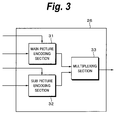
- Claim 1 is an encoding apparatus which generates encoded data of pictures displayed by superimposing a main picture with a sub picture, including a first encoding section (for example, a main picture encoding section 31 shown in Fig. 3) which encodes the main picture and incorporates an aspect ratio of the main picture in the encoded data of the main picture; and a second encoding section (for example, a sub picture encoding section 32 shown in Fig. 3) which encodes the sub picture and incorporates an aspect ratio of the sub picture in the encoded data of the sub picture.
- a first encoding section for example, a main picture encoding section 31 shown in Fig. 3
- a second encoding section for example, a sub picture encoding section 32 shown in Fig. 3
- the second incorporating means sets a flag which represents the aspect ratio of the sub picture (for example, a flag which represents 16 : 9, a flag which represents 4 : 3, or a flag which represents 16 : 9 and 4 : 3) to incorporate the aspect ratio of the sub picture in the encoded data of the sub picture.
- a flag which represents the aspect ratio of the sub picture for example, a flag which represents 16 : 9, a flag which represents 4 : 3, or a flag which represents 16 : 9 and 4 : 3 to incorporate the aspect ratio of the sub picture in the encoded data of the sub picture.
- Claim 3 is an encoding method and claim 4 is a program of generating encoded data of pictures displayed by superimposing a main picture with a sub picture, including the steps of encoding the main picture and incorporating an aspect ratio of the main picture in the encoded data of the main picture (for example, a process of the main picture encoding section 31 shown in Fig. 3) and encoding the sub picture and incorporating an aspect ratio of the sub picture in the encoded data of the sub picture (for example, a process of the sub picture encoding section 32 shown in Fig. 3).
- Claim 5 is a decoding apparatus which decodes encoded data of a main picture and encoded data of a sub picture displayed by superimposing the main picture with the sub picture, including a first obtaining section (for example, a main picture decoding section 72 shown in Fig. 7) which obtains an aspect ratio of the main picture from the encoded data of the main picture, a first converting section (for example, a main picture frame size converting section 74 shown in Fig. 7) which converts a picture frame of the main picture based on the aspect ratio of the main picture obtained by the first obtaining section, a second obtaining section (for example, a sub picture decoding section 73 shown in Fig.
- a second converting section (for example, a sub picture frame size converting section 75 shown in Fig. 7) which converts a picture frame of the sub picture based on the aspect ratio of the sub picture obtained by the second obtaining section.
- Claim 6 is a decoding method and claim 7 is a program of decoding encoded data of a main picture and encoded data of a sub picture displayed by superimposing the main picture with the sub picture, including the steps of obtaining an aspect ratio of the main picture from the encoded data of the main picture (for example, a process of the main picture decoding section 72 shown in Fig. 7), converting a picture frame of the main picture based on the aspect ratio of the main picture obtained at the first obtaining step (for example, a process of the main picture frame size converting section 74 shown in Fig. 7), obtaining an aspect ratio of the sub picture from the encoded data of the sub picture (for example, a process of the sub picture decoding section 73 shown in Fig. 7), and converting a picture frame of the sub picture based on the aspect ratio of the sub picture obtained at the second obtaining step (for example, a process of the sub picture frame size converting section 75 shown in Fig 7).
- an aspect ratio of the main picture from the encoded data of the main picture
- Fig. 2 shows an example of a structure of an encoding apparatus 11 according to the present invention.
- a bus 21 Connected to a bus 21 are a CPU (Central Processing Unit) 22, a memory 23, a video signal input interface 24, a control signal input interface 25, a video encoder 26, a video data output interface 27, and so forth.
- CPU Central Processing Unit
- memory 23 a main memory 22
- video signal input interface 24 a control signal input interface 25
- video encoder 26 a video data output interface 27 and so forth.
- the CPU 22 and the memory 23 compose a computer system.
- the CPU 22 executes a program stored in the memory 23, controls the entire apparatus, and performs a process (that will be described later).
- the memory 23 stores the program that the CPU 22 executes.
- the memory 23 temporarily stores data with which the CPU 22 operates.
- the memory 23 can be structured by only a nonvolatile memory or a combination of a volatile memory and a nonvolatile memory.
- the apparatus shown in Fig. 2 is provided with a hard disk and it stores the program that the CPU 22 executes, the memory 23 can be structured only by a volatile memory.
- the program that the CPU 22 executes can be pre-stored in the memory 23 as an internal record medium of the apparatus.
- the program can be temporarily or permanently stored in a removable record medium such as a disc, a flexible disc, a CD-ROM (Compact Disc Read Only Memory), an MO (Magneto Optical) disc, a magnetic disc, or a memory card.
- a removable record medium such as a disc, a flexible disc, a CD-ROM (Compact Disc Read Only Memory), an MO (Magneto Optical) disc, a magnetic disc, or a memory card.
- a removable record medium can be provided as so-called package software.
- the program can be pre-stored in the memory 23 or installed from such a removable record medium to the apparatus.
- the program can be wirelessly transferred from a download site to the apparatus through a satellite for a digital satellite broadcast.
- the program can be transferred by cable from a download site to the apparatus through a network such as a LAN (Local Area Network) or the Internet.
- the apparatus can receive the program and install it in the internal memory 23.
- the program can be processed by one CPU or distributively processed by a plurality of CPUs.
- the video signal input interface 24 inputs a video signal of the main picture and a video signal of the sub picture supplied from a video camera or the like under the control of the CPU 22 and supplies the video signals to the CPU 22, the memory 23, the video encoder 26, and so forth through the bus 21.
- control signal input interface 25 When the user operates a key (button) or a remote controller commander (not shown), the control signal input interface 25 inputs a control signal therefrom and supplies it to the CPU 22 through the bus 21.
- the control signal input interface 25 also functions as a communication interface such as a model (including an ADSL (Asymmetric Digital Subscriber Line) modem), an NIC (Network Interface Card), or the like.
- ADSL Asymmetric Digital Subscriber Line
- NIC Network Interface Card
- the video encoder 26 encodes video signals that have been input through the video signal input interface 24 and supplies resultant video data to the CPU 22 through the bus 21.
- the video data output interface 27 outputs a video transport stream of which the video data have been packetized by the CPU 22.
- Fig. 3 shows an example of a structure of the video encoder 26 shown in Fig. 2.
- Fig. 4 is a flow chart showing an outline of an example of a process of video encoder 26.
- a main picture encoding section 31 performs an encoding process for the video signal of the main picture and incorporates the aspect ratio and so forth of the main picture in the encoded data.
- a sub picture encoding section 32 performs an encoding process for the video signal of the sub picture and incorporates the aspect ratio and so forth of the sub picture in the encoded data.
- the encoded data of the main picture in which the aspect ratio and so forth of the main picture have been incorporated and the encoded data of the sub picture in which the aspect ratio and so forth of the sub picture have been incorporated are multiplexed.
- step S1 and step S2 are not limited to that shown in Fig. 4.
- the process for the main picture at step S1 can be performed.
- the process for the main picture at step S1 and the process for the sub picture the step S2 can be performed in parallel.
- the main picture encoding section 31 encodes the video signal of the main picture that has been input through the video signal input interface 24 and incorporates the aspect ratio and so forth of the main picture of which the video encoder 26 has been informed by the CPU 22 in the encoded data and supplies the resultant data to a multiplexing section 33.
- Data of the aspect ratio and so forth of the main picture are incorporated in encoded data of which the video signal of the main picture has been encoded. Instead, data of the aspect ratio and so forth of the main picture can be incorporated in the pre-encoded video signal of the main picture and then the video signal of the main picture and the data of the aspect ratio and so forth can be encoded together.
- the sub picture encoding section 32 encodes data of the sub picture such as a subtitle or graphics that have been input through the video signal input interface 24, incorporates the size, position information, aspect ratio, and so forth of the sub picture of which the sub picture encoding section 32 has been informed by the CPU 22 in the encoded data and supplies the resultant data to the multiplexing section 33.
- the sub picture is a subtitle.
- Data of the aspect ratio and so forth of the sub picture are incorporated in encoded data of which the video signal of the sub picture has been encoded. Instead, data of the aspect ratio and so forth of the sub picture can be incorporated in the pre-encoded video signal of the sub picture and then the video signal of the sub picture and the data of the aspect ratio and so forth can be encoded together.
- a flag that represents an aspect ratio of 4 : 3 a flag that represents an aspect ratio of 16 : 9, or a flag that represents an aspect ratio of 4 : 3 or 16 : 9 is set.
- the size of a subtitle is represented by the height of the subtitle, ph (the size in the Y axis direction), the width of the subtitle, pw (the size in the X axis direction), and the position of the subtitle is represented by the coordinates (bx, by) at the upper left corner of the subtitle such that the relationship of (bx + pw, by + ph) ⁇ (719, 479) is satisfied.
- a subtitle is placed within 720 x 480.
- the size and position of the subtitle projected on the screen of the display device are converted into proper values.
- the resultant subtitle is superimposed with the main picture and the resultant superimposed pictures are output.
- the multiplexing section 33 multiplexes the encoded data of the main picture, in which the aspect ratio and so forth of the main picture have been incorporated and which have been supplied from the main picture encoding section 31, and the encoded data of the sub picture, in which the aspect ratio and so forth of the sub picture have been incorporated and which have been supplied from the sub picture encoding section 32, and supplies the multiplexed data to the video data output interface 27.
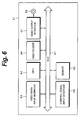
- Fig. 6 shows an example of a structure of a decoding apparatus 51 according to the present invention.
- a bus 61 Connected to a bus 61 are a CPU 62, a memory 63, a video data input interface 64, a control signal input interface 65, a video decoder 66, and a video output interface 67.
- the CPU 62 and the memory 63 compose a computer system.
- the CPU 62 executes a program stored in the memory 63, controls the entire apparatus, and performs a process (that will be described later).
- the memory 63 stores the program that the CPU 62 executes.
- the memory 63 temporarily stores data with which the CPU 62 operates.
- the memory 63 can be structured by only a nonvolatile memory or a combination of a volatile memory and a nonvolatile memory.
- the apparatus is provided with a hard disk and it records (is installed with) the program that the CPU 62 executes, the memory 63 can be structured only by a volatile memory.
- the program that the CPU 62 executes can be pre-stored in the memory 63 as an internal record medium of the apparatus.
- the program can be temporarily or permanently stored in a removable record medium such as a disc, a flexible disc, a CD-ROM (Compact Disc Read Only Memory), an MO (Magneto Optical) disc, a magnetic disc, or a memory card.
- a removable record medium such as a disc, a flexible disc, a CD-ROM (Compact Disc Read Only Memory), an MO (Magneto Optical) disc, a magnetic disc, or a memory card.
- a removable record medium can be provided as so-called package software.
- the program can be pre-stored in the memory 63 or installed from such a removable record medium to the apparatus.
- the program can be wirelessly transferred from a download site to the apparatus through a satellite for a digital satellite broadcast.
- the program can be transferred by cable from a download site to the apparatus through a network such as a LAN (Local Area Network) or the Internet.
- the apparatus can receive the program and install it in the internal memory 63.
- the program can be processed by one CPU or distributively processed by a plurality of CPUs.
- the video data input interface 64 inputs encoded data, which have been encoded by the encoding apparatus 11 and which have been supplied to the decoding apparatus 51, under the control of the CPU 62 and supplies the encoded data to the CPU 62, the memory 63, the video decoder 66, and so forth.
- control signal input interface 65 When the user operates a key (button) or a remote controller commander (not shown), the control signal input interface 65 inputs a control signal therefrom and supplies it to the CPU 62 through the bus 61.
- the control signal input interface 65 also functions as a communication interface such as a model (including an ADSL (Asymmetric Digital Subscriber Line) modem), an NIC (Network Interface Card), or the like.
- ADSL Asymmetric Digital Subscriber Line
- NIC Network Interface Card
- the video decoder 66 decodes encoded data of video data supplied through the video data input interface 64 and the bus 61 and supplies resultant video data to the CPU 62 and the video output interface 67 through the bus 61.
- the video output interface 67 performs a process necessary for the video data supplied through the bus 61 and outputs the resultant data through a video output terminal 68.
- the video output terminal 68 is connected to a display device such as a CRT (Cathode Ray Tube) or a liquid crystal display panel (not shown).
- a display device such as a CRT (Cathode Ray Tube) or a liquid crystal display panel (not shown).
- CTR Cathode Ray Tube
- LCD liquid crystal display panel
- Video data can be supplied from the decoding apparatus 51 to the display device wirelessly or by cable.
- Fig. 7 shows an example of a structure of the video decoder 66 shown in Fig. 6.
- Fig. 8 is a flow chart showing an outline of an example of a process of the video decoder 66.
- a main picture decoding section 72 decodes encoded data of the main picture demultiplexed by a demultiplexing section 71.
- the main picture decoding section 72 extracts data of the aspect ratio and so forth of the main picture from the encoded data of the main picture.
- a main picture frame size converting section 74 converts the picture frame size of the main picture based on the aspect ratios of the main picture and the display device.
- a sub picture decoding section 73 decodes encoded data of the sub picture demultiplexed by the demultiplexing section 71 and extracts data of the aspect ratio and so forth of the sub picture from the encoded data of the sub picture.
- a sub picture frame size converting section 75 converts the picture frame size of the sub picture based on the aspect ratios of the sub picture and the display device.
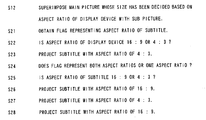
- an adding device 76 superimposes the main picture whose picture frame size has been decided based on the aspect ratio of the display device with the sub picture. A picture of which the main picture has been superimposed with the sub picture is displayed.
- step S10 and step S11 is not limited to that shown in Fig. 8.
- the process for the main picture at step S11 can be performed.
- the process for the main picture at step S10 and the process for the sub picture at step S11 can be performed in parallel.
- the demultiplexing section 71 demultiplexes the encoded data supplied from the video data input interface 64 into encoded data of the main picture and encoded data of the sub picture. In addition, the demultiplexing section 71 supplies the encoded data of the main picture to the main picture decoding section 72 and the encoded data of the sub picture to the sub picture decoding section 73.
- the main picture decoding section 72 decodes the encoded data of the main picture and supplies the resultant decoded video data to the main picture frame size converting section 74. At this point, the main picture decoding section 72 extracts information of the aspect ratio and so forth of the main picture from the encoded data of the main picture and supplies the extracted information to the main picture frame size converting section 74.
- the sub picture decoding section 73 decodes the encoded data of the sub picture and supplies the resultant decoded subtitle data to the sub picture frame size converting section 75. In addition, at this point, the sub picture decoding section 73 extracts information of the size, position, aspect ratio, and so forth of the sub picture from the encoded data of the sub picture and supplies the extracted information to the sub picture frame size converting section 75.
- the main picture frame size converting section 74 converts the picture frame size of the main picture to be output based on the aspect ratio of the display device connected to the video output terminal 68 and the aspect ratio of the main picture supplied from the main picture decoding section 72 and supplies the resultant main picture to the adding device 76.
- the main picture frame size converting section 74 reduces the main picture in the lateral direction (horizontal direction), adds data that cause the left and right end areas of the screen to become black to the main picture, and outputs the resultant main picture.
- the main picture frame size converting section 74 reduces the main picture in the longitudinal direction (vertical direction), adds data that cause the upper and lower end areas of the screen to become black to the main picture, and outputs the resultant main picture.
- the main picture frame size converting section 74 outputs the main picture without reducing it.
- the sub picture frame size converting section 75 normally converts the picture frame size of the sub picture based on the aspect ratio of the sub picture supplied from the sub picture decoding section 73 and supplies the resultant sub picture to the adding device 76.
- the adding device 76 superimposes the main picture supplied from the main picture frame size converting section 74 with the sub picture supplied from the sub picture frame size converting section 75 and supplies the resultant pictures to an output buffer 77.
- the output buffer 77 temporarily stores data supplied from the adding device 76 and outputs the data to the video output interface 67 at a predetermined timing.
- the sub picture frame size converting section 75 obtains from the sub picture decoding section 73 a flag that represents the aspect ratio of the sub picture supplied to the sub picture frame size converting section 75.
- the sub picture frame size converting section 75 determines whether the aspect ratio of the display device is 4 : 3 (for example, 360 x 270) or 16 : 9 (for example, 480 x 270). When the determined result denotes that the aspect ratio is 4 : 3, the flow advances to step S23.
- the sub picture is projected with an aspect ratio of 4 : 3 regardless of the aspect ratio of the main picture.
- the aspect ratio of the main picture is 16 : 9, as shown in Fig. 10, the picture frame size of the main picture is changed and data that cause the upper and lower end areas to become black are added.
- the resultant main picture is superimposed with the subtitle picture whose aspect ratio is 4 : 3 and the superimposed pictures are displayed.
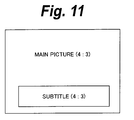
- the aspect ratio of the main picture is also 4 : 3, as shown in Fig. 11, the main picture is superimposed with the subtitle picture whose aspect ratio is 4 : 3 and the resultant superimposed pictures are displayed.
- the aspect ratio of the display device is 4 : 3, even if the aspect ratio of the main picture is 16 : 9, the subtitle picture whose aspect ratio is 4 : 3 is projected (at step S23 shown in Fig. 9).
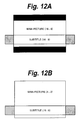
- the subtitle picture is projected with an aspect ratio of 16 : 9, as exemplified in Fig. 12A, left and right end areas of the subtitle picture are not likely to be displayed.
- the aspect ratio of the display device is 4 : 3 and that of the main picture is 4 : 3 (see Fig. 12B).
- a subtitle whose aspect ratio is 16 : 9 is prohibited from being projected.
- the aspect ratio of the display device is 4 : 3, that of a subtitle is 4 : 3.
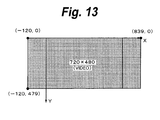
- Fig. 13 shows a display area of the main picture when its picture frame is 720 x 480.
- Fig. 14 shows a display area of the main picture when its picture frame is 352 x 480.
- Fig. 15 shows a display area of the main picture when its picture frame is 352 x 240.
- Fig. 16 shows a display area of the main picture when its picture frame is 720 x 480.
- Fig. 17 shows a display area of the main picture when its picture frame is 352 x 480.
- Fig. 18 shows a display area of the main picture when its picture frame is 352 x 240.
- step S24 the sub picture frame size converting section 75 determines whether the flag obtained at step S21 is a flag that represents both 16 : 9 and 4 : 3 as an aspect ratio of the sub picture or a flag that represents 16 : 9 or 4 : 3 as an aspect ratio of the sub picture.
- the flow advances to step S25.
- the sub picture frame size converting section 75 determines whether the flag obtained at step S21 represents 16 : 9 or 4 : 3 as an aspect ratio of the sub picture.
- the flow advances to step S26.
- the sub picture is displayed with an aspect ratio of 16 : 9 regardless of the aspect ratio of the main picture.
- the main picture When the aspect ratio of the main picture is 4 : 3, as shown in Fig. 19, the main picture is reduced in the lateral direction and data that cause the left and right end areas to become black are added.
- the resultant main picture is superimposed with the subtitle picture whose aspect ratio is 16 : 9 and the superimposed pictures are displayed.
- a subtitle can be fully displayed on the display screen of the display device, even if the display device is small and has a small display screen, the subtitle can be largely displayed.
- the main picture is superimposed with the subtitle picture whose aspect ratio is 16 : 9 and the superimposed pictures are displayed.
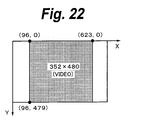
- the display area of the main picture to the coordinate system of the sub picture is shaded areas shown in Fig. 16 to Fig. 18.
- Fig. 21 shows a display area of the main picture when its picture frame is 720 x 480.
- Fig. 22 shows a display area of the main picture when its picture frame is 352 x 480.
- Fig. 23 shows a display area of the main picture when its picture frame is 352 x 240.
- step S27 the sub picture frame size converting section 75 converts the picture frame size of 720 x 480 for the subtitle based on an aspect ratio of 4 : 3 and outputs the resultant subtitle data to the adding device 76.
- the subtitle picture is displayed (projected) with an aspect ratio of 4 : 3 regardless of the aspect ratio of the main picture.
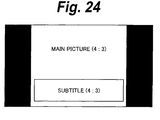
- the main picture When the aspect ratio of the main picture is 4 : 3, as shown in Fig. 24, the main picture is reduced in the lateral direction and data that cause the left and right end areas to become black are added. The resultant main picture is superimposed with the subtitle picture whose aspect ratio is 4 : 3 and the superimposed pictures are displayed.
- the aspect ratio of the main picture is 16 : 9, as shown in Fig. 25, the main picture is superimposed with the subtitle picture whose aspect ratio is 4 : 3 and the superimposed pictures are displayed.
- the display area of the main picture to the coordinate system of the sub picture is areas shown in Fig. 16 to Fig. 18.
- the display area of the main picture to the coordinate system of the sub picture is areas shown in Fig. 13 to Fig. 15.
- step S28 When the determined result at step S24 denotes that the flag represents both 16 : 9 and 4 : 3 as an aspect ratio of the sub picture, the flow advances to step S28.
- the aspect ratio of the display device is 16 : 9
- the sub picture frame size converting section 75 converts the picture frame size of 720 x 480 for the subtitle based on an aspect ratio of 16 : 9 and outputs the resultant subtitle data to the adding device 76.
- step S23 When the subtitle is displayed at step S23, step S26, or step S28, the process is completed.
- the sub picture can be displayed based on the aspect ratio of the sub picture, which is set independently from the aspect ratio of the main picture, and that of the display device.
- steps describing a program provided by a record medium are chronologically processed in the coding order. Instead, they may be processed in parallel or discretely.
Landscapes
- Engineering & Computer Science (AREA)
- Multimedia (AREA)
- Signal Processing (AREA)
- Computer Graphics (AREA)
- Human Computer Interaction (AREA)
- Television Systems (AREA)
- Two-Way Televisions, Distribution Of Moving Picture Or The Like (AREA)
- Transforming Electric Information Into Light Information (AREA)
- Compression Or Coding Systems Of Tv Signals (AREA)
Abstract
Description
- The present invention relates to an encoding apparatus and method, a decoding apparatus and method, a program, a record medium, and a data structure, in particular, to those that allow a sub picture to be displayed with an aspect ratio independent from that of a main picture.
- A picture such as a subtitle (this picture is hereinafter referred to as the sub picture) may be superimposed with a picture of content (this picture is hereinafter referred to as the main picture) and the superimposed pictures are displayed so as to supplement the main picture.
- Normally, the aspect ratio of the sub picture is associated with that of the main picture. When the aspect ratio of the main picture with which the sub picture is superimposed is a : b, the aspect ratio of the sub picture is set to a : b. When the aspect ratio of the main picture with which the sub picture is superimposed is c : d, the aspect ratio of the sub picture is set to c : d.
- As a specific example, when the aspect ratio of the display device is 16 : 9 and that of the main picture is 4 : 3, as shown in Fig. 1, the picture frame size of the main picture is changed and data that cause the left and right end areas of the screen to become black are added. At this point, the subtitle is normally displayed with an aspect ratio of 4 : 3 (see Patent Document,
Japanese Patent Application Laid-Open No. HEI 10-308924 - However, in a small electronic device such as a PDA (Personal Digital Assistant) that has a major feature of its portability, since the device is provided with a small display device, when the aspect ratio of the display screen is 16 : 9 and that of the main picture is 4 : 3, with the presence of the side panel portions as shown in Fig. 1, if the sub tile is displayed with an aspect ratio of 4 : 3, it may become difficult to watch the subtitle.
- The present invention is made from the foregoing point of view and is to display the sub picture with an aspect ratio independent from that of the main picture.
- The present invention is an encoding apparatus including a first encoding section which encodes the main picture and incorporates an aspect ratio of the main picture in the encoded data of the main picture and a second encoding section which encodes the sub picture and incorporates an aspect ratio of the sub picture in the encoded data of the sub picture.
- The second encoding section can set a flag which represents the aspect ratio of the sub picture to incorporate the aspect ratio of the sub picture in the encoded data of the sub picture.
- The present invention is an encoding method including the steps of encoding the main picture and incorporating an aspect ratio of the main picture in the encoded data of the main picture and encoding the sub picture and incorporating an aspect ratio of the sub picture in the encoded data of the sub picture.
- The present invention is a first program including the steps of encoding the main picture and incorporating an aspect ratio of the main picture in the encoded data of the main picture and encoding the sub picture and incorporating an aspect ratio of the sub picture in the encoded data of the sub picture.
- In the encoding apparatus and method and the first program of the present invention, the main picture is encoded and the aspect ratio of the main picture is incorporated in the encoded main picture. The sub picture is encoded and the aspect ratio of the sub picture is incorporated in the encoded sub picture.
- The present invention is a decoding apparatus including a first obtaining section which obtains an aspect ratio of the main picture from the encoded data of the main picture, a first converting section which converts a picture frame of the main picture based on the aspect ratio of the main picture obtained by the first obtaining section, a second obtaining section which obtains an aspect ratio of the sub picture from the encoded data of the sub picture, and a second converting section which converts a picture frame of the sub picture based on the aspect ratio of the sub picture obtained by the second obtaining section.
- The present invention is a decoding method including the steps of obtaining an aspect ratio of the main picture from the encoded data of the main picture, converting a picture frame of the main picture based on the aspect ratio of the main picture obtained at the first obtaining step, obtaining an aspect ratio of the sub picture from the encoded data of the sub picture, and converting a picture frame of the sub picture based on the aspect ratio of the sub picture obtained at the second obtaining step.
- The present invention is a second program including the steps of obtaining an aspect ratio of the main picture from the encoded data of the main picture, converting a picture frame of the main picture based on the aspect ratio of the main picture obtained at the first obtaining step, obtaining an aspect ratio of the sub picture from the encoded data of the sub picture, and converting a picture frame of the sub picture based on the aspect ratio of the sub picture obtained at the second obtaining step.
- In the decoding apparatus and method and the second program of the present invention, the aspect ratio of the main picture is obtained from the encoded data of the main picture. The picture frame of the main picture is converted based on the obtained aspect ratio of the main picture. The aspect ratio of the sub picture is obtained from the encoded data of the sub picture. The picture frame of the sub picture is converted based on the obtained aspect ratio of the sub picture.
- The present invention is a record medium on which encoded data of a main picture of which main picture data have been encoded and encoded data of a sub picture of which sub picture data have been encoded have been multiplexed and recorded, the main picture data and the sub picture data being displayed by superimposing the main picture data with the sub picture data, wherein the encoded data of the main picture has a first aspect ratio flag which represents an aspect ratio of the main picture data, and wherein the encoded data of the sub picture has a second aspect ratio flag which represents an aspect ratio of the sub picture data, the second aspect ratio being independent from the first aspect ratio.
- The present invention is a data structure in which encoded data of a main picture of which main picture data have been encoded and encoded data of a sub picture of which sub picture data have been encoded have been multiplexed, the main picture data and the sub picture data being displayed by superimposing the main picture data with the sub picture data, wherein the encoded data of the main picture has a first aspect ratio flag which represents an aspect ratio of the main picture data, and wherein the encoded data of the sub picture has a second aspect ratio flag which represents an aspect ratio of the sub picture data, the second aspect ratio being independent from the first aspect ratio.
- In the record medium and the data structure of the present invention, the encoded data of the main picture of which the main picture data have been encoded and the encoded data of the sub picture of which the sub picture data superimposed with the main picture data have been encoded are multiplexed and recorded. The encoded data of the main picture has the first aspect ratio flag that represents the aspect ratio of the main picture data. The encoded data of the sub picture has the second aspect ratio flag that represents the aspect ratio of the sub picture data, the second aspect ratio flag being independent from the first aspect ratio flag. Thus, the aspect ratio of the main picture and that of the sub picture are obtained from the encoded data of the main picture and the encoded data of the sub picture, respectively. The picture frame of the main picture can be converted based on the obtained aspect ratio of the main picture. The picture frame of the sub picture can be converted based on the obtained aspect ratio of the sub picture.
- According to the present invention, the sub picture can be displayed with an aspect ratio independent from that of the main picture.
-
- Fig. 1 is a schematic diagram showing a display example of a subtitle according to related art; Fig. 2 is a block diagram showing an example of a structure of an encoding apparatus according to the present invention; Fig. 3 is a block diagram showing an example of a structure of a
video encoder 26 shown in Fig. 2; Fig. 4 is a flow chart showing an outline of an example of a process of the video encoder; Fig. 5 is a schematic diagram describing coordinates of a subtitle; Fig. 6 is a block diagram showing an example of a structure of a decoding apparatus according to the present invention; Fig. 7 is a block diagram showing an example of a structure of avideo decoder 66 shown in Fig. 6; Fig. 8 is a flow chart showing an outline of an example of a process of the video decoder; Fig. 9 is a flow chart describing an operation of a sub picture framesize converting section 75 shown in Fig. 7; Fig. 10 is a schematic diagram showing a display example of a subtitle according to the present invention; Fig. 11 is another schematic diagram showing a display example of a subtitle according to the present invention; Fig. 12A and Fig. 12B are schematic diagrams describing that when the aspect ratio of the display device is 4 : 3, even if the aspect ratio of a main picture is 16 : 9, a subtitle is projected with an aspect ratio of 4 : 3; Fig. 13 is a schematic diagram showing a display area of a main picture to the coordinates of a subtitle; Fig. 14 is another schematic diagram showing a display area of a main picture to the coordinates of a subtitle; Fig. 15 is another schematic diagram showing a display area of a main picture to the coordinates of a subtitle; Fig. 16 is another schematic diagram showing a display area of a main picture to the coordinates of a subtitle; Fig. 17 is another schematic diagram showing a display area of a main picture to the coordinates of a subtitle; Fig. 18 is another schematic diagram showing a display area of a main picture to the coordinates of a subtitle; Fig. 19 is another schematic diagram showing a display example of a subtitle according to the present invention; Fig. 20 is another schematic diagram showing a display example of a subtitle according to the present invention; Fig. 21 is another schematic diagram showing a display area of a main picture to the coordinates of a subtitle; Fig. 22 is another schematic diagram showing a display area of a main picture to the coordinates of a subtitle; Fig. 23 is another schematic diagram showing a display area of a main picture to the coordinates of a subtitle; Fig. 24 is another schematic diagram showing a display example of a subtitle according to the present invention; and Fig. 25 is another schematic diagram showing a display example of a subtitle according to the present invention. - Next, embodiments of the present invention will be described. The relationship between the invention described in this specification and embodiments of the present invention is as follows. The description in this section denotes that embodiments that support the invention set forth in the specification are described in this specification. Thus, even if some embodiments are not described in this section, it is not implied that the embodiments do not correspond to the invention. Conversely, even if embodiments are described as the invention in this section, it is not implied that these embodiments do not correspond to other than the invention.
- The description of this section does not imply all aspects of the invention described in this specification. In other words, the description in this section corresponds to invention described in the specification. Thus, the description in this section does not deny that there are aspects of the present invention that are not set forth in the claims of the present patent application and that divisional patent applications may be made and/or additional aspects of the present invention may be added as amendments.
-
Claim 1 is an encoding apparatus which generates encoded data of pictures displayed by superimposing a main picture with a sub picture, including a first encoding section (for example, a mainpicture encoding section 31 shown in Fig. 3) which encodes the main picture and incorporates an aspect ratio of the main picture in the encoded data of the main picture; and a second encoding section (for example, a subpicture encoding section 32 shown in Fig. 3) which encodes the sub picture and incorporates an aspect ratio of the sub picture in the encoded data of the sub picture. - The second incorporating means sets a flag which represents the aspect ratio of the sub picture (for example, a flag which represents 16 : 9, a flag which represents 4 : 3, or a flag which represents 16 : 9 and 4 : 3) to incorporate the aspect ratio of the sub picture in the encoded data of the sub picture.
-
Claim 3 is an encoding method andclaim 4 is a program of generating encoded data of pictures displayed by superimposing a main picture with a sub picture, including the steps of encoding the main picture and incorporating an aspect ratio of the main picture in the encoded data of the main picture (for example, a process of the mainpicture encoding section 31 shown in Fig. 3) and encoding the sub picture and incorporating an aspect ratio of the sub picture in the encoded data of the sub picture (for example, a process of the subpicture encoding section 32 shown in Fig. 3). - Claim 5 is a decoding apparatus which decodes encoded data of a main picture and encoded data of a sub picture displayed by superimposing the main picture with the sub picture, including a first obtaining section (for example, a main
picture decoding section 72 shown in Fig. 7) which obtains an aspect ratio of the main picture from the encoded data of the main picture, a first converting section (for example, a main picture framesize converting section 74 shown in Fig. 7) which converts a picture frame of the main picture based on the aspect ratio of the main picture obtained by the first obtaining section, a second obtaining section (for example, a subpicture decoding section 73 shown in Fig. 7) which obtains an aspect ratio of the sub picture from the encoded data of the sub picture, and a second converting section (for example, a sub picture framesize converting section 75 shown in Fig. 7) which converts a picture frame of the sub picture based on the aspect ratio of the sub picture obtained by the second obtaining section. - Claim 6 is a decoding method and claim 7 is a program of decoding encoded data of a main picture and encoded data of a sub picture displayed by superimposing the main picture with the sub picture, including the steps of obtaining an aspect ratio of the main picture from the encoded data of the main picture (for example, a process of the main
picture decoding section 72 shown in Fig. 7), converting a picture frame of the main picture based on the aspect ratio of the main picture obtained at the first obtaining step (for example, a process of the main picture framesize converting section 74 shown in Fig. 7), obtaining an aspect ratio of the sub picture from the encoded data of the sub picture (for example, a process of the subpicture decoding section 73 shown in Fig. 7), and converting a picture frame of the sub picture based on the aspect ratio of the sub picture obtained at the second obtaining step (for example, a process of the sub picture framesize converting section 75 shown in Fig 7). - Fig. 2 shows an example of a structure of an
encoding apparatus 11 according to the present invention. - Connected to a
bus 21 are a CPU (Central Processing Unit) 22, amemory 23, a videosignal input interface 24, a controlsignal input interface 25, avideo encoder 26, a videodata output interface 27, and so forth. - The
CPU 22 and thememory 23 compose a computer system. In other words, theCPU 22 executes a program stored in thememory 23, controls the entire apparatus, and performs a process (that will be described later). Thememory 23 stores the program that theCPU 22 executes. In addition, thememory 23 temporarily stores data with which theCPU 22 operates. Thememory 23 can be structured by only a nonvolatile memory or a combination of a volatile memory and a nonvolatile memory. When the apparatus shown in Fig. 2 is provided with a hard disk and it stores the program that theCPU 22 executes, thememory 23 can be structured only by a volatile memory. - The program that the
CPU 22 executes can be pre-stored in thememory 23 as an internal record medium of the apparatus. - Instead, the program can be temporarily or permanently stored in a removable record medium such as a disc, a flexible disc, a CD-ROM (Compact Disc Read Only Memory), an MO (Magneto Optical) disc, a magnetic disc, or a memory card. Such a removable record medium can be provided as so-called package software.
- The program can be pre-stored in the
memory 23 or installed from such a removable record medium to the apparatus. In addition, the program can be wirelessly transferred from a download site to the apparatus through a satellite for a digital satellite broadcast. Instead, the program can be transferred by cable from a download site to the apparatus through a network such as a LAN (Local Area Network) or the Internet. The apparatus can receive the program and install it in theinternal memory 23. - The program can be processed by one CPU or distributively processed by a plurality of CPUs.
- The video
signal input interface 24 inputs a video signal of the main picture and a video signal of the sub picture supplied from a video camera or the like under the control of theCPU 22 and supplies the video signals to theCPU 22, thememory 23, thevideo encoder 26, and so forth through thebus 21. - When the user operates a key (button) or a remote controller commander (not shown), the control
signal input interface 25 inputs a control signal therefrom and supplies it to theCPU 22 through thebus 21. The controlsignal input interface 25 also functions as a communication interface such as a model (including an ADSL (Asymmetric Digital Subscriber Line) modem), an NIC (Network Interface Card), or the like. - The
video encoder 26 encodes video signals that have been input through the videosignal input interface 24 and supplies resultant video data to theCPU 22 through thebus 21. - The video
data output interface 27 outputs a video transport stream of which the video data have been packetized by theCPU 22. - Fig. 3 shows an example of a structure of the
video encoder 26 shown in Fig. 2. Fig. 4 is a flow chart showing an outline of an example of a process ofvideo encoder 26. - First of all, with reference to the flow chart shown in Fig. 4, an outline of an example of a process of the
video encoder 26 will be described. At step S1, a mainpicture encoding section 31 performs an encoding process for the video signal of the main picture and incorporates the aspect ratio and so forth of the main picture in the encoded data. At step S2, a subpicture encoding section 32 performs an encoding process for the video signal of the sub picture and incorporates the aspect ratio and so forth of the sub picture in the encoded data. At step S3, the encoded data of the main picture in which the aspect ratio and so forth of the main picture have been incorporated and the encoded data of the sub picture in which the aspect ratio and so forth of the sub picture have been incorporated are multiplexed. - The order of step S1 and step S2 is not limited to that shown in Fig. 4. For example, after the process for the sub picture at step S2 has been performed, the process for the main picture at step S1 can be performed. Instead, the process for the main picture at step S1 and the process for the sub picture the step S2 can be performed in parallel.
- Next, the process of the
video encoder 26 will be described in more detail. The mainpicture encoding section 31 encodes the video signal of the main picture that has been input through the videosignal input interface 24 and incorporates the aspect ratio and so forth of the main picture of which thevideo encoder 26 has been informed by theCPU 22 in the encoded data and supplies the resultant data to amultiplexing section 33. - Data of the aspect ratio and so forth of the main picture are incorporated in encoded data of which the video signal of the main picture has been encoded. Instead, data of the aspect ratio and so forth of the main picture can be incorporated in the pre-encoded video signal of the main picture and then the video signal of the main picture and the data of the aspect ratio and so forth can be encoded together.
- The sub
picture encoding section 32 encodes data of the sub picture such as a subtitle or graphics that have been input through the videosignal input interface 24, incorporates the size, position information, aspect ratio, and so forth of the sub picture of which the subpicture encoding section 32 has been informed by theCPU 22 in the encoded data and supplies the resultant data to themultiplexing section 33. In the following description, it is assumed that the sub picture is a subtitle. - Data of the aspect ratio and so forth of the sub picture are incorporated in encoded data of which the video signal of the sub picture has been encoded. Instead, data of the aspect ratio and so forth of the sub picture can be incorporated in the pre-encoded video signal of the sub picture and then the video signal of the sub picture and the data of the aspect ratio and so forth can be encoded together.
- For the aspect ratio of the sub picture, a flag that represents an aspect ratio of 4 : 3, a flag that represents an aspect ratio of 16 : 9, or a flag that represents an aspect ratio of 4 : 3 or 16 : 9 is set.
- When one type of a picture frame of 720 x 480 is defined for the sub picture as shown in Fig. 5, the size of a subtitle is represented by the height of the subtitle, ph (the size in the Y axis direction), the width of the subtitle, pw (the size in the X axis direction), and the position of the subtitle is represented by the coordinates (bx, by) at the upper left corner of the subtitle such that the relationship of (bx + pw, by + ph) ≤ (719, 479) is satisfied. In other words, a subtitle is placed within 720 x 480. As will be described later, the size and position of the subtitle projected on the screen of the display device are converted into proper values. The resultant subtitle is superimposed with the main picture and the resultant superimposed pictures are output.
- Returning to Fig. 3, the multiplexing
section 33 multiplexes the encoded data of the main picture, in which the aspect ratio and so forth of the main picture have been incorporated and which have been supplied from the mainpicture encoding section 31, and the encoded data of the sub picture, in which the aspect ratio and so forth of the sub picture have been incorporated and which have been supplied from the subpicture encoding section 32, and supplies the multiplexed data to the videodata output interface 27. - Fig. 6 shows an example of a structure of a
decoding apparatus 51 according to the present invention. - Connected to a
bus 61 are aCPU 62, amemory 63, a videodata input interface 64, a controlsignal input interface 65, avideo decoder 66, and avideo output interface 67. - The
CPU 62 and thememory 63 compose a computer system. In other words, theCPU 62 executes a program stored in thememory 63, controls the entire apparatus, and performs a process (that will be described later). Thememory 63 stores the program that theCPU 62 executes. In addition, thememory 63 temporarily stores data with which theCPU 62 operates. Thememory 63 can be structured by only a nonvolatile memory or a combination of a volatile memory and a nonvolatile memory. When the apparatus is provided with a hard disk and it records (is installed with) the program that theCPU 62 executes, thememory 63 can be structured only by a volatile memory. - The program that the
CPU 62 executes can be pre-stored in thememory 63 as an internal record medium of the apparatus. - Instead, the program can be temporarily or permanently stored in a removable record medium such as a disc, a flexible disc, a CD-ROM (Compact Disc Read Only Memory), an MO (Magneto Optical) disc, a magnetic disc, or a memory card. Such a removable record medium can be provided as so-called package software.
- The program can be pre-stored in the
memory 63 or installed from such a removable record medium to the apparatus. In addition, the program can be wirelessly transferred from a download site to the apparatus through a satellite for a digital satellite broadcast. Instead, the program can be transferred by cable from a download site to the apparatus through a network such as a LAN (Local Area Network) or the Internet. The apparatus can receive the program and install it in theinternal memory 63. - The program can be processed by one CPU or distributively processed by a plurality of CPUs.
- The video
data input interface 64 inputs encoded data, which have been encoded by theencoding apparatus 11 and which have been supplied to thedecoding apparatus 51, under the control of theCPU 62 and supplies the encoded data to theCPU 62, thememory 63, thevideo decoder 66, and so forth. - When the user operates a key (button) or a remote controller commander (not shown), the control
signal input interface 65 inputs a control signal therefrom and supplies it to theCPU 62 through thebus 61. The controlsignal input interface 65 also functions as a communication interface such as a model (including an ADSL (Asymmetric Digital Subscriber Line) modem), an NIC (Network Interface Card), or the like. - The
video decoder 66 decodes encoded data of video data supplied through the videodata input interface 64 and thebus 61 and supplies resultant video data to theCPU 62 and thevideo output interface 67 through thebus 61. - The
video output interface 67 performs a process necessary for the video data supplied through thebus 61 and outputs the resultant data through avideo output terminal 68. - The
video output terminal 68 is connected to a display device such as a CRT (Cathode Ray Tube) or a liquid crystal display panel (not shown). Thus, video data that are output from thevideo output terminal 68 are supplied to the display device. The display device displays the video data. - Video data can be supplied from the
decoding apparatus 51 to the display device wirelessly or by cable. - Fig. 7 shows an example of a structure of the
video decoder 66 shown in Fig. 6. Fig. 8 is a flow chart showing an outline of an example of a process of thevideo decoder 66. - First of all, with reference to the flow chart shown in Fig. 8, an outline of an example of a display process of the
video decoder 66 will be described. At step S10, a mainpicture decoding section 72 decodes encoded data of the main picture demultiplexed by ademultiplexing section 71. In addition, the mainpicture decoding section 72 extracts data of the aspect ratio and so forth of the main picture from the encoded data of the main picture. A main picture framesize converting section 74 converts the picture frame size of the main picture based on the aspect ratios of the main picture and the display device. At step S11, a subpicture decoding section 73 decodes encoded data of the sub picture demultiplexed by thedemultiplexing section 71 and extracts data of the aspect ratio and so forth of the sub picture from the encoded data of the sub picture. A sub picture framesize converting section 75 converts the picture frame size of the sub picture based on the aspect ratios of the sub picture and the display device. At step S12, an addingdevice 76 superimposes the main picture whose picture frame size has been decided based on the aspect ratio of the display device with the sub picture. A picture of which the main picture has been superimposed with the sub picture is displayed. - The order of step S10 and step S11 is not limited to that shown in Fig. 8. For example, after the process for the sub picture at step S11 has been performed, the process for the main picture at step s10 can be performed. Instead, the process for the main picture at step S10 and the process for the sub picture at step S11 can be performed in parallel.
- Next, the process of the
video decoder 66 will be described in more detail. Thedemultiplexing section 71 demultiplexes the encoded data supplied from the videodata input interface 64 into encoded data of the main picture and encoded data of the sub picture. In addition, thedemultiplexing section 71 supplies the encoded data of the main picture to the mainpicture decoding section 72 and the encoded data of the sub picture to the subpicture decoding section 73. - The main
picture decoding section 72 decodes the encoded data of the main picture and supplies the resultant decoded video data to the main picture framesize converting section 74. At this point, the mainpicture decoding section 72 extracts information of the aspect ratio and so forth of the main picture from the encoded data of the main picture and supplies the extracted information to the main picture framesize converting section 74. - The sub
picture decoding section 73 decodes the encoded data of the sub picture and supplies the resultant decoded subtitle data to the sub picture framesize converting section 75. In addition, at this point, the subpicture decoding section 73 extracts information of the size, position, aspect ratio, and so forth of the sub picture from the encoded data of the sub picture and supplies the extracted information to the sub picture framesize converting section 75. - The main picture frame
size converting section 74 converts the picture frame size of the main picture to be output based on the aspect ratio of the display device connected to thevideo output terminal 68 and the aspect ratio of the main picture supplied from the mainpicture decoding section 72 and supplies the resultant main picture to the addingdevice 76. - When the aspect ratio of the display device is 16 : 9 and that of the main picture is 4 : 3, the main picture frame
size converting section 74 reduces the main picture in the lateral direction (horizontal direction), adds data that cause the left and right end areas of the screen to become black to the main picture, and outputs the resultant main picture. - When the aspect ratio of the display device is 4 : 3 and that of the main picture is 16 : 9, the main picture frame
size converting section 74 reduces the main picture in the longitudinal direction (vertical direction), adds data that cause the upper and lower end areas of the screen to become black to the main picture, and outputs the resultant main picture. - When the aspect ratios of the display device and the main picture are the same, for example 4 : 3 or 16 : 9, the main picture frame
size converting section 74 outputs the main picture without reducing it. - The sub picture frame
size converting section 75 normally converts the picture frame size of the sub picture based on the aspect ratio of the sub picture supplied from the subpicture decoding section 73 and supplies the resultant sub picture to the addingdevice 76. - The adding
device 76 superimposes the main picture supplied from the main picture framesize converting section 74 with the sub picture supplied from the sub picture framesize converting section 75 and supplies the resultant pictures to anoutput buffer 77. - The
output buffer 77 temporarily stores data supplied from the addingdevice 76 and outputs the data to thevideo output interface 67 at a predetermined timing. - Next, with reference to a flow chart shown in Fig. 9, an operation of the sub picture frame
size converting section 75 of thevideo decoder 66 will be described. - At step S21, the sub picture frame
size converting section 75 obtains from the sub picture decoding section 73 a flag that represents the aspect ratio of the sub picture supplied to the sub picture framesize converting section 75. - At step S22, the sub picture frame
size converting section 75 determines whether the aspect ratio of the display device is 4 : 3 (for example, 360 x 270) or 16 : 9 (for example, 480 x 270). When the determined result denotes that the aspect ratio is 4 : 3, the flow advances to step S23. At step S23, the sub picture framesize converting section 75 converts the picture frame size of 720 x 480 for the sub picture based on an aspect ratio of 4 : 3 (pixel aspect ratio = 10 : 11) and outputs the resultant subtitle data to the addingdevice 76. - In other words, the sub picture is projected with an aspect ratio of 4 : 3 regardless of the aspect ratio of the main picture.
- When the aspect ratio of the main picture is 16 : 9, as shown in Fig. 10, the picture frame size of the main picture is changed and data that cause the upper and lower end areas to become black are added. The resultant main picture is superimposed with the subtitle picture whose aspect ratio is 4 : 3 and the superimposed pictures are displayed. When the aspect ratio of the main picture is also 4 : 3, as shown in Fig. 11, the main picture is superimposed with the subtitle picture whose aspect ratio is 4 : 3 and the resultant superimposed pictures are displayed.
- When the aspect ratio of the display device is 4 : 3, even if the aspect ratio of the main picture is 16 : 9, the subtitle picture whose aspect ratio is 4 : 3 is projected (at step S23 shown in Fig. 9). In other words, if the subtitle picture is projected with an aspect ratio of 16 : 9, as exemplified in Fig. 12A, left and right end areas of the subtitle picture are not likely to be displayed. This applies to the case that the aspect ratio of the display device is 4 : 3 and that of the main picture is 4 : 3 (see Fig. 12B). Thus, a subtitle whose aspect ratio is 16 : 9 is prohibited from being projected. Instead, when the aspect ratio of the display device is 4 : 3, that of a subtitle is 4 : 3.
- When the aspect ratio of the sub picture is 4 : 3 and that of the main picture is 16 : 9 (Fig. 10), the display area of the main picture to the coordinate system of the sub picture is shaded areas shown in Fig. 13 to Fig. 15. Fig. 13 shows a display area of the main picture when its picture frame is 720 x 480. Fig. 14 shows a display area of the main picture when its picture frame is 352 x 480. Fig. 15 shows a display area of the main picture when its picture frame is 352 x 240.
- When the aspect ratio of the sub picture is 4 : 3 and that of the main picture is also 4 : 3 (Fig. 11), the display area of the main picture to the coordinate system of the sub picture is shaded areas shown in Fig. 16 to Fig. 18. Fig. 16 shows a display area of the main picture when its picture frame is 720 x 480. Fig. 17 shows a display area of the main picture when its picture frame is 352 x 480. Fig. 18 shows a display area of the main picture when its picture frame is 352 x 240.
- Returning to Fig. 9, when the determined result at step S22 denotes that the aspect ratio of the display device is 16 : 9, the flow advances to step S24. At step S24, the sub picture frame
size converting section 75 determines whether the flag obtained at step S21 is a flag that represents both 16 : 9 and 4 : 3 as an aspect ratio of the sub picture or a flag that represents 16 : 9 or 4 : 3 as an aspect ratio of the sub picture. When the determined result denotes that the flag represents one aspect ratio, the flow advances to step S25. - At step S25, the sub picture frame
size converting section 75 determines whether the flag obtained at step S21 represents 16 : 9 or 4 : 3 as an aspect ratio of the sub picture. When the determined result denotes that the flag represents 16 : 9 as an aspect ratio of the sub picture, the flow advances to step S26. - At step S26, the sub picture frame
size converting section 75 converts the picture frame size of 720 x 480 for the subtitle based on an aspect ratio of 16 : 9 (pixel aspect ratio = 40 : 33) and outputs the resultant subtitle data to the addingdevice 76. - In other words, the sub picture is displayed with an aspect ratio of 16 : 9 regardless of the aspect ratio of the main picture.
- When the aspect ratio of the main picture is 4 : 3, as shown in Fig. 19, the main picture is reduced in the lateral direction and data that cause the left and right end areas to become black are added. The resultant main picture is superimposed with the subtitle picture whose aspect ratio is 16 : 9 and the superimposed pictures are displayed. In other words, since a subtitle can be fully displayed on the display screen of the display device, even if the display device is small and has a small display screen, the subtitle can be largely displayed.
- When the aspect ratio of the main picture is also 16 : 9, as shown in Fig. 20, the main picture is superimposed with the subtitle picture whose aspect ratio is 16 : 9 and the superimposed pictures are displayed.
- When the aspect ratio of the sub picture is 16 : 9 and that of the main picture is 16 : 9 (Fig. 20), the display area of the main picture to the coordinate system of the sub picture is shaded areas shown in Fig. 16 to Fig. 18.
- When the aspect ratio of the sub picture is 16 : 9 and that of the main picture is 4 : 3 (Fig. 19), the display area of the main picture to the coordinate system of the sub picture is shaded areas shown in Fig. 21 to Fig. 23. Fig. 21 shows a display area of the main picture when its picture frame is 720 x 480. Fig. 22 shows a display area of the main picture when its picture frame is 352 x 480. Fig. 23 shows a display area of the main picture when its picture frame is 352 x 240.
- Returning to Fig. 9, when the determined result at step S25 denotes that the aspect ratio of the sub picture is 4 : 3, the flow advances to step S27. At step S27, the sub picture frame
size converting section 75 converts the picture frame size of 720 x 480 for the subtitle based on an aspect ratio of 4 : 3 and outputs the resultant subtitle data to the addingdevice 76. - In this case, the subtitle picture is displayed (projected) with an aspect ratio of 4 : 3 regardless of the aspect ratio of the main picture.
- When the aspect ratio of the main picture is 4 : 3, as shown in Fig. 24, the main picture is reduced in the lateral direction and data that cause the left and right end areas to become black are added. The resultant main picture is superimposed with the subtitle picture whose aspect ratio is 4 : 3 and the superimposed pictures are displayed. When the aspect ratio of the main picture is 16 : 9, as shown in Fig. 25, the main picture is superimposed with the subtitle picture whose aspect ratio is 4 : 3 and the superimposed pictures are displayed.
- When the aspect ratio of the sub picture is 4 : 3 and that of the main picture is also 4 : 3 (Fig. 24), the display area of the main picture to the coordinate system of the sub picture is areas shown in Fig. 16 to Fig. 18.
- When the aspect ratio of the sub picture is 4 : 3 and that of the main picture is 16 : 9 (Fig. 25), the display area of the main picture to the coordinate system of the sub picture is areas shown in Fig. 13 to Fig. 15.
- When the determined result at step S24 denotes that the flag represents both 16 : 9 and 4 : 3 as an aspect ratio of the sub picture, the flow advances to step S28. In this case, since the aspect ratio of the display device is 16 : 9, in the same manner as step S26, the sub picture frame
size converting section 75 converts the picture frame size of 720 x 480 for the subtitle based on an aspect ratio of 16 : 9 and outputs the resultant subtitle data to the addingdevice 76. - When the subtitle is displayed at step S23, step S26, or step S28, the process is completed.
- In the foregoing manner, the sub picture can be displayed based on the aspect ratio of the sub picture, which is set independently from the aspect ratio of the main picture, and that of the display device.
- Although the foregoing processes can be accomplished by hardware, they can be also accomplished by software. When the processes are accomplished by software, by installing a program that composes the software to the computer and causing it to execute the program, the
encoding apparatus 11 and thedecoding apparatus 51 are functionally accomplished. - In this specification, steps describing a program provided by a record medium are chronologically processed in the coding order. Instead, they may be processed in parallel or discretely.
Claims (9)
- An encoding apparatus which generates encoded data of pictures displayed by superimposing a main picture with a sub picture, comprising:a first encoding section which encodes the main picture and incorporates an aspect ratio of the main picture in the encoded data of the main picture; anda second encoding section which encodes the sub picture and incorporates an aspect ratio of the sub picture in the encoded data of the sub picture.
- The encoding apparatus as set forth in claim 1 ,
wherein the second encoding section sets a flag which represents the aspect ratio of the sub picture to incorporate the aspect ratio of the sub picture in the encoded data of the sub picture. - An encoding method of generating encoded data of pictures displayed by superimposing a main picture with a sub picture, comprising the steps of:encoding the main picture and incorporating an aspect ratio of the main picture in the encoded data of the main picture; andencoding the sub picture and incorporating an aspect ratio of the sub picture in the encoded data of the sub picture.
- A program which causes a processor which controls an encoding apparatus which generates encoded data of pictures displayed by superimposing a main picture with a sub picture to execute a program, comprising the steps of:encoding the main picture and incorporating an aspect ratio of the main picture in the encoded data of the main picture; andencoding the sub picture and incorporating an aspect ratio of the sub picture in the encoded data of the sub picture.
- A decoding apparatus which decodes encoded data of a main picture and encoded data of a sub picture displayed by superimposing the main picture with the sub picture, comprising:a first obtaining section which obtains an aspect ratio of the main picture from the encoded data of the main picture;a first converting section which converts a picture frame of the main picture based on the aspect ratio of the main picture obtained by the first obtaining section;a second obtaining section which obtains an aspect ratio of the sub picture from the encoded data of the sub picture; anda second converting section which converts a picture frame of the sub picture based on the aspect ratio of the sub picture obtained by the second obtaining section.
- A decoding method of decoding encoded data of a main picture and encoded data of a sub picture displayed by superimposing the main picture with the sub picture, comprising the steps of:obtaining an aspect ratio of the main picture from the encoded data of the main picture;converting a picture frame of the main picture based on the aspect ratio of the main picture obtained at the first obtaining step;obtaining an aspect ratio of the sub picture from the encoded data of the sub picture; andconverting a picture frame of the sub picture based on the aspect ratio of the sub picture obtained at the second obtaining step.
- A program which causes a processor which controls a decoding apparatus which decodes encoded data of a main picture and encoded data of a sub picture displayed by superimposing the main picture with the sub picture to execute a program, comprising the steps of:obtaining an aspect ratio of the main picture from the encoded data of the main picture;converting a picture frame of the main picture based on the aspect ratio of the main picture obtained at the first obtaining step;obtaining an aspect ratio of the sub picture from the encoded data of the sub picture; andconverting a picture frame of the sub picture based on the aspect ratio of the sub picture obtained at the second obtaining step.
- A record medium on which encoded data of a main picture of which main picture data have been encoded and encoded data of a sub picture of which sub picture data have been encoded have been multiplexed and recorded, the main picture data and the sub picture data being displayed by superimposing the main picture data with the sub picture data,
wherein the encoded data of the main picture has a first aspect ratio flag which represents an aspect ratio of the main picture data, and
wherein the encoded data of the sub picture has a second aspect ratio flag which represents an aspect ratio of the sub picture data, the second aspect ratio being independent from the first aspect ratio. - A data structure in which encoded data of a main picture of which main picture data have been encoded and encoded data of a sub picture of which sub picture data have been encoded have been multiplexed, the main picture data and the sub picture data being displayed by superimposing the main picture data with the sub picture data,
wherein the encoded data of the main picture has a first aspect ratio flag which represents an aspect ratio of the main picture data, and
wherein the encoded data of the sub picture has a second aspect ratio flag which represents an aspect ratio of the sub picture data, the second aspect ratio being independent from the first aspect ratio.
Applications Claiming Priority (2)
| Application Number | Priority Date | Filing Date | Title |
|---|---|---|---|
| JP2004349816 | 2004-12-02 | ||
| PCT/JP2005/022409 WO2006059779A1 (en) | 2004-12-02 | 2005-11-30 | Encoding device and method, decoding device and method, program, recording medium, and data structure |
Publications (2)
| Publication Number | Publication Date |
|---|---|
| EP1819165A1 true EP1819165A1 (en) | 2007-08-15 |
| EP1819165A4 EP1819165A4 (en) | 2011-01-19 |
Family
ID=36565201
Family Applications (1)
| Application Number | Title | Priority Date | Filing Date |
|---|---|---|---|
| EP05814422A Withdrawn EP1819165A4 (en) | 2004-12-02 | 2005-11-30 | CODING DEVICE AND METHOD, DECODING DEVICE AND METHOD, RECORDING MEDIUM, AND DATA STRUCTURES |
Country Status (8)
| Country | Link |
|---|---|
| US (1) | US8279938B2 (en) |
| EP (1) | EP1819165A4 (en) |
| JP (1) | JP4813370B2 (en) |
| KR (1) | KR20070086704A (en) |
| CN (1) | CN101112096A (en) |
| CA (1) | CA2589370A1 (en) |
| TW (1) | TW200633506A (en) |
| WO (1) | WO2006059779A1 (en) |
Cited By (4)
| Publication number | Priority date | Publication date | Assignee | Title |
|---|---|---|---|---|
| CN101188712B (en) * | 2007-12-21 | 2012-07-18 | 康佳集团股份有限公司 | A processing method for page self-adapted display |
| EP2680598A3 (en) * | 2012-06-27 | 2014-04-30 | Viacom International Inc. | Multi-Resolution Graphics |
| EP3370429A4 (en) * | 2015-10-28 | 2018-09-05 | Sony Corporation | Transmission device, transmission method, receiver, and reception method |
| EP3410730A4 (en) * | 2016-01-26 | 2018-12-26 | Sony Corporation | Reception device, reception method, and transmission device |
Families Citing this family (8)
| Publication number | Priority date | Publication date | Assignee | Title |
|---|---|---|---|---|
| TWI262725B (en) * | 2005-06-30 | 2006-09-21 | Cheertek Inc | Video decoding apparatus and digital audio and video display system capable of controlling presentation of subtitles and method thereof |
| JP4518194B2 (en) * | 2008-06-10 | 2010-08-04 | ソニー株式会社 | Generating apparatus, generating method, and program |
| US20110285726A1 (en) * | 2009-02-18 | 2011-11-24 | William Gibbens Redmann | Method and apparatus for preparing subtitles for display |
| CN102065241B (en) * | 2009-11-18 | 2015-06-17 | 新奥特(北京)视频技术有限公司 | Title generator for automatically making title |
| WO2016163603A1 (en) * | 2015-04-05 | 2016-10-13 | 엘지전자 주식회사 | Method and device for transmitting and receiving broadcast signal for broadcast service on basis of xml subtitle |
| CN110020285B (en) * | 2017-09-28 | 2021-04-27 | 北京国双科技有限公司 | Histogram processing method and device |
| CN112770183B (en) * | 2020-11-10 | 2023-03-24 | 北京达佳互联信息技术有限公司 | Video playing control method and device, electronic equipment and storage medium |
| CN113452935B (en) * | 2021-08-31 | 2021-11-09 | 成都索贝数码科技股份有限公司 | Horizontal screen and vertical screen live video generation system and method |
Family Cites Families (29)
| Publication number | Priority date | Publication date | Assignee | Title |
|---|---|---|---|---|
| US5369444A (en) * | 1990-06-01 | 1994-11-29 | Thomson Consumer Electronics | Field type matching system |
| JP3290677B2 (en) * | 1991-09-02 | 2002-06-10 | 株式会社東芝 | Multi-screen television receiver |
| JPH05183833A (en) * | 1992-01-07 | 1993-07-23 | Sony Corp | Display device |
| JP3435172B2 (en) * | 1992-06-02 | 2003-08-11 | 株式会社東芝 | Television signal processing circuit |
| JPH05304641A (en) | 1992-04-24 | 1993-11-16 | Victor Co Of Japan Ltd | Television receiver |
| JPH06314092A (en) * | 1993-04-28 | 1994-11-08 | Toshiba Corp | Character image recording / playback device |
| US5930450A (en) * | 1995-02-28 | 1999-07-27 | Kabushiki Kaisha Toshiba | Recording medium, apparatus and method of recording data on the same, and apparatus and method of reproducing data from the recording medium |
| JPH08256297A (en) * | 1995-03-17 | 1996-10-01 | Toshiba Corp | 2-screen TV receiver |
| JPH08322046A (en) * | 1995-03-20 | 1996-12-03 | Sony Corp | DATA ENCODING / DECODING METHOD AND DEVICE, AND ENCODED DATA RECORDING MEDIUM |
| KR100265316B1 (en) * | 1995-04-14 | 2000-09-15 | 니시무로 타이죠 | Record, reproducing apparatus for reproducing data from the recording medium, and method of reproducing |
| CN1260970C (en) * | 1996-05-09 | 2006-06-21 | 松下电器产业株式会社 | Multimedia optical disk, reproducing device and reproducing method |
| JPH10145722A (en) * | 1996-11-07 | 1998-05-29 | Sony Corp | Reproducing control data generation device and method therefor |
| JP3742167B2 (en) * | 1996-12-18 | 2006-02-01 | 株式会社東芝 | Image display control device |
| JPH10308924A (en) | 1997-05-02 | 1998-11-17 | Sony Corp | Encoding device and method |
| US6678006B1 (en) * | 1998-01-07 | 2004-01-13 | Ati Technologies, Inc. | Method and apparatus for video processing that includes sub-picture scaling |
| JP2000184375A (en) * | 1998-12-15 | 2000-06-30 | Victor Co Of Japan Ltd | Image converter |
| JP4356202B2 (en) * | 2000-06-29 | 2009-11-04 | パナソニック株式会社 | Video signal processing device |
| JP2002109831A (en) * | 2000-09-29 | 2002-04-12 | Toshiba Corp | Recording and playback device |
| US7023492B2 (en) * | 2000-10-19 | 2006-04-04 | Microsoft Corporation | Method and apparatus for encoding video content |
| JP3607627B2 (en) * | 2001-02-26 | 2005-01-05 | 株式会社東芝 | Information recording / reproducing apparatus and method with matching function of aspect ratio information |
| US7577333B2 (en) * | 2001-08-04 | 2009-08-18 | Samsung Electronics Co., Ltd. | Method and apparatus for recording and reproducing video data, and information storage medium in which video data is recorded by the same |
| TW535413B (en) * | 2001-12-13 | 2003-06-01 | Mediatek Inc | Device and method for processing digital video data |
| JP2004215045A (en) * | 2003-01-06 | 2004-07-29 | Toshiba Corp | Information recording medium, information reproducing apparatus, and information reproducing method |
| JP3702275B2 (en) * | 2003-01-06 | 2005-10-05 | 株式会社東芝 | Information reproducing apparatus, information reproducing method, and information recording medium |
| JP2004215081A (en) * | 2003-01-07 | 2004-07-29 | Pioneer Electronic Corp | Information recording medium, information reproducing apparatus and method, and computer program |
| US6943768B2 (en) * | 2003-02-21 | 2005-09-13 | Xtellus Inc. | Thermal control system for liquid crystal cell |
| JP4250458B2 (en) * | 2003-05-30 | 2009-04-08 | キヤノン株式会社 | Image display method and image processing apparatus for image system |
| KR100580245B1 (en) * | 2003-06-26 | 2006-05-16 | 삼성전자주식회사 | Device and method for displaying simultaneous screen |
| TWI296400B (en) * | 2005-02-18 | 2008-05-01 | Au Optronics Corp | Video processing chip capable of adjusting aspect ratio and method of displaying an image thereby |
-
2005
- 2005-11-30 WO PCT/JP2005/022409 patent/WO2006059779A1/en not_active Ceased
- 2005-11-30 JP JP2006546719A patent/JP4813370B2/en not_active Expired - Fee Related
- 2005-11-30 CA CA002589370A patent/CA2589370A1/en not_active Abandoned
- 2005-11-30 EP EP05814422A patent/EP1819165A4/en not_active Withdrawn
- 2005-11-30 KR KR1020077014638A patent/KR20070086704A/en not_active Ceased
- 2005-11-30 US US11/720,806 patent/US8279938B2/en not_active Expired - Fee Related
- 2005-11-30 CN CNA2005800476727A patent/CN101112096A/en active Pending
- 2005-12-01 TW TW094142331A patent/TW200633506A/en not_active IP Right Cessation
Cited By (5)
| Publication number | Priority date | Publication date | Assignee | Title |
|---|---|---|---|---|
| CN101188712B (en) * | 2007-12-21 | 2012-07-18 | 康佳集团股份有限公司 | A processing method for page self-adapted display |
| EP2680598A3 (en) * | 2012-06-27 | 2014-04-30 | Viacom International Inc. | Multi-Resolution Graphics |
| US10997953B2 (en) | 2012-06-27 | 2021-05-04 | Viacom International Inc. | Multi-resolution graphics |
| EP3370429A4 (en) * | 2015-10-28 | 2018-09-05 | Sony Corporation | Transmission device, transmission method, receiver, and reception method |
| EP3410730A4 (en) * | 2016-01-26 | 2018-12-26 | Sony Corporation | Reception device, reception method, and transmission device |
Also Published As
| Publication number | Publication date |
|---|---|
| US8279938B2 (en) | 2012-10-02 |
| CN101112096A (en) | 2008-01-23 |
| TW200633506A (en) | 2006-09-16 |
| WO2006059779A1 (en) | 2006-06-08 |
| JP4813370B2 (en) | 2011-11-09 |
| US20100128799A1 (en) | 2010-05-27 |
| TWI315153B (en) | 2009-09-21 |
| JPWO2006059779A1 (en) | 2008-06-05 |
| EP1819165A4 (en) | 2011-01-19 |
| CA2589370A1 (en) | 2006-06-08 |
| KR20070086704A (en) | 2007-08-27 |
Similar Documents
| Publication | Publication Date | Title |
|---|---|---|
| KR100412763B1 (en) | Image processing apparatus | |
| CN1218574C (en) | Interactive video equipment and its caption superposition method | |
| US8289345B2 (en) | Display device | |
| US20020101536A1 (en) | Method and apparatus for implementing 4:2:0 to 4:2:2 and 4:2:2 to 4:2:0 color space conversion | |
| EP1819165A1 (en) | Encoding device and method, decoding device and method, program, recording medium, and data structure | |
| EP1079610A2 (en) | Moving-picture processing method, and apparatus therefor | |
| KR100442219B1 (en) | Display driver, display unit and electronic instrument using the same | |
| CN100421454C (en) | Modular structure with reusable front end for processing digital video data | |
| US9154802B2 (en) | Emergable watermark superimposing method, emergable watermark superimposing apparatus, and emergable watermark superimposing system | |
| JP6045405B2 (en) | Video processing apparatus, display apparatus, television receiver, and video processing method | |
| JP2003219372A (en) | Data broadcast receiving / reproducing device, control method therefor, data broadcast system, data broadcast device, product display method in data broadcast shopping, and control program | |
| JP4144258B2 (en) | Image output apparatus and image output method | |
| JP2008536150A (en) | User interface function to modify the display area | |
| US8279207B2 (en) | Information processing apparatus, information processing method, and program | |
| KR20130078655A (en) | Display apparatus, external peripheral device connectable thereof and image displaying method | |
| KR20020086878A (en) | Method and device for video scene composition including graphic elements | |
| JP4136384B2 (en) | Data broadcast receiving / reproducing apparatus, data broadcast receiving / reproducing method, and control program | |
| CN1312923C (en) | Method and system for vfc memory management | |
| JP2000184375A (en) | Image converter | |
| JP2009098304A (en) | Image processing apparatus and image processing method | |
| WO2007138320A1 (en) | Displaying resized video | |
| JP2006030353A (en) | Image display device | |
| JP2006094222A (en) | Television broadcast receiver and television broadcast method | |
| JP2008028927A (en) | Digital broadcast display device | |
| JP2000175114A (en) | Video display device and program storage medium |
Legal Events
| Date | Code | Title | Description |
|---|---|---|---|
| PUAI | Public reference made under article 153(3) epc to a published international application that has entered the european phase |
Free format text: ORIGINAL CODE: 0009012 |
|
| 17P | Request for examination filed |
Effective date: 20070614 |
|
| AK | Designated contracting states |
Kind code of ref document: A1 Designated state(s): AT DE FR GB NL |
|
| RBV | Designated contracting states (corrected) |
Designated state(s): AT DE FR GB NL |
|
| DAX | Request for extension of the european patent (deleted) | ||
| A4 | Supplementary search report drawn up and despatched |
Effective date: 20101222 |
|
| RIC1 | Information provided on ipc code assigned before grant |
Ipc: H04N 5/278 20060101ALI20101216BHEP Ipc: H04N 7/173 20110101AFI20060615BHEP Ipc: H04N 7/088 20060101ALI20101216BHEP Ipc: H04N 5/445 20110101ALI20101216BHEP |
|
| STAA | Information on the status of an ep patent application or granted ep patent |
Free format text: STATUS: THE APPLICATION HAS BEEN WITHDRAWN |
|
| RAP1 | Party data changed (applicant data changed or rights of an application transferred) |
Owner name: SONY CORPORATION Owner name: SONY COMPUTER ENTERTAINMENT INCORPORATED |
|
| 18W | Application withdrawn |
Effective date: 20130517 |