EP1810993A2 - Method of preparation of polyethylenetherephthalate nanocomposite fiber with enhanced modulus - Google Patents
Method of preparation of polyethylenetherephthalate nanocomposite fiber with enhanced modulus Download PDFInfo
- Publication number
- EP1810993A2 EP1810993A2 EP06026489A EP06026489A EP1810993A2 EP 1810993 A2 EP1810993 A2 EP 1810993A2 EP 06026489 A EP06026489 A EP 06026489A EP 06026489 A EP06026489 A EP 06026489A EP 1810993 A2 EP1810993 A2 EP 1810993A2
- Authority
- EP
- European Patent Office
- Prior art keywords
- nanocomposite
- organic
- polyethylene terephthalate
- pet
- inorganic hybrid
- Prior art date
- Legal status (The legal status is an assumption and is not a legal conclusion. Google has not performed a legal analysis and makes no representation as to the accuracy of the status listed.)
- Withdrawn
Links
- 239000002114 nanocomposite Substances 0.000 title claims abstract description 57
- 239000000835 fiber Substances 0.000 title claims abstract description 35
- 238000000034 method Methods 0.000 title claims abstract description 24
- 238000002360 preparation method Methods 0.000 title claims description 15
- 229920000139 polyethylene terephthalate Polymers 0.000 claims abstract description 77
- 239000005020 polyethylene terephthalate Substances 0.000 claims abstract description 77
- -1 polyethylene terephthalate Polymers 0.000 claims abstract description 25
- 229920000642 polymer Polymers 0.000 claims abstract description 25
- MMINFSMURORWKH-UHFFFAOYSA-N 3,6-dioxabicyclo[6.2.2]dodeca-1(10),8,11-triene-2,7-dione Chemical group O=C1OCCOC(=O)C2=CC=C1C=C2 MMINFSMURORWKH-UHFFFAOYSA-N 0.000 claims abstract description 8
- 238000002074 melt spinning Methods 0.000 claims abstract description 7
- LYCAIKOWRPUZTN-UHFFFAOYSA-N Ethylene glycol Chemical compound OCCO LYCAIKOWRPUZTN-UHFFFAOYSA-N 0.000 claims description 24
- WOZVHXUHUFLZGK-UHFFFAOYSA-N dimethyl terephthalate Chemical compound COC(=O)C1=CC=C(C(=O)OC)C=C1 WOZVHXUHUFLZGK-UHFFFAOYSA-N 0.000 claims description 22
- 238000006068 polycondensation reaction Methods 0.000 claims description 7
- 230000032050 esterification Effects 0.000 claims description 5
- 238000005886 esterification reaction Methods 0.000 claims description 5
- 230000008569 process Effects 0.000 claims description 5
- 239000002131 composite material Substances 0.000 abstract description 9
- 150000001875 compounds Chemical class 0.000 abstract description 6
- 238000006116 polymerization reaction Methods 0.000 description 16
- KKEYFWRCBNTPAC-UHFFFAOYSA-N Terephthalic acid Chemical compound OC(=O)C1=CC=C(C(O)=O)C=C1 KKEYFWRCBNTPAC-UHFFFAOYSA-N 0.000 description 8
- OKKJLVBELUTLKV-UHFFFAOYSA-N Methanol Chemical compound OC OKKJLVBELUTLKV-UHFFFAOYSA-N 0.000 description 6
- 239000003054 catalyst Substances 0.000 description 6
- 239000004927 clay Substances 0.000 description 6
- 230000000704 physical effect Effects 0.000 description 6
- 238000002411 thermogravimetry Methods 0.000 description 6
- 238000006243 chemical reaction Methods 0.000 description 5
- GUJOJGAPFQRJSV-UHFFFAOYSA-N dialuminum;dioxosilane;oxygen(2-);hydrate Chemical compound O.[O-2].[O-2].[O-2].[Al+3].[Al+3].O=[Si]=O.O=[Si]=O.O=[Si]=O.O=[Si]=O GUJOJGAPFQRJSV-UHFFFAOYSA-N 0.000 description 5
- 229910052901 montmorillonite Inorganic materials 0.000 description 5
- 239000002245 particle Substances 0.000 description 5
- 230000000052 comparative effect Effects 0.000 description 4
- 125000000524 functional group Chemical group 0.000 description 4
- 239000011572 manganese Substances 0.000 description 4
- 125000000962 organic group Chemical group 0.000 description 4
- 239000002904 solvent Substances 0.000 description 4
- BPQQTUXANYXVAA-UHFFFAOYSA-N Orthosilicate Chemical compound [O-][Si]([O-])([O-])[O-] BPQQTUXANYXVAA-UHFFFAOYSA-N 0.000 description 3
- 125000000217 alkyl group Chemical group 0.000 description 3
- 239000006185 dispersion Substances 0.000 description 3
- 239000007789 gas Substances 0.000 description 3
- 239000007788 liquid Substances 0.000 description 3
- 239000012802 nanoclay Substances 0.000 description 3
- PWHULOQIROXLJO-UHFFFAOYSA-N Manganese Chemical compound [Mn] PWHULOQIROXLJO-UHFFFAOYSA-N 0.000 description 2
- 239000004677 Nylon Substances 0.000 description 2
- 229910052787 antimony Inorganic materials 0.000 description 2
- WATWJIUSRGPENY-UHFFFAOYSA-N antimony atom Chemical compound [Sb] WATWJIUSRGPENY-UHFFFAOYSA-N 0.000 description 2
- 230000009286 beneficial effect Effects 0.000 description 2
- 229910052748 manganese Inorganic materials 0.000 description 2
- 230000004048 modification Effects 0.000 description 2
- 238000012986 modification Methods 0.000 description 2
- 229920001778 nylon Polymers 0.000 description 2
- 229920003023 plastic Polymers 0.000 description 2
- 239000004033 plastic Substances 0.000 description 2
- 230000009257 reactivity Effects 0.000 description 2
- 230000009467 reduction Effects 0.000 description 2
- 230000002787 reinforcement Effects 0.000 description 2
- 239000003381 stabilizer Substances 0.000 description 2
- 238000003860 storage Methods 0.000 description 2
- 229920002994 synthetic fiber Polymers 0.000 description 2
- 239000012209 synthetic fiber Substances 0.000 description 2
- VZGDMQKNWNREIO-UHFFFAOYSA-N tetrachloromethane Chemical compound ClC(Cl)(Cl)Cl VZGDMQKNWNREIO-UHFFFAOYSA-N 0.000 description 2
- 238000009827 uniform distribution Methods 0.000 description 2
- 0 **1O*(*)O[S-]O[Si](*)(O*(O*(O[S-])O2)O3)O[Si]2(*)O[Si](*)(OCCCCN)OC13[S-] Chemical compound **1O*(*)O[S-]O[Si](*)(O*(O*(O[S-])O2)O3)O[Si]2(*)O[Si](*)(OCCCCN)OC13[S-] 0.000 description 1
- 229920002972 Acrylic fiber Polymers 0.000 description 1
- IJGRMHOSHXDMSA-UHFFFAOYSA-N Atomic nitrogen Chemical compound N#N IJGRMHOSHXDMSA-UHFFFAOYSA-N 0.000 description 1
- 239000004642 Polyimide Substances 0.000 description 1
- 238000005054 agglomeration Methods 0.000 description 1
- 230000002776 aggregation Effects 0.000 description 1
- 238000004458 analytical method Methods 0.000 description 1
- 229910052799 carbon Inorganic materials 0.000 description 1
- 238000010538 cationic polymerization reaction Methods 0.000 description 1
- 230000008859 change Effects 0.000 description 1
- 239000003795 chemical substances by application Substances 0.000 description 1
- 238000002425 crystallisation Methods 0.000 description 1
- 230000008025 crystallization Effects 0.000 description 1
- 238000000354 decomposition reaction Methods 0.000 description 1
- 230000032798 delamination Effects 0.000 description 1
- 229910001873 dinitrogen Inorganic materials 0.000 description 1
- 238000001035 drying Methods 0.000 description 1
- 238000004043 dyeing Methods 0.000 description 1
- 230000000694 effects Effects 0.000 description 1
- 150000002148 esters Chemical class 0.000 description 1
- 230000006872 improvement Effects 0.000 description 1
- 238000011065 in-situ storage Methods 0.000 description 1
- 239000011256 inorganic filler Substances 0.000 description 1
- 229910003475 inorganic filler Inorganic materials 0.000 description 1
- 229910010272 inorganic material Inorganic materials 0.000 description 1
- 239000011147 inorganic material Substances 0.000 description 1
- 230000002687 intercalation Effects 0.000 description 1
- 238000009830 intercalation Methods 0.000 description 1
- 125000000959 isobutyl group Chemical group [H]C([H])([H])C([H])(C([H])([H])[H])C([H])([H])* 0.000 description 1
- 238000012933 kinetic analysis Methods 0.000 description 1
- 239000000463 material Substances 0.000 description 1
- 239000007769 metal material Substances 0.000 description 1
- 239000000178 monomer Substances 0.000 description 1
- 239000002086 nanomaterial Substances 0.000 description 1
- 239000002105 nanoparticle Substances 0.000 description 1
- 239000011368 organic material Substances 0.000 description 1
- 229920000728 polyester Polymers 0.000 description 1
- 229920001721 polyimide Polymers 0.000 description 1
- 239000002952 polymeric resin Substances 0.000 description 1
- 230000000379 polymerizing effect Effects 0.000 description 1
- 238000000746 purification Methods 0.000 description 1
- 230000036632 reaction speed Effects 0.000 description 1
- 229920005989 resin Polymers 0.000 description 1
- 239000011347 resin Substances 0.000 description 1
- 238000004626 scanning electron microscopy Methods 0.000 description 1
- 229920003002 synthetic resin Polymers 0.000 description 1
- 238000005809 transesterification reaction Methods 0.000 description 1
- XLYOFNOQVPJJNP-UHFFFAOYSA-N water Substances O XLYOFNOQVPJJNP-UHFFFAOYSA-N 0.000 description 1
Images


Classifications
-
- C—CHEMISTRY; METALLURGY
- C08—ORGANIC MACROMOLECULAR COMPOUNDS; THEIR PREPARATION OR CHEMICAL WORKING-UP; COMPOSITIONS BASED THEREON
- C08J—WORKING-UP; GENERAL PROCESSES OF COMPOUNDING; AFTER-TREATMENT NOT COVERED BY SUBCLASSES C08B, C08C, C08F, C08G or C08H
- C08J5/00—Manufacture of articles or shaped materials containing macromolecular substances
- C08J5/005—Reinforced macromolecular compounds with nanosized materials, e.g. nanoparticles, nanofibres, nanotubes, nanowires, nanorods or nanolayered materials
-
- B—PERFORMING OPERATIONS; TRANSPORTING
- B82—NANOTECHNOLOGY
- B82Y—SPECIFIC USES OR APPLICATIONS OF NANOSTRUCTURES; MEASUREMENT OR ANALYSIS OF NANOSTRUCTURES; MANUFACTURE OR TREATMENT OF NANOSTRUCTURES
- B82Y30/00—Nanotechnology for materials or surface science, e.g. nanocomposites
-
- C—CHEMISTRY; METALLURGY
- C08—ORGANIC MACROMOLECULAR COMPOUNDS; THEIR PREPARATION OR CHEMICAL WORKING-UP; COMPOSITIONS BASED THEREON
- C08K—Use of inorganic or non-macromolecular organic substances as compounding ingredients
- C08K5/00—Use of organic ingredients
- C08K5/54—Silicon-containing compounds
- C08K5/549—Silicon-containing compounds containing silicon in a ring
-
- D—TEXTILES; PAPER
- D01—NATURAL OR MAN-MADE THREADS OR FIBRES; SPINNING
- D01F—CHEMICAL FEATURES IN THE MANUFACTURE OF ARTIFICIAL FILAMENTS, THREADS, FIBRES, BRISTLES OR RIBBONS; APPARATUS SPECIALLY ADAPTED FOR THE MANUFACTURE OF CARBON FILAMENTS
- D01F1/00—General methods for the manufacture of artificial filaments or the like
- D01F1/02—Addition of substances to the spinning solution or to the melt
- D01F1/10—Other agents for modifying properties
-
- D—TEXTILES; PAPER
- D01—NATURAL OR MAN-MADE THREADS OR FIBRES; SPINNING
- D01F—CHEMICAL FEATURES IN THE MANUFACTURE OF ARTIFICIAL FILAMENTS, THREADS, FIBRES, BRISTLES OR RIBBONS; APPARATUS SPECIALLY ADAPTED FOR THE MANUFACTURE OF CARBON FILAMENTS
- D01F6/00—Monocomponent artificial filaments or the like of synthetic polymers; Manufacture thereof
- D01F6/58—Monocomponent artificial filaments or the like of synthetic polymers; Manufacture thereof from homopolycondensation products
- D01F6/62—Monocomponent artificial filaments or the like of synthetic polymers; Manufacture thereof from homopolycondensation products from polyesters
-
- C—CHEMISTRY; METALLURGY
- C08—ORGANIC MACROMOLECULAR COMPOUNDS; THEIR PREPARATION OR CHEMICAL WORKING-UP; COMPOSITIONS BASED THEREON
- C08J—WORKING-UP; GENERAL PROCESSES OF COMPOUNDING; AFTER-TREATMENT NOT COVERED BY SUBCLASSES C08B, C08C, C08F, C08G or C08H
- C08J2367/00—Characterised by the use of polyesters obtained by reactions forming a carboxylic ester link in the main chain; Derivatives of such polymers
- C08J2367/02—Polyesters derived from dicarboxylic acids and dihydroxy compounds
Definitions
- the present invention relates to a polyethylene terephthalate (PET) nanocomposite fiber with enhanced modulus, and specifically to a PET nanocomposite with excellent thermal stability, obtained by addition of 1 to 5% by weight of one compound selected from the group consisting of C 56 H 122 O 12 Si 7 , C 31 H 71 NO 12 Si 8 , C 59 H 127 NO 12 Si 8 and C 33 H 76 N 2 O 12 Si 8 , which are nanocompounds with excellent heat resistance, based on the total weight of the polymers, in the step of polymerization.
- PTT polyethylene terephthalate
- the present invention relates to a technique for preparing a PET nanocomposite fiber with excellent initial and high-temperature modulus, which comprises using a polymer of the above-described PET nanocomposite to prepare a polyethylene terephthalate nanocomposite chip with a content of the ethylene terephthalate unit of 85 mol% or more and an intrinsic viscosity in the range of 0.50 to 1.20, and then melt-spinning and stretching the composite chip.
- a PET as a representative polyester was for the first time industrialized for fibers by ICI in 1949, and then has become one of three representative synthetic fibers, with other two synthetic fibers being nylon and acryl fibers.
- the PET has been rapidly developed for its excellent physical properties such as high strength, high heat resistance, transparency, gas barrierability and stretch processibility, processing characteristics, and cost-competitiveness, even in the non-fiber applications.
- the PET used for a tire cord is beneficial from the viewpoint of its economy and high strength, but it has disadvantages such as poor heat resistance and low water resistance. Therefore, there is currently a need of improvement on heat resistance, and reduction in the modulus at a high temperature, and increase in the temperature.
- the advantages of the PET synthesized by polycondensation of terephthalic acid and ethylene glycol mention may be made of, firstly, excellent adhesiveness to fiber products formed from metal materials and film forming property; secondly, excellent weather resistance, thermal stability, insulating property and excellent appearance; thirdly, no harmfulness to a human body; fourthly, excellent dyeing property, anti-peeling property, or the like, and mechanical properties equivalent to those of conventional fibers.
- attempts for obtain more excellent performances have been still made.
- the preparation of a polymeric resin/clay nanocomposite basically aims to significantly overcome the drawbacks of the composites filled with the inorganic materials, by finely dispersing the inorganic filler/reinforcement to nanometers in particle size with further modification of the transitional method involving the addition of a micron-scaled (10 -6 m) reinforcement to improve the physical properties. It is one of the key techniques expected to cause great change in the market of the composite materials in the next generation, which is very beneficial in the performances versus the actual cost.
- the nanoclay which had been employed for the conventional PETs and other polymers was treated with organic materials having at least eight alkyl groups to broaden the gap between the clay layers and provide compatibility with the polymer.
- the organo-treated nanoclay had a gap between the layers of at most about 3 nm and participated in the reaction by intercalation of the polymer, which thus gave limits on its use. In the case where the gap between the clay layers is exfoliated, the physical properties of the polymer can be affected to some degree. However, since the length and the width of the polymer are at least 200 nm, respectively, it exits as another compound in the fiber structure. On the other hand, in the case of a molded article, it functions to improve the barrierability, and thus has many applications.
- the most essential problem of the organo-treated nanoclay is that the parts organo-treated at a high temperature are mostly decomposed, and then cannot become in the state for reaction with the polymer.
- C 56 H 122 O 12 Si 7 , C 31 H 71 NO 12 Si 8 , C 59 H 127 NO 12 Si 8 and C 33 H 76 N 2 O 12 Si 8 which are nanocompounds used in the present invention, are organic/inorganic hybrid nanocompounds, have their organic moieties maintained at a high temperature, and have uniform distributions, which can improve the initial and the high-temperature modulus in the PET fibers.
- the present invention provides a PET nanocomposite comprising one organic/inorganic hybrid nanocompound selected from four kinds of the organic/inorganic hybrid nanocompounds, represented by the following structural formulae I (a) to I (d): C 56 H 122 O 12 Si 7 (a) C 31 H 71 NO 12 Si 8 (b) C 59 H 127 NO 12 Si 8 (c) C 33 H 76 N 2 O 12 Si 8 (d)
- the present invention provides a technique for preparing a PET nanocomposite fiber, which comprises using a polymer of the above-described PET nanocomposite to prepare a polyethylene terephthalate nanocomposite chip with a content of the ethylene terephthalate unit of 85 mol% or more and an intrinsic viscosity in the range of 0.50 to 1.20, and then melt-spinning and stretching the composite chip.
- the amount of the nanocompound to be added upon polymerization is preferably 1 to 5 % by weight, based on the total weight of the polymers.
- the present invention provides a process for preparation of a polyethylene terephthalate nanocomposite fiber comprising the steps of:
- the nanocompound is preferably dispersed in ethylene glycol by means of an ultrasonic homogenizer.
- the present invention is directed to preparation of a polyethylene terephthalate nanocomposite and a nanocomposite fiber, which involves employing C 56 H 122 O 12 Si 7 , C 31 H 71 NO 12 Si 8 , C 59 H 127 NO 12 Si 8 or C 33 H 76 N 2 O 12 Si 8 , which are organic/inorganic hybrid nanocompounds with excellent heat resistance.
- a nanocompound with excellent thermal stability is added in amount of 1 to 5 % by weight to perform PET polymerization.
- a PET can be prepared by a DMT method in which ethylene glycol (which is referred to 'EG', hereinafter) and dimethyl terephthalate (DMT) are subject to transesterification, and a TPA method in which EG and terephthalic acid (which is referred to 'TPA', hereinafter) are subject to esterification.
- ethylene glycol which is referred to 'EG', hereinafter
- DMT dimethyl terephthalate
- TPA' terephthalic acid
- the DMT has a higher solubility in EG than that of the TPA, which allows easier handling, and a higher reaction speed in the initial reaction for the ester, which allows a higher-purity polymer. Therefore, this method is commonly and preferably used in the laboratories and the pilot stages.
- the organic/inorganic hybrid nanocompounds of the present invention are represented by the above-described structural formulae I(a) to I(d), and in the structural formulae, the R group may be an alkyl group.
- the alkyl group preferred is an isobutyl group or an isooctyl group.
- C 56 H 122 O 12 Si 7 , C 31 H 71 NO 12 Si 8 (commercial name AM0265), C 59 H 127 NO 12 Si 8 (commercial name AM0270)and C 33 H 76 N 2 O 12 Si 8 (commercial name AM0275), which are the nanocompounds particularly preferably used in the present invention, are directly purchased from Hybrid Plastics in the United States and used without further purification.
- the organic/inorganic hybrid nanocompounds of the present invention have advantages such as excellent thermal stability, nanometer-scaled particle sizes (100 nm or less), and various reactivities due to their organic/inorganic functional group.
- Their thermal stability was confirmed by a thermogravimetic analyzer (which is referred to as TGA, hereinafter), and 5% or less of C 56 H 122 O 12 Si 7 is decomposed, and 62%, 2%, and 21% of C 31 H 71 NO 12 Si 8 , C 59 H 127 NO 12 Si 8 and C 33 H 76 N 2 O 12 Si 8 were decomposed, respectively, at 280°C of PET polycondensation temperature.
- TGA thermogravimetic analyzer
- the organic/inorganic hybrid nanocompound of the present invention has a uniform particle size of 100 nm or less, contains both of the organic functional group and the inorganic functional group, and contains a number of the organic functional groups even at a high temperature, whereby it is reacted with a PET polymer and dispersed in the PET polymer, thus affecting the physical properties. It was found that it has significantly excellent reactivity and dispersity as compared with the conventional nanoclays having a size of 200 nm or more in size.
- the nanocompound In preparation of a PET nanocomposite, the nanocompound is previously dispersed in EG, and then introduced. That is, for better dispersion, the nanocompound is dispersed using an ultrasonic homogenizer, and it was found that thus dispersed EG solution was entirely in the slightly unclear state due to the nanocompound.
- the EG solution having the organic/inorganic hybrid nanocompound dispersed therein and DMT were put into a polymerization vessel at a molar ratio of 2:1.
- a manganese (Mn) catalyst was put for esterification, and the reaction was performed at 230°C for 5 hours to obtain methanol having a similar theoretical value.
- a TMP catalyst as a thermal stabilizing agent was slightly added, and then an antimony (Sb) catalyst was added to perform polycondensation in vacuo at 280°C for 2 hours to obtain a PET nanocomposite. It was found that the polycondensation time was shortened, as compared with pure PET. This is caused by the characteristics of the organic/inorganic hybrid nanocompound.
- the PET nanocomposite obtained by addition of 2 % by weight of the organic/inorganic hybrid nanocompound, based on the total weight of the polymers was dried in vacuo at 70°C, no higher than a crystallization temperature for 24 hours, and the cross-section thereof was observed with a Scanning Electron Microscopy (which is referred to as SEM, hereinafter) for comparison of the particle sizes and dispersities.
- SEM Scanning Electron Microscopy
- the polymer of the PET nanocomposite was dried in vacuo at 70°C for 24 hours, and then used with a Rheometer at 265°C for preparation of a fiber.
- This fiber was sufficiently stretched in an oil bath in a passive mode, washed with carbon tetrachloride, and then dried at normal temperature.
- the modulus according to the high temperature was measured through kinetic analysis, and as a result, the initial modulus was increased to around 2-fold in the case of adding 2 % by weight of the C 56 H 122 O 12 Si 7 , as compared with pure PET, and each modulus of the remaining three compounds was increased to around 2-fold or more, as shown in Fig. 2. Further, as shown in Fig.
- PET has a Tg, measured with a ratio of a storage modulus and a loss modulus, tan ⁇ , of 101°C, while each of C 31 H 71 NO 12 Si 8 , C 59 H 127 NO 12 Si 8 and C 33 H 76 N 2 O 12 Si 8 has a Tg of 112 to 113°C, with 10°C or higher being increased.
- the thermal stability of organic/inorganic hybrid nanocompound of the present invention was evaluated in the following manner.
- Thermogravimetry Analysis was performed to examine the thermal stability of the organic/inorganic hybrid nanocompound. Before the TGA analysis, all the samples were sufficiently dried in vacuum oven (40°C), and for TGA analysis, nitrogen gas was flowed at a temperature in the range from 30 to 800°C at a temperature raising rate of 10°C/min.
- the organic/inorganic hybrid nanocompound of the present invention was examined on its decomposition tendency at a high temperature through TGA to confirm the thermal stability of the organic/inorganic hybrid nanocompound.
- the results confirmed that 5% or less of C 56 H 122 O 12 Si 7 is decomposed, and 62%, 2%, and 21% of C 31 H 71 NO 12 Si 8, C 59 H 127 NO 12 Si 8 and C 33 H 76 N 2 O 12 Si 8 were decomposed, respectively, at 280°C.
- the amount thereof to be added was set at 2% by weight, based on the weight of the PET polymer, and they were sufficiently dispersed using an ultrasonic homogenizer. The result that the EG solution was slightly unclear confirmed that the compounds were well dispersed.
- the EG solution having the organic/inorganic hybrid nanocompound dispersed therein and DMT were put into a polymerization vessel at a molar ratio of 2:1.
- a manganese (Mn) catalyst was put for esterification, and the reaction was performed at 230°C for 5 hours to obtain methanol having a similar theoretical value.
- a TMP catalyst as a thermal stabilizing agent was slightly added, and then an antimony (Sb) catalyst was added to perform polycondensation in vacuo at 280°C for 2 hours to obtain a PET nanocomposite.
- Sb antimony
- 1% by weight of C 56 H 122 O 12 Si 7 of viscous liquid state was added, and the resultant was dried in vacuo at 70°C for 24 hours.
- the SEM cross-section was checked and the result is shown in Fig. 1.
- Example 6 According to the processes for preparation of the PET nanocomposites of Examples 1 to 4, the same procedure as in Example 6 was carried out to prepare a polyethylene terephthalate nanocomposite chip having an intrinsic viscosity of 0.7.
- the composite chip was dried in vacuo at 70°C for 24 hours, and then spinned and stretched using a Rheometer at 265°C to prepare a fiber. The kinetics of the prepared fiber was analyzed.
- Example 5 Using the PET nanocomposite of Example 5, the same procedure as in Example 6 was carried out to prepare a polyethylene terephthalate nanocomposite chip having an intrinsic viscosity of 0.7.
- the composite chip was dried in vacuo at 70°C for 24 hours, and then spinned and stretched using a Rheometer at 265°C to prepare a fiber. The kinetics of the prepared fiber was analyzed.
- the nanocompound has a uniform distribution with a size of about 50 to 80 nm, and the dispersity was entirely good.
- the size was large, and the dispersity was also deteriorated, due to the agglomeration between the nanocompounds.
- C 56 H 122 O 12 Si 7 , C 31 H 71 NO 12 Si 8 , C 59 H 127 NO 12 Si 8 , C 33 H 76 N 2 O 12 Si 8 can be added to a polyethylene terephthalate fiber, to improve the initial modulus and the high-temperature modulus of the fiber.
Landscapes
- Chemical & Material Sciences (AREA)
- Engineering & Computer Science (AREA)
- Chemical Kinetics & Catalysis (AREA)
- Materials Engineering (AREA)
- Nanotechnology (AREA)
- Manufacturing & Machinery (AREA)
- Polymers & Plastics (AREA)
- Organic Chemistry (AREA)
- Medicinal Chemistry (AREA)
- Health & Medical Sciences (AREA)
- General Chemical & Material Sciences (AREA)
- Textile Engineering (AREA)
- Crystallography & Structural Chemistry (AREA)
- Physics & Mathematics (AREA)
- General Physics & Mathematics (AREA)
- Composite Materials (AREA)
- Condensed Matter Physics & Semiconductors (AREA)
- Compositions Of Macromolecular Compounds (AREA)
- Artificial Filaments (AREA)
Abstract
Description
- The present invention relates to a polyethylene terephthalate (PET) nanocomposite fiber with enhanced modulus, and specifically to a PET nanocomposite with excellent thermal stability, obtained by addition of 1 to 5% by weight of one compound selected from the group consisting of C56H122O12Si7, C31H71NO12Si8, C59H127NO12Si8 and C33H76N2O12Si8, which are nanocompounds with excellent heat resistance, based on the total weight of the polymers, in the step of polymerization. Further, the present invention relates to a technique for preparing a PET nanocomposite fiber with excellent initial and high-temperature modulus, which comprises using a polymer of the above-described PET nanocomposite to prepare a polyethylene terephthalate nanocomposite chip with a content of the ethylene terephthalate unit of 85 mol% or more and an intrinsic viscosity in the range of 0.50 to 1.20, and then melt-spinning and stretching the composite chip.
- A PET as a representative polyester was for the first time industrialized for fibers by ICI in 1949, and then has become one of three representative synthetic fibers, with other two synthetic fibers being nylon and acryl fibers. The PET has been rapidly developed for its excellent physical properties such as high strength, high heat resistance, transparency, gas barrierability and stretch processibility, processing characteristics, and cost-competitiveness, even in the non-fiber applications. In particular, the PET used for a tire cord is beneficial from the viewpoint of its economy and high strength, but it has disadvantages such as poor heat resistance and low water resistance. Therefore, there is currently a need of improvement on heat resistance, and reduction in the modulus at a high temperature, and increase in the temperature.
- Generally, as the advantages of the PET synthesized by polycondensation of terephthalic acid and ethylene glycol, mention may be made of, firstly, excellent adhesiveness to fiber products formed from metal materials and film forming property; secondly, excellent weather resistance, thermal stability, insulating property and excellent appearance; thirdly, no harmfulness to a human body; fourthly, excellent dyeing property, anti-peeling property, or the like, and mechanical properties equivalent to those of conventional fibers. Despite its various advantages, attempts for obtain more excellent performances have been still made. One of such the attempts is that clay such as montmorillonite (MMT) is finely dispersed in a resin in order to enhance heat resistance, gas barrierability, and other mechanical properties to be equivalent to those of the plastics, whereby an excellent PET/clay nanocomposite is prepared.
- The preparation of a polymeric resin/clay nanocomposite basically aims to significantly overcome the drawbacks of the composites filled with the inorganic materials, by finely dispersing the inorganic filler/reinforcement to nanometers in particle size with further modification of the transitional method involving the addition of a micron-scaled (10-6 m) reinforcement to improve the physical properties. It is one of the key techniques expected to cause great change in the market of the composite materials in the next generation, which is very beneficial in the performances versus the actual cost.
- The related studies have been made in the Unite States, Japan, etc. since 1987 when a delamination phenomenon involving using an appropriate method to insert nylon monomers between silicate layers and polymerizing them between the layers, thus the distance between the layers being increased up to around 10 nm, was reported by the researchers in Toyota in Japan. However, the proposed methods could be used only in the case where cationic polymerization is allowable, and had problems that traditional industrial facilities cannot be used as they are.
- In 1993, Yano, et al. in Japan proposed a method for the preparation of a polyimide/clay nanocomposite, which involves immersing an MMT (montmorillonite) treated with an organizing agent in a polymer solution such that the solvent penetrates between the silicate layers for dispersion of the silicate layers and maintains such dispersion. However, this method had problems that a large amount of the solvent is required for the preparation process; another process for removal of the solvent is required; the polymer is only simply inserted between the layers of the organized MMT, or the distance between the layers become narrower again during drying the solvent.
- The nanoclay which had been employed for the conventional PETs and other polymers was treated with organic materials having at least eight alkyl groups to broaden the gap between the clay layers and provide compatibility with the polymer. The organo-treated nanoclay had a gap between the layers of at most about 3 nm and participated in the reaction by intercalation of the polymer, which thus gave limits on its use. In the case where the gap between the clay layers is exfoliated, the physical properties of the polymer can be affected to some degree. However, since the length and the width of the polymer are at least 200 nm, respectively, it exits as another compound in the fiber structure. On the other hand, in the case of a molded article, it functions to improve the barrierability, and thus has many applications. The most essential problem of the organo-treated nanoclay is that the parts organo-treated at a high temperature are mostly decomposed, and then cannot become in the state for reaction with the polymer.
- As compared with these nanoclays, C56H122O12Si7, C31H71NO12Si8, C59H127NO12Si8 and C33H76N2O12Si8, which are nanocompounds used in the present invention, are organic/inorganic hybrid nanocompounds, have their organic moieties maintained at a high temperature, and have uniform distributions, which can improve the initial and the high-temperature modulus in the PET fibers.
- It is an object of the present invention to provide a PET nanocomposite with excellent thermal stability and compatibility with PET, obtained by addition of 1 to 5% by weight of one compound selected from the group consisting of C56H122O12Si7, C31H71NO12Si8, C59H127NO12Si8 and C33H76N2O12Si8, which are each nanocompounds, based on the total weight of the polymers, in the step of polymerization, in order to solve the above-described problems.
- It is another object of the present invention to provide a technique for preparing a PET nanocomposite fiber with excellent initial and high-temperature modulus, which comprises using a polymer of the above-described PET nanocomposite to prepare a polyethylene terephthalate nanocomposite chip with a content of the ethylene terephthalate unit of 85 mol% or more and an intrinsic viscosity in the range of 0.50 to 1.20, and then melt-spinning and stretching the composite chip.
-
- Figs. 1 are each SEM photographs of the cross-sections of the polyethylene terephthalate (hereinafter, referred to 'PET') to which C56H122O12Si7 as an organic/inorganic hybrid nanocompound is added in the amount of 1% by weight and 2% by weight, respectively, and C31H71NO12Si8, C59H127NO12Si8 and C33H76N2O12Si8 are added in the amount of 2 % by weight.
- Fig. 2 is a curve according to variation in the storage modulus of the PET nanocomposite fiber, to which C31H71NO12Si8, C59H127NO12Si8 and C33H76N2O12Si8 are added, depending on the temperatures.
- Fig. 3 illustrates a tanδ of the PET nanocomposite fiber, to which C31H71NO12Si8, C59H127NO12Si8 and C33H76N2O12Si8 are each added.
- Fig. 4 is an SEM photograph of the cross-sections of the polyethylene terephthalate to which C56H122O12Si7 is added in an amount of 6% by weight.
- In order to accomplish the above-described objects, the present invention provides a PET nanocomposite comprising one organic/inorganic hybrid nanocompound selected from four kinds of the organic/inorganic hybrid nanocompounds, represented by the following structural formulae I (a) to I (d):

C56H122O12Si7 (a)

C31H71NO12Si8 (b)

C59H127NO12Si8 (c)

C33H76N2O12Si8 (d)
- Further, the present invention provides a technique for preparing a PET nanocomposite fiber, which comprises using a polymer of the above-described PET nanocomposite to prepare a polyethylene terephthalate nanocomposite chip with a content of the ethylene terephthalate unit of 85 mol% or more and an intrinsic viscosity in the range of 0.50 to 1.20, and then melt-spinning and stretching the composite chip.
- The amount of the nanocompound to be added upon polymerization is preferably 1 to 5 % by weight, based on the total weight of the polymers.
- Further, the present invention provides a process for preparation of a polyethylene terephthalate nanocomposite fiber comprising the steps of:
- dispersing one organic/inorganic hybrid nanocompound selected from the group consisting of (a) C56H122O12Si7, (b) C31H71NO12Si8, (C) C59H127NO12Si8, and (d) C33H76N2O12Si8 in ethylene glycol;
- preparing the polyethylene terephthalate nanocomposite chip by polycondensation after esterification of an ethylene glycol dispersed the organic/inorganic hybrid nanocompound therein and a dimethyl terephthalate, wherein the nanocomposite chip have an ethylene terephthalate unit of 85 mol% or more and an intrinsic viscosity in the range of 0.50 to 1.20; and
- melt spinning and stretching the polyethylene terephthalate nanocomposite chip.
- According to the present invention, the nanocompound is preferably dispersed in ethylene glycol by means of an ultrasonic homogenizer.
- Hereinbelow, the present invention will be further described in detail.
- The present invention is directed to preparation of a polyethylene terephthalate nanocomposite and a nanocomposite fiber, which involves employing C56H122O12Si7, C31H71NO12Si8, C59H127NO12Si8 or C33H76N2O12Si8, which are organic/inorganic hybrid nanocompounds with excellent heat resistance. In order to prepare the PET nanocomposite, a nanocompound with excellent thermal stability is added in amount of 1 to 5 % by weight to perform PET polymerization.
- A PET can be prepared by a DMT method in which ethylene glycol (which is referred to 'EG', hereinafter) and dimethyl terephthalate (DMT) are subject to transesterification, and a TPA method in which EG and terephthalic acid (which is referred to 'TPA', hereinafter) are subject to esterification. As the polymerization method of the present invention, either of the TPA method or the DMT can be used, but preferred is a method in which dimethyl terephthalate (which is referred to 'DMT', hereinafter) and EG are used in a molar ratio of 1:2 in situ to prepare a polymer. The DMT has a higher solubility in EG than that of the TPA, which allows easier handling, and a higher reaction speed in the initial reaction for the ester, which allows a higher-purity polymer. Therefore, this method is commonly and preferably used in the laboratories and the pilot stages.
- The organic/inorganic hybrid nanocompounds of the present invention are represented by the above-described structural formulae I(a) to I(d), and in the structural formulae, the R group may be an alkyl group. As the alkyl group, preferred is an isobutyl group or an isooctyl group. C56H122O12Si7, C31H71NO12Si8 (commercial name AM0265), C59H127NO12Si8 (commercial name AM0270)and C33H76N2O12Si8 (commercial name AM0275), which are the nanocompounds particularly preferably used in the present invention, are directly purchased from Hybrid Plastics in the United States and used without further purification.
- The organic/inorganic hybrid nanocompounds of the present invention have advantages such as excellent thermal stability, nanometer-scaled particle sizes (100 nm or less), and various reactivities due to their organic/inorganic functional group. Their thermal stability was confirmed by a thermogravimetic analyzer (which is referred to as TGA, hereinafter), and 5% or less of C56H122O12Si7 is decomposed, and 62%, 2%, and 21% of C31H71NO12Si8, C59H127NO12Si8 and C33H76N2O12Si8 were decomposed, respectively, at 280°C of PET polycondensation temperature. Thus, they are thermally stable during a polymerization process, and they are reacted and dispersed in the PET, thereby affecting the physical properties.
- In the conventional organo-treated nanoclays, most of the moieties organized at a high temperature are decomposed, thereby not affecting the physical properties. However, in the case of a molded article, it is noted that although most of the organized moieties are decomposed, the clays remain as they are, whereby improving the gas barrierability.
- The organic/inorganic hybrid nanocompound of the present invention has a uniform particle size of 100 nm or less, contains both of the organic functional group and the inorganic functional group, and contains a number of the organic functional groups even at a high temperature, whereby it is reacted with a PET polymer and dispersed in the PET polymer, thus affecting the physical properties. It was found that it has significantly excellent reactivity and dispersity as compared with the conventional nanoclays having a size of 200 nm or more in size.
- In preparation of a PET nanocomposite, the nanocompound is previously dispersed in EG, and then introduced. That is, for better dispersion, the nanocompound is dispersed using an ultrasonic homogenizer, and it was found that thus dispersed EG solution was entirely in the slightly unclear state due to the nanocompound.
- The EG solution having the organic/inorganic hybrid nanocompound dispersed therein and DMT were put into a polymerization vessel at a molar ratio of 2:1. A manganese (Mn) catalyst was put for esterification, and the reaction was performed at 230°C for 5 hours to obtain methanol having a similar theoretical value. Thereafter, a TMP catalyst as a thermal stabilizing agent was slightly added, and then an antimony (Sb) catalyst was added to perform polycondensation in vacuo at 280°C for 2 hours to obtain a PET nanocomposite. It was found that the polycondensation time was shortened, as compared with pure PET. This is caused by the characteristics of the organic/inorganic hybrid nanocompound.
- The PET nanocomposite obtained by addition of 2 % by weight of the organic/inorganic hybrid nanocompound, based on the total weight of the polymers was dried in vacuo at 70°C, no higher than a crystallization temperature for 24 hours, and the cross-section thereof was observed with a Scanning Electron Microscopy (which is referred to as SEM, hereinafter) for comparison of the particle sizes and dispersities. The powdered C31H71NO12Si8 and C33H76N2O12Si8 have uniform sizes of around 50 to 80 nm, and it was found that they entirely have significantly good dispersities. C56H122O12Si7 and C59H127NO12Si8 of viscous liquid state have its nano-sized materials agglomerated, and thus, it was found agglomerate having a size of 100 to 200 nm (Fig. 1).
- The polymer of the PET nanocomposite was dried in vacuo at 70°C for 24 hours, and then used with a Rheometer at 265°C for preparation of a fiber. This fiber was sufficiently stretched in an oil bath in a passive mode, washed with carbon tetrachloride, and then dried at normal temperature. The modulus according to the high temperature was measured through kinetic analysis, and as a result, the initial modulus was increased to around 2-fold in the case of adding 2 % by weight of the C56H122O12Si7, as compared with pure PET, and each modulus of the remaining three compounds was increased to around 2-fold or more, as shown in Fig. 2. Further, as shown in Fig. 3, the results were such that PET has a Tg, measured with a ratio of a storage modulus and a loss modulus, tanδ, of 101°C, while each of C31H71NO12Si8, C59H127NO12Si8 and C33H76N2O12Si8 has a Tg of 112 to 113°C, with 10°C or higher being increased.
- The thermal stability of organic/inorganic hybrid nanocompound of the present invention was evaluated in the following manner.
- Thermogravimetry Analysis (TGA) was performed to examine the thermal stability of the organic/inorganic hybrid nanocompound. Before the TGA analysis, all the samples were sufficiently dried in vacuum oven (40°C), and for TGA analysis, nitrogen gas was flowed at a temperature in the range from 30 to 800°C at a temperature raising rate of 10°C/min.
- The organic/inorganic hybrid nanocompound of the present invention was examined on its decomposition tendency at a high temperature through TGA to confirm the thermal stability of the organic/inorganic hybrid nanocompound. The results confirmed that 5% or less of C56H122O12Si7 is decomposed, and 62%, 2%, and 21% of C31H71NO12Si8, C59H127NO12Si8 and C33H76N2O12Si8 were decomposed, respectively, at 280°C. Thus, 95% or more, 38%, 98% and 79% of C56H122O12Si7, C31H71NO12Si8, C59H127NO12Si8 and C33H76N2O12Si8, respectively, were maintained with addition during polymerization even at a PET polymerization temperature.
- The amount thereof to be added was set at 2% by weight, based on the weight of the PET polymer, and they were sufficiently dispersed using an ultrasonic homogenizer. The result that the EG solution was slightly unclear confirmed that the compounds were well dispersed.
- The EG solution having the organic/inorganic hybrid nanocompound dispersed therein and DMT were put into a polymerization vessel at a molar ratio of 2:1. A manganese (Mn) catalyst was put for esterification, and the reaction was performed at 230°C for 5 hours to obtain methanol having a similar theoretical value. Thereafter, a TMP catalyst as a thermal stabilizing agent was slightly added, and then an antimony (Sb) catalyst was added to perform polycondensation in vacuo at 280°C for 2 hours to obtain a PET nanocomposite. During PET polymerization, 1% by weight of C56H122O12Si7 of viscous liquid state was added, and the resultant was dried in vacuo at 70°C for 24 hours. The SEM cross-section was checked and the result is shown in Fig. 1.
- During PET polymerization, 2% by weight of C56H122O12Si7 was added, and the resultant was dried in vacuo at 70°C for 24 hours. The SEM cross-section was checked and the result is shown in Fig. 1.
- During PET polymerization, 2% by weight of powdered C31H71NO12Si8, and C33H76N2O12Si8 were each added, and the resultants were dried in vacuo at 70°C for 24 hours to prepare PET nanocomposites. The SEM cross-sections were checked and the results are shown in Fig. 1.
- During PET polymerization, 2% by weight of C59H127NO12Si8 of viscous liquid state was added, and the resultants were dried in vacuo at 70°C for 24 hours to prepare a PET nanocomposite.
- 6% by weight of the organic/inorganic hybrid nanocompound of the present invention was added, and the resultant was dried in vacuo at 70°C for 24 hours to prepare a PET nanocomposite. The SEM cross-section was checked and the result is shown in Fig. 5.
- During PET polymerization, 5% by weight of an organic/inorganic hybrid nano-material, C56H122O12Si7, C31H71NO12Si8, C59H127NO12Si8 and C33H76N2O12Si8, was each added in the polymerization step, to prepare a polyethylene terephthalate nanocomposite chip having an intrinsic viscosity of 0.7. The composite chip was dried in vacuo at 70°C for 24 hours, and then spinned and stretched using a Rheometer at 265°C to prepare a fiber. The kinetics of the prepared fiber was analyzed.
- According to the processes for preparation of the PET nanocomposites of Examples 1 to 4, the same procedure as in Example 6 was carried out to prepare a polyethylene terephthalate nanocomposite chip having an intrinsic viscosity of 0.7. The composite chip was dried in vacuo at 70°C for 24 hours, and then spinned and stretched using a Rheometer at 265°C to prepare a fiber. The kinetics of the prepared fiber was analyzed.
- Using the PET nanocomposite of Example 5, the same procedure as in Example 6 was carried out to prepare a polyethylene terephthalate nanocomposite chip having an intrinsic viscosity of 0.7. The composite chip was dried in vacuo at 70°C for 24 hours, and then spinned and stretched using a Rheometer at 265°C to prepare a fiber. The kinetics of the prepared fiber was analyzed.
- A PET polymer (IV = 0.7) without addition of the nanocompound of the present invention was prepared, and the polymer was dried in vacuo at 70°C for 24 hours, and then spinned and stretched using a Rheometer at 265°C to prepare a fiber. The kinetics of the prepared fiber was analyzed.
- In the preparation of the PET nanocomposite, in Examples 3 and 4 in which 2 % by weight of the organic/inorganic hybrid nanocompound was added, it was found that the particle size was uniform and in the range of around 50 to 80 nm, and entirely, the dispersity was significantly good. To the contrary, in Comparative Example 1 in which a relatively large amount, 6% by weight of the organic/inorganic hybrid nanocompound was added, it was found that the nanocompounds agglomerate with each other, and thus some agglomerates having a size of 100 nm or more were observed (Fig. 5).
- In Examples 9 and 10 for preparation of PET nanocomposite fiber, the nanocompound has a uniform distribution with a size of about 50 to 80 nm, and the dispersity was entirely good. In Examples 6 to 8 and 11, it was found that the size was large, and the dispersity was also deteriorated, due to the agglomeration between the nanocompounds. However, it was found that both of the initial modulus, and Tg, reduction in modulus at a temperature as high as 80°C or higher were improved for the added nanocompounds.
- As described above, C56H122O12Si7, C31H71NO12Si8, C59H127NO12Si8, C33H76N2O12Si8, each of which is the nanocompound used in the present invention, can be added to a polyethylene terephthalate fiber, to improve the initial modulus and the high-temperature modulus of the fiber.
- While particular embodiments of the present invention have been illustrated and described, it would be obvious to those skilled in the art that various other changes and modifications can made without departing from the spirit of the present invention. It is therefore intended to cover in the appended claims all such changes which fall within the scope of the present invention.
Claims (5)
- A polyethylene terephthalate nanocomposite containing 85 mol% or more of an ethylene terephthalate unit, comprising one organic/inorganic hybrid nanocompound selected from the group consisting of (a) C56H122O12Si7, (b) C31H71NO12Si8, (C) C59H127NO12Si8, and (d) C33H76N2O12Si8, represented by the following structural formulae I(a) to I(d) :

C56H122O12Si7 (a)

C31H71NO12Si8 (b)

C59H127NO12Si8 (c)

C33H76N2O12Si8 (d)
- A polyethylene terephthalate nanocomposite fiber prepared by melt-spinning and stretching a polyethylene terephthalate nanocomposite chip in which the nanocomposite chip have an ethylene terephthalate unit of 85 mol% or more and an intrinsic viscosity in the range of 0.50 to 1.20, the nanocomposite chip comprising one organic/inorganic hybrid nanocompound selected from the group consisting of (a) C56H122O12Si7, (b) C31H71NO12Si8, (c) C59H127NO12Si8, and (d) C33H76N2O12Si8, represented by the following structural formulae I(a) to I(d):

C56H122O12Si7 (a)
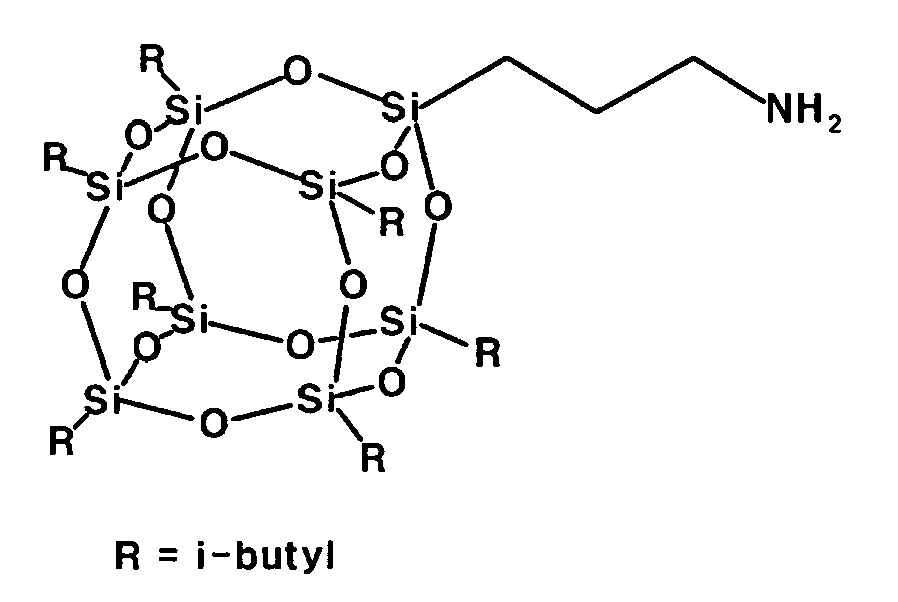
C31H71NO12Si8 (b)

C59H127NO12Si8 (c)

C33H76N2O12Si8 (d)
- The polyethylene terephthalate nanocomposite fiber according to claim 2, wherein 1 to 5 % by weight of the organic/inorganic hybrid nanocompound is contained, based on the total weight of the polymers.
- A process for preparation of a polyethylene terephthalate nanocomposite fiber comprising the steps of:dispersing an organic/inorganic hybrid nanocompound selected from the group consisting of (a) C56H122O12Si7, (b) C31H71NO12Si8, (c) C59H127NO12Si8, and (d) C33H76N2O12Si8 in ethylene glycol;preparing the polyethylene terephthalate nanocomposite chip by polycondensation after esterification of an ethylene glycol dispersed the organic/inorganic hybrid nanocompound therein and a dimethyl terephthalate, wherein the nanocomposite chip have an ethylene terephthalate unit of 85 mol% or more and an intrinsic viscosity in the range of 0.50 to 1.20; andmelt spinning and stretching the polyethylene terephthalate nanocomposite chip.
- The process for preparation of a polyethylene terephthalate nanocomposite fiber according to claim 4, wherein the organic/inorganic hybrid nanocompound is dispersed in ethylene glycol using an ultrasonic homogenizer.
Applications Claiming Priority (3)
| Application Number | Priority Date | Filing Date | Title |
|---|---|---|---|
| KR1020050134495A KR20070071219A (en) | 2005-12-29 | 2005-12-29 | PET Nanocomposite Fiber with Organic and Inorganic Hybrid Nanocomposites |
| KR1020050134490A KR20070071217A (en) | 2005-12-29 | 2005-12-29 | PET Nanocomposites with Organic and Inorganic Hybrid Nanocompounds |
| KR1020060108542A KR100789147B1 (en) | 2006-11-03 | 2006-11-03 | Method for producing polyethylene terephthalate nanocomposite fiber with improved modulus |
Publications (2)
| Publication Number | Publication Date |
|---|---|
| EP1810993A2 true EP1810993A2 (en) | 2007-07-25 |
| EP1810993A3 EP1810993A3 (en) | 2009-04-22 |
Family
ID=38171535
Family Applications (1)
| Application Number | Title | Priority Date | Filing Date |
|---|---|---|---|
| EP06026489A Withdrawn EP1810993A3 (en) | 2005-12-29 | 2006-12-20 | Method of preparation of polyethylenetherephthalate nanocomposite fiber with enhanced modulus |
Country Status (2)
| Country | Link |
|---|---|
| EP (1) | EP1810993A3 (en) |
| JP (1) | JP4523933B2 (en) |
Cited By (5)
| Publication number | Priority date | Publication date | Assignee | Title |
|---|---|---|---|---|
| EP1980590A1 (en) * | 2007-04-09 | 2008-10-15 | Futura Polyesters Limited | A polyester gas barrier resin and a process therefor |
| KR20110096558A (en) * | 2008-12-01 | 2011-08-30 | 바스프 에스이 | Silsesquioxane Photoinitiator |
| ITTO20111104A1 (en) * | 2011-12-01 | 2013-06-02 | Bridgestone Corp | METHOD FOR THE PREPARATION OF THREADS OF POLYMERIC MATERIAL FOR TIRES OF TIRES |
| US11781050B2 (en) | 2021-07-21 | 2023-10-10 | Dow Global Technologies Llc | Aqueous dispersion of a silicone pressure sensitive adhesive base and methods for preparation and use of the dispersion |
| US12116511B2 (en) | 2021-04-09 | 2024-10-15 | Dow Silicones Corporation | Process for preparing a solventless polyorganosiloxane pellet and a waterborne dispersion of a silicone pressure sensitive adhesive base |
Citations (1)
| Publication number | Priority date | Publication date | Assignee | Title |
|---|---|---|---|---|
| WO2004101653A2 (en) * | 2003-05-14 | 2004-11-25 | Degussa Ag | Transparent masterbatches for thermoplastics |
Family Cites Families (6)
| Publication number | Priority date | Publication date | Assignee | Title |
|---|---|---|---|---|
| JP2002121270A (en) * | 2000-10-16 | 2002-04-23 | Nippon Aerosil Co Ltd | Glycol raw material containing ultra-fine ceramic powder aggregate dispersion that enables the production of polyester molded products having high strength and high transparency |
| EP2319453B1 (en) * | 2001-09-28 | 2016-07-20 | Boston Scientific Limited | A cardiovascular balloon catheter comprising nanocomposites |
| JP2004083626A (en) * | 2002-08-22 | 2004-03-18 | Nippon Kayaku Co Ltd | Resin composition and its cured product |
| JP2004307738A (en) * | 2003-04-10 | 2004-11-04 | Toray Ind Inc | Polyester composition |
| JP2005220160A (en) * | 2004-02-03 | 2005-08-18 | Toray Ind Inc | Method for producing polyester composition |
| JP2005220214A (en) * | 2004-02-05 | 2005-08-18 | Toray Ind Inc | Method for producing polyester composition |
-
2006
- 2006-12-20 EP EP06026489A patent/EP1810993A3/en not_active Withdrawn
- 2006-12-26 JP JP2006349121A patent/JP4523933B2/en not_active Expired - Fee Related
Patent Citations (1)
| Publication number | Priority date | Publication date | Assignee | Title |
|---|---|---|---|---|
| WO2004101653A2 (en) * | 2003-05-14 | 2004-11-25 | Degussa Ag | Transparent masterbatches for thermoplastics |
Cited By (6)
| Publication number | Priority date | Publication date | Assignee | Title |
|---|---|---|---|---|
| EP1980590A1 (en) * | 2007-04-09 | 2008-10-15 | Futura Polyesters Limited | A polyester gas barrier resin and a process therefor |
| KR20110096558A (en) * | 2008-12-01 | 2011-08-30 | 바스프 에스이 | Silsesquioxane Photoinitiator |
| US8637585B2 (en) | 2008-12-01 | 2014-01-28 | Basf Se | Silsesquioxane photoinitiators |
| ITTO20111104A1 (en) * | 2011-12-01 | 2013-06-02 | Bridgestone Corp | METHOD FOR THE PREPARATION OF THREADS OF POLYMERIC MATERIAL FOR TIRES OF TIRES |
| US12116511B2 (en) | 2021-04-09 | 2024-10-15 | Dow Silicones Corporation | Process for preparing a solventless polyorganosiloxane pellet and a waterborne dispersion of a silicone pressure sensitive adhesive base |
| US11781050B2 (en) | 2021-07-21 | 2023-10-10 | Dow Global Technologies Llc | Aqueous dispersion of a silicone pressure sensitive adhesive base and methods for preparation and use of the dispersion |
Also Published As
| Publication number | Publication date |
|---|---|
| EP1810993A3 (en) | 2009-04-22 |
| JP2007182665A (en) | 2007-07-19 |
| JP4523933B2 (en) | 2010-08-11 |
Similar Documents
| Publication | Publication Date | Title |
|---|---|---|
| US20230111611A1 (en) | Graphene reinforced polyethylene terephthalate | |
| Chang et al. | Poly (trimethylene terephthalate) nanocomposite fibers by in situ intercalation polymerization: thermo-mechanical properties and morphology (I) | |
| US12104036B2 (en) | Graphene polyethylene terephthalate composite for improving reheat energy consumption | |
| KR20090029563A (en) | Nanocomposite containing POS and its manufacturing method | |
| KR101130262B1 (en) | Preparation of Polyethyleneterephthalate Nanocomposite Fiber with Enhanced Modulus Retention at High Temperature | |
| Yao et al. | Preparation and characterization of poly (butylene terephthalate)/silica nanocomposites | |
| JP4523933B2 (en) | Method for producing polyethylene terephthalate nanocomposite fiber with improved modulus | |
| US20090270539A1 (en) | The method of preparation of polyethylene terephthalate nanocomposite with enhanced modulus | |
| KR100943388B1 (en) | Polyethylene terephthalate nanocomposite fiber with excellent modulus retention at high temperature and manufacturing method thereof | |
| KR100789147B1 (en) | Method for producing polyethylene terephthalate nanocomposite fiber with improved modulus | |
| Mathur et al. | Properties of PMMA/carbon nanotubes nanocomposites | |
| KR101204388B1 (en) | Preparation of PET nanocomposites with enhanced thermal stability and modulus | |
| Tan et al. | Crystallization behavior and mechanical strength of poly (butylene succinate‐co‐ethylene glycol)‐based nanocomposites using functionalized multiwalled carbon nanotubes | |
| KR100835821B1 (en) | Manufacturing method of polyester nanocomposite | |
| KR20080061048A (en) | High heat resistant polyethylene terephthalate nanocomposite and manufacturing method | |
| KR100595988B1 (en) | Polyethylene Terephthalate Nanocomposite Fiber | |
| KR20070071219A (en) | PET Nanocomposite Fiber with Organic and Inorganic Hybrid Nanocomposites | |
| KR100519560B1 (en) | PET/clay Nanocomposite and Process Preparing the Same | |
| KR20070071217A (en) | PET Nanocomposites with Organic and Inorganic Hybrid Nanocompounds | |
| KR20110073970A (en) | Method for producing polyethylene terephthalate nanocomposite with improved modulus | |
| Hong et al. | Structures and physical properties of poly (ethylene 2, 6-naphthalate)/liquid crystalline polymer blends | |
| KR100719206B1 (en) | Polyester nanocomposite and its manufacturing method | |
| JP2004307738A (en) | Polyester composition | |
| KR20120069040A (en) | Preparation of polyethylene terephthalate nanocomposite tire cord with high thermal stability | |
| KR100787927B1 (en) | Polyester / silica composite material, polyester resin composition comprising the same, and a method of preparing the same |
Legal Events
| Date | Code | Title | Description |
|---|---|---|---|
| PUAI | Public reference made under article 153(3) epc to a published international application that has entered the european phase |
Free format text: ORIGINAL CODE: 0009012 |
|
| AK | Designated contracting states |
Kind code of ref document: A2 Designated state(s): AT BE BG CH CY CZ DE DK EE ES FI FR GB GR HU IE IS IT LI LT LU LV MC NL PL PT RO SE SI SK TR |
|
| AX | Request for extension of the european patent |
Extension state: AL BA HR MK YU |
|
| PUAL | Search report despatched |
Free format text: ORIGINAL CODE: 0009013 |
|
| AK | Designated contracting states |
Kind code of ref document: A3 Designated state(s): AT BE BG CH CY CZ DE DK EE ES FI FR GB GR HU IE IS IT LI LT LU LV MC NL PL PT RO SE SI SK TR |
|
| AX | Request for extension of the european patent |
Extension state: AL BA HR MK RS |
|
| RIC1 | Information provided on ipc code assigned before grant |
Ipc: D01F 6/62 20060101ALI20090319BHEP Ipc: D01F 1/10 20060101ALI20090319BHEP Ipc: C08L 67/02 20060101AFI20090319BHEP |
|
| 17P | Request for examination filed |
Effective date: 20091014 |
|
| 17Q | First examination report despatched |
Effective date: 20091124 |
|
| AKX | Designation fees paid |
Designated state(s): AT BE BG CH CY CZ DE DK EE ES FI FR GB GR HU IE IS IT LI LT LU LV MC NL PL PT RO SE SI SK TR |
|
| R17C | First examination report despatched (corrected) |
Effective date: 20091124 |
|
| STAA | Information on the status of an ep patent application or granted ep patent |
Free format text: STATUS: THE APPLICATION IS DEEMED TO BE WITHDRAWN |
|
| 18D | Application deemed to be withdrawn |
Effective date: 20120703 |