EP1805994B1 - Deblocking filter - Google Patents
Deblocking filter Download PDFInfo
- Publication number
- EP1805994B1 EP1805994B1 EP05797373.7A EP05797373A EP1805994B1 EP 1805994 B1 EP1805994 B1 EP 1805994B1 EP 05797373 A EP05797373 A EP 05797373A EP 1805994 B1 EP1805994 B1 EP 1805994B1
- Authority
- EP
- European Patent Office
- Prior art keywords
- boundary
- pixel
- test
- block
- closest
- Prior art date
- Legal status (The legal status is an assumption and is not a legal conclusion. Google has not performed a legal analysis and makes no representation as to the accuracy of the status listed.)
- Expired - Lifetime
Links
Images

Classifications
-
- H—ELECTRICITY
- H04—ELECTRIC COMMUNICATION TECHNIQUE
- H04N—PICTORIAL COMMUNICATION, e.g. TELEVISION
- H04N19/00—Methods or arrangements for coding, decoding, compressing or decompressing digital video signals
- H04N19/85—Methods or arrangements for coding, decoding, compressing or decompressing digital video signals using pre-processing or post-processing specially adapted for video compression
- H04N19/86—Methods or arrangements for coding, decoding, compressing or decompressing digital video signals using pre-processing or post-processing specially adapted for video compression involving reduction of coding artifacts, e.g. of blockiness
-
- H—ELECTRICITY
- H04—ELECTRIC COMMUNICATION TECHNIQUE
- H04N—PICTORIAL COMMUNICATION, e.g. TELEVISION
- H04N19/00—Methods or arrangements for coding, decoding, compressing or decompressing digital video signals
- H04N19/10—Methods or arrangements for coding, decoding, compressing or decompressing digital video signals using adaptive coding
- H04N19/102—Methods or arrangements for coding, decoding, compressing or decompressing digital video signals using adaptive coding characterised by the element, parameter or selection affected or controlled by the adaptive coding
- H04N19/117—Filters, e.g. for pre-processing or post-processing
-
- H—ELECTRICITY
- H04—ELECTRIC COMMUNICATION TECHNIQUE
- H04N—PICTORIAL COMMUNICATION, e.g. TELEVISION
- H04N19/00—Methods or arrangements for coding, decoding, compressing or decompressing digital video signals
- H04N19/10—Methods or arrangements for coding, decoding, compressing or decompressing digital video signals using adaptive coding
- H04N19/134—Methods or arrangements for coding, decoding, compressing or decompressing digital video signals using adaptive coding characterised by the element, parameter or criterion affecting or controlling the adaptive coding
- H04N19/136—Incoming video signal characteristics or properties
- H04N19/137—Motion inside a coding unit, e.g. average field, frame or block difference
- H04N19/139—Analysis of motion vectors, e.g. their magnitude, direction, variance or reliability
-
- H—ELECTRICITY
- H04—ELECTRIC COMMUNICATION TECHNIQUE
- H04N—PICTORIAL COMMUNICATION, e.g. TELEVISION
- H04N19/00—Methods or arrangements for coding, decoding, compressing or decompressing digital video signals
- H04N19/10—Methods or arrangements for coding, decoding, compressing or decompressing digital video signals using adaptive coding
- H04N19/134—Methods or arrangements for coding, decoding, compressing or decompressing digital video signals using adaptive coding characterised by the element, parameter or criterion affecting or controlling the adaptive coding
- H04N19/136—Incoming video signal characteristics or properties
- H04N19/14—Coding unit complexity, e.g. amount of activity or edge presence estimation
-
- H—ELECTRICITY
- H04—ELECTRIC COMMUNICATION TECHNIQUE
- H04N—PICTORIAL COMMUNICATION, e.g. TELEVISION
- H04N19/00—Methods or arrangements for coding, decoding, compressing or decompressing digital video signals
- H04N19/10—Methods or arrangements for coding, decoding, compressing or decompressing digital video signals using adaptive coding
- H04N19/134—Methods or arrangements for coding, decoding, compressing or decompressing digital video signals using adaptive coding characterised by the element, parameter or criterion affecting or controlling the adaptive coding
- H04N19/157—Assigned coding mode, i.e. the coding mode being predefined or preselected to be further used for selection of another element or parameter
- H04N19/159—Prediction type, e.g. intra-frame, inter-frame or bidirectional frame prediction
-
- H—ELECTRICITY
- H04—ELECTRIC COMMUNICATION TECHNIQUE
- H04N—PICTORIAL COMMUNICATION, e.g. TELEVISION
- H04N19/00—Methods or arrangements for coding, decoding, compressing or decompressing digital video signals
- H04N19/10—Methods or arrangements for coding, decoding, compressing or decompressing digital video signals using adaptive coding
- H04N19/169—Methods or arrangements for coding, decoding, compressing or decompressing digital video signals using adaptive coding characterised by the coding unit, i.e. the structural portion or semantic portion of the video signal being the object or the subject of the adaptive coding
- H04N19/17—Methods or arrangements for coding, decoding, compressing or decompressing digital video signals using adaptive coding characterised by the coding unit, i.e. the structural portion or semantic portion of the video signal being the object or the subject of the adaptive coding the unit being an image region, e.g. an object
- H04N19/176—Methods or arrangements for coding, decoding, compressing or decompressing digital video signals using adaptive coding characterised by the coding unit, i.e. the structural portion or semantic portion of the video signal being the object or the subject of the adaptive coding the unit being an image region, e.g. an object the region being a block, e.g. a macroblock
-
- H—ELECTRICITY
- H04—ELECTRIC COMMUNICATION TECHNIQUE
- H04N—PICTORIAL COMMUNICATION, e.g. TELEVISION
- H04N19/00—Methods or arrangements for coding, decoding, compressing or decompressing digital video signals
- H04N19/60—Methods or arrangements for coding, decoding, compressing or decompressing digital video signals using transform coding
- H04N19/61—Methods or arrangements for coding, decoding, compressing or decompressing digital video signals using transform coding in combination with predictive coding
-
- H—ELECTRICITY
- H04—ELECTRIC COMMUNICATION TECHNIQUE
- H04N—PICTORIAL COMMUNICATION, e.g. TELEVISION
- H04N19/00—Methods or arrangements for coding, decoding, compressing or decompressing digital video signals
- H04N19/80—Details of filtering operations specially adapted for video compression, e.g. for pixel interpolation
- H04N19/82—Details of filtering operations specially adapted for video compression, e.g. for pixel interpolation involving filtering within a prediction loop
Definitions
- the invention is related to decoding of block wise coded video pictures.
- Transmission of moving pictures in real-time is employed in several applications like e.g. video conferencing, net meetings, TV broadcasting and video telephony.
- the main goal is to represent the video information with as little capacity as possible. Capacity is defined with bits, either as a constant value or as bits/time unit. In both cases, the main goal is to reduce the number of bits.
- the most common video coding method is described in the MPEG* and H.26* standards.
- the video data undergo four main processes before transmission, namely prediction, transformation, quantization and entropy coding.
- the prediction process significantly reduces the amount of bits required for each picture in a video sequence to be transferred. It takes advantage of the similarity of parts of the sequence with other parts of the sequence. Since the predictor part is known to both encoder and decoder, only the difference has to be transferred. This difference typically requires much less capacity for its. representation.
- the prediction is mainly based on vectors representing movements.
- the prediction process is typically performed on square block sizes (e.g. 16x16 pixels). Note that in some cases, predictions of pixels based on the adjacent pixels in the same picture rather than pixels of preceding pictures are used. This is referred to as intra prediction, as opposed to inter prediction. Consequently, when the pixels in a block are coded by means of intra prediction, the block is said to be an intra coded.
- the residual represented as a block of data (e.g. 4x4 pixels) still contains internal correlation.
- a well-known method of taking advantage of this is to perform a two dimensional block transform.
- an 8x8 Discrete Cosine Transform (DCT) is used, whereas H.264 uses a 4x4 integer type transform.
- Transform of a 4x4 array of pixels with internal correlation will probability result in a 4x4 block of transform coefficients with much fewer non-zero values than the original 4x4 pixel block.
- Entropy coding implies lossless representation of different types of parameters such as overhead data or system description, prediction data (typically motion vectors), and quantized transform coefficients from the quantisation process. The latter typically represent the largest bit consumption.
- a macro block consists of several sub blocks for luminance (luma) as well as for chrominance (chroma).
- the present video standards H.261, H.262, H.263, H.264/AVC, MPEG1, MPEG2, MPEG4 all use blockbased coding. This means blockbased prediction from previously encoded and decoded pictures as well as blockbased coding of residual signal.
- Blockbased coding/decoding has proven to be very efficient.
- one of the drawbacks is that the reconstructed image may visible artifacts corresponding to the blocks used for prediction and residual signal coding. This phenomenon is usually referred to as blocking or blocking artifacts.
- the present invention discloses a method for reducing blocking artefacts defined in the appended claims.
- the present invention is an improvement of prior art method for removal of blocking and quantization noise. As already mentioned, this method is described in the specification ITU-T Rec. H.264
- an adaptive deblocking filter is applied in the coding loop. This means that further prediction is performed on filtered images.
- the filter is designed to remove as much as possible of the blocking and quantization noise and still maintain as much of the image content as possible. It is often a challenge to separate quantization noise and picture content. This is why the filter is highly content adaptive and therefore complex concerning computational operations.
- pixels b c d e may be modified based on the value of each of the pixels and on the characterization of the edge itself. This modification is for equalizing the above-mentioned artifacts. The modification is therefore carried out only when artifacts are likely to occur.
- a strength value (Str) is defined for the edge. This strength value reflects whether artifacts are likely to occur between two blocks and depends on one or more of the following situations are detected:
- QP Quantization Parameter
- ⁇ QP ⁇ QP ⁇ QP Str ⁇ , ⁇ and ⁇ are found in the look-up tables shown in figure 4 .
- Table 1 is the look-up table for determining ⁇
- ⁇ and table 2 is the look-up table for determining ⁇ , which is a clipping value.
- indexA and indexB denotes QP
- a main test is performed determining whether de-blocking filtering is to be carried out or not.
- This delta value is then clipped within the range (- ⁇ , ⁇ ).
- the present invention is based on the standardized method described above, but discloses a simplification resulting in a reduction in complexity without compromising too much with the qualitative result of the de-blocking operation.
- Embodiments of the invention will now described by an illustrative example.
- the second line in the figure 4 is selected as the "decision line" for the four lines 0 - 3 crossing the boundary.
- the test for one line applies for all the lines crossing the block boundary.
- the value ⁇ is not necessarily determined in the same way as the ⁇ earlier described herein. E.g. other look-up tables than those depicted in figure 4 and 5 may be used to determine ⁇ .
- the third and the sixth line of in figure 4 in combination are used as the "decision lines" for all the eight lines 0 - 7 crossing the boundary.
- ⁇ ' may also be determined in still a another way than in prior art.
Landscapes
- Engineering & Computer Science (AREA)
- Multimedia (AREA)
- Signal Processing (AREA)
- Compression Or Coding Systems Of Tv Signals (AREA)
Description
- The invention is related to decoding of block wise coded video pictures.
- Transmission of moving pictures in real-time is employed in several applications like e.g. video conferencing, net meetings, TV broadcasting and video telephony.
- However, representing moving pictures requires bulk information as digital video typically is described by representing each pixel in a picture with 8 bits (1 Byte). Such uncompressed video data results in large bit volumes, and can not be transferred over conventional communication networks and transmission lines in real time due to limited bandwidth.
- Thus, enabling real time video transmission requires a large extent of data compression. Data compression may, however, compromise with picture quality. Therefore, great efforts have been made to develop compression techniques allowing real time transmission of high quality video over bandwidth limited data connections.
- In video compression systems, the main goal is to represent the video information with as little capacity as possible. Capacity is defined with bits, either as a constant value or as bits/time unit. In both cases, the main goal is to reduce the number of bits.
- The most common video coding method is described in the MPEG* and H.26* standards. The video data undergo four main processes before transmission, namely prediction, transformation, quantization and entropy coding.
- The prediction process significantly reduces the amount of bits required for each picture in a video sequence to be transferred. It takes advantage of the similarity of parts of the sequence with other parts of the sequence. Since the predictor part is known to both encoder and decoder, only the difference has to be transferred. This difference typically requires much less capacity for its. representation. The prediction is mainly based on vectors representing movements. The prediction process is typically performed on square block sizes (e.g. 16x16 pixels). Note that in some cases, predictions of pixels based on the adjacent pixels in the same picture rather than pixels of preceding pictures are used. This is referred to as intra prediction, as opposed to inter prediction. Consequently, when the pixels in a block are coded by means of intra prediction, the block is said to be an intra coded.
- The residual represented as a block of data (e.g. 4x4 pixels) still contains internal correlation. A well-known method of taking advantage of this is to perform a two dimensional block transform. In H.263 an 8x8 Discrete Cosine Transform (DCT) is used, whereas H.264 uses a 4x4 integer type transform. This transforms 4x4 pixels into 4x4 transform coefficients and they can usually be represented by fewer bits than the pixel representation. Transform of a 4x4 array of pixels with internal correlation will probability result in a 4x4 block of transform coefficients with much fewer non-zero values than the original 4x4 pixel block.
- Direct representation of the transform coefficients is still too costly for many applications. A quantization process is carried out for a further reduction of the data representation. Hence the transform coefficients undergo quantization. A simple version of quantisation is to divide parameter values by a number - resulting in a smaller number that may be represented by fewer bits. It should be mentioned that this quantization process has as a result that the reconstructed video sequence is somewhat different from the uncompressed sequence. This phenomenon is referred to as "lossy coding". The outcome from the quantisation part is referred to as quantized transform coefficients.
- Entropy coding implies lossless representation of different types of parameters such as overhead data or system description, prediction data (typically motion vectors), and quantized transform coefficients from the quantisation process. The latter typically represent the largest bit consumption.
- The coding is performed on block wise parts of the video picture. A macro block consists of several sub blocks for luminance (luma) as well as for chrominance (chroma).
- The present video standards H.261, H.262, H.263, H.264/AVC, MPEG1, MPEG2, MPEG4 all use blockbased coding. This means blockbased prediction from previously encoded and decoded pictures as well as blockbased coding of residual signal.
- Blockbased coding/decoding has proven to be very efficient. However, one of the drawbacks is that the reconstructed image may visible artifacts corresponding to the blocks used for prediction and residual signal coding. This phenomenon is usually referred to as blocking or blocking artifacts.
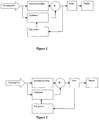
- One way of reducing the artifacts known in prior art is to add a post processing filter between the decoder an the display unit at the receiver. An example of which is shown in
figure 1 . The filtering operation takes place right before the presentation of the picture. It is therefore a pure decoder/display issue that is unrelated to what the encoder does. In alternative solution, as shown infigure 2 , the filter is integrated in the coding loop. This is a more powerful approach, and is the preferred solution in the specification ITU-T Rec. H.264 I ISO/IEC 14496-10 AVC, even if it implies that both encoder and decoder need to do the same operations to avoid drift in the reconstructed pictures. However, the integrated solution is a quite processor consuming i.a. as it requires a test procedure for each pixel line crossing the block edges to be smoothed. - Relevant techniques have also been used in the WMV-9 codec, e.g. see Srinivasan S et al: "Windows Media Video 9: overview and applications", Signal Processing: Image Communication, .
- The present invention discloses a method for reducing blocking artefacts defined in the appended claims.
- In order to make the invention more readily understandable; the discussion that follows will refer to the accompanying drawings and tables.
-
Figure 1 is a block scheme illustrating a decoder with a post-processing de-blocking filter, -
Figure 2 is a block scheme illustrating a decoder with an integrated de-blocking filter, -
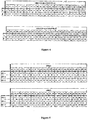
Figure 3 illustrates a boundary between two blocks and lines of adjacent pixel positions crossing the boundary, -
Figure 4 shows a look-up table from the H.264/AVC specification for threshold values -
Figure 5 shows a look-up table from the H.264/AVC specification for clipping values. - The present invention is an improvement of prior art method for removal of blocking and quantization noise. As already mentioned, this method is described in the specification ITU-T Rec. H.264 | ISO/IEC 14496-10 AVC, the basics of which are described in the following.
- In H.264/AVC an adaptive deblocking filter is applied in the coding loop. This means that further prediction is performed on filtered images. The filter is designed to remove as much as possible of the blocking and quantization noise and still maintain as much of the image content as possible. It is often a challenge to separate quantization noise and picture content. This is why the filter is highly content adaptive and therefore complex concerning computational operations.
- In
figure 3 , an edge between two picture blocks is shown. The letters c and d denotes two adjacent pixel positions on each side of the edge, and the other letters denotes the 6 horizontal pixel positions closest to the two first-mentioned pixels. According to H.264/AVC, pixels b c d e may be modified based on the value of each of the pixels and on the characterization of the edge itself. This modification is for equalizing the above-mentioned artifacts. The modification is therefore carried out only when artifacts are likely to occur. - Similar filter operations are performed on all the lines a, b, c, d, e, f. In the following description, the letters will be used without the numbering 0-7.
- According to H.264, a strength value (Str) is defined for the edge. This strength value reflects whether artifacts are likely to occur between two blocks and depends on one or more of the following situations are detected:
- a) If any of the two blocks on each side of the boundary is intra coded, i.e. coded based on already coded blocks in present picture.
- b) If any of the two blocks on each side of the boundary includes nonzero transform coefficients
- c) If the size of motion vectors used to predict the blocks on each side of the boundary exceeds a certain threshold.
- Furthermore, to each 4x4 block a Quantization Parameter (QP) is assigned. The QP representing the edge is the maximum value of the QPs representing the 2 blocks.
- Several QP dependant threshold parameters are used:


figure 4 . Table 1 is the look-up table for determining α, β and table 2 is the look-up table for determining γ, which is a clipping value. Here, indexA and indexB denotes QP, and bS= 1, 2, 3 corresponds to criteria c, b, a, respectively, which are listed above. Consequently, the deciding criteria a, b, c, also state the boundary characteristics. - Based on these values, a main test is performed determining whether de-blocking filtering is to be carried out or not.
- Filtering is performed only if:

- If the above statement is true, then a delta is calculated:

- This delta value is then clipped within the range (-γ,γ). As an example of clipping, if the quantization value is 32 and the characteristic of the boundary comply with criterion b, which corresponds to bS=2, the table indicates that γ is 2. This implies that delta should be clipped within the interval {-2,2}. I.e. when delta is greater than 2, delta is assigned the
value 2, when delta is less than - 2, delta is assigned the value -2, and when delta lies within {-2,2}, delta remains unchanged. - Delta is then used to calculate modified values:


- An additional test is performed to decide if b also is to be corrected:

- If this is true, then a value δ is calculated:

- The value is then further clipped the value to the range (-γ', γ'), wherein γ' is a slight modification of γ. A modification of b is then calculated by means of δ:

- The test and calculation is similar for e:

- If this is true another value δ is calculated:

- The value is then further clipped to the range (-γ', γ'). A modification of e is then calculated by means of δ:

- The present invention is based on the standardized method described above, but discloses a simplification resulting in a reduction in complexity without compromising too much with the qualitative result of the de-blocking operation. Embodiments of the invention will now described by an illustrative example.
- The main difference compared to prior art, is that the decision test for filtering/no-filtering preformed on one or a subset of lines crossing a boundary between two macro blocks applies to all the lines crossing the same boundary. If more than one "decision line" is involved in the decision test, as will follow from the description bellow, when considering the criterions a) b) c) above, not only two, but four blocks must be taken into account. The "decision lines" will cross two different boundaries, and hence involving four blocks.
- As a first embodiment of the present invention, the second line in the
figure 4 is selected as the "decision line" for the four lines 0 - 3 crossing the boundary. - Then, filtering of all 4 edge lines are performed if:

- Otherwise no filtering is performed.
- As opposed to prior art, the test for one line applies for all the lines crossing the block boundary. Thus, the value β is not necessarily determined in the same way as the β earlier described herein. E.g. other look-up tables than those depicted in
figure 4 and 5 may be used to determine β. - In a second example, which is not within the scope of the claims, the third and the sixth line of in
figure 4 in combination are used as the "decision lines" for all the eight lines 0 - 7 crossing the boundary. - Then, filtering of all 8 edge lines are performed if:

- Otherwise no filtering is performed. β' may also be determined in still a another way than in prior art. A typical relation to β of the first embodiment would be β'=2β.
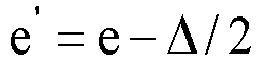
- Further, if the above tests on the "decision line" is true, a separate calculation is performed for each of the line for deriving delta and a corresponding corrected pixel values. This can generally be expressed as in the following, using the same notation as for the description of prior art:

- Alternatively, for accommodating the calculation to the state of the art processor commonly used in codecs for videoconferencing, expression above could be transformed to:

- The delta value is clipped the value to the value range (-γ, γ)


- Simulations comparing the prior art H.264 filter and a filter according to the present invention has shown a decreased requirement for computational resources of about 50%, with practically the same subjective image quality.
- The description herein has been related to filtering of block artifacts in the horizontal direction, i.e. filtering pixels on both sides of vertical block boundaries. However, the present invention is directly applicable to filtering of block artifacts in vertical direction. This implies a 90° rotation of the pixels notation in
figure 3 .
Claims (2)
- A method for reducing blocking artefacts between a first and a second block in a block wise coded and decoded video picture by performing a first test of adjacent blocks and a second test of pixel lines crossing a boundary between the first and the second block and executing a de-blocking filter operation on boundary neighbouring pixels if the second test indicates artefacts, performing the second test on one pixel line only, and if the test indicates artefacts, executing a de-blocking filter operation on the boundary neighbouring pixels in each of the pixel lines crossing the boundary, characterized by performing the second test on said one line includes testing the following relation for said one line:

if the relation is true, executing the following re-calculation operation of the neighbouring pixels on each of the pixel lines crossing the boundary:


- A method for reducing blocking artefacts between a first and a second block in a block wise coded and decoded video picture by performing a first test of adjacent blocks and a second test of pixel lines crossing a boundary between the first and the second block and executing a de-blocking filter operation on boundary neighbouring pixels if the second test indicates artefacts,
performing the second test on one pixel line only, and if the test indicates artefacts, executing a de-blocking filter operation on the boundary neighbouring pixels in each of the pixel lines crossing the boundary, characterized by performing the second test on one line includes testing the following relation for said one line:
if the relation is true, executing the following re-calculation operation of the neighbouring pixels on each of the pixel lines crossing the boundary:


Applications Claiming Priority (3)
| Application Number | Priority Date | Filing Date | Title |
|---|---|---|---|
| NO20044349 | 2004-10-13 | ||
| NO20051721A NO322722B1 (en) | 2004-10-13 | 2005-04-07 | Video encoding method by reducing block artifacts |
| PCT/NO2005/000371 WO2006041305A1 (en) | 2004-10-13 | 2005-10-06 | Deblocking filter |
Publications (3)
| Publication Number | Publication Date |
|---|---|
| EP1805994A1 EP1805994A1 (en) | 2007-07-11 |
| EP1805994A4 EP1805994A4 (en) | 2009-11-11 |
| EP1805994B1 true EP1805994B1 (en) | 2017-05-10 |
Family
ID=35266195
Family Applications (1)
| Application Number | Title | Priority Date | Filing Date |
|---|---|---|---|
| EP05797373.7A Expired - Lifetime EP1805994B1 (en) | 2004-10-13 | 2005-10-06 | Deblocking filter |
Country Status (5)
| Country | Link |
|---|---|
| US (4) | US7283588B2 (en) |
| EP (1) | EP1805994B1 (en) |
| CN (1) | CN101040532B (en) |
| NO (1) | NO322722B1 (en) |
| WO (1) | WO2006041305A1 (en) |
Families Citing this family (40)
| Publication number | Priority date | Publication date | Assignee | Title |
|---|---|---|---|---|
| KR100335055B1 (en) * | 1999-12-08 | 2002-05-02 | 구자홍 | Method of removal block effect and ringing effect of compressed video signal |
| EP1703736A1 (en) * | 2005-03-14 | 2006-09-20 | BRITISH TELECOMMUNICATIONS public limited company | Global motion estimation |
| US8077769B2 (en) * | 2006-03-28 | 2011-12-13 | Sony Corporation | Method of reducing computations in transform and scaling processes in a digital video encoder using a threshold-based approach |
| TWI444047B (en) * | 2006-06-16 | 2014-07-01 | Via Tech Inc | Deblockings filter for video decoding , video decoders and graphic processing units |
| TW200820783A (en) * | 2006-10-25 | 2008-05-01 | Realtek Semiconductor Corp | Apparatus and method for deblock filtering |
| CN105392006A (en) | 2006-11-08 | 2016-03-09 | 汤姆逊许可证公司 | Methods and apparatus for in-loop de-artifact filtering |
| US8204129B2 (en) * | 2007-03-27 | 2012-06-19 | Freescale Semiconductor, Inc. | Simplified deblock filtering for reduced memory access and computational complexity |
| TWI375470B (en) * | 2007-08-03 | 2012-10-21 | Via Tech Inc | Method for determining boundary strength |
| US20090046783A1 (en) * | 2007-08-14 | 2009-02-19 | Chien-Chih Chen | Method and Related Device for Decoding Video Streams |
| EP2048888A1 (en) * | 2007-10-12 | 2009-04-15 | Thomson Licensing | Method and decoder for decoding an image frame of an image frame sequence |
| US8437410B1 (en) | 2007-11-21 | 2013-05-07 | Marvell International Ltd. | System and method to execute a clipping instruction |
| US8743972B2 (en) * | 2007-12-20 | 2014-06-03 | Vixs Systems, Inc. | Coding adaptive deblocking filter and method for use therewith |
| CN101911704A (en) * | 2008-01-14 | 2010-12-08 | 汤姆森许可贸易公司 | Method and apparatus for de-artifact filtering using multi-lattice sparsity-based filtering |
| TWI413415B (en) * | 2009-06-17 | 2013-10-21 | Novatek Microelectronics Corp | Multi-source filter and filtering method based on h264 de-blocking |
| KR102033025B1 (en) * | 2009-07-07 | 2019-10-16 | 톰슨 라이센싱 | Methods and apparatus for collaborative partition coding for region based filters |
| KR101545382B1 (en) * | 2010-01-08 | 2015-08-18 | 노키아 코포레이션 | An apparatus, a method and a computer program for video coding |
| CN102870411B (en) * | 2010-01-08 | 2016-09-21 | 诺基亚技术有限公司 | Device, method and computer program for Video processing |
| KR101457396B1 (en) | 2010-01-14 | 2014-11-03 | 삼성전자주식회사 | Method and apparatus for video encoding using deblocking filtering, and method and apparatus for video decoding using the same |
| AU2010345142B2 (en) * | 2010-02-05 | 2015-01-22 | Telefonaktiebolaget L M Ericsson (Publ) | De-blocking filtering control |
| US9185430B2 (en) * | 2010-03-15 | 2015-11-10 | Mediatek Singapore Pte. Ltd. | Deblocking filtering method and deblocking filter |
| EP3288265B1 (en) * | 2010-04-26 | 2019-01-23 | Sun Patent Trust | Filtering mode for intra prediction inferred from statistics of surrounding blocks |
| US8976856B2 (en) * | 2010-09-30 | 2015-03-10 | Apple Inc. | Optimized deblocking filters |
| US8630356B2 (en) | 2011-01-04 | 2014-01-14 | The Chinese University Of Hong Kong | High performance loop filters in video compression |
| PL2938075T3 (en) | 2011-01-14 | 2019-05-31 | Ericsson Telefon Ab L M | Deblocking filtering |
| DK2664149T3 (en) | 2011-01-14 | 2017-02-27 | ERICSSON TELEFON AB L M (publ) | UNBLOCK FILTERING |
| EP2681913B1 (en) | 2011-03-01 | 2015-11-25 | Telefonaktiebolaget L M Ericsson (PUBL) | Deblocking filtering control |
| SI4075799T1 (en) | 2011-06-14 | 2024-06-28 | Lg Electronics Inc | Apparatus for encoding and decoding image information |
| EP3313074B1 (en) * | 2011-06-28 | 2021-09-22 | Sony Group Corporation | Image processing device, image processing method |
| CN107295341B (en) | 2011-07-22 | 2020-02-28 | Sk电信有限公司 | video coding method |
| US9232237B2 (en) | 2011-08-05 | 2016-01-05 | Texas Instruments Incorporated | Block-based parallel deblocking filter in video coding |
| CN107197254B (en) | 2011-09-09 | 2020-03-03 | 太阳专利托管公司 | Decoding method and decoding device |
| US9167269B2 (en) | 2011-10-25 | 2015-10-20 | Qualcomm Incorporated | Determining boundary strength values for deblocking filtering for video coding |
| ES2563292T3 (en) * | 2011-11-04 | 2016-03-14 | Panasonic Intellectual Property Corporation Of America | Unlock Filtering with Modified Image Block Limit Intensity Bypass |
| MX2013014207A (en) | 2011-11-25 | 2014-01-20 | Panasonic Corp | Image processing method and image processing device. |
| US20130170562A1 (en) * | 2011-12-28 | 2013-07-04 | Qualcomm Incorporated | Deblocking decision functions for video coding |
| US20180091812A1 (en) * | 2016-09-23 | 2018-03-29 | Apple Inc. | Video compression system providing selection of deblocking filters parameters based on bit-depth of video data |
| US10455254B2 (en) * | 2016-11-10 | 2019-10-22 | Mediatek Inc. | Method and apparatus of video coding |
| KR102186463B1 (en) * | 2018-01-08 | 2020-12-03 | 삼성전자주식회사 | Coding method and device, decoding method and device |
| BR112020019800A2 (en) | 2018-05-23 | 2021-01-05 | Panasonic Intellectual Property Corporation Of America | ENCODER, DECODER, ENCODING METHOD AND DECODING METHOD |
| WO2020063555A1 (en) * | 2018-09-24 | 2020-04-02 | Huawei Technologies Co., Ltd. | Image processing device and method for performing quality optimized deblocking |
Family Cites Families (15)
| Publication number | Priority date | Publication date | Assignee | Title |
|---|---|---|---|---|
| US294056A (en) * | 1884-02-26 | Carriage-wheel | ||
| US371558A (en) * | 1887-10-18 | Pipe-coupling for railway-cars | ||
| US6188799B1 (en) * | 1997-02-07 | 2001-02-13 | Matsushita Electric Industrial Co., Ltd. | Method and apparatus for removing noise in still and moving pictures |
| RU2154918C1 (en) * | 1998-08-01 | 2000-08-20 | Самсунг Электроникс Ко., Лтд. | Method and device for loop filtration of image data |
| US9042445B2 (en) * | 2001-09-24 | 2015-05-26 | Broadcom Corporation | Method for deblocking field-frame video |
| US7440504B2 (en) * | 2001-09-24 | 2008-10-21 | Broadcom Corporation | Method and apparatus for performing deblocking filtering with interlace capability |
| ES2754625T3 (en) * | 2001-11-29 | 2020-04-20 | Godo Kaisha Ip Bridge 1 | Coding distortion extraction method |
| CN101448162B (en) * | 2001-12-17 | 2013-01-02 | 微软公司 | Method for processing video image |
| JP4114494B2 (en) * | 2002-03-07 | 2008-07-09 | セイコーエプソン株式会社 | Image processing apparatus, image processing program, and image processing method |
| MXPA03006214A (en) * | 2002-07-22 | 2004-02-04 | Goodyear Tire & Rubber | Composite having rubber compound with hydrotalcite. |
| US6807317B2 (en) | 2002-10-25 | 2004-10-19 | Motorola, Inc. | Method and decoder system for reducing quantization effects of a decoded image |
| US20050013494A1 (en) * | 2003-07-18 | 2005-01-20 | Microsoft Corporation | In-loop deblocking filter |
| US7400681B2 (en) * | 2003-11-28 | 2008-07-15 | Scientific-Atlanta, Inc. | Low-complexity motion vector prediction for video codec with two lists of reference pictures |
| US8503542B2 (en) * | 2004-03-18 | 2013-08-06 | Sony Corporation | Methods and apparatus to reduce blocking noise and contouring effect in motion compensated compressed video |
| NO20042477A (en) | 2004-06-14 | 2005-10-17 | Tandberg Telecom As | Chroma de-blocking procedure |
-
2005
- 2005-04-07 NO NO20051721A patent/NO322722B1/en not_active IP Right Cessation
- 2005-10-06 CN CN200580035101.1A patent/CN101040532B/en not_active Expired - Fee Related
- 2005-10-06 WO PCT/NO2005/000371 patent/WO2006041305A1/en not_active Ceased
- 2005-10-06 EP EP05797373.7A patent/EP1805994B1/en not_active Expired - Lifetime
- 2005-10-13 US US11/250,187 patent/US7283588B2/en not_active Expired - Lifetime
-
2007
- 2007-09-12 US US11/854,204 patent/US7903744B2/en active Active
-
2010
- 2010-11-22 US US12/951,915 patent/US8165223B2/en not_active Expired - Lifetime
-
2011
- 2011-12-27 US US13/337,941 patent/US8644394B2/en not_active Expired - Lifetime
Also Published As
| Publication number | Publication date |
|---|---|
| NO20051721D0 (en) | 2005-04-07 |
| US8165223B2 (en) | 2012-04-24 |
| US20060078048A1 (en) | 2006-04-13 |
| US7283588B2 (en) | 2007-10-16 |
| US20080025632A1 (en) | 2008-01-31 |
| CN101040532A (en) | 2007-09-19 |
| WO2006041305A1 (en) | 2006-04-20 |
| CN101040532B (en) | 2010-06-23 |
| US20110122955A1 (en) | 2011-05-26 |
| NO20051721L (en) | 2006-04-18 |
| US20120093236A1 (en) | 2012-04-19 |
| EP1805994A4 (en) | 2009-11-11 |
| EP1805994A1 (en) | 2007-07-11 |
| US7903744B2 (en) | 2011-03-08 |
| US8644394B2 (en) | 2014-02-04 |
| NO322722B1 (en) | 2006-12-04 |
Similar Documents
| Publication | Publication Date | Title |
|---|---|---|
| US8644394B2 (en) | Deblocking filter | |
| EP1246131B1 (en) | Method and apparatus for the reduction of artifact in decompressed images using post-filtering | |
| EP1513349B1 (en) | Bitstream-controlled post-processing video filtering | |
| US7920628B2 (en) | Noise filter for video compression | |
| US20040247030A1 (en) | Method for transcoding an MPEG-2 video stream to a new bitrate | |
| US20090080517A1 (en) | Method and Related Device for Reducing Blocking Artifacts in Video Streams | |
| US20090268818A1 (en) | Method and system for integrating noise filtering in predictive video coding | |
| US7822125B2 (en) | Method for chroma deblocking | |
| US8064516B2 (en) | Text recognition during video compression | |
| KR100229796B1 (en) | Image decoding system with compensation function for degraded image | |
| EP2196031B1 (en) | Method for alternating entropy coding | |
| EP1639832A1 (en) | Method for preventing noise when coding macroblocks | |
| HK1149663B (en) | Apparatus for controlling loop filtering or post filtering in block based motion compensated video coding | |
| HK1149664B (en) | Method and apparatus for controlling loop filtering or post filtering in block based motion compensated video coding | |
| HK1153596B (en) | Method and apparatus for controlling loop filtering or post filtering in block based motion compensated video coding | |
| HK1134615B (en) | Method and apparatus for controlling loop filtering or post filtering in block based motion compensated video coding |
Legal Events
| Date | Code | Title | Description |
|---|---|---|---|
| PUAI | Public reference made under article 153(3) epc to a published international application that has entered the european phase |
Free format text: ORIGINAL CODE: 0009012 |
|
| 17P | Request for examination filed |
Effective date: 20070427 |
|
| AK | Designated contracting states |
Kind code of ref document: A1 Designated state(s): AT BE BG CH CY CZ DE DK EE ES FI FR GB GR HU IE IS IT LI LT LU LV MC NL PL PT RO SE SI SK TR |
|
| DAX | Request for extension of the european patent (deleted) | ||
| A4 | Supplementary search report drawn up and despatched |
Effective date: 20091008 |
|
| 17Q | First examination report despatched |
Effective date: 20110419 |
|
| RAP1 | Party data changed (applicant data changed or rights of an application transferred) |
Owner name: CISCO SYSTEMS INTERNATIONAL SARL |
|
| REG | Reference to a national code |
Ref country code: DE Ref legal event code: R079 Ref document number: 602005051930 Country of ref document: DE Free format text: PREVIOUS MAIN CLASS: H04N0007260000 Ipc: H04N0019139000 |
|
| GRAP | Despatch of communication of intention to grant a patent |
Free format text: ORIGINAL CODE: EPIDOSNIGR1 |
|
| RIC1 | Information provided on ipc code assigned before grant |
Ipc: H04N 19/14 20140101ALI20160916BHEP Ipc: H04N 19/82 20140101ALI20160916BHEP Ipc: H04N 19/86 20140101ALI20160916BHEP Ipc: H04N 19/139 20140101AFI20160916BHEP Ipc: H04N 19/159 20140101ALI20160916BHEP Ipc: H04N 19/117 20140101ALI20160916BHEP Ipc: H04N 19/61 20140101ALI20160916BHEP Ipc: H04N 19/176 20140101ALI20160916BHEP |
|
| INTG | Intention to grant announced |
Effective date: 20161027 |
|
| GRAJ | Information related to disapproval of communication of intention to grant by the applicant or resumption of examination proceedings by the epo deleted |
Free format text: ORIGINAL CODE: EPIDOSDIGR1 |
|
| GRAJ | Information related to disapproval of communication of intention to grant by the applicant or resumption of examination proceedings by the epo deleted |
Free format text: ORIGINAL CODE: EPIDOSDIGR1 |
|
| INTG | Intention to grant announced |
Effective date: 20161027 |
|
| GRAS | Grant fee paid |
Free format text: ORIGINAL CODE: EPIDOSNIGR3 |
|
| INTC | Intention to grant announced (deleted) | ||
| GRAA | (expected) grant |
Free format text: ORIGINAL CODE: 0009210 |
|
| AK | Designated contracting states |
Kind code of ref document: B1 Designated state(s): AT BE BG CH CY CZ DE DK EE ES FI FR GB GR HU IE IS IT LI LT LU LV MC NL PL PT RO SE SI SK TR |
|
| REG | Reference to a national code |
Ref country code: GB Ref legal event code: FG4D |
|
| REG | Reference to a national code |
Ref country code: AT Ref legal event code: REF Ref document number: 893438 Country of ref document: AT Kind code of ref document: T Effective date: 20170515 Ref country code: CH Ref legal event code: EP |
|
| REG | Reference to a national code |
Ref country code: IE Ref legal event code: FG4D |
|
| REG | Reference to a national code |
Ref country code: DE Ref legal event code: R096 Ref document number: 602005051930 Country of ref document: DE |
|
| REG | Reference to a national code |
Ref country code: NL Ref legal event code: MP Effective date: 20170510 |
|
| REG | Reference to a national code |
Ref country code: LT Ref legal event code: MG4D |
|
| REG | Reference to a national code |
Ref country code: AT Ref legal event code: MK05 Ref document number: 893438 Country of ref document: AT Kind code of ref document: T Effective date: 20170510 |
|
| PG25 | Lapsed in a contracting state [announced via postgrant information from national office to epo] |
Ref country code: FI Free format text: LAPSE BECAUSE OF FAILURE TO SUBMIT A TRANSLATION OF THE DESCRIPTION OR TO PAY THE FEE WITHIN THE PRESCRIBED TIME-LIMIT Effective date: 20170510 Ref country code: GR Free format text: LAPSE BECAUSE OF FAILURE TO SUBMIT A TRANSLATION OF THE DESCRIPTION OR TO PAY THE FEE WITHIN THE PRESCRIBED TIME-LIMIT Effective date: 20170811 Ref country code: AT Free format text: LAPSE BECAUSE OF FAILURE TO SUBMIT A TRANSLATION OF THE DESCRIPTION OR TO PAY THE FEE WITHIN THE PRESCRIBED TIME-LIMIT Effective date: 20170510 Ref country code: ES Free format text: LAPSE BECAUSE OF FAILURE TO SUBMIT A TRANSLATION OF THE DESCRIPTION OR TO PAY THE FEE WITHIN THE PRESCRIBED TIME-LIMIT Effective date: 20170510 Ref country code: LT Free format text: LAPSE BECAUSE OF FAILURE TO SUBMIT A TRANSLATION OF THE DESCRIPTION OR TO PAY THE FEE WITHIN THE PRESCRIBED TIME-LIMIT Effective date: 20170510 |
|
| PG25 | Lapsed in a contracting state [announced via postgrant information from national office to epo] |
Ref country code: NL Free format text: LAPSE BECAUSE OF FAILURE TO SUBMIT A TRANSLATION OF THE DESCRIPTION OR TO PAY THE FEE WITHIN THE PRESCRIBED TIME-LIMIT Effective date: 20170510 Ref country code: LV Free format text: LAPSE BECAUSE OF FAILURE TO SUBMIT A TRANSLATION OF THE DESCRIPTION OR TO PAY THE FEE WITHIN THE PRESCRIBED TIME-LIMIT Effective date: 20170510 Ref country code: SE Free format text: LAPSE BECAUSE OF FAILURE TO SUBMIT A TRANSLATION OF THE DESCRIPTION OR TO PAY THE FEE WITHIN THE PRESCRIBED TIME-LIMIT Effective date: 20170510 Ref country code: BG Free format text: LAPSE BECAUSE OF FAILURE TO SUBMIT A TRANSLATION OF THE DESCRIPTION OR TO PAY THE FEE WITHIN THE PRESCRIBED TIME-LIMIT Effective date: 20170810 Ref country code: PL Free format text: LAPSE BECAUSE OF FAILURE TO SUBMIT A TRANSLATION OF THE DESCRIPTION OR TO PAY THE FEE WITHIN THE PRESCRIBED TIME-LIMIT Effective date: 20170510 Ref country code: IS Free format text: LAPSE BECAUSE OF FAILURE TO SUBMIT A TRANSLATION OF THE DESCRIPTION OR TO PAY THE FEE WITHIN THE PRESCRIBED TIME-LIMIT Effective date: 20170910 |
|
| PG25 | Lapsed in a contracting state [announced via postgrant information from national office to epo] |
Ref country code: SK Free format text: LAPSE BECAUSE OF FAILURE TO SUBMIT A TRANSLATION OF THE DESCRIPTION OR TO PAY THE FEE WITHIN THE PRESCRIBED TIME-LIMIT Effective date: 20170510 Ref country code: DK Free format text: LAPSE BECAUSE OF FAILURE TO SUBMIT A TRANSLATION OF THE DESCRIPTION OR TO PAY THE FEE WITHIN THE PRESCRIBED TIME-LIMIT Effective date: 20170510 Ref country code: EE Free format text: LAPSE BECAUSE OF FAILURE TO SUBMIT A TRANSLATION OF THE DESCRIPTION OR TO PAY THE FEE WITHIN THE PRESCRIBED TIME-LIMIT Effective date: 20170510 Ref country code: RO Free format text: LAPSE BECAUSE OF FAILURE TO SUBMIT A TRANSLATION OF THE DESCRIPTION OR TO PAY THE FEE WITHIN THE PRESCRIBED TIME-LIMIT Effective date: 20170510 Ref country code: CZ Free format text: LAPSE BECAUSE OF FAILURE TO SUBMIT A TRANSLATION OF THE DESCRIPTION OR TO PAY THE FEE WITHIN THE PRESCRIBED TIME-LIMIT Effective date: 20170510 |
|
| REG | Reference to a national code |
Ref country code: DE Ref legal event code: R097 Ref document number: 602005051930 Country of ref document: DE |
|
| PG25 | Lapsed in a contracting state [announced via postgrant information from national office to epo] |
Ref country code: IT Free format text: LAPSE BECAUSE OF FAILURE TO SUBMIT A TRANSLATION OF THE DESCRIPTION OR TO PAY THE FEE WITHIN THE PRESCRIBED TIME-LIMIT Effective date: 20170510 |
|
| PLBE | No opposition filed within time limit |
Free format text: ORIGINAL CODE: 0009261 |
|
| STAA | Information on the status of an ep patent application or granted ep patent |
Free format text: STATUS: NO OPPOSITION FILED WITHIN TIME LIMIT |
|
| 26N | No opposition filed |
Effective date: 20180213 |
|
| PG25 | Lapsed in a contracting state [announced via postgrant information from national office to epo] |
Ref country code: MC Free format text: LAPSE BECAUSE OF FAILURE TO SUBMIT A TRANSLATION OF THE DESCRIPTION OR TO PAY THE FEE WITHIN THE PRESCRIBED TIME-LIMIT Effective date: 20170510 Ref country code: SI Free format text: LAPSE BECAUSE OF FAILURE TO SUBMIT A TRANSLATION OF THE DESCRIPTION OR TO PAY THE FEE WITHIN THE PRESCRIBED TIME-LIMIT Effective date: 20170510 |
|
| REG | Reference to a national code |
Ref country code: CH Ref legal event code: PL |
|
| REG | Reference to a national code |
Ref country code: IE Ref legal event code: MM4A |
|
| REG | Reference to a national code |
Ref country code: FR Ref legal event code: ST Effective date: 20180629 |
|
| PG25 | Lapsed in a contracting state [announced via postgrant information from national office to epo] |
Ref country code: CH Free format text: LAPSE BECAUSE OF NON-PAYMENT OF DUE FEES Effective date: 20171031 Ref country code: LI Free format text: LAPSE BECAUSE OF NON-PAYMENT OF DUE FEES Effective date: 20171031 Ref country code: LU Free format text: LAPSE BECAUSE OF NON-PAYMENT OF DUE FEES Effective date: 20171006 |
|
| REG | Reference to a national code |
Ref country code: BE Ref legal event code: MM Effective date: 20171031 |
|
| PG25 | Lapsed in a contracting state [announced via postgrant information from national office to epo] |
Ref country code: BE Free format text: LAPSE BECAUSE OF NON-PAYMENT OF DUE FEES Effective date: 20171031 Ref country code: FR Free format text: LAPSE BECAUSE OF NON-PAYMENT OF DUE FEES Effective date: 20171031 |
|
| PG25 | Lapsed in a contracting state [announced via postgrant information from national office to epo] |
Ref country code: IE Free format text: LAPSE BECAUSE OF NON-PAYMENT OF DUE FEES Effective date: 20171006 |
|
| PG25 | Lapsed in a contracting state [announced via postgrant information from national office to epo] |
Ref country code: HU Free format text: LAPSE BECAUSE OF FAILURE TO SUBMIT A TRANSLATION OF THE DESCRIPTION OR TO PAY THE FEE WITHIN THE PRESCRIBED TIME-LIMIT; INVALID AB INITIO Effective date: 20051006 |
|
| PG25 | Lapsed in a contracting state [announced via postgrant information from national office to epo] |
Ref country code: CY Free format text: LAPSE BECAUSE OF NON-PAYMENT OF DUE FEES Effective date: 20170510 |
|
| PG25 | Lapsed in a contracting state [announced via postgrant information from national office to epo] |
Ref country code: TR Free format text: LAPSE BECAUSE OF FAILURE TO SUBMIT A TRANSLATION OF THE DESCRIPTION OR TO PAY THE FEE WITHIN THE PRESCRIBED TIME-LIMIT Effective date: 20170510 |
|
| PG25 | Lapsed in a contracting state [announced via postgrant information from national office to epo] |
Ref country code: PT Free format text: LAPSE BECAUSE OF FAILURE TO SUBMIT A TRANSLATION OF THE DESCRIPTION OR TO PAY THE FEE WITHIN THE PRESCRIBED TIME-LIMIT Effective date: 20170510 |
|
| REG | Reference to a national code |
Ref country code: DE Ref legal event code: R082 Ref document number: 602005051930 Country of ref document: DE Representative=s name: MATHYS & SQUIRE GBR, DE Ref country code: DE Ref legal event code: R082 Ref document number: 602005051930 Country of ref document: DE Representative=s name: MATHYS & SQUIRE EUROPE PATENTANWAELTE PARTNERS, DE |
|
| PGFP | Annual fee paid to national office [announced via postgrant information from national office to epo] |
Ref country code: GB Payment date: 20201027 Year of fee payment: 16 Ref country code: DE Payment date: 20201028 Year of fee payment: 16 |
|
| REG | Reference to a national code |
Ref country code: DE Ref legal event code: R119 Ref document number: 602005051930 Country of ref document: DE |
|
| GBPC | Gb: european patent ceased through non-payment of renewal fee |
Effective date: 20211006 |
|
| PG25 | Lapsed in a contracting state [announced via postgrant information from national office to epo] |
Ref country code: GB Free format text: LAPSE BECAUSE OF NON-PAYMENT OF DUE FEES Effective date: 20211006 Ref country code: DE Free format text: LAPSE BECAUSE OF NON-PAYMENT OF DUE FEES Effective date: 20220503 |