EP1787728B1 - Magnetic plate for printing of optical effects - Google Patents
Magnetic plate for printing of optical effects Download PDFInfo
- Publication number
- EP1787728B1 EP1787728B1 EP06255895.2A EP06255895A EP1787728B1 EP 1787728 B1 EP1787728 B1 EP 1787728B1 EP 06255895 A EP06255895 A EP 06255895A EP 1787728 B1 EP1787728 B1 EP 1787728B1
- Authority
- EP
- European Patent Office
- Prior art keywords
- region
- magnetic field
- sheet
- magnetic
- image
- Prior art date
- Legal status (The legal status is an assumption and is not a legal conclusion. Google has not performed a legal analysis and makes no representation as to the accuracy of the status listed.)
- Active
Links
Images



Classifications
-
- B—PERFORMING OPERATIONS; TRANSPORTING
- B05—SPRAYING OR ATOMISING IN GENERAL; APPLYING FLUENT MATERIALS TO SURFACES, IN GENERAL
- B05D—PROCESSES FOR APPLYING FLUENT MATERIALS TO SURFACES, IN GENERAL
- B05D3/00—Pretreatment of surfaces to which liquids or other fluent materials are to be applied; After-treatment of applied coatings, e.g. intermediate treating of an applied coating preparatory to subsequent applications of liquids or other fluent materials
- B05D3/20—Pretreatment of surfaces to which liquids or other fluent materials are to be applied; After-treatment of applied coatings, e.g. intermediate treating of an applied coating preparatory to subsequent applications of liquids or other fluent materials by magnetic fields
- B05D3/207—Pretreatment of surfaces to which liquids or other fluent materials are to be applied; After-treatment of applied coatings, e.g. intermediate treating of an applied coating preparatory to subsequent applications of liquids or other fluent materials by magnetic fields post-treatment by magnetic fields
-
- B—PERFORMING OPERATIONS; TRANSPORTING
- B05—SPRAYING OR ATOMISING IN GENERAL; APPLYING FLUENT MATERIALS TO SURFACES, IN GENERAL
- B05D—PROCESSES FOR APPLYING FLUENT MATERIALS TO SURFACES, IN GENERAL
- B05D3/00—Pretreatment of surfaces to which liquids or other fluent materials are to be applied; After-treatment of applied coatings, e.g. intermediate treating of an applied coating preparatory to subsequent applications of liquids or other fluent materials
- B05D3/06—Pretreatment of surfaces to which liquids or other fluent materials are to be applied; After-treatment of applied coatings, e.g. intermediate treating of an applied coating preparatory to subsequent applications of liquids or other fluent materials by exposure to radiation
-
- B—PERFORMING OPERATIONS; TRANSPORTING
- B05—SPRAYING OR ATOMISING IN GENERAL; APPLYING FLUENT MATERIALS TO SURFACES, IN GENERAL
- B05D—PROCESSES FOR APPLYING FLUENT MATERIALS TO SURFACES, IN GENERAL
- B05D3/00—Pretreatment of surfaces to which liquids or other fluent materials are to be applied; After-treatment of applied coatings, e.g. intermediate treating of an applied coating preparatory to subsequent applications of liquids or other fluent materials
- B05D3/14—Pretreatment of surfaces to which liquids or other fluent materials are to be applied; After-treatment of applied coatings, e.g. intermediate treating of an applied coating preparatory to subsequent applications of liquids or other fluent materials by electrical means
-
- B—PERFORMING OPERATIONS; TRANSPORTING
- B05—SPRAYING OR ATOMISING IN GENERAL; APPLYING FLUENT MATERIALS TO SURFACES, IN GENERAL
- B05D—PROCESSES FOR APPLYING FLUENT MATERIALS TO SURFACES, IN GENERAL
- B05D5/00—Processes for applying liquids or other fluent materials to surfaces to obtain special surface effects, finishes or structures
- B05D5/06—Processes for applying liquids or other fluent materials to surfaces to obtain special surface effects, finishes or structures to obtain multicolour or other optical effects
-
- B—PERFORMING OPERATIONS; TRANSPORTING
- B41—PRINTING; LINING MACHINES; TYPEWRITERS; STAMPS
- B41C—PROCESSES FOR THE MANUFACTURE OR REPRODUCTION OF PRINTING SURFACES
- B41C1/00—Forme preparation
-
- B—PERFORMING OPERATIONS; TRANSPORTING
- B41—PRINTING; LINING MACHINES; TYPEWRITERS; STAMPS
- B41N—PRINTING PLATES OR FOILS; MATERIALS FOR SURFACES USED IN PRINTING MACHINES FOR PRINTING, INKING, DAMPING, OR THE LIKE; PREPARING SUCH SURFACES FOR USE AND CONSERVING THEM
- B41N1/00—Printing plates or foils; Materials therefor
- B41N1/04—Printing plates or foils; Materials therefor metallic
-
- B—PERFORMING OPERATIONS; TRANSPORTING
- B41—PRINTING; LINING MACHINES; TYPEWRITERS; STAMPS
- B41C—PROCESSES FOR THE MANUFACTURE OR REPRODUCTION OF PRINTING SURFACES
- B41C1/00—Forme preparation
- B41C1/10—Forme preparation for lithographic printing; Master sheets for transferring a lithographic image to the forme
- B41C1/1058—Forme preparation for lithographic printing; Master sheets for transferring a lithographic image to the forme by providing a magnetic pattern, a ferroelectric pattern or a semiconductive pattern, e.g. by electrophotography
-
- G—PHYSICS
- G11—INFORMATION STORAGE
- G11B—INFORMATION STORAGE BASED ON RELATIVE MOVEMENT BETWEEN RECORD CARRIER AND TRANSDUCER
- G11B5/00—Recording by magnetisation or demagnetisation of a record carrier; Reproducing by magnetic means; Record carriers therefor
- G11B5/84—Processes or apparatus specially adapted for manufacturing record carriers
- G11B5/855—Coating only part of a support with a magnetic layer
-
- H—ELECTRICITY
- H01—ELECTRIC ELEMENTS
- H01F—MAGNETS; INDUCTANCES; TRANSFORMERS; SELECTION OF MATERIALS FOR THEIR MAGNETIC PROPERTIES
- H01F13/00—Apparatus or processes for magnetising or demagnetising
- H01F13/003—Methods and devices for magnetising permanent magnets
Definitions
- This invention relates generally to a magnet for use in printing inks and paints with magnetically alignable particles or flakes, and more particularly relates to forming magnets which have magnetic material aligned in a plurality of different directions in accordance with an applied field and to the use of these magnets as printing plates.
- sheet is used hereafter within this specification to mean a flat thin sheet, and in preferred embodiments as a flexible sheet; however the term sheet is not limited thereto.
- plate used throughout this specification is to mean a stiff or a flexible plate and is to include thin, flat flexible sheet, such as a composite magnetizable sheet or as a rubber magnetic sheet more commonly known when magnetized, as a "fridge" magnet.
- printing plate is used hereafter as a plate that will form an image, indicia or logo within an ink or paint of magnetically alignable flakes.
- the printing plate does not itself transfer ink or paint, but has the ability to move flakes or particles within a printing ink or paint so as to form a discernible print.
- United States Patents 6,808,806 , 6,759,097 , US 6,818,299 and US 6,838,166 disclose magnetically alignable flakes and utlizing magnets for aligning flakes in printed images. More particularly US 6,808,806 discloses the use of a flexible magnet having a cut out in a shape of a letter "F" and used for printing. In this embodiment the field emanating from the region surrounding the cut-out "F" was uniform and in a direction normal to the surface of the "F". Flakes that were over the cut-out portion having no field were substantially flat lying. Although this embodiment provides interesting images, this invention provides additional features, not achievable with a magnet having a uniform field.
- a method for producing a magnetically formed pattern on a product is the subject-matter of United States 5,630.877 .
- the product is produced by forming a paint layer from a paint medium mixed with magnetic non-spherical particles, and applying a magnetic field in a shape corresponding to the desired pattern to be formed.
- the field emanates from magnets mounted underneath the wet painted substrate. After the field aligns the particles, they are cured within the paint vehicle.
- United States patent 6,103,361 discloses patterned substrates useful in producing decorative cookware which are formed by coating of a substrate with a base consisting of a mixture of fluoropolymer and magnetic flakes and magnetically inducing an image in the polymer coating composition.
- the pattern is formed by applying magnetic force through the edges of a magnetizable die positioned under a coated base to induce an image effect.
- United States patent 6,759,097 discloses methods and devices for producing images on coated surfaces.
- the methods comprise applying a layer of magnetizable pigment coating in liquid form on a substrate, applying a magnetic field to selected regions of the pigment coating to alter the orientation of selected magnetic particles or flakes, and solidifying the reoriented particles or flakes in a non-parallel position to the surface of the pigment coating to produce an image such as a three dimensional-like image on the surface of the coating.
- the pigment coating can contain various interference or non-interference magnetic particles or flakes, such as magnetic color shifting pigments.
- EP 0 710 508 A1 discloses a process for producting layers that exhibits three dimensional optical effects through the alignment of magnetic pigments using a magnetic printing plate.
- the printing plate is formed by a writing process employing tapered pole pieces.
- EP1874487 A0 corresponding to WO 2006/114289 A1 and belonging to the state of the art according to 54(3) EPC, discloses a process for producing color effect images through the alignment of magnetic pigments using a magnetic printing plate.
- the printing plate is formed by a pixel based process employing a number of magnetic heads in a conintuous process.
- EP 1 493 590 A1 describes a device and a method for transferring a predetermined magnetic design onto document printed with magnetic optically variable ink.
- the device comprises a body of a composite permanent magnet material, having a surface engraved with the pattern corresponding to the pattern of desirable indicia.
- the magnetic material is magnetized in the direction perpendicular to the surface. Irregularities in the surface, made with an engraving, produce changes in the direction and strength of the resulting magnetic field. These changes cause different alignment of magnetic particles in different parts of the wet ink that make possible a formation of an image with a shape corresponding to the shape of engraving.
- the magnet does not require costly and difficult carving or removal of material so as to vary the field.
- logo or indicia is made within the magnetic material of a block or sheet so that the magnet will provide a field that corresponds the object, logo, or indicia when the field is used to align flakes in paint or ink.
- the image within the magnetic material is not visible to the eye, but is coded into the magnetic material so as to generate a field that corresponds to the object logo or indicia that is used to "code” the magnetic material.
- the object, logo or indicia encoded into the magnet cannot be seen, but is present and generates a magnetic field that aligns flakes placed on a substrate in the field to replicate the object, logo or indicia.
- a common "fridge" magnet can be encoded with magnetic information so as to change its field direction to form an image.
- this encoded magnet may be of flexible magnetic material and can be placed on a drum and used to "print" images within a wet inked or painted substrate by aligning particles in a manner that reflect the encoded magnetic information.
- prior art methods of applying a magnetic field to inks and or paints that have alignable flakes therein includes the use of recessed or embossed magnetic regions.
- this invention utilizes a magnet having a flat surface wherein magnetic and non-magnetic, or differently magnetized regions are provided within a single monolithic magnet that cause alignment of flakes forming images in a liquid in having field alignable flakes.
- Advantageously having a flat die or magnetic printing head or plate that is magnetized within eliminates problems associated with making and using 3-D magnetic forms.
- the flat die can be brought into intimate contact with the substrate and even if pressure is applied the result will be substantially the same. This is not the case with 3-D embossed or engraved magnetic printing plates.
- boundaries within the printed image can be made sharper with more ease then with embossed or recessed magnetic printing plates.
- a printing plate comprising: a body of magnetizable composite material, having a plurality of regions along a surface thereof; wherein a first region along the surface of the body of magnetizable composite material is magnetized such that the first region provides a first magnetic field having a predetermined direction and a second region along the surface of the body of magnetizable composite material, surrounding the first region, is either unmagnetized or magnetized differently from the first region, so as to provide a contrast in magnetic field there from characterized in that the first region is magnetized using a shaped magnetizing die having an outwardly facing surface in a form of an image, logo or indicia such that the first region has the form of the image, logo or indicia.
- a method of forming a printing plate comprising the steps of:
- the invention provides a printing plate wherein:
- FIG. 1a an engraved magnet is shown in Fig. 1a which is used to form a print within a substrate coated with wet ink or paint containing magnetically alignable particles or flakes.
- the magnet 10 is placed under the substrate and the flakes within the ink or paint align along the field lines forming the numeral 20.
- reflective flakes for example Ni, having a silver-like appearance in a blue carrier vehicle are aligned to form the numeral 20. The flakes appear to take on the color of the die and flakes within the background of the "20" and within the numerals themselves have a dark appearance.
- Embodiments of this invention are shown in Figs 3a through 3d . These are believed to be significant improvements over the magnets and samples shown in Figs 1a through 2d .
- a magnet 30b is shown wherein a magnetic charge confined to a region having the shape of the numeral 20 has been transferred from a die 32a into the magnet 30b forming a magnet within a region confined to the shape of the numeral 20, formed within the magnetic material itself.
- Two dies 32a and 32b made of mild steel were fabricated so that one die 32a, has a protruding number 20 and another has mirrored image of the numeral 20. Both dies were brought to contact with the non-magnetized sheet 30a disposed therebetween as shown in Fig. 3f .
- the sheet 30a is a non-magnetized flexible flat magnetic composite, capable of being magnetized if exposed to a strong magnetic field or charge.
- a linear array of magnetic regions 109 are shown on the plate or sheet 104.
- Each magnetic region has an internal magnetic structure of a shape corresponding to the shape of the dies 105, 106 contacting the sheet 104.
- Magnetization of the regions can be conducted either by two-pole magnetizer as shown in Fig. 4 or one-pole magnetizer shown in Figures 5 and 6 .
- the north and south shoes 102 and 103 of magnetizer 101 may move in XY coordinates along the sheet of non-magnetized flexible material 104 as well as up and down.
- the sheet 104 may move between the shoes of the magnet. Relative movement is required in this embodiment between the flexible material 104 and the shoes 102, 103.
- the magnetic poles could function in a manner like a reciprocating hot stamp process where the sheet 104 is momentarily stopped and the dies 105 and 106 are lightly pressed against the sheet 104 and then removed after a approximately one second.
- the shaped dies 105 and 106 are fabricated from a soft magnetic material.
- the die 106 is mirrored to the die 105, in a same manner as dies 32a and 32b of Fig. 3 .
- the dies are attached to the shoes and can be brought to contact with the flexible magnet by adjustment of the distance between the shoes 102, 103.
- the shoes with the dies move along the plate to the place that needs to be magnetized and the shoes with the dies are brought to the dense contact with each other through the plate 104.
- the power of the magnetizer 101 is switched on to create a magnetic field between the dies.
- the generated field magnetizes the plate 104 in the region 107 with a magnetization direction perpendicular to the surface of the plate.
- the typical time of such a single magnetization process is close to 1 second.
- the shape of the magnetized area 107 has the shape of the die. After completion of magnetization of a particular region, the shoes spread apart and move to another position on the plate, leaving a non-magnetized space 108 between the magnetized areas 109.
- the die has a relief structure that contacts the plate, i.e. the numeral "20". Engraved regions of the die provide closer or further distance between the source of a magnetic field and the plate. This allows for the creation of a magnetization with gradient magnetic fields through the plate.
- two one-pole electromagnets as are shown in Fig. 5 can provide the same magnetization effect.
- series aiding electromagnets 201 and 202 are connected in the circuit to the power supplies 203 and 204 and to the computer 205 which provides positioning of the magnets along the plate 206 and their turning on and off.
- the shaped dies 206 and 207 are attached to the bottom of the magnet 201 and the top of the magnet 202.
- the magnets 201 and 202 are aligned on both sides of the plate 203 with their axis coincident.
- the magnets move in X-Y coordinates along the plate 205. In the place that needs to be magnetized, the magnets come toward each other so close that they are separated only by the thickness of the plate 205.
- the power turns on and the magnets generate magnetic field that in one second magnetizes selective area of the plate. After completion of the process, the magnets move to another position leaving magnetized areas 208
- a one-pole magnet can also magnetize the plate.
- a layout of such system is shown in Fig. 6 where an electromagnet 201 is connected with the power supply 203 and the computer 205.
- Substrate 205 has magnetized regions 208 repeating the shape of the die 207.
- FIG. 7 shows a simulation of a computer simulation of a magnetic field through such structure, placed inside of a magnetic charger (magnetizer), is shown in the picture "Magnetic field in the process of magnetization of non-magnetized magnetic composite". It is clear from the picture that the field flows into and through the dies that serve as magneto-conductors and flows mostly through the region of the flat magnetic material that is enclosed between the dies without substantial charging surrounding regions of the flat sheet. The magnitude of magnetic flux density along entire sheet shown in the lower part of the figure.
- Fig. 8 illustrates the field emanating from the sheet 30 made in Fig. 7 with the metal shoes or dies of Fig. 3f .
- a substrate with wet ink containing magnetic particles placed on a substrate on the top of the magnet 30 with the numeral "20" selectively magnetized in the sheet of magnetic rubber the background is bright and smooth and the 20 is dark and highly visible.
- the magnetized part of the sheet 81 is shown with mostly vertical field lines. Magnetic lines 82 emanating from the sheet within the air space 83 above the magnet 30. A non-magnetized part of the sheet 84 is shown absent of field lines.
- Figs 9a through 9f an alternate configuration and printing method is shown whereby a two-step process is applied.
- a sheet magnet 93 is shown having the numeral 20 magnetically encoded therein.
- a magnetized sheet 91a is shown which will be utilized after aligning flakes with the sheet magnet 93.
- the resulting images are shown in Figs. 9c and 9d .
- the two steps of the process are shown more clearly in Figs. 9e and 9f .
- the dies 90a and 90b with the embossed numerals 20 are used to magnetize the sheet with the encoding of the numeral 20. Subsequently the same magnetic sheet is magnetized by two magnets 91a and 91b.
- the resulting magnetized sheet magnet was used to align flakes in both of the samples shown in Figs 9c and 9d .
- the magnetic charge source is not shown connected to 90a, 90b or 91a or 91b although this is required.
- Fig. 10 illustrates the magnetic field within the magnetized sheet 93 wherein the magnet within the sheet has a two-pole orientation.
- Fig. 12 is an alternative embodiment of the invention wherein a "fridge magnet" or pre-magnetized magnet is re-magnetized is a desired region.
- Fig. 12 is a representation of where the magnet is within the block or sheet shown.
- Fig. 13 is a drawing of an image printed with the magnet shown in Fig. 10 .
- the lines of magnetization shown within the "fridge" magnet are duplicated in the image of Fig. 13 as the flakes in the image are algined along the field lines.
- the numeral 20 magnetized into the fridge magnet can be done with very strong permanent magnets or by inducing a magnetic charge through one or more dies.
- "fridge" magnets are generally magnetized having spaced rows of magnets are within the same monolithic magnetic block or sheet. As was shown these magnets can be re-magnetized such that they become encoded mangetically with indicia such as numerals or letters or logos, or images.
- FIG. 11 illustrates the complex task of producing a numeral "1" form a solid magnetic block.
- a die must be cut from the solid block. If the die is incorrectly cut, or if the magnet is not handled carefully it can break or crack.
- the magnet formed within the flexible magnet is quite robust and easy to manufacture.
- the magnetic shape is created with a magnetic field, and the magnet is flexible.
- a magnetic sheet or block is used for align magnetically alignable flakes.
- flakes of various kinds may be used; for example reflective flakes, multilayer flakes, color shifting flakes, diffractive flakes, flakes having covert features therein, highly absorbing flakes and any other form of flakes that can be aligned in a magnetic field.
Landscapes
- Engineering & Computer Science (AREA)
- Manufacturing & Machinery (AREA)
- Physics & Mathematics (AREA)
- Plasma & Fusion (AREA)
- Printing Methods (AREA)
- Manufacture Or Reproduction Of Printing Formes (AREA)
Description
- This invention relates generally to a magnet for use in printing inks and paints with magnetically alignable particles or flakes, and more particularly relates to forming magnets which have magnetic material aligned in a plurality of different directions in accordance with an applied field and to the use of these magnets as printing plates.
- The term "sheet" is used hereafter within this specification to mean a flat thin sheet, and in preferred embodiments as a flexible sheet; however the term sheet is not limited thereto.
- The term "plate" used throughout this specification is to mean a stiff or a flexible plate and is to include thin, flat flexible sheet, such as a composite magnetizable sheet or as a rubber magnetic sheet more commonly known when magnetized, as a "fridge" magnet.
- The term "printing plate" is used hereafter as a plate that will form an image, indicia or logo within an ink or paint of magnetically alignable flakes. The printing plate does not itself transfer ink or paint, but has the ability to move flakes or particles within a printing ink or paint so as to form a discernible print.
- Printing with ink or paint containing magnetic platelets dispersed in liquid ink or paint vehicle is known. In such applications the platelets are magnetically aligned by exposing the ink or paint upon a substrate to a magnetic field. Current examples of such prints are described by Raksha et al in United States patent applications
2006/0198998 ,2006/0194040 ,2006/0097515 ,2005/0123755 , and2005/0106367 . - United States Patents
6,808,806 ,6,759,097 ,US 6,818,299 andUS 6,838,166 disclose magnetically alignable flakes and utlizing magnets for aligning flakes in printed images. More particularlyUS 6,808,806 discloses the use of a flexible magnet having a cut out in a shape of a letter "F" and used for printing. In this embodiment the field emanating from the region surrounding the cut-out "F" was uniform and in a direction normal to the surface of the "F". Flakes that were over the cut-out portion having no field were substantially flat lying. Although this embodiment provides interesting images, this invention provides additional features, not achievable with a magnet having a uniform field. - Painting with magnetic powders was employed in some industries for finishes and decorative coatings. A method for producing a magnetically formed pattern on a product is the subject-matter of United States
5,630.877 . The product is produced by forming a paint layer from a paint medium mixed with magnetic non-spherical particles, and applying a magnetic field in a shape corresponding to the desired pattern to be formed. The field emanates from magnets mounted underneath the wet painted substrate. After the field aligns the particles, they are cured within the paint vehicle. - United States patent
6,103,361 discloses patterned substrates useful in producing decorative cookware which are formed by coating of a substrate with a base consisting of a mixture of fluoropolymer and magnetic flakes and magnetically inducing an image in the polymer coating composition. The pattern is formed by applying magnetic force through the edges of a magnetizable die positioned under a coated base to induce an image effect. - United States patent
6,759,097 discloses methods and devices for producing images on coated surfaces. The methods comprise applying a layer of magnetizable pigment coating in liquid form on a substrate, applying a magnetic field to selected regions of the pigment coating to alter the orientation of selected magnetic particles or flakes, and solidifying the reoriented particles or flakes in a non-parallel position to the surface of the pigment coating to produce an image such as a three dimensional-like image on the surface of the coating. - The pigment coating can contain various interference or non-interference magnetic particles or flakes, such as magnetic color shifting pigments.
- United States patent
3,853,676 claims a pigmented film comprising a film-like material containing magnetic orientable pigment that is oriented in the field. -
EP 0 710 508 A1 discloses a process for producting layers that exhibits three dimensional optical effects through the alignment of magnetic pigments using a magnetic printing plate. The printing plate is formed by a writing process employing tapered pole pieces. -
EP1874487 A0 , corresponding toWO 2006/114289 A1 and belonging to the state of the art according to 54(3) EPC, discloses a process for producing color effect images through the alignment of magnetic pigments using a magnetic printing plate. The printing plate is formed by a pixel based process employing a number of magnetic heads in a conintuous process. -
EP 1 493 590 A1 - The inventors of this invention have found that printing in accordance with the teachings of
EP 1 493 590 A1 - Notwithstanding, a color-shifting affect has the best appearance (large color travel and high chroma value) when the particles are parallel or almost parallel to the surface of the substrate. Color-shifting properties by the images printed with the device described in
EP 1 493 590 - It is an object of this invention to provide a magnet that is more simple to manufacture and offers a high degree in flexibility with regard to the field generated by the magnet.
- The magnet does not require costly and difficult carving or removal of material so as to vary the field.
- In image of object, logo or indicia is made within the magnetic material of a block or sheet so that the magnet will provide a field that corresponds the object, logo, or indicia when the field is used to align flakes in paint or ink.
- The image within the magnetic material is not visible to the eye, but is coded into the magnetic material so as to generate a field that corresponds to the object logo or indicia that is used to "code" the magnetic material.
- Advantageously, the object, logo or indicia encoded into the magnet cannot be seen, but is present and generates a magnetic field that aligns flakes placed on a substrate in the field to replicate the object, logo or indicia.
- Advantageously a common "fridge" magnet can be encoded with magnetic information so as to change its field direction to form an image.
- Advantageously this encoded magnet may be of flexible magnetic material and can be placed on a drum and used to "print" images within a wet inked or painted substrate by aligning particles in a manner that reflect the encoded magnetic information.
- As will be described hereafter, prior art methods of applying a magnetic field to inks and or paints that have alignable flakes therein, includes the use of recessed or embossed magnetic regions. In contrast this invention utilizes a magnet having a flat surface wherein magnetic and non-magnetic, or differently magnetized regions are provided within a single monolithic magnet that cause alignment of flakes forming images in a liquid in having field alignable flakes. Advantageously having a flat die or magnetic printing head or plate that is magnetized within eliminates problems associated with making and using 3-D magnetic forms. The flat die can be brought into intimate contact with the substrate and even if pressure is applied the result will be substantially the same. This is not the case with 3-D embossed or engraved magnetic printing plates. As well, boundaries within the printed image can be made sharper with more ease then with embossed or recessed magnetic printing plates.
- In accordance with the invention, there is provided a printing plate comprising: a body of magnetizable composite material, having a plurality of regions along a surface thereof; wherein a first region along the surface of the body of magnetizable composite material is magnetized such that the first region provides a first magnetic field having a predetermined direction and a second region along the surface of the body of magnetizable composite material, surrounding the first region, is either unmagnetized or magnetized differently from the first region, so as to provide a contrast in magnetic field there from characterized in that the first region is magnetized using a shaped magnetizing die having an outwardly facing surface in a form of an image, logo or indicia such that the first region has the form of the image, logo or indicia.
- In accordance with another aspect of the invention, there is provided, a method of forming a printing plate comprising the steps of:
- providing a magnetizable material; providing a shaped magnetizing die having an outwardly facing surface in a form of an image, logo or indicia;
- disposing disposing the outwardly facing surface of the shaped magnetizing die adjacent to a surface of the body of magnetizable material; and applying a magnetic field through the shaped magnetizing die to magnetize a first region along the surface of the body of magnetizable material such that the first region provides a first magnetic field in a predetermined direction and has a form of the image, logo or indicia.
- In additional embodiments, the invention provides a printing plate wherein:
- the composite material is a sheet or block of material.
- wherein the one or more first regions are magnetized in the form of a symbol, or discernable indicia;
- wherein the one or more second regions are magnetized in a substantially uniform manner so as to allow flakes in a printing ink or paint adjacent to the one or more second regions, lie flat or be upstanding upon a sheet they are coated on;
- wherein the sheet is a flexible sheet of composite material.
- wherein the composite material is isotropic or anisotropic flexible material including a magnetic powder of Re-Fe-B, within a cured resin binder
- wherein the sheet of composite material includes a magnetizable material uniformly distributed along and within a working portion of the sheet, wherein a first region of the one or more first regions of the sheet is magnetized in a predetermined manner by application of a magnetic field through the composite material within the first region while excluding applying the magnetic field through some other regions along the sheet such that the first region forms a first magnetic field emanating therefrom that is absent from other regions along the surface of the sheet, or different in intensity or direction from a magnetic field emanating from other regions along the surface of the sheet;
- wherein the one or more second regions have a second magnetic field, wherein field lines of the second magnetic field are oriented differently than field lines of the first magnetic field;
- wherein the printing plate is for use in aligning field alignable flakes within a liquid or viscous paint or ink and wherein the working portion of the printing plate is used so that the first field aligns flakes upon a substrate covering the first region in a manner such that the flakes align to form indicia in the form of a symbol or discernible graphic, that is seen in contrast to flakes upon the substrate covering the second region of the printing plate;
- wherein the first region is magnetized by contacting a surface of the sheet about the first region with a metal die having an outer surface having predetermined shape and having a magnetic charge;
- wherein the shape of the metal on the outer surface of the die is imaged within the magnetic material within the composite sheet material;
- wherein a magnetic field emanating from the die, is replicated within the first region of the magnetic material;
- wherein the outer face of the die has first metal regions that contact the surface of the sheet, and wherein other regions on the outer face of the die are spaced from the surface of the sheet while the first metal regions contact the sheet; and,
- A printing plate wherein the first metal regions form a symbol, logo, or discernible text or letters.
- Exemplary embodiments of the invention will now be described, in accordance with the drawings, in which:
-
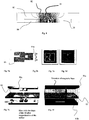
Fig. 1a is a prior art drawing of an engraved printing magnetic plate having the numeral "20" engraved therein, for use in aligning flakes in an image of the numeral 20. -
Fig. 1b is a side cross-sectional view of the magnet shown inFig. 1a . -
Fig. 1c shows an image "20" made by using the printing magnet with field alignable reflective flakes in a carrier of blue ink wherein the background is dark as a result of the particles about the "20" being substantially upstanding. -
Fig. 1d shows a similar image to that ofFig. 1c , wherein the background is dark as a result of the particles about the "20" being substantially upstanding. -
Fig. 1e is a drawing of an engraved magnetic plate in the form of a sheet for making images such as the ones shown inFigs. 1c and 1d . -
Fig. 1f is a cross-sectional view of magnetic field emerging from engraved magnet shown inFig 1e . -
Fig. 2a is a prior art drawing of an embossed printing magnet having the numeral "20" engraved therein, for use in aligning flakes in an image of the numeral 20. -
Fig. 2b is a side cross-sectional view of the magnet shown inFig. 2 taken along the dashed line inFig. 2a -
Fig. 2c shows an image "20" made by using the printing magnet with field alignable reflective flakes is a carrier of blue ink. -
Fig. 2d shows a similar image to that ofFig. 2c , wherein the background is dark as a result of the particles about the "20" being substantially upstanding. -
Fig. 2e is a cross-sectional drawing of magnetic field emerging from an engraved magnetic sheet for making images such as the ones shown inFigs. 2c and 2d . -
Fig. 2f is a detailed view of an embossed magnetic printing plate similar to the one shown inFig. 2a . -
Fig. 3a is figure of an embodiment of the invention illustrating a metal die and a magnetiziable sheet. -
Fig. 3b is a side cross-sectional view of the magnet and two dies on two sides of the magnet shown inFig. 3a . -
Fig. 3c shows an image "20" made by using the printing magnet with field alignable reflective flakes is a carrier of blue ink and wherein the background is highly reflective and contrasting against the numeral "20". -
Fig. 3d shows a similar image to that ofFig. 3c , wherein the background is bright as a result of many of the particles outside of the region of the "20" being substantially flat. -
Fig. 3e is a drawing of two dies used for magnetizing the magnetizable sheet shown inFig. 3a so that the magnetized sheet can be used to form images such as the ones shown inFigs. 3c and 3d . -
Fig. 3f is a drawing of a pair of dies placed on either side of a magnetic sheet material ready for magnetizing, wherein the electronics required to charge the dies are not shown in this figure. -
Fig. 4 is schematic diagram of a two-pole magnetization station where a sheet of magnetizable material is magnetized at predetermined locations along the sheet having unmagnetized regions between magnetized regions. -
Fig. 5 is an alternative embodiment of a magnetization station having a one-pole magnetizer for magnetizing a sheet of magnetizable material. -
Fig. 6 is an alternative embodiment of a magnetization station having a single die for magnetizing a sheet of magnetizable material. -
Fig. 7 is a diagram illustrating the magnetic field lines propagating through the dies and through the sheet magnetizable material and further illustrating the magnitude of magnetic flux density along the magnetizable sheet. -
Fig. 8 is a drawing illustrating the magnetic field lines propagating from the sheet where it is magnetized and illustrating the absence of a field in regions about the magnetized region. -
Fig. 9a is drawing illustrating two dissimilar magnetic dies and a magnetizable sheet for use in printing images in inks and paint. -
Fig. 9b is a cross-sectional view. -
Figs. 9c and 9d are images printed using the magnetized sheet ofFig. 9a and using the two dissimilar dies to magnetize the sheet. -
Fig. 9e is a diagram of a composite sheet rubber magnet after having been magnetized with the two dies having the numeral 20 protruding from end faces thereof. -
Fig. 9f is a drawing showing selective magnetization of the magnetized sheet ofFig. 9e . -
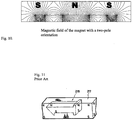
Fig. 10 is a diagram of the magnetic field from the magnetized sheet having a two-pole orientation used to print the image inFigs 9c and 9d . -
Fig. 11 is a prior art drawing of a view of a magnetic block for cutting a dye into a shape of anumeral 1. -
Fig. 12 is a re-magnetized sheet magnet. -
Fig. 13 is an image formed with the re-magnetized sheet magnet ofFig. 12 . - Referring now to prior art
Figs 1a through If, an engraved magnet is shown inFig. 1a which is used to form a print within a substrate coated with wet ink or paint containing magnetically alignable particles or flakes. After a substrate is coated with the ink or paint themagnet 10 is placed under the substrate and the flakes within the ink or paint align along the field lines forming the numeral 20. InFig. 1c , reflective flakes, for example Ni, having a silver-like appearance in a blue carrier vehicle are aligned to form the numeral 20. The flakes appear to take on the color of the die and flakes within the background of the "20" and within the numerals themselves have a dark appearance. This is because the flakes are upstanding and all that can be seen is the dark blue carrier vehicle in the spaces between the upstanding flakes. A similar effect is illustrated inFig. 1d where color shifting flakes are used. The magnetic field in Fig. If emanating from the engraved magnet and through the paper substrate is mostly perpendicular to the paper. Hence most of the flakes except along the outline of the "20" would be upstanding. The field lines about the engraving are bent and the flakes align in this bent field to generate the discernible "20". When reflective flakes lay flat along a substrate they tend to reflect light and appear bright. When reflective flakes are upstanding on the substrate they cannot reflect light incident thereon, as it is only their edges which are positioned to reflect, not their flat reflecting surfaces. This is a drawback of this embodiment. Most of the color shifting and reflective flakes inFigs. 1c and 1d show as a dark background. - Physically engraving a magnet is a costly endeavour and as was mentioned heretofore, control over the magnetic field is limited. For example, in
Figs. 1a through 1d , it can be seen that the field is uniform and upstanding except in the engraved portion. This is often not desirable. Even the engraving of the magnetic sheet shown inFig. 1e is costly and time consuming to produce. Furthermore, errors cannot be corrected for. Once the material is removed, the removal is permanent. - The printed images formed by using the
sheet magnet 20 in prior artFigs 2a through 2d are reversed from those inFigs. 1a through 1d . Rather than the magnetic sheet being engraved, it is embossed around the numeral "20" which appears to protrude from a lower pit within the magnet. Magnetic field simulation inFig 2e shows that the lines are vertical in the 20 and in the background area. The lines curve around edges of the pit. As a result, magnetic particles are vertical to the substrate in these particular areas on the top of the 20 as well as dark lines at the bottom and the top of the print . However, the field in the areas of wet ink above the pit is very weak because of the distance between the paper and the top of the magnet in the pit. Such weak field doesn't align the particles and they remain non-oriented inside the layer of wet ink vehicle. The optical effect generated in shows non-uniform bright background and a dark 20. - Embodiments of this invention are shown in
Figs 3a through 3d . These are believed to be significant improvements over the magnets and samples shown inFigs 1a through 2d . InFig. 3a amagnet 30b is shown wherein a magnetic charge confined to a region having the shape of the numeral 20 has been transferred from adie 32a into themagnet 30b forming a magnet within a region confined to the shape of the numeral 20, formed within the magnetic material itself. Two dies 32a and 32b made of mild steel were fabricated so that onedie 32a, has a protrudingnumber 20 and another has mirrored image of the numeral 20. Both dies were brought to contact with thenon-magnetized sheet 30a disposed therebetween as shown inFig. 3f . Thesheet 30a is a non-magnetized flexible flat magnetic composite, capable of being magnetized if exposed to a strong magnetic field or charge. - In
Fig 3f the dies 32a, 32b, are shown in position with the flexible magnetic composite 30a before magnetization has been applied. - Turning now to
Fig. 4 magnetized areas are shown, a linear array ofmagnetic regions 109 are shown on the plate orsheet 104. Each magnetic region has an internal magnetic structure of a shape corresponding to the shape of the dies 105, 106 contacting thesheet 104. Magnetization of the regions can be conducted either by two-pole magnetizer as shown inFig. 4 or one-pole magnetizer shown inFigures 5 and 6 . The north andsouth shoes 102 and 103 ofmagnetizer 101 may move in XY coordinates along the sheet of non-magnetizedflexible material 104 as well as up and down. Alternatively, thesheet 104 may move between the shoes of the magnet. Relative movement is required in this embodiment between theflexible material 104 and theshoes 102, 103. Alternatively, the magnetic poles could function in a manner like a reciprocating hot stamp process where thesheet 104 is momentarily stopped and the dies 105 and 106 are lightly pressed against thesheet 104 and then removed after a approximately one second. The shaped dies 105 and 106 are fabricated from a soft magnetic material. Thedie 106 is mirrored to thedie 105, in a same manner as dies 32a and 32b ofFig. 3 . The dies are attached to the shoes and can be brought to contact with the flexible magnet by adjustment of the distance between theshoes 102, 103. In the process of magnetization of theplate 104, the shoes with the dies move along the plate to the place that needs to be magnetized and the shoes with the dies are brought to the dense contact with each other through theplate 104. The power of themagnetizer 101 is switched on to create a magnetic field between the dies. The generated field magnetizes theplate 104 in theregion 107 with a magnetization direction perpendicular to the surface of the plate. The typical time of such a single magnetization process is close to 1 second. The shape of themagnetized area 107 has the shape of the die. After completion of magnetization of a particular region, the shoes spread apart and move to another position on the plate, leaving anon-magnetized space 108 between themagnetized areas 109. In most instances, the die has a relief structure that contacts the plate, i.e. the numeral "20". Engraved regions of the die provide closer or further distance between the source of a magnetic field and the plate. This allows for the creation of a magnetization with gradient magnetic fields through the plate. - Instead of the two-pole magnetizer shown in
Fig. 4 , two one-pole electromagnets as are shown inFig. 5 can provide the same magnetization effect. - Turning to
Fig. 5 ,series aiding electromagnets computer 205 which provides positioning of the magnets along theplate 206 and their turning on and off. The shaped dies 206 and 207 are attached to the bottom of themagnet 201 and the top of themagnet 202. Themagnets plate 203 with their axis coincident. The magnets move in X-Y coordinates along theplate 205. In the place that needs to be magnetized, the magnets come toward each other so close that they are separated only by the thickness of theplate 205. The power turns on and the magnets generate magnetic field that in one second magnetizes selective area of the plate. After completion of the process, the magnets move to another position leavingmagnetized areas 208 - A one-pole magnet can also magnetize the plate. A layout of such system is shown in
Fig. 6 where anelectromagnet 201 is connected with thepower supply 203 and thecomputer 205.Substrate 205 has magnetizedregions 208 repeating the shape of thedie 207. - Referring once again to
Figs 3 and4 where a north and south pole magnetizer are provided having a flat magnetizable material sandwiched therebetween,Fig. 7 shows a simulation of a computer simulation of a magnetic field through such structure, placed inside of a magnetic charger (magnetizer), is shown in the picture "Magnetic field in the process of magnetization of non-magnetized magnetic composite". It is clear from the picture that the field flows into and through the dies that serve as magneto-conductors and flows mostly through the region of the flat magnetic material that is enclosed between the dies without substantial charging surrounding regions of the flat sheet. The magnitude of magnetic flux density along entire sheet shown in the lower part of the figure. -
Fig. 8 illustrates the field emanating from thesheet 30 made inFig. 7 with the metal shoes or dies ofFig. 3f . When a substrate with wet ink containing magnetic particles placed on a substrate on the top of themagnet 30 with the numeral "20" selectively magnetized in the sheet of magnetic rubber, the background is bright and smooth and the 20 is dark and highly visible. This is highly advantageous of the prior art workpieces shown heretofore made with embossed or engraved magnets. The magnetized part of thesheet 81 is shown with mostly vertical field lines.Magnetic lines 82 emanating from the sheet within theair space 83 above themagnet 30. A non-magnetized part of thesheet 84 is shown absent of field lines. - Referring now to
Figs 9a through 9f an alternate configuration and printing method is shown whereby a two-step process is applied. InFig. 9a asheet magnet 93 is shown having the numeral 20 magnetically encoded therein. Amagnetized sheet 91a is shown which will be utilized after aligning flakes with thesheet magnet 93. The resulting images are shown inFigs. 9c and 9d . The two steps of the process are shown more clearly inFigs. 9e and 9f . Infig. 9e the dies 90a and 90b with the embossednumerals 20 are used to magnetize the sheet with the encoding of the numeral 20. Subsequently the same magnetic sheet is magnetized by twomagnets Figs 9c and 9d . For ease of undertanding and simplicity the magnetic charge source is not shown connected to 90a, 90b or 91a or 91b although this is required. Alternatively one could use very strong permanent magnets in the form of 90a, 90b, 91a, and 91b to magnetize thesheet 93. -
Fig. 10 illustrates the magnetic field within themagnetized sheet 93 wherein the magnet within the sheet has a two-pole orientation. -
Fig. 12 is an alternative embodiment of the invention wherein a "fridge magnet" or pre-magnetized magnet is re-magnetized is a desired region. Although the image of the 20 and the lines of magnetization cannot actually be seen,Fig. 12 is a representation of where the magnet is within the block or sheet shown.Fig. 13 is a drawing of an image printed with the magnet shown inFig. 10 . The lines of magnetization shown within the "fridge" magnet are duplicated in the image ofFig. 13 as the flakes in the image are algined along the field lines. - The numeral 20 magnetized into the fridge magnet can be done with very strong permanent magnets or by inducing a magnetic charge through one or more dies. It should be noted that "fridge" magnets are generally magnetized having spaced rows of magnets are within the same monolithic magnetic block or sheet. As was shown these magnets can be re-magnetized such that they become encoded mangetically with indicia such as numerals or letters or logos, or images.
- In contrast, prior art
Fig. 11 illustrates the complex task of producing a numeral "1" form a solid magnetic block. In this instance a die must be cut from the solid block. If the die is incorrectly cut, or if the magnet is not handled carefully it can break or crack. - In contrast the magnet formed within the flexible magnet is quite robust and easy to manufacture. The magnetic shape is created with a magnetic field, and the magnet is flexible.
- Of course numerous other embodiments can be envisaged without departing from the scope of the invention as defined in the appended claims.
- In embodiments described heretofore, printing has been described wherein a magnetic sheet or block is used for align magnetically alignable flakes. It should be understood that flakes of various kinds may be used; for example reflective flakes, multilayer flakes, color shifting flakes, diffractive flakes, flakes having covert features therein, highly absorbing flakes and any other form of flakes that can be aligned in a magnetic field.
Claims (15)
- A printing plate comprising:a body of magnetizable composite material (30, 104), having a plurality of regions (108, 109) along a surface thereof; wherein a first region (109) along the surface of the body of magnetizable composite material (30, 104) is magnetized such that the first region (109) provides a first magnetic field having a predetermined direction and a second region (108) along the surface of the body of magnetizable composite material (30, 104), surrounding the first region (109), is either unmagnetized or magnetized differently from the first region (109), so as to provide a contrast in magnetic field there fromcharacterized in thatthe first region (109) is magnetized using a shaped magnetizing die (30a, 30b, 105, 106) having an outwardly facing surface in a form of an image, logo or indicia such that the first region (109) has the form of the image, logo or indicia.
- A printing plate as defined in claim 1, wherein the body of magnetizable composite material (30, 104) is a sheet or block.
- A printing plate as defined in claim 2, wherein the sheet or block is a flexible sheet.
- A printing plate as defined in any of claims 1 to 3, wherein the magnetizable composite material (30, 104) includes a binder and a magnetic powder, wherein the magnetic powder is substantially uniformly distributed throughout the body of magnetizable composite material (30, 104).
- A printing plate as defined in any of claims 1 to 4, wherein the second region (108) provides a second magnetic field, and wherein field lines of the second magnetic field are oriented differently than field lines of the first magnetic field.
- The printing plate as defined in any of claims 1 to 5, wherein the printing plate is for aligning field alignable flakes within a paint or ink upon a substrate, wherein the first magnetic field aligns field alignable flakes over the first region (109) into a form of the image, logo or indicia, and wherein the image, logo or indicia visibly contrasts with field alignable flakes over the second region (108).
- A printing plate as defined in claim 6, wherein the second region (108) is magnetized in a substantially uniform manner and provides a second magnetic field, wherein the second magnetic field causes field alignable flakes over the second region (108) to lie flat or be upstanding upon the substrate.
- A method of forming a printing plate comprising the steps of:a) providing a body of magnetizable material (30, 104);b) providing a shaped magnetizing die (30a, 30b, 105, 106) having an outwardly facing surface in a form of an image, logo or indicia;c) disposing the outwardly facing surface of the shaped magnetizing die (30a, 30b, 105, 106) adjacent to a surface of the body of magnetizable material (30, 104); andd) applying a magnetic field through the shaped magnetizing die (30a, 30b, 105, 106) to magnetize a first region (109) along the surface of the body of magnetizable material (30, 104), such that the first region (109) provides a first magnetic field in a predetermined direction and has a form of the image, logo or indicia.
- A method as defined in claim 8, wherein step (d) includes the step of applying a magnetic field through the shaped magnetizing die (30a, 30b, 105, 106) and into the first region (109) along the surface of the body of magnetizable material (30, 104), while excluding applying the magnetic field through a second region (108) along the surface of the body of magnetizable material (30a, 30b, 105, 106), surrounding the first region (109), such that the first region provides (109) a first magnetic field, in a predetermined direction, that is absent from the second region (108), or that is different in intensity or direction from a second magnetic field provided by the second region (108).
- A method as defined in claim 8 or 9, wherein the first magnetic field aligns field alignable flakes within a paint or ink upon a substrate over the first region (109) in a form of the image, logo or indicia.
- A method as defined in any of claims 8 to 10, wherein the outwardly facing surface of the shaped magnetizing die (30a, 30b, 105, 106) is non-planar, and wherein step (c) includes the step of contacting an outermost portion of the outwardly facing surface of the shaped magnetizing die (30a, 30b, 105, 106) with a surface of the body of magnetizable material (30, 104).
- A method as defined in claim 11, wherein the body of magnetizable material (30, 104) is a sheet or block.
- A method as defined in claim 12, wherein the outwardly facing surface of the shaped magnetizing die (30a, 30b, 105, 106) includes a first metal region and a second metal region, and wherein step (c) includes the step of contacting the first metal region with a surface of the sheet or block, while the second metal region is spaced from the surface of the sheet or block.
- A method as defined in claim 12 or 13, wherein step (c) further includes the step of simultaneously contacting an opposite surface of the sheet or block with a second shaped magnetizing die having an outwardly facing surface in a form of a mirror image of the image, logo or indicia.
- A method as defined in any of claims 12 to 14, wherein the sheet or block is a magnetized sheet magnet, having more than 40% of field lines aligned in a first direction, and wherein step (d) includes the step of applying a magnetic field through the shaped magnetizing die to remagnetize a first region along a surface of the magnetized sheet magnet, such that the first region provides a first magnetic field in a predetermined direction, different from the first direction, and has a form of the image, logo or indicia.
Applications Claiming Priority (1)
| Application Number | Priority Date | Filing Date | Title |
|---|---|---|---|
| US73792605P | 2005-11-18 | 2005-11-18 |
Publications (2)
| Publication Number | Publication Date |
|---|---|
| EP1787728A1 EP1787728A1 (en) | 2007-05-23 |
| EP1787728B1 true EP1787728B1 (en) | 2020-02-19 |
Family
ID=37846046
Family Applications (1)
| Application Number | Title | Priority Date | Filing Date |
|---|---|---|---|
| EP06255895.2A Active EP1787728B1 (en) | 2005-11-18 | 2006-11-17 | Magnetic plate for printing of optical effects |
Country Status (11)
| Country | Link |
|---|---|
| US (1) | US7717038B2 (en) |
| EP (1) | EP1787728B1 (en) |
| JP (1) | JP5259946B2 (en) |
| KR (1) | KR101469273B1 (en) |
| CN (1) | CN1966278B (en) |
| AU (1) | AU2006236078B2 (en) |
| CA (1) | CA2568274C (en) |
| ES (1) | ES2782327T3 (en) |
| RU (1) | RU2431570C2 (en) |
| SG (1) | SG132628A1 (en) |
| TW (1) | TWI378867B (en) |
Families Citing this family (39)
| Publication number | Priority date | Publication date | Assignee | Title |
|---|---|---|---|---|
| US7047883B2 (en) | 2002-07-15 | 2006-05-23 | Jds Uniphase Corporation | Method and apparatus for orienting magnetic flakes |
| US11230127B2 (en) | 2002-07-15 | 2022-01-25 | Viavi Solutions Inc. | Method and apparatus for orienting magnetic flakes |
| DE102005019919A1 (en) * | 2005-04-27 | 2006-11-16 | Leonhard Kurz Gmbh & Co. Kg | Method of producing color effect images |
| AU2007200128B8 (en) | 2006-01-17 | 2013-02-07 | Viavi Solutions Inc. | Apparatus for orienting magnetic flakes |
| BRPI0717147A2 (en) * | 2006-10-17 | 2013-10-15 | Sicpa Holding Sa | METHODS AND MEANS TO PRODUCE A MAGNETICALLY INDUCED IMAGE IN A COATING CONTAINING MAGNETIC PARTICULES |
| EP1990208A1 (en) * | 2007-05-10 | 2008-11-12 | Kba-Giori S.A. | Device and method for magnetically transferring indica to a coating composition applied to a substrate |
| KR101000681B1 (en) | 2008-11-11 | 2010-12-10 | 현대자동차주식회사 | Self-Painting Apparatus and Method for 3D Pattern Formation |
| US20140211360A1 (en) * | 2009-06-02 | 2014-07-31 | Correlated Magnetics Research, Llc | System and method for producing magnetic structures |
| US20140111296A1 (en) * | 2012-10-24 | 2014-04-24 | Correlated Magnetics Research, Llc | System and method for producing magnetic structures |
| DE102010041398A1 (en) * | 2009-10-22 | 2011-04-28 | Manroland Ag | Device and method for coating |
| JP2011126074A (en) * | 2009-12-16 | 2011-06-30 | Process Bunkado:Kk | Magnetic printing plate and printing method using the same |
| CA2717256C (en) | 2010-05-14 | 2018-05-01 | Sterling Marking Products Inc. | Removable print element assembly for a hand printer |
| CN102442097A (en) * | 2010-09-30 | 2012-05-09 | 王玉珠 | Magnetic printing method and printed product thereof |
| US20120156398A1 (en) * | 2010-12-21 | 2012-06-21 | Kim Ryong | Method and apparatus for coating utensils using magnetic force |
| JP2012130899A (en) * | 2010-12-21 | 2012-07-12 | Ryong Kim | Apparatus coating method using magnetic force and coating apparatus |
| US8523236B2 (en) | 2011-02-07 | 2013-09-03 | Jenny Leary | Magnetic field surface image method, kit and product |
| CN102490448B (en) * | 2011-10-20 | 2014-01-15 | 惠州市华阳光学技术有限公司 | Magnetic printing mother set, preparation method thereof and preparation equipment |
| ES2703755T3 (en) | 2012-01-12 | 2019-03-12 | Viavi Solutions Inc | Article with curved patterns formed by aligned pigment flakes |
| CN102642419B (en) * | 2012-04-11 | 2014-10-08 | 惠州市华阳光学技术有限公司 | Manufacturing method and manufacturing device of printing magnetic orientation mother set and magnetic pigment presswork |
| CN103552370B (en) * | 2013-11-05 | 2015-10-21 | 德信嘉邦涂料(深圳)有限公司 | A kind of magnetic orientation assembly and magnetic ink printing equipment |
| CN103950280B (en) * | 2014-05-15 | 2016-01-20 | 常德金鹏印务有限公司 | A kind of printing equipment realizing magnetic orientation combination |
| CN103950279B (en) * | 2014-05-15 | 2016-02-10 | 常德金鹏印务有限公司 | A kind of printing equipment of belt variable figure magnetic orientation device |
| CN104290480A (en) * | 2014-10-13 | 2015-01-21 | 广东乐佳印刷有限公司 | Method for controlling magnetized patterns in magnetic printing |
| FR3031027B1 (en) * | 2014-12-30 | 2017-06-09 | Seb Sa | PROCESS FOR DECORATING A CULINARY ARTICLE BY MECHANICAL TREATMENT |
| US20180264801A1 (en) * | 2015-01-16 | 2018-09-20 | Microsoft Technology Licensing, Llc | Formation of substrates having ink including magnetic material |
| DE102015212409A1 (en) * | 2015-07-02 | 2017-01-05 | Homag Holzbearbeitungssysteme Gmbh | Method for coating and marking workpieces |
| ES2877158T3 (en) * | 2016-07-29 | 2021-11-16 | Sicpa Holding Sa | Processes to produce effect layers |
| EP3500374B1 (en) | 2016-08-16 | 2021-04-07 | Sicpa Holding Sa | Processes for producing effects layers |
| JP6213886B1 (en) * | 2016-08-22 | 2017-10-18 | Zero Lab株式会社 | Magnetic eraser |
| CN114148115B (en) | 2016-08-31 | 2024-06-14 | 唯亚威通讯技术有限公司 | Items with angled reflective segments |
| RS61414B1 (en) * | 2016-09-22 | 2021-03-31 | Sicpa Holding Sa | Apparatuses and processes for producing optical effect layers comprising oriented non-spherical magnetic or magnetizable pigment particles |
| CN106531197A (en) * | 2016-11-01 | 2017-03-22 | 广东浪潮大数据研究有限公司 | Positioning equipment, hard disk drive and magnetizing method |
| US10212300B2 (en) * | 2016-12-09 | 2019-02-19 | Lexmark International, Inc. | Magnetic keys having a plurality of magnetic plates |
| US10357991B2 (en) | 2016-12-19 | 2019-07-23 | Viavi Solutions Inc. | Security ink based security feature |
| DE102017112015A1 (en) * | 2017-05-31 | 2018-12-06 | Heinatz GmbH | Apparatus and methods for magnetic printing and printed matter |
| JP6946121B2 (en) | 2017-09-07 | 2021-10-06 | 東芝テック株式会社 | Magnetic ink reader and printer |
| DE102018003096A1 (en) * | 2018-04-17 | 2019-10-17 | Burkhard Büstgens | Drop-on-demand - coating of surfaces |
| CN111942060A (en) * | 2020-08-25 | 2020-11-17 | 彭亮 | Relief light variable anti-fake element |
| USD1104855S1 (en) * | 2024-08-29 | 2025-12-09 | Shenzhen Mindblowing Technology Co., Ltd. | Magnetic buckle |
Family Cites Families (33)
| Publication number | Priority date | Publication date | Assignee | Title |
|---|---|---|---|---|
| US3120806A (en) * | 1957-04-24 | 1964-02-11 | Ibm | Magnetic image plate |
| US3683382A (en) * | 1969-05-29 | 1972-08-08 | Honeywell Inc | Recording medium responsive to force fields and apparatus for recording and reproducing signals on the medium |
| US3845499A (en) * | 1969-09-25 | 1974-10-29 | Honeywell Inc | Apparatus for orienting magnetic particles having a fixed and varying magnetic field component |
| US3853676A (en) | 1970-07-30 | 1974-12-10 | Du Pont | Reference points on films containing curved configurations of magnetically oriented pigment |
| DE2752895A1 (en) | 1976-12-06 | 1978-06-08 | Emi Ltd | METHOD FOR PRODUCING A MATERIAL LAYER, THE SURFACE OF WHICH HAS A SCANABLE PATTERN, AS WELL AS A SECURITY DOCUMENT SYSTEM |
| US5766738A (en) | 1979-12-28 | 1998-06-16 | Flex Products, Inc. | Paired optically variable article with paired optically variable structures and ink, paint and foil incorporating the same and method |
| JPH0248949A (en) * | 1988-08-11 | 1990-02-19 | Mitsubishi Heavy Ind Ltd | Offset printing method |
| US5317340A (en) * | 1990-08-23 | 1994-05-31 | Mody Hemant K | Method and device for erasing and writing on magnetic recording media suitable for direct viewing |
| US5129321A (en) * | 1991-07-08 | 1992-07-14 | Rockwell International Corporation | Direct-to-press imaging system for use in lithographic printing |
| JPH05337436A (en) * | 1992-06-11 | 1993-12-21 | Hashimoto Forming Ind Co Ltd | Molded goods having pattern of prescribed shape and manufacture thereof |
| EP0556449B1 (en) | 1992-02-21 | 1997-03-26 | Hashimoto Forming Industry Co., Ltd. | Painting with magnetically formed pattern and painted product with magnetically formed pattern |
| DE4439455A1 (en) * | 1994-11-04 | 1996-05-09 | Basf Ag | Process for the production of coatings with three-dimensional optical effects |
| EP0756272A3 (en) * | 1995-07-28 | 1997-05-07 | Eastman Kodak Co | Magnetic medium having permanent magnetic feature |
| US5949050A (en) * | 1997-01-22 | 1999-09-07 | Mattel, Inc. | Magnetic cards having a layer being permanently magnetized in a fixed configuration |
| US6103361A (en) | 1997-09-08 | 2000-08-15 | E. I. Du Pont De Nemours And Company | Patterned release finish |
| US7604855B2 (en) | 2002-07-15 | 2009-10-20 | Jds Uniphase Corporation | Kinematic images formed by orienting alignable flakes |
| US7047883B2 (en) * | 2002-07-15 | 2006-05-23 | Jds Uniphase Corporation | Method and apparatus for orienting magnetic flakes |
| US7517578B2 (en) | 2002-07-15 | 2009-04-14 | Jds Uniphase Corporation | Method and apparatus for orienting magnetic flakes |
| DE20023860U1 (en) * | 1999-09-09 | 2006-12-14 | Universal Engraving, Inc., Overland Park | Non-ferrous/ferro magnetic laminated impression die for stamping or embossing apparatus, has magnetic support which is releasably secured to support unit, engaged to ferromagnetic layer of die plate |
| US20020160194A1 (en) | 2001-04-27 | 2002-10-31 | Flex Products, Inc. | Multi-layered magnetic pigments and foils |
| US6808806B2 (en) | 2001-05-07 | 2004-10-26 | Flex Products, Inc. | Methods for producing imaged coated articles by using magnetic pigments |
| US6902807B1 (en) | 2002-09-13 | 2005-06-07 | Flex Products, Inc. | Alignable diffractive pigment flakes |
| US6692830B2 (en) | 2001-07-31 | 2004-02-17 | Flex Products, Inc. | Diffractive pigment flakes and compositions |
| US6841238B2 (en) | 2002-04-05 | 2005-01-11 | Flex Products, Inc. | Chromatic diffractive pigments and foils |
| US7258900B2 (en) * | 2002-07-15 | 2007-08-21 | Jds Uniphase Corporation | Magnetic planarization of pigment flakes |
| US7241489B2 (en) | 2002-09-13 | 2007-07-10 | Jds Uniphase Corporation | Opaque flake for covert security applications |
| US7645510B2 (en) | 2002-09-13 | 2010-01-12 | Jds Uniphase Corporation | Provision of frames or borders around opaque flakes for covert security applications |
| US7674501B2 (en) | 2002-09-13 | 2010-03-09 | Jds Uniphase Corporation | Two-step method of coating an article for security printing by application of electric or magnetic field |
| EP1493590A1 (en) | 2003-07-03 | 2005-01-05 | Sicpa Holding S.A. | Method and means for producing a magnetically induced design in a coating containing magnetic particles |
| JP2004034718A (en) * | 2003-10-06 | 2004-02-05 | Mesh Kk | Printing plate and its manufacturing method |
| DE102004053832A1 (en) * | 2004-11-04 | 2006-05-11 | Man Roland Druckmaschinen Ag | Erasable printing plate comprises an imaging layer containing magnetic or magnetizable nanoparticles |
| CA2541568C (en) | 2005-04-06 | 2014-05-13 | Jds Uniphase Corporation | Dynamic appearance-changing optical devices (dacod) printed in a shaped magnetic field including printable fresnel structures |
| DE102005019919A1 (en) | 2005-04-27 | 2006-11-16 | Leonhard Kurz Gmbh & Co. Kg | Method of producing color effect images |
-
2006
- 2006-11-16 JP JP2006310355A patent/JP5259946B2/en active Active
- 2006-11-16 AU AU2006236078A patent/AU2006236078B2/en active Active
- 2006-11-16 CA CA2568274A patent/CA2568274C/en active Active
- 2006-11-16 SG SG200607955-2A patent/SG132628A1/en unknown
- 2006-11-16 KR KR1020060113338A patent/KR101469273B1/en active Active
- 2006-11-17 US US11/560,927 patent/US7717038B2/en active Active
- 2006-11-17 TW TW095142643A patent/TWI378867B/en active
- 2006-11-17 RU RU2006140728/12A patent/RU2431570C2/en active
- 2006-11-17 ES ES06255895T patent/ES2782327T3/en active Active
- 2006-11-17 EP EP06255895.2A patent/EP1787728B1/en active Active
- 2006-11-20 CN CN2006101497479A patent/CN1966278B/en active Active
Non-Patent Citations (1)
| Title |
|---|
| None * |
Also Published As
| Publication number | Publication date |
|---|---|
| AU2006236078A1 (en) | 2007-06-07 |
| KR20070053126A (en) | 2007-05-23 |
| CA2568274A1 (en) | 2007-05-18 |
| TWI378867B (en) | 2012-12-11 |
| TW200734182A (en) | 2007-09-16 |
| EP1787728A1 (en) | 2007-05-23 |
| CA2568274C (en) | 2014-08-12 |
| RU2431570C2 (en) | 2011-10-20 |
| AU2006236078B2 (en) | 2011-10-13 |
| US7717038B2 (en) | 2010-05-18 |
| RU2006140728A (en) | 2008-05-27 |
| JP2007176155A (en) | 2007-07-12 |
| CN1966278A (en) | 2007-05-23 |
| ES2782327T3 (en) | 2020-09-14 |
| SG132628A1 (en) | 2007-06-28 |
| JP5259946B2 (en) | 2013-08-07 |
| US20070115337A1 (en) | 2007-05-24 |
| CN1966278B (en) | 2011-11-30 |
| KR101469273B1 (en) | 2014-12-04 |
Similar Documents
| Publication | Publication Date | Title |
|---|---|---|
| EP1787728B1 (en) | Magnetic plate for printing of optical effects | |
| JP5155467B2 (en) | Method and means for providing a magnetically induced pattern in a coating containing magnetic particles | |
| EP3663007B1 (en) | Apparatus for orienting magnetic flakes | |
| EP2531357B1 (en) | Security elements and methods and apparatus for their manufacture | |
| HK1091444B (en) | Method and means for producing a magnetically induced design in a coating containing magnetic particles | |
| HK1234767B (en) | Apparatus for orienting magnetic flakes |
Legal Events
| Date | Code | Title | Description |
|---|---|---|---|
| PUAI | Public reference made under article 153(3) epc to a published international application that has entered the european phase |
Free format text: ORIGINAL CODE: 0009012 |
|
| AK | Designated contracting states |
Kind code of ref document: A1 Designated state(s): AT BE BG CH CY CZ DE DK EE ES FI FR GB GR HU IE IS IT LI LT LU LV MC NL PL PT RO SE SI SK TR |
|
| AX | Request for extension of the european patent |
Extension state: AL BA HR MK YU |
|
| 17P | Request for examination filed |
Effective date: 20071123 |
|
| AKX | Designation fees paid |
Designated state(s): AT BE BG CH CY CZ DE DK EE ES FI FR GB GR HU IE IS IT LI LT LU LV MC NL PL PT RO SE SI SK TR |
|
| 17Q | First examination report despatched |
Effective date: 20080213 |
|
| RAP1 | Party data changed (applicant data changed or rights of an application transferred) |
Owner name: VIAVI SOLUTIONS INC. |
|
| RAP1 | Party data changed (applicant data changed or rights of an application transferred) |
Owner name: VIAVI SOLUTIONS INC. |
|
| REG | Reference to a national code |
Ref country code: DE Ref legal event code: R079 Ref document number: 602006059138 Country of ref document: DE Free format text: PREVIOUS MAIN CLASS: B05D0003140000 Ipc: B05D0003000000 |
|
| GRAP | Despatch of communication of intention to grant a patent |
Free format text: ORIGINAL CODE: EPIDOSNIGR1 |
|
| STAA | Information on the status of an ep patent application or granted ep patent |
Free format text: STATUS: GRANT OF PATENT IS INTENDED |
|
| RIC1 | Information provided on ipc code assigned before grant |
Ipc: B41N 1/04 20060101ALI20190815BHEP Ipc: B05D 3/00 20060101AFI20190815BHEP Ipc: G11B 5/855 20060101ALN20190815BHEP Ipc: B41C 1/10 20060101ALN20190815BHEP Ipc: B05D 5/06 20060101ALI20190815BHEP Ipc: B41C 1/00 20060101ALI20190815BHEP Ipc: H01F 13/00 20060101ALN20190815BHEP |
|
| INTG | Intention to grant announced |
Effective date: 20190916 |
|
| GRAS | Grant fee paid |
Free format text: ORIGINAL CODE: EPIDOSNIGR3 |
|
| GRAA | (expected) grant |
Free format text: ORIGINAL CODE: 0009210 |
|
| STAA | Information on the status of an ep patent application or granted ep patent |
Free format text: STATUS: THE PATENT HAS BEEN GRANTED |
|
| REG | Reference to a national code |
Ref country code: DE Ref legal event code: R081 Ref document number: 602006059138 Country of ref document: DE Owner name: VIAVI SOLUTIONS INC., SAN JOSE, US Free format text: FORMER OWNER: JDS UNIPHASE CORP., MILPITAS, CALIF., US |
|
| AK | Designated contracting states |
Kind code of ref document: B1 Designated state(s): AT BE BG CH CY CZ DE DK EE ES FI FR GB GR HU IE IS IT LI LT LU LV MC NL PL PT RO SE SI SK TR |
|
| REG | Reference to a national code |
Ref country code: GB Ref legal event code: FG4D |
|
| REG | Reference to a national code |
Ref country code: CH Ref legal event code: EP |
|
| REG | Reference to a national code |
Ref country code: DE Ref legal event code: R096 Ref document number: 602006059138 Country of ref document: DE |
|
| REG | Reference to a national code |
Ref country code: AT Ref legal event code: REF Ref document number: 1234338 Country of ref document: AT Kind code of ref document: T Effective date: 20200315 |
|
| REG | Reference to a national code |
Ref country code: IE Ref legal event code: FG4D |
|
| REG | Reference to a national code |
Ref country code: SE Ref legal event code: TRGR |
|
| REG | Reference to a national code |
Ref country code: CH Ref legal event code: NV Representative=s name: MURGITROYD AND COMPANY, CH |
|
| REG | Reference to a national code |
Ref country code: NL Ref legal event code: MP Effective date: 20200219 |
|
| PG25 | Lapsed in a contracting state [announced via postgrant information from national office to epo] |
Ref country code: FI Free format text: LAPSE BECAUSE OF FAILURE TO SUBMIT A TRANSLATION OF THE DESCRIPTION OR TO PAY THE FEE WITHIN THE PRESCRIBED TIME-LIMIT Effective date: 20200219 |
|
| REG | Reference to a national code |
Ref country code: LT Ref legal event code: MG4D |
|
| PG25 | Lapsed in a contracting state [announced via postgrant information from national office to epo] |
Ref country code: LV Free format text: LAPSE BECAUSE OF FAILURE TO SUBMIT A TRANSLATION OF THE DESCRIPTION OR TO PAY THE FEE WITHIN THE PRESCRIBED TIME-LIMIT Effective date: 20200219 Ref country code: BG Free format text: LAPSE BECAUSE OF FAILURE TO SUBMIT A TRANSLATION OF THE DESCRIPTION OR TO PAY THE FEE WITHIN THE PRESCRIBED TIME-LIMIT Effective date: 20200519 Ref country code: IS Free format text: LAPSE BECAUSE OF FAILURE TO SUBMIT A TRANSLATION OF THE DESCRIPTION OR TO PAY THE FEE WITHIN THE PRESCRIBED TIME-LIMIT Effective date: 20200619 Ref country code: GR Free format text: LAPSE BECAUSE OF FAILURE TO SUBMIT A TRANSLATION OF THE DESCRIPTION OR TO PAY THE FEE WITHIN THE PRESCRIBED TIME-LIMIT Effective date: 20200520 |
|
| REG | Reference to a national code |
Ref country code: ES Ref legal event code: FG2A Ref document number: 2782327 Country of ref document: ES Kind code of ref document: T3 Effective date: 20200914 |
|
| PG25 | Lapsed in a contracting state [announced via postgrant information from national office to epo] |
Ref country code: NL Free format text: LAPSE BECAUSE OF FAILURE TO SUBMIT A TRANSLATION OF THE DESCRIPTION OR TO PAY THE FEE WITHIN THE PRESCRIBED TIME-LIMIT Effective date: 20200219 |
|
| PG25 | Lapsed in a contracting state [announced via postgrant information from national office to epo] |
Ref country code: SK Free format text: LAPSE BECAUSE OF FAILURE TO SUBMIT A TRANSLATION OF THE DESCRIPTION OR TO PAY THE FEE WITHIN THE PRESCRIBED TIME-LIMIT Effective date: 20200219 Ref country code: PT Free format text: LAPSE BECAUSE OF FAILURE TO SUBMIT A TRANSLATION OF THE DESCRIPTION OR TO PAY THE FEE WITHIN THE PRESCRIBED TIME-LIMIT Effective date: 20200712 Ref country code: RO Free format text: LAPSE BECAUSE OF FAILURE TO SUBMIT A TRANSLATION OF THE DESCRIPTION OR TO PAY THE FEE WITHIN THE PRESCRIBED TIME-LIMIT Effective date: 20200219 Ref country code: CZ Free format text: LAPSE BECAUSE OF FAILURE TO SUBMIT A TRANSLATION OF THE DESCRIPTION OR TO PAY THE FEE WITHIN THE PRESCRIBED TIME-LIMIT Effective date: 20200219 Ref country code: LT Free format text: LAPSE BECAUSE OF FAILURE TO SUBMIT A TRANSLATION OF THE DESCRIPTION OR TO PAY THE FEE WITHIN THE PRESCRIBED TIME-LIMIT Effective date: 20200219 Ref country code: EE Free format text: LAPSE BECAUSE OF FAILURE TO SUBMIT A TRANSLATION OF THE DESCRIPTION OR TO PAY THE FEE WITHIN THE PRESCRIBED TIME-LIMIT Effective date: 20200219 Ref country code: DK Free format text: LAPSE BECAUSE OF FAILURE TO SUBMIT A TRANSLATION OF THE DESCRIPTION OR TO PAY THE FEE WITHIN THE PRESCRIBED TIME-LIMIT Effective date: 20200219 |
|
| REG | Reference to a national code |
Ref country code: AT Ref legal event code: MK05 Ref document number: 1234338 Country of ref document: AT Kind code of ref document: T Effective date: 20200219 |
|
| REG | Reference to a national code |
Ref country code: DE Ref legal event code: R097 Ref document number: 602006059138 Country of ref document: DE |
|
| PLBE | No opposition filed within time limit |
Free format text: ORIGINAL CODE: 0009261 |
|
| STAA | Information on the status of an ep patent application or granted ep patent |
Free format text: STATUS: NO OPPOSITION FILED WITHIN TIME LIMIT |
|
| 26N | No opposition filed |
Effective date: 20201120 |
|
| PG25 | Lapsed in a contracting state [announced via postgrant information from national office to epo] |
Ref country code: AT Free format text: LAPSE BECAUSE OF FAILURE TO SUBMIT A TRANSLATION OF THE DESCRIPTION OR TO PAY THE FEE WITHIN THE PRESCRIBED TIME-LIMIT Effective date: 20200219 Ref country code: IT Free format text: LAPSE BECAUSE OF FAILURE TO SUBMIT A TRANSLATION OF THE DESCRIPTION OR TO PAY THE FEE WITHIN THE PRESCRIBED TIME-LIMIT Effective date: 20200219 |
|
| PG25 | Lapsed in a contracting state [announced via postgrant information from national office to epo] |
Ref country code: PL Free format text: LAPSE BECAUSE OF FAILURE TO SUBMIT A TRANSLATION OF THE DESCRIPTION OR TO PAY THE FEE WITHIN THE PRESCRIBED TIME-LIMIT Effective date: 20200219 Ref country code: SI Free format text: LAPSE BECAUSE OF FAILURE TO SUBMIT A TRANSLATION OF THE DESCRIPTION OR TO PAY THE FEE WITHIN THE PRESCRIBED TIME-LIMIT Effective date: 20200219 |
|
| PG25 | Lapsed in a contracting state [announced via postgrant information from national office to epo] |
Ref country code: MC Free format text: LAPSE BECAUSE OF FAILURE TO SUBMIT A TRANSLATION OF THE DESCRIPTION OR TO PAY THE FEE WITHIN THE PRESCRIBED TIME-LIMIT Effective date: 20200219 |
|
| PG25 | Lapsed in a contracting state [announced via postgrant information from national office to epo] |
Ref country code: LU Free format text: LAPSE BECAUSE OF NON-PAYMENT OF DUE FEES Effective date: 20201117 |
|
| PG25 | Lapsed in a contracting state [announced via postgrant information from national office to epo] |
Ref country code: TR Free format text: LAPSE BECAUSE OF FAILURE TO SUBMIT A TRANSLATION OF THE DESCRIPTION OR TO PAY THE FEE WITHIN THE PRESCRIBED TIME-LIMIT Effective date: 20200219 Ref country code: CY Free format text: LAPSE BECAUSE OF FAILURE TO SUBMIT A TRANSLATION OF THE DESCRIPTION OR TO PAY THE FEE WITHIN THE PRESCRIBED TIME-LIMIT Effective date: 20200219 |
|
| P01 | Opt-out of the competence of the unified patent court (upc) registered |
Effective date: 20230530 |
|
| REG | Reference to a national code |
Ref country code: CH Ref legal event code: U11 Free format text: ST27 STATUS EVENT CODE: U-0-0-U10-U11 (AS PROVIDED BY THE NATIONAL OFFICE) Effective date: 20251201 |
|
| PGFP | Annual fee paid to national office [announced via postgrant information from national office to epo] |
Ref country code: DE Payment date: 20251127 Year of fee payment: 20 |
|
| PGFP | Annual fee paid to national office [announced via postgrant information from national office to epo] |
Ref country code: GB Payment date: 20251128 Year of fee payment: 20 |
|
| PGFP | Annual fee paid to national office [announced via postgrant information from national office to epo] |
Ref country code: FR Payment date: 20251127 Year of fee payment: 20 |
|
| PGFP | Annual fee paid to national office [announced via postgrant information from national office to epo] |
Ref country code: BE Payment date: 20251126 Year of fee payment: 20 |
|
| PGFP | Annual fee paid to national office [announced via postgrant information from national office to epo] |
Ref country code: SE Payment date: 20251127 Year of fee payment: 20 Ref country code: CH Payment date: 20251201 Year of fee payment: 20 |
|
| PGFP | Annual fee paid to national office [announced via postgrant information from national office to epo] |
Ref country code: IE Payment date: 20251127 Year of fee payment: 20 |
|
| PGFP | Annual fee paid to national office [announced via postgrant information from national office to epo] |
Ref country code: ES Payment date: 20251210 Year of fee payment: 20 |