EP1774005B1 - Verfahren zur verbesserung der genexpression in pflanzen - Google Patents
Verfahren zur verbesserung der genexpression in pflanzen Download PDFInfo
- Publication number
- EP1774005B1 EP1774005B1 EP05773830A EP05773830A EP1774005B1 EP 1774005 B1 EP1774005 B1 EP 1774005B1 EP 05773830 A EP05773830 A EP 05773830A EP 05773830 A EP05773830 A EP 05773830A EP 1774005 B1 EP1774005 B1 EP 1774005B1
- Authority
- EP
- European Patent Office
- Prior art keywords
- promoter
- gene
- intron
- fad2
- plant cell
- Prior art date
- Legal status (The legal status is an assumption and is not a legal conclusion. Google has not performed a legal analysis and makes no representation as to the accuracy of the status listed.)
- Expired - Lifetime
Links
Images


Classifications
-
- C—CHEMISTRY; METALLURGY
- C12—BIOCHEMISTRY; BEER; SPIRITS; WINE; VINEGAR; MICROBIOLOGY; ENZYMOLOGY; MUTATION OR GENETIC ENGINEERING
- C12N—MICROORGANISMS OR ENZYMES; COMPOSITIONS THEREOF; PROPAGATING, PRESERVING, OR MAINTAINING MICROORGANISMS; MUTATION OR GENETIC ENGINEERING; CULTURE MEDIA
- C12N15/00—Mutation or genetic engineering; DNA or RNA concerning genetic engineering, vectors, e.g. plasmids, or their isolation, preparation or purification; Use of hosts therefor
- C12N15/09—Recombinant DNA-technology
- C12N15/63—Introduction of foreign genetic material using vectors; Vectors; Use of hosts therefor; Regulation of expression
- C12N15/79—Vectors or expression systems specially adapted for eukaryotic hosts
- C12N15/82—Vectors or expression systems specially adapted for eukaryotic hosts for plant cells, e.g. plant artificial chromosomes (PACs)
- C12N15/8201—Methods for introducing genetic material into plant cells, e.g. DNA, RNA, stable or transient incorporation, tissue culture methods adapted for transformation
- C12N15/8209—Selection, visualisation of transformants, reporter constructs, e.g. antibiotic resistance markers
-
- C—CHEMISTRY; METALLURGY
- C12—BIOCHEMISTRY; BEER; SPIRITS; WINE; VINEGAR; MICROBIOLOGY; ENZYMOLOGY; MUTATION OR GENETIC ENGINEERING
- C12N—MICROORGANISMS OR ENZYMES; COMPOSITIONS THEREOF; PROPAGATING, PRESERVING, OR MAINTAINING MICROORGANISMS; MUTATION OR GENETIC ENGINEERING; CULTURE MEDIA
- C12N15/00—Mutation or genetic engineering; DNA or RNA concerning genetic engineering, vectors, e.g. plasmids, or their isolation, preparation or purification; Use of hosts therefor
- C12N15/09—Recombinant DNA-technology
- C12N15/63—Introduction of foreign genetic material using vectors; Vectors; Use of hosts therefor; Regulation of expression
- C12N15/79—Vectors or expression systems specially adapted for eukaryotic hosts
- C12N15/82—Vectors or expression systems specially adapted for eukaryotic hosts for plant cells, e.g. plant artificial chromosomes (PACs)
- C12N15/8216—Methods for controlling, regulating or enhancing expression of transgenes in plant cells
Definitions
- Efficient transformation systems are available in plants, in particular in monocot species especially those of economic importance such as maize, wheat, barley and rice. It is now possible to contemplate the introduction of a range of traits by such technique.
- the most widely used techniques are the delivery of naked DNA by micro projectile bombardment or the use of Agrobacterium as a vector. In both cases the gene of interest and associated sequences are introduced into a suitable target plant tissue and become stably integrated into the plant genome. The target tissue has the potential to regenerate into a whole, fully-fertile plant.
- Promoters can be of different types; constitutive or tissue and temporally specific. Widely use promoters include those derived from virus and bacteria; including Cauliflower Mosaic Virus 35S and octopine and nopaline synthase and RuBISCo, actin and ubiquitin from plant species.
- the most widely used promoters are constitutive because they are generally used to control the selectable marker gene and can also be used to drive the gene of interest.
- Transformation may require that one promoter drives the selectable marker and a separate promoter drives the gene of interest.
- Strong promoters are preferred as the efficiency of production of useful transgenic plants is increased, in two ways. Firstly more plants are initially selected in tissue culture due to sufficient expression of the selectable marker to survive the selection conditions and secondly more plants thus selected will have a good phenotype resulting from the expression of the gene or genes of interest. In order to increase the number of suitable promoters it was discovered that the strength of a promoter can be increased by use of an intron.
- Introns interrupt the coding regions of Eukaryotic genes and are removed post-transcription by the process of splicing.
- the expression of genes in animal cells has been known to be intron dependant since the late 1970s but the first demonstration of the effect of the inclusion of an intron in a plant species was not until 1987 (Callis et al , Genes and Development 1: 1183-1200 ).
- the most widely used introns are the first introns of rice Actin and maize Ubiquitin, used in combination with the natural promoters. These promoters were the first strong promoters identified for monocot species. Rice actin was initially identified as a suitable candidate gene for provision of a strong constitutive promoter because actin is a fundamental and essential component of the eukaryotic cell and cytoskeleton. A rice actin gene was identified that encoded a transcript that was abundant in all rice tissues at all developmental stages ( McElroy et al 1990, Plant Cell 2:163 .) Further characterisation revealed that the presence of the first intron was essential for the efficient function of the promoter per se. Similarly the maize ubiquitin promoter was identified as having a high level constitutive activity dependant on the presence of its own first intron ( Morris et al 1993, Plant Molecular Biology 21: 895 - 906 ).
- the enhancing effect of the rice actin first intron and the maize ubiquitin first intron can also be combined with heterologous promoter sequences which alone have minimal activity in monocot species. ( Vain et al , 1996, Plant Cell reports 15: 489 - 494 )
- the invention now provides a new intron that is usable for increasing expression of an heterologous gene in a plant cell, and in particular a monocot plant cell, such as wheat, maize, barley, or rice.
- the inventors have indeed surprisingly observed that presence of the first intron of the FAD2 gene of Arabidopsis, which was believed to have no effect on expression, can effectively enhance the efficiency of a promoter.
- the FAD2 gene is the gene coding for the microsomal omega-6 fatty acid desaturase (FAD2/delta-12 desaturase), and its sequence is well known by the person skilled in the art, with the availability of the sequence of the chromosome 3 Arabidopsis thaliana genome.
- FAD2 genes have been identified (for example Brassica oleracea, represented by AF181726 in GenBank, soybean with GenBank protein accession number P48628, Brassica napus, GenBank protein accession number P48627).
- the identification of the first introns of FAD2 genes of other species is within the skill of the person in the art, by the differences between the cDNA and genomic sequences.
- the invention thus relates to a genetic construct for the expression of a polypeptide in a plant cell, comprising:
- polynucleotide of interest Said polynucleotide is called “polynucleotide of interest” and is coded by a “gene of interest”.
- a "promoter operative in a plant cell” is intended to mean a sequence that directs the initiation of transcription in a plant cell. It can derive from one or multiple sources, be natural or synthetic.
- the genetic construct of the invention is such that said FAD2 gene is from Arabidopsis thaliana (GenBank AJ271841), wherein said first intron is represented by SEQ ID N° 1, also indicated in SEQ ID N° 3, 5, 7 and 8.
- all or part of the first intron of a FAD2 gene is to be considered as the full sequence of the first intron of a FAD 2 gene, or a fragment comprising at least 200, 500 or 1000 nucleotides of said sequence.
- the promoter could be any promoter, as described above.
- said promoter is a tissue-specific promoter.
- said promoter is a constitutive promoter.
- the envisaged promoter is a heterologous promoter, i.e . different of the natural FAD2 promoter.
- promoter sequences of genes which are expressed naturally in plants can be of plant, bacterial or viral origin. Suitable constitutive promoters include but are not restricted to octopine synthase, nopaline synthase, mannopine synthase derived from the T-DNA of Agrobacterium tumefaciens; CaMV35S and CaMV19S from Cauliflower Mosaic Virus; rice actin, maize ubiquitin and histone promoters from plant species.
- Tissue specific promoters include but are not restricted to rolC from Agrobacterium rhizogenes; RTBV from Rice Tungro Bacilliform Virus; LMW and HMW glutenin from wheat; alcohol dehydrogenase, waxy, zein from maize and, AoPR1 from Asparagus.
- inducible promoters such as PinII or AoPRT-L ( WO 99/66057 ); more specifically light inducible including RUBISCO small subunit and chlorophyll a/b binding protein from a range of species and synthetic promoters eg EMU ( US19900525866 ).
- the genetic construct according to the invention is introduced within the plant cell on a vector.
- said vector is maintained as an episomal vector within the plant cell.
- said vector is capable of integration within the genome of said plant cell. Integration of a genetic construct within a plant cell is performed using methods known by those skilled in the art, for example transformation by Agrobacterium, or gun bombardment.
- Agrobacterium tumefaciens has been widely and efficiently used to transform numerous species dicots and including monocots such as maize, rice, barley and wheat ( WO 00/63398 ).
- Alternative gene transfer and transformation methods include protoplast transformation through calcium, polyethylene glycol or electroporation mediated uptake of naked DNA. Additional methods include introduction of DNA into intact cells or regenerable tissues by microinjection, silicon carbide fibres or, most widely, microprojectile bombardment. All these methods are now well known in the art.
- the invention also relates to a method for enhancing the expression of a polypeptide in a plant cell, comprising the step of introducing the genetic construct of the invention within said plant cell, for example using the methods as mentioned above. Expression is enhanced as compared to expression obtained when the FAD2 intron is not present within the construct.
- Expression relates to transcription and translation of a gene so that a protein is made.
- the invention relates to a method for increasing the expression rate of a gene, under the control of a promoter in a plant cell, said method comprising the steps of:
- said gene can be a selectable marker.
- selectable markers include, but are not limited to, antibiotic resistance genes, herbicide resistance genes or visible marker genes. Other phenotypic markers are known in the art and may be used in this invention.
- the selectable marker used can be the bar gene conferring resistance to bialaphos (White et al., 1990), the sulfonamide herbicide Asulam resistance gene, sul (described in WO 98/49316 ) encoding a type I dihydropterate synthase (DHPS), the nptII gene conferring resistance to a group of antibiotics including kanamycin, G418, paromomycin and neomycin (Bevan et al., 1983), the hph gene conferring resistance to hygromycin (Gritz et al., 1983), the EPSPS gene conferring tolerance to glyphosate ( US 5,188,642 ), the HPPD gene conferring resistance to isoxazoles ( WO 96/38567 ), the gene encoding for the GUS enzyme, the green fluorescent protein (GFP), expression of which, confers a recognisible physical characteristic to transformed cells, the chloramphenicol transferase gene, expression of which
- said gene encodes a protein to impart insect resistance, more preferably genes which encode for Bacillus thuringiensis (Bt) endotoxins (inter alia, U.S. Patent Nos. 5,460,963 ; 5,683,691 ; 5,545,565 ; 5,530,197 ; 5,317,096 ).
- the nucleic acids that are preferably embraced by the instant invention are cryI, cryII, cryIII, and cryIV genes. More preferably, the genes include: cryIA(a), cryIA(b); cryIA(c); and cryIIIA(a). Most preferably the gene is cryIA(a), cryIA(b) or cryIA(c).
- the invention relates to the use of the first intron of the FAD2 gene as defined above for enhancing expression of a polypeptide in a plant cell.
- the FAD2 first intron as defined above may be used to convert a tissue specific promoter into a constitutive promoter.
- the strong seed specific HMW glutenin promoter is converted into a strong/ useful promoter active in many tissue types, when used with the FAD 2 first intron.
- the first intron of the FAD 2 gene was obtained by the polymerase chain reaction (PCR) from Arabidopsis thaliana genomic DNA.
- PCR polymerase chain reaction
- a standard PCR reaction was carried out, with amplification under the following conditions: 30 cycles of 97°C for 30 seconds, 57°C for 30 seconds and 74°C for 1 minute 40 seconds.
- the reaction products were separated by agarose gel electrophoresis.
- the desired 1146 bp product was excised from the gel and ligated into the SmaI restriction site of pTZ18 (standard cloning vector; Pharmacia) to create pWP430.
- the fidelity of the clone was confirmed by sequencing.
- the 35S promoter was cloned in a pUC vector, driving the GUS gene ( Jefferson et al, PNAS 83: 8447-8451, 1986 ), to obtain plasmid pJIT65.
- This plasmid was modified by digestion with Xba I and EcoR I to removing intervening BamH I and Sma I sites. This modified version was named as pJIT65del.
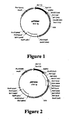
- the FAD2 intron was inserted between the 35S promoter and the GUS gene, specifically into the 5'UTR, by digesting pWP430 with Sma I and ligating the intron into Sma I digested pJIT65del, to create pWP443A.
- the BSV promoter was cloned into the EcoRV site of Bluescript KS to create pWP453B.
- the following primers were used: GATGCTCTAGATCTGCTGG BSVFor (SEQ ID N° 11) GGCCATGGCTTGCTCTGATACCAGACGGG BSVRev (SEQ ID N° 12)
- pWP453B was digested with SstI and Sal I to isolate the BSV promoter fragment which was then ligated into Sst I and Sal I digested JTr65del, thus replacing the 35S promoter to create pWP461.
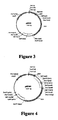
- the 35S promoter of pWP443A was replaced by the BSV promoter from pWP461. Both plasmids were digested with SstI and BamHI and fragments ligated to produce pWP464.
- HMWG promoter driving the GUS gene (Glu-1Dx5-GUS2) was obtained as described in Halford et al 1989 (Plant Science 62, 207-16 ).
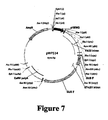
- the FAD2 intron was inserted between the HMWG promoter and the GUS gene, specifically into the 5'UTR, to create pWP514.
- a range of plant tissues and calli were bombarded with particles coated with one of the four promoter constructs including the FAD2 intron, according to methods known in the art.
- the tissues were immersed in a solution of the histochemical substrate. X-glucuronide, and a subjective assessment was made of the activity of the construct. In each case a significant number of blue spots were observed on each of the tissues tested.
- HMWG construct pWP5114
- the HMWG promoter is naturally strong endosperm-specific promoter.
- the inclusion of the FAD2 intron has converted it into a strong constitutive promoter.
- Isolated embryos were arranged in 4x4 arrays. Thirty-two embryos were bombarded with each construct.
- GFP Green Fluorescent Protein
- the increase in expression due to inclusion of the FAD2 intron was 5.6 fold for the Sc4 promoter, 8 fold for the double 35S promoter and most remarkably 161 fold for the BSV promoter.
- BSV weakest promoter
- pAAA maize ubiquitin promoter
- Wheat embryos were stably transformed by bombardment ( WO 98/49316 ). The embryos were bombarded with pWP461 or pWP464.
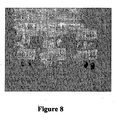
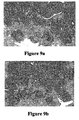
- Transgenic plants were regenerated and grown, and expression of the GUS protein was studied by X-Gluc staining for glucuronidase activity. Following bombardment with WP461, no GUS expression was observed in regenerated transgenic plants. Following bombardment with WP464, strong constitutive expression could be observed in a range of tissues including leaf ( Figure 10 ), root, male and female floral parts and seed.
- a selectable marker gene was prepared consisting of the Sc4 promoter, FAD 2 intron, the nptII coding region and nopaline synthase terminator.
- a comparable selectable marker gene was prepared consisting of the more widely used rice actin promoter and the associated first intron, the nptII coding region and nopaline synthase terminator. Both versions of the selectable marker gene were cloned into a suitable vector for wheat transformation.
- the rice actin promoter including the first intron is a very strong promoter widely used to drive the selectable marker in monocot species. Transformation frequencies were observed between 0.5 and 9.2 % with an average of 4.1%. When the selectable marker was driven by the Sc4 promoter in combination with the FAD 2 intron, transformation frequencies of 0.4 to 8.3%, with an average of 3.9% were observed.
- the combination of the very weak Sc4 promoter with the FAD2 intron is as efficient as the widely used rice actin promoter when used to drive the selectable marker needed for stable wheat transformation.
- Both versions of the selectable marker gene described in Example 6 were cloned into a suitable vector for maize transformation.
- Maize embryos were stably transformed essentially by the method of Ishida et al (1996) using either version of the selectable marker, and stably transformed transgenic plantlets selected on plant tissue culture media containing a suitable concentration of kanamycin. The number of independent transgenic events was recorded and the transformation efficiency calculated as the percentage of treated embryos regenerating transgenic events.
Landscapes
- Health & Medical Sciences (AREA)
- Genetics & Genomics (AREA)
- Life Sciences & Earth Sciences (AREA)
- Engineering & Computer Science (AREA)
- Biomedical Technology (AREA)
- Biotechnology (AREA)
- Zoology (AREA)
- Bioinformatics & Cheminformatics (AREA)
- Organic Chemistry (AREA)
- General Engineering & Computer Science (AREA)
- Chemical & Material Sciences (AREA)
- Wood Science & Technology (AREA)
- Molecular Biology (AREA)
- Microbiology (AREA)
- Plant Pathology (AREA)
- Cell Biology (AREA)
- Biophysics (AREA)
- Biochemistry (AREA)
- General Health & Medical Sciences (AREA)
- Physics & Mathematics (AREA)
- Breeding Of Plants And Reproduction By Means Of Culturing (AREA)
- Micro-Organisms Or Cultivation Processes Thereof (AREA)
Claims (10)
- Genkonstrukt für die Expression eines Polypeptids in einer Pfanzenzelle, umfassend:(a) einen innerhalb der Pflanzenzelle operativen Promoter,(b) das erste Intron des FAD2-Gens, wobei das FAD2-Gen aus Arabidopsis thaliana stammt und wobei das erste Intron SEQ ID NO. 1 entspricht,(c) eine mit dem Promoter operativ verknüpfte Nukleotidsequenz, wobei die Nukleotidsequenz für das Polypeptid codiert,(d) eine operativ mit der Nukleotidsequenz verknüpfte Polyadenylierungsstelle (PAA),wobei es sich bei dem Promoter nicht um einen natürlichen FAD2-Promoter handelt und wobei das Intron zwischen dem Promoter und dem Translationsursprung der Nukleotidsequenz insertiert ist.
- Genkonstrukt nach Anspruch 1, wobei es sich bei dem Promoter um einen gewebespezifischen Promoter handelt.
- Genkonstrukt nach Anspruch 1, wobei es sich bei dem Promoter um einen konstitutiven Promoter handelt.
- Genkonstrukt nach einem der Ansprüche 1 bis 3, das zur Integration in das Genom der Pflanzenzelle fähig ist.
- Verfahren zur Verbesserung der Expression eines Polypeptids in einer Pflanzenzelle, umfassend den Schritt, daß man das Genkonstrukt nach einem der Anspüche 1 bis 4 in die Pflanzenzelle einführt.
- Verfahren zur Erhöhung der Expressionsrate eines Gens unter der Kontrolle eines Promoters in einer Pflanzenzelle, wobei das Verfahren die folgenden Schritte umfaßt:(a) Insertieren des ersten Introns des FAD2-Gens, wobei das FAD2-Gen aus Arabidopsis thaliana stammt und wobei das erste Intron SEQ ID NO. 1 entspricht, zwischen den Promoter und den Translationsursprung des Gens, wodurch ein intronmodifiziertes Gen gebildet wird; und(b) Einführen des intronmodifizierten Gens in eine Pflanzenzelle, so daß das Gen unter der Kontrolle des Introns in der Pflanzenzelle exprimiert wird, wobei die Expressionsrate des Gens im Vergleich zu einem unmodifizierten Gen erhöht ist,wobei es sich bei dem Promoter nicht um einen natürlichen FAD2-Promoter handelt.
- Verwendung des ersten Introns des FAD2-Gens in Kombination mit einem Promoter, der sich von dem natürlichen FAD2-Promoter unterscheidet, zur Verbesserung der Expression eines Polypeptids in einer Pflanzenzelle, wobei das FAD2-Gen aus Arabidopsis thaliana stammt und wobei das erste Intron SEQ ID NO. 1 entspricht.
- Pflanze, umfassend ein Genkonstrukt nach Anspruch 1, das in ihr Genom integriert ist.
- Pflanze nach Anspruch 8, wobei es sich um eine monokotyle Pflanze handelt.
- Pflanze nach Anspruch 9, ausgewählt aus der Gruppe bestehend aus Weizen, Gerste, Mais und Reis.
Priority Applications (1)
| Application Number | Priority Date | Filing Date | Title |
|---|---|---|---|
| EP05773830A EP1774005B1 (de) | 2004-07-06 | 2005-07-01 | Verfahren zur verbesserung der genexpression in pflanzen |
Applications Claiming Priority (3)
| Application Number | Priority Date | Filing Date | Title |
|---|---|---|---|
| EP04103188A EP1614754A1 (de) | 2004-07-06 | 2004-07-06 | Verfahren zur Erhöhung der Genexpression in Pflanzen |
| PCT/EP2005/053148 WO2006003186A1 (en) | 2004-07-06 | 2005-07-01 | Method for enhancing gene expression in plants |
| EP05773830A EP1774005B1 (de) | 2004-07-06 | 2005-07-01 | Verfahren zur verbesserung der genexpression in pflanzen |
Publications (2)
| Publication Number | Publication Date |
|---|---|
| EP1774005A1 EP1774005A1 (de) | 2007-04-18 |
| EP1774005B1 true EP1774005B1 (de) | 2009-07-01 |
Family
ID=34929296
Family Applications (2)
| Application Number | Title | Priority Date | Filing Date |
|---|---|---|---|
| EP04103188A Withdrawn EP1614754A1 (de) | 2004-07-06 | 2004-07-06 | Verfahren zur Erhöhung der Genexpression in Pflanzen |
| EP05773830A Expired - Lifetime EP1774005B1 (de) | 2004-07-06 | 2005-07-01 | Verfahren zur verbesserung der genexpression in pflanzen |
Family Applications Before (1)
| Application Number | Title | Priority Date | Filing Date |
|---|---|---|---|
| EP04103188A Withdrawn EP1614754A1 (de) | 2004-07-06 | 2004-07-06 | Verfahren zur Erhöhung der Genexpression in Pflanzen |
Country Status (8)
| Country | Link |
|---|---|
| US (1) | US20090042300A1 (de) |
| EP (2) | EP1614754A1 (de) |
| AT (1) | ATE435296T1 (de) |
| AU (1) | AU2005259228B2 (de) |
| CA (1) | CA2572317C (de) |
| DE (1) | DE602005015222D1 (de) |
| ES (1) | ES2327657T3 (de) |
| WO (1) | WO2006003186A1 (de) |
Families Citing this family (15)
| Publication number | Priority date | Publication date | Assignee | Title |
|---|---|---|---|---|
| DE602007012858D1 (de) | 2006-05-18 | 2011-04-14 | Biogemma Fr | Verfahren zur durchführung homologer rekombinationen in pflanzen |
| EP1867723A1 (de) | 2006-06-16 | 2007-12-19 | Genoplante-Valor | Pflanzen mit erhöhter Toleranz gegenüber Trockenheit |
| EP2258859A1 (de) | 2009-05-19 | 2010-12-08 | Genoplante-Valor | Verfahren zur Durchführung einer homologen Rekombination |
| SG178388A1 (en) | 2009-08-31 | 2012-03-29 | Basf Plant Science Co Gmbh | Regulatory nucleic acid molecules for enhancing seed-specific and/or seed-preferential gene expression in plants |
| WO2011023537A1 (en) | 2009-08-31 | 2011-03-03 | Basf Plant Science Company Gmbh | Regulatory nucleic acid molecules for enhancing constitutive gene expression in plants |
| US9428757B2 (en) | 2009-08-31 | 2016-08-30 | Basf Plant Science Company Gmbh | Regulatory nucleic acid molecules for enhancing seed-specific gene expression in plants promoting enhanced polyunsaturated fatty acid synthesis |
| EP2402446A1 (de) | 2010-06-30 | 2012-01-04 | Genoplante-Valor | Bei der Entwicklung eines Samens beteiligtes Gen |
| EP2436768A1 (de) | 2010-09-29 | 2012-04-04 | Institut National De La Recherche Agronomique | Verfahren zur Auslösung von Mutationen und/oder Epimutationen in Pflanzen |
| EP3091076A1 (de) | 2015-05-07 | 2016-11-09 | Limagrain Europe | Für die haploide induktion in maispflanzen verantwortliches polynukleotid und zugehörige verfahren |
| CA3188282A1 (en) * | 2020-07-31 | 2022-02-03 | Inari Agriculture Technology, Inc. | Expedited breeding of transgenic crop plants by genome editing |
| WO2022026395A2 (en) * | 2020-07-31 | 2022-02-03 | Inari Agriculture Technology, Inc. | Excisable plant transgenic loci with signature protospacer adjacent motifs or signature guide rna recognition sites |
| BR112023001774A2 (pt) * | 2020-07-31 | 2023-03-07 | Inari Agriculture Tech Inc | Genoma de planta transgênica editado, célula de planta transgênica, planta transgênica, parte de planta transgênica, método para obter uma população avolumada de sementes endogâmicas para produção de sementes comerciais, método de obtenção de semente de cultura híbrida, molécula de dna, produto de planta transgênica processado, amostra biológica, marcador de ácido nucleico adaptado para detecção de dna genômico ou seus fragmentos, método de detecção do genoma de planta transgênica editado, método de obtenção de um genoma de planta transgênica editado compreendendo um lócus transgênico modificado, método de excisão de um lócus transgênico modificado ou sua porção a partir de um genoma de planta transgênica editado, método de obtenção de uma linha de reprodução de plantas, método para obter germoplasma de planta transgênica endogâmico contendo diferentes traços transgênicos |
| US20240294937A1 (en) * | 2020-07-31 | 2024-09-05 | Inari Agriculture Technology, Inc. | Genome editing of transgenic crop plants with modified transgenic loci |
| EP4360451A1 (de) | 2022-10-25 | 2024-05-01 | Limagrain Europe | Mutanten zur haploiden induktion |
| EP4455293A1 (de) | 2023-04-25 | 2024-10-30 | Limagrain Europe | Verfahren zur bereitstellung einer pflanze mit erhöhter resistenz gegen ein virus der luteoviridae-familie |
Family Cites Families (8)
| Publication number | Priority date | Publication date | Assignee | Title |
|---|---|---|---|---|
| WO1991009948A1 (en) * | 1990-01-05 | 1991-07-11 | Cornell Research Foundation, Inc. | Rice actin gene and promoter |
| US5593874A (en) * | 1992-03-19 | 1997-01-14 | Monsanto Company | Enhanced expression in plants |
| CN1219064C (zh) * | 1998-08-04 | 2005-09-14 | 嘉吉有限公司 | 植物脂肪酸去饱和酶启动子 |
| US7166771B2 (en) * | 2002-06-21 | 2007-01-23 | Monsanto Technology Llc | Coordinated decrease and increase of gene expression of more than one gene using transgenic constructs |
| AR039113A1 (es) * | 2002-03-21 | 2005-02-09 | Monsanto Technology Llc | Construcciones de acidos nucleicos y metodos para producir composiciones de aceites de semillas alteradas |
| US7371928B2 (en) * | 2002-11-11 | 2008-05-13 | Korea Chungang Educational Foundation | Plant seed-specific expression promoter derived from sesame and seed-specific expression vector comprising the promoter |
| WO2004071168A2 (en) * | 2003-02-05 | 2004-08-26 | Divergence, Inc. | Nucleic acids encoding anthelmintic agents and plants made therefrom |
| AU2004215592B2 (en) * | 2003-02-27 | 2008-02-07 | Cropdesign N.V. | Arabidopsis promoters |
-
2004
- 2004-07-06 EP EP04103188A patent/EP1614754A1/de not_active Withdrawn
-
2005
- 2005-07-01 US US11/631,742 patent/US20090042300A1/en not_active Abandoned
- 2005-07-01 DE DE602005015222T patent/DE602005015222D1/de not_active Expired - Lifetime
- 2005-07-01 AT AT05773830T patent/ATE435296T1/de not_active IP Right Cessation
- 2005-07-01 AU AU2005259228A patent/AU2005259228B2/en not_active Ceased
- 2005-07-01 ES ES05773830T patent/ES2327657T3/es not_active Expired - Lifetime
- 2005-07-01 CA CA2572317A patent/CA2572317C/en not_active Expired - Fee Related
- 2005-07-01 EP EP05773830A patent/EP1774005B1/de not_active Expired - Lifetime
- 2005-07-01 WO PCT/EP2005/053148 patent/WO2006003186A1/en not_active Ceased
Also Published As
| Publication number | Publication date |
|---|---|
| AU2005259228B2 (en) | 2010-04-29 |
| WO2006003186A1 (en) | 2006-01-12 |
| CA2572317A1 (en) | 2006-01-12 |
| CA2572317C (en) | 2017-02-28 |
| EP1614754A1 (de) | 2006-01-11 |
| ES2327657T3 (es) | 2009-11-02 |
| EP1774005A1 (de) | 2007-04-18 |
| ATE435296T1 (de) | 2009-07-15 |
| US20090042300A1 (en) | 2009-02-12 |
| WO2006003186A9 (en) | 2006-03-09 |
| DE602005015222D1 (de) | 2009-08-13 |
| AU2005259228A1 (en) | 2006-01-12 |
Similar Documents
| Publication | Publication Date | Title |
|---|---|---|
| AU2016225872B2 (en) | Strains of Agrobacterium modified to increase plant transformation frequency | |
| EP1774005B1 (de) | Verfahren zur verbesserung der genexpression in pflanzen | |
| JP2010252820A (ja) | 植物種子におけるタンパク質製造 | |
| CA2414471C (en) | Methods for enhancing plant transformation frequencies | |
| CN1809639B (zh) | 增加商业化转基因植物产生的dna构建体和方法 | |
| AU2012249818B2 (en) | Enhanced transformation of recalcitrant monocots | |
| CA2672710C (en) | Method of transforming plant plastids | |
| AU2009259080B2 (en) | Selection method II | |
| US7238854B2 (en) | Method of controlling site-specific recombination | |
| EP0840793B1 (de) | Expressionskontrollesequenz zur allgemeinen und effektiven genexpression in pflanzen | |
| WO2002012450A1 (en) | Gossypium hirsutum tissue-specific promoters and their use | |
| WO2005113771A1 (en) | An embryo preferred promoter and method of using same | |
| Sreeramanan et al. | Agrobacterium-Mediated Transformation of Banana Cultivar'Rastali'(Musa, AAB Genome) with Chitinase Gene | |
| Suka et al. | Transformation of PRT6 RNAi construct into tomato (Solanum lycopersicum) cv. Micro-Tom |
Legal Events
| Date | Code | Title | Description |
|---|---|---|---|
| PUAI | Public reference made under article 153(3) epc to a published international application that has entered the european phase |
Free format text: ORIGINAL CODE: 0009012 |
|
| 17P | Request for examination filed |
Effective date: 20070108 |
|
| AK | Designated contracting states |
Kind code of ref document: A1 Designated state(s): AT BE BG CH CY CZ DE DK EE ES FI FR GB GR HU IE IS IT LI LT LU LV MC NL PL PT RO SE SI SK TR |
|
| 17Q | First examination report despatched |
Effective date: 20070808 |
|
| DAX | Request for extension of the european patent (deleted) | ||
| GRAP | Despatch of communication of intention to grant a patent |
Free format text: ORIGINAL CODE: EPIDOSNIGR1 |
|
| GRAS | Grant fee paid |
Free format text: ORIGINAL CODE: EPIDOSNIGR3 |
|
| GRAA | (expected) grant |
Free format text: ORIGINAL CODE: 0009210 |
|
| AK | Designated contracting states |
Kind code of ref document: B1 Designated state(s): AT BE BG CH CY CZ DE DK EE ES FI FR GB GR HU IE IS IT LI LT LU LV MC NL PL PT RO SE SI SK TR |
|
| REG | Reference to a national code |
Ref country code: GB Ref legal event code: FG4D |
|
| REG | Reference to a national code |
Ref country code: CH Ref legal event code: EP |
|
| REG | Reference to a national code |
Ref country code: IE Ref legal event code: FG4D |
|
| REF | Corresponds to: |
Ref document number: 602005015222 Country of ref document: DE Date of ref document: 20090813 Kind code of ref document: P |
|
| REG | Reference to a national code |
Ref country code: ES Ref legal event code: FG2A Ref document number: 2327657 Country of ref document: ES Kind code of ref document: T3 |
|
| PG25 | Lapsed in a contracting state [announced via postgrant information from national office to epo] |
Ref country code: SI Free format text: LAPSE BECAUSE OF FAILURE TO SUBMIT A TRANSLATION OF THE DESCRIPTION OR TO PAY THE FEE WITHIN THE PRESCRIBED TIME-LIMIT Effective date: 20090701 |
|
| PG25 | Lapsed in a contracting state [announced via postgrant information from national office to epo] |
Ref country code: SE Free format text: LAPSE BECAUSE OF FAILURE TO SUBMIT A TRANSLATION OF THE DESCRIPTION OR TO PAY THE FEE WITHIN THE PRESCRIBED TIME-LIMIT Effective date: 20090701 Ref country code: EE Free format text: LAPSE BECAUSE OF FAILURE TO SUBMIT A TRANSLATION OF THE DESCRIPTION OR TO PAY THE FEE WITHIN THE PRESCRIBED TIME-LIMIT Effective date: 20090701 Ref country code: FI Free format text: LAPSE BECAUSE OF FAILURE TO SUBMIT A TRANSLATION OF THE DESCRIPTION OR TO PAY THE FEE WITHIN THE PRESCRIBED TIME-LIMIT Effective date: 20090701 Ref country code: IS Free format text: LAPSE BECAUSE OF FAILURE TO SUBMIT A TRANSLATION OF THE DESCRIPTION OR TO PAY THE FEE WITHIN THE PRESCRIBED TIME-LIMIT Effective date: 20091101 Ref country code: LT Free format text: LAPSE BECAUSE OF FAILURE TO SUBMIT A TRANSLATION OF THE DESCRIPTION OR TO PAY THE FEE WITHIN THE PRESCRIBED TIME-LIMIT Effective date: 20090701 Ref country code: AT Free format text: LAPSE BECAUSE OF FAILURE TO SUBMIT A TRANSLATION OF THE DESCRIPTION OR TO PAY THE FEE WITHIN THE PRESCRIBED TIME-LIMIT Effective date: 20090701 |
|
| PG25 | Lapsed in a contracting state [announced via postgrant information from national office to epo] |
Ref country code: PL Free format text: LAPSE BECAUSE OF FAILURE TO SUBMIT A TRANSLATION OF THE DESCRIPTION OR TO PAY THE FEE WITHIN THE PRESCRIBED TIME-LIMIT Effective date: 20090701 Ref country code: MC Free format text: LAPSE BECAUSE OF NON-PAYMENT OF DUE FEES Effective date: 20090731 Ref country code: LV Free format text: LAPSE BECAUSE OF FAILURE TO SUBMIT A TRANSLATION OF THE DESCRIPTION OR TO PAY THE FEE WITHIN THE PRESCRIBED TIME-LIMIT Effective date: 20090701 |
|
| PG25 | Lapsed in a contracting state [announced via postgrant information from national office to epo] |
Ref country code: BG Free format text: LAPSE BECAUSE OF FAILURE TO SUBMIT A TRANSLATION OF THE DESCRIPTION OR TO PAY THE FEE WITHIN THE PRESCRIBED TIME-LIMIT Effective date: 20091001 Ref country code: PT Free format text: LAPSE BECAUSE OF FAILURE TO SUBMIT A TRANSLATION OF THE DESCRIPTION OR TO PAY THE FEE WITHIN THE PRESCRIBED TIME-LIMIT Effective date: 20091102 |
|
| PG25 | Lapsed in a contracting state [announced via postgrant information from national office to epo] |
Ref country code: RO Free format text: LAPSE BECAUSE OF FAILURE TO SUBMIT A TRANSLATION OF THE DESCRIPTION OR TO PAY THE FEE WITHIN THE PRESCRIBED TIME-LIMIT Effective date: 20090701 Ref country code: CZ Free format text: LAPSE BECAUSE OF FAILURE TO SUBMIT A TRANSLATION OF THE DESCRIPTION OR TO PAY THE FEE WITHIN THE PRESCRIBED TIME-LIMIT Effective date: 20090701 Ref country code: DK Free format text: LAPSE BECAUSE OF FAILURE TO SUBMIT A TRANSLATION OF THE DESCRIPTION OR TO PAY THE FEE WITHIN THE PRESCRIBED TIME-LIMIT Effective date: 20090701 |
|
| PLBE | No opposition filed within time limit |
Free format text: ORIGINAL CODE: 0009261 |
|
| STAA | Information on the status of an ep patent application or granted ep patent |
Free format text: STATUS: NO OPPOSITION FILED WITHIN TIME LIMIT |
|
| PG25 | Lapsed in a contracting state [announced via postgrant information from national office to epo] |
Ref country code: SK Free format text: LAPSE BECAUSE OF FAILURE TO SUBMIT A TRANSLATION OF THE DESCRIPTION OR TO PAY THE FEE WITHIN THE PRESCRIBED TIME-LIMIT Effective date: 20090701 |
|
| 26N | No opposition filed |
Effective date: 20100406 |
|
| PG25 | Lapsed in a contracting state [announced via postgrant information from national office to epo] |
Ref country code: IE Free format text: LAPSE BECAUSE OF NON-PAYMENT OF DUE FEES Effective date: 20090701 |
|
| PG25 | Lapsed in a contracting state [announced via postgrant information from national office to epo] |
Ref country code: GR Free format text: LAPSE BECAUSE OF FAILURE TO SUBMIT A TRANSLATION OF THE DESCRIPTION OR TO PAY THE FEE WITHIN THE PRESCRIBED TIME-LIMIT Effective date: 20091002 |
|
| PG25 | Lapsed in a contracting state [announced via postgrant information from national office to epo] |
Ref country code: LU Free format text: LAPSE BECAUSE OF NON-PAYMENT OF DUE FEES Effective date: 20090701 |
|
| PG25 | Lapsed in a contracting state [announced via postgrant information from national office to epo] |
Ref country code: HU Free format text: LAPSE BECAUSE OF FAILURE TO SUBMIT A TRANSLATION OF THE DESCRIPTION OR TO PAY THE FEE WITHIN THE PRESCRIBED TIME-LIMIT Effective date: 20100102 |
|
| PG25 | Lapsed in a contracting state [announced via postgrant information from national office to epo] |
Ref country code: TR Free format text: LAPSE BECAUSE OF FAILURE TO SUBMIT A TRANSLATION OF THE DESCRIPTION OR TO PAY THE FEE WITHIN THE PRESCRIBED TIME-LIMIT Effective date: 20090701 |
|
| PG25 | Lapsed in a contracting state [announced via postgrant information from national office to epo] |
Ref country code: CY Free format text: LAPSE BECAUSE OF FAILURE TO SUBMIT A TRANSLATION OF THE DESCRIPTION OR TO PAY THE FEE WITHIN THE PRESCRIBED TIME-LIMIT Effective date: 20090701 |
|
| REG | Reference to a national code |
Ref country code: FR Ref legal event code: PLFP Year of fee payment: 12 |
|
| REG | Reference to a national code |
Ref country code: FR Ref legal event code: PLFP Year of fee payment: 13 |
|
| REG | Reference to a national code |
Ref country code: FR Ref legal event code: PLFP Year of fee payment: 14 |
|
| PGFP | Annual fee paid to national office [announced via postgrant information from national office to epo] |
Ref country code: CH Payment date: 20200623 Year of fee payment: 16 Ref country code: FR Payment date: 20200623 Year of fee payment: 16 |
|
| PGFP | Annual fee paid to national office [announced via postgrant information from national office to epo] |
Ref country code: GB Payment date: 20200624 Year of fee payment: 16 Ref country code: NL Payment date: 20200625 Year of fee payment: 16 Ref country code: BE Payment date: 20200624 Year of fee payment: 16 |
|
| PGFP | Annual fee paid to national office [announced via postgrant information from national office to epo] |
Ref country code: ES Payment date: 20200803 Year of fee payment: 16 Ref country code: DE Payment date: 20200622 Year of fee payment: 16 |
|
| PGFP | Annual fee paid to national office [announced via postgrant information from national office to epo] |
Ref country code: IT Payment date: 20200622 Year of fee payment: 16 |
|
| REG | Reference to a national code |
Ref country code: DE Ref legal event code: R119 Ref document number: 602005015222 Country of ref document: DE |
|
| REG | Reference to a national code |
Ref country code: CH Ref legal event code: PL |
|
| REG | Reference to a national code |
Ref country code: NL Ref legal event code: MM Effective date: 20210801 |
|
| GBPC | Gb: european patent ceased through non-payment of renewal fee |
Effective date: 20210701 |
|
| REG | Reference to a national code |
Ref country code: BE Ref legal event code: MM Effective date: 20210731 |
|
| PG25 | Lapsed in a contracting state [announced via postgrant information from national office to epo] |
Ref country code: LI Free format text: LAPSE BECAUSE OF NON-PAYMENT OF DUE FEES Effective date: 20210731 Ref country code: GB Free format text: LAPSE BECAUSE OF NON-PAYMENT OF DUE FEES Effective date: 20210701 Ref country code: DE Free format text: LAPSE BECAUSE OF NON-PAYMENT OF DUE FEES Effective date: 20220201 Ref country code: CH Free format text: LAPSE BECAUSE OF NON-PAYMENT OF DUE FEES Effective date: 20210731 |
|
| PG25 | Lapsed in a contracting state [announced via postgrant information from national office to epo] |
Ref country code: NL Free format text: LAPSE BECAUSE OF NON-PAYMENT OF DUE FEES Effective date: 20210801 Ref country code: FR Free format text: LAPSE BECAUSE OF NON-PAYMENT OF DUE FEES Effective date: 20210731 |
|
| PG25 | Lapsed in a contracting state [announced via postgrant information from national office to epo] |
Ref country code: IT Free format text: LAPSE BECAUSE OF NON-PAYMENT OF DUE FEES Effective date: 20210701 Ref country code: BE Free format text: LAPSE BECAUSE OF NON-PAYMENT OF DUE FEES Effective date: 20210731 |
|
| REG | Reference to a national code |
Ref country code: ES Ref legal event code: FD2A Effective date: 20220826 |
|
| PG25 | Lapsed in a contracting state [announced via postgrant information from national office to epo] |
Ref country code: ES Free format text: LAPSE BECAUSE OF NON-PAYMENT OF DUE FEES Effective date: 20210702 |