EP1773005A1 - Verfahren und Vorrichtung zum Kontrollieren eines Mehrfachanwendungskanals - Google Patents
Verfahren und Vorrichtung zum Kontrollieren eines Mehrfachanwendungskanals Download PDFInfo
- Publication number
- EP1773005A1 EP1773005A1 EP05109452A EP05109452A EP1773005A1 EP 1773005 A1 EP1773005 A1 EP 1773005A1 EP 05109452 A EP05109452 A EP 05109452A EP 05109452 A EP05109452 A EP 05109452A EP 1773005 A1 EP1773005 A1 EP 1773005A1
- Authority
- EP
- European Patent Office
- Prior art keywords
- time
- channel
- packet
- parameter value
- application
- Prior art date
- Legal status (The legal status is an assumption and is not a legal conclusion. Google has not performed a legal analysis and makes no representation as to the accuracy of the status listed.)
- Granted
Links
Images



Classifications
-
- H—ELECTRICITY
- H04—ELECTRIC COMMUNICATION TECHNIQUE
- H04W—WIRELESS COMMUNICATION NETWORKS
- H04W76/00—Connection management
- H04W76/20—Manipulation of established connections
- H04W76/27—Transitions between radio resource control [RRC] states
-
- H—ELECTRICITY
- H04—ELECTRIC COMMUNICATION TECHNIQUE
- H04W—WIRELESS COMMUNICATION NETWORKS
- H04W52/00—Power management, e.g. Transmission Power Control [TPC] or power classes
- H04W52/02—Power saving arrangements
- H04W52/0209—Power saving arrangements in terminal devices
- H04W52/0225—Power saving arrangements in terminal devices using monitoring of external events, e.g. the presence of a signal
- H04W52/0229—Power saving arrangements in terminal devices using monitoring of external events, e.g. the presence of a signal where the received signal is a wanted signal
-
- H—ELECTRICITY
- H04—ELECTRIC COMMUNICATION TECHNIQUE
- H04W—WIRELESS COMMUNICATION NETWORKS
- H04W76/00—Connection management
- H04W76/10—Connection setup
- H04W76/14—Direct-mode setup
-
- Y—GENERAL TAGGING OF NEW TECHNOLOGICAL DEVELOPMENTS; GENERAL TAGGING OF CROSS-SECTIONAL TECHNOLOGIES SPANNING OVER SEVERAL SECTIONS OF THE IPC; TECHNICAL SUBJECTS COVERED BY FORMER USPC CROSS-REFERENCE ART COLLECTIONS [XRACs] AND DIGESTS
- Y02—TECHNOLOGIES OR APPLICATIONS FOR MITIGATION OR ADAPTATION AGAINST CLIMATE CHANGE
- Y02D—CLIMATE CHANGE MITIGATION TECHNOLOGIES IN INFORMATION AND COMMUNICATION TECHNOLOGIES [ICT], I.E. INFORMATION AND COMMUNICATION TECHNOLOGIES AIMING AT THE REDUCTION OF THEIR OWN ENERGY USE
- Y02D30/00—Reducing energy consumption in communication networks
- Y02D30/70—Reducing energy consumption in communication networks in wireless communication networks
Definitions
- the application relates to channel control in communication sessions, in particular to when a communication channel is active or dormant.
- the timer may not be capable of taking into account the differences in the operation of the always-on and intermittent applications. If the timer is set based on a particular application's operation this can result in sessions for other applications being shut down prematurely before the other applications have completed sending or receiving packets resulting in missed services.
- the active channel state pre-empts the ability for the wireless device to receive and process voice signals.
- a channel of an external connection active or bringing up the channel from a dormant state can be an "expensive" activity.
- Expensive in the context of a physical quality such as battery life of a battery used in the communication device or the amount of time consumed in bringing up the channel from a dormant state. For example, bringing up a channel that has just gone dormant may take more time then if the channel had been allowed to stay up a somewhat longer period of time.
- leaving the channel active for too long a period of time has a detrimental effect on the battery life of the communication device. Therefore, it would be advantageous to reach a balance in keeping the expense of operating the device low while at the same time not sacrificing quality of service.
- a method for controlling a communication channel used by a communication device (18) comprising: opening (300,400,500) a communication session for an application (22,26,28) operating on the communication device (18), the communication session being established on a channel (120) for communicating a packet between the application (22,26,28) of the communication device (18) and a device (130) with which the communication device (18) is communicating, wherein the channel (120) has an active state and a dormant state; during the opening (300,400,500) of the communication session, the application (22,26,28) providing a set of time-out parameters (24) to be associated with the communication session being opened for the application (22,26,28); determining a time when the channel (120) can be brought down to the dormant state based on the set of time-out parameters (24) and time-out parameters of any other currently open communication sessions on the channel (120) while the channel (120) is in the active state.
- a method for controlling a communication channel used by a communication device (18) comprising: opening (300,400,500) a communication session for an application (22,26,28) operating on the communication device (18), the communication session being established on a channel (120) for communicating a packet between the application (22,26,28) of the communication device (18) and a device (130) with which the communication device (18) is communicating, wherein the channel (120) has an active state and a dormant state; during the opening (300,400,500) of the communication session, the application (22,26,28) providing a set of time-out parameters (24) to be associated with the communication session being opened for the application (22,26,28); during the open communication session, determining when to send a packet on a channel depending on a send priority time-out parameter from the set of time-out parameters (24) associated with at least one of a group consisting of the communication device, the open communication session and the packet.
- a communication device (18) comprising: an application layer (19) adapted to run at least one application (22,26,28,29,35,36); a radio management layer (21) comprising a data channel controller (30) adapted for opening communication sessions on a channel (120) between the communication device (18) and another device (130); a packet handler layer (20) adapted to support communication between the application layer (19) and the radio management layer (21); the data channel controller (30) adapted to receive time-out parameters (24) from an application of the at least one application (22,26,28,29,35,36) associated with an open communication session on the channel (120) and adapted to determine when the channel (120) is brought up to an active state or taken down to a dormant state based on a set of time-out parameters pertaining to each open communication session, wherein the set of time-out parameters are associated with at least one of a group consisting of the communication device (18), each open communication session and a packet to be sent or
- Figure 1 illustrates a generic communication system, generally indicated as 100.
- a first communication device 110 is communicating over a channel 120 with a second communication device 130.
- an open session between the first communication device 110 and the second communication device 130 with which the first device 110 is communicating may have an active state where the channel 120 is "up” and is capable of sending and receiving packets and a dormant state where the channel 120 is "down" and does not send or receive packets, but the first communication device 110 maintains the open session.
- Examples of the first communication device 110 are wireless devices such as a cellular telephone, wireless modem enabled computer or wireless enabled PDA, or wired devices such as a landline modem enable computer or a landline VoIP telephone.
- the channel 130 may be a wireless channel, a wired channel such as a landline, or a combination of a wireless channel connected at some location, for example a basestation to a wired channel.
- the second communication device 120 may be any type of communication device with which the first communication device 110 communicates by sending or receiving voice and/or data information.
- fast dormancy allows the channel of a wireless device to enter the dormant state before the default time-out expires.
- the wireless device can still be paged to receive a packet or send a packet, at which time the channel is brought up and the device receives or sends the respective packet.
- the communication device comprises an application layer 19, a packet handler layer 20 and a radio management layer 21, which in combination support a plurality of applications.
- the applications include intermittent applications, such as intermittent application #1 26, ..., intermittent application #N 28 and at least one "always-on" application 22.
- the applications 22,26,28 each include time-out parameters 24 to be used by the radio management layer 21 for controlling the channel as will be described below.
- the packet handling layer 20 is responsible for communicating packets between the applications 22,26,28 in the application layer 19 and the radio management layer 21.
- the radio management layer 21 is responsible for communicating packets between the communication device 18 and other devices with which the communication device 18 communicates.
- the radio management layer 21 is responsible for opening, closing and maintaining application communication sessions between the communication device 18 and other devices with which the communication device 18 communicates. Communication sessions may include data sessions or voice sessions. In opening a data session, the radio management layer 21 provides a link to a data channel over which packets can be communicated.
- the Data Channel Controller 30 is located in the radio management layer 21.
- the Data Channel Controller 30 is a centralized mechanism including channel control logic for the radio management layer 21 to make real-time custom determinations based on all active data sessions occurring on the device.
- the Data Channel Controller 30 uses parameters specific to the communication device 18, specific to open communication sessions between the communication device 18 and another device with which it communicates, and/or specific to packets being received or transmitted by the communication device, in order to make decisions regarding the status of the data channel. Parameters that are specific to the communication session to be opened are therefore specific to the application associated with the session.
- Time-out parameters 24 are provided to the radio management later 21 by an application when a session for the application is opened. As such, the parameters specific to the application are enabled at run-time for the open session specific to the application.
- the radio management layer 21 when a session is closed, parameters associated with the closed session are removed so that only parameters associated with applications having currently open sessions are maintained by the radio management layer 21. This is different than the radio management layer 21 requiring prior knowledge of parameters for all applications running, or to be run, on the communication device 18 and continuously maintaining these parameters for all applications, whether the applications have an open session or not, and applying the continuously maintained parameters when the applications do have an open session. In this manner, in the embodiments described herein, the radio management layer 21 does not need to maintain the parameter information for all applications adapted to run on the communication device 18. The applications provide parameter information to the radio management layer 21 when they are to be used.
- This functionality aids in allowing the radio management layer 21 to control the data channel based on all the currently open data communication sessions and to ensure that the data channel usage is optimized with respect to all sessions, but the optimization does not negatively impact any of the sessions. For example, the data channel is left active only as long as an open session parameter defines that it should, but does force the data channel to go dormant if an open session parameter from another open session desires the data channel to remain active.
- the communication device 18 would also include the remainder of the functionality necessary for such a device to operate. Only the bare minimum functionality required to describe the embodiment has been shown. Typically the always-on application 22 and intermittent applications 26,28 are implemented in software but hardware implementations are not to be ruled out.
- the packet handling layer 20 and the radio management layer 21, including the Data Channel Controller 30 may be implemented in software or hardware or a combination of hardware and software.
- Programmable code used in the software implementation of any of the application layer 19 including the applications 22,26,28, the packet handling layer 20 and the radio management layer 21, including the Data Channel Controller 30 may be stored on any type of computer useable medium used in communication devices.
- the programmable code may be stored in a memory and run on a processor adapted to run the code in the communication device 18 or a DSP chip may be encoded to implement the desired functionality.
- Hardware implementation may utilize devices such as field programmable gate arrays (FPGA) or application specific integrated circuits (ASIC).
- An example of an always-on application 22 that might be implemented in communication device 18, in particular a wireless device includes "push” email services.
- Examples of intermittent applications include “pull” email, web browsing or voice services.
- the radio management layer 21 has a plurality of ports. Typically these include TCP (transmission control protocol) ports and UDP (user datagram protocol) ports. For example, web browsing uses a port on TCP. Ports having particular published port numbers are often reserved for certain applications.
- the radio management layer 20 is typically managed by an operating system of the device (not shown).
- the above-introduced time-out parameters 24 relate to defining an inactivity time-out (IT) parameter value for sending or receiving packets.
- the parameter values are used to set a timer that defines the period of time that elapses before the data channel is brought down by the radio management layer 21.
- a first parameter is defined as "Inactivity Time-out after Transmit” (ITAT).
- ITAT Inactivity Time-out after Transmit
- ITAR Inactivity Time-out after Receive
- the IT parameter value used to set the timer could be set to any one of ITAT/ITAR device parameters, ITAT/ITAR session specific parameters, or ITAT/ITAR packet specific parameters.
- the ITAT/ITAR device parameters are inactivity time-out values for sending or receiving packets to or from the device.
- the ITAT/ITAR device parameters are considered default settings and are maximum values of the sending and receiving inactivity time-outs. These device parameters would be readily available to the radio management layer 21 as they would most likely be the same for the device for each session that is opened.
- ITAT/ITAR session specific parameters are assigned to an application to be used when a session is opened.
- ITAT/ITAR session specific parameter values can be changed and/or updated during an open session.
- ITAT/ITAR session specific parameter values are updated, the updated specific parameters replace previous session specific parameters.
- the ITAT/ITAR packet specific parameter values are set specifically for a given packet. For example, for a particular packet that is to be sent by the device it may be desirable to set the IT parameter value to the ITAT packet specific parameter to lengthen or shorten the inactivity time-out particular to that packet. If the ITAT packet specific parameter value plus a current time is greater than a time-out to which the timer is set, a new time-out is set using the ITAT packet specific parameter value. If the ITAT packet specific parameter value plus the current time is not greater than the currently set time-out, the channel control logic waits for the time-out to expire and the data channel is brought down. This will be described in more detail below.
- the packet specific parameter value may also be used in packet receive situations. For example, when a packet is received the channel control logic may determine that the received packet contains information pertaining to the IT parameter value for that packet. In this case, the ITAR packet specific parameter value is used to update the current value of the IT parameter value by replacing the currently set IT parameter value with the ITAR packet specific parameter value.
- the IT parameter is determined by a priority hierarchy.
- the ITAT/ITAR device parameter values can be superseded by the higher priority ITAT/ITAR session specific parameter values and the ITAT/ITAR session specific parameter values can be superseded by the higher priority ITAT/ITAR packet parameter values.
- the IT parameter can be updated at anytime with a parameter of higher priority.
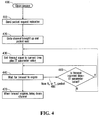
- a session for an application is started by opening a data channel between the device and another device with which the device is communicating.
- Step 300 is done using any number of ways known to those in the art for initiating a channel between two communication devices that allow packets to be sent and received between the two devices.
- the application provides session specific parameters, for example the ITAR session specific parameter value, that may be used during the method described herein.
- the IT parameter value may default to the ITAR device parameter value or be set to the ITAR session specific parameter value.
- the channel may be active for a period of time to allow further communication between the devices for establishing the channel, following which the channel will go down or dormant if no packets are being sent or received.
- the session is open, but the data channel is currently down.
- a receive packet page is received by the device.
- the receive packet page is an indication that the other device with which the communication device is communicating wishes to send a packet for the device to receive.
- the data channel is brought up from the dormant state to the active state and the packet for which the page was sent is received by the device.
- a timer is set to a time-out value equal to a current time, t, plus the IT parameter value set in step 300.
- the IT parameter value defaults to the ITAR device parameter value.
- the IT parameter value may be updated to the ITAR session specific parameter value if this is desirable when the session is opened in step 300.
- the data channel remains up and the device waits for the time-out to expire. During this waiting period another packet may be received (or sent) as shown at 350.
- another packet is received (or sent)
- decision step 360 it is determined if the present time-out set at step 330 is greater than a new current time, t+T, plus the IT parameter value.
- the IT parameter is the IT parameter used to calculate the time-out in step 330 or an updated IT parameter updated since step 330.
- the IT parameter value may be updated due to the ITAR/ITAT packet parameter value from the another packet being sent or received. If the time-out of step 330 is greater than the sum of the new current time plus the IT parameter value, then a "yes" path results in a return to step 340 to wait for the time-out to expire. If the time-out of step 330 is not greater than the sum of the new current time plus the IT parameter value, then a "no" path results going to step 330 to create a new time-out that is the new current time plus the IT parameter value. Following step 340, after the time-out has expired, the next step 370 involves bringing down the data channel from the active state to the dormant state.
- the IT parameter value may be changed or updated at any time during steps 310-360. For example, if the IT parameter value initially defaults to the ITAR/ITAT device parameter value, the IT parameter value can be updated to reflect a desired session specific ITAT/ITAR parameter value or a packet specific ITAT/ITAR parameter value.
- An ITAR device parameter value is 20 seconds.
- the IT parameter value is set to the ITAR device parameter value in step 300.
- the time-out is set to a current time (starting reference time of 0 seconds) plus the ITAR device parameter value of 20 seconds. Therefore, the time-out at 20 seconds. If when waiting for the time-out to expire at step 340 another packet is received when the new current time is equal to 10 seconds, it is determined at step 360 whether the new current time-out equal to 20 seconds is larger than the sum of the new current time, 10 seconds, plus the IT parameter value, which has not been updated and remains as the ITAR device parameter value equal to 20 seconds. As the new current time plus the IT parameter value is equal to 30 seconds, then the "no" path is followed. The new time-out is still 20 seconds in duration and will expire when the new current time is equal to 30 seconds from the starting reference time.
- the ITAR session specific parameter value is 15 seconds and the IT parameter value is set equal to the session specific ITAR parameter value instead of the ITAR device parameter value.
- the new current time is equal to 10 seconds. Therefore, at step 360, the new current time plus the IT parameter value is 25 seconds, which is greater than the current time-out expiry time of 15 seconds (original starting reference time plus session specific ITAR parameter value of 15 seconds) and returning to step 330, the time-out is reset similar to the first example above.
- the IT parameter value initially defaults to the device ITAR parameter value of 20 seconds.
- the IT parameter value is updated after the first packet is received to the session specific ITAR parameter, which is equal to 5 seconds, from the device ITAR parameter. Another packet is received when the new current time is equal to 10 seconds.
- the new current time plus the updated IT parameter value is 15 seconds, which is less than the current time-out of 20 seconds (original starting reference time plus device ITAR parameter value of 20 seconds). Therefore, the "yes" path is followed, which results in waiting for the greater time-out at 20 seconds to expire before the channel can be taken down at step 370, if no further packets are received or are designated to be sent.
- a session is started by opening a data channel between the communication device and another device that is similar to step 300 described above. As in the method described above, it is assumed that the session is open, but the data channel is currently down. When the session is opened the application provides session specific parameters, for example the ITAT session specific parameter value, that may be used during the method described herein.
- session specific parameters for example the ITAT session specific parameter value, that may be used during the method described herein.
- a send packet request is initiated by the communication device. The send packet request indicates that the device has a packet it desires to send to the other device to which it is communicating.
- the data channel is brought up from the dormant state to the active state and the packet for which the request was initiated is sent by the device.
- a timer is set to a time-out value equal to a current time, t, plus the IT parameter value.
- the IT parameter value could be either the ITAT device parameter value or the ITAT session specific parameter value depending on how the session is set up in step 400 or any updating of the IT parameter value that may have occurred since the IT parameter value was initially set. For example, if the IT parameter value initially defaults to the ITAT device parameter value and is updated to the ITAT session specific parameter value when the session is opened in step 400, or if the IT parameter is updated to reflect the ITAT packet specific parameter value when the packet is sent at step 420.
- the data channel remains up and waits for the time-out to expire. During this waiting period another packet may be sent (or received) as shown at 450.
- another packet may be sent (or received) as shown at 450.
- the IT parameter value is the IT parameter value used to calculate the time-out in step 430 or an updated IT parameter value updated since step 430.
- the IT parameter value may be updated due to a packet specific parameter value from the another packet being sent or received.
- step 430 If the time-out of step 430 is greater than the sum of the new current time plus the IT parameter value, then a "yes" path results in a return to step 440 to wait for the time-out to expire. If the time-out of step 430 is not greater than the sum of the new current time plus the IT parameter value, then a "no" path results going to step 430 to create a new time-out that is the new current time plus the IT parameter value. Following step 440, after the time-out has expired, the next step 470 involves bringing down the data channel from the active state to the dormant state.
- the ITAR device parameter value is set equal to 20 seconds and the IT parameter value defaults to the ITAR device parameter value at step 400.
- the time-out is set to 20 seconds. If when waiting for the time-out to expire another packet is sent when the new current time is equal to 10 seconds and has an ITAT packet parameter value set to 15 seconds, at step 460 it is determined whether the current time-out at 20 seconds is greater than the sum of the new current time, 10 seconds, plus the IT parameter value.
- the IT parameter is updated to reflect the higher priority of the ITAT packet parameter value, which is equal to 15 seconds. As the new current time plus the updated IT parameter value is equal to 25 seconds, the "no" path is followed and the new time-out is set based on the updated IT parameter value.
- the "yes" path is followed and waits at step 440 for the original time-out to expire or more packets to be received or sent.
- ITAR/ITAT device parameters values are shorter time-out values than the higher priority session specific or packet parameter values and as such would lengthen the wait for the time-out expiry. In such situations the higher priority hierarchy would still be maintained as described above.
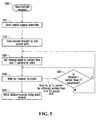
- step 500 multiple sessions are started by opening a data channel between the device and another device, which is similar to step 400 described above, wherein each application has a session opened and all sessions communicate over the one data channel. The remainder of the method occurs with open sessions, but the data channel is initially down.
- the application provides session specific parameters, for example the ITAR session specific parameter value, that may be used during the method described herein.
- a send packet request is initiated by the communication device for a first session.
- step 520 the data channel is brought up from the dormant state to the active state and the packet for which the request was initiated is sent by the device.
- a timer is set to a time-out value equal to a current time, t, plus the IT parameter.
- the IT parameter value could be set to either one of the ITAT device parameter value or the ITAR session specific parameter value, depending on how the sessions are set up in step 500 or any updating of the IT parameter value that may have occurred since the IT parameter value was initially set.
- the data channel remains up and waits for the time-out to expire. During this waiting period a packet for a second session may be sent (or received) as shown at 550. When the packet of the second session is sent (or received), at decision step 560 it is determined if the present time-out set at step 530 is greater than a new current time, t+T, plus the IT parameter value.
- the IT parameter value is the IT parameter value used to calculate the time-out in step 530 or an updated IT parameter value updated since step 530.
- the IT parameter value may be updated due to a packet specific parameter value from the another packet from the second session being sent or received. If the time-out of step 530 is greater than the sum of the new current time plus the IT parameter value, then a "yes" path results in a return to step 540 to wait for the time-out to expire. If the time-out of step 530 is not greater than the sum of the new current time plus the IT parameter value, then a "no" path results going to step 530 to create a new time-out that is the new current time plus the updated IT parameter value as described above. Following step 540, after the time-out has expired, the next step 570 involves bringing down the data channel from the active state to the dormant state.
- a device has an ITAT device parameter value equal to 20 seconds, a first session has a first ITAT session specific parameter value equal to 15 seconds and a second session has a second ITAR session specific parameter equal to only 5 seconds.
- the IT parameter value is set to the first session ITAT parameter.
- the time-out is equal to 20 seconds based on the current time and the IT parameter value.
- the channel control logic must determine if the original time-out is larger than the value of the new current time plus the IT parameter value which is updated to be equal to the second ITAT/ITAR session specific parameter value. The original time-out is greater than the new current time plus the updated IT parameter value, so the "no" path at step 540 results in waiting for the original time-out to expire.
- the IT parameter value may also be updated to reflect the ITAR/ITAT packet parameter if conditions provide that the ITAR/ITAT packet parameter is to supersede the current IT parameter based on the priority hierarchy described above.
- Figure 5 and the above description pertain to an initial send packet condition, however it is to be understood that a similar multi-session method pertaining to an initial receive packet condition is within the scope of the application.
- Another aspect of the application pertains to when packets are sent by the communication device sending the packets. Bringing up the channel can be delayed for sending packets by utilizing a further time-out parameter identified as "Lazy Sendout Time" (LST).
- LST is a send priority time-out parameter which identifies a time period during which the send packet is delayed.
- a benefit provided by delaying when a packet is sent is related to conservation of battery life.
- the LST parameter is used to set a timer in a similar manner to the inactivity time-out parameter described above.
- the packet can wait to be sent until the data channel is brought up to receive a packet, send a more important packet, or send the packet when the LST time period expires if there has been no reason to bring up a data channel before that time.
- a first step 600 essentially corresponds to the send packet request step of 410 Figure 4.
- the application provides session specific parameters, for example the LST session specific parameter value, that may be used during the method described herein.
- step 610 it is determined if the data channel is currently up. If the data channel is already up as identified at 620, the send packet is sent over the data channel at step 670 as soon as possible.
- step 630 it is determined if the LST parameter is equal to zero. If the LST is equal to zero, a "yes" path is followed and the data channel is brought up at step 640.
- the send packet is then sent over the data channel at step 670. If the LST is not equal to zero, a "no" path is followed which involves waiting for the LST time period to expire at step 650. While waiting for the LST to expire, if the data channel is brought up due to a receive packet or a higher priority send packet at step 660, then the send packet is sent over the data channel at step 670. If the data channel is not brought up before the expiry of the LST time period, then the LST times out at 680, the data channel is brought up at step 640 and the send packet is then sent over the data channel at step 670.
- the LST parameter used to set a timer could be any one of an LST device parameter, an LST session specific parameter, or an LST packet specific parameter.
- the LST parameter has a hierarchy priority assignment in a similar manner to the IT parameter described above. Also in a similar manner to the IT parameter described above, the LST parameter can be changed or updated at any step of the method.
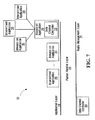
- Figure 7 illustrates another embodiment for a communication device 32, having a similar radio management layer 21, packet handling layer 20, and application layer 19 to the device 18 of Figure 2.
- Figure 7 includes an always-on application 29 in the application layer that forms an interface for other always-on applications 35 or intermittent applications 36 to communicate to the packet handling layer 20 in communication device 32.
- the always-on application 29 forming the interface includes a second data Channel Controller 33 having similar data channel control logic to that described above located in the radio management layer 21 which is used by the always-on application 29 for control of the applications 35,36 for which it acts as the interface.
- the always-on application 29 can oversee multiple applications 35,36, thereby forming a single point of contact for the Data Channel Controller 30 in the radio management layer 21 for all the applications 35,36 the always-on application 29 oversees.
- the always-on application 29 ensures that the data channel shared by the multiple applications 35,36 is not taken down or brought up prematurely based on the relevant ITAR, ITAT and/or LST parameter information used by the second Data Channel Controller 33 in the always-on application 29.
- the Data Channel Controller 30 then operates in the above described manner to control the data channel for the applications 22,26,28 in the application layer 19 as well as the applications 35,36 coupled to the always-on application 29.
Landscapes
- Engineering & Computer Science (AREA)
- Computer Networks & Wireless Communication (AREA)
- Signal Processing (AREA)
- Mobile Radio Communication Systems (AREA)
- Selective Calling Equipment (AREA)
- Communication Control (AREA)
Applications Claiming Priority (1)
| Application Number | Priority Date | Filing Date | Title |
|---|---|---|---|
| US11/245,116 US7778269B2 (en) | 2005-10-07 | 2005-10-07 | Methods and systems for customized multi-application channel control |
Publications (3)
| Publication Number | Publication Date |
|---|---|
| EP1773005A1 true EP1773005A1 (de) | 2007-04-11 |
| EP1773005B1 EP1773005B1 (de) | 2009-08-19 |
| EP1773005B8 EP1773005B8 (de) | 2009-10-14 |
Family
ID=37911032
Family Applications (1)
| Application Number | Title | Priority Date | Filing Date |
|---|---|---|---|
| EP05109452A Expired - Lifetime EP1773005B8 (de) | 2005-10-07 | 2005-10-11 | Verfahren und Vorrichtung zum Kontrollieren eines Mehrfachanwendungskanals |
Country Status (5)
| Country | Link |
|---|---|
| US (2) | US7778269B2 (de) |
| EP (1) | EP1773005B8 (de) |
| AT (1) | ATE440426T1 (de) |
| CA (1) | CA2562469C (de) |
| DE (1) | DE602005016123D1 (de) |
Cited By (1)
| Publication number | Priority date | Publication date | Assignee | Title |
|---|---|---|---|---|
| WO2009053522A1 (en) | 2007-10-23 | 2009-04-30 | Teliasonera Ab | Optimised messaging patterns |
Families Citing this family (17)
| Publication number | Priority date | Publication date | Assignee | Title |
|---|---|---|---|---|
| US7778269B2 (en) * | 2005-10-07 | 2010-08-17 | Research In Motion Limited | Methods and systems for customized multi-application channel control |
| US7720482B2 (en) * | 2005-10-31 | 2010-05-18 | Research In Motion Limited | Method and apparatus for transitioning between EVDO and CDMA 1X systems using redundant data call blockings |
| US7761097B2 (en) * | 2005-10-31 | 2010-07-20 | Research In Motion Limited | Apparatus, and associated method, for permitting communication system transition based upon signal threshold determination |
| US7894375B2 (en) * | 2005-10-31 | 2011-02-22 | Research In Motion Limited | Method, and associated apparatus, for transitioning communications of hybrid access terminal between communication systems |
| KR20090116932A (ko) * | 2008-05-08 | 2009-11-12 | 삼성전자주식회사 | 위젯 창을 표시하는 디스플레이 장치 및 그 방법 |
| ES2620311T3 (es) * | 2009-11-05 | 2017-06-28 | Amadeus S.A.S. | Método y sistema para adaptar un periodo de tiempo de expiración de sesión |
| US8904206B2 (en) | 2010-01-26 | 2014-12-02 | Motorola Mobility Llc | Mobile computing device and method for maintaining application continuity |
| KR20110124508A (ko) * | 2010-05-11 | 2011-11-17 | 엘지전자 주식회사 | 이동 단말기 및 이동 단말기의 제어 방법 |
| US20110280247A1 (en) * | 2010-05-17 | 2011-11-17 | Google Inc. | System and method for reducing latency via multiple network connections |
| CN102469124B (zh) * | 2010-11-09 | 2015-08-12 | 中兴通讯股份有限公司 | 基于aog的移动互联网业务的实现方法、网关、代理及系统 |
| US9526069B2 (en) * | 2012-04-20 | 2016-12-20 | Qualcomm Incorporated | Early initiation of dormancy of a radio connection |
| US9477255B2 (en) * | 2012-07-09 | 2016-10-25 | Apple Inc. | Systems and methods for suspending idle devices based on idle policies for the devices |
| US8903362B2 (en) * | 2012-12-04 | 2014-12-02 | At&T Intellectual Property I, L.P. | Rule-based device timeout and security access |
| US9042945B2 (en) | 2013-06-20 | 2015-05-26 | Google Technology Holdings LLC | Parallelization of application launch and activation of mobile data connection for applications requiring remote data in a device |
| CN110445874B (zh) * | 2019-08-14 | 2020-09-01 | 京东数字科技控股有限公司 | 一种会话处理方法、装置、设备和存储介质 |
| KR102155256B1 (ko) * | 2020-07-17 | 2020-09-11 | 주식회사 가야데이터 | 이기종 환경에서 사용 가능한 스토리지 이중화 시스템 |
| CN118131736B (zh) * | 2024-05-07 | 2024-07-23 | 质子汽车科技有限公司 | 一种车辆电源控制方法 |
Citations (4)
| Publication number | Priority date | Publication date | Assignee | Title |
|---|---|---|---|---|
| US20020172178A1 (en) * | 2001-05-16 | 2002-11-21 | Masayasu Suzuki | Radio base station/radio base station controller equipped with inactivity timer, mobile station, and state control method |
| US20030100310A1 (en) * | 2001-11-26 | 2003-05-29 | Mark Lindner | System and method for traffic channel dormancy in wireless communication socket mode |
| US20030235171A1 (en) * | 2002-06-24 | 2003-12-25 | Anders Lundstrom | Applications based radio resource management in a wireless communication network |
| US20040179492A1 (en) * | 2003-01-08 | 2004-09-16 | Hang Zhang | Method and apparatus for updating locations of dormant mobile stations |
Family Cites Families (7)
| Publication number | Priority date | Publication date | Assignee | Title |
|---|---|---|---|---|
| US5625882A (en) * | 1994-03-01 | 1997-04-29 | Motorola, Inc. | Power management technique for determining a device mode of operation |
| US5560021A (en) * | 1994-04-04 | 1996-09-24 | Vook; Frederick W. | Power management and packet delivery method for use in a wireless local area network (LAN) |
| US7085579B2 (en) * | 2000-04-17 | 2006-08-01 | Hitachi, Ltd. | Mobile communication systems, mobile stations, base station controllers and packet data service nodes |
| JP4032028B2 (ja) * | 2002-02-08 | 2008-01-16 | 富士通株式会社 | 局側装置および局側装置におけるリソース割当方法並びに移動通信システム |
| US6738373B2 (en) * | 2002-02-11 | 2004-05-18 | Qualcomm Incorporated | Wireless communication device operable on different types of communication networks |
| US7567791B2 (en) * | 2005-09-19 | 2009-07-28 | Qualcomm Incorporated | Wireless terminal methods and apparatus for use in a wireless communications system that uses a multi-mode base station |
| US7778269B2 (en) * | 2005-10-07 | 2010-08-17 | Research In Motion Limited | Methods and systems for customized multi-application channel control |
-
2005
- 2005-10-07 US US11/245,116 patent/US7778269B2/en active Active
- 2005-10-11 AT AT05109452T patent/ATE440426T1/de not_active IP Right Cessation
- 2005-10-11 DE DE602005016123T patent/DE602005016123D1/de not_active Expired - Lifetime
- 2005-10-11 EP EP05109452A patent/EP1773005B8/de not_active Expired - Lifetime
-
2006
- 2006-10-04 CA CA2562469A patent/CA2562469C/en active Active
-
2010
- 2010-07-06 US US12/830,783 patent/US8649391B2/en active Active
Patent Citations (4)
| Publication number | Priority date | Publication date | Assignee | Title |
|---|---|---|---|---|
| US20020172178A1 (en) * | 2001-05-16 | 2002-11-21 | Masayasu Suzuki | Radio base station/radio base station controller equipped with inactivity timer, mobile station, and state control method |
| US20030100310A1 (en) * | 2001-11-26 | 2003-05-29 | Mark Lindner | System and method for traffic channel dormancy in wireless communication socket mode |
| US20030235171A1 (en) * | 2002-06-24 | 2003-12-25 | Anders Lundstrom | Applications based radio resource management in a wireless communication network |
| US20040179492A1 (en) * | 2003-01-08 | 2004-09-16 | Hang Zhang | Method and apparatus for updating locations of dormant mobile stations |
Non-Patent Citations (1)
| Title |
|---|
| MICROSOFT: "OnNow Pow. Mgmt. Architecture for Applications", 4 December 2001 (2001-12-04), pages 1 - 5, XP002322895, Retrieved from the Internet <URL:www.microsoft.com/whdc/hwdev/tech/onnow/onnowapp_Print.mspx> [retrieved on 20060425] * |
Cited By (2)
| Publication number | Priority date | Publication date | Assignee | Title |
|---|---|---|---|---|
| WO2009053522A1 (en) | 2007-10-23 | 2009-04-30 | Teliasonera Ab | Optimised messaging patterns |
| US8385242B2 (en) | 2007-10-23 | 2013-02-26 | Teliasonera Ab | Optimised messaging patterns |
Also Published As
| Publication number | Publication date |
|---|---|
| US8649391B2 (en) | 2014-02-11 |
| EP1773005B1 (de) | 2009-08-19 |
| US7778269B2 (en) | 2010-08-17 |
| DE602005016123D1 (de) | 2009-10-01 |
| CA2562469C (en) | 2015-06-16 |
| EP1773005B8 (de) | 2009-10-14 |
| US20070081547A1 (en) | 2007-04-12 |
| CA2562469A1 (en) | 2007-04-07 |
| US20100272079A1 (en) | 2010-10-28 |
| ATE440426T1 (de) | 2009-09-15 |
Similar Documents
| Publication | Publication Date | Title |
|---|---|---|
| US8649391B2 (en) | Methods and systems for customized multi-application channel control | |
| CN1675949B (zh) | 无线通信系统中终端的基于计时器的睡眠 | |
| EP2033473B1 (de) | Verhandlung von übertragungsparametern nach einer paketvermittelten übergabe | |
| JP4768827B2 (ja) | アクティブホールド状態の使用によるターミナルの電力消費の削減 | |
| EP3379800B1 (de) | Verfahren und vorrichtung zur ausführung von zeitlich festgelegten netzwerkoperationen | |
| EP1964374B1 (de) | Verwaltung von verbindungen in einem drahtlosen kommunikationsnetz | |
| CN101682891B (zh) | 用于配置模式定时器的方法及装置 | |
| US7916675B2 (en) | Method and system for providing interim discontinuous reception/transmission | |
| EP2992732B1 (de) | Stromverbrauchssteuerung auf basis eines inaktivitätstimers | |
| US8761093B2 (en) | Rate shaping triggered discontinuous transmission in wireless communications | |
| CN101039208B (zh) | 更新用户终端工作状态的方法 | |
| TW200901707A (en) | Method and apparatus for dynamic adjustment of uplink transmission time | |
| JP2010525733A (ja) | ワイヤレスユーザ端末における節電の方法およびデバイス | |
| US8059592B2 (en) | Access terminal which handles multiple user connections | |
| CN103416094B (zh) | 控制无线电中的省电模式的方法及无线设备 | |
| CN101536430A (zh) | 通信设备上的多调制解调器调度 | |
| CN1980480B (zh) | 呼叫接纳控制装置和呼叫接纳控制方法 | |
| CN117014123A (zh) | 一种收发配置信息的方法及设备 | |
| CN100433700C (zh) | 一种调整业务质量参数的方法 | |
| KR20050022398A (ko) | 이동 통신 단말기의 패킷 데이터 수신 방법 | |
| US8848017B2 (en) | Method and apparatus for supporting data service for quality of service in portable terminal using two different operating systems | |
| CN112312473B (zh) | 上行数据传输方法及系统、终端及存储介质 | |
| CN100450203C (zh) | 一种防止iu接口信令连接吊死的方法 | |
| CN100401649C (zh) | 一种cdma系统基站中的功率控制方法 | |
| EP4662974A1 (de) | Kommunikationsvorrichtungen, infrastrukturausrüstung und verfahren |
Legal Events
| Date | Code | Title | Description |
|---|---|---|---|
| PUAI | Public reference made under article 153(3) epc to a published international application that has entered the european phase |
Free format text: ORIGINAL CODE: 0009012 |
|
| 17P | Request for examination filed |
Effective date: 20051011 |
|
| AK | Designated contracting states |
Kind code of ref document: A1 Designated state(s): AT BE BG CH CY CZ DE DK EE ES FI FR GB GR HU IE IS IT LI LT LU LV MC NL PL PT RO SE SI SK TR |
|
| AX | Request for extension of the european patent |
Extension state: AL BA HR MK YU |
|
| 17Q | First examination report despatched |
Effective date: 20070413 |
|
| AKX | Designation fees paid |
Designated state(s): AT BE BG CH CY CZ DE DK EE ES FI FR GB GR HU IE IS IT LI LT LU LV MC NL PL PT RO SE SI SK TR |
|
| AXX | Extension fees paid |
Extension state: BA Payment date: 20051011 Extension state: AL Payment date: 20051011 Extension state: HR Payment date: 20051011 Extension state: MK Payment date: 20051011 Extension state: YU Payment date: 20051011 |
|
| GRAP | Despatch of communication of intention to grant a patent |
Free format text: ORIGINAL CODE: EPIDOSNIGR1 |
|
| GRAS | Grant fee paid |
Free format text: ORIGINAL CODE: EPIDOSNIGR3 |
|
| GRAA | (expected) grant |
Free format text: ORIGINAL CODE: 0009210 |
|
| AK | Designated contracting states |
Kind code of ref document: B1 Designated state(s): AT BE BG CH CY CZ DE DK EE ES FI FR GB GR HU IE IS IT LI LT LU LV MC NL PL PT RO SE SI SK TR |
|
| AX | Request for extension of the european patent |
Extension state: AL BA HR MK YU |
|
| REG | Reference to a national code |
Ref country code: GB Ref legal event code: FG4D |
|
| REG | Reference to a national code |
Ref country code: CH Ref legal event code: EP |
|
| REG | Reference to a national code |
Ref country code: IE Ref legal event code: FG4D |
|
| REF | Corresponds to: |
Ref document number: 602005016123 Country of ref document: DE Date of ref document: 20091001 Kind code of ref document: P |
|
| LTIE | Lt: invalidation of european patent or patent extension |
Effective date: 20090819 |
|
| PG25 | Lapsed in a contracting state [announced via postgrant information from national office to epo] |
Ref country code: LT Free format text: LAPSE BECAUSE OF FAILURE TO SUBMIT A TRANSLATION OF THE DESCRIPTION OR TO PAY THE FEE WITHIN THE PRESCRIBED TIME-LIMIT Effective date: 20090819 Ref country code: ES Free format text: LAPSE BECAUSE OF FAILURE TO SUBMIT A TRANSLATION OF THE DESCRIPTION OR TO PAY THE FEE WITHIN THE PRESCRIBED TIME-LIMIT Effective date: 20091130 Ref country code: IS Free format text: LAPSE BECAUSE OF FAILURE TO SUBMIT A TRANSLATION OF THE DESCRIPTION OR TO PAY THE FEE WITHIN THE PRESCRIBED TIME-LIMIT Effective date: 20091219 Ref country code: FI Free format text: LAPSE BECAUSE OF FAILURE TO SUBMIT A TRANSLATION OF THE DESCRIPTION OR TO PAY THE FEE WITHIN THE PRESCRIBED TIME-LIMIT Effective date: 20090819 Ref country code: SE Free format text: LAPSE BECAUSE OF FAILURE TO SUBMIT A TRANSLATION OF THE DESCRIPTION OR TO PAY THE FEE WITHIN THE PRESCRIBED TIME-LIMIT Effective date: 20090819 Ref country code: AT Free format text: LAPSE BECAUSE OF FAILURE TO SUBMIT A TRANSLATION OF THE DESCRIPTION OR TO PAY THE FEE WITHIN THE PRESCRIBED TIME-LIMIT Effective date: 20090819 |
|
| NLV1 | Nl: lapsed or annulled due to failure to fulfill the requirements of art. 29p and 29m of the patents act | ||
| PG25 | Lapsed in a contracting state [announced via postgrant information from national office to epo] |
Ref country code: LV Free format text: LAPSE BECAUSE OF FAILURE TO SUBMIT A TRANSLATION OF THE DESCRIPTION OR TO PAY THE FEE WITHIN THE PRESCRIBED TIME-LIMIT Effective date: 20090819 Ref country code: PL Free format text: LAPSE BECAUSE OF FAILURE TO SUBMIT A TRANSLATION OF THE DESCRIPTION OR TO PAY THE FEE WITHIN THE PRESCRIBED TIME-LIMIT Effective date: 20090819 Ref country code: SI Free format text: LAPSE BECAUSE OF FAILURE TO SUBMIT A TRANSLATION OF THE DESCRIPTION OR TO PAY THE FEE WITHIN THE PRESCRIBED TIME-LIMIT Effective date: 20090819 Ref country code: NL Free format text: LAPSE BECAUSE OF FAILURE TO SUBMIT A TRANSLATION OF THE DESCRIPTION OR TO PAY THE FEE WITHIN THE PRESCRIBED TIME-LIMIT Effective date: 20090819 |
|
| PG25 | Lapsed in a contracting state [announced via postgrant information from national office to epo] |
Ref country code: BG Free format text: LAPSE BECAUSE OF FAILURE TO SUBMIT A TRANSLATION OF THE DESCRIPTION OR TO PAY THE FEE WITHIN THE PRESCRIBED TIME-LIMIT Effective date: 20091119 Ref country code: PT Free format text: LAPSE BECAUSE OF FAILURE TO SUBMIT A TRANSLATION OF THE DESCRIPTION OR TO PAY THE FEE WITHIN THE PRESCRIBED TIME-LIMIT Effective date: 20091221 Ref country code: CY Free format text: LAPSE BECAUSE OF FAILURE TO SUBMIT A TRANSLATION OF THE DESCRIPTION OR TO PAY THE FEE WITHIN THE PRESCRIBED TIME-LIMIT Effective date: 20090819 |
|
| PG25 | Lapsed in a contracting state [announced via postgrant information from national office to epo] |
Ref country code: RO Free format text: LAPSE BECAUSE OF FAILURE TO SUBMIT A TRANSLATION OF THE DESCRIPTION OR TO PAY THE FEE WITHIN THE PRESCRIBED TIME-LIMIT Effective date: 20090819 Ref country code: CZ Free format text: LAPSE BECAUSE OF FAILURE TO SUBMIT A TRANSLATION OF THE DESCRIPTION OR TO PAY THE FEE WITHIN THE PRESCRIBED TIME-LIMIT Effective date: 20090819 Ref country code: EE Free format text: LAPSE BECAUSE OF FAILURE TO SUBMIT A TRANSLATION OF THE DESCRIPTION OR TO PAY THE FEE WITHIN THE PRESCRIBED TIME-LIMIT Effective date: 20090819 Ref country code: DK Free format text: LAPSE BECAUSE OF FAILURE TO SUBMIT A TRANSLATION OF THE DESCRIPTION OR TO PAY THE FEE WITHIN THE PRESCRIBED TIME-LIMIT Effective date: 20090819 |
|
| PG25 | Lapsed in a contracting state [announced via postgrant information from national office to epo] |
Ref country code: MC Free format text: LAPSE BECAUSE OF NON-PAYMENT OF DUE FEES Effective date: 20091031 Ref country code: SK Free format text: LAPSE BECAUSE OF FAILURE TO SUBMIT A TRANSLATION OF THE DESCRIPTION OR TO PAY THE FEE WITHIN THE PRESCRIBED TIME-LIMIT Effective date: 20090819 |
|
| REG | Reference to a national code |
Ref country code: CH Ref legal event code: PL |
|
| PLBE | No opposition filed within time limit |
Free format text: ORIGINAL CODE: 0009261 |
|
| STAA | Information on the status of an ep patent application or granted ep patent |
Free format text: STATUS: NO OPPOSITION FILED WITHIN TIME LIMIT |
|
| PG25 | Lapsed in a contracting state [announced via postgrant information from national office to epo] |
Ref country code: BE Free format text: LAPSE BECAUSE OF FAILURE TO SUBMIT A TRANSLATION OF THE DESCRIPTION OR TO PAY THE FEE WITHIN THE PRESCRIBED TIME-LIMIT Effective date: 20090819 |
|
| 26N | No opposition filed |
Effective date: 20100520 |
|
| PG25 | Lapsed in a contracting state [announced via postgrant information from national office to epo] |
Ref country code: IE Free format text: LAPSE BECAUSE OF NON-PAYMENT OF DUE FEES Effective date: 20091011 Ref country code: GR Free format text: LAPSE BECAUSE OF FAILURE TO SUBMIT A TRANSLATION OF THE DESCRIPTION OR TO PAY THE FEE WITHIN THE PRESCRIBED TIME-LIMIT Effective date: 20091120 Ref country code: CH Free format text: LAPSE BECAUSE OF NON-PAYMENT OF DUE FEES Effective date: 20091031 Ref country code: LI Free format text: LAPSE BECAUSE OF NON-PAYMENT OF DUE FEES Effective date: 20091031 |
|
| PG25 | Lapsed in a contracting state [announced via postgrant information from national office to epo] |
Ref country code: IT Free format text: LAPSE BECAUSE OF FAILURE TO SUBMIT A TRANSLATION OF THE DESCRIPTION OR TO PAY THE FEE WITHIN THE PRESCRIBED TIME-LIMIT Effective date: 20090819 |
|
| PG25 | Lapsed in a contracting state [announced via postgrant information from national office to epo] |
Ref country code: LU Free format text: LAPSE BECAUSE OF NON-PAYMENT OF DUE FEES Effective date: 20091011 |
|
| PG25 | Lapsed in a contracting state [announced via postgrant information from national office to epo] |
Ref country code: HU Free format text: LAPSE BECAUSE OF FAILURE TO SUBMIT A TRANSLATION OF THE DESCRIPTION OR TO PAY THE FEE WITHIN THE PRESCRIBED TIME-LIMIT Effective date: 20100220 |
|
| PG25 | Lapsed in a contracting state [announced via postgrant information from national office to epo] |
Ref country code: TR Free format text: LAPSE BECAUSE OF FAILURE TO SUBMIT A TRANSLATION OF THE DESCRIPTION OR TO PAY THE FEE WITHIN THE PRESCRIBED TIME-LIMIT Effective date: 20090819 |
|
| REG | Reference to a national code |
Ref country code: DE Ref legal event code: R082 Ref document number: 602005016123 Country of ref document: DE Representative=s name: MERH-IP MATIAS ERNY REICHL HOFFMANN, DE |
|
| REG | Reference to a national code |
Ref country code: DE Ref legal event code: R079 Ref document number: 602005016123 Country of ref document: DE Free format text: PREVIOUS MAIN CLASS: H04L0012560000 Ipc: H04L0012700000 |
|
| REG | Reference to a national code |
Ref country code: DE Ref legal event code: R082 Ref document number: 602005016123 Country of ref document: DE Representative=s name: MERH-IP MATIAS ERNY REICHL HOFFMANN, DE Effective date: 20140925 Ref country code: DE Ref legal event code: R079 Ref document number: 602005016123 Country of ref document: DE Free format text: PREVIOUS MAIN CLASS: H04L0012560000 Ipc: H04L0012700000 Effective date: 20140926 Ref country code: DE Ref legal event code: R081 Ref document number: 602005016123 Country of ref document: DE Owner name: BLACKBERRY LIMITED, WATERLOO, CA Free format text: FORMER OWNER: RESEARCH IN MOTION LTD., WATERLOO, ONTARIO, CA Effective date: 20140925 Ref country code: DE Ref legal event code: R082 Ref document number: 602005016123 Country of ref document: DE Representative=s name: MERH-IP MATIAS ERNY REICHL HOFFMANN PATENTANWA, DE Effective date: 20140925 |
|
| REG | Reference to a national code |
Ref country code: FR Ref legal event code: PLFP Year of fee payment: 11 |
|
| REG | Reference to a national code |
Ref country code: FR Ref legal event code: PLFP Year of fee payment: 12 |
|
| REG | Reference to a national code |
Ref country code: FR Ref legal event code: PLFP Year of fee payment: 13 |
|
| REG | Reference to a national code |
Ref country code: FR Ref legal event code: PLFP Year of fee payment: 14 |
|
| REG | Reference to a national code |
Ref country code: DE Ref legal event code: R082 Ref document number: 602005016123 Country of ref document: DE Ref country code: DE Ref legal event code: R081 Ref document number: 602005016123 Country of ref document: DE Owner name: MALIKIE INNOVATIONS LTD., IE Free format text: FORMER OWNER: BLACKBERRY LIMITED, WATERLOO, ONTARIO, CA |
|
| PGFP | Annual fee paid to national office [announced via postgrant information from national office to epo] |
Ref country code: DE Payment date: 20241029 Year of fee payment: 20 |
|
| PGFP | Annual fee paid to national office [announced via postgrant information from national office to epo] |
Ref country code: GB Payment date: 20241022 Year of fee payment: 20 |
|
| PGFP | Annual fee paid to national office [announced via postgrant information from national office to epo] |
Ref country code: FR Payment date: 20241025 Year of fee payment: 20 |
|
| REG | Reference to a national code |
Ref country code: DE Ref legal event code: R071 Ref document number: 602005016123 Country of ref document: DE |
|
| REG | Reference to a national code |
Ref country code: GB Ref legal event code: PE20 Expiry date: 20251010 |