EP1772924A1 - Nonaqueous electrolytic solution and lithium secondary battery - Google Patents
Nonaqueous electrolytic solution and lithium secondary battery Download PDFInfo
- Publication number
- EP1772924A1 EP1772924A1 EP05743834A EP05743834A EP1772924A1 EP 1772924 A1 EP1772924 A1 EP 1772924A1 EP 05743834 A EP05743834 A EP 05743834A EP 05743834 A EP05743834 A EP 05743834A EP 1772924 A1 EP1772924 A1 EP 1772924A1
- Authority
- EP
- European Patent Office
- Prior art keywords
- hydrogen
- methyl
- propynyl
- carbon atoms
- electrolytic solution
- Prior art date
- Legal status (The legal status is an assumption and is not a legal conclusion. Google has not performed a legal analysis and makes no representation as to the accuracy of the status listed.)
- Granted
Links
Classifications
-
- H—ELECTRICITY
- H01—ELECTRIC ELEMENTS
- H01M—PROCESSES OR MEANS, e.g. BATTERIES, FOR THE DIRECT CONVERSION OF CHEMICAL ENERGY INTO ELECTRICAL ENERGY
- H01M10/00—Secondary cells; Manufacture thereof
- H01M10/05—Accumulators with non-aqueous electrolyte
-
- H—ELECTRICITY
- H01—ELECTRIC ELEMENTS
- H01M—PROCESSES OR MEANS, e.g. BATTERIES, FOR THE DIRECT CONVERSION OF CHEMICAL ENERGY INTO ELECTRICAL ENERGY
- H01M10/00—Secondary cells; Manufacture thereof
- H01M10/05—Accumulators with non-aqueous electrolyte
- H01M10/052—Li-accumulators
- H01M10/0525—Rocking-chair batteries, i.e. batteries with lithium insertion or intercalation in both electrodes; Lithium-ion batteries
-
- H—ELECTRICITY
- H01—ELECTRIC ELEMENTS
- H01M—PROCESSES OR MEANS, e.g. BATTERIES, FOR THE DIRECT CONVERSION OF CHEMICAL ENERGY INTO ELECTRICAL ENERGY
- H01M10/00—Secondary cells; Manufacture thereof
- H01M10/05—Accumulators with non-aqueous electrolyte
- H01M10/056—Accumulators with non-aqueous electrolyte characterised by the materials used as electrolytes, e.g. mixed inorganic/organic electrolytes
- H01M10/0564—Accumulators with non-aqueous electrolyte characterised by the materials used as electrolytes, e.g. mixed inorganic/organic electrolytes the electrolyte being constituted of organic materials only
- H01M10/0566—Liquid materials
- H01M10/0567—Liquid materials characterised by the additives
-
- H—ELECTRICITY
- H01—ELECTRIC ELEMENTS
- H01M—PROCESSES OR MEANS, e.g. BATTERIES, FOR THE DIRECT CONVERSION OF CHEMICAL ENERGY INTO ELECTRICAL ENERGY
- H01M4/00—Electrodes
- H01M4/02—Electrodes composed of, or comprising, active material
-
- H—ELECTRICITY
- H01—ELECTRIC ELEMENTS
- H01M—PROCESSES OR MEANS, e.g. BATTERIES, FOR THE DIRECT CONVERSION OF CHEMICAL ENERGY INTO ELECTRICAL ENERGY
- H01M4/00—Electrodes
- H01M4/02—Electrodes composed of, or comprising, active material
- H01M4/36—Selection of substances as active materials, active masses, active liquids
- H01M4/38—Selection of substances as active materials, active masses, active liquids of elements or alloys
-
- H—ELECTRICITY
- H01—ELECTRIC ELEMENTS
- H01M—PROCESSES OR MEANS, e.g. BATTERIES, FOR THE DIRECT CONVERSION OF CHEMICAL ENERGY INTO ELECTRICAL ENERGY
- H01M4/00—Electrodes
- H01M4/02—Electrodes composed of, or comprising, active material
- H01M4/36—Selection of substances as active materials, active masses, active liquids
- H01M4/58—Selection of substances as active materials, active masses, active liquids of inorganic compounds other than oxides or hydroxides, e.g. sulfides, selenides, tellurides, halogenides or LiCoFy; of polyanionic structures, e.g. phosphates, silicates or borates
-
- H—ELECTRICITY
- H01—ELECTRIC ELEMENTS
- H01M—PROCESSES OR MEANS, e.g. BATTERIES, FOR THE DIRECT CONVERSION OF CHEMICAL ENERGY INTO ELECTRICAL ENERGY
- H01M10/00—Secondary cells; Manufacture thereof
- H01M10/05—Accumulators with non-aqueous electrolyte
- H01M10/052—Li-accumulators
-
- H—ELECTRICITY
- H01—ELECTRIC ELEMENTS
- H01M—PROCESSES OR MEANS, e.g. BATTERIES, FOR THE DIRECT CONVERSION OF CHEMICAL ENERGY INTO ELECTRICAL ENERGY
- H01M2300/00—Electrolytes
- H01M2300/0017—Non-aqueous electrolytes
- H01M2300/0025—Organic electrolyte
- H01M2300/0028—Organic electrolyte characterised by the solvent
- H01M2300/0037—Mixture of solvents
- H01M2300/004—Three solvents
-
- H—ELECTRICITY
- H01—ELECTRIC ELEMENTS
- H01M—PROCESSES OR MEANS, e.g. BATTERIES, FOR THE DIRECT CONVERSION OF CHEMICAL ENERGY INTO ELECTRICAL ENERGY
- H01M4/00—Electrodes
- H01M4/02—Electrodes composed of, or comprising, active material
- H01M4/13—Electrodes for accumulators with non-aqueous electrolyte, e.g. for lithium-accumulators; Processes of manufacture thereof
- H01M4/131—Electrodes based on mixed oxides or hydroxides, or on mixtures of oxides or hydroxides, e.g. LiCoOx
-
- H—ELECTRICITY
- H01—ELECTRIC ELEMENTS
- H01M—PROCESSES OR MEANS, e.g. BATTERIES, FOR THE DIRECT CONVERSION OF CHEMICAL ENERGY INTO ELECTRICAL ENERGY
- H01M4/00—Electrodes
- H01M4/02—Electrodes composed of, or comprising, active material
- H01M4/13—Electrodes for accumulators with non-aqueous electrolyte, e.g. for lithium-accumulators; Processes of manufacture thereof
- H01M4/133—Electrodes based on carbonaceous material, e.g. graphite-intercalation compounds or CFx
-
- H—ELECTRICITY
- H01—ELECTRIC ELEMENTS
- H01M—PROCESSES OR MEANS, e.g. BATTERIES, FOR THE DIRECT CONVERSION OF CHEMICAL ENERGY INTO ELECTRICAL ENERGY
- H01M4/00—Electrodes
- H01M4/02—Electrodes composed of, or comprising, active material
- H01M4/36—Selection of substances as active materials, active masses, active liquids
- H01M4/58—Selection of substances as active materials, active masses, active liquids of inorganic compounds other than oxides or hydroxides, e.g. sulfides, selenides, tellurides, halogenides or LiCoFy; of polyanionic structures, e.g. phosphates, silicates or borates
- H01M4/583—Carbonaceous material, e.g. graphite-intercalation compounds or CFx
- H01M4/587—Carbonaceous material, e.g. graphite-intercalation compounds or CFx for inserting or intercalating light metals
-
- Y—GENERAL TAGGING OF NEW TECHNOLOGICAL DEVELOPMENTS; GENERAL TAGGING OF CROSS-SECTIONAL TECHNOLOGIES SPANNING OVER SEVERAL SECTIONS OF THE IPC; TECHNICAL SUBJECTS COVERED BY FORMER USPC CROSS-REFERENCE ART COLLECTIONS [XRACs] AND DIGESTS
- Y02—TECHNOLOGIES OR APPLICATIONS FOR MITIGATION OR ADAPTATION AGAINST CLIMATE CHANGE
- Y02E—REDUCTION OF GREENHOUSE GAS [GHG] EMISSIONS, RELATED TO ENERGY GENERATION, TRANSMISSION OR DISTRIBUTION
- Y02E60/00—Enabling technologies; Technologies with a potential or indirect contribution to GHG emissions mitigation
- Y02E60/10—Energy storage using batteries
Definitions
- the present invention relates to a nonaqueous electrolytic solution employable for manufacturing a lithium secondary battery having excellent battery characteristics in cycle performance, electric capacity and storage property.
- the invention also relates to a lithium secondary battery employing the nonaqueous electrolytic solution.
- the lithium secondary battery essentially comprises a positive electrode, a nonaqueous electrolytic solution, and a negative electrode.
- a lithium secondary battery utilizing a positive electrode of lithium compound oxide such as LiCoO 2 and a negative electrode of carbonaceous material or lithium metal is favorably employed.
- a carbonate such as ethylene carbonate (EC) or propylene carbonate (PC) is generally used.
- a lithium secondary battery utilizing a positive electrode of LiCoO 2 , LiMn 2 O 4 or LiNiO 2 sometimes shows decrease of electric performances because a portion of the nonaqueous solvent in the nonaqueous electrolytic solution oxidatively decomposes in the course of charging and hence the produced decomposition product disturbs the desired electrochemical reaction.
- the decomposition is considered to be caused by electrochemical oxidation of the solvent on the interface between the positive electrode and the nonaqueous electrolytic solution.
- the lithium secondary battery utilizing a negative electrode of carbonaceous material of high crystallization such as natural graphite or artificial graphite also shows decrease of electric performances because a solvent of the electrolytic solution reductively decomposes on the surface of the negative electrode in the course of charging.
- the reductive decomposition also occurs in the repeated charging-discharging procedures.
- Patent Publication 1 describes that 1,3-propanesultone is preferably contained in an amount of preferably 0.1 to 9 wt.% in a non-aqueous solvent.
- Patent Publication 2 describes that glycol sulfite is preferably contained in an amount of preferably 0.05 to 99.99 vol.% in a non-aqueous solvent.
- Patent Publication 3 also describes that a sultone compound is incorporated into a nonaqueous electrolytic solution of a lithium secondary battery.
- Patent Publications 4 to 8 it is described that a triple bond-containing compound is incorporated into a nonaqueous electrolytic solution of a lithium secondary battery.
- the positive electrode composite layer is densely (for example, in the density of 3.2 to 4.0 g/cm 3 ) formed on the aluminum foil or if the negative electrode composition layer is densely (for example, in the density of 1.0 to 2.0 g/cm 3 ) formed on the copper foil, the electrolytic solution gradually decreases to dry out (to diminish) in the repeated charging-discharging procedures and, as a result, the cycle lifetime shortens.
- Patent Publication 1 JP-A-11-339850 Patent Publication 2: JP-A-11-121032 Patent Publication 3: JP-A-2000-3724 ( U.S. Patent No. 6,033,809 ) Patent Publication 4: JP-A-2000-195545 ( U.S. Patent No. 6,479,191 ) Patent Publication 5: JP-A-2001-43895 Patent Publication 6: JP-A-2001-313072 ( U.S. Patent No. 6,479,191 ) Patent Publication 7: JP-A-2002-100399 Patent Publication 8: JP-A-2002-124297
- the present invention has an object to solve the above problems on the nonaqueous electrolytic solution for a lithium secondary battery and thereby to provide a nonaqueous electrolytic solution employable for manufacturing a lithium secondary battery of improved battery cycle performance, of improved electric capacity and of improved storage property in the charged condition.
- the present invention resides in a nonaqueous electrolytic solution for a lithium secondary battery, comprising an electrolytic salt dissolved in a nonaqueous solvent, characterized by containing 0.01 to 10 wt.% of a sulfur-containing acid ester and 0.01 to 10 wt.% of a triple bond-containing compound.
- the invention also resides in a lithium secondary battery comprising a positive electrode, a negative electrode and a nonaqueous electrolytic solution, wherein the electrolytic solution is the above-mentioned electrolytic solution of the invention.
- the nonaqueous electrolytic solution of the invention is advantageously used for a lithium secondary battery in which the positive electrode comprises a material containing lithium compound oxide and in which the negative electrode comprises a material capable of absorbing and releasing lithium ions.
- a lithium secondary battery employing the nonaqueous electrolytic solution of the invention is excellent in battery performances such as cycle performance, electric capacity and storage property.
- sulfur-containing acid ester is cyclic sulfur-containing acid esters, but non-cyclic sulfur-containing acid esters are also employable.
- the cyclic sulfur-containing acid esters are, for example, sultones, cyclic sulfites and cyclic sulfates. Sultones and cyclic sulfites are preferred.
- the non-cyclic sulfur-containing acid esters are, for example, non-cyclic sulfites, non-cyclic sulfates, disulfonates and trisulfonates. Non-cyclic sulfites and disulfonates are preferred.
- sultones examples include 1,3-propane sultone, 1,3-butane sultone, 1,4-butane sultone and 1,3-propene sultone. Particularly preferred is 1,3-propane sultone.
- cyclic sulfites examples include glycol sulfite, propylene sulfite, butylene sulfite, vinylene sulfite and catechol sulfite. Particularly preferred is glycol sulfite.
- non-cyclic sulfites examples include dimethyl sulfite, diethyl sulfite, dipropyl sulfite, dibutyl sulfite, dipentyl sulfite, dihexyl sulfite, diheptyl sulfite, dioctyl sulfite and diallyl sulfite.
- cyclic sulfates examples include glycol sulfate, propylene sulfate, vinylene sulfate and catechol sulfate. Preferred is glycol sulfate.
- non-cyclic sulfates examples include dimethyl sulfate, diethyl sulfate, dipropyl sulfate, dibutyl sulfate, dipentyl sulfate, dihexyl sulfate, diheptyl sulfate, dioctyl sulfate and diallyl sulfate.
- disulfonates examples include ethyleneglycol dimethanesulfonate, 1,2-propanediol dimethanesulfonate, 1,3-propanediol dimethanesulfonate, 1,3-butanediol dimethanesulfonate, 1,4-butanediol dimethanesulfonate, 2,3-butanediol dimethanesulfonate, 1,5-pentanediol dimethanesulfonate, 1,6-hexanediol dimethanesulfonate, 1,7-heptanediol dimethanesulfonate, and 1,8-octanediol dimethanesulfonate.
- trisulfonates examples include glycerol trimethanesulfonate, 1,2,4-butanetriol trimethanesulfonate, and 1,3,5-pentatriol trimethanesulfonate. Preferred is 1,2,4-butanetriol trimethanesulfonate.
- the sulfur-containing acid ester is preferably at least one compound selected from the group consisting of 1,3-propane sultone, 1,3-butane sultone, glycol sulfite, propylene sulfite, glycol sulfate, propylene sulfate, 1,3-propanediol dimethanesulfonate and 1,4-butanediol dimethanesulfonate.
- Nonaqueous electrolytic solutions containing the above-mentioned sulfur-containing acid esters improve battery performances such as cycle performance, electric capacity and storage property.
- nonaqueous electrolytic solution contains at least one compound selected from the group consisting of 1,3-propane sultone, glycol sulfite, glycol sulfate and 1,4-butanediol dimethanesulfonate.
- the amount of the sulfur-containing acid ester preferably is not less than 0.01 wt.%, more preferably not less than 0.05 wt.%, most preferably not less than 0.1 wt.%, based on the weight of the nonaqueous electrolytic solution. At the same time, the amount of sulfur-containing acid ester preferably is not more than 10 wt.%, more preferably not more than 5 wt.%, based on the weight of the solution. If the amount is too large, the battery performances are often impaired. If the amount is too small, the battery performances cannot be satisfactorily improved.
- the sulfur-containing acid ester is used in combination with a triple bond-containing compound.
- the triple bond-containing compound preferably is an alkyne derivative represented by one of the following formulas (I), (II), (III), (IV), (V) and (VI): in which R 1 is an alkyl group having 1 to 12 carbon atoms, a cycloalkyl group having 3 to 6 carbon atoms or an aryl group; R 2 is an alkyl group having 1 to 12 carbon atoms, a cycloalkyl group having 3 to 6 carbon atoms, an aryl group or hydrogen; p is an integer of 1 or 2; each of R 3 to R 19 is independently an alkyl group having 1 to 12 carbon atoms, a cycloalkyl group having 3 to 6 carbon atoms, an aryl group or hydrogen, provided that each set of R 4 and R 5 , R 6 and R 7 , R 8 and R 9 , R 10 and R 11 , R 12 and R 13 , R 15
- the triple bond-containing compound preferably is at least one selected from the group consisting of 2-propynyl methyl carbonate, 2-propynyl methanesulfonate, 2-butyne-1,4-diol dimethyl carbonate, 2-butyne-1,4-diol diformate, 2-butyne-1,4-diol dimethanesulfonate, 2,4-hexadiyne-1,6-diol dimethyl dicarbonate, dipropargyl carbonate, di(2-propynyl) sulfite, di (2-propynyl) sulfate, di(2-propynyl) oxalate, di(1-methyl-2-propynyl) oxalate and phenylacetylene.
- Nonaqueous electrolytic solutions containing those triple bond-containing compounds improve battery characteristics in cycle performance, electric capacity and storage property.
- the amount of the triple bond-containing compound represented by the formula (I), (II), (III), (IV), (V) or (VI) is preferably not more than 10 wt.%, more preferably not more than 5 wt.%, based on the weight of the nonaqueous electrolytic solution. At the same time, the amount is preferably not less than 0.01 wt.%, more preferably not less than 0.05 wt.%, most preferably not less than 0.1 wt.%, based on the weight of the solution. If the amount is too large, the battery performances are often impaired because the electroconductivity of the solution unfavorably changes. If the amount is too small, the battery performances cannot be enough improved since the satisfactory surface film is not formed.
- non-aqueous solvents employed in the electrolytic solution of the invention are cyclic carbonates such as ethylene carbonate (EC), propylene carbonate (PC), butylene carbonate (BC) and vinylethylene carbonate (VEC); lactones such as ⁇ -butyrolactone (GBL), ⁇ -valerolactone (GVL) and ⁇ -angelica lactone (AGL); linear carbonates such as dimethyl carbonate (DMC), methyl ethyl carbonate (MEC), diethyl carbonate (DEC), methyl propyl carbonate (MPC), dipropyl carbonate (DPC), methyl butyl carbonate (MBC) and dibutyl carbonate (DBC); ethers such as tetrahydrofuran, 2-methyltetrahydrofuran, 1,4-dioxane, 1,2-dimethoxyethane, 1,2-diethoxyethane and 1,2-dibutoxy-ethane; nitriles such as aceton
- the non-aqueous solvents can be employed in combination.
- the combinations include combinations of cyclic carbonate-linear carbonate, cyclic carbonate-lactone, cyclic carbonate-lactone-linear carbonate, cyclic carbonate-linear carbonate-lactone, cyclic carbonate-linear carbonate-ether, and cyclic carbonate-linear carbonate-linear ester.
- Preferred are a combination of cyclic carbonate-linear ester and a combination of cyclic carbonate-lactone-linear ester.
- the ratio between cyclic carbonate and linear carbonate is in the range of 1:9 to 10:0, preferably 2:8 to 7:3, by volume.
- Examples of the electrolytic salts employable in the invention include LiPF 6 , LiBF 4 , LiClO 4 , lithium salts having linear alkyl groups such as LiN(SO 2 CF 3 ) 2 , LiN(SO 2 C 2 F 5 ) 2 , LiC(SO 2 CF 3 ) 3 , LiPF 4 (CF 3 ) 2 , LiPF 3 (C 2 F 5 ) 3 , LiPF 3 (CF 3 ) 3 , LiPF 3 -(iso-C 3 F 7 ) 3 , and LiPF 5 (iso-C 3 F 7 ), and lithium salts having cyclic alkyl groups such as (CF 2 ) 2 (SO 2 ) 2 NLi and (CF 2 ) 3 (SO 2 ) 2 NLi.
- LiPF 6 , LiBF 4 and LiN(SO 2 CF 3 ) 2 are preferred.
- These electrolytic salts can be employed singly or in combination of two or more. Examples of the combinations include LiPF 6 -LiBF 4 , LiPF 6 -LiN(SO 2 CF 3 ) 2 , and LiBF 4 -LiN(SO 2 CF 3 ) 2 .
- Preferred is a combination of LiPF 6 -LiBF 4 . In the case where some electrolytic salts are mixed to use, they can be mixed in a desired ratio.
- the amount of the salts other than LiPF 6 is preferably not less than 0.01 mol.% based on the total amount of salts, more preferably not less than 0.05 mol.%, most preferably not less than 0.1 mol.%, and preferably not more than 45 mol.%, more preferably not more than 20 mol.%, further preferably not more than 10 mol.%, most preferably not more than 5 mol.%.
- the electrolytic salt can be incorporated into the nonaqueous solvent generally in such an amount as to give an electrolytic solution of generally not less than 0.3 M, preferably not less than 0.5 M, more preferably not less than 0.7 M, most preferably not less than 0.8 M.
- the electrolytic solution is preferably not more than 2.5 M, more preferably not more than 2.0 M, further preferably not more than 1.6 M, most preferably not more than 1.2 M.
- the electrolytic solution of the invention can be prepared, for instance, by mixing the non-aqueous solvents such as ethylene carbonate, propylene carbonate and ethyl methyl carbonate; dissolving the above-mentioned electrolytic salt in the mixture; and further dissolving the sulfur-containing acid ester and one or more of the triple bond-containing compounds represented by the formulas (I), (II), (III), (IV), (V) and (VI) in the resulting mixture.
- the non-aqueous solvents such as ethylene carbonate, propylene carbonate and ethyl methyl carbonate
- the solution can be prevented from decomposition and hence from gas generation. Consequently, battery performances such as cycle performance and storage property can be improved.
- air or carbon dioxide for example
- Either (1) or (2) may be adopted, and they may be performed in combination.
- the air or carbon dioxide-containing gas preferably contains moisture as little as possible, and hence the dew point is preferably -40°C or lower, more preferably -50°C or lower.
- the nonaqueous electrolytic solution of the invention can contain at least one aromatic compound selected from the group consisting of cyclohexylbenzene, fluorocyclohexylbenzenes (e.g., 1-fluoro-2-cyclohexylbenzene, 1-fluoro-3-cyclohexylbenzene, 1-fluoro-4-cyclohexylbenzene), biphenyl, (o-, m-, p-)terphenyl, diphenyl ether, 2-fluorodiphenyl ether, 4-diphenyl ether, fluorobenzene, (o-, m-, p-)difluorobenzene, 2-fluorobiphenyl, 4-fluorobiphenyl, 2,4-difluoroanisole, tert-butylbenzene, 1-fluoro-4-tert-butylbenzene, tert-amylbenz
- aromatic compounds can be used in combination of two or more.
- the combinations include: biphenyl and cyclohexylbenzene, cyclohexylbenzene and tert-butylbenzene, cyclohexylbenzene and tert-amylbenzene, biphenyl and fluorobenzene, cyclohexylbenzene and fluorobenzene, 2,4-difluoroanisole and cyclohexylbenzene, cyclohexylbenzene and 1-fluoro-4-tert-butylbenzene, cyclohexylbenzene and a fluoro-cyclohexylbenzene compound, a fluorocyclohexylbenzene compound and fluorobenzene, and 2,4-difluoroanisole and a fluorocyclohexylbenzene compound.
- the mixing ratio (by weight) is preferably in the range of 50:50 to 10:90, more preferably in the range of 50:50 to 20:80, most preferably in the range of 50:50 to 25:75.
- a fluorine-substituted aromatic compound is preferably added. It is more preferred to incorporate a fluorocyclohexylbenzene compound.
- the nonaqueous electrolytic solution of the invention is used in a lithium secondary battery.
- Other components of the battery are not particularly restricted, and hence various known components can be used.
- the active material of positive electrode is a compound metal oxide comprising lithium and cobalt, manganese or nickel.
- the active material of positive electrode can be used singly or in combination.
- the compound metal oxides include LiCoO 2 , LiMn 2 O 4' LiNiO 2 , LiCo 1-x Ni x O 2 (0.01 ⁇ x ⁇ 1), LiCo 1/3 Ni 1/3 Mn 1/3 O 2 and LiNi 0.5 Mn 1.5 O 4 .
- These compounds can be employed in an optional combination such as a combination of LiCoO 2 and LiMn 2 O 4 , a combination of LiCoO 2 and LiNiO 2 , and a combination of LiMn 2 O 4 and LiNiO 2 .
- the active material of positive electrode is preferably a Li-containing compound metal oxide, such as LiCoO 2 , LiMn 2 O 4 or LiNiO 2 , giving an open-circuit voltage of 4.3 V or more based on Li when charging is completed. More preferred is a Li-containing compound metal oxide, such as LiCo 1/3 Ni 1/3 Mn 1/3 O 2 or LiNi 0.5 Mn 1.5 O 4 , giving a voltage of 4.4 V or more.
- the positive electrode composition preferably comprises a compound metal oxide of Li containing Co or Ni.
- the compound metal oxide of Li may be partially substituted with other elements.
- Co in LiCoO 2 may be partially substituted with Sn, Mg, Fe, Ti, Al, Zr, Cr, V, Ga, Zn or Cu.
- electroconductive material of the positive electrode there are no specific limitations with respect to electroconductive material of the positive electrode, as long as it dose not chemically react.
- the electroconductive material include graphites such as natural graphite (e.g., flake graphite) and artificial graphite, and carbon blacks such as acetylene black, Ketchen black, channel black, furnace black, lamp black and thermal black.
- the graphites and the carbon blacks can be optionally mixed to use.
- the positive electrode composition contains the electroconductive material in an amount of preferably 1 to 10 wt.%, more preferably 2 to 5 wt.%.
- the positive electrode can be manufactured by kneading the above-mentioned active material of positive electrode, an electroconductive material such as acetylene black or carbon black, and a binder such as poly(tetrafluoroethylene) (PTFE), poly(vinylidene fluoride) (PVDF), styrene-butadiene copolymer (SBR), acrylonitrile-butadiene copolymer (NBR) or carboxymethyl cellulose (CMC) to give a positive electrode composition; coating the positive electrode composition on a collector such as aluminum foil or a lath plate of stainless steel; drying and pressing the coated composition, and heating the pressed composition in vacuo at a temperature of approximately 50 to 250°C for approximately 2 hours.
- a binder such as poly(tetrafluoroethylene) (PTFE), poly(vinylidene fluoride) (PVDF), styrene-butadiene copolymer (SBR), acrylonitrile-
- the negative electrode is made of a material capable of absorbing and releasing lithium ions.
- the material include lithium metal, lithium alloys, carbonaceous materials [pyrolytic carbonaceous substances, cokes, graphites (artificial graphite, natural graphite), fired products of organic polymer compounds and carbon fiber], tin metal, tin compounds, silicon and silicon compounds.
- carbonaceous materials are used as the negative electrode (active material of negative electrode)
- graphite having a graphite crystal structure in which the lattice distance of lattice face (002), namely, d 002 , preferably is 0.340 nm or less, more preferably in the range of 0.335 to 0.340 nm.
- the active materials of negative electrode can be employed singly or in combination.
- a powdery material such as the carbonaceous material is preferably used in combination with a binder such as ethylene propylene diene terpolymer (EPDM), poly(tetrafluoroethylene) (PTFE), poly(vinylidene fluoride) (PVDF), styrene-butadiene copolymer (SBR), acrylonitrile-butadiene copolymer (NBR) or carboxymethyl cellulose (CMC).
- EPDM ethylene propylene diene terpolymer
- PTFE poly(tetrafluoroethylene)
- PVDF poly(vinylidene fluoride)
- SBR styrene-butadiene copolymer
- NBR acrylonitrile-butadiene copolymer
- CMC carboxymethyl cellulose
- the lithium secondary battery can be a battery of coin type comprising a positive electrode, a negative electrode, and single or multi-layered separators, or a cylindrical or prismatic battery comprising a positive electrode, a negative electrode, and a separator roll.
- the separator can be a known material such as micro-porous film of polyolefin such as polypropylene or polyethylene, woven cloth, or non-woven cloth.
- the separator of battery may be either a single-layer porous film or a multi-layered porous film. If the separator has too high gas-permeability, the conductivity of lithium ion is often so lowered that the separator cannot function in the battery although it depends on production conditions.
- the separator used in the battery of the invention has a gas-permeability of preferably 1,000 seconds/100 cc or less, more preferably 800 seconds/100 cc or less, most preferably 500 seconds/100 cc or less.
- the gas-permeability also preferably is 50 seconds/100 cc or more, further preferably 100 seconds/100 cc or more, most preferably 300 seconds/100 cc or more.
- the void ratio of the separator is in the range of preferably 30 to 60%, more preferably 35 to 55%, most preferably 40 to 50%, so as to improve the electric capacity of the battery. The thinner the separator is, the higher energy density the battery gives.
- the thickness of the separator is, therefore, preferably 50 ⁇ m or less, more preferably 40 ⁇ m or less, most preferably 25 ⁇ m or less. However, in consideration of mechanical strength, the separator has a thickness of preferably 5 ⁇ m or more, further preferably 10 ⁇ m or more, most preferably 15 ⁇ m or more.
- the positive electrode composition layer provided on aluminum foil has a density in the range of preferably 3.2 to 4.0 g/cm 3 , more preferably 3.3 to 3.9 g/cm 3 , most preferably 3.4 to 3.8 g/cm 3 .
- the negative electrode composition layer provided on copper foil has a density in the range of preferably 1.3 to 2.0 g/cm 3 , more preferably 1.4 to 1.9 g/cm 3 , most preferably 1.5 to 1.8 g/cm 3 .
- the positive electrode composition layer (on one surface of the collector) has a thickness in the range of normally 30 to 120 ⁇ m, preferably 50 to 100 ⁇ m.
- the negative electrode composition layer (on one surface of the collector) has a thickness in the range of normally 1 to 100 ⁇ m, preferably 3 to 70 ⁇ m.
- the lithium secondary battery can be a coin-shaped, cylindrical, prismatic or multi-layered battery comprising a positive electrode, a negative electrode and a porous separator.
- the lithium secondary battery of the invention exhibits excellent cycle performance even when it is employed under the charging condition of a high terminal voltage of higher than 4.2 V, particularly higher than 4.3 V.
- the discharge terminal voltage can be 2.5 V or higher, moreover 2.8 V or higher.
- the lithium secondary battery of the invention can be charged and discharged at a temperature of -40°C or higher, preferably 0°C or higher and of 100°C or below, preferably 80°C or below.
- the lithium secondary battery of the invention may have a safety valve at the sealing plate to obviate increase of the inner pressure. Otherwise, a notch can be provided to the battery case or gasket. Also employable are one or more of known safety elements such as a fuse, a bimetal element, and a PTC element, each of which serves as an element for obviating overcurrent.
- the lithium secondary battery of the invention can be encased in a battery pack in which plural batteries are arranged in series and/or in parallel.
- the battery pack can have a safety element such as a PTC element, a thermostatic fuse, a fuse and/or an electric current breaker, and further a safety circuit (i.e., a circuit capable of monitoring the voltage, temperature and current of the battery of combined battery, and then breaking the current).
- LiPF 6 was dissolved to give a 1M nonaqueous electrolytic solution.
- To the nonaqueous electrolytic solution was added 1 wt.% of 2-propynyl methyl carbonate and 3 wt.% of 1,3-propanesultone (PS).
- LiCoO 2 positive electrode active material, 94 wt.%, acetylene black (electroconductive material, 3 wt.%), and poly(vinylidene fluoride) (binder, 3 wt.%) were mixed. To the resulting mixture was added 1-methyl-2-pyrrolidone. Thus produced mixture was coated on aluminum foil, dried, pressed, and heated to give a positive electrode.
- artificial graphite (negative electrode active material, 95 wt.%) having a graphite crystal structure in which the lattice distance of lattice face (002), namely, d 002 , was 0.335 nm and poly(vinylidene fluoride) (binder, 5 wt.%) were mixed.
- 1-methyl-2-pyrrolidone To the resulting mixture was added 1-methyl-2-pyrrolidone.
- the battery was then filled with air having a dew point of -60°C, and sealed to produce a cylindrical battery of 18650 size (diameter: 18 mm, height: 65 mm).
- a safety valve and an internal current breaker (PTC element) were provided on the produced battery.
- the densities of the positive and negative electrodes were 3.5 g/cm 3 and 1.6 g/cm 3 , respectively.
- the thickness of the positive electrode layer (on one surface of the collector) was 65 ⁇ m, and that of the negative electrode layer (on one surface of the collector) was 70 ⁇ m.
- the produced battery was charged at a high temperature (60°C) with a constant electric current (2.2 A, 1 C) to reach 4.2 V (terminal voltage), and was kept at 4.2 V. The total charging period was 3 hours. Subsequently, the battery was discharged to give a constant electric current (2.2 A, 1 C) to give a terminal voltage of 3.0 V.
- the charging-discharging cycle procedure was repeated for 300 cycles.
- the initial discharge capacity (mAh) was almost the same as the capacity measured in a battery using an 1M LiPF 6 and EC/PC/MEC (30/5/65, volume ratio) solvent mixture containing 3 wt.% of 1,3-propanesultone and no triple bond-containing compound [Comparison Example 1].
- the determined battery performances (initial discharge capacity in terms of relative value, and retention of discharge capacity after the 300 cycle charging-discharging procedure) are shown in Table 1.
- Example 1 The procedures of Example 1 were repeated except for using 2-propynyl methanesulfonate, 2-butyne-1,4-diol dimethyl carbonate, 2-butyne-1,4-diol diformate, 2-butyne-1,4-dibl dimethanesulfonate, or 2,4-hexadiyne-1,6-diol dimethyl dicarbonate as an additive in the amount of 1 wt.% based on the solution, to prepare a nonaqueous electrolytic solution and a cylindrical battery of 18650 size.
- the 300 cycle charging-discharging test was carried out to determine battery performances. The results are shown in Table 1.
- Example 1 The procedures of Example 1 were repeated except for using 1 wt.% of dipropargyl carbonate and 5 wt.% of 1,3-propanesultone as additives, to prepare a nonaqueous electrolytic solution and a cylindrical battery of 18650 size.
- the 300 cycle charging-discharging test was carried out to determine battery performances. The results are shown in Table 1.
- Example 1 The procedures of Example 1 were repeated except for using 1 wt.% of di(2-propynyl) sulfite and 3 wt.% of 1,3-propanesultone as additives, to prepare a nonaqueous electrolytic solution and a cylindrical battery of 18650 size.
- the 300 cycle charging-discharging test was carried out to determine battery performances. The results are shown in Table 1.
- Example 1 The procedures of Example 1 were repeated except for using 1 wt.% of di(2-propynyl) sulfate and 0.1 wt.% of 1,3-propanesultone as additives, to prepare a nonaqueous electrolytic solution and a cylindrical battery of 18650 size.
- the 300 cycle charging-discharging test was carried out to determine battery performances. The results are shown in Table 1.
- Example 1 The procedures of Example 1 were repeated except for using di(2-propynyl) oxalate as an additive in place of 2-propynyl methyl carbonate in the amount of 0.1 wt.%, 1 wt.% or 5 wt.% based on the solution, to prepare a non-aqueous electrolytic solution and a cylindrical battery of 18650 size.
- the 300 cycle charging-discharging test was carried out to determine battery performances. The results are shown in Table 1.
- Example 1 The procedures of Example 1 were repeated except for using 0.5 wt.% of di(1-methyl-2-propynyl) oxalate and 3 wt.% of 1,3-butanesultone (BS) as additives in place of 2-propynyl methyl carbonate and 1,3-propanesultone, respectively, to prepare a nonaqueous electrolytic solution and a cylindrical battery of 18650 size.
- BS 1,3-butanesultone
- the 300 cycle charging-discharging test was carried out to determine battery performances. The results are shown in Table 1.
- Example 1 The procedures of Example 1 were repeated except for using 0.1 wt.% of phenylacetylene as an additive in place of 2-propynyl methyl carbonate, to prepare a nonaqueous electrolytic solution and a cylindrical battery of 18650 size.
- the 300 cycle charging-discharging test was carried out to determine battery performances. The results are shown in Table 1.
- Example 1 The procedures of Example 1 were repeated except for using 1 wt.% of 2-butyne-1,4-diol diformate and 3 wt.% of glycol sulfite (GSI) as an additives in place of 2-propynyl methyl carbonate and 1,3-propanesultone, respectively, to prepare a nonaqueous electrolytic solution and a cylindrical battery of 18650 size.
- GSI glycol sulfite
- the 300 cycle charging-discharging test was carried out to determine battery performances. The results are shown in Table 1.
- Example 1 The procedures of Example 1 were repeated except for using 1 wt.% of 2-butyne-1,4-diol diformate and 3 wt.% of glycol sulfate (GSA) as additives in place of 2-propynyl methyl carbonate and 1,3-propanesultone, respectively, to prepare a nonaqueous electrolytic solution and a cylindrical battery of 18650 size.
- GSA glycol sulfate
- the 300 cycle charging-discharging test was carried out to determine battery performances. The results are shown in Table 1.
- Example 1 The procedures of Example 1 were repeated except for using di(2-propynyl) oxalate as an additive in place of 2-propynyl methyl carbonate in the amount of 0.5 wt.% based on the solution and for using LiMn 2 O 4 as the positive electrode (active material) in place of LiCoO 2 , to prepare a nonaqueous electrolytic solution and a cylindrical battery of 18650 size.
- the 300 cycle charging-discharging test was carried out to determine battery performances. The results are shown in Table 1.
- Example 1 The procedures of Example 1 were repeated except for using 2-propynyl methyl sulfite as an additive in place of 2-propynyl methyl carbonate in the amount of 0.5 wt.% based on the solution and for changing the amount of 1,3-propanesultone (PS) into 2 wt.%, to prepare a nonaqueous electrolytic solution and a cylindrical battery of 18650 size.
- PS 1,3-propanesultone
- the 300 cycle charging-discharging test was carried out to determine battery performances. The results are shown in Table 1.
- Example 1 The procedures of Example 1 were repeated except for using 2-propynyl ethyl sulfite as an additive in place of 2-propynyl methyl carbonate in the amount of 0.5 wt.% based on the solution and for changing the amount of 1,3-propanesultone (PS) into 2 wt.%, to prepare a nonaqueous electrolytic solution and a cylindrical battery of 18650 size.
- PS 1,3-propanesultone
- the 300 cycle charging-discharging test was carried out to determine battery performances. The results are shown in Table 1.
- Example 1 The procedures of Example 1 were repeated except for not using 2-propynyl methyl carbonate and for using 1,3-propanesultone as an additive in the amount of 3 wt.% based on the solution, to prepare a nonaqueous electrolytic solution and a cylindrical battery of 18650 size.
- the 300 cycle charging-discharging test was carried out to determine battery performances. The results are shown in Table 1.
- Example 1 The procedures of Example 1 were repeated except for not using 2-propynyl methyl carbonate and for using 1,4-butanesultone (BS) as an additive in the amount of 3 wt.% based on the solution, to prepare a nonaqueous electrolytic solution and a cylindrical battery of 18650 size.
- BS 1,4-butanesultone
- Example 1 The procedures of Example 1 were repeated except for not using 2-propynyl methyl carbonate and for using glycol sulfite as an additive in the amount of 3 wt.% based on the solution, to prepare a nonaqueous electrolytic solution and a cylindrical battery of 18650 size.
- the 300 cycle charging-discharging test was carried out to determine battery performances. The results are shown in Table 1.
- Example 1 The procedures of Example 1 were repeated except for not using 2-propynyl methyl carbonate and for using glycol sulfate as an additive in the amount of 3 wt.% based on the solution, to prepare a nonaqueous electrolytic solution and a cylindrical battery of 18650 size.
- the 300 cycle charging-discharging test was carried out to determine battery performances. The results are shown in Table 1.
- Example 1 The procedures of Example 1 were repeated except for not using the sulfur-containing acid ester and for using 2-propynyl methyl carbonate as an additive in the amount of 3 wt.% based on the solution, to prepare a nonaqueous electrolytic solution and a cylindrical battery of 18650 size.
- the 300 cycle charging-discharging test was carried out to determine battery performances. The results are shown in Table 1.
- Example 2 The procedures of Example 1 were repeated except that the positive electrode composition was coated on aluminum foil, dried, pressed, and heated to give a positive electrode layer having the density of 3.1 g/cm 3 , that the negative electrode composition was coated on copper foil, dried, pressed, and heated to give a negative electrode layer having the density of 1.1 g/cm 3 , that 2-propynyl methyl carbonate was not used, and that 1,3-propanesultone was used as an additive in the amount of 3 wt.% based on the solution. In this way, a nonaqueous electrolytic solution and a cylindrical battery of 18650 size were produced.
- the produced battery was charged at a high temperature (60°C) with a constant electric current (1.6 A, 1 C) to reach 4.2 V (terminal voltage), and was kept at 4.2 V. Total charging period was 3 hours. Subsequently, the battery was discharged to give a constant electric current (1.6 A, 1 C) to give a terminal voltage of 3.0 V. The charging-discharging cycle procedure was repeated for 300 cycles.
- the determined battery performances are shown in Table 1.
- the produced 18650 battery had smaller positive and negative electrode densities and also had smaller electric capacity than the battery of Comparison Example 1, and hence it hardly lost the electrolytic solution and its battery performances were less lowered.
- Comparison Example 6 The procedures of Comparison Example 6 were repeated except for not using 1,3-propanesultone and for using 2-propynyl methyl carbonate as an additive in the amount of 3 wt.% based on the solution, to prepare a nonaqueous electrolytic solution and a cylindrical battery of 18650 size.
- the 300 cycle charging-discharging test was carried out to determine battery performances. The results are shown in Table 1.
- Table 1 Example Triple bond-cont. compound Sulfur-cont.
- LiPF 6 and Li(SO 2 CF 3 ) 2 were dissolved in the amounts of 0.9 M and 0.1 M, respectively, to give a nonaqueous electrolytic solution.
- To the nonaqueous electrolytic solution was further added 2 wt.% of cyclohexylbenzene (CHB). Further, di(2-propynyl) oxalate and 1,3-propanesultone (PS) were incorporated as additives in amounts of 0.3 wt.% and 2 wt.%, respectively.
- CHB cyclohexylbenzene
- PS 1,3-propanesultone
- LiCoO 2 positive electrode active material, 94 wt.%), graphite (electroconductive material, 3 wt.%) and poly-(vinylidene fluoride) (binder, 3 wt.%) were mixed.
- 1-methyl-2-pyrrolidone To the resulting mixture was further added 1-methyl-2-pyrrolidone.
- artificial graphite negative electrode active material, 95 wt.%) having a graphite crystal structure in which the lattice distance of lattice face (002), namely, d 002 , was 0.335 nm and poly(vinylidene fluoride) (binder, 5 wt.%) were mixed.
- the densities of the positive and negative electrodes were 3.5 g/cm 3 and 1.6 g/cm 3 , respectively.
- the thickness of the positive electrode layer (on one surface of the collector) was 65 ⁇ m, and that of the negative electrode layer (on one surface of the collector) was 70 ⁇ m.
- the produced battery was charged at a high temperature (60°C) with a constant electric current (2.2 A, 1 C) to reach 4.2 V (terminal voltage), and was kept at 4.2 V. Total charging period was 3 hours. Subsequently, the battery was discharged to give a constant electric current (2.2 A, 1 C) to give a terminal voltage of 3.0 V. The charging-discharging cycle procedure was repeated for 300 cycles.
- the initial charge-discharge capacity (mAh) was almost the same as the capacity measured in a battery using an 1M LiPF 6 and EC/PC/MEC (30/5/65, volume ratio) solvent mixture containing 3 wt.% of 1,3-propanesultone and no triple bond-containing compound [Comparison Example 1].
- BP biphenyl
- CHB cyclohexylbenzene
- PS di(2-propynyl) oxalate and 1,3-propanesultone
- BP biphenyl
- CHB cyclohexylbenzene
- PS di(2-propynyl) oxalate and 1,3-propanesultone
- TAB t-amylbenzene
- CHB cyclohexylbenzene
- PS di(2-propynyl) oxalate and 1,3-propanesultone
- FB fluorobenzene
- CHB cyclohexylbenzene
- PS di(2-propynyl) oxalate and 1,3-propanesultone
- a nonaqueous electrolytic solution and a cylindrical battery of 18650 size were produced.
- the 300 cycle charging-discharging test was carried out to determine battery performances. The results are shown in Table 2. Further, in the overcharge test, it was confirmed that the surface temperature of the battery was not higher than 120°C.
- DFA 2,4-difluoroanisole
- CHB cyclohexylbenzene
- di(2-propynyl) oxalate and glycolsulfite were added as additives in the amounts of 0.3 wt.% and 2 wt.%, respectively.
- the 300 cycle charging-discharging test was carried out to determine battery performances. The
- CHB cyclohexylbenzene
- FCHB 1-fluoro-4-cyclohexylbenzene
- BDM 2-propynyl formate and 1,4-butanediol dimethanesulfonate
- CHB cyclohexylbenzene
- FCHB 1-fluoro-4-cyclohexylbenzene
- PS 2-butyne-1,4-diol diformate and 1,3-propanesultone
- TAB t-amylbenzene
- FCHB 1-fluoro-4-cyclohexylbenzene
- PS 1,3-propanesultone
Landscapes
- Chemical & Material Sciences (AREA)
- Electrochemistry (AREA)
- General Chemical & Material Sciences (AREA)
- Chemical Kinetics & Catalysis (AREA)
- Engineering & Computer Science (AREA)
- Manufacturing & Machinery (AREA)
- Inorganic Chemistry (AREA)
- Materials Engineering (AREA)
- Physics & Mathematics (AREA)
- Condensed Matter Physics & Semiconductors (AREA)
- General Physics & Mathematics (AREA)
- Secondary Cells (AREA)
- Cell Electrode Carriers And Collectors (AREA)
- Battery Electrode And Active Subsutance (AREA)
- Organic Low-Molecular-Weight Compounds And Preparation Thereof (AREA)
Abstract
Description
- The present invention relates to a nonaqueous electrolytic solution employable for manufacturing a lithium secondary battery having excellent battery characteristics in cycle performance, electric capacity and storage property. The invention also relates to a lithium secondary battery employing the nonaqueous electrolytic solution.
- Recently, a lithium secondary battery is generally employed as an electric source for driving small electronic devices. The lithium secondary battery essentially comprises a positive electrode, a nonaqueous electrolytic solution, and a negative electrode. A lithium secondary battery utilizing a positive electrode of lithium compound oxide such as LiCoO2 and a negative electrode of carbonaceous material or lithium metal is favorably employed. As the electrolytic solution for the lithium secondary battery, a carbonate such as ethylene carbonate (EC) or propylene carbonate (PC) is generally used.
- Although the known lithium secondary batteries can satisfy basic requirements, it is nevertheless desired to provide a secondary battery showing improved characteristics in cycle performance and electric capacity.
- A lithium secondary battery utilizing a positive electrode of LiCoO2, LiMn2O4 or LiNiO2 sometimes shows decrease of electric performances because a portion of the nonaqueous solvent in the nonaqueous electrolytic solution oxidatively decomposes in the course of charging and hence the produced decomposition product disturbs the desired electrochemical reaction. The decomposition is considered to be caused by electrochemical oxidation of the solvent on the interface between the positive electrode and the nonaqueous electrolytic solution.
- The lithium secondary battery utilizing a negative electrode of carbonaceous material of high crystallization such as natural graphite or artificial graphite also shows decrease of electric performances because a solvent of the electrolytic solution reductively decomposes on the surface of the negative electrode in the course of charging. The reductive decomposition also occurs in the repeated charging-discharging procedures.
- In order to improve performances (particularly, cycle performance) of a lithium secondary battery, Patent Publication 1 describes that 1,3-propanesultone is preferably contained in an amount of preferably 0.1 to 9 wt.% in a non-aqueous solvent.
- For the same purpose, Patent Publication 2 describes that glycol sulfite is preferably contained in an amount of preferably 0.05 to 99.99 vol.% in a non-aqueous solvent.
- Patent Publication 3 also describes that a sultone compound is incorporated into a nonaqueous electrolytic solution of a lithium secondary battery.
- Further, in Patent Publications 4 to 8, it is described that a triple bond-containing compound is incorporated into a nonaqueous electrolytic solution of a lithium secondary battery.
- In order to improve electric capacity of a lithium secondary battery, it has also been studied to increase density of the positive or negative electrode composite layer. It is found, however, that, if the positive electrode composite layer is densely (for example, in the density of 3.2 to 4.0 g/cm3) formed on the aluminum foil or if the negative electrode composition layer is densely (for example, in the density of 1.0 to 2.0 g/cm3) formed on the copper foil, the electrolytic solution gradually decreases to dry out (to diminish) in the repeated charging-discharging procedures and, as a result, the cycle lifetime shortens.
Patent Publication 1:JP-A-11-339850
Patent Publication 2:JP-A-11-121032
Patent Publication 3:JP-A-2000-3724 U.S. Patent No. 6,033,809 )
Patent Publication 4:JP-A-2000-195545 U.S. Patent No. 6,479,191 )
Patent Publication 5:JP-A-2001-43895
Patent Publication 6:JP-A-2001-313072 U.S. Patent No. 6,479,191 )
Patent Publication 7:JP-A-2002-100399
Patent Publication 8:JP-A-2002-124297 - The present invention has an object to solve the above problems on the nonaqueous electrolytic solution for a lithium secondary battery and thereby to provide a nonaqueous electrolytic solution employable for manufacturing a lithium secondary battery of improved battery cycle performance, of improved electric capacity and of improved storage property in the charged condition.
- The present invention resides in a nonaqueous electrolytic solution for a lithium secondary battery, comprising an electrolytic salt dissolved in a nonaqueous solvent, characterized by containing 0.01 to 10 wt.% of a sulfur-containing acid ester and 0.01 to 10 wt.% of a triple bond-containing compound.
- The invention also resides in a lithium secondary battery comprising a positive electrode, a negative electrode and a nonaqueous electrolytic solution, wherein the electrolytic solution is the above-mentioned electrolytic solution of the invention.
- The nonaqueous electrolytic solution of the invention is advantageously used for a lithium secondary battery in which the positive electrode comprises a material containing lithium compound oxide and in which the negative electrode comprises a material capable of absorbing and releasing lithium ions.
- A lithium secondary battery employing the nonaqueous electrolytic solution of the invention is excellent in battery performances such as cycle performance, electric capacity and storage property.
- It has been revealed that, if specific amounts of a sulfur-containing acid ester and a triple bond-containing compound are incorporated into a nonaqueous electrolytic solution of a lithium secondary battery having high capacity, the electrolytic solution is prevented from drying out and the resultant battery shows excellent cycle performance. The mechanism of this effect is not clear, but it is thought that the sulfur-containing acid ester and the triple bond-containing compound react with each other to form a strong surface film on the negative electrode.
- Representative examples of the sulfur-containing acid ester are cyclic sulfur-containing acid esters, but non-cyclic sulfur-containing acid esters are also employable. The cyclic sulfur-containing acid esters are, for example, sultones, cyclic sulfites and cyclic sulfates. Sultones and cyclic sulfites are preferred. The non-cyclic sulfur-containing acid esters are, for example, non-cyclic sulfites, non-cyclic sulfates, disulfonates and trisulfonates. Non-cyclic sulfites and disulfonates are preferred.
- Examples of the sultones include 1,3-propane sultone, 1,3-butane sultone, 1,4-butane sultone and 1,3-propene sultone. Particularly preferred is 1,3-propane sultone.
- Examples of the cyclic sulfites include glycol sulfite, propylene sulfite, butylene sulfite, vinylene sulfite and catechol sulfite. Particularly preferred is glycol sulfite.
- Examples of the non-cyclic sulfites include dimethyl sulfite, diethyl sulfite, dipropyl sulfite, dibutyl sulfite, dipentyl sulfite, dihexyl sulfite, diheptyl sulfite, dioctyl sulfite and diallyl sulfite.
- Examples of the cyclic sulfates include glycol sulfate, propylene sulfate, vinylene sulfate and catechol sulfate. Preferred is glycol sulfate.
- Examples of the non-cyclic sulfates include dimethyl sulfate, diethyl sulfate, dipropyl sulfate, dibutyl sulfate, dipentyl sulfate, dihexyl sulfate, diheptyl sulfate, dioctyl sulfate and diallyl sulfate.
- Examples of the disulfonates include ethyleneglycol dimethanesulfonate, 1,2-propanediol dimethanesulfonate, 1,3-propanediol dimethanesulfonate, 1,3-butanediol dimethanesulfonate, 1,4-butanediol dimethanesulfonate, 2,3-butanediol dimethanesulfonate, 1,5-pentanediol dimethanesulfonate, 1,6-hexanediol dimethanesulfonate, 1,7-heptanediol dimethanesulfonate, and 1,8-octanediol dimethanesulfonate. Preferred are 1,3-propanediol dimethanesulfonate and 1,4-butanediol dimethanesulfonate, and more preferred is 1,4-butanediol dimethanesulfonate.
- Examples of the trisulfonates include glycerol trimethanesulfonate, 1,2,4-butanetriol trimethanesulfonate, and 1,3,5-pentatriol trimethanesulfonate. Preferred is 1,2,4-butanetriol trimethanesulfonate.
- The sulfur-containing acid ester is preferably at least one compound selected from the group consisting of 1,3-propane sultone, 1,3-butane sultone, glycol sulfite, propylene sulfite, glycol sulfate, propylene sulfate, 1,3-propanediol dimethanesulfonate and 1,4-butanediol dimethanesulfonate. Nonaqueous electrolytic solutions containing the above-mentioned sulfur-containing acid esters improve battery performances such as cycle performance, electric capacity and storage property. It is particularly preferred for the nonaqueous electrolytic solution to contain at least one compound selected from the group consisting of 1,3-propane sultone, glycol sulfite, glycol sulfate and 1,4-butanediol dimethanesulfonate.
- The amount of the sulfur-containing acid ester preferably is not less than 0.01 wt.%, more preferably not less than 0.05 wt.%, most preferably not less than 0.1 wt.%, based on the weight of the nonaqueous electrolytic solution. At the same time, the amount of sulfur-containing acid ester preferably is not more than 10 wt.%, more preferably not more than 5 wt.%, based on the weight of the solution. If the amount is too large, the battery performances are often impaired. If the amount is too small, the battery performances cannot be satisfactorily improved.
- In the invention, the sulfur-containing acid ester is used in combination with a triple bond-containing compound. The triple bond-containing compound preferably is an alkyne derivative represented by one of the following formulas (I), (II), (III), (IV), (V) and (VI):


- Examples of the triple bond-containing compounds represented by the formula (I) include: 2 -pentyne [R1: methyl, R2: ethyl, p=1], 1-hexyne [R1: butyl, R2: hydrogen, p=1], 2-hexyne [R1: propyl, R2: methyl, p=1], 3-hexyne [R1: ethyl, R2: ethyl, p=1], 1-heptyne [R1: pentyl, R2: hydrogen, p=1], 1-octyne [R1: hexyl, R2: hydrogen, p=1], 2-octyne [R1: methyl, R2: pentyl, p=1], 4-octyne [R1: propyl, R2: propyl, p=1], 1-decyne [R1: octyl, R2: hydrogen, p=1], 1-dodecyne [R1: decyl, R2: hydrogen, p=1], phenylacetylene [R1: phenyl, R2: hydrogen, p=1], 1-phenyl-1-propyne [R1: phenyl, R2: methyl, p=1], 1-phenyl-1-butyne [R1: phenyl, R2: ethyl, p=1], 1-phenyl-1-pentyne [R1: phenyl, R2: propyl, p=1], 1-phenyl-1-hexyne [R1: phenyl, R2: butyl, p=1], diphenylacetylene [R1: phenyl, R2: phenyl, p=1], 4-ethynyltoluene [R1: p-tolyl, R2: hydrogen, p=1], 4-tert-butylphenylacetylene [R1: 4-tert-butylphenyl, R2: hydrogen, p=1], 1-ethynyl-4-fluorobenzene [R1: p-fluorophenyl; R2: hydrogen, p=1], 1,4-diethynylbenzene [R1: p-ethynylphenyl, R2: hydrogen, p=1], dicyclohexyl-acetylene [R1: cyclohexyl, R2: cyclohexyl, p=1], and 1,4-diphenylbutadiyne [R1: phenyl, R2: phenyl, p=2].
- Examples of the triple bond-containing compounds represented by the formula (II) in the case where Y1 is -COOR20 include: 2-propynyl methyl carbonate [R3: hydrogen, R4: hydrogen, R5: hydrogen, R20: methyl, x=1], 1-methyl-2-propynyl methyl carbonate [R3: hydrogen, R4: methyl, R5: hydrogen, R20: methyl, x=1], 2-propynyl ethyl carbonate [R3: hydrogen, R4: hydrogen, R5: hydrogen, R20: ethyl, x=1], 2-propynyl propyl carbonate [R3: hydrogen, R4: hydrogen, R5: hydrogen, R20: propyl, x=1], 2-propynyl butyl carbonate [R3: hydrogen, R4: hydrogen, R5: hydrogen, R20: butyl, x=1], 2-propynyl phenyl carbonate [R3: hydrogen, R4: hydrogen, R5: hydrogen, R20: phenyl, x=1], 2-propynyl cyclohexyl carbonate [R3: hydrogen, R4: hydrogen, R5: hydrogen, R20: cyclohexyl, x=1], 2-butynyl methyl carbonate [R3: methyl, R4: hydrogen, R5: hydrogen, R20: methyl, x=1], 3-butynyl methyl carbonate [R3: hydrogen, R4: hydrogen, R5: hydrogen, R20: methyl , x=2], 2-pentynyl methyl carbonate [R3: ethyl, R4: hydrogen, R5: hydrogen, R20: methyl, x=1], 1-methyl-2-butynyl methyl carbonate [R3: methyl, R4: methyl, R5: hydrogen, R20: methyl, x=1], 1,1-dimethyl-2-propynyl methyl carbonate [R3: hydrogen, R4: methyl, R5: methyl, R20: methyl, x=1], 1,1-diethyl-2-propynyl methyl carbonate [R3: hydrogen, R4: ethyl, R5: ethyl, R20: methyl, x=1], 1,1-ethylmethyl-2-propynyl methyl carbonate [R3: hydrogen, R4 : ethyl, R5: methyl, R20: methyl, x=1], 1,1-isobutylmethyl-2-propynyl methyl carbonate [R3: hydrogen, R4: isobutyl, R5: methyl, R20: methyl, x=1], 1,1-dimethyl-2-butynyl methyl carbonate [R3: methyl, R4: methyl, R5: methyl, R20: methyl, x=1], 1-ethynylcyclohexyl methyl carbonate [R3: hydrogen, R4 and R5 are combined to form pentamethylene, R20: methyl, x=1], 1,1-phenylmethyl-2-propynyl methyl carbonate [R3: hydrogen, R4: phenyl, R5: methyl, R20: methyl, x=1], 1,1-diphenyl-2-propynyl methyl carbonate [R3: hydrogen, R4: phenyl, R5: phenyl, R20: methyl, x=1], and 1,1-dimethyl-2-propynyl ethyl carbonate [R3: hydrogen, R4: methyl, R5: methyl, R20: ethyl, x=1] .
- Examples of the triple bond-containing compounds represented by the formula (II) in the case where Y1 is -COR20 include: 2-propynyl formate [R3: hydrogen, R4: hydrogen, R5: hydrogen, R20: hydrogen, x=1], 1-methyl-2-propynyl formate [R3: hydrogen, R4: methyl, R5: hydrogen, R20: hydrogen, x=1], 2-propynyl acetate [R3: hydrogen, R4: hydrogen, R5: hydrogen, R20: methyl, x=1], 1-methyl-2-propynyl acetate [R3: hydrogen, R4: methyl, R5: hydrogen, R20: methyl, x=1], 2-propynyl propionate [R3: hydrogen, R4: hydrogen, R5: hydrogen, R20: ethyl, x=1], 2-propynyl butyrate [R3 : hydrogen, R4: hydrogen, R5 : hydrogen, R20: propyl, x=1], 2-propynyl benzoate [R3: hydrogen, R4: hydrogen, R5: hydrogen, R20: phenyl, x=1], 2-propynyl cyclohexyl carboxylate [R3: hydrogen, R4: hydrogen, R5: hydrogen, R20: cyclohexyl, x=1], 2-butynyl formate [R3: methyl, R4: hydrogen, R5: hydrogen, R20: hydrogen, x=1], 3-butynyl formate [R3: hydrogen, R4: hydrogen, R5: hydrogen, R20: hydrogen, x=2], 2-pentynyl formate [R3: ethyl, R4: hydrogen, R5: hydrogen, R20: hydrogen, x=1], 1-methyl-2-butynyl formate [R3: methyl, R4: methyl, R5: hydrogen, R20: hydrogen, x=1], 1,1-dimethyl-2-propynyl formate [R3: hydrogen, R4: methyl, R5: methyl, R20: hydrogen, x=1], 1,1-diethyl-2-propynyl formate [R3: hydrogen, R4: ethyl, R5: ethyl, R20: hydrogen, x=1], 1,1-ethylmethyl-2-propynyl formate [R3: hydrogen, R4: ethyl, R5: methyl, R20: hydrogen, x=1], 1,1-isobutylmethyl-2-propynyl formate [R3: hydrogen, R4: isobutyl, R5: methyl, R20: hydrogen, x=1], 1,1-dimethyl-2-butynyl formate [R3: methyl, R4: methyl, R5: methyl, R20: hydrogen, x=1], 1-ethynyl-cyclohexyl formate [R3: hydrogen, R4 and R5 are combined to form pentamethylene, R20: hydrogen, x=1], 1,1-phenylmethyl-2-propynyl formate [R3: hydrogen, R4: phenyl, R5 : methyl, R20: hydrogen, x=1], 1,1-diphenyl-2-propynyl formate [R3: hydrogen, R4: phenyl, R5: phenyl, R20: hydrogen, x=1], 2-butynyl acetate [R3: methyl, R4: hydrogen, R5: hydrogen, R20: methyl, x=1], 3-butynyl acetate [R3 : hydrogen, R4 : hydrogen, R5: hydrogen, R20: methyl , x=2], 2-pentynyl acetate [R3: ethyl, R4: hydrogen, R5: hydrogen, R20: methyl, x=1], 1-methyl-2-butynyl acetate [R3: methyl, R4: methyl, R5: hydrogen, R20 : methyl , x=1], 1,1-dimethyl-2-propynyl acetate [R3 : hydrogen, R4: methyl, R5: methyl, R20: methyl, x=1], 1,1-diethyl-2-propynyl acetate [R3: hydrogen, R4: ethyl, R5: ethyl, R20: methyl, x=1], 1,1-ethylmethyl-2-propynyl acetate [R3: hydrogen, R4: ethyl, R5 : methyl, R20: methyl , x=1], 1,1-isobutylmethyl-2-propynyl acetate [R3: hydrogen, R4: isobutyl, R5: methyl, R20: methyl, x=1], 1,1-dimethyl-2-butynyl acetate [R3 : methyl, R4 : methyl, R5: methyl , R20: methyl, x=1], 1-ethynylcyclohexyl acetate [R3: hydrogen, R4 and R5 are combined to form pentamethylene, R20: methyl, x=1], 1,1-phenylmethyl-2-propynyl acetate [R3: hydrogen, R4: phenyl, R5: methyl, R20: methyl, x=1], 1,1-diphenyl-2-propynyl acetate [R3: hydrogen, R4: phenyl, R5: phenyl, R20: methyl, x=1], and 1,1-dimethyl-2-propynyl propionate [R3 : hydrogen, R4: methyl, R5: methyl, R20 : ethyl, x=1] .
- Examples of the triple bond-containing compounds represented by the formula (II) in the case where Y1 is - SO2R20 include: 2-propynyl methanesulfonate [R3: hydrogen, R4: hydrogen, R5: hydrogen, R20: methyl, x=1], 1-methyl-2-propynyl methanesulfonate [R3: hydrogen, R4: methyl, R5: hydrogen, R20: methyl, x=1], 2-propynyl ethanesulfonate [R3 : hydrogen, R4: hydrogen, R5: hydrogen, R20: ethyl, x=1], 2-propynyl propanesulfonate [R3: hydrogen, R4: hydrogen, R5: hydrogen, R20: propyl, x=1], 2-propynyl p-toluenesulfonate [R3: hydrogen, R4: hydrogen, R5: hydrogen, R20: p-tolyl, x=1], 2-propynyl cyclohexylsulfonate [R3: hydrogen, R4: hydrogen, R5: hydrogen, R20: cyclohexyl, x=1], 2-butynyl methanesulfonate [R3: methyl, R4: hydrogen, R5: hydrogen, R20: methyl, x=1], 3-butynyl methanesulfonate [R3: hydrogen, R4: hydrogen, R5: hydrogen, R20: methyl, x=2], 2-pentynyl methanesulfonate [R3: ethyl, R4: hydrogen, R5: hydrogen, R20: methyl, x=1], 1-methyl-2-butynyl methanesulfonate [R3: methyl, R4: methyl, R5: hydrogen, R20: methyl, x=1], 1,1-dimethyl-2-propynyl methanesulfonate [R3: hydrogen, R4: methyl, R5: methyl, R20: methyl, x=1], 1,1-diethyl-2-propynyl methane sulfonate [R3: hydrogen, R4: ethyl, R5: ethyl, R20: methyl, x=1], 1,1-ethylmethyl-2-propynyl methanesulfonate [R3: hydrogen, R4: ethyl, R5: methyl, R20: methyl, x=1], 1,1-isobutylmethyl-2-propynyl methanesulfonate [R3: hydrogen, R4: isobutyl, R5: methyl, R20: methyl, x=1], 1,1-dimethyl-2-butynyl methanesulfonate [R3: methyl, R4: methyl, R5: methyl, R20: methyl, x=1], 1-ethynylcyclohexyl methanesulfonate [R3: hydrogen, R4 and R5 are combined to form pentamethylene, R20: methyl, x=1], 1,1-phenylmethyl-2-propynyl methanesulfonate [R3: hydrogen, R4: phenyl, R5: methyl, R20: methyl, x=1], 1,1-diphenyl-2-propynyl methanesulfonate [R3: hydrogen, R4: phenyl, R5: phenyl, R20: methyl, x=1], and 1,1-dimethyl-2-propynyl ethanesulfonate [R3: hydrogen, R4: methyl, R5: methyl, R20: ethyl, x=1].
- Examples of the triple bond-containing compounds represented by the formula (III) in the case where Y2 and Y3 are -COOR21 and -COOR22, respectively, include: 2-butyne-1,4-diol dimethyl carbonate [R6: hydrogen, R7: hydrogen, R8: hydrogen, R9: hydrogen, R21: methyl, R22 : methyl, x=1], 2-butyne-1,4-diol diethyl carbonate [R6: hydrogen, R7: hydrogen, R8: hydrogen, R9: hydrogen, R21: ethyl, R22: ethyl, x=1], 3-hexyne-2,5-diol dimethyl dicarbonate [R6 : methyl, R7: hydrogen, R8: methyl, R9 : hydrogen, R21: methyl, R22: methyl, x=1], 3-hexyne-2,5-diol diethyl dicarbonate [R6: methyl, R7: hydrogen, R8: methyl, R9: hydrogen, R21: ethyl, R22 : ethyl, x=1] 2,5-dimethyl-3-hexyne-2,5-diol dimethyl dicarbonate [R6: methyl, R7: methyl, R8: methyl, R9: methyl, R21: methyl, R22: methyl, x=1], and 2,5-dimethyl-3-hexyne-2,5-diol diethyl dicarbonate [R6: methyl, R7 : methyl, R8 : methyl, R9 : methyl, R21: ethyl, R22: ethyl, x=1] .
- Examples of the triple bond-containing compounds represented by the formula (III) in the case where Y2 and Y3 are -COR21 and -COR22, respectively, include: 2-butyne-1,4-diol diformate [R6 : hydrogen, R7: hydrogen, R8 : hydrogen, R9: hydrogen, R21: hydrogen, R22: hydrogen, x=1], 2-butyne-1,4-diol diacetate [R6: hydrogen, R7: hydrogen, R8: hydrogen, R9: hydrogen, R21: methyl, R22: methyl, x=1], 2-butyne-1,4-diol dipropionate [R6: hydrogen, R7: hydrogen, R8: hydrogen, R9: hydrogen, R21: ethyl, R22 : ethyl, x=1], 3-hexyne-2, 5-diol diformate [R6: methyl, R7: hydrogen, R8: methyl, R9: hydrogen, R21: hydrogen, R22: hydrogen, x=1], 3-hexyne-2,5-diol diacetate [R6: methyl, R7: hydrogen, R8: methyl, R9: hydrogen, R21: methyl, R22 : methyl, x=1], 3-hexyne-2,5-diol dipropionate [R6: methyl, R7 : hydrogen, R8 : methyl , R9: hydrogen, R21: ethyl, R22 : ethyl, x=1], 2,5-dimethyl-3-hexyne-2,5-diol diformate [R6: methyl, R7: methyl, R8: methyl, R9: methyl, R21: hydrogen, R22: hydrogen, x=1], 2,5-dimethyl-3-hexyne-2,5-diol diacetate [R6: methyl, R7: methyl, R8: methyl, R9: methyl, R21: methyl, R22: methyl, x=1], and 2,5-dimethyl-3-hexyne-2,5-diol dipropionate [R6 : methyl, R7 : methyl, R8: methyl, R9 : methyl, R21: ethyl, R22: ethyl, x=1] .
- Examples of the triple bond-containing compounds represented by the formula (III) in the case where Y2 and Y3 are -SO2R21 and -SO2R22, respectively, include: 2-butyne-1,4-diol dimethanesulfonate [R6: hydrogen, R7: hydrogen, R8: hydrogen, R9: hydrogen, R21: methyl, R22: methyl, x=1], 2-butyne-1,4-diol diethanesulfonate [R6: hydrogen, R7: hydrogen, R8: hydrogen, R9: hydrogen, R21: ethyl, R22 : ethyl, x=1], 3-hexyne-2,5-diol dimethanesulfonate [R6: methyl, R7: hydrogen, R8: methyl, R9: hydrogen, R21: methyl, R22: methyl, x=1], 3-hexyne-2,5-diol diethanesulfonate [R6: methyl, R7: hydrogen, R8: methyl, R9: hydrogen, R21: ethyl, R22: ethyl, x=1], 2,5-dimethyl-3-hexyne-2,5-diol dimethanesulfonate [R6: methyl, R7: methyl, R8 : methyl, R9: methyl, R21: methyl, R22: methyl, x=1], and 2,5-dimethyl-3-hexyne-2,5-diol diethanesulfonate [R6: methyl, R7: methyl, R8: methyl , R9 : methyl , R21: ethyl , R22 : ethyl, x=1] .
- Examples of the triple bond-containing compounds represented by the formula (IV) in the case where Y4 and Y5 are -COOR23 and -COOR24, respectively, include: 2,4-hexadiyne-1,6-diol dimethyl dicarbonate [R10: hydrogen, R11: hydrogen, R12 : hydrogen, R13 : hydrogen, R23: methyl, R24: methyl, x=1], 2,4-hexadiyne-1,6-diol diethyl dicarbonate [R10: hydrogen, R11: hydrogen, R12: hydrogen, R13: hydrogen, R23: ethyl, R24: ethyl, x=1], 2,7-dimethyl-3,5-octadiyne-2,7-diol dimethyl dicarbonate [R10: methyl, R11: methyl, R12: methyl , R13: methyl , R23: methyl , R24: methyl, x=1], and 2,7-dimethyl-3,5-octadiyne-2,7-diol diethyl dicarbonate [R10: methyl , R11: methyl, R12: methyl, R13: methyl, R23: ethyl, R24: ethyl, x=1].
- Examples of the triple bond-containing compounds represented by the formula (IV) in the case where Y4 and Y5 are -COR23 and -COR24, respectively, include: 2,4-hexadiyne-1,6-diol diformate [R10: hydrogen, R11: hydrogen, R12: hydrogen, R13: hydrogen, R23: hydrogen, R24: hydrogen, x=1], 2,4-hexadiyne-1,6-diol diacetate [R10: hydrogen, R11: hydrogen, R12: hydrogen, R13: hydrogen, R23: methyl, R24: methyl, x=1], 2,4-hexadiyne-1,6-diol dipropionate [R10: hydrogen, R11: hydrogen, R12: hydrogen, R13: hydrogen, R23: ethyl, R24: ethyl, x=1], 2,7-dimethyl-3,5-octadiyne-2,7-diol diformate [R10: methyl, R11: methyl, R12: methyl, R13: methyl, R23: hydrogen, R24: hydrogen, x=1], 2,7-dimethyl-3,5-octadiyne-2,7-diol diacetate [R10: methyl, R11: methyl, R12: methyl, R13: methyl, R23: methyl, R24: methyl, x=1], and 2,7-dimethyl-3,5-octadiyne-2,7-diol dipropionate [R10: methyl, R11: methyl, R12: methyl, R13: methyl, R23: ethyl, R24: ethyl, x=1].
- Examples of the triple bond-containing compounds represented by the formula (IV) in the case where Y4 and Y5 are -SO2R23 and -SO2R24, respectively, include: 2,4-hexadiyne-1, 6-diol dimethanesulfonate [R10: hydrogen, R11: hydrogen, R12: hydrogen, R13: hydrogen, R23: methyl, R24: methyl, x=1], 2,4-hexadiyne-1,6-diol diethanesulfonate [R10: hydrogen, R11: hydrogen, R12 : hydrogen, R13: hydrogen, R23: ethyl, R24: ethyl, x=1], 2,7-dimethyl-3,5-octadiyne-2,7-diol dimethanesulfonate [R10: methyl, R11: methyl, R12: methyl, R13: methyl, R23: methyl, R24: methyl, x=1], and 2,7-dimethyl-3,5-octadiyne-2,7-diol diethanesulfonate [R10: methyl, R11: methyl , R12: methyl, R13: methyl, R23 : ethyl, R24: ethyl, x=1] .
- Examples of the triple bond-containing compounds represented by the formula (V) include: dipropargyl carbonate [R14 : hydrogen, R15: hydrogen, R16: hydrogen, R17: hydrogen, R18: hydrogen, R19: hydrogen, x=1], di (1-methyl-2-propynyl) carbonate [R14 : hydrogen, R15 : methyl, R16 : hydrogen, R17: methyl, R18: hydrogen, R19 : hydrogen, x=1], di(2-butynyl) carbonate [R14 : methyl, R15: hydrogen, R16: hydrogen, R17: hydrogen, R18: hydrogen, R19: methyl, x=1], di(3-butynyl) carbonate [R14 : hydrogen, R15: hydrogen, R16: hydrogen, R17 : hydrogen, R18: hydrogen, R19: hydrogen, x=2], di(2-pentynyl) carbonate [R14 : ethyl, R15: hydrogen, R16: hydrogen, R17: hydrogen, R18: hydrogen, R19: ethyl, x=1], di (1-methyl-2-butynyl) carbonate [R14: methyl, R15: methyl, R16: methyl, R17: hydrogen, R18: hydrogen, R19 : methyl, x=1], 2-propynyl 2-butynyl carbonate [R14: hydrogen, R15: hydrogen, R16: hydrogen, R17: hydrogen, R18: hydrogen, R19: methyl, x=1], di (1,1-dimethyl-2-propynyl) carbonate [R14: hydrogen, R15: methyl , R16: methyl , R17: methyl, R18: methyl, R19: hydrogen, x=1], di (1,1-diethyl-2-propynyl) carbonate [R14: hydrogen, R15: ethyl, R16: ethyl, R17 : ethyl, R18: ethyl, R19: hydrogen, x=1], di(1,1-ethylmethyl-2-propynyl) carbonate [R14 : hydrogen, R15: ethyl, R16: methyl, R17: ethyl, R18: methyl, R19: hydrogen, x=1], di(1,1-iso-butylmethyl-2-propynyl) carbonate [R14: hydrogen, R15: isobutyl, R16: methyl, R17: isobutyl, R18: methyl, R19: hydrogen, x=1], di(1,1-dimethyl-2-butynyl) carbonate [R14: methyl, R15: methyl, R16: methyl, R17: methyl , R18 : methyl, R19: methyl, x=1], and di(1-ethynylcyclohexyl) carbonate [R14: hydrogen, R15 and R16 are combined to form pentamethylene, R17 and R18 are combined to form pentamethylene, R19: hydrogen, x=1].
- Examples of the triple bond-containing compounds represented by the formula (VI) in the case where W is sulfoxide include: di (2-propynyl) sulfite [R25: hydrogen, R26: hydrogen, R27: hydrogen, Y6: 2-propynyl, x=1], di(1-methyl-2-propynyl) sulfite [R25: hydrogen, R26: methyl, R27: hydrogen, Y6: 1-methyl-2-propynyl, x=1], di(2-butynyl) sulfite [R25: methyl , R26: hydrogen, R27: hydrogen, Y6: 2-butynyl, x=1], di (3-butynyl) sulfite [R25: hydrogen, R26: hydrogen, R27: hydrogen, Y6: 3-butynyl, x=2], di (2-pentynyl) sulfite [R25: ethyl, R26: hydrogen, R27: hydrogen, Y6: 2-pentynyl, x=1], di(1-methyl-2-butynyl) sulfite [R25: methyl, R26: methyl, R27: hydrogen, Y6: 1-methyl-2 -butynyl , x=1], di (1,1-dimethyl-2-propynyl) sulfite [R25: hydrogen, R26: methyl , R27 : methyl , Y6: 1,1-dimethyl-2-propynyl, x=1], di (1,1-diethyl-2-propynyl) sulfite [R25: hydrogen, R26: ethyl, R27: ethyl, Y6: 1,1-diethyl-2-propynyl, x=1], di (1-ethyl-1-methyl-2-propynyl) sulfite [R25: hydrogen, R 26 : ethyl, R27: methyl, Y6: 1-ethyl-1-methyl-2-propynyl, x=1], di(1-isobutyl-1-methyl-2-propynyl) sulfite [R25: hydrogen, R26 : isobutyl, R27 : methyl, Y6 : 1-isobutyl-1-methyl-2-propynyl, x=1], di (1,1-dimethyl-2-butynyl) sulfite [R25: methyl, R26: methyl, R27 : methyl, Y6: 1,1-dimethyl-2-butynyl, x=1], di (1-ethynylcyclohexyl) sulfite [R25: hydrogen, R26 and R27 are combined to form pentamethylene, Y6: 1-ethynylcyclohexyl, x=1], di (1-methyl-1-phenyl-2-propynyl) sulfite [R25: hydrogen, R26 : phenyl, R27: methyl, Y6: 1-methyl-1-phenyl-2-propynyl, x=1], di(1,1-diphenyl-2-propynyl) sulfite [R25: hydrogen, R26 : phenyl, R27: phenyl, Y6: 1,1-diphenyl - 2 -propynyl , x=1], methyl 2-propynyl sulfite [R25: hydrogen, R26: hydrogen, R27: hydrogen, Y6: methyl, x=1], methyl 1-methyl-2-propynyl sulfite [R25: hydrogen, R26: methyl, R27: hydrogen, Y6: methyl, x=1], ethyl 2-propynyl sulfite [R25: hydrogen, R26: hydrogen, R27: hydrogen, Y6: ethyl, x=1], phenyl 2-propynyl sulfite [R25: hydrogen, R26: hydrogen, R27: hydrogen, Y6: phenyl, x=1], and cyclohexyl 2-propynyl sulfite [R25: hydrogen, R26: hydrogen, R27: hydrogen, Y6: cyclohexyl, x=1].
- Examples of the triple bond-containing compounds represented by the formula (VI) in the case where W is sulfone include: di (2-propynyl) sulfate [R25: hydrogen, R26: hydrogen, R27: hydrogen, Y6: 2-propynyl, x=1], di (1-methyl-2-propynyl) sulfate [R25: hydrogen, R26: methyl, R27: hydrogen, Y6: 1-methyl-2-propynyl, x=1], di(2-butynyl) sulfate [R25: methyl, R26: hydrogen, R27: hydrogen, Y6: 2-butynyl, x=1], di (3-butynyl) sulfate [R25: hydrogen, R26: hydrogen, R27: hydrogen, Y6: 3-butynyl, x=2], di(2-pentynyl) sulfate [R25: ethyl, R26: hydrogen, R27: hydrogen, Y6: 2-pentynyl, x=1], di (1-methyl-2-butynyl) sulfate [R25: methyl, R26: methyl, R27: hydrogen, Y6: 1-methyl-2-butynyl, x=1], di (1,1-dimethyl-2-propynyl) sulfate [R25: hydrogen, R26: methyl , R27 : methyl , Y6: 1,1-dimethyl-2-propynyl, x=1], di(1,1-diethyl-2-propynyl) sulfate [R25: hydrogen, R26: ethyl, R27: ethyl, Y6: 1,1-diethyl-2-propynyl, x=1], di(1-ethyl-1-methyl-2-propynyl) sulfate [R25: hydrogen, R26: ethyl, R27: methyl, Y6: 1-ethyl-1-methyl-2-propynyl, x=1], di(1-isobutyl-1-methyl-2-propynyl)sulfate [R25: hydrogen, R26: isobutyl, R27 : methyl, Y6: 1-isobutyl-1-methyl-2-propynyl, x=1], di(1,1-dimethyl-2-butynyl) sulfate [R25: methyl, R26: methyl, R27: methyl, Y6: 1,1-dimethyl-2-butynyl, x=1], di(1-ethynylcyclohexyl) sulfate [R25: hydrogen, R26 and R27 are combined to form pentamethylene, Y6: 1-ethynylcyclohexyl, x=1], di(1-methyl-1-phenyl-2-propynyl) sulfate [R25: hydrogen, R26: phenyl, R27: methyl, Y6: 1-methyl-i-phenyl-2-propynyl, x=1], di(1,1-diphenyl-2-propynyl) sulfate [R25: hydrogen, R26: phenyl, R27: phenyl, Y6: 1,1-diphenyl-2-propynyl, x=1], methyl 2-propynyl sulfate [R25: hydrogen, R26: hydrogen, R27: hydrogen, Y6: methyl, x=1], methyl 1-methyl-2-propynyl sulfate [R25: hydrogen, R26 : methyl, R27: hydrogen, Y6 : methyl, x=1], ethyl 2-propynyl sulfate [R25: hydrogen, R26: hydrogen, R27: hydrogen, Y6: ethyl, x=1], phenyl 2-propynyl sulfate [R25: hydrogen, R26 : hydrogen, R27: hydrogen, Y6: phenyl, x=1], and cyclohexyl 2-propynyl sulfate [R25: hydrogen, R26: hydrogen, R27: hydrogen, Y6: cyclohexyl, x=1].
- Examples of the triple bond-containing compounds represented by the formula (VI) in the case where W is oxalyl include: di(2-propynyl) oxalate [R25: hydrogen, R26: hydrogen, R27: hydrogen, Y6: 2-propynyl, x=1], di (1-methyl-2-propynyl) oxalate [R25: hydrogen, R26: methyl, R27: hydrogen, Y6: 1-methyl-2-propynyl, x=1], di(2-butynyl) oxalate [R25: methyl, R26 : hydrogen, R27: hydrogen, Y6 : 2-butynyl, x=1], di (3-butynyl) oxalate [R25: hydrogen, R26: hydrogen, R27 : hydrogen, Y6 : 3-butynyl, x=2], di (2-pentynyl) oxalate [R25 : ethyl, R26 : hydrogen, R27: hydrogen, Y6: 2-pentynyl, x=1], di (1-methyl-2-butynyl) oxalate [R25: methyl, R26 : methyl, R27 : hydrogen, Y6 : 1-methyl-2-butynyl, x=1], di(1,1-dimethyl-2-propynyl) oxalate [R25: hydrogen, R26 : methyl, R27: methyl, Y6 : 1,1-dimethyl - 2 -propynyl , x=1], di (1,1-diethyl-2-propynyl) oxalate [R25: hydrogen, R26: ethyl, R27: ethyl, Y6: 1,1-diethyl-2-propynyl, x=1], di (1-ethyl-1-methyl-2-propynyl) oxalate [R25: hydrogen, R26 : ethyl, R27: methyl, Y6 : 1- ethyl -1-methyl - 2 -propynyl , x=1], di (1-isobutyl-1-methyl-2-propynyl) oxalate [R25: hydrogen, R26 : isobutyl, R27: methyl, Y6 : 1-isobutyl-1-methyl-2-propynyl, x=1], di(1,1-dimethyl-2-butynyl) oxalate [R25 : methyl, R26 : methyl, R27: methyl, Y6: 1,1-dimethyl-2-butynyl, x=1], di (1-ethynylcyclohexyl) oxalate [R25: hydrogen, R26 and R27 are combined to form pentamethylene, Y6: 1-ethynylcyclohexyl, x=1], di(1-methyl-1-phenyl-2-propynyl) oxalate [R25 : hydrogen, R26 : phenyl, R27: methyl, Y6: 1-methyl-1-phenyl-2-propynyl, x=1], di(1,1-diphenyl-2-propynyl) oxalate [R25: hydrogen, R26: phenyl, R27: phenyl, Y6: 1,1-diphenyl-2-propynyl, x=1], methyl 2-propynyl oxalate [R25: hydrogen, R26 : hydrogen, R27: hydrogen, Y6 : methyl, x=1], methyl 1-methyl-2-propynyl oxalate [R25: hydrogen, R26: methyl, R27: hydrogen, Y6: methyl , x=1], ethyl 2-propynyl oxalate [R25: hydrogen, R26: hydrogen, R27: hydrogen, Y6: ethyl, x=1], phenyl 2-propynyl oxalate [R25: hydrogen, R26: hydrogen, R27: hydrogen, Y6 : phenyl, x=1], and cyclohexyl 2-propynyl oxalate [R25: hydrogen, R26: hydrogen, R27: hydrogen, Y6: cyclohexyl, x=1] .
- The triple bond-containing compound preferably is at least one selected from the group consisting of 2-propynyl methyl carbonate, 2-propynyl methanesulfonate, 2-butyne-1,4-diol dimethyl carbonate, 2-butyne-1,4-diol diformate, 2-butyne-1,4-diol dimethanesulfonate, 2,4-hexadiyne-1,6-diol dimethyl dicarbonate, dipropargyl carbonate, di(2-propynyl) sulfite, di (2-propynyl) sulfate, di(2-propynyl) oxalate, di(1-methyl-2-propynyl) oxalate and phenylacetylene. Nonaqueous electrolytic solutions containing those triple bond-containing compounds improve battery characteristics in cycle performance, electric capacity and storage property.
- The amount of the triple bond-containing compound represented by the formula (I), (II), (III), (IV), (V) or (VI) is preferably not more than 10 wt.%, more preferably not more than 5 wt.%, based on the weight of the nonaqueous electrolytic solution. At the same time, the amount is preferably not less than 0.01 wt.%, more preferably not less than 0.05 wt.%, most preferably not less than 0.1 wt.%, based on the weight of the solution. If the amount is too large, the battery performances are often impaired because the electroconductivity of the solution unfavorably changes. If the amount is too small, the battery performances cannot be enough improved since the satisfactory surface film is not formed.
- Examples of the non-aqueous solvents employed in the electrolytic solution of the invention are cyclic carbonates such as ethylene carbonate (EC), propylene carbonate (PC), butylene carbonate (BC) and vinylethylene carbonate (VEC); lactones such as γ-butyrolactone (GBL), γ-valerolactone (GVL) and α-angelica lactone (AGL); linear carbonates such as dimethyl carbonate (DMC), methyl ethyl carbonate (MEC), diethyl carbonate (DEC), methyl propyl carbonate (MPC), dipropyl carbonate (DPC), methyl butyl carbonate (MBC) and dibutyl carbonate (DBC); ethers such as tetrahydrofuran, 2-methyltetrahydrofuran, 1,4-dioxane, 1,2-dimethoxyethane, 1,2-diethoxyethane and 1,2-dibutoxy-ethane; nitriles such as acetonitrile and adiponitrile; linear esters such as methyl propionate, methyl pivalate, butyl pivalate and octyl pivalate; amides such as dimethyl formamide; phosphates such as trimethyl phosphate and trioctyl phosphate; and compounds containing S=O group such as dimethyl sulfone and divinyl sulfone.
- The non-aqueous solvents can be employed in combination. Examples of the combinations include combinations of cyclic carbonate-linear carbonate, cyclic carbonate-lactone, cyclic carbonate-lactone-linear carbonate, cyclic carbonate-linear carbonate-lactone, cyclic carbonate-linear carbonate-ether, and cyclic carbonate-linear carbonate-linear ester. Preferred are a combination of cyclic carbonate-linear ester and a combination of cyclic carbonate-lactone-linear ester. The ratio between cyclic carbonate and linear carbonate is in the range of 1:9 to 10:0, preferably 2:8 to 7:3, by volume.
- Examples of the electrolytic salts employable in the invention include LiPF6, LiBF4, LiClO4, lithium salts having linear alkyl groups such as LiN(SO2CF3)2, LiN(SO2C2F5)2, LiC(SO2CF3)3, LiPF4(CF3)2, LiPF3(C2F5)3, LiPF3(CF3)3, LiPF3-(iso-C3F7)3, and LiPF5(iso-C3F7), and lithium salts having cyclic alkyl groups such as (CF2)2(SO2)2NLi and (CF2)3(SO2)2NLi. Preferred are LiPF6, LiBF4 and LiN(SO2CF3)2, and particularly preferred is LiPF6. These electrolytic salts can be employed singly or in combination of two or more. Examples of the combinations include LiPF6-LiBF4, LiPF6-LiN(SO2CF3)2, and LiBF4-LiN(SO2CF3)2. Preferred is a combination of LiPF6-LiBF4. In the case where some electrolytic salts are mixed to use, they can be mixed in a desired ratio. In case of mixing LiPF6 and other salts, the amount of the salts other than LiPF6 is preferably not less than 0.01 mol.% based on the total amount of salts, more preferably not less than 0.05 mol.%, most preferably not less than 0.1 mol.%, and preferably not more than 45 mol.%, more preferably not more than 20 mol.%, further preferably not more than 10 mol.%, most preferably not more than 5 mol.%.
- The electrolytic salt can be incorporated into the nonaqueous solvent generally in such an amount as to give an electrolytic solution of generally not less than 0.3 M, preferably not less than 0.5 M, more preferably not less than 0.7 M, most preferably not less than 0.8 M. At the same time, the electrolytic solution is preferably not more than 2.5 M, more preferably not more than 2.0 M, further preferably not more than 1.6 M, most preferably not more than 1.2 M.
- The electrolytic solution of the invention can be prepared, for instance, by mixing the non-aqueous solvents such as ethylene carbonate, propylene carbonate and ethyl methyl carbonate; dissolving the above-mentioned electrolytic salt in the mixture; and further dissolving the sulfur-containing acid ester and one or more of the triple bond-containing compounds represented by the formulas (I), (II), (III), (IV), (V) and (VI) in the resulting mixture.
- If air or carbon dioxide, for example, is incorporated into the electrolytic solution of the invention, the solution can be prevented from decomposition and hence from gas generation. Consequently, battery performances such as cycle performance and storage property can be improved. For the purpose of incorporating (dissolving) air or carbon dioxide in the electrolytic solution,
- (1) the solution is brought into contact with air or a carbon dioxide-containing gas before it is poured into the battery, or otherwise
- (2) the solution is first poured into the battery, and then the container is filled with air or a carbon dioxide-containing gas before sealed.
- Either (1) or (2) may be adopted, and they may be performed in combination. The air or carbon dioxide-containing gas preferably contains moisture as little as possible, and hence the dew point is preferably -40°C or lower, more preferably -50°C or lower.
- In order to ensure safety when the battery is over-charged, the nonaqueous electrolytic solution of the invention can contain at least one aromatic compound selected from the group consisting of cyclohexylbenzene, fluorocyclohexylbenzenes (e.g., 1-fluoro-2-cyclohexylbenzene, 1-fluoro-3-cyclohexylbenzene, 1-fluoro-4-cyclohexylbenzene), biphenyl, (o-, m-, p-)terphenyl, diphenyl ether, 2-fluorodiphenyl ether, 4-diphenyl ether, fluorobenzene, (o-, m-, p-)difluorobenzene, 2-fluorobiphenyl, 4-fluorobiphenyl, 2,4-difluoroanisole, tert-butylbenzene, 1-fluoro-4-tert-butylbenzene, tert-amylbenzene, 4-tert-butylbiphenyl, tert-amylbiphenyl, partial hydrides of o-terphenyl (e.g., 1,2-dicyclohexylbenzene, 2-phenylbicyclohexyl, 1,2-diphenylcyclohexane, o-cyclohexylbiphenyl, its m-isomer, and its p-isomer), partial hydrides of m-terphenyl and partial hydrides of p-terphenyl (examples thereof are similar to those of o-body). The amount of the aromatic compound is in the range of 0.1 to 5 wt.% based on the weight of the electrolytic solution. The incorporation of the above-mentioned compound is effective to ensure safety of a battery under over-charged conditions.
- The above-mentioned aromatic compounds can be used in combination of two or more. Examples of the combinations include: biphenyl and cyclohexylbenzene, cyclohexylbenzene and tert-butylbenzene, cyclohexylbenzene and tert-amylbenzene, biphenyl and fluorobenzene, cyclohexylbenzene and fluorobenzene, 2,4-difluoroanisole and cyclohexylbenzene, cyclohexylbenzene and 1-fluoro-4-tert-butylbenzene, cyclohexylbenzene and a fluoro-cyclohexylbenzene compound, a fluorocyclohexylbenzene compound and fluorobenzene, and 2,4-difluoroanisole and a fluorocyclohexylbenzene compound. The mixing ratio (by weight) is preferably in the range of 50:50 to 10:90, more preferably in the range of 50:50 to 20:80, most preferably in the range of 50:50 to 25:75. In the nonaqueous electrolytic solution containing the sulfur-containing acid ester and the triple bond-containing compound, a fluorine-substituted aromatic compound is preferably added. It is more preferred to incorporate a fluorocyclohexylbenzene compound.
- The nonaqueous electrolytic solution of the invention is used in a lithium secondary battery. Other components of the battery are not particularly restricted, and hence various known components can be used.
- For instance, the active material of positive electrode is a compound metal oxide comprising lithium and cobalt, manganese or nickel. The active material of positive electrode can be used singly or in combination. Examples of the compound metal oxides include LiCoO2, LiMn2O4' LiNiO2, LiCo1-xNixO2 (0.01<x<1), LiCo1/3Ni1/3Mn1/3O2 and LiNi0.5Mn1.5O4. These compounds can be employed in an optional combination such as a combination of LiCoO2 and LiMn2O4, a combination of LiCoO2 and LiNiO2, and a combination of LiMn2O4 and LiNiO2. The active material of positive electrode is preferably a Li-containing compound metal oxide, such as LiCoO2, LiMn2O4 or LiNiO2, giving an open-circuit voltage of 4.3 V or more based on Li when charging is completed. More preferred is a Li-containing compound metal oxide, such as LiCo1/3Ni1/3Mn1/3O2 or LiNi0.5Mn1.5O4, giving a voltage of 4.4 V or more. The positive electrode composition preferably comprises a compound metal oxide of Li containing Co or Ni. The compound metal oxide of Li may be partially substituted with other elements. For example, Co in LiCoO2 may be partially substituted with Sn, Mg, Fe, Ti, Al, Zr, Cr, V, Ga, Zn or Cu.
- There are no specific limitations with respect to electroconductive material of the positive electrode, as long as it dose not chemically react. Examples of the electroconductive material include graphites such as natural graphite (e.g., flake graphite) and artificial graphite, and carbon blacks such as acetylene black, Ketchen black, channel black, furnace black, lamp black and thermal black. The graphites and the carbon blacks can be optionally mixed to use. The positive electrode composition contains the electroconductive material in an amount of preferably 1 to 10 wt.%, more preferably 2 to 5 wt.%.
- The positive electrode can be manufactured by kneading the above-mentioned active material of positive electrode, an electroconductive material such as acetylene black or carbon black, and a binder such as poly(tetrafluoroethylene) (PTFE), poly(vinylidene fluoride) (PVDF), styrene-butadiene copolymer (SBR), acrylonitrile-butadiene copolymer (NBR) or carboxymethyl cellulose (CMC) to give a positive electrode composition; coating the positive electrode composition on a collector such as aluminum foil or a lath plate of stainless steel; drying and pressing the coated composition, and heating the pressed composition in vacuo at a temperature of approximately 50 to 250°C for approximately 2 hours.
- The negative electrode is made of a material capable of absorbing and releasing lithium ions. Examples of the material include lithium metal, lithium alloys, carbonaceous materials [pyrolytic carbonaceous substances, cokes, graphites (artificial graphite, natural graphite), fired products of organic polymer compounds and carbon fiber], tin metal, tin compounds, silicon and silicon compounds. In the case where carbonaceous materials are used as the negative electrode (active material of negative electrode), it is preferred to employ graphite having a graphite crystal structure in which the lattice distance of lattice face (002), namely, d002, preferably is 0.340 nm or less, more preferably in the range of 0.335 to 0.340 nm. The active materials of negative electrode can be employed singly or in combination. A powdery material such as the carbonaceous material is preferably used in combination with a binder such as ethylene propylene diene terpolymer (EPDM), poly(tetrafluoroethylene) (PTFE), poly(vinylidene fluoride) (PVDF), styrene-butadiene copolymer (SBR), acrylonitrile-butadiene copolymer (NBR) or carboxymethyl cellulose (CMC). There are no limitations with respect to the preparing method of the negative electrode. The negative electrode can be prepared by a method similar to that for the preparation of the positive electrode.
- There are no specific limitations with respect to the structure of the lithium secondary battery. For instance, the lithium secondary battery can be a battery of coin type comprising a positive electrode, a negative electrode, and single or multi-layered separators, or a cylindrical or prismatic battery comprising a positive electrode, a negative electrode, and a separator roll. The separator can be a known material such as micro-porous film of polyolefin such as polypropylene or polyethylene, woven cloth, or non-woven cloth. The separator of battery may be either a single-layer porous film or a multi-layered porous film. If the separator has too high gas-permeability, the conductivity of lithium ion is often so lowered that the separator cannot function in the battery although it depends on production conditions. Accordingly, the separator used in the battery of the invention has a gas-permeability of preferably 1,000 seconds/100 cc or less, more preferably 800 seconds/100 cc or less, most preferably 500 seconds/100 cc or less. On the other hand, if the gas-permeability is too low, the separator has poor mechanical strength. Accordingly, the gas-permeability also preferably is 50 seconds/100 cc or more, further preferably 100 seconds/100 cc or more, most preferably 300 seconds/100 cc or more. The void ratio of the separator is in the range of preferably 30 to 60%, more preferably 35 to 55%, most preferably 40 to 50%, so as to improve the electric capacity of the battery. The thinner the separator is, the higher energy density the battery gives. The thickness of the separator is, therefore, preferably 50 µm or less, more preferably 40 µm or less, most preferably 25 µm or less. However, in consideration of mechanical strength, the separator has a thickness of preferably 5 µm or more, further preferably 10 µm or more, most preferably 15 µm or more.
- In order that additives can work effectively in the nonaqueous electrolytic solution of the invention, it is important to control the density of each electrode composition layer. The positive electrode composition layer provided on aluminum foil has a density in the range of preferably 3.2 to 4.0 g/cm3, more preferably 3.3 to 3.9 g/cm3, most preferably 3.4 to 3.8 g/cm3. On the other hand, the negative electrode composition layer provided on copper foil has a density in the range of preferably 1.3 to 2.0 g/cm3, more preferably 1.4 to 1.9 g/cm3, most preferably 1.5 to 1.8 g/cm3.
- The positive electrode composition layer (on one surface of the collector) has a thickness in the range of normally 30 to 120 µm, preferably 50 to 100 µm. The negative electrode composition layer (on one surface of the collector) has a thickness in the range of normally 1 to 100 µm, preferably 3 to 70 µm.
- There are no specific limitations with respect to the structure of the lithium secondary battery. For instance, the lithium secondary battery can be a coin-shaped, cylindrical, prismatic or multi-layered battery comprising a positive electrode, a negative electrode and a porous separator.
- The lithium secondary battery of the invention exhibits excellent cycle performance even when it is employed under the charging condition of a high terminal voltage of higher than 4.2 V, particularly higher than 4.3 V. The discharge terminal voltage can be 2.5 V or higher, moreover 2.8 V or higher. There are no specific limitation with respect to the current value, and a constant current of 0.1 to 3 C is generally adopted for discharge. The lithium secondary battery of the invention can be charged and discharged at a temperature of -40°C or higher, preferably 0°C or higher and of 100°C or below, preferably 80°C or below.
- The lithium secondary battery of the invention may have a safety valve at the sealing plate to obviate increase of the inner pressure. Otherwise, a notch can be provided to the battery case or gasket. Also employable are one or more of known safety elements such as a fuse, a bimetal element, and a PTC element, each of which serves as an element for obviating overcurrent.
- If desired, the lithium secondary battery of the invention can be encased in a battery pack in which plural batteries are arranged in series and/or in parallel. The battery pack can have a safety element such as a PTC element, a thermostatic fuse, a fuse and/or an electric current breaker, and further a safety circuit (i.e., a circuit capable of monitoring the voltage, temperature and current of the battery of combined battery, and then breaking the current).
- Examples of the invention and comparison examples are described below.
- A nonaqueous solvent of EC:PC:MEC. (=30:5:65, volume ratio) was prepared. In the nonaqueous solvent, LiPF6 was dissolved to give a 1M nonaqueous electrolytic solution. To the nonaqueous electrolytic solution was added 1 wt.% of 2-propynyl methyl carbonate and 3 wt.% of 1,3-propanesultone (PS).
- LiCoO2 (positive electrode active material, 94 wt.%), acetylene black (electroconductive material, 3 wt.%), and poly(vinylidene fluoride) (binder, 3 wt.%) were mixed. To the resulting mixture was added 1-methyl-2-pyrrolidone. Thus produced mixture was coated on aluminum foil, dried, pressed, and heated to give a positive electrode. On the other hand, artificial graphite (negative electrode active material, 95 wt.%) having a graphite crystal structure in which the lattice distance of lattice face (002), namely, d002, was 0.335 nm and poly(vinylidene fluoride) (binder, 5 wt.%) were mixed. To the resulting mixture was added 1-methyl-2-pyrrolidone. Thus produced mixture was coated on a copper foil, dried, pressed, and heated to give a negative electrode. The positive and negative electrodes, a microporous polypropylene film separator (thickness: 20 µm), and the above-mentioned non-aqueous electrolytic solution were encased in a battery. The battery was then filled with air having a dew point of -60°C, and sealed to produce a cylindrical battery of 18650 size (diameter: 18 mm, height: 65 mm). On the produced battery, a safety valve and an internal current breaker (PTC element) were provided. The densities of the positive and negative electrodes were 3.5 g/cm3 and 1.6 g/cm3, respectively. The thickness of the positive electrode layer (on one surface of the collector) was 65 µm, and that of the negative electrode layer (on one surface of the collector) was 70 µm.
- The produced battery was charged at a high temperature (60°C) with a constant electric current (2.2 A, 1 C) to reach 4.2 V (terminal voltage), and was kept at 4.2 V. The total charging period was 3 hours. Subsequently, the battery was discharged to give a constant electric current (2.2 A, 1 C) to give a terminal voltage of 3.0 V. The charging-discharging cycle procedure was repeated for 300 cycles. The initial discharge capacity (mAh) was almost the same as the capacity measured in a battery using an 1M LiPF6 and EC/PC/MEC (30/5/65, volume ratio) solvent mixture containing 3 wt.% of 1,3-propanesultone and no triple bond-containing compound [Comparison Example 1]. The determined battery performances (initial discharge capacity in terms of relative value, and retention of discharge capacity after the 300 cycle charging-discharging procedure) are shown in Table 1.
- The procedures of Example 1 were repeated except for using 2-propynyl methanesulfonate, 2-butyne-1,4-diol dimethyl carbonate, 2-butyne-1,4-diol diformate, 2-butyne-1,4-dibl dimethanesulfonate, or 2,4-hexadiyne-1,6-diol dimethyl dicarbonate as an additive in the amount of 1 wt.% based on the solution, to prepare a nonaqueous electrolytic solution and a cylindrical battery of 18650 size. The 300 cycle charging-discharging test was carried out to determine battery performances. The results are shown in Table 1.
- The procedures of Example 1 were repeated except for using 1 wt.% of dipropargyl carbonate and 5 wt.% of 1,3-propanesultone as additives, to prepare a nonaqueous electrolytic solution and a cylindrical battery of 18650 size. The 300 cycle charging-discharging test was carried out to determine battery performances. The results are shown in Table 1.
- The procedures of Example 1 were repeated except for using 1 wt.% of di(2-propynyl) sulfite and 3 wt.% of 1,3-propanesultone as additives, to prepare a nonaqueous electrolytic solution and a cylindrical battery of 18650 size. The 300 cycle charging-discharging test was carried out to determine battery performances. The results are shown in Table 1.
- The procedures of Example 1 were repeated except for using 1 wt.% of di(2-propynyl) sulfate and 0.1 wt.% of 1,3-propanesultone as additives, to prepare a nonaqueous electrolytic solution and a cylindrical battery of 18650 size. The 300 cycle charging-discharging test was carried out to determine battery performances. The results are shown in Table 1.
- The procedures of Example 1 were repeated except for using di(2-propynyl) oxalate as an additive in place of 2-propynyl methyl carbonate in the amount of 0.1 wt.%, 1 wt.% or 5 wt.% based on the solution, to prepare a non-aqueous electrolytic solution and a cylindrical battery of 18650 size. The 300 cycle charging-discharging test was carried out to determine battery performances. The results are shown in Table 1.
- The procedures of Example 1 were repeated except for using 0.5 wt.% of di(1-methyl-2-propynyl) oxalate and 3 wt.% of 1,3-butanesultone (BS) as additives in place of 2-propynyl methyl carbonate and 1,3-propanesultone, respectively, to prepare a nonaqueous electrolytic solution and a cylindrical battery of 18650 size. The 300 cycle charging-discharging test was carried out to determine battery performances. The results are shown in Table 1.
- The procedures of Example 1 were repeated except for using 0.1 wt.% of phenylacetylene as an additive in place of 2-propynyl methyl carbonate, to prepare a nonaqueous electrolytic solution and a cylindrical battery of 18650 size. The 300 cycle charging-discharging test was carried out to determine battery performances. The results are shown in Table 1.
- The procedures of Example 1 were repeated except for using 1 wt.% of 2-butyne-1,4-diol diformate and 3 wt.% of glycol sulfite (GSI) as an additives in place of 2-propynyl methyl carbonate and 1,3-propanesultone, respectively, to prepare a nonaqueous electrolytic solution and a cylindrical battery of 18650 size. The 300 cycle charging-discharging test was carried out to determine battery performances. The results are shown in Table 1.
- The procedures of Example 1 were repeated except for using 1 wt.% of 2-butyne-1,4-diol diformate and 3 wt.% of glycol sulfate (GSA) as additives in place of 2-propynyl methyl carbonate and 1,3-propanesultone, respectively, to prepare a nonaqueous electrolytic solution and a cylindrical battery of 18650 size. The 300 cycle charging-discharging test was carried out to determine battery performances. The results are shown in Table 1.
- The procedures of Example 1 were repeated except for using di(2-propynyl) oxalate as an additive in place of 2-propynyl methyl carbonate in the amount of 0.5 wt.% based on the solution and for using LiMn2O4 as the positive electrode (active material) in place of LiCoO2, to prepare a nonaqueous electrolytic solution and a cylindrical battery of 18650 size. The 300 cycle charging-discharging test was carried out to determine battery performances. The results are shown in Table 1.
- The procedures of Example 1 were repeated except for using 2-propynyl methyl sulfite as an additive in place of 2-propynyl methyl carbonate in the amount of 0.5 wt.% based on the solution and for changing the amount of 1,3-propanesultone (PS) into 2 wt.%, to prepare a nonaqueous electrolytic solution and a cylindrical battery of 18650 size. The 300 cycle charging-discharging test was carried out to determine battery performances. The results are shown in Table 1.
- The procedures of Example 1 were repeated except for using 2-propynyl ethyl sulfite as an additive in place of 2-propynyl methyl carbonate in the amount of 0.5 wt.% based on the solution and for changing the amount of 1,3-propanesultone (PS) into 2 wt.%, to prepare a nonaqueous electrolytic solution and a cylindrical battery of 18650 size. The 300 cycle charging-discharging test was carried out to determine battery performances. The results are shown in Table 1.
- The procedures of Example 1 were repeated except for not using 2-propynyl methyl carbonate and for using 1,3-propanesultone as an additive in the amount of 3 wt.% based on the solution, to prepare a nonaqueous electrolytic solution and a cylindrical battery of 18650 size. The 300 cycle charging-discharging test was carried out to determine battery performances. The results are shown in Table 1.
- The procedures of Example 1 were repeated except for not using 2-propynyl methyl carbonate and for using 1,4-butanesultone (BS) as an additive in the amount of 3 wt.% based on the solution, to prepare a nonaqueous electrolytic solution and a cylindrical battery of 18650 size. The 300 cycle charging-discharging test was carried out to determine battery performances. The results are shown in Table 1.
- The procedures of Example 1 were repeated except for not using 2-propynyl methyl carbonate and for using glycol sulfite as an additive in the amount of 3 wt.% based on the solution, to prepare a nonaqueous electrolytic solution and a cylindrical battery of 18650 size. The 300 cycle charging-discharging test was carried out to determine battery performances. The results are shown in Table 1.
- The procedures of Example 1 were repeated except for not using 2-propynyl methyl carbonate and for using glycol sulfate as an additive in the amount of 3 wt.% based on the solution, to prepare a nonaqueous electrolytic solution and a cylindrical battery of 18650 size. The 300 cycle charging-discharging test was carried out to determine battery performances. The results are shown in Table 1.
- The procedures of Example 1 were repeated except for not using the sulfur-containing acid ester and for using 2-propynyl methyl carbonate as an additive in the amount of 3 wt.% based on the solution, to prepare a nonaqueous electrolytic solution and a cylindrical battery of 18650 size. The 300 cycle charging-discharging test was carried out to determine battery performances. The results are shown in Table 1.
- The procedures of Example 1 were repeated except that the positive electrode composition was coated on aluminum foil, dried, pressed, and heated to give a positive electrode layer having the density of 3.1 g/cm3, that the negative electrode composition was coated on copper foil, dried, pressed, and heated to give a negative electrode layer having the density of 1.1 g/cm3, that 2-propynyl methyl carbonate was not used, and that 1,3-propanesultone was used as an additive in the amount of 3 wt.% based on the solution. In this way, a nonaqueous electrolytic solution and a cylindrical battery of 18650 size were produced. The produced battery was charged at a high temperature (60°C) with a constant electric current (1.6 A, 1 C) to reach 4.2 V (terminal voltage), and was kept at 4.2 V. Total charging period was 3 hours. Subsequently, the battery was discharged to give a constant electric current (1.6 A, 1 C) to give a terminal voltage of 3.0 V. The charging-discharging cycle procedure was repeated for 300 cycles. The determined battery performances are shown in Table 1. The produced 18650 battery had smaller positive and negative electrode densities and also had smaller electric capacity than the battery of Comparison Example 1, and hence it hardly lost the electrolytic solution and its battery performances were less lowered.
- The procedures of Comparison Example 6 were repeated except for not using 1,3-propanesultone and for using 2-propynyl methyl carbonate as an additive in the amount of 3 wt.% based on the solution, to prepare a nonaqueous electrolytic solution and a cylindrical battery of 18650 size. The 300 cycle charging-discharging test was carried out to determine battery performances. The results are shown in Table 1.
Table 1 Example Triple bond-cont. compound Sulfur-cont. acid ester Initial capacity (relative value) Retention of discharge capacity(%) 1 2-propynyl methyl carbonate (1 wt.%) PS (3 wt.%) 1.01 80.3 2 2-propynyl methanesulfonate (1 wt.%) PS (3 wt.%) 1.01 81.1 3 2-butyne-1,4-diol dimethyl carbonate (1 wt.%) PS (3 wt.%) 1.01 80.2 4 2-butyne-1,4-diol diformate (1 wt.%) PS (3 wt.%) 1.00 81.7 5 2-butyne-1,4-diol dimethanesulfonate (1 wt.%) PS (3 wt.%) 1.00 81.4 6 2,4-hexadiyne-1,6-diol dimethyl dicarbonate (1 wt.%) PS (3 wt.%) 1.00 80.3 7 dipropargyl carbonate (1 wt.%) PS (5 wt.%) 1.00 80.5 8 di(2-propynyl) sulfite (1 wt.%) PS (3 wt.%) 1.01 82.1 9 di(2-propynyl) sulfate (1 wt.%) PS (0.1 wt.%) 1.01 81.8 10 di(2-propynyl) oxalate (0.1 wt.%) PS (3 wt.%) 1.00 81.4 11 di(2-propynyl) oxalate (1 wt.%) PS (3 wt.%) 1.01 82.5 12 di(2-propynyl) oxalate (5 wt.%) PS (3 wt.%) 1.00 81.3 13 di(1-methyl-2-propynyl) oxalate (0.5 wt.%) BS (3 wt.%) 1.00 80.7 14 phenylacetylene (0.1 wt.%) PS (3 wt.%) 1.00 80.1 15 2-butyne-1,4-diol diformate (1 wt.%) GSI (1 wt . %) 1.00 82.6 16 2-butyne-1,4-diol diformate (1 wt.%) GSA (1 wt. %) 1.00 82.4 17 di(2-propynyl) oxalate (0.5 wt.%) PS (3 wt.%) 0.87 80.5 18 2-propynyl methyl sulfite (0.5 wt.%) PS (2 wt.%) 1.01 82.3 19 2-propynyl ethyl sulfite (0.5 wt.%) PS (2 wt.%) 1.01 82.2 Com. 1 - PS (3 wt.%) 1.00 64.1 Com.2 - BS (3 wt.%) 1.00 62.7 Com.3 - GSI (1 wt.%) 0.99 64.4 Com.4 - GSA (1 wt.%) 1.00 63.2 Com.5 2-propynyl methyl carbonate (3 wt.%) - 1.00 65.4 Com.6 - PS (3 wt.%) 0.74 82.0 Com.7 2-propynyl methyl carbonate (3 wt.%) - 0.74 81.1 Remarks:
1: In Example 17, the positive electrode comprised LiMn2O4.
2: In Comparison Examples 6 and 7, the densities of both positive and negative electrode composition layers were lower than those in other examples. - A nonaqueous solvent of EC:MEC (=30:70, volume ratio) was prepared. In the nonaqueous solvent, LiPF6 and Li(SO2CF3)2 were dissolved in the amounts of 0.9 M and 0.1 M, respectively, to give a nonaqueous electrolytic solution. To the nonaqueous electrolytic solution was further added 2 wt.% of cyclohexylbenzene (CHB). Further, di(2-propynyl) oxalate and 1,3-propanesultone (PS) were incorporated as additives in amounts of 0.3 wt.% and 2 wt.%, respectively.
- LiCoO2 (positive electrode active material, 94 wt.%), graphite (electroconductive material, 3 wt.%) and poly-(vinylidene fluoride) (binder, 3 wt.%) were mixed. To the resulting mixture was further added 1-methyl-2-pyrrolidone. Thus produced mixture was coated on aluminum foil, dried, pressed, and heated to give a positive electrode. On the other hand, artificial graphite (negative electrode active material, 95 wt.%) having a graphite crystal structure in which the lattice distance of lattice face (002), namely, d002, was 0.335 nm and poly(vinylidene fluoride) (binder, 5 wt.%) were mixed. To the resulting mixture was further added 1-methyl-2-pyrrolidone. Thus produced mixture was coated on copper foil, dried, pressed, and heated to give a negative electrode. The positive and negative electrodes, a microporous polyethylene film separator (thickness: 20 µm), and the above-mentioned non-aqueous electrolytic solution were encased in a battery. The container was then filled with carbon dioxide having a dew point of -60°C, and sealed to produce a cylindrical battery of 18650 size (diameter: 18 mm, height: 65 mm). On the produced battery, a safety valve and an internal current breaker (PTC element) were provided. The densities of the positive and negative electrodes were 3.5 g/cm3 and 1.6 g/cm3, respectively. The thickness of the positive electrode layer (on one surface of the collector) was 65 µm, and that of the negative electrode layer (on one surface of the collector) was 70 µm.
- The produced battery was charged at a high temperature (60°C) with a constant electric current (2.2 A, 1 C) to reach 4.2 V (terminal voltage), and was kept at 4.2 V. Total charging period was 3 hours. Subsequently, the battery was discharged to give a constant electric current (2.2 A, 1 C) to give a terminal voltage of 3.0 V. The charging-discharging cycle procedure was repeated for 300 cycles. The initial charge-discharge capacity (mAh) was almost the same as the capacity measured in a battery using an 1M LiPF6 and EC/PC/MEC (30/5/65, volume ratio) solvent mixture containing 3 wt.% of 1,3-propanesultone and no triple bond-containing compound [Comparison Example 1]. After 5-cycle charging-discharging test was completed, the fully charged 18650 battery giving 4.2 V was further charged at room temperature (25°C) with a constant electric current (2.2 A, 1 C) and thereby test for overcharging was performed. In the overcharge test, the safety for overcharging was judged by whether the battery surface was heated to a temperature higher than 120°C or not. As the result, it was confirmed that the surface temperature of the overcharged battery was not higher than 120°C. The determined battery performances are shown in Table 2.
- The procedures of Example 1 were repeated except that a nonaqueous solvent of EC:MEC (=30:70, volume ratio) was prepared, that LiPF6 was dissolved in the non-aqueous electrolytic solution in the amount of 1 M, that 0.5 wt.% of biphenyl (BP) and 2 wt.% of cyclohexylbenzene (CHB) were further added, and that di(2-propynyl) oxalate and 1,3-propanesultone (PS) were added as additives in the amounts of 0.3 wt.% and 2 wt.%, respectively. In this way, a nonaqueous electrolytic solution and a cylindrical battery of 18650 size were produced. The 300 cycle charging-discharging test was carried out to determine battery performances. The results are shown in Table 2. Further, in the overcharge test, it was confirmed that the surface temperature of the battery was not higher than 120°C.
- The procedures of Example 1 were repeated except that a nonaqueous solvent of EC:MEC (=30:70, volume ratio) was prepared, that LiPF6 was dissolved in the non-aqueous electrolytic solution in the amount of 1 M, that 0.5 wt.% of biphenyl (BP) and 2 wt.% of cyclohexylbenzene (CHB) were further added, and that di(2-propynyl) oxalate and 1,3-propanesultone (PS) were added as additives in the amounts of 0.3 wt.% and 2 wt.%, respectively. In this way, a nonaqueous electrolytic solution and a cylindrical battery of 18650 size were produced. The 300 cycle charging-discharging test was carried out to determine battery performances. The results are shown in Table 2. Further, in the overcharge test, it was confirmed that the surface temperature of the battery was not higher than 120°C.
- The procedures of Example 1 were repeated except that a nonaqueous solvent of EC:MEC (=30:70, volume ratio) was prepared, that LiPF6 was dissolved in the non-aqueous electrolytic solution in the amount of 1 M, that 1 wt.% of t-amylbenzene (TAB) and 1 wt.% of cyclohexylbenzene (CHB) were further added, and that di(2-propynyl) oxalate and 1,3-propanesultone (PS) were added as additives in the amounts of 0.3 wt.% and 2 wt.%, respectively. In this way, a nonaqueous electrolytic solution and a cylindrical battery of 18650 size were produced. The 300 cycle charging-discharging test was carried out to determine battery performances. The results are shown in Table 2. Further, in the overcharge test, it was confirmed that the surface temperature of the battery was not higher than 120°C.
- The procedures of Example 1 were repeated except that a nonaqueous solvent of EC:MEC (=30:70, volume ratio) was prepared, that LiPF6 was dissolved in the non-aqueous electrolytic solution in the amount of 1 M, that 4 wt.% of fluorobenzene (FB) and 1 wt.% of cyclohexylbenzene (CHB) were further added, and that di(2-propynyl) oxalate and 1,3-propanesultone (PS) were added as additives in the amounts of 0.3 wt.% and 2 wt.%, respectively. In this way, a nonaqueous electrolytic solution and a cylindrical battery of 18650 size were produced. The 300 cycle charging-discharging test was carried out to determine battery performances. The results are shown in Table 2. Further, in the overcharge test, it was confirmed that the surface temperature of the battery was not higher than 120°C.
- The procedures of Example 1 were repeated except that a nonaqueous solvent of EC:MEC (=30:70, volume ratio) was prepared, that LiPF6 was dissolved in the non-aqueous electrolytic solution in the amount of 1 M, that 4 wt.% of fluorobenzene (FB) and 1 wt.% of 1-fluoro-4-cyclohexylbenzene (FCHB) were further added, and that di(2-propynyl) oxalate and glycolsulfite (GSI) were added as additives in the amounts of 0.3 wt.% and 2 wt.%, respectively. In this way, a nonaqueous electrolytic solution and a cylindrical battery of 18650 size were produced. The 300 cycle charging-discharging test was carried out to determine battery performances. The results are shown in Table 2. Further, in the overcharge test, it was confirmed that the surface temperature of the battery was not higher than 120°C.
- The procedures of Example 1 were repeated except that a nonaqueous solvent of EC:MEC (=30:70, volume ratio) was prepared, that LiPF6 was dissolved in the non-aqueous electrolytic solution in the amount of 1 M, that 1 wt.% of 2,4-difluoroanisole (DFA) and 1.5 wt.% of cyclohexylbenzene (CHB) were further added, and that di(2-propynyl) oxalate and glycolsulfite were added as additives in the amounts of 0.3 wt.% and 2 wt.%, respectively. In this way, a nonaqueous electrolytic solution and a cylindrical battery of 18650 size were produced. The 300 cycle charging-discharging test was carried out to determine battery performances. The results are shown in Table 2. Further, in the overcharge test, it was confirmed that the surface temperature of the battery was not higher than 120°C.
- The procedures of Example 1 were repeated except that a nonaqueous solvent of EC:MEC (=30:70, volume ratio) was prepared, that LiPF6 was dissolved in the non-aqueous electrolytic solution in the amount of 1 M, that 1 wt.% of cyclohexylbenzene (CHB) and 2 wt.% of 1-fluoro-4-cyclohexylbenzene (FCHB) were further added, and that 2-propynyl formate and 1,4-butanediol dimethanesulfonate (BDM) were added as additives in the amounts of 0.5 wt.% and 2 wt.%, respectively. In this way, a nonaqueous electrolytic solution and a cylindrical battery of 18650 size were produced. The 300 cycle charging-discharging test was carried out to determine battery performances. The results are shown in Table 2. Further, in the overcharge test, it was confirmed that the surface temperature of the battery was not higher than 120°C.
- The procedures of Example 1 were repeated except that a nonaqueous solvent of EC:MEC (=30:70, volume ratio) was prepared, that LiPF6 was dissolved in the non-aqueous electrolytic solution in the amount of 1 M, that 1 wt.% of cyclohexylbenzene (CHB) and 3 wt.% of 1-fluoro-4-cyclohexylbenzene (FCHB) were further added, and that 2-butyne-1,4-diol diformate and 1,3-propanesultone (PS) were added as additives in the amounts of 0.5 wt.% and 2 wt.%, respectively. In this way, a nonaqueous electrolytic solution and a cylindrical battery of 18650 size were produced. The 300 cycle charging-discharging test was carried out to determine battery performances. The results are shown in Table 2. Further, in the overcharge test, it was confirmed that the surface temperature of the battery was not higher than 120°C.
- The procedures of Example 1 were repeated except that a nonaqueous solvent of EC:MEC (=30:70, volume ratio) was prepared, that LiPF6 was dissolved in the non-aqueous electrolytic solution in the amount of 1 M, that 1 wt.% of t-amylbenzene (TAB) and 3 wt.% of 1-fluoro-4-cyclohexylbenzene (FCHB) were further added, and that di(2-propynyl) oxalate, di(2-propynyl) sulfite and 1,3-propanesultone (PS) were added as additives in the amounts of 0.3 wt.%, 0.3 wt.% and 2 wt.%, respectively. In this way, a nonaqueous electrolytic solution and a cylindrical battery of 18650 size were produced. The 300 cycle charging-discharging test was carried out to determine battery performances. The results are shown in Table 2. Further, in the overcharge test, it was confirmed that the surface temperature of the battery was not higher than 120°C.
Table 2 Ex. Triple bond-cont. compound sulfur-cont. acid ester Addtives Initial capacity (relative value) Retention of discharge capacity (%) 20 di(2-propynyl) oxalate (0.3 wt.%) PS (2 wt.%) CHB (2 wt.%) 1.01 82.3 21 di(2-propynyl) oxalate (0.3 wt.%) PS (2 wt.%) BP (0.5 wt.%) CHB (2 wt.%) 1.01 81.5 22 di(2-propynyl) oxalate (0.3 wt.%) PS (2 wt.%) TBB (1 wt.%) CHB (1 wt.%) 1.01 82.1 23 di(2-propynyl) oxalate (0.3 wt.%) PS (2 wt.%) TAB (1 wt.%) CHB (1 wt.%) 1.01 81.4 24 di(2-propynyl) oxalate (0.3 wt.%) PS (2 wt.%) CHB (1 wt.%) FB (4 wt.%) 1.01 80.7 25 di(2-propynyl) oxalate (0.3 wt.%) GSI (1 wt.%) FCHB (1 wt.%) FB (4 wt.%) 1.01 82.5 26 di(2-propynyl) oxalate (0.3 wt.%) GSA (1 wt.%) DFA (1 wt.%) CHB (1.5 wt.%) 1.01 81.9 27 2-propynyl formate (0.5 wt.%) BDM (2 wt.%) CHB (1 wt.%) FCHB (2 wt.%) 1.01 82.6 28 2-butyne-1,4-diol-formate (0.5 wt.%) PS (2 wt.%) CHB (1 wt.%) FCHB (3 wt.%) 1.01 81.4 29 di(2-propynyl) oxalate (0.3 wt.%) di(2-propynyl) sulfite (0.3 wt.%) PS (2 wt.%) TAB (1 wt.%) FCHB (3 wt.%) 1.01 81.5 Remarks:
The electrolytic salt in Example 20 was 0.9 M of LiPF6 + 0.1 M of LiN(SO2CF3)2 while that in other Examples was 1 M of LiPF6.
Claims (10)
- A nonaqueous electrolytic solution for a lithium secondary battery, comprising an electrolytic salt dissolved in a nonaqueous solvent, which contains 0.01 to 10 wt.% of a sulfur-containing acid ester and 0.01 to 10 wt.% of a triple bond-containing compound.
- The nonaqueous electrolytic solution of claim 1, wherein the sulfur-containing acid ester is a compound selected from the group consisting of sultones, sulfites, sulfates, disulfonates, and trisulfonates.
- The nonaqueous electrolytic solution of claim 1, wherein the triple bond-containing compound is represented by one of the following formulas (I) to (VI):


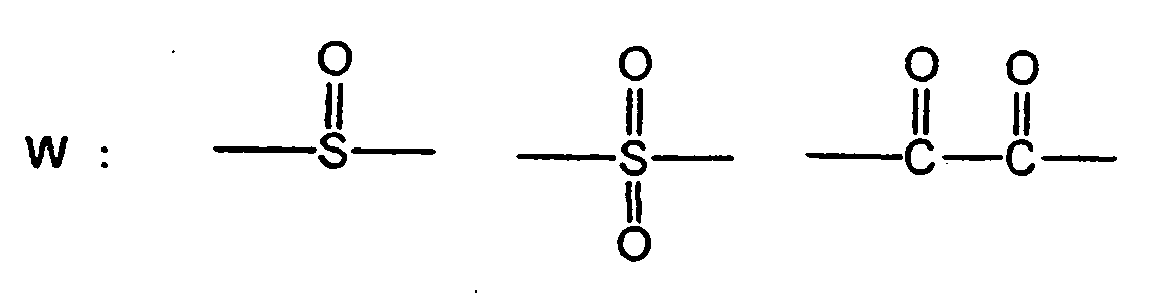
- A lithium secondary battery comprising a positive electrode, a negative electrode and a nonaqueous electrolytic solution, wherein the electrolytic solution is that defined in claim 1.
- The lithium secondary battery of claim 4, wherein the positive electrode comprises a positive electrode composite layer formed on aluminum foil, and the positive electrode composite layer has a density in the range of 3.2 to 4.0 g/cm3.
- The lithium secondary battery of claim 4, wherein the negative electrode comprises a negative electrode composite layer formed on copper foil, and the negative electrode composite layer has a density in the range of 1.3 to 2.0 g/cm3.
- The lithium secondary battery of claim 4, wherein the positive electrode comprises a material containing lithium compound oxide.
- The lithium secondary battery of claim 4, wherein the negative electrode comprises a material containing one selected from the group consisting of lithium metal, lithium alloys, carbonaceous materials, tin metal, tin compounds, silicon, and silicon compounds.
- The lithium secondary battery of claim 8, wherein the negative electrode is made of a carbonaceous material selected from the group consisting of pyrolytic carbonaceous materials, cokes, graphites, fired products of organic polymer compounds, and carbon fiber.
- The lithium secondary battery of claim 4, wherein the negative electrode comprises graphite having a graphite crystal structure in which the lattice distance (d002) of lattice face (002) is 0.340 nm or less.
Applications Claiming Priority (2)
| Application Number | Priority Date | Filing Date | Title |
|---|---|---|---|
| JP2004159283 | 2004-05-28 | ||
| PCT/JP2005/009900 WO2005117197A1 (en) | 2004-05-28 | 2005-05-30 | Nonaqueous electrolyte solution and lithium secondary battery |
Publications (3)
| Publication Number | Publication Date |
|---|---|
| EP1772924A1 true EP1772924A1 (en) | 2007-04-11 |
| EP1772924A4 EP1772924A4 (en) | 2010-09-01 |
| EP1772924B1 EP1772924B1 (en) | 2013-04-10 |
Family
ID=35451191
Family Applications (1)
| Application Number | Title | Priority Date | Filing Date |
|---|---|---|---|
| EP05743834.3A Expired - Lifetime EP1772924B1 (en) | 2004-05-28 | 2005-05-30 | Nonaqueous electrolytic solution and lithium secondary battery |
Country Status (10)
| Country | Link |
|---|---|
| US (1) | US7629085B2 (en) |
| EP (1) | EP1772924B1 (en) |
| JP (1) | JP4678370B2 (en) |
| KR (1) | KR101176812B1 (en) |
| CN (1) | CN100474688C (en) |
| CA (1) | CA2568519A1 (en) |
| ES (1) | ES2406956T3 (en) |
| TW (1) | TW200603455A (en) |
| WO (1) | WO2005117197A1 (en) |
| ZA (1) | ZA200610287B (en) |
Cited By (6)
| Publication number | Priority date | Publication date | Assignee | Title |
|---|---|---|---|---|
| EP2618418A4 (en) * | 2010-09-16 | 2014-01-22 | Mitsubishi Chem Corp | NONAQUEOUS ELECTROLYTE AND NONAQUEOUS ELECTROLYTE SECONDARY BATTERY |
| EP2768064A1 (en) * | 2013-02-15 | 2014-08-20 | Basf Se | Use of substituted alkynyl sulfonates, carbonates and oxalates as additives in electrolytes of secondary lithium-ion batteries |
| EP2883867A3 (en) * | 2010-02-03 | 2015-09-23 | Ube Industries, Ltd. | Non-aqueous electrolytic solution, electrochemical element using the same and alkynyl compound used therefor |
| EP2571089A4 (en) * | 2010-05-12 | 2017-03-15 | Mitsubishi Chemical Corporation | Non-aqueous electrolytic solution, and non-aqueous electrolyte secondary battery |
| EP3151326A4 (en) * | 2014-05-30 | 2017-11-15 | Ube Industries, Ltd. | Nonaqueous electrolyte and electricity-storing device in which same is used |
| EP3699997A4 (en) * | 2017-10-24 | 2020-12-23 | Guangzhou Tinci Materials Technology Co., Ltd | ELECTROLYTE FOR LITHIUM SECONDARY BATTERY AND LITHIUM SECONDARY BATTERY |
Families Citing this family (27)
| Publication number | Priority date | Publication date | Assignee | Title |
|---|---|---|---|---|
| JP5095090B2 (en) * | 2005-06-07 | 2012-12-12 | 日立マクセルエナジー株式会社 | Non-aqueous electrolyte secondary battery |
| KR100713622B1 (en) | 2006-01-09 | 2007-05-02 | 제일모직주식회사 | Non-aqueous electrolyte solution containing diphenyl ether compound and lithium secondary battery comprising the same |
| JP5004475B2 (en) * | 2006-01-30 | 2012-08-22 | 三洋電機株式会社 | Nonaqueous electrolyte secondary battery |
| JP4984553B2 (en) * | 2006-01-30 | 2012-07-25 | ソニー株式会社 | Secondary battery negative electrode and secondary battery using the same |
| JP5315594B2 (en) * | 2006-04-27 | 2013-10-16 | 三菱化学株式会社 | Non-aqueous electrolyte and non-aqueous electrolyte secondary battery using the same |
| KR100873270B1 (en) | 2006-10-25 | 2008-12-11 | 주식회사 엘지화학 | Non-aqueous electrolyte and electrochemical device comprising the same |
| KR20110066130A (en) | 2008-07-15 | 2011-06-16 | 우베 고산 가부시키가이샤 | Non-aqueous electrolyte solution for lithium batteries, lithium battery using the same, and formyloxy group-containing compound used therein |
| KR101056441B1 (en) | 2009-04-01 | 2011-08-11 | 삼성에스디아이 주식회사 | Electrolyte for lithium secondary battery including additive and lithium secondary battery comprising same |
| JP5350880B2 (en) * | 2009-05-15 | 2013-11-27 | 株式会社Adeka | Non-aqueous electrolyte and non-aqueous electrolyte secondary battery using the electrolyte |
| WO2011025016A1 (en) * | 2009-08-31 | 2011-03-03 | 三菱化学株式会社 | Non-aqueous electrolytic solution, and non-aqueous electrolyte battery comprising same |
| JP5627250B2 (en) * | 2010-02-25 | 2014-11-19 | 日立オートモティブシステムズ株式会社 | Lithium ion battery |
| US20130330607A1 (en) * | 2011-02-17 | 2013-12-12 | Kabushiki Kaisha Toyota Jidoshokki | Electrolytic solution and lithium-ion secondary battery |
| US9608287B2 (en) * | 2011-04-26 | 2017-03-28 | Ube Industries, Ltd. | Non-aqueous electrolytic solution, electrical storage device utilizing same, and cyclic sulfonic acid ester compound |
| US20130302701A1 (en) * | 2011-07-29 | 2013-11-14 | Panasonic Corporation | Non-aqueous electrolyte for secondary batteries and non-aqueous electrolyte secondary battery |
| TWI487161B (en) * | 2011-11-16 | 2015-06-01 | Univ Nat Taiwan Science Tech | Lithium-ion battery and method for fabricating the same |
| CN103730688B (en) * | 2014-01-09 | 2016-06-08 | 宁德新能源科技有限公司 | Lithium ion battery and electrolyte thereof |
| EP3231024A4 (en) | 2014-12-12 | 2018-08-08 | Pellion Technologies Inc. | Electrochemical cell and method of making the same |
| US20180301758A1 (en) * | 2015-10-09 | 2018-10-18 | Ube Industries, Ltd. | Nonaqueous electrolyte solution and electricity storage device using same |
| MX2019001629A (en) | 2016-08-12 | 2019-09-16 | Pellion Tech Inc | Additive containing electrolytes for high energy rechargeable metal anode batteries. |
| WO2019027925A1 (en) | 2017-07-31 | 2019-02-07 | Pellion Technologies | Electrochemical cell with getter and method of forming same |
| WO2019126360A1 (en) | 2017-12-21 | 2019-06-27 | Pellion Technologies Inc. | Electrochemical cell and electrolyte for same |
| US12272790B2 (en) | 2019-04-11 | 2025-04-08 | Ses Holdings Pte. Ltd. | Localized high-salt-concentration electrolytes containing longer-sidechain glyme-based solvents and fluorinated diluents, and uses thereof |
| US11196088B2 (en) | 2019-04-11 | 2021-12-07 | Ses Holdings Pte. Ltd. | Localized high-salt-concentration electrolytes containing longer-sidechain glyme-based solvents and fluorinated diluents, and uses thereof |
| US12199282B2 (en) * | 2020-09-18 | 2025-01-14 | WATTRII Inc. | Halogenated battery comprising a greenhouse gas |
| KR20230057798A (en) * | 2021-10-22 | 2023-05-02 | 주식회사 엘지에너지솔루션 | Additive for electrolyte, electrolyte for lithium secondary battery comprising same and lithium secondary battery |
| JP2025181160A (en) * | 2024-05-31 | 2025-12-11 | プライムプラネットエナジー&ソリューションズ株式会社 | Negative electrode for lithium ion secondary battery and lithium ion secondary battery |
| WO2026070174A1 (en) * | 2024-09-25 | 2026-04-02 | Muアイオニックソリューションズ株式会社 | Compound and composition, use of those in batteries, method for using those in batteries, electrolyte solution, method for producing electrolyte solution, battery, method for producing battery, and vehicle |
Family Cites Families (24)
| Publication number | Priority date | Publication date | Assignee | Title |
|---|---|---|---|---|
| JPH06223875A (en) * | 1993-01-21 | 1994-08-12 | Mitsubishi Cable Ind Ltd | Electrolyte for lithium secondary battery |
| CA2245354C (en) | 1997-08-22 | 2009-01-06 | Ube Industries, Ltd. | Lithium secondary battery and electrolyte thereof |
| JP3978881B2 (en) | 1997-08-22 | 2007-09-19 | 宇部興産株式会社 | Non-aqueous electrolyte and lithium secondary battery using the same |
| JP3560119B2 (en) | 1997-10-13 | 2004-09-02 | 三菱化学株式会社 | Non-aqueous electrolyte secondary battery |
| JPH11339850A (en) | 1998-05-29 | 1999-12-10 | Nec Mori Energy Kk | Lithium-ion secondary battery |
| JP3815087B2 (en) * | 1998-10-26 | 2006-08-30 | 宇部興産株式会社 | Non-aqueous electrolyte and lithium secondary battery using the same |
| JP3951486B2 (en) | 1998-12-25 | 2007-08-01 | 宇部興産株式会社 | Electrolytic solution for lithium secondary battery and lithium secondary battery using the same |
| JP3823683B2 (en) | 1999-05-24 | 2006-09-20 | 宇部興産株式会社 | Nonaqueous electrolyte and lithium secondary battery using the same |
| JP2001313072A (en) * | 2000-04-28 | 2001-11-09 | Ube Ind Ltd | Electrolyte for lithium secondary battery and lithium secondary battery using the same |
| JP4710116B2 (en) * | 2000-09-20 | 2011-06-29 | 宇部興産株式会社 | Nonaqueous electrolyte and lithium secondary battery using the same |
| JP4304404B2 (en) * | 2000-10-02 | 2009-07-29 | 宇部興産株式会社 | Non-aqueous electrolyte and lithium secondary battery using the same |
| JP3823712B2 (en) * | 2000-10-13 | 2006-09-20 | 宇部興産株式会社 | Nonaqueous electrolyte and lithium secondary battery using the same |
| ATE397296T1 (en) * | 2000-10-20 | 2008-06-15 | Ube Industries | SECONDARY BATTERY CONTAINING NON-AQUEOUS ELECTROLYTES WITH IMPROVED DISCHARGE CAPACITY STORAGE |
| EP1202373B1 (en) * | 2000-10-30 | 2012-01-18 | Denso Corporation | Nonaqueous electrolytic solution and nonaqueous secondary battery |
| JP3497812B2 (en) * | 2000-10-30 | 2004-02-16 | 株式会社デンソー | Non-aqueous electrolyte secondary battery using non-aqueous electrolyte |
| CA2353751A1 (en) * | 2000-11-27 | 2002-05-27 | Wilson Greatbatch Ltd. | Phosphate additives for nonaqueous electrolyte rechargeable electrochemical cells |
| JP4187959B2 (en) * | 2001-10-24 | 2008-11-26 | 三井化学株式会社 | Non-aqueous electrolyte and secondary battery using the same |
| JP4092618B2 (en) * | 2001-12-26 | 2008-05-28 | 株式会社ジーエス・ユアサコーポレーション | Nonaqueous electrolyte secondary battery |
| AU2003221334A1 (en) * | 2002-03-08 | 2003-09-22 | Mitsubishi Chemical Corporation | Nonaqueous electrolyte and lithium-ion secondary battery containing the same |
| JP2004022507A (en) * | 2002-06-20 | 2004-01-22 | Sony Corp | Electrode and battery using the same |
| JP2004079327A (en) * | 2002-08-16 | 2004-03-11 | Hitachi Maxell Ltd | Non-aqueous secondary battery, positive electrode for non-aqueous secondary battery, and method of manufacturing the same |
| JP4179033B2 (en) * | 2003-01-09 | 2008-11-12 | 三菱化学株式会社 | Non-aqueous electrolyte and lithium secondary battery using the same |
| KR101201271B1 (en) * | 2003-07-17 | 2012-11-14 | 우베 고산 가부시키가이샤 | Lithium secondary battery |
| JP4319025B2 (en) * | 2003-12-25 | 2009-08-26 | 三洋電機株式会社 | Non-aqueous electrolyte secondary battery |
-
2005
- 2005-05-30 CA CA002568519A patent/CA2568519A1/en not_active Abandoned
- 2005-05-30 ES ES05743834T patent/ES2406956T3/en not_active Expired - Lifetime
- 2005-05-30 TW TW094117690A patent/TW200603455A/en unknown
- 2005-05-30 KR KR1020067027547A patent/KR101176812B1/en not_active Expired - Lifetime
- 2005-05-30 CN CNB200580024923XA patent/CN100474688C/en not_active Expired - Lifetime
- 2005-05-30 EP EP05743834.3A patent/EP1772924B1/en not_active Expired - Lifetime
- 2005-05-30 US US11/597,652 patent/US7629085B2/en not_active Expired - Lifetime
- 2005-05-30 JP JP2006513992A patent/JP4678370B2/en not_active Expired - Lifetime
- 2005-05-30 WO PCT/JP2005/009900 patent/WO2005117197A1/en not_active Ceased
-
2006
- 2006-12-08 ZA ZA200610287A patent/ZA200610287B/en unknown
Cited By (9)
| Publication number | Priority date | Publication date | Assignee | Title |
|---|---|---|---|---|
| EP2883867A3 (en) * | 2010-02-03 | 2015-09-23 | Ube Industries, Ltd. | Non-aqueous electrolytic solution, electrochemical element using the same and alkynyl compound used therefor |
| CN104409766B (en) * | 2010-02-03 | 2017-04-12 | 宇部兴产株式会社 | Non-aqueous electrolytic solution, electrochemical element using same, and alkynyl compound used therefor |
| US9647294B2 (en) | 2010-02-03 | 2017-05-09 | Ube Industries, Ltd. | Non-aqueous electrolytic solution, electrochemical element using same, and alkynyl compound used therefor |
| EP2571089A4 (en) * | 2010-05-12 | 2017-03-15 | Mitsubishi Chemical Corporation | Non-aqueous electrolytic solution, and non-aqueous electrolyte secondary battery |
| EP2618418A4 (en) * | 2010-09-16 | 2014-01-22 | Mitsubishi Chem Corp | NONAQUEOUS ELECTROLYTE AND NONAQUEOUS ELECTROLYTE SECONDARY BATTERY |
| US9553333B2 (en) | 2010-09-16 | 2017-01-24 | Mitsubishi Chemical Corporation | Nonaqueous electrolytic solution and nonaqueous electrolyte secondary battery |
| EP2768064A1 (en) * | 2013-02-15 | 2014-08-20 | Basf Se | Use of substituted alkynyl sulfonates, carbonates and oxalates as additives in electrolytes of secondary lithium-ion batteries |
| EP3151326A4 (en) * | 2014-05-30 | 2017-11-15 | Ube Industries, Ltd. | Nonaqueous electrolyte and electricity-storing device in which same is used |
| EP3699997A4 (en) * | 2017-10-24 | 2020-12-23 | Guangzhou Tinci Materials Technology Co., Ltd | ELECTROLYTE FOR LITHIUM SECONDARY BATTERY AND LITHIUM SECONDARY BATTERY |
Also Published As
| Publication number | Publication date |
|---|---|
| JPWO2005117197A1 (en) | 2008-04-03 |
| EP1772924A4 (en) | 2010-09-01 |
| JP4678370B2 (en) | 2011-04-27 |
| ES2406956T3 (en) | 2013-06-10 |
| US20070231707A1 (en) | 2007-10-04 |
| WO2005117197A1 (en) | 2005-12-08 |
| ZA200610287B (en) | 2008-10-29 |
| EP1772924B1 (en) | 2013-04-10 |
| CA2568519A1 (en) | 2005-12-08 |
| US7629085B2 (en) | 2009-12-08 |
| CN100474688C (en) | 2009-04-01 |
| KR20070024663A (en) | 2007-03-02 |
| CN1989647A (en) | 2007-06-27 |
| TW200603455A (en) | 2006-01-16 |
| KR101176812B1 (en) | 2012-08-24 |
Similar Documents
| Publication | Publication Date | Title |
|---|---|---|
| US7629085B2 (en) | Nonaqueous electrolytic solution and lithium secondary battery | |
| JP5224189B2 (en) | Lithium secondary battery | |
| EP1729365B1 (en) | Non-aqueous electrolyte solution and lithium secondary battery using the same | |
| US7754380B2 (en) | Nonaqueous electrolyte solution and lithium secondary battery using same | |
| EP1758198B1 (en) | Non-aqueous electrolyte solution and lithium secondary battery using same | |
| EP3171445B1 (en) | Non-aqueous electrolyte solution and electricity storage device in which same is used | |
| JPWO2005074067A1 (en) | Non-aqueous electrolyte and lithium secondary battery | |
| JP2002110234A (en) | Non-aqueous electrolyte and lithium secondary battery using the same | |
| CN100517853C (en) | Nonaqueous electrolytic solution for lithium secondary battery and lithium secondary battery using the same | |
| JP2005340080A (en) | Nonaqueous electrolyte and lithium secondary battery using the same |
Legal Events
| Date | Code | Title | Description |
|---|---|---|---|
| PUAI | Public reference made under article 153(3) epc to a published international application that has entered the european phase |
Free format text: ORIGINAL CODE: 0009012 |
|
| 17P | Request for examination filed |
Effective date: 20061205 |
|
| AK | Designated contracting states |
Kind code of ref document: A1 Designated state(s): AT BE BG CH CY CZ DE DK EE ES FI FR GB GR HU IE IS IT LI LT LU MC NL PL PT RO SE SI SK TR |
|
| AX | Request for extension of the european patent |
Extension state: AL BA HR LV MK YU |
|
| A4 | Supplementary search report drawn up and despatched |
Effective date: 20100729 |
|
| 17Q | First examination report despatched |
Effective date: 20110119 |
|
| REG | Reference to a national code |
Ref country code: DE Ref legal event code: R079 Ref document number: 602005039024 Country of ref document: DE Free format text: PREVIOUS MAIN CLASS: H01M0010400000 Ipc: H01M0010056700 |
|
| RIC1 | Information provided on ipc code assigned before grant |
Ipc: H01M 10/0525 20100101ALI20120524BHEP Ipc: H01M 10/0567 20100101AFI20120524BHEP |
|
| GRAP | Despatch of communication of intention to grant a patent |
Free format text: ORIGINAL CODE: EPIDOSNIGR1 |
|
| RIN1 | Information on inventor provided before grant (corrected) |
Inventor name: MIYOSHI, KAZUHIRO C/O UBE CHEMICAL FACTORY, Inventor name: ABE, KOJI C/O UBE CHEMICAL FACTORY, Inventor name: KUWATA, TAKAAKI C/O UBE CHEMICAL FACTORY, |
|
| GRAJ | Information related to disapproval of communication of intention to grant by the applicant or resumption of examination proceedings by the epo deleted |
Free format text: ORIGINAL CODE: EPIDOSDIGR1 |
|
| GRAS | Grant fee paid |
Free format text: ORIGINAL CODE: EPIDOSNIGR3 |
|
| GRAP | Despatch of communication of intention to grant a patent |
Free format text: ORIGINAL CODE: EPIDOSNIGR1 |
|
| GRAA | (expected) grant |
Free format text: ORIGINAL CODE: 0009210 |
|
| AK | Designated contracting states |
Kind code of ref document: B1 Designated state(s): AT BE BG CH CY CZ DE DK EE ES FI FR GB GR HU IE IS IT LI LT LU MC NL PL PT RO SE SI SK TR |
|
| AX | Request for extension of the european patent |
Extension state: AL BA HR LV MK YU |
|
| REG | Reference to a national code |
Ref country code: GB Ref legal event code: FG4D |
|
| REG | Reference to a national code |
Ref country code: CH Ref legal event code: EP Ref country code: AT Ref legal event code: REF Ref document number: 606444 Country of ref document: AT Kind code of ref document: T Effective date: 20130415 |
|
| REG | Reference to a national code |
Ref country code: IE Ref legal event code: FG4D |
|
| REG | Reference to a national code |
Ref country code: DE Ref legal event code: R096 Ref document number: 602005039024 Country of ref document: DE Effective date: 20130606 |
|
| REG | Reference to a national code |
Ref country code: ES Ref legal event code: FG2A Ref document number: 2406956 Country of ref document: ES Kind code of ref document: T3 Effective date: 20130610 |
|
| PG25 | Lapsed in a contracting state [announced via postgrant information from national office to epo] |
Ref country code: SI Free format text: LAPSE BECAUSE OF FAILURE TO SUBMIT A TRANSLATION OF THE DESCRIPTION OR TO PAY THE FEE WITHIN THE PRESCRIBED TIME-LIMIT Effective date: 20130410 |
|
| REG | Reference to a national code |
Ref country code: AT Ref legal event code: MK05 Ref document number: 606444 Country of ref document: AT Kind code of ref document: T Effective date: 20130410 |
|
| REG | Reference to a national code |
Ref country code: NL Ref legal event code: VDEP Effective date: 20130410 Ref country code: LT Ref legal event code: MG4D |
|
| PG25 | Lapsed in a contracting state [announced via postgrant information from national office to epo] |
Ref country code: AT Free format text: LAPSE BECAUSE OF FAILURE TO SUBMIT A TRANSLATION OF THE DESCRIPTION OR TO PAY THE FEE WITHIN THE PRESCRIBED TIME-LIMIT Effective date: 20130410 Ref country code: PT Free format text: LAPSE BECAUSE OF FAILURE TO SUBMIT A TRANSLATION OF THE DESCRIPTION OR TO PAY THE FEE WITHIN THE PRESCRIBED TIME-LIMIT Effective date: 20130812 Ref country code: BE Free format text: LAPSE BECAUSE OF FAILURE TO SUBMIT A TRANSLATION OF THE DESCRIPTION OR TO PAY THE FEE WITHIN THE PRESCRIBED TIME-LIMIT Effective date: 20130410 Ref country code: SE Free format text: LAPSE BECAUSE OF FAILURE TO SUBMIT A TRANSLATION OF THE DESCRIPTION OR TO PAY THE FEE WITHIN THE PRESCRIBED TIME-LIMIT Effective date: 20130410 Ref country code: FI Free format text: LAPSE BECAUSE OF FAILURE TO SUBMIT A TRANSLATION OF THE DESCRIPTION OR TO PAY THE FEE WITHIN THE PRESCRIBED TIME-LIMIT Effective date: 20130410 Ref country code: LT Free format text: LAPSE BECAUSE OF FAILURE TO SUBMIT A TRANSLATION OF THE DESCRIPTION OR TO PAY THE FEE WITHIN THE PRESCRIBED TIME-LIMIT Effective date: 20130410 Ref country code: NL Free format text: LAPSE BECAUSE OF FAILURE TO SUBMIT A TRANSLATION OF THE DESCRIPTION OR TO PAY THE FEE WITHIN THE PRESCRIBED TIME-LIMIT Effective date: 20130410 Ref country code: GR Free format text: LAPSE BECAUSE OF FAILURE TO SUBMIT A TRANSLATION OF THE DESCRIPTION OR TO PAY THE FEE WITHIN THE PRESCRIBED TIME-LIMIT Effective date: 20130711 Ref country code: IS Free format text: LAPSE BECAUSE OF FAILURE TO SUBMIT A TRANSLATION OF THE DESCRIPTION OR TO PAY THE FEE WITHIN THE PRESCRIBED TIME-LIMIT Effective date: 20130810 |
|
| PG25 | Lapsed in a contracting state [announced via postgrant information from national office to epo] |
Ref country code: PL Free format text: LAPSE BECAUSE OF FAILURE TO SUBMIT A TRANSLATION OF THE DESCRIPTION OR TO PAY THE FEE WITHIN THE PRESCRIBED TIME-LIMIT Effective date: 20130410 Ref country code: BG Free format text: LAPSE BECAUSE OF FAILURE TO SUBMIT A TRANSLATION OF THE DESCRIPTION OR TO PAY THE FEE WITHIN THE PRESCRIBED TIME-LIMIT Effective date: 20130710 Ref country code: CY Free format text: LAPSE BECAUSE OF FAILURE TO SUBMIT A TRANSLATION OF THE DESCRIPTION OR TO PAY THE FEE WITHIN THE PRESCRIBED TIME-LIMIT Effective date: 20130410 |
|
| REG | Reference to a national code |
Ref country code: CH Ref legal event code: PL |
|
| PG25 | Lapsed in a contracting state [announced via postgrant information from national office to epo] |
Ref country code: DK Free format text: LAPSE BECAUSE OF FAILURE TO SUBMIT A TRANSLATION OF THE DESCRIPTION OR TO PAY THE FEE WITHIN THE PRESCRIBED TIME-LIMIT Effective date: 20130410 Ref country code: CH Free format text: LAPSE BECAUSE OF NON-PAYMENT OF DUE FEES Effective date: 20130531 Ref country code: EE Free format text: LAPSE BECAUSE OF FAILURE TO SUBMIT A TRANSLATION OF THE DESCRIPTION OR TO PAY THE FEE WITHIN THE PRESCRIBED TIME-LIMIT Effective date: 20130410 Ref country code: MC Free format text: LAPSE BECAUSE OF FAILURE TO SUBMIT A TRANSLATION OF THE DESCRIPTION OR TO PAY THE FEE WITHIN THE PRESCRIBED TIME-LIMIT Effective date: 20130410 Ref country code: CZ Free format text: LAPSE BECAUSE OF FAILURE TO SUBMIT A TRANSLATION OF THE DESCRIPTION OR TO PAY THE FEE WITHIN THE PRESCRIBED TIME-LIMIT Effective date: 20130410 Ref country code: LI Free format text: LAPSE BECAUSE OF NON-PAYMENT OF DUE FEES Effective date: 20130531 Ref country code: SK Free format text: LAPSE BECAUSE OF FAILURE TO SUBMIT A TRANSLATION OF THE DESCRIPTION OR TO PAY THE FEE WITHIN THE PRESCRIBED TIME-LIMIT Effective date: 20130410 |
|
| PLBE | No opposition filed within time limit |
Free format text: ORIGINAL CODE: 0009261 |
|
| STAA | Information on the status of an ep patent application or granted ep patent |
Free format text: STATUS: NO OPPOSITION FILED WITHIN TIME LIMIT |
|
| REG | Reference to a national code |
Ref country code: IE Ref legal event code: MM4A |
|
| PG25 | Lapsed in a contracting state [announced via postgrant information from national office to epo] |
Ref country code: RO Free format text: LAPSE BECAUSE OF FAILURE TO SUBMIT A TRANSLATION OF THE DESCRIPTION OR TO PAY THE FEE WITHIN THE PRESCRIBED TIME-LIMIT Effective date: 20130410 Ref country code: IT Free format text: LAPSE BECAUSE OF FAILURE TO SUBMIT A TRANSLATION OF THE DESCRIPTION OR TO PAY THE FEE WITHIN THE PRESCRIBED TIME-LIMIT Effective date: 20130410 |
|
| 26N | No opposition filed |
Effective date: 20140113 |
|
| REG | Reference to a national code |
Ref country code: DE Ref legal event code: R097 Ref document number: 602005039024 Country of ref document: DE Effective date: 20140113 |
|
| PG25 | Lapsed in a contracting state [announced via postgrant information from national office to epo] |
Ref country code: IE Free format text: LAPSE BECAUSE OF NON-PAYMENT OF DUE FEES Effective date: 20130530 |
|
| PG25 | Lapsed in a contracting state [announced via postgrant information from national office to epo] |
Ref country code: TR Free format text: LAPSE BECAUSE OF FAILURE TO SUBMIT A TRANSLATION OF THE DESCRIPTION OR TO PAY THE FEE WITHIN THE PRESCRIBED TIME-LIMIT Effective date: 20130410 |
|
| PG25 | Lapsed in a contracting state [announced via postgrant information from national office to epo] |
Ref country code: LU Free format text: LAPSE BECAUSE OF NON-PAYMENT OF DUE FEES Effective date: 20130530 Ref country code: HU Free format text: LAPSE BECAUSE OF FAILURE TO SUBMIT A TRANSLATION OF THE DESCRIPTION OR TO PAY THE FEE WITHIN THE PRESCRIBED TIME-LIMIT; INVALID AB INITIO Effective date: 20050530 |
|
| PGFP | Annual fee paid to national office [announced via postgrant information from national office to epo] |
Ref country code: ES Payment date: 20150413 Year of fee payment: 11 Ref country code: GB Payment date: 20150527 Year of fee payment: 11 |
|
| REG | Reference to a national code |
Ref country code: FR Ref legal event code: PLFP Year of fee payment: 12 |
|
| GBPC | Gb: european patent ceased through non-payment of renewal fee |
Effective date: 20160530 |
|
| REG | Reference to a national code |
Ref country code: FR Ref legal event code: PLFP Year of fee payment: 13 |
|
| PG25 | Lapsed in a contracting state [announced via postgrant information from national office to epo] |
Ref country code: GB Free format text: LAPSE BECAUSE OF NON-PAYMENT OF DUE FEES Effective date: 20160530 |
|
| PGFP | Annual fee paid to national office [announced via postgrant information from national office to epo] |
Ref country code: FR Payment date: 20170413 Year of fee payment: 13 |
|
| PG25 | Lapsed in a contracting state [announced via postgrant information from national office to epo] |
Ref country code: ES Free format text: LAPSE BECAUSE OF NON-PAYMENT OF DUE FEES Effective date: 20160531 |
|
| REG | Reference to a national code |
Ref country code: ES Ref legal event code: FD2A Effective date: 20181204 |
|
| PG25 | Lapsed in a contracting state [announced via postgrant information from national office to epo] |
Ref country code: FR Free format text: LAPSE BECAUSE OF NON-PAYMENT OF DUE FEES Effective date: 20180531 |
|
| REG | Reference to a national code |
Ref country code: DE Ref legal event code: R081 Ref document number: 602005039024 Country of ref document: DE Owner name: MU IONIC SOLUTIONS CORPORATION, JP Free format text: FORMER OWNER: UBE INDUSTRIES, LTD., UBE-SHI, YAMAGUCHI, JP |
|
| P01 | Opt-out of the competence of the unified patent court (upc) registered |
Effective date: 20230522 |
|
| PGFP | Annual fee paid to national office [announced via postgrant information from national office to epo] |
Ref country code: DE Payment date: 20240328 Year of fee payment: 20 |
|
| REG | Reference to a national code |
Ref country code: DE Ref legal event code: R071 Ref document number: 602005039024 Country of ref document: DE |